
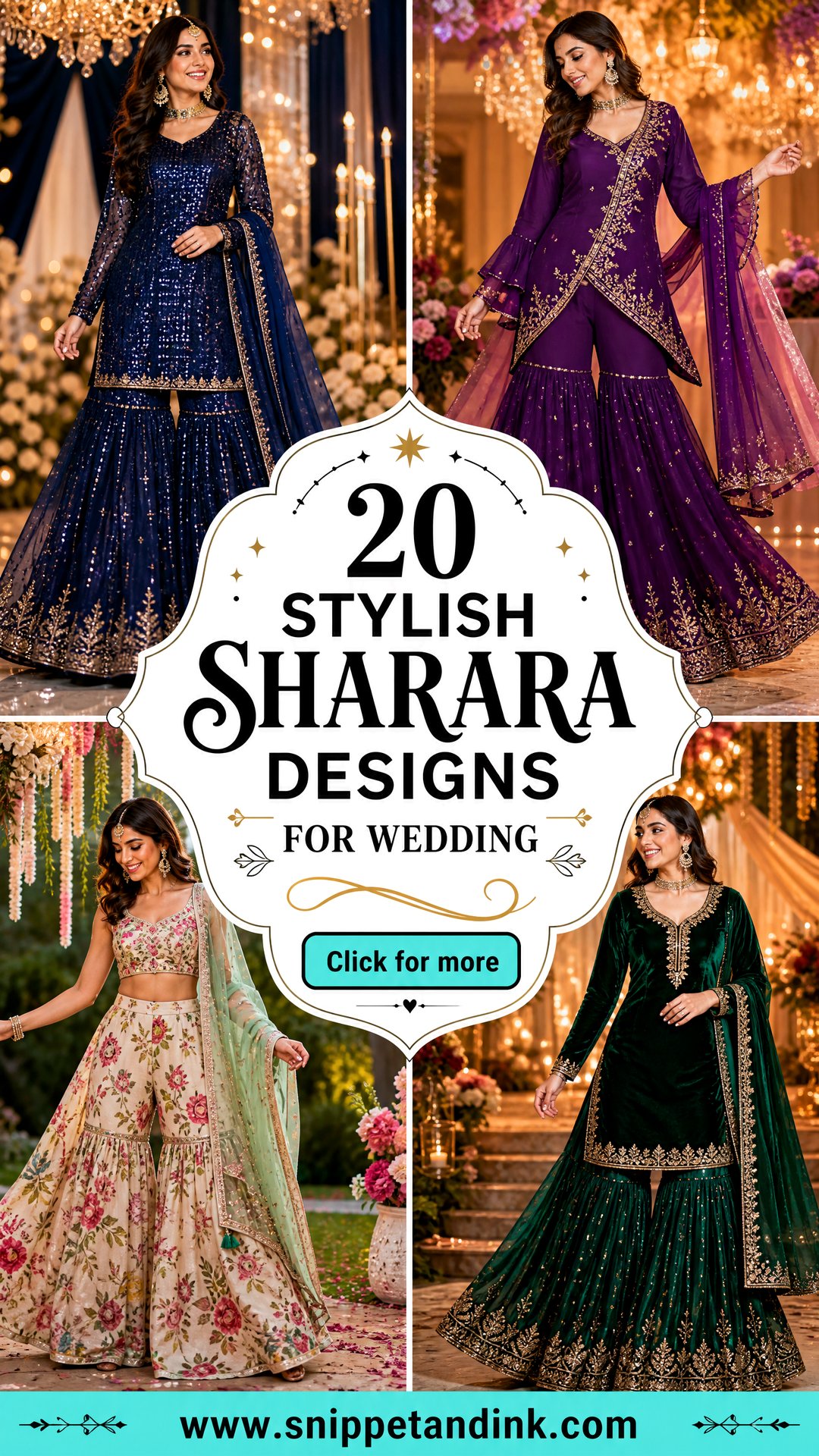
A sharara gives you the swing of a lehenga skirt with the freedom of trousers, which is why I find it’s the outfit people are still comfortable in at the end of a long night. Below are twenty designs for brides, bridesmaids, sisters and guests: velvet sets for winter receptions, light florals for daytime functions and mirror work for the dance floor. For each I’ve noted how the kurta, dupatta, jewellery and shoes should balance the flare. Some lean traditional, others take a modern crop top silhouette, but the rule I keep coming back to is the same: one part of the outfit carries the detail and the rest supports it.
How Much Flare Can Your Height Carry?
Shararas look alike in photos, but the way they are cut changes how they sit on you. When I order one for a client, these are the three measurements I care about most.
Where the flare starts
A traditional sharara is fitted from waist to knee, often with a decorated band at the knee joint, and flares below it. Modern versions start the flare higher, at the hip or mid-thigh, which reads closer to palazzos. If you’re petite, a flare starting at or just above the knee keeps your leg line long; starting it high on a short frame can make the whole outfit look like a skirt that swallowed you.
How full the flare is
Fullness comes from the number of panels, or kalis, sewn into each leg. More panels mean more swing and more fabric. In georgette or chiffon, a very full sharara still moves freely. In velvet or heavy silk, the same number of panels gets heavy fast, so a stiff fabric usually needs a gentler flare.
Where the hem lands
The hem should just brush the top of your shoes. Set it with the exact footwear you’ll wear; switching from heels to juttis at the last minute can leave you walking on several centimetres of fabric.
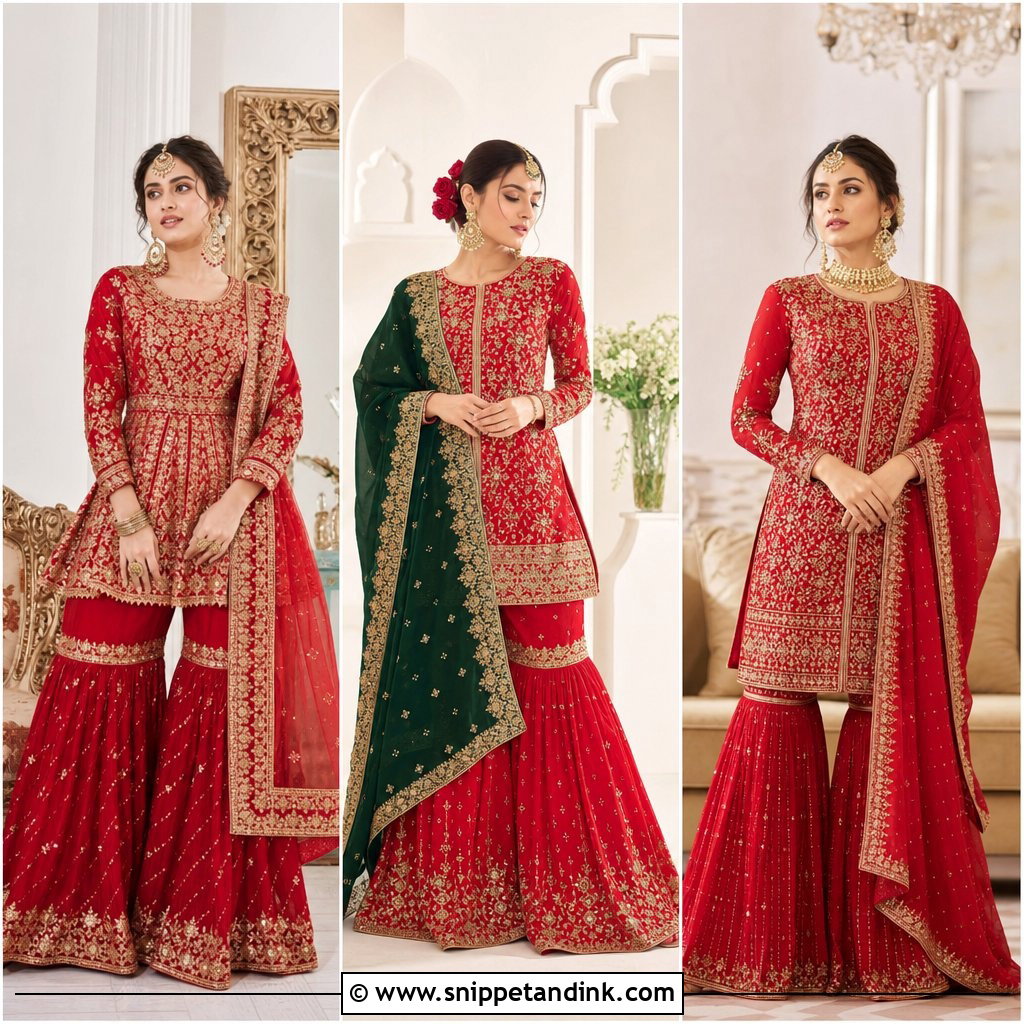
1. Red Bridal Sharara With Zardozi Work
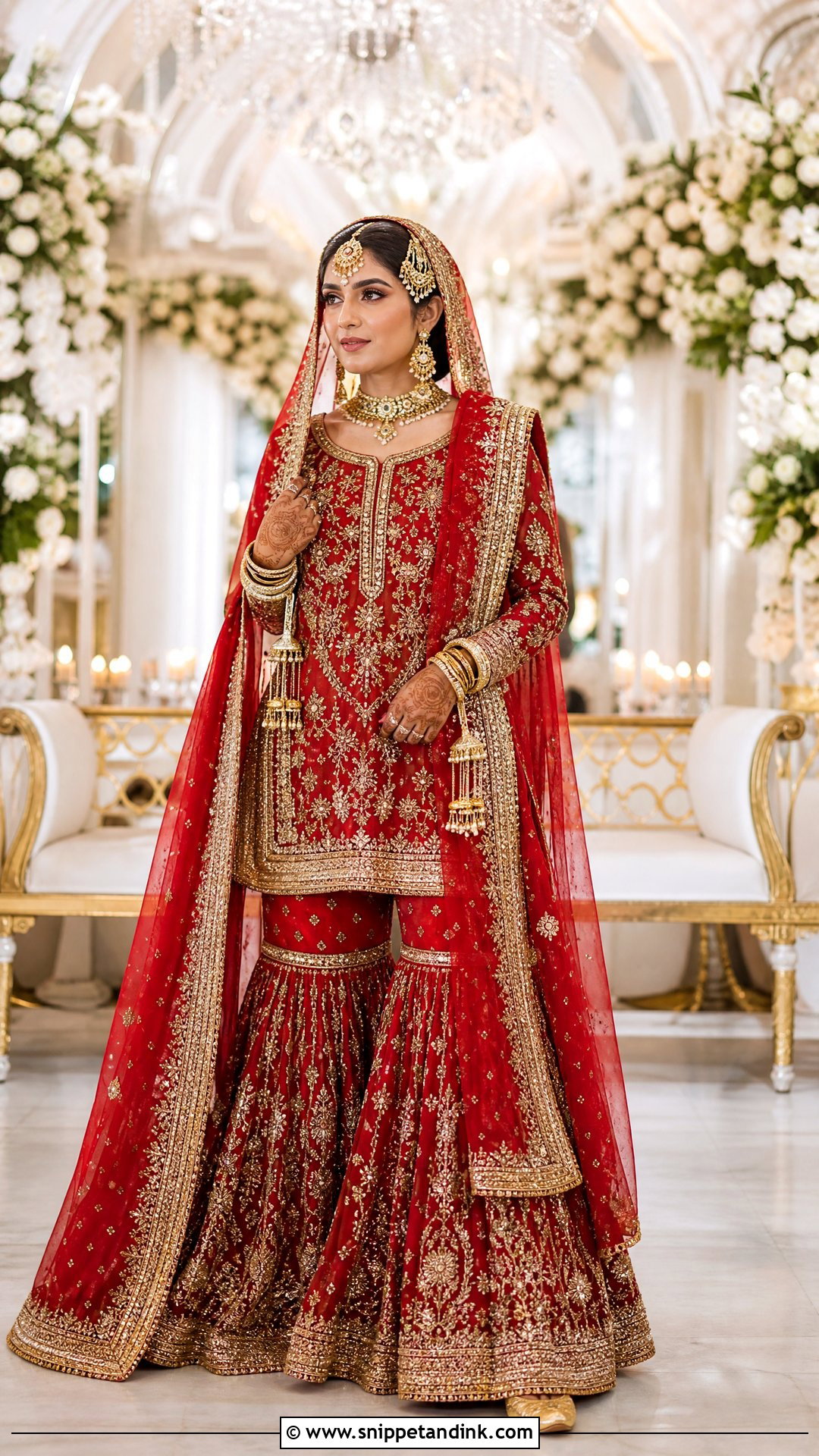
Red zardozi is the bridal sharara at its most traditional. Zardozi is metal-thread embroidery, often worked with dabka coils and beads, and on a short kurta plus flared pants it adds real weight, so I make sure the pants have a firm waistband and lining that can carry it. The flare should be embroidered at the knee joint and hem to match the kurta. A sheer red dupatta with a wide gold border goes over the head, with a lighter second dupatta across one shoulder. Kundan choker, matching earrings, maang tikka, bridal bangles and embellished juttis complete the set. With this much on the body, the bag has to be tiny: a gold potli with small tassels is ideal.
2. Pink Peplum Sharara With Mirror Work
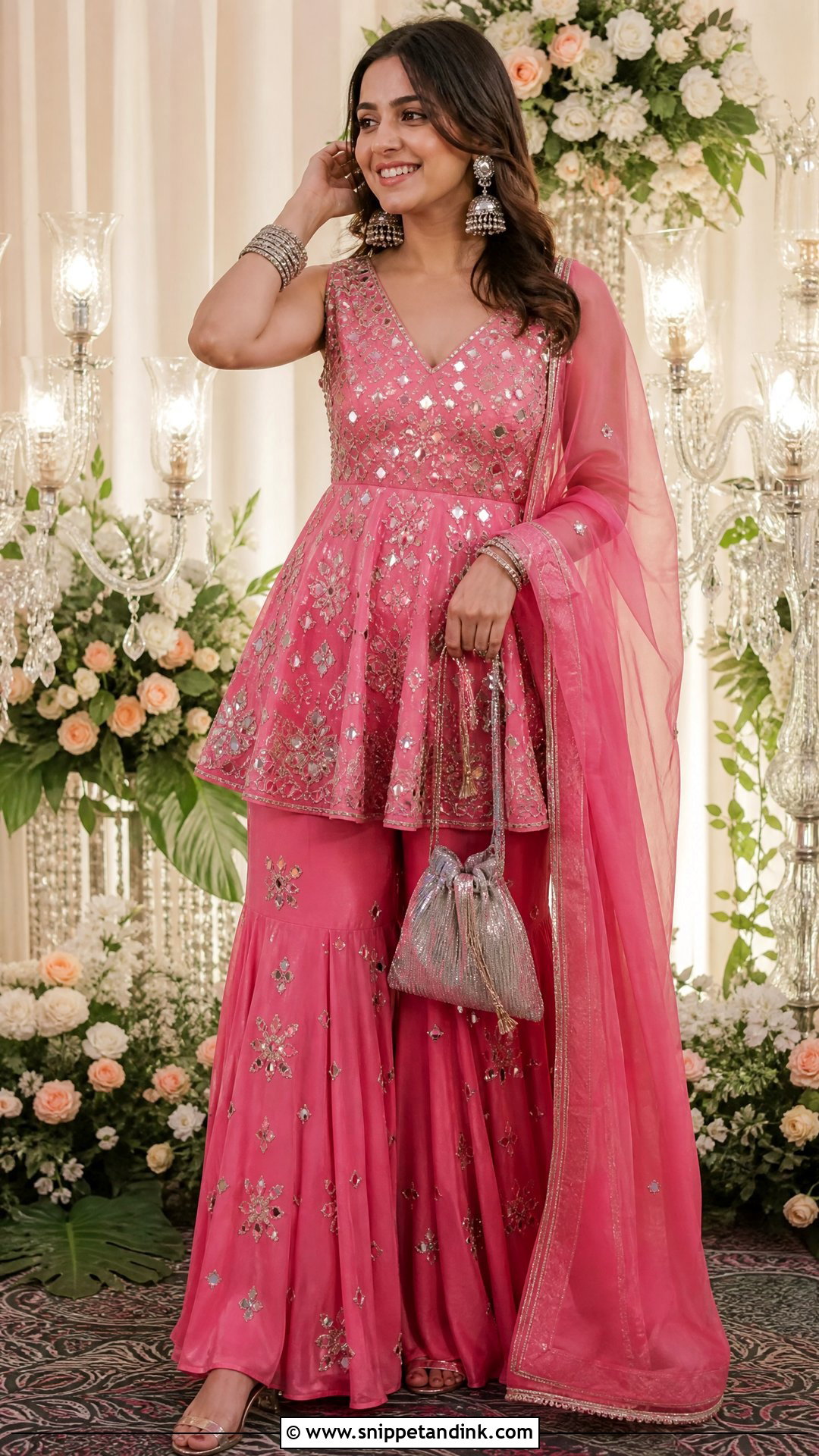
Mirror work against bright pink is made for a sangeet. A fitted peplum kurta defines the waist before flaring over the pants, and I’d keep the mirrors to a border on the sharara rather than scattered all over. Dense mirrors on wide pants get heavy and pull the hem down as you dance. An organza dupatta with a few scattered mirrors and a scalloped edge adds sparkle. Silver jhumkas, glass bangles and a metallic potli coordinate, and low block heels or cushioned juttis handle the dancing. Keep pink makeup fresh rather than matched exactly to the fabric, which can look like a uniform.
3. Green Sharara With Short Embroidered Kurta
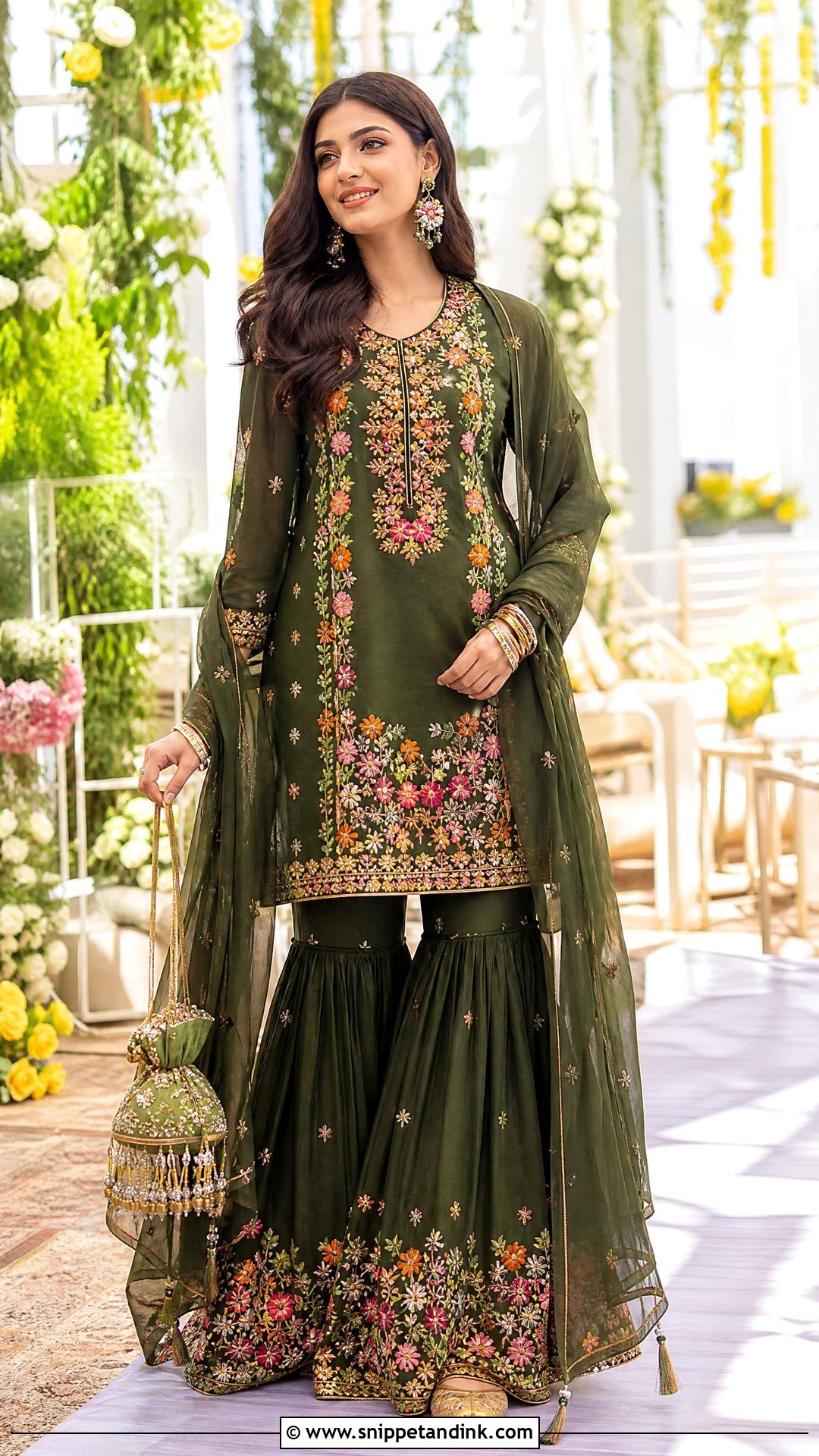
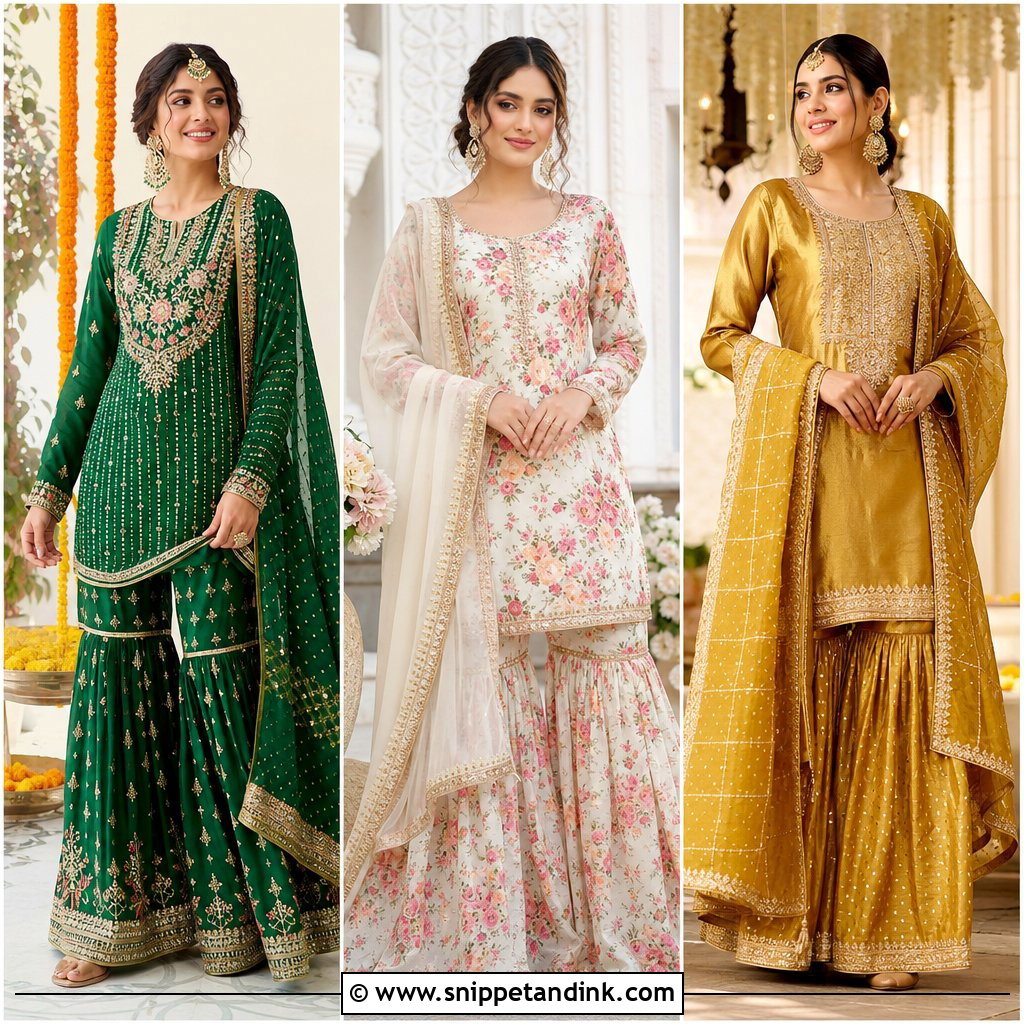
Green with colourful floral threadwork belongs at a mehndi, where the henna, marigolds and bright cushions all compete for attention. A short kurta embroidered in pink, yellow, coral and ivory sits over a high-waisted sharara that fits smoothly through the upper leg and then flares. A chiffon dupatta with a narrow border moves without needing constant rearranging. Floral earrings, mixed bangles and gold juttis are right for sitting on the floor. One thing I’d plan for: if you’re having your own henna done, wear sleeves that push up easily and keep the dupatta pinned, since wet paste smudges onto chiffon and stains it.
4. Ivory Sharara With Gold Embroidery
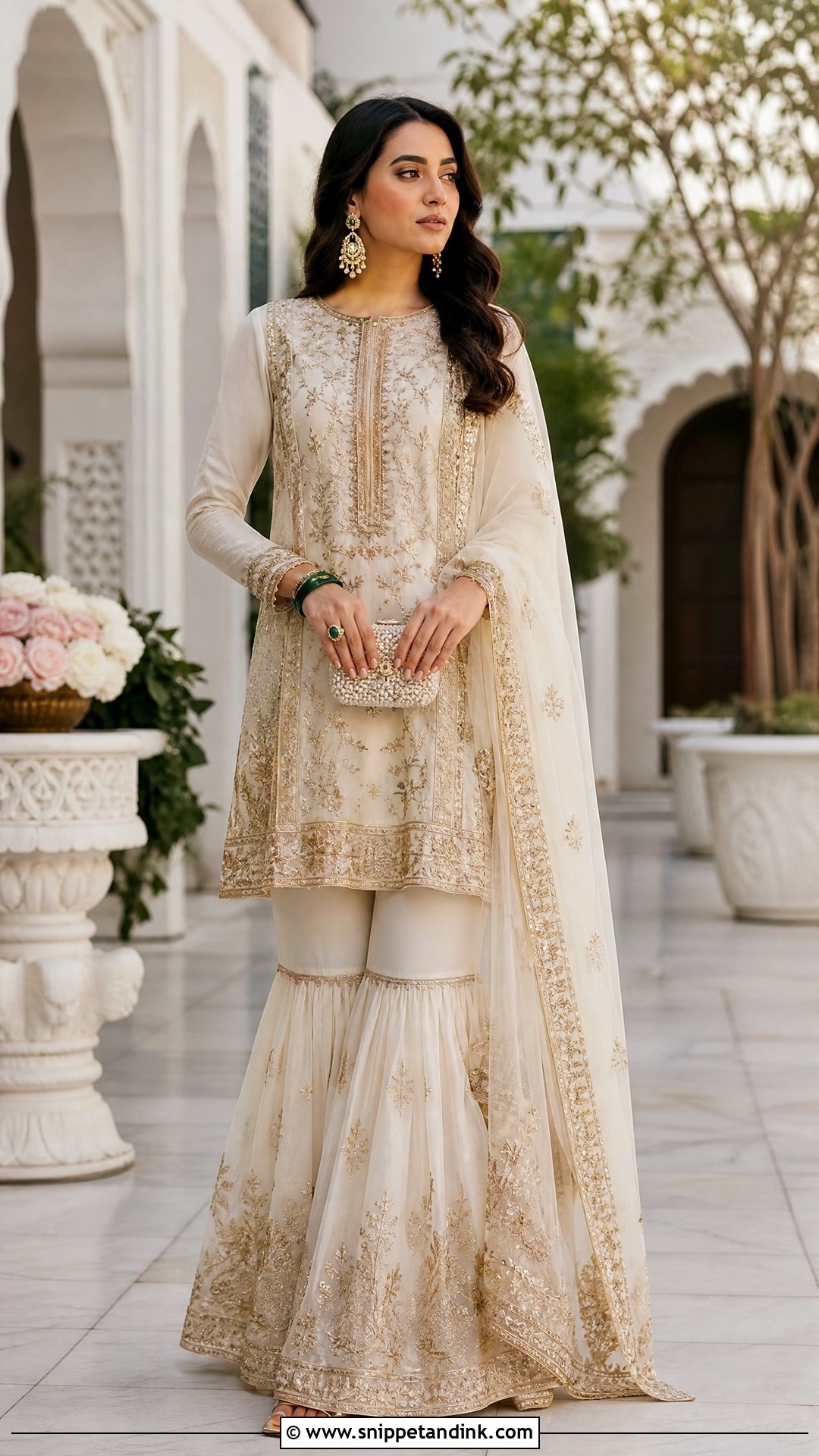
Ivory with gold reads quiet and expensive at a daytime wedding or engagement. A straight, mid-thigh kurta with gold thread at neckline, cuffs and hem sits over fluid ivory pants with a light embroidered border, and a sheer organza dupatta edged in gold keeps it airy. Antique gold earrings, a slim bracelet and a pearl-detailed clutch suit it, with metallic block heels for a long event. My caution for guests: in some families ivory reads as bridal, and in others it’s associated with mourning. Ask first, or bring in emerald, dusty pink or maroon through the dupatta and jewellery so nobody could mistake it.
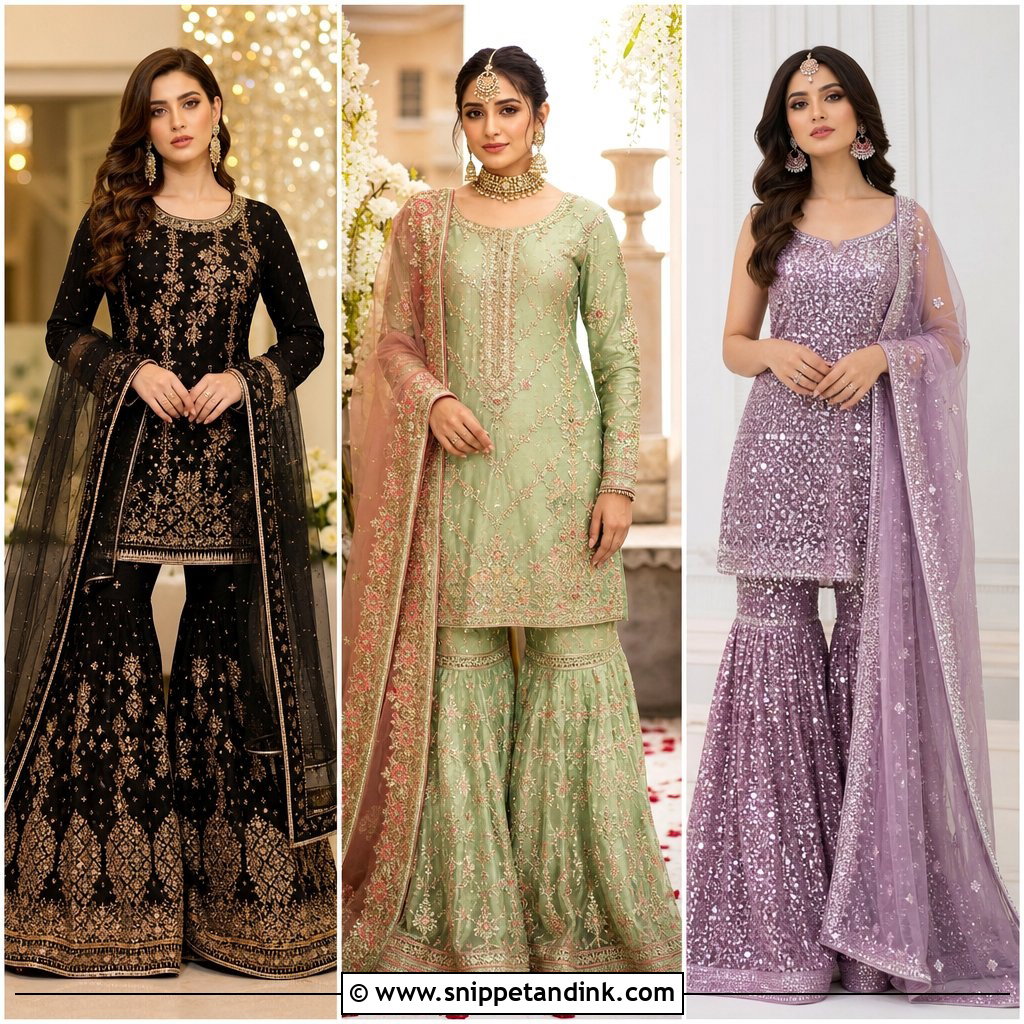
5. Black Velvet Sharara With Gold Kurta
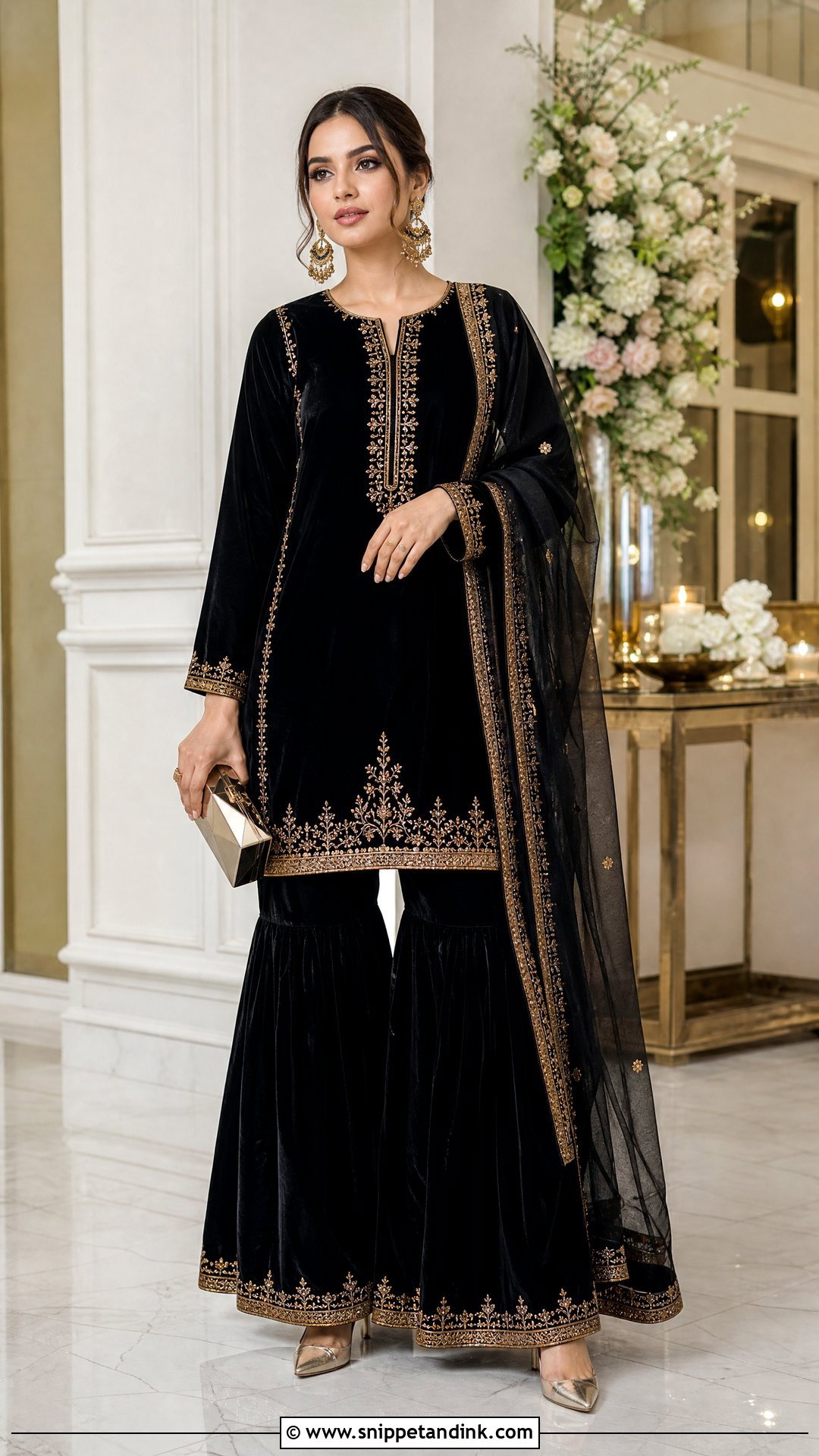
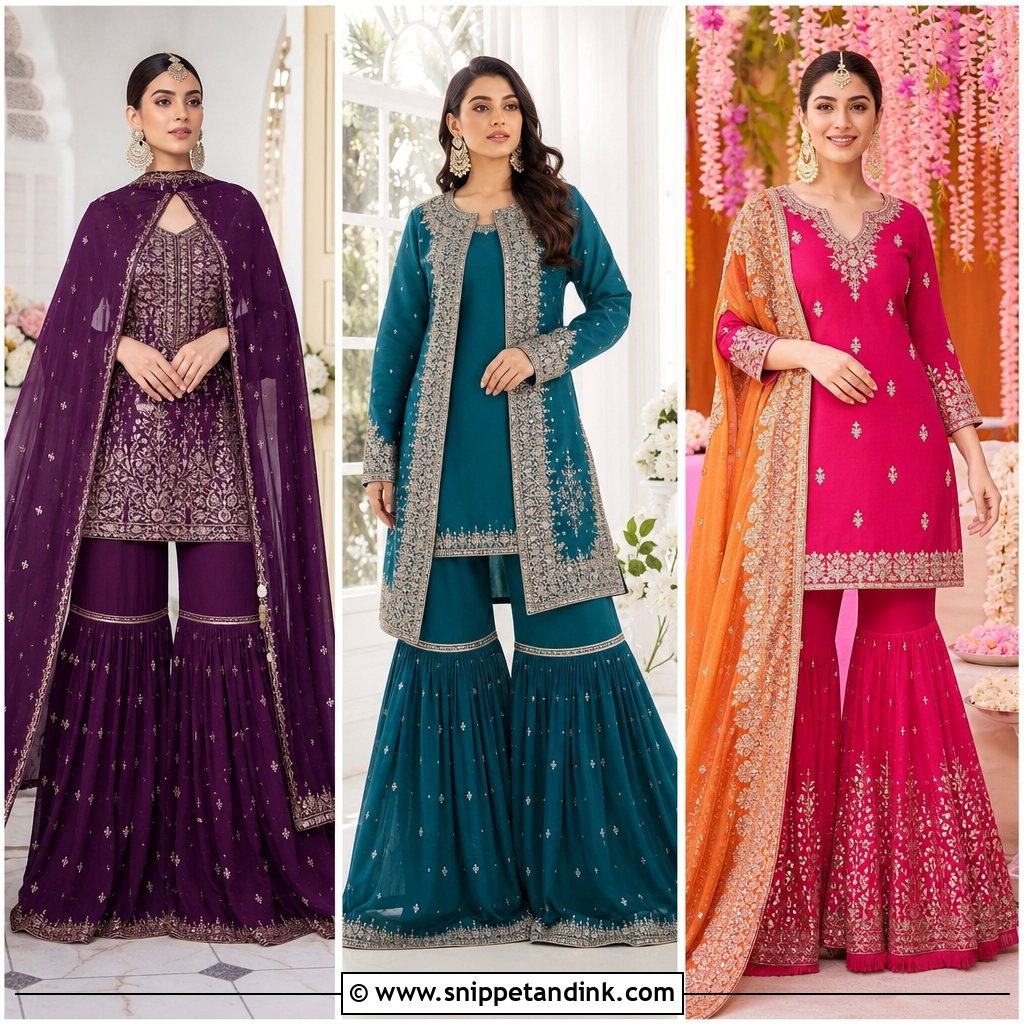
Black velvet suits an indoor winter reception. The flared velvet pants and short black kurta need only restrained gold embroidery at neckline and cuffs; velvet already looks rich, and too much metalwork on top makes it look heavy. One fabric note: velvet sharara pants are heavy, and the flare doesn’t swing as freely as georgette, so if you love the black velvet look but want movement, put the velvet on the kurta and cut the pants in crepe. A sheer black dupatta with a fine gold border, statement earrings, a cocktail ring and a metallic clutch complete it, with pointed gold heels or black juttis. A sleek low bun suits the formality.
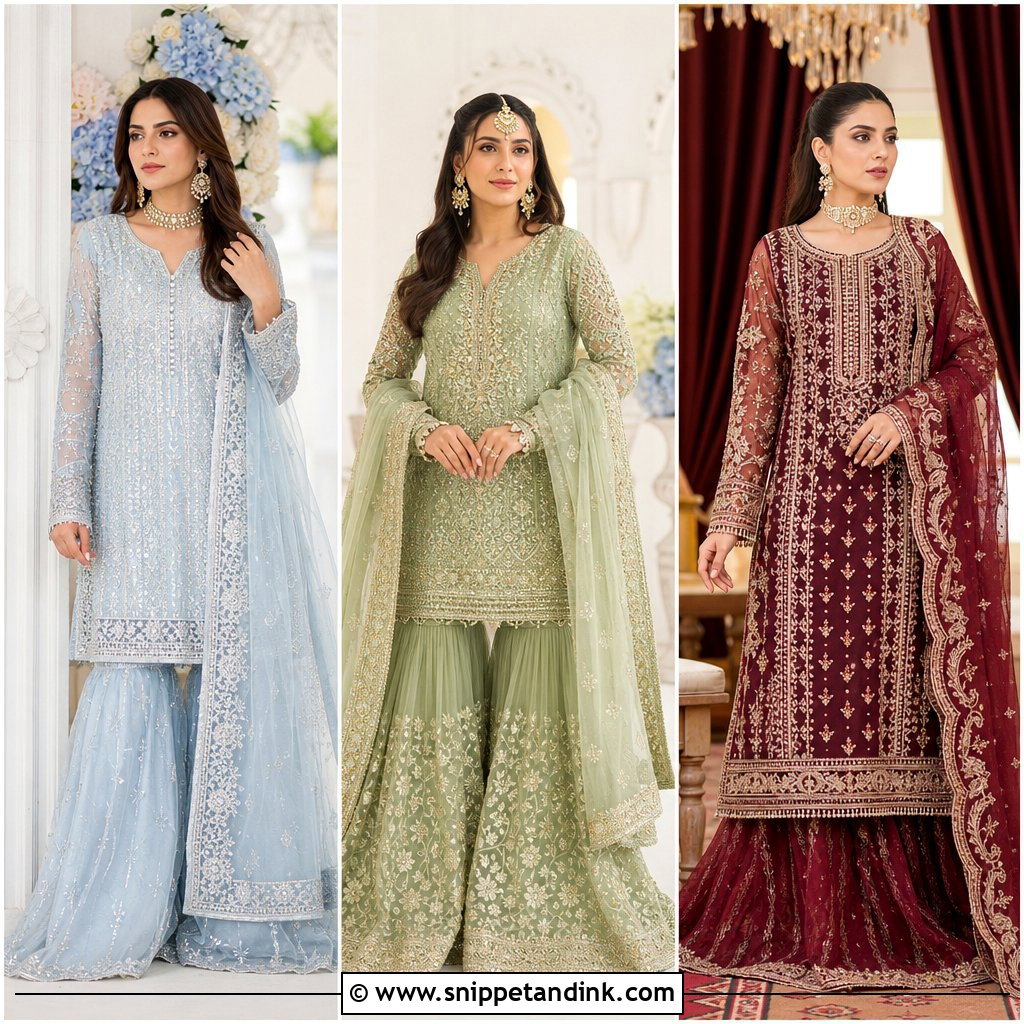
6. Pastel Blue Sharara With Organza Dupatta
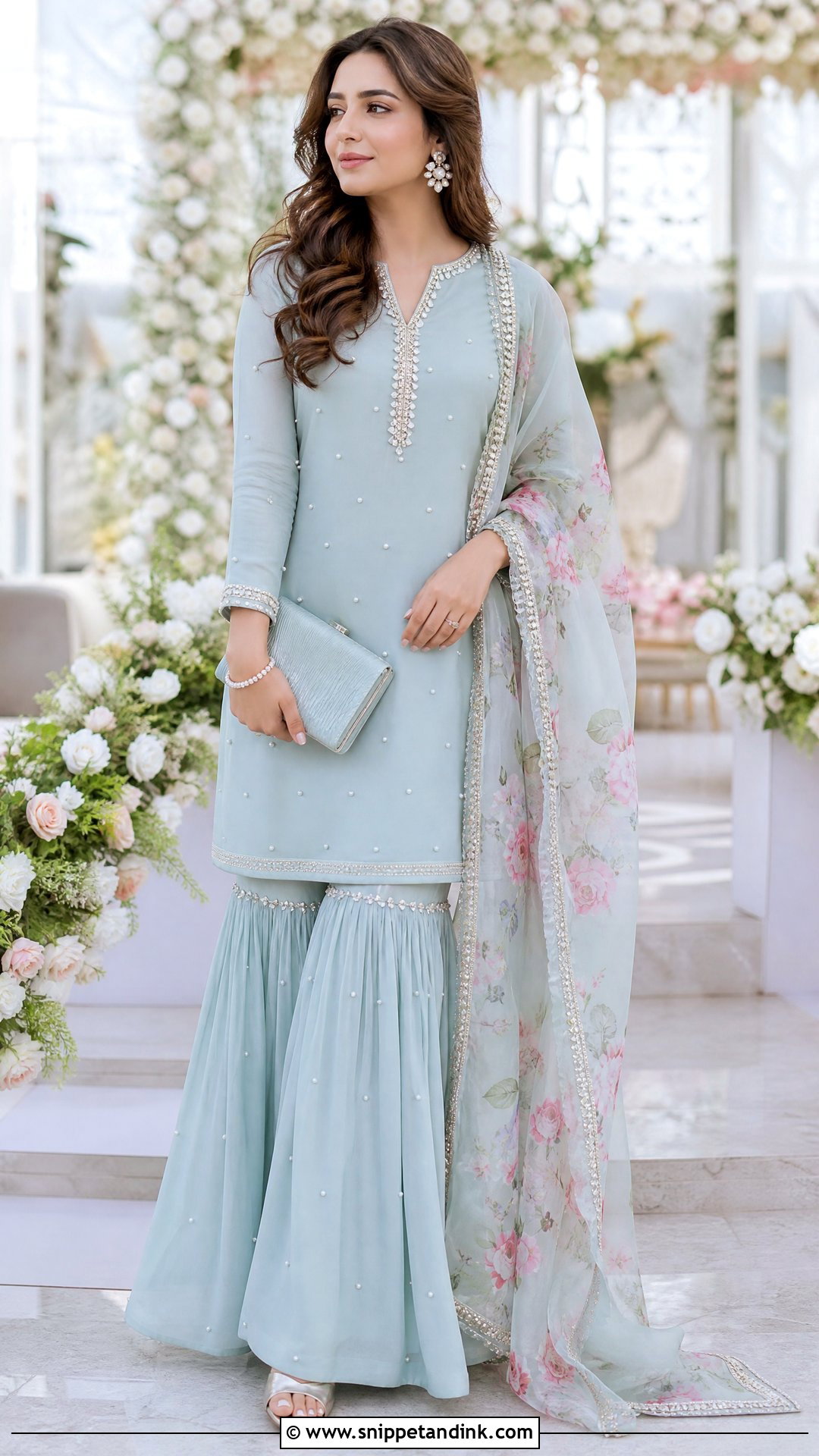
Pastel blue suits a morning or afternoon ceremony in natural light. A knee-length kurta in silk, georgette or light chanderi with pearl, sequin or silver thread detail sits over matching pants that are fitted to the knee and then open into several flowing panels. A transparent organza dupatta with floral embroidery adds texture to the single colour. Pearl drops, a slim silver bracelet, an icy blue clutch and silver block heels or pearl juttis keep the palette calm. Pastels can wash out under evening yellow lights, so I’d save this one for daylight and choose a deeper shade for a night function.
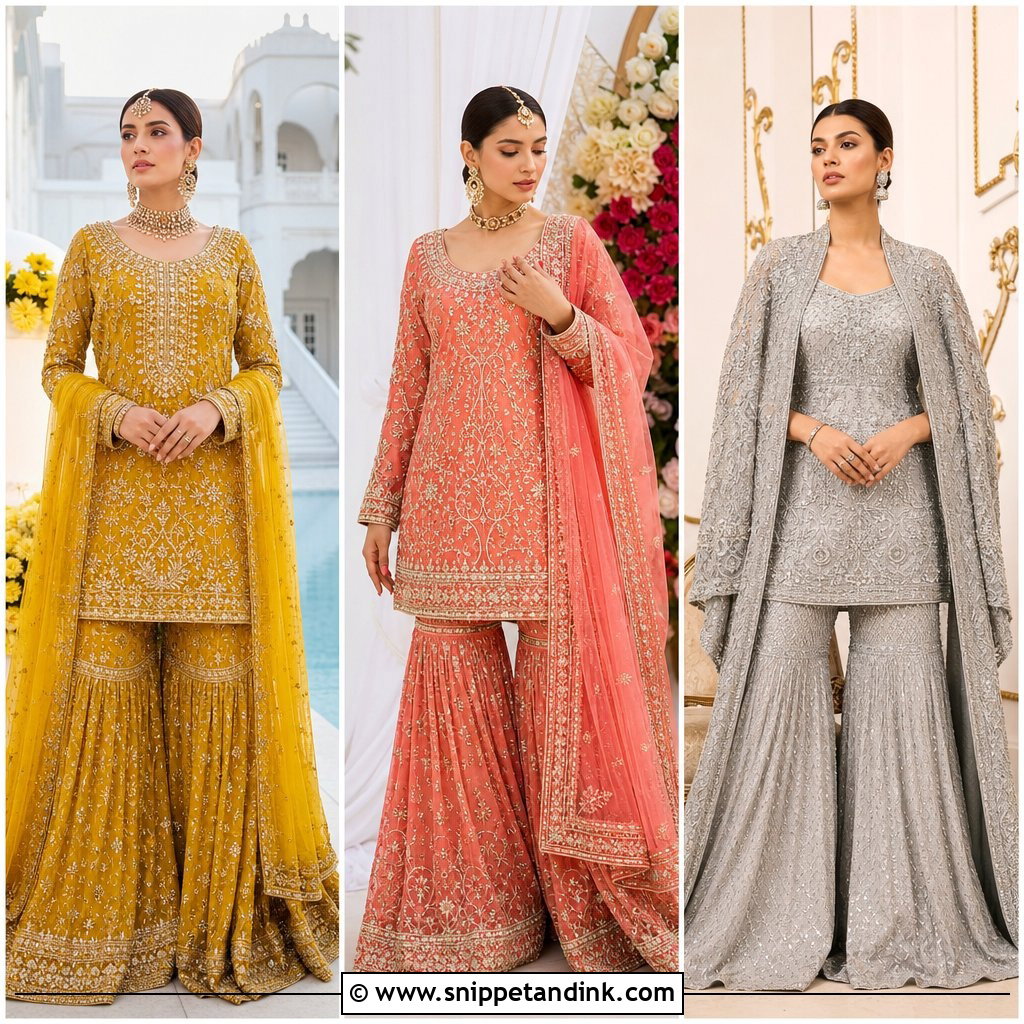
7. Yellow Sharara With Floral Dupatta
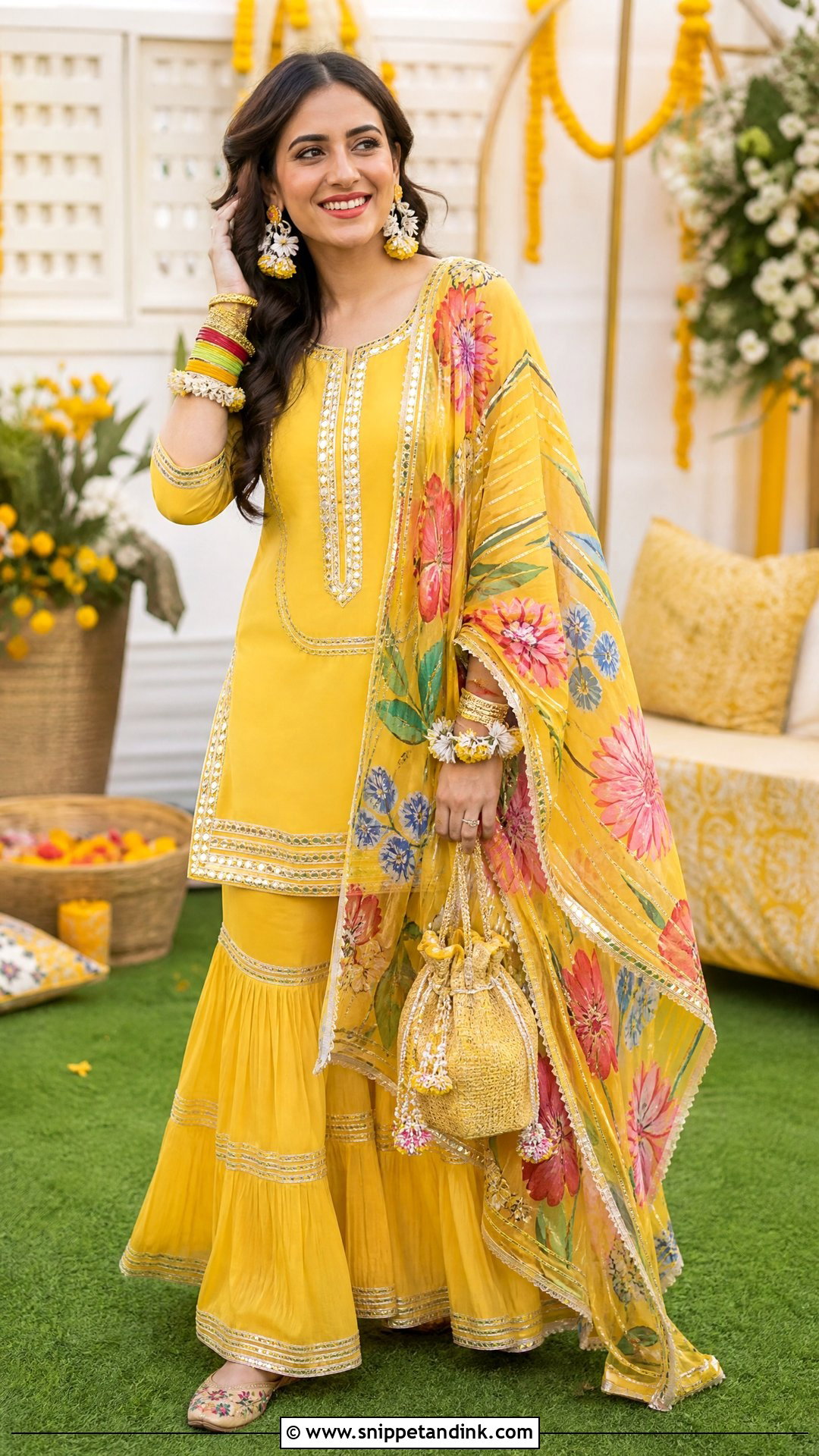
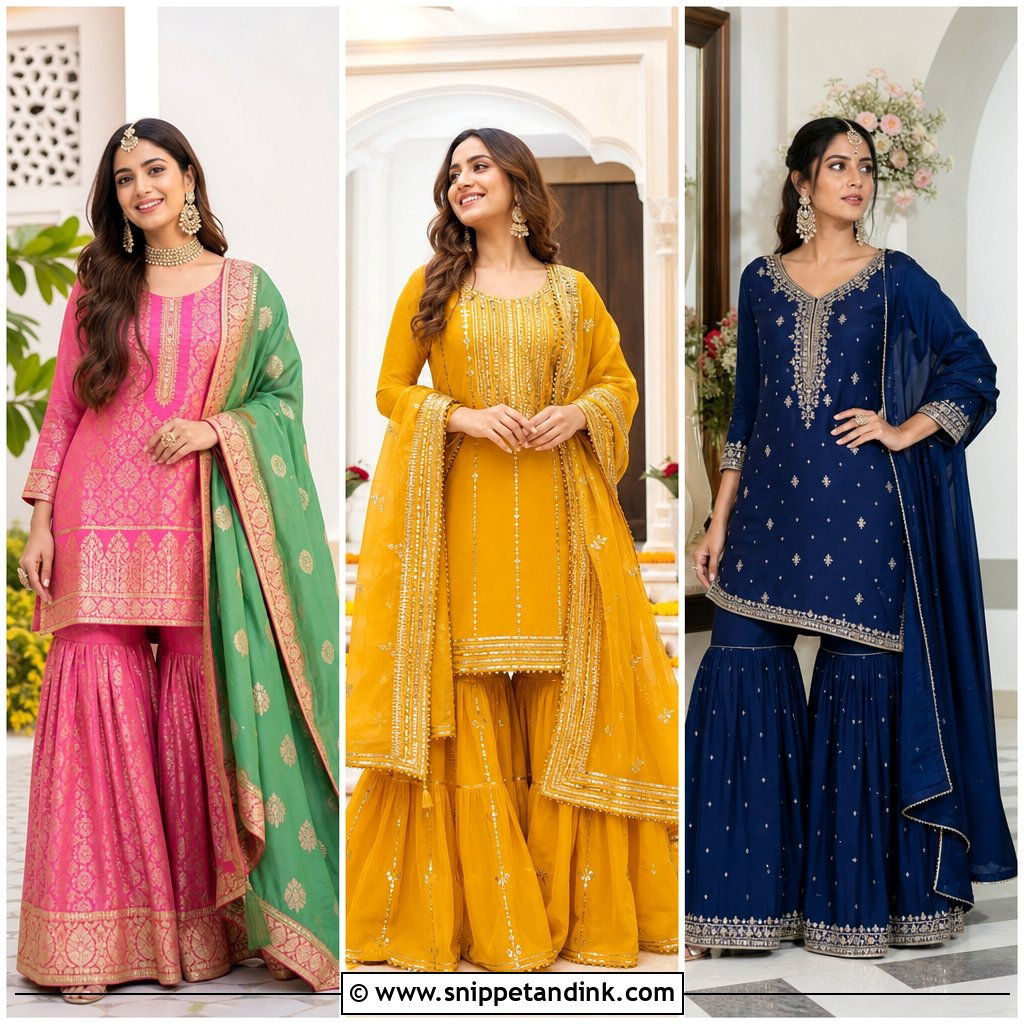
Golden yellow is the obvious colour for a haldi or daytime pre-wedding event, and it hides turmeric marks better than anything else. A simple short kurta with gota trim at neck and sleeves pairs with light, unlayered sharara pants. Let a floral-print or hand-painted dupatta in pink, orange, green and white carry the colour. Small floral earrings, colourful bangles, neutral juttis and a woven pouch keep it relaxed. If you’ll be in the haldi itself, skip delicate beadwork entirely; turmeric paste sticks in the gaps and stains thread permanently. A loose braid and waterproof makeup handle the mess.
8. Maroon Sharara With Long Kurta
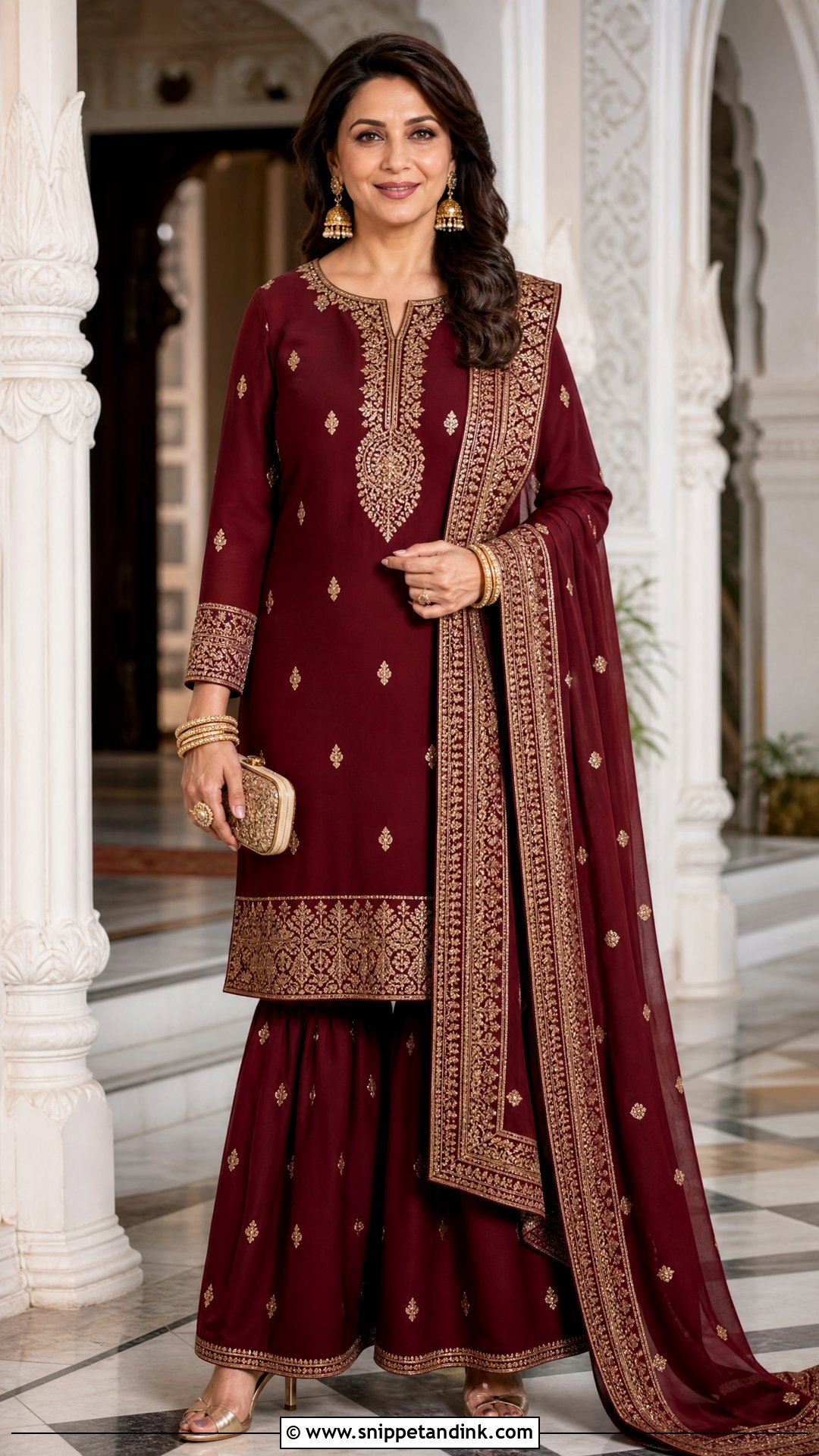
A long kurta with a maroon sharara gives a taller, streamlined line for an evening wedding. A calf-length kurta needs side slits cut high enough to show the flare, otherwise the pants disappear under it. Antique gold embroidery, velvet appliqué or fine zari borders suit the deep colour. I keep the sharara itself fairly plain when the kurta is long and worked, so the two layers don’t compete. Drape a matching dupatta over one shoulder and pin it at the waist. Antique jhumkas, gold bangles, a small embroidered clutch and low gold heels complete it, with a centre-parted bun and warm neutral makeup.
9. Lavender Sharara With Pearl Details
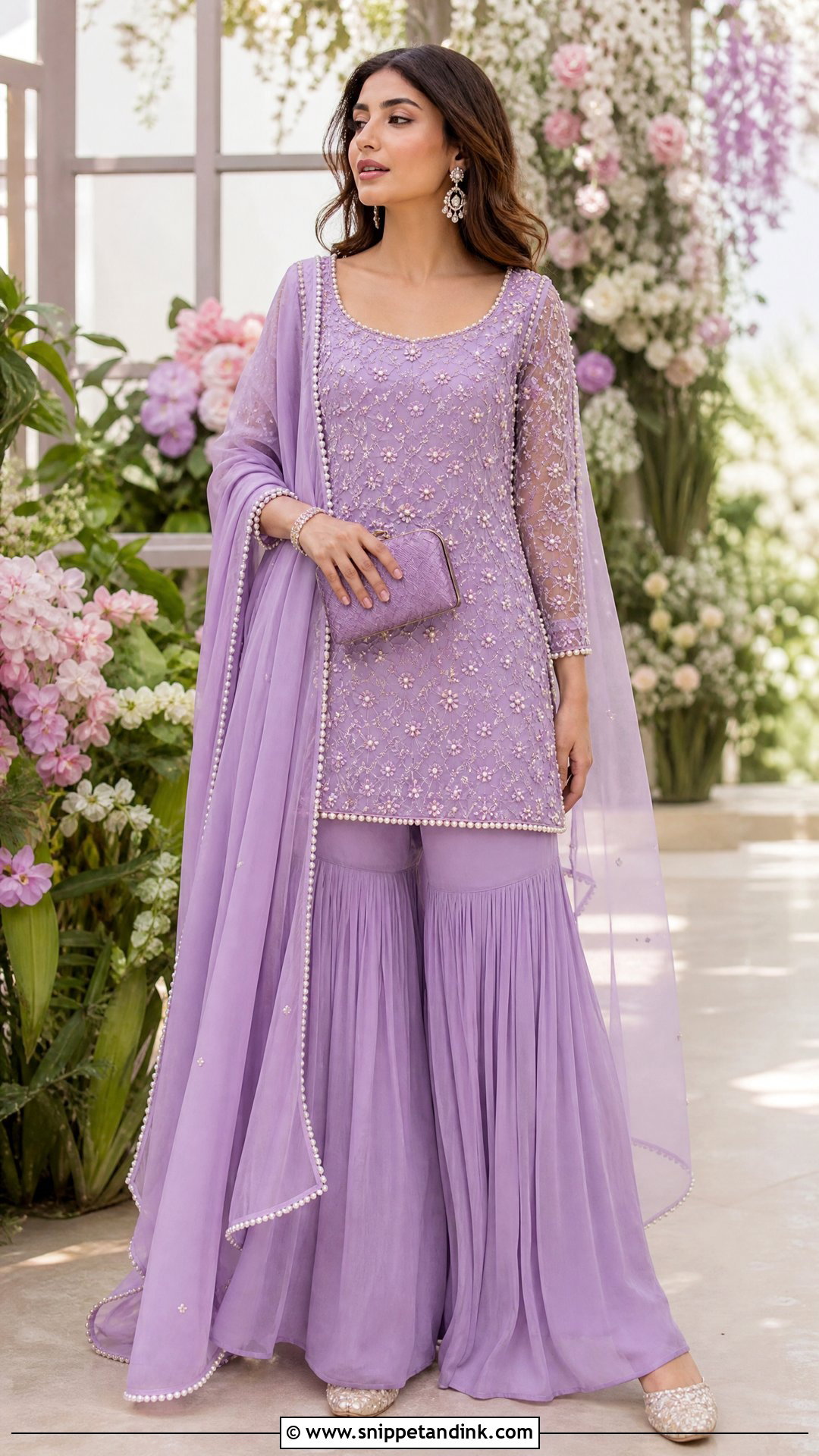
Lavender is a good answer if you’ve worn pink or beige to every family wedding. A short kurta with pearl clusters, fine silver sequins and tonal embroidery pairs with georgette or crepe sharara pants that move as you walk. A sheer lavender dupatta with a pearl-trimmed border keeps the palette coordinated. Silver chandelier earrings, a crystal bracelet and a grey or lavender clutch suit it, with pearl juttis for comfort or silver block heels for evening. Lavender can make some skin tones look sallow, so I’d hold the fabric against your face in daylight before committing, and lean on cool-toned eye makeup with a muted rose lip.
10. Orange Sharara With Gota Patti Work
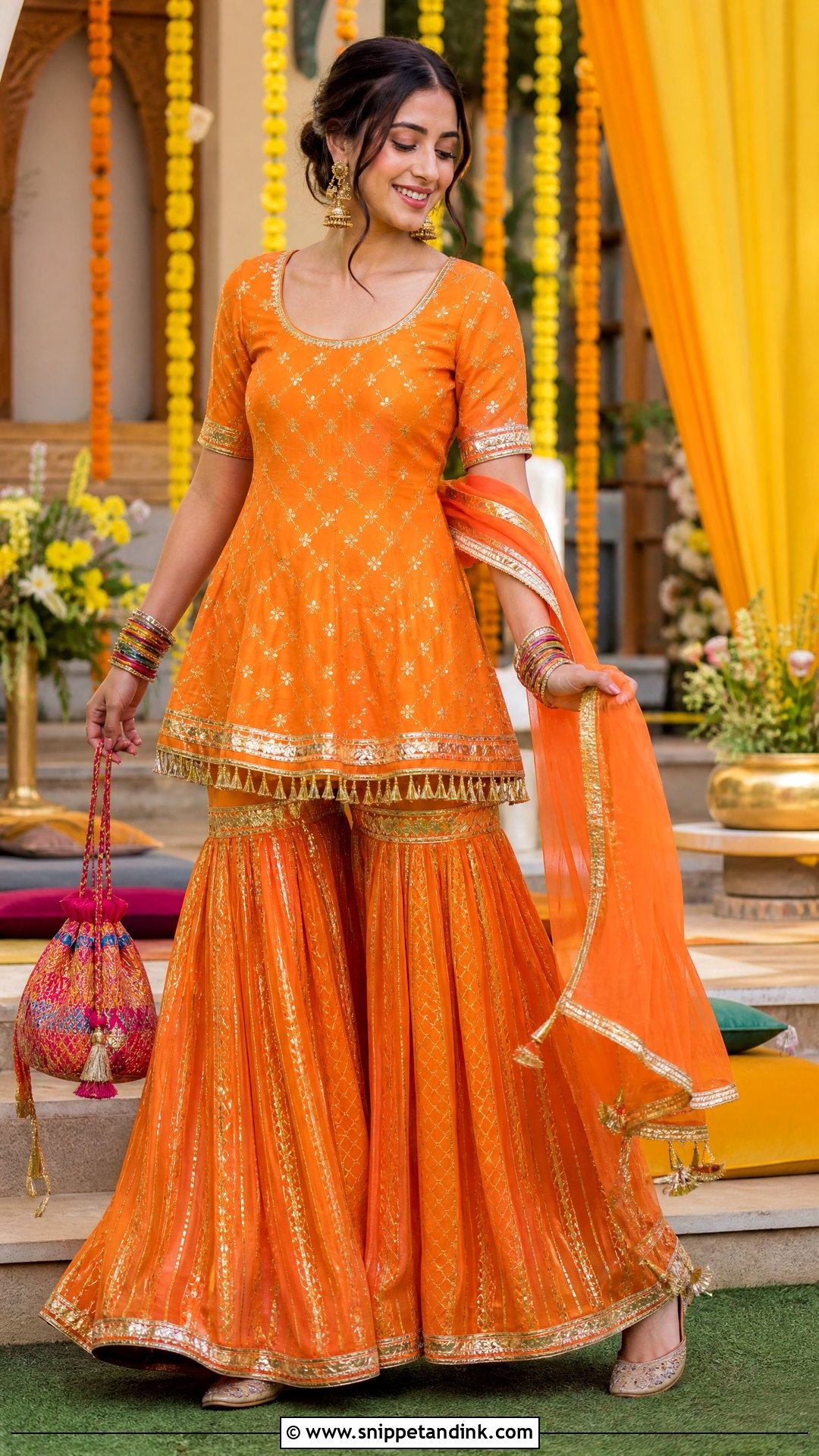
Gota patti is ribbon of metallic tissue cut and stitched into patterns, and it’s lighter than metal-thread embroidery, so it suits a dancing outfit. Vivid orange and reflective gota patti on a fitted short kurta, with geometric patterns at neck, sleeves and waist, pairs with a generously flared sharara bordered in gold near the hem. A light matching dupatta with small gota motifs and corner tassels finishes it. Gold jhumkas, colourful bangles and a bright potli add play. Gold juttis are easier than heels for dance-heavy nights, and a braided ponytail stays put.
11. Navy Blue Sharara With Sequin Kurta
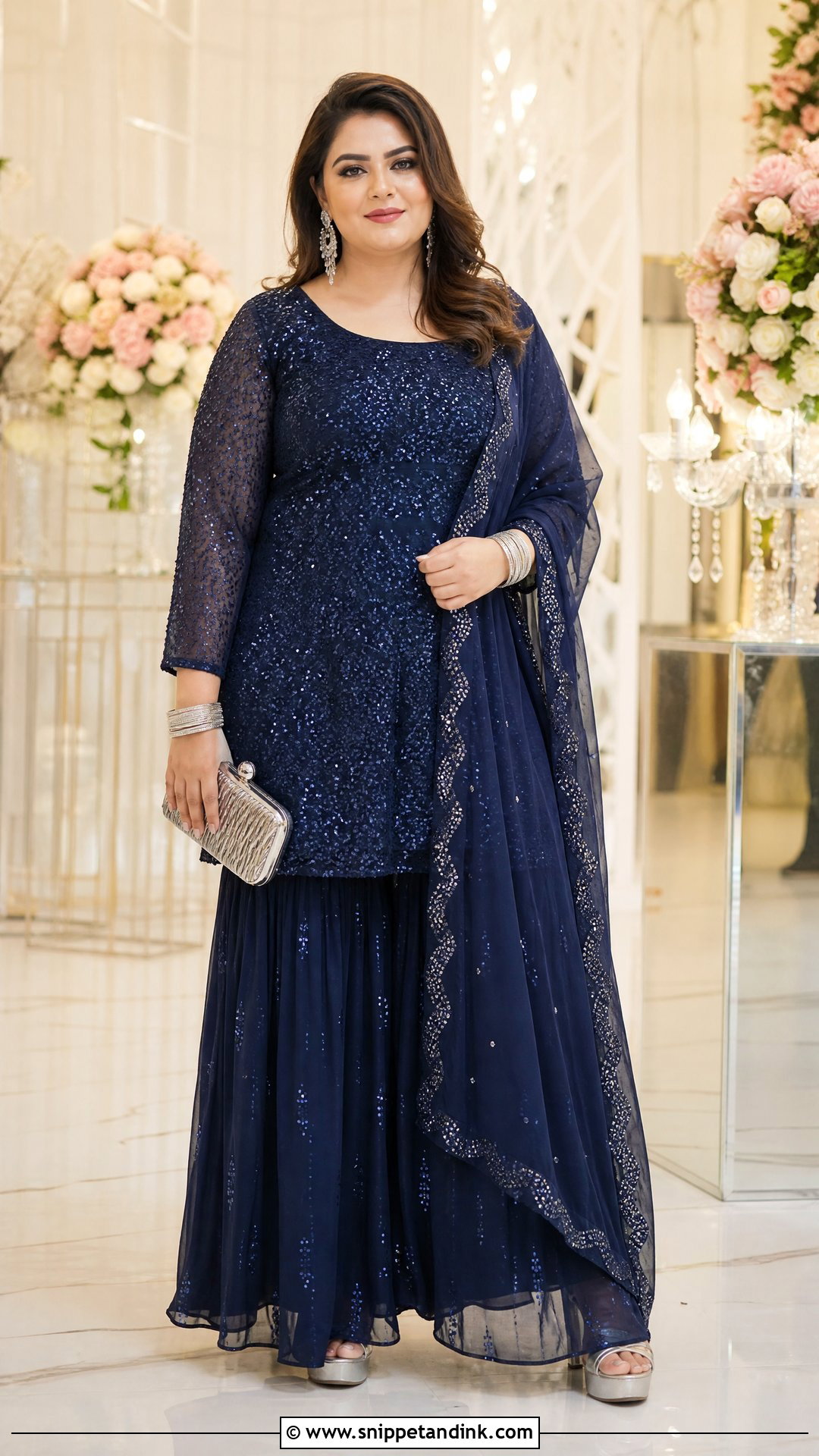
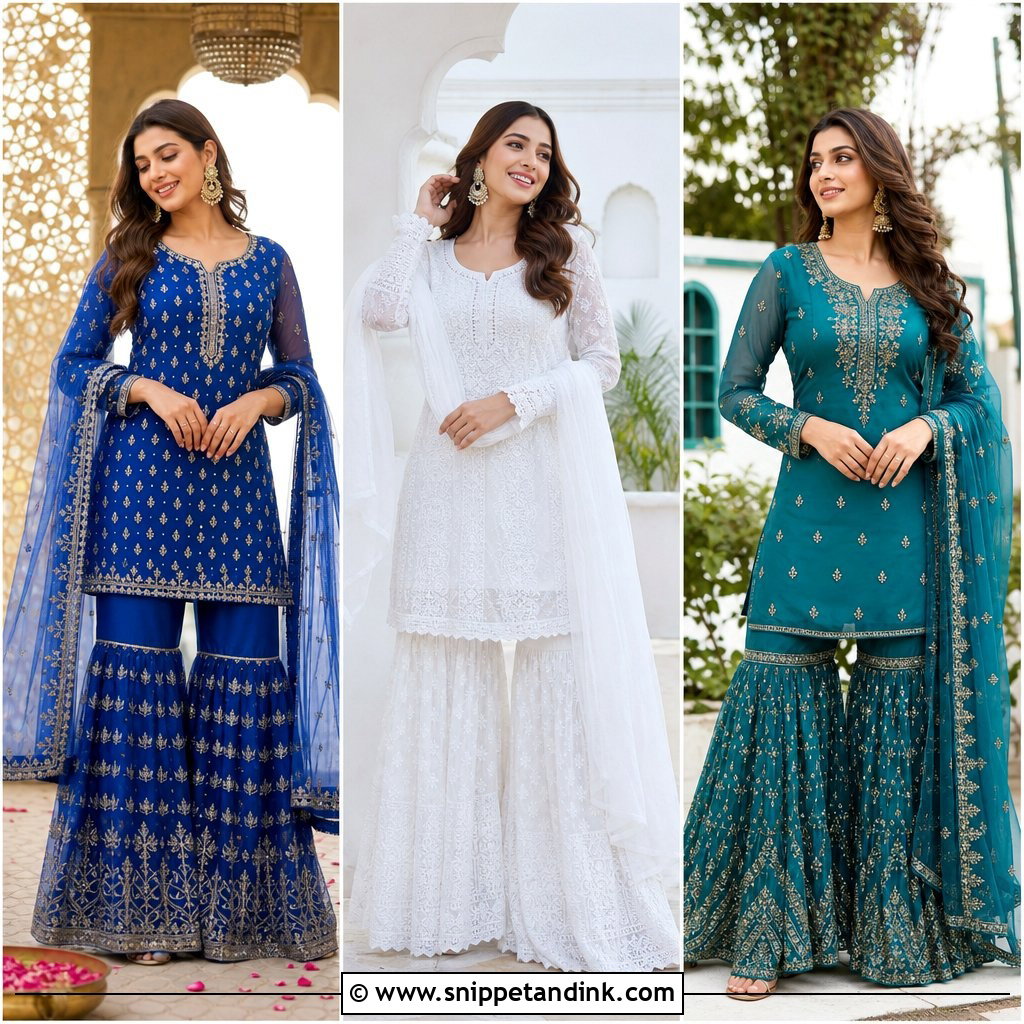
Navy suits a reception that leans glamorous. A short sequin kurta in navy, silver or tonal blue over plain or lightly worked pants creates contrast between a sparkling top and a fluid bottom. Wear the sheer navy dupatta over one arm rather than across the kurta, or you’ll cover the sequins. Crystal earrings, a silver clutch and slim bangles finish it, with silver platforms if the sharara sweeps the floor. A word on sequins: cheaper sequins on a kurta scratch the inside of the arms when you dance, so check the lining covers the back of the embroidery fully.
12. White Sharara With Colorful Embroidery
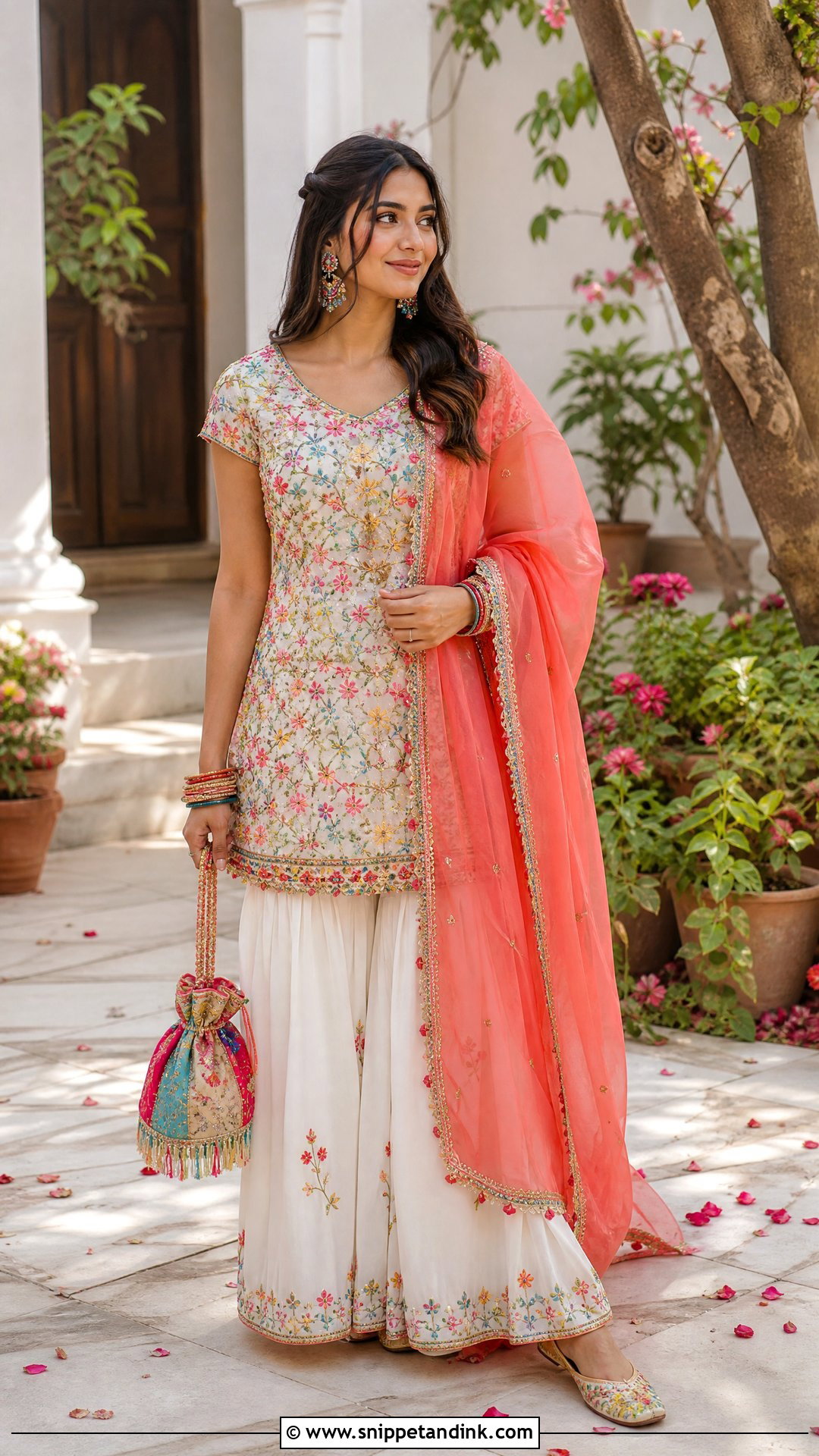
White with multicoloured threadwork looks cheerful rather than bridal. A short kurta embroidered in coral, turquoise, yellow, green and pink sits over airy white pants with matching borders. Pick a dupatta in one accent shade for contrast, or white organza with floral motifs. Colourful earrings, mixed bangles, a bright potli and white juttis with coloured stitching complete it. As with ivory, check with the hosts first, as white carries specific meaning in some families. White also shows every mark, so I’d only wear it to an event where you won’t sit on the floor or be anywhere near turmeric.
13. Teal Sharara With Cape Top
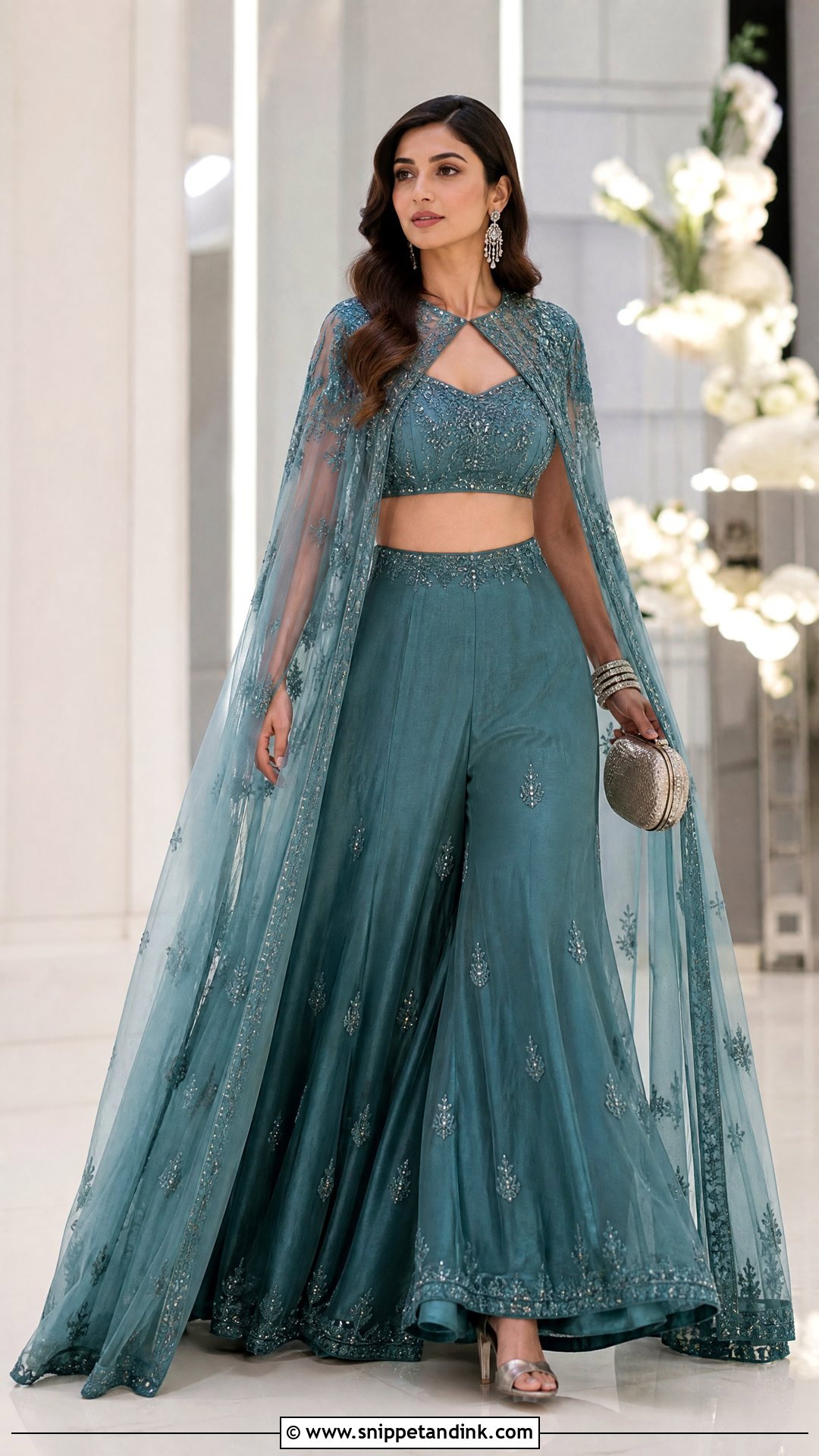
A cape is the modern swap for a dupatta, and it frees both hands for greeting, carrying a clutch and dancing. Start with a sleeveless or short-sleeved teal blouse fitted at the waist and matching wide pants with subtle hem embroidery, then layer a sheer floor-length cape with beaded shoulders or an embellished border. Crystal earrings, a metallic minaudière and silver or pewter heels finish it; skip the necklace if the cape neckline is worked. Check the cape length with your heels on, because a floor-length cape over a full sharara gets stepped on easily. It’s well matched to a reception or upscale sangeet.
14. Peach Sharara With Chikankari Kurta
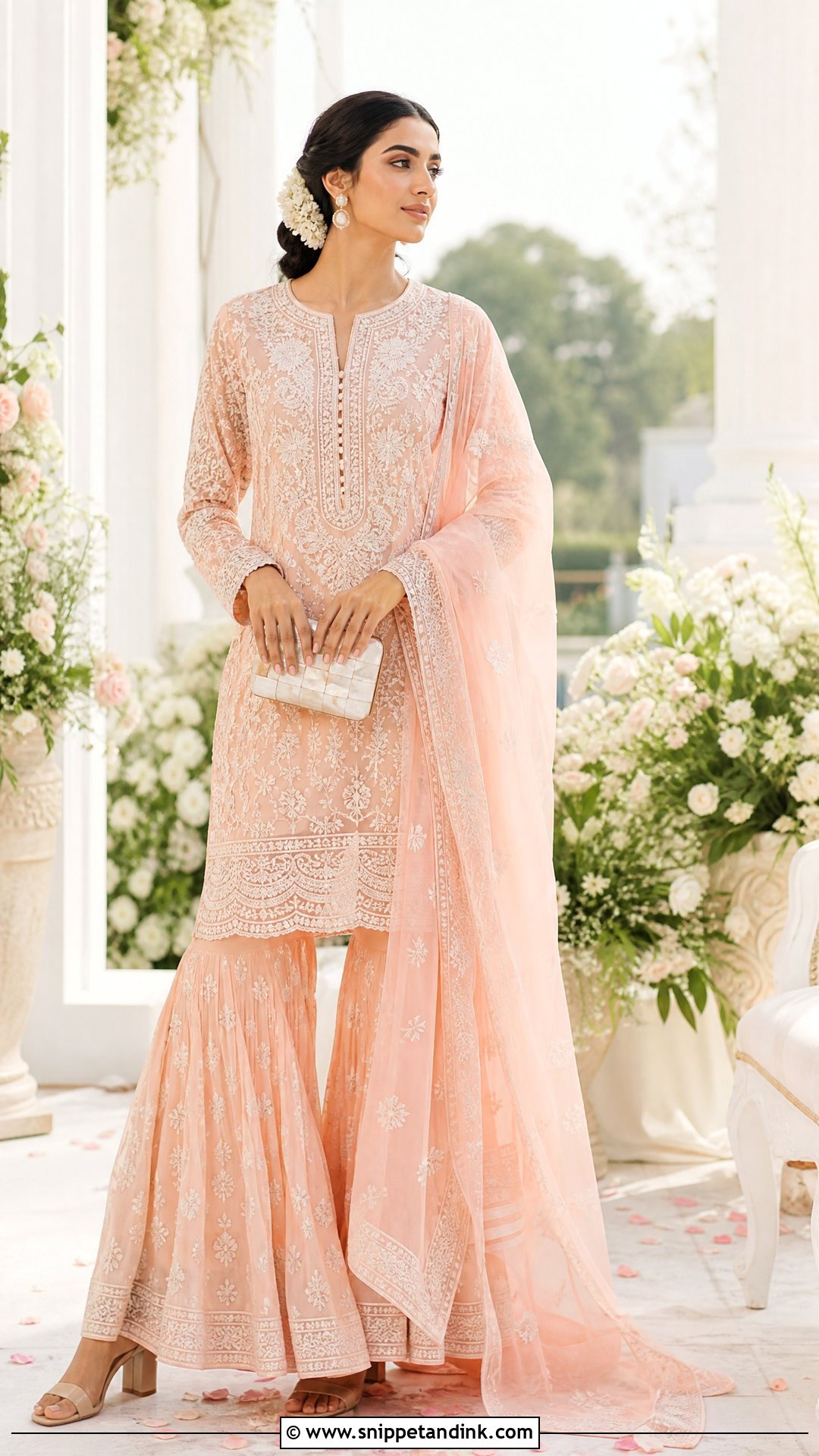
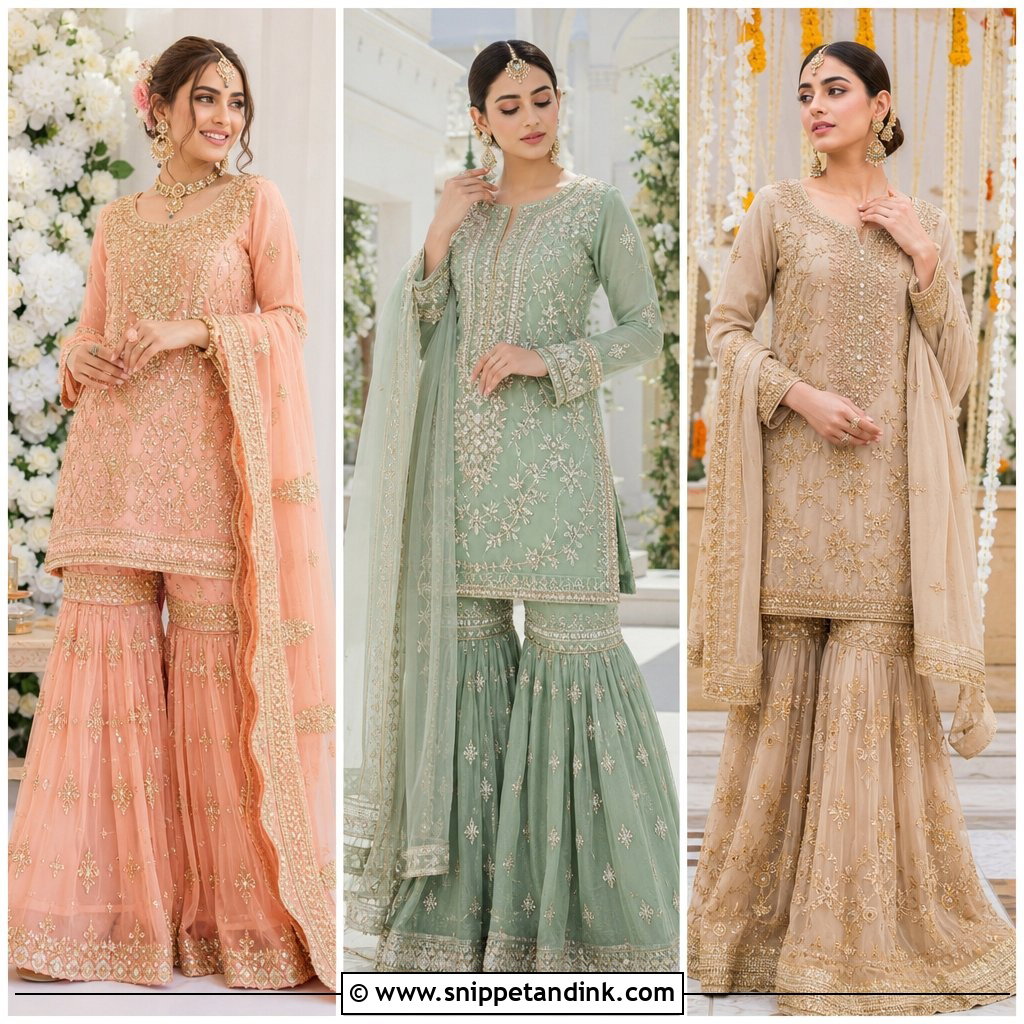
Chikankari is fine hand embroidery traditionally worked on light fabric, and its quiet tonal threadwork is easily overwhelmed by too much else. A knee-length peach kurta with tonal stitching, small sequins and a scalloped hem suits breathable georgette or cotton silk pants. Pick an organza dupatta with fine edges rather than a heavy border. Pearl earrings, a mother-of-pearl clutch, nude block heels or ivory juttis with peach stitching all keep it understated. A low bun with tiny white flowers suits daytime. Keep makeup rosy and soft, since strong colour drowns the delicate embroidery.
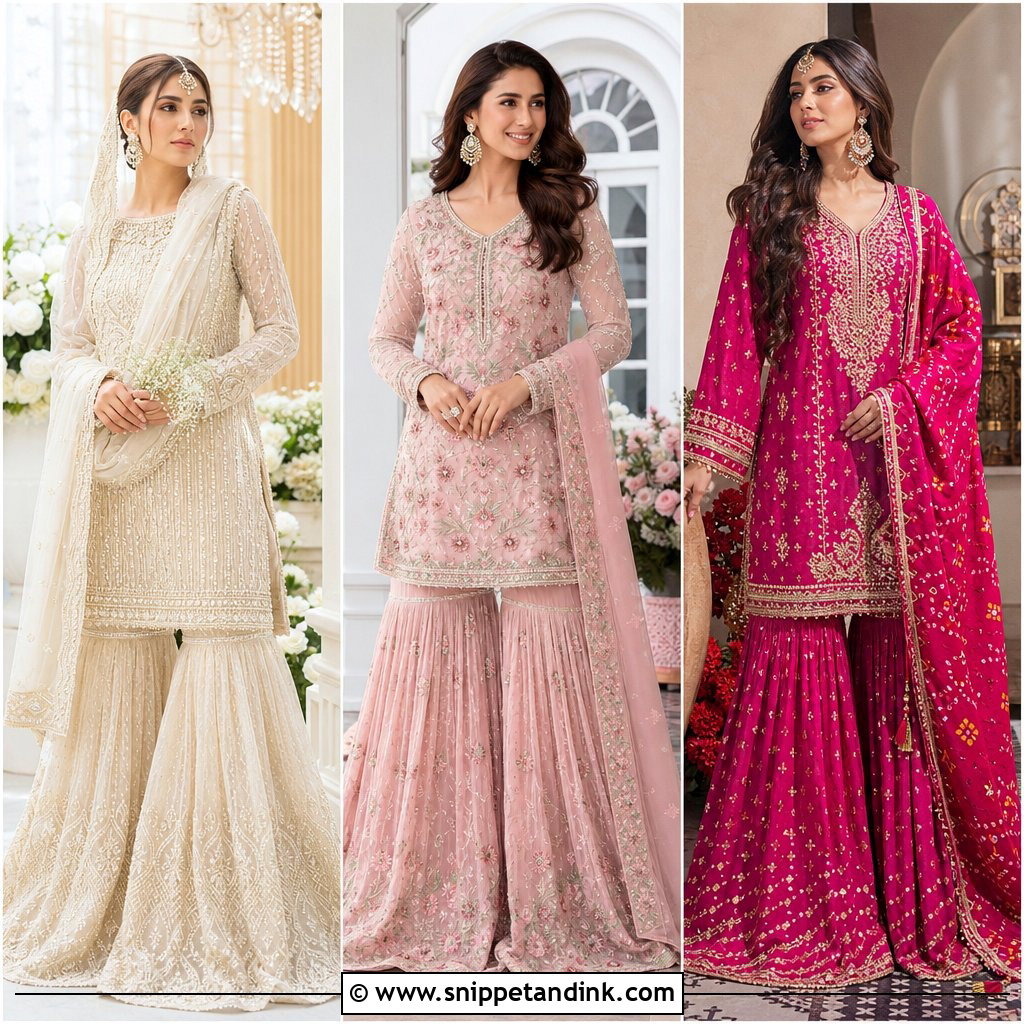
15. Purple Sharara With Asymmetrical Kurta
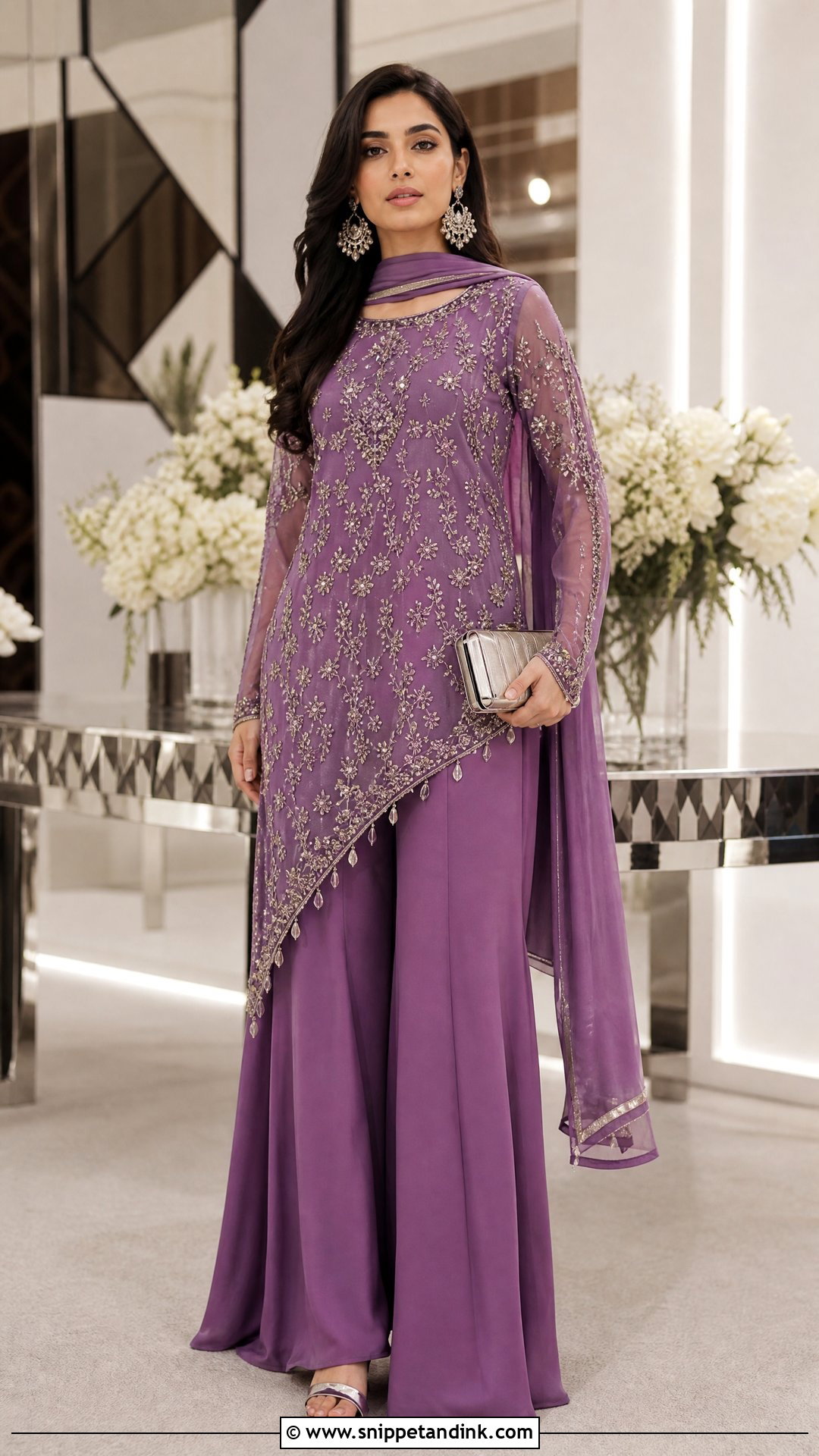
An asymmetric kurta gives the classic sharara a sharper edge: a shorter front, longer side panels or a diagonal hem that shows the flare beneath. The embroidery should follow the hemline so the cut is emphasised rather than lost. Plain purple pants in fluid crepe or georgette keep the attention on top. A narrow dupatta over one shoulder is optional if the neckline and sleeves give enough coverage. Statement earrings, a structured silver clutch and metallic heels are enough. At fittings I check the asymmetric hem when you’re walking, not standing, because a diagonal cut that looks right still can swing awkwardly once you move.
16. Beige Sharara With Jacket Kurta
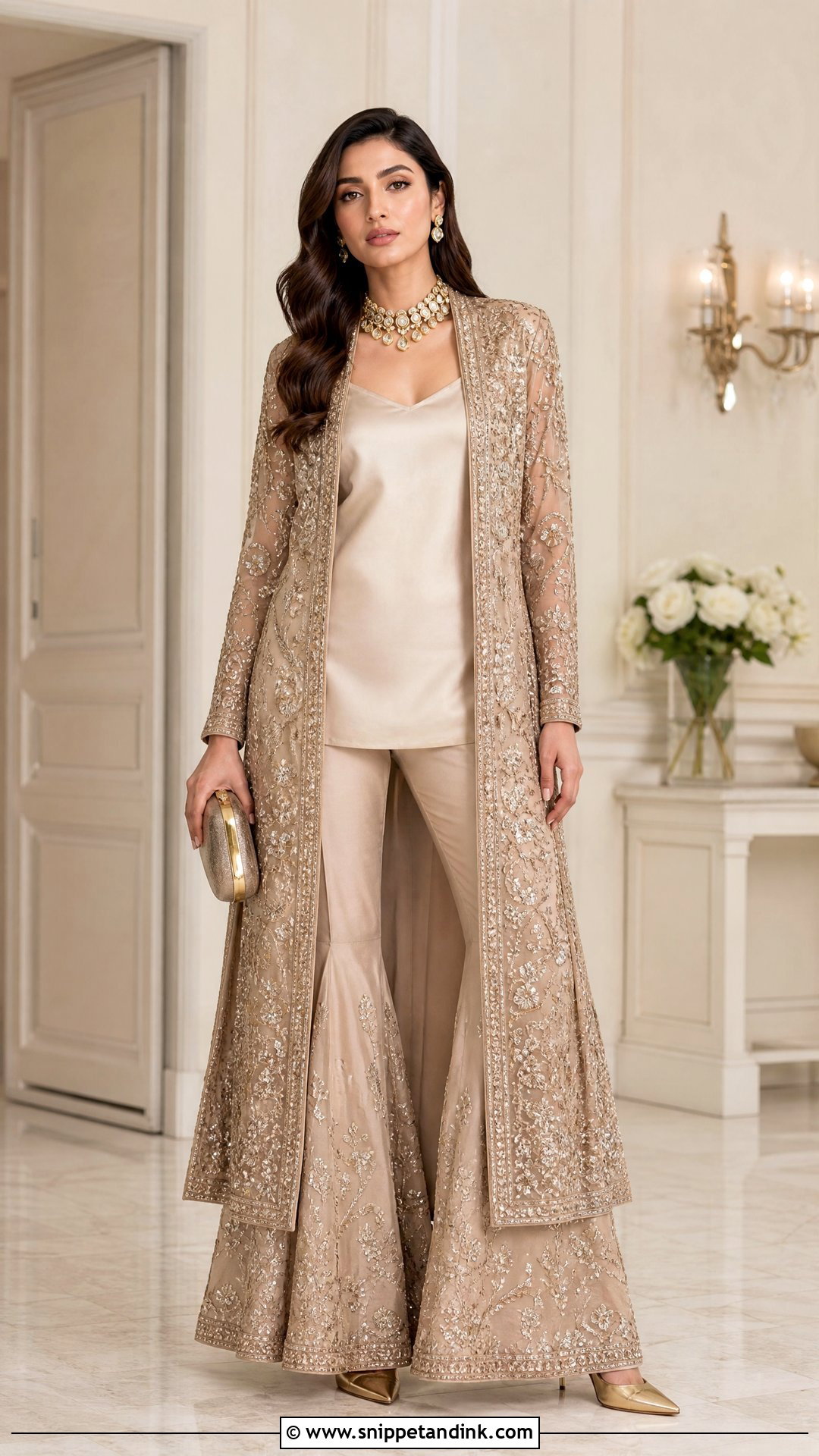
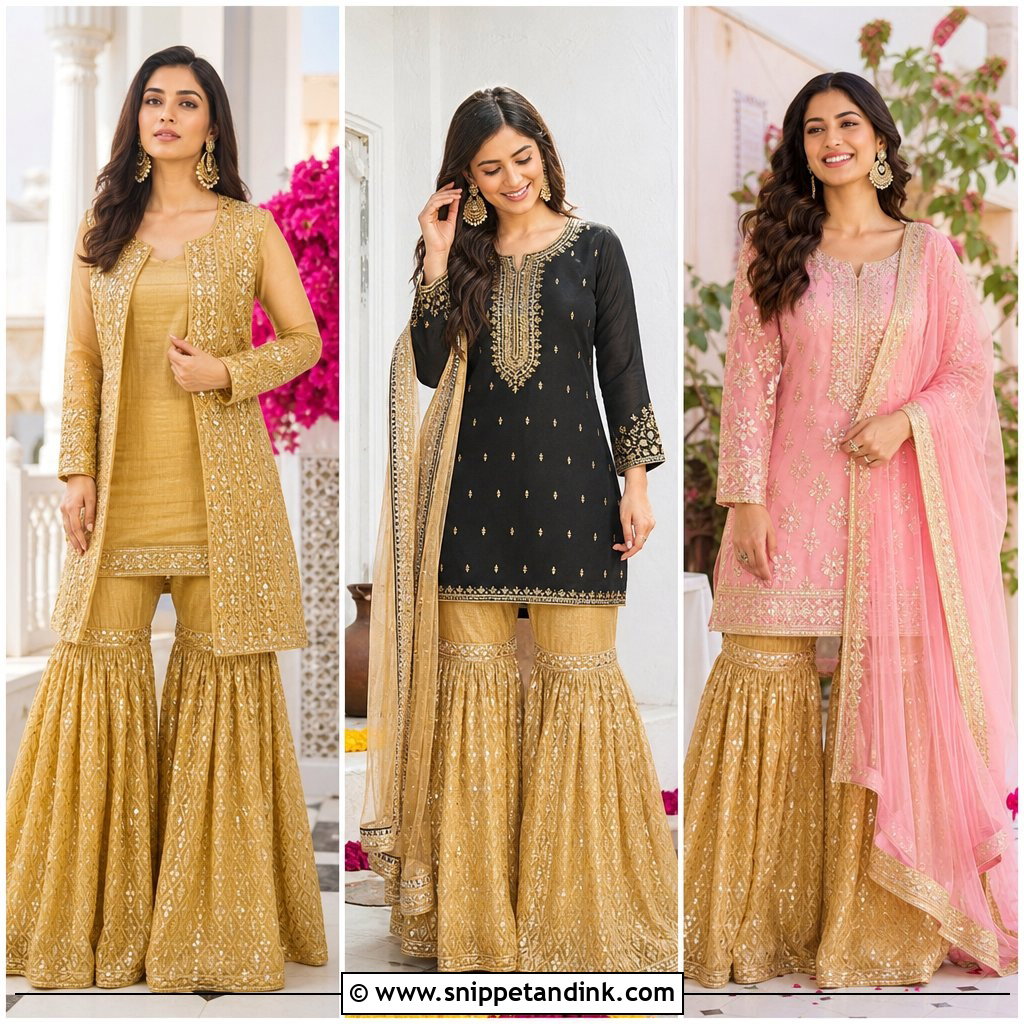
A long embroidered jacket turns a neutral sharara into a layered look that’s ideal for cooler evenings. A beige or champagne camisole and matching flared pants form the base; a knee- or calf-length open jacket with gold threadwork, sequins or florals goes over the top. The jacket should skim the body and stop above the widest part of the flare so the pants still show. With a layer this decorative, a dupatta usually isn’t needed. A kundan necklace, small earrings and a structured gold clutch balance it. Pointed metallic heels lengthen the leg under the wide pants.
17. Floral Print Sharara With Crop Top
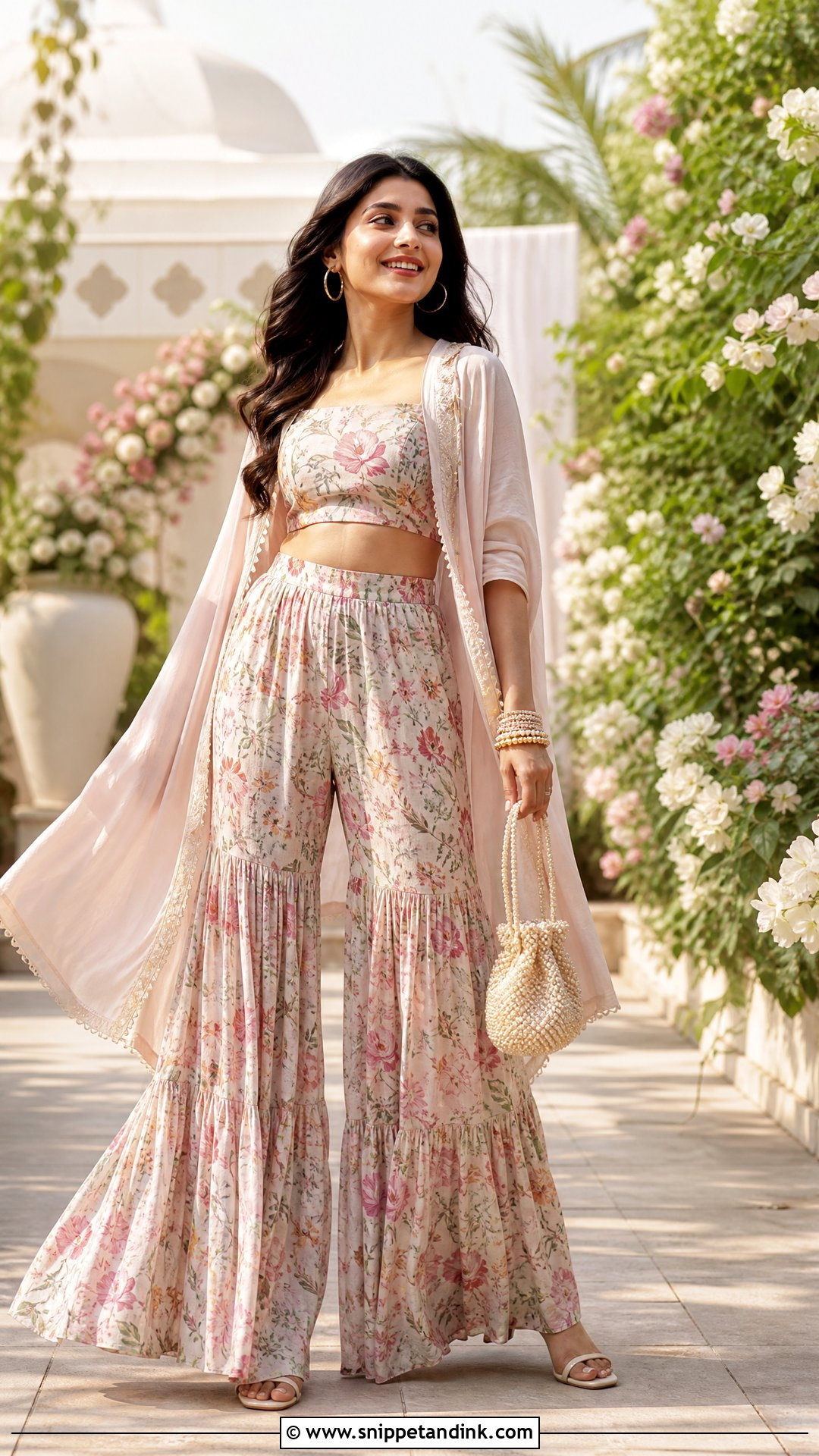
A printed floral sharara with a crop top is the relaxed choice for an outdoor or destination wedding. Pick high-waisted pants and a coordinated crop top with comfortable straps or short sleeves, then add a light solid jacket or organza dupatta in one colour pulled from the print. Keep embellishment minimal, since the print supplies the interest. Hoops, slim bangles and a woven or beaded bag suit it. Shoes depend on the ground: block heels on paving, embellished flats on lawns where heels sink. High-waisted means truly high, so the crop top meets the waistband when you raise your arms to dance.
18. Silver Gray Sharara With Embellished Blouse
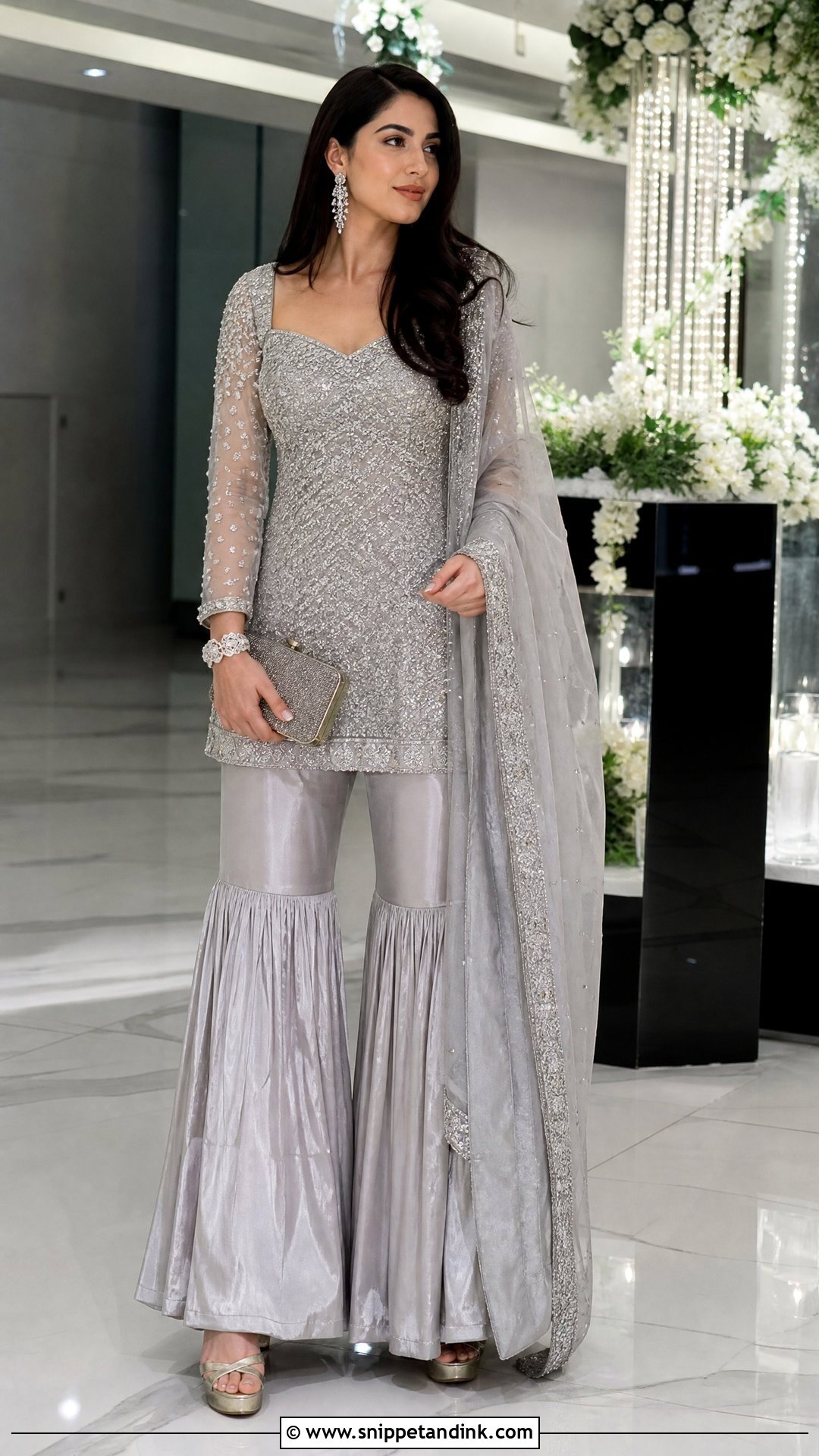
Silver grey makes a sleek evening monochrome. A fitted embellished blouse with crystal, bead and sequin detail in the same cool family pairs with high-waisted pants in satin, crepe or soft georgette. A sheer grey dupatta with a narrow crystal border drapes loosely from one shoulder. Diamond-style earrings, a silver box clutch and metallic platforms complete it. If the blouse is heavily worked, skip the necklace and wear one statement bracelet. Grey satin shows creasing at the lap more than most fabrics, so steam it right before you dress and stand rather than sit for the drive if you can.
19. Rani Pink Sharara With Bandhani Dupatta
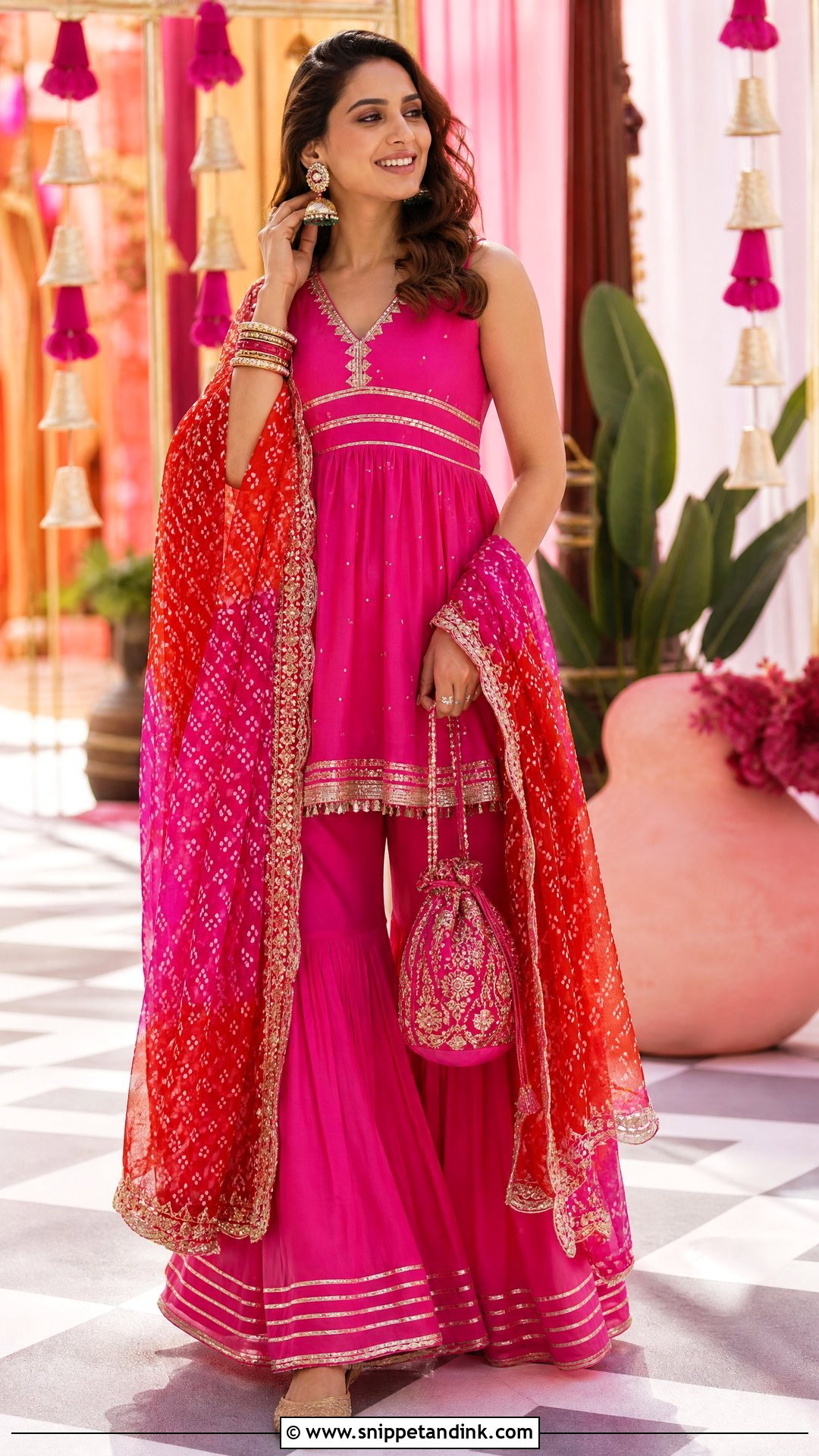
Rani pink is a deep, saturated pink that holds its own at a mehndi or sangeet. A solid or lightly embroidered short kurta pairs with wide pants edged in gold gota, and a contrasting Bandhani dupatta in red, orange or a deeper pink becomes the focal point, so the kurta stays restrained. Traditional jhumkas, stacked bangles, a small embroidered potli and gold juttis that echo the gota finish it. A braided bun or long braid with small flowers suits the mood. Bandhani dyes can bleed if they get wet, so keep it away from water and colour games.
20. Emerald Green Sharara With Velvet Kurta
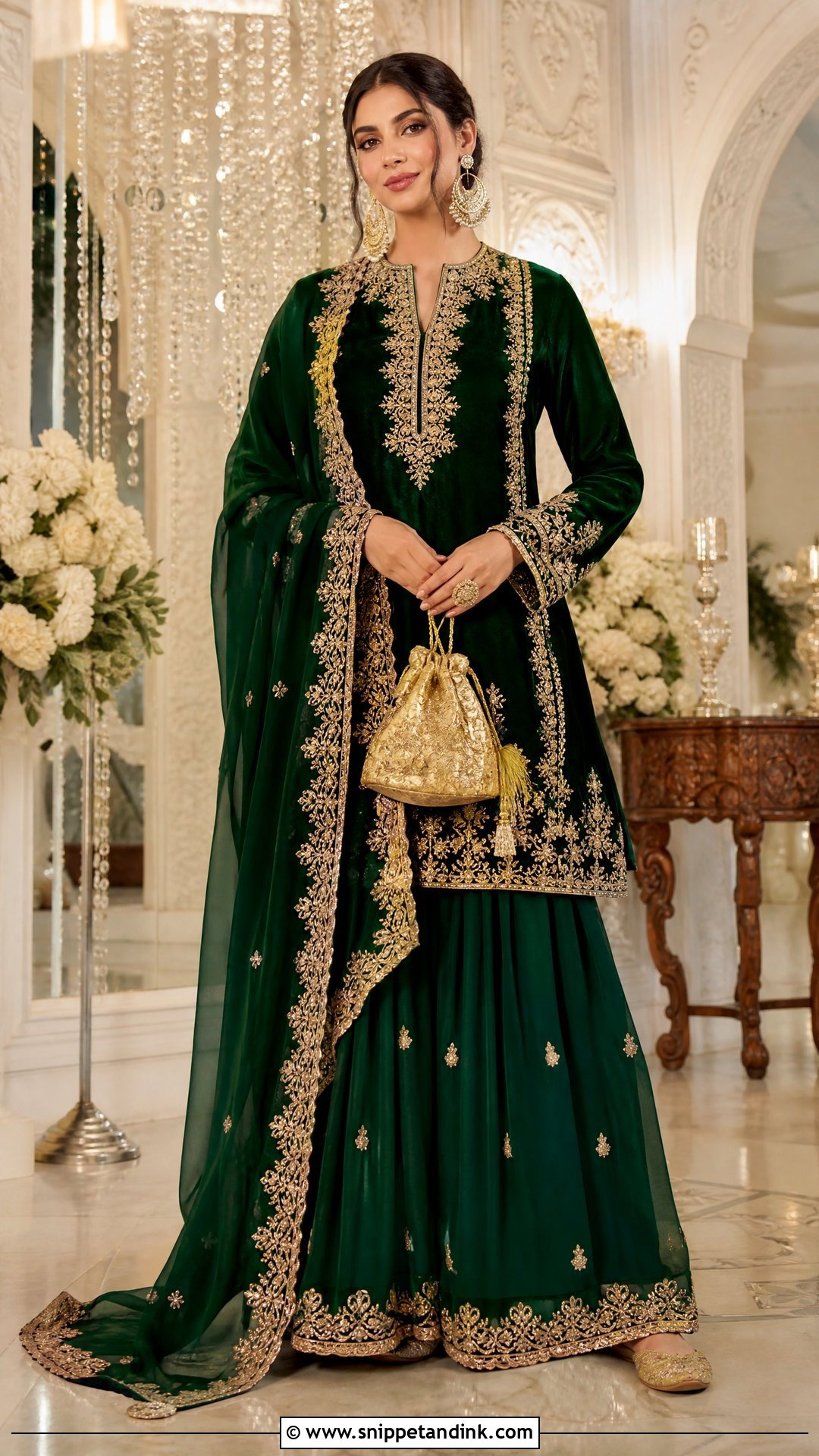
Emerald velvet is my winter pick for a formal evening. A short velvet kurta with antique gold embroidery at the neck, cuffs and hem pairs with sharara pants in lighter crepe or georgette, which keeps the outfit from feeling like a blanket and lets the flare actually swing. A sheer green dupatta with a gold border and small motifs finishes it. Kundan earrings, a statement ring and a gold potli suit it, with embroidered juttis or block heels. A sleek low bun shows off the neckline, with warm bronze makeup and a berry lip.
Stairs, Floor Seating and the Bathroom in Wide Pants
Nobody shows you this part on social media, but it decides whether you enjoy the evening.
- Ask the tailor for a side zip and a hook, or an elastic back panel, rather than a drawstring alone. Drawstrings loosen as you dance and are fiddly to retie in a cubicle.
- On stairs, gather a handful of fabric at each thigh and lift slightly, the way you would with a long skirt. The flare is wider than it looks.
- Sitting cross-legged on the floor at a mehndi, tuck the flare under your knees first so you aren’t sitting on the embroidered hem, which crushes the work.
- In the bathroom, the same trick applies: gather both legs up before you sit. A dupatta pinned on both shoulders is far easier to manage than one just thrown over.
- Ask for pockets in the side seams. A sharara has plenty of fabric to hide them, and you’ll be grateful for somewhere to put your phone.
After the event, hang the sharara by its waistband so the flare drops straight, and store heavy embroidered sets flat, wrapped in muslin, so the metal thread doesn’t rub and tarnish.
The Kurta Sets the Mood, the Flare Sets the Comfort
A good sharara balances its flare, its detail and how comfortable it is for the hours you’ll wear it. Light georgette sets and pinned dupattas belong at daytime functions and dance-heavy nights, while velvet, zardozi and layered jackets suit formal evenings. Think about the venue, the season and what the family expects of guests before you pick a colour. Let jewellery frame the neckline and embroidery rather than pile on top of it, and wear the shoes you’ll dance in to your final fitting so the hem is right. The best set is the one you forget you’re wearing.
You'll Like These Ideas:


Leave a Reply