
Green turns up at almost every Indian wedding I dress for, across the mehndi, the sangeet and the reception, and it suits a surprising range of people. Mint and sage belong to daytime; emerald and bottle green carry an evening. The looks below mix pre-draped sarees, lehengas, shararas, cape sets and Anarkalis, and most of them can be scaled up for a bride or toned down for a guest by changing the fabric weight, the embroidery and how much jewelry goes on. I’ve noted where each one tends to cause trouble, too, because a heavy skirt or a slipping pallu matters more over a long day than any trend.
Bride, Sister or Guest? Scaling a Green Outfit to Your Role
Half the people who ask me about green outfits aren’t the bride. The same lehenga can be right for one role and awkward for another, so I start by asking who is wearing it and to which function.
For the bride
Brides can carry the heavy fabrics, the full jewelry set and a double dupatta. The real question is whether green replaces red for the main ceremony or belongs to the mehndi and reception. Many families are happy with green, but some expect red or a red element for certain rituals, so a quick conversation before ordering avoids a last-minute change.
For family and the bridal party
Sisters and mothers can wear rich silk and real embroidery, but I keep the dupatta lighter and the jewelry one step below the bride’s. If several women are wearing green, agree on shades in advance: emerald next to mint photographs well, two slightly different emeralds side by side look like a mismatch.
For guests
Guests should ask the couple, or a close relative, what the bride is wearing at each function. If she’s in green, choose another color for that event. Otherwise a lighter fabric, less embroidery and a simple potli keep a green outfit festive without looking bridal.
1. Emerald Green Velvet Bridal Lehenga
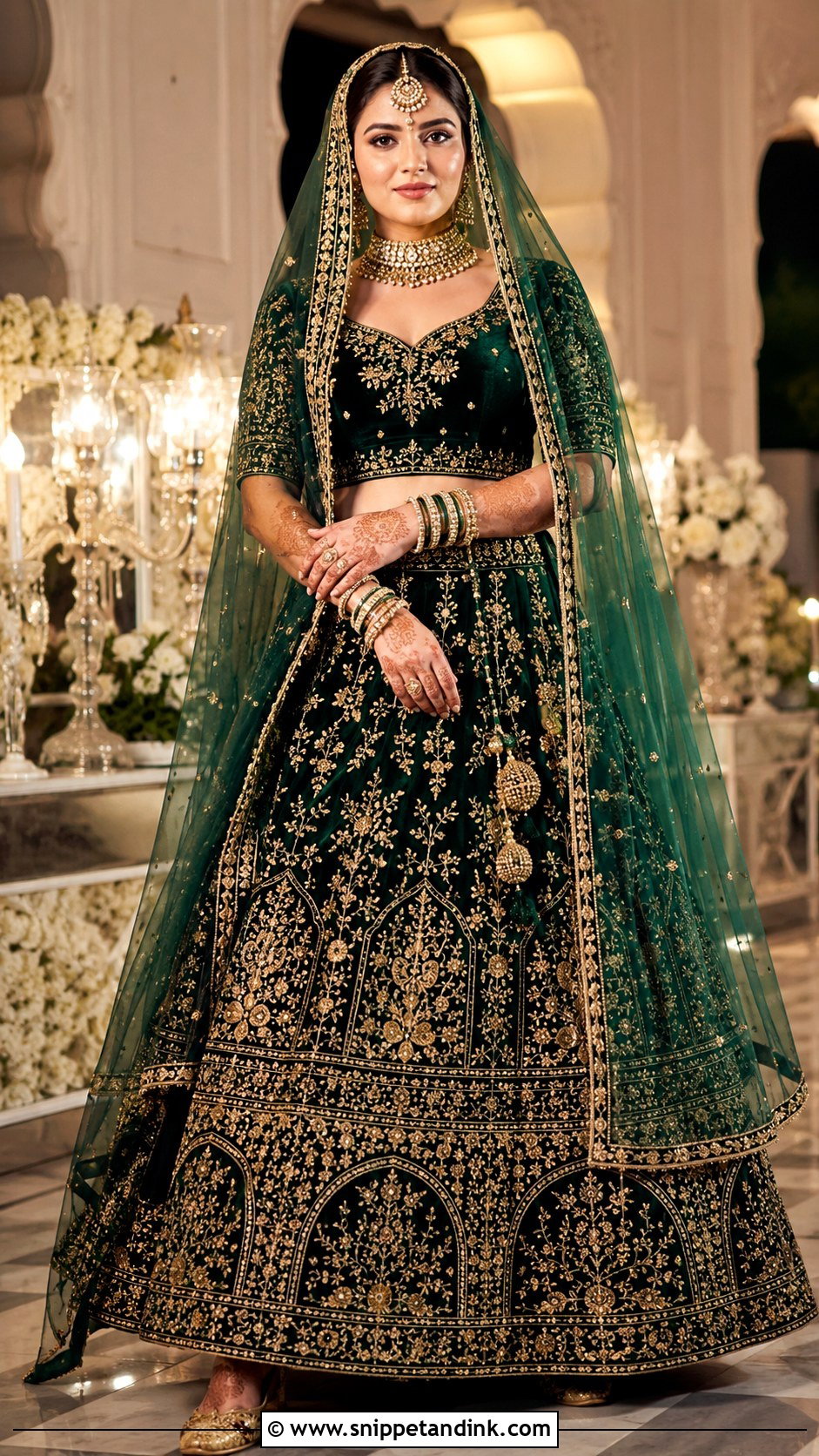
Velvet is the heaviest fabric on this list, and that is both its appeal and its problem. An emerald velvet lehenga with antique-gold zardozi or dabka looks regal at a winter evening wedding, but a full velvet skirt with heavy embroidery can be a real weight on the hips over several hours. I balance it with a fitted blouse and a split dupatta: light net over the head, an embroidered one across the shoulder, rather than a matching velvet drape that adds yet more weight. Kundan choker, matching earrings, stacked bangles and a maang tikka keep it traditional. Gold juttis under the skirt, luminous skin and a berry lip finish it. In a warm month, I’d say no to velvet altogether.
2. Sage Green Organza Lehenga
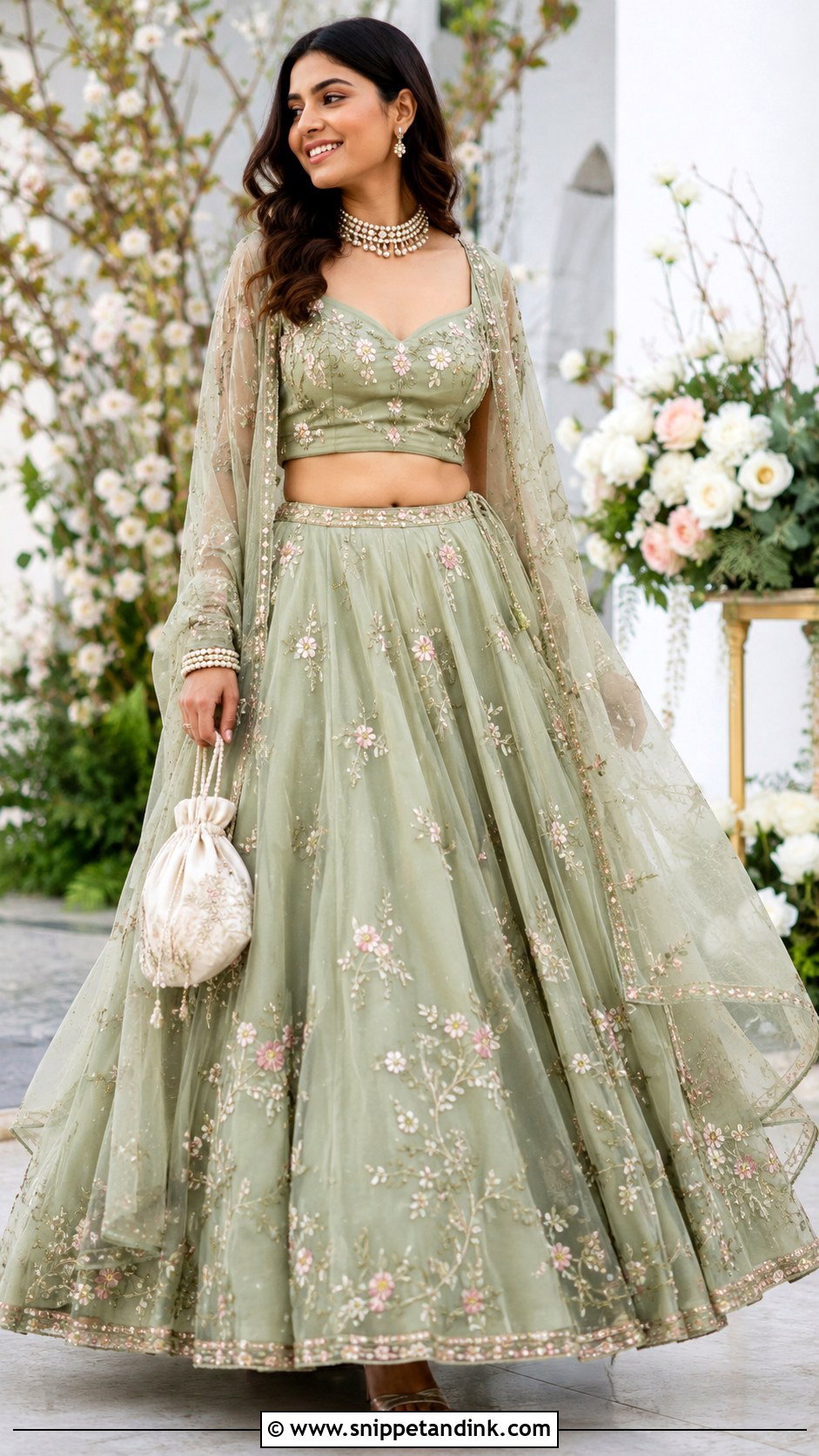
Sage organza looks its best in daylight, at a garden wedding, an engagement or a lunch reception. Organza holds a gentle flare without much weight, though it creases where you sit, so steam the skirt on the day. Tonal threadwork, small pearls or scattered florals keep the color soft. A structured blouse and a sheer dupatta with a narrow border are enough. Pearl drops, a delicate choker and an ivory potli keep the styling light, and the shoes depend on the ground: block heels on paving, cushioned juttis on grass. A bridesmaid can wear it nearly plain; a bride can add a second dupatta and heavier jewelry.
3. Bottle Green Silk Saree
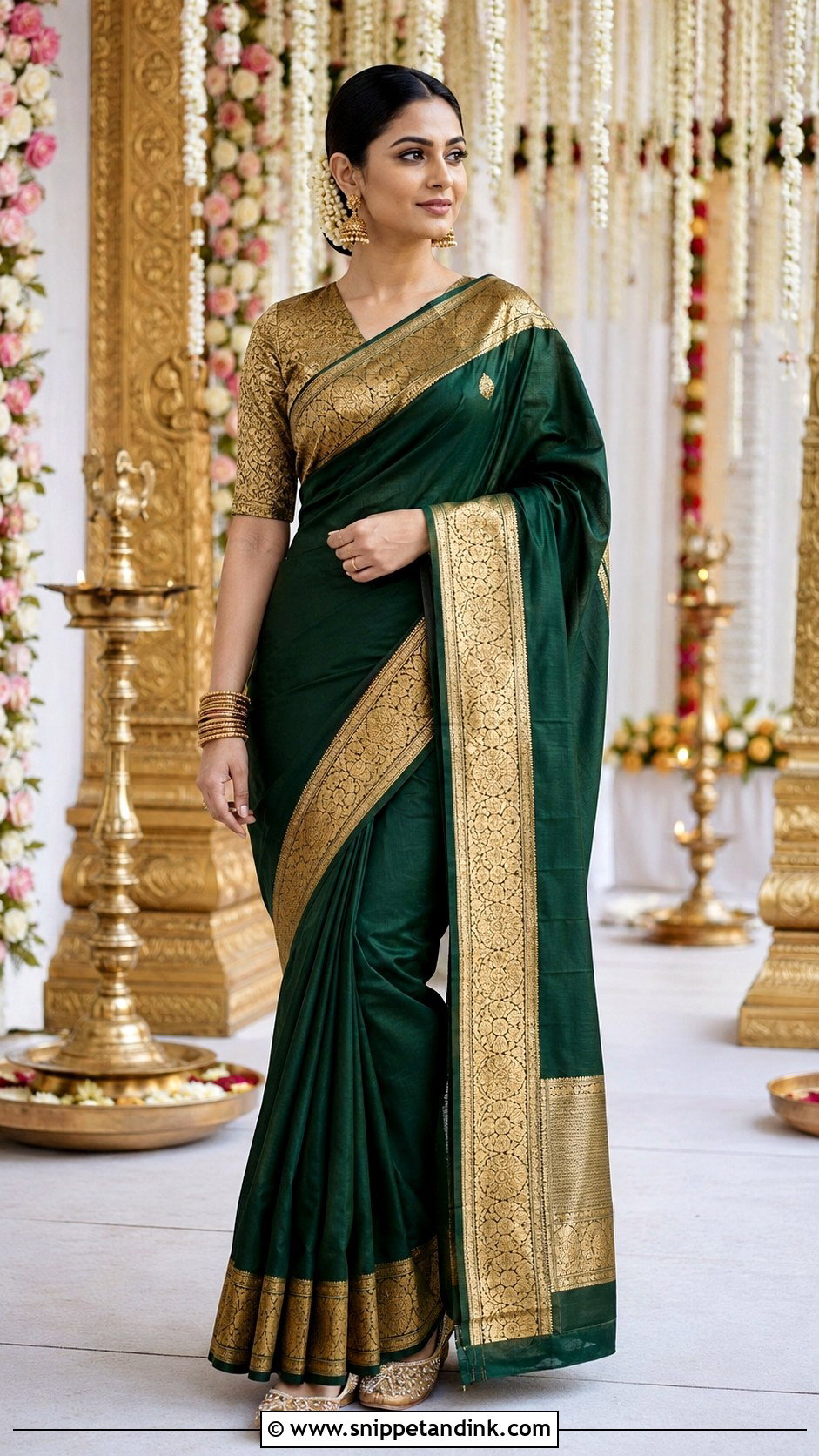
A bottle green silk saree with a gold border is the outfit I’d point mothers of the couple toward when they want something traditional that won’t date. Choose Banarasi, Kanjivaram or another lustrous silk based on the family’s region and the formality of the day. Pure silk has body, which means the pleats hold their shape better than they do in synthetics, and the woven border stays crisp in photos. A gold brocade blouse looks classic; a matching green elbow-sleeve blouse is quieter. Pin the pallu so the border shows. Temple jewelry, gold jhumkas and a small bindi suit it, with juttis or low block heels and a sleek bun wrapped in jasmine.
4. Mint Green Embroidered Saree
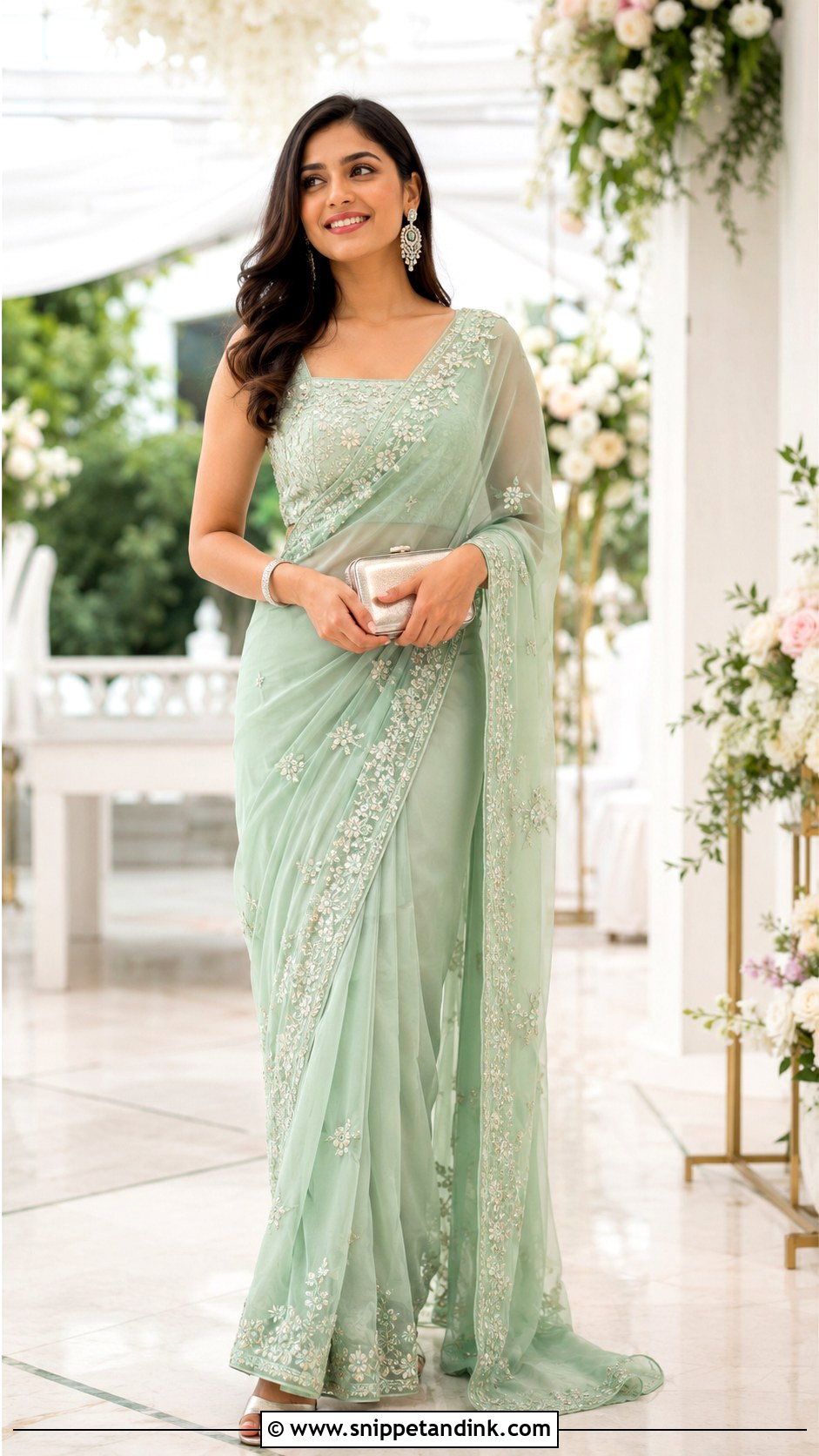
Mint embroidered sarees in chiffon, georgette or soft net are light enough to wear all evening. Pearls, silver thread or small sequins suit the cool shade, and gold can look slightly off against it. A fitted square-neck blouse gives the drape some structure; elbow sleeves add coverage. Keep accessories cool-toned too: diamond-style earrings, a slim bracelet, a silver clutch. Metallic sandals with a modest heel, softly defined eyes and a rose lip. A low ponytail or textured bun keeps the attention on the blouse. Because it sparkles without heavy work, it’s a sensible guest outfit for an engagement or daytime reception.
5. Olive Green Anarkali Suit
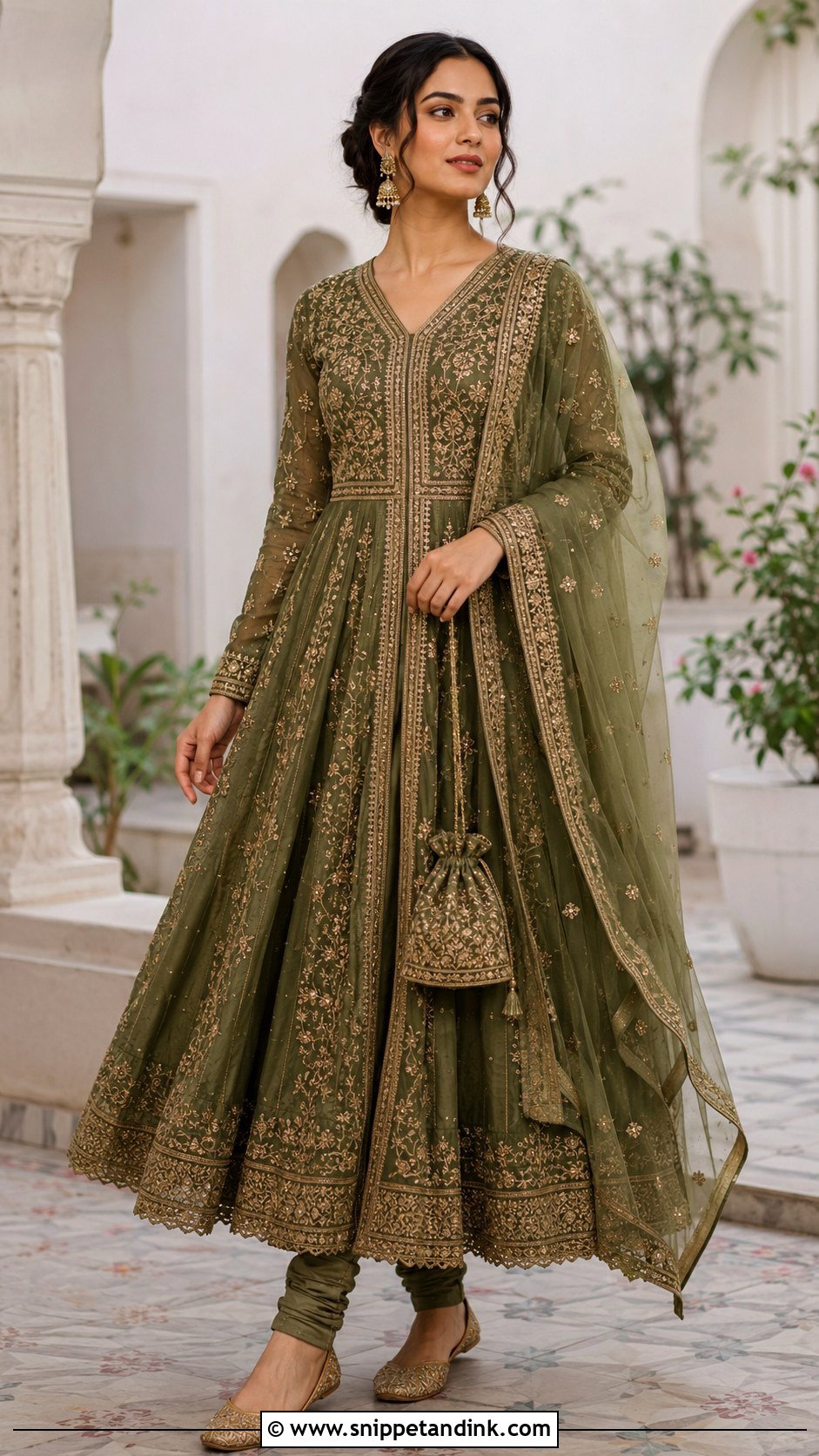
Not everyone wants to manage a saree or a lehenga all day, and an olive Anarkali is my usual answer. A floor-length cut with a defined waist and panels that swing when you walk flatters most figures, since the bodice gives shape and the skirt falls clear of the hips. Antique-gold embroidery at the neck, cuffs and hem makes the earthy shade festive. Churidar pants and a light dupatta over one shoulder complete the set. Antique jhumkas, a small tikka and a bronze potli suit it, with pointed juttis for long ceremonies. Keep the hair simple, soft waves or a low bun.
6. Forest Green Sharara Suit
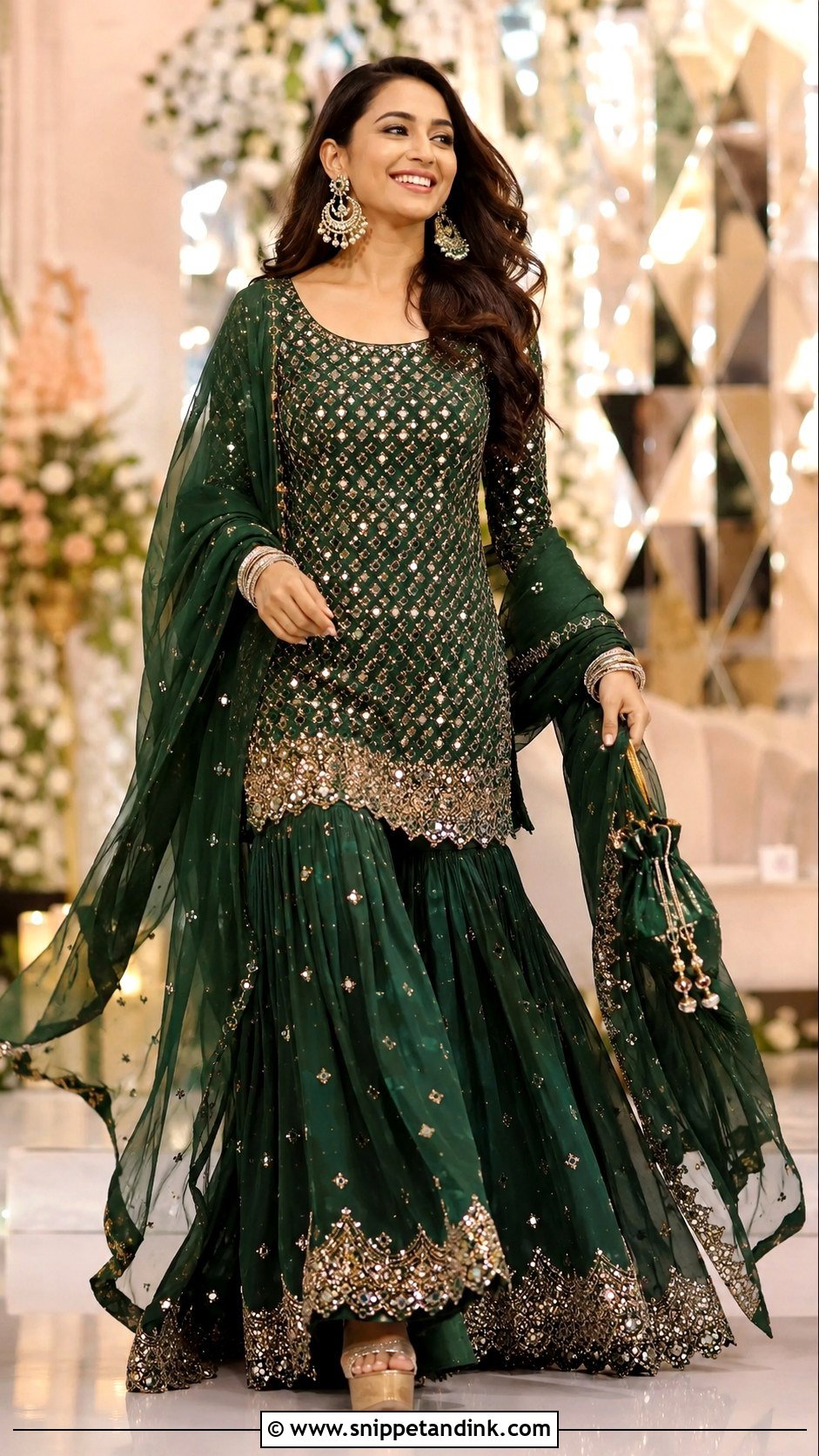
A forest green sharara suit gives you volume to dance in at a sangeet without a skirt to trip over. Start with a short embroidered kurta ending near the upper thigh, then add wide shararas with clear gathers. Gota, mirror work or fine zari brighten the dark base. I’d tell anyone wearing wide shararas to try the stairs at the fitting: the hem width catches on heels, which is why platform juttis or stable block heels make sense here. Drape a net dupatta over one arm so the kurta stays visible. Chandbalis, stacked bangles and a small potli are enough. Keep one area ornate and let the rest stay quieter, or the whole outfit becomes noise.
7. Pistachio Green Gharara Suit
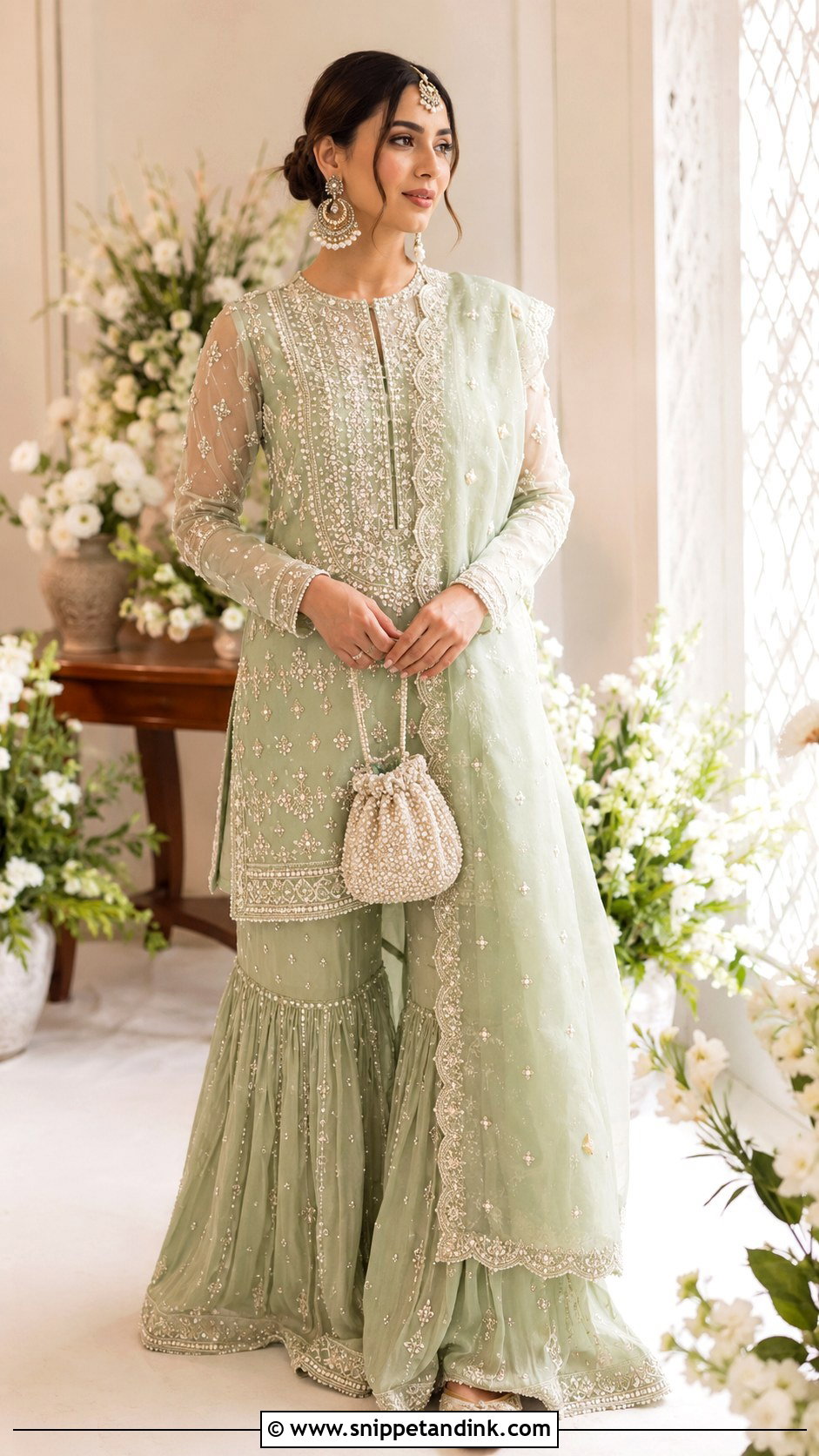
Pistachio suits a gharara because the pale color lets the shape of the flare do the talking. It’s a natural fit for a mehndi, a daytime nikah or a small family function. A knee-length kurta over fitted gharara pants that flare from the knee is the traditional proportion. Pearl work, white thread or restrained silver keep the color clean; heavy gold can muddy it. A scalloped organza dupatta, pearl chandbalis and a passa or tikka finish it, with ivory juttis for standing through long rituals. Pistachio also sits easily next to cream, blush, lilac and deeper greens if a bridal party is coordinating colors.
8. Mehndi Green Mirror Work Lehenga
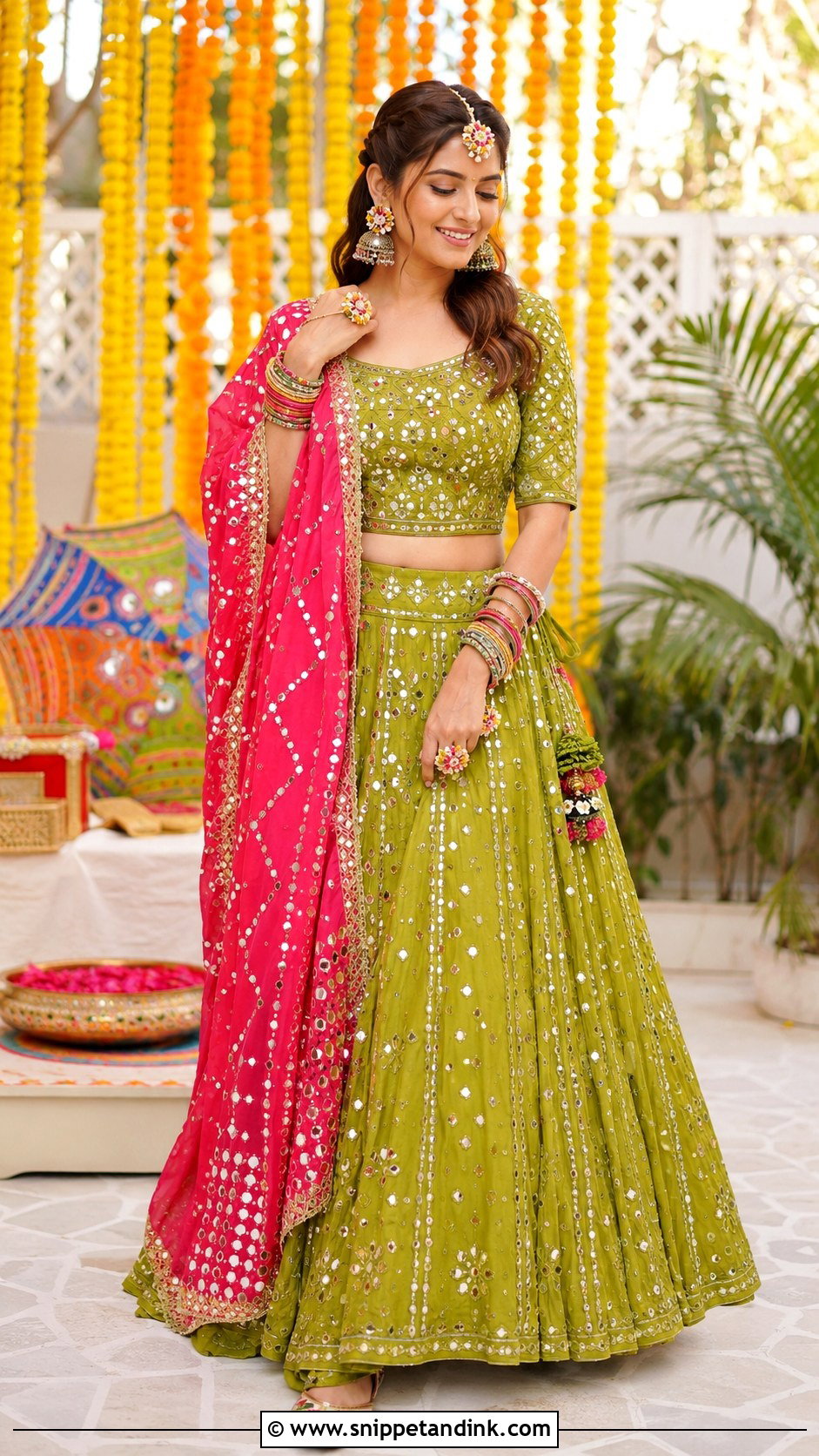
Mirror work makes sense at a mehndi because it catches the bright light and decor. For a mirror work lehenga outfit, keep the mirrors small and spread out; large mirror panels add weight and the edges scratch the inside of the arm when you dance. A cropped blouse with secure straps or sleeves lets you move without adjusting. A pink, orange or yellow dupatta gives the green contrast. Floral jewelry, oxidized silver earrings and stacked bangles suit the playful mood, with embroidered juttis and a braid dressed with small flowers. Use waterproof eye products; outdoor mehndis get hot.
9. Sea Green Pre-Draped Saree
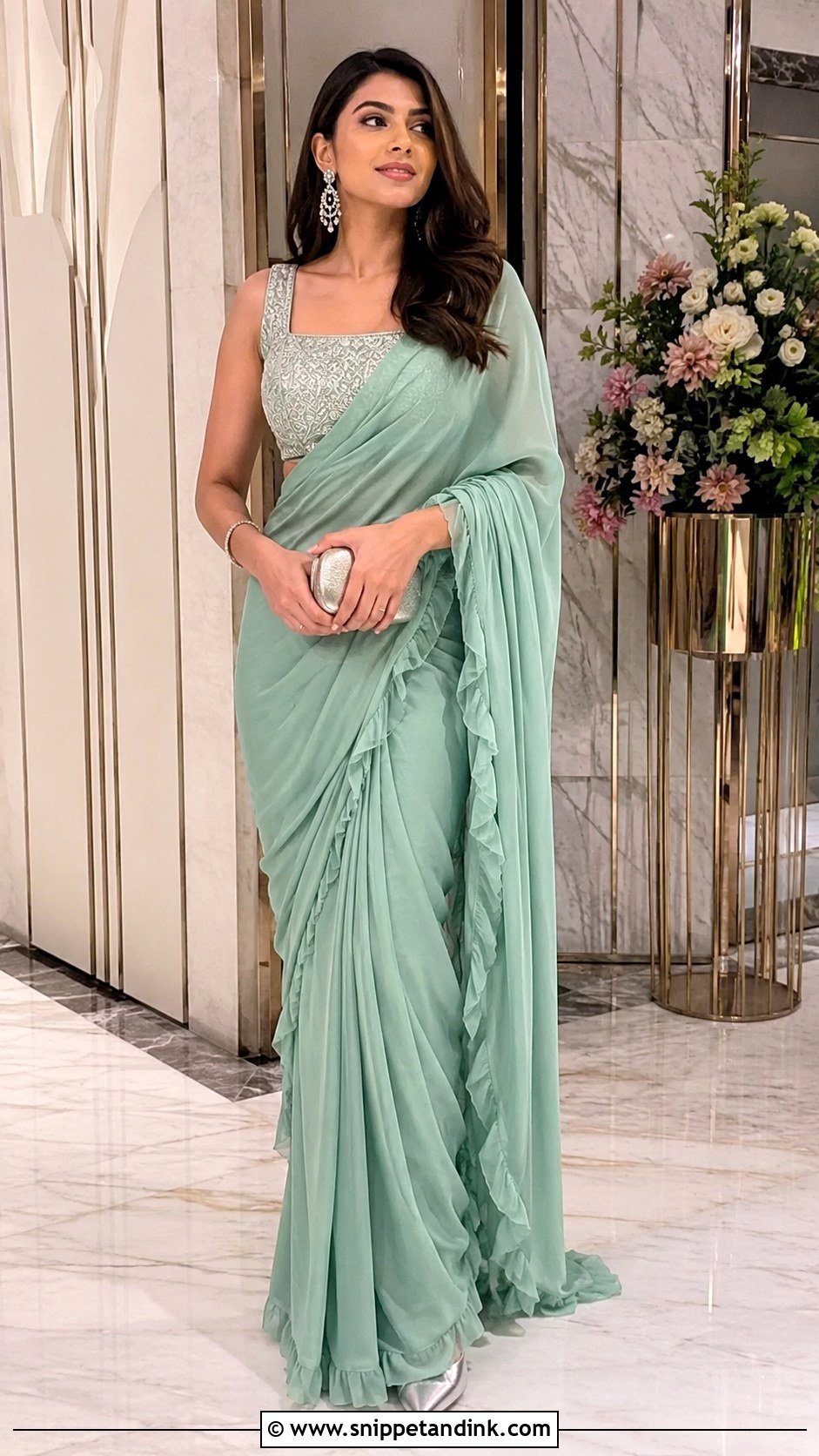
Most people I dress who say they can’t wear a saree really mean they can’t keep the pleats in place. A sea green pre-draped saree solves that with a stitched waist and a fixed pallu. Fluid crepe or georgette works best, paired with an embroidered blouse in a square, sweetheart or high neck. Silver sequins, tonal beads or crystals suit the cool green for a reception or sangeet. Long earrings, a slim bracelet and a metallic clutch rather than layered necklaces. Pointed heels lengthen the line, but embellished flats are kinder on lawns. Finish with polished waves or a sleek low bun.
10. Dark Green Banarasi Saree
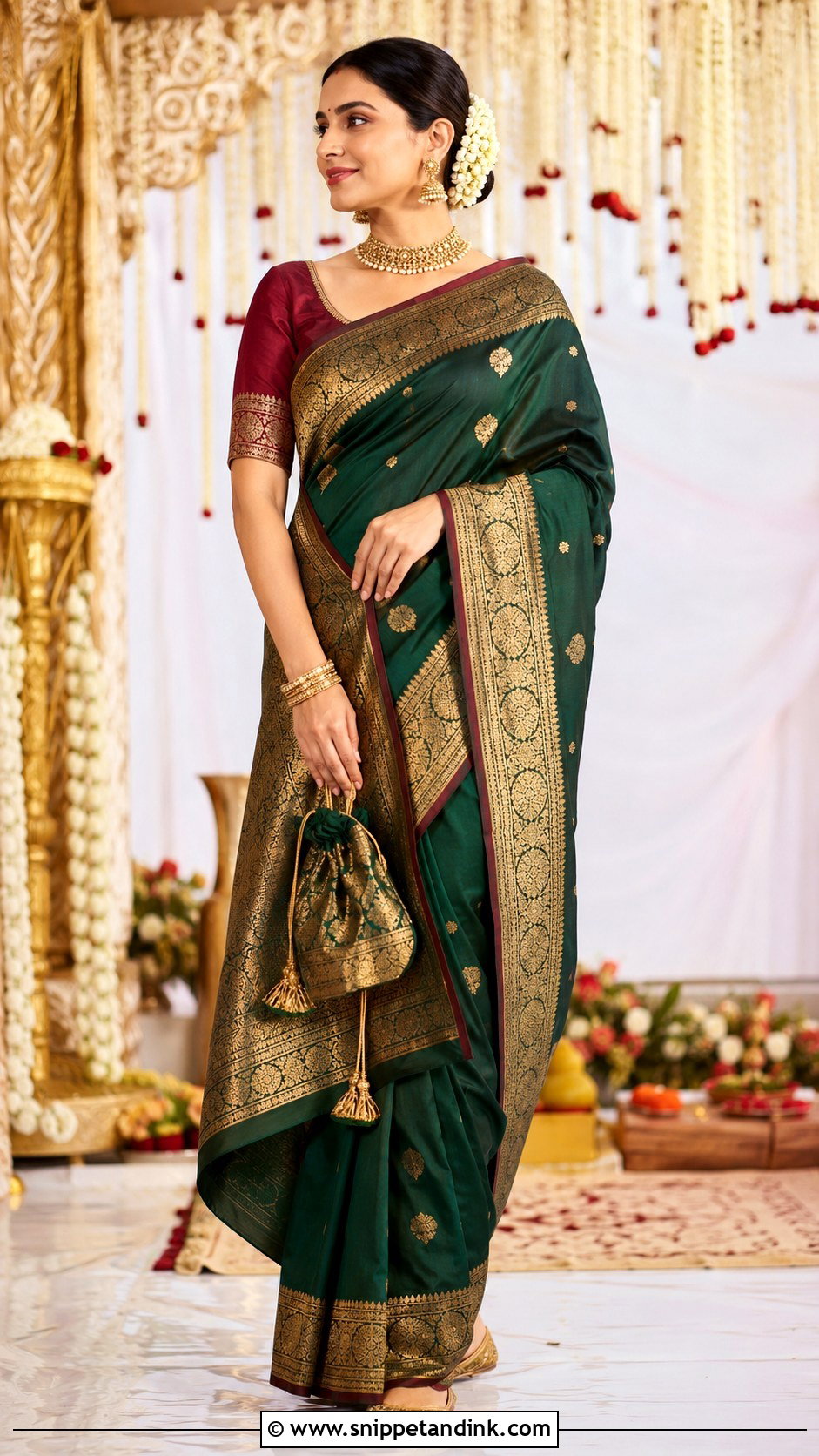
A dark green Banarasi earns its price because the motifs are woven in, so it looks rich without surface embellishment and it lasts for decades. Choose a broad gold border and pair it with a maroon, rust or antique-gold blouse, or a matching green blouse for a quieter effect. Pin the pallu discreetly at the shoulder; Banarasi silk is slippery and will slide off without it. A gold choker, jhumkas, bangles and a classic bindi suit it, with a silk potli and gold juttis. Wear the hair low with jasmine or roses. Guests and relatives wear it well, and with heavier jewelry it can serve a bride at a small ceremony.
11. Lime Green Floral Lehenga
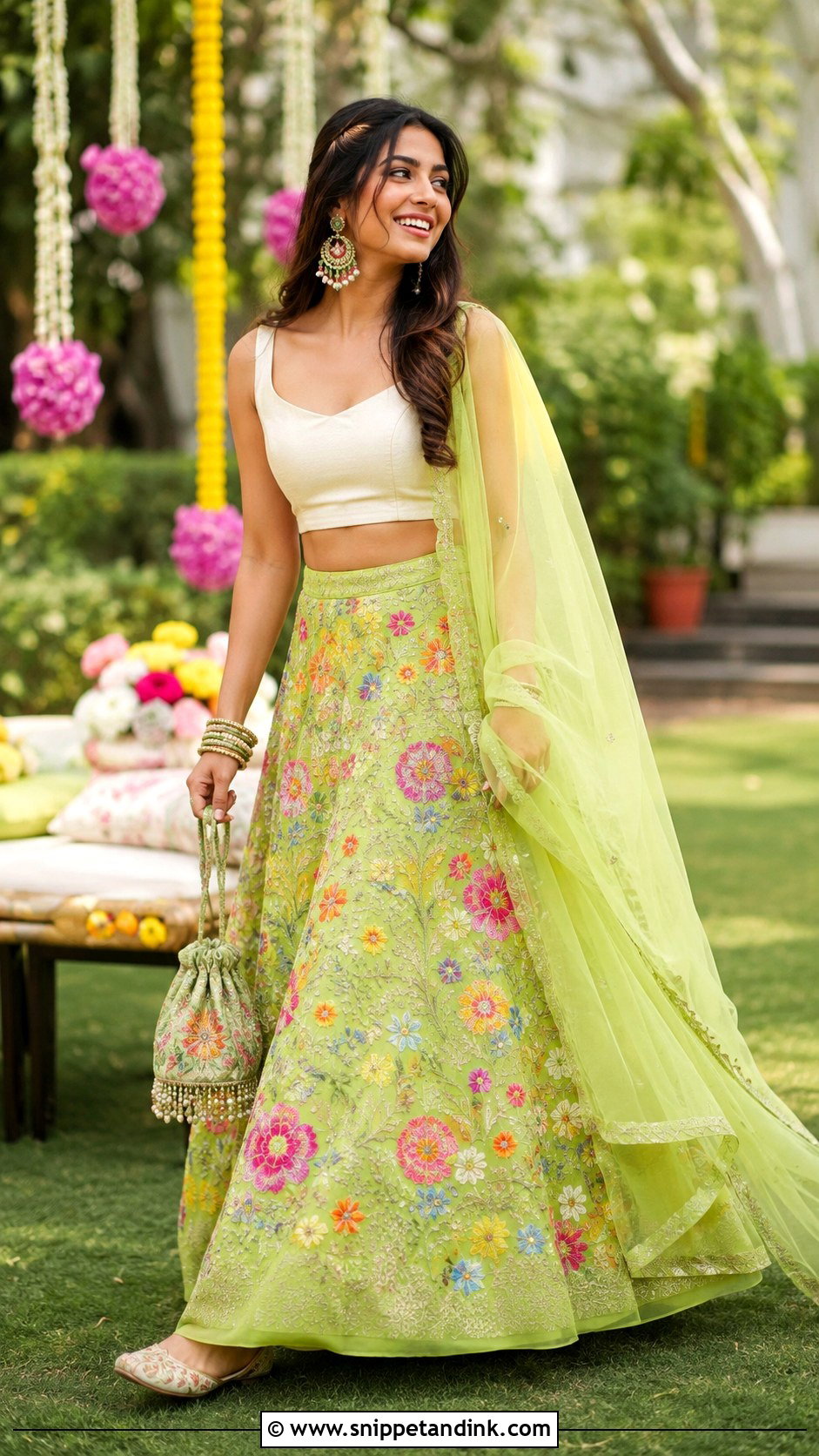
A lime green floral lehenga is bright and young, made for an outdoor mehndi, a haldi or a daytime function. Look for a flowing skirt printed or embroidered with pink, coral and ivory flowers, and keep the blouse plain so the skirt stays the focus. At a haldi, accept that turmeric paste may land on you; it stains, so I’d choose a print over a pale solid for that function and avoid anything you can’t bear to mark. An organza dupatta adds ceremony, while meenakari earrings, a few bangles and a woven potli keep things light. Neutral juttis stop the colors competing. Soft curls or a loose braid suit the mood.
12. Teal Green Cape Lehenga
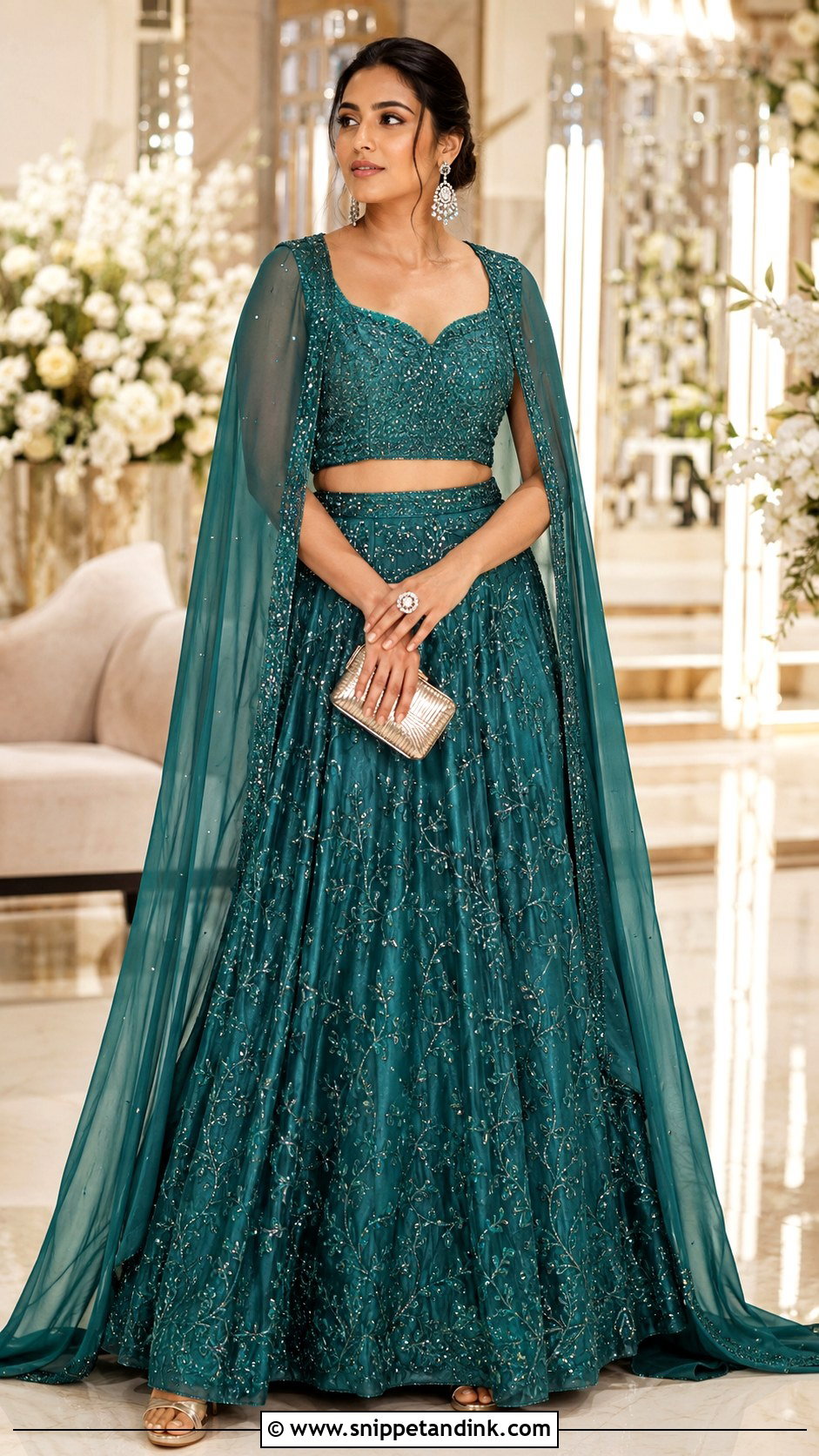
Teal gives you jewel-tone depth with a modern blue cast. Here the standard dupatta becomes a sheer embroidered cape over a fluid skirt and fitted blouse. Waist length looks clean; floor length adds drama for a sangeet. Make sure the embroidery matches across blouse, skirt border and cape, or the three pieces look borrowed from different outfits. Crystal earrings, a statement ring and a box clutch add sparkle without crowding the neck. Metallic heels hidden under the hem and a sleek ponytail that shows the cape’s shoulder detail complete it. Bridesmaids who want something Indo-Western but still recognisably a lehenga usually like this one.
13. Pastel Green Chikankari Sharara
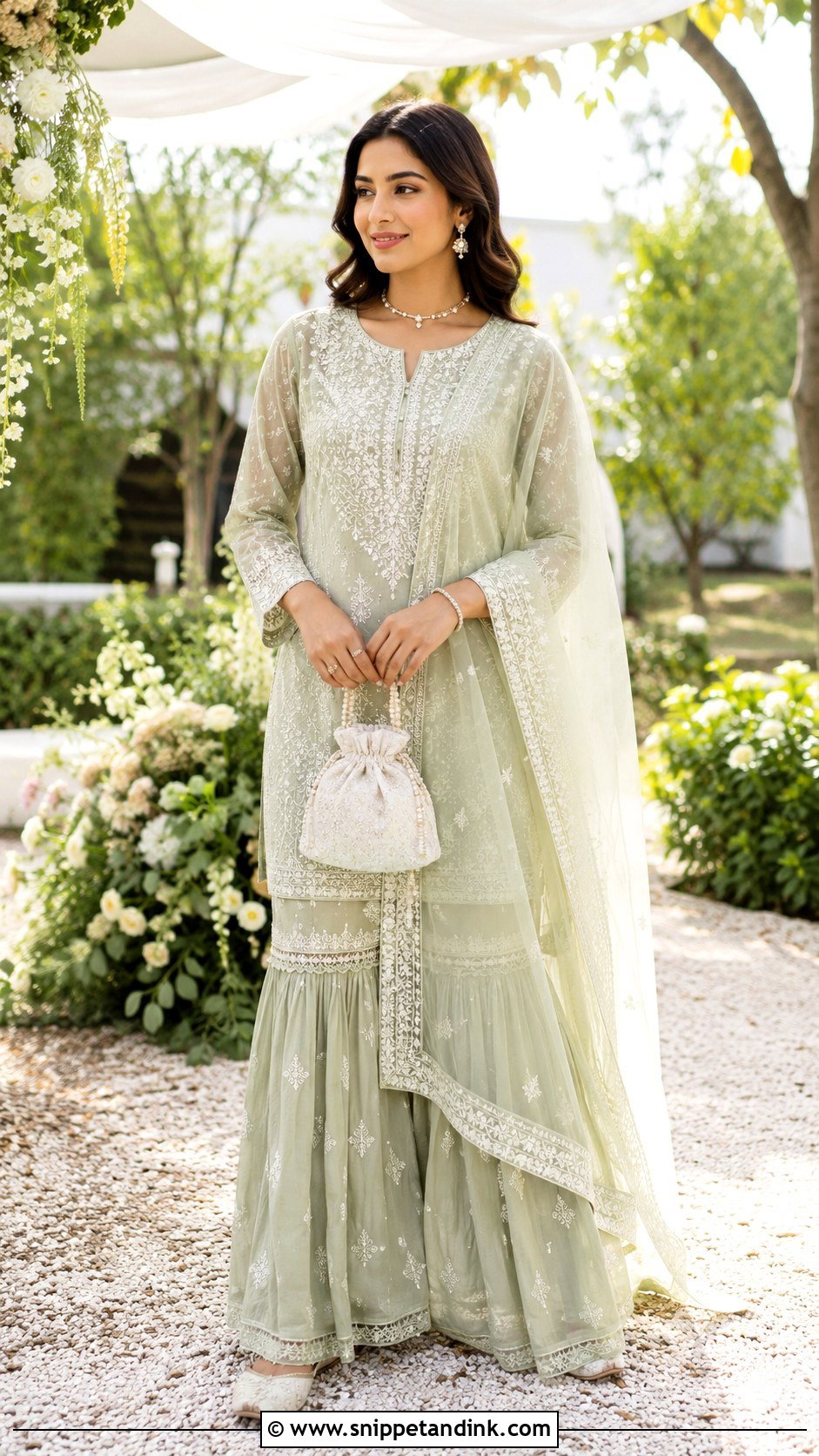
Chikankari is hand embroidery in fine white thread, traditionally from Lucknow, and it suits pastel green very well. On a sharara set, choose a straight or slightly flared kurta with tonal stitching and a few pearls or sequins, over wide shararas and a sheer dupatta with a fine border. The fabric is usually thin cotton, georgette or mul, so it’s cool in summer but needs the right slip underneath; check it against daylight at the fitting. Pearl earrings, a slim choker and a silver potli keep the palette soft. Ivory juttis, peach blush and a loose bun finish it. Remove jewelry and it becomes a guest outfit.
14. Jade Green Jacket Lehenga
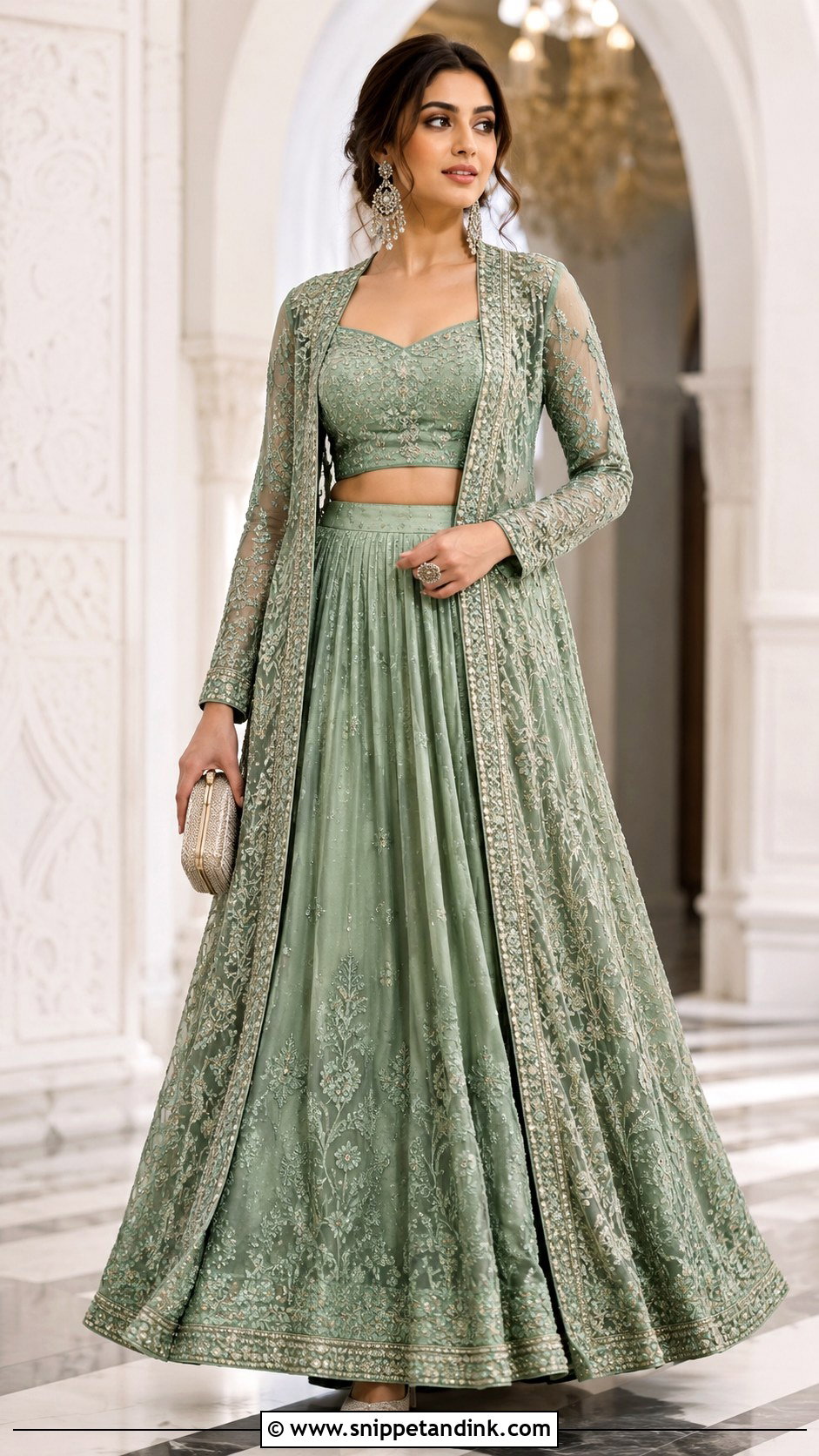
A jacket lehenga replaces the dupatta with a long open-front jacket, which is the easiest way to get coverage and structure at a cool evening reception. Keep the skirt plain or lightly worked and put the zari, sequins or threadwork on the jacket. The jacket should fall straight over the skirt; if it’s cut too narrow it splits open at the hips when you walk. With nothing to slip off your shoulder, greetings and dancing get much easier. Statement earrings and a cocktail ring are plenty, so skip the necklace if the neckline is embellished. Pointed block heels, a sleek bun and you’re done.

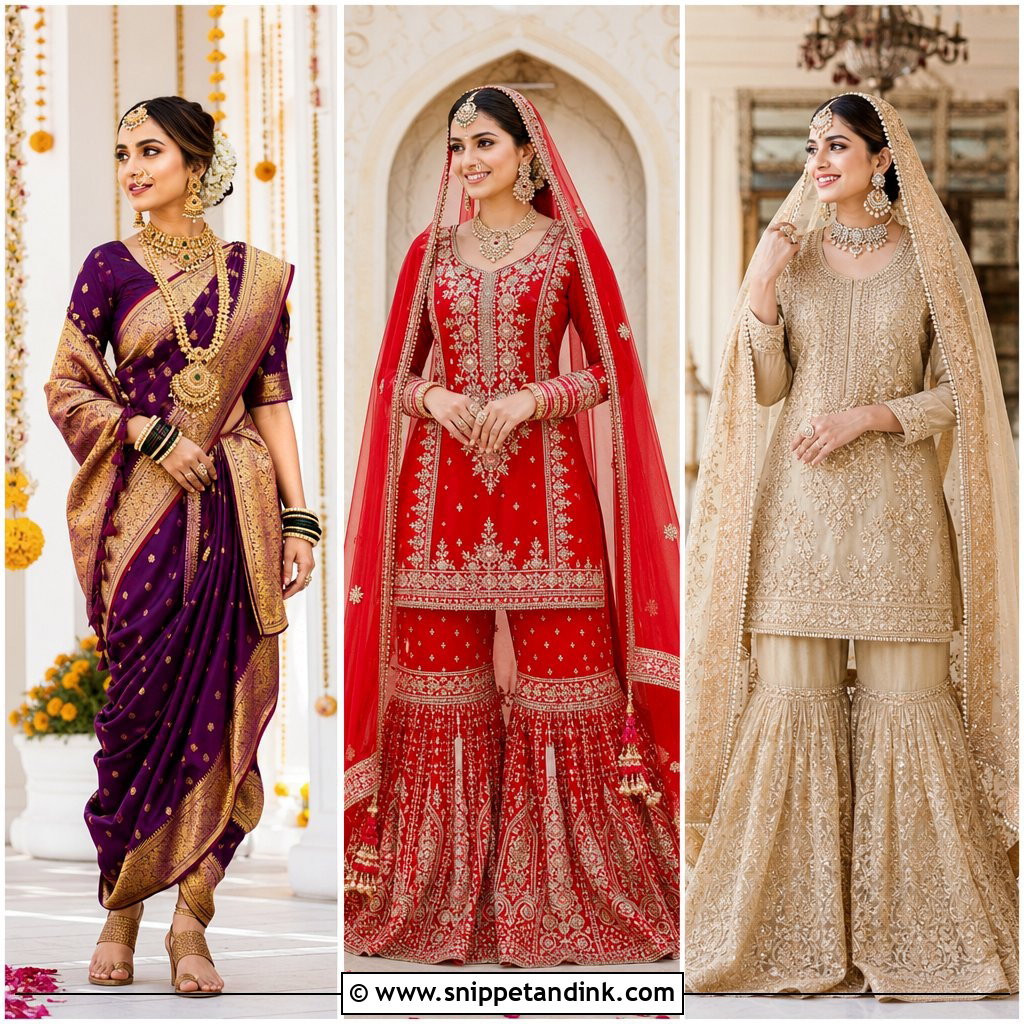
15. Moss Green Palazzo Suit
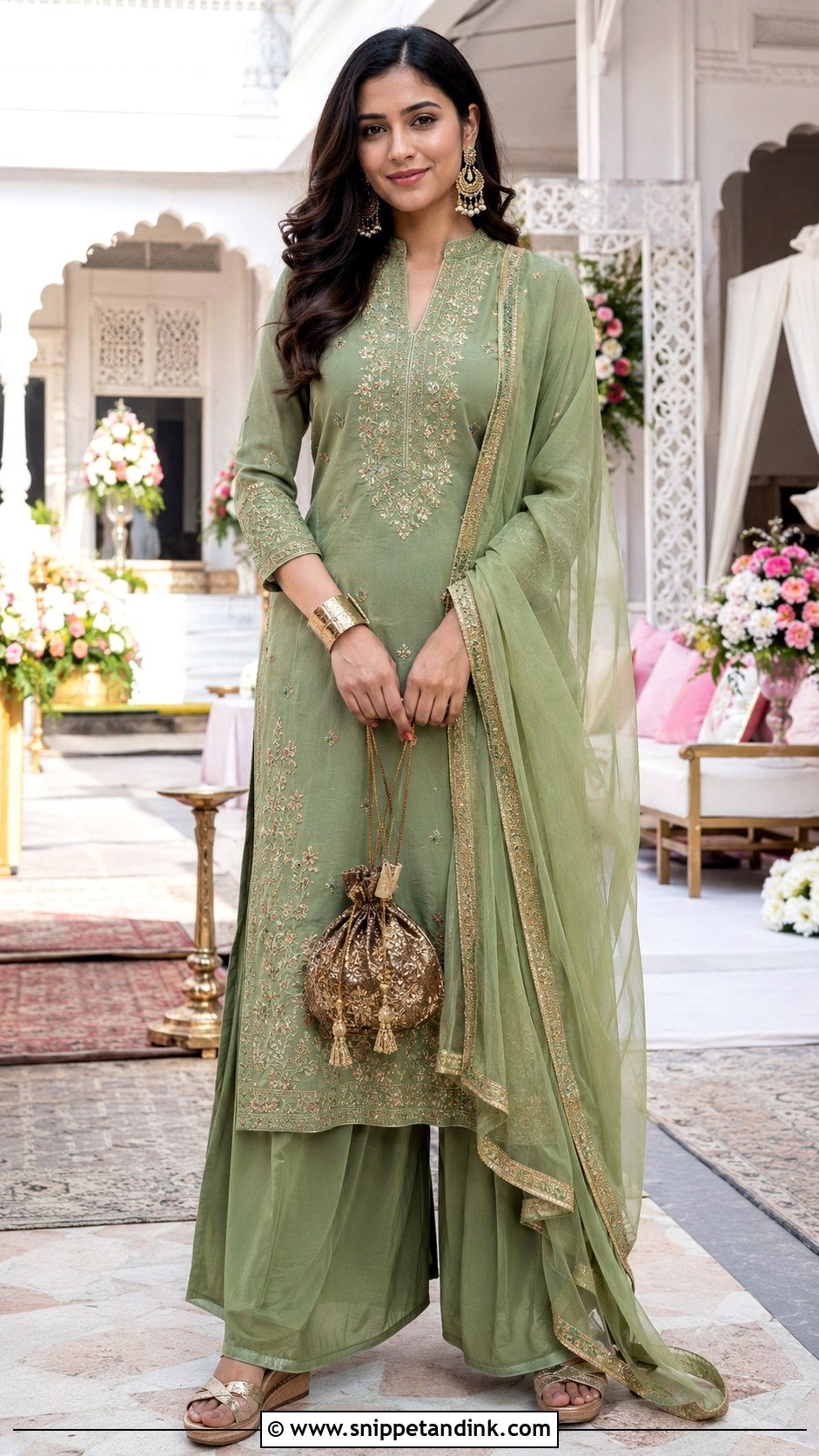
For guests who want comfort first, a moss green kurta with palazzos is hard to beat. Choose a silk-blend or georgette kurta with side slits, a defined neckline and embroidery concentrated at the bodice or hem. Wide palazzos let you sit cross-legged at a ceremony without a struggle. An organza dupatta with a gold border makes it festive, and antique earrings, a cuff and a bronze potli suit the muted green. Match the shoe to the kurta length: wedges or block heels under a long kurta, juttis under a shorter one. After the wedding, both pieces work separately in everyday wear.
16. Parrot Green Silk Anarkali
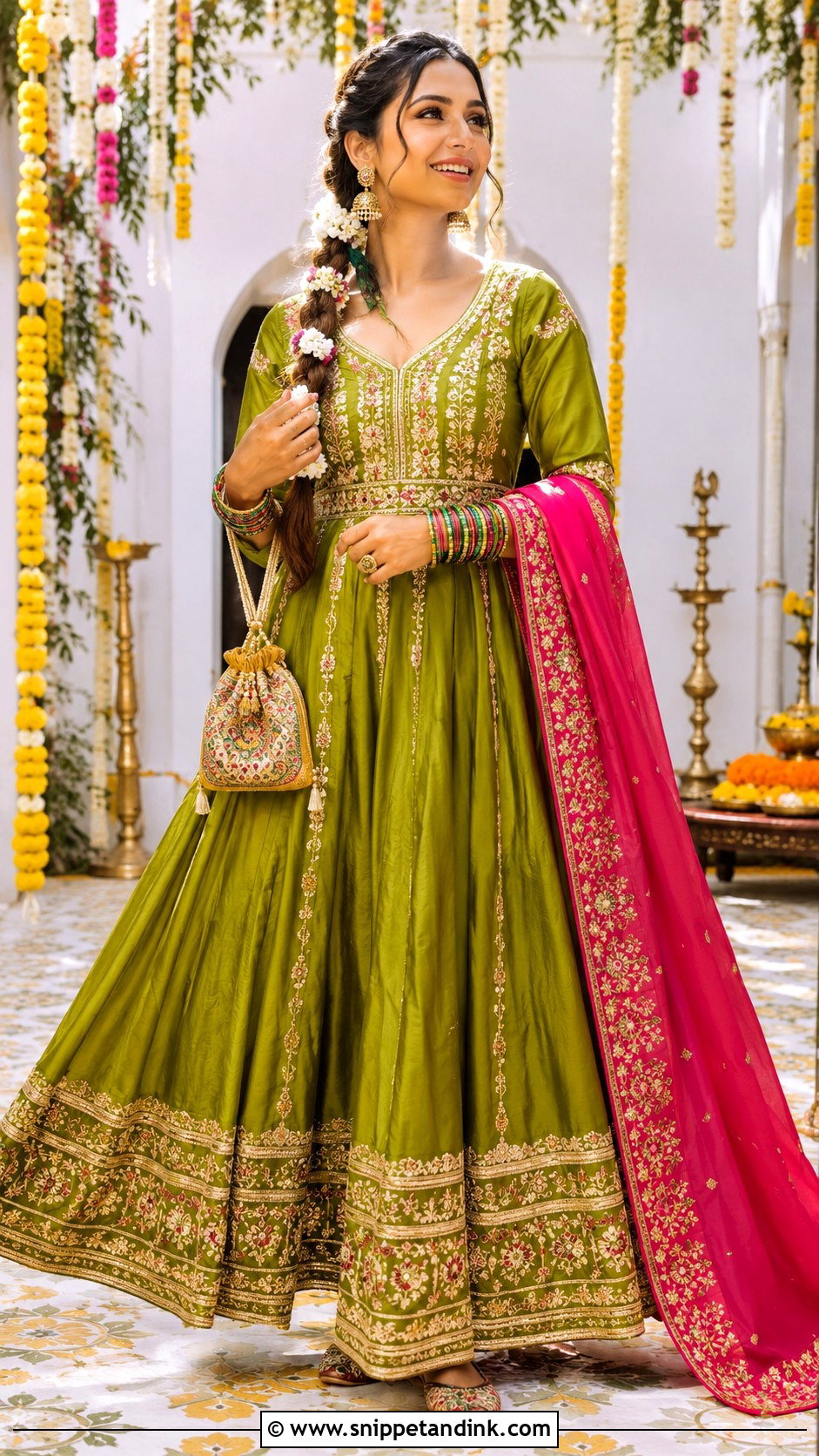
Parrot green is loud in the best way, and a silk Anarkali gives it room to swing. Choose a fitted bodice, a sweeping paneled skirt and gold embroidery at the neck and hem. A contrast dupatta in magenta, royal blue or orange reads traditional; a matching green dupatta looks cleaner. Silk Anarkalis are warm, so for a daytime function in summer I’d ask for a cotton lining in the bodice. Gold jhumkas, coordinated bangles and a small potli are enough, with cushioned juttis. A long braid or a neat flower-dressed bun suits it, as does a balanced face with a rosy lip.
17. Green And Gold South Indian Saree
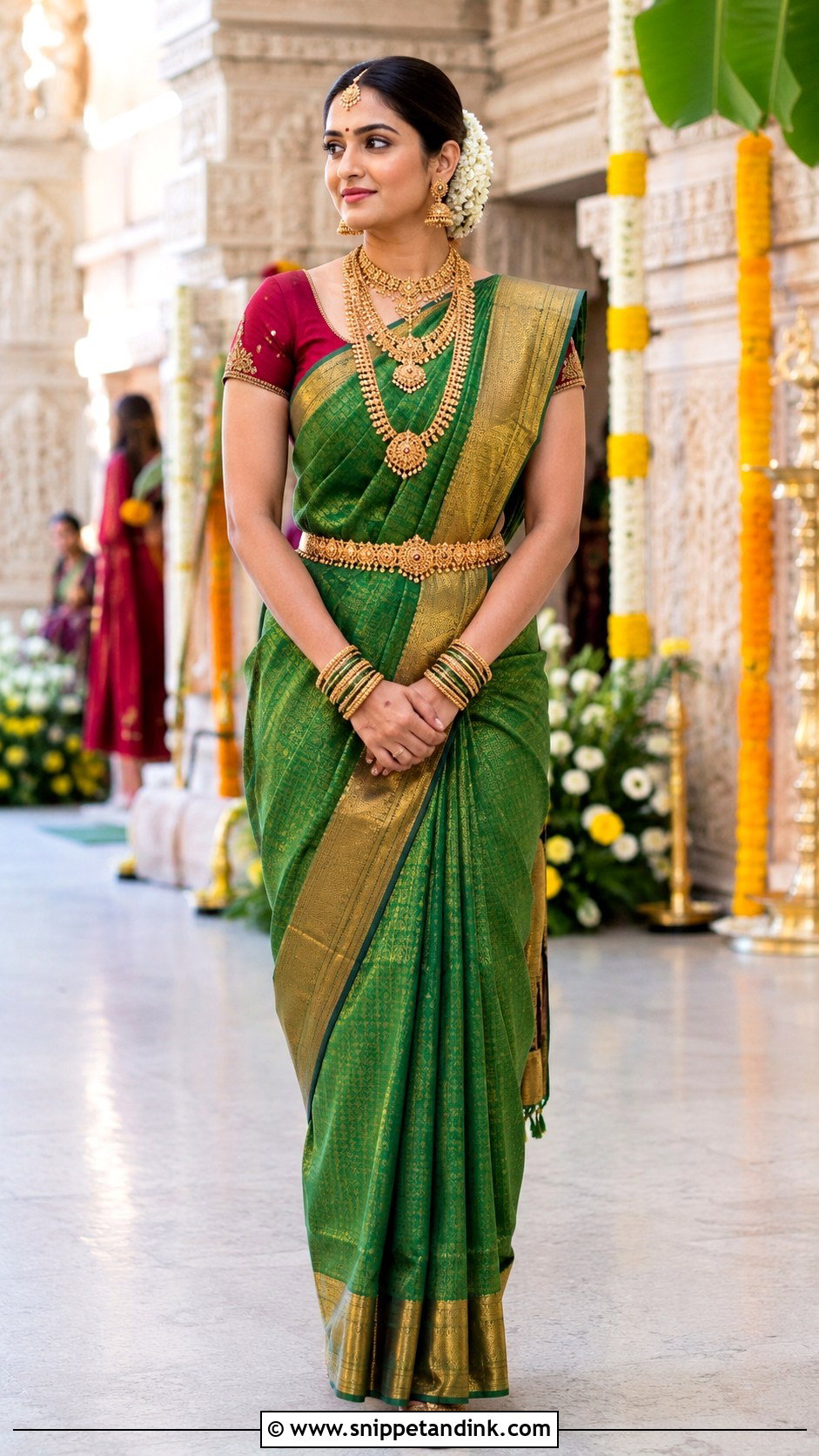
A green and gold South Indian saree belongs at a temple wedding or a traditional morning ceremony. Choose rich silk with a contrasting gold zari border and woven motifs across the pallu, and pair it with a blouse in matching green, deep maroon or gold brocade. Traditional pleating, done by someone experienced, keeps a heavy silk crisp; pin the pallu well, since you may be sitting on the floor for rituals. Temple jewelry, layered gold necklaces, jhumkas and a waist belt add formality. Gold sandals or flats, a center-parted bun wrapped in jasmine and a bindi finish it. Guests wear fewer layers; a bride adds hair ornaments.
18. Green Indo-Western Wedding Gown
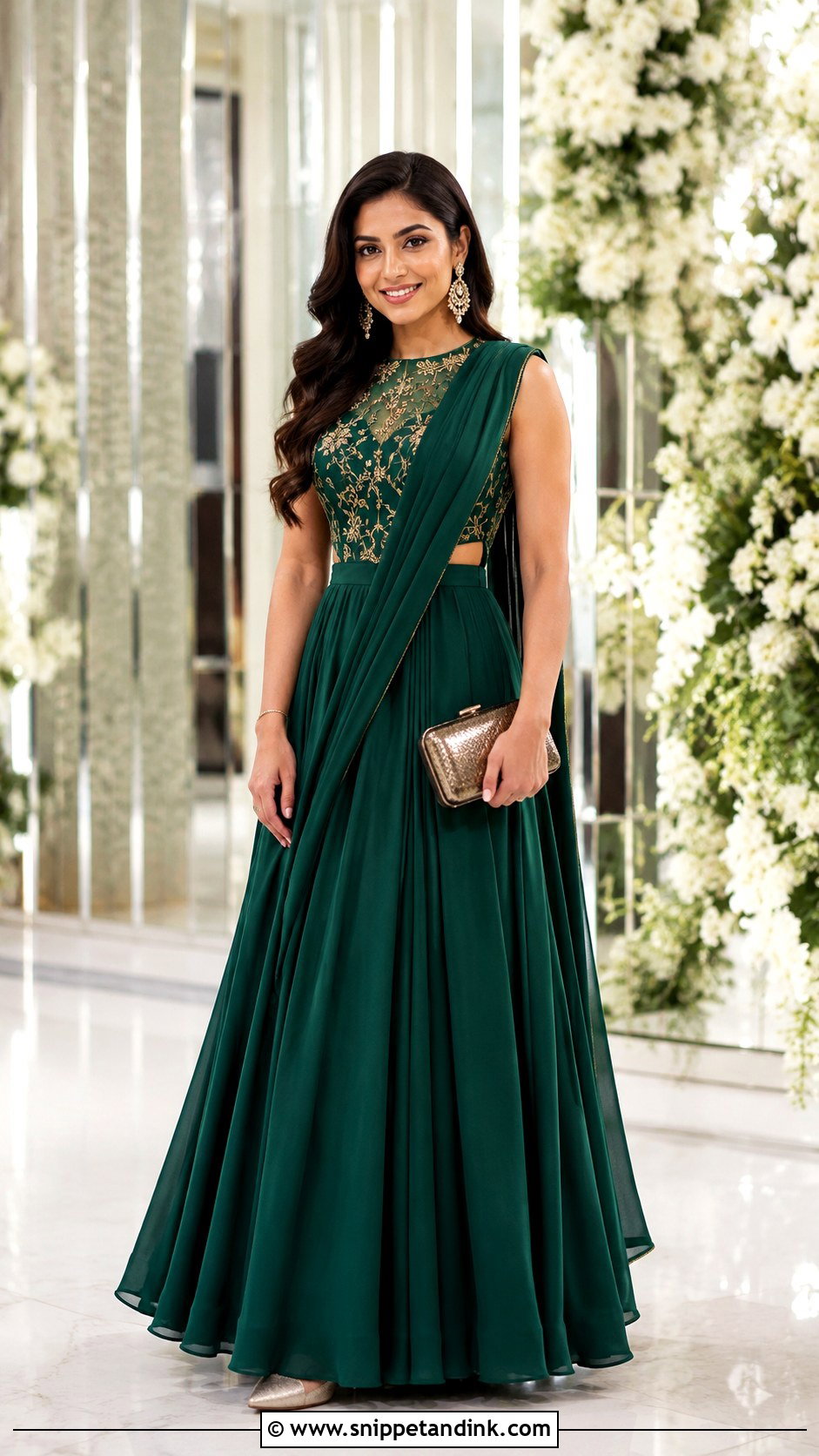
A green Indo-Western gown works at a reception where evening-wear shape and Indian detail are both welcome. Emerald, sage or teal, floor length, with an embroidered bodice and flowing skirt. A draped shoulder panel, an attached cape or saree-style pleating gives the Indian note without a separate dupatta to manage. Statement earrings, a slim bracelet and a metallic clutch keep it streamlined, with closed-toe heels or platform sandals. Let the neckline decide the hair: side-swept waves for a one-shoulder drape, a sleek bun for a high neck. It is the easiest outfit here to wear all evening, which bridesmaids appreciate.
19. Emerald Green Peplum Gharara
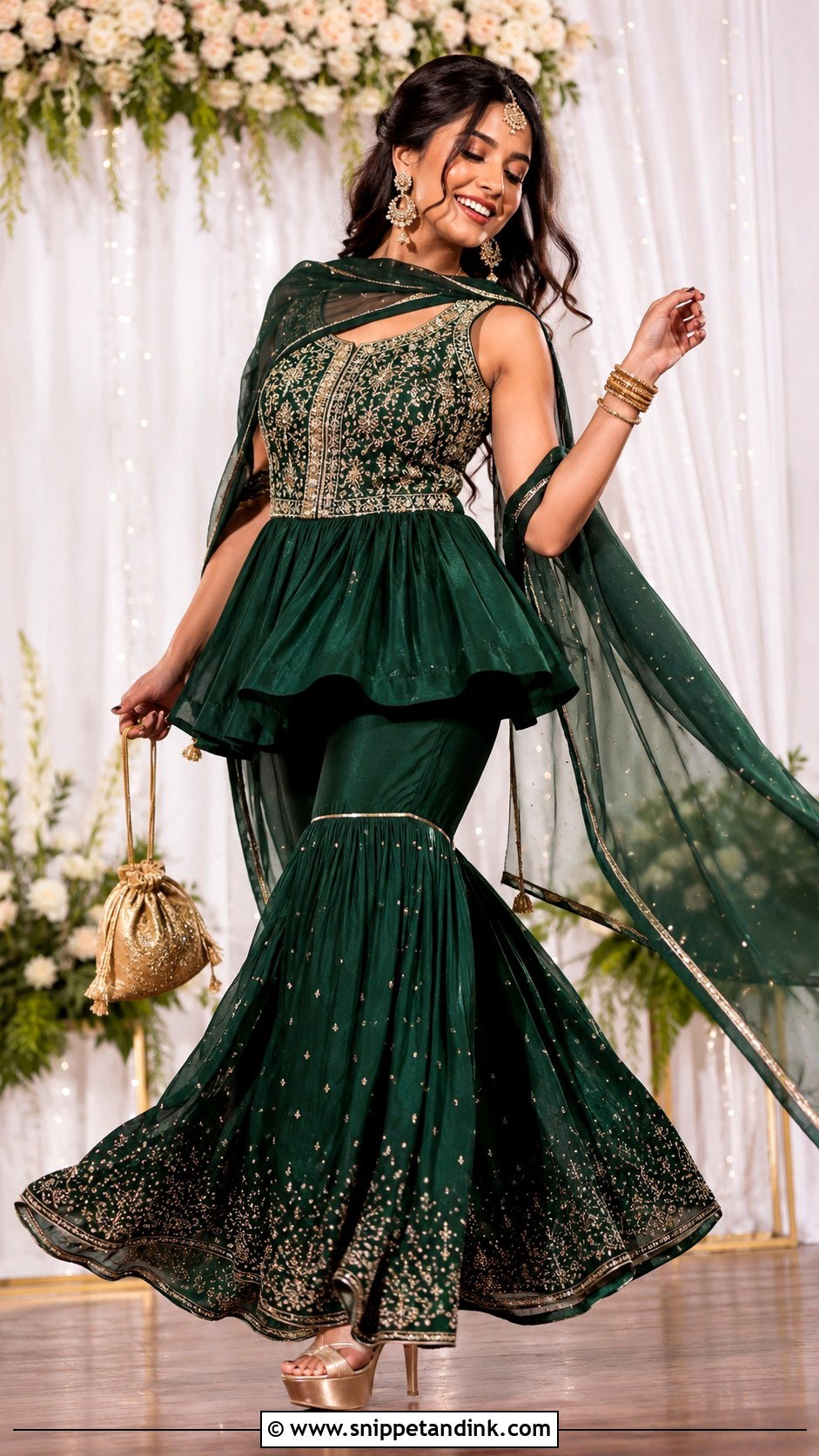
The peplum top gives this gharara a secure, fitted waist, and the pants supply all the movement. That combination is why I like it for sangeet nights. The peplum should end just below the waist; longer and it fights with the gharara flare at the knee. Gold embroidery, mirrors or small sequins outline the shape. Drape a sheer dupatta over one shoulder or loosely around the arms for photos. Chandbalis, a slim tikka, bangles and a gold potli suit it. Platform heels help with the wide hem; juttis are better if you’ll dance a lot. A low ponytail keeps the neckline visible.



20. Green Bridal Lehenga With Red Dupatta
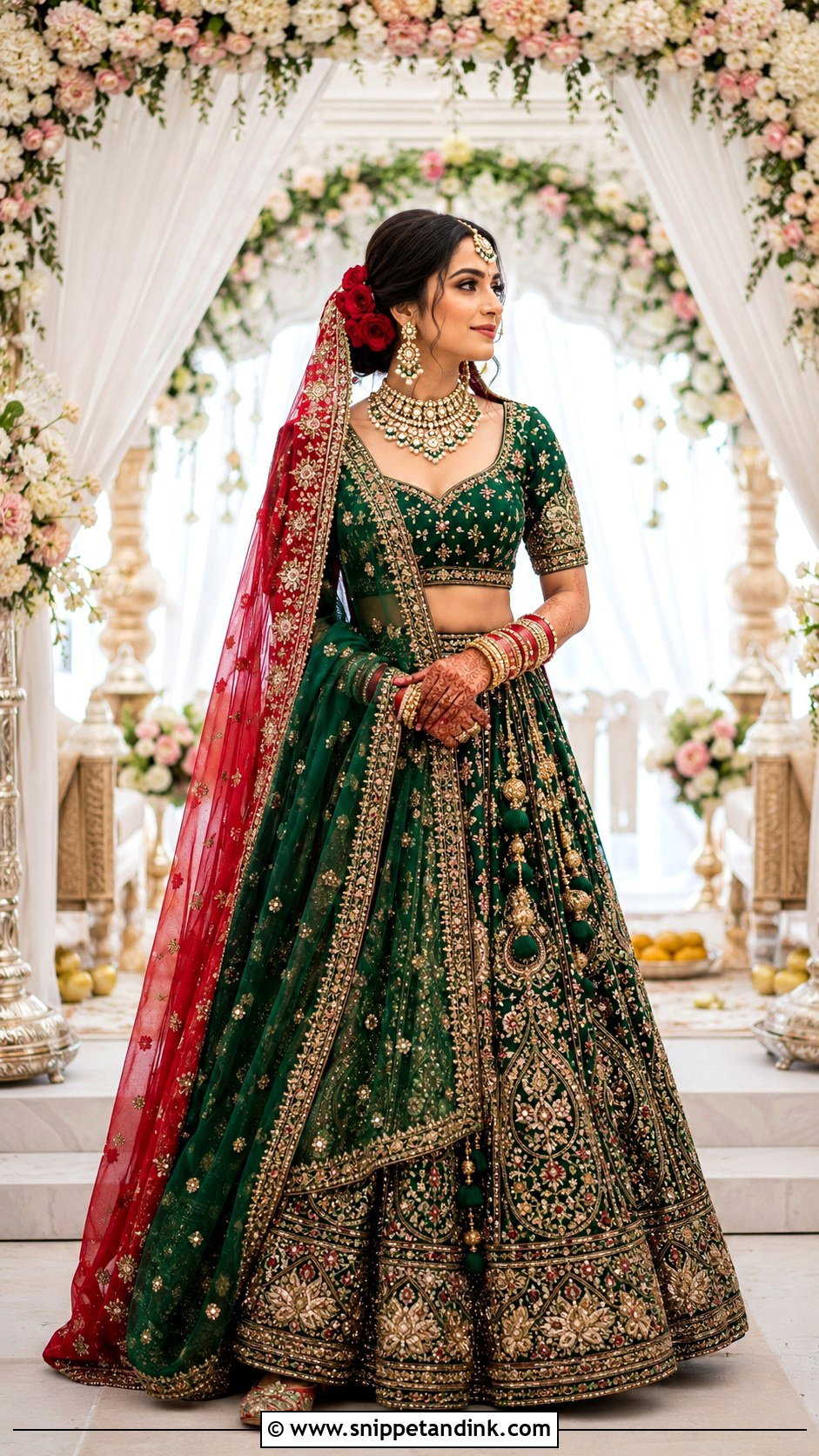
Green with a red dupatta keeps the color of tradition close to the face while letting green lead everywhere else. Choose an emerald or bottle green lehenga with gold zari or floral embroidery and a matching blouse. The red dupatta goes over the head so its border frames the face; a lighter green one can sit across the shoulder. Two dupattas mean two sets of pins, so plan for a helper and practice the draping at the final fitting. Kundan jewelry, a nath if you wear one, bridal bangles, a maang tikka and embroidered juttis complete it, with red flowers in a low bun. It reads ceremonial without becoming all-red.
Matching Fabric Weight to a Multi-Day Wedding Schedule
Indian weddings often run over two to four functions, sometimes outdoors in heat and indoors under air conditioning on the same day. The fabric matters more than the shade.
- Hot daytime functions: cotton, mul, chanderi, georgette and organza. Avoid velvet and heavy brocade.
- Evening functions indoors: silk, brocade and embroidered net hold up well; velvet only in genuinely cool weather.
- Functions on the floor or on low seating: shararas, ghararas and Anarkalis beat fitted lehengas.
- Haldi: anything you’re willing to stain.
If a saree needs draping on the morning
Book a draper or a relative who drapes well, and build their time into the schedule, since a silk saree with a pinned pallu takes longer than people expect. Have the petticoat fitted to the right length with the shoes you’ll wear, and keep a small pouch of safety pins in different sizes. Silk needs more pins than georgette because it slides. Try the drape once before the day, sit down in it and walk a flight of stairs.
Green Works at Every Function Once the Fabric Suits the Hour
A green outfit works when it suits the function, the weather and your part in the day. Emerald, forest and bottle green bring depth to an evening; mint, sage, pistachio and lime look fresh in sunlight. Formality shifts with fabric, embroidery, jewelry and how the dupatta is worn, so the same idea can serve a bride in heavy silk or a guest in light georgette. Think about how much walking, sitting on the floor and dancing each event involves, and choose the outfit that will still feel comfortable at the end of it.
You'll Like These Ideas:




Leave a Reply