
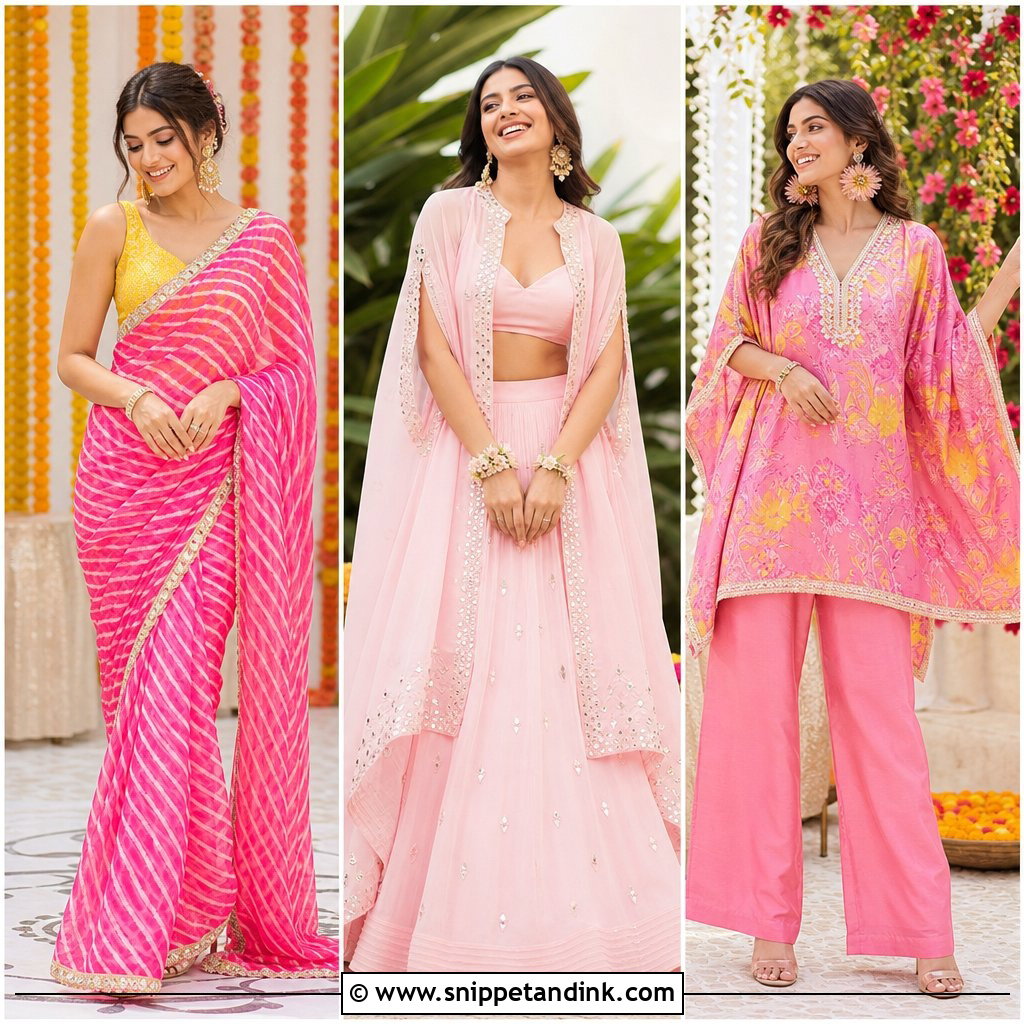
Pink is my favourite way to break up a sea of yellow at traditional Haldi dressing. It sits against turmeric, marigold garlands and bright morning light without disappearing into them, and that contrast is exactly what you want in the photos. The ideas below cover lehengas, sarees, shararas, co-ords and a few Indo-Western shapes, with notes on who each one suits. When I dress someone for a Haldi, I think about paste, water and floor seating before I think about embroidery, so you’ll see those practical checks in every look.
Which Pinks Survive a Turmeric Fight
Turmeric stains yellow, so the question with any pink outfit is how that yellow will look once it lands. On fuchsia, rani and hot pink, a smear tends to read as a warm orange patch and blends into the colour. On blush, powder and pastel pink it shows as a clear yellow mark, and on white chikankari it is impossible to miss.
I also look at the weave. Printed fabrics, bandhani and anything with dense embroidery hide marks well. Smooth satin, plain silk and fine cotton show every fingerprint. If you love a pale shade, wear it in a printed or textured fabric, or plan a change of outfit after the ritual.
- Bright pinks and prints: safest if the family is generous with paste.
- Pastels in washable cotton or georgette: fine if you can wash them the same day.
- Pale silk or anything heirloom: wear it for portraits after the ritual, not during.
Dressing the Bride, the Sisters and the Guests in One Shade
When a family decides on pink for the Haldi, I give each group a different job. The bride wears the richest or most decorated version, so she still stands out in group shots. Sisters and bridesmaids pick from two or three agreed shades and can mix silhouettes. Guests get a looser brief, usually any pink with a touch of yellow or green.
Send the shade references as photos taken in daylight, not as names. Rani pink means something different in every shop. I also suggest everyone avoids white blouses next to the bride, which pull focus in close frames.
1. Blush Pink Floral Lehenga For Haldi
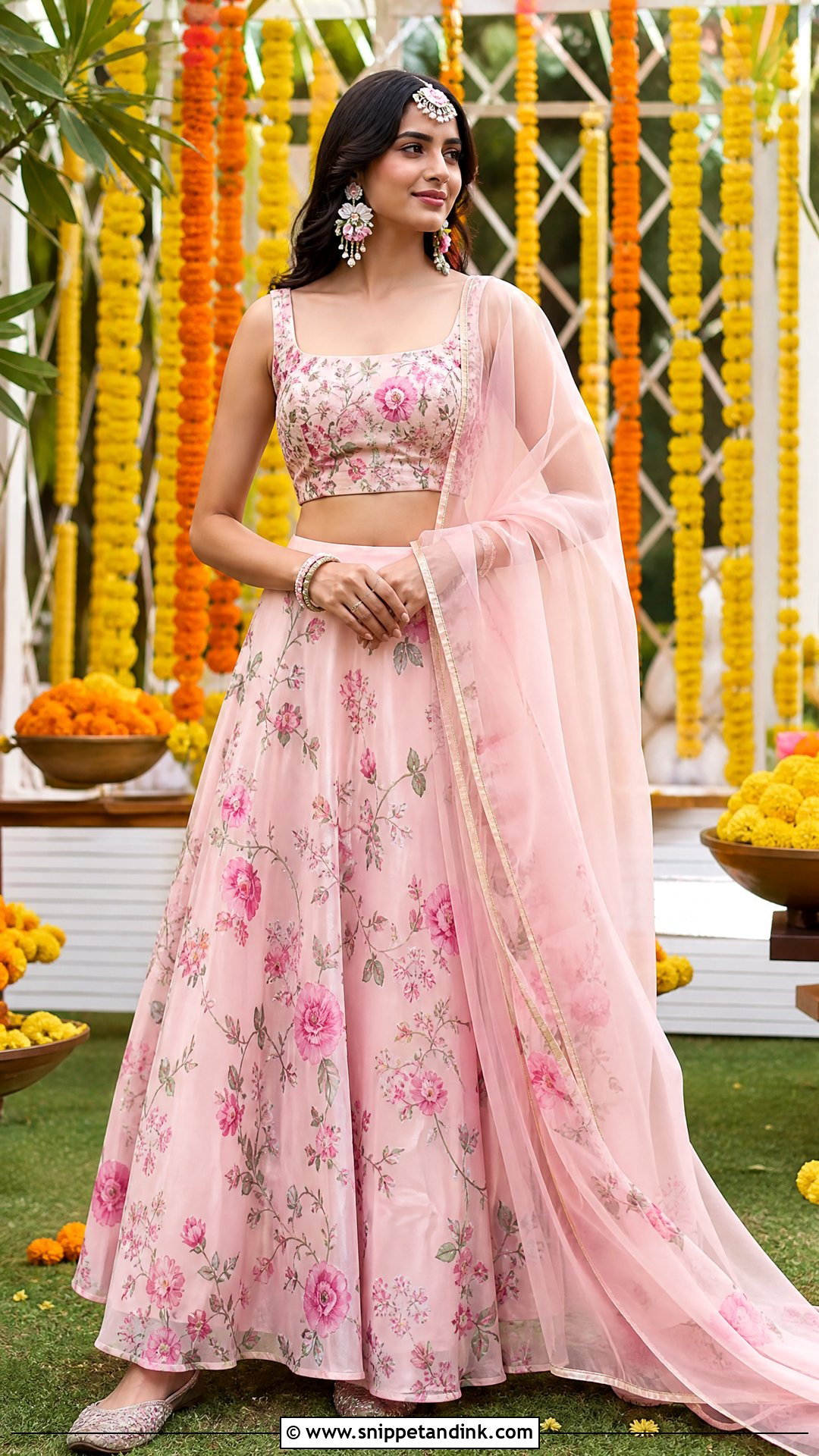
Blush florals are the gentlest entry into pink for a daytime ceremony. I look for a skirt printed with small yellow, peach or green flowers so it already talks to the décor, then keep the blouse sleeveless and simple. An organza dupatta gives movement, but I always ask for a soft finish because crisp organza scratches the upper arms after a few hours. Floral earrings, a small maang tikka and embroidered juttis are enough. Brides can go for a fuller skirt with light sequins; guests are better off in a printed version that won’t mind a wash.
2. Rani Pink Mirror Work Sharara For Haldi
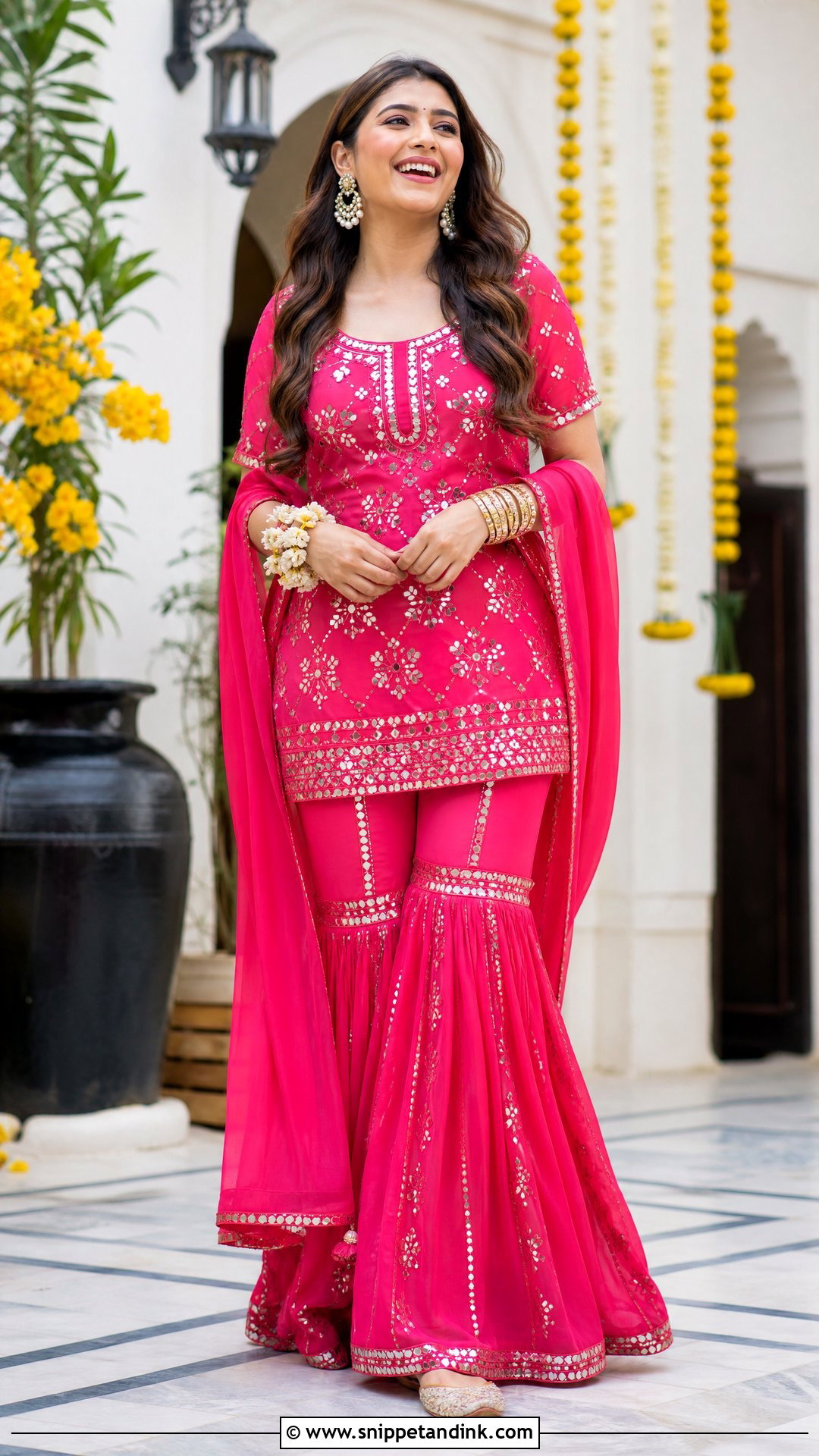
Rani pink is loud on its own, so a rani pink mirror work sharara needs very little help. I pair wide sharara pants with a short kurti that has mirrors at the neckline and cuffs, plus a net or chiffon dupatta with a narrow border. Keep jewellery to pearl chandbalis and neutral juttis. One thing I check at the fitting: hand-sewn mirrors can catch on a net dupatta, so I pin the dupatta away from the neckline or choose chiffon instead.
3. Pastel Pink Organza Saree For Haldi
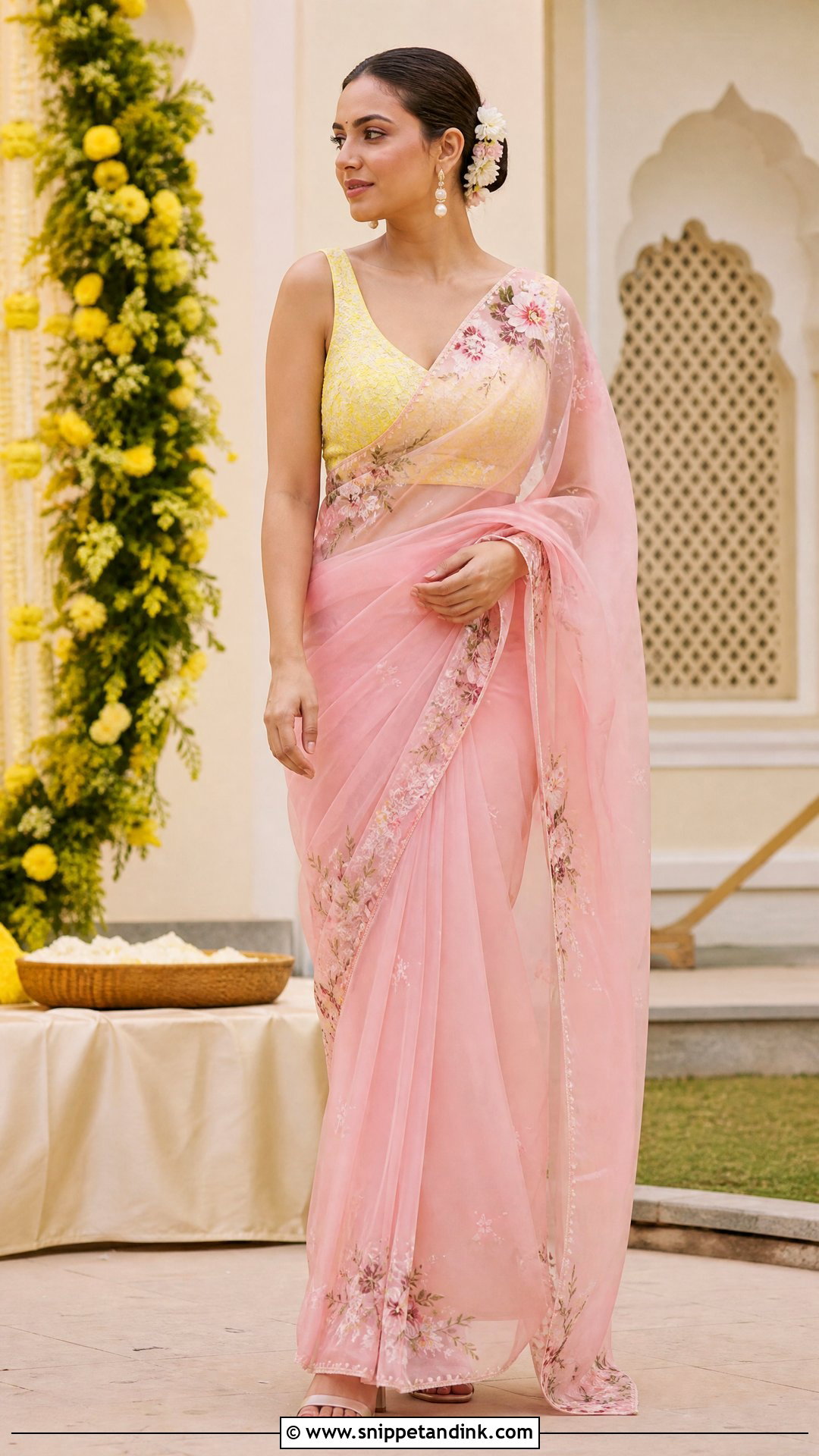
A pastel organza saree looks dressy without tipping into reception territory. Floral prints, scalloped borders or scattered threadwork all read well on camera. I’ll often suggest a lemon-yellow blouse here, because pale pink on pale pink can wash out against light skin in direct sun. Pin the pleats in three places and secure the pallu at the shoulder. Soft organza is the only kind I’d put on someone who will be sitting on a low stool for an hour; the stiff variety creases into sharp lines that show up in every frame.
4. Hot Pink Bandhani Saree For Haldi
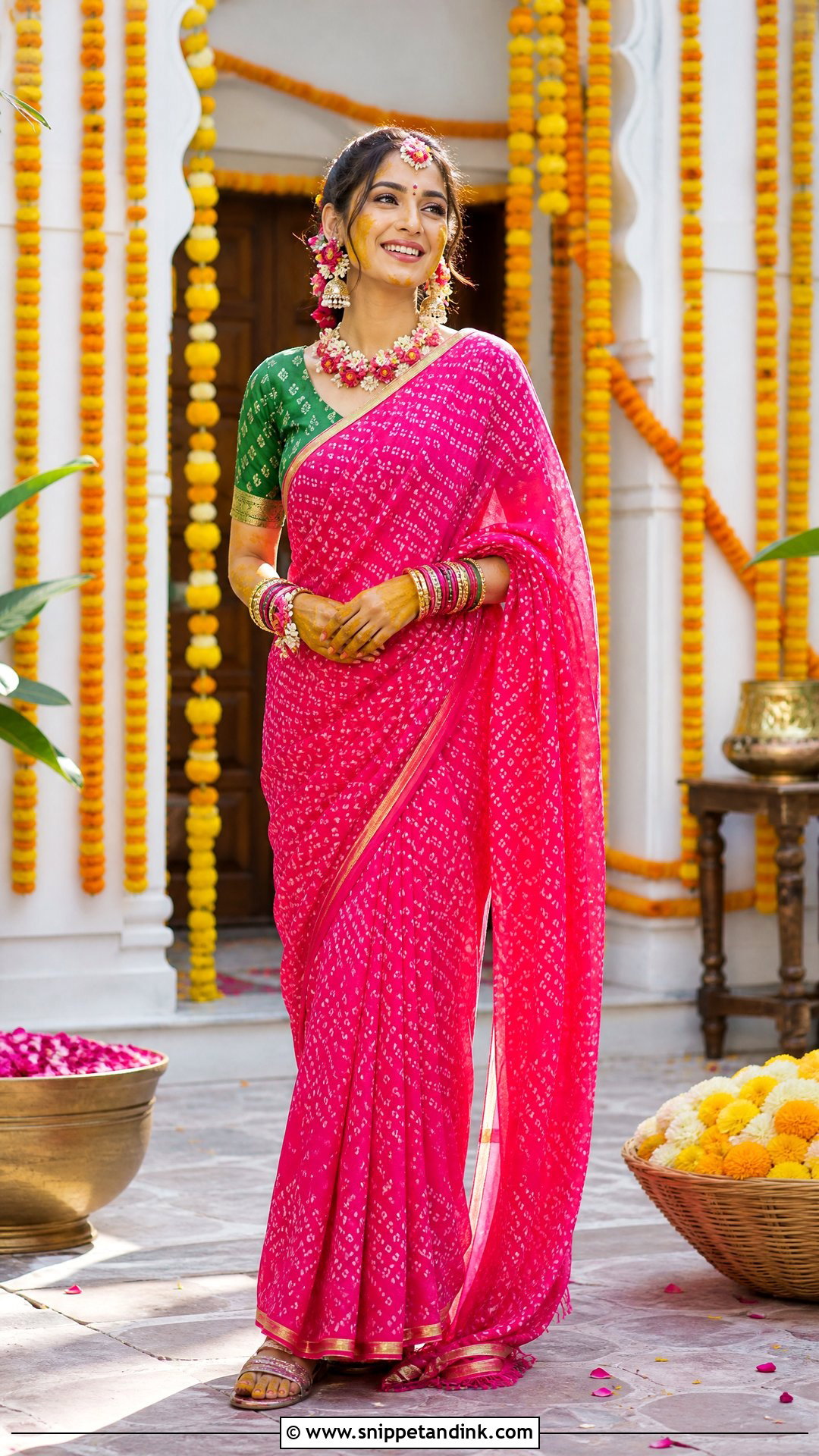
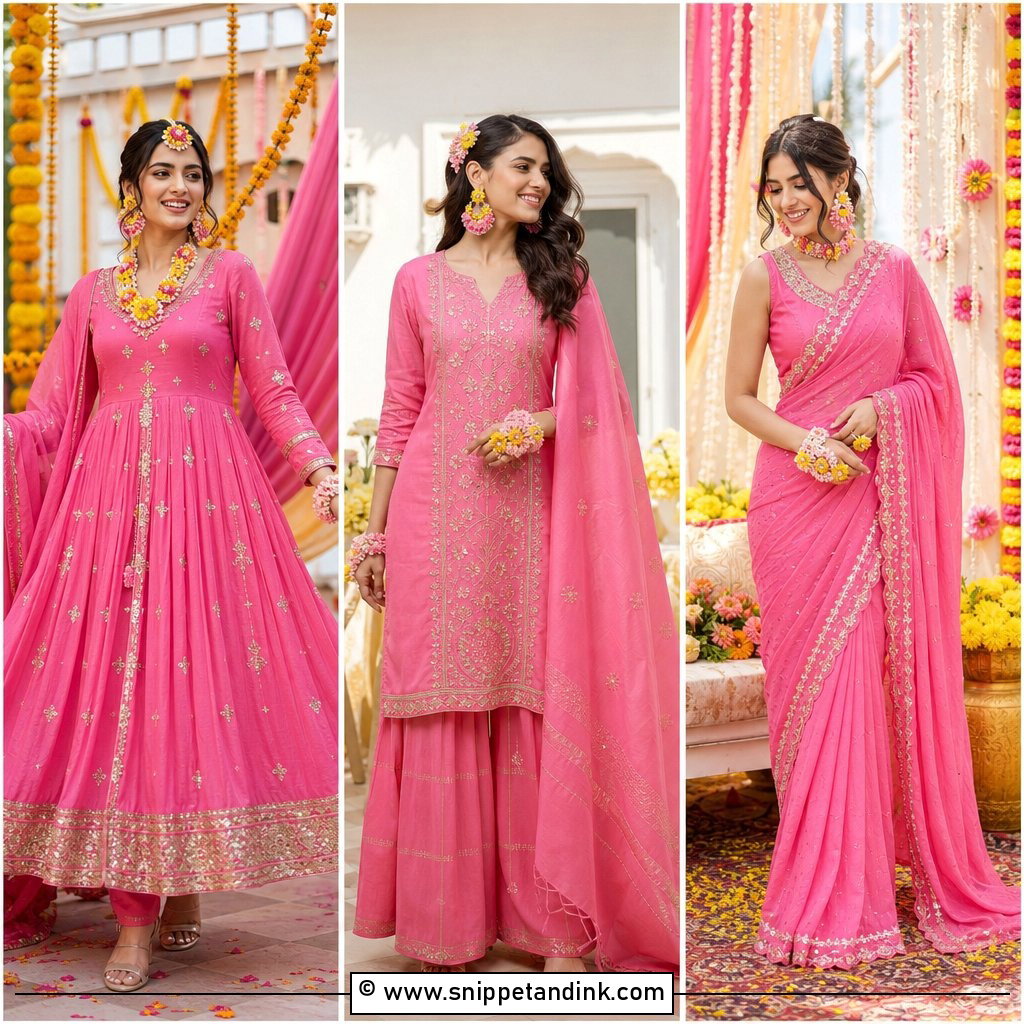
Bandhani is forgiving at a Haldi because the dotted tie-dye pattern hides small turmeric marks far better than a plain weave. I look for georgette or cotton-silk with a slim gota border, then decide between a matching pink blouse or a yellow, orange or green one for contrast. Gold jhumkas, stacked bangles and flat sandals keep it practical. Guests should stop at earrings and bangles, while the bride can add a floral necklace. Bandhani dye can bleed when soaked, so I tell people not to let wet paste sit on the fabric for long.
5. Pink Chikankari Kurta And Palazzo Set
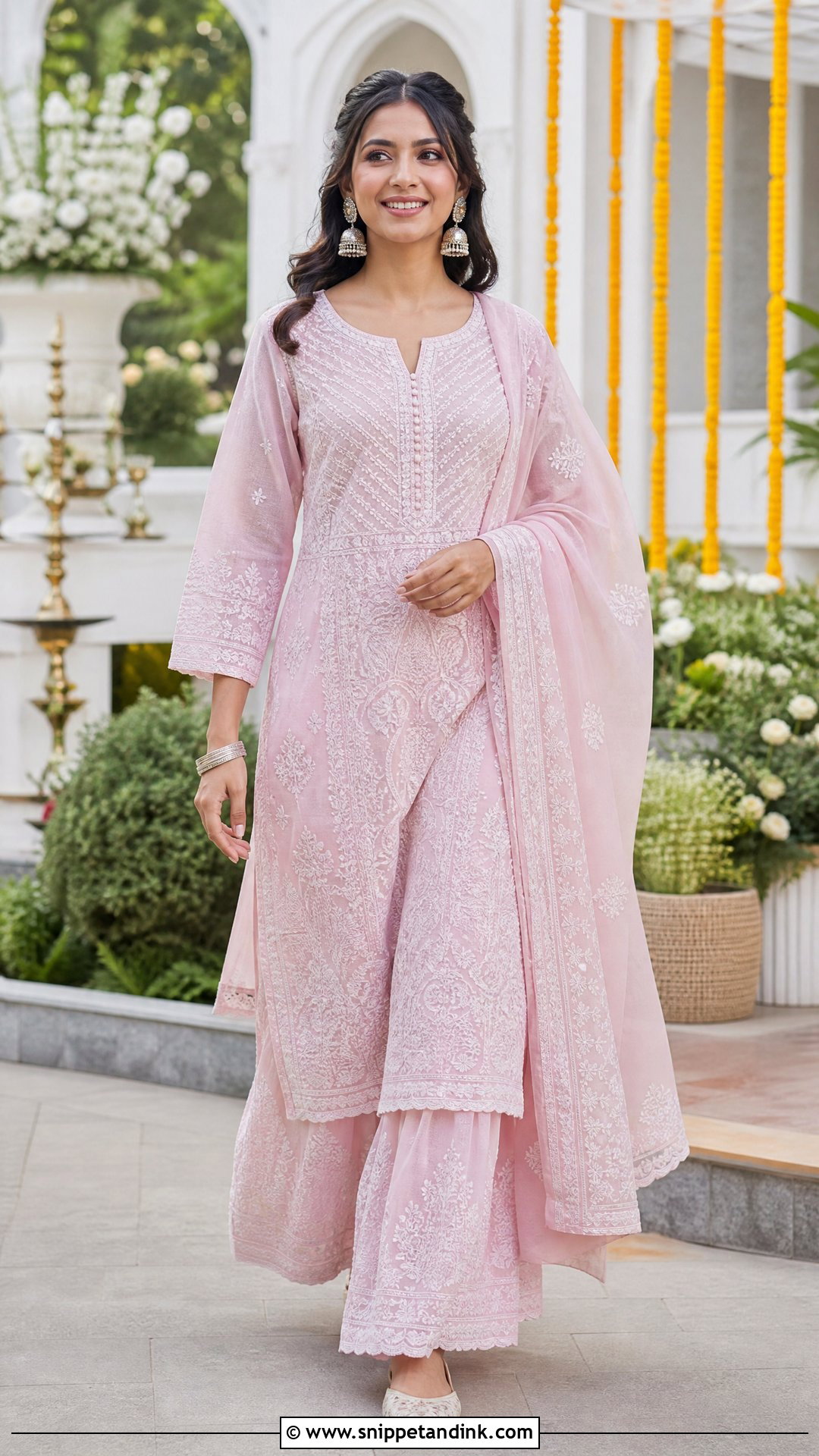
Chikankari kurtas are what I reach for when someone tells me they hate fuss. The hand embroidery gives texture with almost no weight, and a straight or slightly flared kurta over wide palazzos is easy to sit in. Powder pink, rose and watermelon all suit cotton or modal. Check the fabric against daylight: fine mulmul chikankari is often sheer and needs a slip. Pale pink also shows turmeric clearly, so this is the set I’d choose only if it can go straight into a cold wash afterwards.
6. Fuchsia Pink Anarkali For Haldi
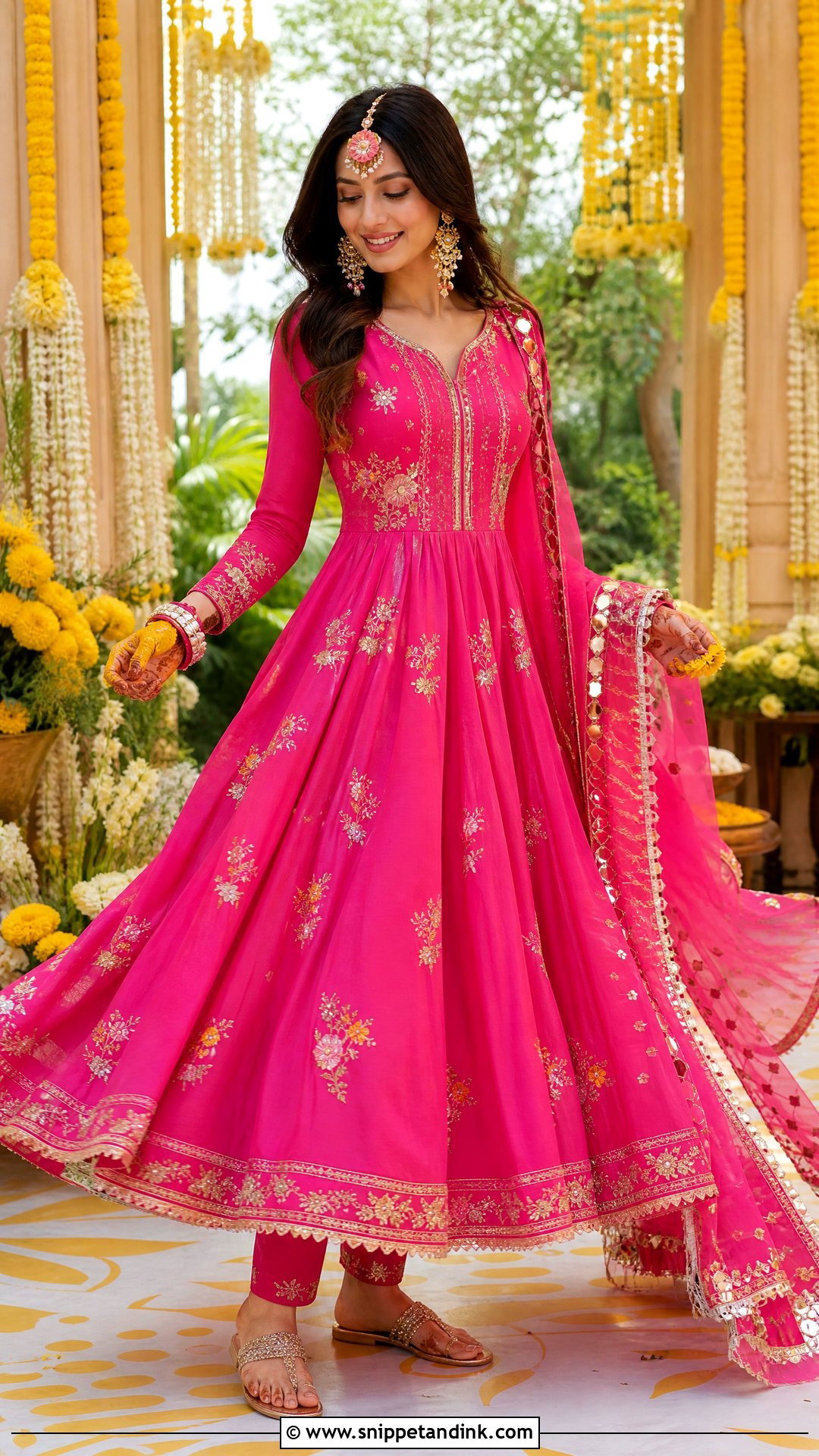
Fuchsia Anarkalis give the most twirl for the least effort. I prefer calf length over floor length for a Haldi, because a long flared hem sweeps up petals and wet paste every time you turn. A fitted bodice with gota or a yellow border at the hem is enough decoration. Add narrow pants, a light dupatta, flat gold sandals and long earrings. The one fitting I insist on is the armhole: Anarkali bodices cut high under the arm can dig in when the bride raises her hands for the ritual.
7. Rose Pink Gharara Suit For Haldi
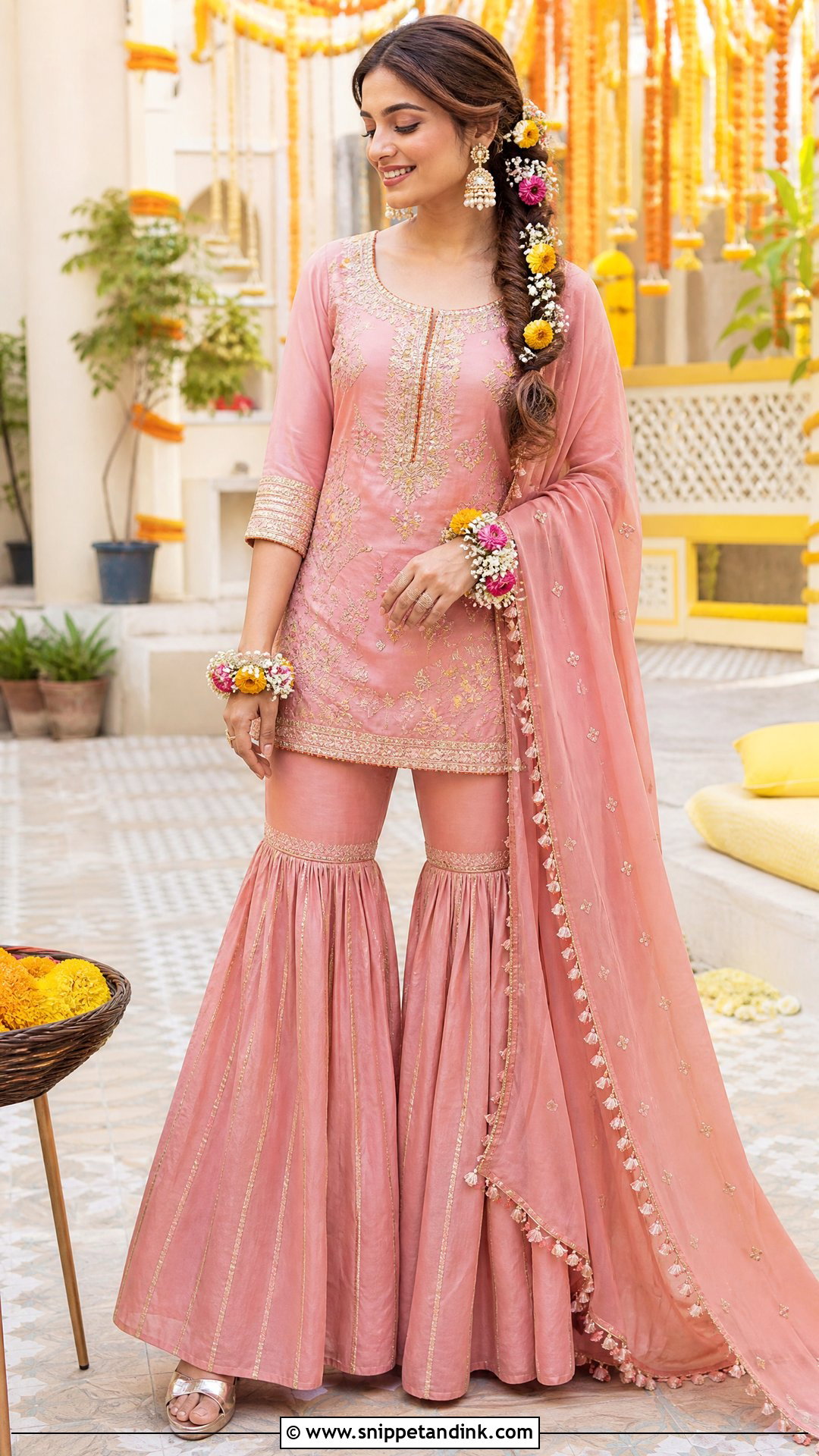
Rose pink gharara suits combine a short kurti with pants that are fitted to the knee and then flare out in a gathered panel. That knee seam is the detail I watch: if it sits too low, it pulls when you sit cross-legged. Georgette or cotton-silk moves better than anything stiff. I’d style it with a tasselled chiffon dupatta, pearl jhumkas and metallic flats, plus a side braid with small pink and yellow flowers. The short kurti defines the waist and the flare balances the hips, which is why it suits so many shapes.
8. Pink Peplum Top And Dhoti Pants For Haldi
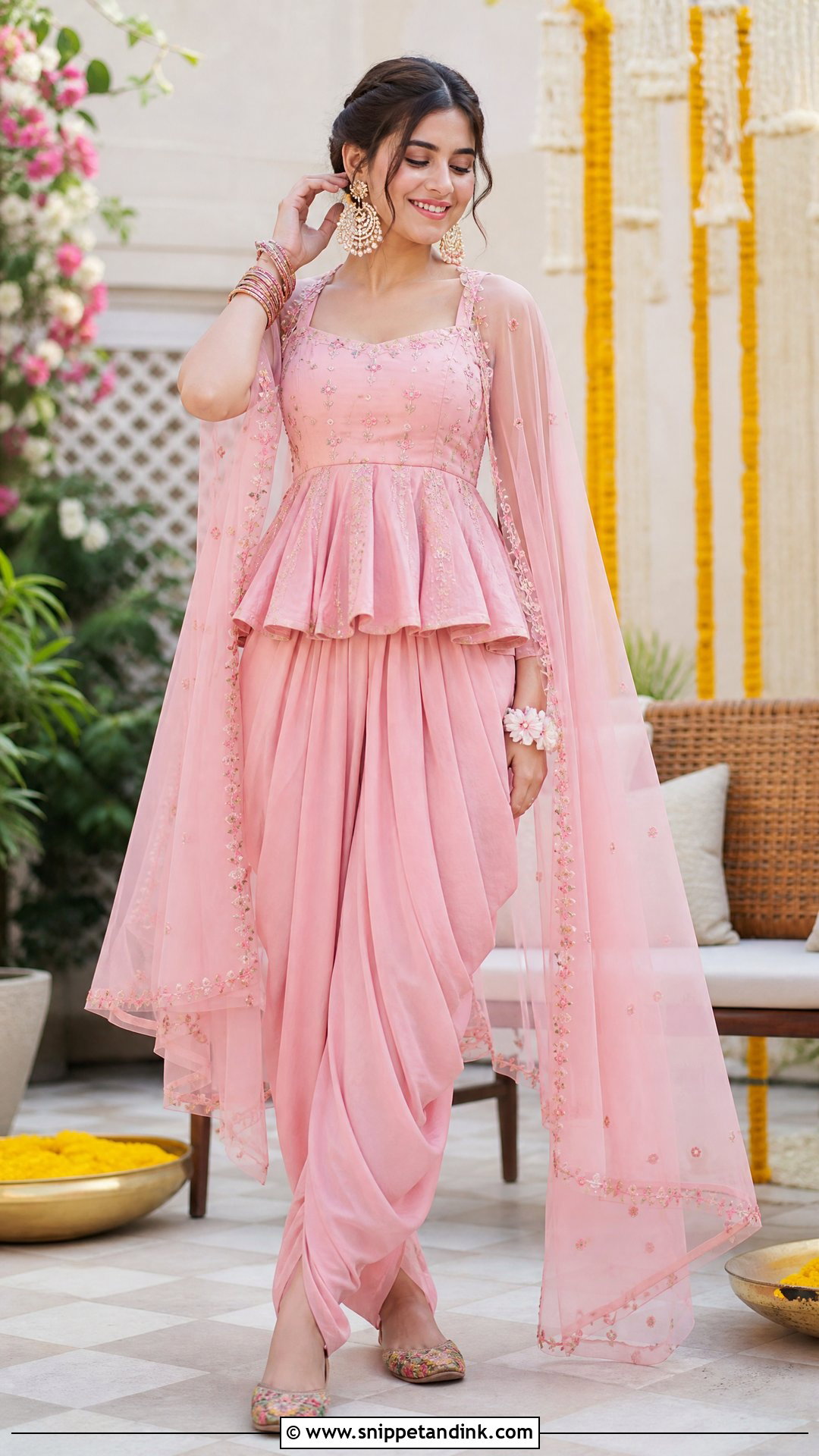
A pink peplum top with dhoti pants is the outfit I suggest for sisters and cousins who will be the first on the dance floor. Fuchsia, bubblegum and coral all hold their colour in bright light. I check two things before anyone wears it out: the dhoti folds should be stitched down rather than just pressed, and the peplum should end high enough that the drape of the pants is still visible. A high ponytail keeps the line clean.
9. Pink Cape And Palazzo Co-Ord Set For Haldi
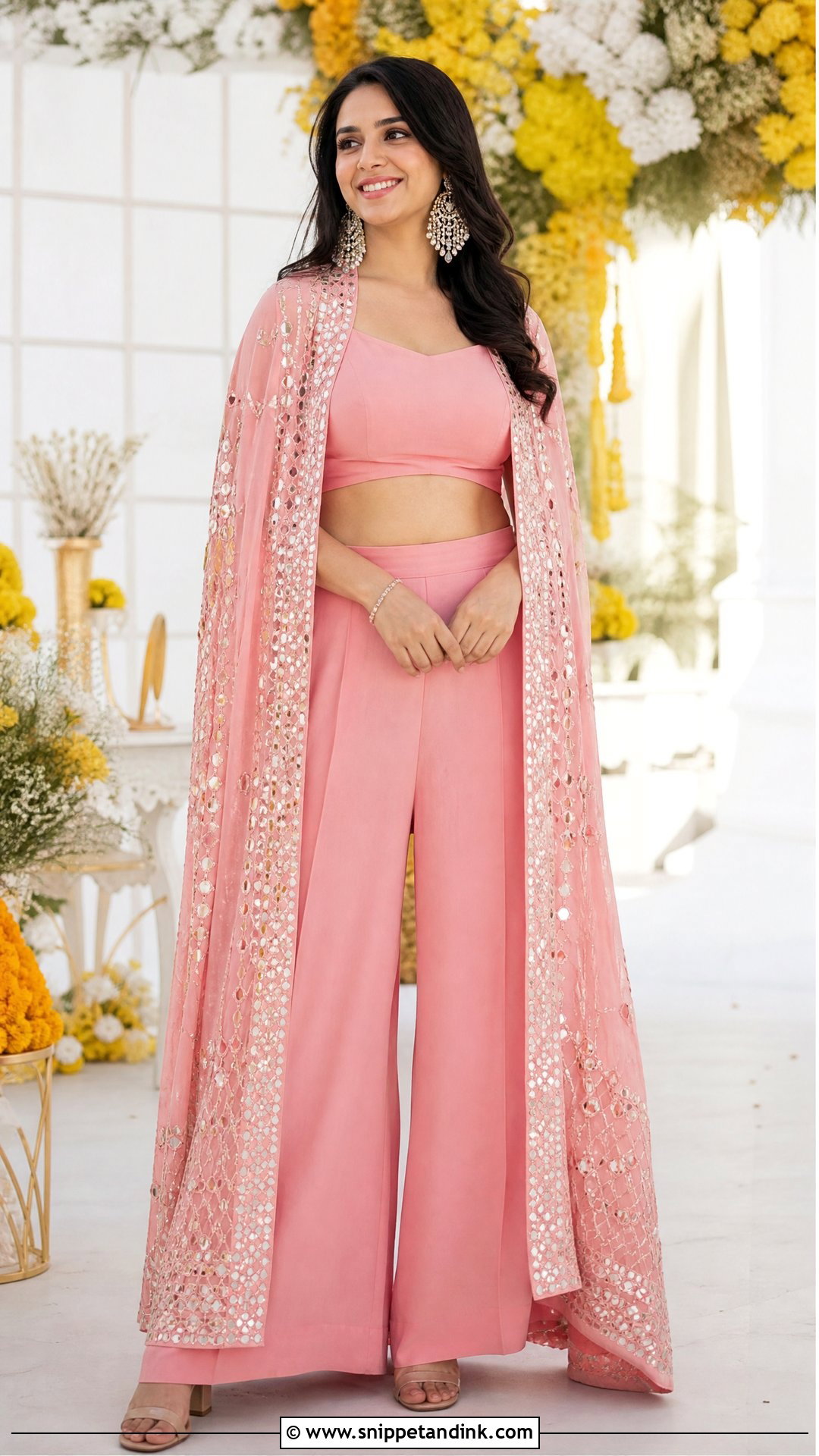
Co-ord sets with a cape are a good answer for anyone who finds a dupatta annoying. Start with a crop top or modest camisole, add high-waisted palazzos and a cape in the same colour family. Mirror work, small flowers or gota on the cape edge give enough festivity. I measure cape length while the wearer is seated, because a cape that clears the floor standing can pool behind you on a low chair and drag through the turmeric tray.
10. Pink Floral Skirt And Crop Top For Haldi
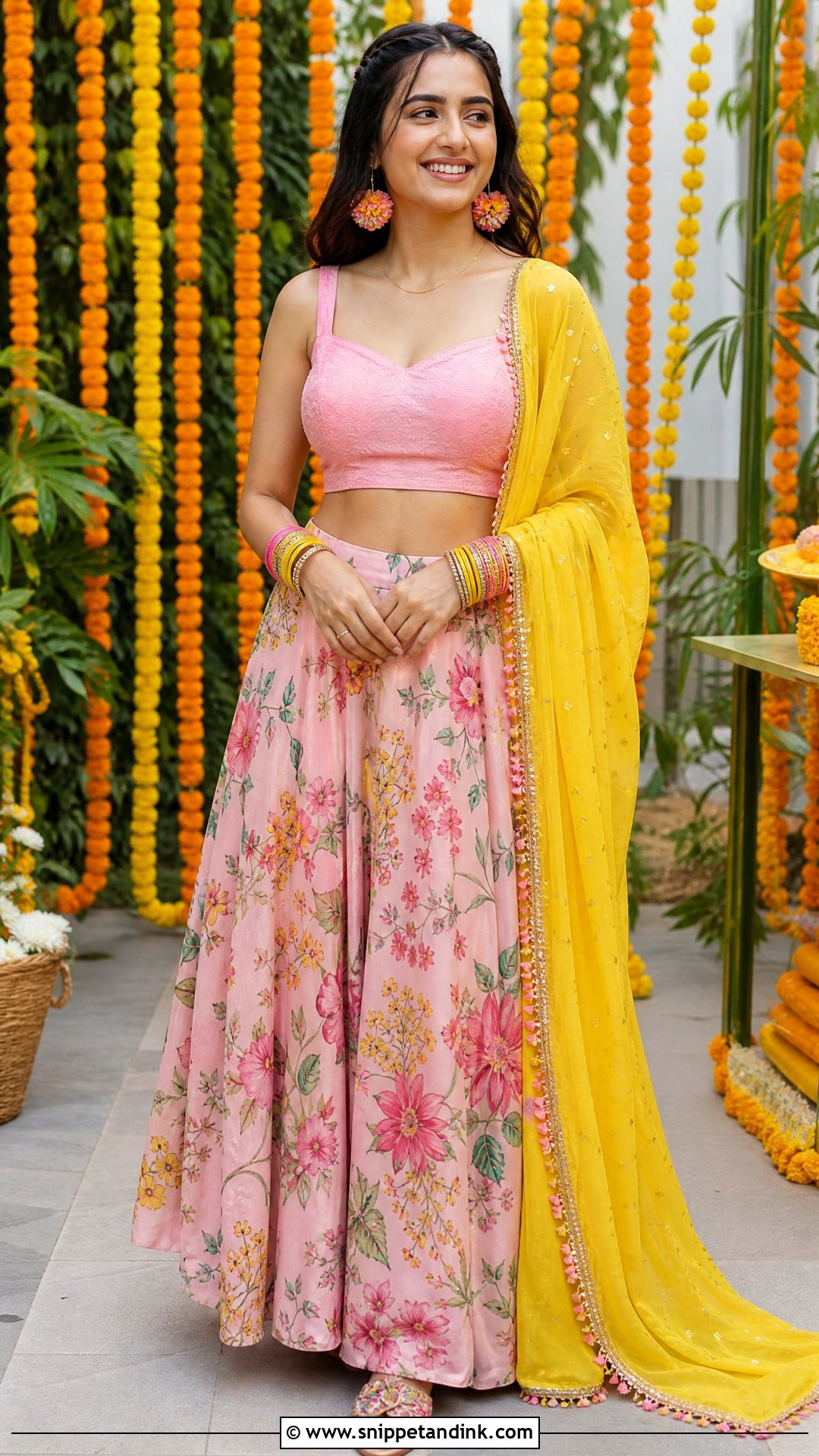
A pink floral skirt with a plain crop top suits a relaxed daytime Haldi. Marigold, leaf or mixed botanical prints work, as long as the blouse stays solid so the pattern has somewhere to rest. Add a light dupatta over one shoulder for coverage. Scale matters more than people think: on petite frames I go for small prints, and on taller or plus-size frames larger motifs and wider panels look balanced. Both pieces rewear easily, which is a real advantage for guests.
11. Pink Kaftan Set For Haldi
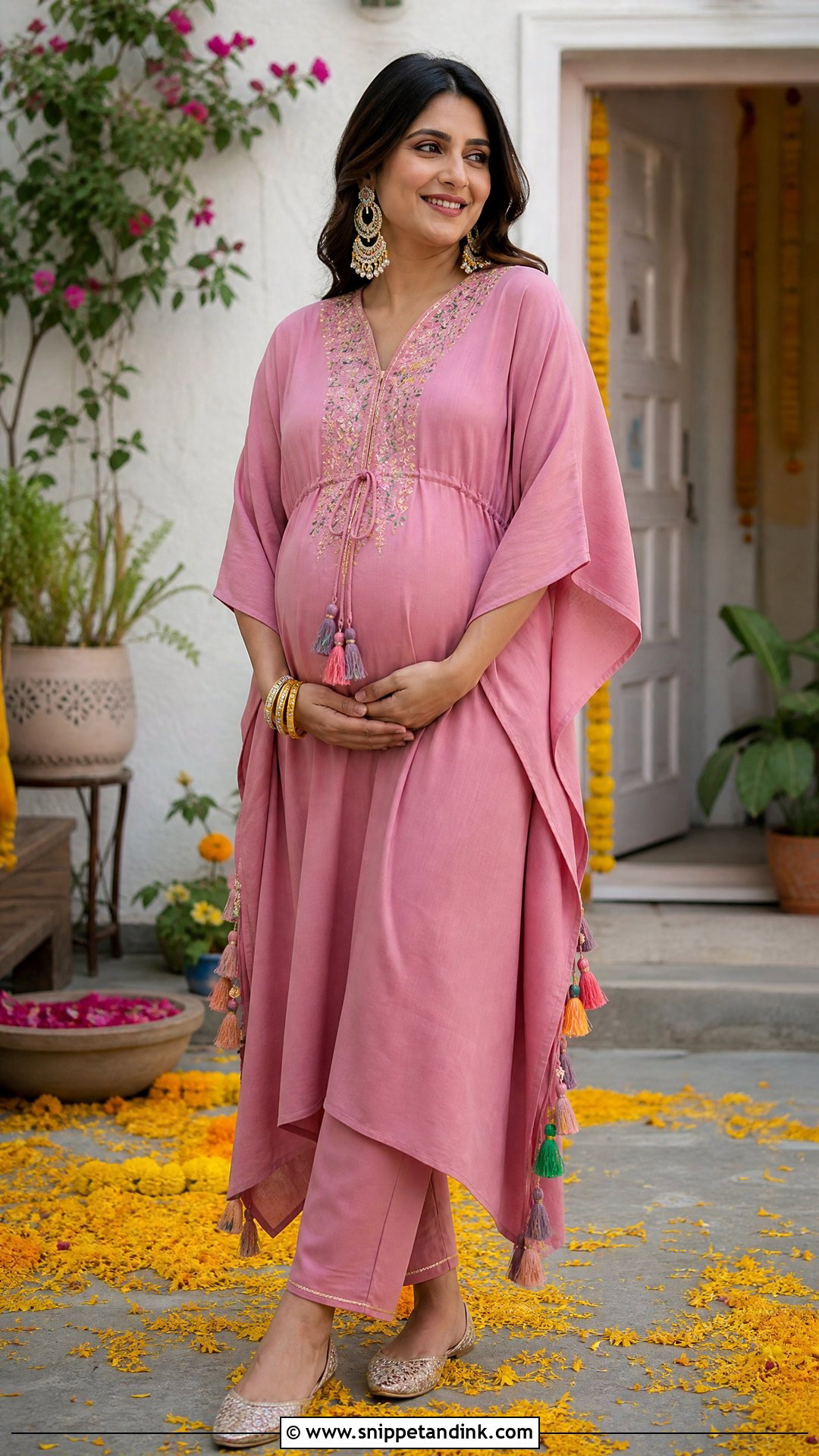
Kaftans are the most comfortable thing on this list, and they suit pregnant guests, older relatives and intimate home ceremonies. Knee or calf length with side slits over straight pants gives coverage without heat. Without a waist seam or drawstring a kaftan can look like a tent in photos, so I always look for one. My one warning is sleeves: very wide bell sleeves dip straight into turmeric bowls and food plates.
12. Pink Draped Saree Gown For Haldi
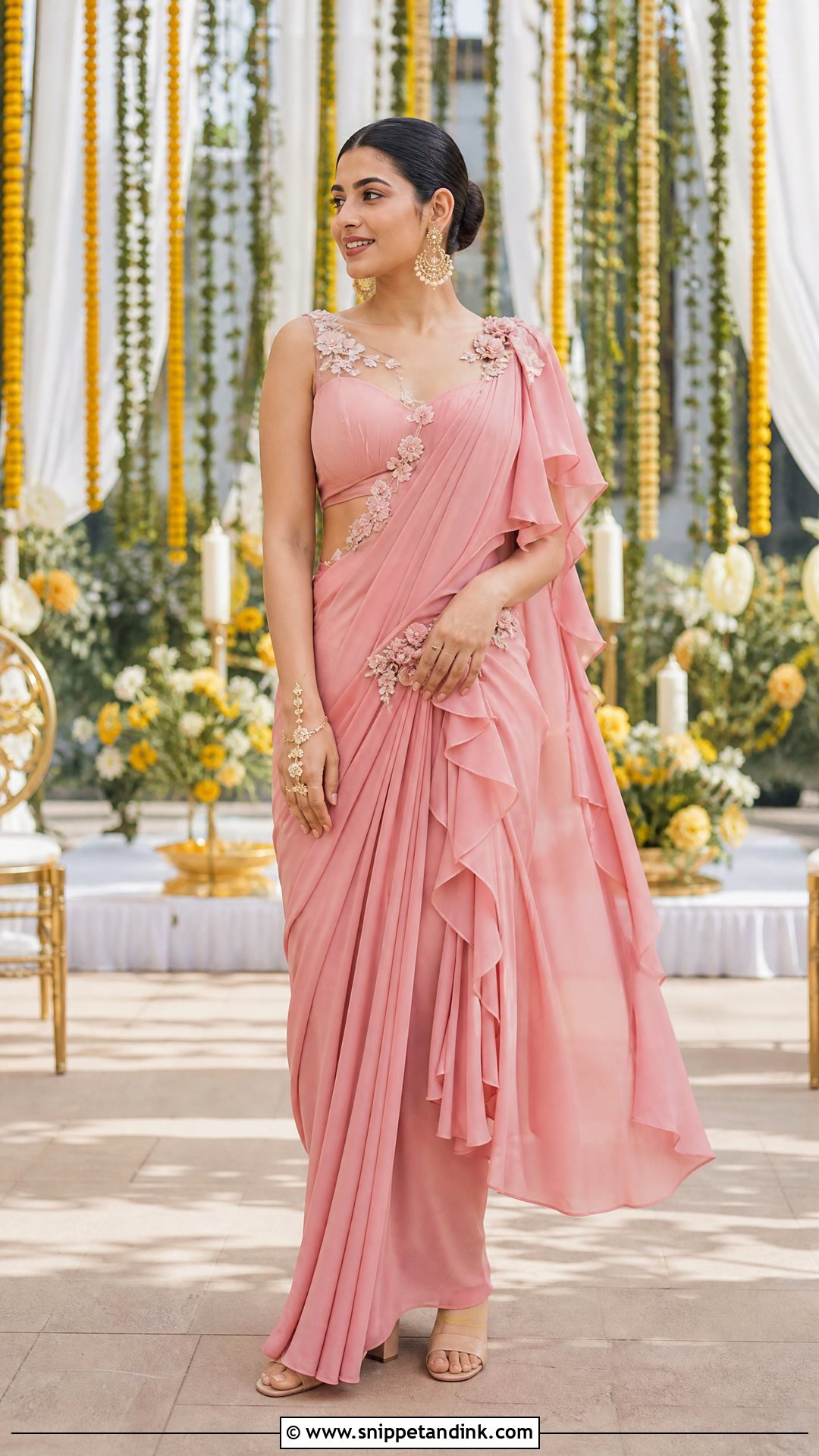
If saree pleating stresses you out, a pre-draped saree gown does the work for you with stitched pleats and an attached pallu. Crepe and light georgette move well; I avoid heavy satin versions in the heat. A ruffled shoulder or narrow embroidered border is plenty, finished with gold earrings, a hand harness and low block heels. Try sitting and lifting both arms at the trial. Some attached pallus are tacked so tightly that you can’t raise your hands for the ritual.
13. Pink Jacket Lehenga For Haldi
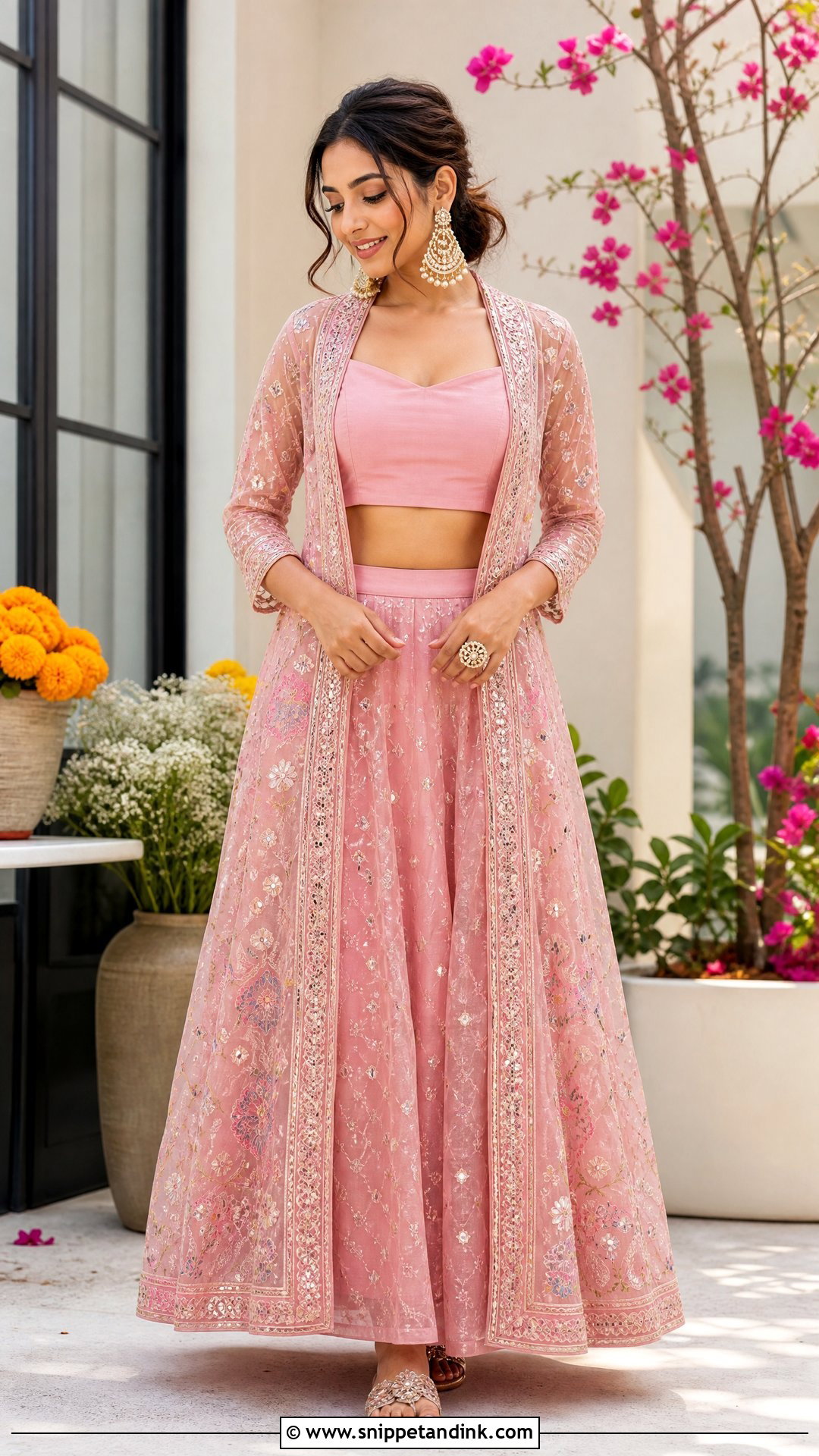
A pink jacket lehenga replaces the dupatta with a long sheer jacket, so there is nothing to keep tugging back into place. I keep all three pieces in close pink tones, or switch the top to yellow for contrast. The open jacket draws a long vertical line that lengthens the body. Fit the sleeves carefully: jacket sleeves cut too narrow restrict your arms the moment someone hands you a bowl of paste.
14. Pink Kurta Set With Yellow Dupatta For Haldi
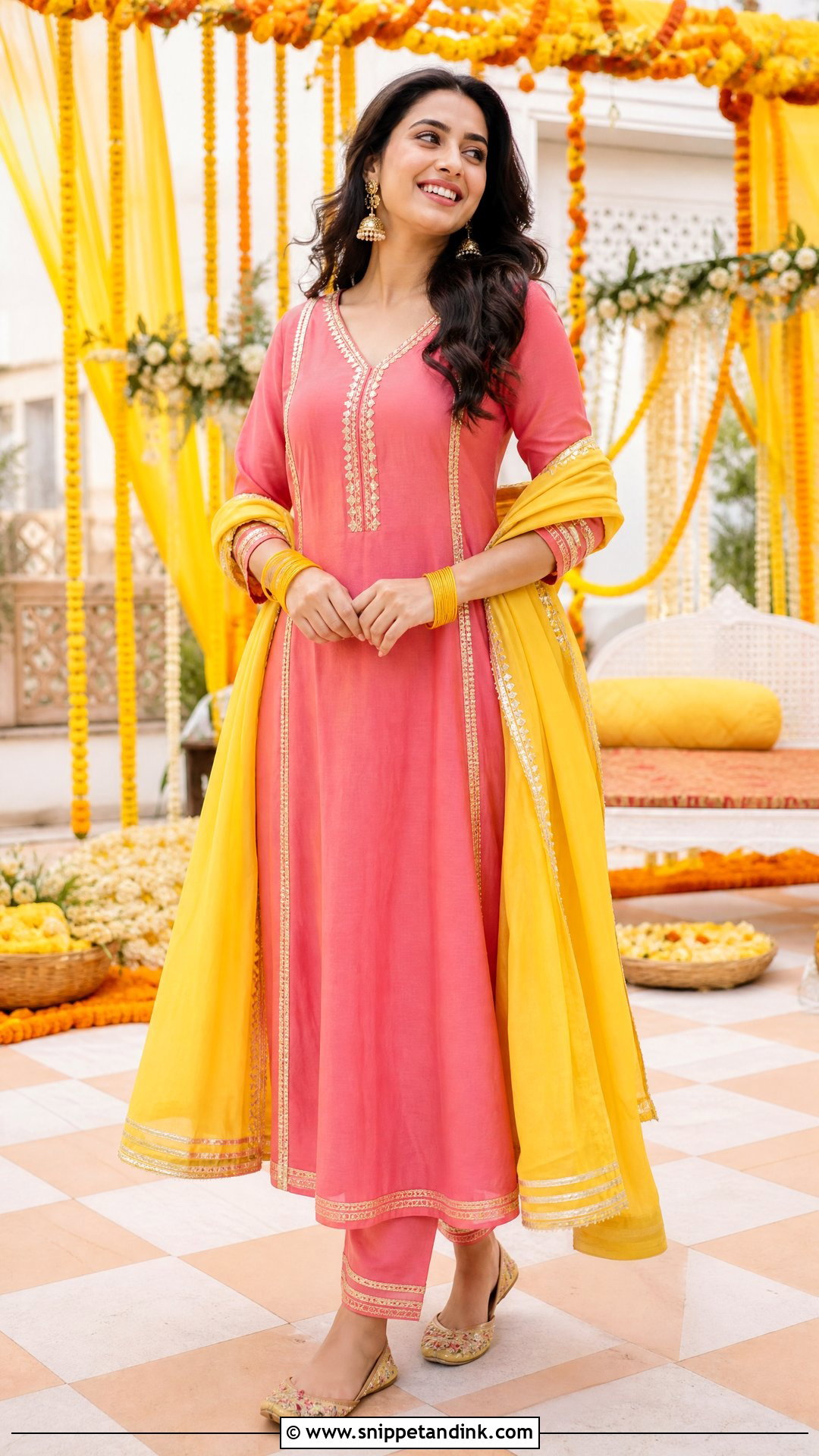
Pink kurta, yellow dupatta. It’s the simplest way to bring the ceremony colour into your outfit without wearing head-to-toe yellow. A straight or A-line kurta with matching pants is the base, and a dupatta with gota, tiny mirrors or a floral print ties the two shades together. I pin the dupatta at one shoulder with a safety pin hidden under the fold, because a loose dupatta will slide the first time you lean forward. Bridesmaids can wear the same colour pairing in different silhouettes.

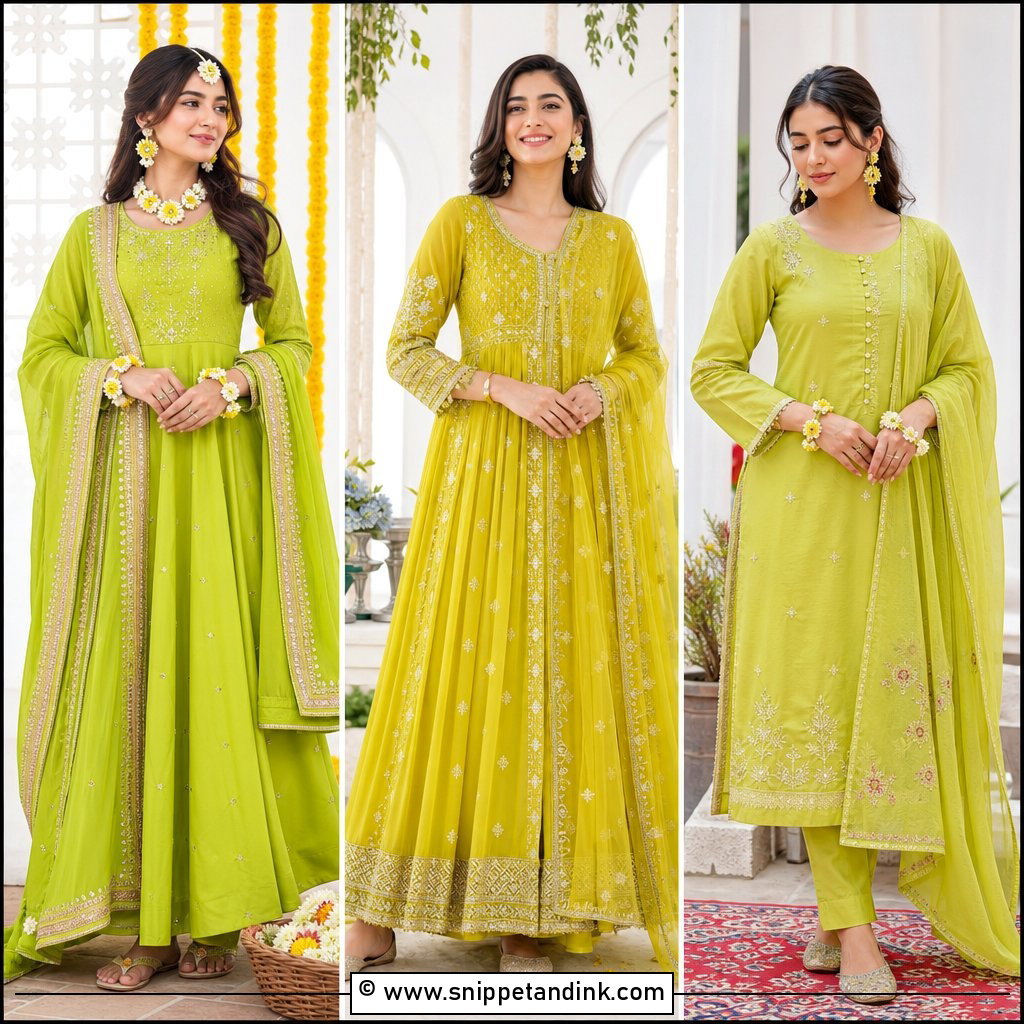
15. Pink Silk Saree With Floral Jewelry For Haldi
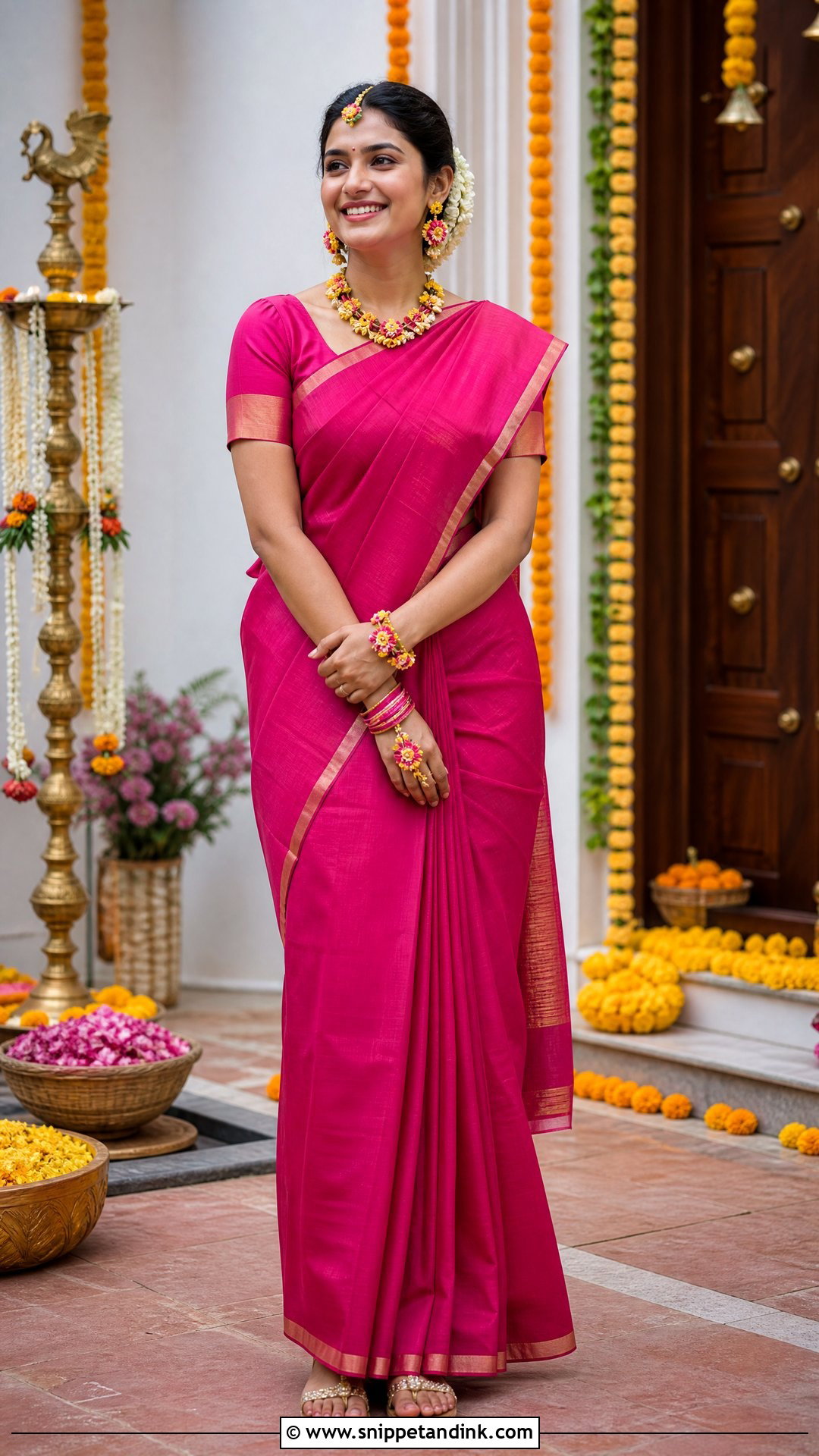
Silk feels ceremonial, but this is where I’m cautious. Turmeric paste is oily and the yellow can set into silk fibres fast, so I steer brides away from heavy heirloom sarees for the ritual itself. A lighter silk or silk blend works: magenta with a gold border looks rich, peach or rose reads softer for a morning event. Secure the pleats firmly, wear flat sandals underneath, and add jasmine in a low bun. If you expect a generous application, change into this saree after the main ritual for portraits.
16. Pink Angrakha Kurta And Pants For Haldi
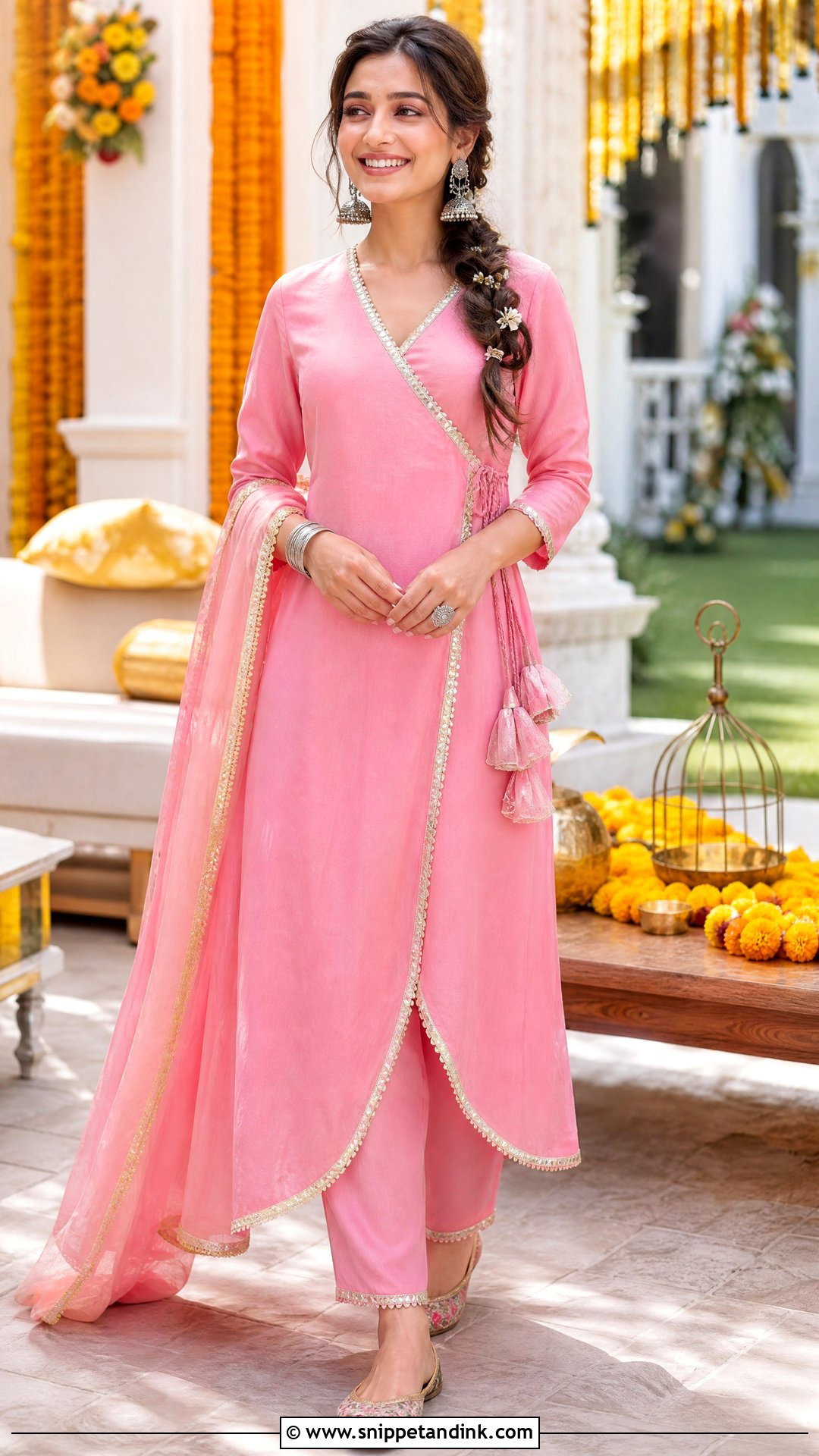
An Angrakha kurta gets its interest from the overlapping wrap at the chest, so it doesn’t need heavy embellishment. Side ties, gota edging or tassels are enough. Straight pants keep it clean, while churidar gives a more traditional feel. A side-parted braid follows the diagonal of the wrap. I always add a hidden hook or snap inside the wrap, because ties alone loosen as you bend and the neckline gapes by the end of the ceremony.
17. Pink Tiered Dress With Dupatta For Haldi
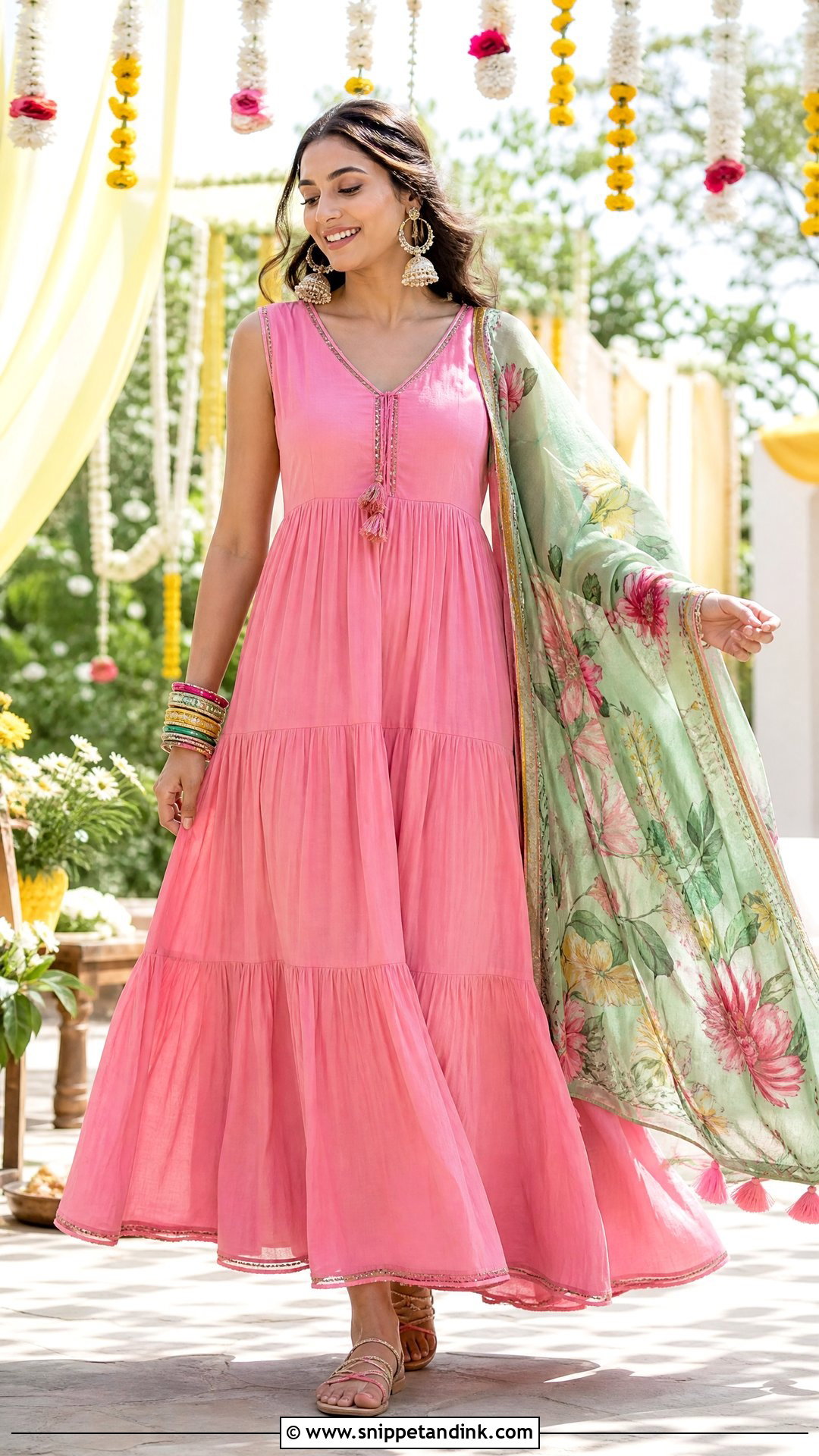
Tiered dresses are the easiest fusion choice for guests. Ankle-length cotton or georgette with two or three tiers and a fitted top is enough, with a yellow, green or floral dupatta to make it feel like a wedding outfit. Hoop jhumkas, bangles and flat sandals finish it. On a very full skirt I’d shorten the dupatta: two layers of volume together make the wearer look swamped. Garden ceremonies and destination weddings suit this one most.
18. Pink Palazzo Suit With Floral Jewelry For Haldi
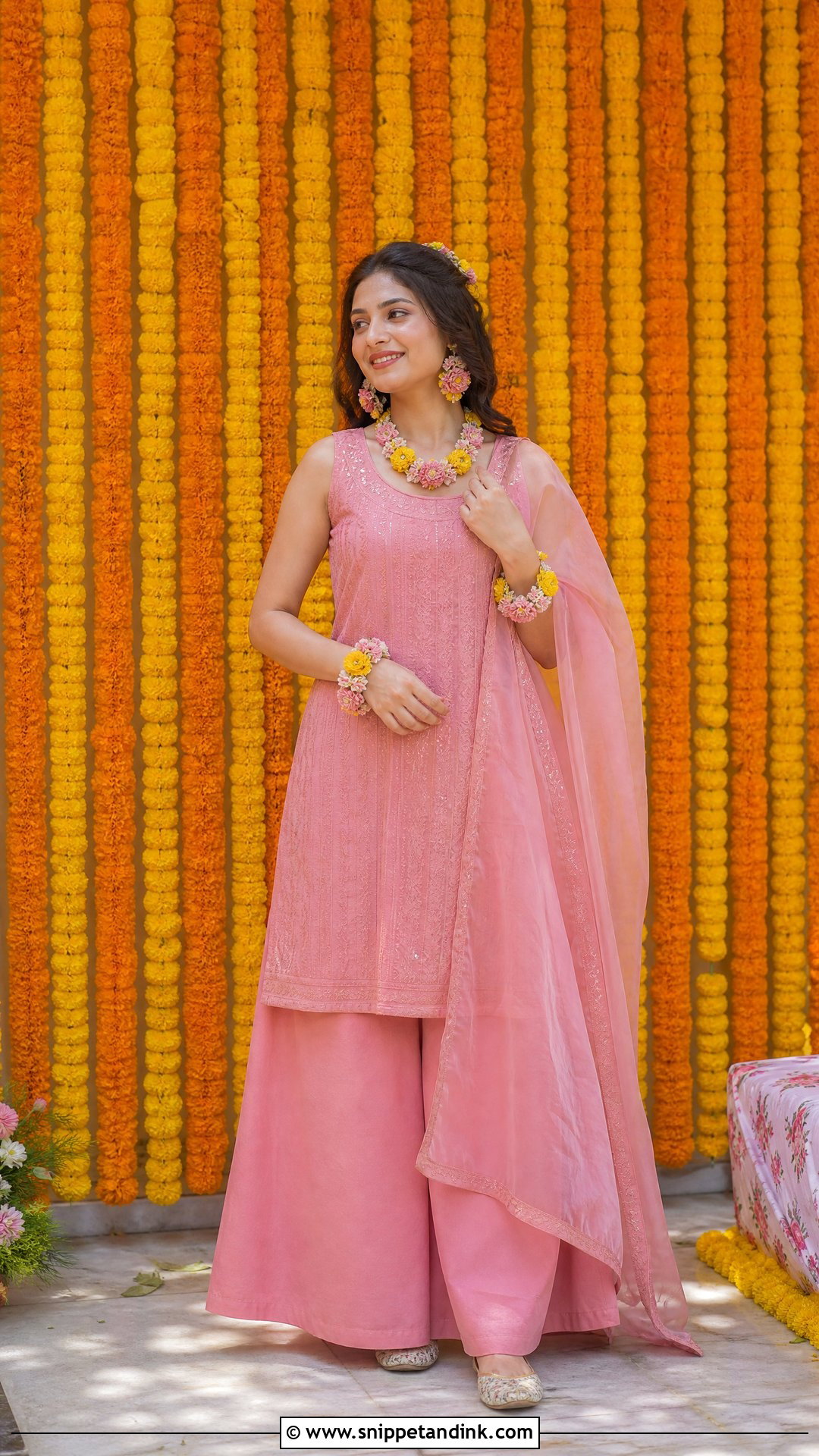
A monochrome palazzo suit is a quiet base that lets floral jewellery do the decorating. Keep the kurta fabric plain or lightly textured, then add a flower necklace, earrings and bracelets in pink and yellow, or white for a softer finish. Fresh-flower jewellery wilts in heat, so I ask the florist to make it the same morning and keep it cool until you dress. Hem the palazzos before the event; pants that pool at the feet soak up water and paste within minutes.
19. Pink Lehenga With Green Blouse For Haldi
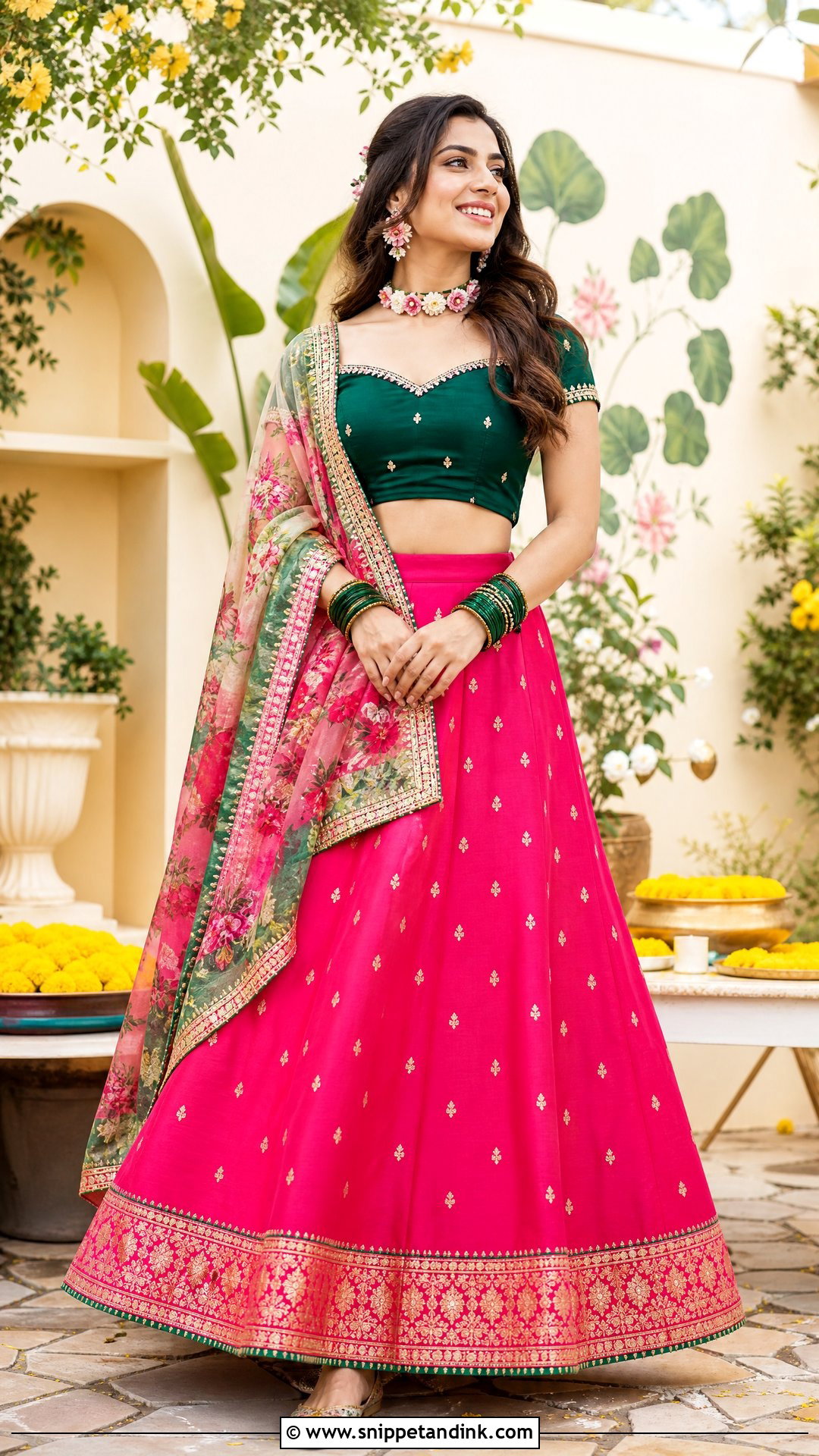
Pink with green is a contrast I like because it stands apart from the yellow everyone else is wearing. A hot or rani pink skirt with an emerald, lime or leaf-green blouse needs a dupatta that carries both shades, otherwise the pairing looks accidental. I hold it to two dominant colours and a little gold. A bun with small flowers keeps the neckline open, and outdoor venues with plenty of greenery suit this combination best.



20. Pink Indo-Western Jumpsuit For Haldi
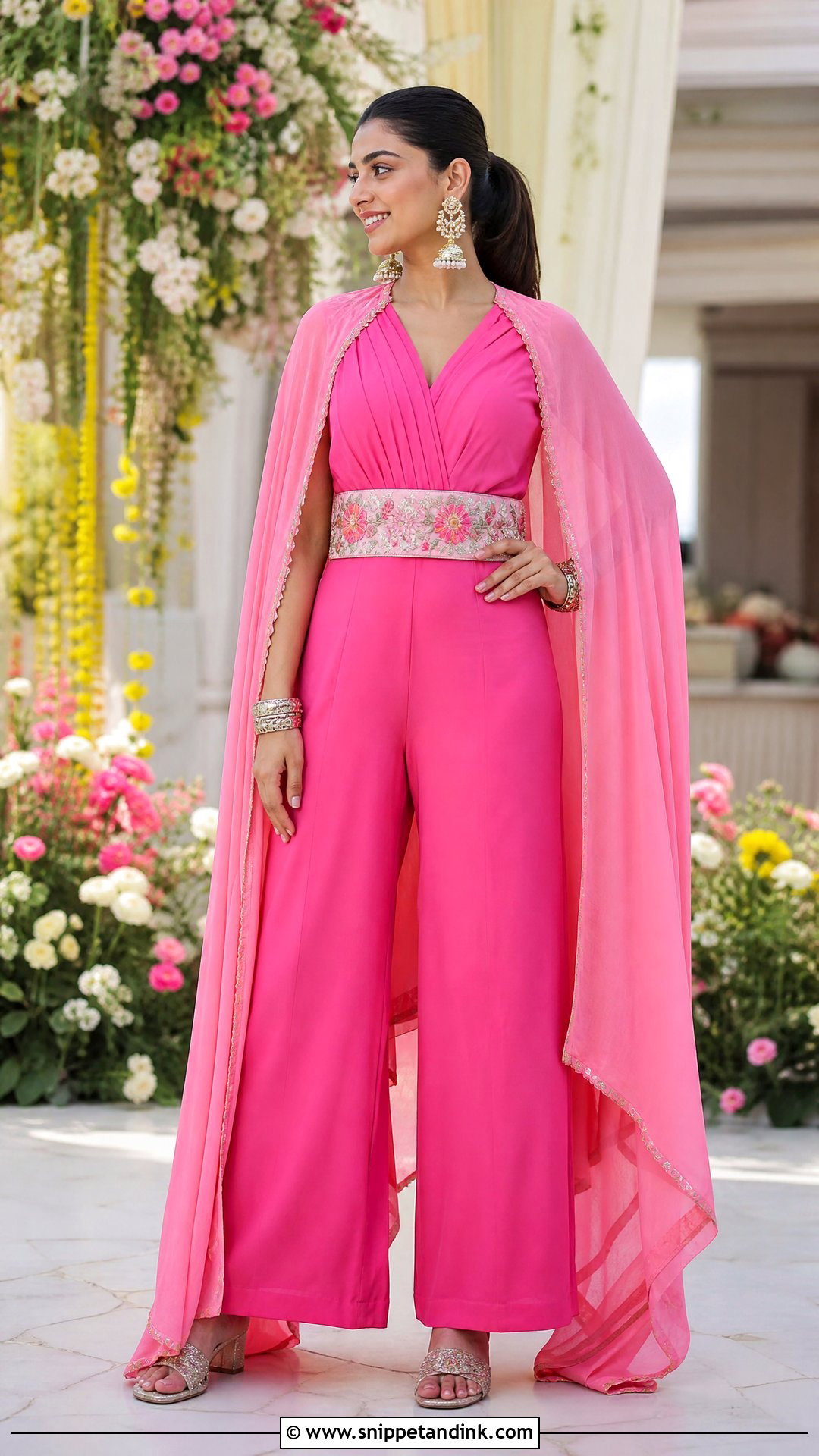
Jumpsuits are the low-maintenance choice for bridesmaids and friends who want to dance without a skirt or dupatta to manage. A wide leg, a fitted waist and proper shoulder coverage are the basics; a draped panel, cape or embroidered belt adds the traditional touch. Test the zip before the day and think about the bathroom: a back zip you can’t reach alone is a real problem in a crowded house. Statement jhumkas, metallic bangles and block heels finish it.
Turmeric on Pink Silk, Georgette and Cotton After the Ceremony
Haldi paste usually contains oil, milk or curd alongside the turmeric, which is why it sets so fast. Scrape off what you can with a blunt edge as soon as you change, without rubbing it deeper into the fibres. For washable cotton and georgette, rinse from the back of the fabric with cold water, then wash with a mild liquid detergent. Don’t panic if a mark briefly turns reddish under soap; turmeric changes colour in alkaline water and usually settles back.
Sunlight fades turmeric stains, but it also fades pink dyes, so I’d only dry a stained piece in the sun inside out and for a short time. Silk, zari work, mirror work and anything heavily embroidered should go to a dry cleaner within a day or two, with a note that the stain is turmeric and oil. Leave it longer and the yellow is far harder to lift.
Pink That Holds Up to Paste, Water and Dancing
Pink stretches from soft and traditional to bold and modern, and every look here can be adjusted for the bride or a guest. A lightweight lehenga gives movement, while a sharara, kurta set, kaftan or jumpsuit leaves you freer during the messier rituals. Pastel pink reads delicate, rani pink feels festive and fuchsia carries furthest in photos. Whatever you pick, I’d prioritise secure draping, breathable fabric and something you’re happy to wash. Then let yourself enjoy the paste fight.
You'll Like These Ideas:








Leave a Reply