
A black wedding dress asks more of its styling than a white one does. Lace, corsetry, sheer sleeves, capes, satin, velvet and sharp structured shapes are all being made in black now, and they can look romantic or they can look like a costume. The difference is rarely the gown. A good gothic bridal outfit holds together through the veil, the shoes, the jewelry and the flowers. Moody, Victorian, celestial or pared back, each idea below is styled head to toe, with what I’d check at the fitting before saying yes.
Is It Really Black? Matching Lace, Tulle and Satin Dyes
The first thing I look at on a black gown is whether all the blacks agree. Black dye isn’t one color. Next to each other under daylight, some lace leans blue-black, some tulle leans brown or green-black, and satin reflects so much light that it looks lighter than matte crepe. When one dress mixes three fabrics from different dye lots, that mismatch shows up clearly in outdoor photos even if it looks fine in a dim boutique.
- Take the gown, or a swatch, to a window and look at it in daylight before you commit.
- If you’re adding a separate veil, cape or gloves, buy them after the dress and hold them against it. A veil from another maker can look gray beside a deep black skirt.
- Many bridal designers will make a white sample in black on request. That usually means a longer lead time and, often, no returns, so ask before ordering.
- Black fabric can fade at the folds if it sits in a sunny room, so keep the dress bagged and away from windows until the day.
None of this needs to be perfect. A slight difference between matte and shiny fabrics looks intentional. Two noticeably different blacks side by side looks like a mistake.
1. Lace Ball Gown Gothic Black Wedding Dress
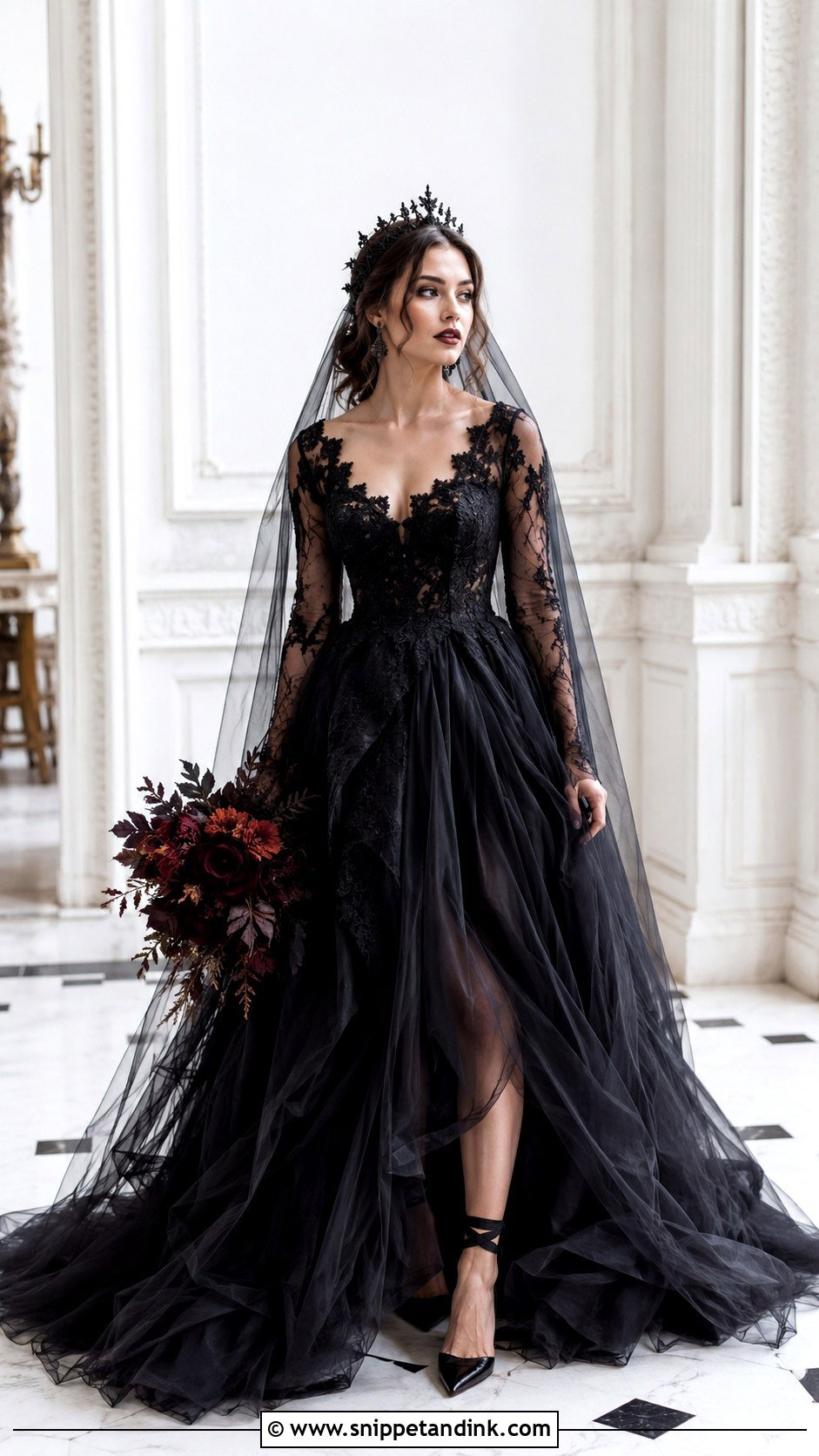
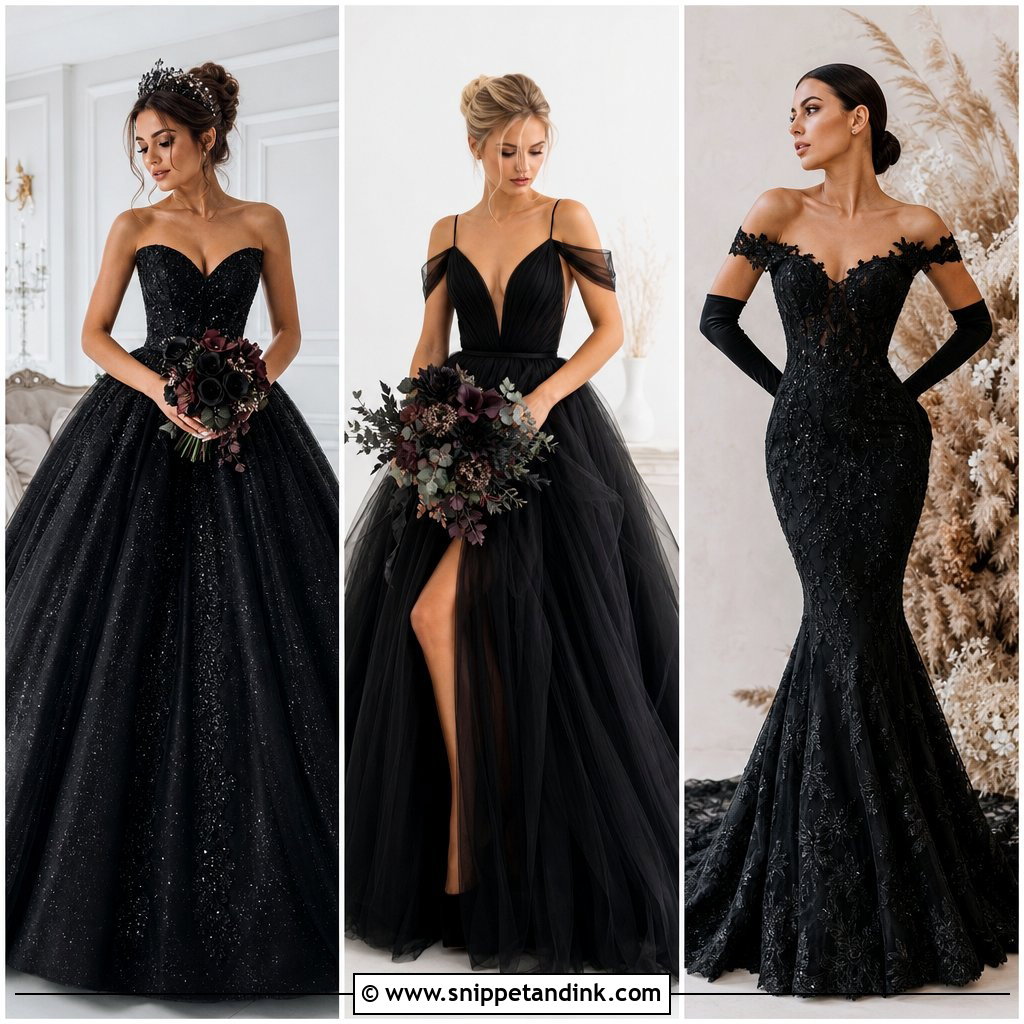
The ball gown is the gothic look most people picture, and it’s the one that still reads unmistakably bridal. I’d choose a black lace bodice over a full tulle or organza skirt; organza holds a crisper shape, tulle floats. A sweetheart or illusion high neck softens the volume. Pair it with a long black veil and pointed satin heels. The bouquet is where I’d put contrast: burgundy, or ivory threaded with black-red, so it doesn’t vanish against the skirt. Big skirts need floor space, so this suits ballrooms and formal halls best.
2. Corset Gothic Black Wedding Dress
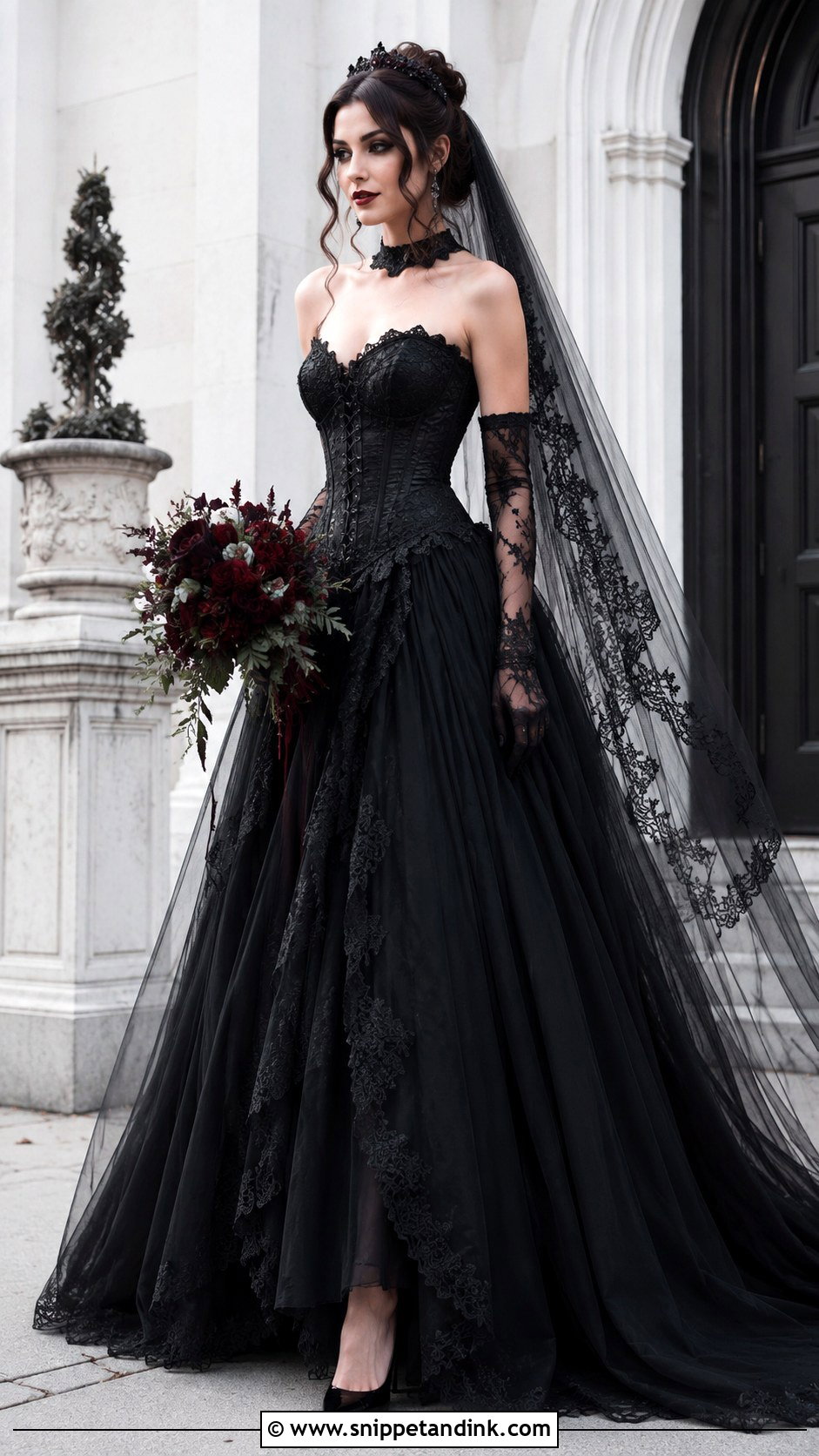
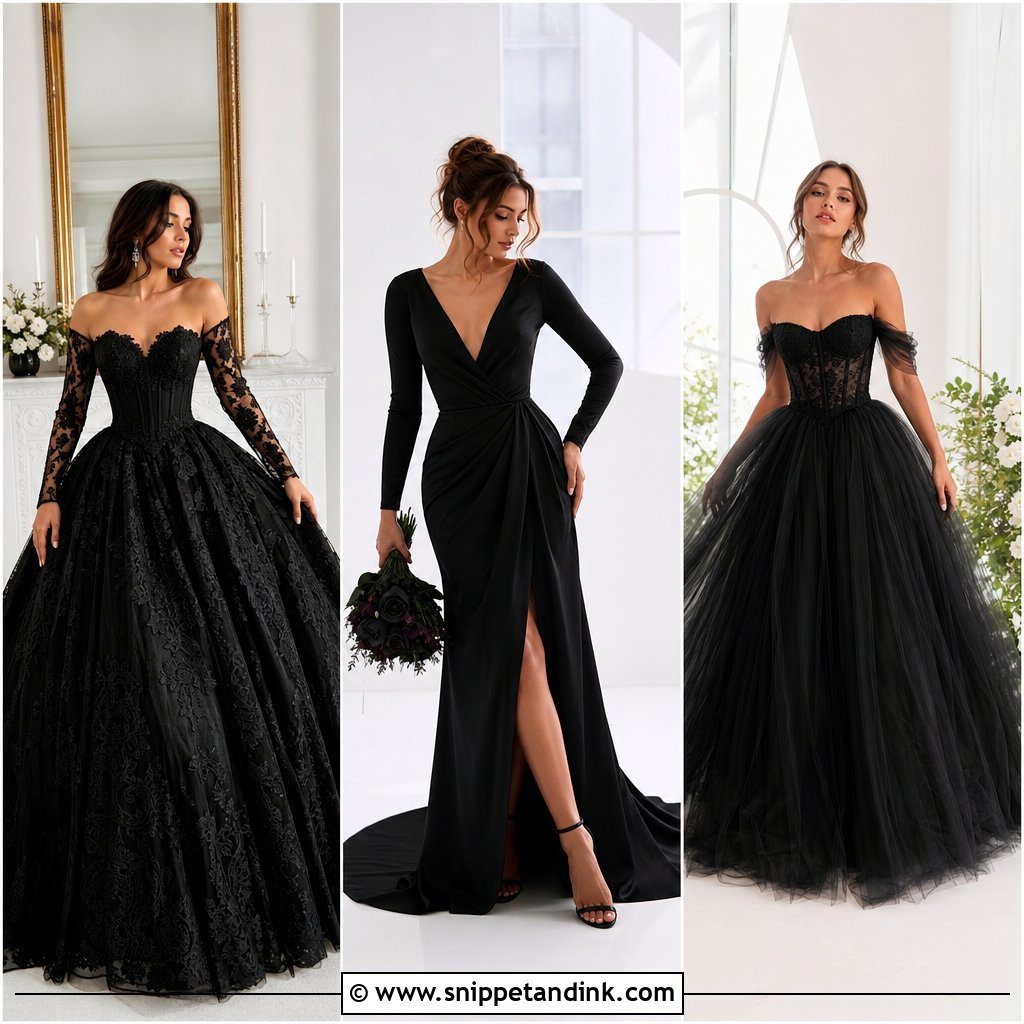
A boned corset gives shape and does real structural work, which is why I check the fit at the ribs before the waist. If you can’t take a full breath sitting down, it’s too tight for a ten-hour day. A lace-up back is the most forgiving; it adjusts if your body changes between fittings. Pair it with a flowing A-line or full skirt, sheer gloves and a cathedral veil. Lace appliqué or beading at the bust adds detail. Dark red roses give contrast, and the shape pulls from Victorian inspiration without needing a period costume.
3. Long Sleeve Gothic Black Wedding Dress
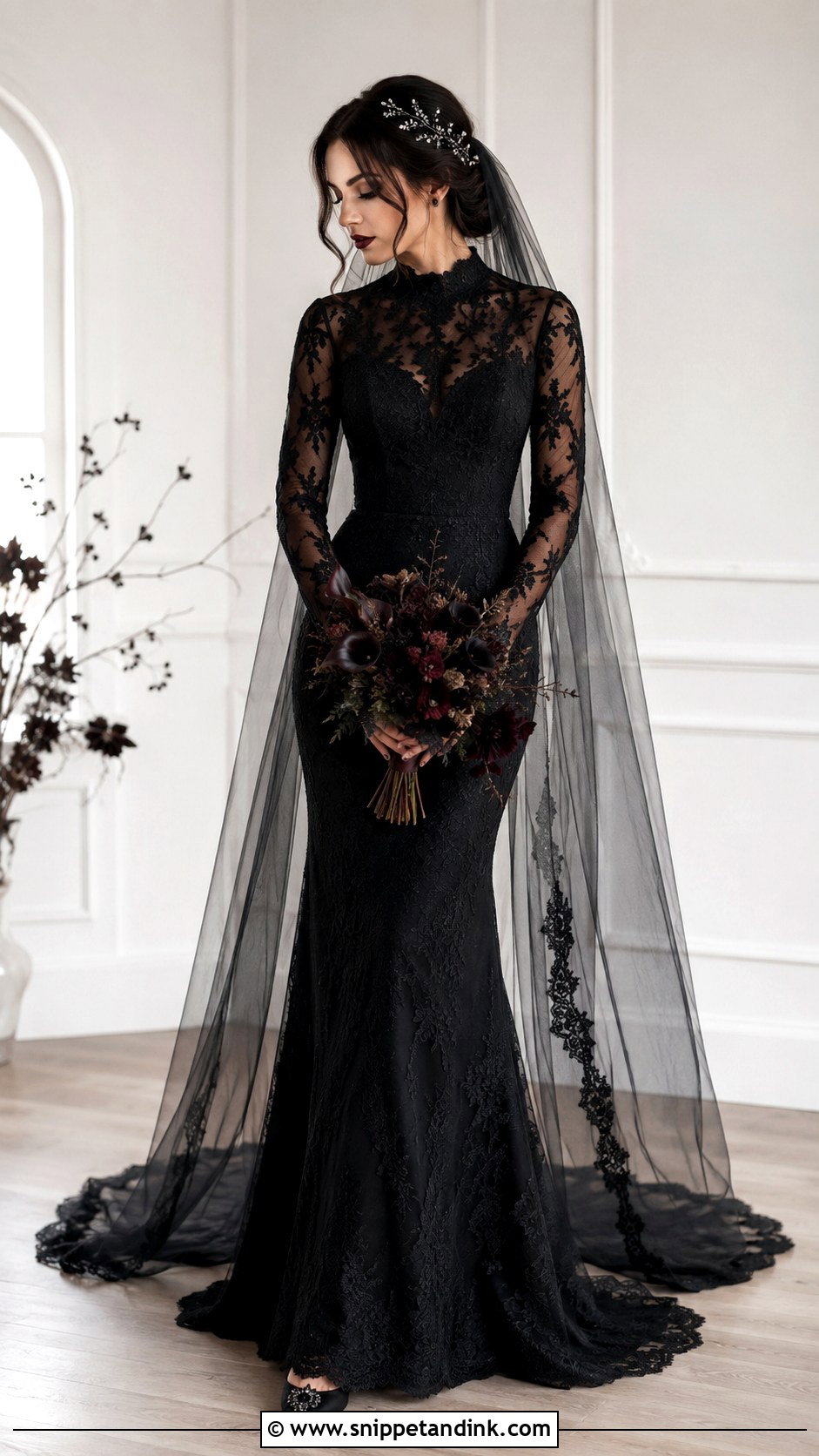
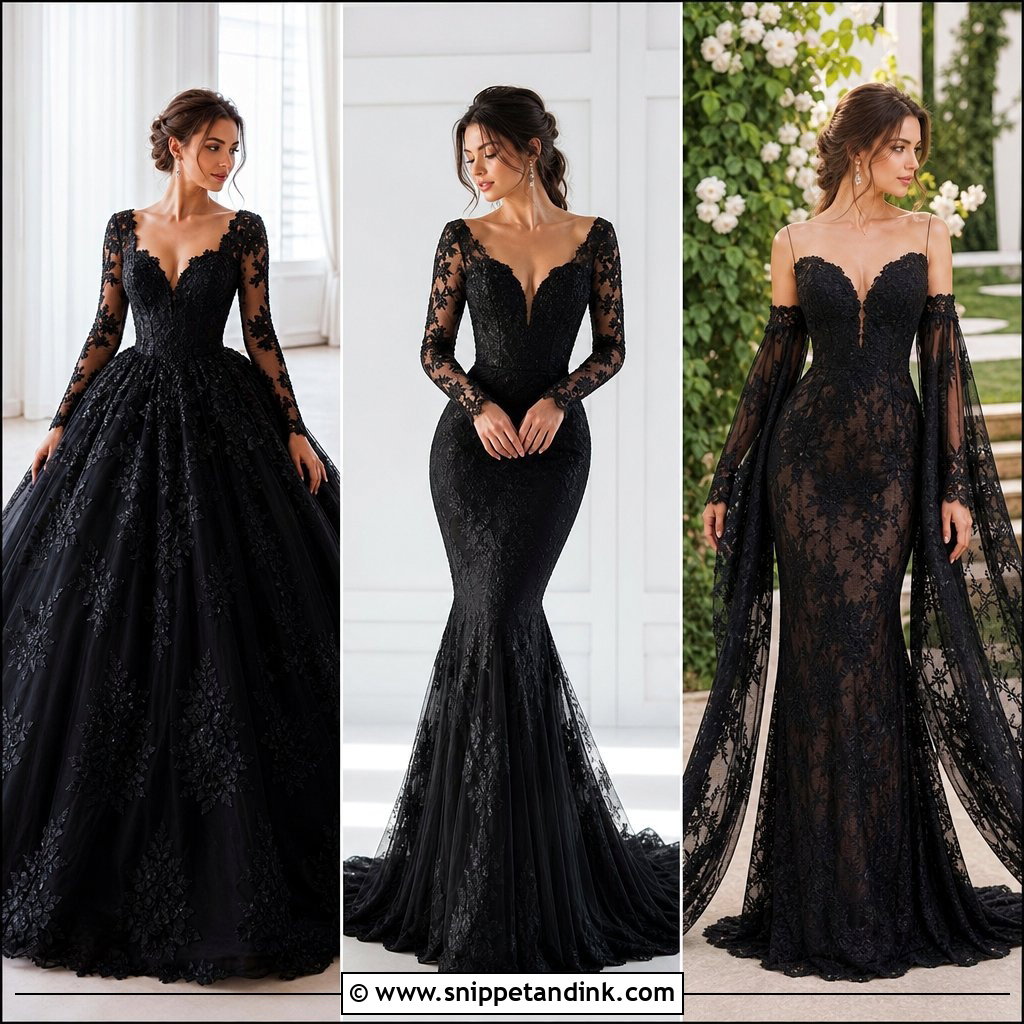
Long sleeves turn a black gown regal. Sheer lace gives texture without weight; fitted crepe or satin is sleeker and more modern. Either way, raise your arms at the fitting. Set-in sleeves on a fitted bodice often restrict how high you can lift, which matters for hugging and dancing. A high, square or deep V neckline all work. A black veil, an antique silver hair comb and closed-toe heels finish it. Lace sleeves are fine year-round; satin and crepe are warmer for autumn and winter.
4. Off Shoulder Gothic Black Wedding Dress
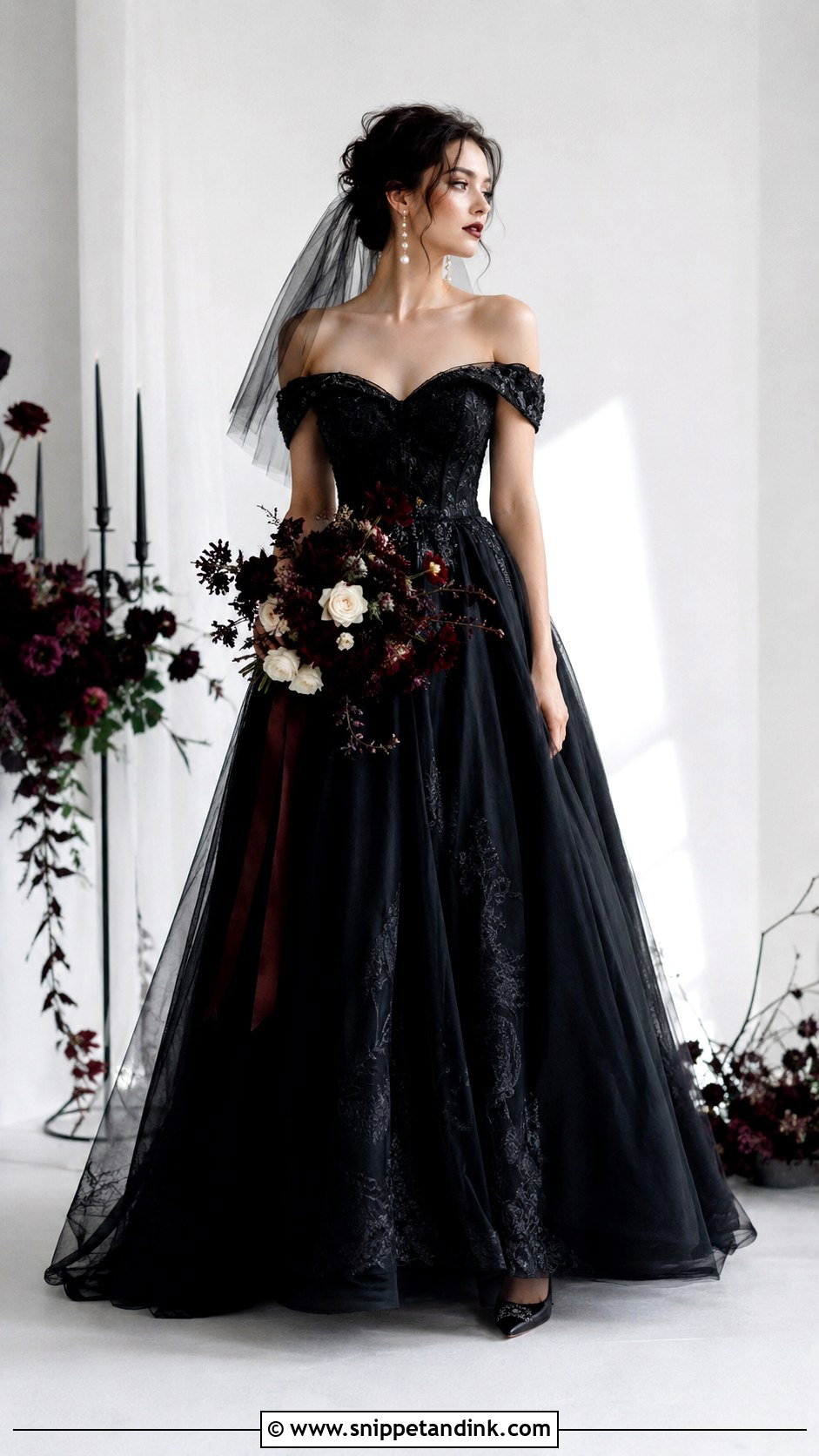
Off-the-shoulder black frames the collarbones and keeps a gothic gown feeling soft. A fitted bodice with a full skirt reads traditional; a mermaid cut is more sculpted. My concern with this neckline is always the grip: the band needs silicone tape or boning, or you’ll be hitching it up all day. A short black veil, pearl drops and pointed heels. White anemones with dark centers, burgundy roses and dark foliage make a bouquet that stands out against black.
5. Black Satin Gothic Wedding Dress
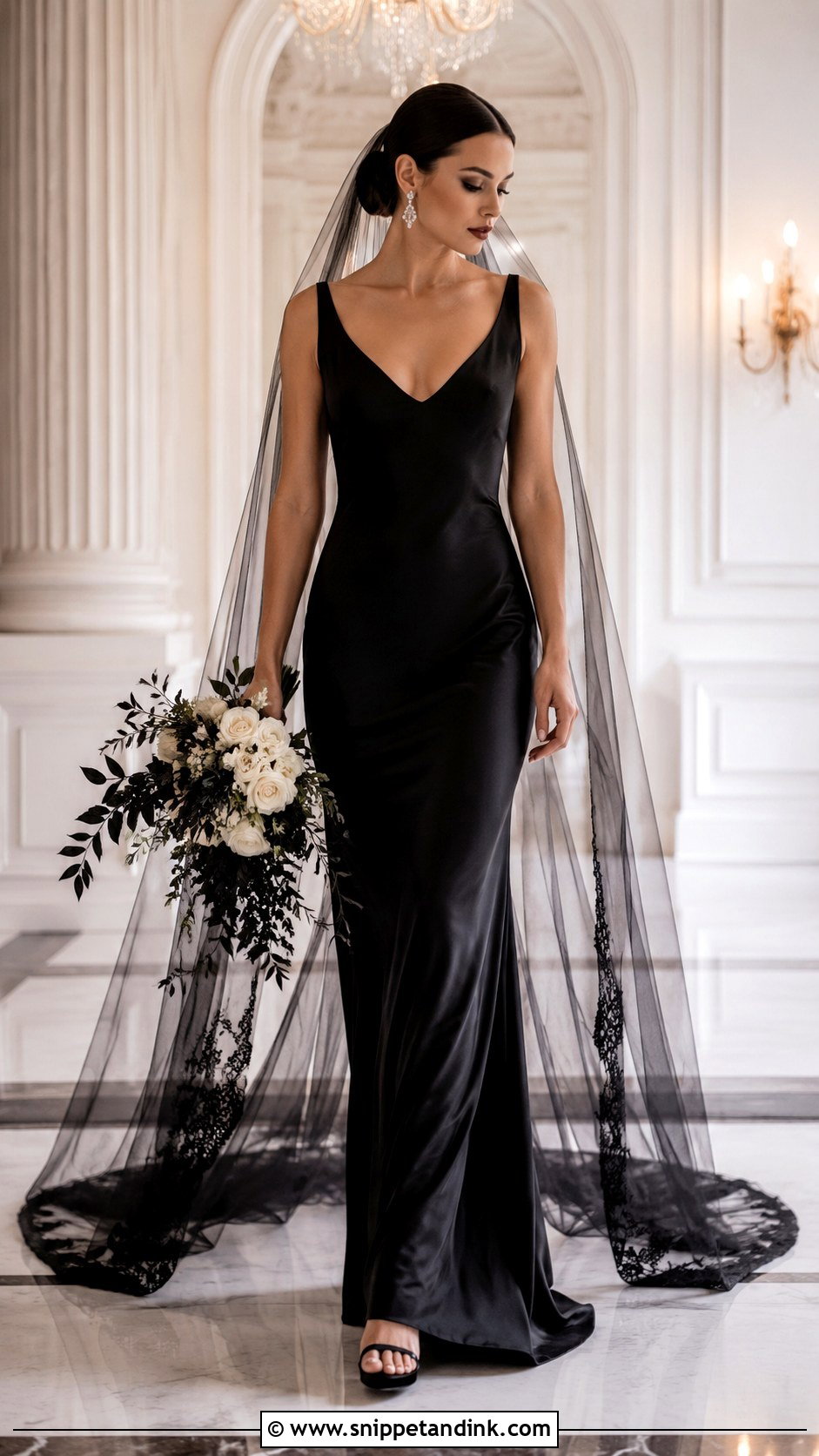
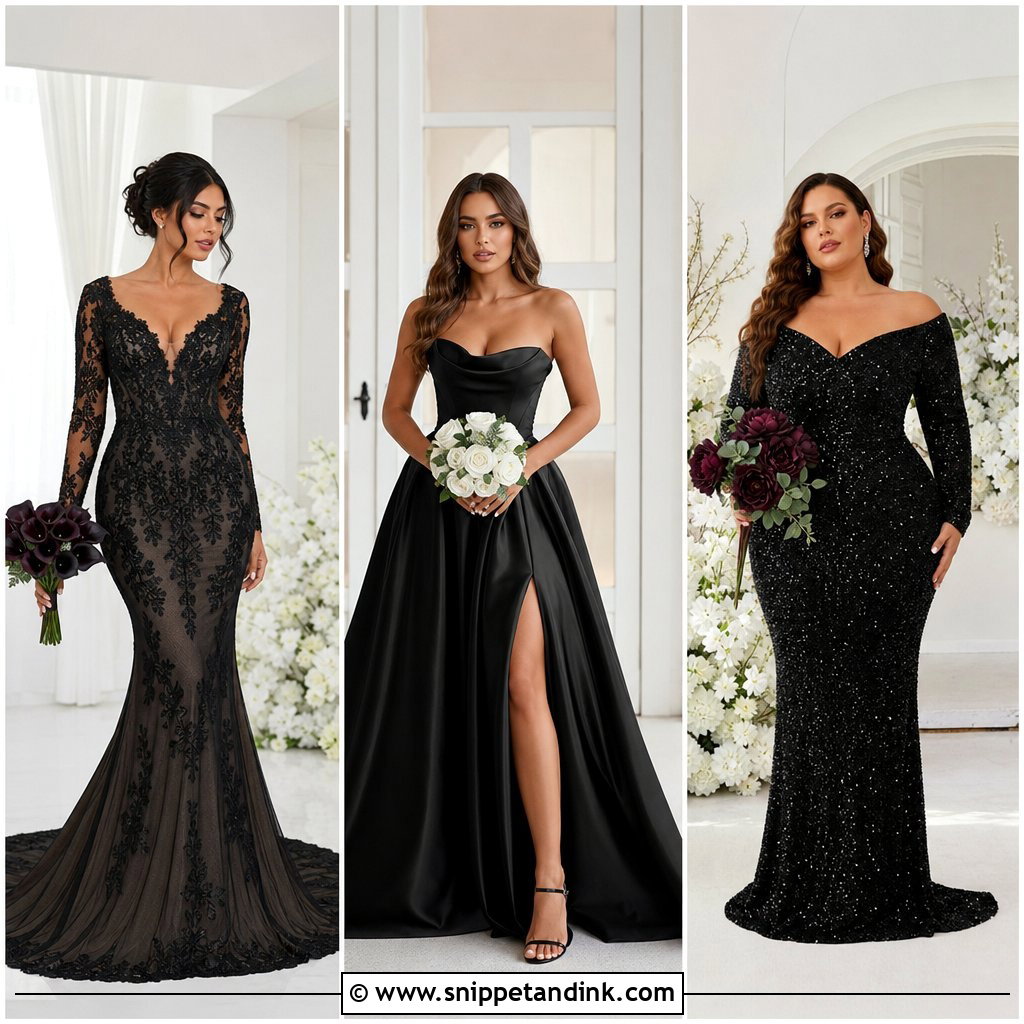
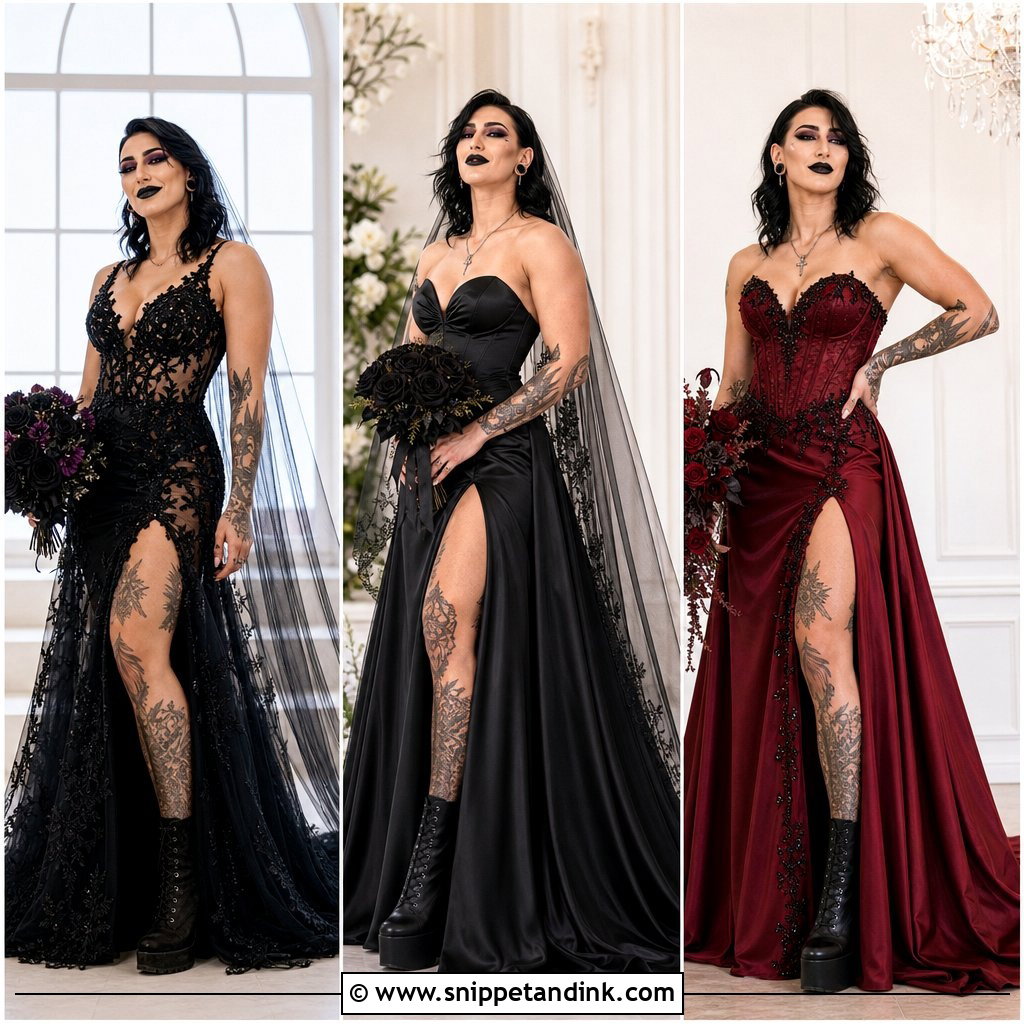
Black satin has a liquid sheen that needs almost no embellishment. A bias-cut slip, a structured A-line or a fitted column all look clean. Satin also shows everything, including creases from sitting and any lining seams pressing through, so I’d have it steamed on the morning and check the lining in daylight. A sheer black veil, crystal earrings, sleek gloves and simple heels. Ivory flowers against dark foliage or deep plum blooms both read well against the shine.
6. Black Velvet Gothic Wedding Dress
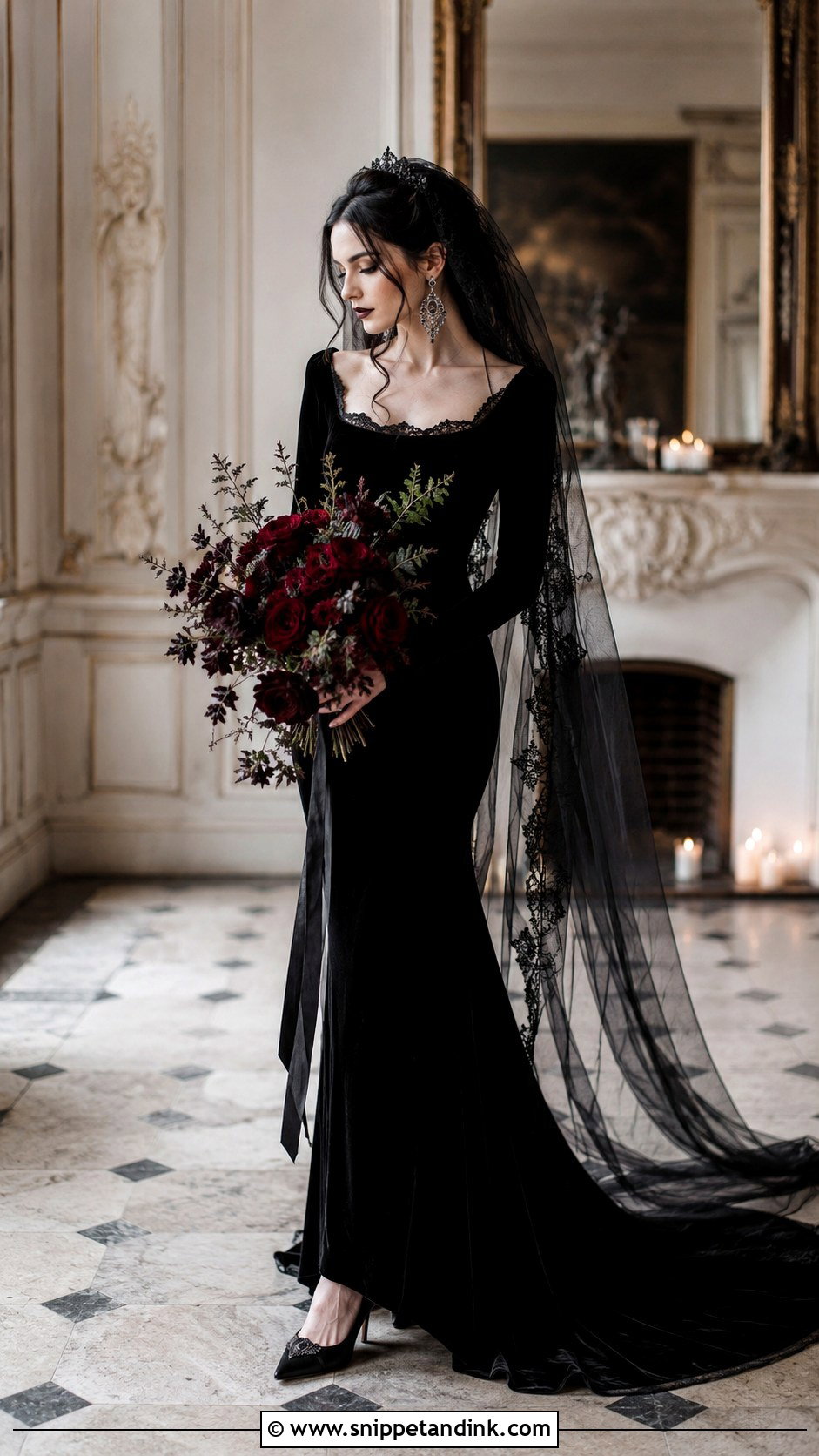
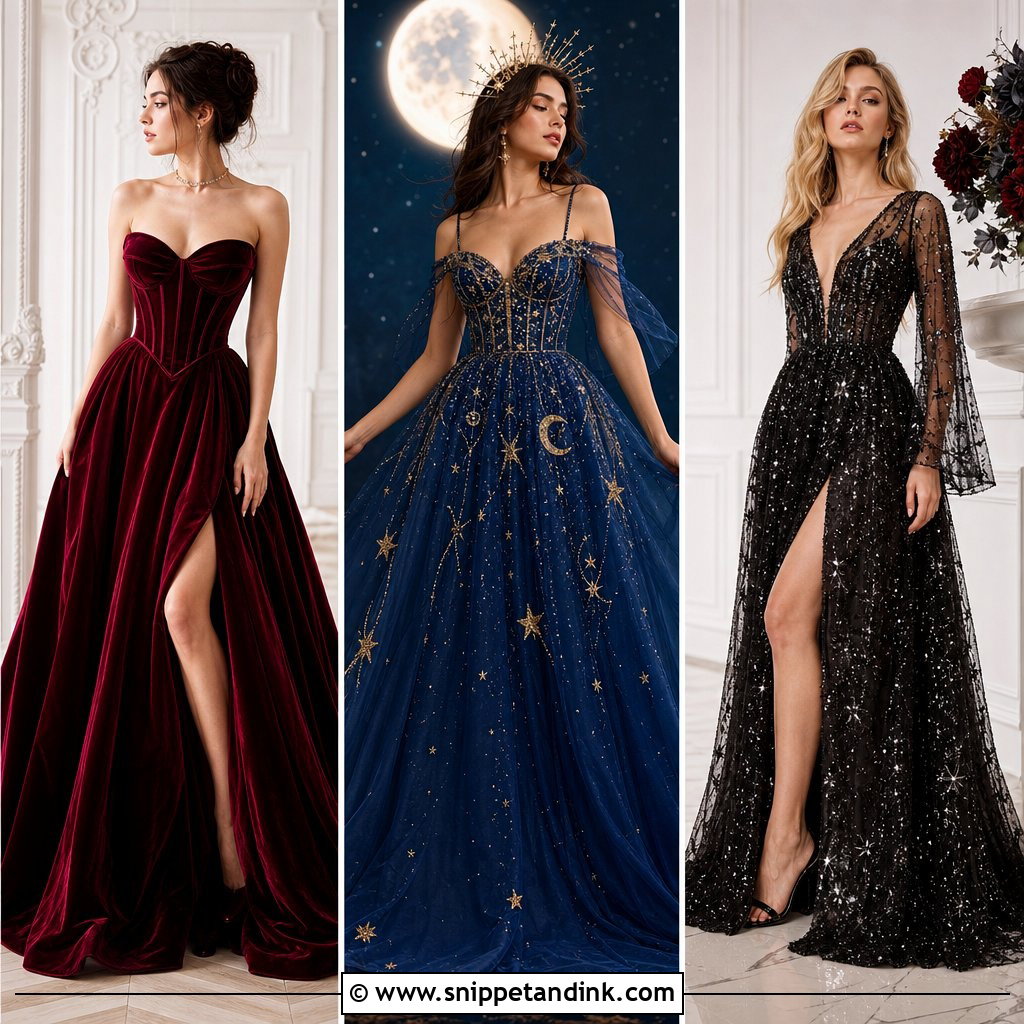
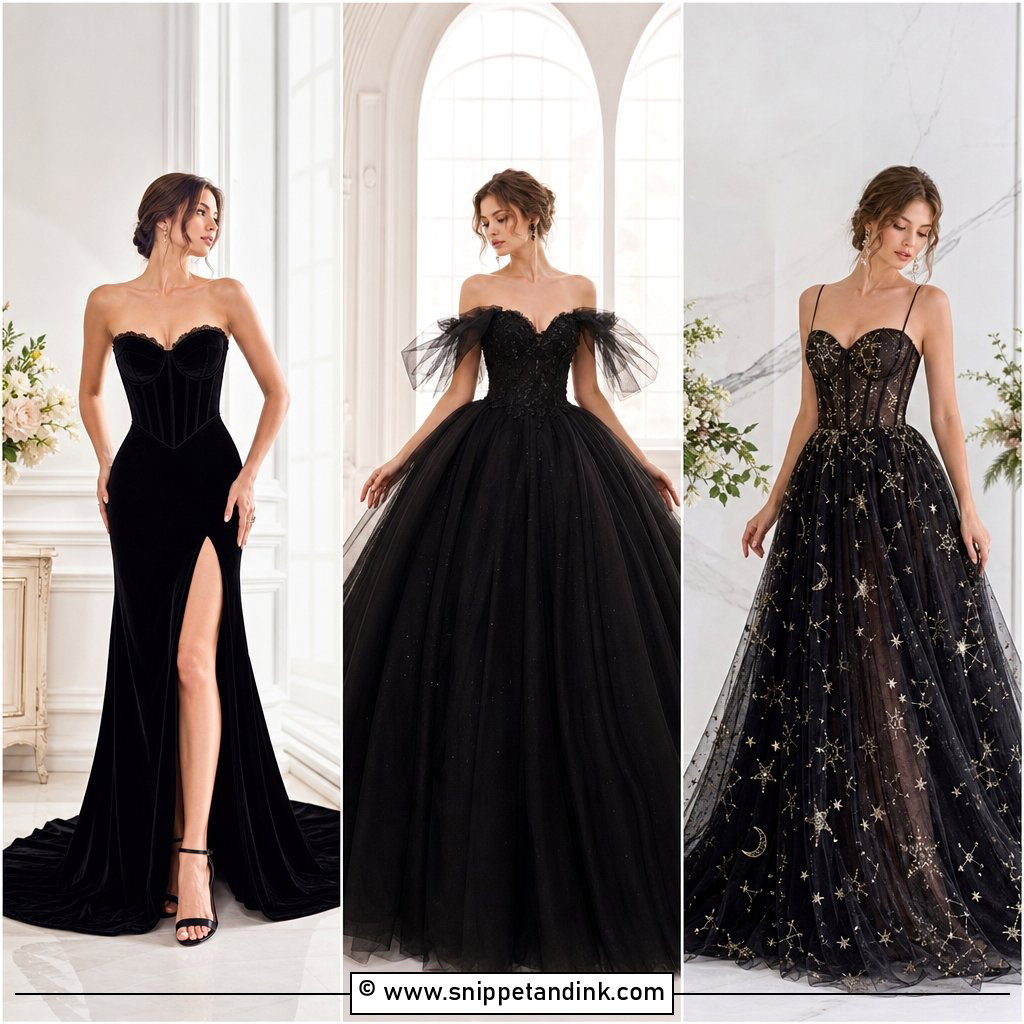
Velvet absorbs light, so it looks deep and soft in photos rather than shiny. A fitted long-sleeve cut, an empire waist or a structured A-line all suit it. It’s warm and heavy, so I’d only recommend it for autumn, winter or an evening venue that isn’t overheated. Velvet also crushes where you sit, which shows as lighter patches; brush it gently with the pile, never against. A sleek veil, antique silver earrings and black platform or velvet heels. Deep red roses with trailing greenery suit the weight of the fabric.
7. Black Tulle Gothic Wedding Dress
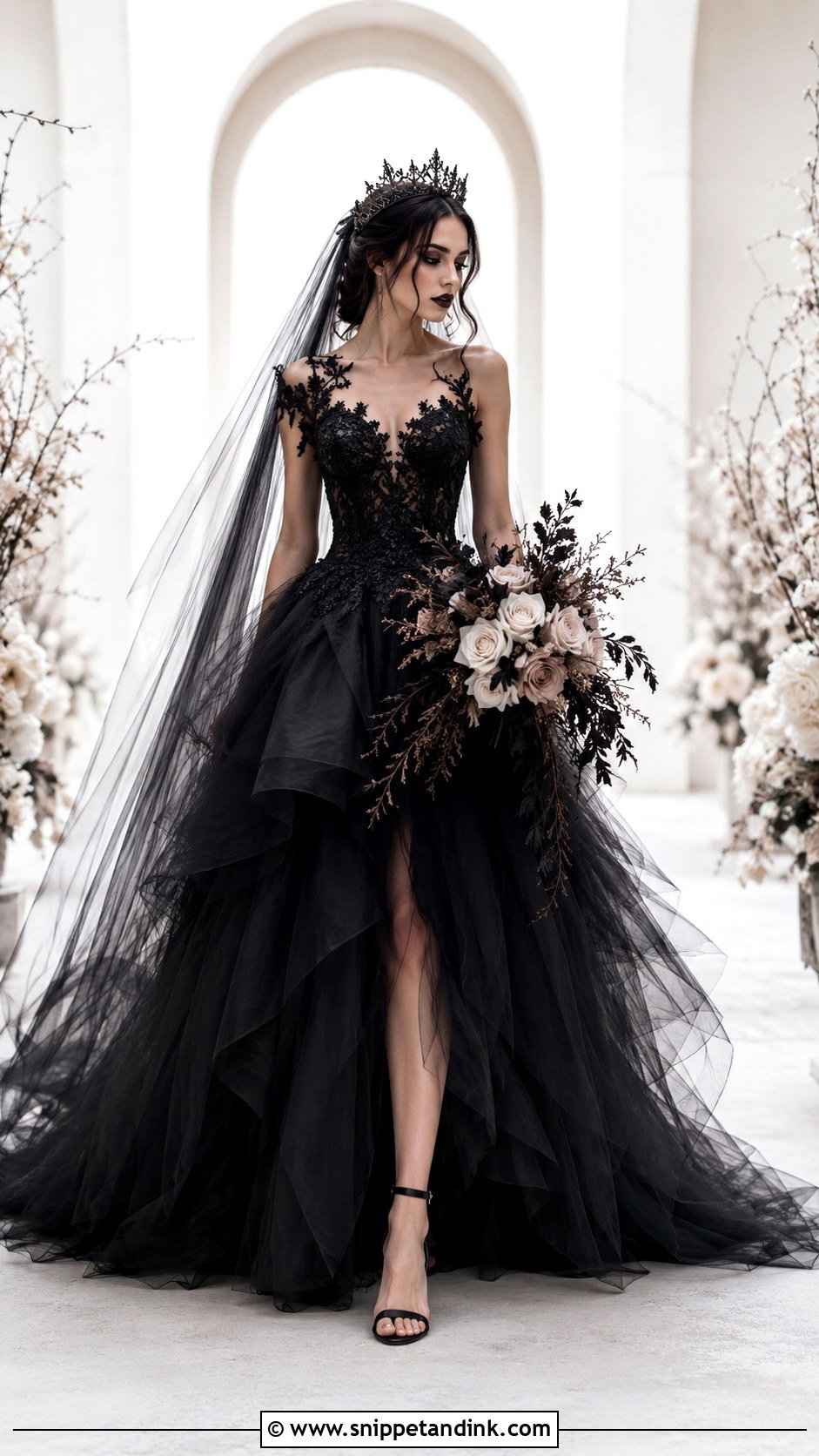
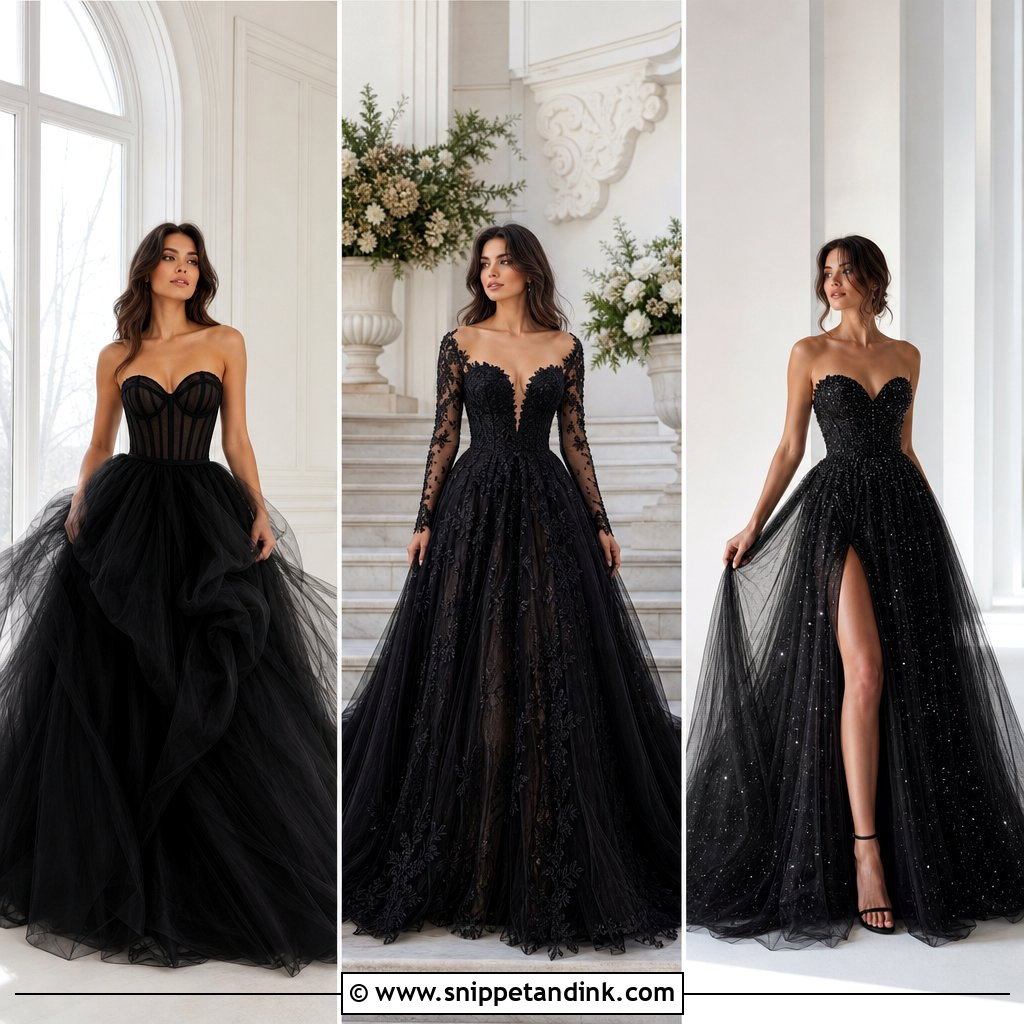
Black tulle moves and floats, so it’s my pick for anyone who wants softness without color. Layered skirts look airy; a fitted bodice keeps the shape from becoming a cloud. Embroidered stars or scattered sparkle push it celestial. Tulle snags on bracelets and heel buckles, so I’d keep both smooth. A long veil, a fine crown and ankle-strap heels. Mix dark blooms with ivory so the bouquet doesn’t disappear, and it pairs naturally with dreamy, floating silhouettes.
8. Mermaid Gothic Black Wedding Dress
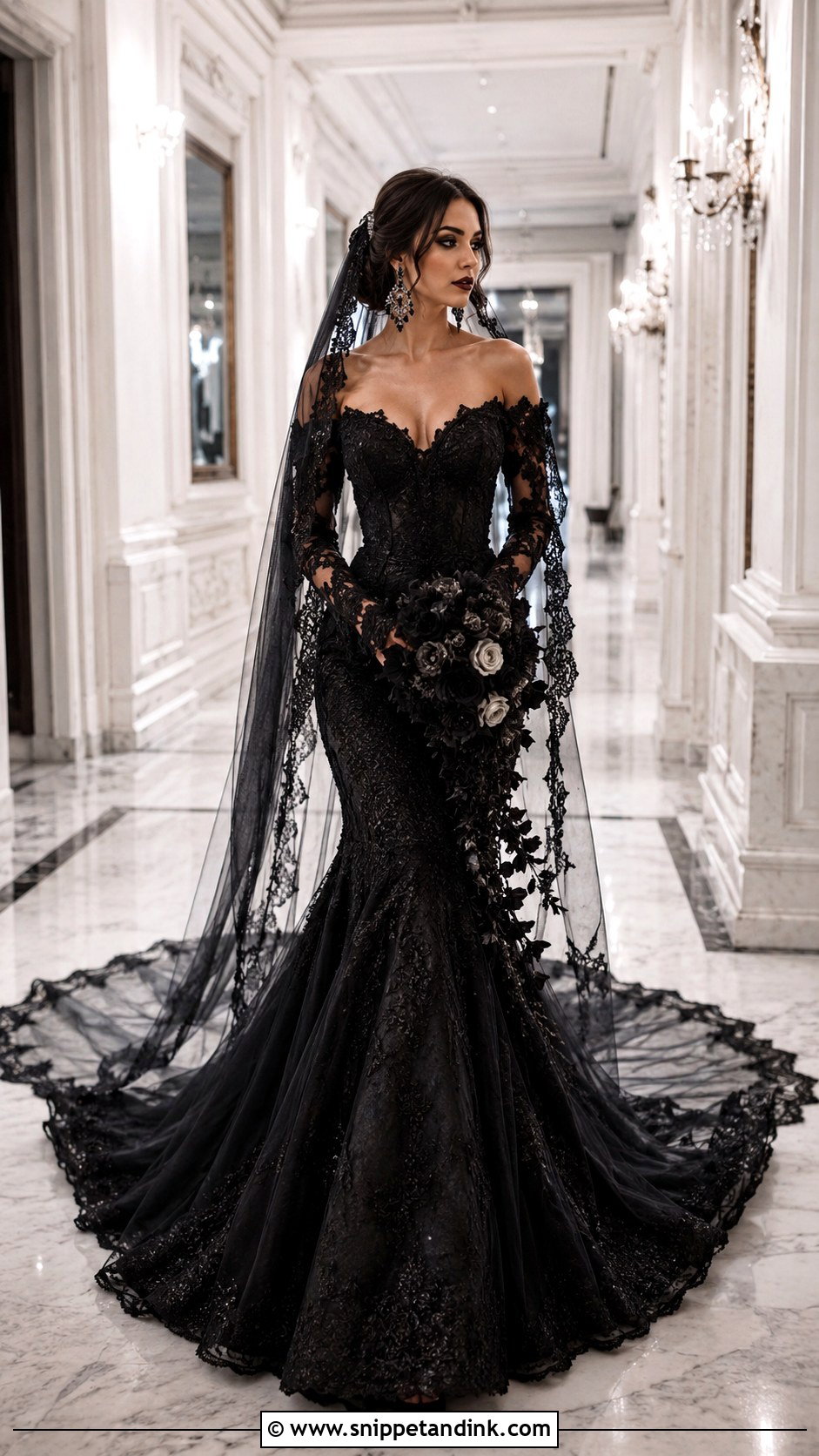
A mermaid fits close to the knee and flares below, so it’s the most sculpted shape here and the least forgiving to sit or dance in. At the fitting, sit, climb a step and do a small turn; if you can’t, ask for the flare point to be lowered. Black lace, satin or crepe all hold the line. Lace sleeves, a corset bodice or a train add presence. High heels lengthen it. A narrow or cascading bouquet follows the shape instead of cutting across it.
9. A Line Gothic Black Wedding Dress
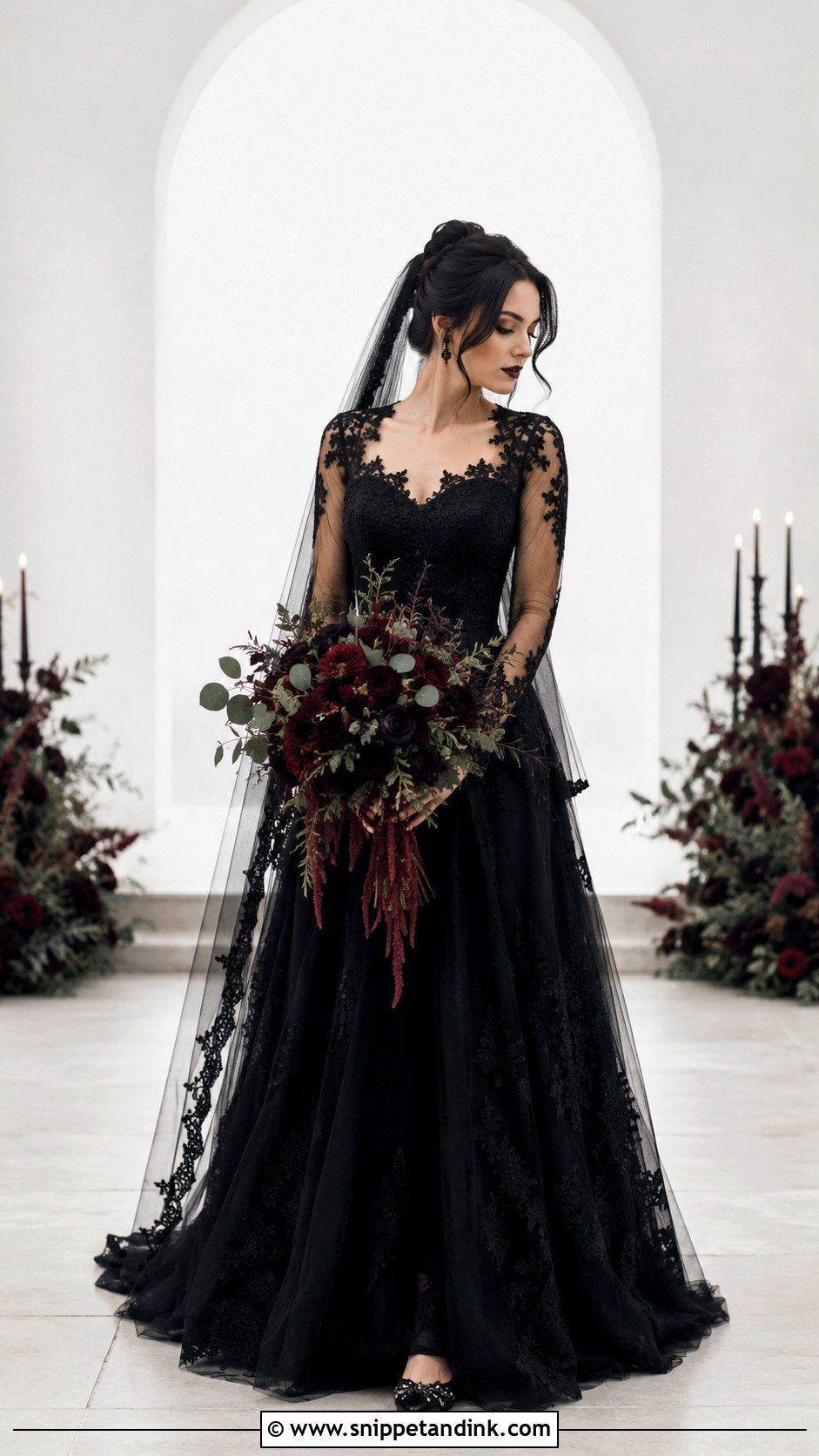
The A-line is the black gown I recommend most often to brides unsure about the whole idea, because it flatters most bodies and is easy to wear all day. Lace for romance, satin for polish, tulle for softness. Low heels or embellished flats work, since the skirt hides them. Simple jewelry. A deep green and burgundy bouquet adds color while staying in the dark palette. It’s the version that looks least like a statement and most like a wedding dress that happens to be black.
10. Black Lace Sleeve Gothic Wedding Dress
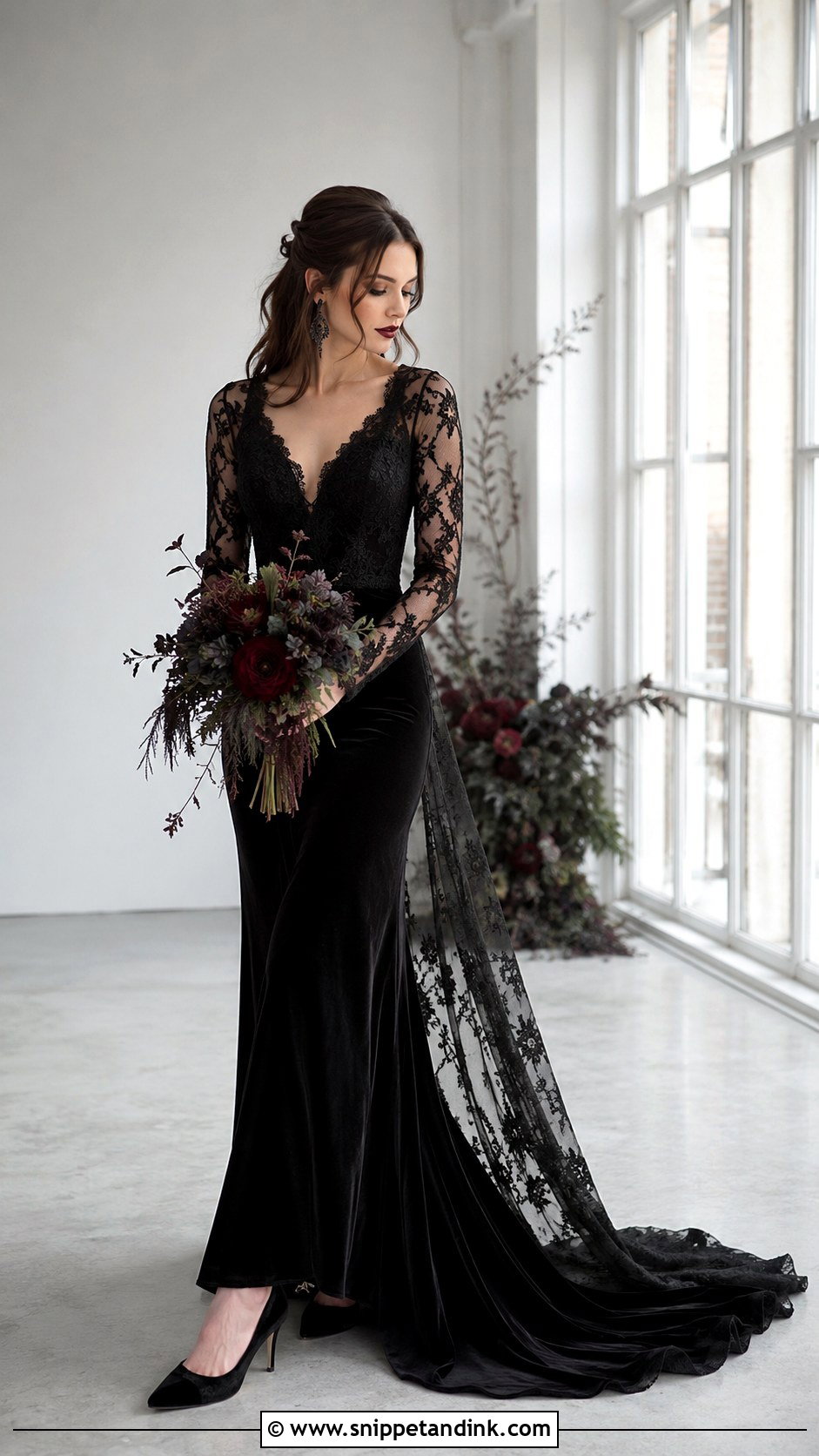
Black lace sleeves turn a plain gown gothic without heavy embellishment. Floral lace is romantic, vine lace feels like an overgrown garden, and geometric lace is sharper. The thing I watch on lace sleeves is the cuff: scalloped edges should sit at the wrist bone, not halfway down the hand, or they catch on everything. A black veil, velvet heels and antique-style earrings. A half-up hairstyle shows the sleeves and neckline without hiding them under hair.
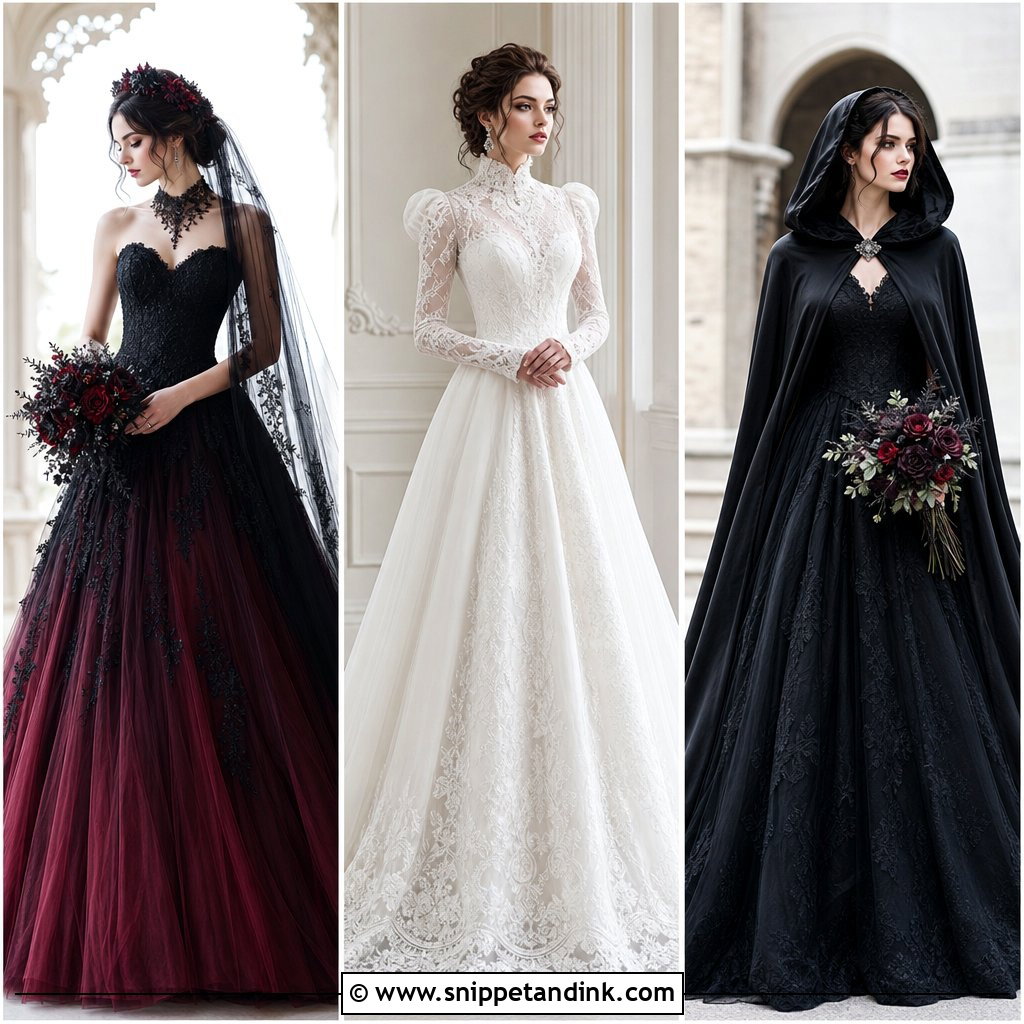
11. Gothic Black Wedding Dress With Cape
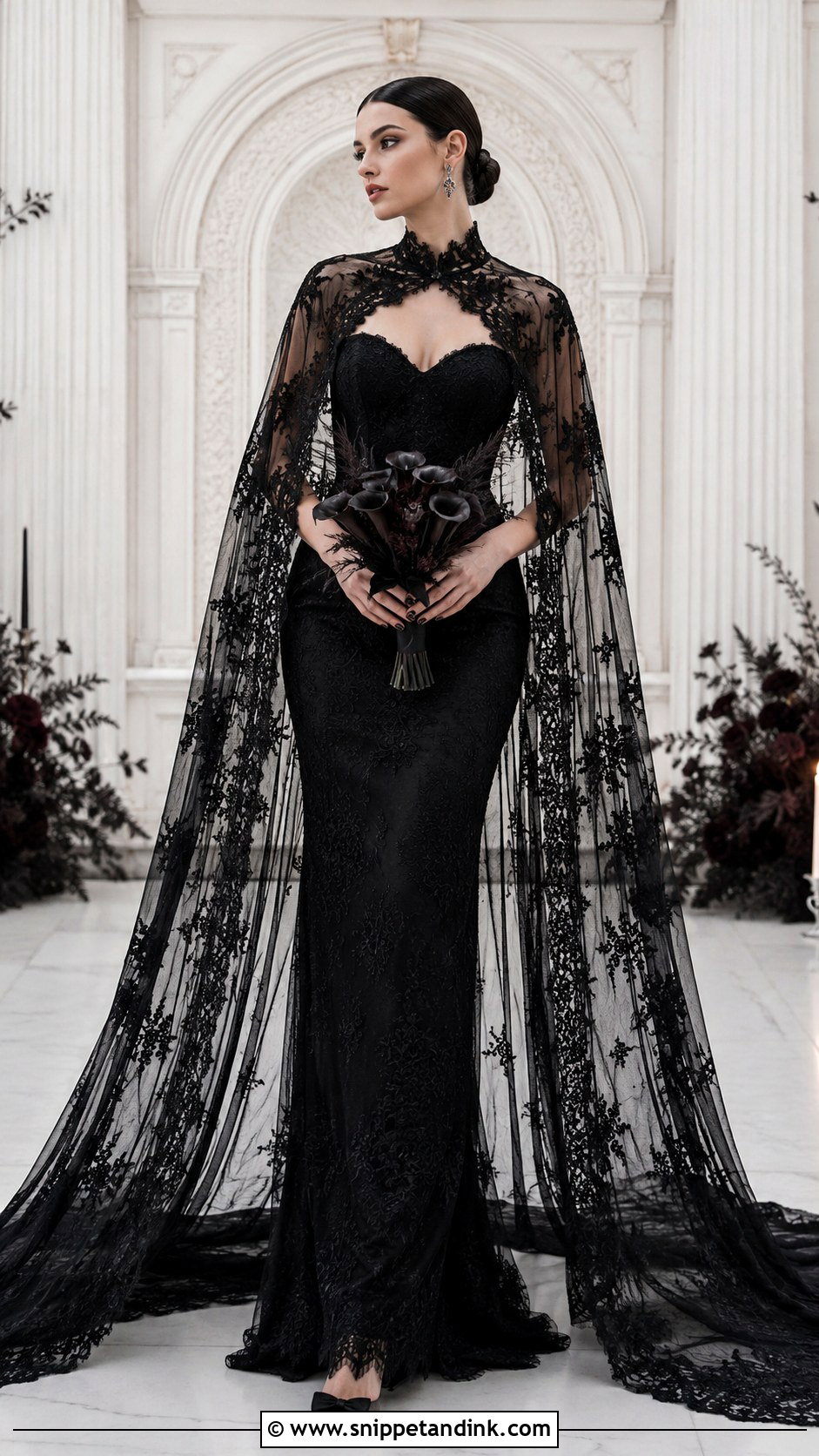
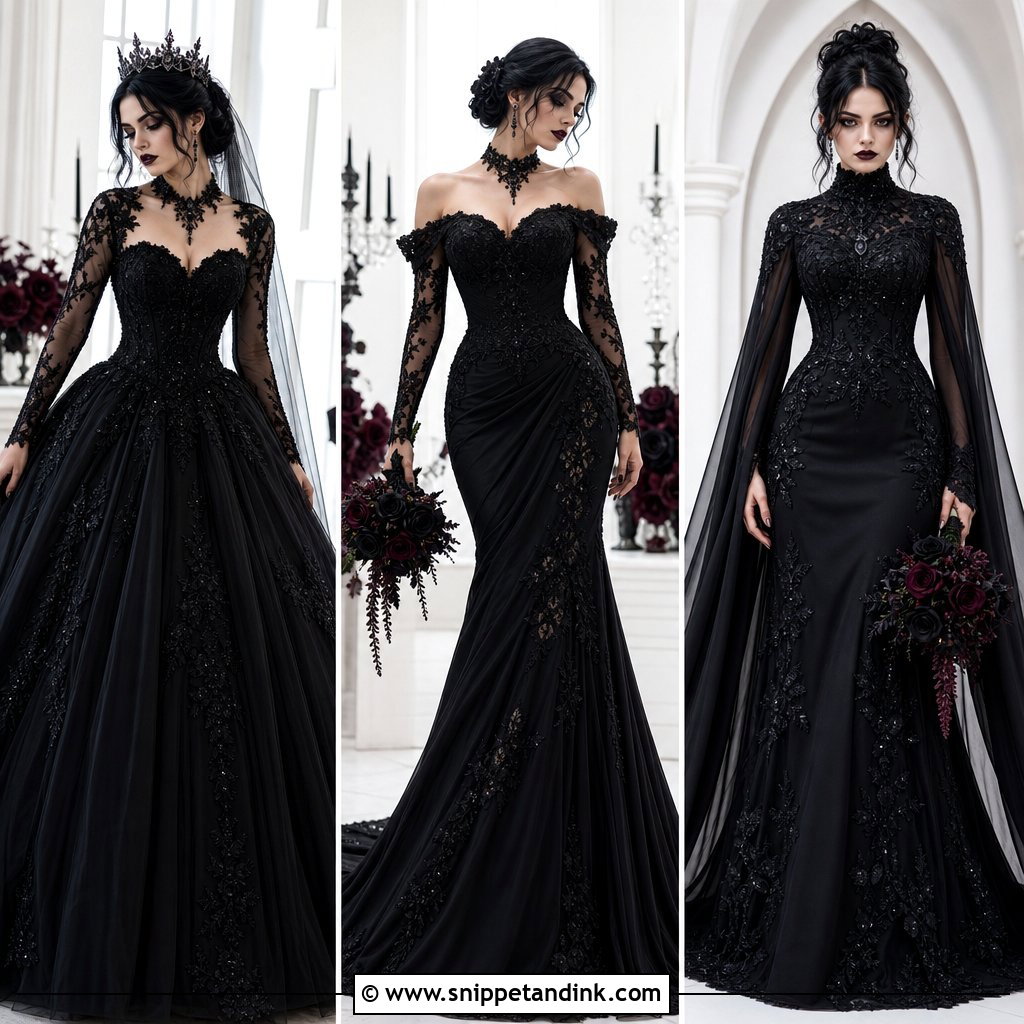
A cape gives ceremony drama and comes off for the party. It can replace a veil or sit over one. Sheer black chiffon moves most; lace is romantic; satin feels regal and heavy. Keep the gown underneath streamlined so the two don’t compete. I’d ask for the cape to attach with hidden hooks or snaps at the shoulders rather than a tie at the throat, which pulls backward all day. Pointed heels, crystal earrings and a slim bouquet.
12. Gothic Black Wedding Dress With Veil
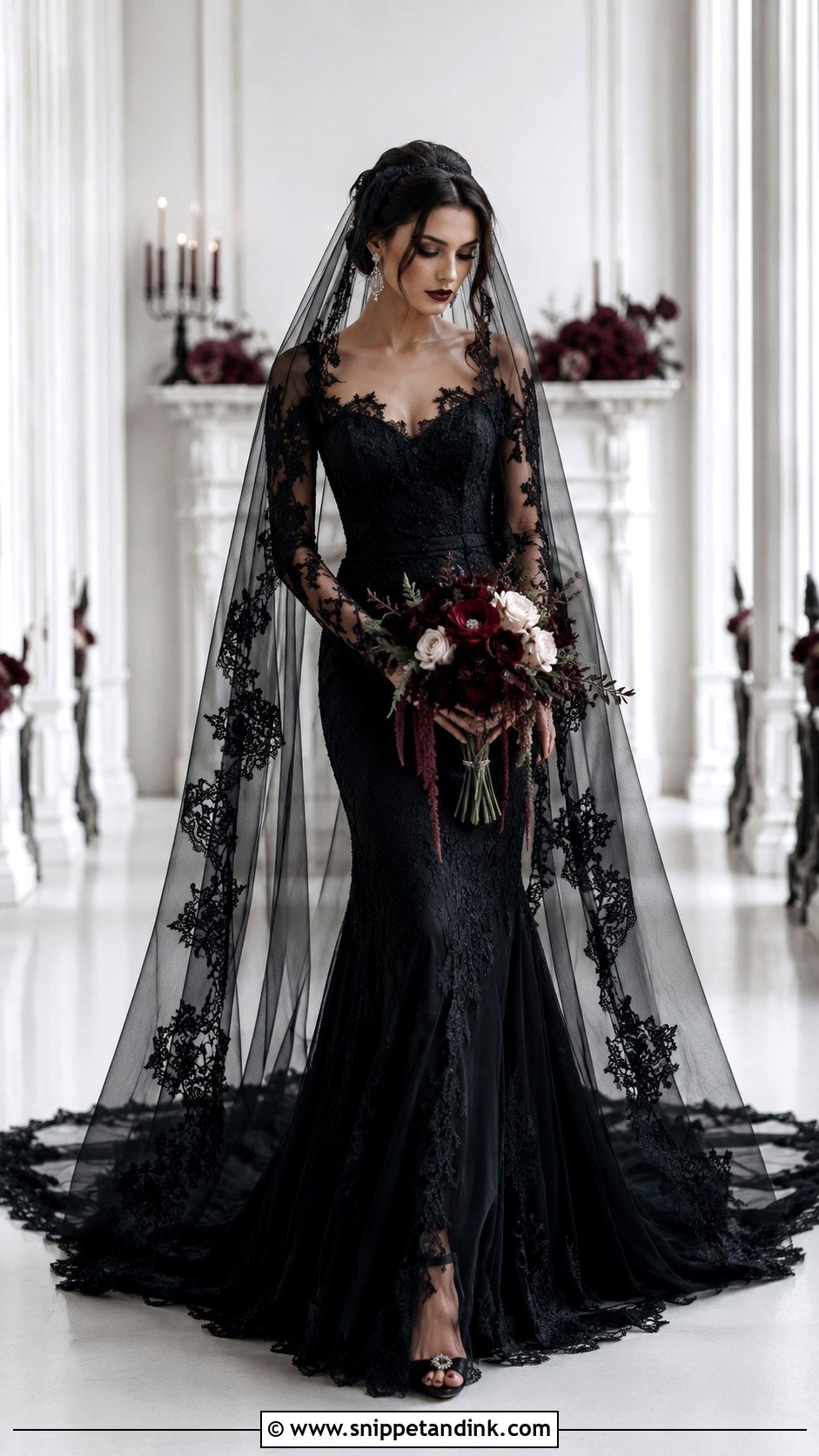
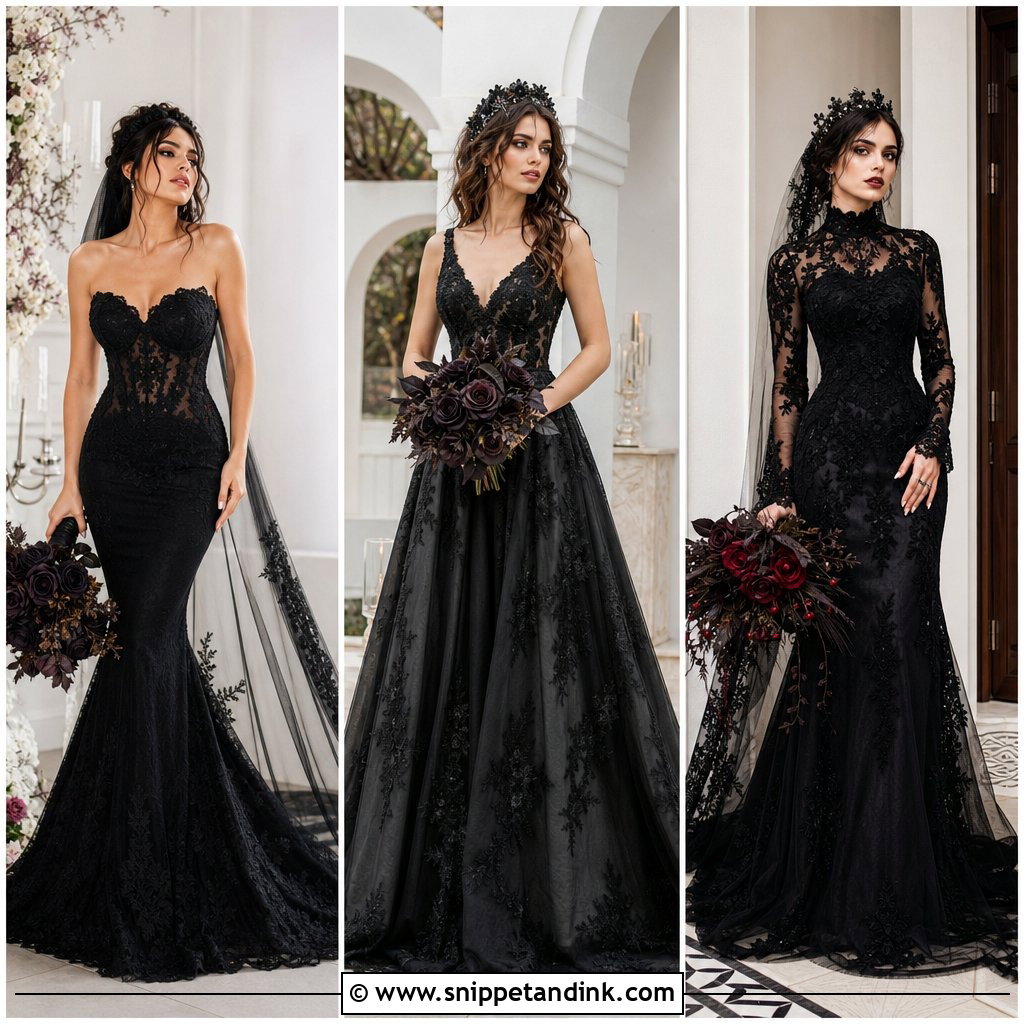
A black veil is what tells everyone it’s a wedding dress and not eveningwear. Sheer with lace edging is soft; cathedral length with floral appliqué or scattered crystals is bolder. Black veils show less of the face through them than white, so if you plan a blusher, test it in photos at the trial. Balance a big veil with simple earrings and shoes, and add contrast in the bouquet with ivory, burgundy or plum. If you’re worried black reads too much like a party dress, the veil is the fix.
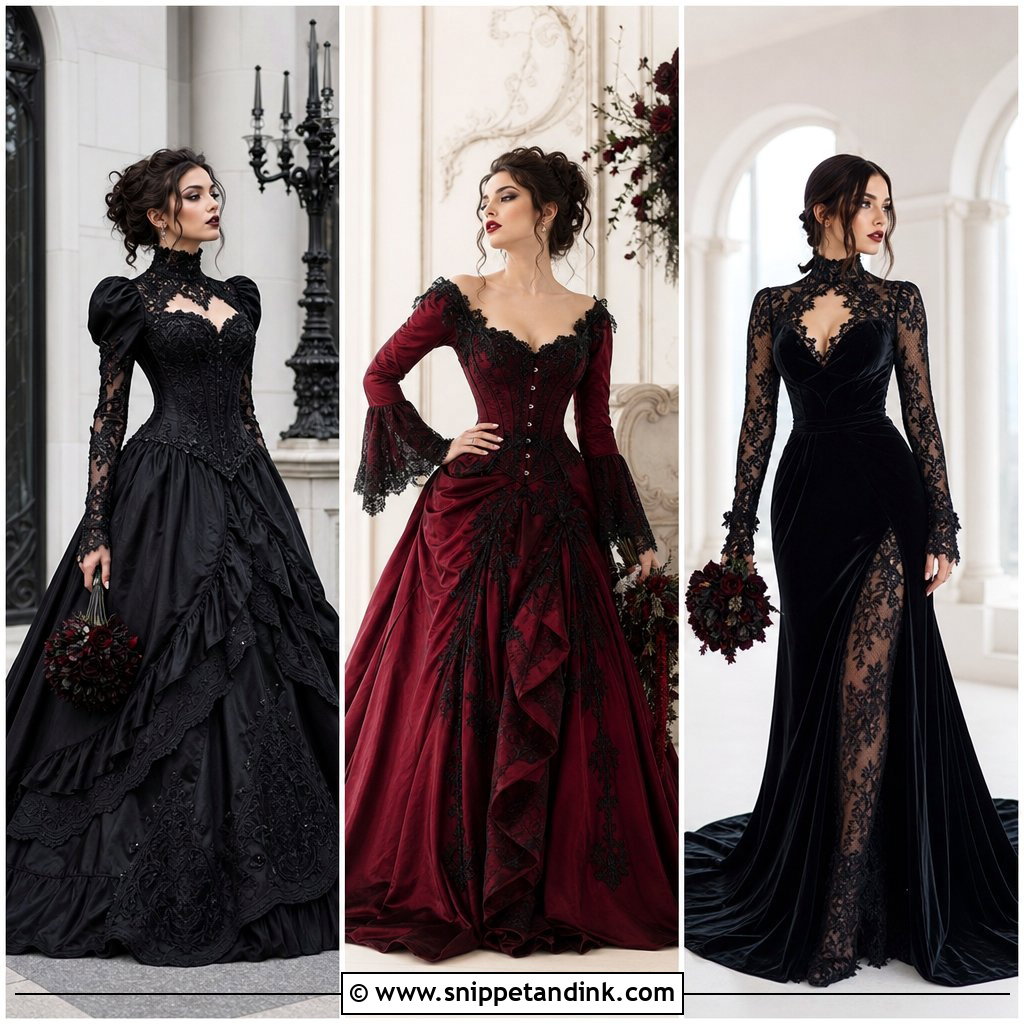
13. Victorian Gothic Black Wedding Dress
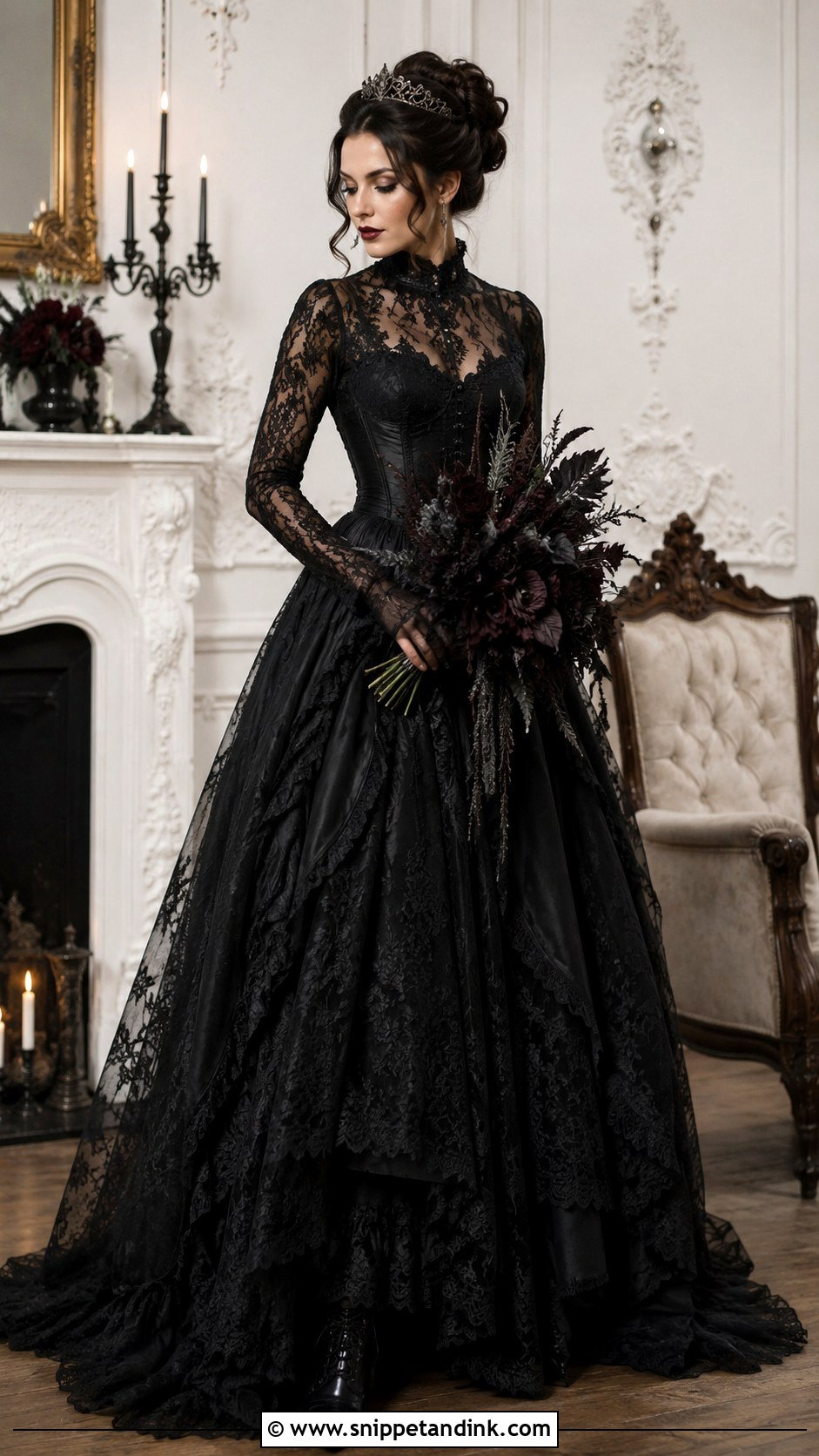
Victorian gothic means a high neck, corset shaping, lace sleeves and a defined waist, often with covered buttons running down the back. That last detail matters practically: dozens of tiny loops take time, so build ten minutes into the getting-ready schedule. A full skirt deepens the period mood. Lace gloves, heeled boots and a structured bouquet. Keep makeup polished with defined eyes and a berry lip so it reads romantic rather than theatrical.
14. Modern Gothic Black Wedding Dress
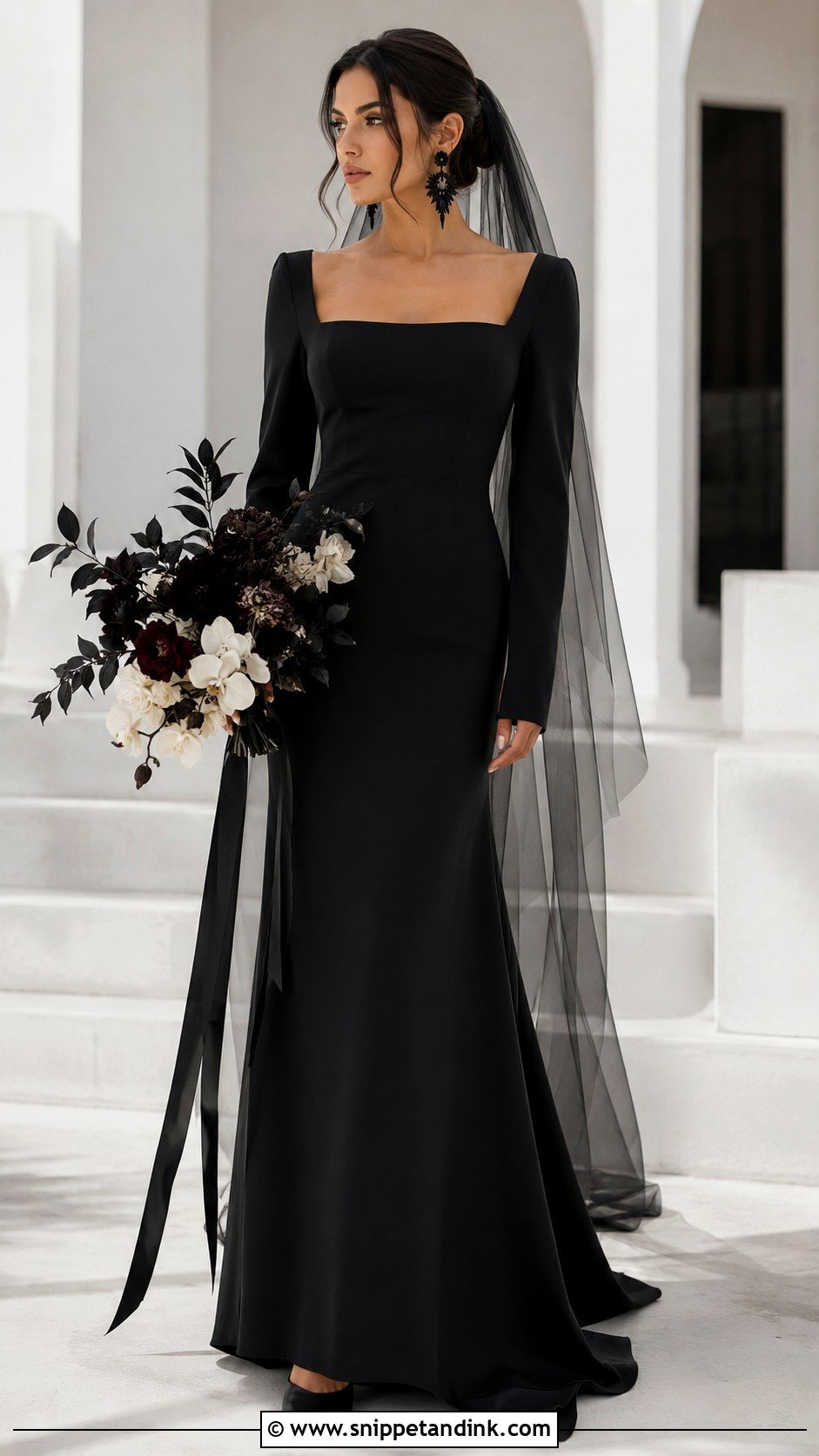
Modern gothic drops the lace and relies on cut. Black crepe, satin or mikado with a square neck, column shape or structured bodice. Mikado is a stiff silk with a slight sheen that holds sharp folds, which is why it suits architectural designs. Without lace to distract, fit has to be exact, so I’d budget for an extra fitting. Sleek heels, sculptural earrings, a simple veil and a monochrome bouquet with an ivory or deep red accent. A low bun and fresh makeup.

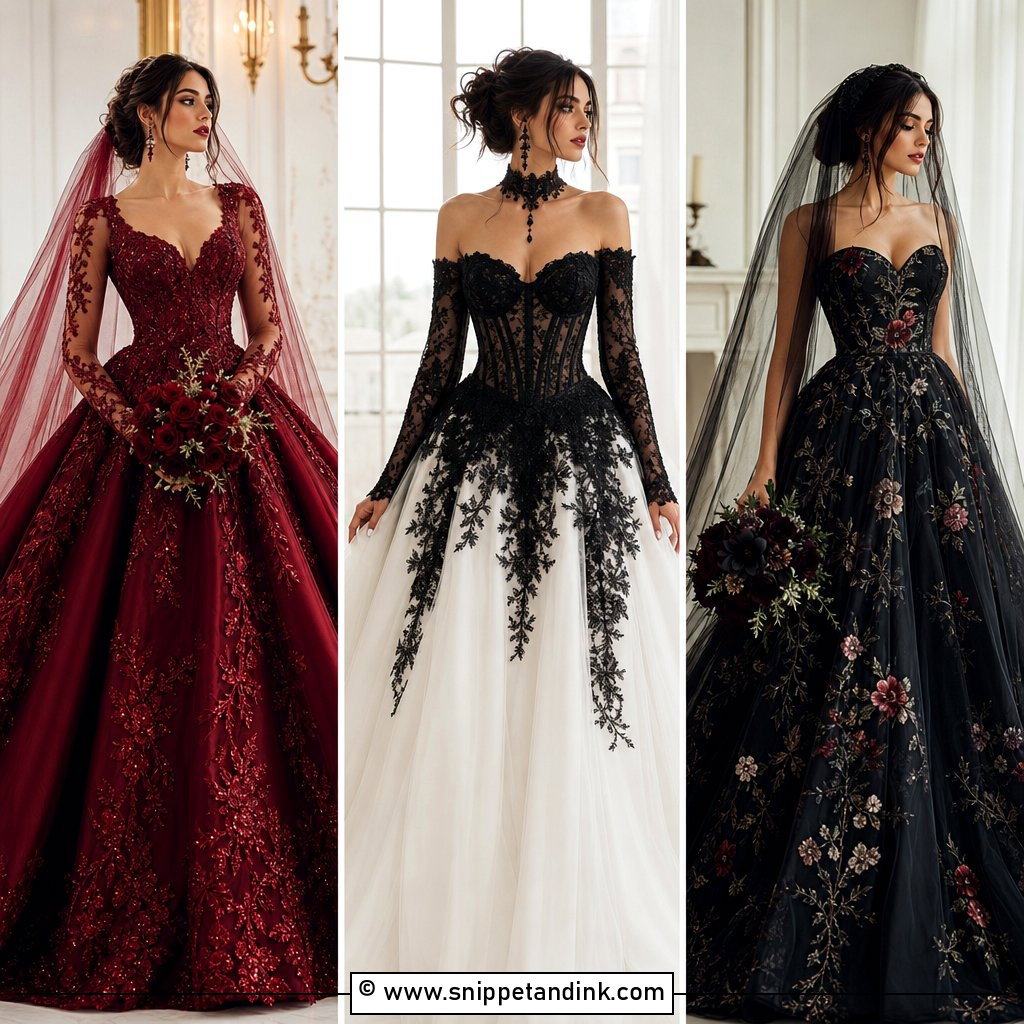
15. Black And Red Gothic Wedding Dress
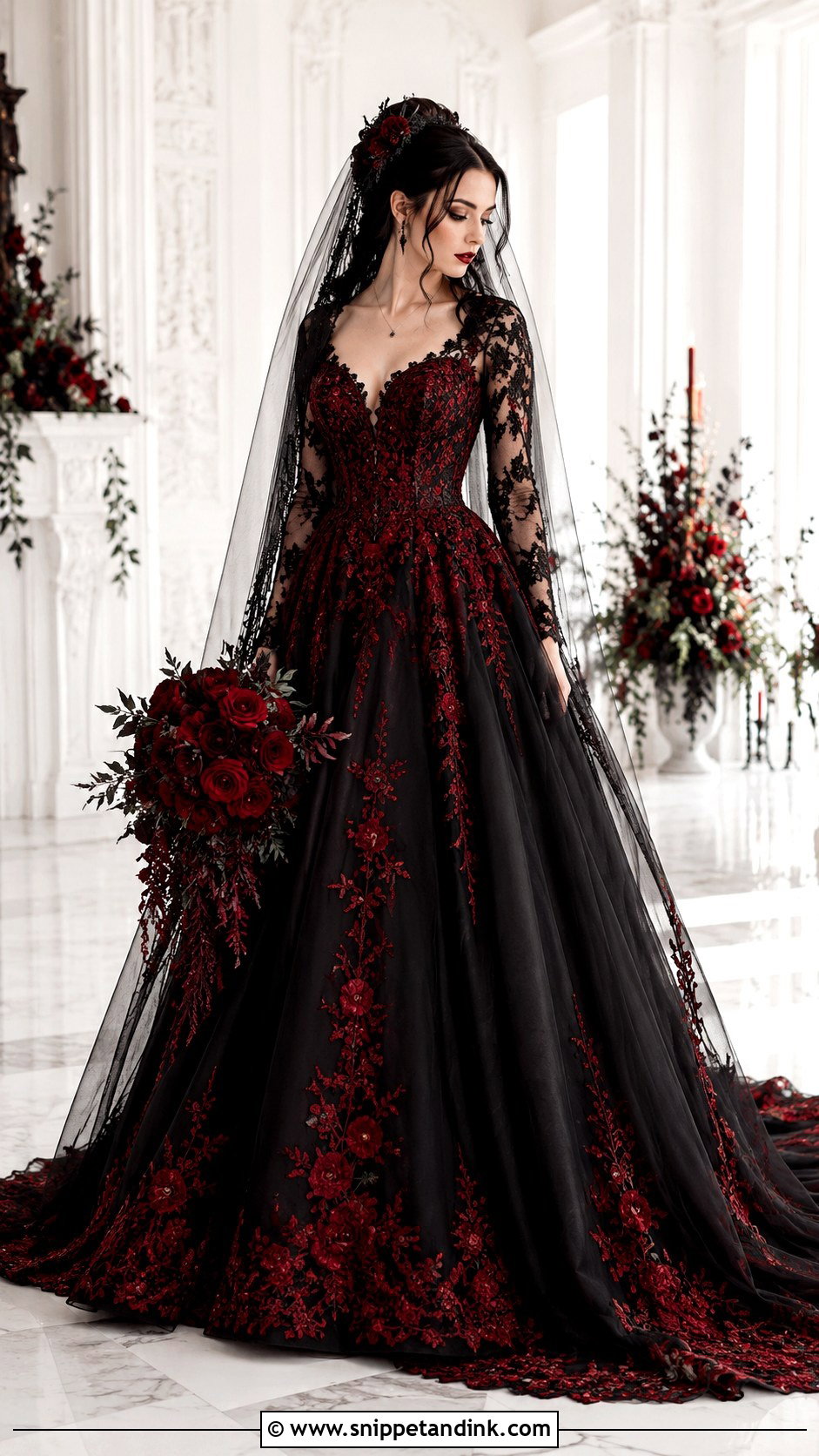
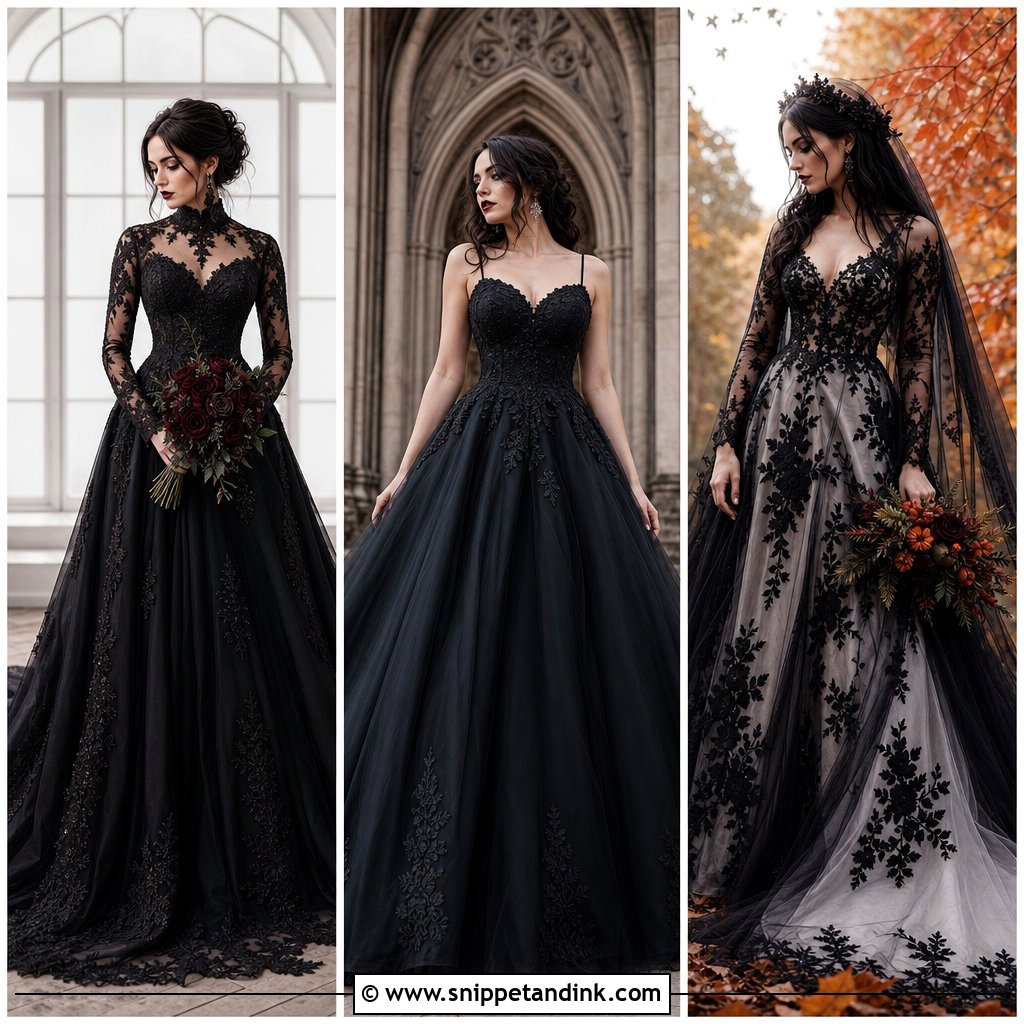
Red and black works when the red is deep. Bright scarlet against black looks like a costume quickly; oxblood, garnet or wine looks rich. Red can come through embroidery, an underskirt or appliqué. With a fully black gown, I’d bring it in through one or two places only: the bouquet and the lip, say, not bouquet, shoes, hairpiece and lip all at once. Deep red roses with dark greenery against black are the strongest single move.
16. Black And Purple Gothic Wedding Dress
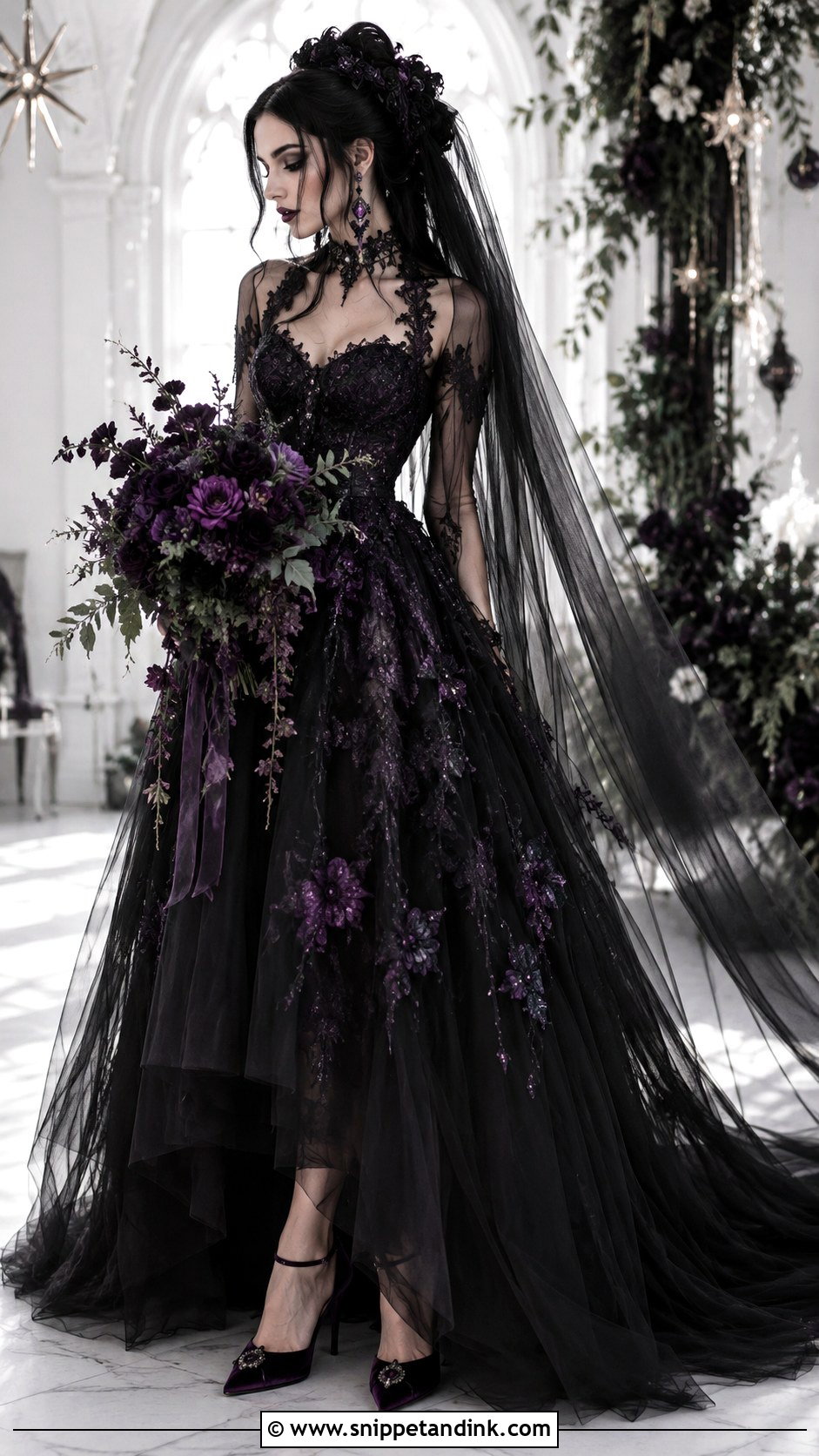
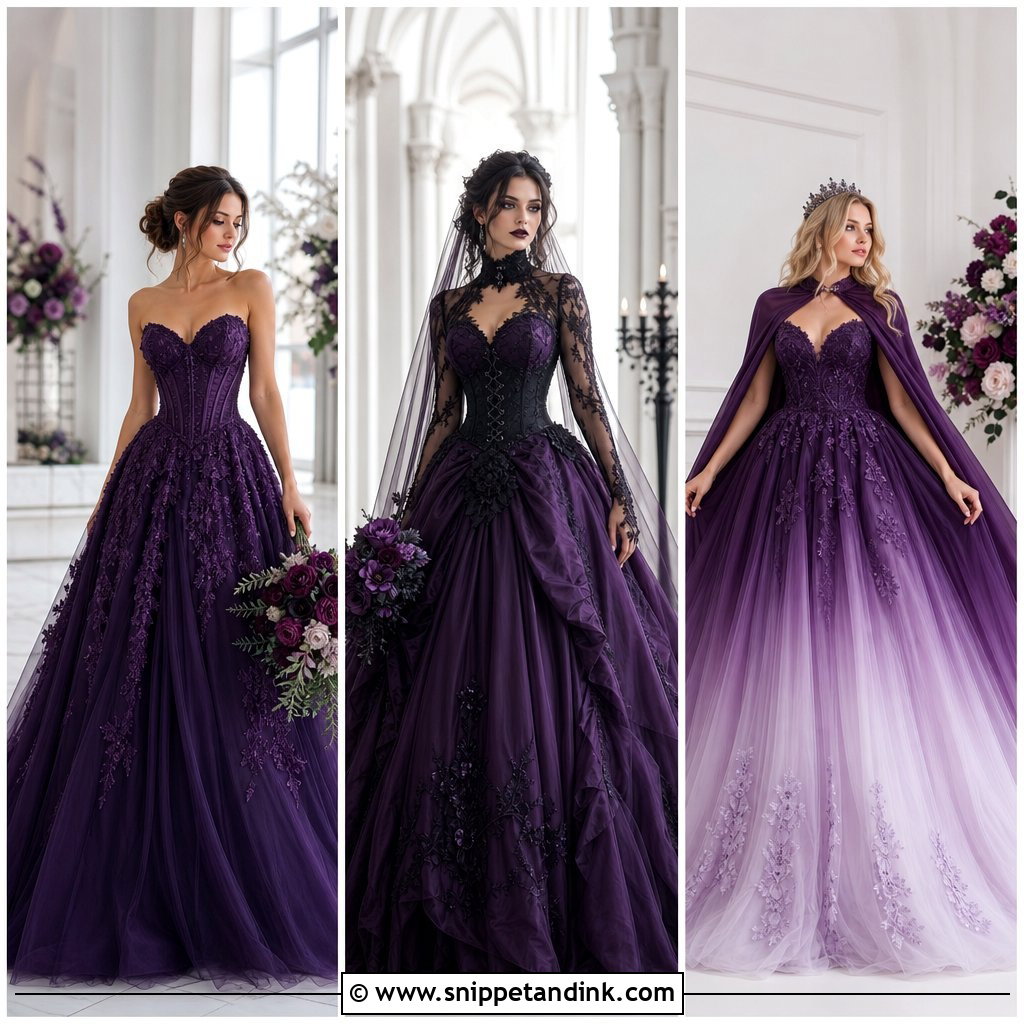
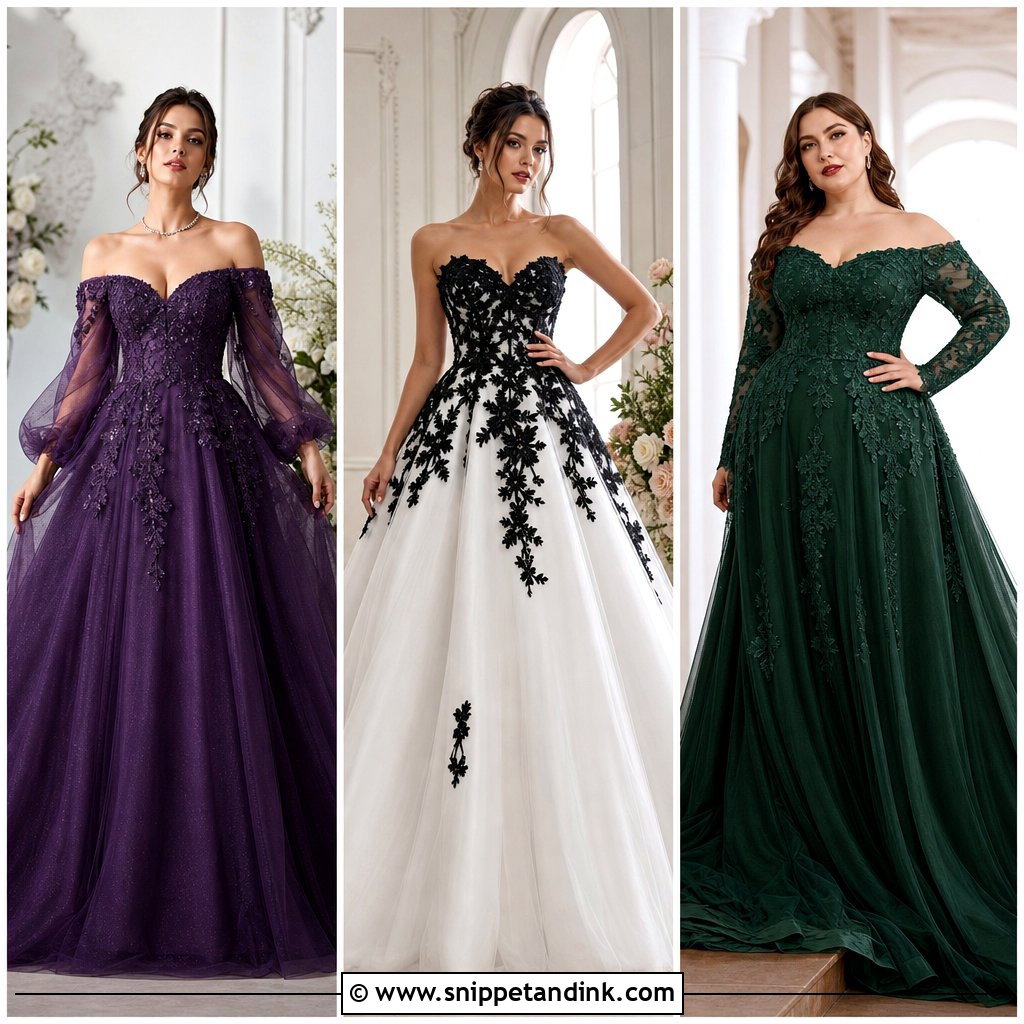
Purple softens black and pushes it toward fantasy. Plum lining, violet embroidery or purple floral appliqué all bring it in without shouting. An all-black gown can take purple through the bouquet, velvet shoes or amethyst earrings. A plum ribbon wrapped around the bouquet stems ties it together quietly. Choose lace, tulle or satin depending on how much drama you want, and keep it to one shade of purple so the palette stays clear.
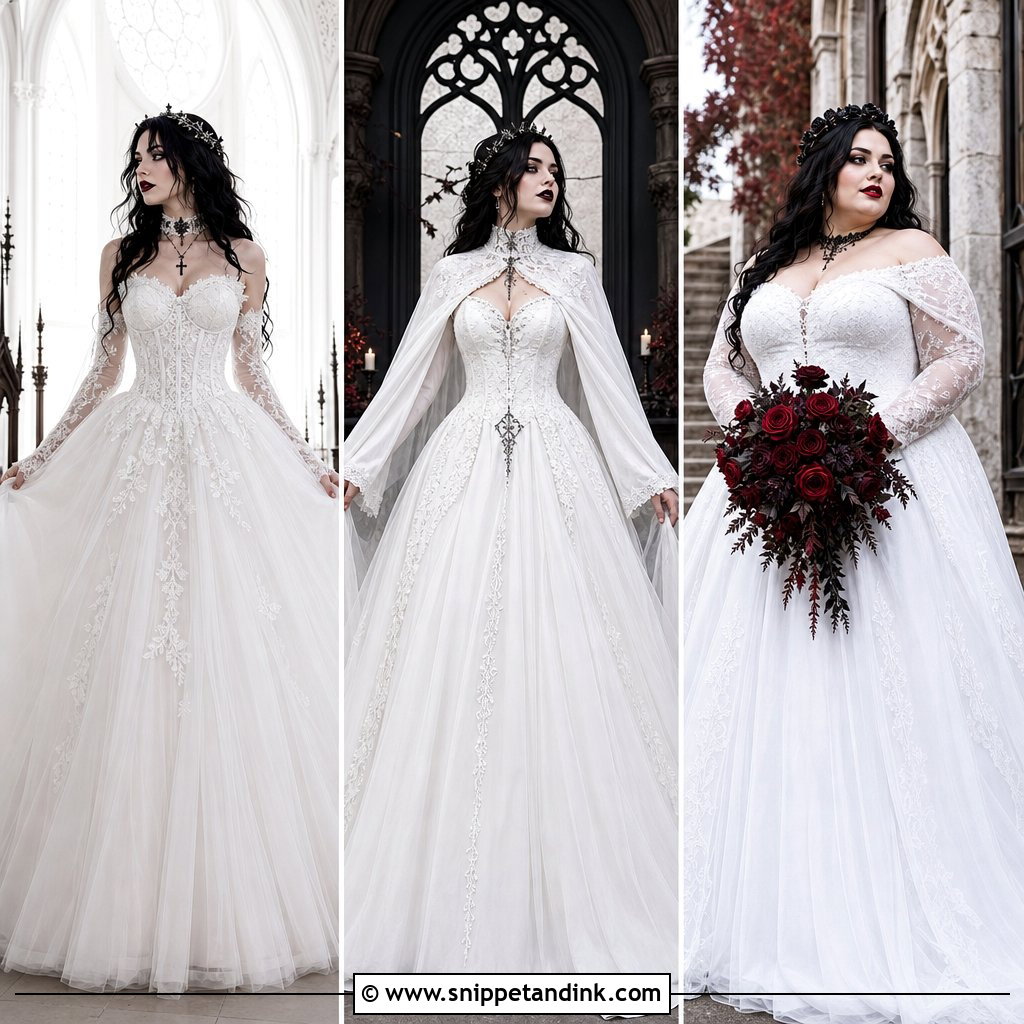
17. Plus Size Gothic Black Wedding Dress
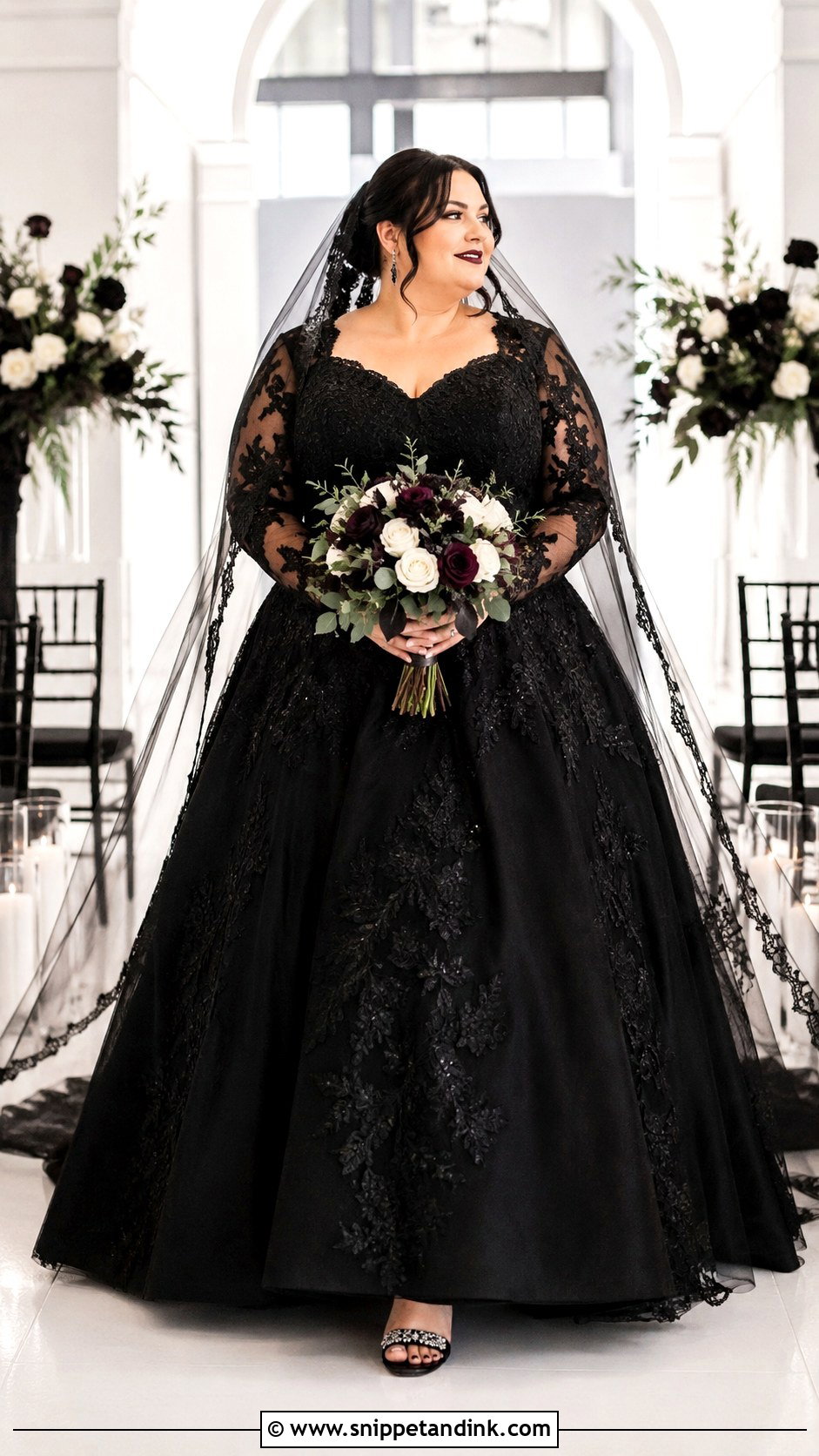
Support comes first, and in black, so does structure. I look for a properly boned bodice, wide straps or a corset back, and built-in cups so you aren’t relying on a separate bra under sheer panels. A-line, ball gown and fit-and-flare all work; the choice is personal. Illusion panels and lace sleeves add softness and coverage. A long veil, heels you can stand in or embellished flats, and a bouquet with contrast flowers. Move in it at the fitting: sit, hug, raise your arms. The dress should do all of that without riding up.
18. Simple Gothic Black Wedding Dress
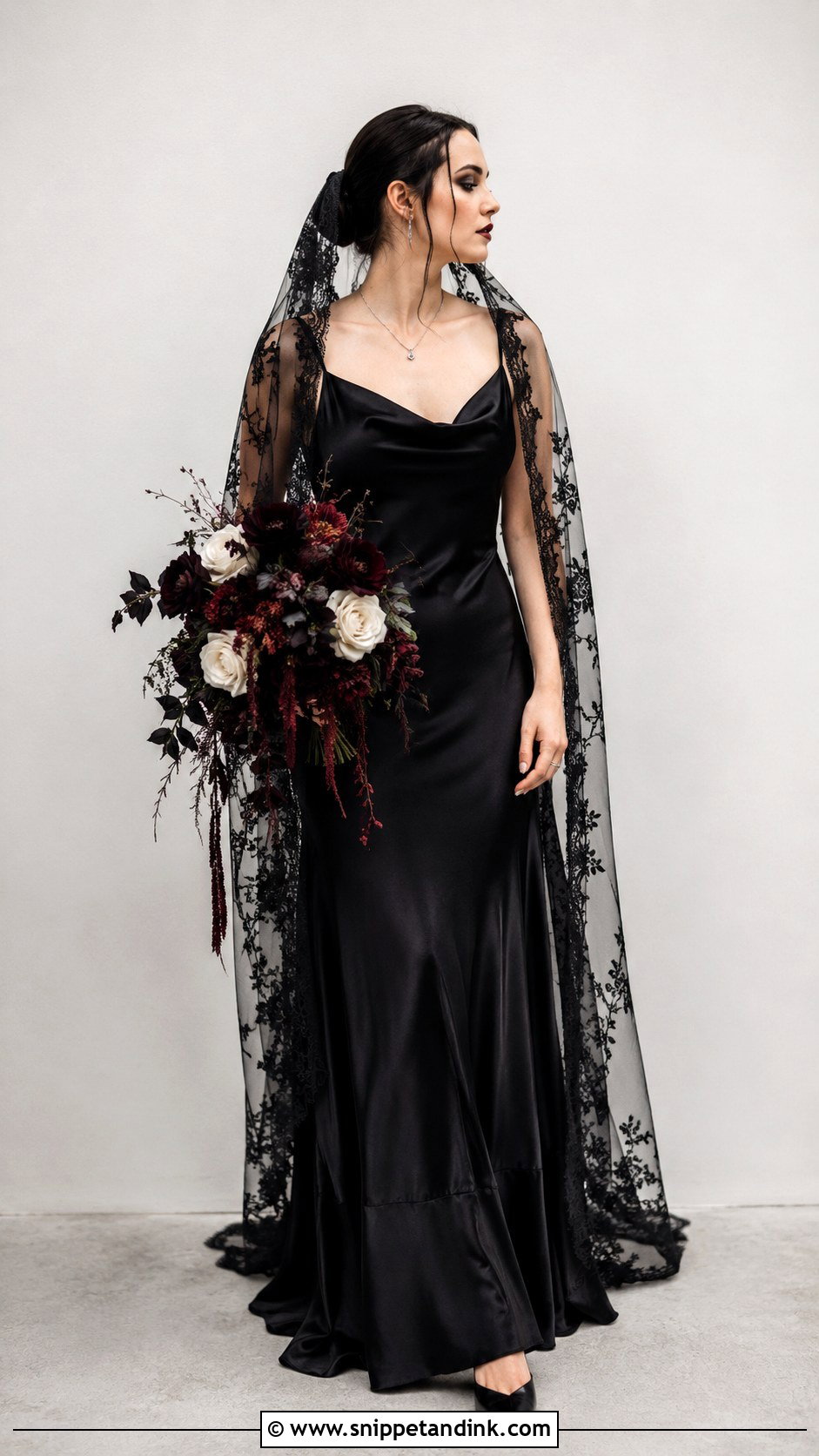
A simple black dress can be the most striking option, because nothing distracts from the shape. A satin slip, a crepe column or a minimal A-line. The gothic comes through accessories instead: a black lace veil, pointed heels, silver jewelry and a dramatic bouquet. Simple dresses are easier to rewear or have shortened afterward, which is a fair reason to choose one. Fabric quality shows more on a plain gown, so feel the weight and check how it hangs before buying.
19. Sheer Sleeve Gothic Black Wedding Dress
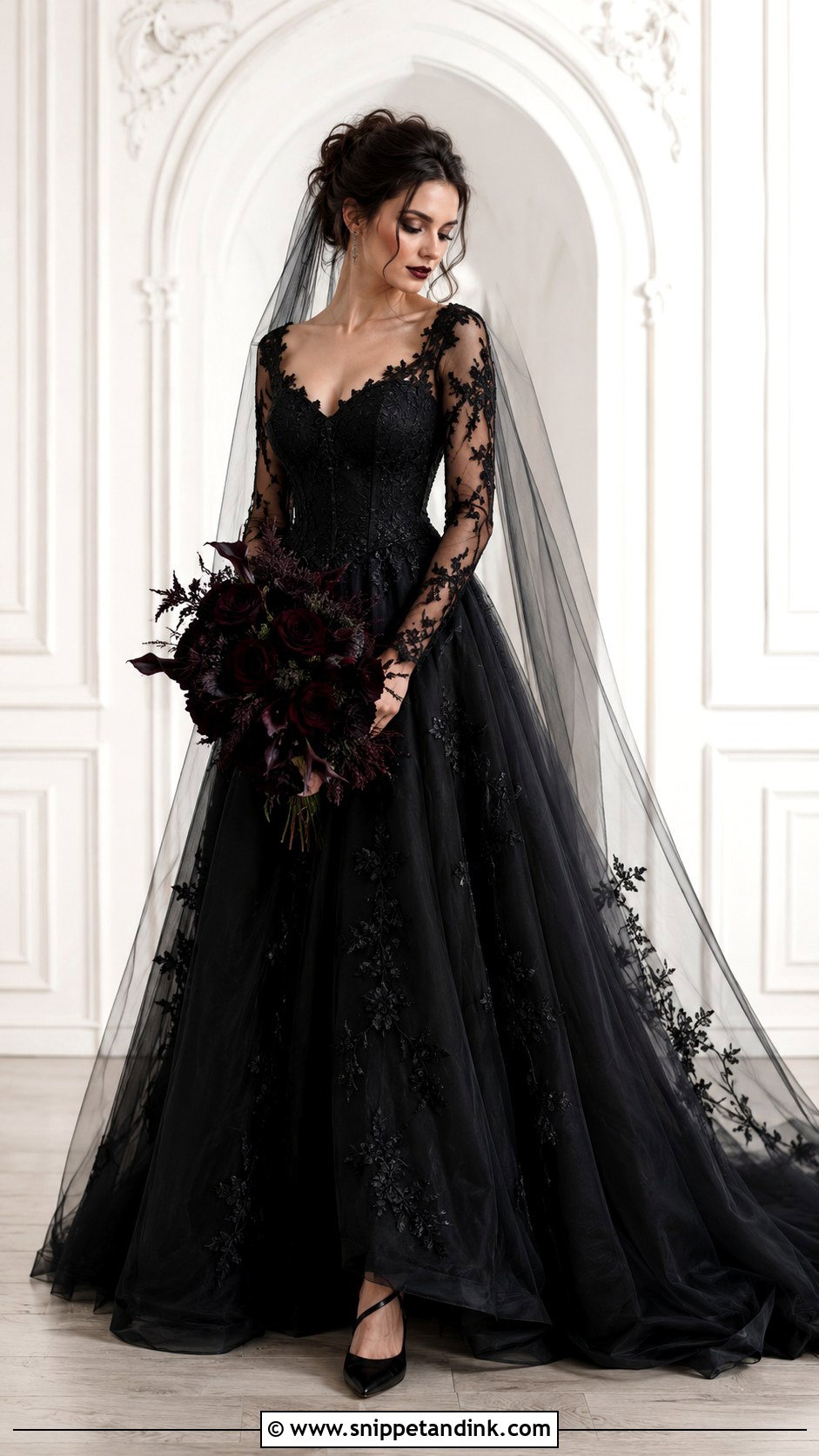
Sheer sleeves give coverage without heat. Lace, dotted tulle or embroidered mesh all work over a structured bodice and flowing skirt. On black, the skin tone behind sheer fabric becomes part of the look, so I’d match the mesh to your skin as closely as possible where it joins the bodice. Necklaces compete with detailed sleeves, so skip them. A long veil, fine earrings and satin heels suit a spring or autumn wedding where the temperature might change.
20. High Neck Gothic Black Wedding Dress
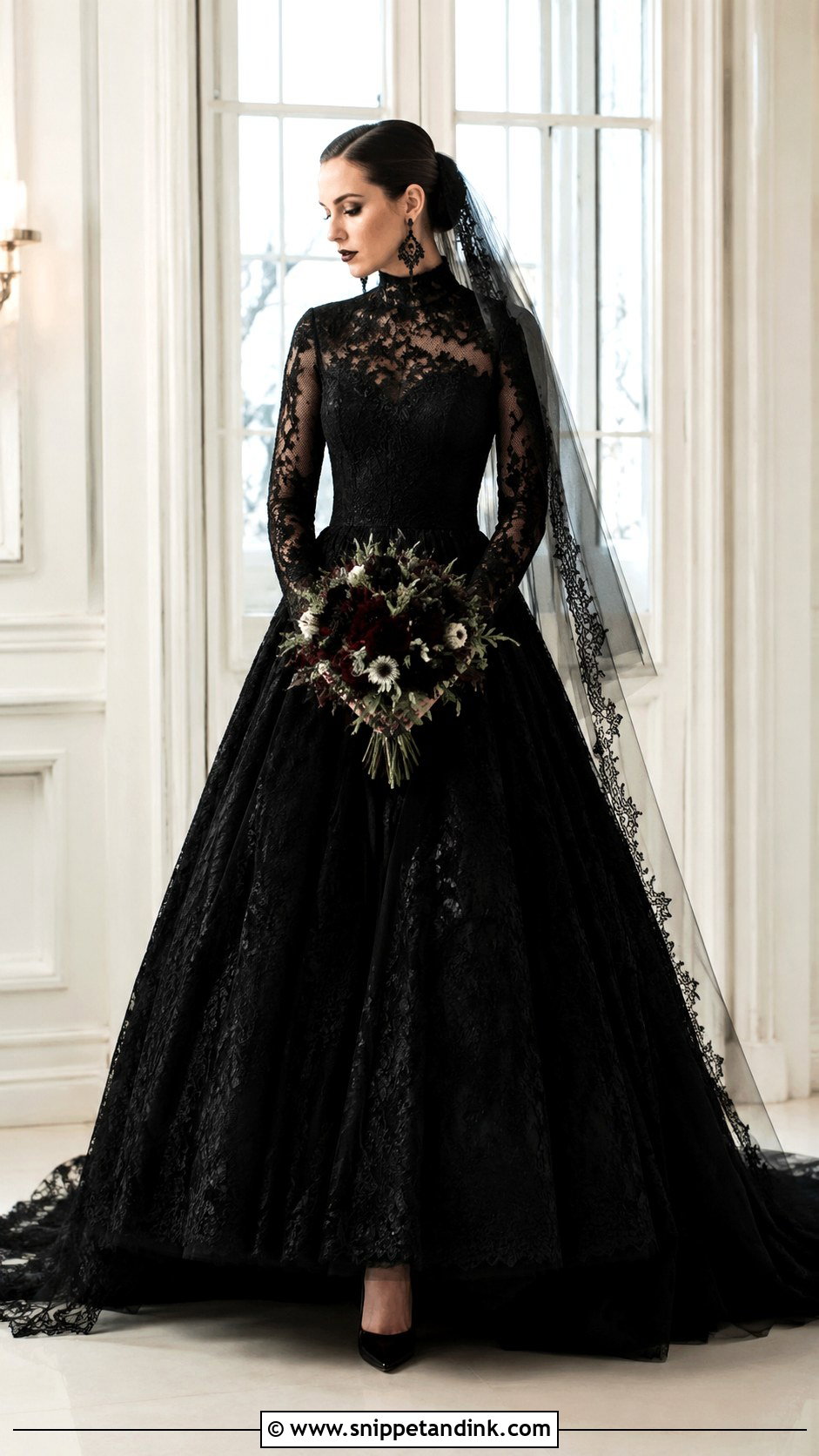
A high neck makes a black gown look mysterious and very controlled. Lace, crepe, satin or illusion mesh all work. A fitted high-neck bodice with a full skirt reads regal; a sleek column reads modern. With the neck covered, put your jewelry at the ears and in the hair, and wear your hair up so the neckline shows. Check that the collar doesn’t press when you look down; a high neck that’s too snug is uncomfortable within an hour. Pointed heels and a structured bouquet.
21. Black Floral Gothic Wedding Dress
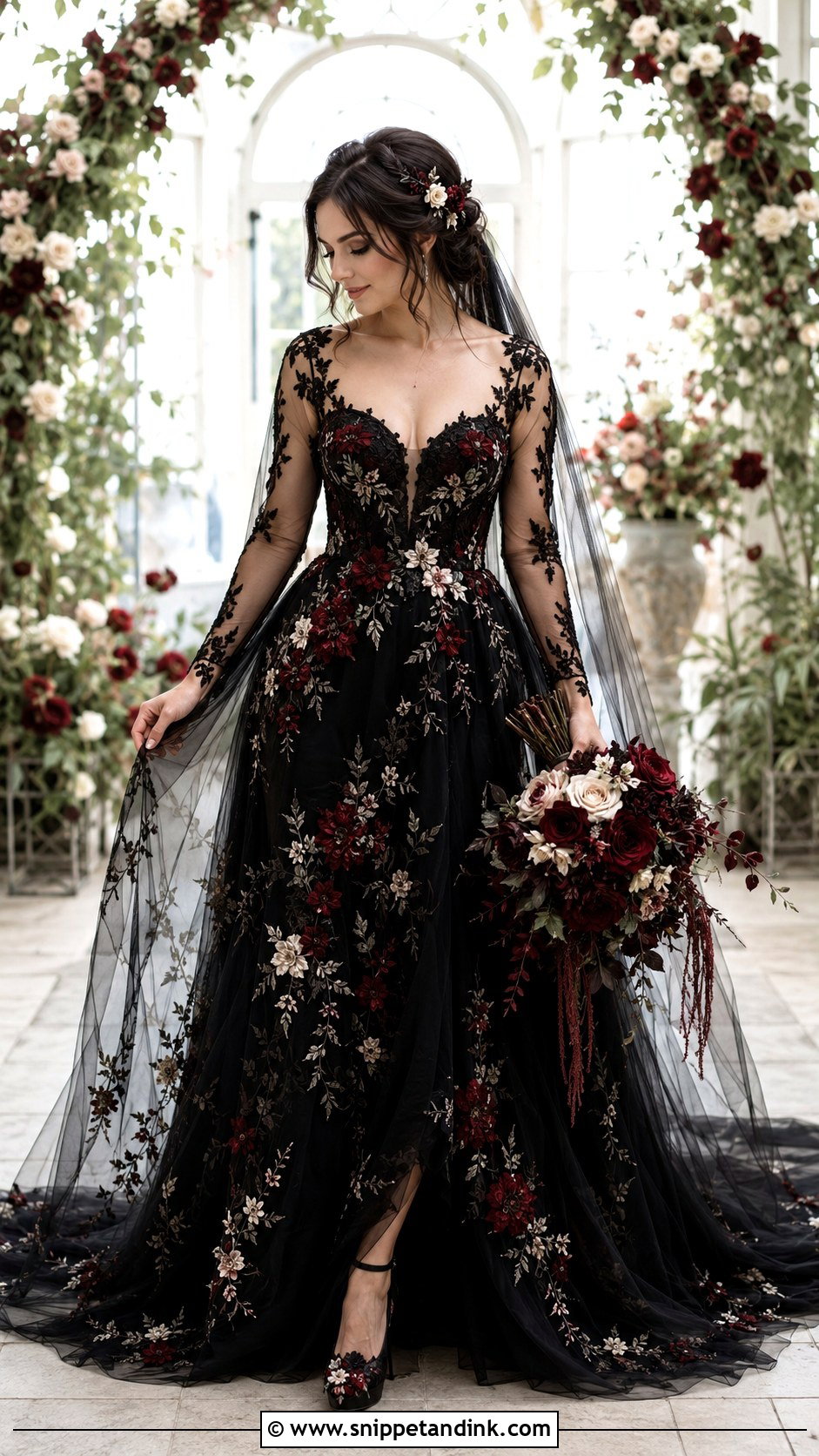
Floral appliqué gives a black gown romance and depth. Black-on-black is subtle; deep red, ivory, purple or silver thread stands out. It sits best on tulle skirts, illusion sleeves and corset bodices. Match shoes and hair pins to the thread color, not the base. The bouquet should echo the dress in one or two colors so it doesn’t compete with the embroidery. Raised appliqué catches the light from the side, which gives texture in photos where flat black would lose detail.
22. Black Sparkle Gothic Wedding Dress
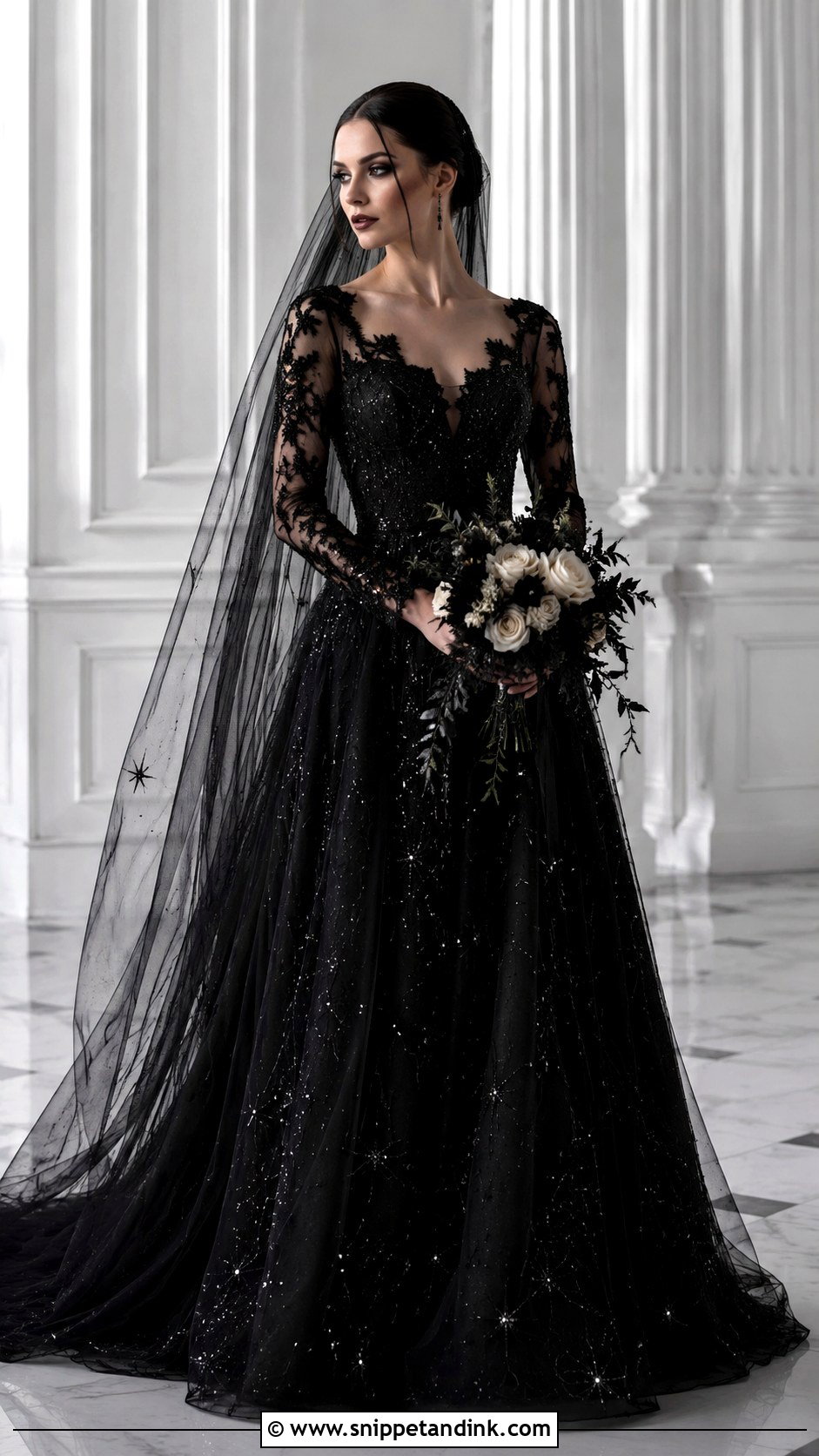
Sparkle on black catches light with every step. I’d look for subtle beading, scattered crystals or star-like embroidery rather than all-over glitter, which looks like eveningwear. Simple heels, minimal jewelry and a sheer veil keep the dress as the focus, and a sleek hairstyle lets it shine. Beaded gowns are heavy, so ask about weight and whether the straps are reinforced. Ivory roses with dark greenery or plum accents suit evening celebrations and lean into celestial gothic details.
23. Black Tea Length Gothic Wedding Dress
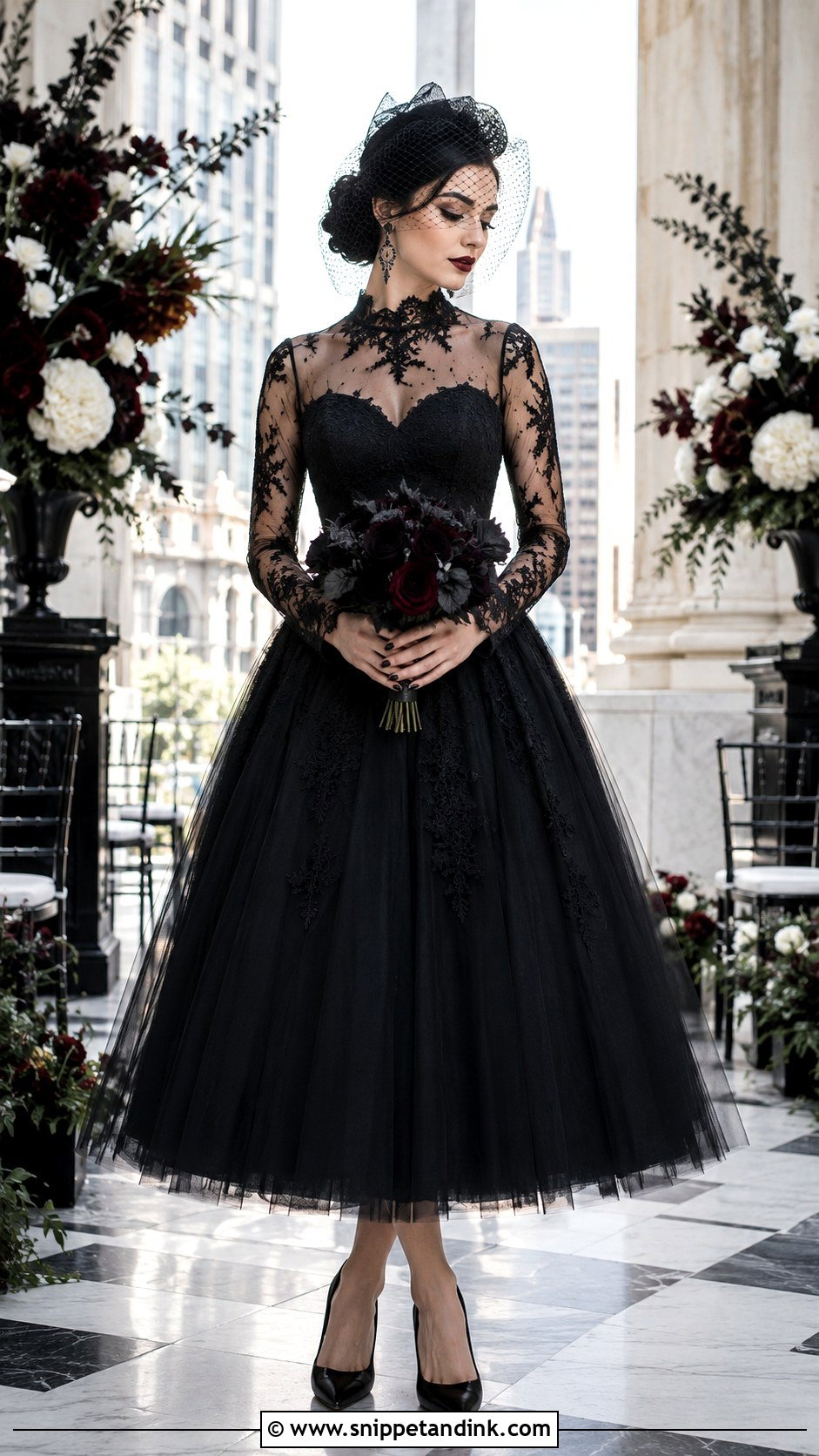
Tea length is playful and practical, and it shows your shoes, so choose them deliberately. Pointed pumps, velvet heels or lace-up ankle boots all suit it. A fitted bodice with a full tulle skirt gives a retro shape; lace sleeves add the gothic note. A petticoat underneath keeps the skirt full all day, and I’d make sure it’s soft tulle rather than stiff crinoline, which scratches. A birdcage veil, pearl or crystal earrings and a compact bouquet suit small weddings and city ceremonies.
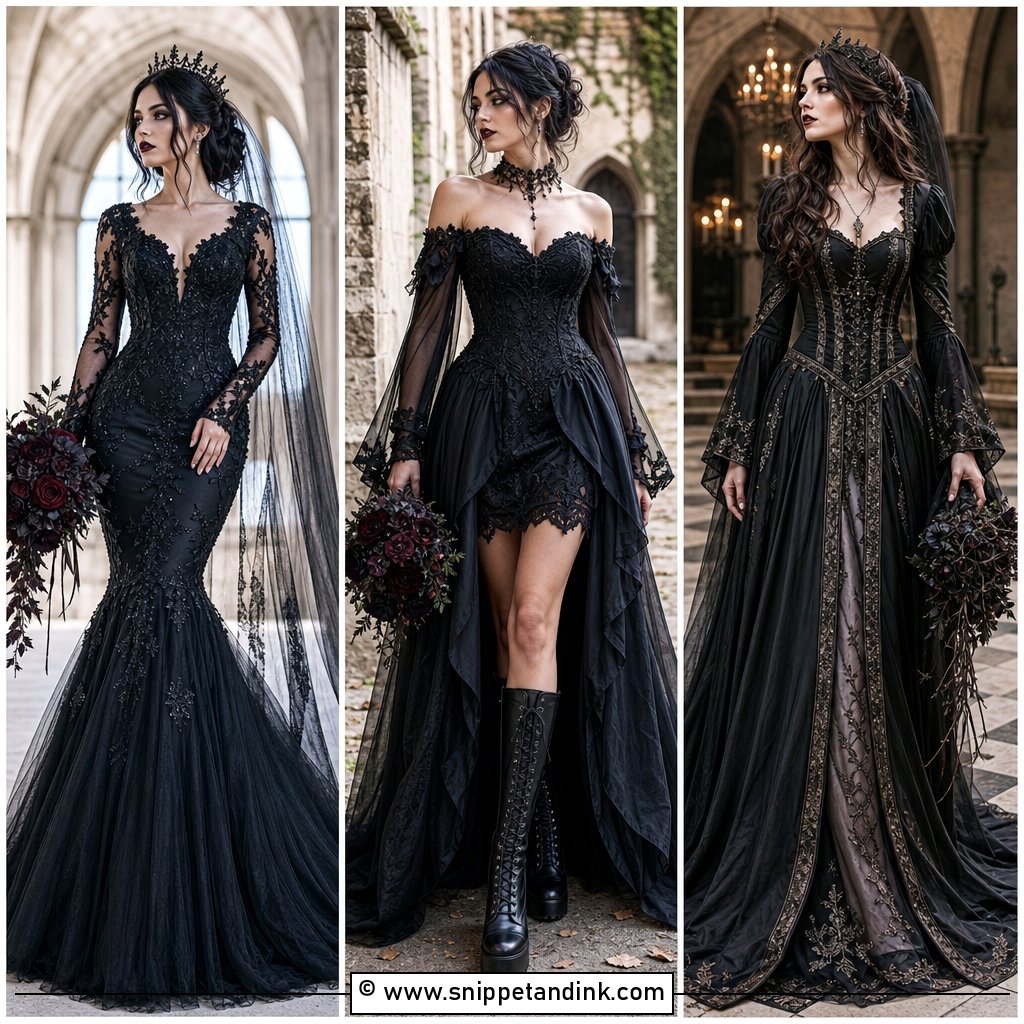
24. Black Wedding Dress With Boots
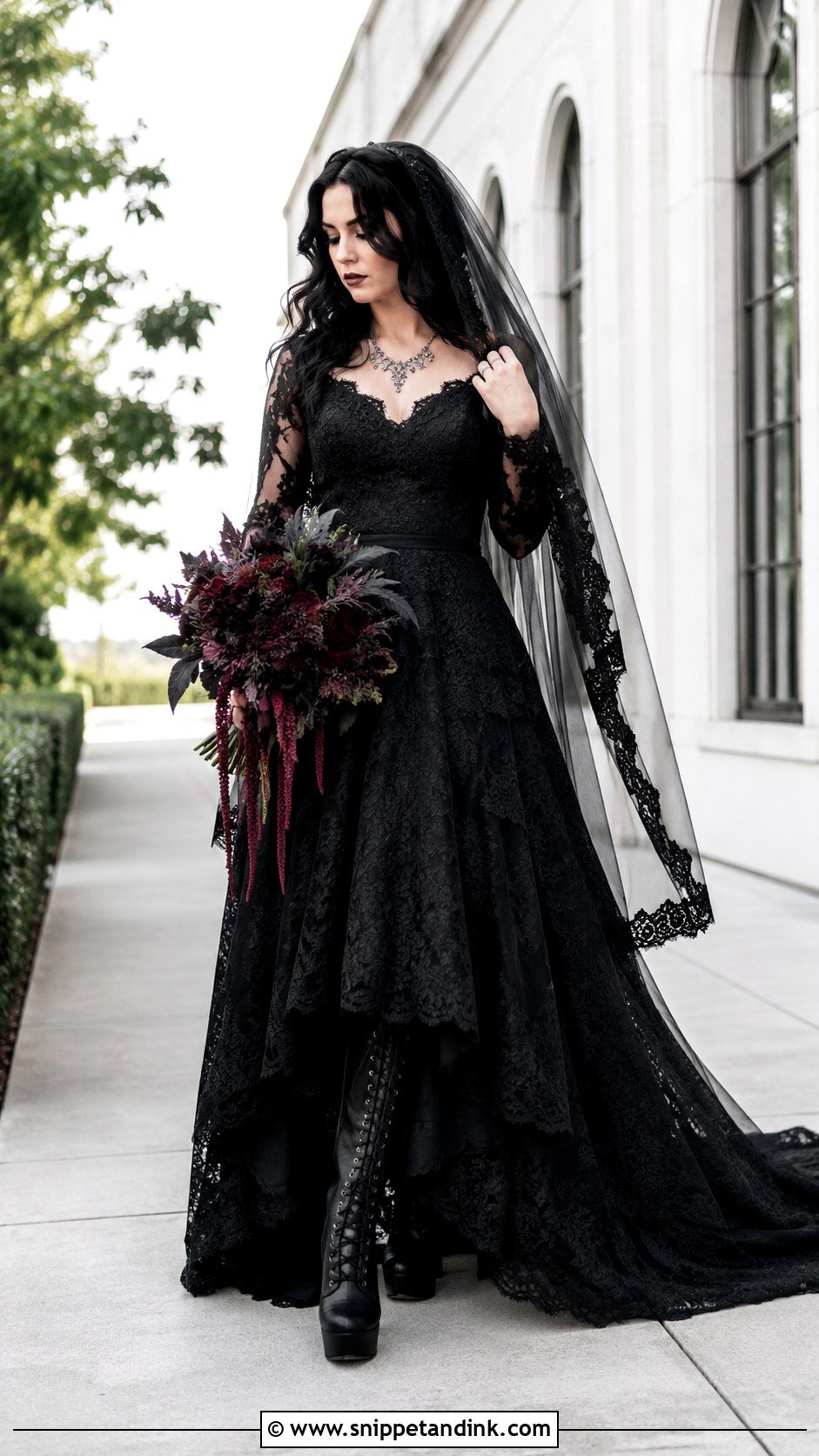
Boots give a black dress a grounded, confident finish, and they’re far more comfortable than heels for outdoor ground. Lace-up heeled boots, pointed ankle boots or sleek knee-highs depending on hem length. A dramatic gown wants plain boots; a minimal one can take embellishment. Break them in well; new leather boots rub at the ankle and you can’t slip them off under the table the way you can with pumps. A veil, silver jewelry and a structured bouquet balance the weight at the feet.
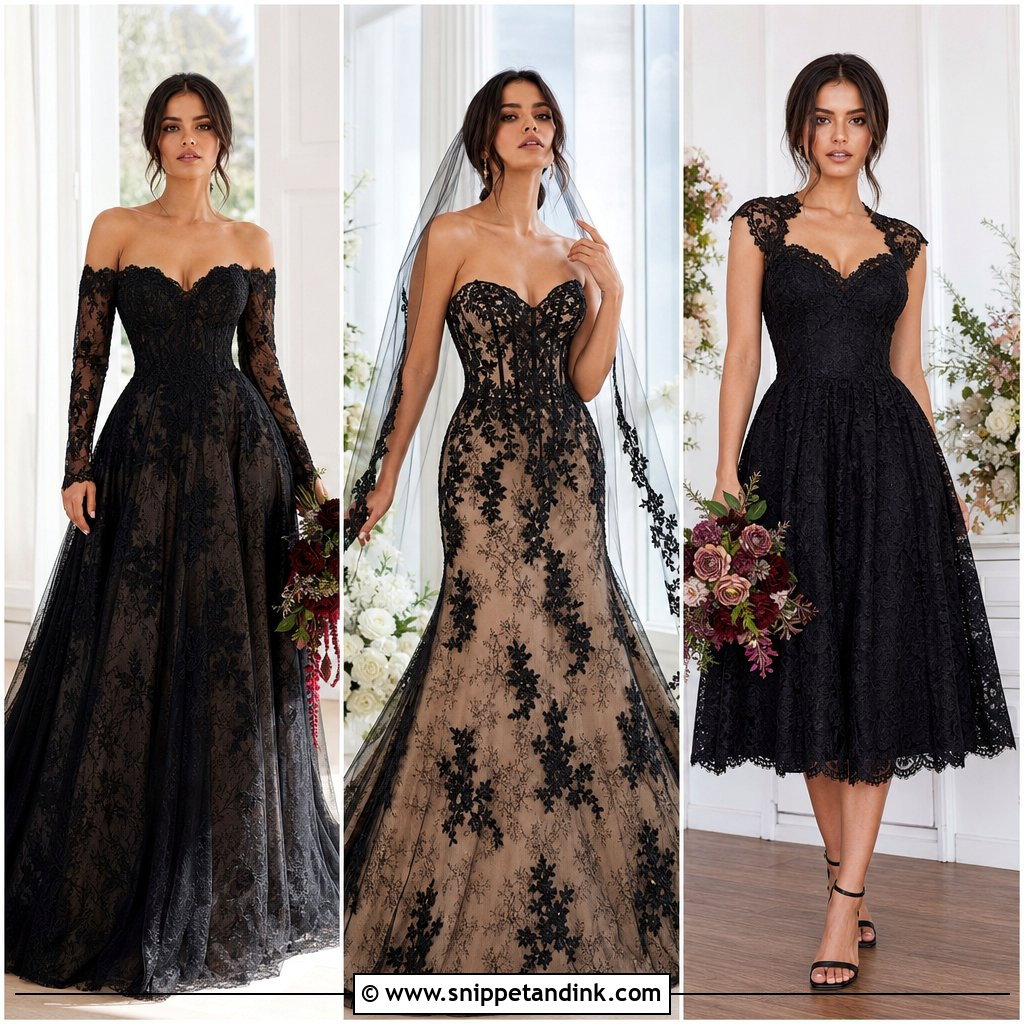


25. Gothic Black Reception Wedding Dress
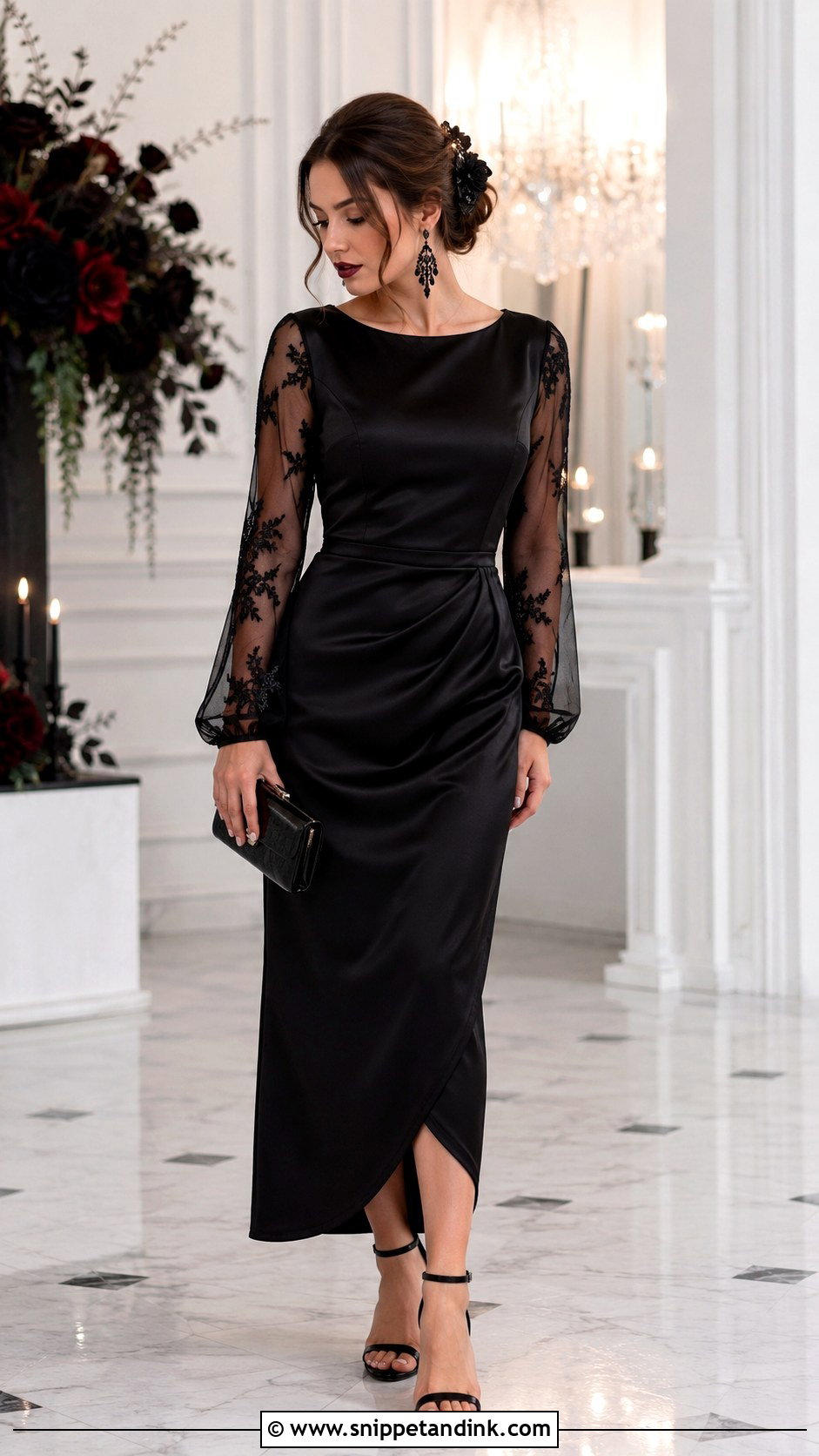
A second dress for the reception lets you dance without hauling a train. A black midi, satin slip, tea-length tulle or fitted mini with sheer sleeves. Comfortable heels, statement earrings and a smaller hairpiece keep it bridal. If the ceremony gown is very dramatic, the reception one can be simpler. Keep the clutch or flowers in the same palette so the two outfits connect in the album. Plan where you’ll change and who will help with the fastenings.
Lint, Powder and Flash: What Black Shows That White Hides
A white gown hides lint, deodorant and face powder. A black one shows all three, along with every pet hair in the house. I pack a slightly different kit for a black dress.
- A lint roller and a soft clothes brush, used before the dress goes on and again before the ceremony.
- Clear or invisible deodorant applied well before dressing, so it has time to dry.
- Makeup finished and set before the gown goes over your head, with a scarf or hood over the face as you step in.
- Baby wipes for small marks. Rub gently; scrubbing satin can leave a shiny patch.
In photos, black swallows fine detail. Brief your photographer that the dress is black and the lace matters, so they expose for the gown rather than the sky. Side light and window light bring out texture in lace and appliqué; a flat, dark background next to a black dress can lose the outline completely. A few minutes near a pale wall or in open shade makes a big difference to how much of the dress you actually see later.
Black Can Be as Bridal as Ivory
Black can read romantic, modern, vintage or bold, and the gown is only the start. Begin with a silhouette you can move and breathe in, then build the look through the veil, shoes, jewelry, gloves or cape and the bouquet. Lace, satin, tulle, velvet, florals, sparkle or clean tailoring can all look as bridal as any white gown. The brides who look best in black are the ones who style it with the same care as a traditional dress, not as a costume.
You'll Like These Ideas:


Leave a Reply