
Black reads as a deliberate choice before anyone has noticed the silhouette, and that is exactly why it takes more styling care than ivory. The twenty looks below move through ballrooms, gardens, city venues and small dinners, but they share one rule I hold to with every bride who wants black: the gown has to be dressed as a wedding outfit, not as eveningwear. A veil, the right shoe and one considered piece of jewelry do most of that work. Fabric does the rest. Lace softens black, satin throws light back, and tulle gives volume without weight, so the textile you pick will set the mood more than the color itself.
Not Every Black Is the Same Black
Before you fall for a silhouette, look at the black itself. Dyed fabrics lean warm or cool: some blacks go faintly blue in daylight, others turn brown or slightly green. In a single gown that never matters. It matters the moment you add a veil, a cape, shoes or a separate skirt from somewhere else, because two blacks side by side show the difference clearly.
When I’m putting a black bridal look together, I take the swatches outside. Shop lighting is warm and hides the shift, while daylight shows it within seconds.
What I check at the first appointment
- Hold the veil tulle against the bodice by a window. A single layer of tulle always looks lighter, nearly charcoal, so ask for a double layer if you want it to read as true black.
- Bring your shoes, or a photo of them taken outdoors. Satin shoes pick up light very differently from a matte crepe skirt.
- Ask what the lining is. A skin-toned lining under black lace changes the effect from graphic to soft.
- Sit, stand and raise your arms. Black satin and crepe show strain lines at the seams more than ivory does, so a fit that is merely acceptable will show in photos.
If you are ordering online, ask for a fabric swatch before you commit. Many makers will post one if you ask, and it is far easier than a return.
1. Black Lace Ball Gown Wedding Dress
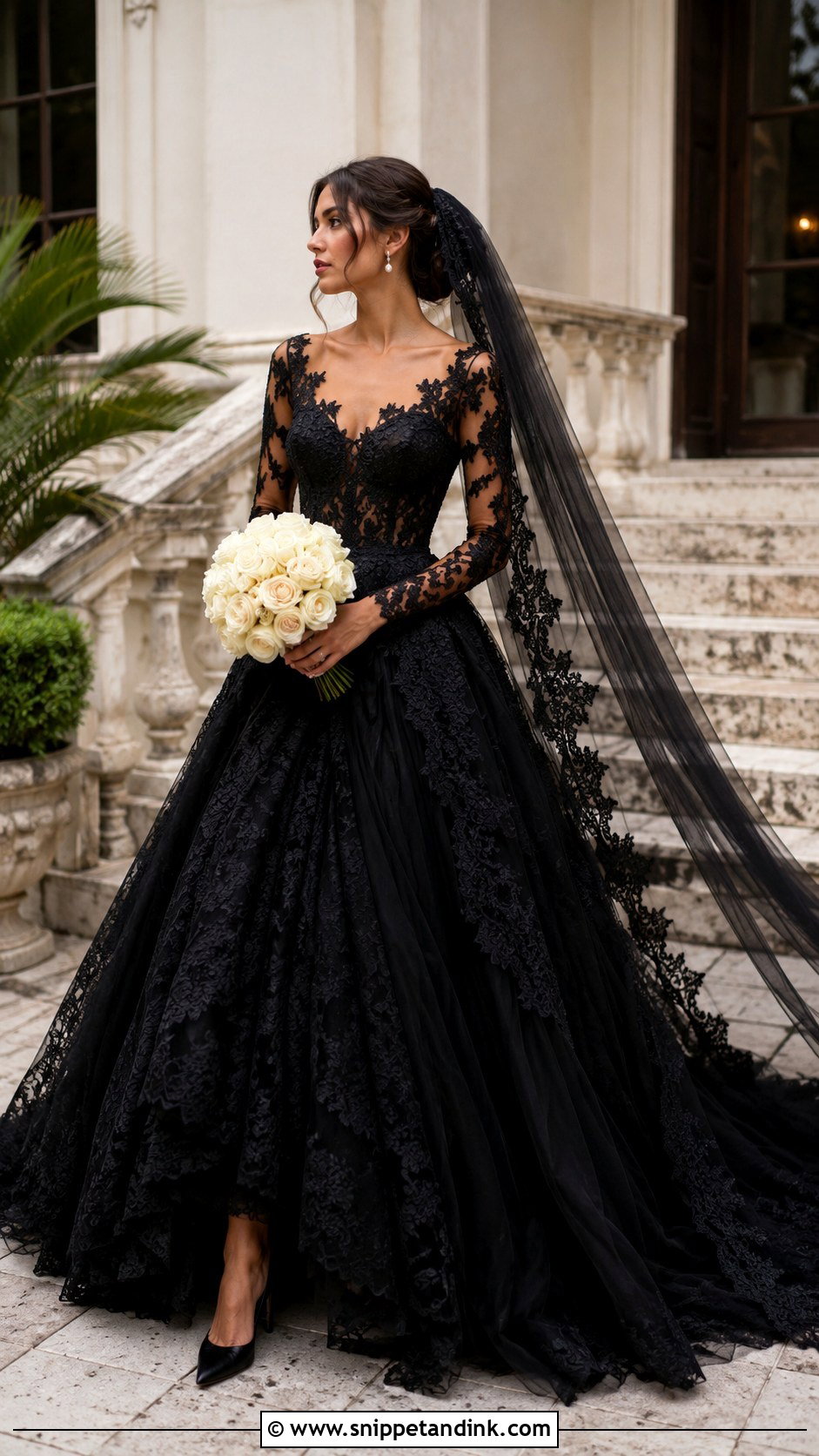
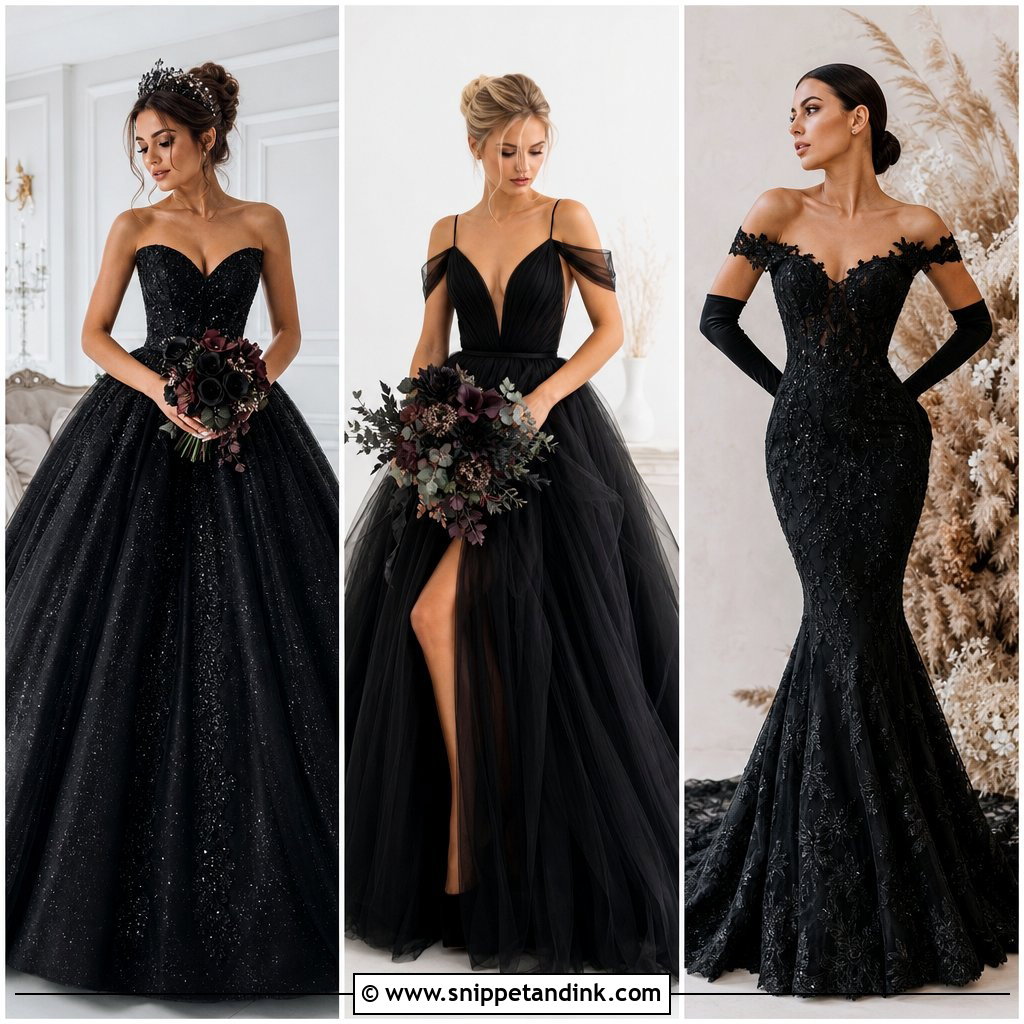
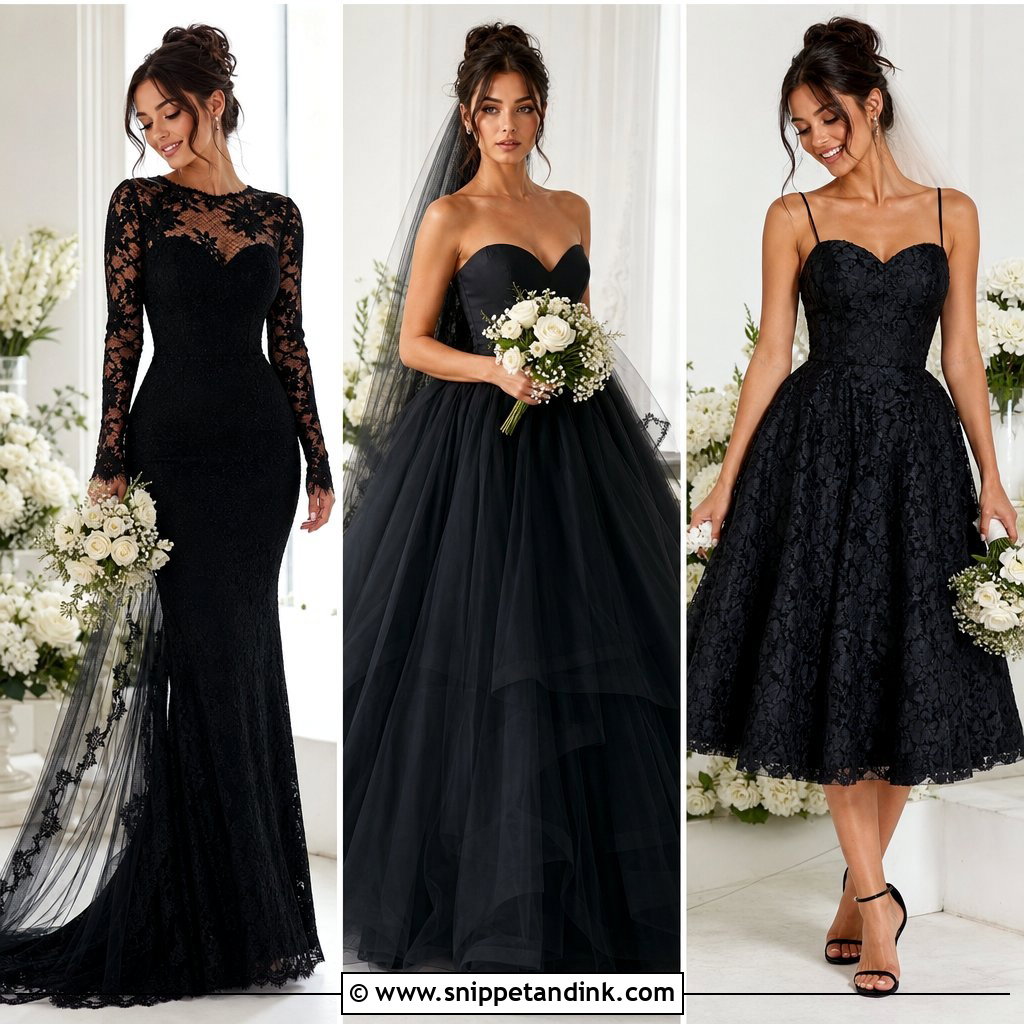
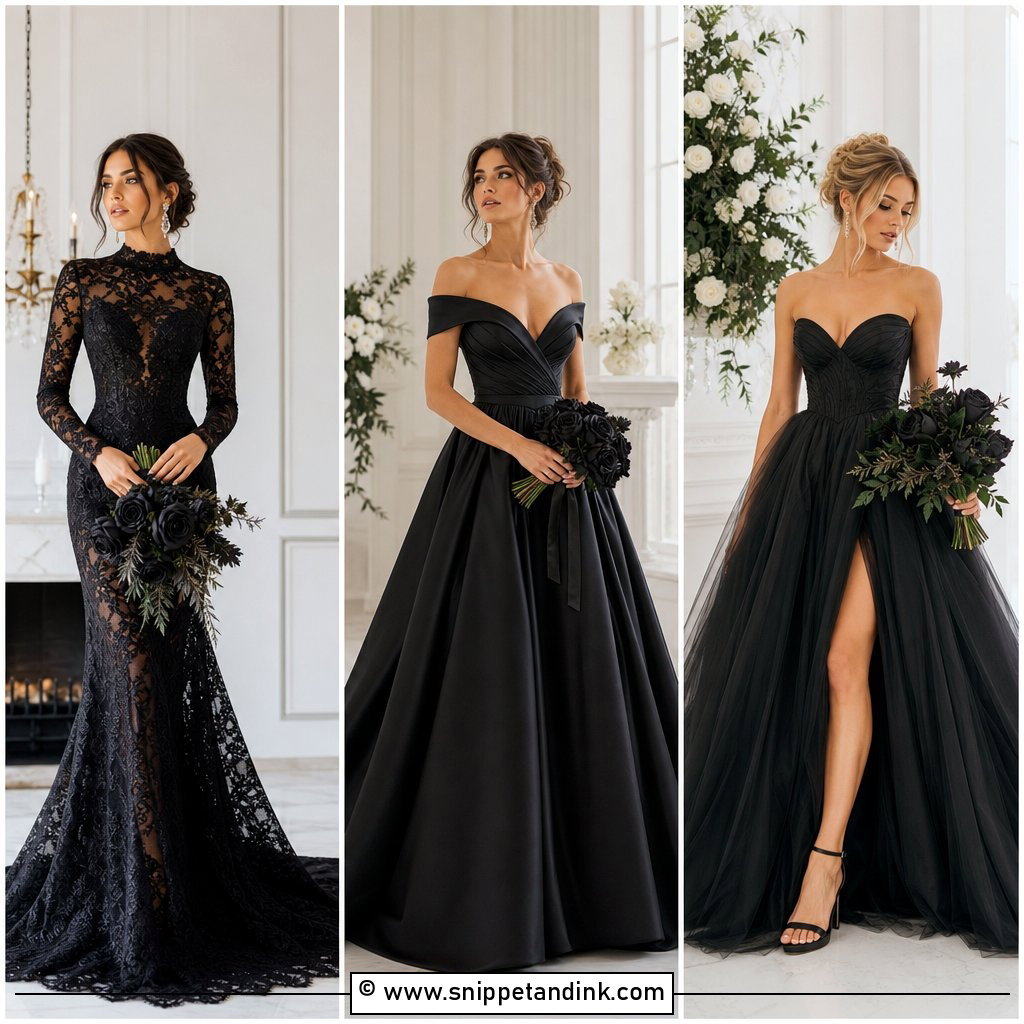
Lace on a full skirt is the gentlest way into black, because the pattern breaks up the darkness and gives the camera something to hold. Look for a fitted lace bodice, a defined waist and a layered skirt, with a soft sweetheart neckline and long lace sleeves. When I fit this shape, I check that the lace motifs line up across the side seams, since a broken pattern draws the eye on a skirt this large. Pointed black pumps, pearl drops and a black cathedral veil keep it formal, and ivory roses with greenery give the contrast. Pull the hair into a low textured bun so the lace at the neckline stays visible. A ballroom or a historic house gives the skirt the room it needs.
2. Black Satin Mermaid Wedding Dress
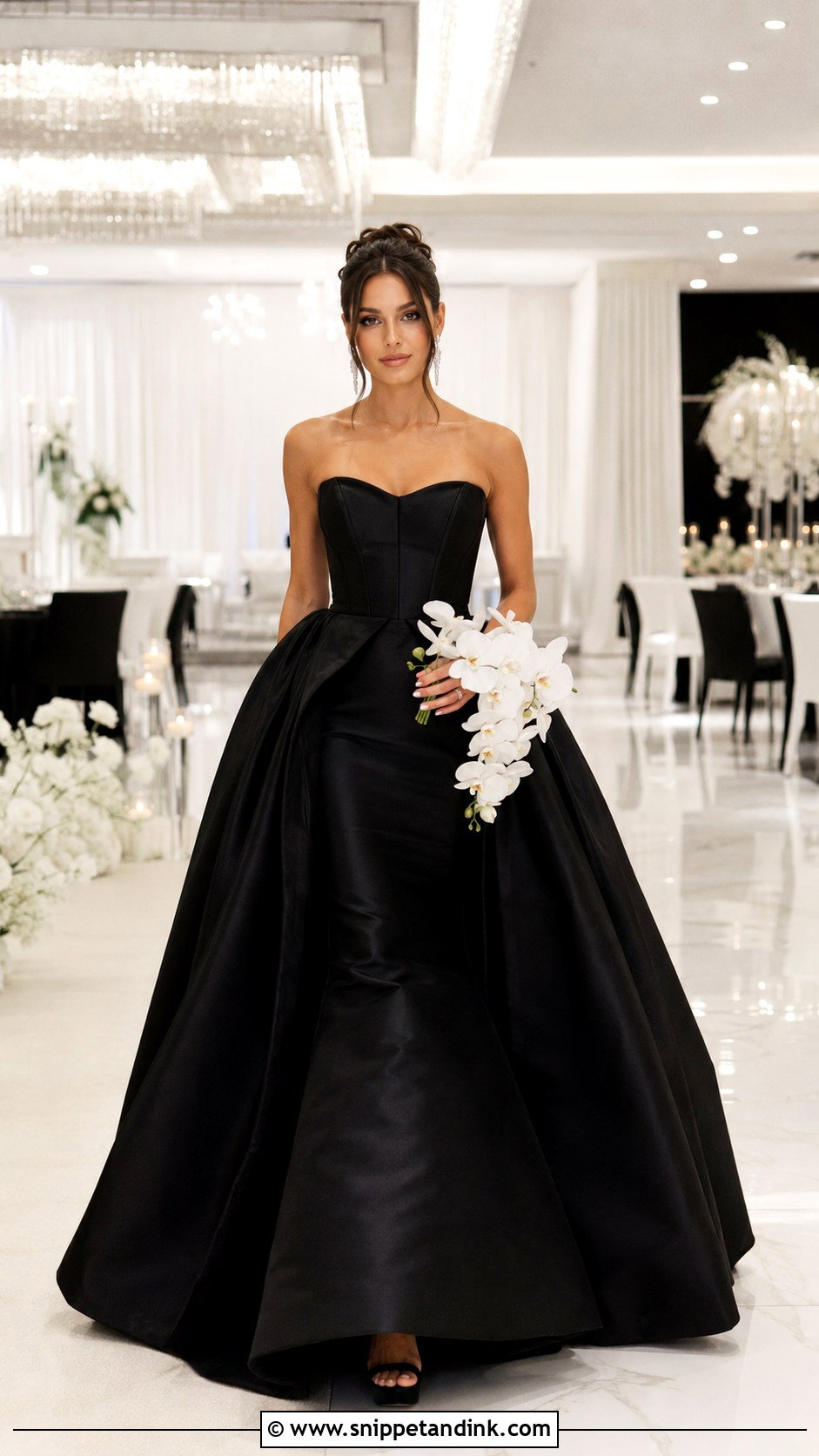
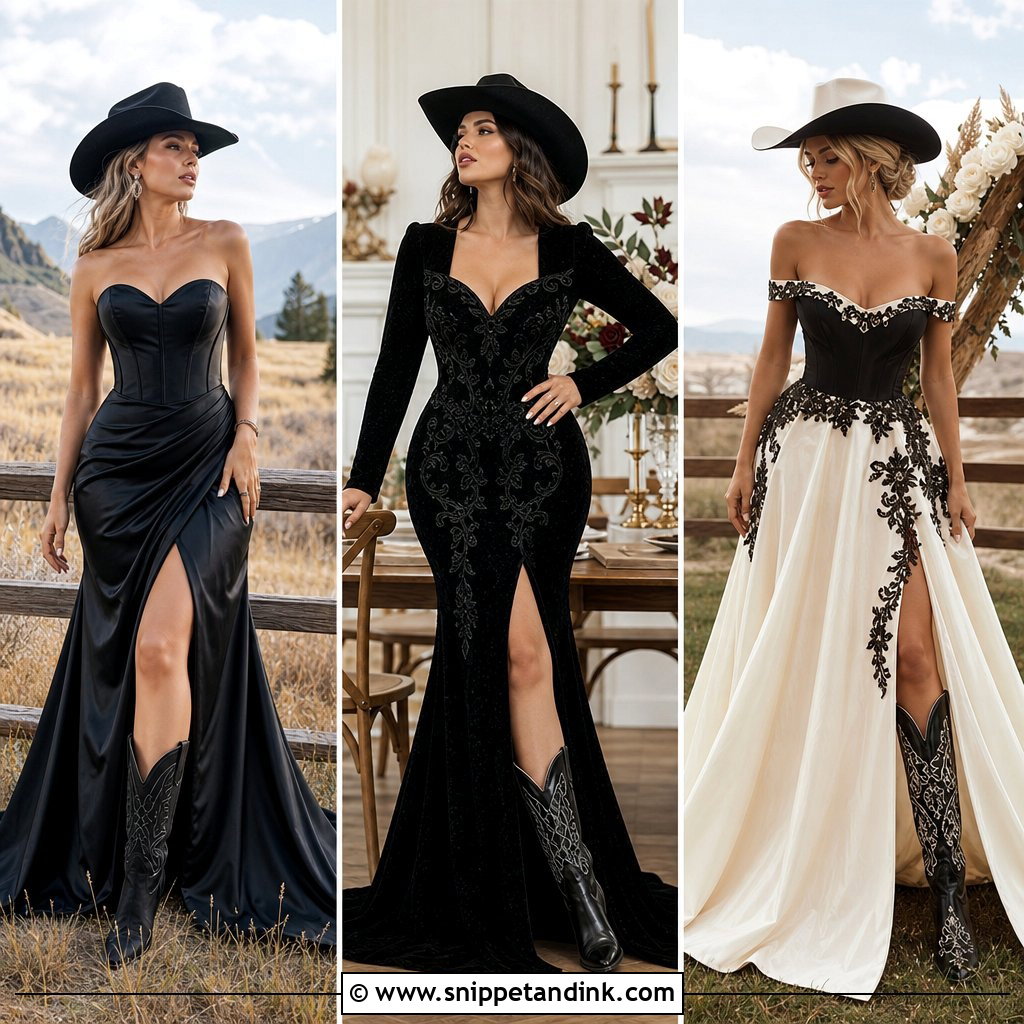
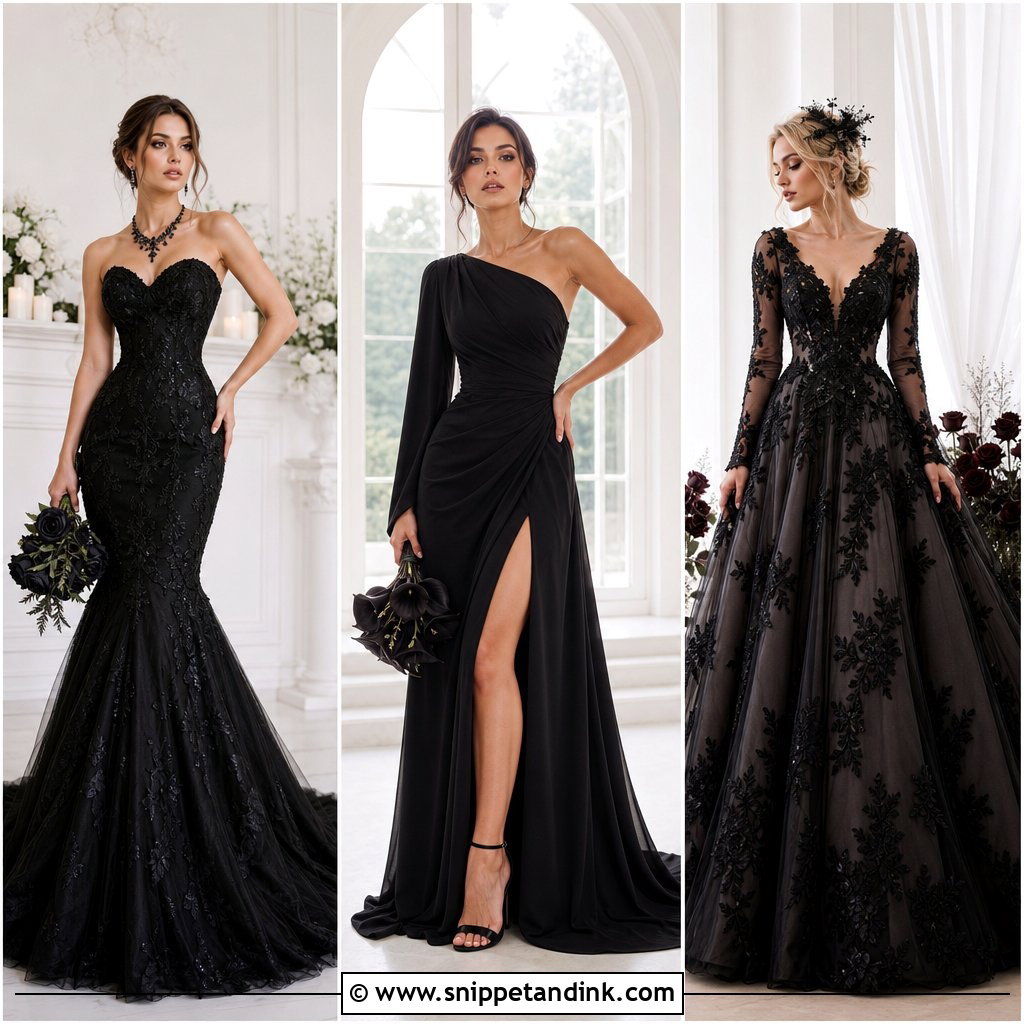
Satin is unforgiving in black. It shows every pull at a seam and every ripple where the fit is loose, so a mermaid cut in satin needs careful fittings more than almost any other dress here. When it is right, the fabric follows the body and flares low, and the line looks carved. A structured strapless bodice or a soft off-the-shoulder neckline keeps the proportions even. Silver crystal earrings, a slim bracelet and satin heels under the hem are enough. A detachable overskirt gives you volume at the ceremony and freedom later, and I suggest one often. Keep the hair glossy, either a center-parted low bun or brushed waves, and let white orchids echo the curve of the skirt.
3. Black Long Sleeve Wedding Dress
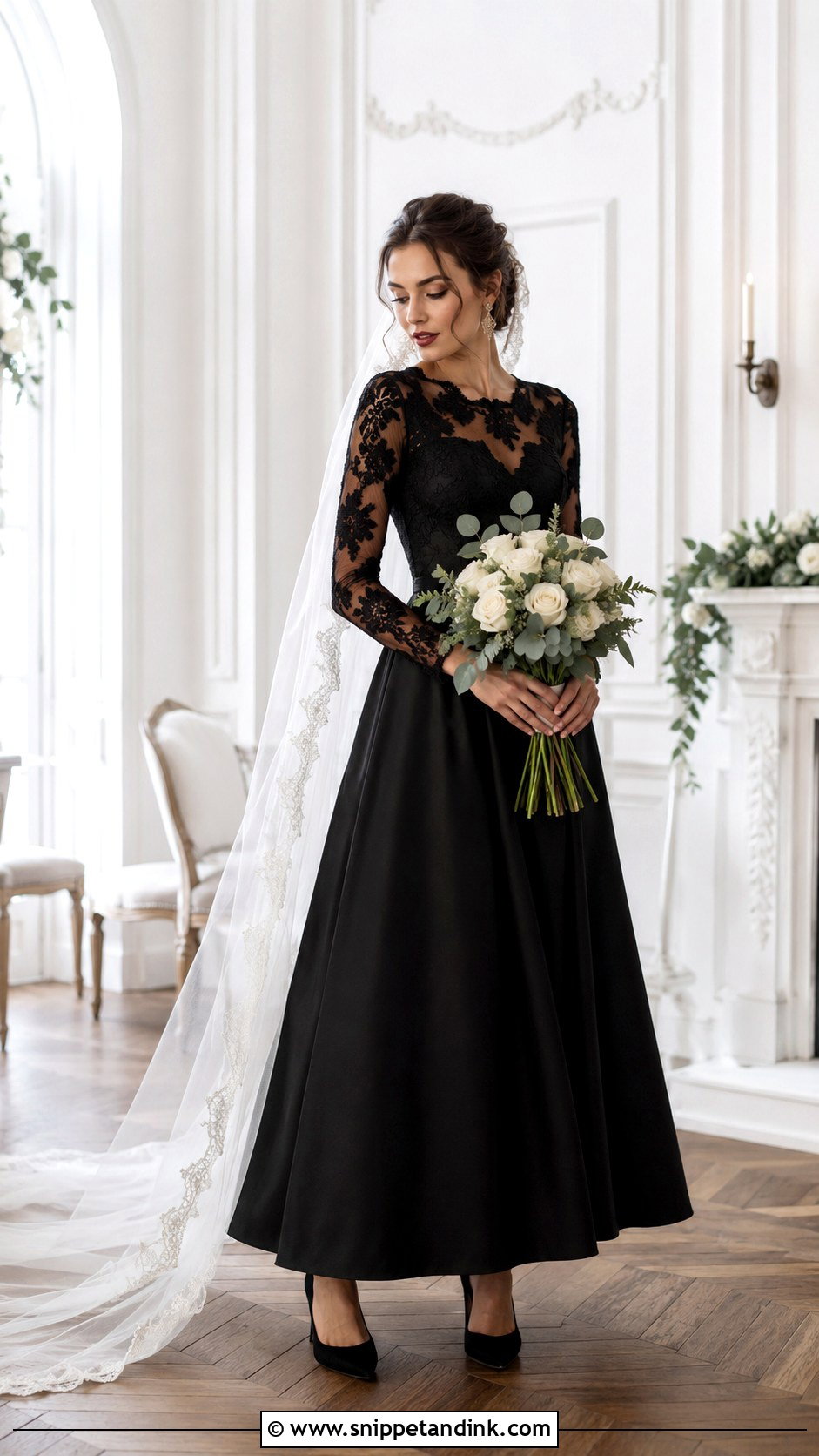
Long sleeves are where I spend the most time at fittings, because a sleeve that is slightly tight across the upper arm will stop you hugging anyone comfortably. Choose fitted illusion sleeves with floral lace appliqués, a softly shaped bodice and an A-line skirt you can walk in. Raise both arms above your head in the fitting room; if the bodice lifts with them, the sleeve head needs adjusting. Black suede pumps suit a spring hall, while ankle boots make more sense in a cold barn. Antique-style earrings and a narrow velvet ribbon at the waist add quiet definition, and a lace-edged fingertip veil keeps the outfit bridal. Finish with loose side-swept waves or a low chignon and cream garden roses against the dark lace.
4. Black Off The Shoulder Wedding Dress
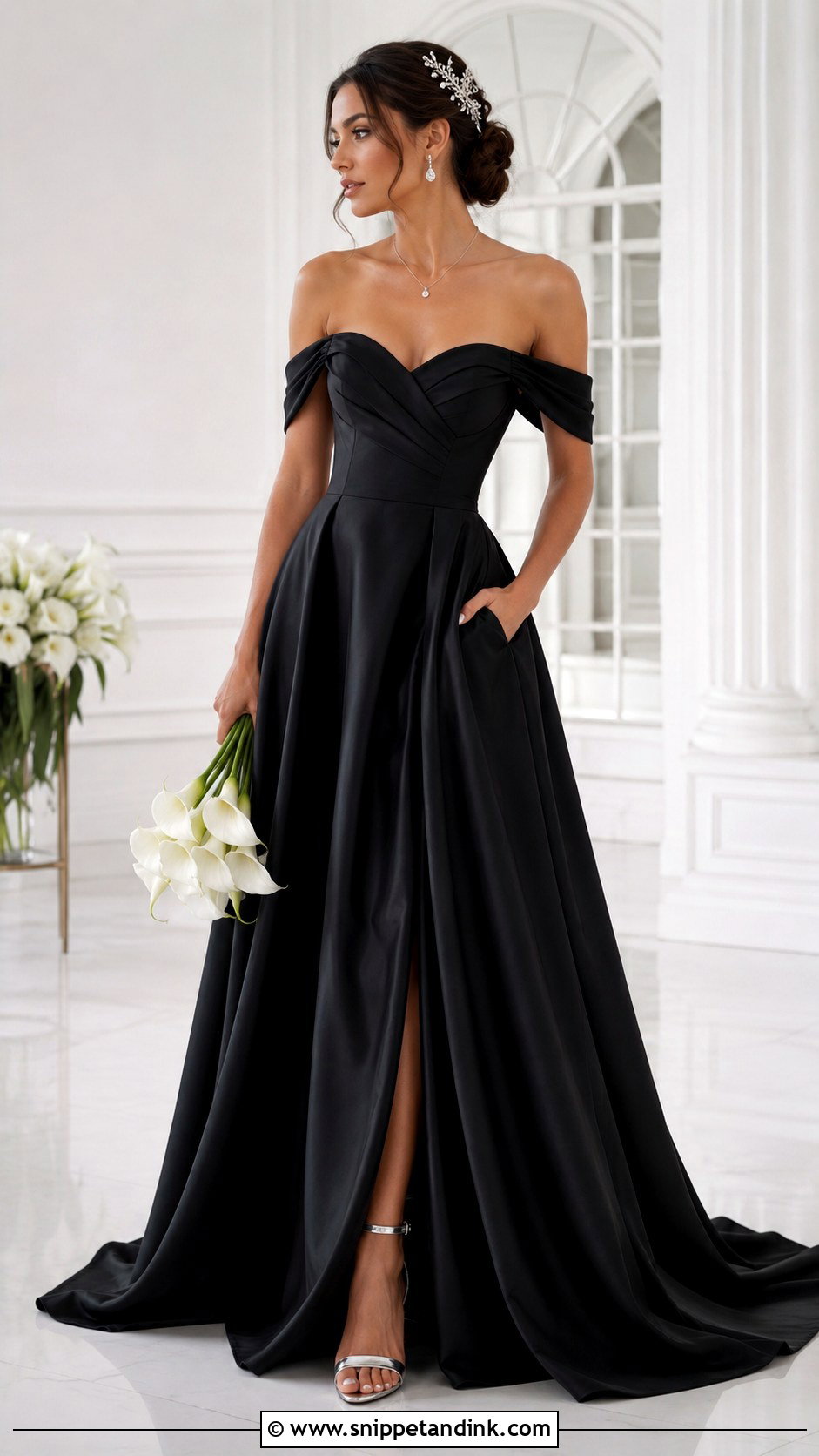
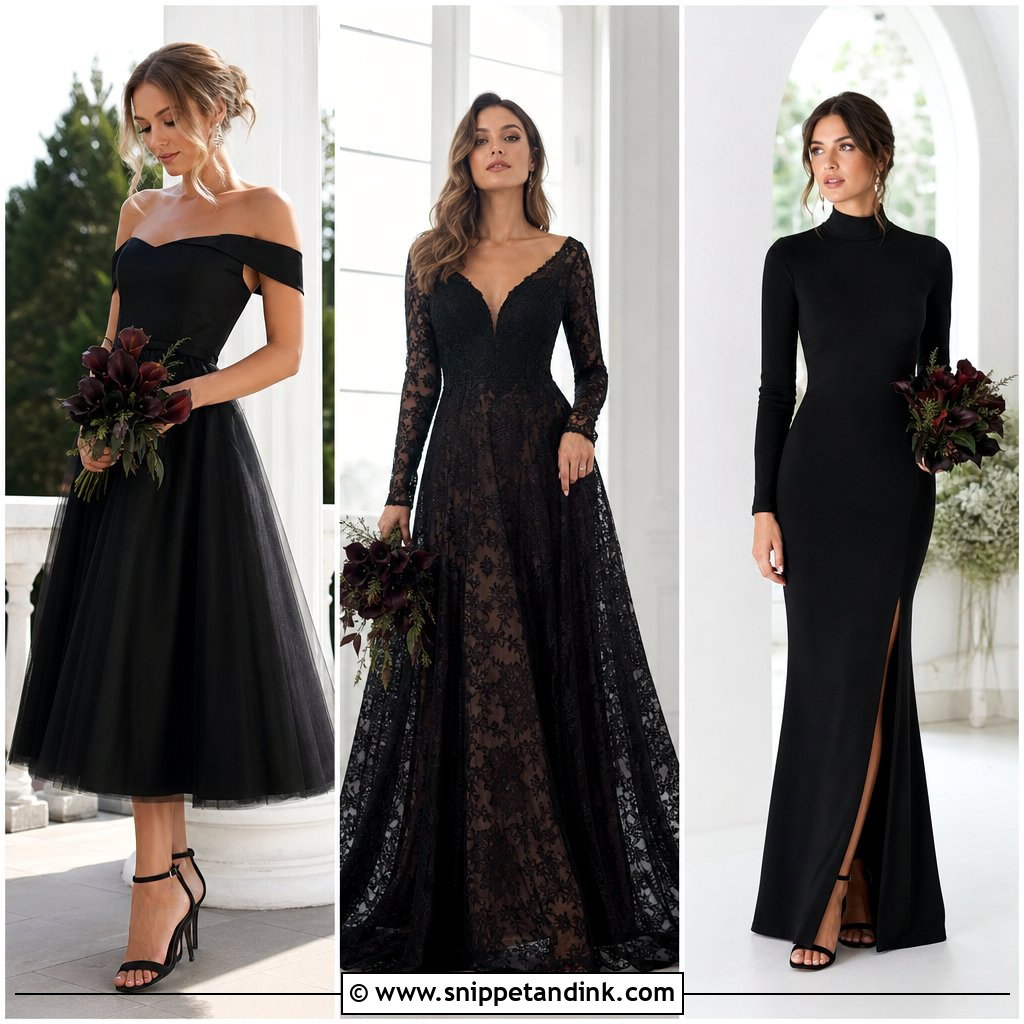
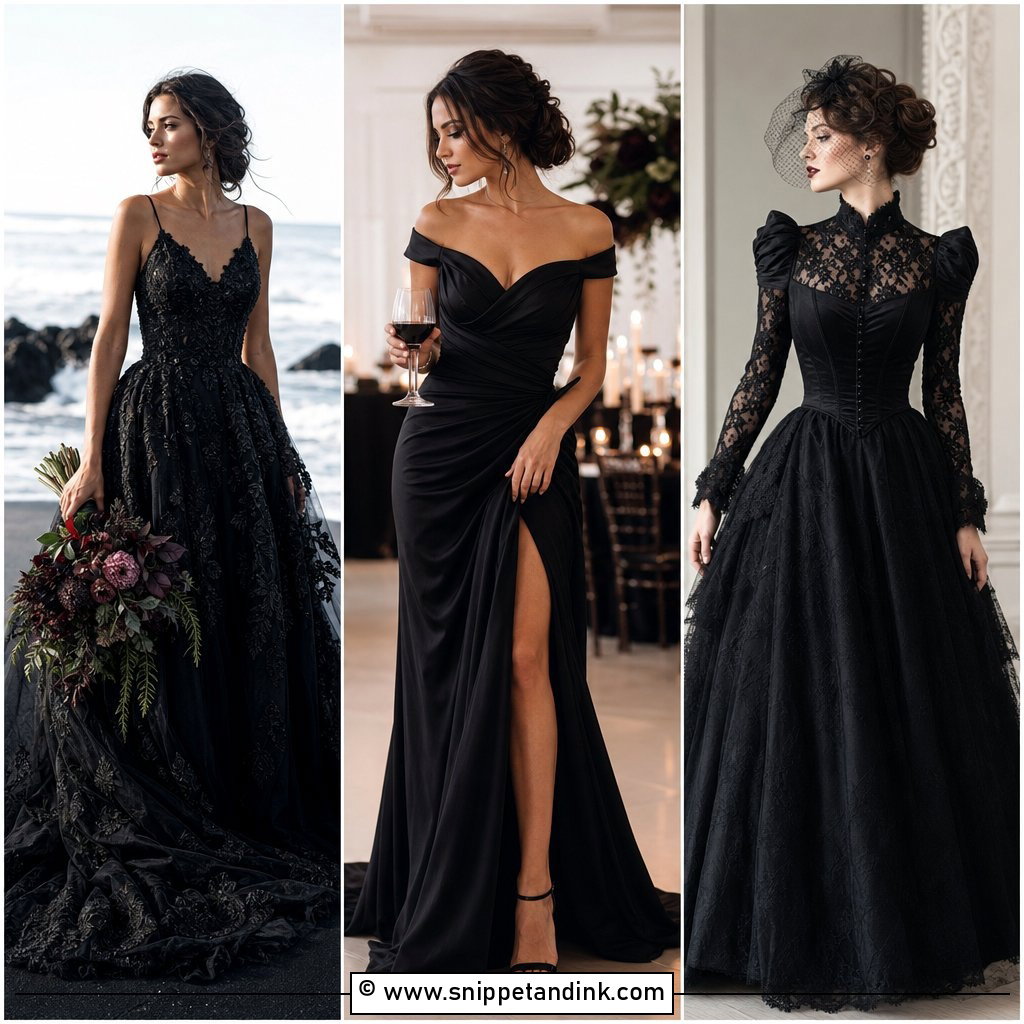
Bare shoulders stop black from looking severe. The off-the-shoulder cut needs a fitted bodice and a natural waist, with an A-line or ball gown skirt below. One warning from the fitting room: this neckline is held up by the bodice, not the sleeves, so if you catch yourself tugging the sleeves back into place, the bodice needs taking in. Draped satin sleeves give structure; lace ones read softer. A small pendant, crystal studs and closed-toe heels are plenty. A sheer black veil adds drama, or you can swap it for a jeweled comb. White calla lilies and curled hair pinned off the face suit an evening ceremony in town.
5. Black Corset Wedding Dress
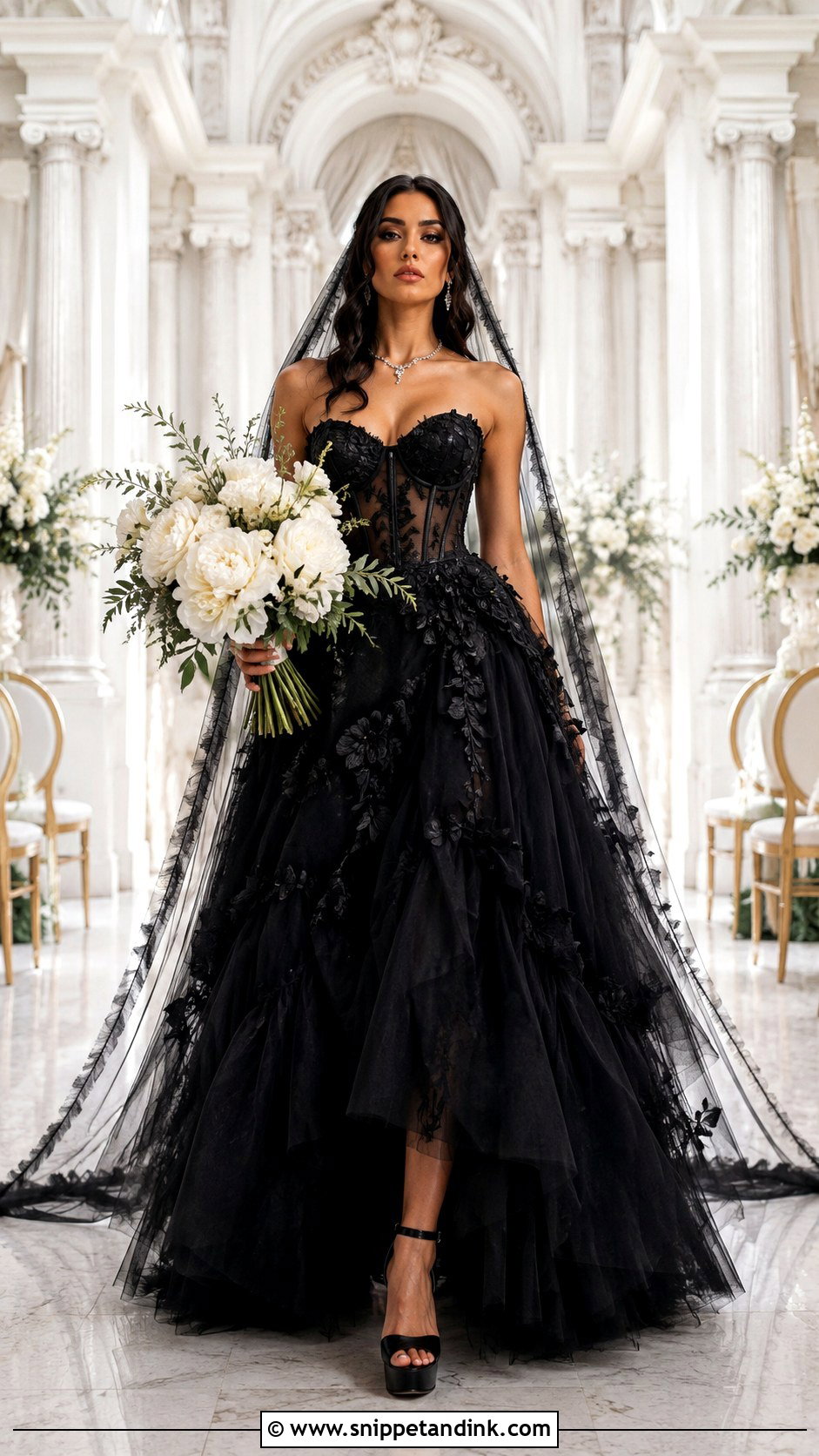
Boning is the whole point of a corset gown, and it is also the part cheaper versions skimp on. The bones should lie flat; if a channel bows outward when you sit, either the bodice is too tight or the bones are too soft. Look for a supportive bodice and a layered tulle skirt that starts at the natural waist, with tonal floral appliqués to soften the structure. Black platform heels give height and steadier footing under all that tulle. Keep jewelry fine, just a crystal necklace, matching studs and a long black veil with a raw edge. Ivory peonies and trailing greenery lighten the palette. At your final fitting, sit down in the dress for a good ten minutes before you sign off on it.
6. Black Tulle A Line Wedding Dress
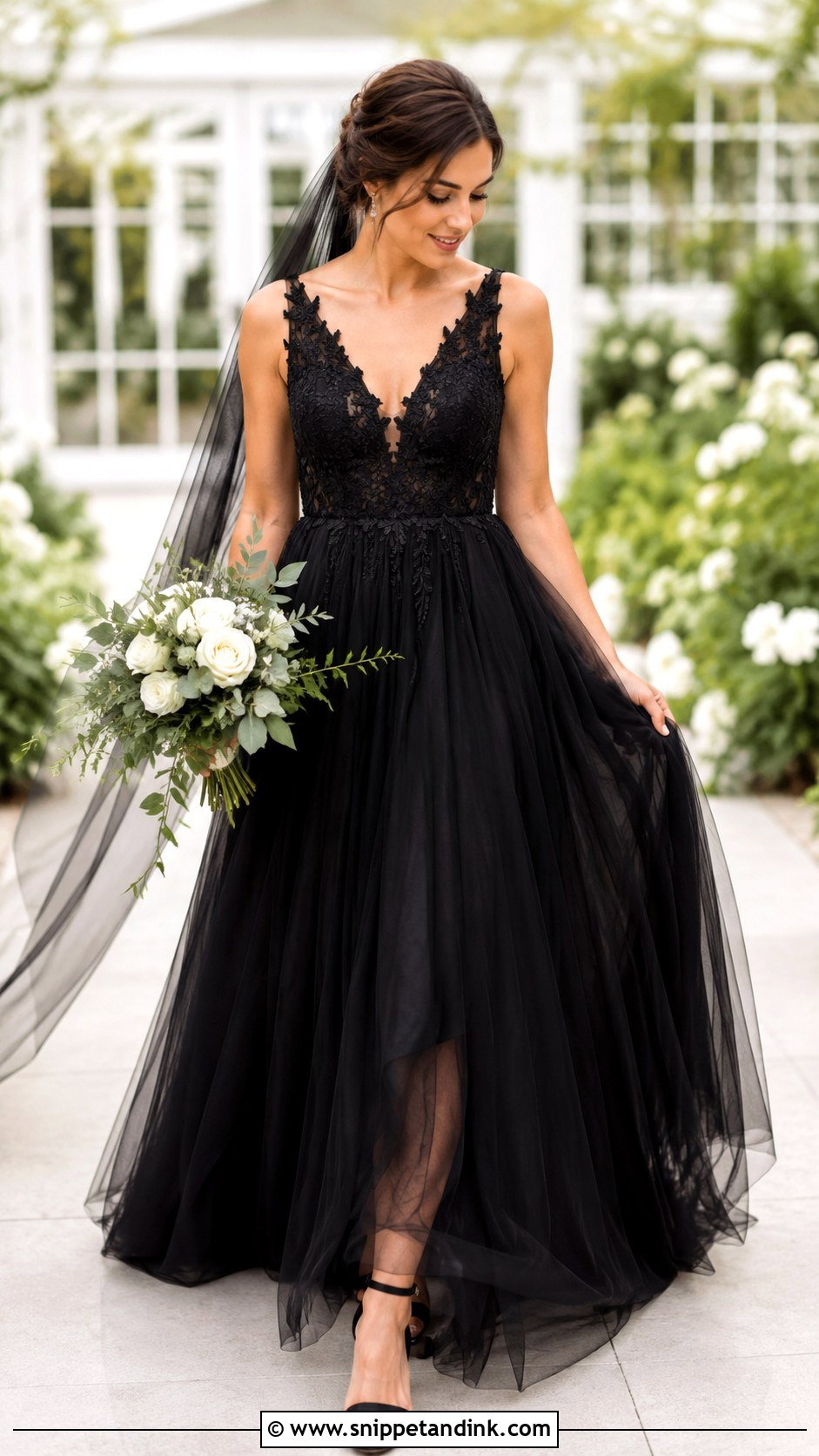
Black tulle rarely photographs as pure black. Layered, it reads as soft charcoal at the edges where light passes through, which is part of its charm outdoors. The A-line shape defines the upper body and falls easily over the hips, and I’d pair it with a fitted V-neck bodice on narrow straps, carrying a few appliqués or tonal beads. Block-heel sandals are kinder on grass than stilettos. Add understated drop earrings and a lightweight fingertip veil. A loose bouquet of white roses and seasonal stems suits the floaty skirt, and a half-up style gives the veil comb something to grip. Gardens, woodland and countryside venues are where this dress makes sense.
7. Black Velvet Winter Wedding Dress
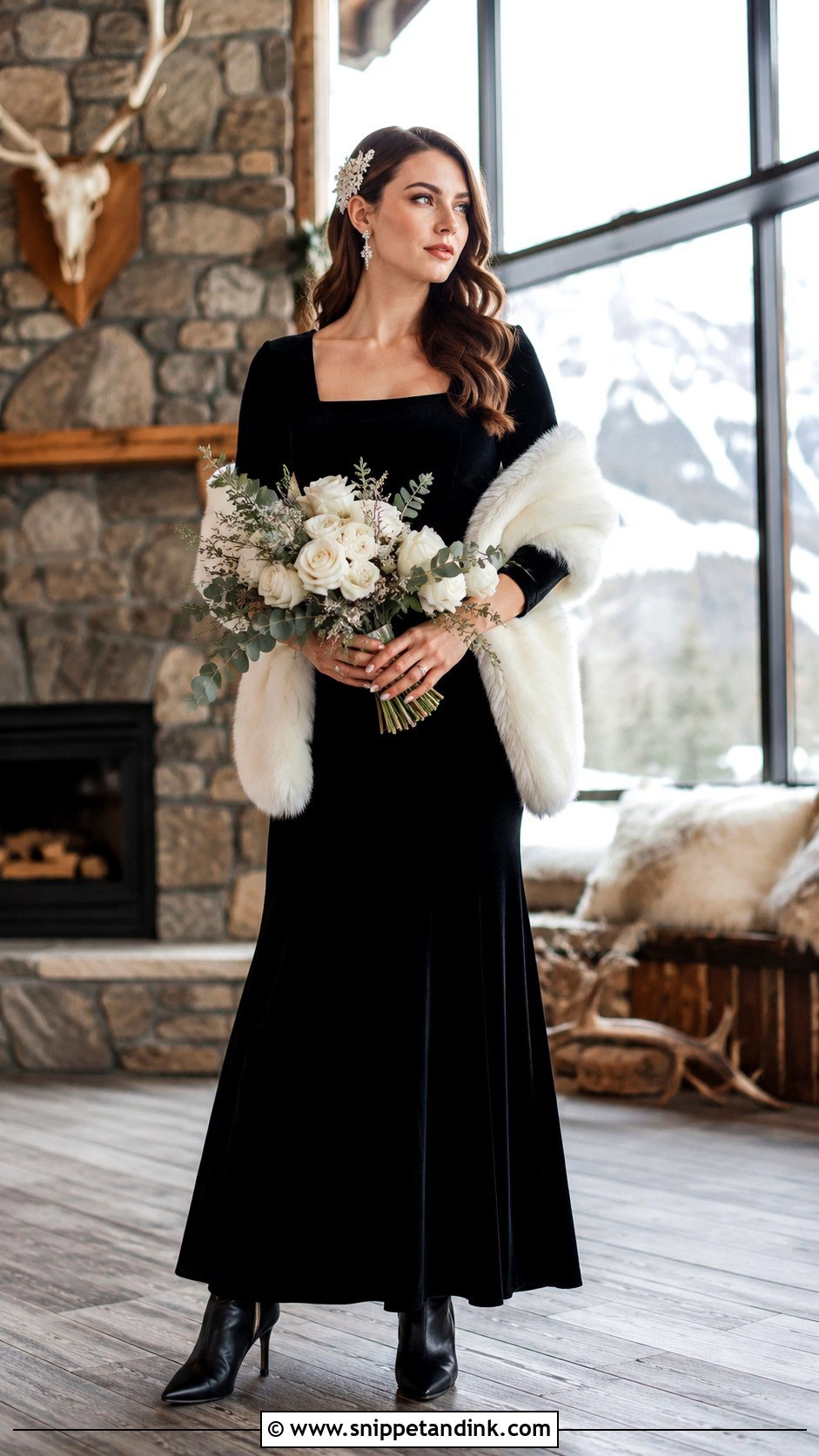
Velvet absorbs light, which gives it depth in person and makes it hard work in photographs, since detail disappears unless the light comes from the side. That is why I keep the shape simple: floor length, long sleeves, a square neckline and a softly fitted waist. Black velvet pumps or heeled ankle boots keep the finish smooth. Velvet also crushes where you sit, so hang it the night before and have a steamer nearby; an iron flattens the pile for good. Silver earrings, a crystal comb and an ivory or grey faux-fur wrap for outdoor portraits finish it, with white roses and silvery foliage for the season. A polished low bun stops the heavy fabric from swallowing you.
8. Black Sequin Wedding Dress
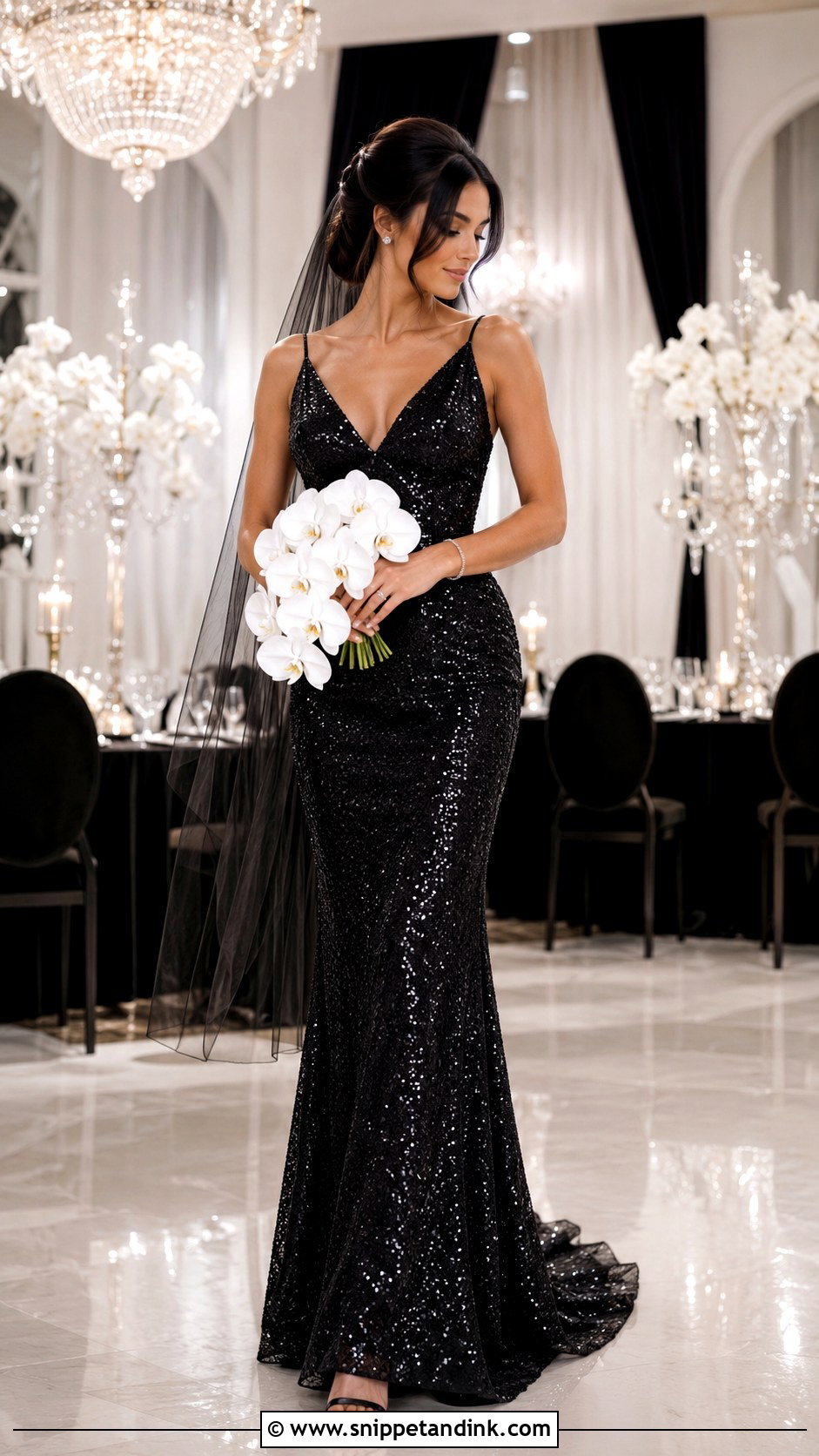
Sequins scratch. Before anything else, check the inside of the arms and the underarm seams, because a fully sequined bodice can rub skin raw over a long evening. Choose a floor-length column, a fitted A-line or a gentle mermaid so the embellishment stays balanced, and a V-neck on narrow straps keeps it from looking heavy. Black satin heels, small crystal studs and a slim bracelet are all you need; skip a necklace if the bodice is covered. Add a clean black veil or a sparkling comb in a sleek bun, then a compact bouquet of white roses or orchids. The dress does the shining, so everything else stays quiet.
9. Black Boho Wedding Dress
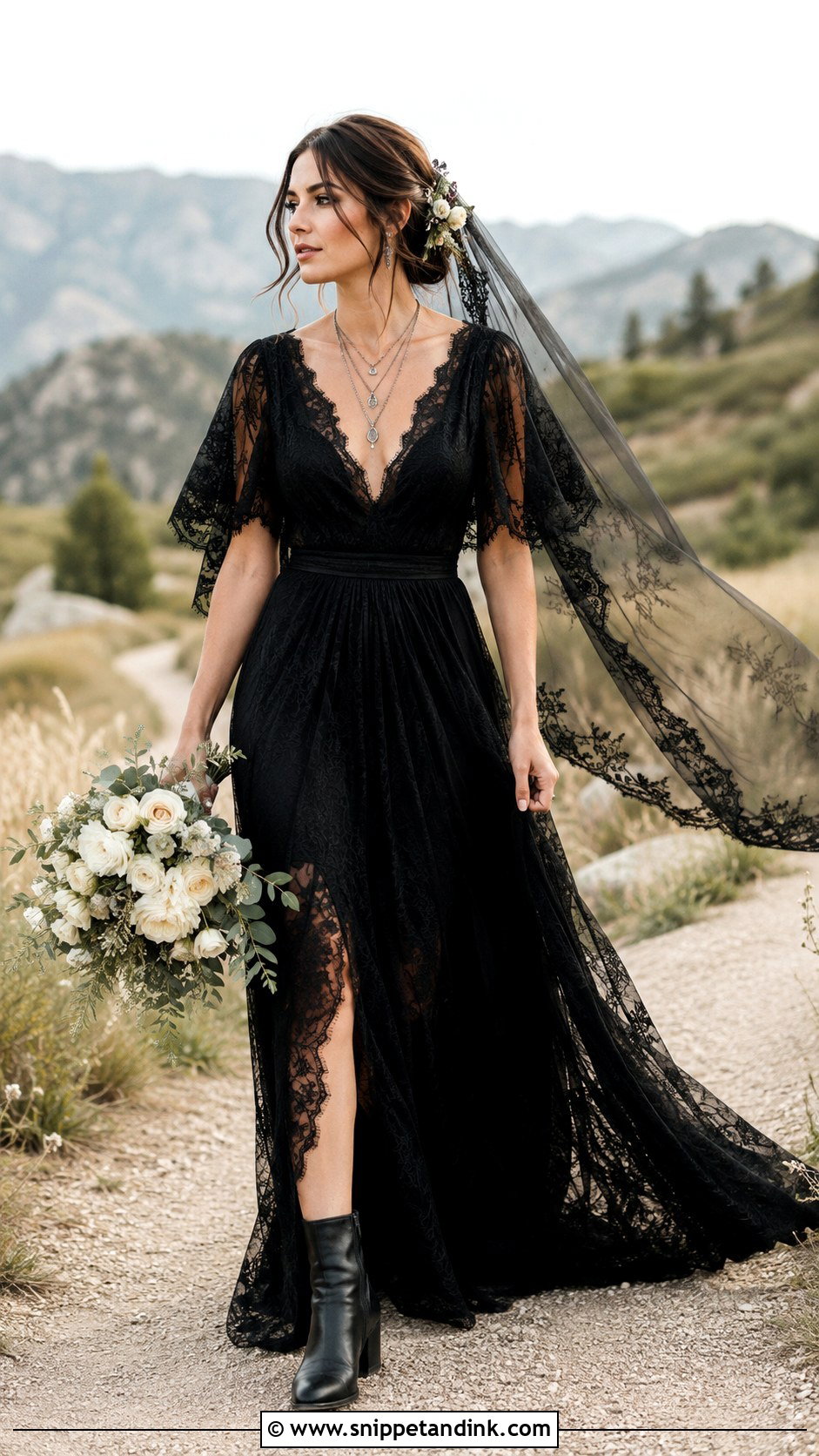
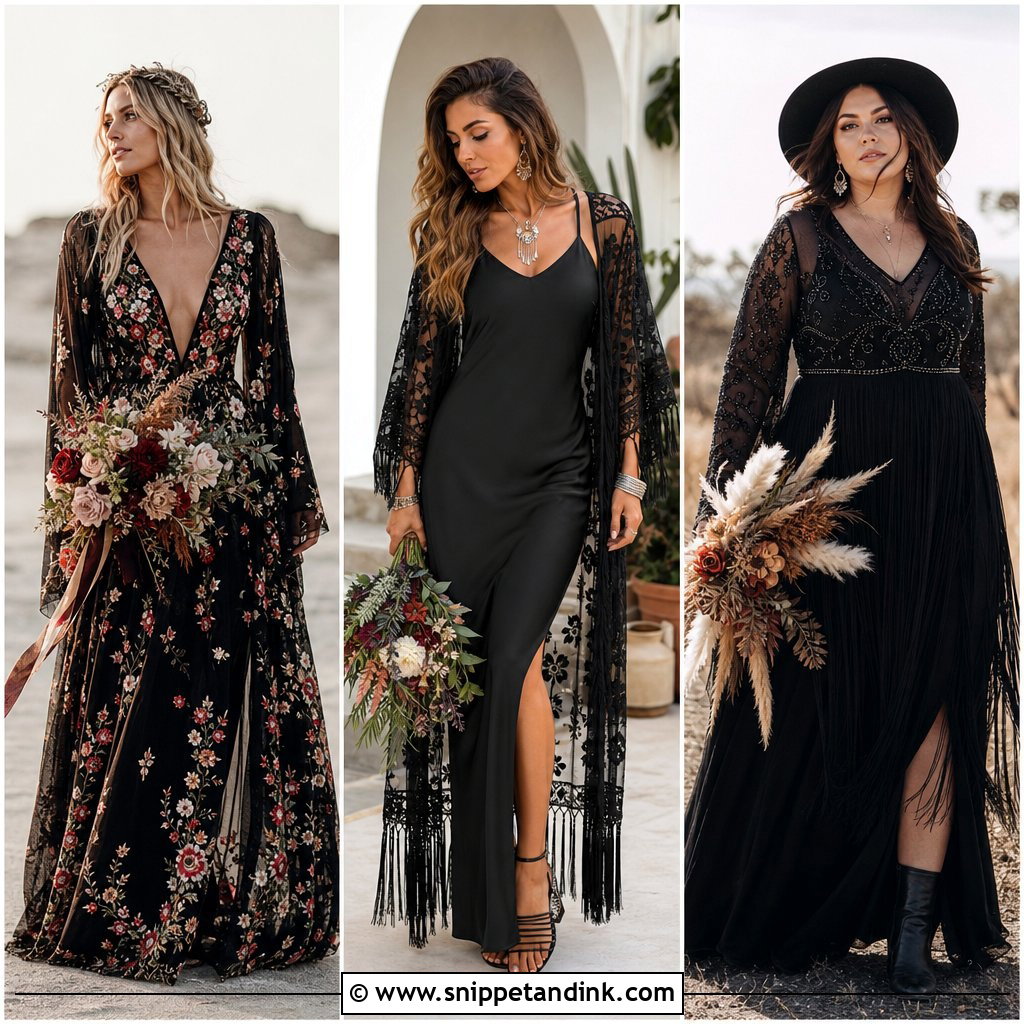
Chiffon is forgiving in black at an outdoor wedding: grass marks and damp at the hem barely show by the time the speeches start. Look for a soft chiffon or lace gown with flutter sleeves, a defined waist and an easy floor-length skirt, where an open back or a gentle V gives interest without beading. Leather ankle boots, layered fine necklaces and a small floral hairpiece sit naturally with it. I’d still add a light lace veil so you read as the bride and not a guest in black. Carry ivory flowers loosely tied with eucalyptus, and wear soft waves or a loose braid. It is comfortable enough for a field and still looks considered in the pictures.
10. Black Minimalist Wedding Dress
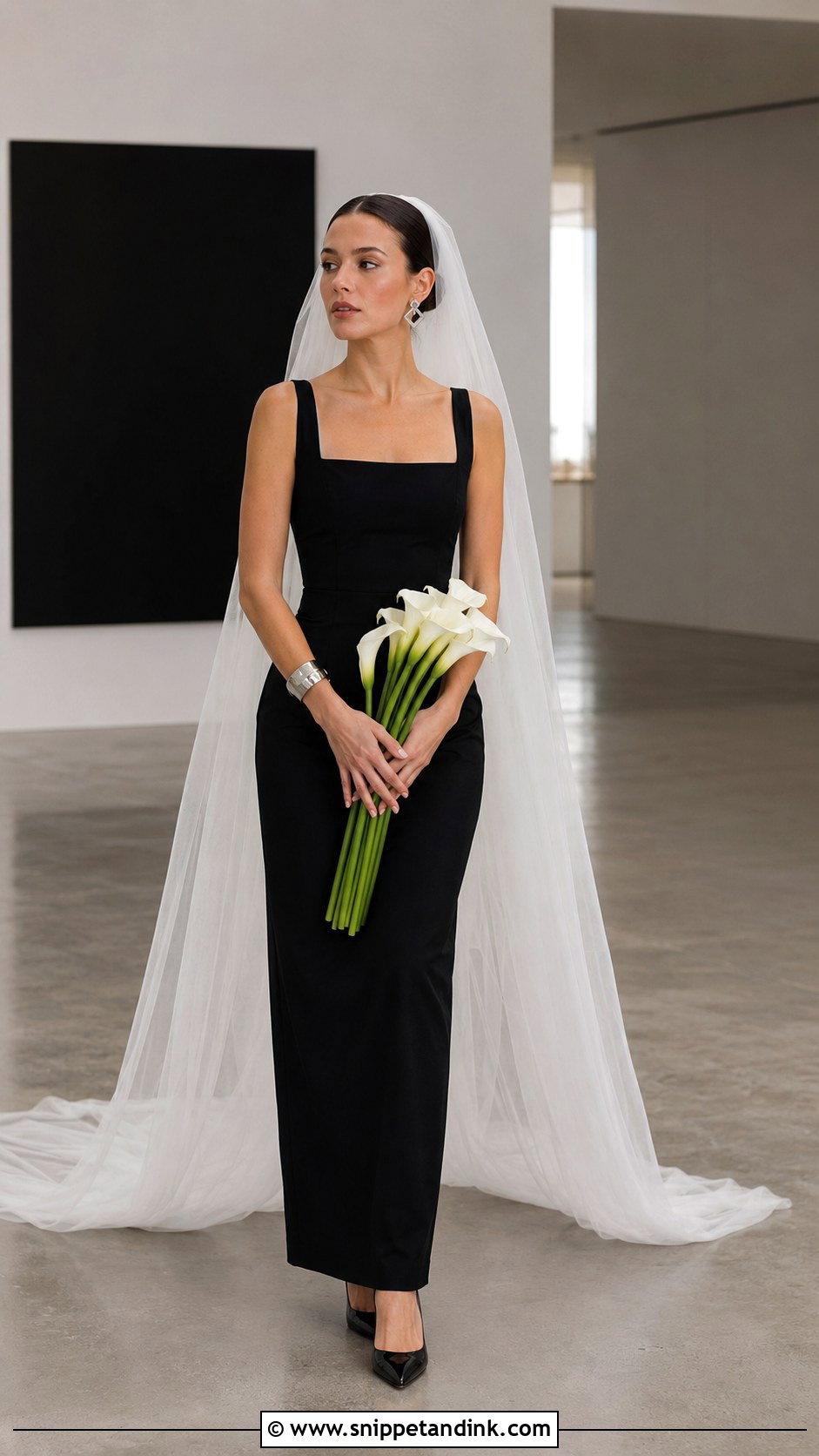
A minimalist gown has nowhere to hide, so the tailoring has to be exact. Choose structured crepe or satin in a column cut with a square neckline and narrow straps, and little or no surface decoration. I look hardest at the hem: on a plain black column, a hem that dips at the back is the first thing you notice in a full-length photo. Pointed black pumps, geometric earrings and a slim metal cuff suit it, and a neat low bun keeps the line clean. A long plain veil adds drama without lace or beads. White calla lilies and a small structured bag for later complete it for a courthouse, gallery or rooftop.
11. Black Gothic Wedding Dress
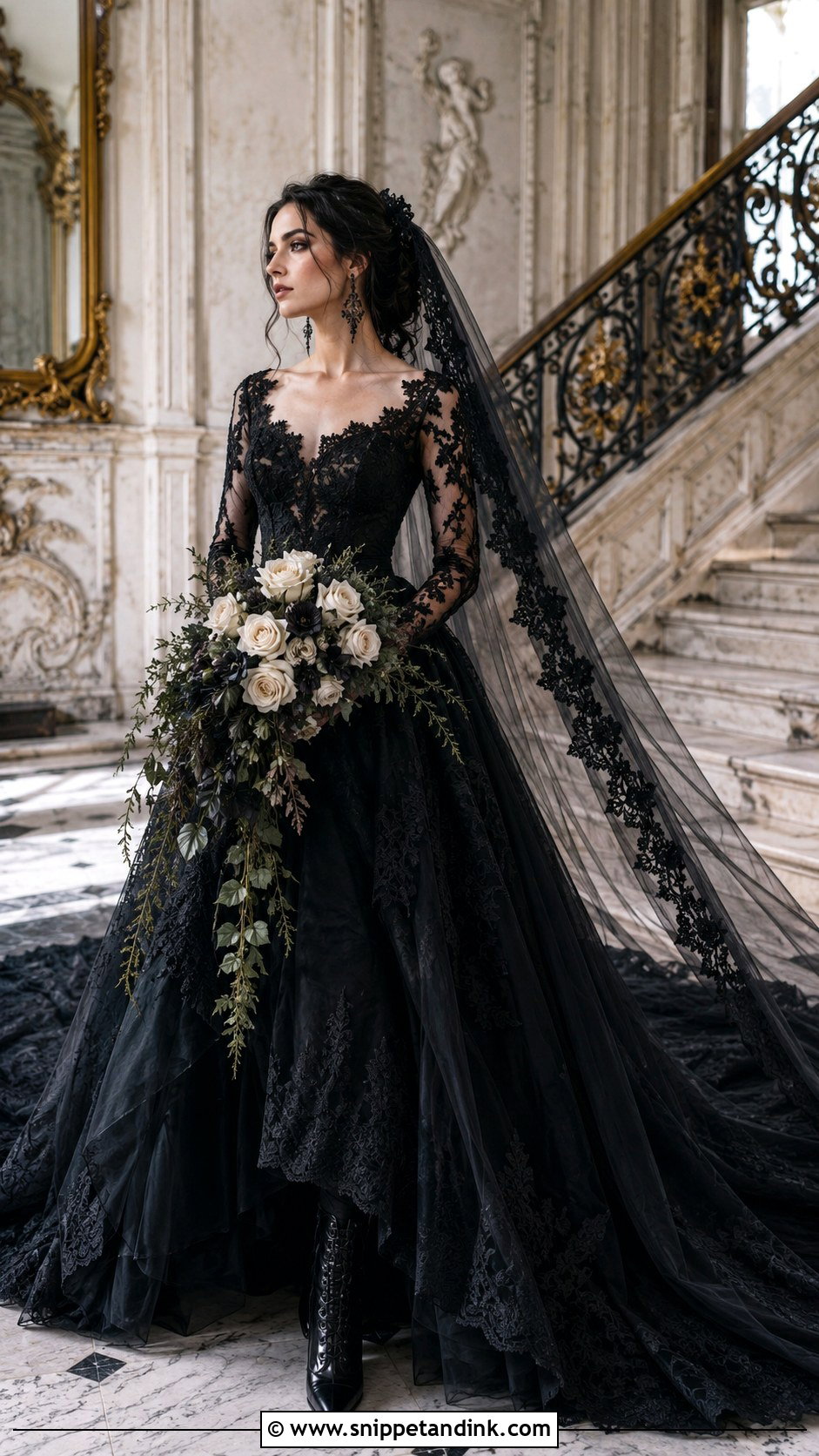
The line between a gothic black wedding dress and a costume is drawn by restraint. I let the gown carry the drama and keep the styling plain. Start with a fitted lace bodice, long illusion sleeves and a full skirt with a sweeping train; a high neck or a subtle plunge sets the mood. Black pointed boots or satin pumps, antique silver earrings and a lace-edged cathedral veil are enough. Ivory roses with dark foliage keep the bouquet bridal rather than theatrical. Soft waves or an intricate low updo, defined eyes and a neutral lip, and an old house with stone and dark wood around you.
12. Black Floral Embroidered Wedding Dress
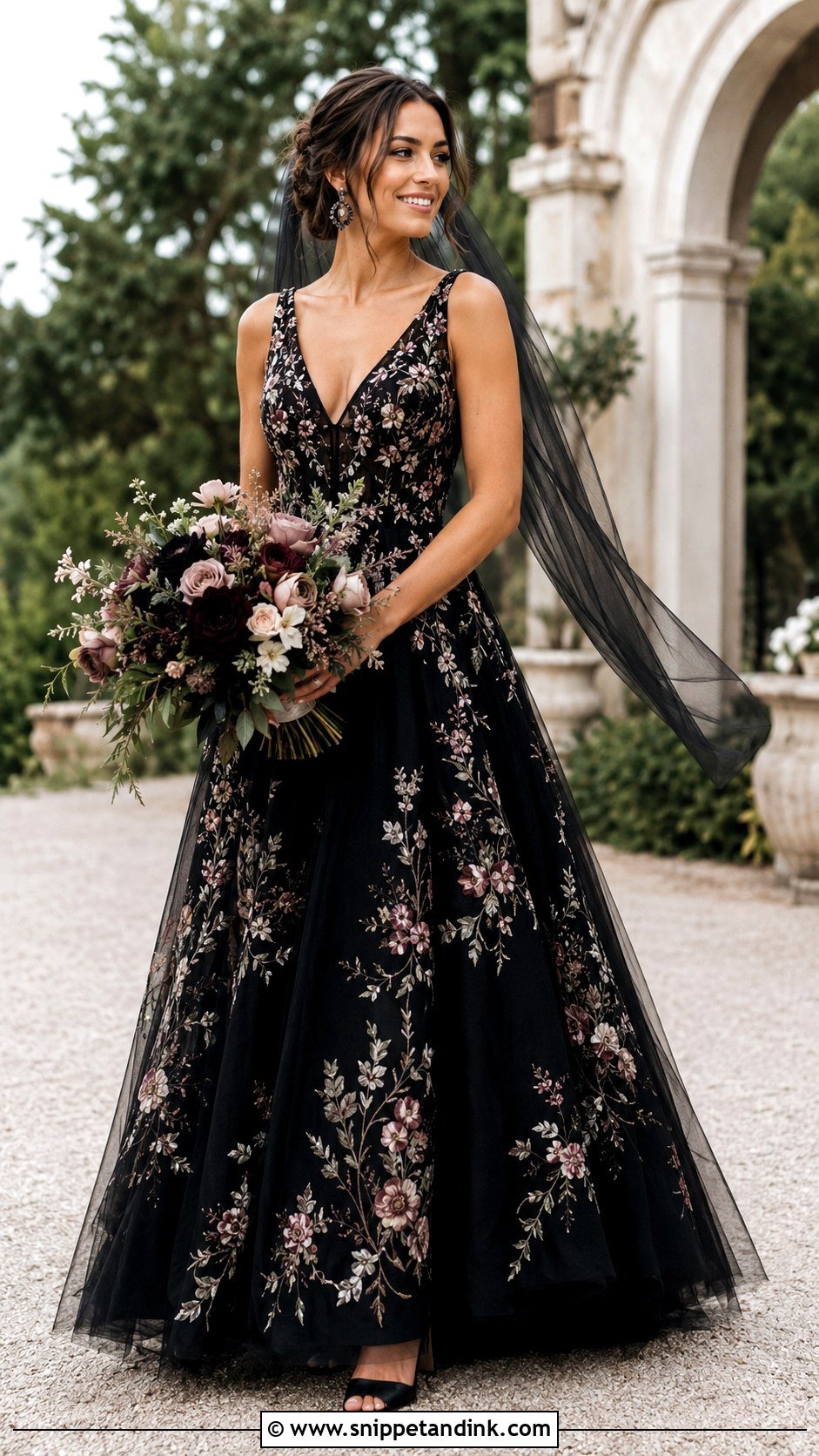
Embroidery looks richer on black than the same work on white, because the thread sits against a deep ground. Choose an A-line with flowers concentrated on the bodice and scattered down the skirt. Ivory, muted pink, deep red or black-on-black thread each sets a different mood, so ask to see the dress by a window before deciding, since tonal black embroidery can vanish under warm indoor bulbs. Simple black heels, small earrings that pick up one thread color and a plain veil that doesn’t fight the pattern are enough. A bouquet using a few of the same flowers ties it together. Loose waves or a low bun, and a garden or an art space to stand in.
13. Black High Neck Wedding Dress
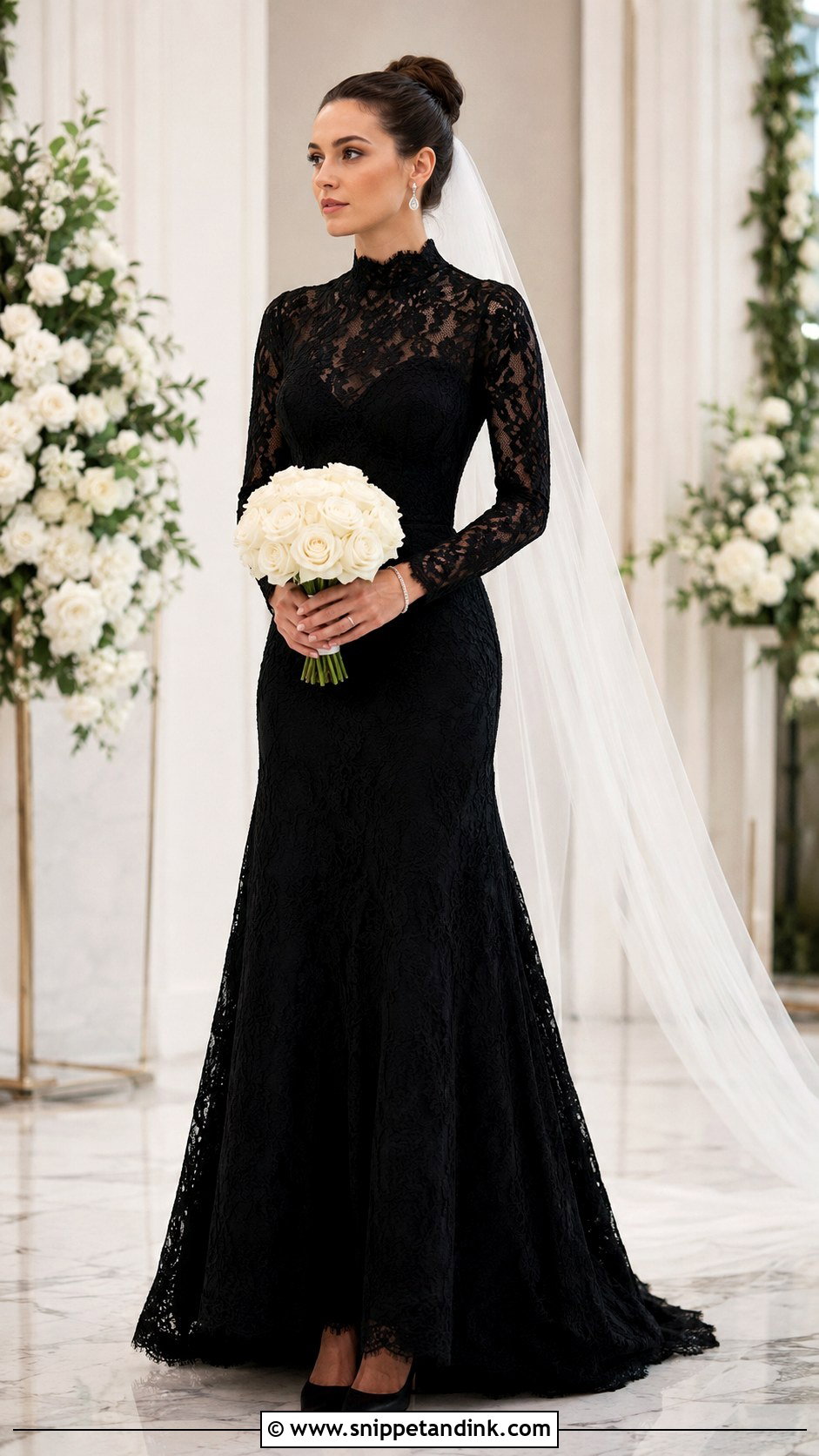
A high neck already does the job of a necklace, so the necklace is the first thing I take away. Choose a fitted lace or crepe bodice with a covered neckline and a gently flared skirt; sleeveless reads modern and long lace sleeves read traditional. Drop earrings, black pointed pumps, a slim bracelet and a veil tucked under a smooth bun finish it, with white roses bringing brightness close to the gown. Test the neck fastening at your fitting by turning your head fully both ways, because a collar that pulls at the throat will bother you all day. If the back is open or illusion, wear your hair up so it shows.
14. Black Tea Length Wedding Dress
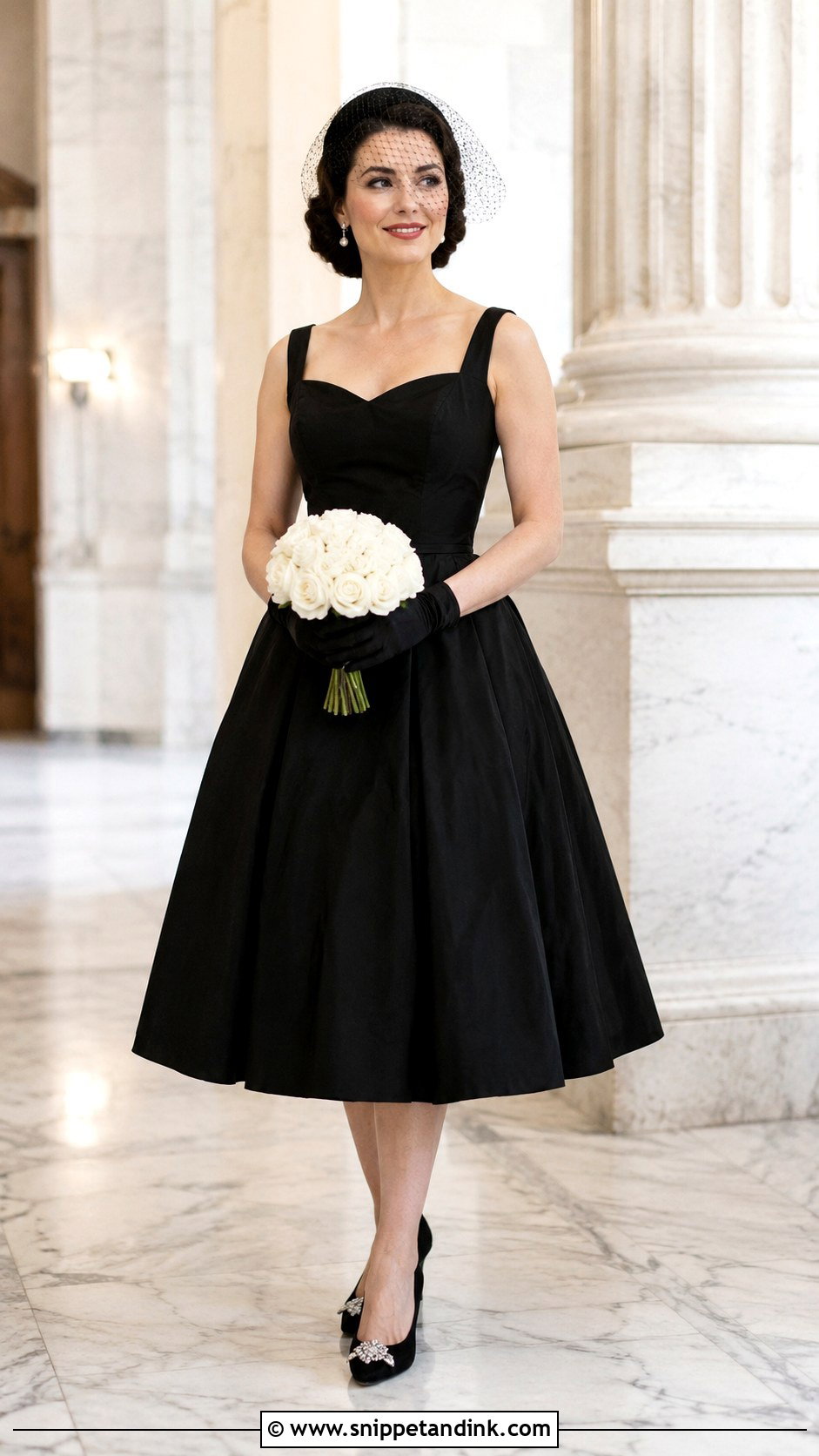
Shoes stop being hidden the moment the hem rises, so a tea-length dress is really a shoe decision. The skirt should fall between knee and ankle from a fitted bodice and a defined waist, which gives plenty of movement. Black satin pumps, crystal heels or ankle-strap sandals will all be seen, so break them in and scuff the soles before the day. A birdcage veil, pearl studs and short gloves bring a vintage note, and a compact bouquet of white roses keeps the proportions right. Wear smooth waves or a neat French twist. Courthouse ceremonies, restaurant receptions and daytime weddings suit the shorter length.


15. Black Wedding Dress With White Veil
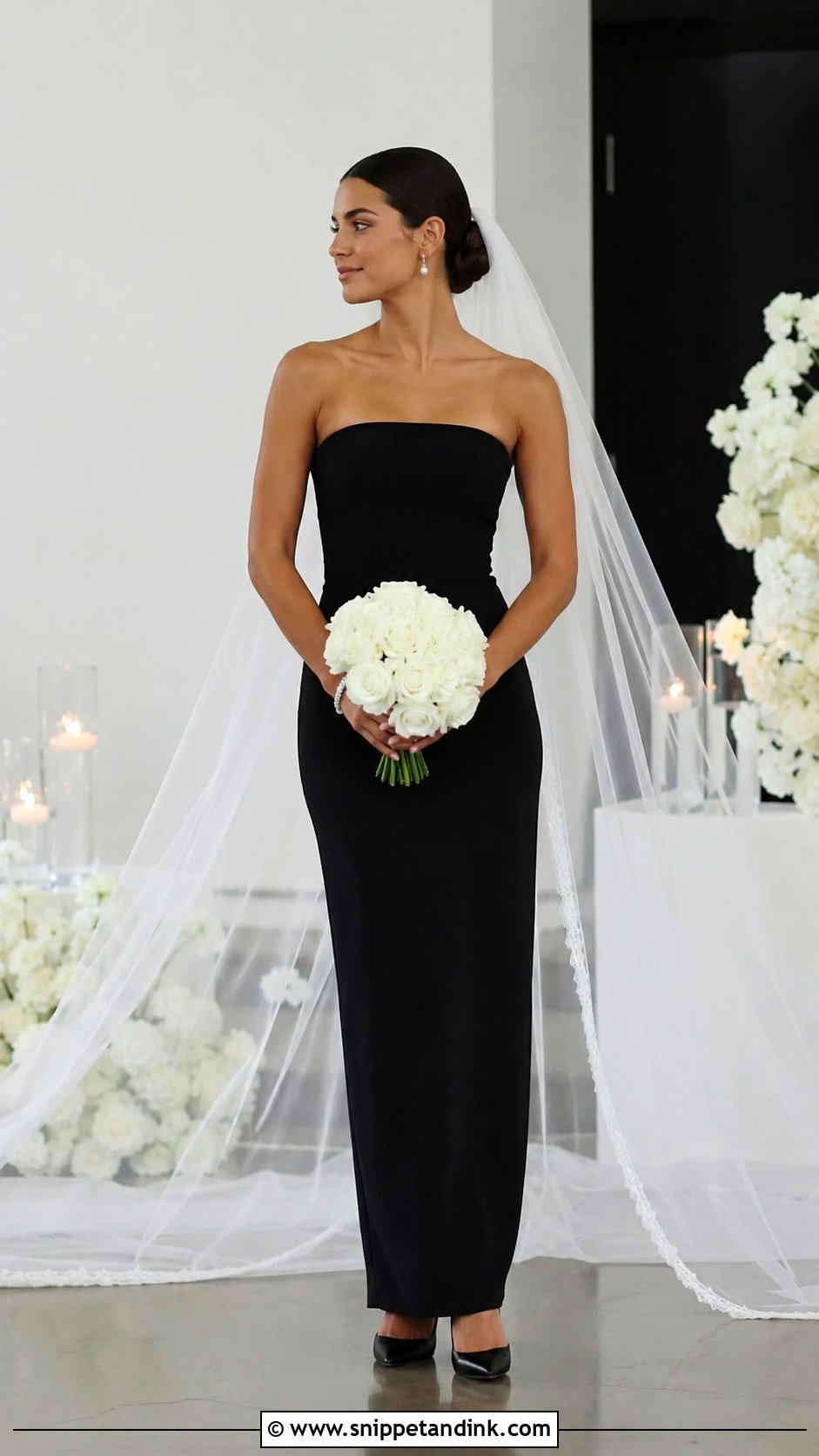
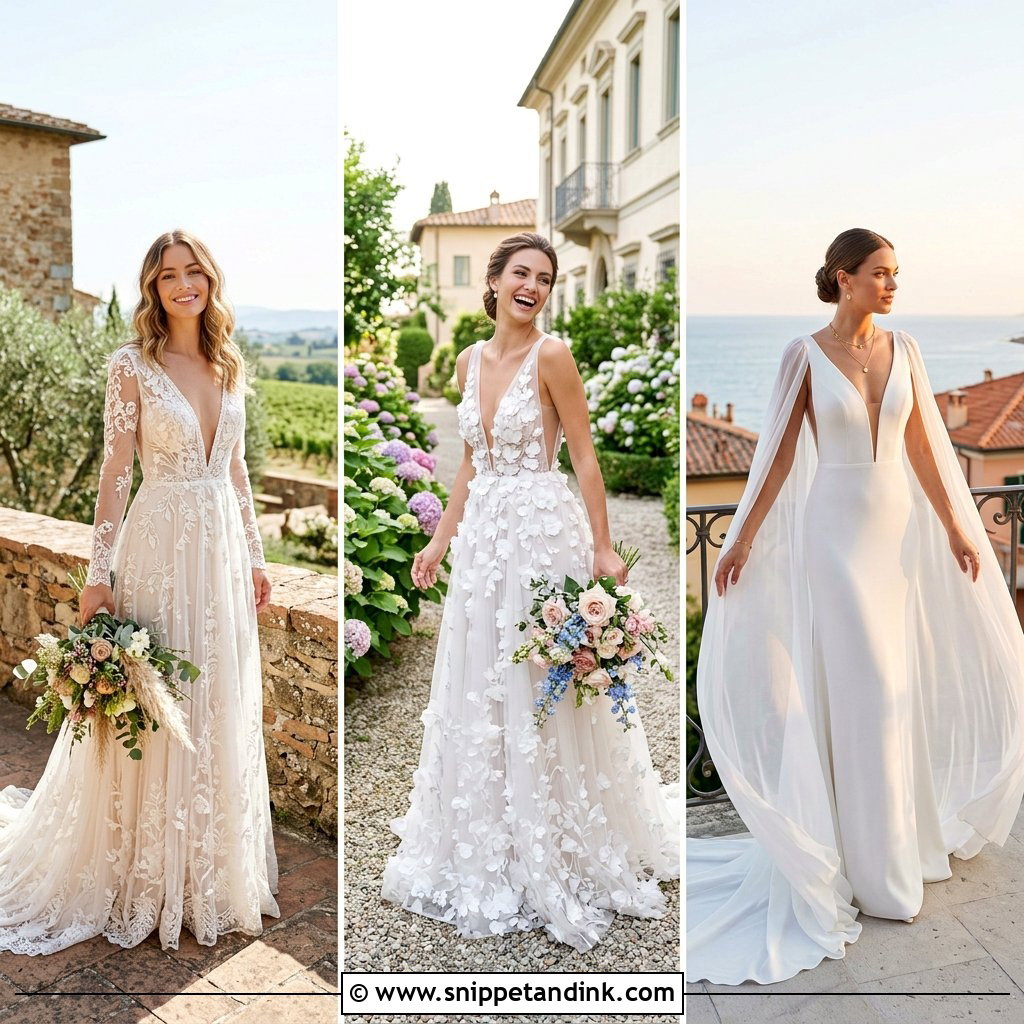
A white veil over black is the most graphic contrast on this list. Keep the gown simple so the veil has room, with a cathedral length for formality or fingertip for something softer. One thing I always test: bright white tulle can glare against black in flash photography, so I often suggest a soft white or ivory that still looks white in the room without blowing out in pictures. Black heels, pearl earrings and a bracelet with white or clear stones carry the contrast down the outfit, and an all-white bouquet links the veil to the rest. A sleek bun anchors the comb securely.
16. Black Wedding Dress With Cape
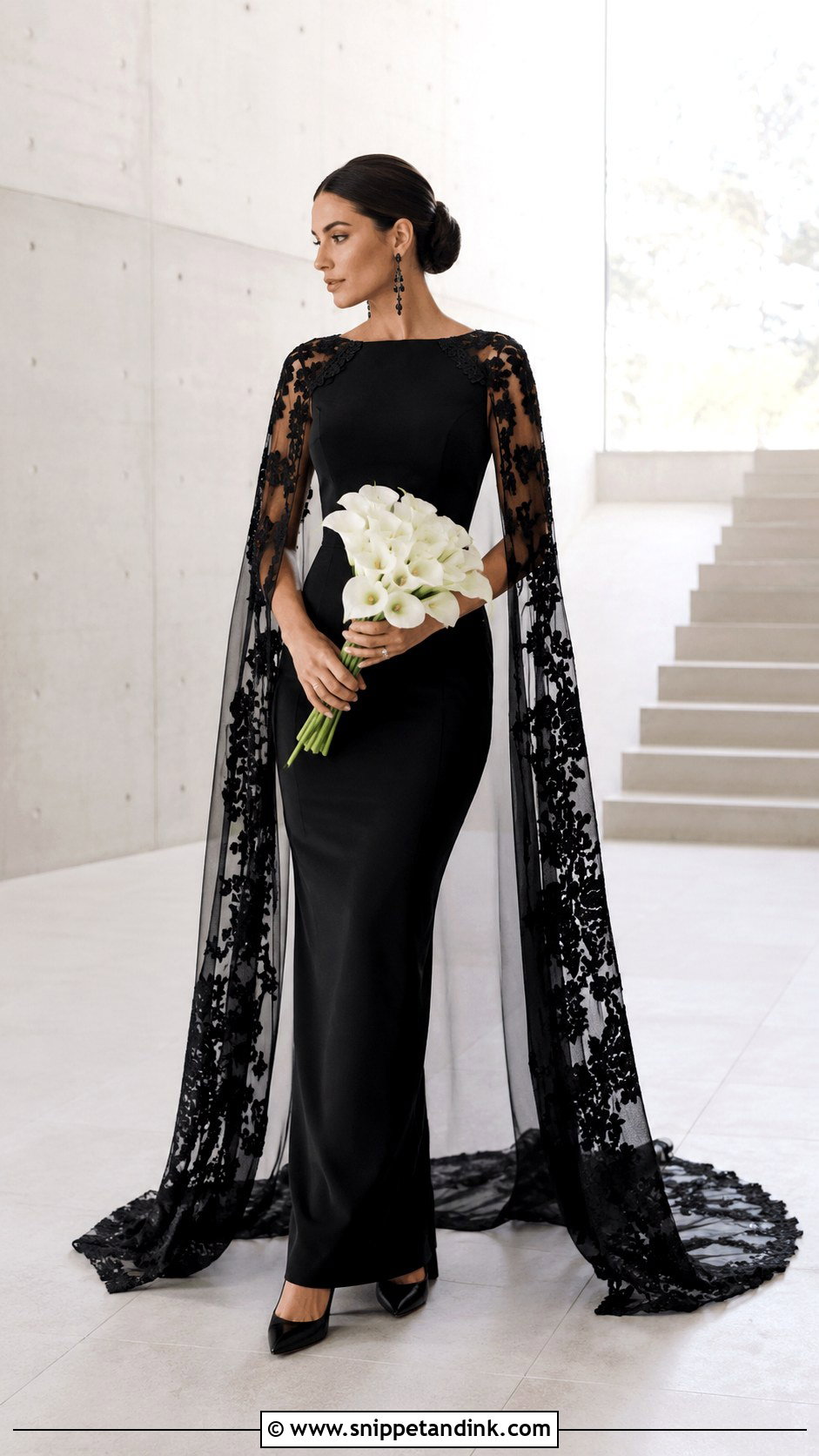
Capes catch wind. That is my first question with this look: will you be outdoors, and for how long? Choose a fitted crepe or satin gown with a simple neckline, then add a sheer black cape from the shoulders to the train, finished with appliqués, tiny beads or a raw edge. Have it anchored with hidden snaps or thread loops at the shoulder seams rather than relying on the clasp alone. Black pumps, long earrings and a low bun keep the shoulders clear, and calla lilies or orchids in a narrow bouquet repeat the vertical line. The cape can stand in for a veil, and taking it off later gives you a lighter reception outfit without a second dress.
17. Black Plus Size Wedding Dress
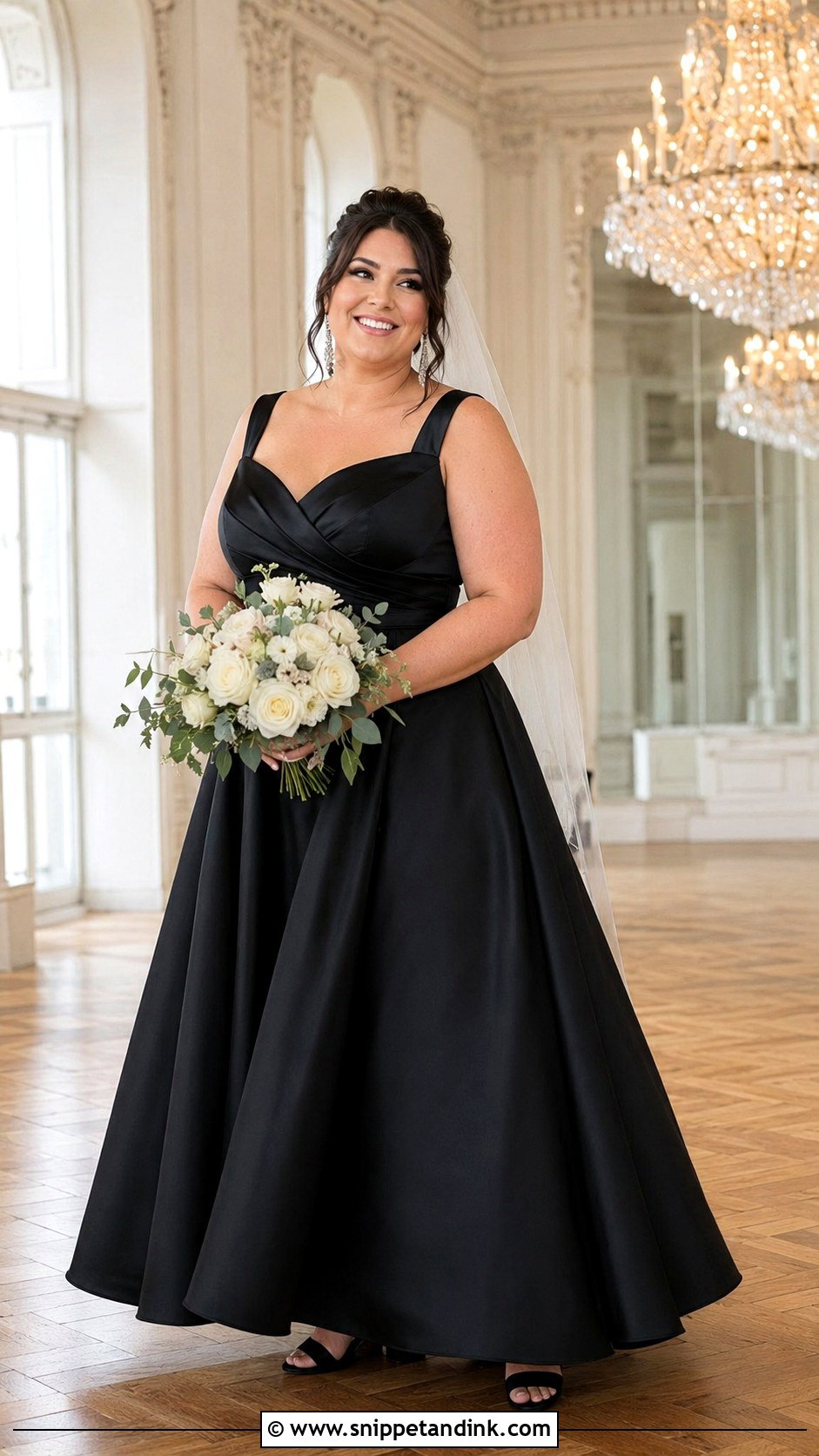
Fit beats any body-shape rule, and that is especially true in black, where the sheen shows exactly where a seam is pulling. An A-line with a structured bodice, wide straps and a flowing skirt is comfortable, but mermaid and ball gown shapes can look just as strong when they are properly tailored. Ask about internal boning, the type of closure, adjustable straps and how much seam allowance is left for alterations. Comfortable block heels, statement earrings and a soft veil on a supportive comb suit it, with ivory flowers to brighten the palette. Pick an updo or side-swept waves according to the neckline.
18. Black Maternity Wedding Dress
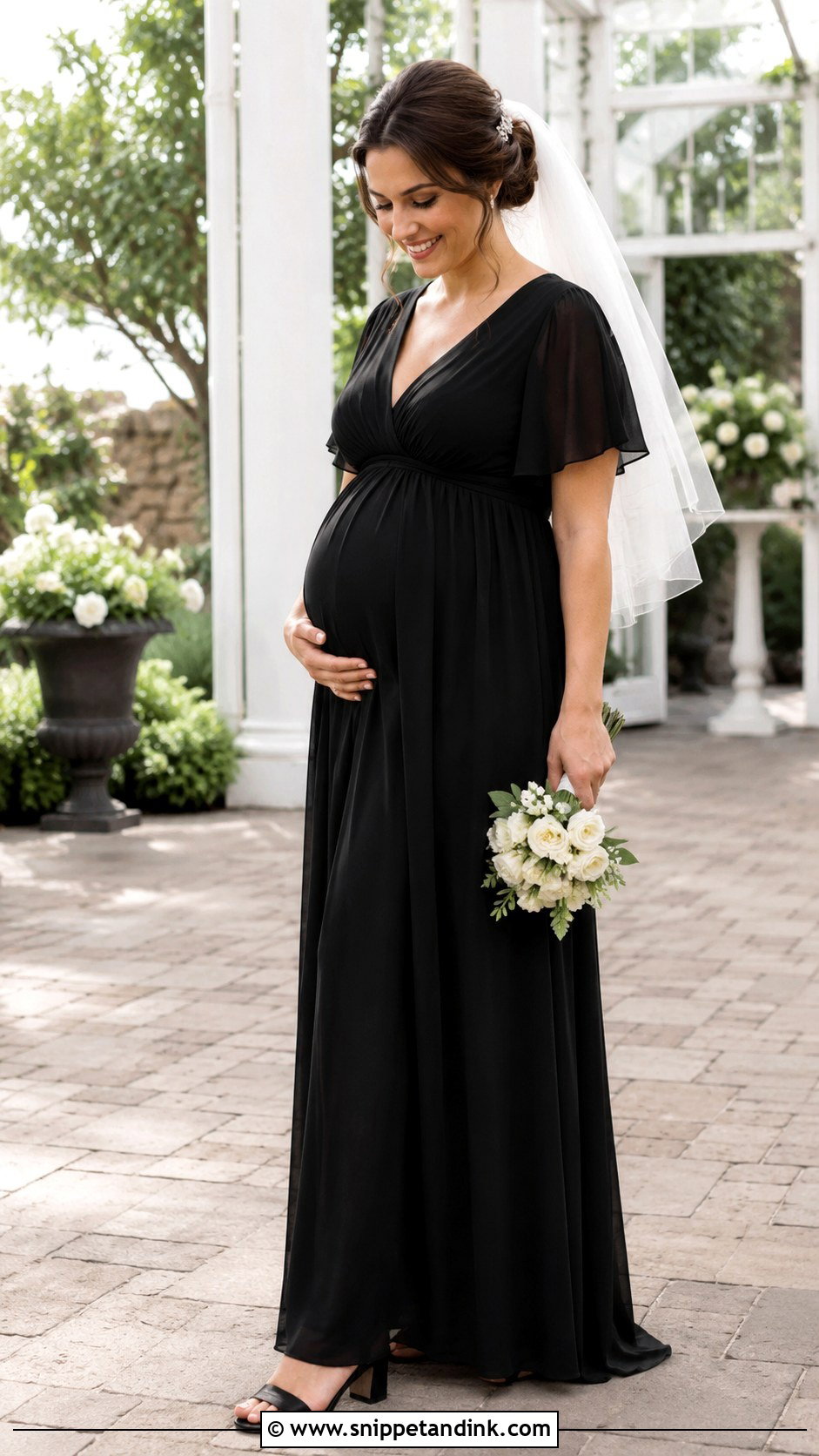
Timing is the hard part of a black maternity wedding dress, not the styling. Bodies change quickly in later pregnancy, so I book the final fitting as close to the date as the seamstress allows and build some stretch into the plan. An empire waist in stretch crepe, chiffon or soft jersey falls smoothly from under the bust, a wrap bodice adjusts as you change, and flutter sleeves give light coverage. Cushioned low block heels or polished flats will save your feet and your balance. Keep the earrings light, use a simple comb and choose a soft fingertip veil that is easy to manage. A small bouquet leaves one hand free.
19. Black Two Piece Wedding Dress
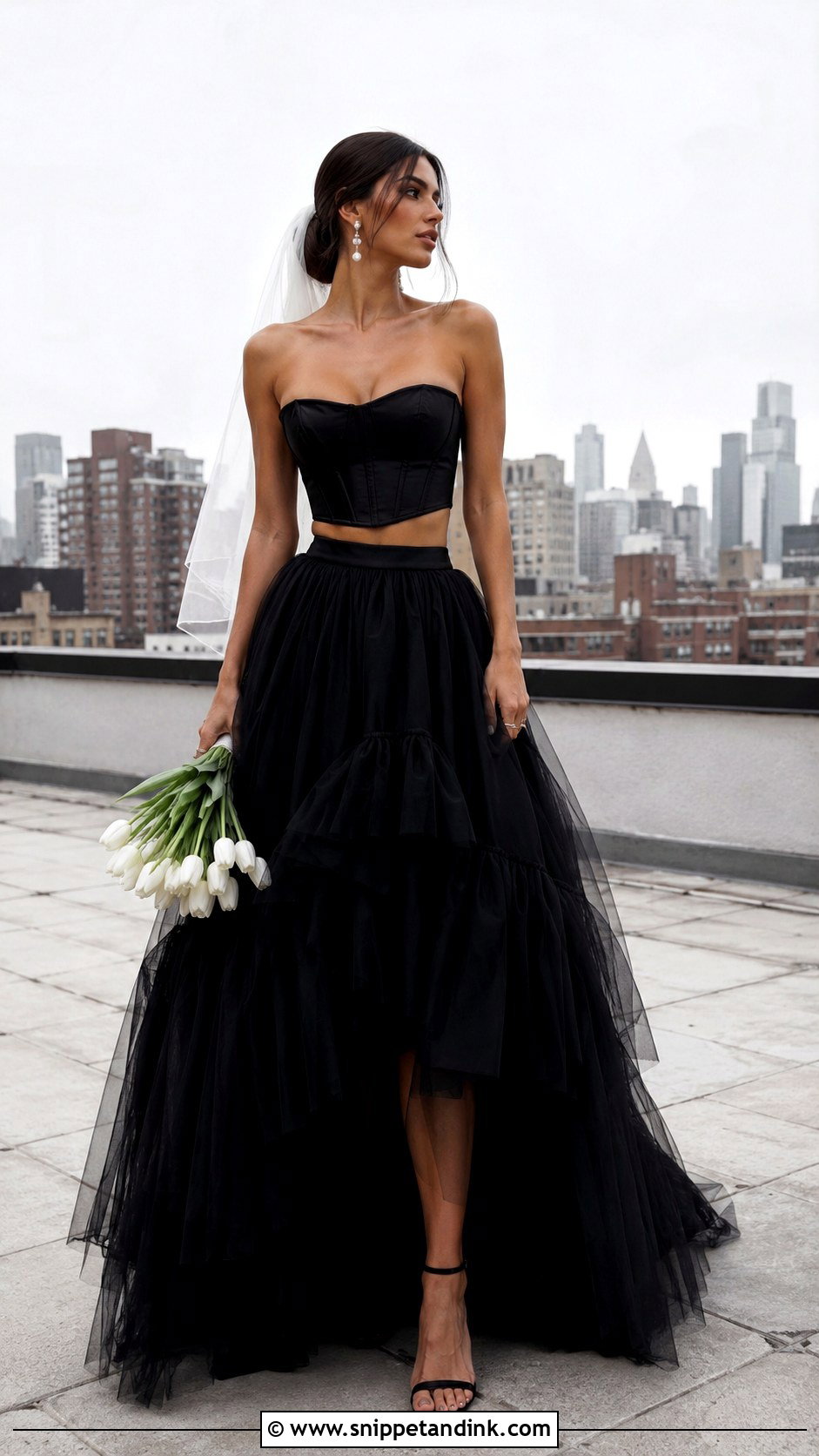
Separates solve a common fitting problem. When your top and bottom halves are different sizes, a black two-piece wedding dress lets each piece be fitted on its own. Pair a structured corset top, a lace blouse or a fitted crop with a high-waisted satin or tulle skirt. Check that both blacks match in daylight first, because two fabrics bought separately can drift toward blue or brown. Once the shades line up, mixing matte and sheer textures adds depth. Heeled sandals, modern drop earrings and a simple veil under a low ponytail work well, with white tulips or orchids and a removable lace topper for the ceremony.


20. Black Wedding Dress With Detachable Train
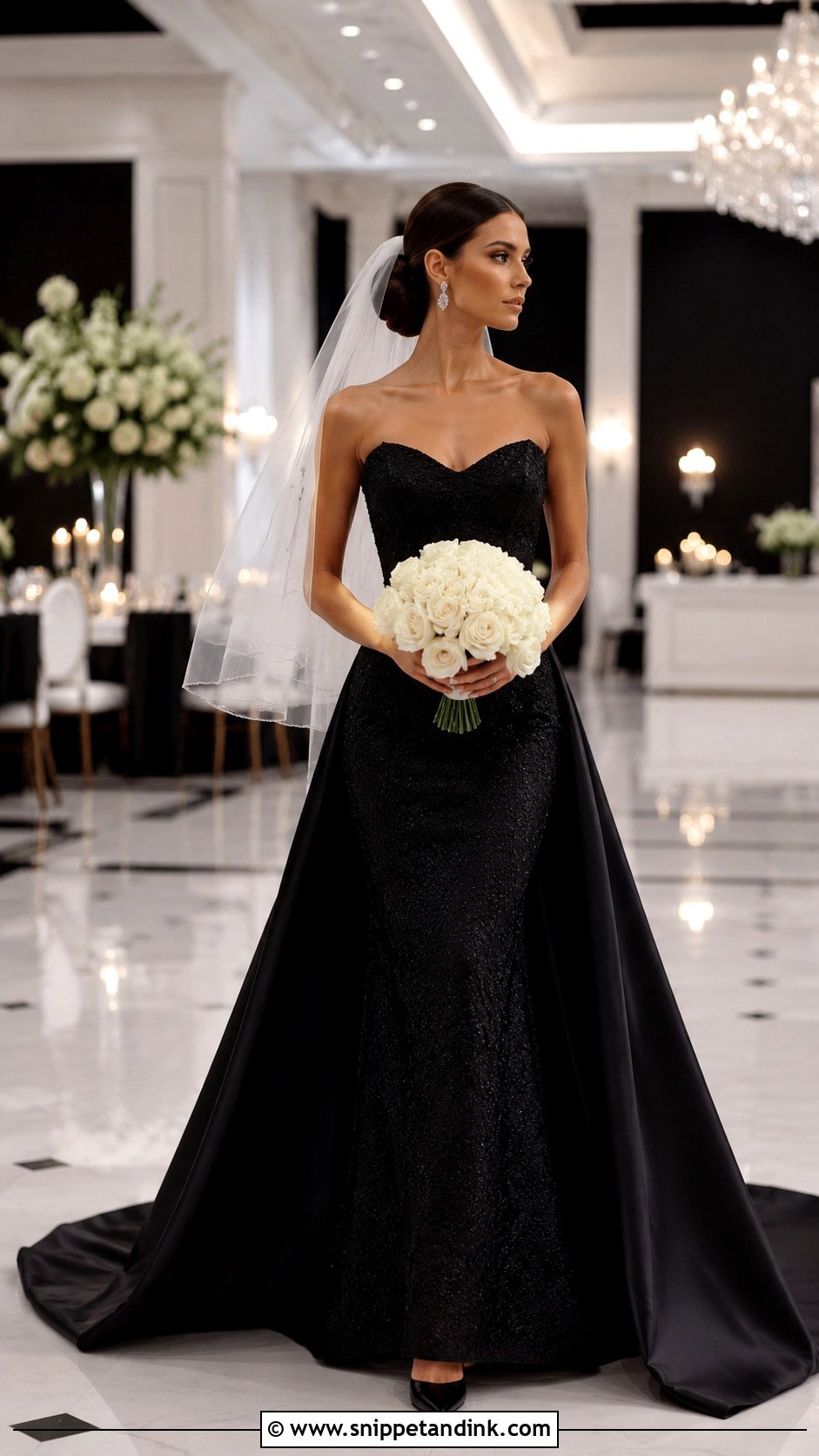
A detachable train gives you two outfits from one dress. Start with a fitted black column, mermaid or mini, then attach a full satin or tulle train at the waist for the ceremony and remove it for dancing. The fastening is the part that fails, so practice attaching and removing it at home with whoever will help you on the day, and make sure they know where every hook sits. Black pointed heels, crystal earrings and a clean fingertip veil are enough. A polished ponytail or low bun keeps attention on the changing shape, and a structured bouquet of white roses gives strong contrast.
What Black Shows on the Day That Ivory Hides
Ivory forgives a lot. Black shows anything pale: lint, pet hair, face powder, deodorant streaks and the dust a hem collects after an hour outdoors. None of that is a reason to avoid black, but it changes what goes into the emergency bag.
- A lint roller, plus a spare for whoever helps you dress.
- Clear deodorant applied well before you step into the gown and left to dry completely.
- A clean towel or cape over your shoulders while makeup is finished, with setting powder used sparingly near the neckline.
- A soft clothes brush for the hem once the ceremony portraits are done.
- Wipes for skin only. For a mark on the fabric itself, blot gently with a dry cloth and leave it alone rather than scrubbing.
Getting the texture into your photos
Black fabric soaks up light, so lace, embroidery and velvet can flatten into a dark shape on camera. Tell your photographer early that the dress is black and that its texture matters to you. Light from the side, a big window or late sun, brings out pattern far better than flat overhead light. Ask for a few close frames of the bodice and the hem while that light is still good, before the reception lighting turns warm and dim.
A Black Gown Still Needs a Bridal Finish
Black opens up more silhouettes than most brides expect. Lace and tulle stay soft, while satin, velvet, sequins and crepe look sharper. What makes any of them read as bridal is the finish around the dress: a veil or cape, shoes you can stand in for hours, jewelry that doesn’t compete and flowers that give the dark fabric some contrast. Allow more time for alterations than you think you need, because black shows a poor fit faster than ivory does. Start with the shape that suits your venue and season, then adjust the details until the dress feels like yours.
You'll Like These Ideas:





Leave a Reply