
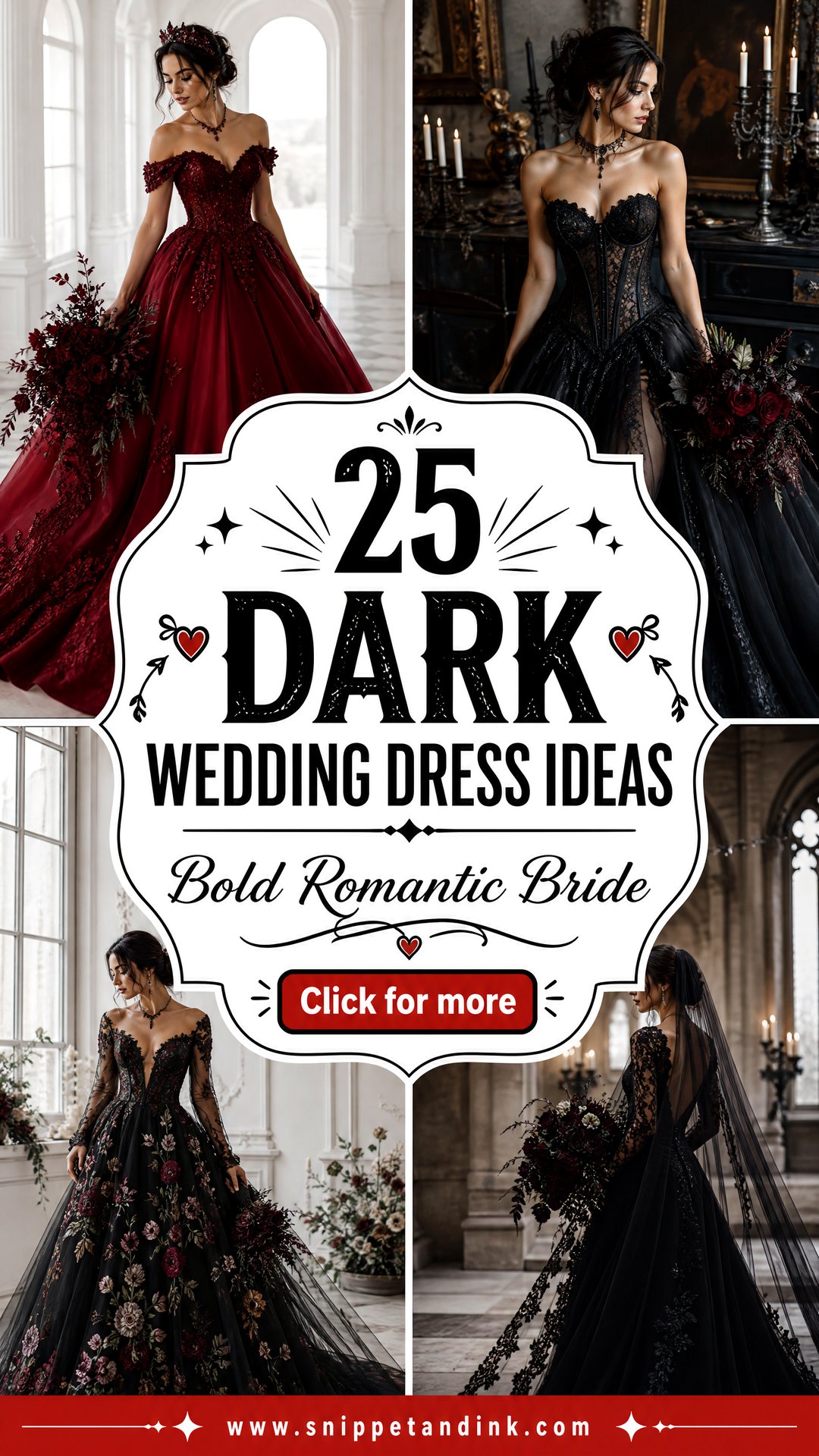
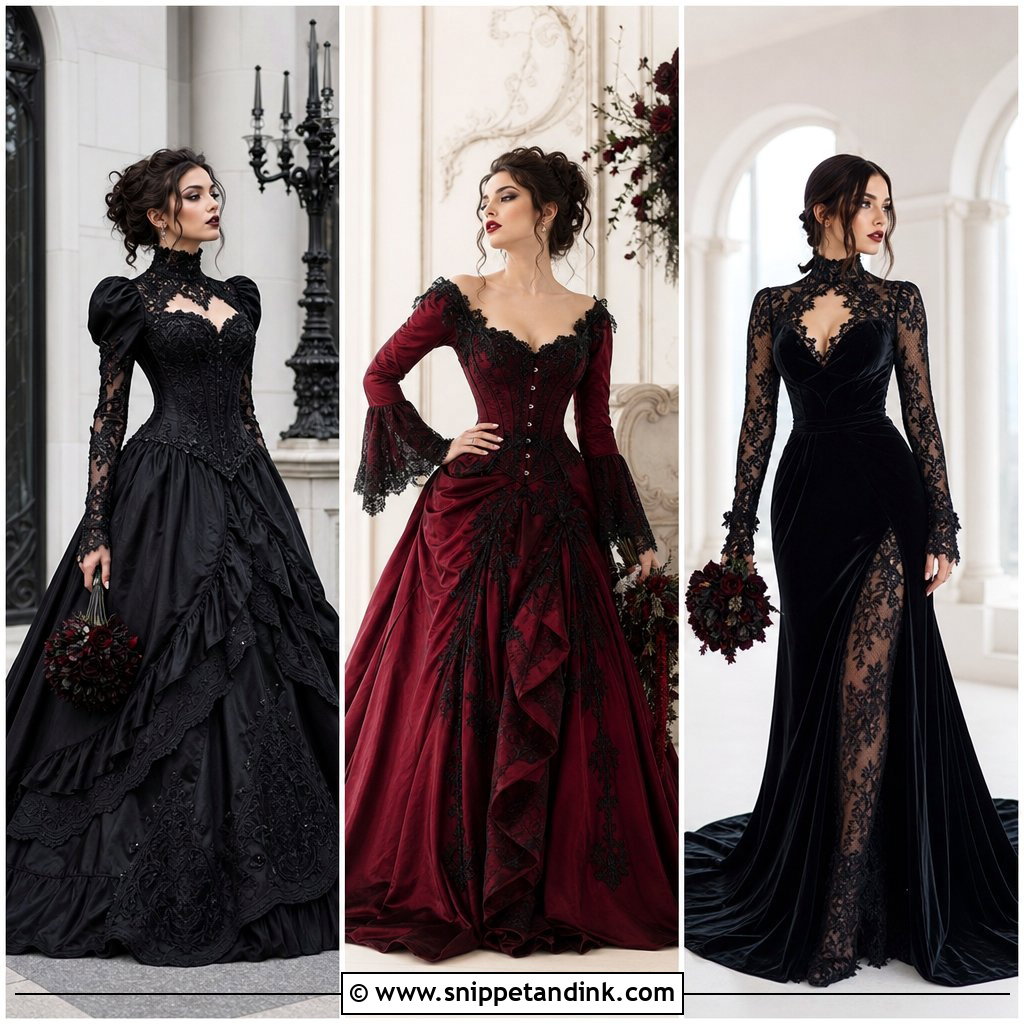
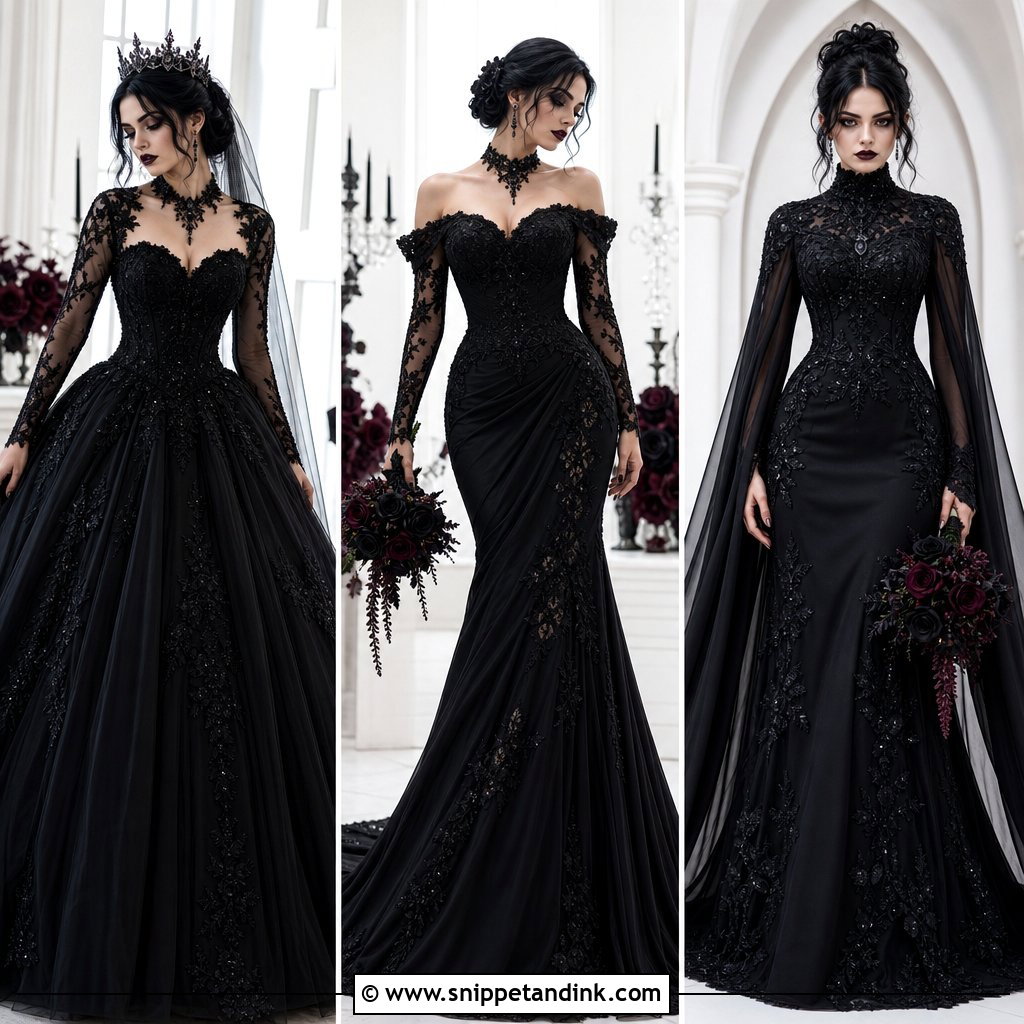
A dark gown is still a wedding dress, and the brides who wear one best treat it that way: they plan the veil, the bouquet and the light around it rather than letting the color do all the work. Black, deep burgundy satin, midnight blue tulle, plum, forest green and smoky floral embroidery each behave differently on the body and on camera. In my fittings, the dark gowns that feel unmistakably bridal almost always share one thing: something pale close to the face. Below are 25 directions, from gothic to minimal, with the details I’d adjust on each.
Telling Family You’re Wearing Black
This conversation is often harder than finding the dress. In many families, black still means mourning, and an older relative may hear the news as bad luck or disrespect. It helps to know that a white wedding gown is a fairly recent custom, and that brides in some traditions, Spanish Catholic brides among them, historically married in black. Sharing that, and showing the actual gown rather than describing it, tends to calm people down.
Practical details matter too. If your ceremony is religious, check with the officiant whether there’s any dress guidance for the venue. And decide what you’ll tell guests. Some brides wearing black like guests to avoid it so the gown stands out; others don’t mind at all. A short line on the wedding website saves anyone guessing.
Think about your bridesmaids at the same time. If they wear black as well, you can disappear into the line-up in group photos. I’d put them in a different depth, such as charcoal, wine or bottle green, or give you the only pale bouquet in the row, so the eye still finds you first.
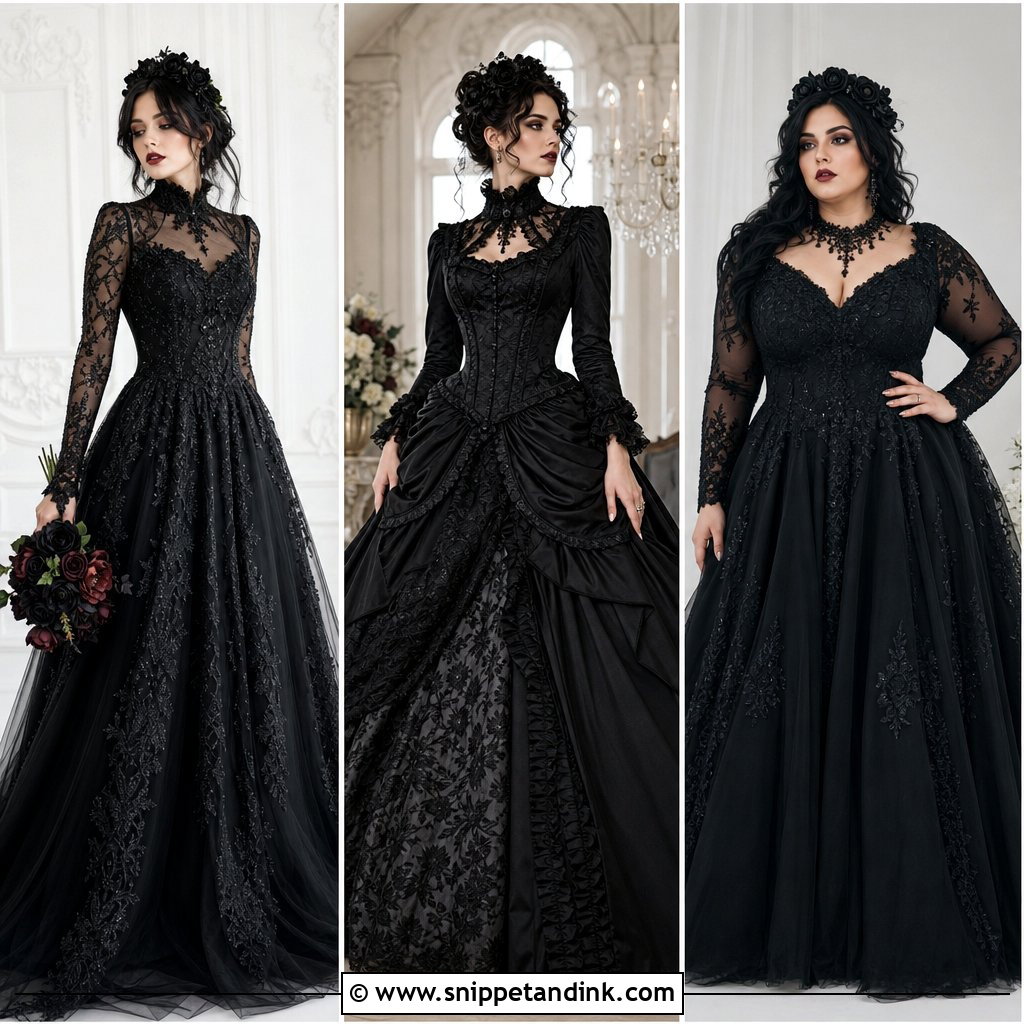
1. Black Lace Wedding Dress
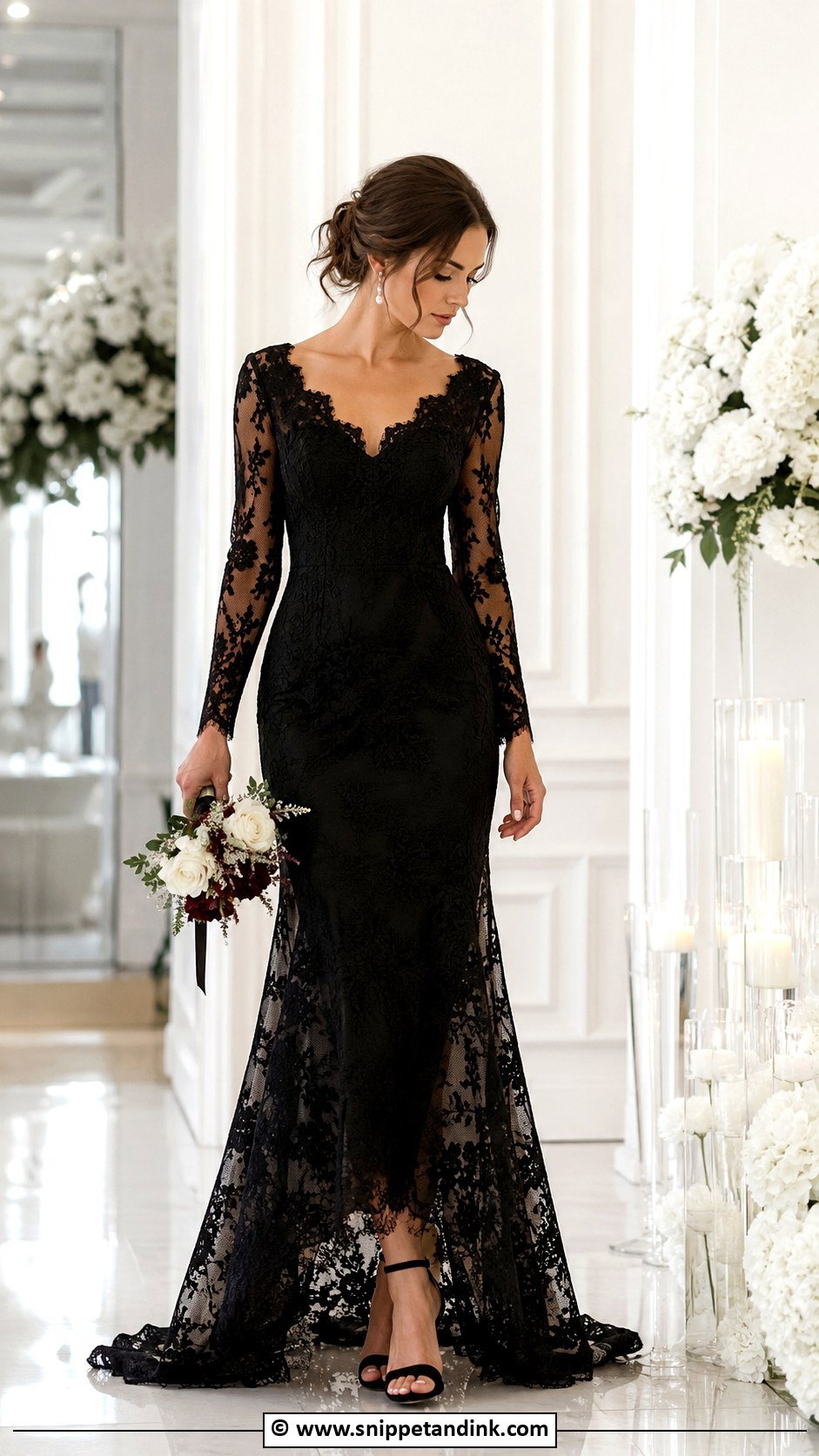
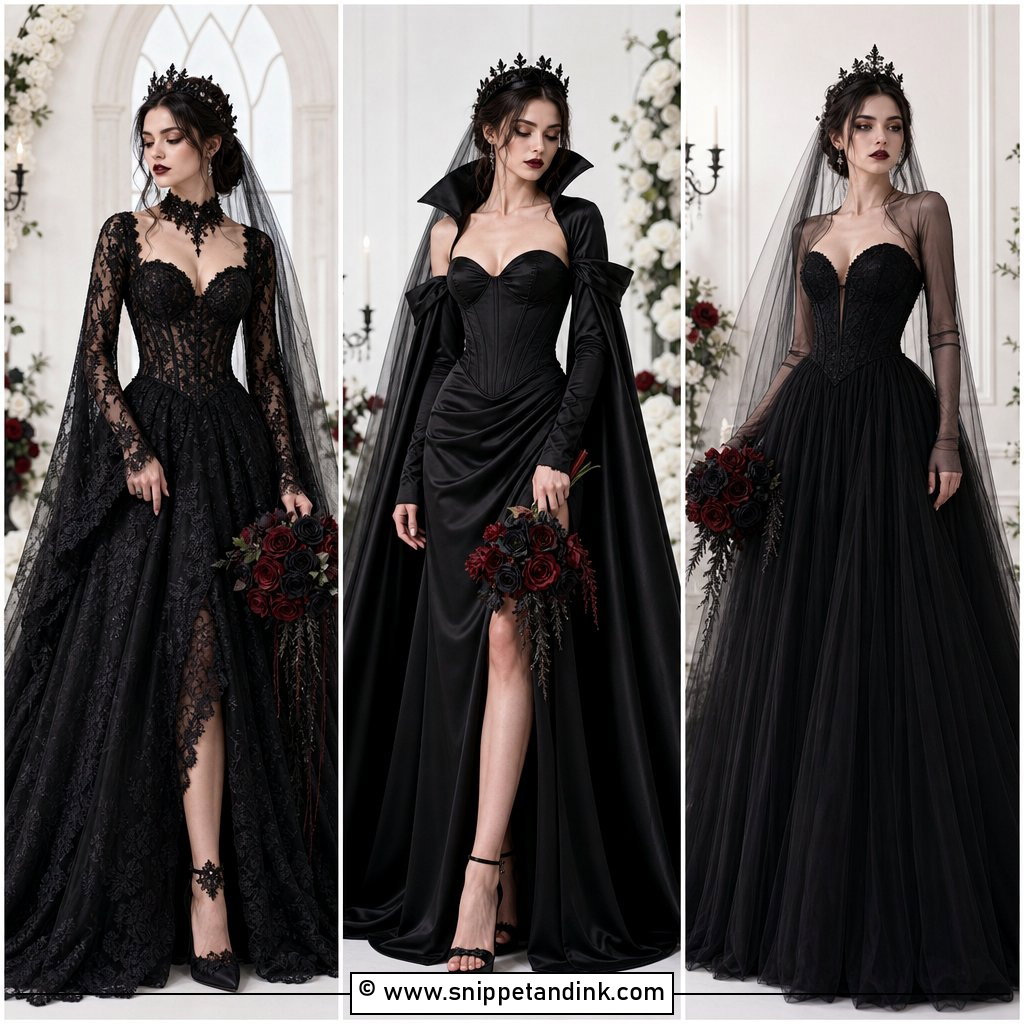
Black lace keeps the romance of a traditional gown while changing its mood entirely. The lining decides how it reads. Nude or charcoal behind the lace lets the pattern show; solid black lining turns it into a flat dark shape from the back of the room. Sleeves, an A-line skirt or a mermaid cut all suit it. I’d finish with a black cathedral veil, pearl drops and black satin heels, plus a small bouquet of ivory, burgundy and deep green. Historic venues and galleries at night are its natural home.
2. Black Ball Gown Wedding Dress
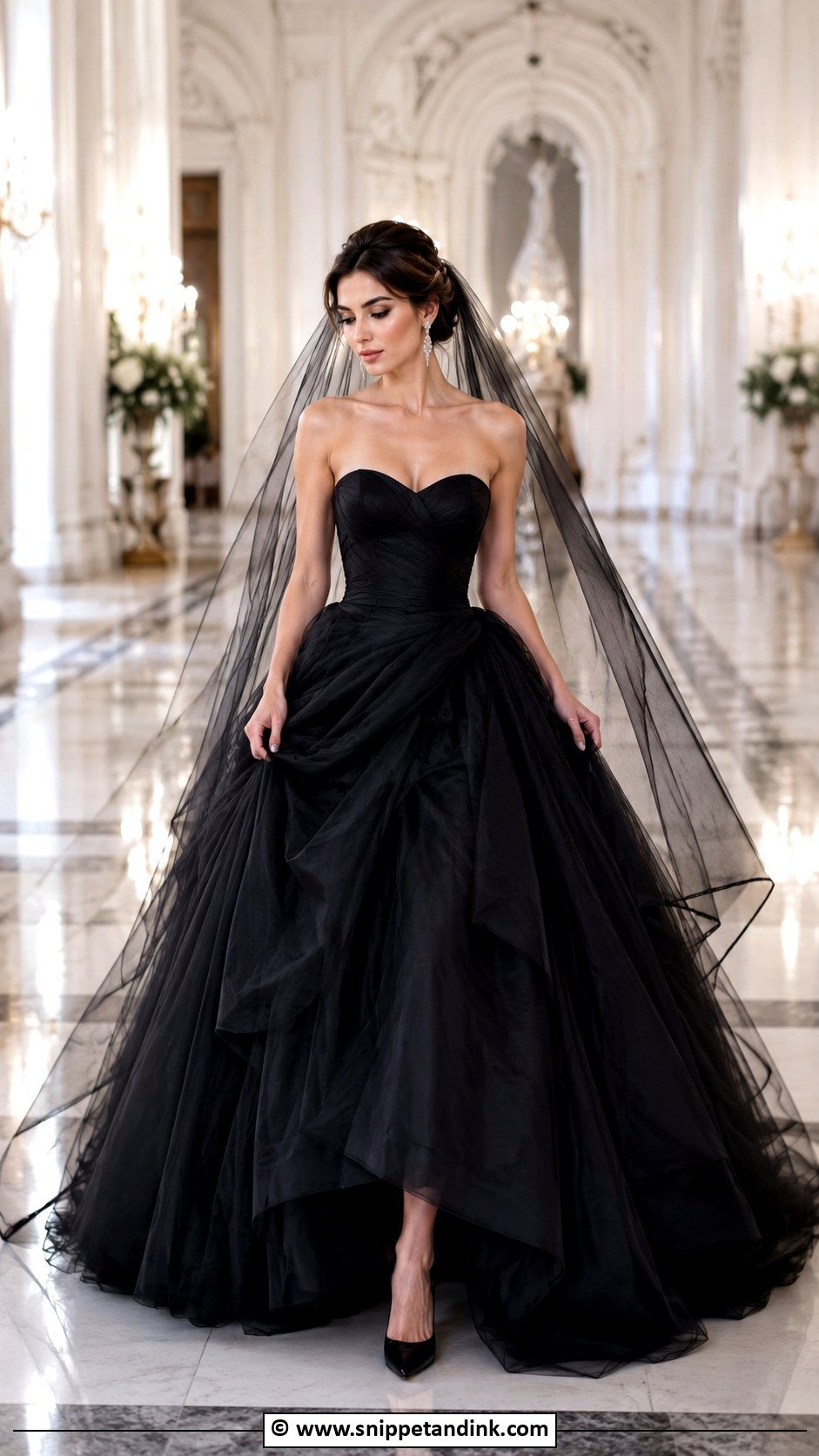
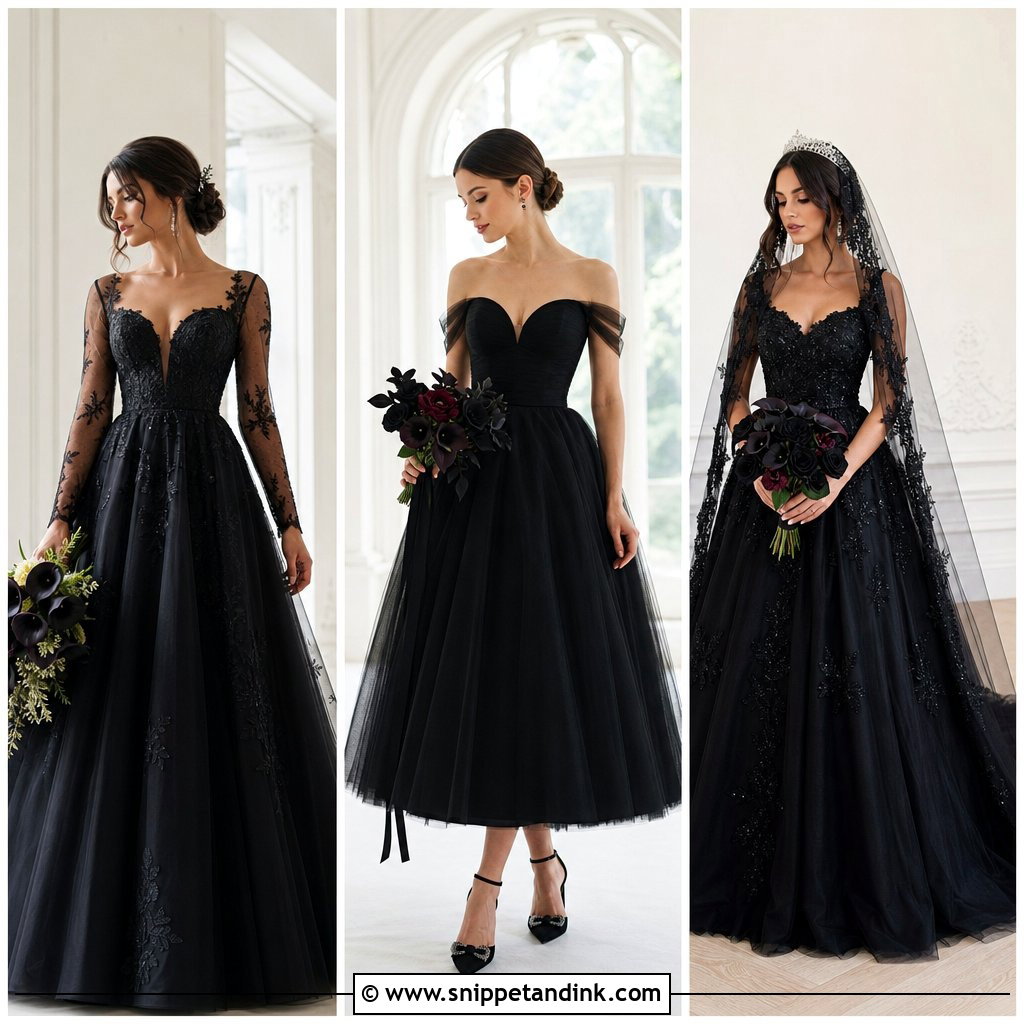
Volume in black looks bigger than volume in white, because the eye reads a dark skirt as one solid mass. A black ball gown wedding dress in tulle or organza keeps some air and movement; mikado or satin holds a sharper sculpted shape. To balance that much skirt, I keep the neckline simple, off-shoulder or sweetheart. Pointed black heels, a smooth low bun and a long veil with a clean edge finish it. White and dark red flowers give the skirt a point of contrast at a grand venue.
3. Black Satin Wedding Dress
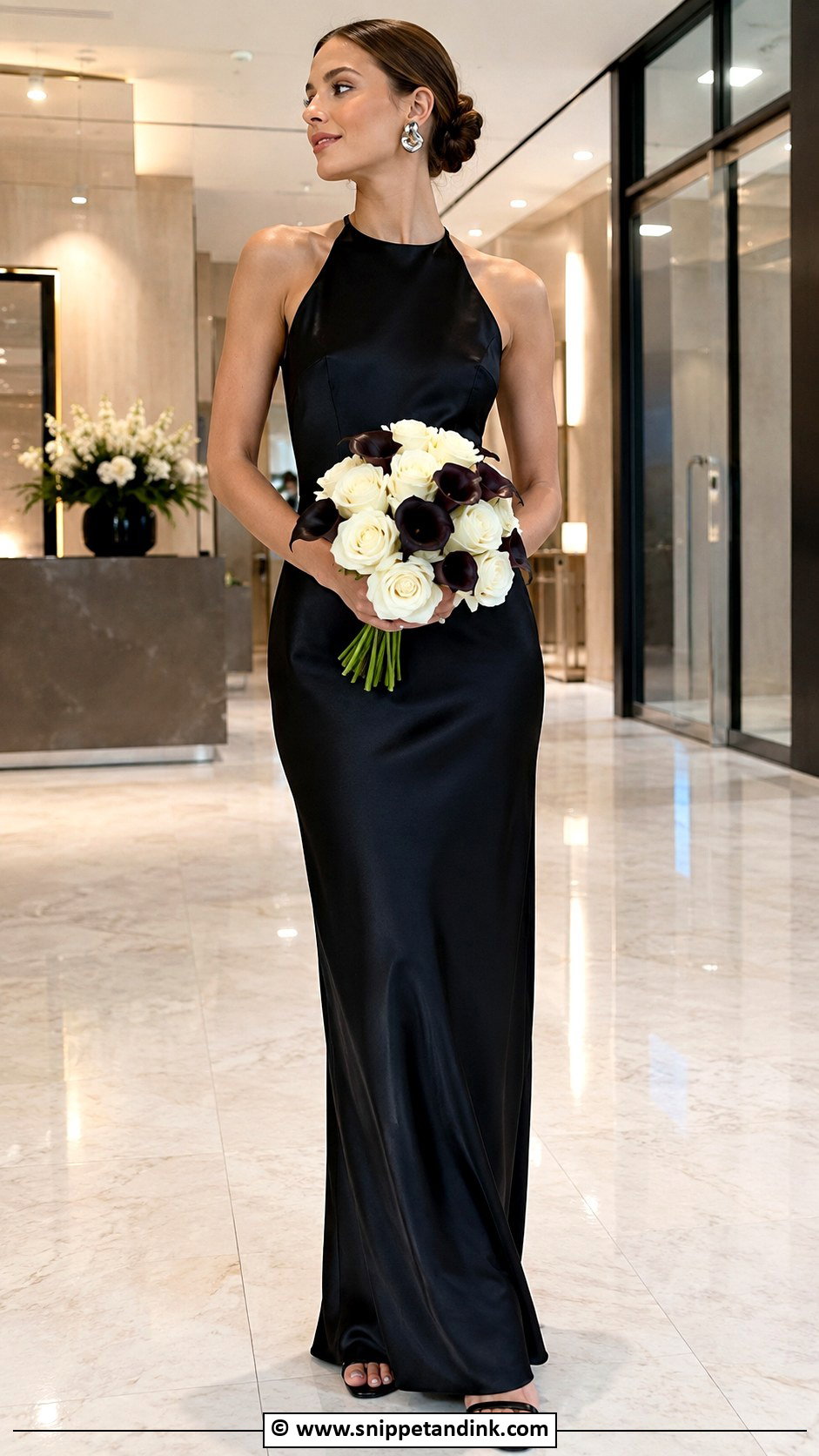
Black satin shows its shine more than any other fabric here, and that shine highlights every ripple, so the cut needs to be exact. Slip dresses, bias cuts, columns and fitted trumpets suit it. I keep the styling spare: slim black sandals, a sculptural updo, silver earrings and a sleek veil. Cream roses or deep plum flowers soften the gloss. City hotels and black-tie receptions are where I’d see it.
4. Black Tulle Wedding Dress
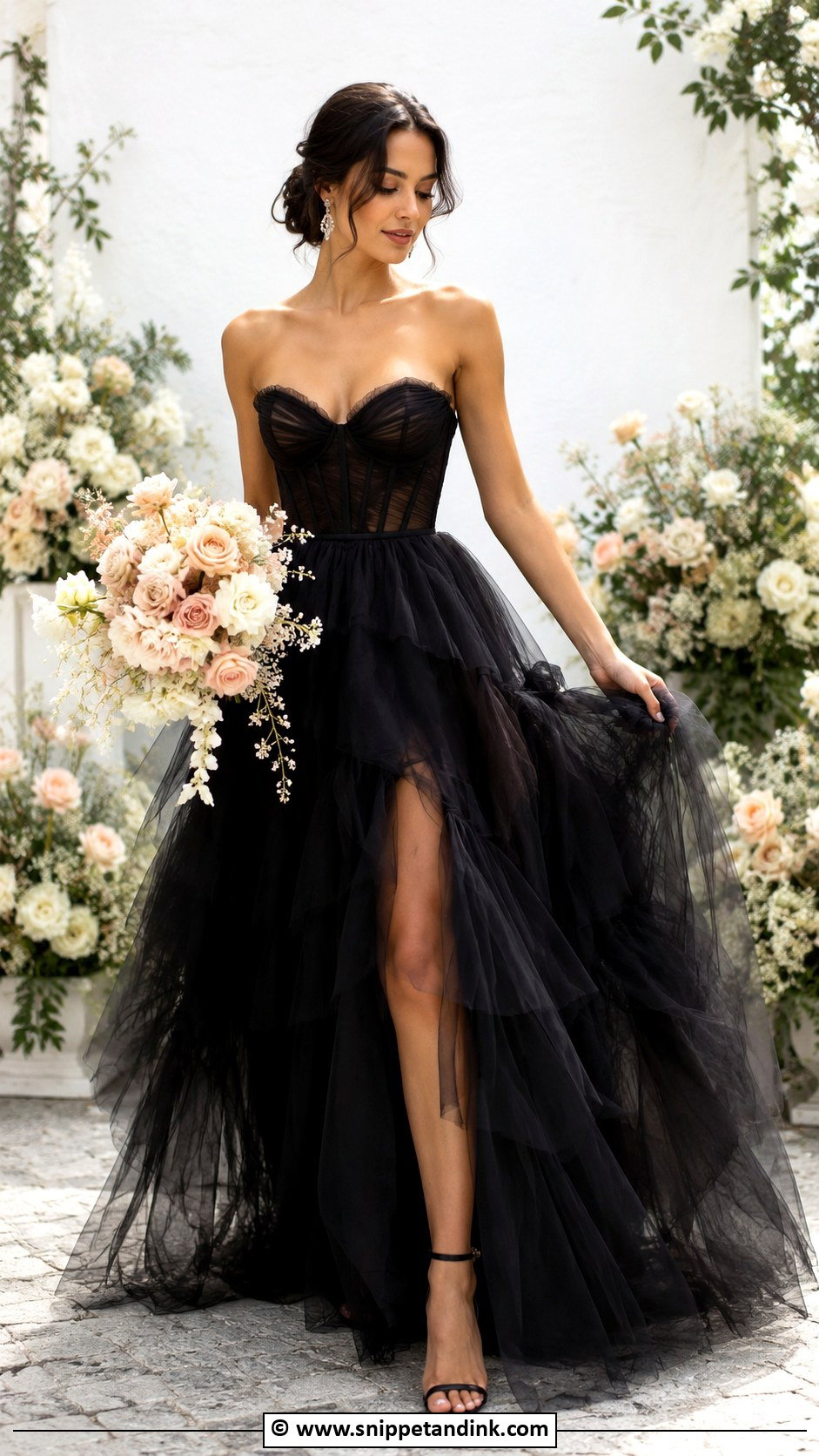
Layers of black tulle move like smoke, which makes this the softest way to wear a dark gown. It sidesteps the gothic look completely. A layered skirt, corset bodice or tea-length cut all keep it light. Black tulle is delicate, though, and catches on heel tips and rough bark, so I’d pick shoes without metal edges. A black tulle wedding dress sits happily in a garden or a candlelit room, with blush, mauve and ivory flowers to give it dimension.
5. Black Velvet Wedding Dress
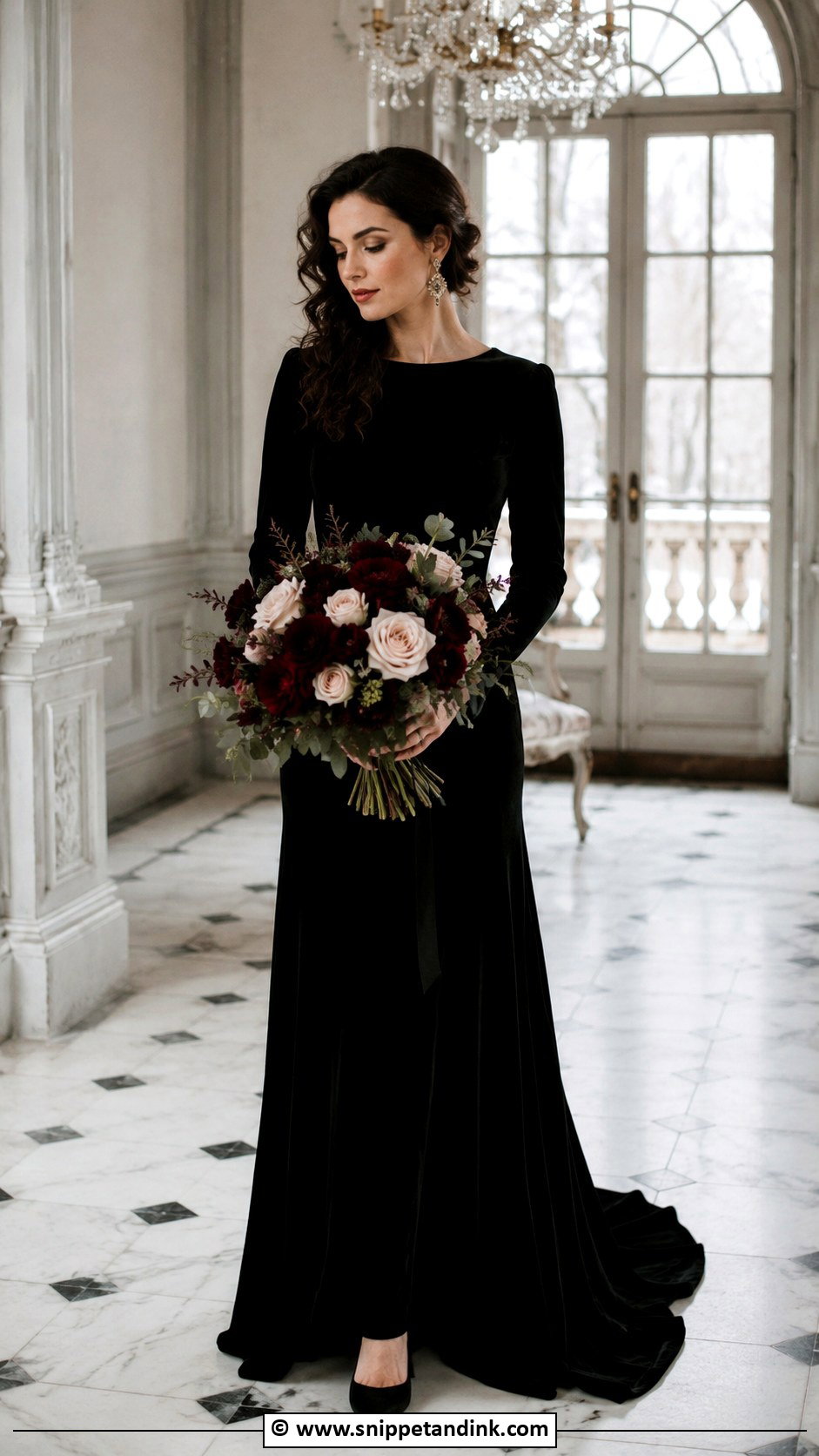
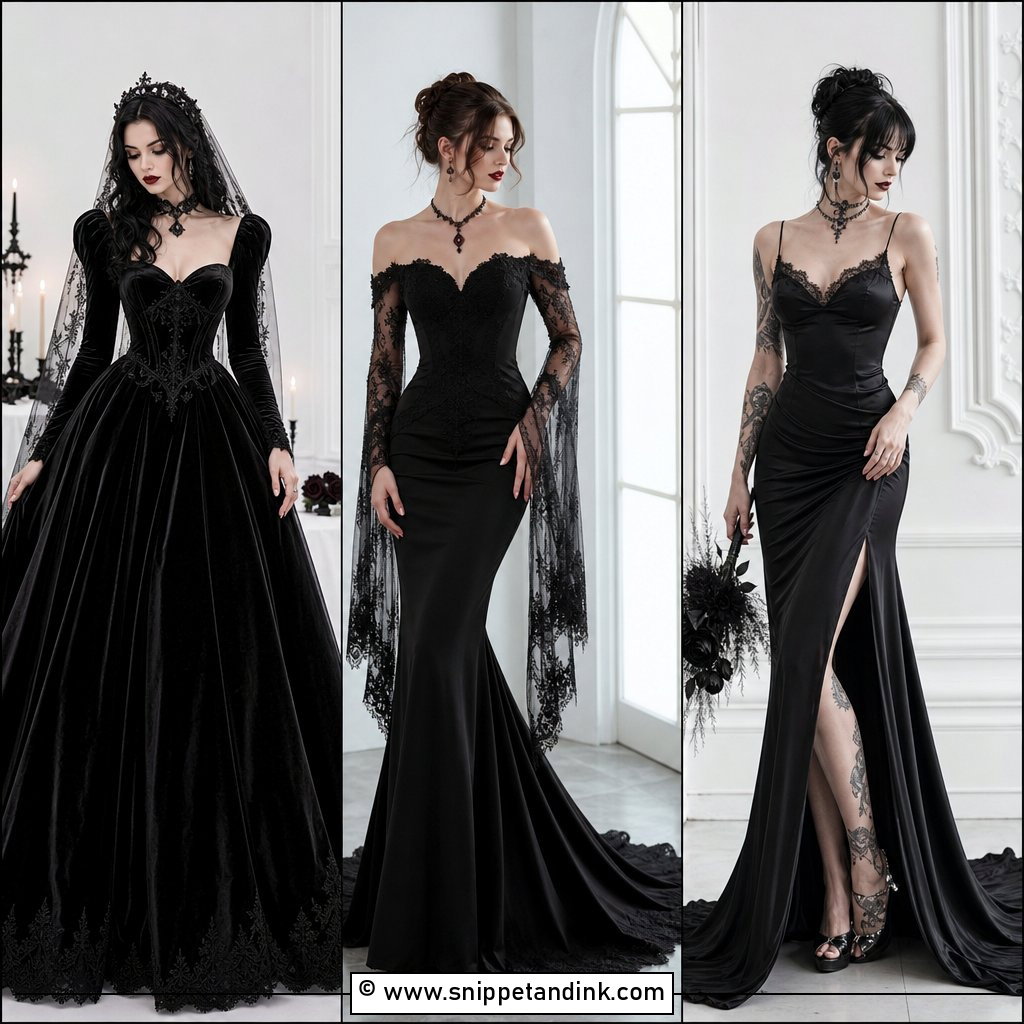
Velvet in black has depth you can almost feel from across the room. Keep the cut clean, long sleeves, a column or a fitted gown, because the fabric is already doing plenty. It’s warm, so I’d only suggest it for autumn and winter. Velvet also crushes when you sit, leaving shiny marks that need a steamer before the portraits. Antique-style earrings, closed-toe heels and soft waves stop it from tipping into costume.
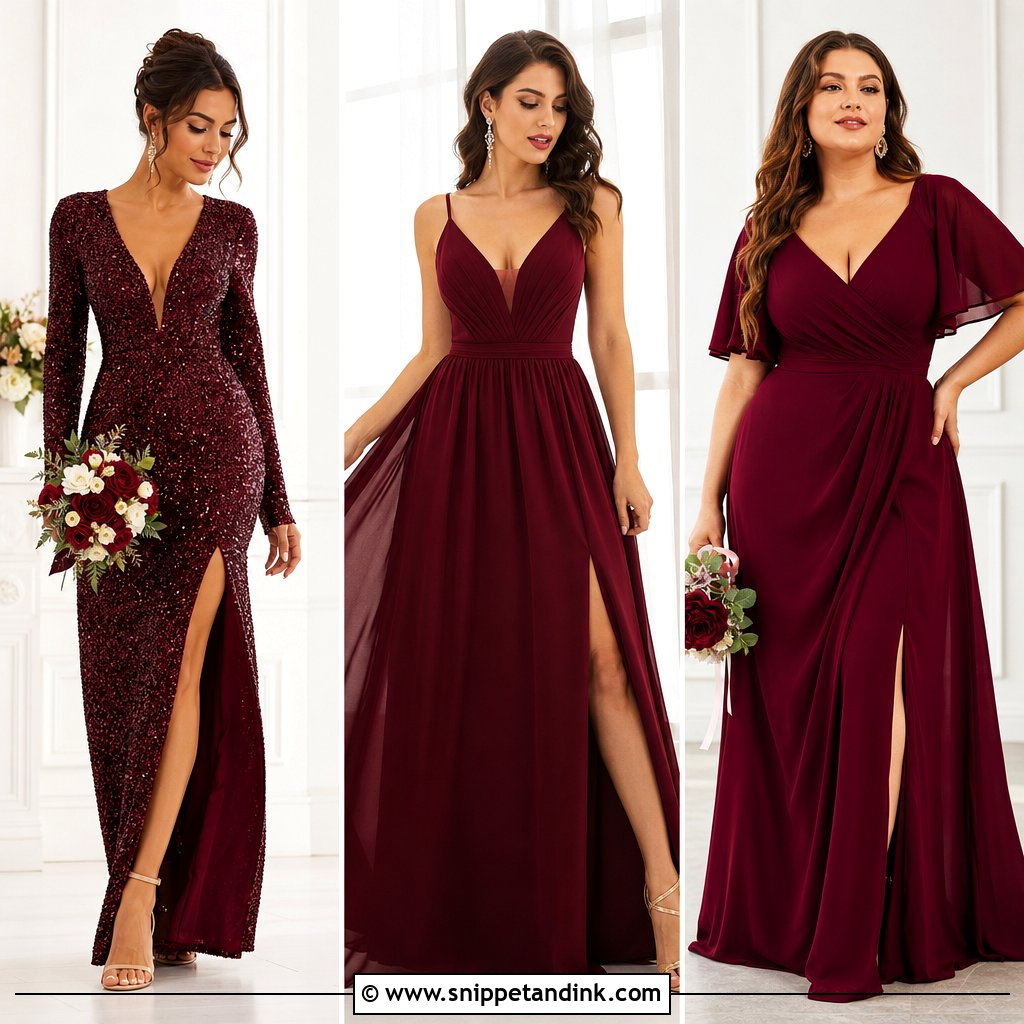
6. Burgundy Wedding Dress
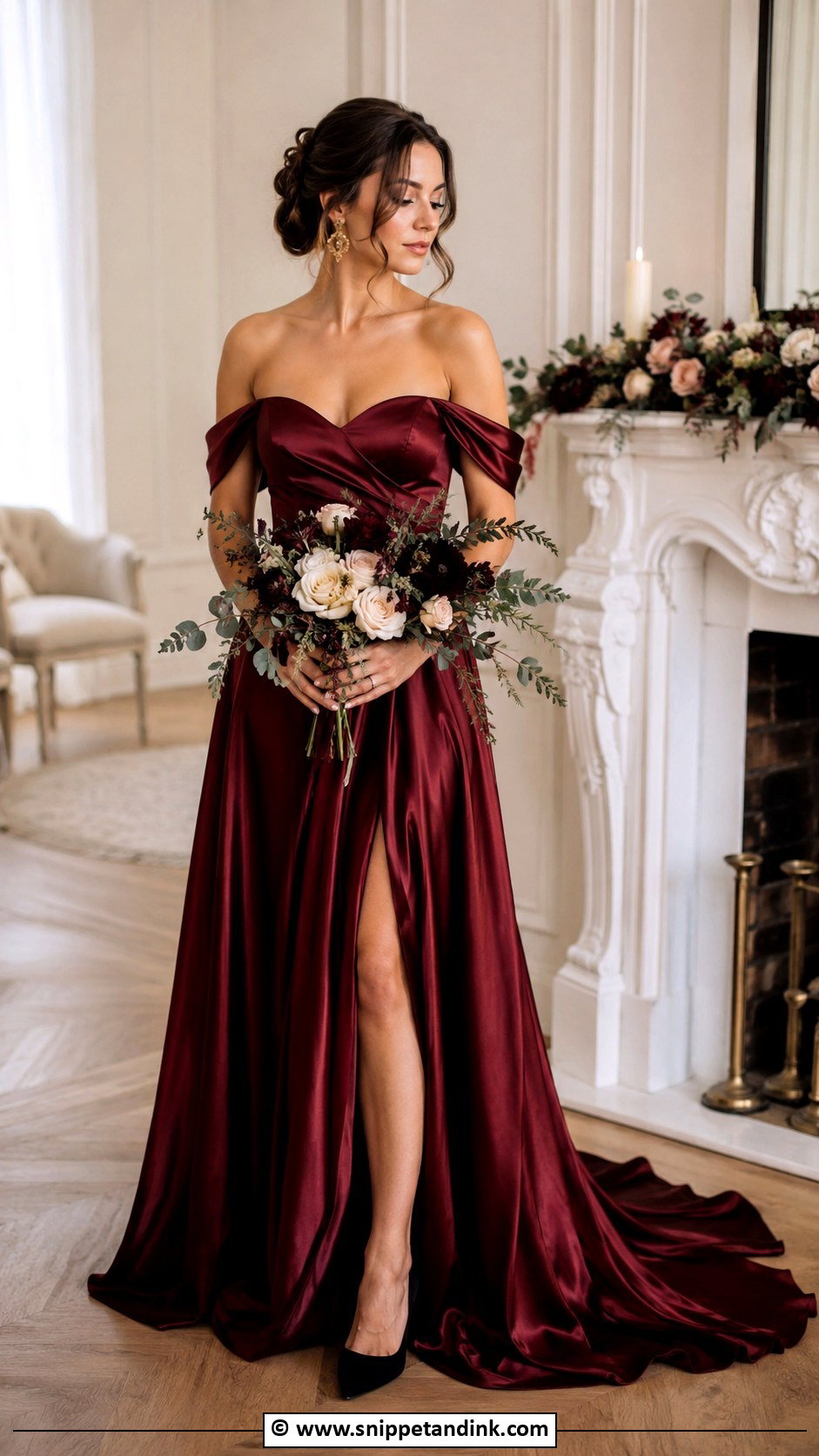
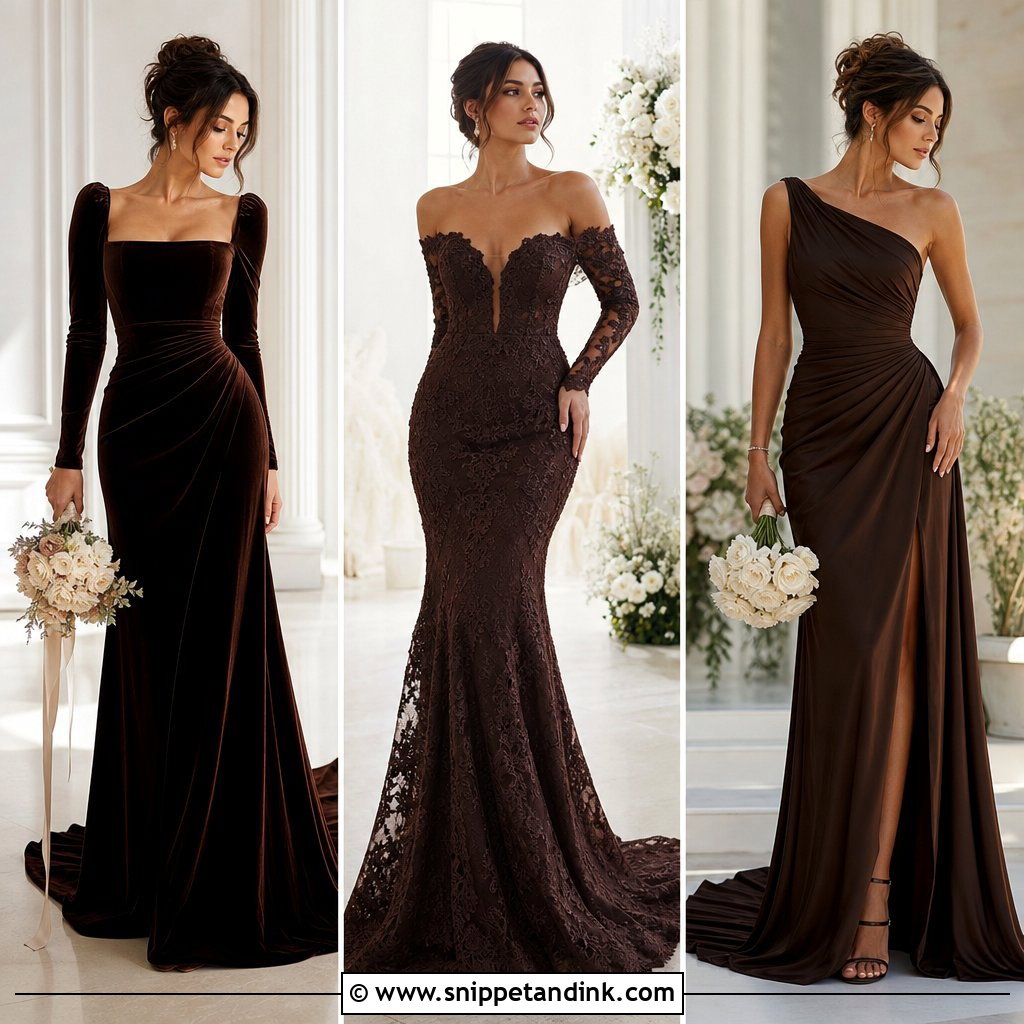
If black feels too stark, burgundy is where I’d look first. It’s dark enough to read as moody but warm enough to flatter most skin tones in daylight. Satin and velvet deepen it, chiffon lightens it. Gold jewelry works better than silver against its red base. Ivory flowers with dark berries and greenery, and either a sheer burgundy or simple black veil, finish it for a fall winery or ballroom wedding.
7. Dark Red Wedding Dress
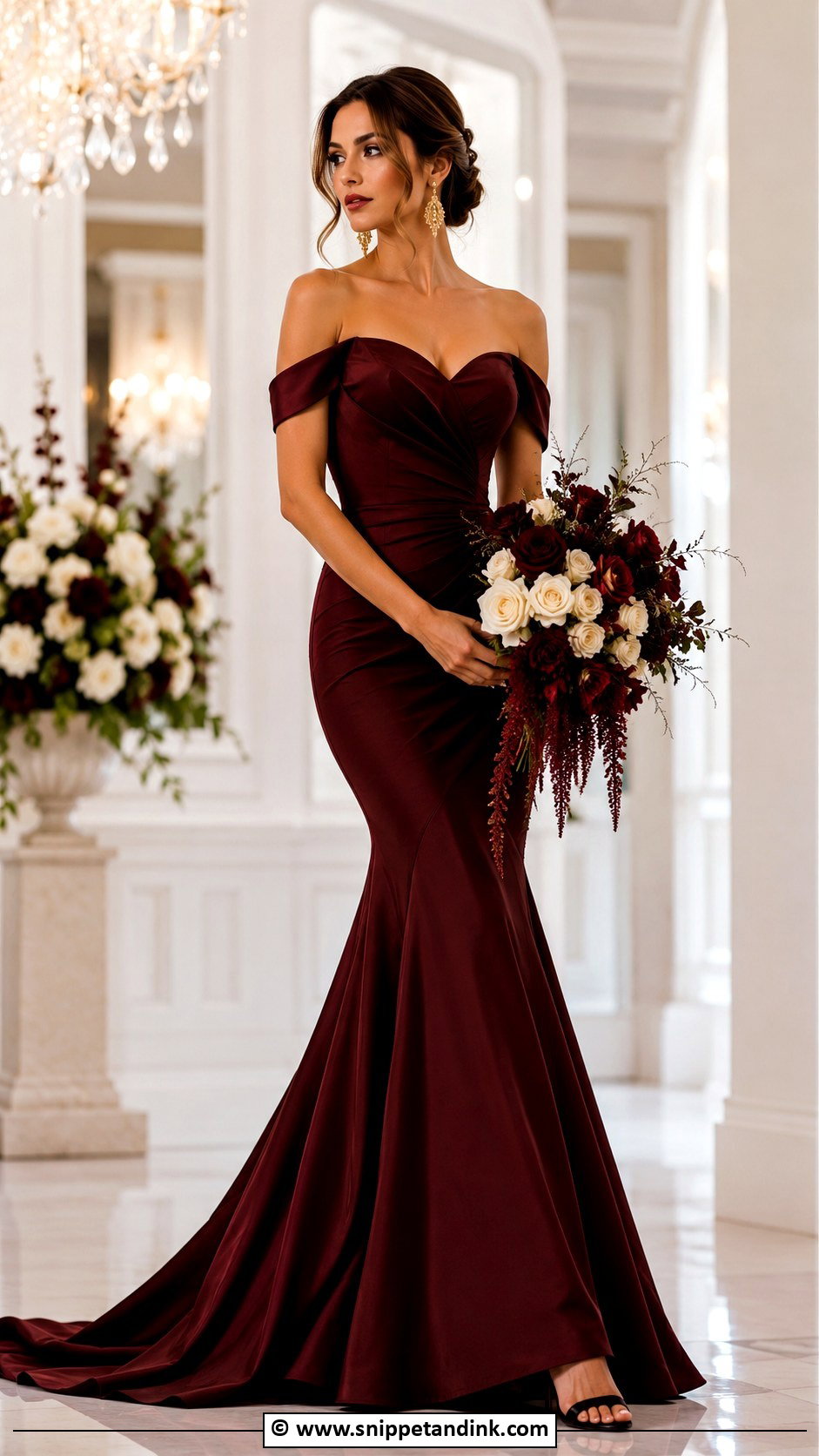
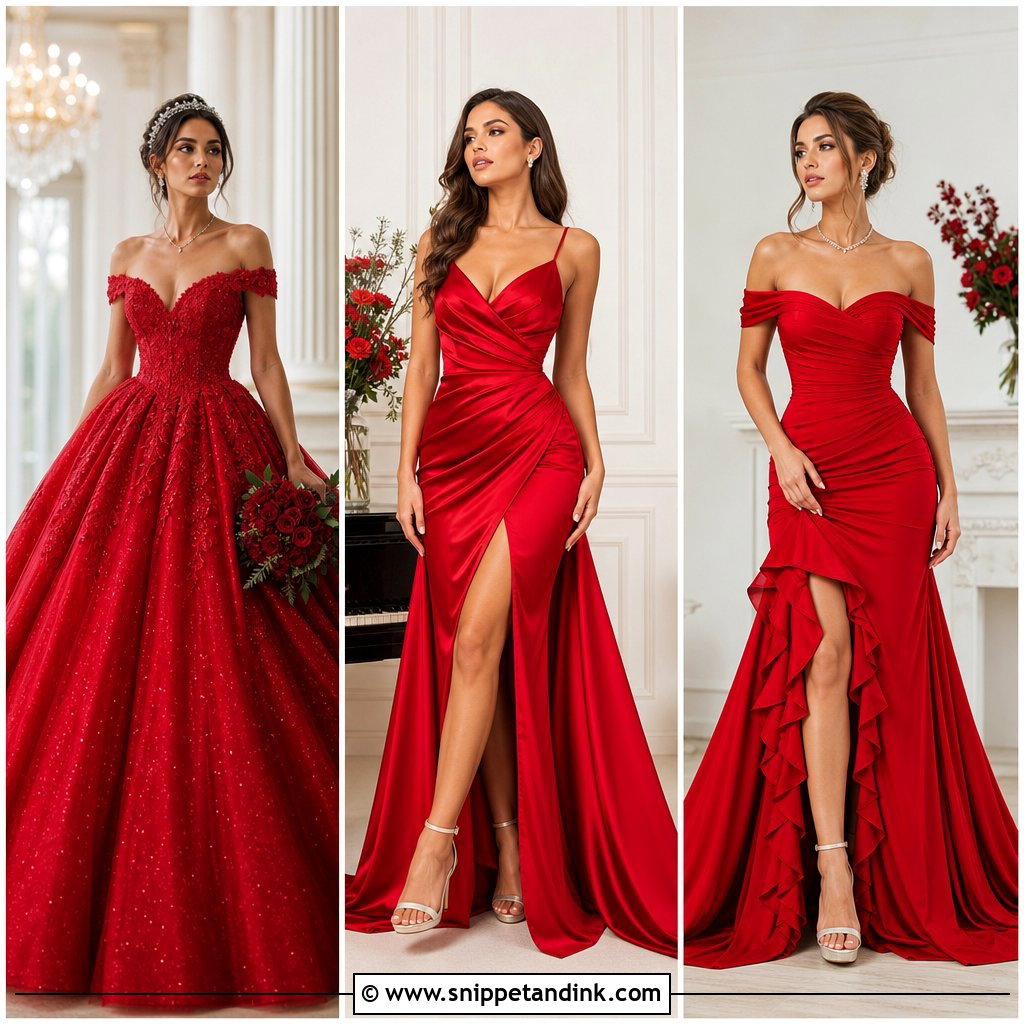
Bright red is a party dress; deep ruby, oxblood or merlot is a wedding dress. That shade choice matters more than the silhouette. A fitted bodice and flowing skirt reads romantic, a satin mermaid more glamorous. Matching red veils can look slightly flat in photos, so I tend to suggest a black one for contrast. Black heels and gold earrings complete it for an evening ceremony.
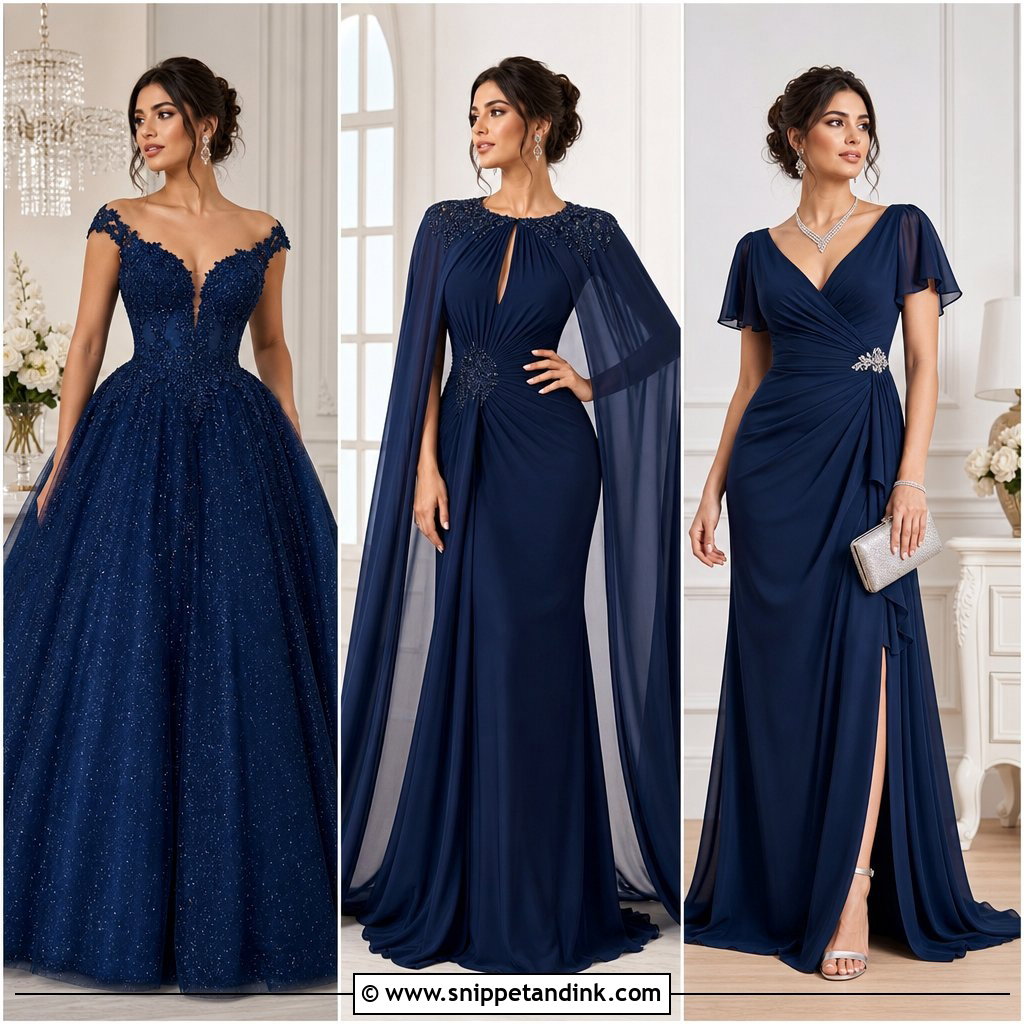
8. Midnight Blue Wedding Dress
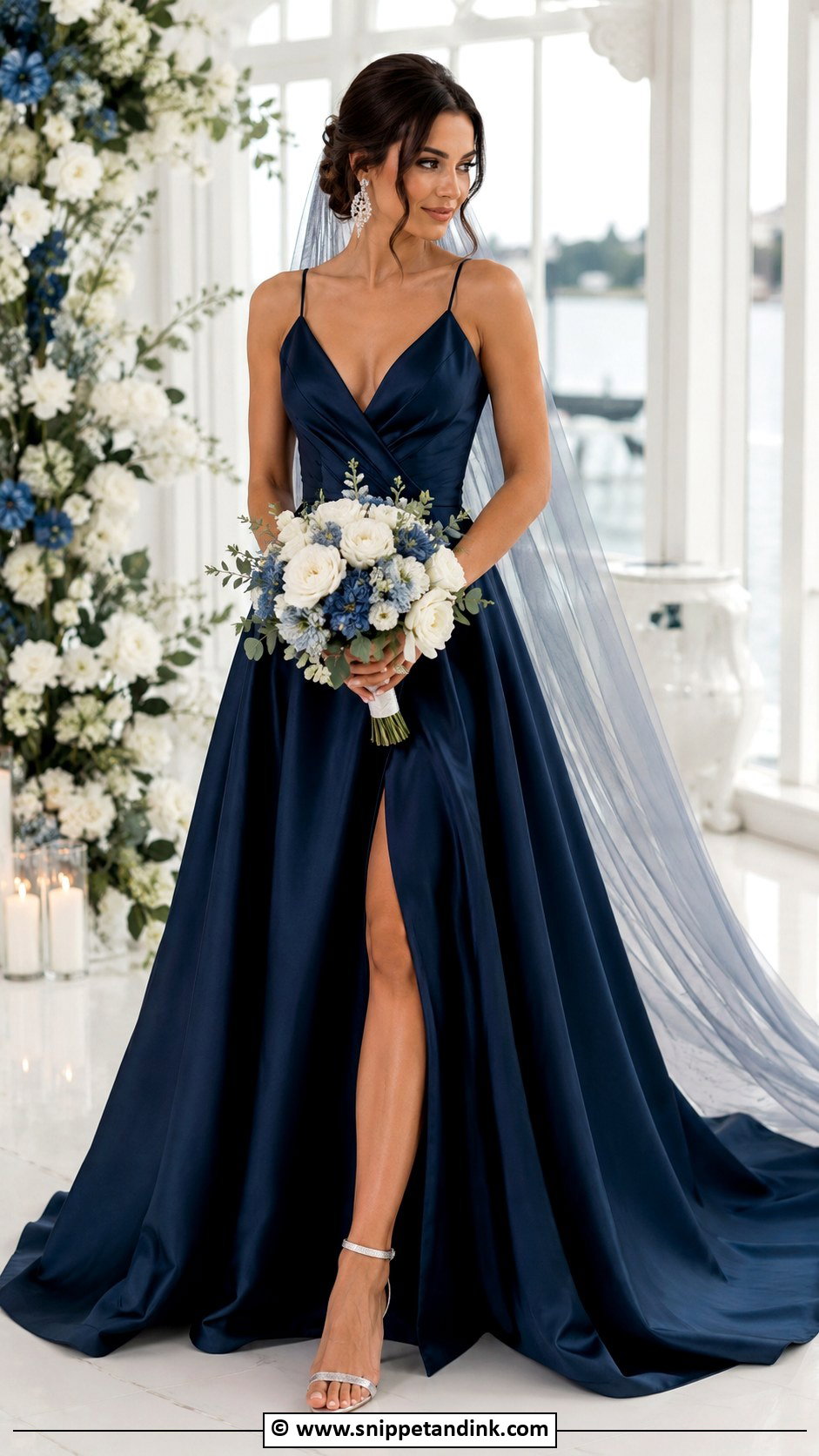
A midnight blue wedding dress plays a trick I love: in low light it reads nearly black, then flash or daylight shows its blue. Satin, tulle, chiffon and beaded fabrics all hold the color. Silver heels and crystal earrings suit its cool tone better than gold. A veil in midnight or soft grey, plus white flowers with blue accents, works at waterfront and winter evening weddings.
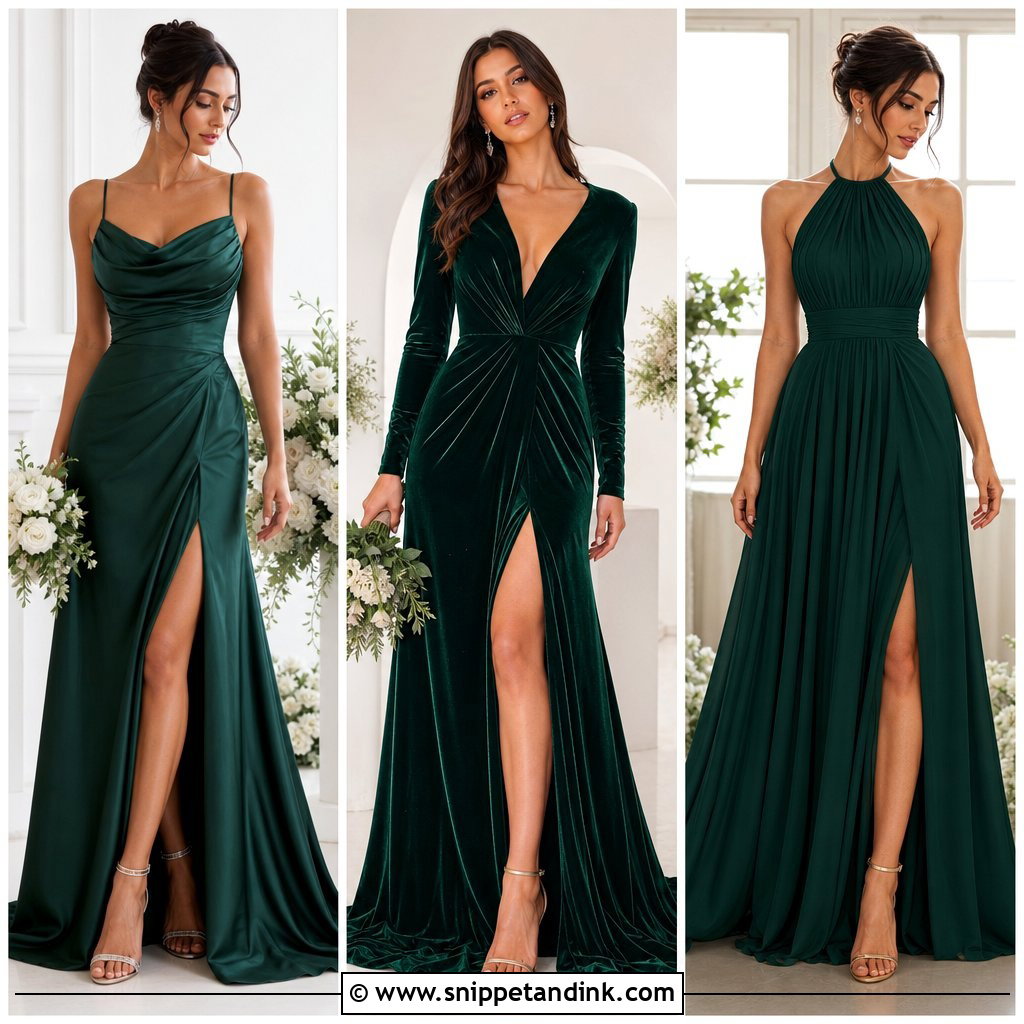
9. Dark Green Wedding Dress
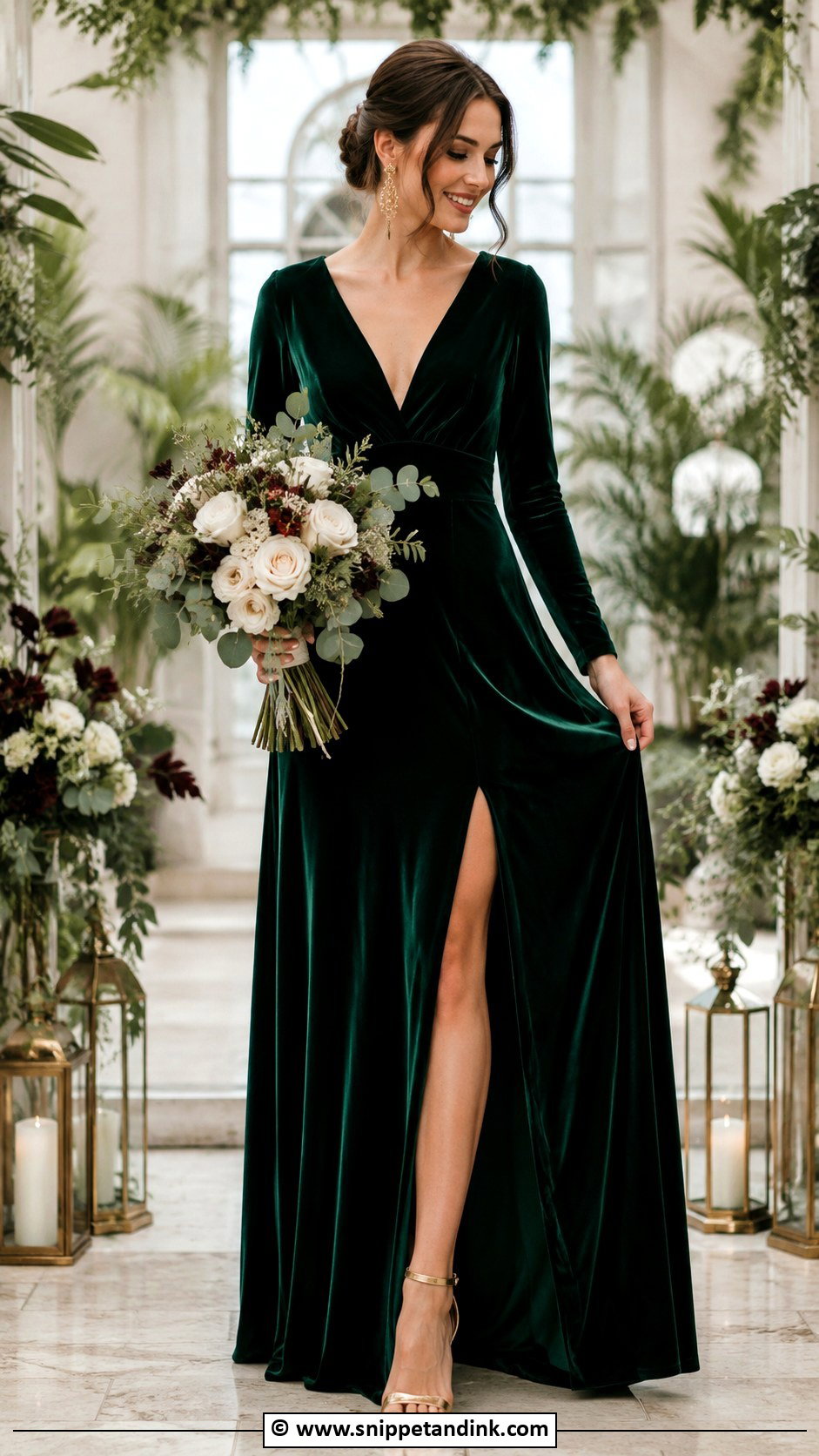
Deep green feels the most natural of the dark colors, which is why it fits forest, estate and botanical venues so well. Emerald brightens in daylight, forest and olive stay muted. Velvet suits colder months; satin or chiffon lightens it for spring. Gold jewelry and a bouquet of ivory, eucalyptus and burgundy keep it grounded. A sheer green veil ties it together without making it heavy.
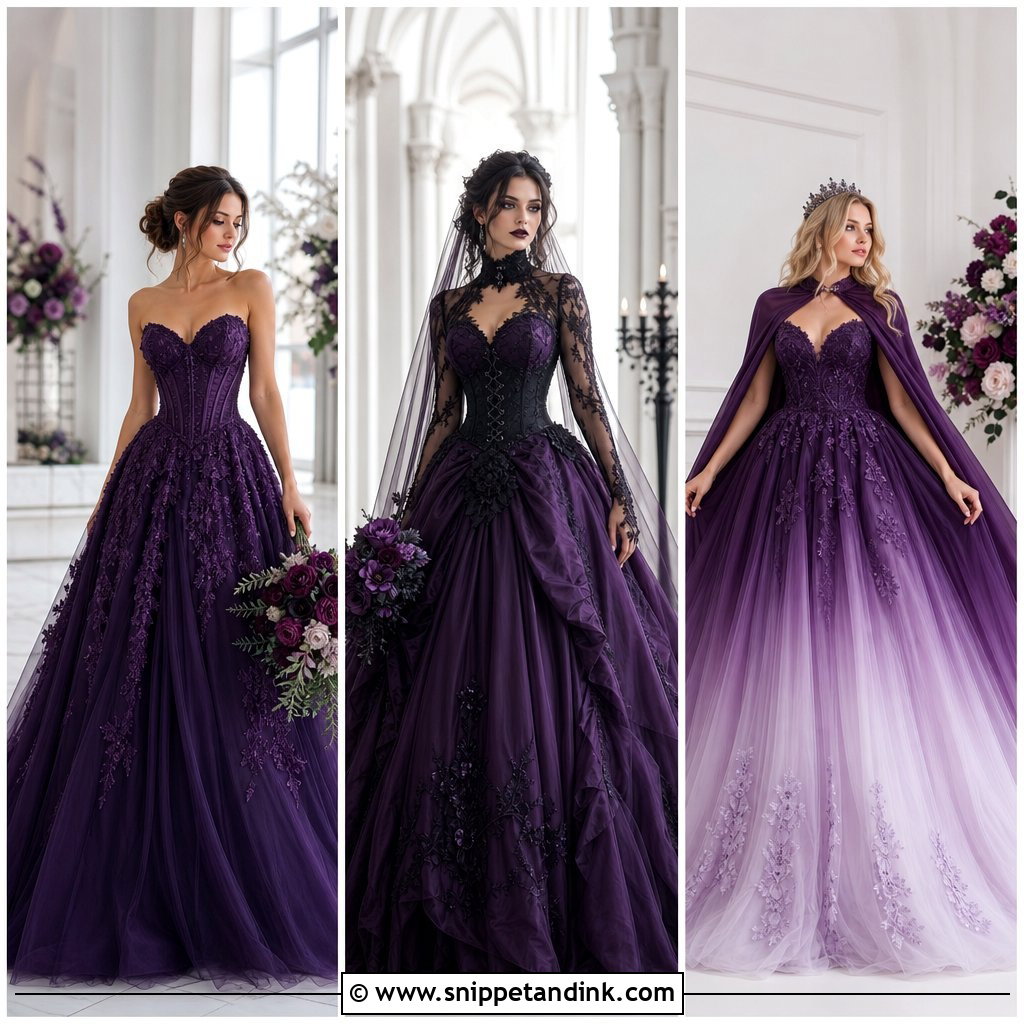
10. Purple Wedding Dress
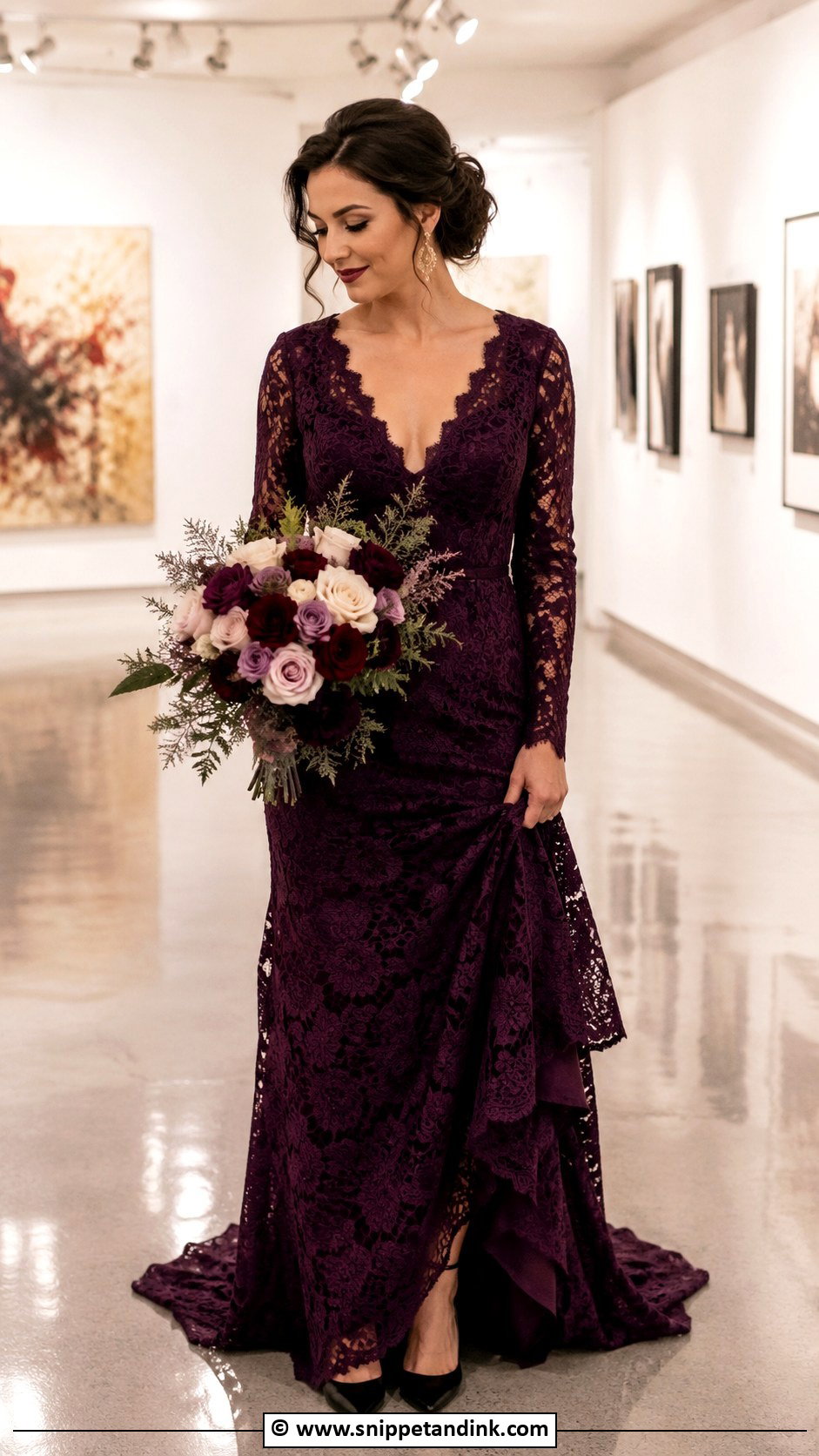
Plum, eggplant and dark violet feel grown-up in a way lighter purples don’t. Lace keeps it romantic; satin sharpens it for a formal evening. Purple can shift toward brown under warm indoor bulbs, so I always ask brides to see the fabric in the actual venue lighting if possible. Silver or antique gold jewelry both suit it. A black veil adds contrast; a matching purple one softens it.
11. Black Corset Wedding Dress
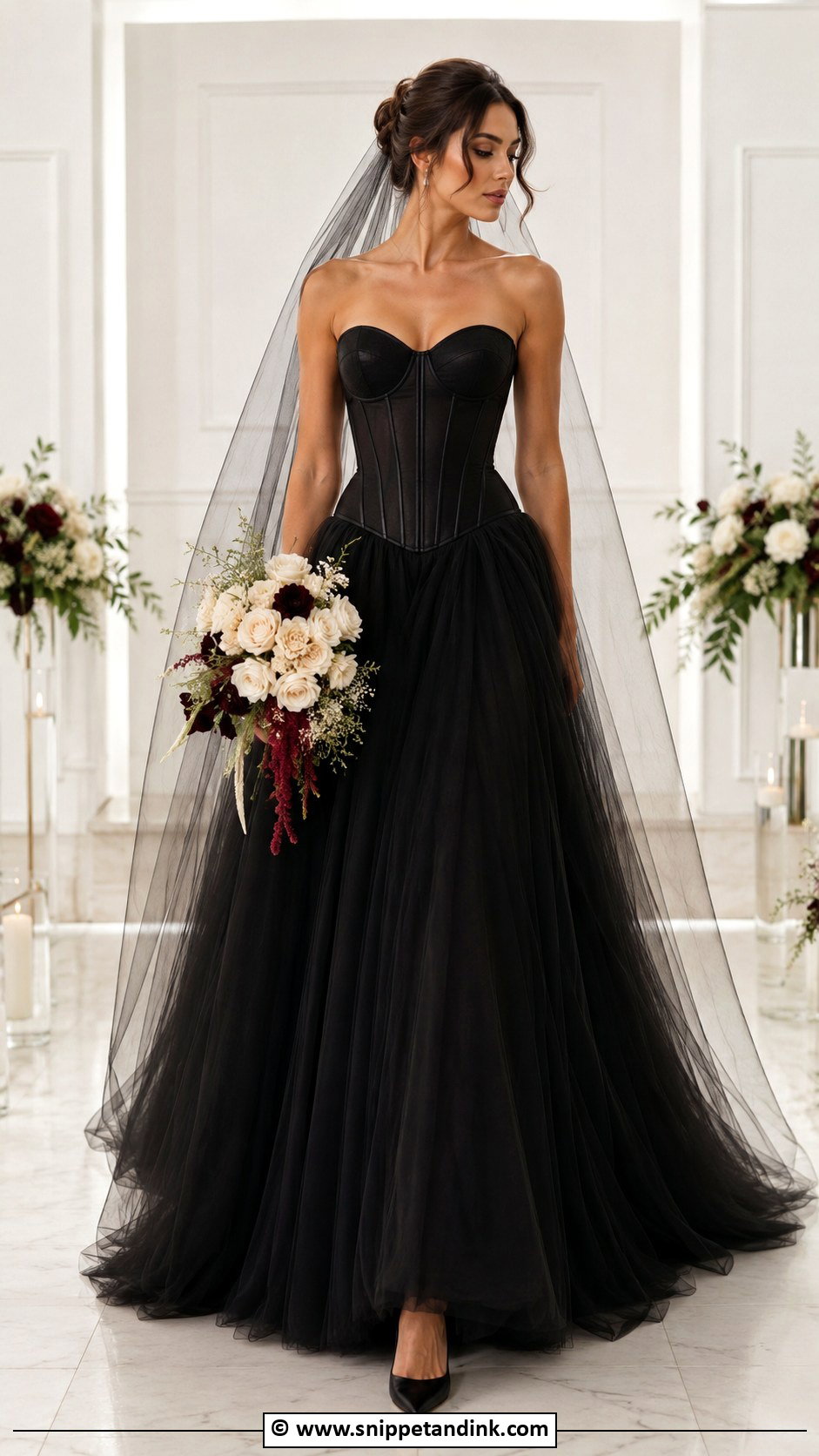
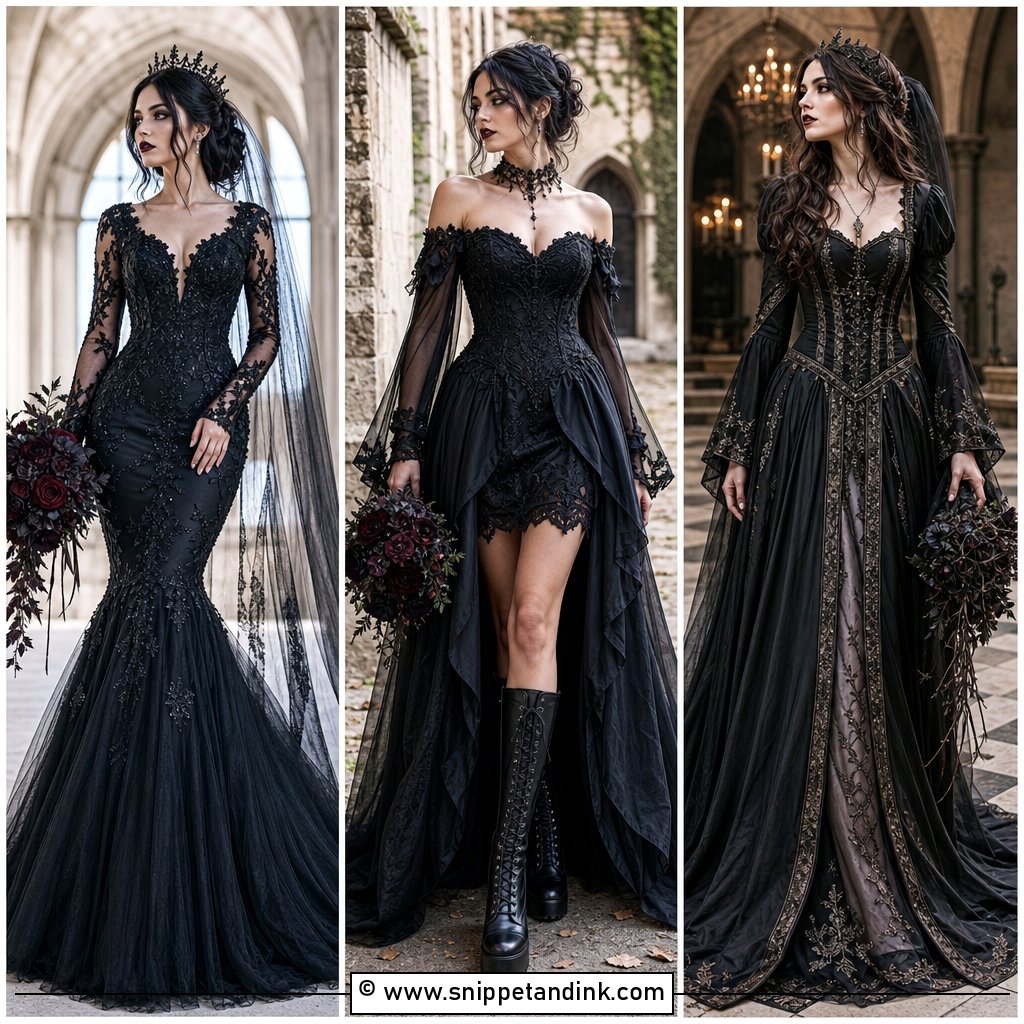
A corset bodice gives a black gown its architecture. Over a full tulle skirt it’s dramatic, over sleek satin it’s sharp, and with a fitted lace skirt it reads almost evening wear. I check that the boning sits flat at the top edge, since a dark bodice shows a gap or a bulge more readily than a pale one. Minimal jewelry, pointed heels and a long veil keep the bodice the focus, and ivory flowers with dark red soften its strong lines.
12. Black Mermaid Wedding Dress
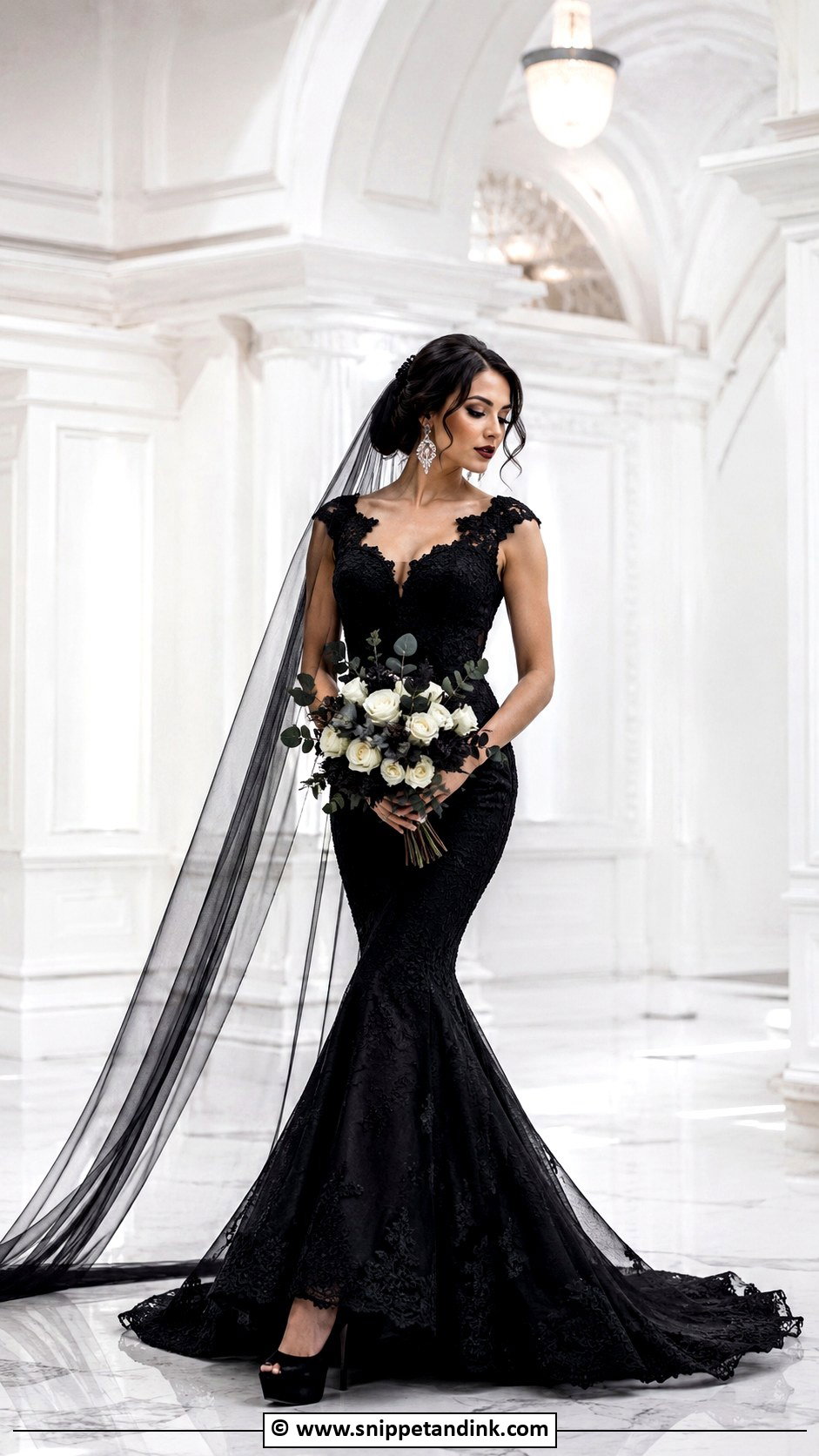
The black mermaid is the most body-conscious shape here, hugging bodice and hips before flaring near the knee. Lace, crepe, satin and beading all suit it. One practical tip: a veil that falls behind the gown, rather than over the shoulders, keeps the outline visible. High heels and statement earrings work, with a compact bouquet of white roses, burgundy and dark greenery.
13. Black A Line Wedding Dress
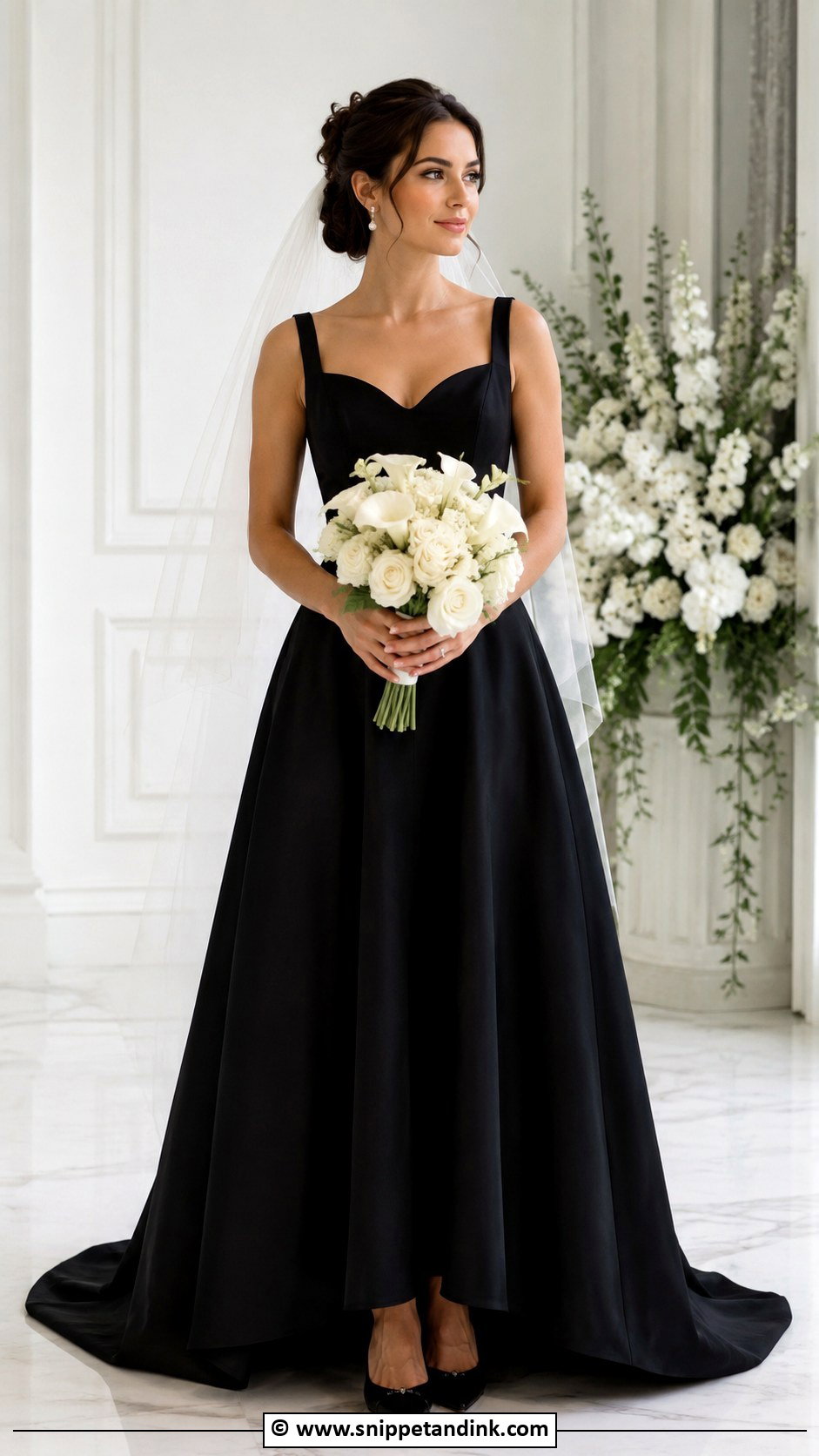
Want black without the drama? The A-line is the answer. It fits through the bodice and flows from the waist, so it’s comfortable for a long day and doesn’t carry the weight of a ball gown. The fabric sets the mood: lace for romance, chiffon for an outdoor ceremony, satin for formality. Black heels, pearl earrings and soft ivory flowers make the contrast.
14. Black Long Sleeve Wedding Dress
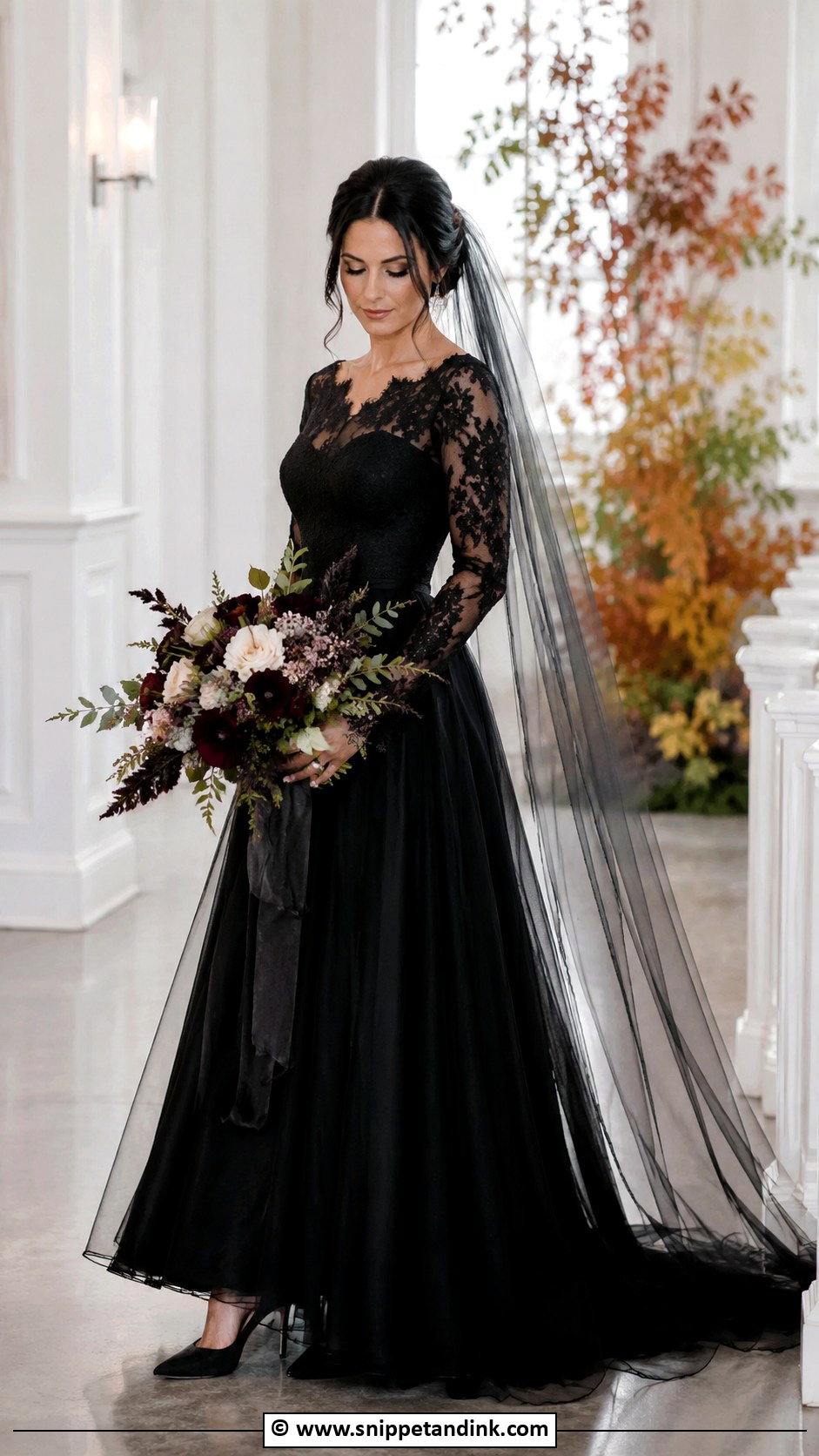
Coverage doesn’t have to mean plain. A black long sleeve wedding dress with sheer lace sleeves shows skin through the pattern, while fitted satin or crepe sleeves look sleek. I pair a full sleeve with an open element somewhere, a V, a low back or off-shoulder, so the outfit doesn’t feel closed. Closed-toe heels and a long veil complete it for fall and winter ceremonies, and ivory, burgundy and green flowers add warmth near the hands.
15. Black High Neck Wedding Dress
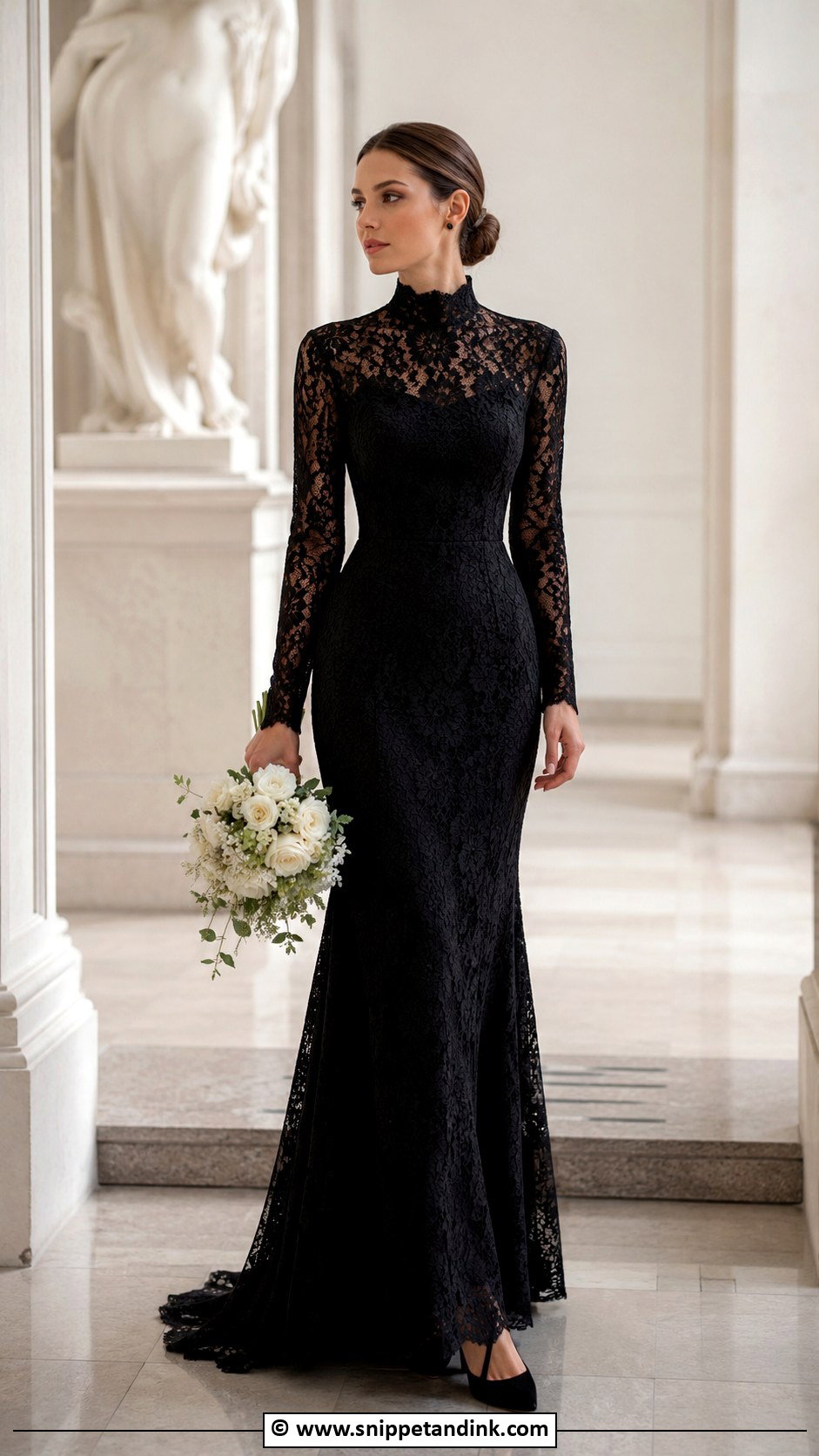
A high neck in black looks vintage in lace and architectural in crepe or satin. Because the top is covered, I balance it with something open lower down, a fitted waist or a bare back. Attach the veil low at the back of the head so it doesn’t fight the collar. Small earrings, a sleek bun and white flowers give strong contrast in museums and historic spaces.
16. Black Off Shoulder Wedding Dress
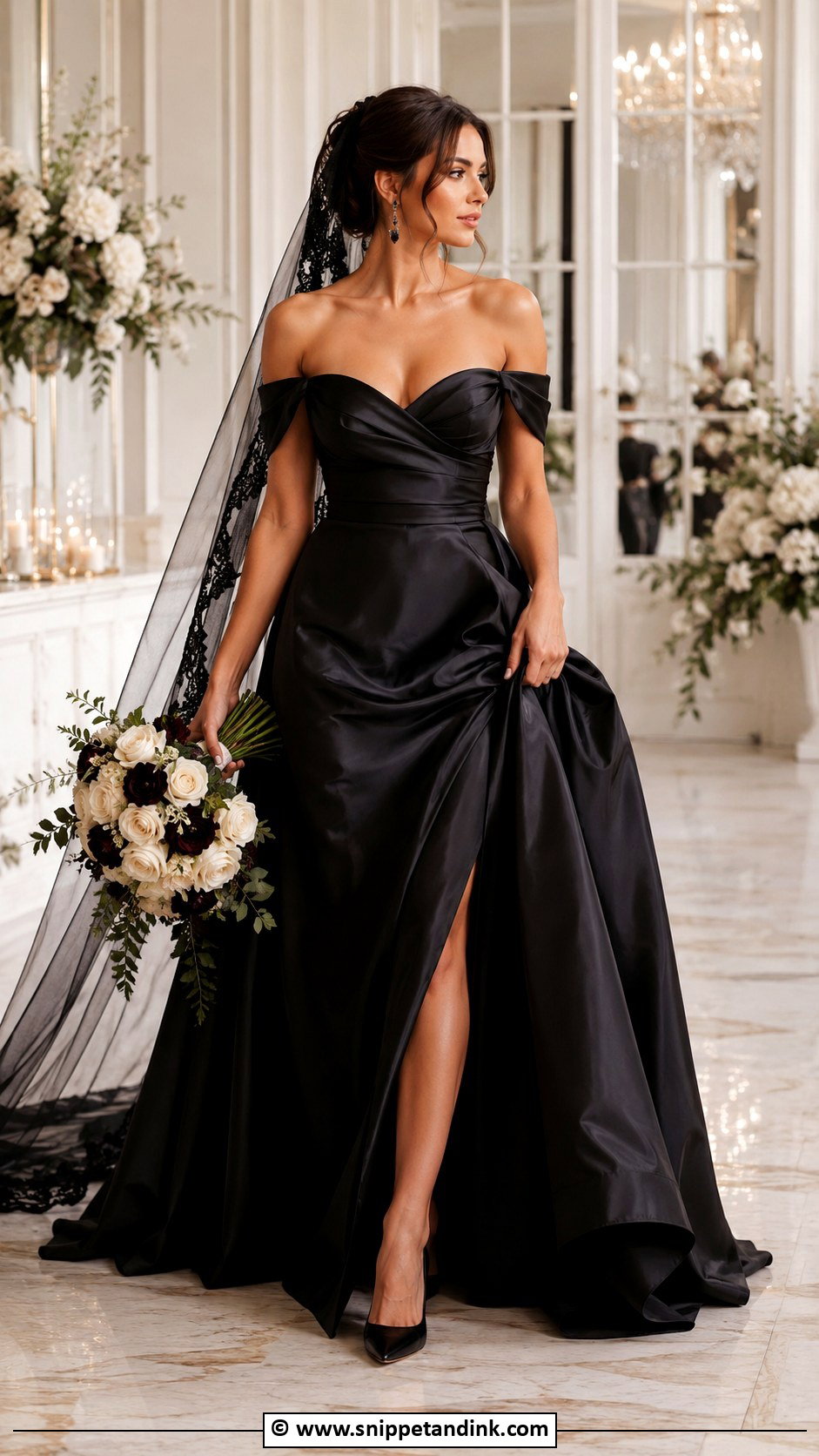
Bare shoulders soften black more than any other neckline. The skin breaks up the dark mass and draws the eye up to your face. Satin, lace, tulle and structured mikado all keep an off-shoulder line in place. A fitted bodice with a full skirt brings drama; a sleek column is modern. Drop earrings, a soft updo and a bouquet with cream roses and trailing greenery complete it for a formal evening.
17. Black Floral Wedding Dress
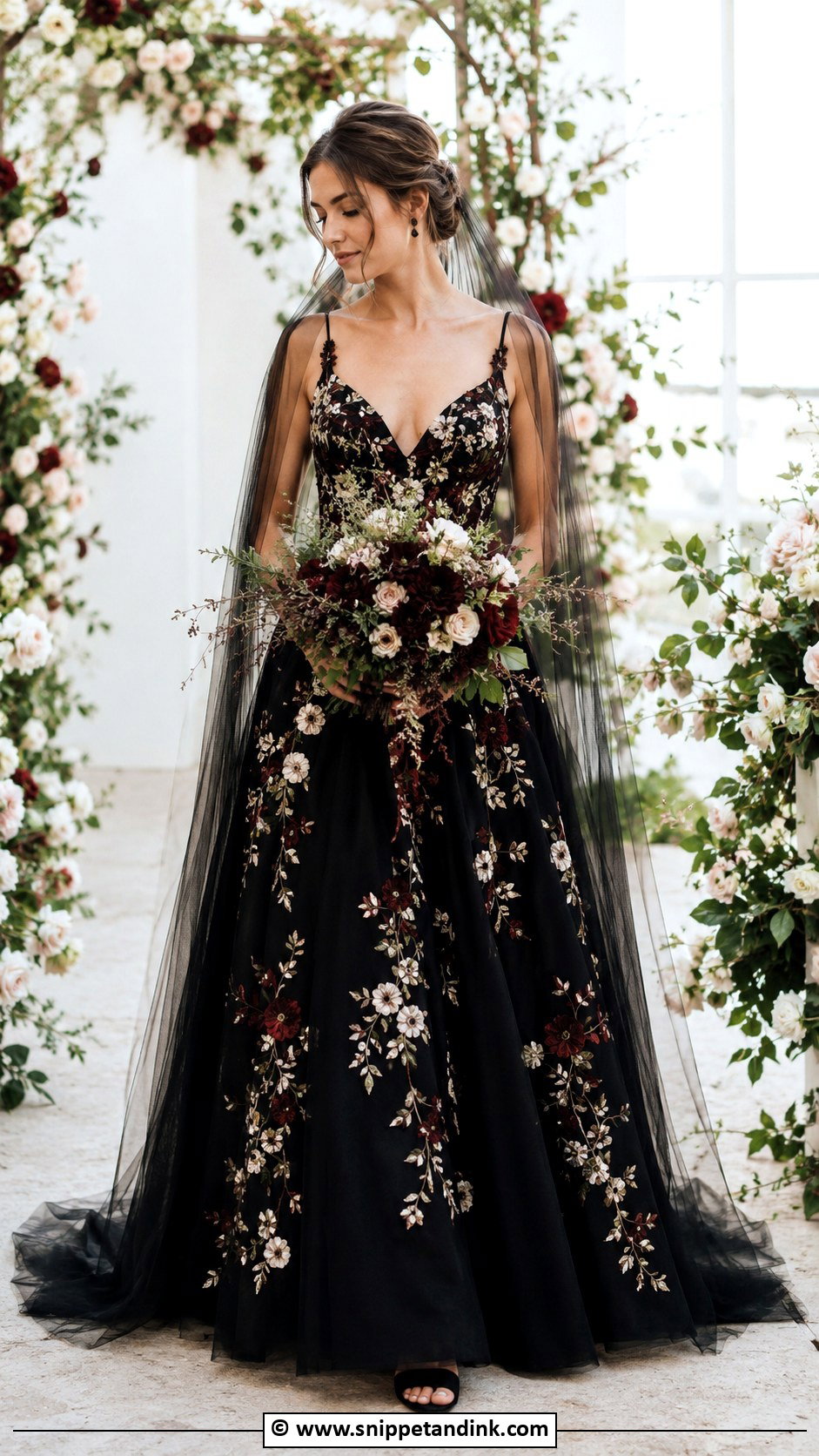
Florals take the edge off black. Embroidered flowers, floral lace or dark botanical appliqué can be ivory, blush, burgundy, silver or tonal black. My trick is to pull one or two colors from the embroidery into the bouquet, so the outfit looks planned. Keep accessories minimal: black heels, small earrings and a sheer veil. It sits well in gardens and creative venues and feels softer than solid black.
18. Black And White Wedding Dress
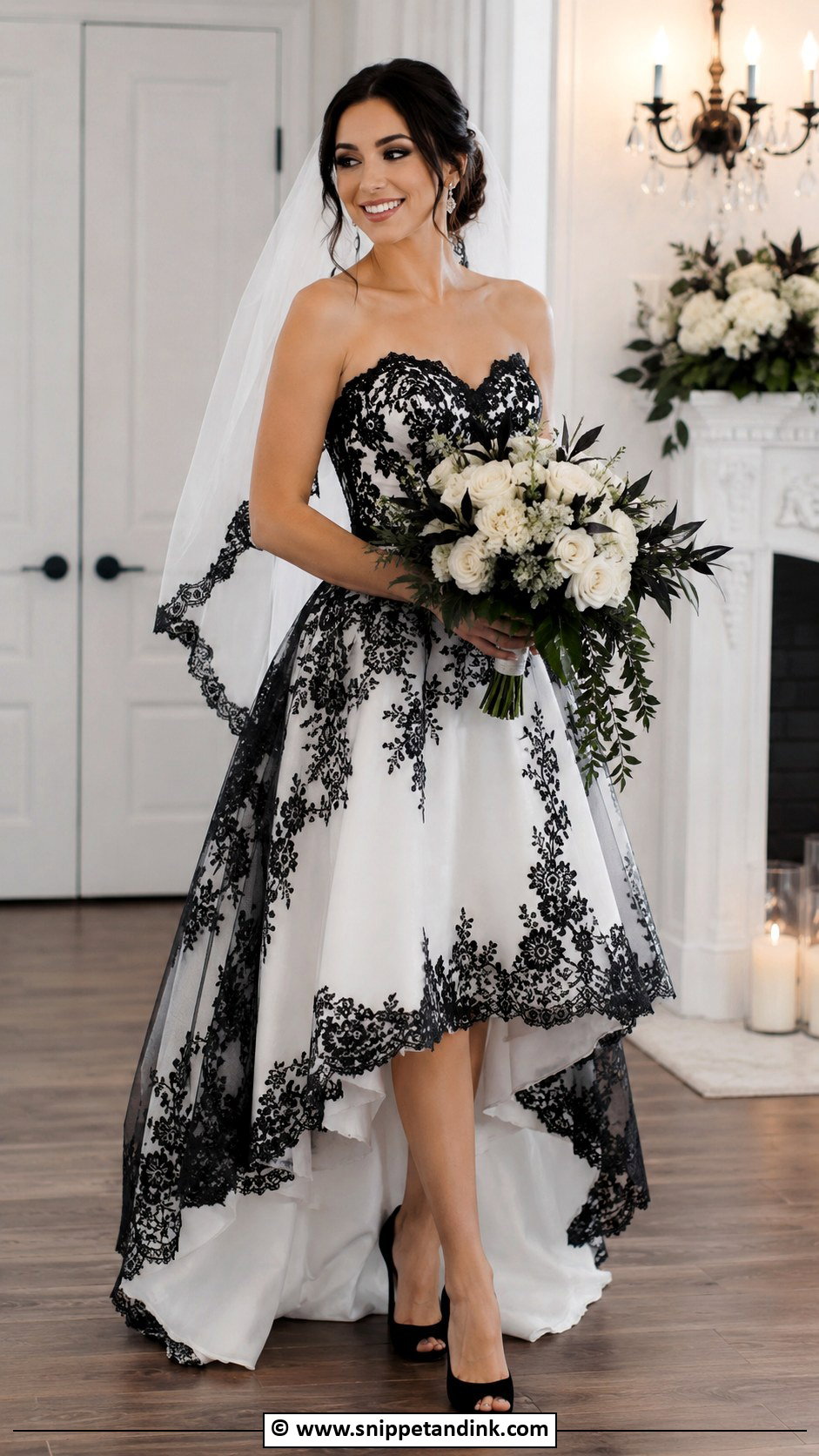
Black and white keeps one foot in tradition. A white gown with black lace overlay, a black bodice with a white skirt or a black sash on white are all options. Balance is everything. When one color clearly dominates, the gown looks deliberate; a fifty-fifty split can look like a costume. Match the veil to whichever color leads. Pearl earrings and white flowers with greenery tie it together.
19. Black Beaded Wedding Dress
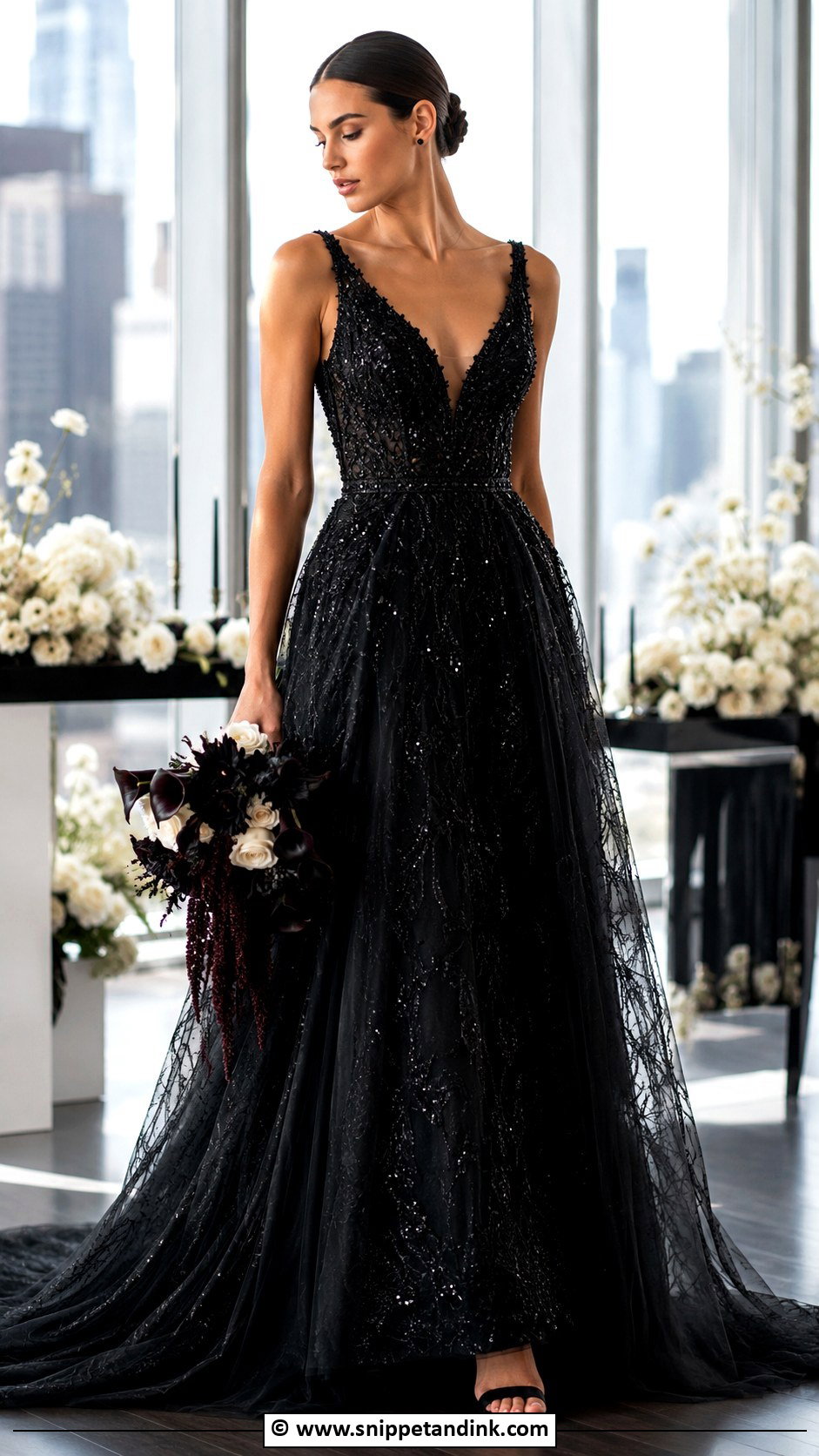
Beading in silver, gunmetal or dark crystal catches light without looking loud on black. Look for beadwork that follows the bodice seams or sleeves in a pattern that suits your shape. A heavily beaded gown is heavy to wear, so ask about a waist stay to take the load. Keep hair sleek and earrings small. Art deco venues and formal city receptions suit it.
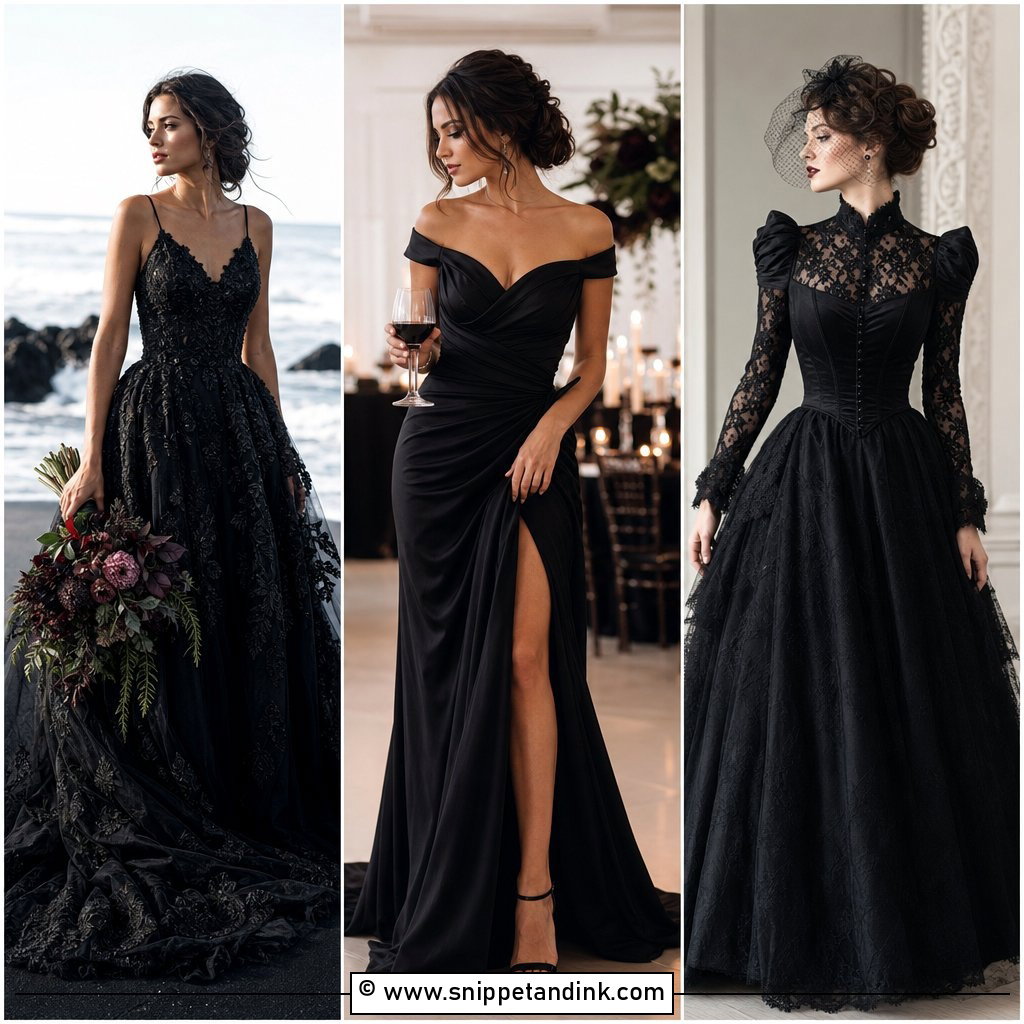
20. Black Sequin Wedding Dress
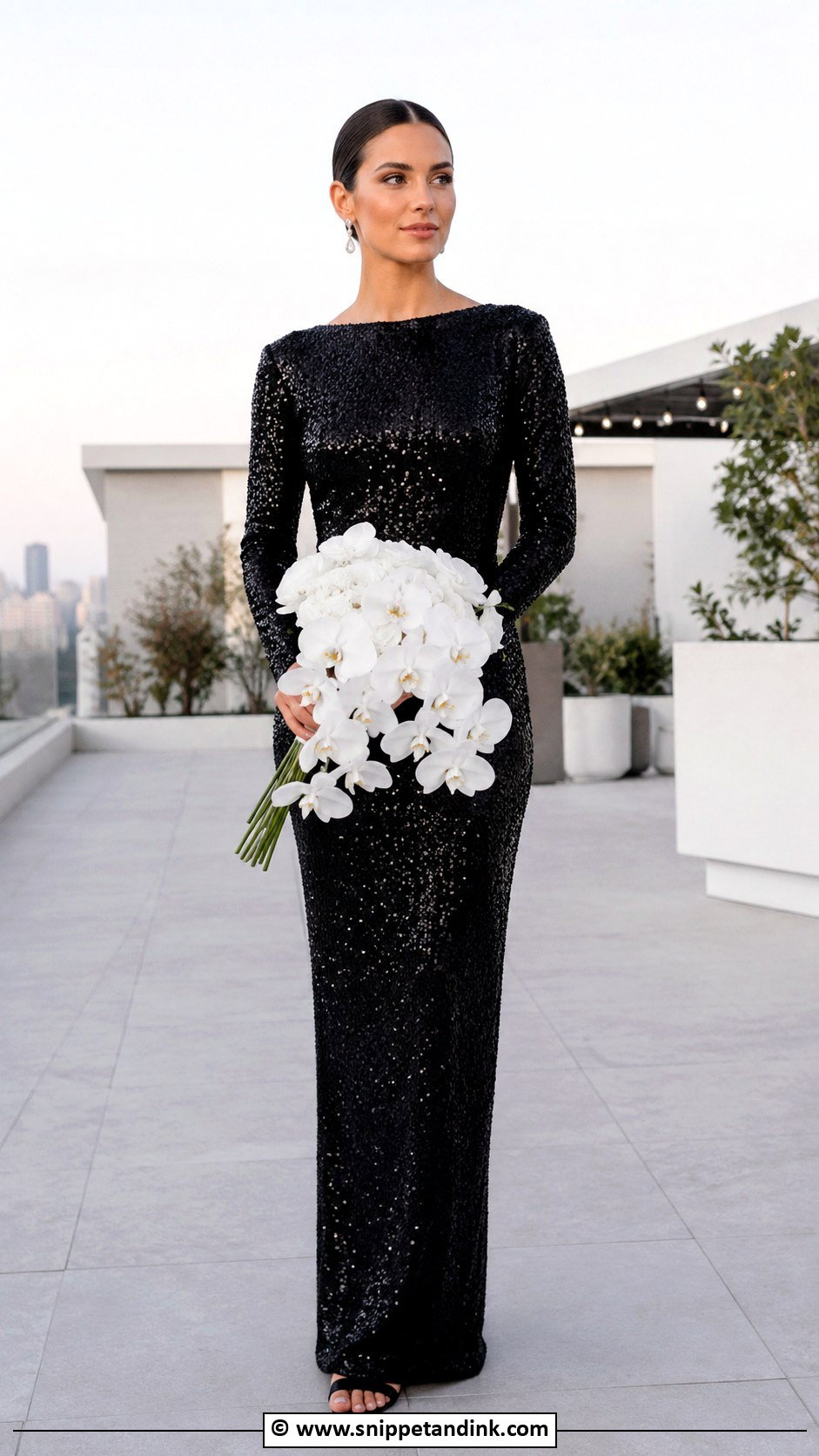
Sequins are where black can tip from bridal into party wear. The cut is what keeps it on the right side: a long-sleeve column, fitted slip or soft mermaid. I’d check the inside of the arms, since sequins rub on bare skin all night. Minimal heels, a clean veil or no veil at all, and white orchids or roses soften the shine at an evening reception.
21. Black Cape Wedding Dress
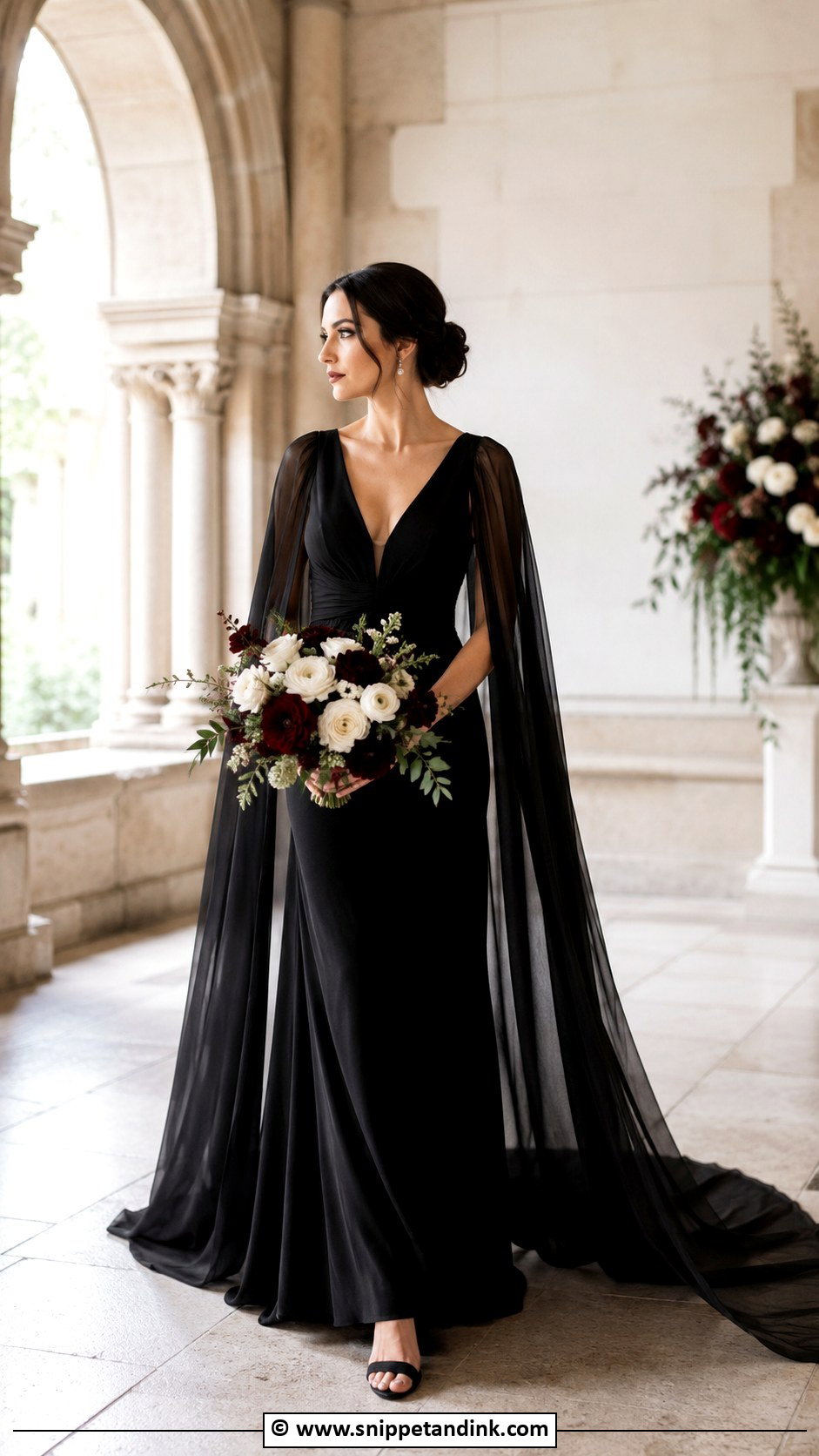
A cape brings drama without a big skirt. It can be sheer tulle, lace, satin or chiffon, attached at the shoulders, neckline or back. Worn over a sleek black gown it looks powerful. Wind is the cape’s enemy outdoors, so I’d attach it at more than one point for any outdoor portraits. Minimal jewelry and smooth waves keep the neckline visible, and ivory and deep red flowers add contrast.
22. Black Tea Length Wedding Dress
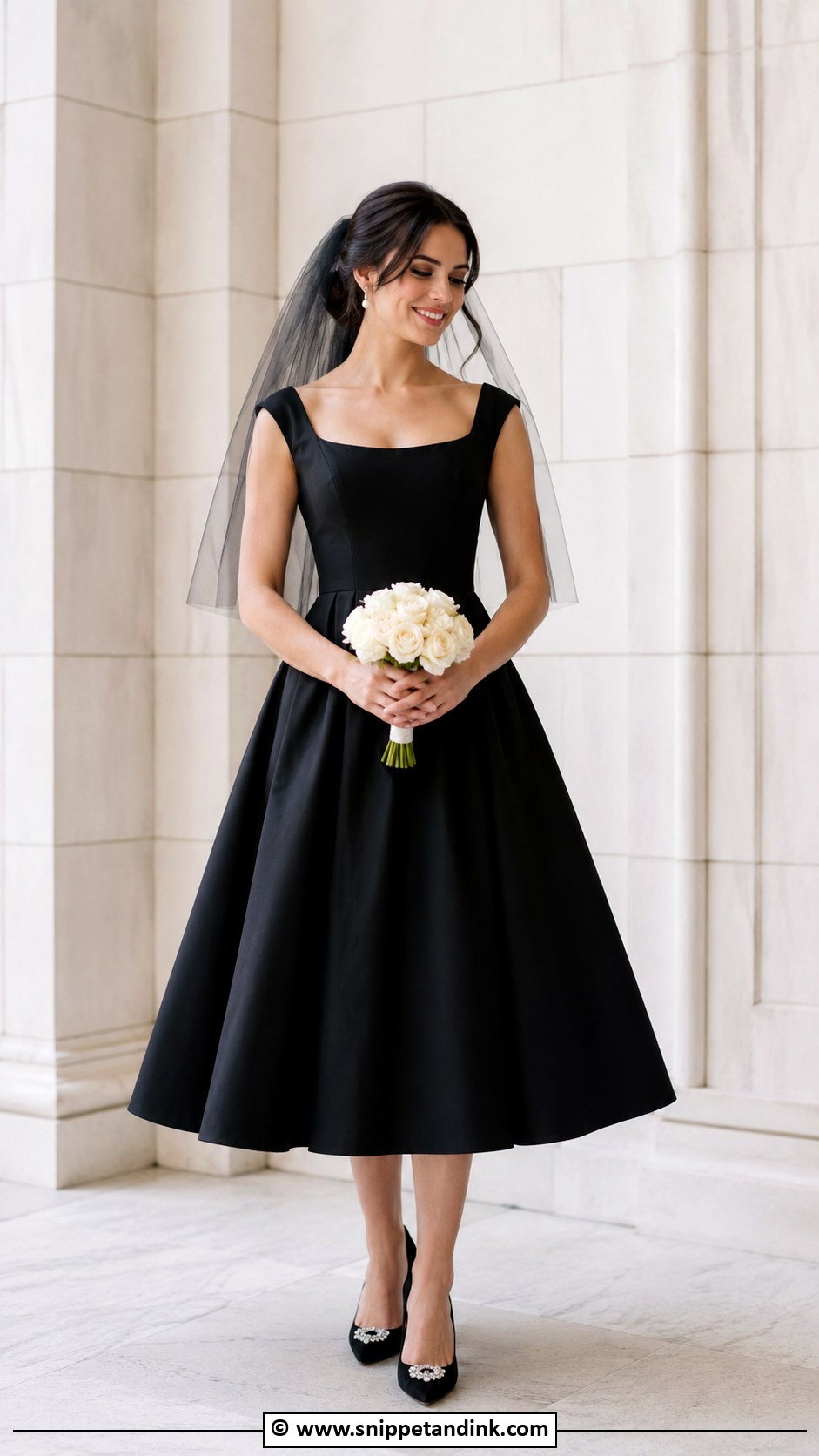
A tea-length black gown feels vintage and lets you walk freely. With the hem falling between the knee and ankle, the shoes are seen all day, so I’d choose black pumps or ankle straps you can stand in for hours. A fitted bodice with a full tulle or satin skirt gives the classic shape. Short gloves and pearl earrings add charm at a courthouse or garden ceremony.
23. Black Slip Wedding Dress
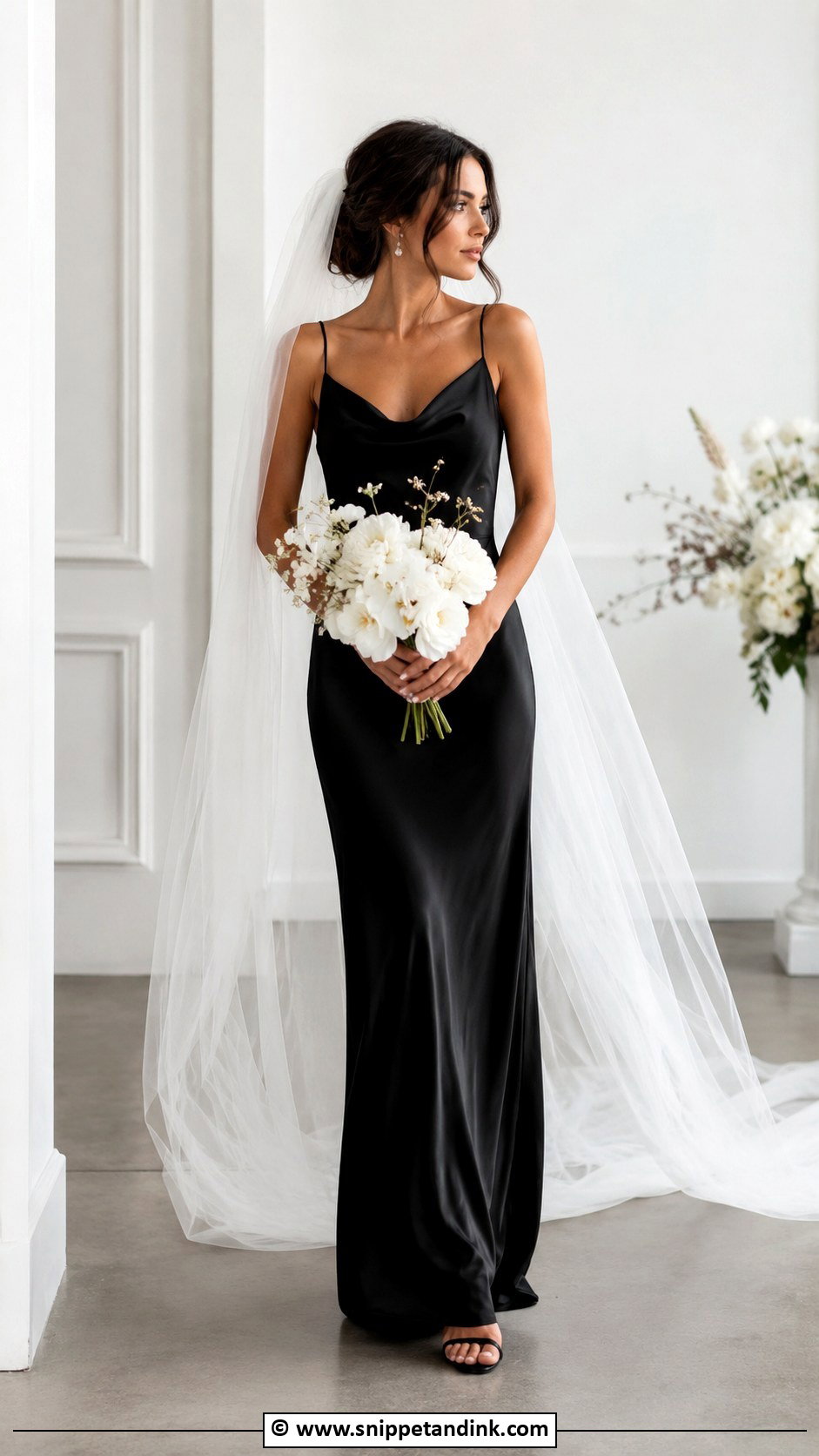
A black slip wedding dress depends entirely on fabric and fit. Silk, satin or crepe with a clean neckline drapes well; thin polyester clings and shows every seam underneath. Plan your underwear early. Strappy heels, a long sheer veil and a smooth style finish it. For coverage at the ceremony, a cropped faux fur wrap, tailored blazer or sheer cape works, and a minimal white bouquet looks sharp against it.
24. Black Wedding Dress With Veil
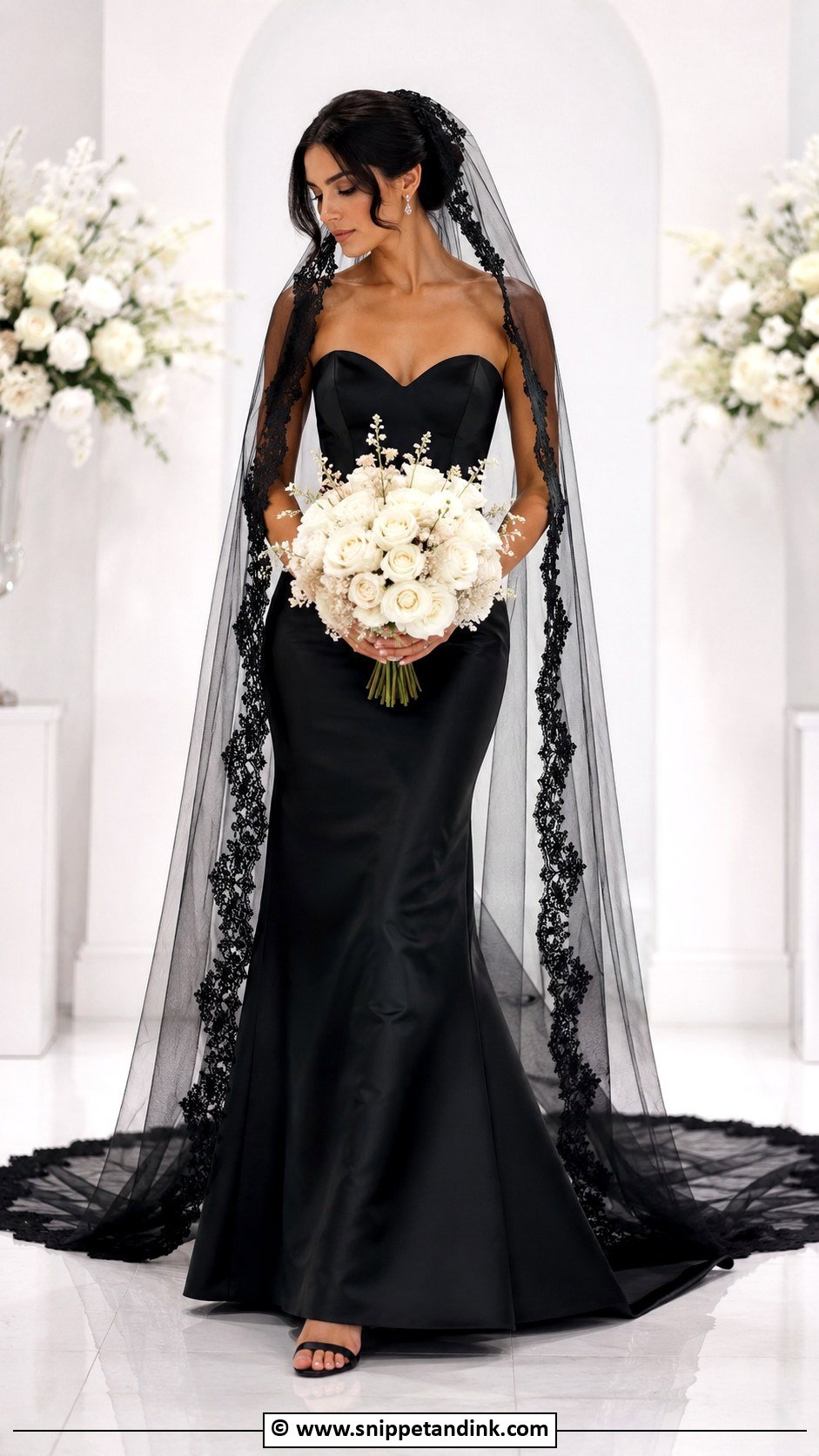
The veil is what makes a black dress read as a wedding dress. A black cathedral veil turns it dramatic, a sheer fingertip softens it, and lace trim adds romance. Pair it with a gown that has a clear silhouette, A-line, fitted satin or lace mermaid. Ivory flowers bring light near the face and hands. Keep shoes and jewelry simple so the veil and gown are read together.

25. Black Wedding Dress With Boots
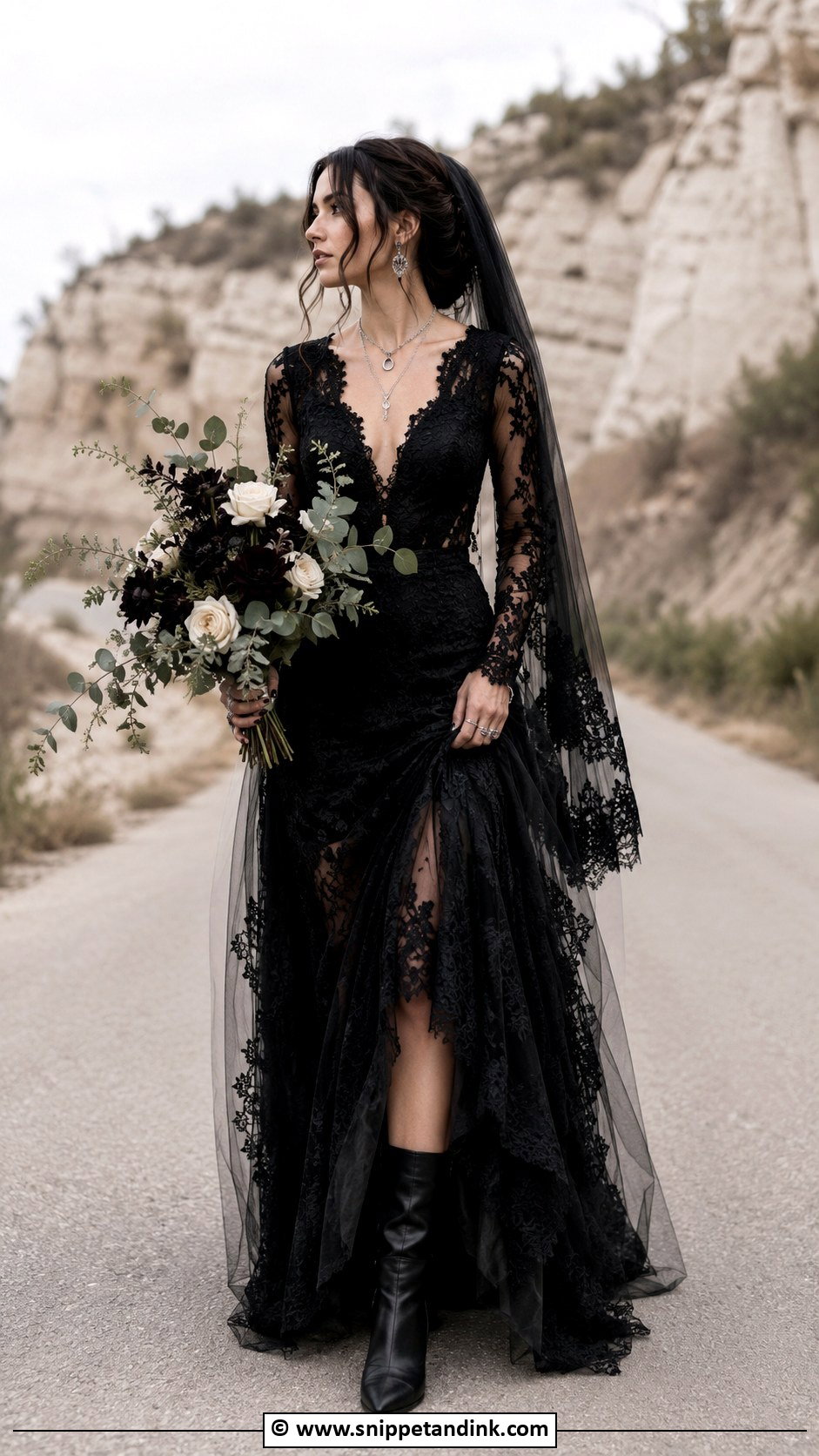
Boots solve two problems at once: comfort on uneven ground and a bit of edge. Sleek ankle boots, pointed leather boots, lace-ups or heeled knee-highs each suit different hem lengths. Lace gown with boots feels romantic; satin slip with boots feels modern. I’d break them in before the wedding, because new leather rubs badly after a few hours of standing. A black veil and silver jewelry complete it for outdoor, rustic or cold-weather weddings.
A Day-Of Kit for a Black Gown
Black fabric shows things ivory hides. Lint, pet hair, white deodorant, dust from a hem and powder from your own makeup all show up clearly on camera. I pack a small kit for any dark gown and hand it to whoever is helping you dress.
- A lint roller, used just before you leave and again before portraits.
- A clear deodorant, applied and left to dry fully before the gown goes on.
- A clean makeup cape or scarf over the neckline while your makeup artist does touch-ups, since foundation leaves pale marks on black.
- A soft brush for velvet, to lift crushed nap after sitting.
- Black safety pins and black thread, because silver pins glint in photos.
- A small handheld steamer if the gown has been sitting in a car.
One more thing to discuss with your makeup artist: dark fabric beside the face can make skin look paler. A little warmth on the cheeks and a lip color with some depth help you look like yourself against black rather than washed out.
Dark Is a Mood, Not a Costume
A dark gown isn’t a passing trend for the brides who choose it. It’s how they want to feel walking toward the person they’re marrying. Black lace, satin, burgundy, midnight blue, velvet, floral embroidery and capes all give you a route there. Let your venue, season and the mood you want in photos choose between them, then adjust the veil, shoes, bouquet and jewelry until the whole outfit feels like yours.
You'll Like These Ideas:


Leave a Reply