
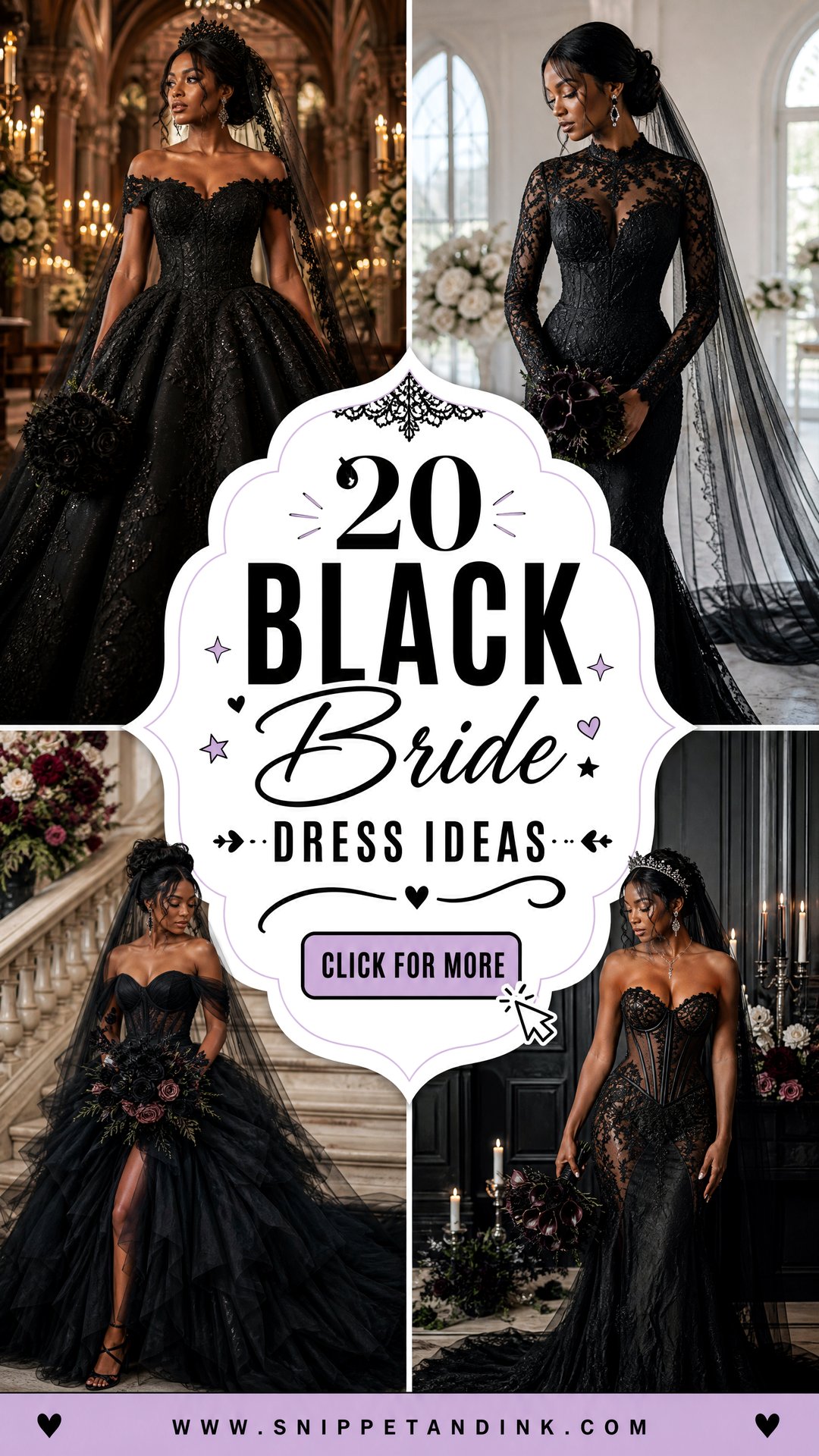
Brides who ask me about a black gown have usually decided long before the appointment, and what they want from me is how to make it look bridal rather than like an evening dress. That comes down to silhouette, fabric and the few details that signal “wedding”: a veil, a train, a bouquet, the way the dress moves down an aisle. Below are twenty black dresses and outfits, from lace ball gowns to a polished jumpsuit, each styled head to toe with the shoes and accessories I’d actually put with it, and the fitting points I’d check.
Trying On Black When the Shop Only Has Ivory Samples
Most bridal shops stock their samples in ivory or white, even for styles the designer makes in black. That means you may never see your dress in its real color until it arrives. A few things make that less of a gamble.
- Ask the consultant which styles are offered in black by the designer, not dyed after. Factory black is even; a white gown dyed later often isn’t, because lace, tulle and lining take dye at different rates and some synthetics barely take it at all.
- Ask for fabric swatches in black and look at them by a window. Black lace, satin and crepe each have a different sheen, and that sheen is what you’ll see in photos.
- Allow extra time. Made-to-order bridal gowns commonly take several months, and a color order can add to that. Leave room for two or three fittings after it arrives.
- Try the silhouette in any color the shop has, and picture only the shape. Fit decisions don’t change with color; styling decisions do.
One honest note before you order: in some families and cultures, black at a wedding still reads as mourning. If older relatives may be surprised, tell them early and show them the dress. It saves a hard conversation on the morning.
1. Black Lace Ball Gown Wedding Dress
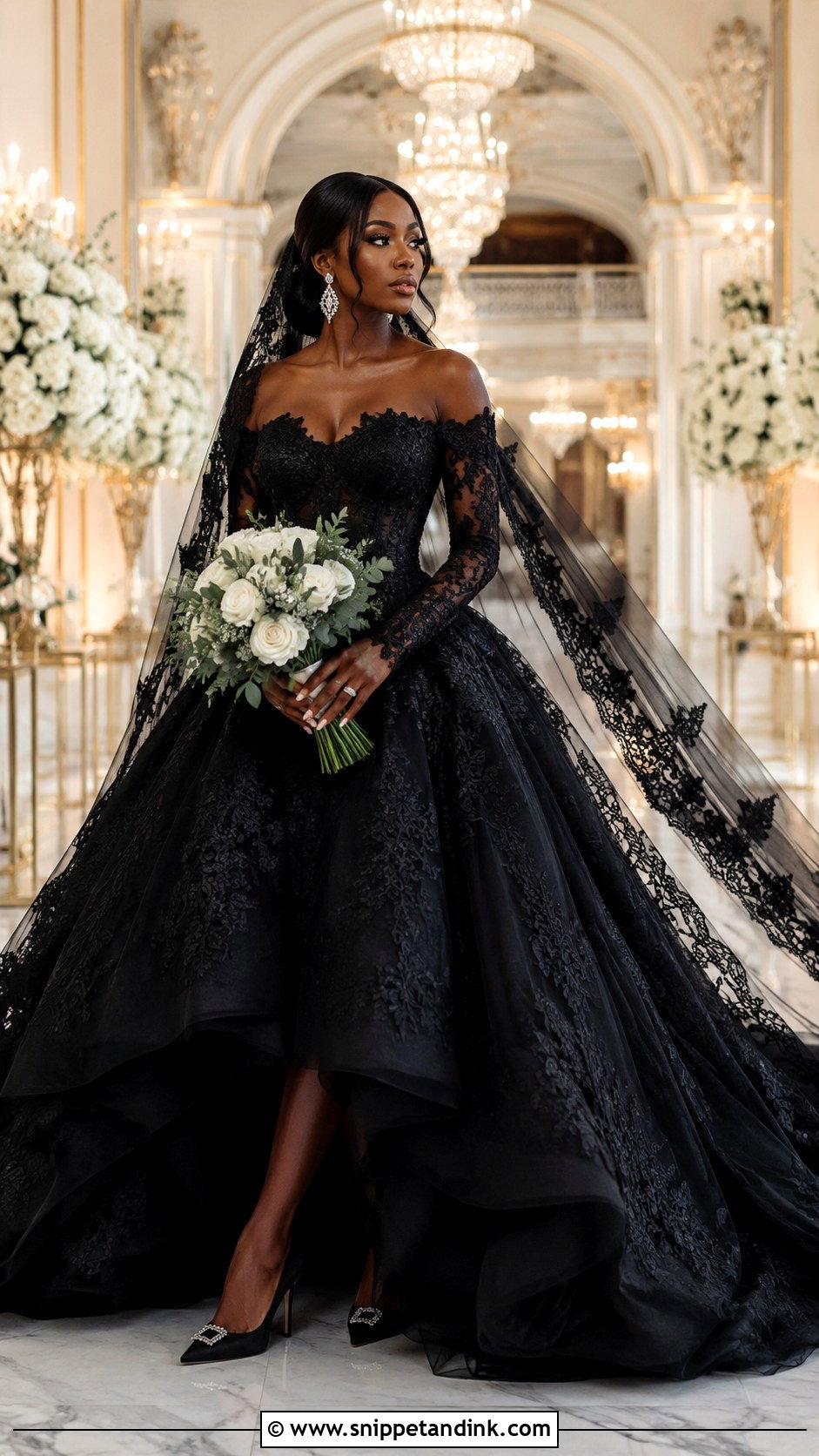
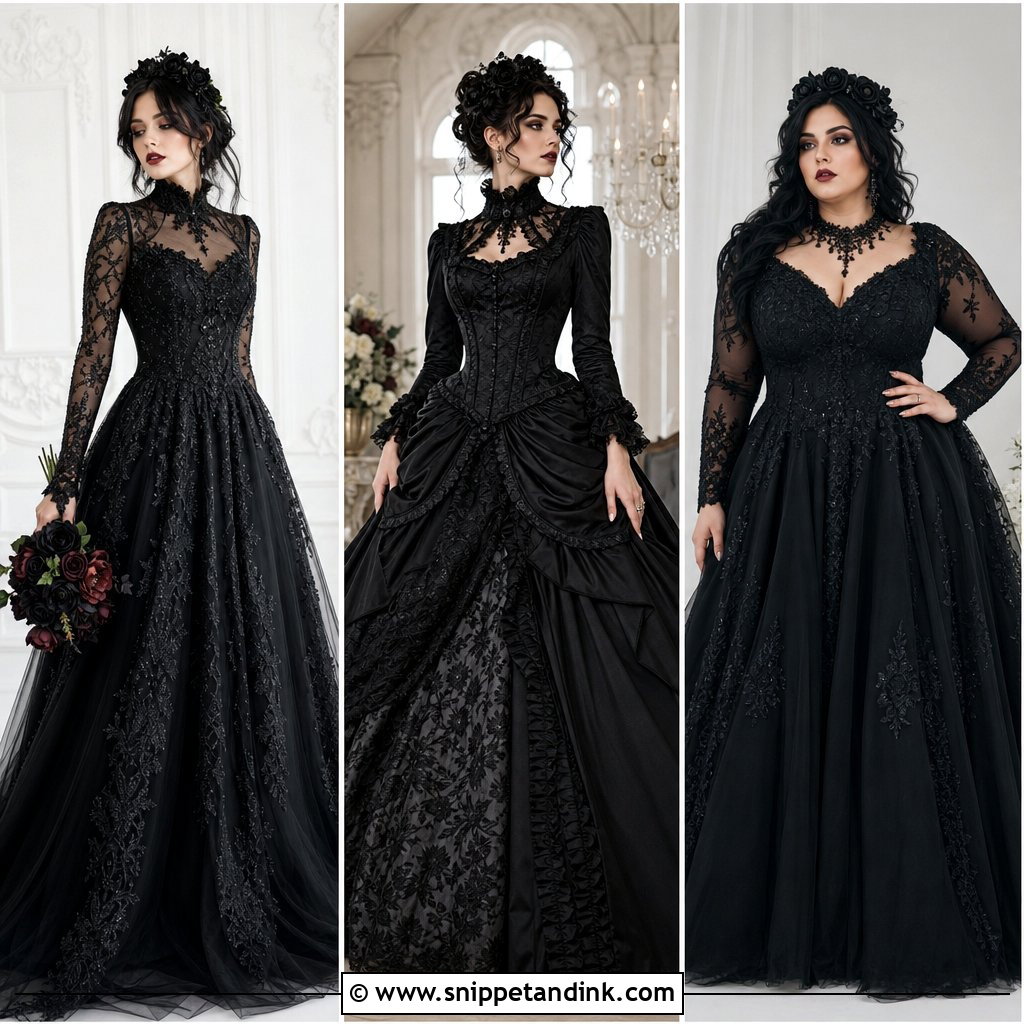
Lace over a nude lining reads very differently from lace over black, and that choice is the first one I’d make. Nude lining lets the floral pattern show from across a room; black-on-black turns it into texture you only see up close. A boned bodice holds the shape, and the layered skirt should move without dragging at your waist by the evening. Pointed black pumps, crystal drops and a long tulle veil edged in matching lace complete it. White roses with greenery give the contrast the camera needs, and a ballroom or historic venue gives the skirt room.
2. Simple Black Satin Wedding Dress
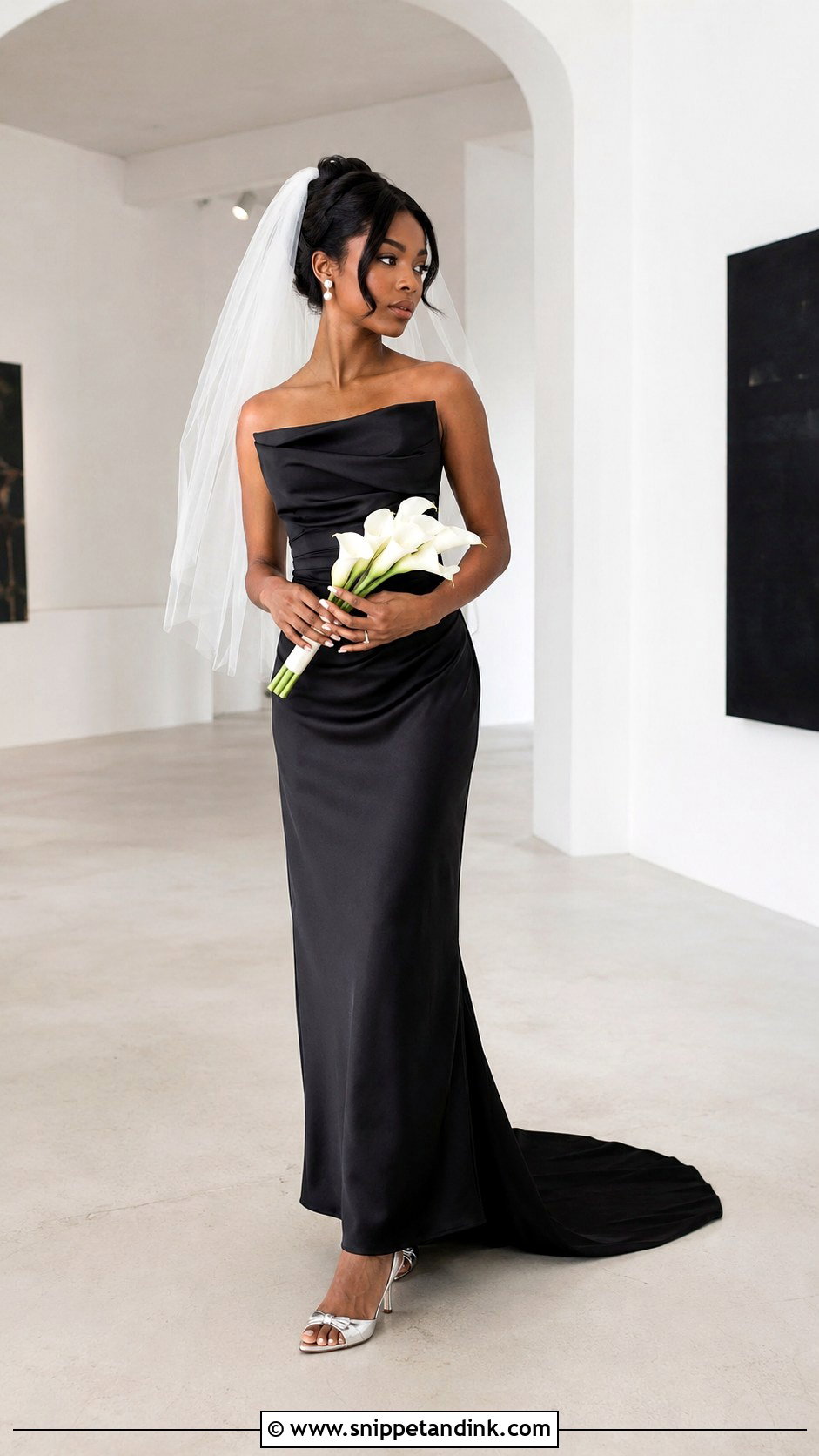
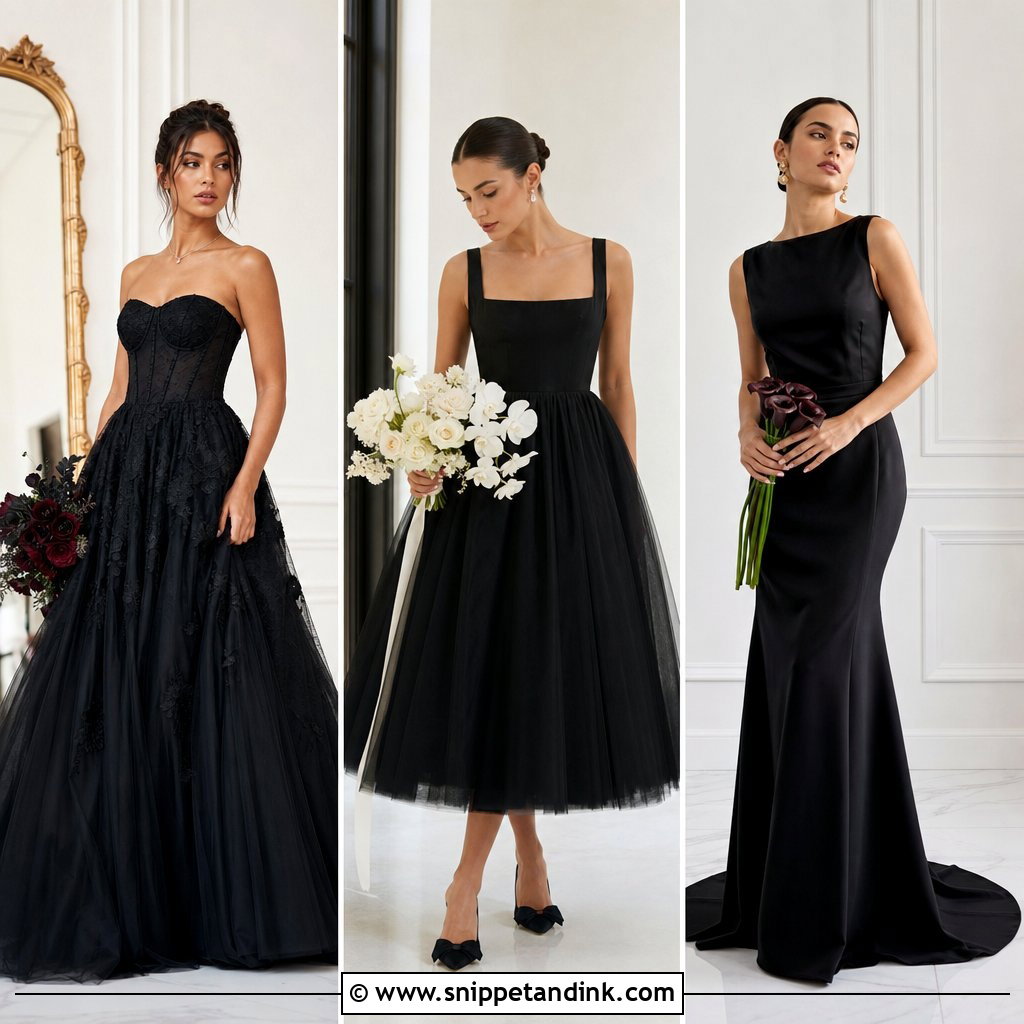
Black satin has nothing to hide behind, which is why I love it and why I’m strict with it at fittings. Every pull across the hip and every crease from sitting shows as a line of light. A column or softly fitted A-line with a structured neckline and a small train lets the sheen be the detail. Silver slingbacks, pearl earrings and a sleek low bun keep it modern, and a fingertip veil softens the edges. Carry white calla lilies. Have it steamed on the morning, and sit as little as you can in the car on the way.
3. Black Mermaid Wedding Dress
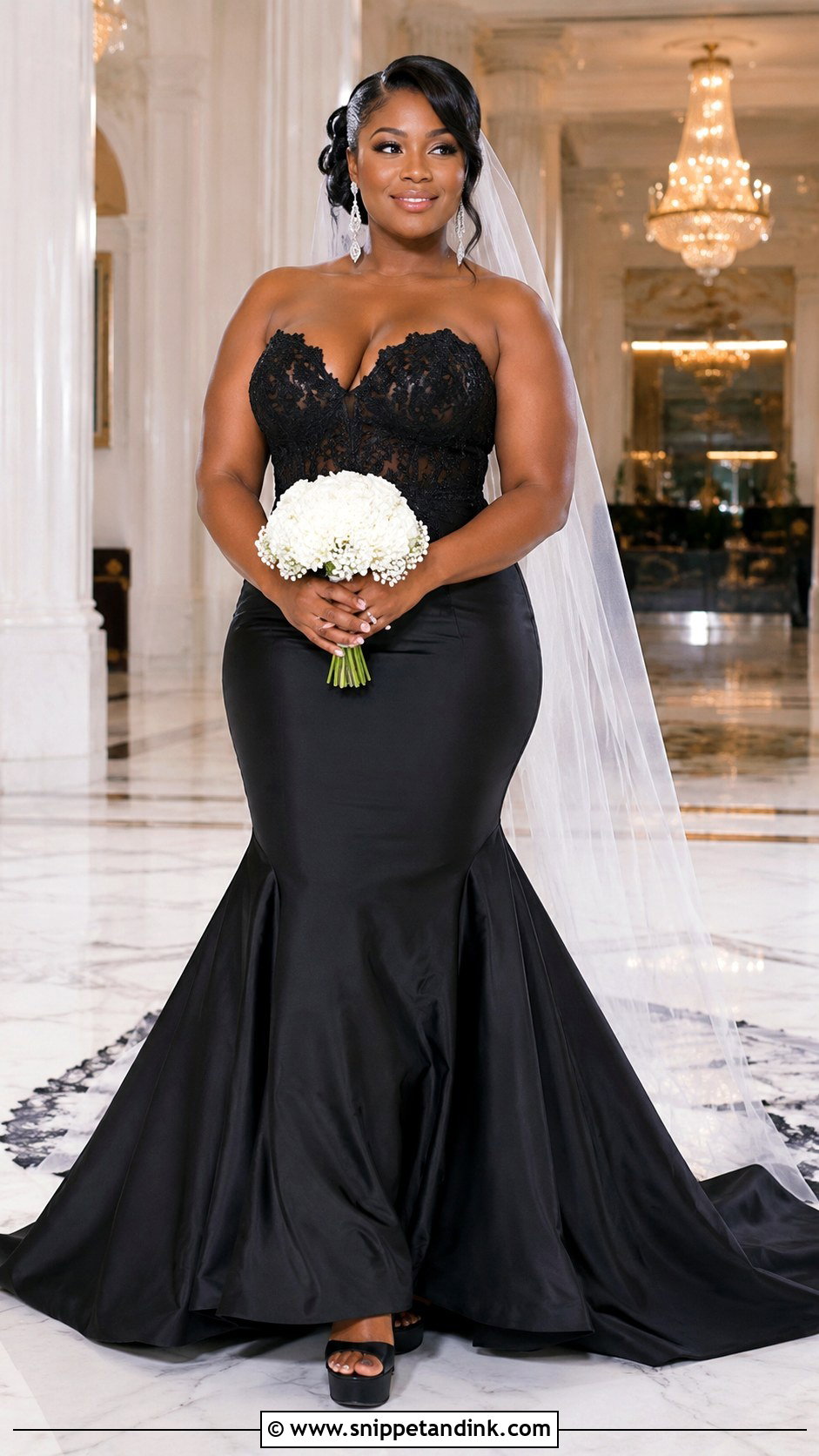
With a mermaid, the question is where the flare starts. Too low and you shuffle; a few centimeters higher and you can walk the aisle and climb steps. I have brides practise walking, sitting and stepping up during fittings for exactly this. Stretch crepe, lace or satin all hold the shape. Platform sandals or pointed pumps stay under the hem, and crystal earrings with a cathedral veil keep it formal. Make sure the bustle points are sewn in so the train lifts quickly for the reception, and keep the bouquet compact.
4. Black A-Line Wedding Dress
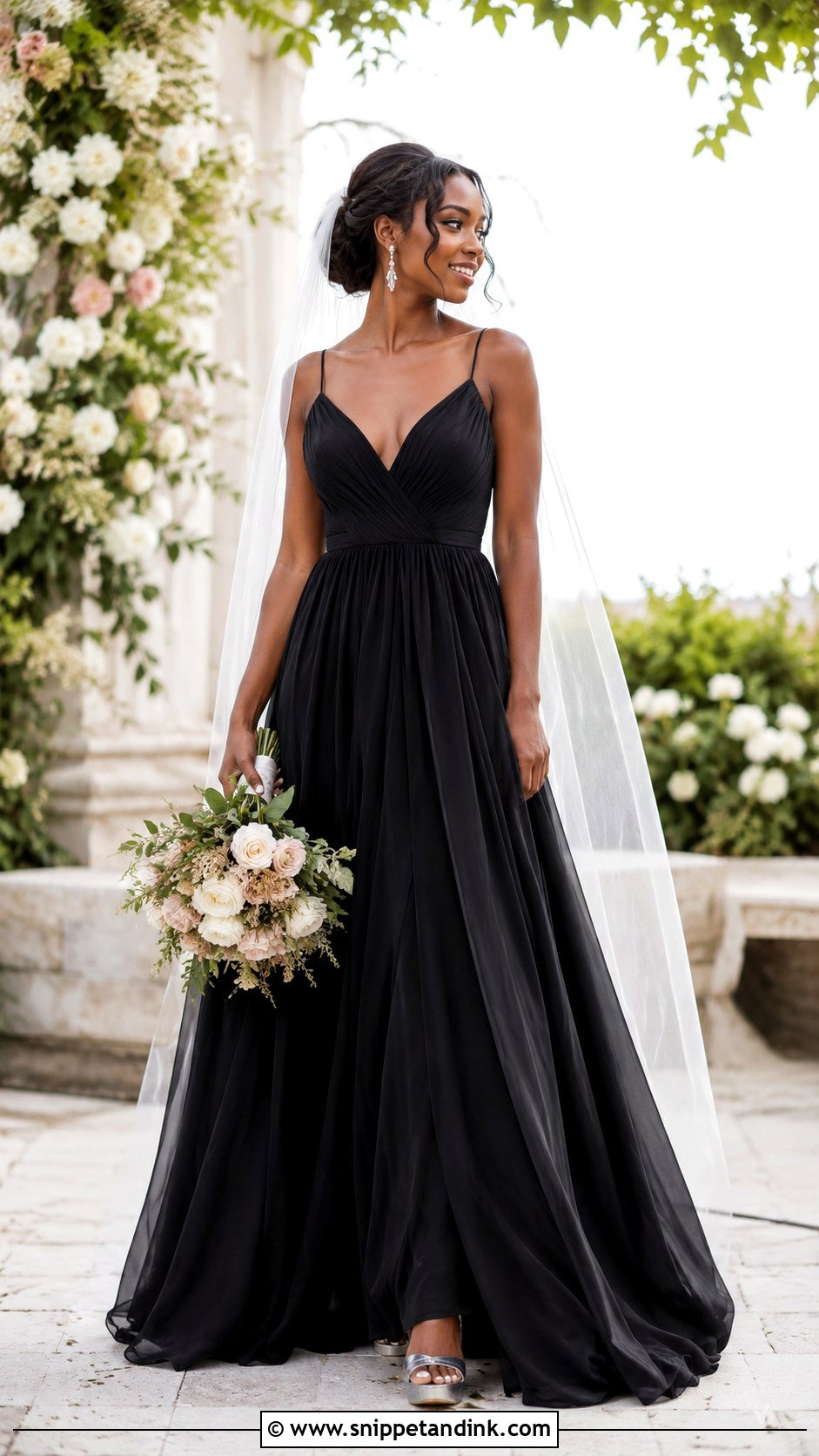
Which black silhouette is comfortable and still formal enough for a ceremony? Usually, an A-line. It follows the bodice, then falls away from the waist, so it suits most figures and lets you sit through a long dinner. Chiffon moves softly; satin or mikado holds the skirt out. A thin jeweled belt defines the waist, and I’d have it attached with hooks so it comes off for a plainer reception. Metallic block heels, small drop earrings and a waist-length veil finish it, with white, blush or deep red flowers.
5. Black Long Sleeve Wedding Dress
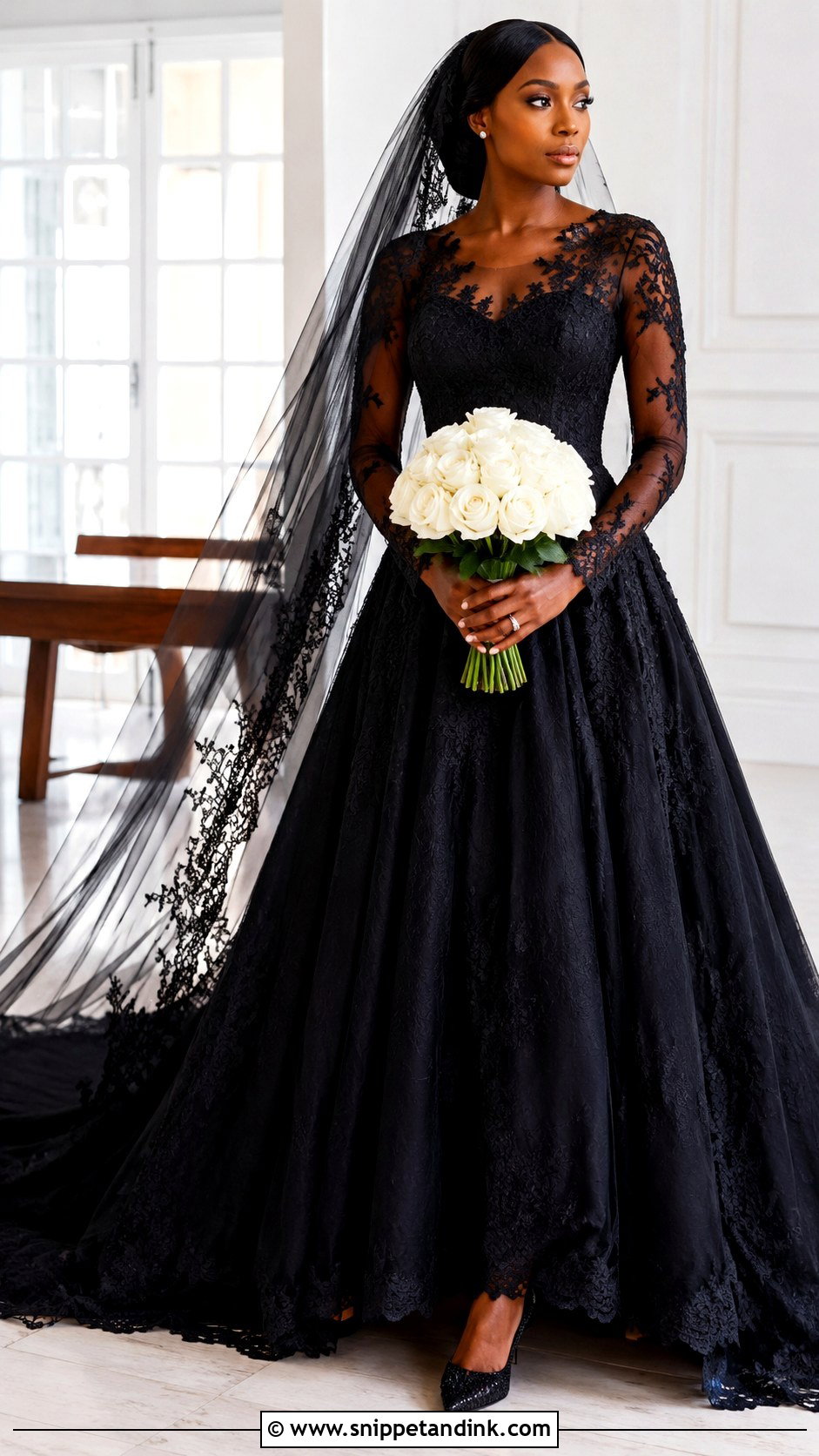
Sleeves change how a dress behaves more than people expect. Sheer lace is light and forgiving; fitted crepe looks cleaner but restricts the arm if it’s cut close at the armhole. At fittings I ask brides to hug someone and raise both arms as if dancing, because a tight sleeve pulls the whole bodice up. A well-lined bodice keeps the line smooth from every side. Closed-toe heels, a black cathedral veil and small studs suit it, a polished updo shows off the sleeves, and a tailored wrap covers a cold evening.
6. Black Off Shoulder Wedding Dress
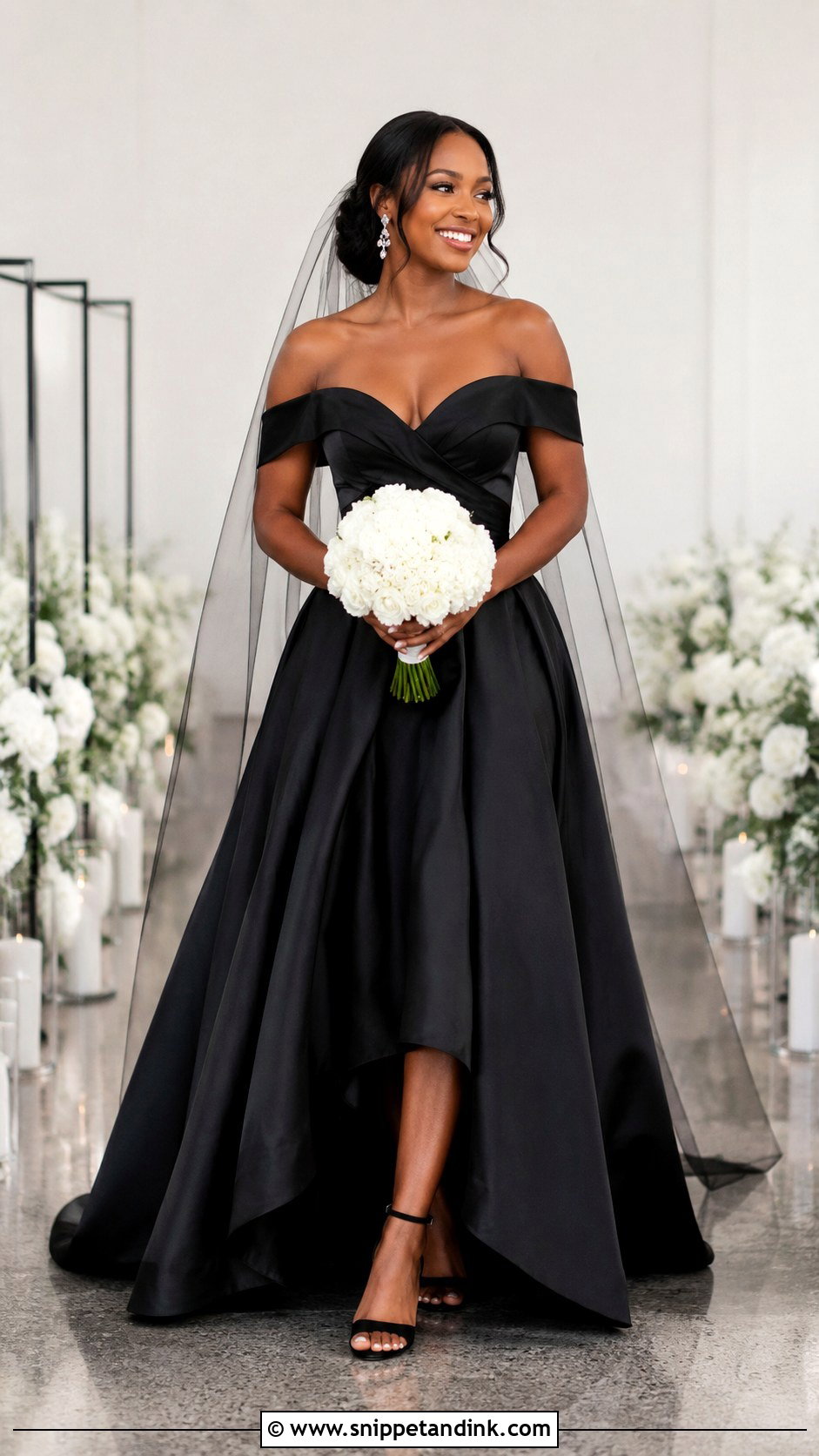
Off-the-shoulder necklines frame the face and collarbones, and they need proper internal support to stay in place. Without it, the neckline creeps up the arm every time you raise your hand. A full skirt reads classic; a slim crepe skirt is more contemporary. Wear either a short necklace or drop earrings, not both, if the neckline carries beading. Ankle-strap heels in black and a sheer veil set under a low bun keep the shoulders visible. A round bouquet of white flowers with dark greenery sits well against it.
7. Black Strapless Wedding Dress
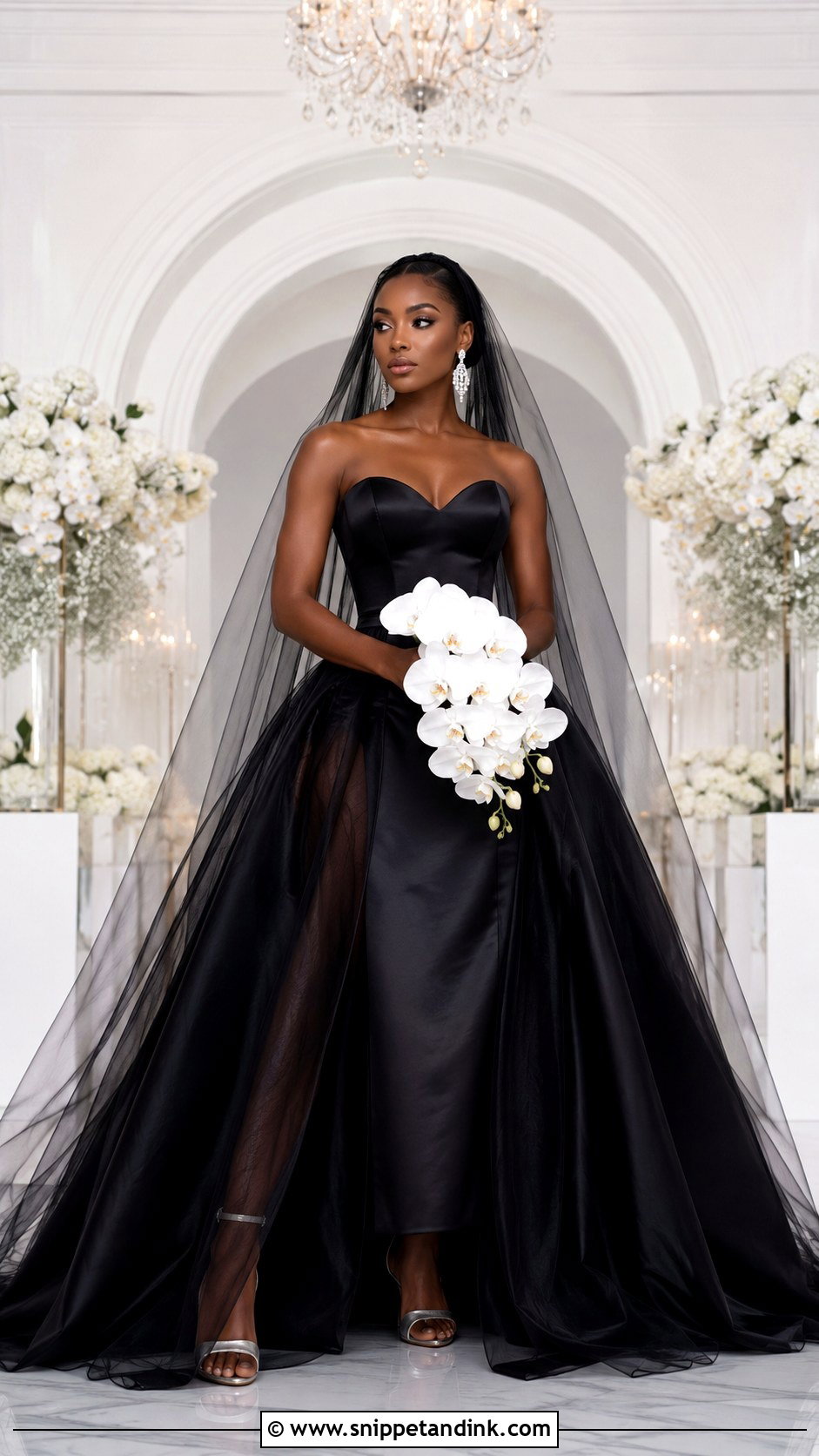
Strapless bodices rely entirely on fit, so this is where I send brides to a good tailor rather than guessing. Strong boning, grip tape and a bodice taken in at the right point keep it from slipping. A sculpted satin ball gown gives volume; a column is leaner. A removable black tulle overskirt adds drama for the ceremony and comes off for dancing. Chandelier earrings or a statement necklace, metallic heels and a long veil complete the look. If you’ll want more coverage later, a fitted bolero or detachable sleeves solve it without a second dress.
8. Black Tulle Wedding Dress
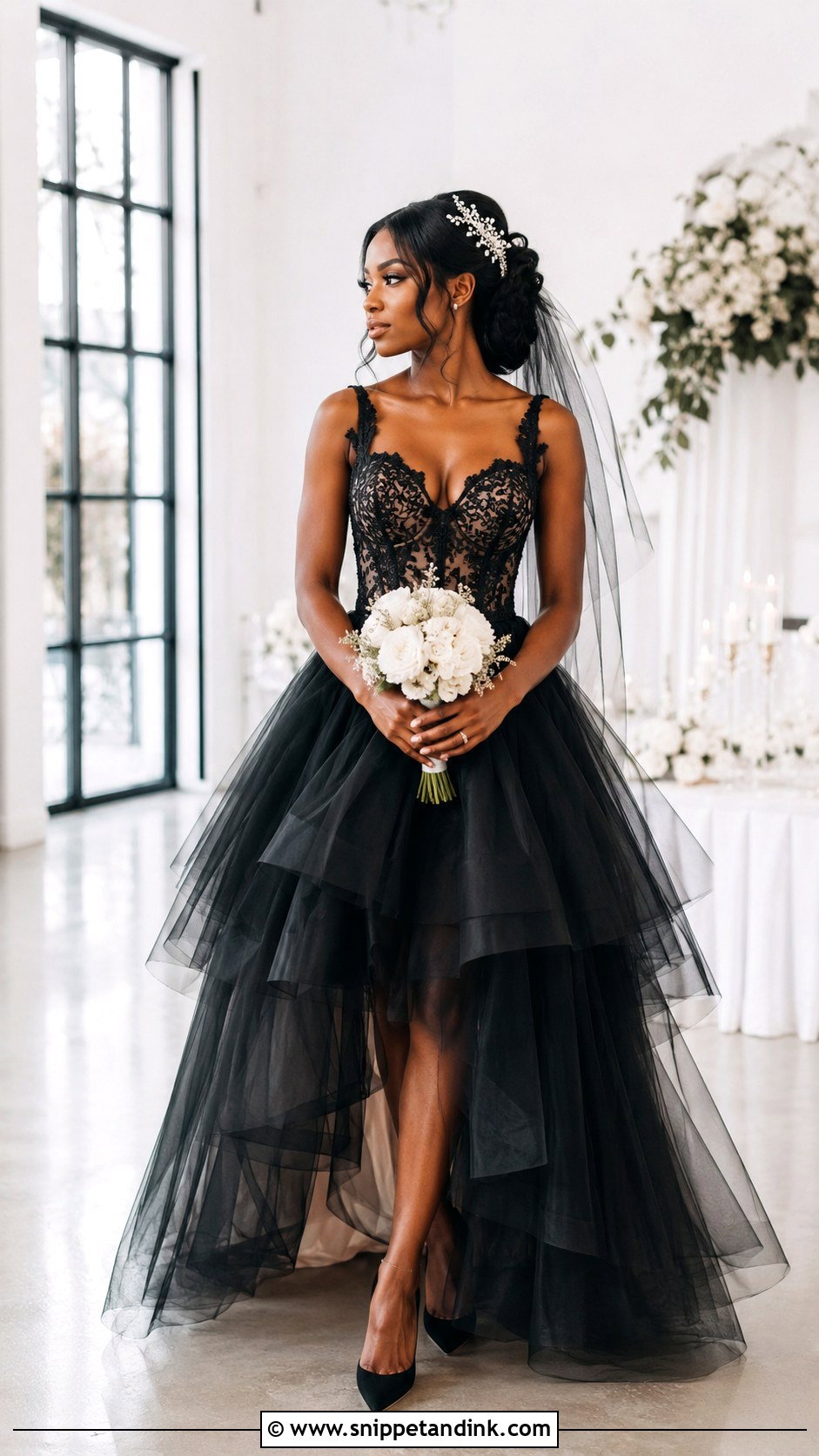
Tulle in black is lighter than it looks, but too much volume makes walking hard and catches on chairs. I prefer graduated layers over sheer bulk. The lining under black tulle changes everything: black reads dense, mocha or a close skin tone reads airy. View it both outdoors and under indoor lighting before you commit. Pointed pumps, a crystal comb and a light veil that doesn’t compete with the skirt finish it. Have the front hem set so the layers float above your shoes, since tulle that catches underfoot tears.
9. Black Velvet Wedding Dress
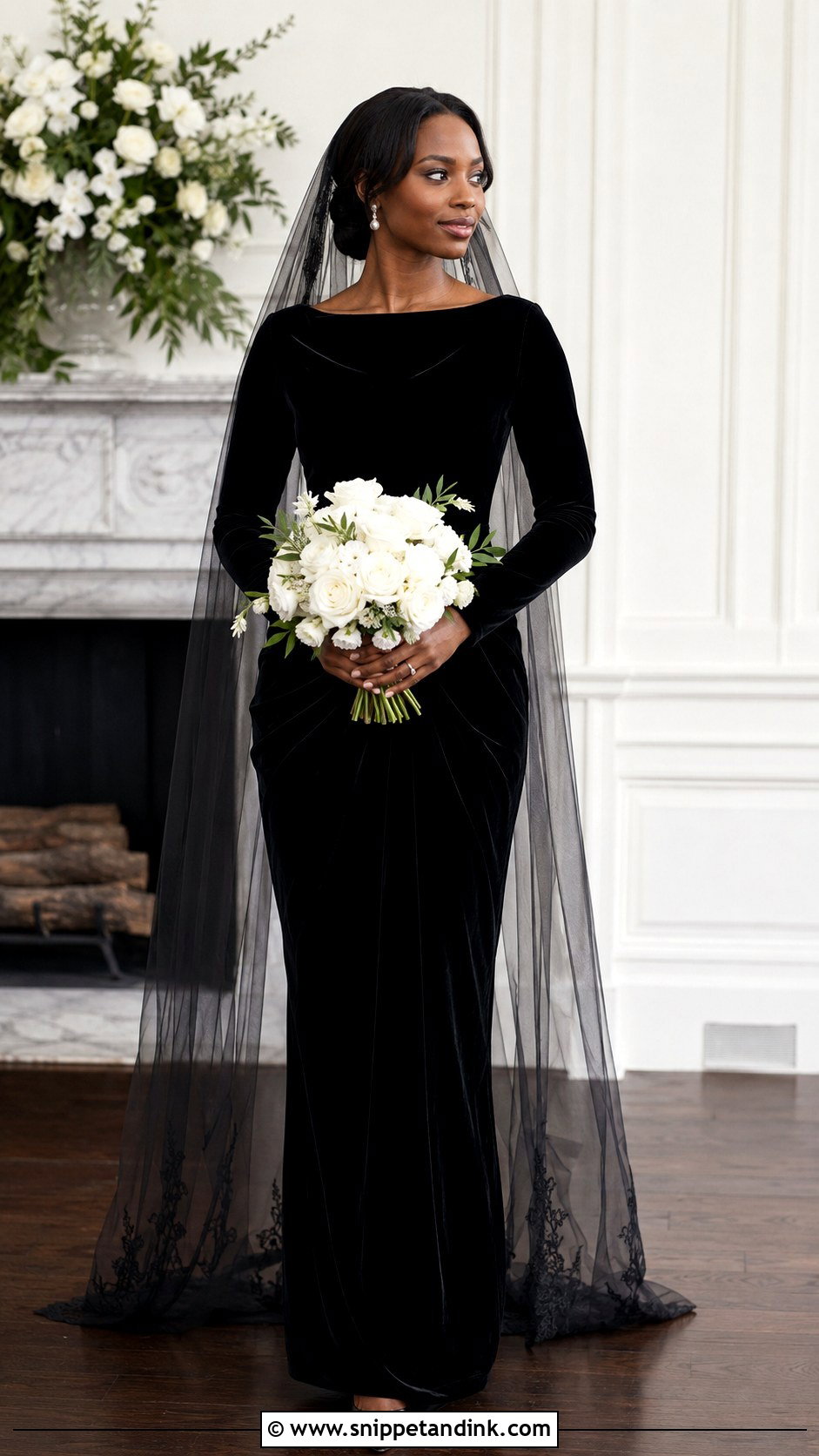
Velvet is a winter fabric, and I’d only suggest it for a cool season or an air-conditioned venue; it is warm to wear. It also has a nap, so it shows lighter or darker depending on which way the pile runs. In photos that can look like a patch, so check portraits from a few angles before finalizing alterations. A long-sleeve column or structured A-line suits it. Keep embellishment to a jeweled belt or small hair piece, add satin pumps and pearl drops, and carry white flowers that stand out against the depth.
10. Black And White Wedding Dress
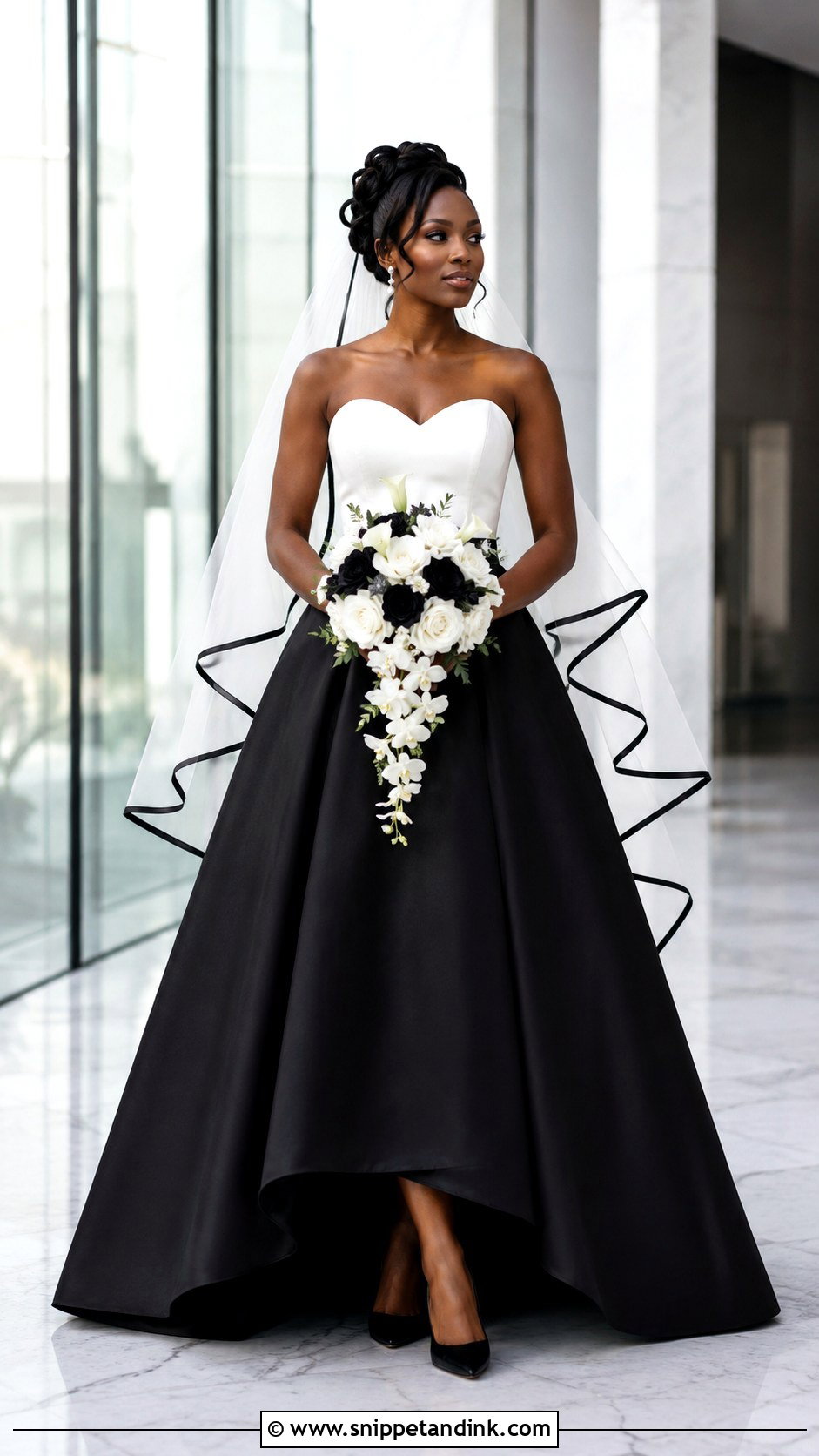
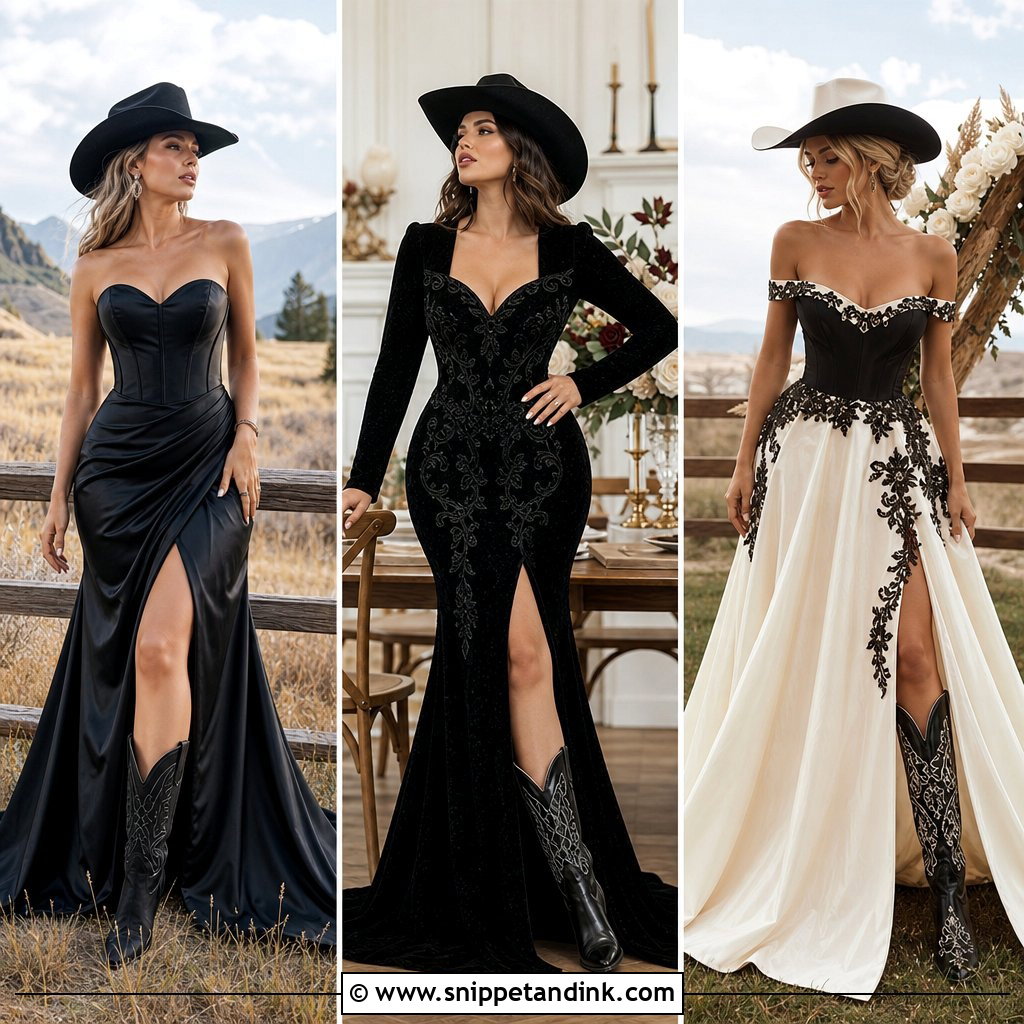
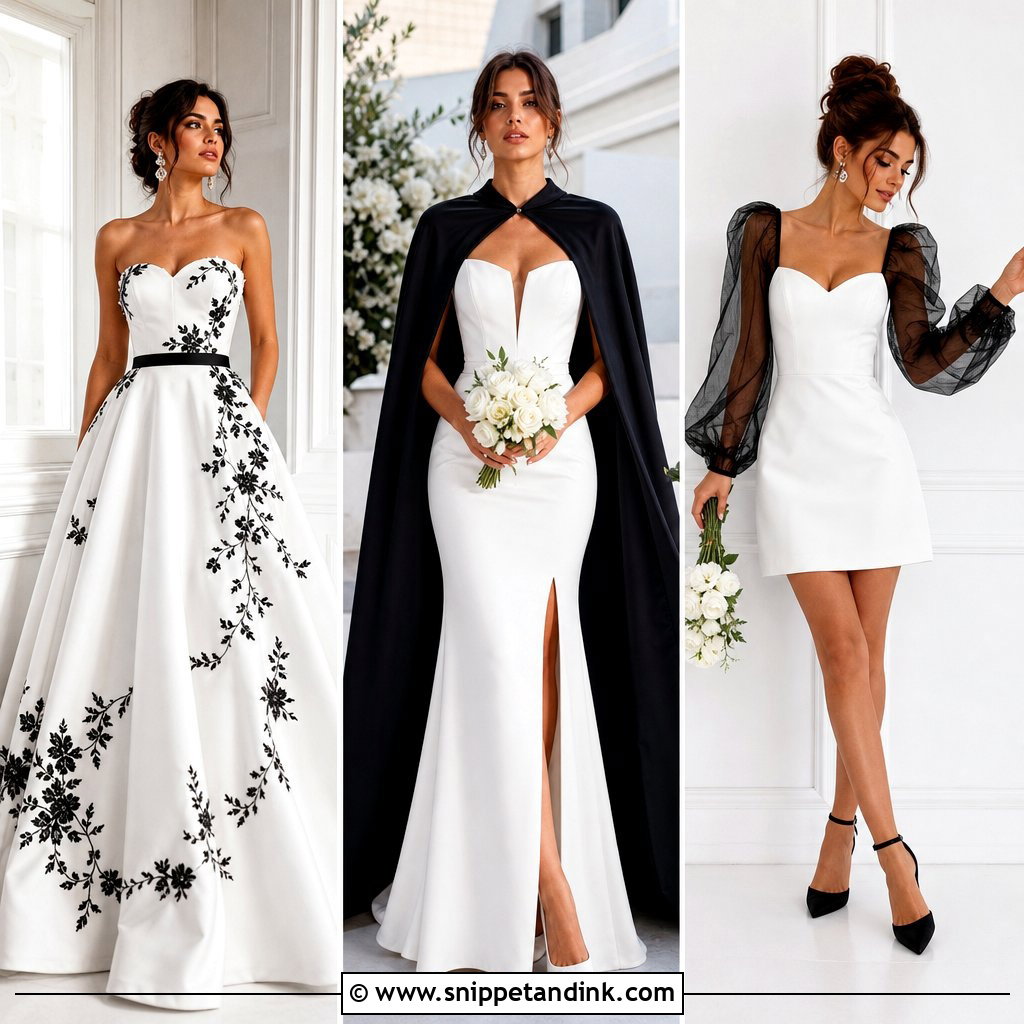
Half black, half white is a good answer for a bride who wants a dark dress but isn’t ready for full black. A white bodice over a black skirt draws the eye up to the face, which works well in close portraits. Black appliqués on ivory tulle is the softer option. Whatever the split, pick one dominant color and repeat both through the veil, bouquet and shoes. Pearl earrings and a silver bracelet tie in the lighter side. Avoid adding a third color; the contrast already does the work.
11. Black Floral Embroidered Wedding Dress
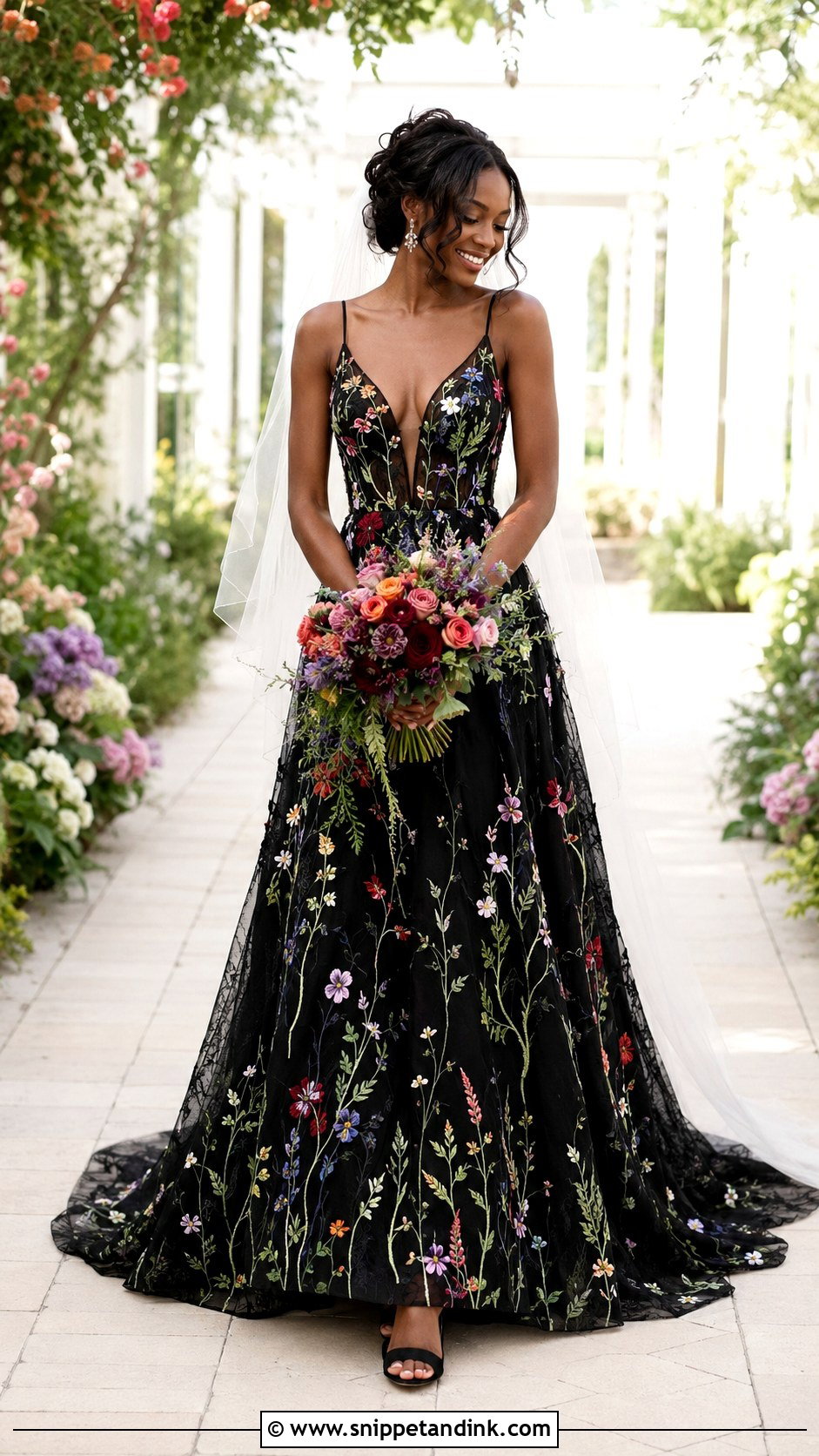
Embroidery needs space to travel, so an A-line or ball gown shows it better than a fitted dress. Black thread on black gives texture you notice up close, metallic thread gives evening sparkle, and colored flowers make it feel like a garden. Before any alteration, check where the main motifs sit; taking in a bodice or shortening a hem can cut through a flower and leave it lopsided. Pull one or two thread colors into the bouquet. A plain veil, simple heels and a loose updo keep the stitching in front.
12. Black Sequin Wedding Dress
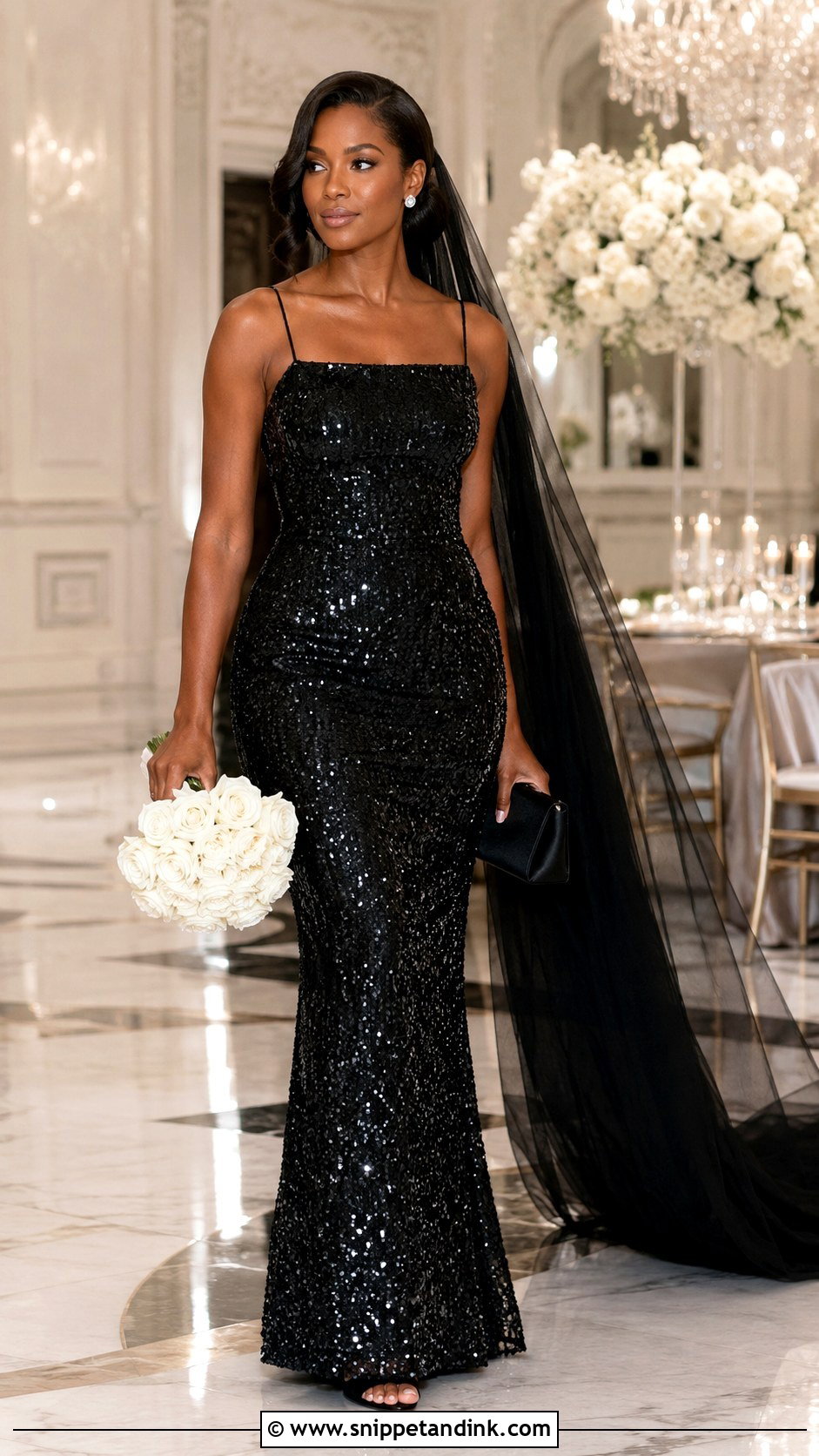
Sequins photograph like nothing else at night, and they are scratchy against bare skin. I check the underarm area on every sequin gown, because that’s where they rub raw by midnight and catch on a veil. A column, gentle flare or long-sleeve design with a soft lining under the embellishment avoids most of it. Keep jewelry to studs and the clutch to plain satin, with a sleek hair accessory. If it feels too much for the ceremony, layer a matte overskirt over it and reveal the sparkle at the reception.
13. Black Tea Length Wedding Dress
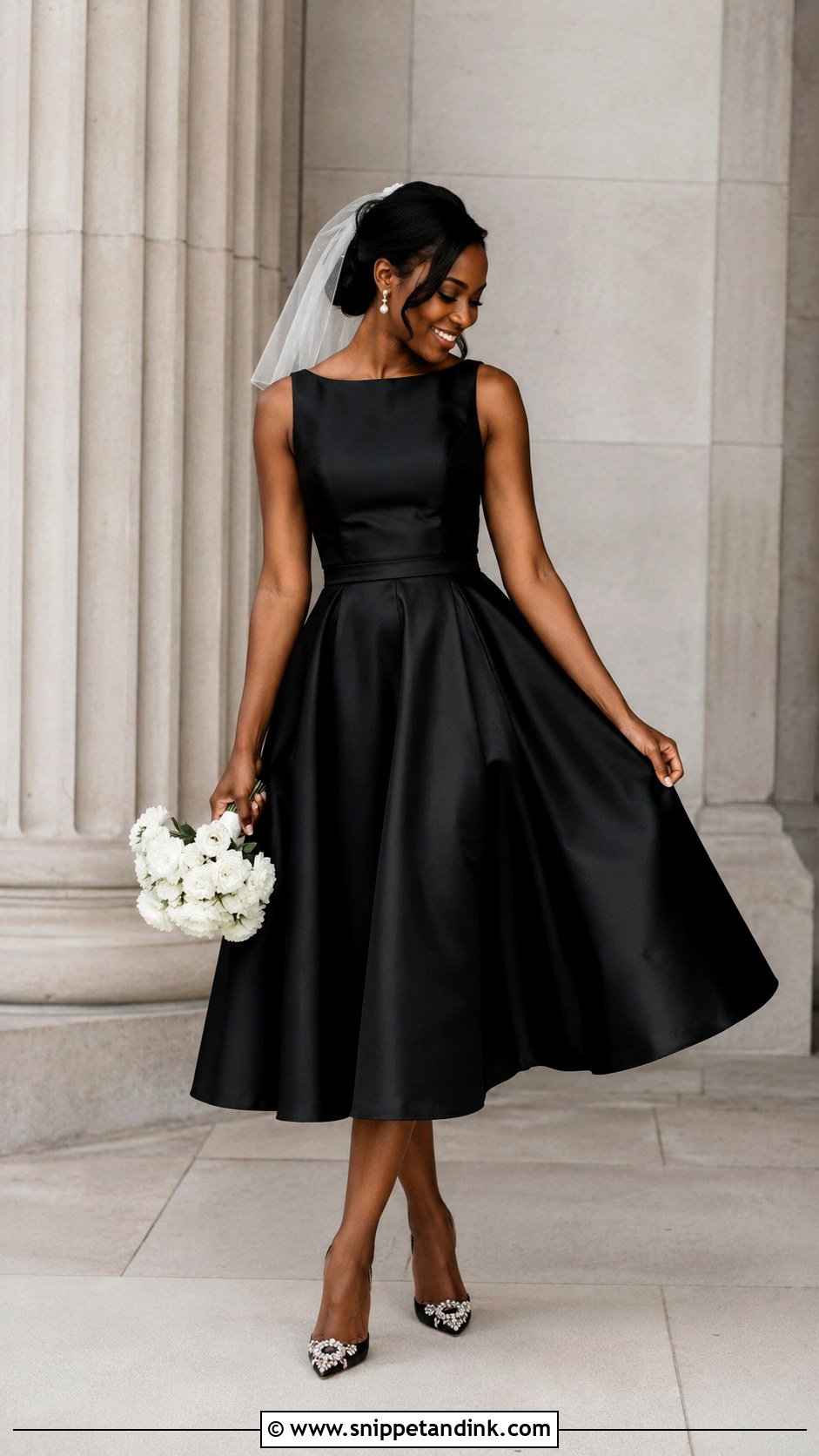
Tea length sits between the knee and ankle, and the exact point decides whether it flatters. I mark the hem just below the widest part of the calf or above the ankle, never across the middle of the calf. That length puts the shoes on show, so embellished pumps, pointed slingbacks or polished block heels earn attention. A fitted waist with a full skirt is classic; a sheath is modern. A short veil, pearl earrings and a compact bouquet make it read as bridal for a courthouse or outdoor ceremony.
14. Black Mini Wedding Dress
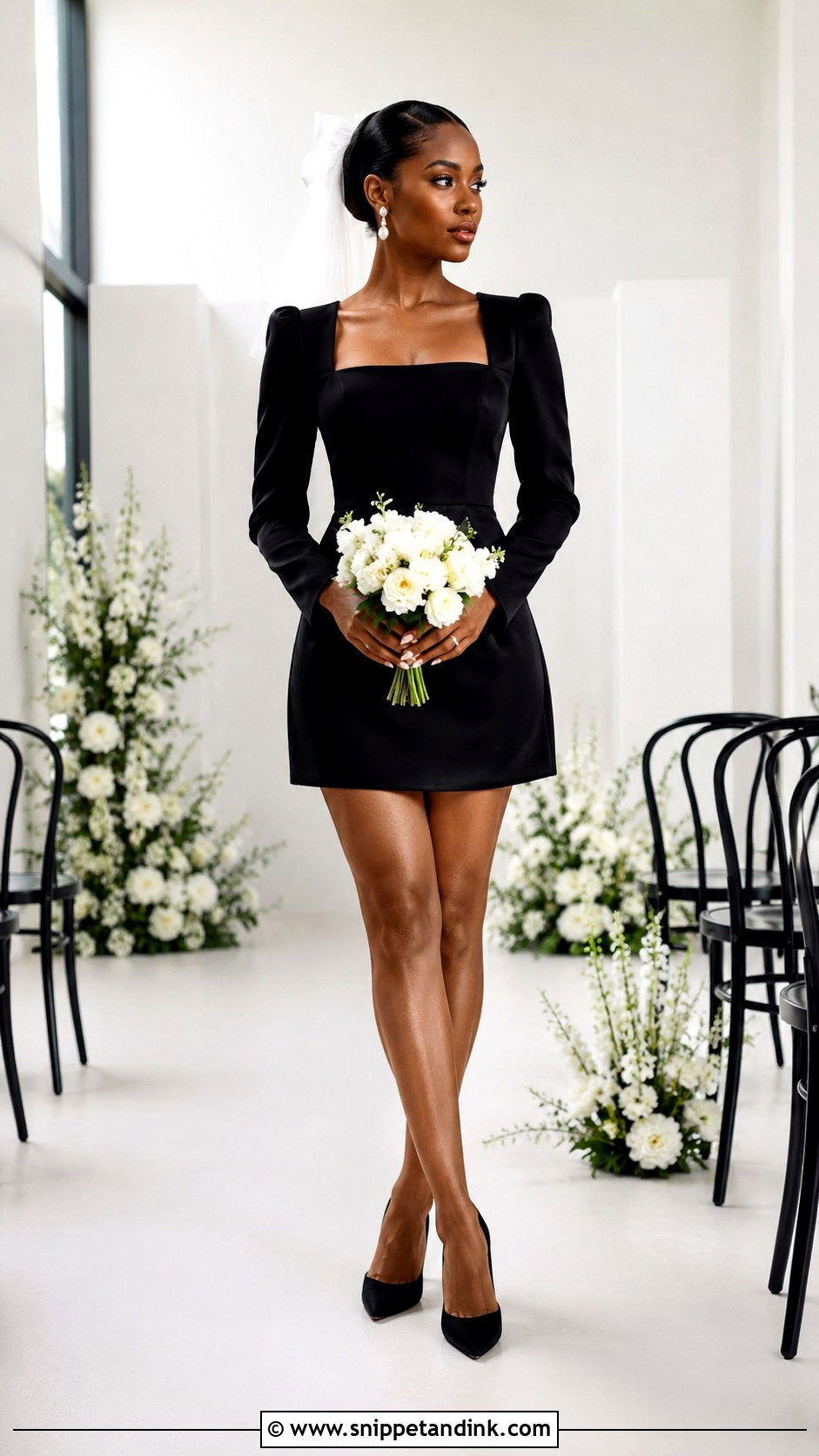
A mini can be the main dress for a civil ceremony or a second bridal outfit later in the night. A tailored shift, corset mini or long-sleeve design all work if the lining is solid. I tell brides to sit down in front of a mirror at the try-on; minis ride up more than you think. A higher neckline or sleeves balances the short hem. Pointed pumps, sheer black tights for cooler weather, and a short veil or hair bow keep it bridal. A detachable train adds ceremony length and unhooks for dancing.
15. Black Wedding Jumpsuit
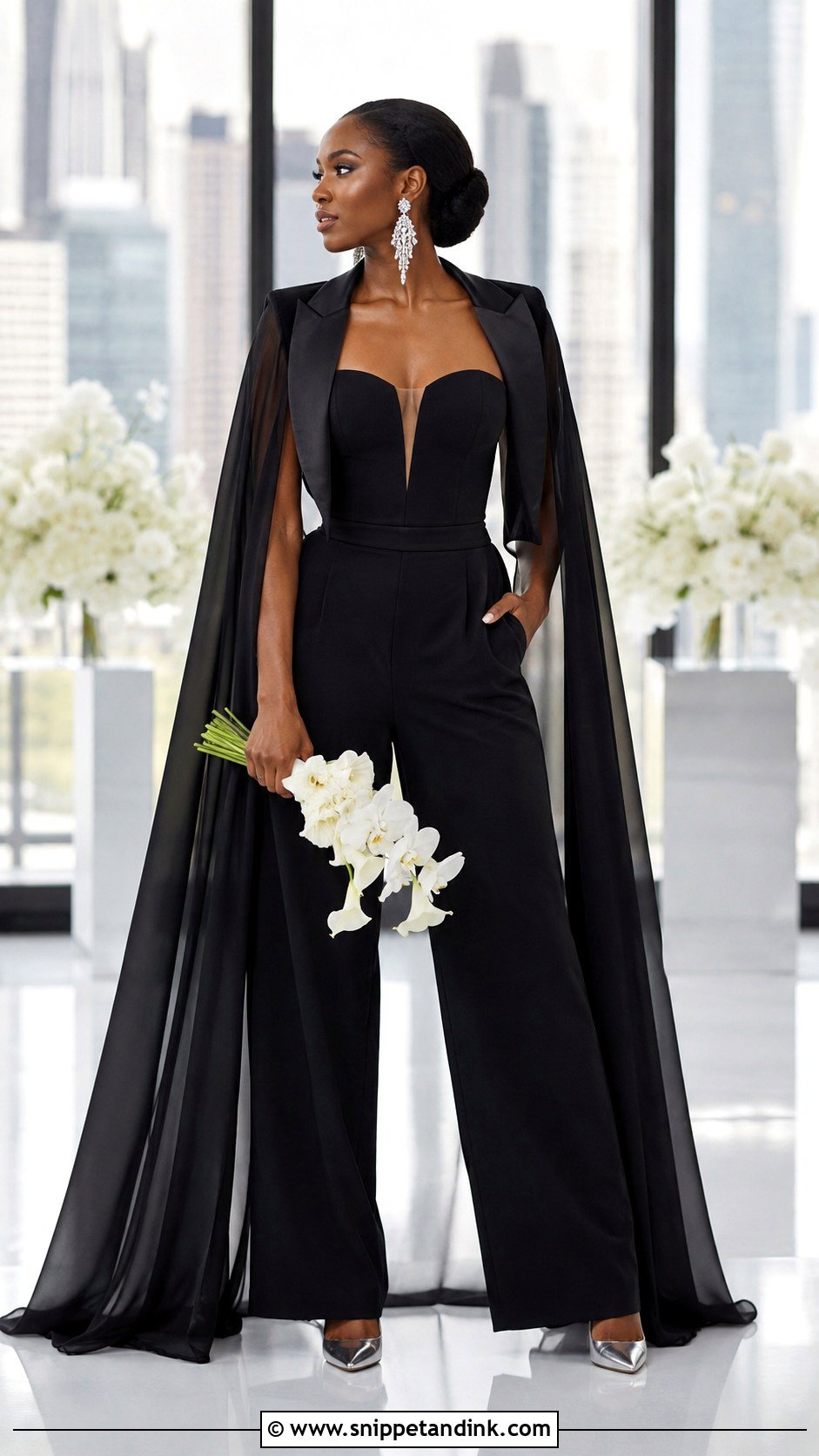
Jumpsuits are the hardest bridal piece to fit, because the torso length, rise, waist and leg all affect each other. If the torso is short, it pulls everywhere when you sit. Look for wide-leg trousers, a defined waist and a structured bodice. Satin lapels, a lace overlay or light beading make it ceremonial. Have the trouser hem set with your wedding shoes on so it just touches the floor. A cathedral veil or detachable cape gives movement, and a narrow bouquet keeps the waist visible.
16. Black Two Piece Bridal Outfit
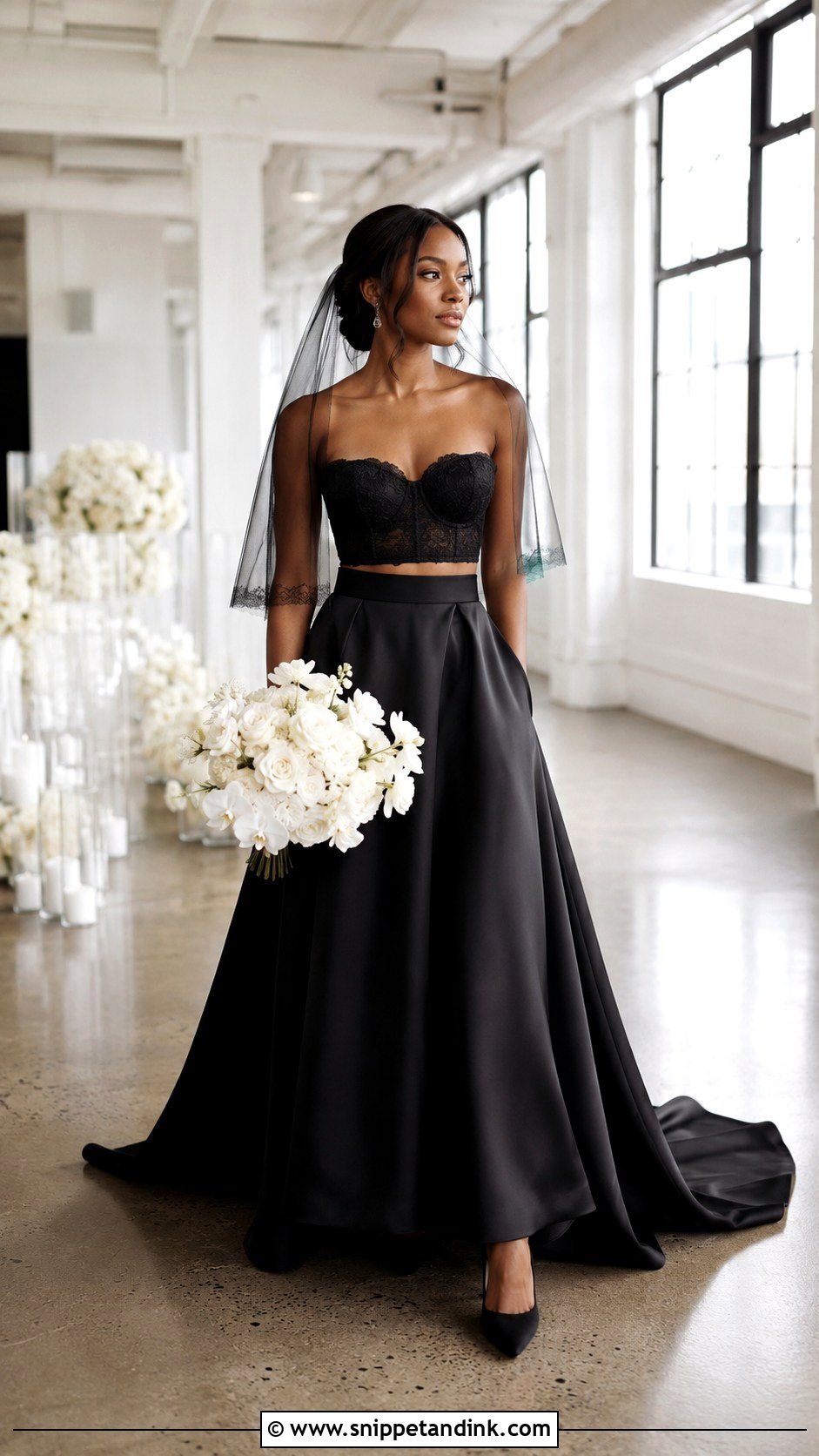
A black two-piece bridal outfit gives you two garments you can wear again. A corset top with a full satin skirt, a cropped lace blouse with a high-waisted A-line, or a tailored jacket over flowing trousers all work. Keep both pieces in the same black; two blacks from different fabrics often show as two colors in daylight. If a strip of waist shows, check it stays even when you sit. Black heels, a fine veil and a structured white bouquet finish the look.
17. Black Cape Wedding Dress
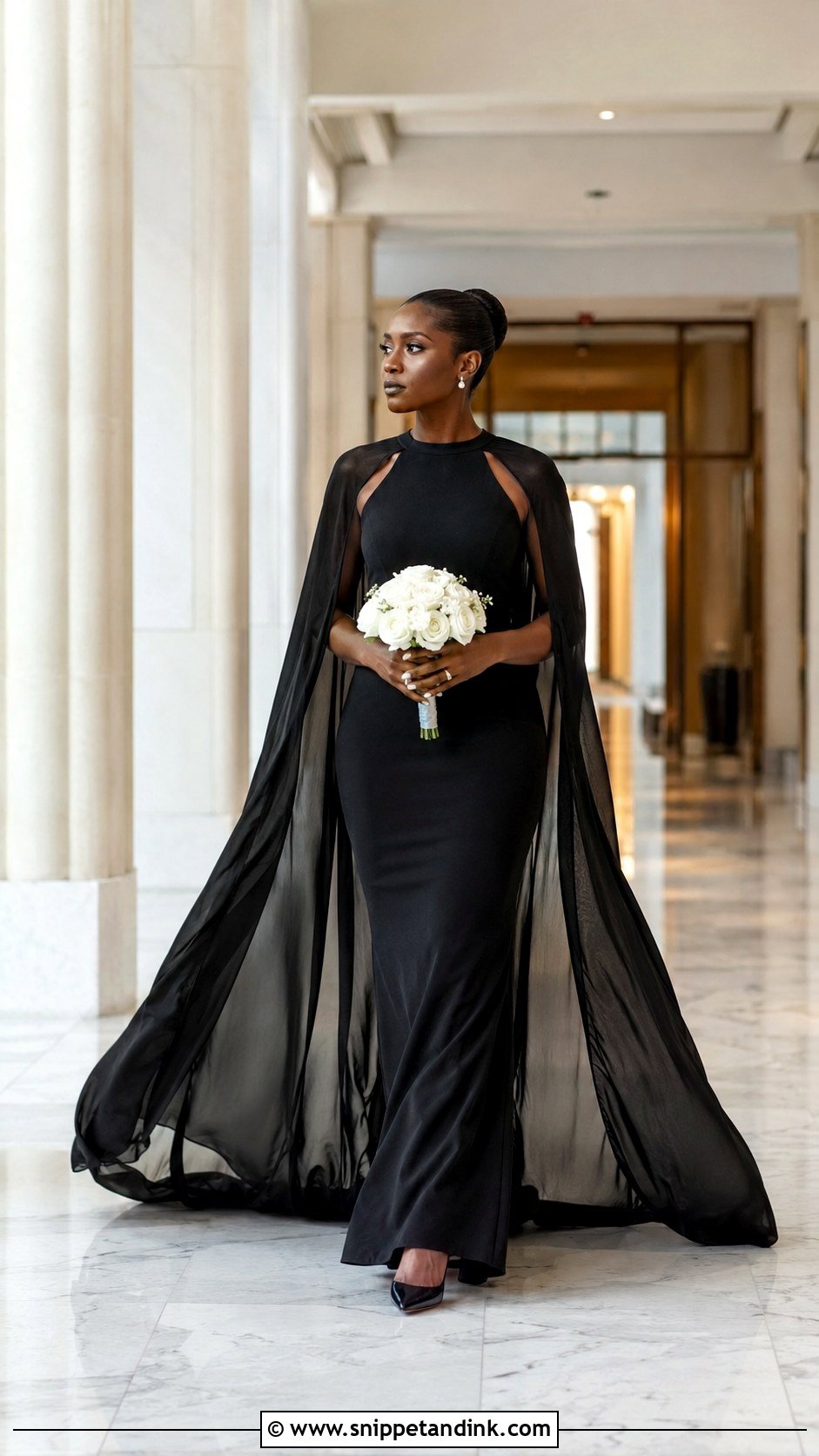
A cape attaches at the shoulders or neckline and turns a plain gown into a ceremony look. Start with a fitted crepe, satin or velvet dress. Sheer tulle reads light; an opaque fabric is more formal. The cape should end shorter than the train, or be cut to move independently, otherwise the two tangle as you turn. A veil is optional. Minimal earrings, black pumps and a sleek updo keep the cape central, with a small bouquet clear of the front fastening. Take it off for the reception and add a jeweled belt.
18. Black Corset Wedding Dress
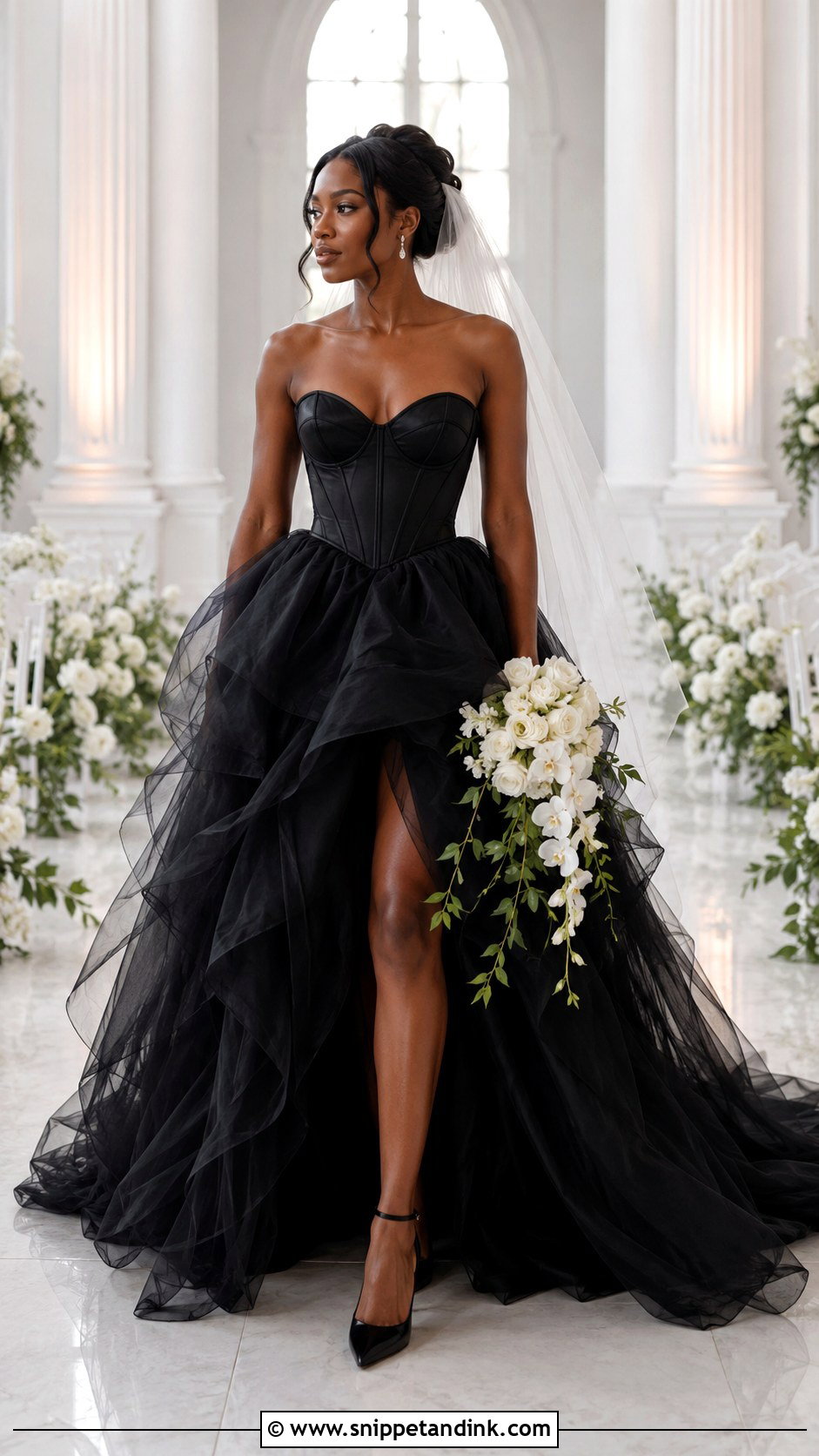
A corset should support you, not squeeze you. Brides often want it laced tighter at the final fitting than they can tolerate through dinner, so I ask them to sit, eat a little and breathe deeply before we set the lacing. Visible boning, lace panels or smooth satin all work, over a crepe or tulle skirt. If there are sheer areas, ask for illusion mesh matched to your skin tone so the edges disappear. Pointed heels, fine earrings and a veil under a soft updo complete it, with white flowers and trailing greenery.
19. Plus Size Black Wedding Dress
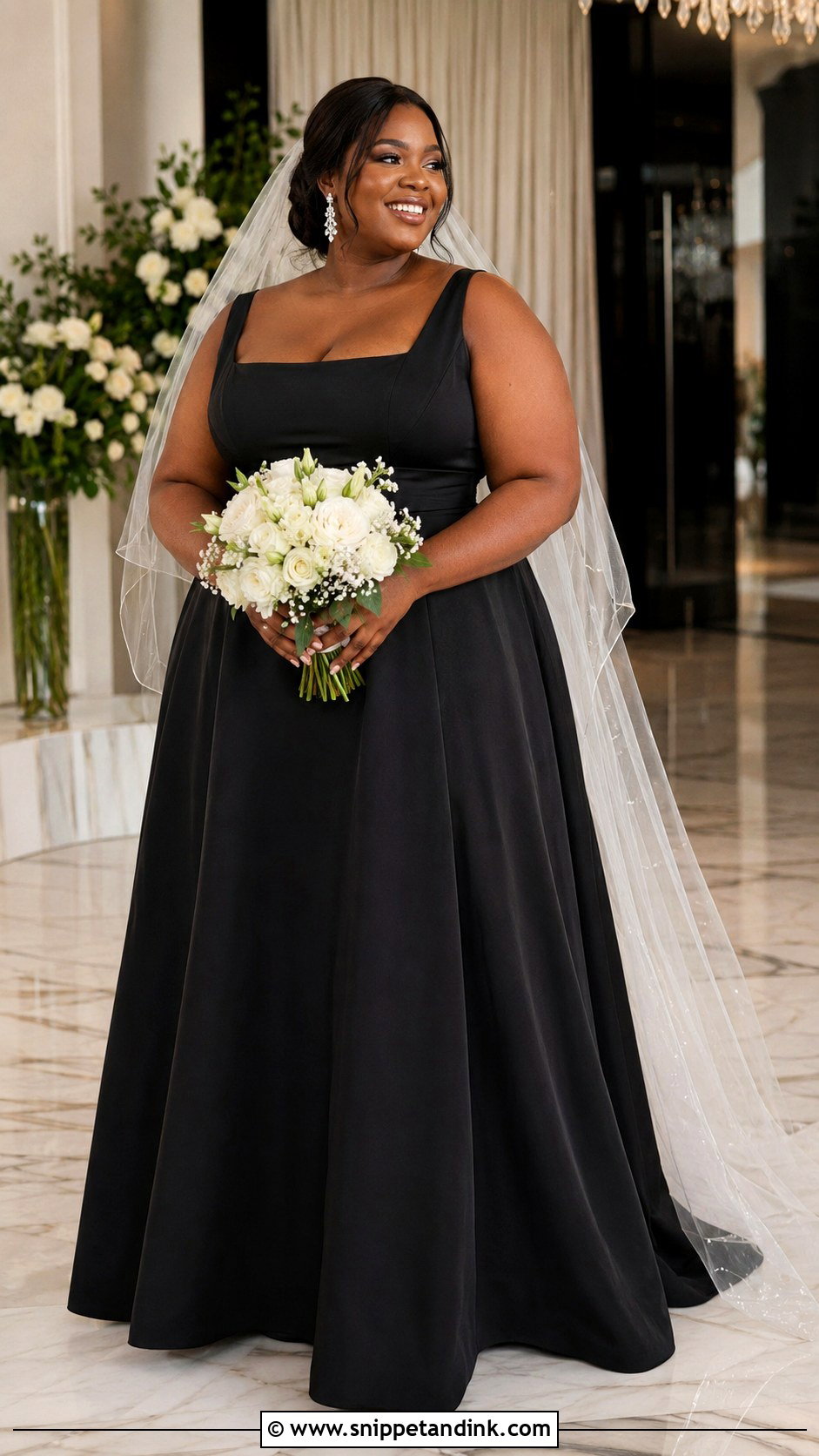
For a plus-size bride, the right dress is the one cut for her body, not one sized up from a sample. A structured A-line defines the waist, a mermaid follows curves, and an empire gown moves softly. I look first at the inner structure: supportive cups, secure straps and good boning do more than any cut. Block heels add stability for a long day. A V-neck, square or off-shoulder neckline frames the face. Ignore old body rules and try several silhouettes; the one you forget you’re wearing is the one.
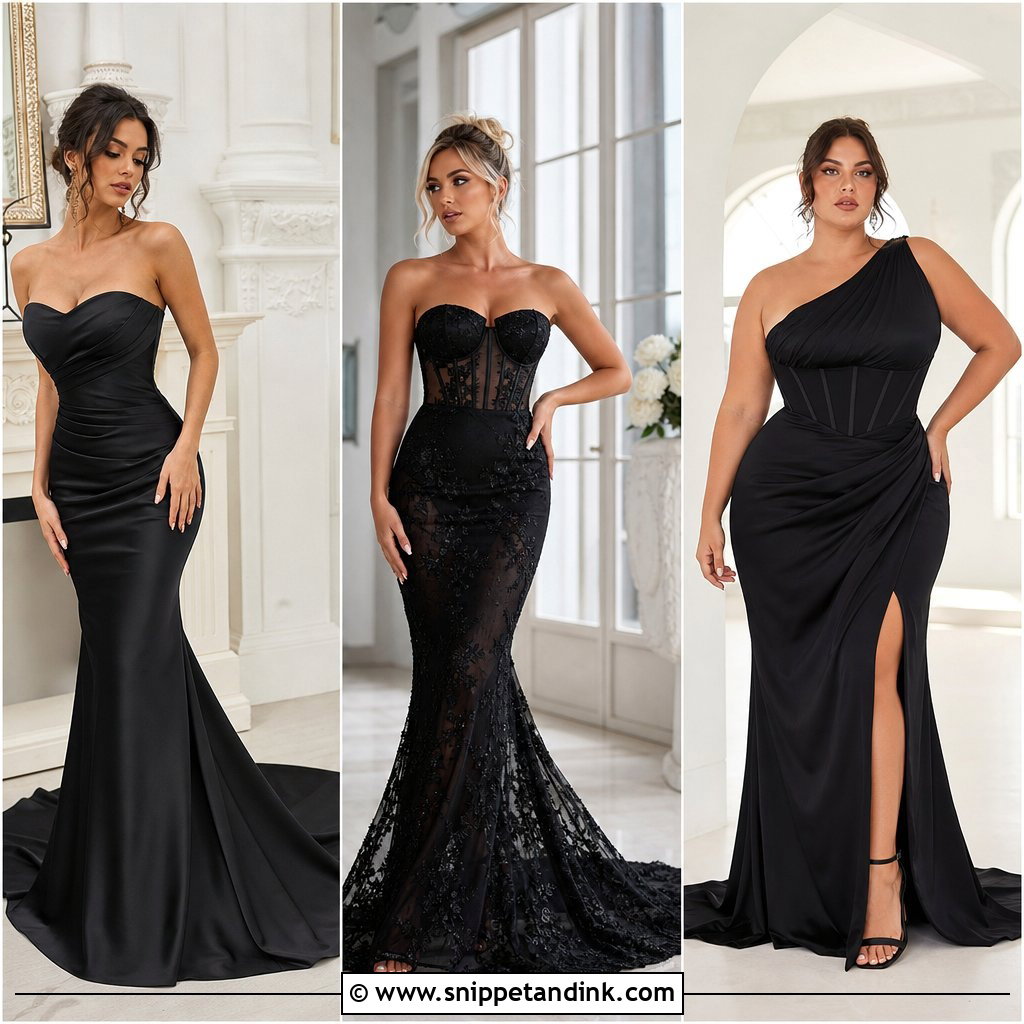
20. Black Reception Wedding Dress
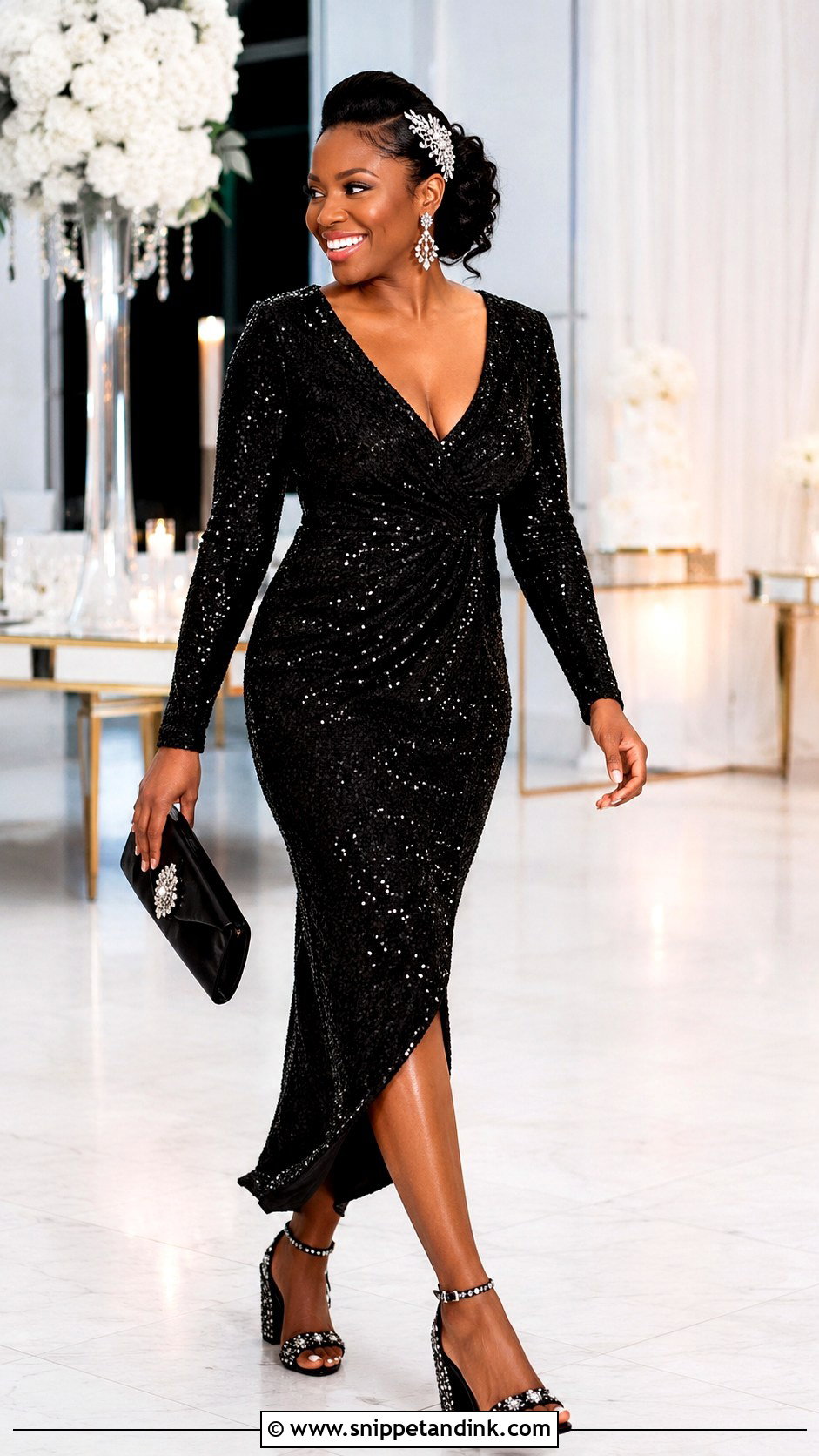
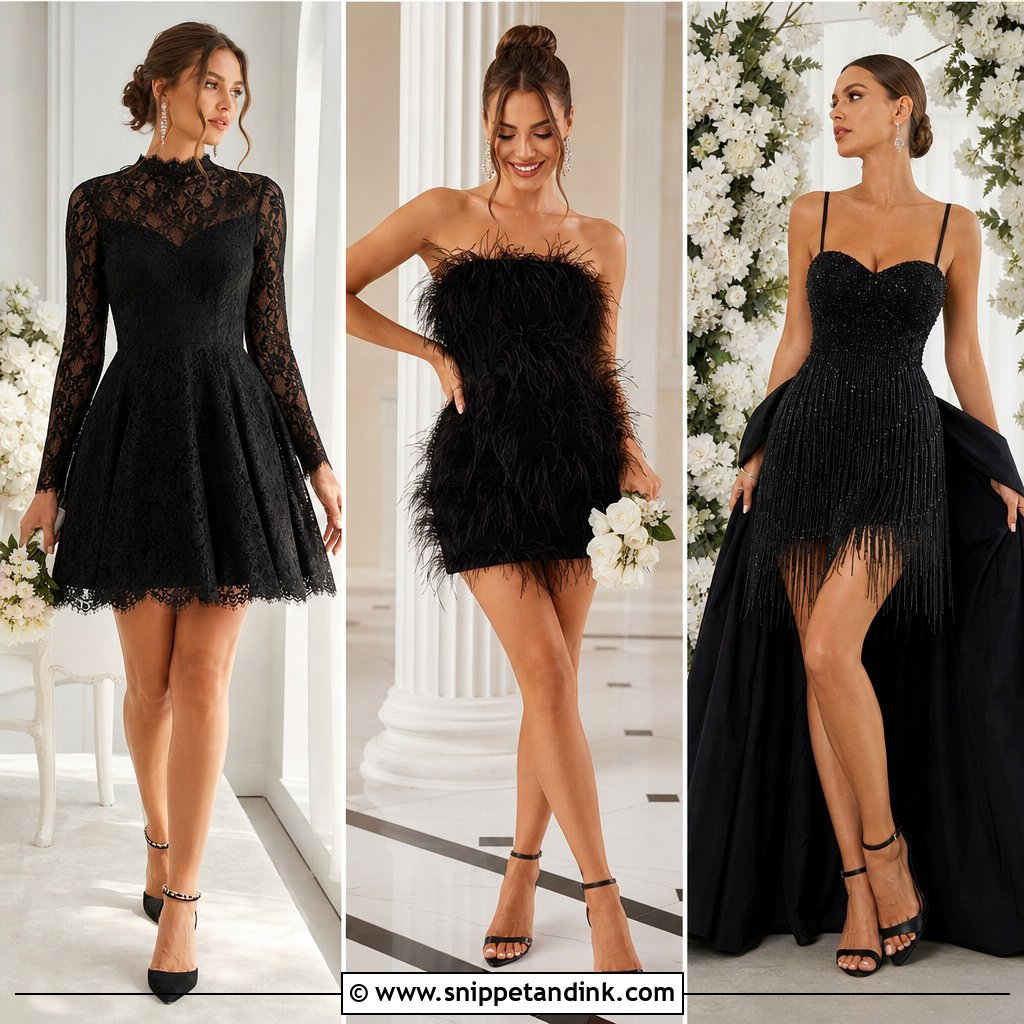
A black reception wedding dress should be lighter and easier than the ceremony gown: a sequin column, a satin slip, a feather-trimmed midi or a structured mini. If both outfits are black, change the shape or texture so the switch is noticeable. Swap the long veil for a crystal comb or short bow veil and the heels for block heels or flats. Do a full practice change before the wedding, closures and shoes included, so the change takes minutes and not half an hour with three helpers.
Lint, Deodorant and Flash: What Shows on a Black Gown
A white dress hides dust and shows makeup. Black does the opposite, and the problems arrive in the hours before the ceremony, while everyone is getting ready in the same room.
I pack a lint roller in every kit for a black gown, and I use it twice: once after dressing and once before portraits. Pet hair, white towel fluff and face powder all cling to satin and velvet. Put the dress on after makeup and hair are finished, and drape a dark scarf over your shoulders for any last powder.
Deodorant is the other one. Most leave a white mark on black fabric at the side seams. Apply a clear formula well before dressing and let it dry. If a mark appears anyway, rubbing it gently with a clean nylon stocking or a dry sponge usually lifts it.
Talk to your photographer, too. Black fabric loses its detail in shadow and flattens under direct flash, so the lace or embroidery you chose can vanish. Light from the side, such as a window, brings the texture back. Ask for a few portraits in that kind of light so the dress you paid for actually shows.
Black Is the Decision; Fit Is the Work
A black wedding dress can be romantic, minimal or glamorous depending on the fabric and cut. Start with the silhouette you can move and sit in for the whole day, then build the shoes, jewelry, veil or cape and bouquet around the gown’s strongest detail. Budget time and money for alterations, especially on structured bodices, fitted skirts, jumpsuits and long trains. And wear it because you love it, not to prove a point. The brides who look most at ease in black are the ones who stopped explaining it.
You'll Like These Ideas:






Leave a Reply