
A dark wedding dress still has to work as a wedding dress. That’s the part I spend most of my time on with gothic brides: the gown can be black lace, velvet, a corset over tulle, crimson, plum, or ivory stitched with black, but it has to fit, move and photograph like bridalwear rather than an evening costume. Venue, season and fabric weight decide more than the colour does. So do the veil, shoes, jewelry and bouquet, because with black every accessory reads twice as strongly. The 35 looks below run from Victorian and witchy to stripped-back modern, with notes on what each one asks of you on the day.
Ordering, Commissioning or Dyeing a Black Gown
Most bridal shops still stock samples in white and ivory, so the first practical question is how you’ll actually get a gown in black, red or plum. There are three routes, and each one changes your timeline.
Ask for a colour option
Many bridal designers will make a style in black or another colour on request, even if the sample in the shop is white. You’ll be trying on a pale version and imagining the dark one, so ask to see a fabric swatch in the final colour before you order. Made-to-order gowns commonly take several months to arrive, and a custom colour can add time, so start early.
Commission it
A dressmaker can build a gown around your exact gothic reference, which suits Victorian and medieval looks that the bridal market rarely makes. Expect a mock-up fitting in plain cotton before the real fabric is cut. That step is where I catch most fit problems.
Dye one you already own
I’m cautious about this route. Most modern bridal gowns are polyester, which doesn’t take household dye and needs a specialist process at high heat. Lace, thread and lining are often different fibres, so they can come out different shades. Silk and cotton dye far more predictably. If you go this way, use a professional dye service and accept that the result may be charcoal or patchy rather than true black.
1. Black Lace Gothic Wedding Dress
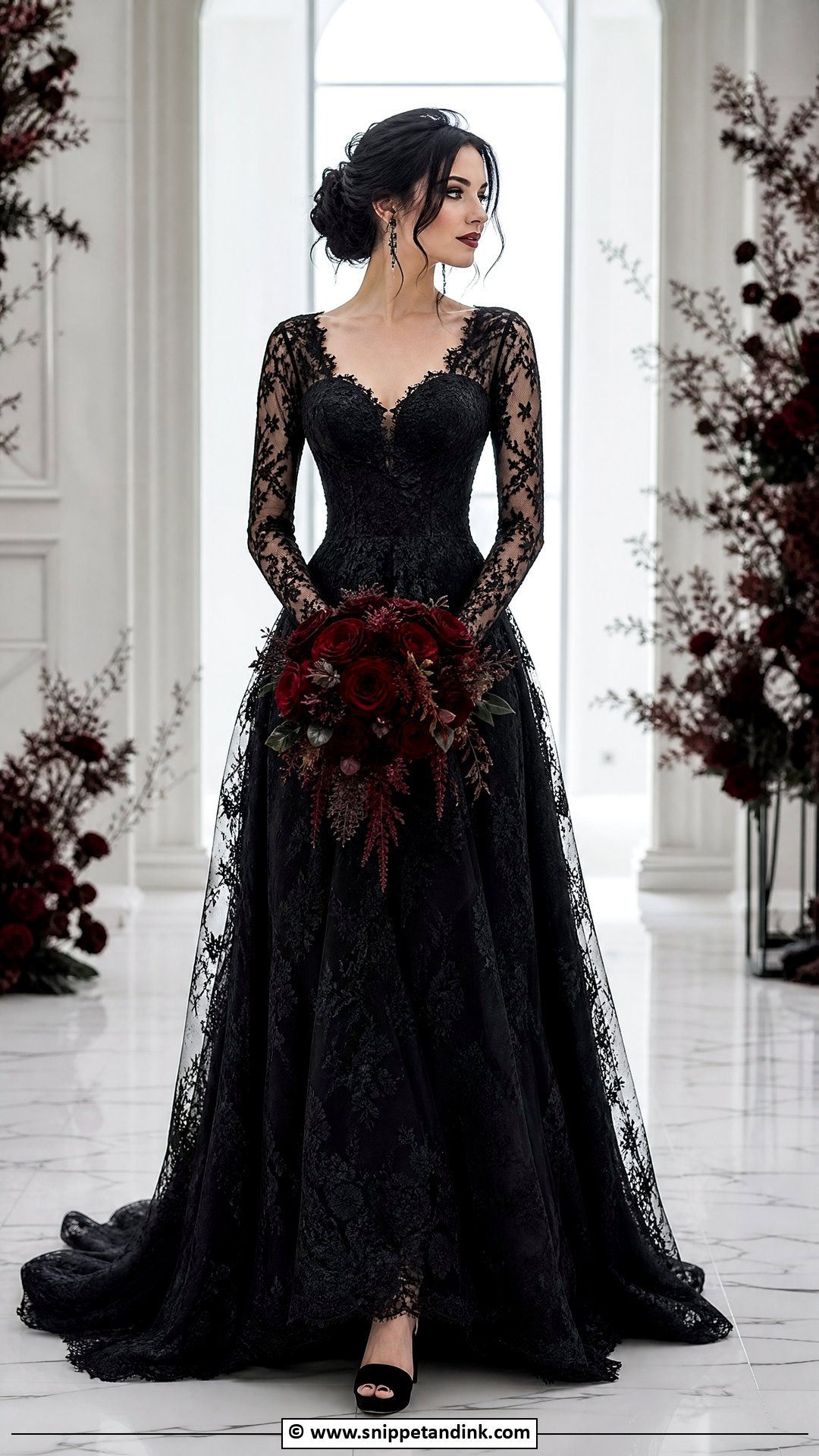
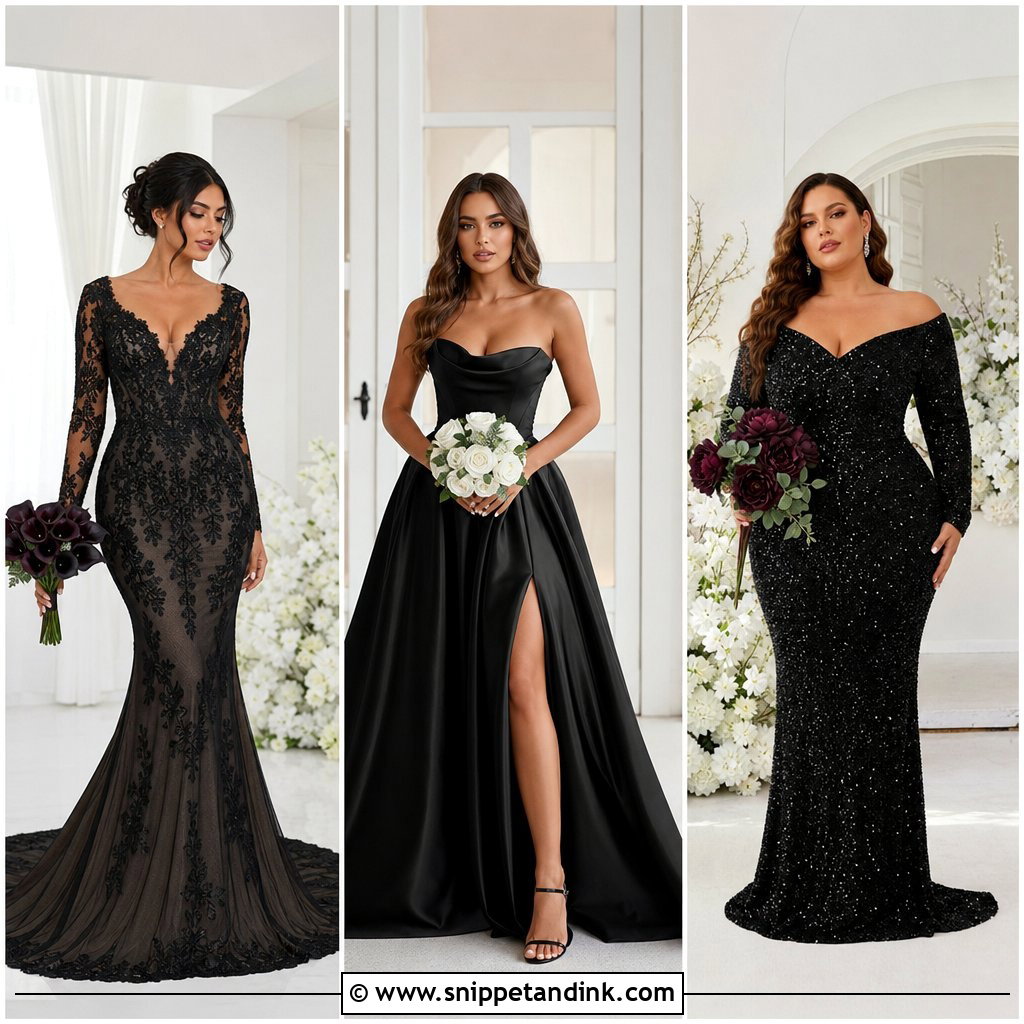
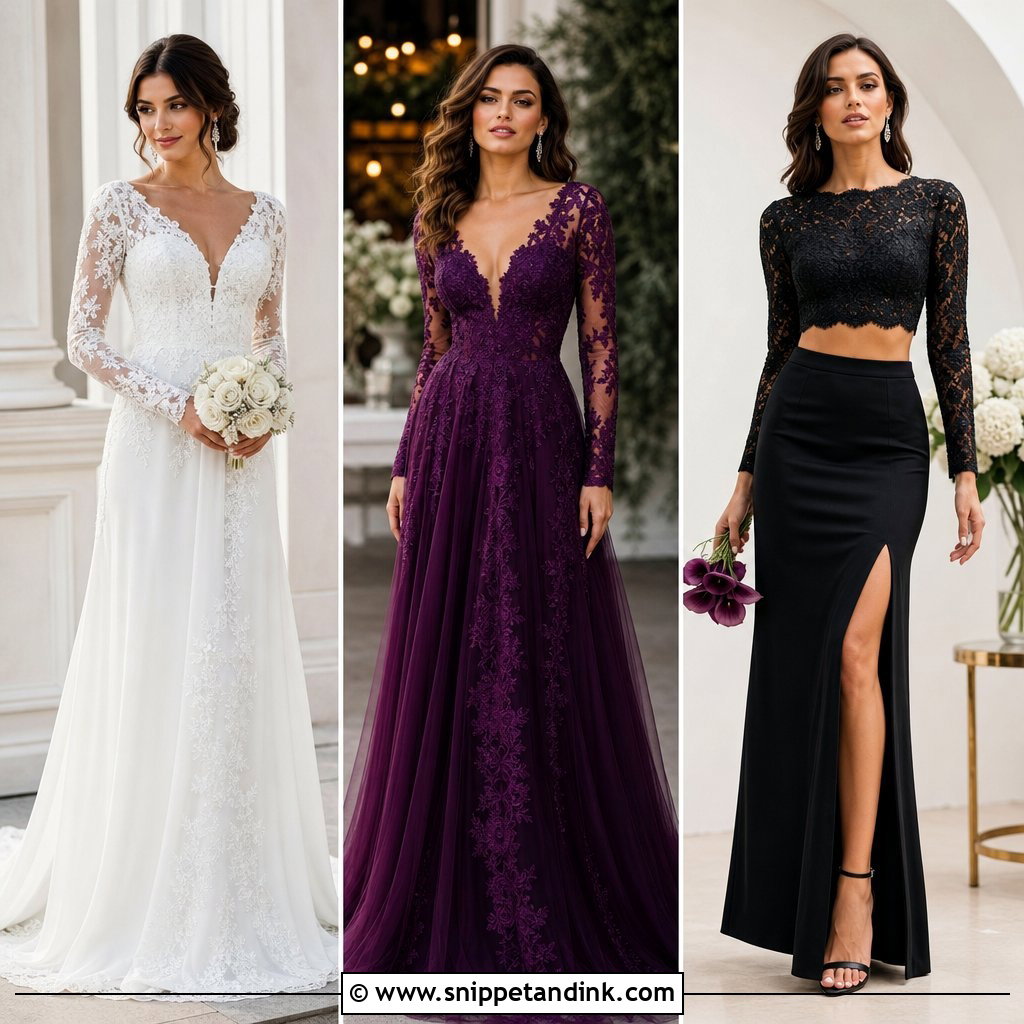
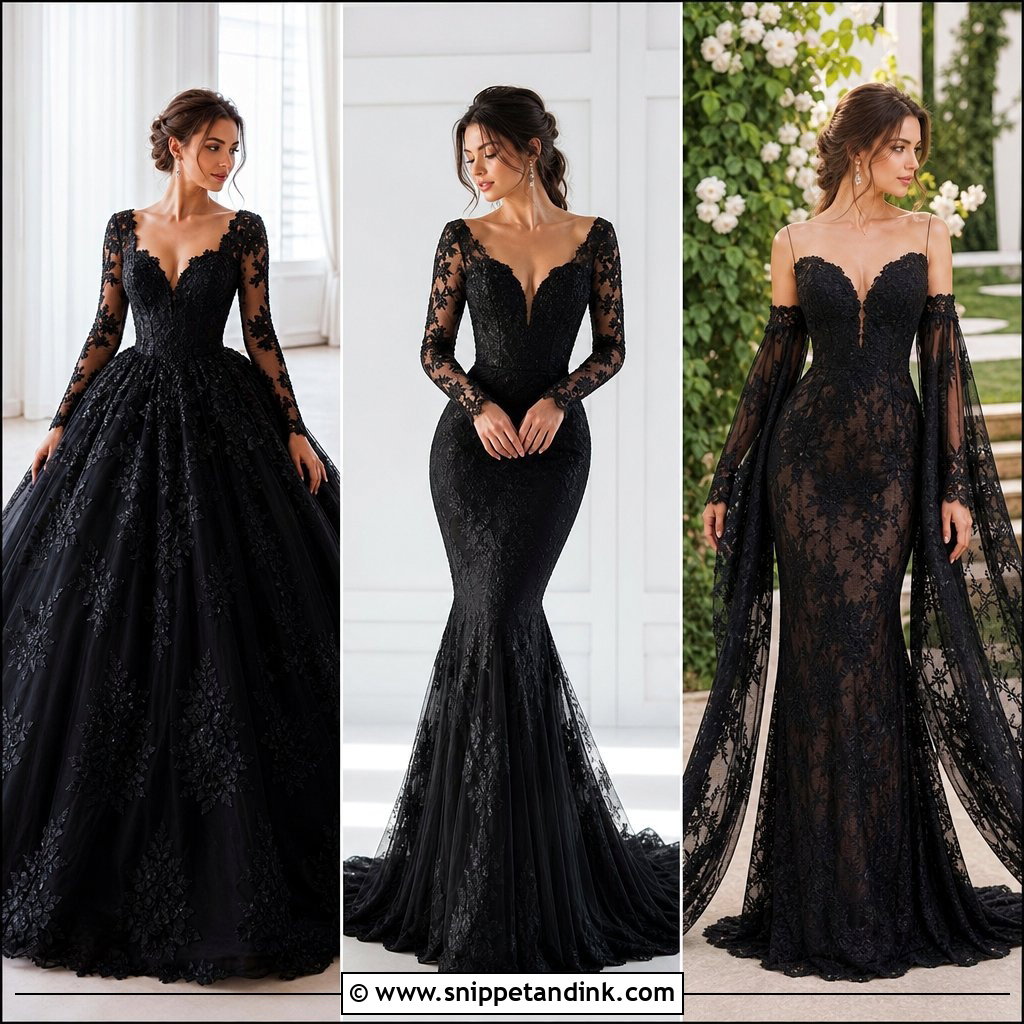
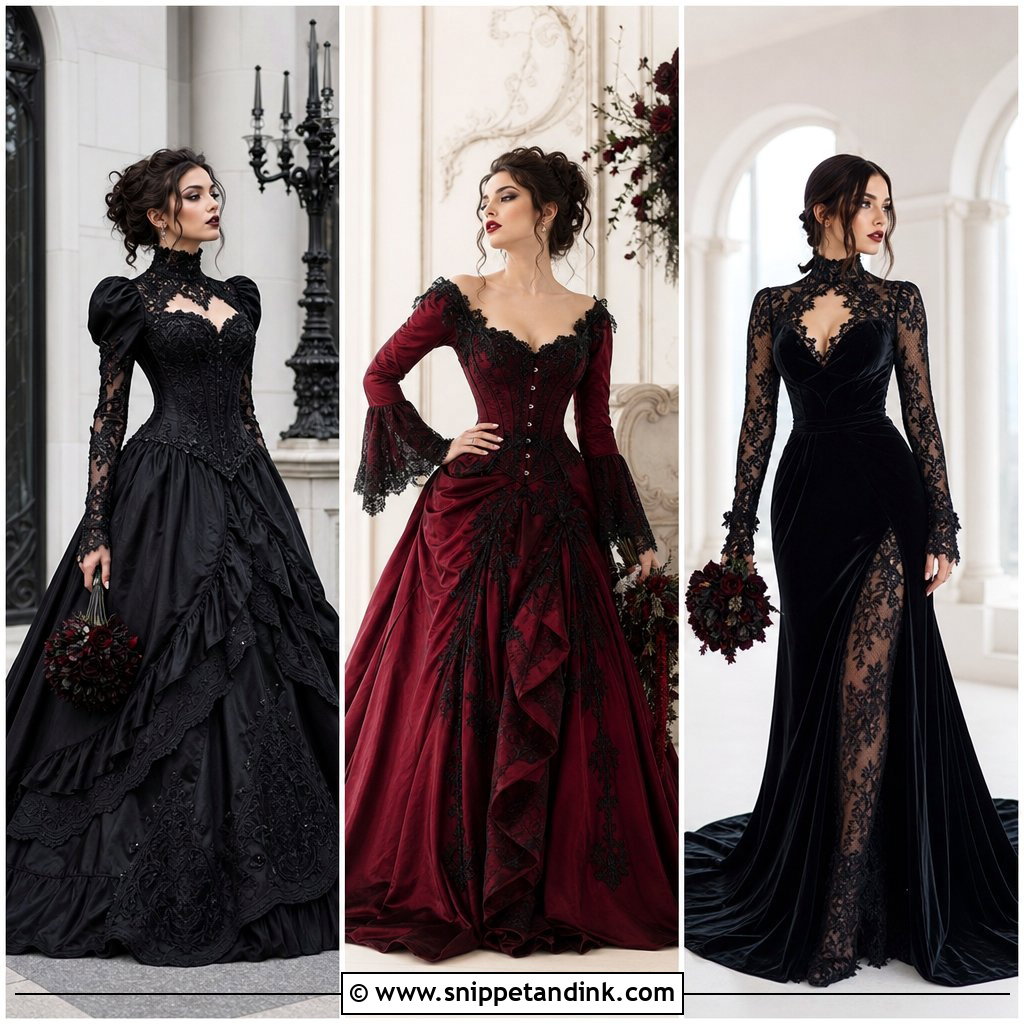
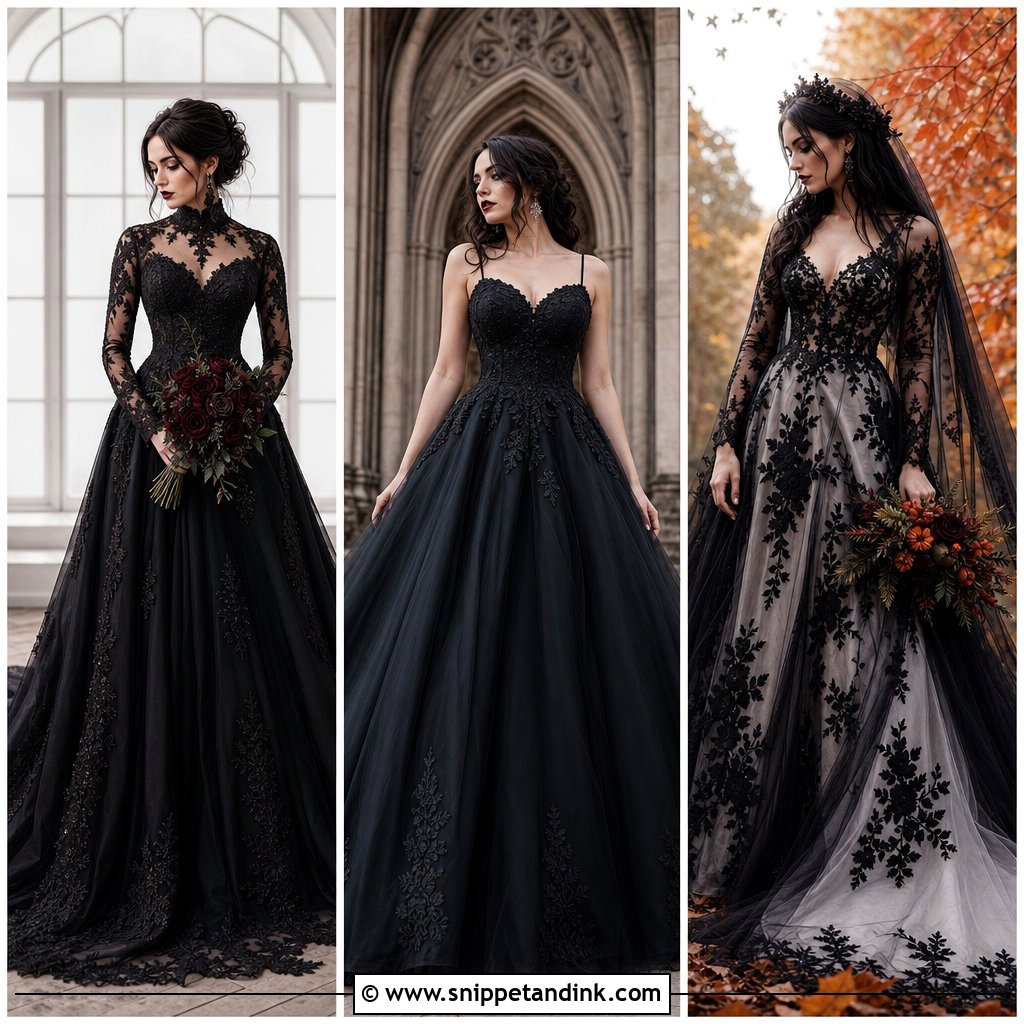
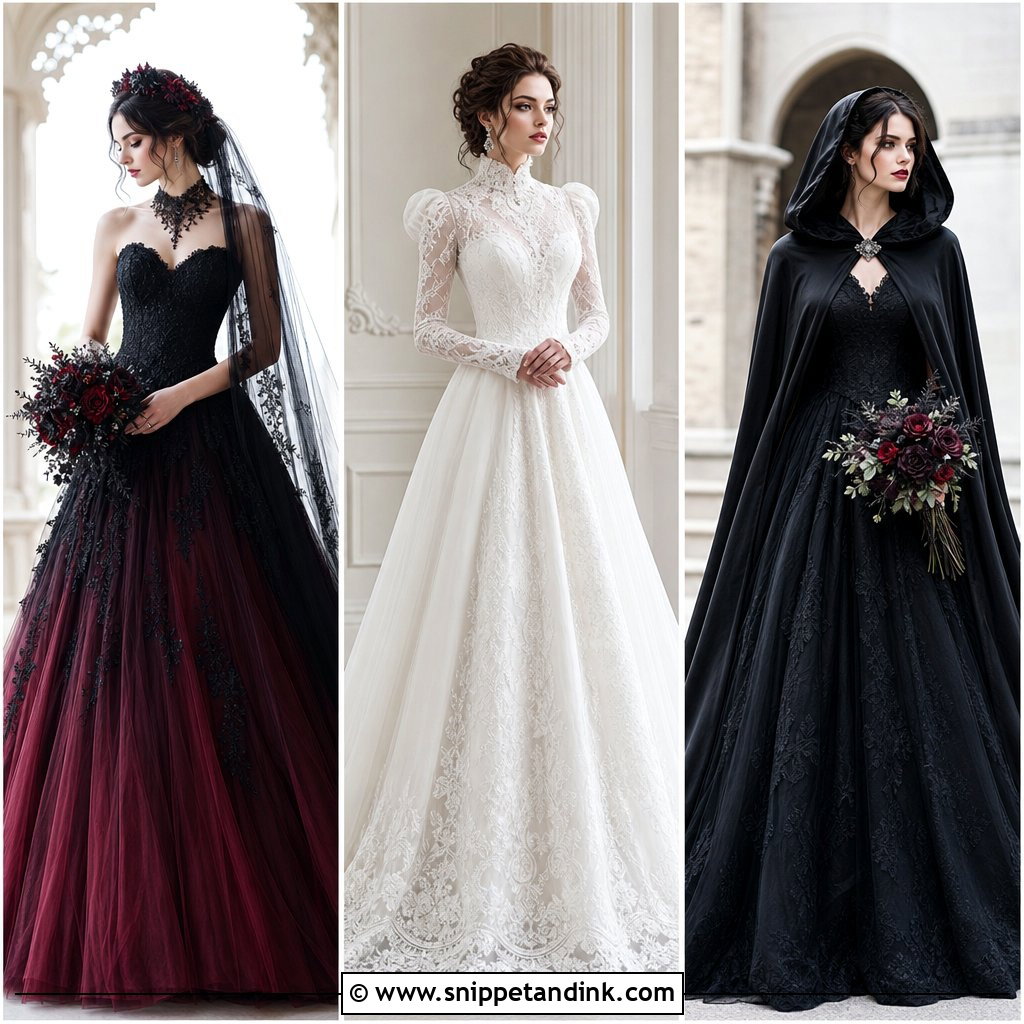
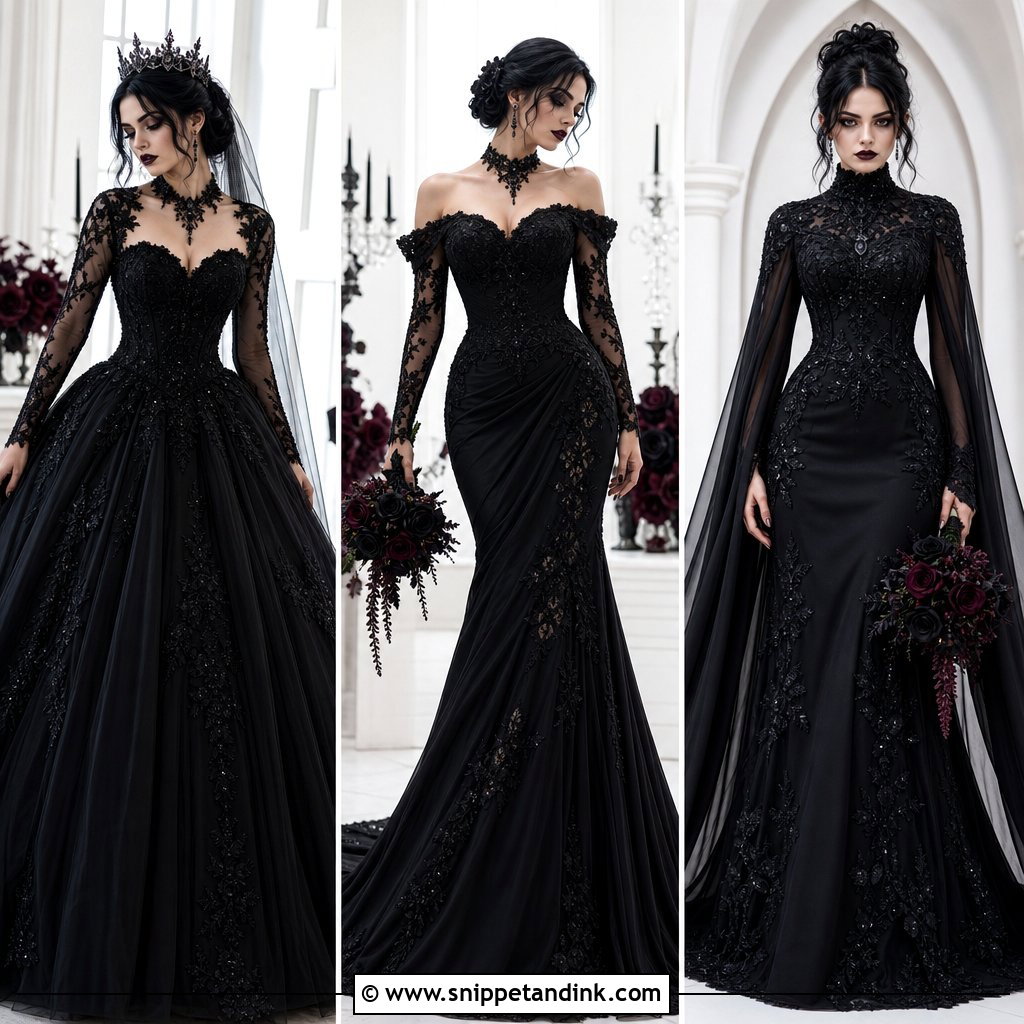
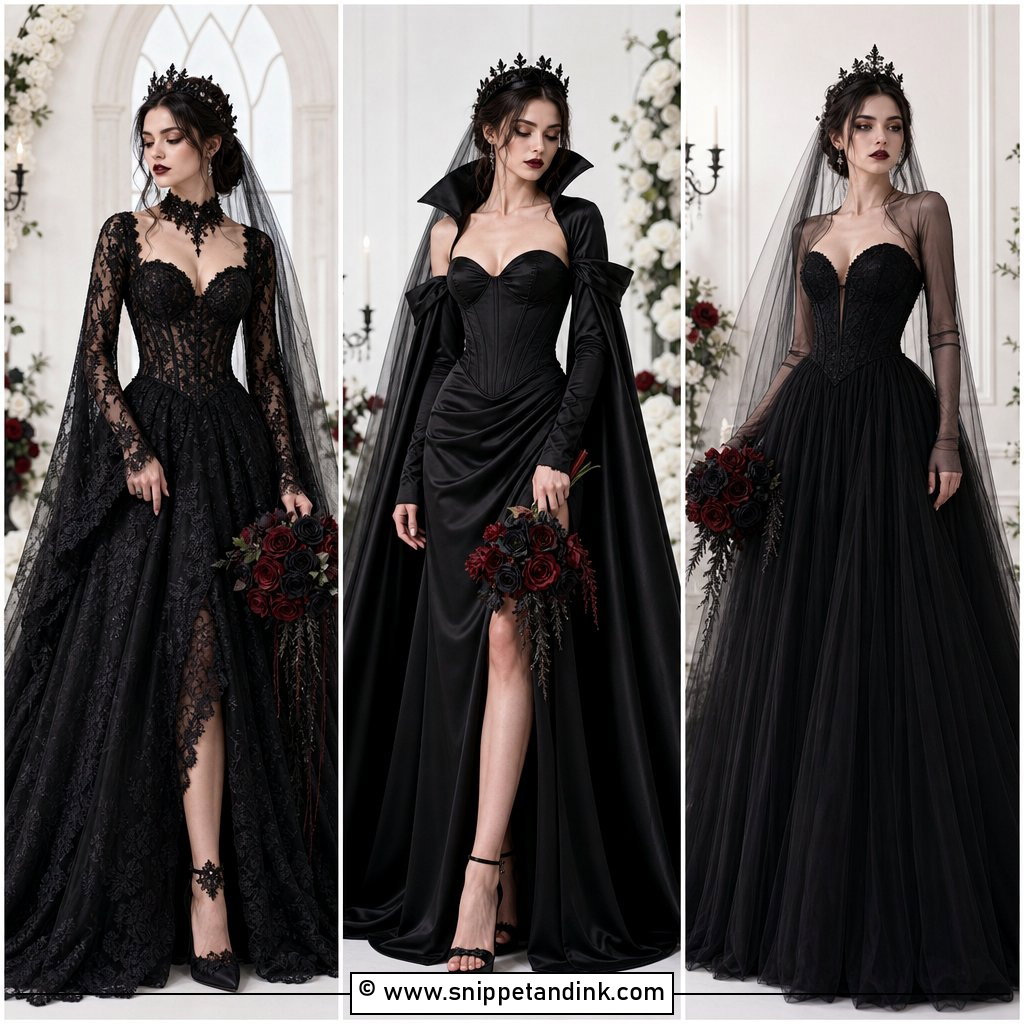
Black lace is where most gothic brides start, and for good reason. Lace has enough texture to read as bridal even in black, where a flat fabric might look like eveningwear. A fitted bodice over an A-line skirt is the easiest balance to wear; long lace sleeves bring a Victorian note without weight. Add black or silver heels, a lace-trim veil and a deep red or black-and-white bouquet, and keep jewelry to drop earrings or a fine pendant. I’d book this for autumn, winter or an evening ceremony indoors.
2. Black Tulle Gothic Wedding Dress
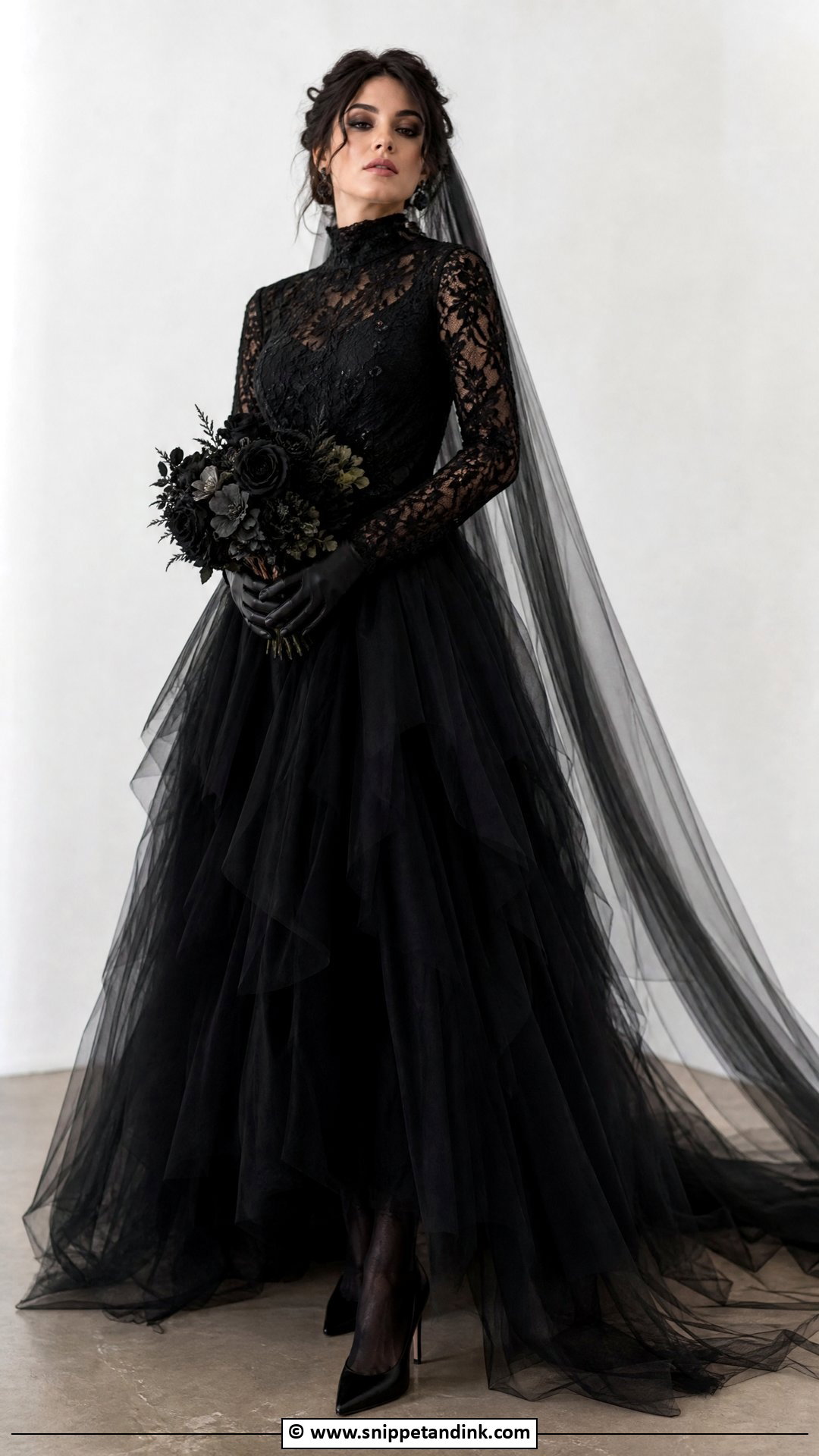
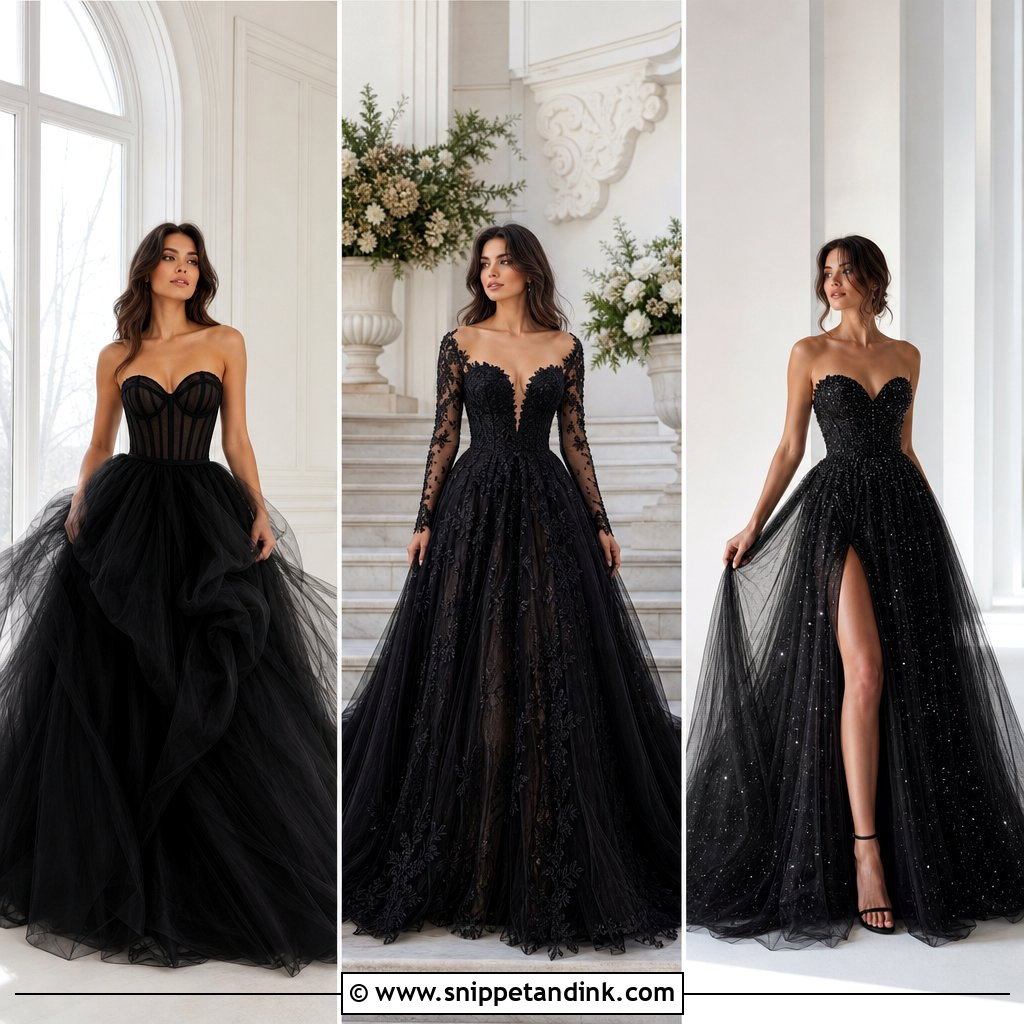
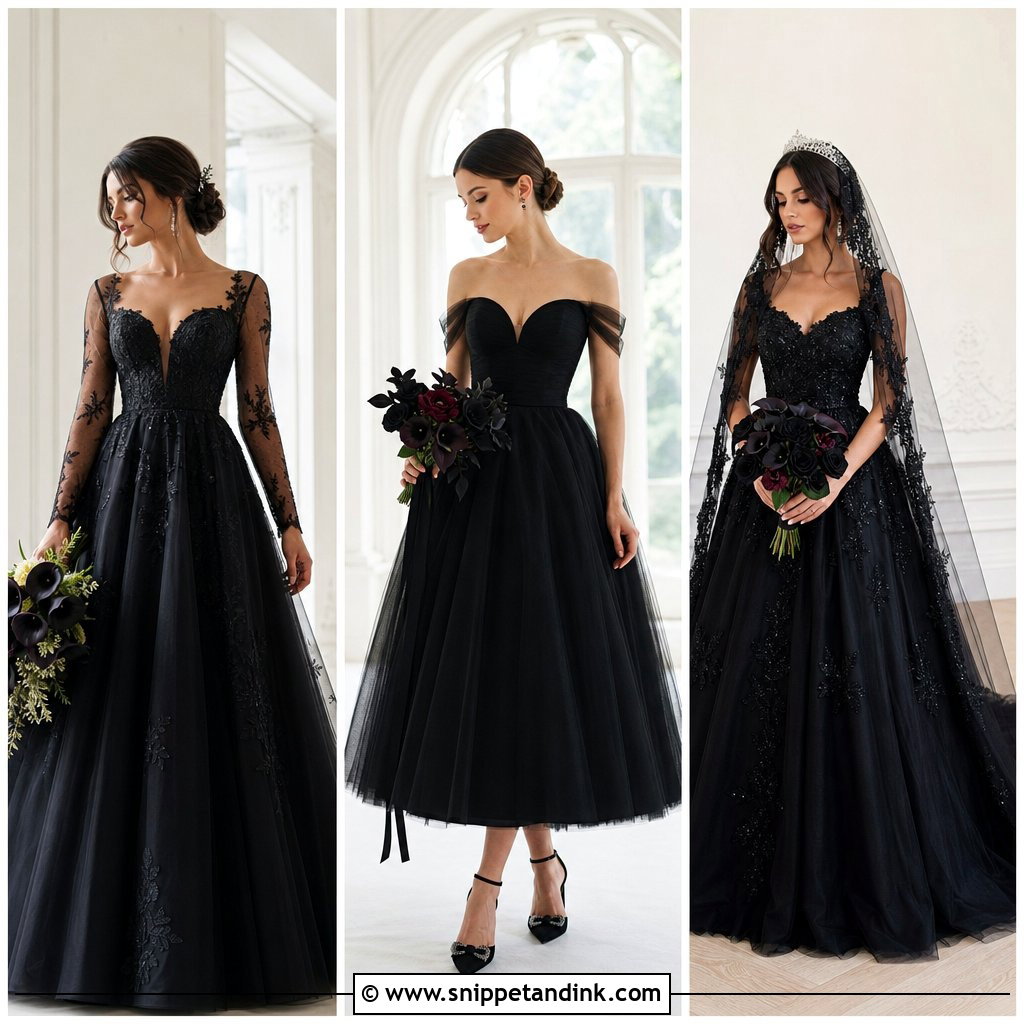
Tulle is the lightest way to get volume. A black tulle gothic wedding dress moves with every step and weighs a fraction of velvet or heavy satin, so even a simple bodice feels special over a layered skirt. Ask about the lining. Black tulle over black lining can photograph as a solid block, whereas a nude or champagne layer underneath lets the layers show as depth. Pair it with a corset-style top, sheer gloves, pointed heels and a long veil, and keep the bouquet structured so the skirt stays the soft element.
3. Velvet Gothic Wedding Dress
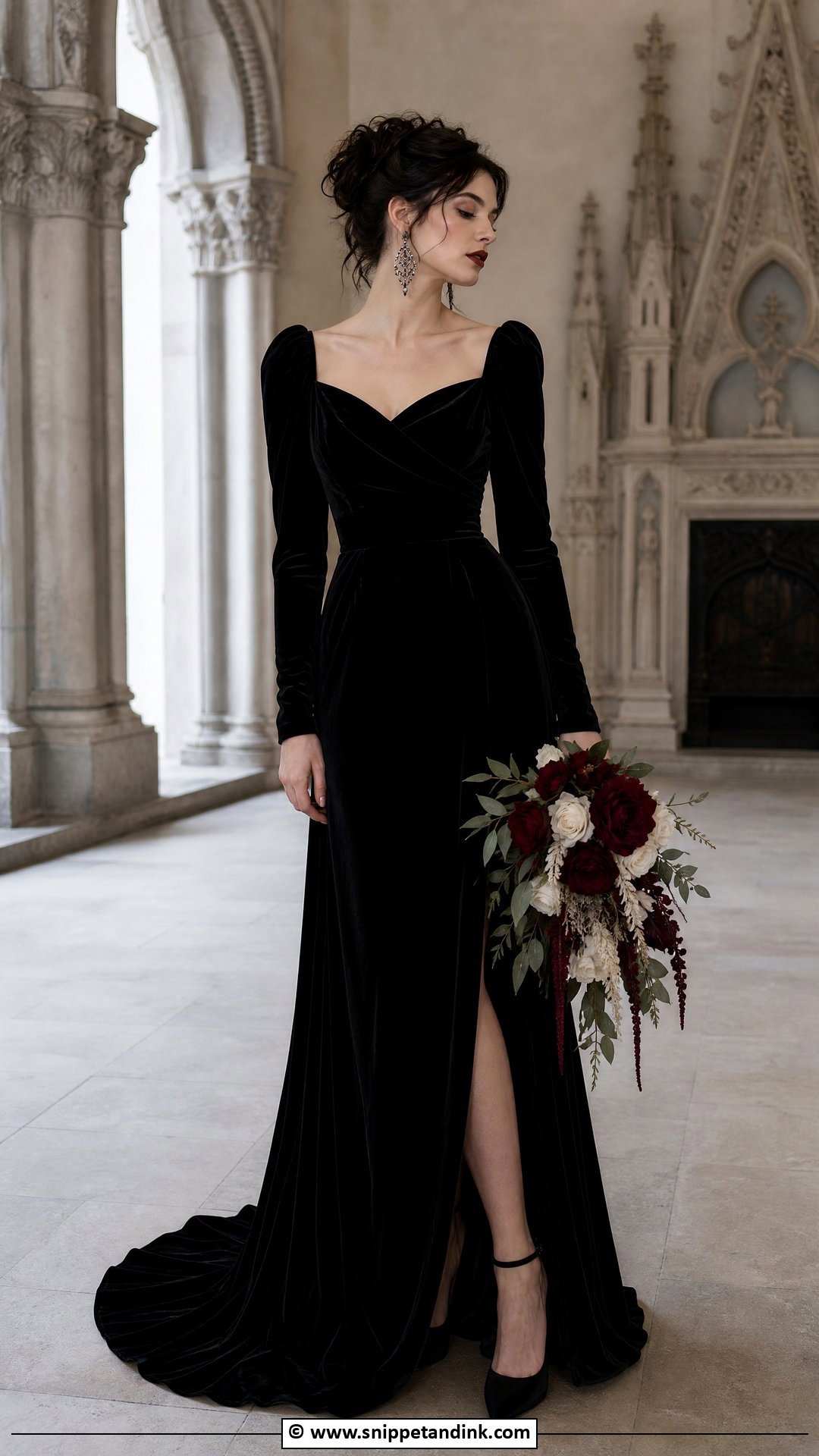
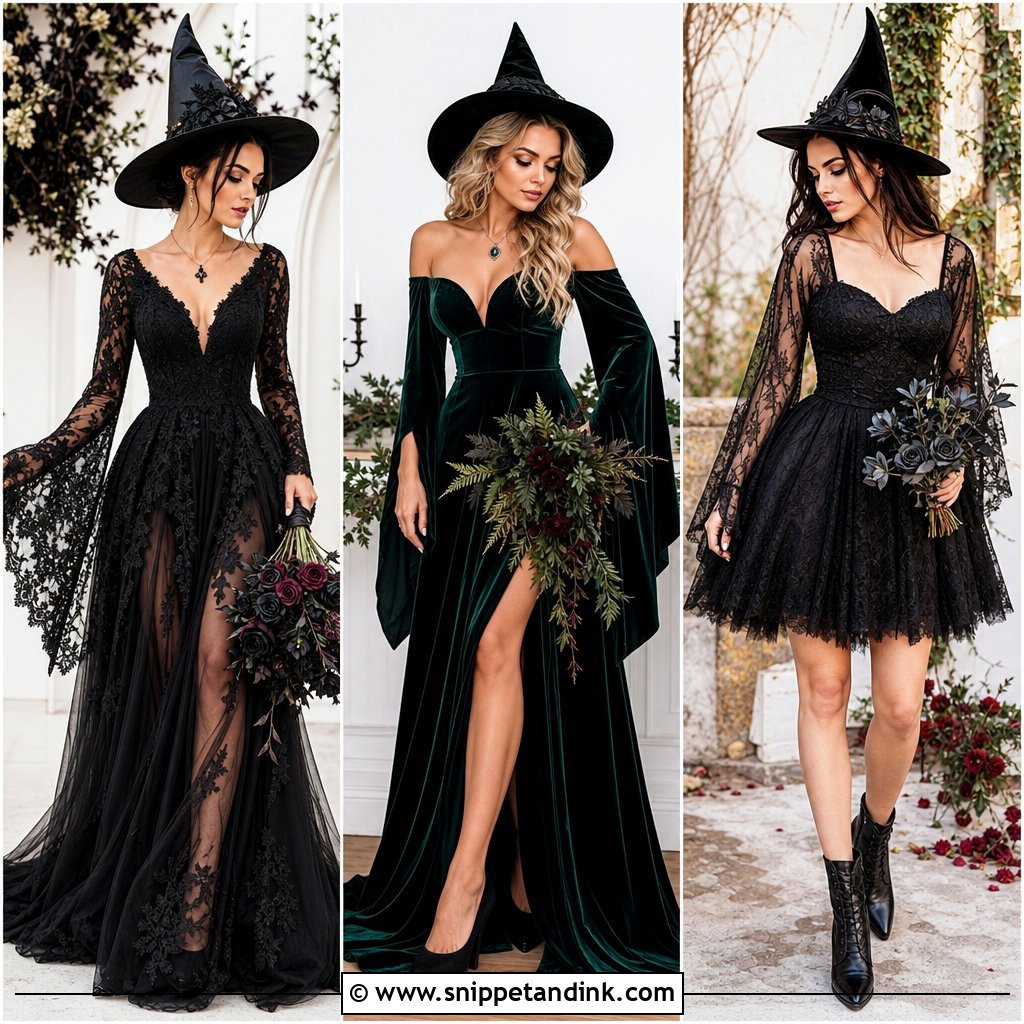
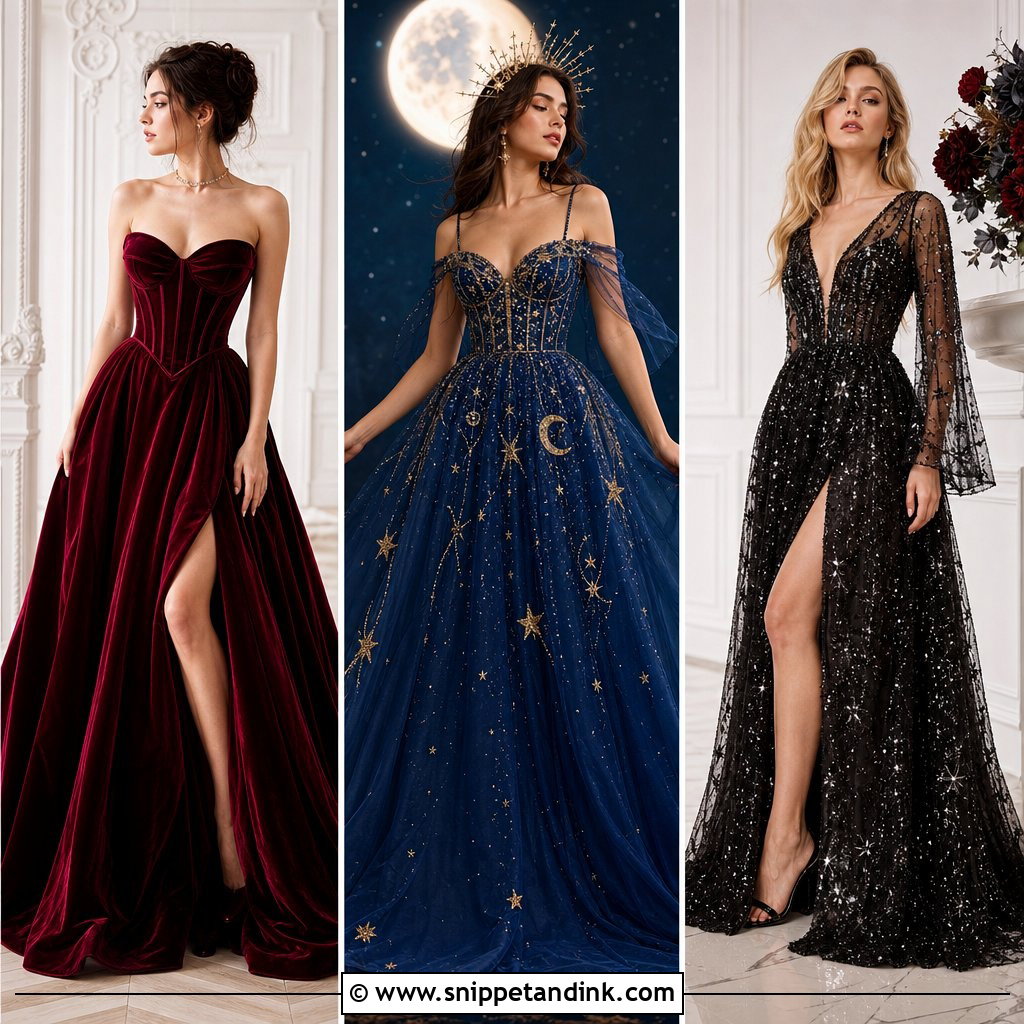
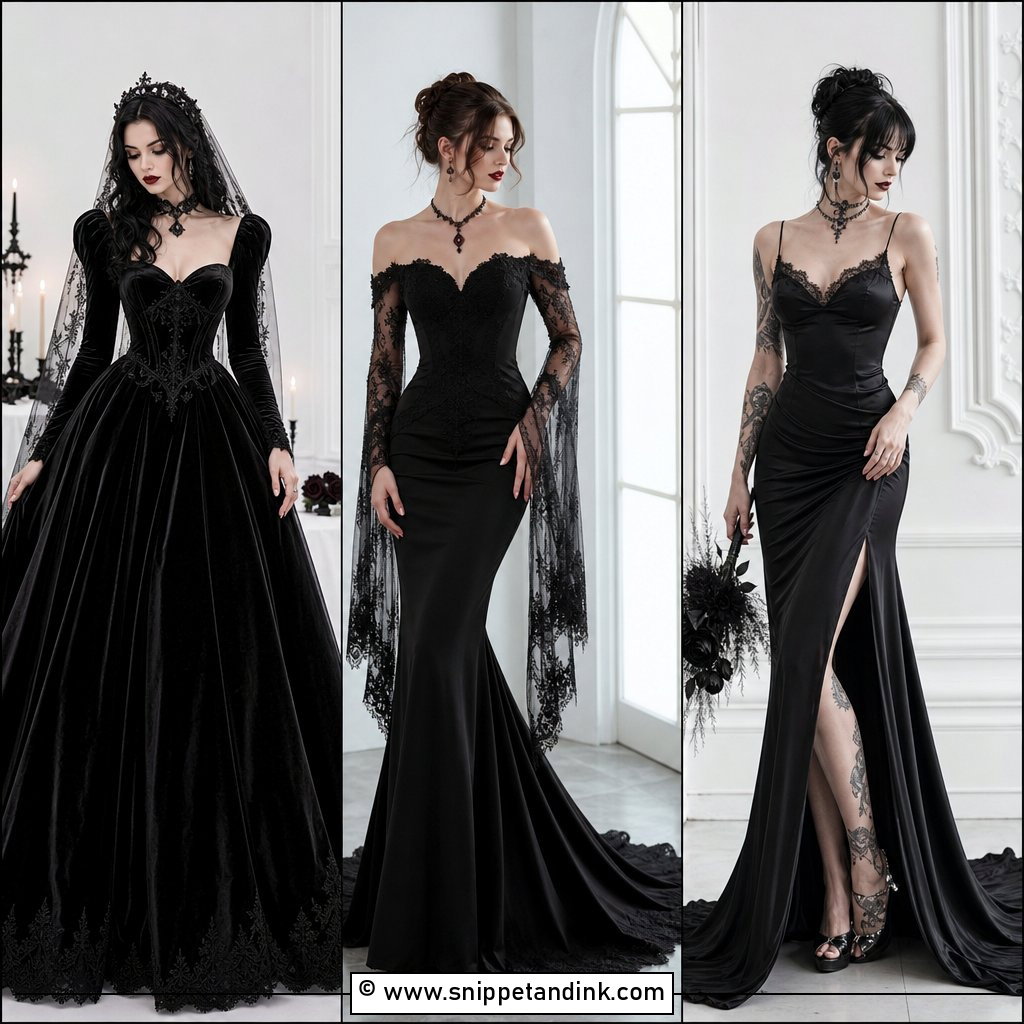
Velvet has a pile, tiny fibres standing up from the weave, and that’s what gives it depth under candlelight. A velvet gothic wedding dress can be a sleek long-sleeved sheath or a historical ball gown. It’s also warm and heavy, so I only suggest it for cold-weather weddings in grand houses, old estates or dark ballrooms. One fitting note: velvet crushes where it’s pressed, so sit on the back of the skirt rather than bunching it under you. Black platforms, a satin ribbon veil and antique-style earrings suit it, with burgundy, plum or ivory flowers.
4. Corset Gothic Wedding Dress
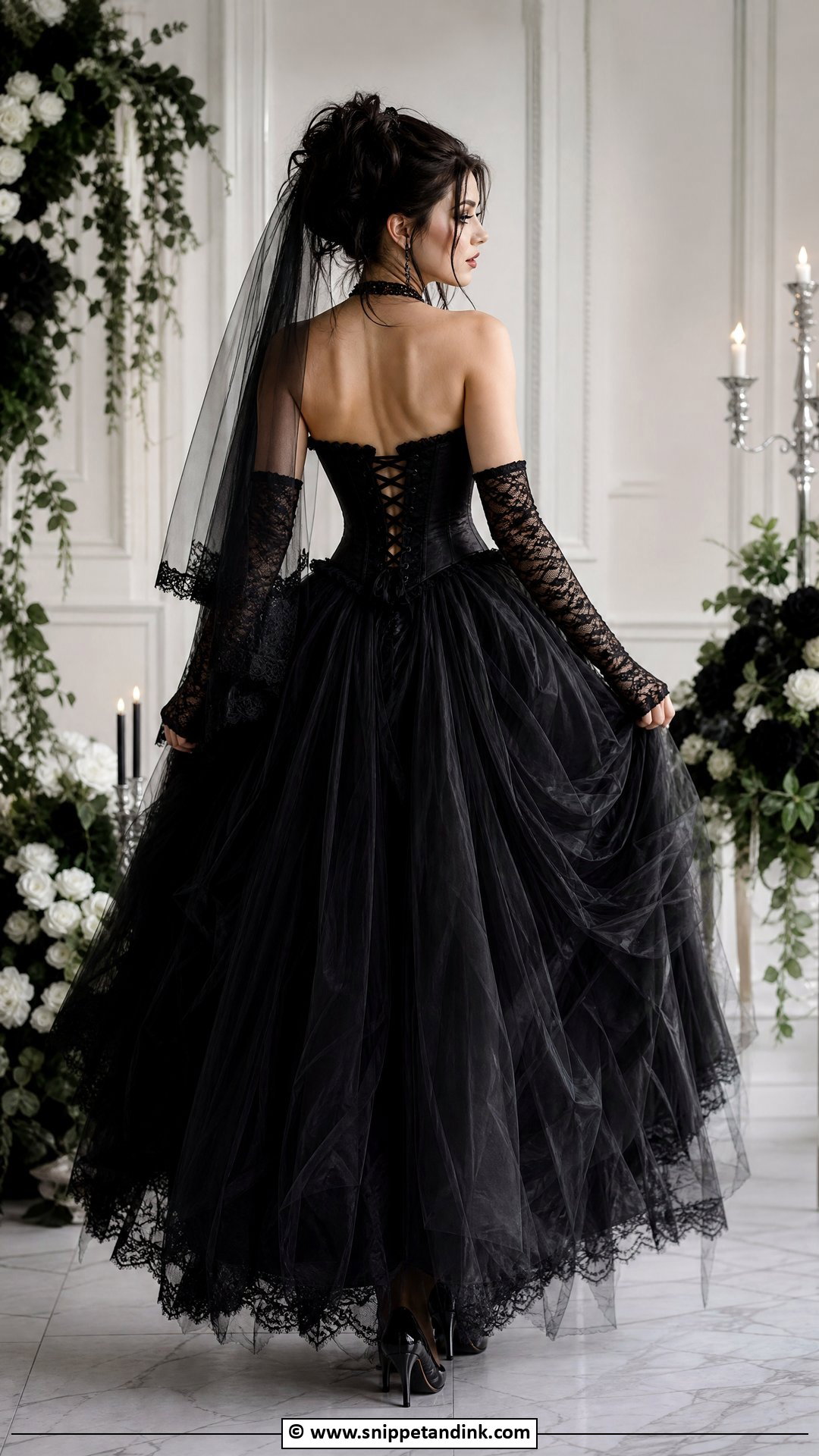
Corsets are about fit before anything else. Visible boning or a lace-up back defines the waist and makes the gown look deliberate, in full black or as black detail on ivory. A tulle skirt adds drama; satin or crepe keeps it cleaner. Before I sign off on any corset, the bride sits, eats a mouthful of something and lifts her arms, because a bodice that’s comfortable standing still can be miserable by the speeches. Style it with a choker, lace gloves and a veil in the same fabric family as the dress.
5. Victorian Gothic Wedding Dress
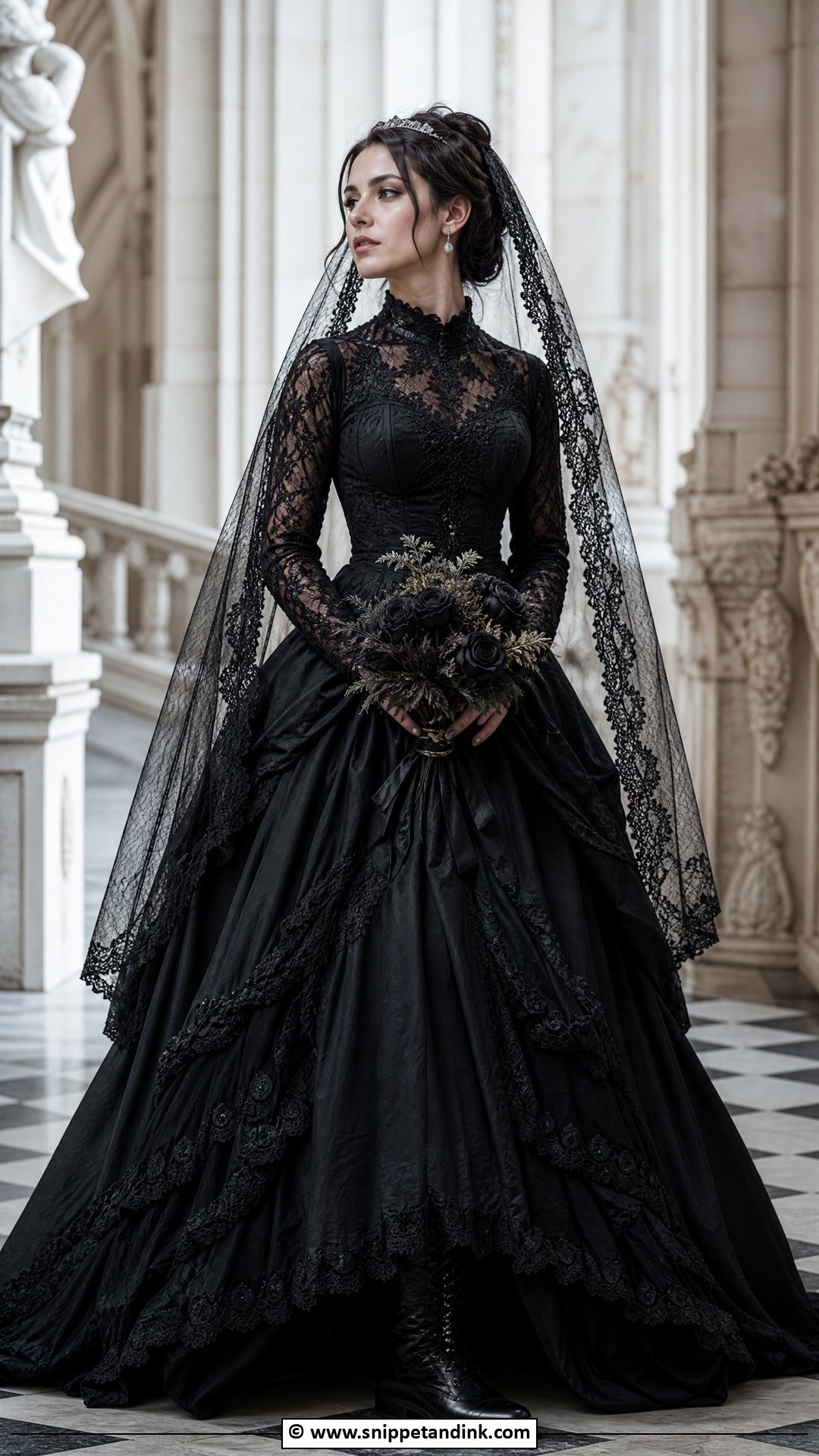
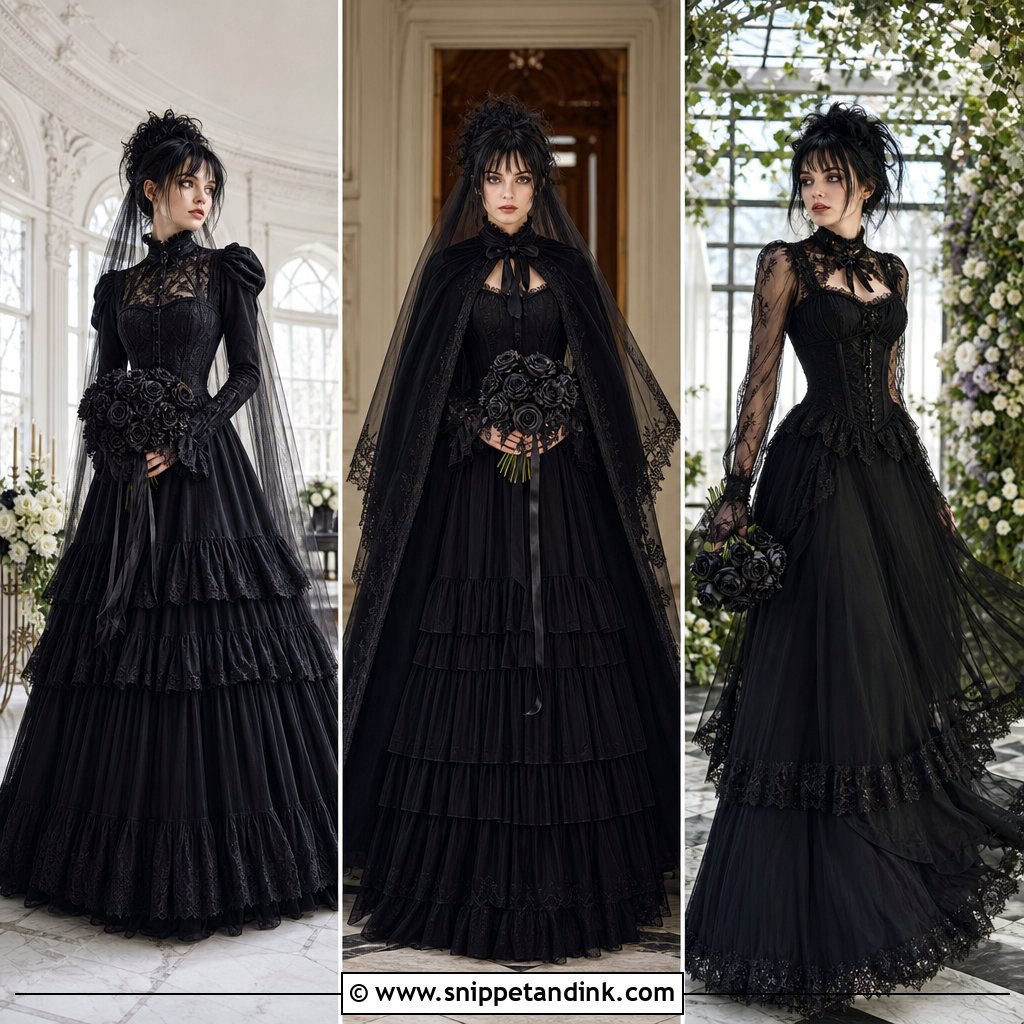
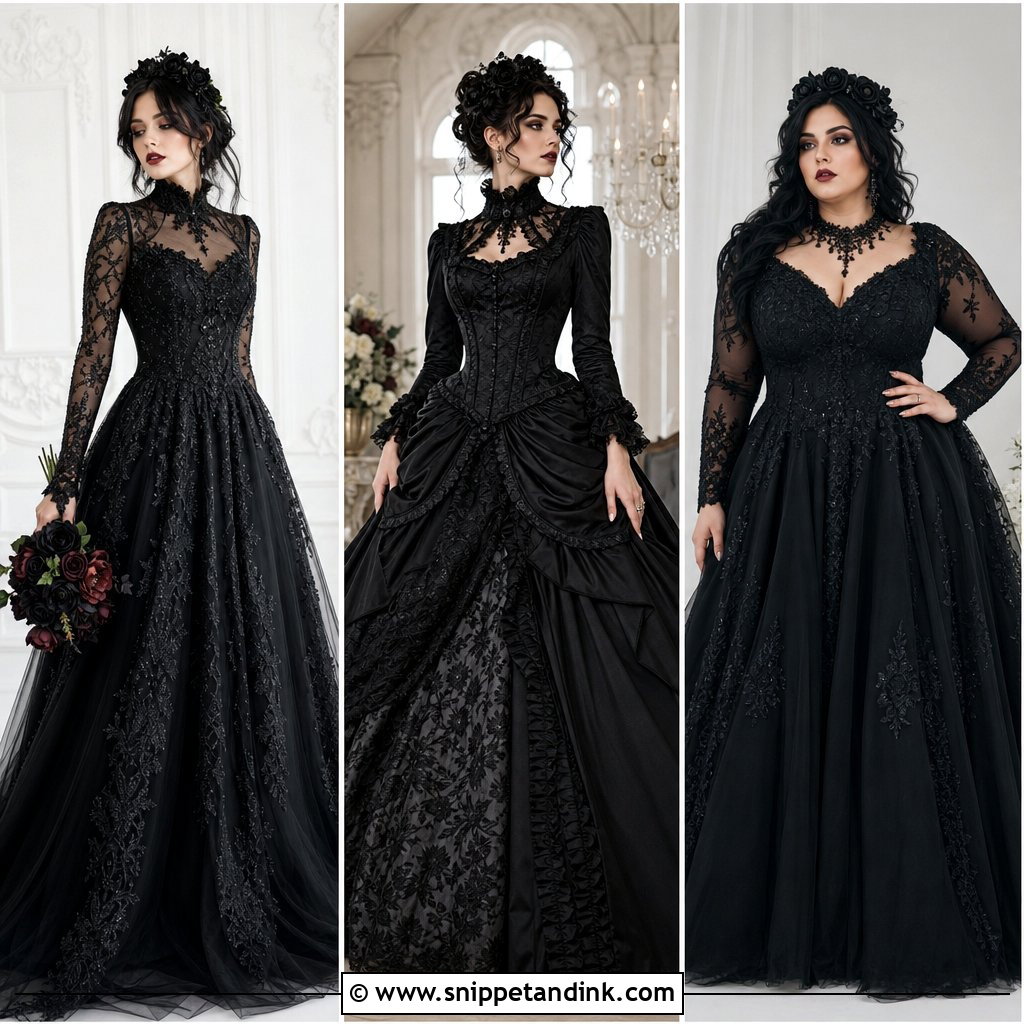
High necklines, long sleeves, lace, rows of buttons and a full skirt are the language of a Victorian gothic wedding dress. It feels historical and still bridal without modern embellishment, in black or ivory with lace sleeves depending on how dark you want to go. Add ankle boots, pearl or silver earrings and a lace veil. A bouquet of deep red, purple and ivory with greenery suits the period. Keep hair in a low bun or soft waves so the neckline and sleeves stay visible. Those buttons are often decorative over a hidden zip; if they’re real, allow a bridesmaid ten minutes to fasten them.
6. Black Satin Gothic Wedding Dress
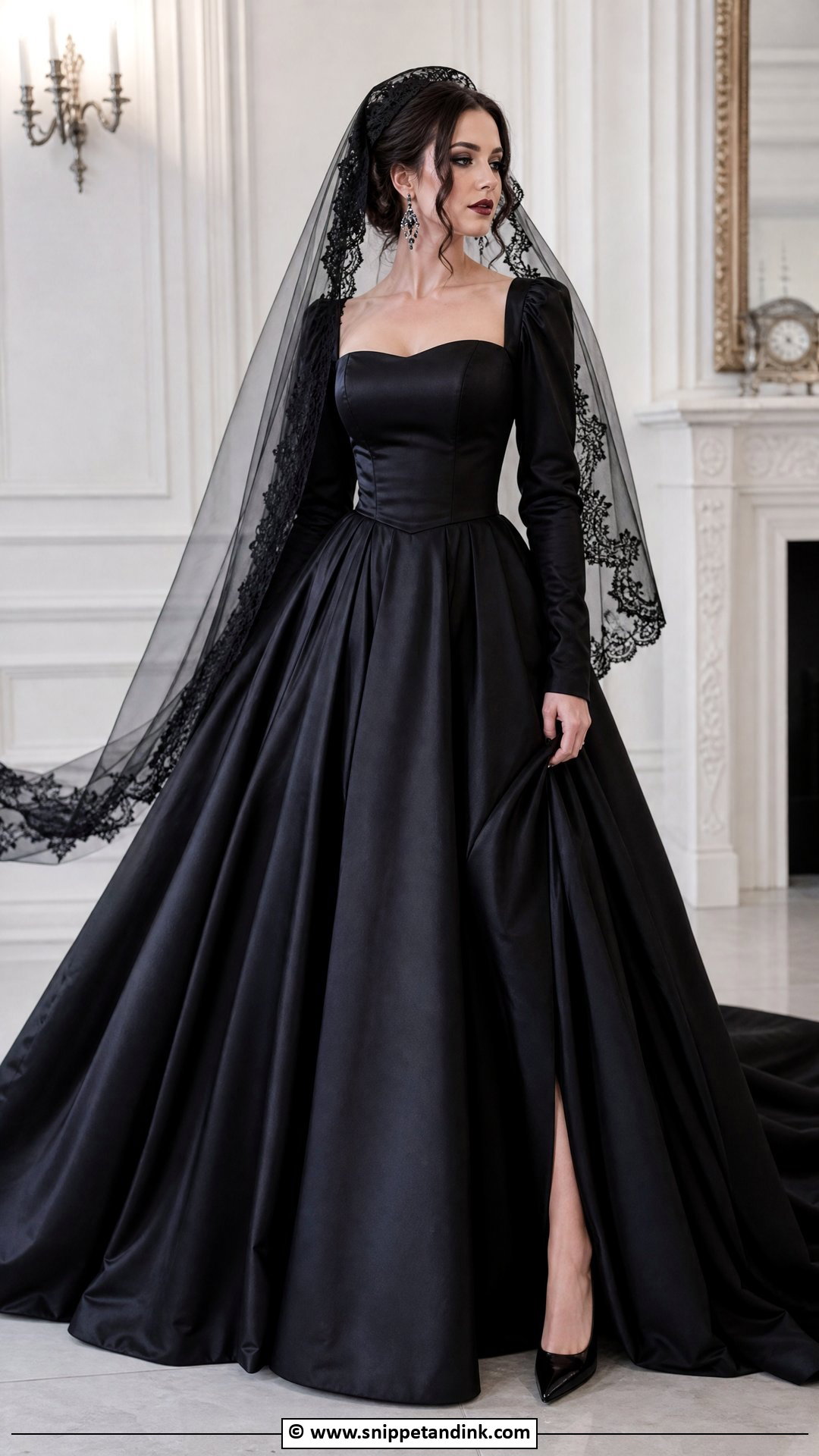
Black satin can look flat on the hanger and then come alive once it’s worn. The sheen catches light along every fold, so the gown looks shaped and dimensional rather than flat. A fitted dress with a clean neckline feels modern; a full skirt brings classic drama. Pointed heels, a structured veil and silver or crystal accessories suit it, with a lace cape or black gloves if you want more gothic detail. Satin does show every crease and smudge, especially in black, so keep a steamer and a lint roller close.
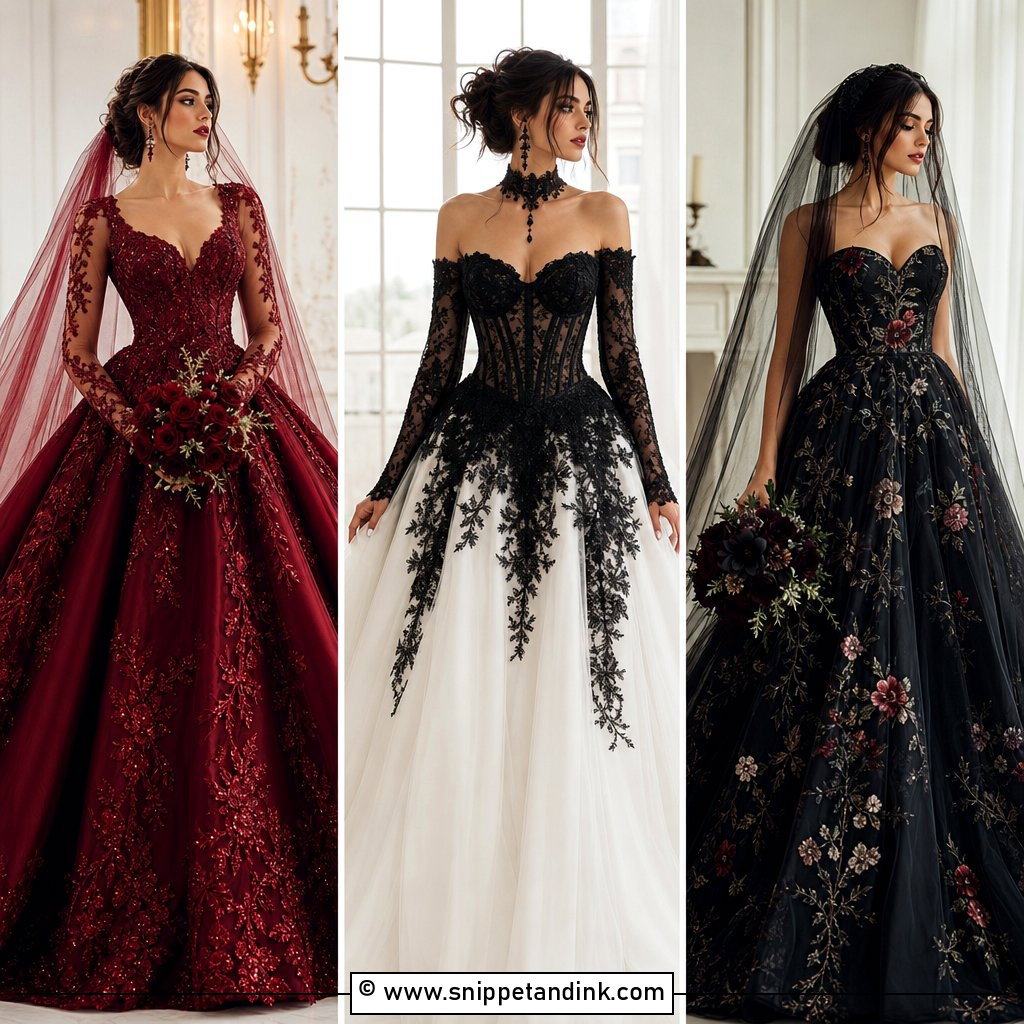
7. Red Gothic Wedding Dress
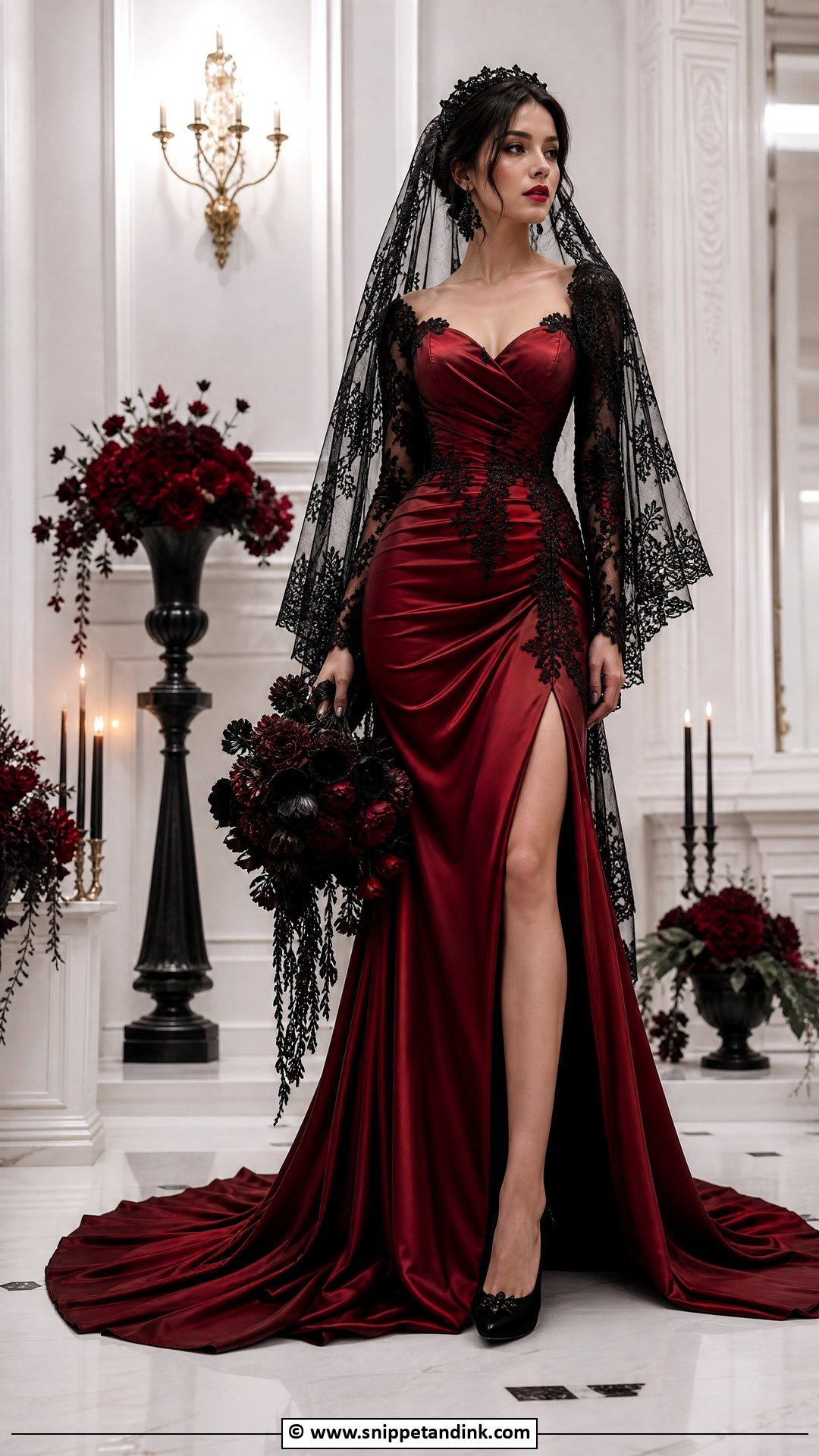
Red works for gothic when the shade is deep: crimson, wine or oxblood rather than a bright scarlet. A red gown under black lace overlay reads strongly gothic, while plain red satin or velvet feels regal. Add black heels, dark floral accessories and a black veil or cape. With makeup, choose either defined eyes or a deep lip if you want a softer finish. I’d also check the red against your skin in daylight, because some crimsons pull cool and others warm, and the wrong one can make skin look sallow in photos.
8. Black And Red Gothic Wedding Dress
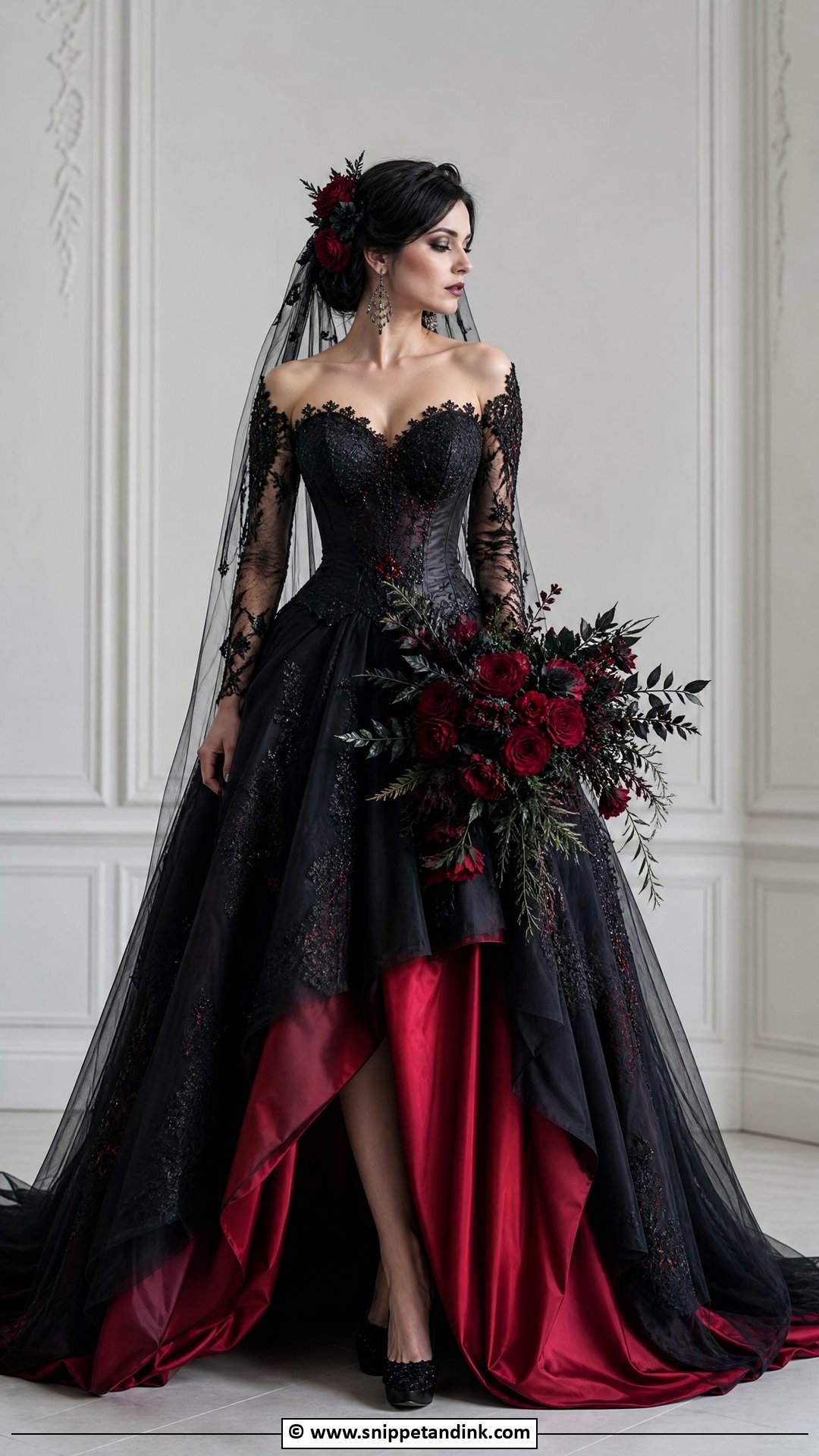
Two strong colours need a hierarchy. The versions I like best keep one colour dominant and use the other as an accent, such as a black gown with red embroidery, a red lining or a red sash, or a red dress with black lace sleeves. Style it with black heels, red-and-black florals and simple metal jewelry. Don’t bring in a third colour; the dress already has enough going on.
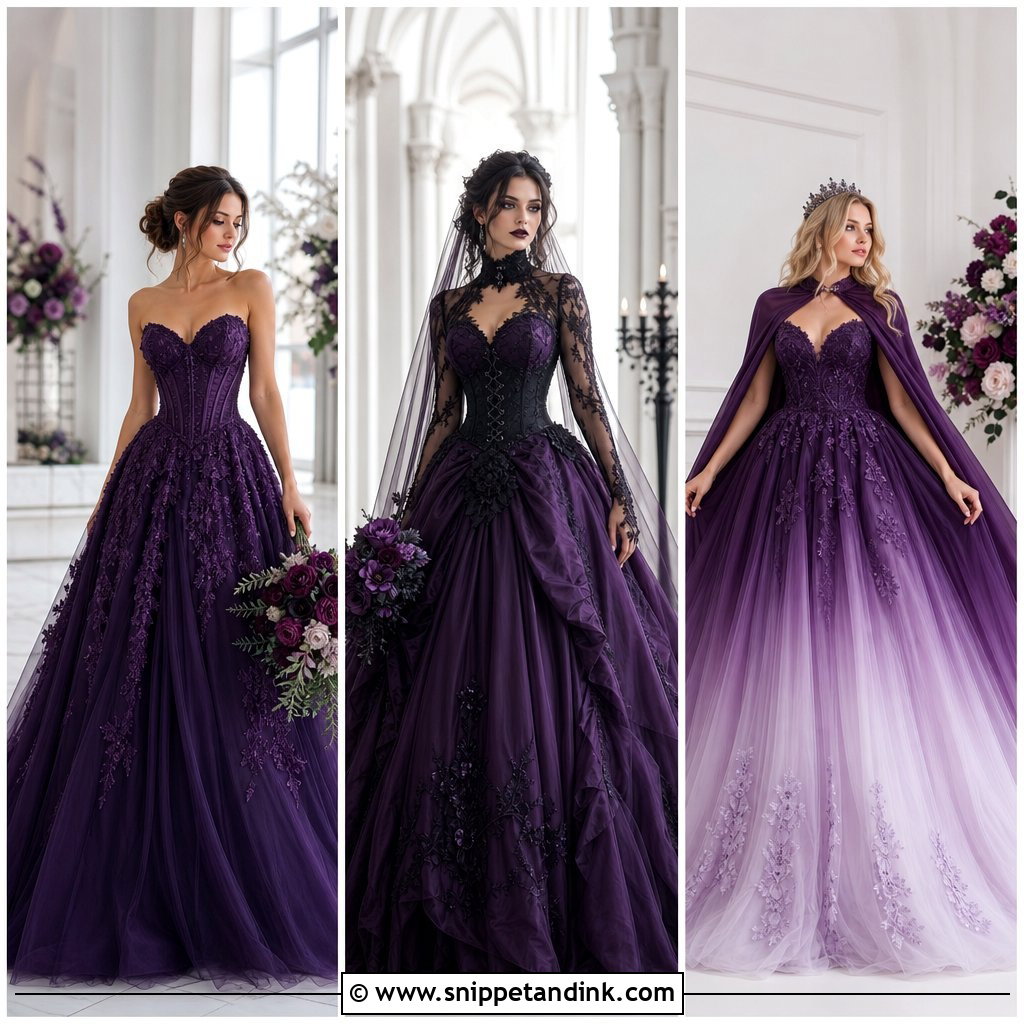
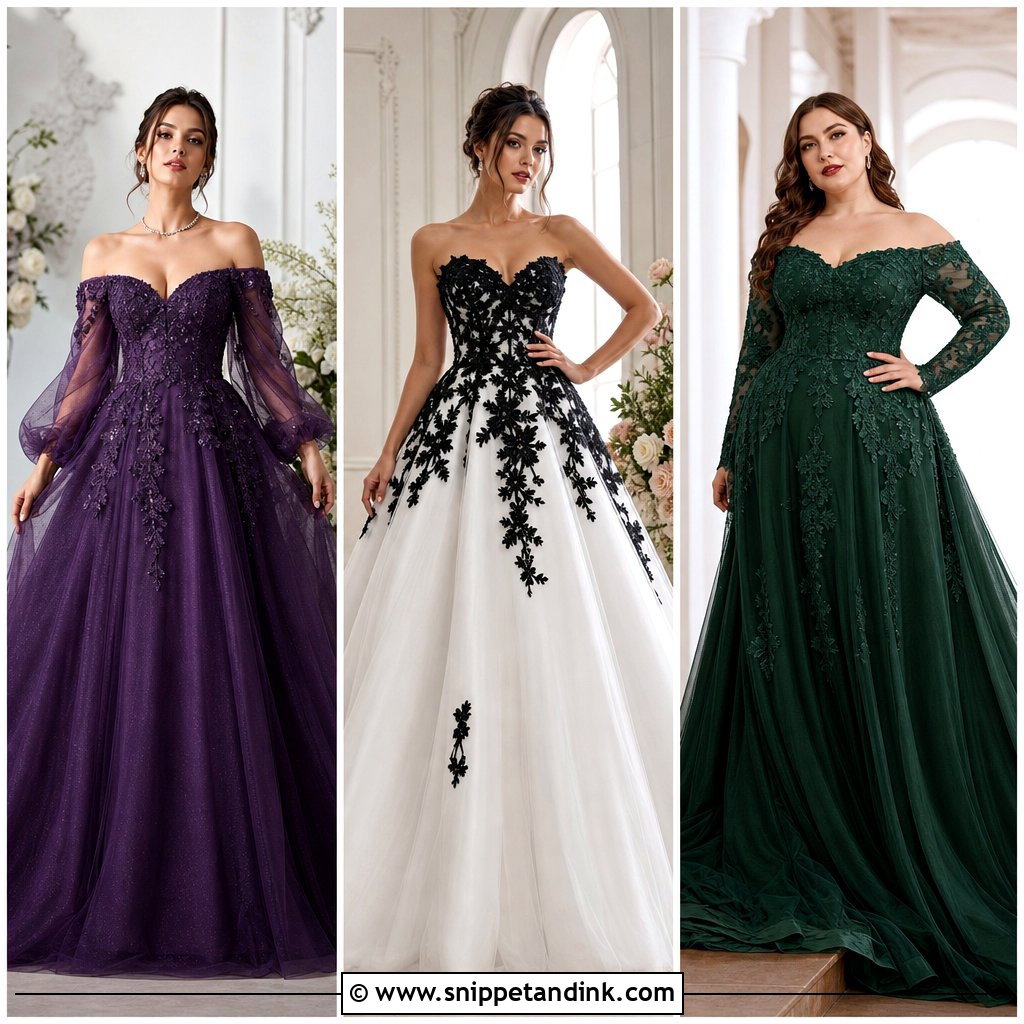
9. Purple Gothic Wedding Dress
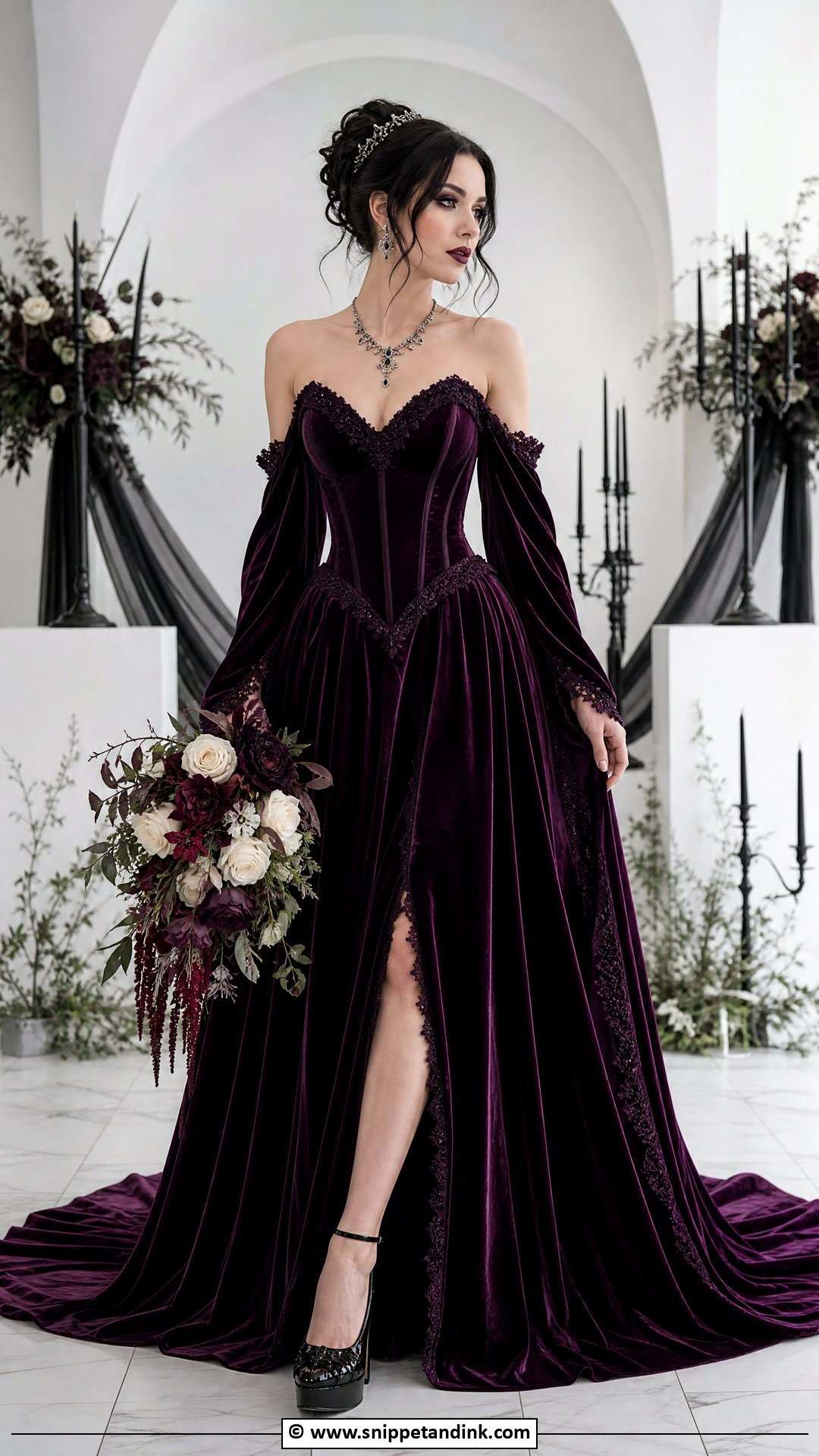
Plum, eggplant and royal purple are moody without the finality of black. A purple gothic wedding dress in velvet or satin looks rich; in tulle it turns dreamy and layered. Pair it with black heels, silver jewelry and ivory, burgundy and dark green flowers, then pick the veil by mood: black for gothic, matching purple for romantic. Purple dyes are notoriously inconsistent between bolts, so if your veil or bridesmaids need to match, order from the same dye lot or get swatches early.
10. White Gothic Wedding Dress With Black Lace
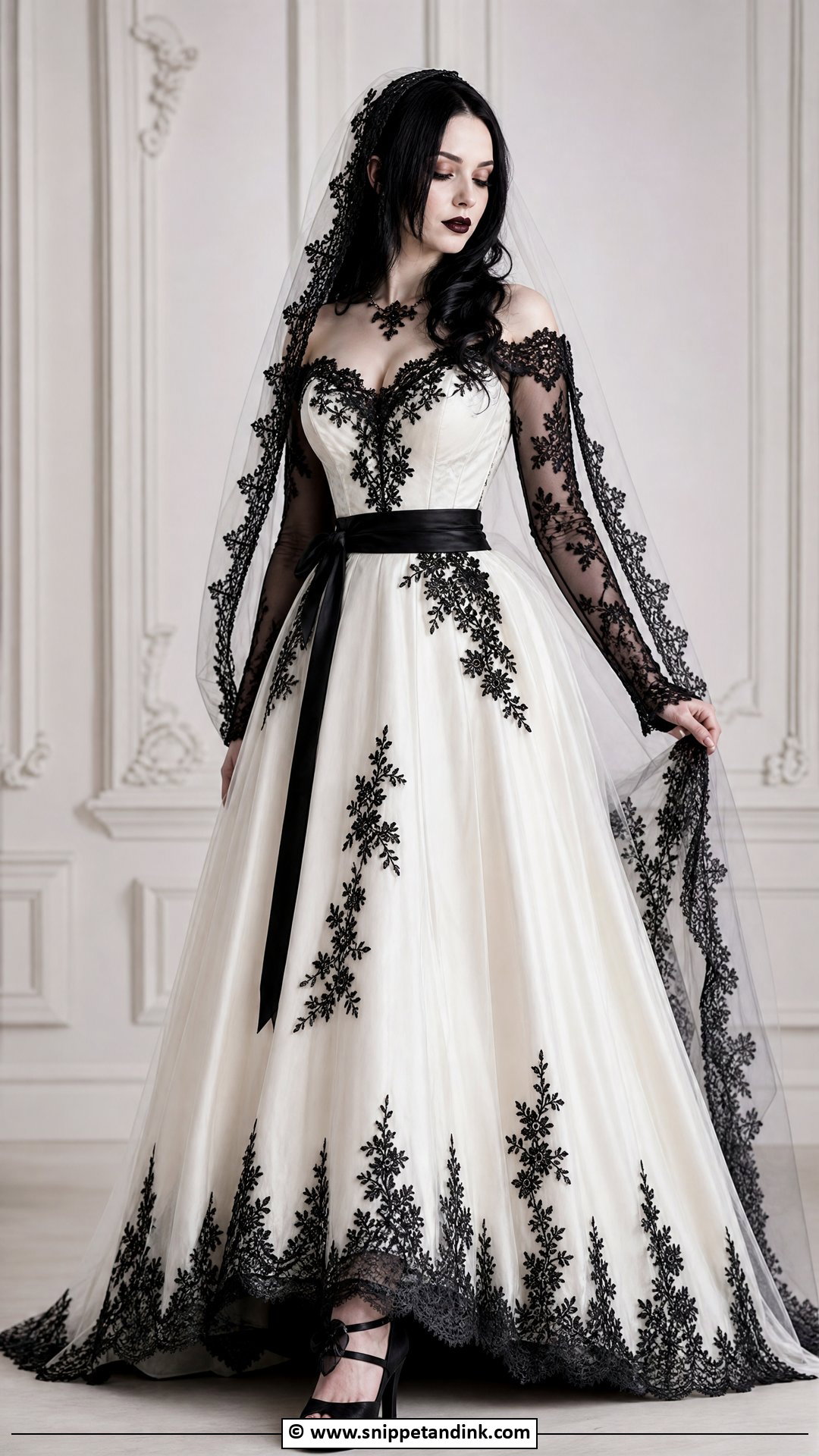
Black lace on white gives you a traditional bridal base with a darker twist, and it’s the version I suggest for brides with family who’d find a fully black gown hard. Black lace sleeves, a black lace bodice overlay or scattered black appliques can turn a simple white gown into something personal. Add black heels, a black ribbon belt and a veil with subtle lace trim. The bouquet should be mostly ivory with a few deep accent blooms so the contrast stays balanced. Check that the black lace is colourfast; a damp hand can transfer dye onto white tulle.
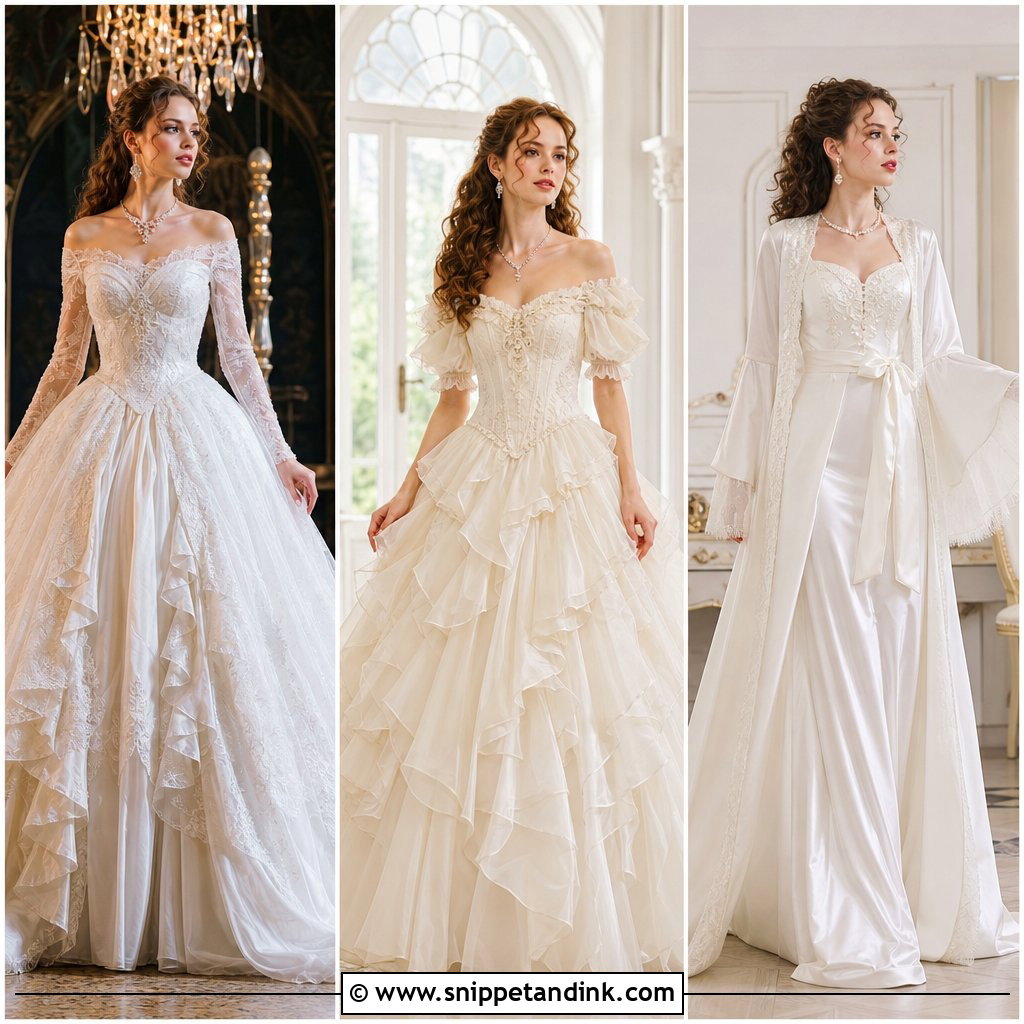
11. Ivory Gothic Wedding Dress
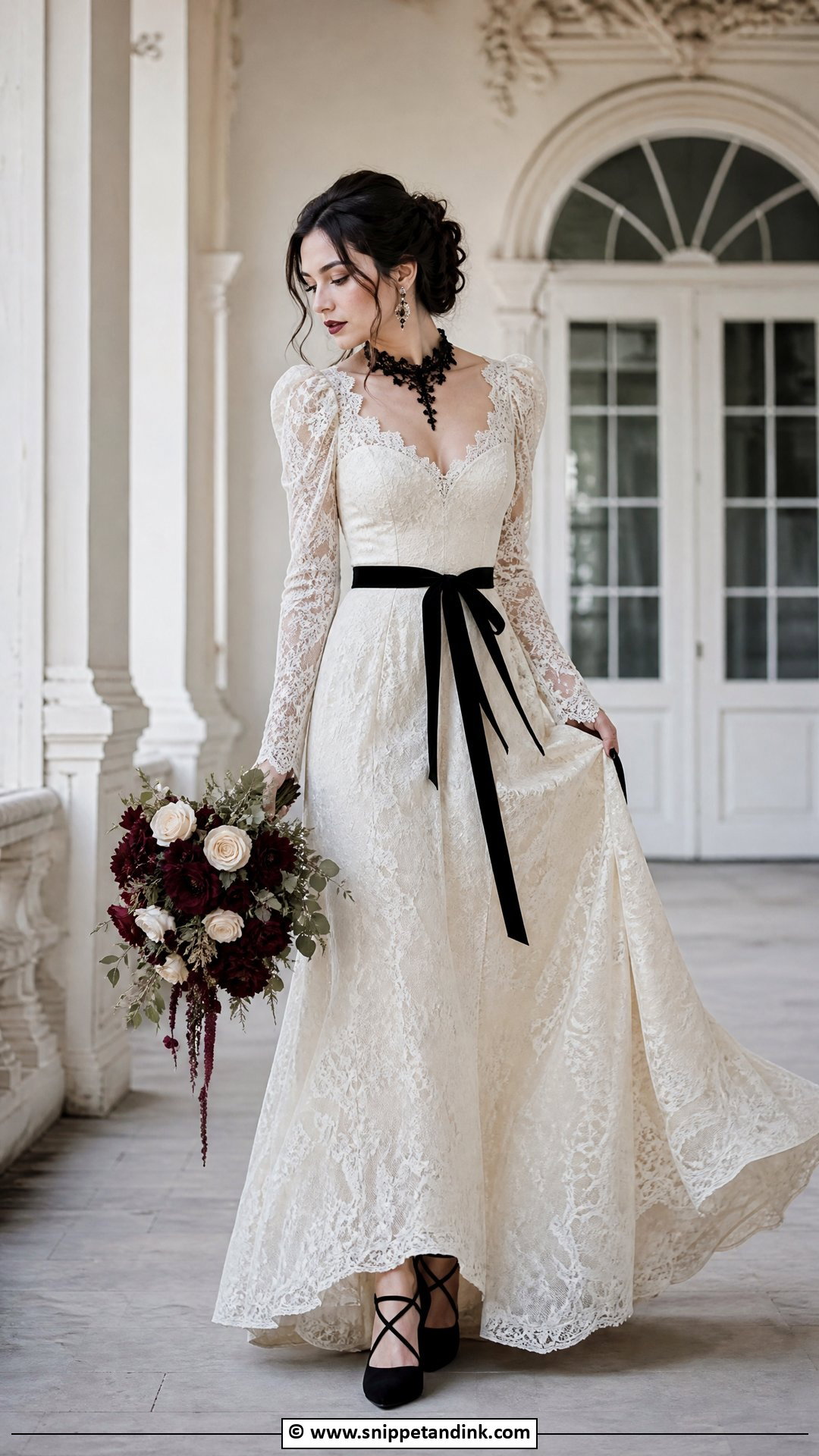
Ivory is kinder than bright white next to black accessories, because the warm tone softens the contrast and gives a vintage feel. Black lace, antique silver jewelry or velvet ribbon all sit well on it. Choose a high-neck lace gown for Victorian, or simple ivory satin with a black veil for a modern contrast. Black boots or heels ground it. Pull it together with a bouquet of ivory, burgundy and plum, letting the gothic influence come from the styling rather than the dress.
12. Gothic Ball Gown Wedding Dress
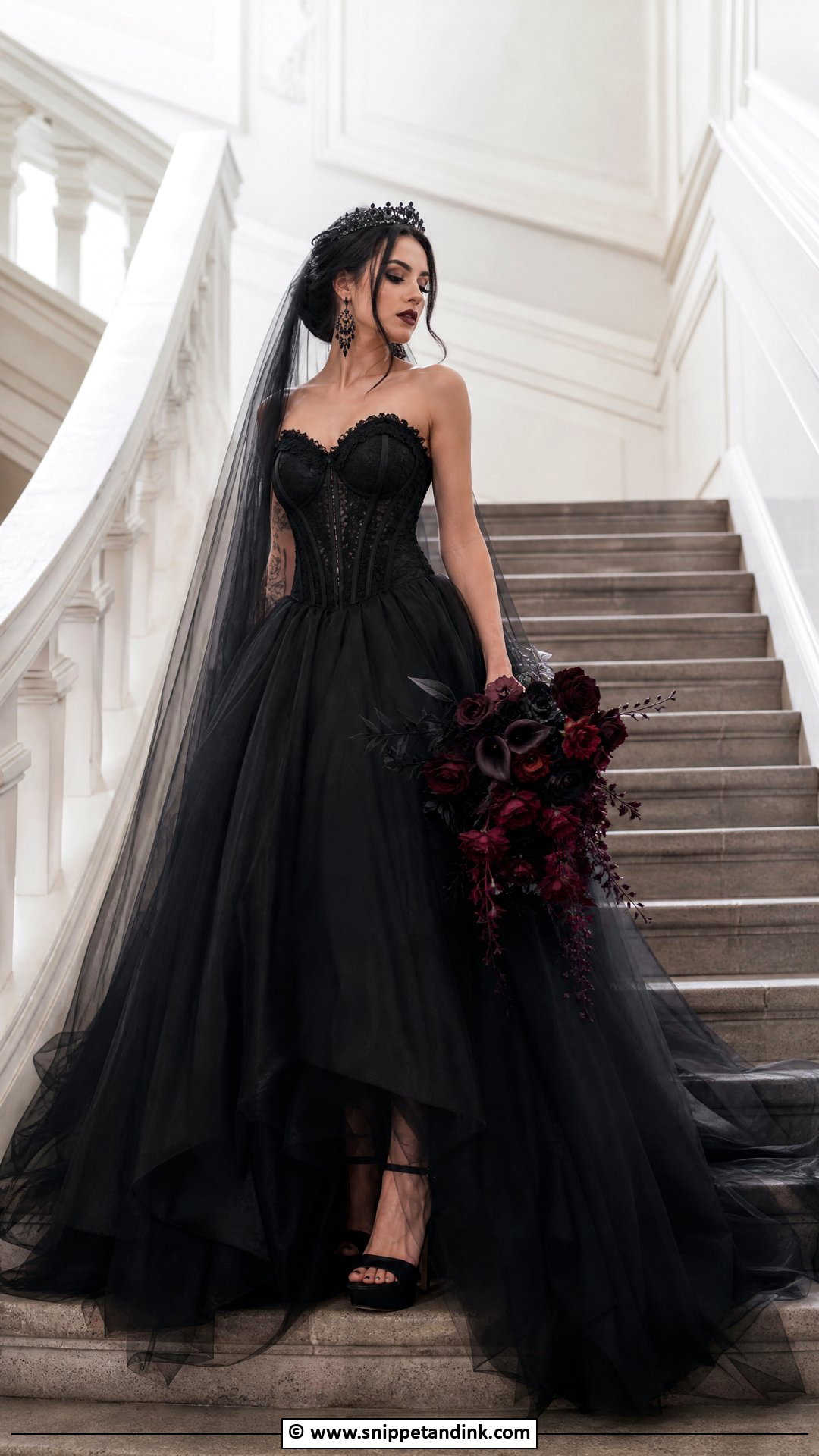
Ball gowns are for the grand entrance. A wide skirt, structured bodice and defined waist make the strongest bridal silhouette there is, in black tulle, satin or organza, often with a corset bodice or lace sleeves. With that much volume, accessories should support rather than compete: a long veil, statement earrings and good heels are enough. I always hem a ball gown with the actual shoes on and walk it across a floor like the venue’s, because stone and carpet catch a hem differently. Plan where the skirt goes in the car, too.
13. Gothic Mermaid Wedding Dress
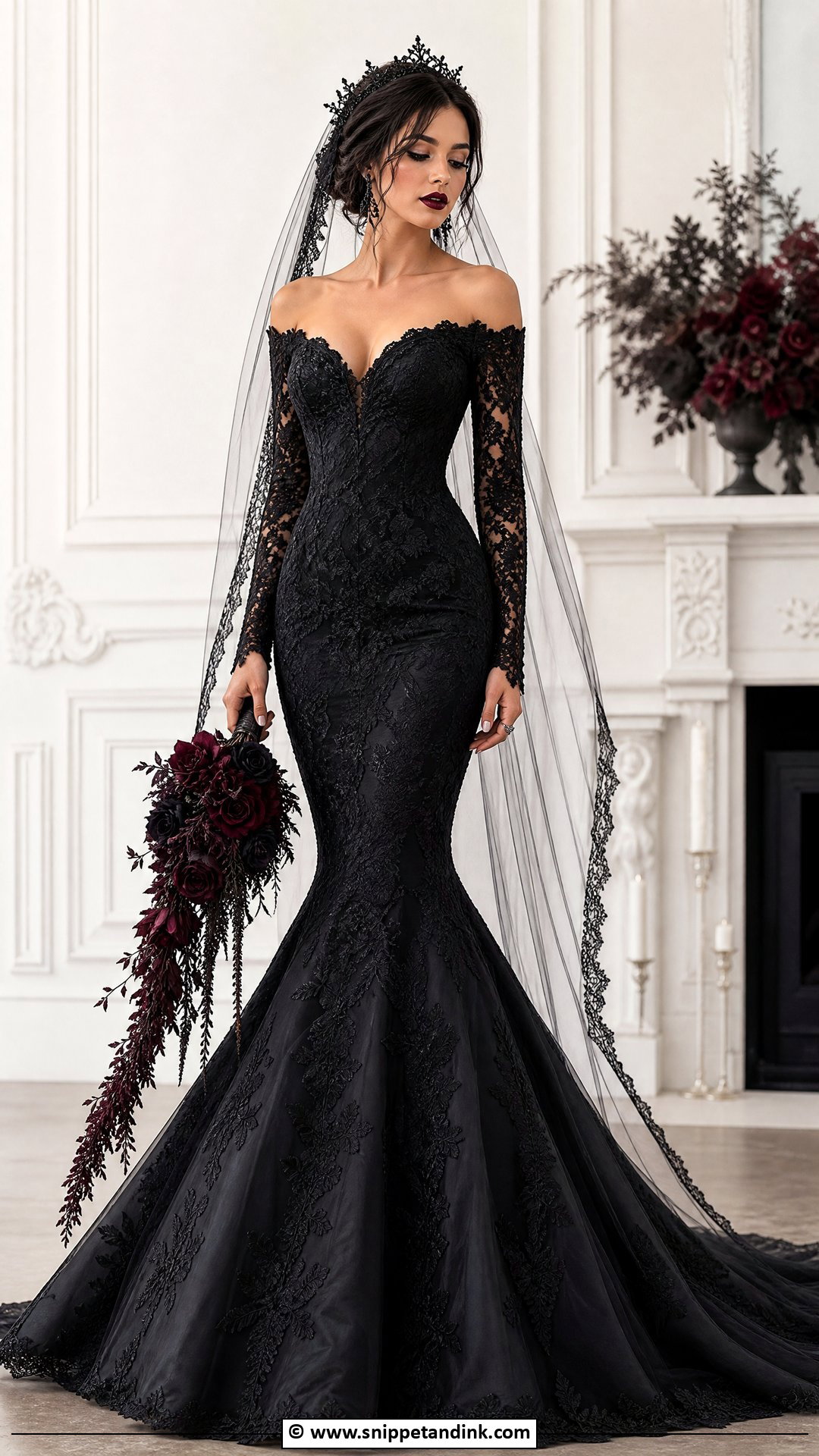
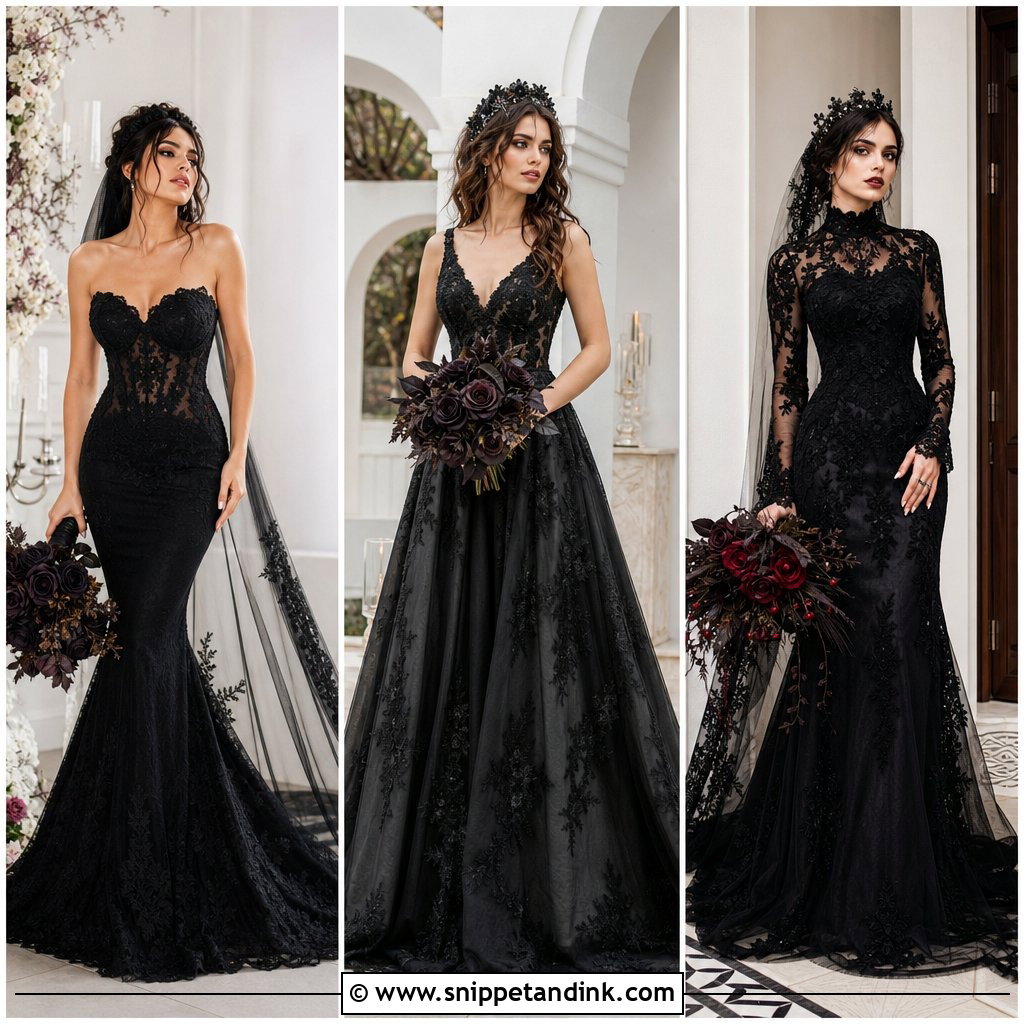
Mermaid cuts hug the bodice and hips, then flare near the knee. Black lace, satin or crepe all work, with a sweetheart neckline for romance or long sleeves for mystery. Pair it with sleek heels, a long veil and a bouquet with strong vertical lines. Comfort is the honest issue with this shape. I make every bride sit, climb a step and walk briskly before committing, and if the flare starts too low, she can’t do any of those properly.
14. Gothic A Line Wedding Dress
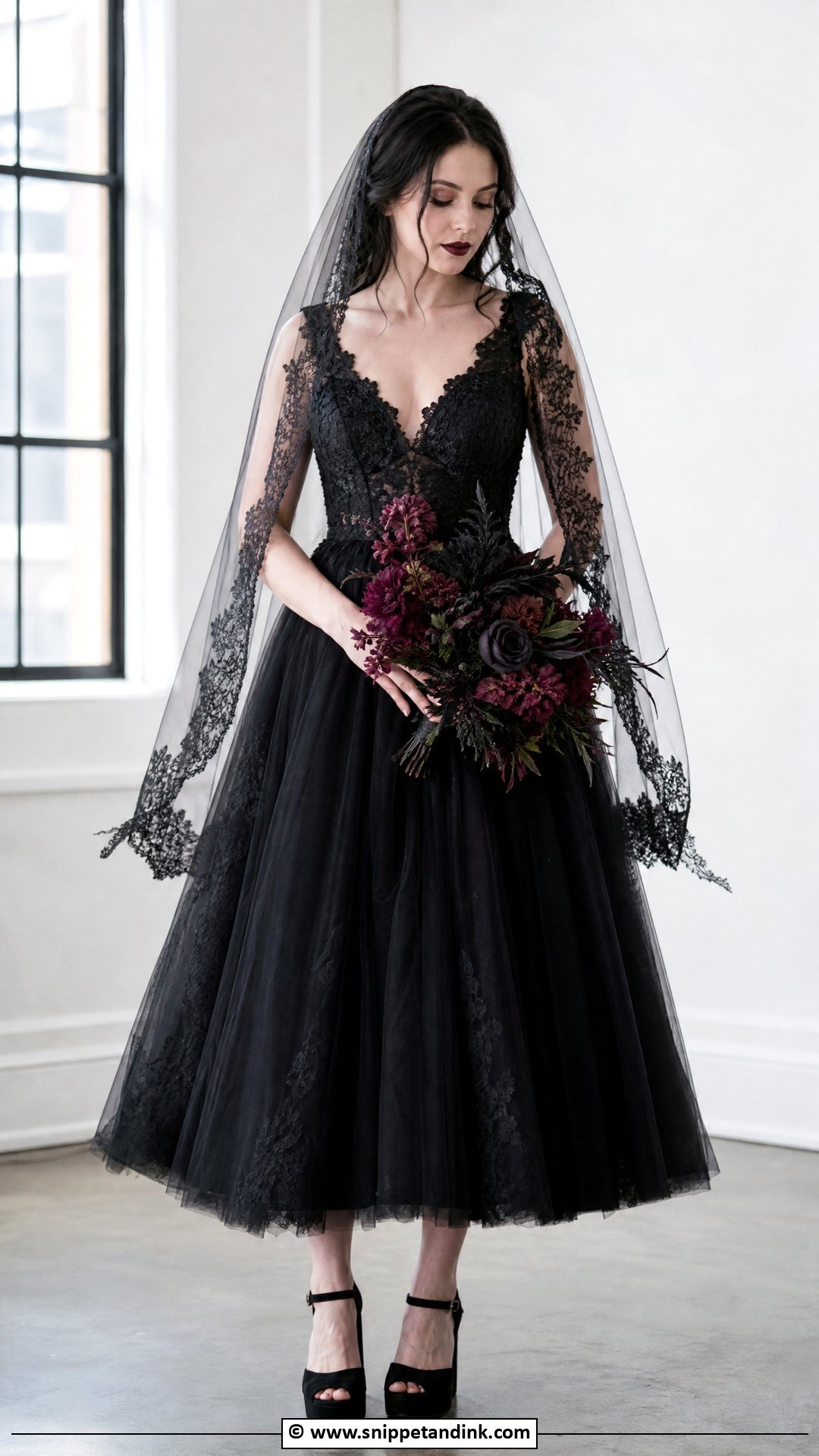
A-line is the shape I reach for when a bride wants gothic drama and a long, comfortable day. The fitted bodice and gentle flare suit most figures and never feel restrictive. Black lace, layered tulle or satin all work; ivory with black appliques softens it, and full black with long sleeves or a corset top sharpens it. Finish with block heels, a lace veil and a dark bouquet. You can sit, dance and get in and out of a car without help.
15. Gothic Long Sleeve Wedding Dress
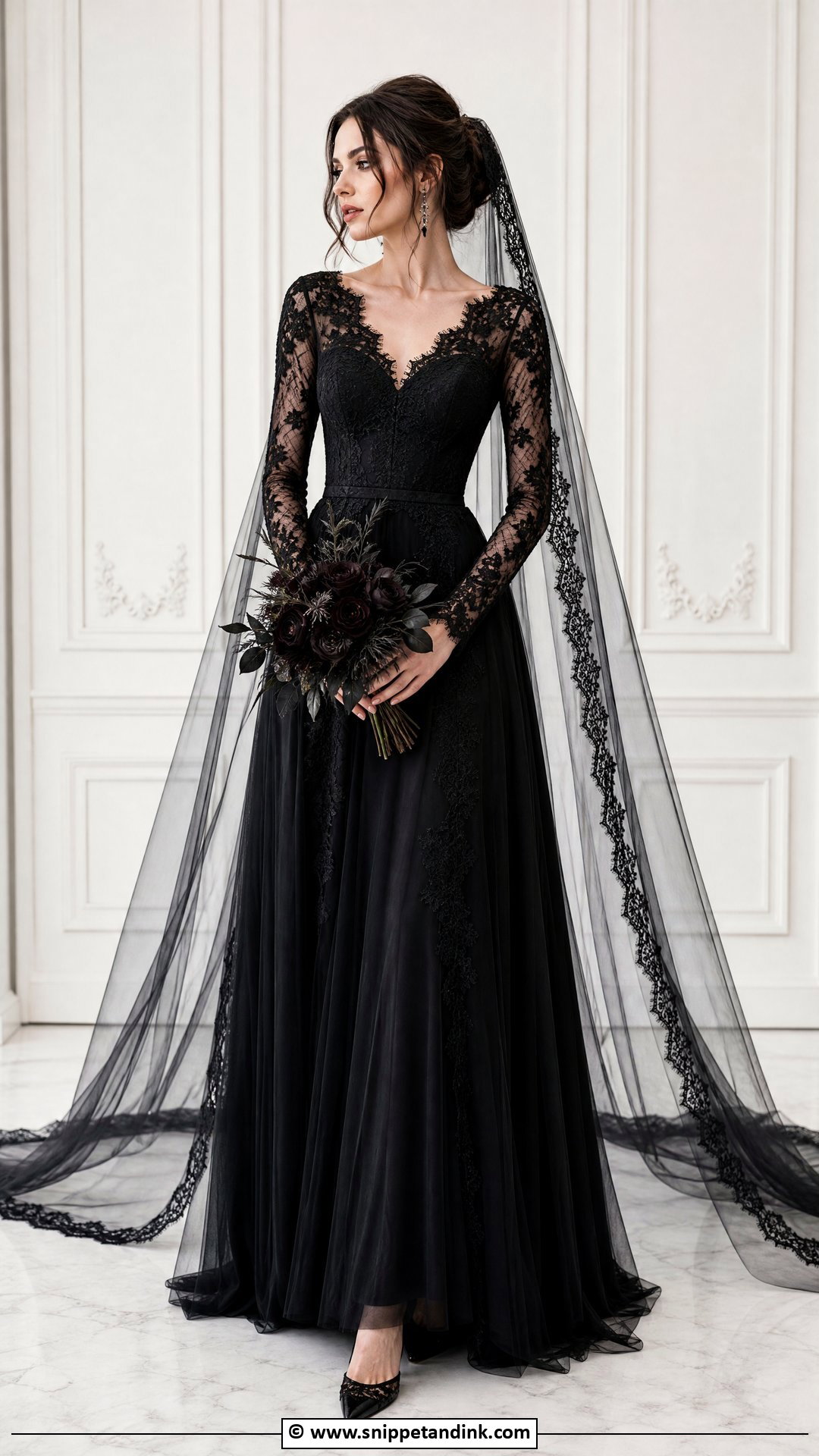
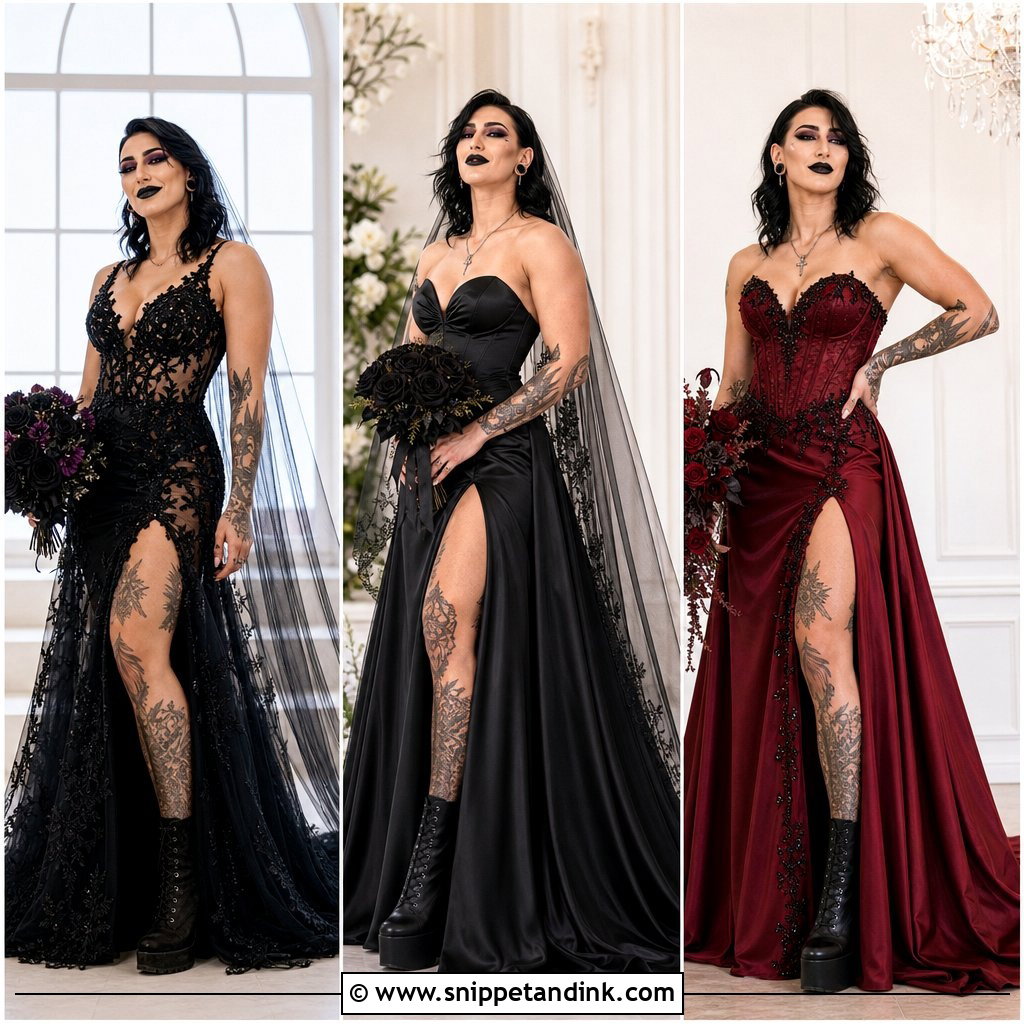
Sleeves change the whole mood of a gothic gown. Sheer lace reads romantic, bishop sleeves look vintage, and fitted satin sleeves feel formal. They also balance a dramatic skirt or deep neckline. Choose earrings that frame the face and a veil that doesn’t hide the sleeve detail, with shoes as formal as the gown. Black, ivory, red and purple all suit long sleeves. A fitting note: ask for the sleeve to end just past the wrist bone, because a sleeve cut to the knuckle gets in the way of the ring and the cake knife.
16. Gothic Off Shoulder Wedding Dress
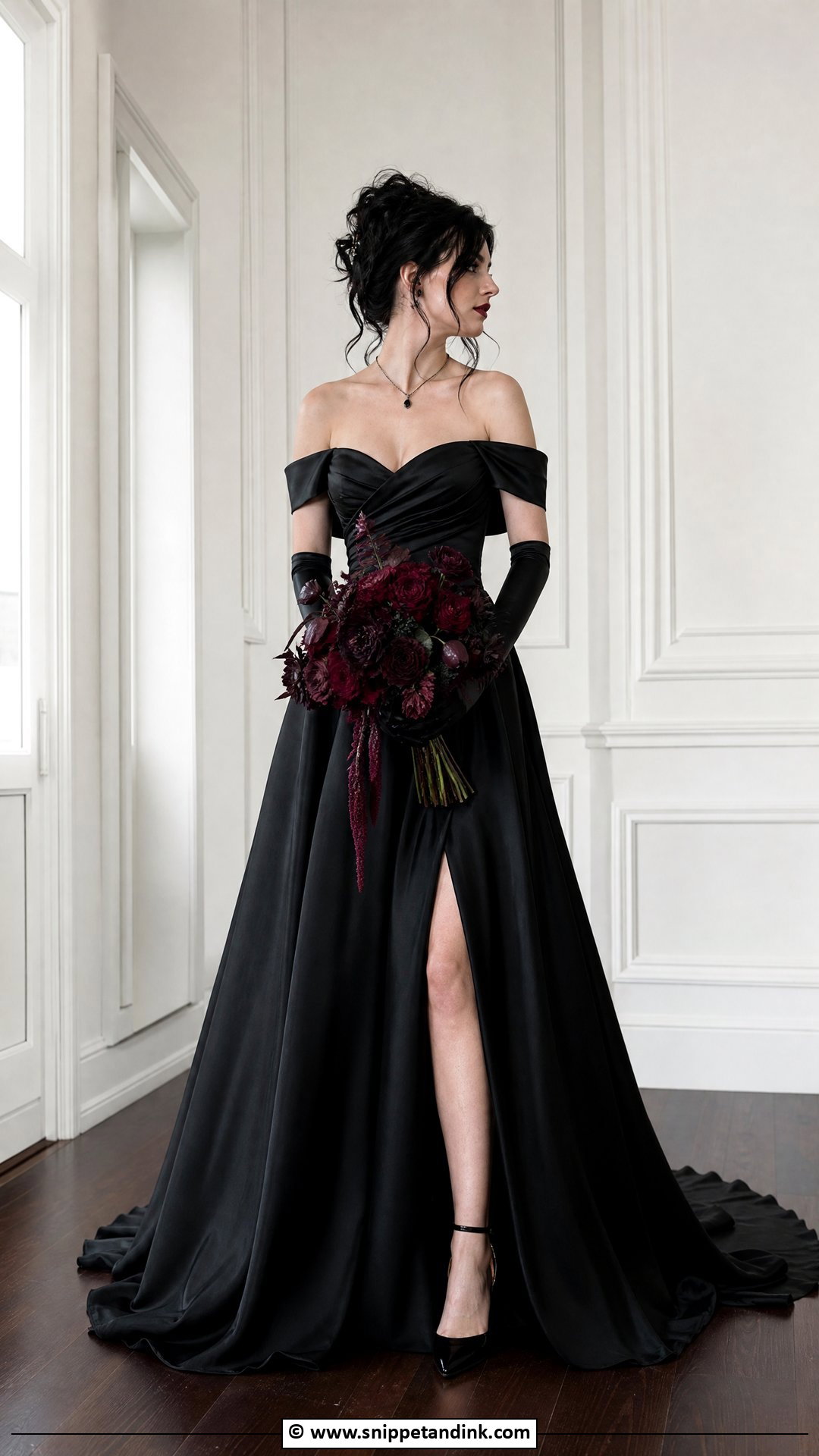
Off-shoulder necklines frame the collarbone, which looks good over a fitted bodice or full skirt in black lace, satin or velvet. If the neckline feels too open, a choker or short necklace fills it; skip heavy pieces that fight the shape. Long gloves polish it. Place the veil low in the hair so it doesn’t sit on top of the bare shoulders, and carry deep florals. The band needs to grip the upper arm firmly, so I have brides hug someone and raise a glass at the fitting before it’s finalised.
17. Gothic High Neck Wedding Dress
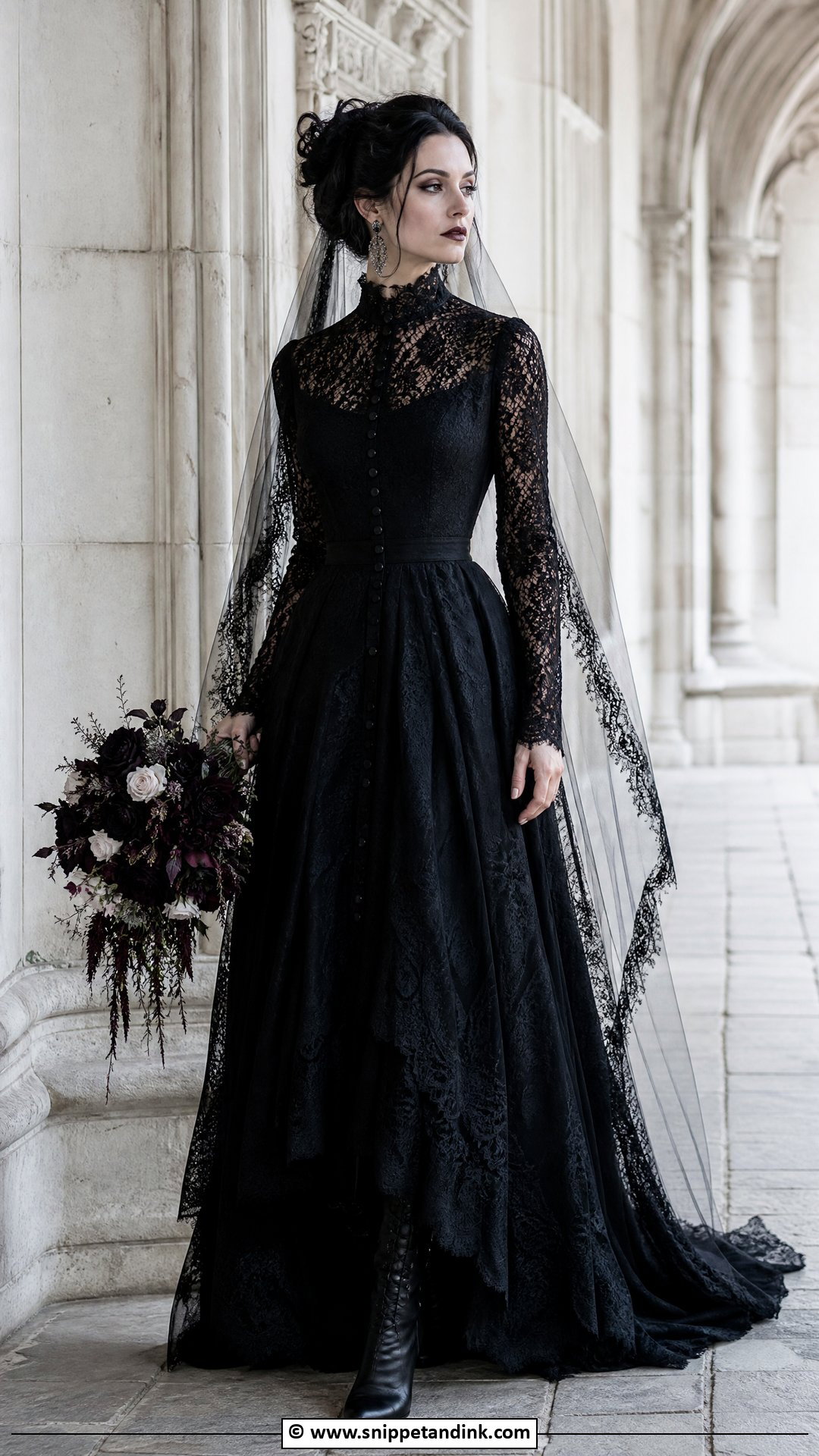
A high neck draws a strong line from face to bodice and gives coverage with a vintage feel. Lace softens it best. A black high-neck gown is dramatic and formal; ivory with black lace is subtler. Pull your hair back so the neckline stays visible, then add drop earrings, ankle boots and a long veil. The collar must not be tight. If it presses at all, you’ll notice it every time you turn your head or swallow, so turn and look over each shoulder during the pinning.
18. Gothic Sheer Sleeve Wedding Dress
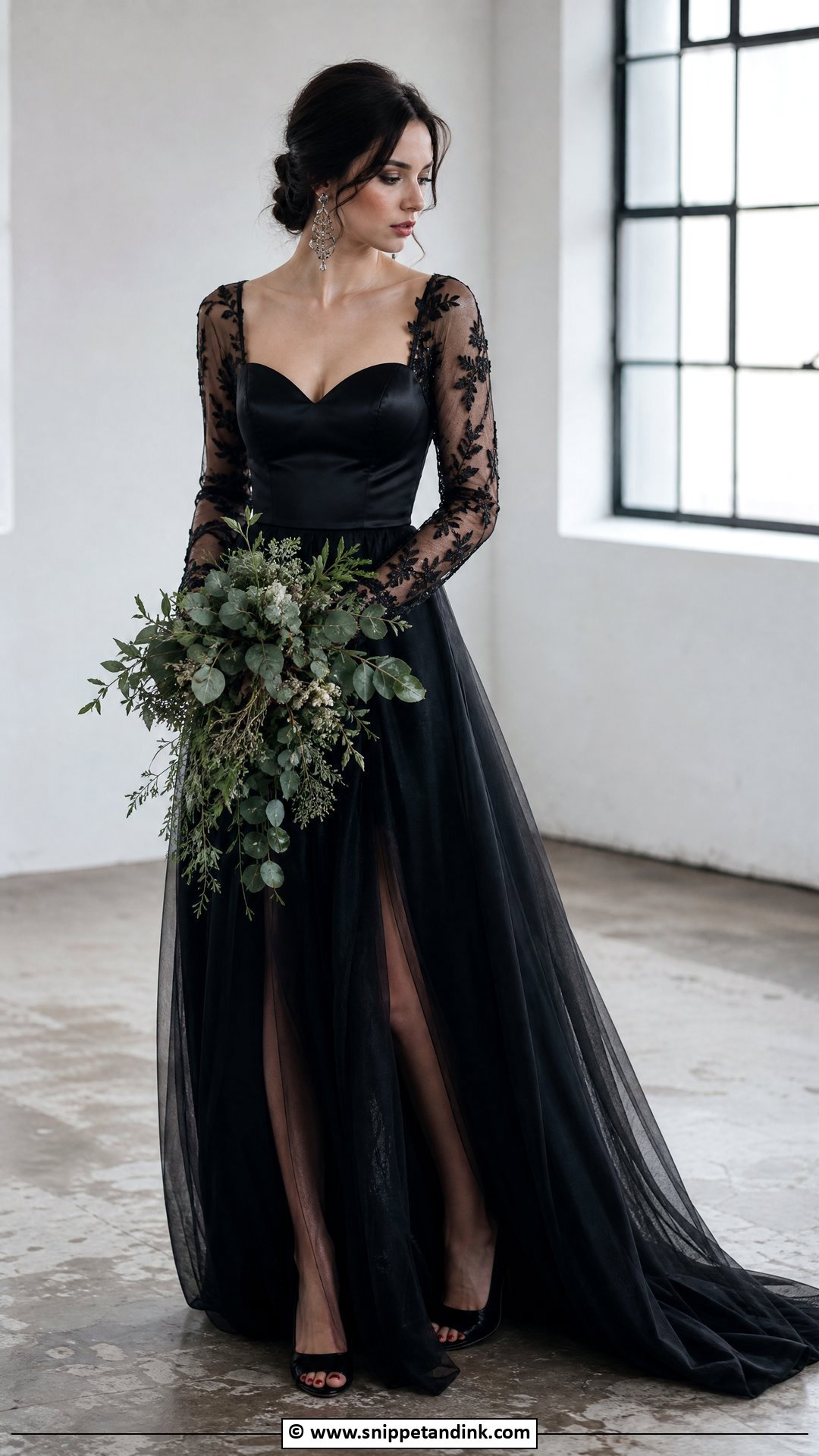
Sheer sleeves add detail without weight. They can carry lace applique, embroidery, tiny buttons or soft volume while the arm still shows through. Pair a black sheer-sleeve gown with satin heels, silver earrings and a simple veil, and skip bracelets if the sleeves are busy; bracelet clasps snag sheer mesh. A bouquet with trailing greenery echoes the lightness. It’s dramatic enough for a gothic wedding and still easy to wear for ten hours.
19. Gothic Cape Wedding Dress
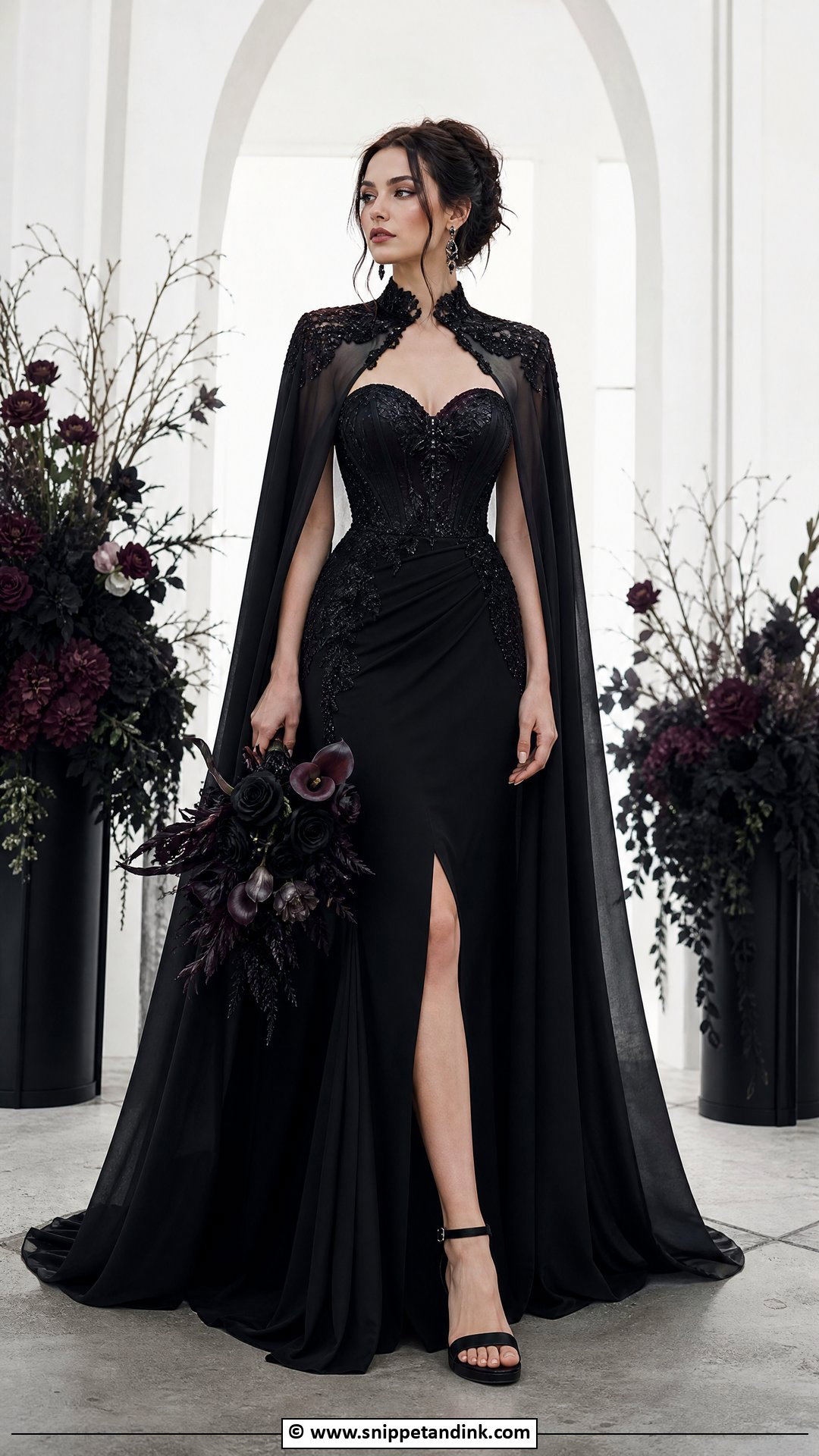
A cape can replace a veil entirely, adding movement and turning a simple gown grand. Sheer black floats; structured satin feels regal. Shoulder-attached capes suit clean strapless or sleeveless gowns. Keep heels sleek and jewelry minimal, because the cape is already the statement. Ask your photographer for shots from the back and side, where a cape really shows. Check how it’s attached: snaps or hooks at the shoulder let you remove it for dancing, which you’ll want.
20. Gothic Wedding Dress With Black Veil
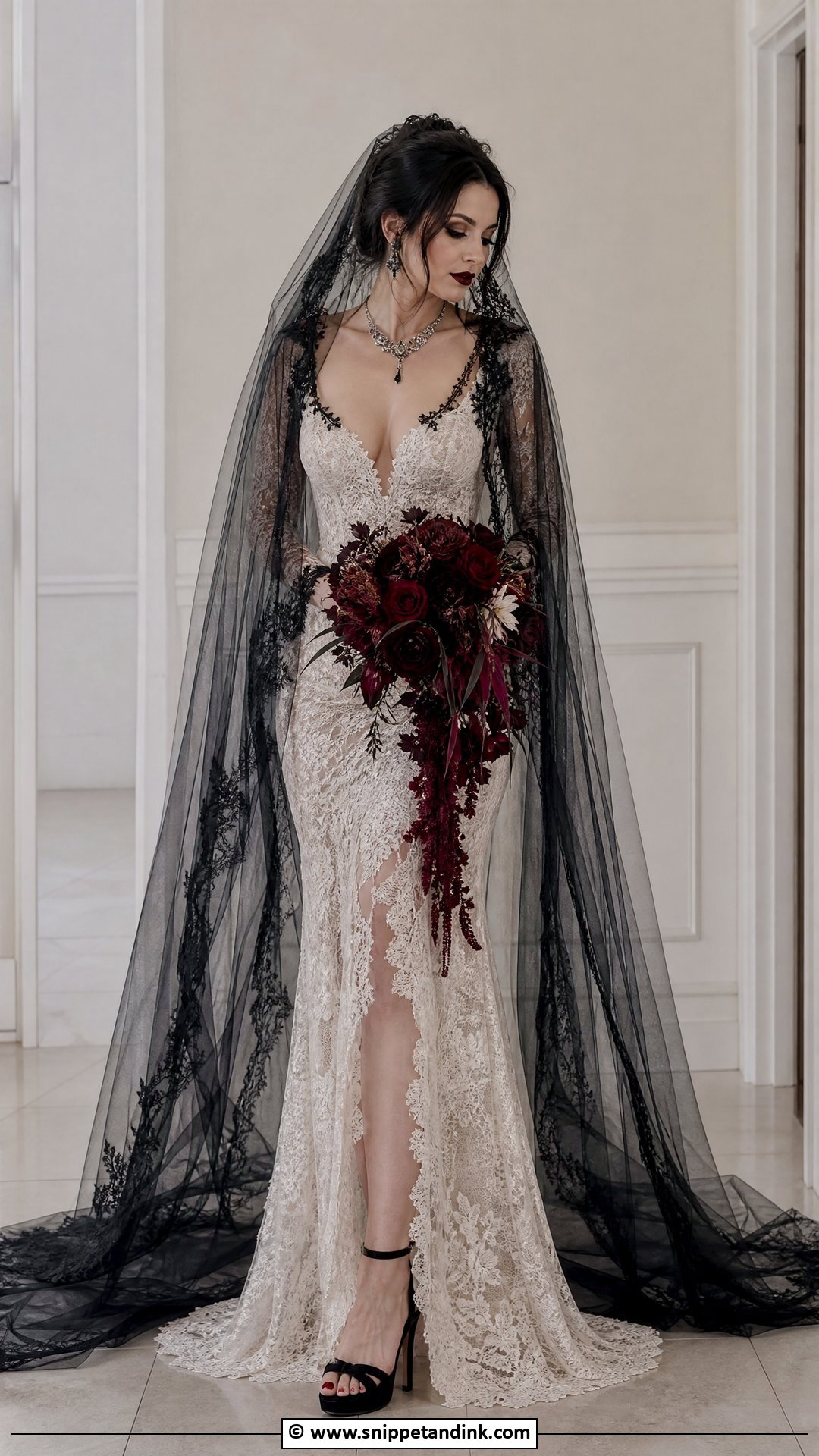
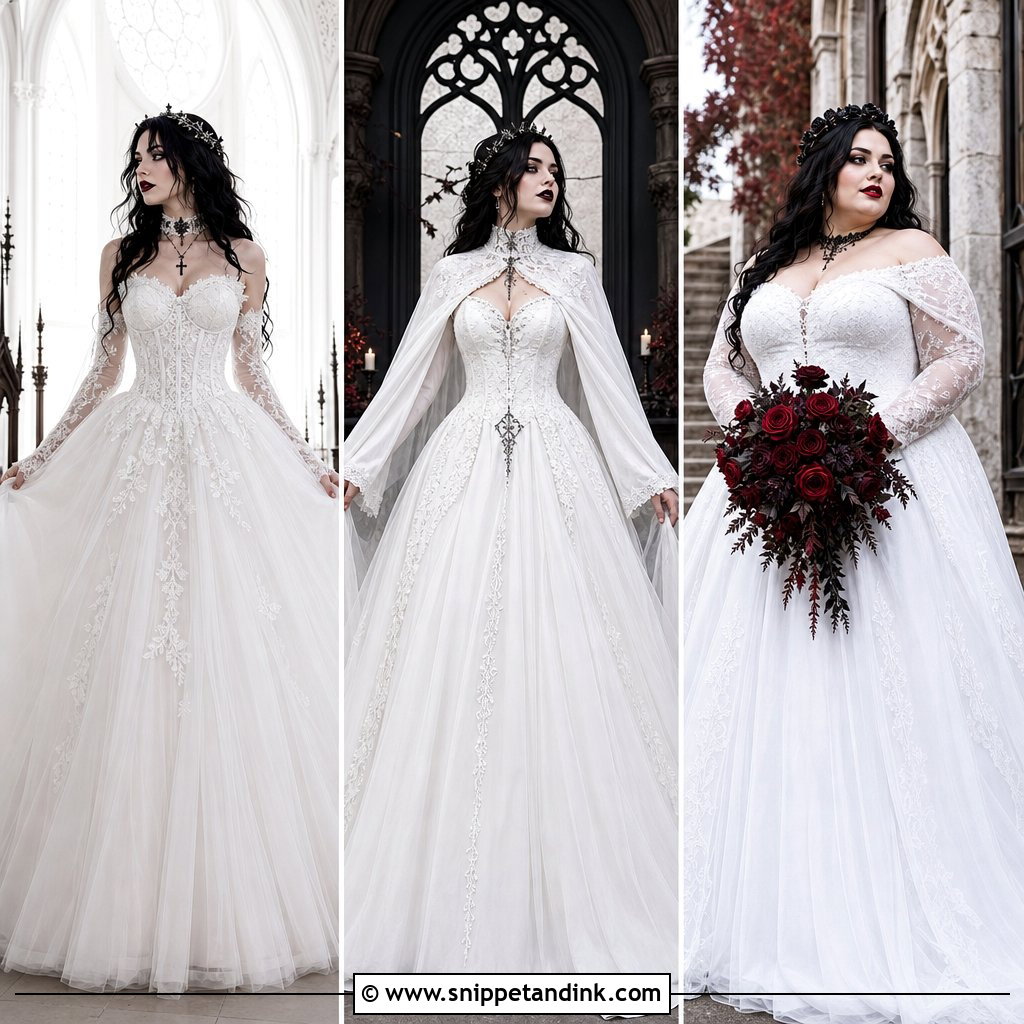
A black veil is the simplest way to take a white, ivory, red or black gown somewhere darker. A long black veil is dramatic; a shorter lace-trim one feels vintage. Pair it with a clean dress for contrast or a lace gown for full romance. Black tulle shows every hairpin and comb against light hair, so I set the comb under a section of hair or choose a black comb. Black heels, silver jewelry and a deep bouquet finish it.
21. Gothic Wedding Dress With Gloves
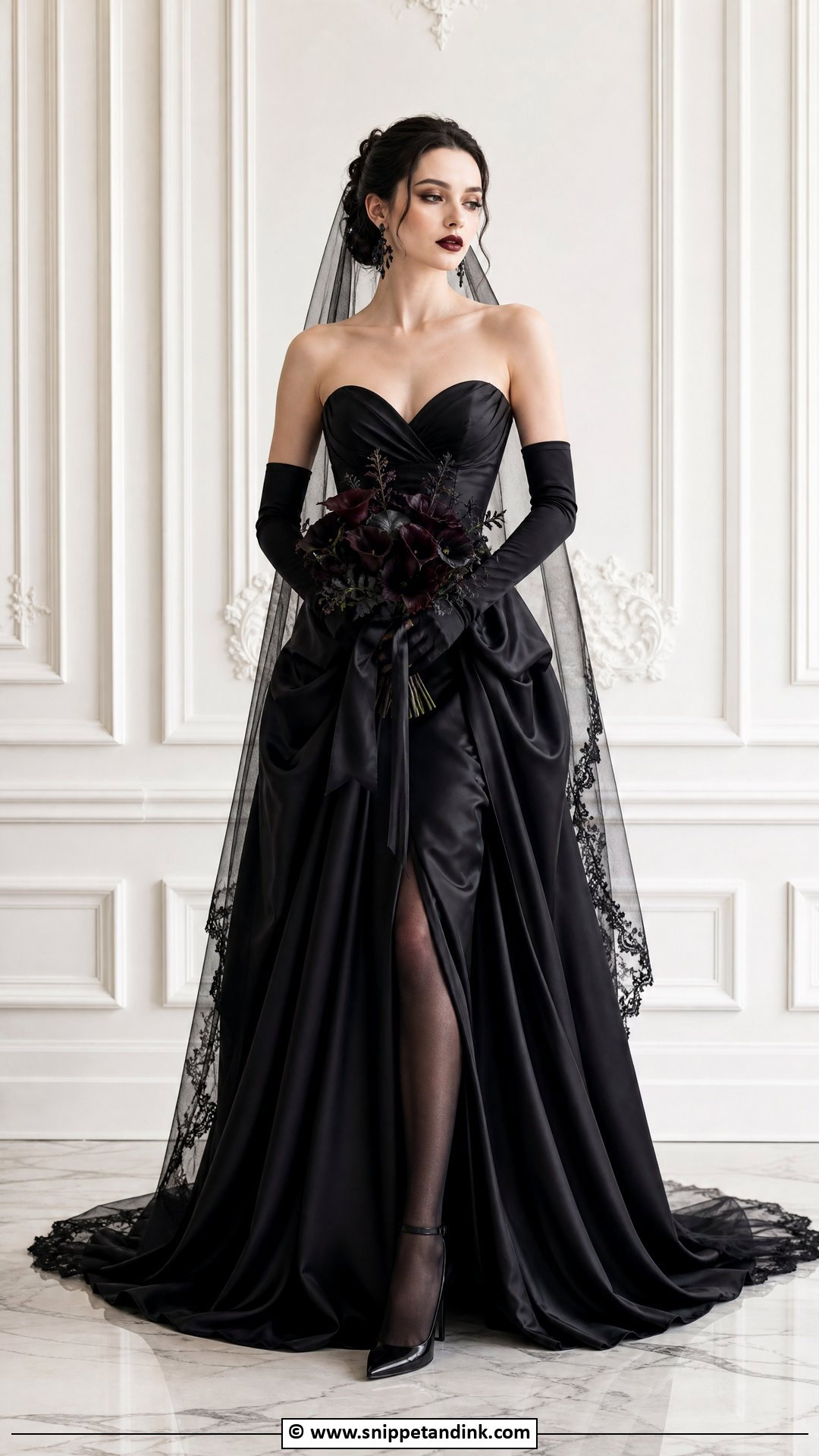
Gloves make a simple gown formal and bring a vintage note to the outfit. Lace reads romantic, satin sleek, sheer light. They suit strapless, off-shoulder and short-sleeve dresses; with long sleeves, choose wrist-length or skip them so the arm doesn’t look bulky. Pair them with refined earrings and a structured bouquet. Plan the ring exchange: either slip the left glove off beforehand or choose a pair with an opening at the ring finger.
22. Gothic Wedding Dress With Boots
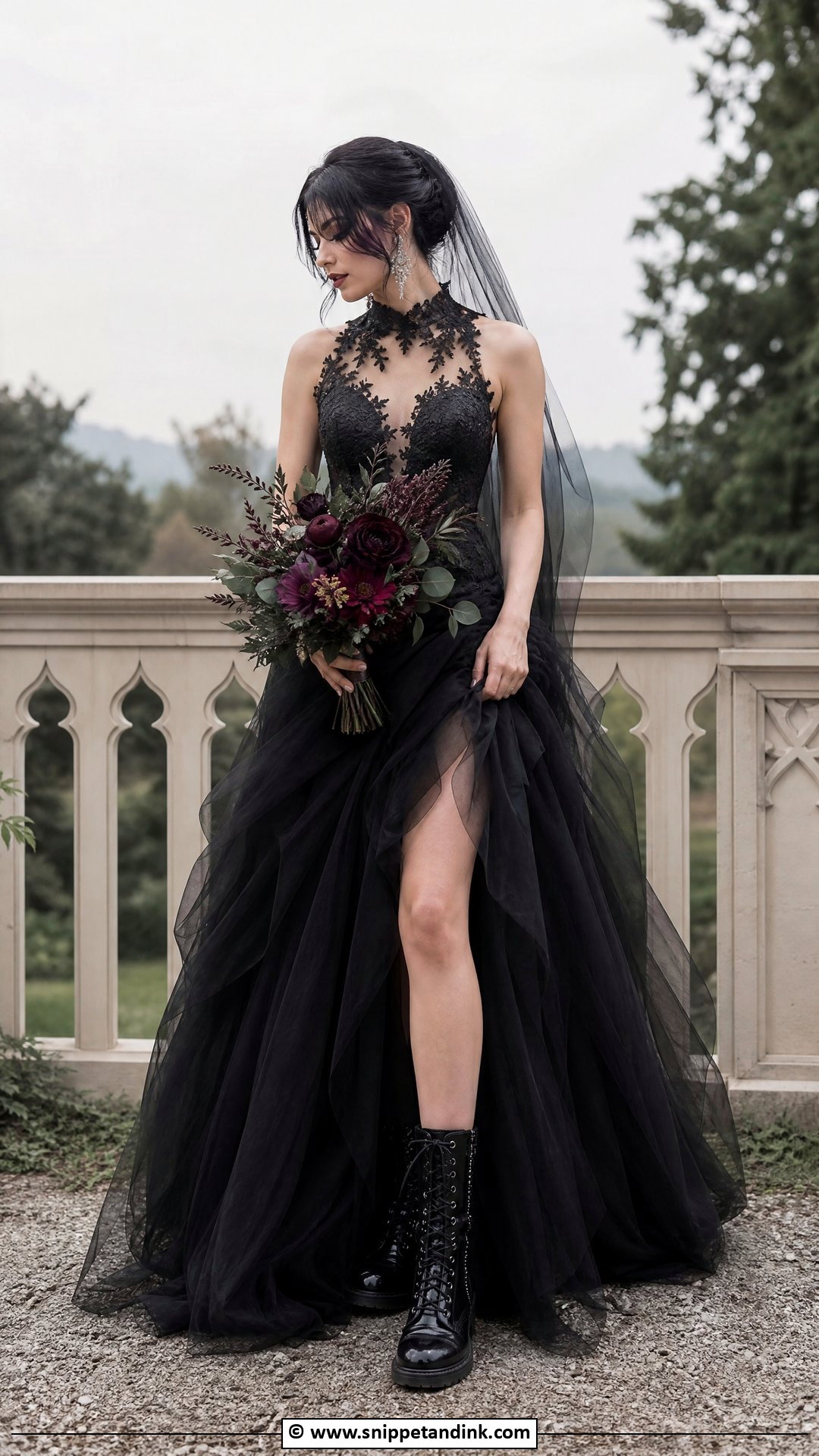
Boots are practical as well as stylish. Black lace-up boots suit tulle, lace and high-low gowns, and sleek heeled boots work under long satin. They give more support than delicate heels on grass, gravel or cold flagstone. Tie the boot finish to another detail, like a black belt, lace gloves or a dark veil. Have the hem set with the boots on, because a boot sole is often thicker than a heel’s and changes the length.
23. Gothic Tea Length Wedding Dress
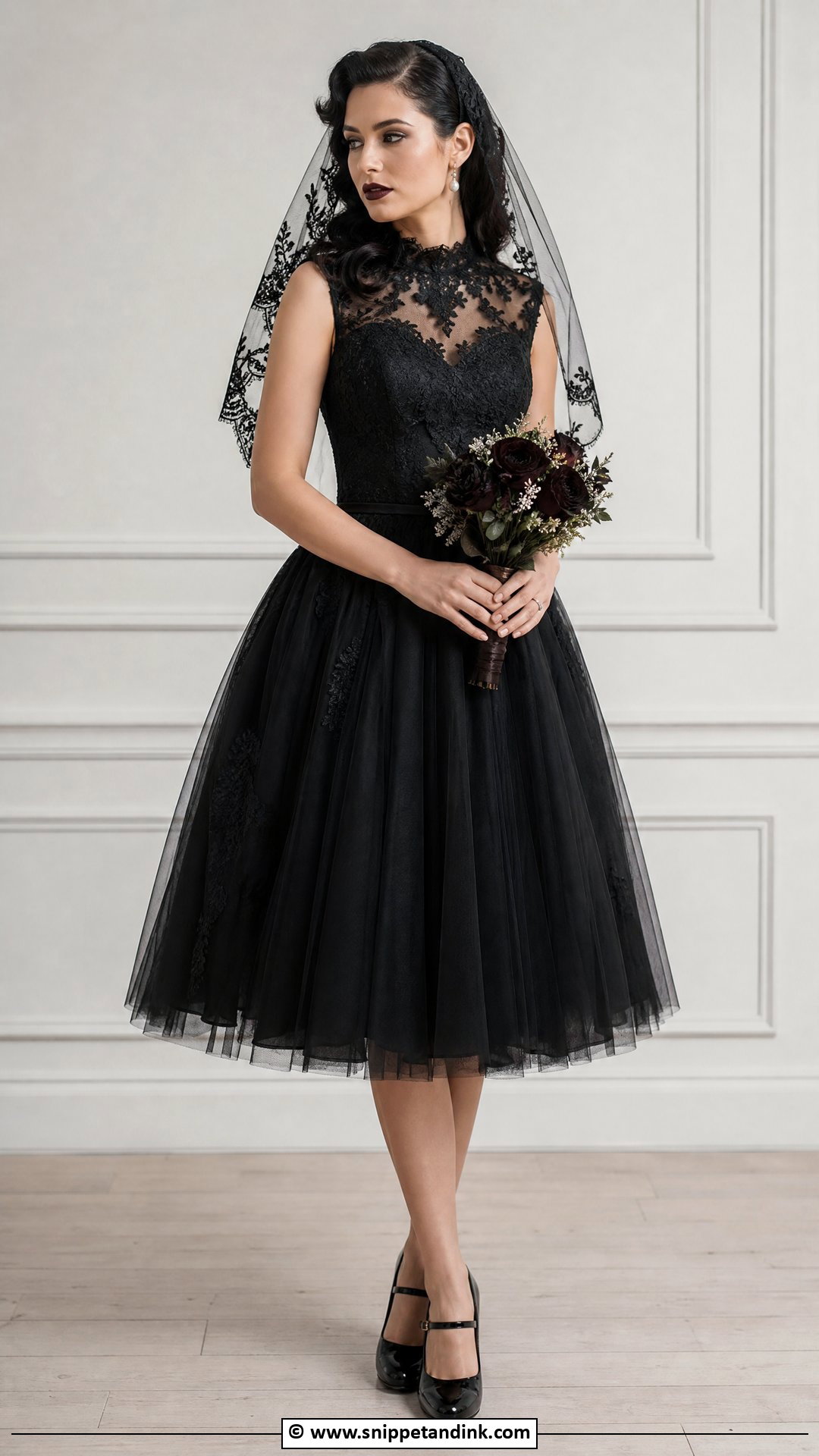
Tea length falls between knee and ankle, so your shoes become part of the outfit. Black heels, Mary Janes or lace-up ankle boots all suit it. Black tulle feels retro and dramatic; ivory with black lace is softer. Add a birdcage or short lace veil. It’s easy to move in, with no train to manage, which makes it a good fit for smaller weddings and lively receptions. Check the hem against your calf when you sit, as tulle tea-length skirts can spring up higher than expected.
24. Gothic High Low Wedding Dress
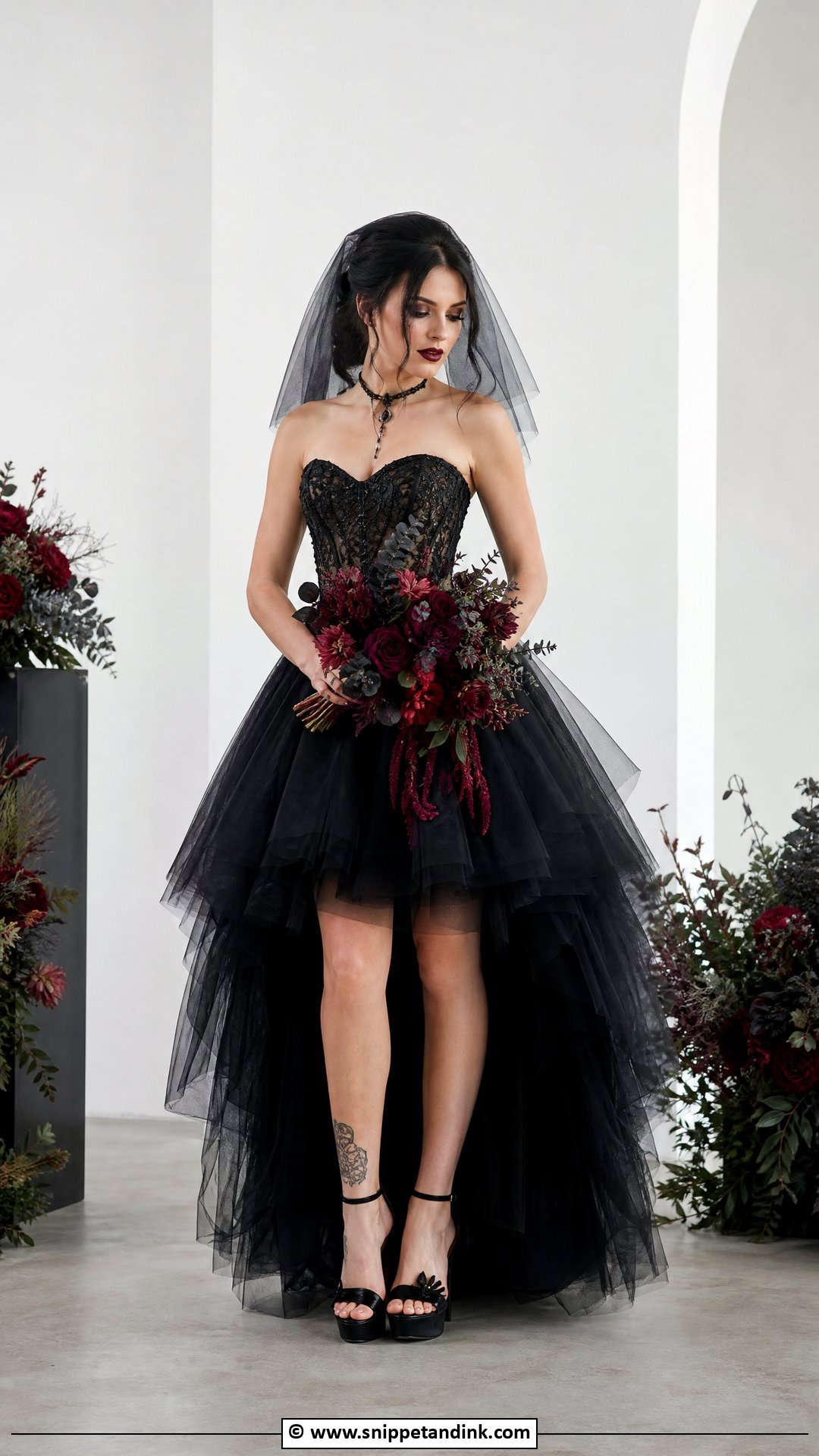
High-low gowns give you the drama of a long back hem with a short front that’s easy to walk in. Because the shoes show, choose boots, platforms or embellished pumps that match the mood. Black tulle moves well and adds volume; a corset bodice or lace top makes it more bridal. Wear a short veil or a shoulder cape so the back hem stays visible. Get the front length right at fittings, about mid-calf for most brides, so it reads as intentional rather than just short.
25. Gothic Plus Size Wedding Dress
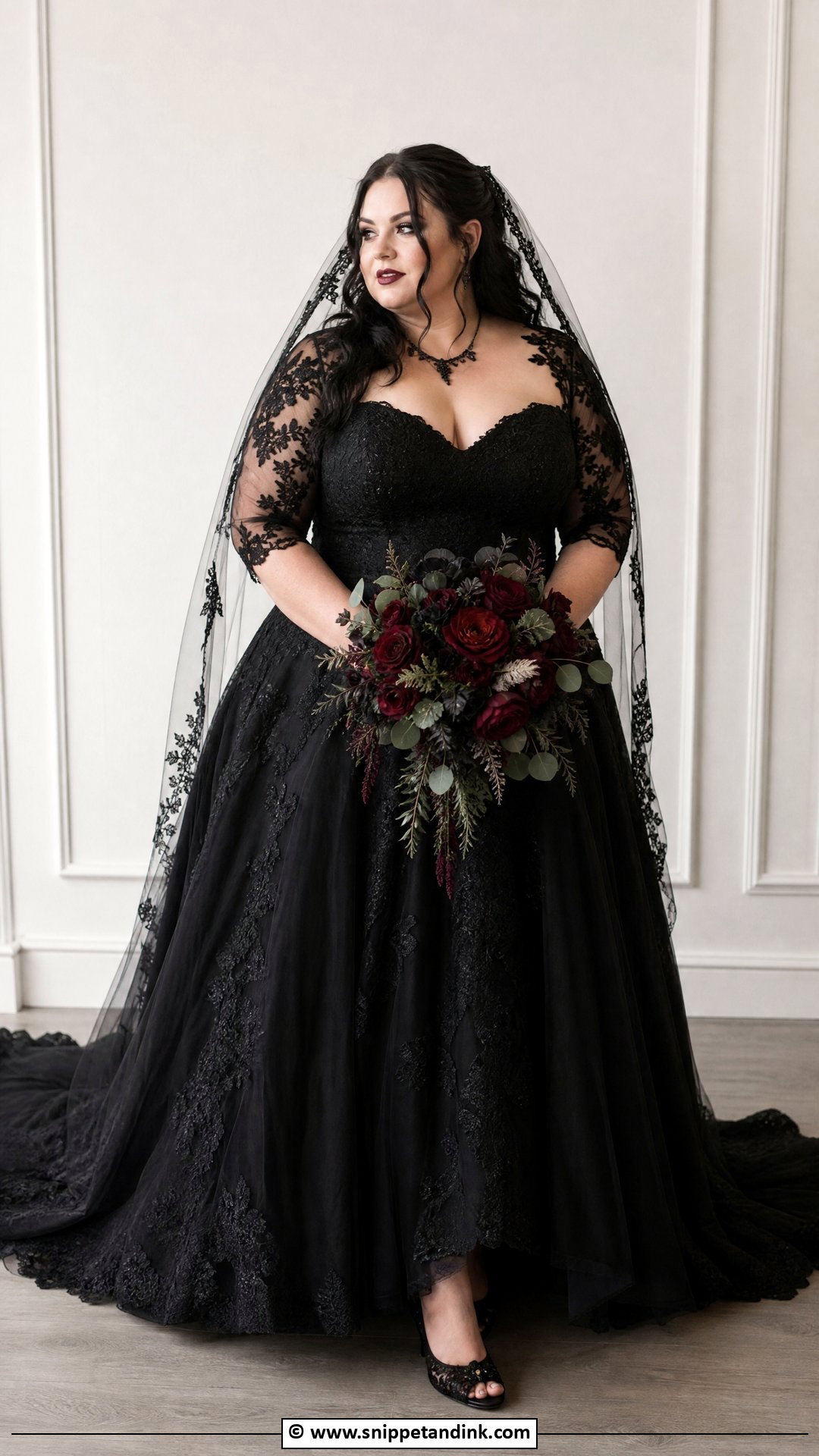
Construction matters more than silhouette here. A gothic plus size wedding dress should feel supported from every angle, and A-line, ball gown, empire waist and structured corset shapes can all suit, depending on your style. Black lace, satin and tulle add depth without excess embellishment. I look first at the inner bodice: proper boning, a waist stay and cups or a built-in bra, plus straps or sleeves you’re comfortable in. Style it with shoes you can stand in all day, a veil matched to the dress tone, and jewelry that draws the eye to your face. The goal isn’t hiding anything; it’s a dress that fits your shape properly.
26. Gothic Maternity Wedding Dress
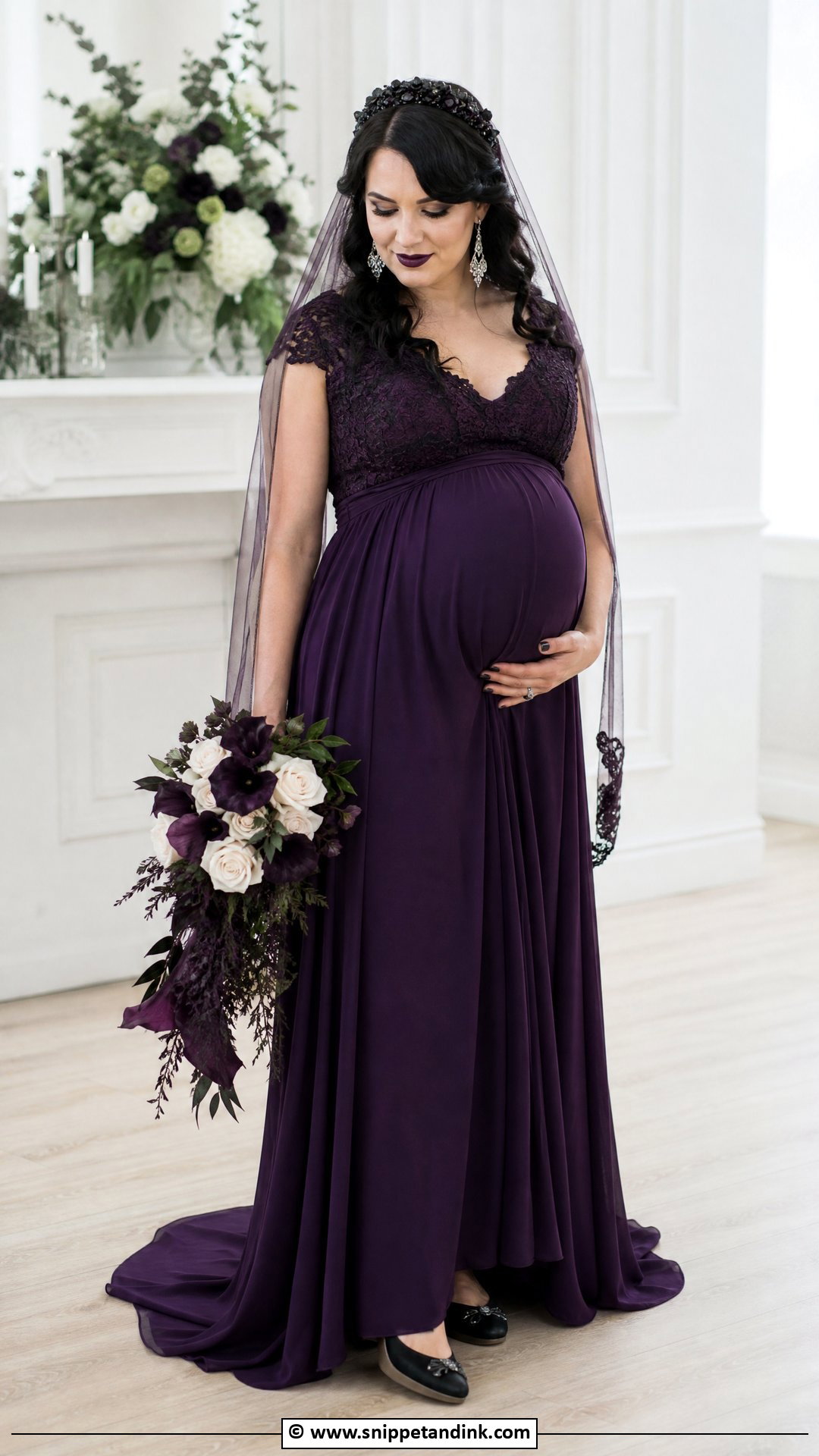
Empire waists are the practical choice for a maternity gothic gown, falling from under the bust with room through the belly. Stretch lace, soft tulle and light chiffon are easier to wear than heavy satin. Black, deep purple or ivory with black lace all work. Pair it with low heels or dressy flats, a soft veil and light jewelry, and avoid anything tight at the waist or ribs. Bodies change fast in pregnancy, so I schedule the final fitting as close to the wedding as the seamstress allows, often within a week.
27. Modern Gothic Wedding Dress
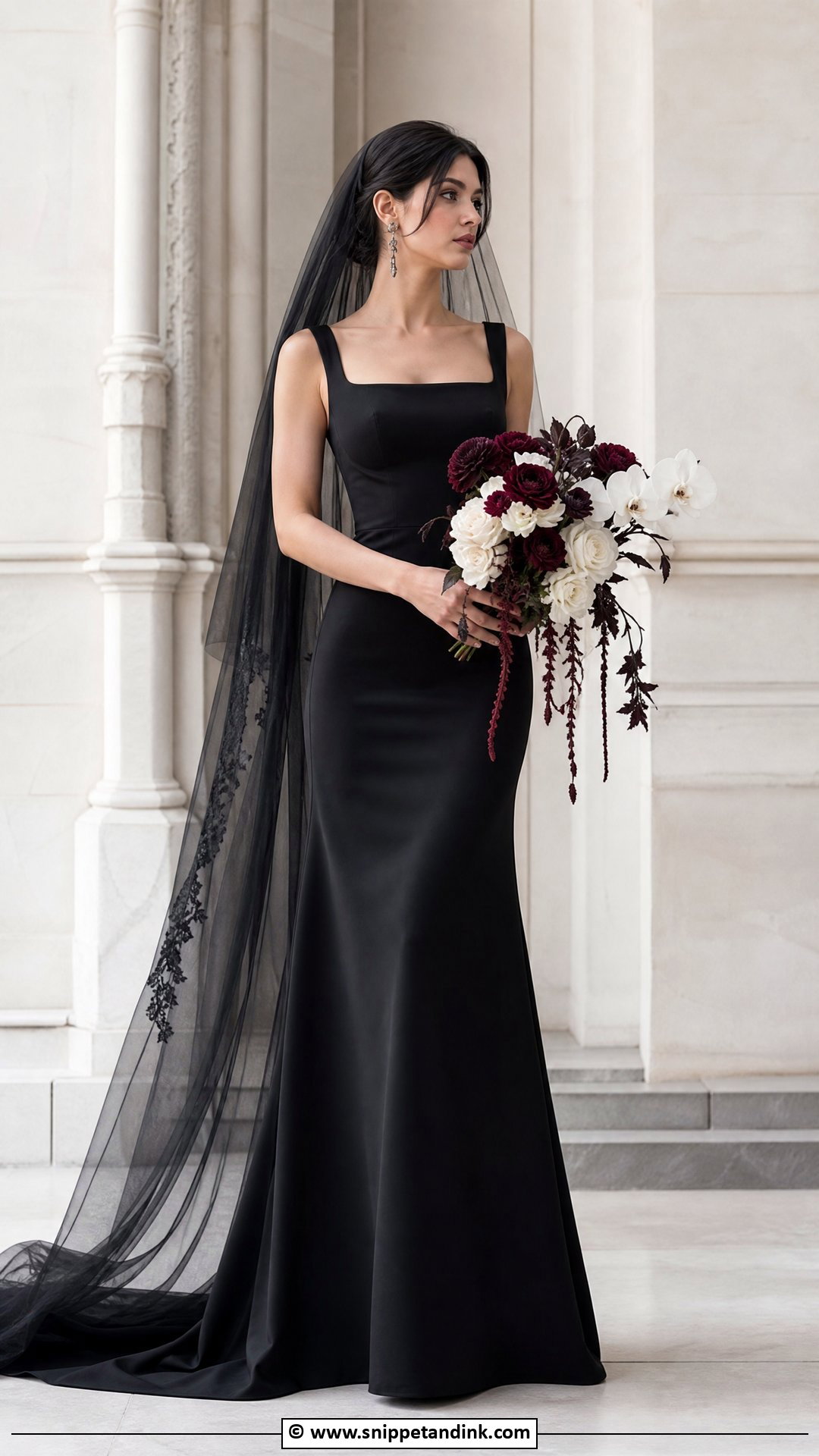
Modern gothic drops the ornament and keeps the mood. Sharp lines, smooth fabric and strong styling do the work: a black crepe sheath, a satin column or a minimal square-neck gown. Bring the gothic feeling in with a black veil, silver jewelry, sculptural heels or a deep bouquet. Keep hair simple and makeup polished. It’s the version I’d choose for a city venue or a gallery wedding, where clean architecture suits a clean dress.
28. Minimalist Gothic Wedding Dress
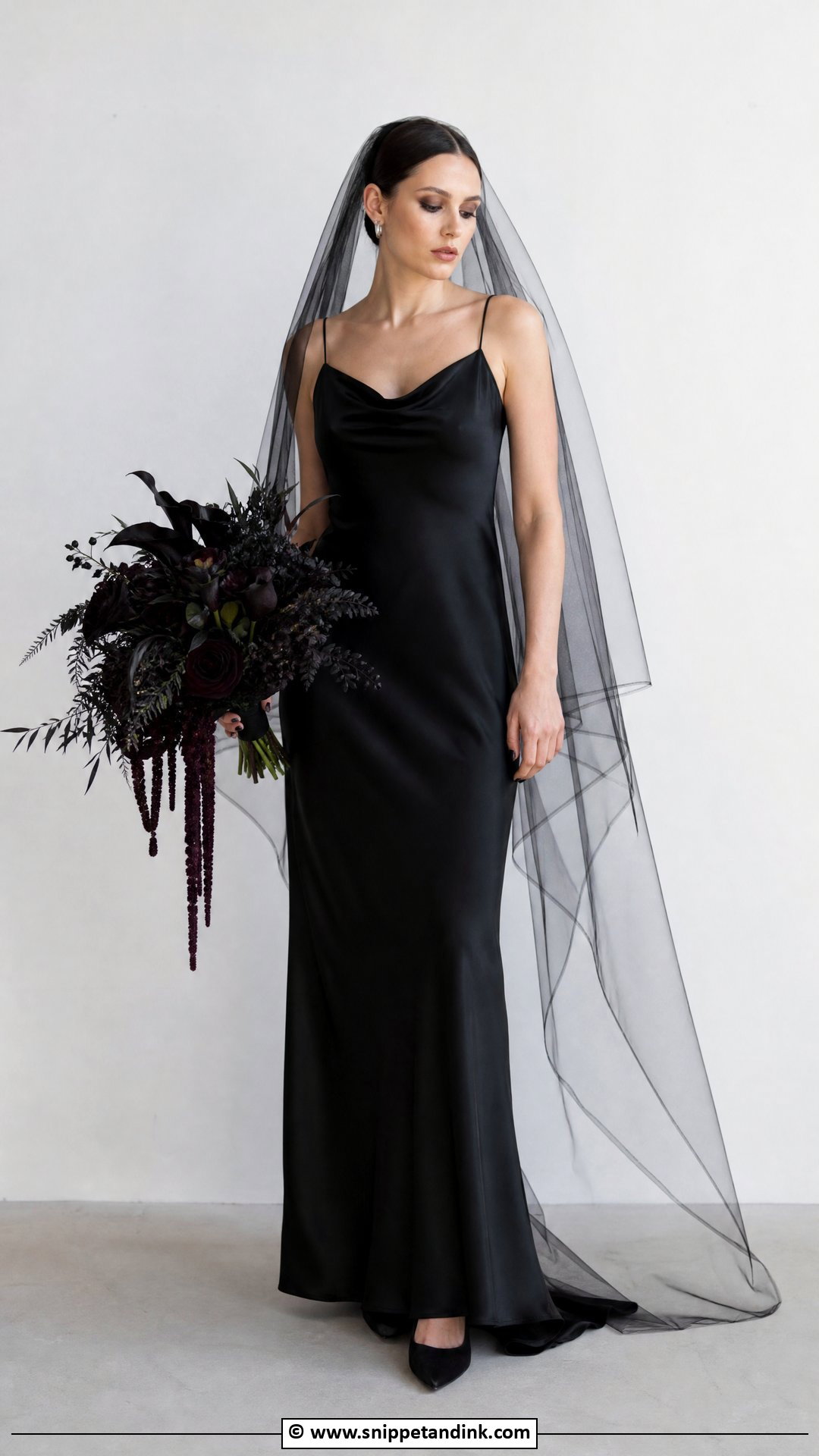
Plain black can look powerful precisely because nothing distracts from it. A satin, crepe or silk-like gown in a strong shape, such as a column, slip or fitted long-sleeve dress, needs only pointed heels, a sleek veil and small silver earrings. One dramatic bouquet brings the mood. The risk with minimalism is that the fit has nowhere to hide, so budget for alterations; a simple black gown that pulls slightly at the hip looks far worse than a busy one would.
29. Romantic Gothic Wedding Dress
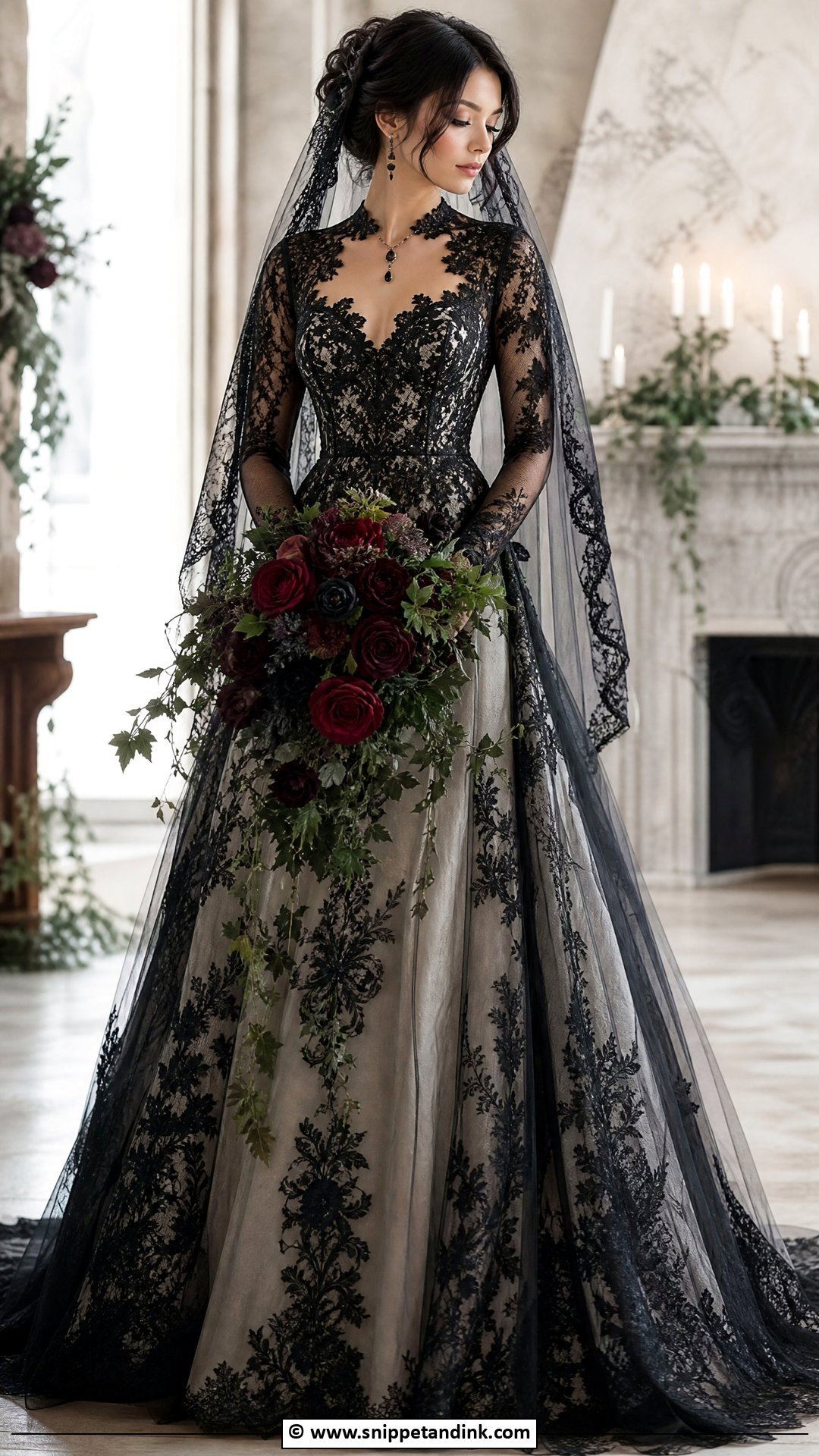
Romantic gothic softens the dark look with lace, floral applique, flowing skirts and delicate details. Black lace over nude lining, ivory tulle with black embroidery, or a deep red gown with soft sleeves all belong here. Pair the dress with loose waves, a lace veil and a bouquet of roses, greenery and muted colours, and keep jewelry fine. Loose waves drop faster under a heavy veil, so I’d set them firmly and pin the veil into a small hidden braid.
30. Vintage Gothic Wedding Dress
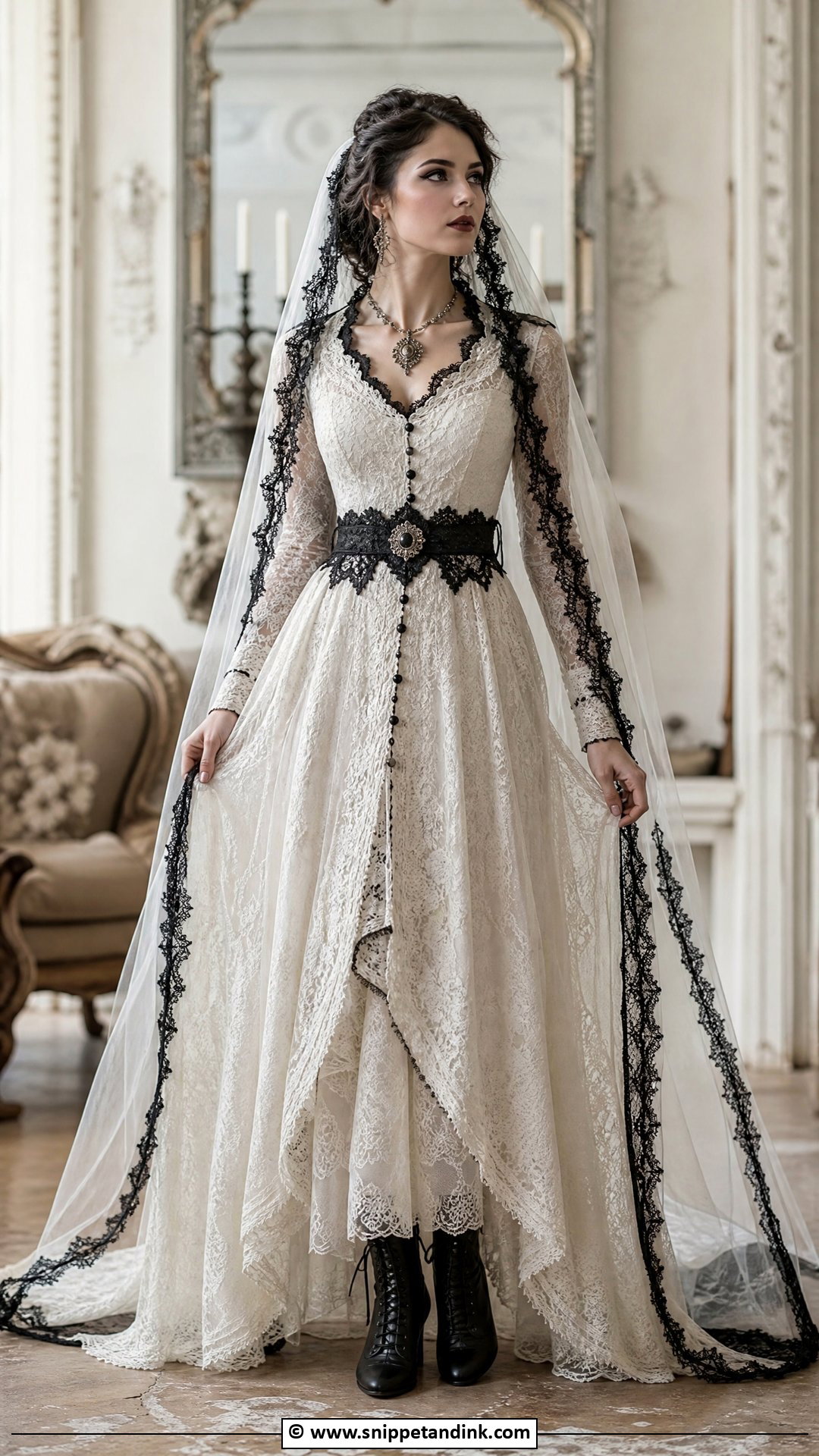
Vintage gothic borrows from earlier eras: lace, high necks, buttons, corsetry and antique-style accessories. You can restyle a true vintage gown darker or buy new with old-world details. Ivory lace with black accents works, as does black with pearl or silver jewelry. Add lace-up boots, a small structured bag and a veil with vintage trim. Pick one era to guide you rather than mixing several. With true vintage, budget for a specialist seamstress, because old lace is fragile and alterations take longer.
31. Medieval Gothic Wedding Dress
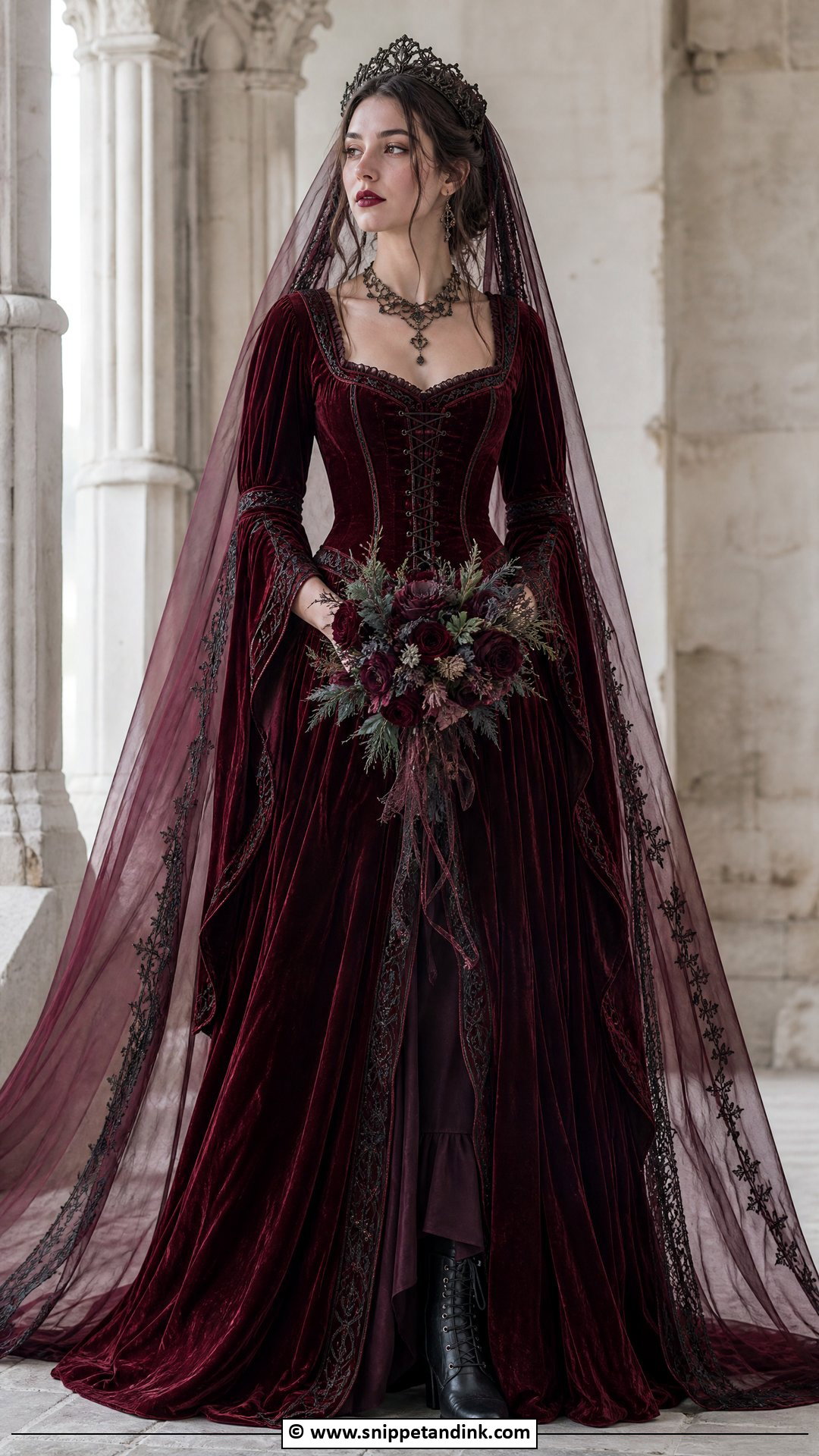
Medieval gothic leans on long sleeves, flowing fabric, corset lacing, square necklines and dramatic skirts. Rich fabrics such as velvet, satin or heavy chiffon in black, burgundy, forest green or deep purple suit it. Style it with simple boots, a long veil or cape and antique-feeling metal jewelry. The line between storybook and costume is props, so I keep accessories few. Long trumpet sleeves can trail into food and candles, which is worth knowing before dinner.
32. Witchy Gothic Wedding Dress
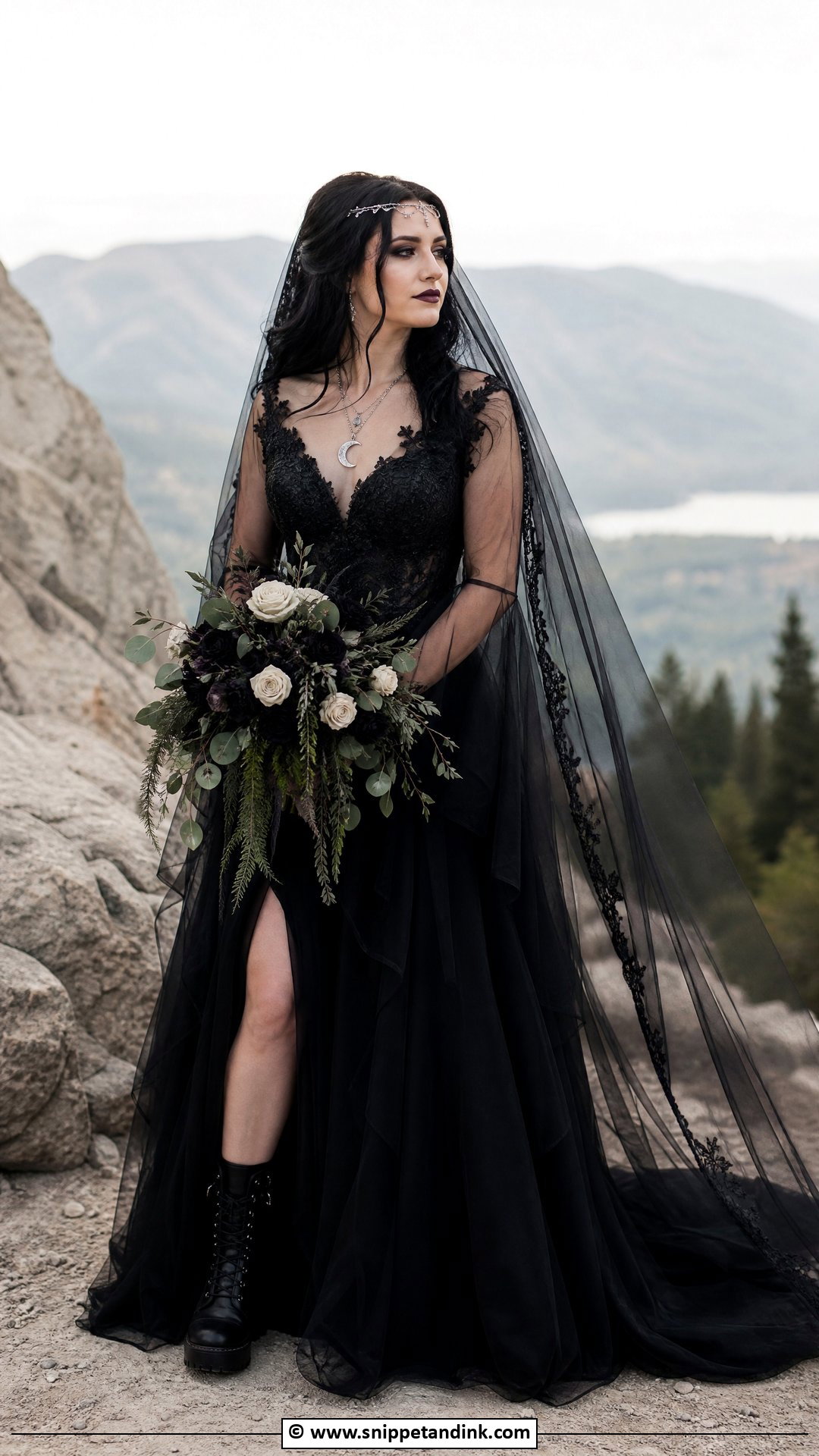
A witchy gothic wedding dress is about atmosphere. A black gown with flowing sleeves, a fitted bodice and a soft skirt is the base; sheer layers, a little shimmer, moon-inspired jewelry and a black veil add interest without tipping into fancy dress. Wear black boots or heels and carry dark greenery, ivory flowers and deep purple accents. Keep hair and makeup polished, because that’s what keeps the look reading as bridal rather than themed.
33. Black Floral Gothic Wedding Dress
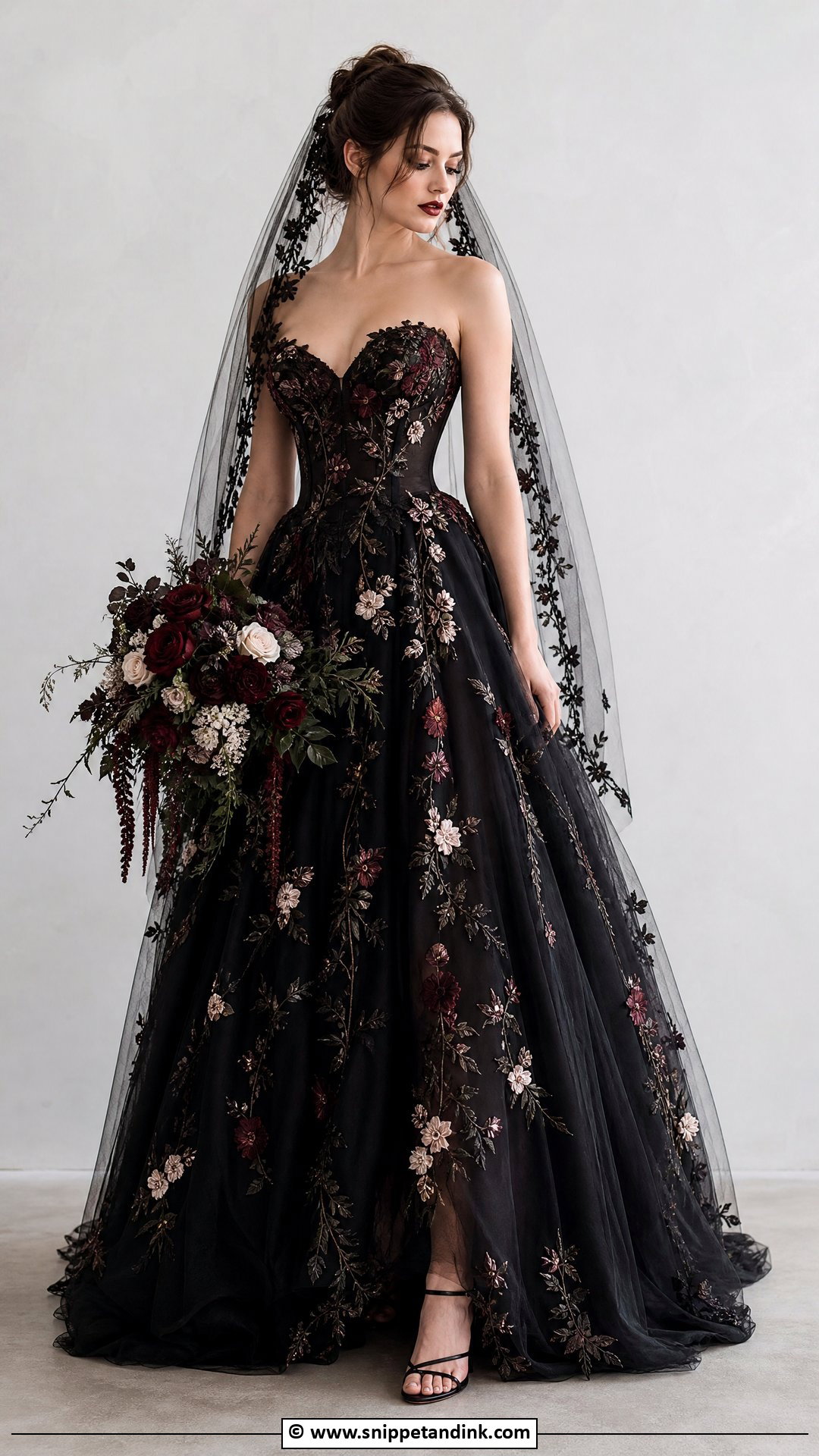
Floral detail softens a black gown and gives it dimension. Appliques, embroidery or printed lace in red, ivory, purple or tonal black all work, depending on your palette. Pair it with simple heels and a veil that doesn’t compete with the pattern, and keep jewelry quiet if the florals are bold. I like a bouquet that repeats one or two colours from the dress, which makes the outfit look planned. Tonal black-on-black florals show best in raking light, so ask your photographer for some side-lit portraits.
34. Gothic Sequin Wedding Dress
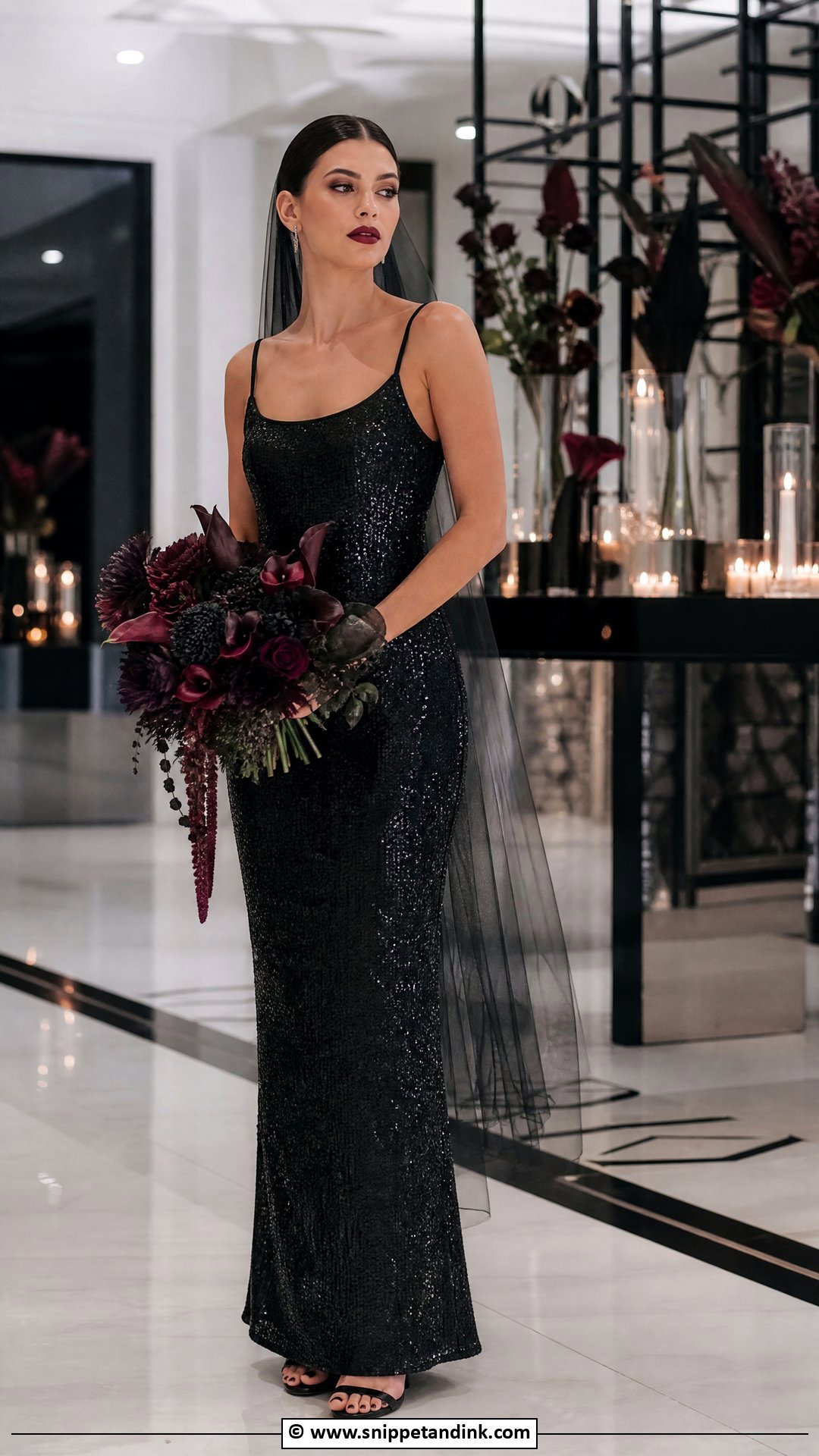
Black sequins give shine with an edge, especially on a fitted gown or column. Balance the sparkle with simple heels, a clean veil and minimal jewelry. Scattered beading or black-on-black shimmer reads softer than full coverage. Sequins catch light best in the evening and indoors, under warm, low lighting. Do the hug test, too: heavy sequins scratch arms and catch on guests’ knitwear, so I check the inside seams are lined.
35. Gothic Wedding Dress With Train
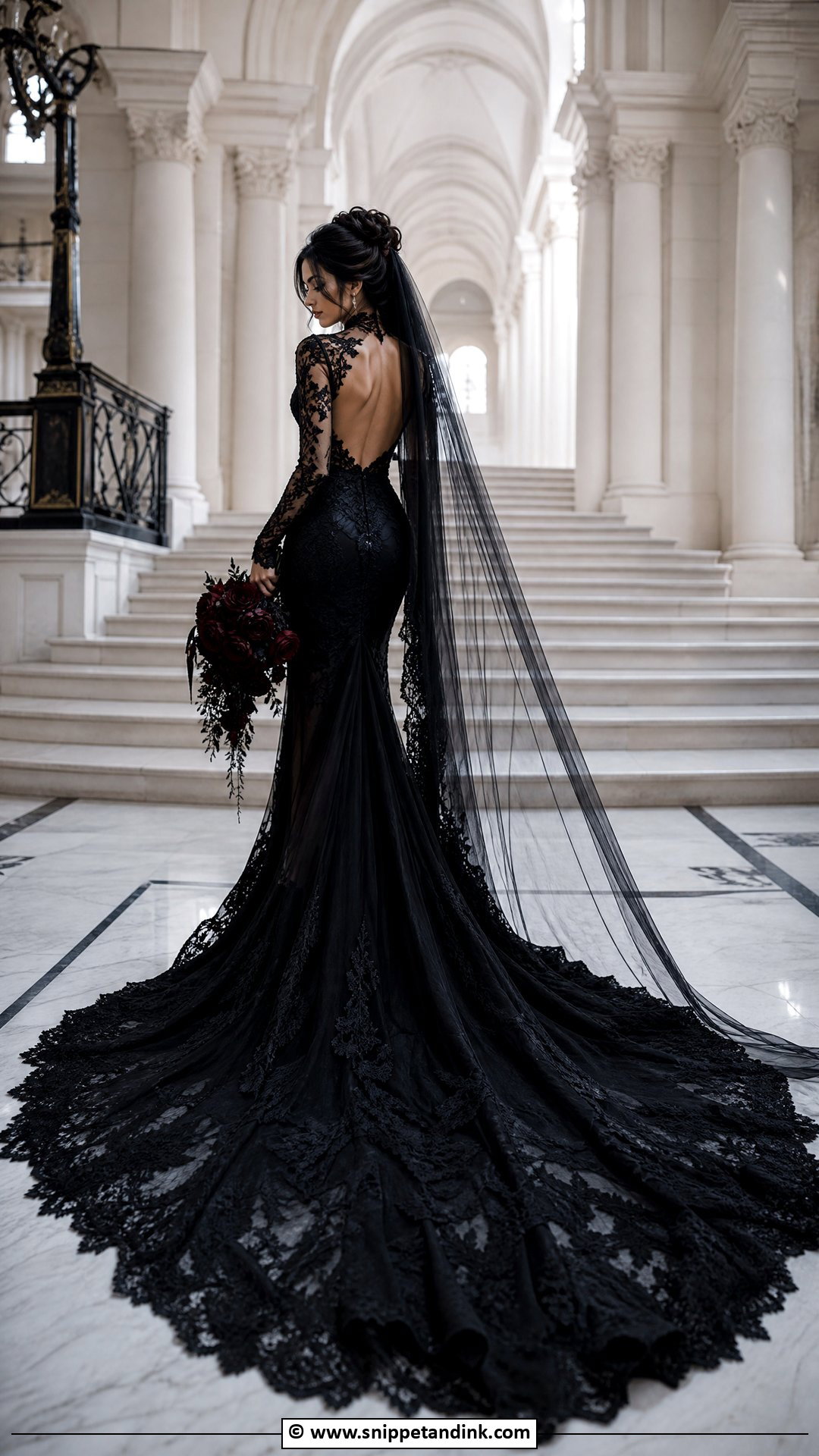
A train gives your final silhouette its shape as you walk away, and it can be subtle or long depending on venue and comfort. Black satin, lace and tulle all look right with an extended back hem. With a long train, keep the bodice balanced so the outfit doesn’t feel back-heavy, and choose a veil that complements the length without hiding the train. Ask about the bustle early. Black trains pick up grass, dust and petals and show them clearly, so have someone check it before the portraits.
Black Fabric Shows Different Things Than White
White shows spills; black shows almost everything else. Gothic brides are often surprised by what turns up on a dark gown during the day, so this is what I pack and tell them.
- Lint, pet hair and confetti cling to black velvet and tulle. Keep a lint roller in the bridal kit, and ask guests for dark petals rather than white paper confetti.
- Deodorant streaks show clearly on black, so let it dry fully before you step into the dress, and keep a dry sponge or clean nylon to lift any marks.
- Face powder and setting spray can leave a pale haze around the neckline. Have makeup finished and set before you dress, with a scarf over your face as the gown goes on.
- Black absorbs heat in direct sun. For an outdoor summer ceremony, lighter fabrics like tulle and chiffon are kinder than velvet or heavy satin.
Talk to your photographer before the day, too. Black lace and velvet lose their detail in harsh light or heavy shadow, so it helps to know where the softer, directional light falls at your venue. The texture you chose the dress for is only visible if the light hits it from the side.
Dark Doesn’t Have to Mean Heavy
Every look above balances drama, romance and comfort in a different proportion. One bride wants black lace, another deep red velvet, another ivory with black appliques or a sleek satin column. Treat the gown as part of an outfit: veil, shoes, jewelry, bouquet, fabric and fit all shape the final look, and with dark colours each one shows more. Try several silhouettes, move around in each, and keep the details that feel like you.
You'll Like These Ideas:


Leave a Reply