
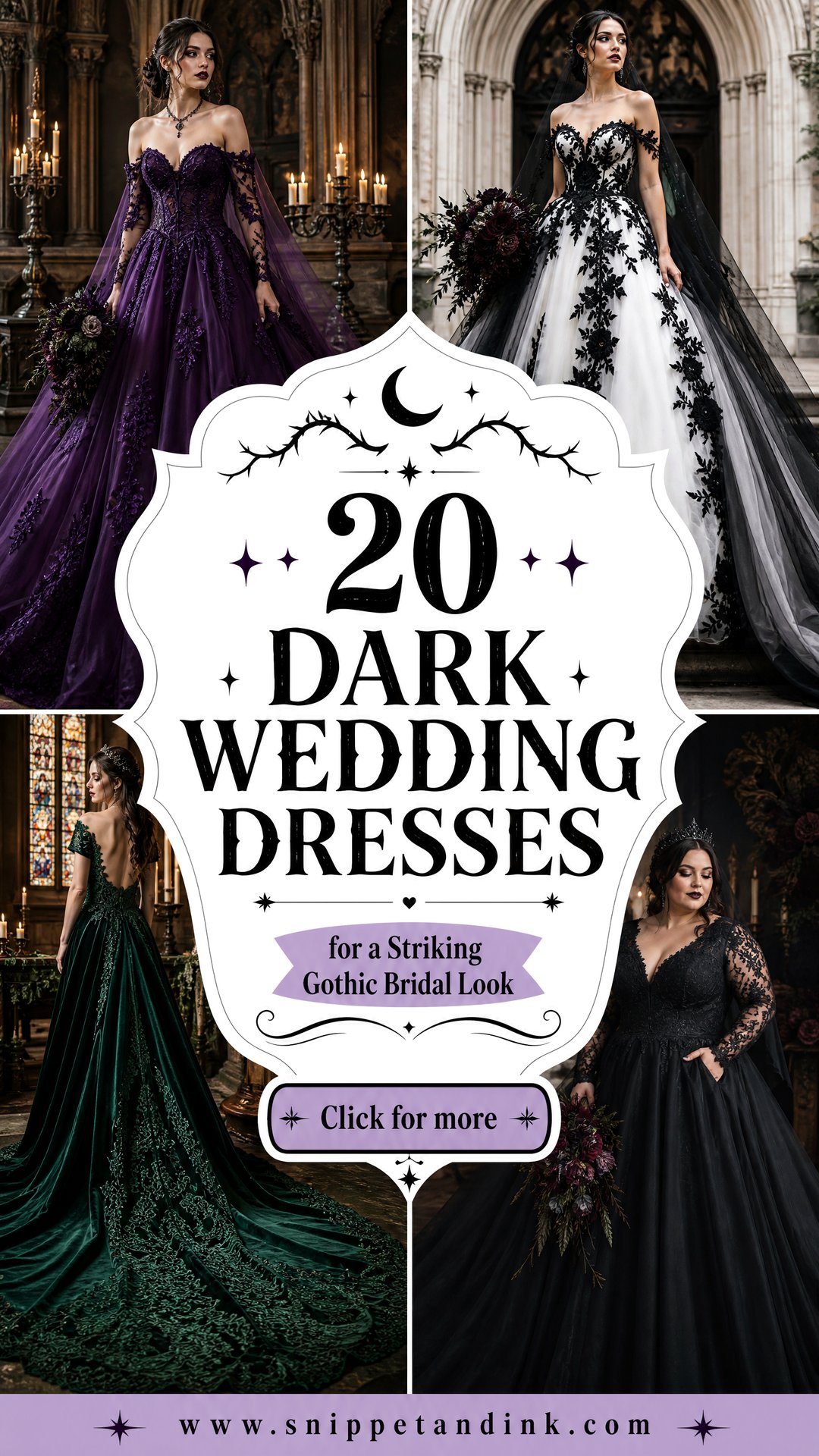
Dark gowns are the requests I enjoy styling most, because the colour does half the work and everything else has to stay quieter around it. Below are twenty I would genuinely put a bride in, in black, burgundy, navy, plum, charcoal and forest green, from full ball gowns down to bias-cut slips. For each one I’ve noted the shoes, jewelry, veil and flowers I’d pair with it, plus the fitting detail I’d watch. Dark fabric hides less than people expect. It shows every pulled seam and every speck of lint, so the construction notes matter as much as the styling.
Why Black Fabric Fools You in the Fitting Room
Bridal shop lighting is bright, white and kind to dark fabric. Most venues are not. When a bride is considering a dark gown, I take the sample to a window and then to a dim corner, because black has an undertone that only shows when the light changes. Some blacks lean blue, some lean brown, and a few have a green cast you only notice beside a true black shoe.
Texture is what the camera actually records
A flat black gown in matte crepe tends to photograph as a silhouette. The camera exposes for your face, and solid black loses its folds. Lace, beading, satin sheen and velvet pile all give the lens something to hold on to. If your heart is set on matte, choose a cut with strong seams or drape lines so the shape still reads in pictures.
Hold the colour under your chin
Do this without makeup, near daylight. Pure black can wash out very fair skin and pull warmth from olive tones, where charcoal, navy or plum often sit more kindly. That isn’t a rule against black. It’s a reason to plan your makeup and portrait lighting around it from the start.
Bring these to your appointments so you’re judging the dress as it will really be worn:
- Your wedding shoes, or at least the same heel height
- Photos of the venue taken at the time of day you’ll marry
- Your phone, to shoot the dress with and without flash
- The underwear you plan to wear on the day
1. Black Lace Wedding Dress With Long Sleeves
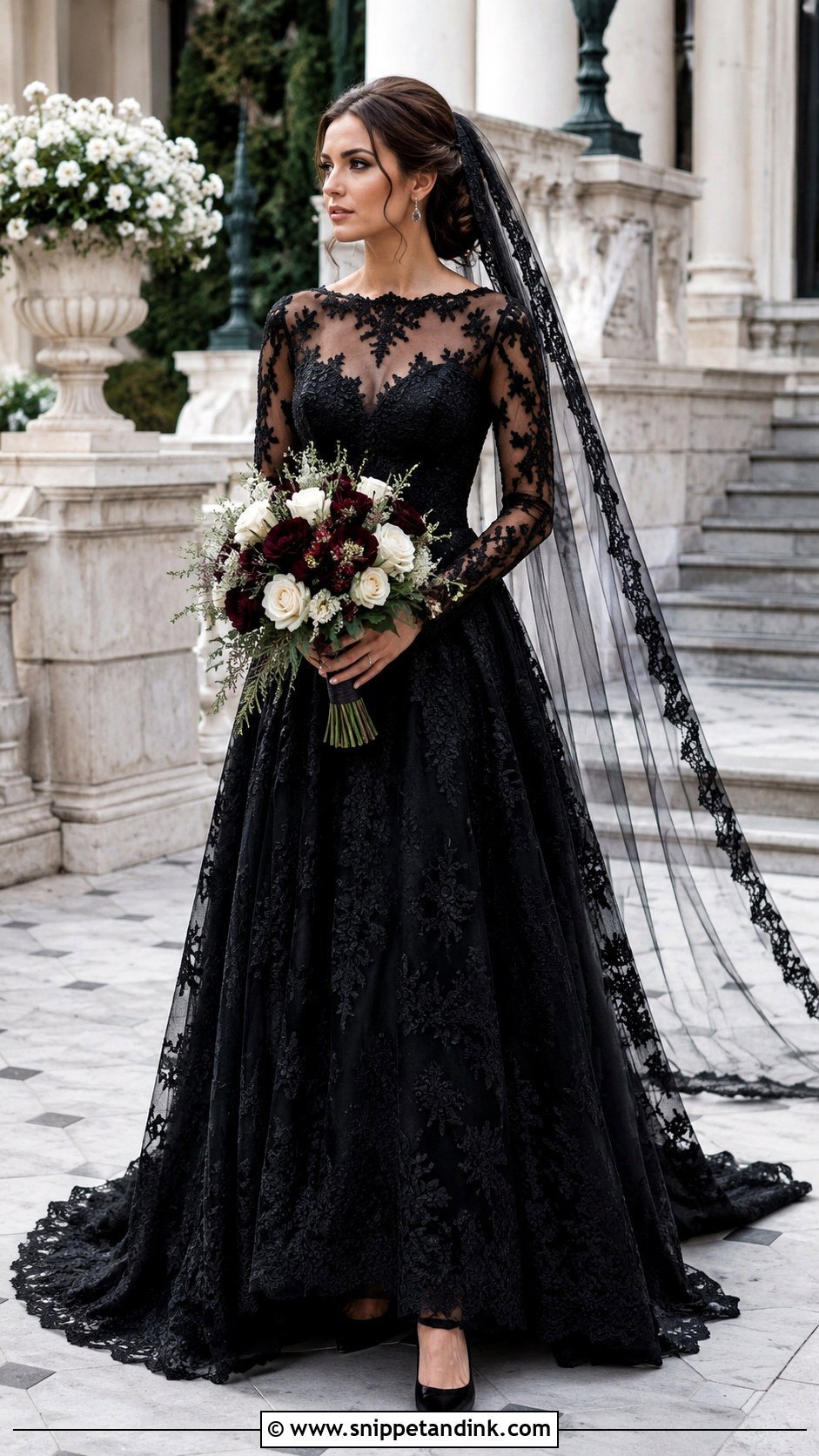
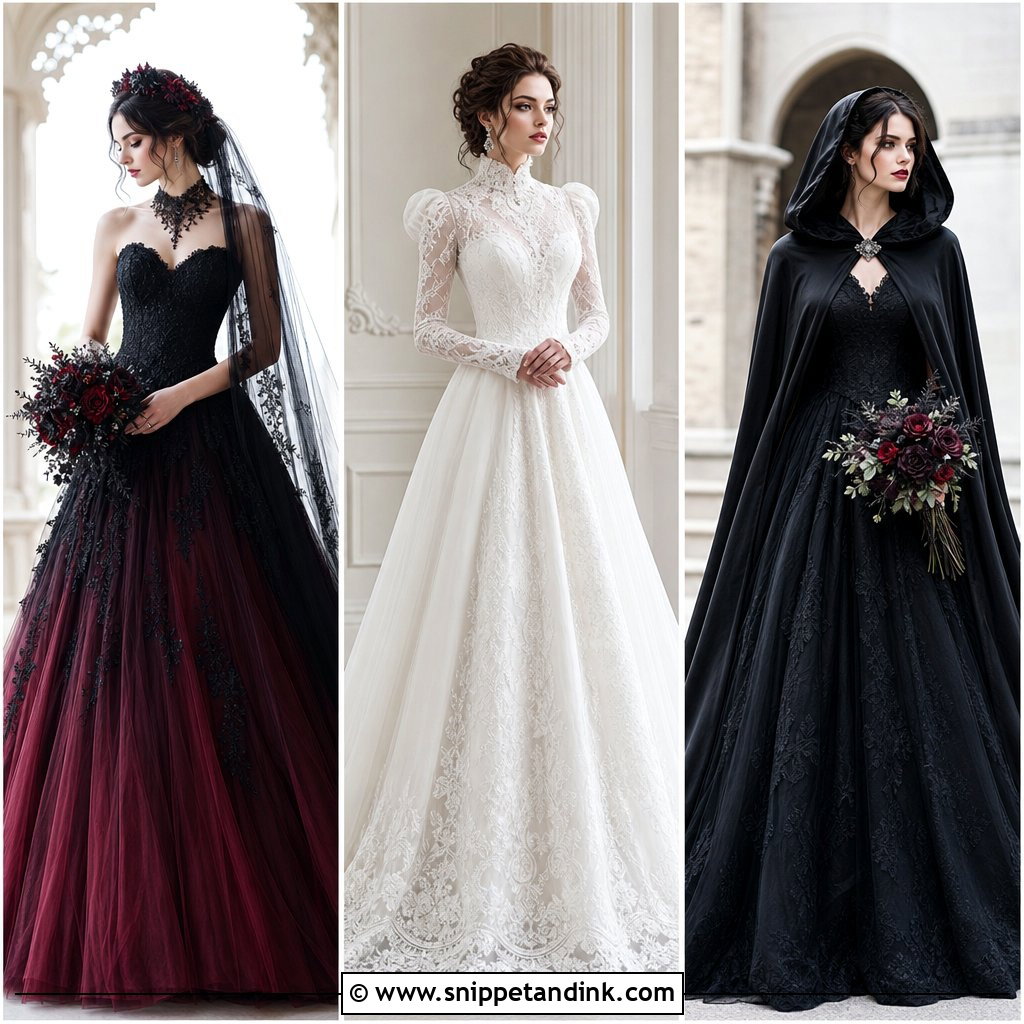
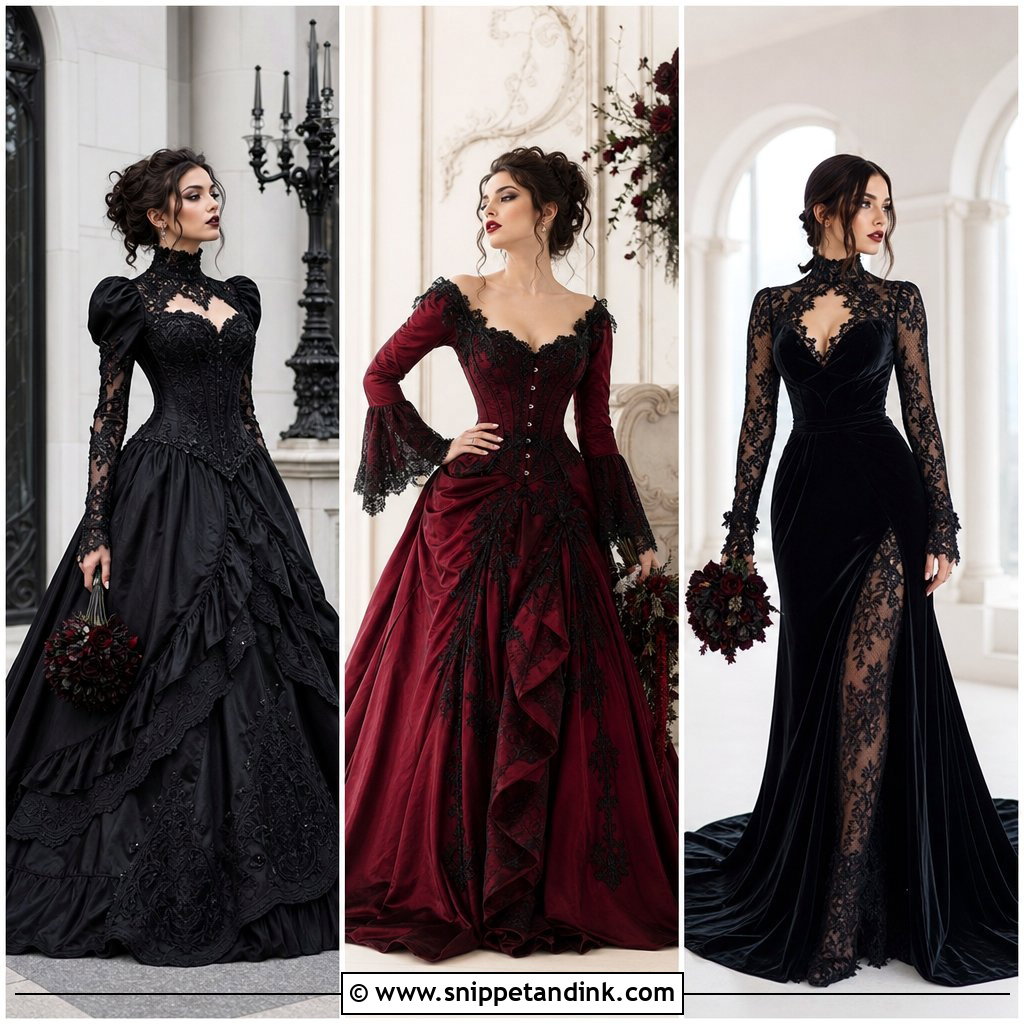
Black lace on long sleeves reads heavy unless the pattern has open net between the motifs, so I look for floral lace with plenty of ground showing. Pair a fitted bodice, either a soft V or an illusion panel, with an A-line skirt that moves when you walk. The lining underneath changes everything: charcoal or deep grey lets the lace read, while black lining swallows it. I’d style it with pointed black satin pumps, teardrop earrings and a fingertip veil edged in matching lace, with ivory garden roses, burgundy blooms and eucalyptus in the bouquet. A black velvet wrap covers you if the evening turns cold. Have the cuffs fitted with your arms bent, not hanging, or they ride up the moment you hold your flowers.
2. Black Satin Ball Gown Wedding Dress
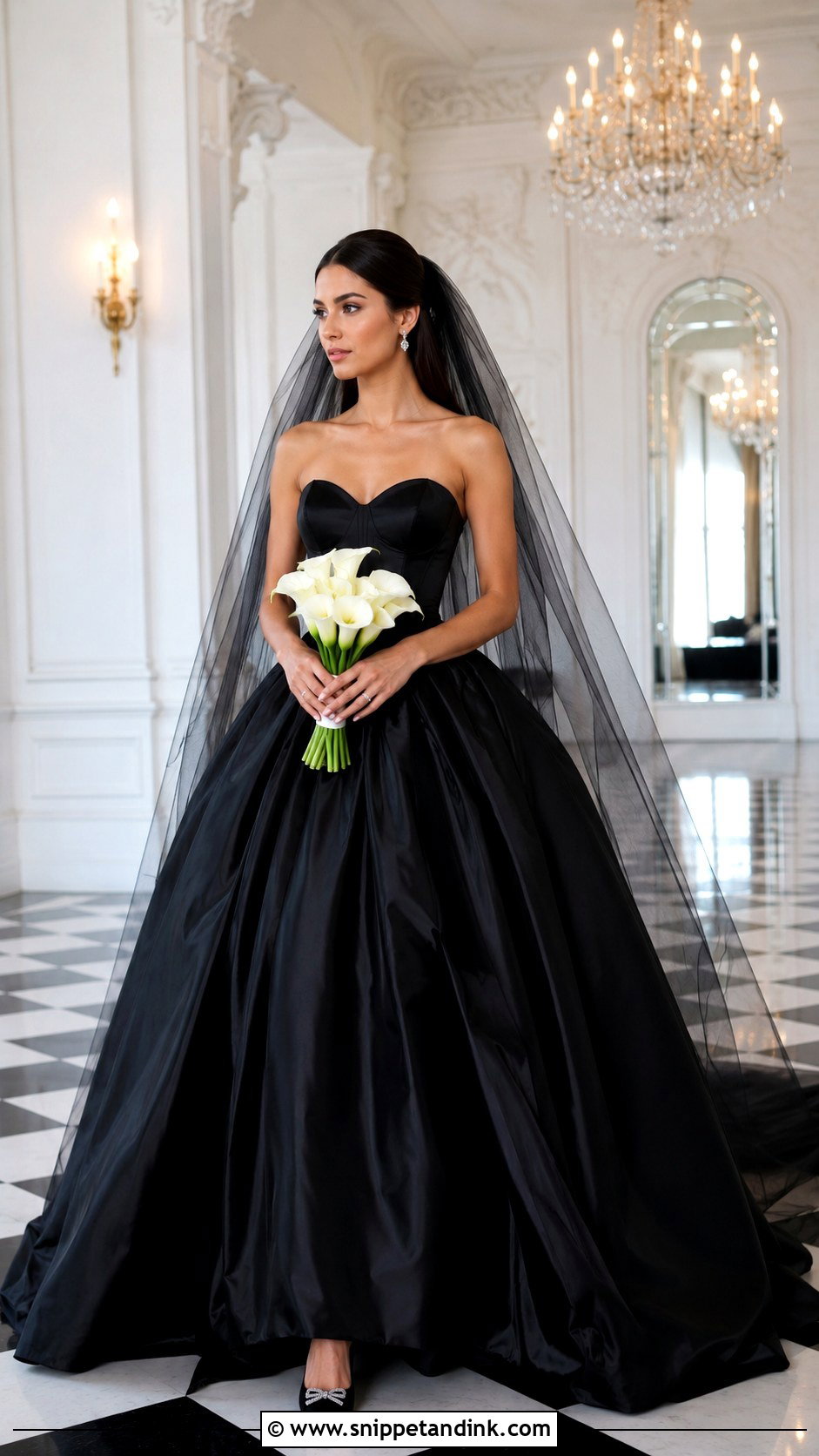
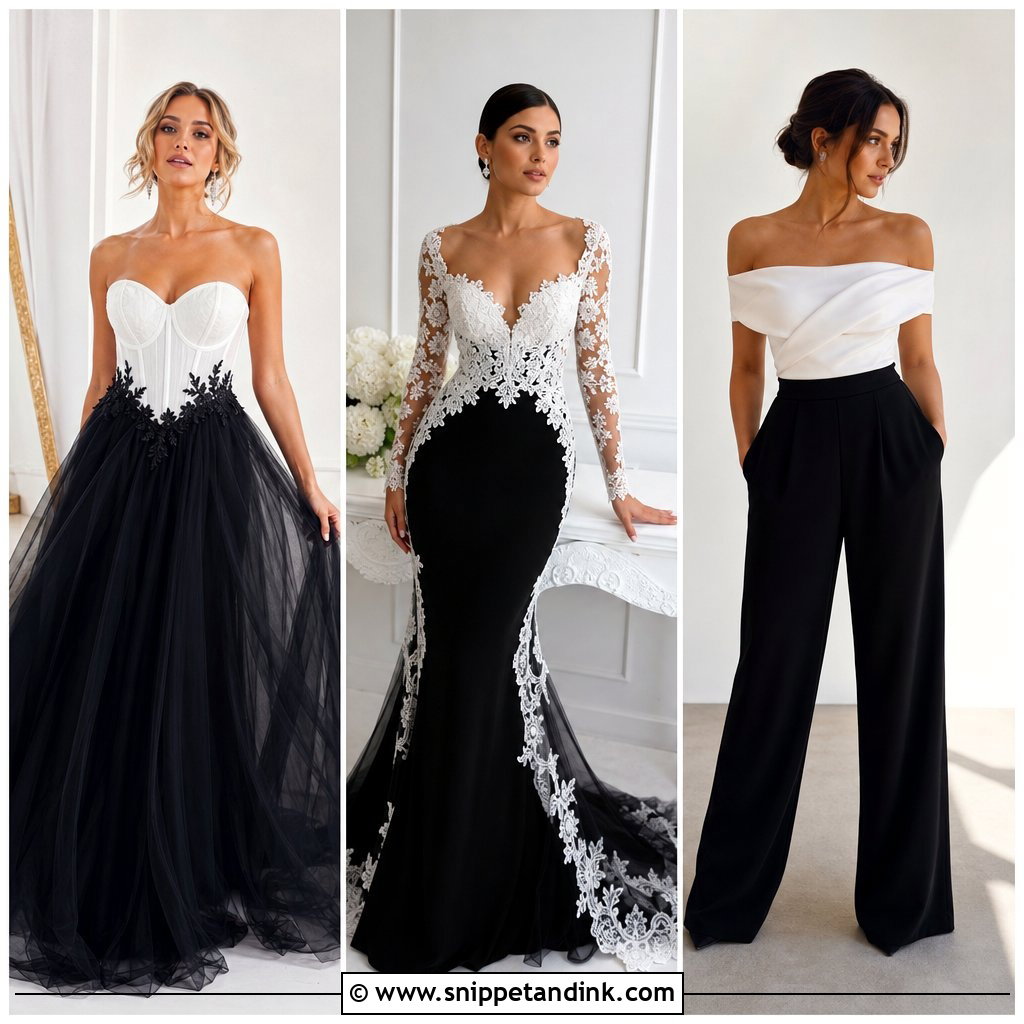
Satin is unforgiving. On a black ball gown, any tension at the waist shows as a pale diagonal pull line because the light catches the strain, so the waist and hip alterations are where I’d spend the budget. The gown itself is simple: a strapless or softly scooped corset bodice and a full skirt that carries the drama alone. Crystal drop earrings, pointed black pumps and a cathedral veil in lightweight black tulle are all it needs, with a low bun to keep the neckline clear. White calla lilies or cream roses give the strongest contrast against that skirt. Ask for a wrist loop on the train; you’ll use it the minute the ceremony ends.
3. Burgundy Velvet Wedding Dress With Sleeves
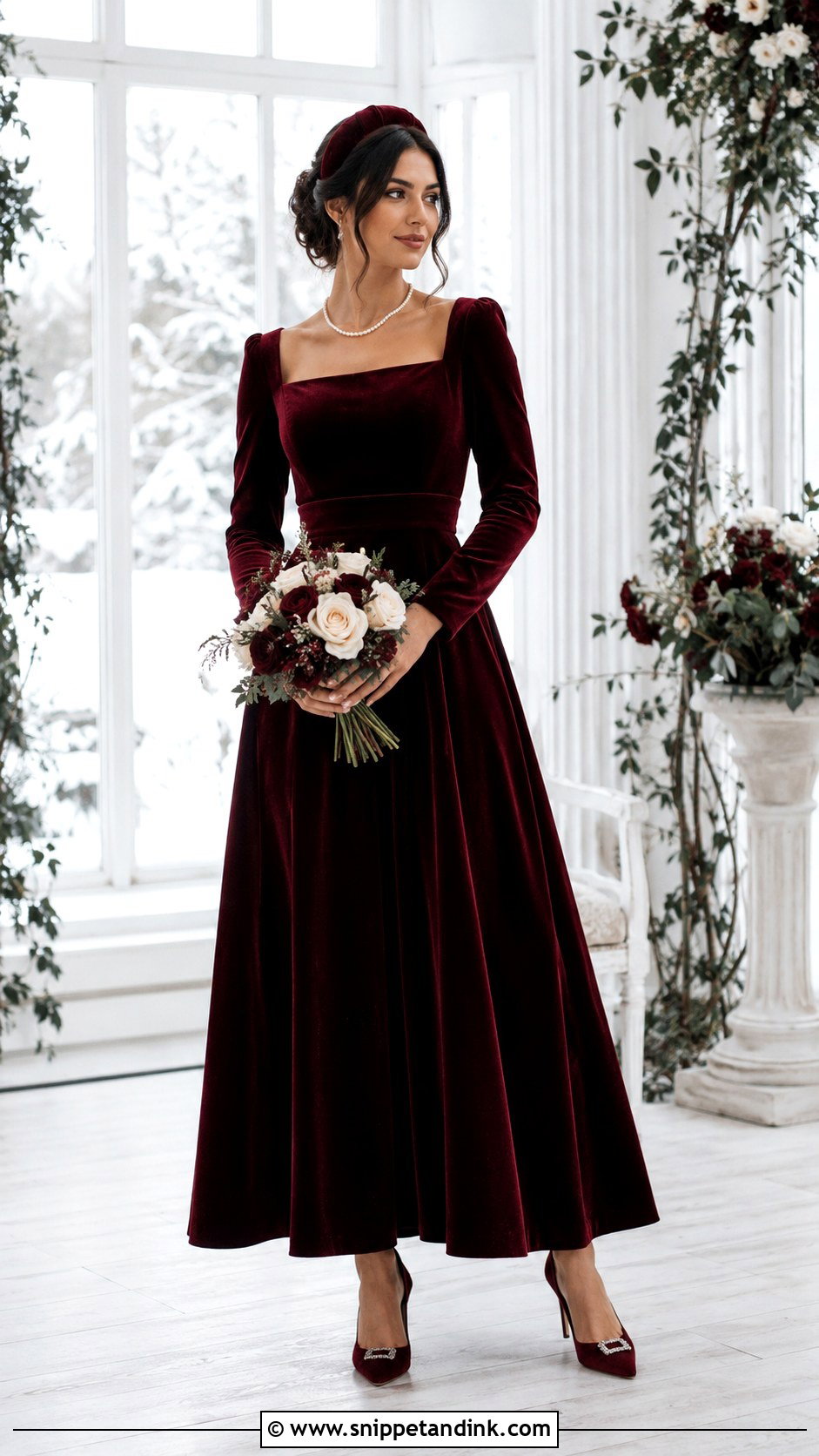
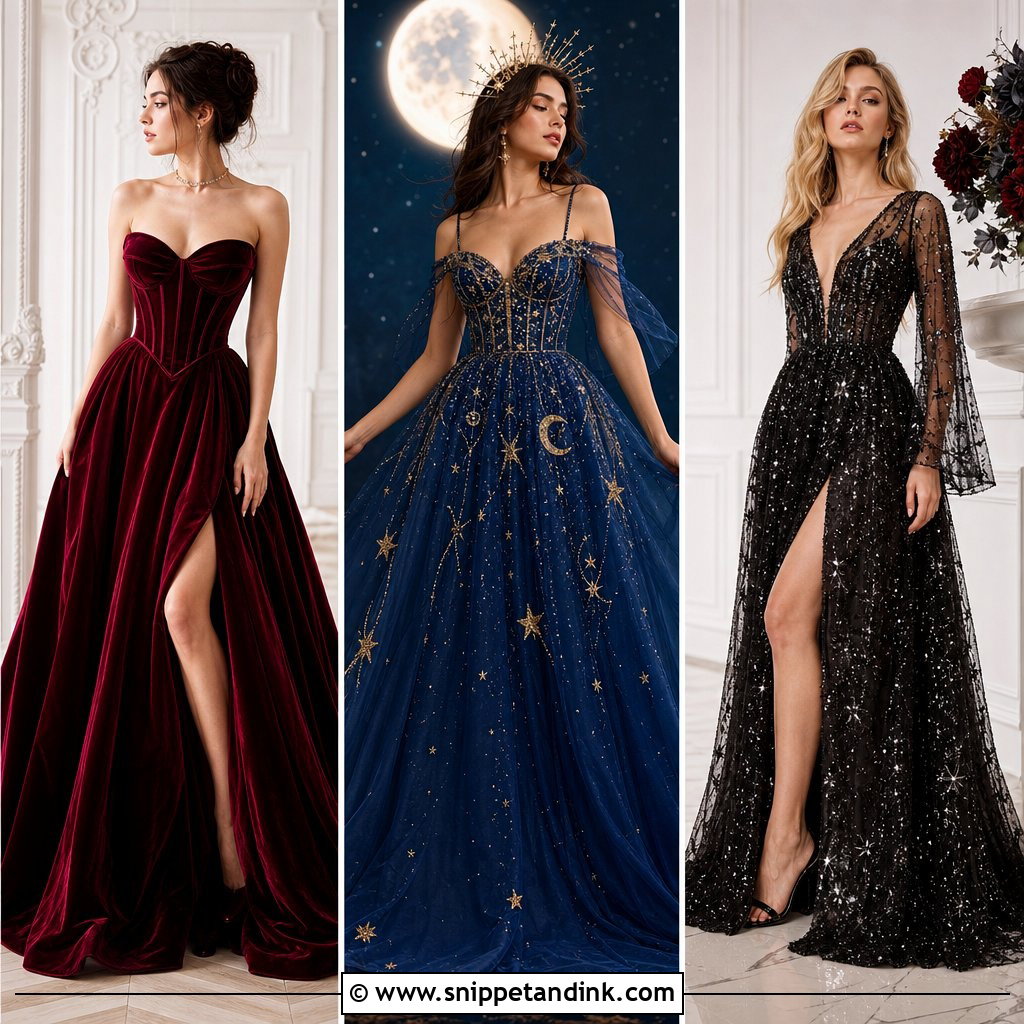
Velvet is the one dark fabric I’d only suggest between autumn and early spring. It is warm to wear, and the pile reflects light in one direction, so the colour swings from wine to near-black depending on which way the nap runs. Look at it in daylight and under warm indoor bulbs before deciding. A floor-length gown with a structured waist, long sleeves and a gently flared skirt keeps the weight from dragging your shape down, and a square or portrait neckline leaves room for a short pearl necklace. Finish with dark red velvet pumps, antique-style earrings and a slim black headband or a burgundy veil. Cream roses, red ranunculus and trailing greenery suit the colour. Keep every other texture plain, because velvet next to lace or sequins gets busy fast.
4. Black Mermaid Wedding Dress With Lace Train
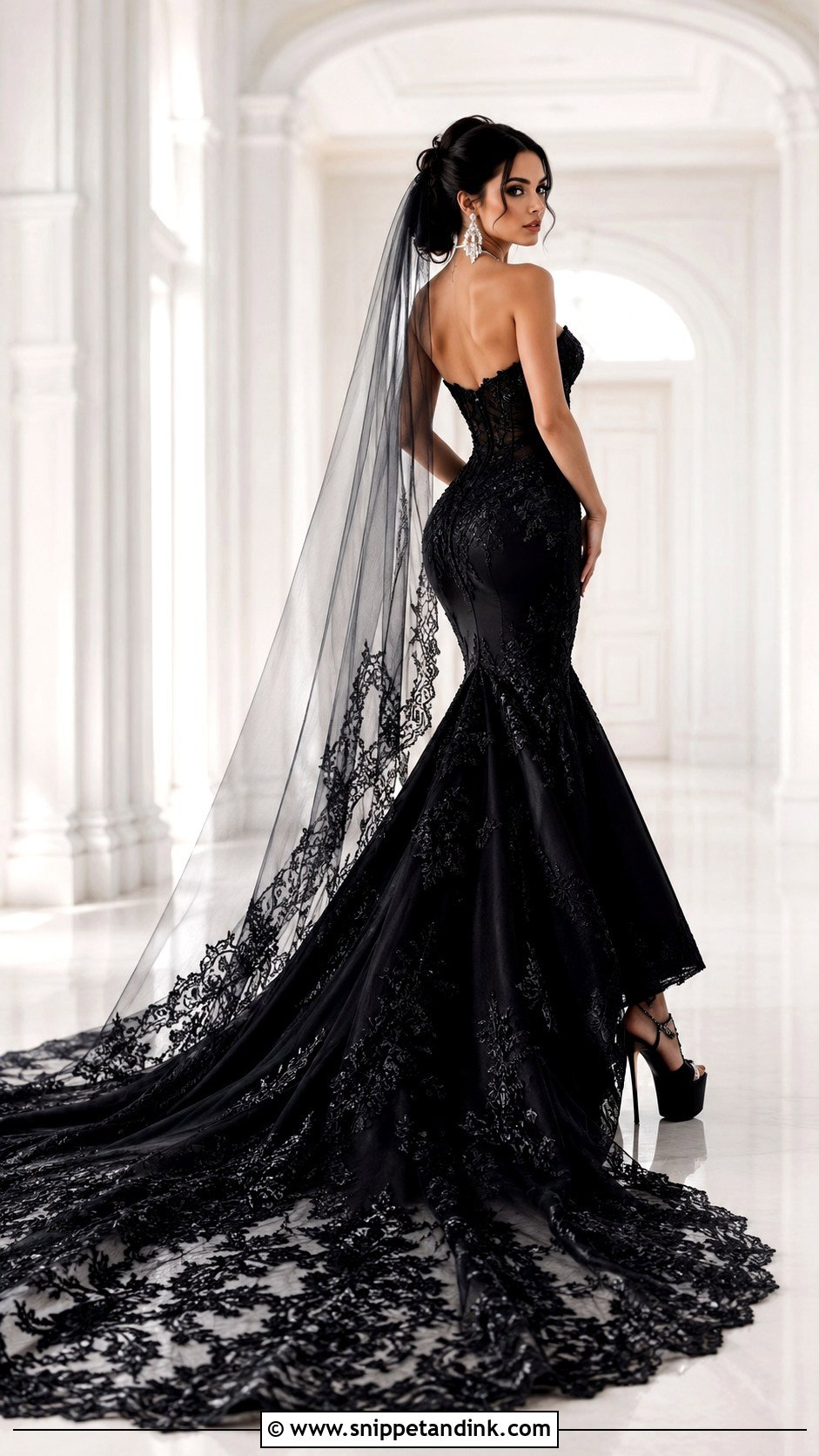
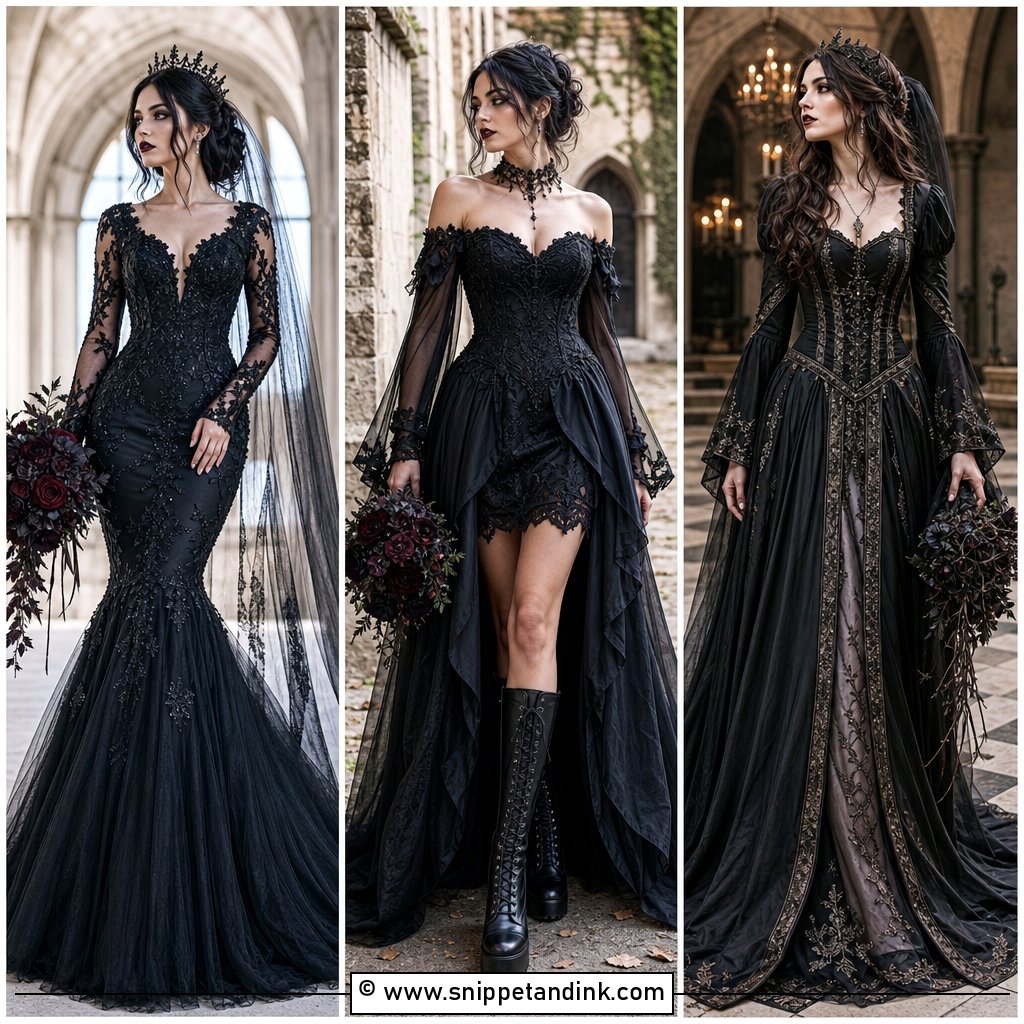
A mermaid cut stands or falls on where the flare starts. If it opens well below the knee you’ll shuffle, so I’d rather see it release at or just above the knee where you can take a normal step. A structured sweetheart bodice gives support, and scattered lace appliqués break up the solid black. Shoes are part of the fit here: black platform heels change the hem length, so bring them to every fitting. Crystal earrings, a plain black tulle veil that doesn’t fight the train, and a tight bouquet of deep red roses with ivory anemones finish it. Practise sitting, walking and turning in it, and insist on a proper bustle. A mermaid train trailing across a dance floor is the thing I most often end up pinning up mid-reception.
5. Black Tulle Wedding Dress With Corset Bodice
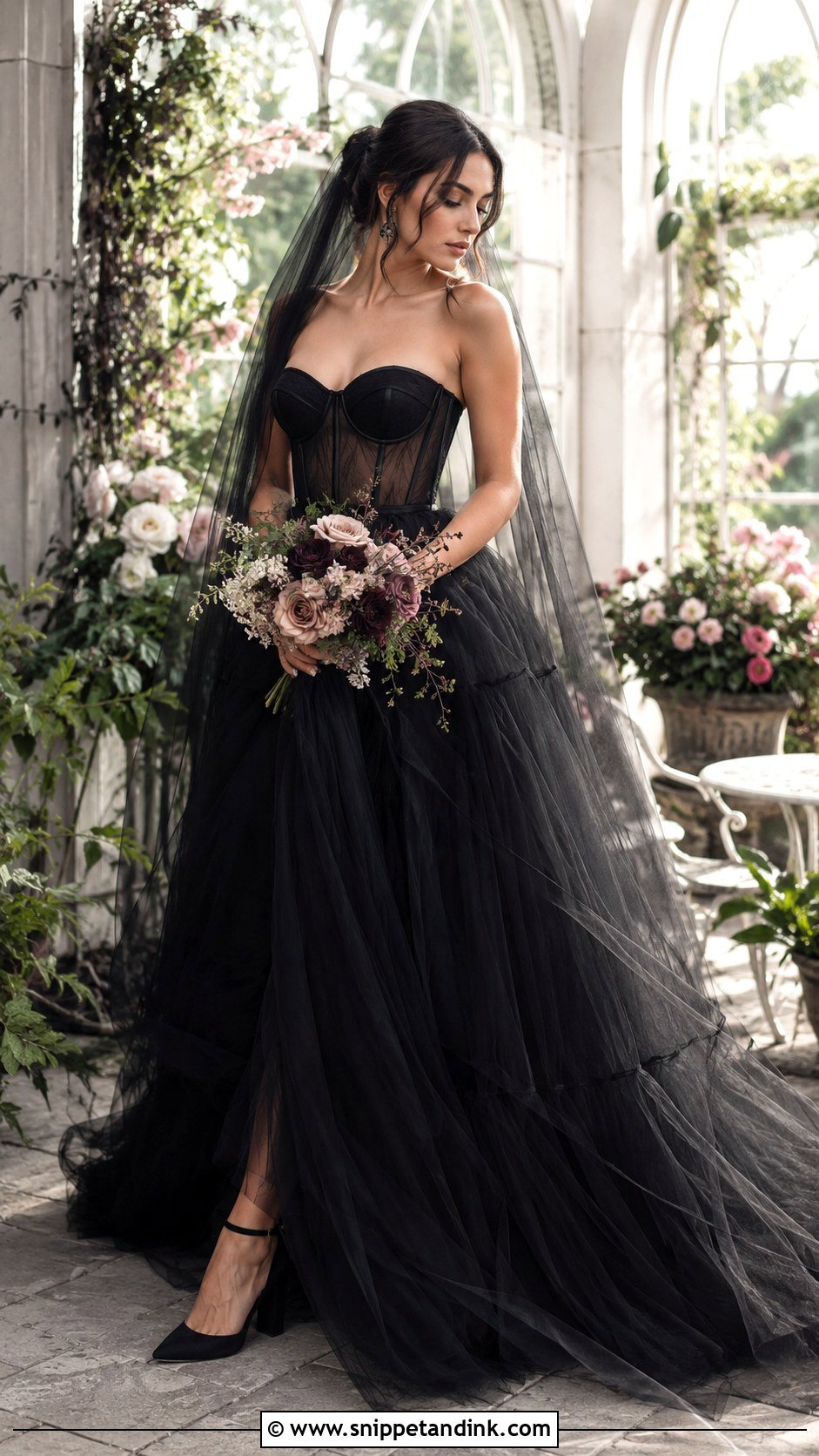
Black tulle tips into costume territory quickly. What keeps it bridal is restraint in the bodice: visible boning, lace placed with intent, and a softly dipped neckline rather than anything spiked or laced up. The skirt volume suits most figures as long as the waistline sits at your natural waist; drop it even a little and the skirt starts to swamp shorter brides. Black block heels, small gemstone earrings and a sheer cathedral veil keep the rest calm, and a loose updo leaves the bodice on show. Dusty pink roses with plum flowers and dark foliage add a touch of colour. Ask for a soft skirt lining and covered boning channels, since bare tulle scratches the inner arms after a few hours of brushing against it.
6. Dark Purple Wedding Dress With Off-Shoulder Sleeves
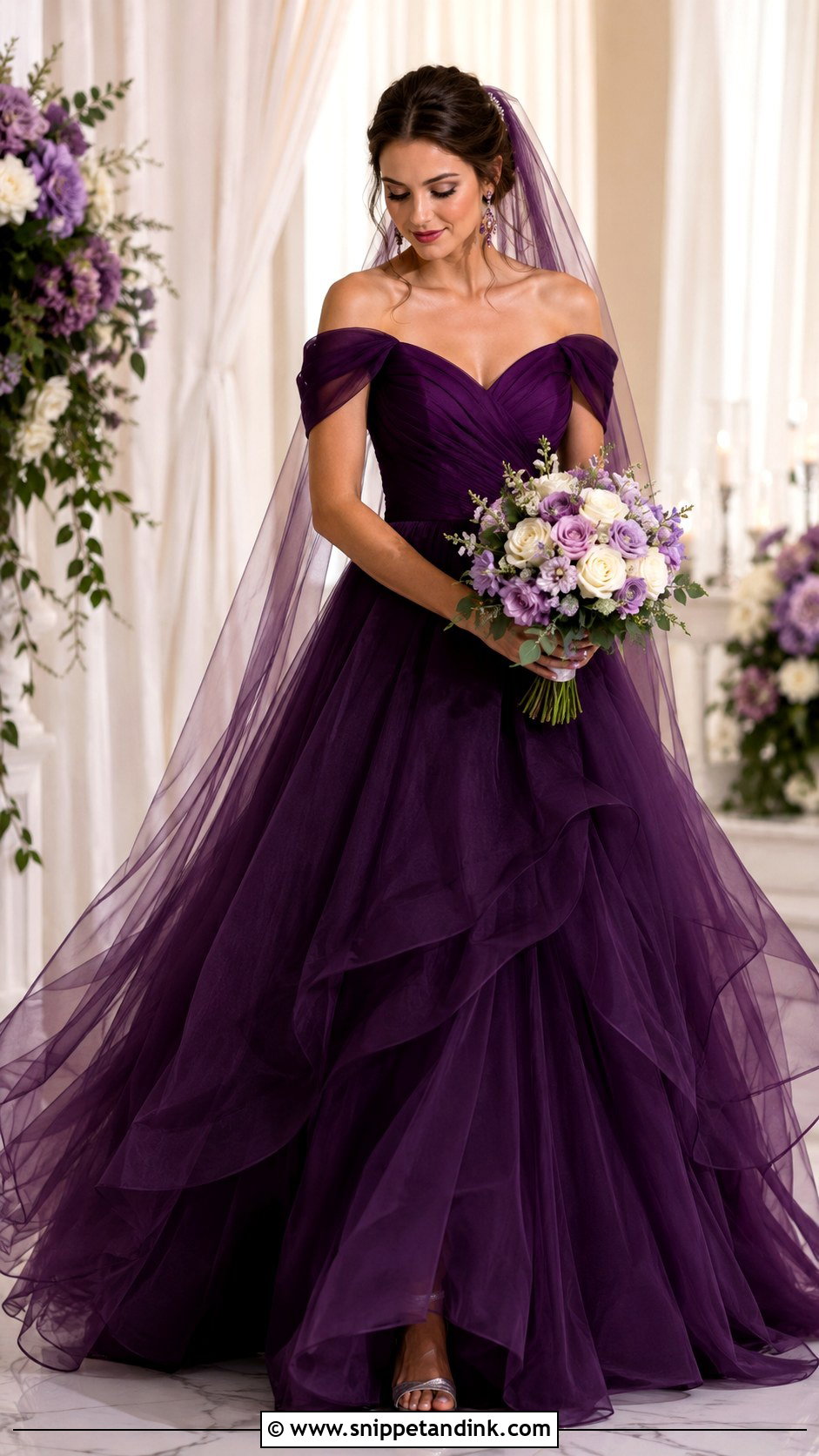
Deep purple is the shade most likely to surprise you indoors, where warm light can push it almost to black. That’s why I want a little tonal beading or embroidery on a dark purple wedding dress, so the skirt keeps some shape in a dim room. Off-shoulder sleeves need inner structure holding them in place; draped sleeves without it slide down when you lift your arms. A full A-line skirt in satin, tulle or layered organza gives the colour room to catch light. Silver heels, amethyst-toned earrings and a sheer plum veil tucked under a loose bun suit it, and an ivory and lavender bouquet brightens the whole outfit. Wear your actual foundation garments at fittings, then dance a little in the fitting room. If the neckline moves there, it will move more at the reception.
7. Black And White Wedding Dress With Floral Appliqué
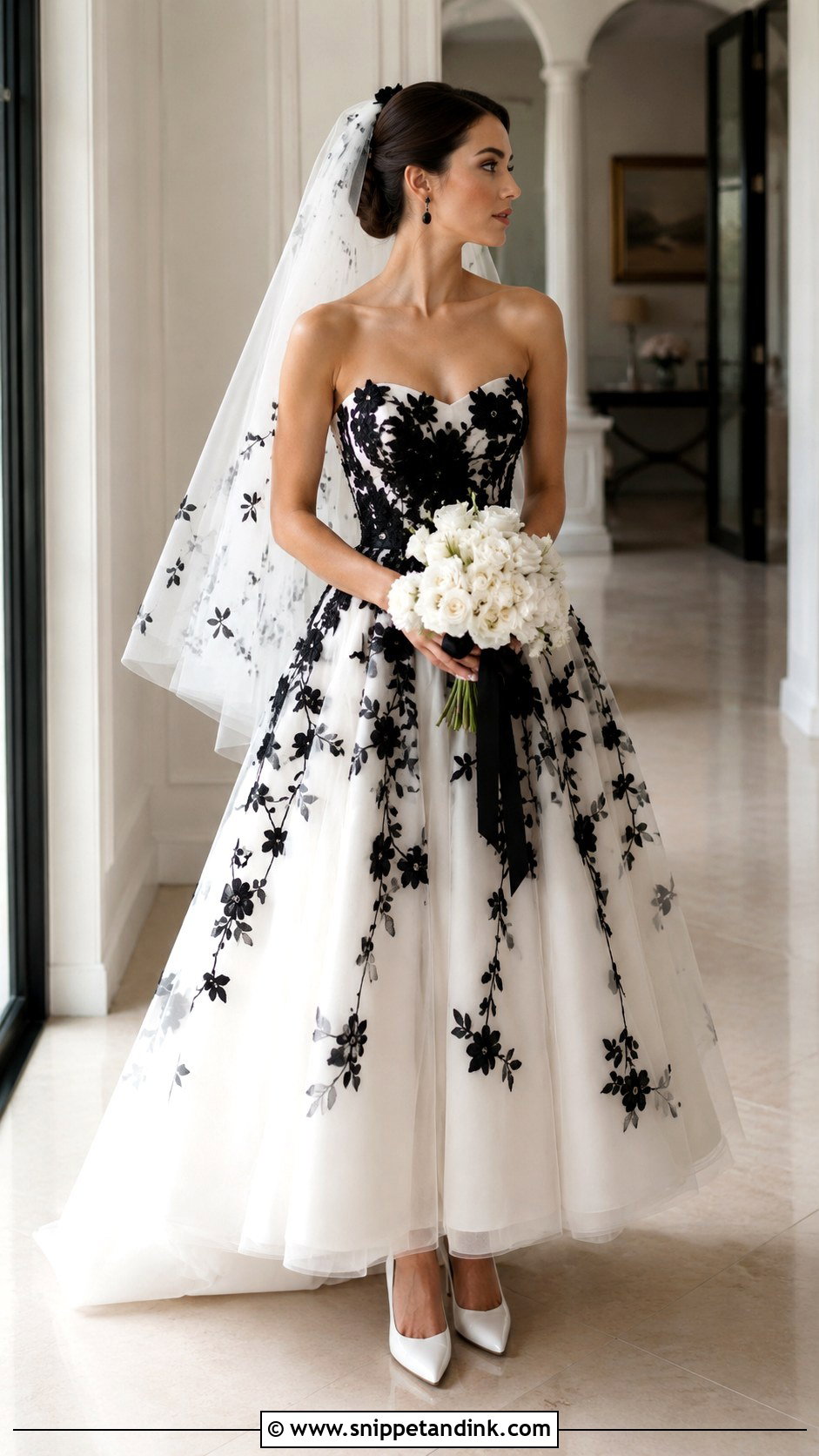
Can’t settle between white and black? This one gives you both, with a pale base under dark floral appliqué. Placement decides whether it looks couture or busy. I like the black flowers clustered at the waist and thinning towards the hem so the skirt stays light, over a fitted bodice and flowing A-line skirt. White satin heels, black pearl earrings and a white veil with a few scattered black appliqués tie it together, and a mostly white bouquet with a narrow black ribbon keeps the contrast tidy. Go fresh with the makeup, since a dark lip on top of black and white pushes it into theatre. Before buying, look hard at the side seams. Appliqué that gets cut across during alterations never quite lines up again.
8. Black Sequin Wedding Dress With Cape
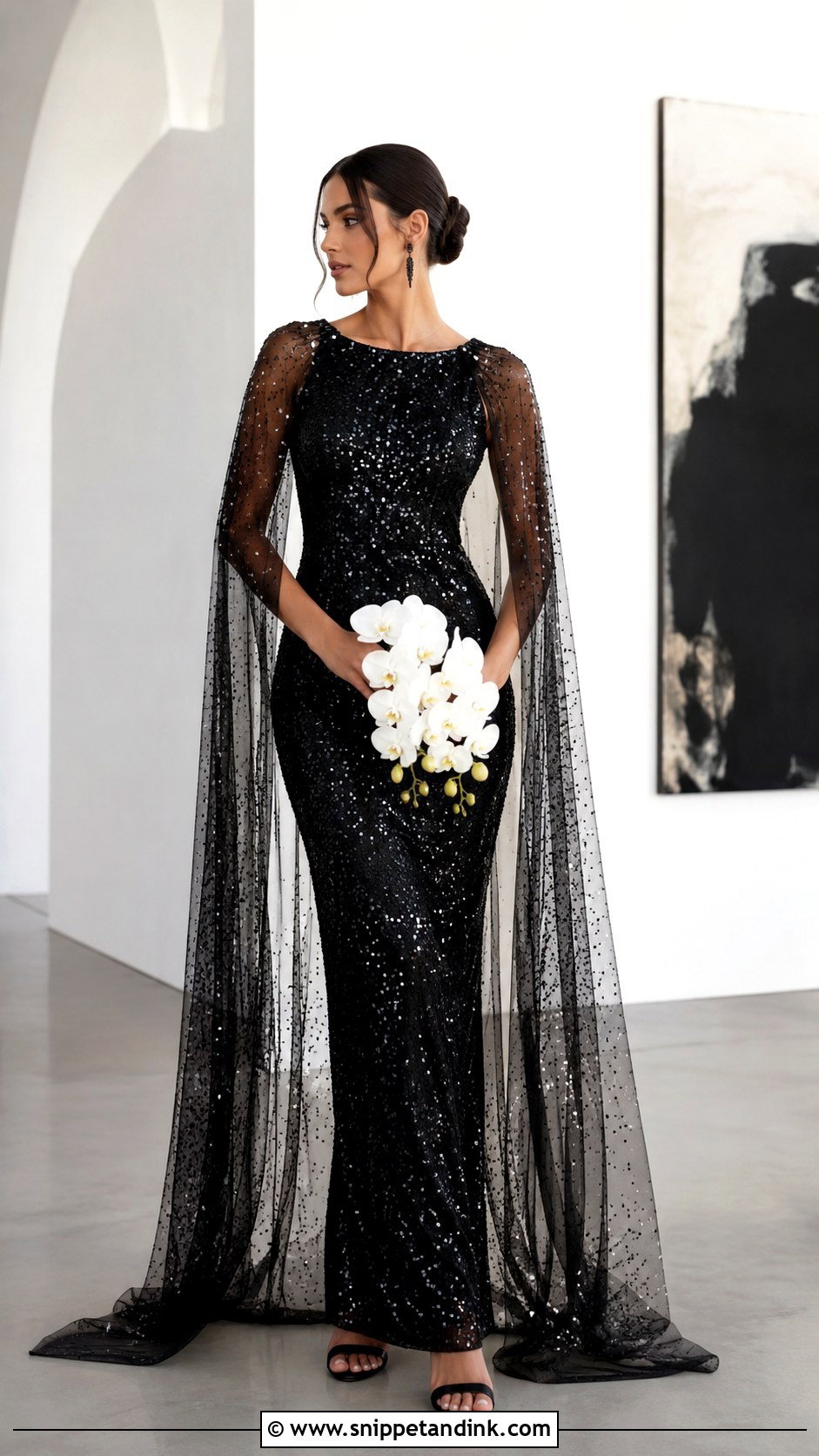
Sequins plus a cape is already plenty of drama, so I’d keep everything else close to bare. Go for a column or gently fitted gown in tonal sequins with a defined waist, then a detachable cape in soft tulle or chiffon that can stand in for a veil at the ceremony. Comfortable black heels, slim drop earrings, a smooth clutch for later and white orchids or long-stemmed calla lilies are enough. The practical catch is that sequins snag sheer fabric. Check that the cape clears the shoulders without rubbing, because a pulled thread in chiffon shows as a ladder in photos. Matte or low-shine accessories keep the eye on the dress.
9. Navy Blue Wedding Dress With Full Skirt
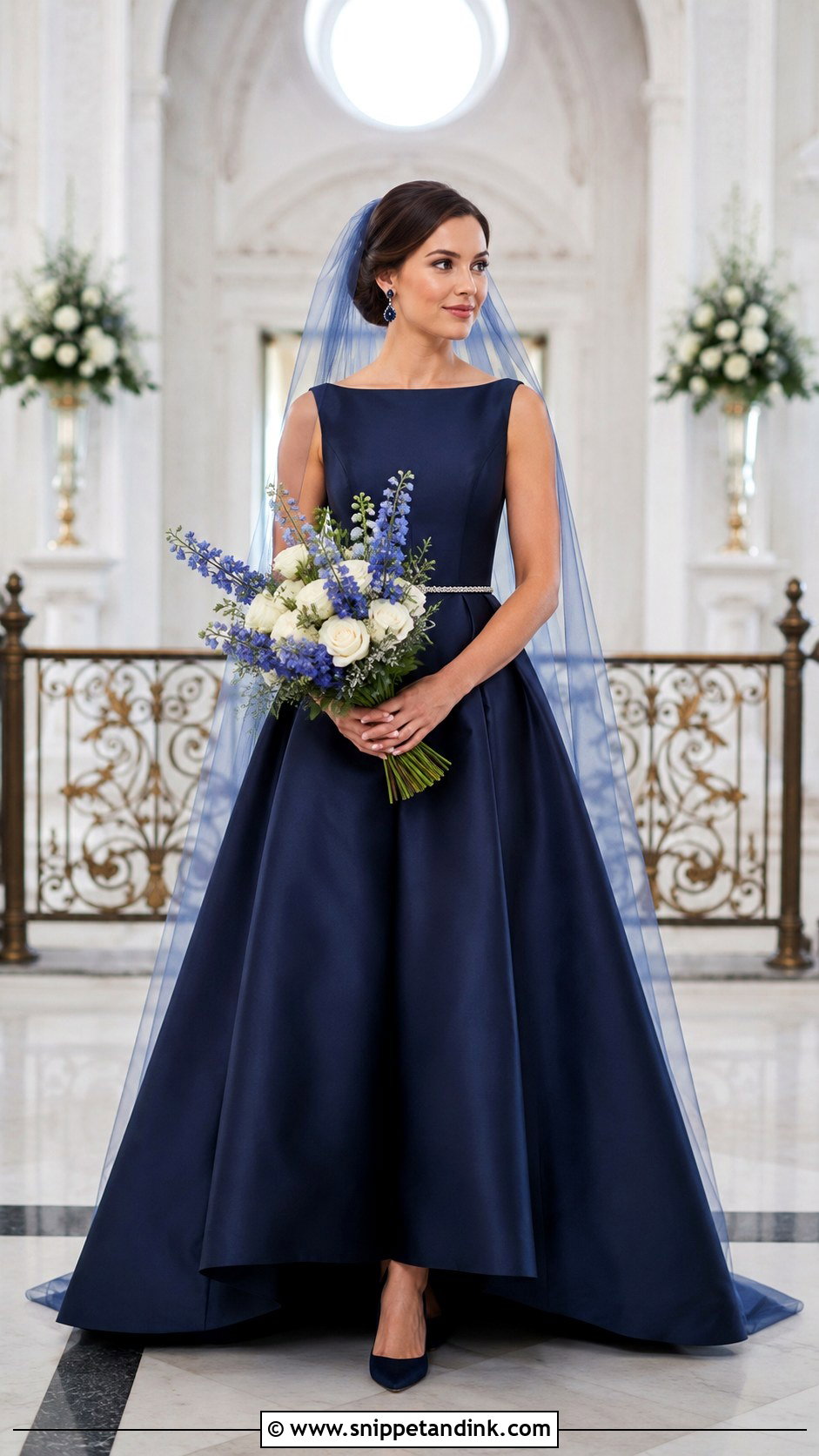
When a bride wants a dark gown without the family conversation that black sometimes starts, navy is usually what I suggest. A fitted bateau-neck bodice over a full satin skirt suits a formal venue, and a narrow crystal belt or tonal beading defines the waist better than a contrasting sash. Navy pumps, sapphire earrings and a light veil in smoky blue or soft ivory complete it, with white roses, blue delphiniums and greenery in the bouquet. Navy shifts more than any other dark shade between daylight and warm indoor light. Lay the shoes, veil fabric and a dress swatch side by side and check them in both before ordering. Pockets are fine, but have them set so they don’t break the line of the skirt.
10. Black Slip Wedding Dress With Sheer Cape
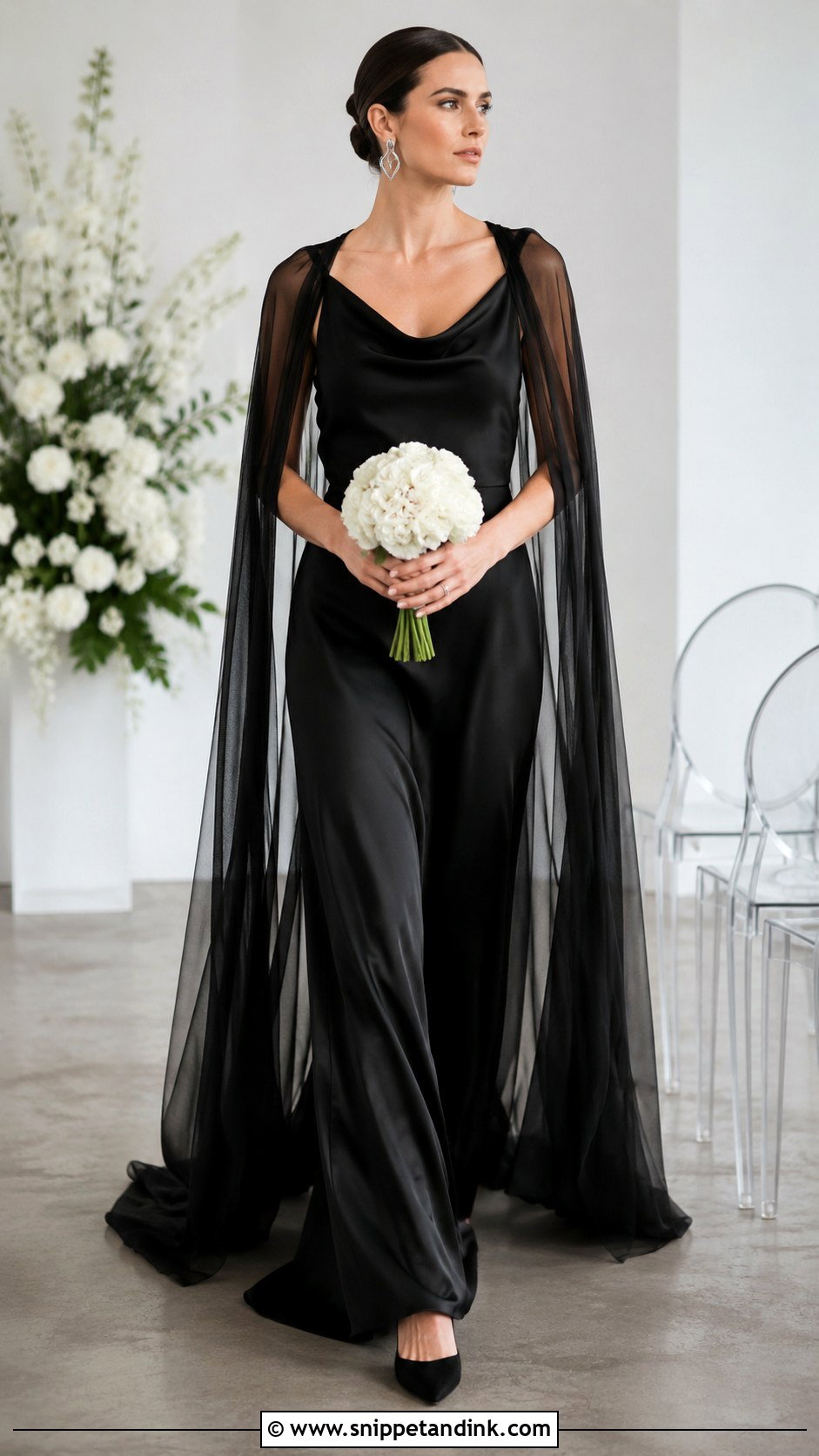
A slip dress hides nothing, and it suits a small venue or a modern ceremony far better than a ballroom. I’d only recommend it if you’re ready for several tailoring appointments, because the bias cut shows every ripple at the bust, waist and hem. Choose a substantial silk or satin, not a thin one, with narrow straps and a softly draped neckline. A sheer black cape over it adds movement for the ceremony and some coverage without hiding the line. Pointed black pumps, sculptural silver earrings and a compact white bouquet are enough, with hair in a sleek bun or a soft side part. Underwear matters more here than with any other dress in the list: smooth, skin-tone pieces and a decent lining let the fabric skim instead of cling.
11. Charcoal Gray Wedding Dress With Beading
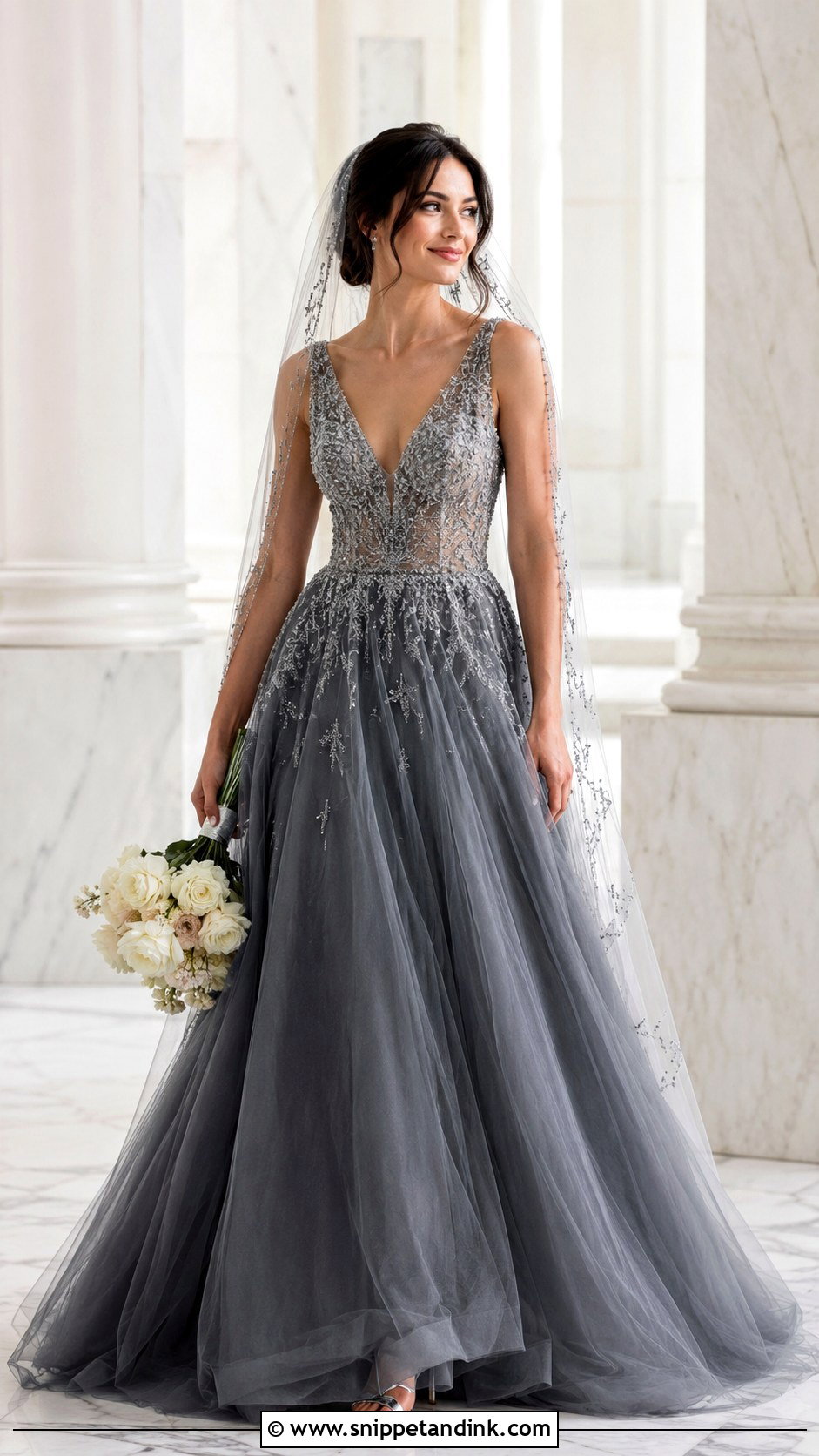
Charcoal gray is the shade I steer brides towards when black feels too heavy against their skin; it’s smokier and softer in photos. An A-line gown with fine silver beading, a natural waist and a V or rounded neckline works well, and layered gray tulle gives the skirt depth. Check the lining, because unlined gray tulle can look sheer under flash. Metallic silver heels, crystal studs and a fingertip veil in matching charcoal tulle finish it, with ivory flowers and silvery foliage in the bouquet. Pick one silver tone and stick to it. Chrome jewelry against antique-silver beading looks muddled. At the final fitting, stand under a bright light and check the beading is spread evenly over the bodice and upper skirt.
12. Forest Green Wedding Dress With Long Train
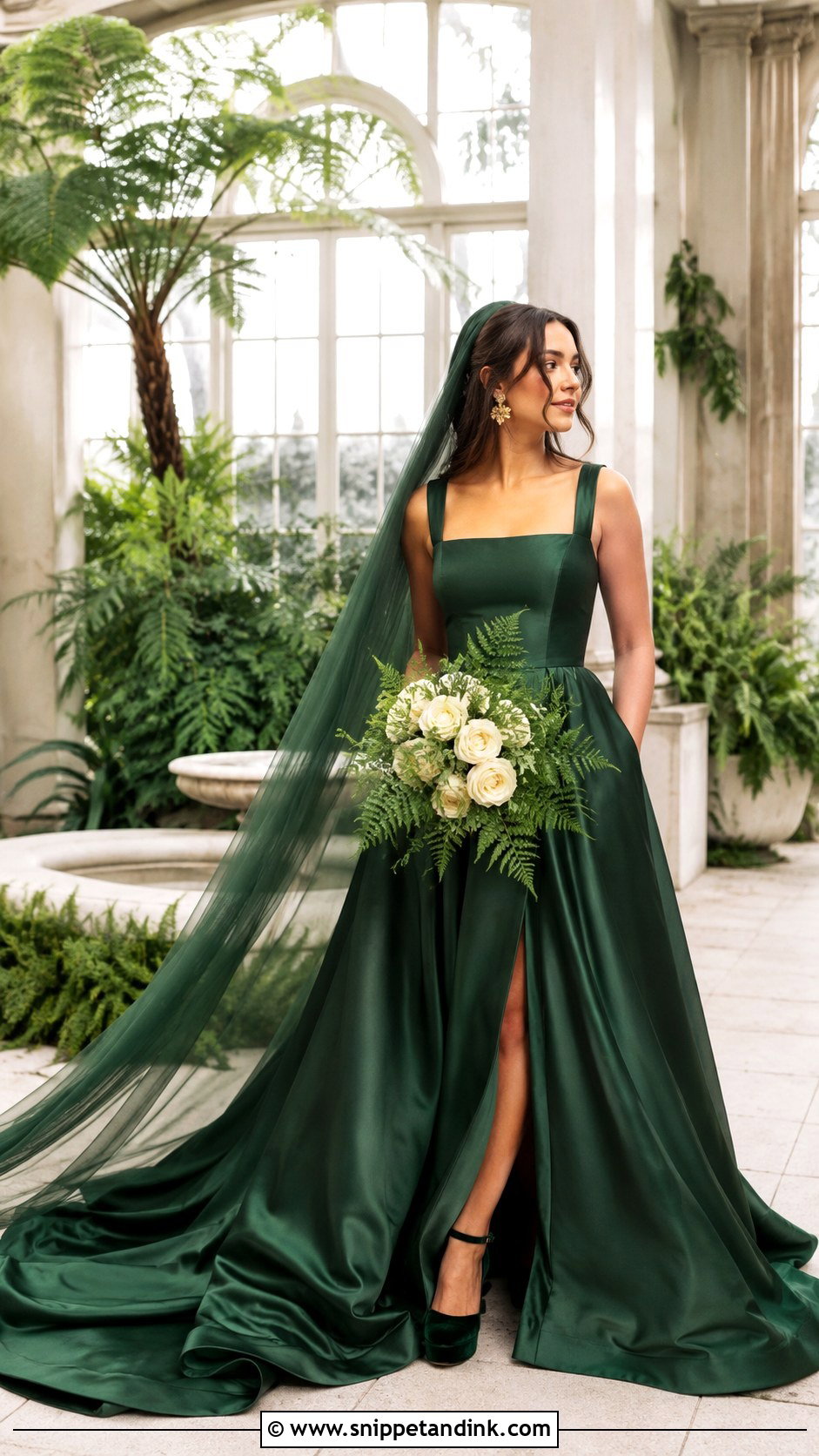
Forest green has a habit of turning blue or yellow on camera, depending on white balance and what surrounds you. So before you choose earrings or a veil, have someone photograph you in it both outdoors and indoors. A structured satin gown with a fitted bodice, wide straps and a long train shows the depth of the colour, and it sits naturally in a garden, woodland, country estate or winter setting. Gold earrings and dark green velvet heels bring warmth. Add a sheer green veil for a traditional feel, or a small gold comb if you’d rather keep it pared back. Cream roses, ferns and white anemones keep the bouquet fresh. Outside, a dark train picks up dust and grass that show clearly, so get a sturdy bustle and use it once the ceremony is over.
13. Black Tea-Length Wedding Dress With Gloves
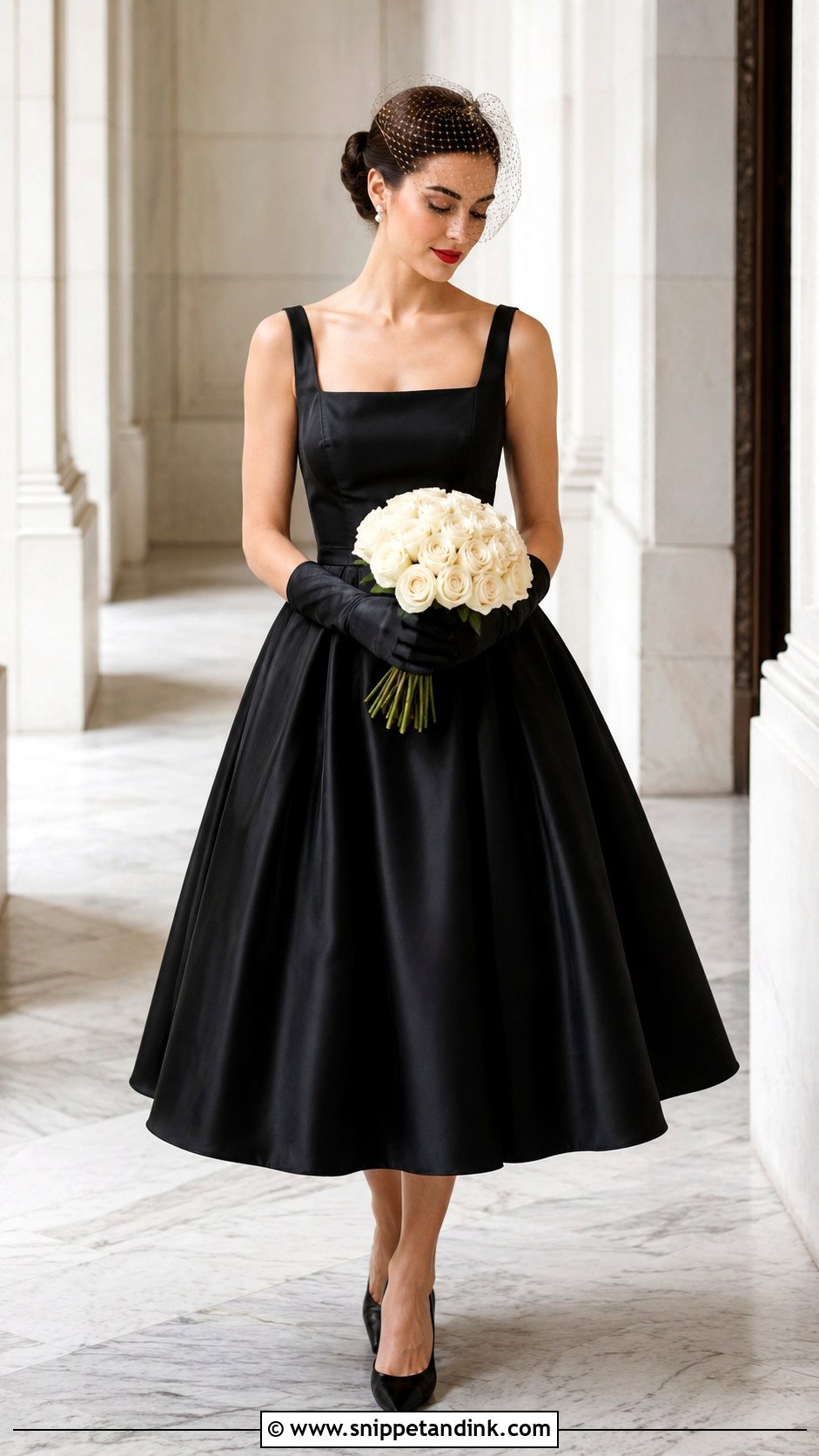
Tea length is the most practical dress here, and the one I’d pick for a courthouse ceremony or a relaxed reception. A fitted bodice with a square neckline and a full skirt ending between knee and ankle gives it that fifties shape. With the hem up, your shoes are on show, so choose them first: pointed satin pumps or ankle-strap heels. Wrist-length gloves, pearl earrings and a small birdcage veil complete it, and a compact bouquet of cream roses and greenery fits the scale. If you add a petticoat for volume, sit down in it at the fitting, because stiff net can peek out at the hem when you’re seated. Have the hem marked while you’re wearing the exact shoes.
14. Black Gothic Wedding Dress With High Neck
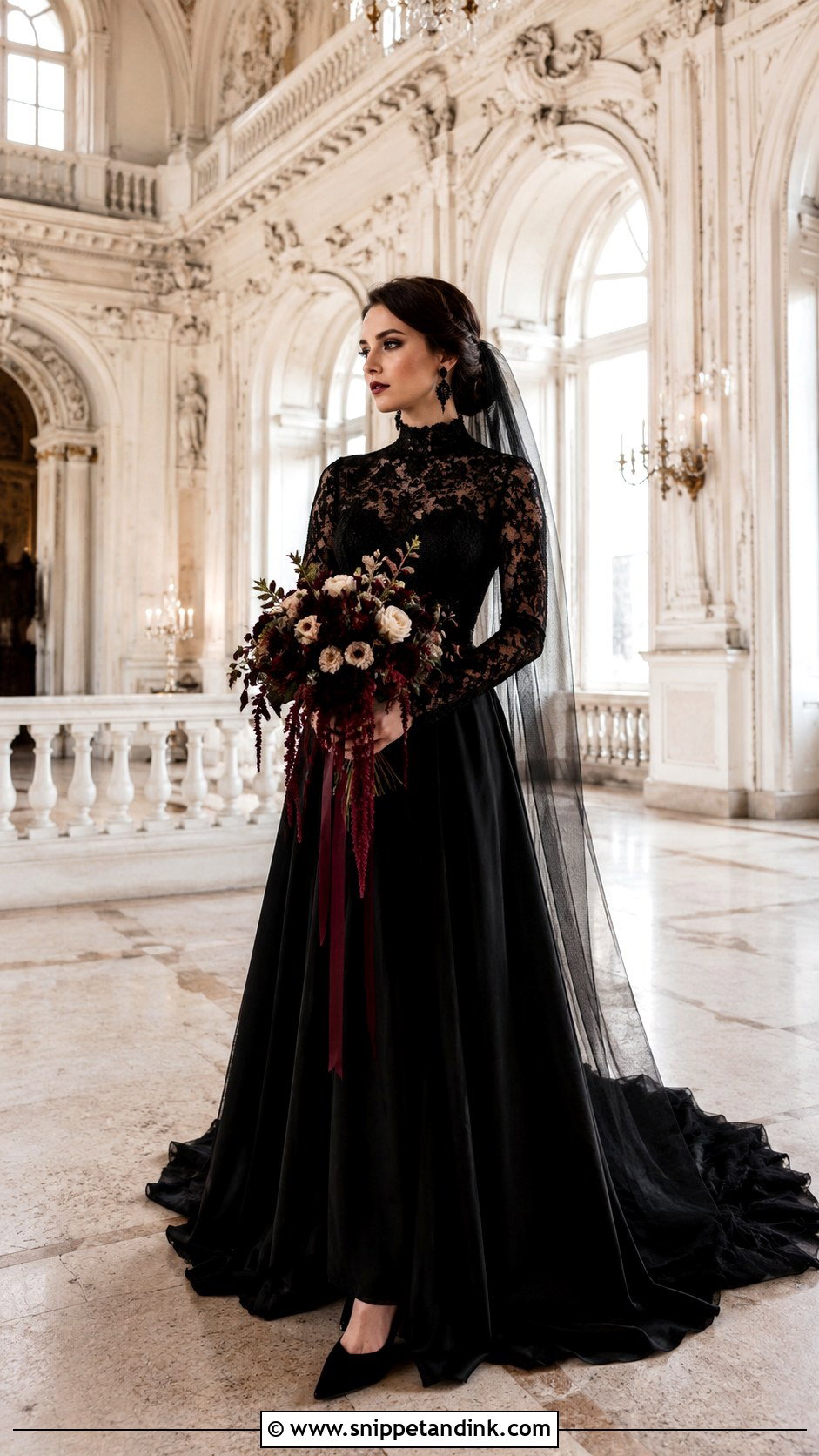
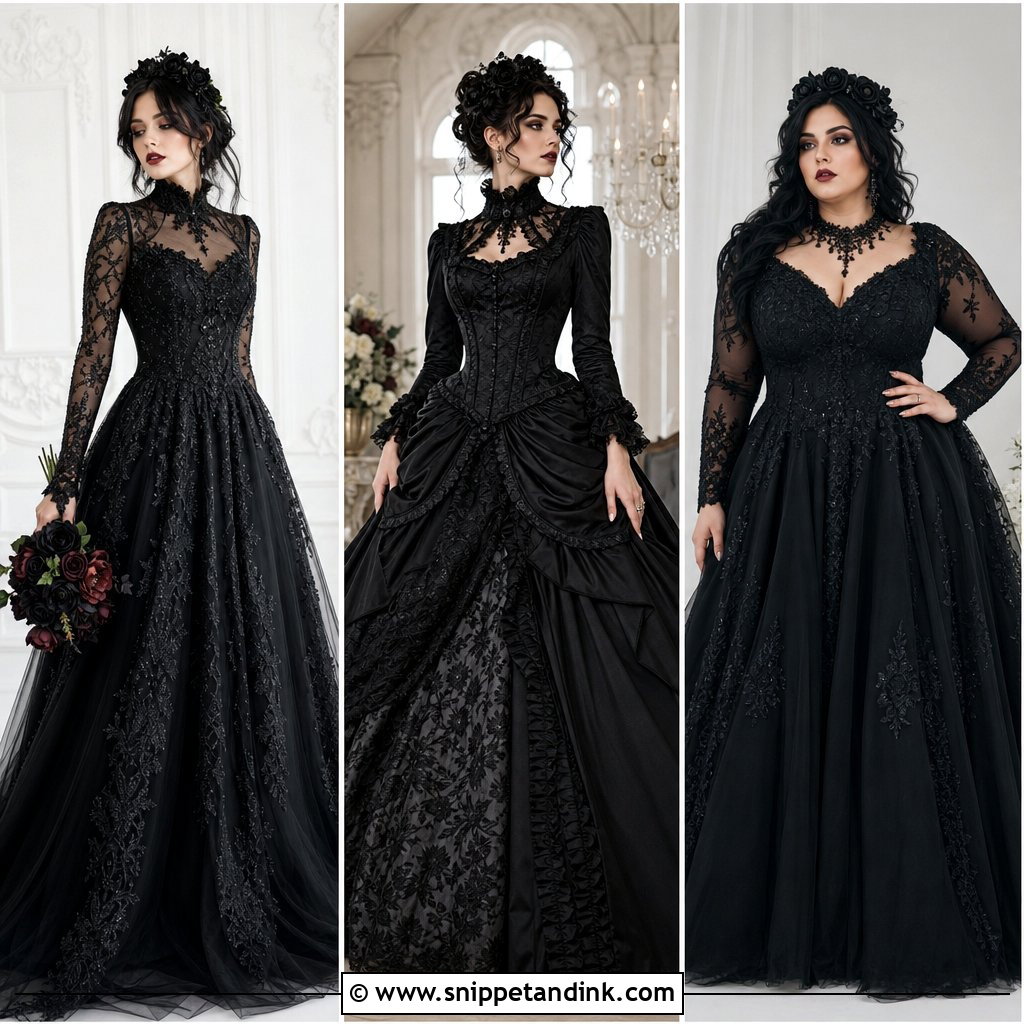
The high neck is the most covered gothic shape and, honestly, the fussiest to fit. The collar has to be soft and sit a finger’s width off the throat, or you’ll feel it every time you turn your head. On a high-neck black gothic wedding dress I want a fitted lace bodice with a smooth lining, long sleeves and a flowing skirt to balance all that detail up top. Small covered buttons down the back add a vintage note without bringing in another colour. Black lace-up boots or pointed pumps, onyx-style earrings and a long plain tulle veil keep it focused. Skip the necklace altogether, since the collar is already doing that job, and put your sparkle in a decorative hair comb instead. Burgundy roses with white flowers and dark greenery give the bouquet depth.

15. Dark Red Wedding Dress With Corset Waist
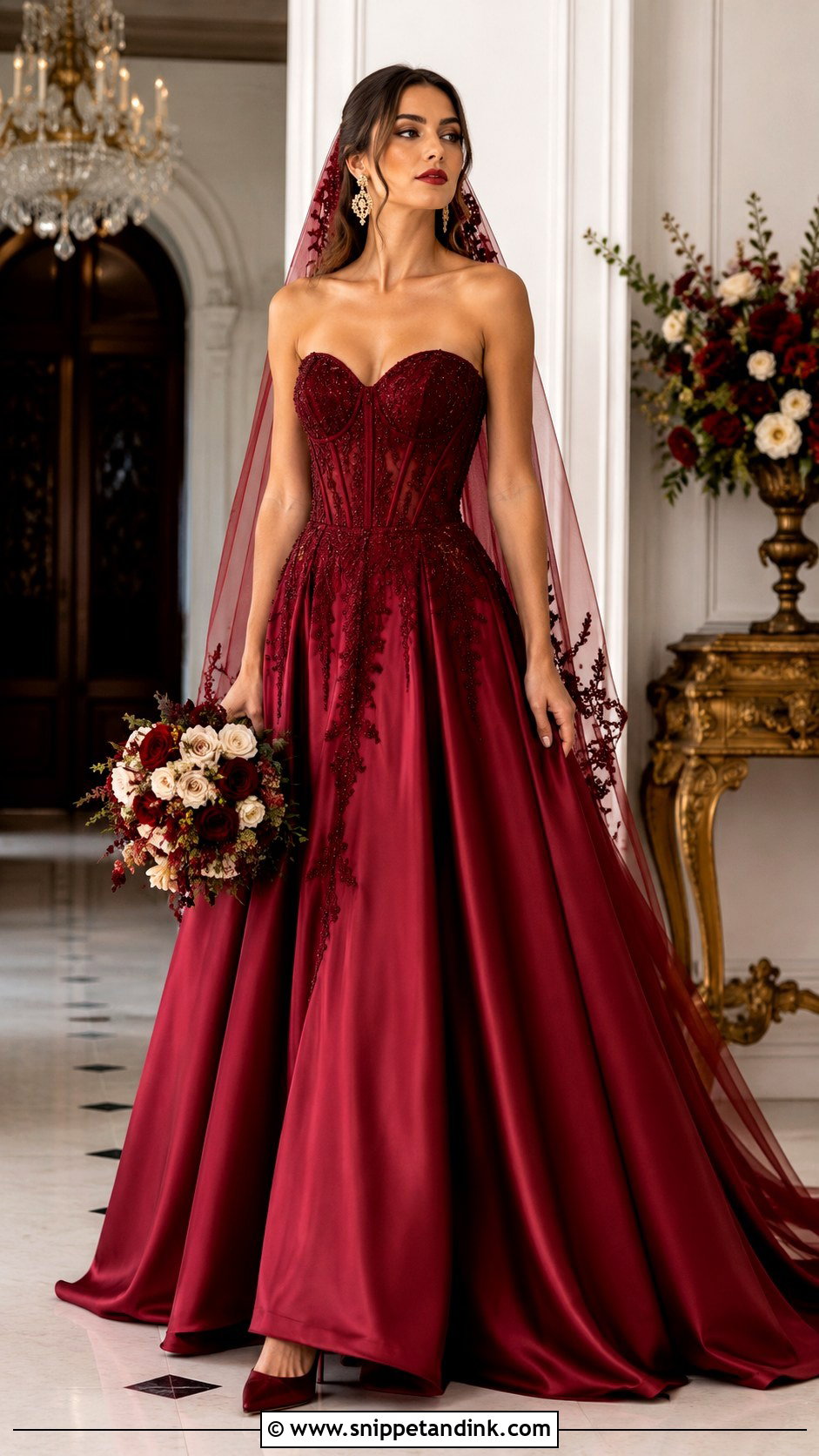
Dark red sits warmer on the skin than black, and it tends to flatter warm undertones in particular. A corset-waist gown in satin or jacquard with a sweetheart neckline and a sweeping A-line skirt is the shape I’d start from, with subtle tonal embroidery for depth. Deep red pumps, gold drop earrings and a black or burgundy veil suit it. Keep the bouquet mostly ivory with only a few red flowers, or your whole outline merges into one block of colour in photos. If the bodice laces up the back, ask for a modesty panel cut from the gown’s own fabric; a mismatched red is obvious. The corset should hold you firmly while still letting you breathe deeply enough to give a speech, and that’s worth testing out loud at the fitting.
16. Black Floral Wedding Dress With Puff Sleeves
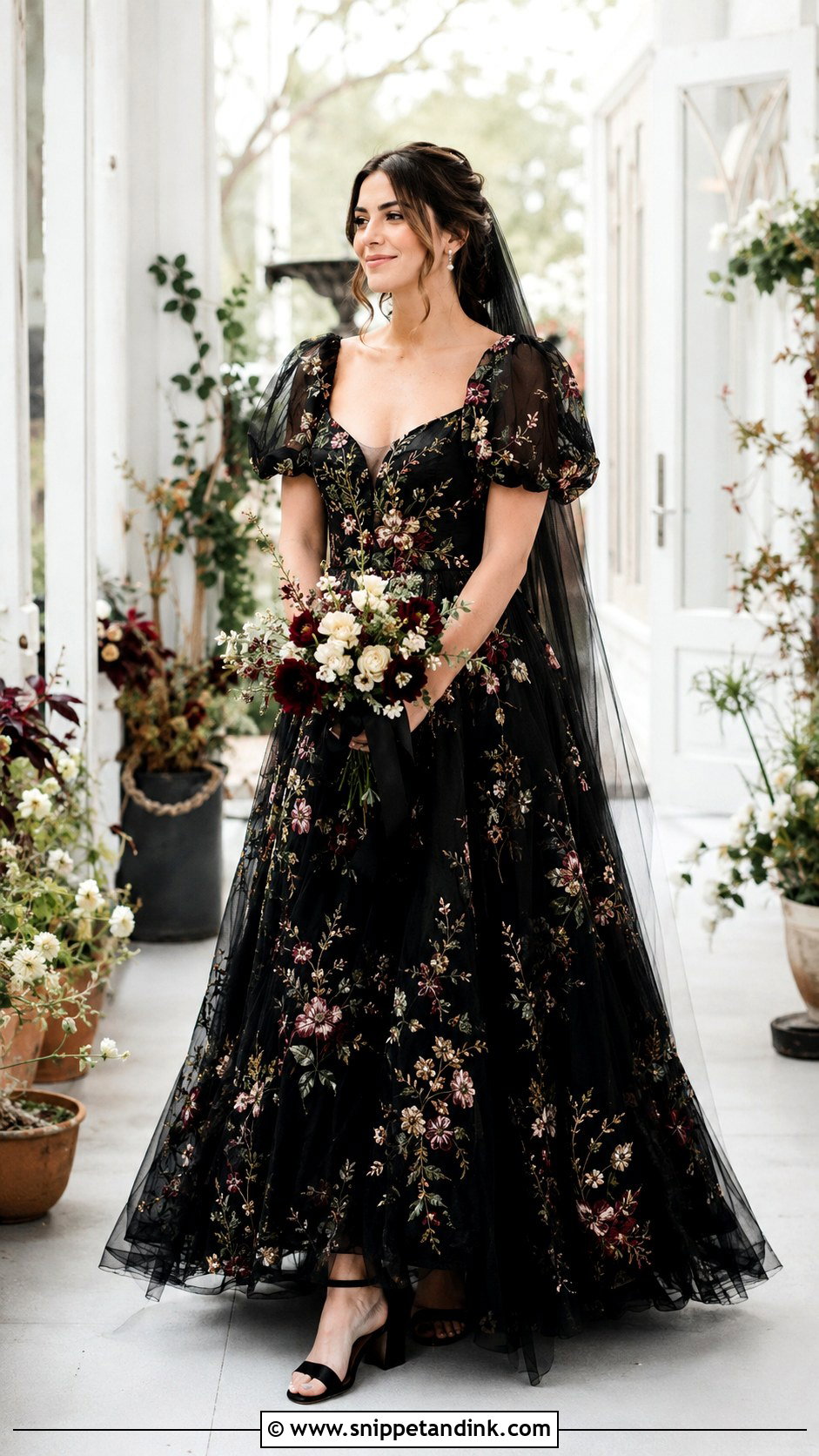
Scale is the whole decision with an embroidered dark gown. Small flowers scattered over black tulle read as texture from across a room, while large motifs read as print and can look like a party dress. I’d look for embroidery in muted pink, burgundy or ivory on dark tulle, with a fitted waist and soft puff sleeves balancing the A-line skirt. Black block heels, small pearl earrings and a plain black veil let the embroidery lead. Borrow one or two flowers from the gown’s pattern for the bouquet, and leave out decorated belts and necklaces. Once the bodice and sleeves are altered, check that the main motifs still sit evenly on both sides.
17. Black Wedding Dress With Detachable Overskirt
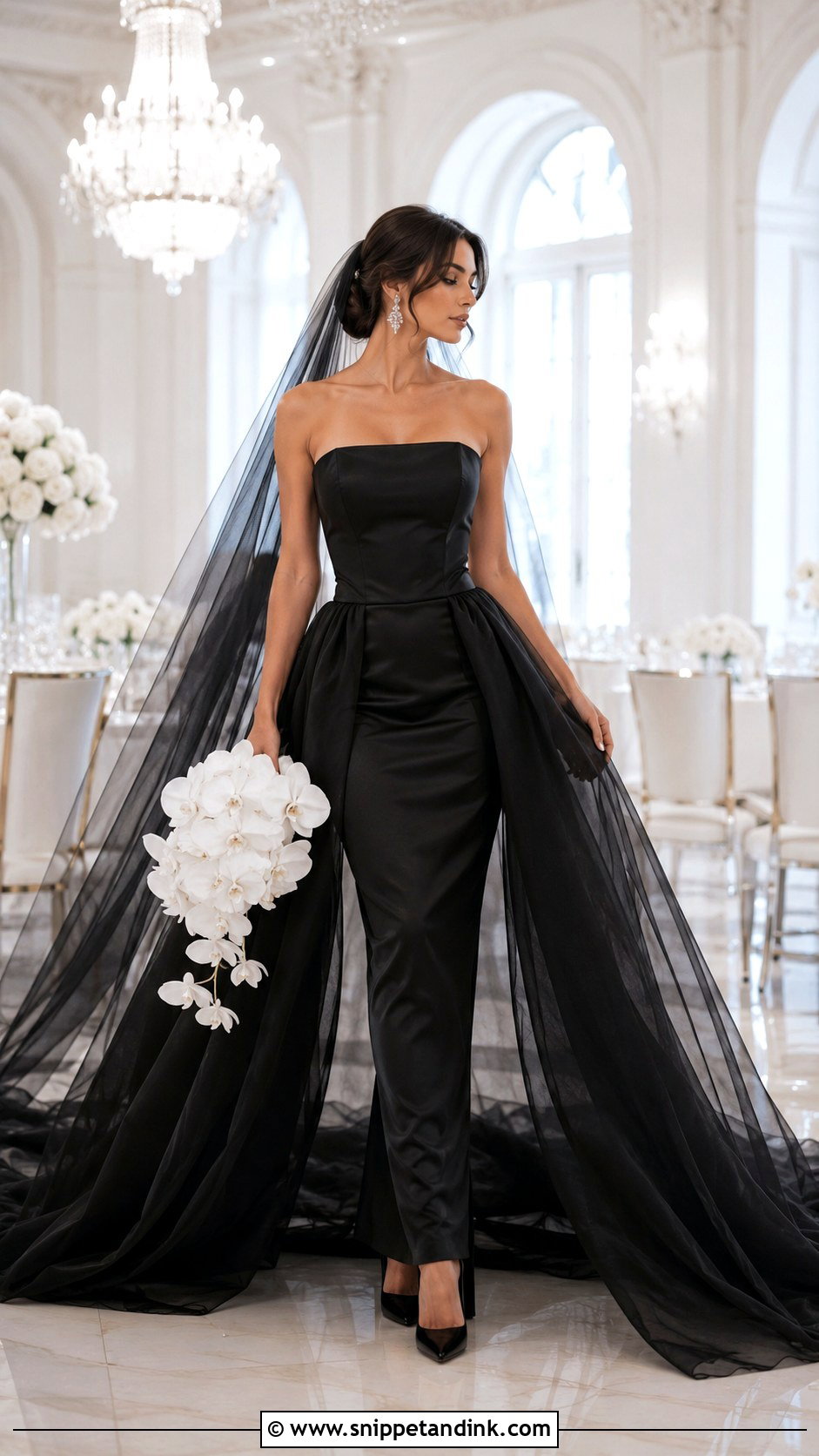
Think of this as two dresses joined by a set of hidden fastenings. The base is a fitted crepe or satin column; a full tulle or organza overskirt goes on for the ceremony, adding volume and a train, and comes off for dancing. That makes the base dress the real priority. It has to look finished at the waist and back on its own, with no exposed hooks, so ask your seamstress to hide the closures under a narrow waistband or an appliqué. Black pumps, crystal earrings and a sheer cathedral veil work with both versions, and white orchids give a modern contrast. Rehearse taking the overskirt off and on with whoever will help you on the day. Fiddly snaps take twice as long with guests waiting.
18. Plum Wedding Dress With Draped Skirt
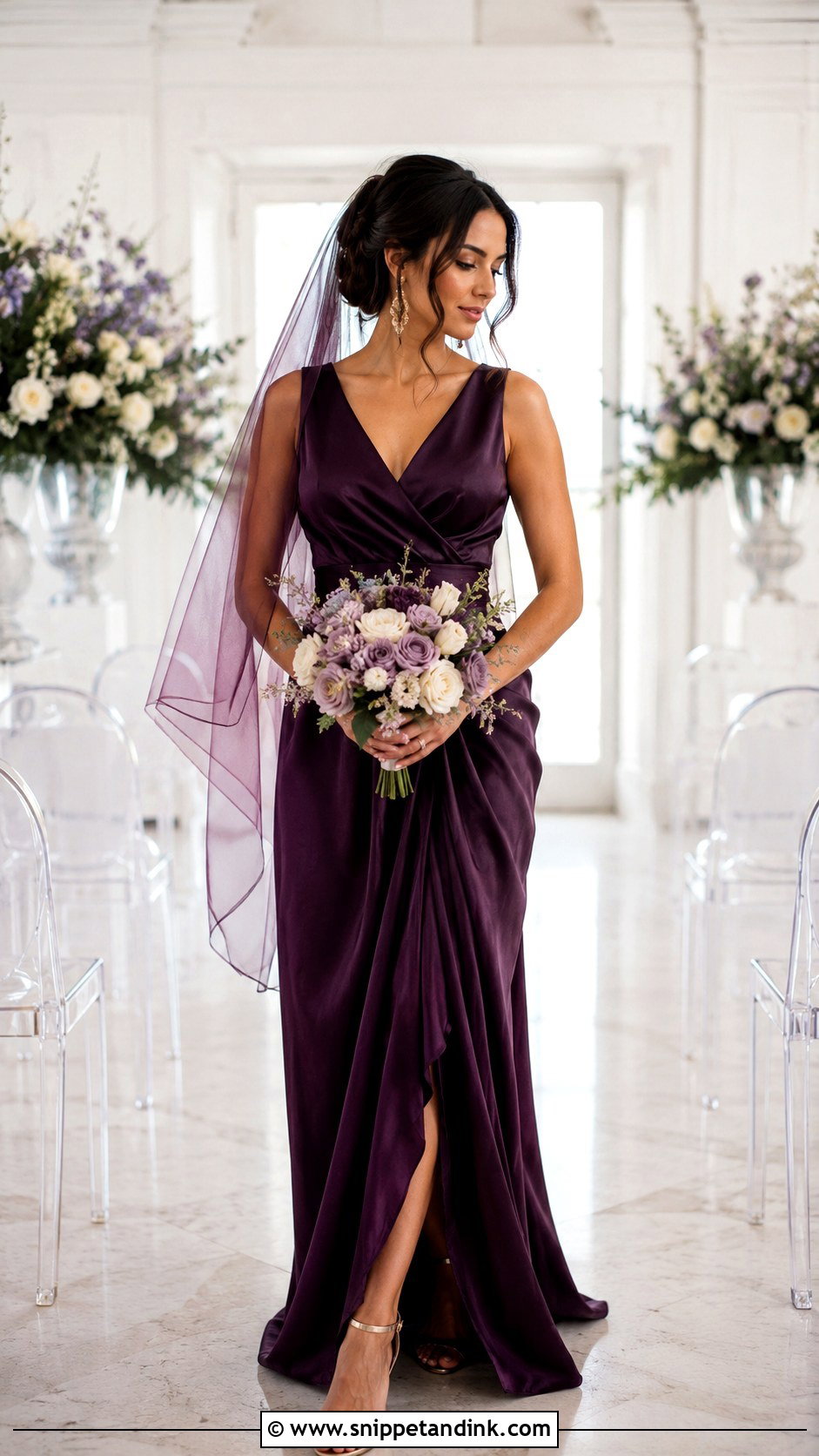
Plum gives you the depth of black with a softer, slightly warmer finish. A draped satin gown with a wrap bodice, defined waist and full-length skirt suits a wide range of shapes, because the pleats leave room through the hips. Metallic heels, delicate gold earrings and a sheer veil in pale plum or smoky gray work well, and ivory roses, lavender flowers and green foliage bridge the light and dark shades. The draping is already the detail, so keep jewelry small. Wrap necklines gape when you lean forward. Test that at the fitting and ask for a hidden snap if it opens, then add a small bustle to lift any trailing fabric for the evening.
19. Black One-Shoulder Wedding Dress
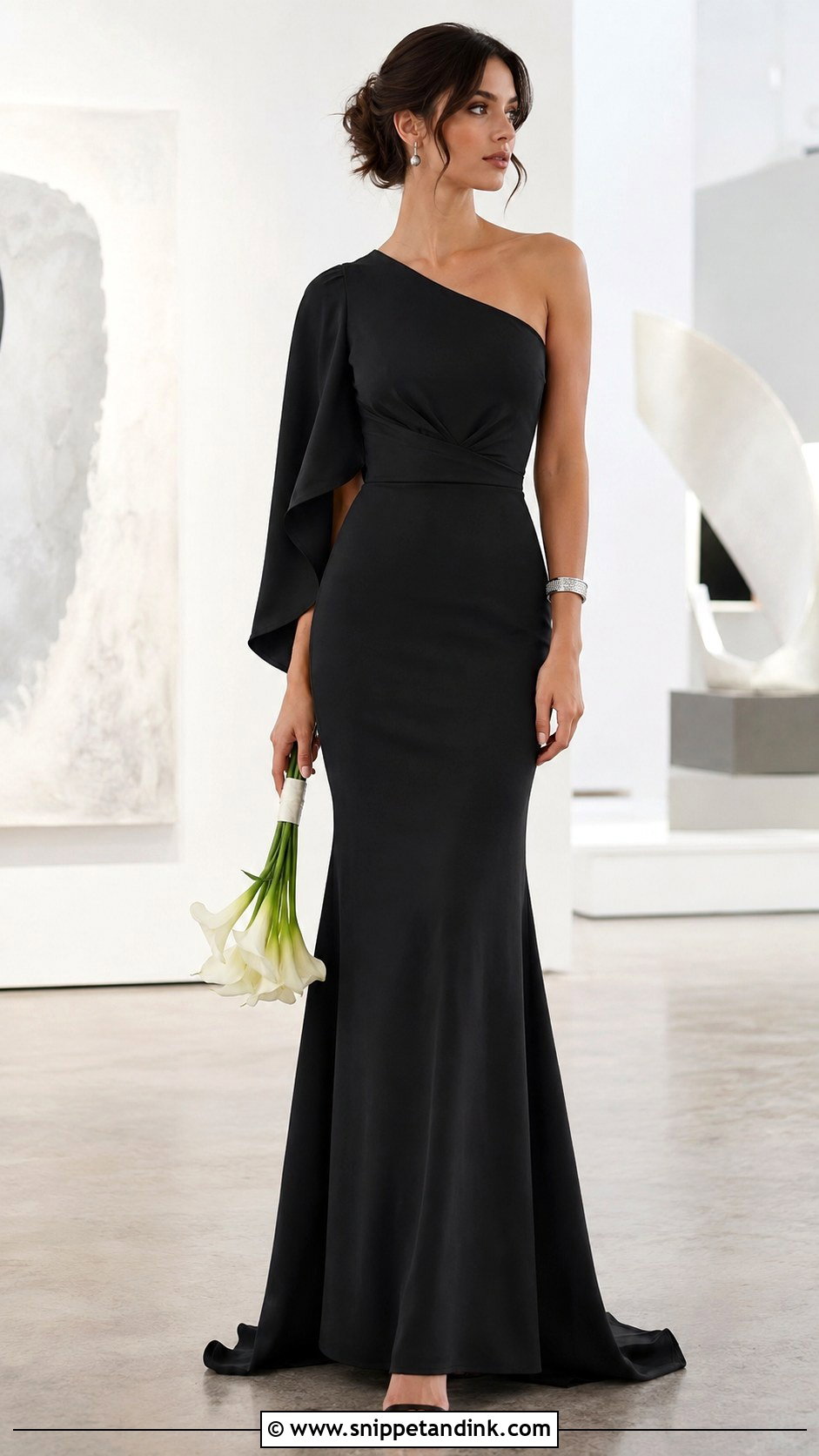
One shoulder is the most modern shape in the list and the most dependent on a bodice that stays level. Start from a structured crepe or satin gown with an asymmetric neckline, fitted waist and straight or gently flared skirt, sometimes with a single draped sleeve. I’d put a silver cuff on the bare arm, add sleek black heels and small drop earrings, and leave the neck bare. White calla lilies suit the clean line. A veil pinned at the crown fights the asymmetry, so I’d go with a low bun and a silver comb, or attach the veil at the back of the bun. Before the last alteration, raise both arms, hug someone, and check the bodice hasn’t twisted.
20. Black Plus-Size Wedding Dress With A-Line Skirt
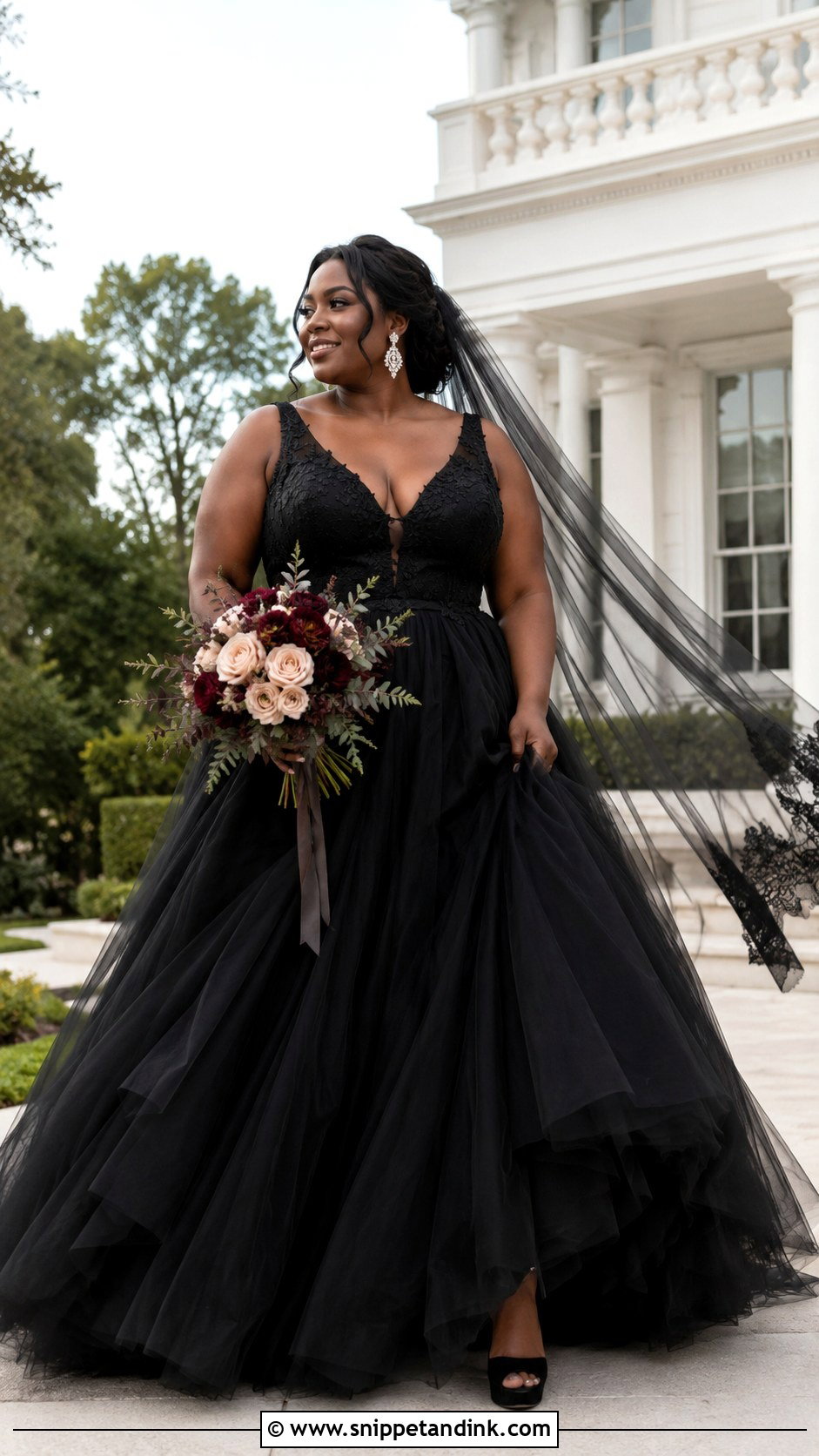
For plus-size brides the A-line is dependable because it skims the hips without adding bulk, yet the support inside the dress counts for more than the cut. Look for real internal structure, wide straps or fitted sleeves, and a waistline placed where you feel best rather than where the sample sits. A V-neck bodice frames the face, and layered tulle or matte satin keeps the skirt smooth. Supportive block heels, statement earrings and a light black veil finish it, with cream, blush and burgundy flowers in the bouquet. Shop samples are usually made in smaller sizes, so ask how the neckline, boning, appliqué and skirt fullness are adjusted for yours. Good tailoring supports you and still lets you move freely all night.
Lint, Deodorant and Dye Transfer on a Dark Gown
Ivory forgives small marks. Black shows all of them, so I pack a different kit when my bride is wearing a dark dress.
- A lint roller, used often. Pet hair, carpet fluff and petals dropping off your own bouquet sit on black tulle and velvet in plain view.
- Deodorant applied early and left to dry fully before you step in. The white residue transfers to dark linings and is hard to lift from satin.
- A dye test if your veil or gloves are pale. Deep new dyes, reds and navies especially, can rub onto ivory tulle where the two press together. Rub a damp white cloth on an inside seam allowance a few weeks ahead to see whether colour comes off.
- Steam, never an iron. Velvet crushes under heat and pressure, so steam it from the inside with the nozzle held off the pile, and keep the steamer from spitting water onto satin.
- Setting powder on the neck and jawline, since foundation smudges show on a black neckline just as clearly as on a white one.
Storing a Dark Gown So the Colour Doesn’t Fade
Light keeps working on a dark dress long after the wedding. Daylight fades black towards brown and burgundy towards rust, often unevenly along the folds that faced a window. Have the gown professionally cleaned soon after the day, because sugar and perspiration marks oxidise and darken over time even when you can’t see them yet.
Then store it in a breathable cotton bag or an acid-free box, padded with acid-free tissue, somewhere dark and dry rather than an attic or a damp basement. Plastic covers from the cleaner trap moisture and shouldn’t be used for long storage. Velvet needs gentler handling still: roll the skirt around tissue instead of folding it flat, so the pile isn’t crushed into permanent lines.
Dark Doesn’t Have to Mean Black
A dark gown doesn’t have to be gothic, and it doesn’t have to be black. Lace and velvet lean romantic, navy satin feels classic, and burgundy or forest green bring seasonal colour. What makes any of them work is the same: real support, room to move, and accessories that stay quieter than the dress. Try your shortlist in light close to your venue’s, take your actual shoes to every fitting, and ask a friend to photograph you in it. If the colour still looks right in those pictures, you’ve found your dress.
You'll Like These Ideas:


Leave a Reply