
The wedding lehenga gets all the planning, yet the weeks after it are where most new brides find their wardrobe falls short. There are pagphera visits, first pujas, dinners with relatives you met once at the sangeet, work gatherings and plain ordinary days when the family still expects you to look like a new bride. When I put together Indian after marriage look ideas for a client, I balance tradition against what she can actually wear for eight hours. A soft saree, a polished kurta set, a light lehenga or an Indo-western drape can all read as newlywed with the right bangles, bindi, sindoor and mangalsutra. Below are 25 looks, from the classic red saree to everyday ethnic wear, with notes on where each one earns its place.
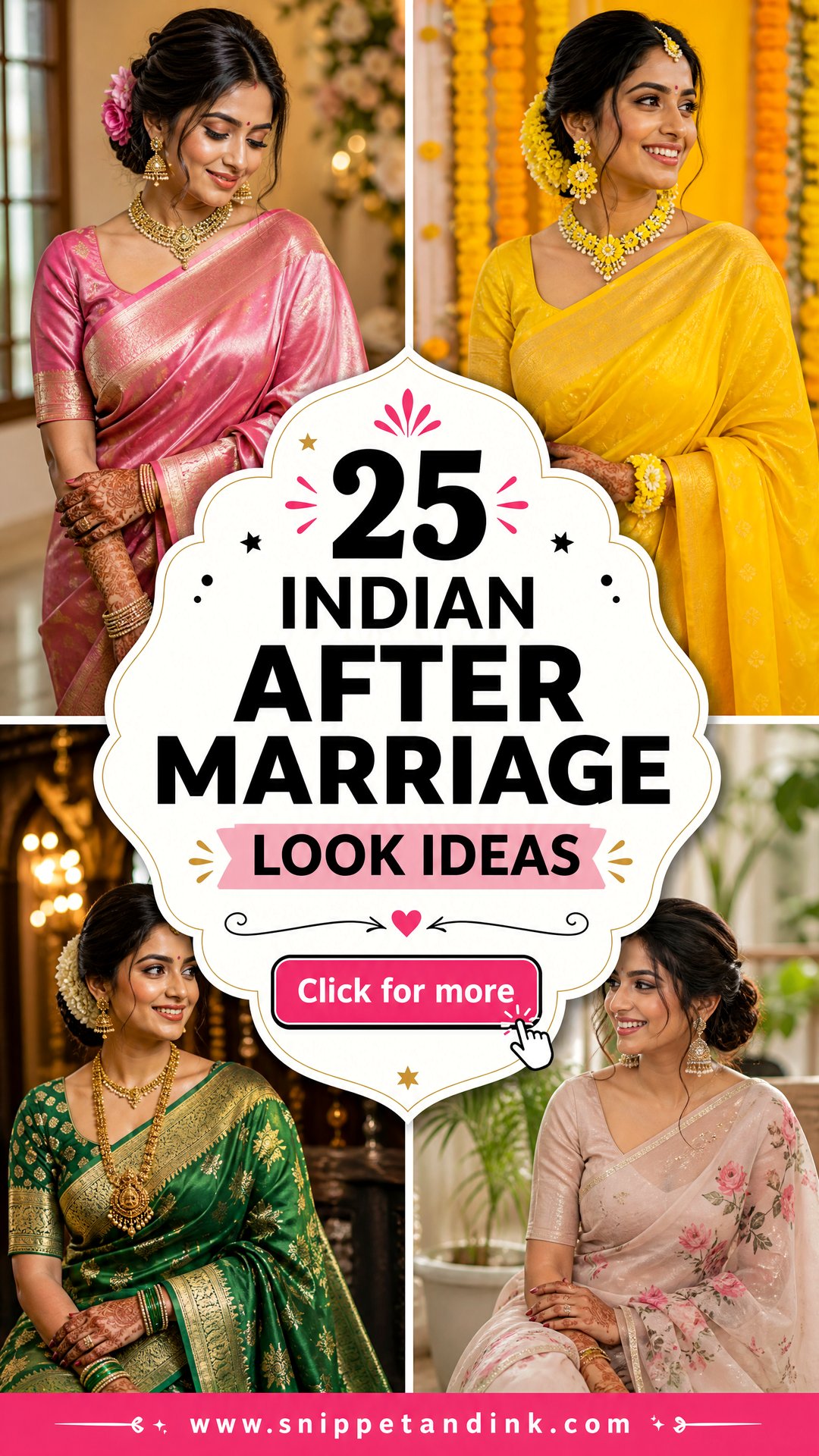
Mapping Outfits to Pagphera, Pujas and the First Family Visits
The first few weeks after an Indian wedding are crowded with occasions, and each family keeps its own customs. Before buying anything new, I sit down with the bride and list what’s actually coming: the pagphera or first return home, a first rasoi or kitchen ritual, mooh dikhai, temple visits, receptions hosted by relatives, festivals that fall that season.
From there, the wardrobe almost plans itself:
- Rituals at home or at a temple usually call for a saree or a suit with a dupatta. Ask your mother-in-law or an older cousin whether the family expects red, whether the head is covered, and whether certain colors such as black or white are avoided.
- Kitchen rituals need sleeves that don’t trail and a pallu you can pin firmly. Silk near a stove is a real hazard, so cotton silk or a suit is the safer choice.
- Evening receptions are where your heavier pieces go, including the lehenga saree, the gharara or a full-sleeve silk drape.
- Plain visiting days are for kurta sets and cotton sarees, dressed up with bangles, sindoor and a small bindi.
I’d also plan repeats on purpose. A heavy Banarasi worn twice with a different blouse and jewelry looks like two outfits, and nobody at the second event minds.
1. Red Banarasi Saree Look
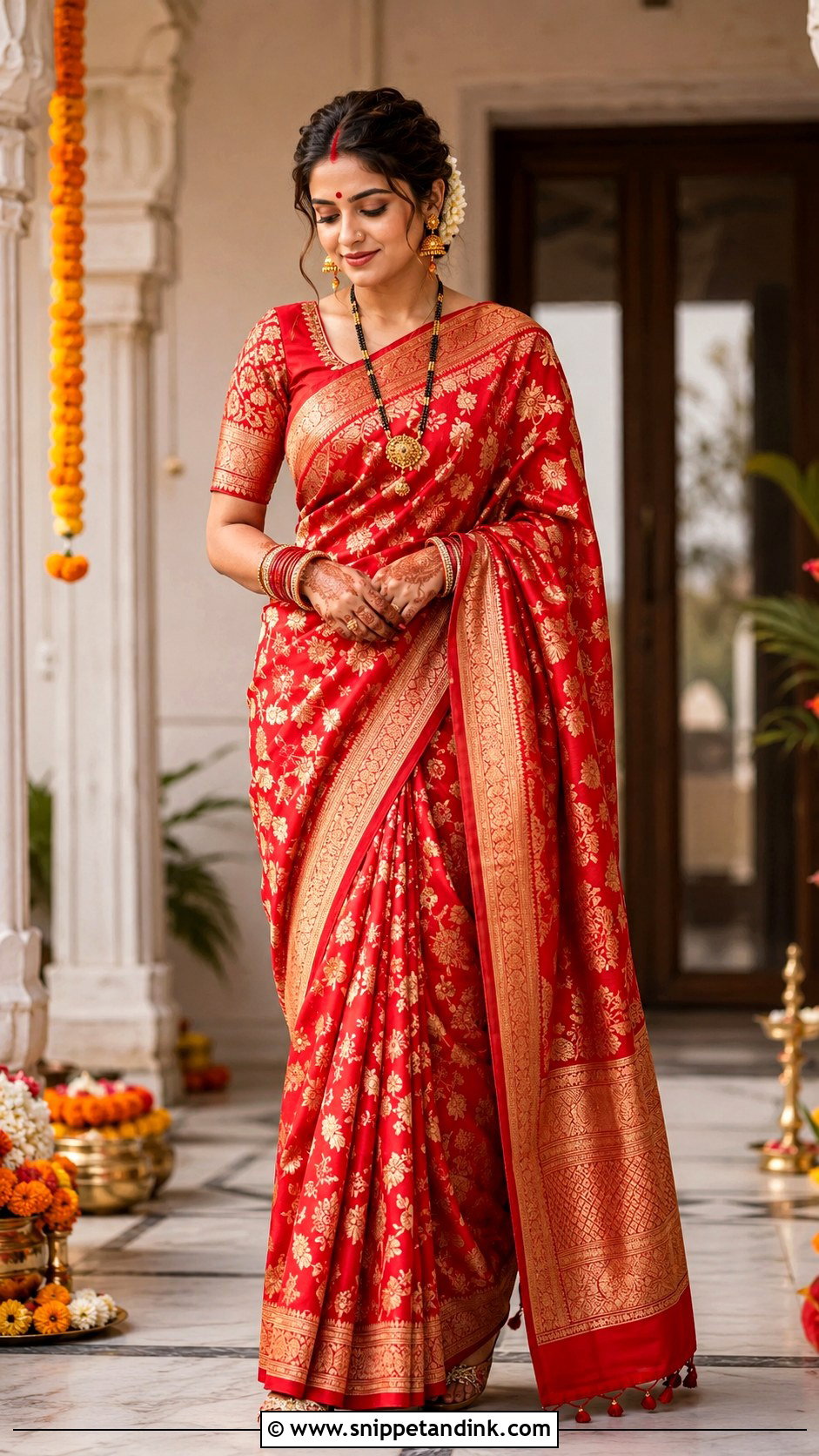
For the first family lunch, the pagphera or a post-wedding puja, a red Banarasi still says new bride better than anything else in the cupboard. Gold zari against red needs very little help: a fitted blouse in red, maroon or antique gold, a neat bun with fresh gajra, jhumkas, bangles and a small bindi. Pure Banarasi silk is heavier than it looks, so I pin the pleats at the waist and the pallu at the shoulder for a long seated lunch, otherwise it drags by the second hour. Keep makeup to kohl, blush and a muted lip, and wear gold heels or juttis you have already walked in.
2. Pink Silk Saree Look
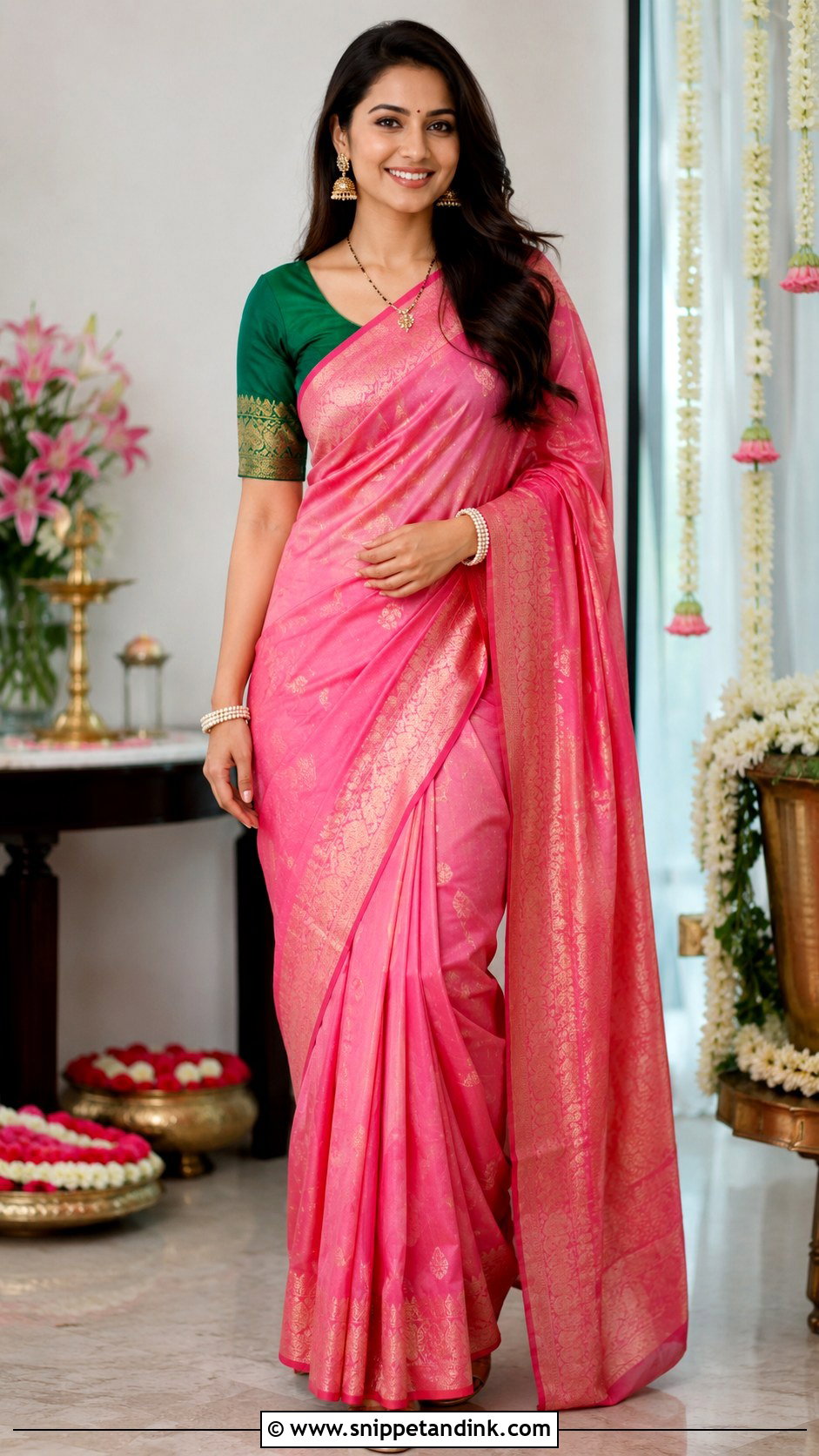
Pink is my answer for the bride who wants something festive but not another day in deep red. Rani and fuchsia read celebratory; rose and dusty pink suit fair and wheatish skin in daylight, while deeper skin tones often glow in rani. The blouse decides the mood. A gold blouse keeps it traditional, and a green or contrast blue one looks styled and young. Temple jewelry or kundan studs work, but pick one. Silk shows sweat marks under the arms on warm days, so I suggest dress shields stitched into the blouse.
3. Yellow Haldi Saree Look
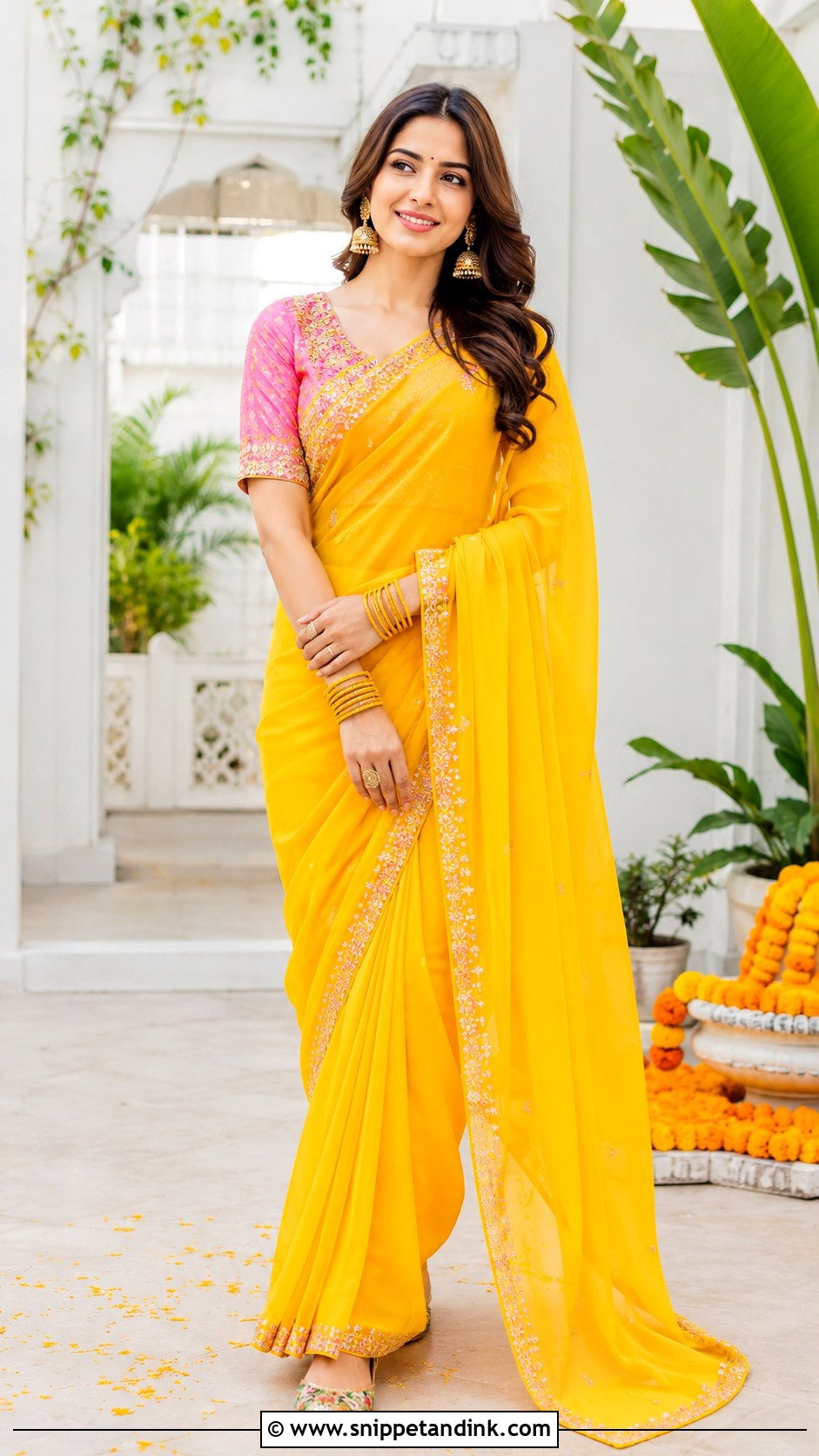
Yellow belongs to daytime. In cotton silk, chiffon, georgette or organza, in mustard, lemon or marigold, it brightens a morning ritual or a casual festive visit. A contrast blouse in green, pink or orange keeps it lively. Lemon yellow is the hardest shade to wear well, since it can wash out olive and dusky skin, and mustard or marigold is usually the safer pick. Glass bangles, small jhumkas, peach lipstick and kolhapuris keep the whole thing light.
4. Green Kanjivaram Saree Look
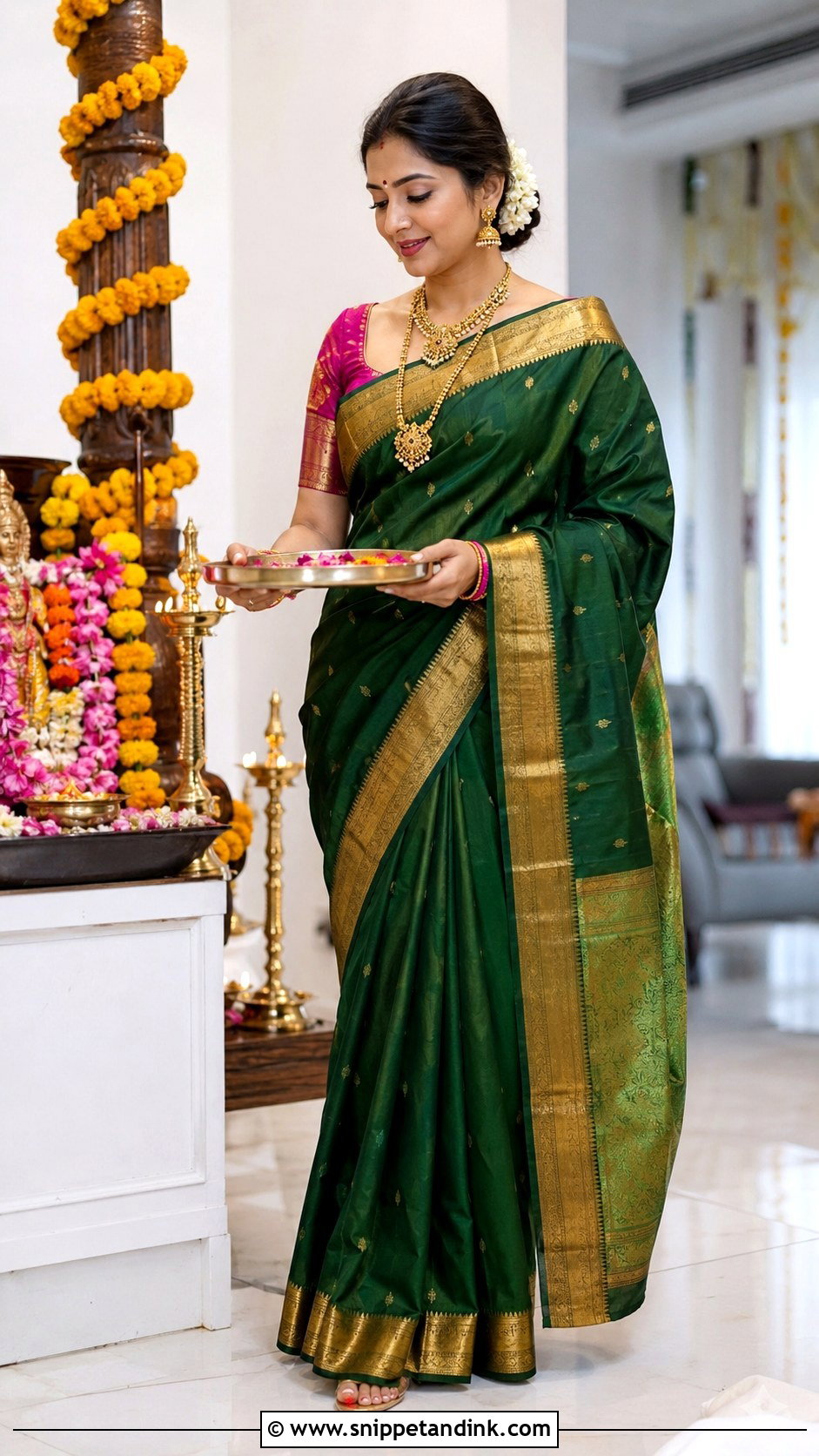
For temple visits, pujas and the dinners where the elders sit at the head of the table, a green Kanjivaram carries real authority. Emerald, parrot, bottle and peacock green all sit well against a gold border. Pair it with a gold blouse or a contrast blouse in magenta, orange or royal blue. Temple jewelry, gold bangles, a round bindi and flowers in a middle-parted bun complete the traditional reading. Kanjivaram silk is stiff and heavy when new, so I pre-pleat it the night before and leave it pinned on a hanger; the pleats fall much cleaner in the morning.
5. Maroon Velvet Suit Look
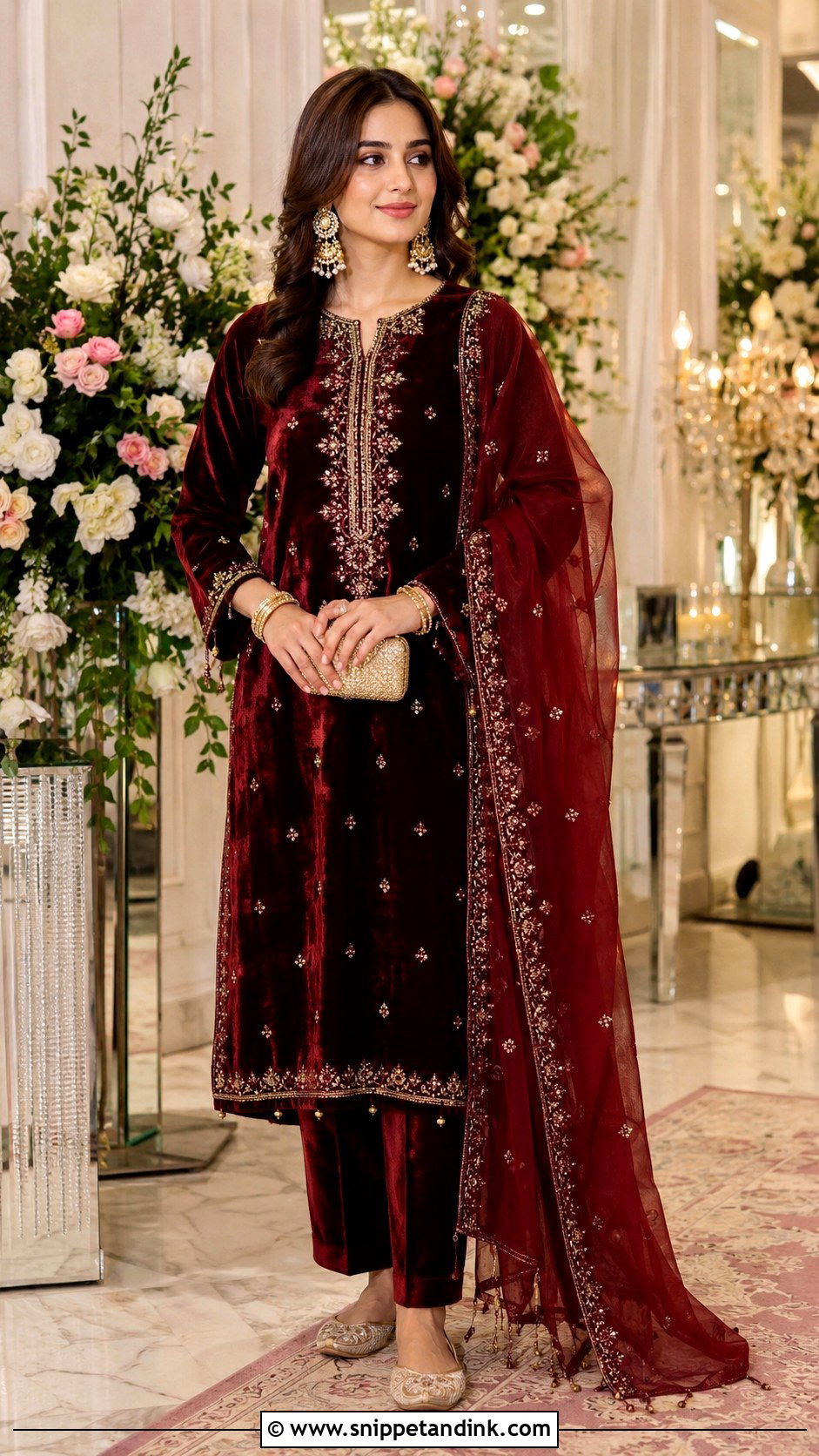
Winter evening functions are where a maroon velvet suit beats a saree: no draping, no cold midriff, and the plush pile looks rich in lamplight. A straight kurta or anarkali style with subtle embroidery suits it, over cigarette pants, churidar or wide-leg pants. Velvet is warm, so I keep it for cool nights only; indoors in a heated hall it gets uncomfortable fast. A net or organza dupatta lightens the weight, and kundan earrings plus pointed juttis are enough jewelry.
6. Anarkali Suit Look
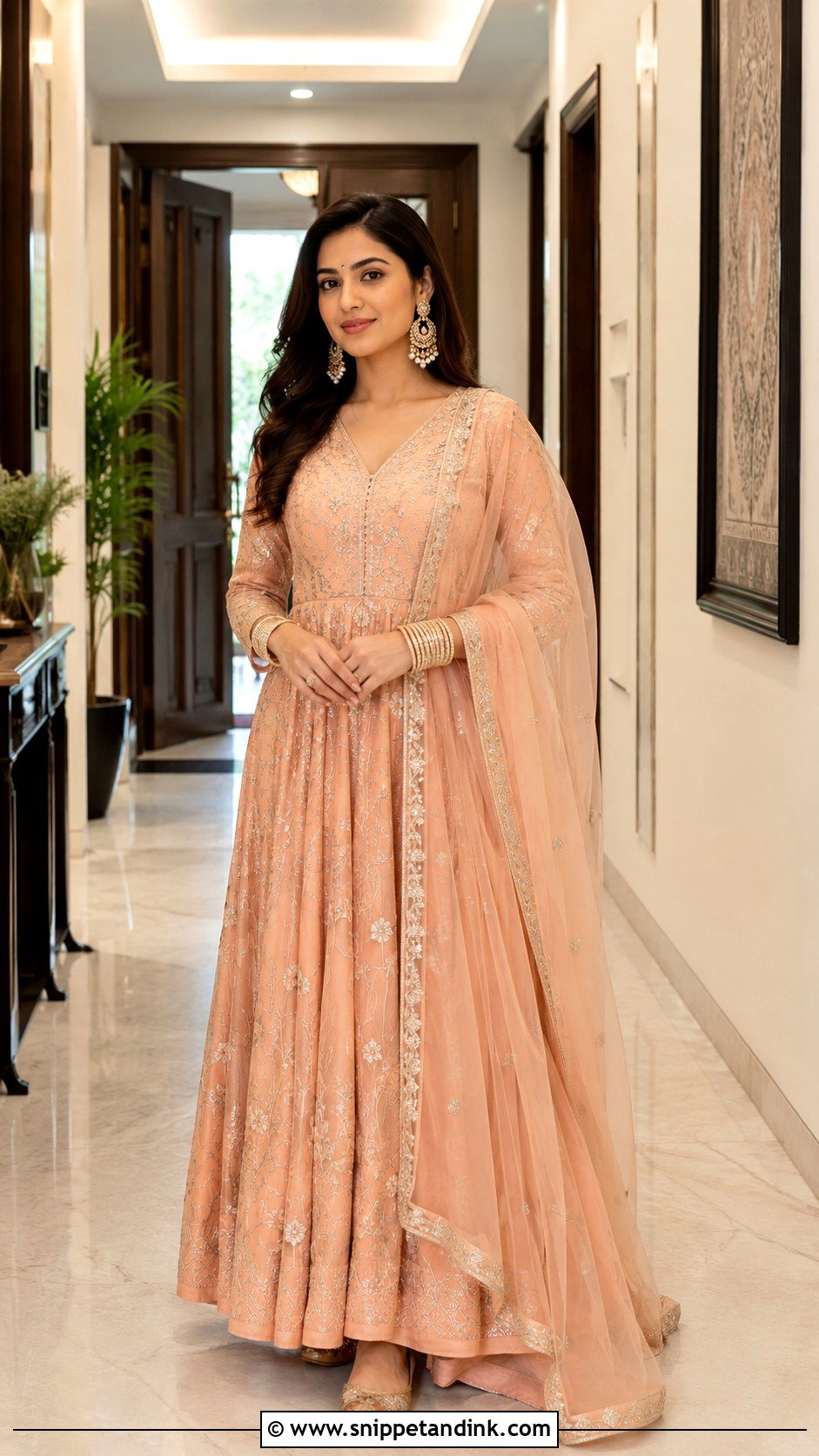
Anarkalis forgive a lot, which is why they do so much work in a newlywed wardrobe. Floor length reads formal; calf length is easier for stairs and temple steps. Peach, red, ivory, green and wine all suit lunches and small ceremonies. My rule with an anarkali is one focal point: a heavily embroidered yoke takes small earrings and no necklace, and a plain one can carry a statement choker. Check the flare when you sit, because heavy kalis bunch at the waist in a car.
7. Sharara Suit Look
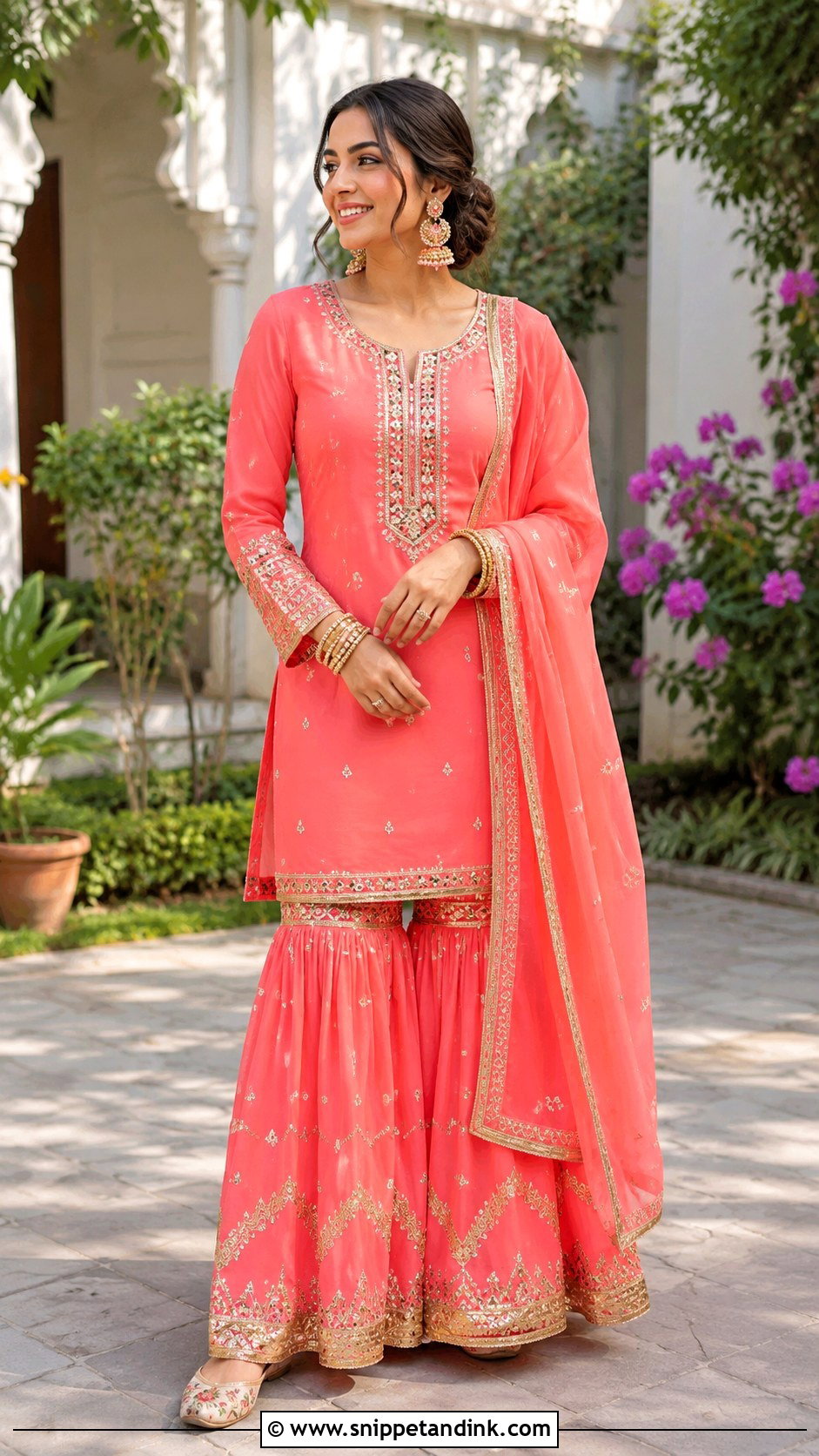
Shararas give festive movement with the comfort of trousers, so they suit family functions where you’re up and down serving tea all afternoon. A short or mid-length kurta keeps the proportion young. Coral, mint, ivory and deep green are good after-wedding colors, and mirror work or gota patti adds festivity without much weight. Long sharara hems catch on stairs and car doors, so I always have them hemmed for the exact heel height. A braid or sleek ponytail keeps hair out of the dupatta.
8. Chikankari Kurta Set Look
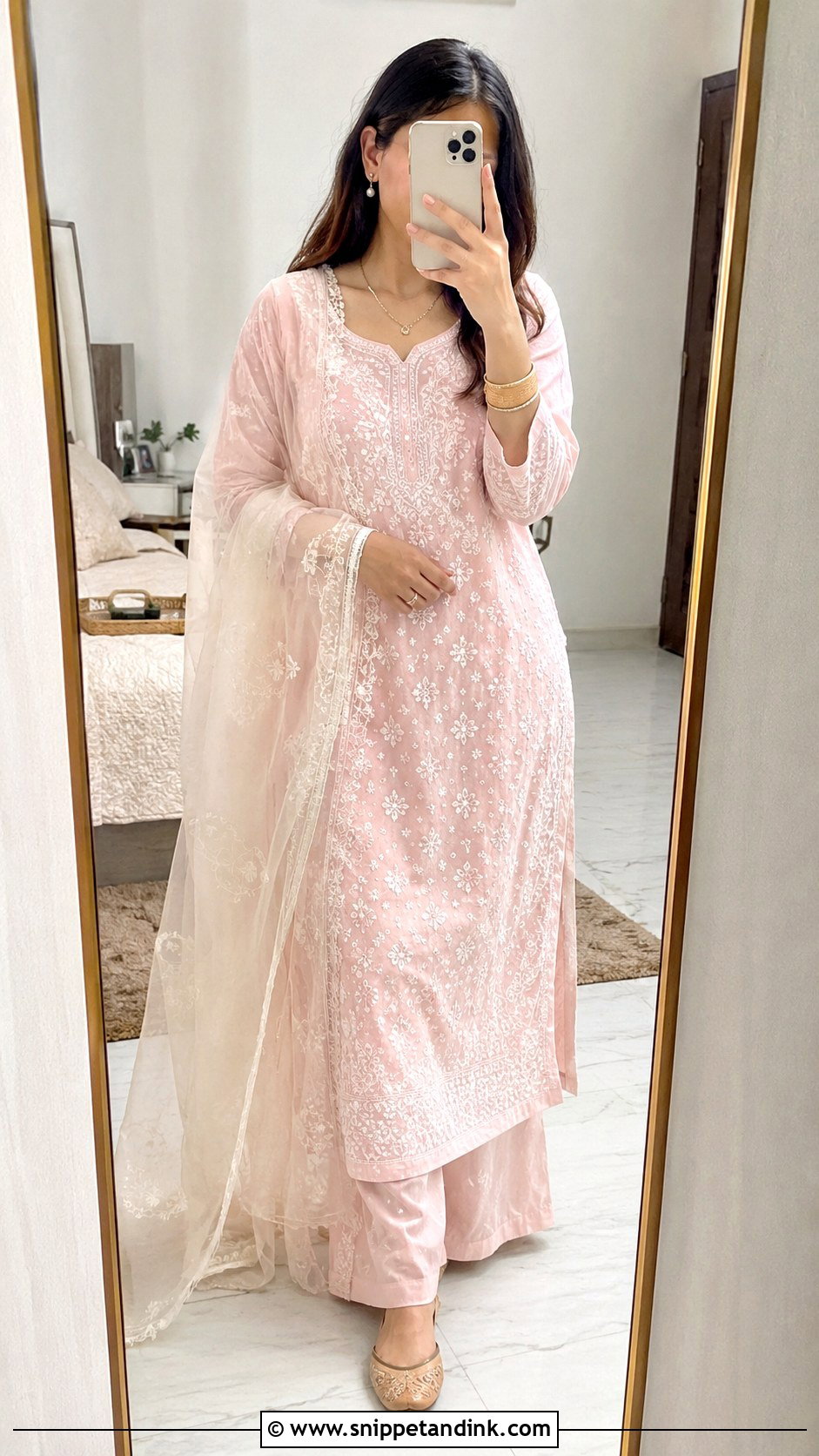
Chikankari is what I hand a new bride for the quiet days: family visits, brunch, a train journey to her parents’ home. The hand embroidery is light and breathes in heat. White, blush, pista, lavender and powder blue all suit it. Pair the kurta with palazzos, straight pants or a matching skirt, plus pearl studs, a fine mangalsutra and nude juttis. Most chikankari is sheer, so check that the set comes with an inner slip; if not, a cotton camisole underneath is essential. A mukaish-work kurta or a colored dupatta brings back the bridal note.
9. Cotton Saree Look
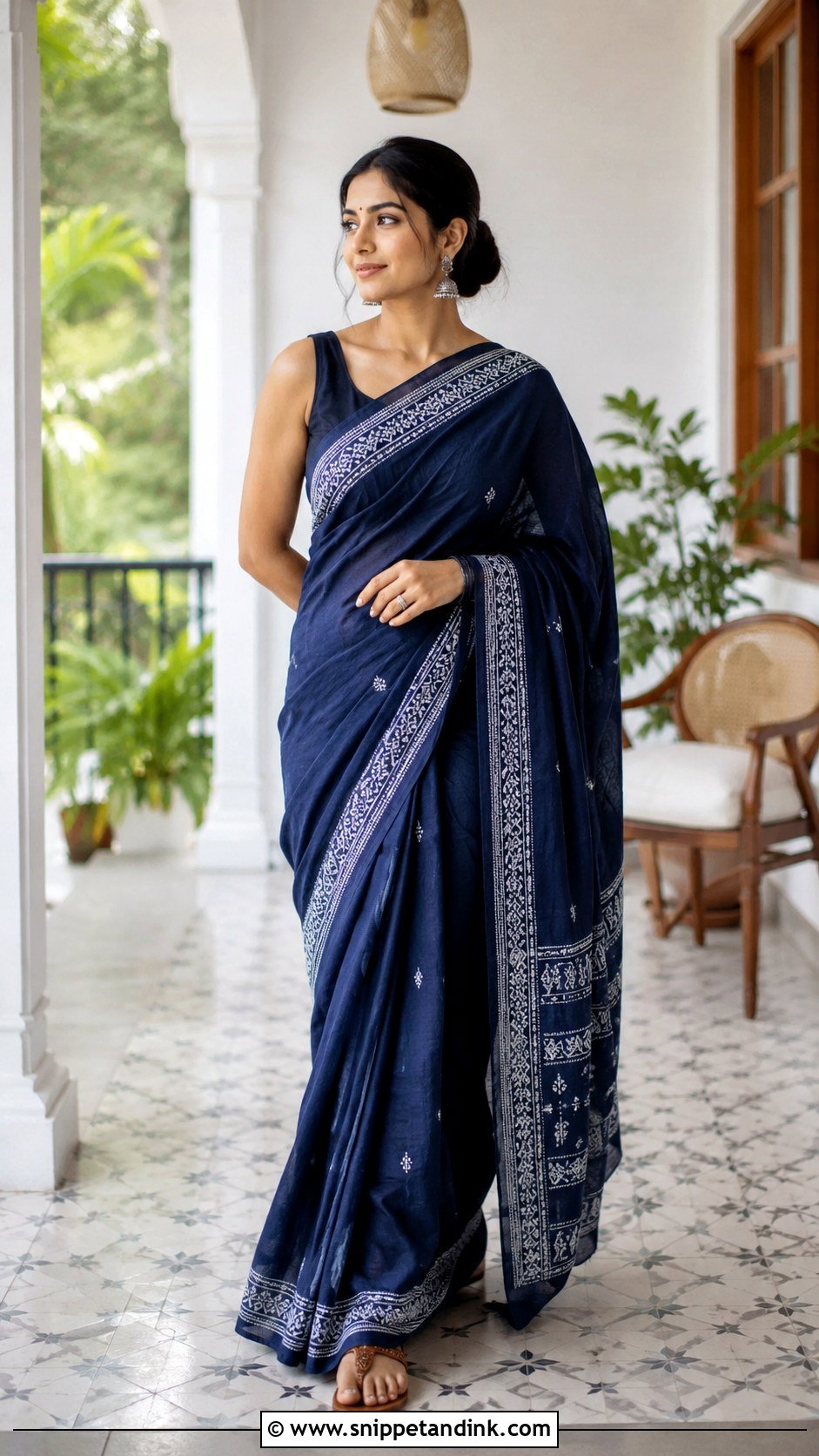
Handloom cotton is the saree I’d wear on a hot day of home rituals or hosting relatives. Bengal cotton, linen cotton and block prints in indigo, rust, cream or green look put together without any fuss. Starched cotton holds pleats crisply but softens by evening, and I find a few extra safety pins keep the pallu in place while you move around the kitchen. Silver jhumkas, a small bindi, glass bangles and flat sandals suit the fabric. Tie hair in a low bun or braid so it stays off your neck.
10. Organza Saree Look
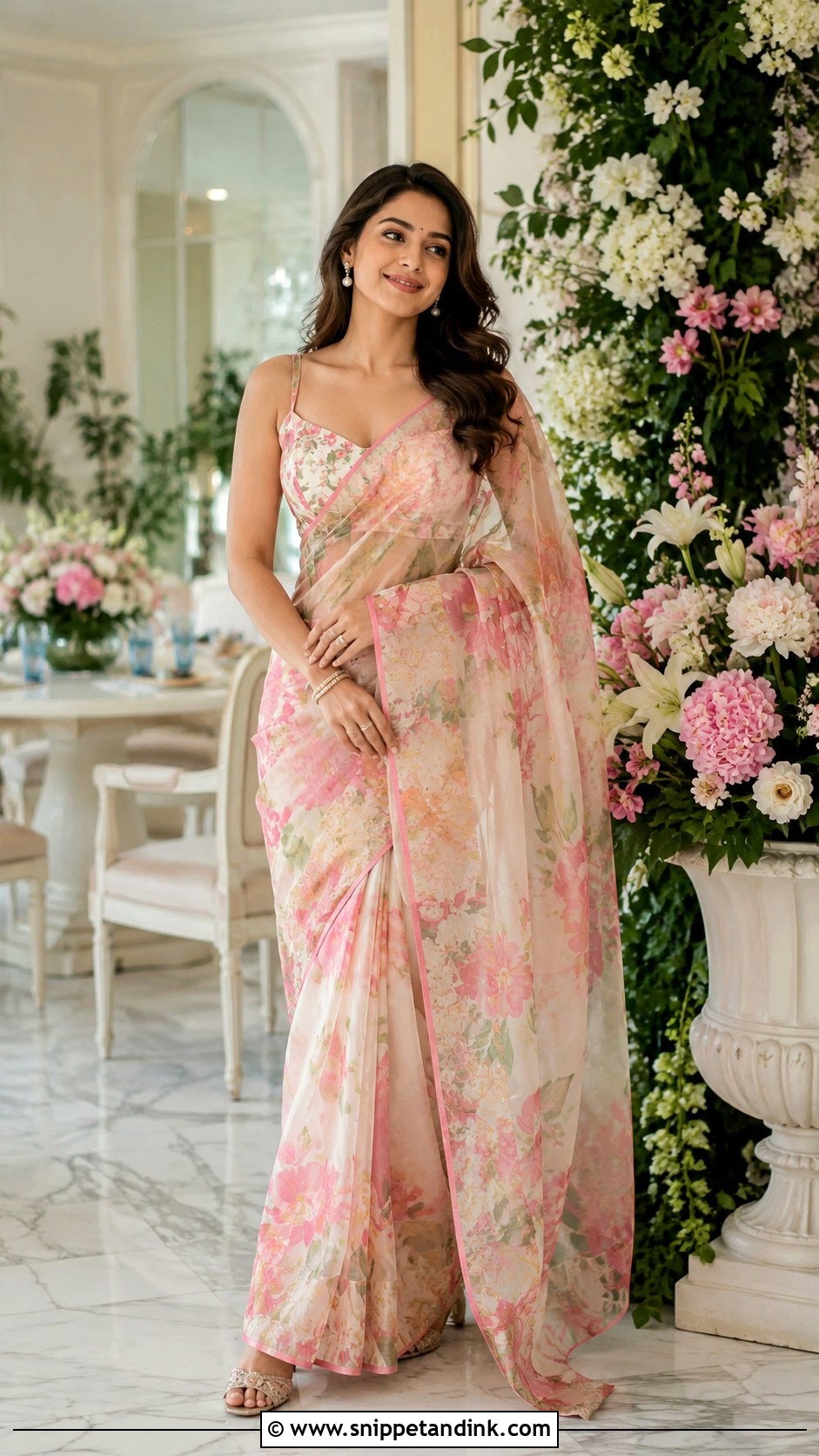
Organza is the modern daytime saree: sheer, crisp and light on the shoulders. Floral prints, pastels and scalloped borders are where it shines. The one trouble with organza is that it holds every crease and puffs out at the pleats, so I press the pleats flat with a cool iron through a cloth and tuck them more tightly than I would chiffon. A boat-neck or elbow-sleeve blouse, pearl jewelry or small chandbalis and dewy makeup suit it, and heels help the stiff drape fall straighter.
11. Lehenga Saree Look
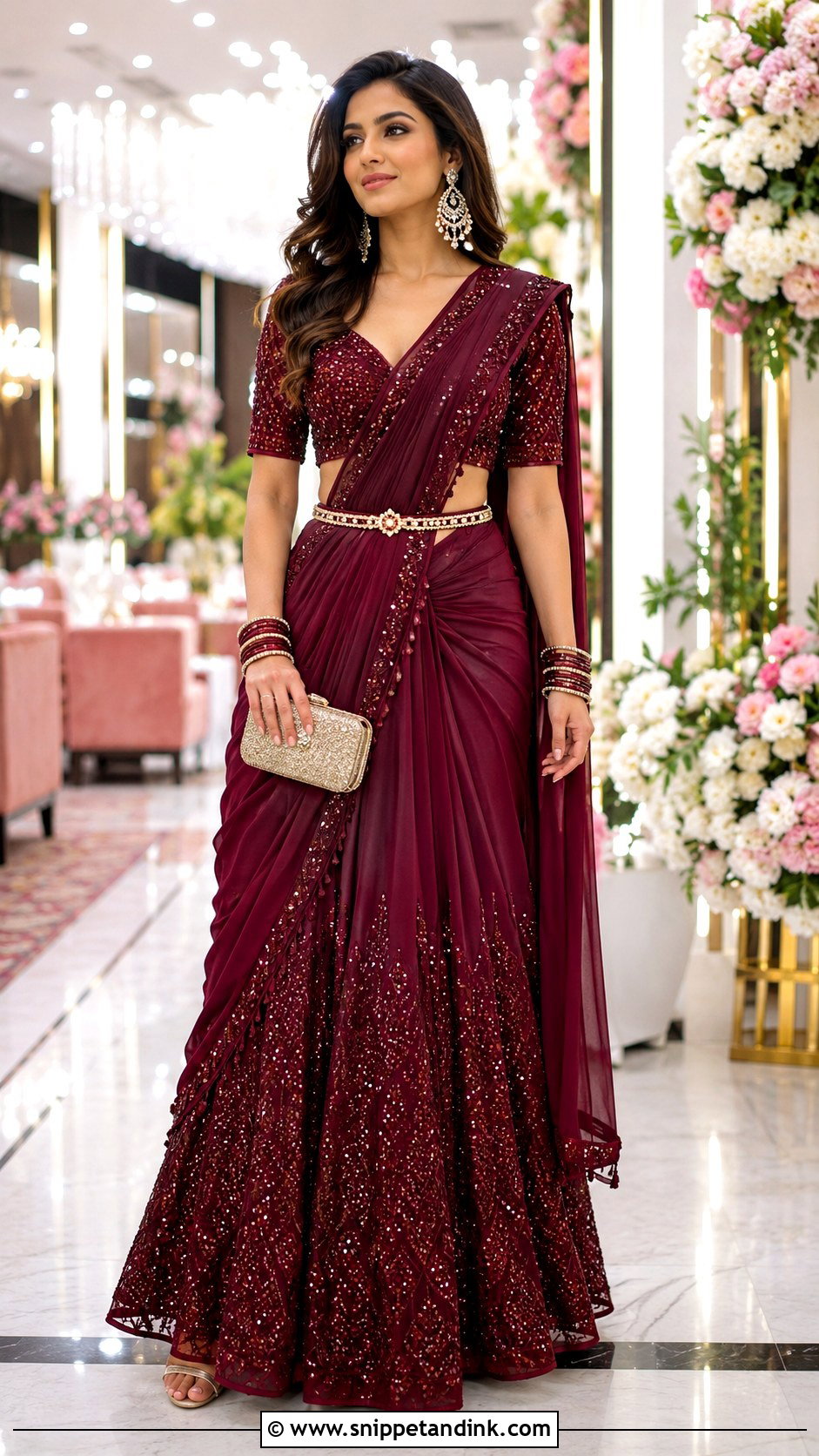
A lehenga saree looks like a draped saree but is built on a skirt, so you get the drama without re-pleating every hour. That’s why I suggest it for receptions and post-wedding parties where you’ll be standing and greeting for long stretches. Georgette, silk, net or crepe with a pre-stitched pallu is easiest. If you’re new to draping, practice once at home, because the pallu still needs pinning at the shoulder. A belt at the waist makes it modern; statement earrings and a sleek clutch finish it.
12. Floral Lehenga Look
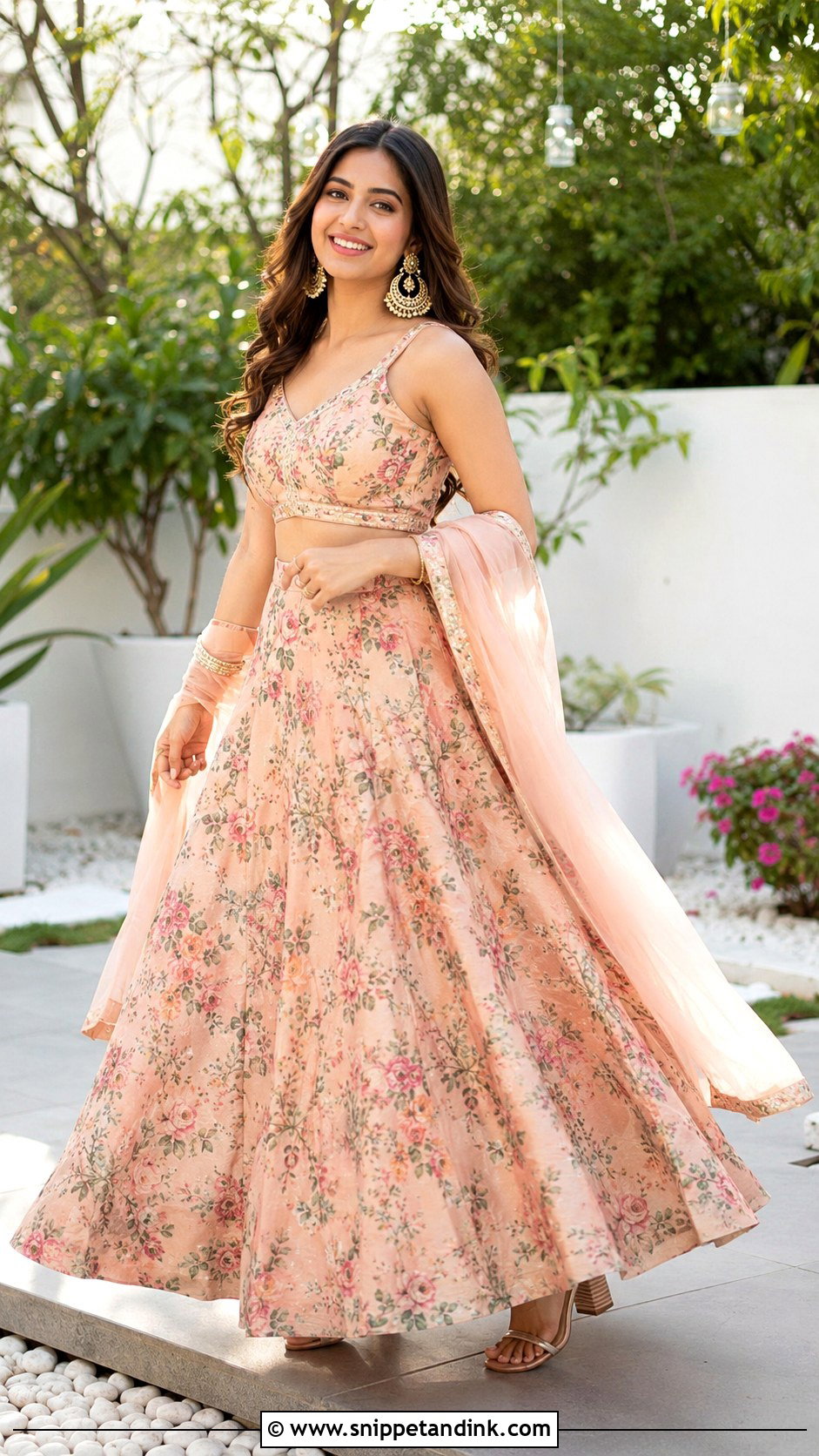
A floral lehenga repeats far better than your bridal one, and that’s its real value. Printed, embroidered or organza florals in peach, mint, ivory, lavender or yellow suit daytime gatherings and family brunches. Keep the dupatta light so the print shows. Large prints read best on taller frames, and petite brides usually look better in small, scattered motifs. Chandbalis, bangles and a simple necklace if the neckline allows, then block heels or juttis.
13. Kurti With Palazzo Look
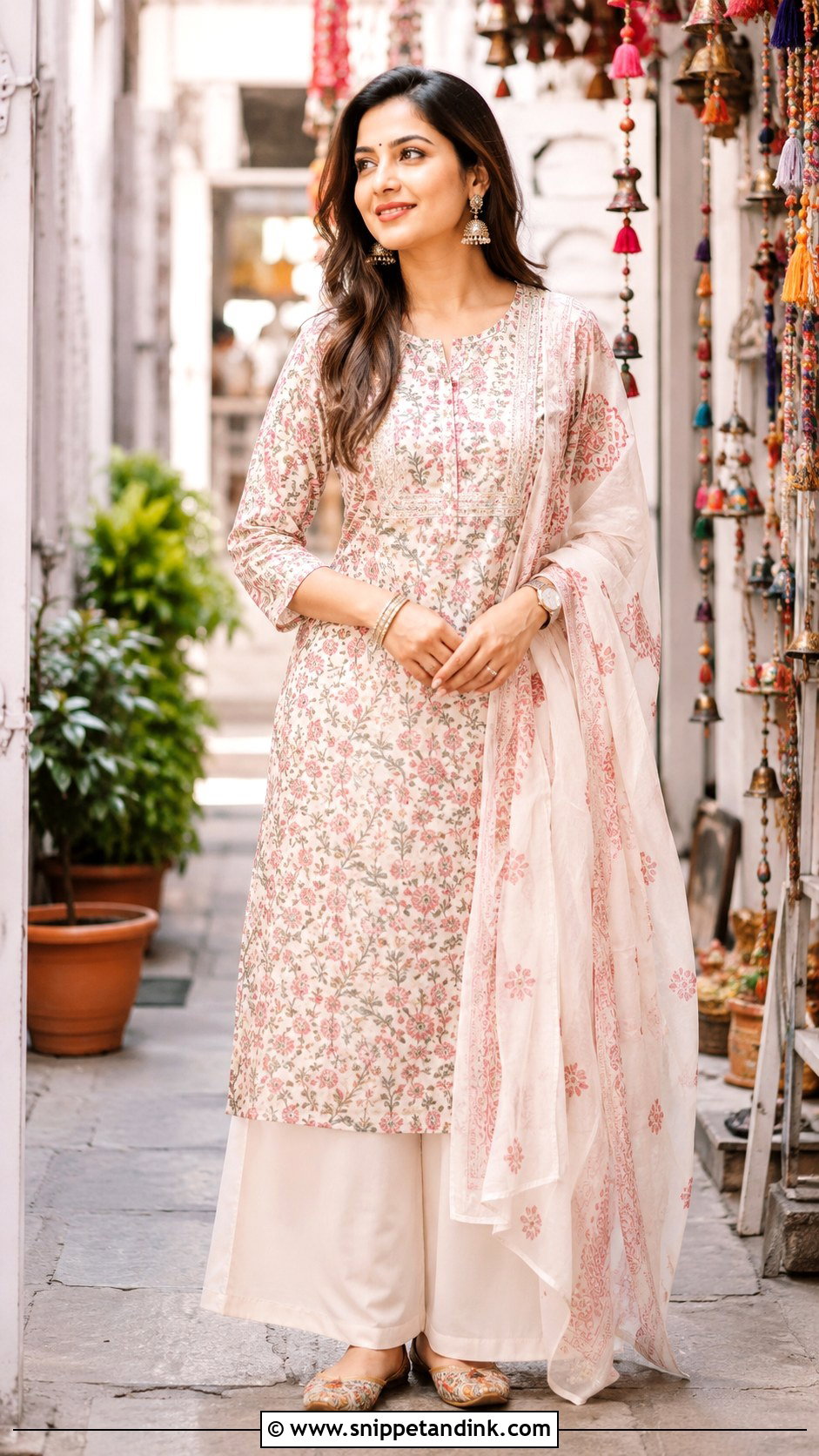
For everyday wear after marriage, a kurti with palazzos is the outfit I see brides reach for most. It’s modest and comfortable, and it holds up to shopping, cooking and travel. Printed cotton suits ordinary days; an embroidered silk kurti dresses it up. Wide palazzos keep air moving in heat. Add a dupatta when the family visit calls for one, plus jhumkas, bangles and flat juttis. Check that the kurti length clears your knee when you sit cross-legged on the floor, which happens at most home pujas.
14. Long Kurti With Pants Look
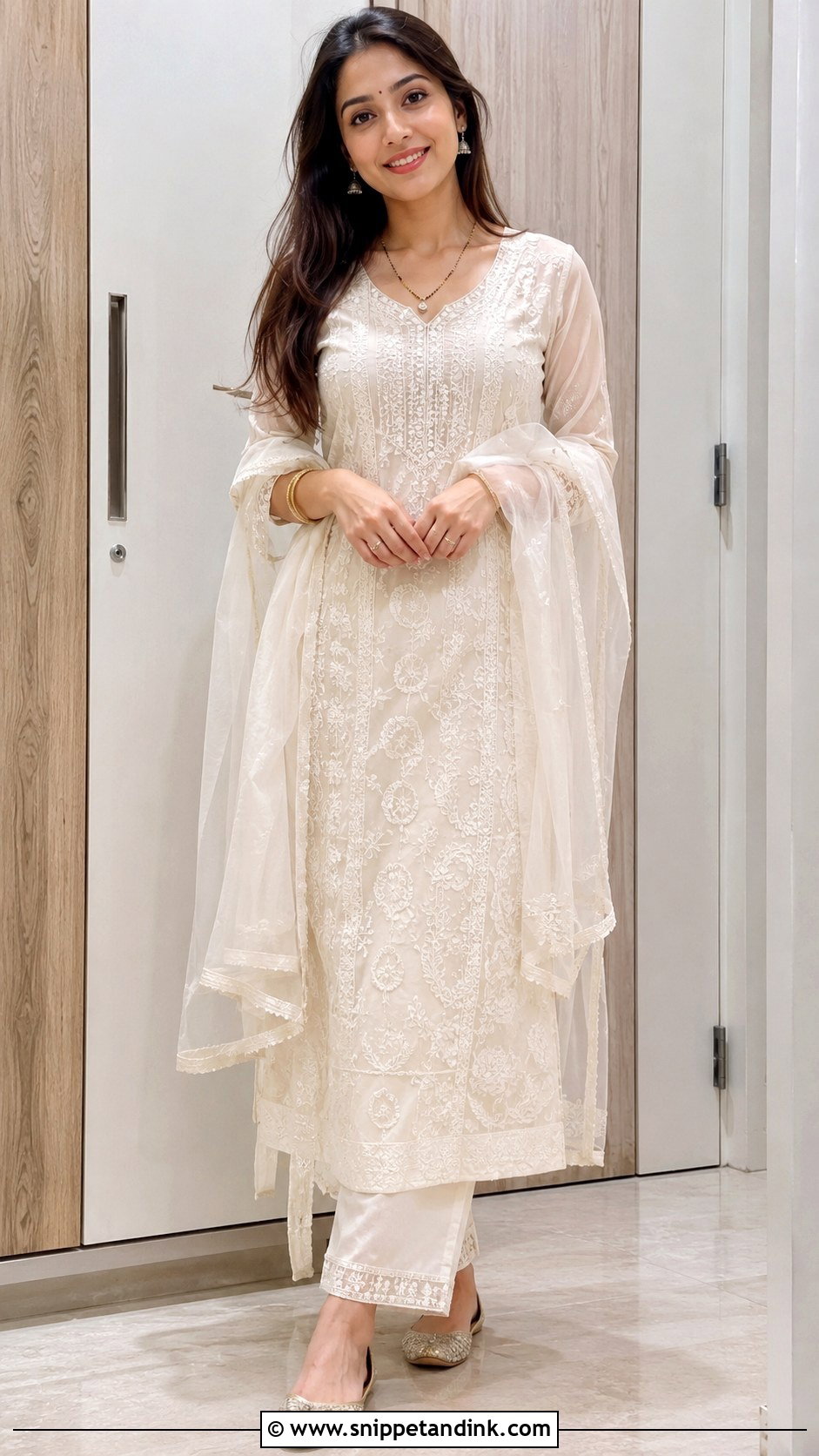
Long kurtis with straight pants are the cleanest ethnic look in the cupboard, and they suit brides who dislike fuss. Side slits make sitting comfortable; light embroidery, block print or woven detail keep it interesting. Cigarette pants or ankle-length straight trousers sharpen the line. I’d have the slits checked for height if you’ll be sitting cross-legged, since high slits open more than you expect. A chiffon dupatta, small earrings, a fine mangalsutra and pointed flats take it from office to family dinner.
15. Red Salwar Suit Look
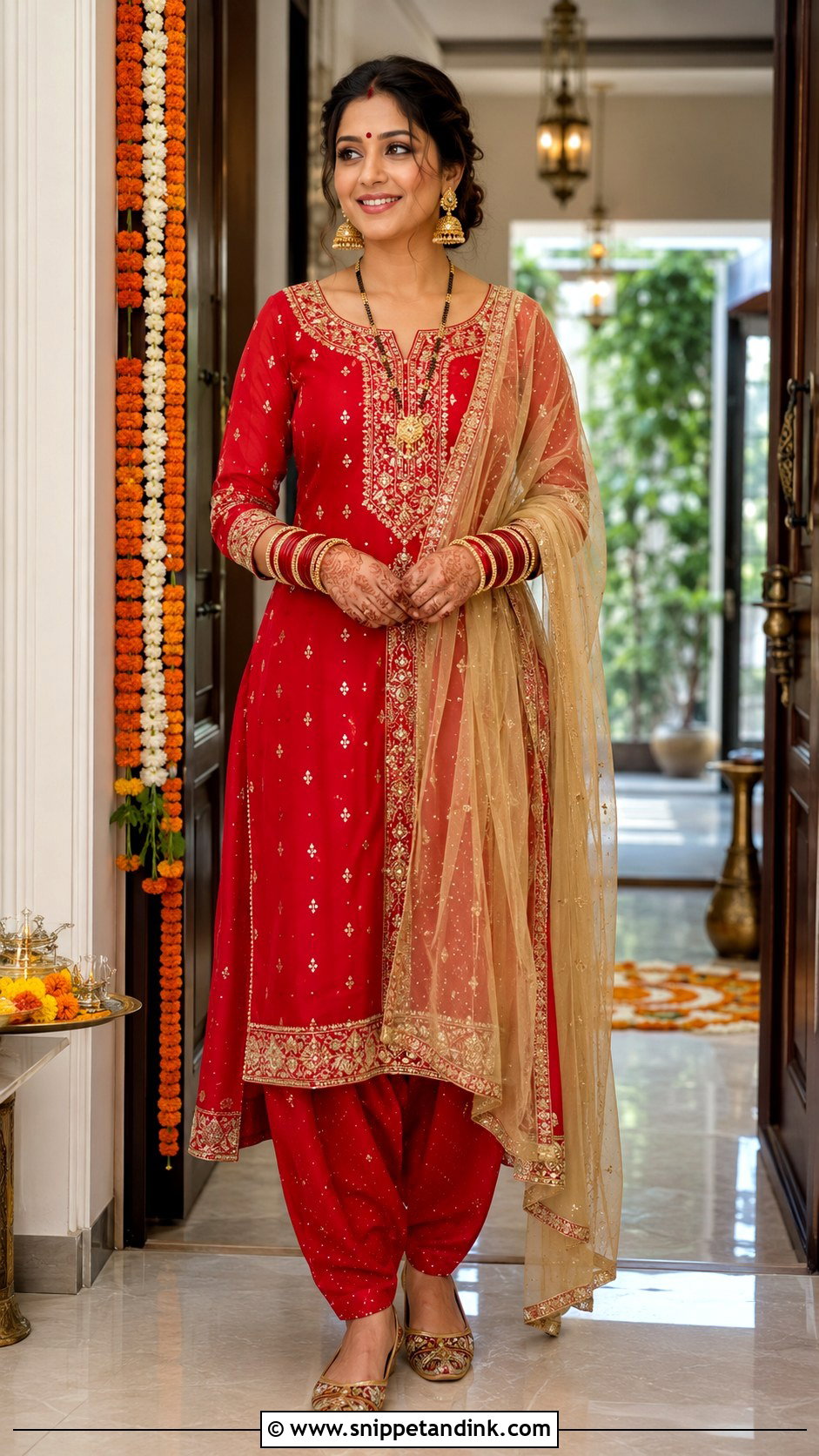
A red salwar suit is festive the moment you put it on, and much easier than a saree for a long day of rituals and first visits. Punjabi, straight and anarkali cuts all work, with gold, beige or maroon accents. The dupatta does the heavy lifting: phulkari, zari or gota work makes it traditional. If you’re wearing chooda, the reds should sit close in tone, so carry a bangle to the shop when you buy fabric. Defined eyes and a soft red or rose lip finish the look.
16. Punjabi Suit With Chooda Look
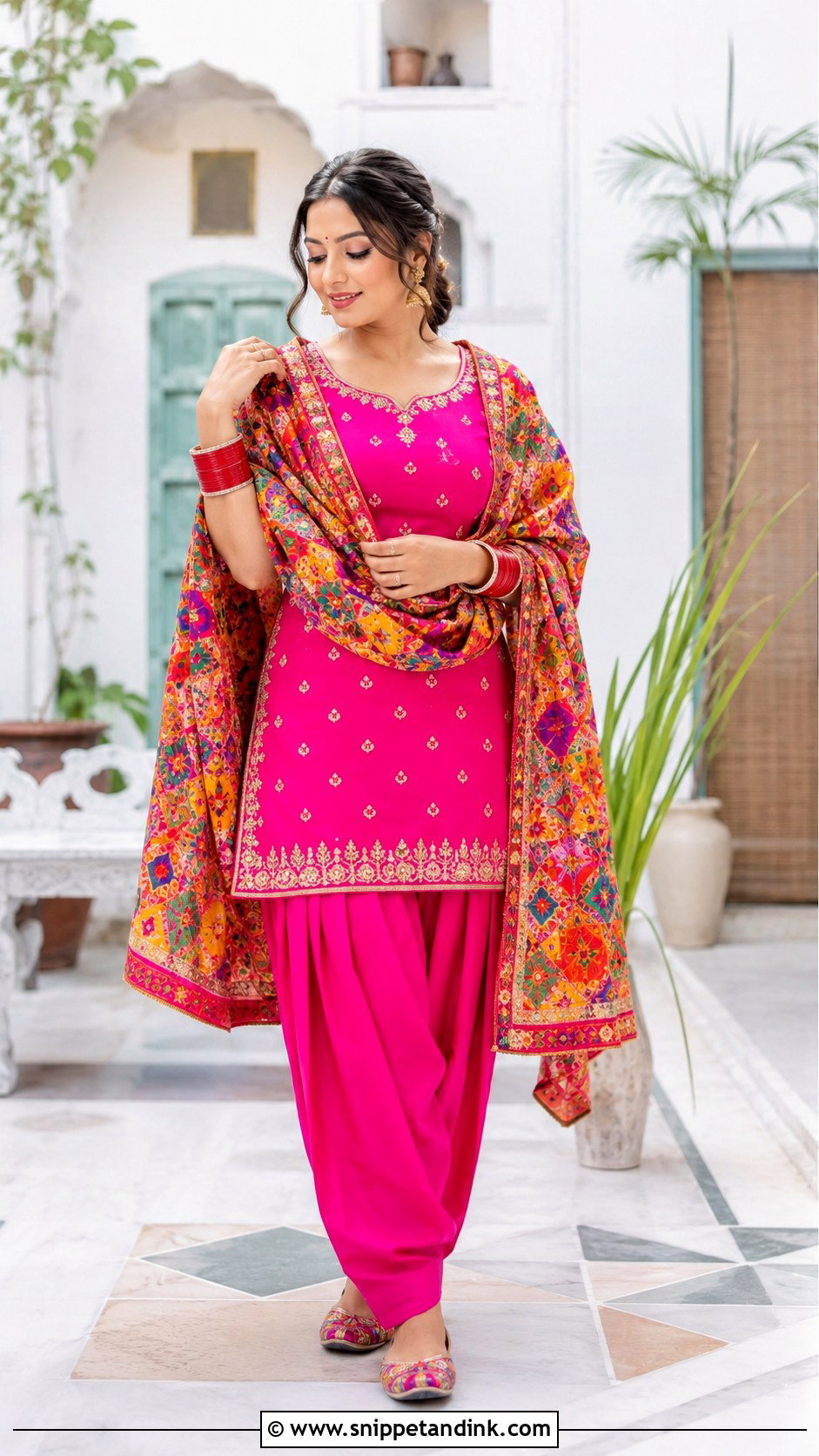
The chooda is the star of the first weeks, so the outfit should frame it rather than compete. A Punjabi suit with chooda in red, pink, mustard, green or royal blue does that well, whether patiala, salwar or short kurti with a flared salwar. I keep sleeves at elbow length or three-quarter so the chooda shows, and skip bracelets on the same wrist. A phulkari dupatta, juttis and a braid or half-up style complete it. Chooda is heavy and knocks against tables, so sit with your arms relaxed in your lap for long meals.
17. Indo Western Saree Look
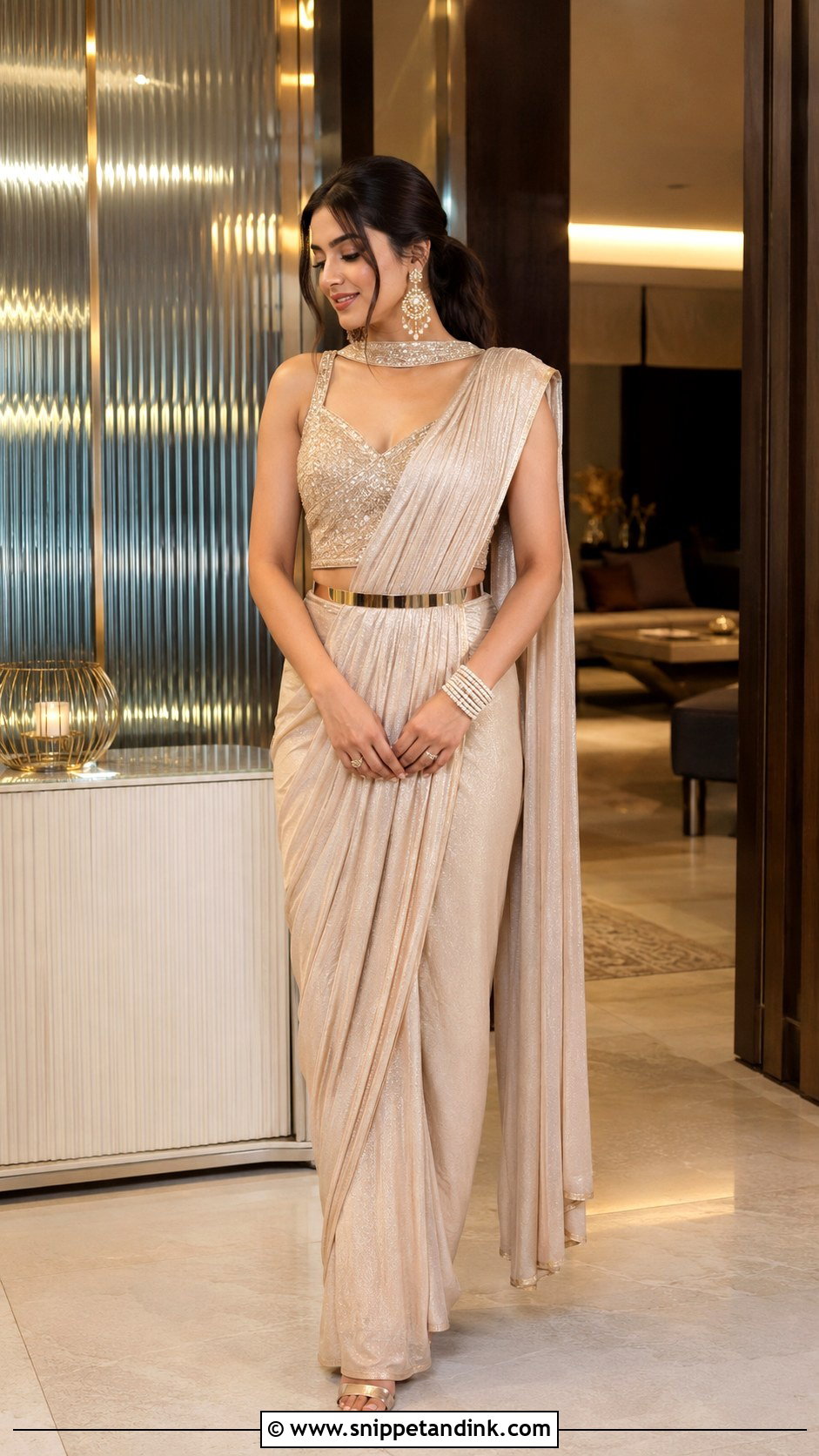
Pre-draped and belted sarees suit the new bride who wants tradition with a sharper edge for evening events. Ruffle sarees and structured blouses read modern in champagne, wine, emerald or navy. A belt holds the pallu so you aren’t adjusting it all night, which is the practical reason I like them. Limit jewelry to statement earrings so the drape stays the focus. A sleek bun or low ponytail suits the clean line, and it’s a smart reception choice if you’re tired of heavy lehengas by then.
18. Co Ord Set Indian Look
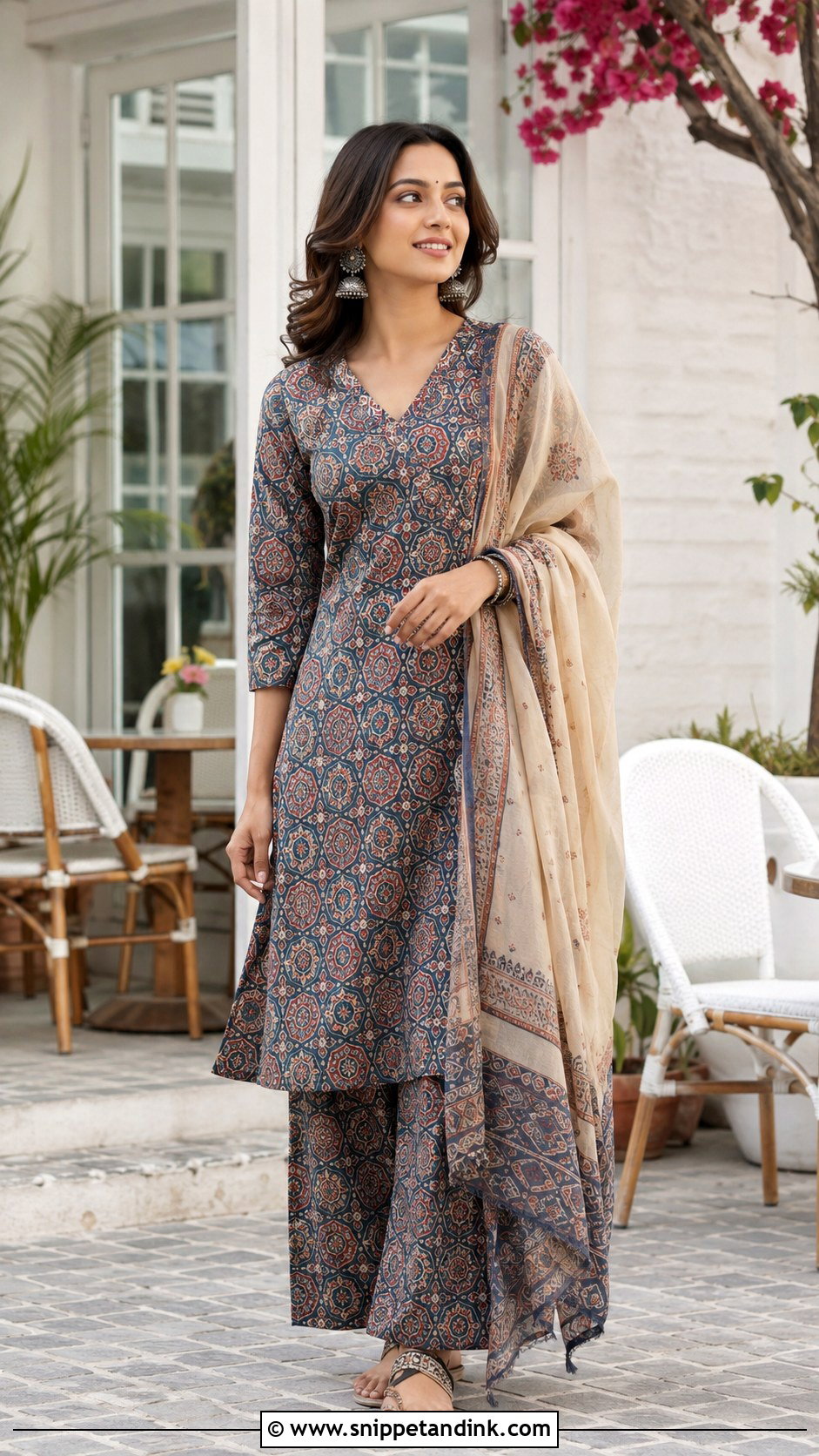
Co-ord sets are easy to pack, easy to wear and hard to get wrong, which makes them my go-to for honeymoon trips and relaxed day plans. A matching kurta and pants, crop top and skirt, or tunic and palazzo in ajrakh, bandhani, ikat or block print keeps it rooted. Add a dupatta for family visits and leave it off for brunch. Silk, brocade or organza versions dress up for evening. Oxidized earrings and juttis keep the mood casual.
19. Skirt And Kurti Look
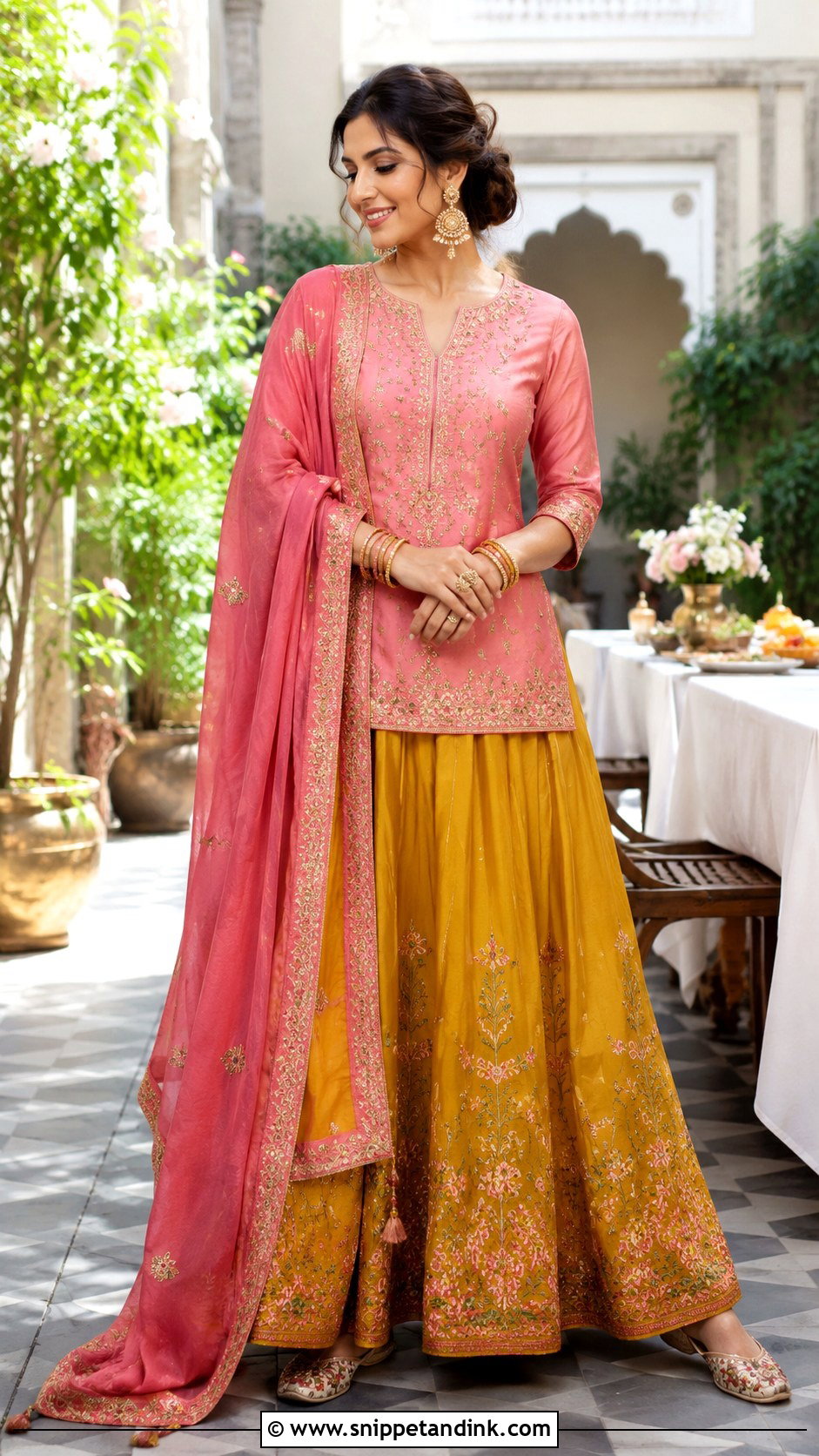
Separates give you the shape of a lehenga with half the weight. Pair a printed or embroidered long skirt with a short, peplum or straight kurti, and add a dupatta when the occasion asks for it. Contrast pairs like mustard with pink, green with cream, or maroon with gold look lively. The proportion matters: a short kurti suits a high-waisted, full skirt, and a longer kurti needs a slimmer skirt or it looks bulky. Jhumkas, bangles, juttis and a loose braid suit the flow.
20. White Saree With Red Border Look
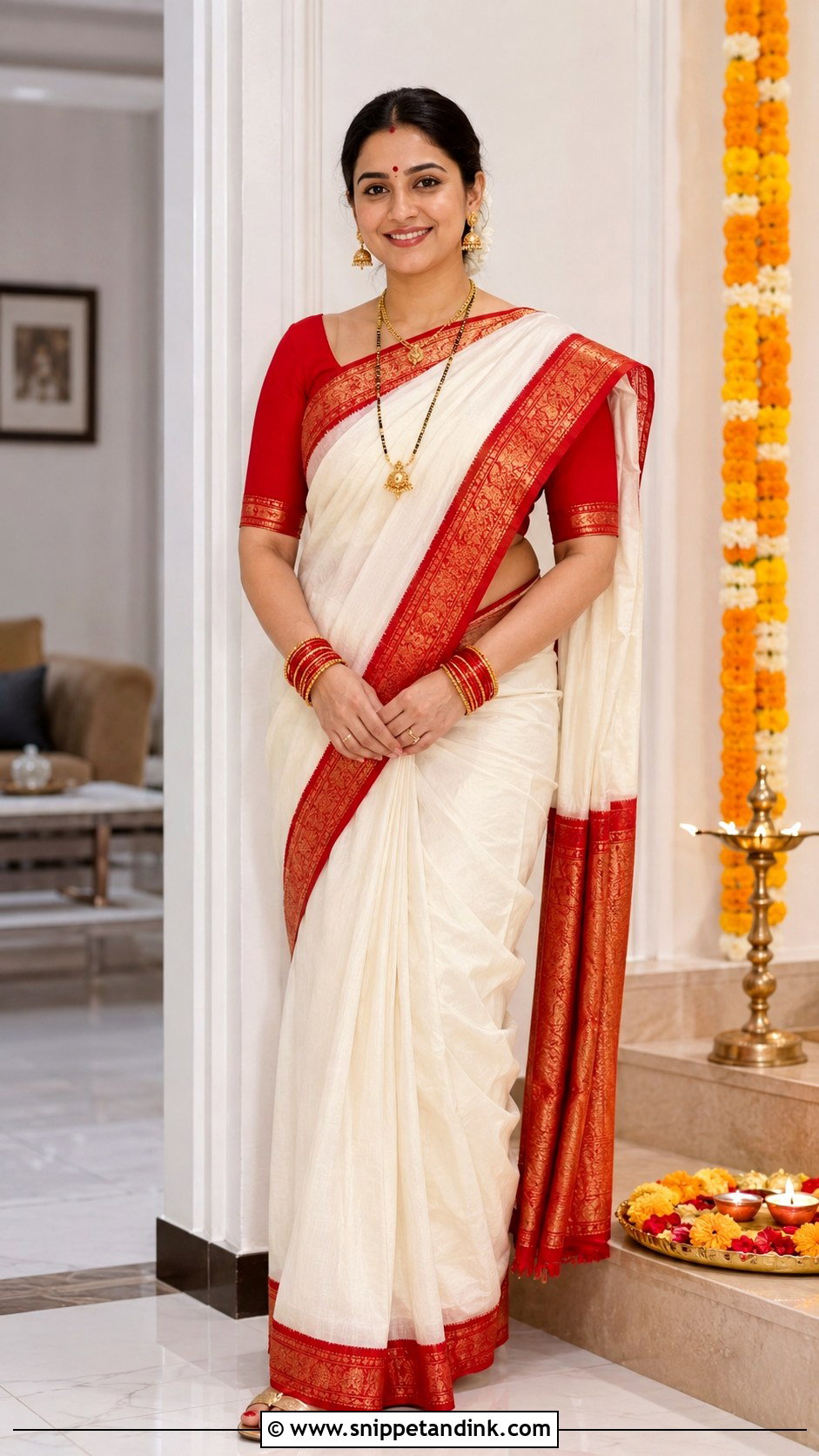
The white saree with red border has deep roots, especially in Bengali households, where it is worn at festivals and rituals by married women. Cotton suits a daytime ritual; silk or tissue suits a festival evening. A red blouse is the classic pairing. Gold jewelry, red bangles, a bindi and a sleek bun keep it traditional, and sindoor finishes it. If you’re joining a family whose traditions are new to you, ask an elder how they wear it; drape and jewelry customs vary between communities.
21. Bandhani Saree Look
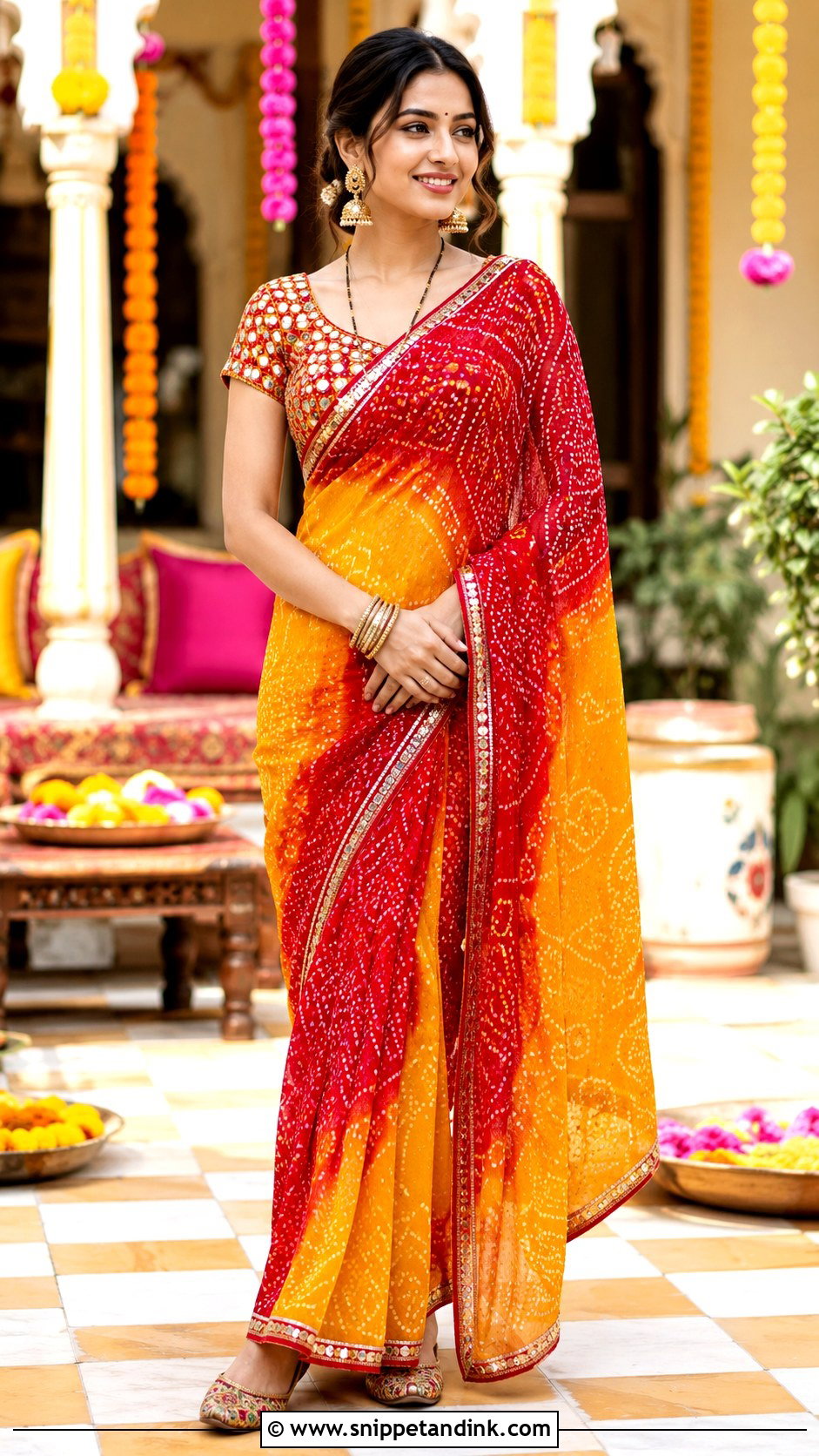
A bandhani saree brings festive energy through its dotted tie-dye, and it’s often light enough for a long day. Red, yellow, orange, green and pink are the classic shades. Plain or mirror-work blouses balance the busy pattern. Oxidized silver keeps it casual; gold moves it toward bridal. Real bandhani can bleed in its first washes, so I always recommend a dry clean or a separate cold wash, never with light fabrics.
22. Gharara Suit Look
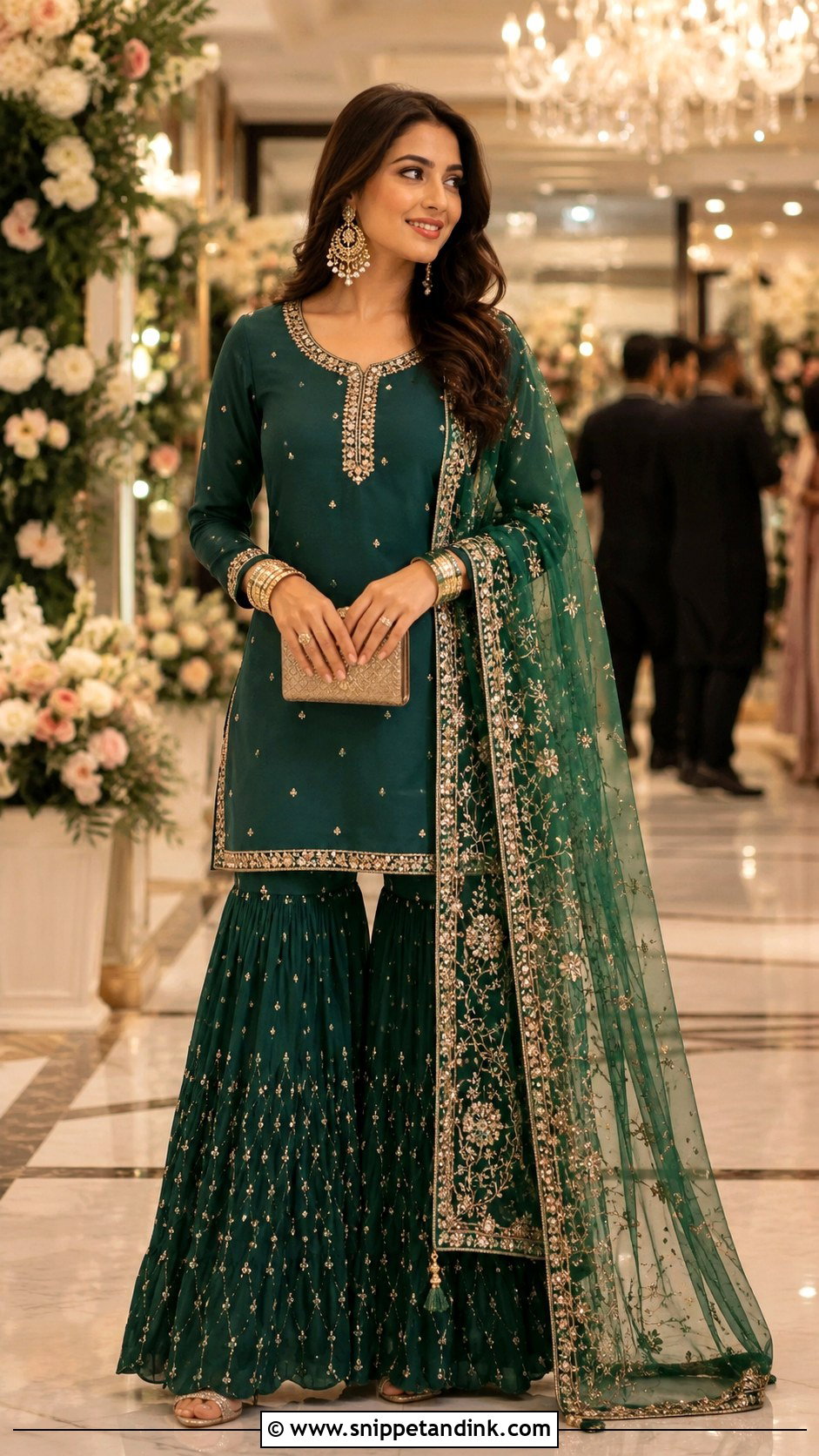
Ghararas differ from shararas in where the flare starts: gathered at the knee instead of the hip, which gives that royal, swinging shape. They suit evening functions and dinners. Silk, georgette, brocade or net in pastels, or jewel tones like emerald, maroon and navy, all work. The knee joint is often heavily embellished, so check the weight before buying, because heavy gota at the knee drags with every step. Chandbalis, bangles and embellished juttis keep it graceful.
23. Simple Saree With Belt Look
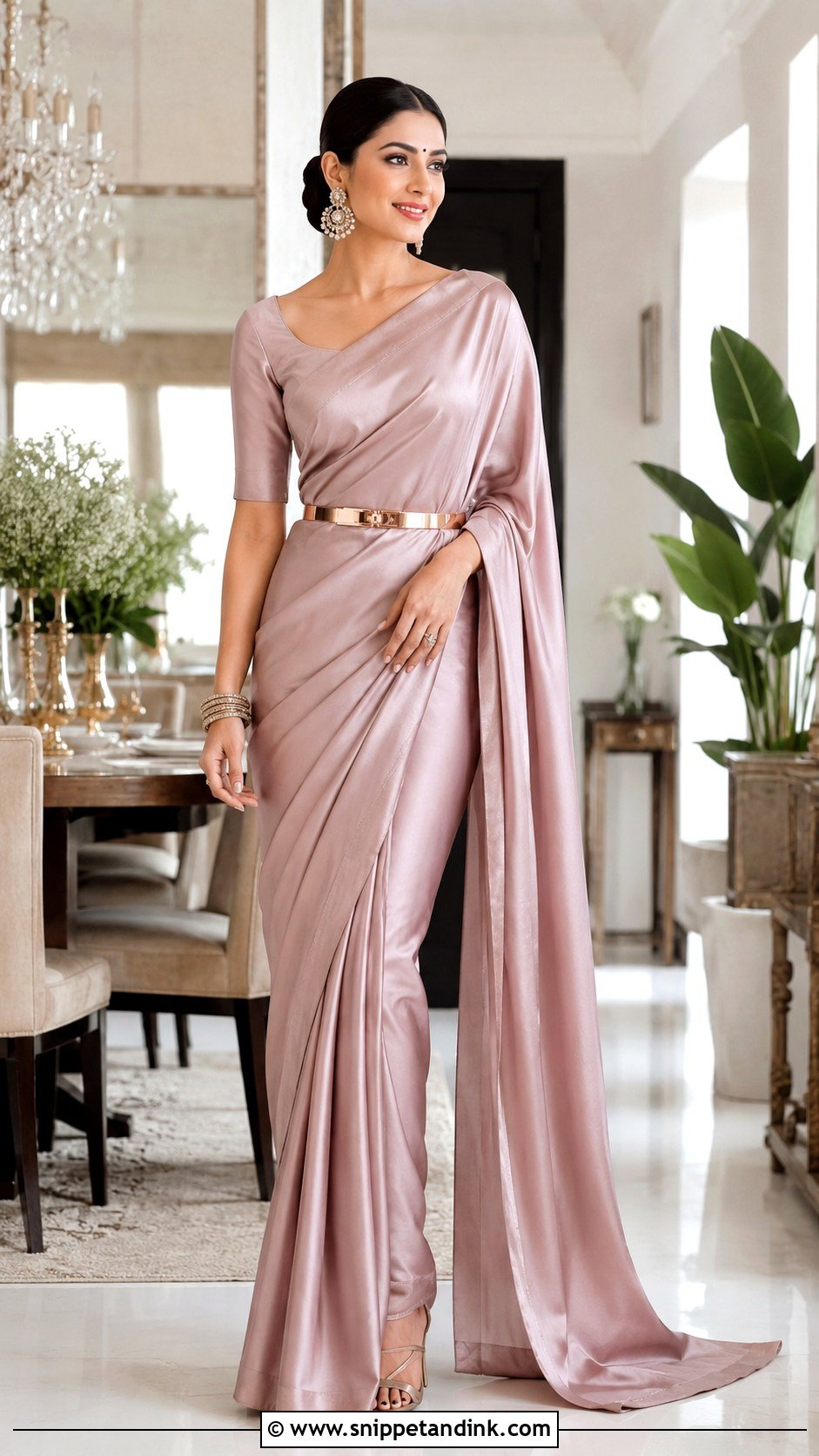
Adding a belt to a plain saree is the trick I use most for brides who host. It holds the pallu and pleats in place while you carry trays and greet people, and it defines the waist. Chiffon, georgette, crepe, satin and light silk all take a belt well; stiff silks don’t. Choose a slim metallic, embroidered or fabric belt that matches the blouse. Statement earrings and a sleek bun keep the look clean.
24. Pastel Lehenga Look
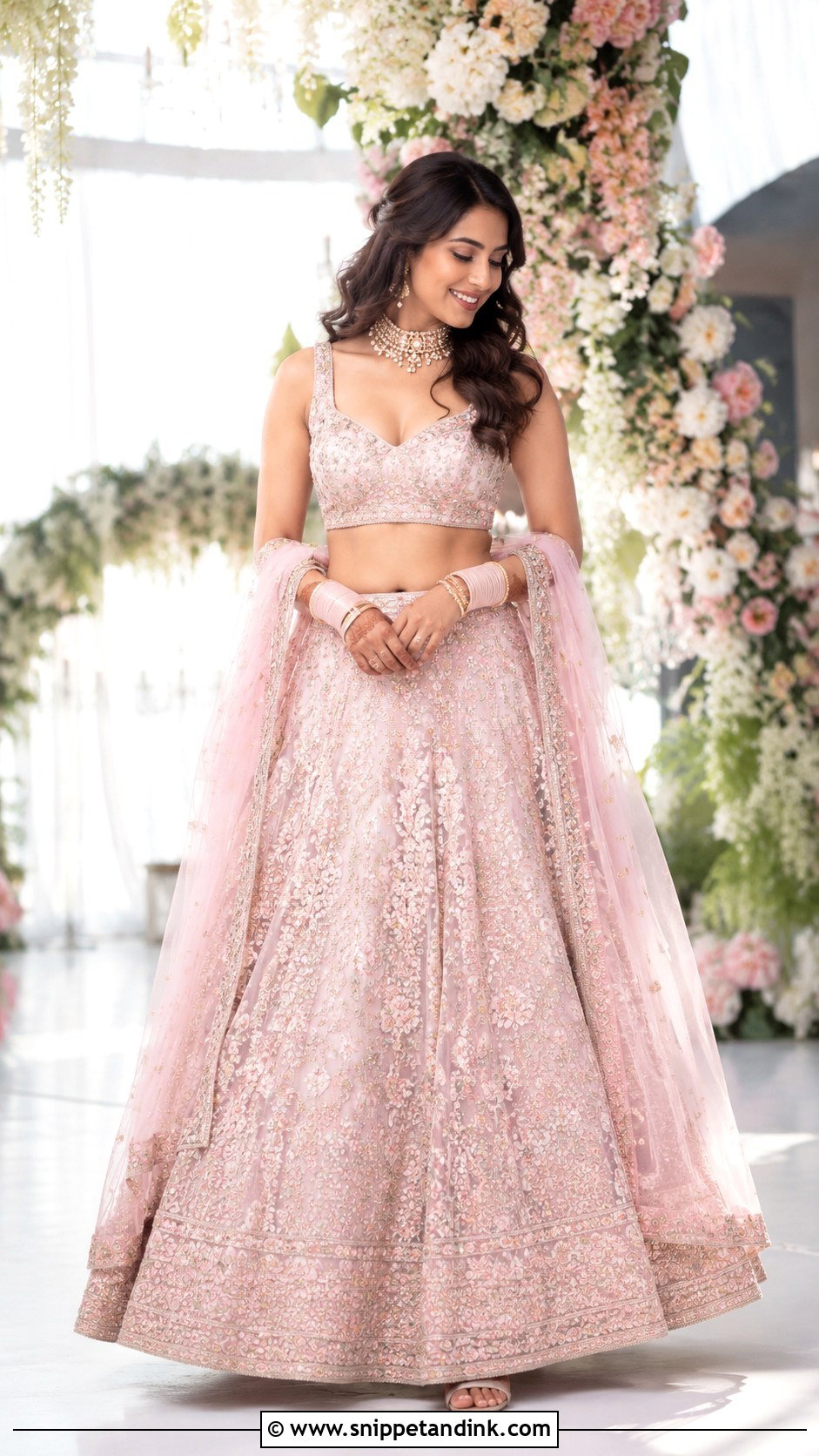
Pastel lehengas suit post-wedding occasions when you want to look festive without repeating the bridal red. Blush, mint, powder blue, lavender, peach and ivory all photograph softly. Light thread, sequin or mirror work keeps them refined. Pastels show stains more readily than deep colors, so I’d avoid the lightest ivories for any meal-heavy event. A sheer dupatta, pearl or kundan jewelry and loose curls suit the palette, and comfortable heels or juttis let you enjoy the evening.
25. Saree With Full Sleeve Blouse Look
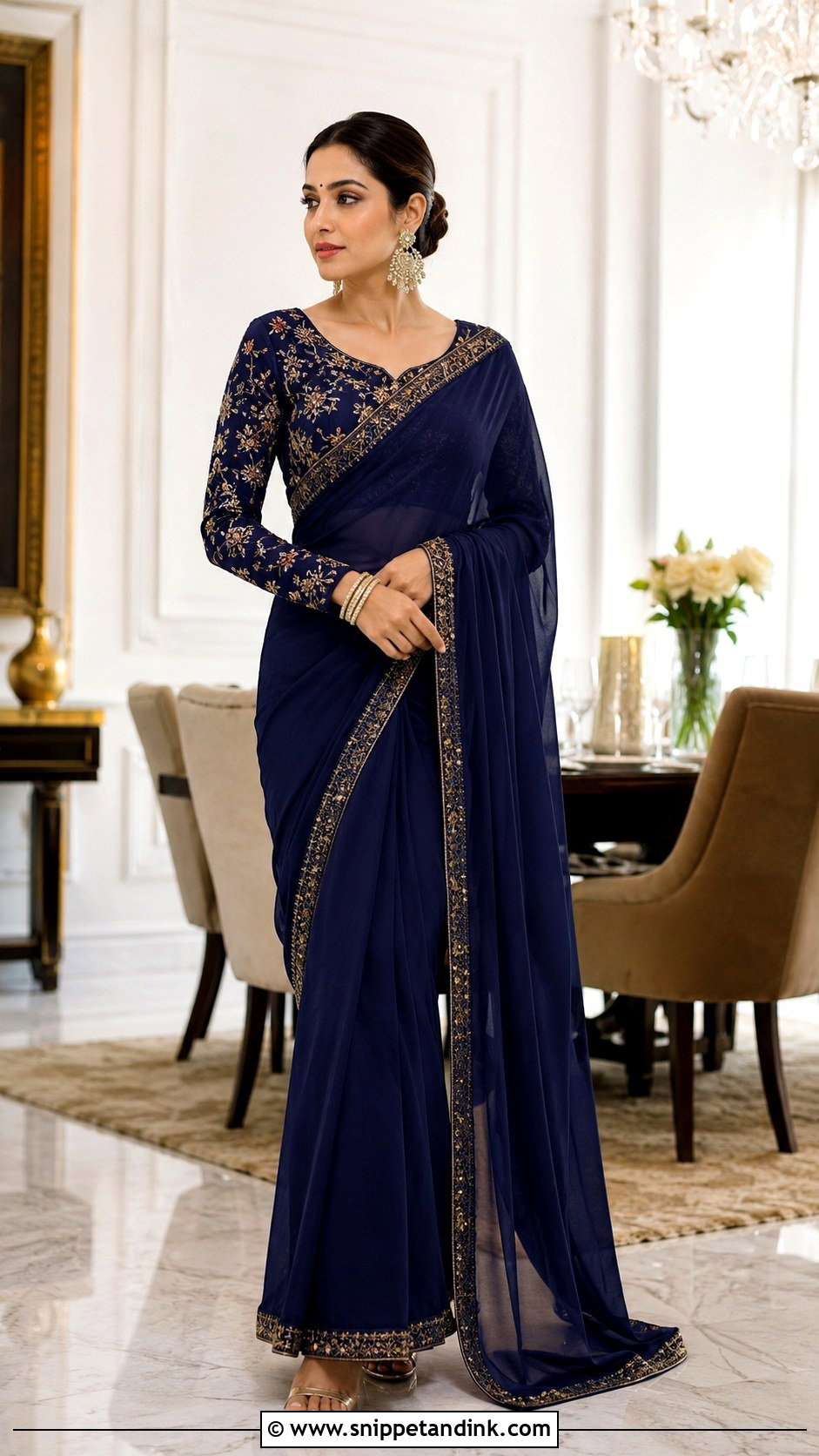
A full sleeve blouse turns almost any saree formal, and it’s the first thing I suggest for winter functions or families who prefer more coverage. Velvet, brocade, silk and embroidered fabrics all make good sleeves over silk, chiffon, organza or georgette drapes. Full sleeves need precise fitting at the armhole, or you’ll struggle to raise your arms to greet or serve, so ask your tailor for extra ease there. Choose statement earrings or a choker, not both, with bangles and a sleek bun.
Silk, Zari and Velvet Each Need Different Care After a Wear
A new bride’s trousseau usually holds the most valuable fabric she’ll ever own, and most of the damage I see comes from how it’s put away, not how it’s worn.
Air it before you fold it
After a long day, hang the saree or lehenga in shade for a few hours so sweat and perfume evaporate. Folding a damp silk traps moisture, and that’s how the faint brown stains appear months later.
Zari hates sharp folds
The metallic thread in Banarasi and Kanjivaram work cracks along fold lines over time. Refold heavy zari pieces along different lines every few months, wrap them in soft muslin or old cotton, and keep perfume and deodorant away from the border, since the metal tarnishes.
Velvet hangs, it does not fold
Folding crushes velvet pile permanently. Hang velvet suits inside out on a padded hanger with space around them, and steam from the back if the pile flattens.
Keep everything out of plastic, which holds moisture, and avoid placing mothballs directly against silk. A cloth pouch of neem leaves or cloves tucked in the cupboard is gentler. Embellished pieces with heavy embroidery should go to a dry cleaner who handles bridal wear, not a general laundry.
A Newlywed Wardrobe That Lasts Beyond the First Month
Newlywed dressing doesn’t need to be heavy every day. A silk saree for the puja, a soft kurta set for visits, a sharara for a family function and a belted saree for hosting will cover most of the first months. Let the weather pick the fabric, let your skin tone pick the color, and keep the meaningful pieces, like your mangalsutra and bangles, at the center. The rest can be as traditional or as modern as you like.



Leave a Reply