
The chooda ceremony is one of the most emotional hours of a Punjabi wedding. The bride’s maternal uncle usually places the red-and-ivory bangles on her wrists, sometimes the evening before and sometimes on the wedding morning, depending on the family. After that, friends and sisters tie on the kaleere. When I dress a bride for it, I plan the whole outfit backward from her wrists: sleeves that clear them, a dupatta that stays off them, and colours that don’t swallow the chooda in photos. Suits, shararas, anarkalis and light lehengas all work if they pass those tests. The twenty looks below range from classic red to mint and powder blue, with notes on where each one tends to cause trouble.
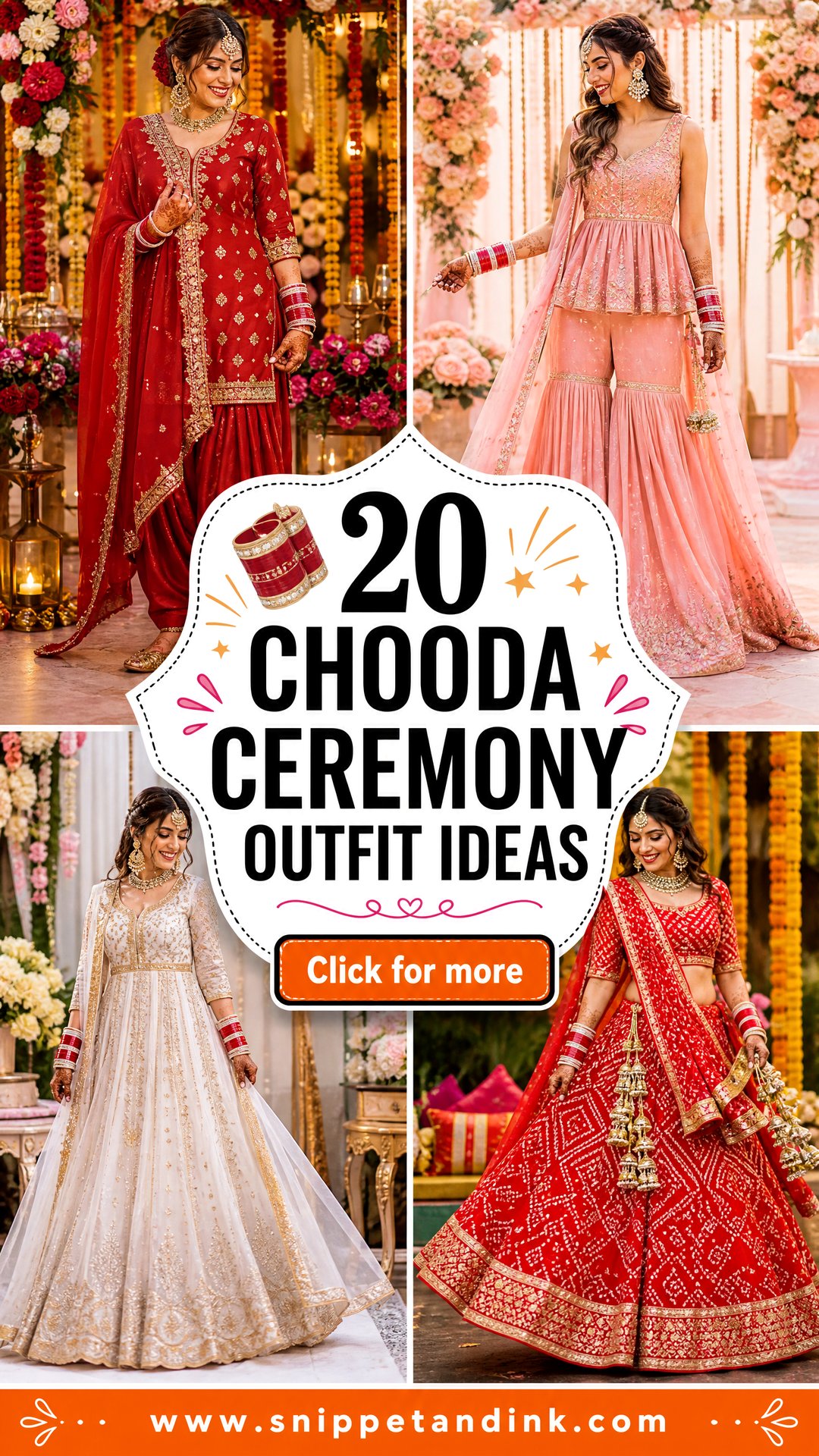
Testing Sleeves Before Your Mama Slides the Chooda On
Chooda bangles go over the hand, not around an open wrist, so whoever places them has to ease each one over your knuckles. That means your hand needs to be relaxed and your sleeve completely out of the way. In most families you’re seated, often with the bangles kept covered until the moment they’re put on, and relatives lean in close for blessings and photos.
At the final fitting, I run through this at home with the bride:
- Push each sleeve up to the elbow with one hand. If it won’t stay, the opening is too narrow or the fabric too stiff.
- Hold both arms out in front of you, palms down, for a full minute. Nothing should slide back over the wrist.
- Sit the way you’ll sit at the ceremony, cross-legged or on a low stool, and check the dupatta doesn’t drop into your lap.
- Raise your hands together as if receiving blessings and check the neckline and blouse don’t shift.
Bangle size is worth checking too. Chooda sets are sized by the widest part of the hand with the thumb folded in, not the wrist. If the family is buying the chooda, make sure they have your measurement, because a set that’s too tight is painful to slide on in front of a room full of people.
1. Red Punjabi Suit Chooda Ceremony Outfit
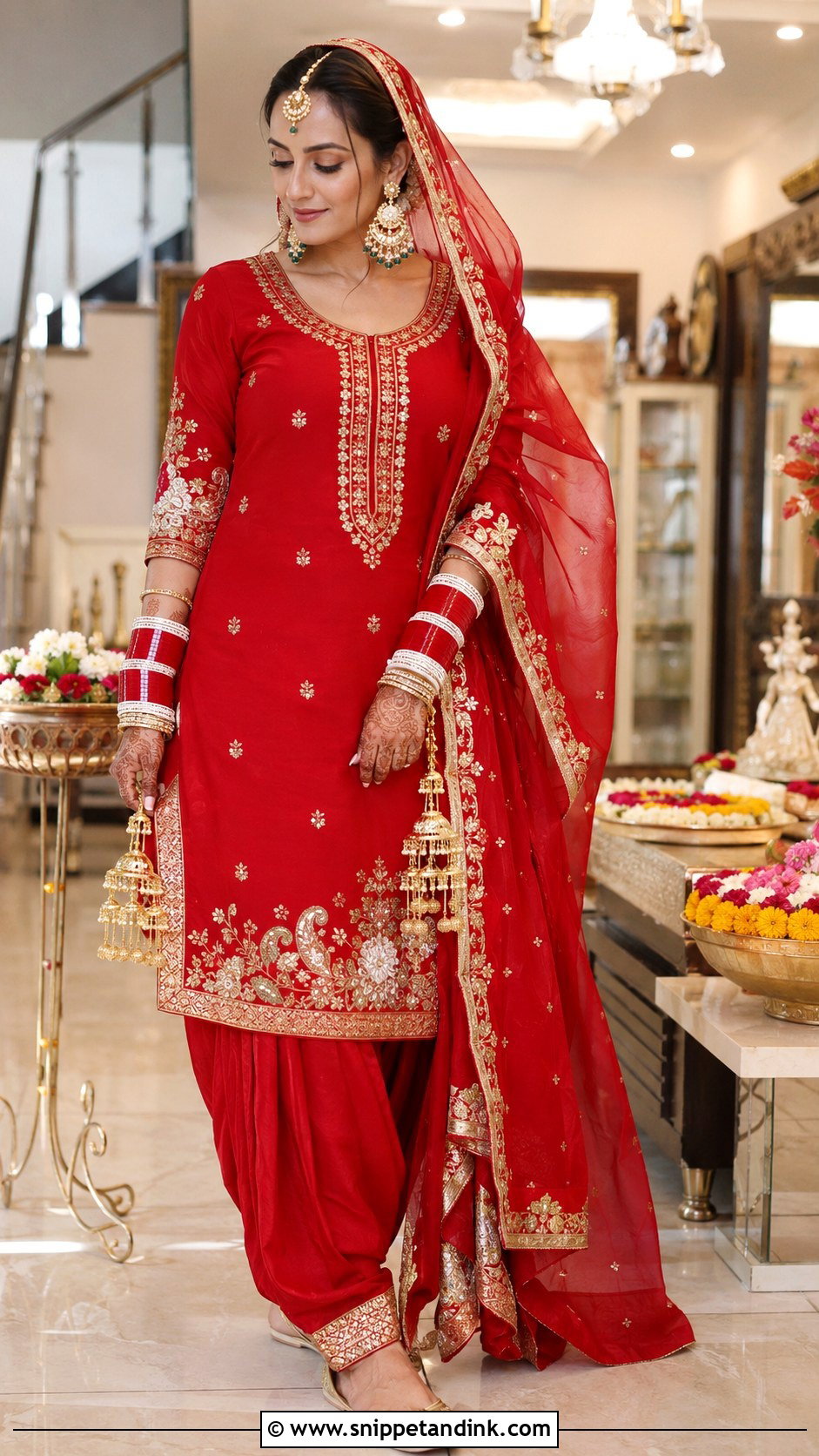
A red Punjabi suit is the look most mothers picture, and it suits an intimate home ceremony because it’s light enough to sit in for an hour. The problem with red on red is that the chooda can disappear against the kurta. I solve it with contrast at the wrist: ivory, gold or green jewelry nearby, and a sleeve that stops at the elbow so there’s a clear patch of skin between fabric and bangle. Gota patti or fine zari on a straight or slightly flared kurta, a matching dupatta, gold juttis and a small maang tikka finish it.
2. Ivory Anarkali Chooda Ceremony Outfit
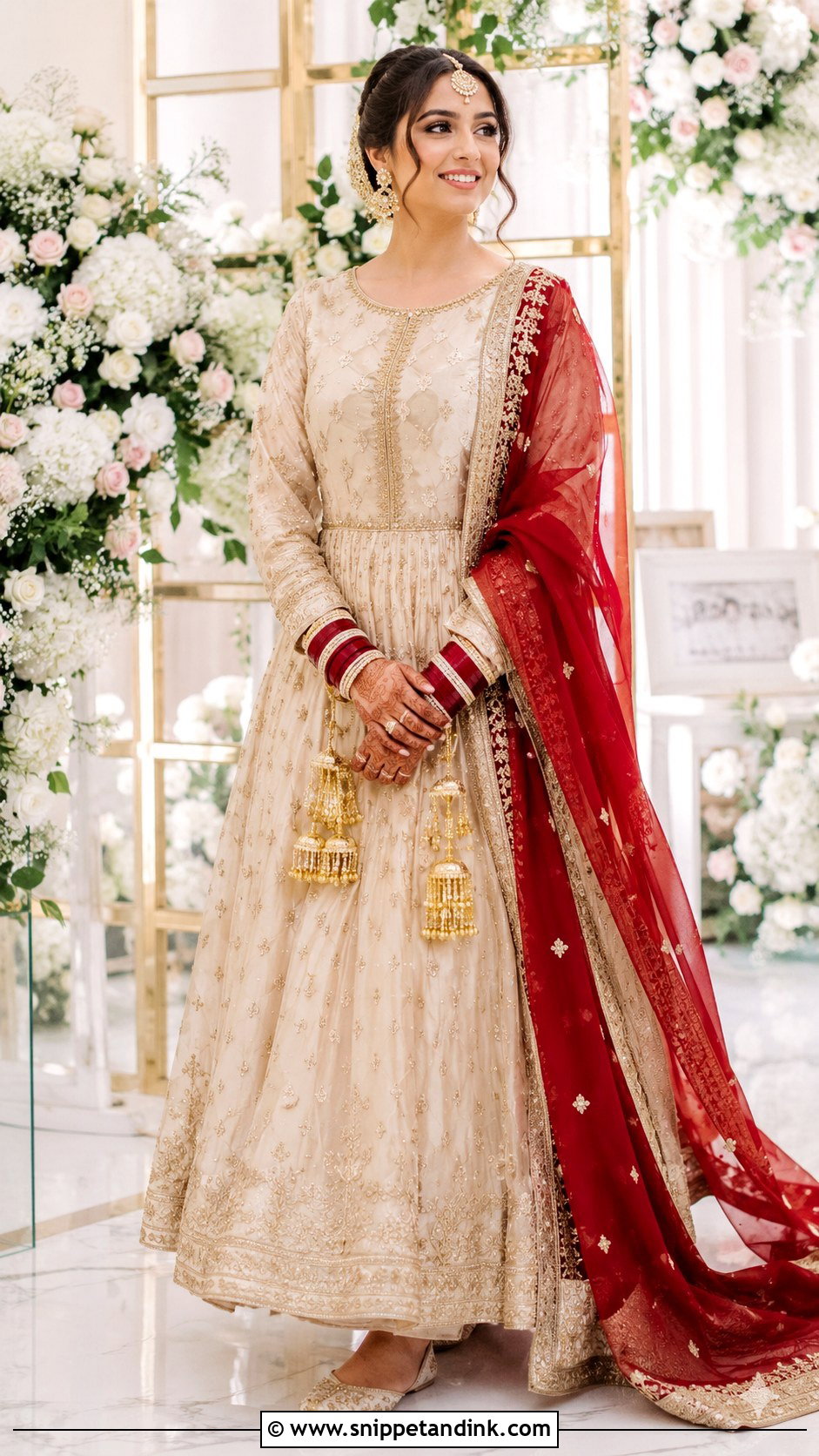
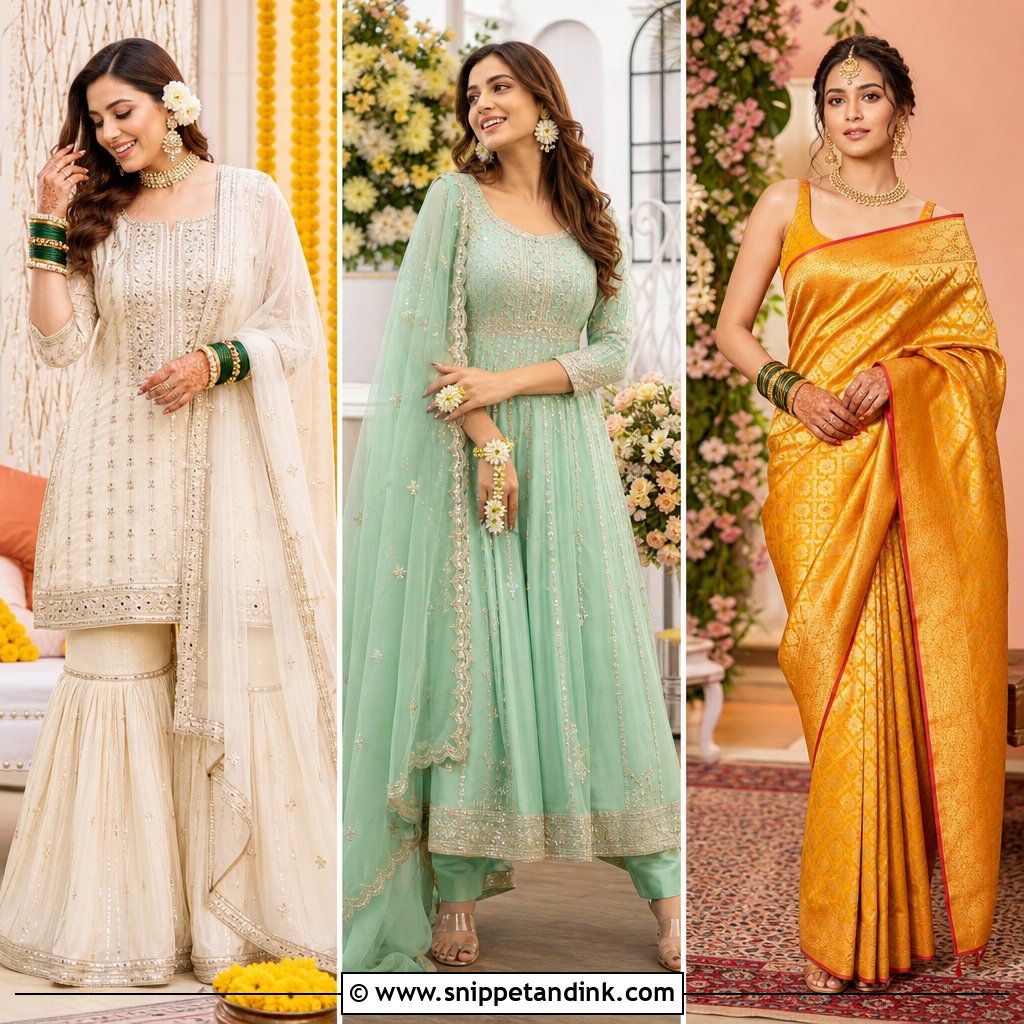
Ivory is my favourite backdrop for a red chooda; the bangles become the brightest thing in the frame. Look for an anarkali with gold threadwork or a light mirror border so it doesn’t read as plain, and bring in a red organza or silk dupatta to connect the outfit to the bangles. A relaxed bodice matters more than people expect, because you’ll be leaning forward while relatives bless you. Gold jhumkas, a small passa and ivory juttis complete it, with dewy skin and a muted red lip for daylight photographs.
3. Blush Pink Sharara Chooda Ceremony Outfit
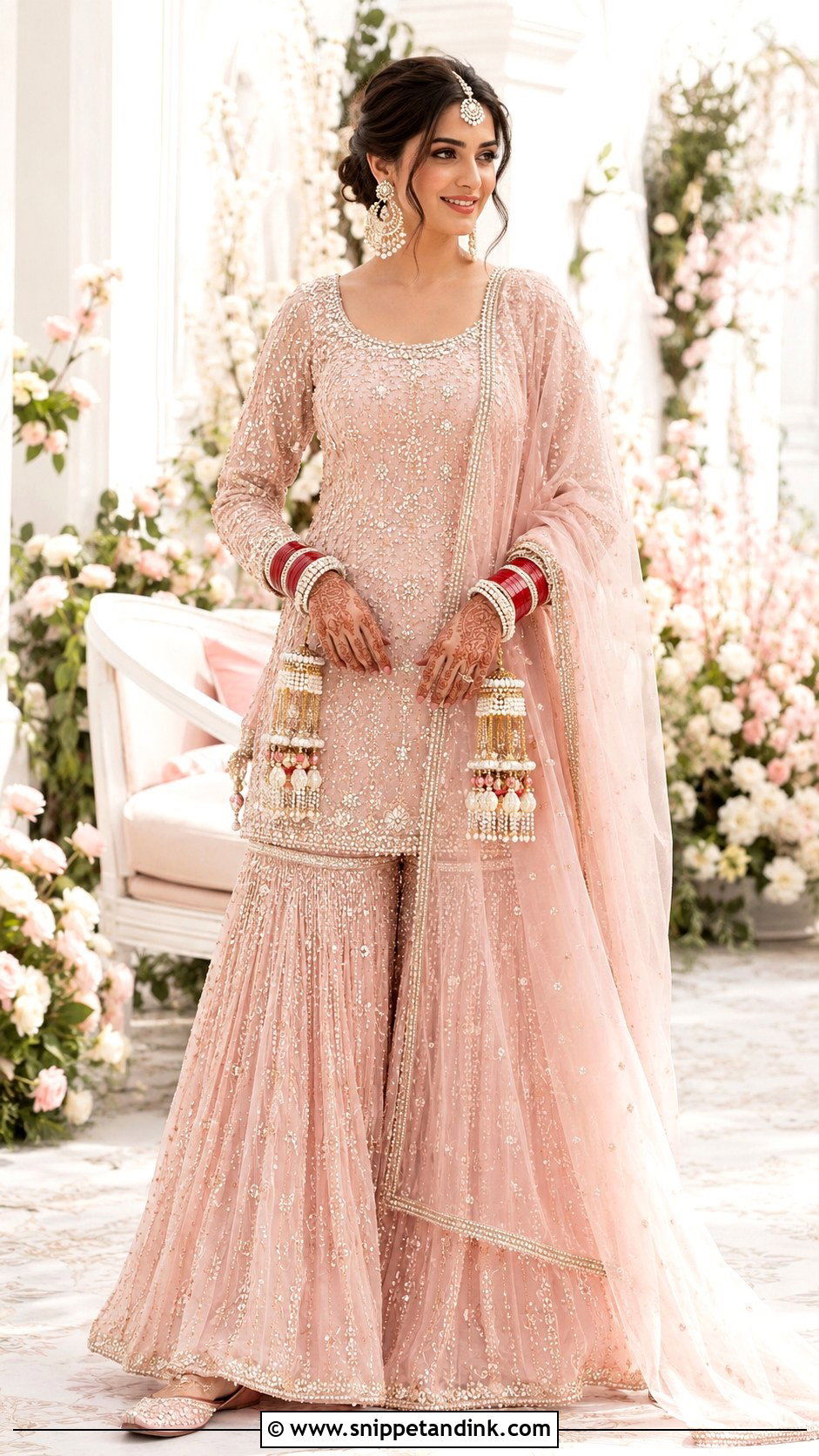
Blush pink lets a red-and-ivory chooda stand out without the heaviness of full bridal red. A short embroidered kurta with elbow sleeves over a flared sharara is easy to sit cross-legged in, and the sharara’s border pools neatly on the floor. Drape the net or organza dupatta over one shoulder only. If it hangs over both arms, it gets in the way every time someone reaches for your hand. Rose-gold sequins or pearl work suit the shade; heavy silver can look cold against it. Fresh pink flowers in a loose bun and pearl chandbalis keep it soft.
4. Mint Green Salwar Suit Chooda Ceremony Outfit
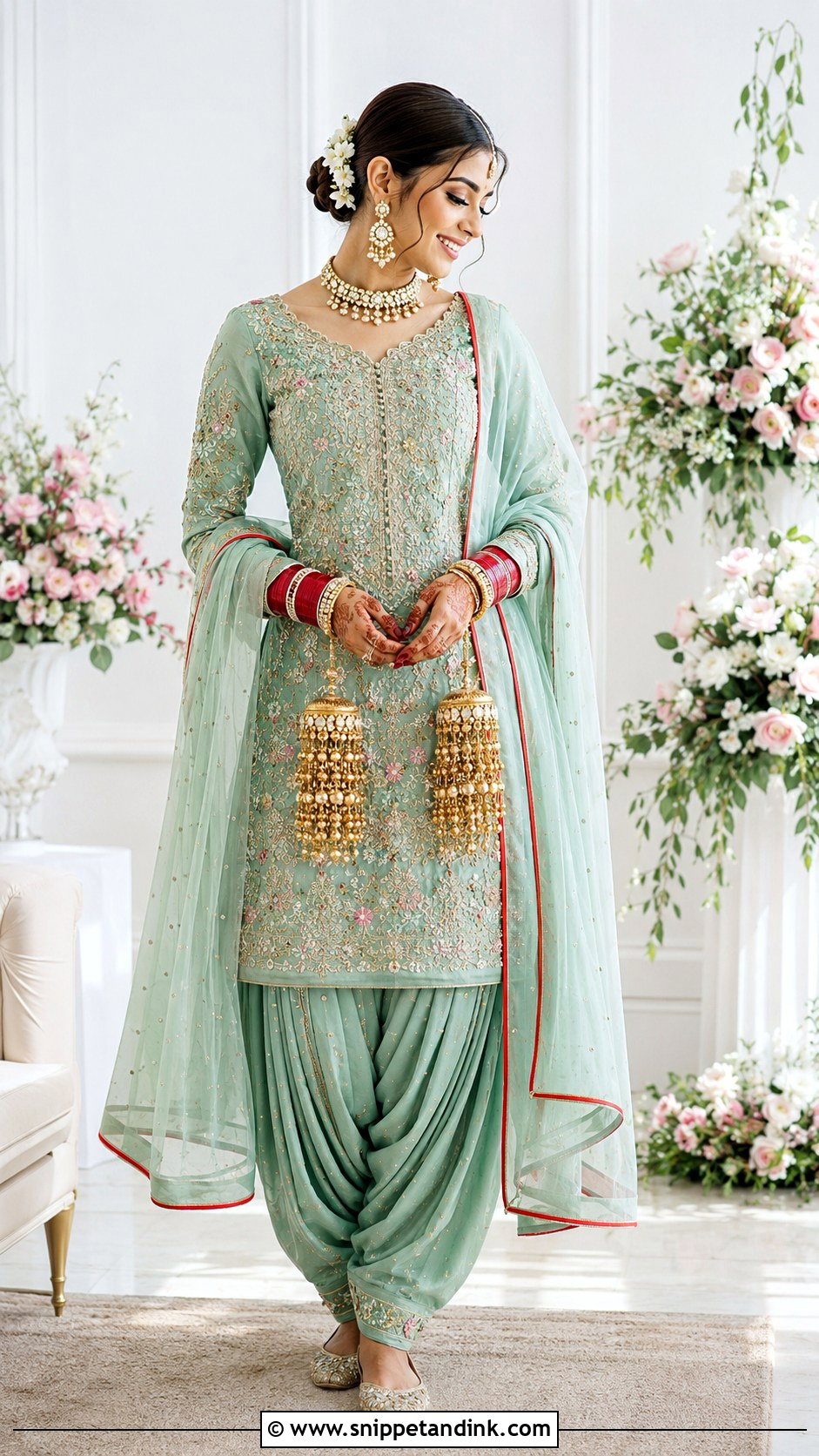
Mint green gives the sharpest contrast with red bangles of any colour on this list, and it reads fresh in morning light. A softly embroidered kurta, a pleated salwar and a sheer dupatta are traditional enough for the ritual. I’d keep the work restrained, gota or thread rather than dense sequins, so the kaleere have room to shine. A narrow red border on the dupatta ties it all together. Metallic juttis, kundan studs and a centre-parted low bun complete the look.
5. Maroon Velvet Suit Chooda Ceremony Outfit
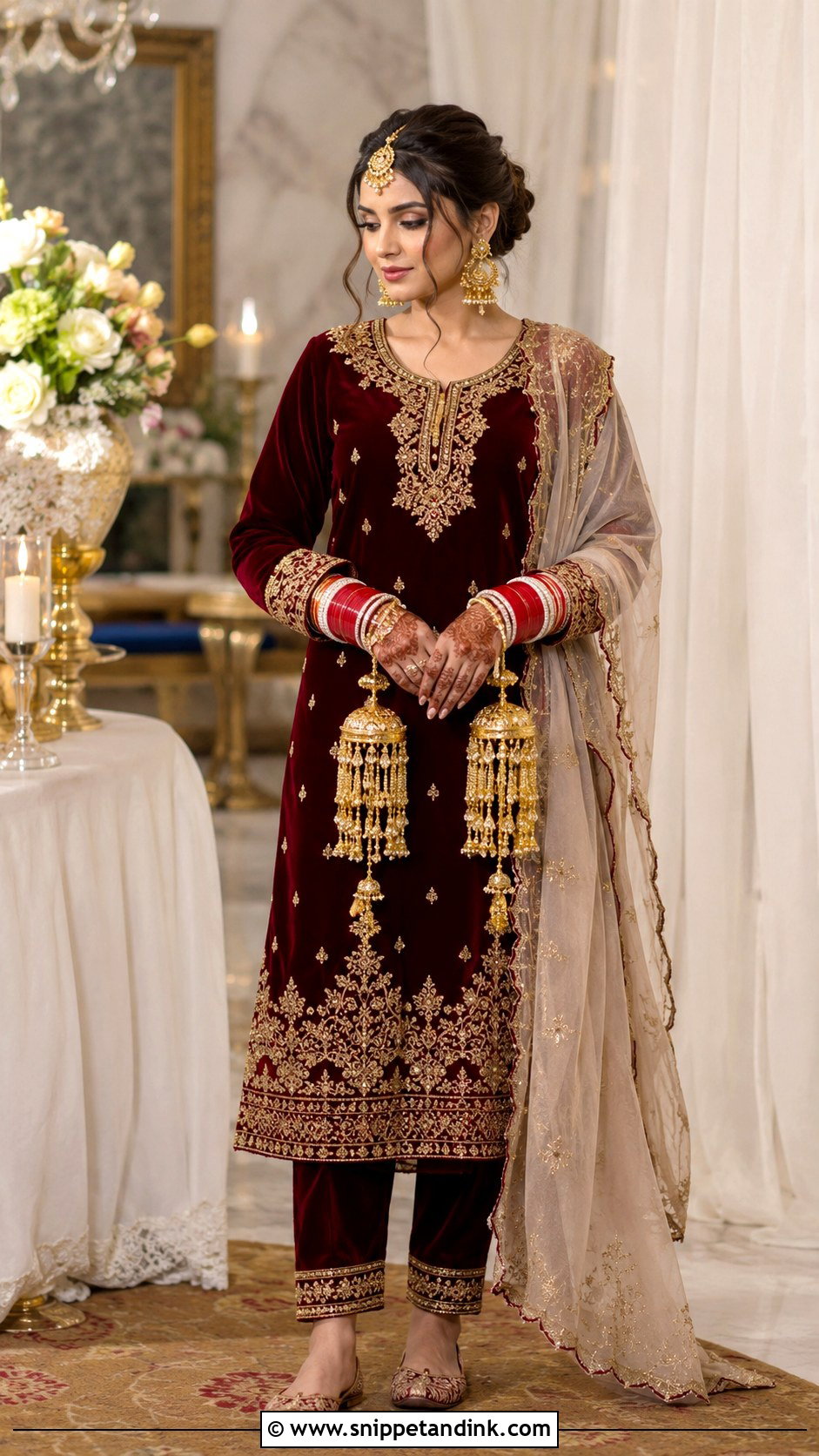
Maroon velvet belongs to a winter chooda ceremony, and it’s warm, so don’t wear it to a summer morning ritual in a packed living room. Antique-gold embroidery at the neckline, cuffs and hem is enough decoration. Velvet cuffs are thick, and the one fitting detail I check is whether the sleeve can be pushed above the wrist without bunching; if it can’t, ask the tailor for a slightly wider opening. Pair the knee-length kurta with straight silk pants and a lighter organza dupatta so the heavy fabric doesn’t overwhelm you. Skip extra bracelets entirely.
6. Mustard Phulkari Gharara Chooda Ceremony Outfit
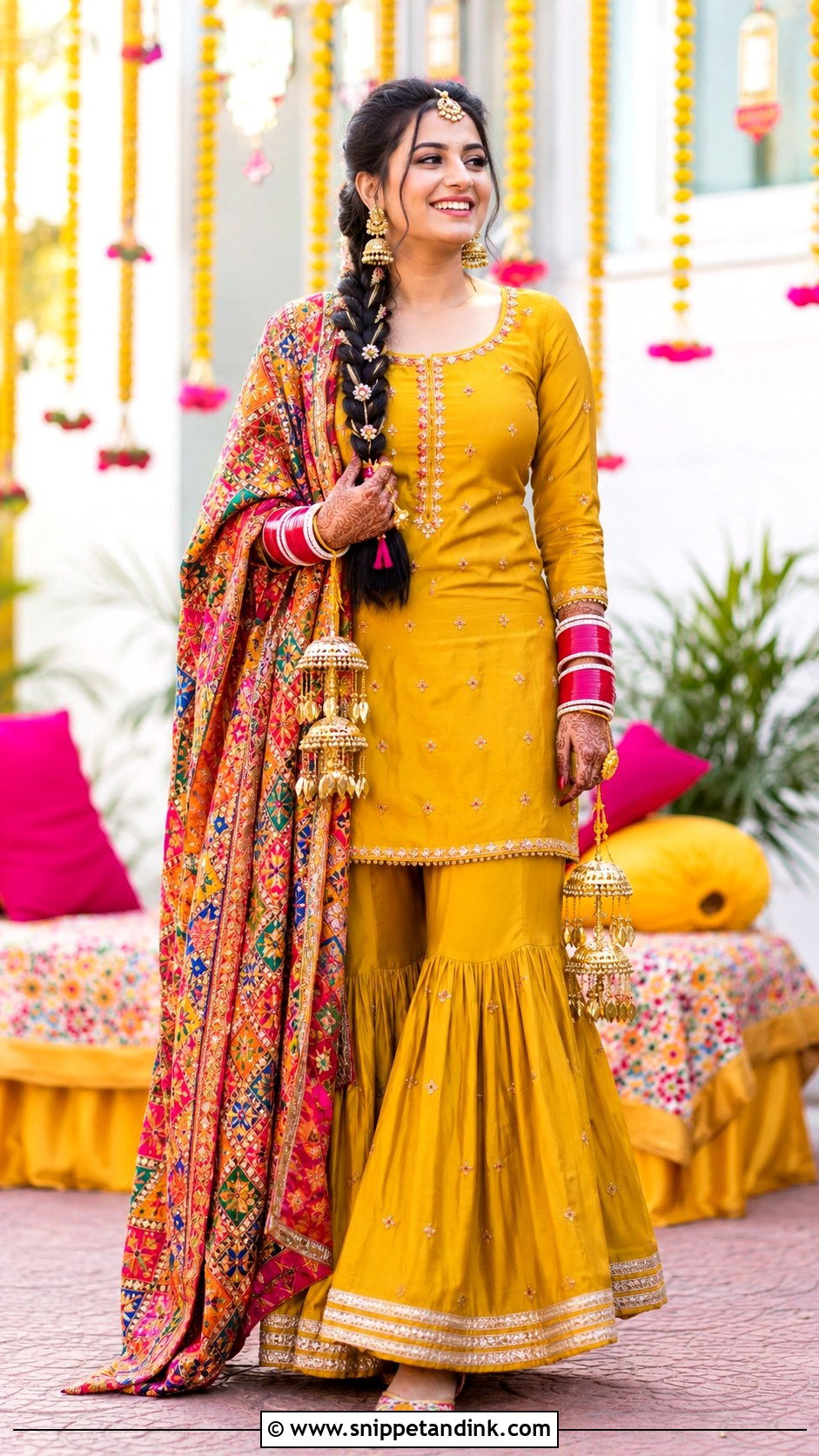
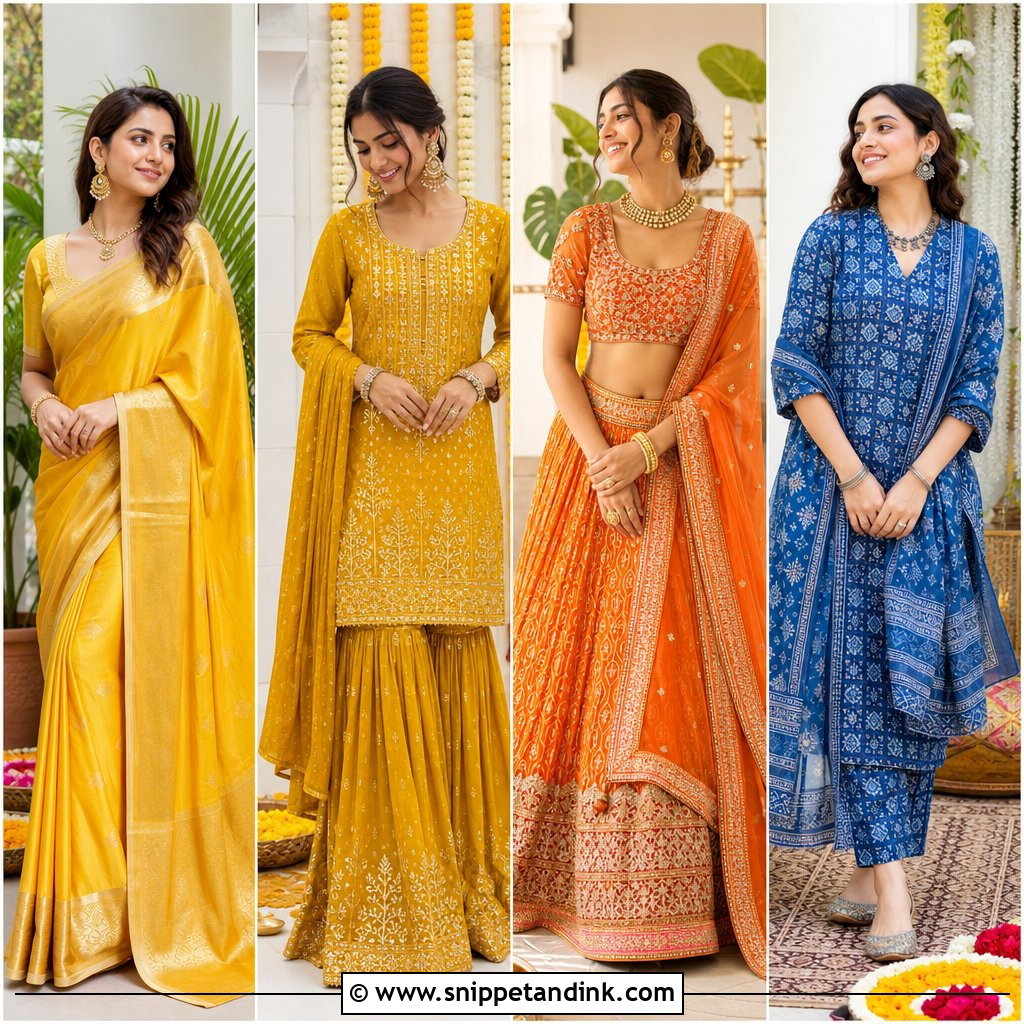
Mustard and phulkari make the cheeriest chooda look here. Keep the short kurta and gharara fairly plain and let a colorful phulkari dupatta do the work with its pink, red, orange and green threadwork. Because the dupatta is busy, you need very little jewelry: gold hoops or jhumkas and a simple maang tikka. Make sure the three-quarter sleeves have roomy openings. A loose braid with a paranda adds a Punjabi touch that suits a daytime ceremony full of dhol and dancing.
7. Powder Blue Mirror Work Chooda Ceremony Outfit
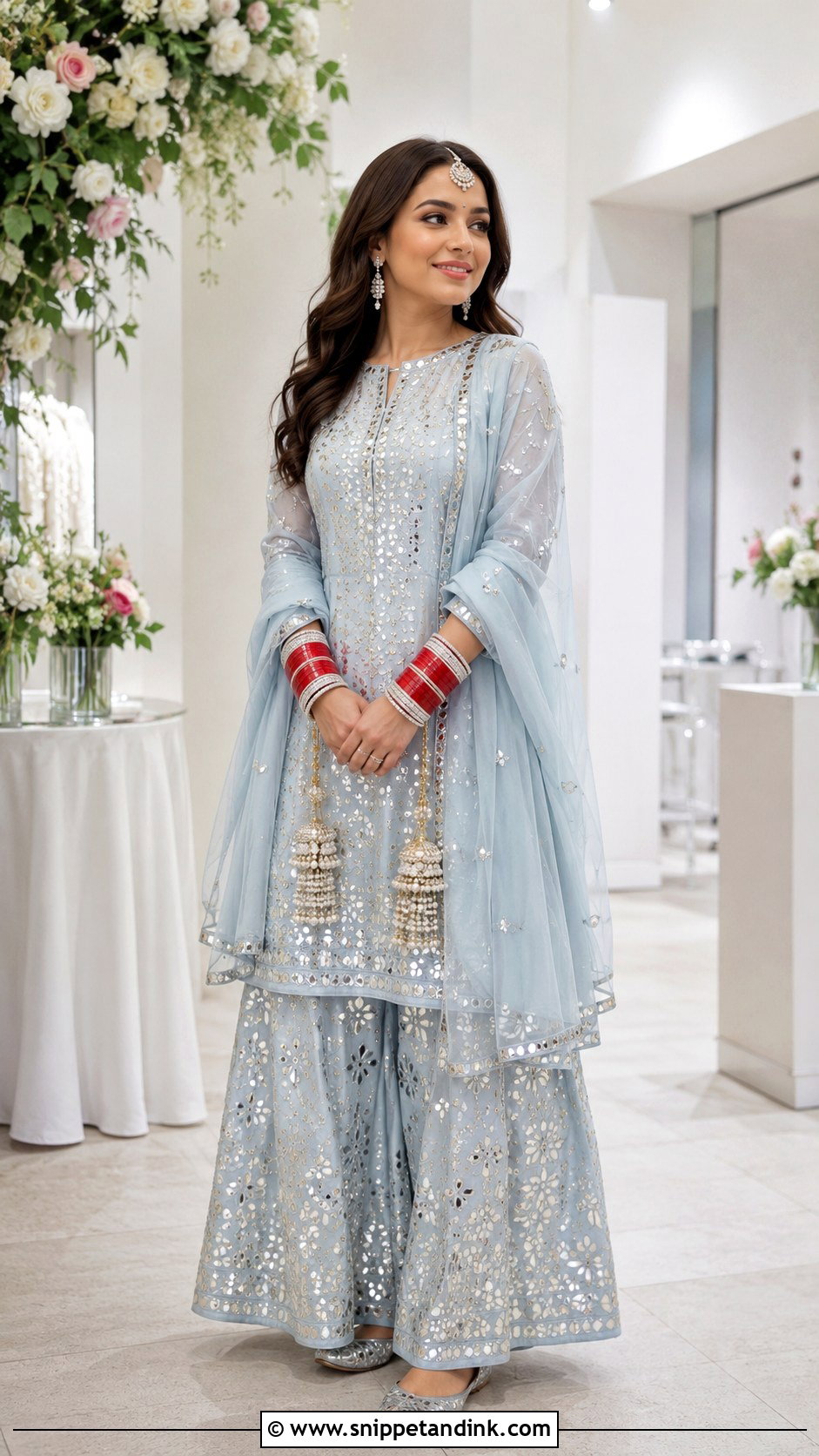
Mirror work on powder blue throws light in every direction, which is lovely in person and a little tricky in close-ups. Small mirrors can bounce flash back as bright spots, so I’d choose scattered mirrors rather than dense panels near the wrists and chest. The cool blue makes red bangles look brighter, so close-up photos of the chooda come out vivid. A straight kurta with sharara or palazzo, silver-toned juttis, pearl earrings and a slim tikka are all you need; avoid any extra wrist sparkle.
8. Lavender Organza Lehenga Chooda Ceremony Outfit
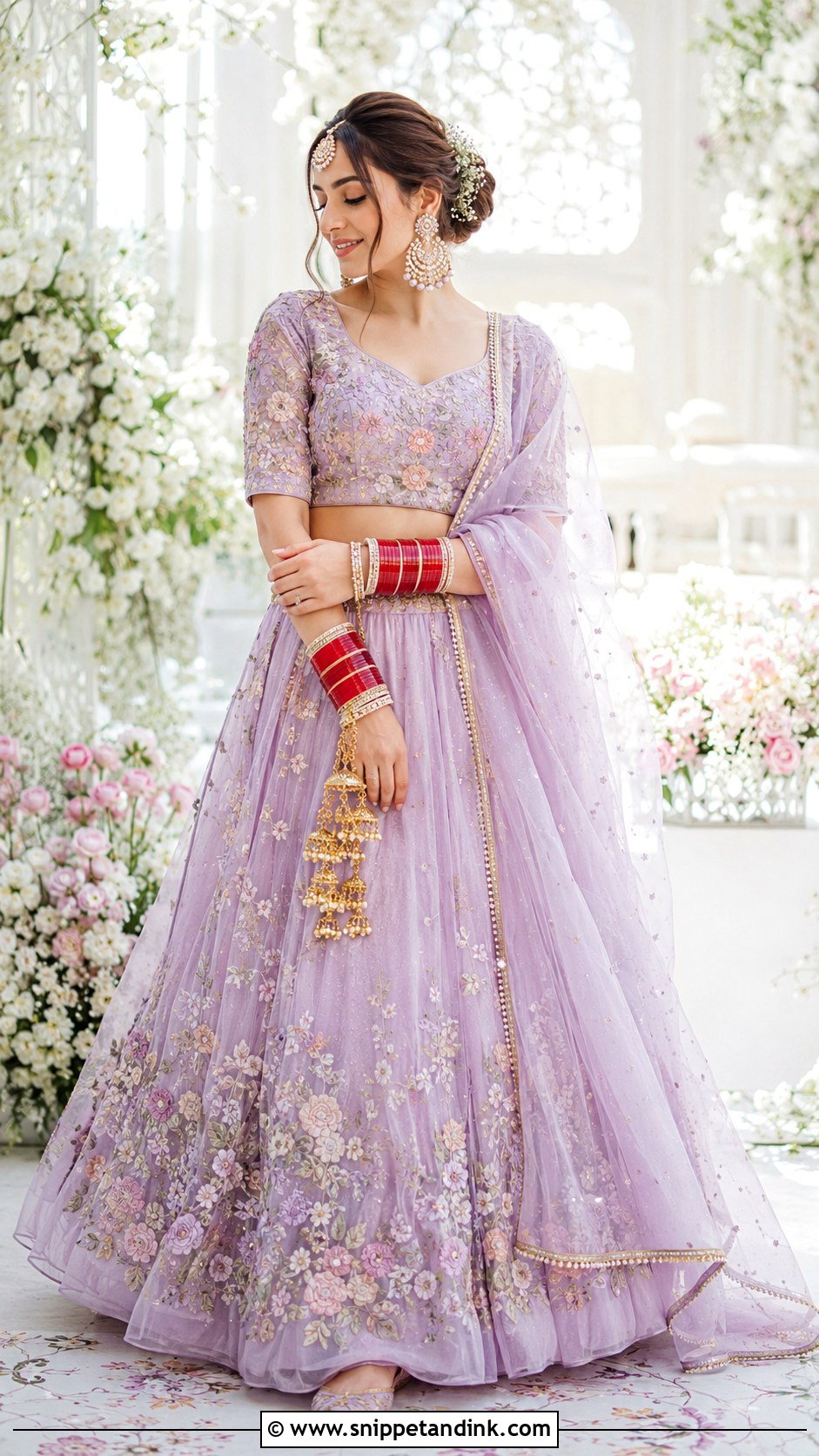
A lavender organza lehenga gives you a fuller bridal shape without wearing your main wedding outfit a day early. Organza is light but slightly stiff, and when you sit on floor cushions the skirt can tent up in front of you. Try sitting in it before you commit and choose a skirt with soft cancan or none at all. Keep the embroidery delicate: pearls, silver thread, pastel sequins. Repeat a touch of red through your lip or a few small flowers so the chooda doesn’t look like it belongs to another outfit.
9. Peach Peplum Sharara Chooda Ceremony Outfit
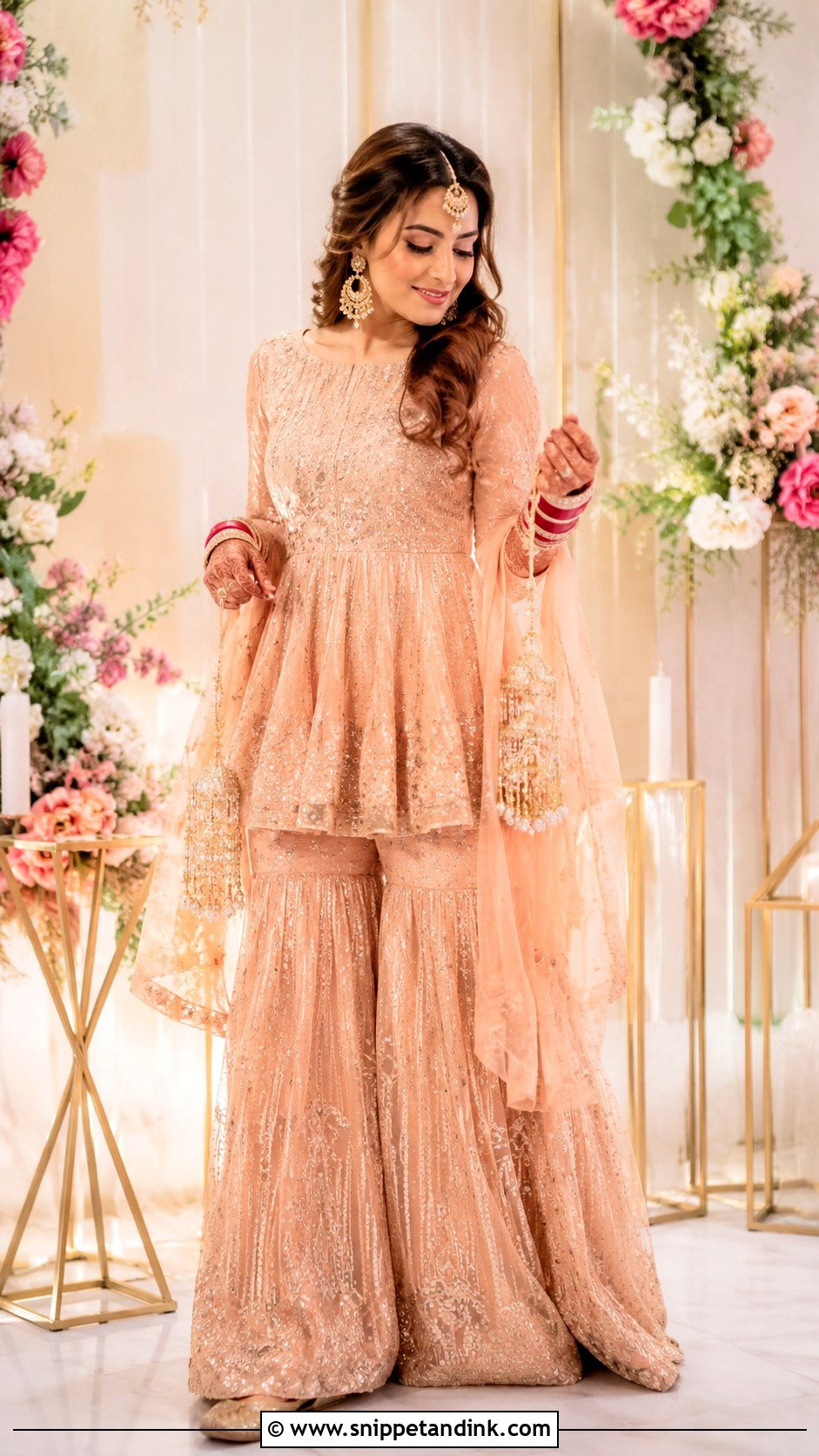
Peach peplum with a sharara is the most fashion-led option here, and it’s still comfortable. The fitted waist and flared hem give definition, while the wide sharara lets you sit and move freely. With a peplum, keep the dupatta draped over one shoulder only; wrapping it around the arms bunches over the flare and hides the waist. Gold or rose-gold embroidery, medium kundan earrings and a polished ponytail keep the neckline uncluttered. Peach sits comfortably with red, ivory and gold, so most chooda designs match it.
10. White And Gold Anarkali Chooda Ceremony Outfit
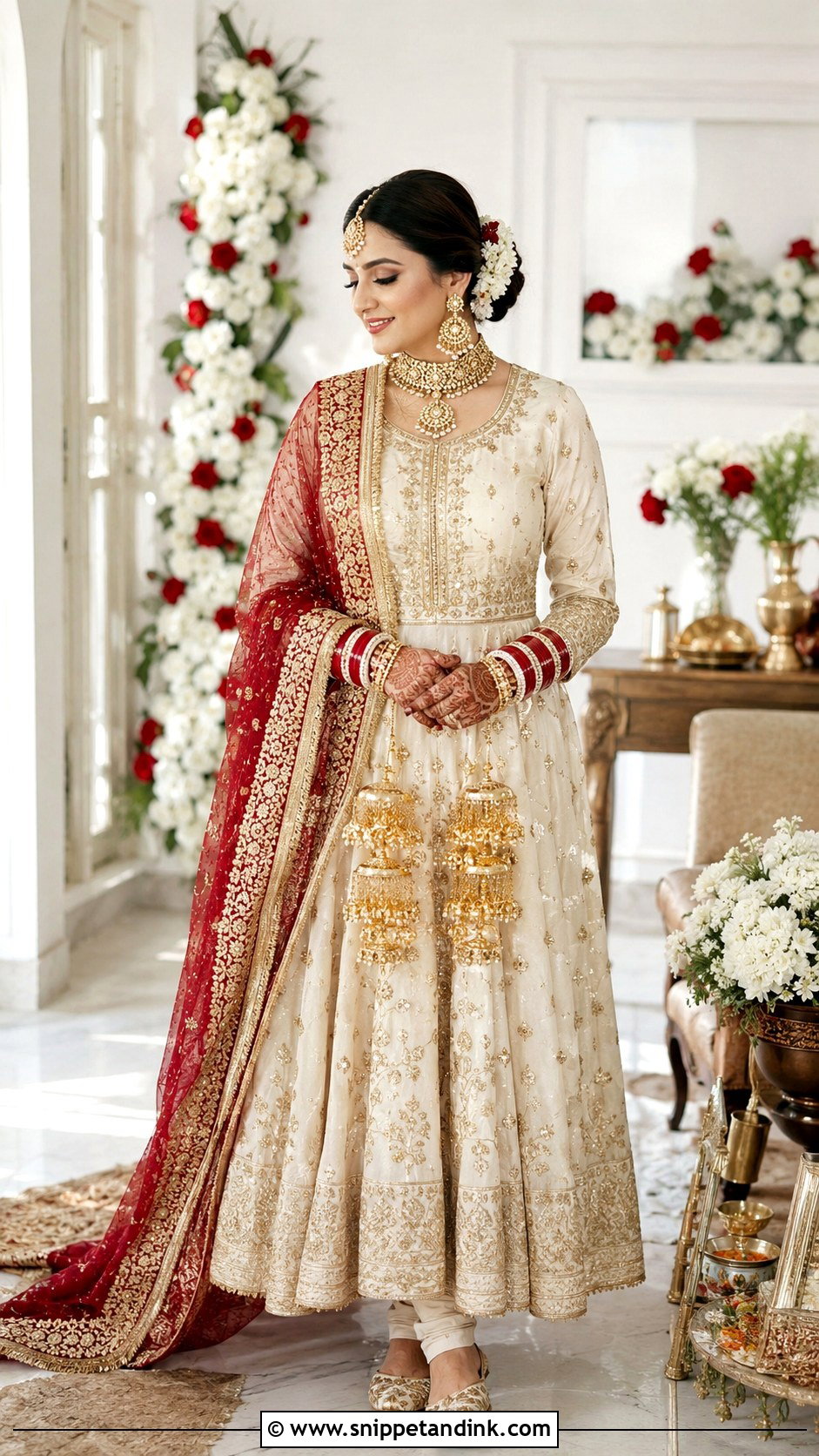
White and gold needs one honest conversation first: some families associate plain white with mourning and would rather not see it at a wedding ritual. If yours does, ivory, cream or pale beige gives the same clean backdrop. If white is welcome, choose an anarkali with real gold embroidery or gota borders, not a plain design, and add a red or deep pink dupatta with metallic trim for contrast. Elbow-length or softly flared sleeves keep the chooda clear. White and red flowers in a centre-parted bun bring the palette together.
11. Fuchsia Silk Lehenga Chooda Ceremony Outfit
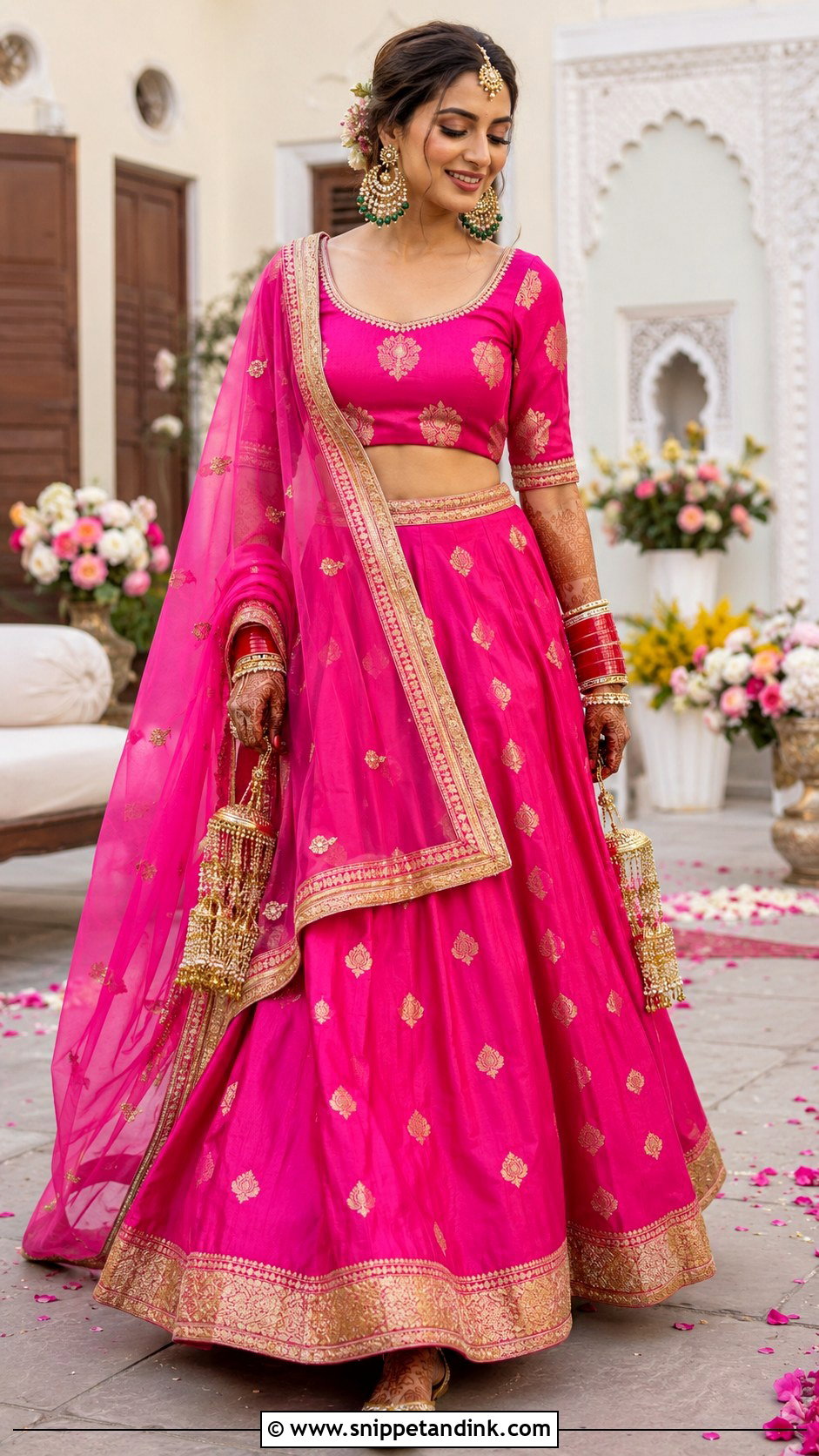
Fuchsia is joyful and loud, and it holds its own beside red-and-ivory bangles. The thing I’d watch is the skirt volume. A heavily layered lehenga is hard to manage when you’re seated on the floor, so choose lightweight silk with controlled flare. Emerald-coloured beads or green stones add a smart contrast to the pink palette. Pin the organza dupatta firmly to one shoulder so both hands are free for the ritual, and keep the bun low and sleek.
12. Coral Palazzo Suit Chooda Ceremony Outfit
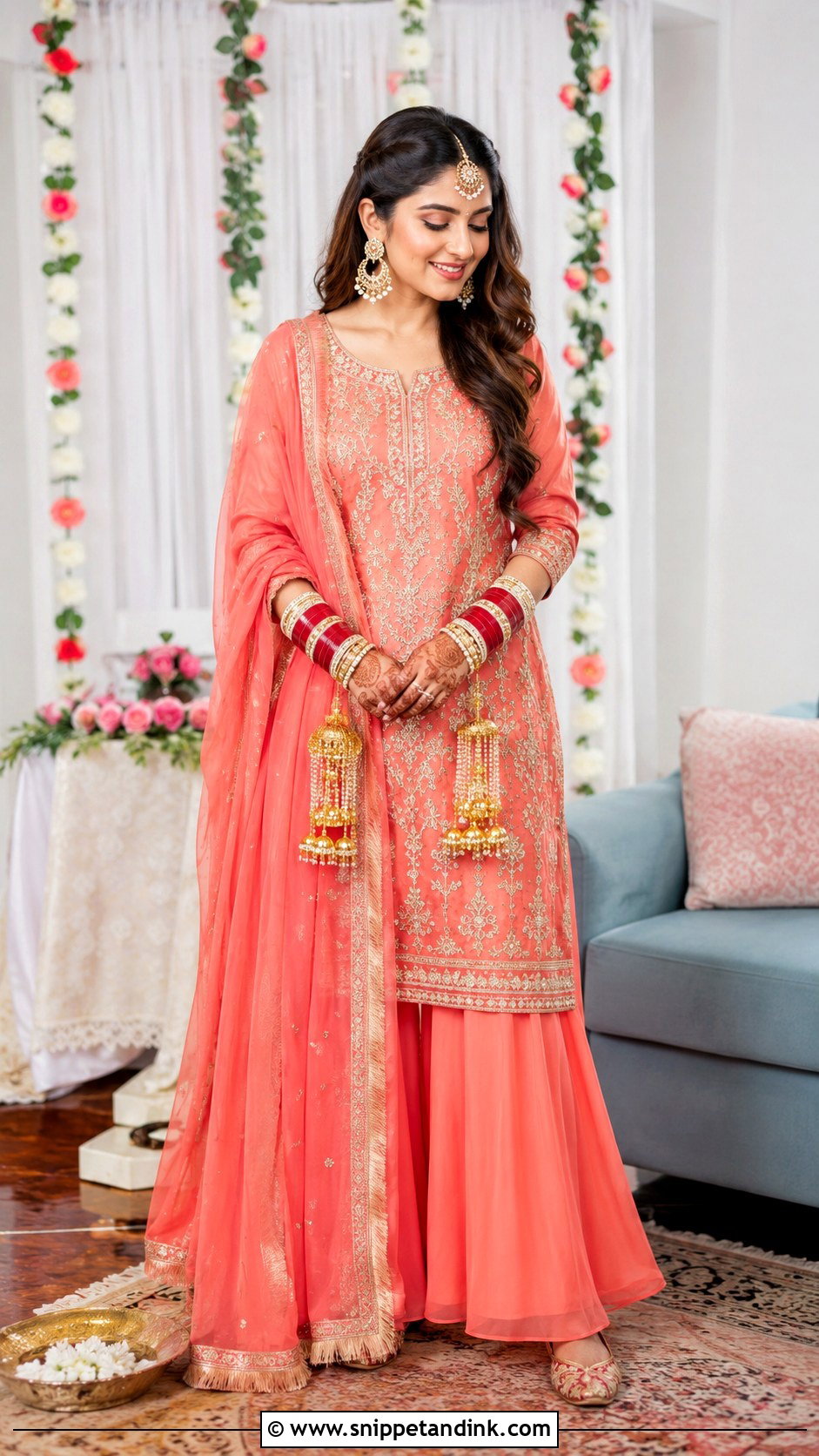
Coral palazzo suits are what I suggest to brides who know they’ll be moving between rooms, sitting on the floor and greeting relatives all morning. Palazzos let you fold your legs without fabric pulling, and side slits on the kurta stop it from riding up. Coral sits between pink and orange, so it suits both red bangles and gold kaleere. Elbow-length or wide three-quarter sleeves that slide up easily are essential. A half-up style with soft waves keeps it youthful; bridal earrings and a tikka make it clearly the bride’s outfit.
13. Green Gota Patti Chooda Ceremony Outfit
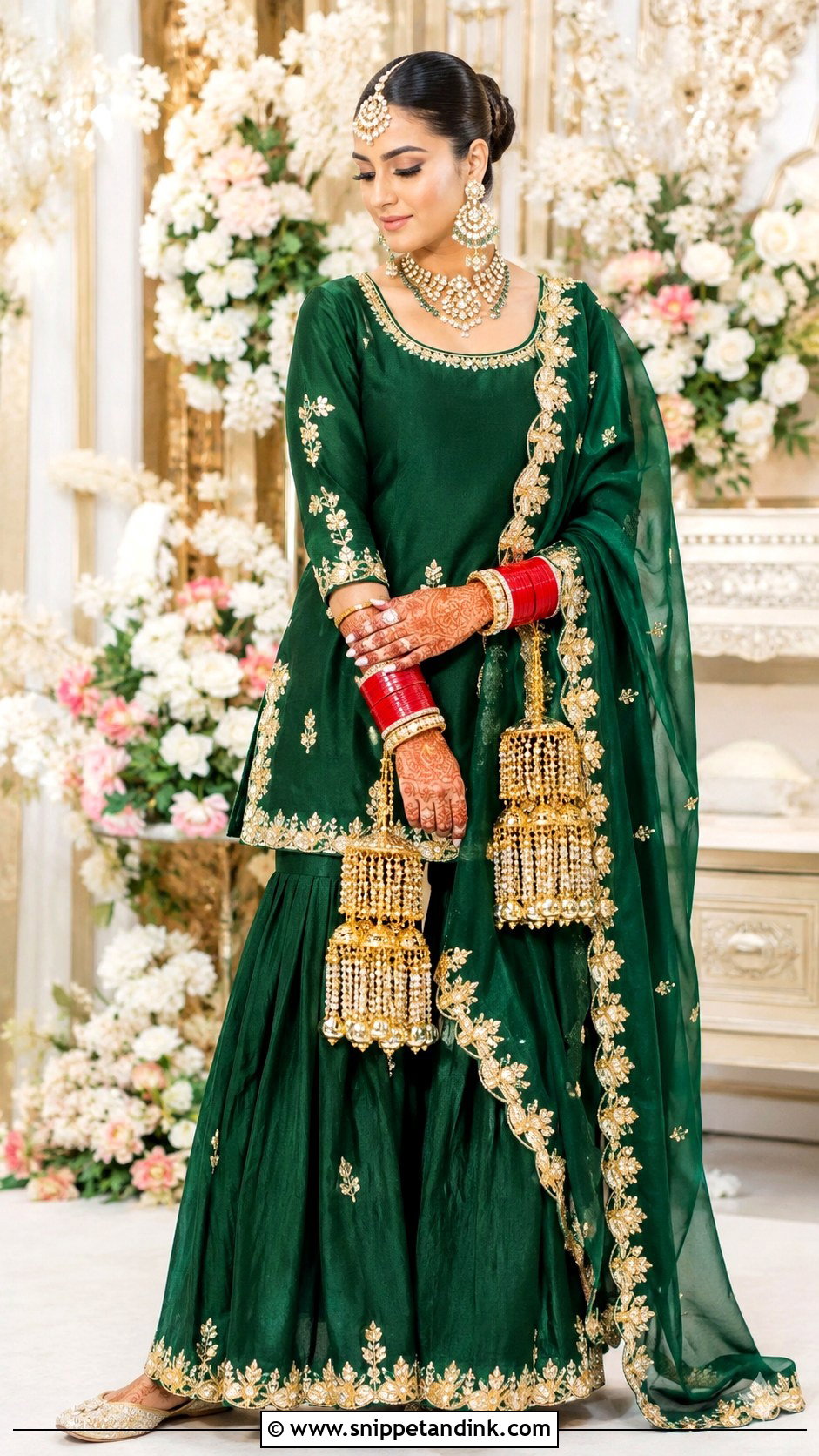
Bottle green or emerald with gold gota patti looks traditional and rich without heavy embroidery, and green makes red bangles pop. Choose a short kurta with sharara for movement, or a longer kurta with straight trousers for a cleaner line. I’d keep red off the rest of the outfit because the chooda already supplies it. A tikka with a small green stone ties the jewelry in. Deep greens suit autumn and winter ceremonies and look rich against cream or peach décor.
14. Red Bandhani Lehenga Chooda Ceremony Outfit
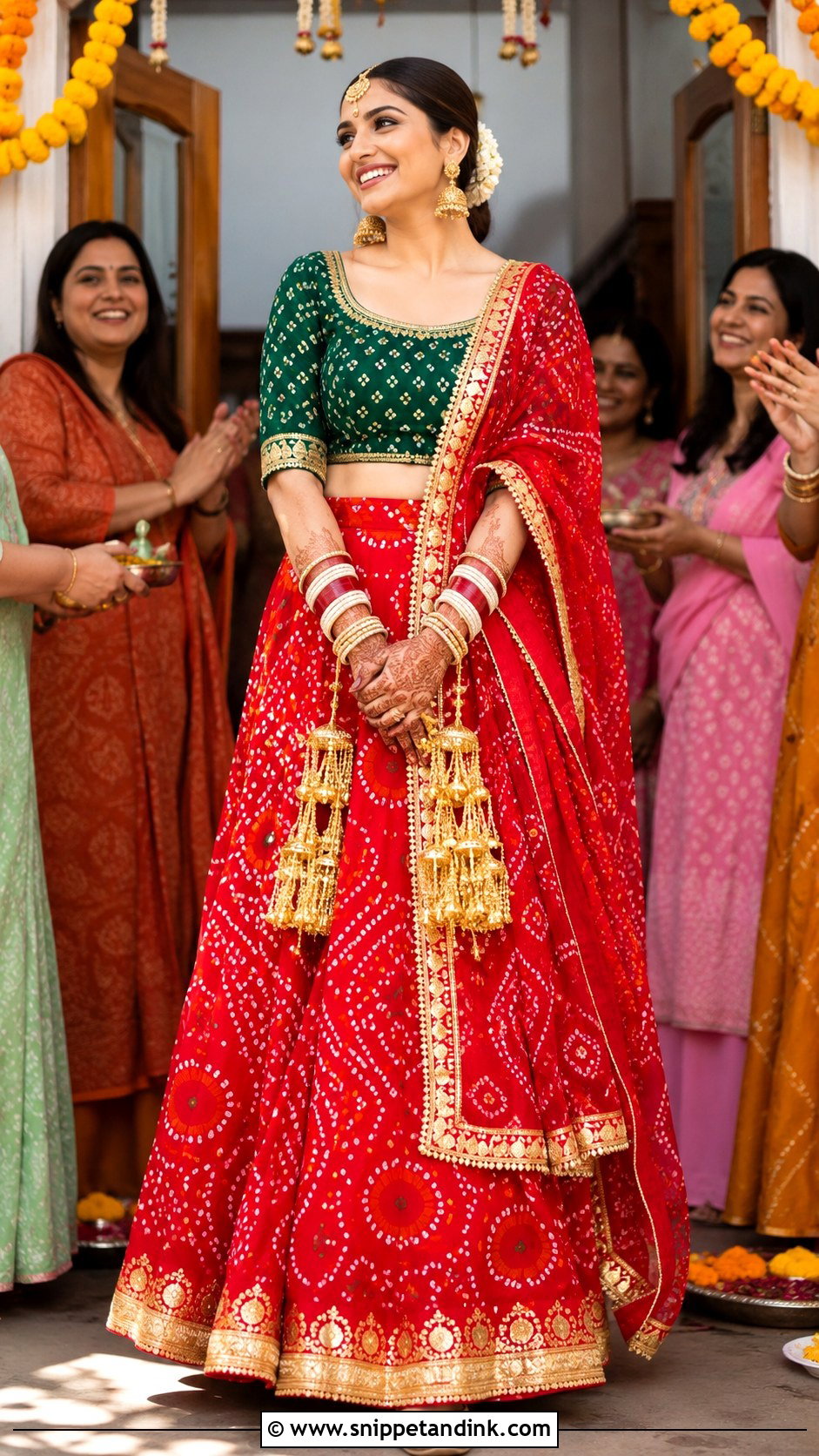
Bandhani is tie-dye worked dot by dot, and a red bandhani lehenga with a wide gota border carries real craft without the weight of embroidery. Because the print is busy, I keep the blouse simple, either gold, red or a contrasting green, and often skip the necklace altogether. A bandhani dupatta can be pinned on one shoulder or draped over the head for blessings. Real bandhani can bleed its dye when damp, so keep it away from wet hands during the milk-and-water rituals some families do. Traditional jhumkas and a small borla or tikka finish it.
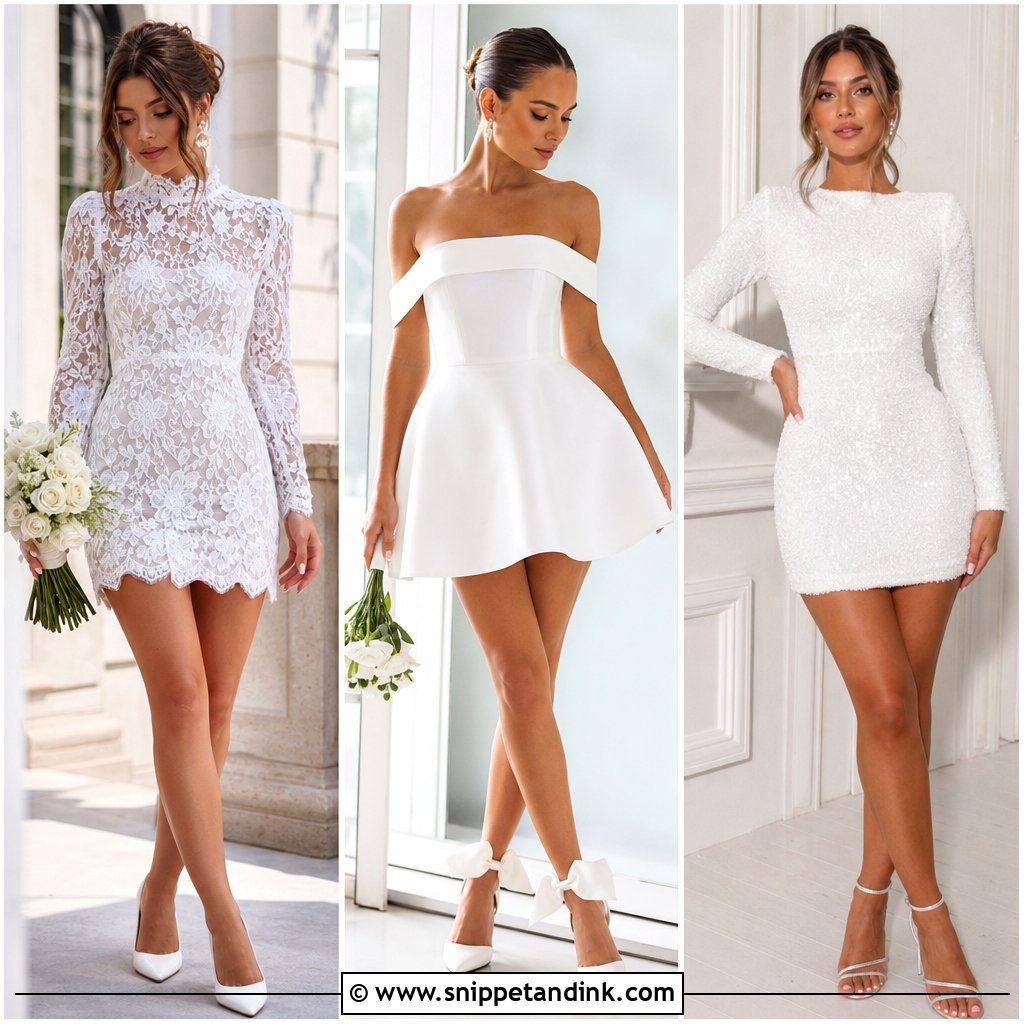
15. Pastel Floral Kurta Set Chooda Ceremony Outfit
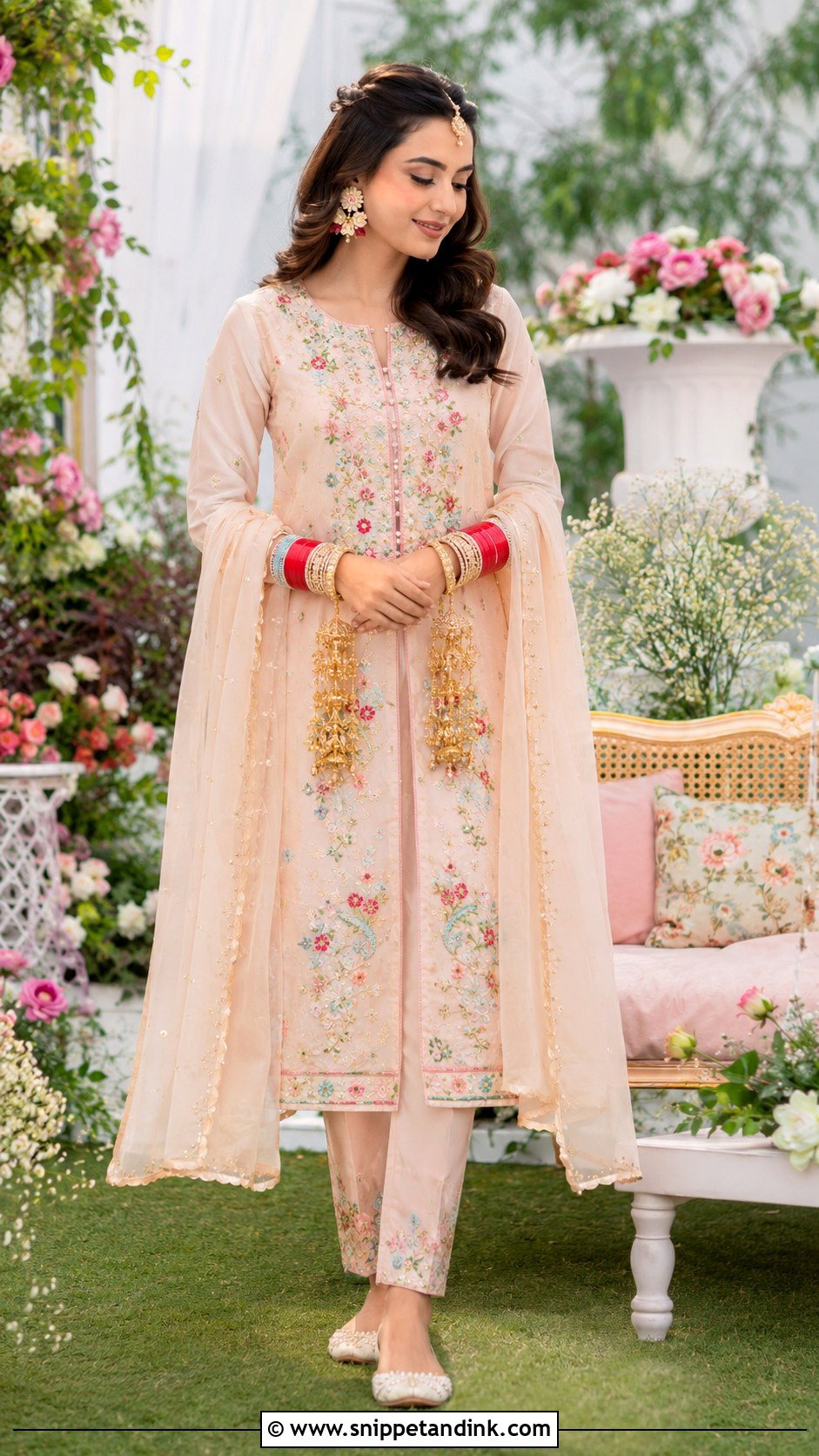
A pastel floral kurta set suits a bride who wants something quiet, especially for a small ceremony with close family. Pale pink, pistachio, cream or powder blue with multicolour flowers is pretty, but I look for florals that already include a little red or coral so the chooda doesn’t look out of place. Pair it with straight trousers or a comfortable salwar and a light organza dupatta. Keep sleeves at three-quarter length or shorter. Fresh flowers in a low bun carry the garden mood.
16. Royal Blue Brocade Suit Chooda Ceremony Outfit
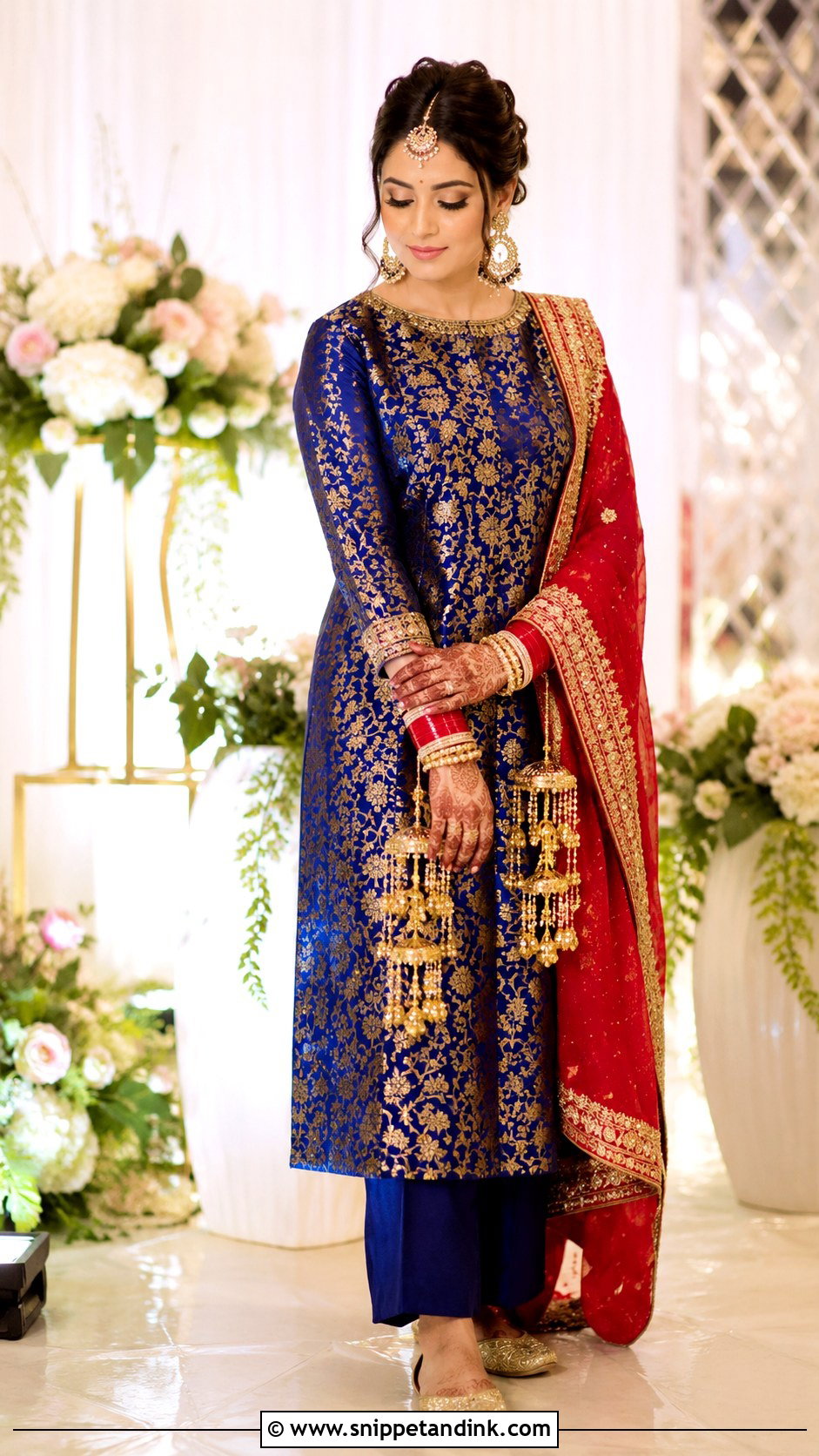
Royal blue brocade is strong enough to stand next to a red chooda without being overshadowed. Brocade is a stiff weave, and large motifs plus a heavy necklace quickly look crowded, so I’d keep the neckline clean and pair the kurta with plain silk trousers or a flowing salwar. Check the sleeve openings: brocade doesn’t stretch, and a snug cuff won’t push up over the forearm. An evening or winter ceremony suits this look best. A sleek centre-parted bun and antique kundan earrings complete it.
17. Beige Chikankari Sharara Chooda Ceremony Outfit
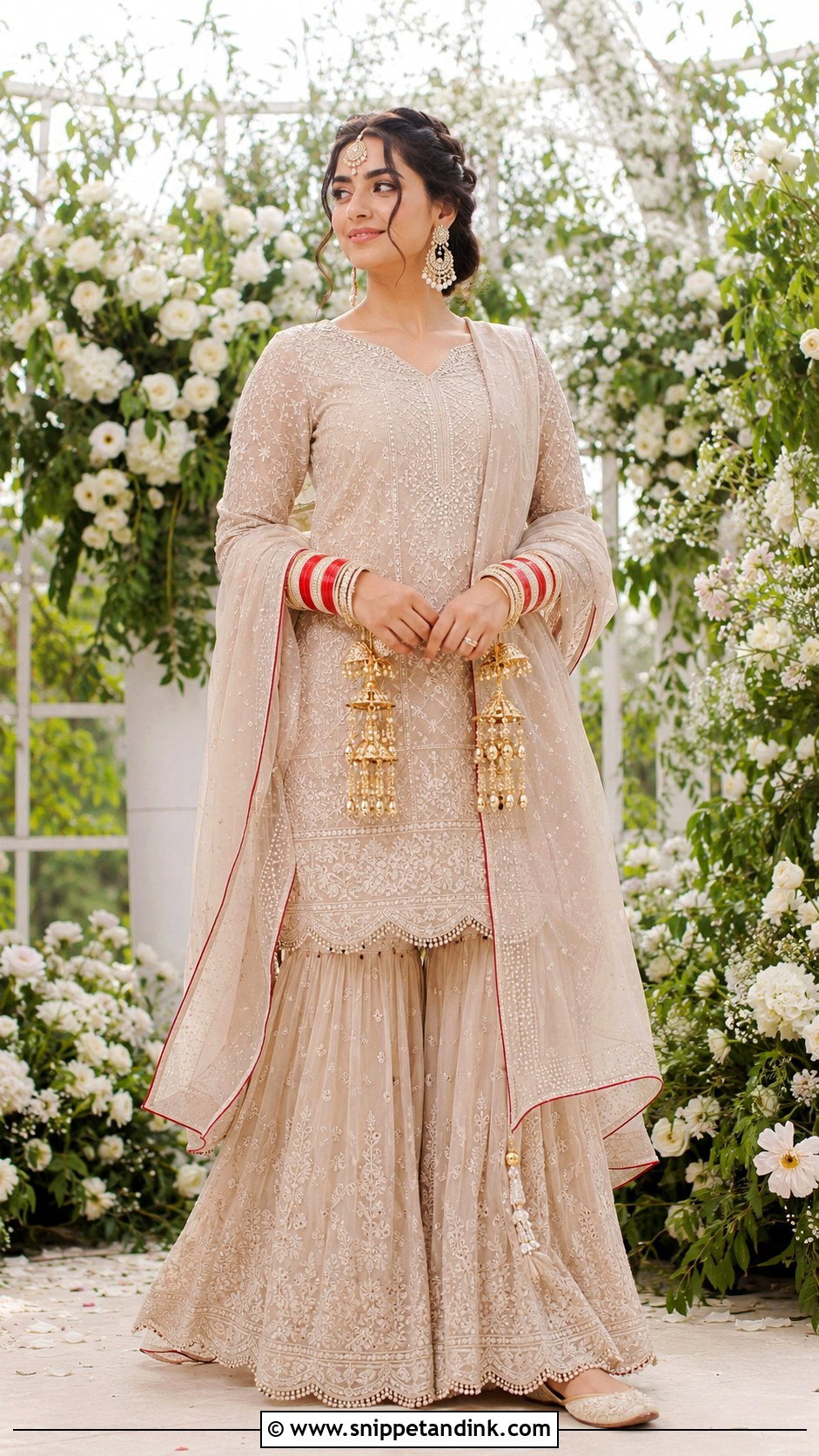
Chikankari is hand embroidery in fine white or tonal thread, and on beige it gives a calm, textured backdrop for the bangles. The risk is beige-on-beige going flat on camera, so choose a kurta where the embroidery has visible relief, or sequin and pearl touches that catch light. A sheer dupatta edged in red piping connects the outfit to the chooda. Chikankari on cotton or georgette is also one of the coolest fabrics for a warm-weather ceremony.
18. Rani Pink Patiala Suit Chooda Ceremony Outfit
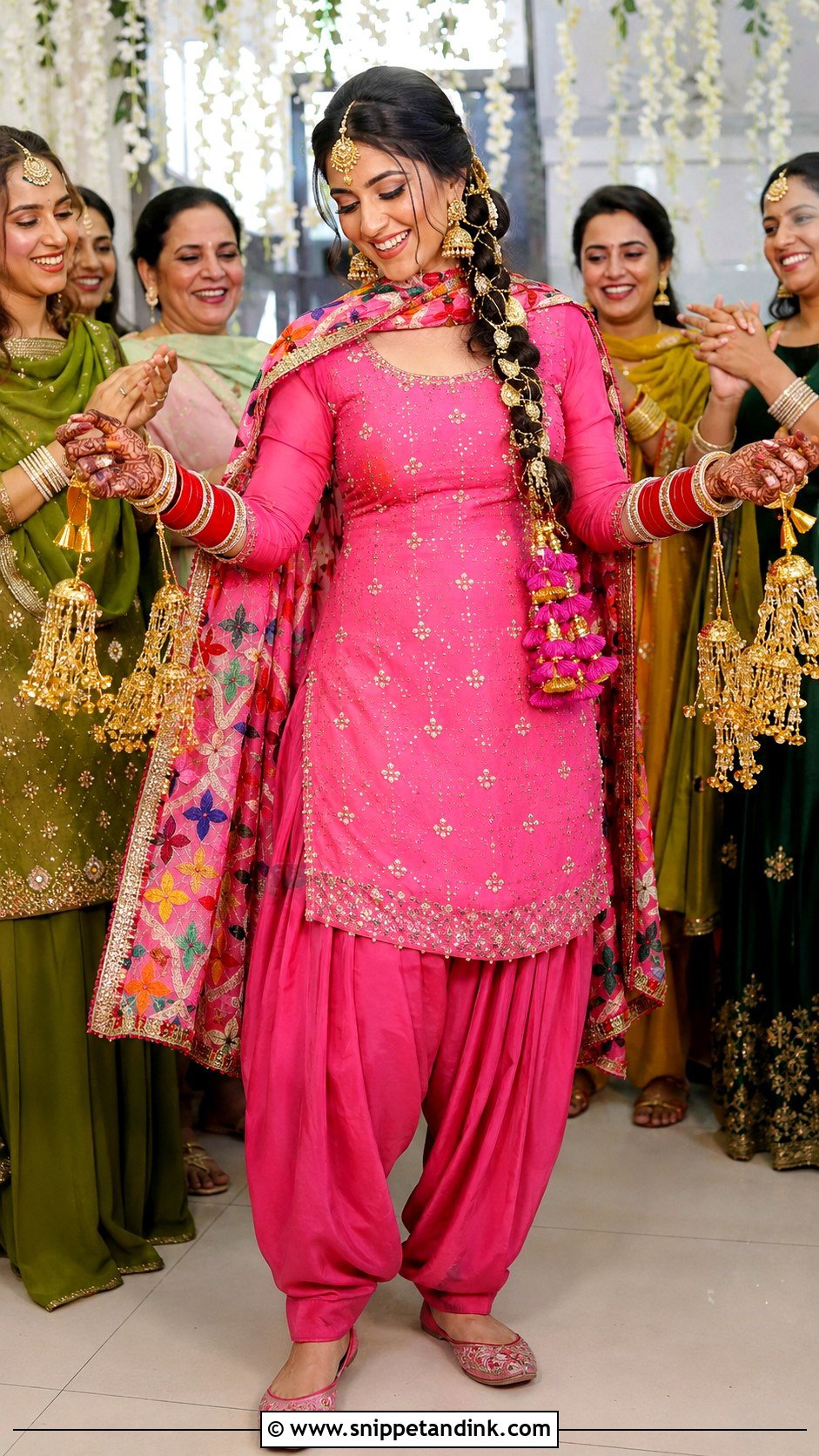
A bright rani pink kurta with a Patiala salwar is the most joyfully Punjabi outfit here and the easiest to dance in. The Patiala’s deep pleats add volume below, so keep the kurta closer to the body for balance. Loose elbow-length sleeves and gold embroidery at the neckline and hem keep it bridal. An orange, red or phulkari dupatta adds movement. Add a long braid with a paranda, and you’ve got a look made for laughing with relatives rather than sitting still.
19. Rust Orange Jacket Lehenga Chooda Ceremony Outfit
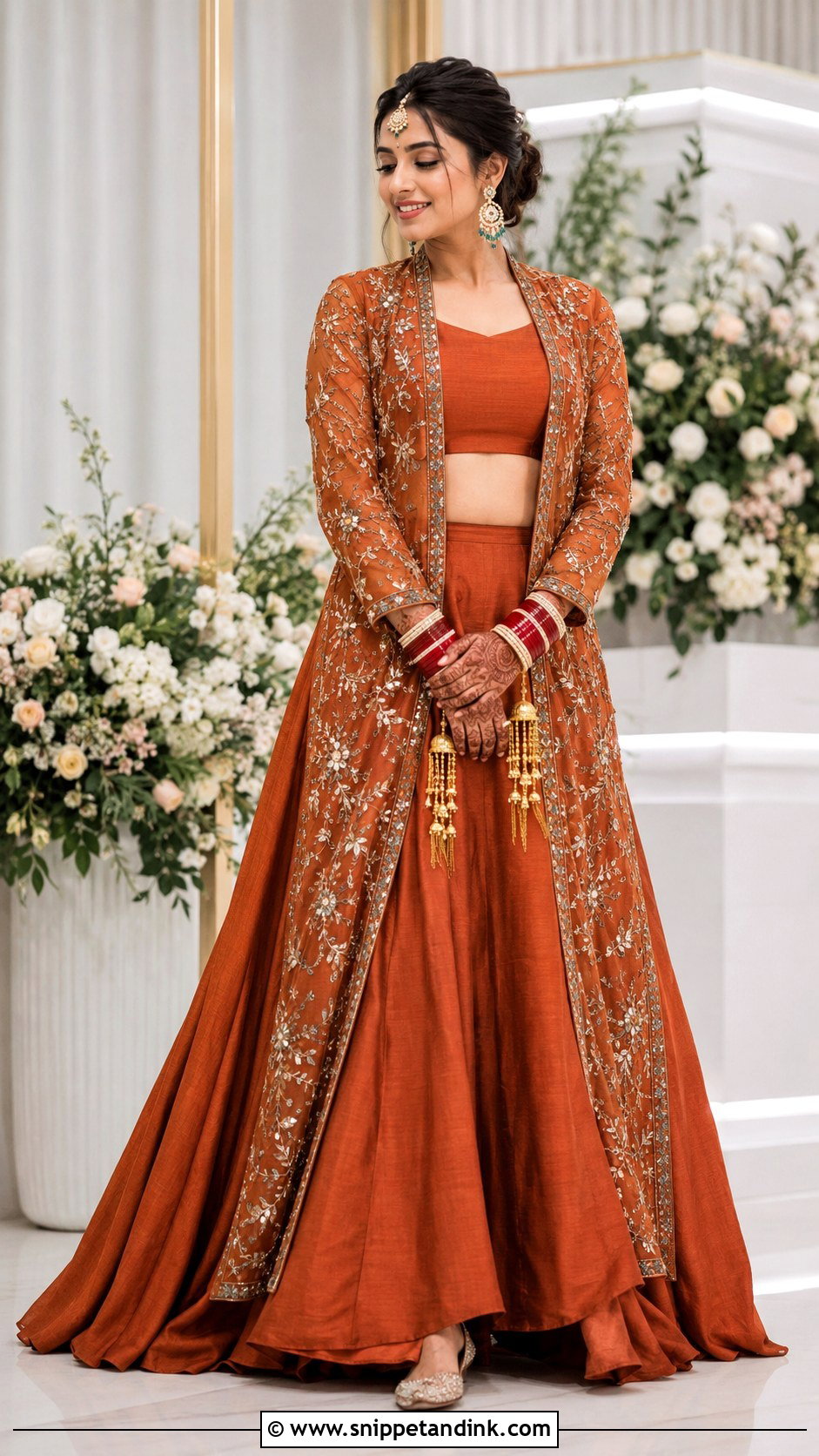
A rust orange jacket lehenga layers an open embroidered jacket over a light skirt and simple blouse, and often you can skip the dupatta entirely, which leaves your arms completely free. The jacket’s sleeves are where to look closely: they must be wide enough to slide above the wrist, because a fitted jacket sleeve can’t be pushed up without creasing the embroidery. Gold thread, mirror or floral work gives it a bridal finish. Rust complements red bangles while still looking clearly different from wedding-day red.
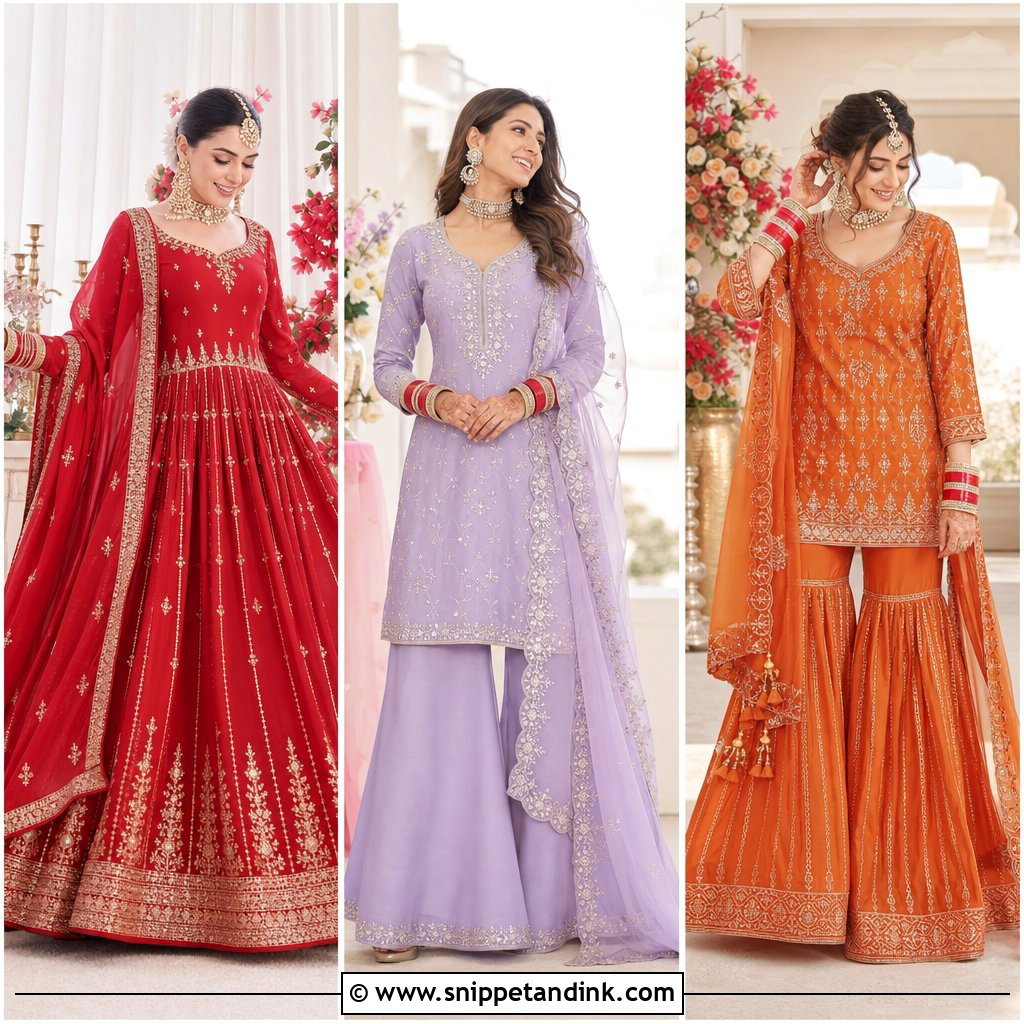
20. Cream Banarasi Saree Chooda Ceremony Outfit
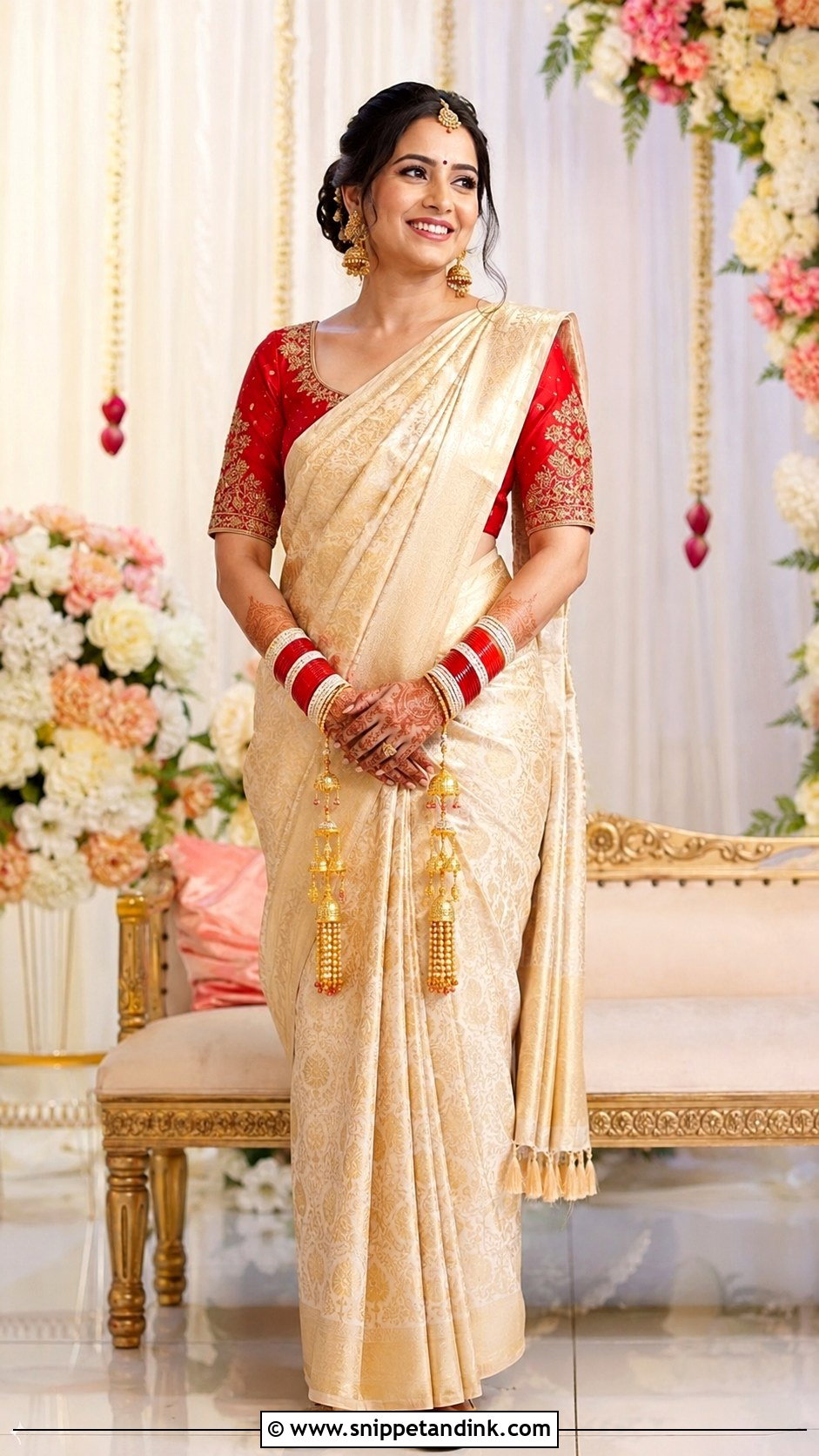
A cream Banarasi saree with a red blouse is classic and graceful, but sarees take the most practice of anything here. Pin the pleats securely and fix the pallu at the shoulder so it can’t slide down your arm while the bangles go on. An elbow-sleeve blouse keeps the wrists clear. If the ceremony is on floor cushions, practise sitting down and standing up in the full drape at least once beforehand; the pleats are the first thing to come loose. A low bun with white flowers and a red lip finish it.
Fabrics That Tangle With Swinging Kaleere
Once the kaleere are tied on, they hang and swing from the chooda with every movement. Their metal edges and loose beads catch on certain fabrics, and I’d rather a bride knows that before she chooses her dupatta.
- Open net and fine tulle snag the most easily. A pulled thread near the edge of a dupatta shows straight away.
- Raised sequins, cut-dana and mirror work on sleeves can hook the kaleere’s hanging pieces.
- Smooth silk, cotton, georgette and flat gota borders are the safest close to the wrists.
- Lace edging along a dupatta looks pretty, but drape it over the shoulder, never across the forearms.
The kaleere ritual also involves you shaking them over the heads of unmarried friends and cousins, so your arms will be up and moving quite a lot. A dupatta pinned at the shoulder, with nothing loose around the arms, saves you a lot of untangling.
Planning outfits for the weeks you’ll keep wearing it
Many brides keep the chooda on for weeks after the wedding, sometimes longer, depending on family tradition. If yours does, think about the everyday clothes you’ll wear with it: sleeves that stop above the wrist, wide cuffs or short sleeves, and colours that go with red and ivory. The bangles also scratch easily and lose their shine with harsh soaps and hot water, so take care with them when washing your hands.
Letting the Bangles Lead the Colour Plan
Comfort, family custom, the photographs and the design of your chooda all pull on the decision, and the chooda should usually win. Red suits and bandhani keep the mood deeply traditional; mint, lavender, peach and powder blue make it feel more modern. Either way, keep the wrists clear, avoid tight or heavily decorated cuffs, and choose a dupatta you can pin and forget. Do one full run-through at home, sitting, standing and holding your arms out, and you’ll spend the ceremony with your family instead of fixing your clothes.
You'll Like These Ideas:





Leave a Reply