
A chundadi is the head and shoulder drape that frames a bride through her rituals, and it’s the piece most families have the strongest feelings about. It comes from Gujarati wedding dress, where bandhani dots, gharchola checks and gota borders carry generations of meaning. These days brides wear one over lehengas, sarees, ghararas and modern skirt sets. In my fittings, the drape gets as much attention as the outfit itself, because it has to complement the embroidery without hiding it and stay comfortable on the head for hours. The twenty pairings below run from classic red bandhani to pastel organza, for different functions, builds and budgets.
Hand-Tied Bandhani or Printed Dots? What I Check at the Shop
Many chundadis sold as bandhani are actually printed, and the price gap between the two is large. Printed fabric isn’t wrong, but you should know which one you’re paying for. I run through the same checks every time.
- Feel the dots. Hand-tied bandhani leaves tiny raised points where each knot was tied. Printed dots are completely flat.
- Turn it over. On real bandhani, the dye goes right through the cloth, so the back looks almost as strong as the front. Print is noticeably paler on the reverse.
- Look for small irregularities. Hand-tied dots vary slightly in shape and spacing. Perfectly identical rows usually mean a machine.
- Ask about the base fabric. Silk and georgette drape well over the head; stiff synthetic blends slide off and trap heat.
Before buying, rub a damp white tissue on a corner. If colour comes off, the dye will bleed onto an ivory blouse, a panetar or your skin in a warm room, and the piece should be dry cleaned before the wedding.
1. Red Bandhani Chundadi With Bridal Lehenga
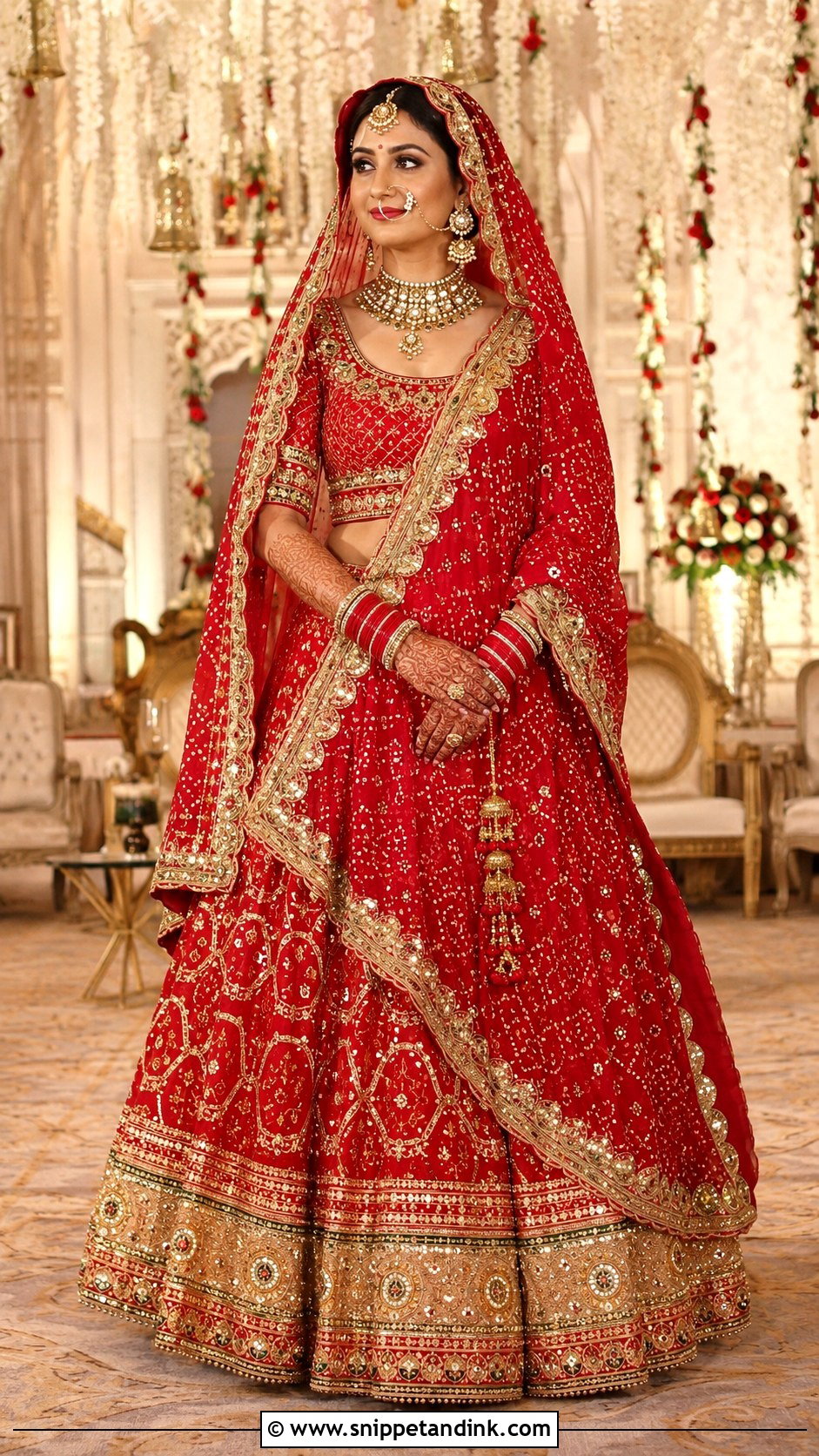
Red bandhani over a red lehenga is the combination most Gujarati grandmothers picture, and it still looks right in the mandap. I’d choose a light silk or georgette chundadi with neat white or yellow dots and a gold gota border, worn over a lehenga with zari, floral work or small mirrors, and a blouse with elbow sleeves. Kundan necklace, maang tikka, bangles and embroidered juttis complete it. Matching two reds is harder than it sounds. One is often slightly orange and the other slightly blue, so I hold them together by a window before anything is pinned. Drape it over the head and across one shoulder for the pheras and traditional Gujarati wedding portraits.
2. Green Bandhani Chundadi With Red Lehenga
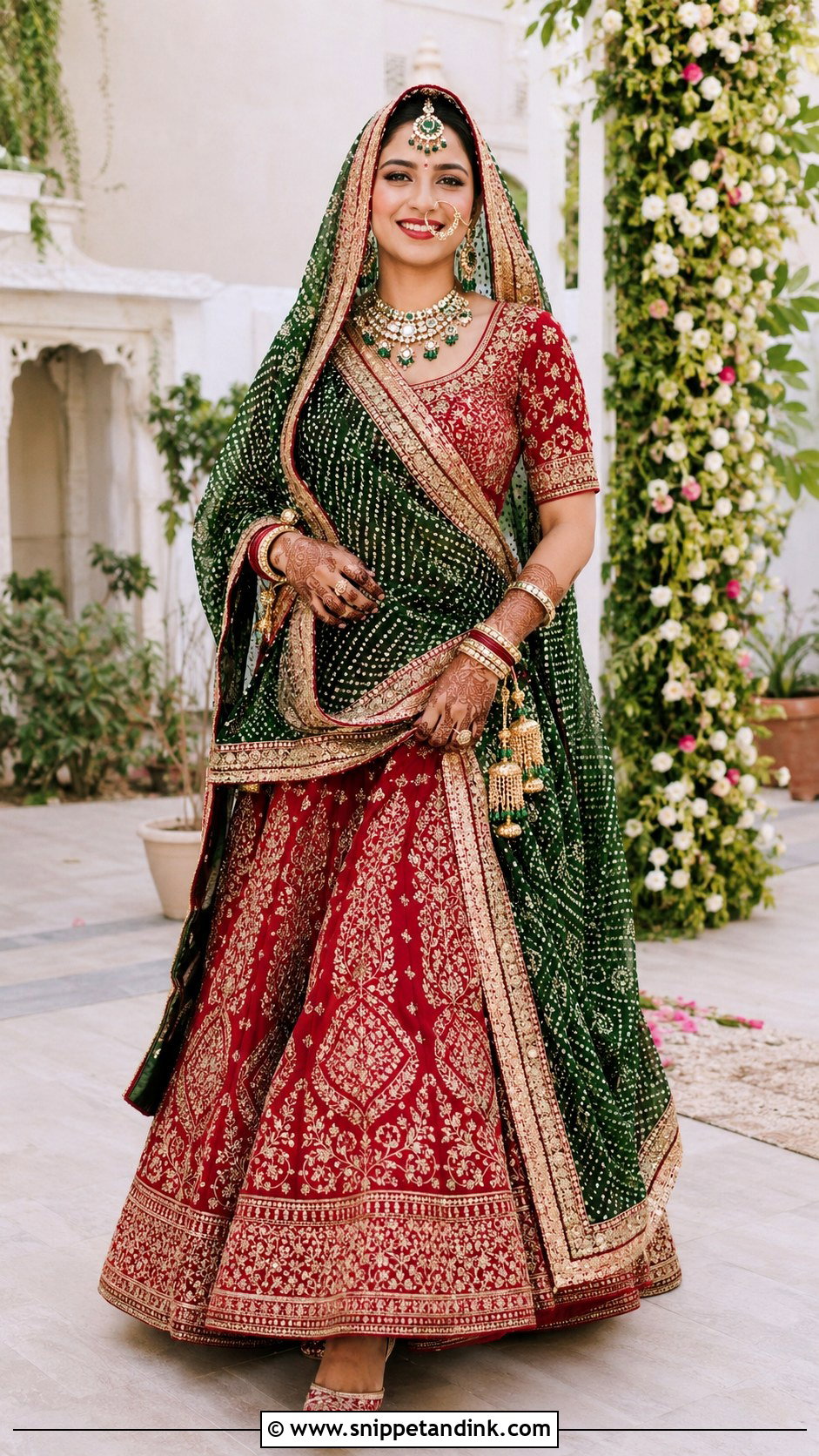
Green against red is classic contrast. A green bandhani chundadi with gold dots, a zari border and corner tassels, over a red lehenga whose gold embroidery bridges the two colours. A red blouse with green piping pulls it together, along with an emerald-accented kundan set, a fine nath and red footwear. The tassels are the detail I’d watch. Heavy corner tassels swing forward when you bend to touch elders’ feet, and can catch on bangles. Light silk ones are kinder. Pin the drape lightly at the shoulder so the waist and lehenga front stay visible.
3. Maroon Chundadi With Gold Bridal Lehenga
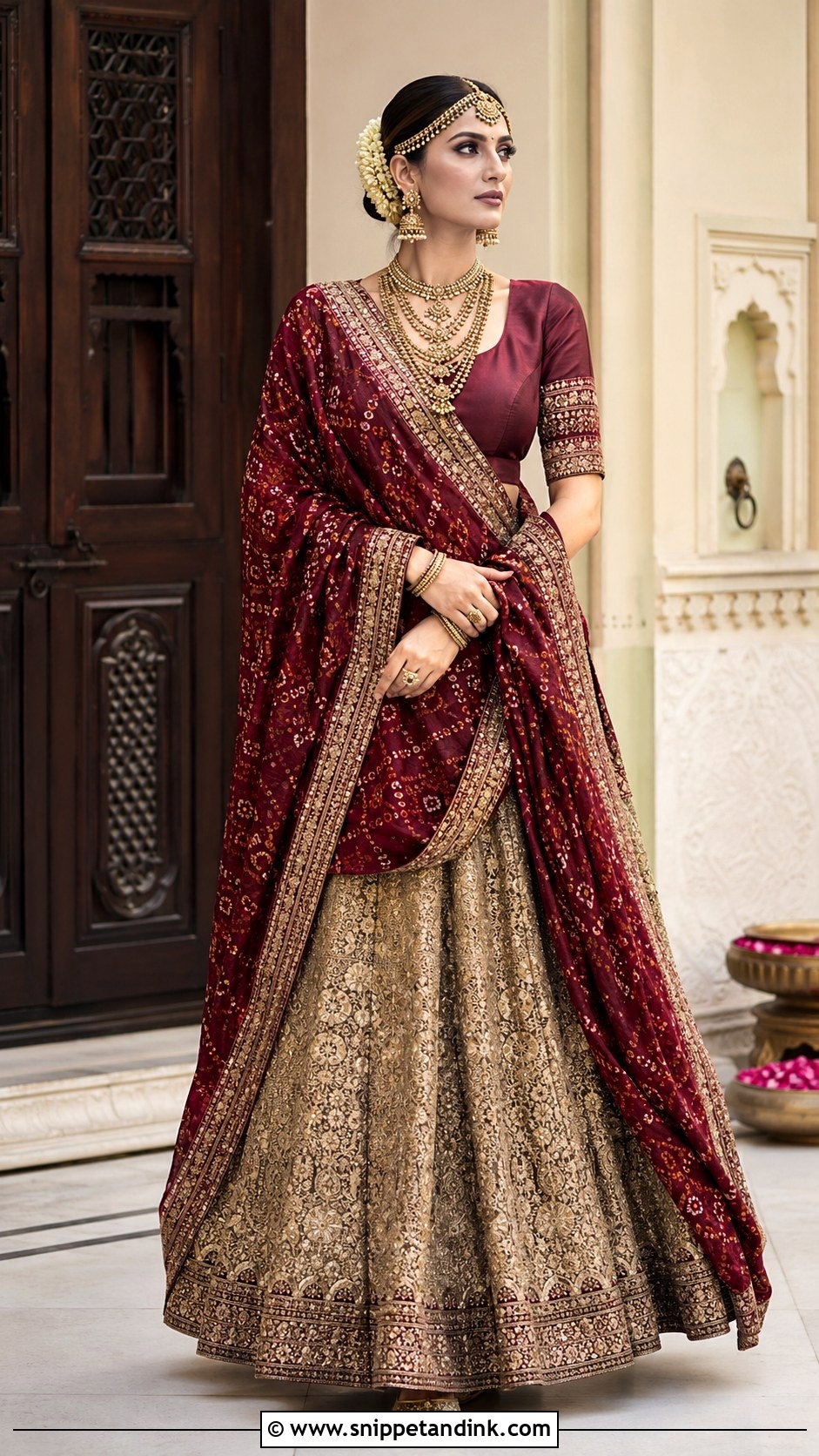
Maroon reads regal without the brightness of classic red, and it suits brides who look washed out next to scarlet. A maroon silk chundadi with a broad gold border and scattered paisleys, over an antique gold lehenga with zardozi or sequin work. Keep the maroon blouse’s embroidery moderate. Antique gold jewellery, layered necklaces, jhumkas, a matha patti and mojaris finish it. Under evening lighting, maroon can go almost brown; I check the colour under warm bulbs before buying if the ceremony is at night. A low bun with fresh flowers sits comfortably under the head drape. Heritage venues and evening ceremonies suit it.
4. Gharchola Chundadi With Panetar Saree
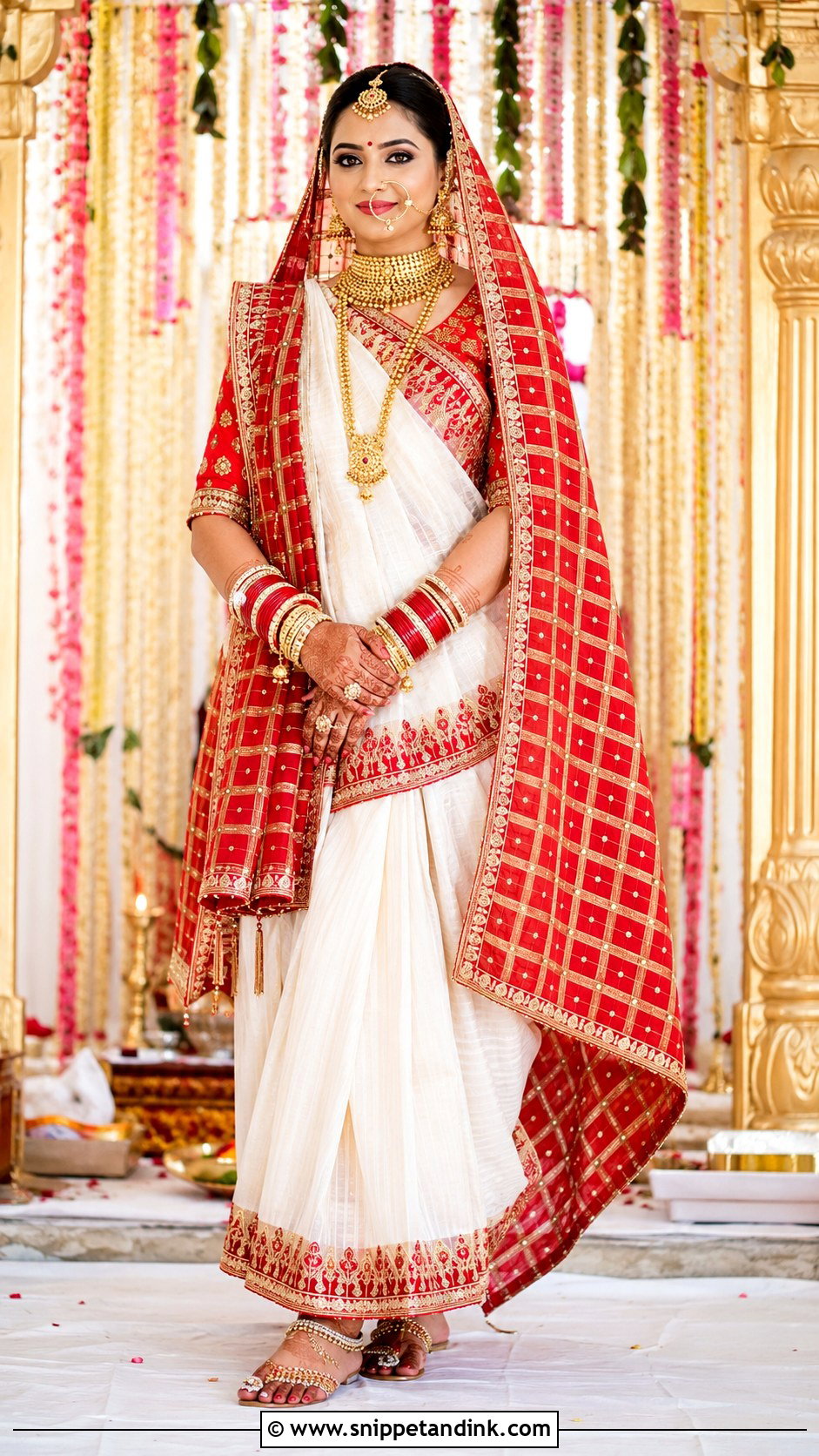
A gharchola chundadi and panetar saree is the traditional Gujarati bridal pairing. In many families the panetar is gifted by the bride’s maternal uncle and the gharchola by the groom’s family, which is why both carry so much weight. The white or ivory panetar is the clean base, and the red gharchola brings checks, bandhani and gold zari squares. A fitted red blouse with gold embroidery connects the two. Drape the saree in the seedha pallu style, then lay the gharchola over the head and shoulders without hiding the whole front. Since both textiles are busy, skip a heavy belt. One thing I always warn about: red bandhani dye can bleed onto white silk if it gets damp from sweat, so a thin pinned lining between them is worth it on a hot day.
5. Red Gota Patti Chundadi With Ivory Lehenga
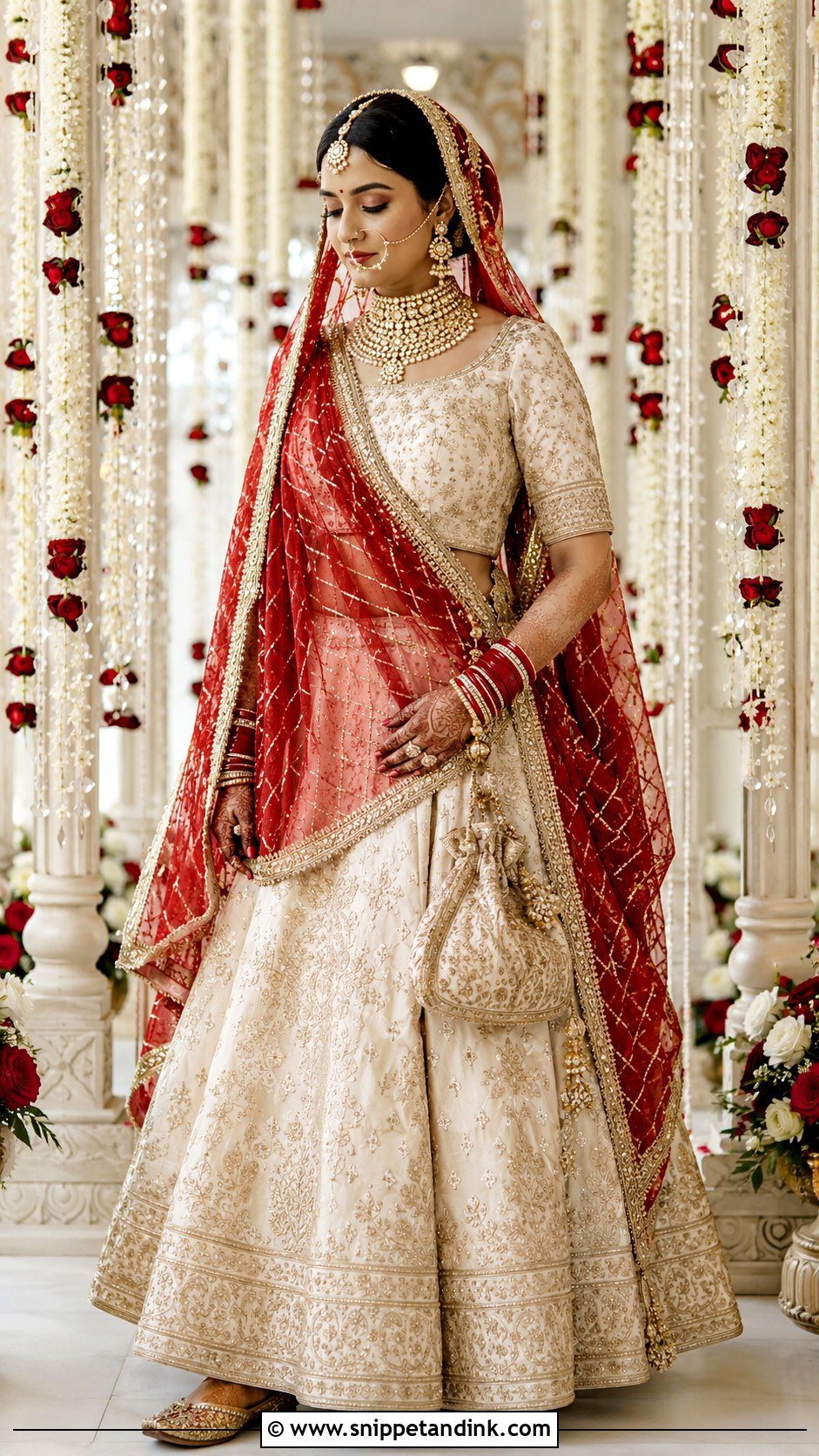
With an ivory lehenga, a red gota patti chundadi becomes the whole story. Soft red georgette or chiffon with floral gota, a scalloped border and a little sequin work, over ivory with gold threadwork rather than multicolour embroidery. An ivory blouse edged in red links them. Gota is metallic ribbon, and it lies flat and light, which is why it suits a drape that needs to stay on the head. Polki jewellery, red bangles, gold juttis and a classic red lip finish it. I drape one corner over the head and pin the opposite side at the waist; it’s the most secure shape I know for ceremonies and portraits.
6. Pink Chundadi With Red Bridal Lehenga
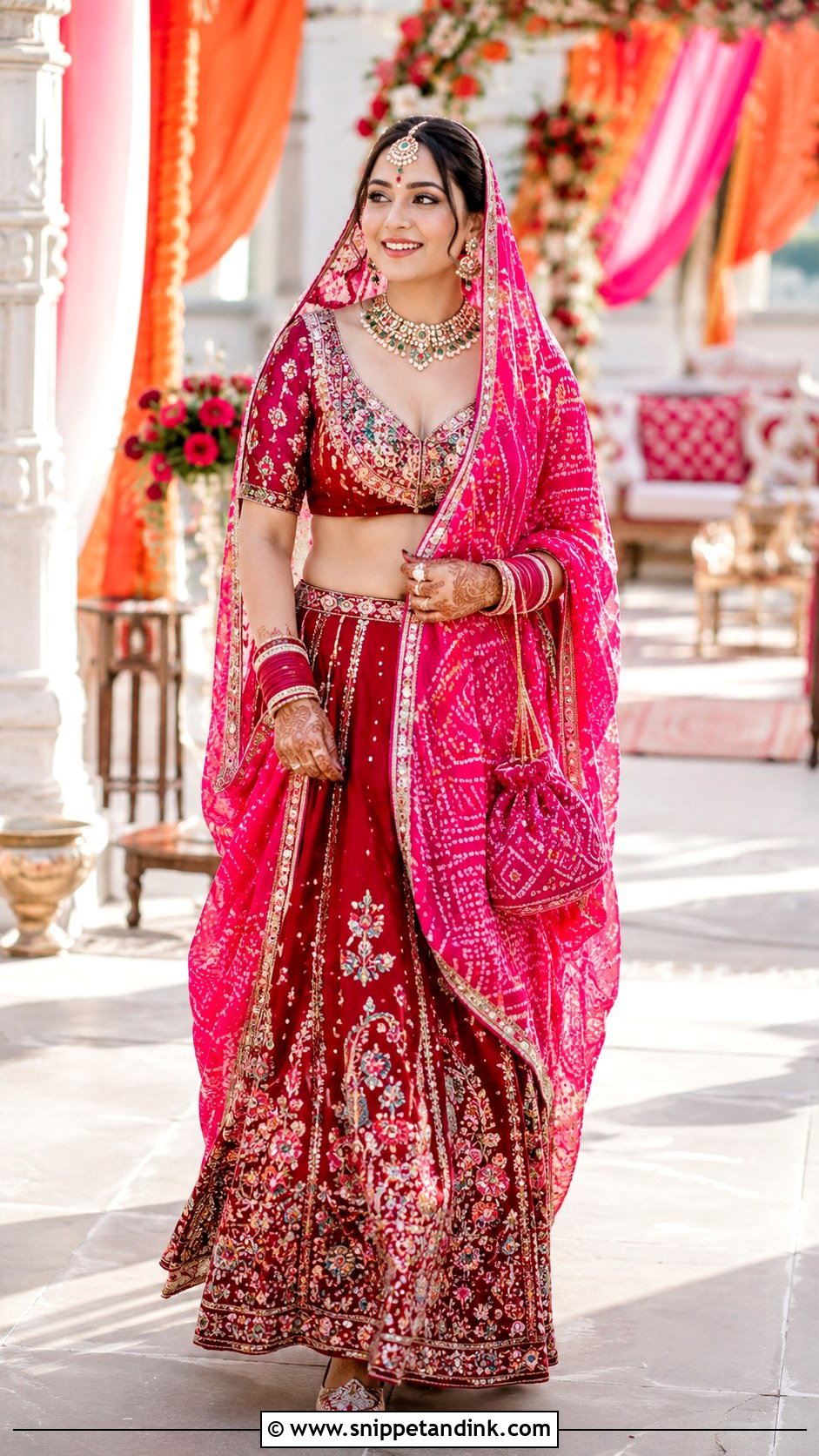
Pink and red only sit well together when their undertones agree. A bright pink chundadi with gold bandhani dots or a zari grid over a deep red lehenga, with a two-tone blouse edged in pink so it looks planned. Meenakari jewellery in pink, red and green, a medium maang tikka and a potli bag complete it. Choose a light chundadi; a heavy one flattens the hairstyle by the end of the first ritual. If the lehenga is heavily embroidered, the pink gets lost, so this works better over a lehenga with controlled work. Daytime ceremonies and colourful decor are where it shines.
7. Yellow Chundadi With Green Wedding Lehenga
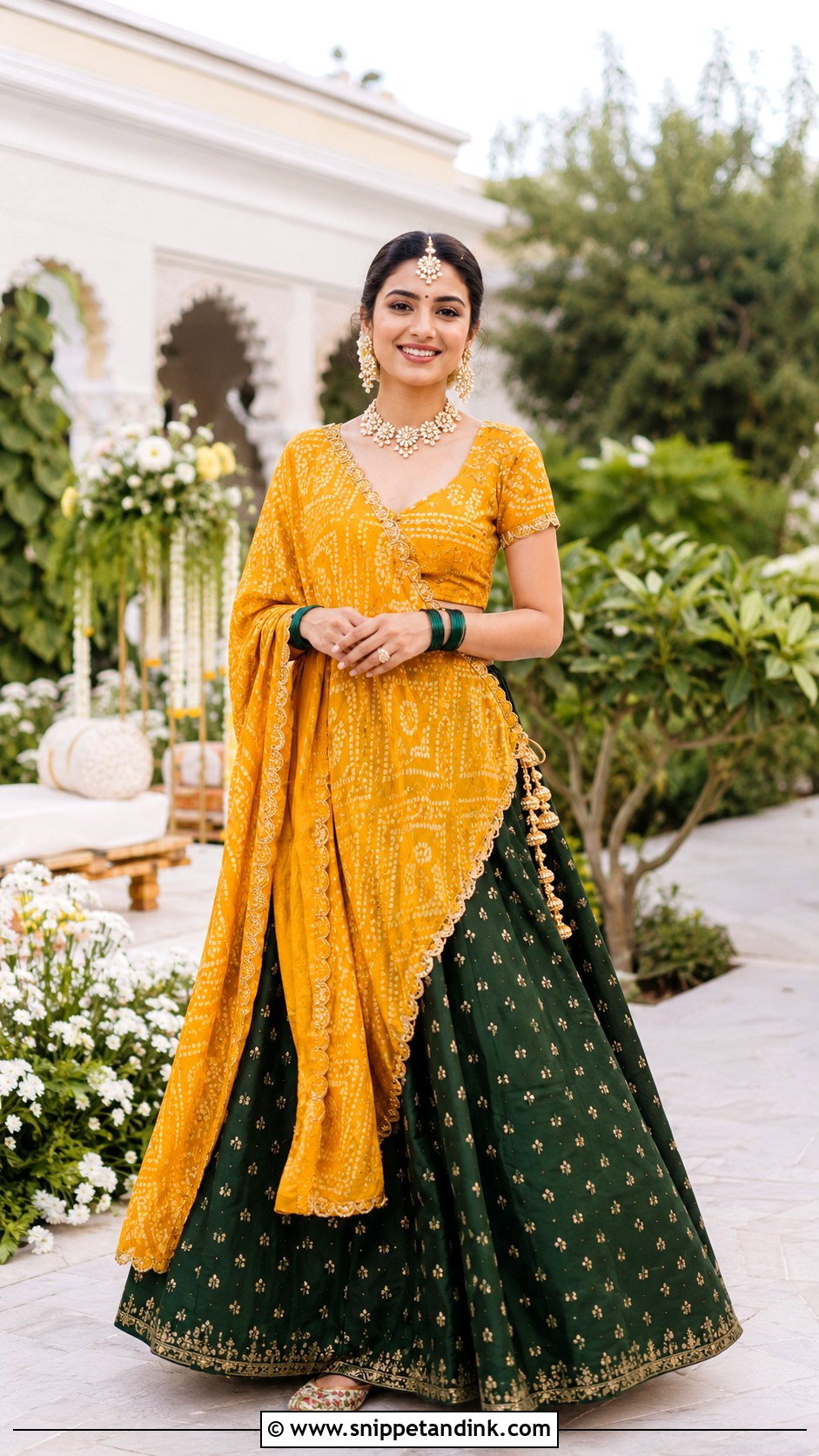
Yellow lifts a green lehenga and suits daytime functions. Look for turmeric, mustard, or marigold yellow fabric with a slim gota border and traditional bandhani, over a bottle-green or emerald lehenga with small gold motifs. A yellow blouse piped in green softens the contrast. Floral jewellery, gold jhumkas, green bangles and comfortable embroidered flats keep it easy to wear. Yellow is unforgiving on some skin tones near the face, so I drape it over the bride’s head in daylight before we commit; mustard is usually safer than bright lemon. Wear it on one shoulder for a pre-wedding event and over the head for a ceremony.
8. Orange Chundadi With Rani Pink Lehenga
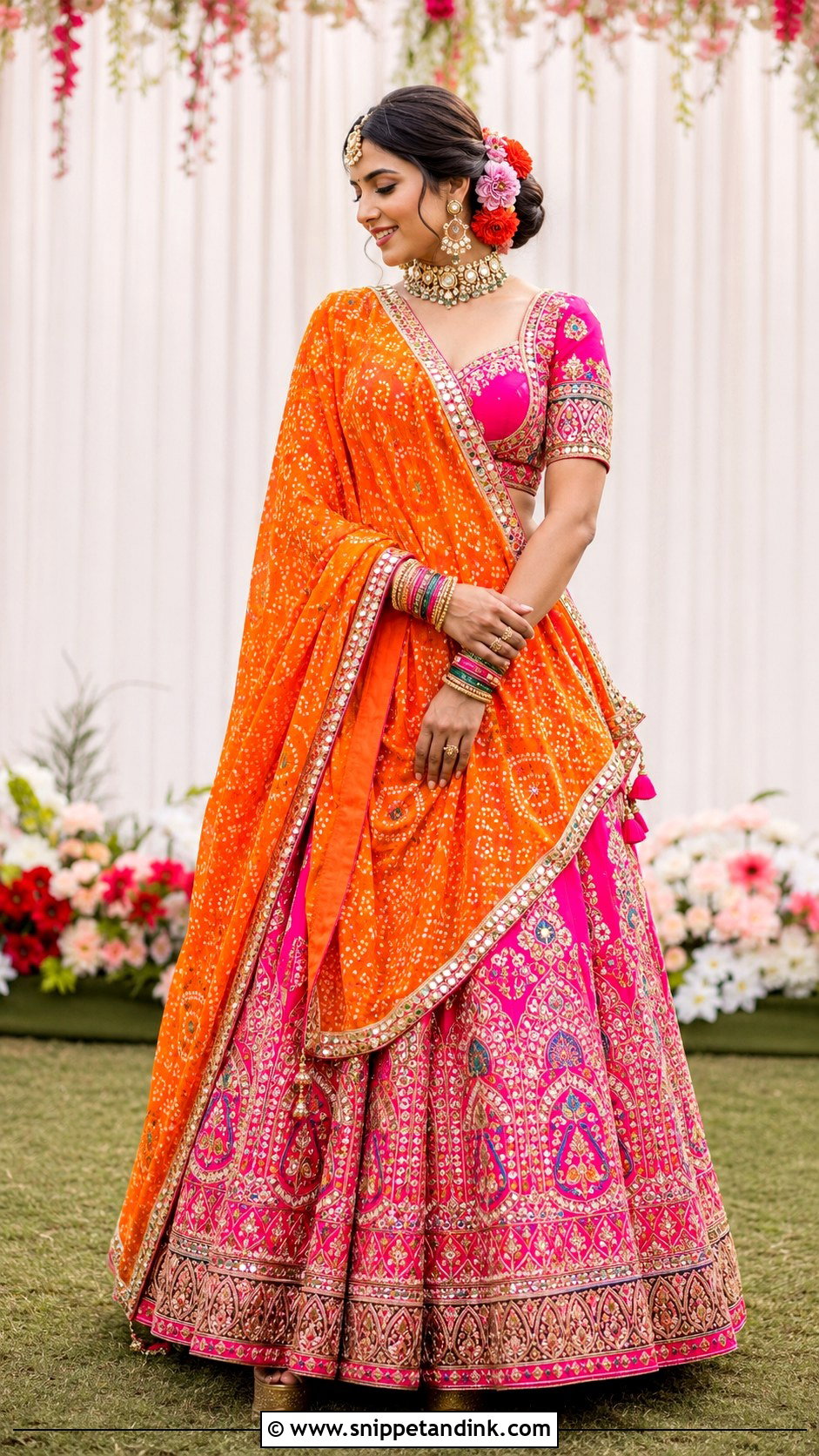
Orange and rani pink are a loud, festive pair from traditional celebration palettes. An orange bandhani chundadi with a pink border, small mirrors and gold tassels, over a rani pink lehenga with orange flowers or edging and a matching pink blouse. Kundan choker, long earrings, colourful bangles and gold juttis. With two bold colours, I keep the makeup calm: fresh skin, defined lashes and a muted rose lip. A low braided bun gives the head drape something solid to pin into, which matters with mirrors adding weight. Outdoor and daytime celebrations suit it best.
9. Royal Blue Chundadi With Red Lehenga
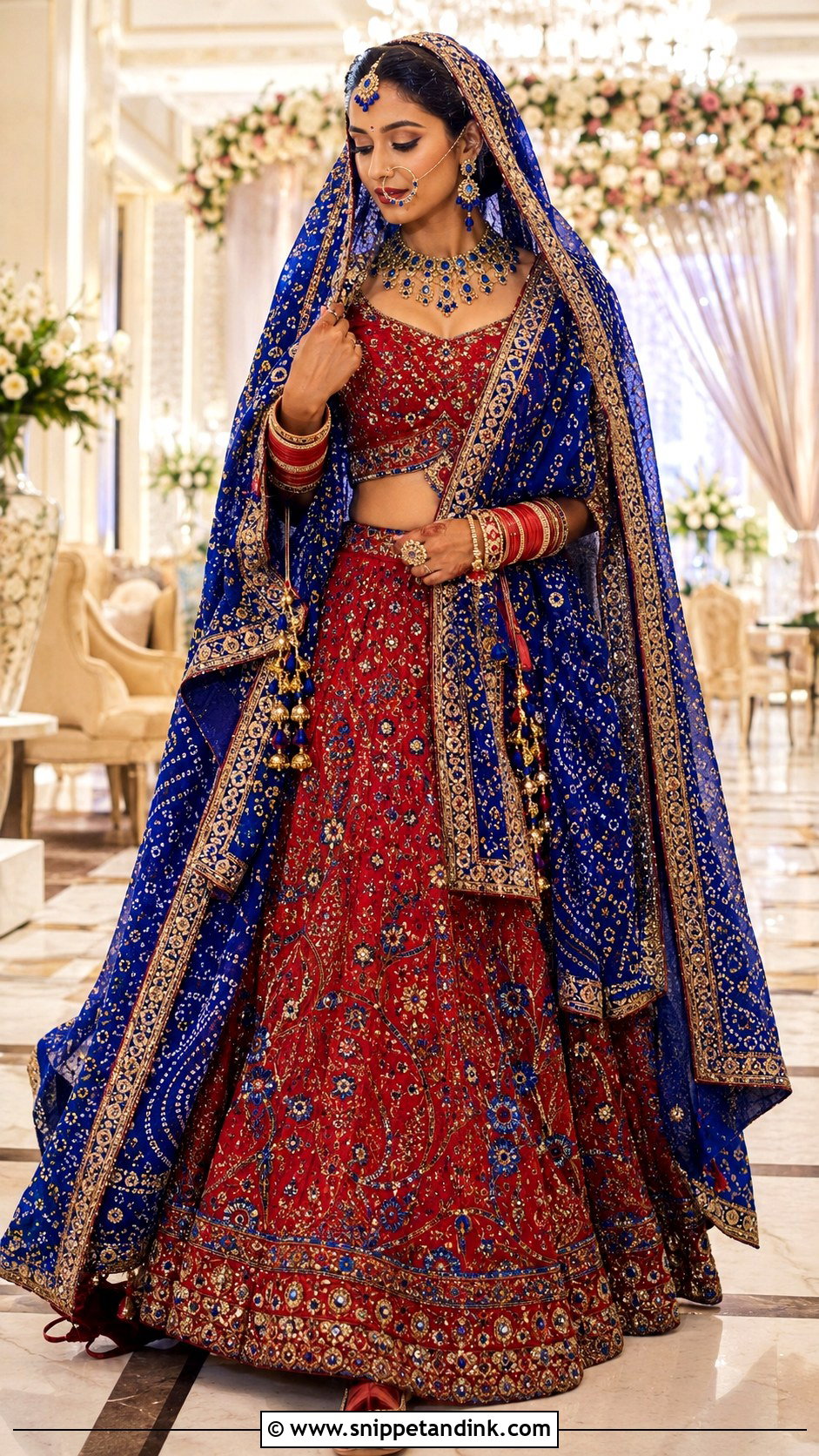
Royal blue over red is the less predictable choice, and it needs a few connecting threads to look deliberate. Choose a blue chundadi with gold bandhani, a red border and restrained sequins, over a red lehenga with small blue accents in threadwork or stones, and a red blouse edged in blue. Gold and sapphire-toned jewellery, a statement nath and red velvet juttis complete it. I pleat the shoulder drape neatly so the blue doesn’t swamp the lehenga. Check with elders early, though; some families feel strongly about blue at a wedding. It pairs well with blue stage decor or a groom’s matching stole.
10. Purple Chundadi With Pink Wedding Lehenga
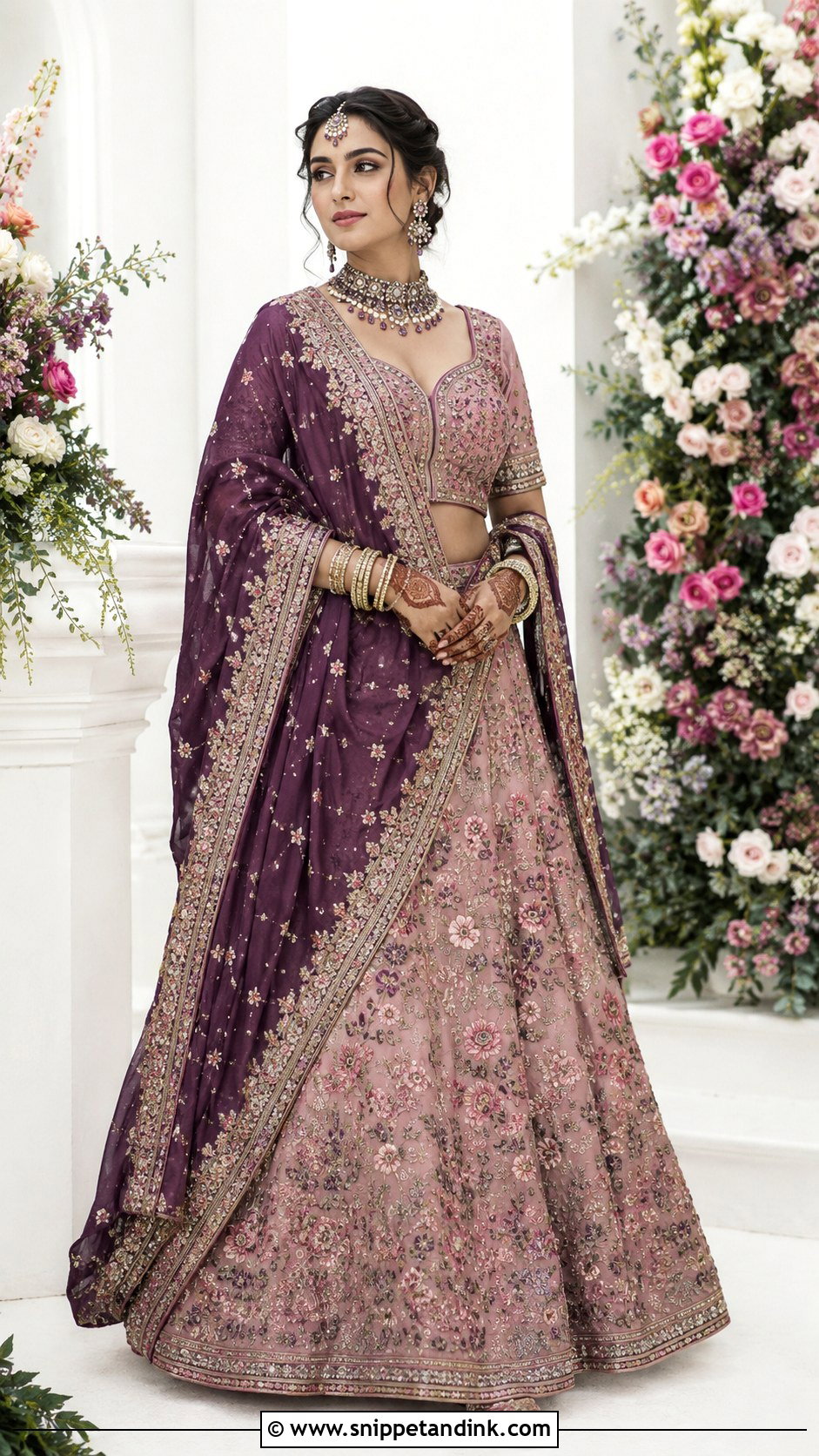
Purple adds depth to a pink outfit without making it feel heavy or old-fashioned. A plum or grape chundadi with gold zari, small bandhani dots and a pink border, over a dusty pink lehenga with purple threadwork and a fitted pink blouse. Amethyst-toned kundan, gold bangles and a delicate maang tikka finish it. Secure it at the crown and the shoulder so you can move freely. Purple drinks light, so under dim evening lighting the border’s gold work is what keeps it from going flat in photos. Evening weddings suit it.
11. Pastel Pink Organza Chundadi With Ivory Lehenga
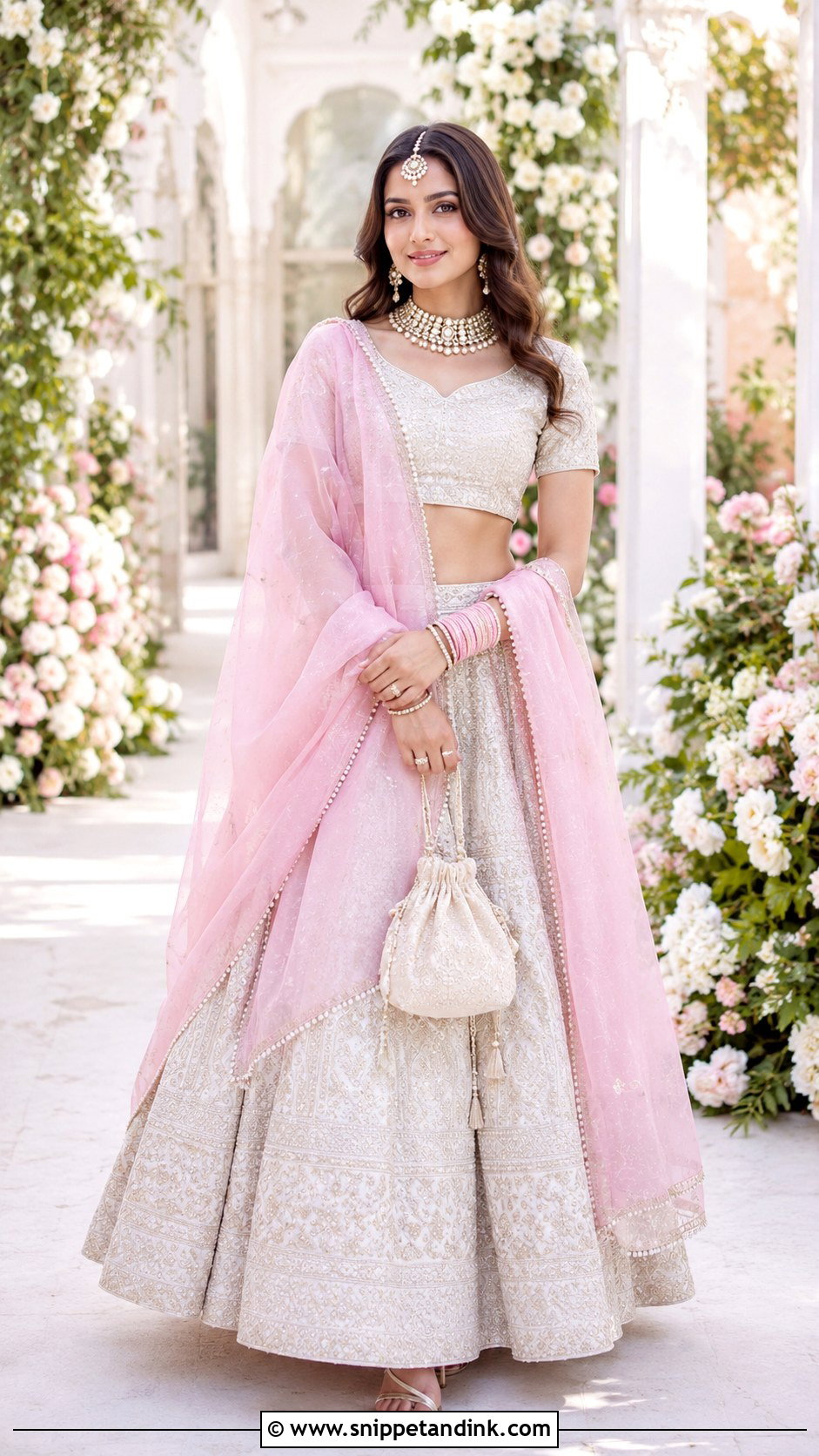
Organza is crisp and see-through, so it covers the head without hiding an ivory lehenga’s detail. A pastel pink organza chundadi with embroidered flowers, a narrow pearl border and scattered sequins, over ivory with tonal threadwork or silver embellishment. Pearl and kundan jewellery, rose bangles and an ivory potli. Because organza has natural body, arrange it in wide, clean folds rather than gathering it; bunched organza looks stiff and crumpled on camera. It also slides on silky hair, so I anchor it with two small U-pins into the bun. Morning ceremonies, intimate weddings and bright outdoor settings suit it.
12. Peach Chundadi With Mint Green Lehenga
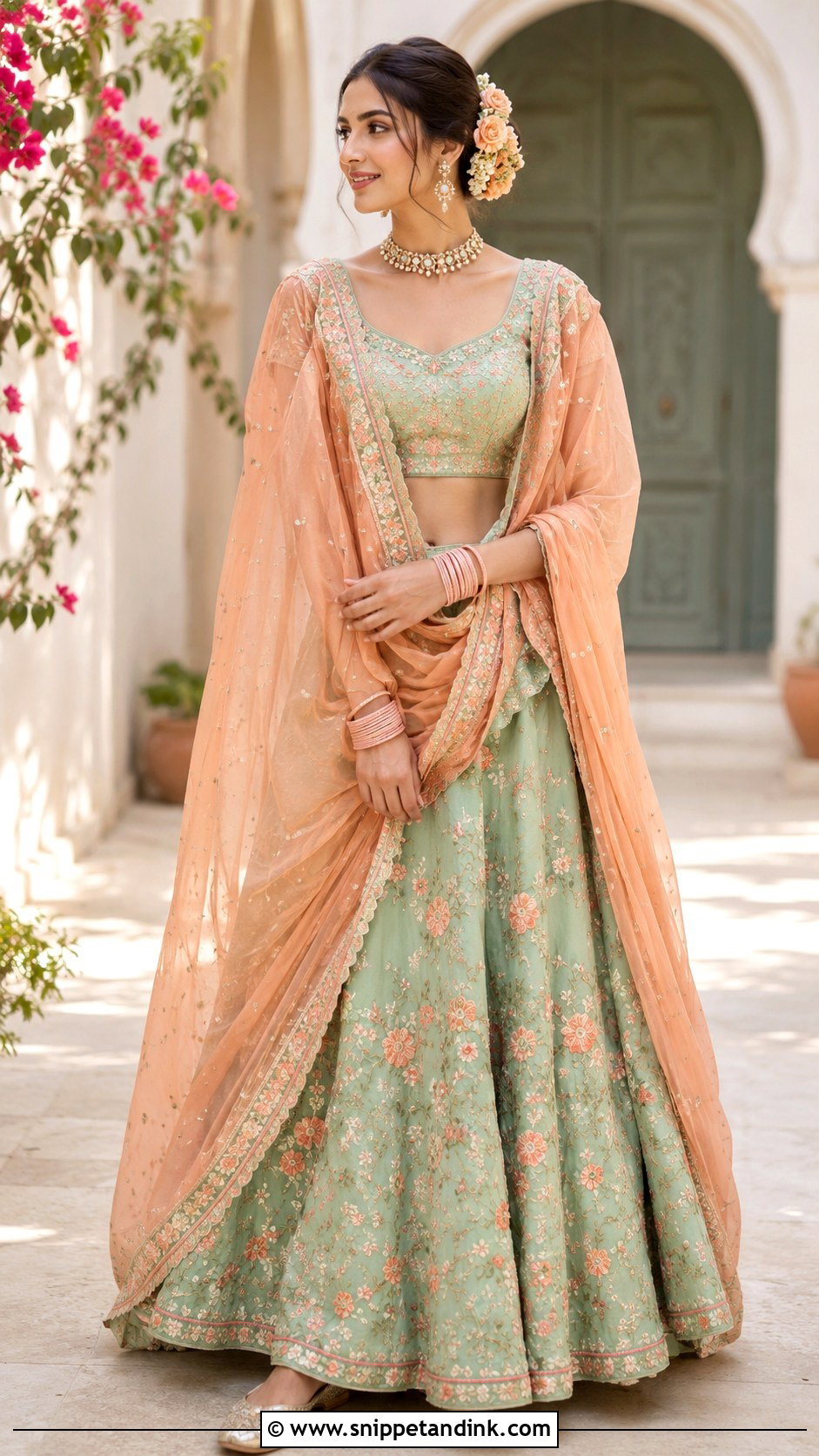
Peach and mint are a soft pair that still reads as colourful. A peach chundadi with mint embroidery, a fine gold border and pearl tassels, over a mint lehenga with peach flowers, sequins or light gota. A mint blouse with peach piping keeps it continuous. Pearl drops, a light kundan choker, peach bangles and metallic juttis finish it. Pastels show marks quickly, especially sindoor and mehndi, so I’d keep a damp cloth and a little talc in the emergency kit. Wear the fabric loosely over the head so the border frames the face. Daytime and garden ceremonies suit it.
13. White Chundadi With Red Embroidered Lehenga
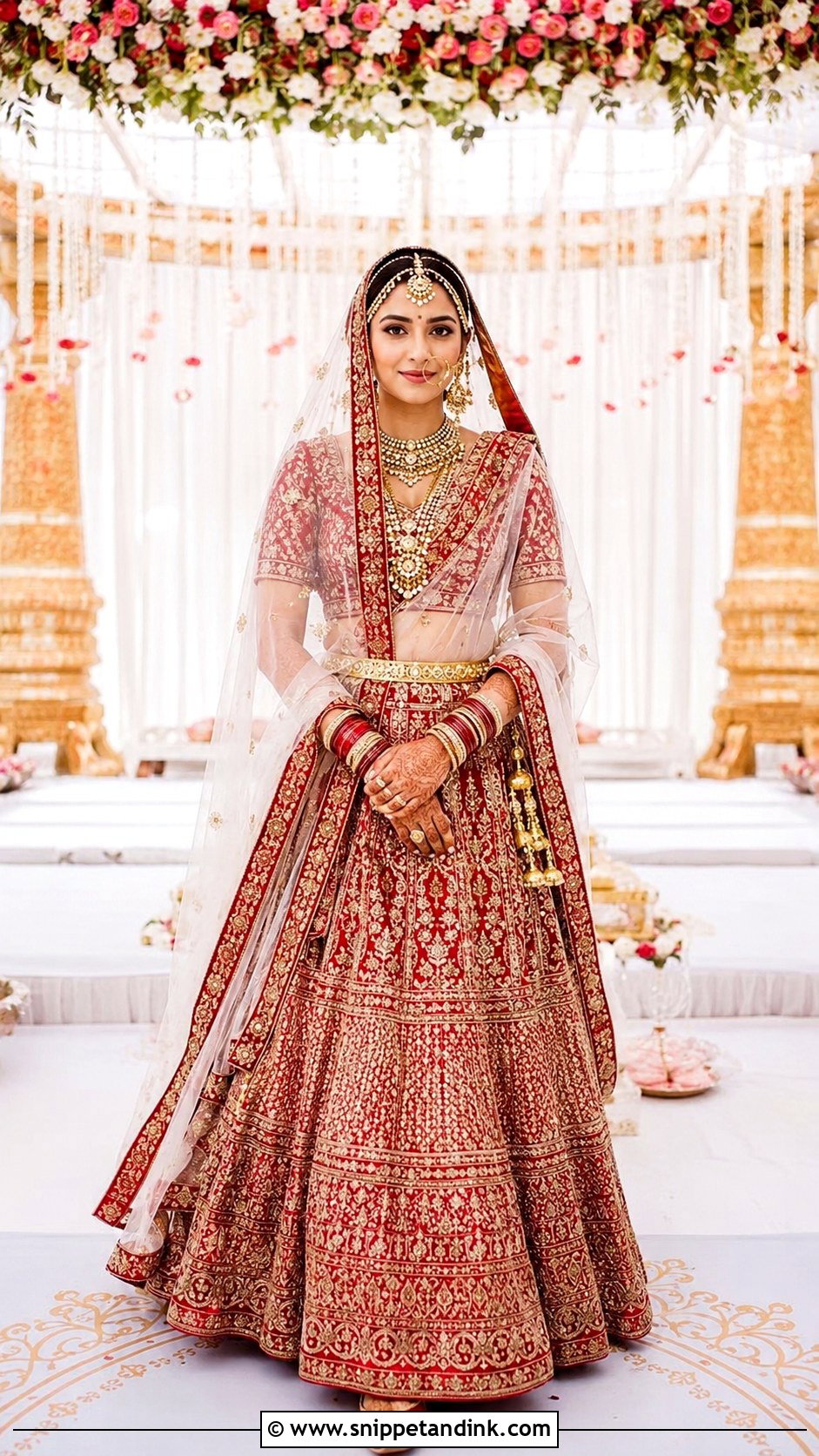
A sheer white chundadi can calm a heavily embroidered red lehenga. Net, organza or fine georgette with a red velvet border and small gold motifs lets the hairstyle and jewellery show through. A red blouse with gold embroidery and a modest neckline, gold jewellery, red bangles, a waist belt and embroidered red footwear. Let it fall over the head with one side behind the shoulder. My one rule here is to avoid bright optical white; next to gold zari it looks cold and a little cheap. Ivory or soft white blends with the gold and looks richer in ceremonial light.
14. Mirror Work Chundadi With Plain Silk Lehenga
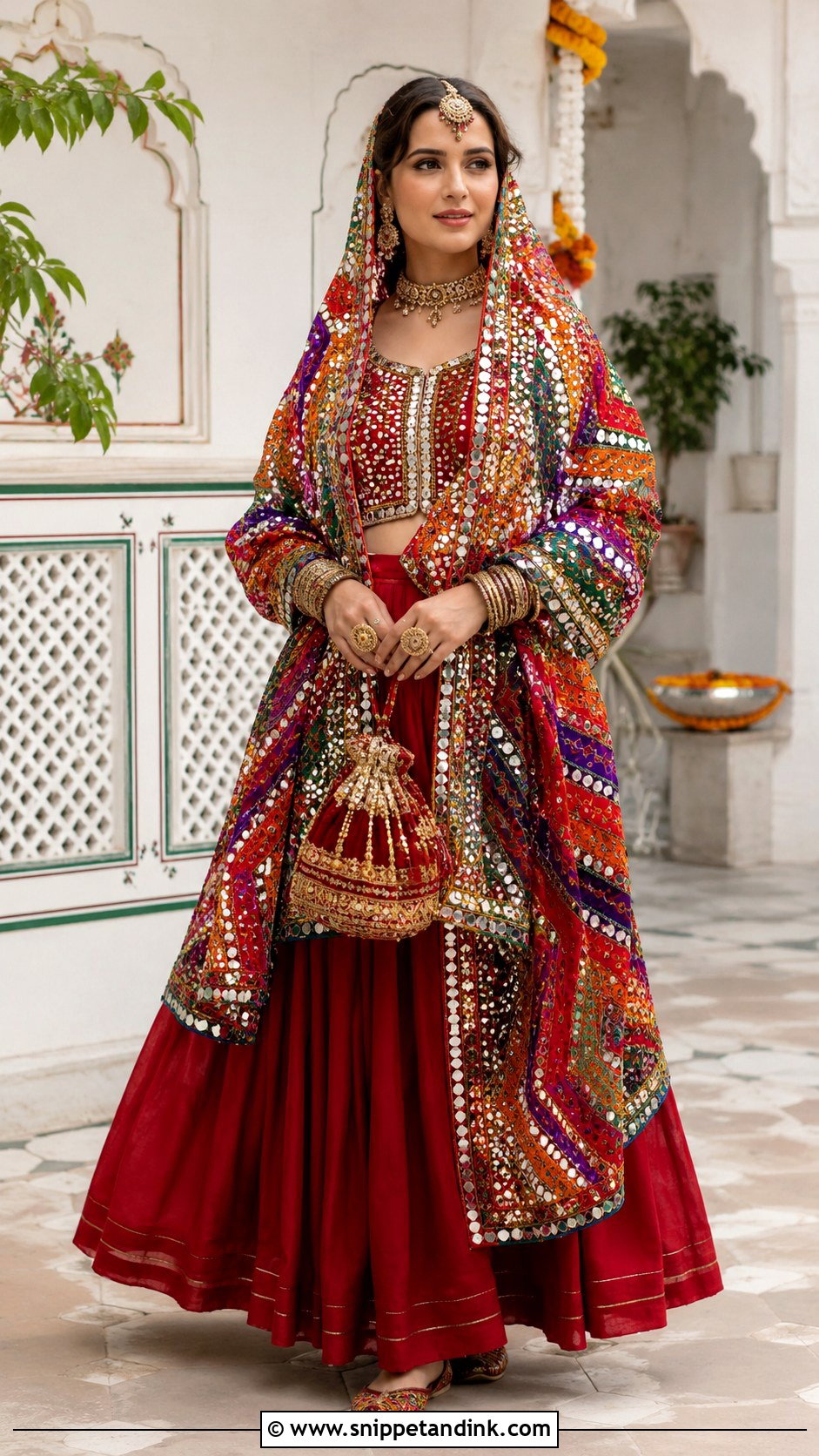
Mirror work turns a plain silk lehenga into a festive one without the cost of full embroidery. A bandhani or solid georgette chundadi with small, firmly stitched mirrors and a narrow border, over raw silk in red, green, pink or mustard. Repeat the mirrors on the blouse neckline and sleeves, then add oxidised gold jewellery, stacked bangles and mojaris. Mirrors already throw light, so keep other sparkle minimal. I tug a few mirrors at the shop: if the stitching around them is loose, they’ll drop off by the reception. Keep the heaviest mirrored section on the shoulder and waist, not on the head.
15. Zardozi Chundadi With Velvet Bridal Lehenga
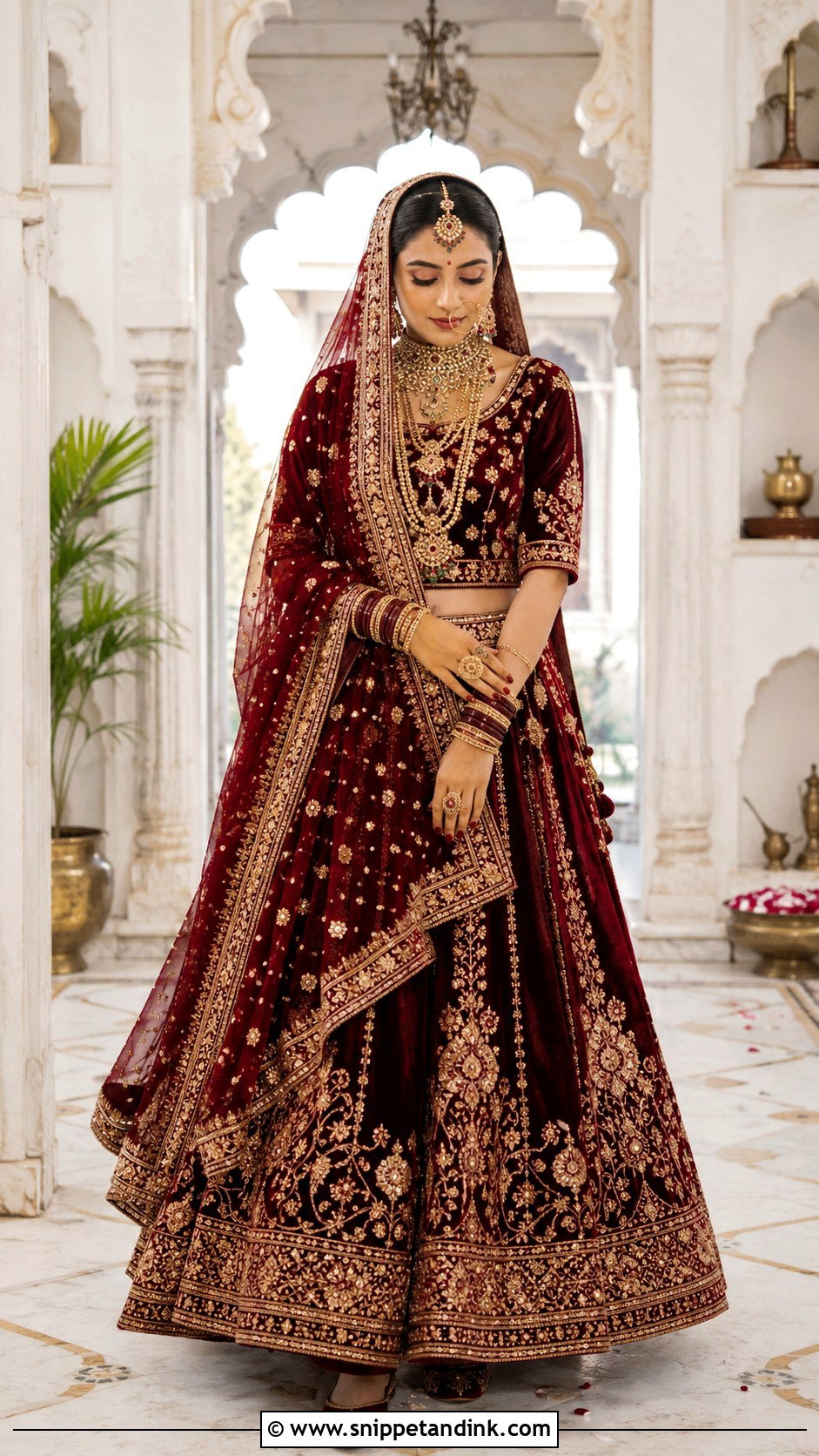
Velvet and zardozi are the cool-weather pairing. A maroon, red or deep green chundadi with metallic floral embroidery at the border, over a coordinated velvet lehenga featuring spaced zardozi motifs instead of dense all-over work. A velvet blouse with a structured neckline and three-quarter sleeves balances it, with antique gold jewellery and a statement maang tikka. Velvet plus zardozi gets heavy and warm quickly. I ask for a lighter silk-blend base for the chundadi and no extra lining, otherwise the weight drags the drape backward off the head. Leave one side open so the blouse, jewellery and waist show in full-length photos.
16. Pearl Border Chundadi With Sequin Lehenga
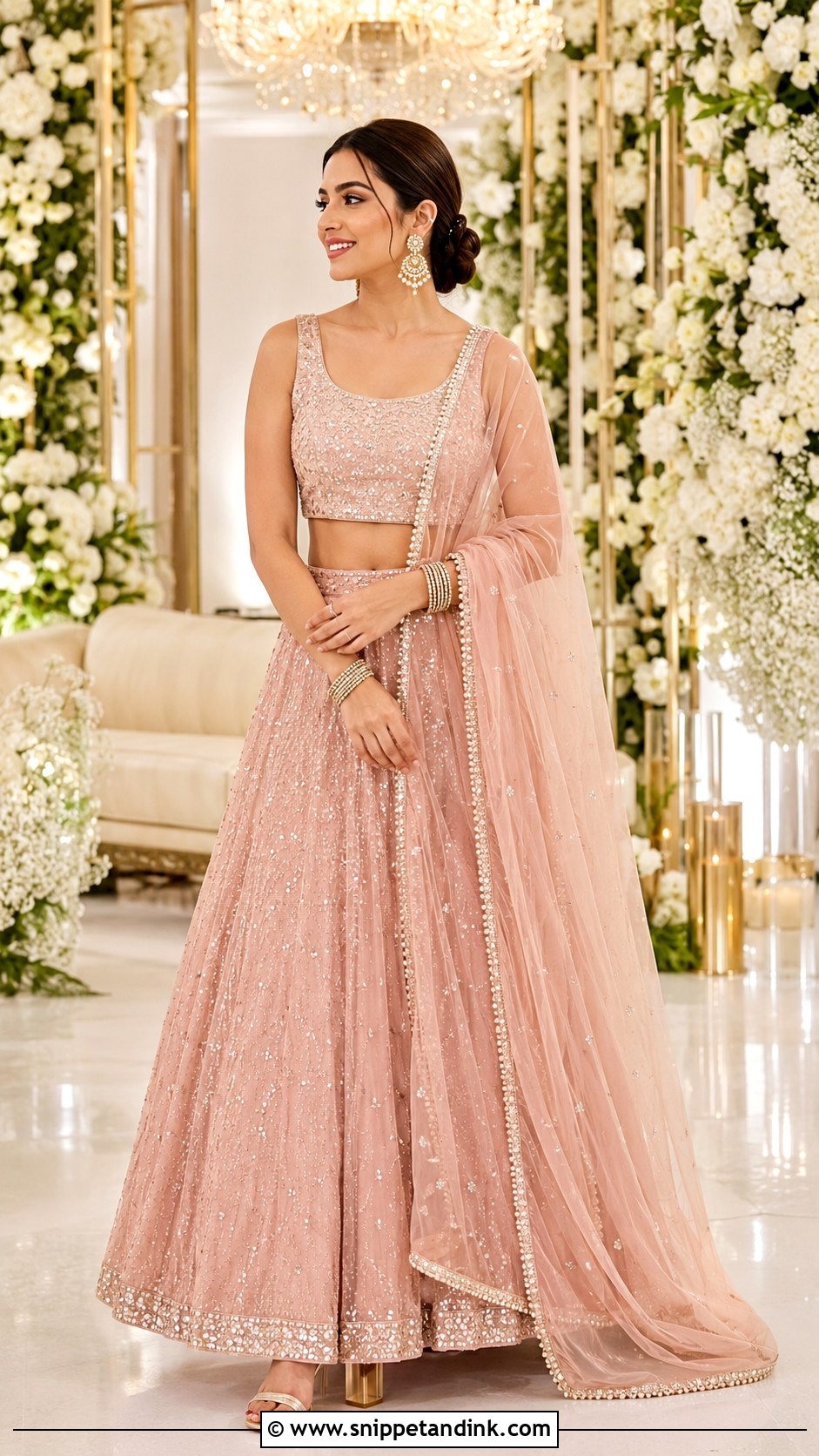
A pearl-edged chundadi softens a sequin lehenga’s shine. Sheer blush, ivory or pale gold net with a fine pearl border and very little embroidery, over a tonal sequin lehenga with a clean-necked blouse. Pearl and kundan earrings, a delicate necklace and metallic block heels. Pearl borders are heavier than they look, and on fine net they pull the whole drape backward. I use clear pins at the crown and test the weight by having the bride bow her head several times at the trial. A sleek low bun helps the border sit evenly. Evening receptions and soft indoor lighting suit it.
17. Floral Embroidered Chundadi With Pastel Lehenga
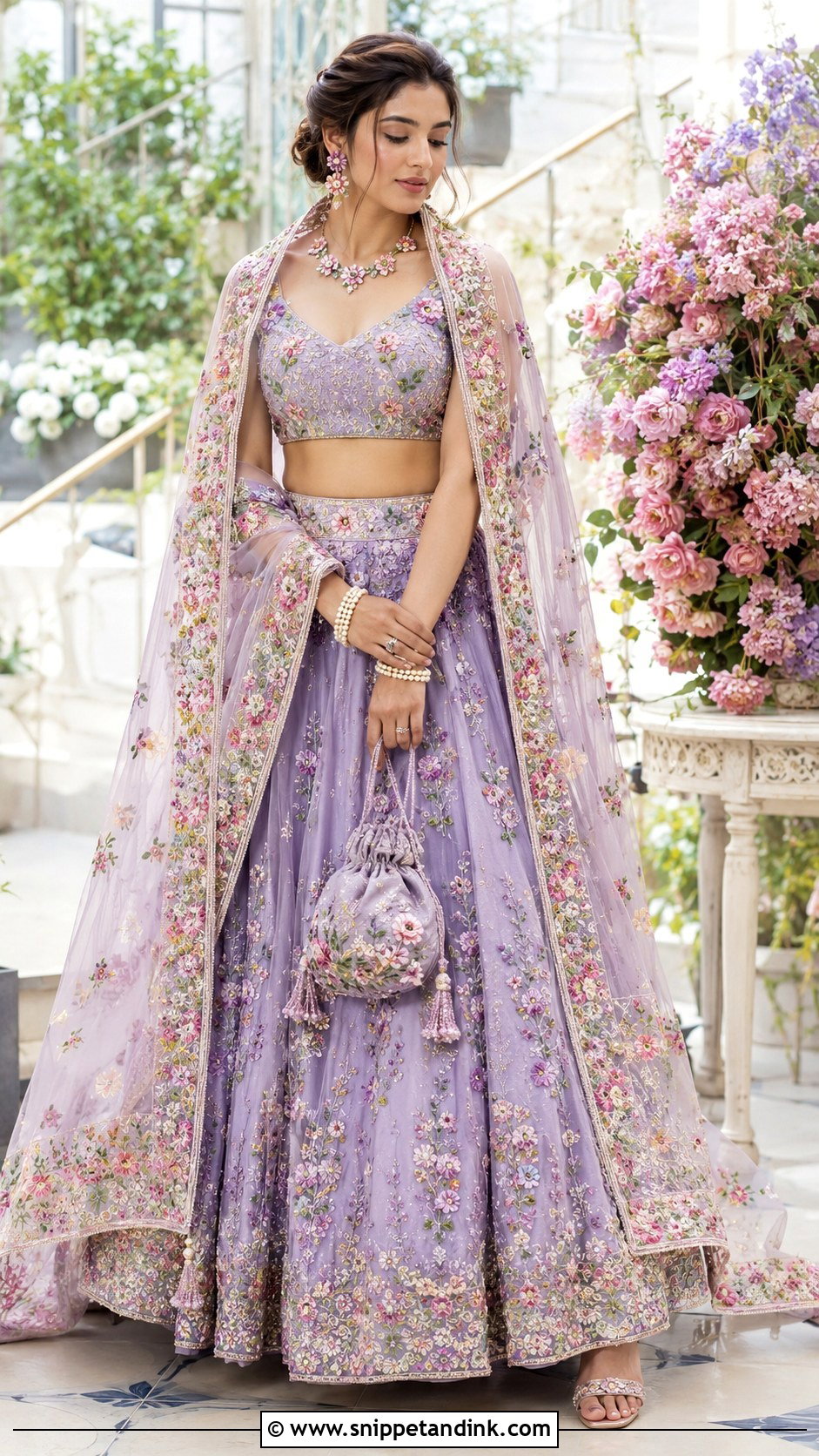
Small embroidered flowers give a chundadi a fresh, light feel. Choose sheer fabric with tiny multicolour flowers, never oversized motifs that cover the outfit, over a lavender, powder blue, blush or sage lehenga. The blouse can repeat one flower colour in piping or beaded straps. Floral meenakari jewellery, pearl bangles and neutral sandals keep it gentle. Decide on the drape before the hairstyle, because the hair has to support it; I usually go with a low bun and pin one side at the crown, letting the border fall over the shoulder. Spring ceremonies and garden celebrations suit it.
18. Double Chundadi With Traditional Bridal Lehenga
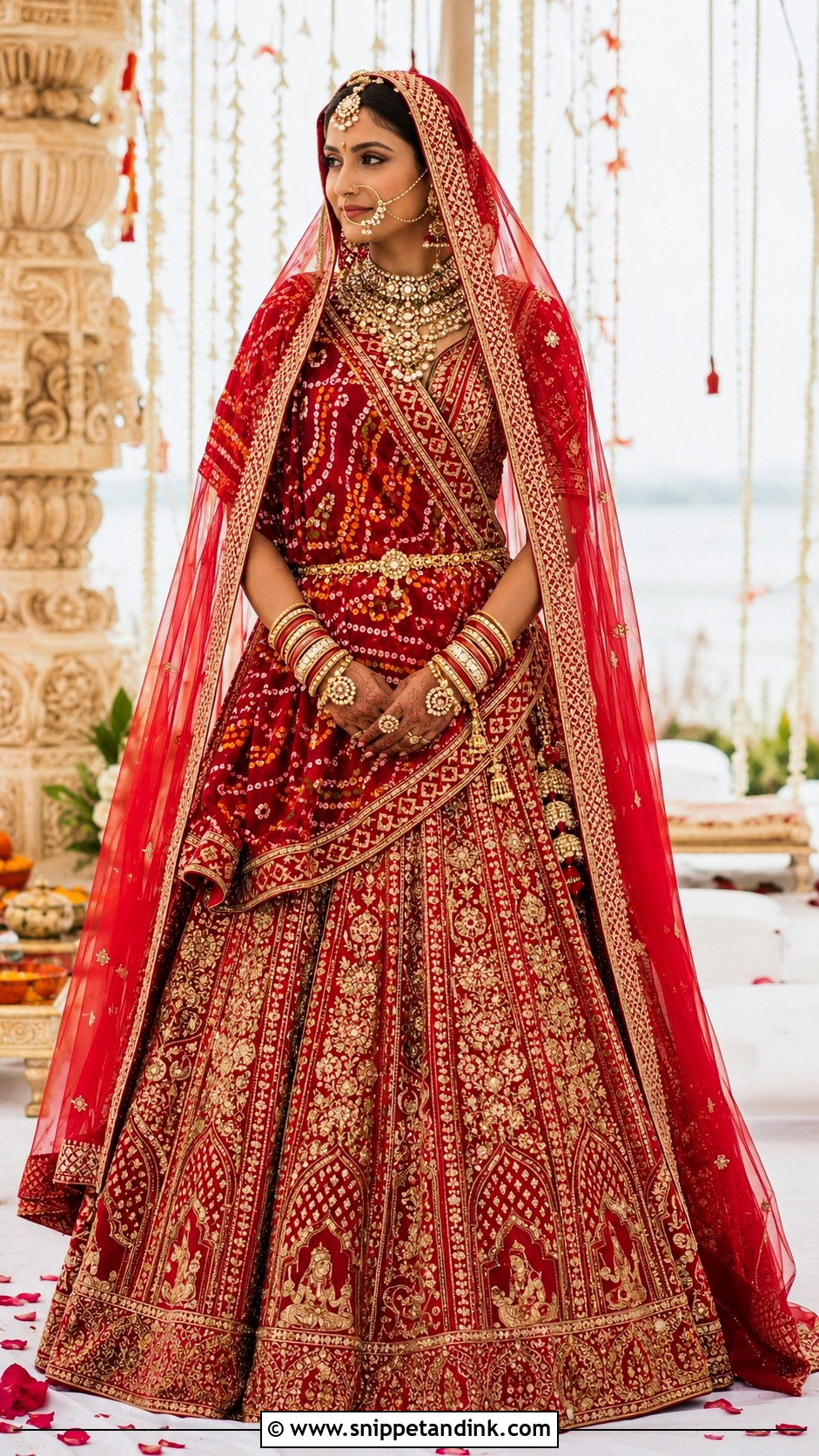
A double chundadi look gives drama while keeping each layer practical. One light chundadi goes over the head and a second, more detailed one across the shoulder and waist, for example a red net head covering with a bandhani or gharchola shoulder drape. They should share a colour, a border or an embroidery detail. Pair them with a red, maroon or ivory lehenga, layered kundan, a nath and a waist belt. This is the look where pinning makes or breaks it. I pin the head layer first, then the shoulder layer, and check the bride can lift both arms before we finish. Keep the head layer sheer or it gets uncomfortable fast.
19. Personalized Name Chundadi With Red Lehenga
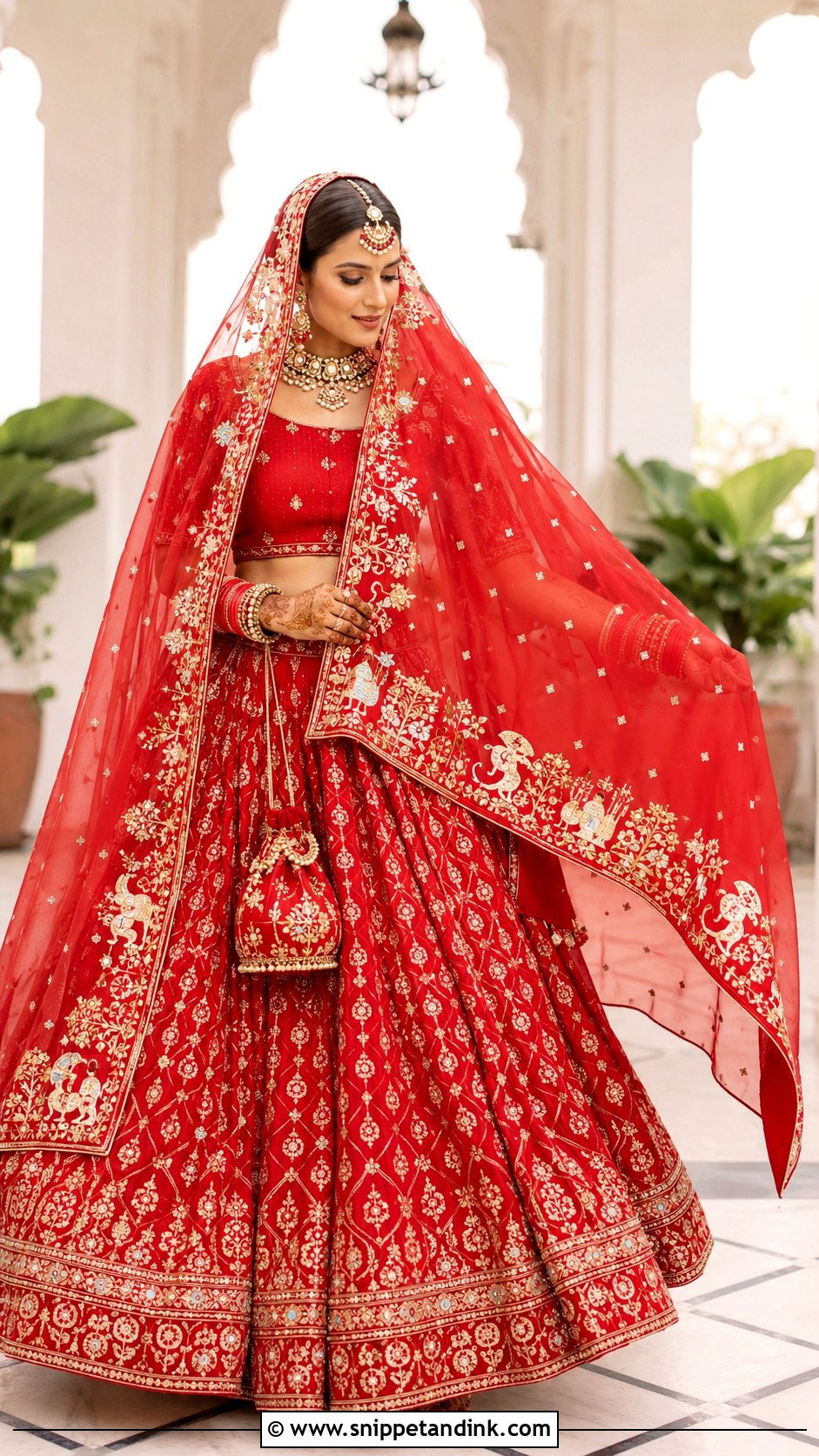
Embroidering names onto a chundadi adds a personal modern touch to a classic outfit. The couple’s names, the date, initials or a short phrase along the border of a sheer red or ivory chundadi, spaced evenly so it stays readable. Pair it with a red lehenga in compatible gold threadwork, a simple blouse, kundan jewellery and red juttis. Place the lettering across the shoulder or down the back where photos will catch it. The common mistake is embroidery that ends up upside down or hidden once draped. I mark the drape direction on the fabric before it goes to the embroiderer, and check spelling twice, because custom work takes several weeks and can’t easily be redone.
20. Lightweight Chiffon Chundadi With Bridal Gharara
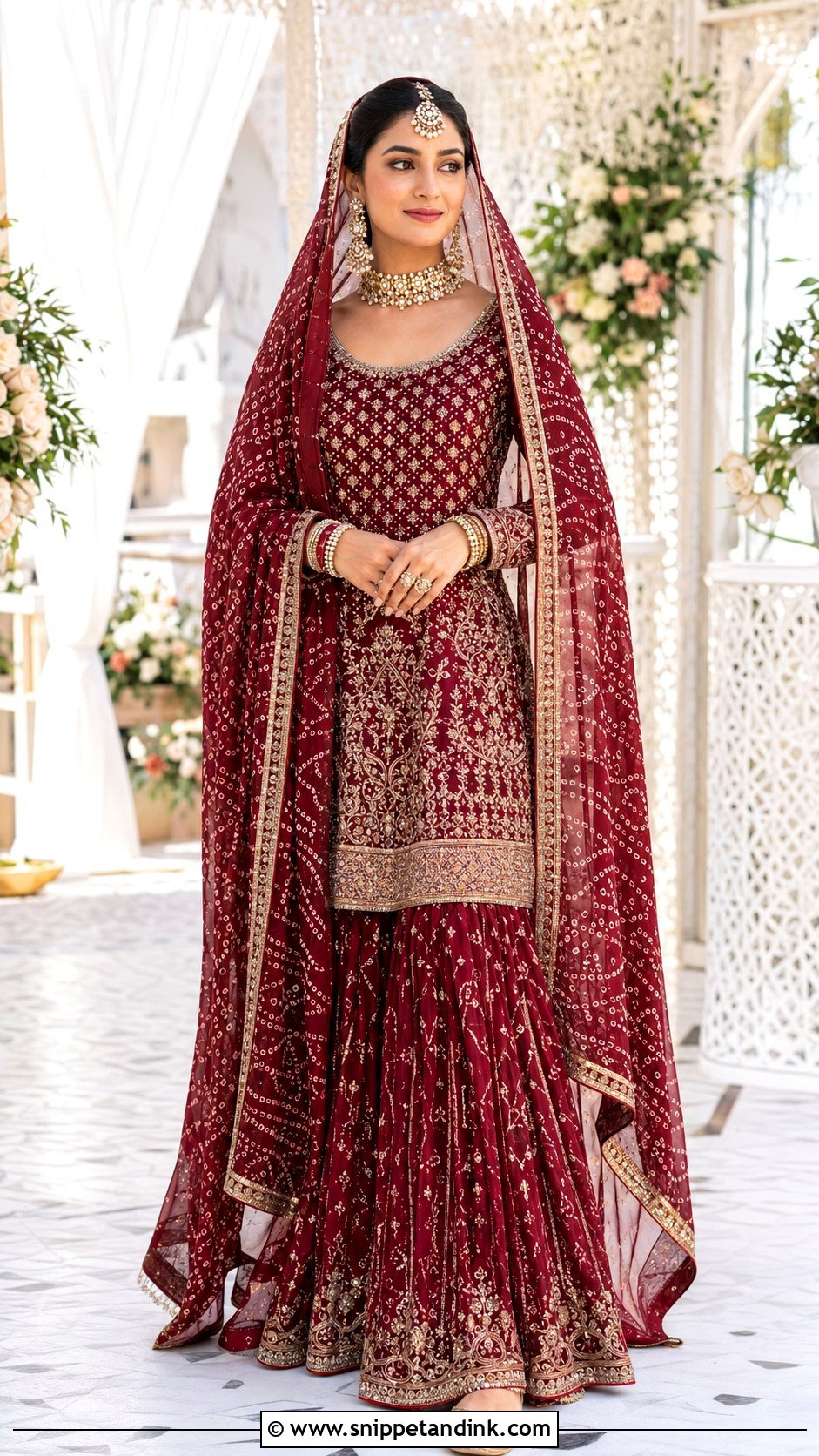
Chiffon is the most comfortable option on the list, and it moves with you. A red, pink or maroon chiffon chundadi with fine bandhani dots, a slim gota border and light corner tassels, over a bridal gharara with a short embroidered kurti. The flared gharara gives volume, and the soft chundadi keeps the outfit from feeling bulky. Polki choker, long earrings, bangles, a maang tikka and juttis complete it. Chiffon slips, so I add a small pin at the back of the head and another at the kurti shoulder. Nikah-inspired celebrations and fusion weddings suit it.
How I Pin a Chundadi to Last Through the Pheras
During the pheras you’ll walk, sit, stand and bow your head repeatedly, often while someone tugs the knotted end of your outfit. A chundadi that’s simply laid over the head will slip within minutes. This is the order I work in on the day.
- Finish the hairstyle and the maang tikka first. A low bun, or a padded bun, gives the drape a solid anchor.
- Fold the border back about two inches so the gold edge frames the face rather than covering the forehead.
- Pin through the fabric into the bun with two U-pins crossed in an X. They grip far better than straight bobby pins.
- Bring the drape down to the shoulder and pin through the blouse, never through the jewellery.
- Let the bride bow, turn her head and lift her arms, then adjust before she leaves the room.
Afterwards, don’t fold a zari or gota chundadi along the same lines every time, because metallic thread cracks at the folds. I roll it around a cardboard tube in muslin and store it away from plastic and damp. Bandhani crinkle is part of its charm, so steam it gently instead of pressing it flat.
Test the Drape on Your Hair, Not on a Hanger
A chundadi should carry meaning, stay comfortable and connect clearly to the rest of the outfit. Traditional red bandhani, gharchola checks, gota borders, mirror work and zardozi give the heritage look; organza, chiffon, pastel embroidery, pearls and personalised lettering are lighter options. Before you decide, compare the chundadi with the blouse and lehenga in daylight, test the drape on your hairstyle, and plan every pin. Let the jewellery and shoes follow the palette, and the chundadi will frame you through every ritual without fighting the rest of the outfit.
You'll Like These Ideas:


Leave a Reply