
A bride’s outfit and a guest’s outfit are judged by different rules, and this collection covers both. An Indian wedding outfit for the bride carries the ceremony’s weight, sometimes literally, while relatives, bridesmaids and guests need something that lets them help, host and dance. Bridal lehengas and heritage sarees come first, then suits, shararas, draped gowns and structured jackets. Heritage weaves like Banarasi now sit comfortably beside lighter modern shapes, so there’s no need to pick a camp. Start with the ceremony, the venue, the weather and the dress code. Daytime asks for breathable softness, and evening allows depth and shine.
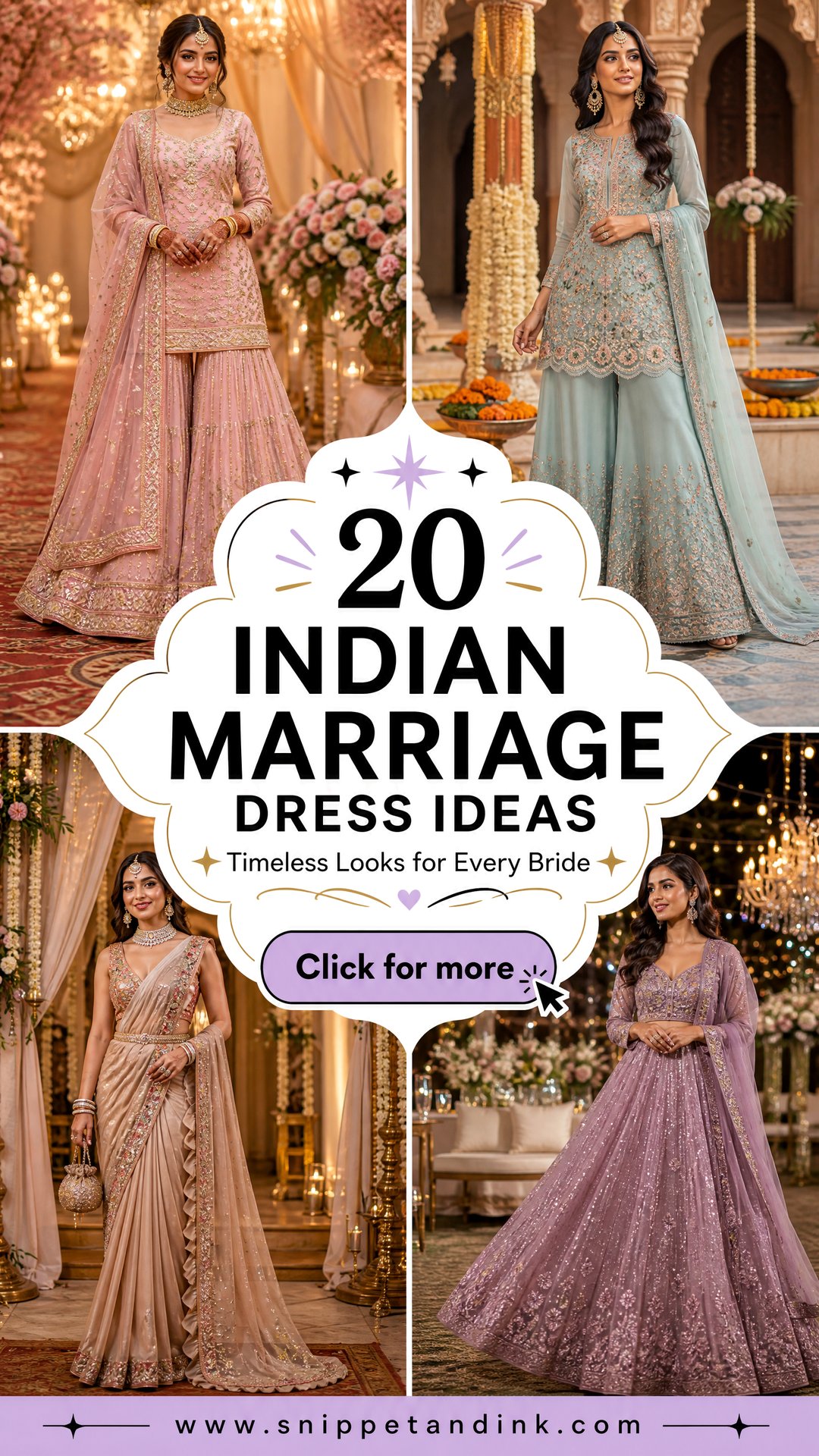
The Twenty-Minute Test I Run at Every Bridal Fitting
A bridal lehenga can look perfect on a hanger and still let you down on the day. At the last fitting I ask the bride to wear the full outfit, with both dupattas pinned, jewelry on and her wedding shoes on, for about twenty minutes while we put it through what the ceremony will ask of it.
First she walks, including a few stairs, holding the skirt the way she will on the day. If the hem catches her toe, it’s too long for her shoes. A heavy embroidered hem can’t simply be turned up, so the tailor shortens the skirt from the waist instead.
Then she sits, on a chair and on the floor if the rituals call for it. The blouse shouldn’t ride up and the waistband shouldn’t dig in. When a skirt drags at the hips, the fix is usually a wider, firmer waistband, and sometimes a lighter can-can that stops adding bulk without helping the shape.
Next she lifts her arms as if for a hug or the garland exchange. A blouse that’s tight across the back or under the arm shows it straight away. Finally she turns her head both ways with the head dupatta pinned, because a drape that pulls at the crown means a headache before the vows.
Anything that fails gets fixed at that fitting, while there are still enough weeks for the tailor to do it properly.
1. Red Bridal Lehenga for Indian Marriage
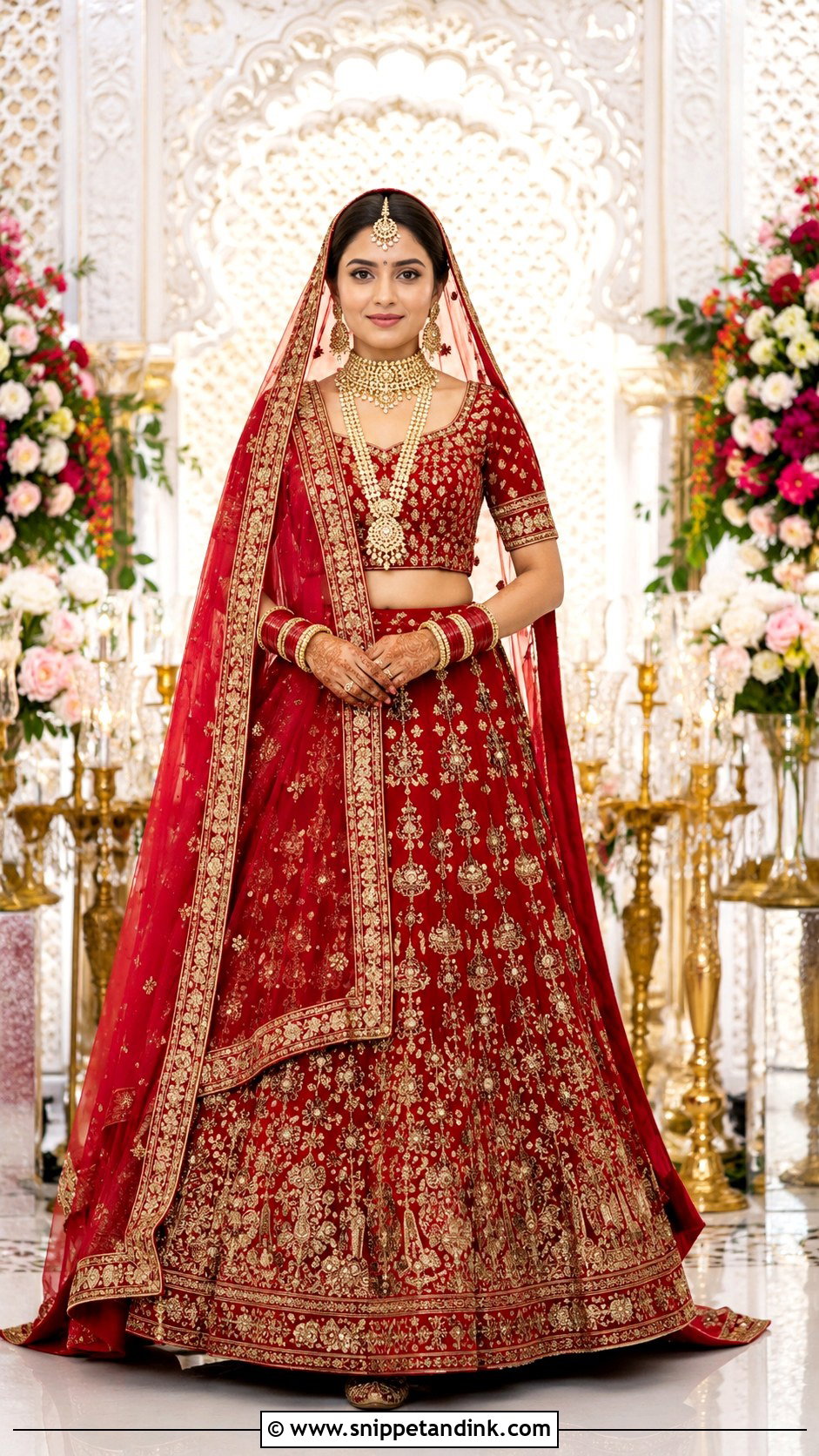
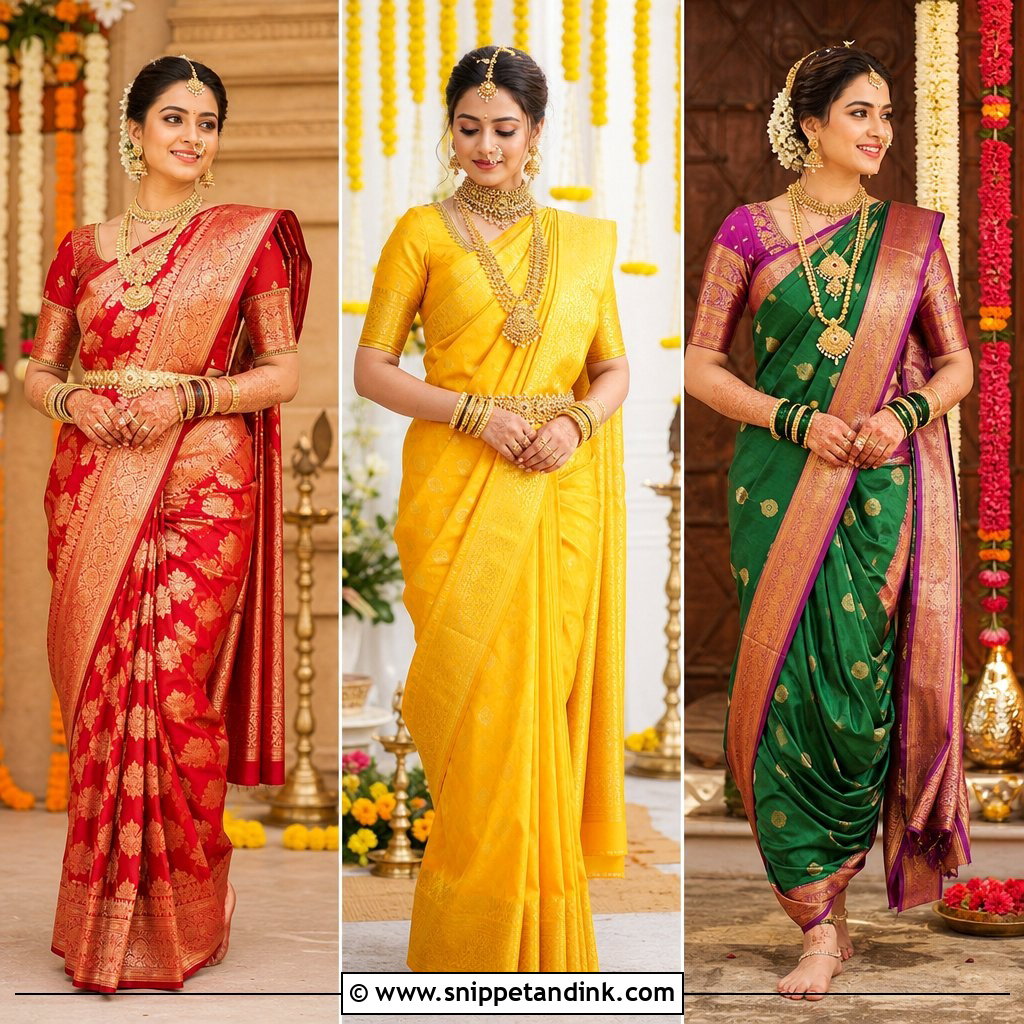
The red bridal lehenga carries weight in both senses. Raw silk with zardozi and resham can be genuinely heavy, and most of that hangs from the waistband, so I ask for a wide, firm waist and a can-can layer that holds the skirt out without adding bulk. Two dupattas are traditional: a heavier one over the head and a lighter one across the shoulder. A choker with a longer necklace, earrings, bangles, a maang tikka and embroidered juttis complete it. Petite brides look best with smaller motifs and a moderate border, since a deep border shortens the leg, while taller brides can carry wide borders. Keep makeup luminous so the fabric leads.
2. Pastel Bridal Lehenga for Indian Marriage
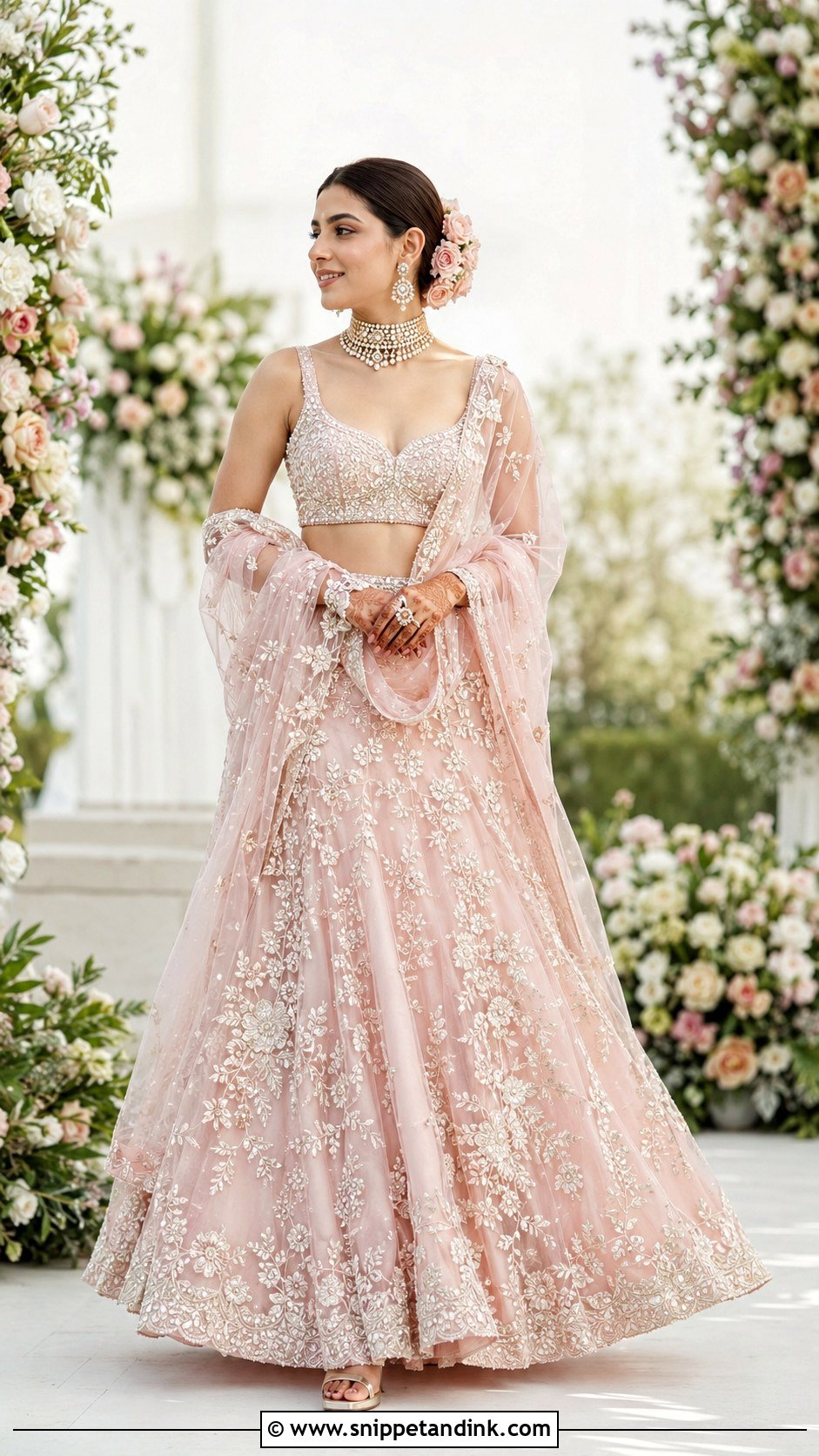
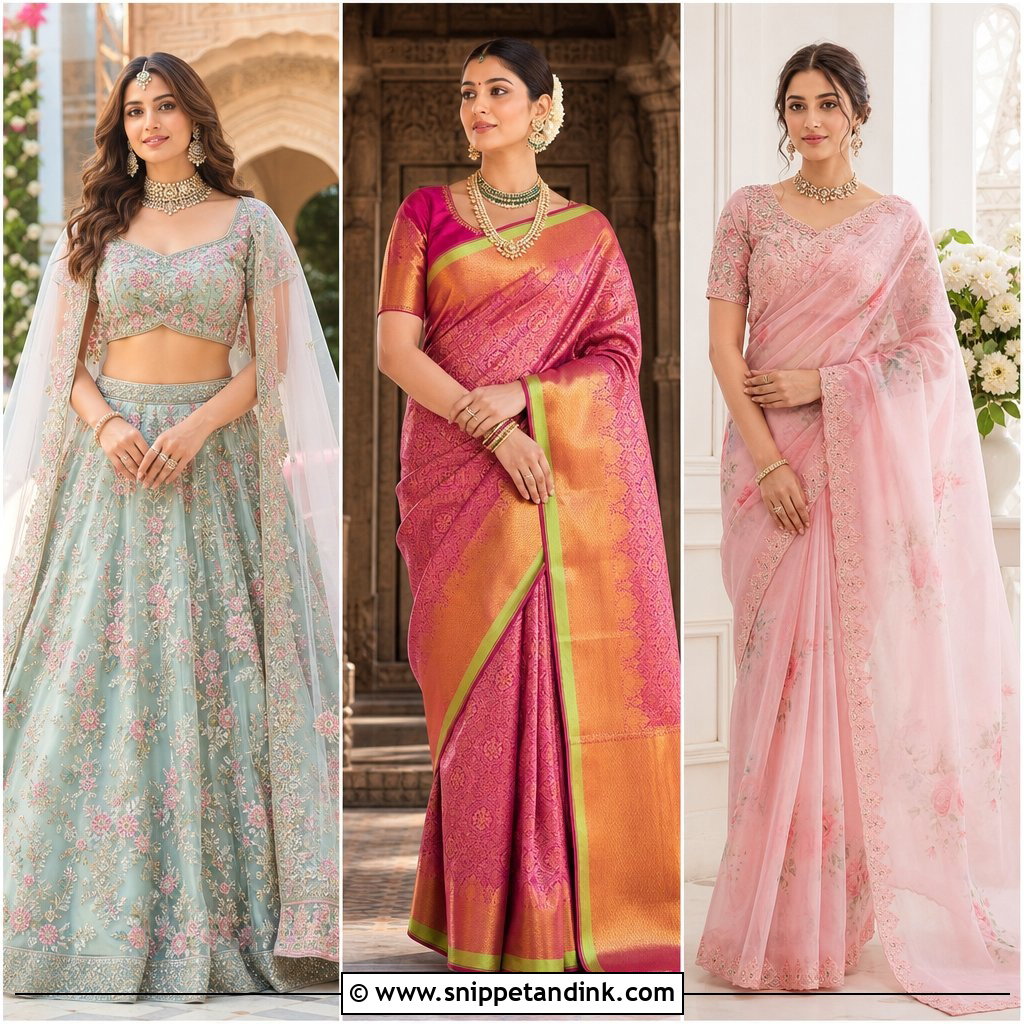
Pastels became bridal for practical reasons as much as fashion, since they’re easier to wear in daytime heat. Blush, powder blue, lavender, peach and mint all suit a garden or day ceremony. Organza holds volume without weight, and net gives a softer float. Tonal embroidery, pearls or silver thread keep the palette quiet, and elbow sleeves balance a full skirt. A sheer dupatta, pearl choker, matching earrings and metallic block heels finish it. I often add one colored stone, emerald or ruby, at the neck to give a pastel bride a focal point, because pale outfits can wash out in photos. Rosy makeup and a flower-trimmed bun complete it.
3. Banarasi Silk Saree for Indian Marriage
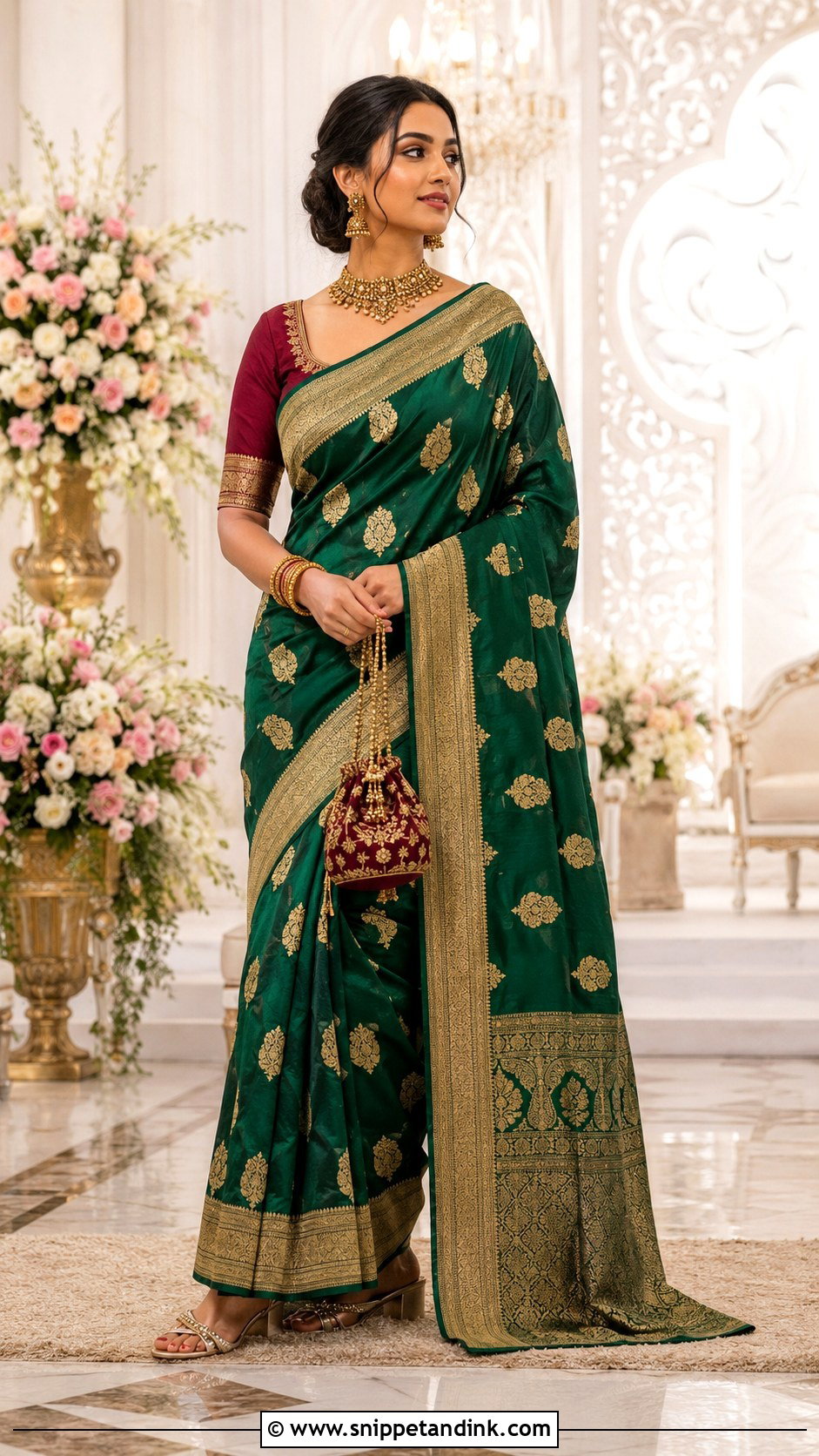
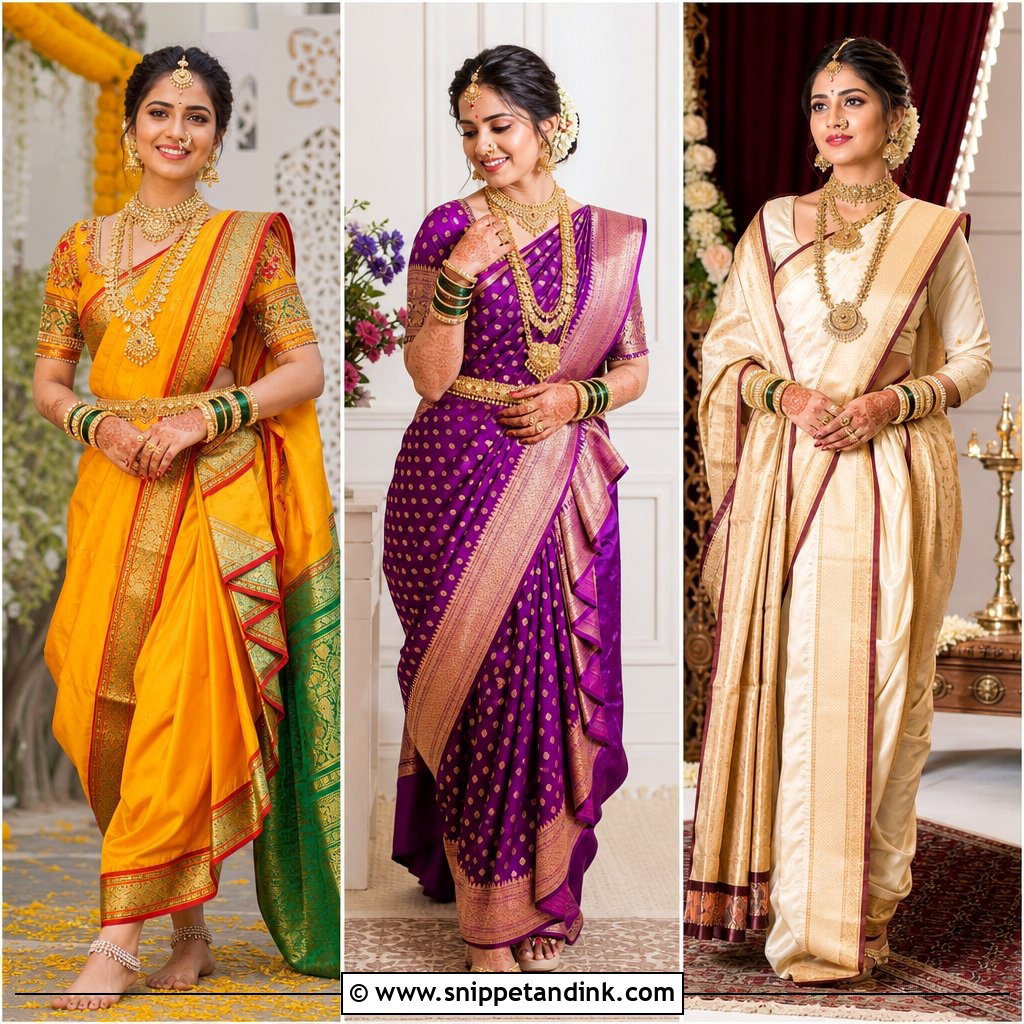
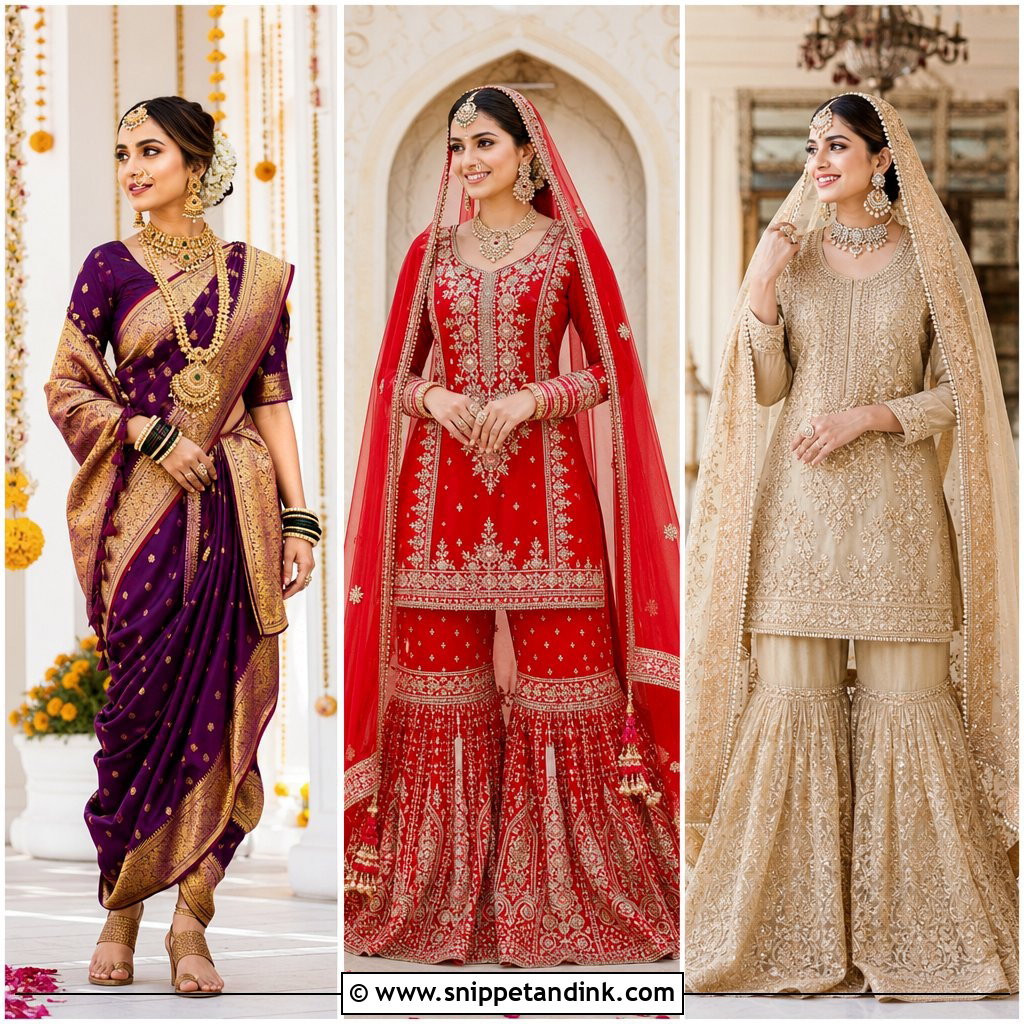
Banarasi works across generations, so it suits the bride, her mother or any close relative. Deep maroon, emerald, royal blue, magenta and mustard give a traditional look with real presence. Use a properly fitted brocade or raw silk blouse with elbow sleeves and a defined neckline. A classic drape shows off the border and pallu, which is where a Banarasi does its talking. Add a gold necklace, jhumkas, bangles, a small bindi and low block heels, with a sleek bun and flowers. Resist oversized accessories. For the mother of the bride, I’d suggest a slightly lighter weave if she’ll be on her feet through the whole ceremony.
4. Kanjivaram Saree for Indian Marriage
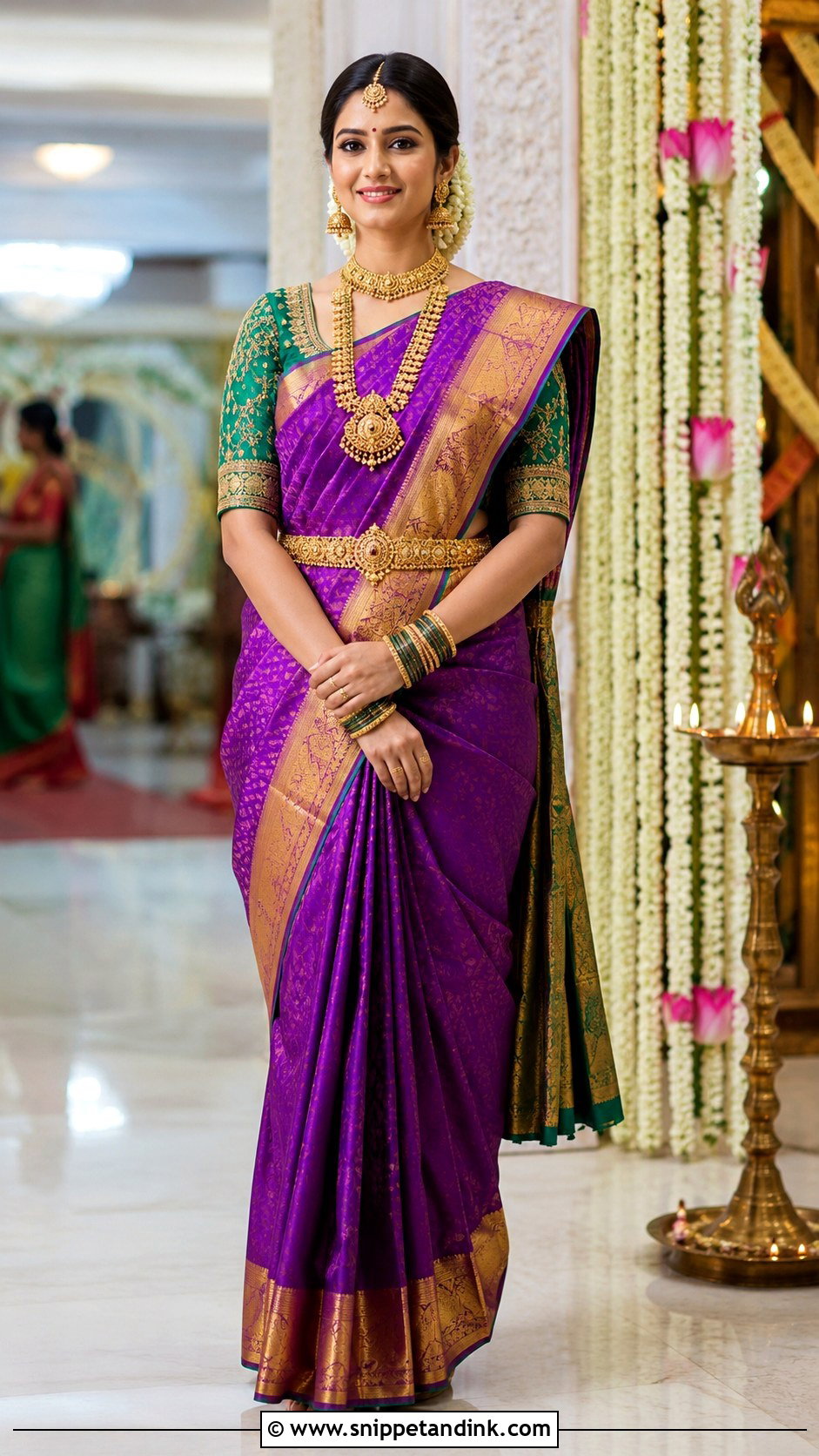
Jewel tones against a contrasting zari border are the classic Kanjivaram language: green, purple, red or cobalt set off by gold. Pick a blouse that repeats one color rather than matching everything. Pleat neatly and pin the pallu firmly, because the silk is heavy and long rituals mean a lot of sitting and standing. Temple jewelry, stacked bangles, a waist belt and gold sandals complete it, with a center-parted bun or braid and flowers. On a heavily woven saree, keep the blouse simple. After the wedding, air a real zari Kanjivaram and refold it now and then, since the metal thread can crack along sharp folds.
5. Floral Lehenga for Indian Marriage
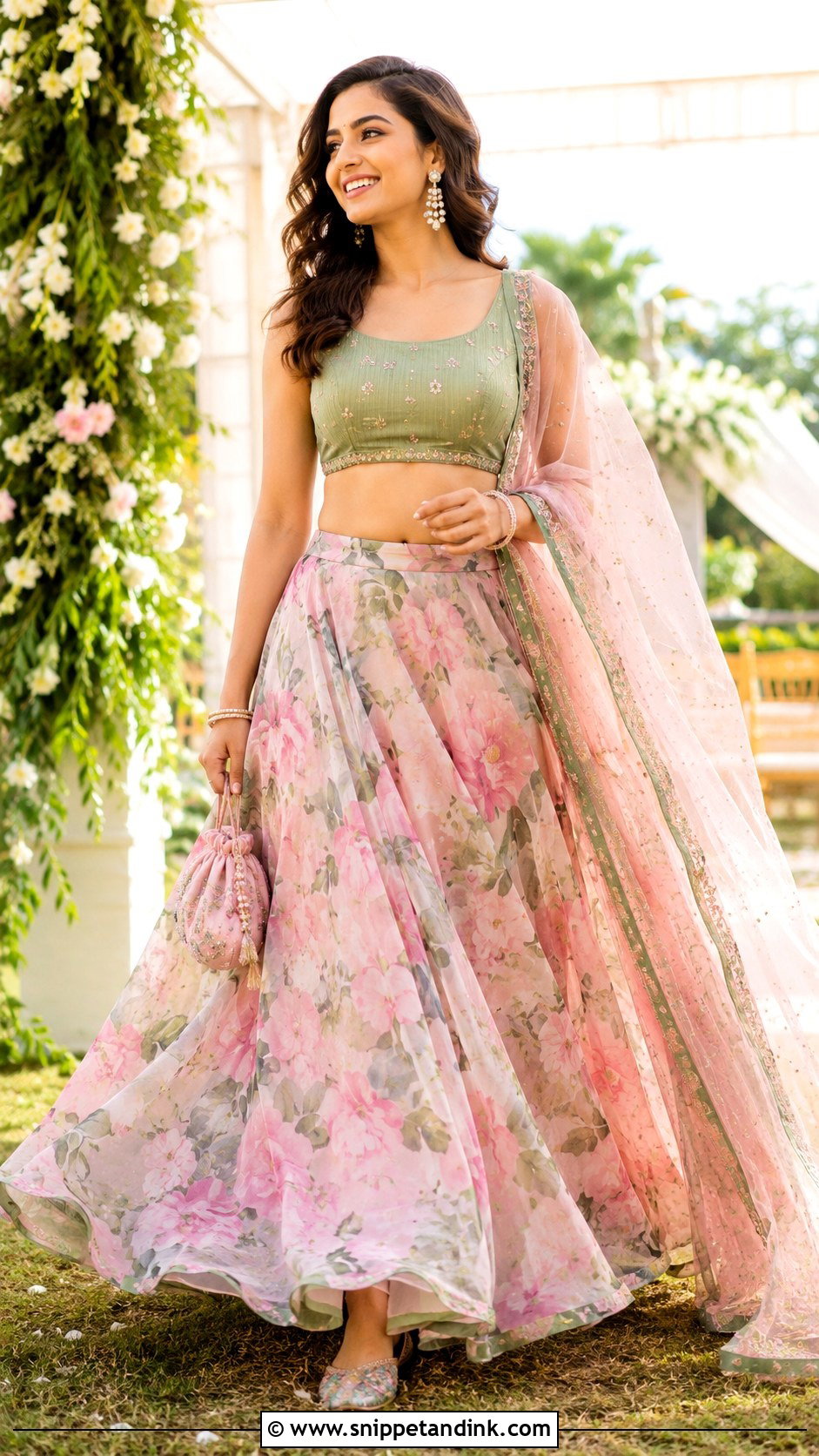
A floral lehenga trades dense embroidery for print, which cuts the weight dramatically and makes it right for a mehndi or daytime wedding celebration. Printed silk, organza or georgette with a crop blouse and a net or chiffon dupatta keeps things light. Pink, yellow, sage, coral and turquoise look cheerful in natural light. Pearl or kundan earrings, a delicate bracelet, embroidered juttis and a potli complete it. Scale the jewelry to the print: a large, colorful pattern wants quiet earrings, while a small print can take a bolder necklace. A soft braid or loose waves suit it.
6. Anarkali Suit for Indian Marriage
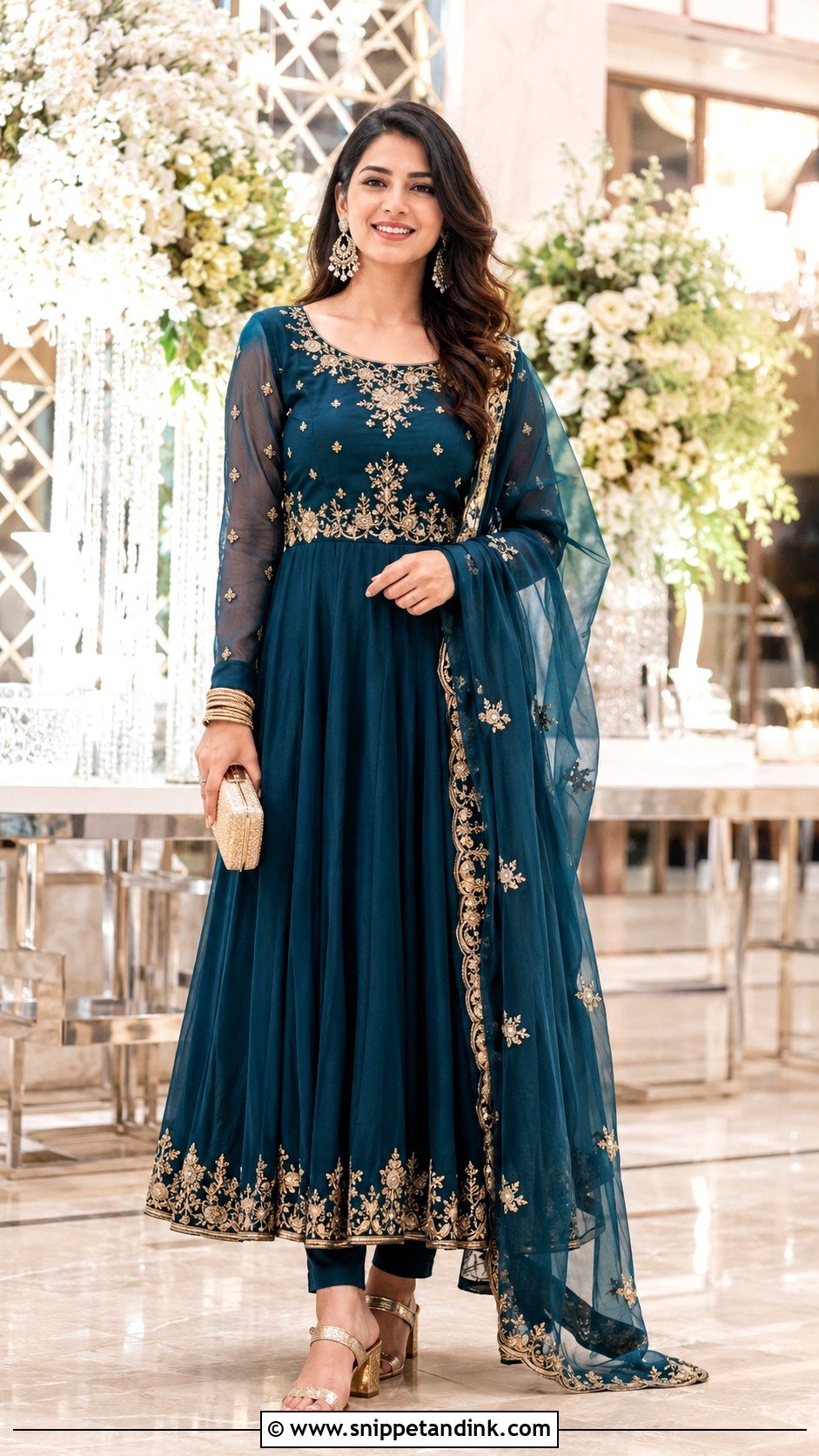
A floor-length Anarkali suit is built from panels, called kalis, that flare from a fitted bodice, and the number of panels decides how it moves. More kalis mean more swing and more fabric weight. Silk, georgette, chiffon and Chanderi all work. Deep teal, wine, navy and emerald suit evening, while peach and mint feel lighter by day. Narrow pants, an embroidered dupatta, chandelier earrings, bangles and block heels complete it. Define the waist through tailoring rather than a heavy belt, and finish with softly defined eyes and a sleek bun.
7. Sharara Suit for Indian Marriage
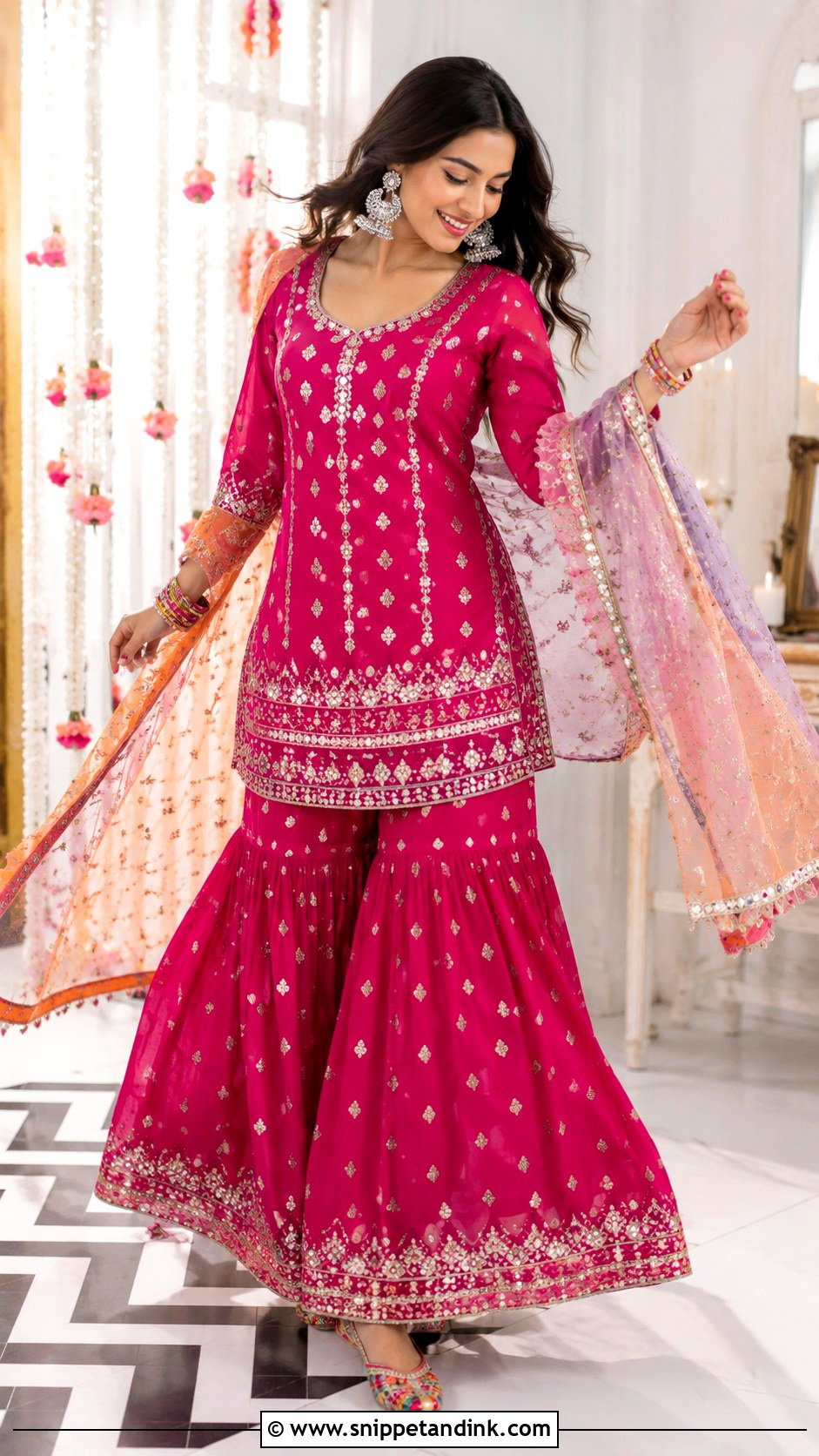
A sharara suit pairs a short or mid-length kurta with pants that flare from the hip, and it’s the outfit I recommend most for a sangeet, mehndi or family celebration with dancing. Silk, georgette or organza in jewel tones, pastels or yellow with pink all work. Gota patti, mirror work or fine thread embroidery add definition without weight. A light dupatta, statement jhumkas, stacked bangles and embellished juttis finish it. Get the kurta fitted at the shoulders. If those are loose, the volume below swamps you. A braid or soft waves keep it lively.
8. Gharara Suit for Indian Marriage
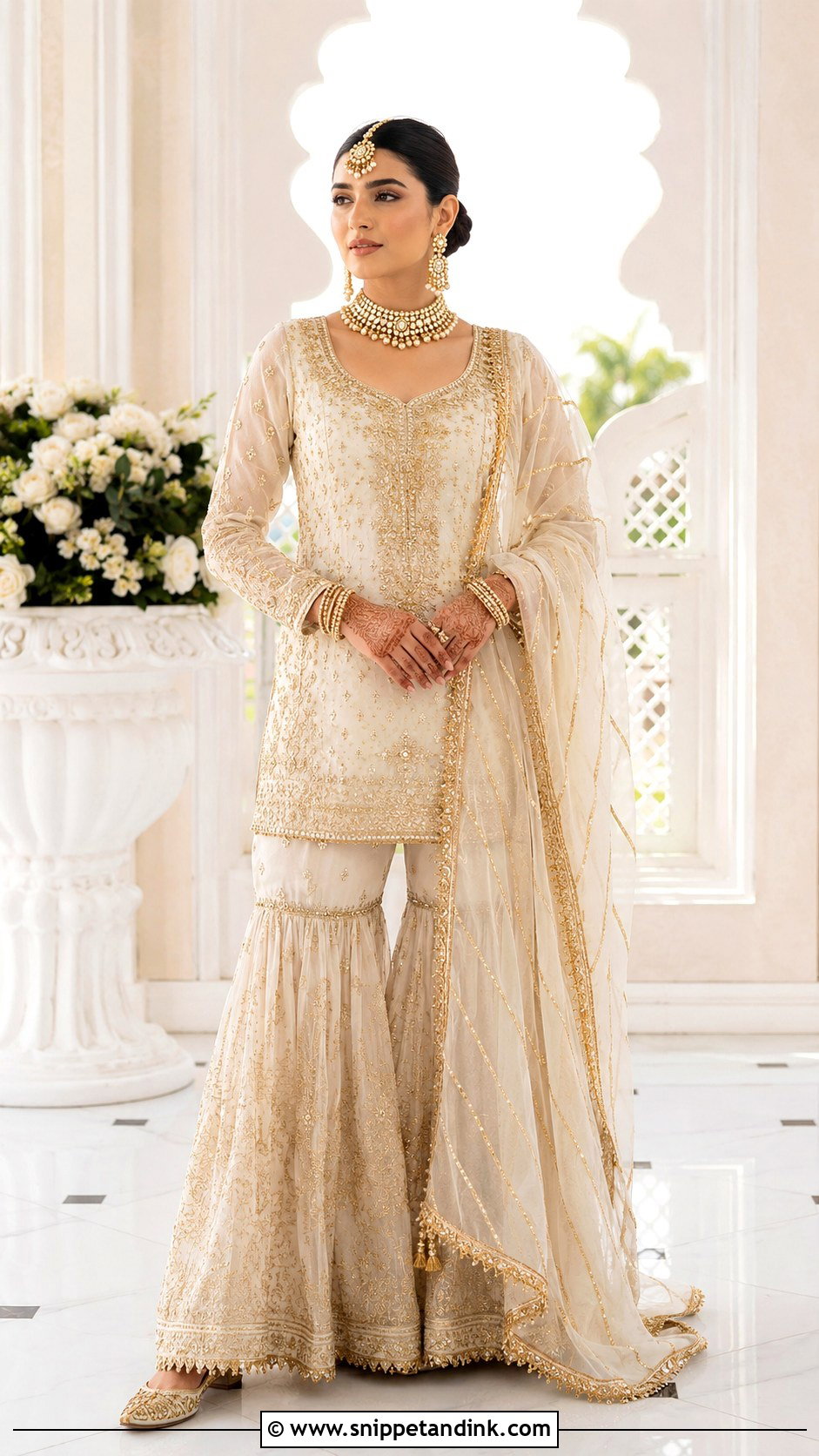
What makes a gharara is its construction: fitted through the thigh, joined at the knee, then flared, usually with a band of gota marking the joint. A short embroidered kurti keeps that joint visible; a long one hides the whole point of the garment. Coordinate a dupatta edged in gota or beads. Ivory with gold feels refined, and magenta, green or turquoise make a brighter palette. A choker, medium earrings, a maang tikka and pointed juttis complete it. An open neckline and elbow sleeves balance the volume below. It’s traditional for a nikah, and just as much at home at a mehndi or sangeet.
9. Chanderi Suit for Indian Marriage
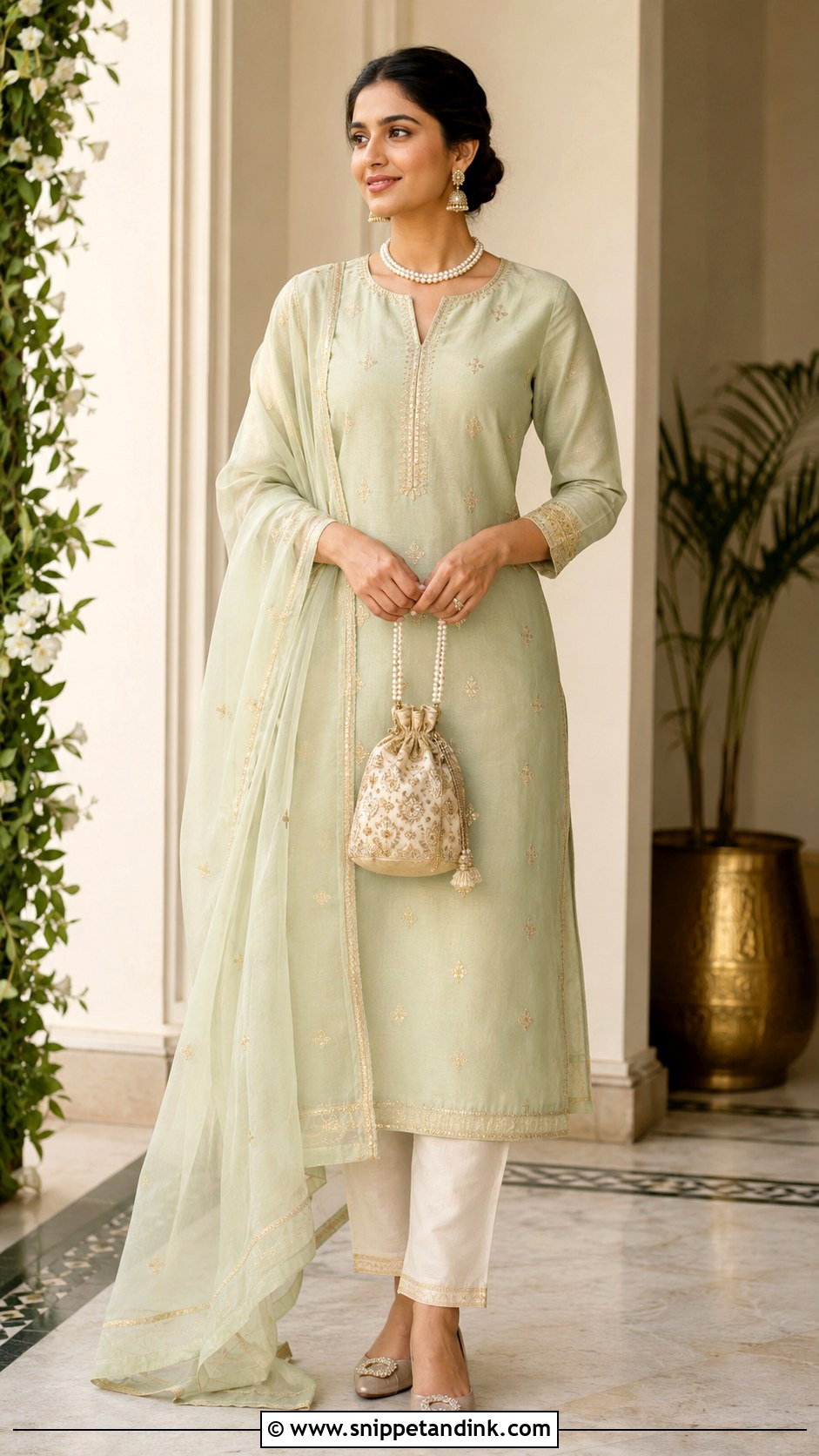
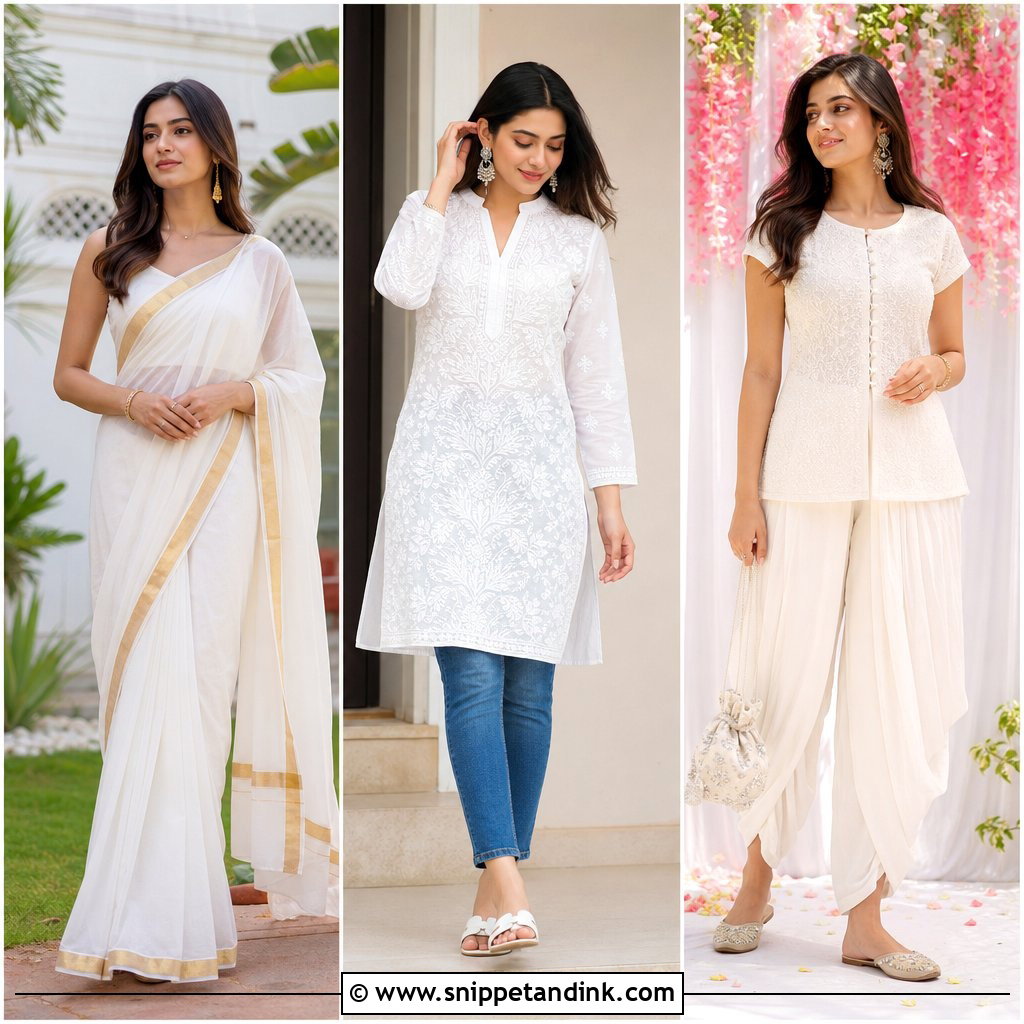
Chanderi is the fabric I reach for when a client needs to look formal at a midday ceremony in the heat. It’s light and slightly translucent with a soft sheen, and woven motifs give detail without added weight. A straight or gently flared kurta, narrow pants and a sheer dupatta in soft gold, pistachio, rose or powder blue look refined in bright light. A pearl necklace, small jhumkas, a structured potli and low metallic heels suit it. Chanderi creases and can snag, so keep layers minimal and press it on a low setting. A center-parted bun complements it, and the coverage suits women who prefer modest outfits.
10. Embroidered Palazzo Suit for Indian Marriage
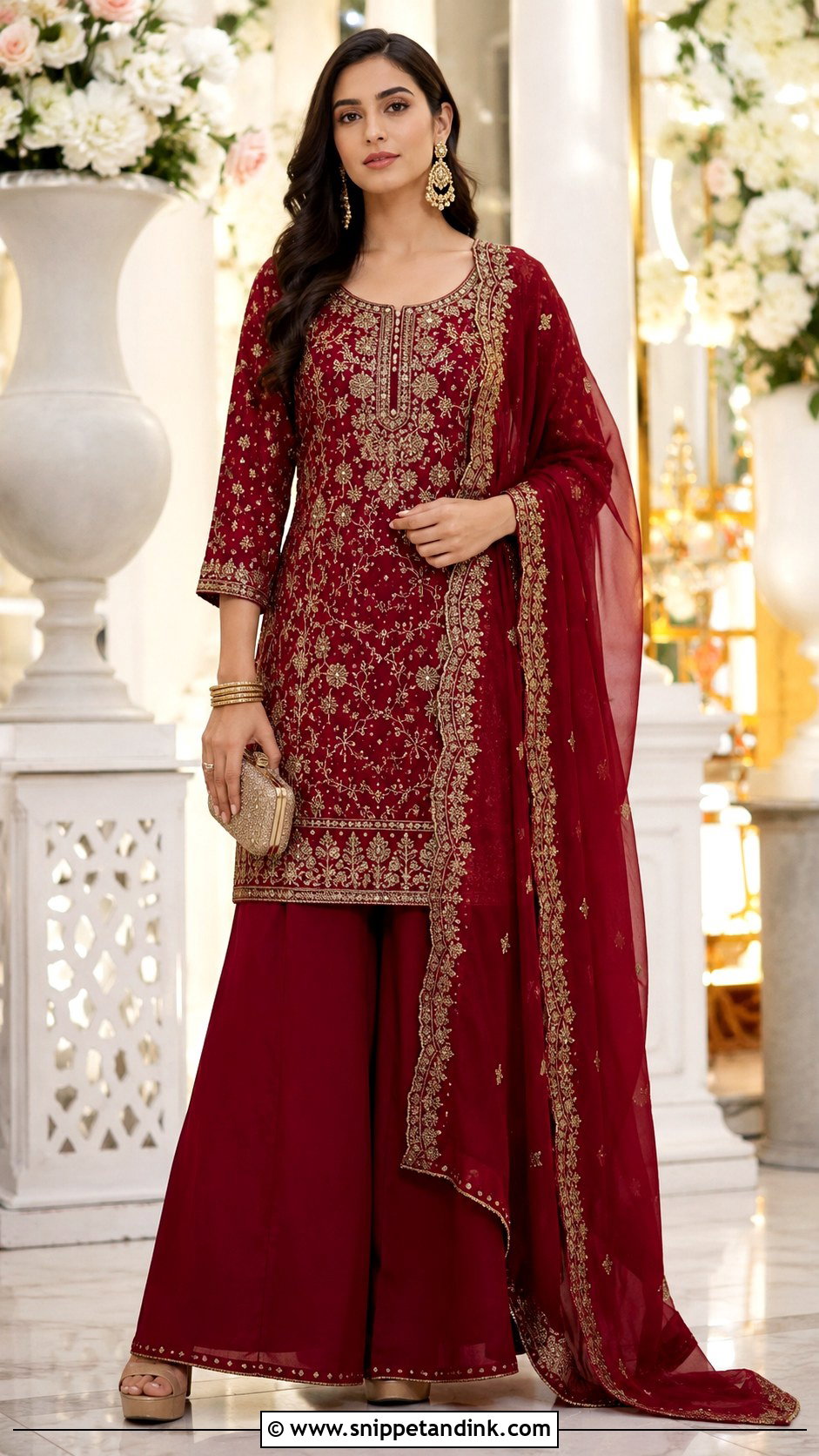
Palazzos are about comfort, and they still look dressed up when the kurta is right. Pair wide pants with a knee-length embroidered kurta or a shorter peplum that defines the waist, plus a light dupatta over one shoulder. Ruby, peacock blue, forest green or aubergine suit evening, and coral, lilac or soft yellow suit daytime. Drop earrings, a slim bracelet stack, a box clutch and platform or block heels finish it. Hem length makes or breaks palazzos. They should nearly cover your shoes without touching the floor, which gives a long, clean line. A smooth blowout or low ponytail completes it.
11. Cape Lehenga for Indian Marriage
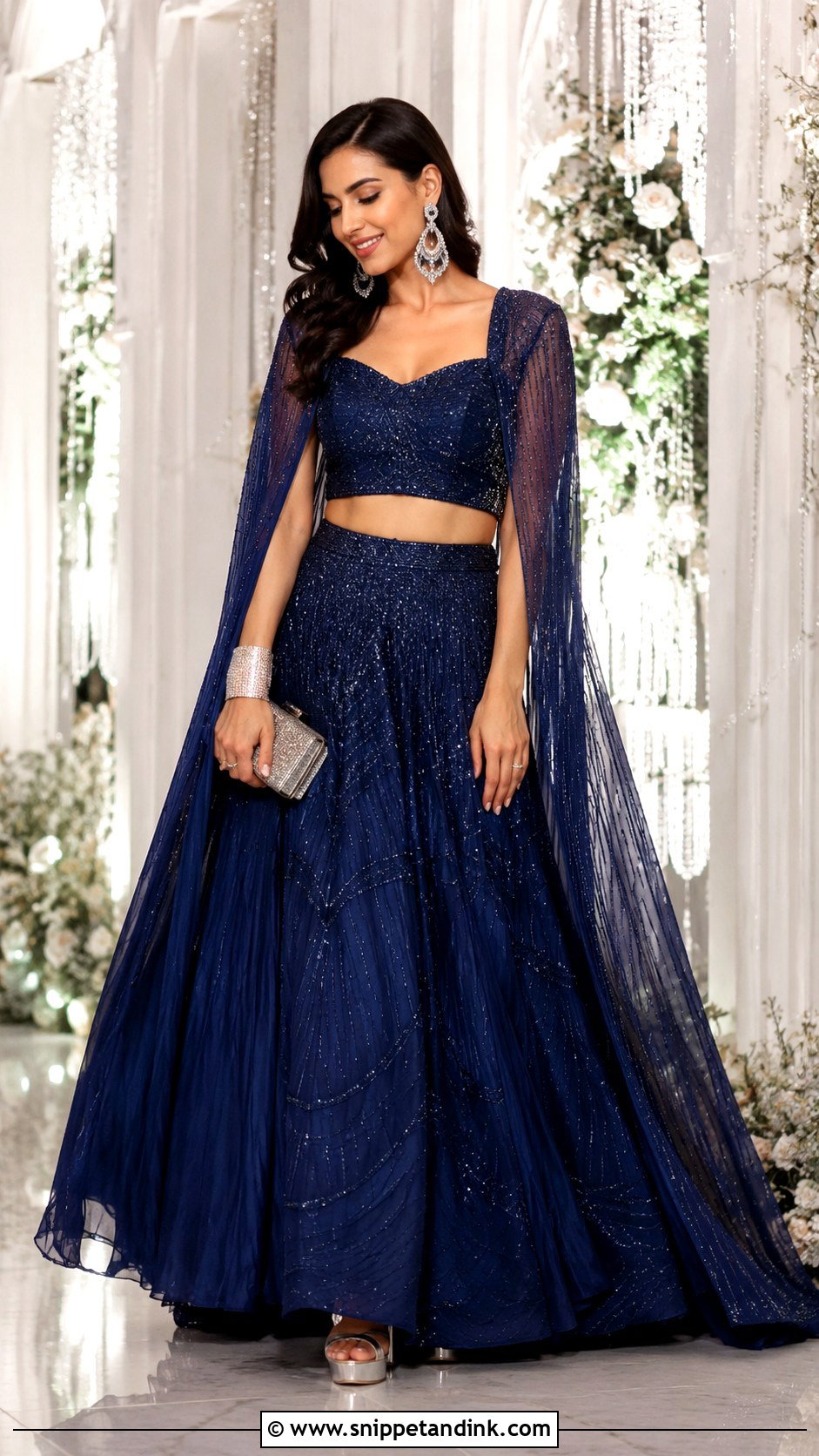
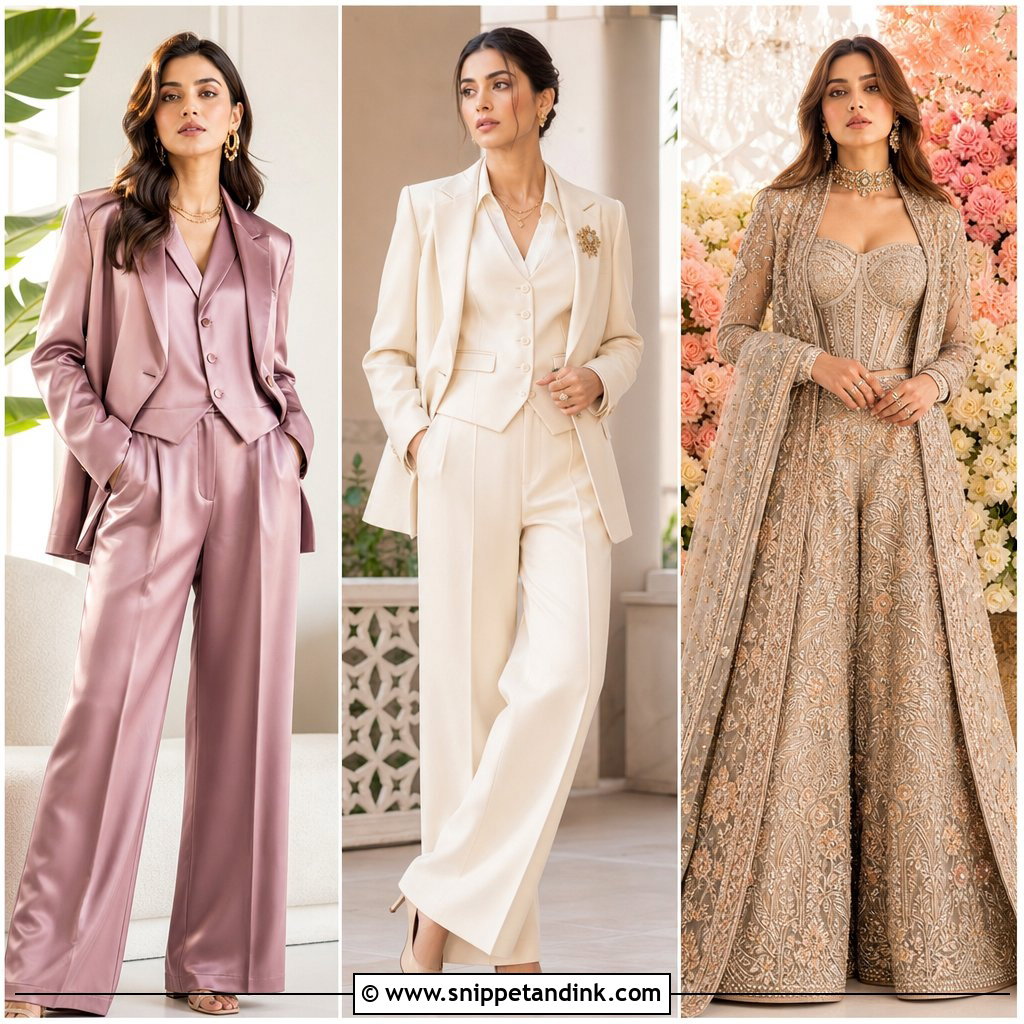
A cape removes the dupatta from the equation, and that’s a real relief at a reception or sangeet where you’re hugging people and holding a drink. A flowing skirt and fitted blouse sit under a sheer embroidered cape. Monochrome in dusty rose, sapphire, champagne or deep green keeps it streamlined. Statement earrings, a cuff, a small clutch and comfortable heels or juttis complete it. If the cape’s neckline is heavily embroidered, skip the necklace. Check that the cape is tacked at the shoulder seams, or it slides backward through the evening. A low bun keeps the shoulders visible.
12. Jacket Lehenga for Indian Marriage
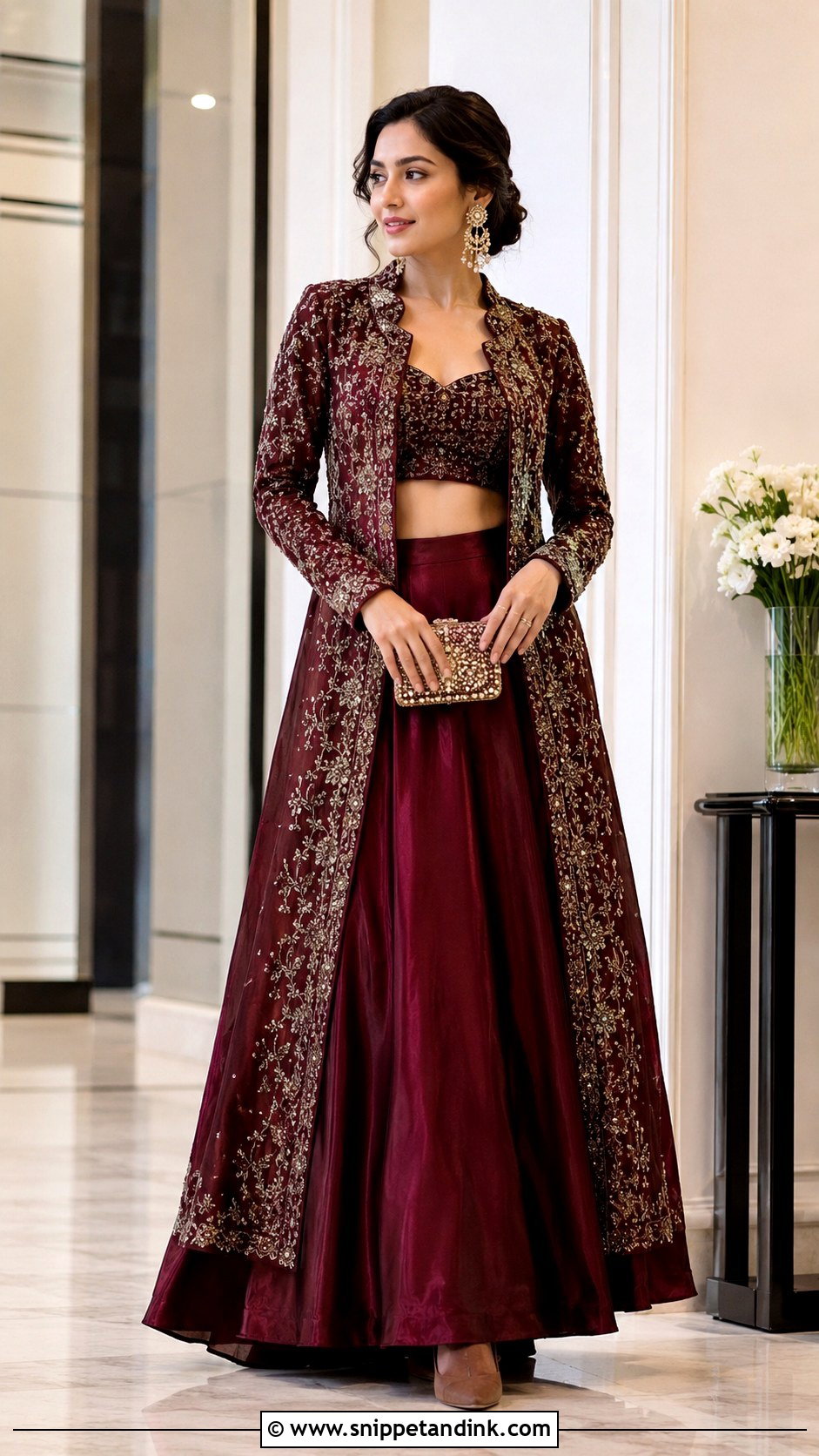
Would you prefer something formal with more coverage than a standard lehenga? A jacket lehenga adds a long embroidered jacket over a full skirt and fitted blouse, making one long vertical line. Choose the jacket fabric by season: velvet in winter, organza or net when it’s warm. When the jacket is densely embroidered, keep the skirt simpler. Navy, burgundy, emerald and deep plum suit evening, and ivory with pastels suits day. Earrings, a cocktail ring, a structured clutch and block heels finish it. Wear your hair up so the neckline shows. A floor-length jacket adds real weight, so try it on with the full skirt before you commit.
13. Pre-Draped Saree for Indian Marriage
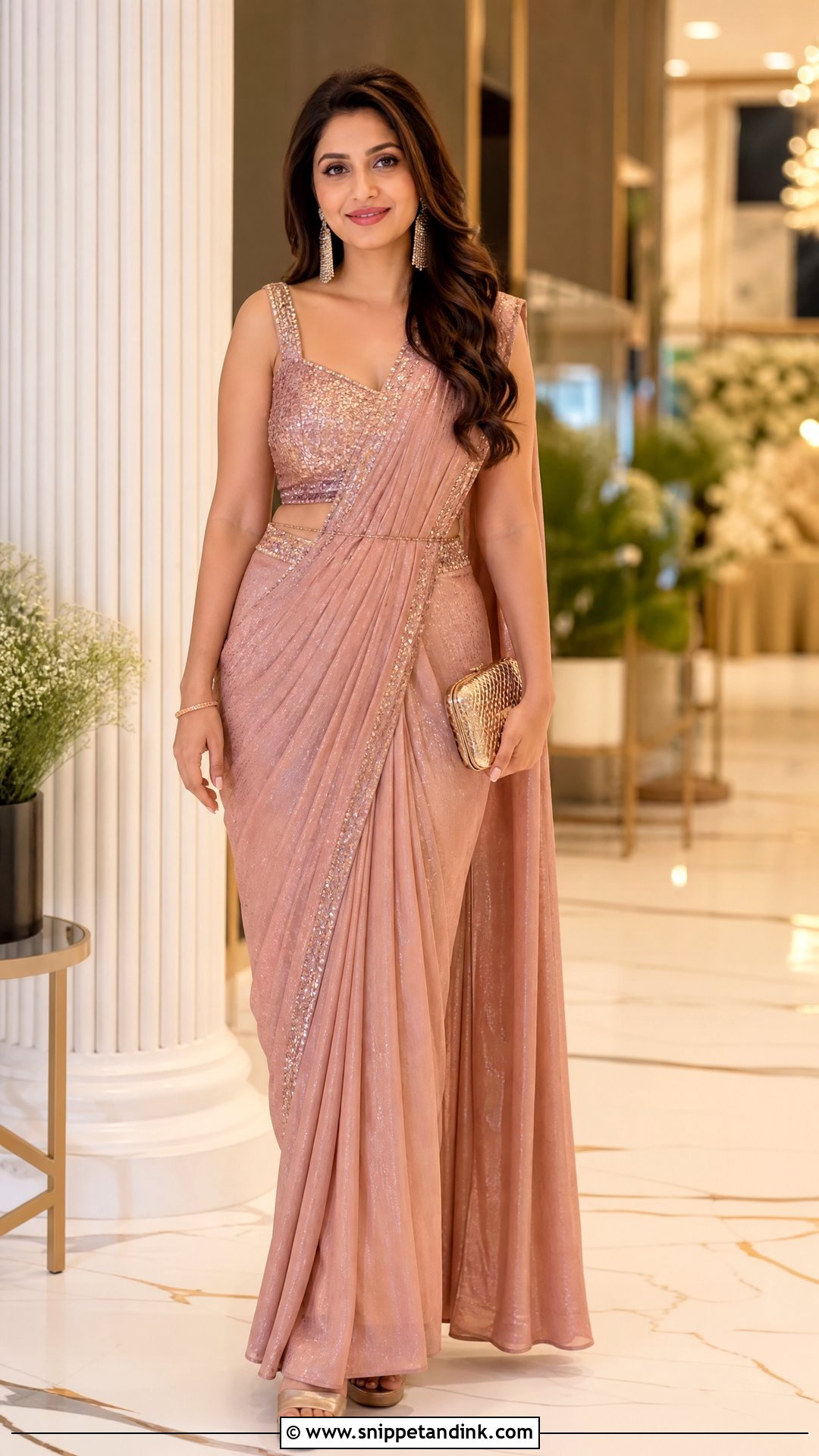
A pre-draped saree is stitched into shape, so the pleats and pallu stay exactly where they were set, which matters on a sangeet night. Satin, georgette, crepe or light sequined fabric in metallic silver, rose gold, deep blue or wine gives an evening look. The fitted blouse carries the structure, so have it tailored properly. Sculptural earrings, a slim bracelet, a compact clutch and secure block heels complete it. Keep the pallu neat so it doesn’t fight the blouse. If you’ve never worn a saree, this is the way to try one at a wedding without worrying about it all evening.
14. Ruffle Saree for Indian Marriage
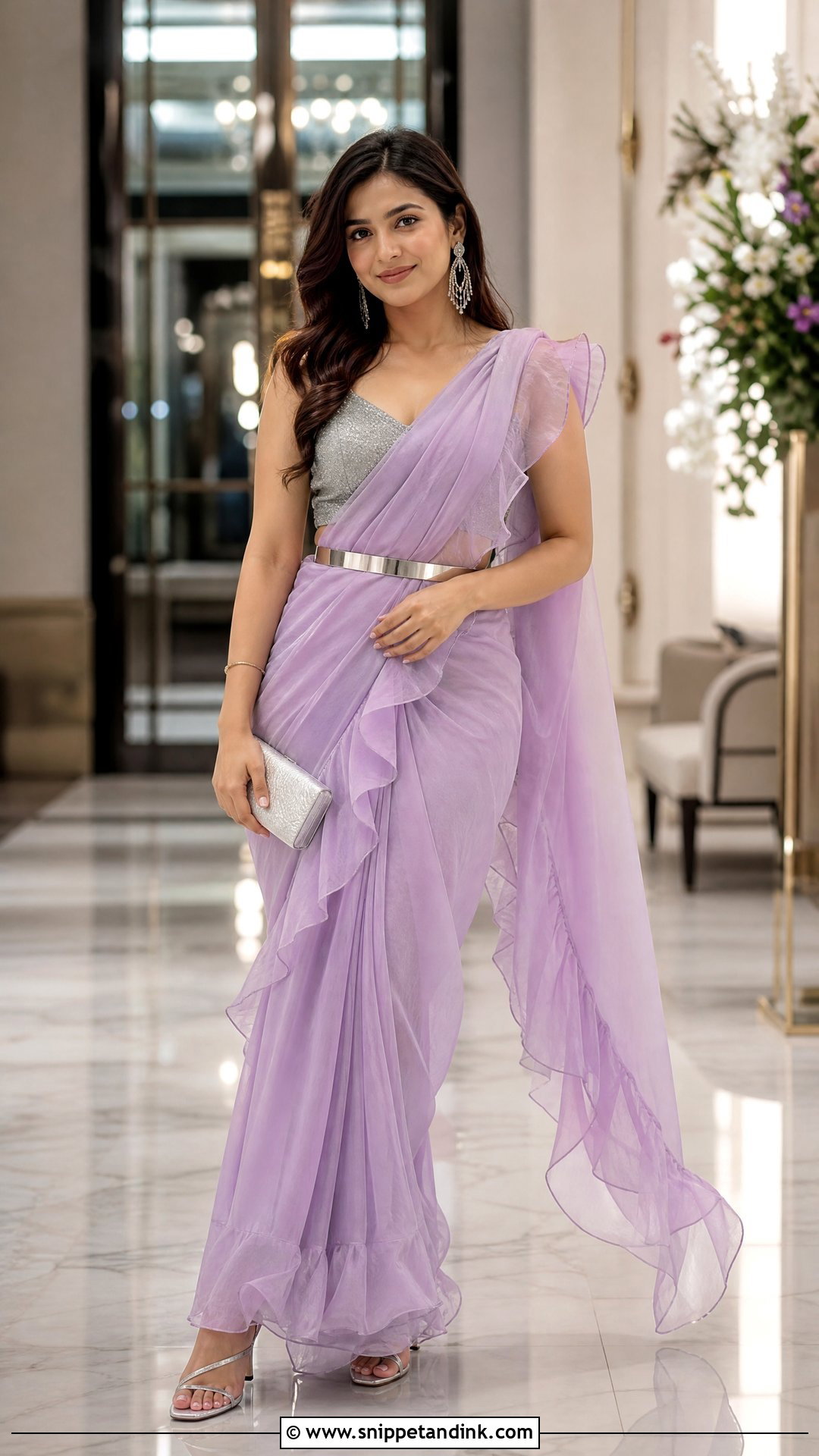
Ruffles only work in light fabric. Chiffon, georgette or organza keeps them airy, and anything heavier turns them into a bulky band at the hem. Pair the saree with a fitted sleeveless, cap-sleeve or elbow-sleeve blouse. A plain blouse balances a heavily ruffled border, and a sequined one brightens a simpler saree. Coral, lavender, powder blue and emerald feel festive but wearable. Drop earrings, a slim waist belt, a clutch and heeled sandals complete it. Skip the large necklace, since the ruffles already frame the upper body. Ruffled hems catch on heels when you walk quickly, so practise on stairs first.
15. Dhoti Saree for Indian Marriage
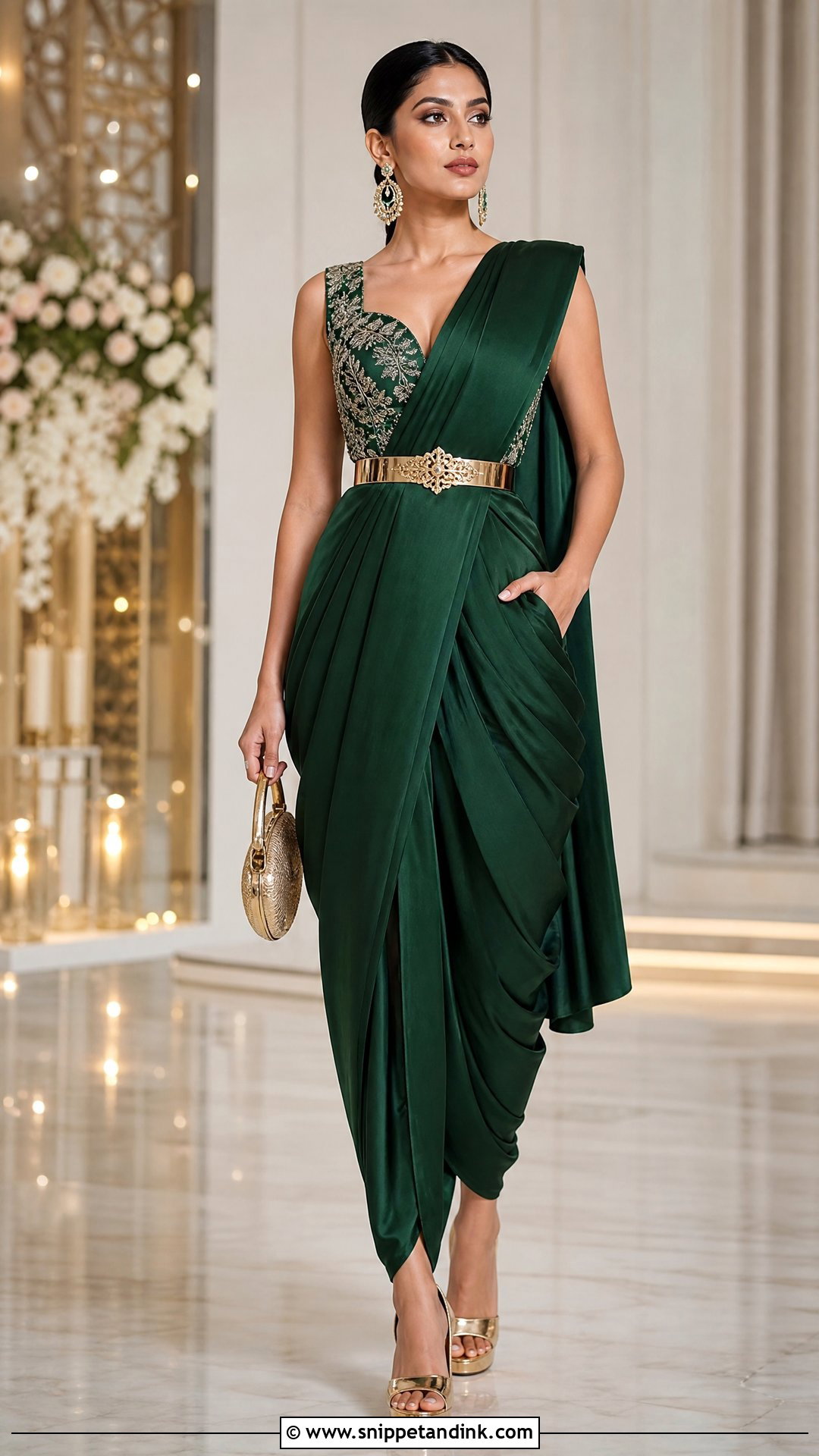
A dhoti saree wraps the lower half like trousers and keeps a saree’s drape on top. Fluid crepe or satin forms clean folds, while stiffer fabrics bunch. Pair it with a structured blouse, crop top or short embroidered jacket. Green, maroon, navy and bronze suit evening. A metallic waist belt holds the drape, and statement earrings, a compact bag and secure block heels finish it. The lower half is already visually busy, so edit the accessories, and pull your hair into a high ponytail to suit the modern shape. Wear it to a cocktail-style reception or sangeet where you plan to move.
16. Indo-Western Gown for Indian Marriage
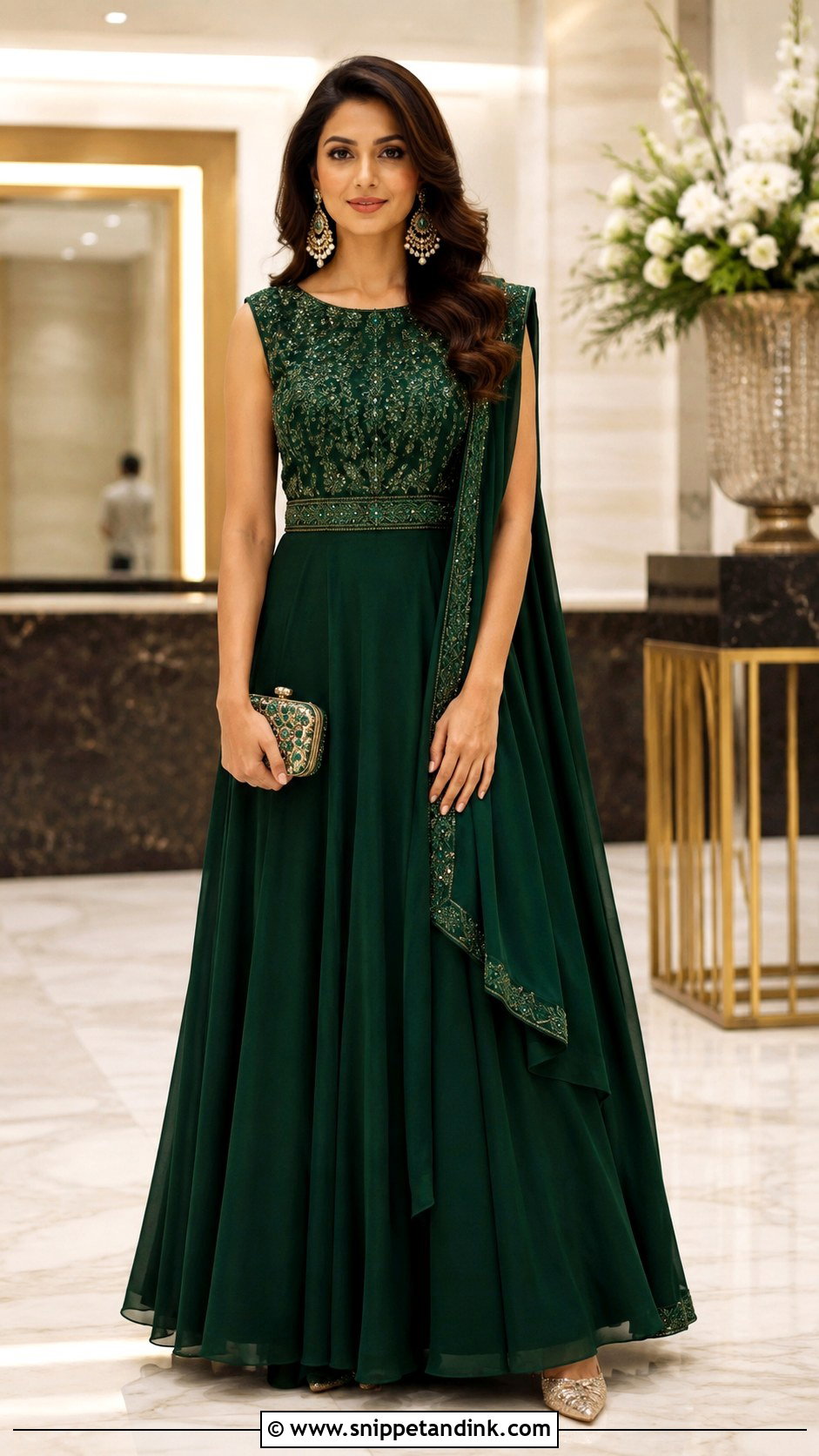
An Indo-Western gown suits guests who feel most at ease in a one-piece shape. Look for full length with Indian embroidery and a draped panel, cape or dupatta-style shoulder detail, plus a defined waist and fluid skirt so you can move. Emerald, midnight blue, burgundy, champagne and mauve all suit evening. Statement earrings, a bracelet, a jeweled clutch and closed-toe heels finish it, though a heavily beaded bodice needs fewer accessories. A low bun or soft waves won’t hide the neckline. Check the lining at the zip and underarm, where embroidery rubs most over a long reception.
17. Peplum Lehenga for Indian Marriage
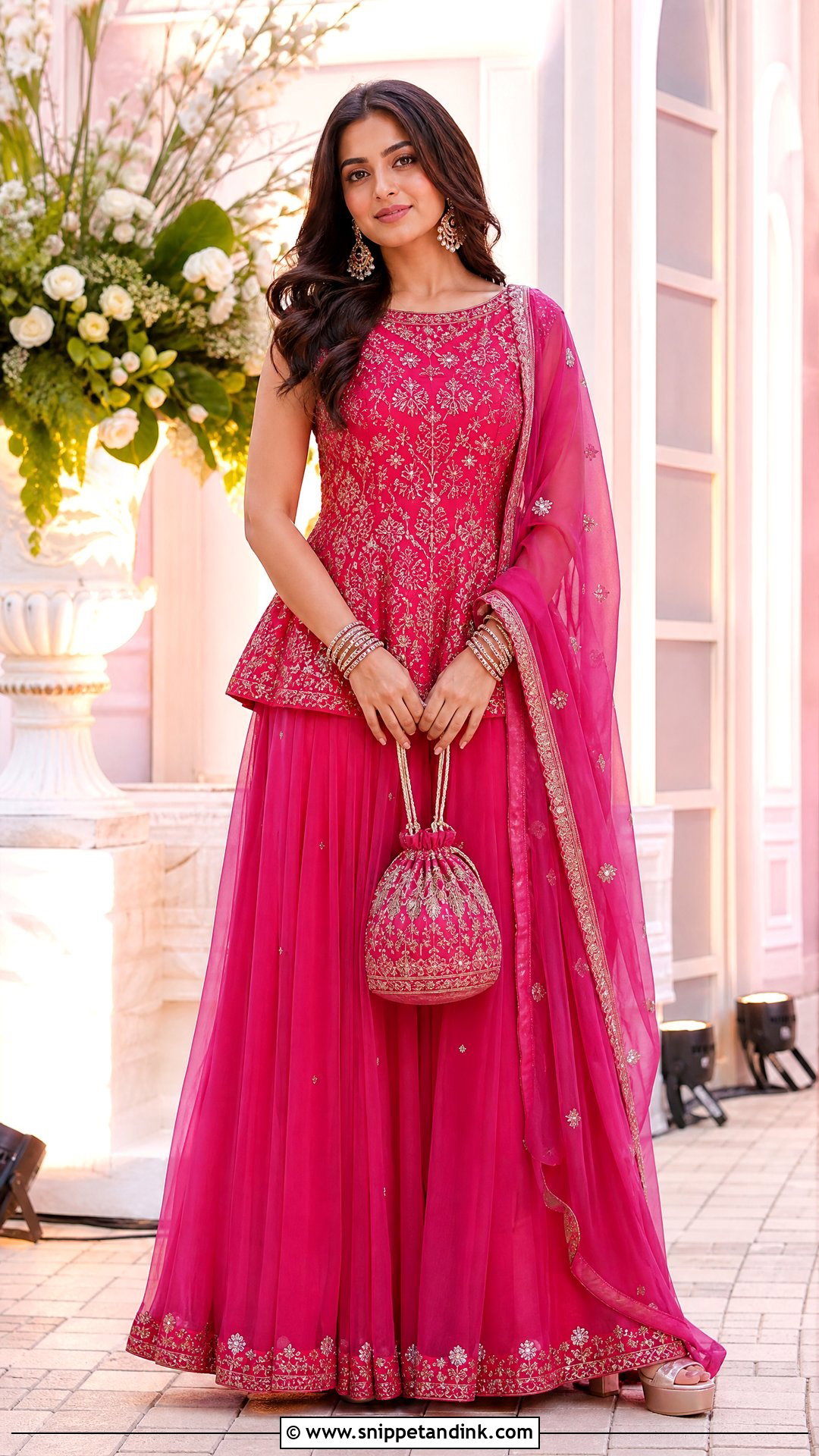
A peplum top defines the waist and covers the midriff a cropped blouse would show. Start the skirt at your natural waist, and carry the embroidery across both pieces so they read as one outfit. A light dupatta is optional when the top is detailed. Medium earrings, bangles, a potli and platform heels or juttis complete it. Deep pink, navy, rust, emerald and ivory-gold all suit several events. Let peplum length follow your height: a short flare lengthens a petite frame, while a taller woman carries a longer, structured peplum well.
18. Kurta Skirt Set for Indian Marriage
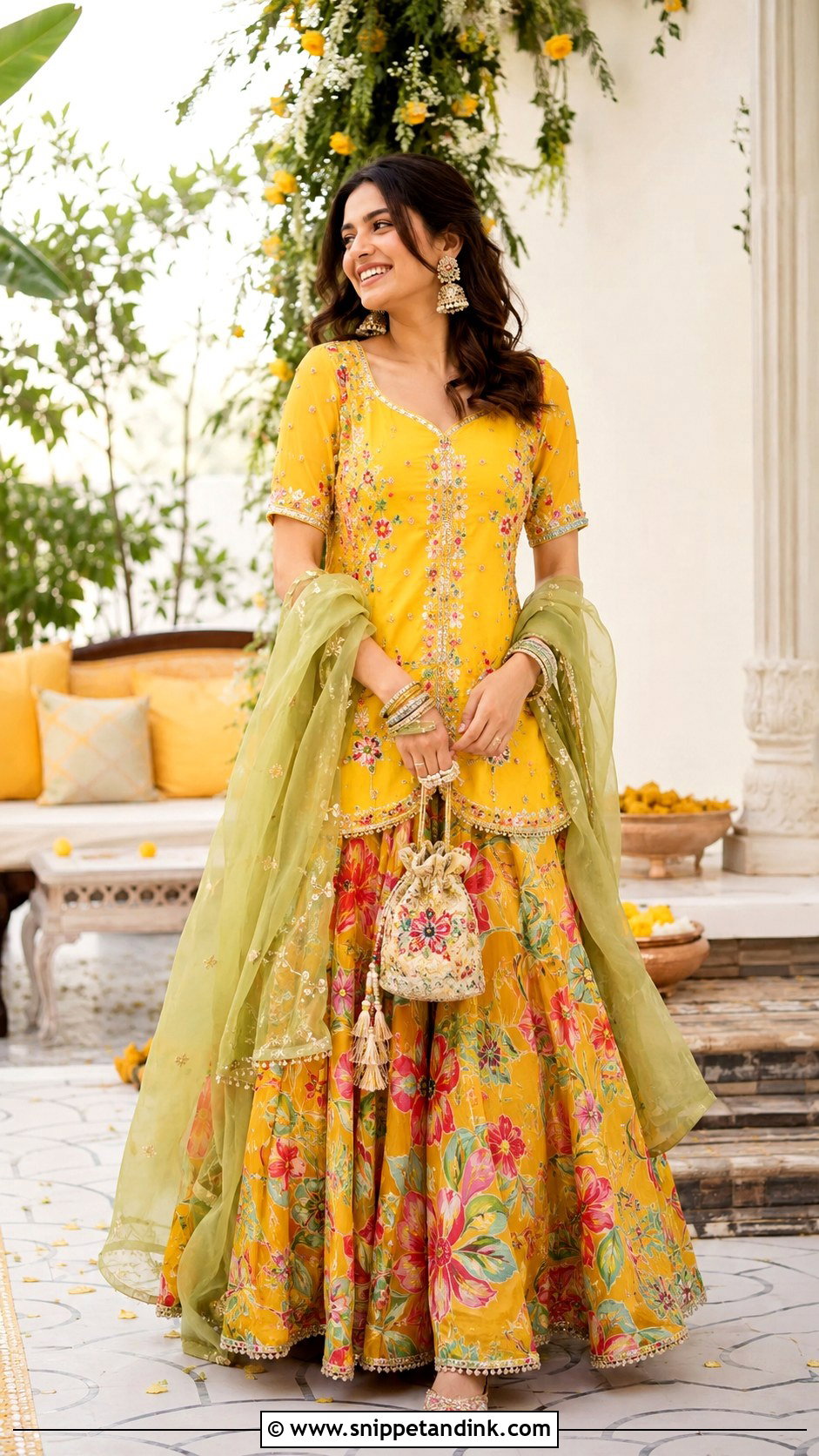
A hip-length kurta over a full skirt sits between a suit and a lehenga. Fitted or gently flared, the kurta should stop near the hip so the skirt’s shape shows. Pair a printed skirt with a plain embroidered kurta, or reverse it. Add a dupatta, jhumkas, bangles, a potli and flat juttis. It’s comfortable for a mehndi, haldi or relaxed daytime event. Yellow, green, coral and pink are lively, while navy and maroon make it more formal. Because the pieces are separate, the skirt and kurta each go back into your wardrobe afterward, which I count as a real point in its favor.
19. Velvet Lehenga for Indian Marriage
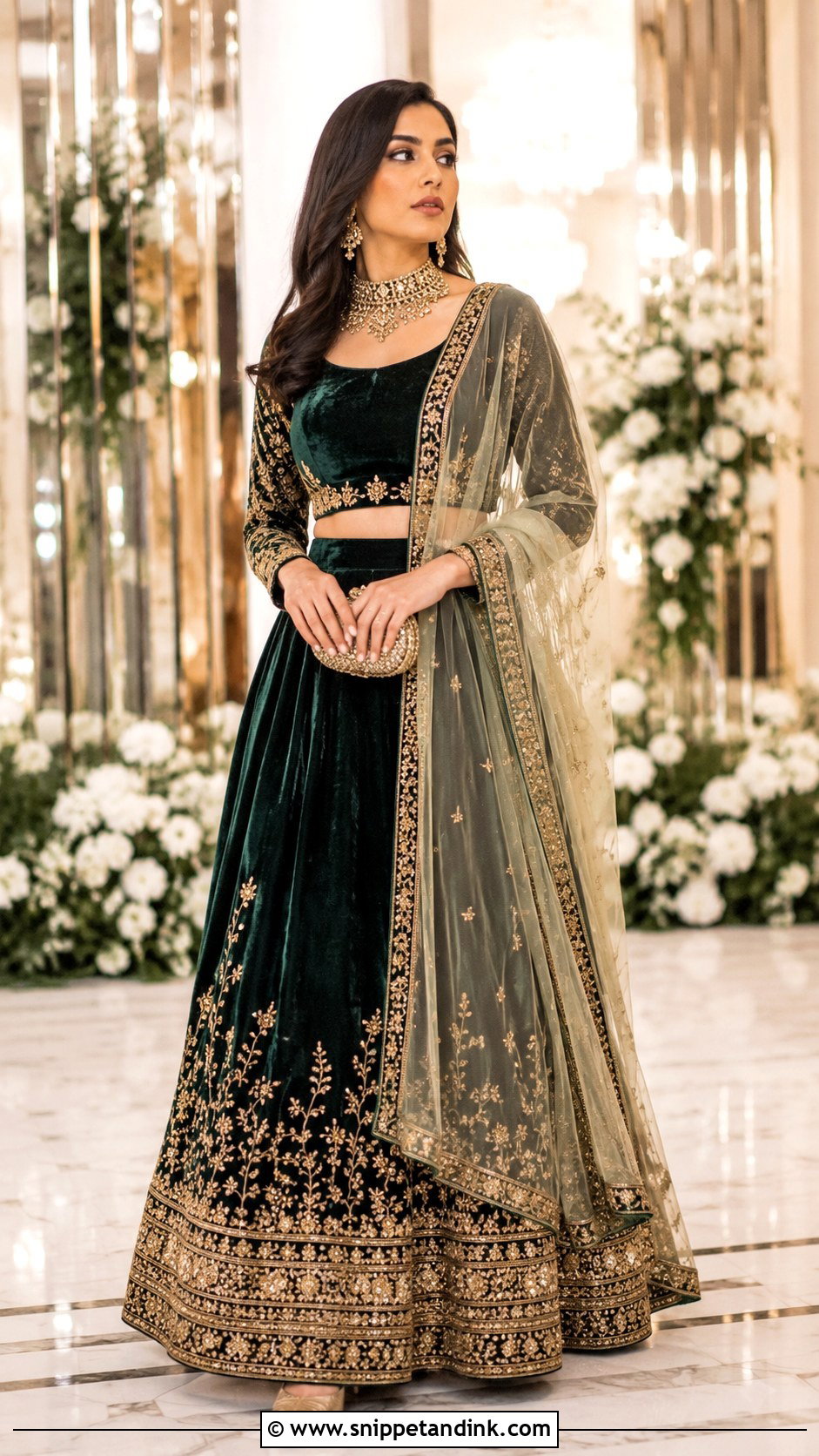
Velvet looks best in winter and at night, when its pile soaks up light and deepens burgundy, bottle green, navy or plum. A matching velvet, raw silk or embroidered net blouse and a lighter dupatta stop the outfit from feeling too heavy. Antique gold jewelry, a compact clutch and closed or secure footwear suit the season. Keep embroidery at the border or in spaced motifs so the velvet itself shows. Velvet holds body heat, so for a heated indoor reception I’d choose elbow sleeves over full ones. A polished bun and defined makeup finish it.

20. Silk Co-Ord Set for Indian Marriage
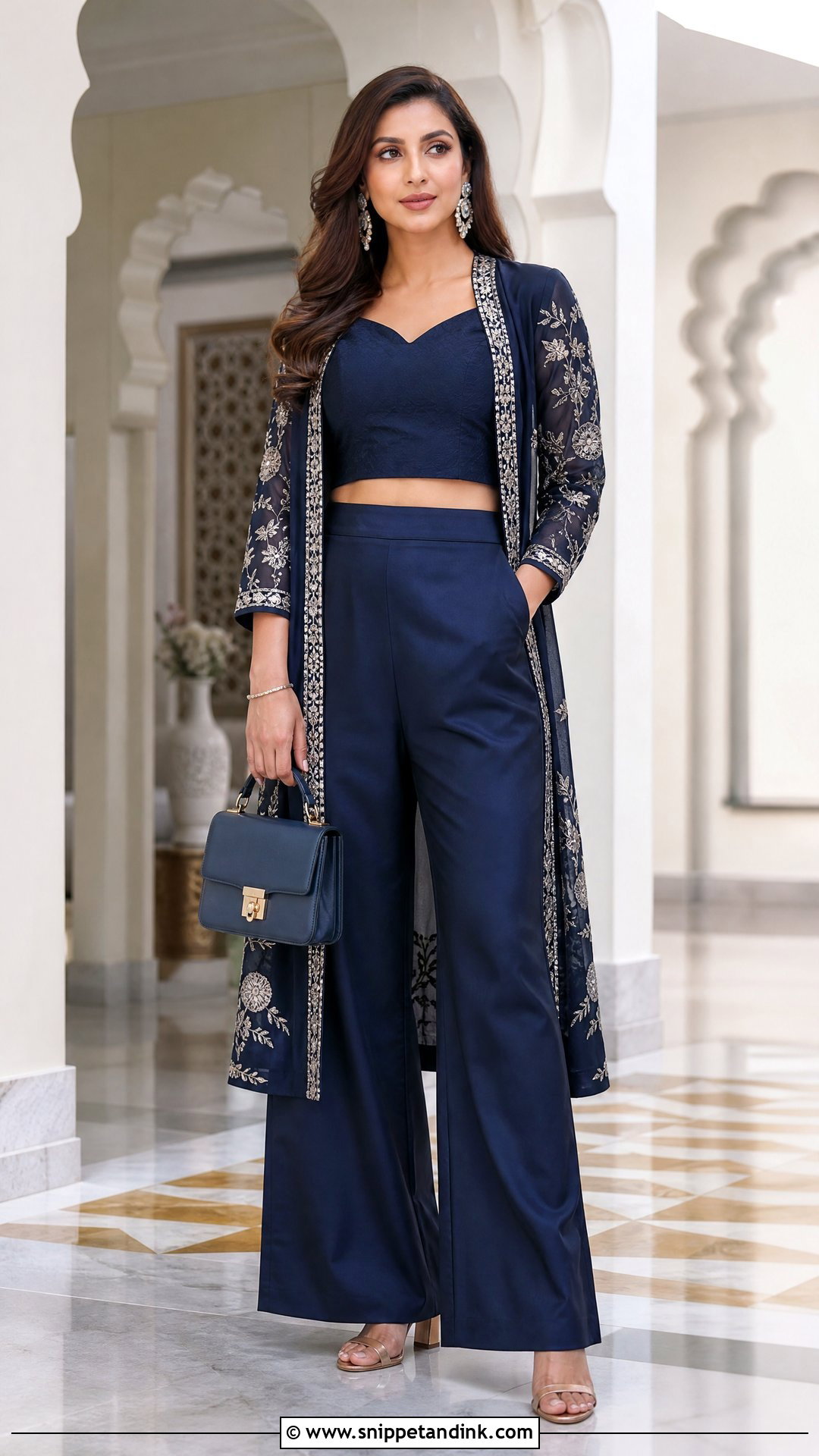
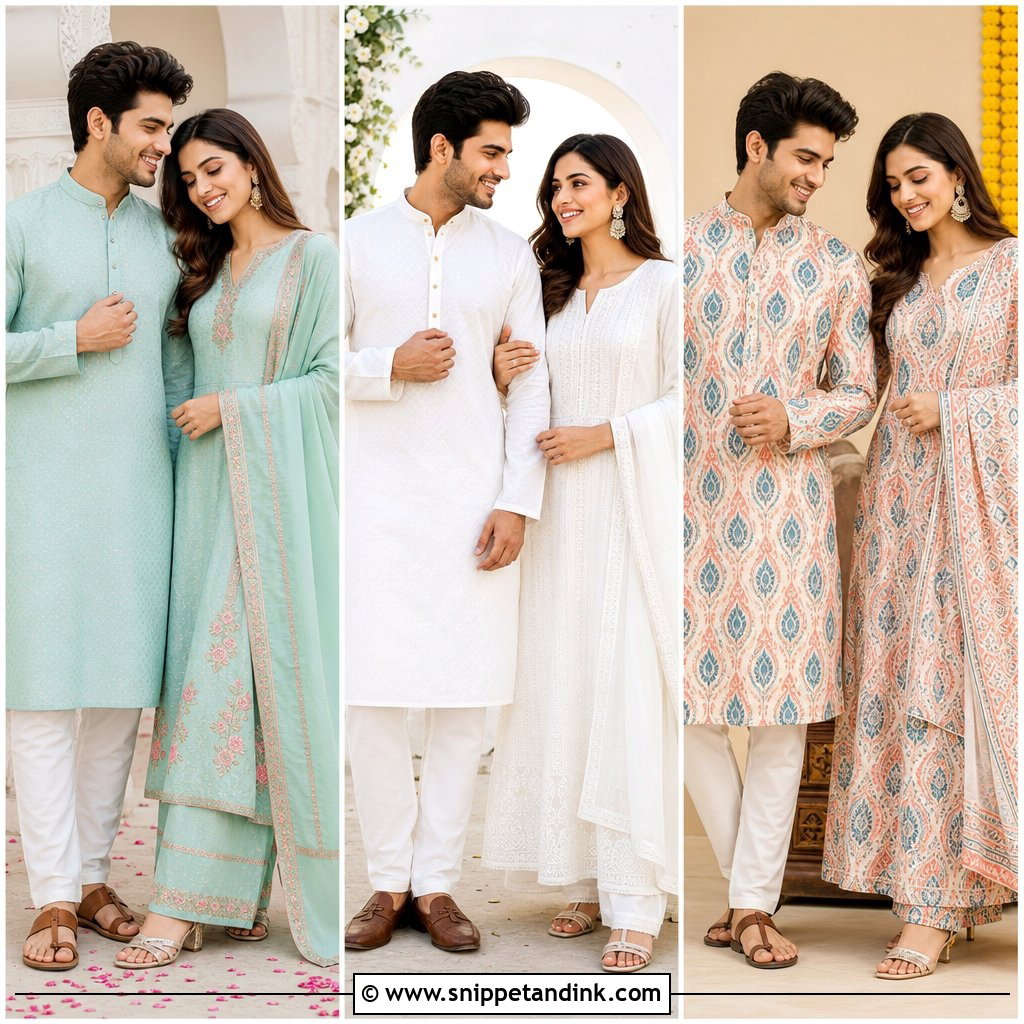
A silk co-ord set suits a smaller wedding function, a travel-related gathering or a modern reception. Wide-leg trousers with a fitted tunic, cropped kurta or structured top become ceremony-ready with an embroidered cape or long jacket. Solid jewel tones, woven patterns or a restrained metallic finish all work. Contemporary earrings, a slim bracelet, a structured bag and block heels complete it. Keep everything in one color family for a long line, and choose a longer jacket with a higher neckline for more coverage. Silk trousers show water spots, so keep a napkin on your lap at dinner.
Two Dupattas, One Head, and How They Stay Put
Most bridal lehengas come with two dupattas, and on the wedding morning they cause more trouble than anything else. The shoulder dupatta goes on first, draped across the body and pinned at the shoulder and waist. The head dupatta goes on last, after hair and jewelry are done.
Tell your hairstylist about the head dupatta at the trial, not on the day. It needs a firm anchor, usually a bun or a teased base at the crown, so the pins have something to grip. A heavily embroidered head dupatta pulls backward for hours, which is why I suggest a lighter net one for the head and keep the heavier piece for the shoulder.
- Pin the head dupatta in several places, at the crown and behind each ear, never at a single point.
- Leave room for the maang tikka, or pin the dupatta just behind it so the chain lies flat.
- If your ceremony includes a gathbandhan, ask the family which dupatta the knot will be tied to and pin that one extra firmly, because it will be tugged.
- Give a small kit of pins in the dupatta’s color to a sister or friend who’ll stay close.
Set up that way, the drape gets through the rituals and the family photos without anyone rushing in to rescue it.
If It Pinches at the Trial, Fix It Now
An Indian marriage outfit has to respect the occasion and still feel like yours. Start with the event schedule and the dress code, then think about the weather, the venue, how much you’ll move and how formal it is. Breathable fabric and lighter decoration suit long daytime events; save rich textures, deep shades and heavy embellishment for formal evenings. Coordinate jewelry, bag, shoes, hairstyle and dupatta with the whole silhouette rather than piece by piece. Anything that pinches or slides at the trial will feel worse after six hours, so have it fixed while there’s time.
You'll Like These Ideas:








Leave a Reply