
Most brides who sit in my chair with a bob or a lob start by apologising for their length, and they don’t need to. Short hair holds pins close to the scalp, takes a maang tikka without fighting a heavy bun, and stays put through the pheras and a sangeet without the drag long hair has. What it does need is planning: added hair matched to your color, a firm hidden base for jewelry, and styles chosen for where your hair actually ends. Below are 25 ideas I’d happily do on short hair for brides, bridesmaids and guests, with the trade-offs I’d mention at a trial.
How Much Length Each of These Styles Really Needs
Before you save every photo below, check where your hair ends, because short covers a wide range. A chin-length bob can carry plenty without any added hair, while a full juda on most short cuts means borrowing some length. This is roughly how I sort the looks at a consultation:
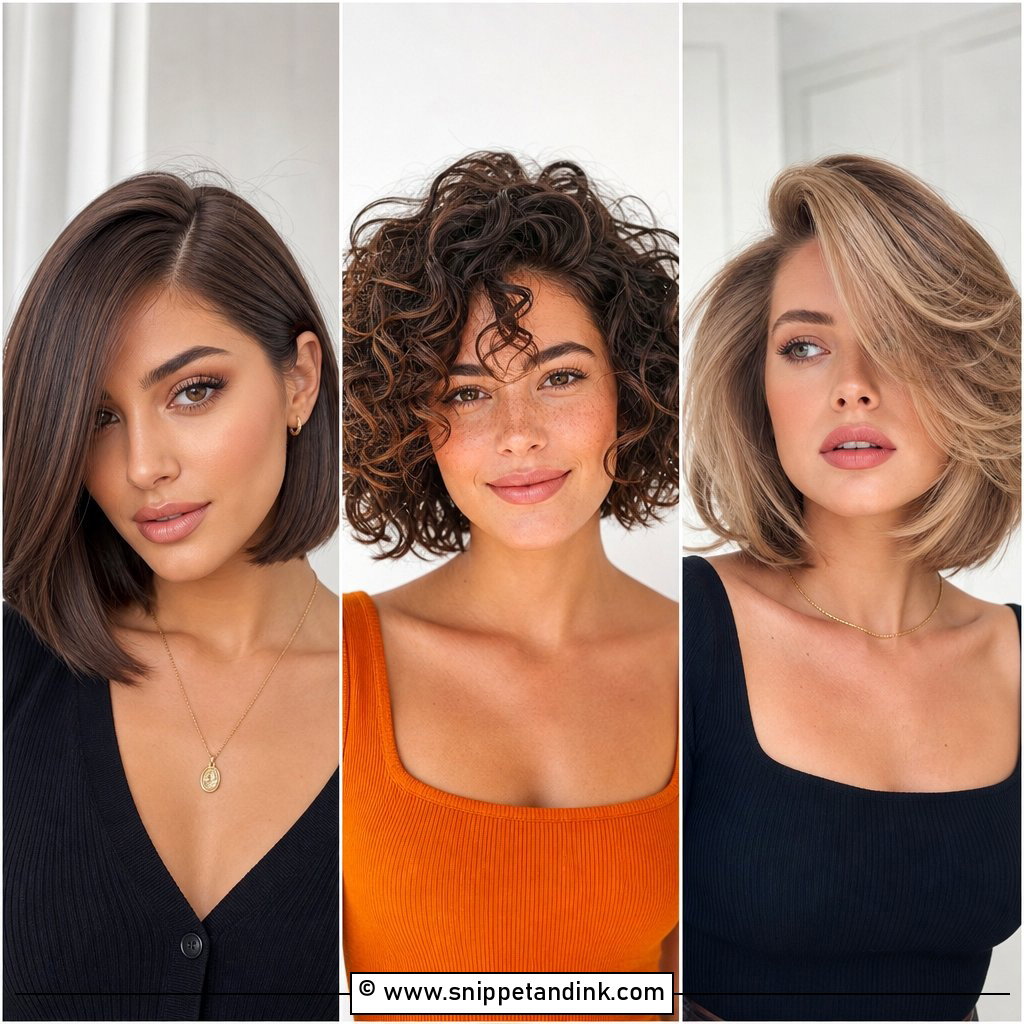
- Chin length: open waves, a sleek bob, curtain bangs, finger waves, a front puff, pinned-back sides.
- Collarbone length: a twisted crown, half-up twists, side-swept curls, a small low bun.
- Shoulder length and just past: a side braid, a braided bun, front braids with open curls.
- Any full traditional juda: plan on a faux bun or clip-in wefts, whatever your length.
Matching a Faux Bun to Your Own Hair
Buy added hair early and bring it to the trial. Most Indian brides have very dark hair with a warm undertone, and a jet black synthetic piece can look flat and slightly blue next to it under flash. Human hair matches better and takes the same curling iron as your own hair, while synthetic hair can melt under heat unless it’s labelled heat-resistant. I hold the piece against the hair at the nape in daylight before anyone commits to it.
1. Faux Bun With Fresh Flowers
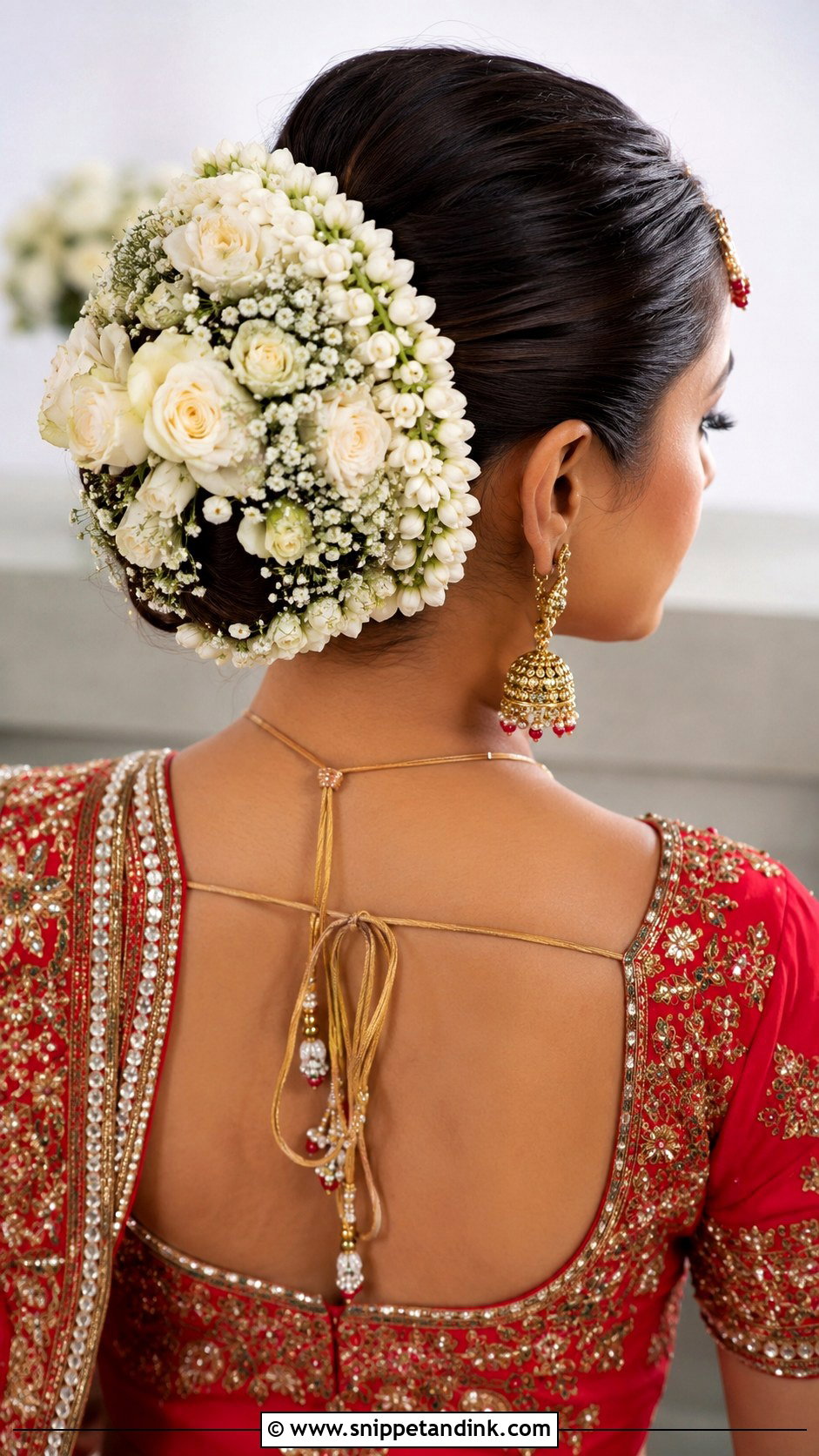
This is the look I reach for most when a bride wants a traditional juda but her hair stops at the jaw. I gather everything into a tight, low ponytail first, because a faux bun only sits flat when it’s clipped onto a firm base; pinned onto loose hair it tilts by the second hour. Once the bun is on, fresh jasmine or roses wrap around the base and hide the join. With a heavy lehenga and statement earrings it gives you the height a long-haired bride gets naturally, and it stays put through every ritual and dance.
2. Front Braids With Open Curls
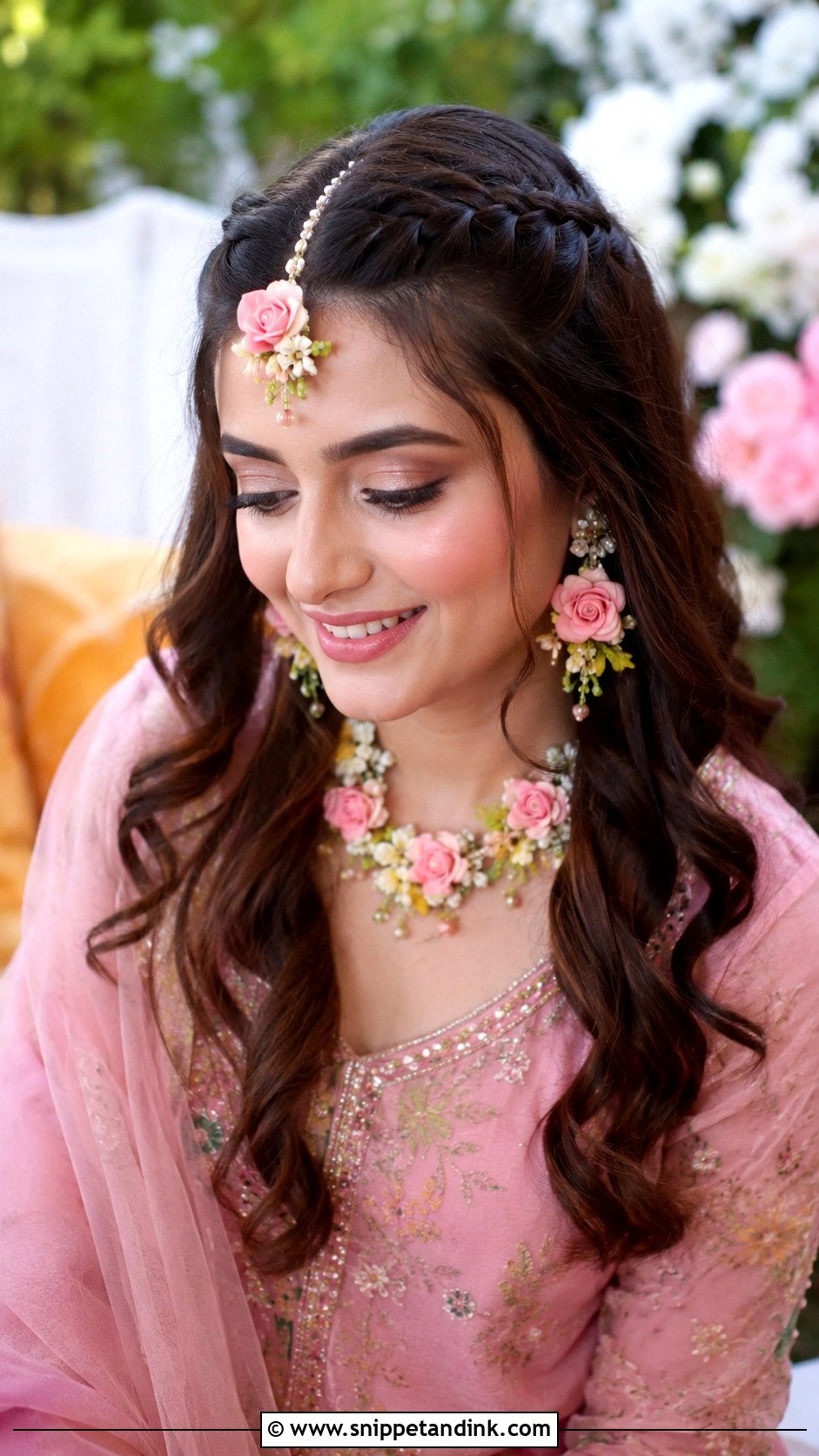
Two small sections from the front hairline are braided and pinned back, and the rest of the hair is curled loose. On short hair the braids are only as long as the hair at your temples, so on a chin-length bob I braid them backward at an angle instead of straight down, which buys an extra inch before pinning. A tiny flower or a jeweled pin hides where they meet. I like it for sangeet and mehndi, where you’ll be moving and laughing, and shoulder-length hair has the easiest time with it.
3. Messy Updo Bun With Gajra
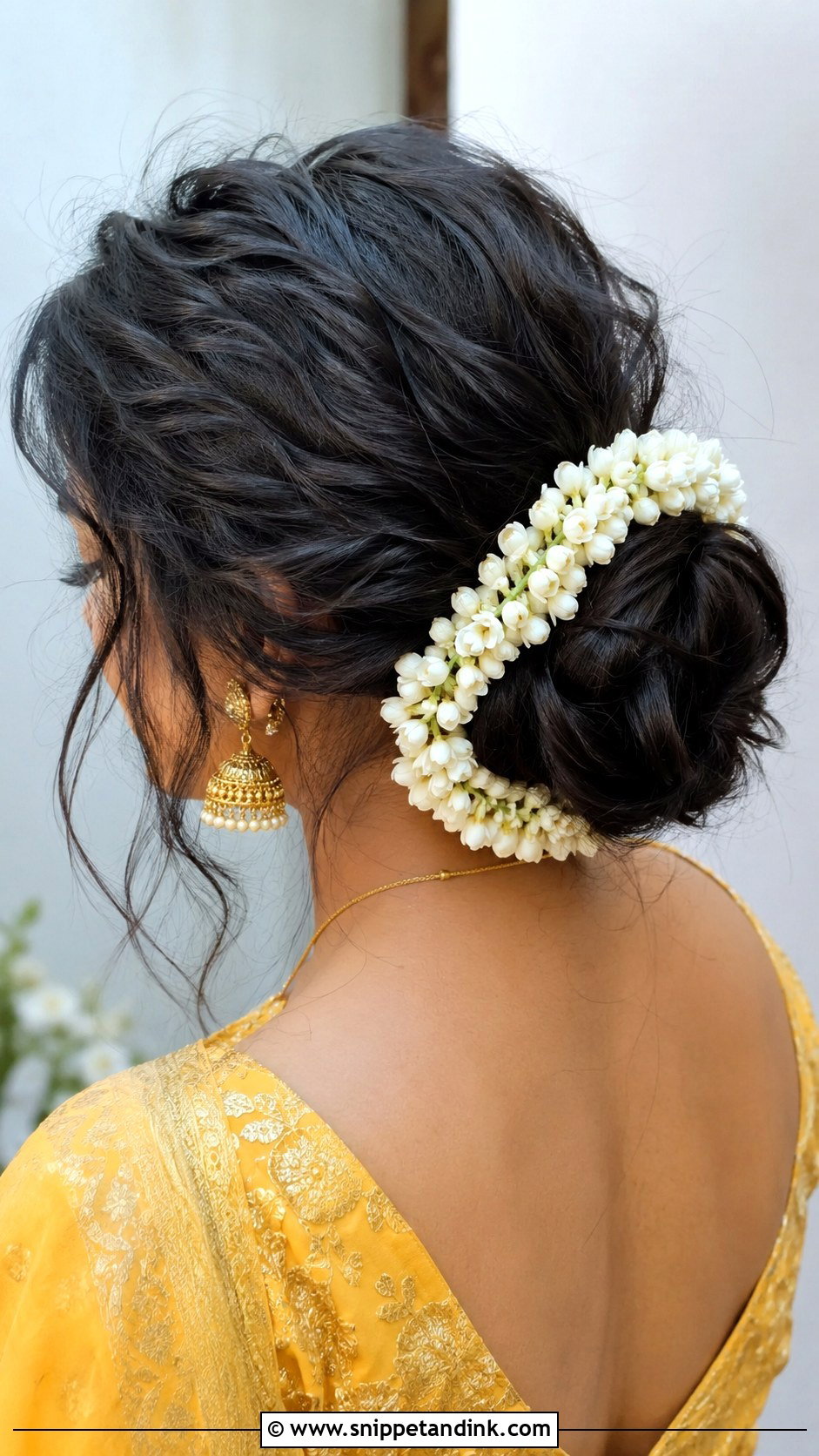
Undone styles are harder than they look on short hair, because the pieces you leave out are short and tend to stick out instead of falling. I twist the hair into a loose bun at the nape or crown, pull a few strands out around the face, and curl those strands with a small iron so they fall forward rather than flipping. A jasmine gajra wrapped around the bun brings scent and tradition. Haldi and daytime weddings suit it, and a little messiness hides the odd strand that escapes during candid moments.
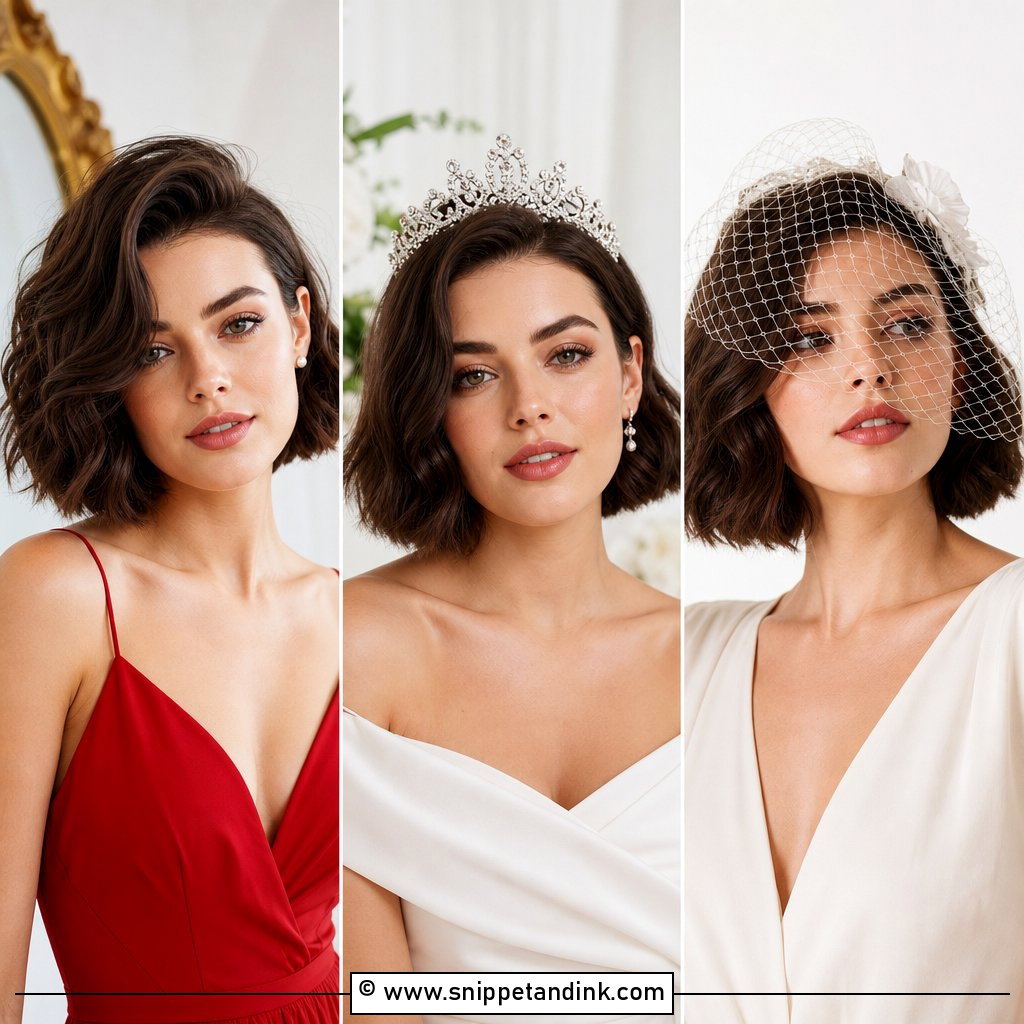
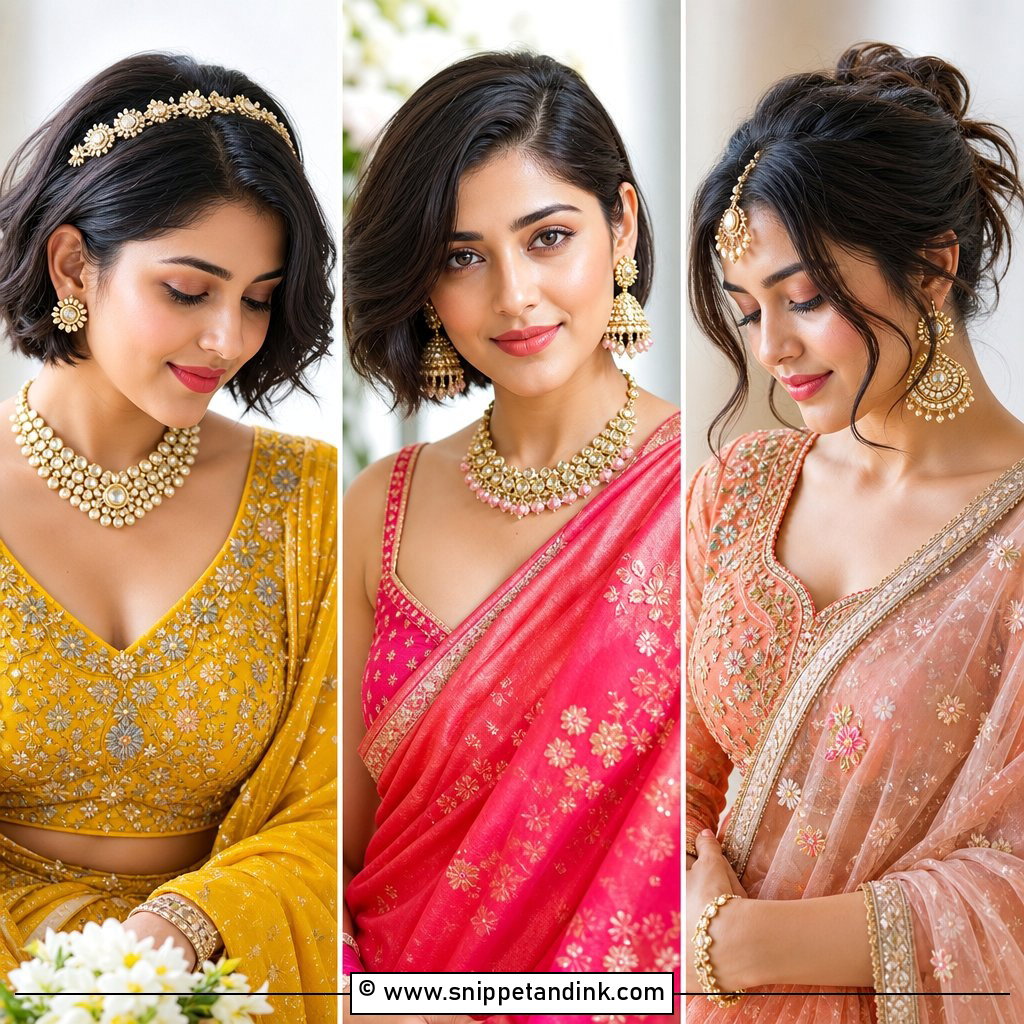
4. Wavy Bob With Side Part
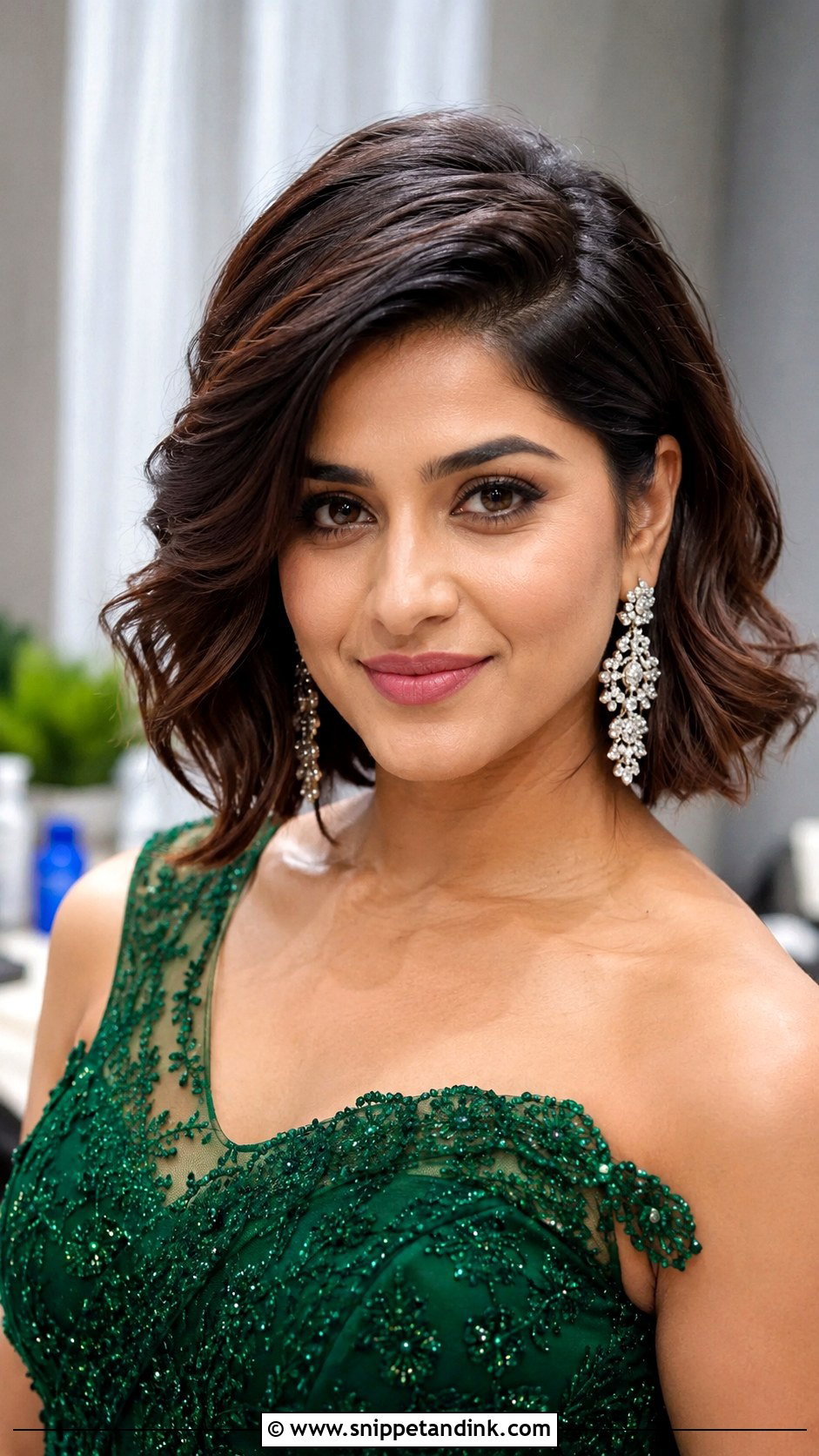
Once the hair is prepped, a wavy bob is about ten minutes of work, which is why I suggest it for reception changes. I set the waves with a flat iron, brush them out, then flip the part deep to one side. Check your earrings before choosing it: a deep side part covers one ear, so it pairs better with a single statement earring or a small side accessory than with a matched heavy set you want fully seen. It holds its own with a gown or a contemporary saree.
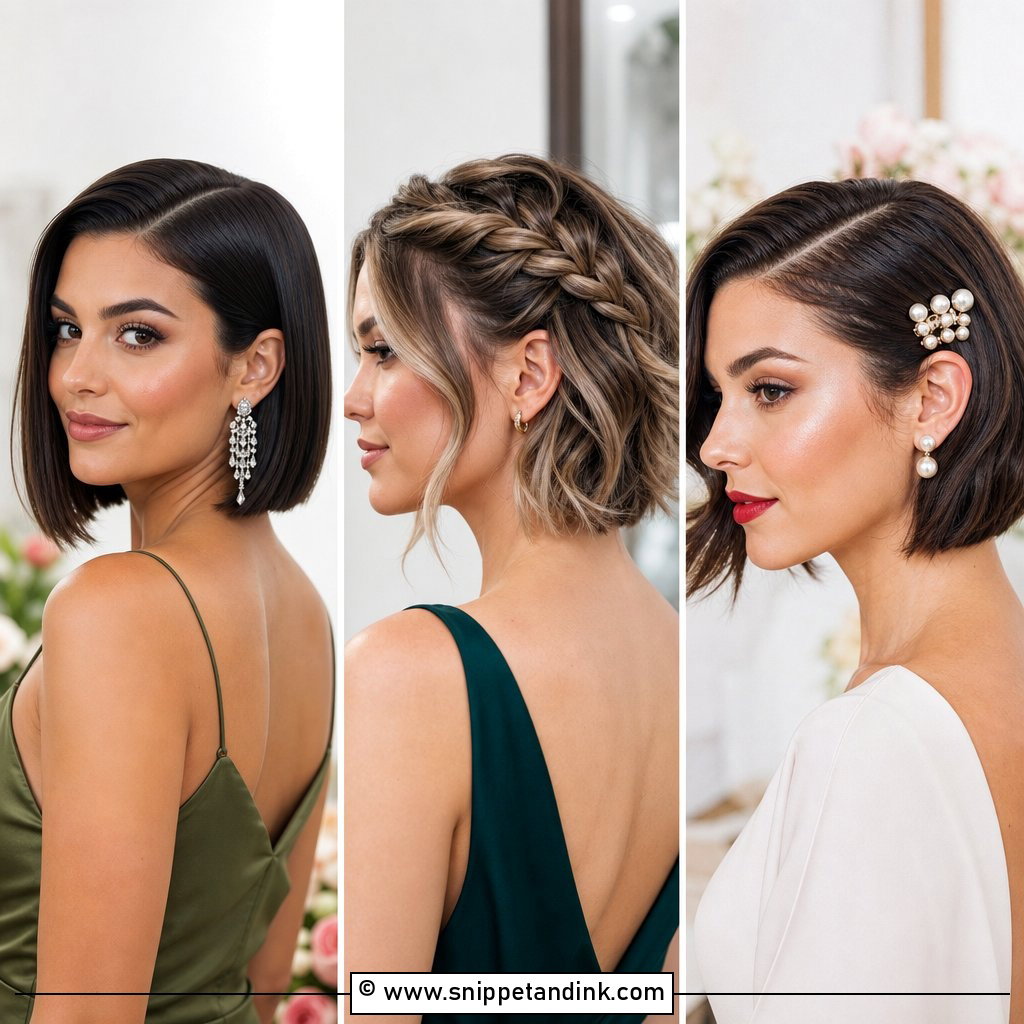
5. Half-Up Bun With Matha Patti
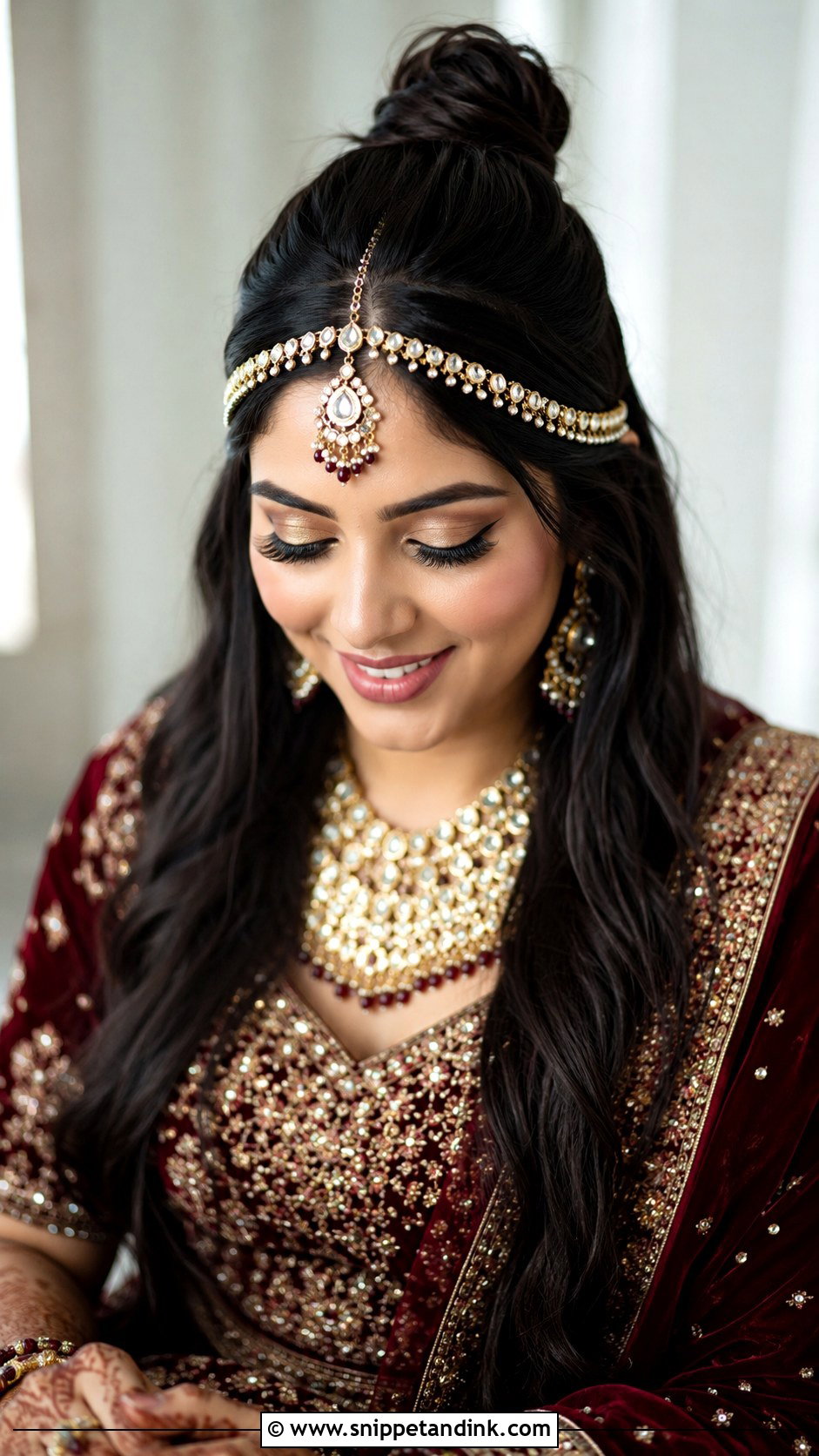
The top section goes into a small bun or twist and the rest stays open or lightly curled, which gives a matha patti something solid to hook into. Short hair can’t hide the side chains of a matha patti the way thick long hair does, so I pin them into the half-up section behind each ear, where they stay hidden and don’t slide toward your eyebrows. Worn with a heavy lehenga at the main ceremony, it reads fully traditional without asking you to grow your hair or wear a full faux updo.
6. Twisted Crown Hairstyle
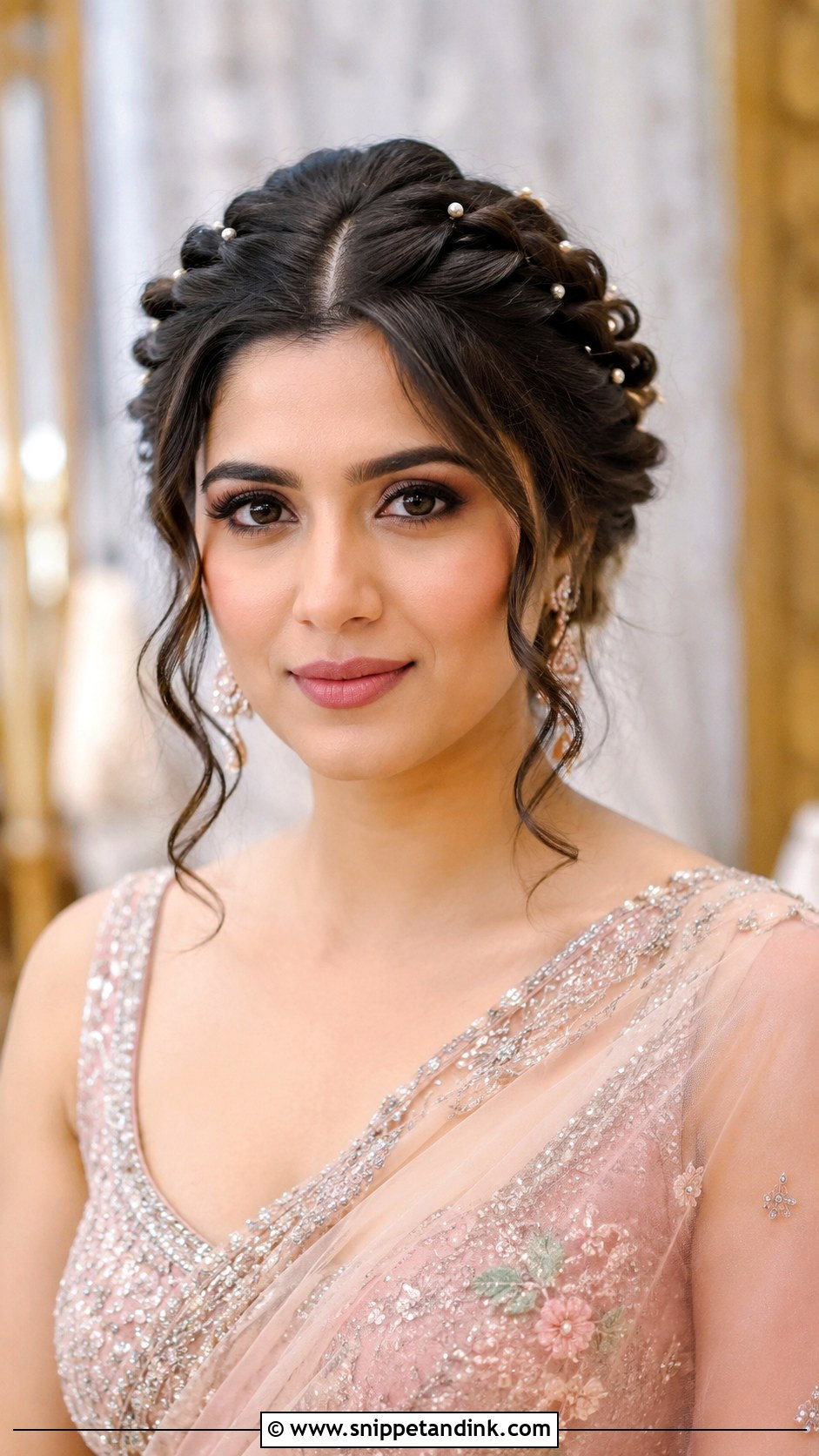
I part the hair down the middle, then twist small sections from each side backward toward the center, pinning each twist before taking the next. Layered cuts are the challenge here: the shorter layers pop out of the twists, so I mist each section with light hold spray before twisting, not after. The remaining hair stays open or curled. A few pearl pins or tiny flowers along the twists add detail, and because every twist is pinned on its own, it lasts through an engagement or reception.
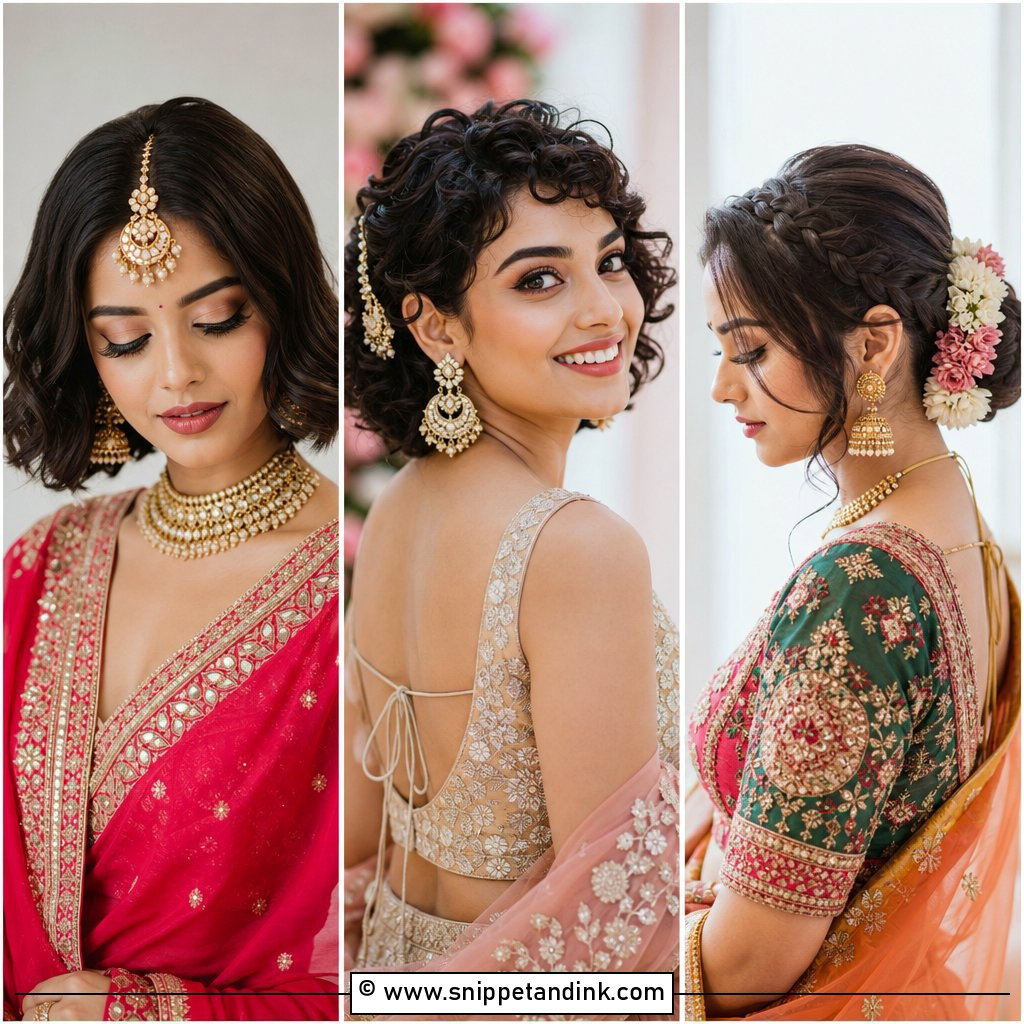
7. Curly Bob With Floral Band
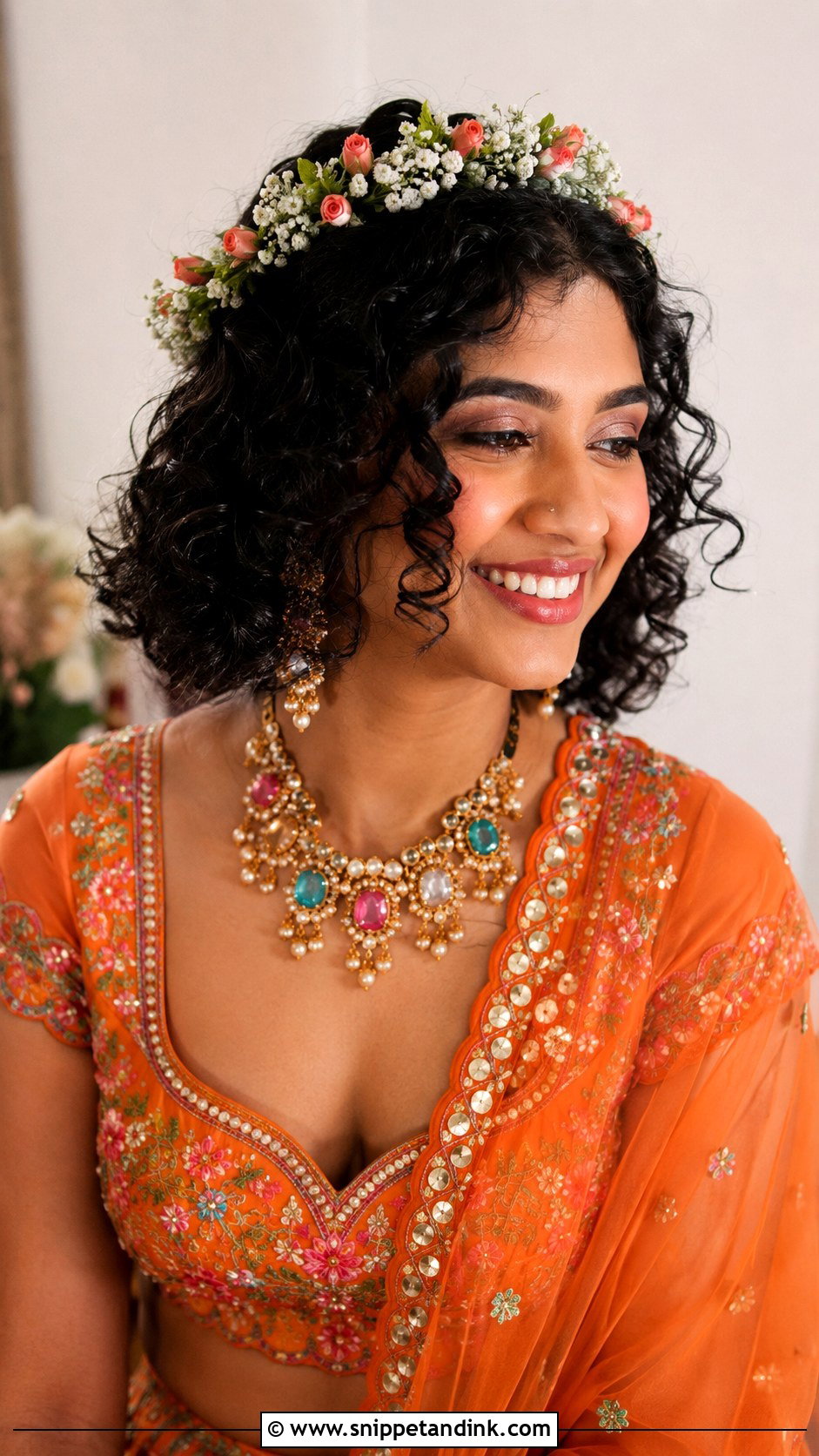
Tight, defined curls give a bob body, and a floral band along the crown keeps it from looking like everyday hair. On naturally curly or very thick hair I’d rather enhance your own pattern than reset it with a hot iron, since curls built from scratch on resistant hair usually drop by evening. Mehndi and sangeet suit it, where a playful finish matters more than polish. It’s forgiving too: if the curls loosen, they simply look softer.
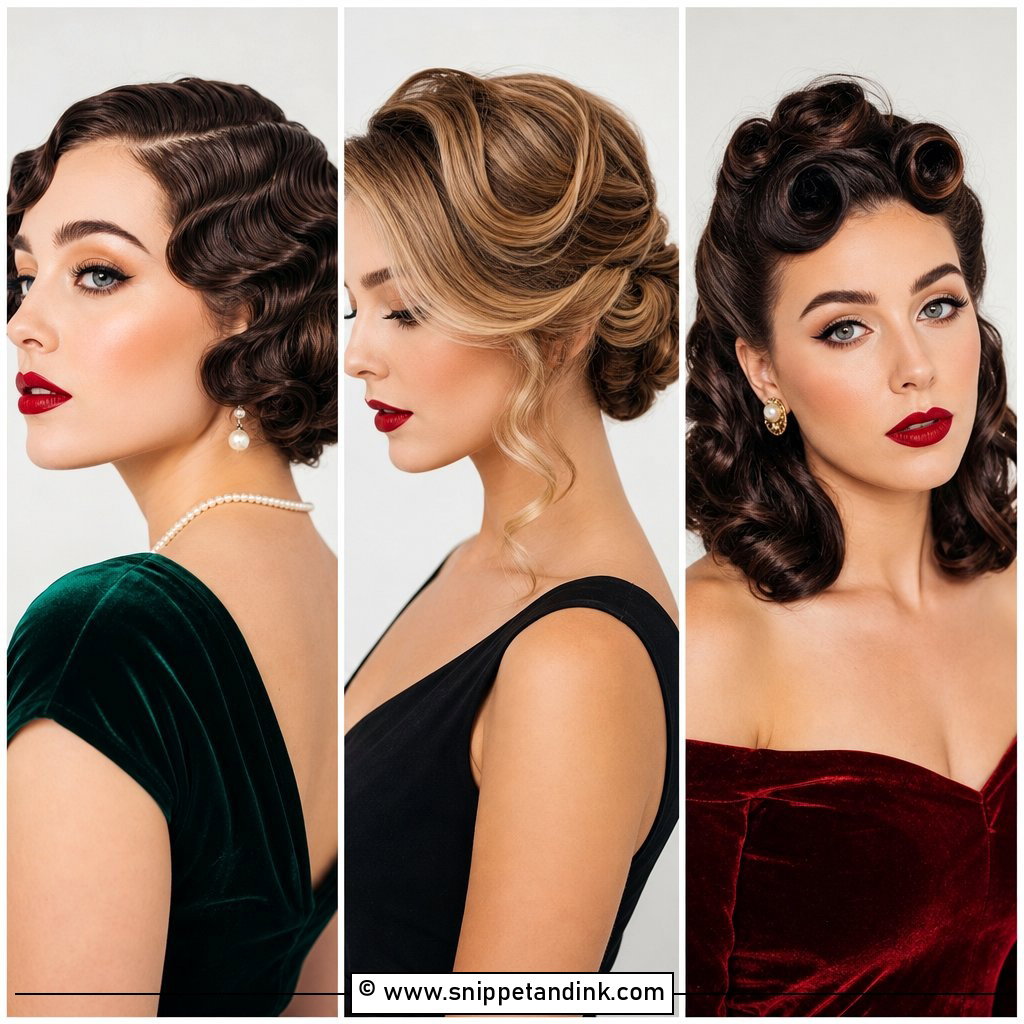
8. Sleek Finger Waves
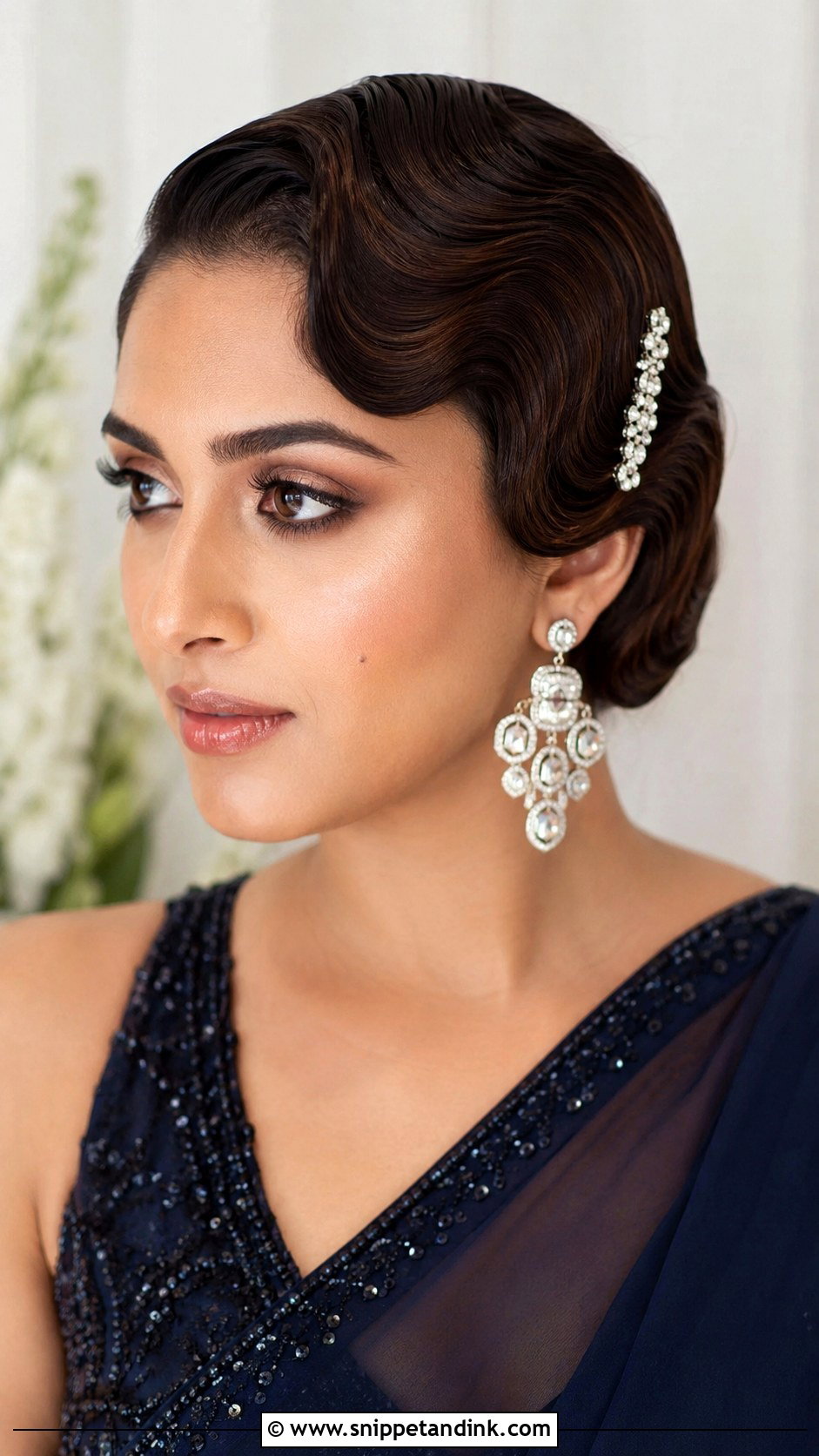
Finger waves are sculpted S-shaped ridges set close to the head, and they take practice, so I always do them at the trial before promising them for the reception. They hold best on fine to medium short hair. Very thick hair fights the ridges and needs a lot of gel, which can look wet in flash photos. I set the waves with gel while the hair is damp, let them dry completely, then add a light shine product on top. A sparkling clip on one side suits a contemporary saree or cocktail gown and gives you an old-Hollywood finish no other guest will be wearing.
9. Side-Swept Curls With Maang Tikka
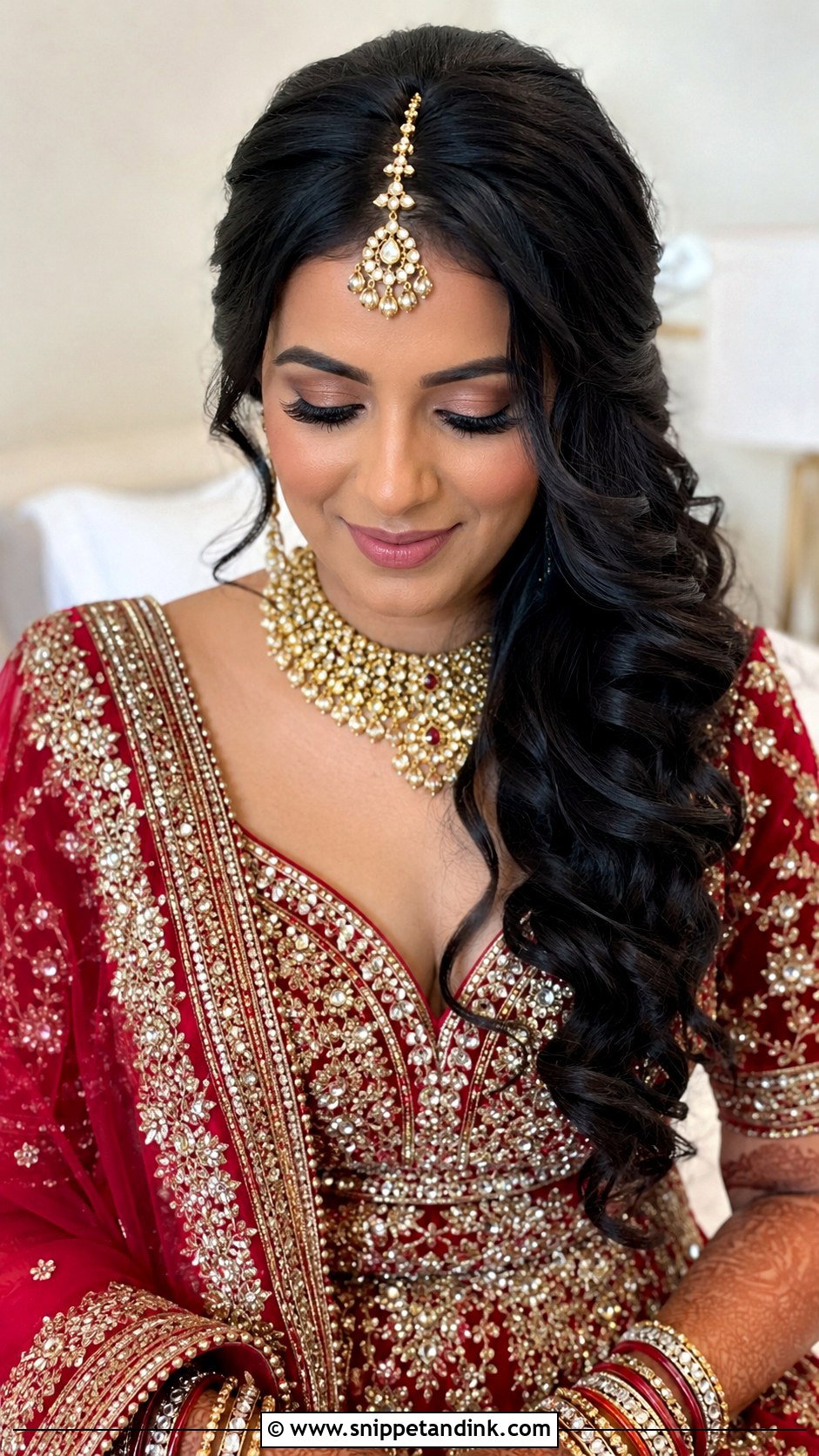
Style your short hair into loose curls and sweep them all to one side, with a maang tikka resting along the center or side part. A sweep on short hair needs an anchor: I cross two bobby pins behind the ear on the swept side so the curls don’t drift back to center halfway through the ceremony. It suits most face shapes with a lehenga or saree, and the ear the curls leave bare is where your earrings get seen.
10. Braided Headband Look
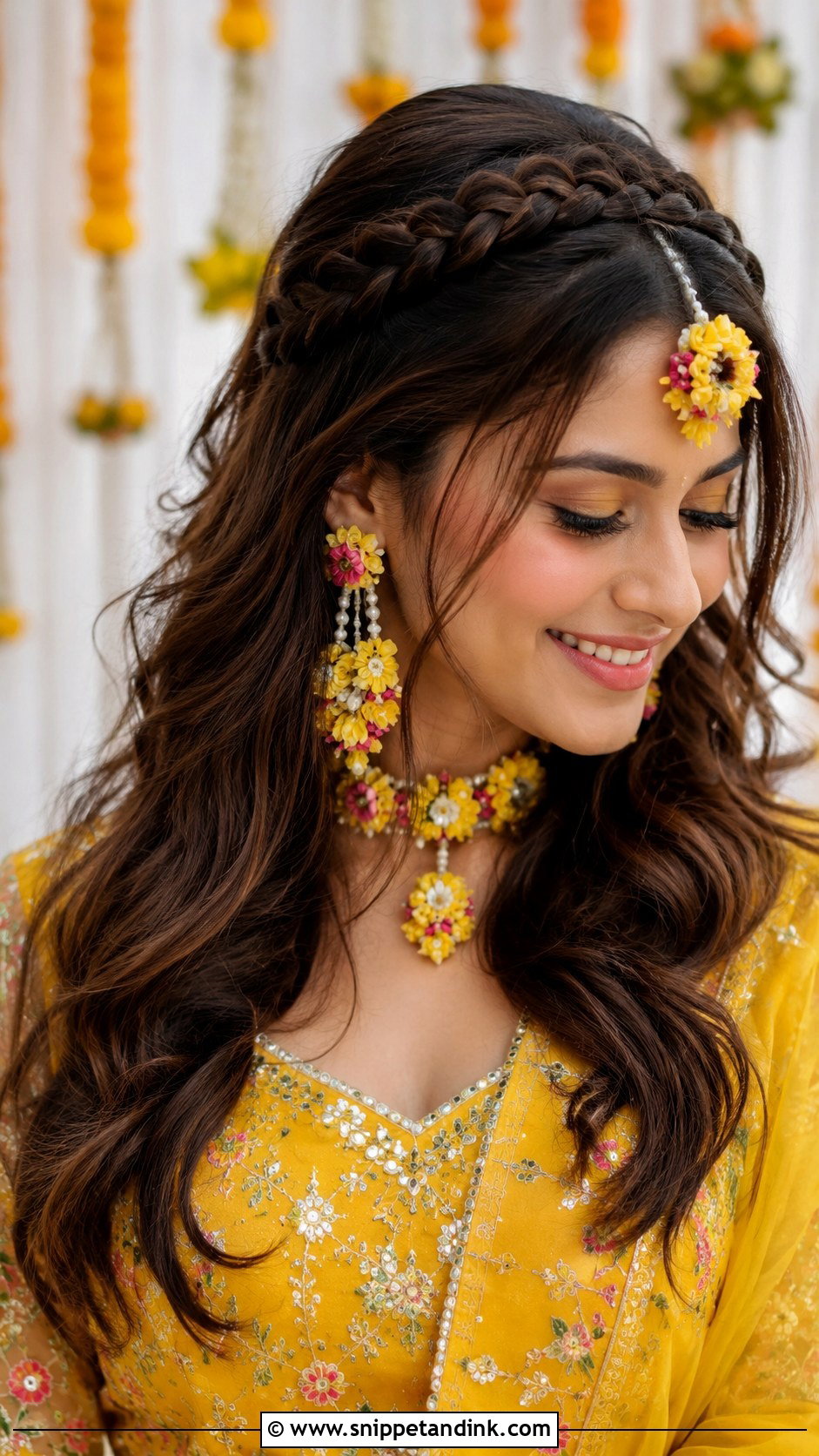
During haldi there’s turmeric paste on every hand that comes near you, so a braid running across the top of the head like a band earns its place. On a bob I start the braid low behind one ear and work over the top to the other side, since that path uses the longest hair. The rest falls free or in curls. Small flowers or beads tucked into the braid make it look more intricate than it is, and it’s quick enough to repeat on every bridesmaid.
11. Low Bun With Pearl Pins
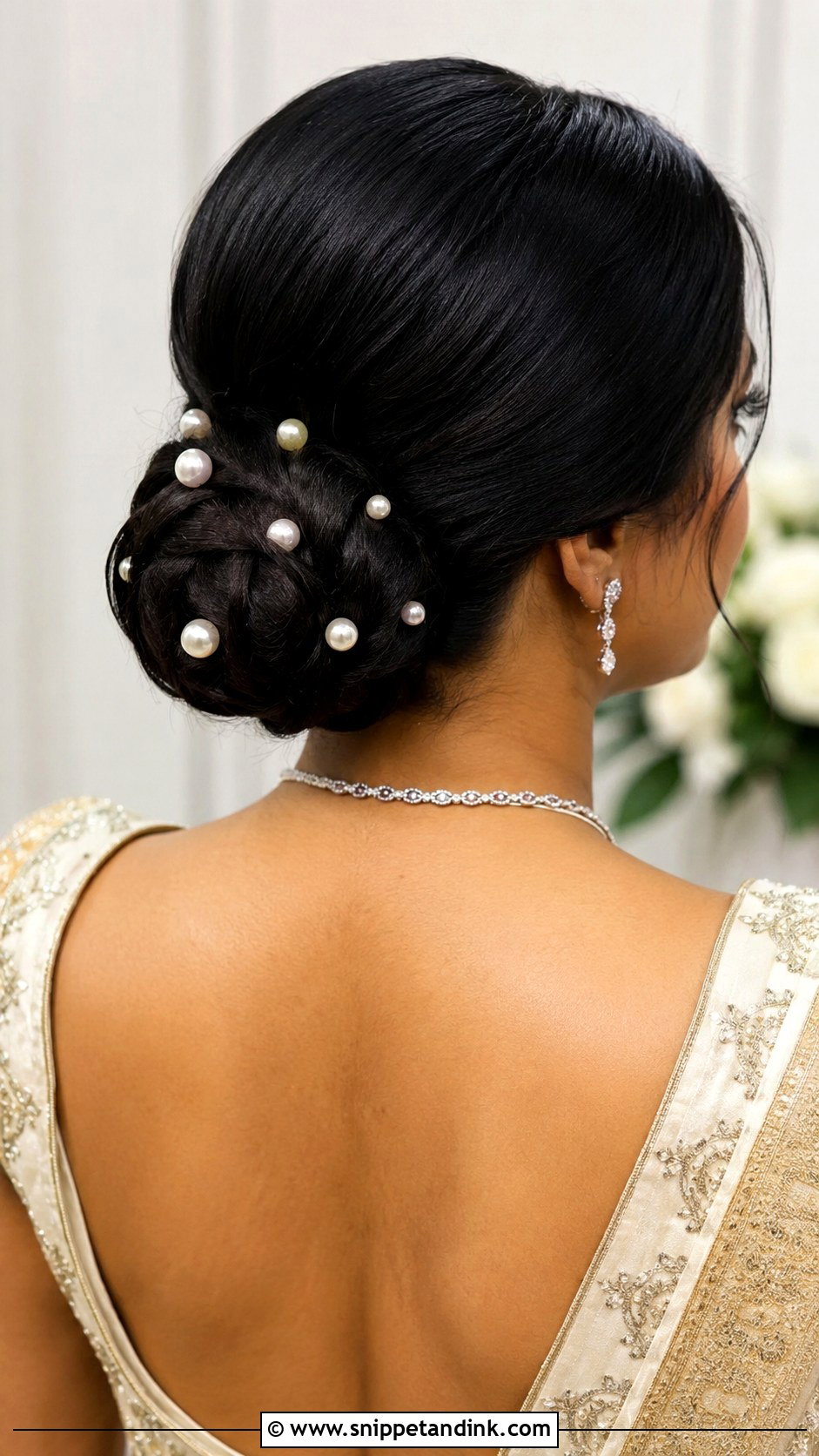
A compact bun at the nape is possible on hair that reaches just past the jaw, as long as I can catch the lengths in a small elastic first. The shortest pieces at the nape always escape, so I pin them flat in a small horseshoe shape and let the bun cover them. Pearl pins scattered across the bun give a soft glow. It moves from ceremony to reception without changes and keeps the attention on your jewelry and outfit.
12. Bob With Maang Tikka
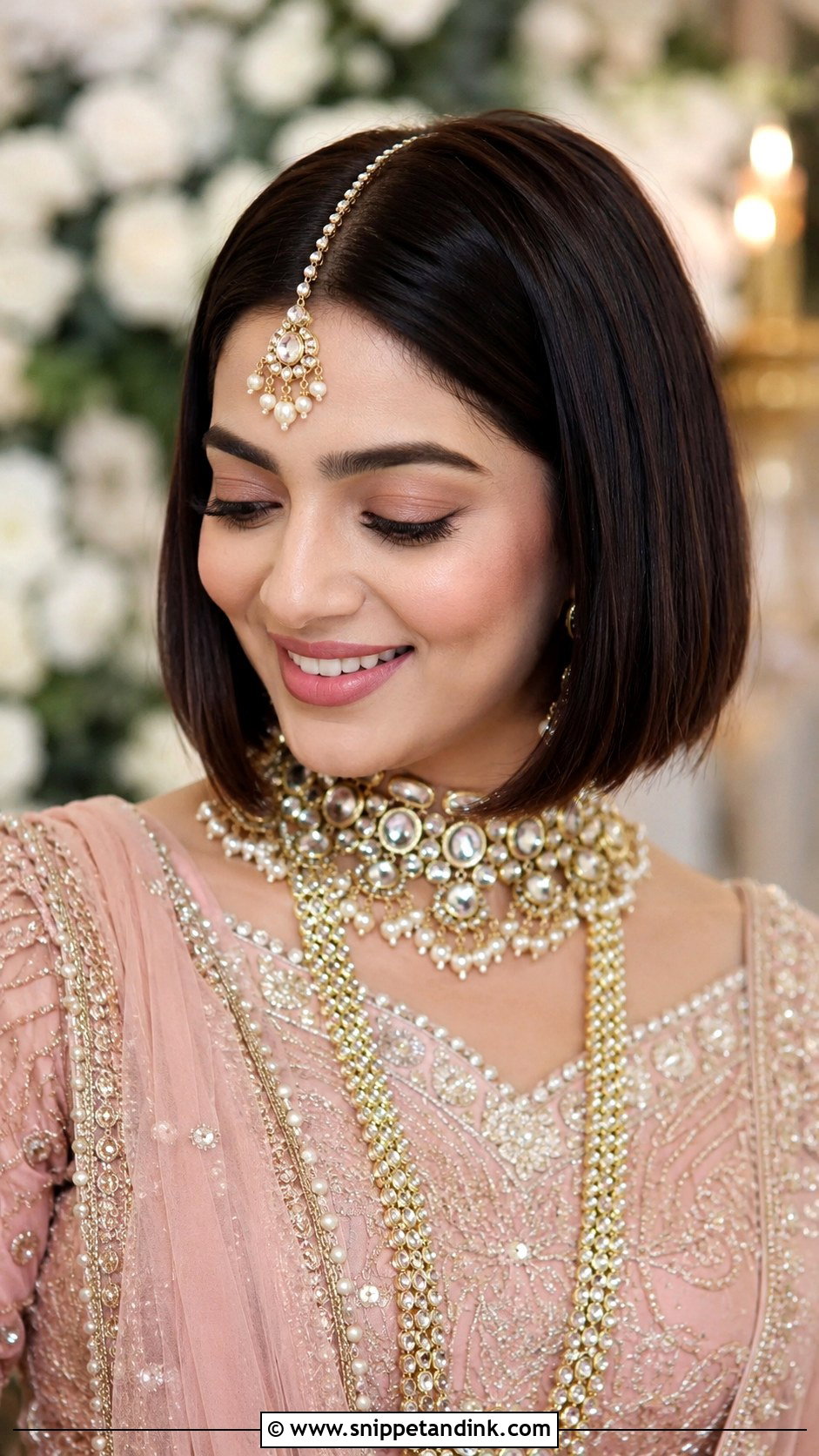
A smooth bob, parted in the center or just off it, and a maang tikka on the hairline: that’s the whole look, and it’s the one I suggest to brides who dislike the feel of pins. The straight, sleek bob does need the tikka secured properly, though, because smooth hair gives a hook nothing to grip. I make a tiny hidden braid under the part at the crown and hook the chain into that. With a lehenga or a saree, it shows how easily short hair and classic Indian jewelry sit together.
13. Tousled Waves With Hair Vine
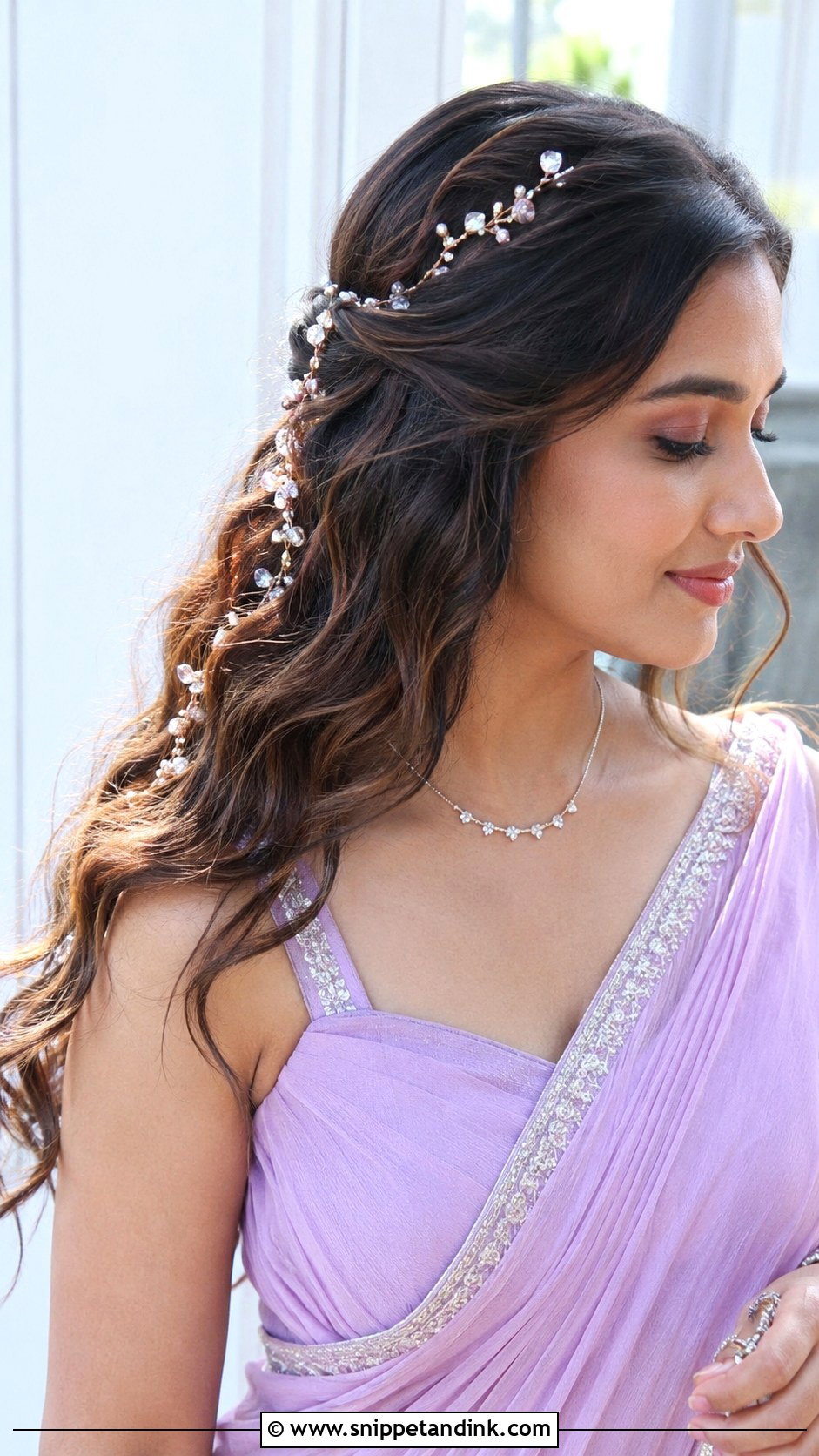
Loose, undone waves with a fine hair vine woven through give shimmer without weight. The vine has to be anchored every few inches with small pins; otherwise on short waves it sits on top like a necklace dropped on your head. Very fine, flat hair struggles to hold one, so I lightly backcomb the roots first to give the pins some grip. Outdoor and daytime weddings show it off best, since the vine catches daylight.
14. Side Braid With Curls
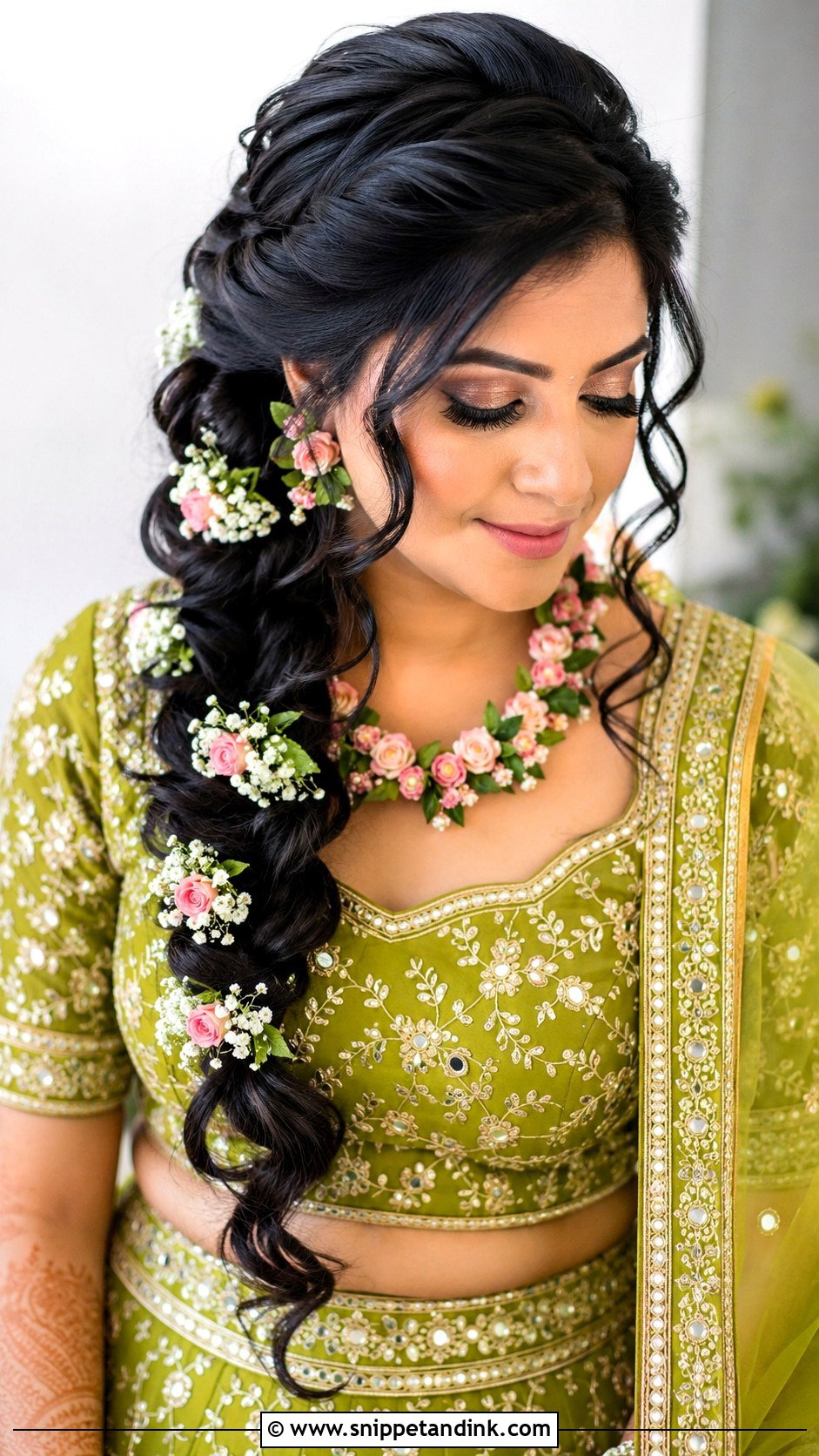
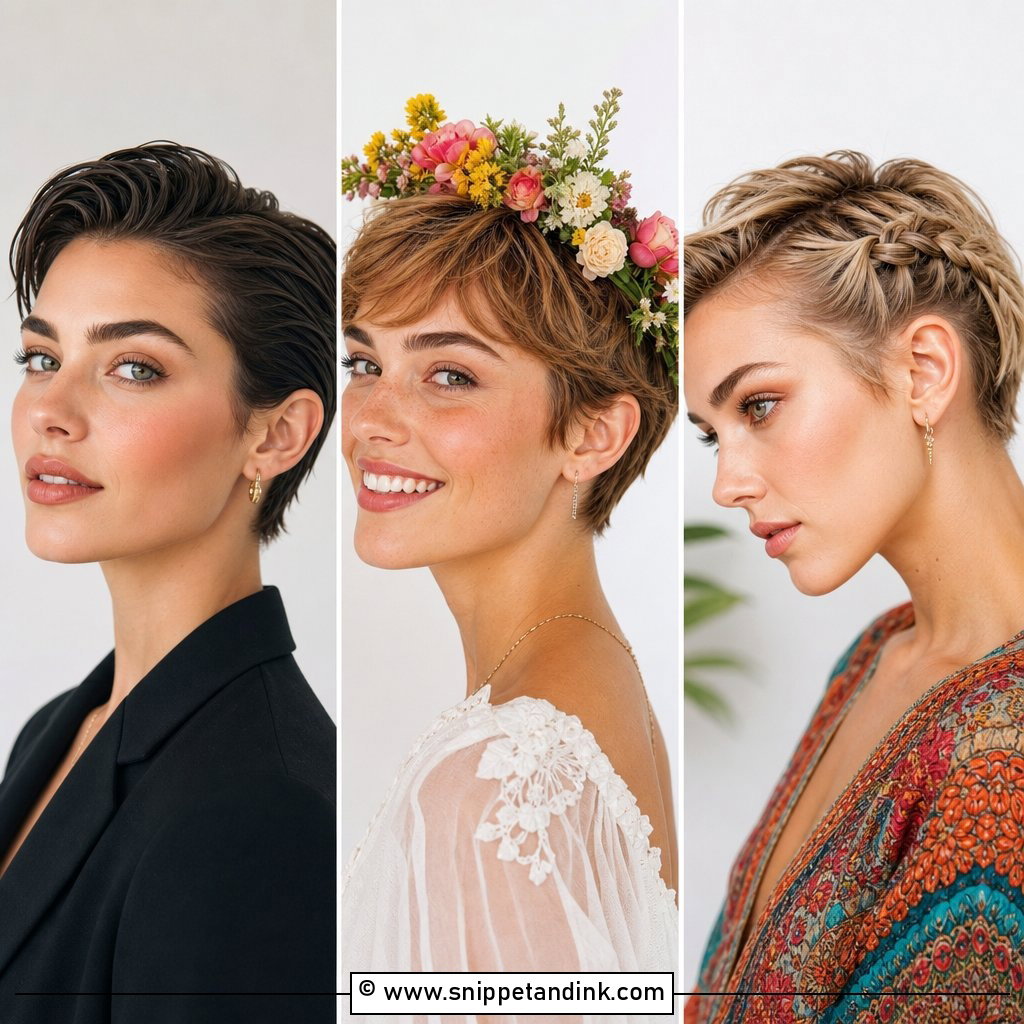
Sweeping the hair to one side and braiding it loosely, with the ends left in curls, makes short hair read longer than it is. Pulling the outer loops of the braid wider gives it fullness. Be honest about length here: hair that stops at the chin won’t reach far enough for a proper side braid, so I’d want collarbone length or a couple of clip-in wefts. Flowers along the braid or a jeweled pin where it starts finish it, and it frames neckline jewelry well for mehndi or sangeet.
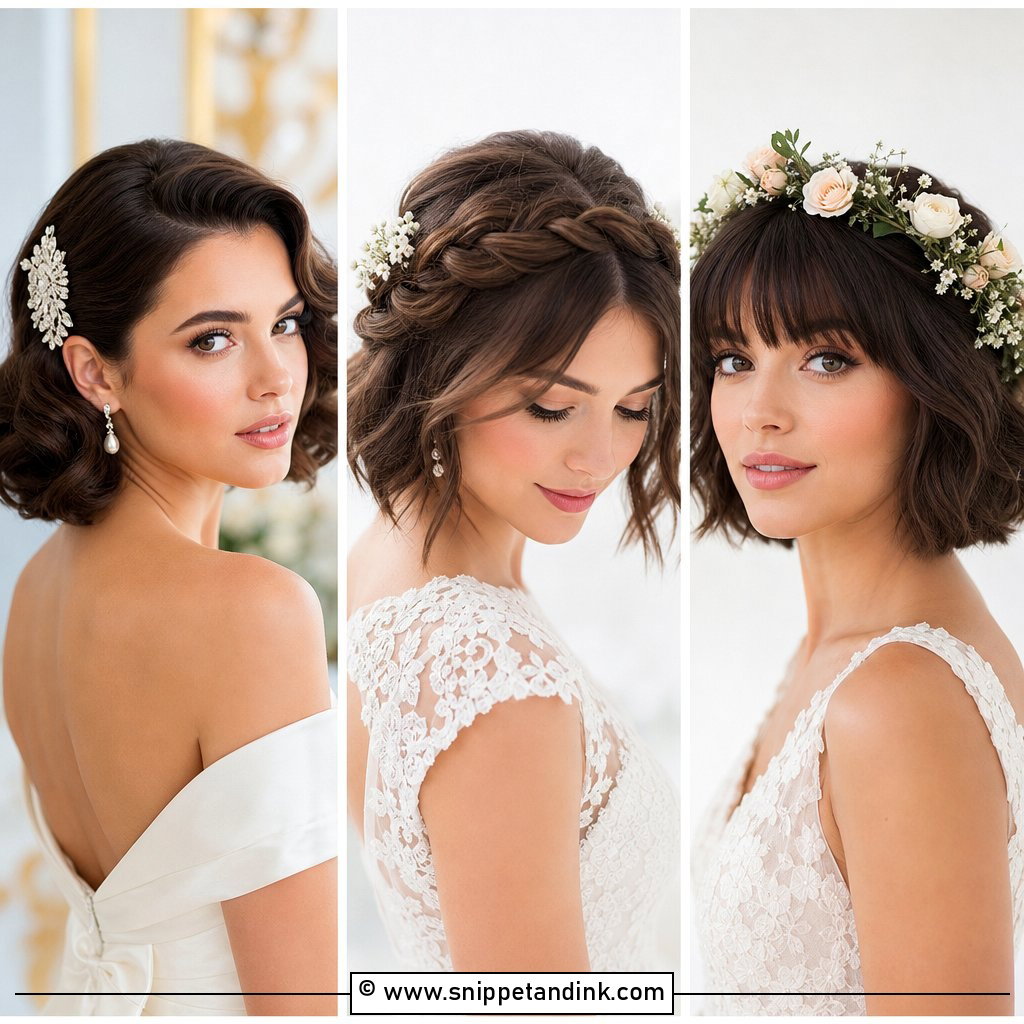
15. Puff Hairstyle With Open Hair
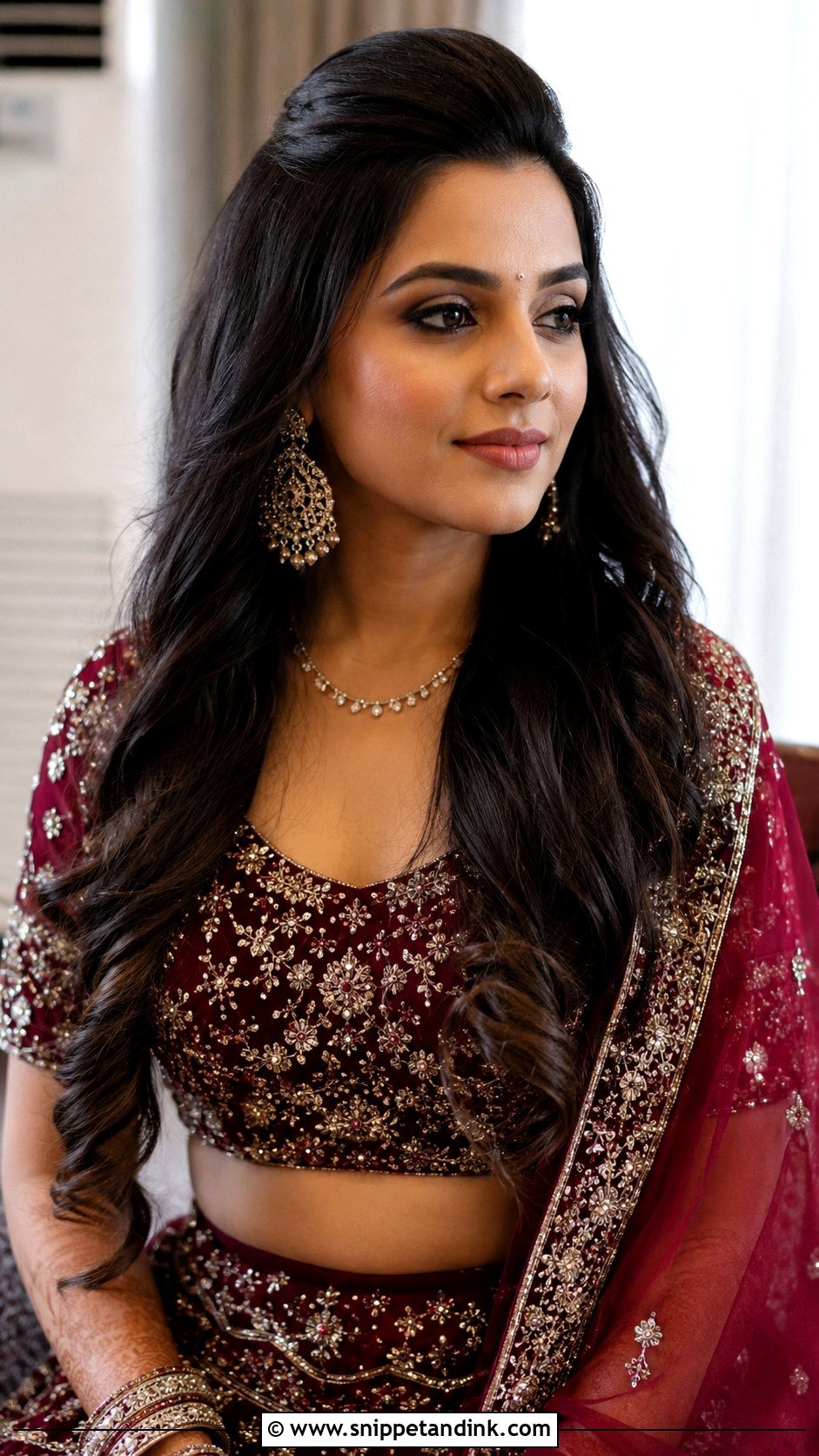
Teasing the crown and pinning it into a smooth, voluminous puff at the front is a classic Indian styling trick, and the height it adds lengthens a round face. The rest of the hair stays open in waves or curls. I backcomb underneath and smooth the top layer over it, so the teasing never shows in close-ups. Too big a puff starts to look dated; I keep it modest and let a maang tikka or statement earrings do the rest at a reception or ceremony.
16. Floral Crown With Curls
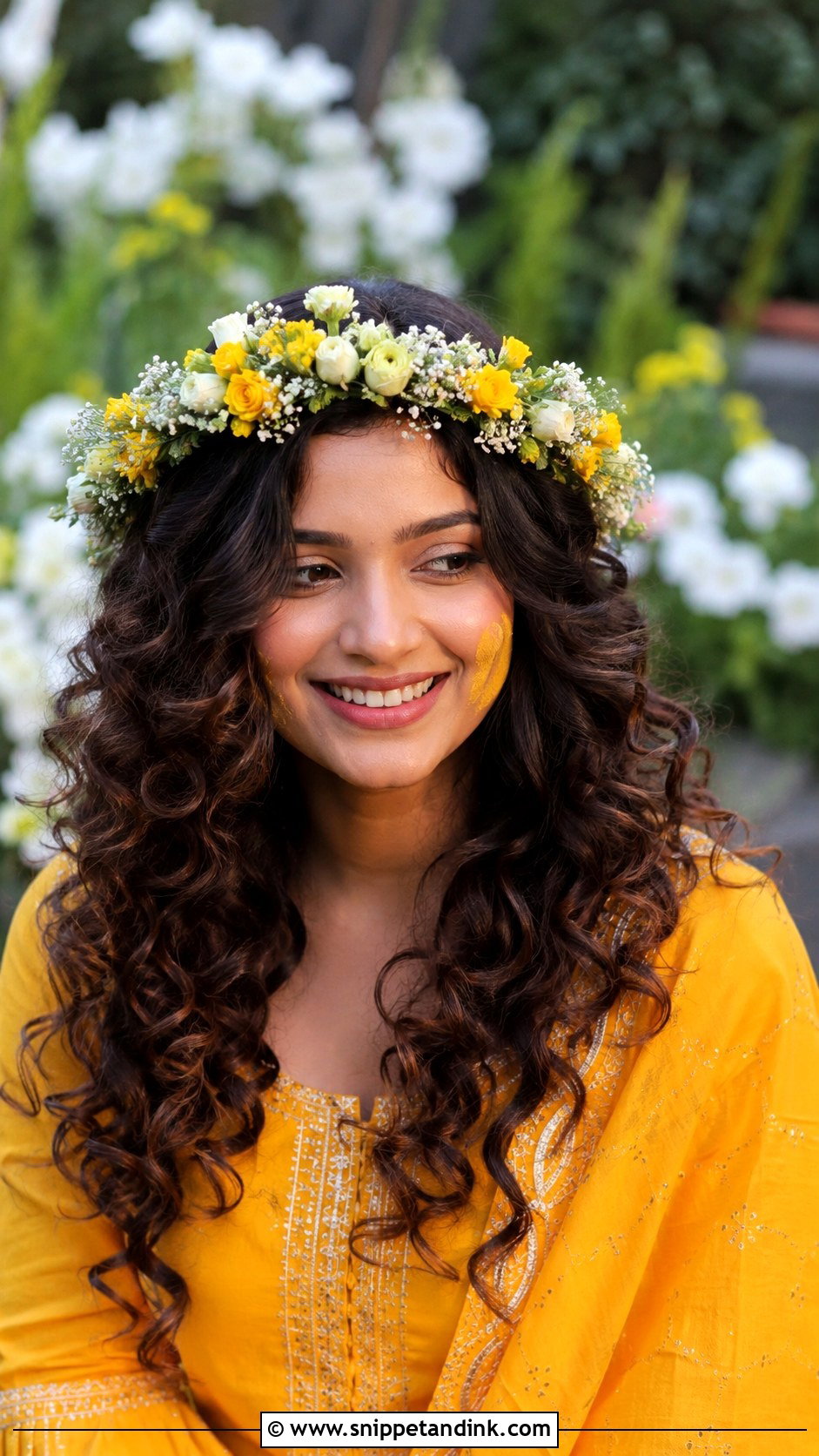
A full flower crown over soft curls brings color to haldi and mehndi. Real flowers smell wonderful but wilt in heat, so for a long outdoor day I’d pick fabric flowers, or plan to swap the real ones at a mid-event touch-up. I anchor the crown with U-pins through the curls at four points around the head; on short hair an unpinned crown slides forward every time you bend. Bright outdoor light suits the colors best.
17. Sleek Straight Bob With Center Part
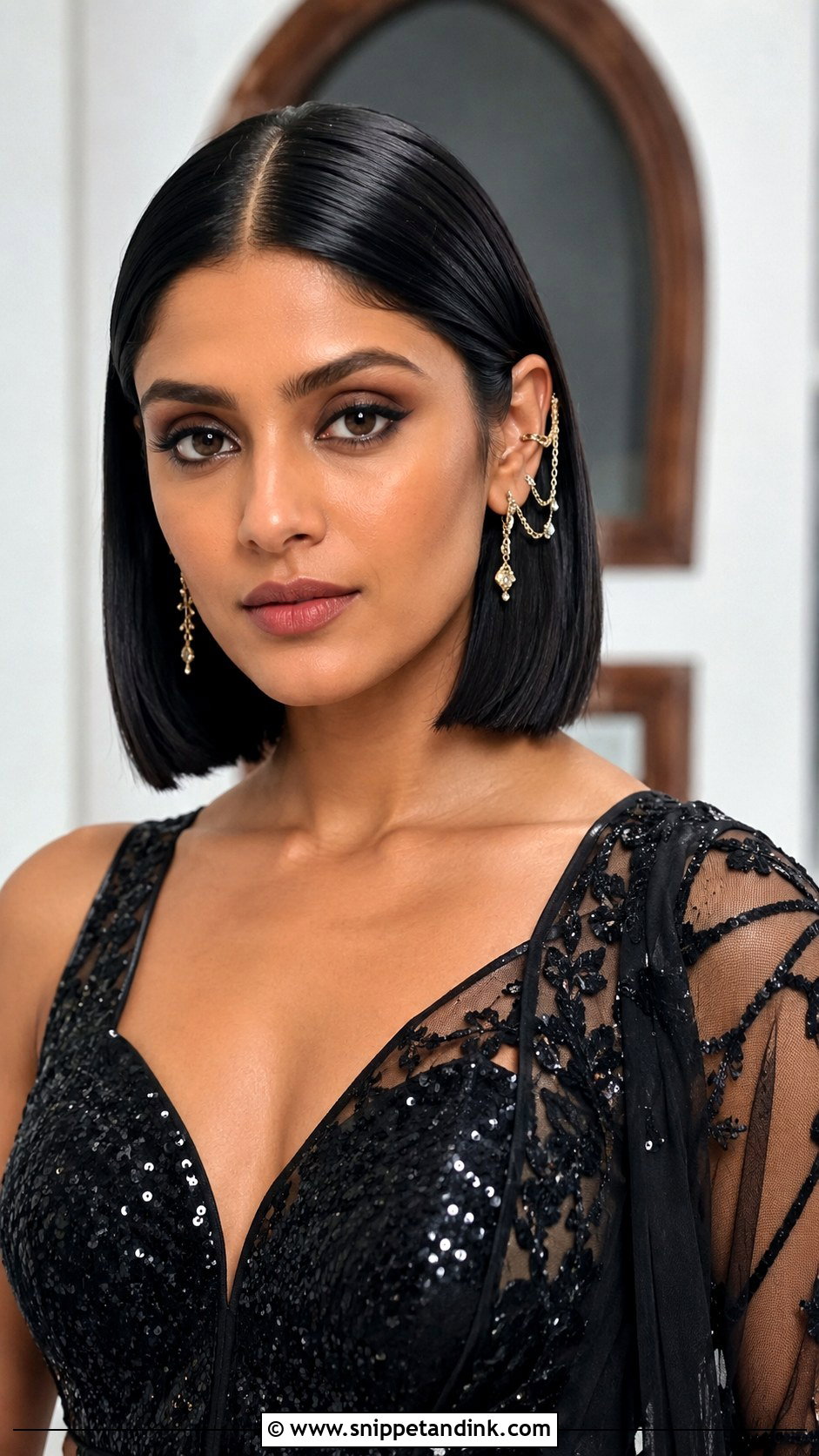
Clean lines depend on prep. I blow-dry with a paddle brush, flat-iron in thin sections and use serum only on the ends so the roots don’t go flat. Parted right down the center, the bob gets a sharp, modern finish that suits fusion or cocktail outfits. With nothing in the hair, bold earrings or an ear chain carry the look and your makeup gets more attention. Humidity is its weak spot, because frizz shows immediately on a sleek surface.
18. Half-Up Twist With Flowers
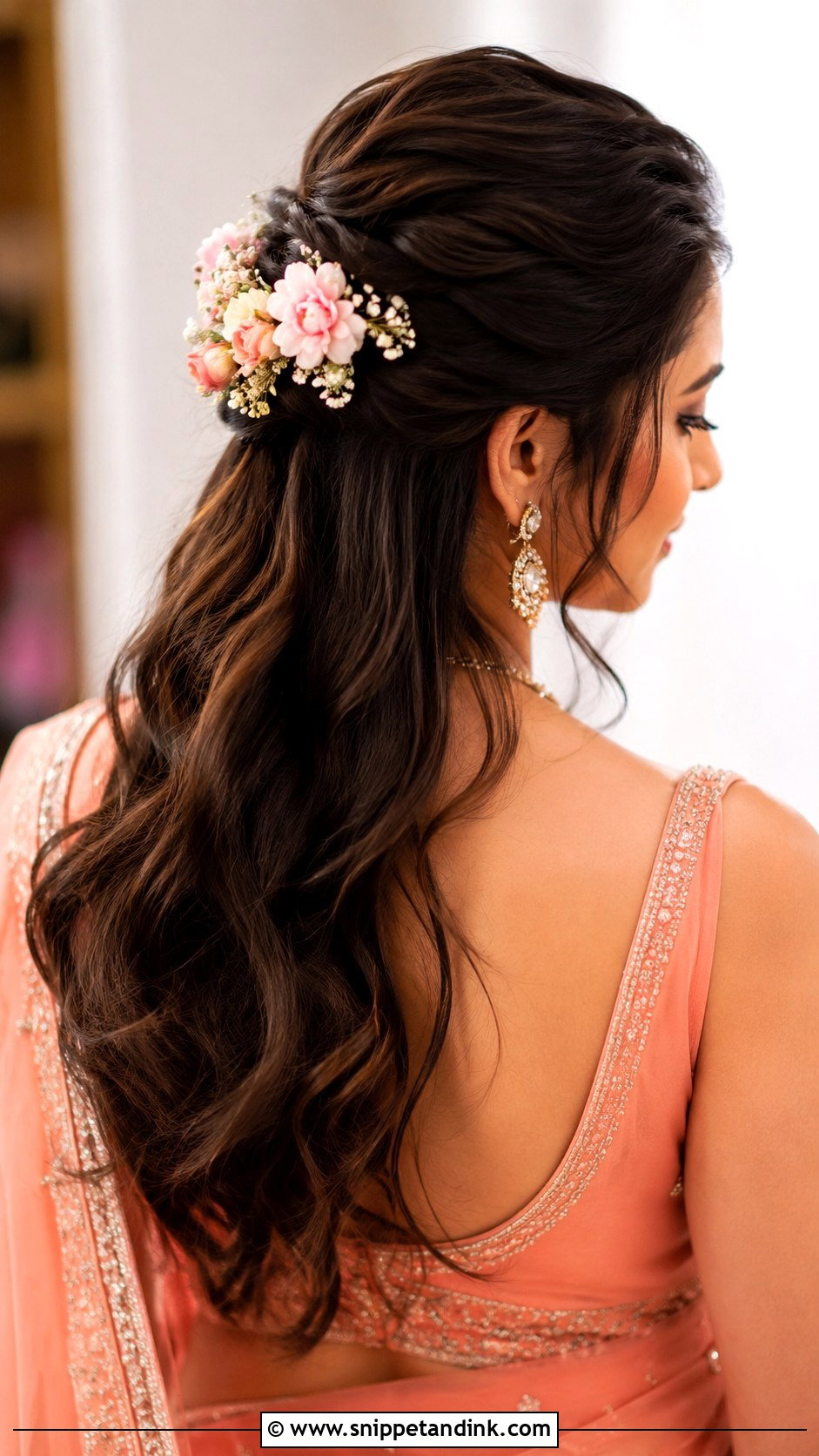
The top sections twist back and meet at the crown, the rest stays open or lightly curled, and small fresh flowers tucked around the twist add fragrance and color. I like it for daytime ceremonies and sangeet, where it keeps hair off your face during rituals without the effort of a full updo. It suits most short hair types. On very straight, silky hair I add texture spray first, or the twists slip loose within an hour.
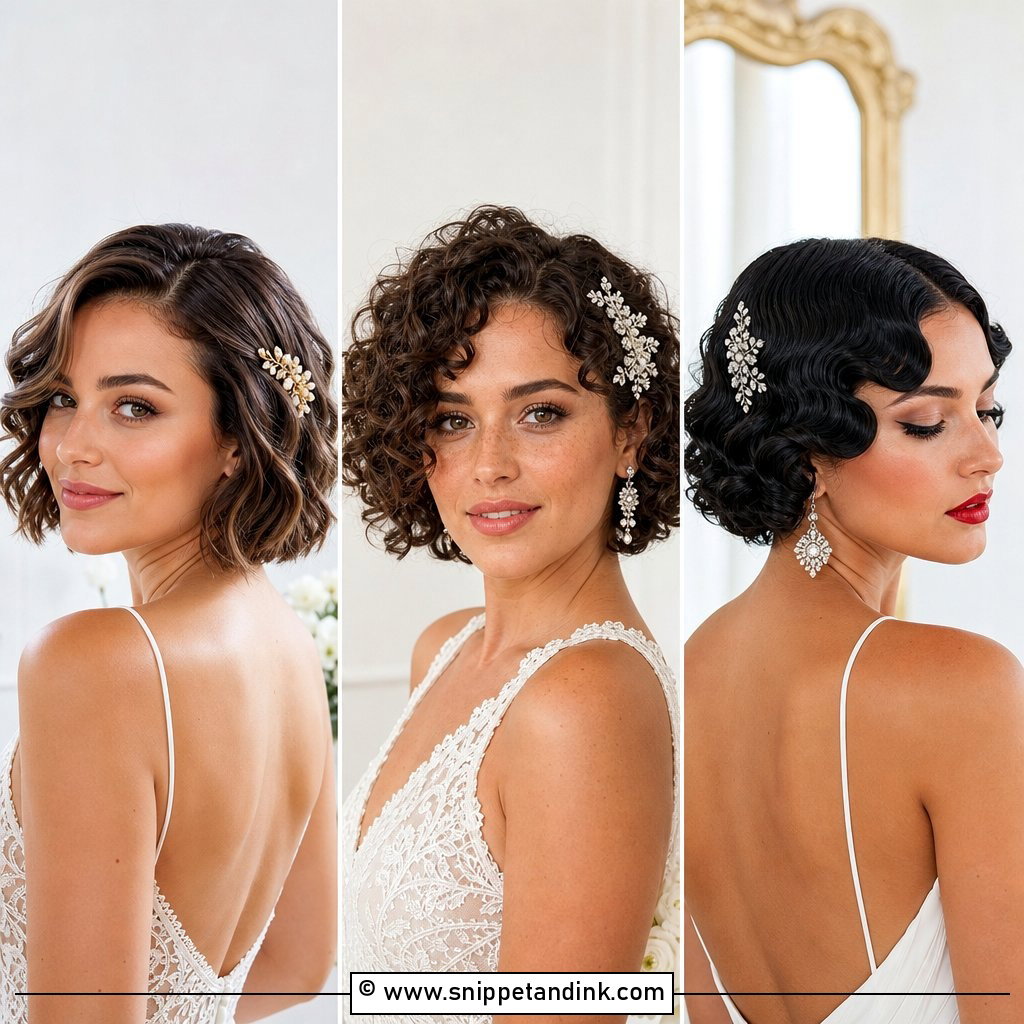
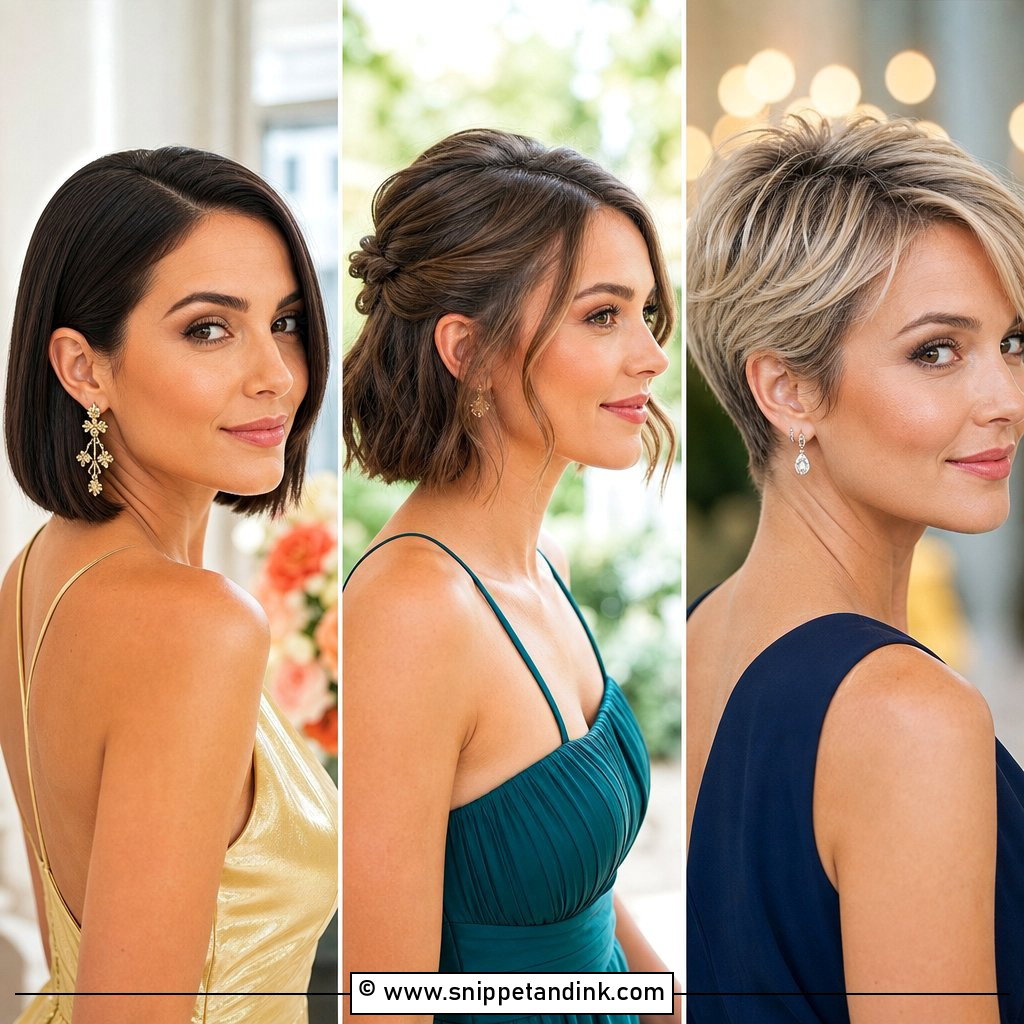
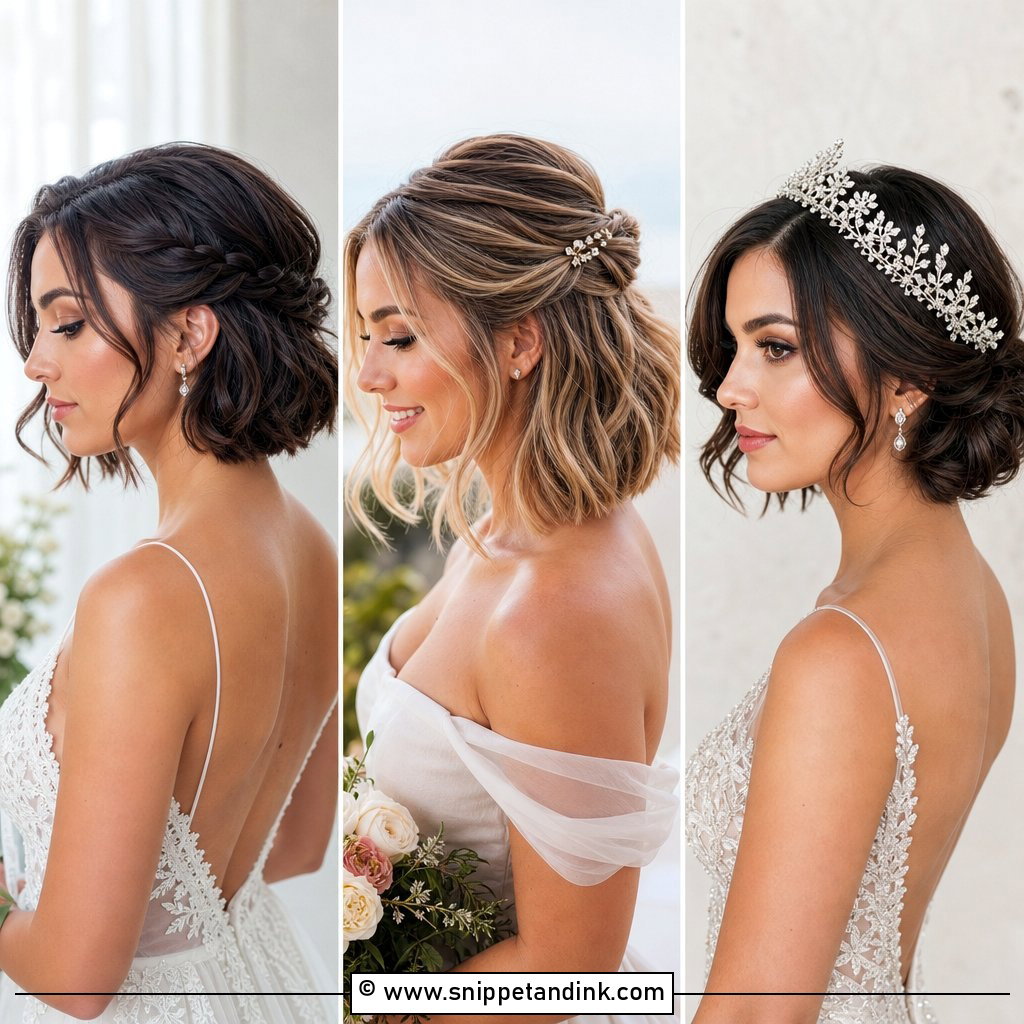
19. Retro Curls With Jeweled Clip
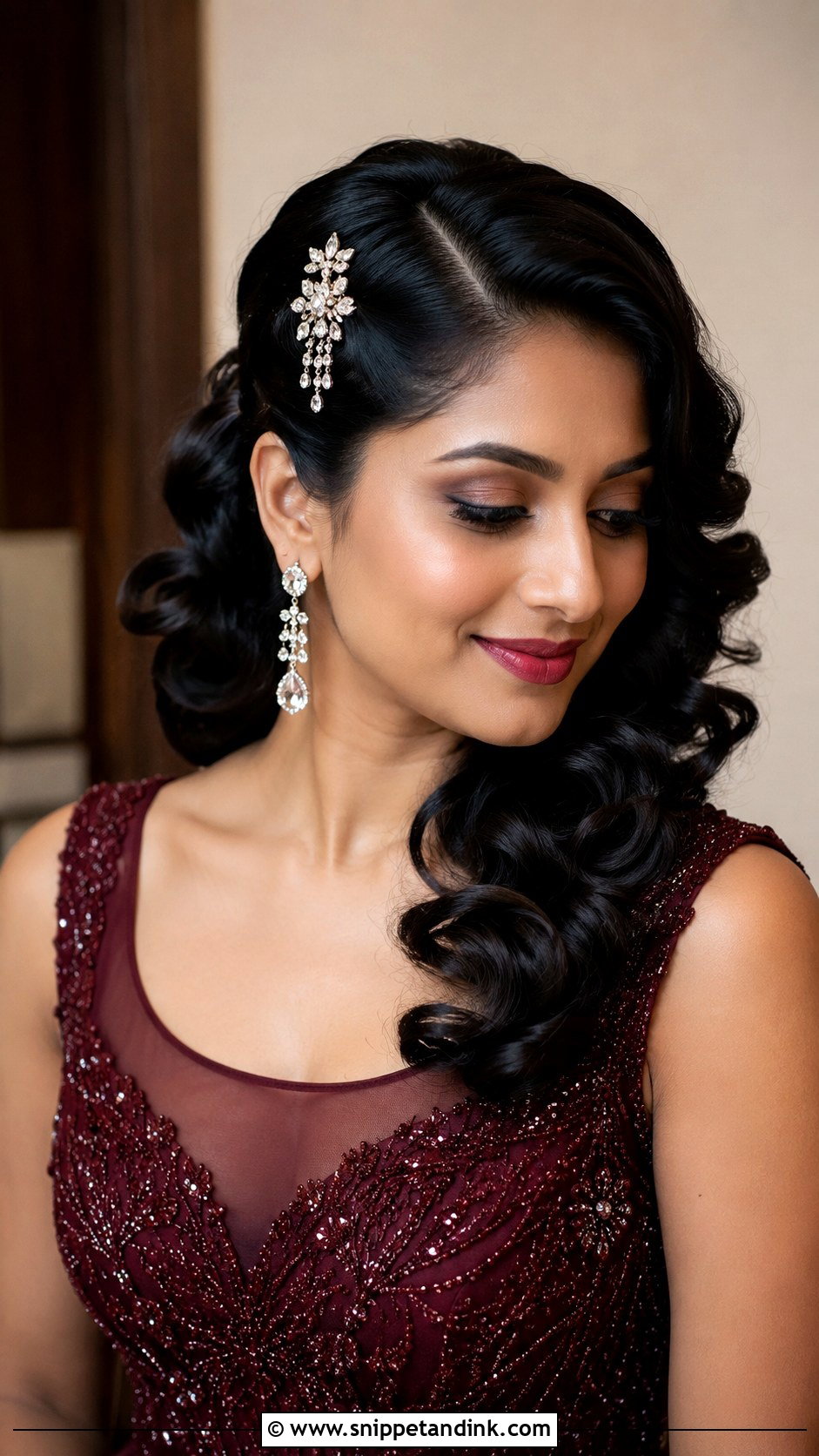
Defined vintage curls swept to one side and held with a jeweled clip suit an evening reception. I set them in pin curls or with a small barrel iron, let them cool completely, then brush them into shape; curls brushed while still warm drop fast. The clip does real structural work here, holding the whole sweep in place. If your hair is thick, expect the curls to grow bigger as the night goes on.
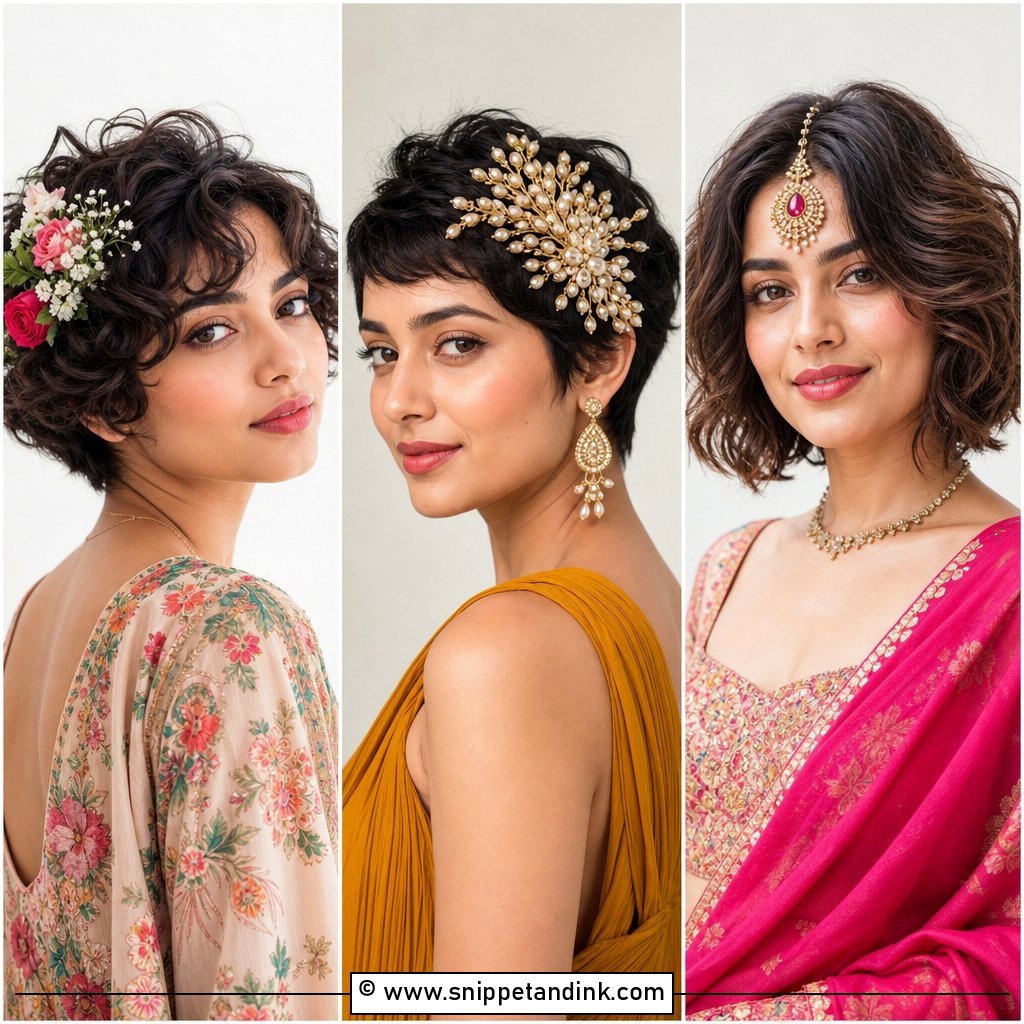
20. Bun With Hair Accessories And Gajra
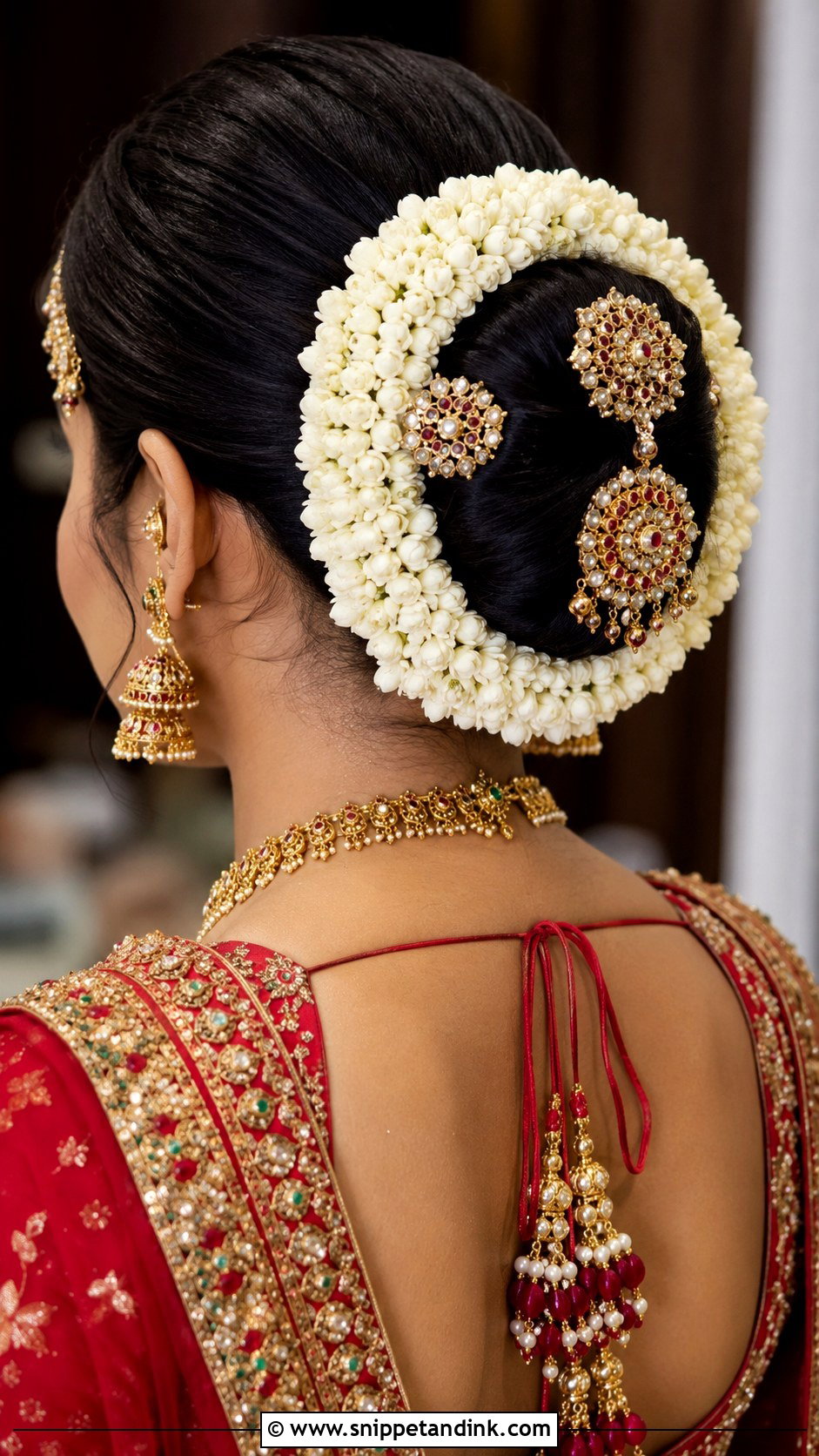
This is the full traditional bun rebuilt for short hair. I twist the hair into a small bun, add a faux piece if it needs more size, then layer jeweled hairpins, a juda pin, and a wrap of gajra around the base. Weight is the real issue: that many ornaments on a small base can drag it downward, so I build it on a tight ponytail with a bun donut inside for structure. With heavy traditional jewelry at the main ceremony, it gives short hair every element of a classic bridal juda.
21. Curtain Bangs With Soft Waves
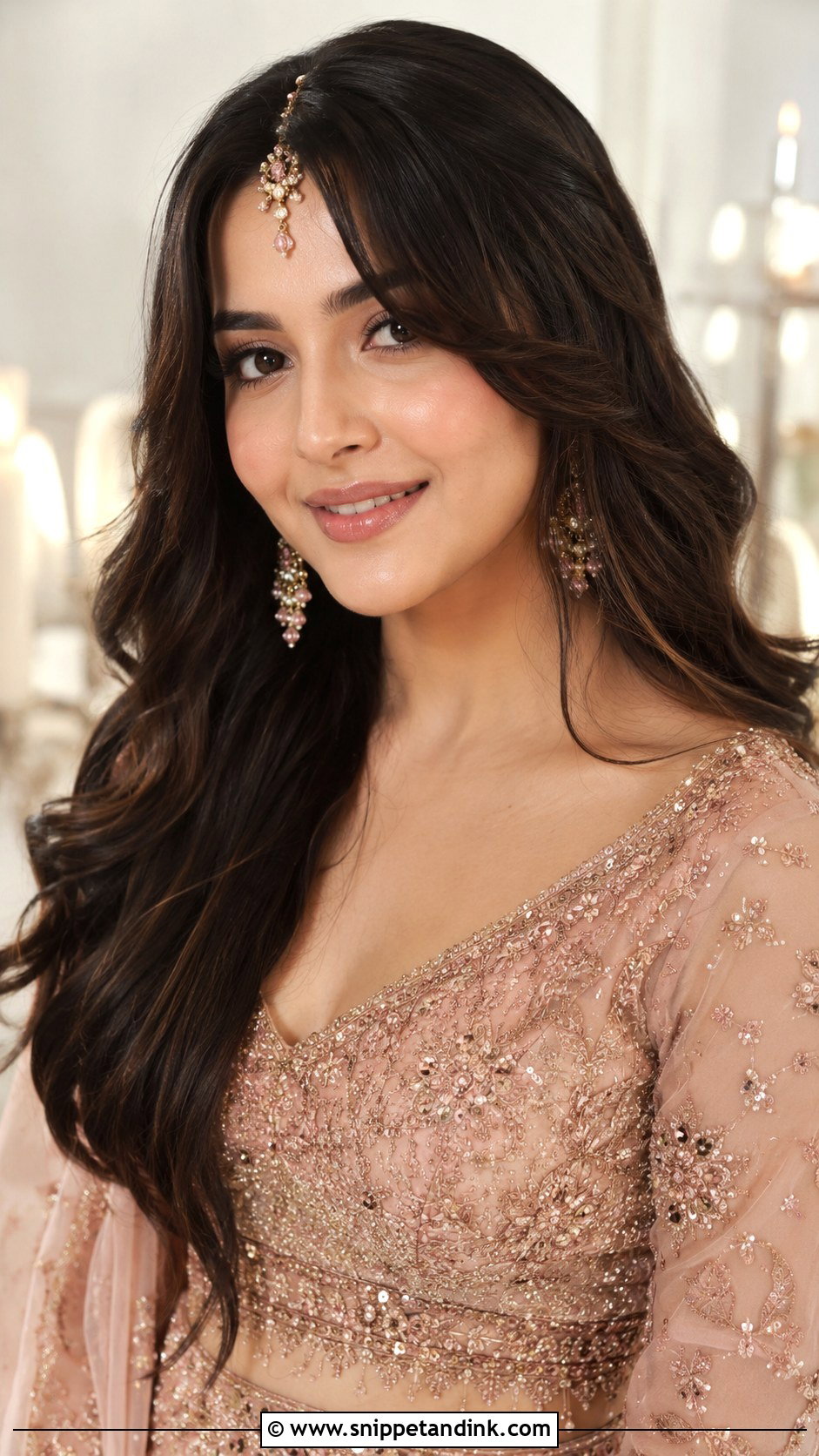
Curtain bangs falling either side of a center part, with the rest in soft waves, frame your eyes and soften the face. If you’re cutting bangs for the wedding, do it several weeks ahead so they settle; a fresh cut the week of the wedding almost always sits too short. I shape bangs with a round brush and a hairdryer rather than an iron, so they curve away from the face instead of curling under. A small maang tikka or delicate earrings suit it at engagement parties and fusion weddings.
22. Pinned-Back Style With Jasmine
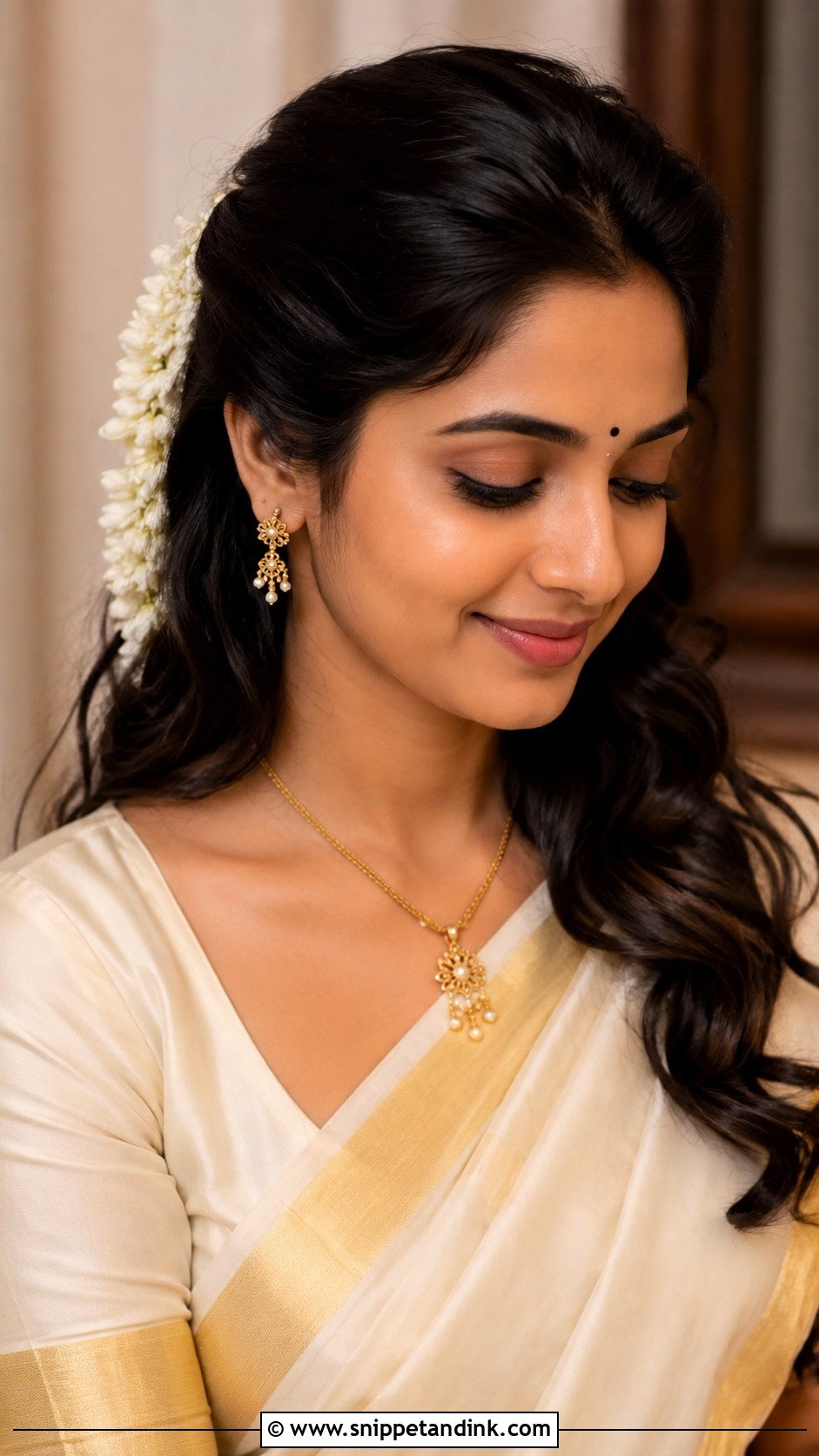
The sides are pinned back neatly, the rest stays open in soft waves, and a string of fresh jasmine runs along the pinned sections. I recommend it for long poojas, because nothing pulls and nothing needs touching up. Jasmine buds open through the day and brown at the edges in strong sun, so I put the strand in at the very end. It keeps hair off your face while your jewelry stays fully visible.
23. Voluminous Blowout With Maang Tikka
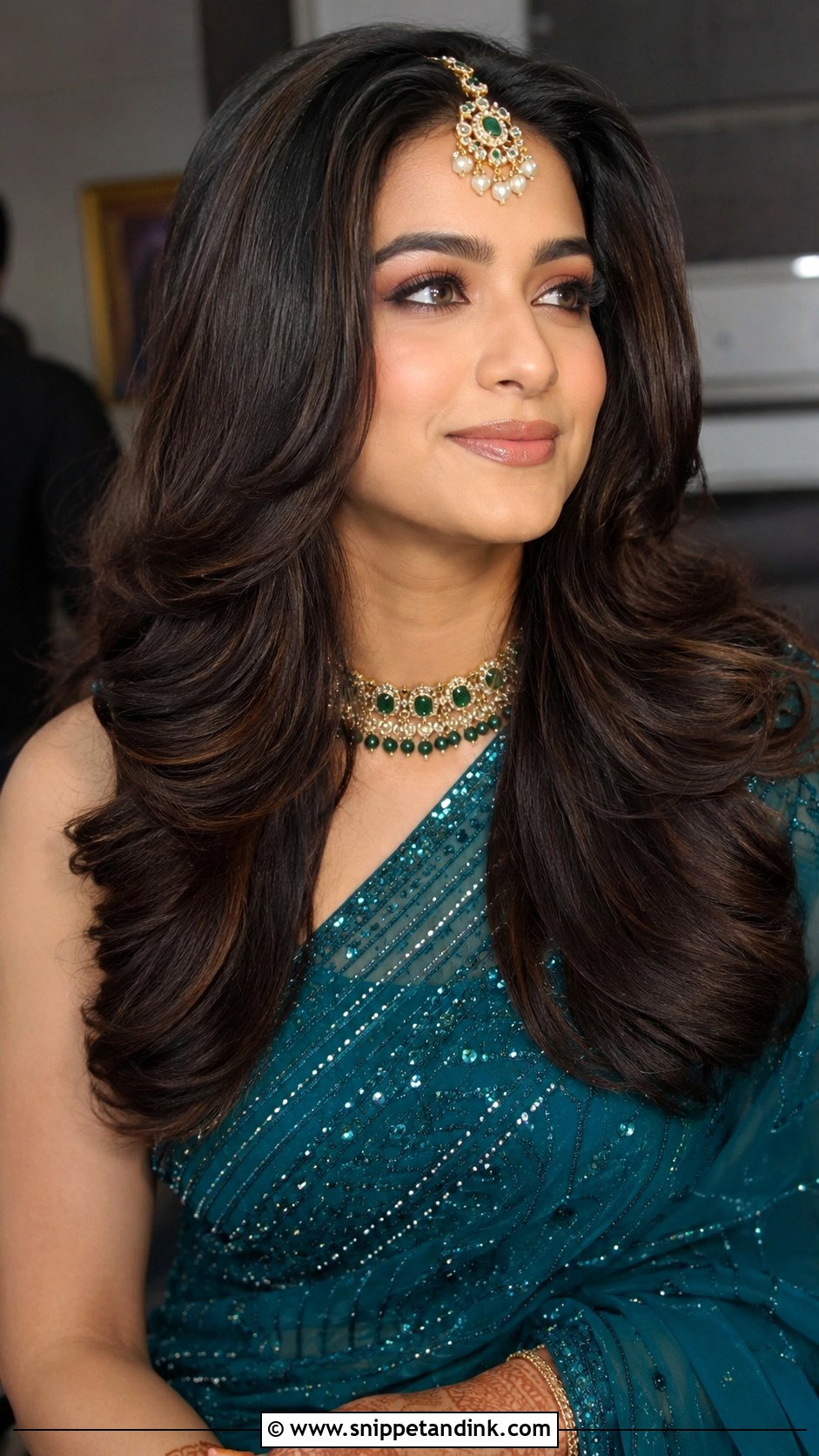
A round-brush blowout gives short hair bounce and makes it look thicker. I dry the roots upward for lift, smooth the ends, and add a maang tikka along the part to finish. The voluminous blowout loses lift fastest in humid venues, so I set it in large velcro rollers while it cools and send you off with a small brush to lift the roots before the reception. It works with sarees and lehengas alike.
24. Braided Bun With Flowers
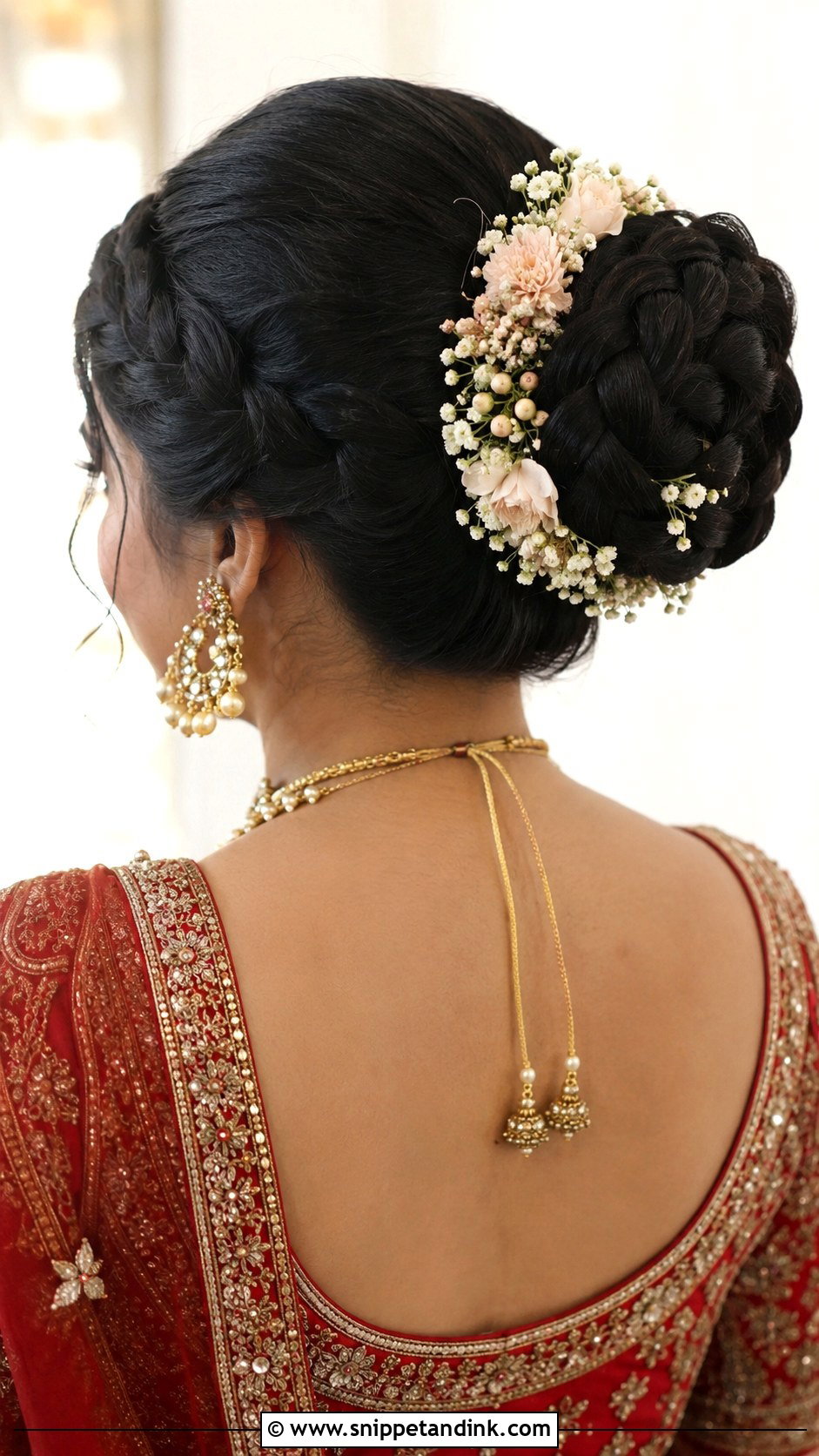
Sections are braided, coiled into a neat bun at the back and dressed with small fresh flowers. Braids give the pins something to grip, so this is one of the most secure buns I can build on short hair for a night of dancing and rituals. Below shoulder length it’s easy. Shorter than that, the braids get tiny, and I’d add a matching weft so the coil has some size. Main ceremony or sangeet both suit it.
25. Open Hair With Side Hair Accessory
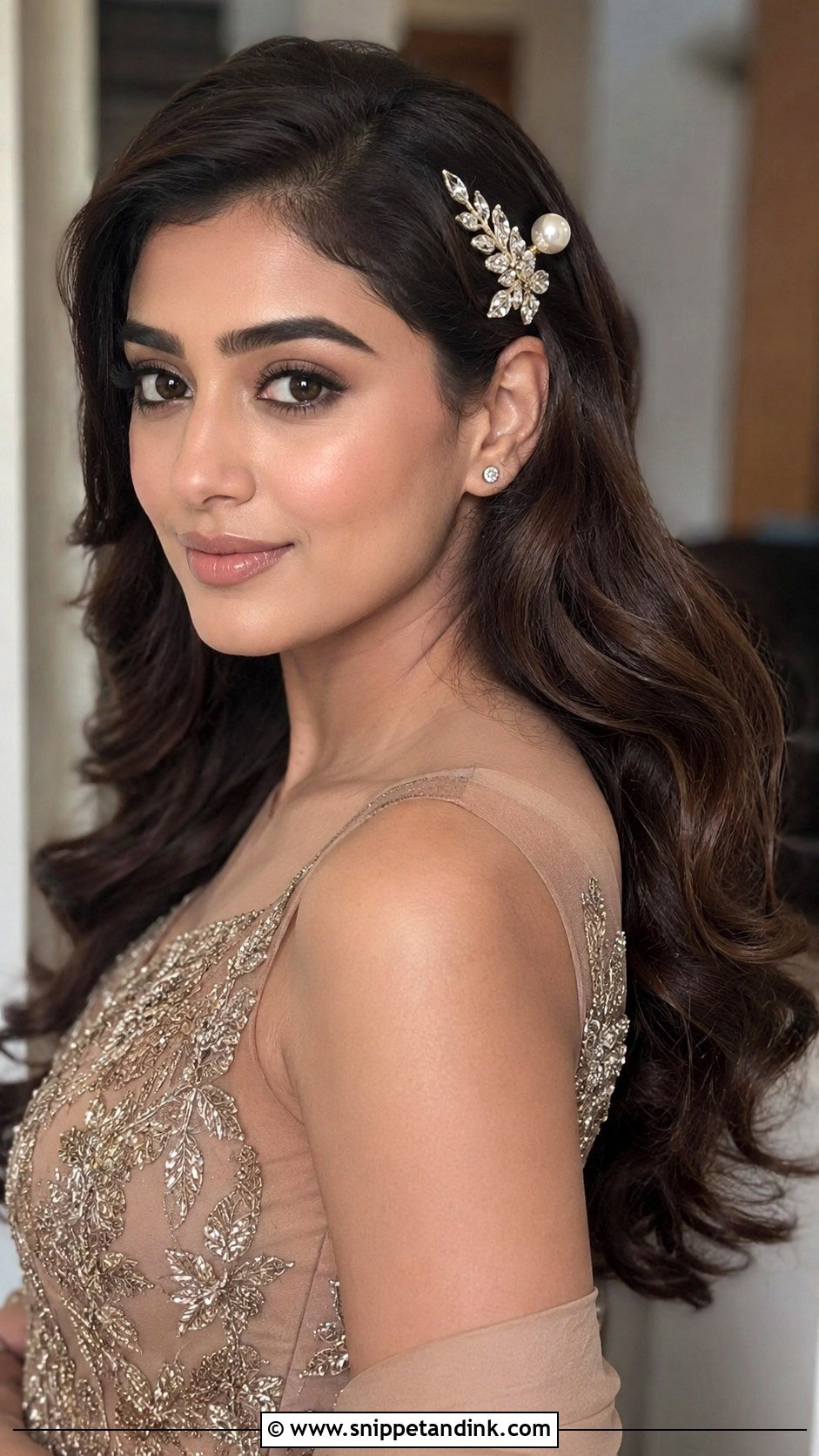
Your natural texture in soft waves or curls, plus one statement accessory at the side, is the lightest option on this list. I place a jeweled comb or pearl pin exactly where your hair tends to fall forward, so it holds those strands back as well as decorating. Combs slide out of silky hair, so I set a small cross of hidden bobby pins underneath first for the teeth to grip. At a cocktail or fusion wedding it looks bridal without any updo at all.
Where the Dupatta and Heavy Jewelry Actually Pin
Long hair has bulk that hides pins; a bob doesn’t. For a dupatta draped over the head, I braid a small hidden section at the crown, or make a tiny ponytail, and pin the dupatta into that instead of into loose hair at the temples, which pulls and shows every pin. The same anchor carries a matha patti’s side chains and a passa. Dupattas often go on at the venue in a hurry, so I show whoever is dressing you exactly which spot to pin into.
Weight adds up over a long muhurat. If your set includes a heavy jhoomar, wear everything together at the trial for at least half an hour. A mild headache at the trial will be a bad one by the pheras, and it’s far easier to swap a piece weeks ahead.
Fresh Jasmine That Lasts Into the Evening
Gajra looks best when it goes in last. Jasmine buds open as they warm, so a strand bought the evening before and kept wrapped in a damp cloth in the fridge will be opening nicely by the ceremony. In direct sun the petals brown at the edges within a few hours. On short hair I tie the gajra onto a thin thread first and pin through the thread with U-pins, instead of wrapping it straight around a small bun, which squashes the bun flat. If the day runs long, keep a spare strand cool for the reception.
One Short Cut Across Every Wedding Function
Short hair doesn’t limit an Indian bridal look; it changes how the look is built. From faux buns and floral crowns to sleek bobs and side braids, each style above depends on matching it to your length, the function and the jewelry you’ll wear. Settle the ceremony look first, since that’s where the heaviest pieces go, then plan lighter, quicker styles for the events around it. Bring your real tikka, dupatta and any added hair to the trial, and you’ll see exactly how each one sits on your hair before the day.
You'll Like These Ideas:


Leave a Reply