
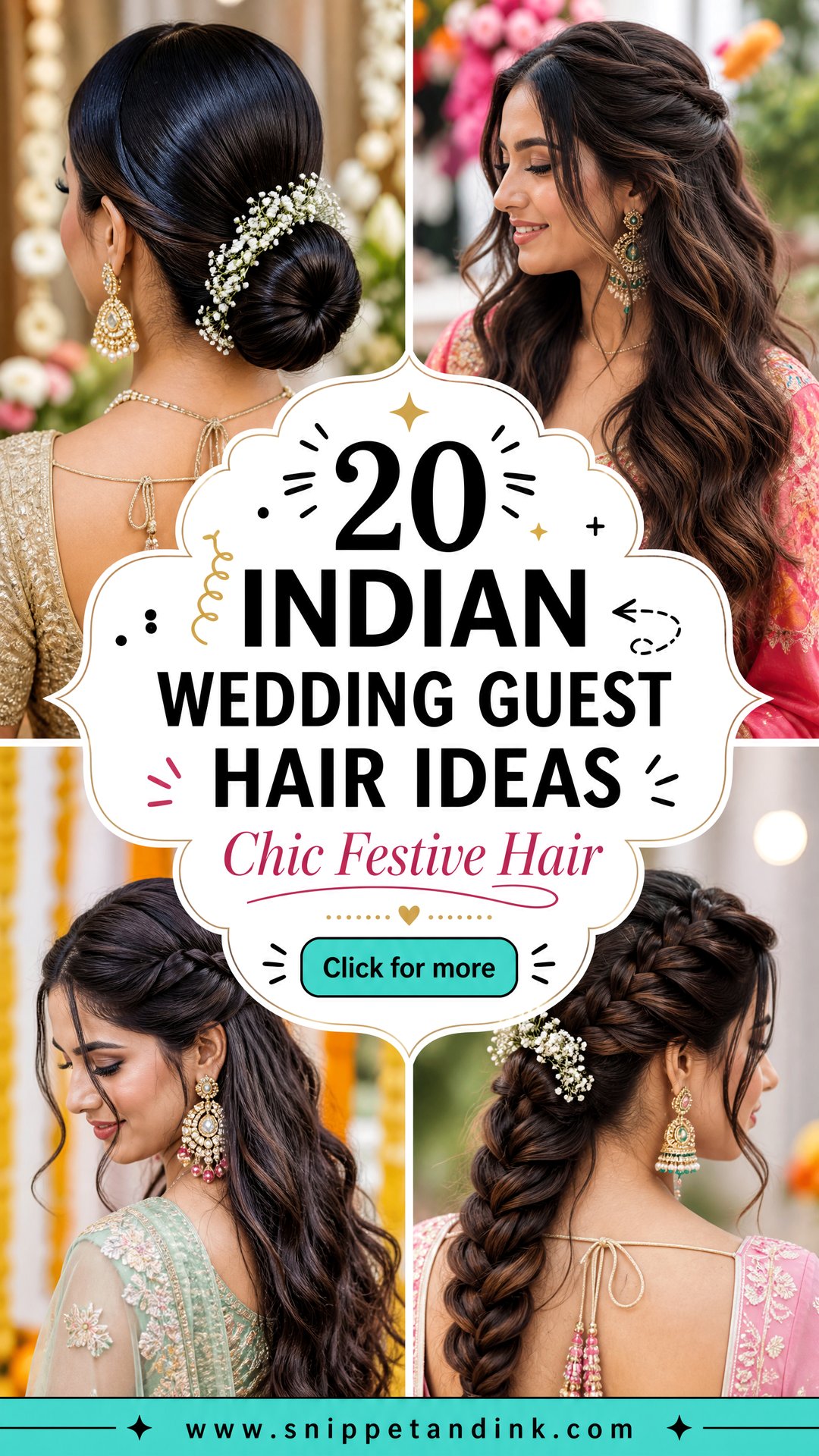
Guest hair at an Indian wedding has a harder job than it looks. It has to last through a long ceremony, a crowded photo line, a dance floor and often an outfit change, while sitting comfortably under a dupatta and next to heavy earrings. I always start from the neckline and where the dupatta will fall, then the jewelry, then how many hours the function runs. A sleek bun suits a saree. Soft waves balance a modern lehenga. A braid with flowers feels festive without stepping into bridal territory. Below are twenty buns, braids, ponytails and open styles for mehendi, haldi, sangeet, reception and daytime functions, with notes on where each one tends to give up.
Spacing Out Several Days of Functions So Your Hair Holds Up
Most Indian weddings ask guests to turn up dressed on several days in a row. The order you wear your styles in matters more than any single one of them.
- Wash the day before your most important function, not that morning. Day-old hair holds pins and curls; freshly washed hair slides out of both.
- Wear a braid or bun to the haldi. Turmeric paste can tint light, highlighted or grey hair yellow, and a tight style keeps the lengths out of the way. A little oil on the ends beforehand makes any splashes easier to rinse.
- If you’re getting henna at the mehendi, choose something that needs no touch-ups. Your hands will be out of action for hours while the paste dries.
- Give your ends a break. Curling several nights running dries them out, so save the open, heat-styled looks for one or two functions and wear braids and buns on the others.
- After a pinned updo, the hair carries kinks the next day. If tomorrow is an open style, sleep in a loose plait and re-curl over the bends.
If you’re sharing a stylist with other guests, ask how long each slot is before you book. Squeezing several people into the hour before the baraat usually means the last person in the chair gets a rushed version of her look.
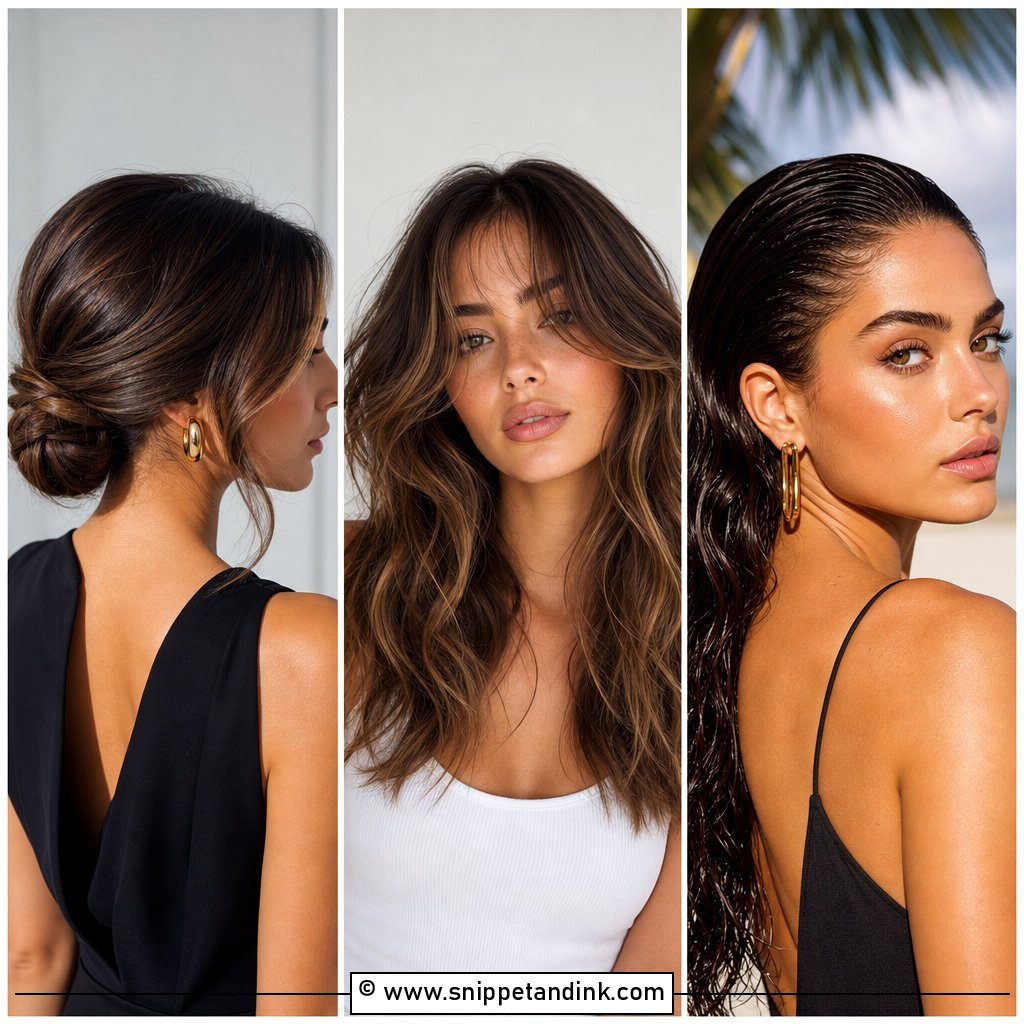
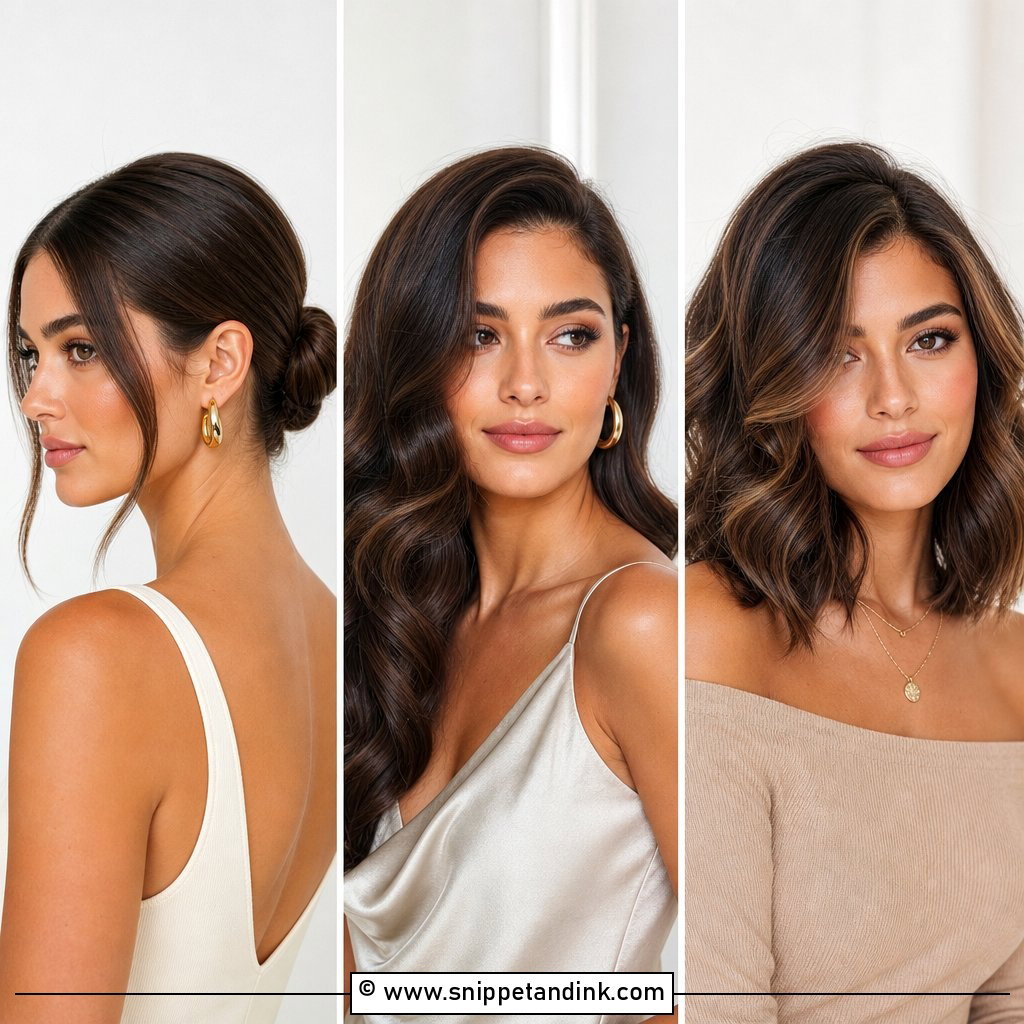
1. Indian Wedding Guest Low Bun
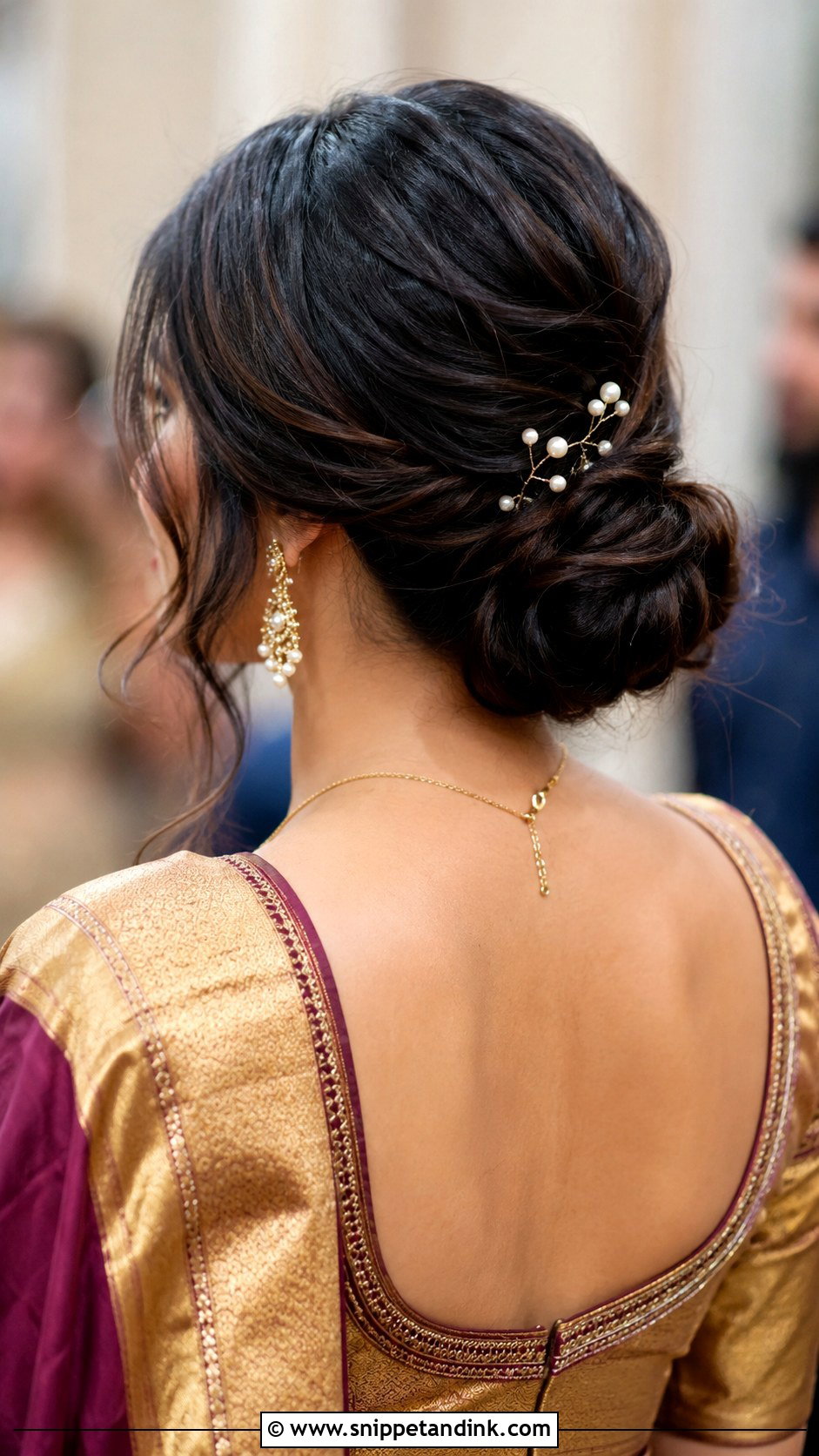
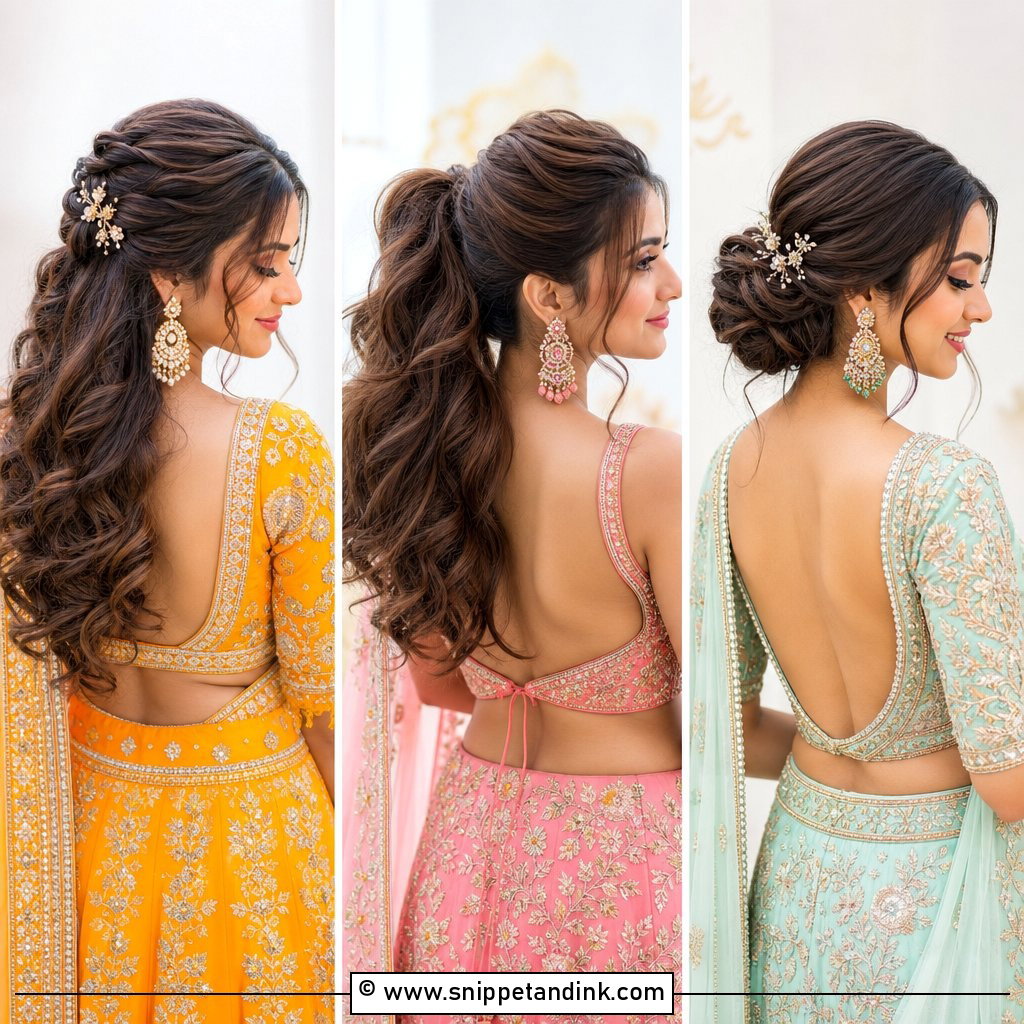
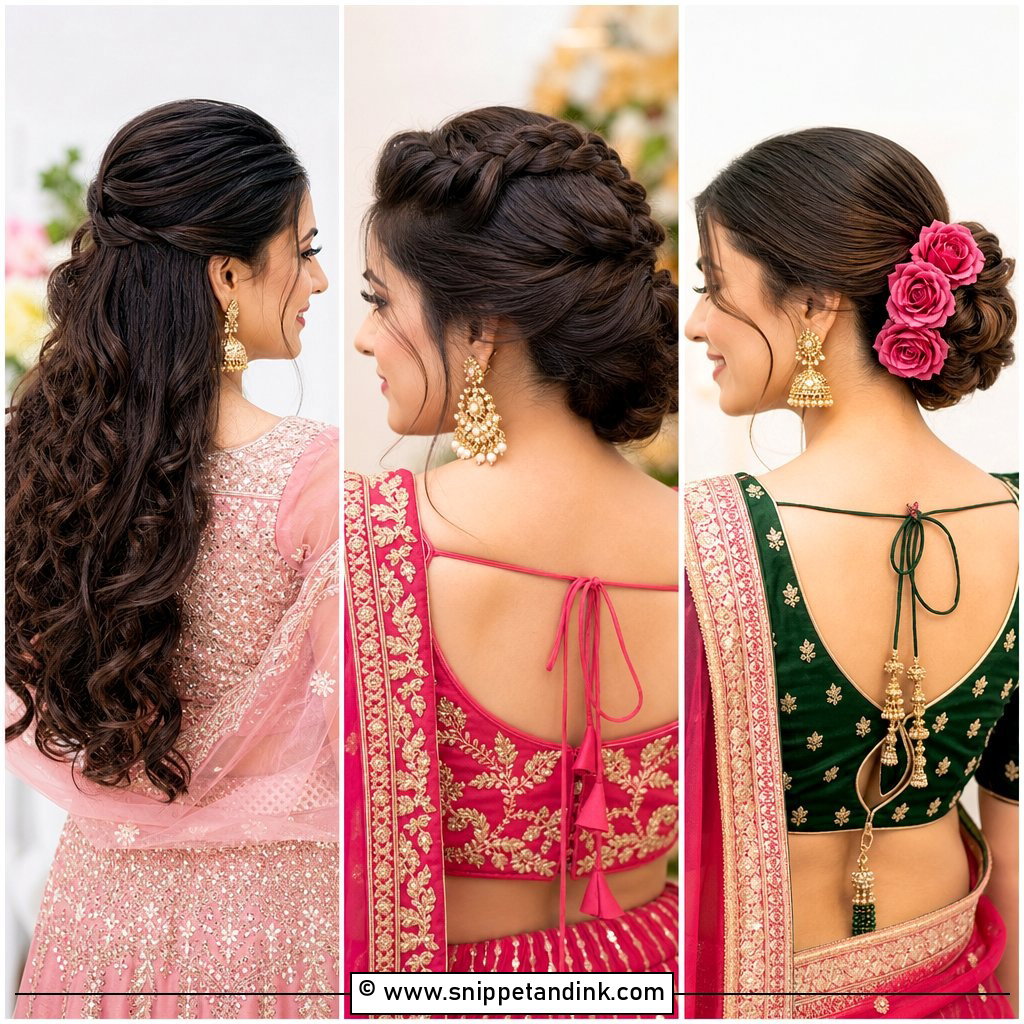
If I could pick one guest style for a long day, it would be this. A bun set at the nape sits under a dupatta without lifting it, leaves room for statement earrings, and goes with sarees, lehengas, anarkalis and sharara sets. Center part for classic, soft side part for something newer. A small gajra, pearl pins or a single clip is all the decoration it needs. When the outfit already carries heavy embroidery, this is the hair that knows to step back.
2. Indian Wedding Guest Gajra Bun
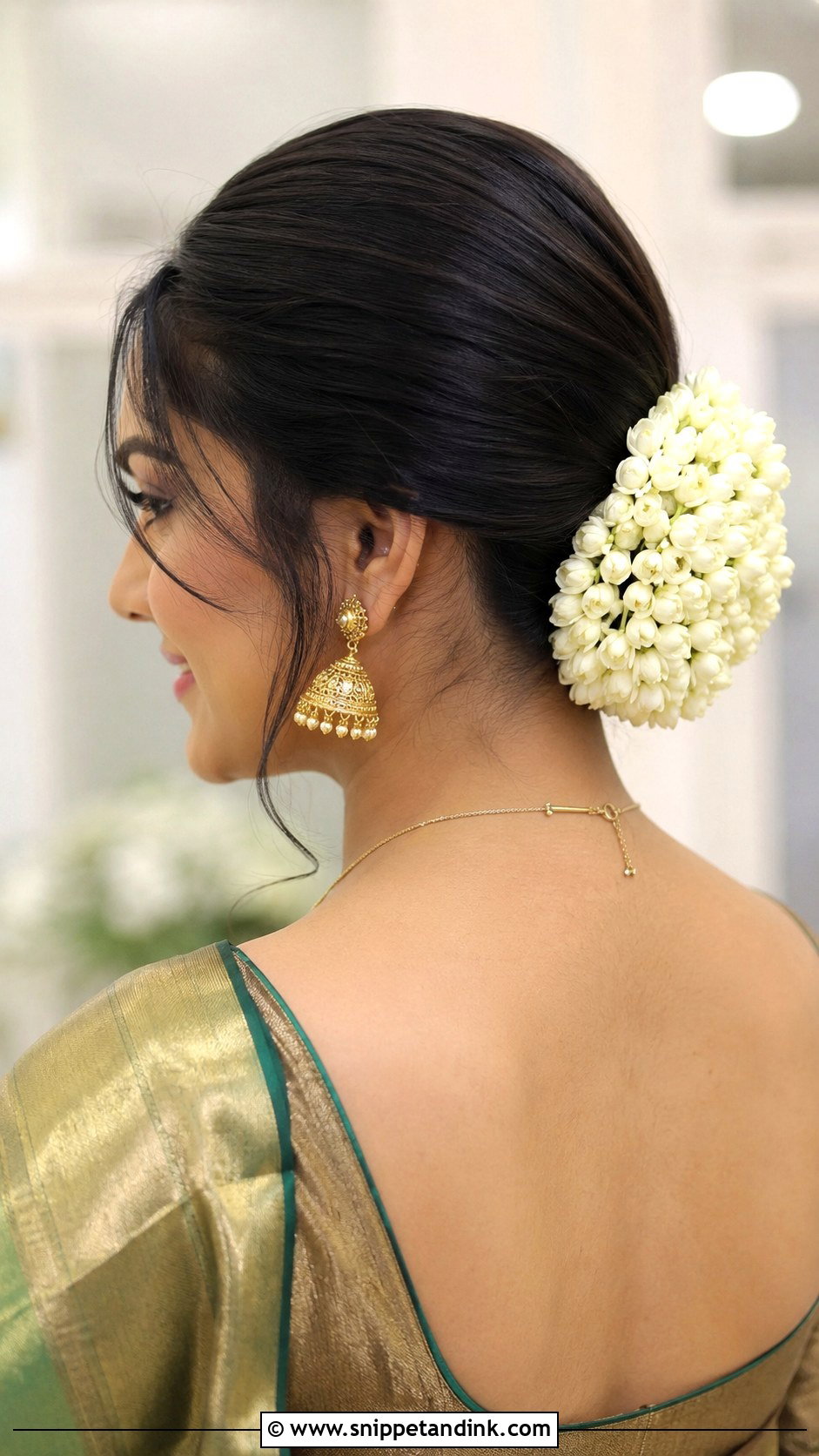
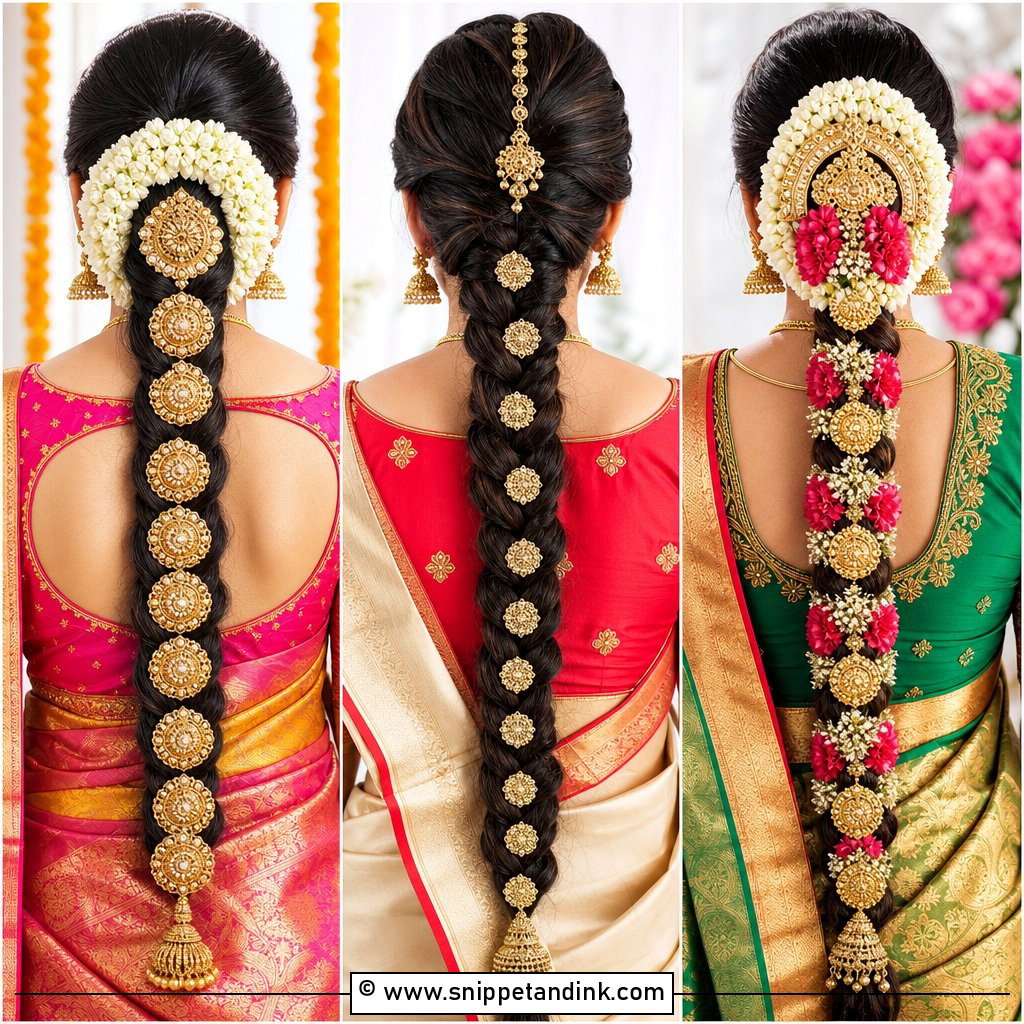
Jasmine around a bun says wedding before anyone sees your outfit, which is exactly why it suits a guest who wants a cultural touch without dressing like the bride. The bun underneath can be sleek, twisted or slightly textured, then wrapped with fresh jasmine or a faux garland. Silk sarees, Banarasi drapes and South Indian outfits are its best match. Fresh strands are heavier than they look and wilt in afternoon heat, so I pin them through the thread with U-pins and suggest faux ones for outdoor daytime events. White jasmine for a morning ceremony; for evening, pearl pins or small gold pieces dress it up further.
3. Indian Wedding Guest Sleek Middle Part Bun
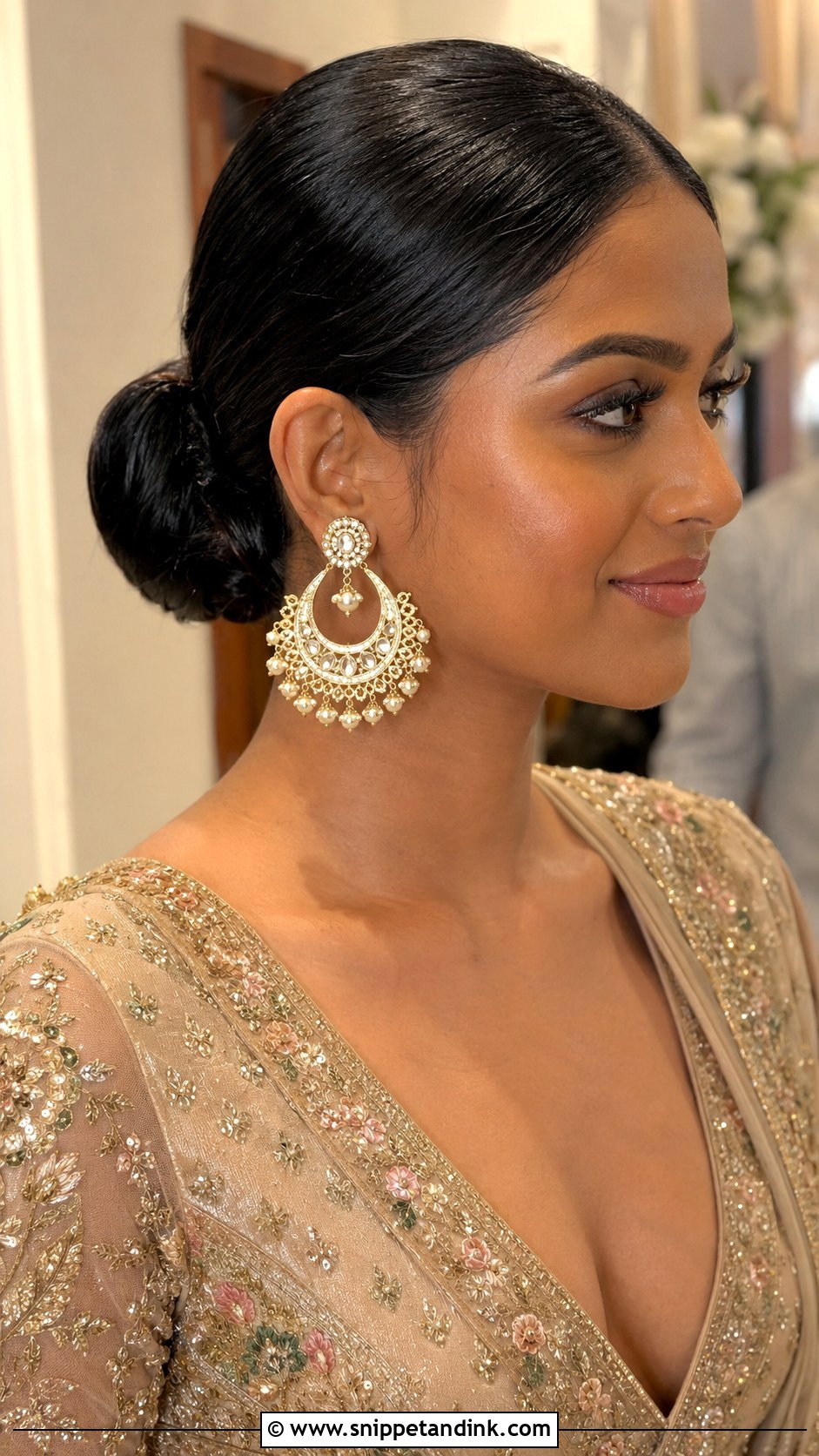
Sleek and center-parted is the cleanest frame for bold earrings, a choker or a blouse with heavy neckline work. The hair is parted sharply, smoothed flat and gathered into a tidy low bun. Straight and smoothed wavy hair take to it easily. Curly hair can be stretched with a blow-dry and set, though in humidity it starts to puff back toward its natural shape by late evening. A light shine serum and firm pins keep flyaways down. Save it for receptions, cocktail functions and formal evenings.
4. Indian Wedding Guest Side Part Bun
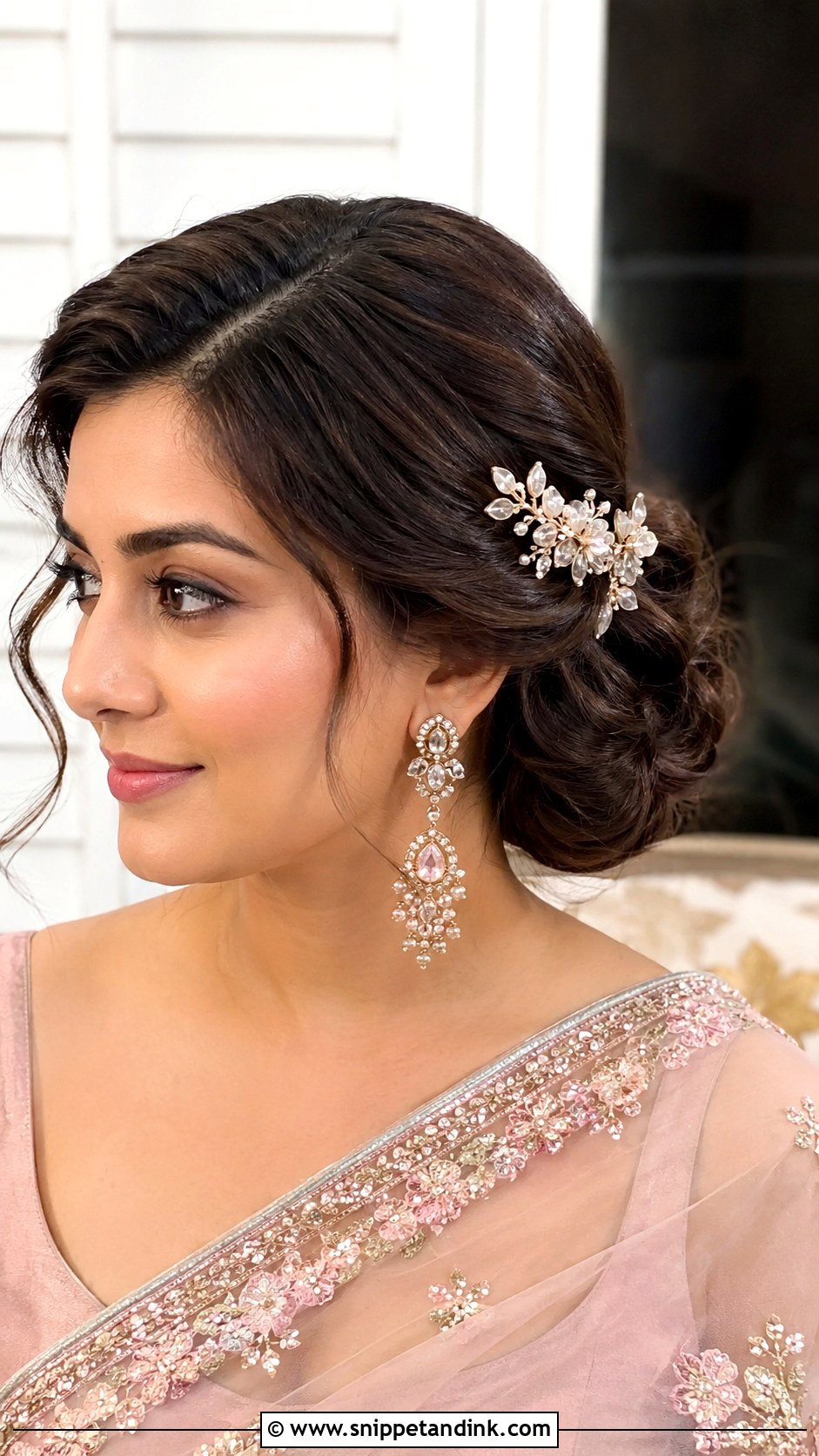
A deep side part softens the face more than a center part and flatters a wider range of face shapes. The part can be polished or left loose with face-framing pieces near the cheeks, and the bun sits low and slightly off-center. It pairs with jhumkas, chandbalis and embroidered dupattas. Pin the dupatta on the side opposite the bun, otherwise the two fight over the same shoulder. A small brooch, pearl comb or a few flowers lift a simpler outfit, and the style moves easily between engagement parties, receptions and sangeet evenings.
5. Indian Wedding Guest Messy Bun
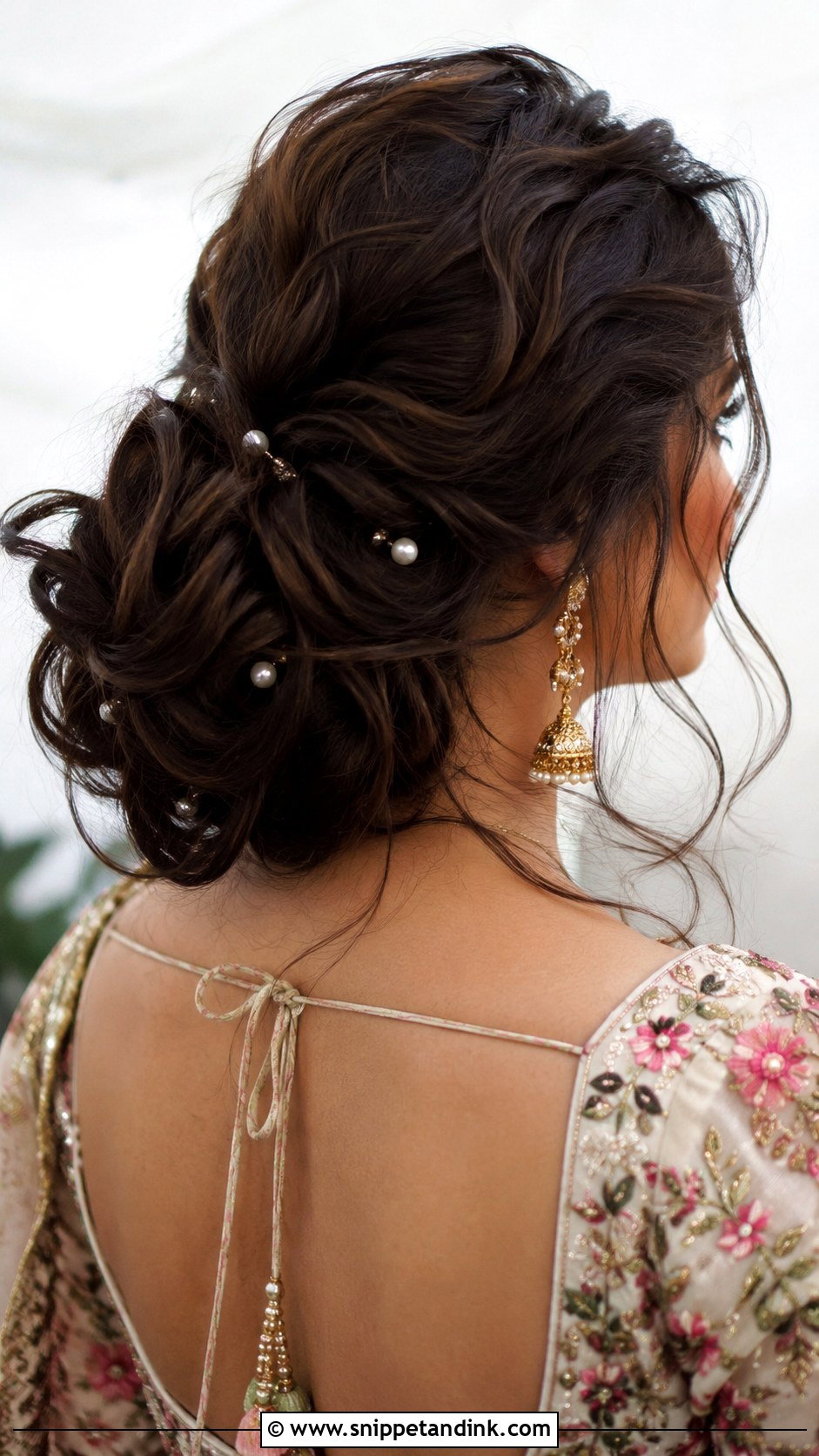
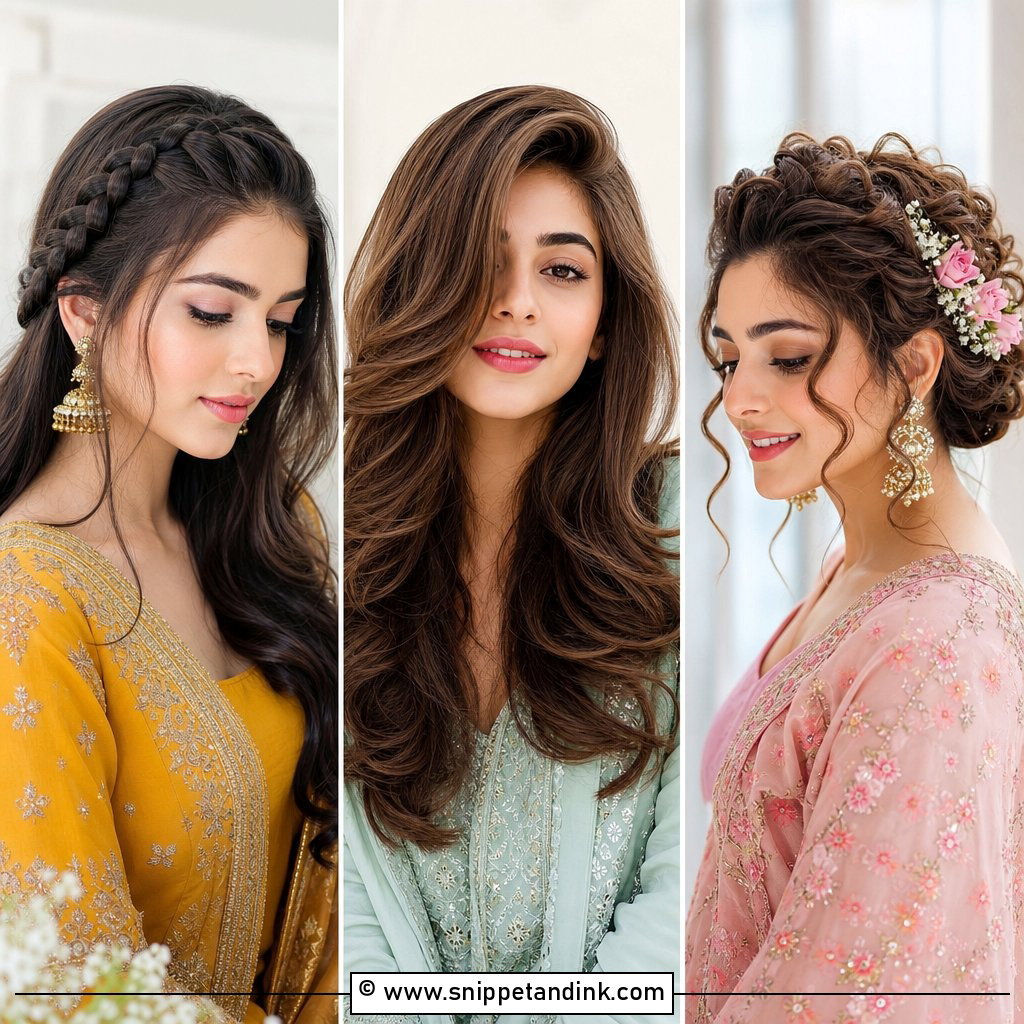
Messy is the hardest bun to get right, because it has to be built rather than rushed. I set soft volume at the crown first, pull out a few tendrils around the face, then pin a low or mid bun with the texture already in the hair. Pastel lehengas, floral sarees, organza dupattas and lighter outfits suit it. In humid weather, the texture hides small flyaways that would spoil a sleek style. Keep accessories to small pearl pins or one clip, and you can dance in it all night.
6. Indian Wedding Guest Braided Bun
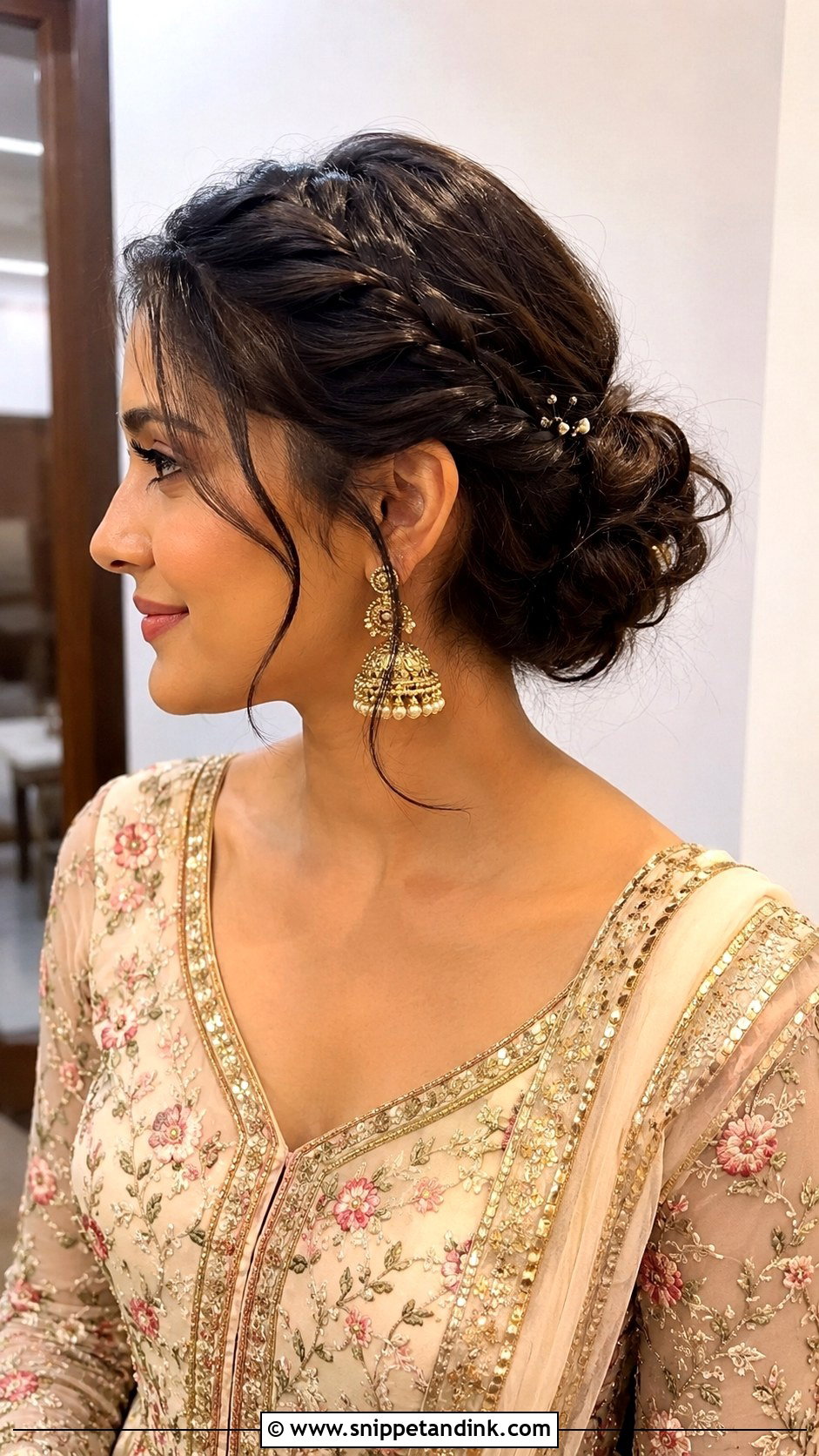
Wrapping a braid into a bun gives the bun something to grip, so it holds far longer than a plain twist. You can braid all the hair and coil it, or run small side braids that meet at the back. Sarees, lehengas and Indo-western outfits suit it, and a backless or deep-neck blouse stays fully on show. I reach for it with very thick hair in particular, since a braided coil packs smaller than the same hair twisted. Tiny pins, fresh flowers or a gold accessory make it festive without adding weight.
7. Indian Wedding Guest Long Braid
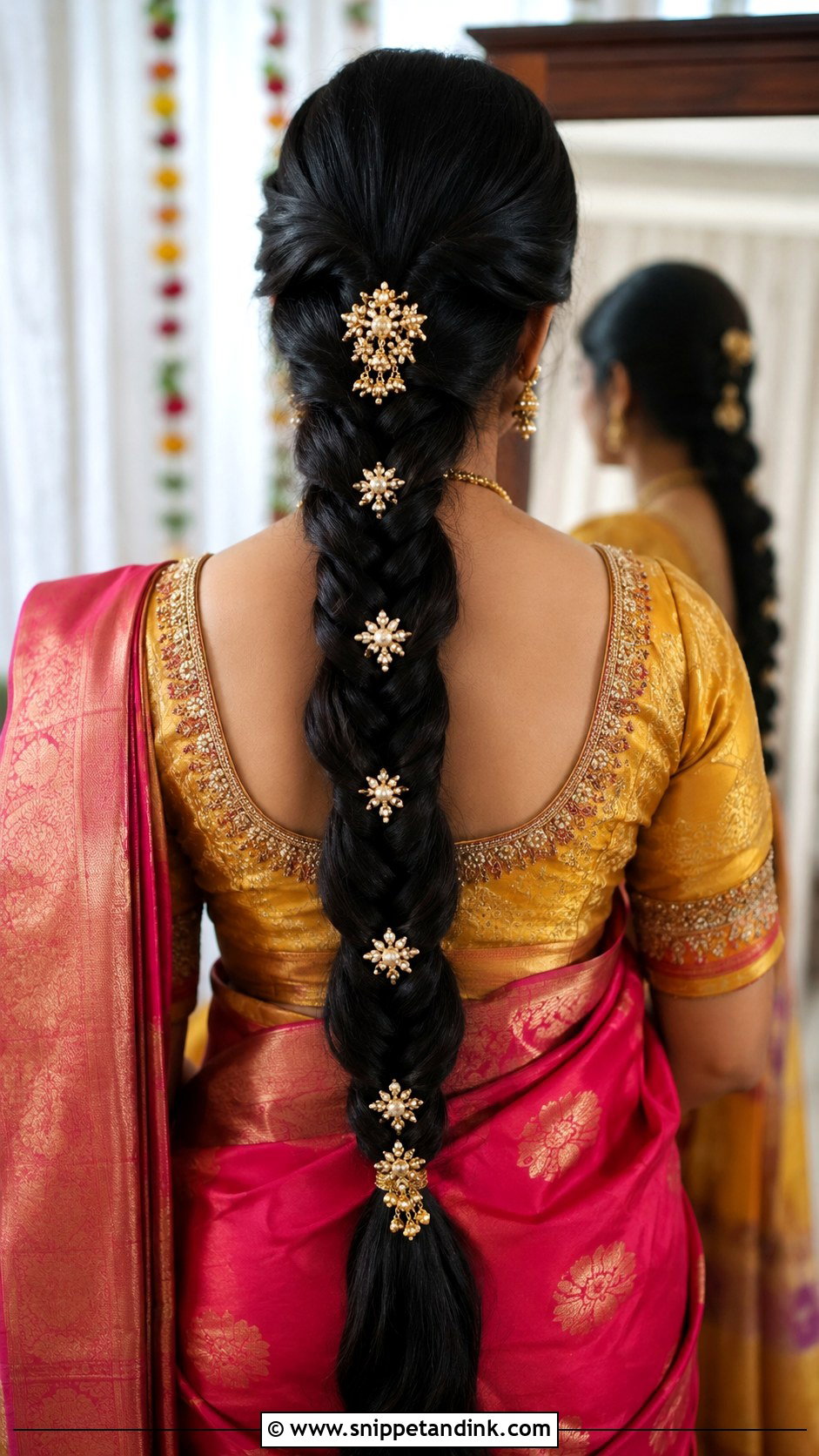
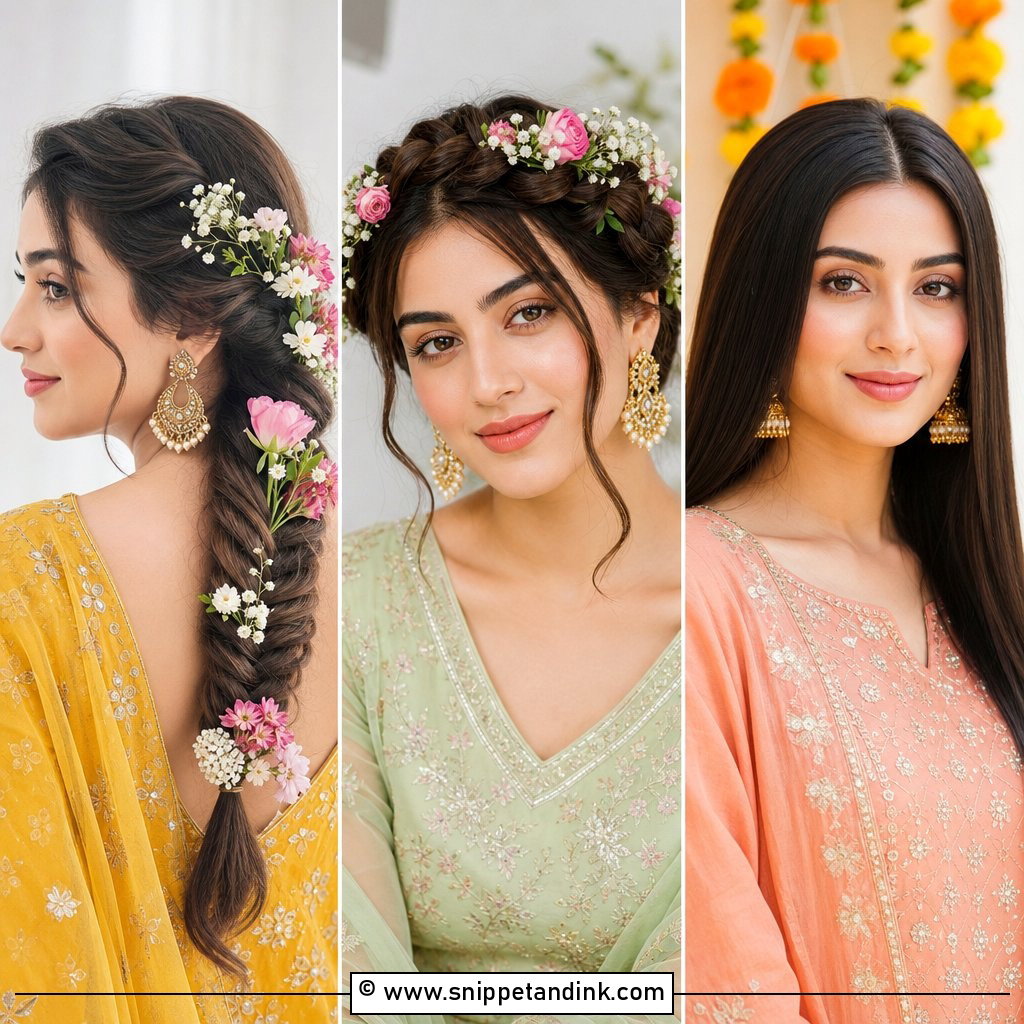
The long plait has stayed in Indian wedding hair for good reason. It sits well with silk sarees, lehengas and embroidered suits, and keeps long hair controlled through travel, photos and dancing. Smooth, pulled out for volume or trimmed with small flowers and hair jewelry, it adapts to each function, and it gives a dupatta something to rest against without sliding. As a guest, keep embellishment moderate: a few floral pins, a slim paranda or small pearl accents. A fully jeweled paranda starts to read bridal.
8. Indian Wedding Guest Fishtail Braid
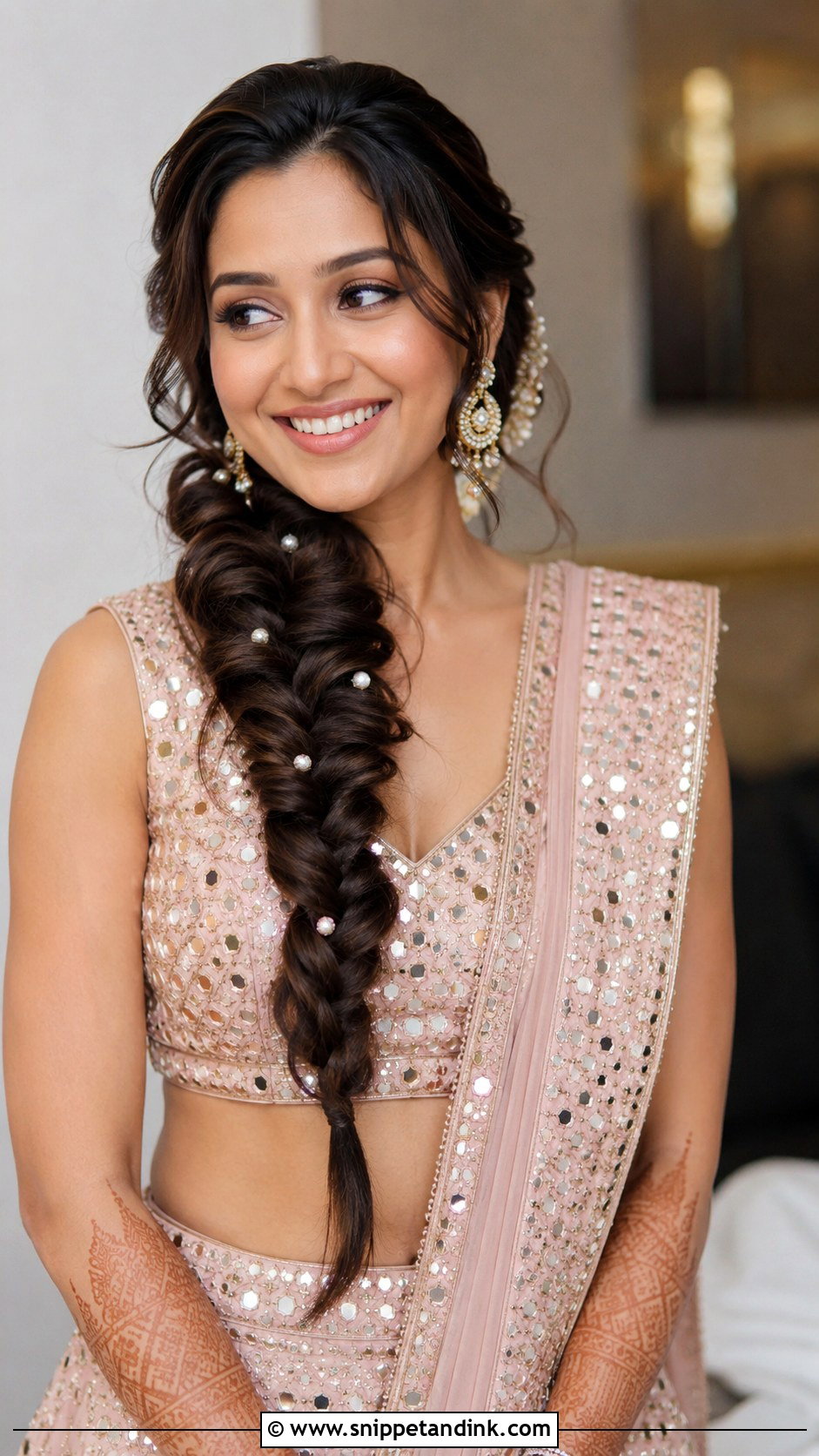
Loosen a fishtail after it’s tied and the pattern shows fuller and softer, which is how I’d wear it as a guest. Over one shoulder, it suits a lehenga, a pre-draped saree or a mirror-work outfit, and mehendi and sangeet are its natural home. A small maang tikka, floral pins or soft face-framing waves finish it. Medium-length hair can borrow fullness from clip-in extensions. Braid on day-old hair, since freshly washed hair slips out of the crossings, and a light hairspray keeps the pattern defined.
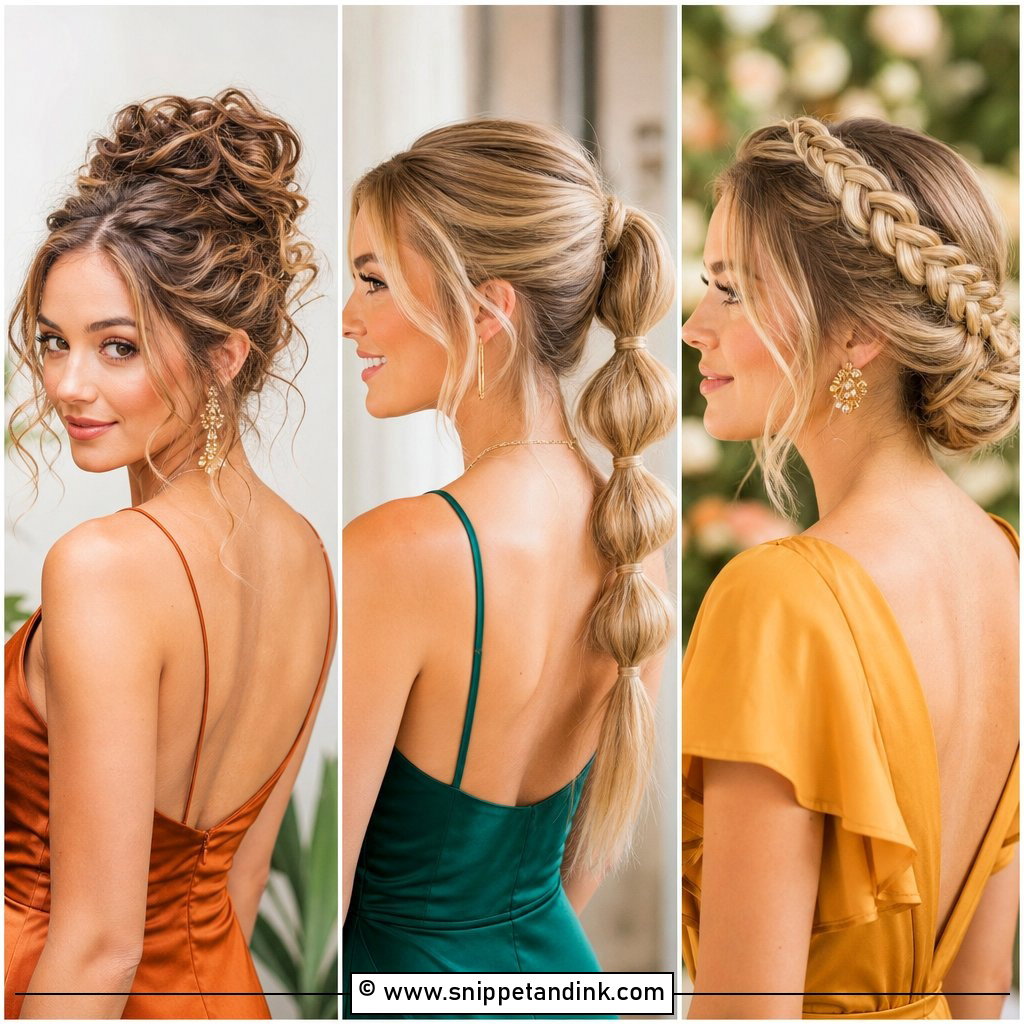
9. Indian Wedding Guest Bubble Braid
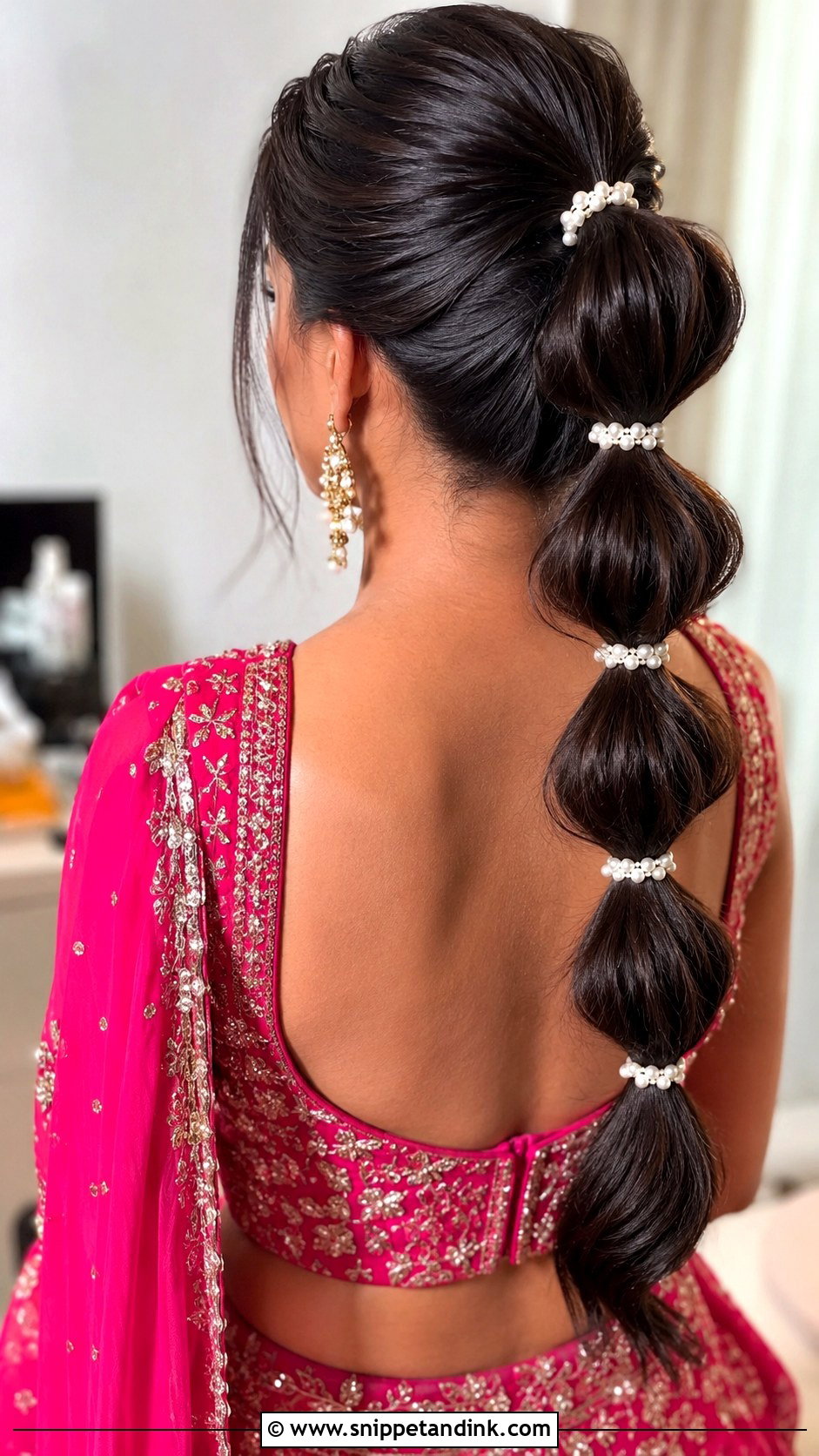
Quick to make and hard to wreck, the bubble braid is my pick for sangeet or cocktail events where the outfit is playful. The hair goes into a ponytail and is sectioned with small elastics, then each section is gently pulled into a rounded bubble. Wrapping a strand around each elastic, or using pearl bands, dresses it up. It suits lehengas, shararas and fusion outfits, and keeps long hair secure while still showing length. Use snag-free elastics; plain rubber bands tear hair when you cut them out at night. A few soft front pieces stop it looking strict.
10. Indian Wedding Guest Half Up Half Down Hair
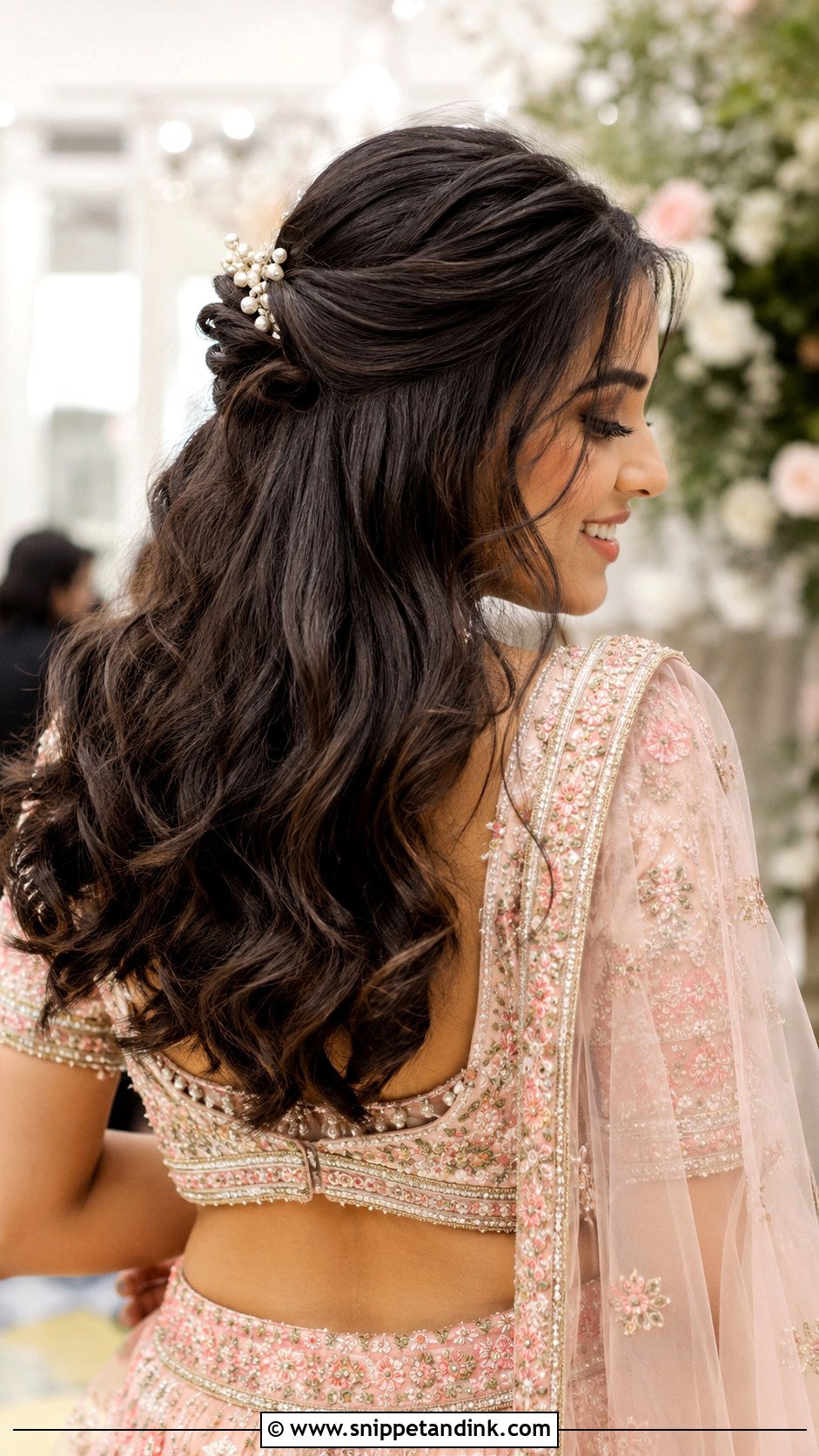
Half up, half down shows your length and still keeps hair off the face. It works with curls, waves and a soft blowout. The top section can be twisted, braided or held with a decorative clip while the rest falls over the shoulders, so a lehenga blouse or dupatta stays visible and heavy earrings have open space around them. Small pearls, flowers or a slim tikka add an Indian touch. The weak point is the open lengths, which drop first in heat, so I set every curl and let it cool pinned before releasing it.
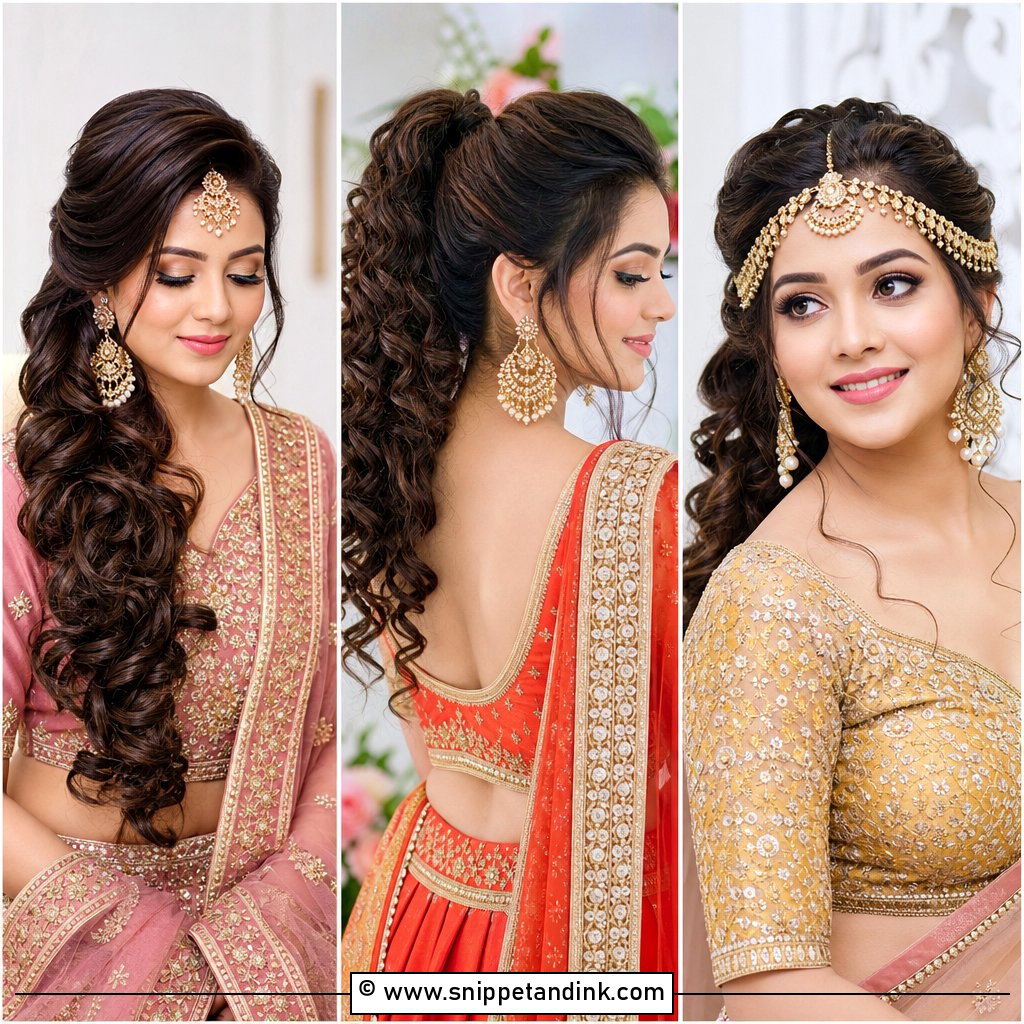
11. Indian Wedding Guest Soft Curls
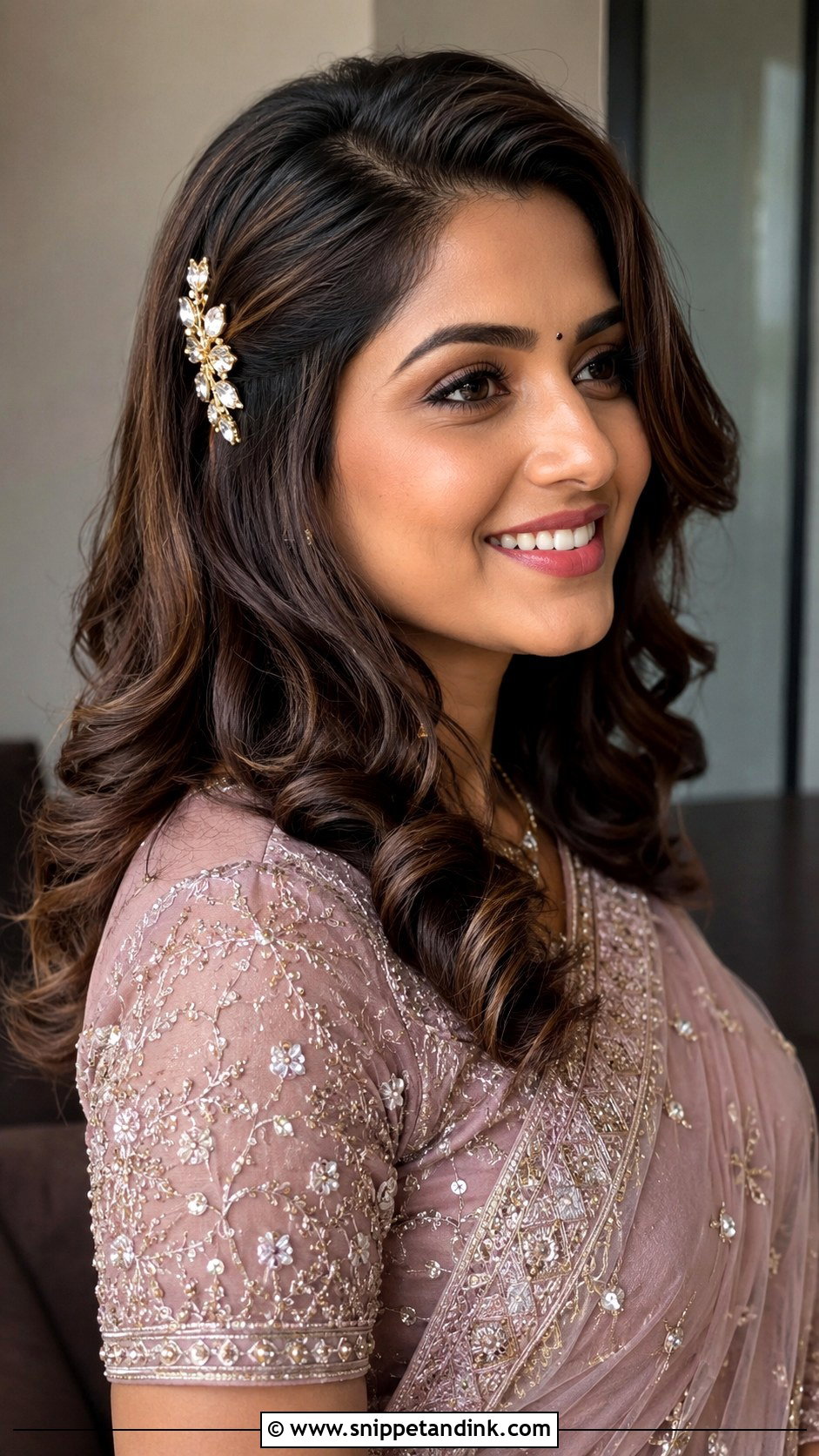
Open hair needs a finish, or it reads as simply not done. I use medium curls brushed into loose movement with light lift at the crown, then a side part for glamour or a middle part for a modern feel. Reception gowns, lehengas and lightly draped sarees all suit them. A jeweled clip on one side adds sparkle. Shine, controlled ends and enough hold are what carry curls through the photos, and I spray each section lightly before curling rather than only at the end.
12. Indian Wedding Guest Hollywood Waves
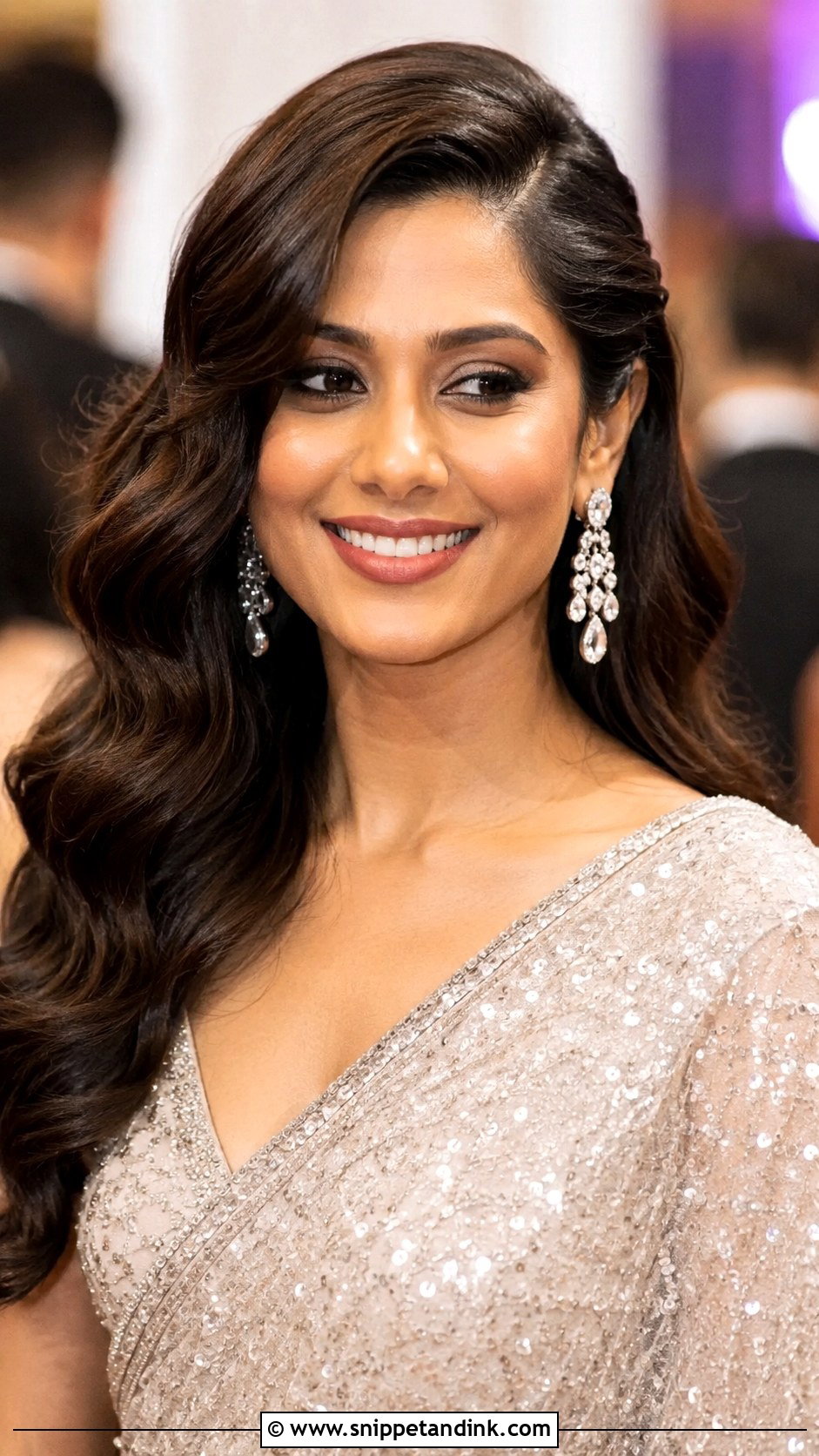
Hollywood waves are a night look, made for receptions, cocktail functions and formal parties. The waves are glossy and sculpted, all moving in one direction, and they suit sequined sarees, velvet lehengas and Indo-western gowns. The process is heat protectant, curls set in pin curls until fully cool, then a careful brush-out. Skip the setting and they relax into loose curls within the hour. A deep side part frames the face. Keep accessories minimal, since the waves are the detail, and let bold earrings or a structured blouse share the attention.
13. Indian Wedding Guest Loose Waves
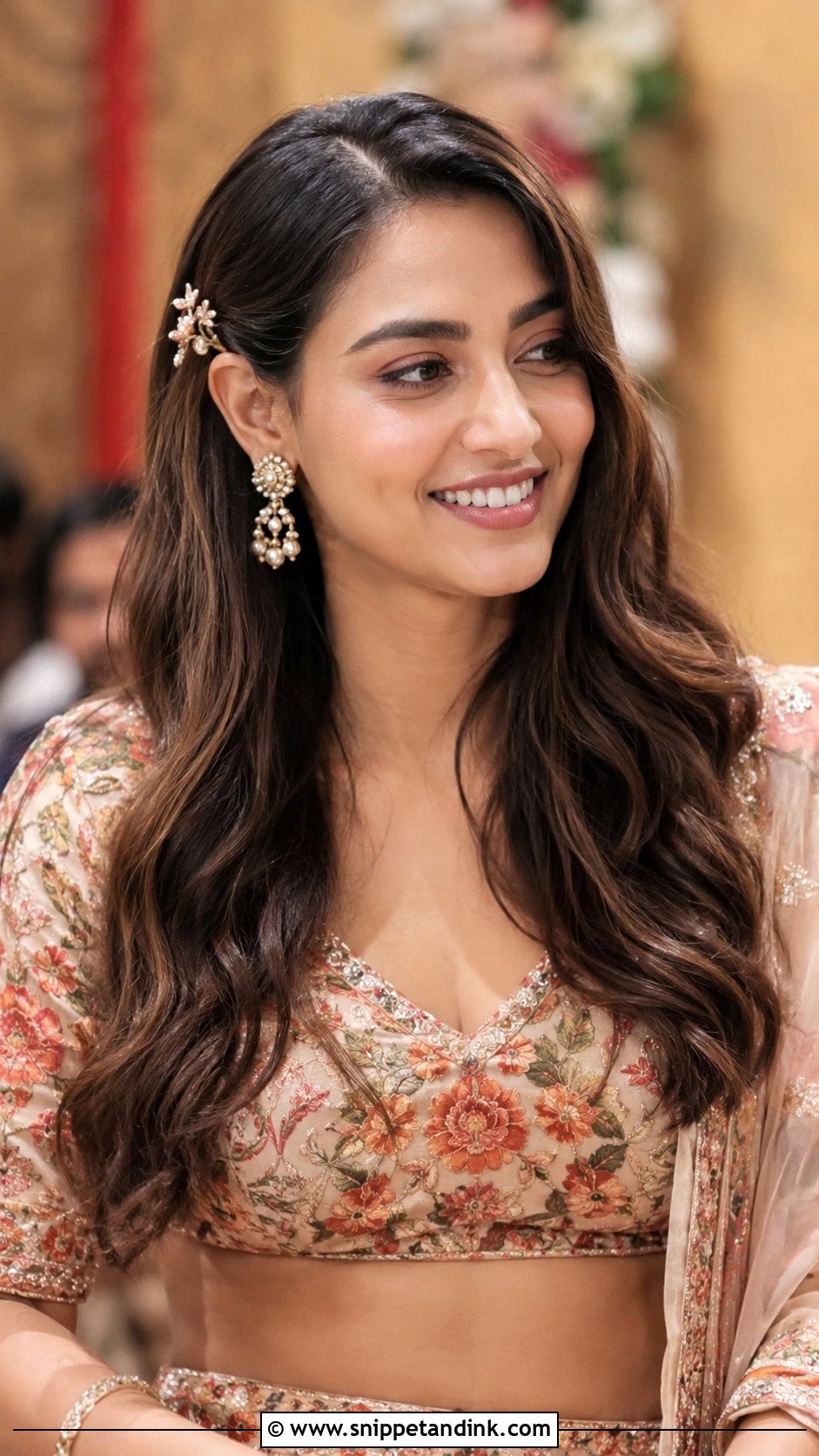
Loose waves dress the hair up without making it formal, which fits mehendi, haldi, sangeet and smaller gatherings. They should look soft and touchable, with light root volume and smooth ends. Floral lehengas, printed sarees and pastel suits suit them. Tuck one side behind the ear to show earrings, or add a tiny clip. Medium-length hair gets movement this way without needing an updo. Finish with a flexible spray; a stiff one turns waves crunchy and splits them into strands.
14. Indian Wedding Guest Side Swept Curls
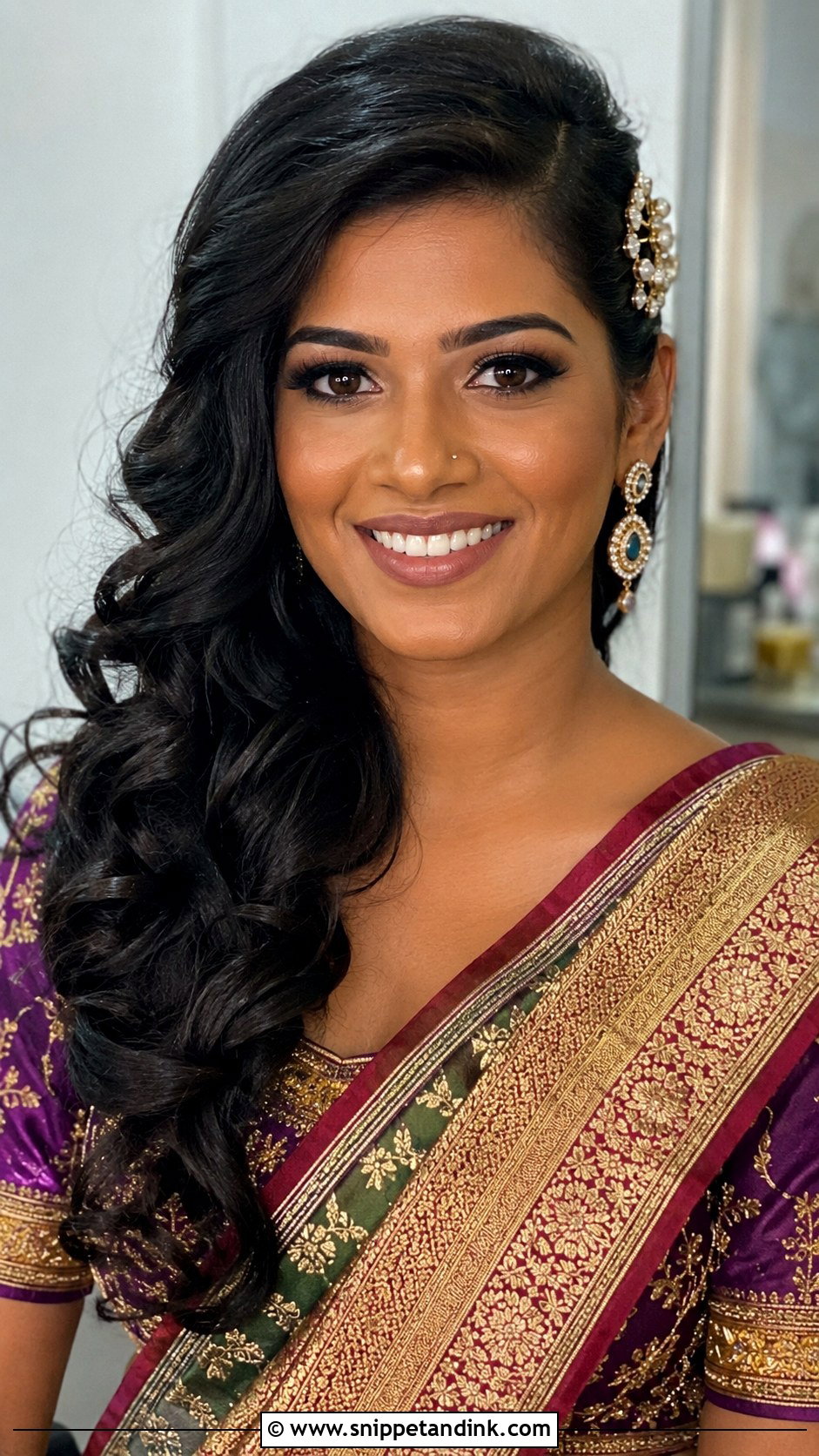
Curling, brushing and pinning everything to one side shows off a one-shoulder blouse, a deep neckline or a saree with a statement pallu. The face stays open and the length stays on show. A side clip, pearl barrette or small floral accent sits over the pins. Evening receptions and sangeet nights suit it. Lock the pinned side with crossed bobby pins under the clip, because the weight of all that hair on one side slowly pulls it loose, and wear the pallu on the opposite shoulder.
15. Indian Wedding Guest High Ponytail
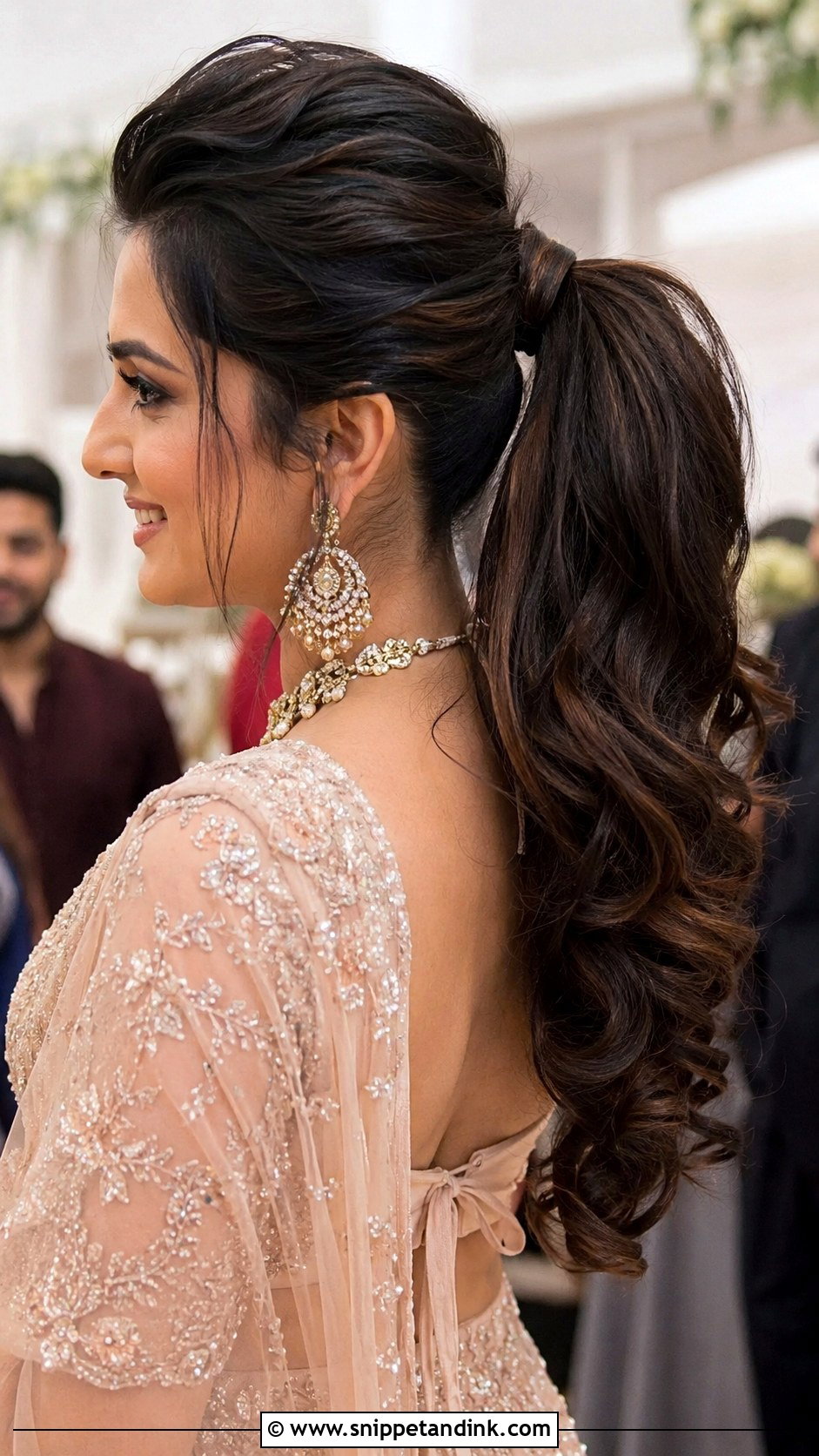
The high ponytail is the dancer’s choice. It goes with lehengas, shararas and fusion outfits, sleek at the crown with curled ends or softer and fuller. Wrap a strand around the base to hide the elastic. Guests who want hair off the face but don’t want a bun tend to love it, especially with bold eye makeup and statement earrings, and waves through the length keep it festive. Heavy hair can cause a headache after several hours, so I cross two pins under the base to share the weight. It doesn’t sit well under a dupatta draped over the head.
16. Indian Wedding Guest Low Ponytail
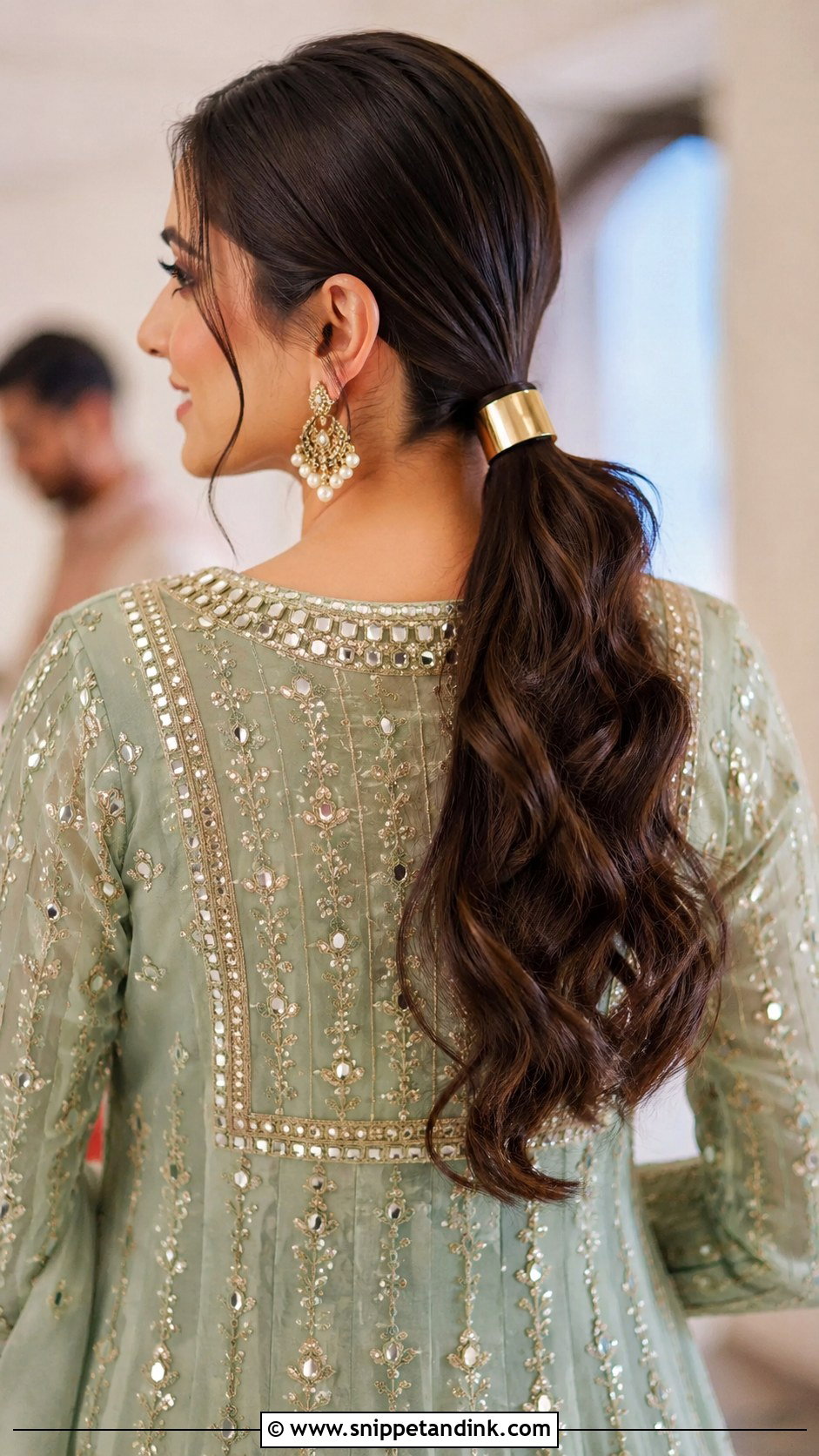
Done with care, a low ponytail looks deliberate rather than casual. Sarees, floor-length anarkalis and structured reception outfits suit it. Part in the middle or on the side, gather at the nape, then add curls for movement or keep it smooth. A pearl tie, gold cuff or embellished clip makes it wedding-ready. There’s no tension at the crown, so it stays comfortable for hours, and the neckline stays clear around heavy jewelry.
17. Indian Wedding Guest Front Twist Hair
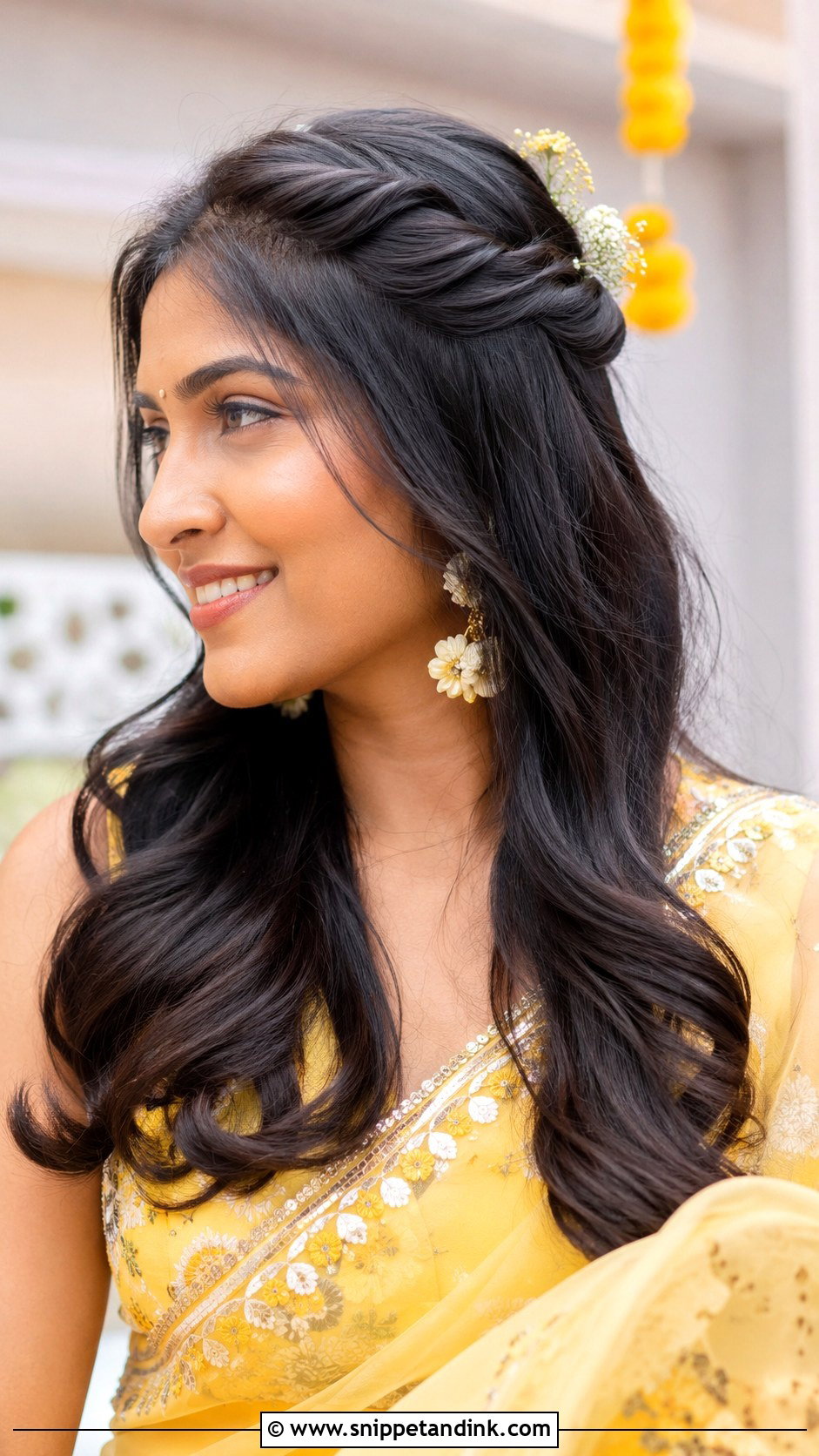
Twisting the front pieces back and pinning them behind is the smallest change that makes open hair look finished. The rest stays curled or waved. Mehendi, haldi and daytime ceremonies suit it, especially for a guest who doesn’t want an updo. Twists can be neat or pulled for volume, with tiny flowers, pearl pins or a clip covering the spot where they meet. On fine or slippery hair, I mist the twists before pinning so they don’t unwind by lunch.
18. Indian Wedding Guest Crown Braid
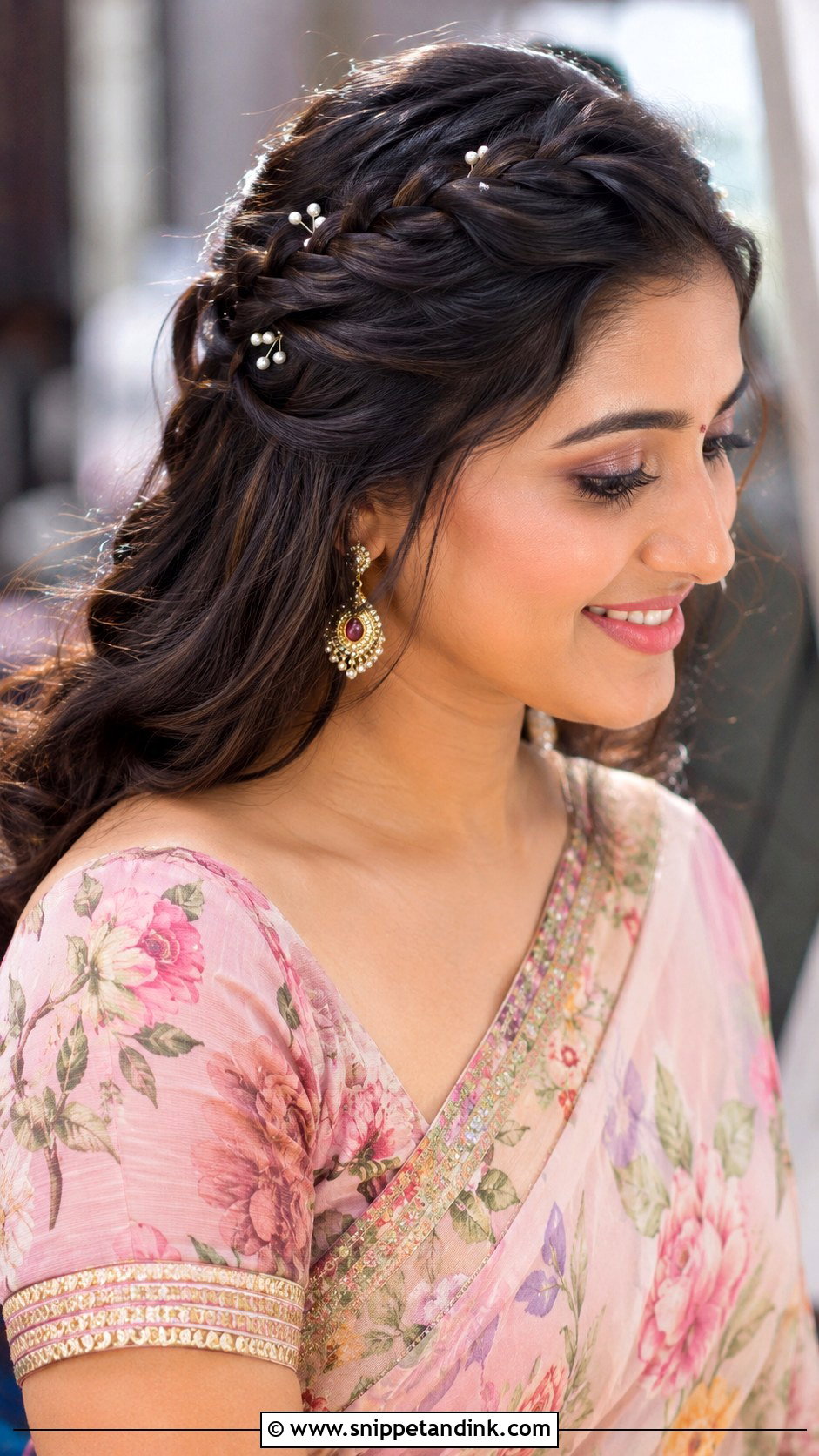
Braided right around the head, or built from two side braids pinned across, a crown braid keeps the front secure, so it holds up outdoors where wind catches everything else. The rest of the hair can go into a low bun or fall in soft waves. Floral lehengas, pastel sarees and lighter jewelry suit it. As a guest, keep the braid soft and lightly decorated; a few small flowers or pearl pins are enough. It also sits flat enough to wear under a dupatta over the head.
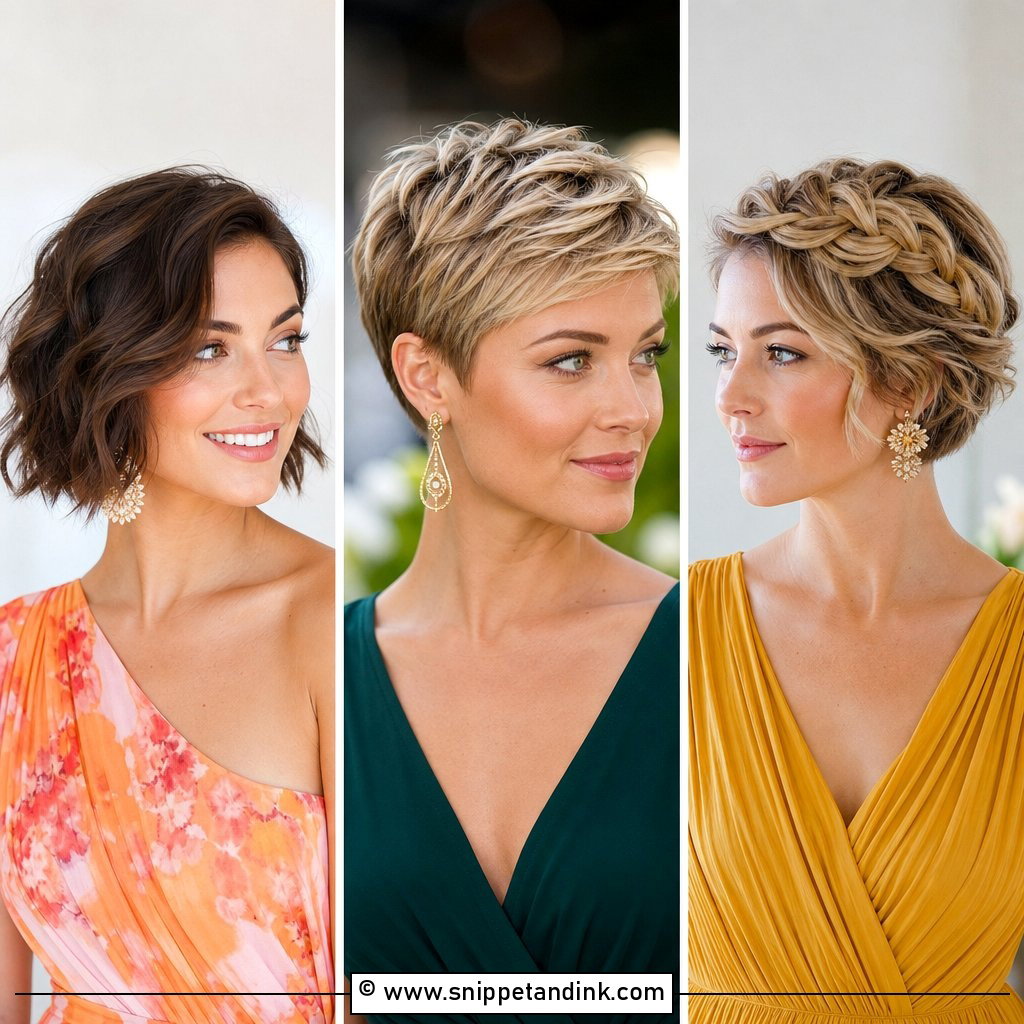
19. Indian Wedding Guest Short Hair Waves
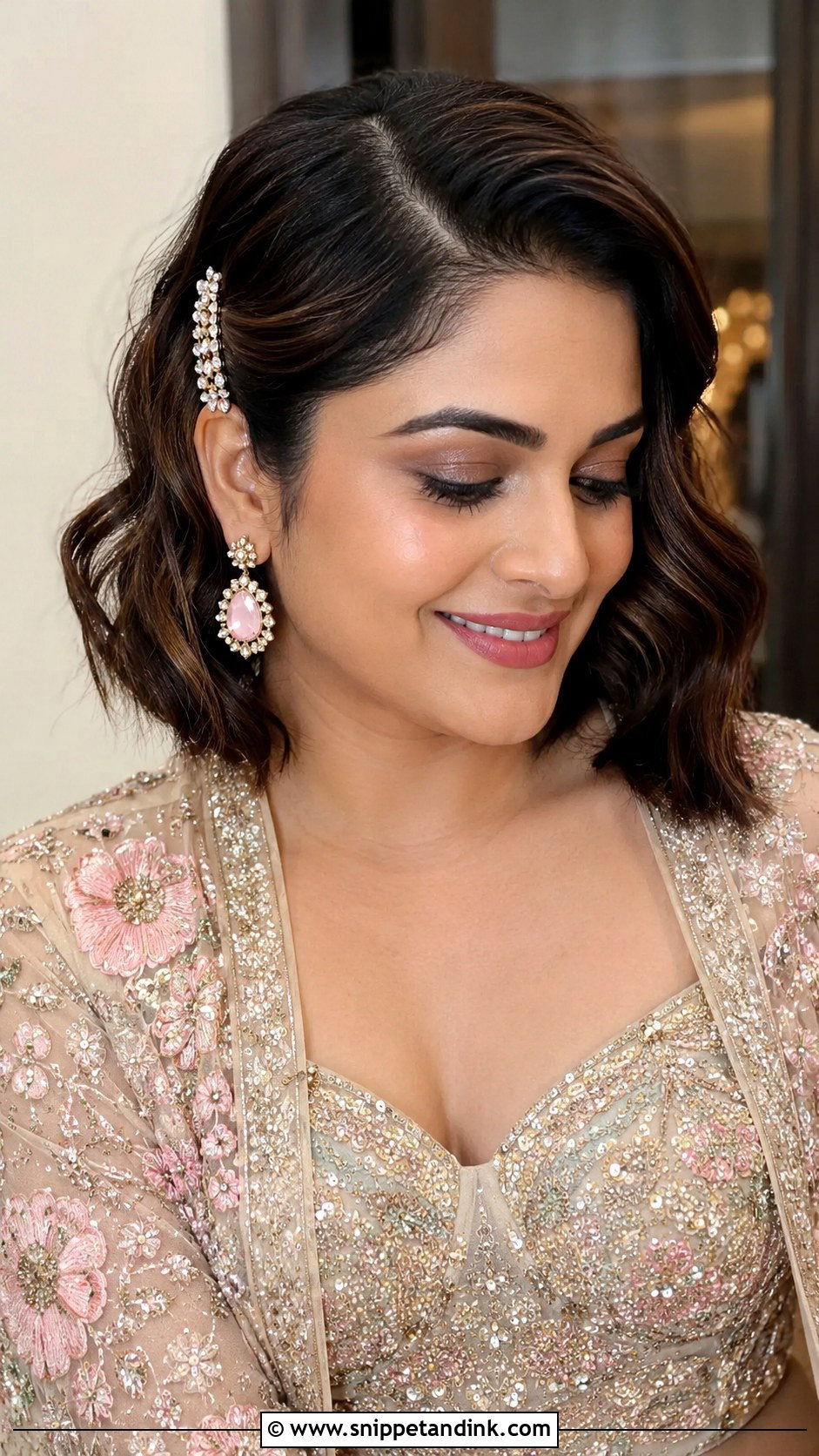
Short hair needs shape and shine more than length. Soft waves on a bob or lob give movement and make the cut feel festive, and a side part, smoothed ends and one side tucked behind the ear put the earrings on show. It pairs with sarees, lehengas and Indo-western outfits. Very short hair can carry a decorative clip, mini flowers or a slim headband for wedding detail. I’d book a trim about a week before so the ends are crisp but the cut has settled. It’s also the coolest option in a warm venue.
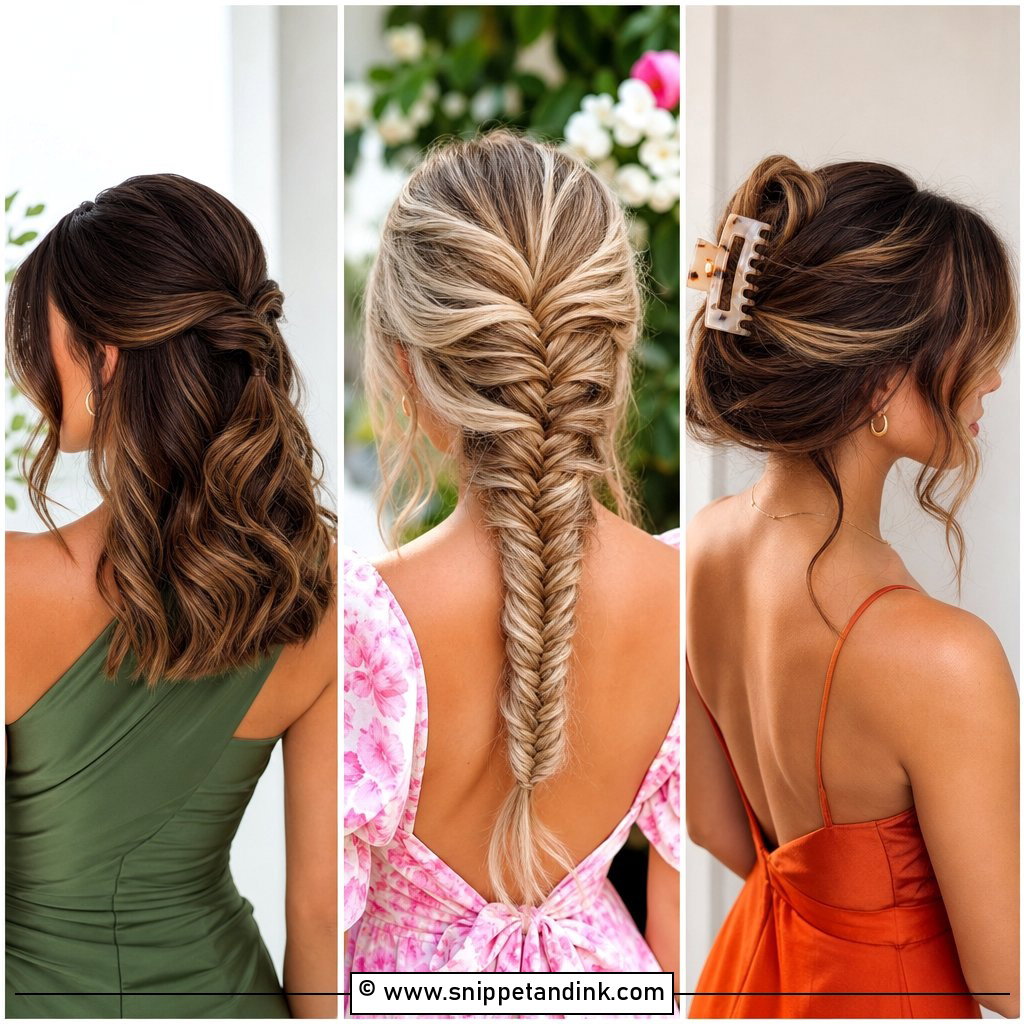
20. Indian Wedding Guest Maang Tikka Hair
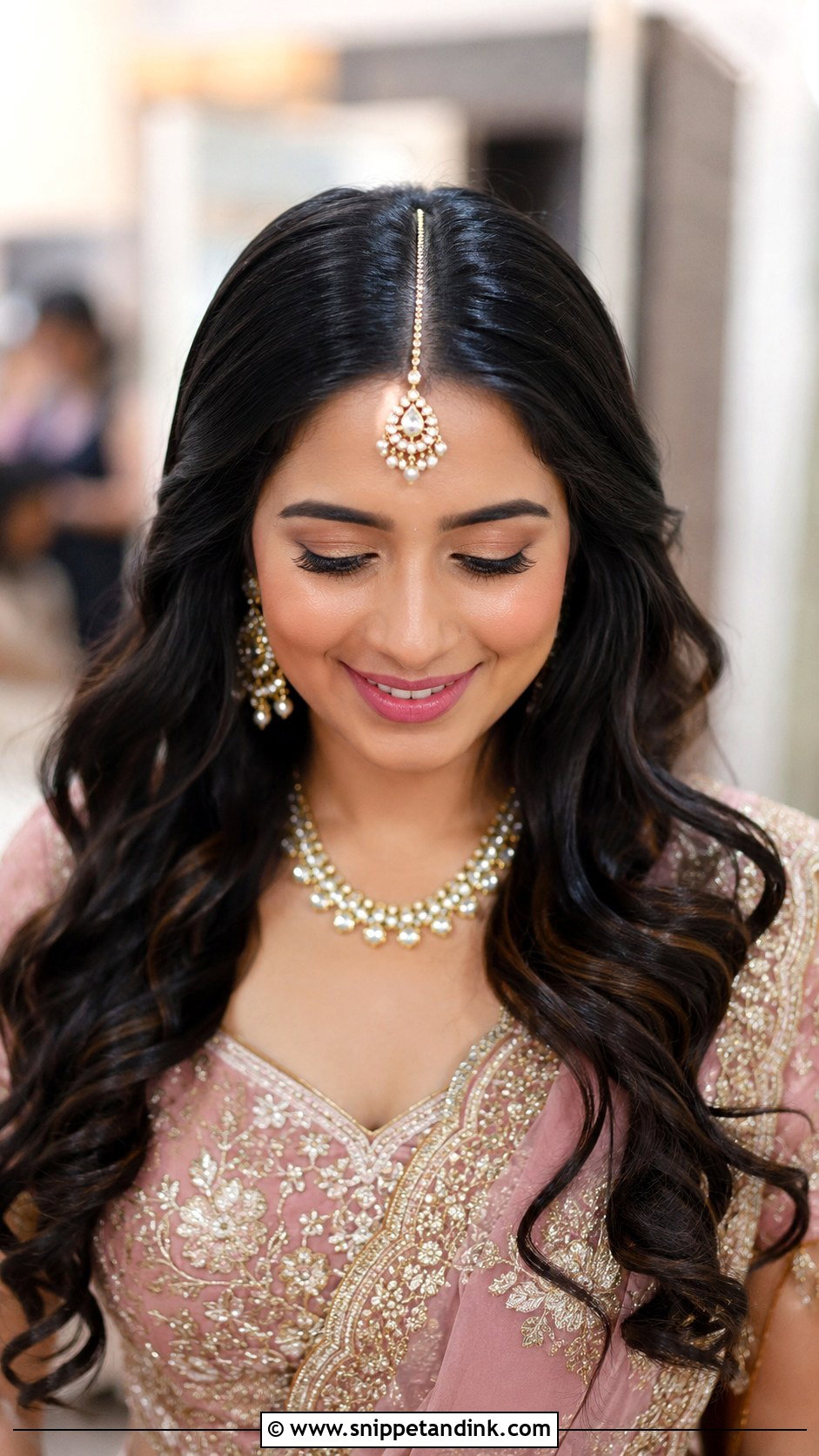
The hairstyle should support the tikka rather than hide it. A center part is the usual base because it keeps the tikka straight, and the rest can go into a bun, braid, half-up style or soft curls. As a guest, choose a lighter tikka so the look doesn’t read bridal. Lehengas, anarkalis and sarees all work for ceremonies or receptions. I hook the tikka to a small section of hair at the crown and mist a little setting spray along the part so it doesn’t slide. A smooth front lets the jewelry lie flat.
When the Ceremony Asks You to Cover Your Head
At a gurdwara, and at many temple ceremonies, guests keep their heads covered with a dupatta or scarf throughout. That changes which styles on this list make sense.
Low buns, low ponytails, long braids and crown braids sit flat under fabric. A high ponytail, a bubble braid started at the crown or a tall front puff lifts the dupatta into an odd peak and pushes it off every time you bow or sit down. Curls survive, but they get pressed flat at the roots, so I give them more shape through the ends than at the top.
Pin the dupatta to a pair of crossed bobby pins at the crown rather than straight into the style, so you can lift it off afterward without pulling the hair apart. Skip pronged clips and sequined accessories that snag chiffon or silk. And if you’re unsure whether you’ll need to cover, carry a dupatta anyway; it’s far easier than borrowing one at the door.
Let the Function Set the Hairstyle
Guest hair should follow your outfit, your comfort and the mood of the function. For something classic, a low bun, gajra bun or long braid. For something modern, a high ponytail, bubble braid or sleek middle part bun. For softer looks, loose waves, side swept curls or half up half down. Then weigh the weather, your jewelry, where the dupatta goes and how long you’ll be on your feet. The right style is the one you stop thinking about once you arrive.
You'll Like These Ideas:




Leave a Reply