
Indian curly hair bridal hairstyles used to mean blow-drying everything straight and then curling it back with a tong. I much prefer starting from the curl the bride already has. Natural curls grip pins better than heat-set ones, they hold volume without padding, and they don’t fall flat by the third ritual. The catch is that an Indian bridal look has to carry real weight: a gajra, a maang tikka, sometimes a matha patti, and a dupatta that gets pinned, adjusted and tugged for hours. Every style below is one I’d judge on that first, then on how it looks.
Anchoring Gajra, Tikka and Dupatta Weight on Curly Hair
Curly hair is easier to pin than straight hair, but only if the pins go into the right places. Curls have natural grip, so a bobby pin pushed against the direction of the curl holds far better than it would on silky hair. The problem is weight. A gajra, a tikka chain and a dupatta pull in three directions, and curls stretch under constant tension. I plan the anchor points before I style anything else.
- Tikka: a small hidden braid or twist just behind the parting, with the hook pinned into it, so the chain sits on a base instead of on loose curls.
- Gajra: secured with U-pins every few centimetres around the bun base, never threaded through the curls on its own.
- Dupatta: pinned into the bun or a firm twist, with the pins crossed in an X so they don’t slide out when someone adjusts the fabric.
- Matha patti chains: pinned behind each ear, not just looped over.
Prep matters as much as pins. I ask brides to wash the day before, not the morning of, so the curls have settled and the scalp has some natural oil. Freshly washed curly hair is slippery and tends to puff as it dries under heavy jewellery. Bring your own curl cream or gel to the appointment if you already know what your hair likes. A trial is the time to find out, not the wedding morning.
Defining Without Crunch
I set the curls with a cream and a light gel, let them dry fully, then scrunch out the cast. Hold spray goes on last and lightly. Too much product makes curls stiff in photos and harder to refresh between events.
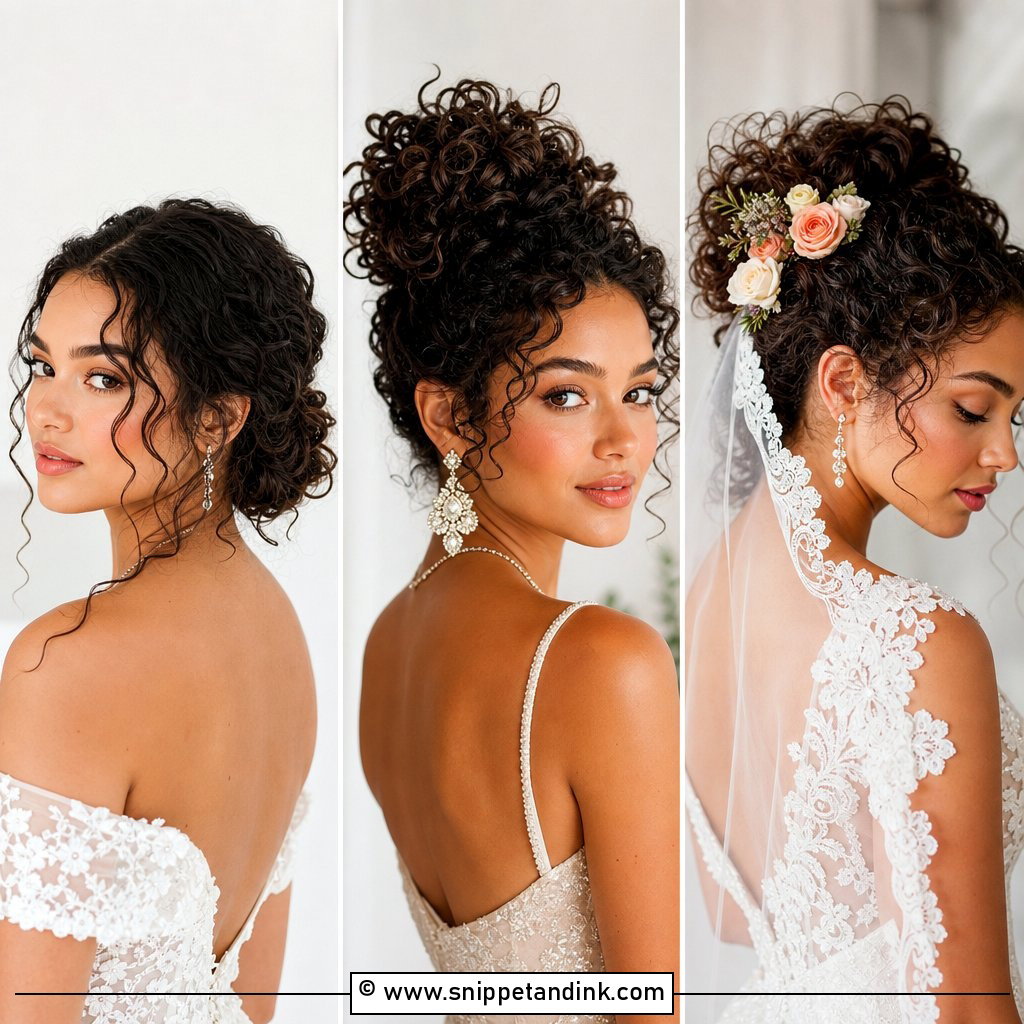
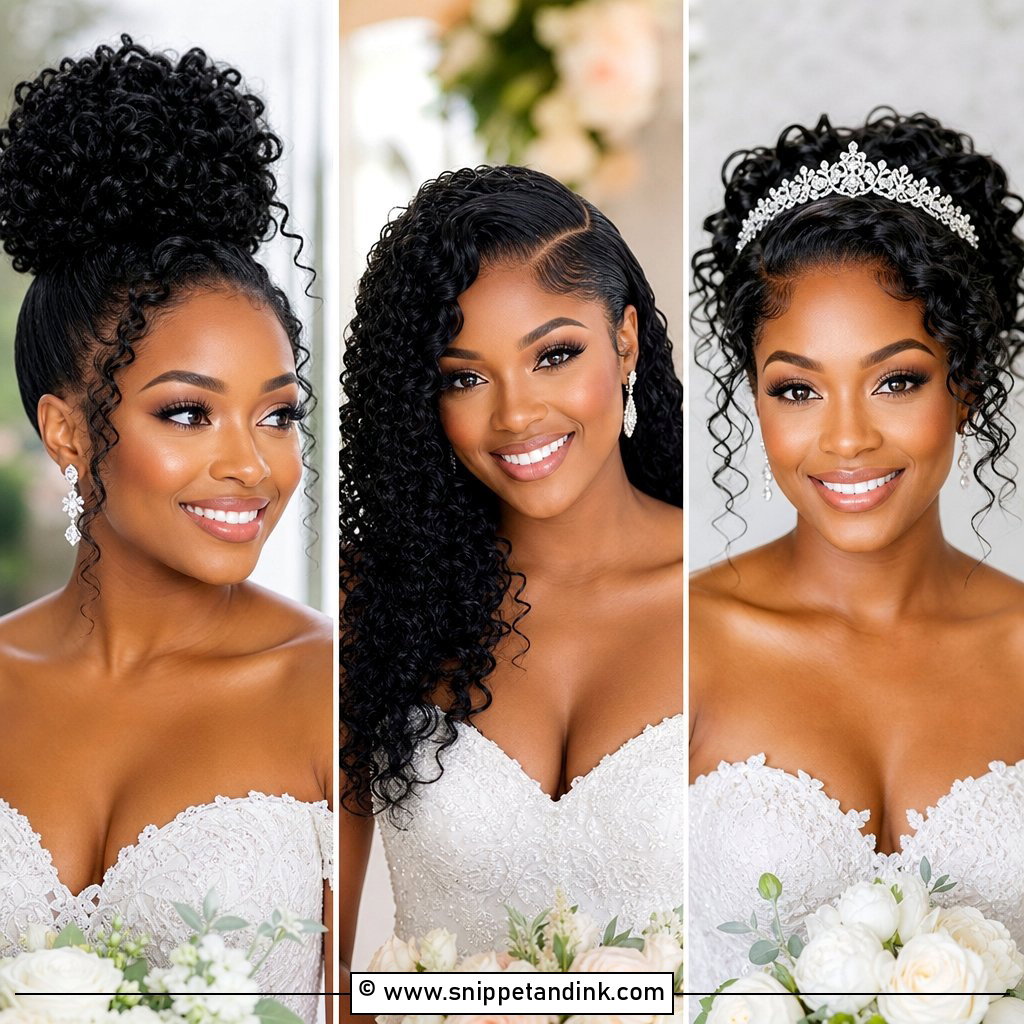
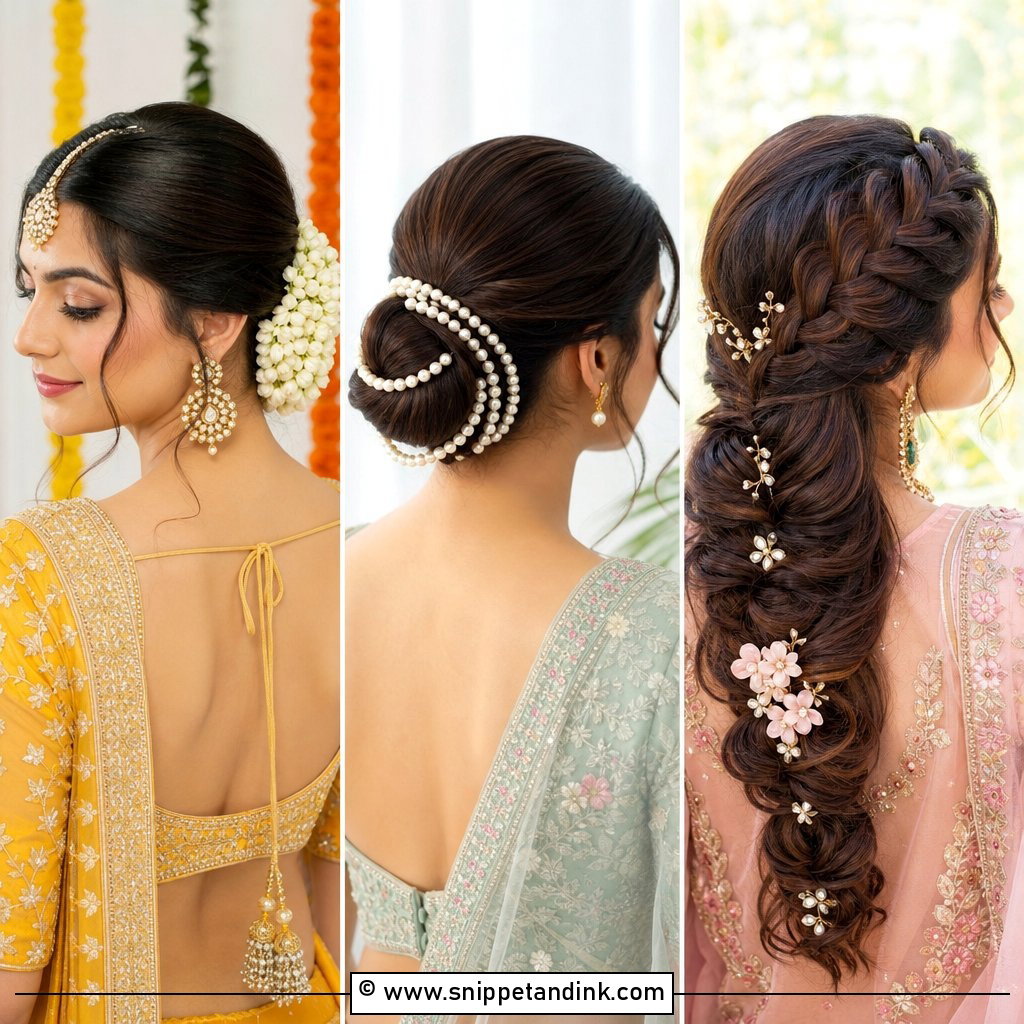
1. Curly Bridal Bun With Gajra
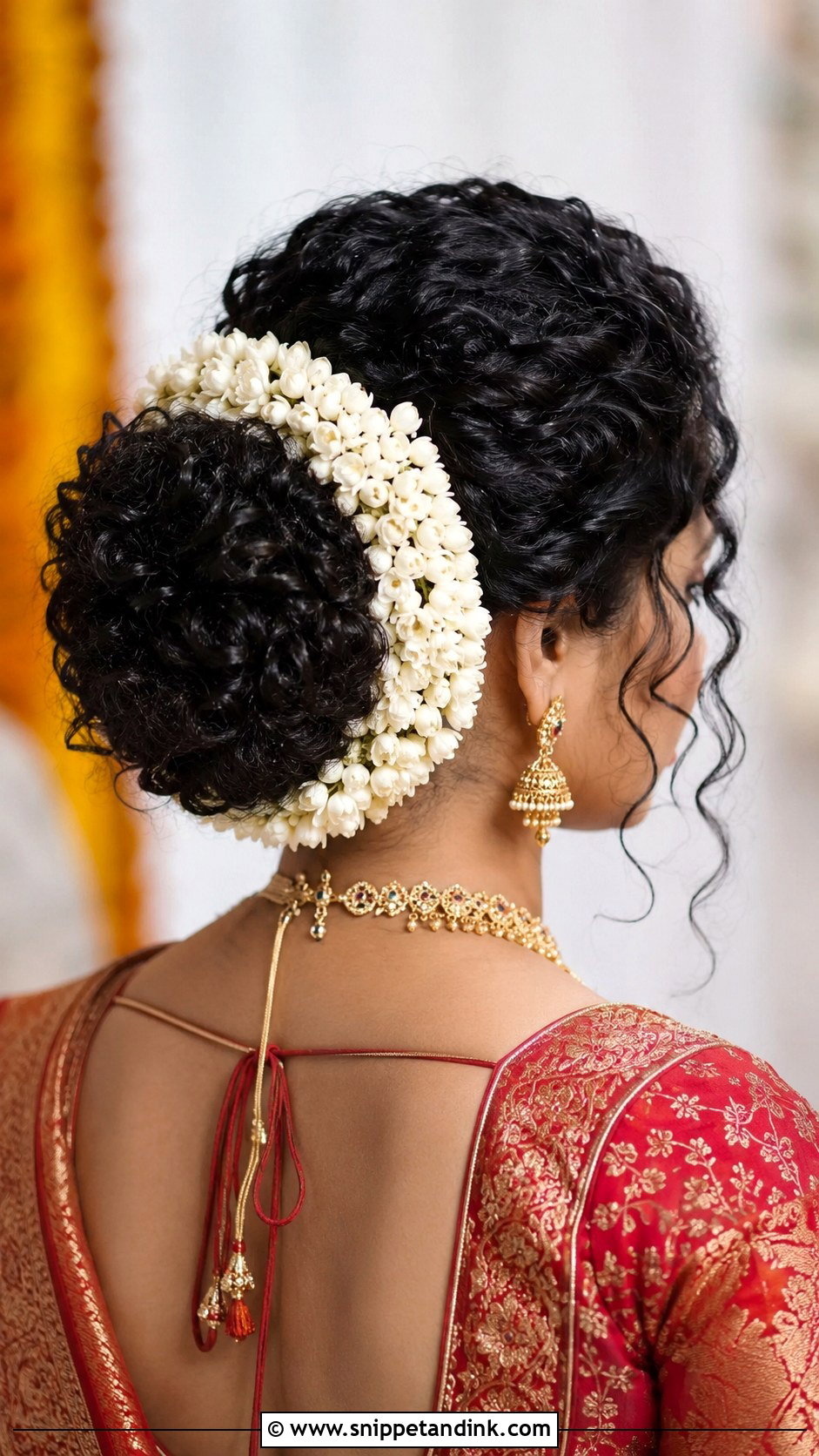
A curly bridal bun with gajra needs far less padding than the same bun on straight hair, because the curl itself builds the bulk. I set the bun base with crossed bobby pins before the gajra goes anywhere near it, since fresh jasmine strings are heavier than they look and will drag a loosely pinned bun sideways within an hour. Wrap the gajra and secure it with U-pins every few centimetres. Leave two small curls by the ears only if they are already well defined; frizzy face pieces look tired by the evening photos.
2. Low Curly Bridal Bun
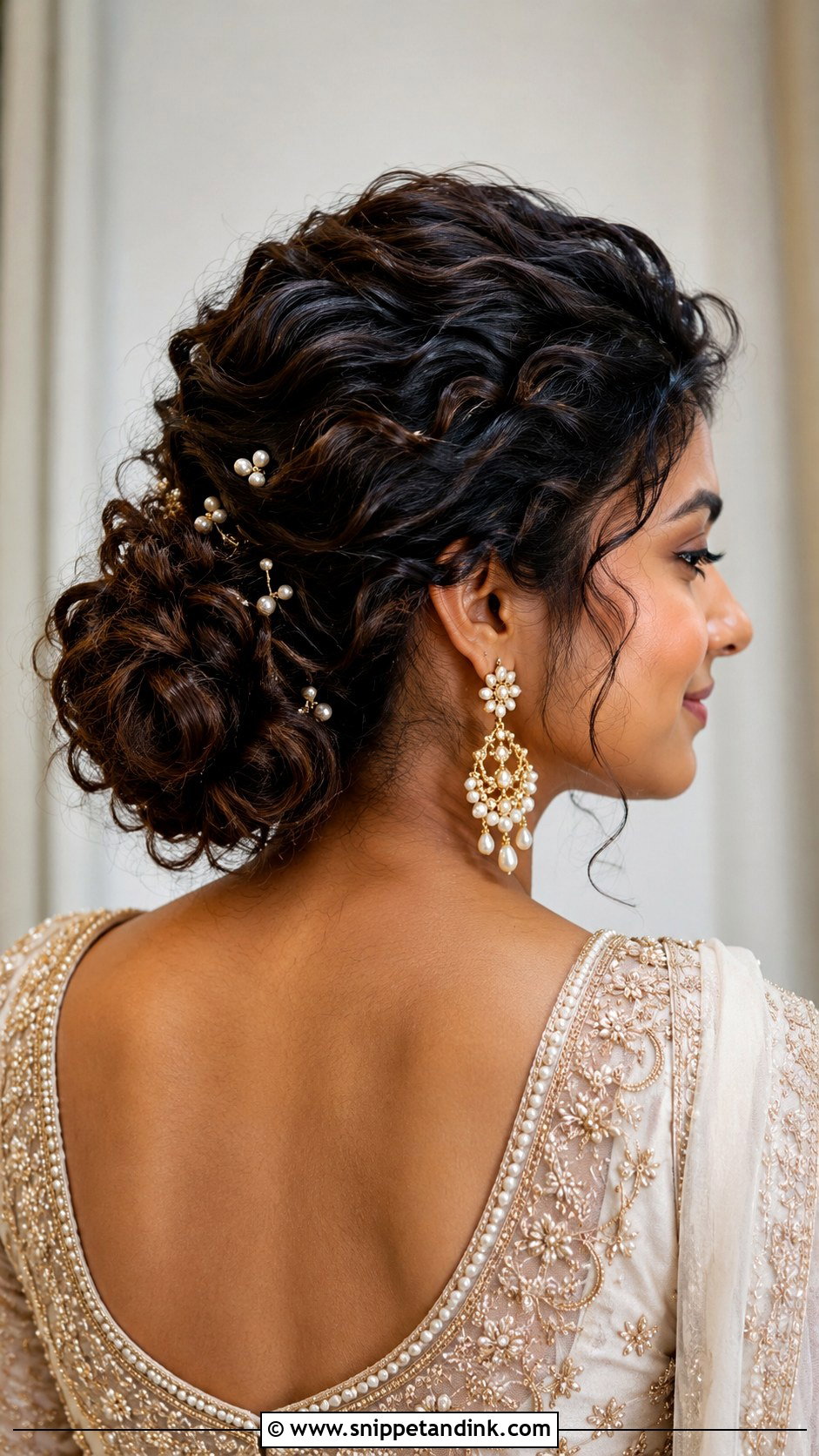
The low bun sits right at the nape, so nothing interferes with a dupatta draped over the crown or a matha patti chain running back across the head. That placement is why I reach for it so often on brides with heavy jewellery. On curly hair I keep the crown softly defined rather than slicked, because brushing curls flat at the top creates a frizzy halo the moment the room warms up. It holds best on medium to long curls; shoulder-length hair usually needs a small filler to make the shape read from the back.
3. Side Part Curly Bridal Bun
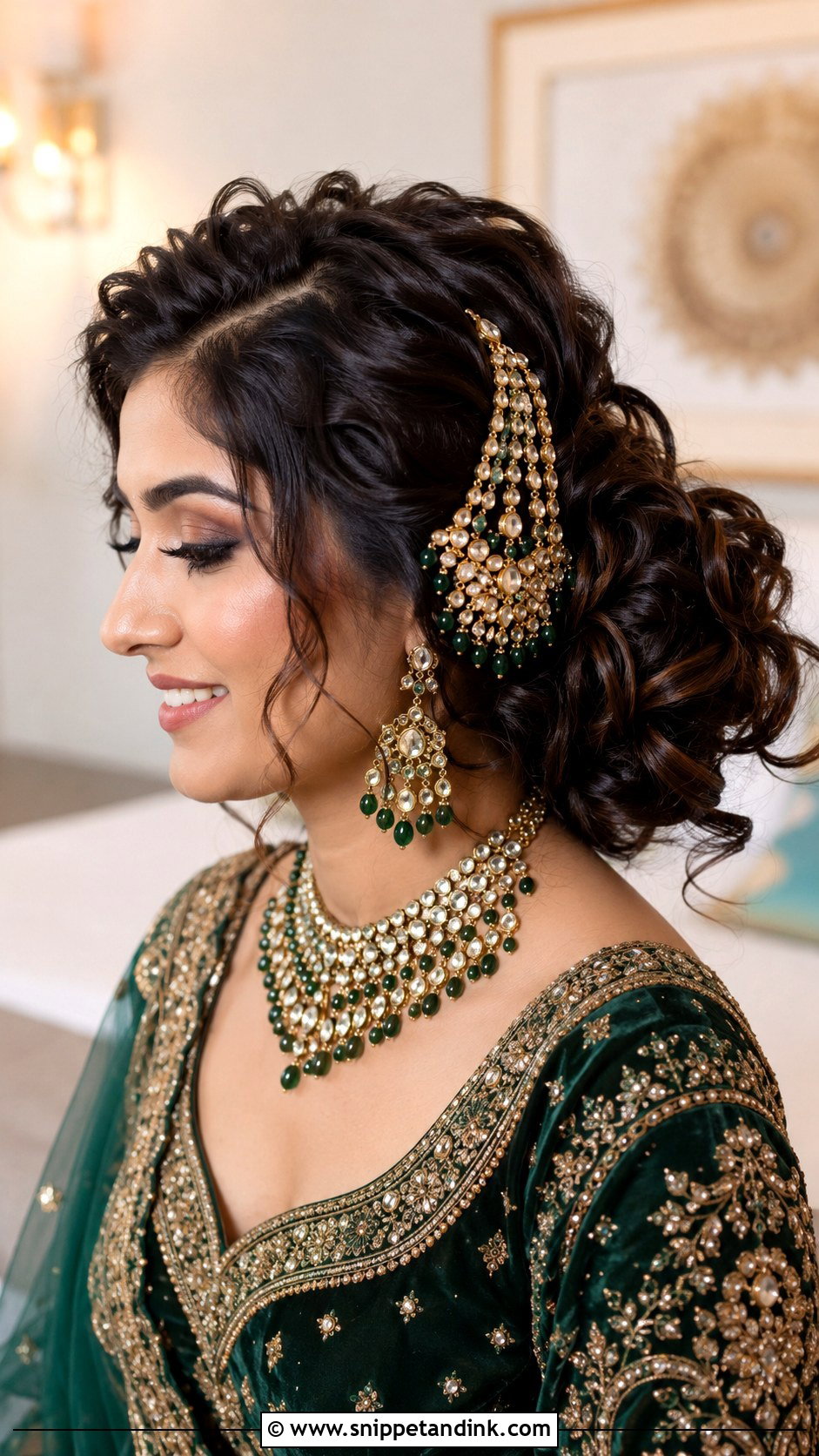
A deep side part gives the maang tikka a clear lane and lets a jhoomar sit on the heavier side without competing with the hair. I’d pick it for round and heart-shaped faces, since the diagonal line breaks up the width at the forehead. The bun can sit low or drift slightly off-centre toward the jhoomar side to balance it. What goes wrong is the front section frizzing over the part. I smooth it with a curl cream, set it with a clip while I work on the back, then mist a light hold spray only when it is completely dry.
4. Messy Curly Bridal Bun
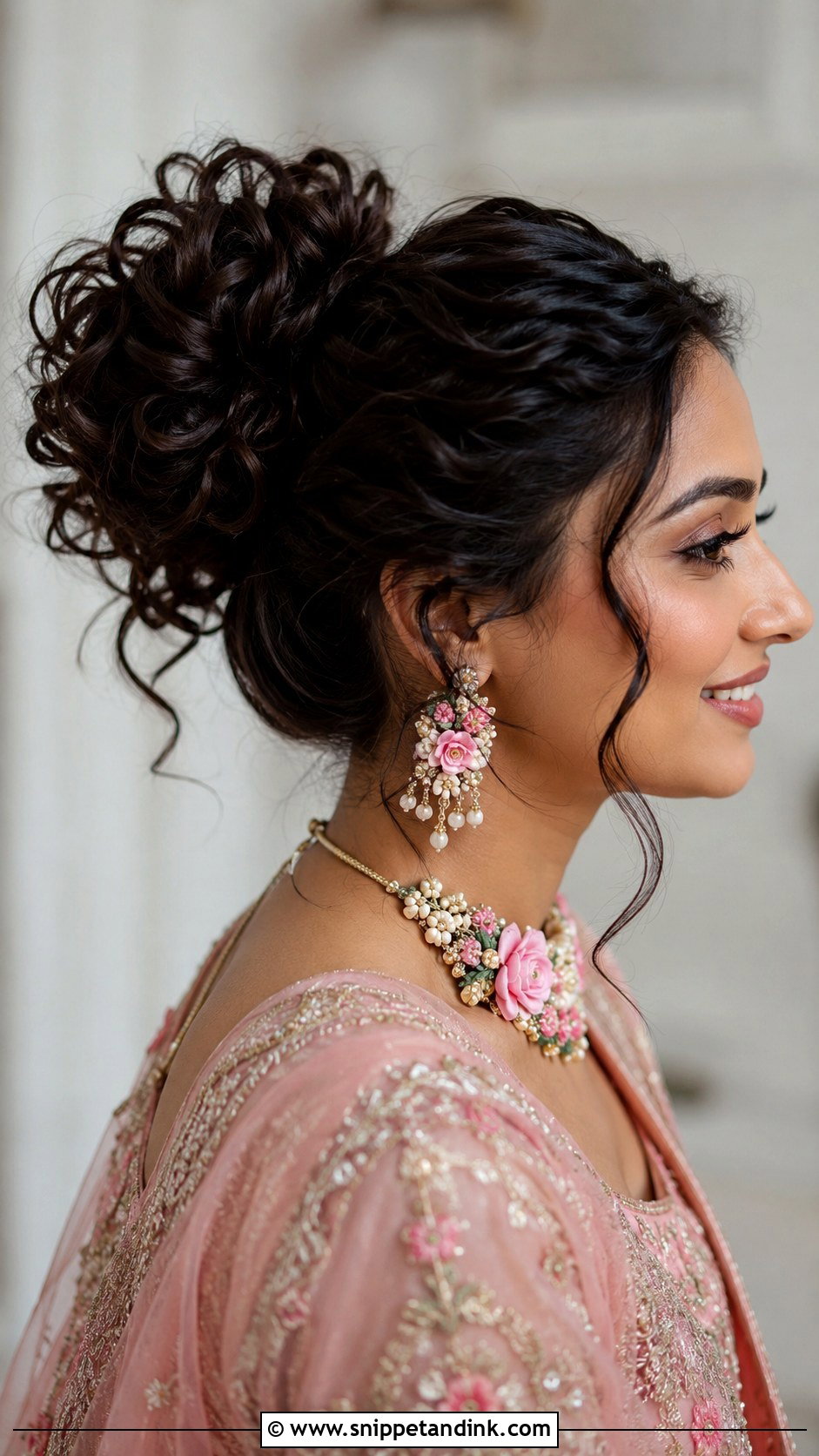
This is the bun I suggest for humid outdoor weddings, because a bit of frizz becomes part of the design instead of ruining it. Messy here still means controlled: I pin each curl into place by hand rather than brushing the hair out, which keeps the clumps intact and stops the bun turning into a cloud. Pastel lehengas and lighter, modern jewellery suit its relaxed shape. A few tendrils at the temples soften it, but I keep them short enough that they don’t stick to foundation.
5. Curly Bridal Bun With Maang Tikka
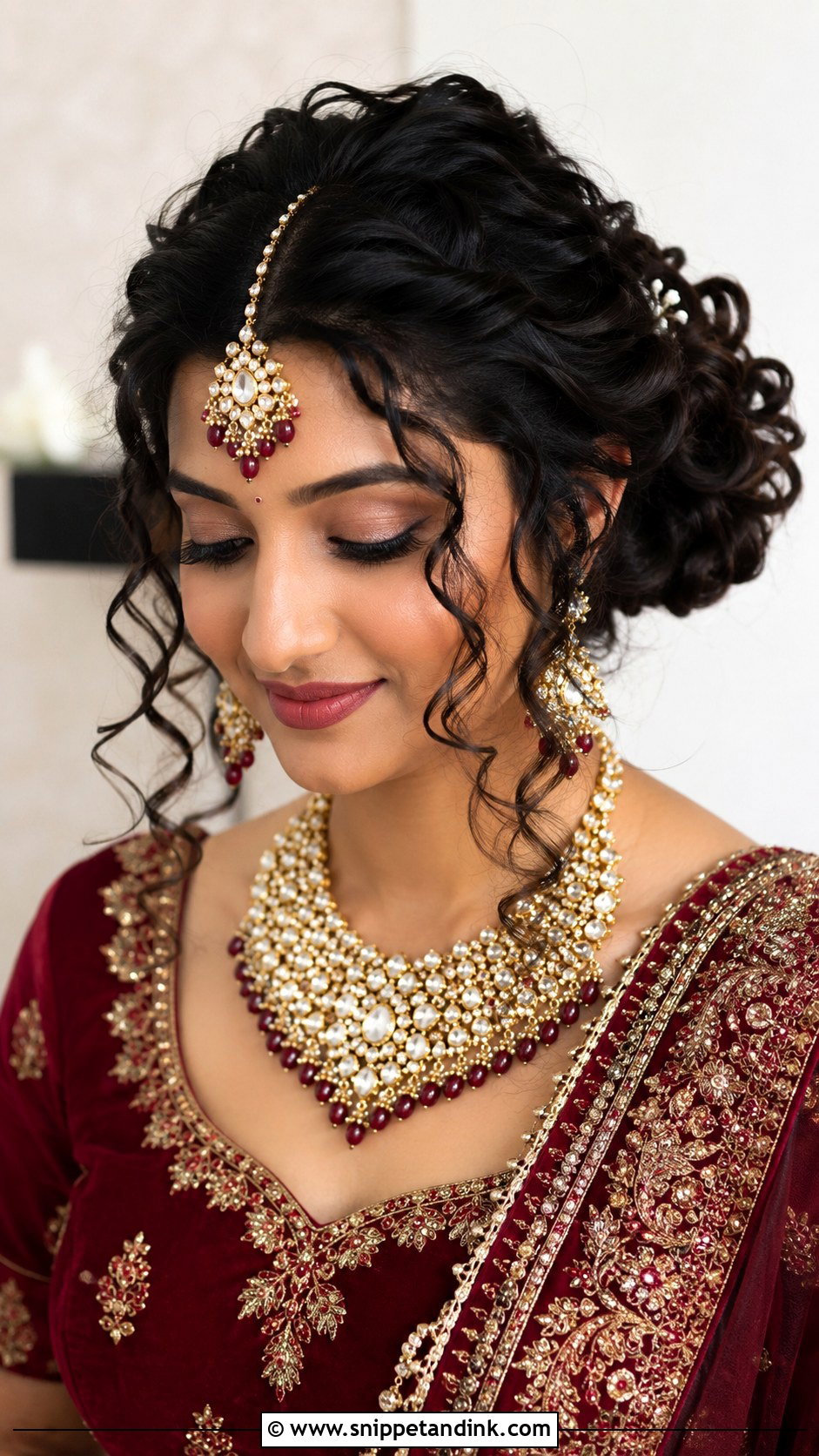
With a bridal bun with maang tikka, the jewellery leads and the hair supports it. The chain of the tikka needs a pinned anchor behind the parting, not just a hook dropped into loose curls, or it slides sideways as soon as she bows during a ritual. I keep controlled volume at the crown so the tikka lies on a gentle slope rather than a flat, pulled surface, which also stops it pressing on the hairline. The bun itself can be rounded, twisted or low; the curls stay visible at the back.
6. Curly Bridal Bun With Dupatta
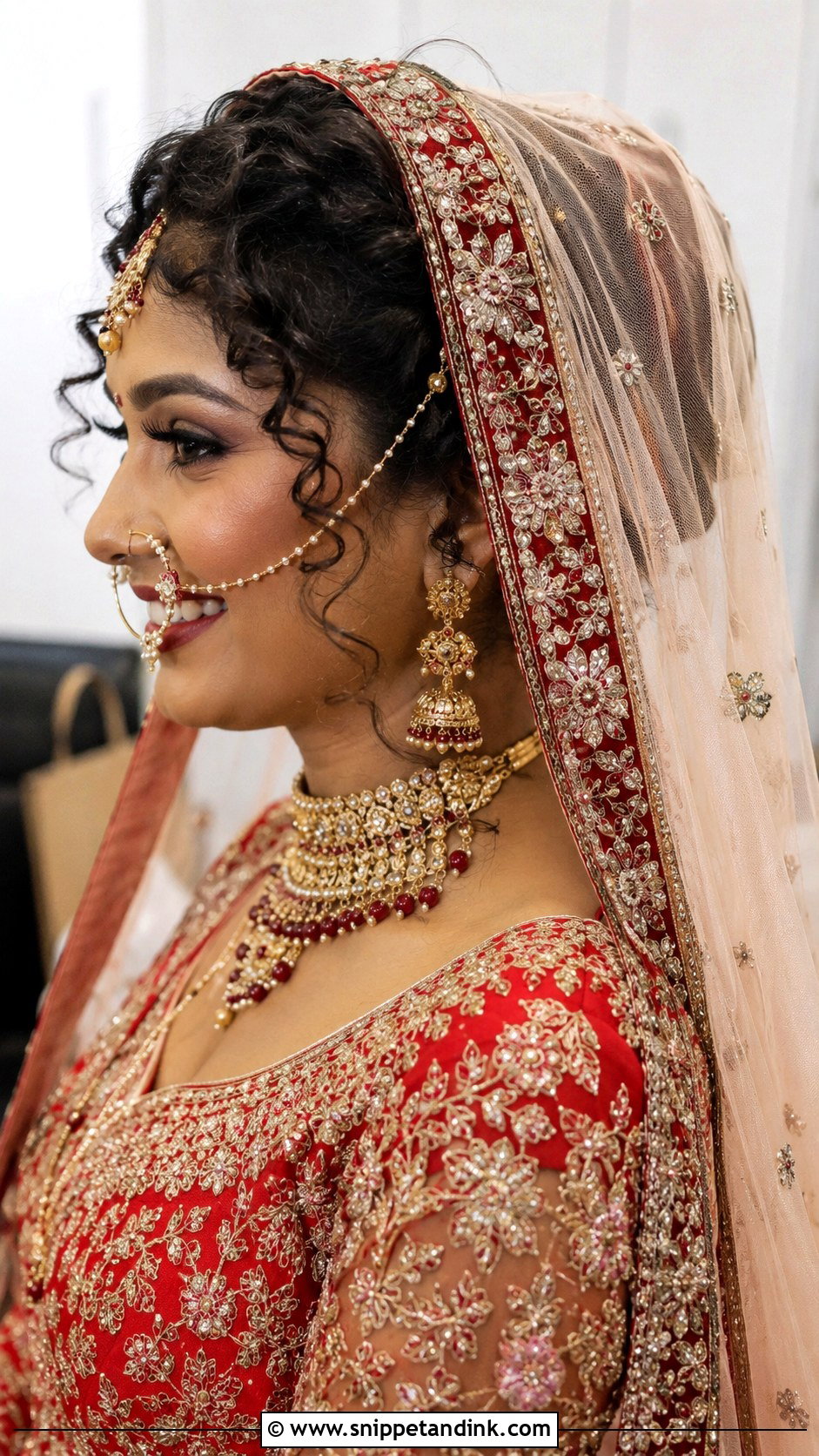
For the main ceremony, a firm bun is the best dupatta anchor you can give yourself. I pin the dupatta into the bun itself, not into loose hair, so it survives rounds of the fire and family adjusting it for photos. If the dupatta sits over the crown, lower the bun slightly so the fabric falls in a clean line instead of tenting. Heavy embroidered dupattas need two or three extra pins; lighter net ones need fewer but grip less. Curls at the edges stop the whole thing looking tight under the fabric.
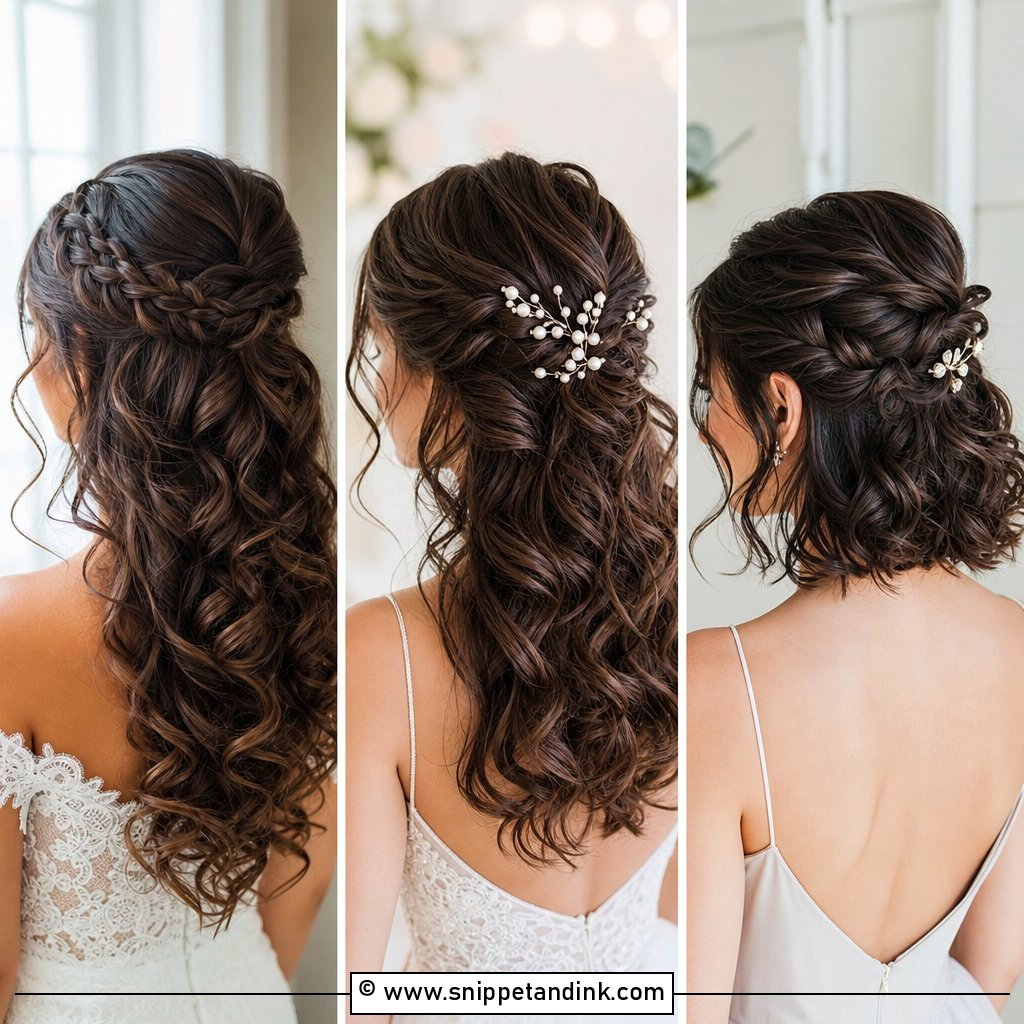
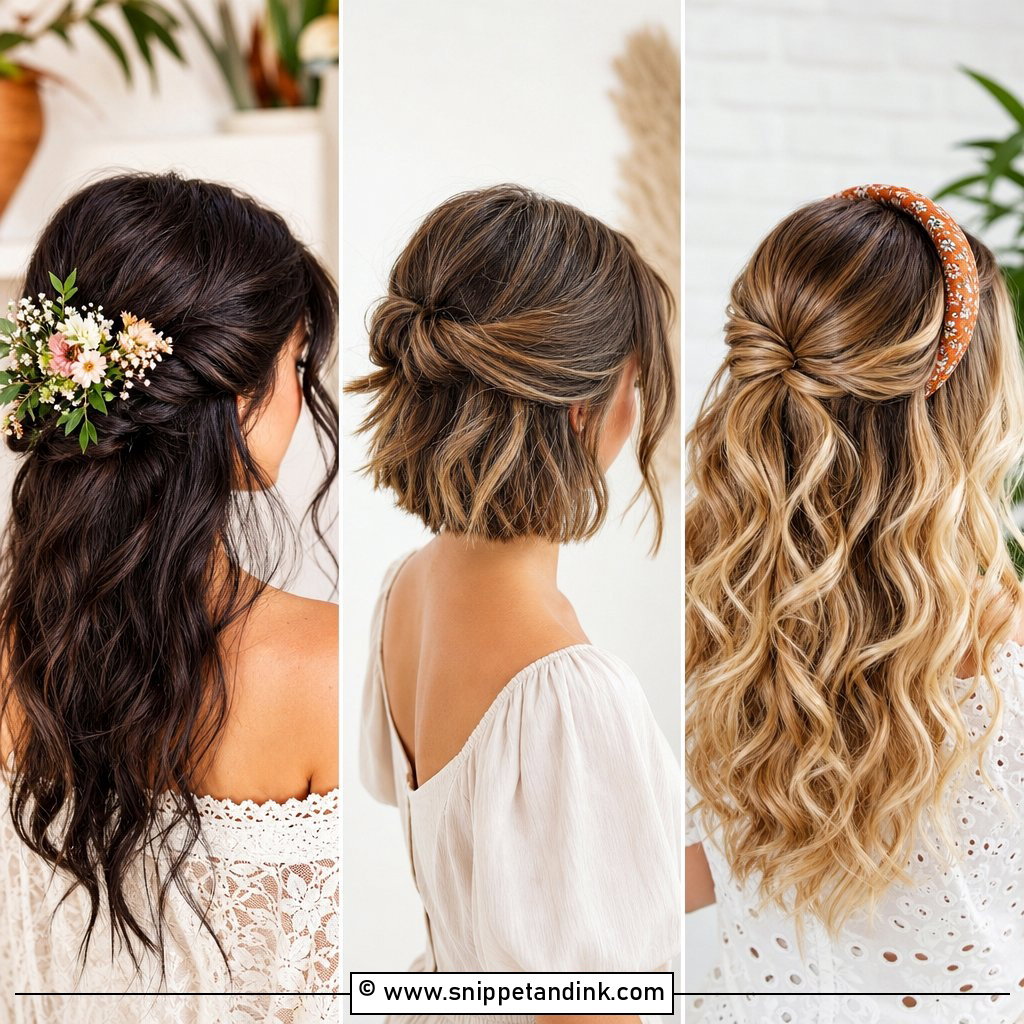
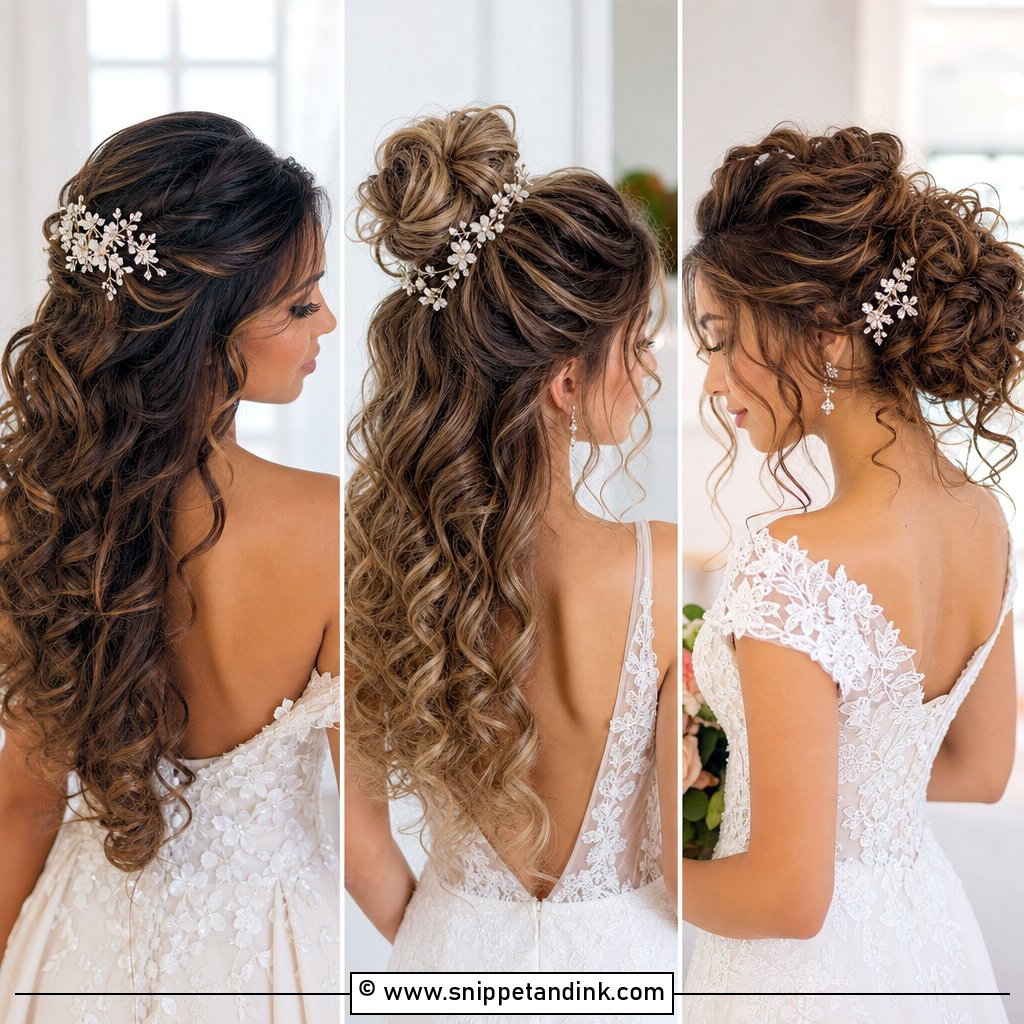
7. Half Up Curly Bridal Hairstyle
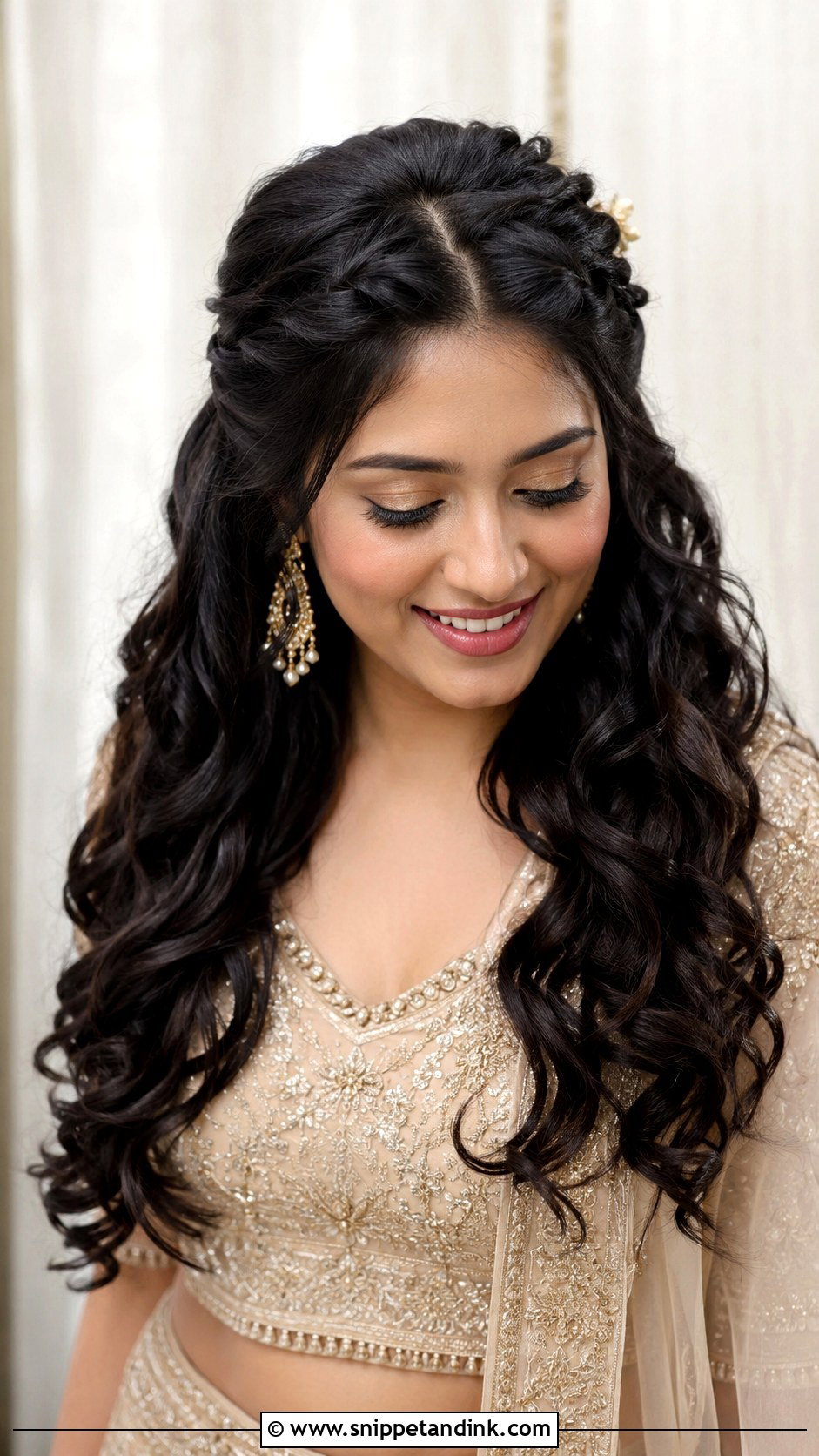
A half up curly bridal hairstyle shows off length while the top section carries the tikka and keeps hair off the face. I twist or braid that top section rather than just clipping it, since a twist holds pins better and won’t loosen as curls lengthen during the day. Off-shoulder blouses and open dupatta drapes suit it. It is less secure under a heavy dupatta than any bun, so I usually recommend it for engagement, sangeet or reception rather than a long ceremony.
8. Curly Bridal Hairstyle With Braided Crown
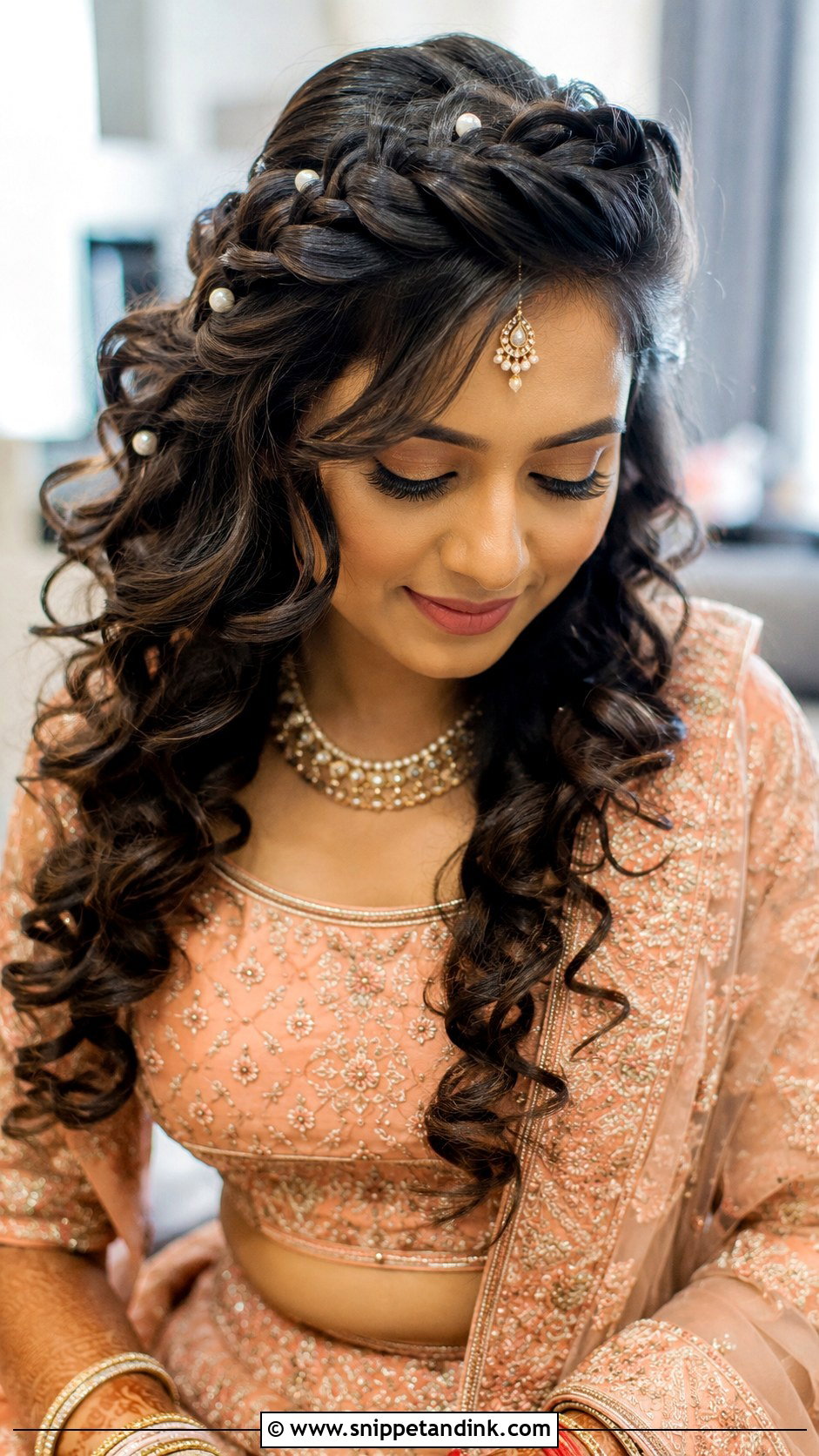
A braided crown is my answer when a bride wants her hair mostly down but has front frizz that won’t behave. The braid locks the hairline in place and then blends into curls at the back. I braid it while the hair is still slightly damp with a styler in it, which keeps the braid neat and stops the curls under it from drying puffy. Floral pins or a small tikka sit naturally along the braid line. Under heavy jewellery, though, I’d move to a full bun.
9. Open Curly Bridal Hairstyle
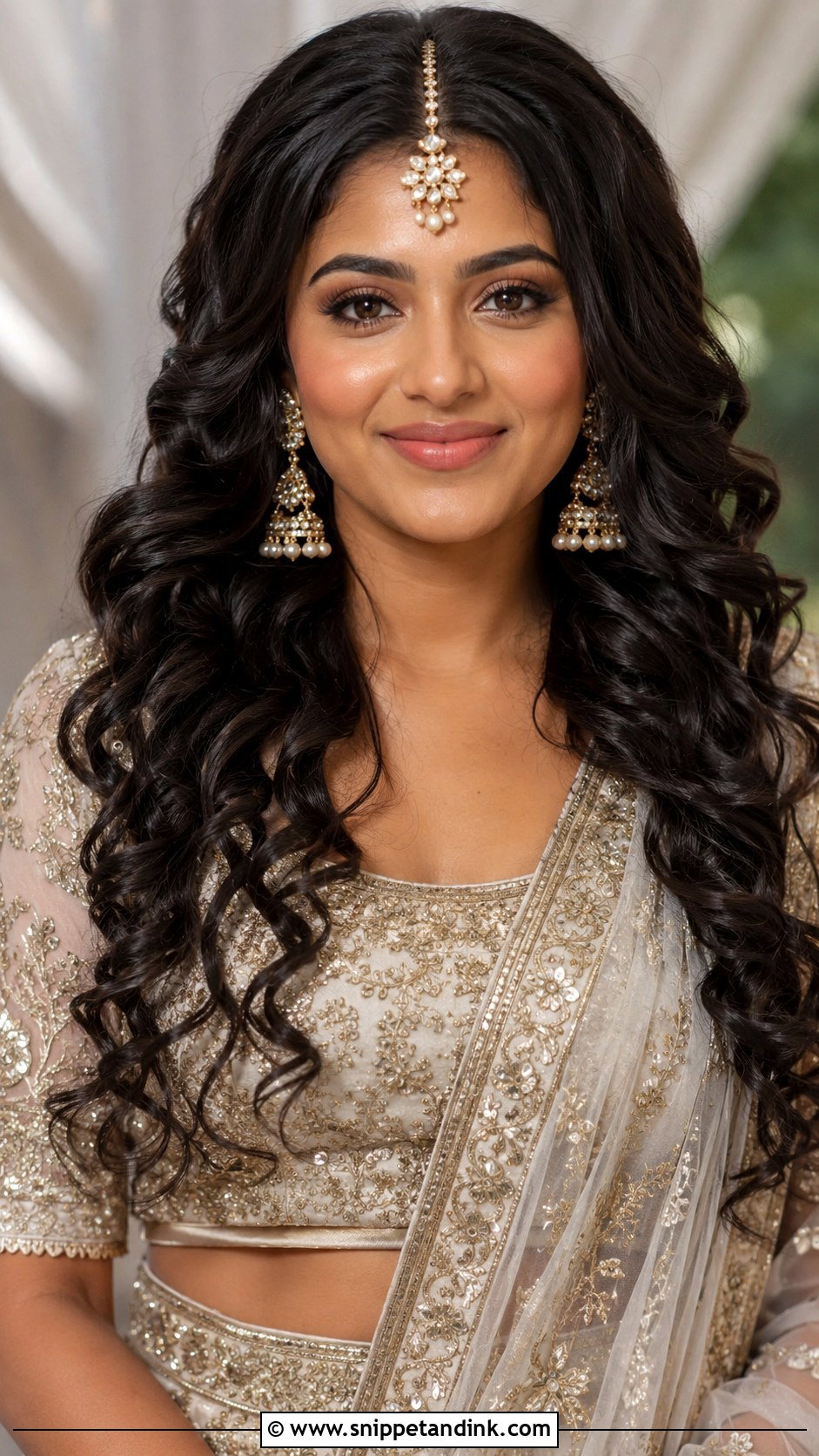
Open curly bridal hair works when it has a shape, not just when it’s left down. I check the parting first, because a centre part takes a tikka evenly and a side part needs the jewellery adjusted to match. The curls around the face get layered and defined so they frame the makeup rather than sticking to it. It suits lighter dupattas, reception gowns and sangeet outfits, not a heavy ceremony dupatta, which crushes open curls flat by mid-afternoon.
10. Side Swept Curly Bridal Hairstyle
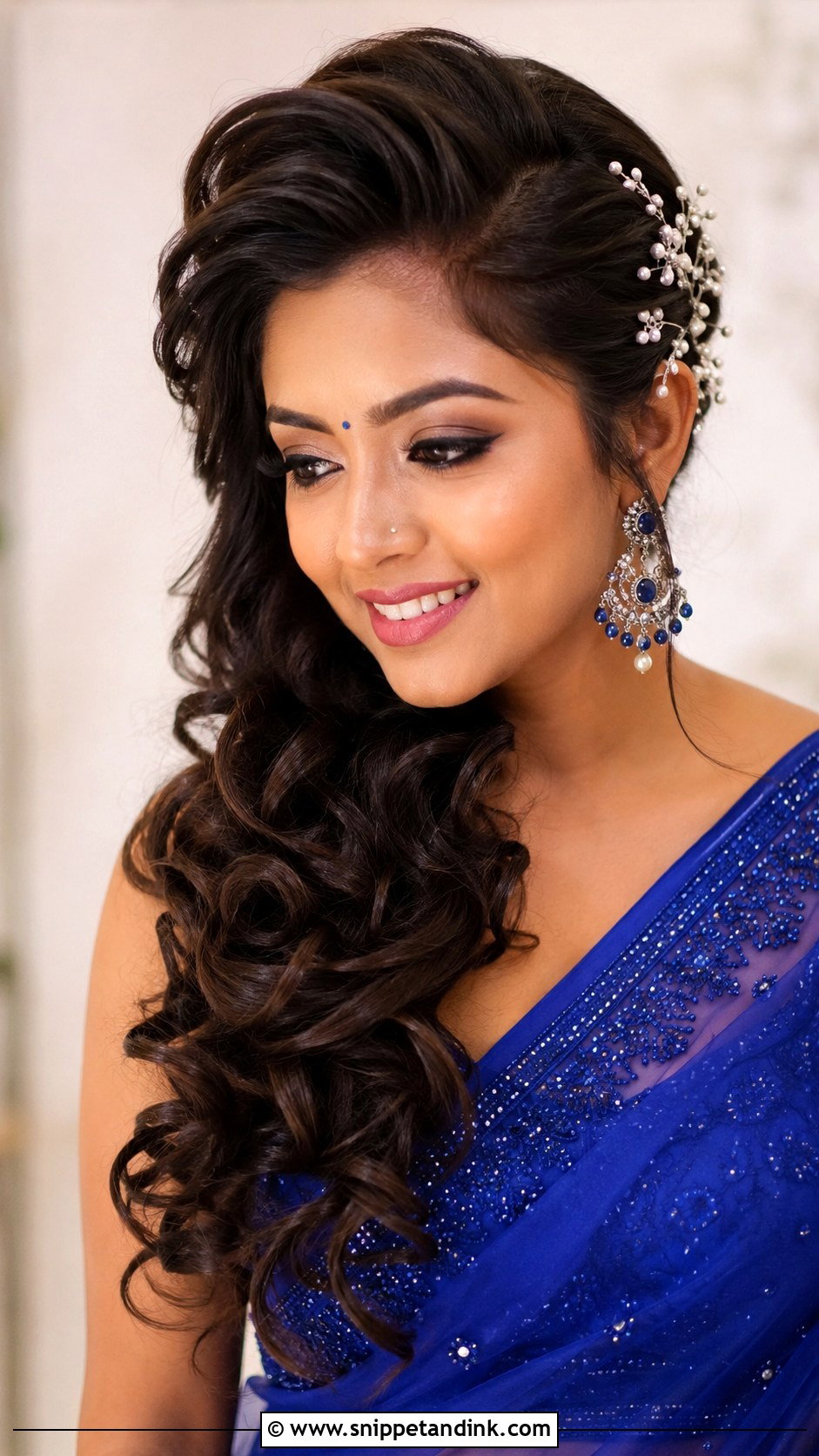
Sweeping everything over one shoulder shows the back of the blouse and the earrings on the bare side, which is why I like it for reception portraits. The weight of the curls wants to drift back to centre, so the clean side needs real anchoring: a row of crossed pins behind the ear, hidden under a decorative clip or a few flowers. I finish with a flexible hold spray. Crunchy spray on curls shows in close-ups. This needs medium to long length to create the flowing line.
11. Curly Bridal Ponytail
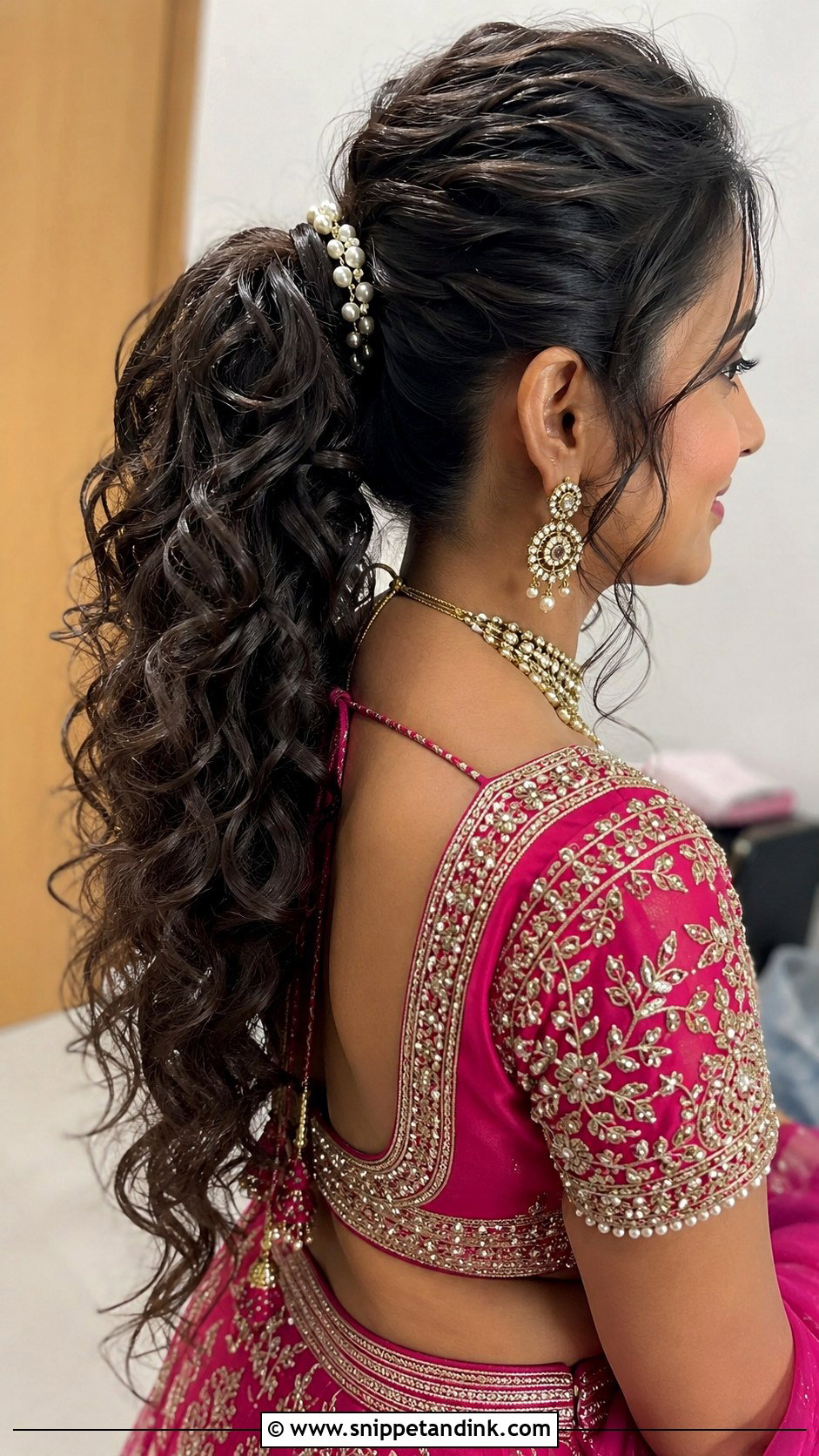
A curly ponytail is the most practical choice I know for a sangeet with a lot of dancing. It can sit high and playful or low and formal, and the curls make the tail look full without extensions. I wrap the band with a strand of the bride’s own hair or a pearl cuff so no elastic shows. The crown needs to be smooth for it to read as bridal, so most of my time goes into that first section. Leave soft curls at the temples if your face shape suits them.
12. Low Curly Bridal Ponytail
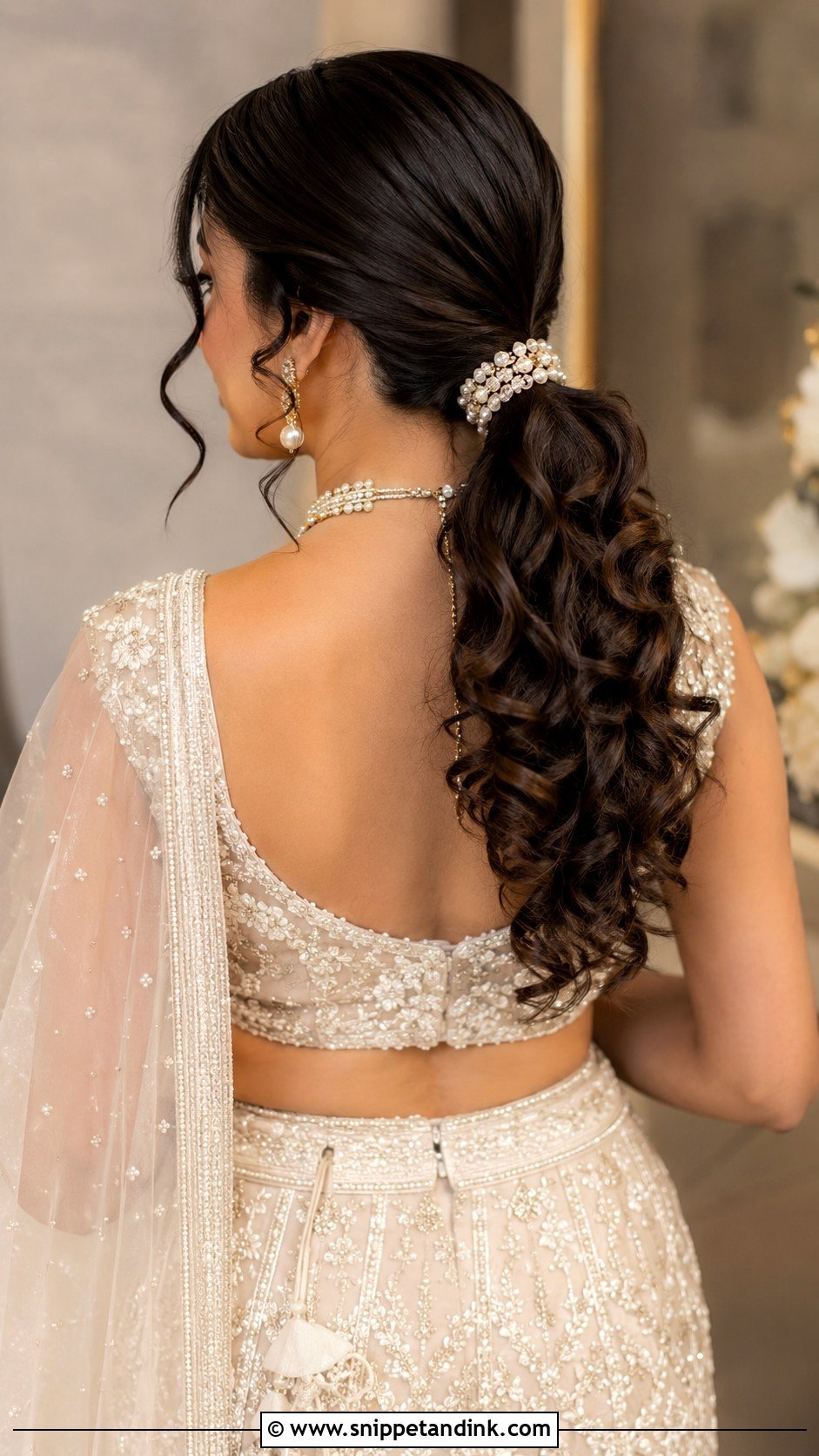
Placed at the nape, a low ponytail feels formal and stays comfortable through a long reception or a daytime ceremony where a full bun would feel heavy. Shine matters more here than in a bun because the whole tail is on show. I use a light oil on the lengths after the curls have set, never before. A centre part reads more traditional, a side part softer. Finish the base with a jewelled clip or fresh flowers so it doesn’t look like everyday hair.
13. Curly Bridal Braid
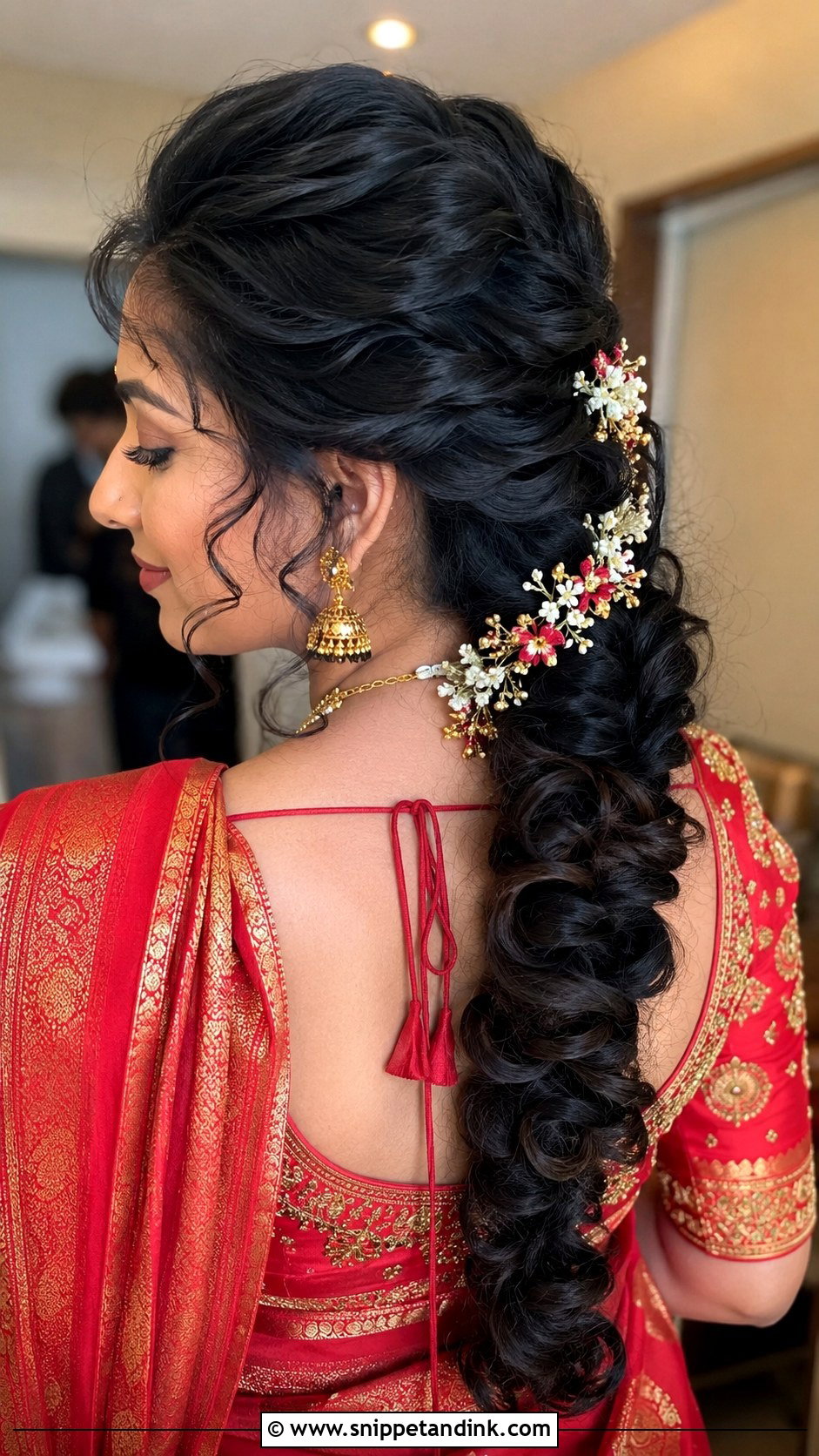
I always define the curls before braiding, never after. If you braid first, you can’t get product into the lengths and the texture disappears into a fuzzy plait. Done in the right order, the braid stays thick and loose with the curl pattern visible along it. Flowers, pearls and gold accessories can all be threaded through. It is comfortable for a full day and very secure, and it sits well with sarees, lehengas and South Indian bridal outfits.
14. Curly Fishtail Bridal Braid
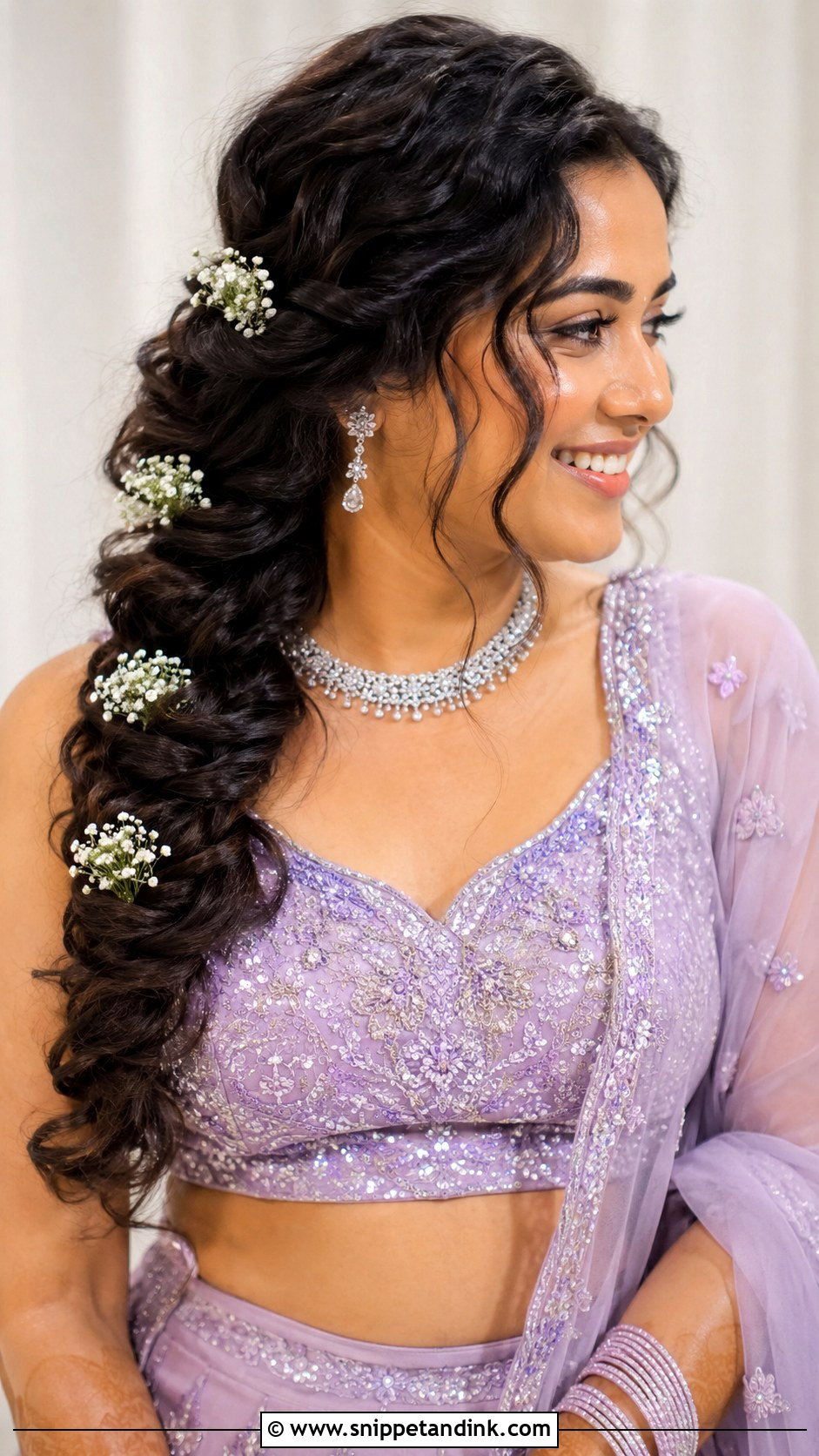
Fishtail braids look much fuller on textured hair because each small section carries curl, so the braid reads dimensional rather than flat. I’d warn that a fishtail takes longer than a three-strand braid, so budget that time on the morning. It can go down the back or over one shoulder depending on the neckline. Tiny flowers along the braid suit a mehndi; pearl pins look more polished for the ceremony. Keep a little lift at the crown so it doesn’t look like gym hair.
15. South Indian Curly Bridal Braid
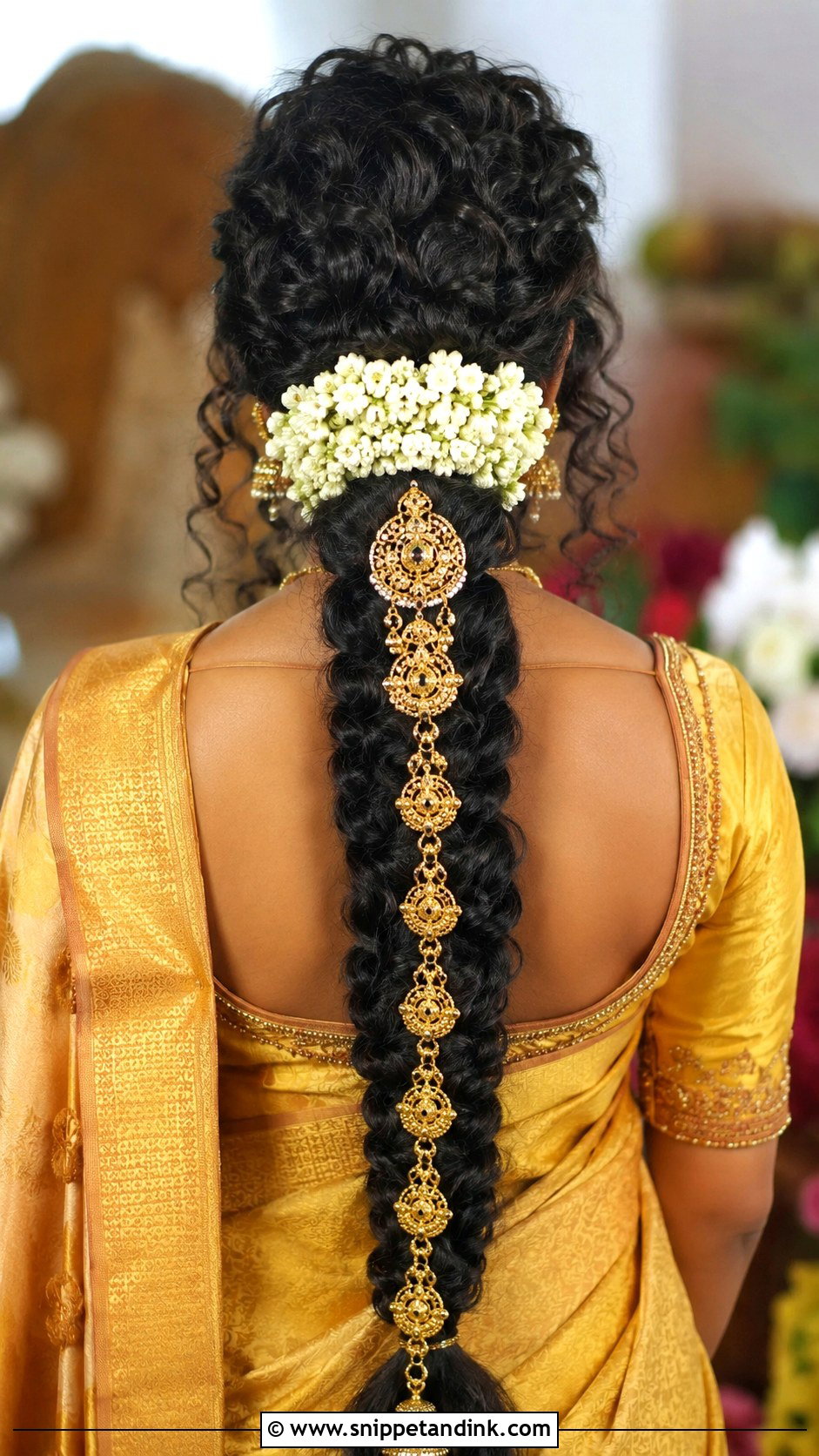
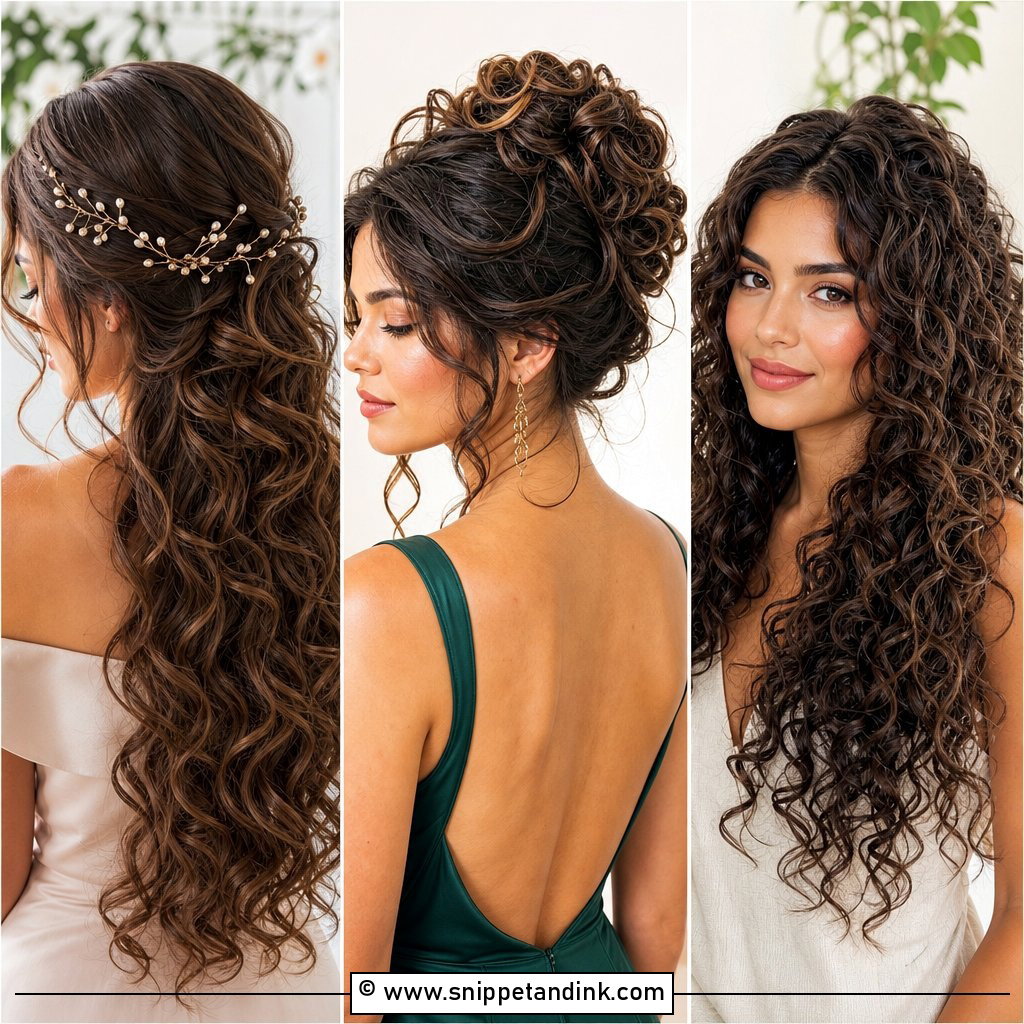
A South Indian curly bridal braid often gets a hair extension braided in to reach the traditional length, and with curly hair I blend the extension at the top so the join doesn’t show as a sudden change in texture. The crown keeps soft curl while the front stays smooth enough for the nethi chutti and jada billa. Silk sarees and temple jewellery are the natural pairing. A few defined curls near the face keep it from looking severe.
16. Poola Jada Curly Bridal Hairstyle
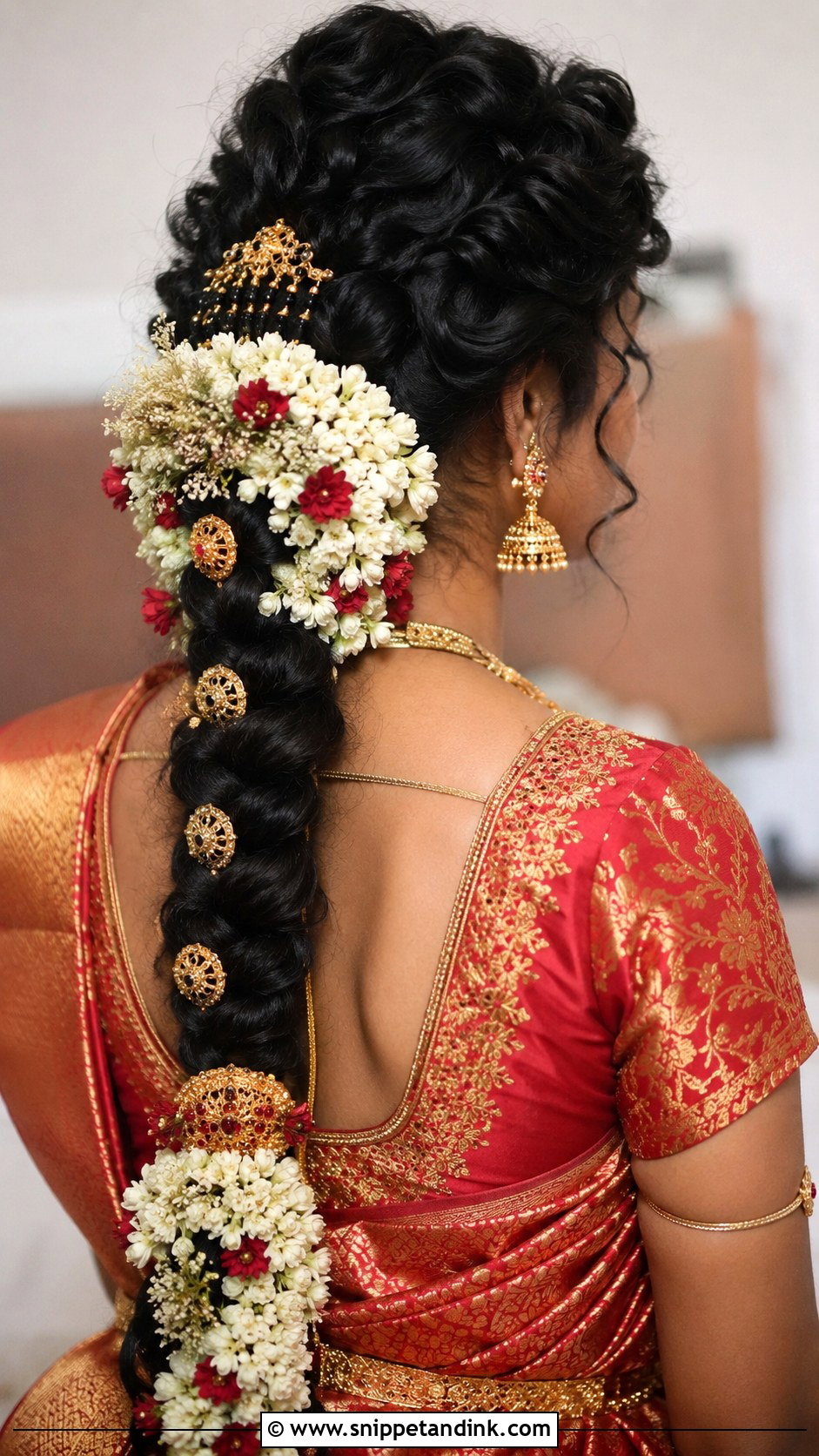
A poola jada curly bridal hairstyle is the most ceremonial look in this list and also the heaviest. The flower plait is built on top of the braid, so the braid underneath has to be tight at the base and well secured, or the weight pulls the whole thing loose. Curly hair gives the crown volume before the flowers go on. I’d always do a trial with real flowers, since the weight of fresh jasmine and roses across the full length surprises most brides.
17. Curly Bridal Hairstyle With Flowers
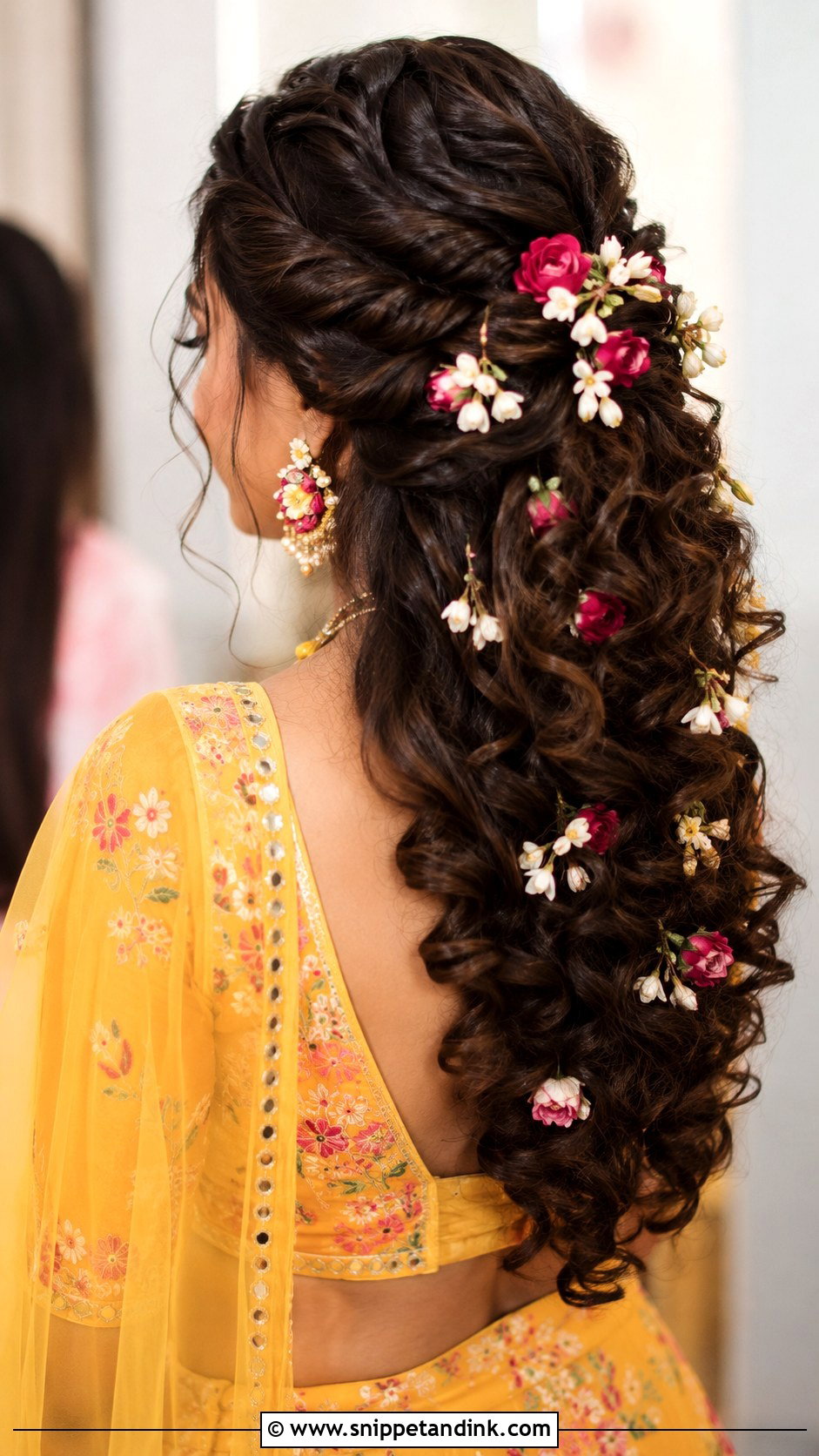
Flowers show up strongly against dark curls, which is why even a few small blooms read clearly in photographs. Jasmine around a bun, roses tucked into a braid or tiny buds through half-up curls all work. Fresh flowers wilt in heat, so for an afternoon haldi in summer I often use good artificial blooms or wire fresh ones as late as possible. The mistake is covering the curls entirely. Place flowers in clusters with hair visible between them.
18. Curly Bridal Hairstyle With Matha Patti
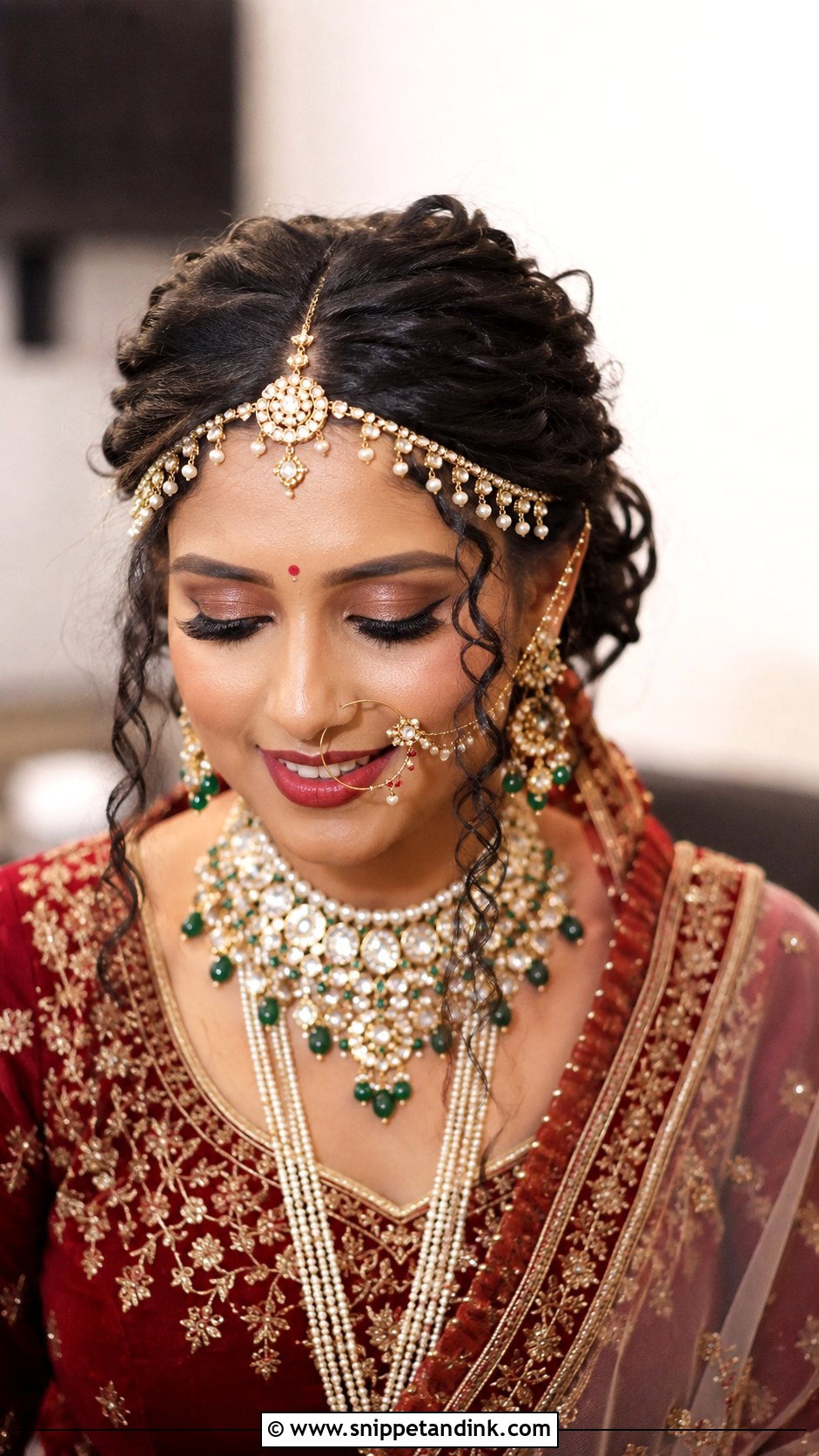
A curly bridal hairstyle with matha patti starts with the parting. A centre part lets the side chains drop evenly, and I pin each chain to the hair behind the ear so the piece doesn’t shift when the bride turns her head. The front must be smooth enough for the chains to lie flat, but not so tight that the natural texture vanishes. A bun, half-up hair or open curls all work underneath; the heavier the matha patti, the more I lean toward a bun.
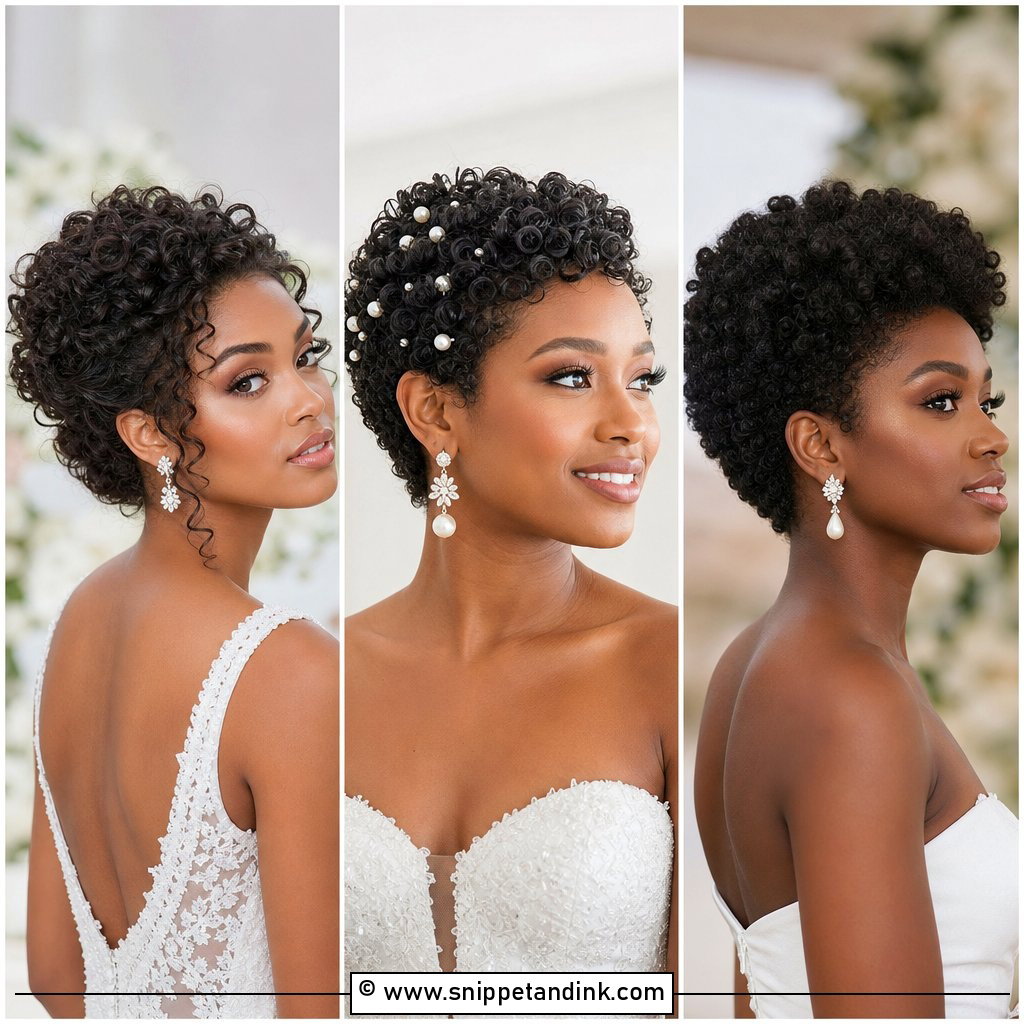
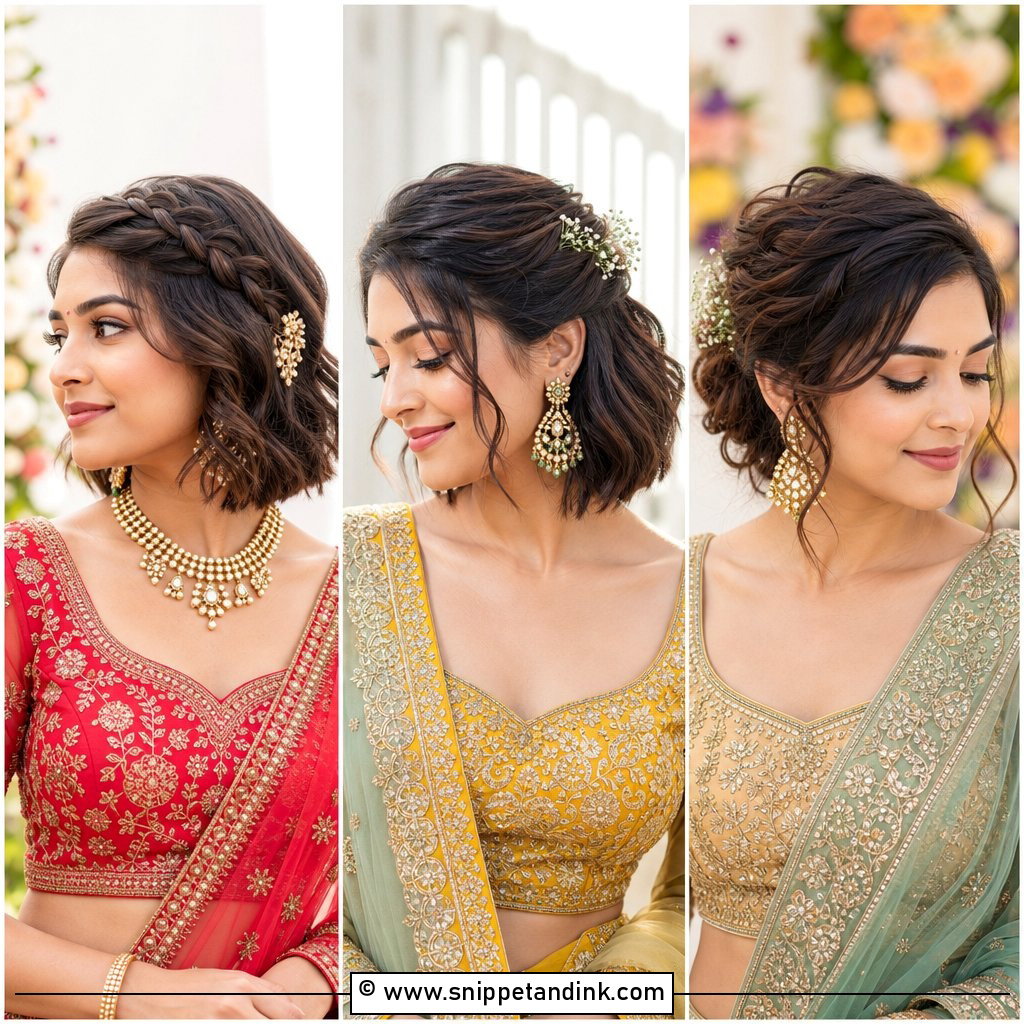
19. Curly Bridal Hairstyle For Short Hair
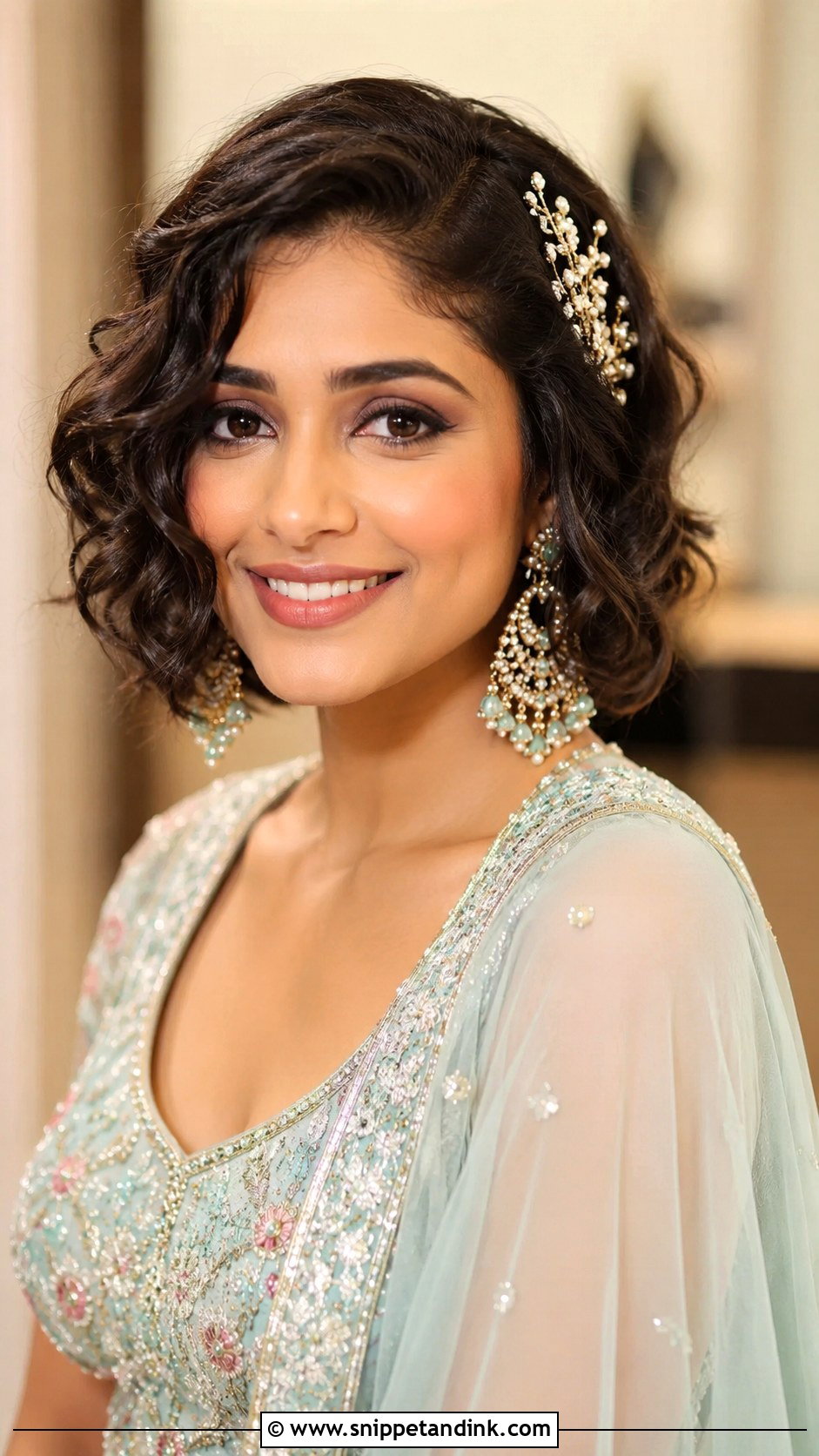
Short curly hair can look fully bridal, and I’d rather work with it than add extensions that never match the curl pattern. A bob or shoulder-length cut gets defined curls, a side part and a few jewelled pins. Tucking one side back gives a place to hang a small tikka or a cluster of flowers. The work is all in curl definition and controlling volume at the sides. Bold earrings and a clean neckline keep the proportions balanced.
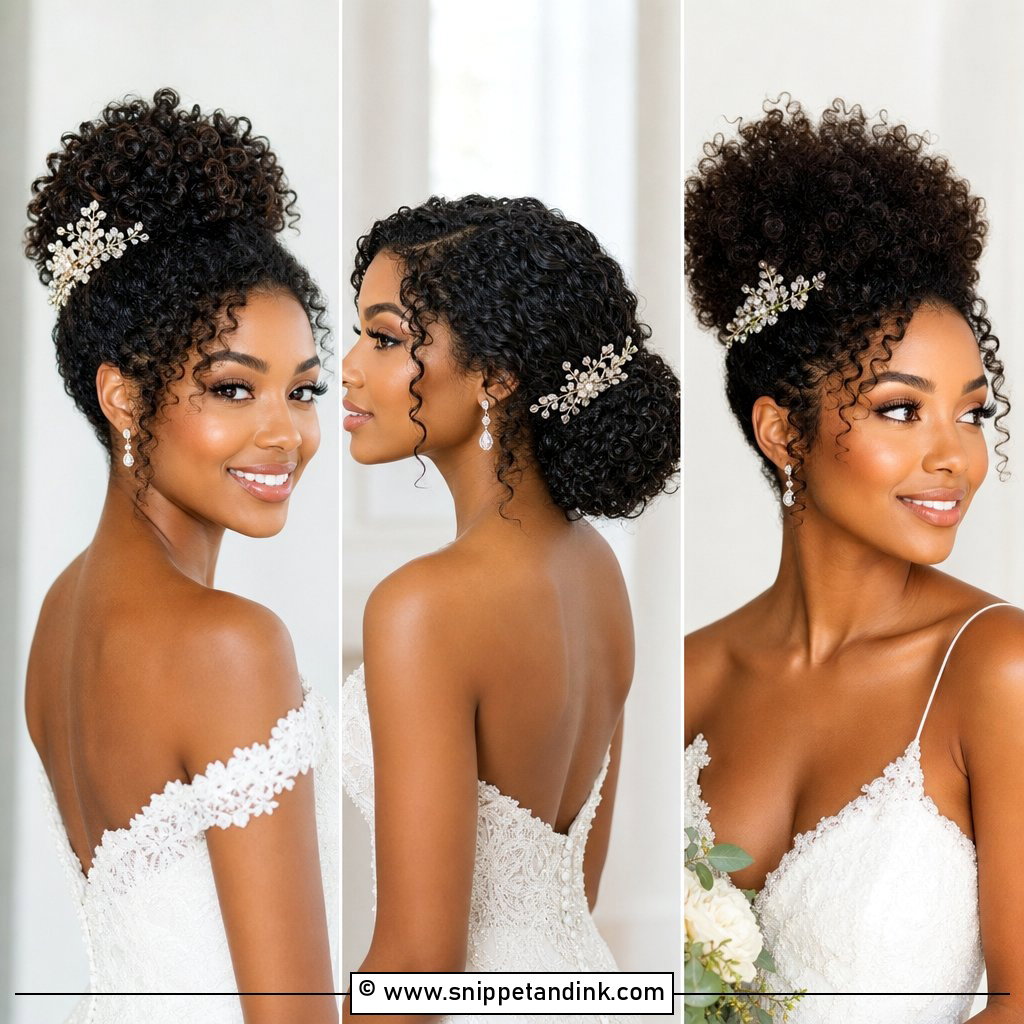
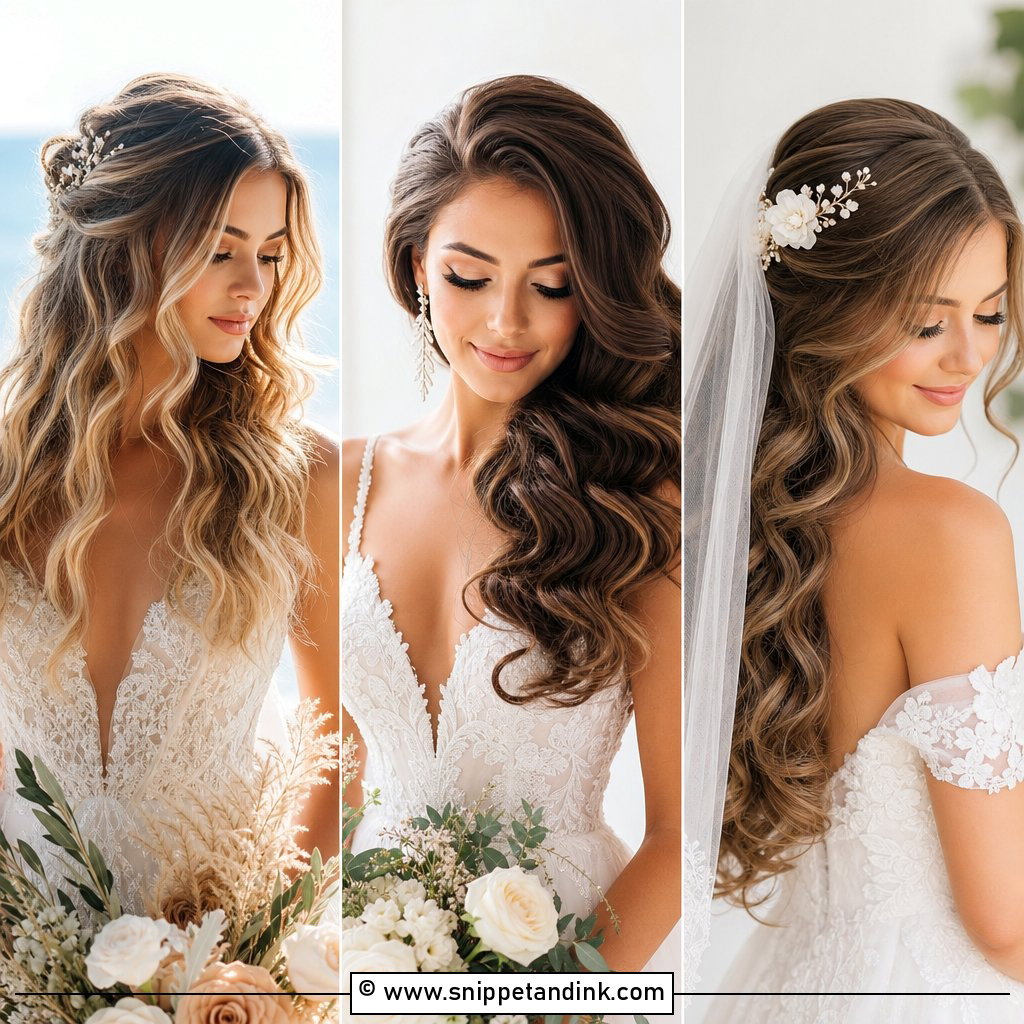
20. Curly Bridal Hairstyle For Long Hair
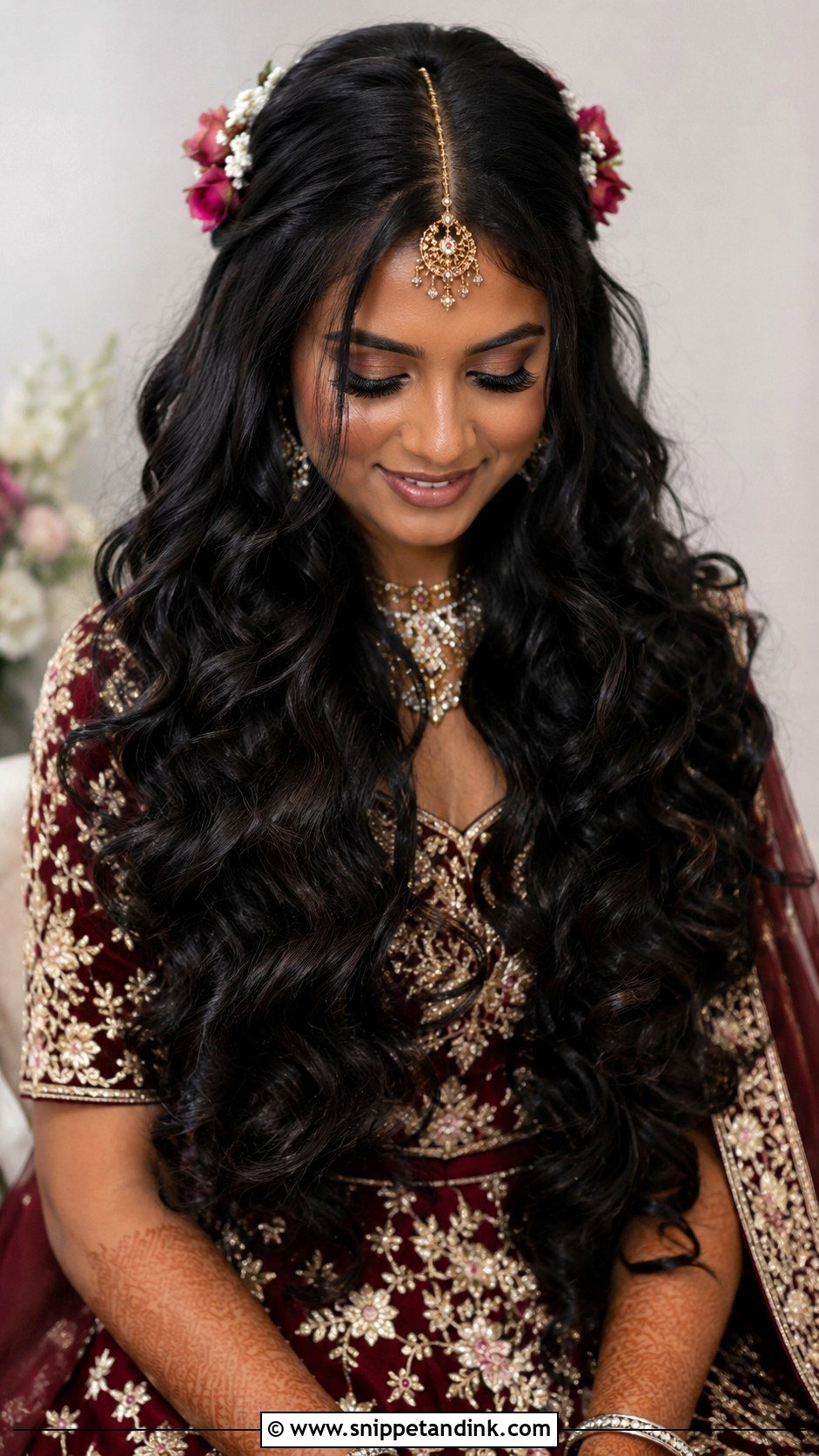
Long curly hair can take almost any style here, but length brings weight, and weight stretches curls out by the evening. I define the curls from root to tip and use lighter products than you’d expect, because heavy creams make long curls hang straight by the reception. Very thick hair needs hidden pins placed in sections rather than a few big ones. A centre part, tikka or side-swept finish all suit it.
What Your Curls Need Between the Pheras and the Reception
Indian weddings rarely let a hairstyle rest. Heat from the havan, hours under a dupatta and a quick change before the reception all affect curls. Curly hair also can’t simply be brushed out and redone, because brushing destroys the definition. If you plan a look change, build it into the first style.
Planning a Second Look
A bun can be taken down into open curls for the reception if it was pinned around defined sections rather than brushed smooth. A braid can become a side-swept style if it was loose to start with. I tell brides which looks convert and which don’t before we start, because undoing a tight poola jada leaves a crimped, uneven texture that needs rewetting.
A Small Refresh Kit
- A small spray bottle of water mixed with a little leave-in, to revive flattened curls without brushing.
- Spare bobby pins and U-pins in your hair colour.
- A tiny amount of curl cream for frizz at the hairline.
- Blotting papers, since an oily forehead makes front curls cling.
Give the kit to a sister or friend rather than carrying it yourself. In humid weather, ask your stylist to stay for the change if you can; a ten-minute reshape between events saves the evening photos.
Your Curls Should Lead the Look, Not Fight It
Pick the style that suits your jewellery, your dupatta and the length of your day before you think about what is prettiest. Book a trial with the real tikka, the real dupatta and, if possible, the flowers, and wear it for a few hours afterward. Curly hair rewards that test more than straight hair does, because you’ll see how your curl pattern behaves under weight and warmth.
You'll Like These Ideas:




Leave a Reply