
A mountain elopement asks more of a dress than almost any other wedding. It has to be carried, walked in, sat on rock in and worn through wind or a sudden cold front, and still feel like a wedding dress at the top. When I style these brides, I start with the route, not the rack: how far, how steep, what season, how high. Light chiffon, soft lace, packable satin, detachable trains and good boots all have a place. Short or long, white or colored, the dress just has to suit the place and the person wearing it. These Mountain Elopement Dress Ideas run from classic to cozy, with my notes on how each one handles a trail.
Bring Your Hiking Boots to Every Fitting
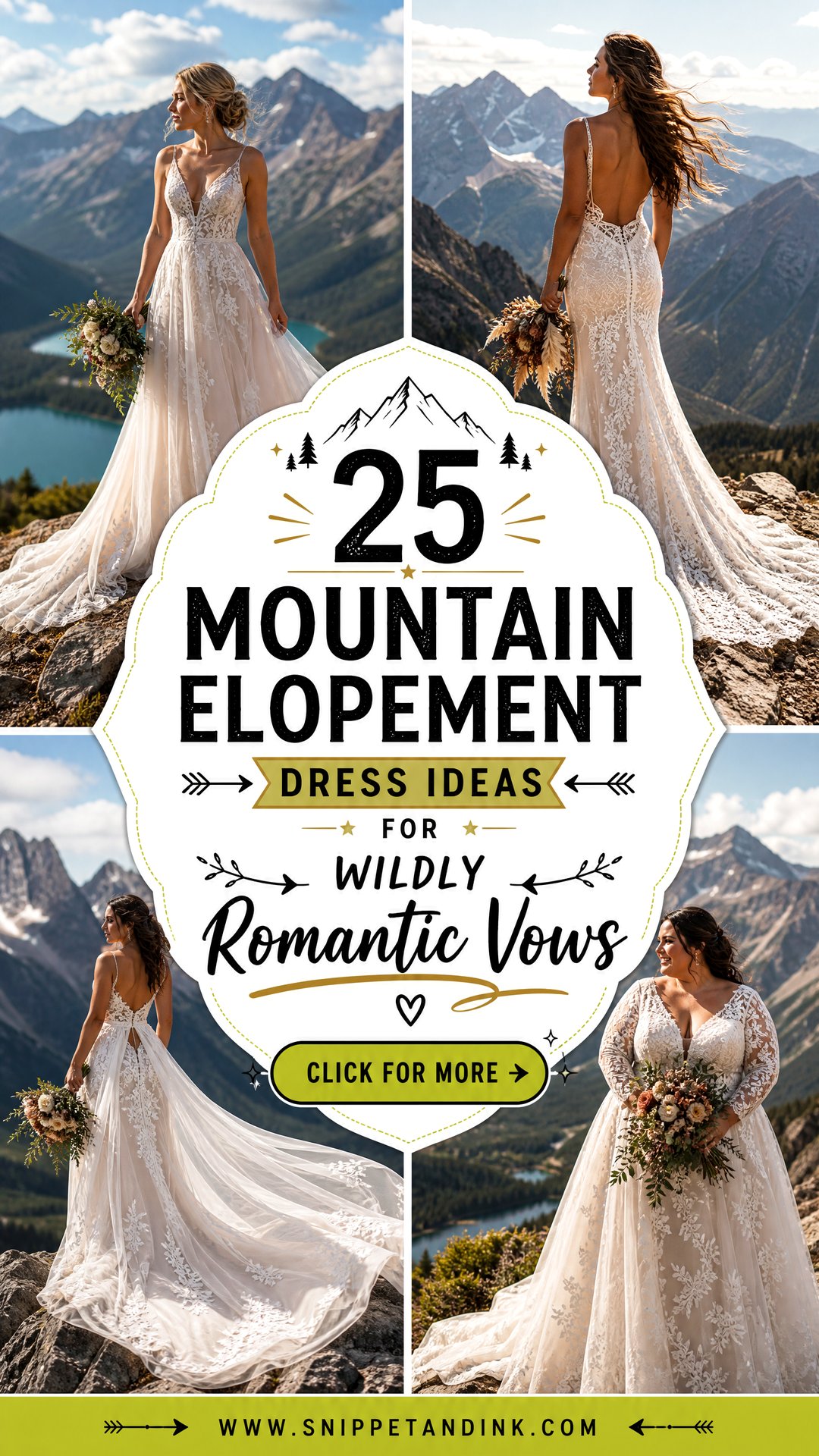
The biggest mistake I see with elopement dresses is a hem set for a heel and then worn with a boot. Boots change your height, your stride and how the skirt falls at the front. So I ask brides to bring the exact boots and socks they’ll wear, plus any thermal layer, to every fitting after the first.
- Hem: set with boots on. For trails, I keep the front hem clear of the boot toe so you don’t step on it climbing uphill.
- Bustle or wrist loop: a long skirt needs a way to get off the ground. A bustle works for the ceremony spot; a fabric loop at the wrist works while walking.
- Ease at the hips and back: climb a step and sit on a low bench in the fitting room. If seams strain, ask for more room.
- Hidden pocket: a small pocket in a side seam holds lip balm or rings and costs little to add.
- Layers: if you plan thermal leggings or a base layer, wear them at fittings so the dress is sized around them.
Allow time. Alterations on a bridal gown usually take a couple of months, and a busy seamstress books up in spring and autumn. Start early enough to fit once more after you’ve broken the boots in.
1. Mountain Elopement A Line Dress
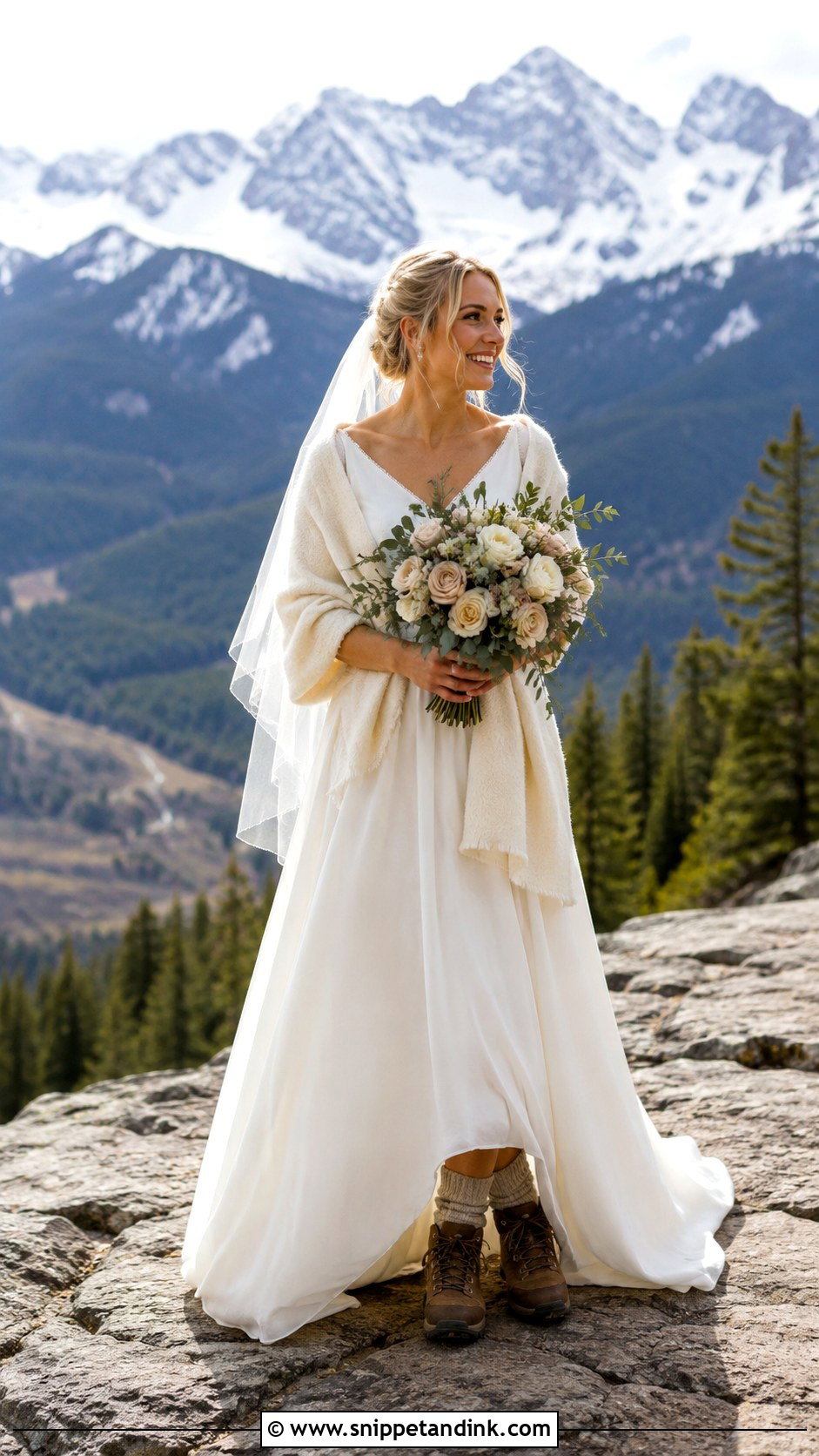
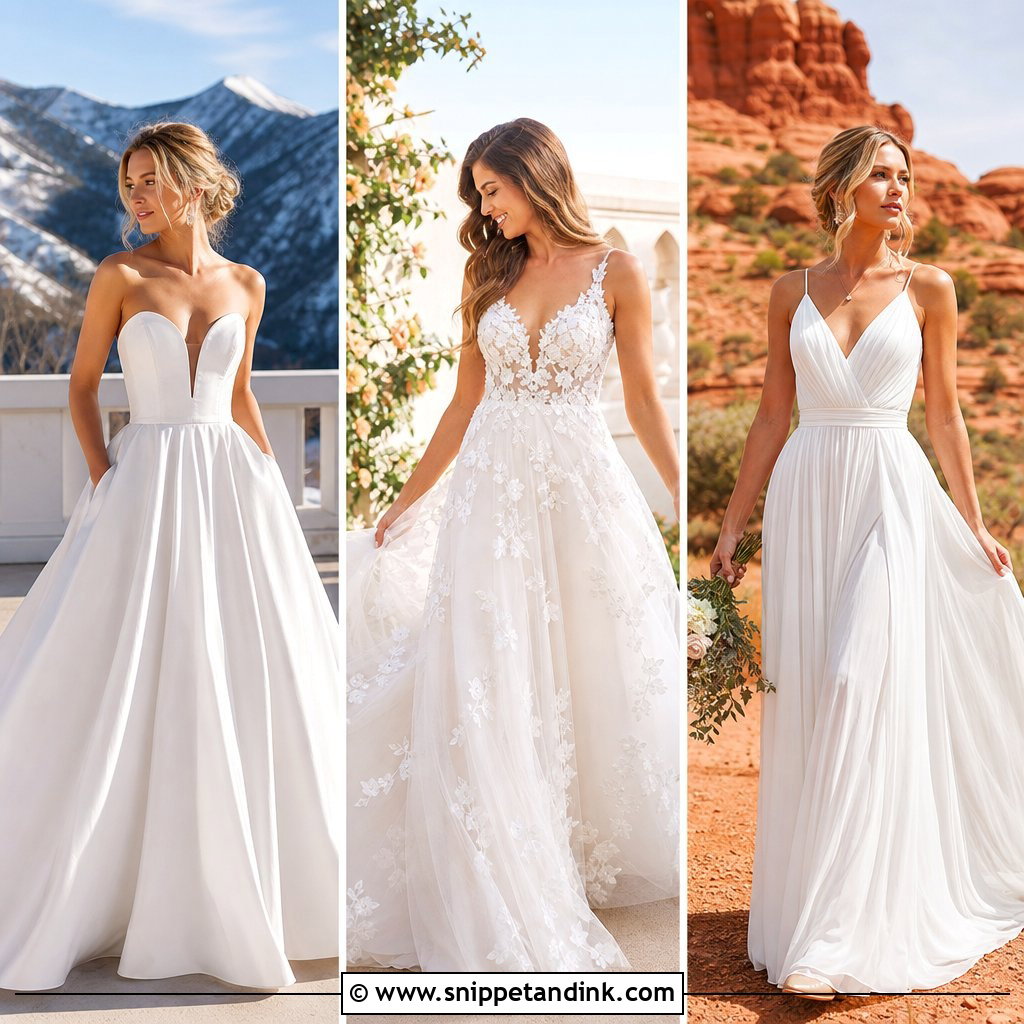
A-line is the shape I recommend first to a bride who doesn’t yet know what she wants, because it rarely gets in the way. The fitted bodice holds everything in place while the skirt leaves room to climb steps and sit on a boulder. In chiffon or light crepe it weighs very little, and tulle gives a bit more volume. Wear it with lace-up boots and wool socks, and keep a soft wrap in your pack. If she plans to hike far, I’d have the hem taken up an inch so it clears the boot toe.
2. Mountain Elopement Lace Dress
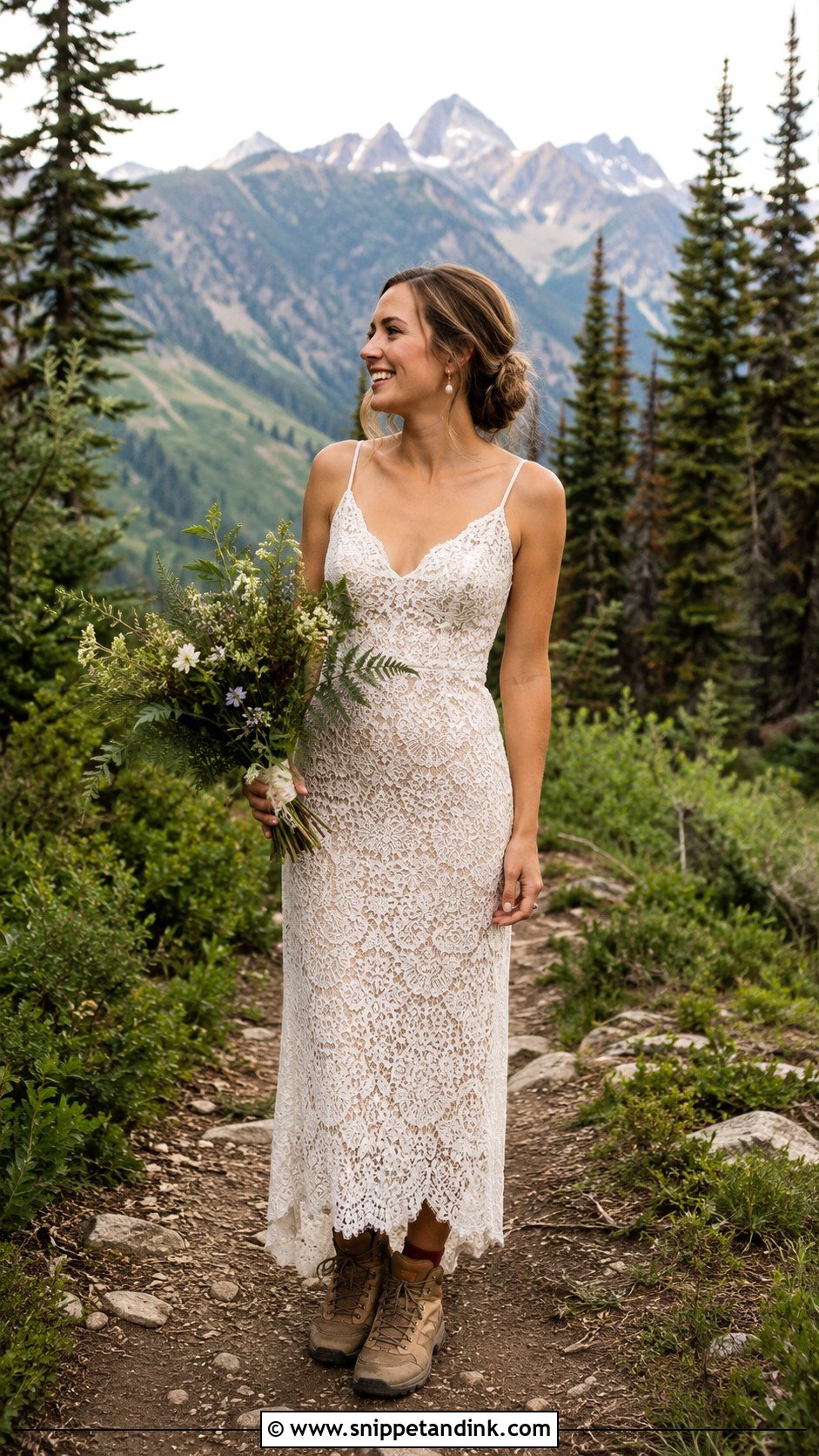
Lace and rock are a good pairing, as long as the lace is soft. Stiff, heavily corded lace catches on brush and holds its creases after a day folded in a pack, while a flexible lace on a soft net recovers. I’d look for a sheath or fit-and-flare cut and ask about the lining, since rough-backed lace against bare skin chafes on a long walk. Long lace sleeves suit autumn and early spring. Tan boots, pearl studs and a loose low bun finish it.
3. Mountain Elopement Chiffon Dress
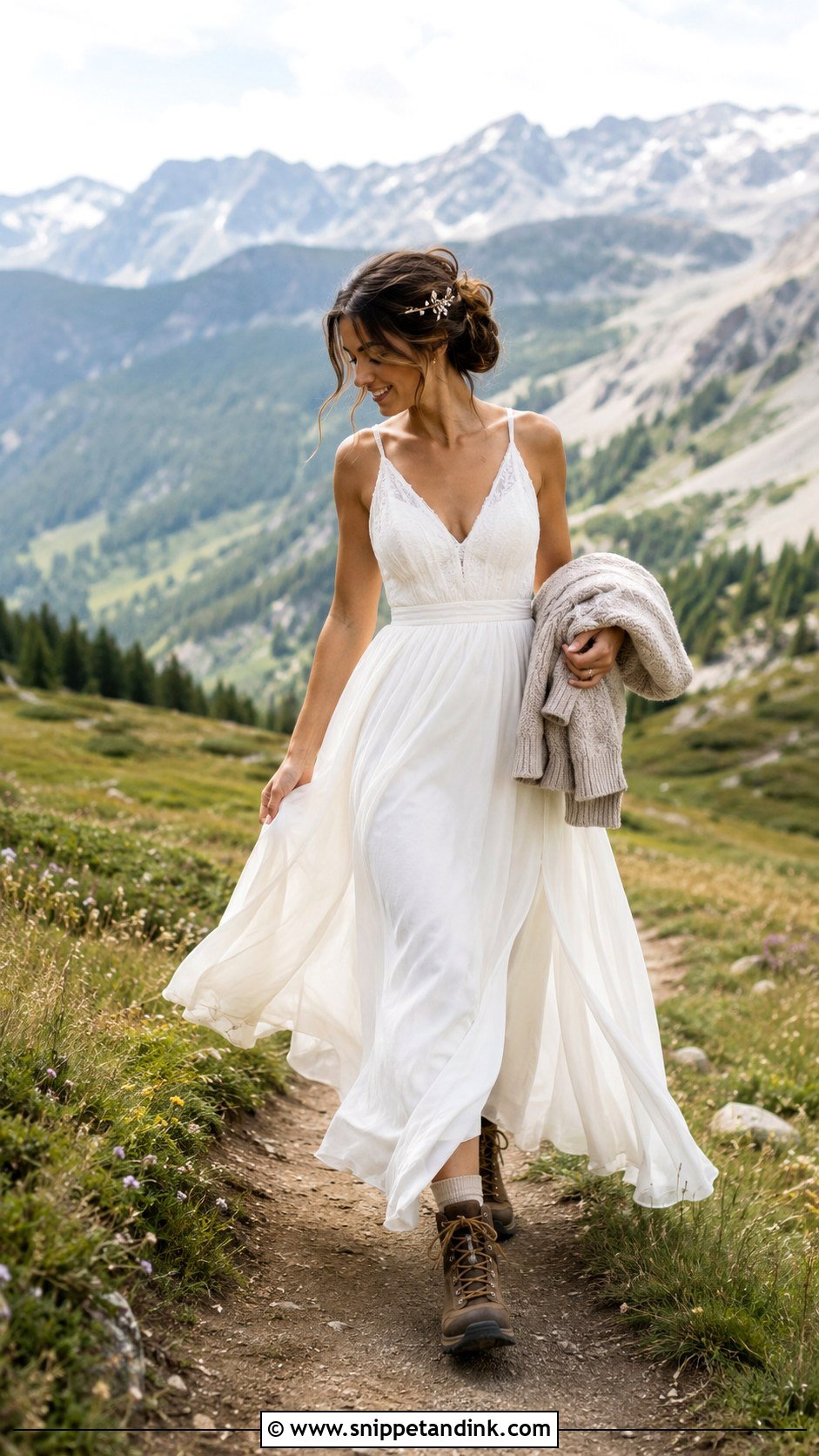
Chiffon is the lightest fabric on this list and the one that moves most in wind. A chiffon gown with a fitted waist and a flowing skirt feels right on a ridge or an alpine field, and it layers easily under a cropped cardigan. The downside is snagging. Chiffon pulls on rough bark and dry branches, so I’d skip a long train on a rocky or muddy trail. Waterproof boots and a small hair comb keep the rest simple.
4. Mountain Elopement Satin Slip Dress
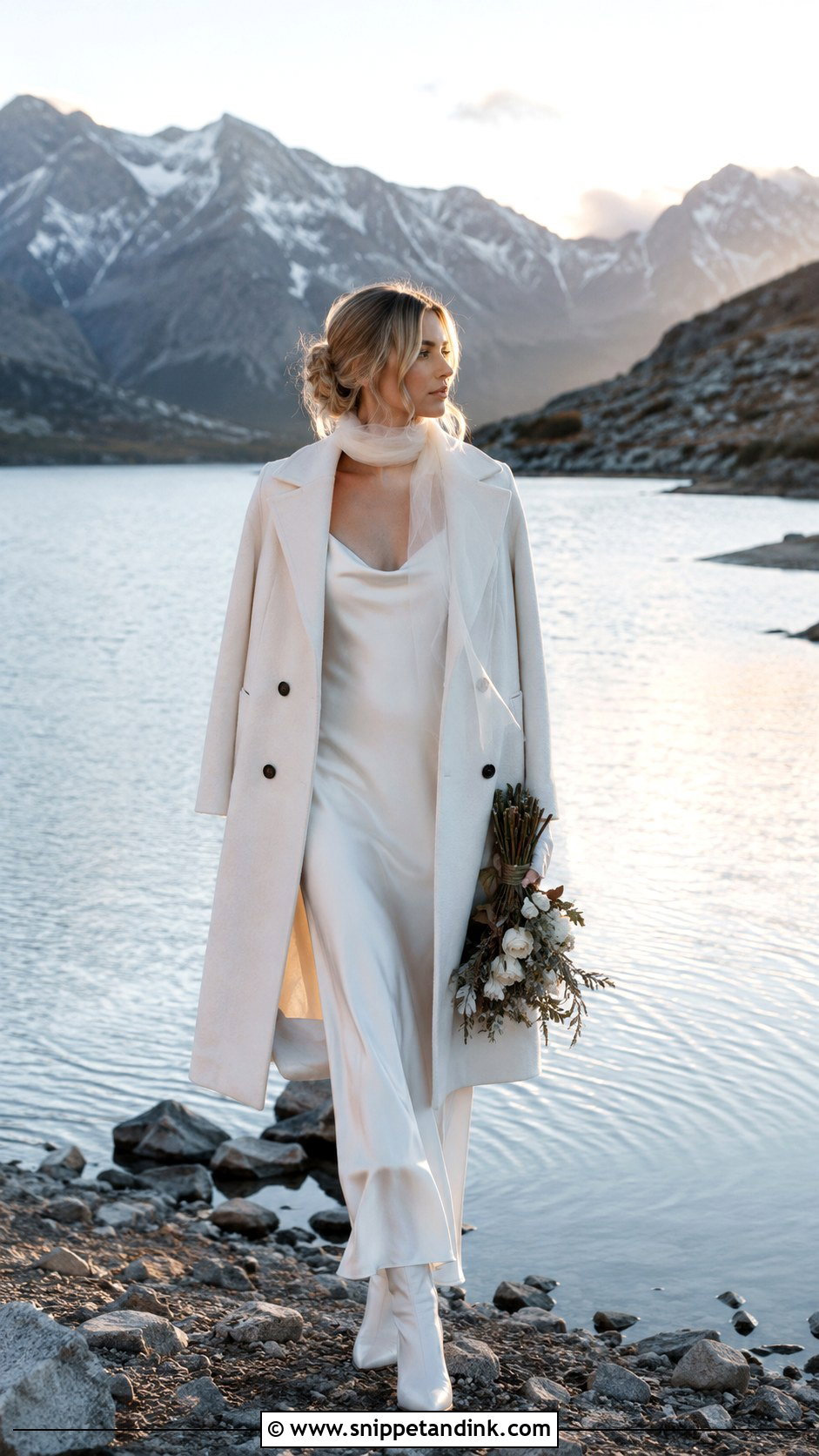
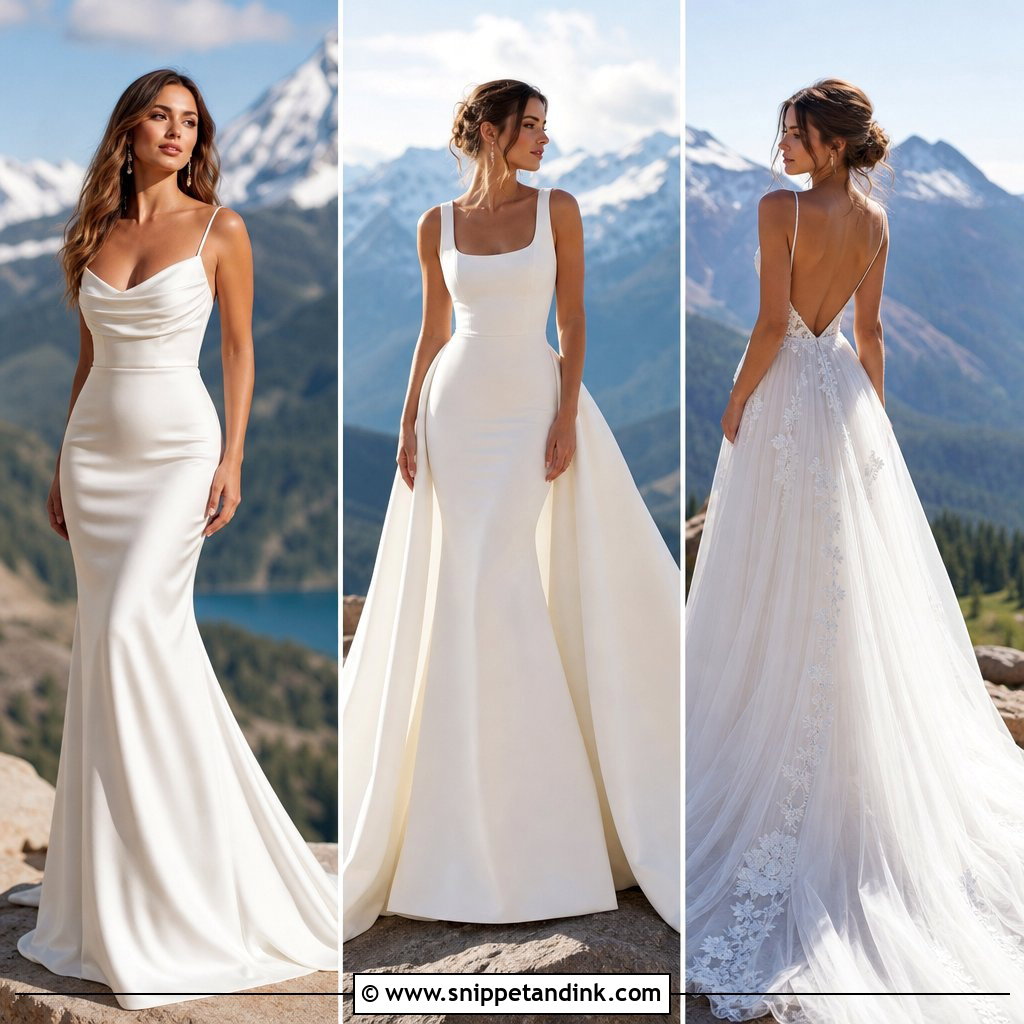
Packable and quietly modern, a satin slip is my usual suggestion for a bride flying in with one carry-on. A bias cut skims the body rather than gripping it, which matters once you’re sitting in a car for an hour. Satin does show every wrinkle, so roll it in tissue rather than folding it, and plan a few minutes with a travel steamer. For warmth, layer a sheer scarf, a structured wool coat or a cropped faux-fur jacket. Low block-heel boots suit a short walk to a viewpoint, while hiking boots are the safer call on a real trail.
5. Mountain Elopement Boho Dress
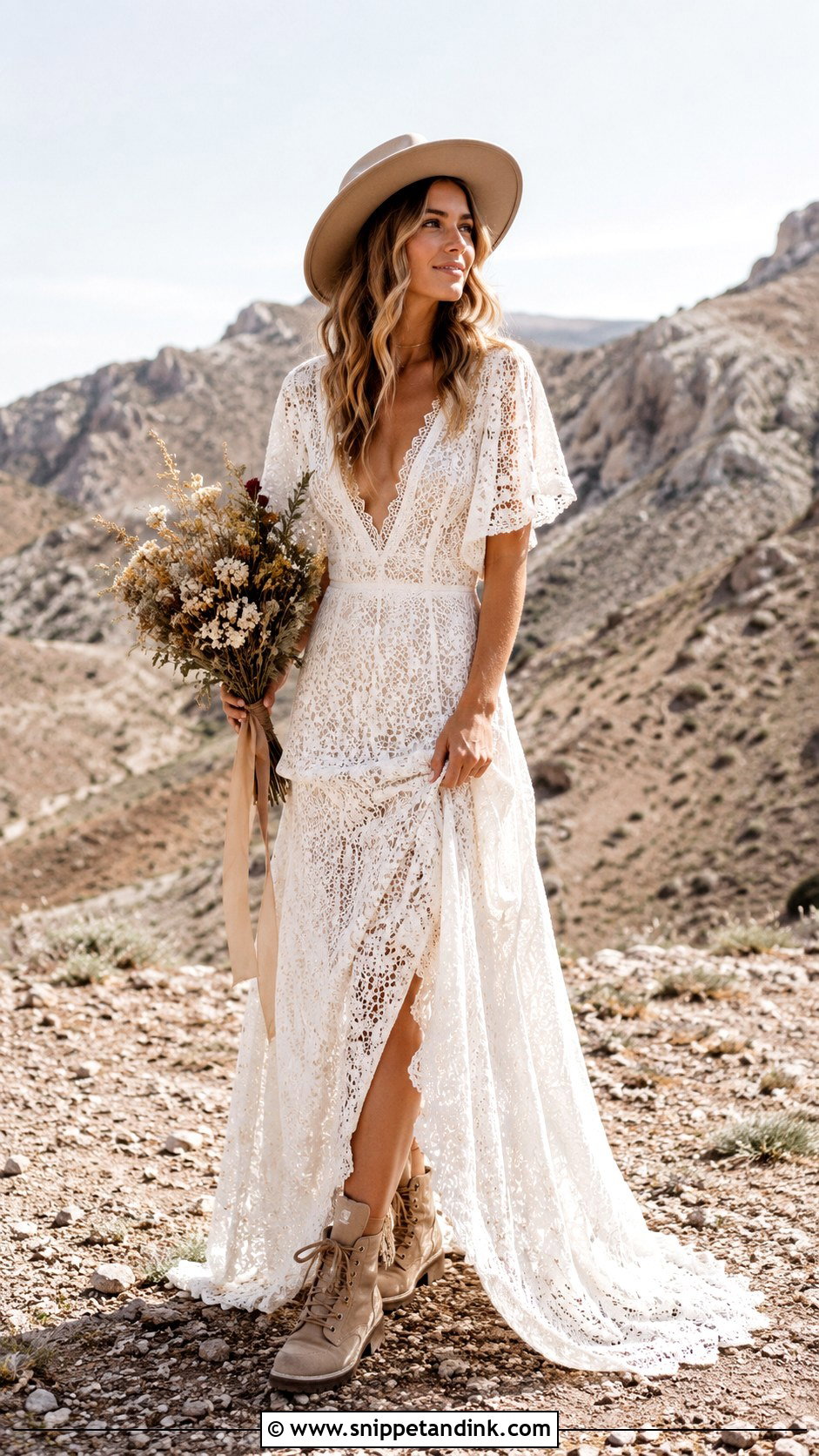
Boho dresses already look like they belong outdoors. Soft crochet lace, flutter sleeves, a loose skirt and a little fringe move without looking like a costume. I’d ground it with suede boots, loose waves and a bouquet of dried grasses or wildflowers. One fitting note: open crochet catches on velcro, backpack buckles and boot hooks, so check what you’ll be carrying and wearing against it before the day. A nude lining or warm ivory gives a softer tone outdoors.
6. Mountain Elopement Long Sleeve Dress
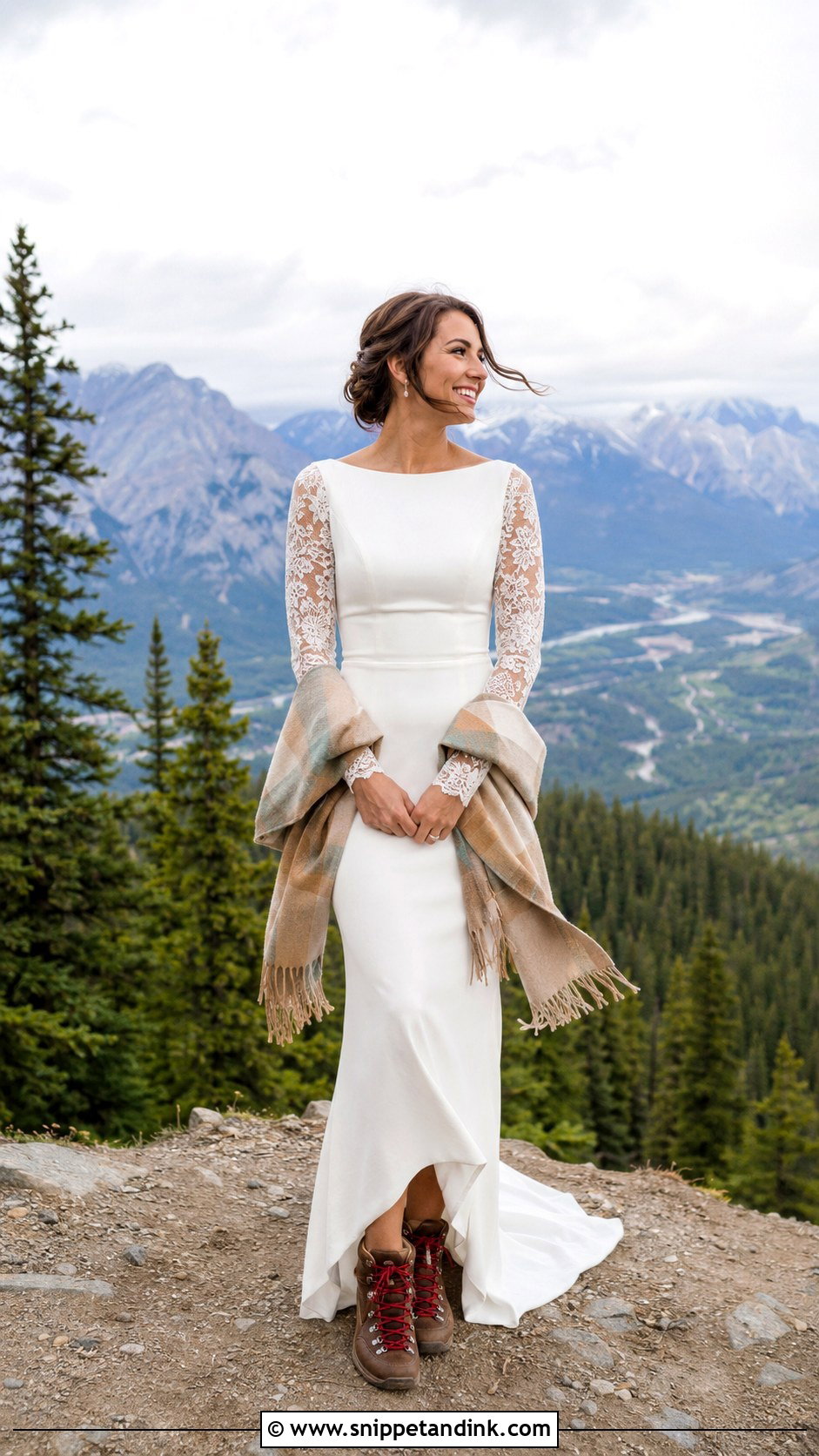
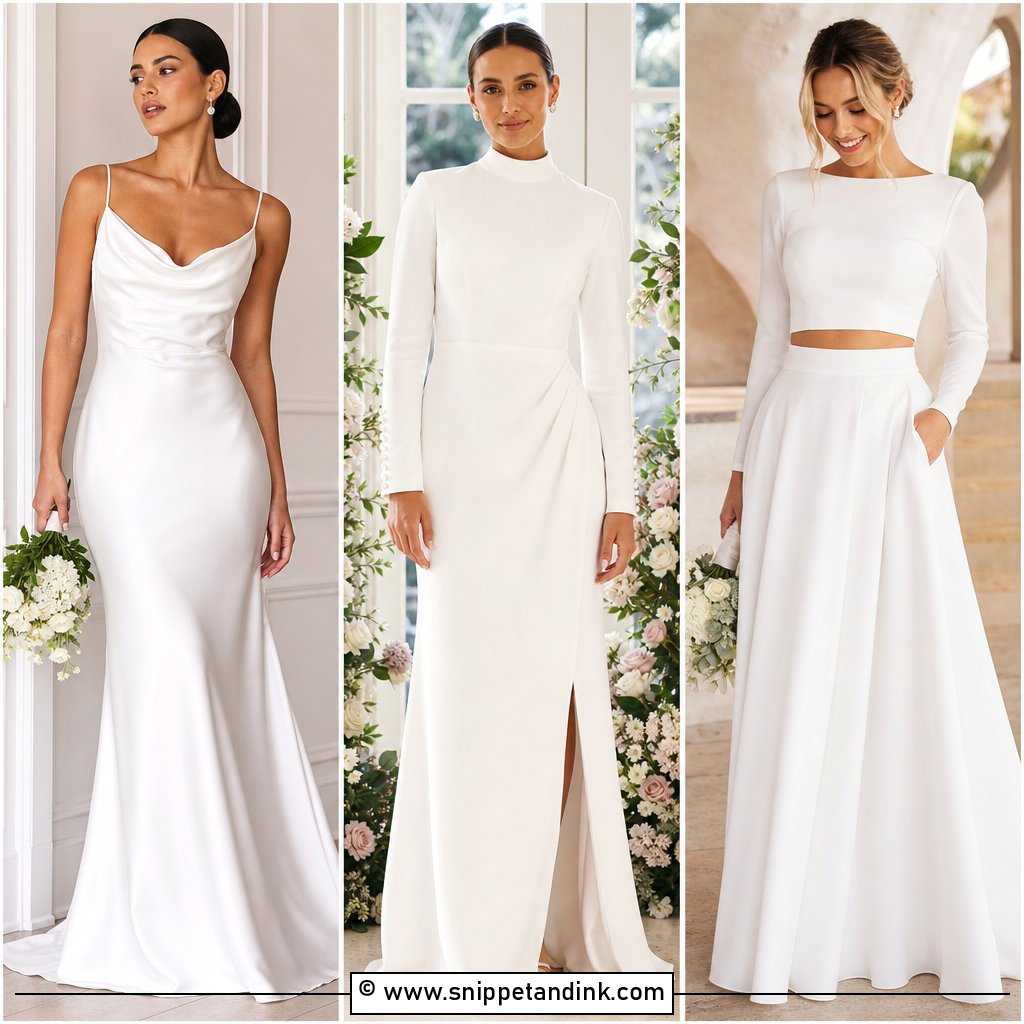
Weather above the treeline can turn in minutes, and sleeves are your first line of defense. They block wind, keep the arms warm and give a polished line. Lace sleeves are the most romantic and crepe the most modern, and sheer sleeves give light cover in summer. What I check at fittings is reach: lift your arms over your head and hug someone. Fitted sleeves set too tight at the armhole will pull the whole bodice up, so ask for a little ease there.
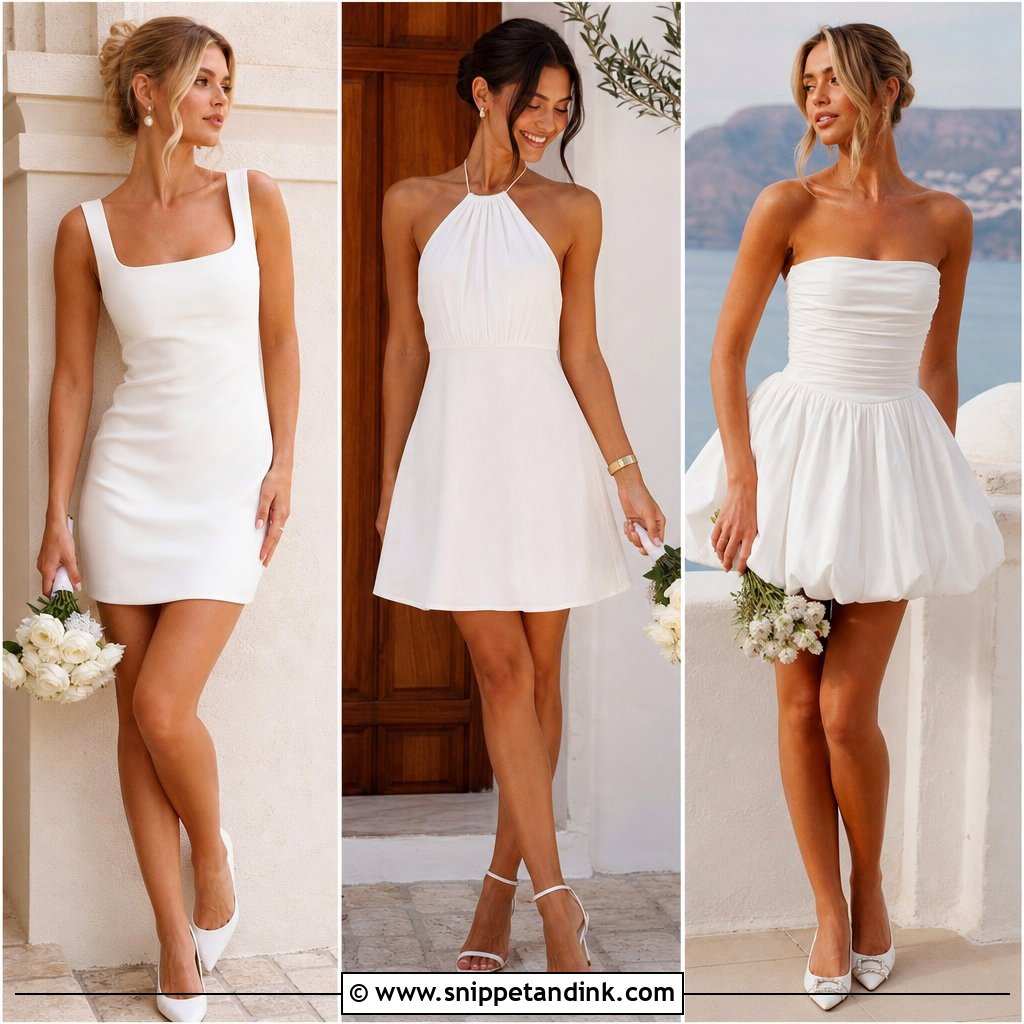
7. Mountain Elopement Short Dress
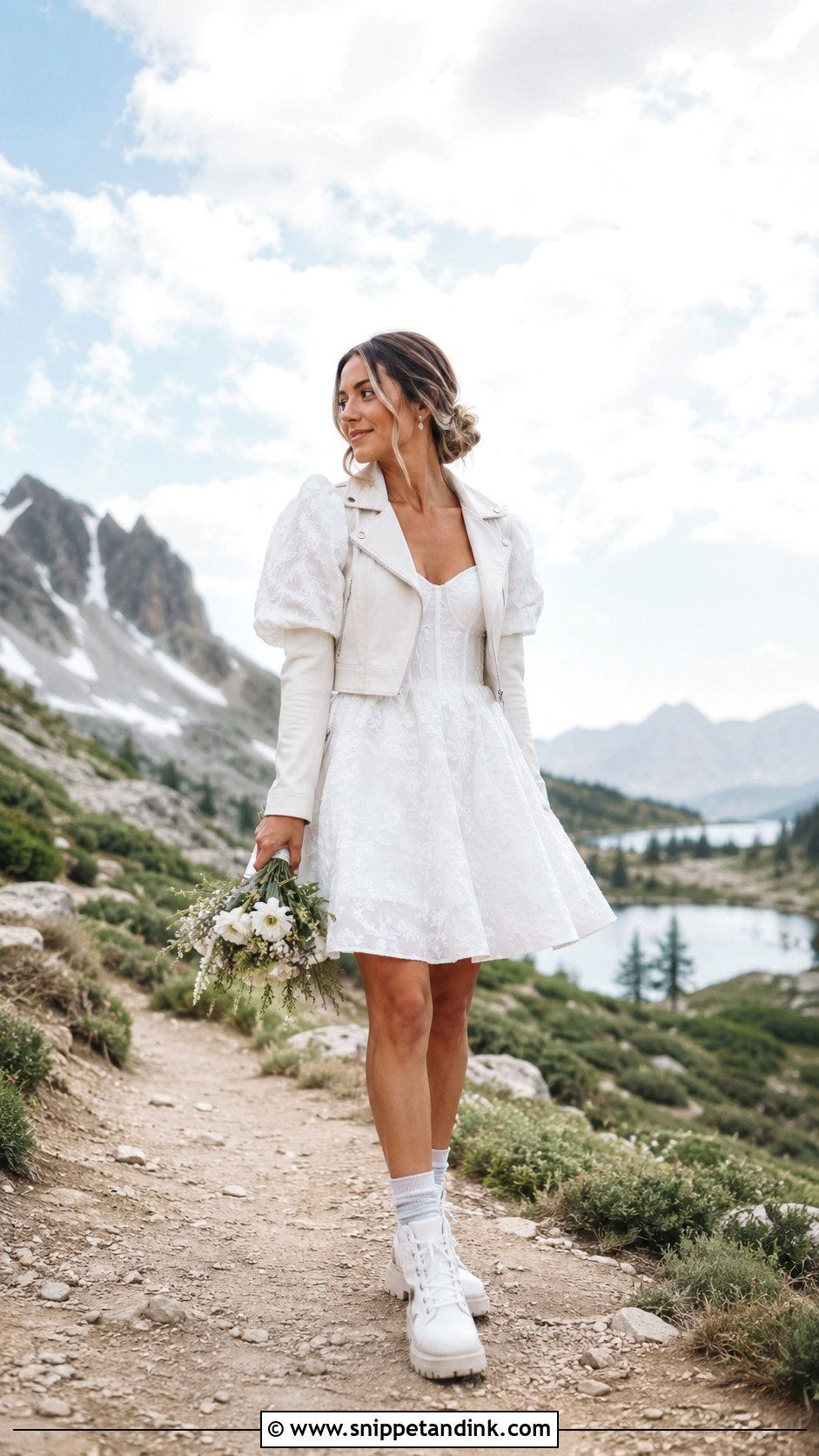
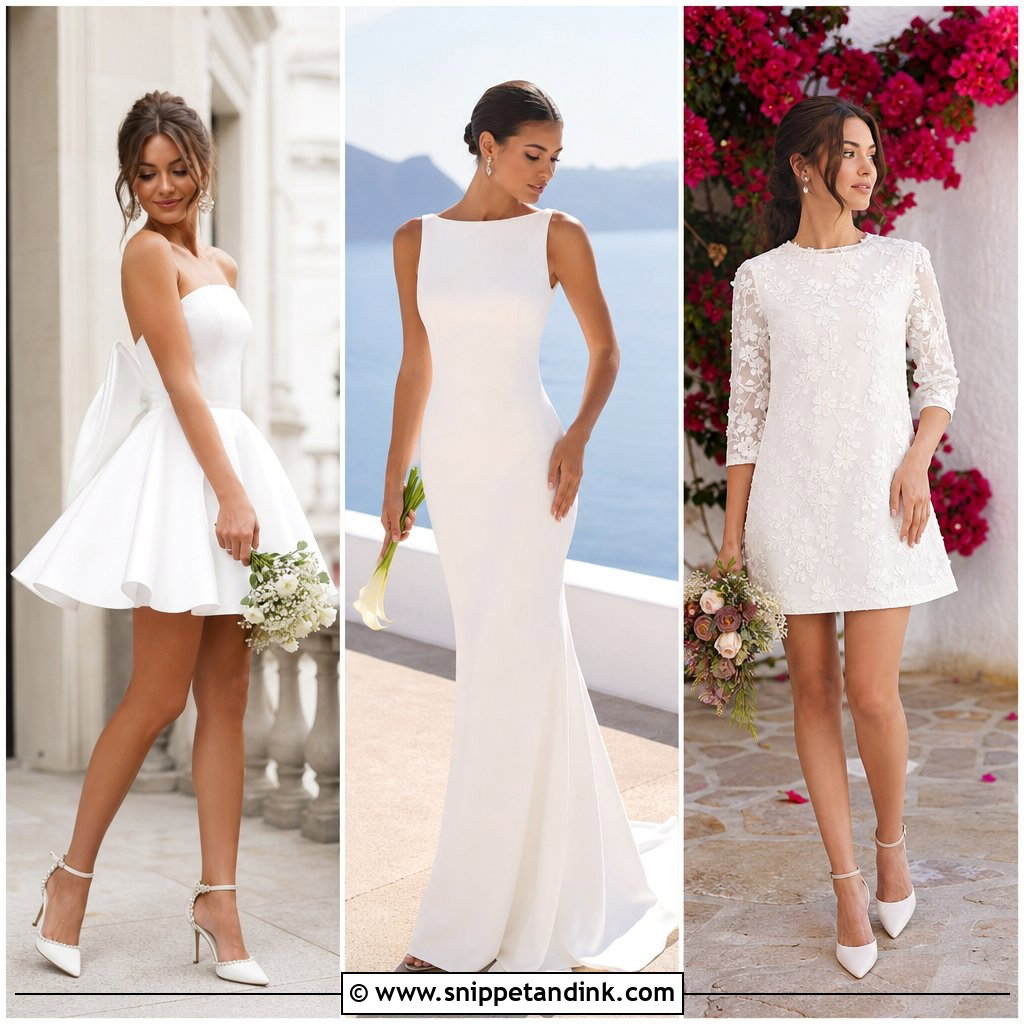
Short dresses are the most practical choice on this list, full stop. A knee-length, tea-length or mini bridal dress lets you climb, cross a stream or change spots quickly. To keep it bridal, I look for structure in the bodice, a lace overlay or a full skirt. White hiking boots with sheer socks and a cropped jacket finish it, and the boots become part of the look rather than something to hide.
8. Mountain Elopement Tea Length Dress
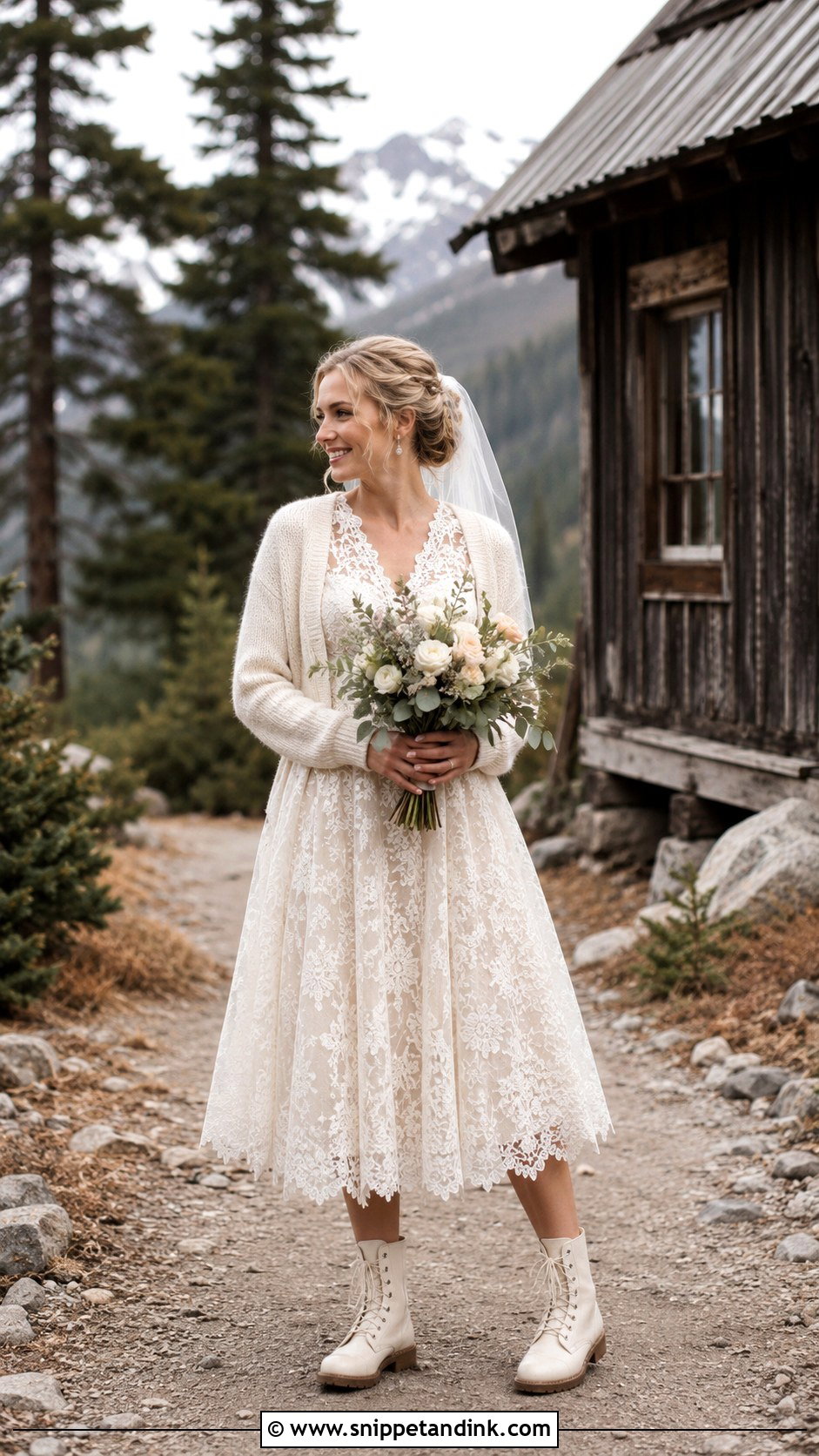
A tea-length dress sits between the knee and ankle, which means a full skirt without anything dragging in the dirt. Lace-up boots or Mary Jane flats both look right with it, and a short veil and soft cardigan give it a vintage feel. The fitting detail that matters most is where the hem lands relative to your boots. I set it so a sliver of leg shows above the boot shaft; when the hem hits right at the boot top, the legs look cut off.
9. Mountain Elopement Tulle Dress
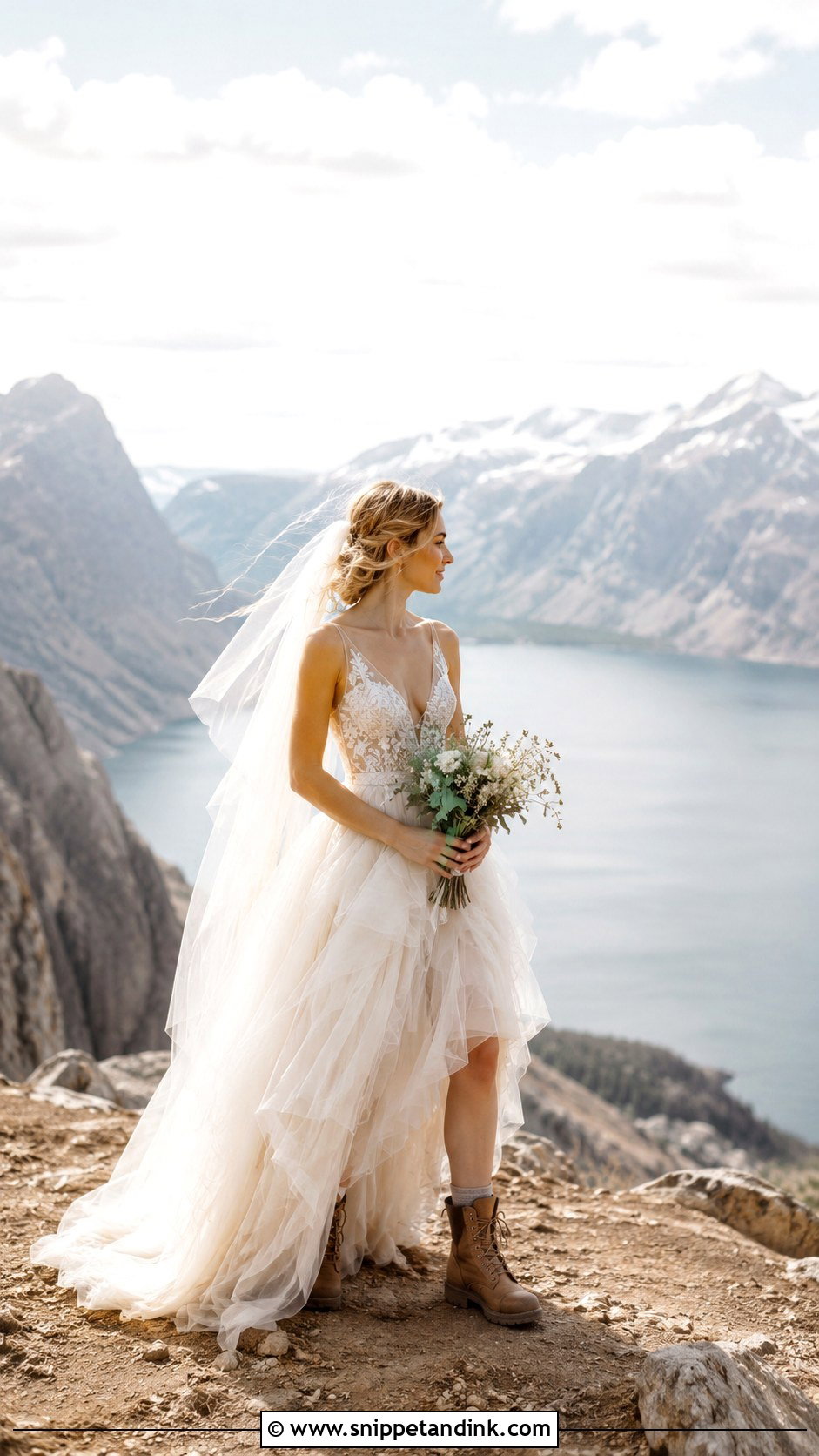
Tulle gives volume without much weight, but it needs to be the soft kind. A stiff, layered ball-gown skirt catches wind like a sail and is hard to carry. I prefer a few layers of soft tulle over a fitted bodice, paired with sturdy boots so the outfit isn’t all froth. Tulle also picks up burrs and dry grass seed, so a detachable overskirt or a shorter skirt saves a lot of picking afterward. A simple veil or flower crown is enough on top.
10. Mountain Elopement Crepe Dress
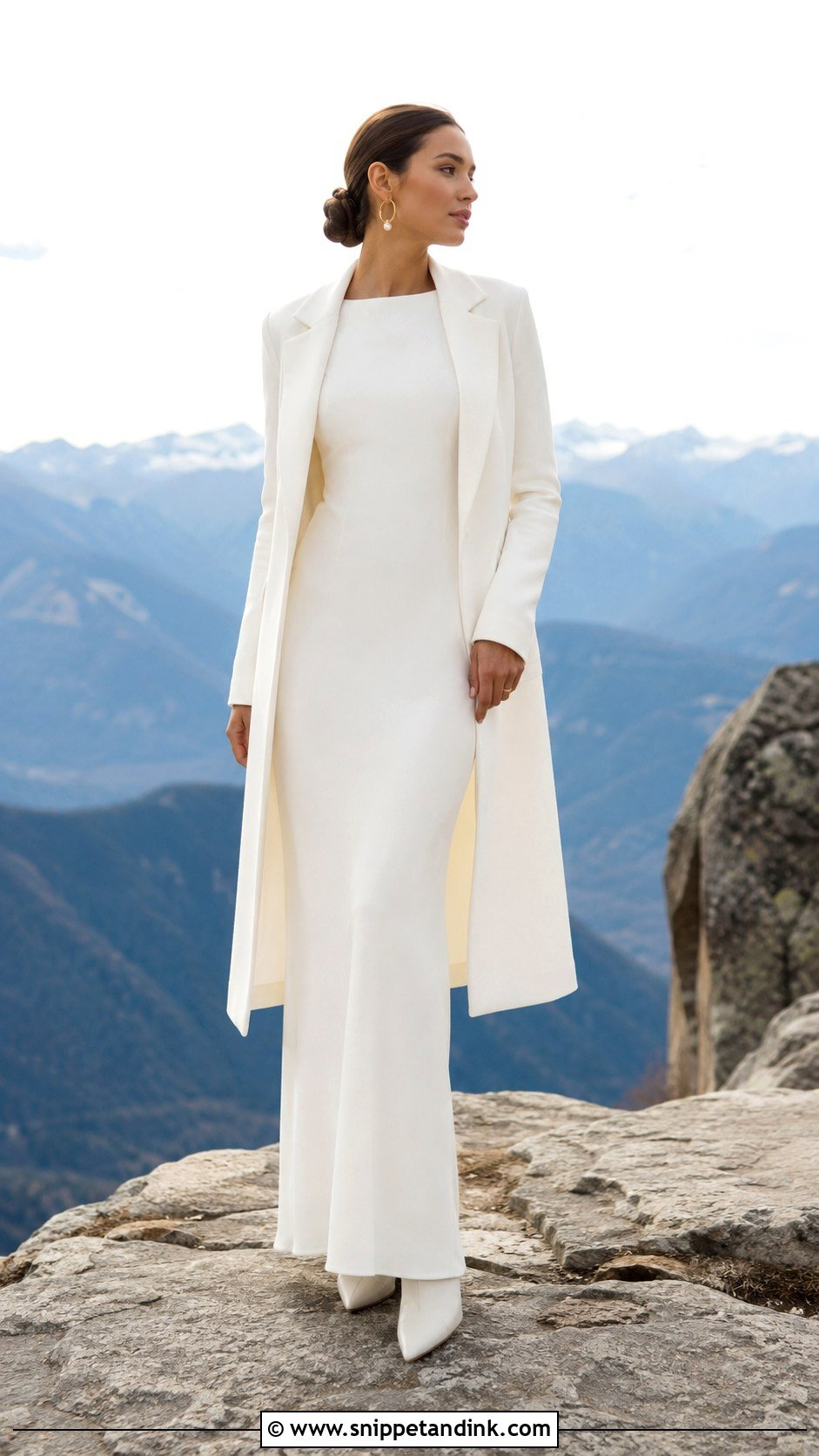
Crepe has weight and drape, so a simple sheath or column cut looks sharp against a big view. Style it with white ankle boots, a low bun, gold earrings and a tailored coat for cold air. The catch is dirt. Smooth crepe shows dust and mud more than lace or textured fabric, so I’d ask for a bustle or a hem that clears the ground. Crepe also creases less than satin, which helps on a long drive to the trailhead.
11. Mountain Elopement Off Shoulder Dress
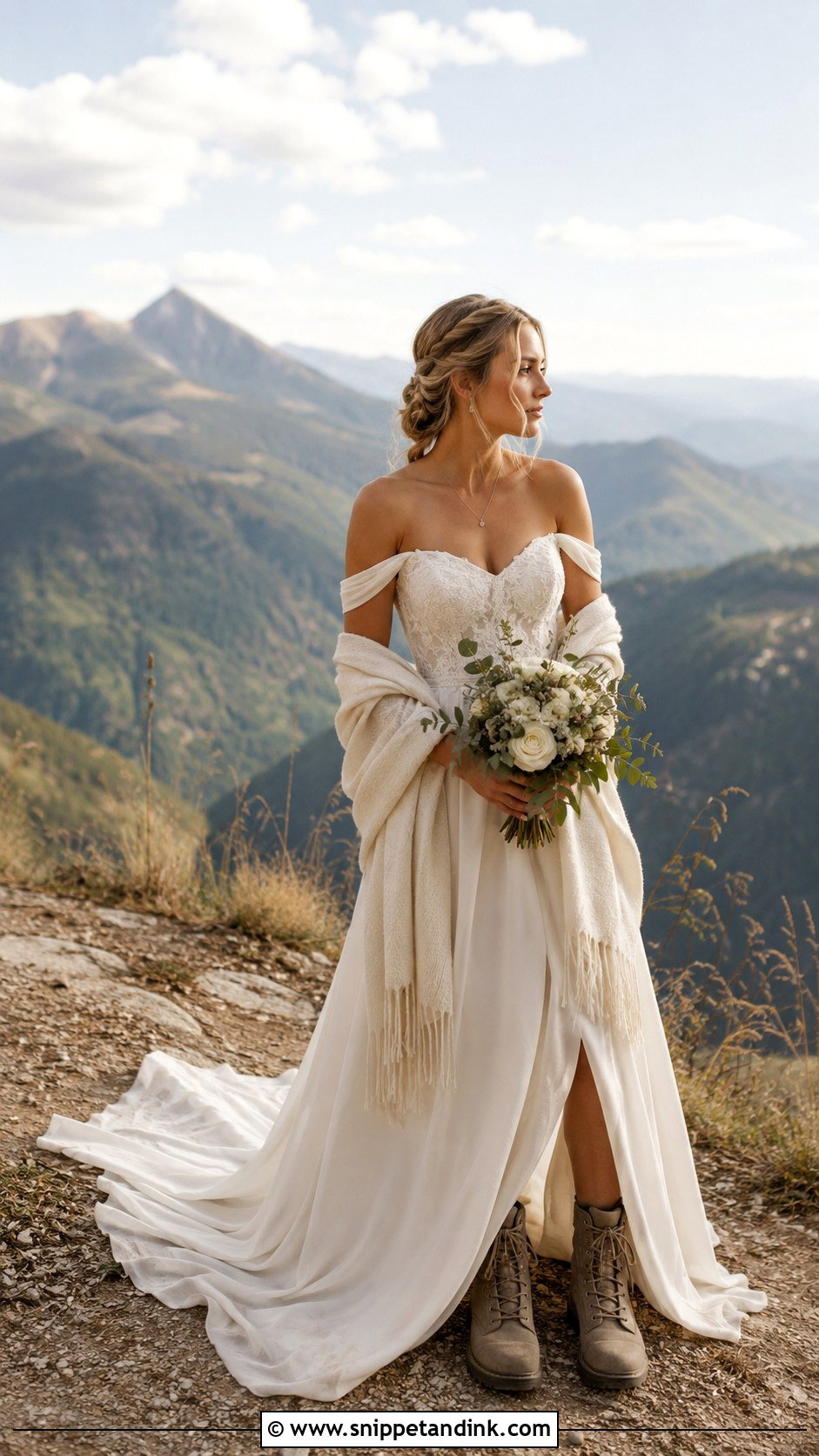
Off-the-shoulder necklines and backpacks don’t get along. The straps sit exactly where the neckline does, so I’d keep this one for short walks, cabins and overlooks you can drive close to. Make sure the sleeves are anchored with elastic or boning so they don’t creep up every time you lift your arms. A wrap or coat for breaks and a delicate necklace are all it needs. Late spring and summer suit it best.
12. Mountain Elopement Corset Dress
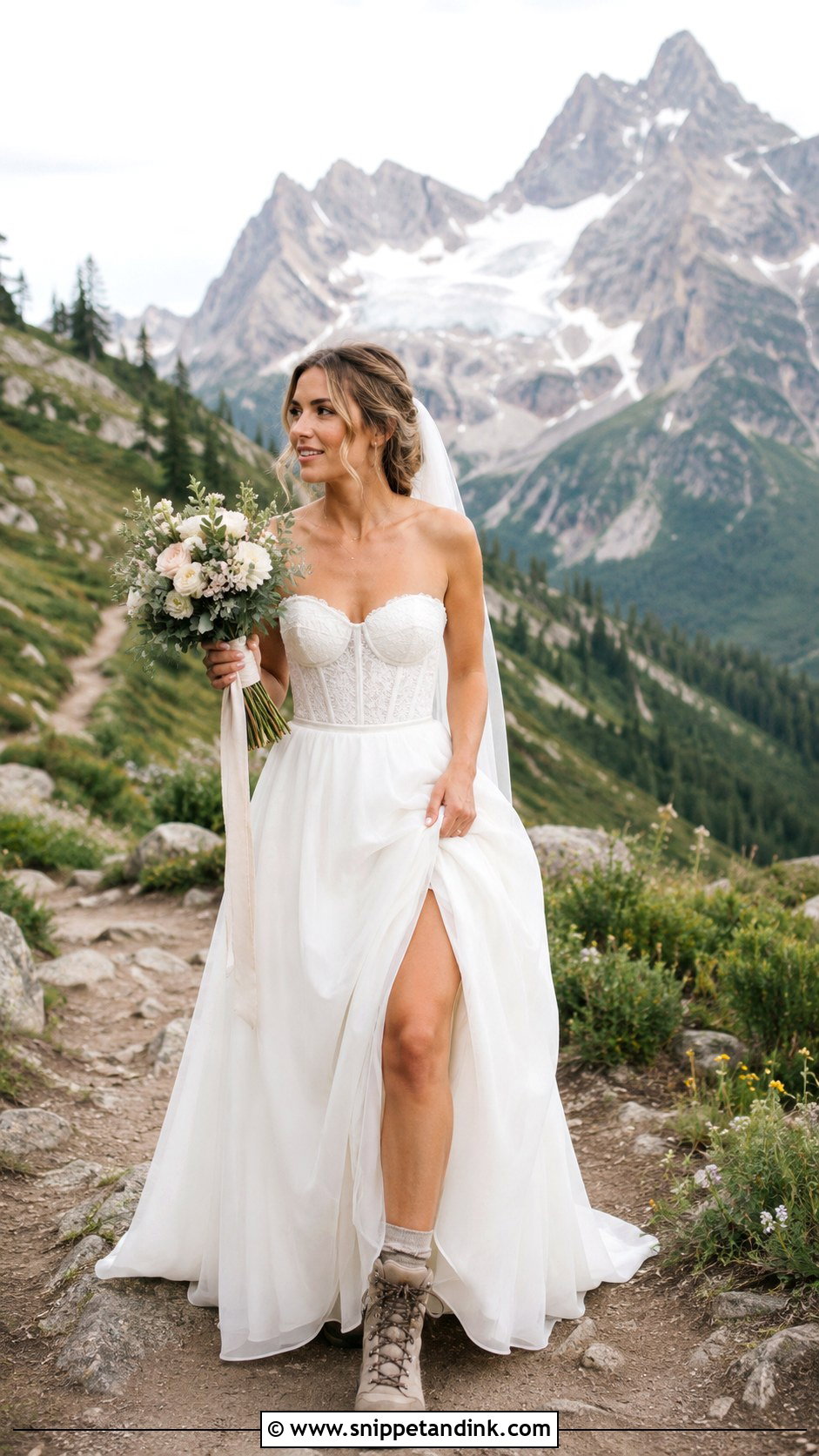
A corset bodice does a lot of work on a long day: it supports the bust so you don’t need a separate bra and holds its shape after hours of moving. For mountains, I’d choose a corset with flexible boning rather than a rigid one, because bending to climb or sit gets uncomfortable fast in a stiff bodice. Pair it with an A-line or flowing skirt. Ask your seamstress to leave a little room at the ribs if you’ll be hiking at altitude, where breathing feels harder anyway.
13. Mountain Elopement Backless Dress
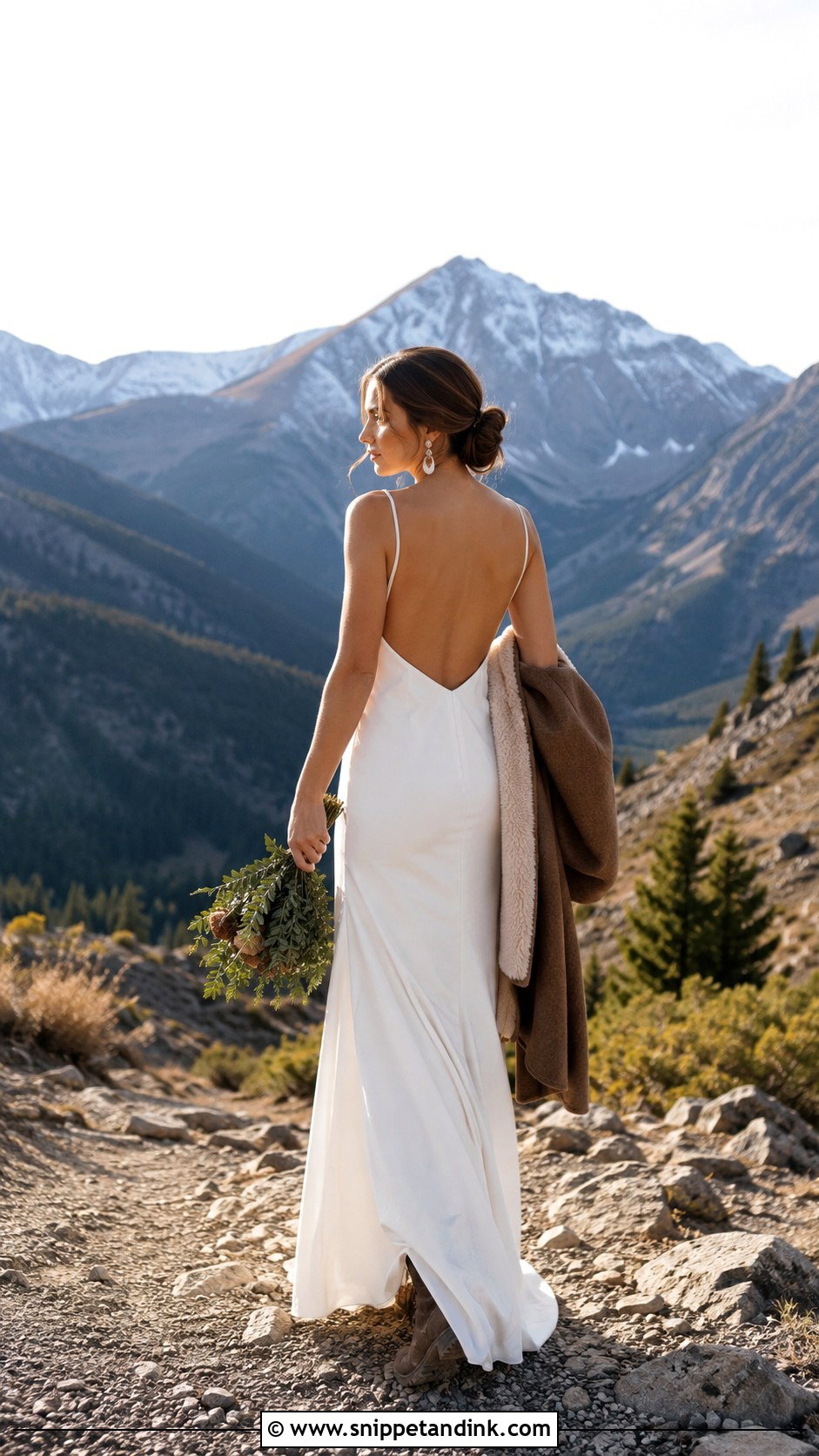
Open backs look great from behind on a trail, which is where you’ll often be standing. The practical problem is support, so I look for secure straps, built-in cups or a bodysuit-style lining, and I fit it with the bride moving, not standing still. A plain backless crepe, lace or satin dress needs very little styling. It is a warm-weather dress, or one for days when you can easily throw a layer back on between photos.
14. Mountain Elopement Detachable Train Dress
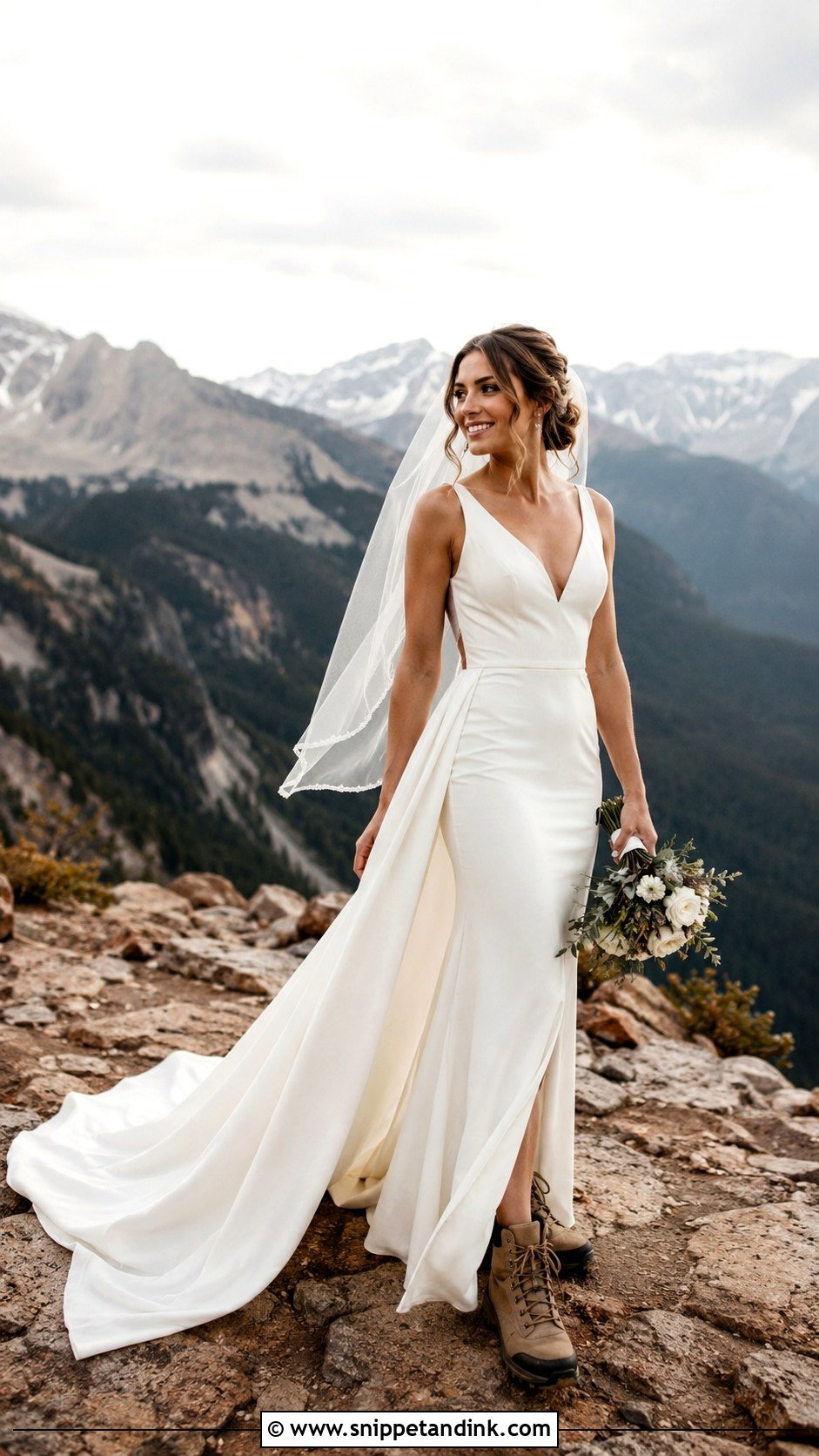
A detachable train is the best of both: walk up in a simple dress, then clip the train on at the ceremony spot. I’d choose a base dress that works on its own, a fitted crepe gown, a satin column or a lace sheath. Practice attaching the train at home, because buttons and hooks are harder with cold fingers, and pack a small clip for wind. Then take it off again for the walk down.
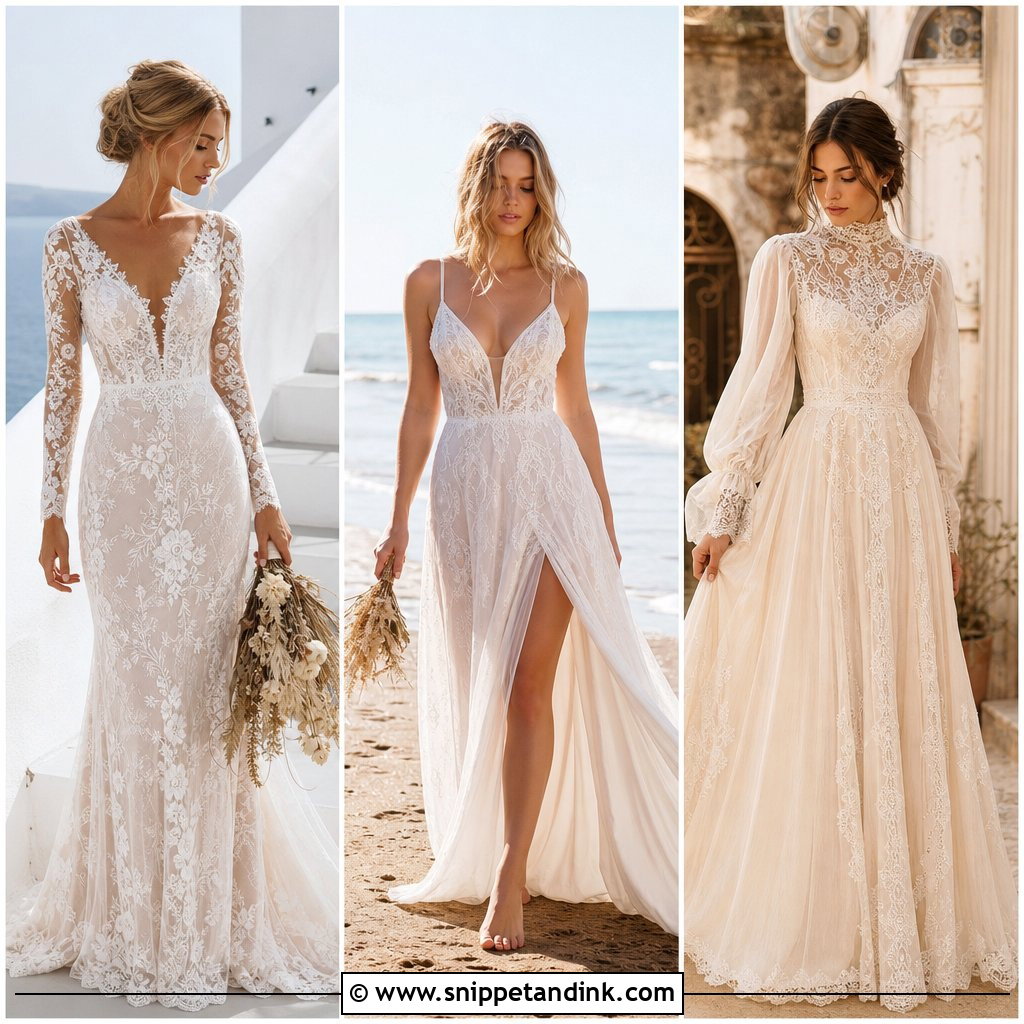
15. Mountain Elopement Two Piece Dress
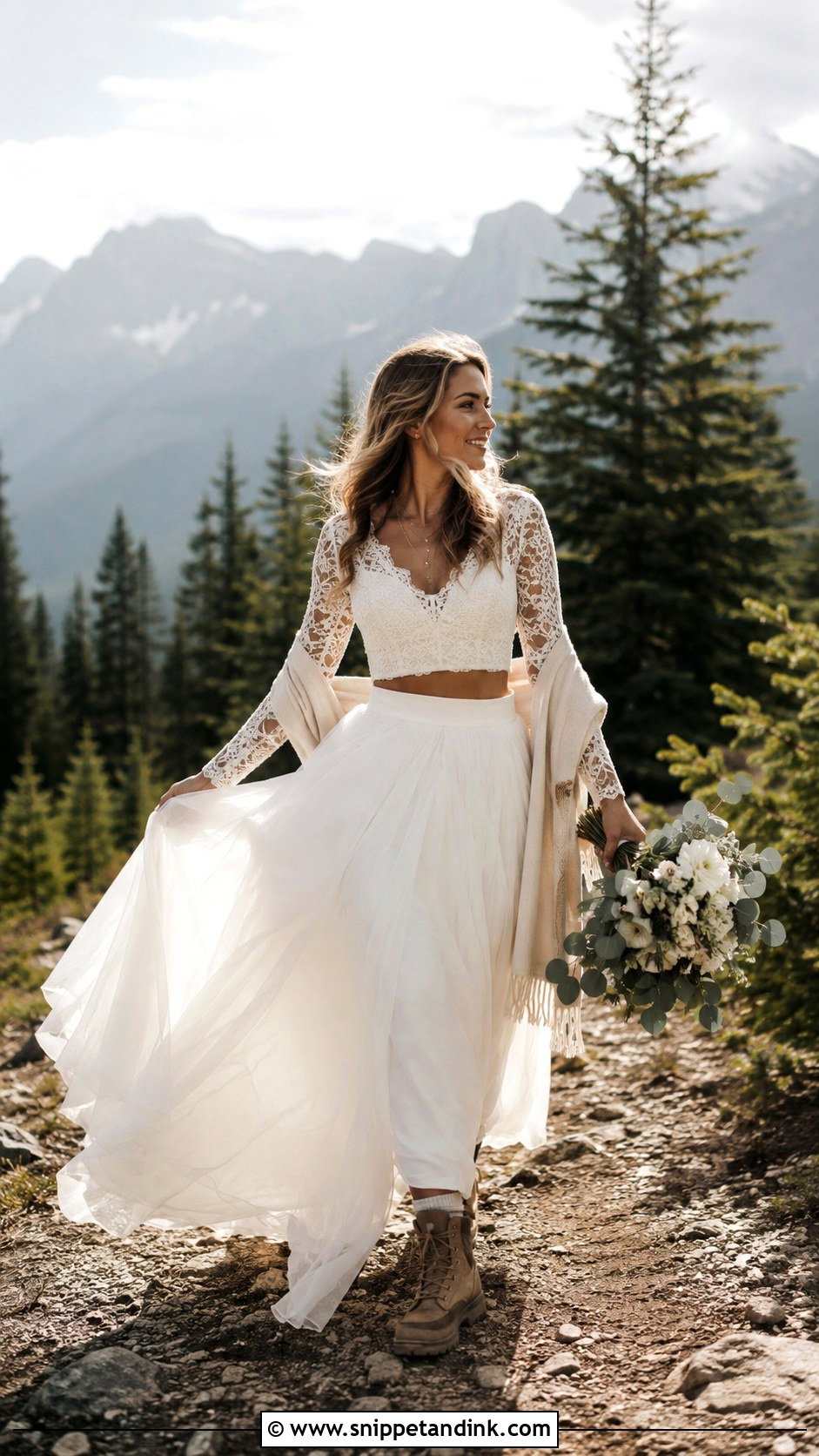
Separates make a mountain day easier in ways a gown can’t. A lace crop top with a high-waisted chiffon skirt, or a satin camisole with a long overskirt, packs flat and lets you swap the top for a sweater at sunset. They can also be fitted separately, which helps if your top and bottom sizes differ. I’d make sure the top is long enough to stay tucked when you raise your arms on a scramble.
16. Mountain Elopement Sweater Dress
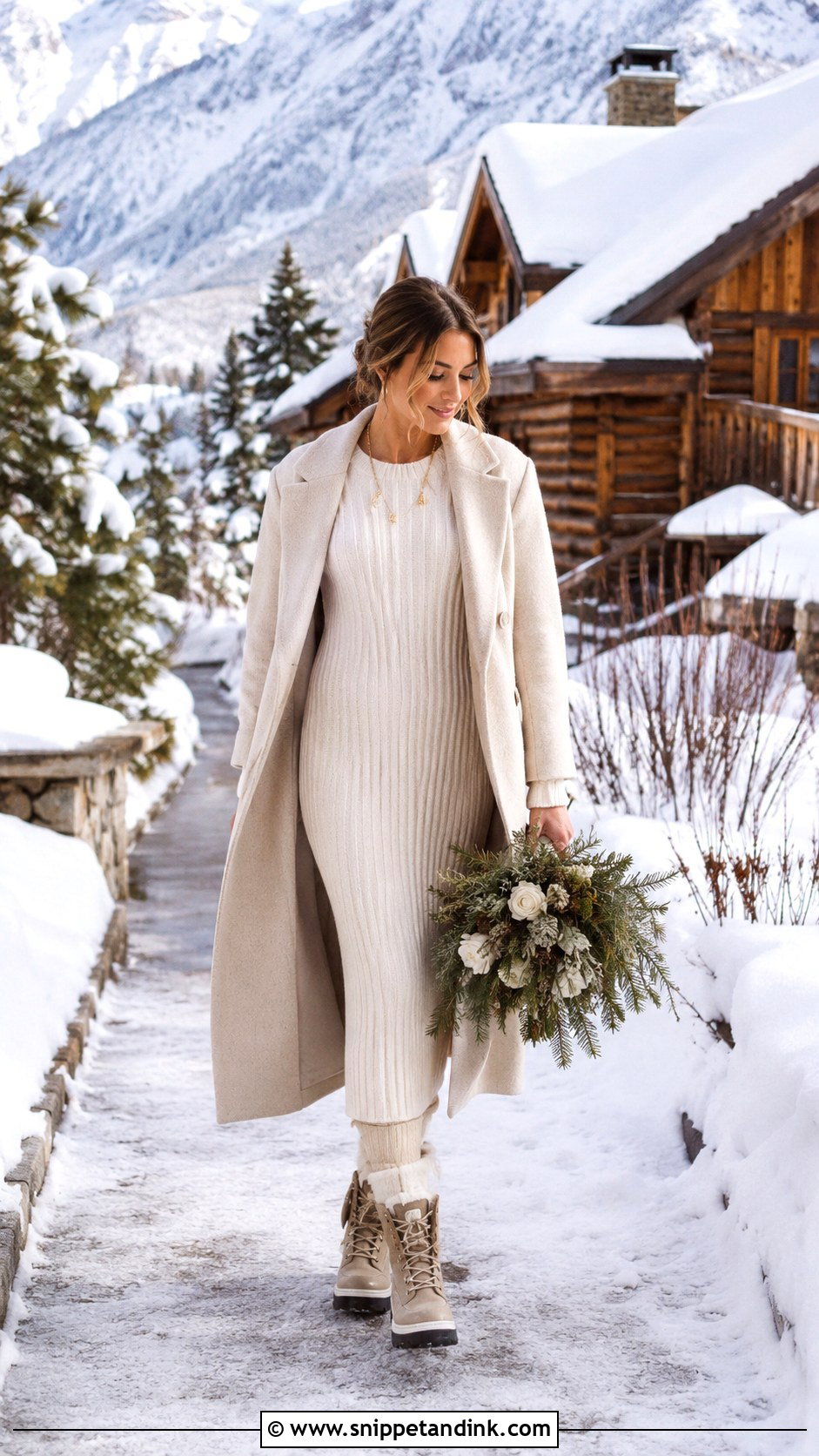
Is a sweater dress really a wedding dress? In the snow, with the right knit, absolutely. I look for ivory ribbed knit or a soft cashmere blend that hugs without clinging, then add tall or insulated boots, a wool coat, warm tights and simple gold jewelry. Wool can pill where a bag strap rubs, so carry the bag on the other shoulder. Evergreens or dried textures in the bouquet keep it seasonal.
17. Mountain Elopement Winter Dress
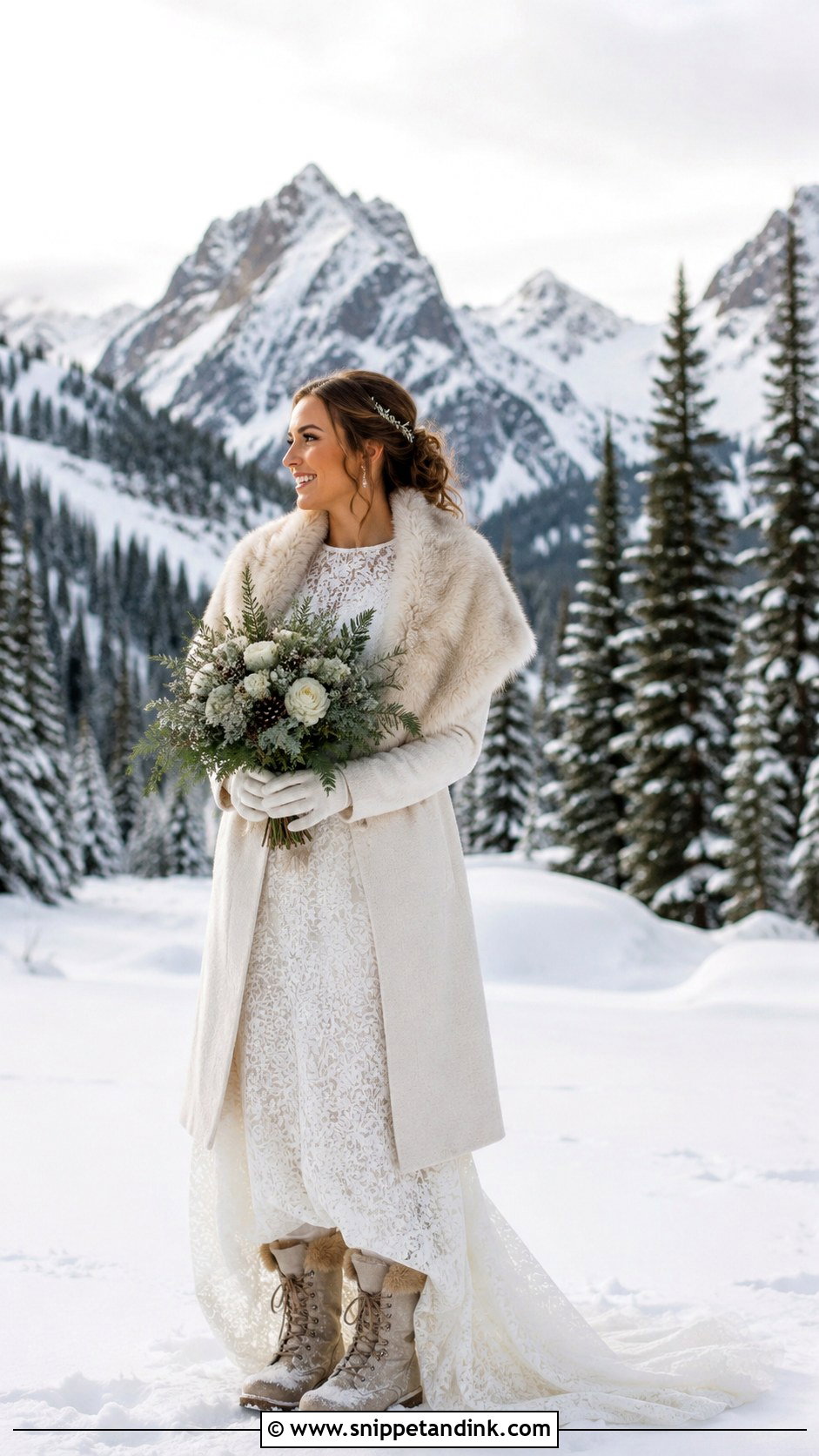
A winter mountain elopement dress has to be warm before it is anything else. I start with a long-sleeve gown in crepe, satin, lace or heavier chiffon and size the skirt so thermal leggings fit underneath. A high neckline helps, along with lined boots, a wool coat, gloves and a faux-fur wrap. Keep the train short. Snow soaks into fabric fast, and a wet hem gets heavy and cold within minutes.
18. Mountain Elopement Summer Dress
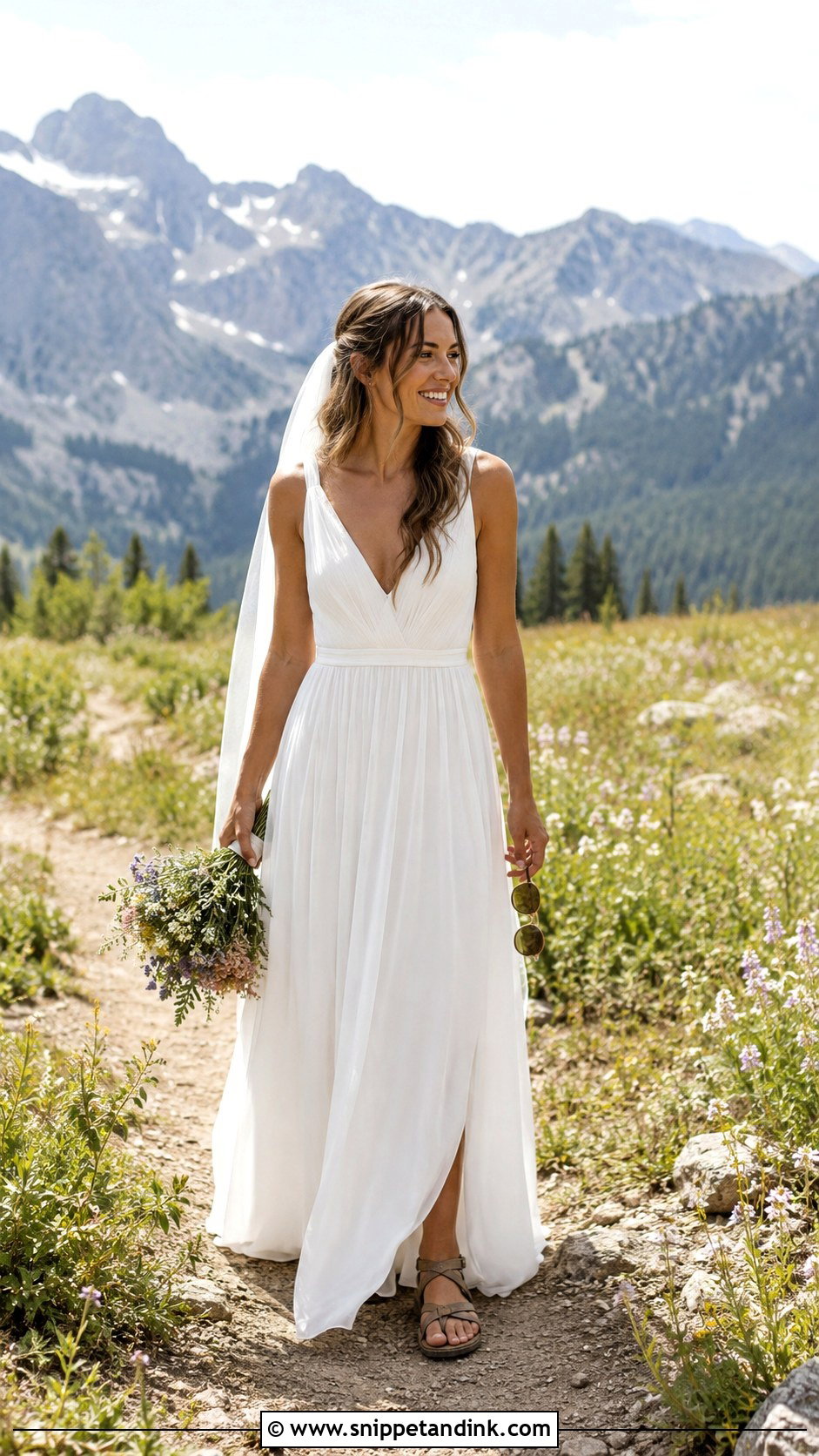
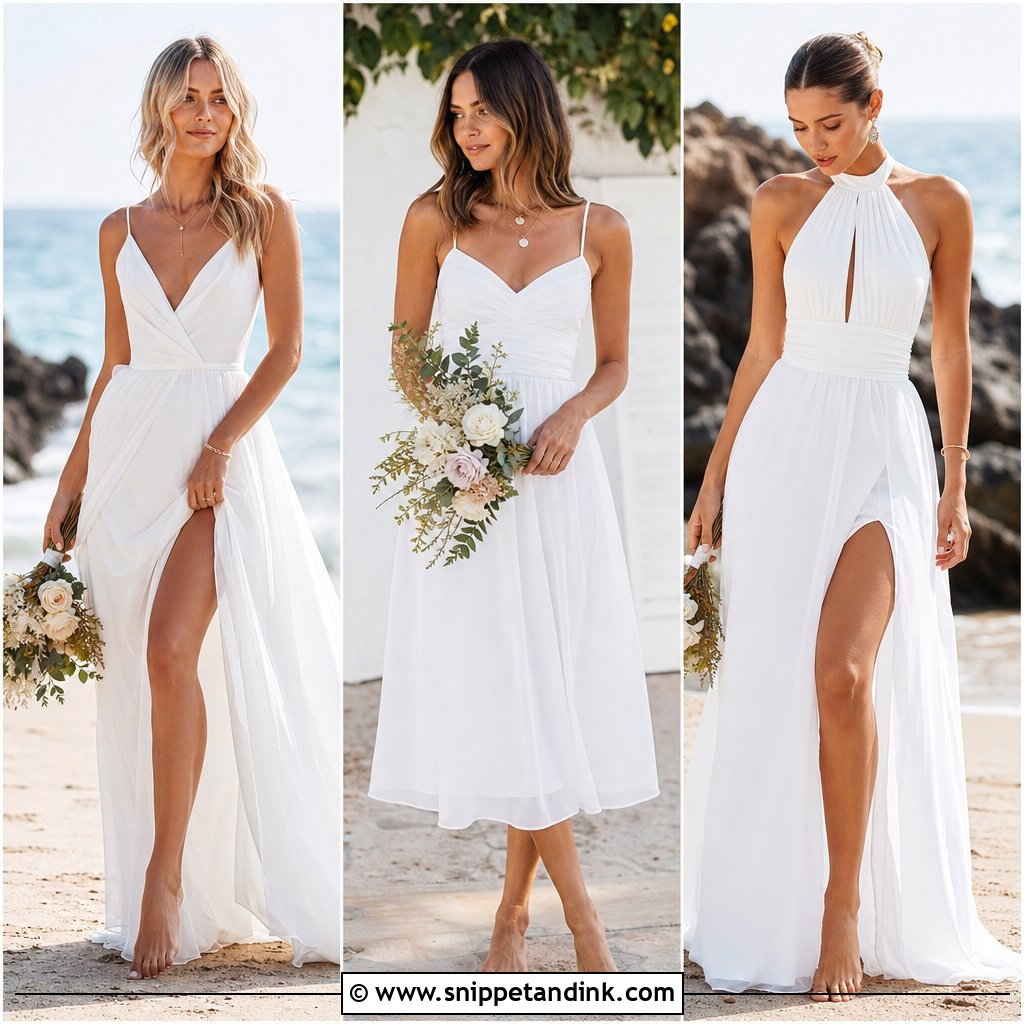
Summer brings bright sun and cool evenings, so I dress for both. Chiffon, organza, cotton lace or light satin breathe well in a sleeveless A-line, a slip or a flutter-sleeve gown. Organza holds its shape in heat without clinging. Hiking sandals or light boots depend on the trail, and a loose hairstyle copes better with wind. Always pack a layer; once the sun drops behind a ridge, the temperature falls quickly.
19. Mountain Elopement Fall Dress
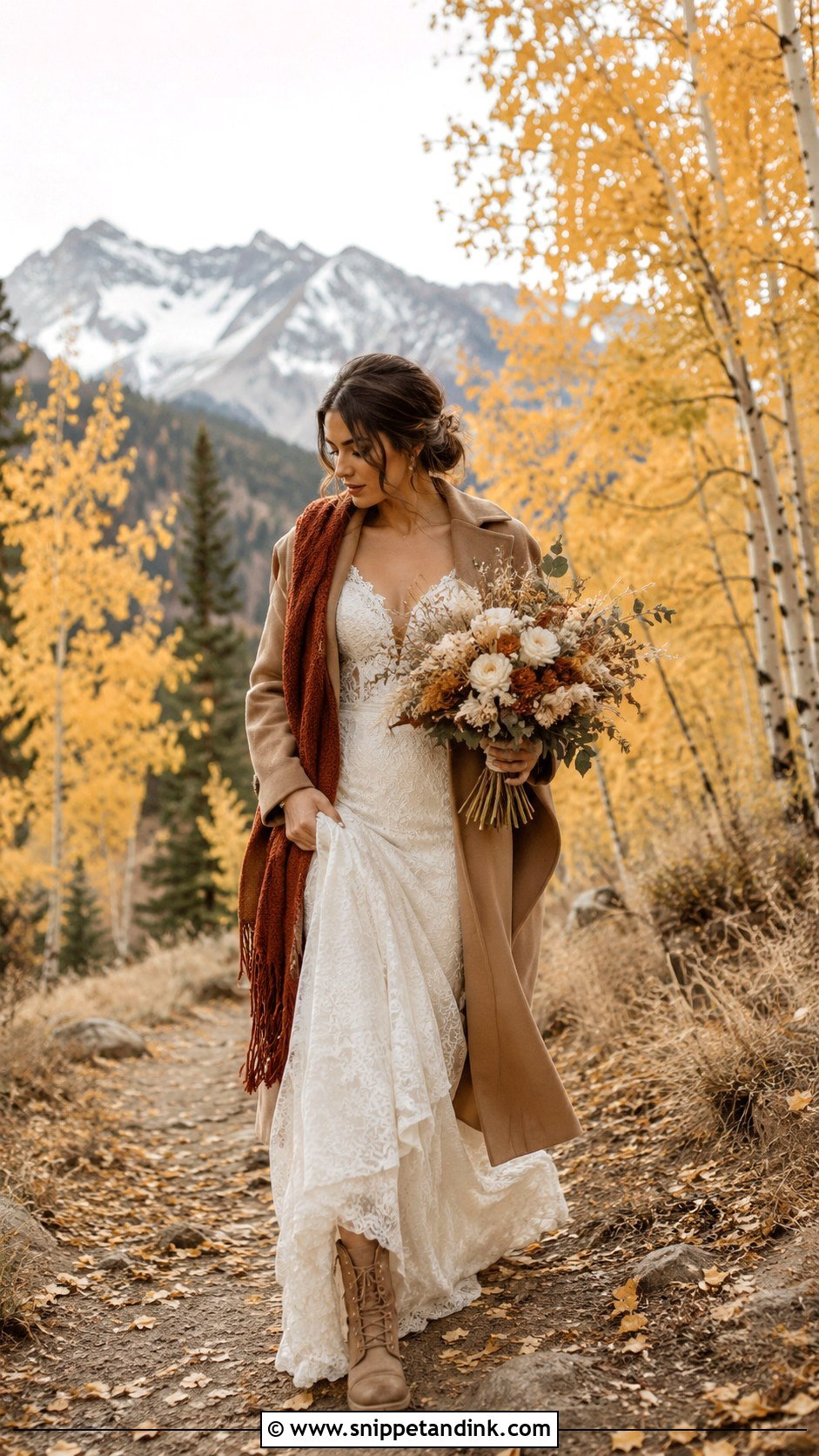
Autumn is the season for warmer whites. A lace or crepe gown with sleeves suits tan boots, a camel coat or a rust shawl, and champagne, blush or soft beige dresses sit well among turning leaves. Wet leaves are slippery, and damp trails mark a hem fast, so I’d have the dress shortened enough to stay clear of the ground. Dried grasses and muted greenery in the bouquet tie it together.
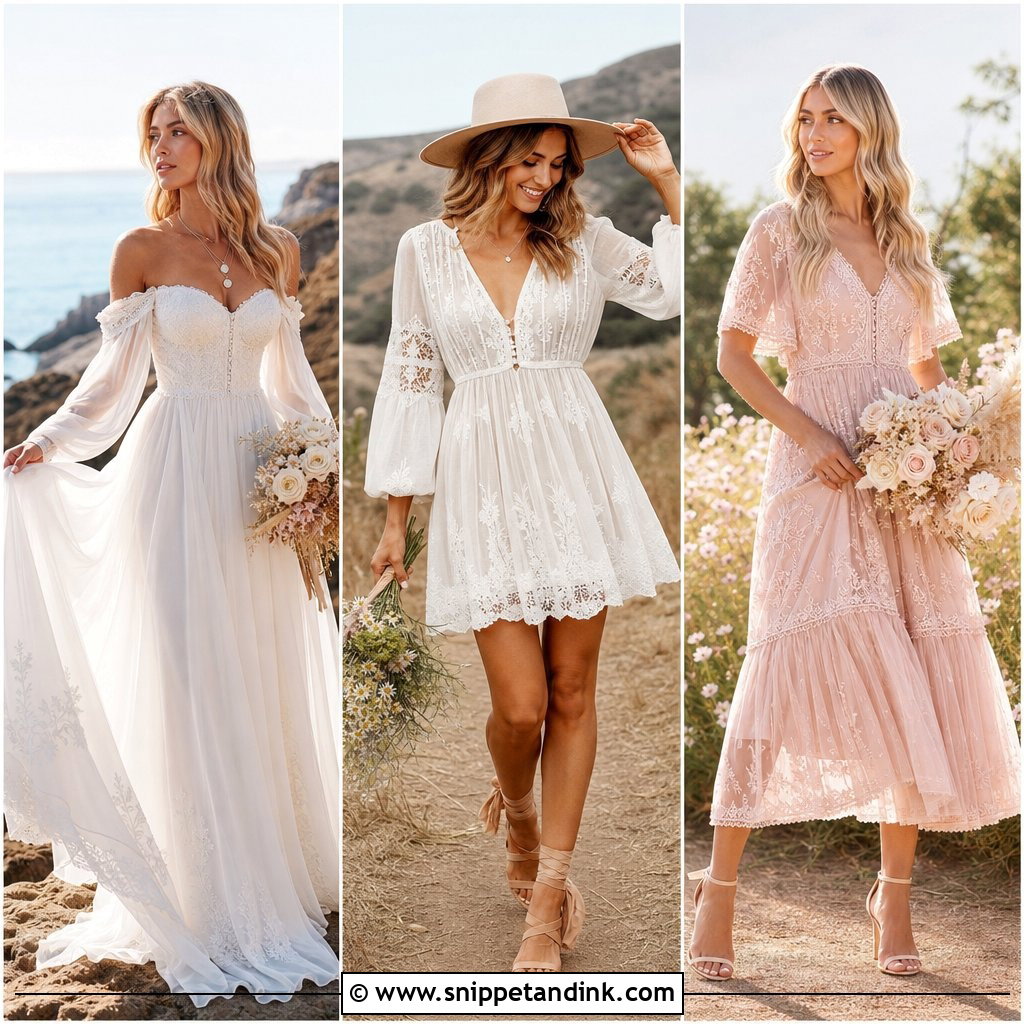
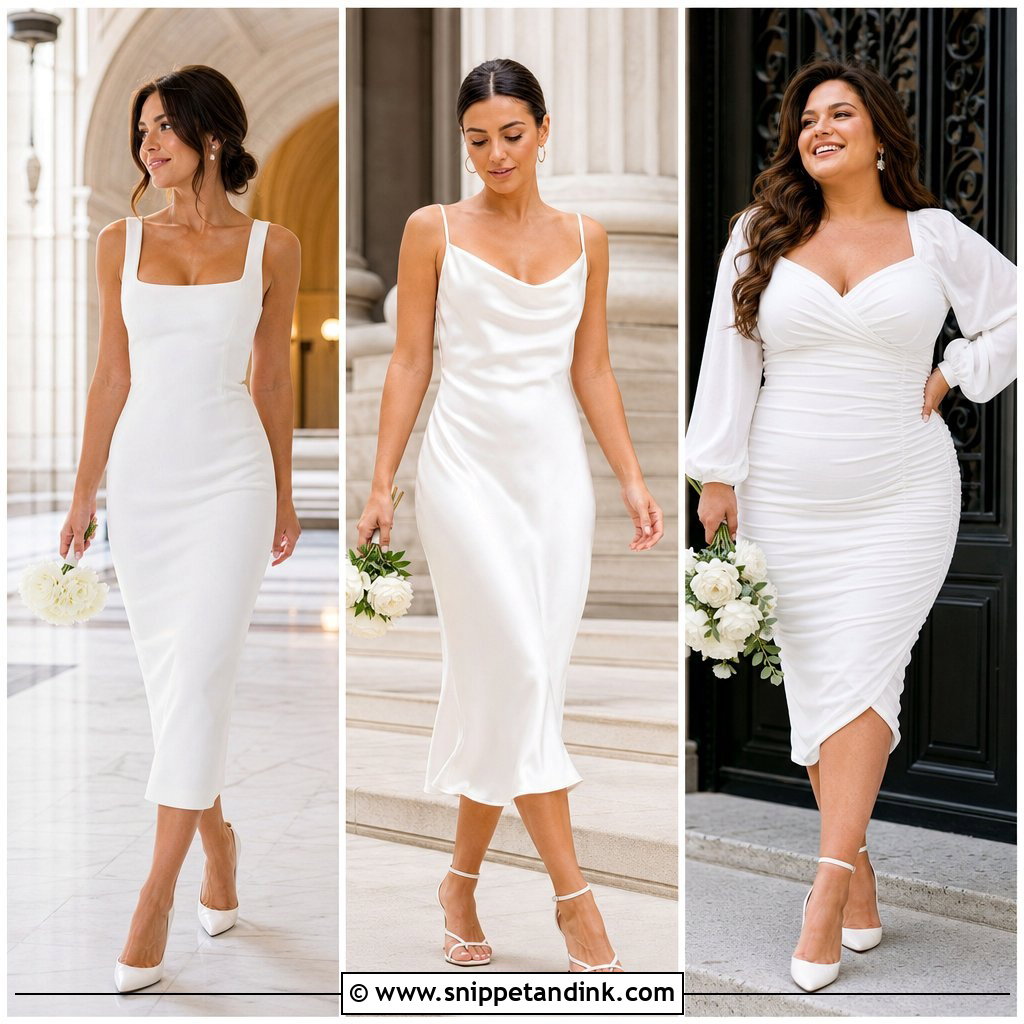
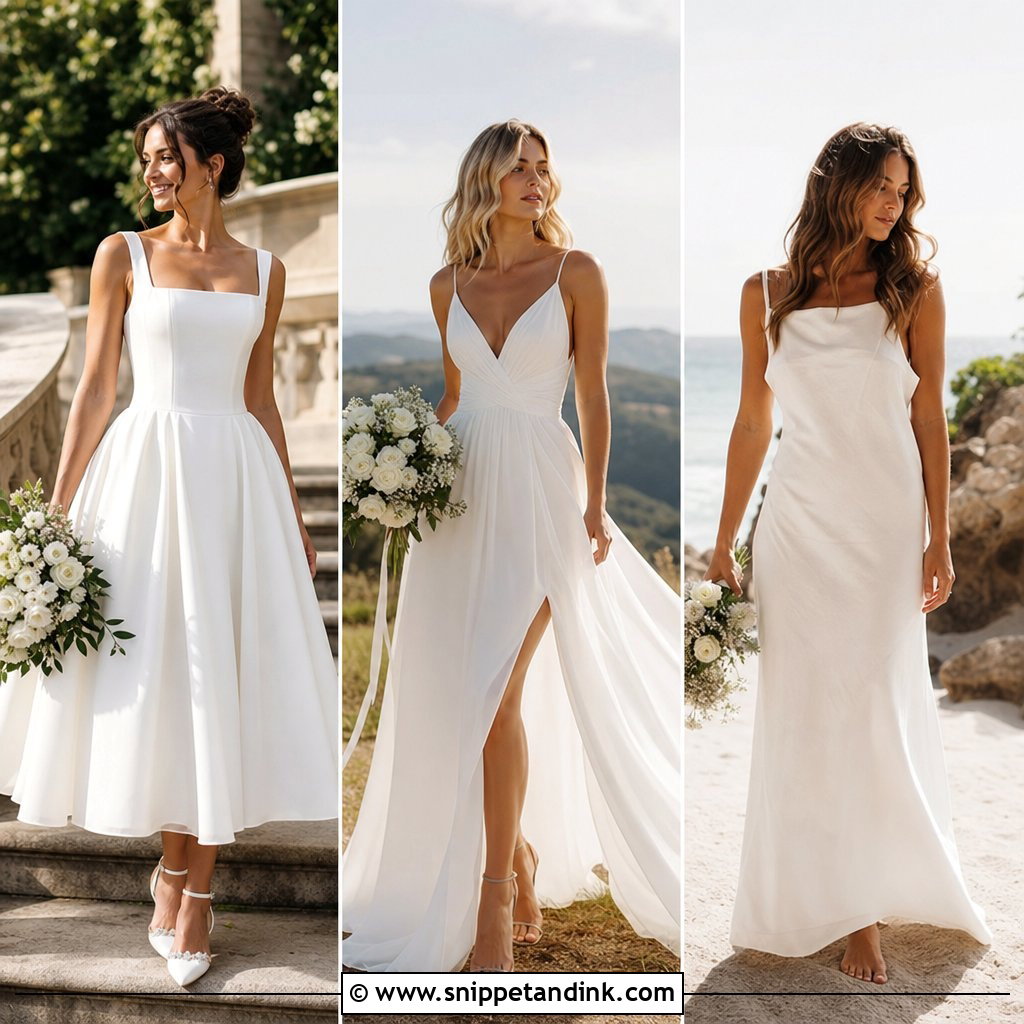
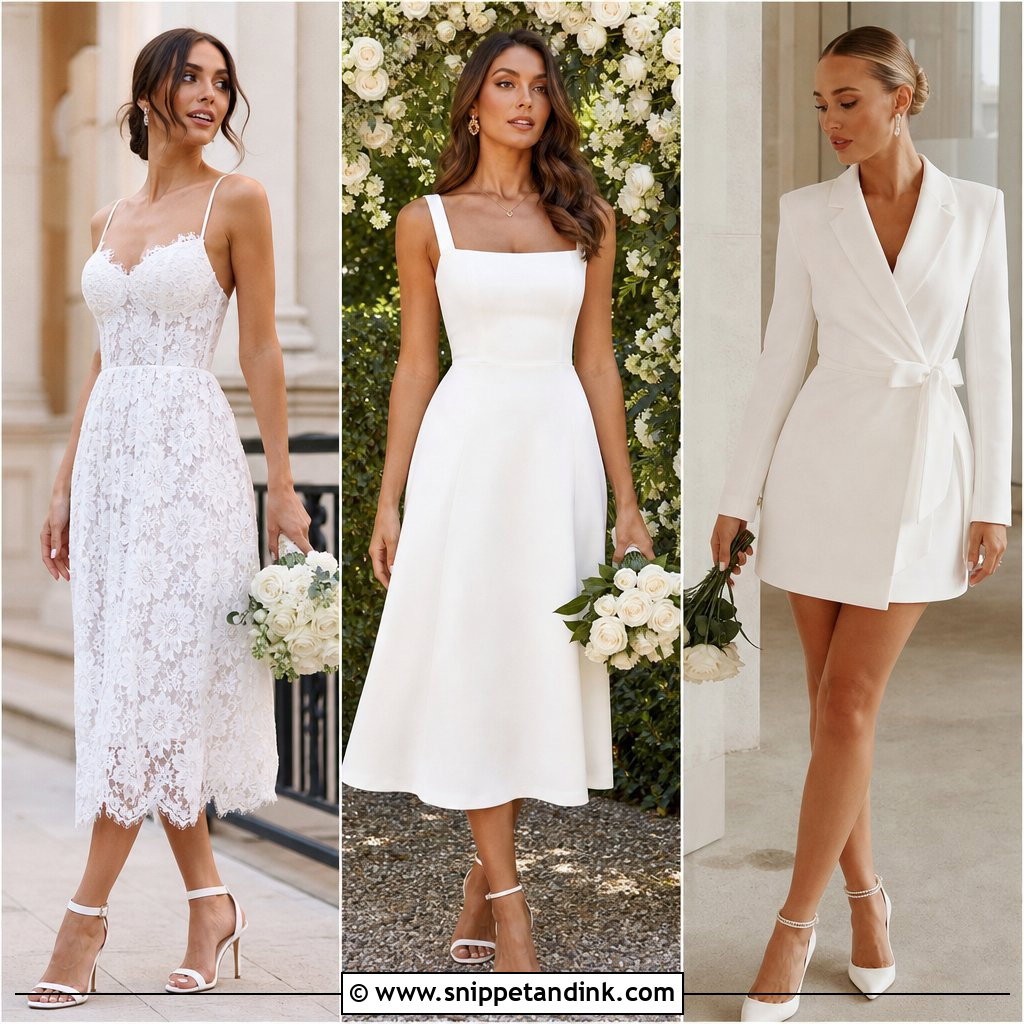
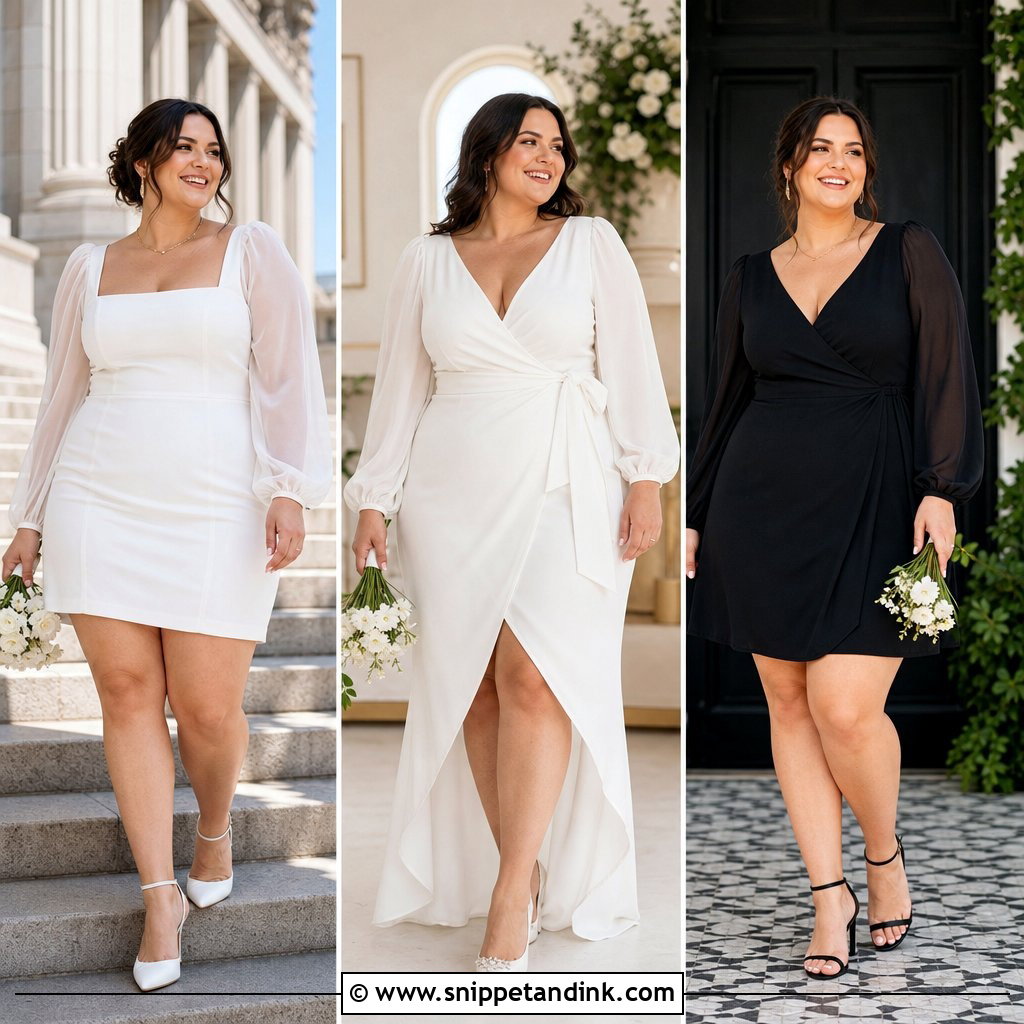
20. Mountain Elopement Plus Size Dress
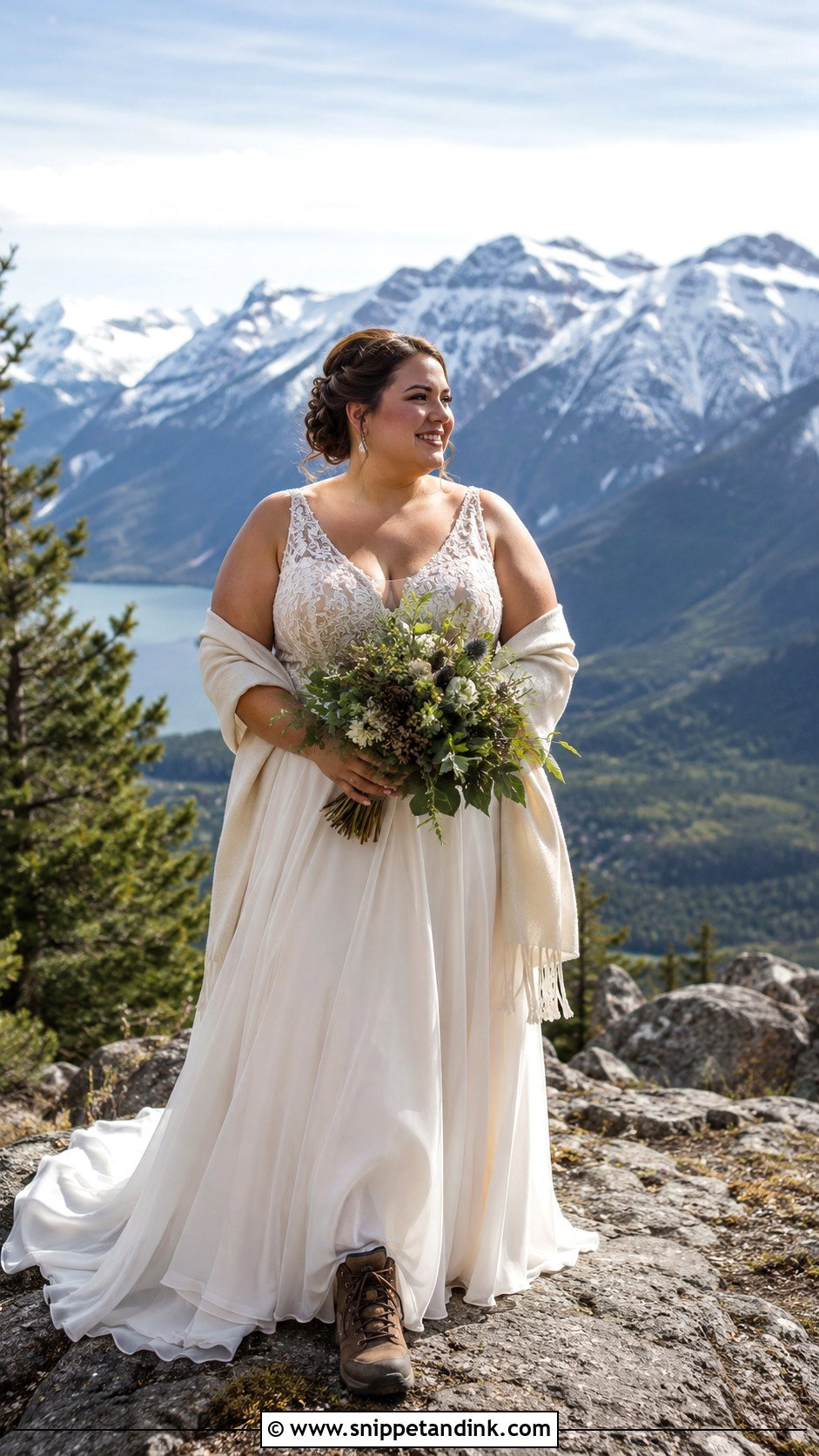
A plus size mountain dress needs to feel secure first. I look for strong straps, a supportive bodice and a lining with some give, then a skirt shape that lets you climb without pulling or bunching. Empire waists, wrap styles, A-lines and soft fit-and-flare cuts all work, but the only test that counts is how it feels when you sit and step up. Anti-chafe shorts under the skirt make a long walk much more comfortable, and try your warm layer on over the gown before the day.
21. Mountain Elopement Maternity Dress
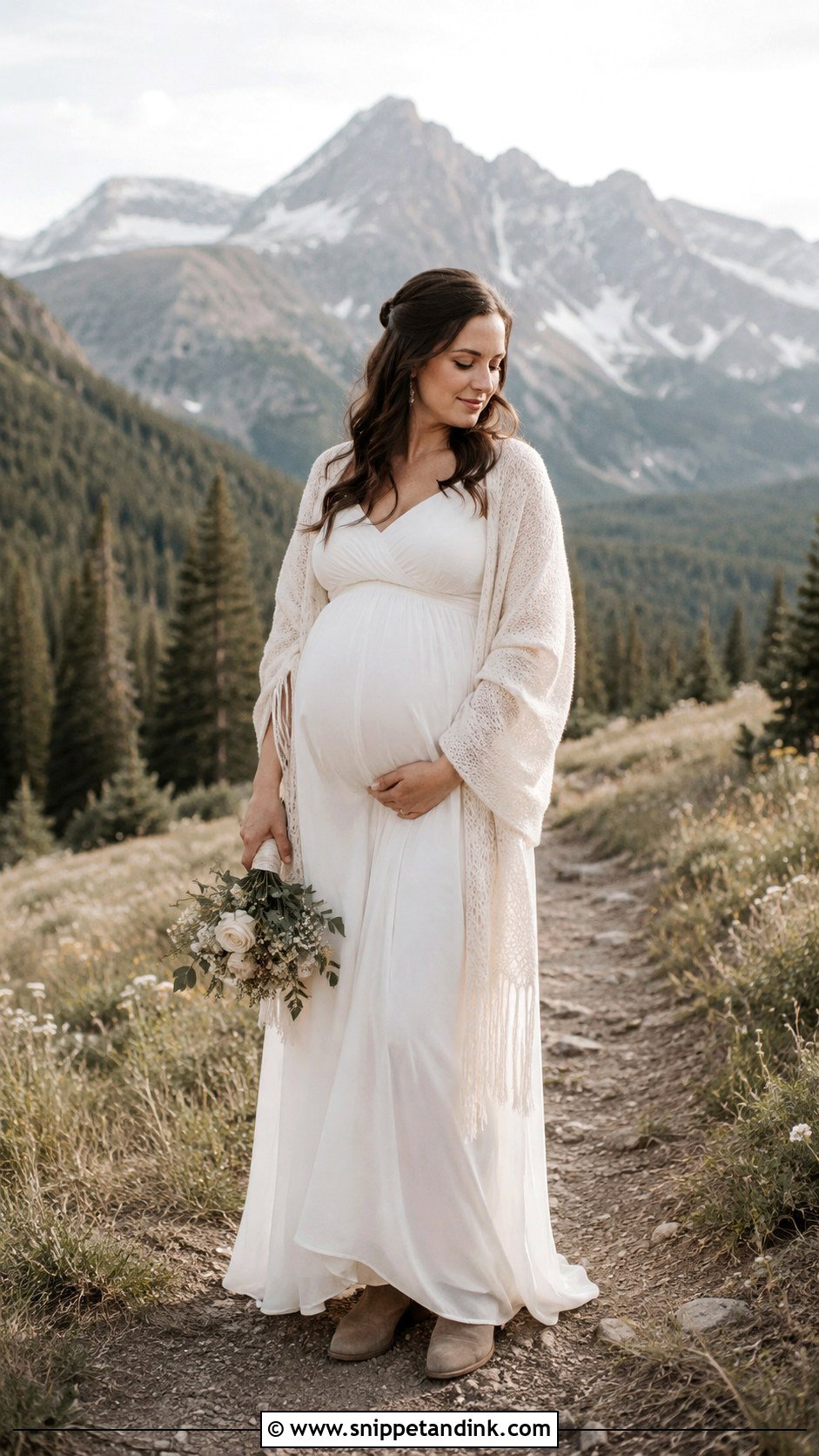
For a maternity mountain elopement dress, I plan for the body on the day, not the body at the last fitting. Empire waists, stretch lace, wrap dresses and flowing chiffon give room through the belly, and I’d schedule the final fitting as close to the date as the seamstress allows. Breathable lining matters, and flat boots with good grip matter more. Keep the hem well off the ground for footing on uneven trails, and the bouquet small enough to carry easily.
22. Mountain Elopement Colored Dress
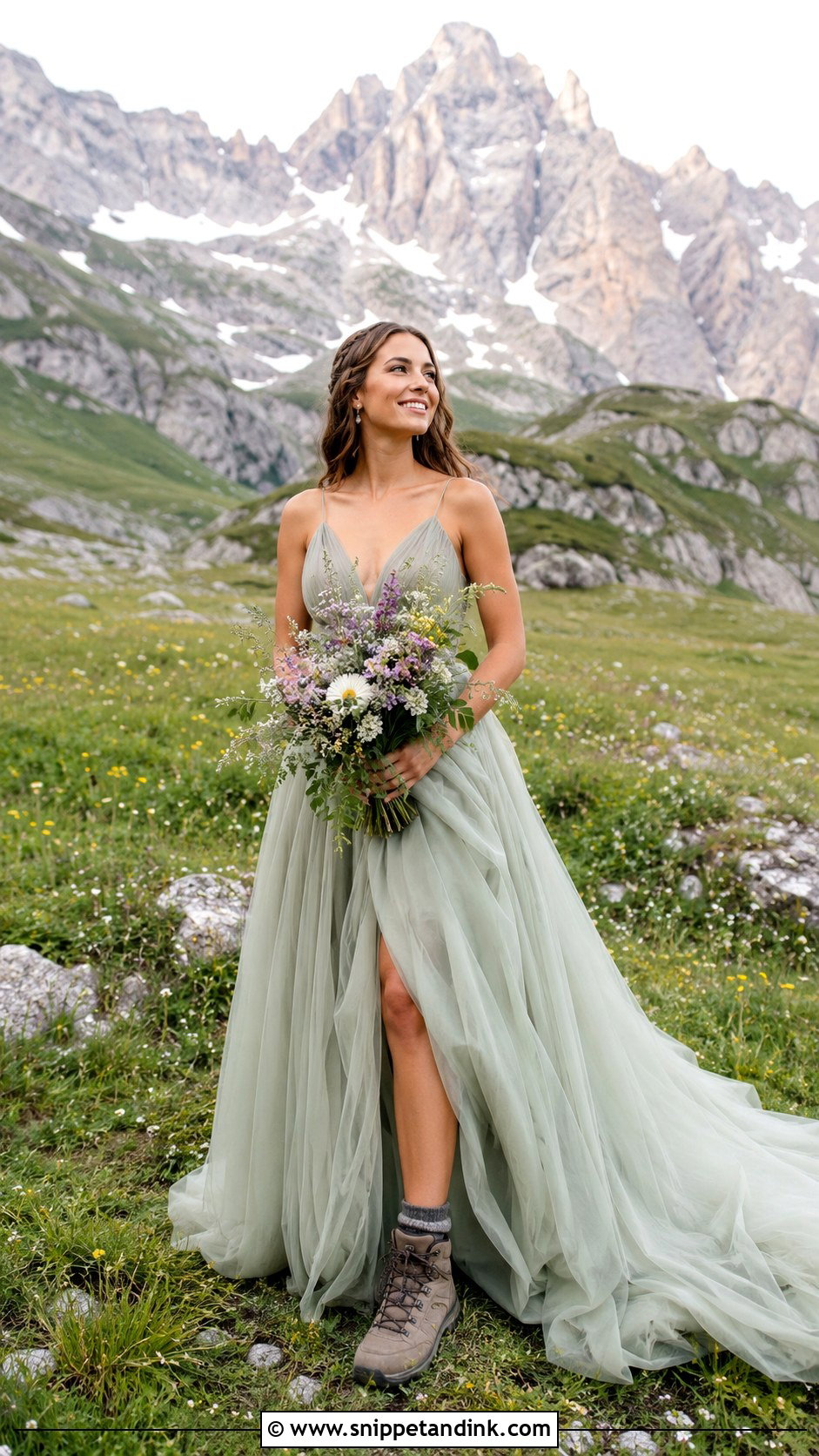
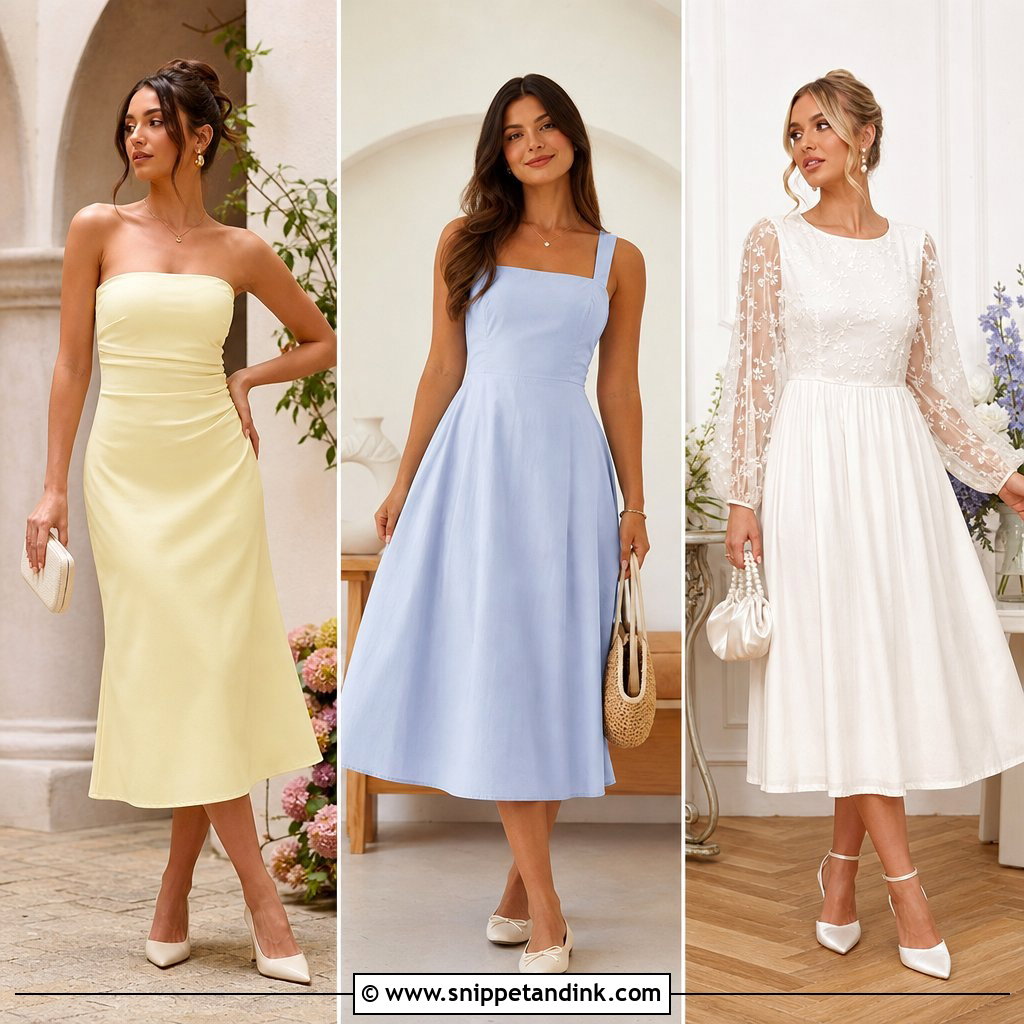
Color often suits mountain scenery better than stark white. Soft blue, sage, lavender, pale yellow and deep rust all look natural outdoors, and champagne or blush feel close to bridal. I keep the silhouette bridal, a flowing A-line, a lace gown or a satin slip, so the color reads as a wedding choice rather than a guest dress. Let the bouquet complement the shade instead of matching it, and keep boots neutral.
23. Mountain Elopement Simple Dress
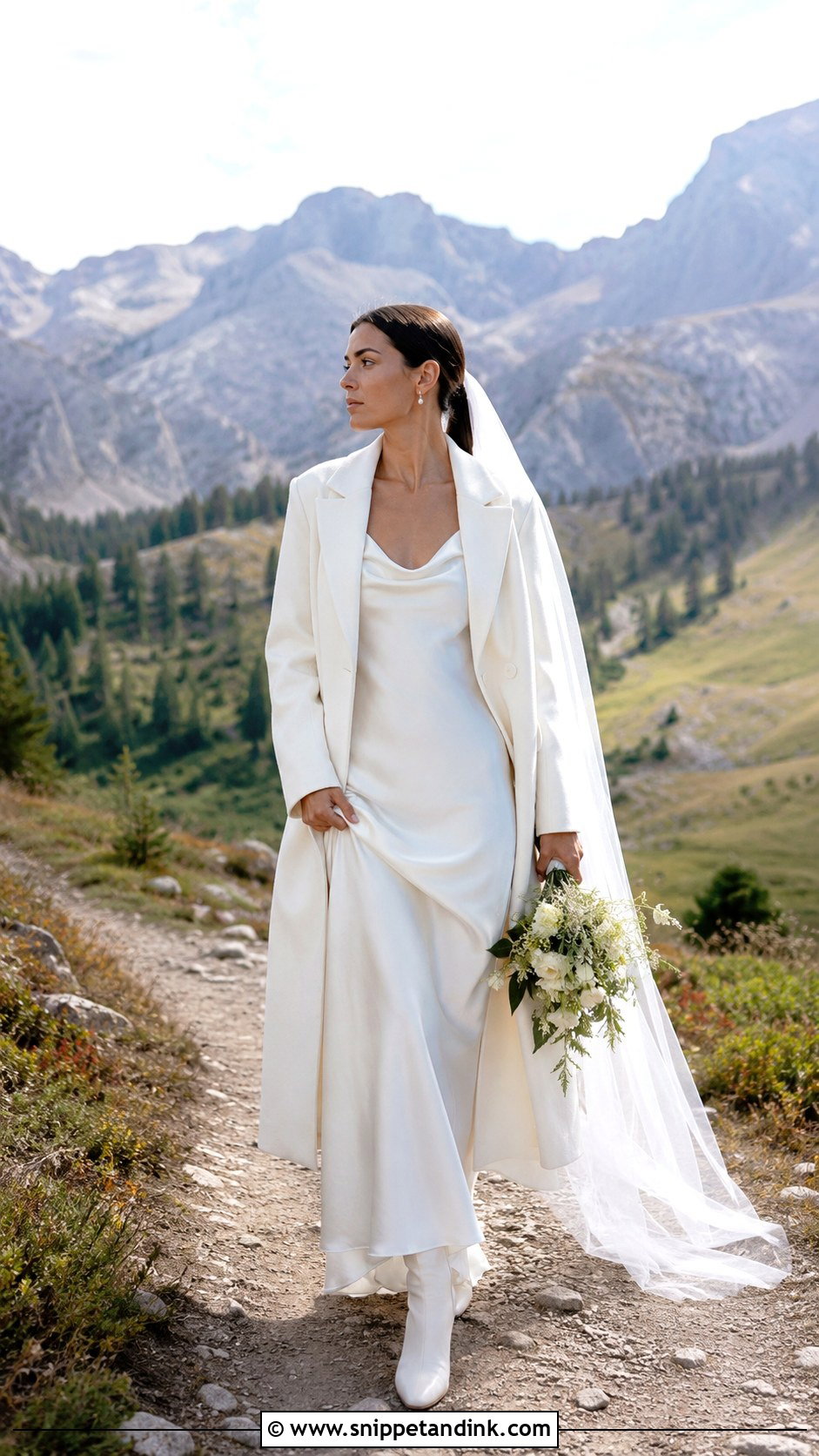
The mountains supply the drama, so the dress doesn’t have to. A clean satin slip, a crepe column or a plain long-sleeve gown keeps the focus on the setting. Simple dresses are also lighter, easier to pack and quicker to alter. Small earrings, a sleek veil, comfortable boots and a coat for the cold are all I’d add. With so little detail, fit has to be precise, so give the seamstress time to get the neckline and hem exactly right.
24. Mountain Elopement High Low Dress
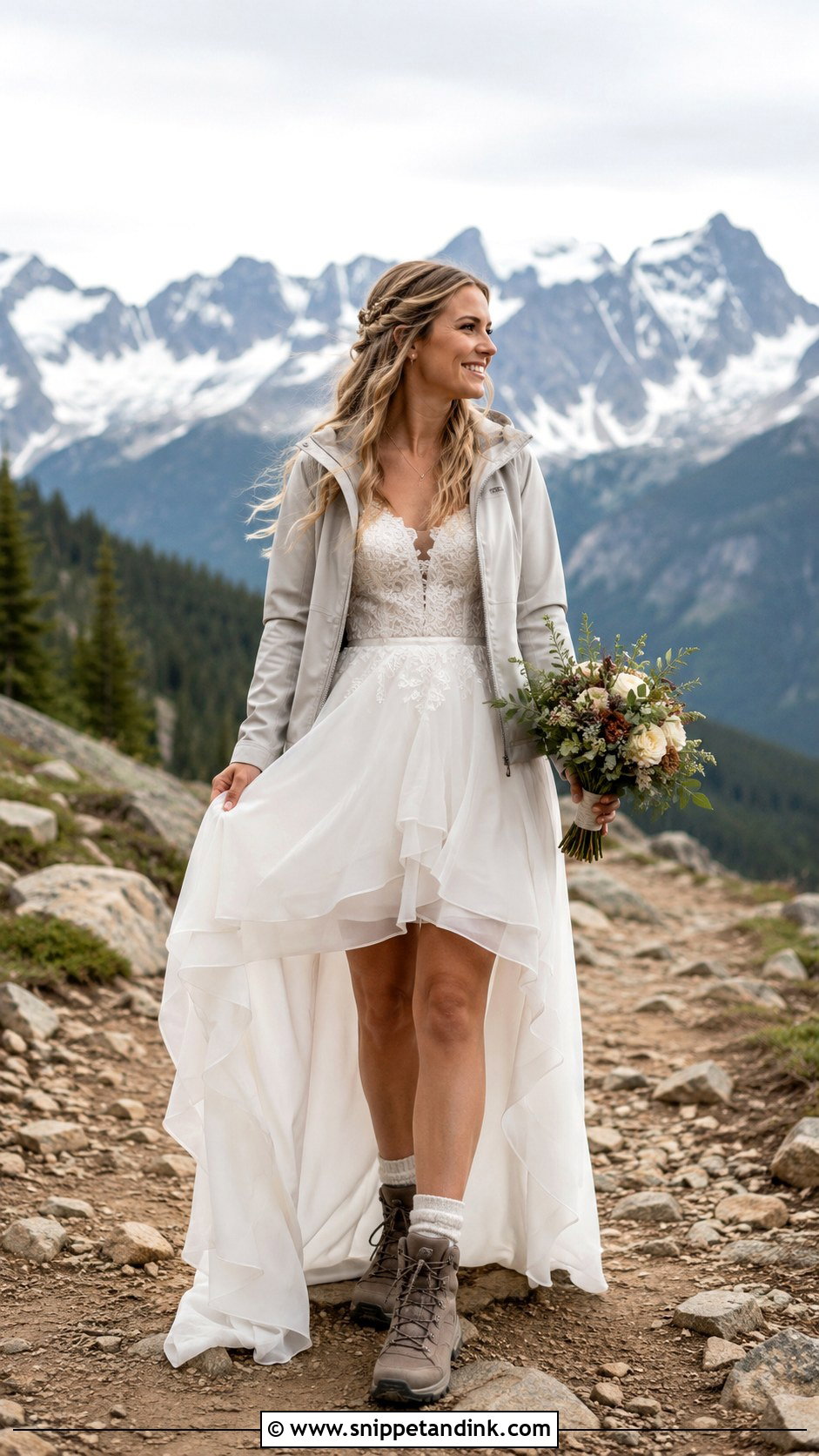
High-low hems solve the boot problem neatly: the shorter front lets you see your feet and step over rocks, while the longer back still trails. Soft chiffon or tulle with a fitted bodice works best, and a light jacket keeps it practical. Watch the side seams at your fitting; a poorly cut high-low dips awkwardly at the hip. Once the curve is right, this is one of the safest long-looking shapes for steep ground.
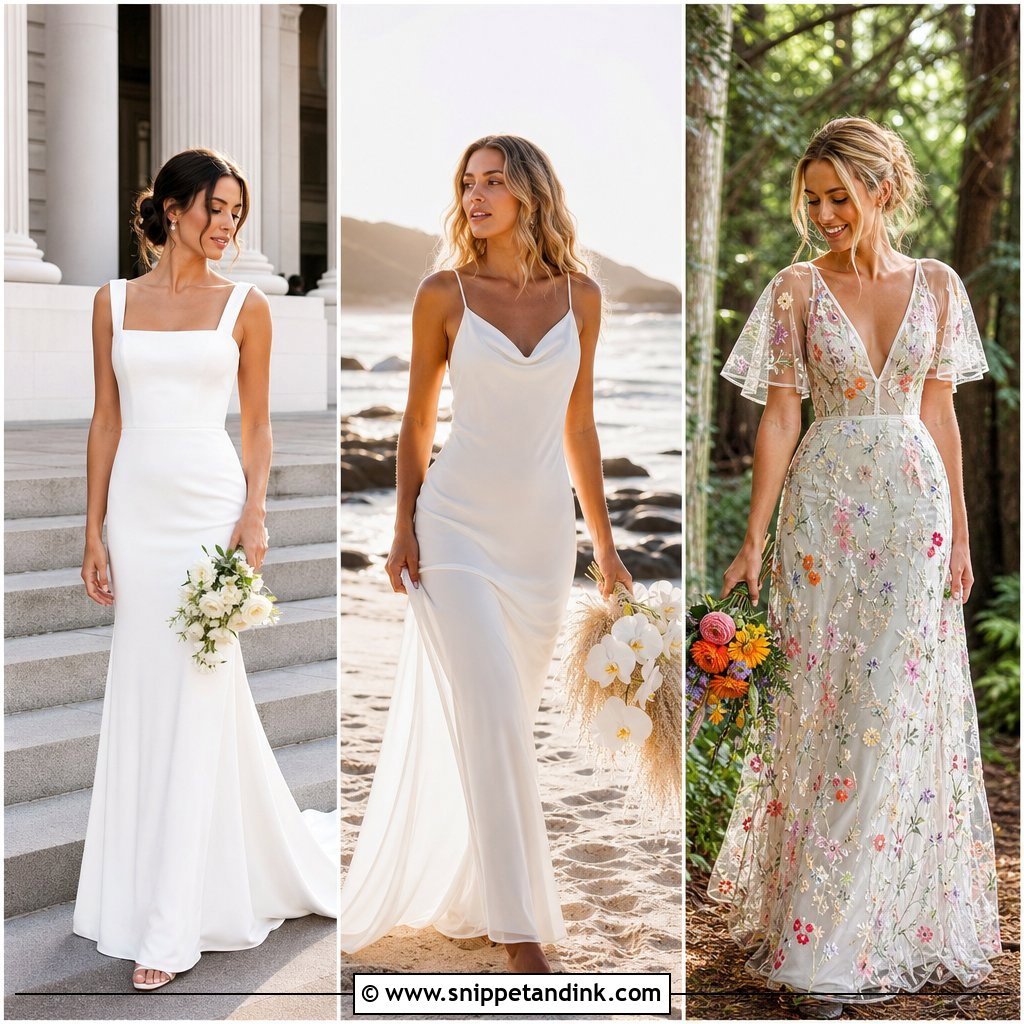
25. Mountain Elopement Dress With Boots
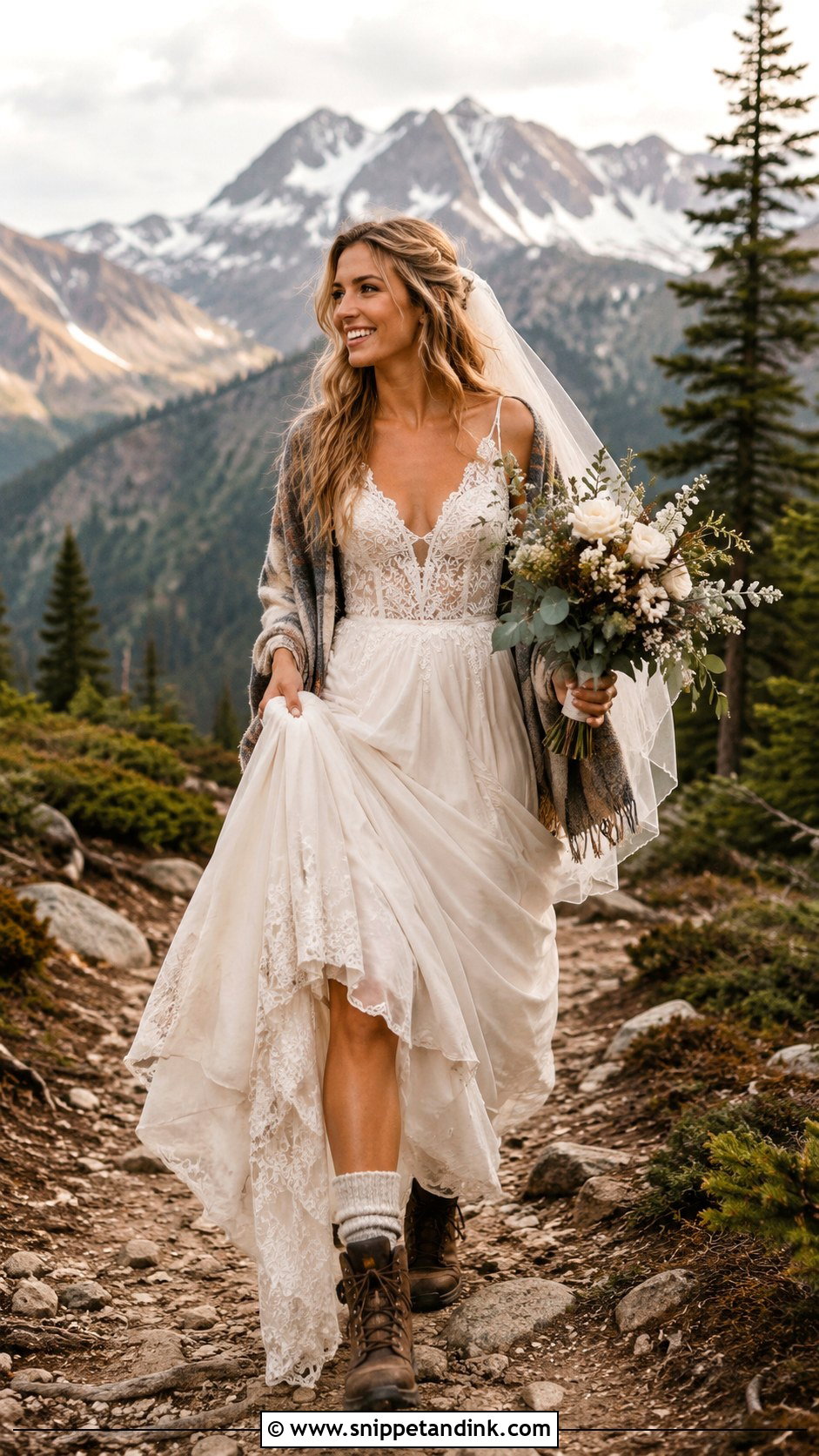
Almost any dress works with boots, and the boots should be chosen for the terrain before anything else. Waterproof hiking boots, white lace-ups, western styles or insulated winter boots all have a place. I insist on breaking them in for several weeks before the day, wearing the same wool socks you’ll wear then. New boots on a wedding hike almost always mean blisters. Add a veil or hat and a layer for the season, and you can walk with confidence.
Mud, Pine Sap and Grass Stains After the Hike
A mountain dress will come home marked, and that’s fine. What matters is what you do in the first few days. My advice is to resist scrubbing. Let mud dry completely, then lift it off gently with a soft brush; rubbing wet mud pushes it deeper into the weave. Don’t put household stain removers on silk, satin or lace, because they can leave a ring that is harder to fix than the stain.
Take the dress to a specialist cleaner within a few weeks and tell them exactly what is on it: mud, sap, grass, sunscreen or champagne. Sap and sunscreen in particular need different treatments, and stains you can’t see yet, like sugar, can brown over time.
Storing It Once It’s Clean
I store gowns flat or loosely folded in acid-free tissue inside an acid-free box, somewhere cool and dark. Skip plastic bags and hot attics, since trapped moisture and heat yellow fabric over time. If the dress has a heavy beaded bodice, folding beats hanging, because hanging weight stretches the shoulders.
Dress for the Trail You Will Actually Walk
A mountain dress succeeds when you stop thinking about it halfway up the trail. A flowing gown can look magical in the wind, but boots, warm layers and a hem that clears the ground matter just as much. Start with your route, season and elevation, then pick the fabric and shape. Lace, satin, tulle, a short dress, a colored gown or a cozy knit can all work. Pick the one that suits the climb and still feels like you at the top.
You'll Like These Ideas:


Leave a Reply