
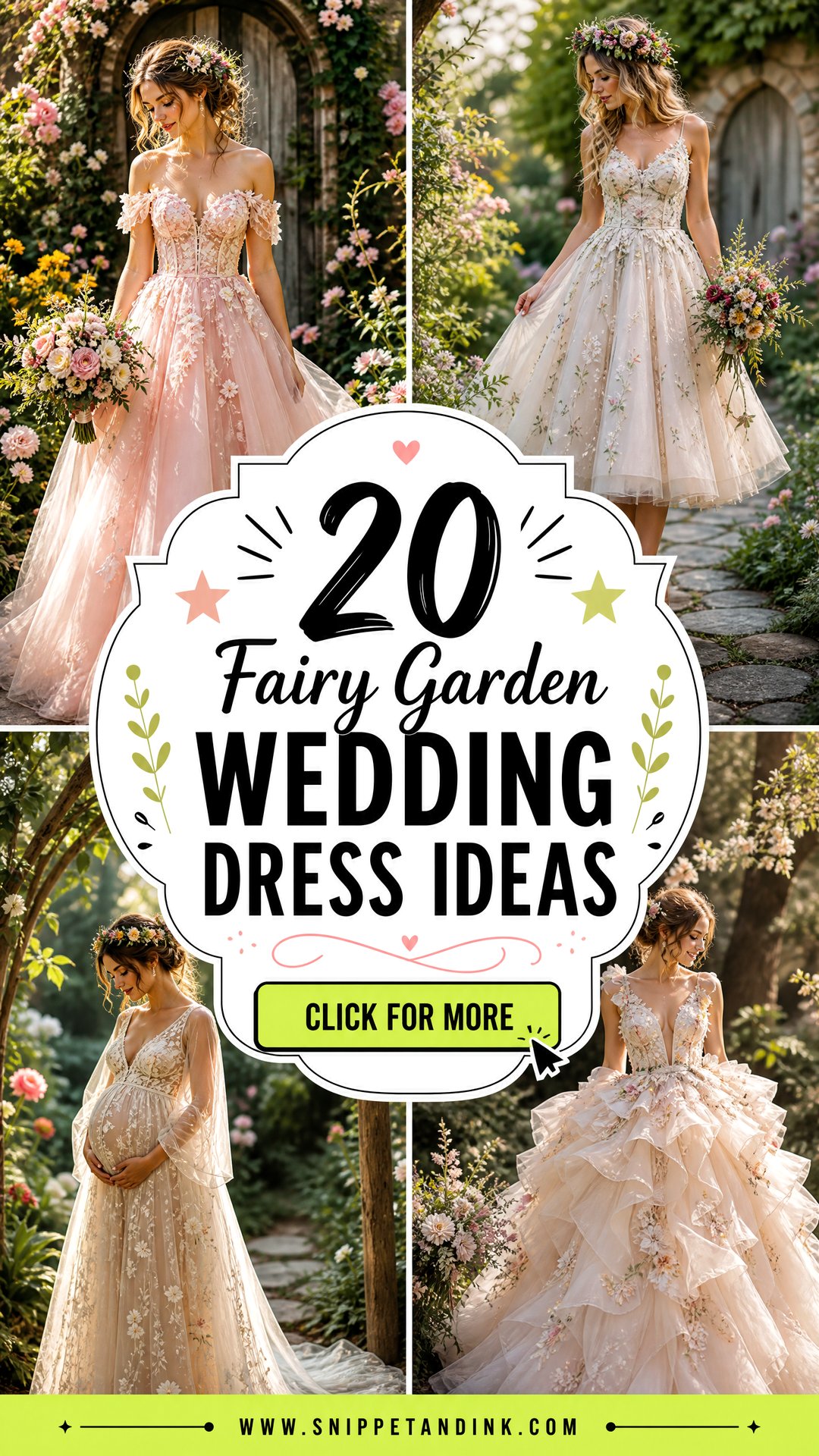
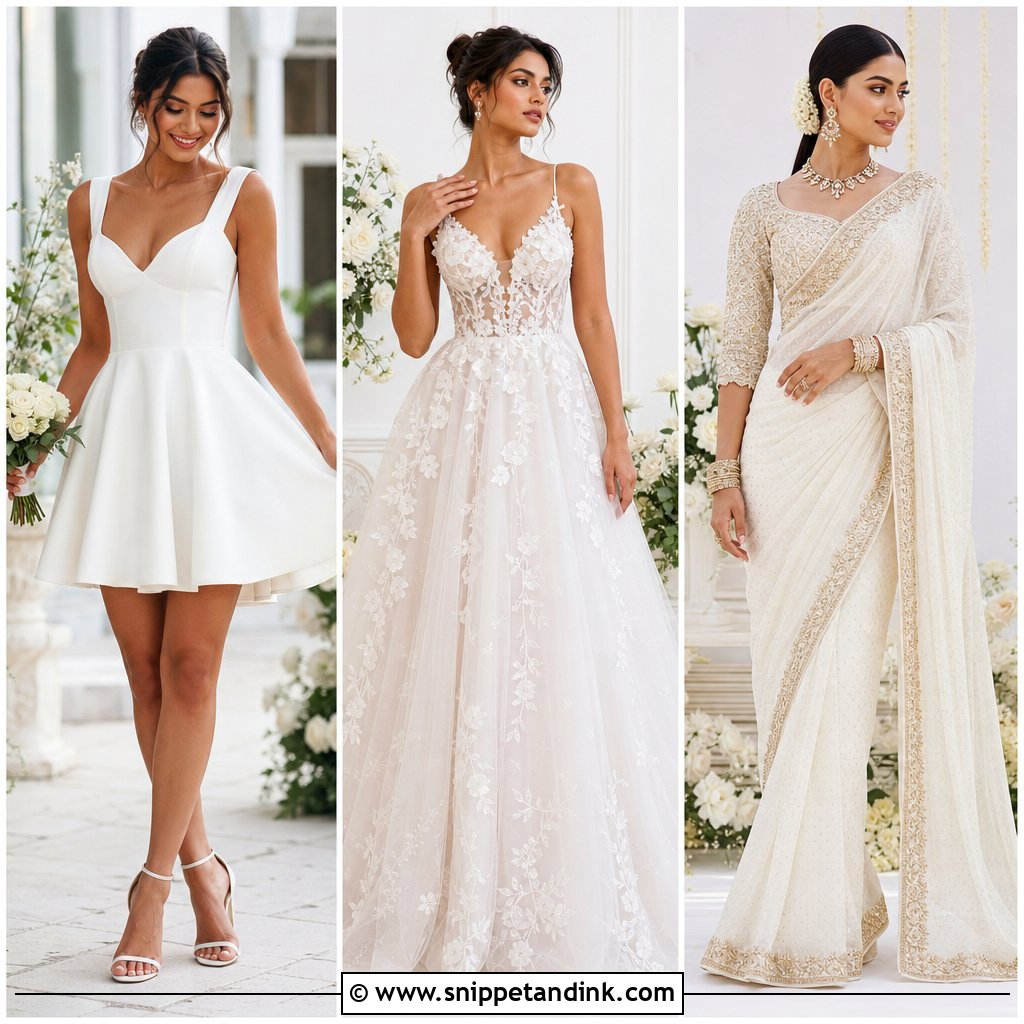
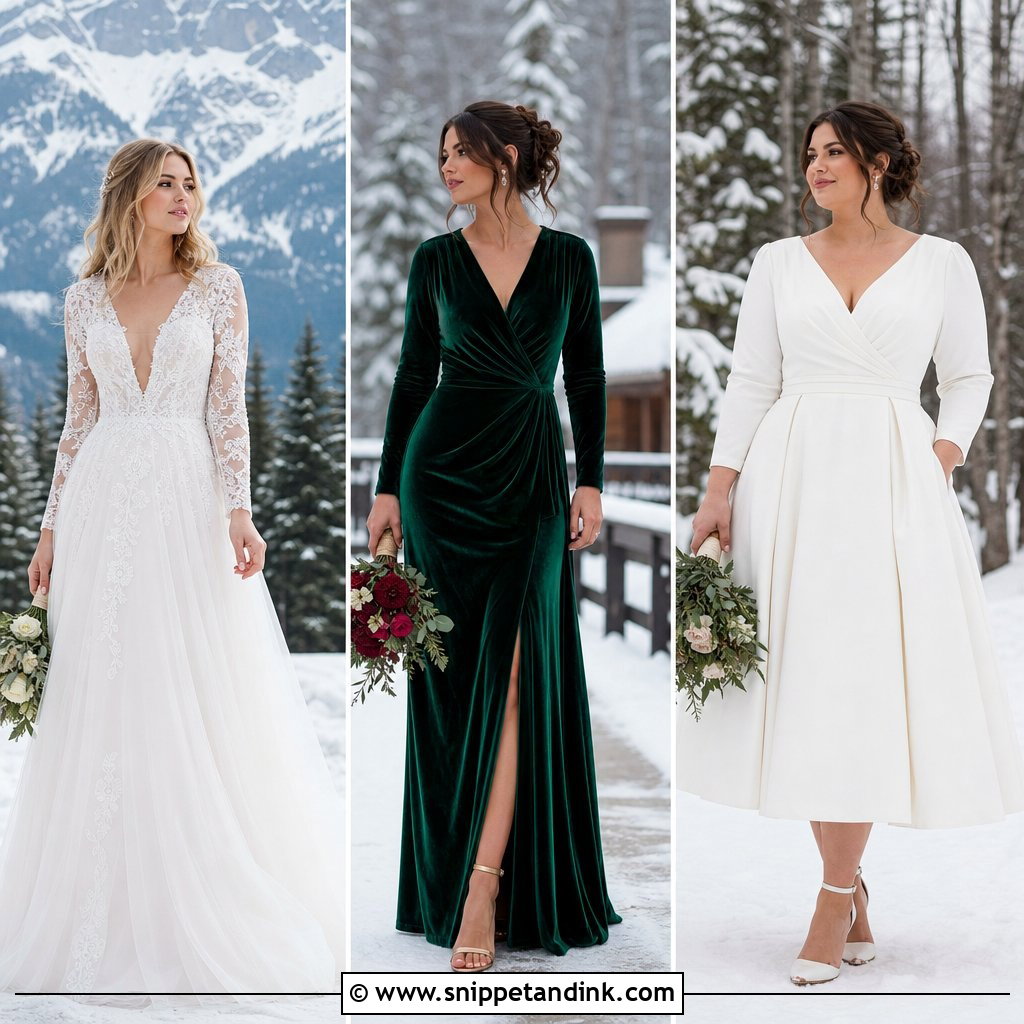
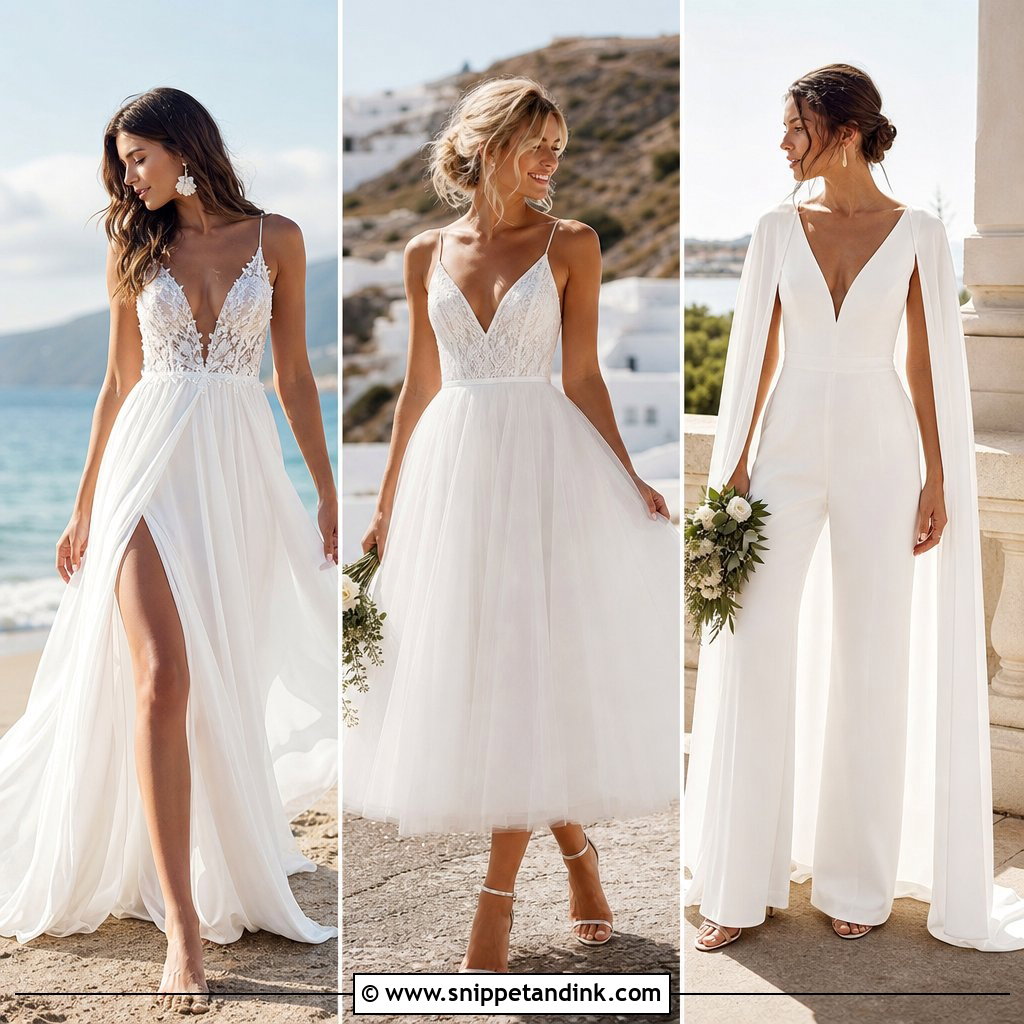
A fairy garden gown has two jobs that pull against each other: it has to look a little otherworldly, and it has to cross wet grass, gravel paths and flower beds without wilting. When I style a bride for this kind of ceremony, I start with the ground she will walk on and work up from there. Airy tulle, botanical lace, dimensional flowers and a hint of shimmer all suit the setting because they echo what is already growing around you, so the dress never has to try too hard to look like a costume. Shoes, jewelry, a headpiece and a loose bouquet should support the gown rather than compete with it. The twenty looks below range from classic to boho to openly colorful, and I’ve added notes on where each one tends to struggle outdoors.
What Damp Grass, Gravel and Pollen Do to a Garden Hem
The first question I ask a garden bride is what she will actually be standing on. Lawn, gravel, bark paths and stone steps each treat a gown differently, and the fabric you fall for in a showroom may behave badly once it meets the ground.
- Tulle and organza skim over grass but snag on gravel and rose stems. A double layer at the hem is sturdier than a single fine one.
- Chiffon and crepe drag more quietly, but they soak up dew and darken at the hem within minutes on a morning lawn.
- Heavy satin resists snags yet picks up green staining that is hard to lift, so I’d keep any satin train short for a lawn.
- Pale lace can catch yellow lily pollen, which smears if you brush it. Ask your florist to remove the anthers before arranging.
Length matters as much as fabric. For grass, I usually ask for the front hem to sit a fraction higher than it would for a ballroom, so the toe of your shoe clears it with each step. A train is fine, but plan a bustle that lifts it fully off the ground for the reception, and have your helper practice it at the final fitting rather than meeting it for the first time on the day.
Shoes go to every fitting, without exception. A hem set for a stiletto will drag if you switch to flats for a soft lawn, and a stiletto on grass sinks. Block heels, wedges or flats with heel protectors are what I suggest for most garden ceremonies.
1. Floral Appliqué Fairy Garden Wedding Dress
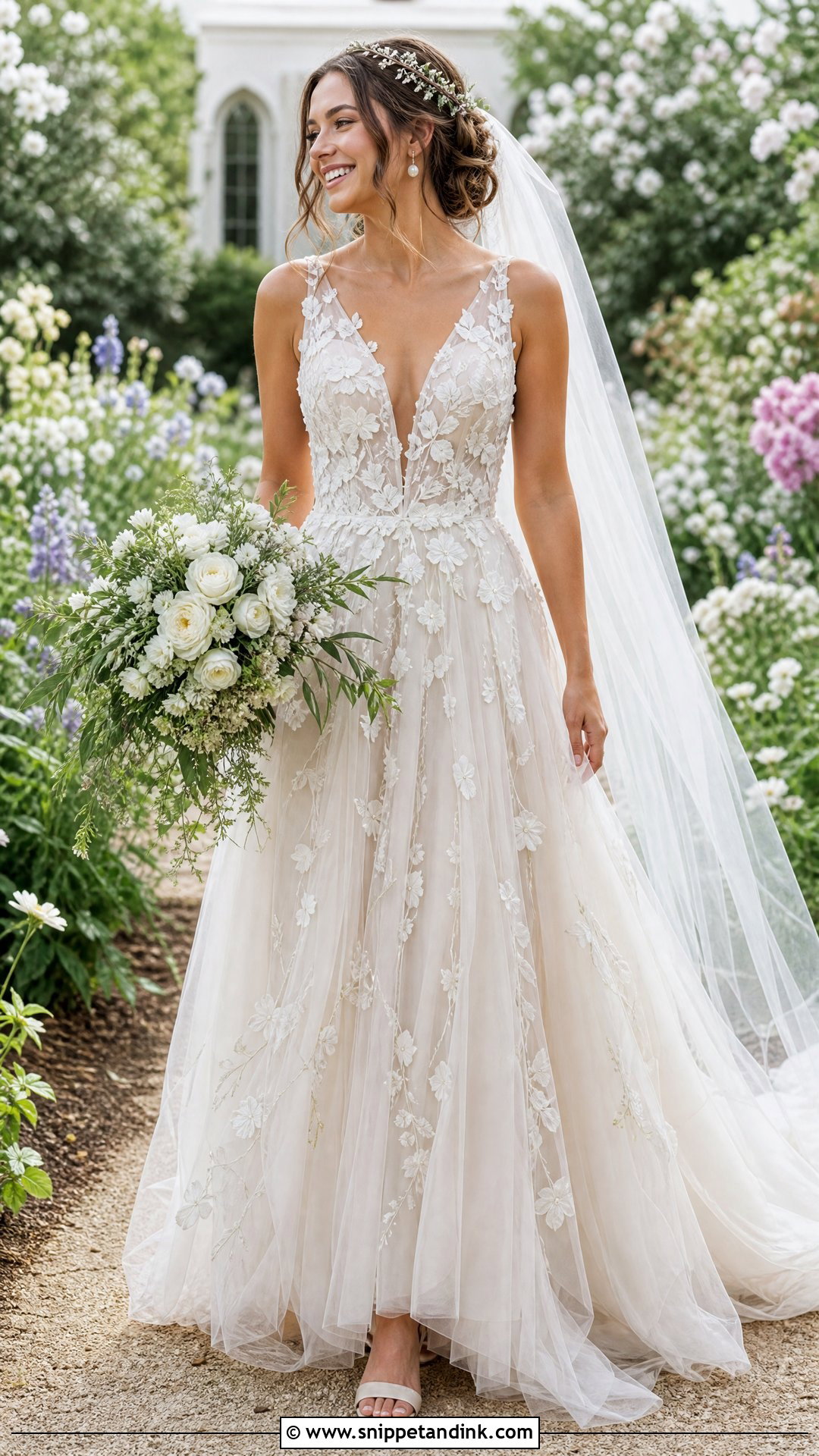
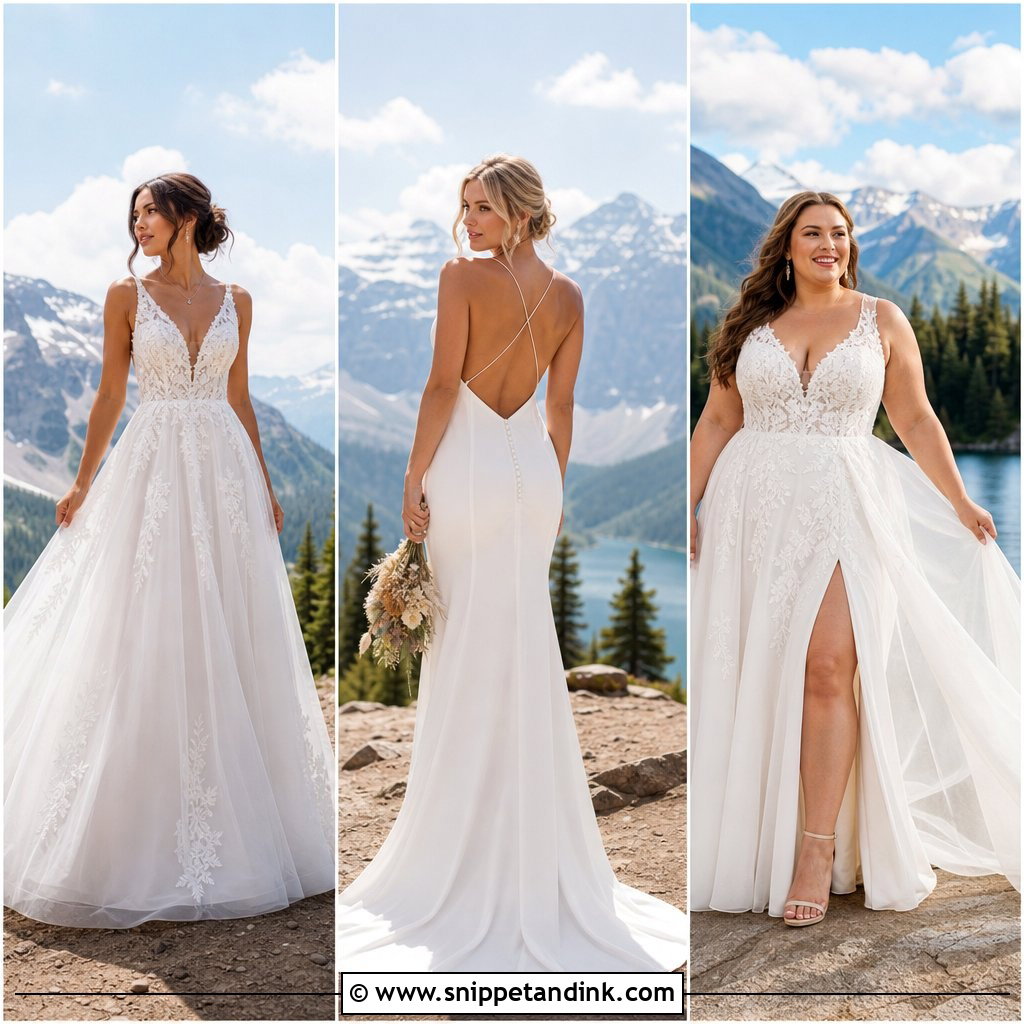
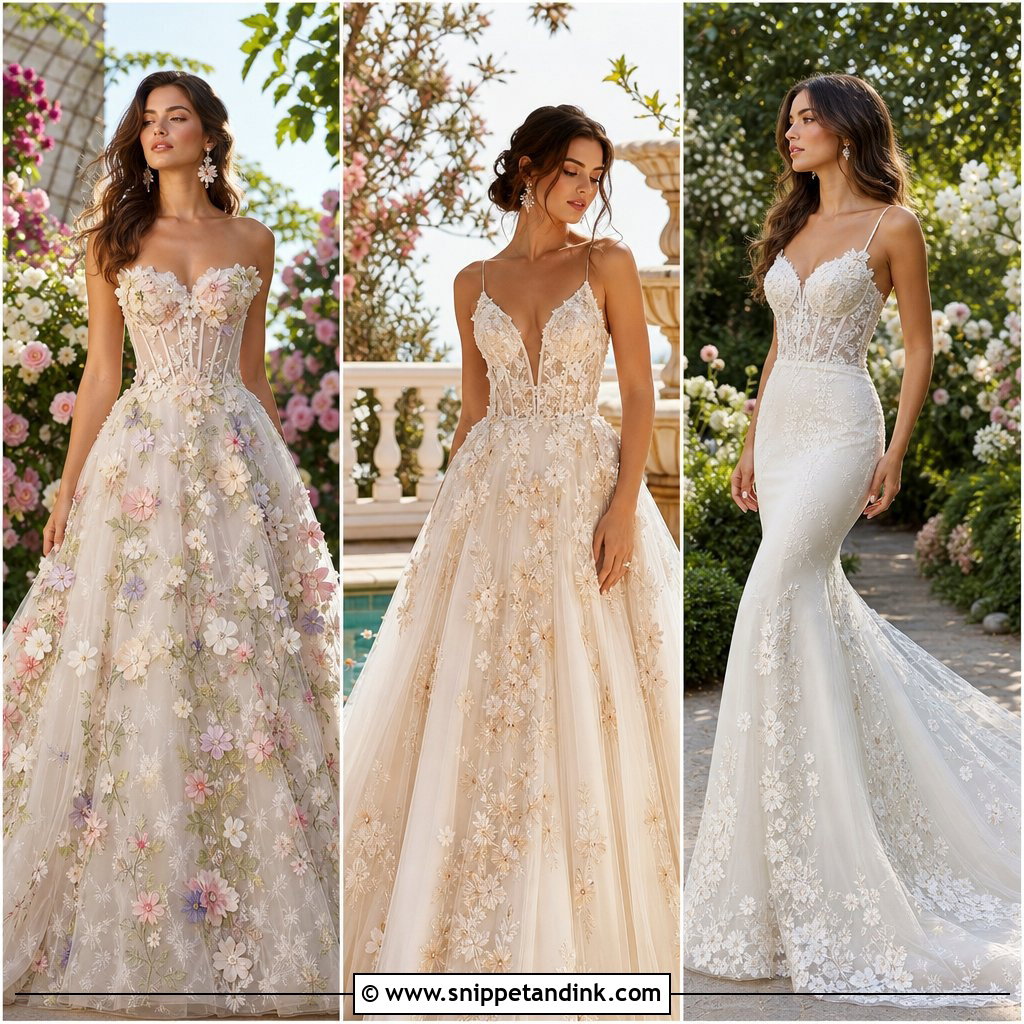
Appliqué is the easiest way into this theme, and the A-line is the most forgiving shape to carry it. Look for a fitted bodice covered with delicate leaves, vines and raised flowers that thin out as they travel down a layered tulle skirt. The thing I check first on these gowns is how the appliqués are attached: hand-tacked pieces sit flat and survive a hug, while glued ones can lift at the edges after a day of movement. A V or soft sweetheart neckline keeps the top balanced. Ivory block heels, pearl drops and a thin hair vine through loose waves are enough, and a chapel veil with a lightly appliquéd border adds movement without hiding all that handwork.
2. Off-Shoulder Lace Fairy Garden Wedding Dress
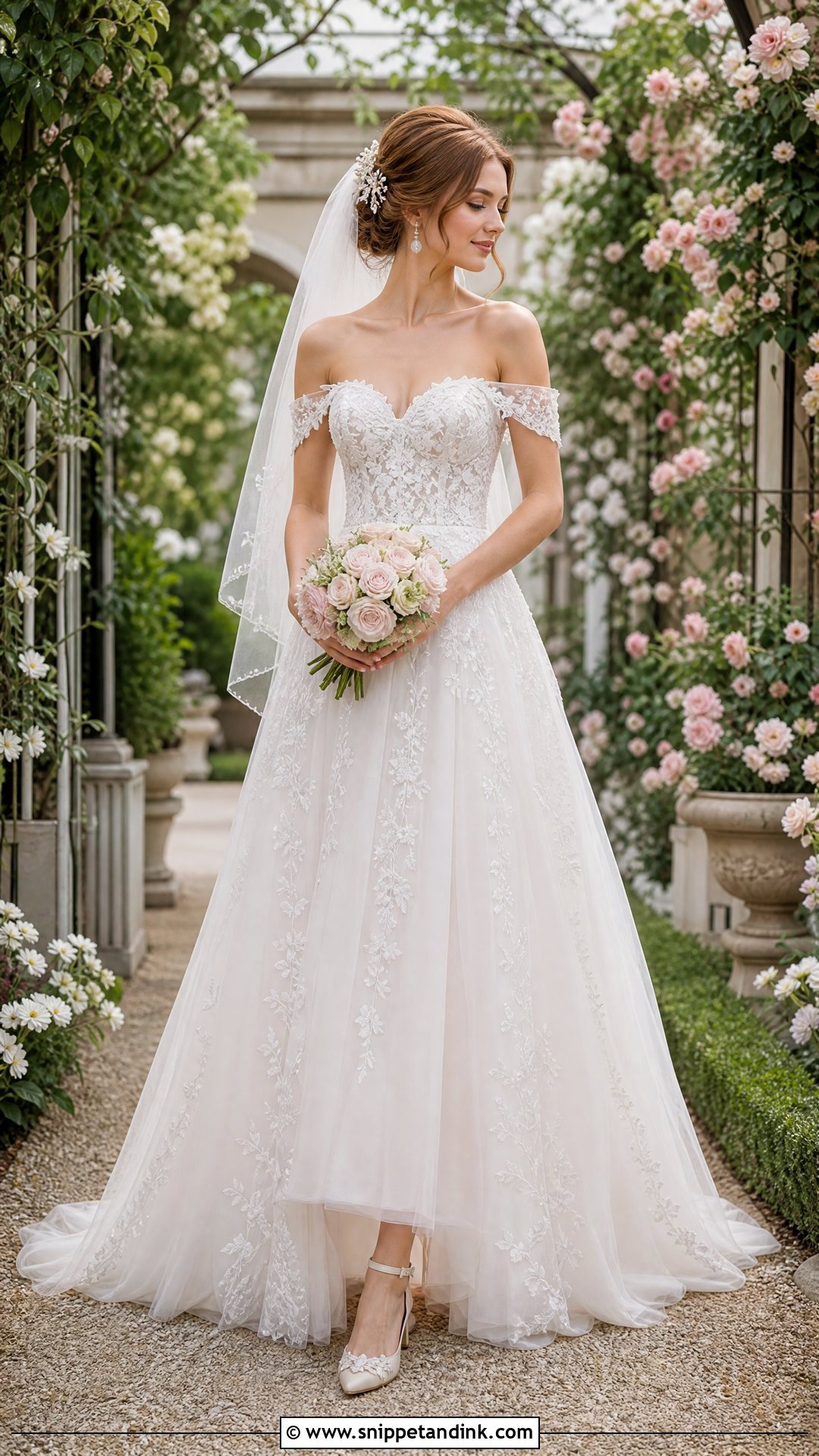
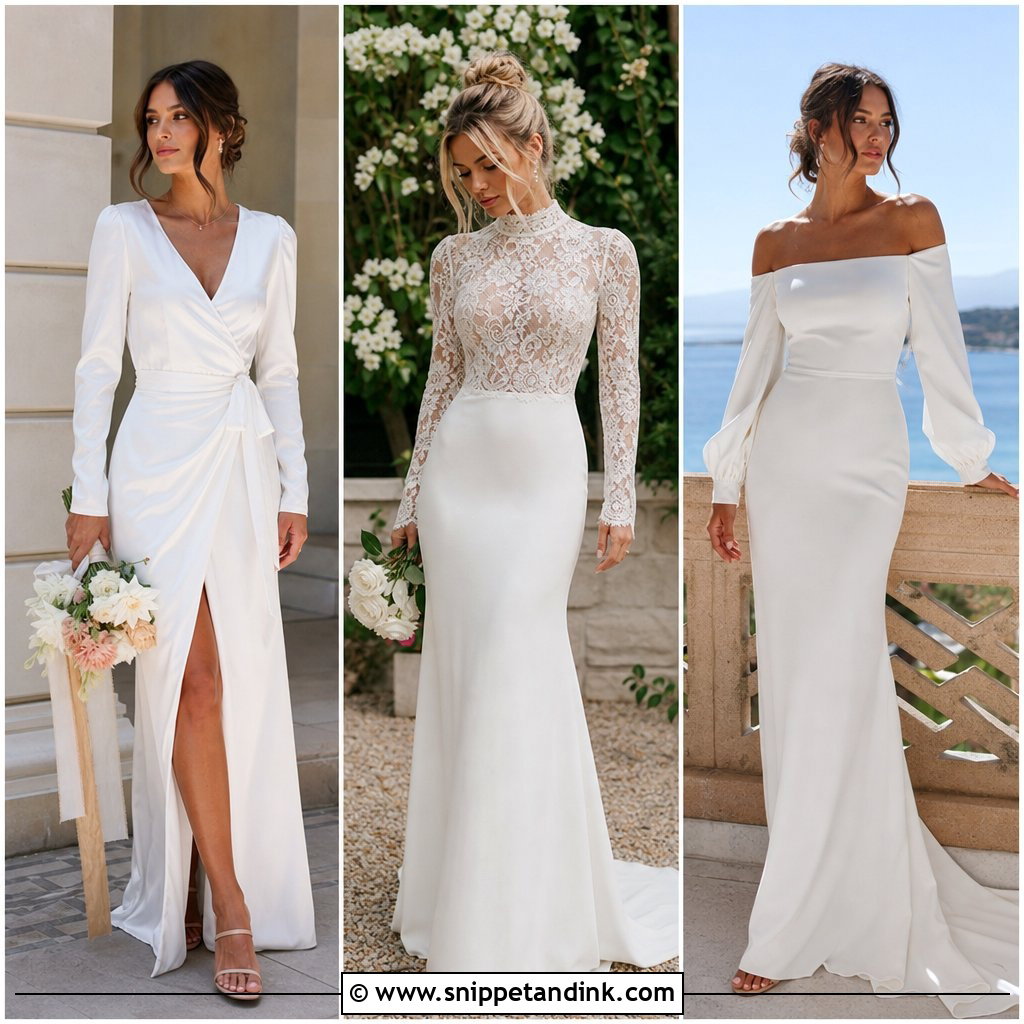
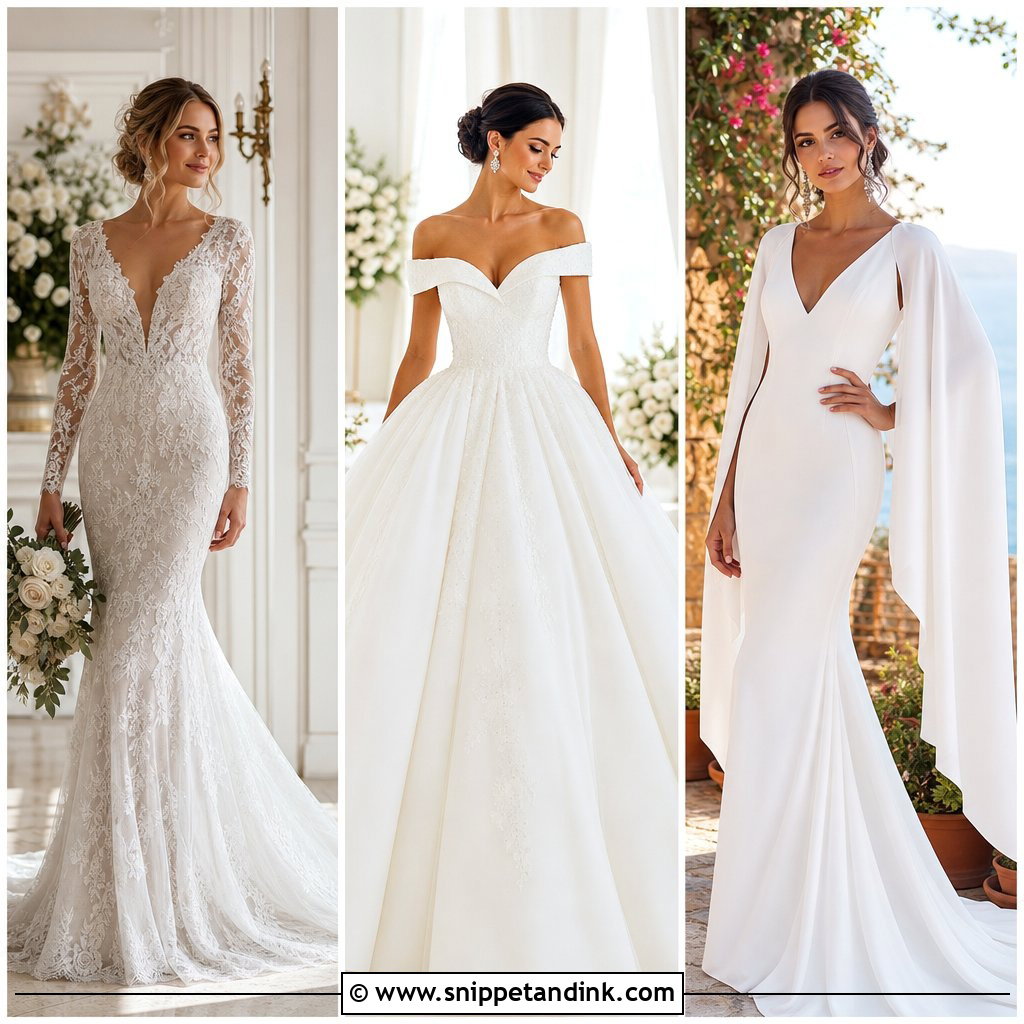
Off-shoulder lace frames the collarbone, and botanical lace makes the whole bodice read as something grown rather than sewn. My warning with this neckline: sleeves that sit below the shoulder pin your arms slightly, so raise both hands above your head at the fitting. If you can’t hug anyone comfortably, the band needs easing. Choose an A-line for movement or a fitted skirt with a short, manageable train. A small pendant, pearl studs and low embroidered heels keep things steady on uneven ground, and a floral comb above a relaxed chignon adds detail without crowding the neckline. Garden roses and sweet peas in a compact bouquet suit it, with a light tulle wrap in reserve for a cool evening.
3. Long-Sleeve Tulle Fairy Garden Wedding Dress
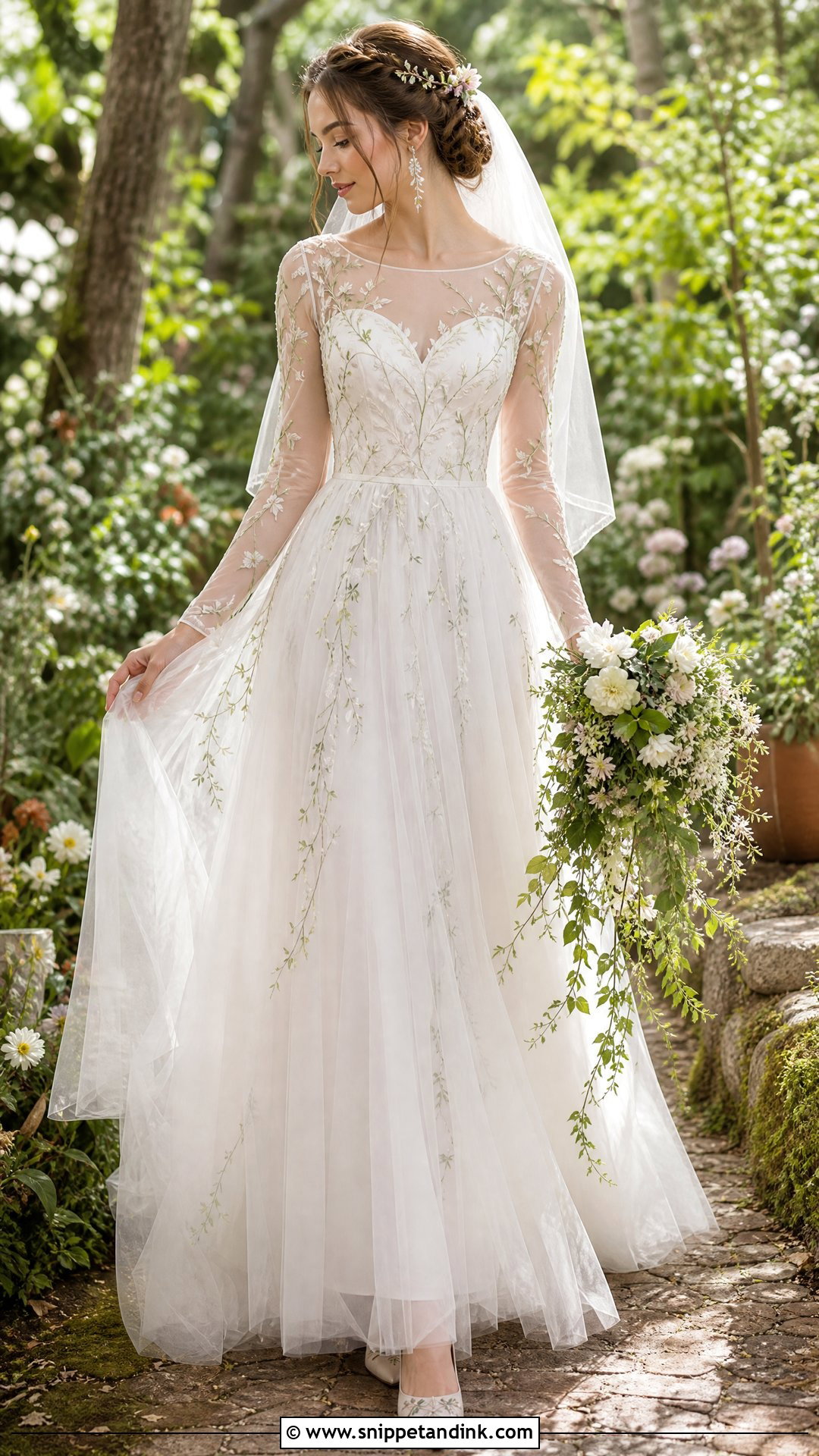
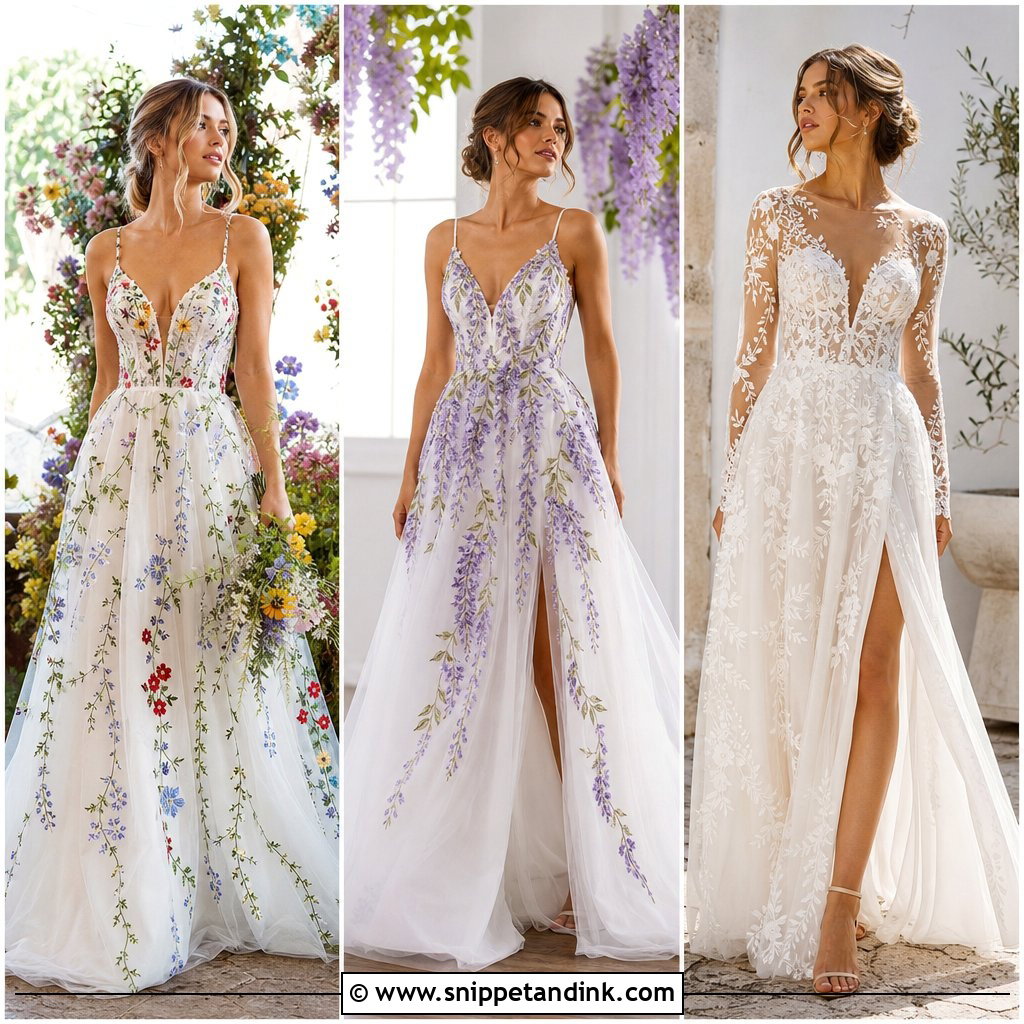
Cool spring mornings and early autumn ceremonies are where long tulle sleeves earn their place. Sheer illusion sleeves with embroidered vines give coverage without weight, as long as the cuff has a little stretch or a button opening; tight sheer cuffs are the first thing to tear when a bride pushes them up to eat. Pair them with a structured bodice and a flowing skirt. Pointed flats or low block heels handle damp grass, and crystal leaf earrings bring light near the face. I’d style the hair in a loose braided updo with a few tiny flower pins instead of a crown, then add a fingertip veil so the sleeves stay visible. A cascading greenery bouquet finishes it.
4. Blush Fairy Garden Wedding Dress
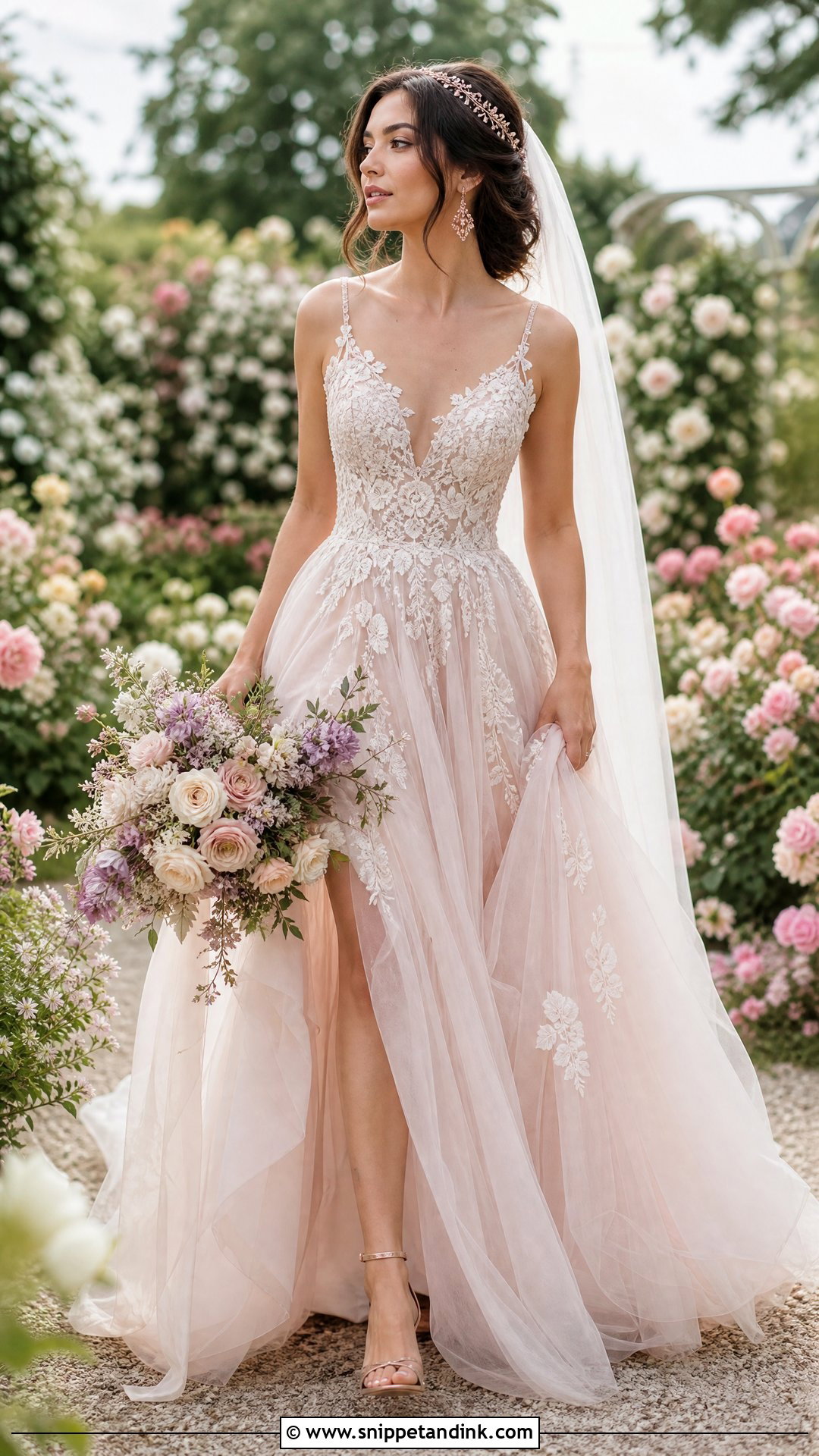
Blush works outdoors because pink sits against green the way it does in an actual flower bed. The version I trust most is blush tulle under an ivory lace overlay, which softens the color so it reads as a glow rather than a candy shade. Do check it in daylight before you commit: some blush linings turn almost beige in shade and almost peach in direct sun. Floral embroidery around the waist gives definition, and a layered A-line skirt does the rest. Champagne shoes, rose-gold earrings and a fine crystal hair vine sit well with it. Keep the veil plain ivory, and carry cream, pale pink and muted lavender flowers so the gown stays the strongest color in the frame.
5. Sage Green Fairy Garden Wedding Dress
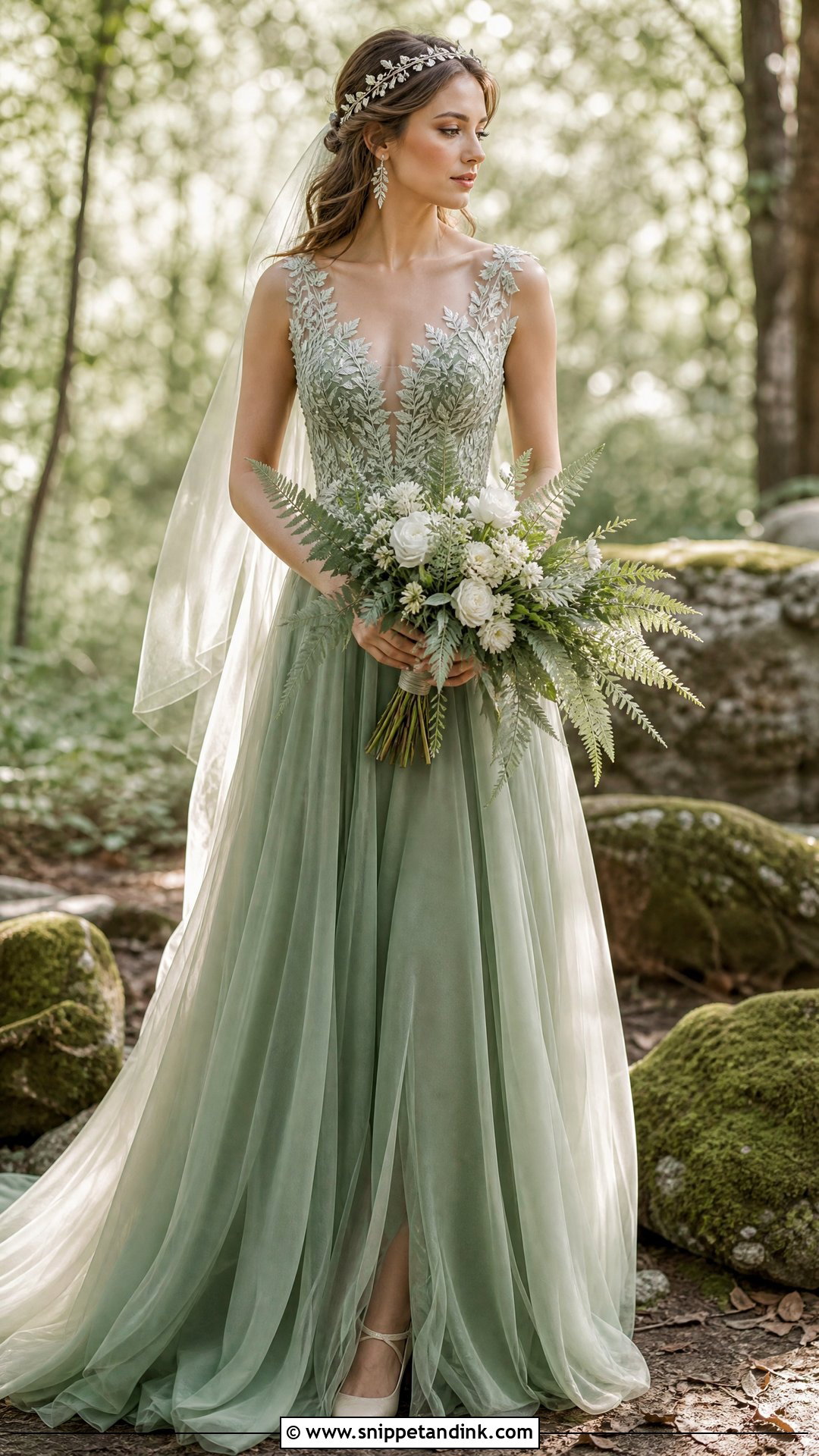
Sage is the color I suggest to brides who want something different but are nervous about it. A sage green lace wedding dress blends into a garden without disappearing, provided the shade has enough grey in it to separate from real foliage. A fitted lace bodice, defined waist and flowing chiffon or tulle skirt balance structure with softness, and a matching sage lining under lighter lace adds depth. Ivory shoes, silver leaf earrings and a thin metal vine circlet keep the palette cool. A sheer neutral veil tones the color down without hiding it. Keep the bouquet to white flowers, ferns and eucalyptus; mixing in other strong colors makes sage look muddy.
6. Corset Fairy Garden Wedding Dress
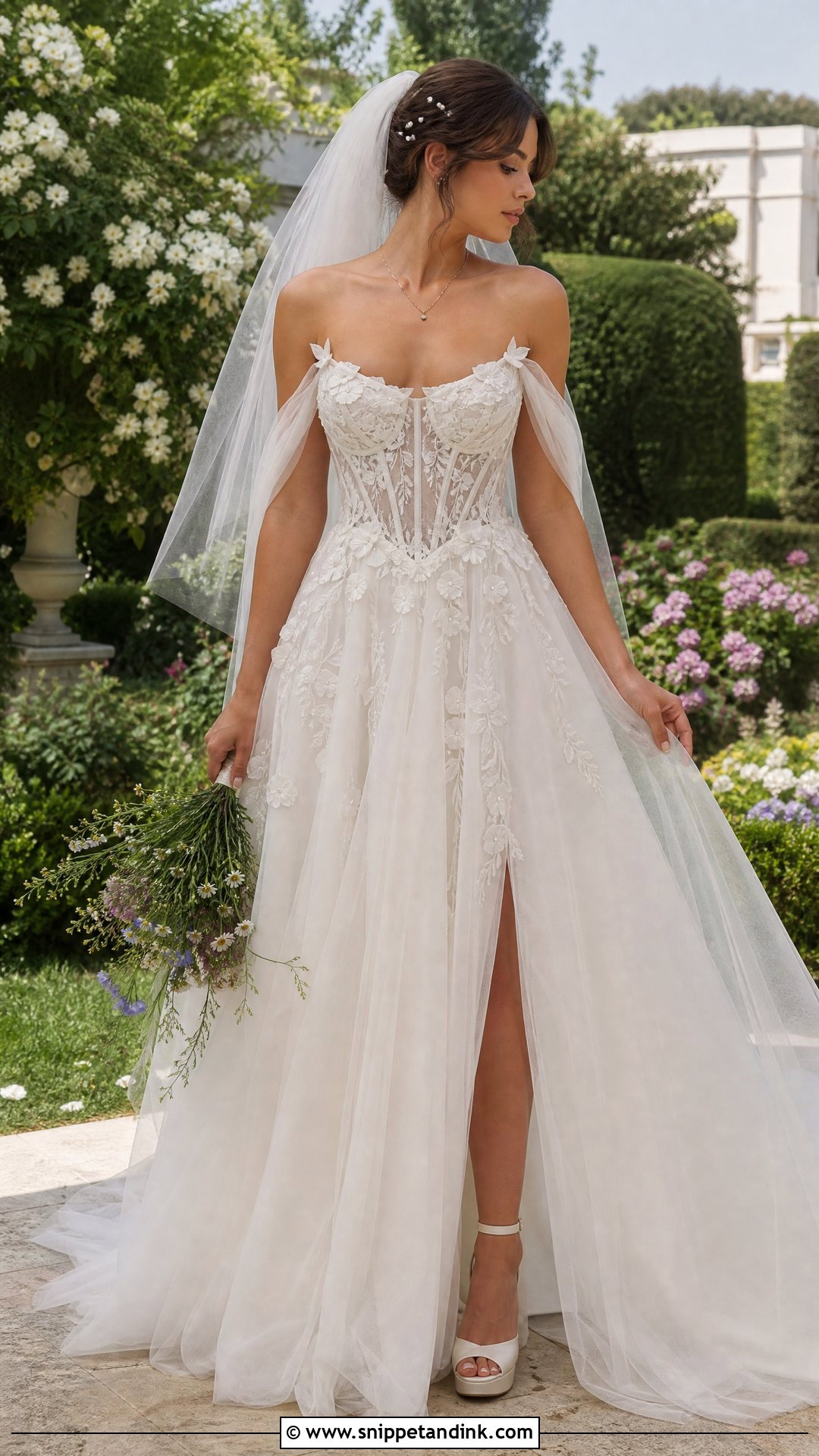
Visible boning sounds heavy for a fairy theme, yet a corset bodice softened with floral appliqués over sheer fabric can look surprisingly delicate. The trick is the skirt: pair it with full, light tulle that moves freely, not a stiff base that turns the whole gown into armor. I always have a corset bride sit, bend and eat a bite at her final fitting, because a bodice that is perfect standing can dig in once she is seated through dinner. Detachable draped sleeves soften the ceremony look and come off later. Crystal studs, a fine pendant and satin block heels are plenty. Half-up hair with scattered pearl pins, a plain cathedral veil and a small wildflower bouquet keep it balanced.
7. Butterfly Fairy Garden Wedding Dress
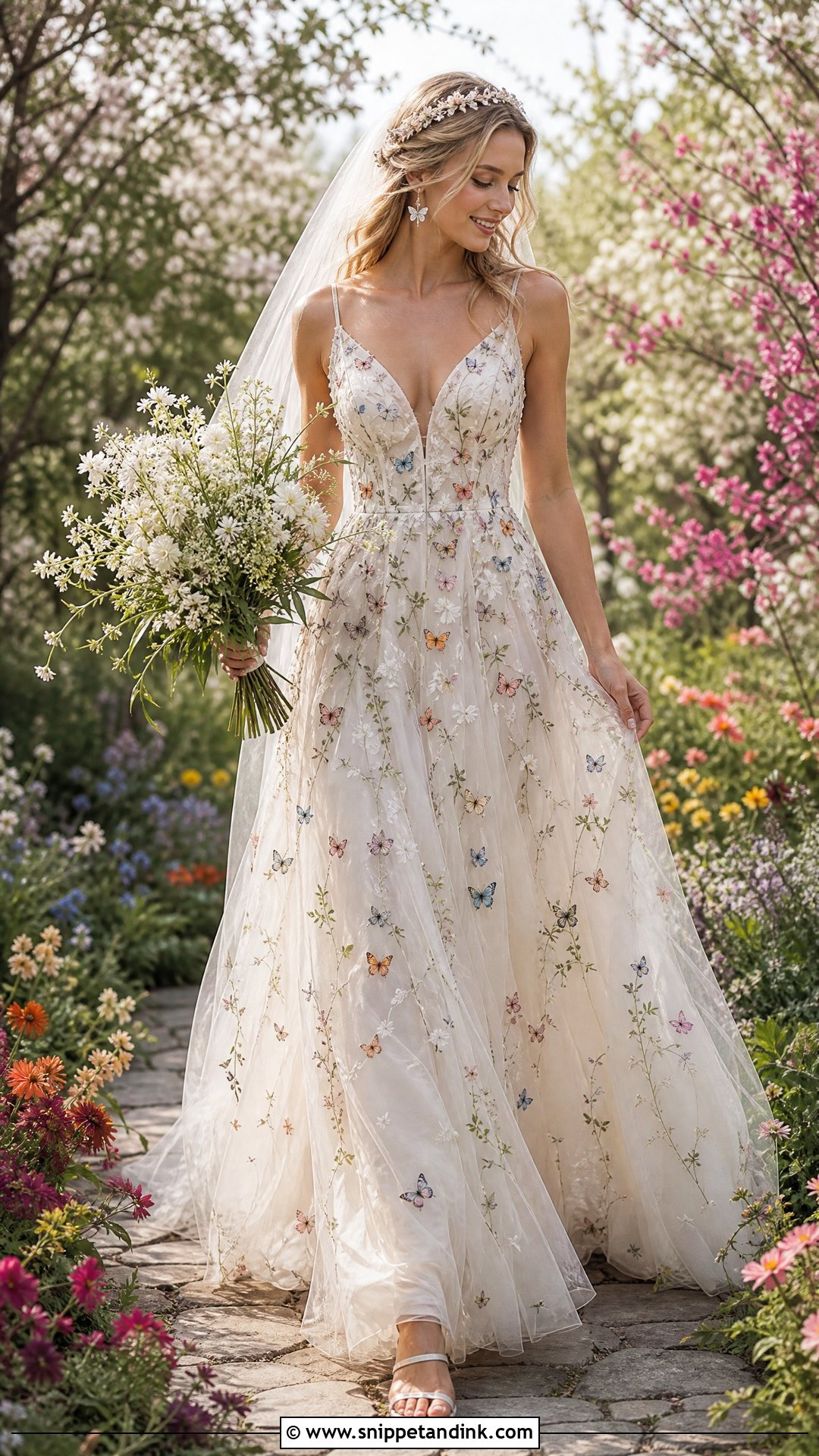
Butterflies can tip into theme-party territory quickly, so I keep them on the dress and almost nowhere else. A soft tulle A-line with small embroidered butterflies scattered among vines works best when the decoration is dense at the bodice and fades toward the hem. Tiny butterfly earrings are fine; butterfly shoes, hair clips and cake topper as well is too many. Simple ivory sandals and a narrow floral headband are enough. A plain veil keeps the embroidery readable, and airy white flowers with fine greenery give the butterflies something to sit against. It is at its best surrounded by wildflowers or flowering trees, where the motif looks found rather than placed.
8. Cape-Sleeve Fairy Garden Wedding Dress
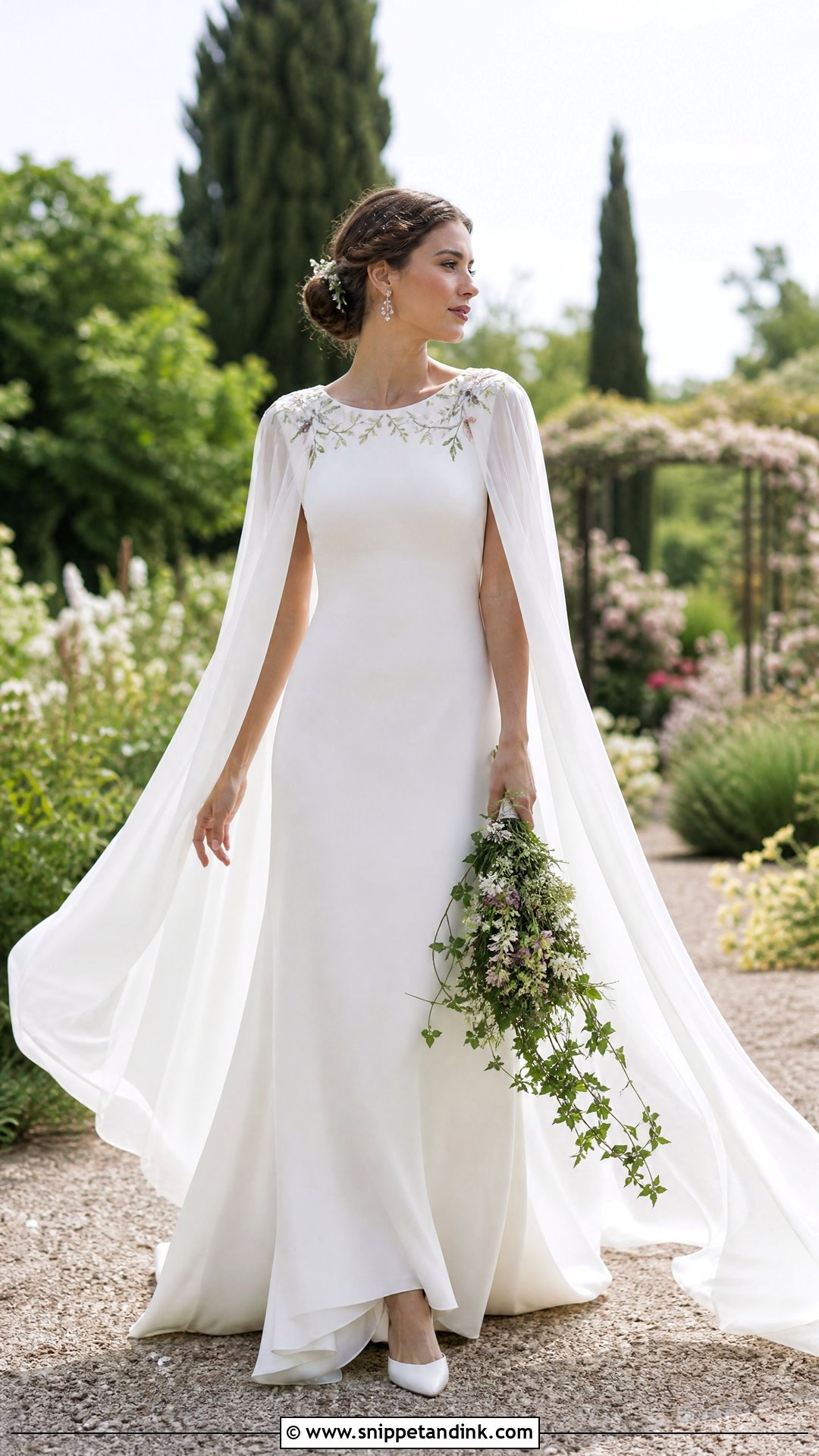
Floating cape sleeves give you the drift of a veil without anything on your head. Chiffon or soft crepe with panels attached at the shoulder falls behind the arms, and a fitted waist with a clean A-line skirt stops the extra fabric from swamping you. One practical note from fittings: a cape catches wind like a sail, so on an exposed lawn ask your seamstress to add a small hidden loop at each wrist. Botanical embroidery at the neckline ties the plain shape to the theme. Pointed flats, small crystal earrings and a comb in a low bun keep the head light. Skip the long veil, since the cape already provides the drama, and carry a narrow bouquet with trailing greenery to repeat the vertical line.
9. High-Neck Fairy Garden Wedding Dress
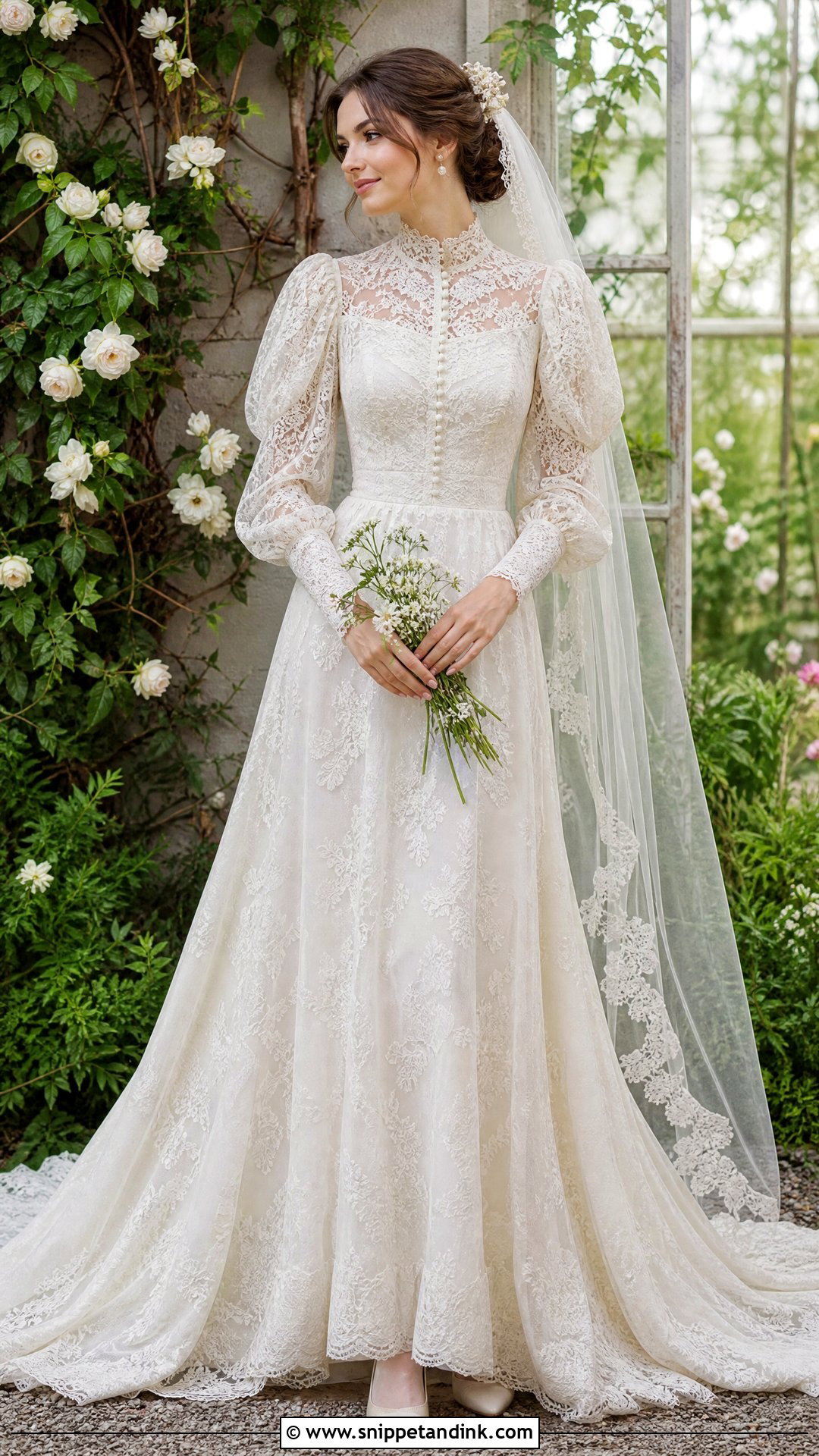
A high neck reads vintage the moment the lace goes up to the jaw. Look for a fitted illusion neckline, covered buttons, lightly puffed sleeves and a soft skirt, with a nude or ivory lining under the lace to set off the pattern. I’d steer you away from this one if you run hot or the ceremony is midday in full sun; a closed neckline and lined sleeves trap heat quickly outdoors. Closed-toe low heels, antique-style pearl earrings and a small floral comb suit it. A neat low bun keeps the neckline clear, with a plain chapel veil attached below the hair and a restrained bouquet of white flowers on green stems.
10. Tea-Length Fairy Garden Wedding Dress
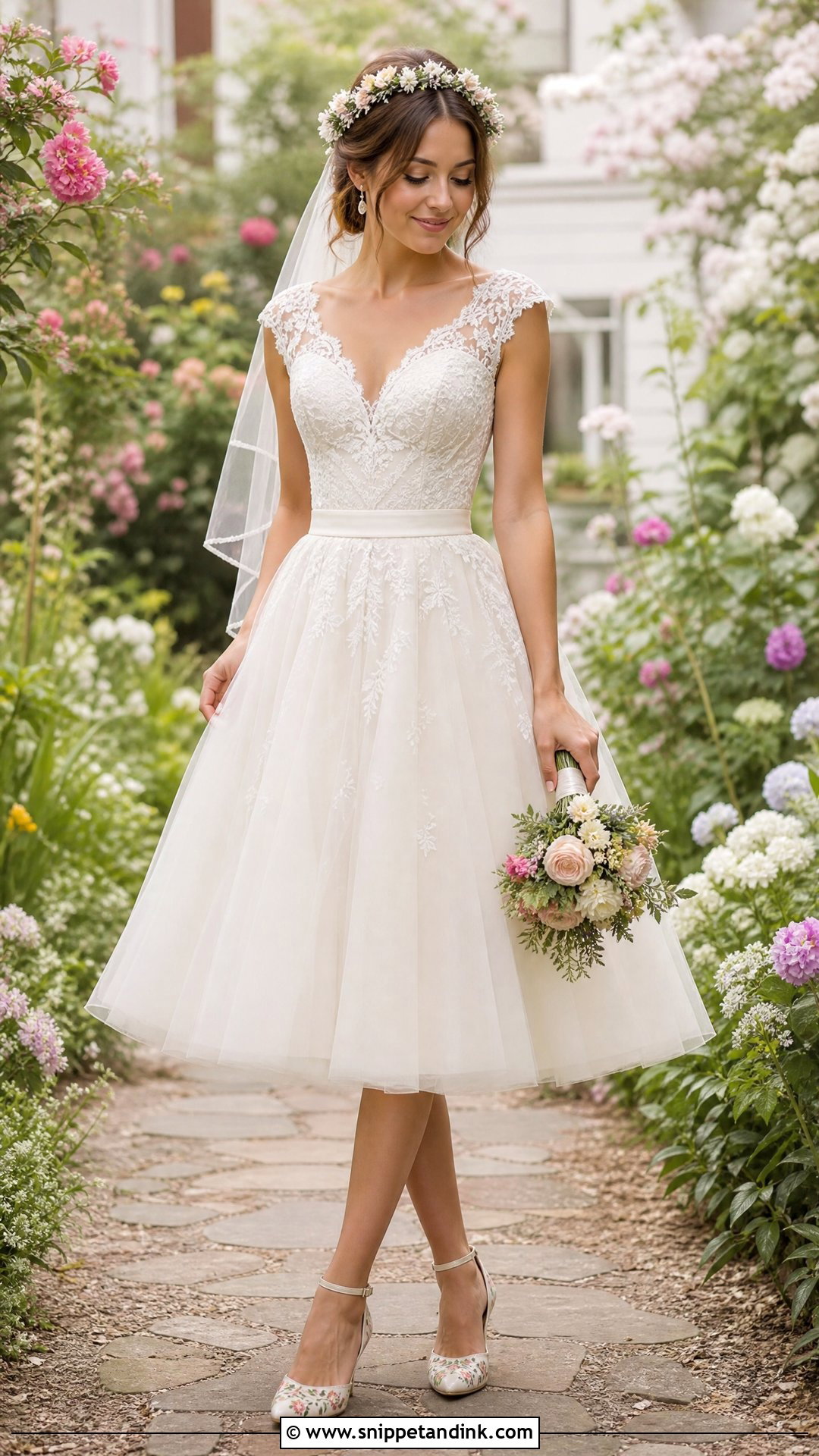
Tea length is the most practical gown on this list for a lawn ceremony, because the hem never touches wet grass at all. A fitted lace bodice, defined waist and layered tulle ending between knee and ankle is the classic version. Your shoes become part of the outfit, so treat them that way: embroidered block heels, elegant flats or ankle-strap sandals all work, and I usually suggest a heel no thinner than a pencil. Pearl earrings and a small flower crown that echoes a compact hand-tied bouquet are enough. A birdcage veil leans vintage; a short tulle veil looks softer and more current. Keep the skirt light so you can dance in it.
11. Plus-Size Fairy Garden Wedding Dress
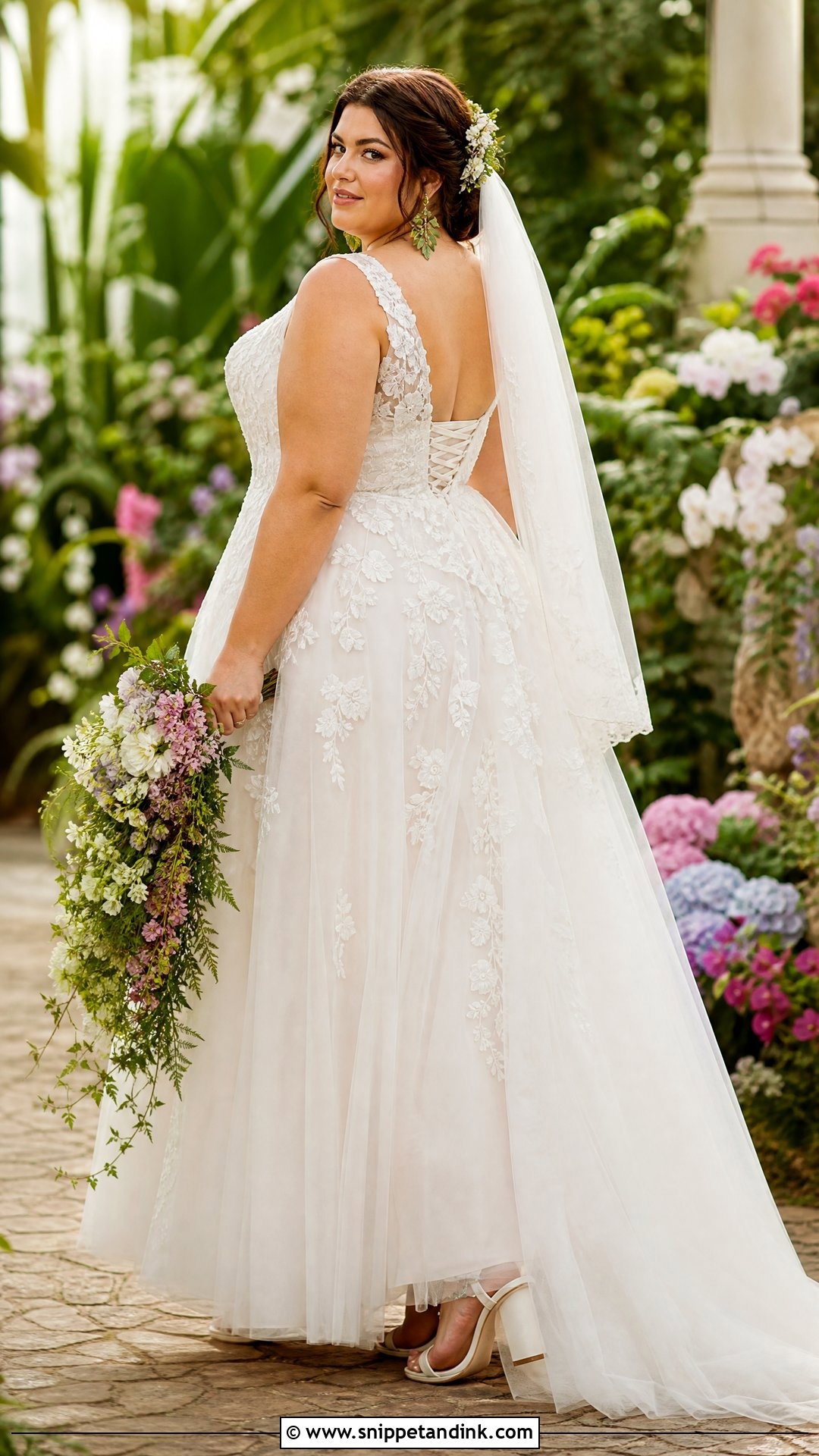
A plus-size fairy gown should show off the shape you like rather than bury it under extra tulle. My starting point is support: a structured bodice, a defined waist, and wider straps, an adjustable lace-up back or internal cups if those help you feel secure. Get those right and the soft floral appliqués and flowing skirt can do their job of drawing the eye to your face and waist. Something I check at every fitting is whether the appliqués sit flat over the boning or ripple; rippling usually means the bodice needs a better-fitting base, not more decoration. Comfortable block heels, statement leaf earrings and a floral comb in a side-swept style or textured updo finish it. Keep the veil’s appliqués lighter than the gown’s, and choose a medium cascading bouquet.
12. Petite Fairy Garden Wedding Dress
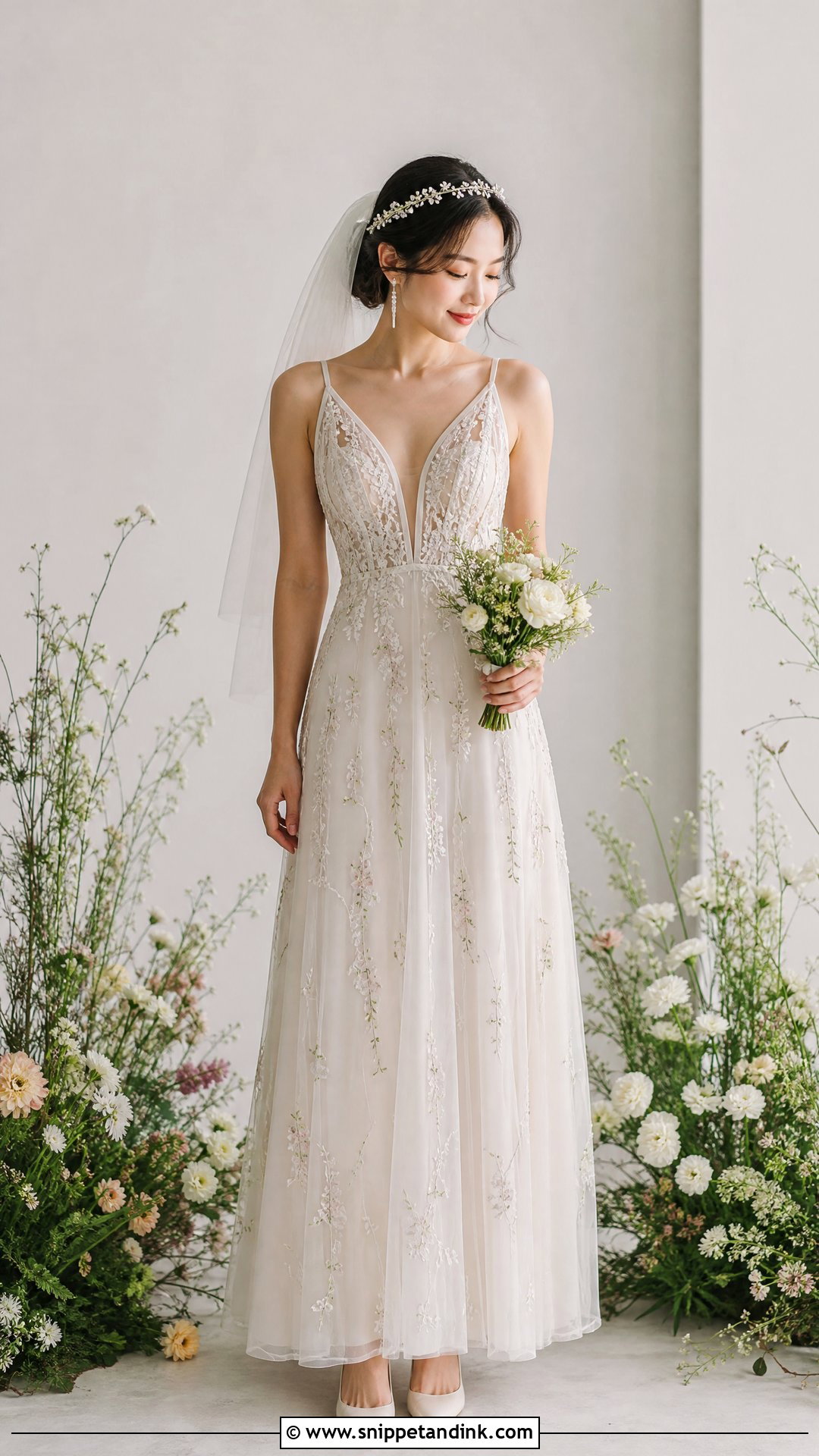
Petite brides can wear fairy details; they just need them scaled down. A slim A-line or column gown with a raised waist, narrow straps and small embroidery keeps the proportions right, and a deep V or an unbroken vertical lace pattern adds length. Large 3D flowers are where I usually say no, since a single oversized bloom can cover half of a small bodice. Keep the train moderate and skip extra layers. Pointed shoes close to the dress color, small drops and a delicate hair vine all help, as does a narrow fingertip veil. A compact bouquet with slender stems won’t hide your waist. Budget for professional hemming and strap adjustments; on a smaller frame an inch either way is very visible.
13. Maternity Fairy Garden Wedding Dress
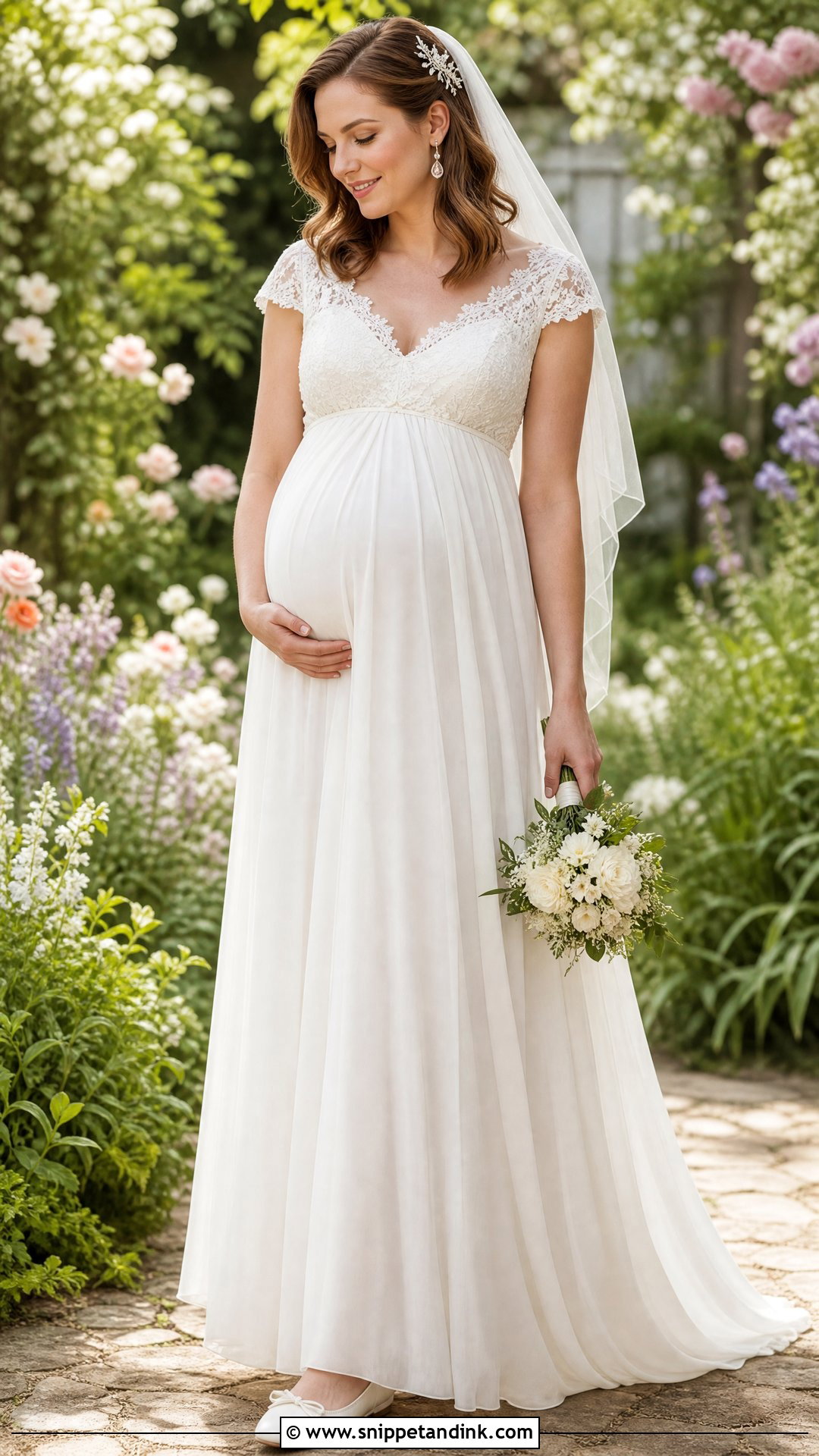
For a bridal look during pregnancy, an empire waist is the shape I reach for first. The bodice ends under the bust and a chiffon or tulle skirt falls freely, with botanical lace across the neckline and cap sleeves supplying the fairy texture without adding weight at the middle. Order with the alteration schedule in mind: I’d book the final fitting as close to the date as your seamstress allows, because the bust and ribcage can change in the last few weeks. Supportive flats, cushioned sandals or a very low block heel are a must on soft ground. Light earrings, a loose half-up style with a floral comb and a shoulder-length veil keep everything easy. A small bouquet leaves your hands free.
14. Boho Fairy Garden Wedding Dress
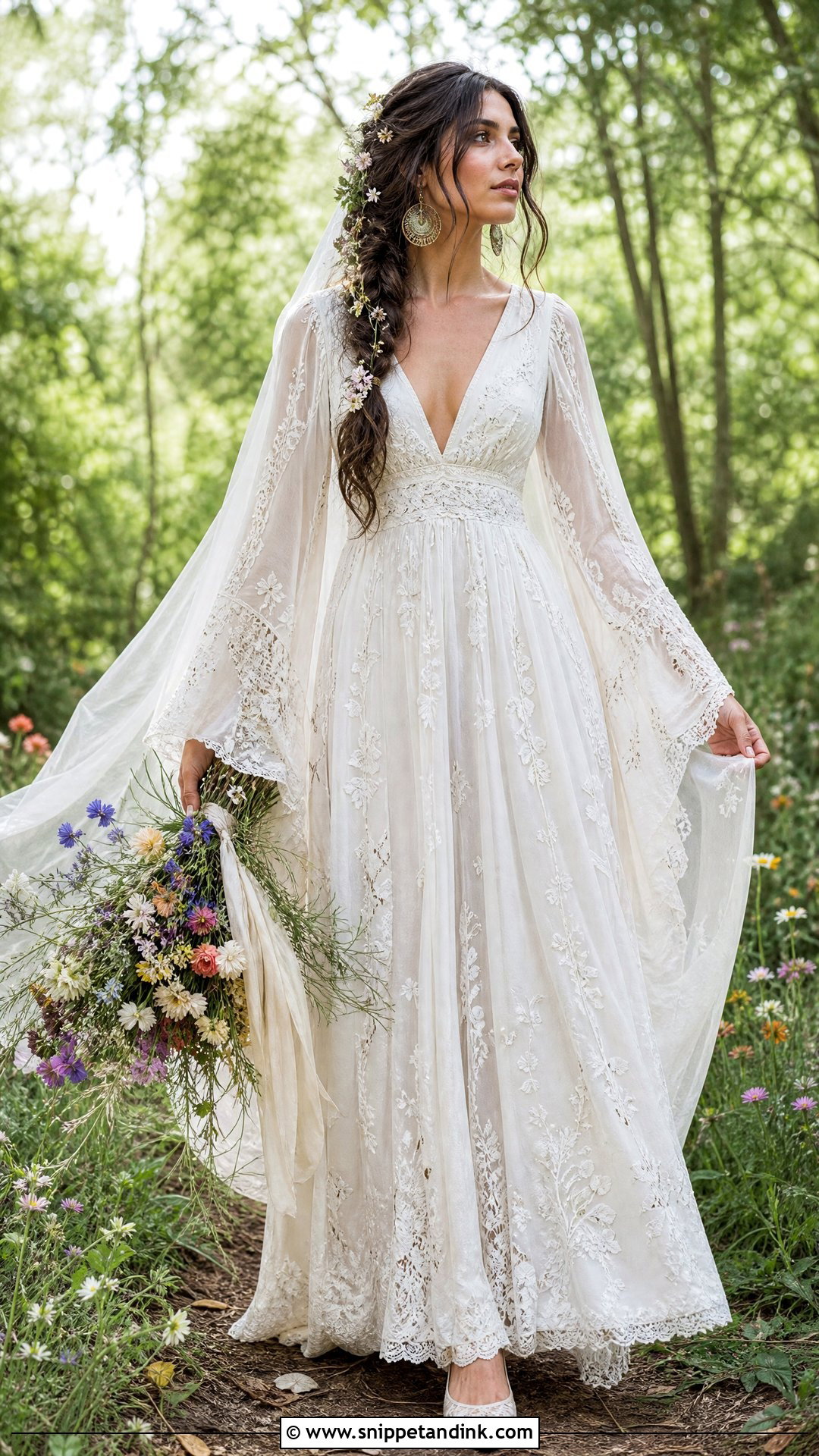
Could your ideal bridal look feel relaxed and a little unconventional? A bohemian lace gown with a V-neckline, fitted waist, flowing skirt and wide bell sleeves gets you there. Openwork lace gives texture, and a soft lining keeps it comfortable against the skin. Bell sleeves have one habit you should know about: they drag through food and drip candle wax, so I tell boho brides to practice tucking the cuff back when they reach for anything. Embroidered flats, low suede-look boots or stable block sandals suit most terrain. Hammered metal earrings, a loose braid with tiny flowers, and a veil tucked beneath the braid or a light chiffon cape finish it, along with a wild bouquet tied with trailing ribbon.
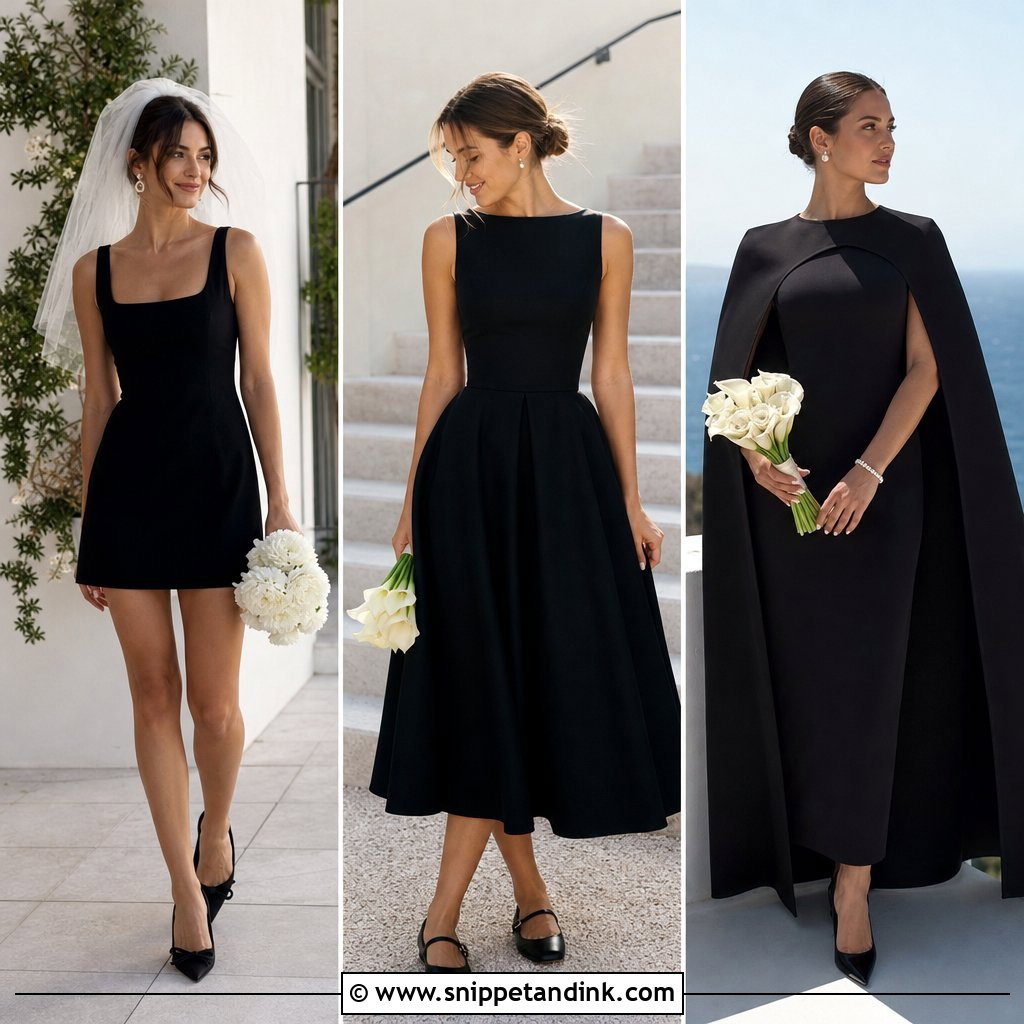
15. Sparkle Fairy Garden Wedding Dress
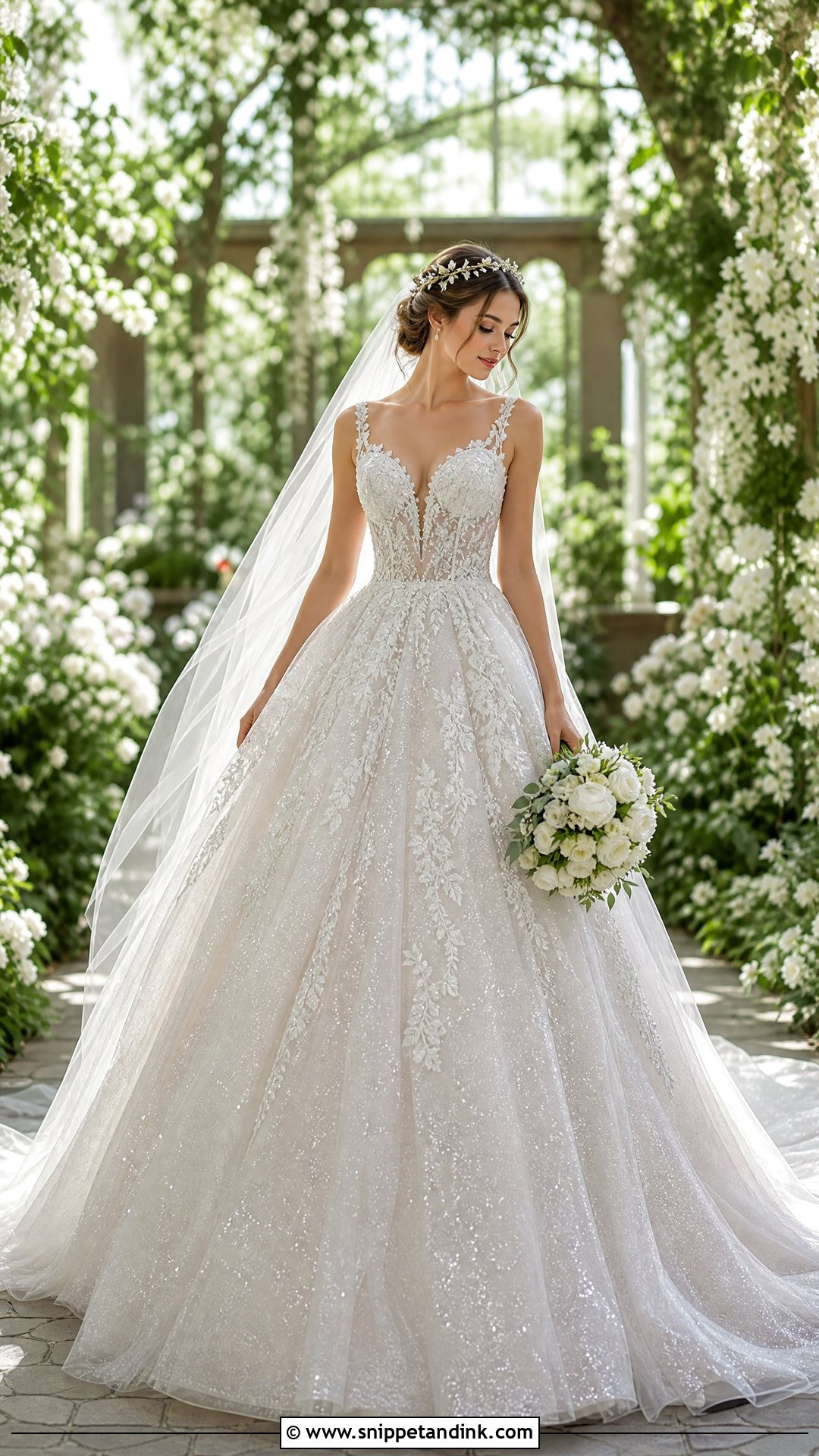
Shimmer works in a garden only when it is quiet. An A-line or ball gown with fine glitter tulle under floral lace catches the light as you move without looking like an evening dress. Small crystals, clear sequins or pearl beads should be sparse. Outdoors in daylight, a lot of sparkle simply reads as flat grey in photos, so I’d rather see a little on the skirt than a lot everywhere. Plain satin heels, small crystal earrings and a sleek low bun balance the detail, and a thin metal leaf crown gives definition without the bulk of fresh flowers. A simple veil with a raw edge and a restrained white bouquet keep it cohesive. This one comes into its own at dusk, under string lights.
16. Wildflower Fairy Garden Wedding Dress
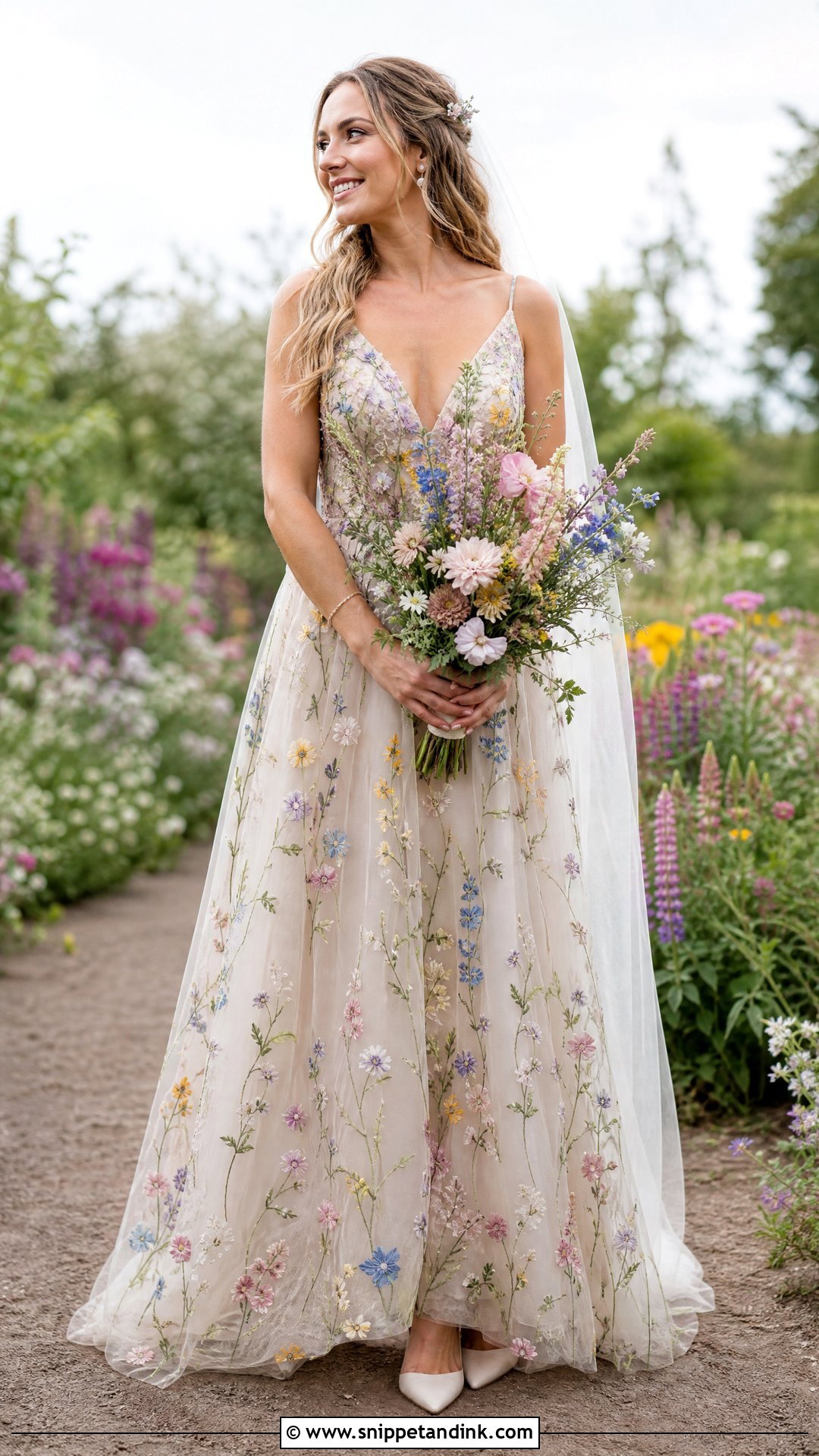
Colored wildflower embroidery is the most joyful option here and also the easiest to over-style. A neutral tulle or organza base embroidered with small lavender, blue, pink, yellow and green flowers needs a fitted bodice and a clean A-line skirt to stay grown-up. Then strip back everything else. Pearl studs or a fine gold bracelet, ivory shoes, soft waves with one or two flowers that repeat colors from the embroidery. A patterned veil over a patterned skirt creates visual noise, so I always choose a plain one. Pull only two or three shades from the dress into a loose bouquet; matching every thread color makes the flowers look like a paint chart.
17. Minimalist Fairy Garden Wedding Dress
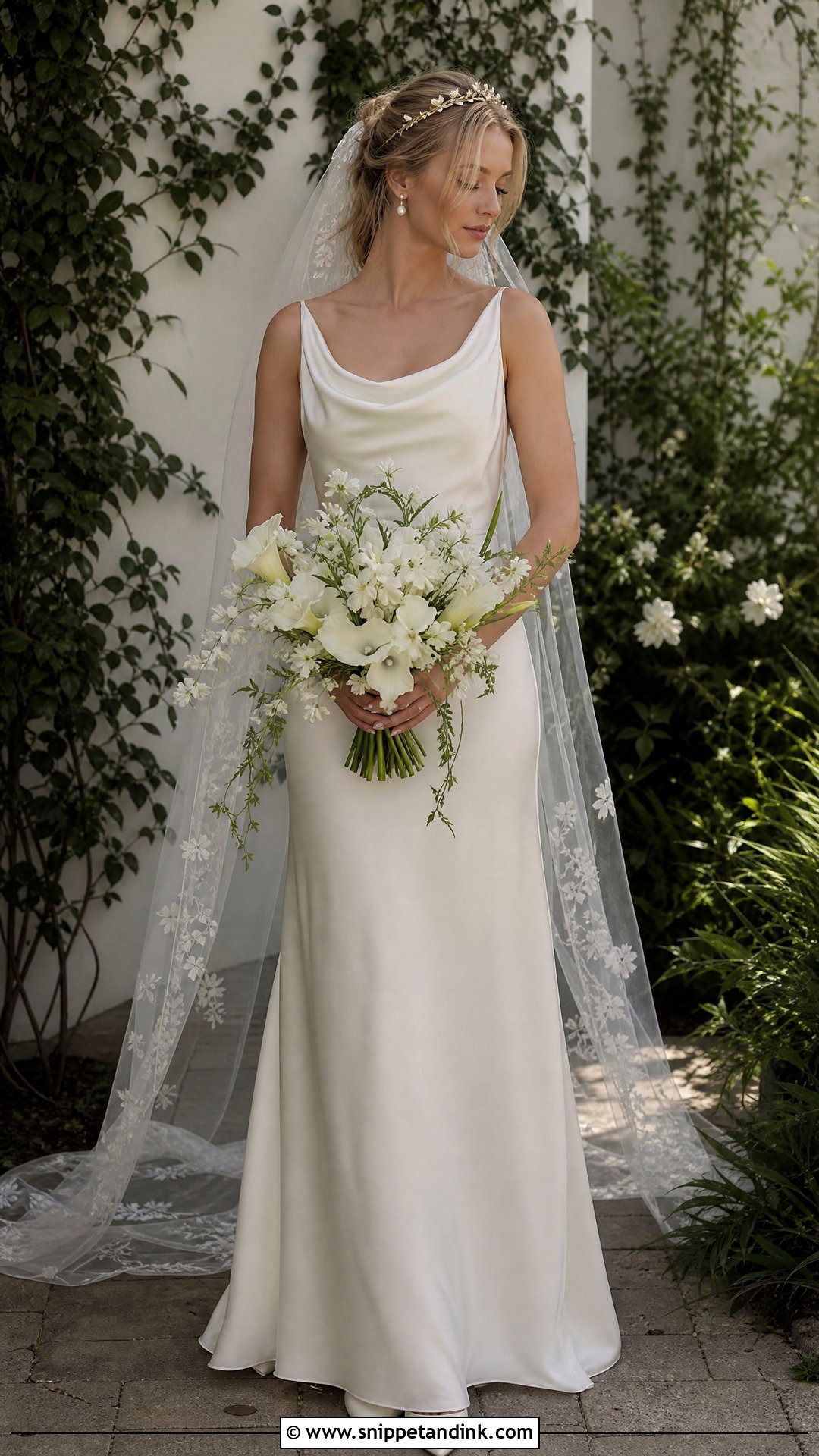
A fairy garden look doesn’t have to start with a decorated gown. Plain silk or satin in a bias cut, column or clean A-line can carry the whole theme through accessories instead. The detail I watch with bias-cut silk is the fabric itself: it shows every line underneath and marks easily if you sit on a damp bench, so pick smooth, invisible underwear and bring a cover for seats. An embroidered floral veil brings in the garden, with pearl drops and ivory pointed shoes. A fine vine headband over loose waves sits under the veil without fighting it. A sculptural bouquet with a few trailing stems is the last piece, and everything else should stay light so the simplicity survives.
18. Ruffled Fairy Garden Wedding Dress
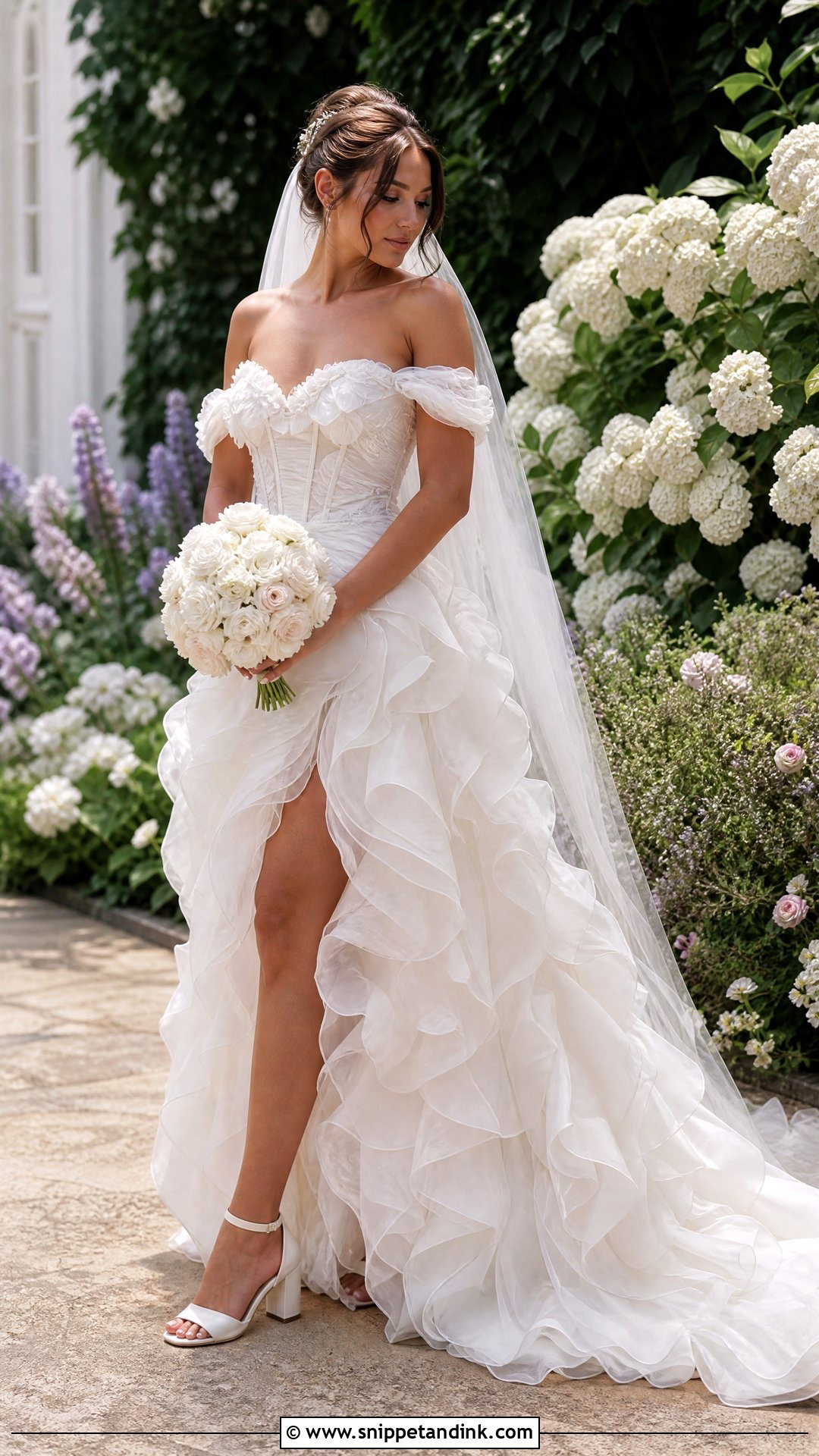
Ruffles look like petals when they are placed with restraint. An organza or tulle gown with a fitted bodice and cascading ruffles down the skirt or train is the version I’d choose, and a strapless top keeps the upper half quiet. Detachable off-shoulder straps can soften the ceremony look. Ruffled organza does crush when packed, so I always plan a steaming session on the morning itself and keep the dress hanging, not folded, from the moment it leaves the shop. Simple studs, satin block heels and a polished half-up style with a small crystal comb are enough. End the plain veil above the busiest ruffles, and carry rounded blooms to echo the petals.
19. Detachable-Sleeve Fairy Garden Wedding Dress
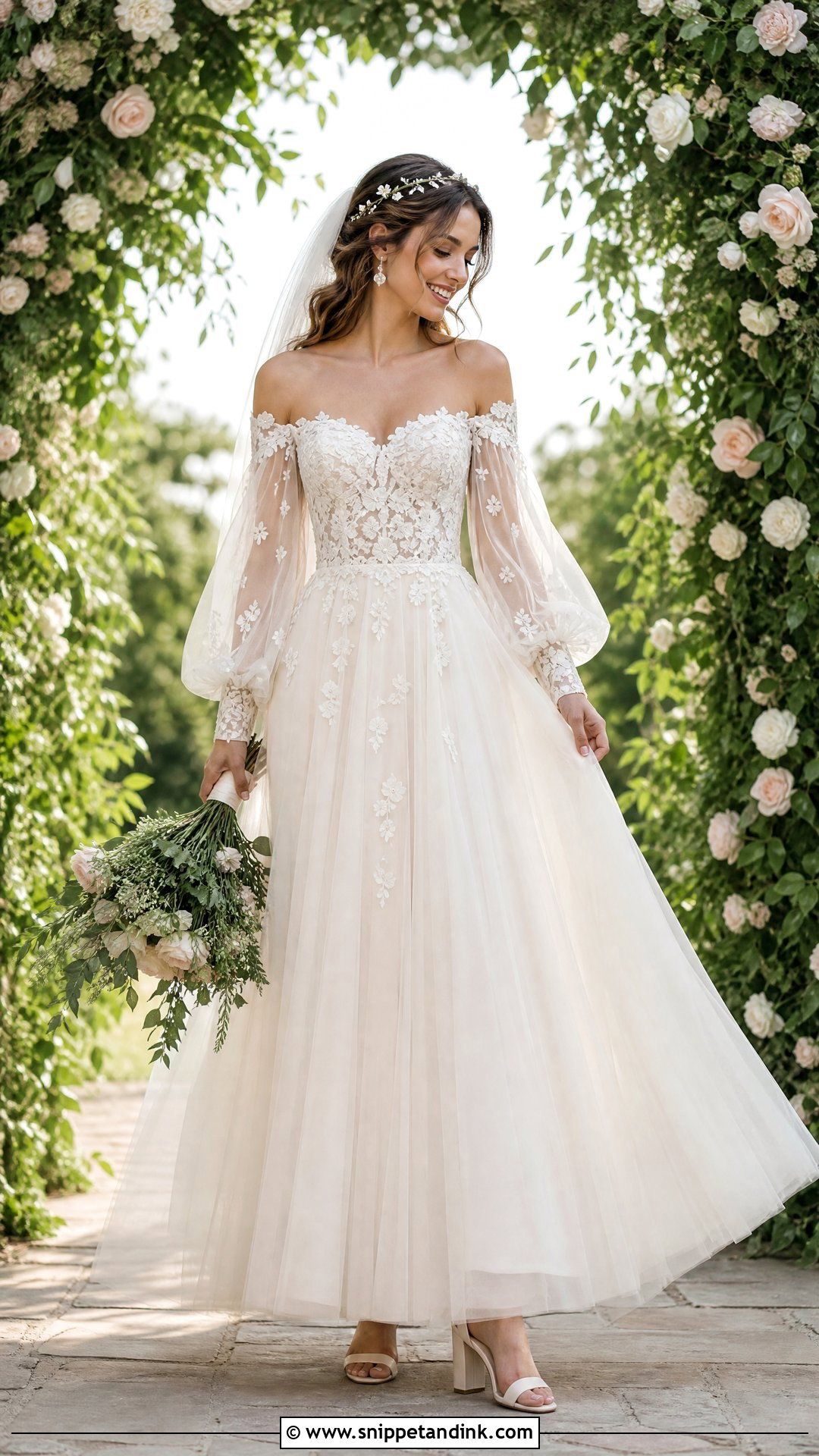
Detachable sleeves give you two looks from one gown: covered for the ceremony, bare for the dance floor. Start with a strapless or thin-strap A-line with floral lace on the bodice and a soft tulle skirt, then add sheer puff or bishop sleeves dotted with tiny appliqués. The weak point is always the attachment. Snaps tend to pop under tension, so ask whether the sleeves hook onto an internal band, and practice taking them off with whoever will help you on the day. Ivory block heels, a botanical hair vine and pearl earrings keep it simple, and a fingertip veil won’t tangle with the sleeves. A loose bouquet that echoes the appliqué shapes completes it.
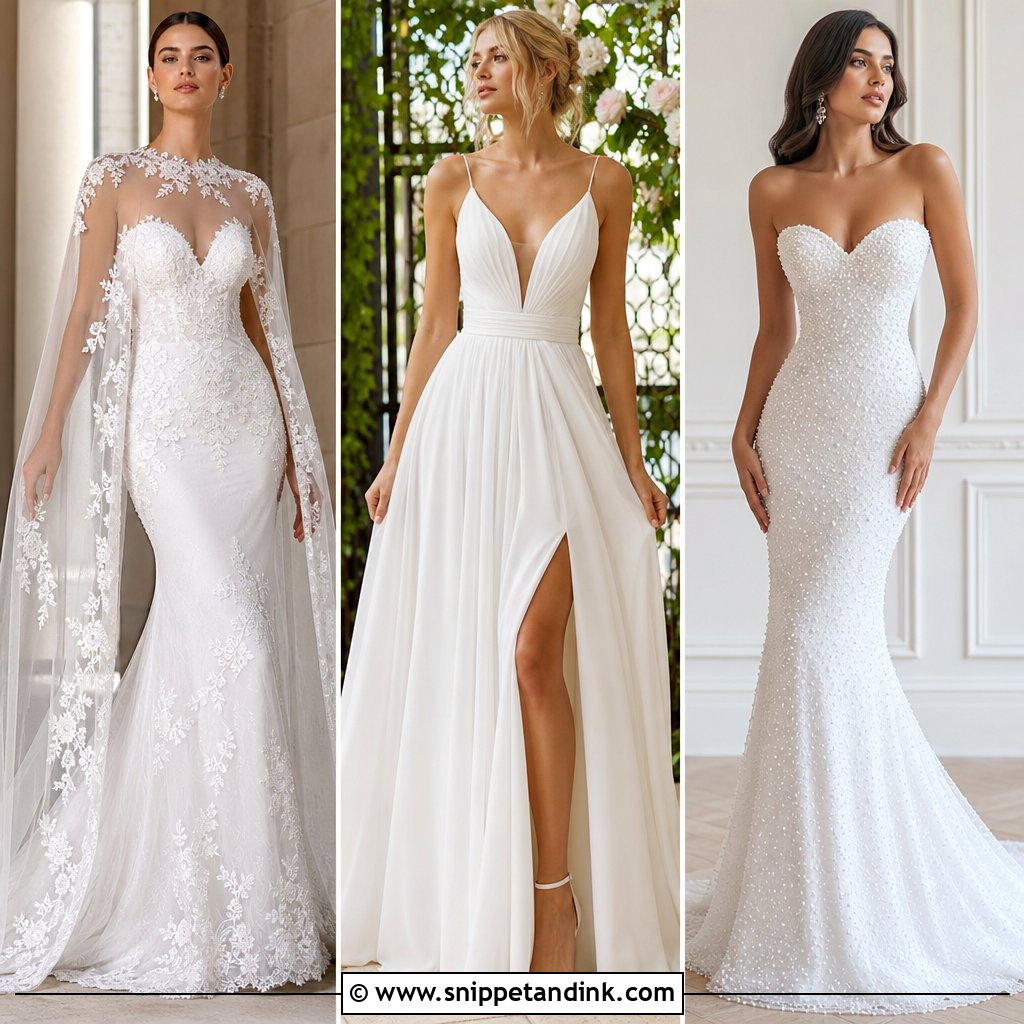
20. Mermaid Fairy Garden Wedding Dress
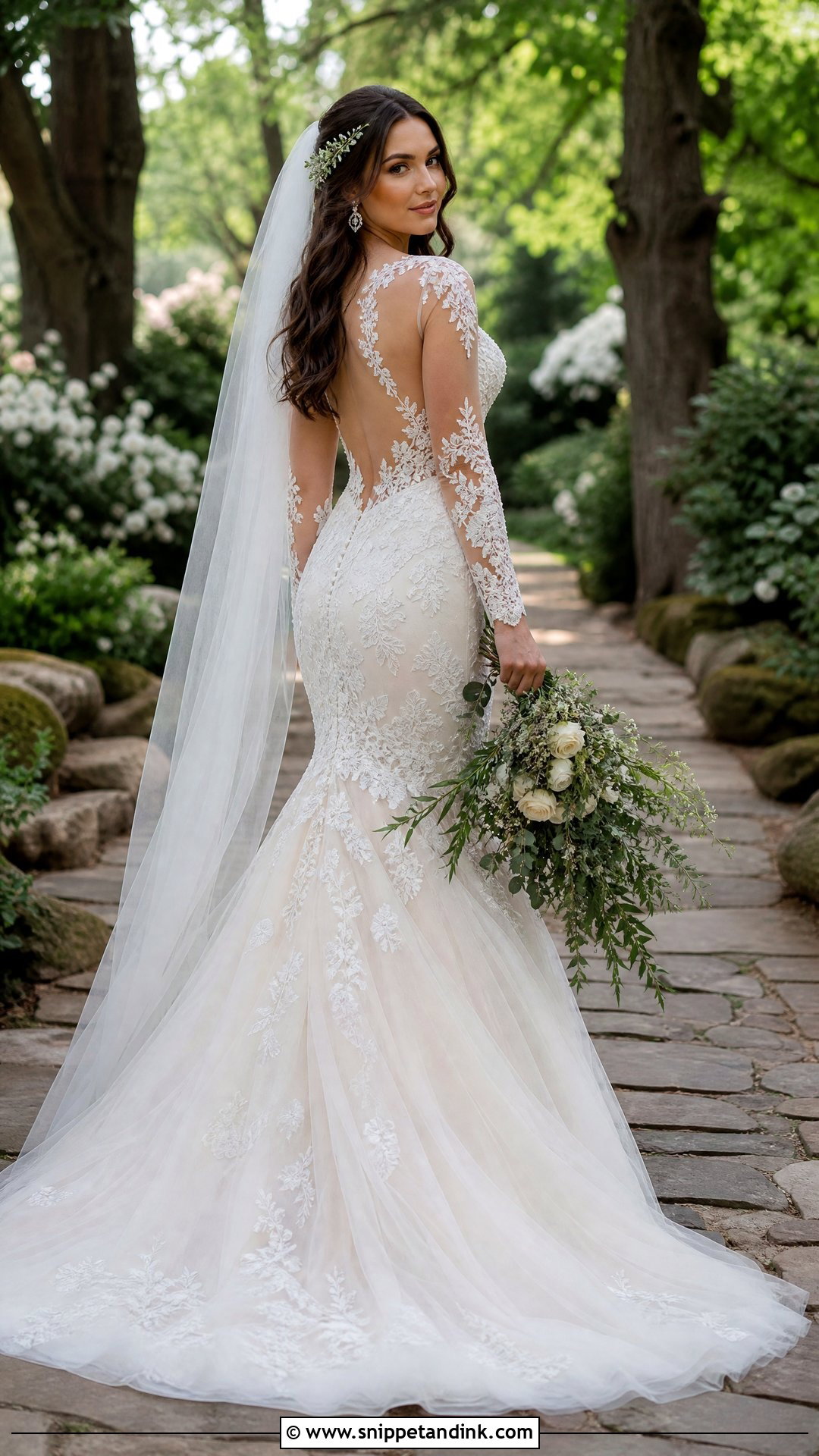
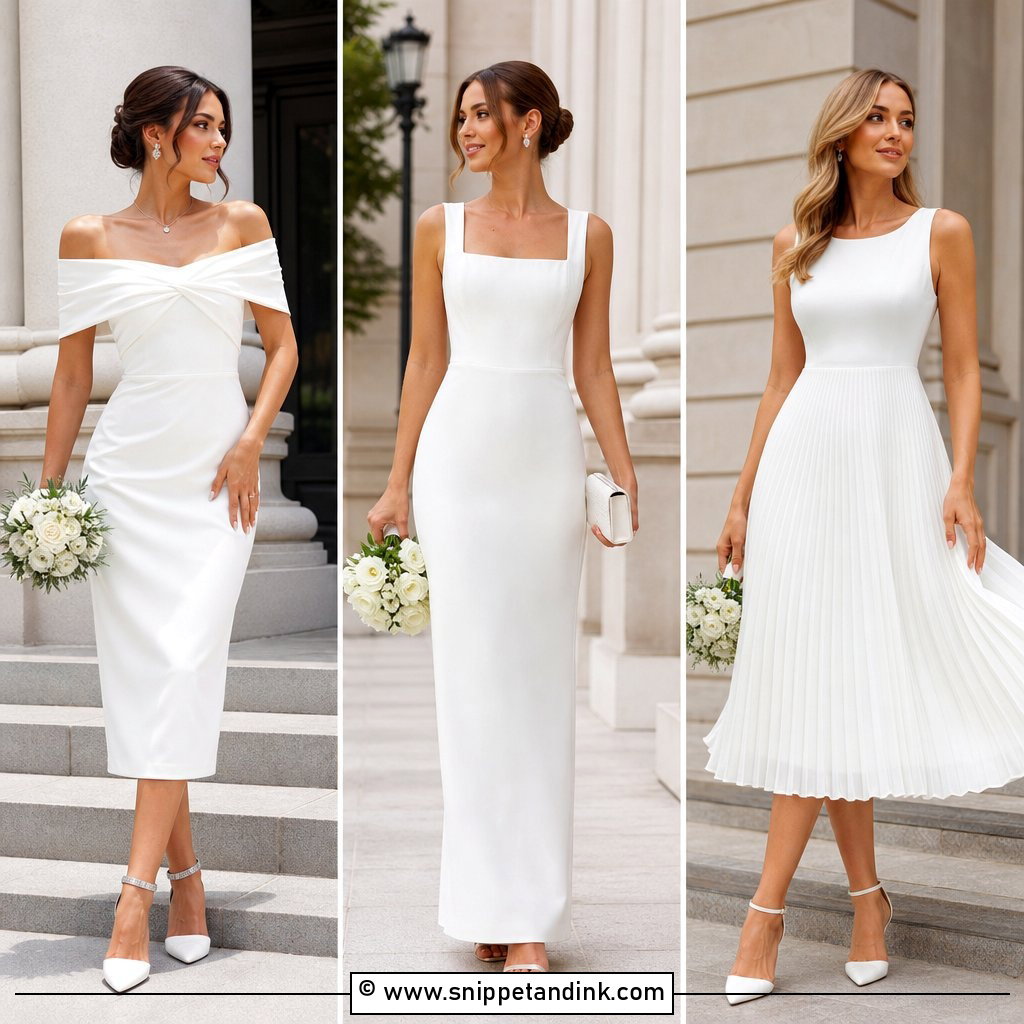
The mermaid is the boldest reading of this theme, and the one that asks most of the ground. Botanical lace running from the neckline over the waist and hips, then a flare of light tulle or organza, gives drama without rigidity. An illusion back, detachable lace sleeves or a floral overskirt softens the line. My honest caveat: a mermaid limits your stride, and on uneven grass that matters, so walk the actual aisle in it if you can and have the flare point set at or just above the knee for easier steps. Low, steady heels, drop earrings and a vine comb suit it, along with a long plain veil and an elongated bouquet that leads into romantic woodland details.
After the Garden: Cleaning Grass Marks and Storing 3D Flowers
Every garden gown comes home with a story at the hem. Resist the urge to scrub grass marks or wine with a wet cloth that night, because rubbing pushes the stain into the fibers and can fray tulle. Hang the dress, let any mud dry, and take it to a specialist bridal cleaner within a few weeks, pointing out each mark so it is treated before the main clean.
Three-dimensional appliqués need extra care in storage. Flowers and petals crush flat if the bodice is folded over them, so I recommend a breathable cotton garment bag or an acid-free box with acid-free tissue padded between the layers, kept somewhere cool, dark and dry. Plastic bags trap moisture and can yellow ivory fabric over time. Check the dress every year or so and refold it along different lines so permanent creases never set.
If something goes wrong on the day
A small emergency kit solves most garden mishaps: safety pins in ivory and nude, a few clear hair elastics to hitch a fallen bustle, white chalk to dull a fresh grass mark for photos, and a lint roller for petals and pollen. Give it to whoever is helping you dress, not to yourself.
Walk the Lawn in Your Shoes Before the Last Fitting
Appliqué, airy skirts, botanical lace, soft color and a little shimmer can all give you the enchanted effect; what makes it work on the day is how the gown copes outdoors. Before you sign off on a dress, think about the weather, the train length, the fabric weight and the support you need, and test the shoes on real grass. A gown you can walk, sit and dance in will always look better in the garden than a more elaborate one you are nervously holding up. Use these ideas as a starting point and build a head-to-toe look that feels like yours.
You'll Like These Ideas:


Leave a Reply