
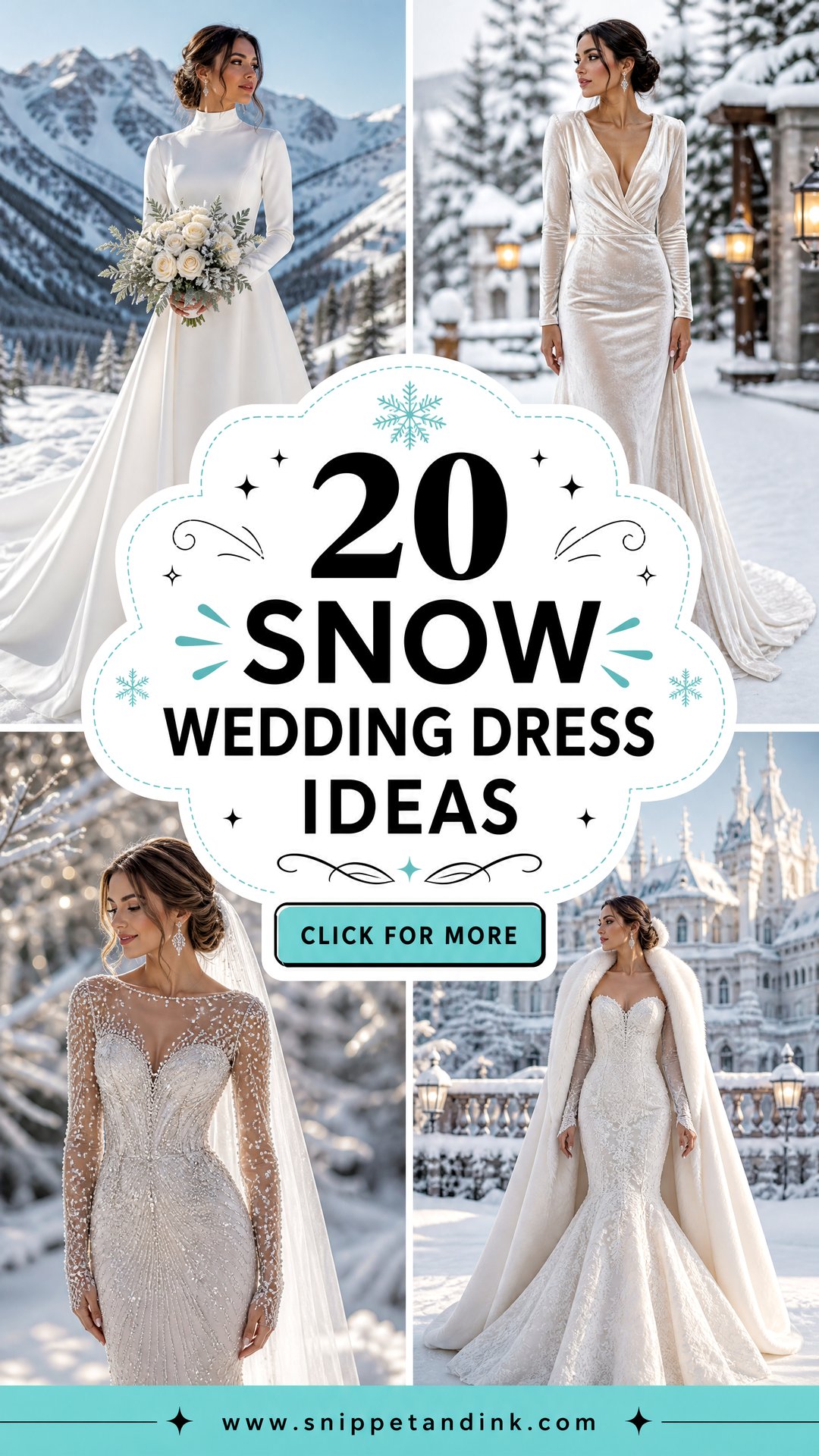
Snow is the most flattering backdrop a white dress can have and the least forgiving place to wear one. Cold, wet ground and short daylight change what I put a bride in. Heavier fabrics do better here: Mikado, satin, velvet, structured crepe and lined lace hold their shape in the cold and photograph cleanly against white. Then I add a layer that comes off, a cape, coat, bolero or wrap, because you’ll go from freezing portraits to a warm reception room within the hour. Each look below covers the dress plus the boots, veil and outerwear I’d pair with it, from ballroom formality to a mountain elopement.
Dressing for Three Temperatures in One Afternoon
A snow wedding isn’t one climate. It’s usually a cold walk, a stretch of outdoor portraits, then a heated room full of people. I plan the outfit for each stage separately, then check that the pieces work together.
Outside: the portraits
Ask your photographer how long the outdoor session will run, and plan to be properly cold only in short bursts. Keep a coat or blanket just out of frame and put it back on between setups. Hands go red and stiff fast, so gloves come off only for the shots that show the ring. Winter light also fades early in the afternoon, which can cut the session shorter than you expect, so I’d agree the outdoor shot list in advance.
Inside: the reception
Heated rooms get warm once guests arrive and dancing starts. This is why I prefer removable layers over a dress with built-in heavy sleeves, and why a velvet or wool cape should come off rather than stay on all evening.
Underneath: the hidden layer
A full skirt hides a lot. Sheer thermal tights, a thin slip or warm socks inside the boots are invisible under a ball gown and make a real difference standing outdoors. Bring them to your fittings, since even thin layers change how a fitted bodice sits.
1. Long Sleeve Lace Snow Wedding Dress
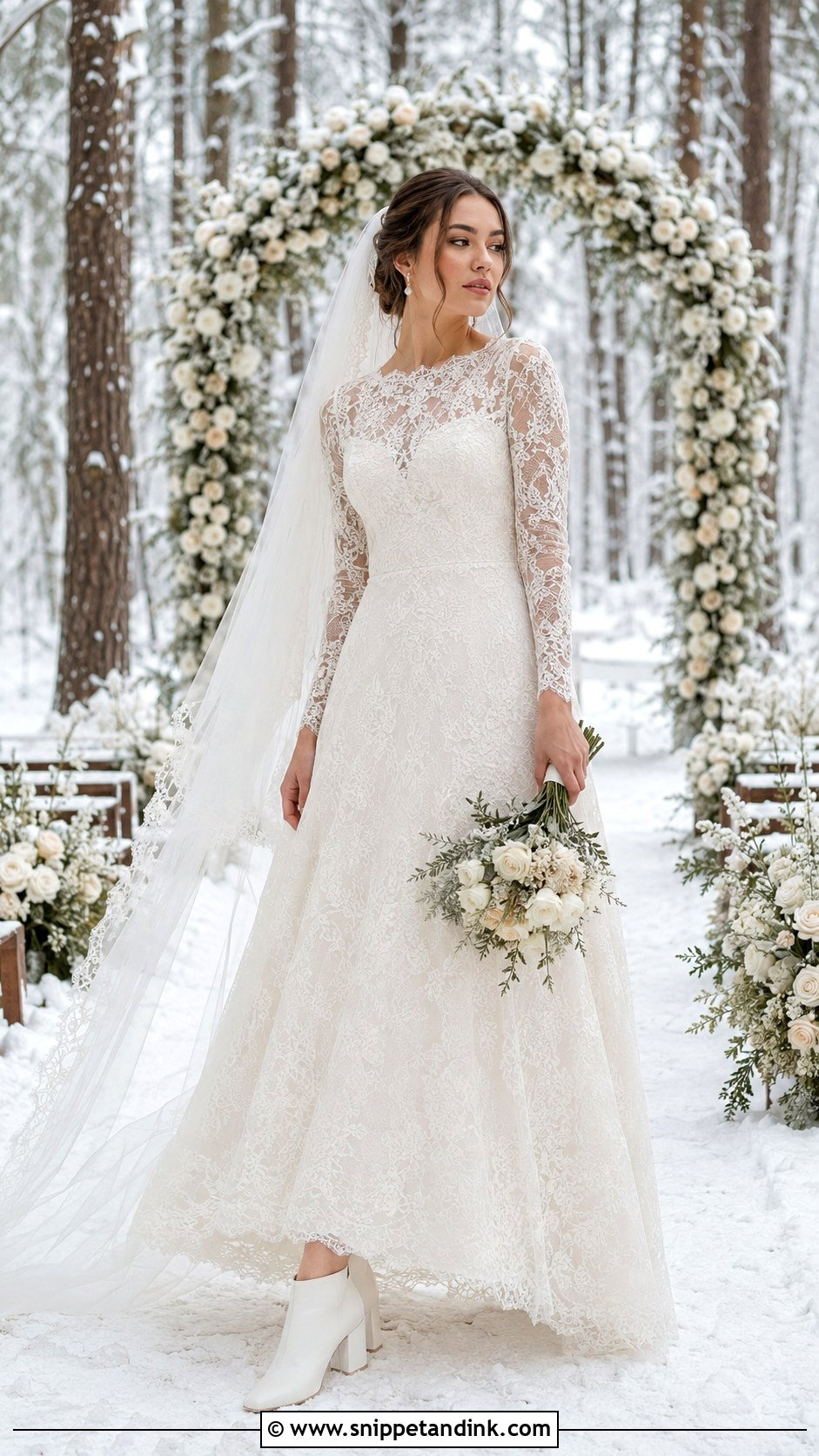
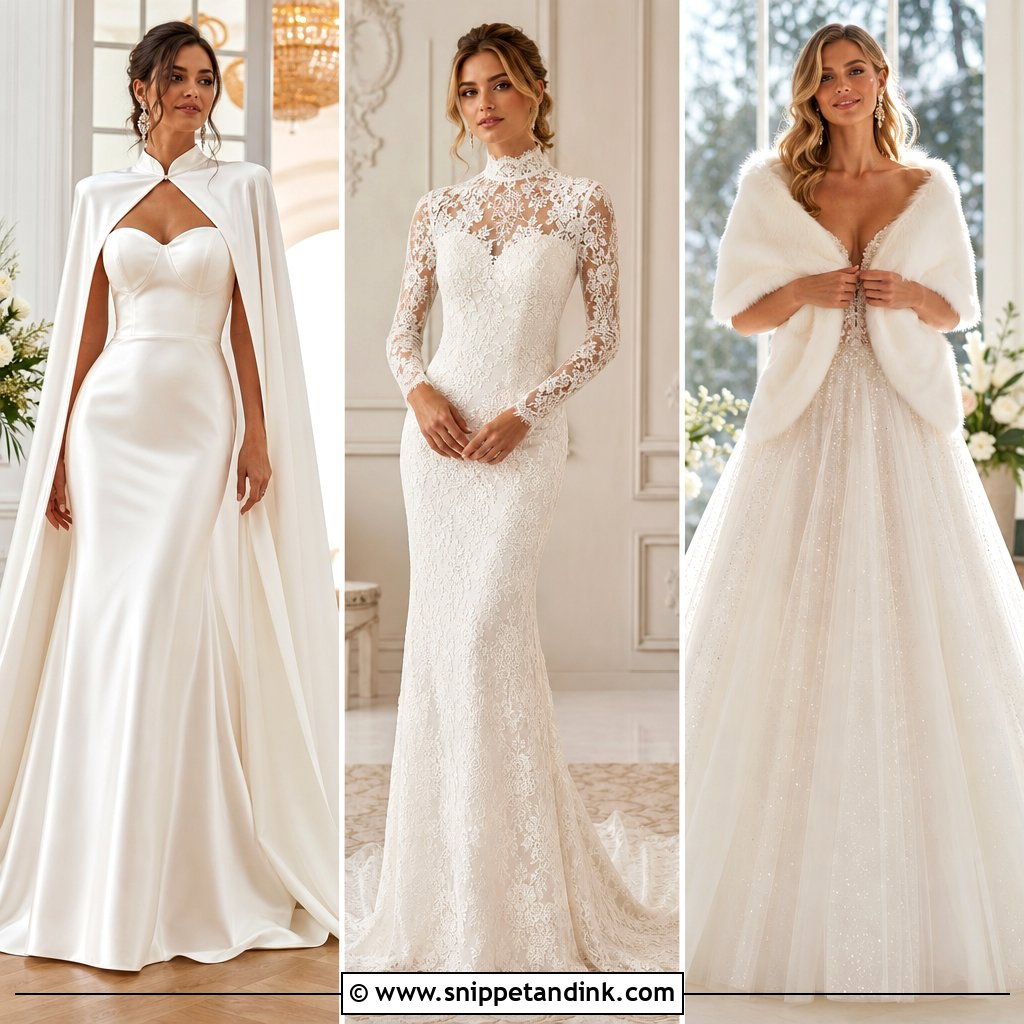
Lace sleeves give real coverage while still looking light, which is why I reach for them so often in winter. I’d pair a lined bodice with an A-line skirt soft enough to move over uneven ground. The skirt hides a lot, including a smooth thermal layer if the forecast drops. Block-heel boots in white are far steadier on packed snow than pumps. Keep the neckline quiet, a soft V or bateau, so the sleeves stay the feature, and finish with pearl drops and an ivory cathedral veil.
2. Satin Ball Gown With Bridal Cape
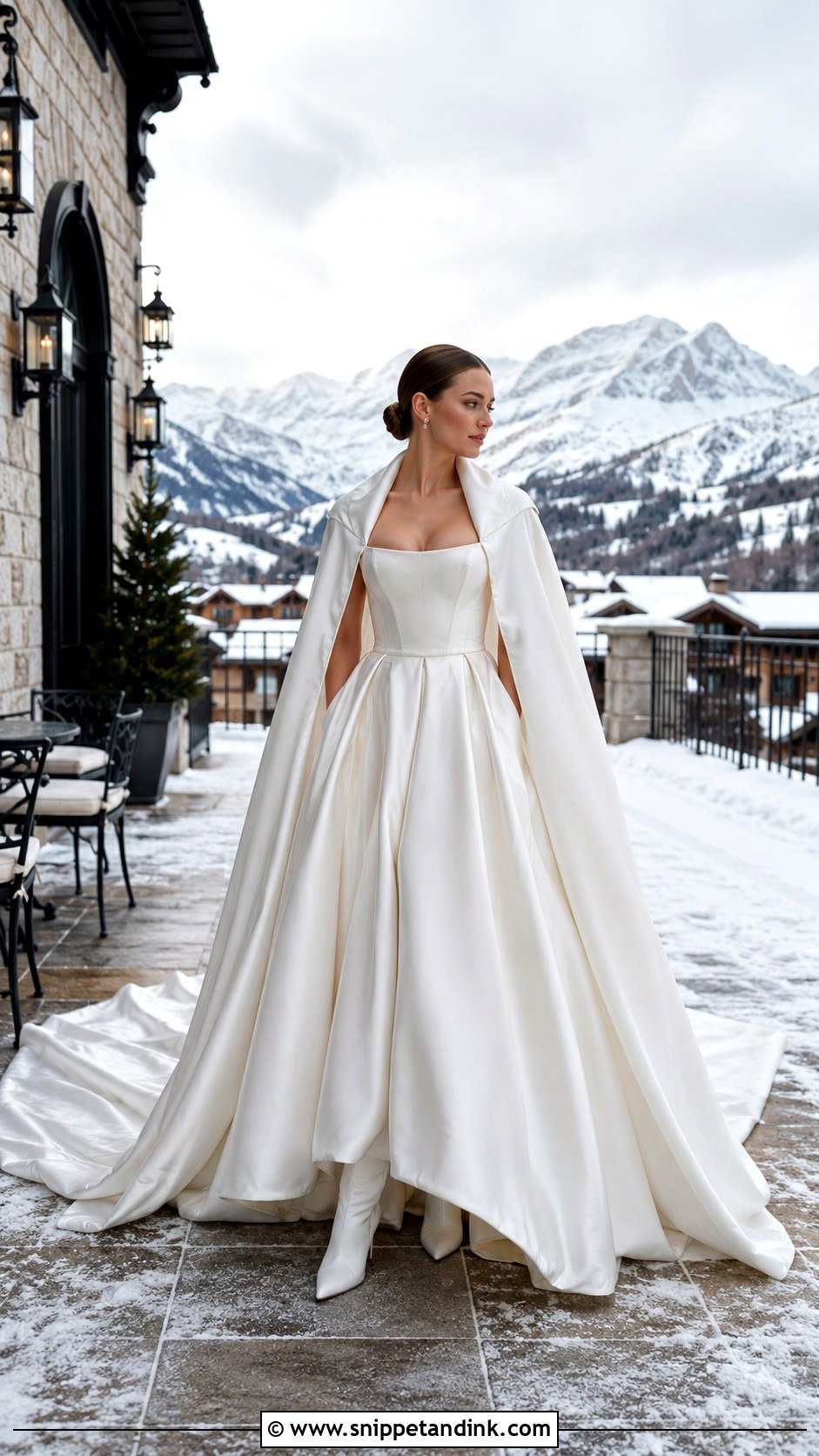
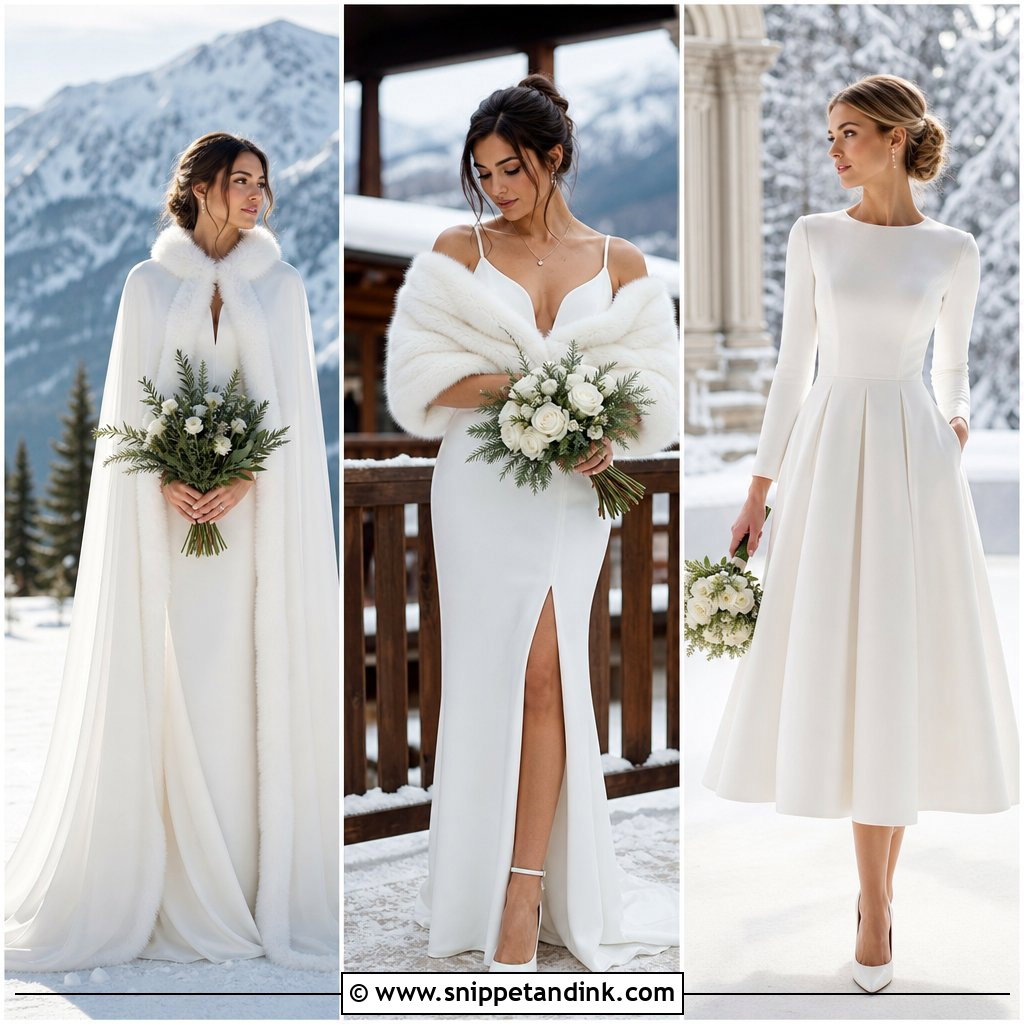
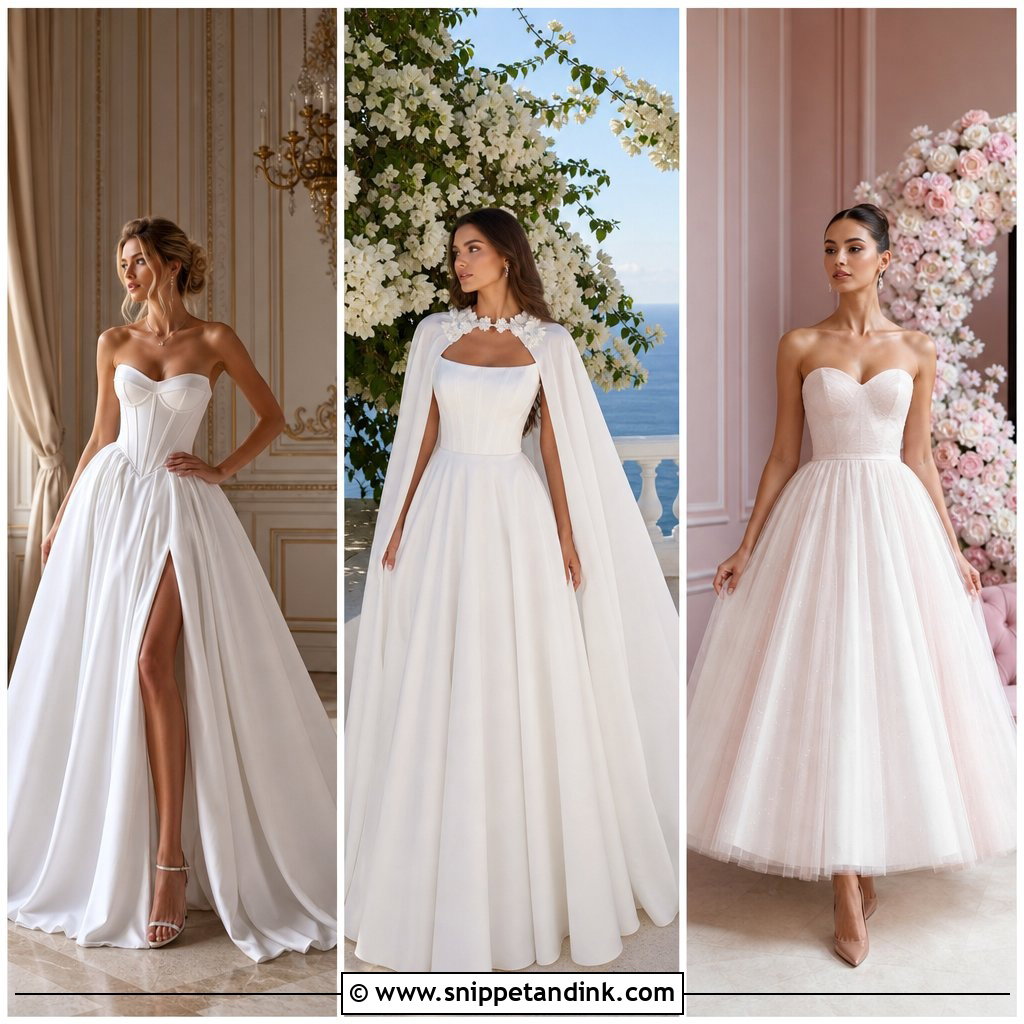
Structured satin looks crisp against snow because both reflect light cleanly. An ivory ball gown with a fitted bodice and full skirt is the base; a floor-length cape in matching satin or soft crepe goes on top for outdoor portraits. Make the cape detachable. You’ll want it off the moment you’re indoors, and a sewn-in cape traps heat in a warm ballroom. Ivory ankle boots disappear under the skirt. If you choose a cathedral train, ask for a strong bustle, since a heavy satin train pulls loose hooks out quickly.
3. High Neck Crepe Snow Wedding Dress
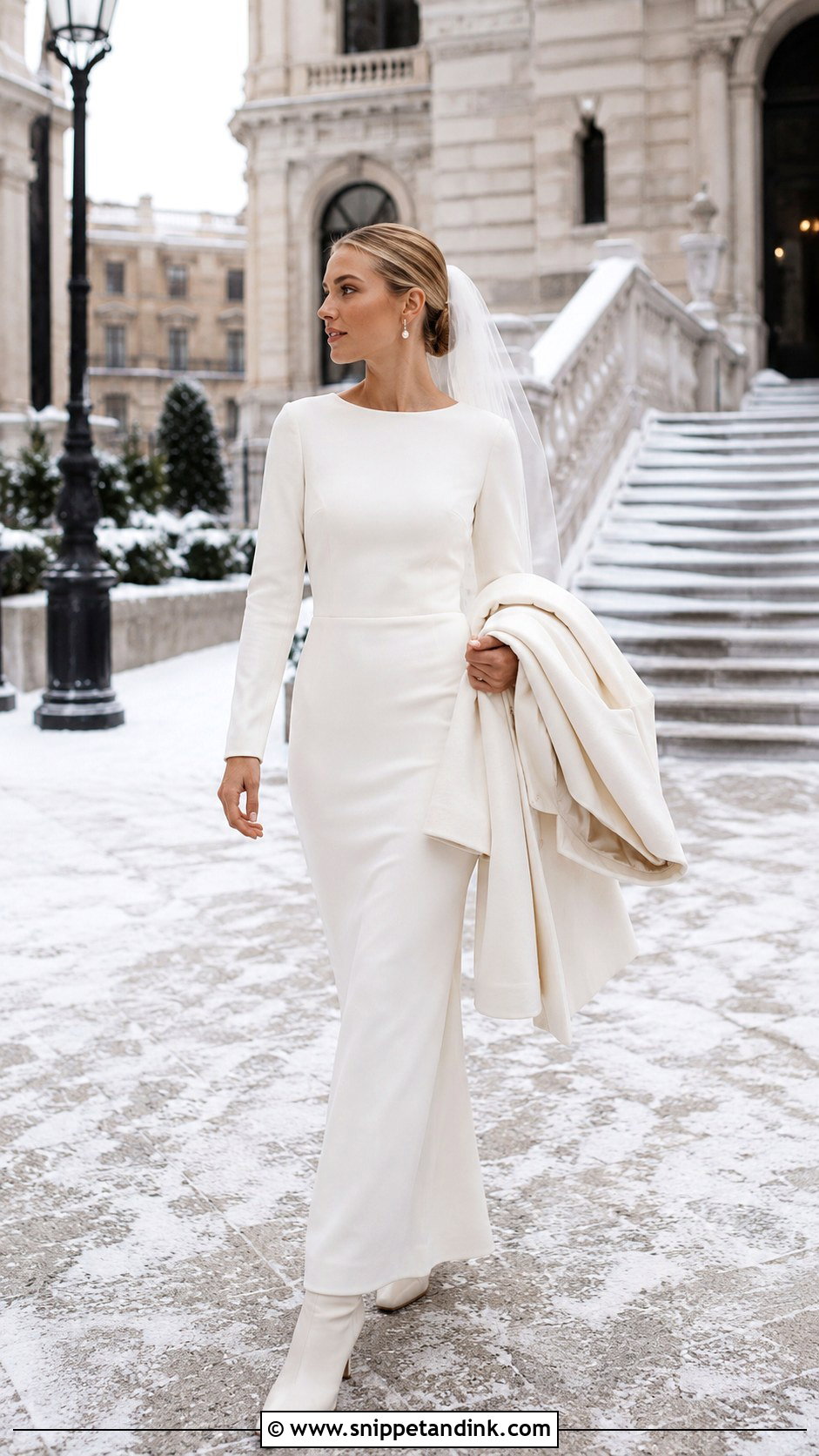
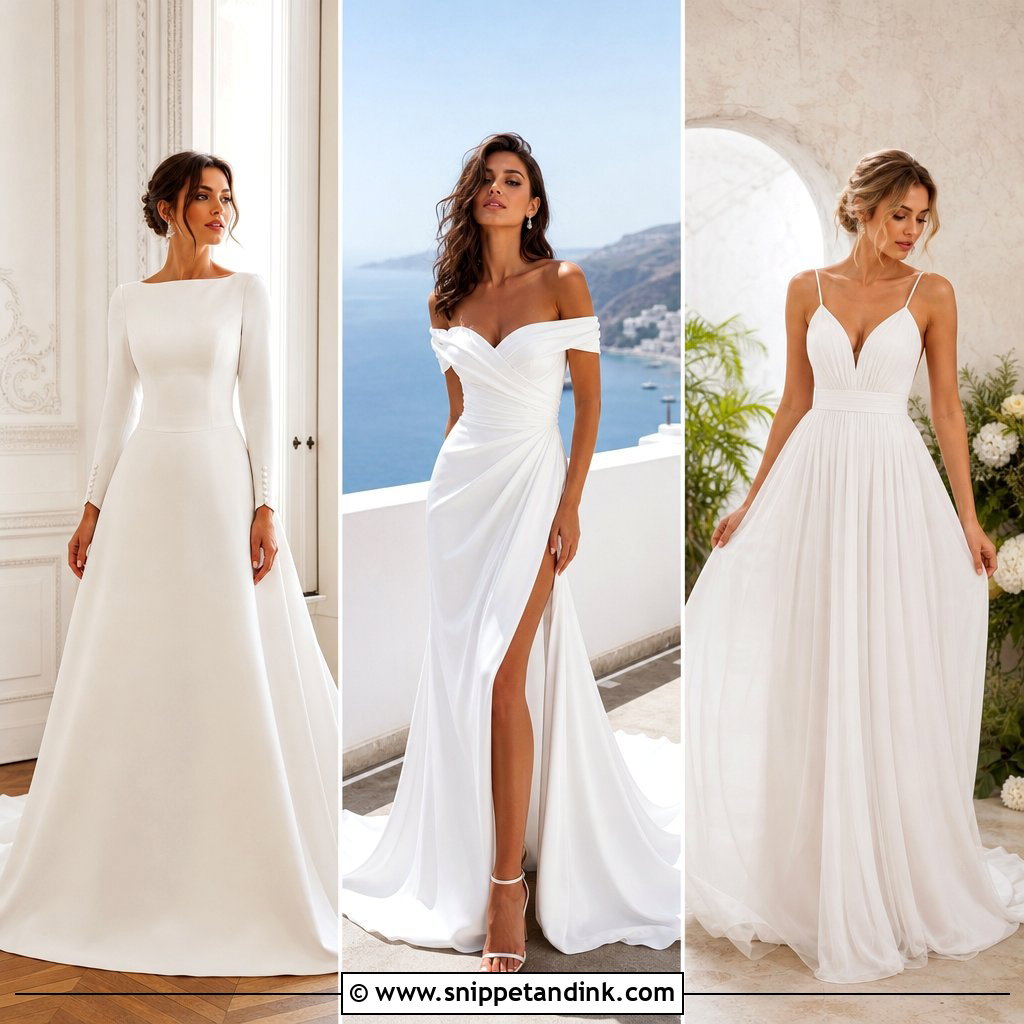
Heavy crepe is my pick for a bride who wants clean lines and warmth together. It has more body than summer fabrics, drapes without clinging, and makes a smooth line on most figures. A high neck, full sleeves and a column cut need a back slit, or you won’t manage steps with any grace. I’d add covered buttons, low-heeled leather boots and a fingertip veil, with a tailored ivory coat between photographs. A streamlined bouquet of white flowers and winter greenery suits it.
4. White Velvet Snow Wedding Dress
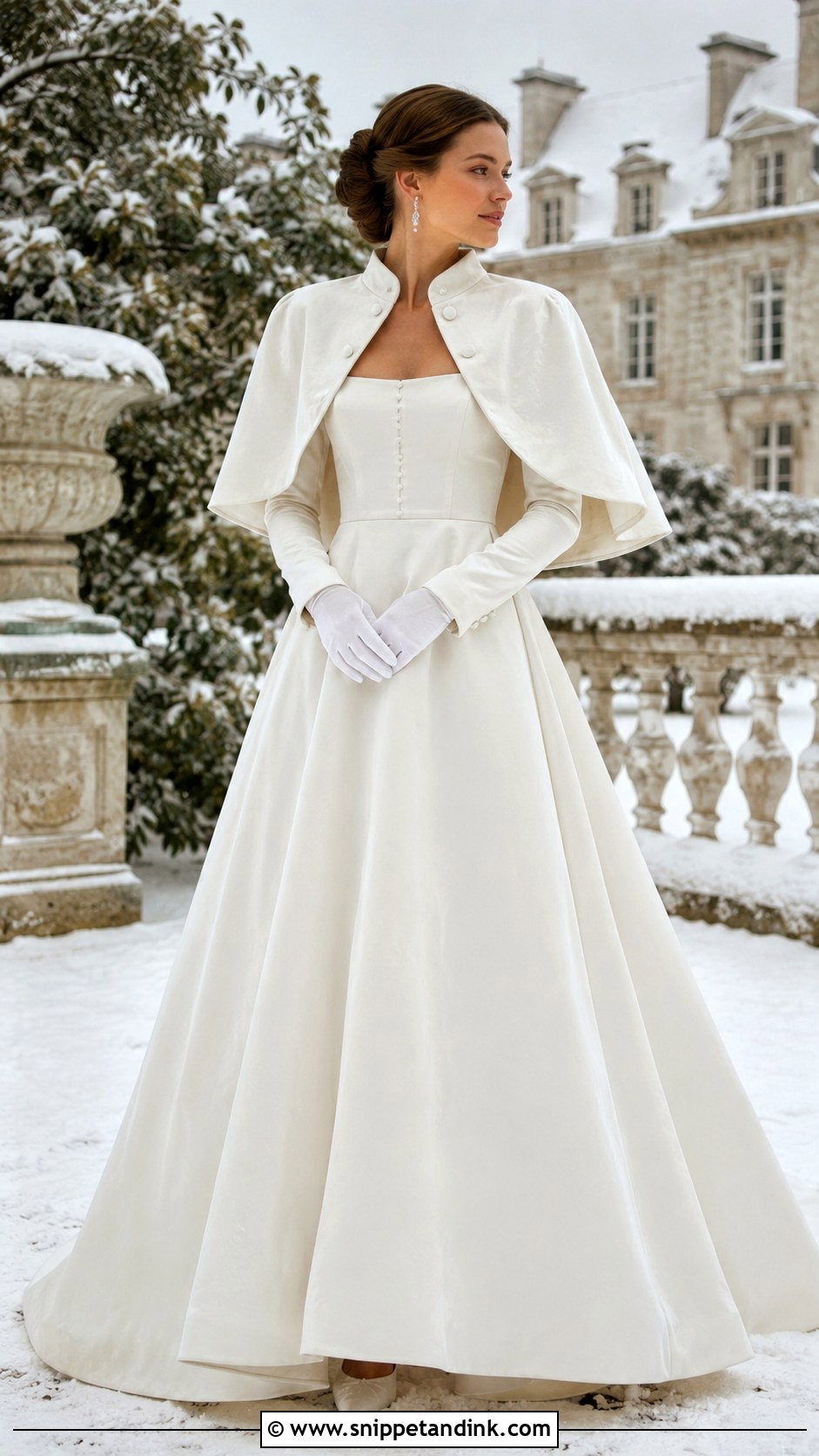
White velvet is rare, and it reads very differently from black or jewel-toned velvet: in snow light it looks almost chalky and soft. I keep embellishment to covered buttons or a narrow pearl belt, because velvet already carries a lot. Square neck, long fitted sleeves, a gently flared skirt. For outdoor shots add white gloves and a short structured cape. One warning: velvet marks where it’s pressed, so avoid sitting on the skirt in the car on the way. One plush texture is enough, so skip a fur wrap with it.
5. Off Shoulder Dress With Faux Fur Wrap
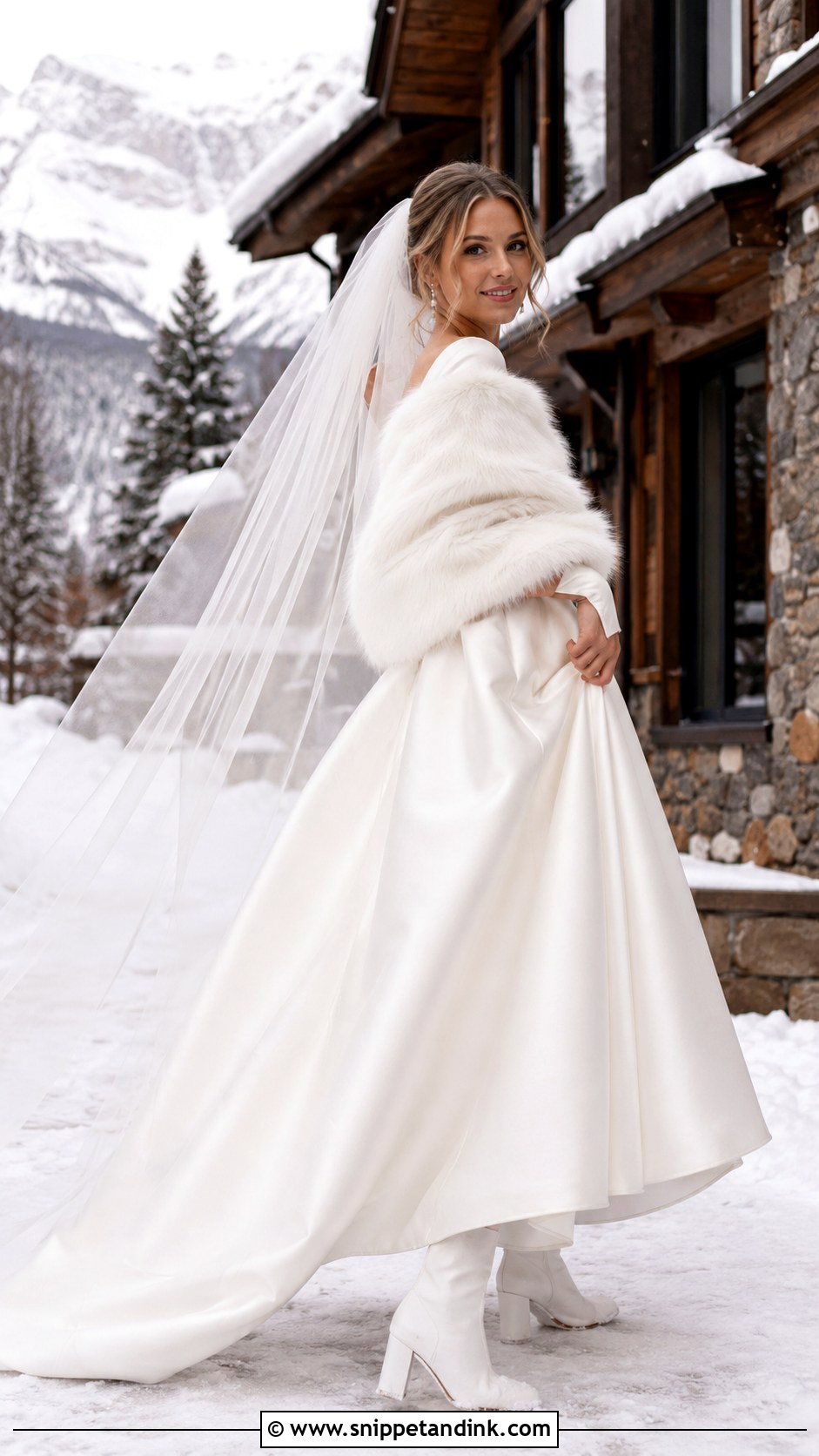
Bare shoulders in snow sound mad, and for a long outdoor ceremony they are. For a short one followed by an indoor reception, they work if the outerwear is planned. Choose structured satin or Mikado so the neckline holds, then drape an ivory faux-fur wrap for the moments outside. Waterproof block-heel boots under the skirt, sheer thermal tights for hidden warmth, an elbow-length veil that won’t tangle with the fur, and a classic updo to keep the neck clear.
6. Beaded Snow Wedding Dress With Long Sleeves
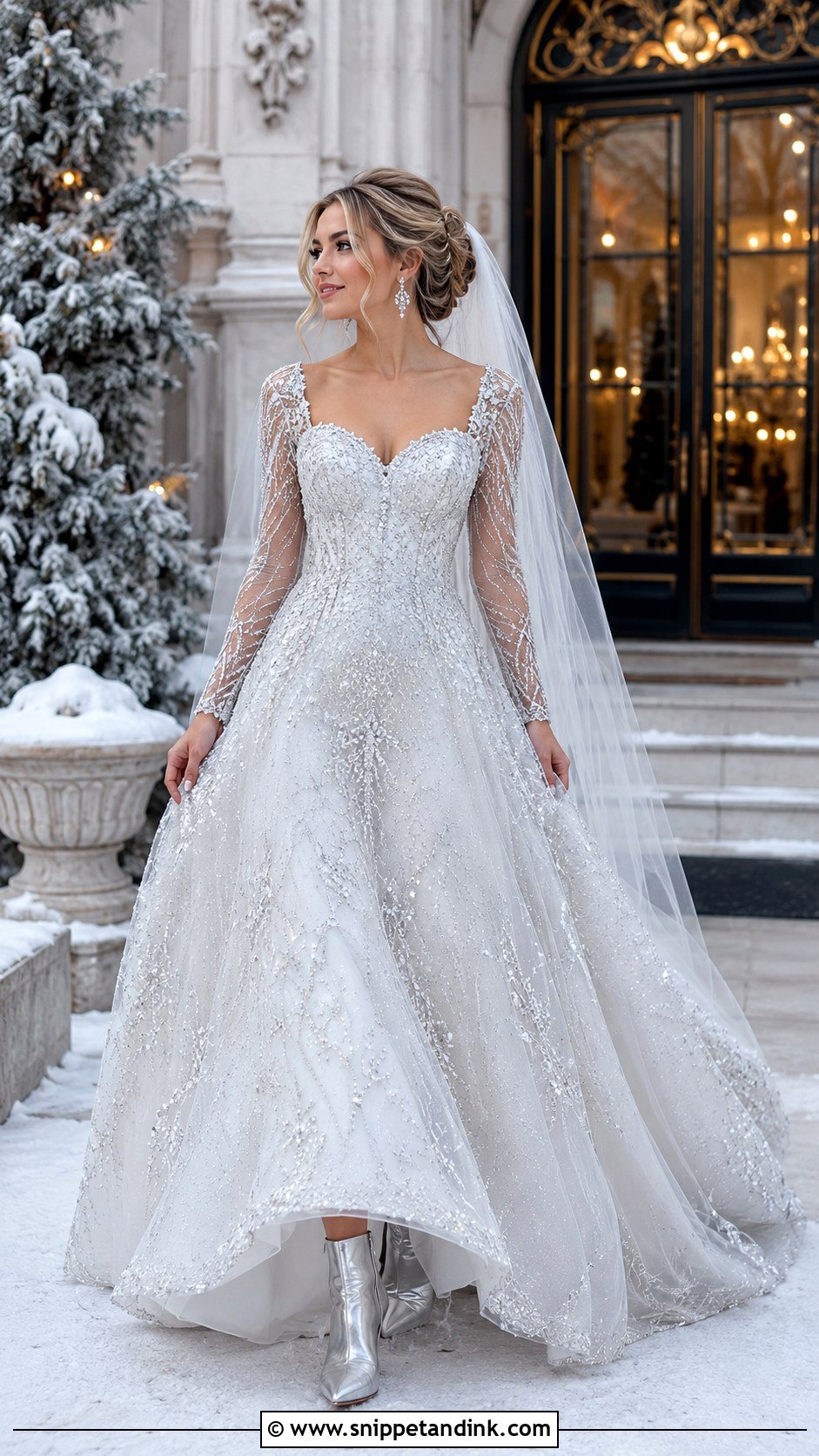
Tonal beadwork can echo frost without turning the dress into a theme. I’d keep the stones clear, pearl or silver and avoid colour entirely. Sheer long sleeves and a softly flared skirt let the beading sit on the bodice and arms. Since the gown already sparkles, drop the statement necklace and keep the bouquet simple. Beading is heavy and catches on outerwear, so if you add a cape, choose a smooth lined one. Candlelit evening venues show this kind of dress at its best.
7. Mikado Snow Wedding Dress With Gloves
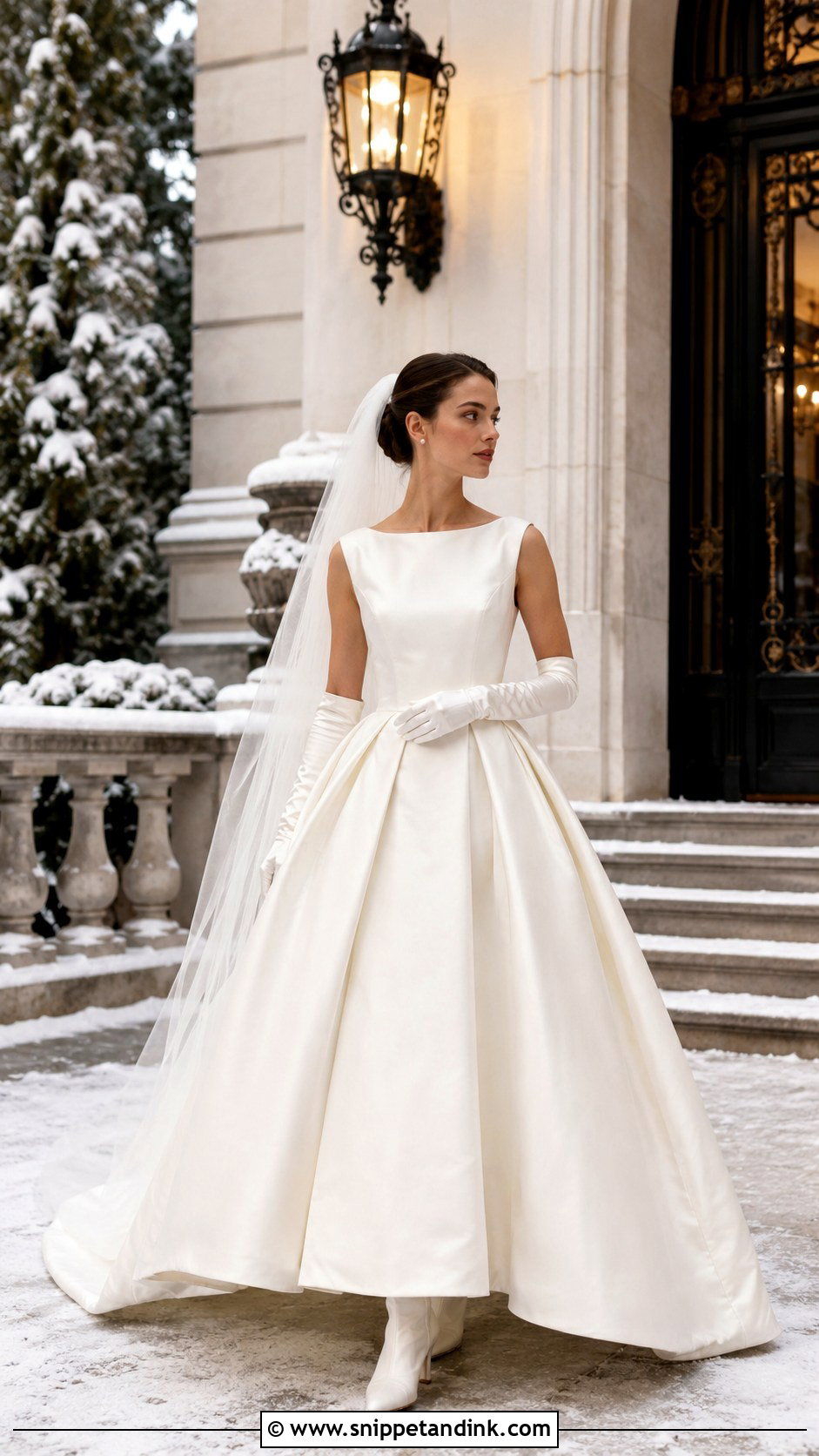
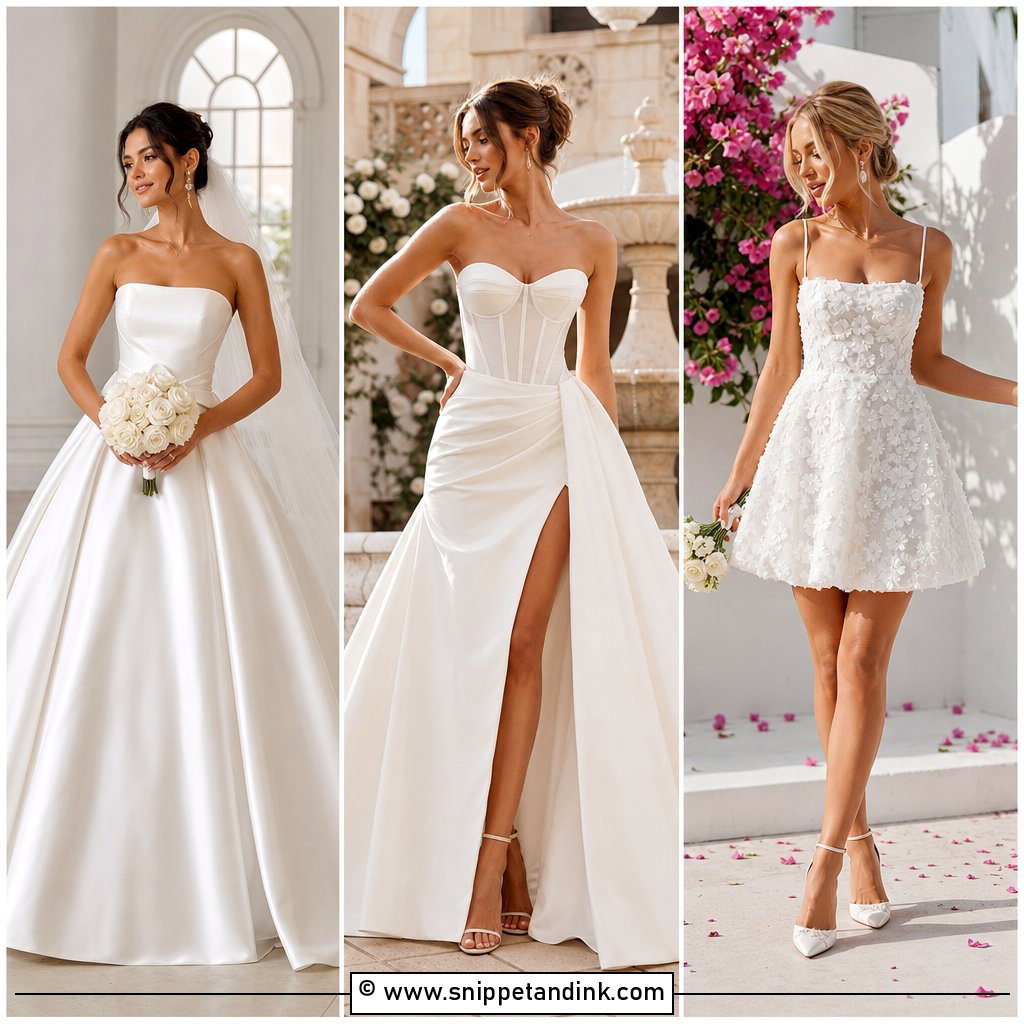
Mikado holds box pleats and a portrait neckline in the cold the way softer fabrics can’t. It also leaves room underneath a full skirt for practical layers no one will see: warm tights, even a thin thermal slip. Wrist-length satin gloves give a classic finish and some warmth for your hands. I’d add pearl studs, a sleek chignon and a chapel veil, white ankle boots with a stable heel, and a fitted bridal coat carried for the portraits.
8. Tulle Snow Wedding Dress With Detachable Sleeves
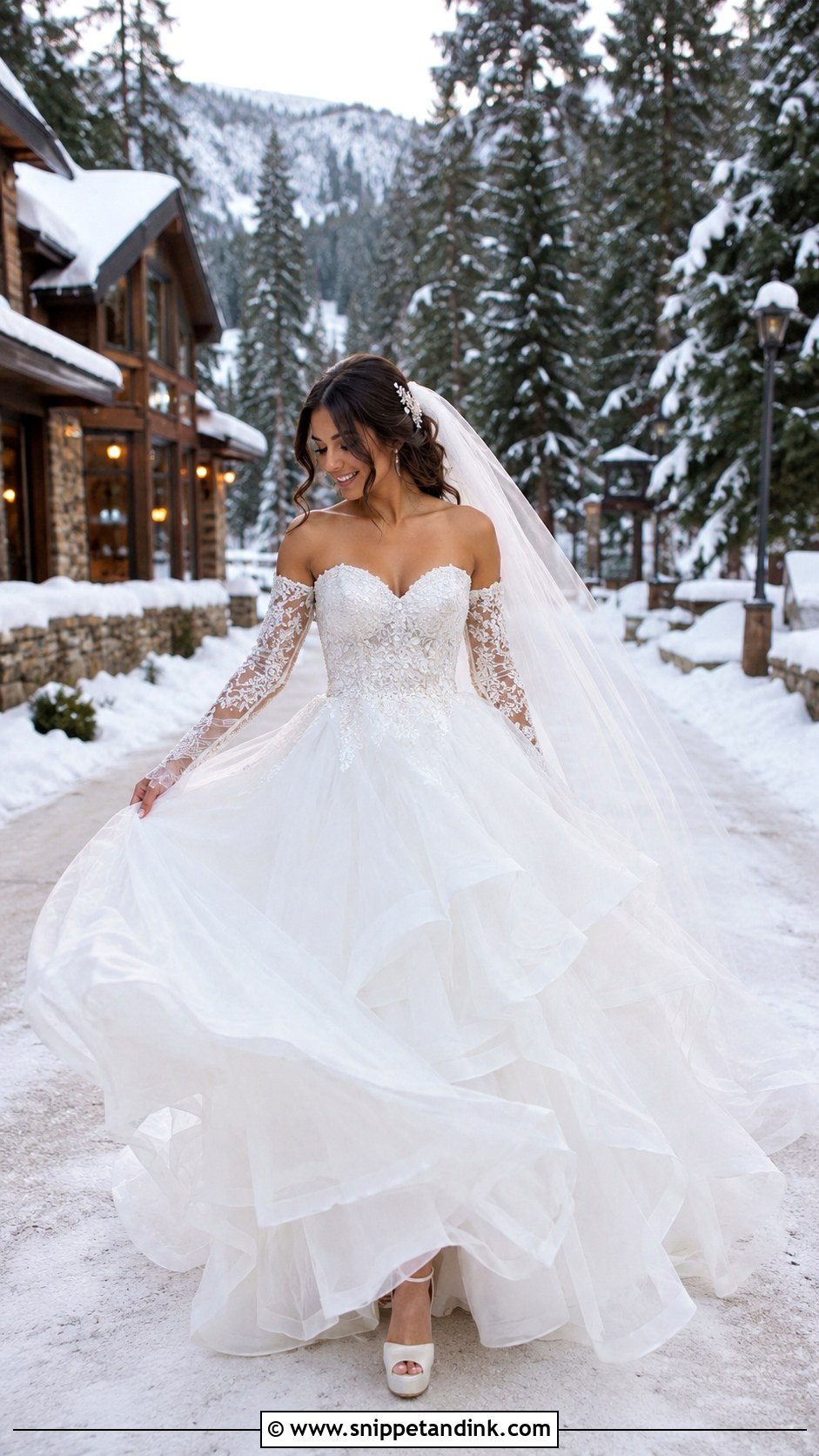
Detachable sheer sleeves solve the winter problem neatly: wear them for the ceremony and outdoor photos, unhook them for dancing. A layered tulle ball gown takes them well, especially with lace appliqués, pearls or tiny crystals that match the bodice. A fitted bodysuit underneath adds an invisible layer. Watch the train. Tulle drags snow and holds it, then turns heavy and grey as it melts, so if you’ll be walking through deep snow, choose a shorter train or bustle before you step out.
9. Square Neck Snow Wedding Dress With Coat
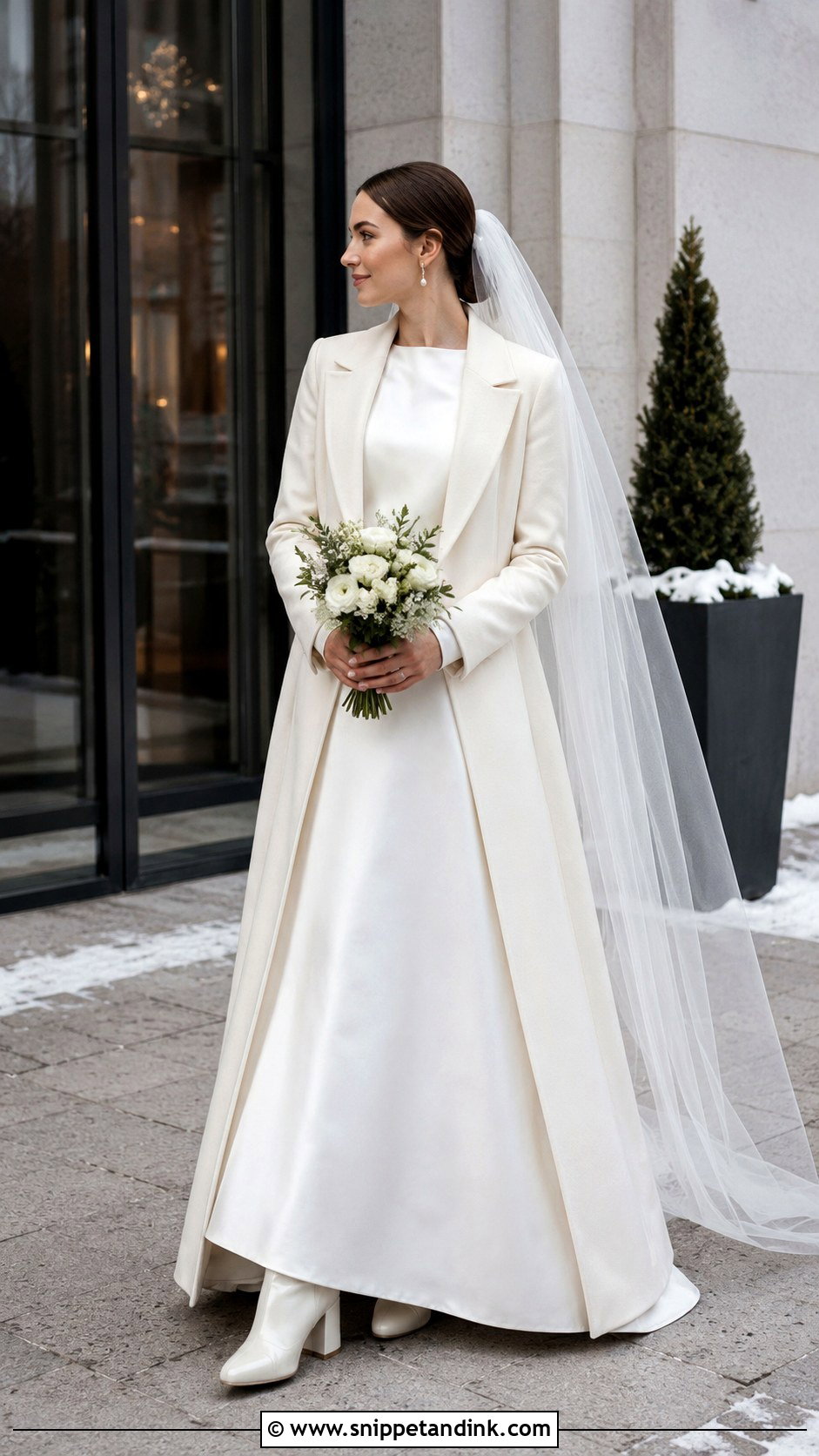
The coat makes or breaks this look. Over a long-sleeve satin or heavy crepe dress with a square neck, I’d choose a tailored ivory coat close to the gown’s length and colour. Ivories vary a lot, so hold the two together in daylight before buying. The shoulders need enough room that the coat sits smoothly over the sleeves. Wear the chapel veil tucked under the collar, a low bun, and white leather boots with a low block heel for icy paths.
10. Boho Lace Snow Wedding Dress With Cape
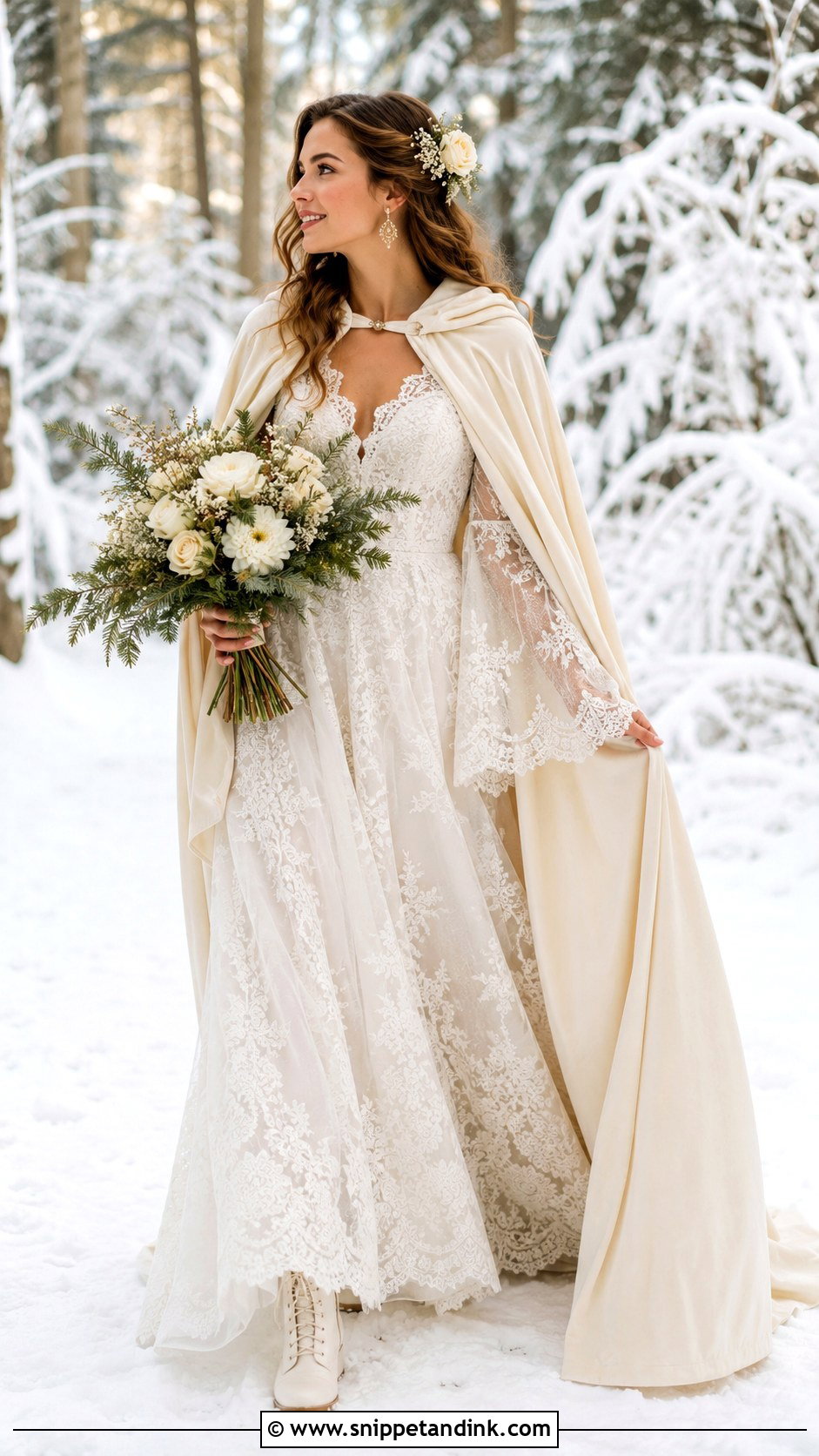
In a snowy forest, I’d lean relaxed rather than formal. A flowing lace dress with bell sleeves and an easy A-line skirt, a wool-blend or velvet cape in cream, and brown or ivory lace-up boots that look at home on a trail. Raise the hem slightly; forest paths are uneven, and a dragging hem picks up mud under the snow. Small gold earrings, loose waves and a floral hairpiece. Eucalyptus and textured greenery in the bouquet suit the setting.
11. Plus Size Snow Wedding Dress With Bolero
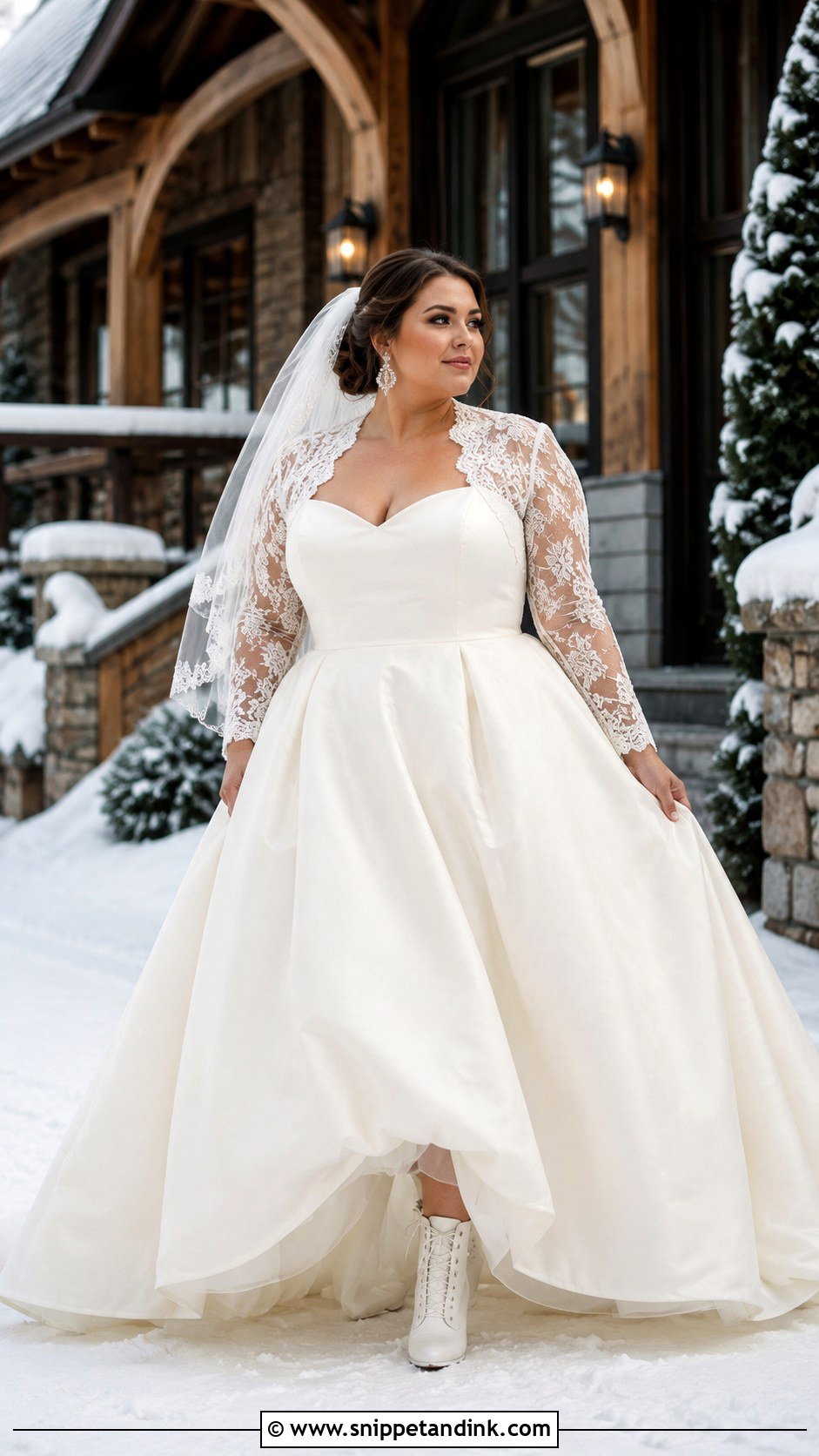
For a plus-size bride in winter, I start with structure: internal boning, wide straps and a defined natural waist on a satin or Mikado ball gown. Then a fitted bolero that closes without pulling across the bust. Where it ends matters most. A bolero should stop at the waistline, not across the fullest part of the chest, where it adds width. A corset back gives adjustable fit through the day. Wide-fit boots with cushioned soles keep you comfortable from ceremony to last dance.
12. Slip Snow Wedding Dress With Wool Coat
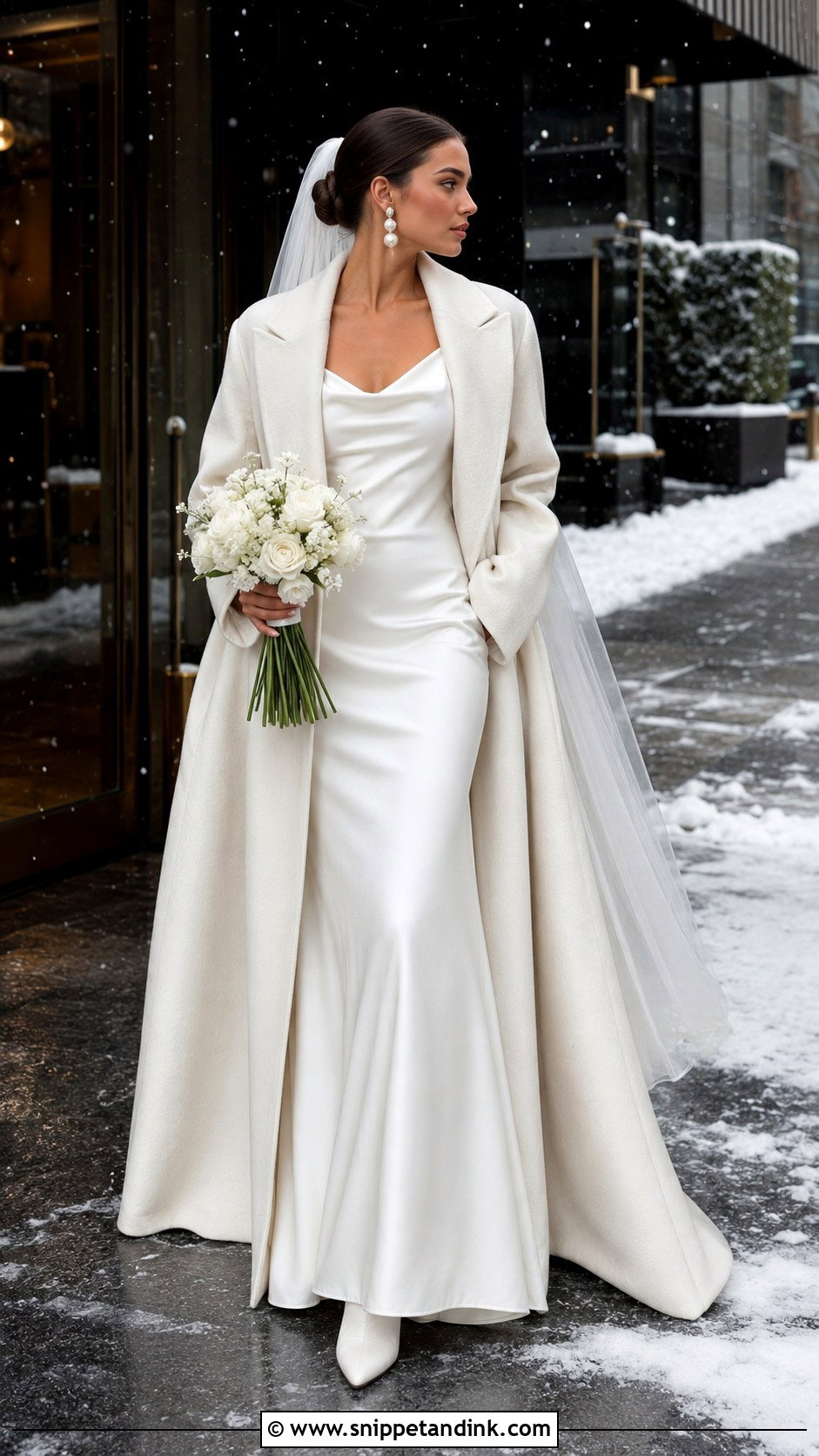
A slip dress in snow works only if most of the day happens indoors. Bias-cut satin has no warmth at all. Wear a floor-length ivory wool coat over it for travel and outdoor portraits, and plan to take it off only for a few frames at a time. Satin shows lines, so smooth, flat-edged base layers matter more than usual; thermal tights are possible under a bias skirt if they’re sheer with a flat, bonded waistband. Sculptural pearl earrings and a narrow cathedral veil keep it modern.
13. Tea Length Snow Wedding Dress With Boots
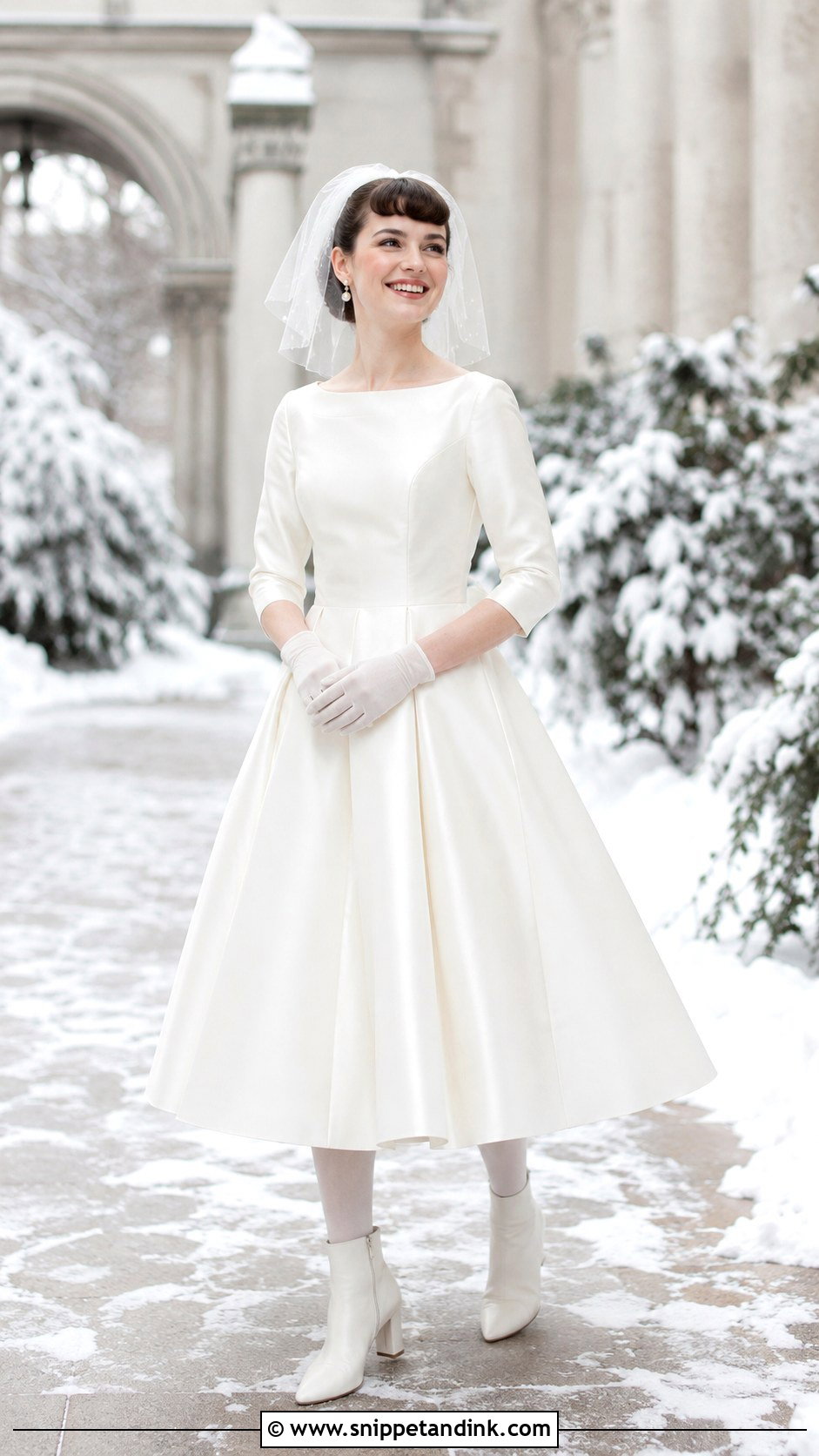
Tea length keeps the hem out of the slush entirely, which is its biggest practical advantage in winter. A structured satin dress with three-quarter sleeves and a full skirt shows off the boots, so choose white leather ankle boots with a block heel and a sole with real grip. Short gloves and a birdcage veil finish it. For warmth, wear opaque ivory tights that blend with the shoes, and a cropped jacket or wool coat for outdoors.
14. Snow Wedding Dress With Bridal Sweater
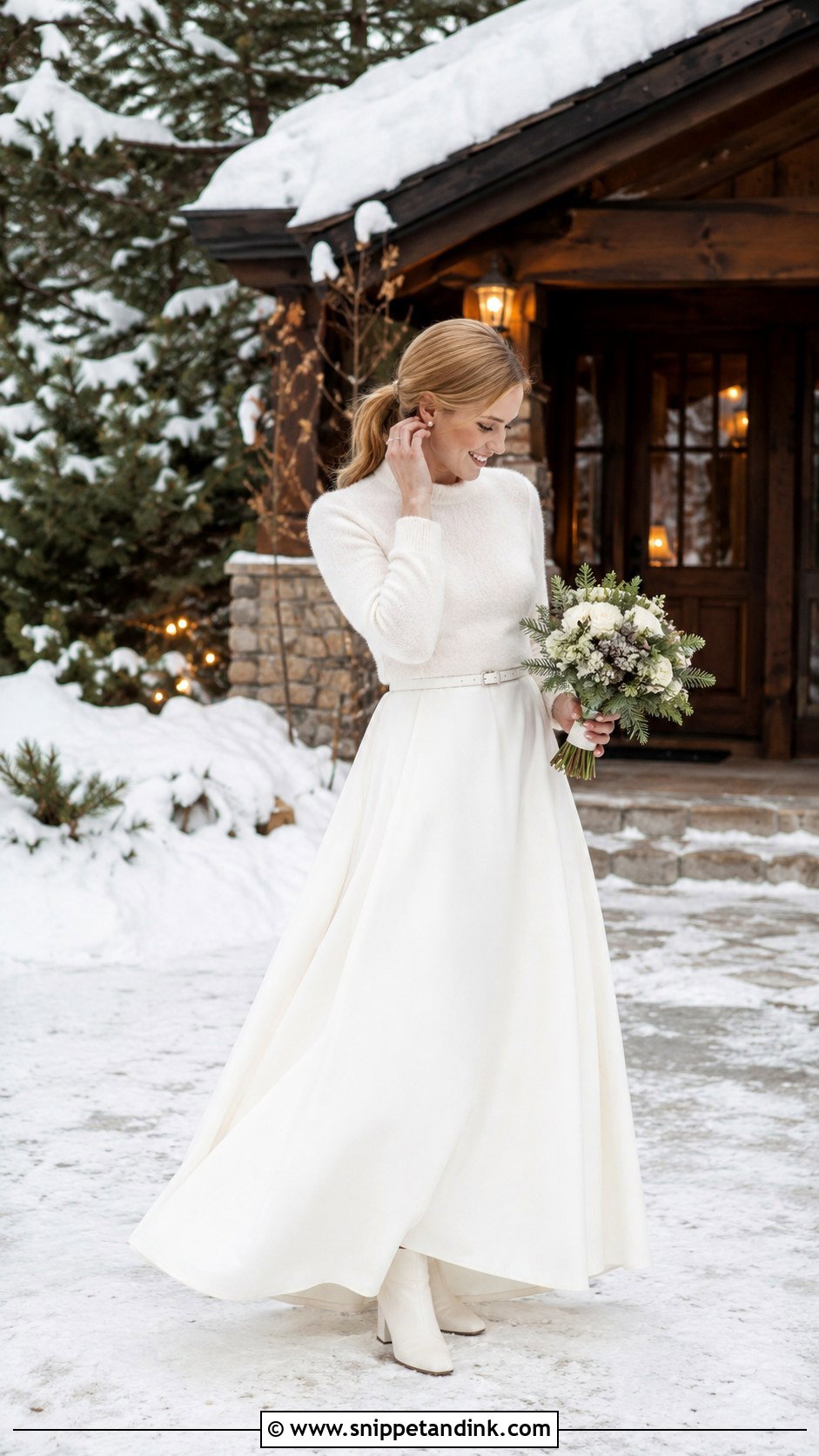
A bridal sweater over a simple gown is cosy, honest and surprisingly hard to get right. The knit must be fine, cashmere or a smooth merino, because chunky yarn adds bulk over the bodice and looks like a last-minute grab. Fit it close and choose ivory to match the dress. Take it off at the reception to reveal the gown. A narrow belt over the knit defines the waist on a fuller skirt. Pearl studs, a low ponytail and white ankle boots suit a cabin or small lodge.
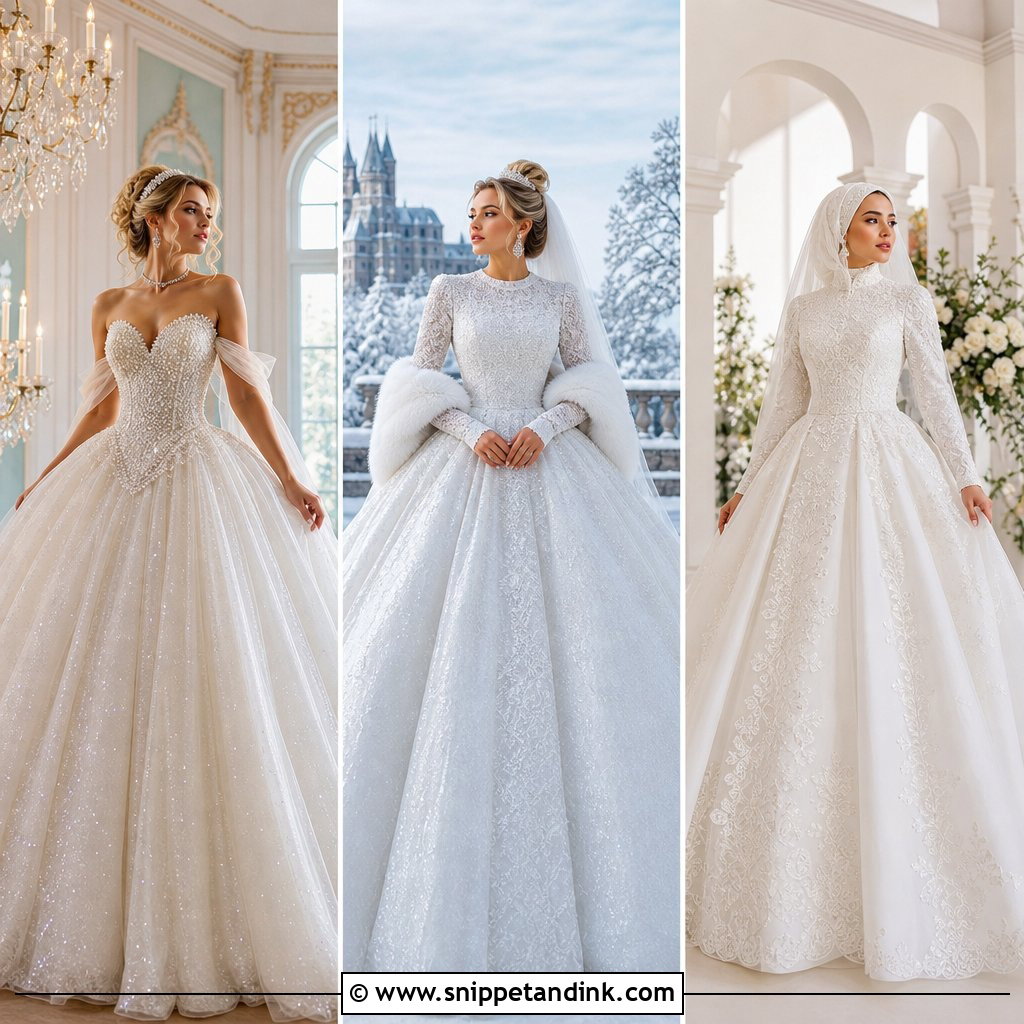
15. Blush Snow Wedding Dress With Silver Accessories
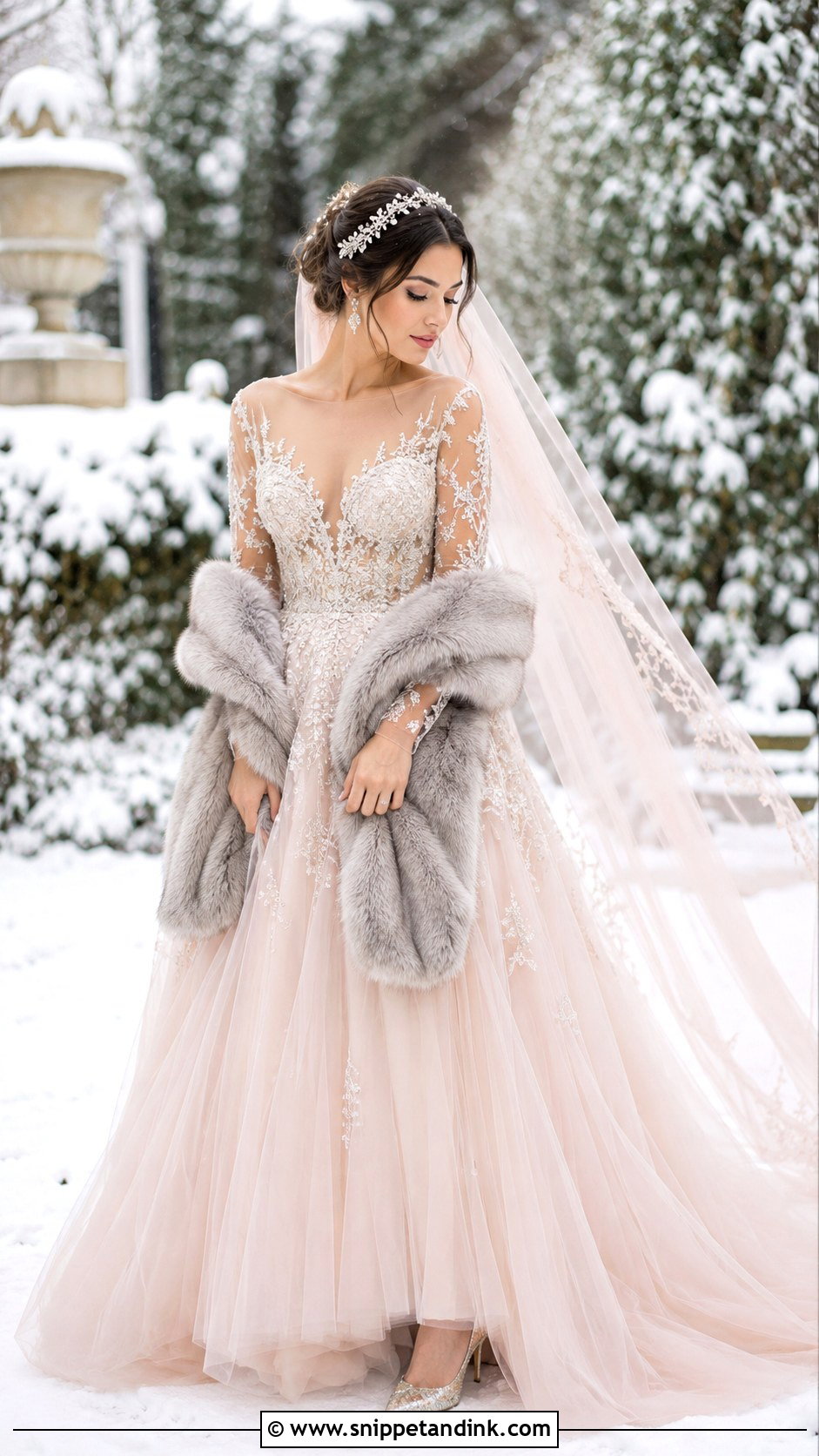
Blush gives subtle contrast against bright snow, where a stark white dress can almost disappear. A pale blush tulle gown with illusion sleeves and an embroidered bodice suits silver accessories. Match the veil to the gown: blush-tinted tulle blends in, while bright white tulle beside blush makes the dress look dingy. A light grey or ivory faux-fur stole adds warmth. Overcast winter light is especially kind to this colour, softening it rather than bleaching it.
16. Pearl Snow Wedding Dress With Cathedral Veil
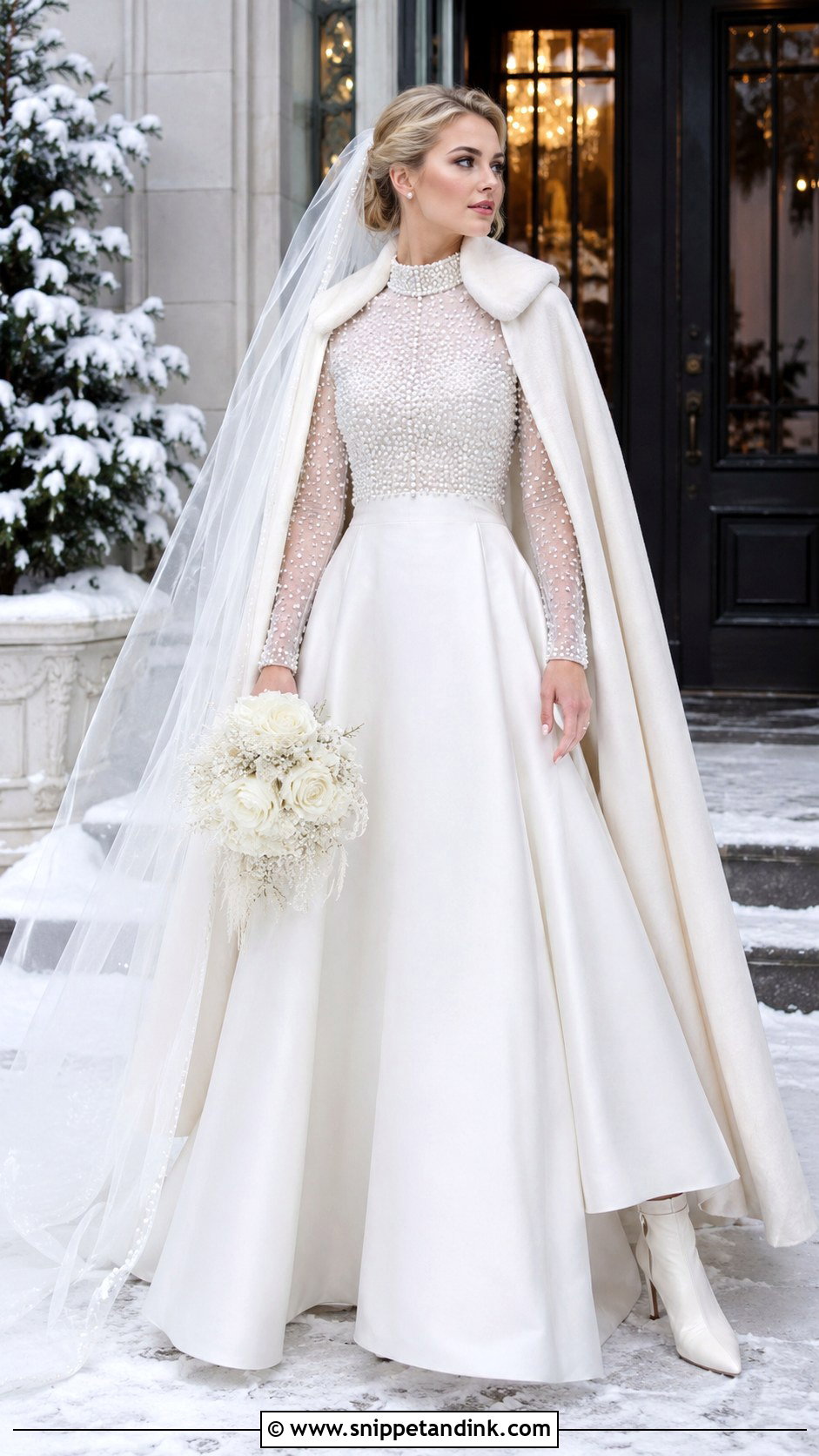
Pearls are softer than crystals in winter light and don’t throw harsh glints in photos. A pearl-covered bodice with sheer sleeves over a plain skirt needs nothing at the neck, just studs. A cathedral veil with scattered pearls carries the detail down the back. Ask your seamstress to reinforce the pearls at the underarms and waist, where arms and coats rub, because loose pearls fall off through the day otherwise. Ivory satin boots and a smooth wool cape complete it.
17. Snow Wedding Dress With Hooded Cape
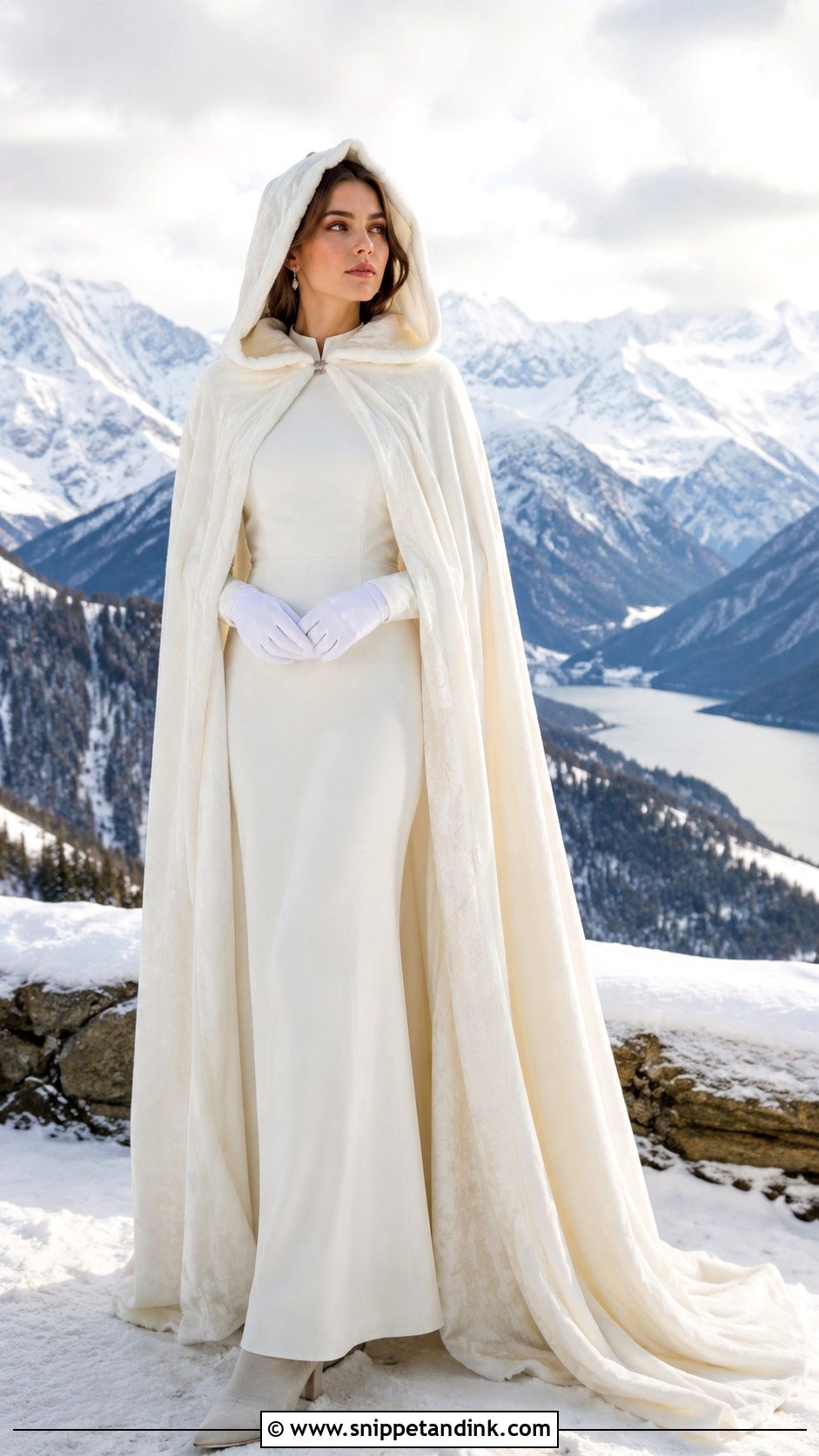
A hooded bridal cape is the most practical outer layer for an exposed mountain ceremony. Choose ivory velvet or a wool blend with a smooth lining and a secure closure, and test the hood over your actual hairstyle at the trial; a hood that’s too small flattens an updo instantly. Skip a veil if the hood already frames your face. Let the cape stop slightly above the dress hem so it stays dry. Waterproof boots and matching gloves finish it.
18. Corset Snow Wedding Dress With Faux Fur Jacket
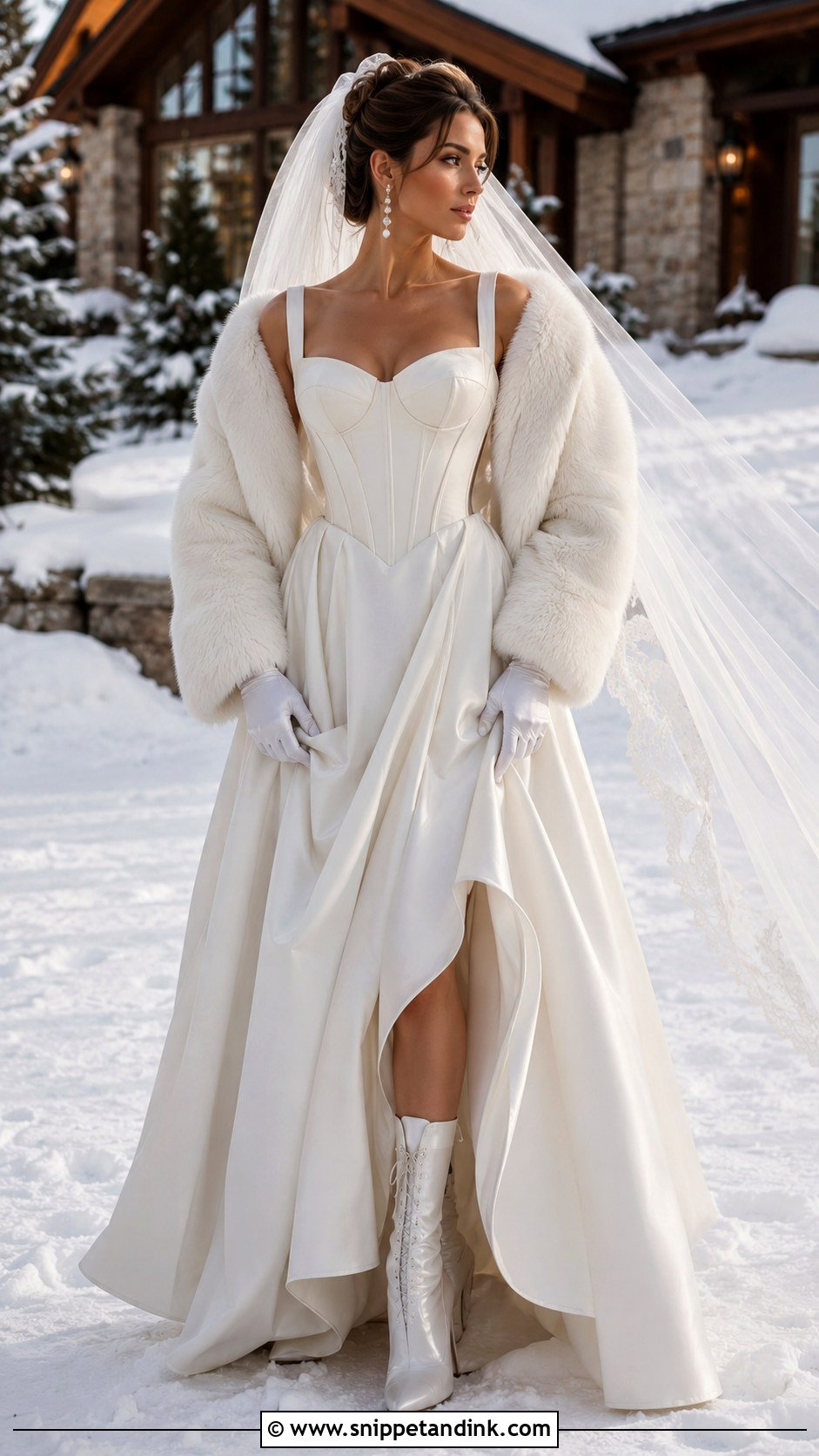
A corset bodice and a short faux-fur jacket make a strong contrast: firm structure against soft texture. The bodice should hold securely without restricting your breathing. The jacket needs to end near the natural waist, preserving the gown’s proportions, since a longer one hides the corset shaping. Wide straps or detachable sleeves help in the cold. A neat updo, pearl drop earrings, white gloves and a plain cathedral veil keep the focus on the two textures.
19. Jacquard Snow Wedding Dress With Pearl Headband
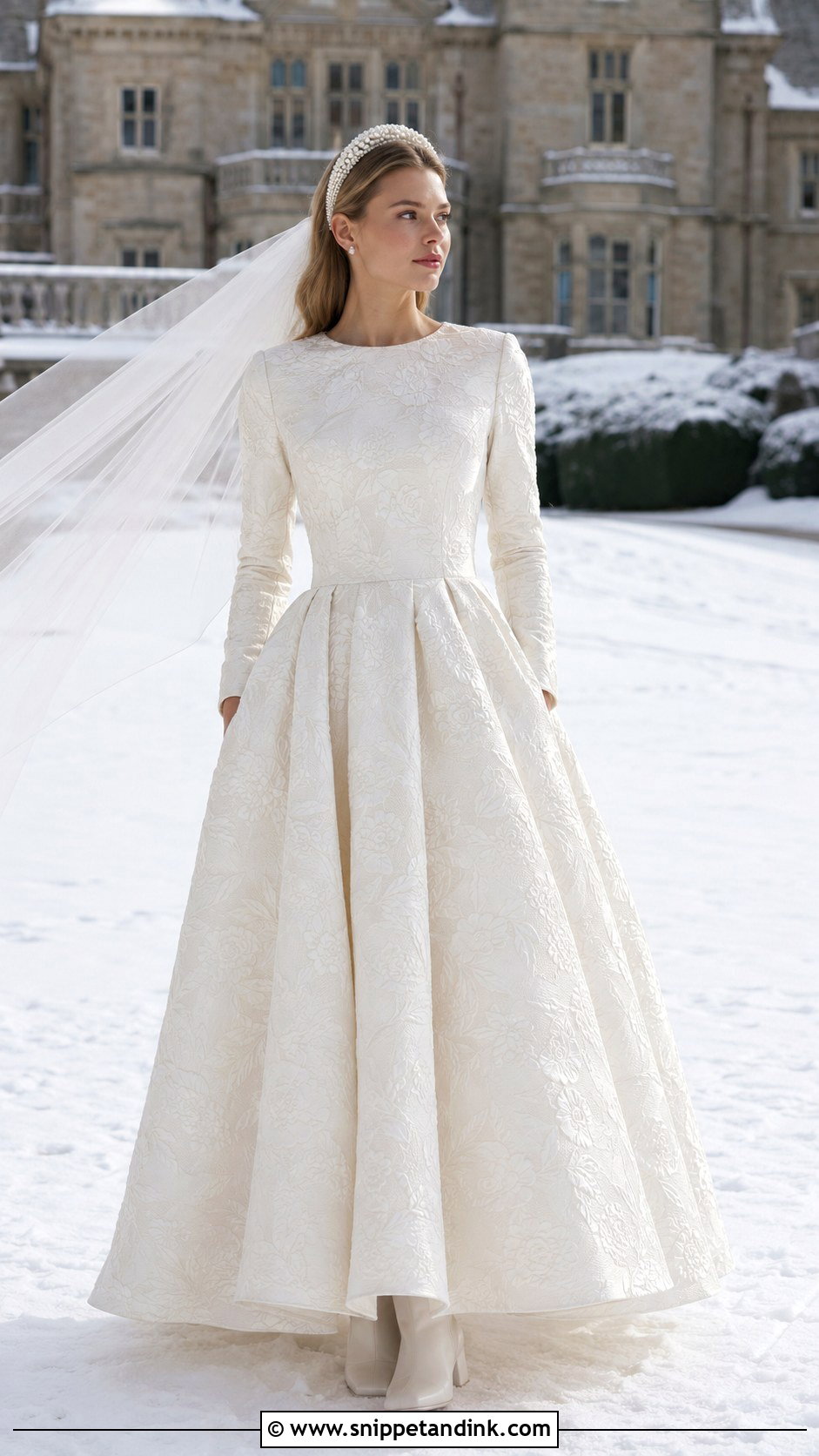
Jacquard weaves its pattern into the cloth, so you get detail without beads or lace and without anything to snag on outerwear. An ivory floral jacquard ball gown with long sleeves and a pleated skirt is heavy and warm, which in winter is a gift. Keep accessories plain, a pearl headband and small earrings, so the weave stays visible. Carry a compact bouquet held low enough not to hide the bodice pattern, and add a satin cape or coat outdoors.
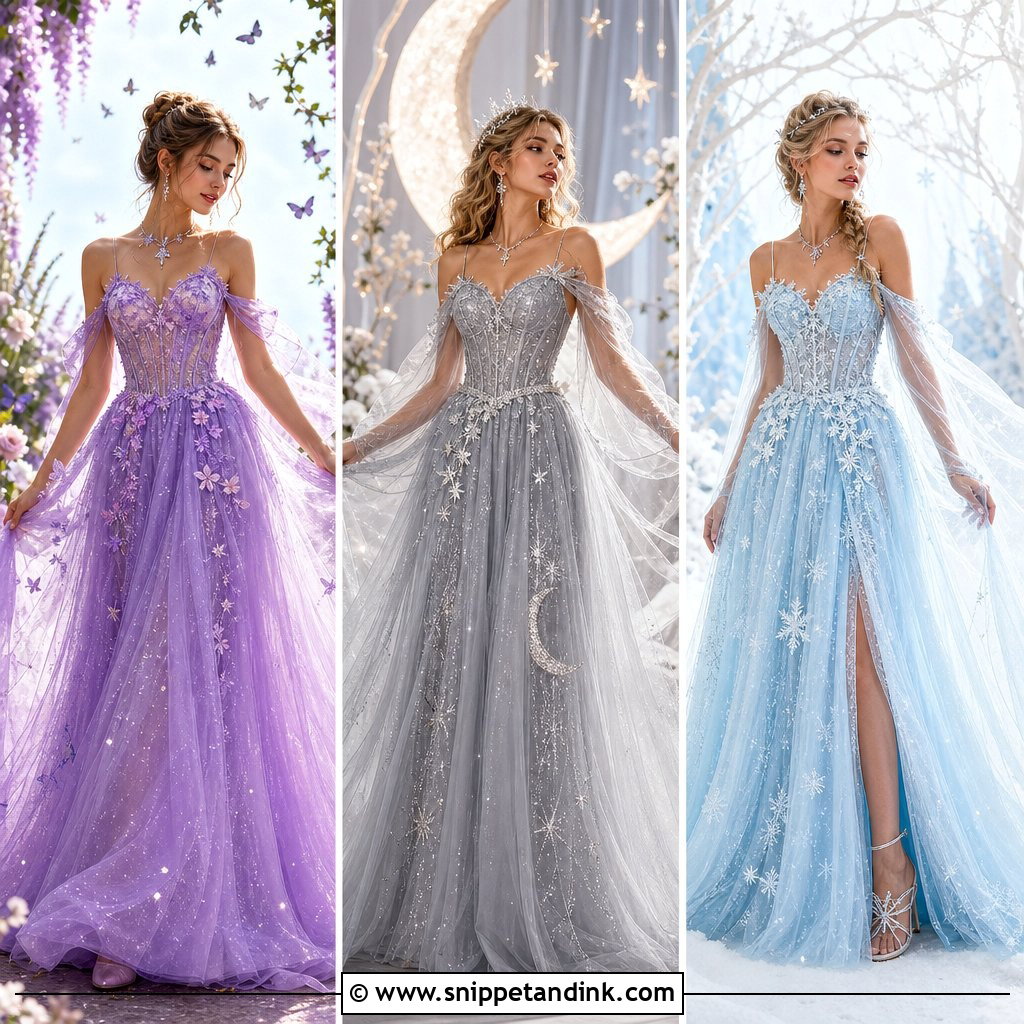
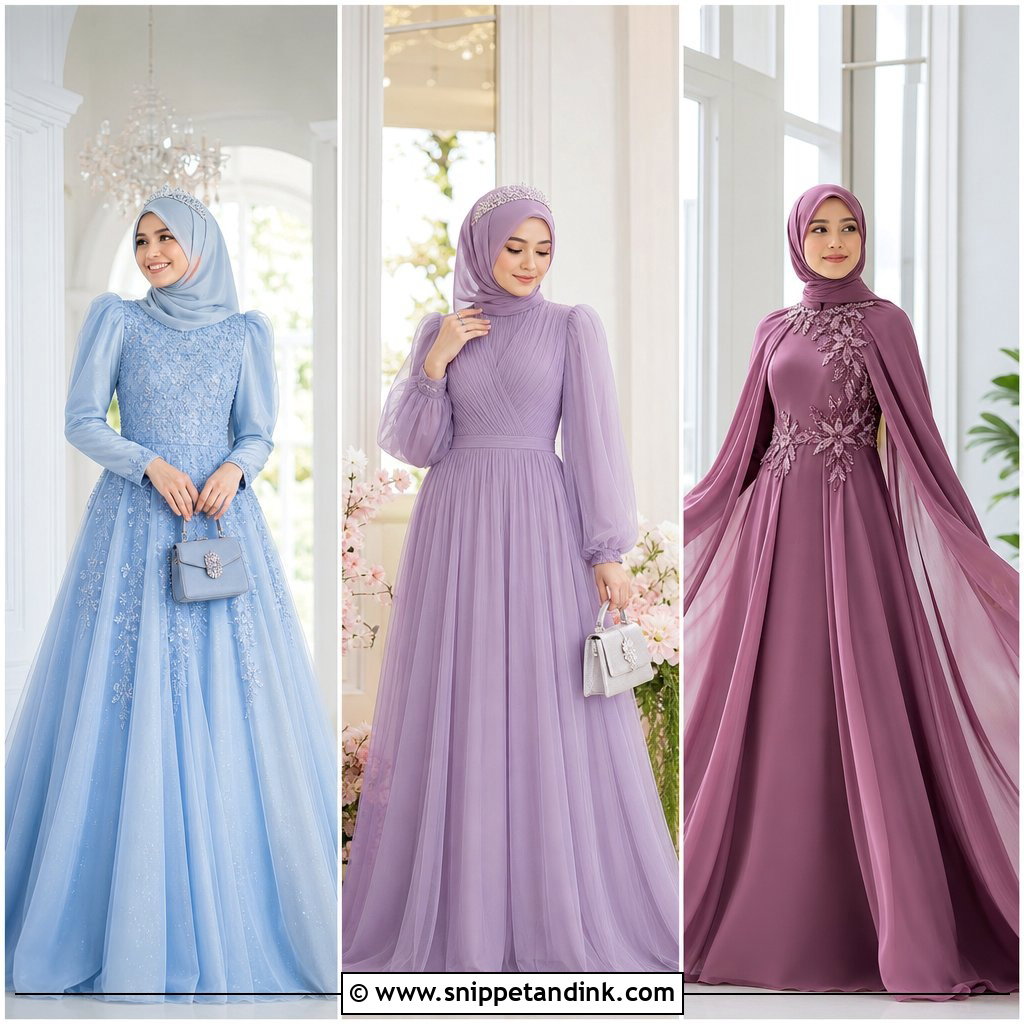
20. Mermaid Snow Wedding Dress With Opera Coat
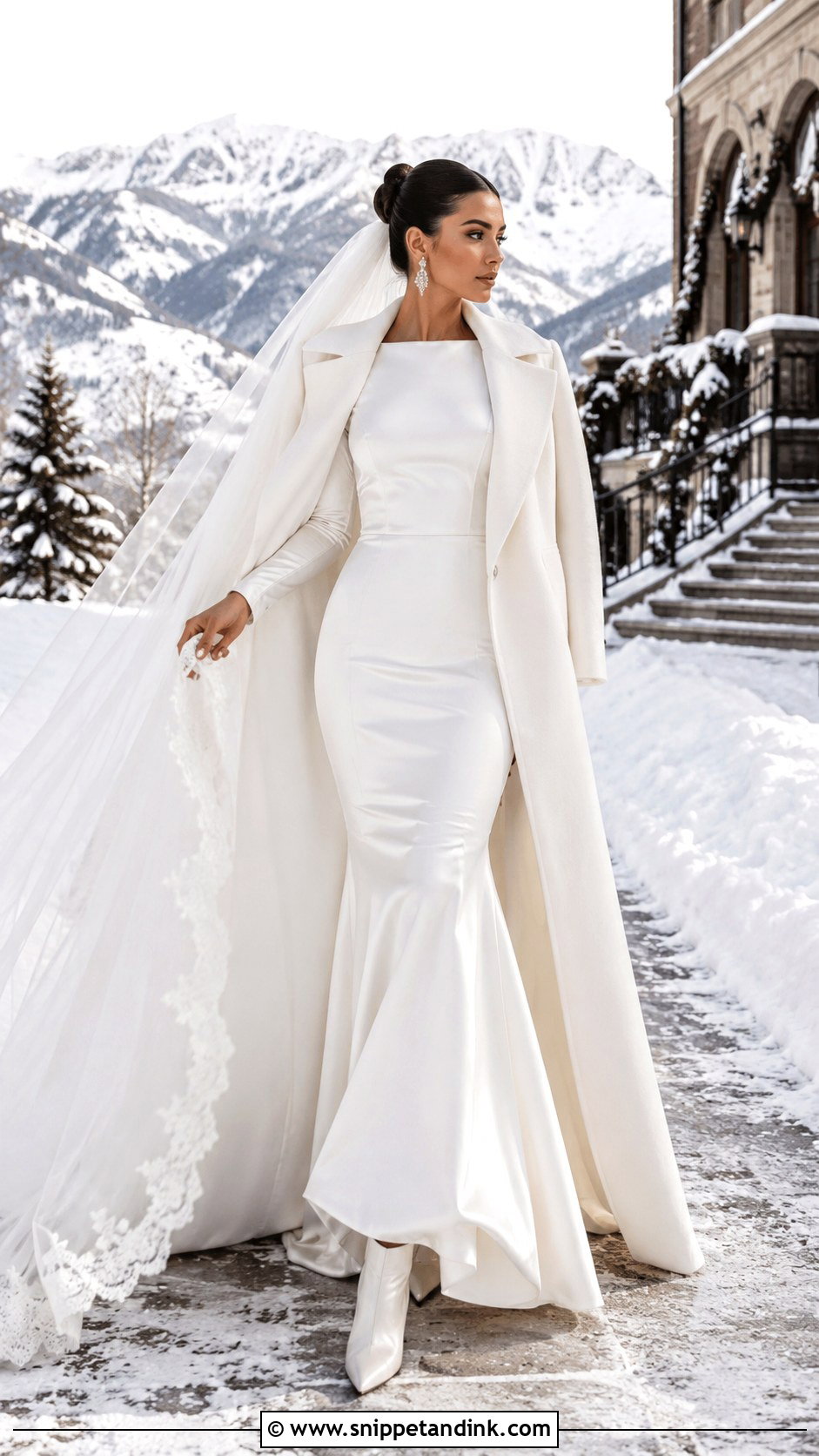
A mermaid gown on snow takes planning. The flare from the knee restricts your stride, which is manageable on cleared paths and difficult in drifts, so I’d keep this one to formal grounds and cleaned steps. Substantial crepe or satin with long sleeves holds its shape. An ivory opera coat must be roomy enough to cover the flare without crushing it. Add a secure bustle for the reception, a sleek bun, crystal earrings and fitted bridal boots.
Snow, Salt and Slush on a White Hem
Snow itself is clean. The problem is what’s under it: grit, road salt and mud, which wick up into an ivory hem as the snow melts. A few habits keep the dress presentable.
- Bustle the train before you walk anywhere outdoors, and let it down only for the photographs.
- Have someone carry a clean white towel to blot snow from the hem before it melts in, rather than rubbing it.
- Ask the venue whether paths have been salted. Salt leaves pale rings on satin and velvet, so stick to cleared, swept paths where possible.
- Roughen new boot soles a little with sandpaper, or choose a rubber-soled boot. Smooth bridal soles slip badly on packed snow.
- After the wedding, let a wet hem dry naturally on a hanger, then take the gown to a specialist cleaner soon, telling them about any salt or mud.
Try Everything On Together, Boots Included
In winter the dress is only half the outfit. Long sleeves, heavier fabrics, boots with grip and a layer you can remove do as much for your day as the gown itself. Before deciding, think about the walk from the car, the time you’ll spend outside and the ground you’ll stand on. A cape, coat, bolero or wrap should suit the neckline rather than bury it. Then book one fitting with every layer on at once, tights, gloves and underwear included, because that’s where I find the problems that separate fittings miss.
You'll Like These Ideas:


Leave a Reply