
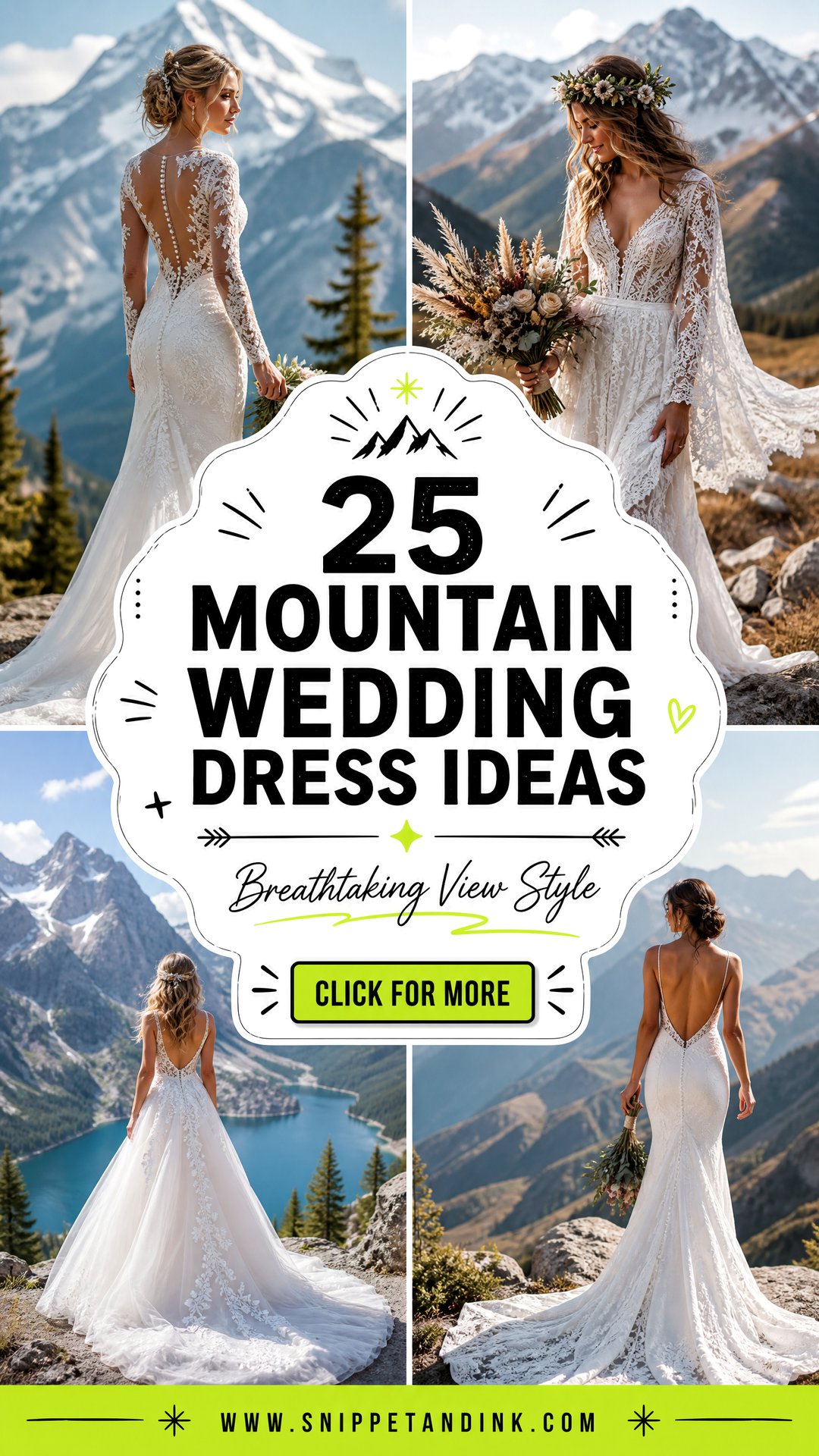
A ceremony among peaks, pine forest or alpine meadow asks more of a gown than a ballroom ever does. There is wind, uneven ground, a temperature drop the moment the sun slips behind a ridge, and often a walk or drive to the photo spot. When I dress a mountain bride, I start with the terrain and the forecast and only then talk about lace versus satin. The 25 ideas below cover sleeves for cold elevations, light boho shapes, satin, tulle, capes and boots, with notes on what each one handles well outdoors and where it struggles, from a big lodge wedding to a sunrise elopement for two.
What Altitude, Wind and Cold Do to a Wedding Dress
Mountain light is beautiful, but mountain weather is unpredictable, and fabric reacts to it in ways a showroom never shows you. I ask every mountain bride three questions before we look at a single gown: how far will you walk, what is the lowest temperature you might see, and how exposed is the ceremony spot?
Wind
Light layers lift and wrap around your legs, and long veils pull hard on the comb. I keep veils to fingertip or shorter for exposed sites, anchor them with pins crossed under the comb, and ask the photographer to time veil shots for lulls. Heavier fabrics such as crepe, mikado and duchess satin hang straighter in a gust.
Cold and sun
Temperatures drop quickly at elevation once the sun goes behind a ridge, so a cover-up should be planned as part of the look, not grabbed at the last minute. Sun is also stronger up high. Fair skin burns on the shoulders and back during a long outdoor shoot, and a burn line from a strap shows in every reception photo.
Ground
Grass, mud, snow and gravel all mark a hem. A hem that just skims the floor in your chosen shoes collects far less than one that pools. Decide on boots or heels before your final hem fitting, not after.
1. Long Sleeve Lace Mountain Wedding Dress
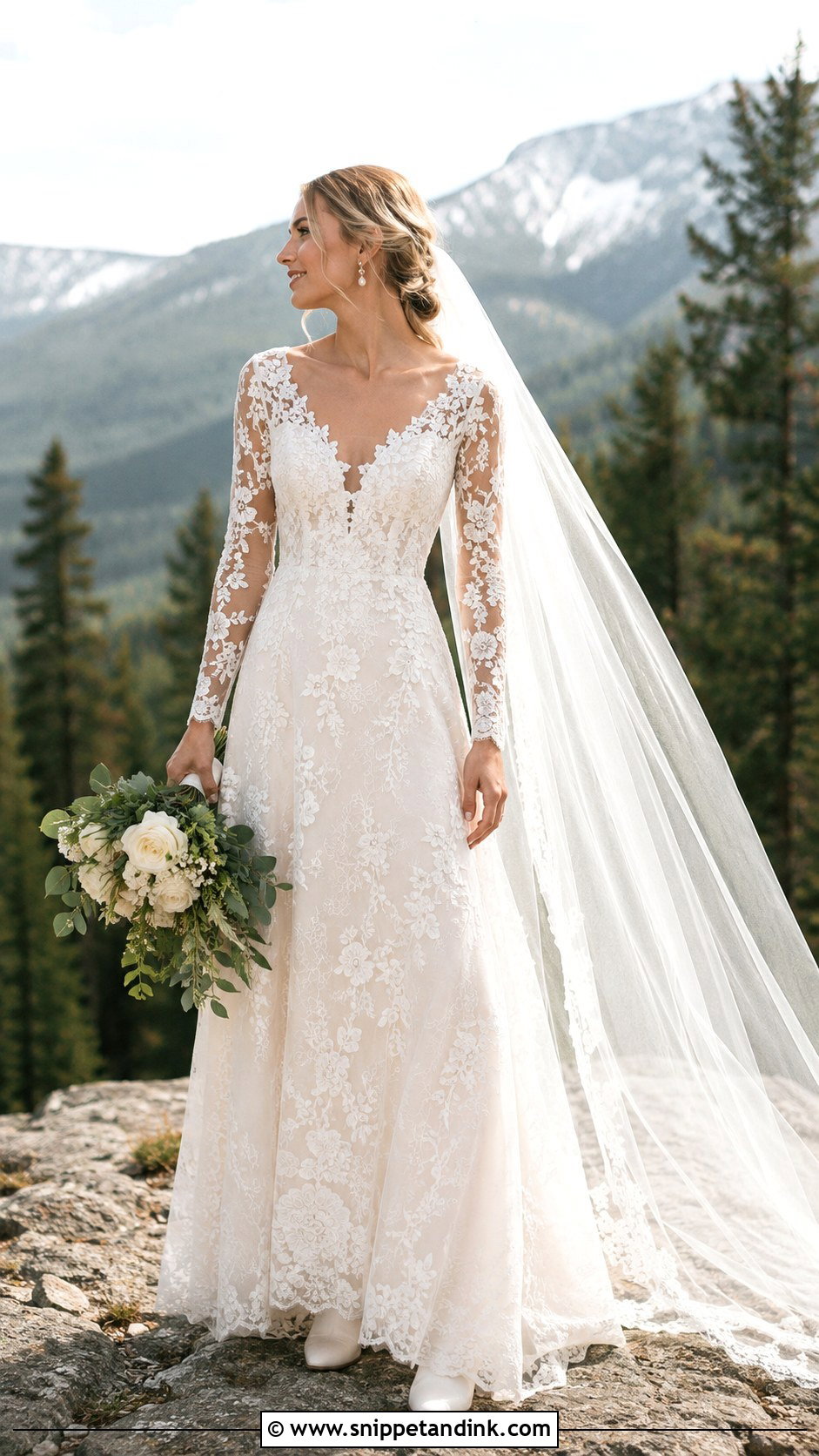
Lace with long sleeves earns its place at altitude because the sleeves do actual work once the air cools. The texture also holds up against pine and rock in photos, where a plain fabric can look flat. I want fitted sleeves, a gentle A-line and a soft lining, and I steer brides toward ivory, cream or light champagne, which sit more naturally in green and grey landscapes than bright white. Low block heels, lace-up boots or closed-toe flats handle uneven ground. Pearl earrings, a loose low bun and a fingertip veil finish it without tipping into formal.
2. Boho Mountain Wedding Dress
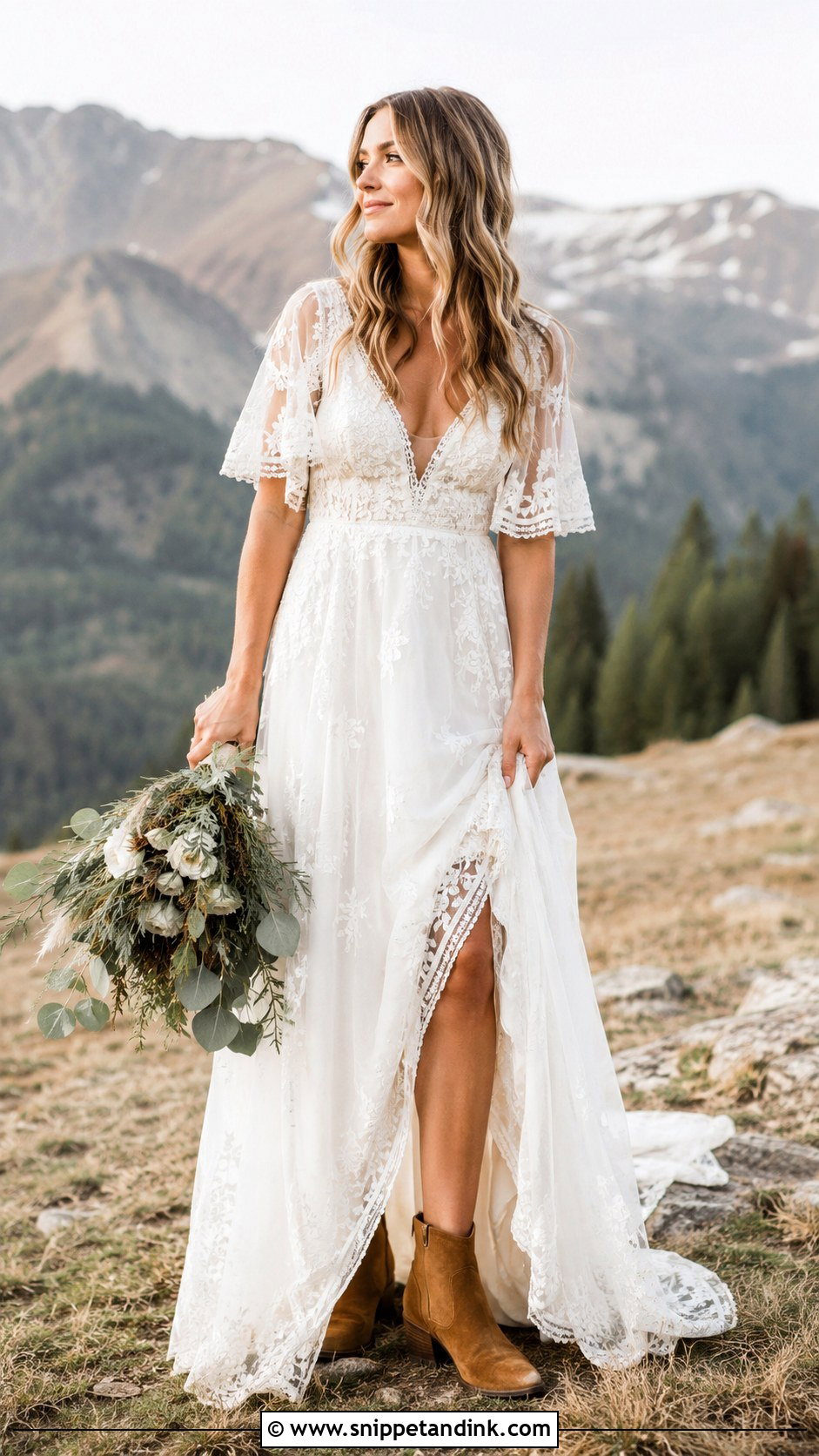
Boho dresses suit mountains because they are built to move. Soft lace, floral embroidery, flutter sleeves and a loose skirt all behave well in a breeze, and they suit forest ceremonies, meadow vows and small elopements. A deep V, illusion bodice or open back adds softness. I always check how much skin that open back leaves exposed at the evening temperature, because a boho gown is usually the coldest dress on the rack. Suede ankle boots, loose waves, small pins and a dried or greenery-heavy bouquet complete it; keep one polished element so it still reads as wedding.
3. Simple Satin Mountain Wedding Dress
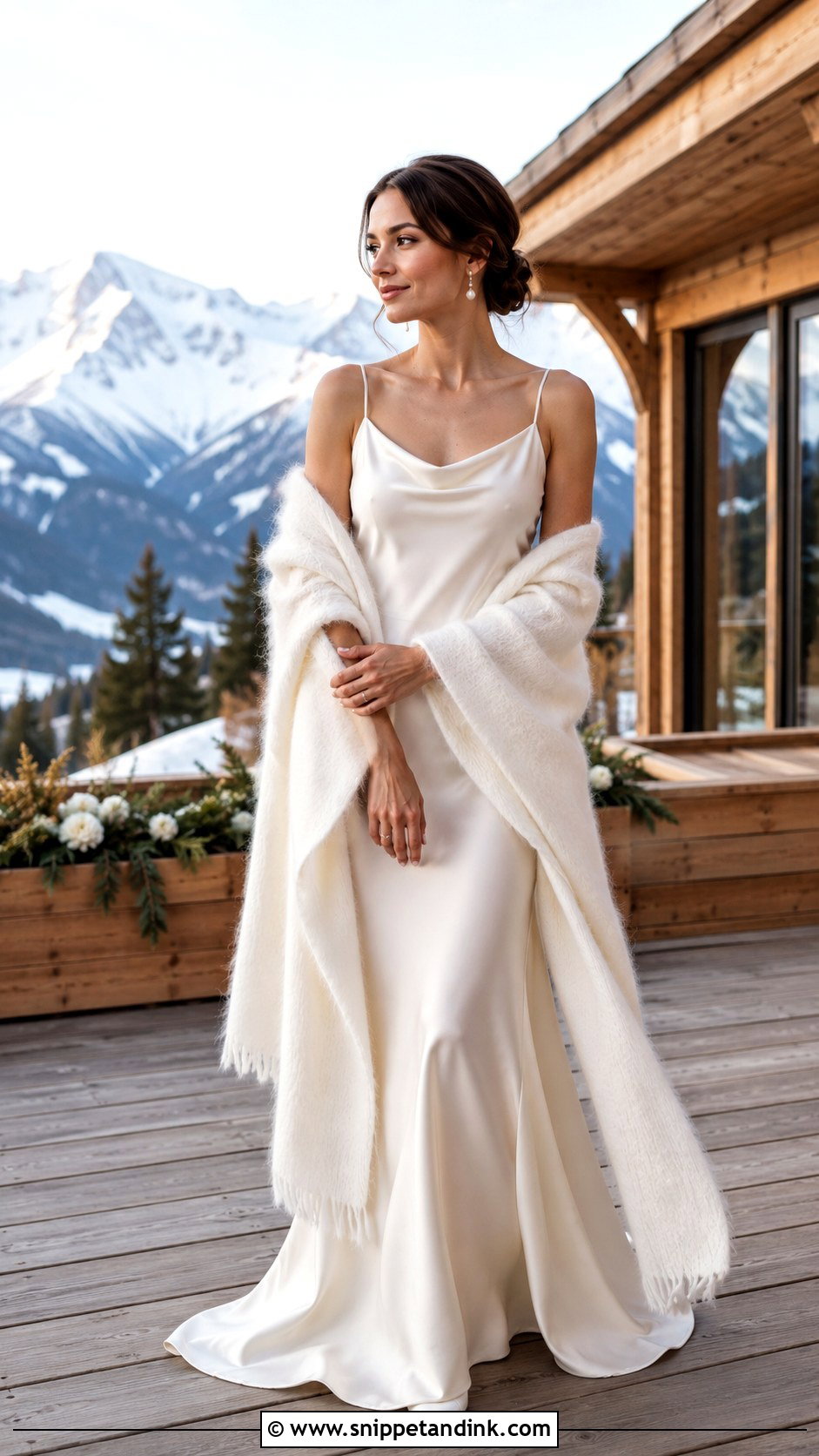
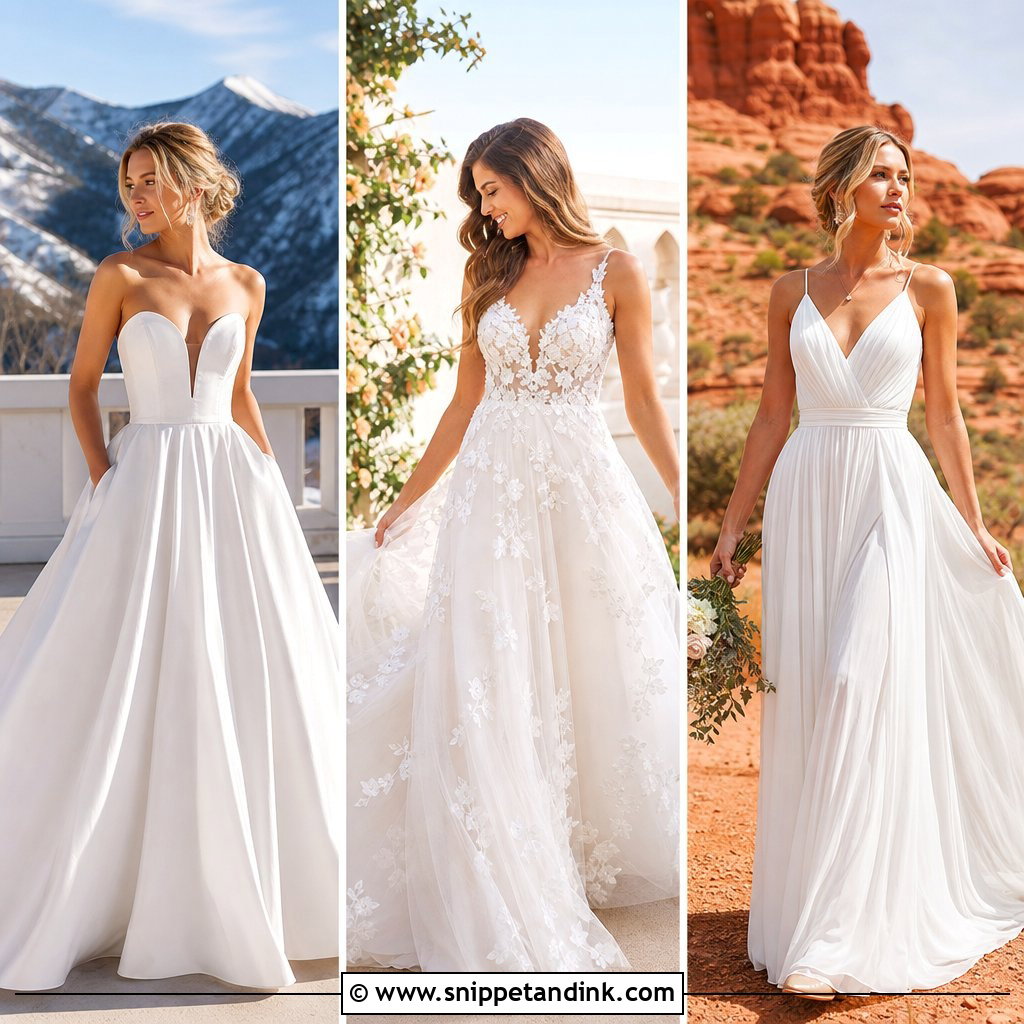
Satin makes a clean contrast with rough rock and timber, and at golden hour near cliffs, lakes or lodge decks it glows. A bias-cut slip, sheath or plain A-line keeps the gown from fighting the scenery. The problem is that satin creases in a car and shows every gust, so I push brides toward a heavier weight that holds its shape through travel. A bias-cut slip in thin satin is honestly a poor choice for a windy overlook. Add a soft wrap, modern drop earrings and sleek hair, with closed-toe heels or flats for wooden paths and stone terraces.
4. A Line Mountain Wedding Dress
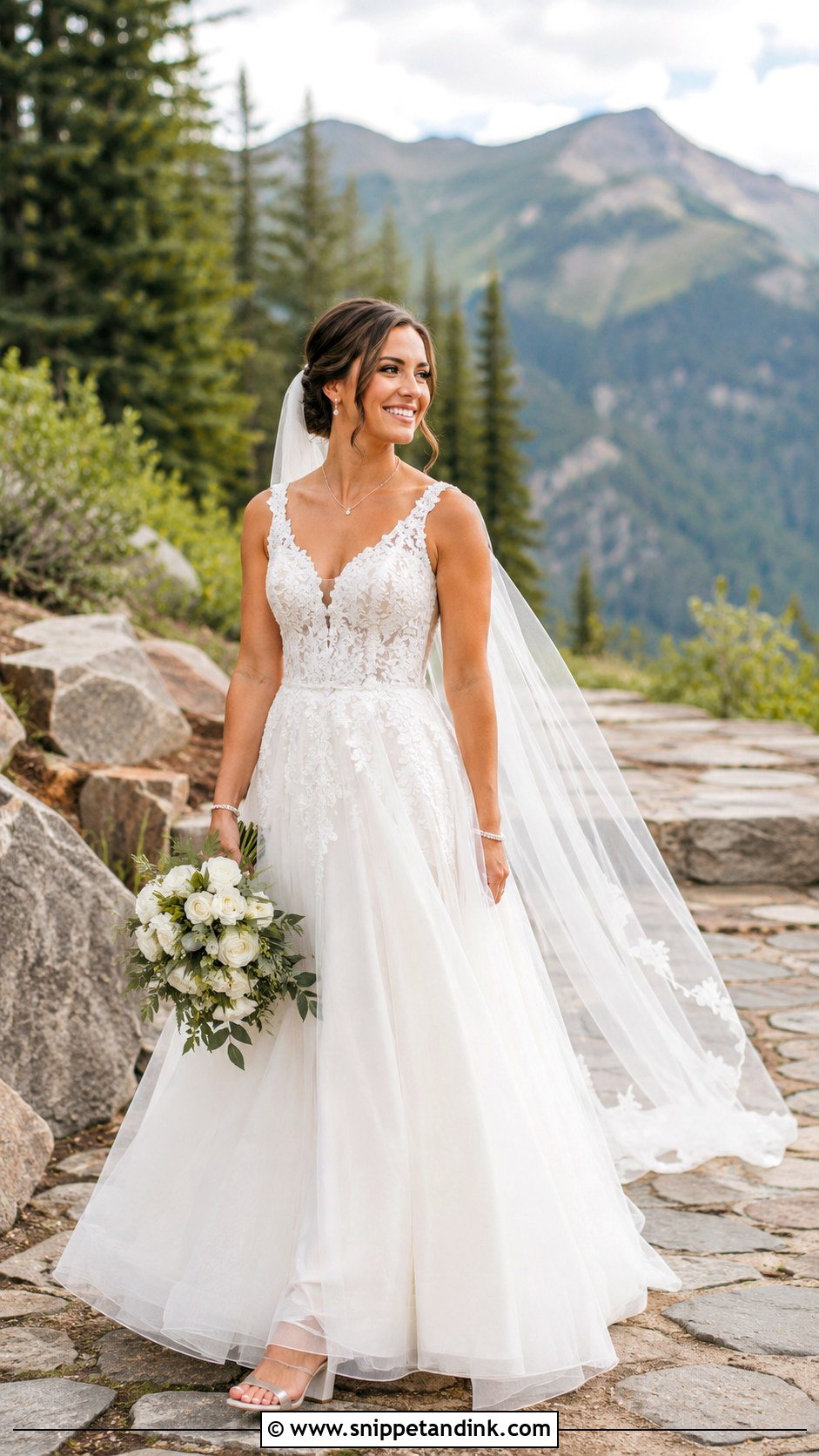
If you are unsure, start with an A-line. The fitted bodice holds you in and the skirt clears your legs, so walking through fields, posing on trail overlooks and moving around a rustic lodge all feel easy. Lace, crepe, organza or soft tulle set how formal it reads; a scoop, square or illusion neckline keeps it classic. I check the hem length against the shoes she will actually wear on the day, since an A-line cut for heels drags in the dirt the moment you switch to boots. Wear a chapel veil for drama or floral pins and block heels for something plainer.
5. Crepe Mountain Wedding Dress
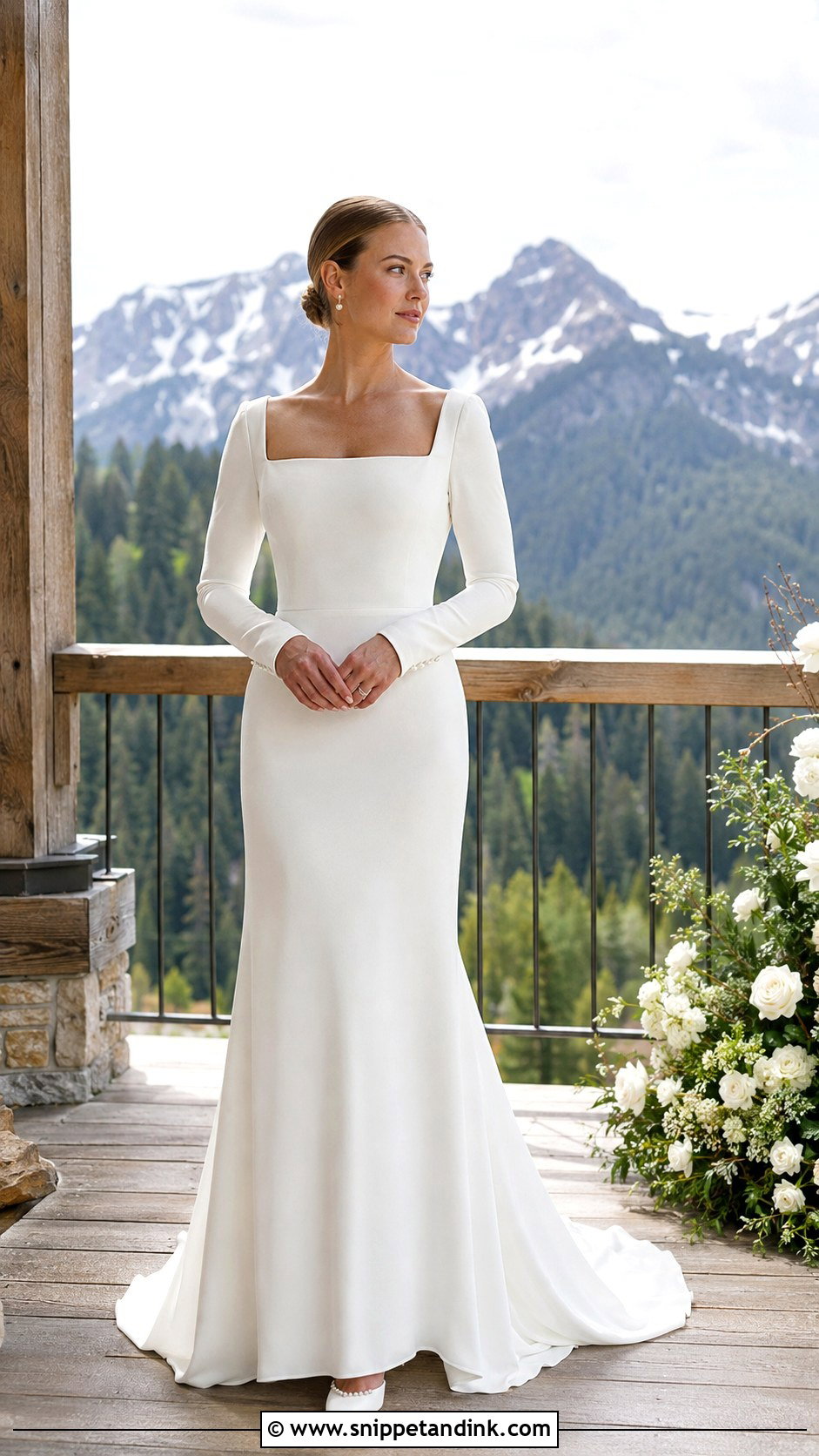
When a bride asks me for something modern and matte, I hand her crepe. It has almost no shine, so it lets a dramatic backdrop do the work in a minimalist ceremony. Long sleeves, a square neckline or a low back all look sharp in photos. Crepe is closely fitted, so ask for a small train or a discreet slit if you will be climbing steps or crossing rough ground. A structured bridal coat, pearl studs and pointed flats or low heels complete it, and it suits lodge weddings, alpine resorts and cool-weather ceremonies.
6. Tulle Skirt Mountain Wedding Dress
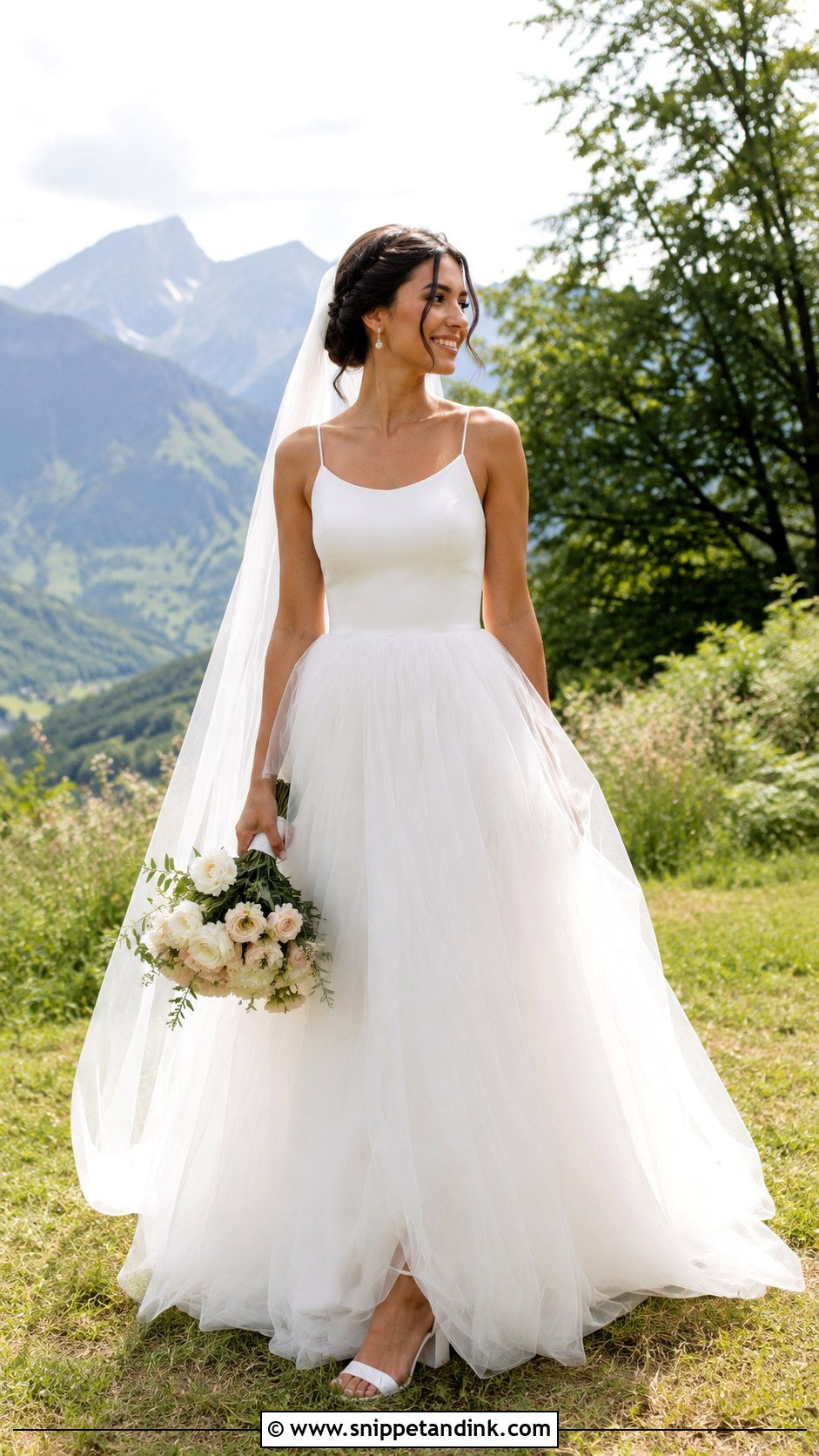
Tulle is the fabric that looks best when the wind picks up, as long as you keep it under control. A full tulle skirt over a fitted lace or satin bodice gives a romantic shape; a plain strapless or square-neck bodice over airy layers feels more modern. Very long loose layers can wrap around your legs or blow over your face on an exposed ridge, so I keep the outer layer at floor length and avoid extra floating panels. Choose a light veil, small earrings and shoes with grip.
7. Off The Shoulder Mountain Wedding Dress
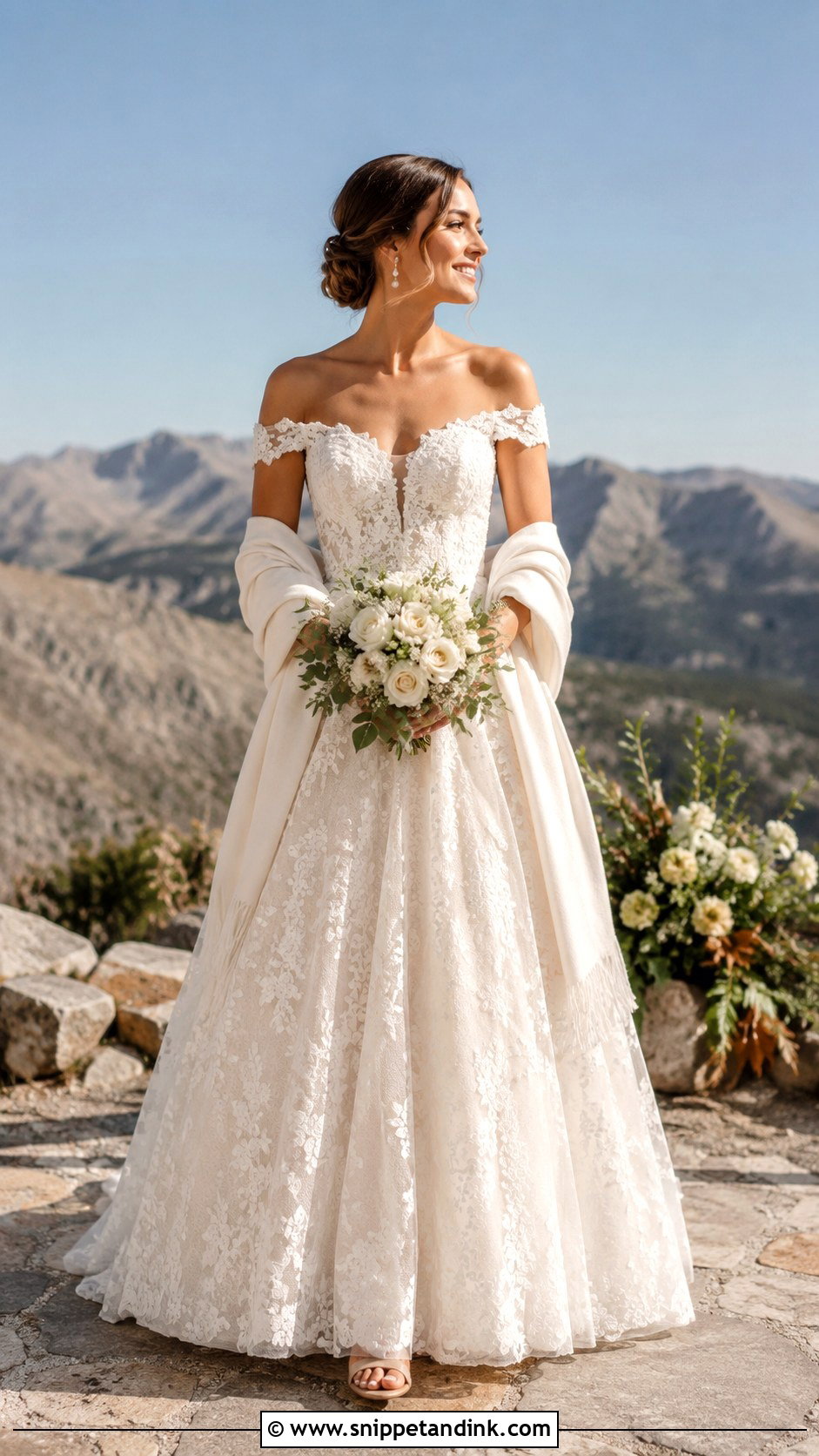
An off-the-shoulder neckline frames the collarbone and reads well in wide outdoor shots, in lace, crepe, satin or tulle. At altitude, though, bare shoulders get cold fast, and goosebumps show in close-ups. I plan for detachable sleeves, a wrap or a cape for the gaps between photos. Balance it with an A-line or sheath skirt and keep the neckline as the focus with a low chignon or soft curls and simple pearls. The elastic in these necklines can creep up as you move your arms, so test it with a few big reaches at the fitting. Stable shoes are a must on grass, gravel and stone.
8. High Neck Mountain Wedding Dress
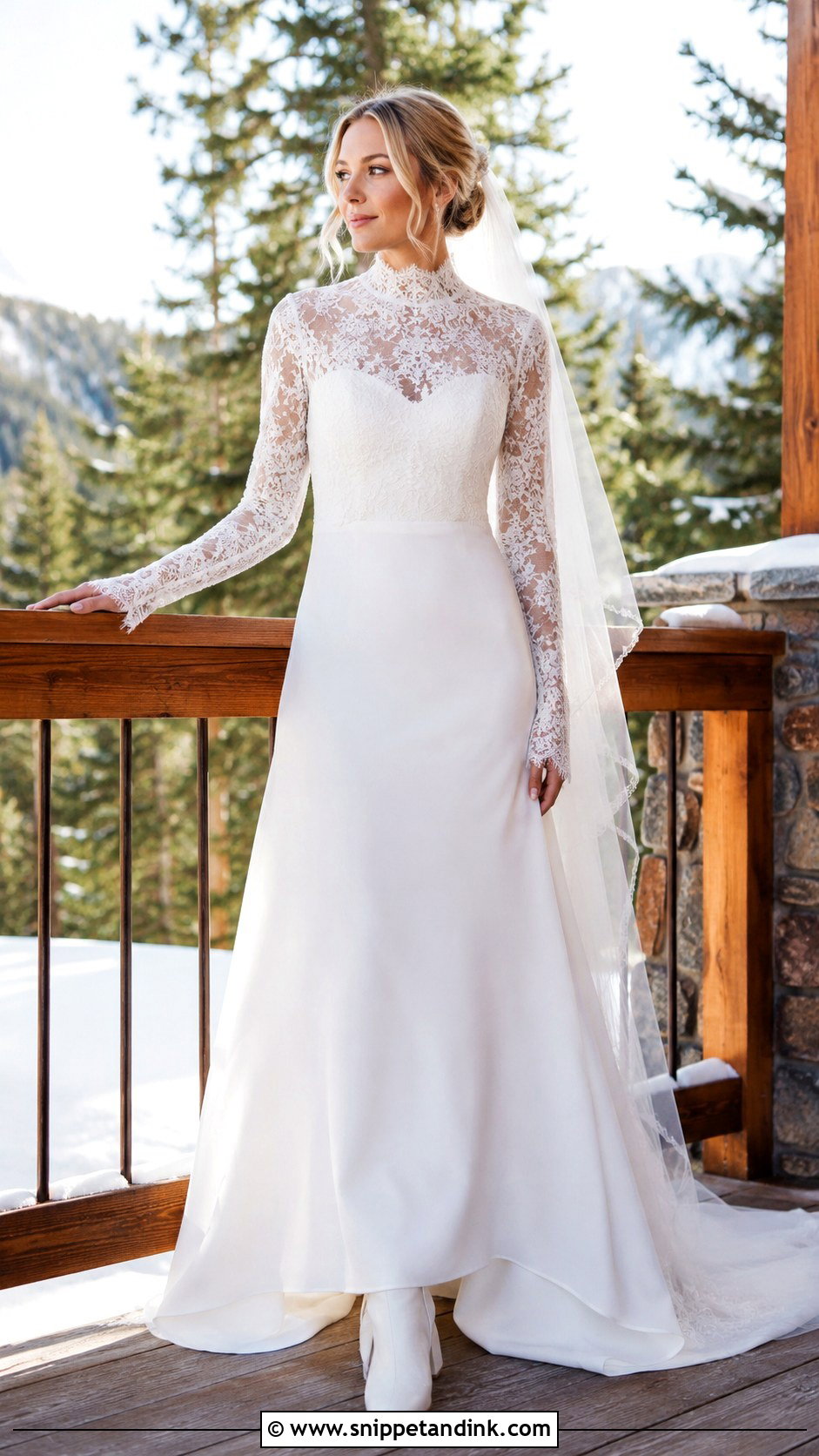
A high neck makes sense in cool alpine air. In lace, illusion mesh or clean crepe it covers the chest and throat, which you will be grateful for on a breezy ceremony site. Paired with long sleeves it turns vintage; sleeveless, it looks sleek and modern. Wear your hair up so the neckline shows, with simple earrings and a veil set low. Heeled boots, block heels or flats all work. I love it for lodge weddings, autumn ceremonies and mountain chapels, where the warmth is welcome.
9. Backless Mountain Wedding Dress
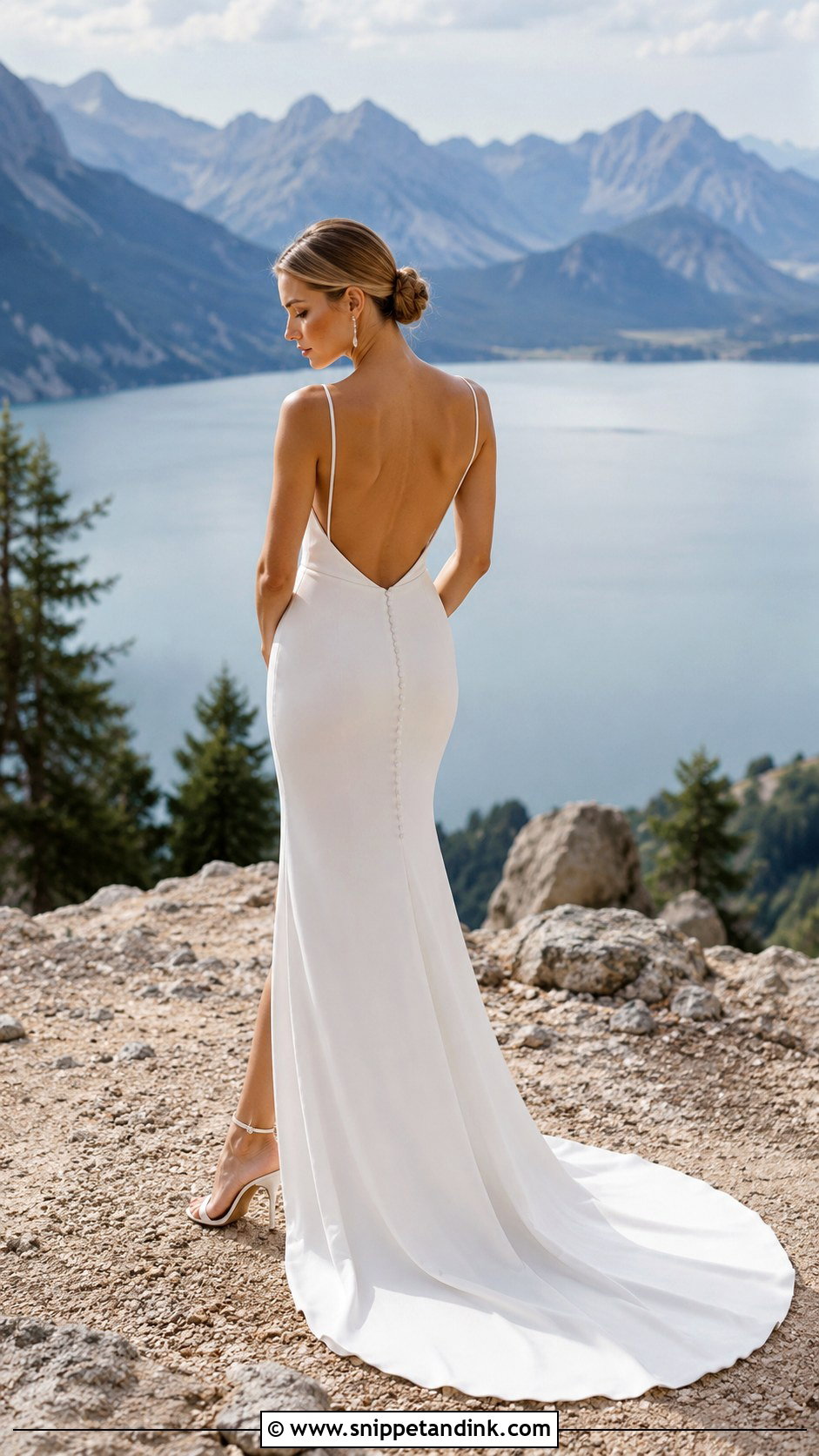
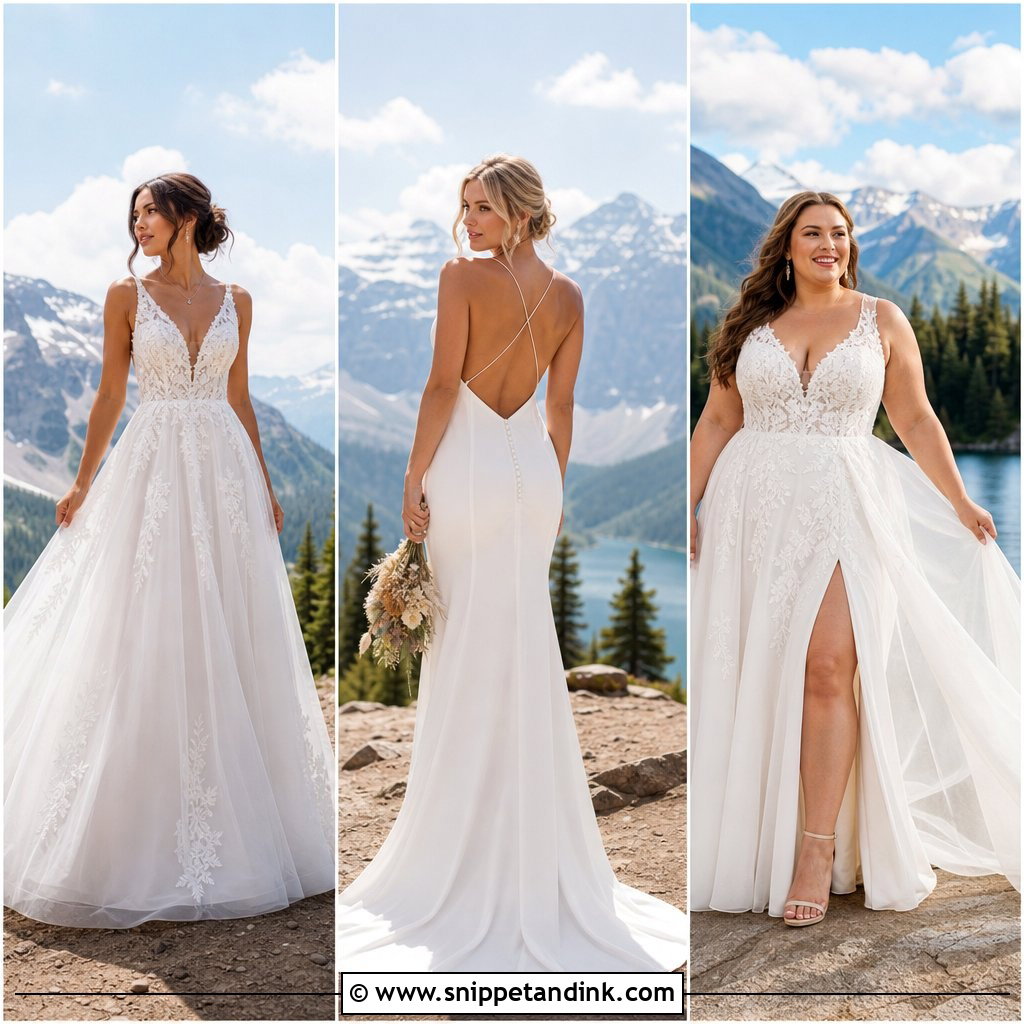
An open back is the shot people remember: the bride facing a ridge, lake or forest, the camera behind her. Practically, a backless dress has to be built to stay up without straps, so I look for a firmly boned bodice and clear-elastic or internal support before anything else. Lace, crepe and satin all suit it. A low bun, a soft braid or tucked waves keeps the back on show, and a light veil is optional. Keep jewelry simple and shoes sturdy. Be realistic about evening chill; a wrap that drapes low on the back keeps the line visible.
10. Floral Lace Mountain Wedding Dress
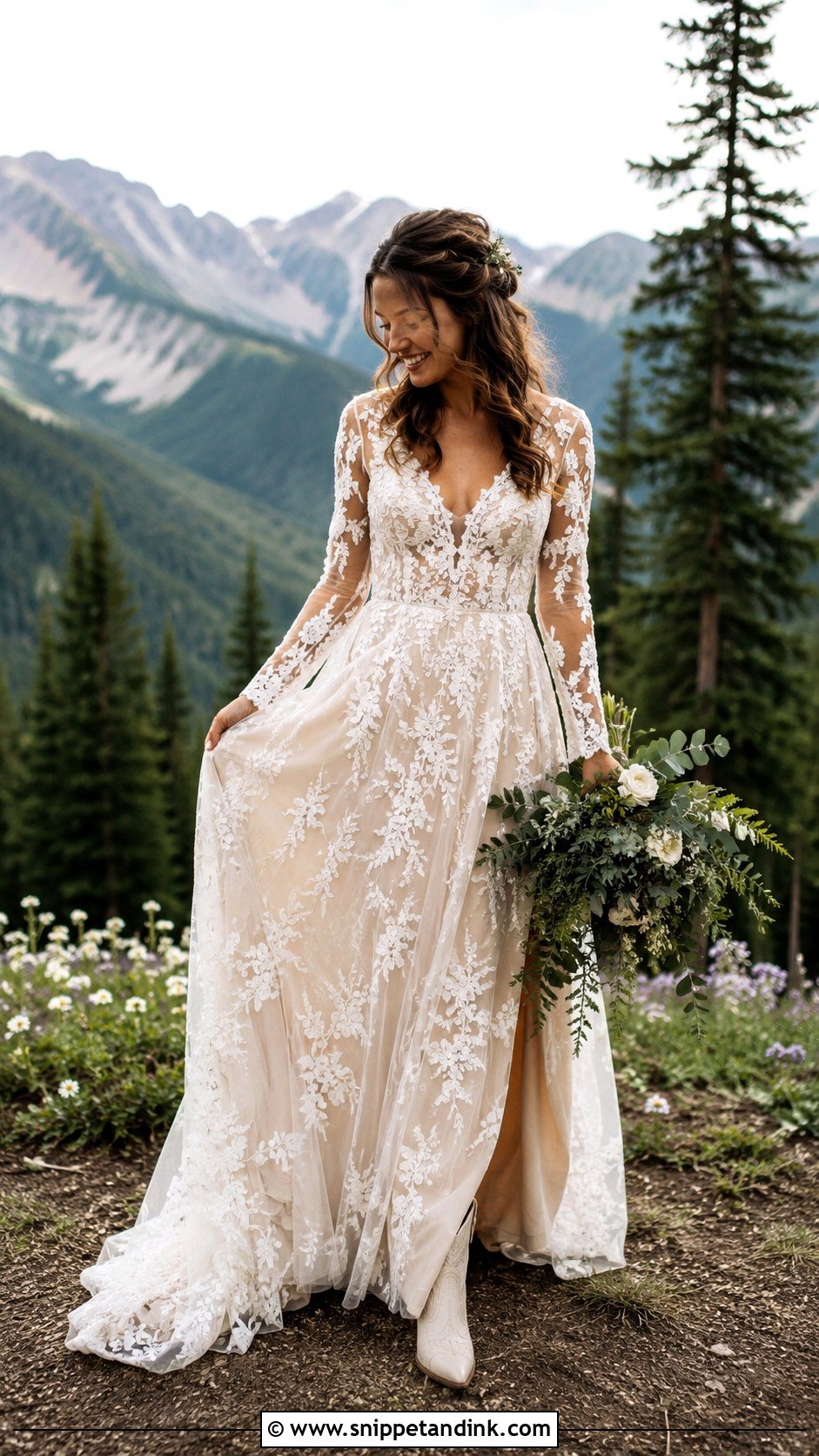
Leafy lace, vine patterns and floral appliqué belong among wildflowers, evergreens and meadows. Depending on the silhouette, this gown can go soft and bohemian or polished and traditional: a flowing skirt is easiest to wear, a fitted sheath sharper. The lining colour changes everything. Nude, ivory or champagne behind the lace makes the pattern stand out in photos, while white-on-white can disappear in bright sun. Add a greenery bouquet, soft curls and simple earrings, and finish with boots or block heels on uneven ground.
11. Champagne Mountain Wedding Dress
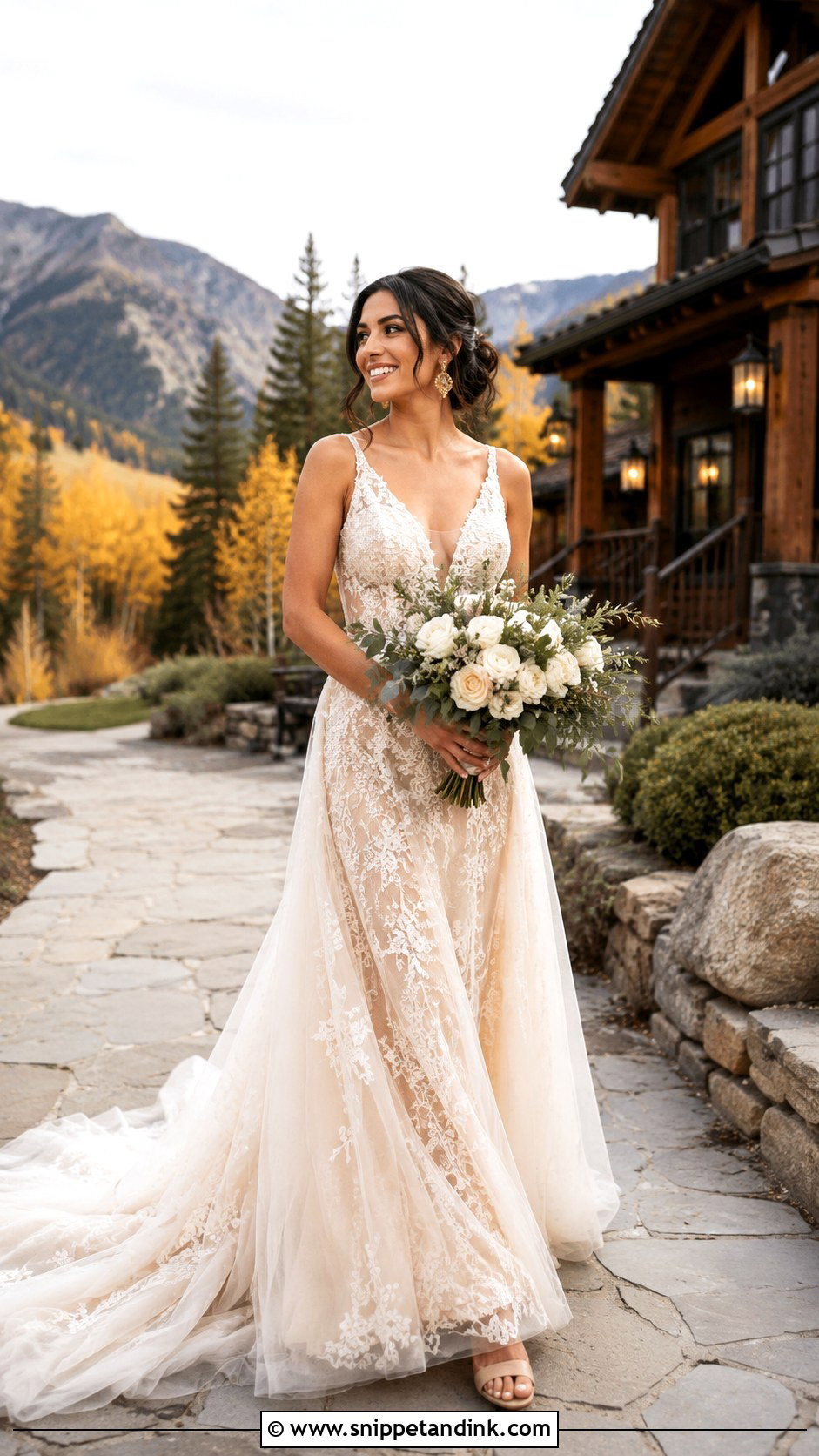
Champagne is a warm alternative to white that sits easily with earthy landscapes, wooden lodges, autumn leaves and evening light. It gives depth to lace, tulle, beading and floral embroidery without looking like a coloured dress. Before ordering, I hold a fabric swatch against the bride’s skin in daylight; some champagnes read pink and others grey depending on the dye and the complexion. An A-line, fitted or boho shape all work. Gold jewelry, neutral shoes and a bouquet in cream, rust, blush or greenery complete it, and it still reads clearly as bridal in photos.
12. Long Train Mountain Wedding Dress
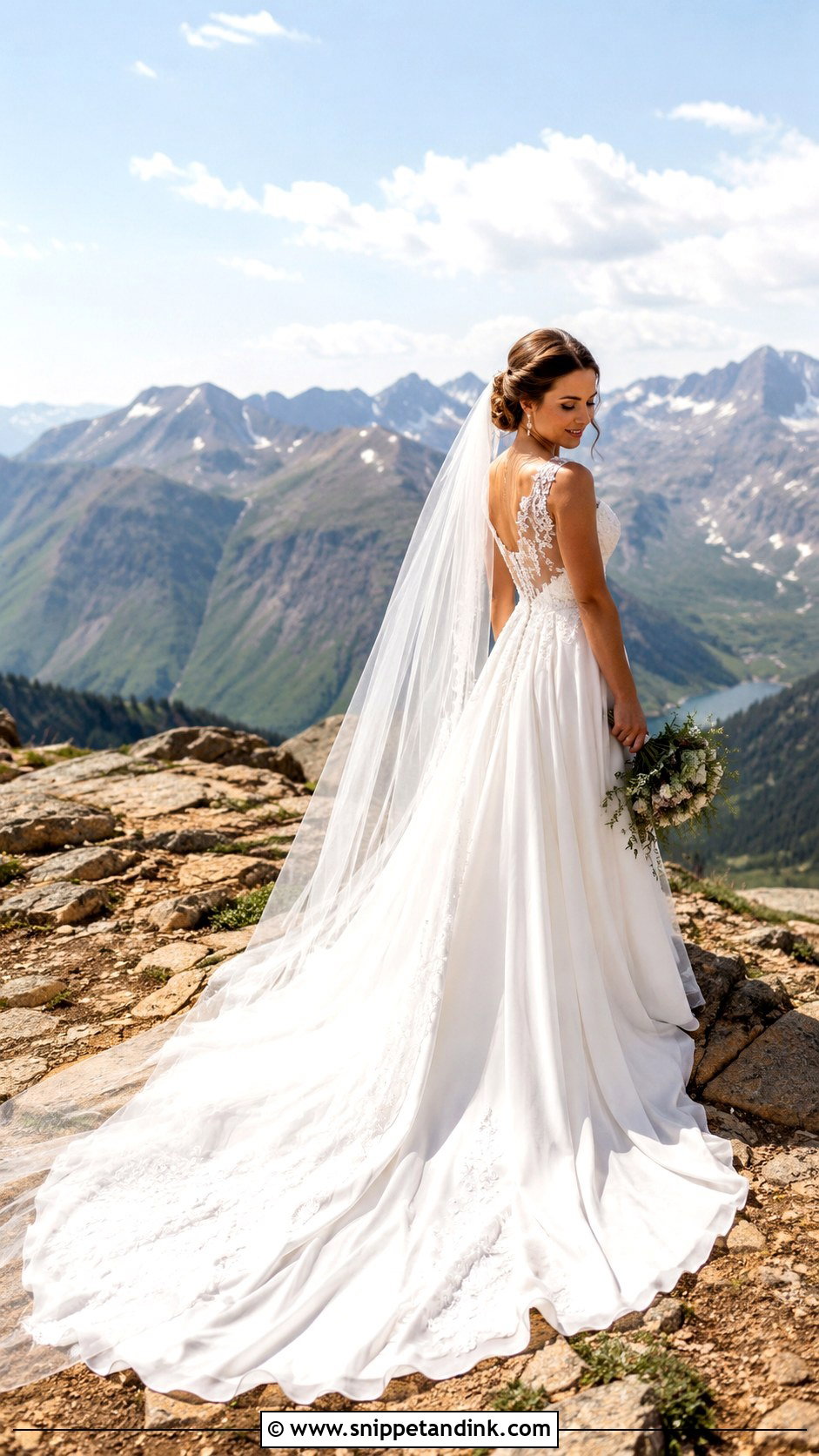
A long train against a rugged backdrop makes a dramatic wide shot. To make it work outside, I want a train that bustles quickly after portraits, in tulle, lace, organza or soft crepe, which are far easier to manage on terrain than heavy satin. Someone must be assigned to arrange it for photos, because grass, gravel and wooden decks all catch it. Expect the hem to come back dirty and plan cleaning before you buy. Keep the veil simple, the earrings classic and the shoes stable under the skirt, and save the full train for the ceremony and portraits.
13. Short Mountain Wedding Dress
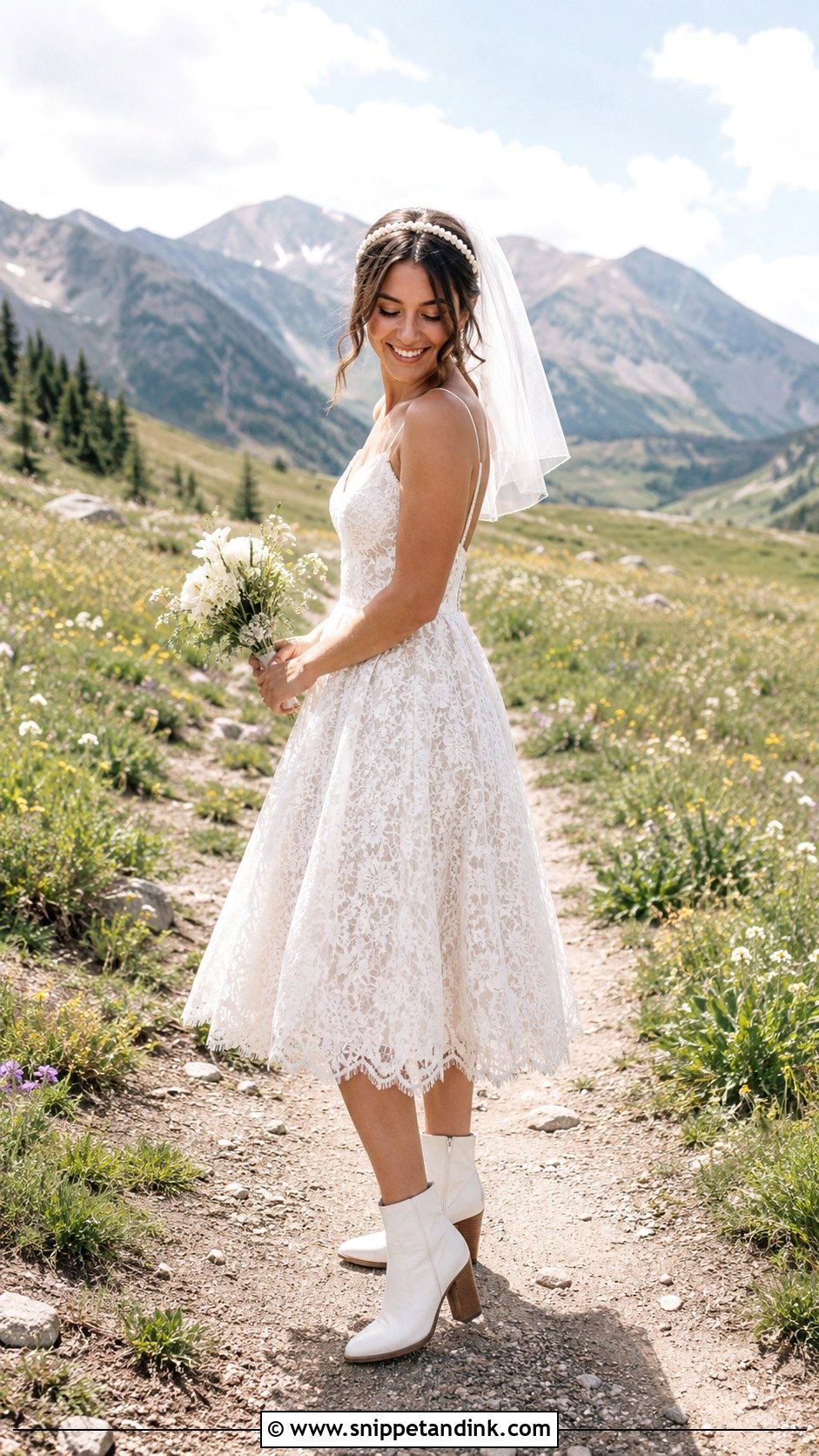
A short dress keeps the hem clear of dirt, snow and wet grass, which is a real advantage for casual elopements, hiking ceremonies and relaxed lodge parties. Tea-length, midi and above-the-knee cuts all work: lace reads romantic, satin modern, tulle playful. On a cold mountain, a short hem leaves your legs exposed, so I suggest skin-tone tights for any early or late shoot. White ankle boots, block heels or flats; a short veil, pearl headband or floral clip keeps it bridal. The real appeal is that you can move freely all day.
14. Winter Mountain Wedding Dress
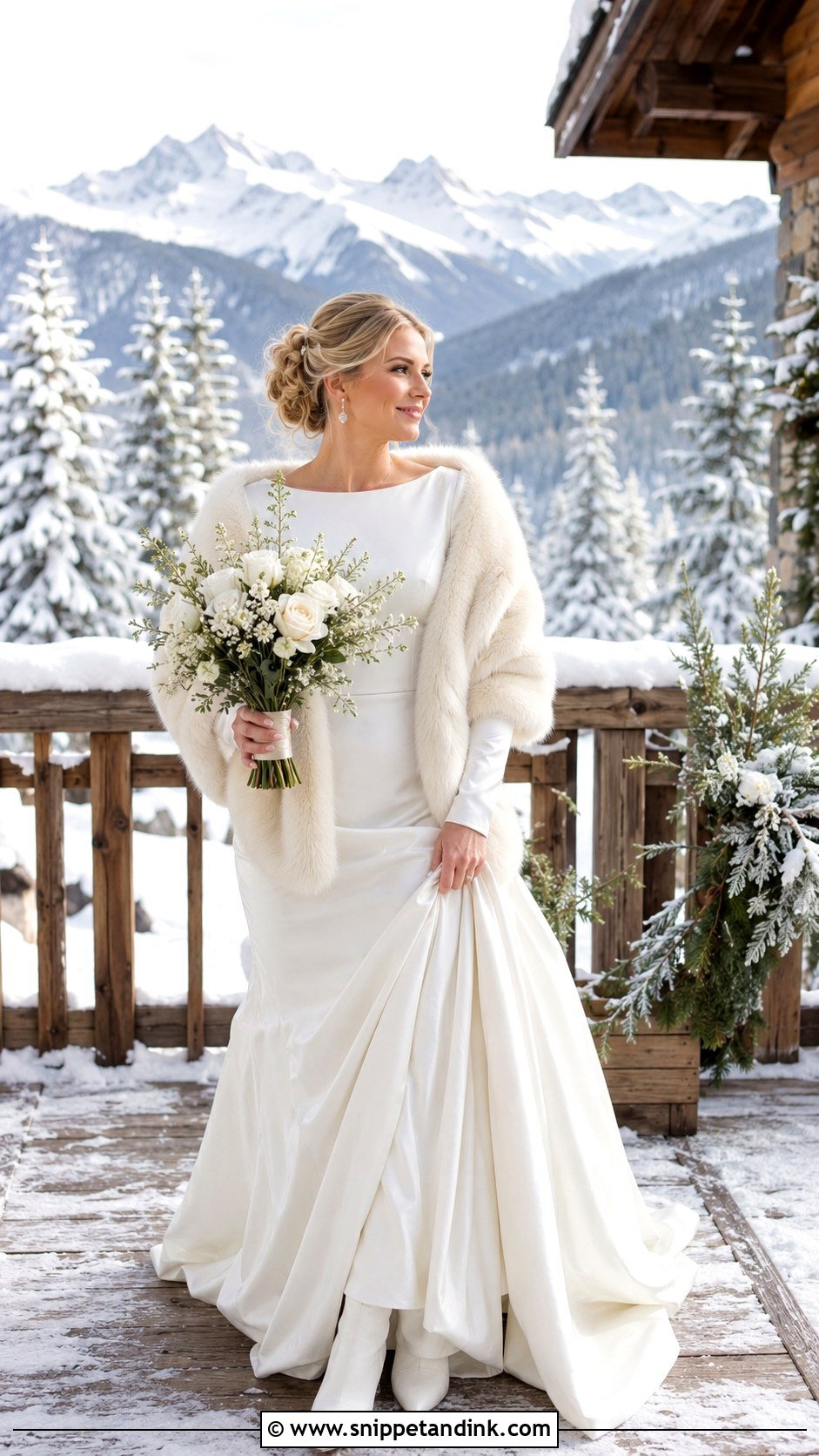
A winter mountain wedding dress has to handle snow and cold without looking bundled up. Long sleeves with heavier crepe, satin, mikado or layered lace are my usual picks, and an A-line skirt leaves room for thermal leggings underneath. A faux fur wrap, bridal coat, cape or shawl becomes part of the outfit, so jewelry can stay simple. Snow wicks up fabric quickly and leaves a grey tide line, so I keep the hem just clear of the ground. Closed-toe heels, white boots or embellished winter boots keep you steady at snowy lodges and ski resorts.
15. Summer Mountain Wedding Dress
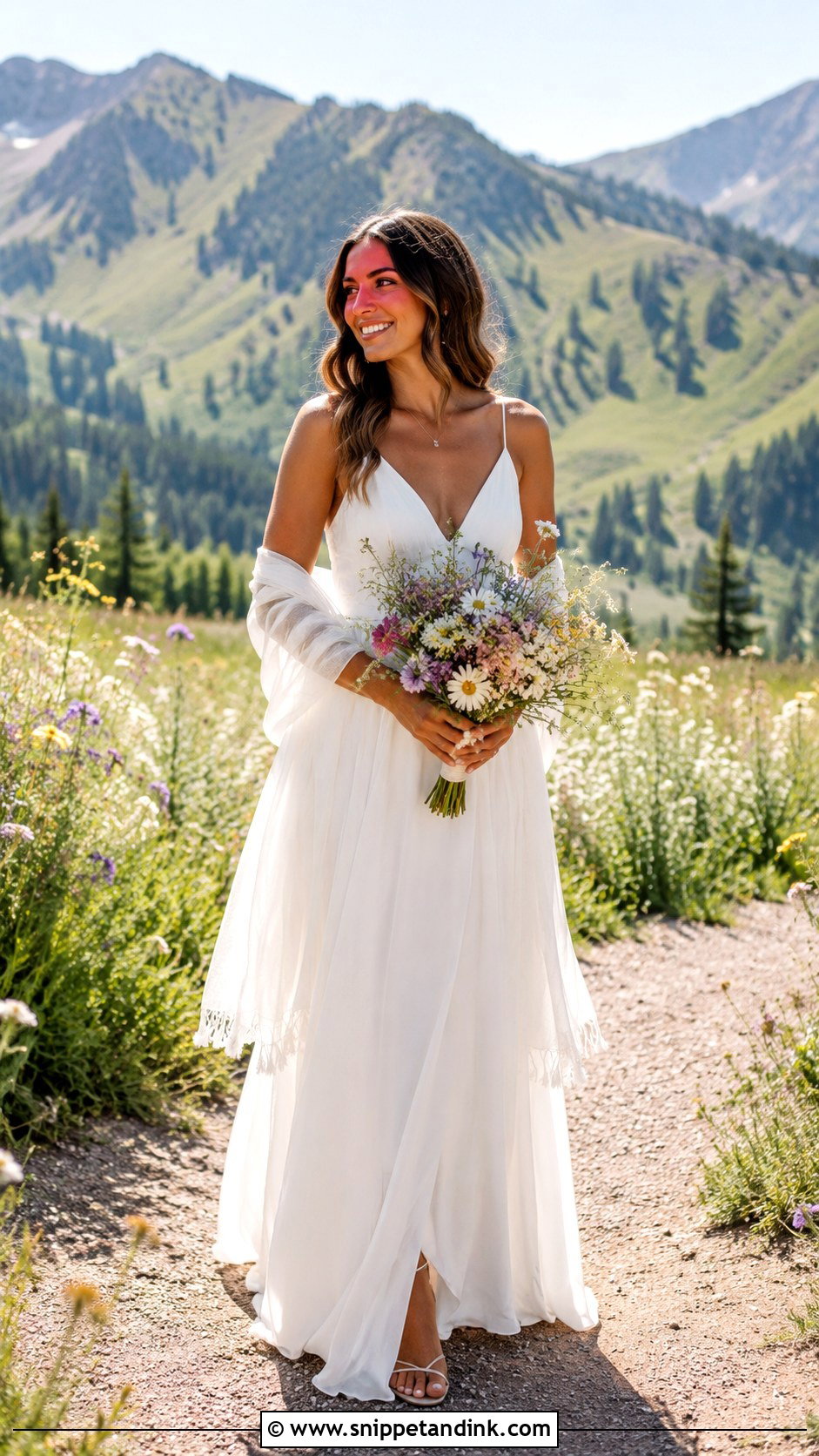
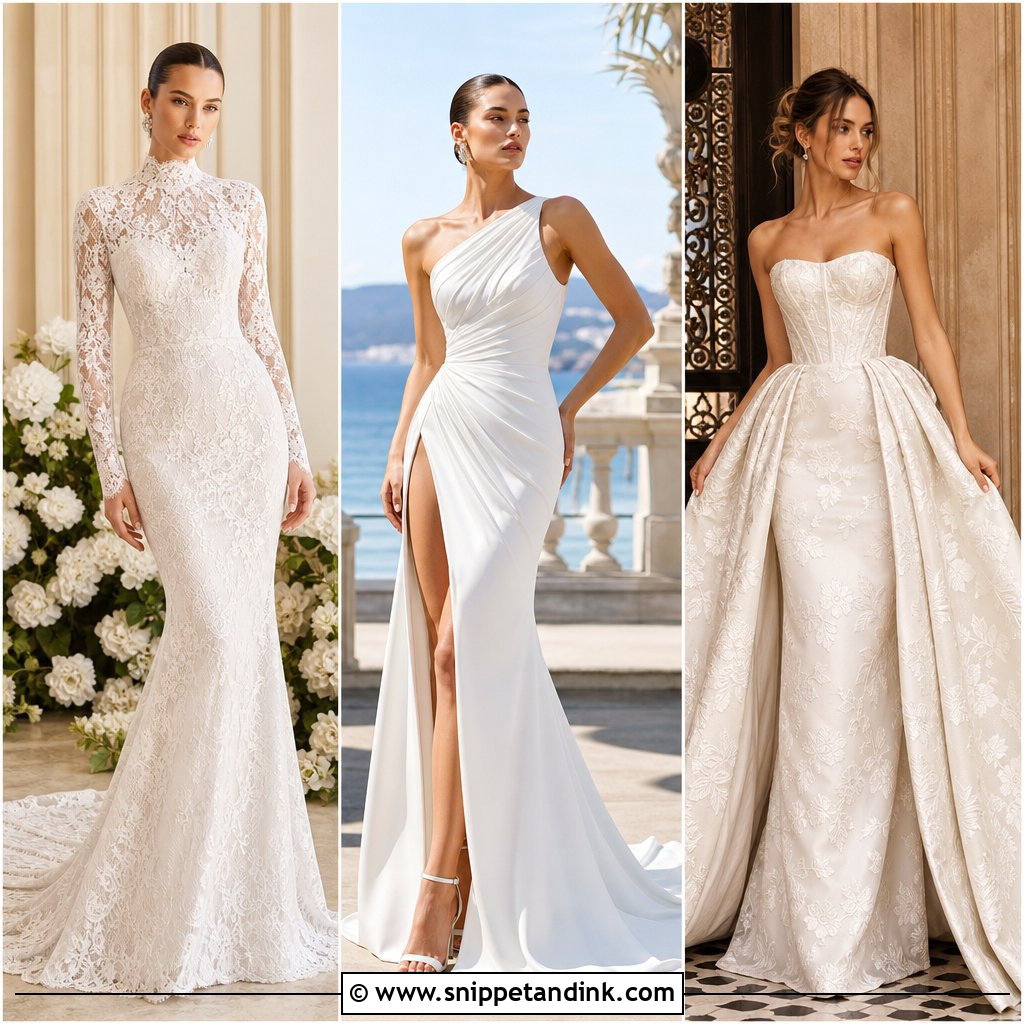
Summer in the mountains is warm until it suddenly is not. Afternoon storms and a sharp evening drop are normal, so comfort and a backup layer come first. Chiffon, light lace, organza and soft crepe breathe well; a sleeveless A-line, thin-strap gown or airy boho cut suits sunny ceremonies. Skip heavy skirts if you are walking trails or standing in full sun. UV is stronger at altitude, so I remind brides about sunscreen on shoulders and the back, applied well before dressing so it does not mark the fabric. Block heels, bridal sandals or flats, a light shawl and a wildflower bouquet finish it.
16. Fall Mountain Wedding Dress
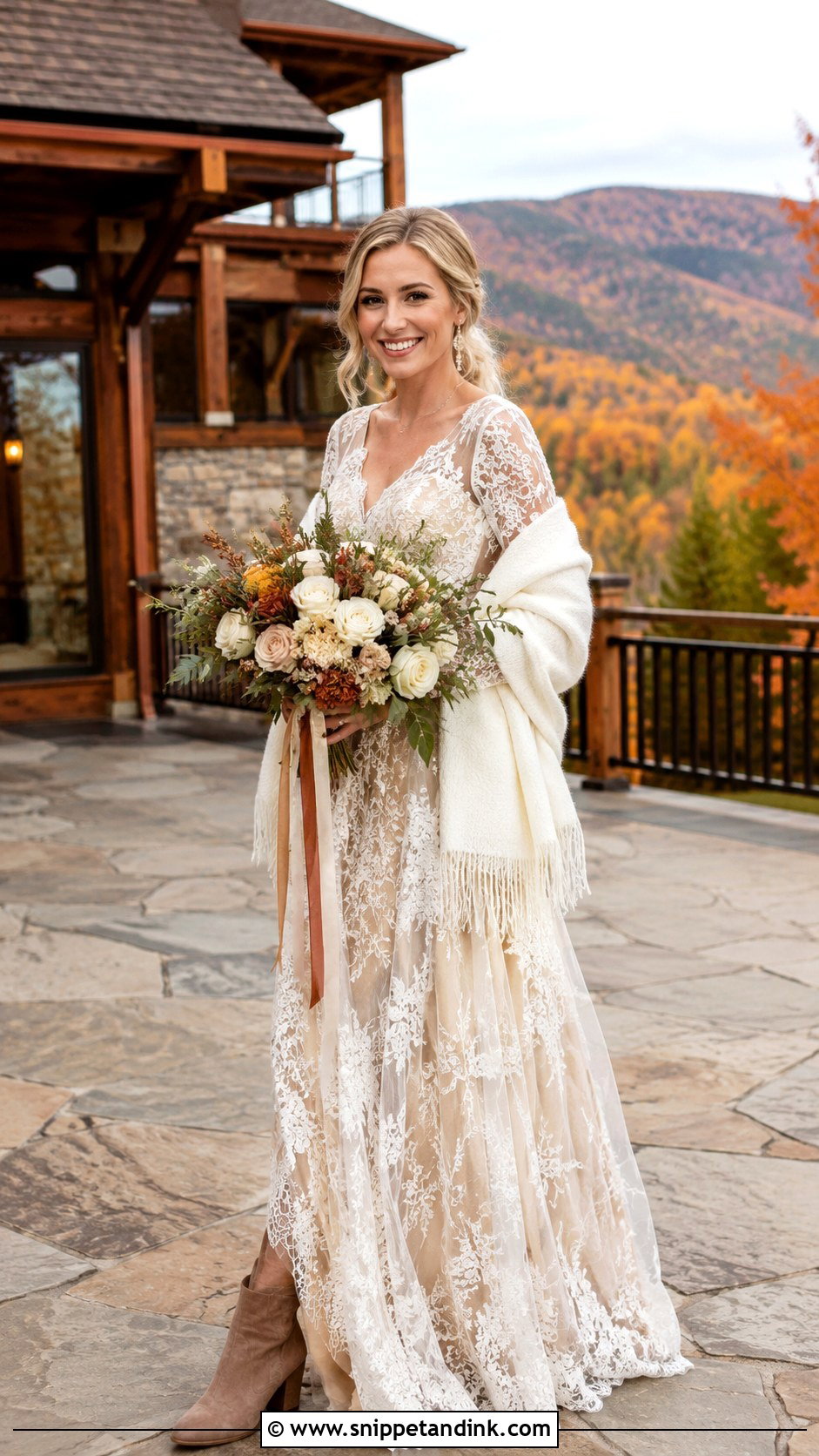
Autumn backgrounds are already full of colour, so the dress should bring texture rather than sparkle. Ivory lace, champagne tulle, long sleeves and soft crepe all sit well with turning leaves and rustic lodges, and a slightly heavier skirt or floral embroidery handles cooler air. Wrap up in wool, wear suede bridal boots or add a soft cape for outdoor portraits. Gold jewelry and a bouquet in cream, rust, terracotta and deep green tie it to the season. Heavy sequins tend to flatten in photos against bright foliage.
17. Rustic Mountain Wedding Dress
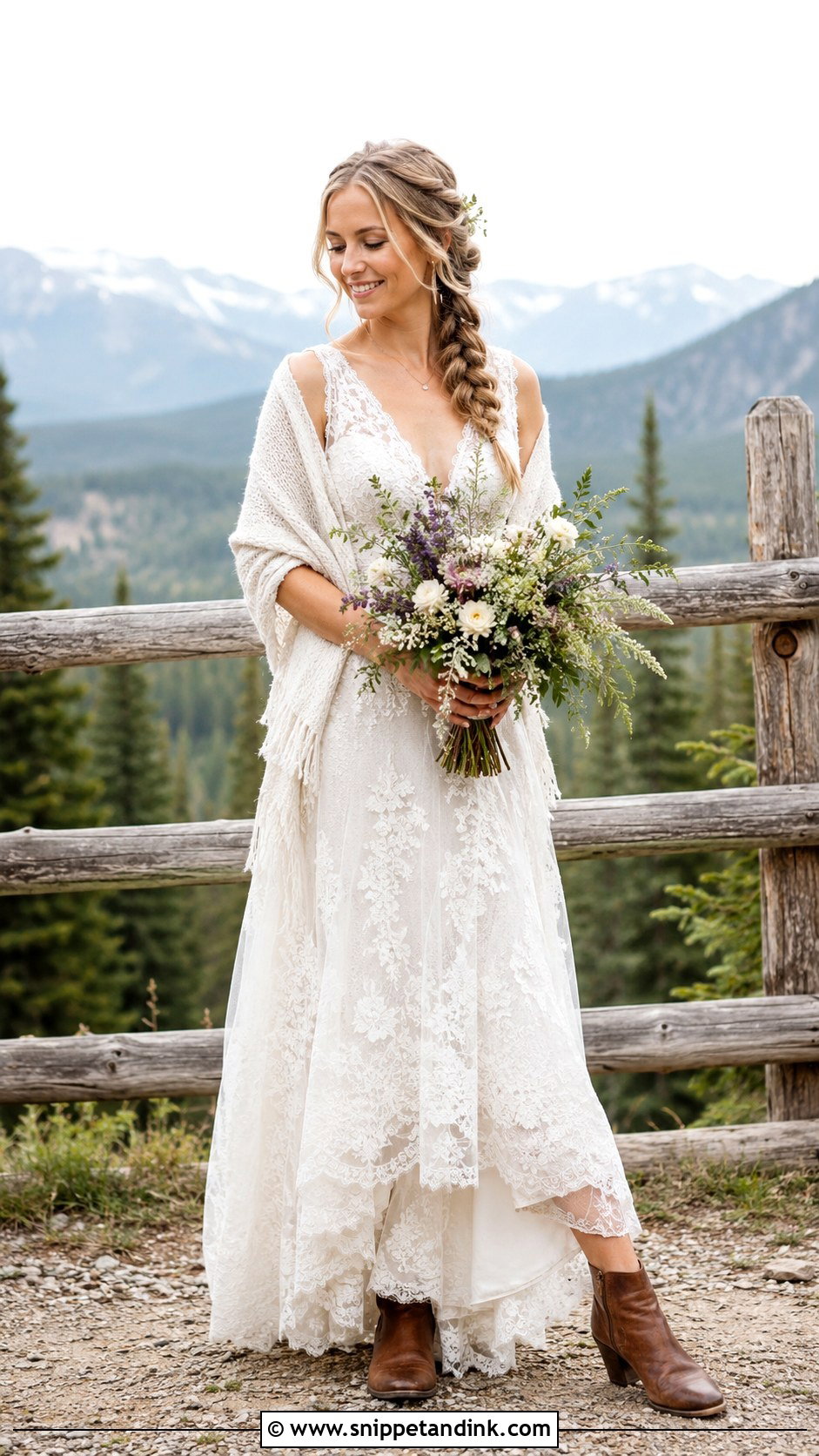
Rustic should still feel bridal. Lace, cotton-like textures, soft tulle and simple embroidery work, in a lace A-line, a boho sheath or a gown with flutter sleeves. Ankle boots, a loose braid and greenery, dried accents or wildflowers in the bouquet tie it to the setting. I usually talk brides out of a denim jacket for the ceremony itself; it can tip the look into casual, and a bridal shawl or soft wrap reads better in photos. It suits barn venues, lodges, forest clearings and small outdoor receptions.
18. Mountain Elopement Wedding Dress
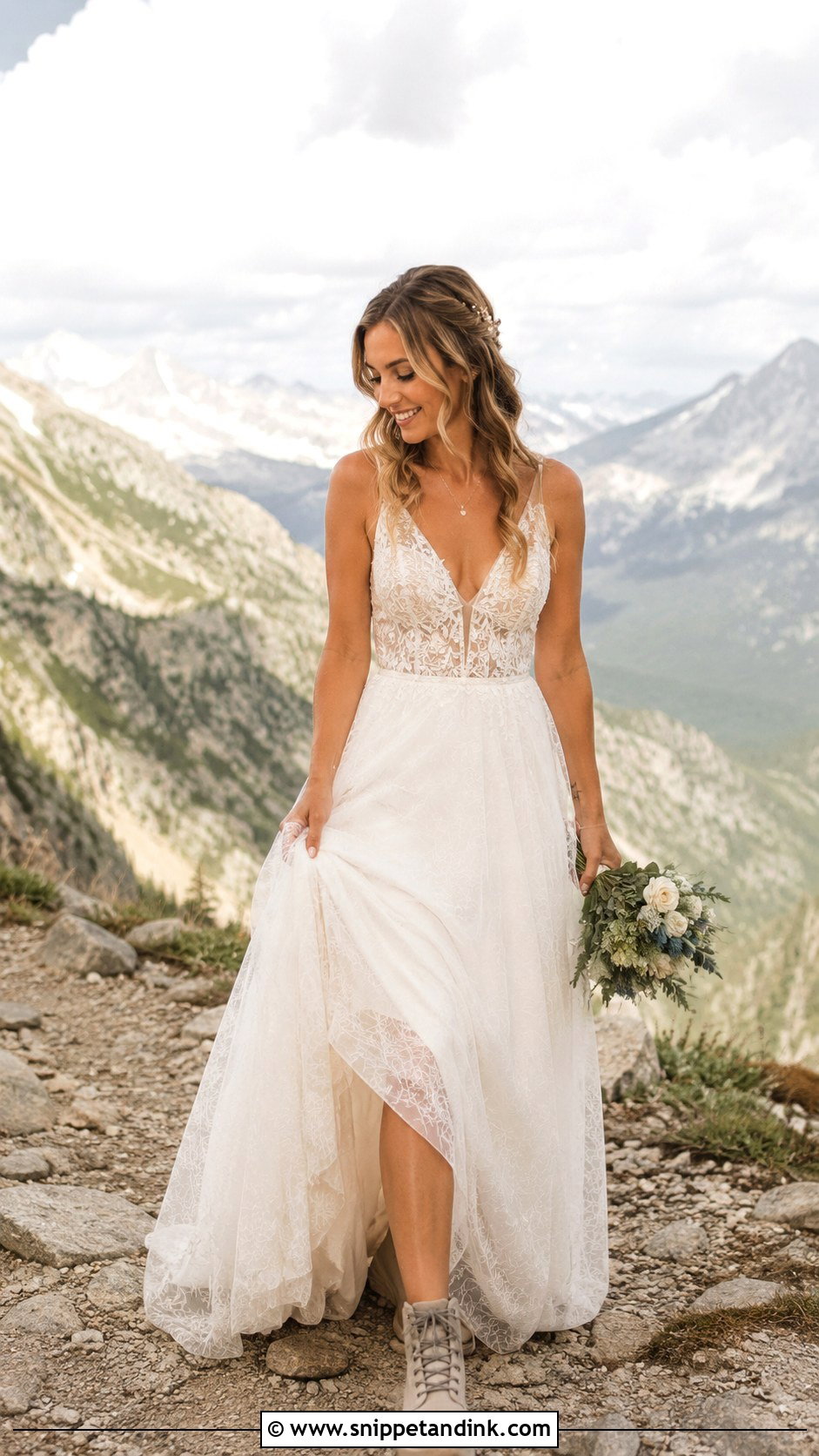
A mountain elopement wedding dress often gets carried up a trail in a backpack and put on behind a tree, so weight and packability matter as much as looks. A simple lace gown, flowing chiffon or a crepe sheath packs small and recovers from creasing. Skip heavy trains unless you have help and a clear photo plan. Sturdy boots, a warm layer and minimal accessories that will not snag or shift in wind are the sensible kit. Add a small bouquet, soft waves and natural makeup. You want to be present for the vows, not fixing your hem.
19. Plus Size Mountain Wedding Dress
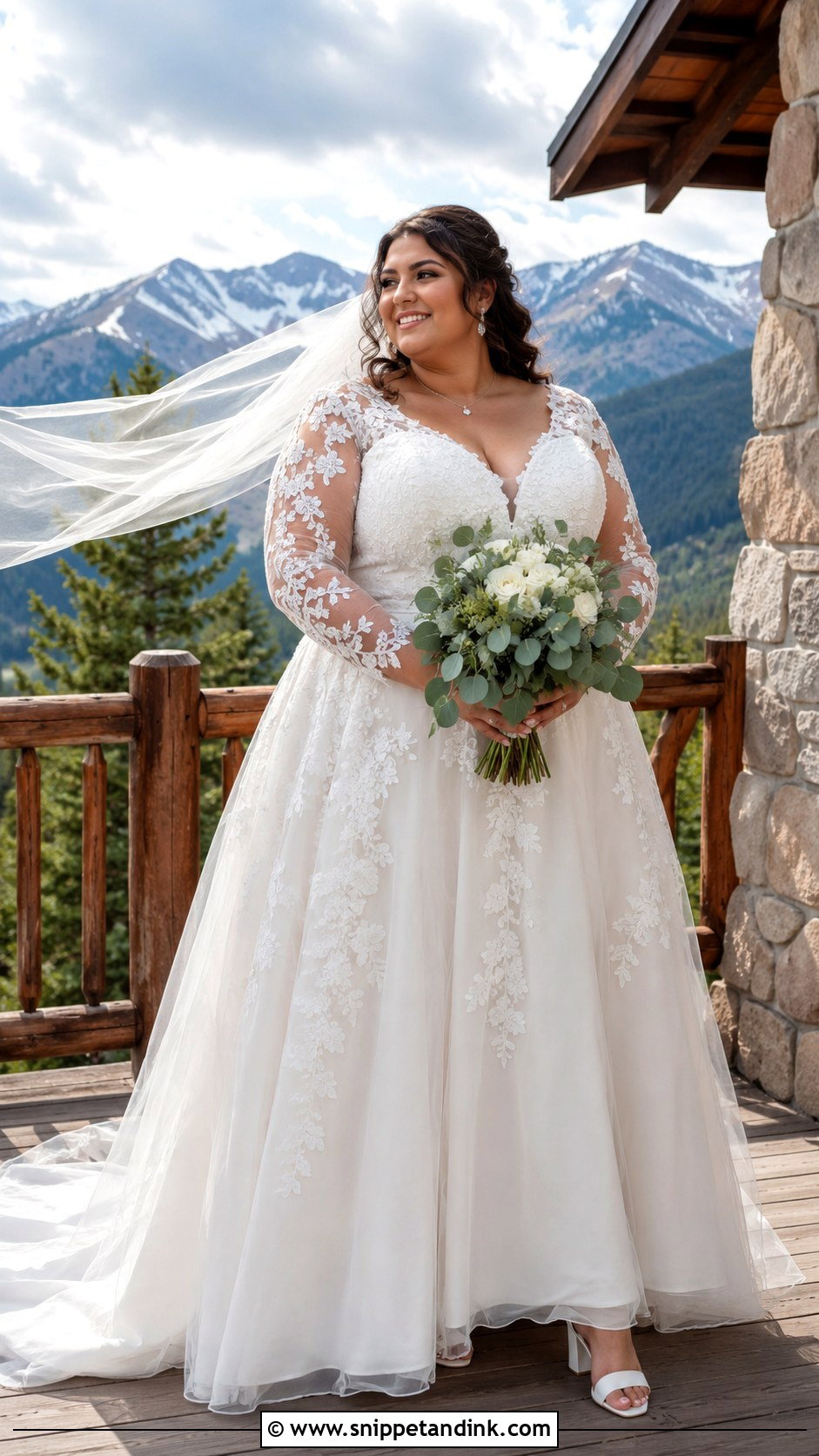
A plus size mountain wedding dress needs support you can trust on uneven ground. Structured bodices, supportive straps, corset backs and well-lined fabrics keep it in place while you walk, climb and pose. A-line, ball gown, sheath and fit-and-flare shapes all work. Lace sleeves, square necklines and wrap bodices are practical as well as flattering. For outdoor sites, I check the bustle points carefully because a heavier skirt puts more strain on them. Comfortable shoes, a securely anchored veil and balanced accessories finish it.

20. Petite Mountain Wedding Dress
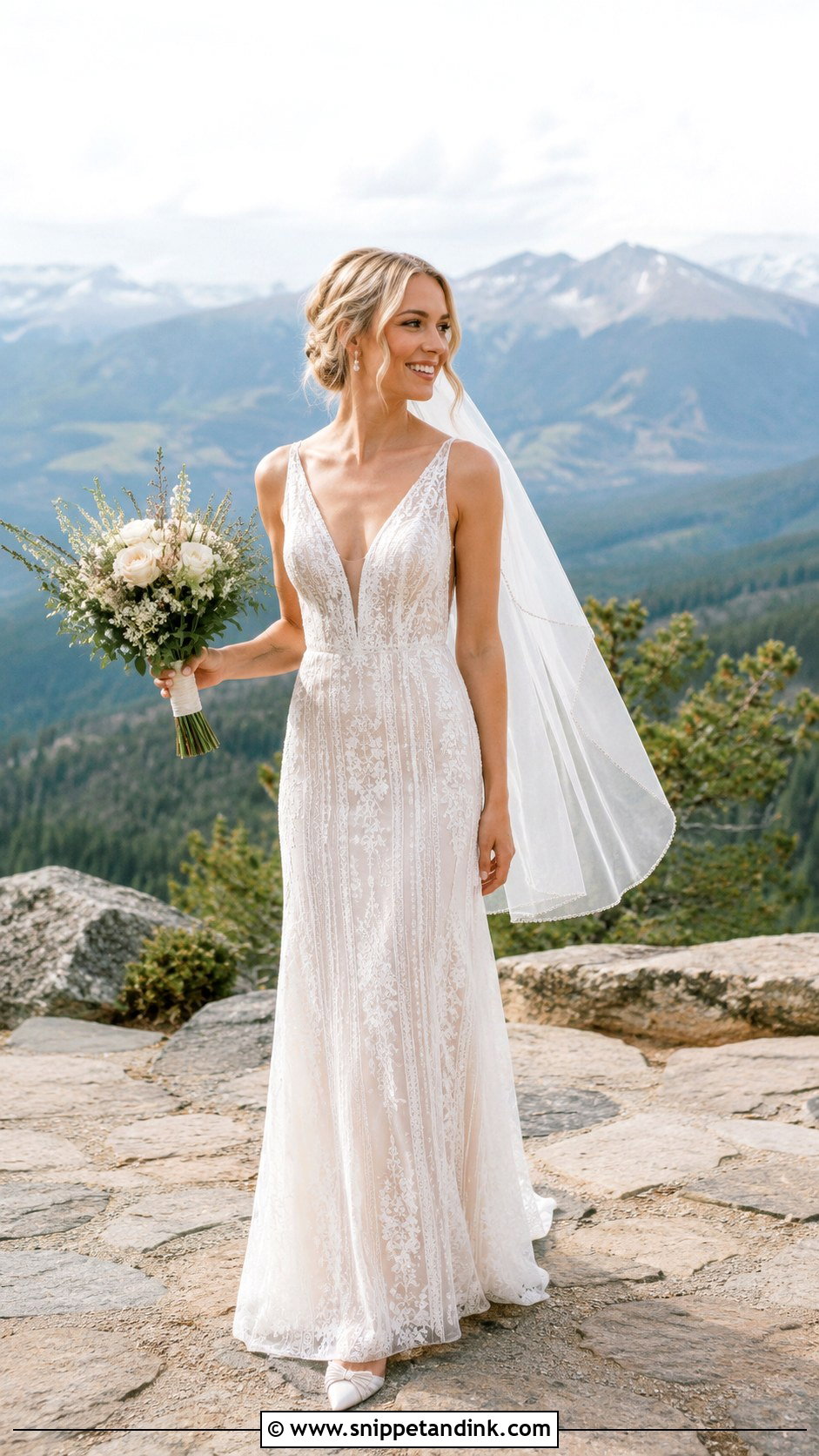
Length is the goal on a petite frame. Clean lines, vertical lace, a soft V and a narrow A-line all lengthen; a sheath, slim A-line or tea-length cut suits most petite brides well. Big ball gowns and long trains are hard to manage outdoors at any height, and on a smaller frame they can swallow you in a wide landscape shot. Pointed-toe shoes, low heels or sleek boots keep it sharp. A fingertip veil sits better than a cathedral outdoors, where wind can lift a long veil and drag your head back. Keep accessories delicate.
21. Ball Gown Mountain Wedding Dress
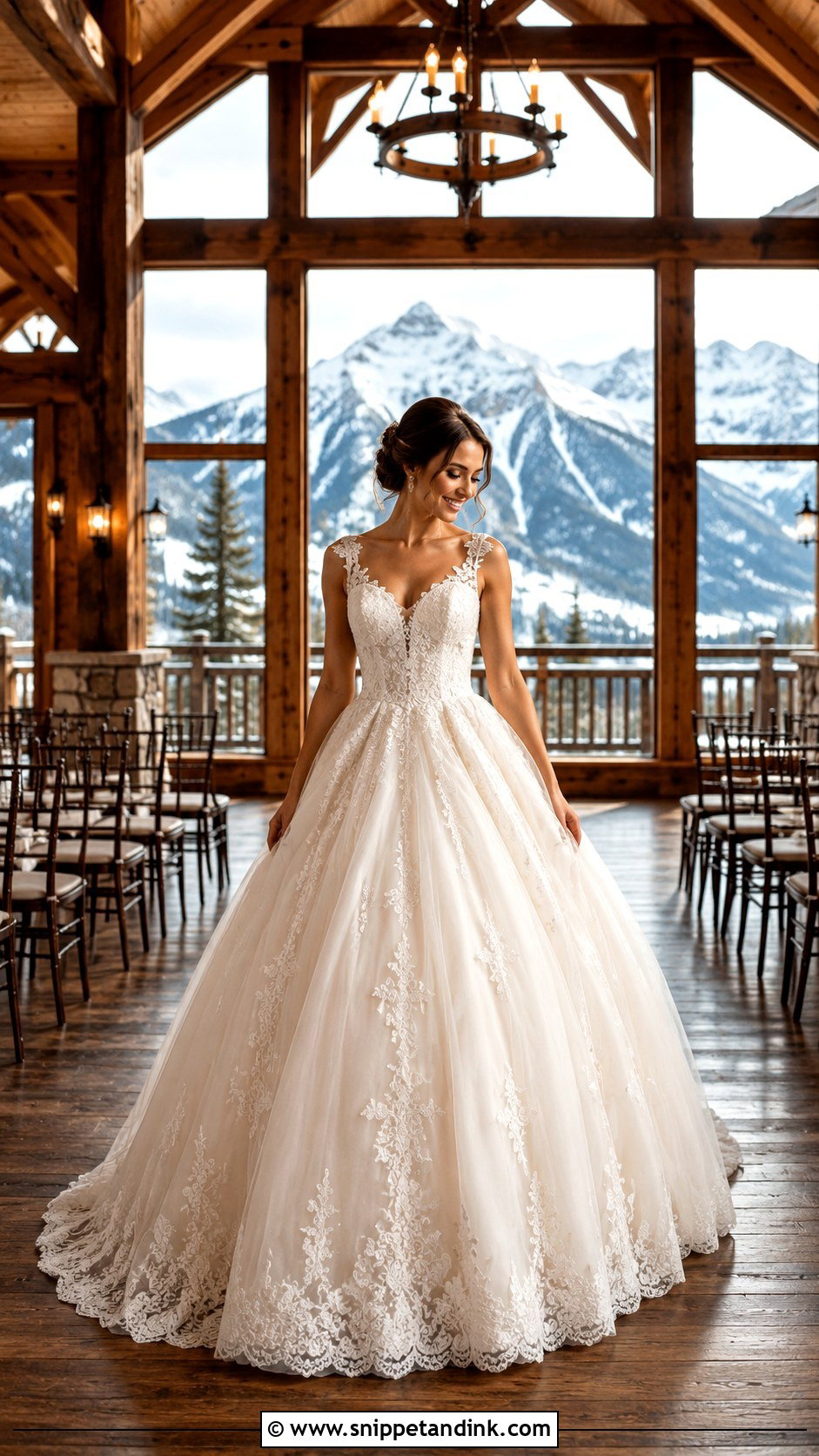
A full ball gown in front of a mountain range is pure fairytale, and the shape holds up even in very wide shots near lodges, overlooks and snow. To make it work outdoors, choose lighter layers and a train you can handle. A fitted bodice with lace, satin or light sparkle adds polish without extra weight. A bustle is not optional here; plan it at your fitting and have someone practise it. Simple jewelry, a secure updo and comfortable shoes under the skirt keep it practical for a formal mountain wedding.
22. Sheath Mountain Wedding Dress
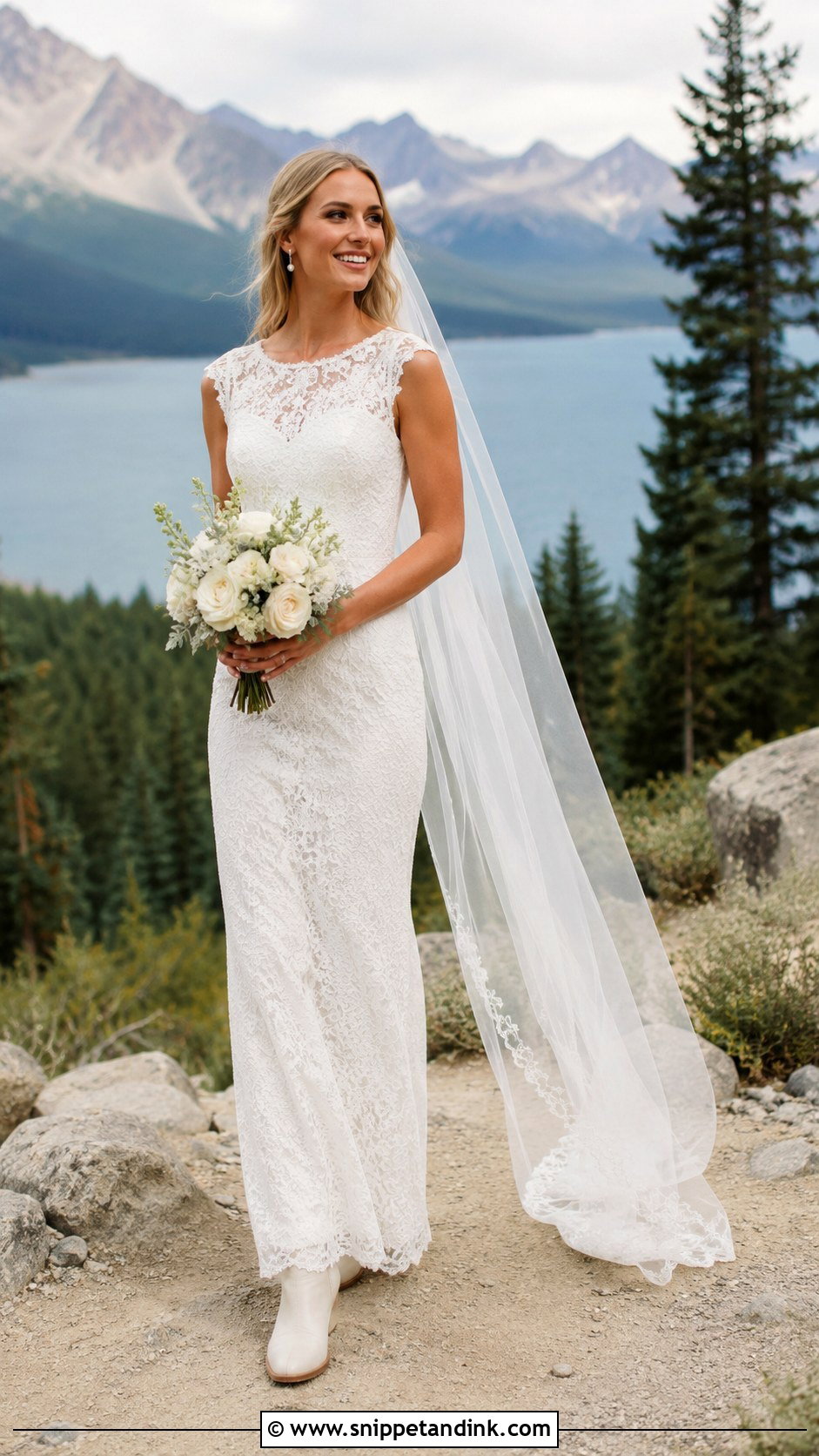
A sheath follows the body without a full skirt, which makes it easy to pack and easy to manage on a lodge deck or at a small ceremony. Crepe, lace and soft satin are strong picks; long sleeves for cool weather, sleeveless for summer. Because the line is so plain, every accessory shows, so I choose them deliberately. Bridal boots, pearl earrings and a soft bouquet are enough. A long veil adds drama, a small hairpiece keeps it minimal. Make sure you can take a full stride in it before you commit to a trail.
23. Two Piece Mountain Wedding Dress
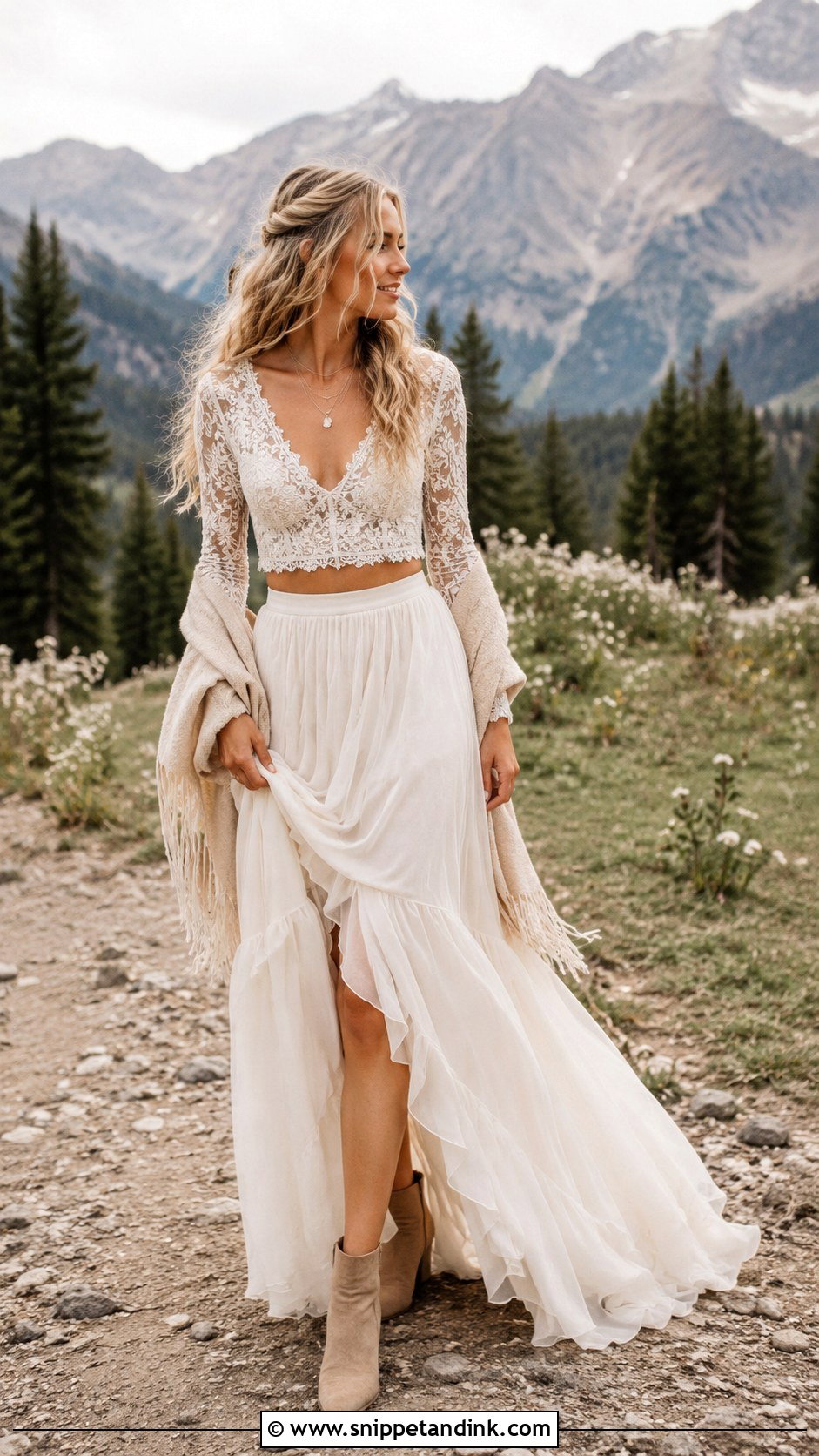
A two-piece gives you movement and a custom fit, because top and skirt can be sized separately, which helps if your measurements fall into different sizes. A lace crop top with a flowing skirt suits a boho ceremony; a structured top over satin or crepe looks polished. Matching fabrics or coordinated lace keep it bridal. I check the gap at the waist when the bride raises her arms, especially for a ceremony where bare midriff in cold wind might be unwelcome. Ankle boots, delicate jewelry, loose waves and a light wrap or cape suit a relaxed celebration.
24. Cape Mountain Wedding Dress
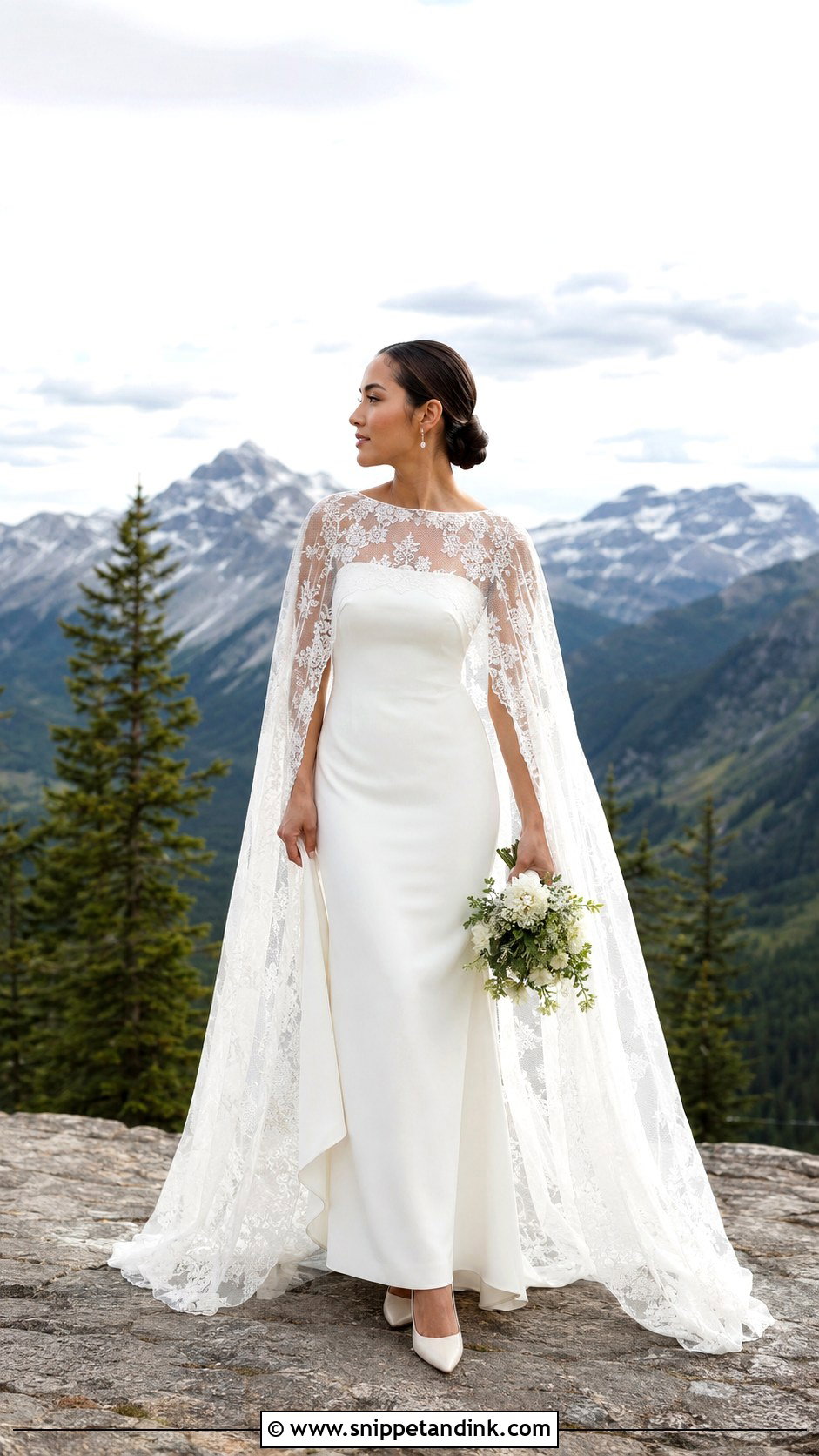
A cape answers wind, weather and photography in one piece. Sheer lace feels romantic; crepe or satin is sleeker; a heavier cape adds warmth in winter or fall without hiding the dress. Pair it with a plain gown, a fitted sheath, minimal A-line or clean satin, so the cape becomes the statement. Wind will catch a cape like a sail, so I make sure it is anchored at both shoulders rather than tied only at the throat. Keep hair neat and secure, and the cape will look good from front, side and back.
25. Bridal Boots Mountain Wedding Dress
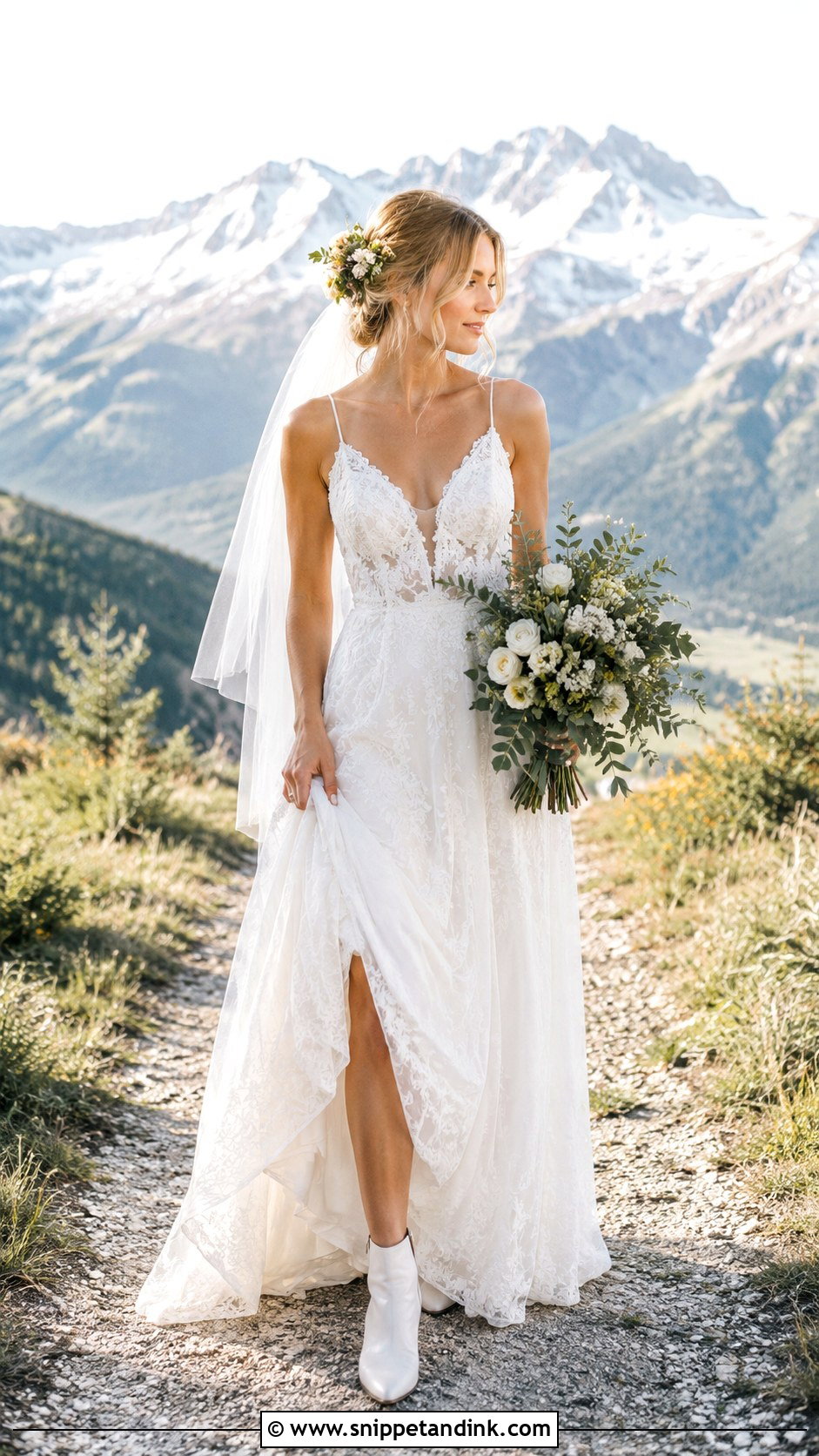
Boots are the most practical shoe on grass, gravel, snow, dirt paths and rocky photo spots. The dress can be lace, crepe, tulle, satin or boho, but the hem should let the boots show slightly as you walk. White boots look modern, tan suede rustic, embellished boots playful. Break them in properly; a new pair rubbing on a long walk to the ceremony site will ruin the afternoon. Pair them with a flowing A-line, a short dress or a lace sheath, and keep it bridal with a wrap, veil or floral hairpiece.
Getting the Gown Up the Mountain in One Piece
Many mountain venues mean a long drive, a gondola, a hike or a change of clothes in a lodge bathroom. The dress needs a plan for the journey as much as for the ceremony.
- Ask the salon for a breathable garment bag and have the gown hung by its hanger loops, not the shoulders, so the bodice is not stretched during travel.
- Lay it flat across a back seat rather than hanging it from a hook, where it swings and creases at the waist.
- If you are flying, carry it on and ask the crew about a closet. Folding a gown into checked luggage is how satin gets permanent creases.
- Pack a handheld steamer and check the venue has power. Test it on an inside seam first; some fabrics water-spot.
- Build a small kit: safety pins, clear thread and needle, fabric tape, a white chalk stick for marks, clothes pegs to hold the hem while walking, and a large clean sheet to stand on when dressing outdoors.
- For a hike-in elopement, wear trail clothes up and change at the spot. Your photographer can help you find a sheltered place to dress.
After the wedding, get the gown to a specialist cleaner within a few weeks. Mud, sap and grass stains set over time, and a cleaner who handles bridal wear will know how to treat the hem without damaging the lace.
Does Your Dress Hold Up at the Top of the Trail?
A gown for the mountains has to look right against the view and still let you walk, pose and celebrate on rough ground. Check the season, the surface underfoot, the wind, the temperature after sunset and how far you will walk for photos before you commit. Lace, crepe, satin, tulle, sleeves, capes and boots can all work when they are chosen for those conditions. Rustic or formal, adventurous or classic, the right dress is the one you stop thinking about once you are standing at the top.
You'll Like These Ideas:




Leave a Reply