
Most of the registry brides I dress want one thing before anything else: an outfit that looks bridal at the signing table and still feels bearable after an hour of waiting in the heat. A civil ceremony in Nigeria is short on paper, but the day around it rarely is. There’s the queue, the signing, group photos outside and often a lunch. That’s why I start every fitting by asking what happens after the vows, not how the dress looks on a hanger. Below are twenty outfits I’d genuinely put in front of a registry bride, from lace midis and crepe jumpsuits to Ankara and Aso-Oke pieces, with notes on fabric, fit and what each one asks of you on the day.

What a Registry Morning Asks of Your Outfit
A registry wedding looks simple on the schedule, but the outfit has more jobs than people expect. You’ll likely wait in a hallway, sit at a low table to sign, stand outside for group photos in direct sun, then move on to lunch. I fit every registry look against that sequence rather than against a mirror.
Fabric that copes with heat
Natural fibres, or at least a natural lining, make the biggest difference. Crepe, cotton blends and viscose-lined lace breathe, while unlined polyester satin and stiff synthetic lace hold heat and show damp patches. Ivory and soft off-white also hide perspiration marks better than optic white, and they tend to sit more warmly against the skin in flash photos.
The four-movement test I run at fittings
- Sit on a low chair and lean forward as if signing. Watch the neckline and the hem.
- Raise both arms as if hugging an aunt. Straps and off-shoulder bands should stay where they are.
- Climb three or four stairs in your wedding shoes.
- Get in and out of a car, which is where most creases and seam strain happen.
If an outfit fails one of these, a tailor can usually correct it with a few weeks’ notice. Discovering it on the morning is a different story.
1. White Lace Midi Registry Dress
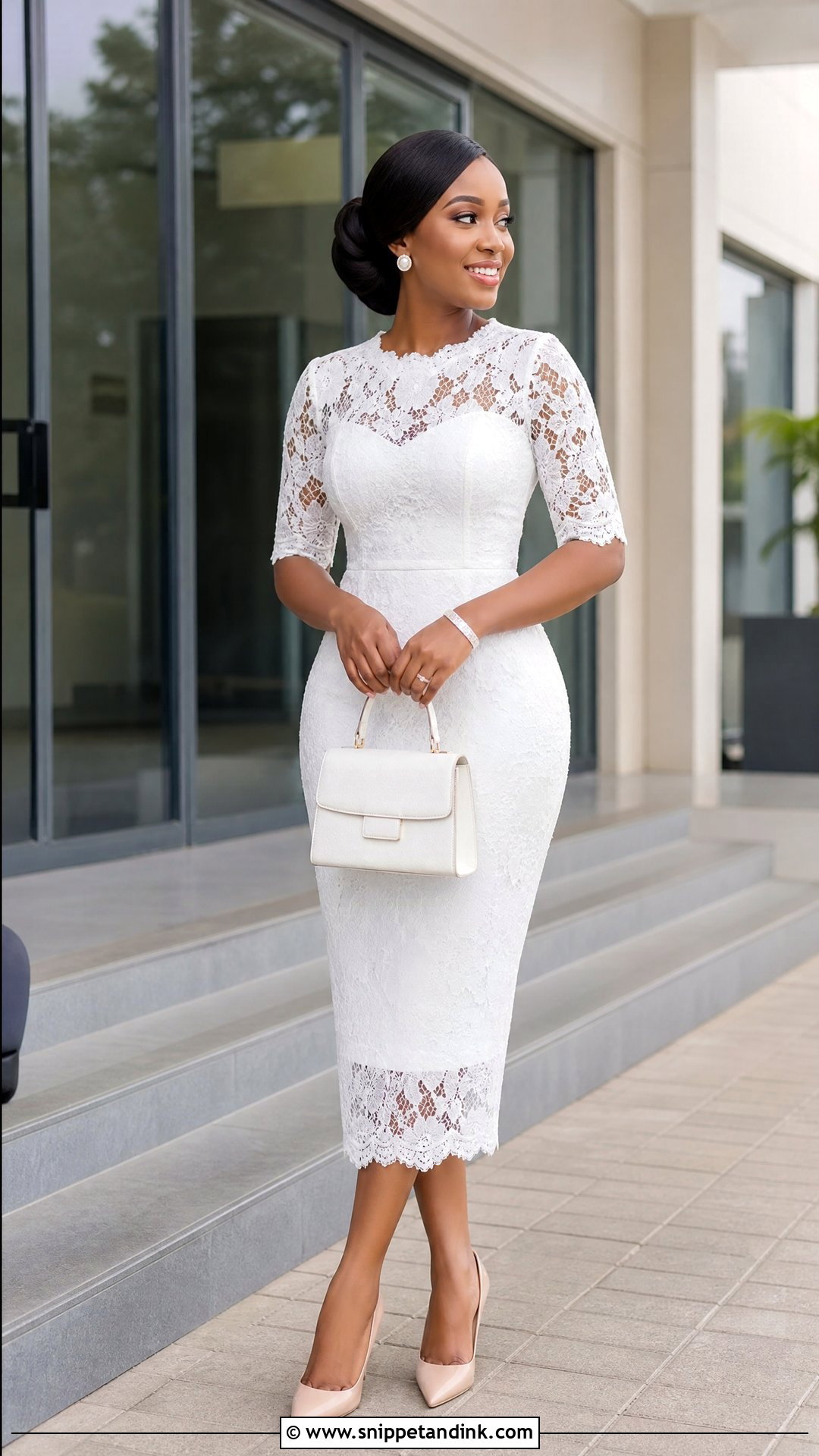
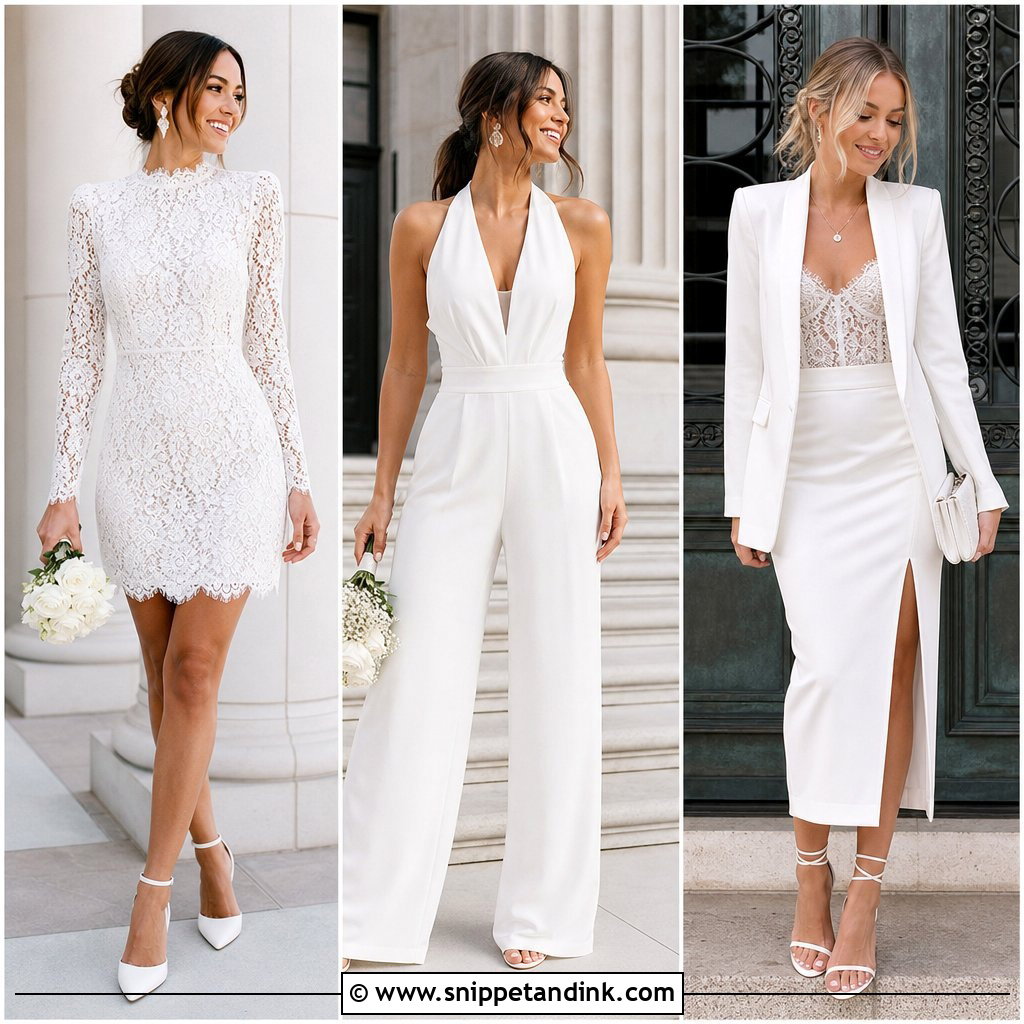
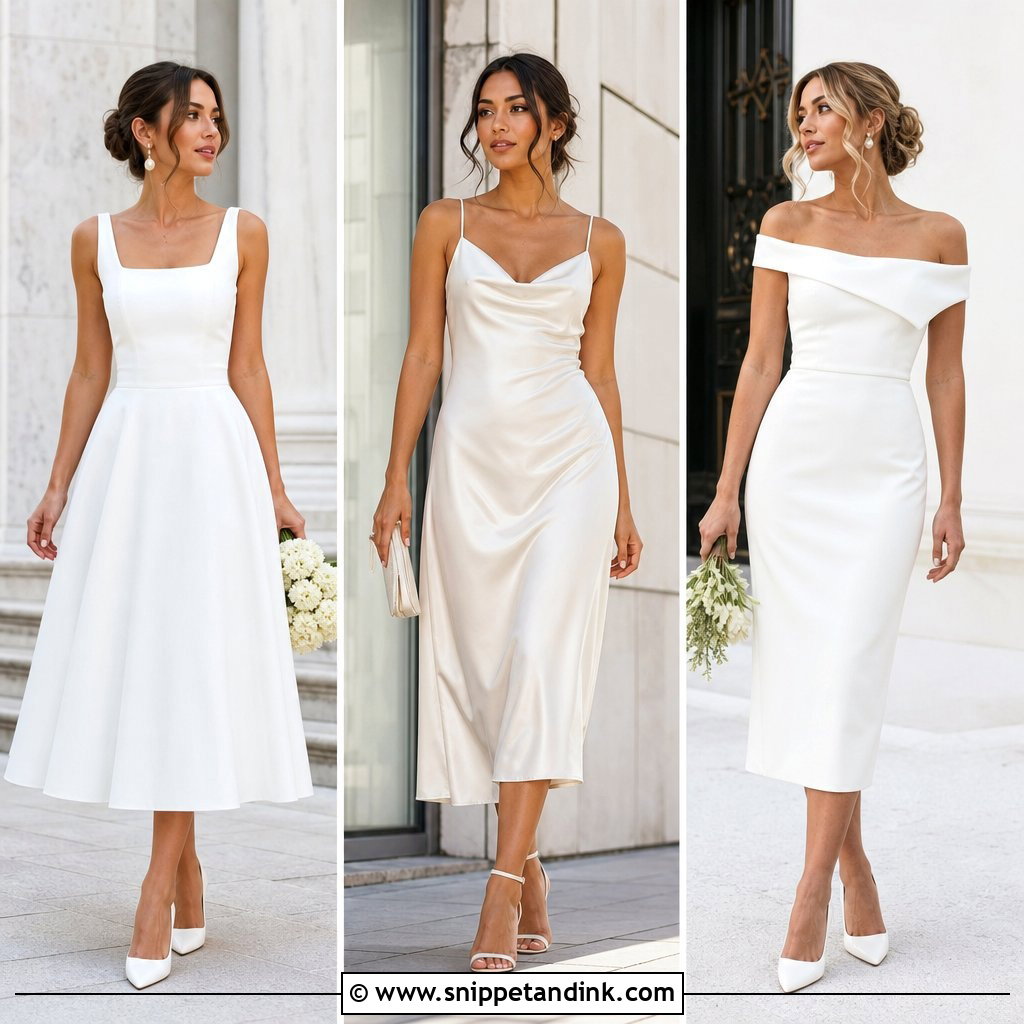
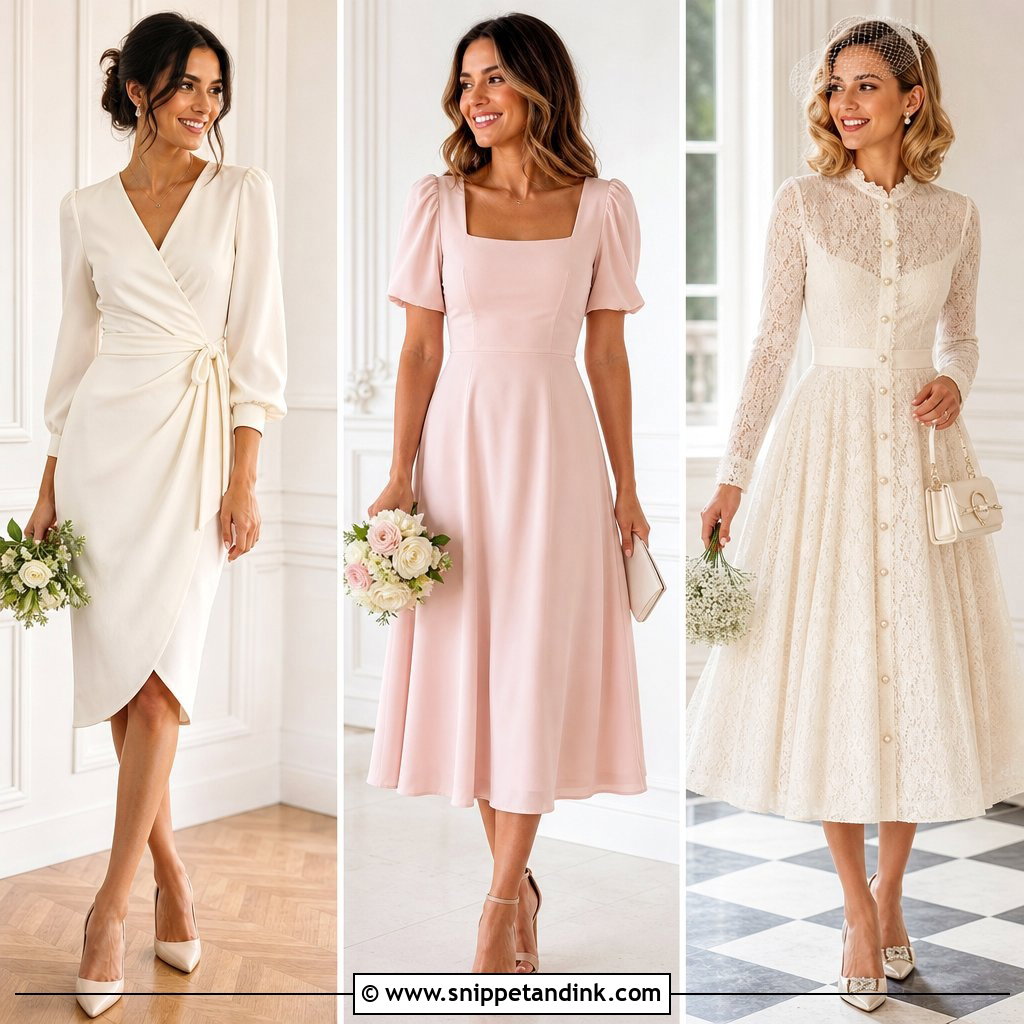
Lace is where most registry brides start, and the lining decides whether it works. I ask the tailor for a cotton or viscose lining rather than polyester, because poly traps heat against the skin and you’ll feel it by the second round of photos. A fitted bodice with an A-line or pencil skirt gives the lace shape, and short sleeves cover the upper arm without adding warmth. Heavy cord lace already holds the eye, so I keep the neck bare and let pearl studs, nude pointed pumps and a small white bag do the rest. A low bun leaves the neckline clear.
2. White Satin Midi Registry Dress
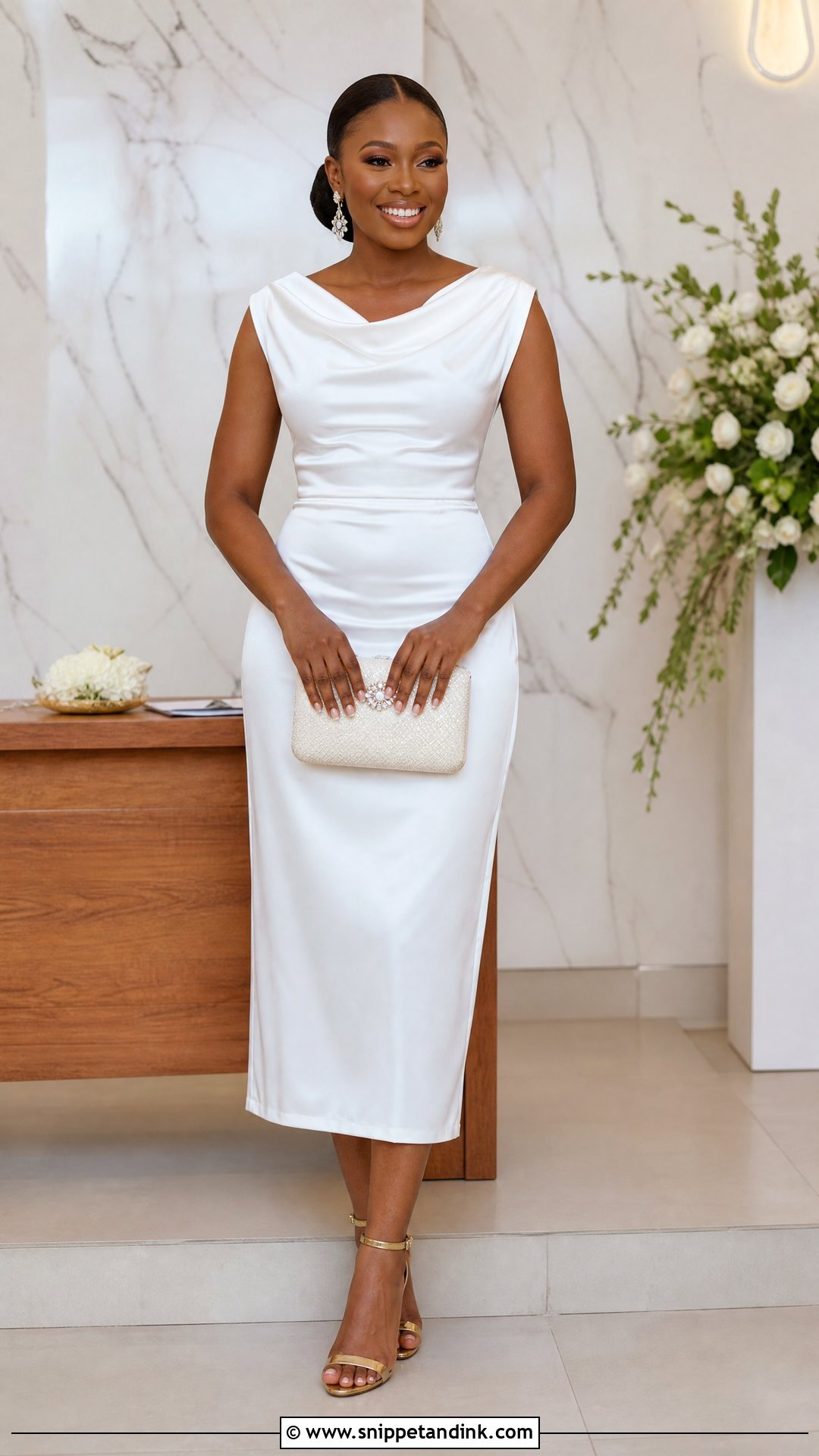
Satin is honest about everything, including sweat and creases. When I fit a satin midi, I look for a heavier, lined weight, because thin satin clings at the hip and shows every seam allowance underneath. A draped neckline, a nipped waist and a side slit give it movement, and gold sandals with a structured ivory clutch keep it clean. A sleek ponytail suits the shine. My one firm rule: sit on a clean sheet in the car with the skirt smoothed flat under you, and carry a hand fan. Satin creases across the lap within minutes of sitting.
3. Long-Sleeve Mini Registry Dress
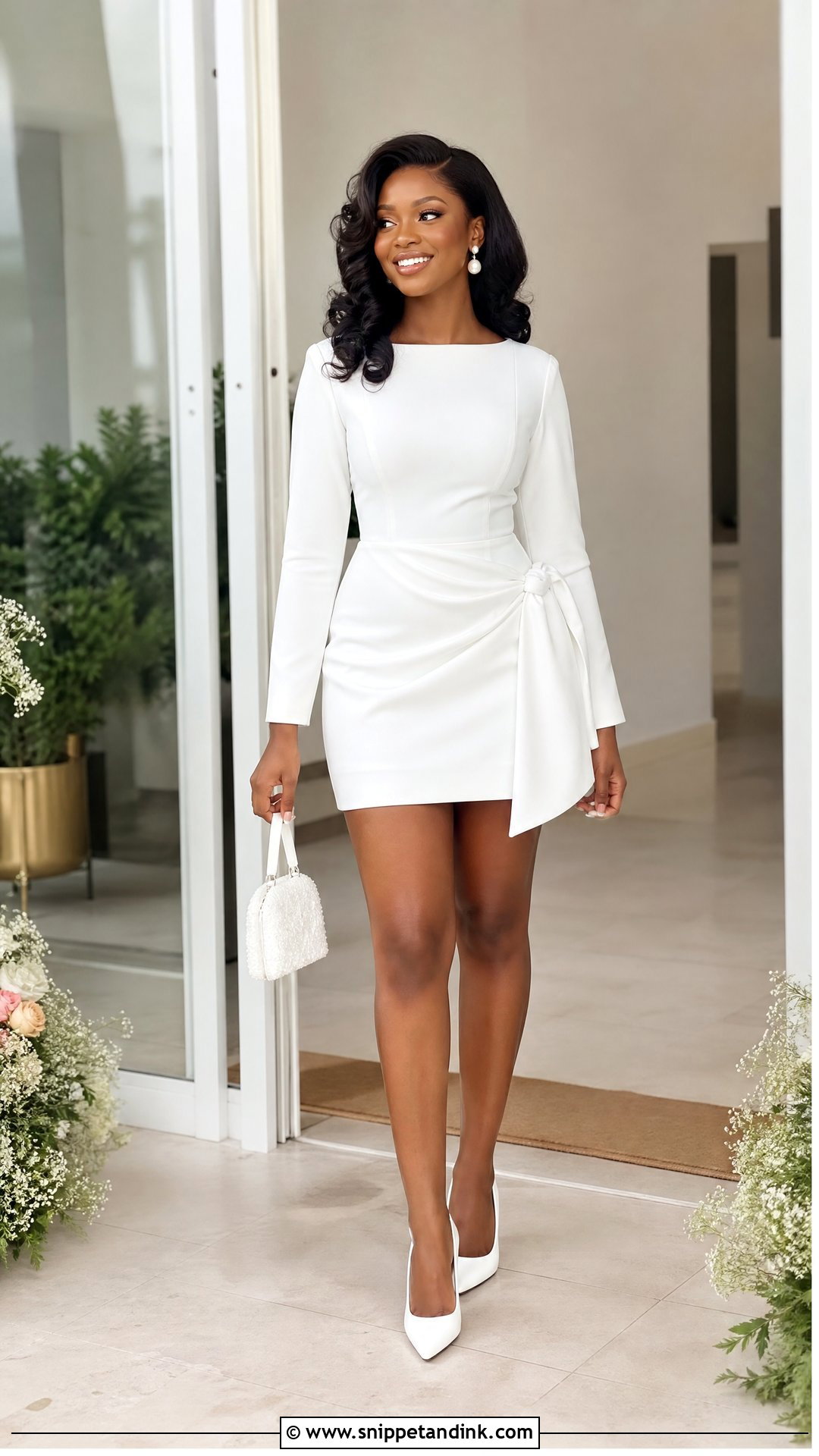
A short hem with long sleeves is a balancing act, and the fabric does most of the work. Crepe and lined lace hold their shape, while a soft jersey mini drifts toward casual however you accessorise it. Keep the neckline modest so the proportions read as registry rather than party. Before you commit, sit down in it in front of a mirror. A mini rides up several centimetres when seated, and the signing chair is usually lower than you expect, so fitted shorts underneath are worth it. Pearl drops and pointed pumps finish the look.
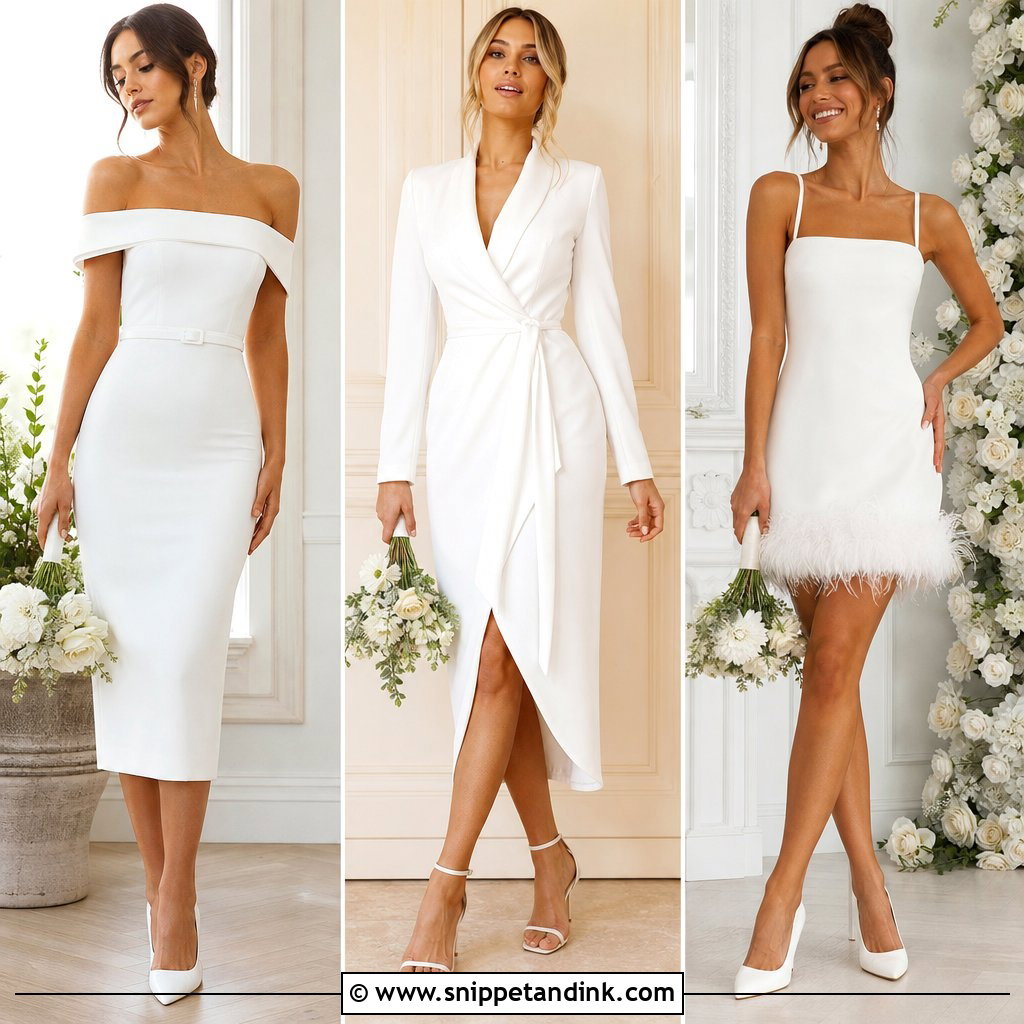
4. Off-Shoulder Midi Registry Dress
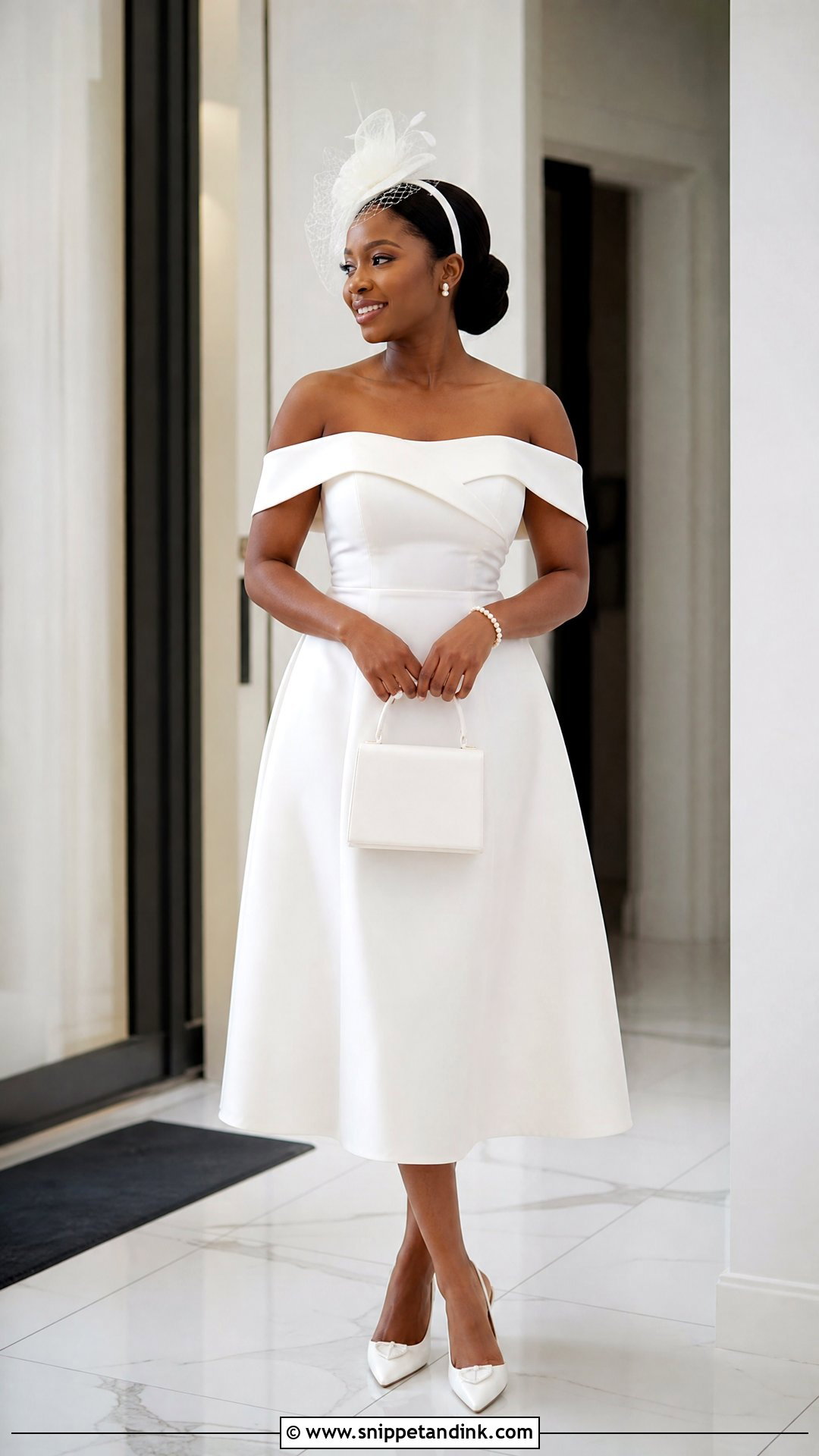
An off-shoulder neckline frames the collarbones, but it’s also the neckline I see tugged at most often in candid photos. The fix happens at the fitting. The band should have silicone grip tape or elastic channelled inside, and you should be able to lift both arms to hug someone without it sliding. Stretch crepe forgives more than lace here. Sweep the hair back or into a low bun so the shoulders stay open, and wear a pearl bracelet instead of a necklace. If the sleeves are dramatic, I’d leave the fascinator at home; the two compete.
5. White Blazer Mini Registry Dress
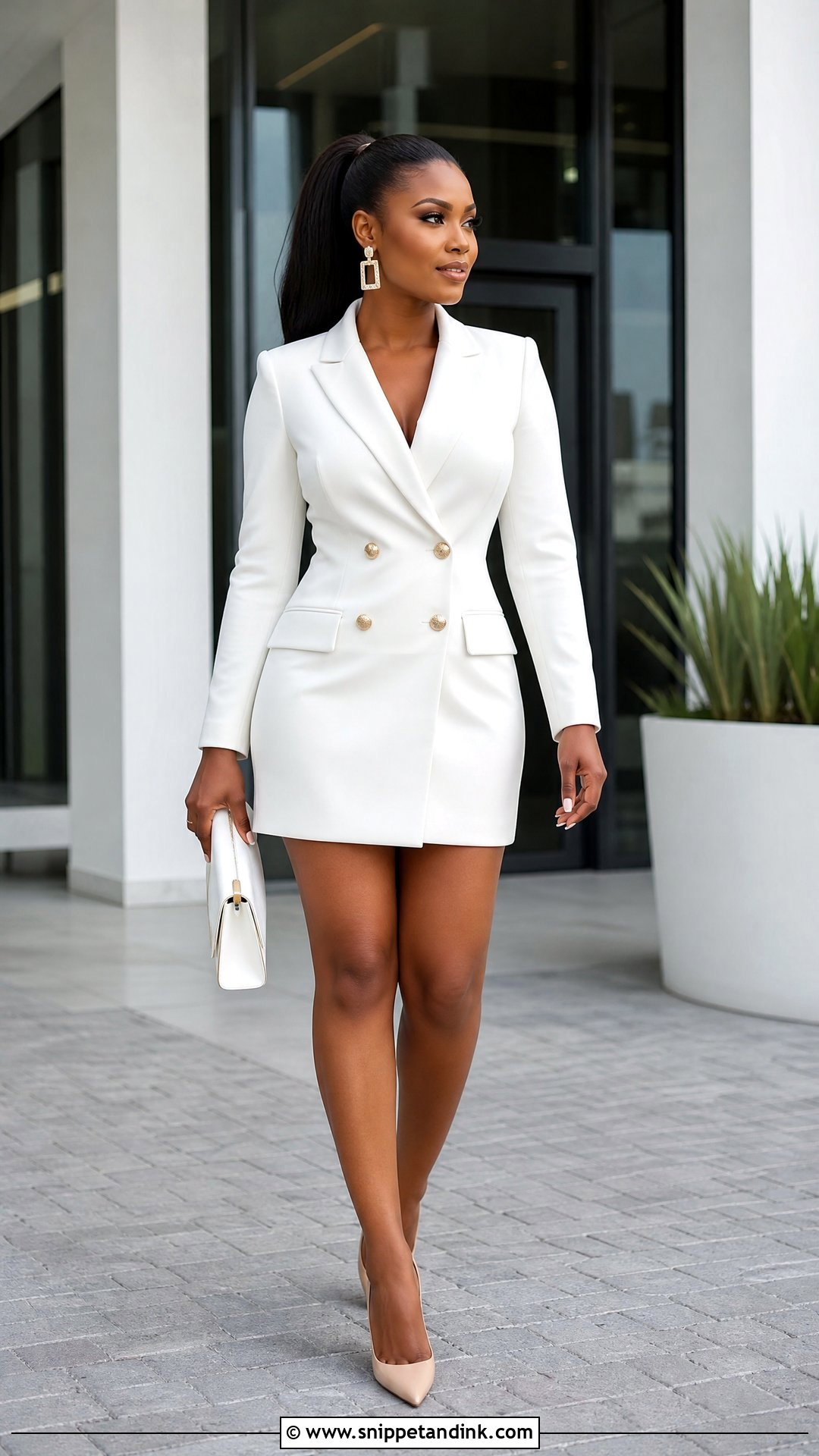
A blazer dress lives or dies on the shoulder fit. If the shoulder seam sits past your natural shoulder, the whole dress looks borrowed, and that’s the alteration a tailor struggles to fix, so buy for the shoulders and have the waist taken in. Do the sitting test here too, because a double-breasted front can gape when you lean forward to sign. A slim camisole underneath is cheap insurance. Pointed pumps and geometric earrings are plenty, since the lapels are already doing the talking.
6. White Bridal Jumpsuit For Registry Wedding
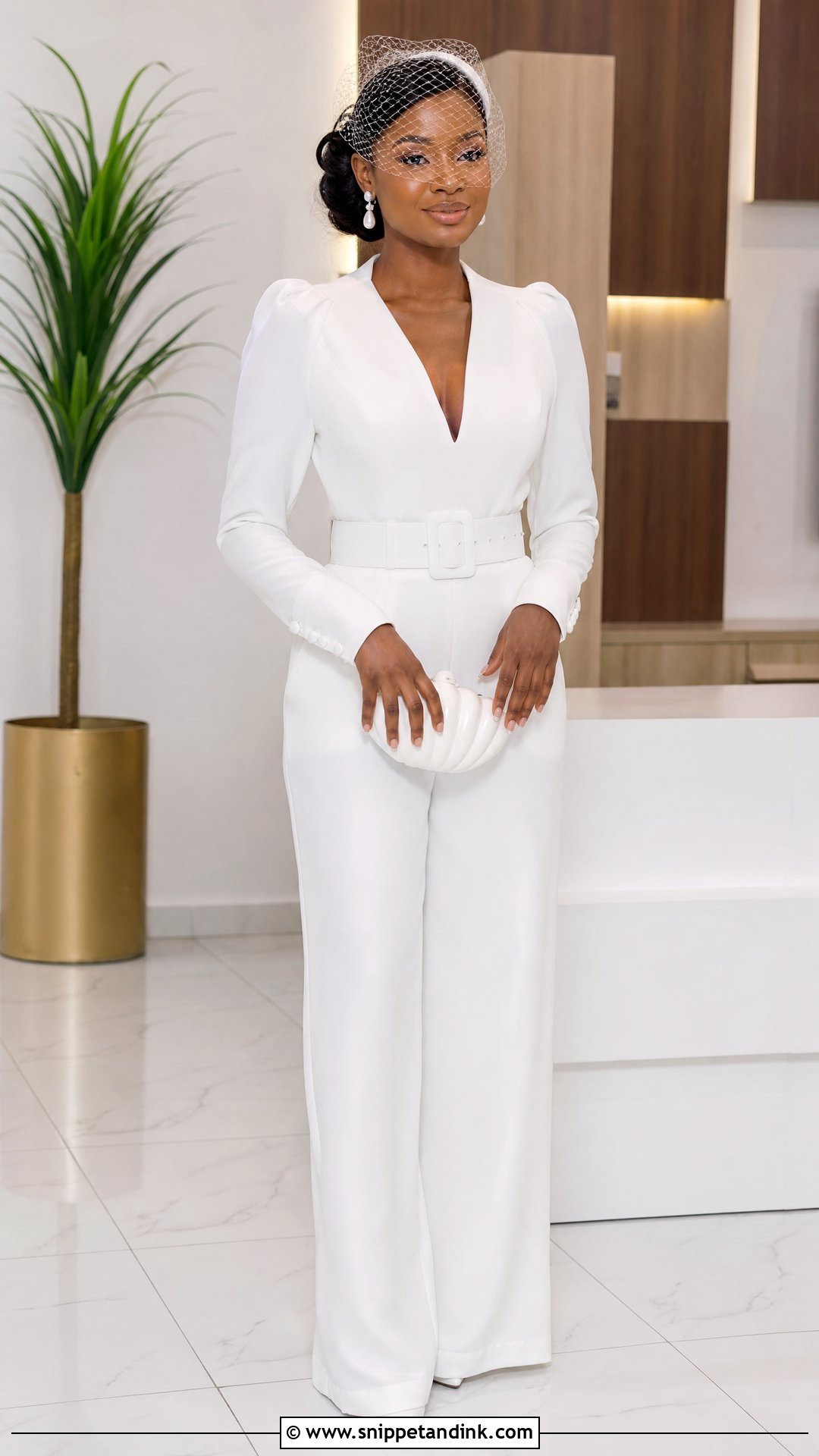
This is the outfit I suggest most to brides with a long day ahead. You can climb steps, get in and out of a car and dance at lunch without gathering up a skirt. Crepe gives a jumpsuit structure without shine. The crucial measurement is the hem: buy your shoes first and bring them to every fitting, because wide legs should just skim the shoe, and even a small drag picks up dust from registry floors fast. A short cape or detachable belt adds ceremony. Think about the bathroom too, and choose a zip you can reach yourself or keep a friend close by.
7. White Trouser Suit For Registry Wedding
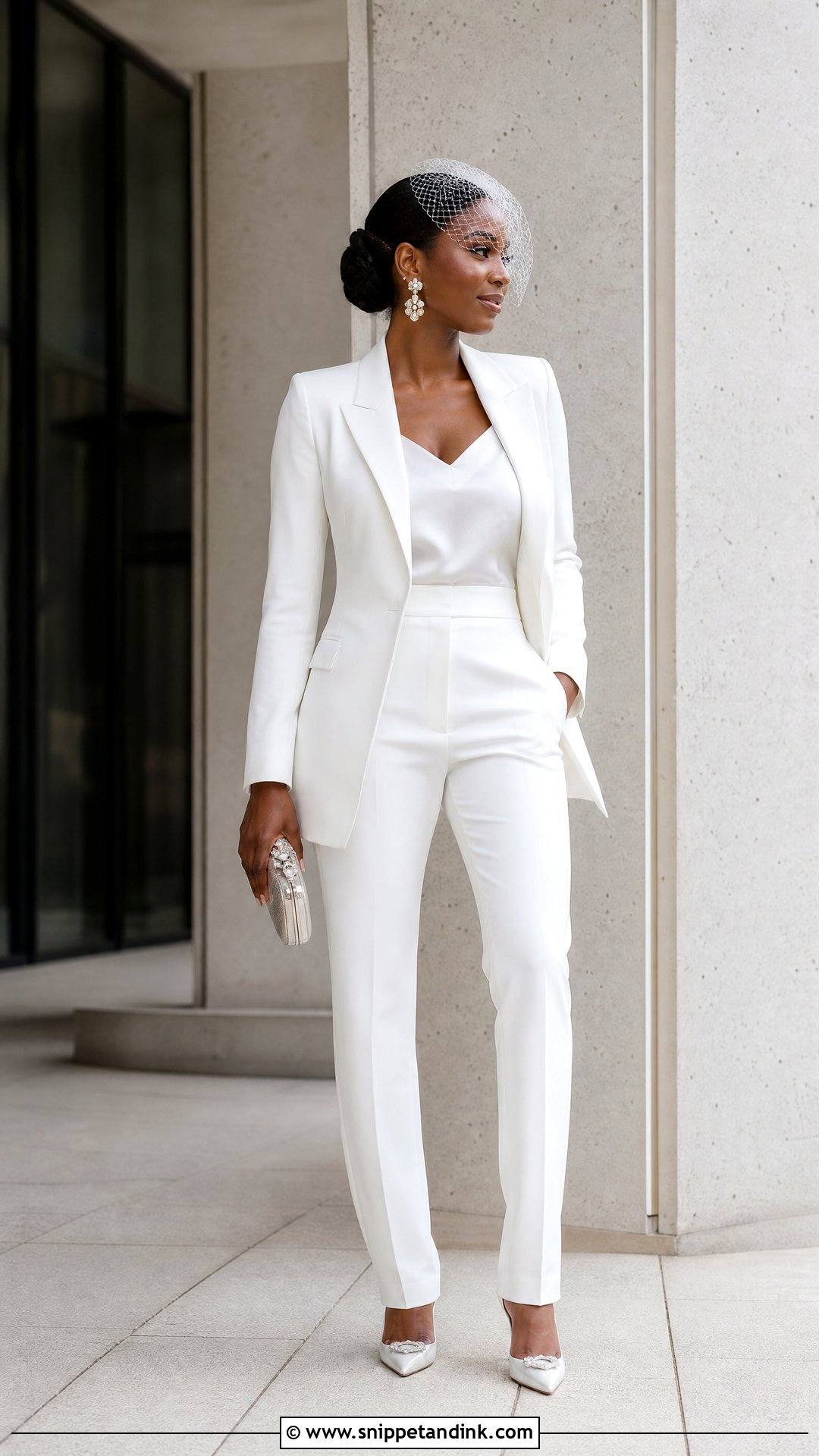
A crisp white trouser suit is the most reusable piece here, and honestly that’s half its appeal. The top under the blazer sets the tone. A silk camisole leans evening, while a lace blouse gives more coverage. High-waisted trousers should sit flat at the waistband without pulling at the pockets, then fall straight without pooling over the shoe. White suiting picks up marks easily, so I tuck a stain pen into the bride’s clutch. A birdcage veil or pearl headband is what turns a sharp suit into a bridal one.
8. Peplum Top And Pencil Skirt Registry Outfit

Separates are kind to brides whose top and bottom are different sizes, which describes most of us. The peplum should start exactly at your natural waist; set even slightly low, it adds width at the hip instead of defining the waist. A pencil skirt needs a back slit or kick pleat, or you’ll be shuffling up the registry steps. Cutting both pieces from the same white crepe keeps the set reading as one outfit. Elbow sleeves and a higher neckline suit brides who want more coverage, and a low ponytail keeps it current.
9. White Wrap Midi Registry Dress
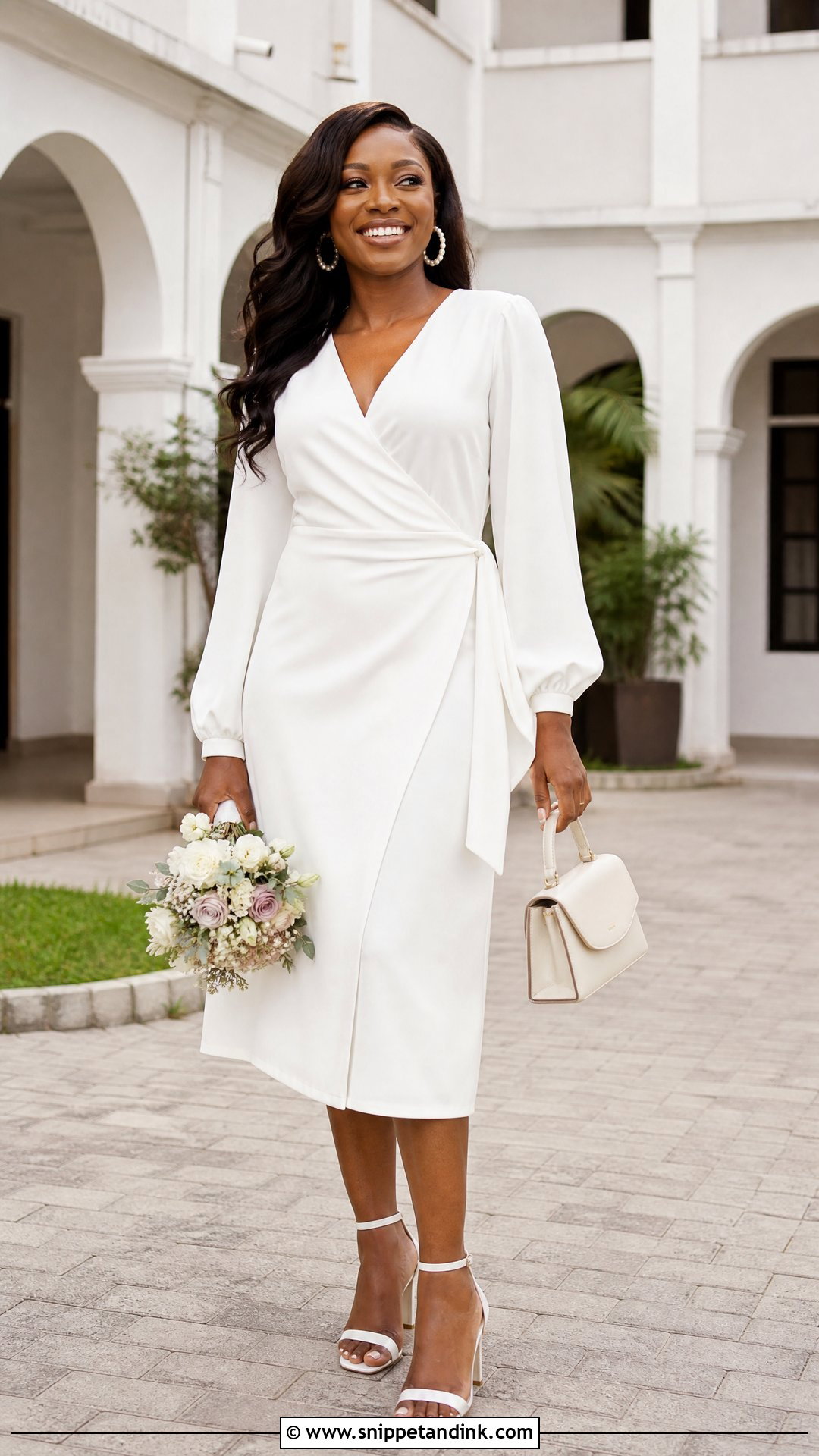
I like a wrap dress for brides whose weight shifts in the weeks before the wedding, because it adjusts with you. The catch is the overlap. Walk briskly and sit with your legs crossed in the fitting room; if the skirt opens past the knee, ask the tailor to add a hidden snap or extend the underlap. Lined crepe sits better than anything slippery. Block-heel sandals and soft waves keep it relaxed, and a small bouquet brings in colour.
10. White A-Line Midi Registry Dress
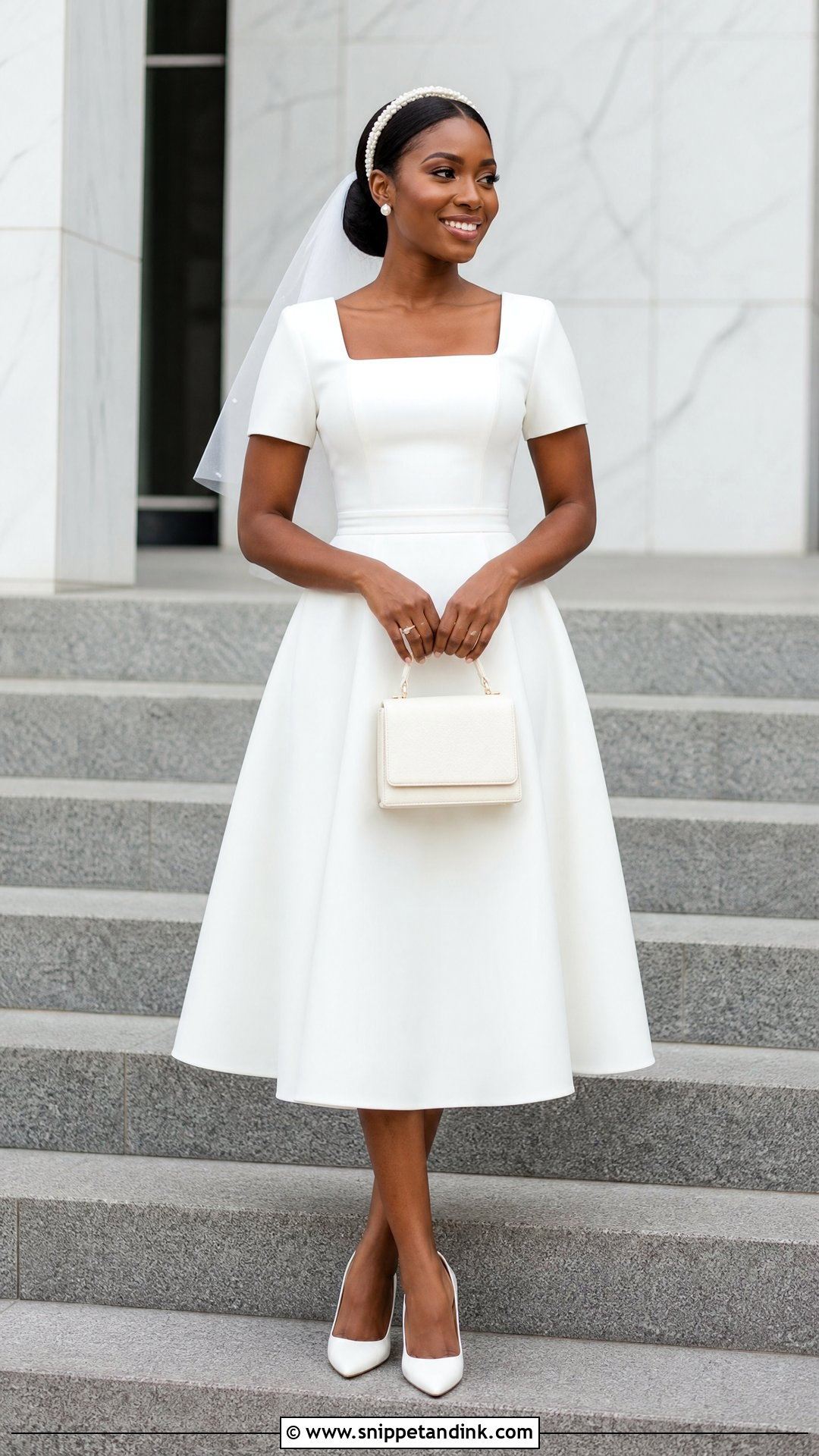
When a bride isn’t sure what suits her, I reach for an A-line midi first, since the fitted bodice and released skirt work across many body shapes. Skirt volume matters more than people think. Registry rooms are small and often crowded, so I stick to a skirt that stands away from the hip without needing its own chair. Sleeveless versions are cooler for a midday signing. A short veil pinned under a low bun is the simplest way to make this plain shape say bride, and the tailoring budget belongs at the bust and waist.
11. White Tea-Length Registry Dress
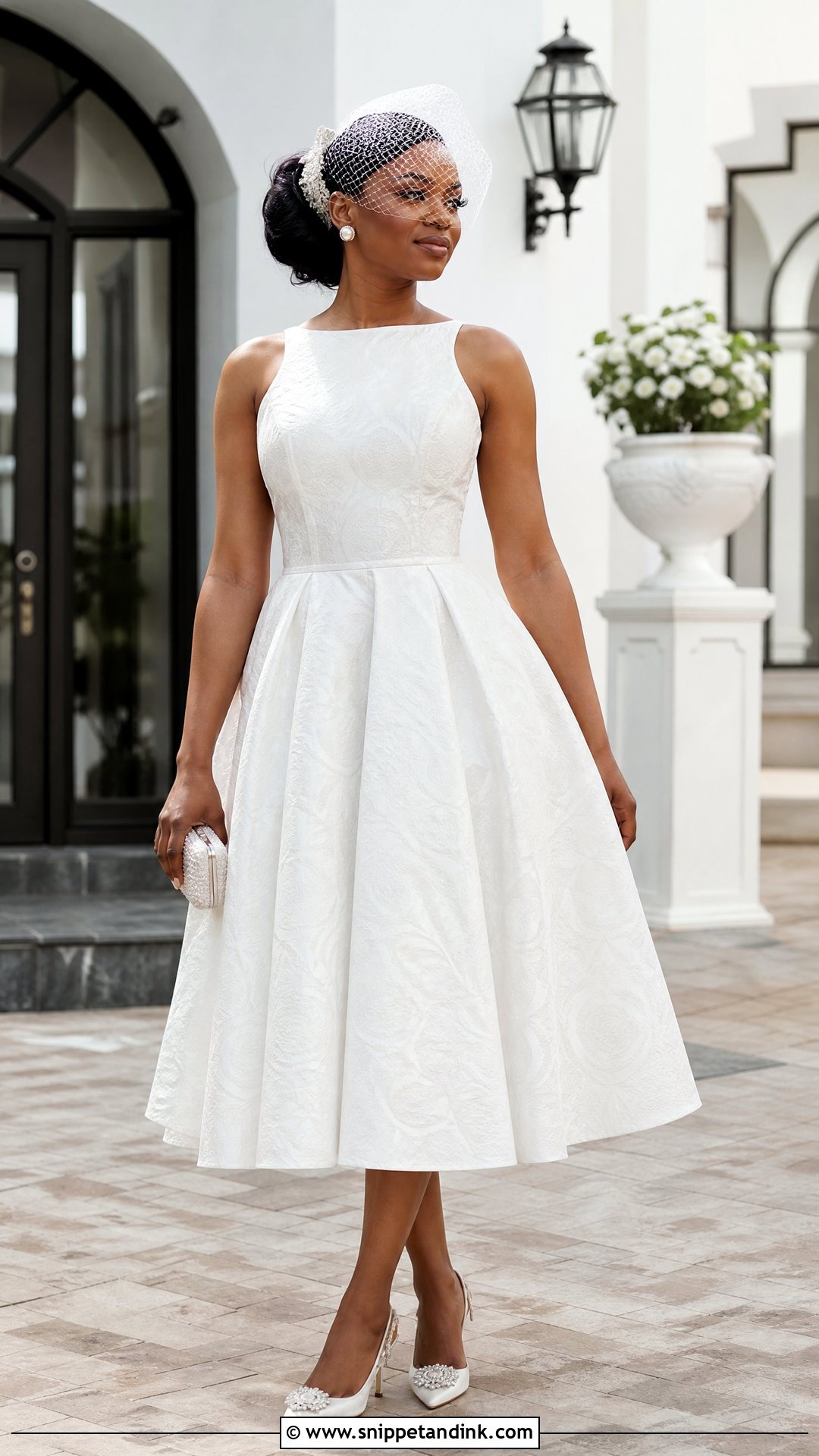
Tea length lands between knee and ankle, which makes your shoes part of the outfit, so plan them together. Mikado and jacquard hold the skirt’s shape without a heavy petticoat, and that matters in the heat. If you want more lift, ask for one layer of soft tulle rather than stiff crinoline, which scratches the legs and traps warmth. Embellished pumps and a box clutch suit the vintage proportion, and a birdcage veil completes it. It twirls well for the photographer, too.
12. White Cape Registry Dress
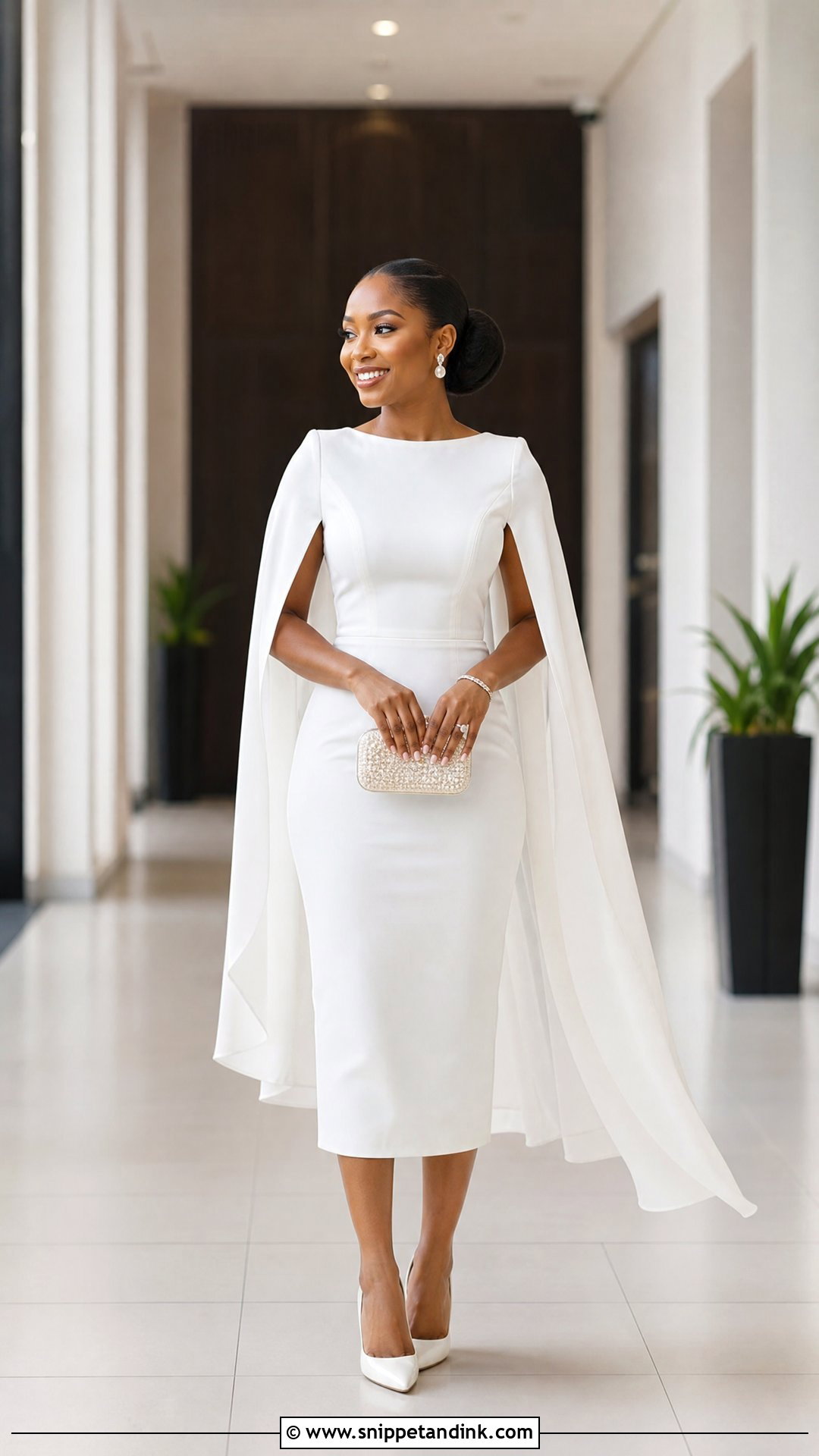
A cape is my usual answer for brides who don’t want sleeves but don’t want bare arms either. The length needs testing. When you sit to sign, a cape that falls past the hip gets trapped under you and drags the neckline backwards, so I suggest hip length or shorter for a registry. Keep the neckline plain so the shoulders don’t look crowded. Sleek buns and short natural styles both suit the clean line, and a structured mini clutch is all you need to carry.
13. One-Shoulder Midi Registry Dress
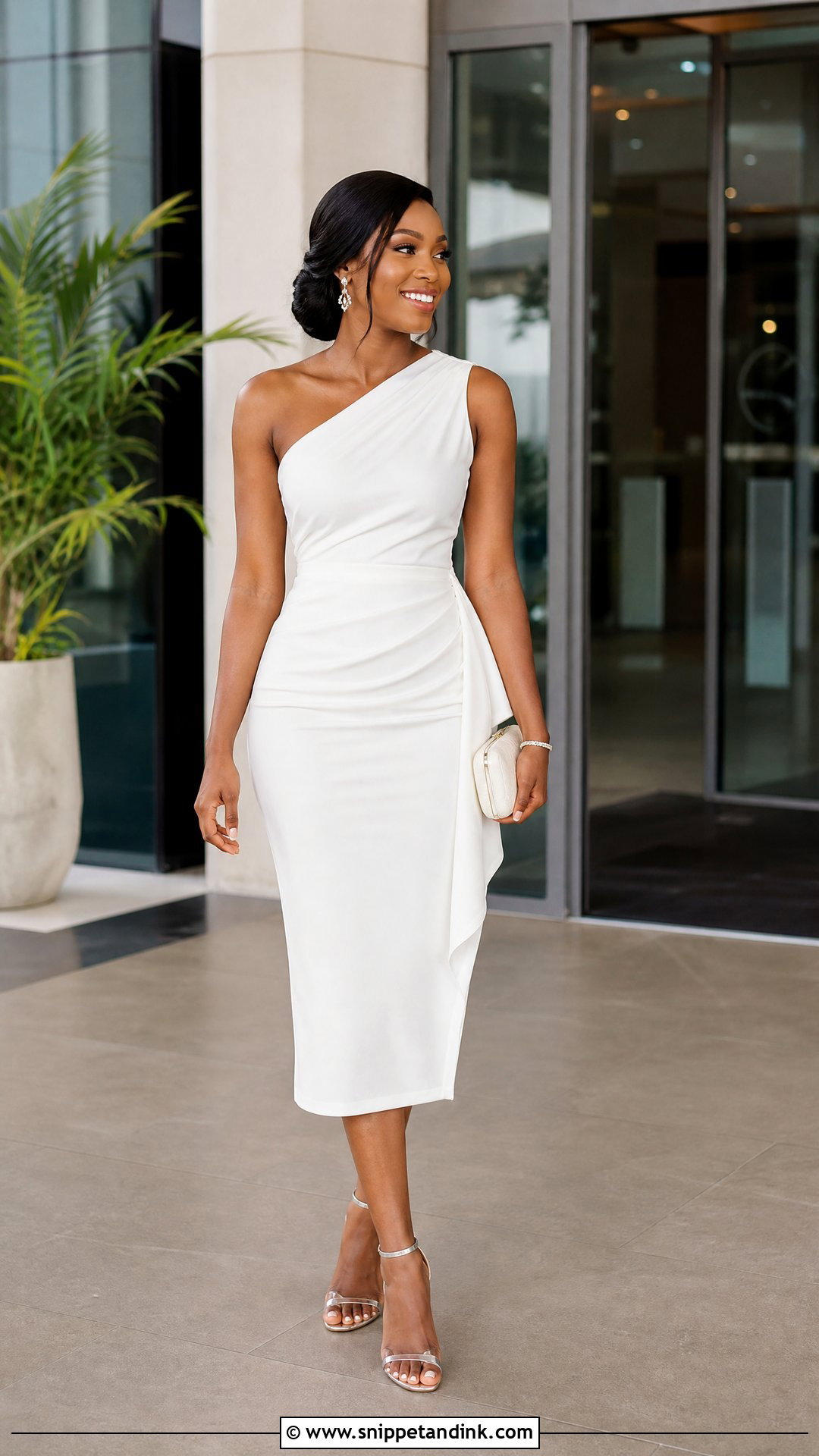
Asymmetry is the whole point, so I protect it: no necklace, and hair swept toward the covered shoulder or set in a low bun off-centre. The bodice needs boning or a firm lining. One strap carries the whole dress, and an unstructured version slips toward the bare side every time you raise your arm. A straight skirt is the minimalist route, while a soft flare moves more in photos. Slim metallic sandals keep it light, and a cocktail ring adds sparkle at the hand when you sign.
14. White Sheath Registry Dress With Fascinator
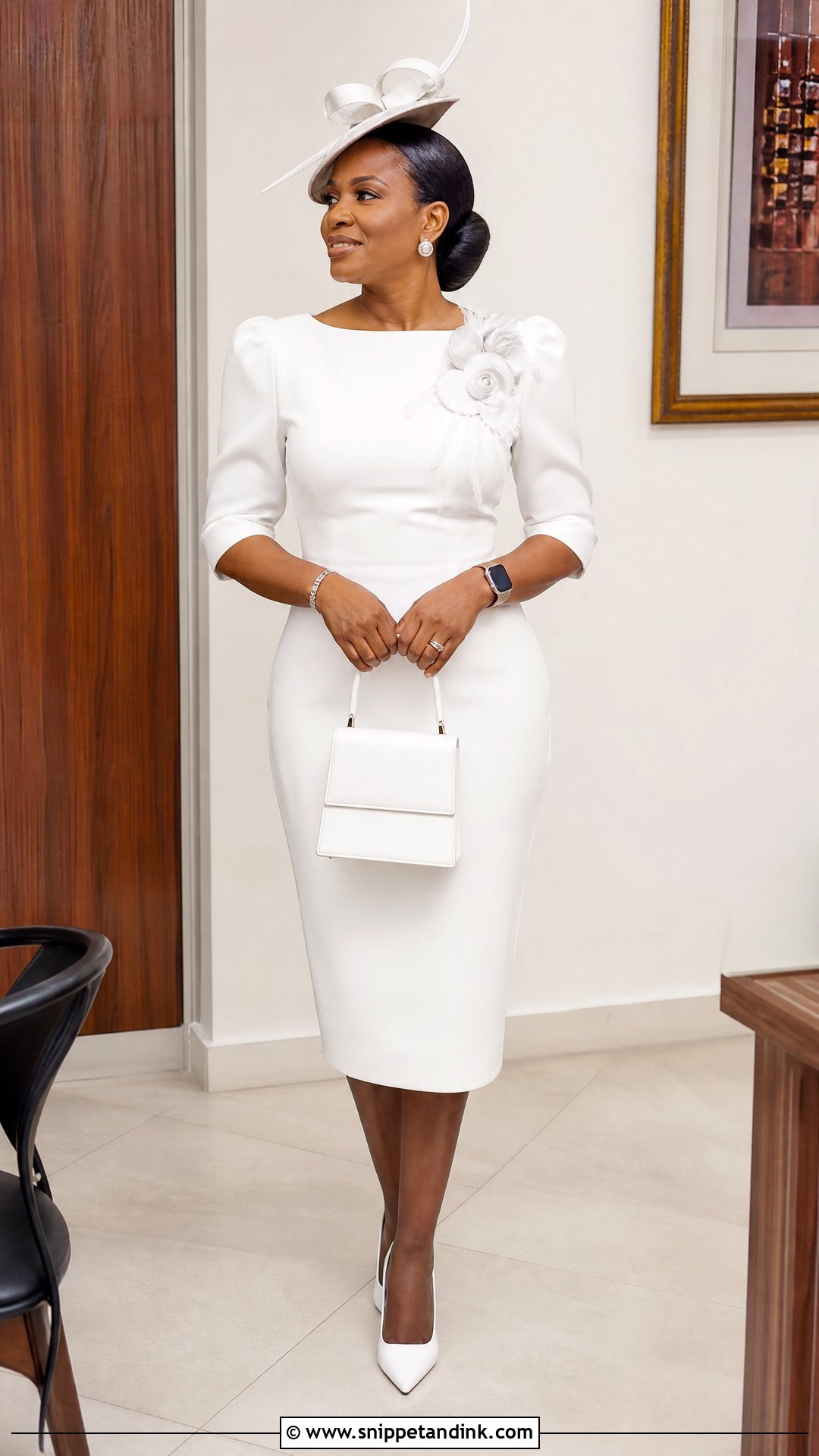
A sheath and fascinator are the classic civil-ceremony pairing, and they flatter across ages. Choose a knee-length or midi sheath in lined crepe or textured jacquard. Watch for horizontal pull lines across the hips as the bride walks; they mean the dress needs letting out at the seams. I set the fascinator on the parting side, tilted slightly forward, and anchor it into a smooth low bun with two crossed pins instead of trusting the comb alone. Pearl earrings and pointed pumps finish it quietly.
15. White High-Low Registry Dress

A high-low hem shows your shoes at the front and keeps a little drama at the back. Mikado and structured crepe stop the back from collapsing into limp folds. Rehearse stairs before the day. Going down is easy, but going up you’ll want to lift the front slightly, so practise in the actual shoes. Keep the bodice simple so the hemline stays the focus, and choose statement pumps since they’ll be on show all day.
16. White Beaded Two-Piece Registry Outfit
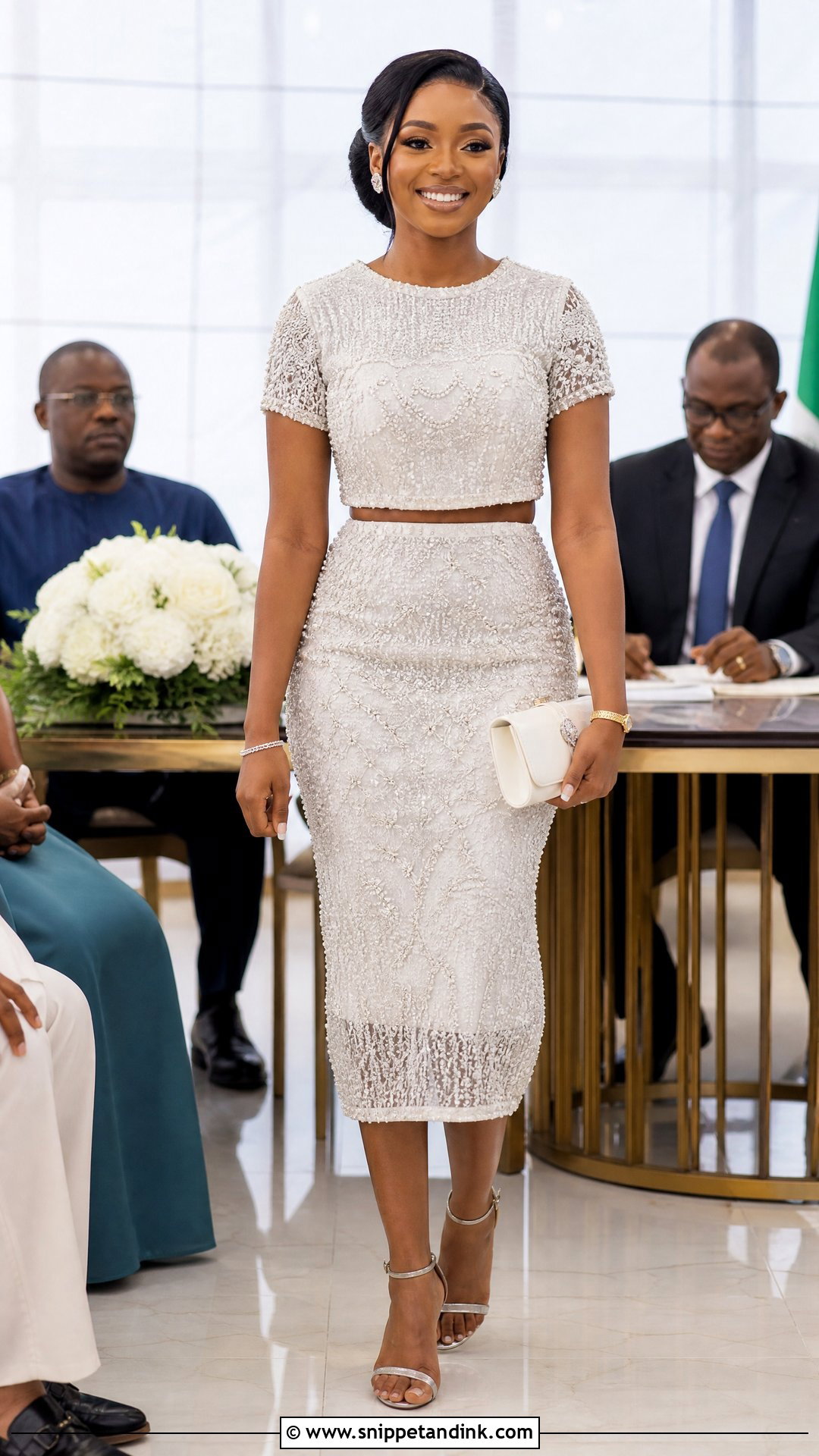
Beadwork on a two-piece gives you sparkle without the weight of an embellished gown, but placement matters. I concentrate it at the neckline, cuffs or waist, where it shapes the eye, rather than all over, which adds weight and heat. Turn the top inside out at your final fitting. Beads sewn on a single loose strand are the ones that drop on the day. Check the inner arm as well, where beading rubs bare skin. Pair the top with a midi skirt or tailored trousers, and skip the big necklace.
17. White And Ankara Registry Dress
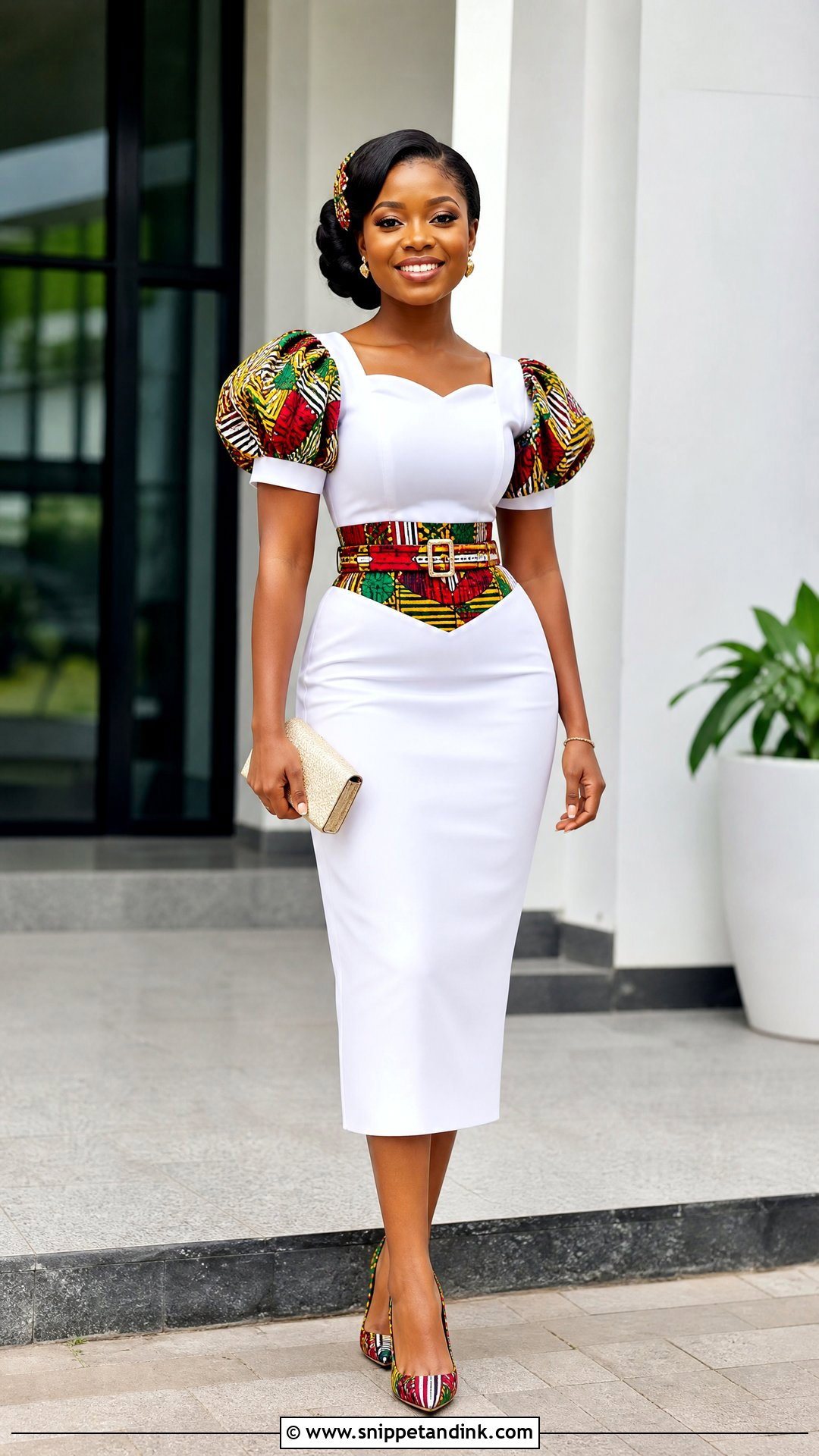
Combining white fabric with Ankara works when white stays clearly dominant and the print appears in one or two places, such as the sleeves or a waist panel. Go further and it starts to read as traditional dress rather than registry. Wash and press the Ankara before the tailor cuts it. Cotton wax prints can shrink slightly and some release dye when first wet, and a damp afternoon against white crepe is enough to show it. Pull your shoe colour from the print and keep the clutch neutral.
18. Aso-Oke Registry Skirt And Blouse
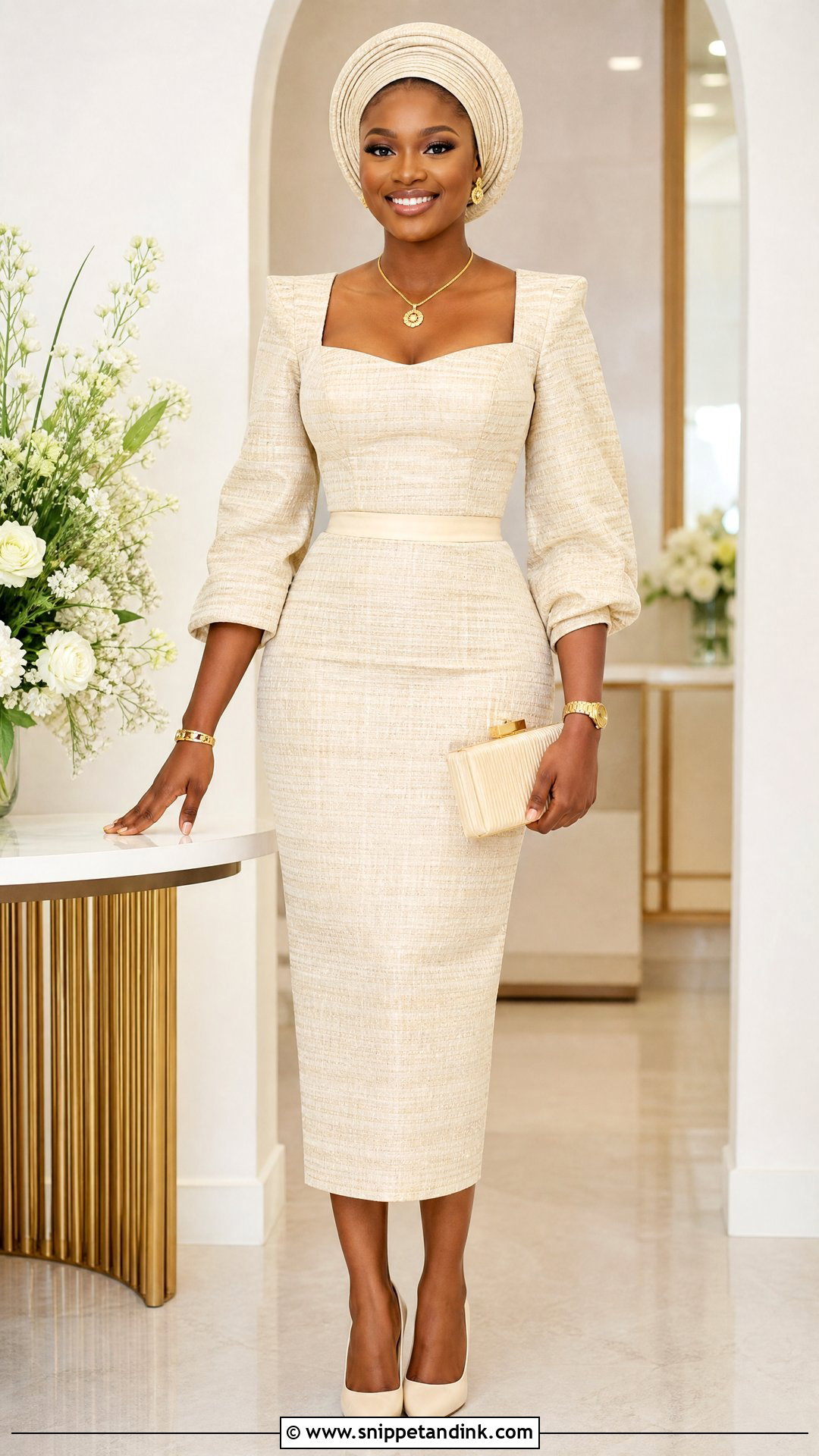
A streamlined Aso-Oke skirt and blouse brings handwoven weight to a registry, which is both its charm and its challenge. Ask for a lighter weave in a soft shade and have the skirt fully lined, because strip-woven cloth can feel stiff and scratchy against bare legs. A fitted blouse and high-waisted midi skirt keep the shape modern. I’d swap a full gele for a compact one or a matching headband; a towering wrap overwhelms a small room and gets in the way at the signing. It sits comfortably beside a groom in a suit or simple native wear.
19. Modest White Maxi Registry Dress
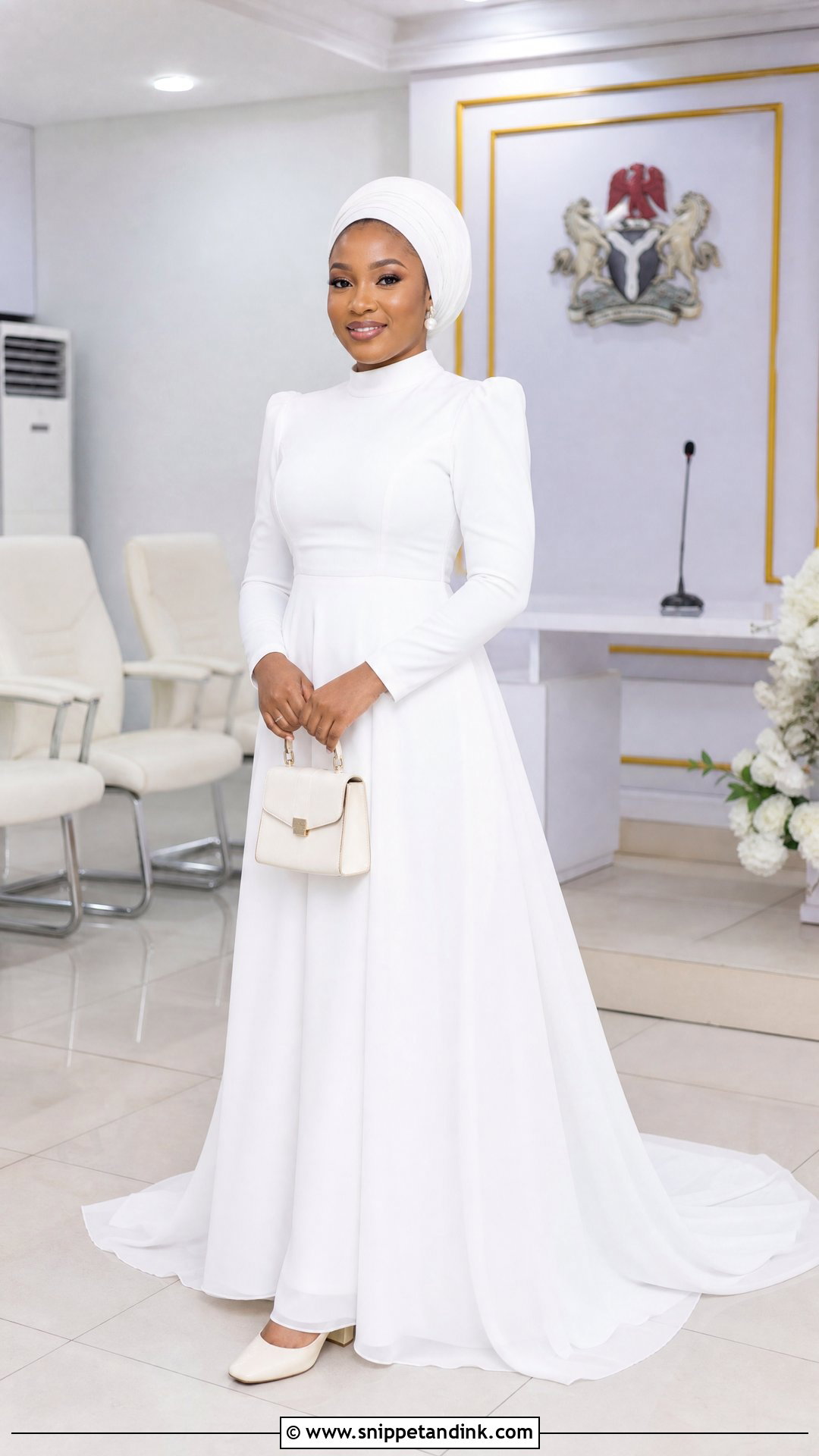
Fuller coverage doesn’t have to feel heavy. Look for a flowing A-line maxi with long or three-quarter sleeves, a lined bodice and a high neckline that doesn’t press on the throat when you look down to sign. Chiffon usually needs two layers to stay opaque in sunlight, something brides often discover only in the outdoor photos, so hold the fabric up to a window before you buy. Let the hem stop just above the floor rather than adding a train. A neat turban or covered style and low block heels keep it graceful.
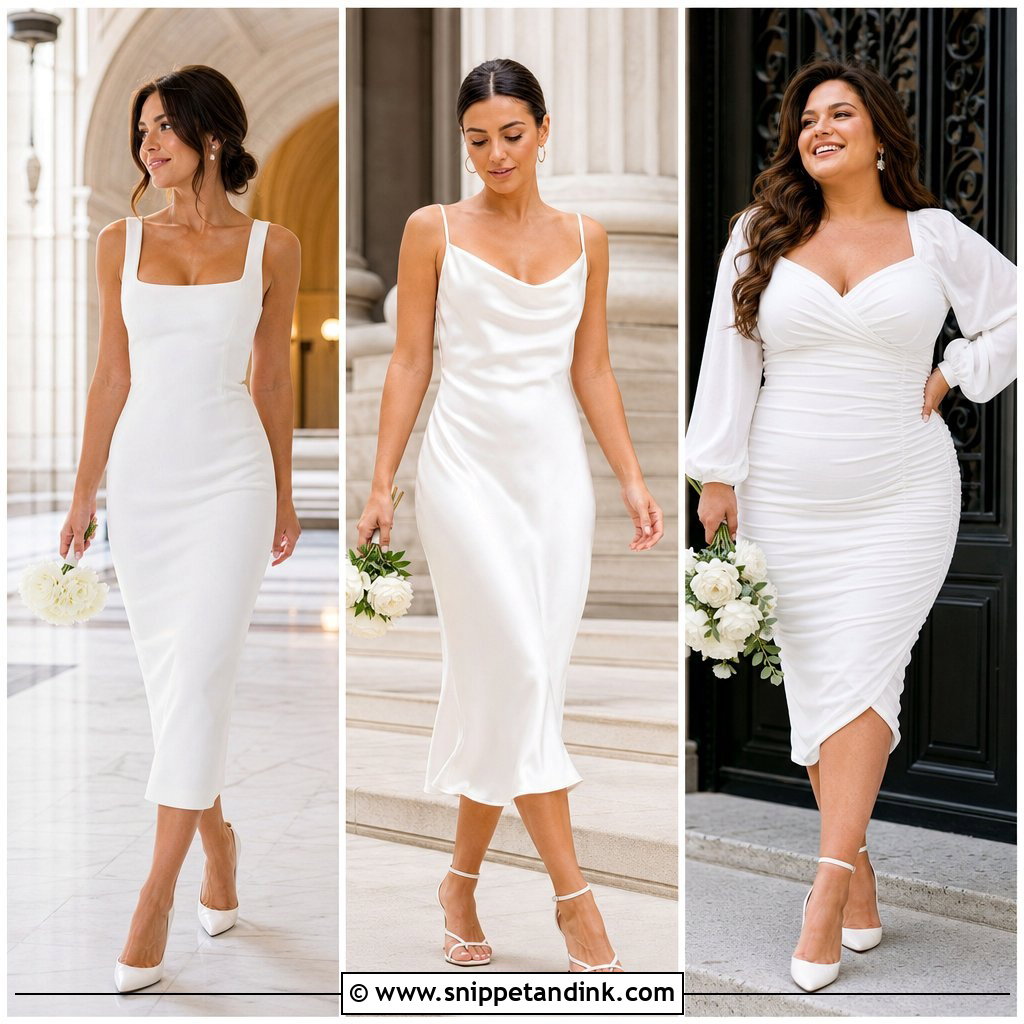
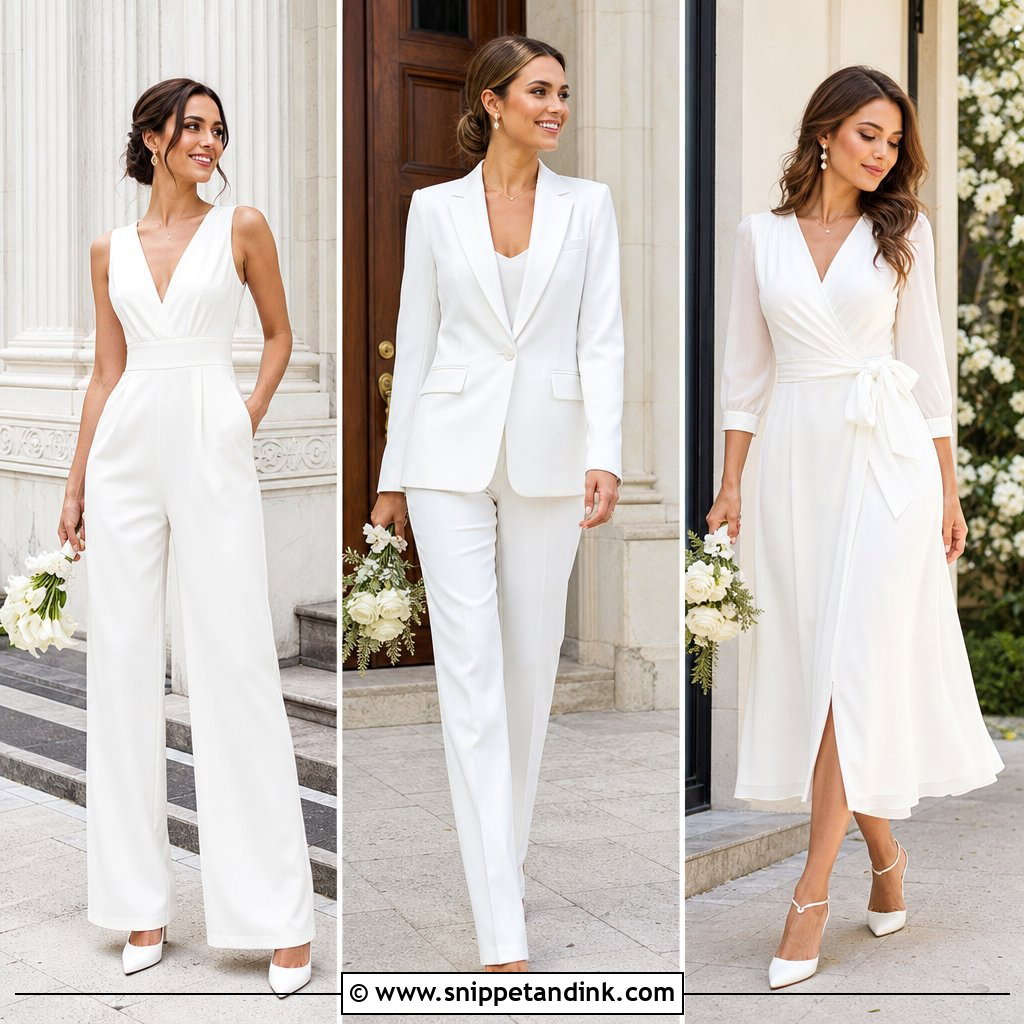
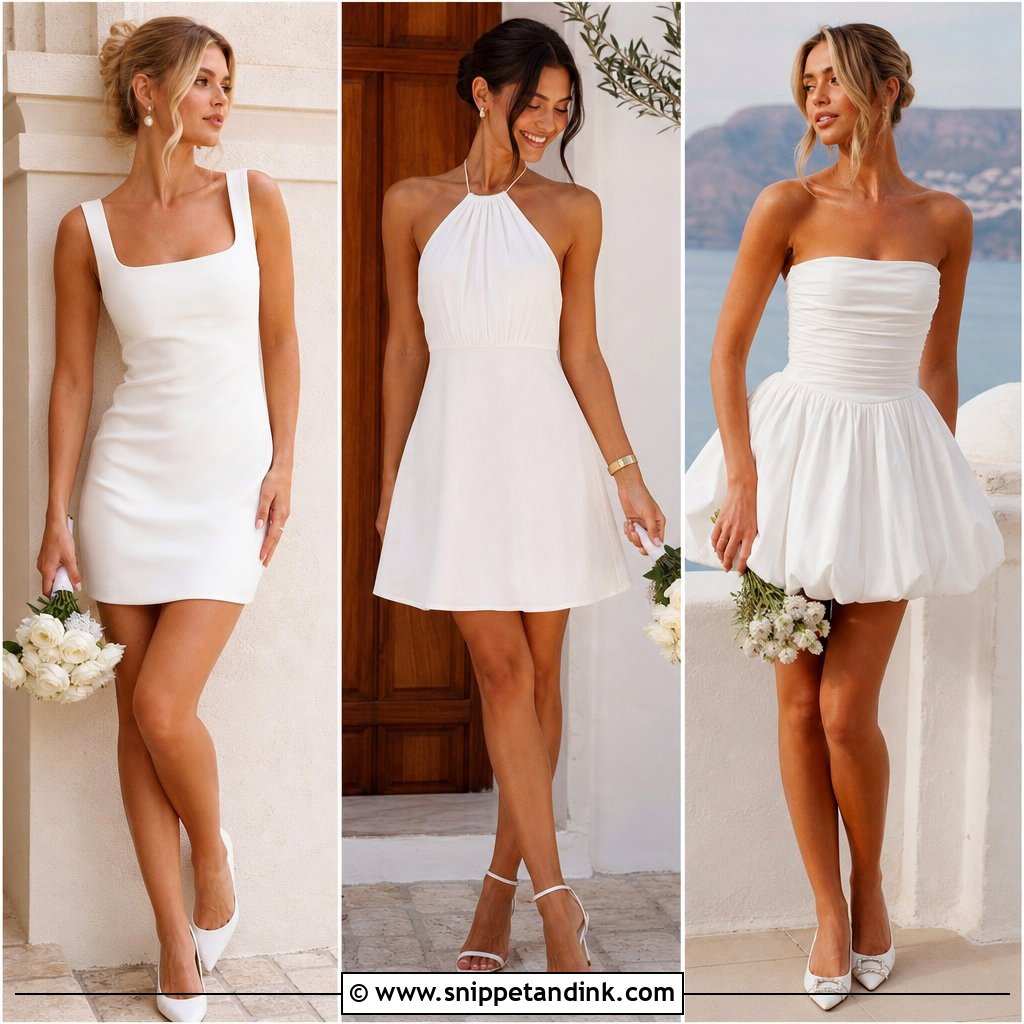
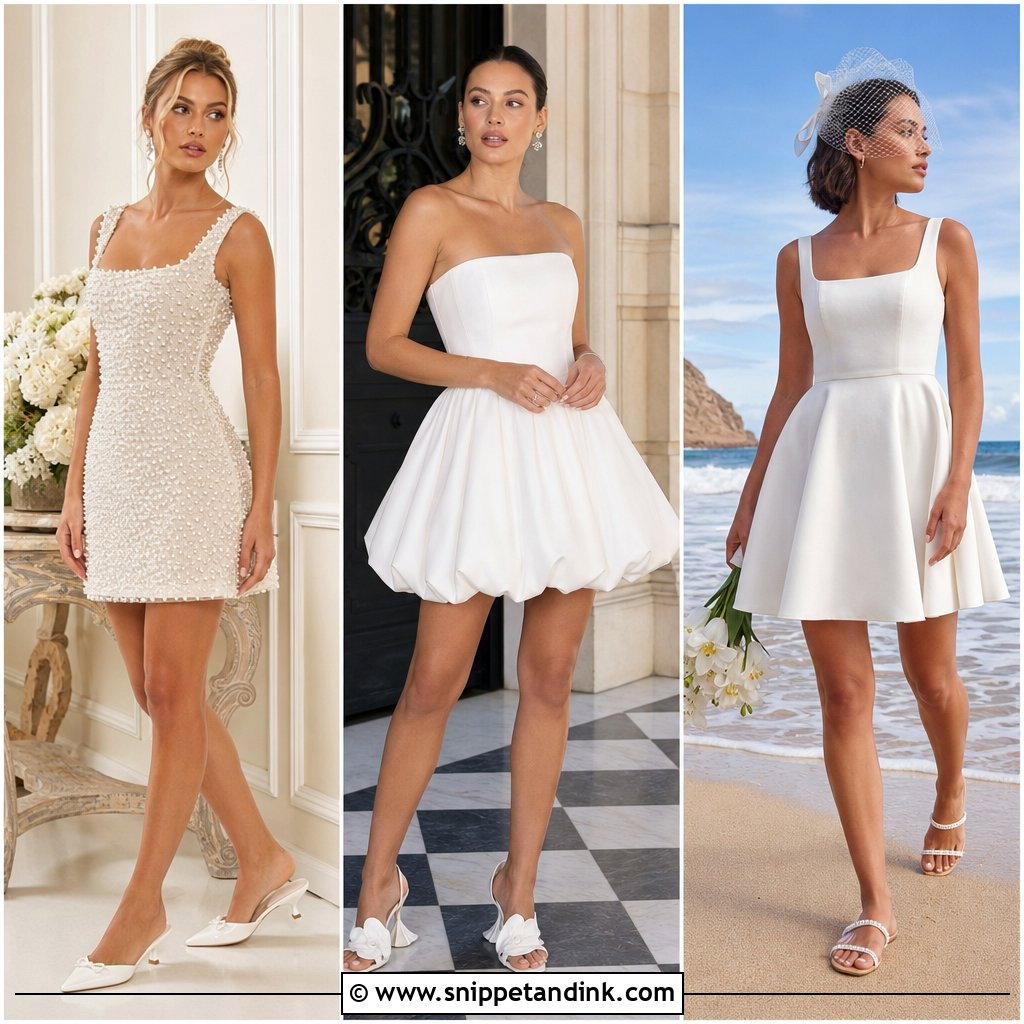
20. Plus-Size Fit-And-Flare Registry Dress
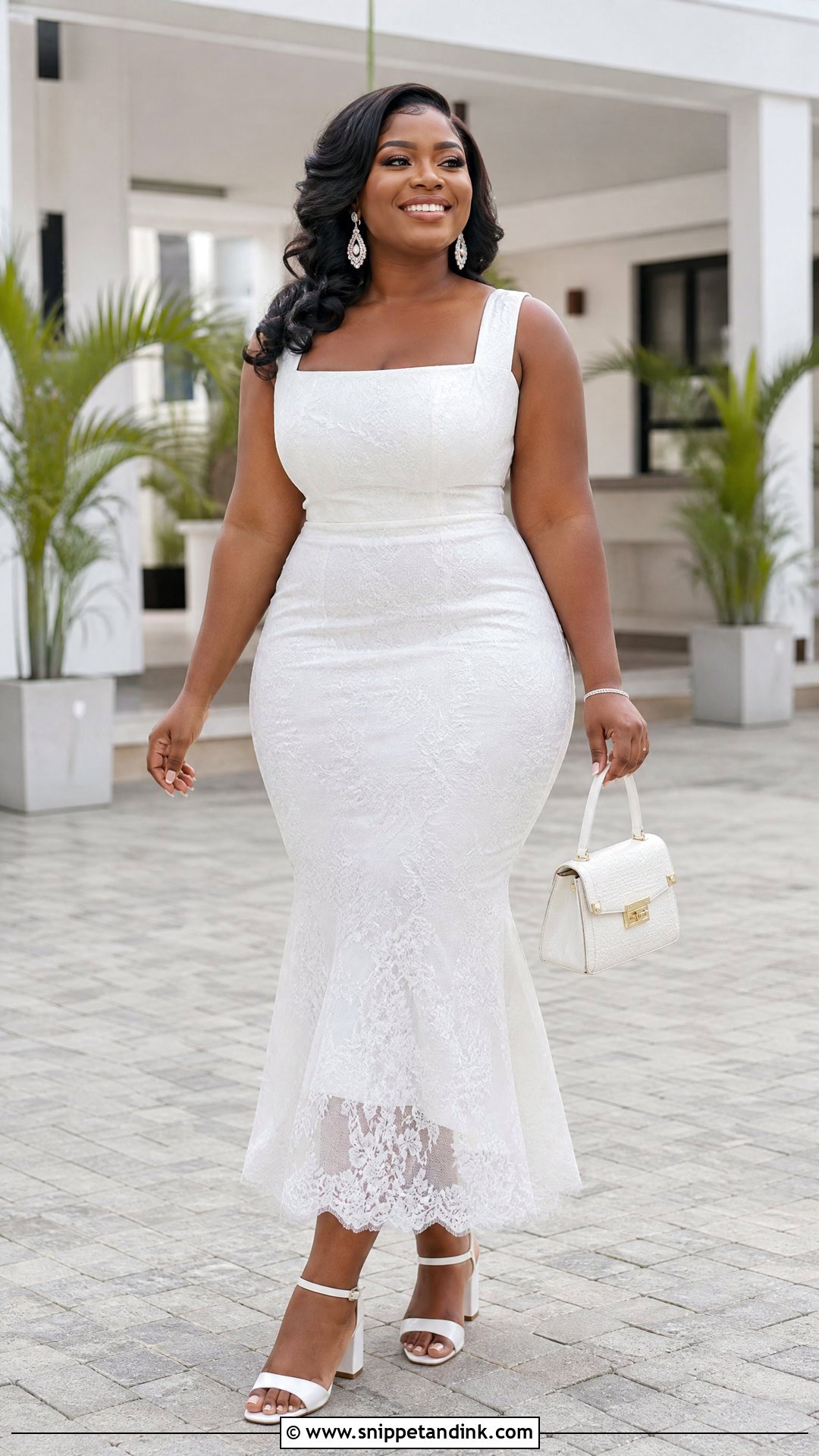
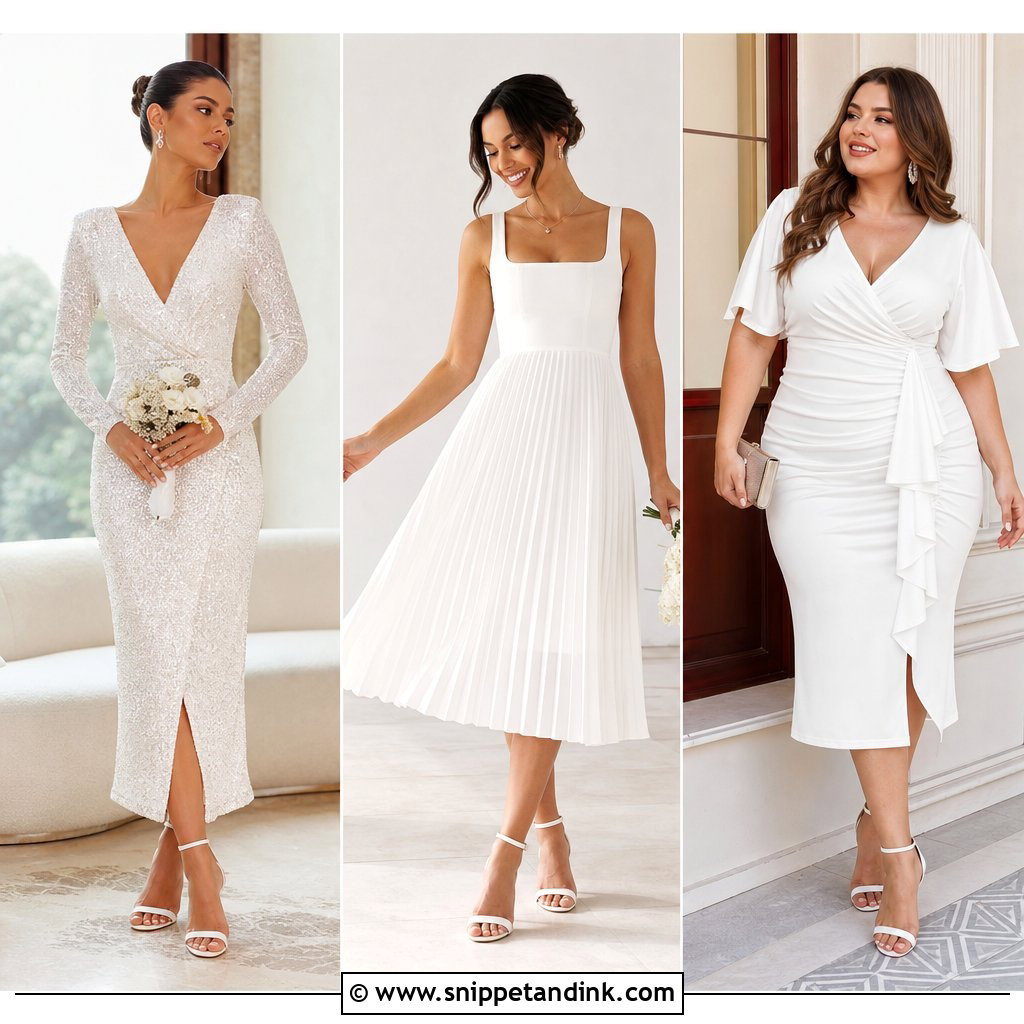
A well-cut fit-and-flare gives a plus-size bride a defined waist and a skirt that moves without clinging. I say the same thing at every first fitting: buy for your largest measurement and tailor down, because squeezing into a smaller size creates strain lines that no camera angle hides. Structured crepe gives shape, and a bodice with built-in cups or light boning is far more reliable than a separate bra under a V or square neckline. Stable block heels matter if you’ll be standing for a while. A sleek bun and medium statement earrings finish it.
A Tailoring Timeline That Leaves Room for Delays
Most Nigerian registry outfits are made or finished by a tailor, and the calendar is where things go wrong. I work back from the date roughly like this, and I add extra time around festive seasons, when every good tailor is fully booked.
- Ten to twelve weeks out: settle the style and buy the fabric. Aso-Oke woven to order can take several weeks on its own, so order it first.
- Eight weeks out: first fitting, ideally on the tacked garment. Bring the exact undergarments you’ll wear.
- Four weeks out: second fitting with your shoes, so hems are set at their true length.
- Ten days out: final fitting and collection. Try it on at home that same evening, not the night before the signing.
A finished outfit that hangs in your wardrobe for a week is far less stressful than one you collect on the eve of the ceremony.
Giving the Outfit a Second Life
One quiet advantage of a registry look is that you can wear it again. Suits, jumpsuits and plain midis are the easiest to restyle. A white crepe dress in a natural fibre can be dyed a deep colour after the wedding, though synthetic crepe takes dye poorly and patchily. Lace and beaded pieces are better stored. Have them cleaned promptly, since sweat and makeup marks turn yellow over the months, then wrap them in acid-free tissue or a cotton bag instead of the plastic cover they came home in, and keep them out of the light.
Signing in Something You Can Breathe In
None of these outfits is more correct than another. A short lace dress is as bridal as a cape gown, a jumpsuit, trouser suit or an Aso-Oke two-piece. What separates a good registry look from an uncomfortable one is planning around the weather, the room, the photos outside and whatever comes after. Wear the whole outfit at home for an hour before the day, shoes and undergarments included, and sit, climb stairs and lift your arms. If you still feel like yourself at the end of that hour, you’ve found it.
You'll Like These Ideas:




Leave a Reply