
Civil ceremonies are short, but the day around them usually isn’t: queues, corridors, a few minutes in front of the officiant, photos on the steps, then lunch or a party. That is why I lean toward vintage shapes for city brides. Tea-length skirts, bias-cut satin, tailored coat dresses, lace minis and slim columns were all designed for a world of streets and stairs. Short hems and narrow lines move through a building far better than a ball gown does. Separates, soft color and borrowed-era details are all fair game at city hall. Each outfit below comes with shoes and accessories, because in a small room every piece is seen up close.
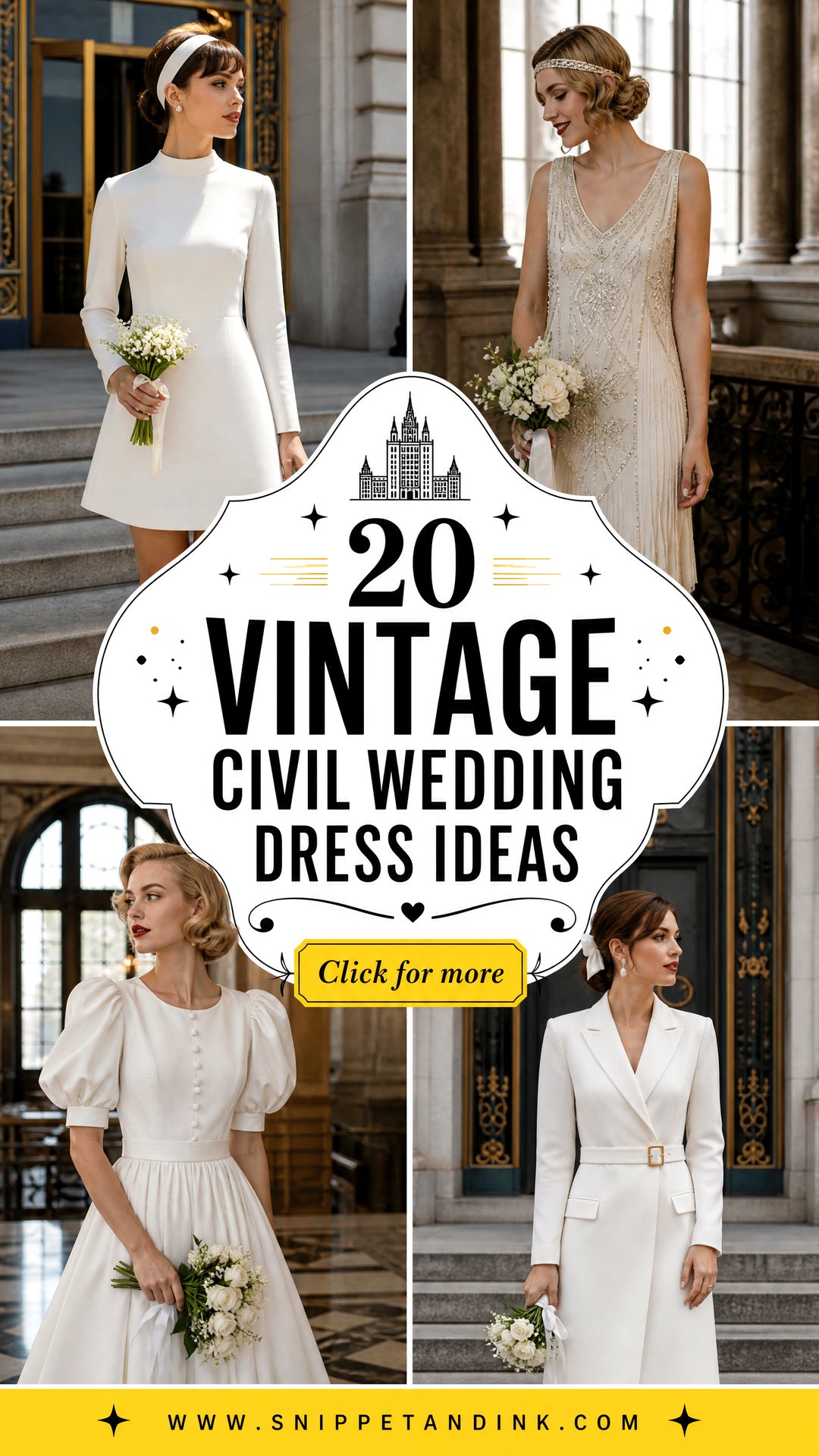
What City Hall Asks of an Outfit
A civic building is not a wedding venue, and the outfit has to cope with that. Rules differ from office to office, so check with yours, but these are the things I plan for with every city bride.
Security and waiting
Many courthouses have security screening at the door. A small bag gets through faster, and a dress without a metal-boned corset avoids a second pass. Ceremonies often run in time slots, so expect to wait in a corridor or waiting area; a dress you can sit in matters more than it would at a church.
Small rooms and harsh light
Registry rooms are often compact, with overhead fluorescent lighting. Big skirts and long trains crowd the space and the few guests in it. Matte fabrics such as crepe and wool look calmer under that light than high-shine satin, and ivory tends to look warmer than stark white.
Stairs, steps and pavements
Expect to climb something, often several times for photos. Hems that clear the ankle and heels of moderate height make that easy. A light coat or wrap you’re happy to be photographed in solves the walk between the building and the car.
1. 1950s Tea-Length Civil Wedding Dress
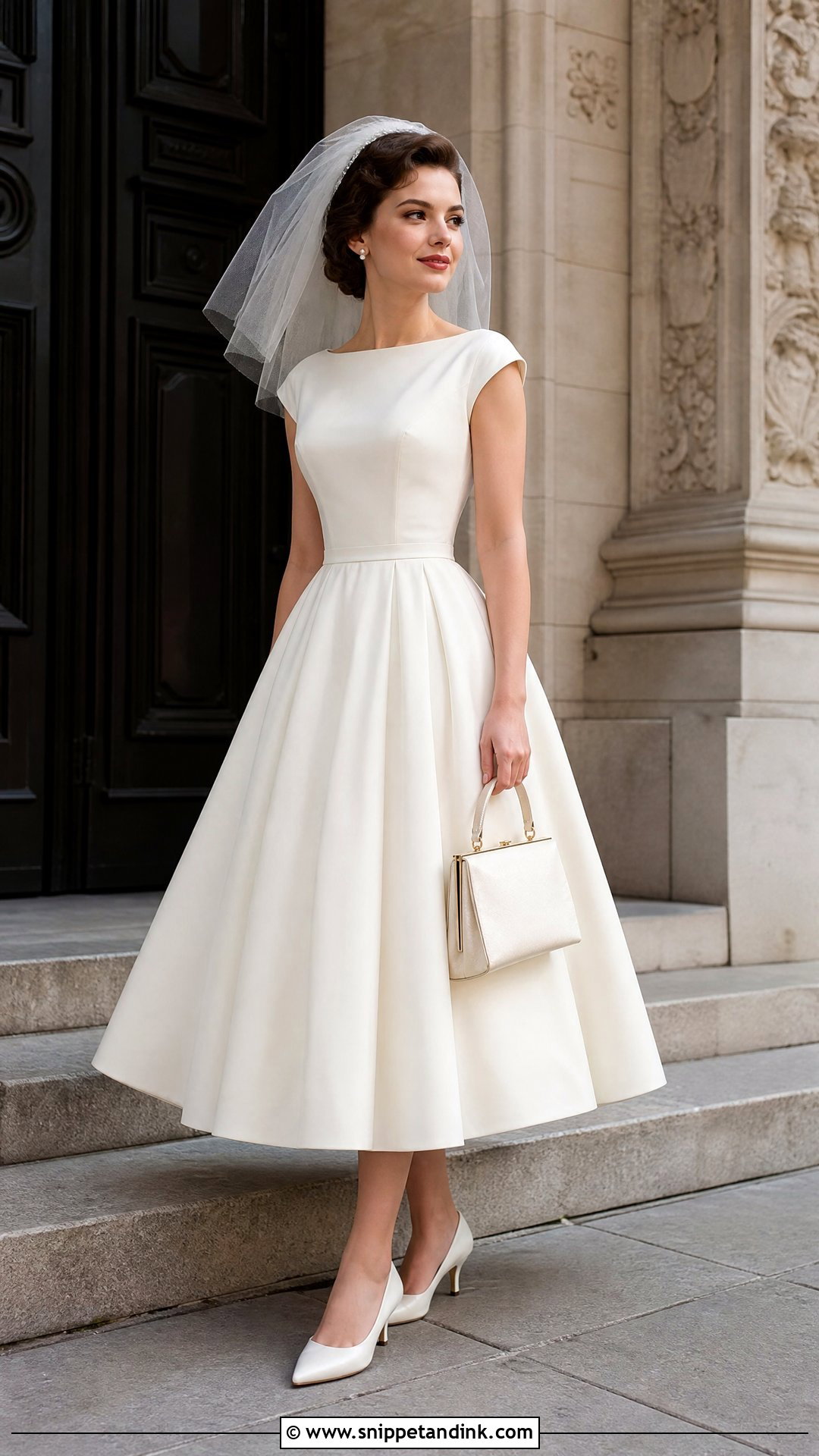
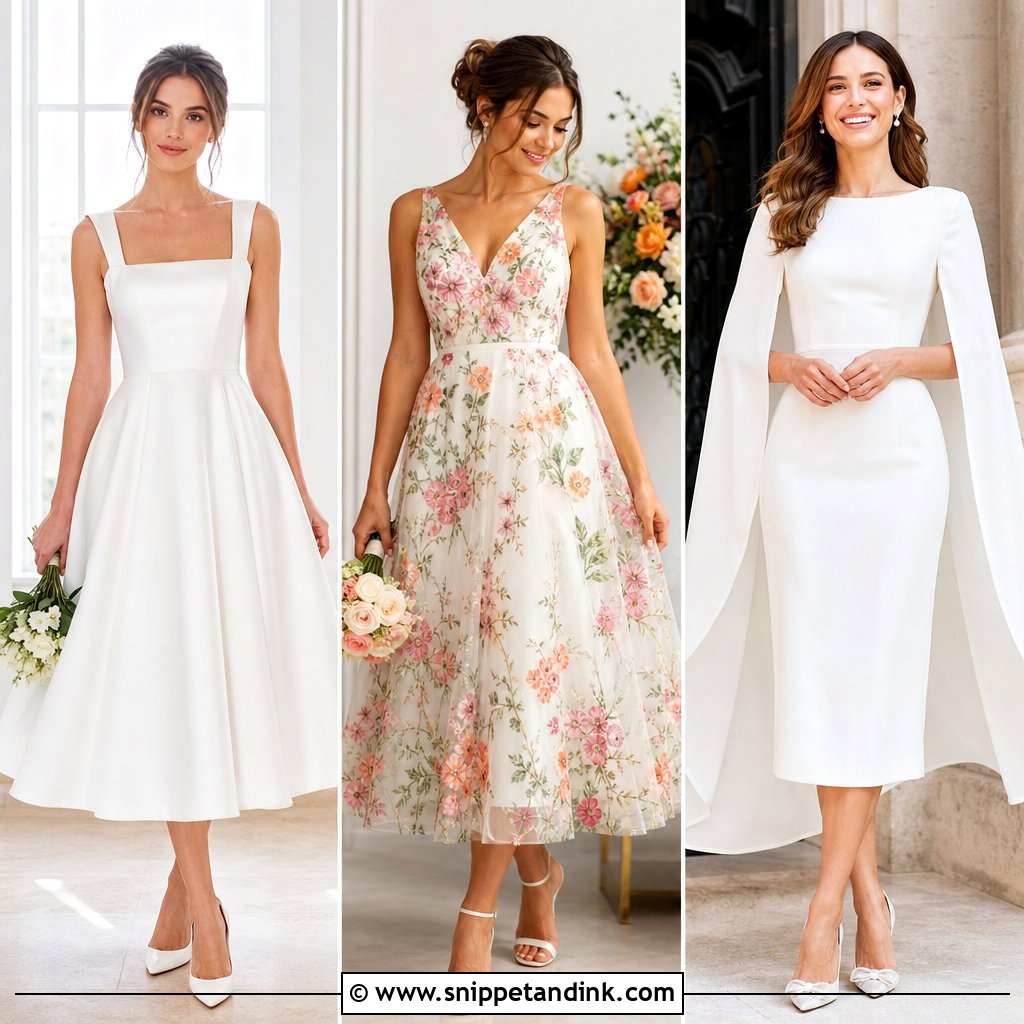
Structure is what keeps a 1950s tea-length civil wedding dress looking bridal rather than like a party frock. A fitted bodice, a defined waist and a softly structured skirt between knee and ankle in mikado, cotton sateen or floral jacquard give it that. Kitten heels or low slingbacks let you walk corridors without wobbling. On a petite frame I’d bring the hem to just below the knee; on a fuller figure, a wider waistband and a gently flared skirt are more comfortable than a tight belt. A short tulle veil, pearl studs, a top-handle bag and soft waves finish it.
2. 1960s Mod Mini Civil Wedding Dress
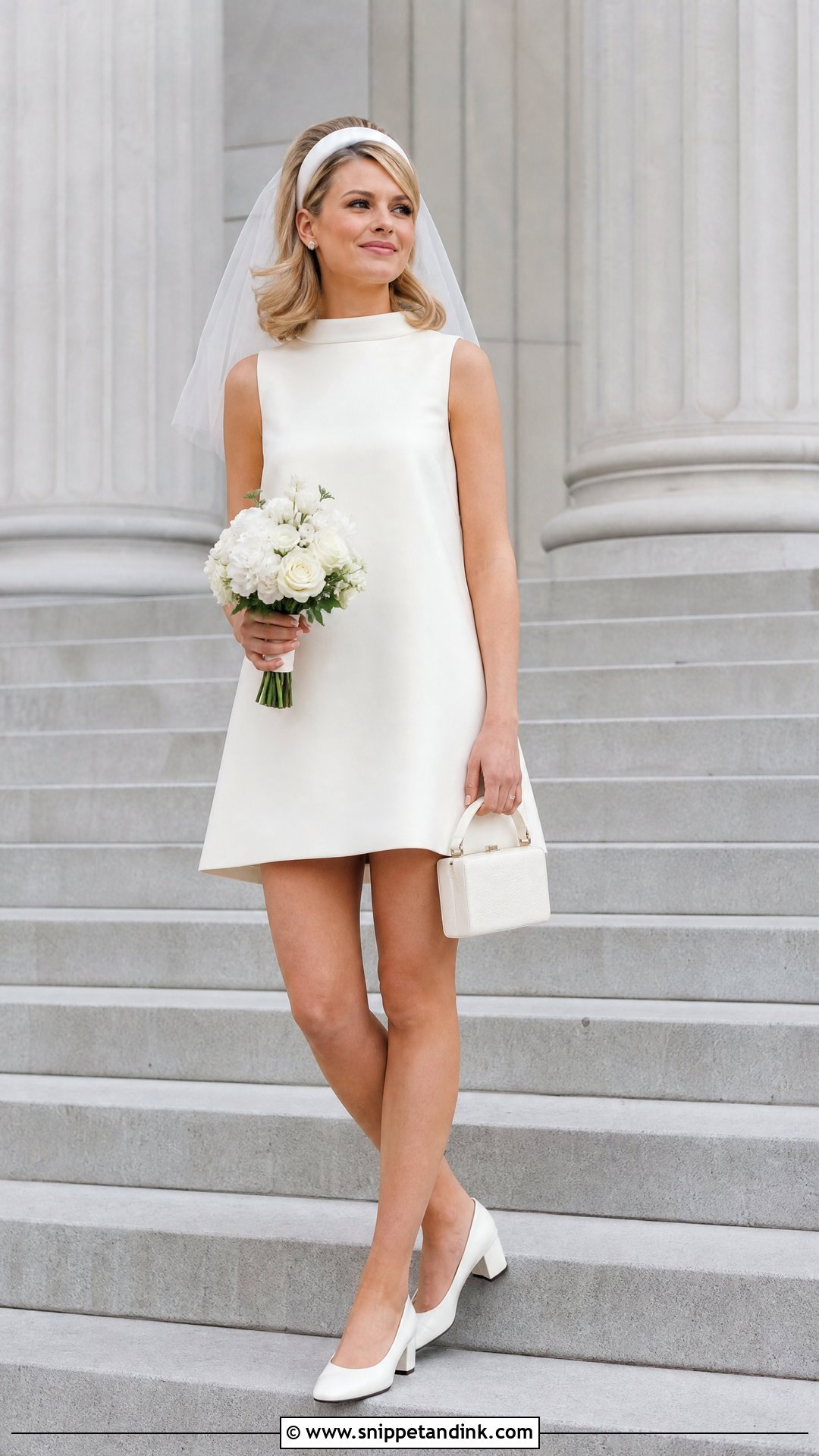
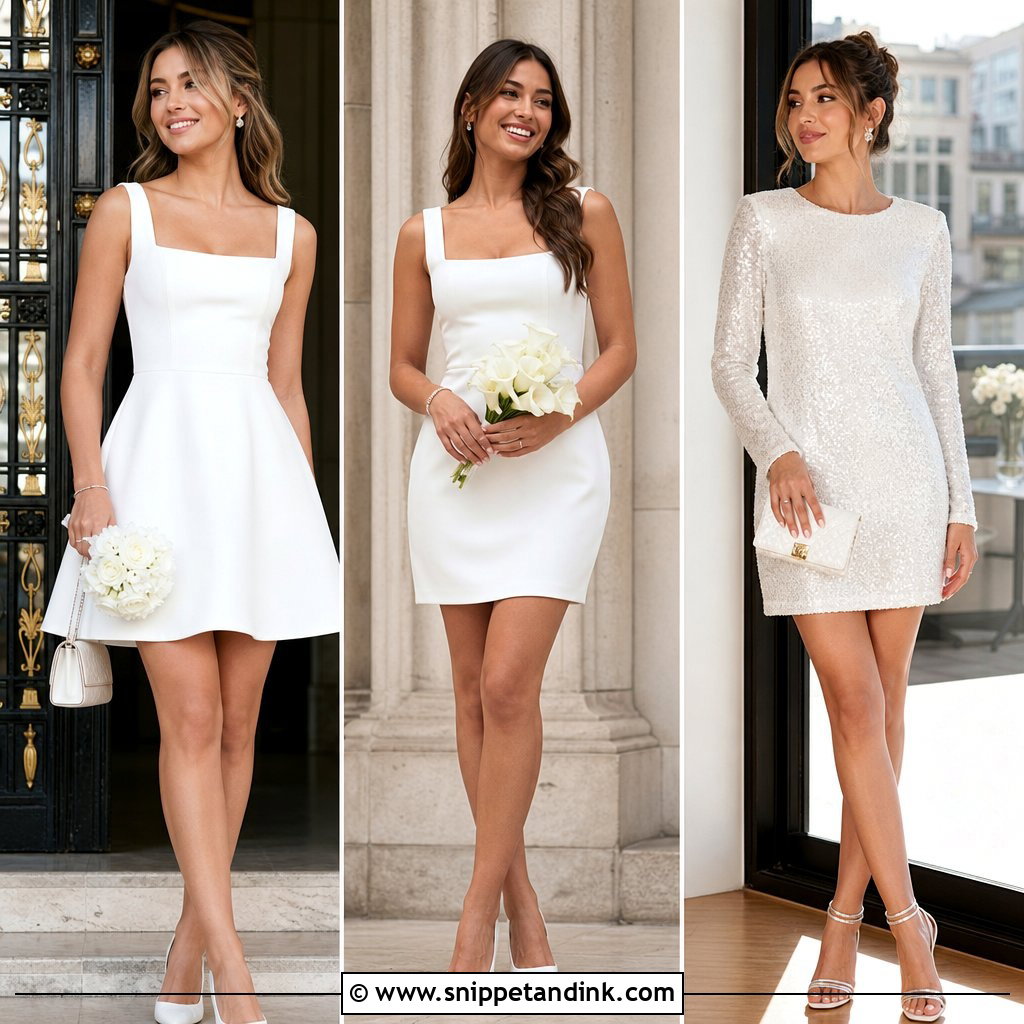
Clean lines are the entire point of a 1960s mod mini civil wedding dress. A shift or A-line with a jewel neck, bateau collar or rounded shoulders, ending a few inches above the knee, gives the look. Sit on a bench in it before buying; registry waiting rooms involve a lot of sitting. Opaque ivory tights add coverage in cold months, and a knee-length version keeps the same mod structure with less leg. Block-heel pumps, pearl earrings, a small box bag and a padded headband or bubble veil finish it. A little brocade texture helps when plain fabric looks too bare.
3. 1930s Satin Bias-Cut Civil Wedding Dress
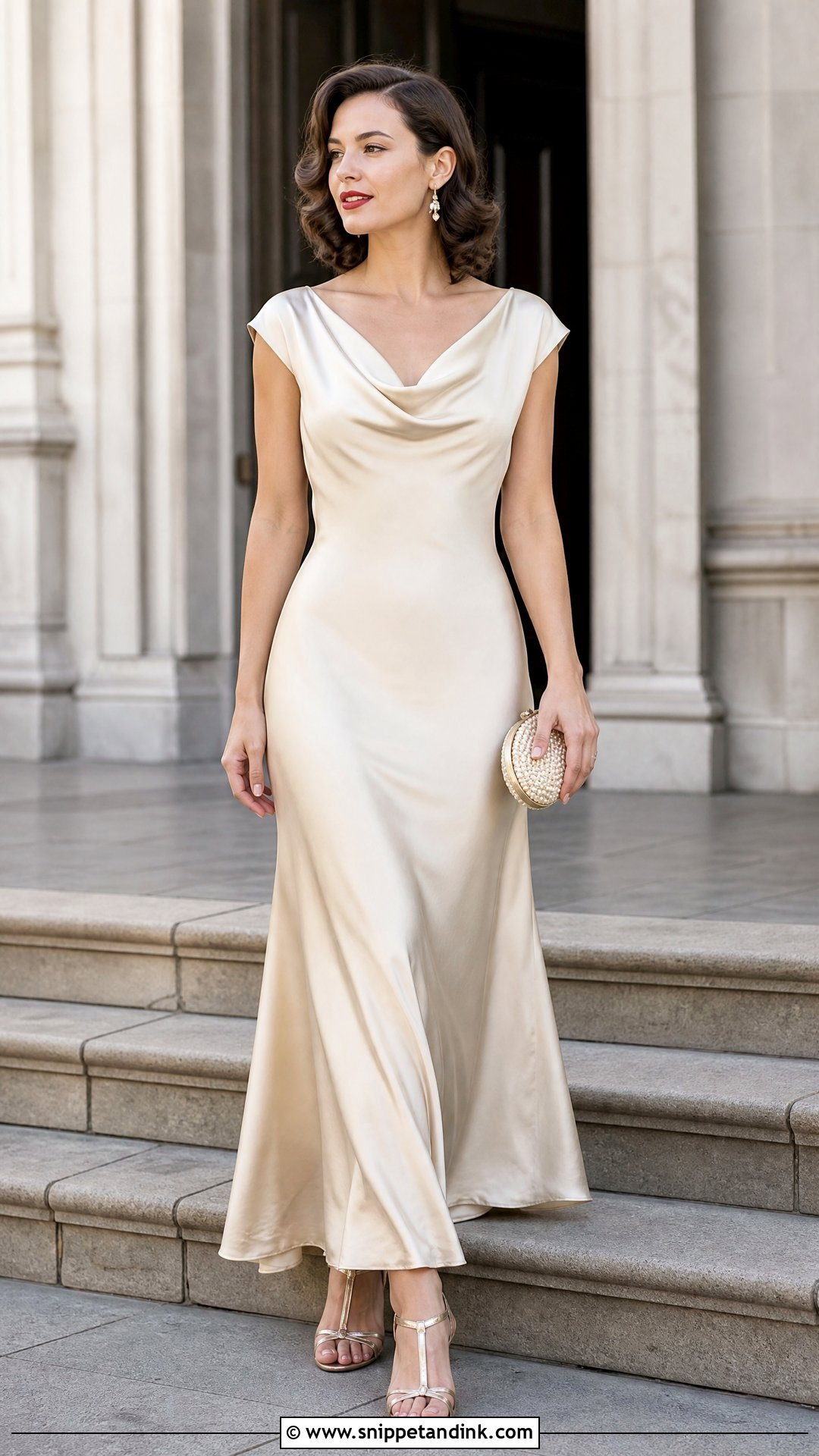
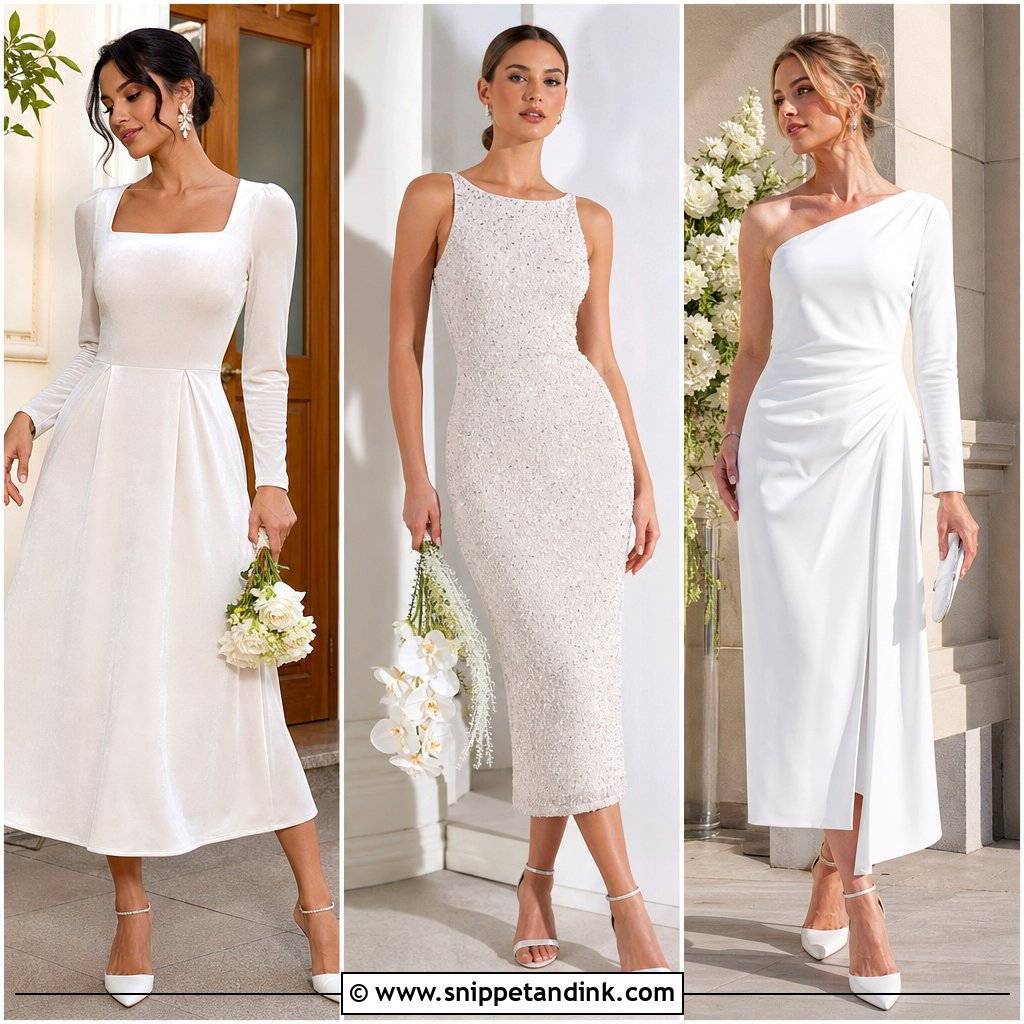
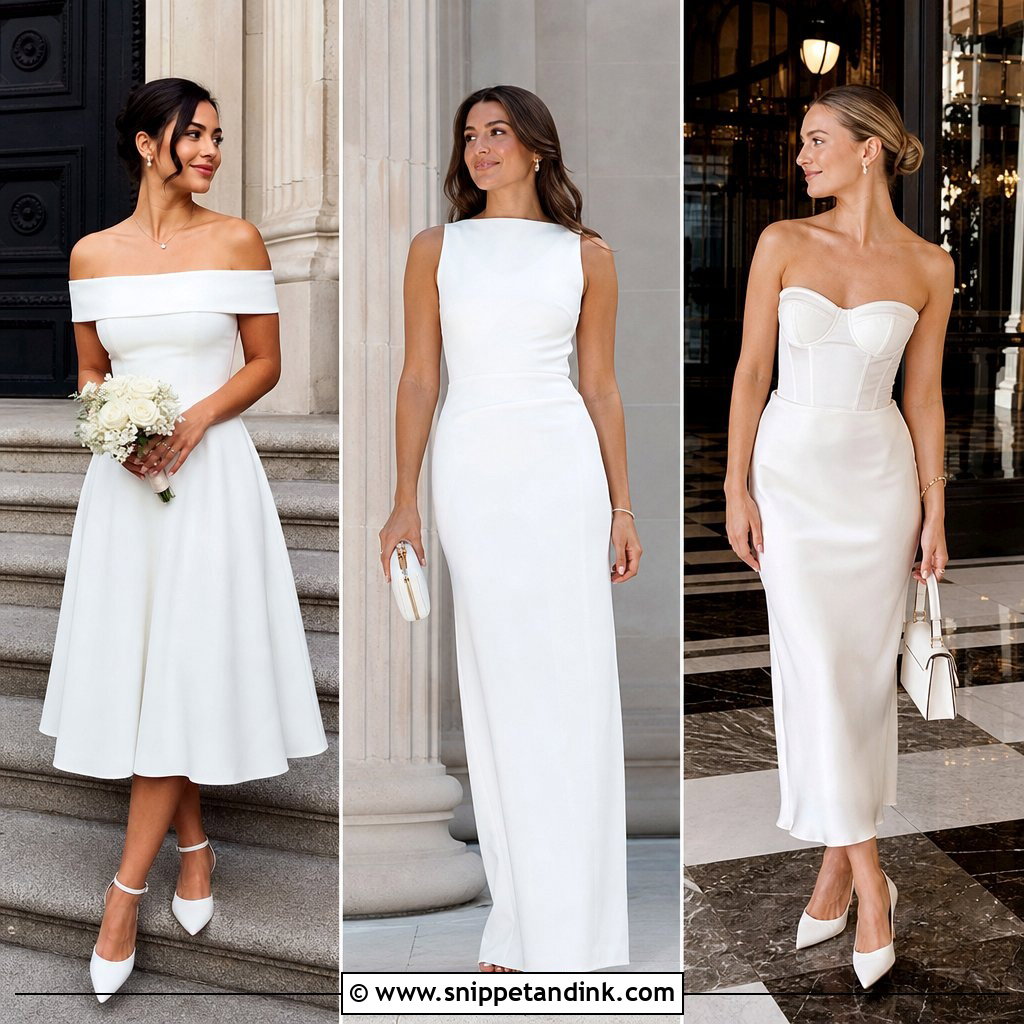
Satin cut on the bias moves with you, which suits a 1930s bias-cut civil wedding dress in a stone courthouse. A midi or ankle length with a draped neckline, light waist definition and a fluid skirt, in pearl satin, ivory silk or champagne, keeps it understated. Bias cloth clings to anything beneath it, so I fit it over the exact smooth undergarments you’ll wear. Low metallic sandals or closed satin pumps, a small beaded clutch and delicate drops are enough, with a faux-fur stole or cream coat in cold weather. The hem should skim, not touch, the floor; city pavements are unforgiving on satin.
4. 1920s Beaded Civil Wedding Dress
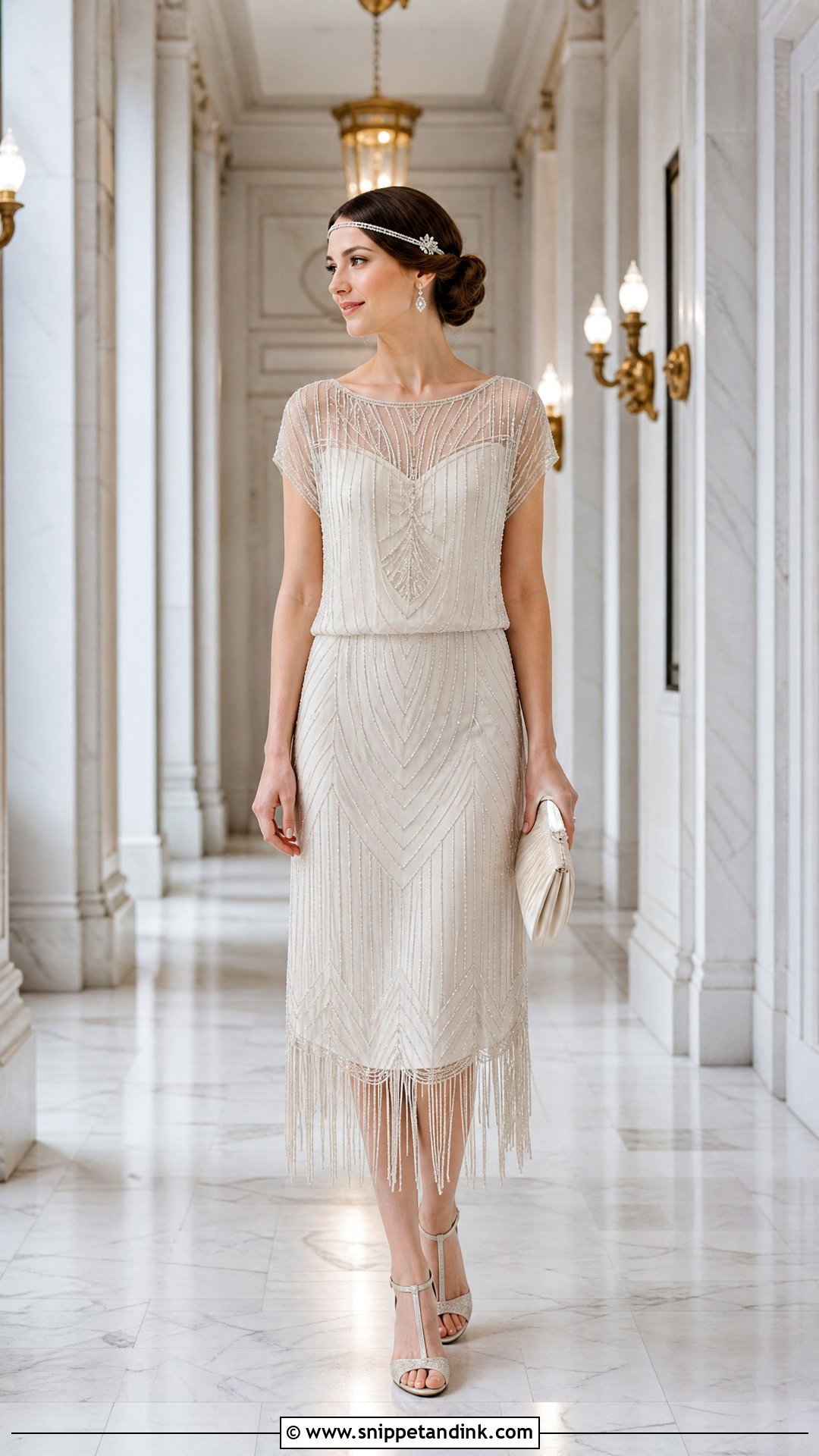
Beads and fringe sound heavy, but a 1920s beaded civil wedding dress in a simple column is one of the easiest outfits to move in. A knee or midi length with geometric beading, scalloped edges and light fringe catches the light with every step. Ivory-on-ivory beading is subtle; silver is more glamorous. T-straps or low Mary Janes are steadier than stilettos on polished floors. If all-over beading is too heavy, a sheer beaded overlay on a lined slip gives the sparkle at half the weight. A small satin clutch, crystal earrings and a slim headband over soft waves complete it.
5. 1940s Crepe Midi Civil Wedding Dress
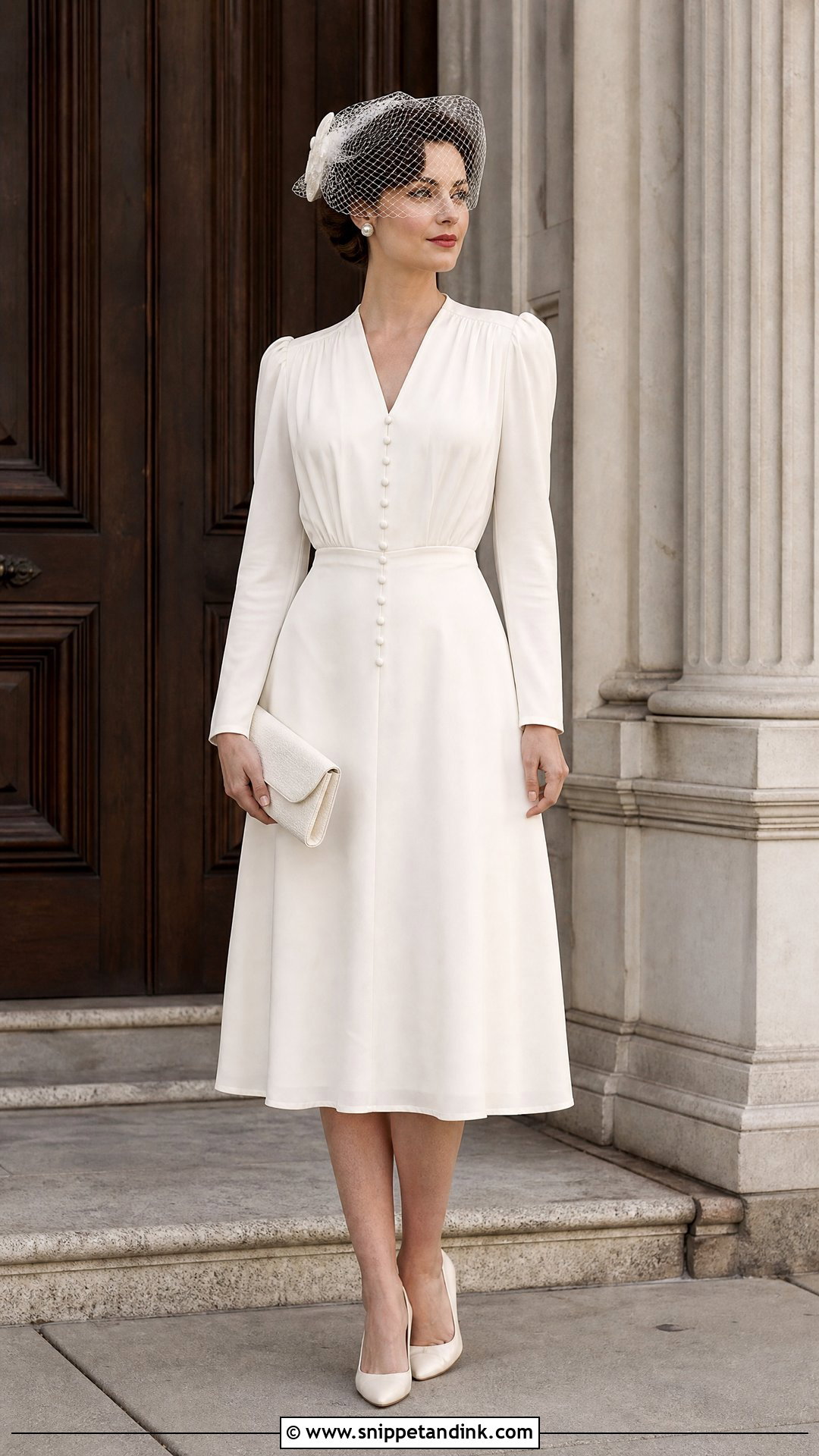
Crepe doesn’t shine, which is exactly why it looks right under the fluorescent lights of a government building. A 1940s crepe midi with a gently fitted bodice, a natural waist and a skirt just below the knee keeps the line composed, with covered buttons, gathered shoulders, three-quarter sleeves or a small V for period detail. Choose medium-weight, lined crepe; thin crepe shows every seam and wrinkles in the car. Almond-toe pumps, a small envelope clutch, pearl or gold button earrings and a birdcage veil suit it. A narrow self-covered belt, rolled hair and a structured bouquet finish it.
6. Edwardian Lace Civil Wedding Dress
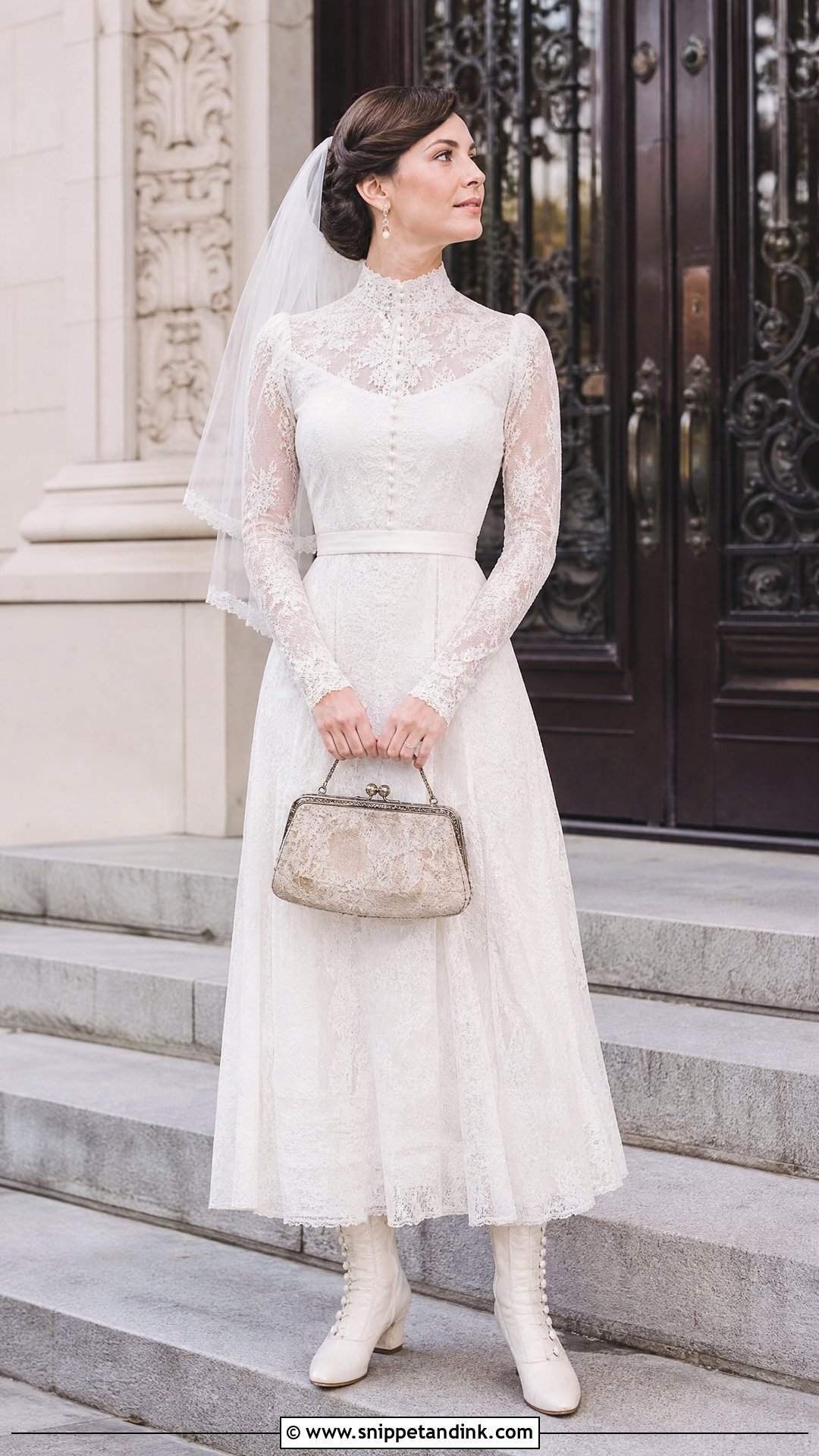
Coverage and romance come together in Edwardian lace, and midi or ankle length makes it practical for a courthouse. A high neck, fitted lace sleeves and a soft waist set the shape. Cotton lace, embroidered tulle or eyelet all read antique. I’d line ivory lace in cream or pale blush; over white lining the pattern disappears in photographs. Fitted lace sleeves need careful alteration so you can lift your arms to sign the register. Buttoned ankle boots or low lace-up heels, a small framed bag, pearl drops or a tiny locket, a loose low bun and a fingertip veil complete it.
7. Vintage Puff-Sleeve Civil Wedding Dress
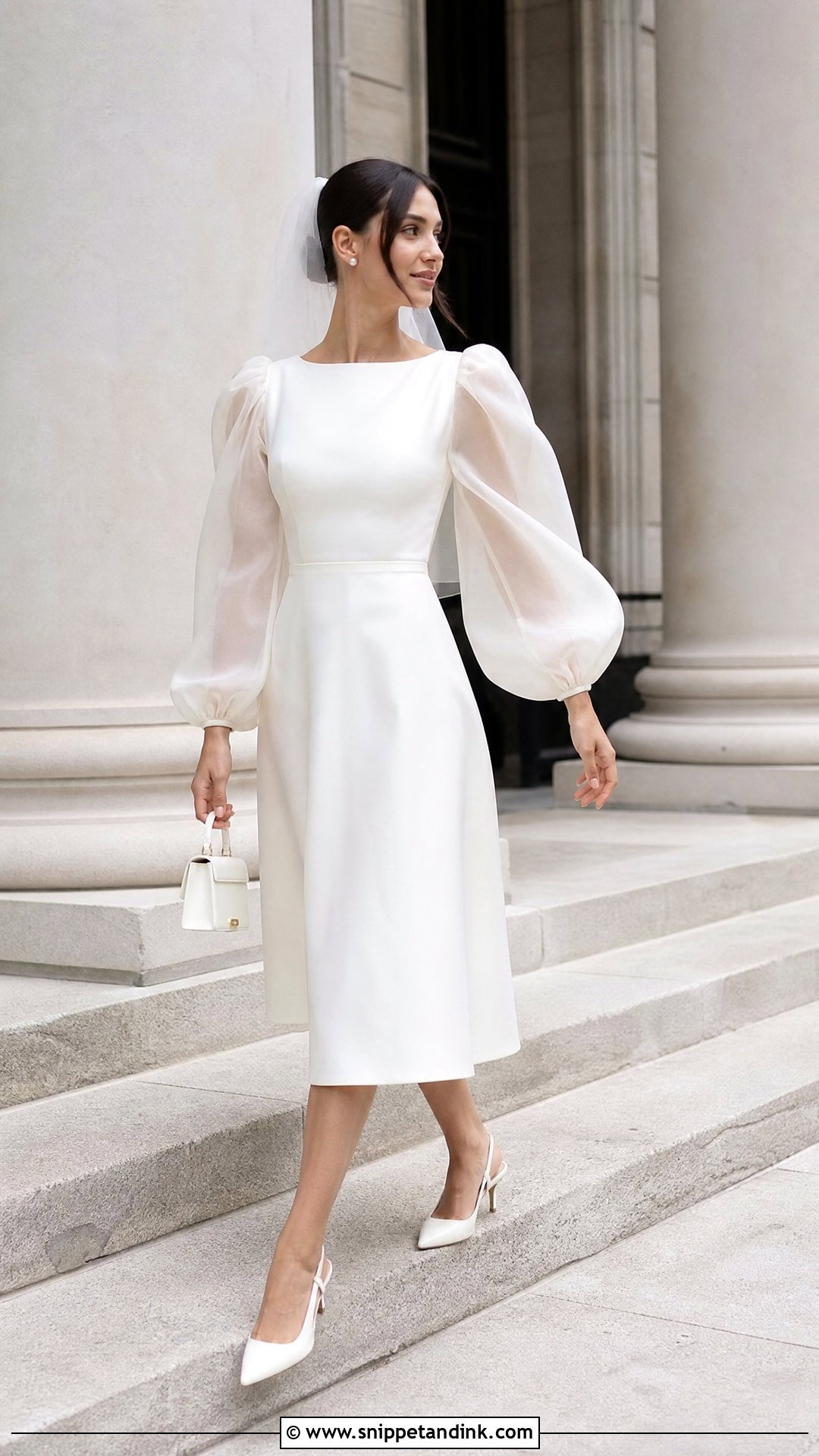
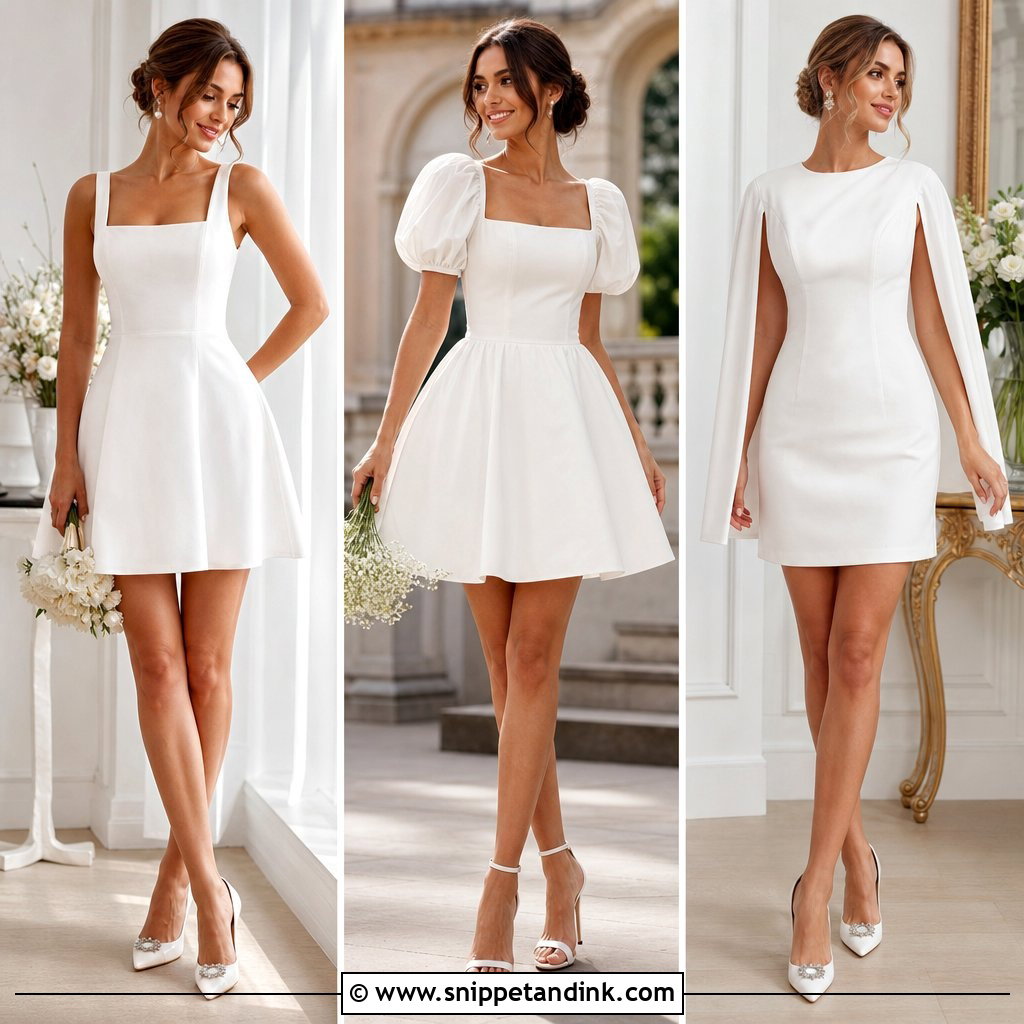
Volume at the shoulder and a slim cuff is what makes a puff sleeve look vintage rather than prom. A midi with a fitted waist, a clean neckline and a moderate skirt keeps the sleeves in proportion. Organza gives an airy puff; satin or structured cotton gives a sharper one. If your shoulders are broad, I’d go for soft gathered sleeves instead of stiff ones. Pointed slingbacks lengthen the outfit and a mini top-handle bag keeps it neat. Wear pearl studs rather than big earrings, which clash with the sleeves, and a low ponytail, sleek bun or short veil.
8. Vintage Square-Neck Civil Wedding Dress
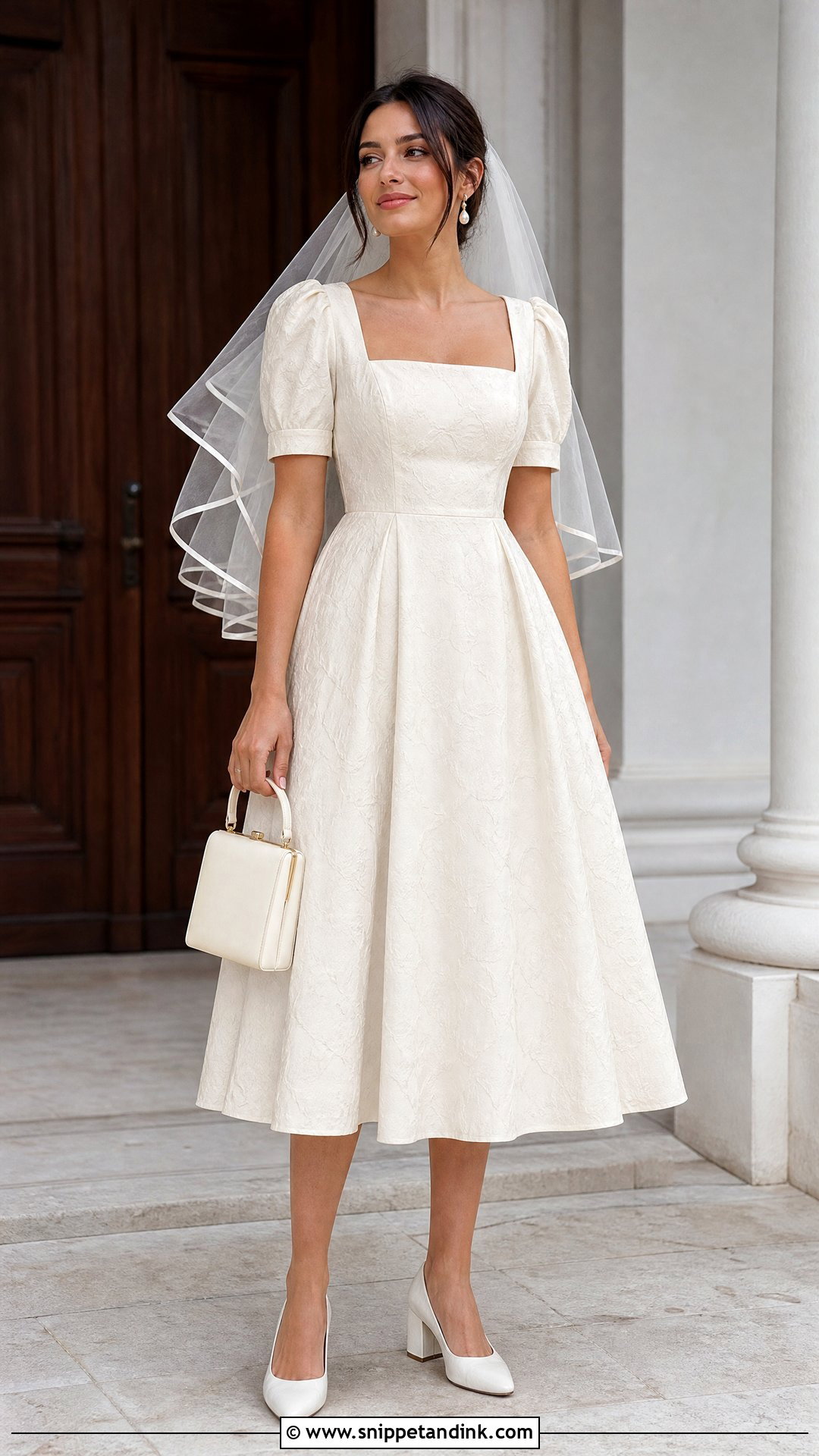
Square necks put the face and collarbone in the frame, and in a small registry room that close-up view is most of what guests see. A fitted midi with short puff sleeves, slim long sleeves or wide straps works, over either a soft flared skirt or a straight pencil skirt. Ivory jacquard, matte satin or embroidered cotton gives a simple neckline some interest. A fuller bust needs a higher square and a properly built bodice, which I’d prioritize over any trim. Pearl drops, low block heels, a structured cream bag and a short veil or ribbon headband finish it, with a bouquet small enough not to hide the neckline.
9. Vintage Bow-Neck Civil Wedding Dress
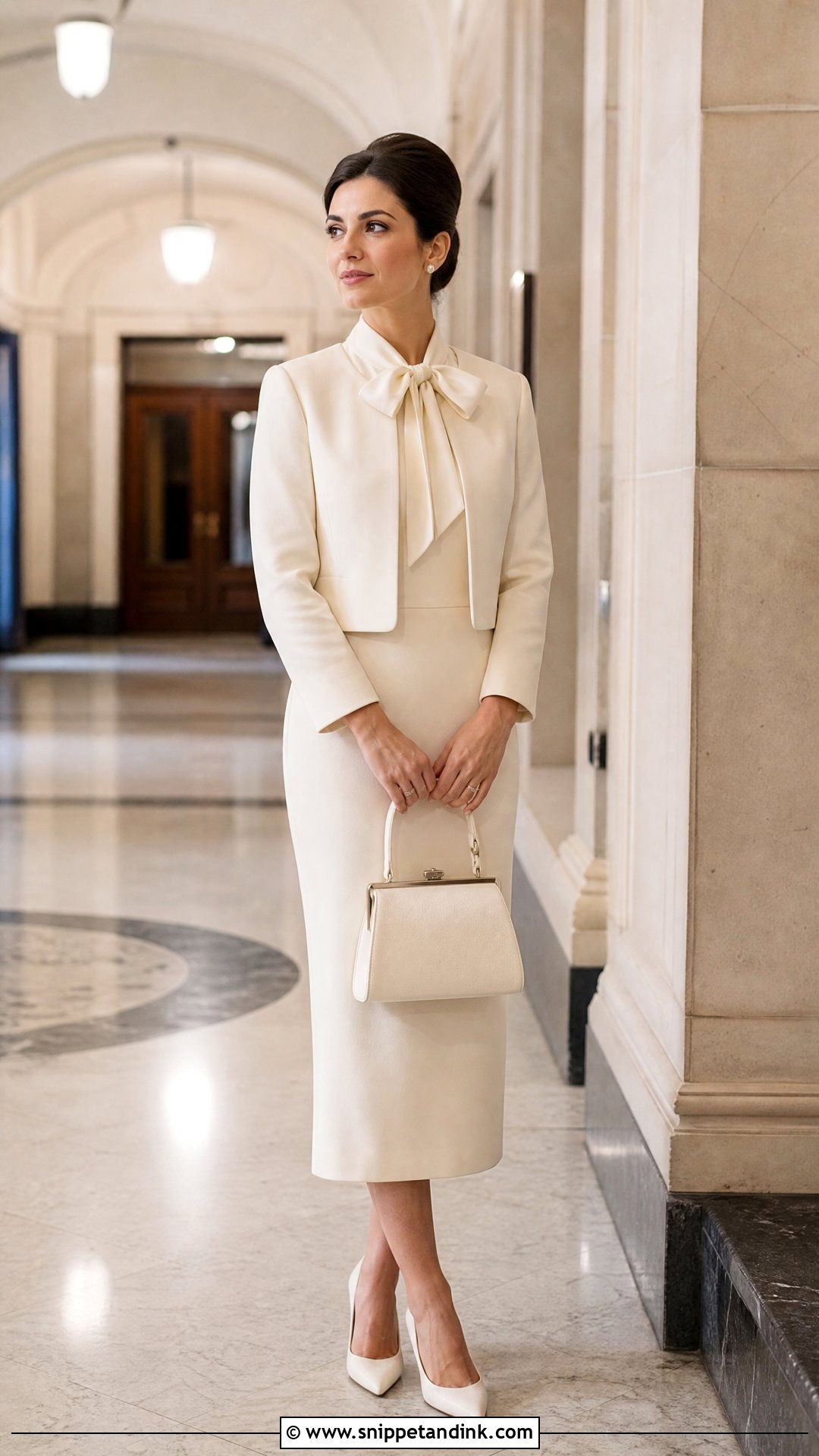
A bow at the neck reads formal and slightly old-fashioned in the best way, which is why it suits a city hall. A midi sheath or soft flared dress with a narrow tie, structured bow or removable scarf at the neckline is the base, in matte crepe or silk faille so the bow holds its shape. If your neck is short, a slim, loosely tied bow sits better than an oversized one. Pointed pumps, a small frame bag and simple studs keep the rest calm, and a cropped jacket adds warmth without hiding the bow. A low chignon or smooth waves keep the profile clean.
10. Vintage Coat Civil Wedding Dress
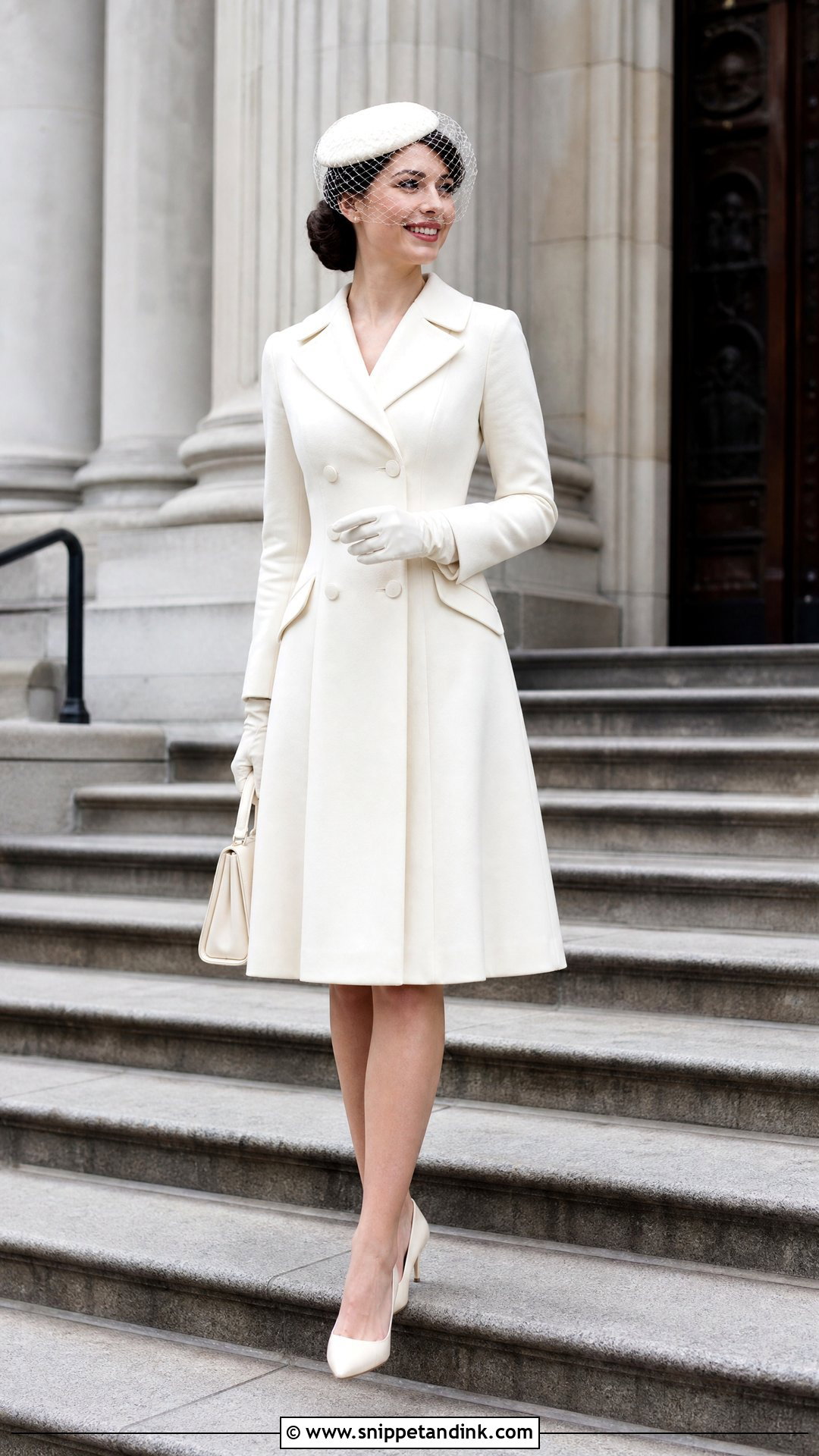
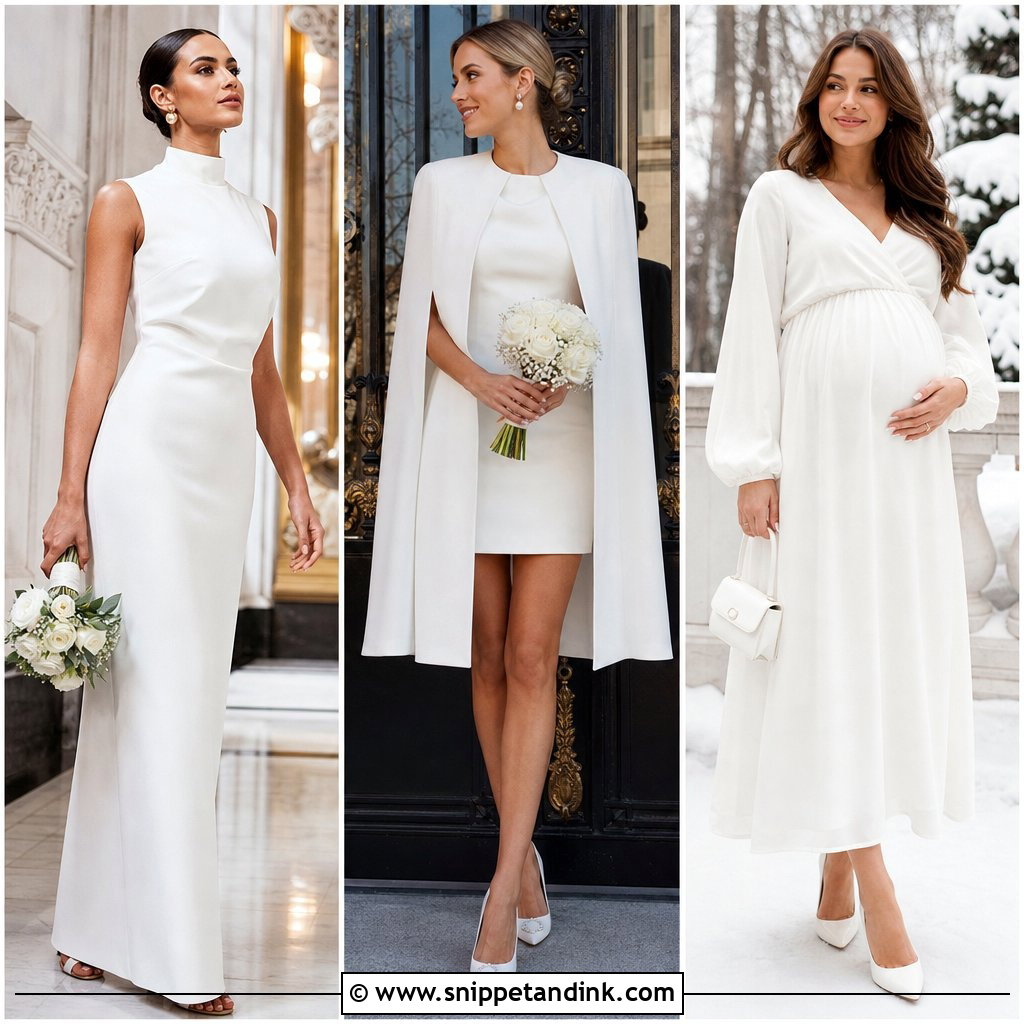
Treat a coat dress as the dress, fully buttoned, not as a layer over something else. A double-breasted or wrap-front design with a defined waist, knee-length hem and covered buttons gives that composed outline. White wool crepe suits winter; cotton piqué or jacquard is lighter for spring. Fit at the shoulders and waist is the whole outfit here, so I spend most of the fitting there and check that buttons don’t pull when you sit. Pointed pumps, leather gloves, a structured top-handle bag and a pillbox hat or birdcage veil finish it. Keep jewelry small if the collar is wide.
11. Vintage Cape Civil Wedding Dress
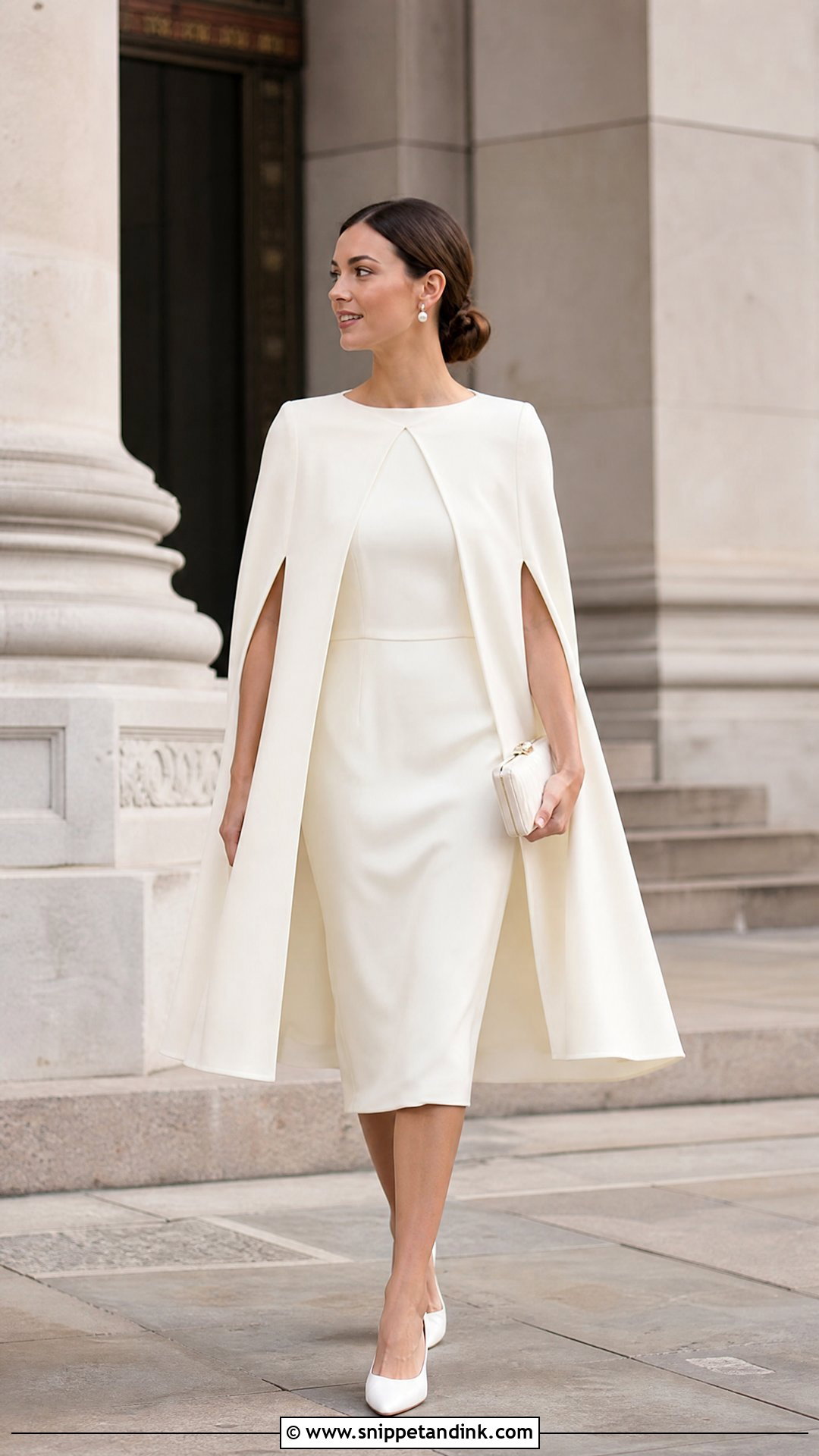
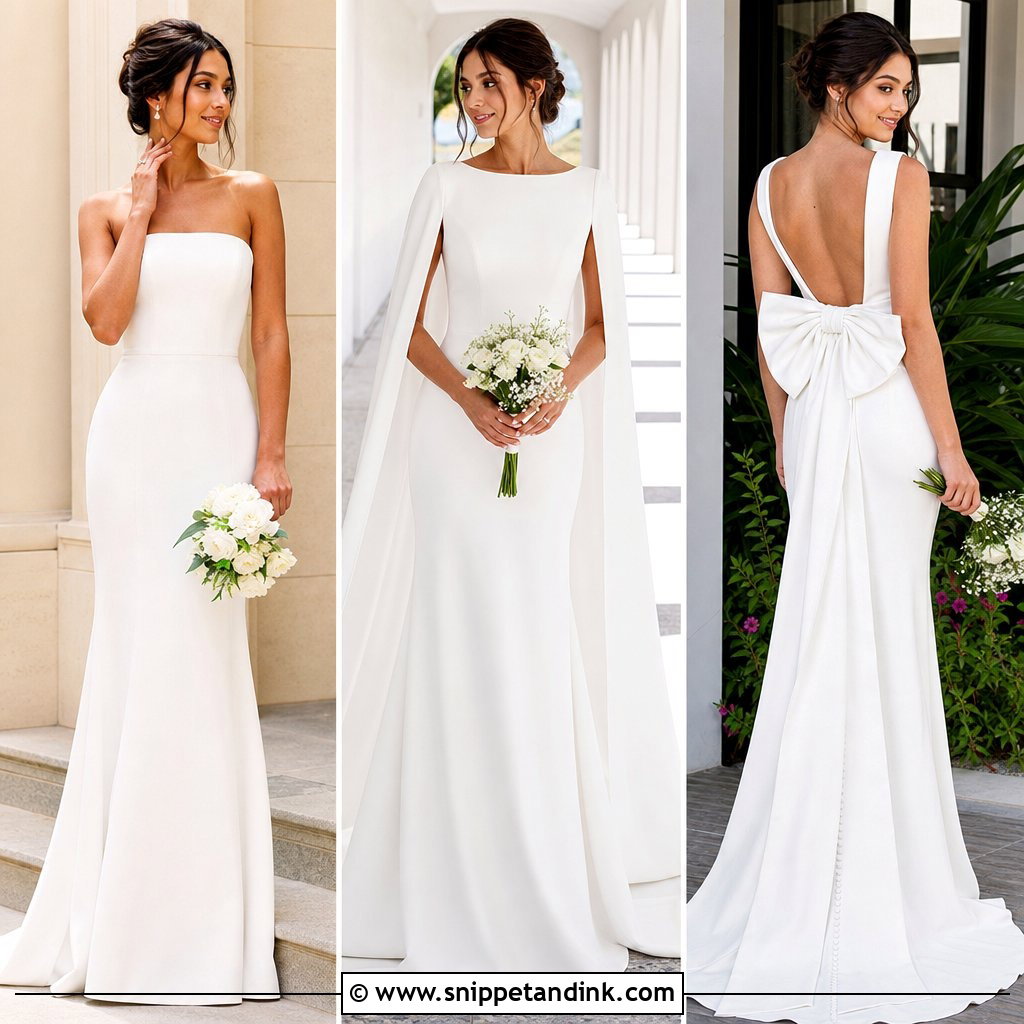
Capes photograph with movement on courthouse steps, which is why brides love them for a civil wedding. Start with a fitted mini, midi sheath or ankle-length column, then add a matching shoulder cape ending at the elbow or waist. Crepe looks tailored; lace or sheer chiffon looks softer. Short capes blow straight up in a gust, so I add small weights or hidden snaps at the front edges. Closed slingbacks, pearl earrings and a compact clutch suit it; skip a long veil when the cape already gives movement. A neat bun or sculpted waves keep the neckline clear.
12. Vintage Empire-Waist Civil Wedding Dress
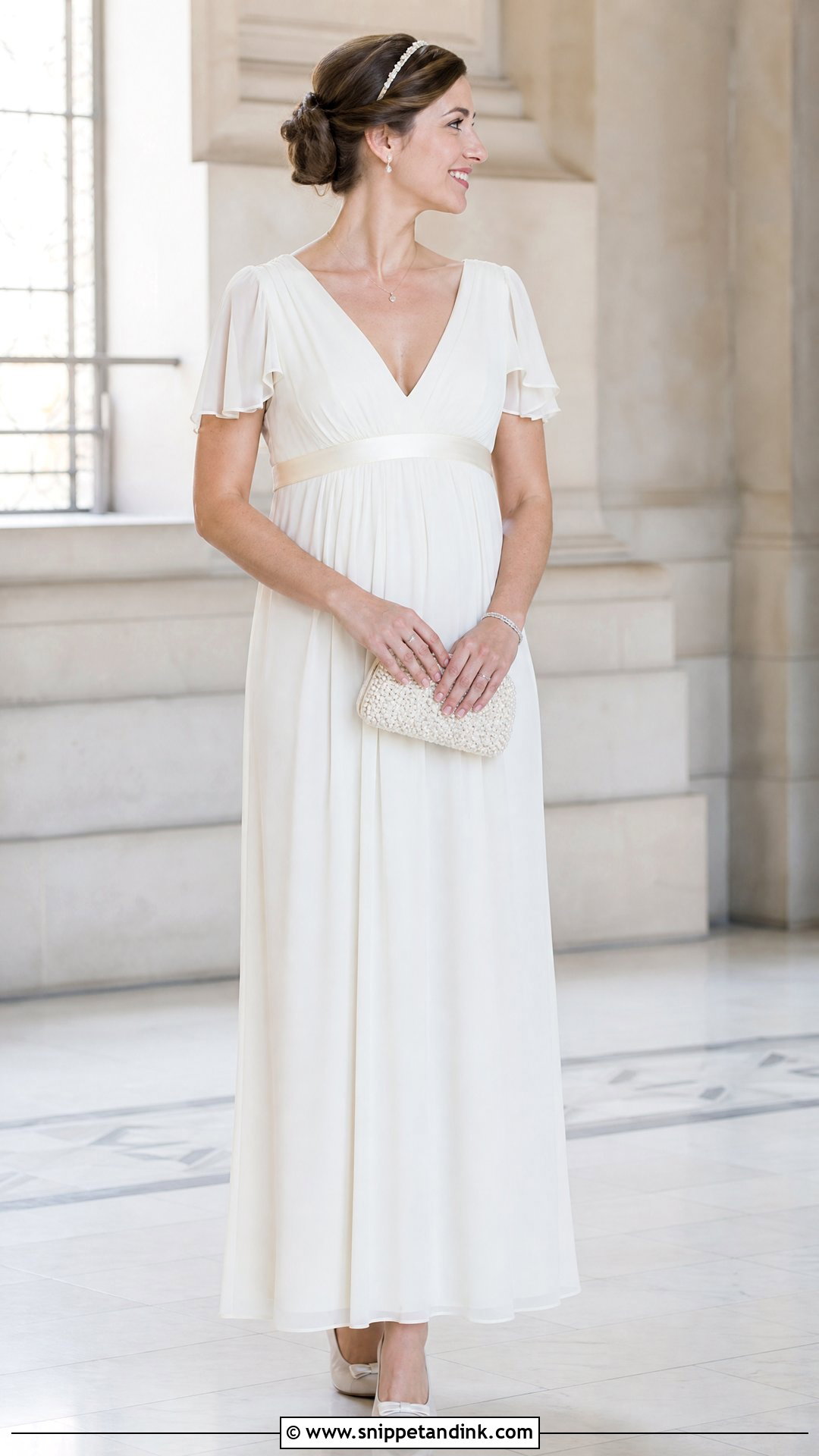
Room through the middle is the practical gift of an empire waist. A fitted bodice ending under the bust and a lightly gathered midi or ankle-length skirt in soft chiffon, crepe or satin give movement without bulk. Flutter sleeves feel romantic; long fitted sleeves suit cooler months. This is the shape I suggest most often for a pregnant bride, as long as the fabric drapes rather than clings, and I leave the side seams with extra allowance in case of growth before the date. Low satin pumps, a beaded clutch, delicate earrings and a ribbon under the bust complete it, with loose waves and a fine headband.
13. Vintage Drop-Waist Civil Wedding Dress
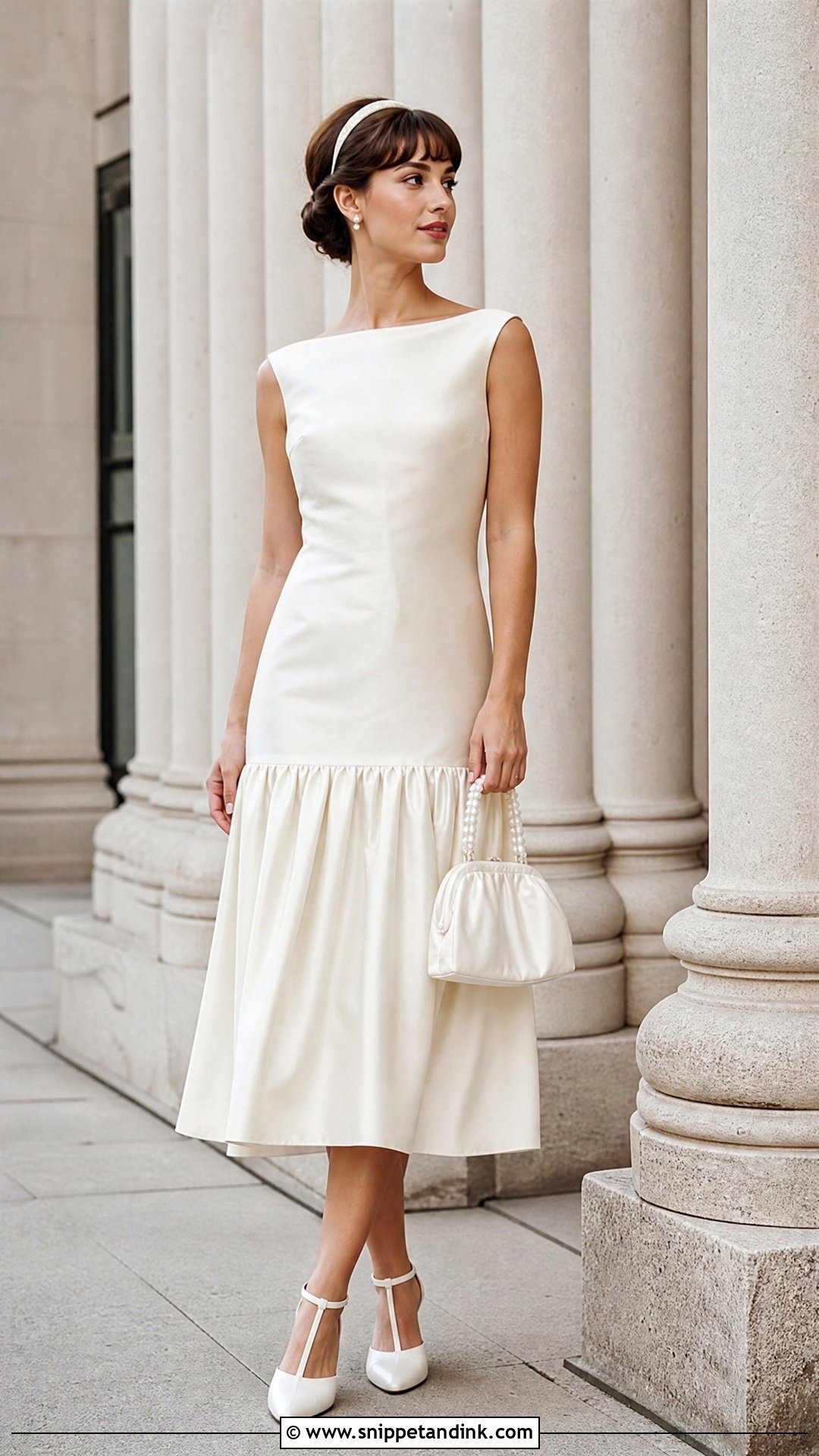
Dropping the seam to the upper hip lengthens the torso and relaxes the whole outfit. A mini or midi with a lightly flared, pleated or gathered lower skirt, a bateau neck and either a sleeveless or lace-sleeved bodice keeps it retro. Seam position changes your proportions dramatically, so I pin it at two or three heights at the fitting before cutting. Petite brides usually want a shorter bodice and hem. T-straps or low Mary Janes, a pearl-handled bag and a neat headband suit it. Smooth hair, quiet makeup and a small round bouquet let the line show.
14. Vintage Lace Mini Civil Wedding Dress
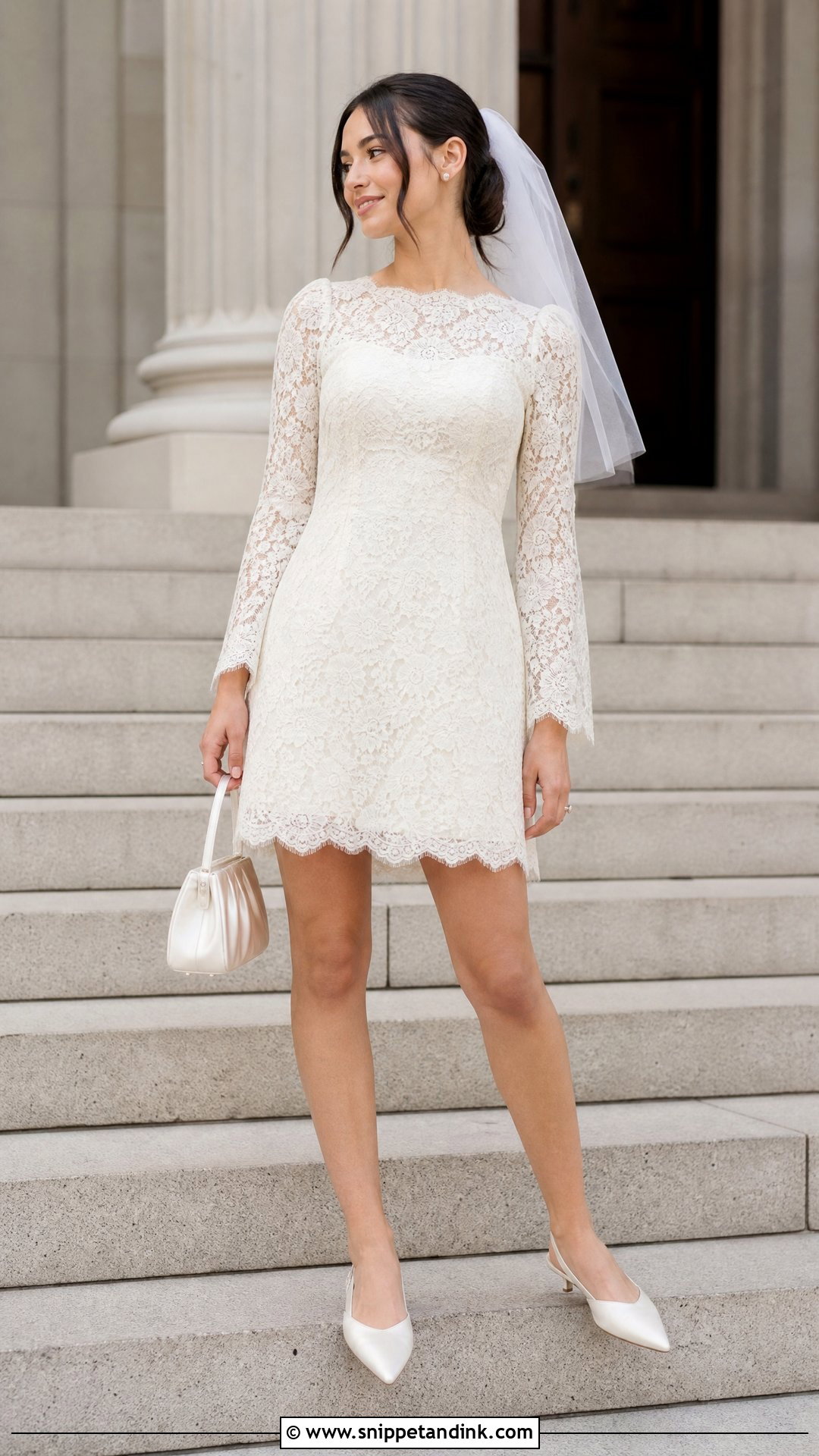
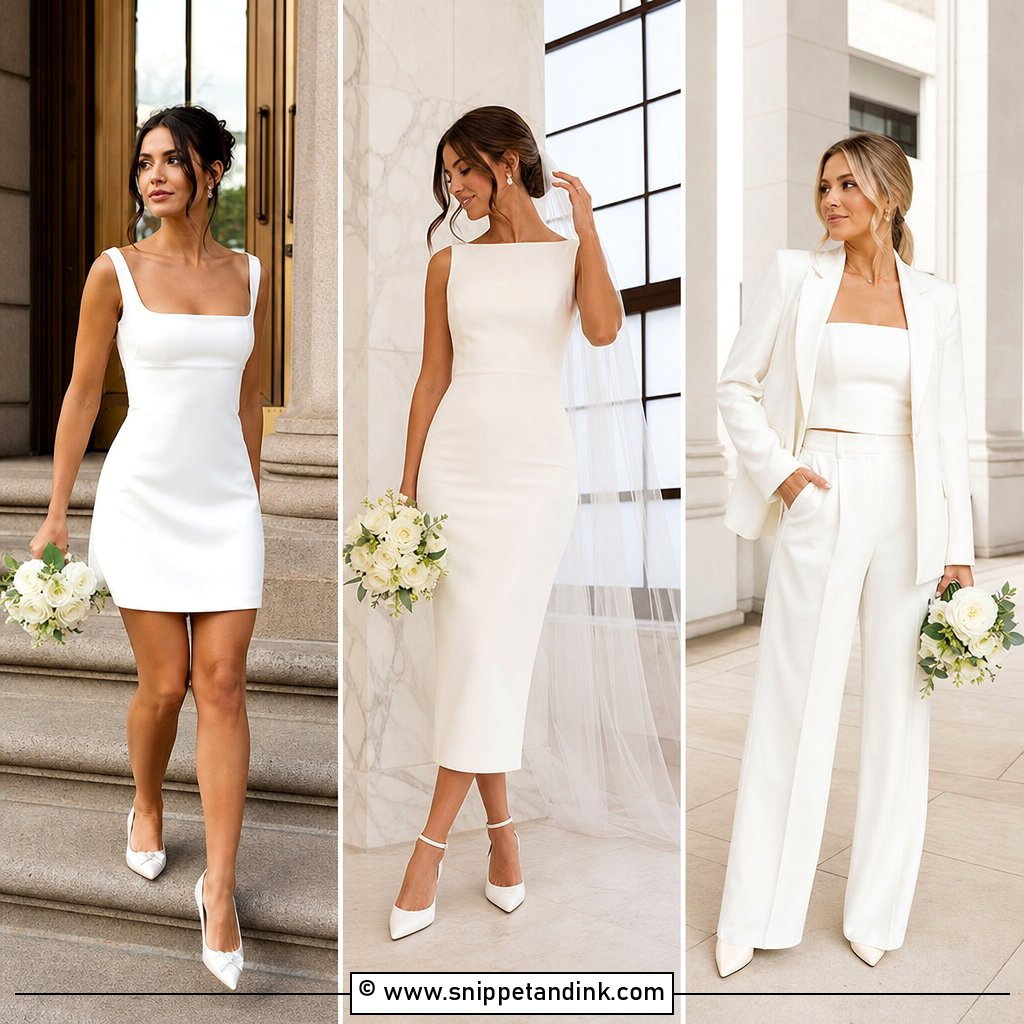
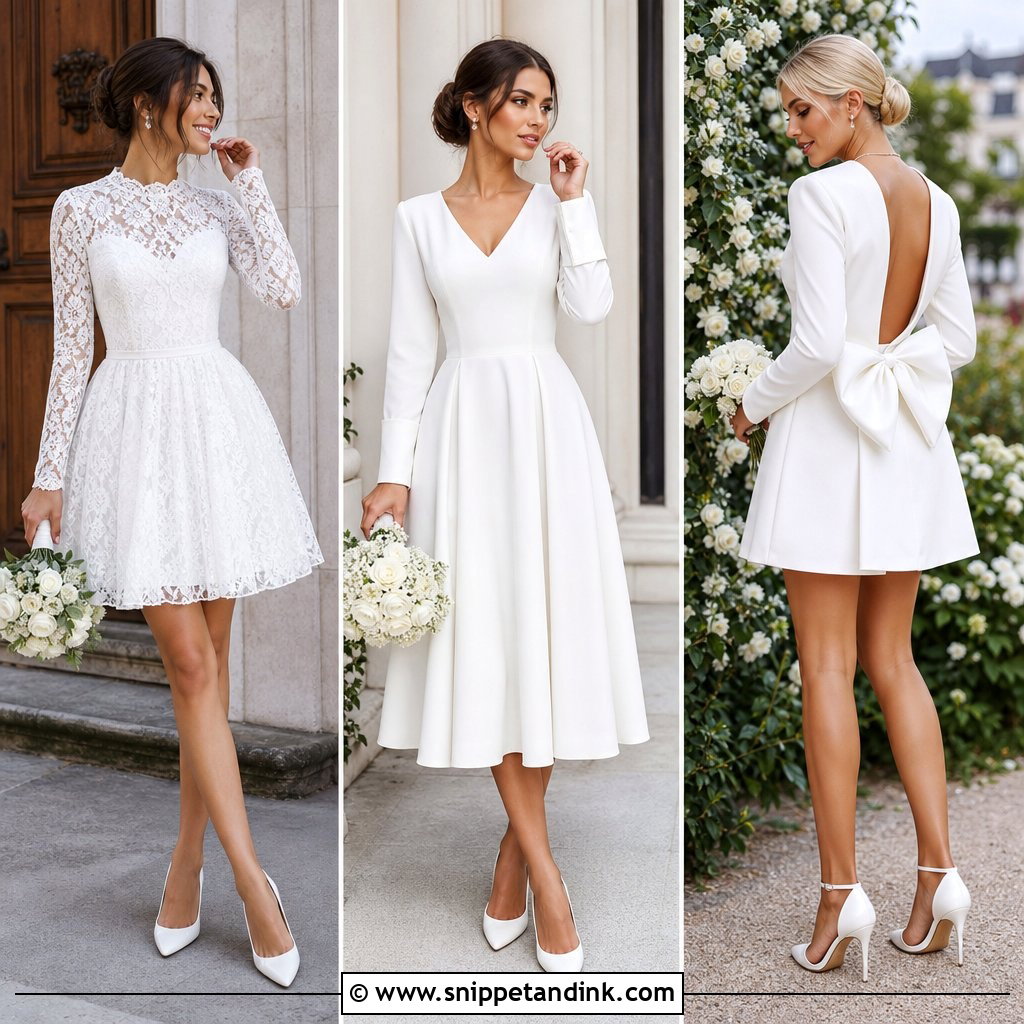
Lace minis carry the day from signing to a restaurant table without a change. A lined A-line or shift with scalloped edges, bracelet sleeves and a hem that stays decent when seated is the shape. Floral lace is classic; geometric lace looks sharper. Low block heels, slingbacks or polished flats suit a day with a lot of walking. The mistake I see most is lace on lace: lace shoes, a lace bag and heavy jewelry on top of a detailed dress. Add a short veil, pearl studs and a small satin bag instead, or sheer ivory tights and a tailored coat for coverage.
15. Vintage Floral Jacquard Civil Wedding Dress
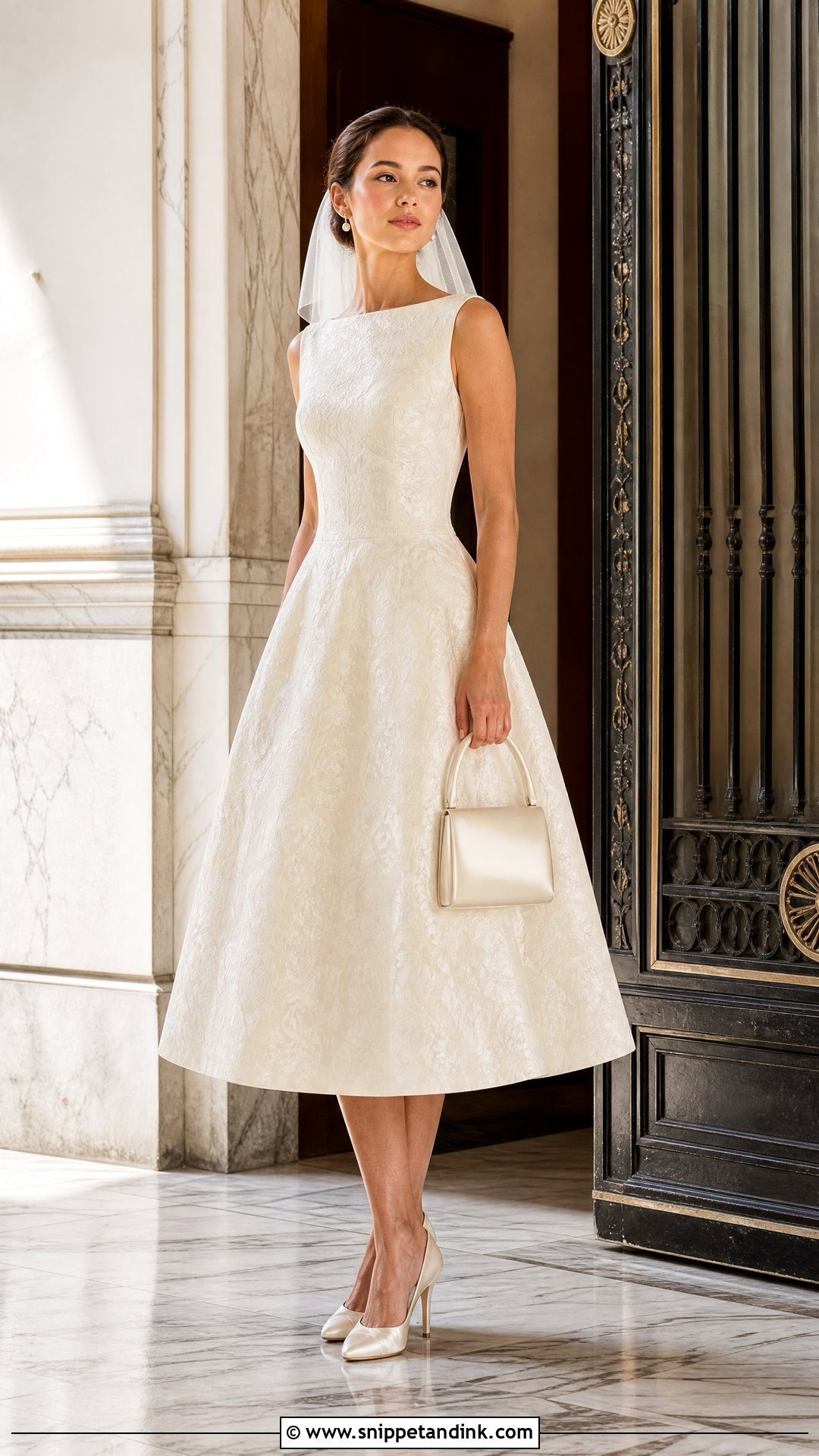
Woven texture is the star of a floral jacquard dress, so let it stay visible. A structured midi with a fitted bodice, defined waist and gently flared skirt shows the pattern without folds hiding it. Ivory reads bridal; pale blue, blush or soft champagne are gentle alternatives. Jacquard is substantial and warm, good for autumn or early spring, while a sleeveless bodice or open square neck lightens it. Simple satin pumps and a smooth leather or silk bag avoid texture clashes. Pearl earrings, a plain short veil and a small bouquet complete it.
16. Vintage Polka-Dot Civil Wedding Dress
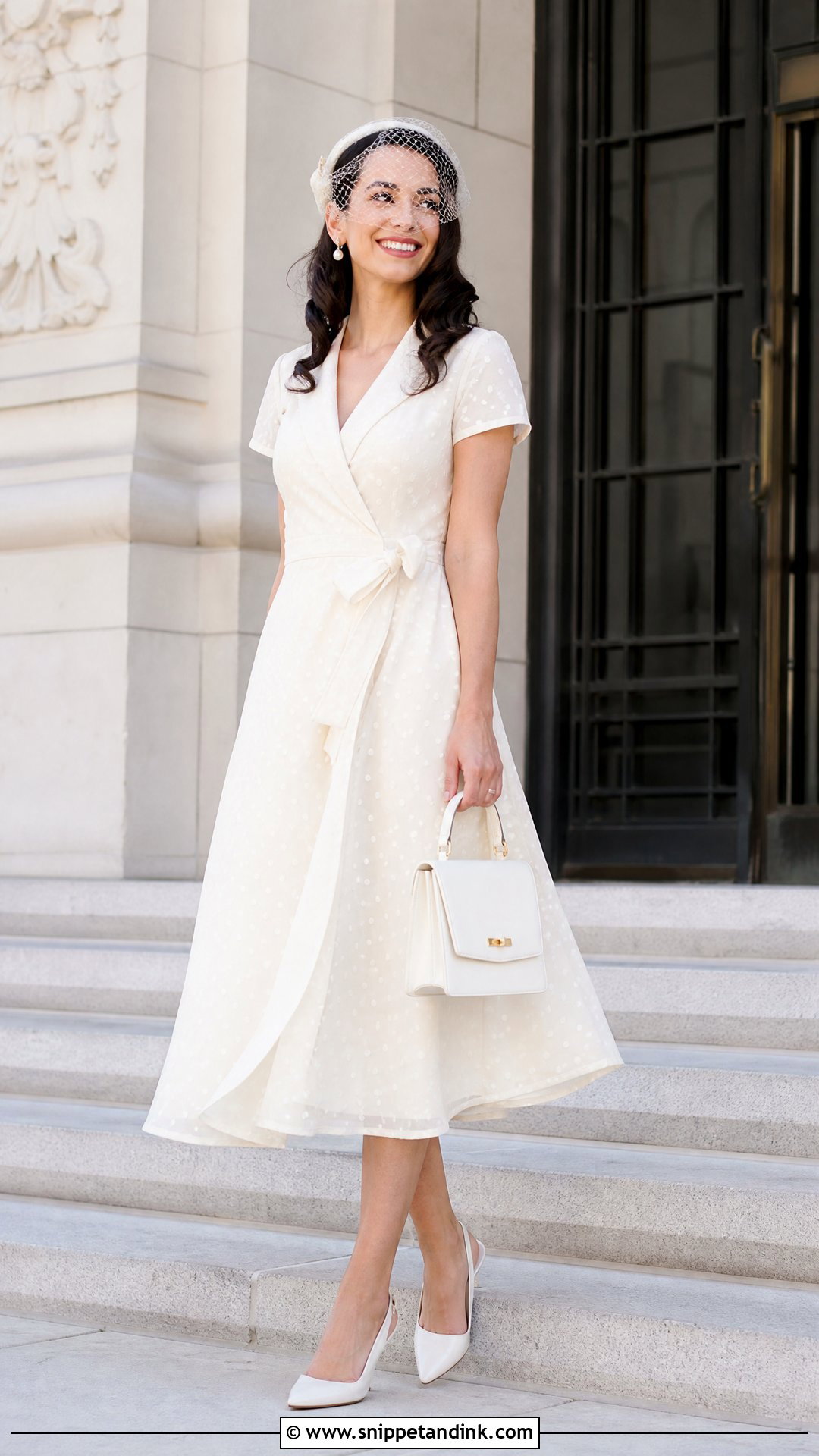
Polka dots are playful without leaving classic territory. Ivory with flocked white dots, tiny black spots or tonal embroidery in a tea-length wrap, fitted midi or short A-line keeps the print polished. Dots look larger on camera than in person, so I always choose the smaller scale of any two options. Solid slingbacks and a structured bag stop the accessories competing. With black-and-white fabric, repeat the black only once, in shoes, belt or bag, and never add a second print. Pearl earrings, a velvet headband or birdcage veil, soft waves and a compact bouquet finish it.
17. Vintage Velvet Civil Wedding Dress
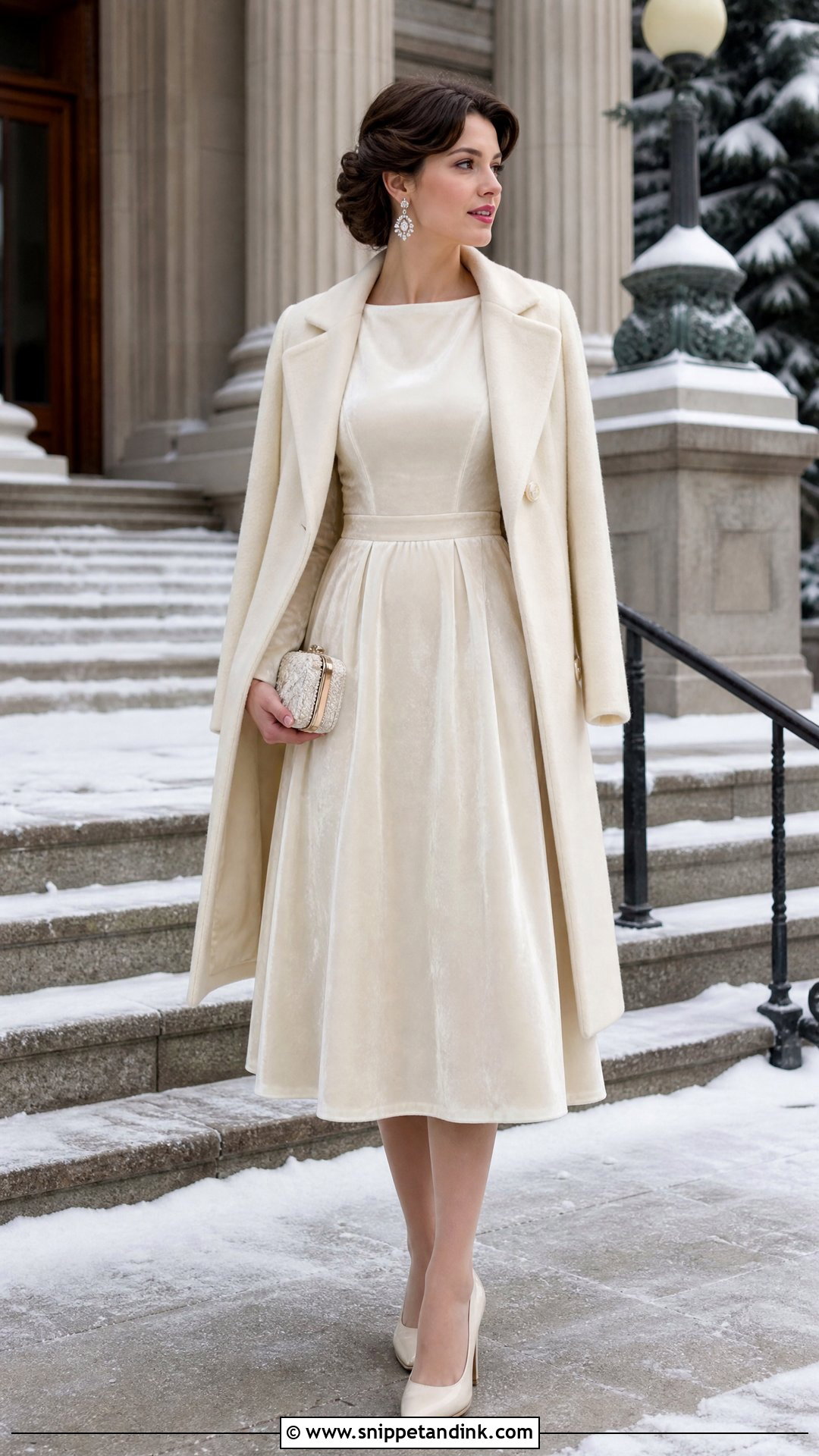
Velvet is the cold-weather fabric, and it behaves unlike anything else in this list. A knee or midi length with a fitted waist, long sleeves and a modest V or bateau neck is the shape, in ivory, champagne, pale blue or deep forest green. Velvet reflects light by the direction of its pile, so gathers and ruching show up as extra volume; keep them controlled. It also crushes, so I’d hang it in a steamy bathroom the night before rather than pressing it. Closed pumps, a structured clutch, crystal or pearl earrings and sheer tights suit it, with a cream coat outside.
18. Vintage Blazer Civil Wedding Dress
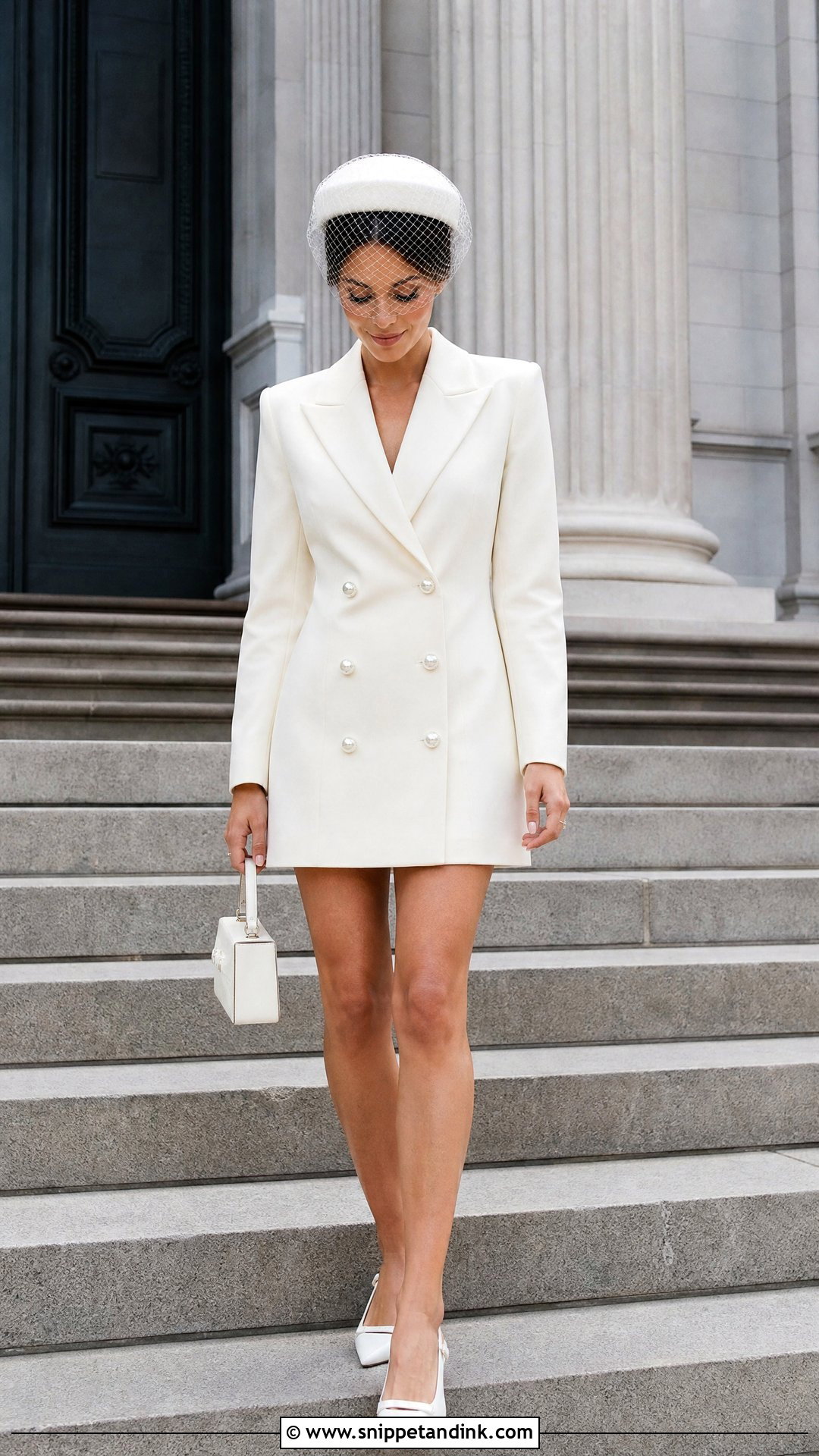
Tailoring does the talking in a blazer dress. A double-breasted mini with defined shoulders, a shaped waist and a skirt long enough to move in sets the base, with covered buttons, satin lapels or pearl fastenings for ceremony. Fitted shorts or a slip underneath give confidence on stairs. If your hips are fuller, a gently flared hem sits better than a straight cut. The button placement has to match your bust point, otherwise the front gapes, and that’s where most of my fitting time goes. Pointed pumps, a top-handle bag and a pillbox hat, short veil or padded headband finish it.
19. Vintage Crochet Civil Wedding Dress
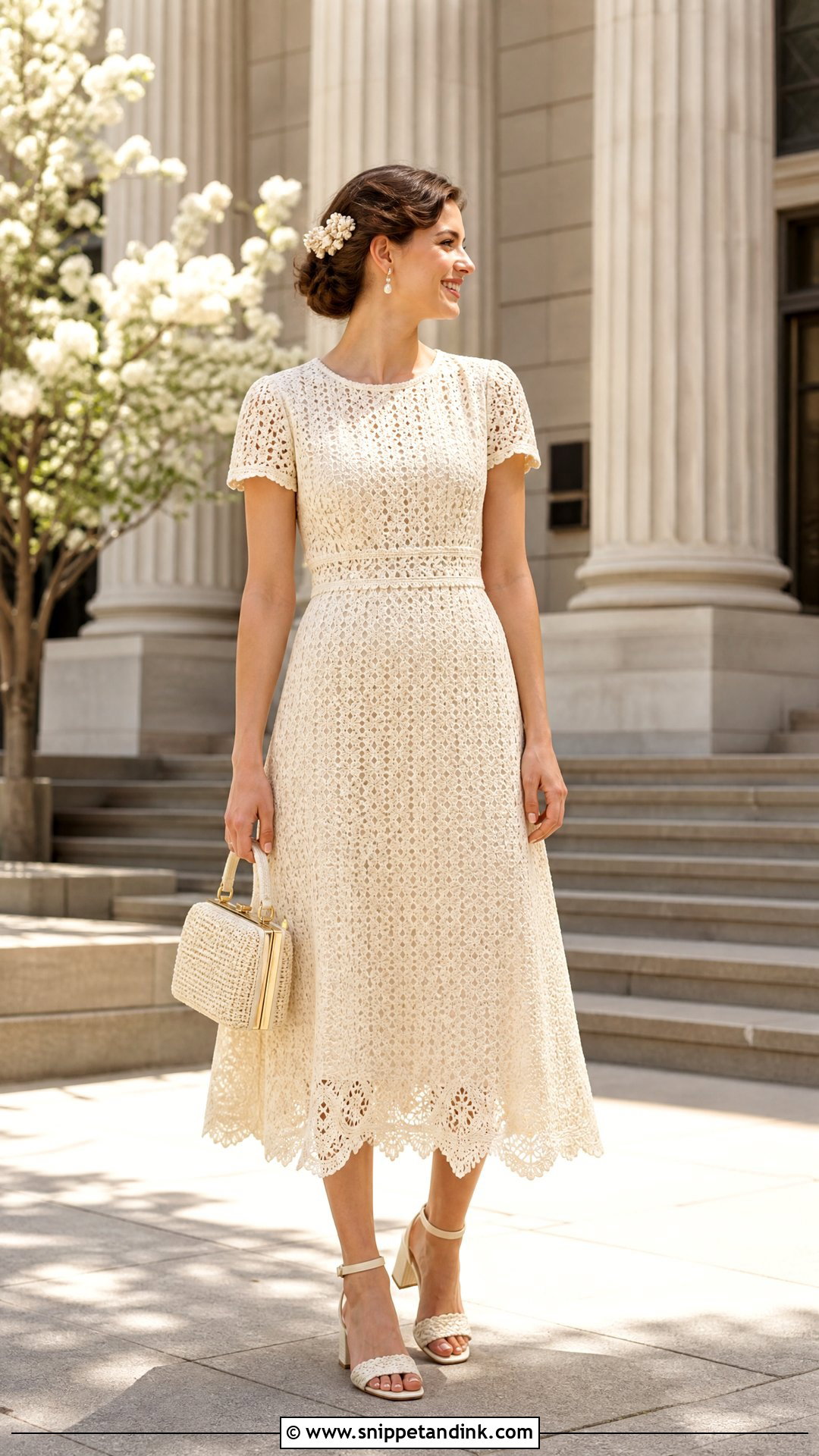
Openwork changes completely depending on what’s underneath it. A vintage crochet civil wedding dress needs a fitted lining close in color to the crochet and long enough to cover what it should. A knee or midi length with a defined waist, short sleeves, a scalloped hem and a higher neckline keeps it refined for a warm-weather ceremony. Crochet stretches when hung for long periods, so I’d store it folded and only hang it on the morning. Cream block-heel sandals, a woven structured bag, simple gold or pearl earrings and a floral comb finish it, with a neat low bun.
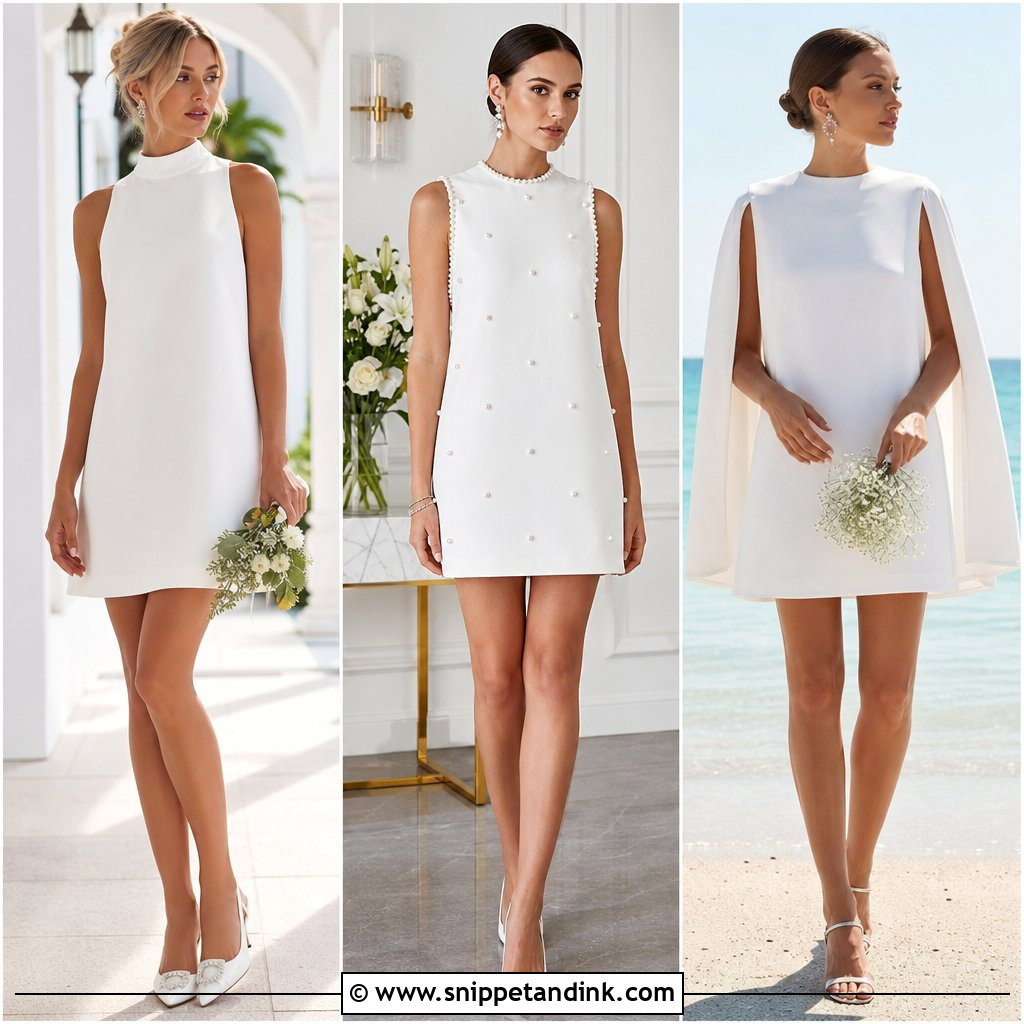
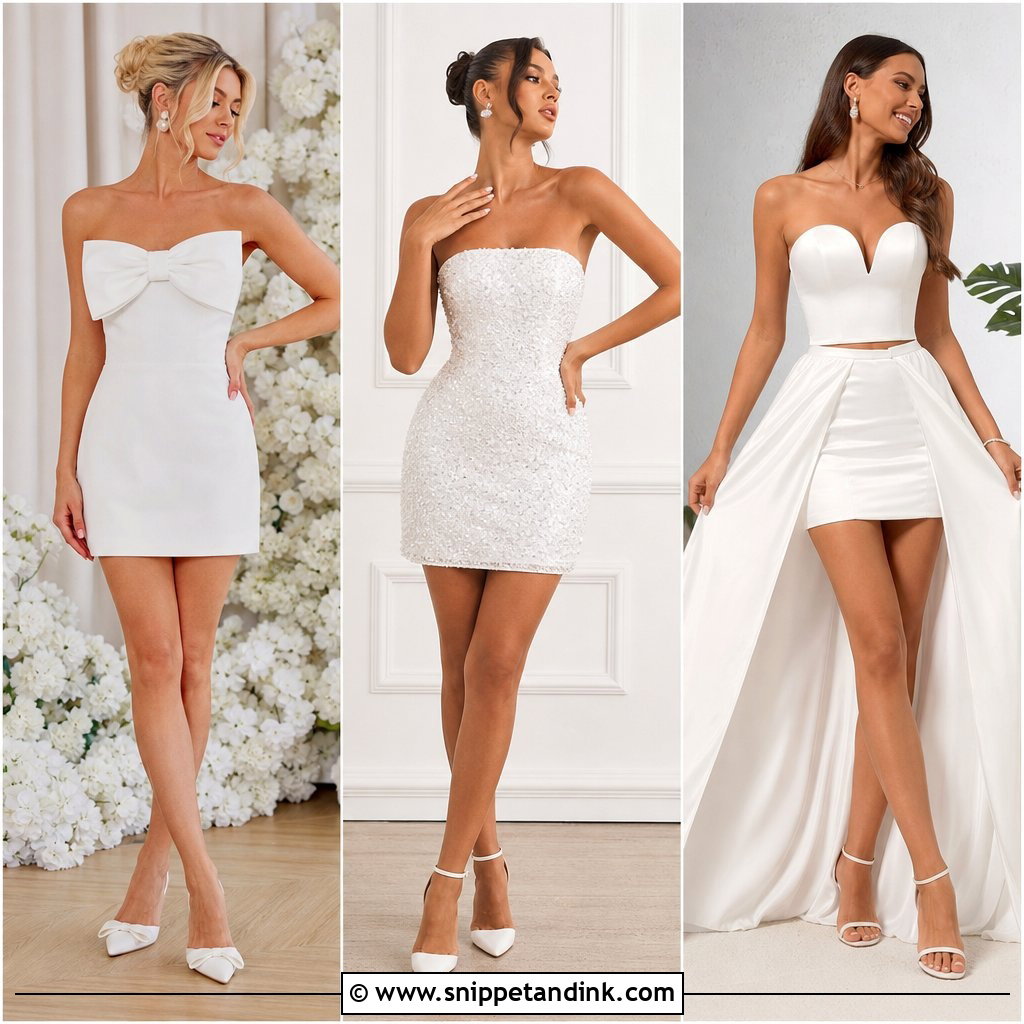
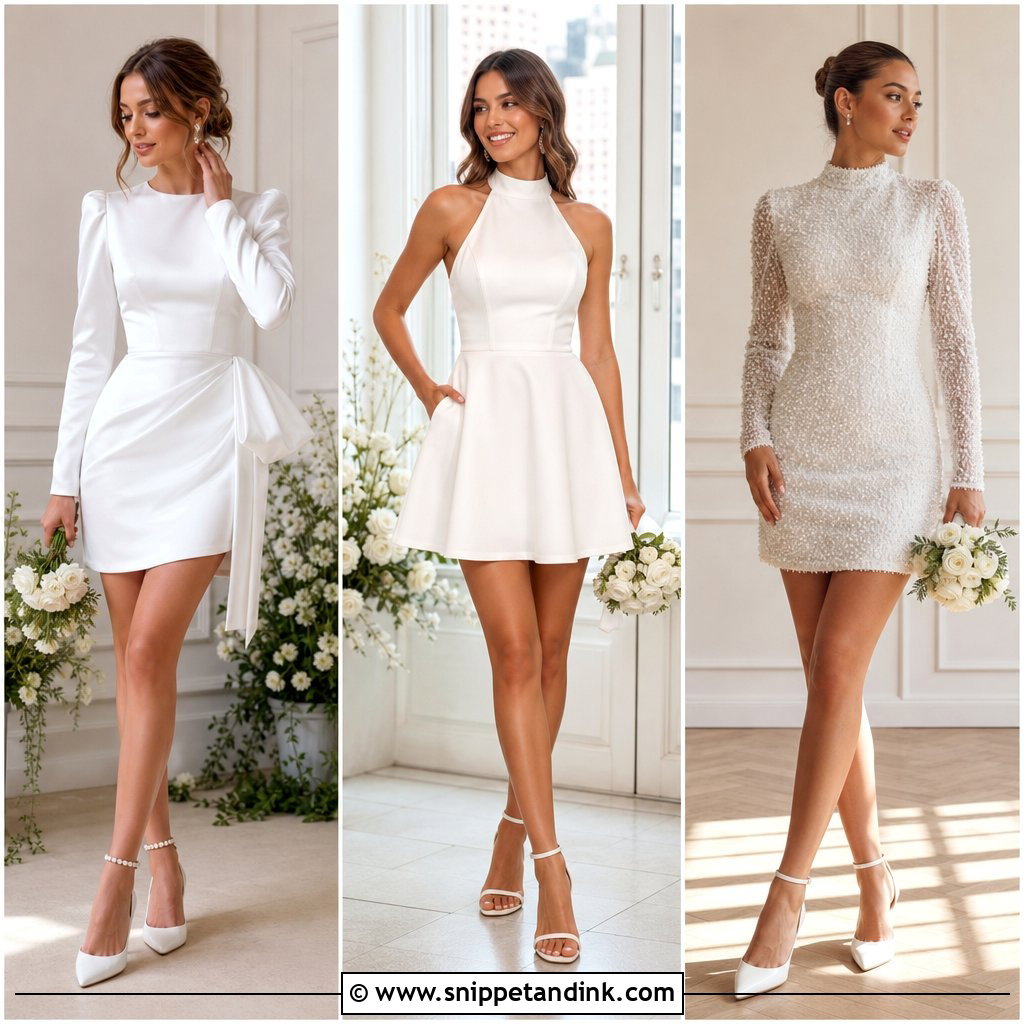
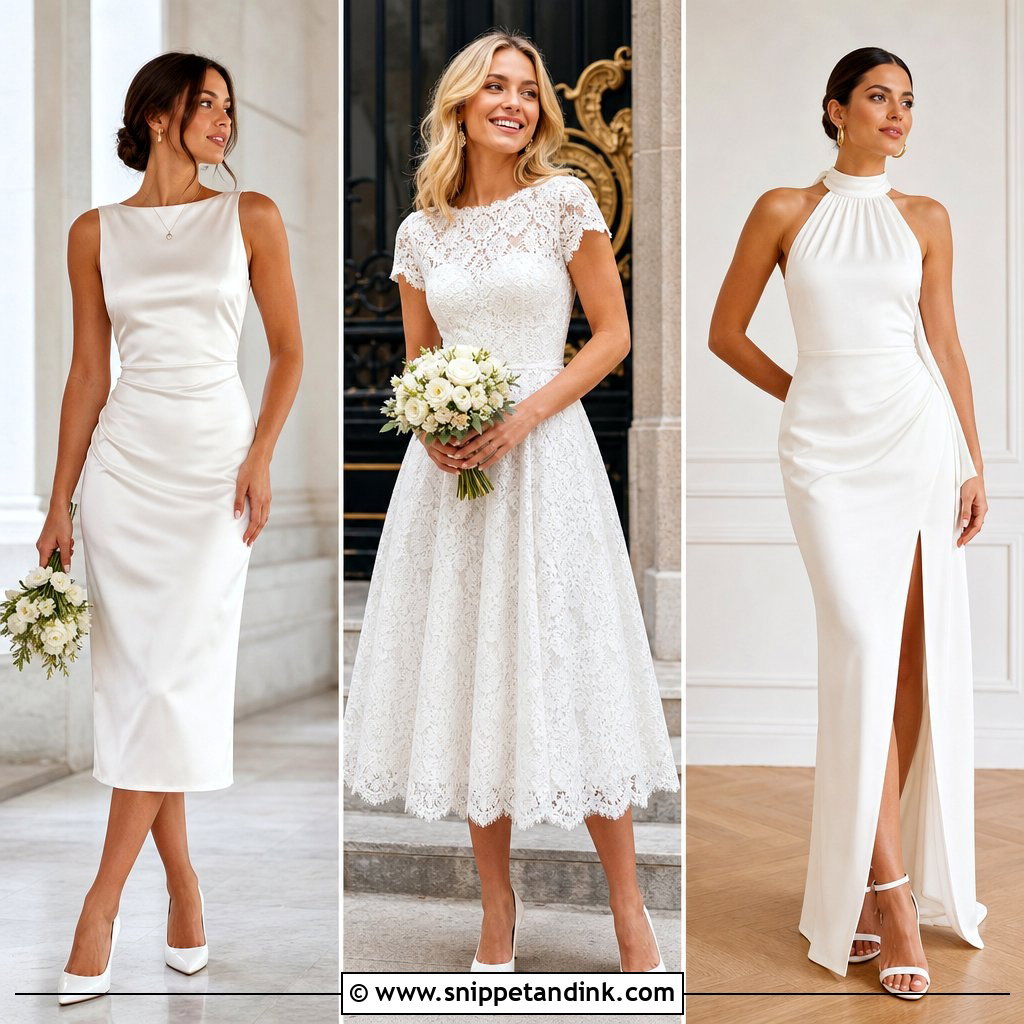
20. Vintage Column Civil Wedding Dress
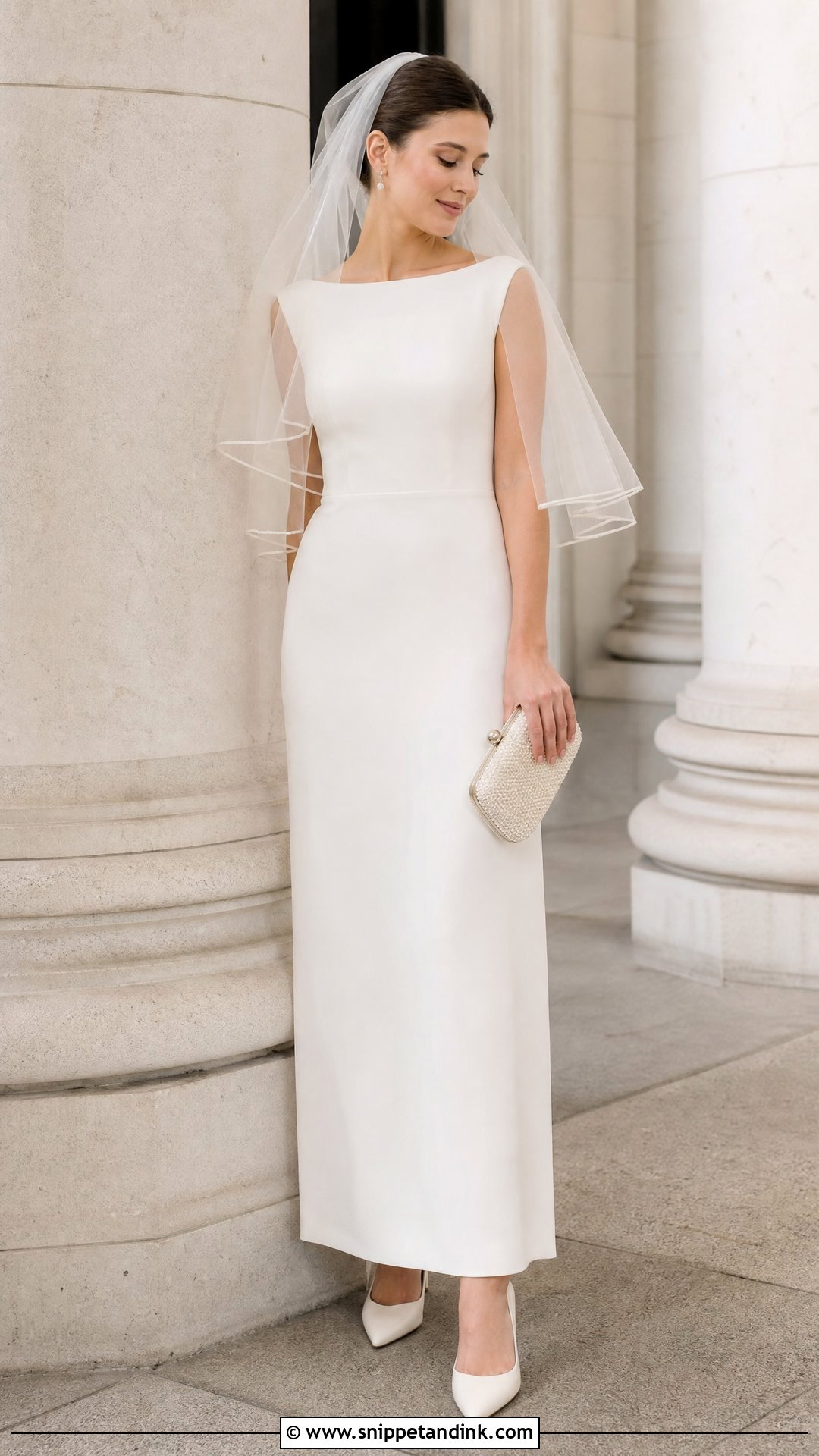
A column gives you a long silhouette without a train to manage in narrow civic rooms. An ankle-length crepe, satin or silk gown with a clean bateau neck and light waist shaping is the base, with covered back buttons, a draped cowl or a detachable bow for vintage detail. A fingertip veil suits a compact registry room better than a cathedral length. Long gloves add formality if you keep other jewelry minimal. I set the hem in your exact shoes; even a half-inch heel difference makes a column catch your toes on steps. Low pointed pumps and a small beaded clutch complete it.
Street Portraits After the Signing
Most city couples head outside for photos straight after the ceremony, and a vintage outfit can either love the street or fight it. A few things I tell brides before they go out:
- Wind lifts minis, capes and chiffon. Short capes and light skirts may need a few hidden weights at the hem.
- Midday sun on white stone bounces light up and can flatten bright white fabric. Ivory, champagne and textured fabrics hold their detail better.
- Pavements mark satin and lace hems quickly. Tea length and midi stay clean; a floor-length hem needs lifting on every crossing.
- Bring flats for walking between locations and change back into heels for the shots that show your feet.
Agree on two or three locations within walking distance rather than five across town. The outfit stays fresher, and you’ll still have the energy for lunch.
From Registry Office to Lunch Table in One Outfit
A vintage civil wedding outfit works when nostalgia and practicality pull in the same direction. A 1960s mini, Edwardian lace and 1930s satin all qualify, as long as the hem, fabric, sleeves and shoes cope with walking, sitting, signing and posing outside. Proper tailoring makes a thrifted find, a family dress or a new vintage-style piece feel like yours. Test the whole outfit on stairs before the day, and plan for weather between the building and the reception. Get those basics right and the period details can carry the rest.
You'll Like These Ideas:



Leave a Reply