
Brides tend to buy footwear last, after the lehenga, the jewelry and the dupatta, and it shows on the day when the feet are the first thing to give up. A good bridal chappal has to suit the outfit, hold the foot through hours of rituals and greetings, and still let you dance at the sangeet. Below are twenty pairings I’d put together for real functions: red lehengas, pastel day looks, silk sarees, shararas, reception gowns and a fusion jumpsuit. Each one covers color, jewelry, bag and heel height. You’ll find flat juttis, block heels, pearl slides and plain Kolhapuris here, chosen as much for how they wear as for how they look.
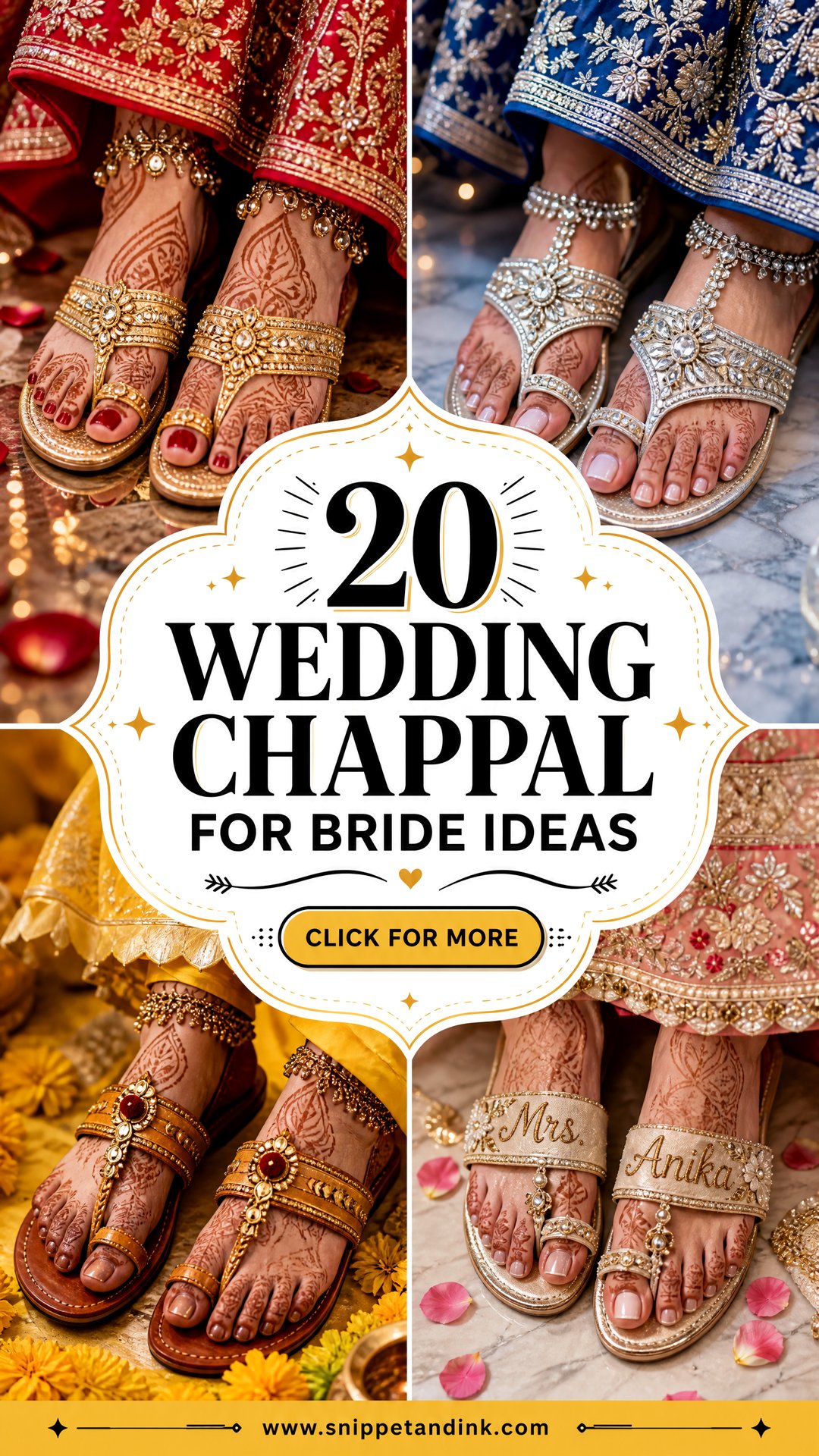
How Many Pairs a Multi-Day Wedding Really Needs
Most South Asian weddings run over three to five functions, and one pair can’t do all of them well. I plan footwear function by function, the same way the outfits are planned, and I keep it to as few pairs as the schedule allows.
- Haldi: an old or inexpensive flat pair you don’t mind ruining. Turmeric stains are hard to remove.
- Mehndi: flats again, because you’ll sit for hours and then dance on grass or a courtyard.
- Sangeet: something with a back or ankle strap that holds through choreography.
- Wedding ceremony: the showpiece pair, usually flat or a low block heel, since rituals involve a lot of stepping and sitting.
- Reception: the place for height, crystals or a platform if you want them.
Remember too that at many ceremonies you’ll take your shoes off at the mandap or the prayer area, and in some families the groom’s shoes are hidden by the bride’s sisters as a game. That means the ceremony pair spends part of the day off your feet, and easy slip-on and off construction is worth more than a fiddly buckle.
1. Gold Wedding Chappal With Red Lehenga
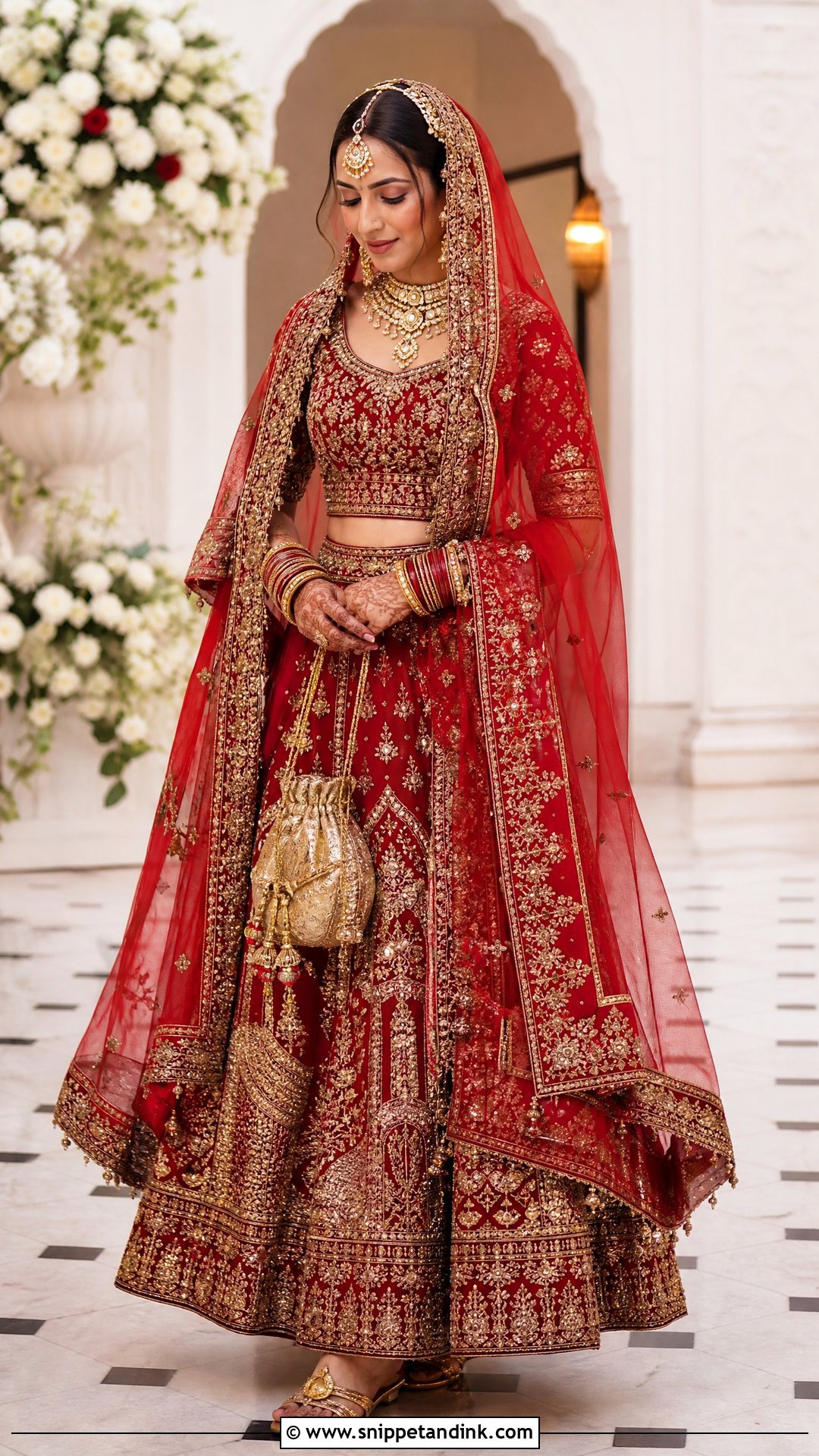
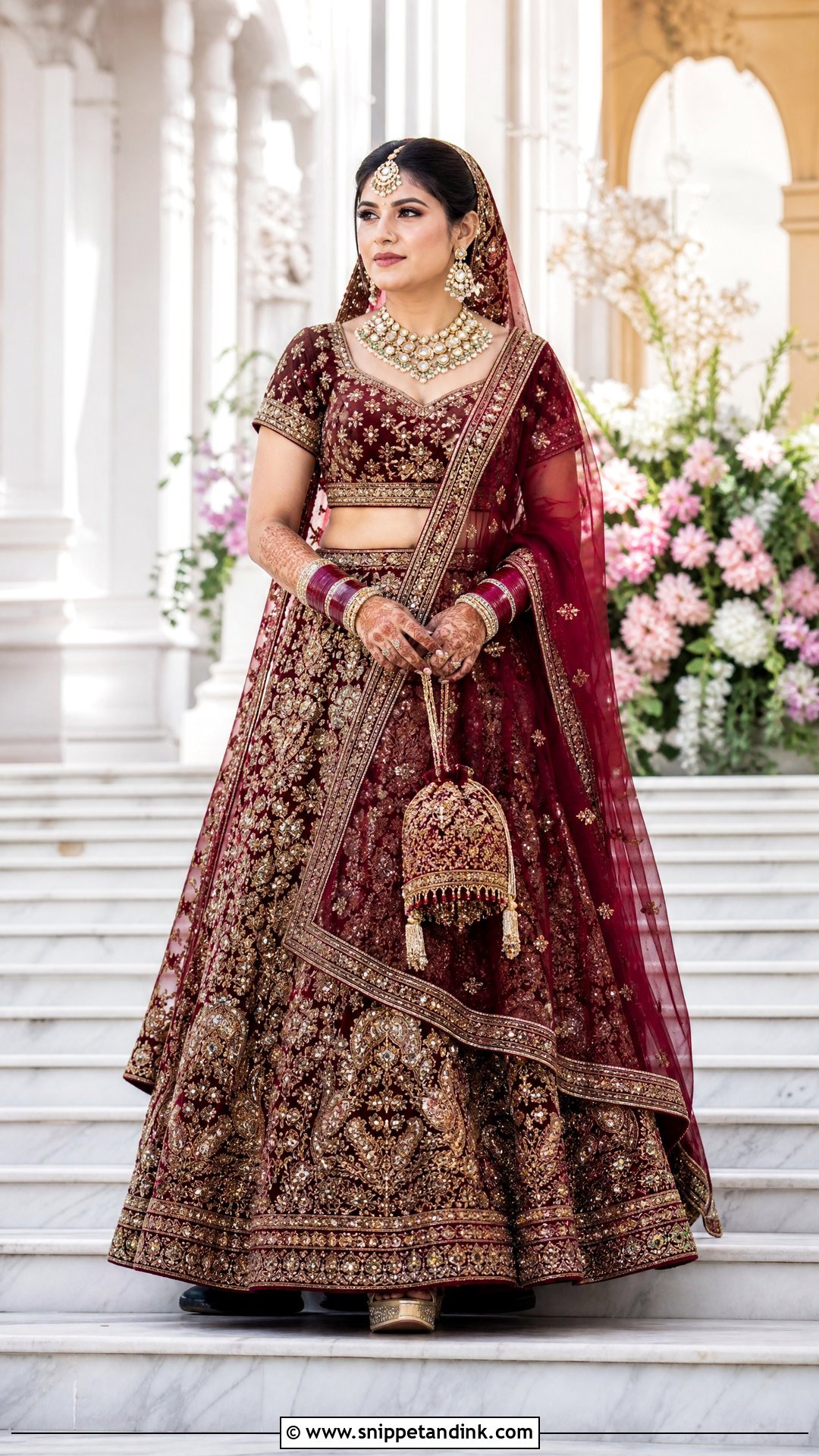
With a traditional red lehenga I almost always go for antique gold rather than bright yellow gold. The muted metal sits with zari and dabka embroidery instead of shouting over it. Look for zari work, small pearls or a little kundan on the strap. Pair it with a fitted red blouse, a sheer embroidered dupatta, kundan jewelry and a structured gold potli. Flats get you through a long ceremony; a low wedge adds height without strain. One thing I insist on: take the chappals to the final lehenga fitting. A hem set without them will either drag or flash ankle, and a cushioned, smooth-lined sole makes the hours of standing far easier.
2. Pearl Wedding Chappal With Ivory Lehenga
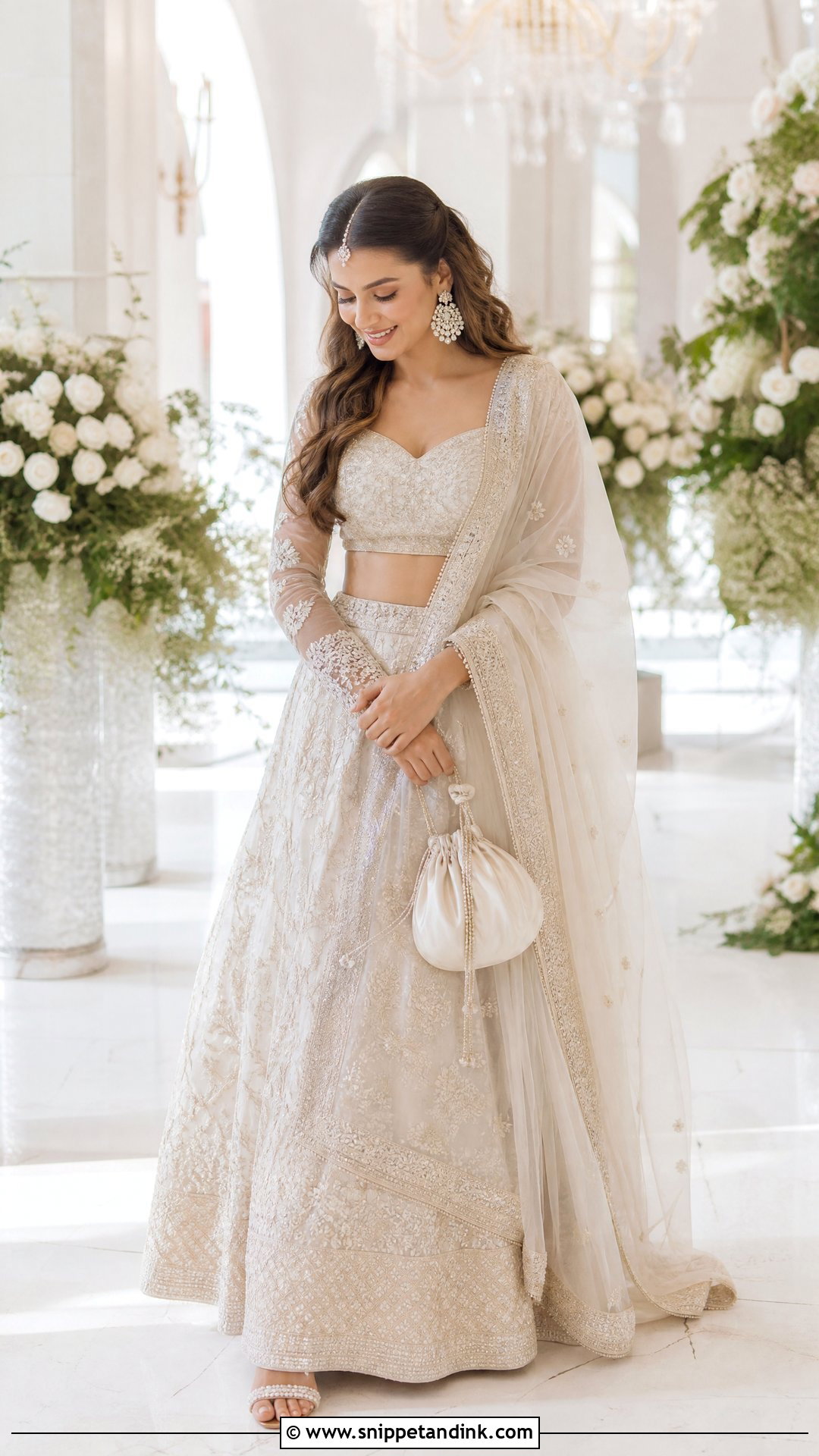
Ivory embroidery is delicate, and heavy footwear makes it look cheap beside it. A pearl chappal with slim straps keeps the finish clean. I’d wear it with an ivory lehenga worked in champagne thread, a matching blouse and a light dupatta over one shoulder, then add pearl earrings, a small maang tikka and a satin potli. Mixed pearl sizes give dimension; big single pearls near the toe catch on a can-can skirt. A low block heel is steadier than a stiletto on polished indoor floors. Ask for an ivory sole too, because a black or brown sole shows in every seated photo where the skirt lifts.
3. Kundan Wedding Chappal With Maroon Lehenga
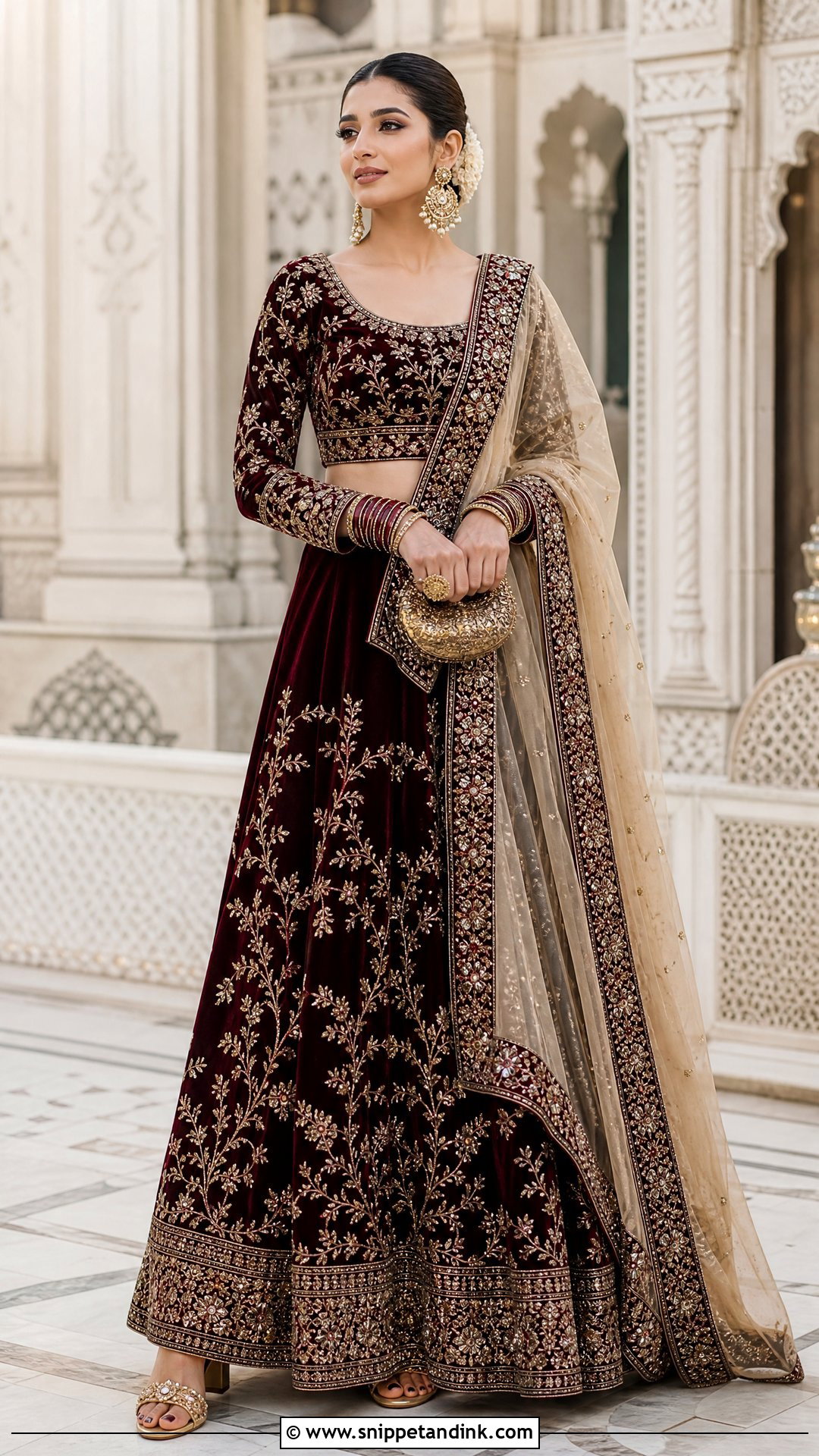
Maroon velvet or raw silk is heavy to look at, so the footwear should calm it down rather than add more weight. Kundan chappals in antique gold settings with a few small red stones echo the lehenga without copying every motif. Style them with a fitted blouse, a contrasting beige dupatta, kundan earrings, stacked bangles and a small embroidered clutch. Stone-set chappals weigh more than you’d expect, and that weight drags the foot forward on a narrow strap. Choose a broad front strap or a back strap if there’s walking involved, plus a padded footbed.
4. Mirror Work Wedding Chappal With Mehndi Lehenga
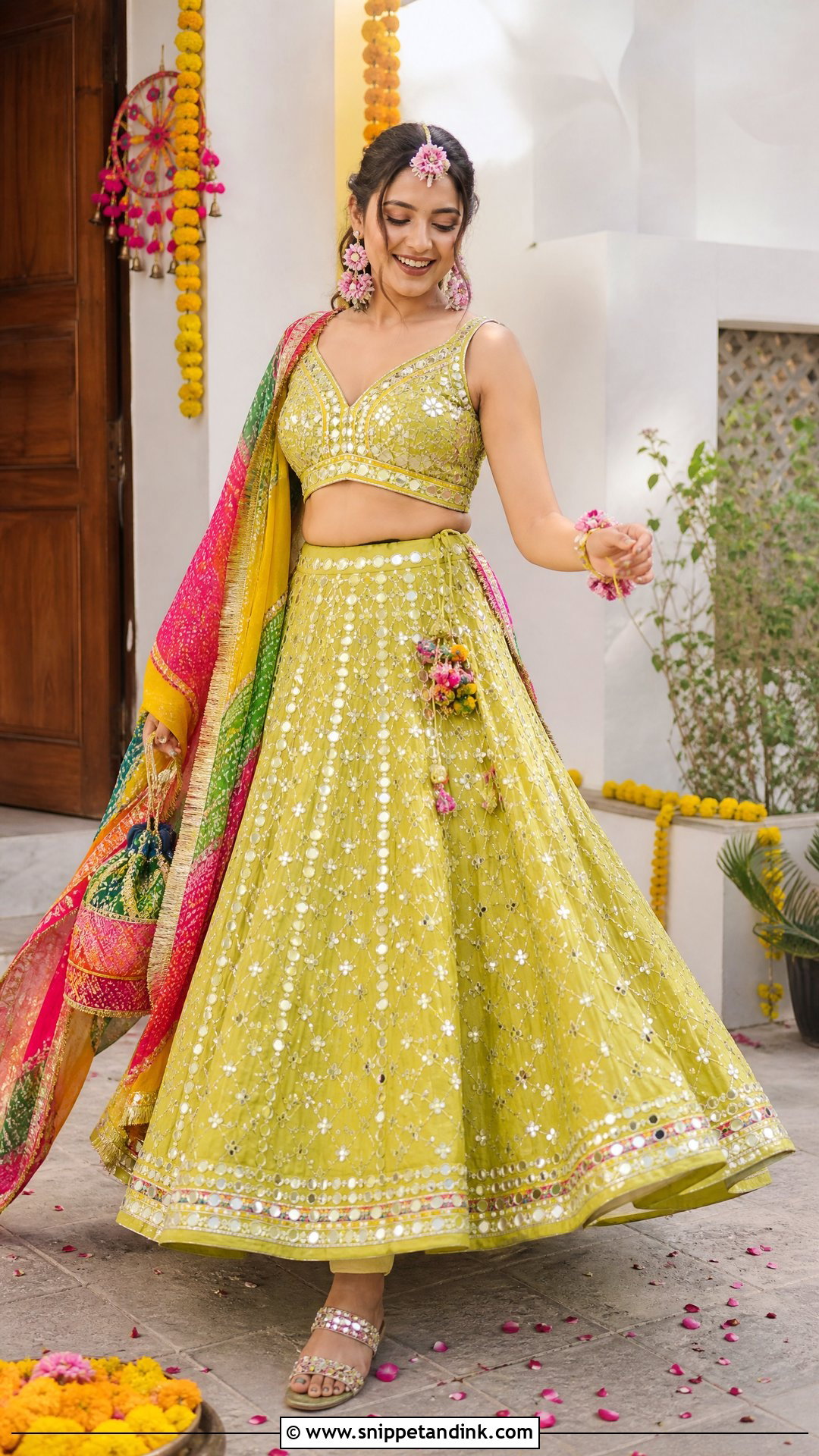
Mehndi functions are for dancing, sitting cross-legged and wandering across a lawn, so this is the night for flats. Mirror work chappals bring sparkle to a mehndi outfit in lime, yellow or a multicolor lehenga trimmed with gota. A cropped blouse and light dupatta let you move. Add floral jewelry, bright bangles and a tassel potli. Check how the mirrors are edged; raw-cut mirror pieces with thin stitching snag organza and net within minutes. Pick the chappal base from one shade in the lehenga rather than matching the whole palette, which keeps it looking chosen rather than bought as a set.
5. Floral Wedding Chappal With Pastel Lehenga
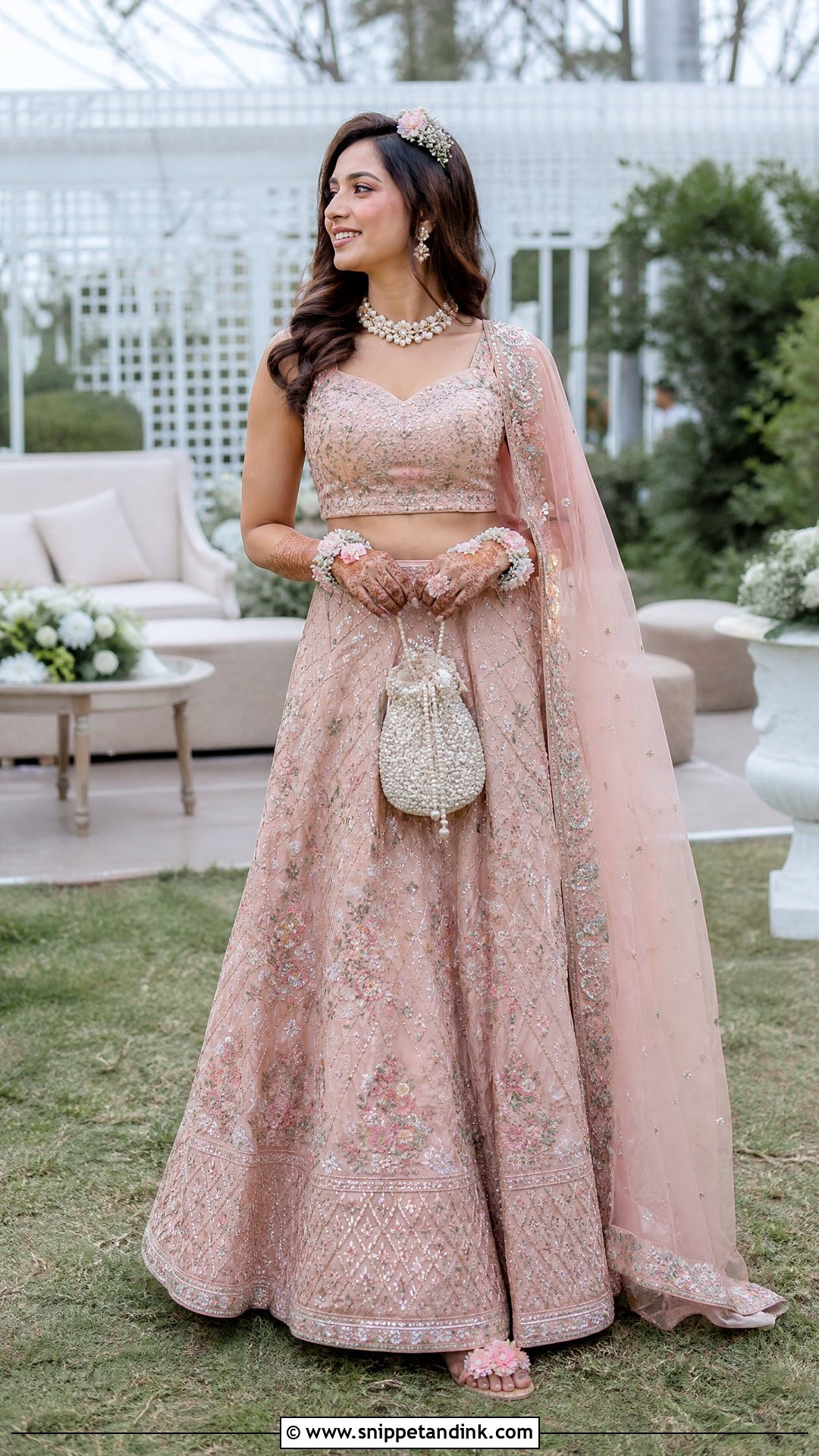
Picture a blush lehenga in daylight with thread-embroidered flowers peeking from under the hem. That’s the feeling for a daytime ceremony, engagement or small garden function. Choose chappals with flowers worked in peach, lavender, mint and ivory, and wear them with a pastel lehenga, a short-sleeve or sleeveless blouse and a sheer dupatta with a narrow border. Pearls, a floral hair accessory and a beaded mini bag complete it. Keep the heel flat or under an inch. The sole color matters more with pastels than with anything else: a dark or high-contrast sole breaks the soft palette, so go nude, blush or ivory.
6. Silver Wedding Chappal With Blue Lehenga
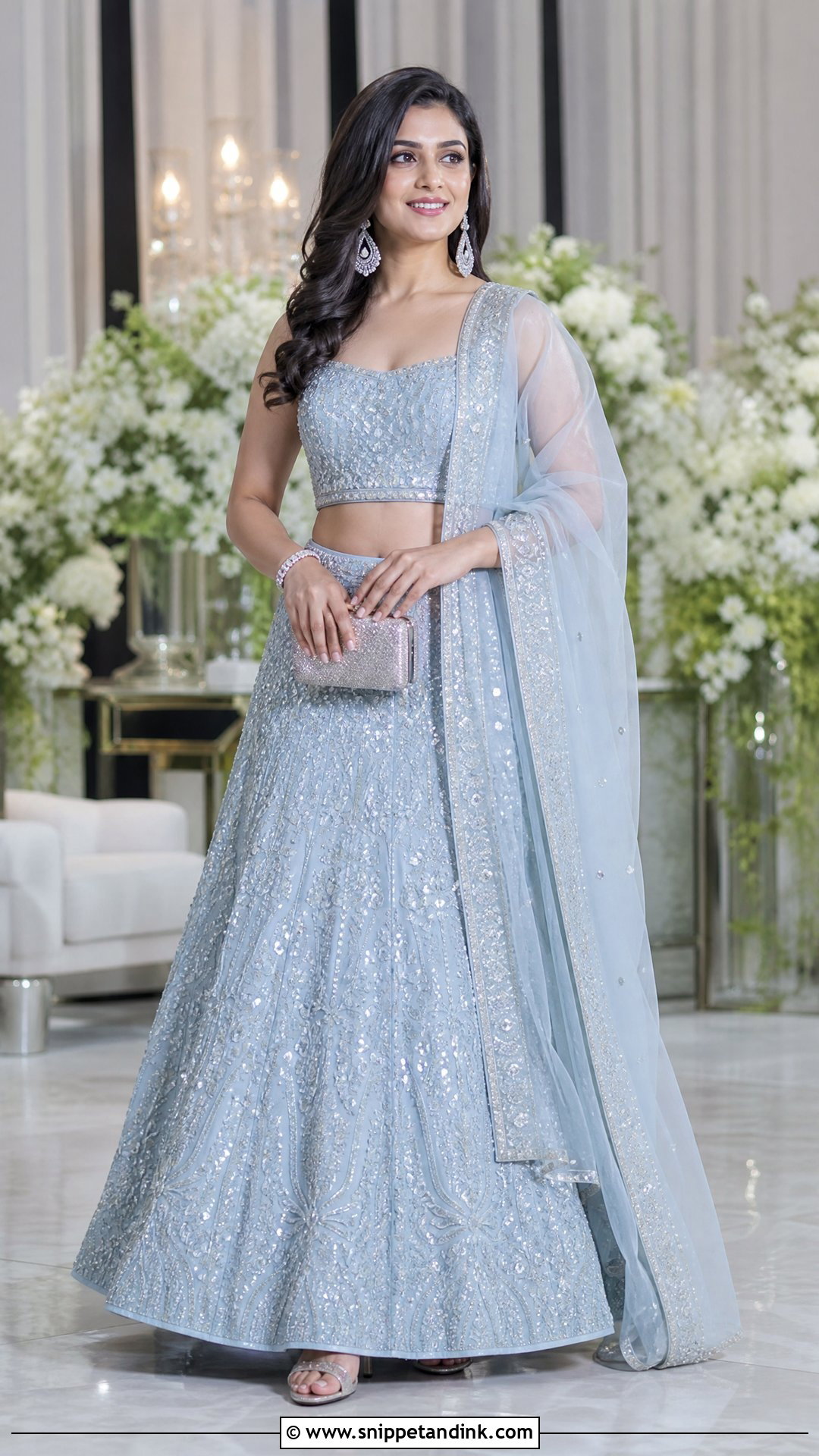
Silver is underused with blue, and I think it’s one of the cleanest pairings on this list. A powder, steel or navy lehenga with silver sequin work looks sharp with slim metallic chappals and crystal straps for an evening function. Add diamond-style earrings, a bracelet and a silver box clutch, and keep the dupatta light. Before buying, hold the chappal against the embroidery in daylight, because bright chrome and antique silver are not the same metal to the eye and the mismatch shows clearly in close-up portraits. A two-inch block heel gives height for the entrance; flats are kinder for a long night.
7. Rose Gold Wedding Chappal With Peach Sharara
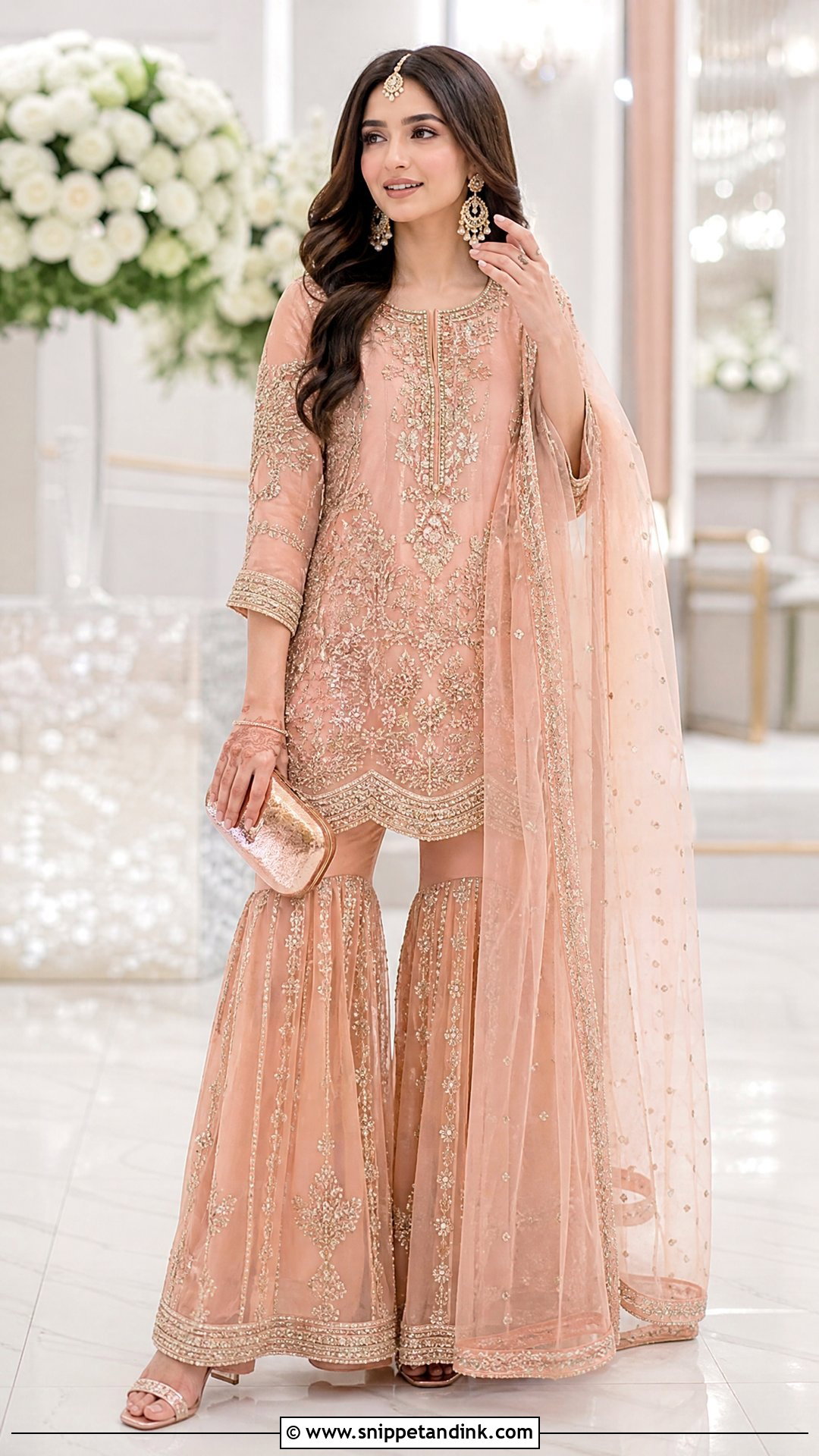
Rose gold warms up peach without the hard contrast that yellow gold can create. Choose slim rose gold straps with scattered crystals on a stable block heel, then wear them with a short embroidered kurta, flowing sharara and an organza dupatta. Rose gold earrings, a delicate passa and a small metallic clutch keep the metal consistent. Sharara pants swirl around the ankles, and that’s where sharp crystal settings snag the fabric and pull threads. Choose smooth settings and an ankle strap for dancing. I like this for an engagement, sangeet or reception where the bride wants some sparkle in a softer color.
8. Embroidered Wedding Chappal With Bridal Anarkali
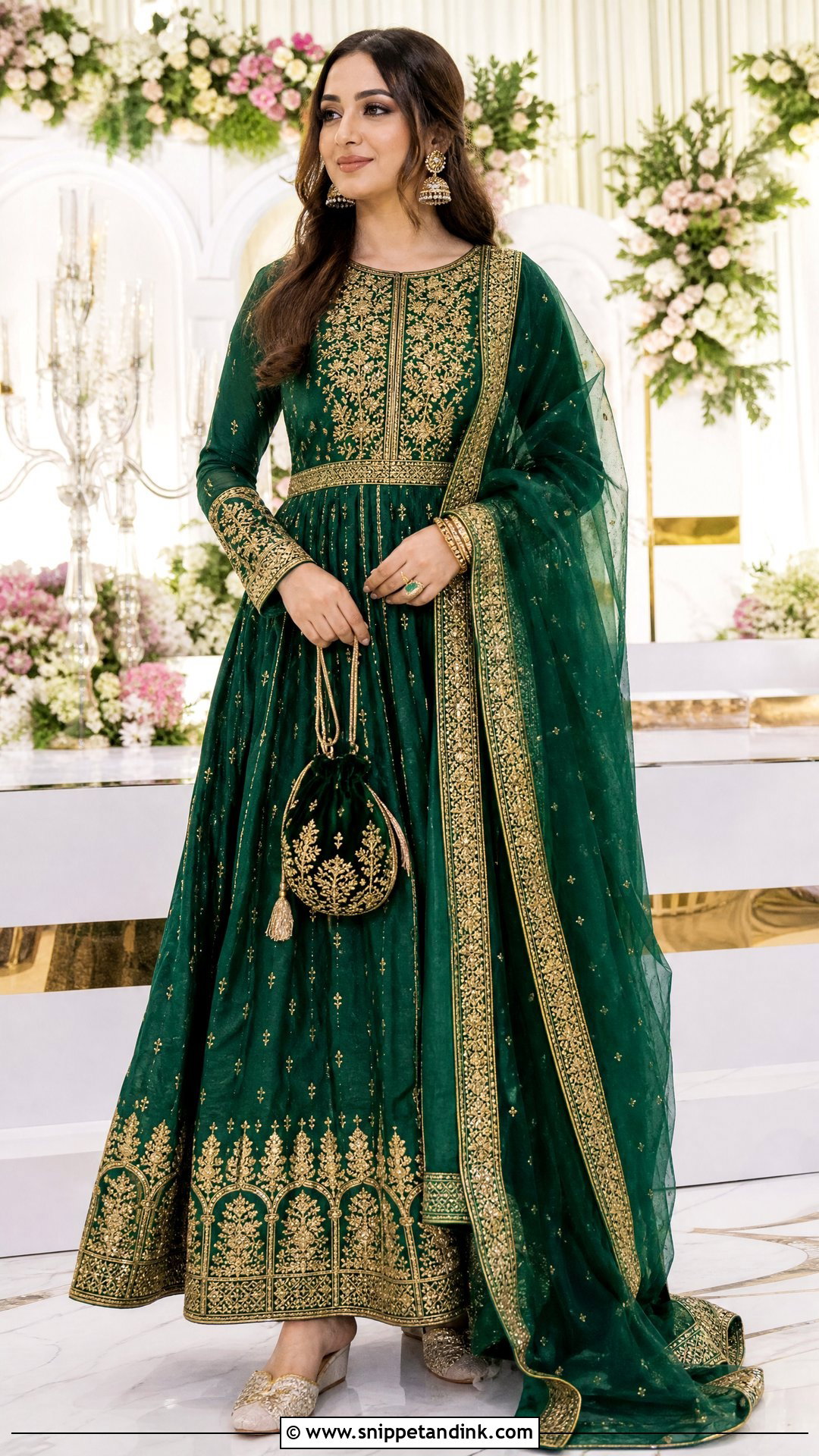
A floor-length Anarkali hides the feet almost completely except when you walk, so comfort and construction come before decoration here. Fine threadwork and a few sequins on a gold or beige base are enough. Wear the chappals with a burgundy, emerald or rust Anarkali, a dupatta draped over both arms, jhumkas, bangles and a velvet potli. A low wedge lifts the hem off the floor and spreads pressure better than a slim heel. My advice is to match the chappal to the embroidery thread rather than the dress fabric, which also makes the pair easy to wear again with other festive outfits.
9. Zardozi Wedding Chappal With Bridal Saree
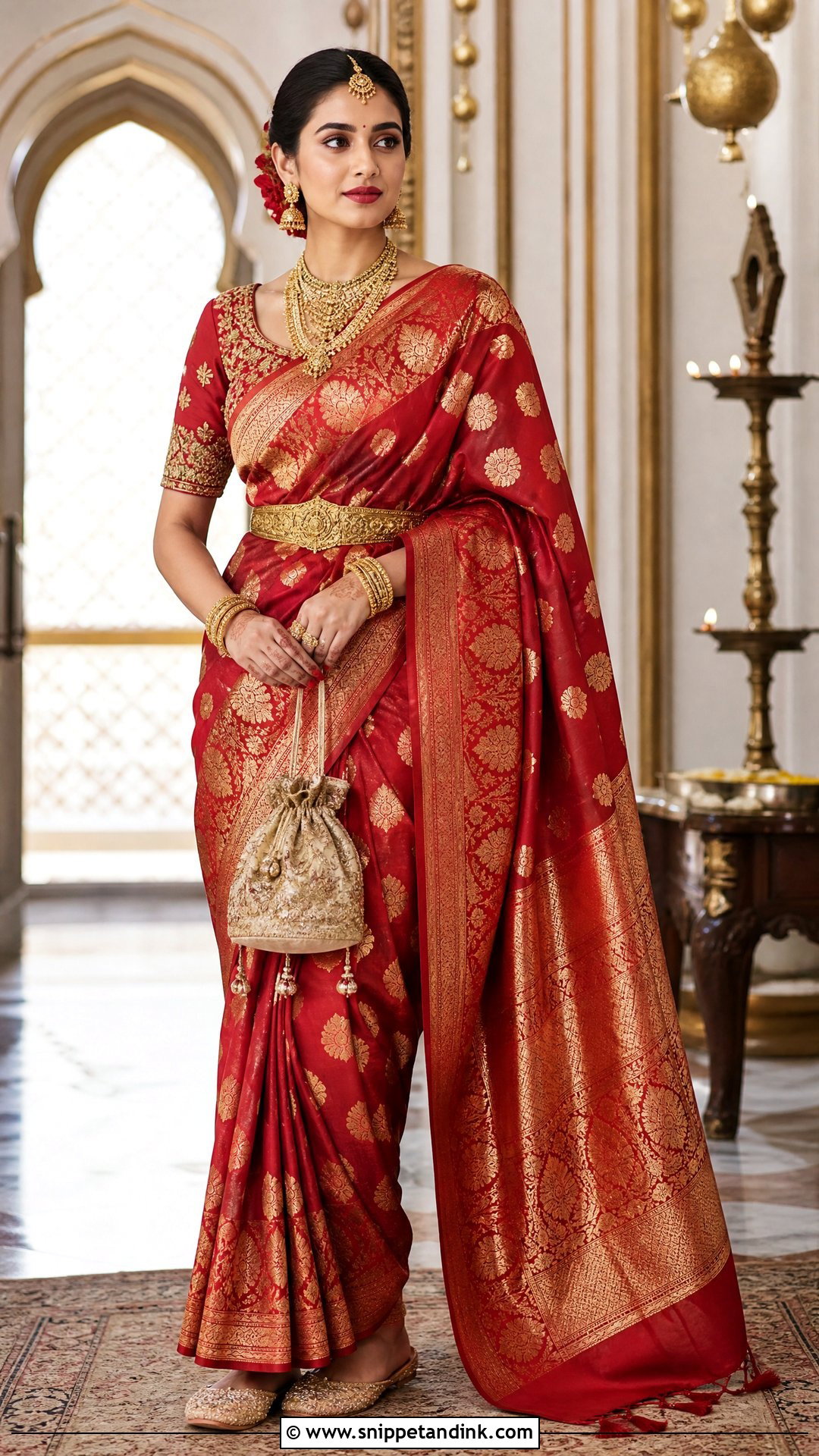
Sarees and flat footwear belong together during rituals, where you’ll be stepping, sitting and rising many times. A closed-toe zardozi chappal or flat mule in antique gold thread, beads and touches of red suits a red Banarasi, maroon silk or a cream and gold saree with a coordinated blouse. Add traditional gold jewelry, a waist belt and a small potli. The draper needs the exact shoe on the day, since the saree length and petticoat are set to the sole height. Also turn the chappal over and run a finger along the underside of the embroidery; a rough metal thread edge will catch the pleats every time you walk.
10. Crystal Wedding Chappal With Reception Gown
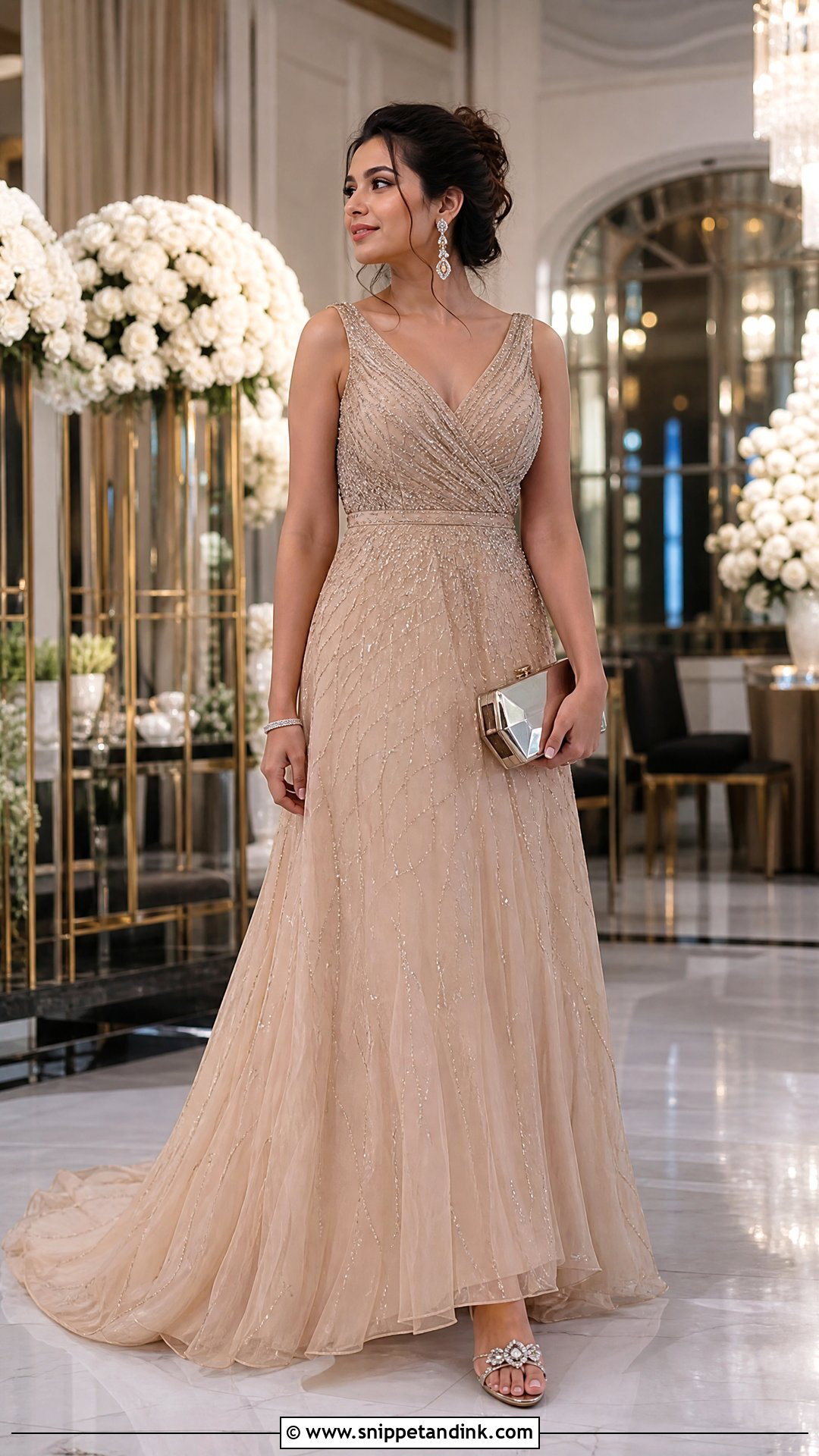
Reception gowns take crystal chappals well, as long as the gown itself is manageable. Slim crystal sandals suit silver, champagne, dusty blue or soft gray, and a flowing skirt with a moderate train keeps the shoes in play rather than buried. Add drop earrings, a tennis bracelet and a structured metallic clutch. If you’ll stand for a long photo line, a two-inch block heel is more stable than a stiletto. Clear or metallic straps keep the line of the leg unbroken under the gown. Check that the crystals are set flat; raised settings rub against the opposite ankle when you walk.
11. Velvet Wedding Chappal With Winter Lehenga
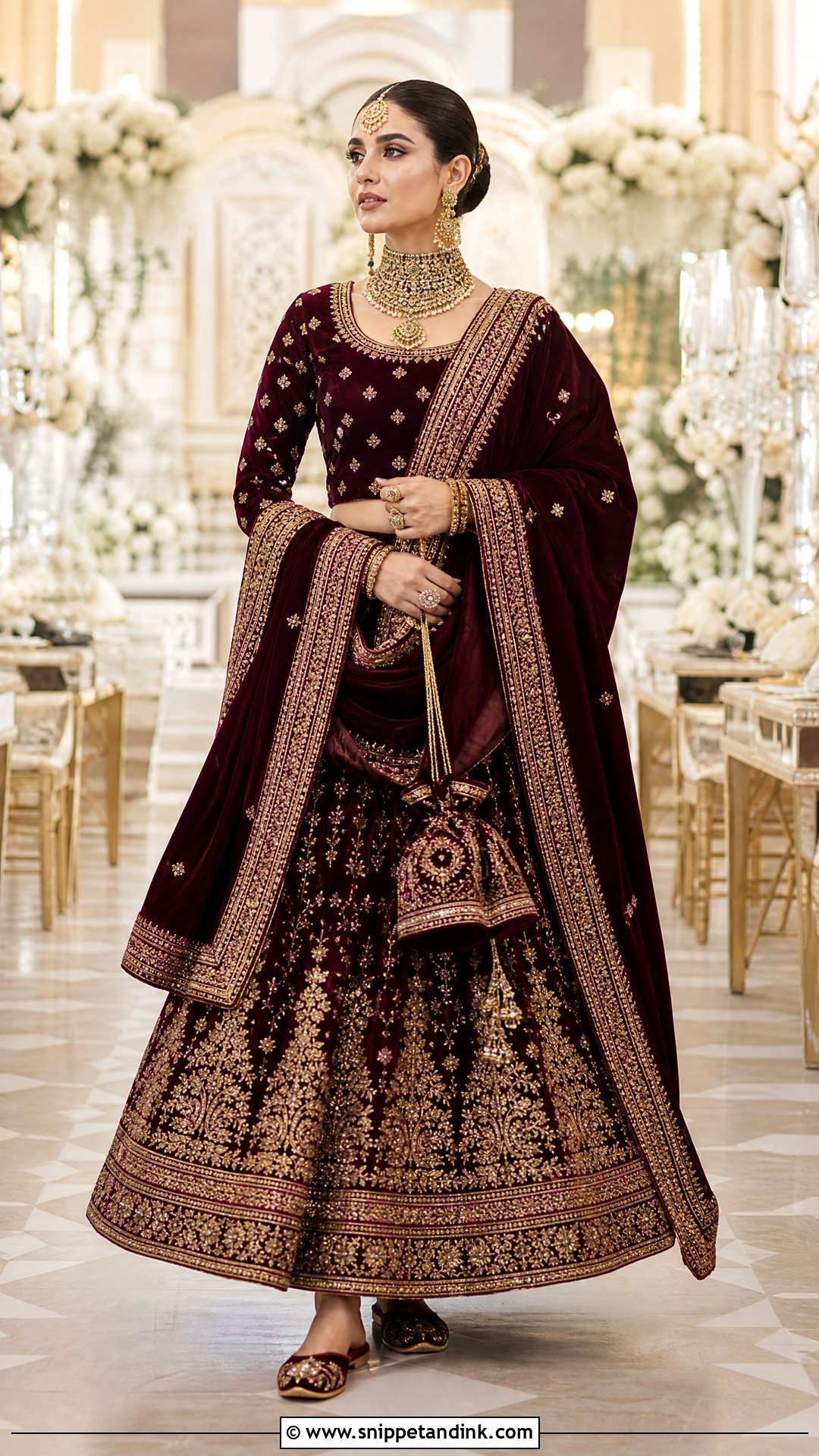
Winter weddings let you bring in velvet, which most brides love once they’ve felt it. Choose a maroon, emerald, navy or plum velvet chappal with gold embroidery and a cushioned inside, and wear it with a velvet lehenga, a long-sleeve blouse and a heavier dupatta. Antique gold jewelry and a velvet potli match the texture. A closed toe keeps the foot warmer on a cold floor. Keep the embroidery to the toe area so the shoe doesn’t look clunky. Velvet crushes and holds pressure marks, so store the pair stuffed with tissue in its box, never stacked under other shoes.
12. Kolhapuri Wedding Chappal With Haldi Outfit
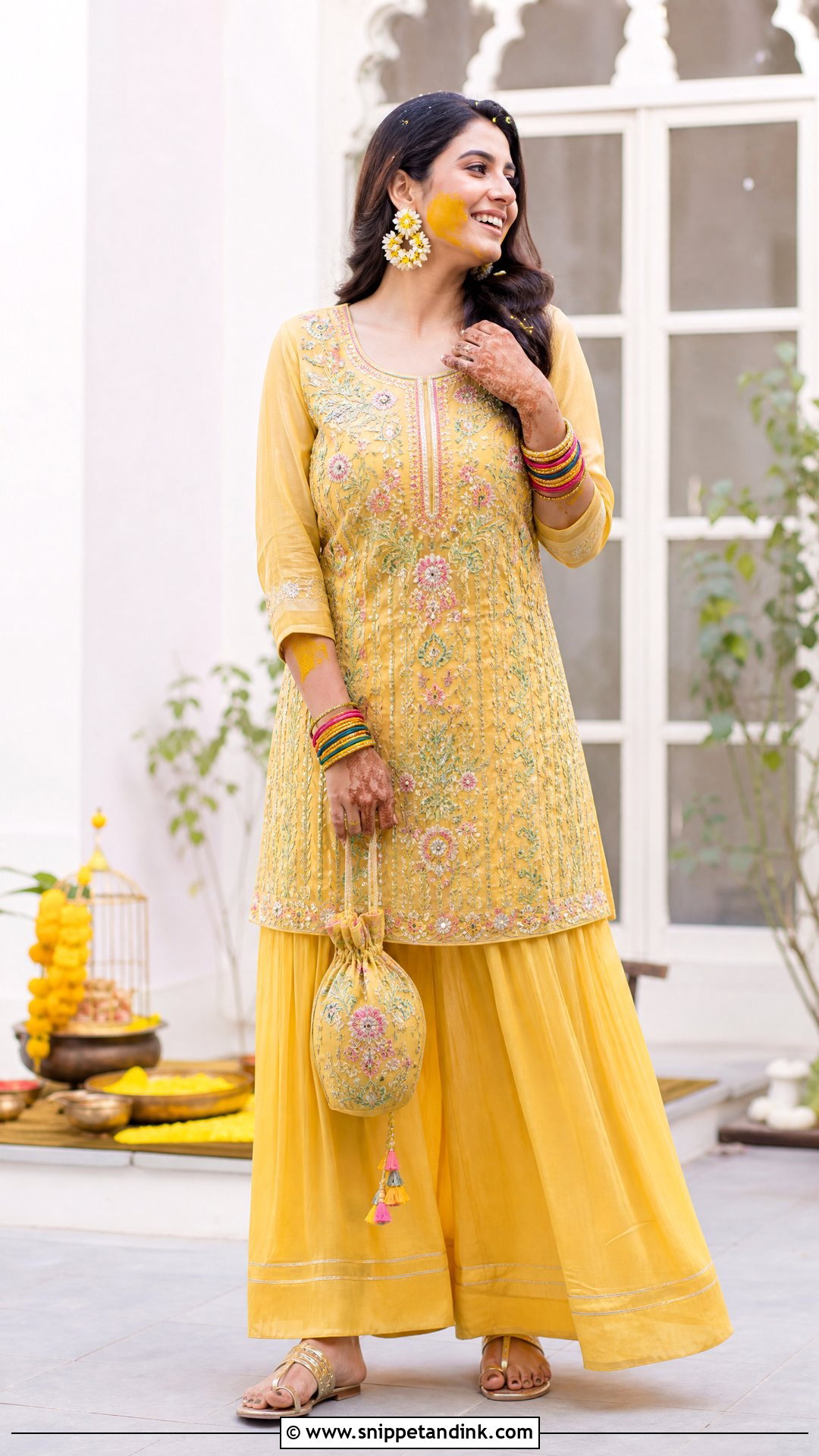
Haldi is messy by design, so I tell brides not to bring their good shoes. A plain or lightly embellished Kolhapuri suits a relaxed haldi celebration in tan, gold or yellow, worn with a light kurta and palazzo set or a short kurti over a flowing skirt. Add floral earrings, fresh bangles and a fabric potli. Turmeric paste stains pale fabric straps almost permanently, while natural leather or a metallic finish wipes down and can be worn again. Choose a cushioned sole with little metal hardware, since you’ll be sitting down and getting up many times.
13. Personalized Wedding Chappal With Bridal Lehenga
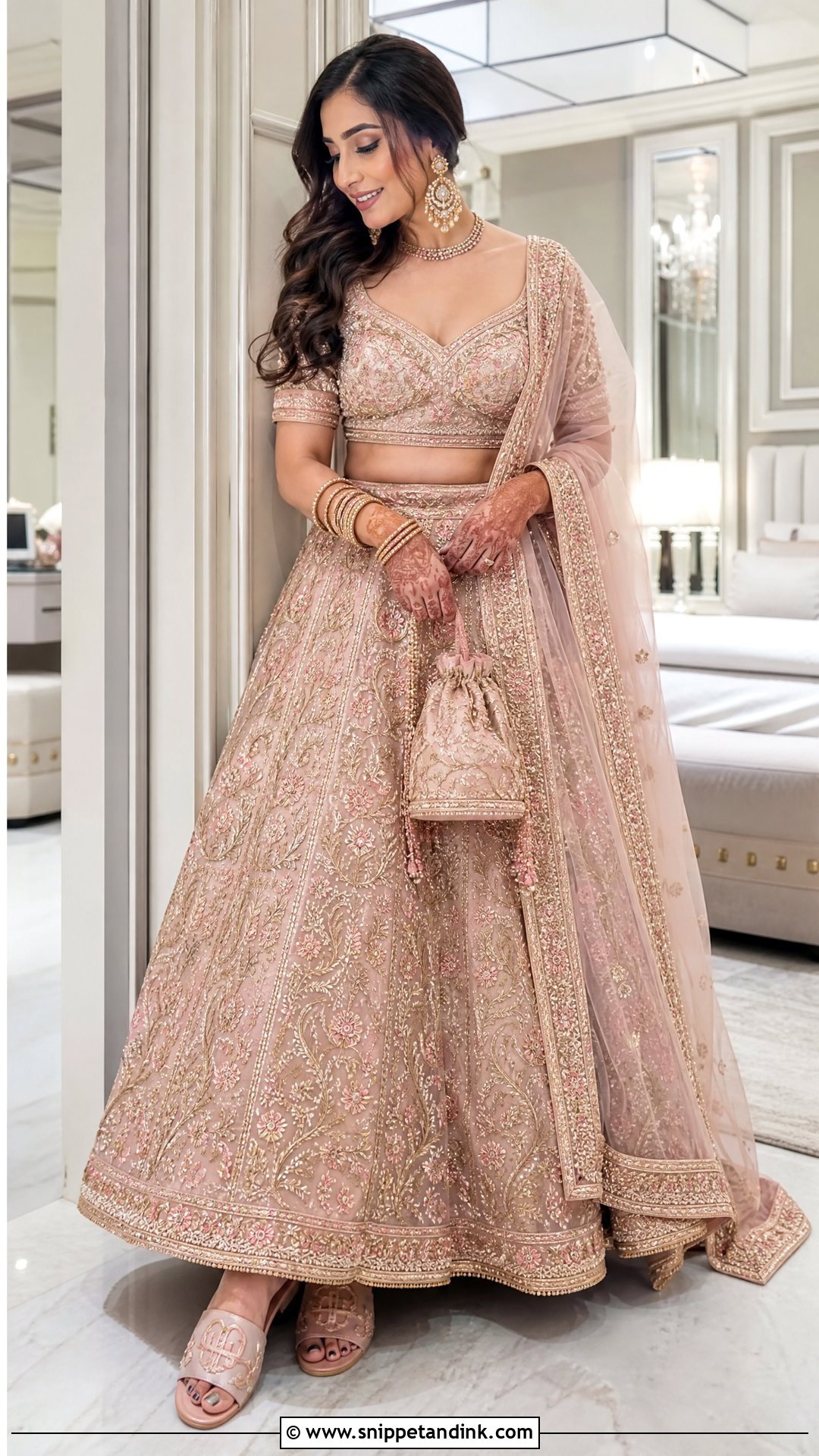
Initials, the wedding date or a small symbol on the chappal is a detail many brides keep for years. Choose a base in ivory, blush, gold or red that suits the main lehenga, and place the personalization on the toe or the inner side where a close-up can catch it. Flat jutti-style chappals give the embroiderer the most space. Style them with statement earrings, stacked bangles and a matching personalized potli. Ask the maker to back stitched lettering with soft lining, because the reverse of embroidery is scratchy against bare skin. Keep the lettering simple; tiny script blurs into a line once it’s stitched.
14. Ghungroo Wedding Chappal With Sangeet Lehenga
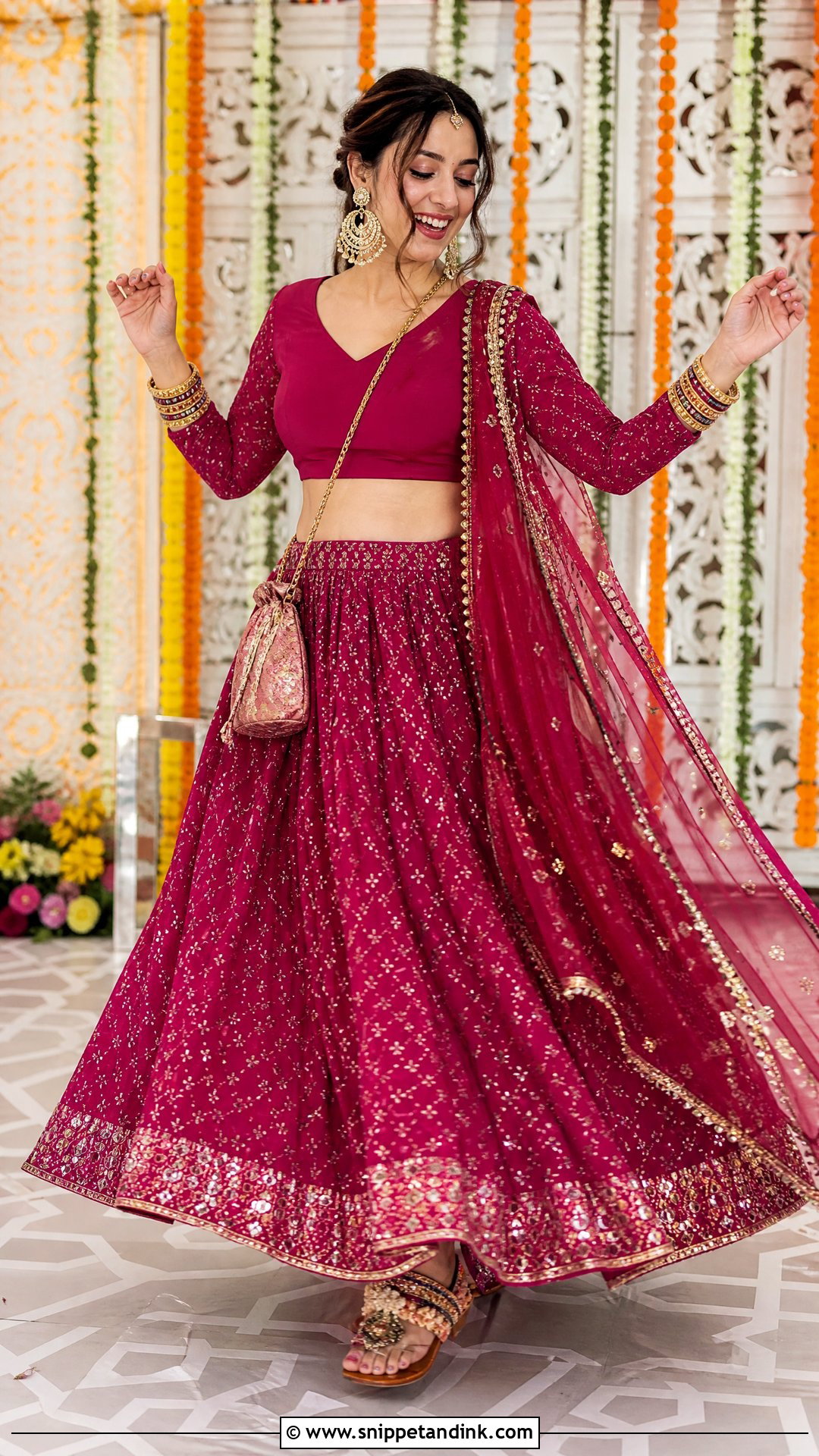
Ghungroo chappals make a little noise with every step, which is great on a sangeet floor and less great during a quiet moment. Choose a pair with bells stitched along the upper edge rather than the sole, where they’d catch and break. Wear them with a jewel-toned lehenga, a comfortable blouse and a dupatta pinned at the shoulder, plus chandbalis, colorful bangles and a crossbody potli so your hands are free. Flats or a low heel keep your balance for choreography. Walk around the house before the function: too many bells feel heavy and the jingle gets old fast. Magenta, emerald and royal blue bases look festive under bright lights.
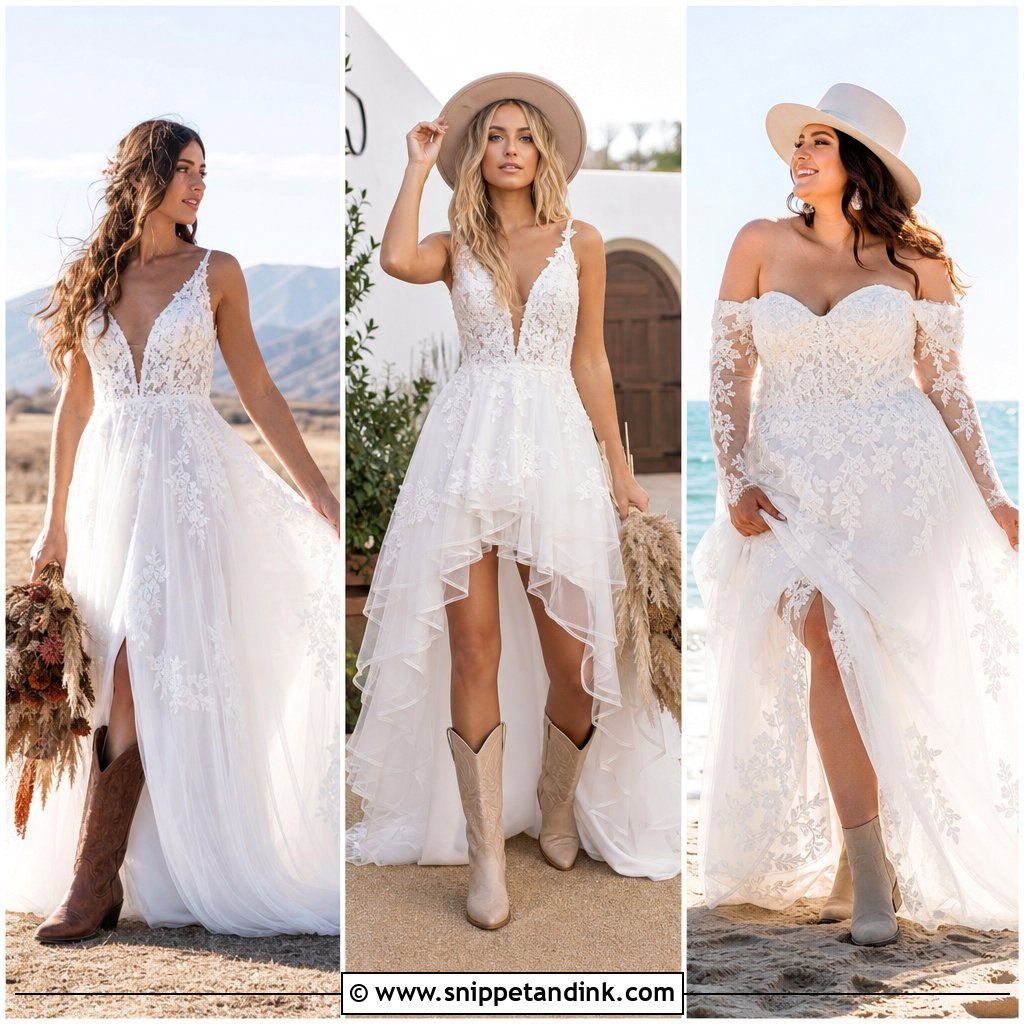
15. White Wedding Chappal With Nikkah Outfit
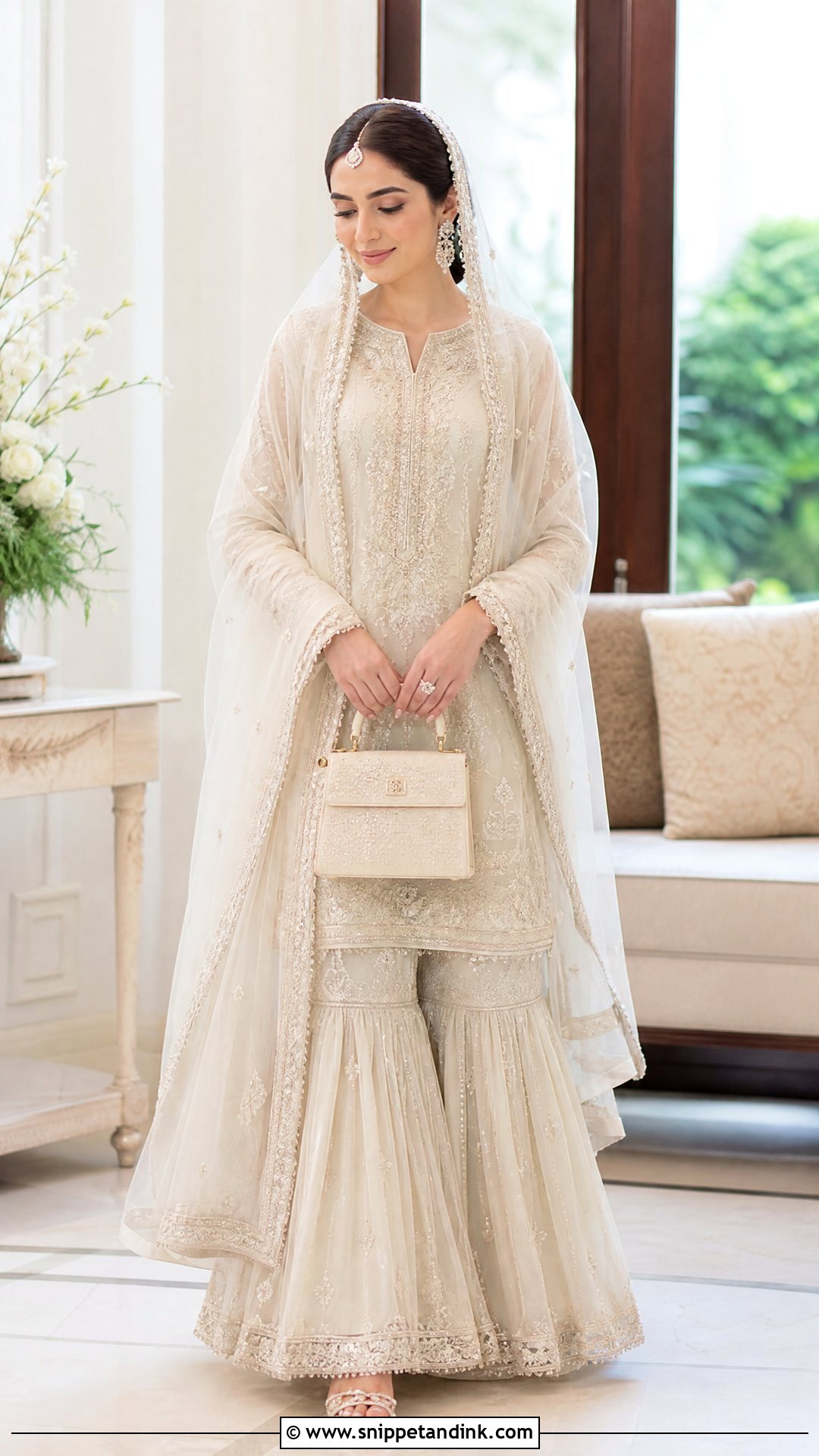
For a nikkah, I look for a white or ivory chappal that feels quiet and modest. Delicate pearl embroidery, fine silver thread or a few crystals on satin suit an ivory gharara, a long embroidered kurta and a sheer dupatta over the head or shoulders. Pearl earrings, a small tikka and a structured ivory bag finish it. White comes in many shades, and bright optical white looks harsh next to cream. Compare the shoe and the fabric by a window before you buy. A cushioned lining helps through the sitting, standing and greeting that a nikkah involves.
16. Red Wedding Chappal With Gold Saree
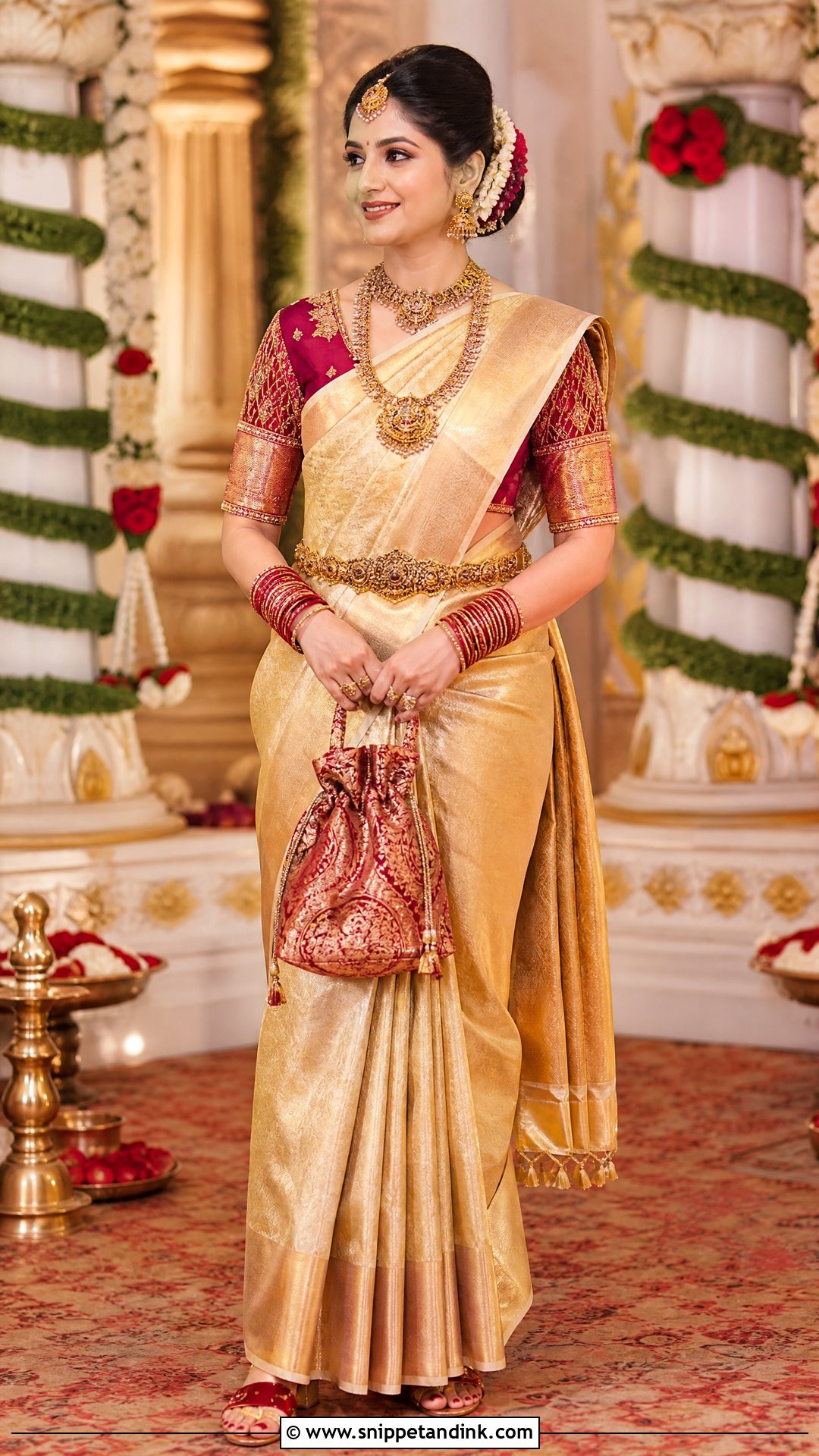
Red chappals beneath a gold bridal saree give the feet a traditional accent, as long as the red ties back to something else. Pick a crimson or deep red pair with gold zari, beads or small kundan stones, and wear it with a gold tissue, Kanjeevaram or heavily bordered silk saree and a red blouse. Temple jewelry, red bangles and a brocade potli bring the color up the body so the shoes don’t look isolated. Steer clear of shiny synthetic reds, which look plasticky beside real silk. Flats or a low wedge manage the ritual steps far better than slim heels.
17. Green Wedding Chappal With Mehndi Sharara
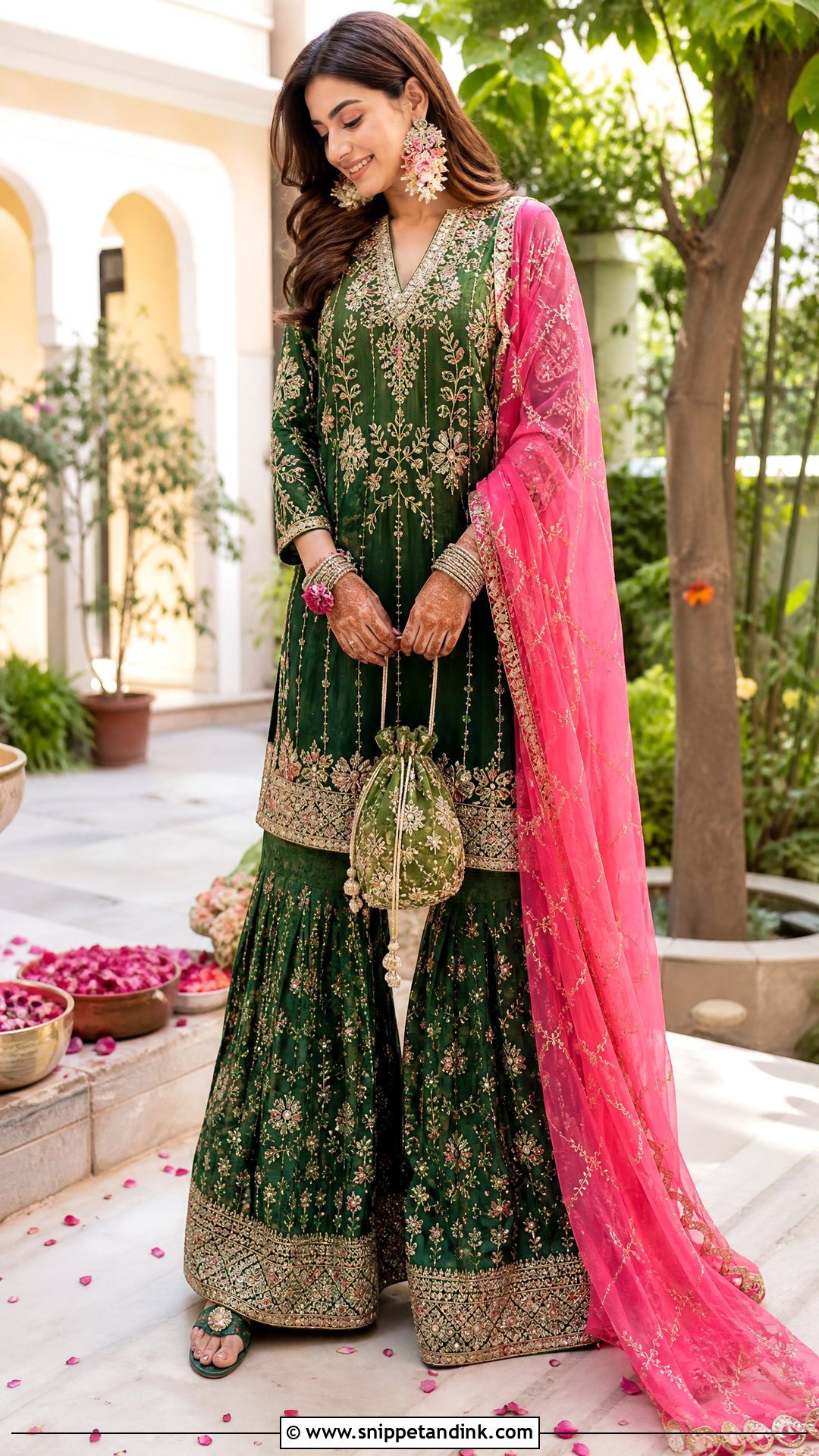
Green on green looks fresh at a mehndi, and it suits the sharara especially well. Choose emerald, olive or parrot green with gold threadwork, mirrors or bright beads, then add a short embroidered kurta, wide sharara and a pink or yellow dupatta for contrast. Floral earrings, slim bangles and a beaded potli carry the color. Wide sharara legs push loose slides off the foot, so secure straps are worth it. If you want height, a broad one-inch heel is plenty for a garden or courtyard. Mixing two green tones gives depth and stops the outfit looking like a uniform.
18. Minimal Wedding Chappal With Modern Saree
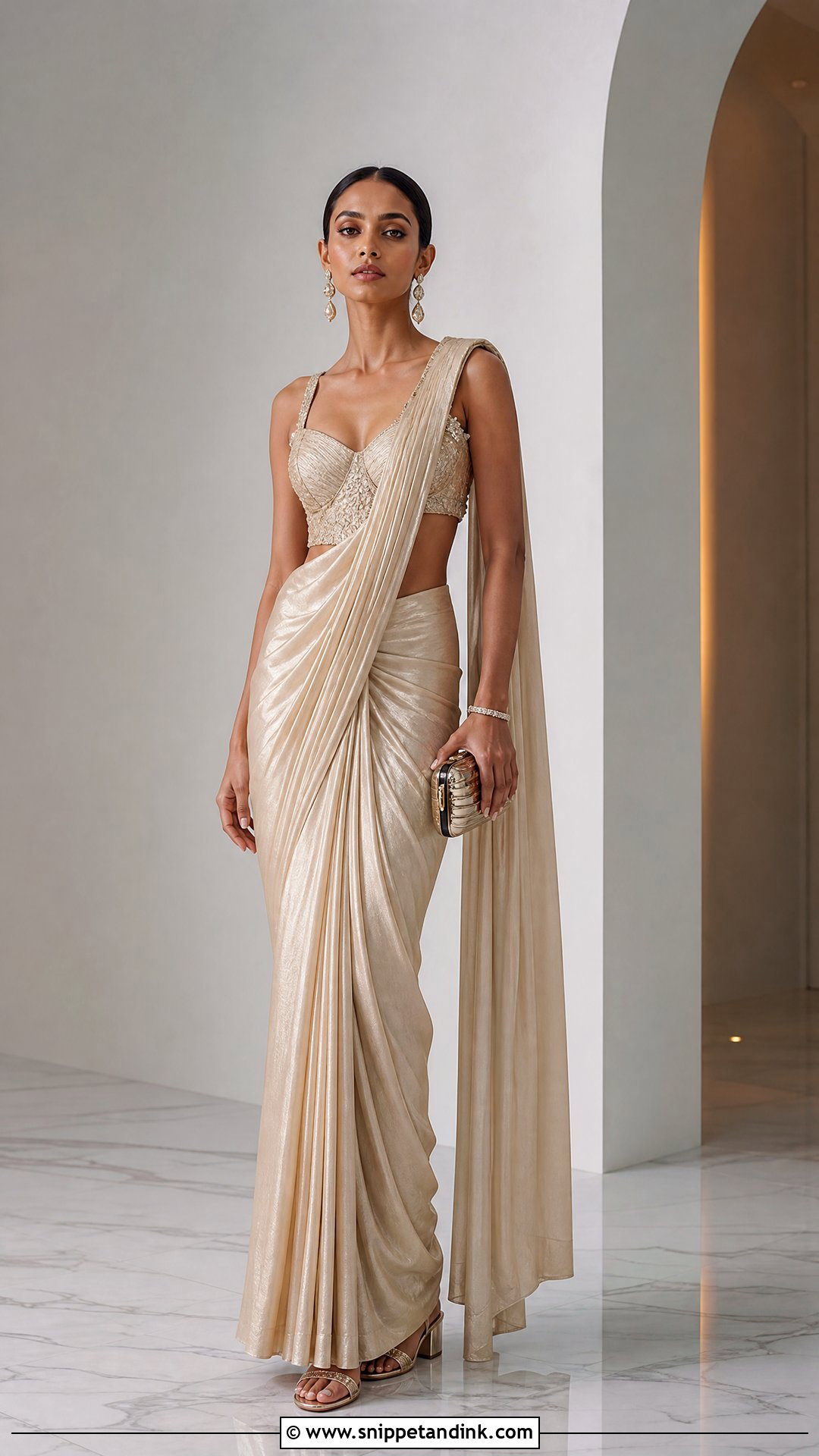
A pre-draped or modern saree with a sculpted blouse is one place where plain footwear looks better than embroidered. Choose a champagne, nude, ivory or muted gold pair with clean metallic straps, a low block heel and very little crystal. Contemporary drop earrings, a sleek bracelet and a hard-case clutch match the mood. The catch with minimal styling is that hair and makeup have to be precise, or it looks unfinished. A square toe reads modern; a rounded toe is softer. Make sure the straps cross the foot where they won’t dig, since thin straps cut in once the feet swell in the evening.
19. Platform Wedding Chappal With Heavy Lehenga
Heavy lehengas pull the body forward and down, and a thin heel under that weight is a fall waiting to happen. A platform spreads the height across the whole sole and feels much steadier under a layered skirt. Choose gold, silver or a matching color with a moderate platform and a secure ankle strap, and keep the finish smooth so the sole doesn’t look clunky. Pair it with a structured blouse, a balanced dupatta drape, statement jewelry and a compact potli. Practice in the full outfit, including turns and steps, because a platform changes your stride and you’ll want to know how the hem moves before the entrance.
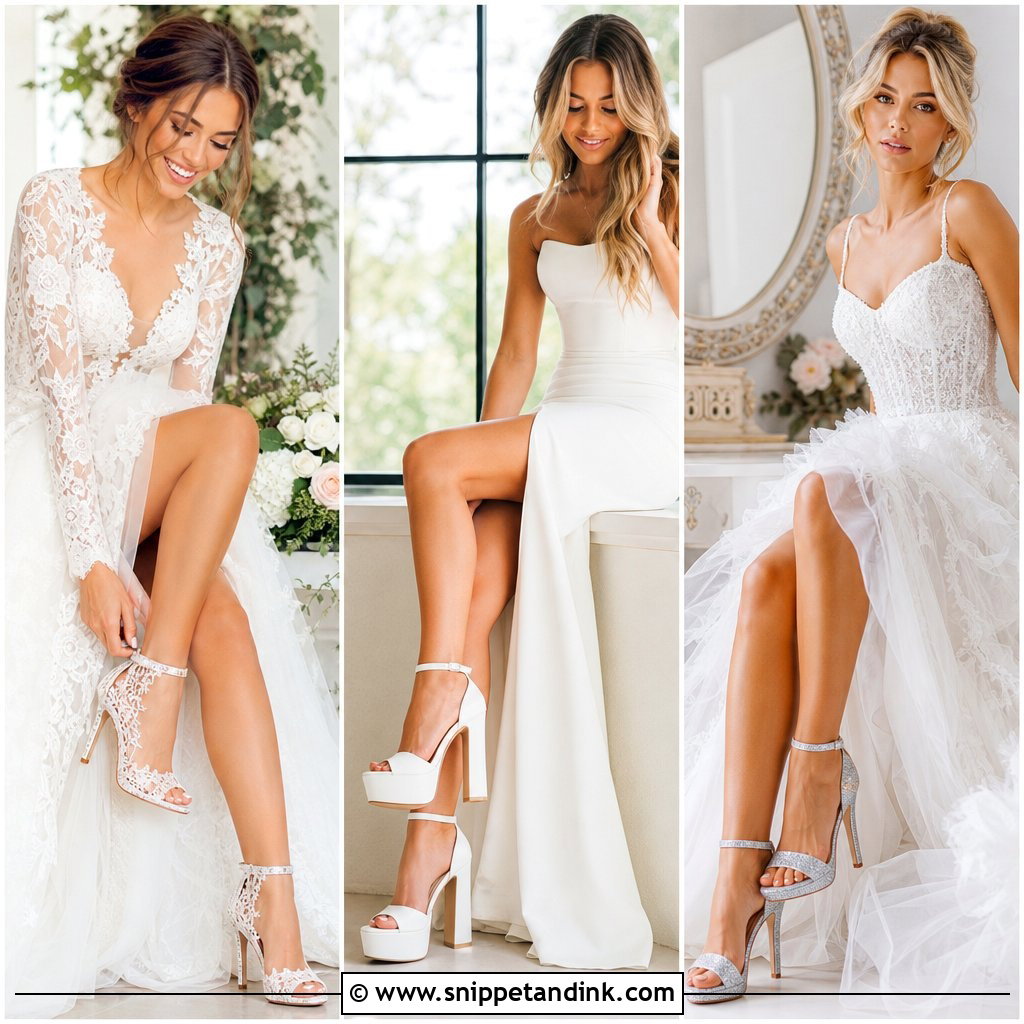
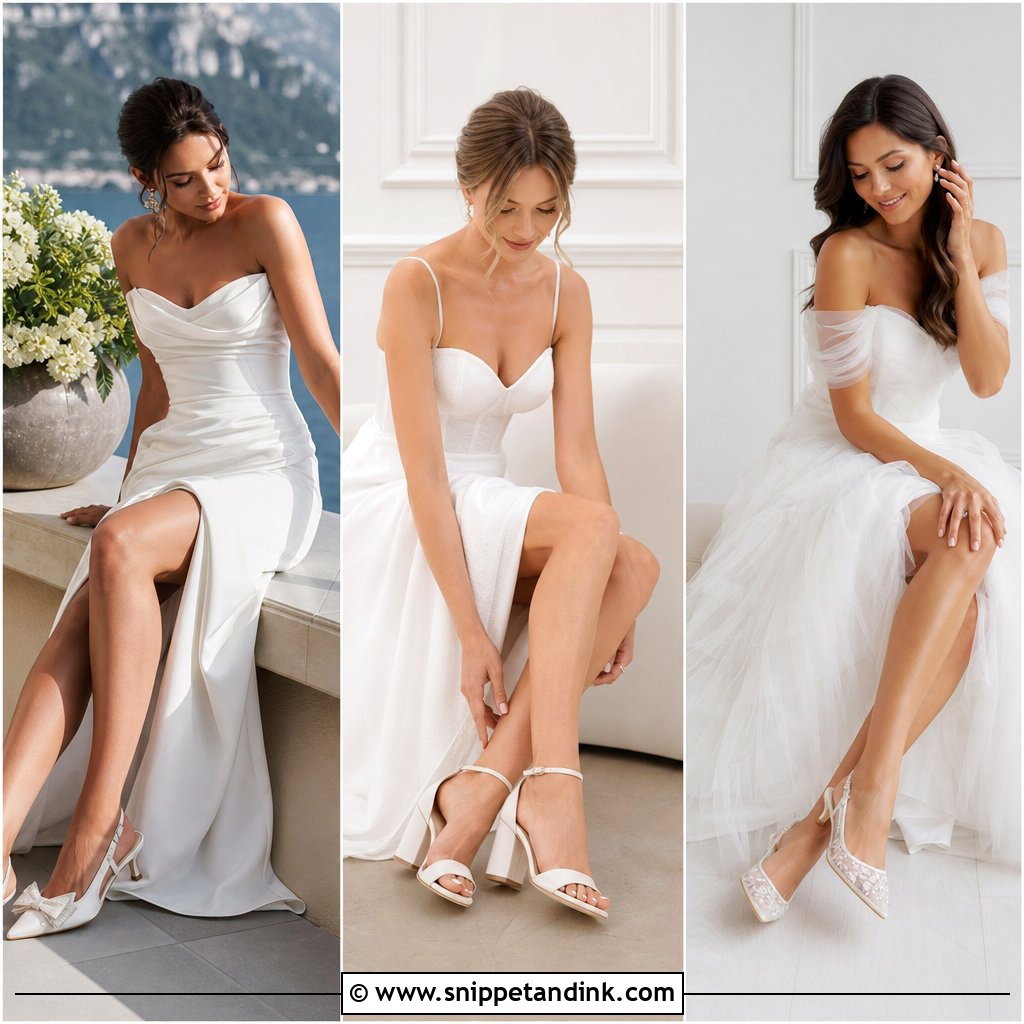
20. Cushioned Wedding Chappal With Bridal Jumpsuit
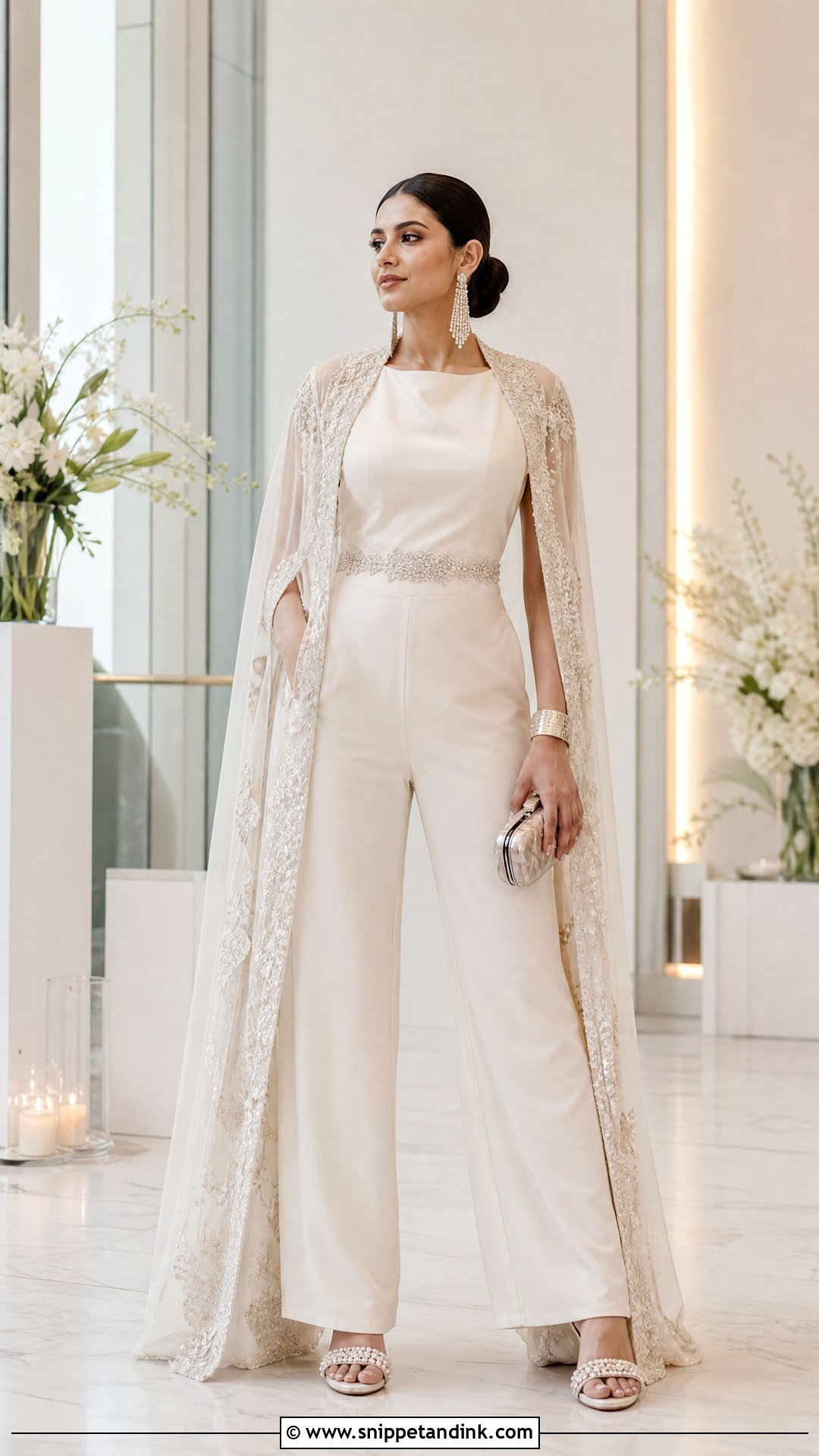
A bridal jumpsuit is a smart choice for a reception, sangeet or smaller wedding function, and because the feet show, the chappals carry more of the look. An ivory jumpsuit with a cape, a gold embroidered one-piece or a pastel belted style all work with cushioned chappals finished in pearl, crystal or metal. Add long earrings, a sleek clutch and one bracelet. Look at the sole edge and strap finishing closely, since they’re on view all night. Embellished flats are best for dancing, a low block heel for the entrance, and in either case the trouser hem should be altered with the chappals on.
Wet Henna and New Chappals Shouldn’t Meet
If your mehndi artist is doing your feet, keep the bridal chappals well away until the paste has dried, flaked off and the stain has had a day to deepen. Wet paste transfers onto fabric linings and pale soles, and the orange marks don’t come out. The oils and lemon-sugar sealant used for a darker stain also make the sole of the foot slippery inside a leather insole.
Wear old open slippers on mehndi night and the morning after. If the wedding is the very next day, ask the artist to keep the design off the parts of the foot where the straps sit, or accept that the straps will cover some of it. A strap pressing on fresh henna can also leave a lighter line in the stain.
Breaking Them In Without Wrecking Them
Embroidered uppers and stone settings are stiff when new, and heavy juttis in particular need a few wears to soften. Start two to three weeks out.
- Shop or try on in the late afternoon, when your feet are slightly swollen, the way they will be by evening on the wedding day.
- Wear the pair around the house on clean floors for twenty minutes at a time, with thin socks if the backs are rubbing.
- Put clear gel pads or moleskin anywhere a strap or seam presses; do it before a blister forms, not after.
- Scuff the soles lightly on a rough step or with fine sandpaper if they feel slick on tile.
- Store the pair in its box with tissue between the shoes so stones and mirrors don’t scratch each other.
Your Feet Carry Every Function
Footwear can make or break the bridal look, mostly by how it feels in the eighth hour. Start with the hem length, the embroidery and the venue, then the time you’ll spend on your feet at each function. Secure straps, a cushioned sole, smooth embellishment and a sensible heel matter more than any single detail. Break the chappals in at home, keep a soft backup pair with a family member, and pick something you actually like looking at. When the pair is comfortable and coordinated, nobody notices your feet at all, which is exactly what you want.
You'll Like These Ideas:


Leave a Reply