
Your partner sees the front of your hair first, at the end of the aisle, and so does almost every camera that day. It frames your face, sets up the veil, and decides how soft or sharp you look in close-ups long before anyone sees the back. When I plan a bride’s hair, I work out the front before I touch the updo: curtain bangs, a side part, sleek lines, sculpted waves, a braid along the hairline or a few loose pieces. Classic, modern, modest or heavily detailed, the dress just changes which of these looks right. Here are fifteen fronts worth trying, with the catches I’d warn you about.
Tendrils, Lip Gloss and Other Front-Line Problems
Hair that falls near the face meets everything else that’s happening near the face, and that’s where most small wedding-day annoyances start. Loose pieces stick to lip gloss. They catch on foundation and leave a faint stripe. On a breezy terrace they blow across your mouth during the vows, and after an hour of hugging relatives they flatten against your cheek. None of this means giving up on face-framing hair. It just changes how I do it.
- Let makeup go first, or set it fully before the front pieces are curled, so powder doesn’t dull the hair and the hair doesn’t drag through wet foundation.
- Ask for loose pieces curled away from the face rather than toward it. They’ll drift back toward your cheek anyway as the day goes on.
- If you’re wearing a glossy or long-wear liquid lip, keep tendrils to cheekbone length or shorter.
- For an outdoor ceremony, I pin one loose piece on each side back with a tiny clear grip that can be slipped out after the vows.
A note for glasses wearers: the arms of your frames sit exactly where tendrils fall. Wear your glasses to the trial so the pieces can be placed over the frame rather than trapped under it.
1. Bridal Low Bun With Face Framing Pieces
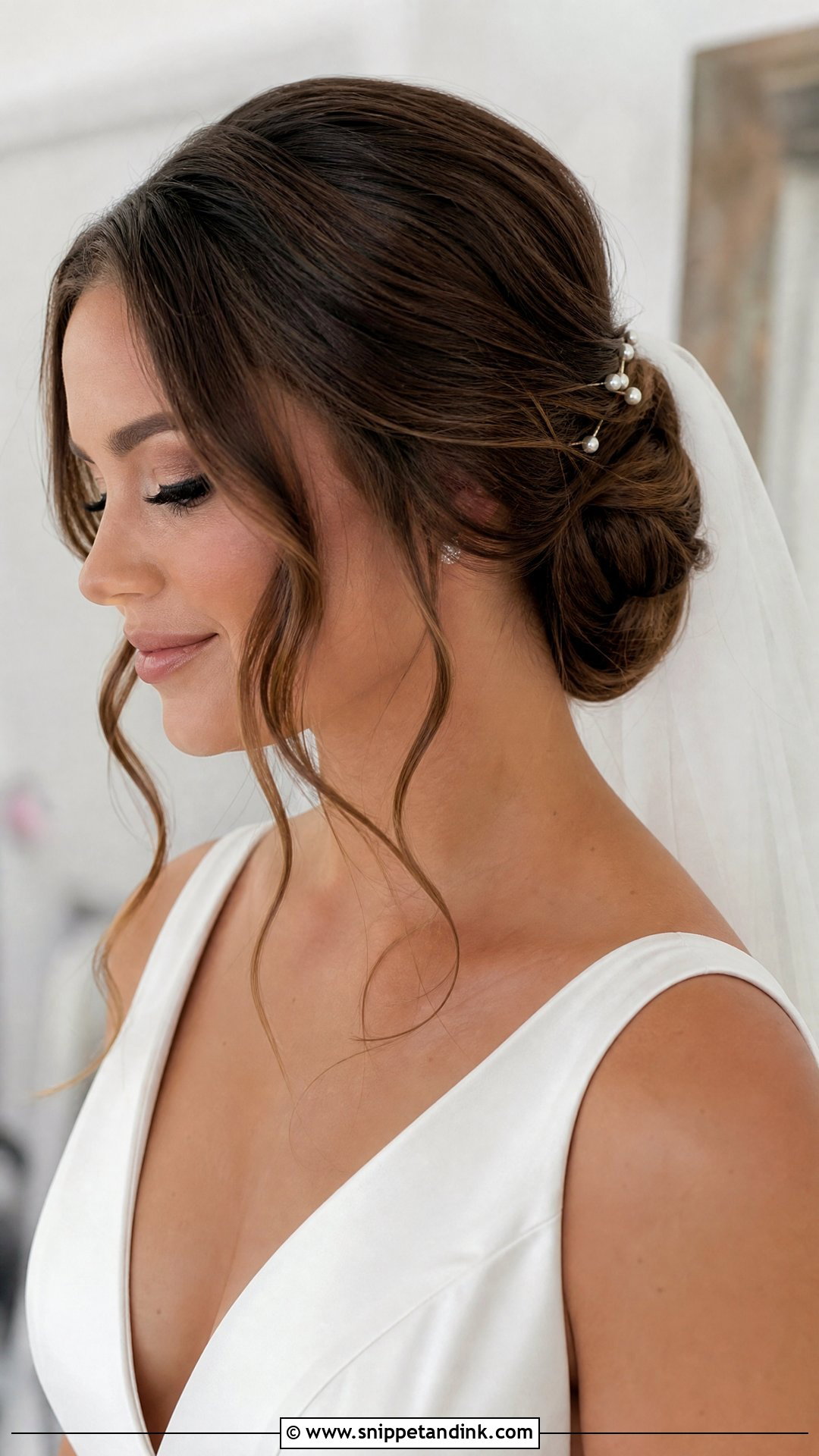
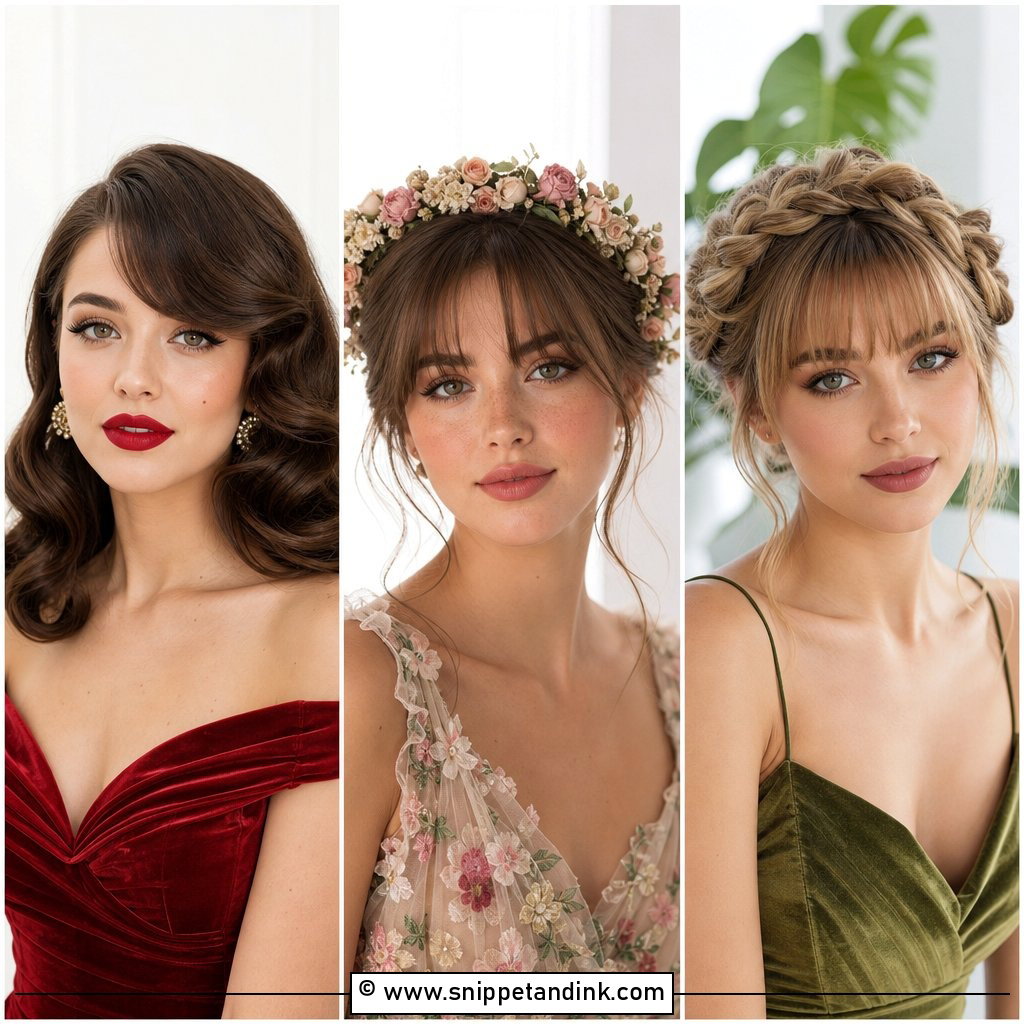
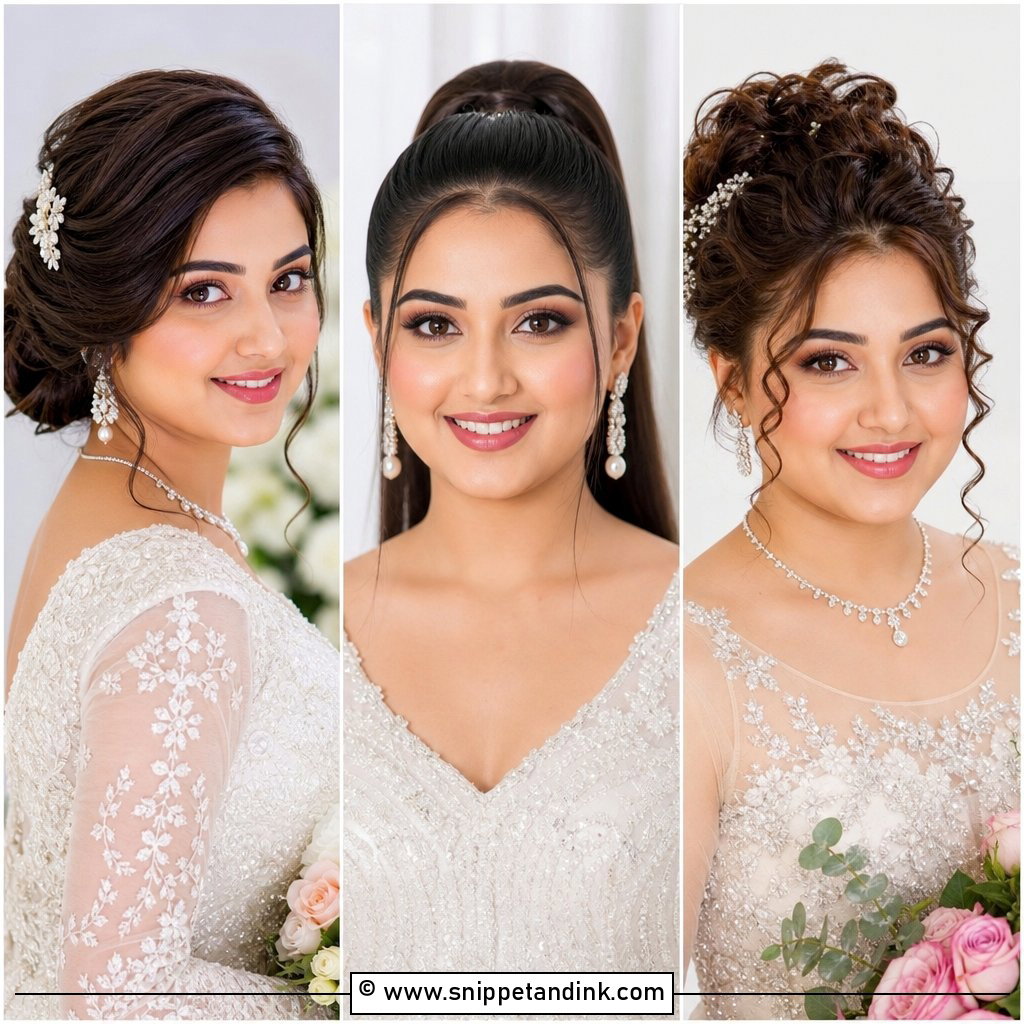
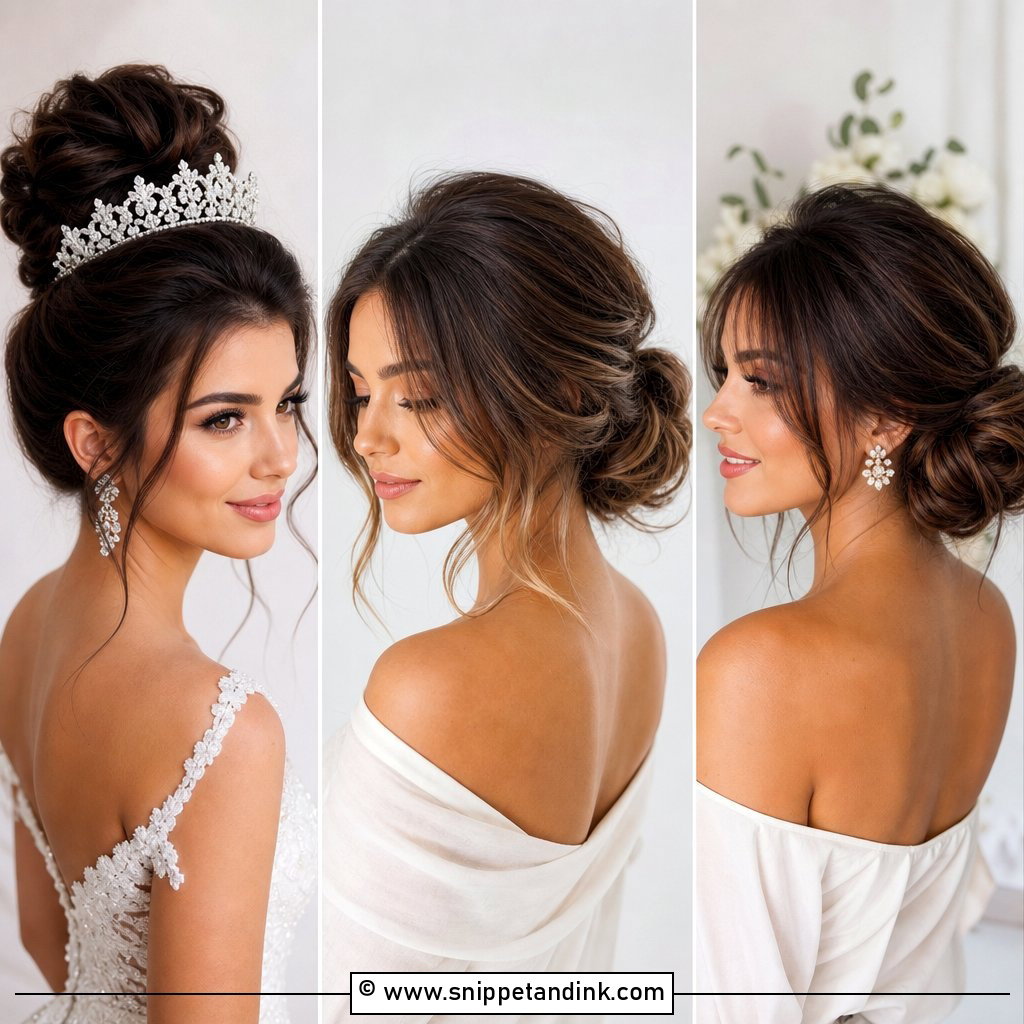
A low bun with loose pieces is the gentlest updo there is from the front. Structure at the nape, softness at the cheeks and jaw. Veils, pearl pins, off-shoulder dresses and plain satin all sit with it. What separates good face framing pieces from bad ones is thickness: too much hair and they look like a curtain, too little and they look stringy. I take a section about the width of a pencil on each side and curl it away from the face. Middle part for modern, soft side part for classic.
2. Bridal Hollywood Waves With Side Part
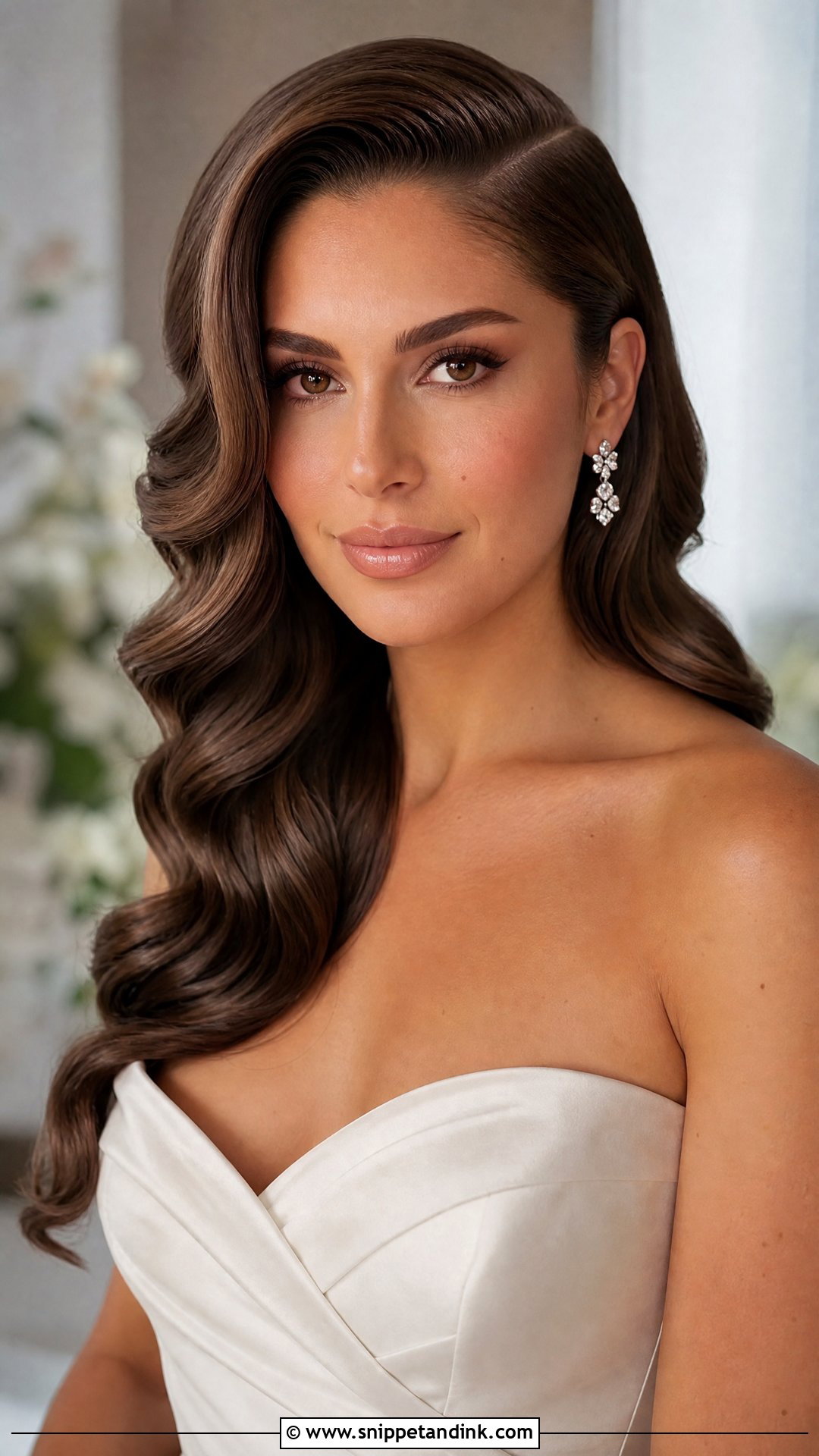
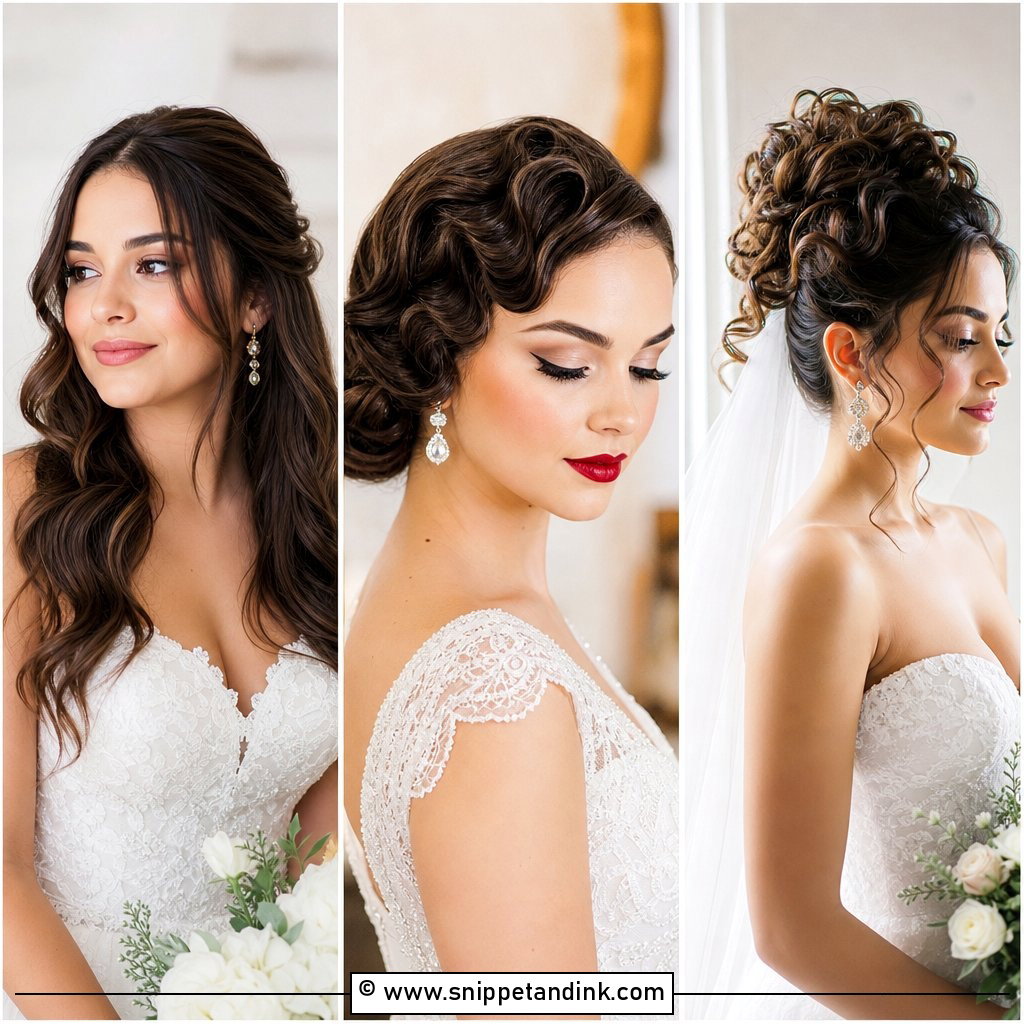
Hollywood waves need a deep side part, and the part is doing most of the work. It gives lift at the roots on one side and lets the waves sweep across the face in one connected shape. In portraits, light runs along each bend. I set every curl in the same direction, pin it to cool, and brush the whole side into a single ribbon; skip the cooling and the wave drops within an hour. Medium to long hair with smooth layers holds the pattern best. Statement earrings, strapless dresses and a veil set behind the crown finish it.
3. Bridal Sleek Bun With Middle Part
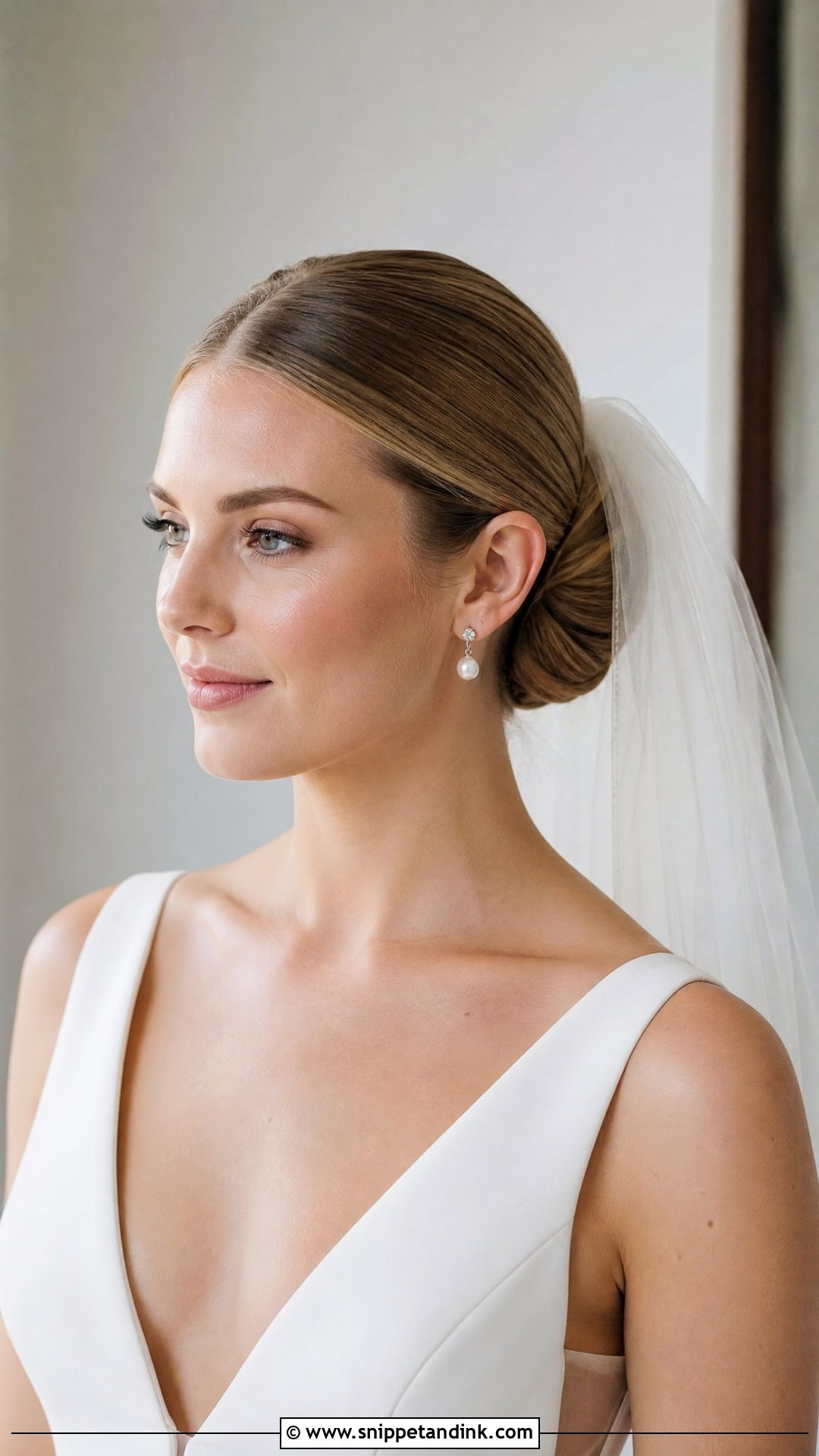
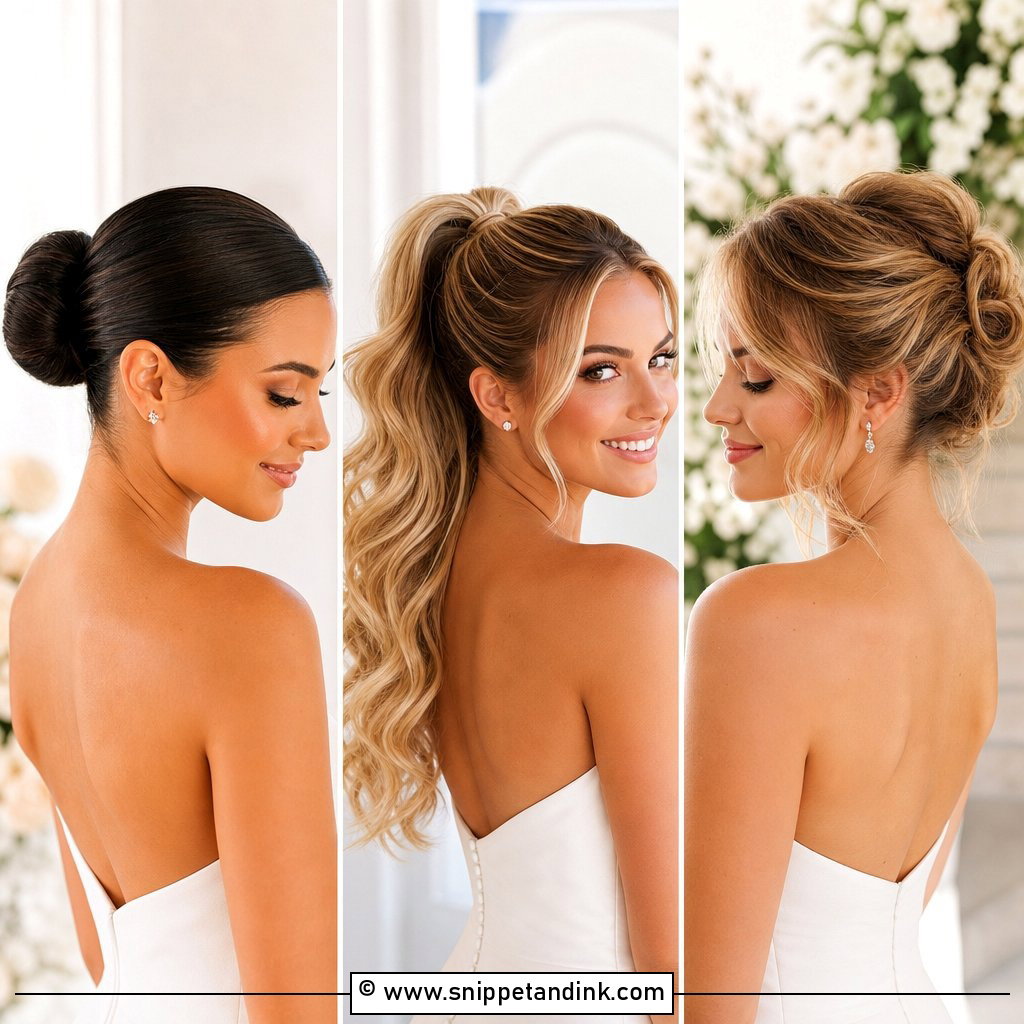
Even, clean and modern: a middle part with smooth sides puts your makeup, earrings and neckline in full view. It suits minimal dresses and anyone whose jewellery is meant to be the focus. The bun can sit low or mid-height, depending on your face and where the veil goes. Humid weather and long ceremonies favour it, since there’s nothing loose to frizz. My caution is the part line. It has to be truly centred, and I check it from straight ahead, never from above, because the two views often disagree.
4. Bridal Half Up Hair With Curtain Bangs
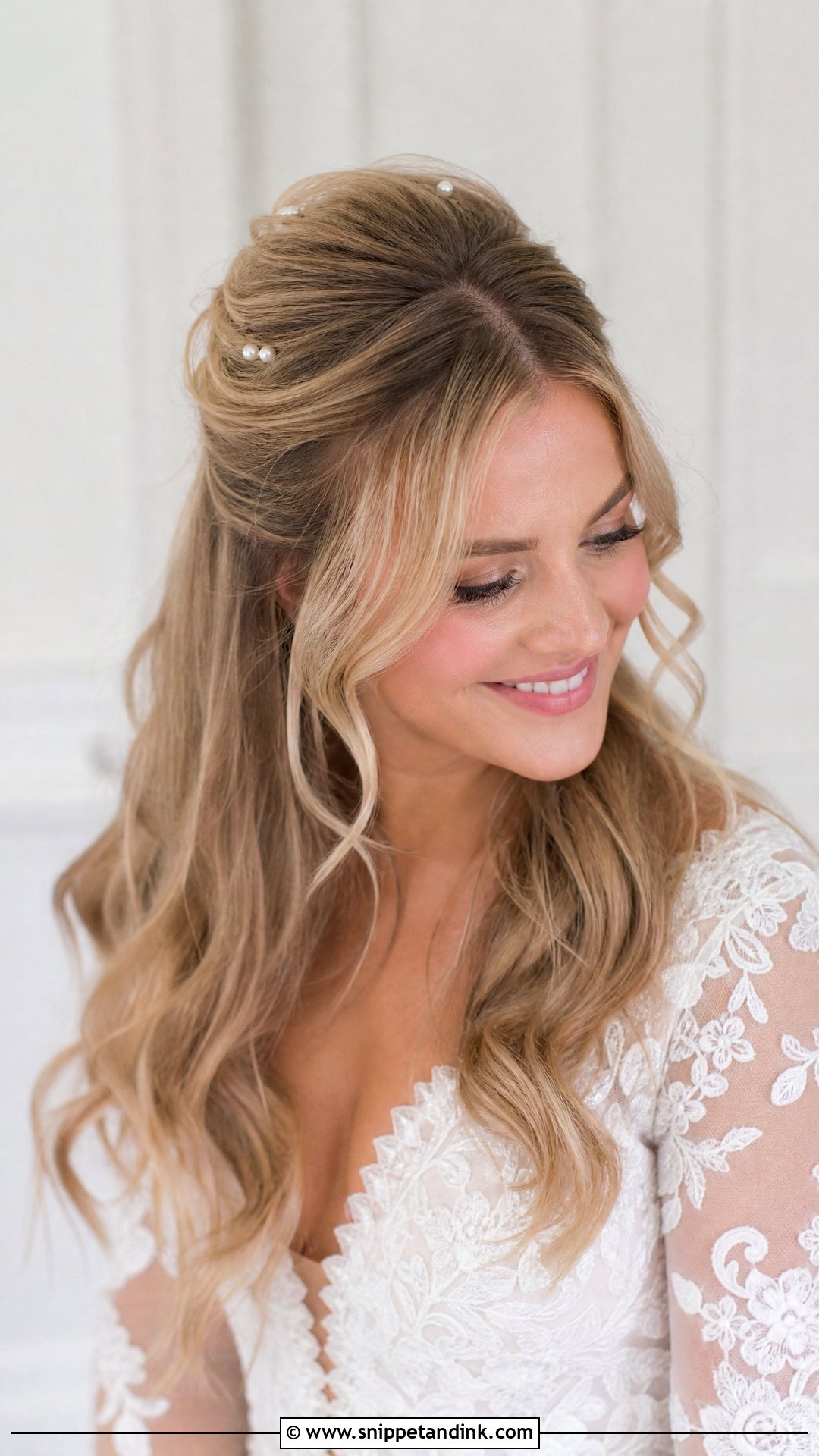
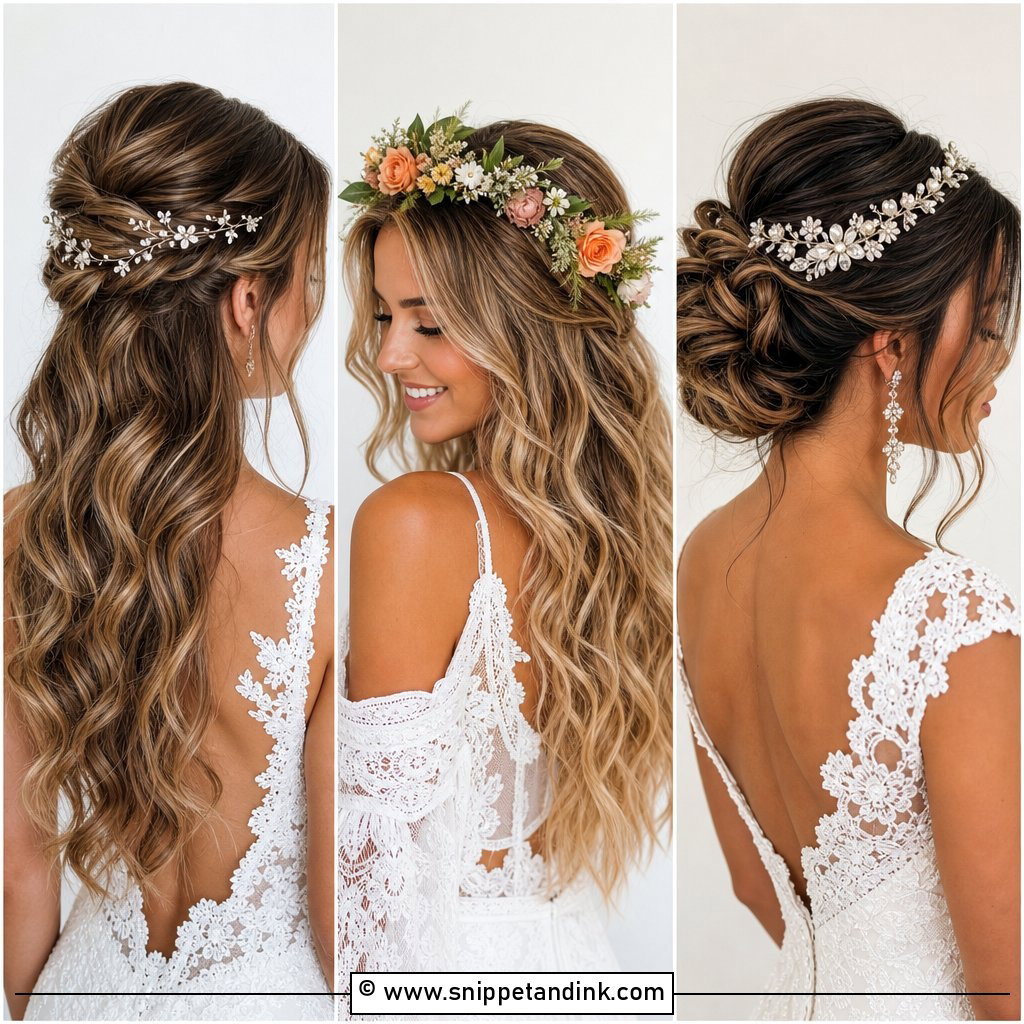
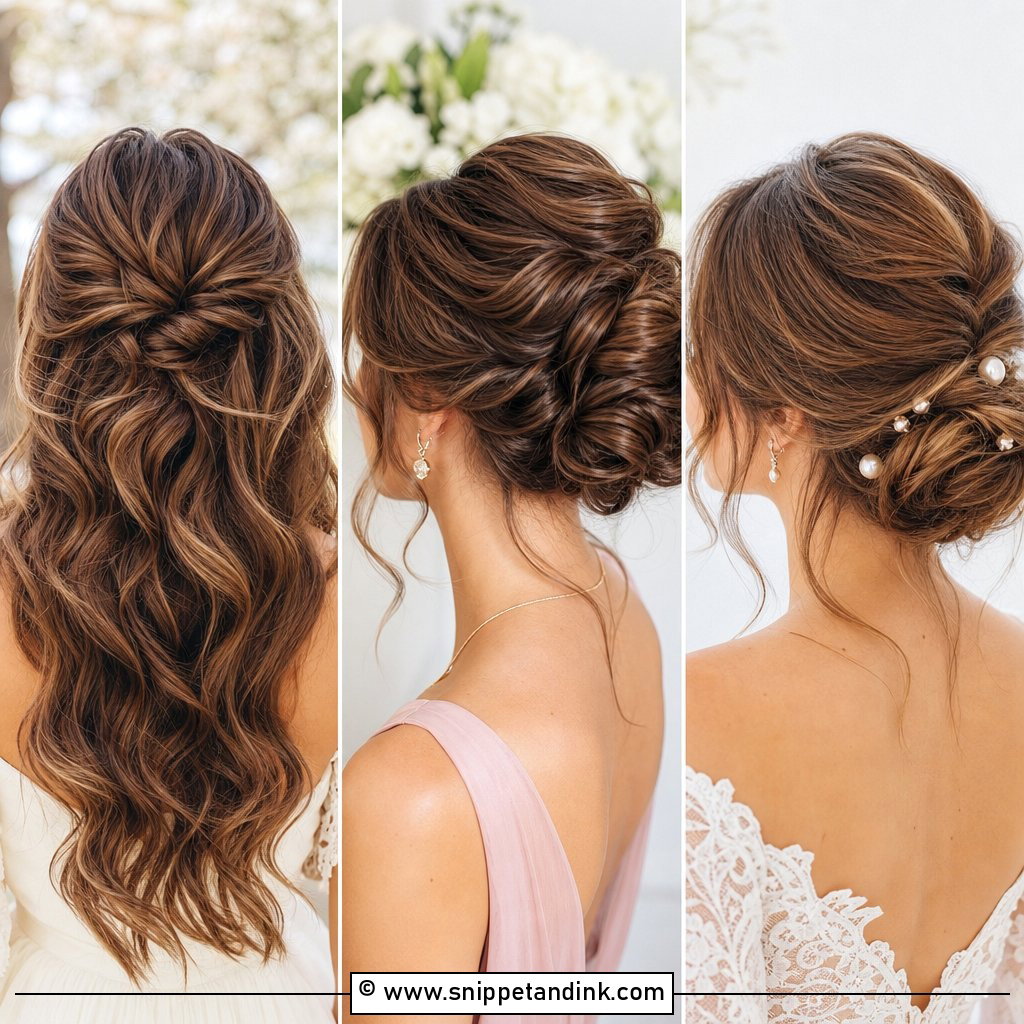
Bridal half up hair with curtain bangs gives you hair down for movement with enough structure to stay out of your face. The bangs open around the cheekbones; the top section is lifted and pinned. I curl the bangs away from the face with a large barrel so they stay airy, and keep the waves through the lengths loose rather than tight. Floral pins, pearl clips and a soft veil go well with it. Garden, beach and indoor ceremonies all suit it, though on a windy beach I’d pin the half-up section with more grips than usual.
5. Bridal Chignon With Side Swept Bangs
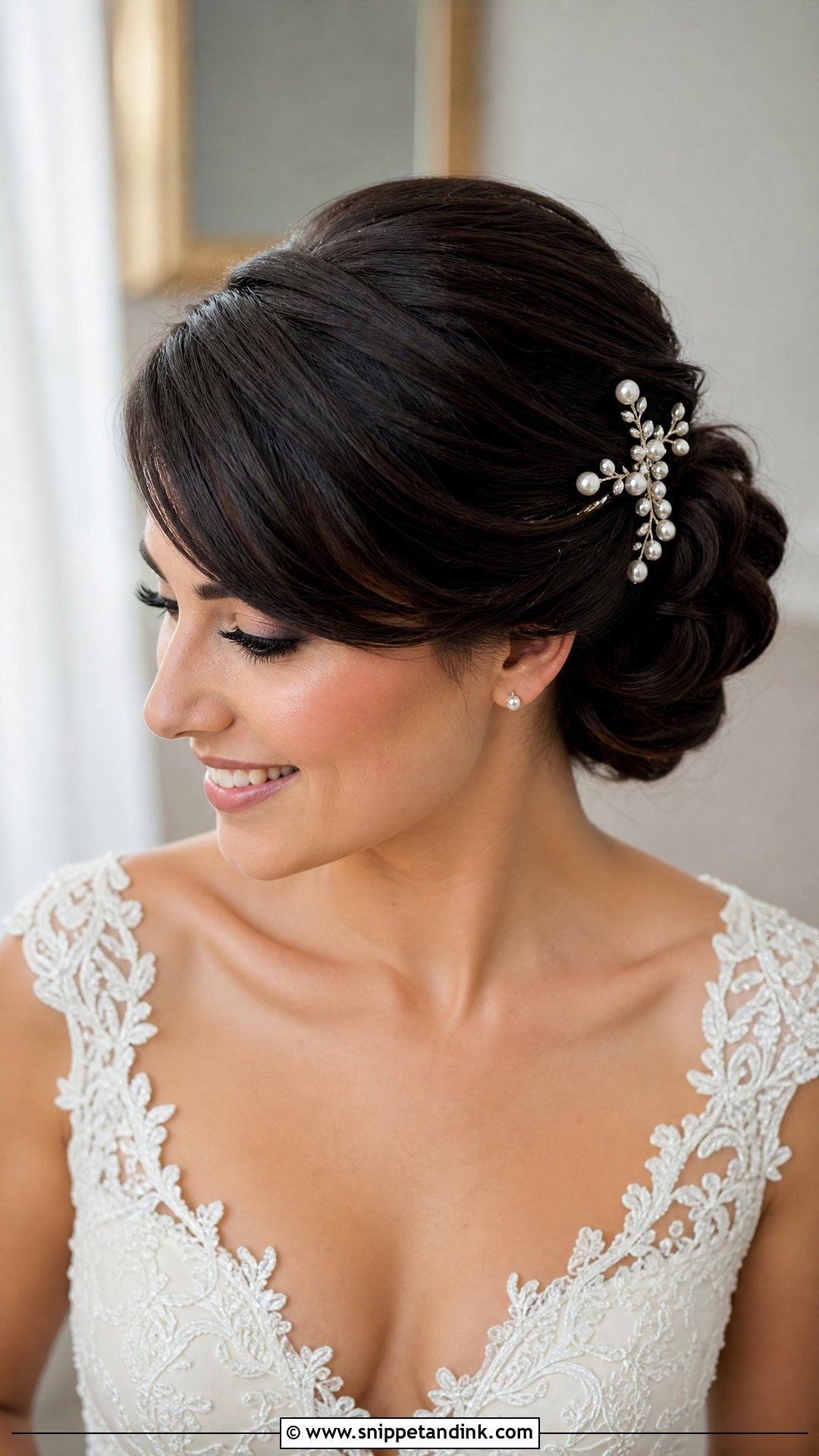
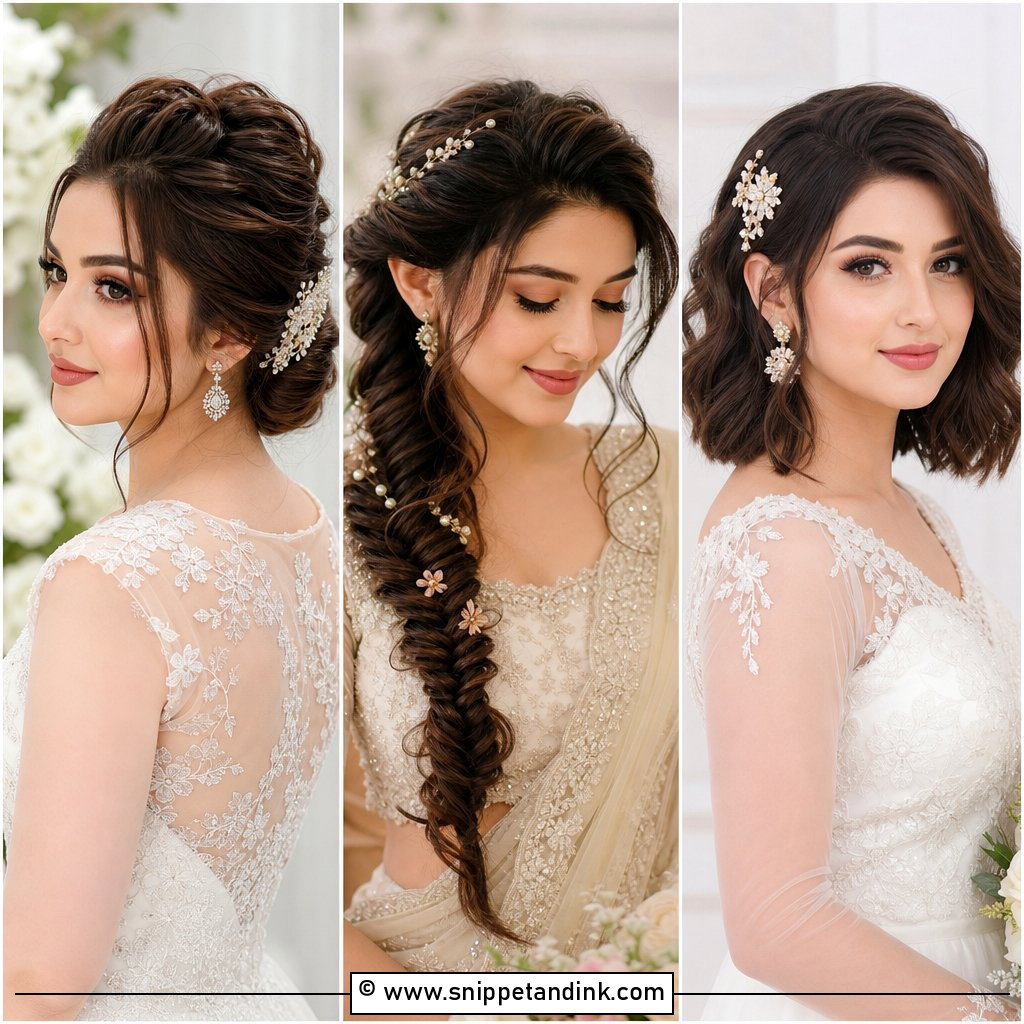
Side swept bangs move across the forehead, and that diagonal does a lot. It can soften a strong jaw, balance high foreheads, and give a classic chignon a softer front. The chignon itself stays low and tidy. I blend the bangs into the side of the updo with a single hidden pin behind the ear, so they don’t look stuck on. If your bangs naturally fall the other way, tell me early; fighting a natural fall all day rarely wins. A small comb, pearl pins or a veil at the back is enough.
6. Bridal Braided Crown With Loose Front Pieces
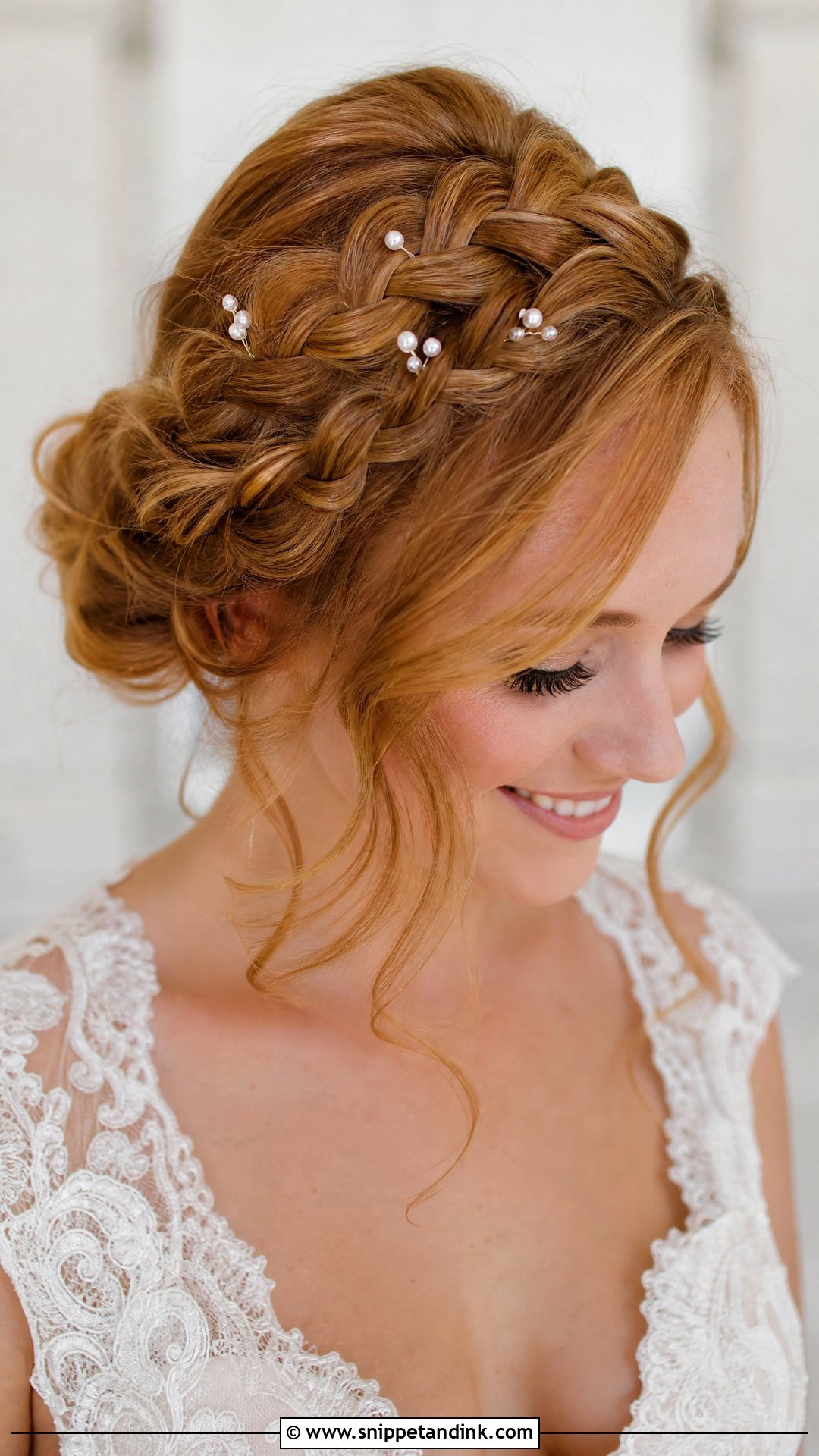
A braided crown frames the face from above, sitting like a halo, wrapping in from one side, or flowing into a low bun. It gives texture without heavy accessories, which makes it a natural partner for lace, outdoor venues and lighter makeup. The loose front pieces need a gentle curl or they look like hair that escaped. Fine hair needs help here. I add texture spray before braiding and sometimes a little padding underneath, so the braid looks fuller and the pins have something to hold.
7. Bridal High Bun With Soft Tendrils
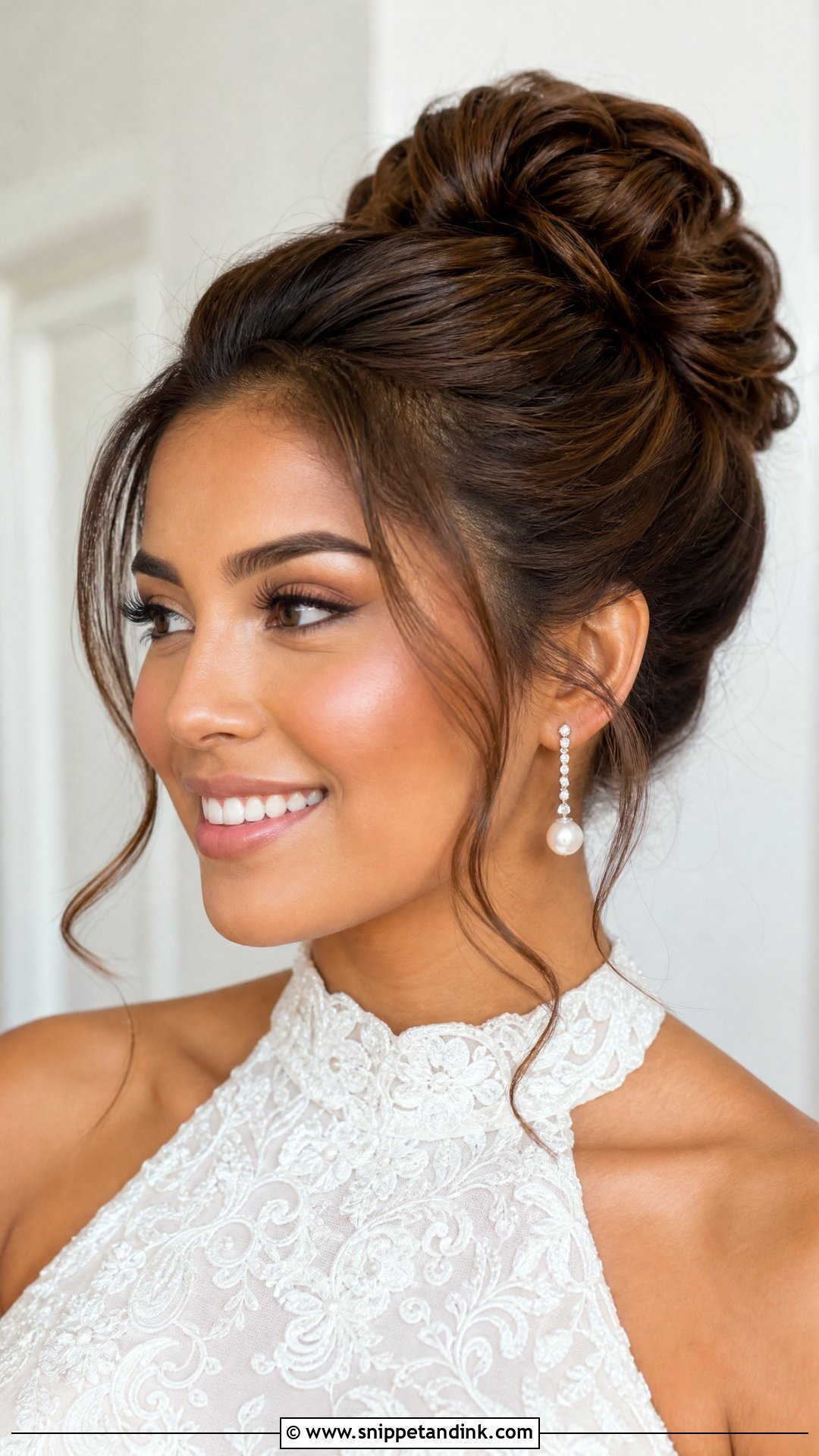
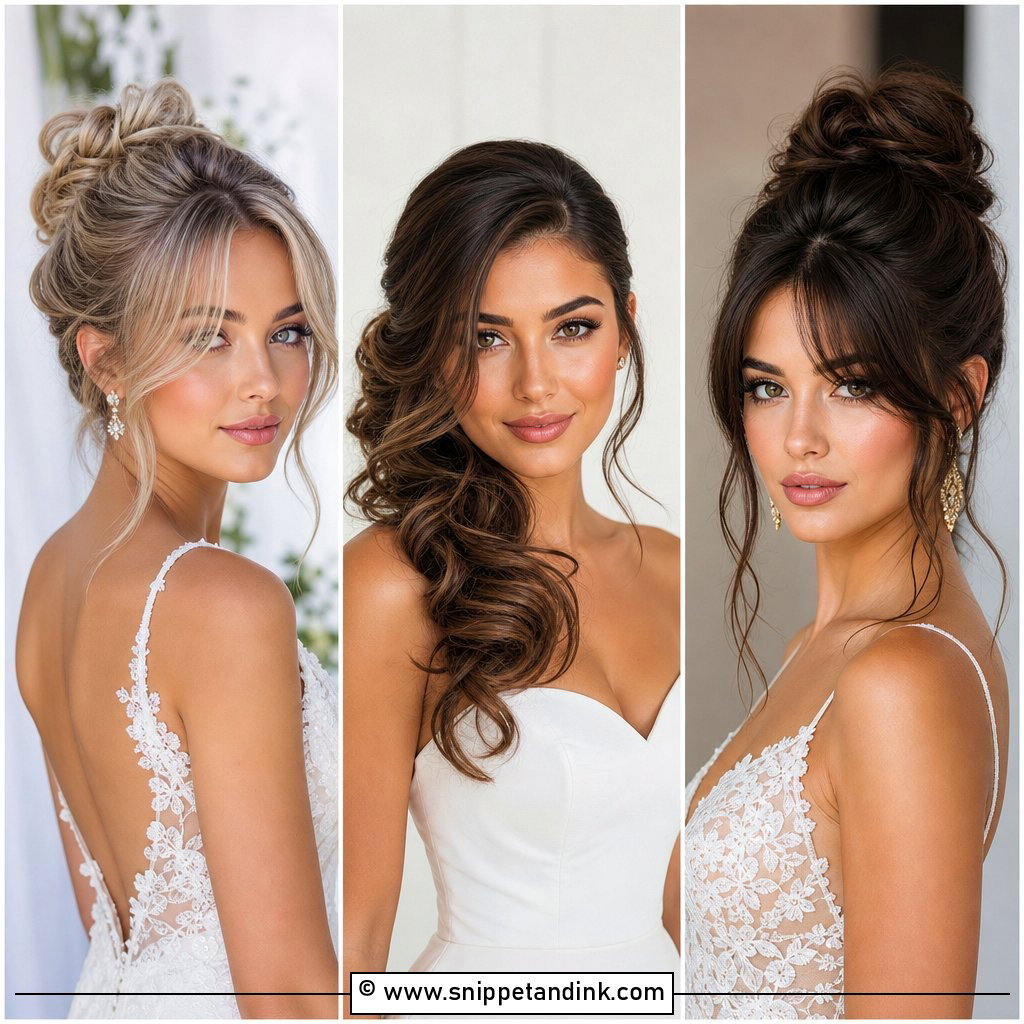
Height lifts the whole face. A high bun with soft tendrils draws the eye up while the pieces at the temples and jaw take the edge off. High necks, long earrings and dramatic veils suit it because the neck and shoulders stay clear. Smooth gives a ballet finish; light texture is softer. The tendrils are where it goes wrong. Keep them thin and match them on both sides; a thick tendril on one side and a wispy one on the other reads as a mistake in every front-facing photo.
8. Bridal French Twist With Face Framing Layers
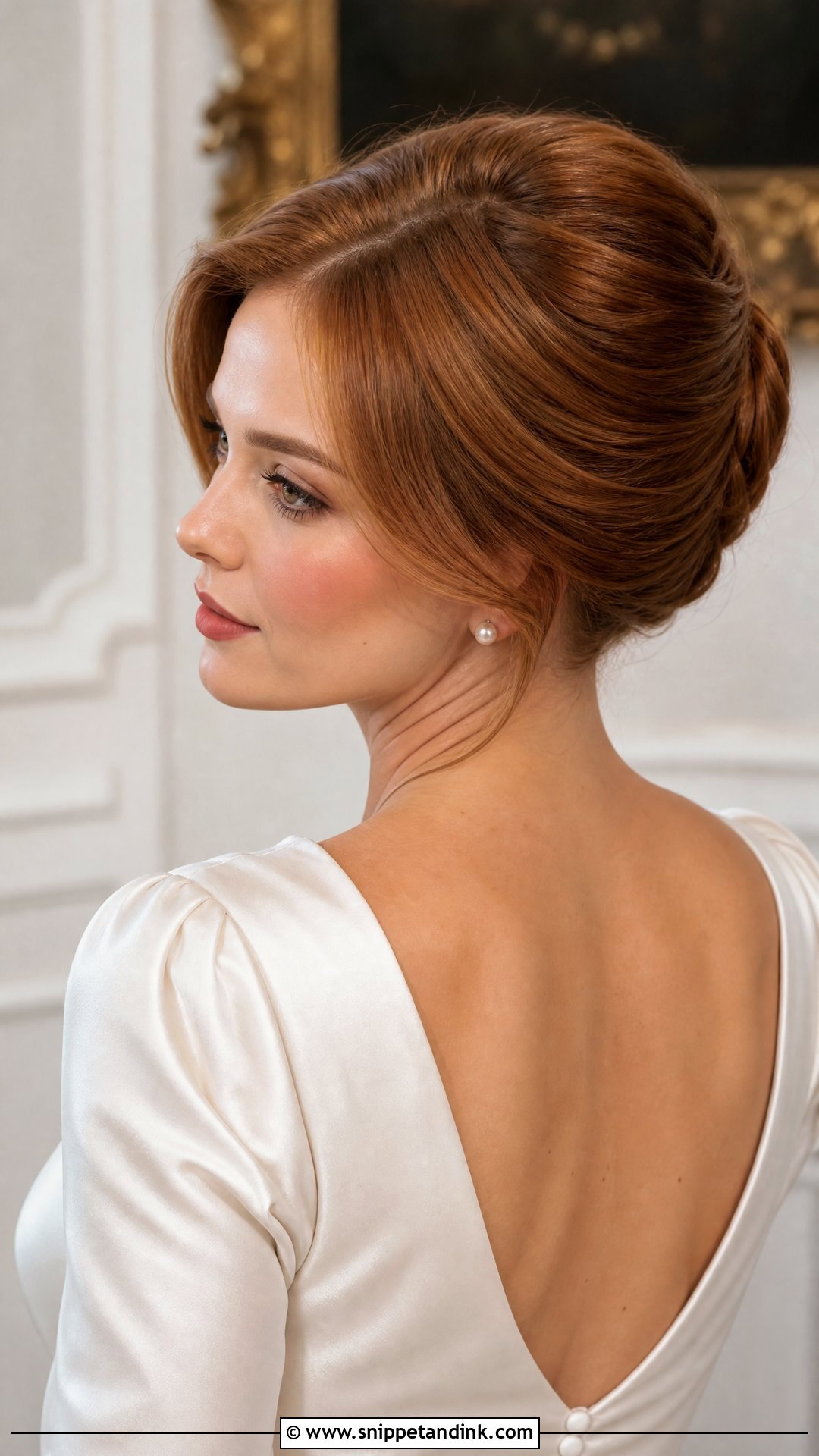
A French twist with layers left out at the front feels grown-up and less expected than a bun. The front is smooth with a soft side or centre part, and the face framing layers move near the cheekbones. Sleek gowns, vintage-inspired dresses and pearls go naturally with it. My one rule for this front: don’t flatten the crown. A twist with no lift looks pasted to the head in side photos, so I tease a small section at the crown before I roll anything.
9. Bridal Soft Waves With Middle Part
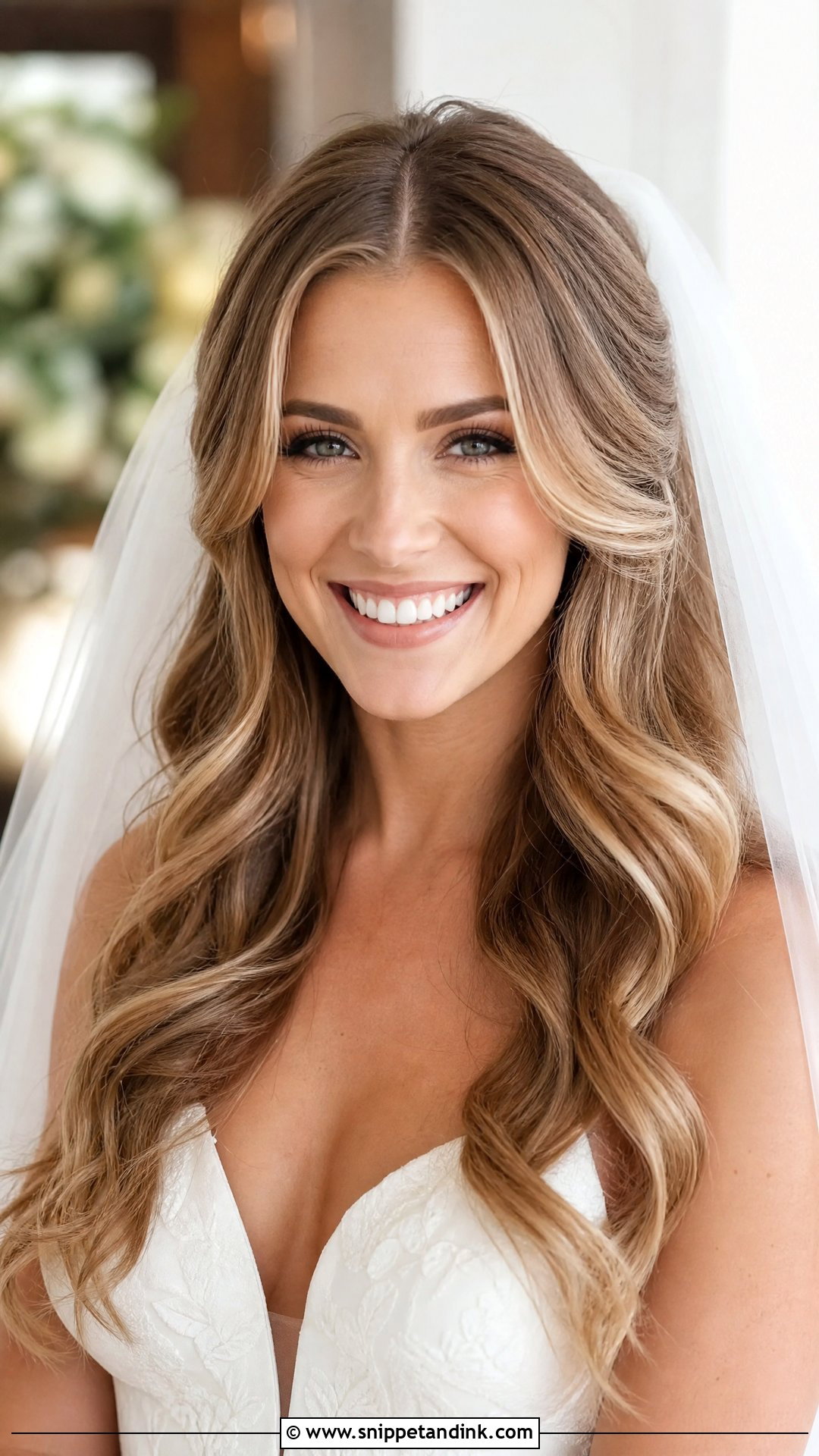
Soft waves and a centre part are about as simple as bridal hair gets, and simple is harder to get right. The waves need to look brushed and polished, not beachy, which means curling in smaller sections than feels necessary and brushing them together at the end. I curl the face framing layers away from the face to open the eyes. A veil, a hair vine, a small clip or nothing at all sits well. Bring a flexible hold spray, because loose hair is what humidity reaches first.
10. Bridal Ponytail With Side Part
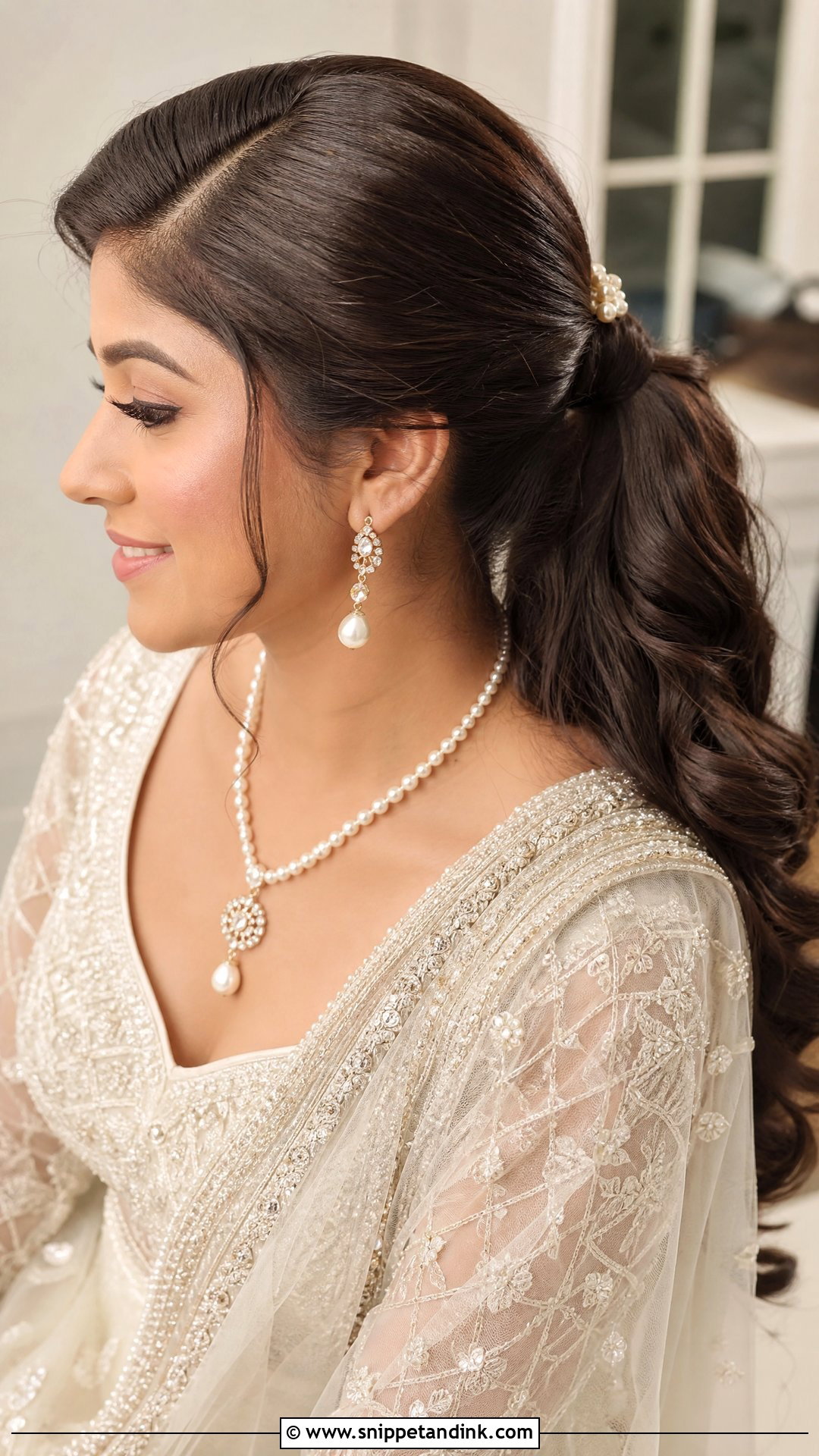
A side-parted ponytail is sleek but not stern. The part adds shape and softness at the front, while the ponytail keeps everything clean and secure. Low reads classic; mid-height gives more lift. I wrap a strand around the base to hide the elastic and pin it underneath, then wave the length so it looks bridal. It’s the style I suggest most often for a reception change, since it can be done in ten minutes from an earlier updo. Pearl pins or a small bow are plenty.
11. Bridal Updo With Bottleneck Bangs
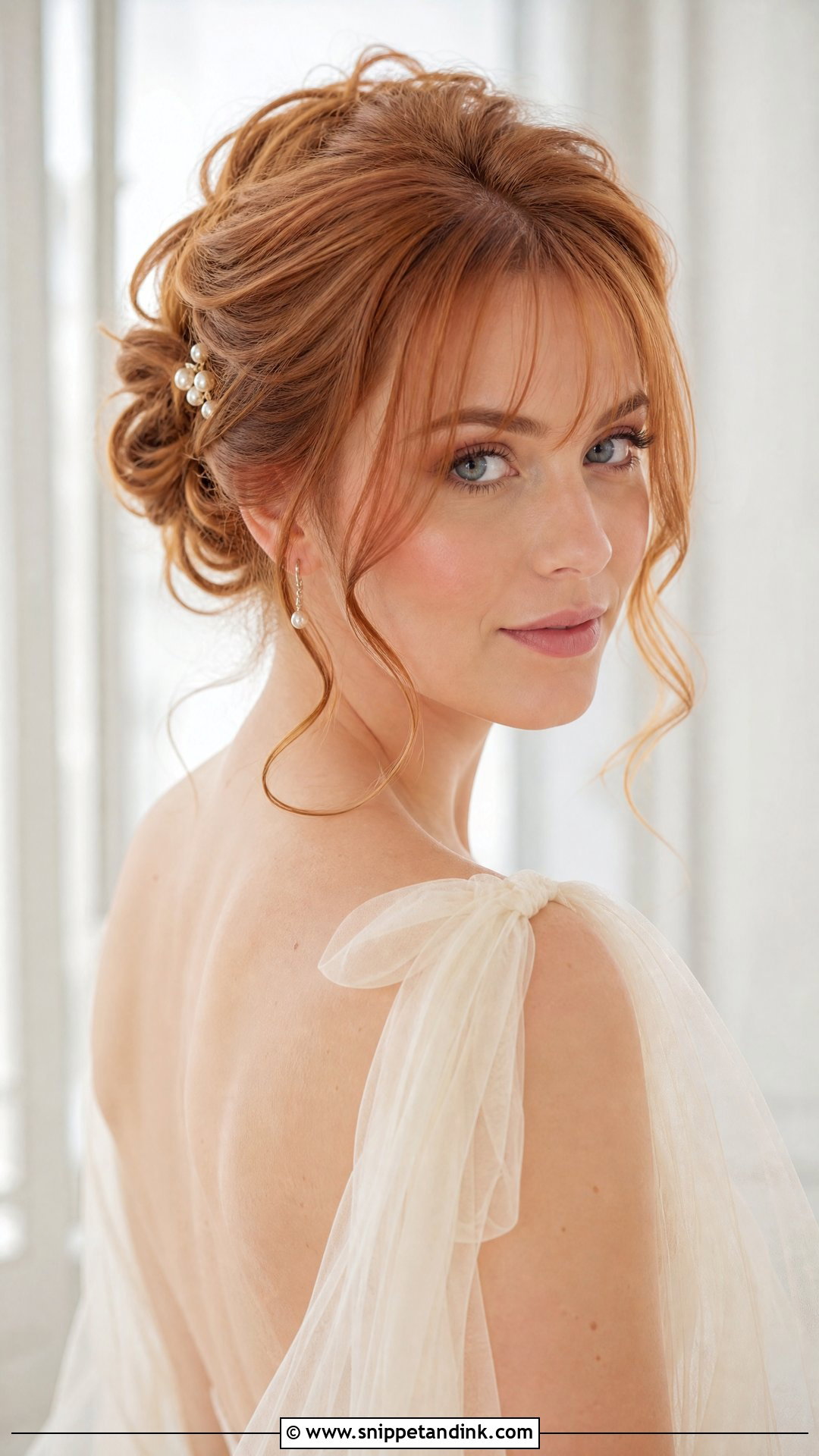
An updo with bottleneck bangs feels current without being trendy. The bangs are narrow in the centre and longer at the sides, so they slide into the rest of the style instead of sitting on top of it. They open the eyes and soften the cheeks, which suits most face shapes. I style them with one soft bend and leave them airy. Heavy product makes bottleneck bangs separate into points. They pair best with a low bun, a loose chignon or a textured updo, and they’re easiest if you already wear them.
12. Bridal Side Braid With Front Volume
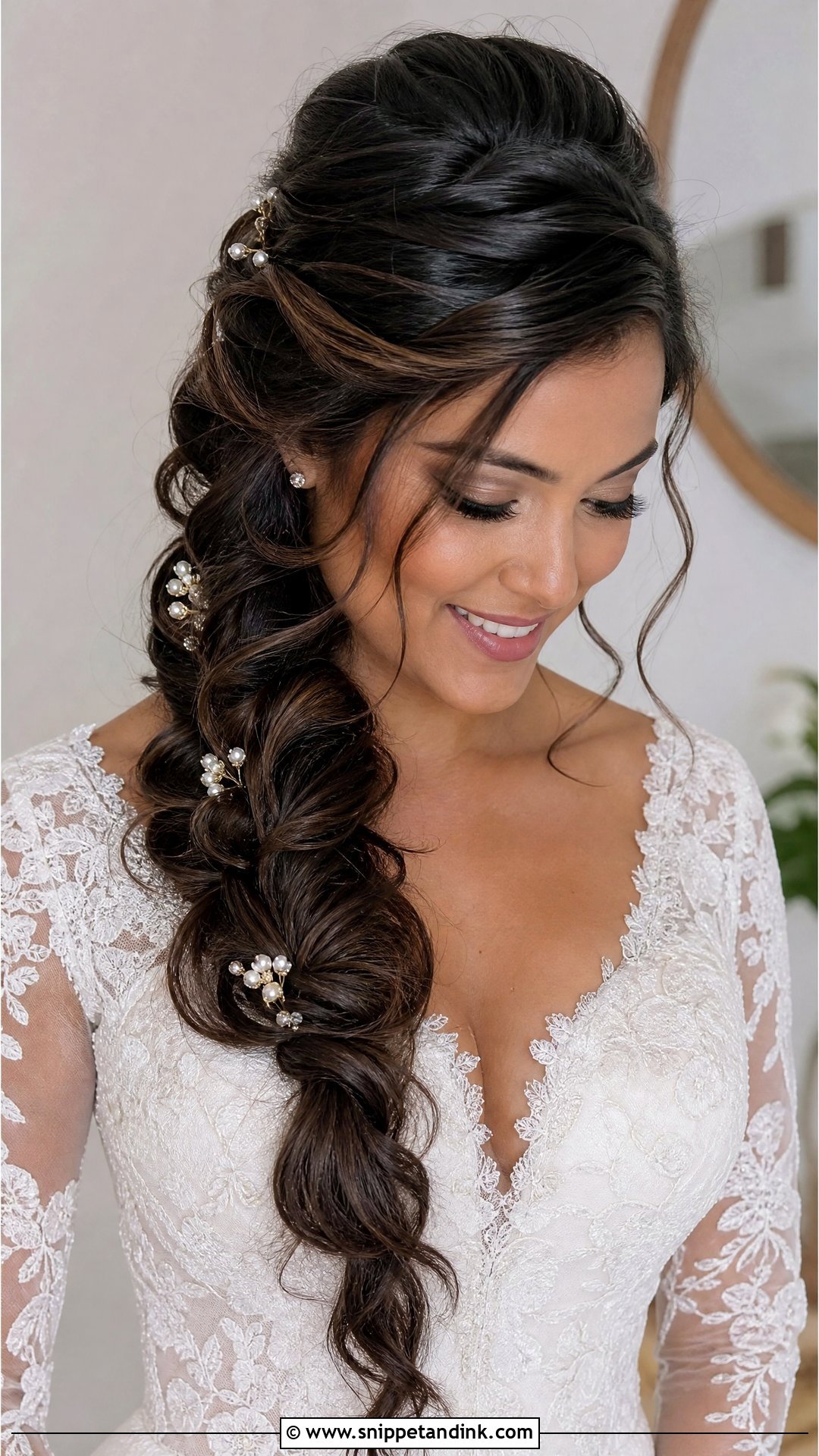
A side braid brings all the detail forward over one shoulder, which is exactly where the front-facing camera wants it. Loose pieces at the hairline keep it soft; height at the crown keeps it from looking flat. Long, highlighted and textured hair shows the braid best. Boho gowns, lace sleeves and outdoor venues suit it. I braid it full but controlled, and hide small pins inside the braid itself, since the weight of the length pulls it toward the shoulder all day.
13. Bridal Low Ponytail With Face Framing Waves
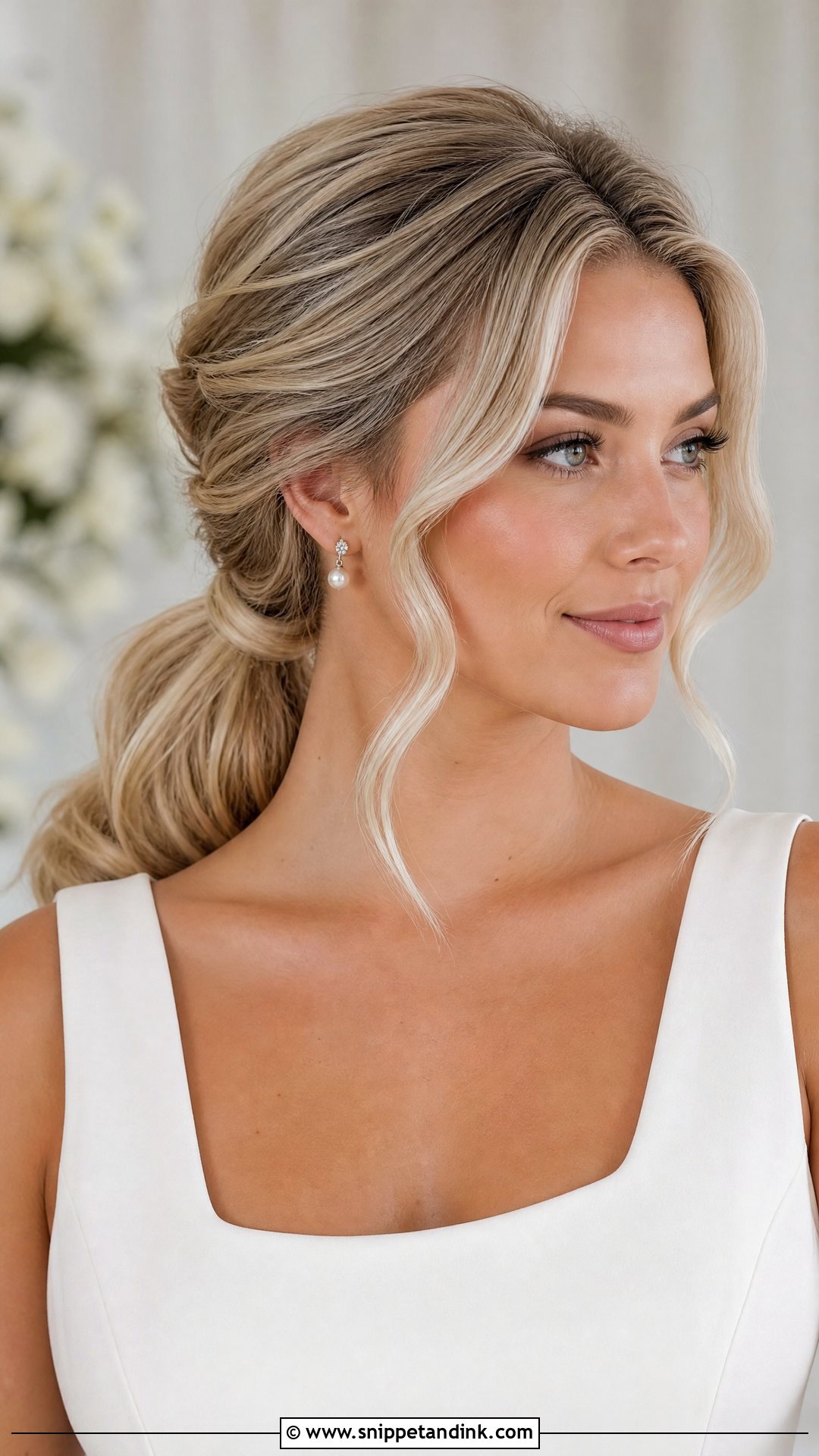
Comfort is the selling point of a low ponytail. Nothing presses on the back of your head when you sit, and it stays tidy through a full day. The ponytail sits at the nape while the front waves curve away from the face. Simple gowns, square necklines and a delicate veil set above the ponytail all suit it. I ask for volume at the crown and a smooth finish around the part, then decide on the length texture last: straight, softly waved or curled at the ends, depending on the dress.
14. Bridal Curly Updo With Front Curls
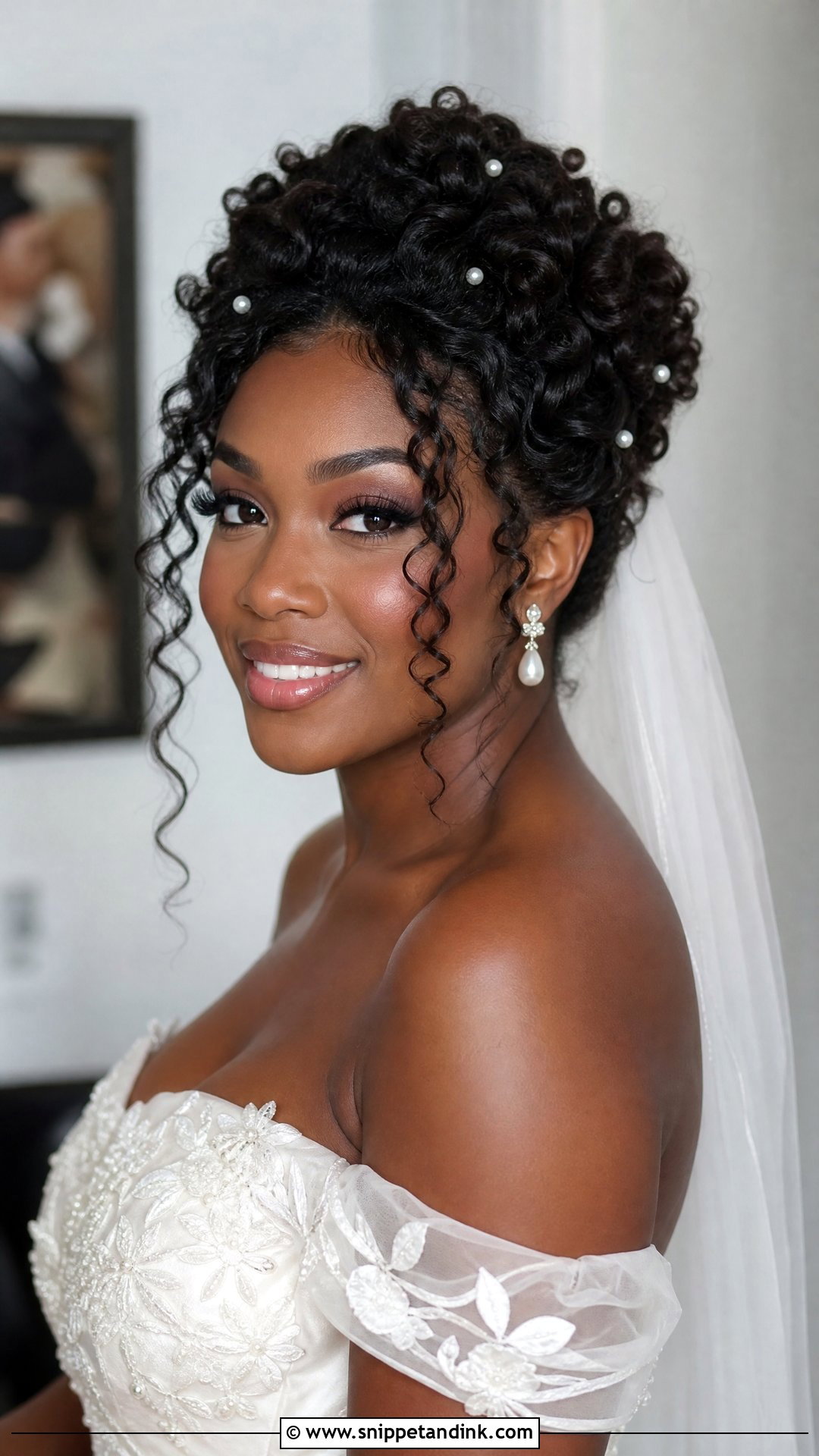
A curly updo with curls left at the front lets natural texture lead. Those front curls frame the forehead, temples and cheeks, and they need to be defined and well hydrated before any pinning starts. The updo can sit low, high or to one side, depending on veil and neckline. The mistake I see most is brushing curls after they’re styled. It turns definition into frizz instantly. Shape them with your fingers instead, and add small pins, pearls or flowers only if they suit the wedding.
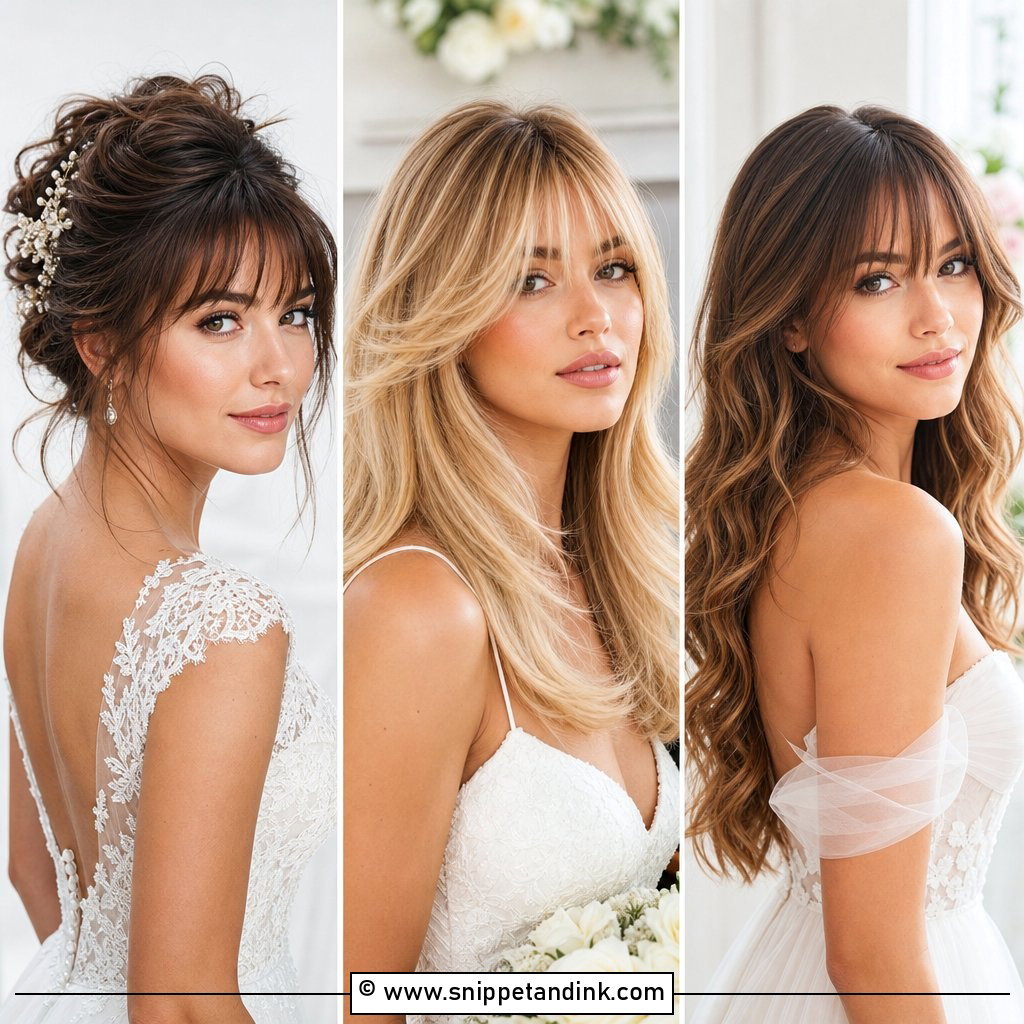
15. Bridal Bob With Soft Front Waves
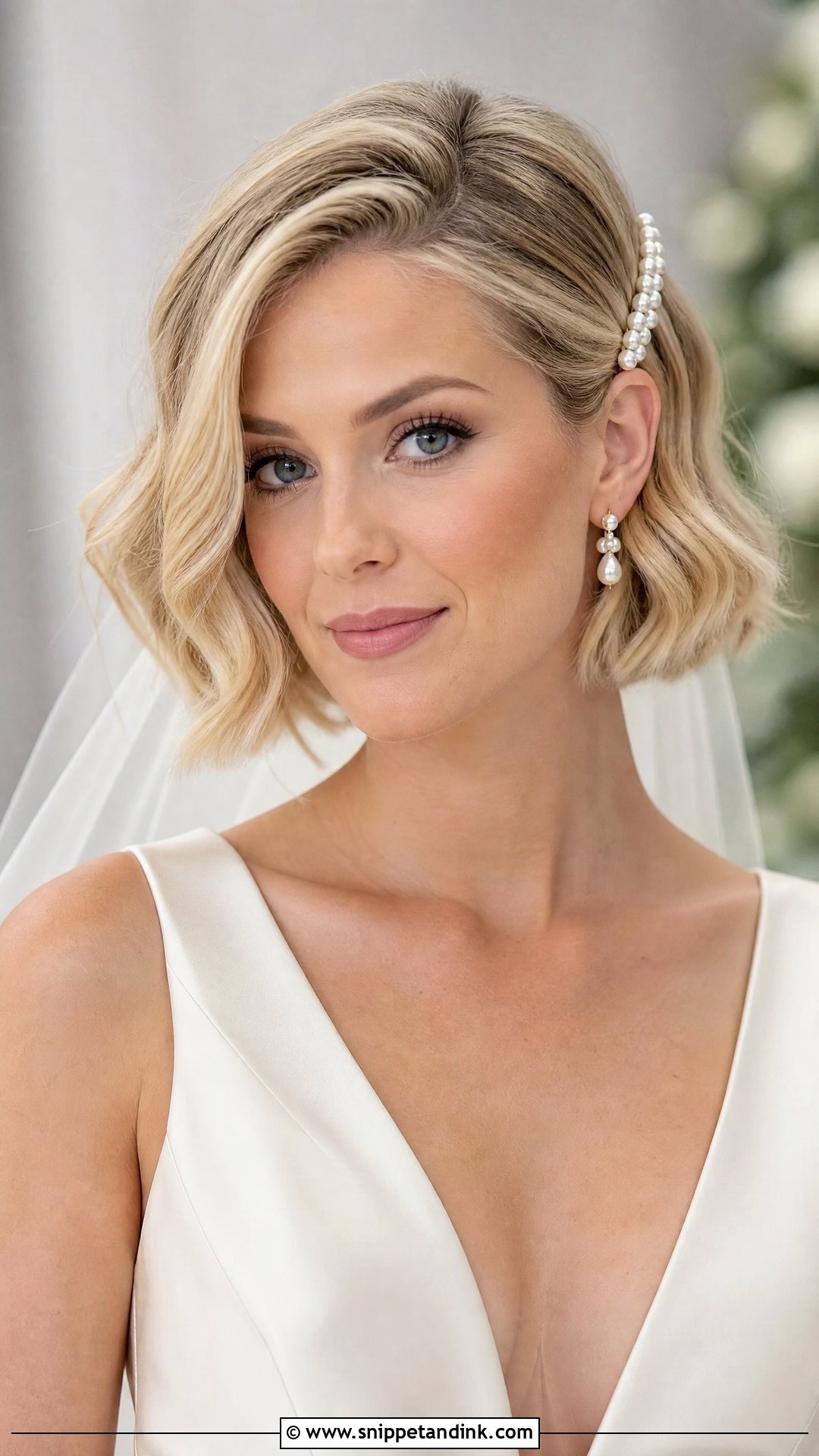
Short hair has as many front options as long hair; the front simply carries more of the look. A bob with soft waves shapes the face and keeps everything chic and easy to wear. A side part adds drama, a middle part feels cleaner. Birdcage veils, pearl clips, headbands and a single barrette suit short lengths well. I keep the ends smooth, because a frizzy edge on a bob reads as unfinished in photos. On fine hair, a light texture spray adds body without weighing the waves down.
Bangs on the Big Day Need Their Own Plan
Several of the styles above rely on a fringe, and bangs behave differently from everything else on your head. They sit right on the forehead, so they meet heat, skin oil and sweat first. A fringe that looks perfect at ten in the morning can split down the middle by cocktail hour.
If you already wear bangs
Have them trimmed about a week before, not the day before, so the ends soften and the shape settles. On the morning I set them with a round brush and leave them a touch longer than usual, since they lift and shrink as the day warms up. Blot your forehead with a tissue pressed under the fringe, never by pushing the bangs aside, which leaves a gap that won’t close.
If you’re thinking about getting them
This isn’t the time to experiment. Bangs need a few washes before you know how they’ll fall, and a cowlick at the hairline only shows itself once they’re cut. If you love the look, I’d try clip-in bangs at your trial first, or cut them at least two months ahead so there’s time to grow them out. Curtain and bottleneck shapes are the safer bets because they can be swept aside or pinned back into an updo if you change your mind.
Either way, slip a fine-tooth comb and a few clear mini clips into your touch-up bag. If the fringe gives up during dancing, sweeping it to one side and clipping it above the ear looks deliberate, and nobody will remember it started out straight across.
Your Face Shape Gets the Final Vote
Every front style here comes down to balance. Your hair should flatter your face, suit your dress, hold through the day and still look like you. Some brides light up with soft tendrils and loose waves; others feel more confident with a sleek bun, a polished ponytail or sculpted waves. At your trial, bring front-view photos, not only backs, because the front is what fills most portraits and ceremony shots. Get the part, the volume and the face-framing right, and the rest of the style tends to fall into place around them.
You'll Like These Ideas:


Leave a Reply