
Waves are the hairstyle I create more than any other for weddings, and the difference between bridal waves and everyday curls is all in the details. A clean part, a pattern that travels in a deliberate direction, shine on the surface and pieces placed around the face to suit your features. Done well, waves can be polished enough for a ballroom or relaxed enough for a garden, and with a few hidden pins they’re far more secure than people assume. From Hollywood glamour to loose boho waves, here are fifteen versions and how I approach each one.
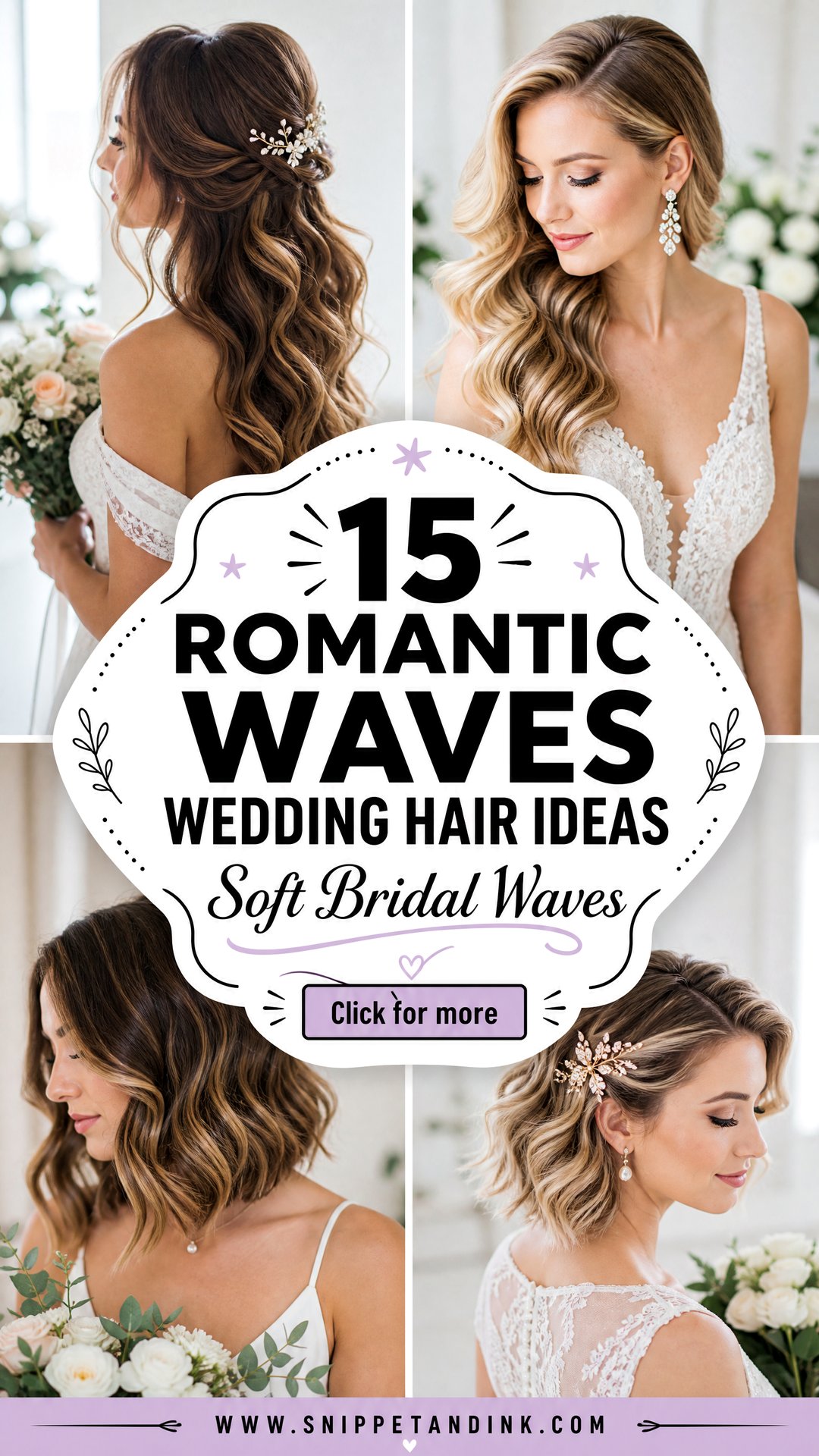
Iron Width, Curl Direction and the Brush-Out
Most of the difference between these fifteen looks comes down to three decisions I make before the first curl. If you understand them, you can explain what you want to your stylist far more clearly than with a photo alone.
How wide the iron is
A smaller barrel makes a tighter curl that lasts longer and brushes out into defined waves. A larger barrel makes a looser bend that looks relaxed but drops sooner. On fine or slippery hair I go smaller than the finished look needs, knowing it will relax.
Which way the curls turn
Curling every section in one direction creates the joined-up pattern of Hollywood and glam waves. Alternating directions gives the broken, natural movement of loose and boho waves. Around the face, curling away from the face opens it up; curling toward it looks more vintage.
How much it’s brushed
Brushing joins curls into waves and adds shine, but it also loosens them. A full brush-out gives glamour, fingers alone give texture. I always wait until the hair is completely cool before touching it, because warm curls brushed too early simply fall.
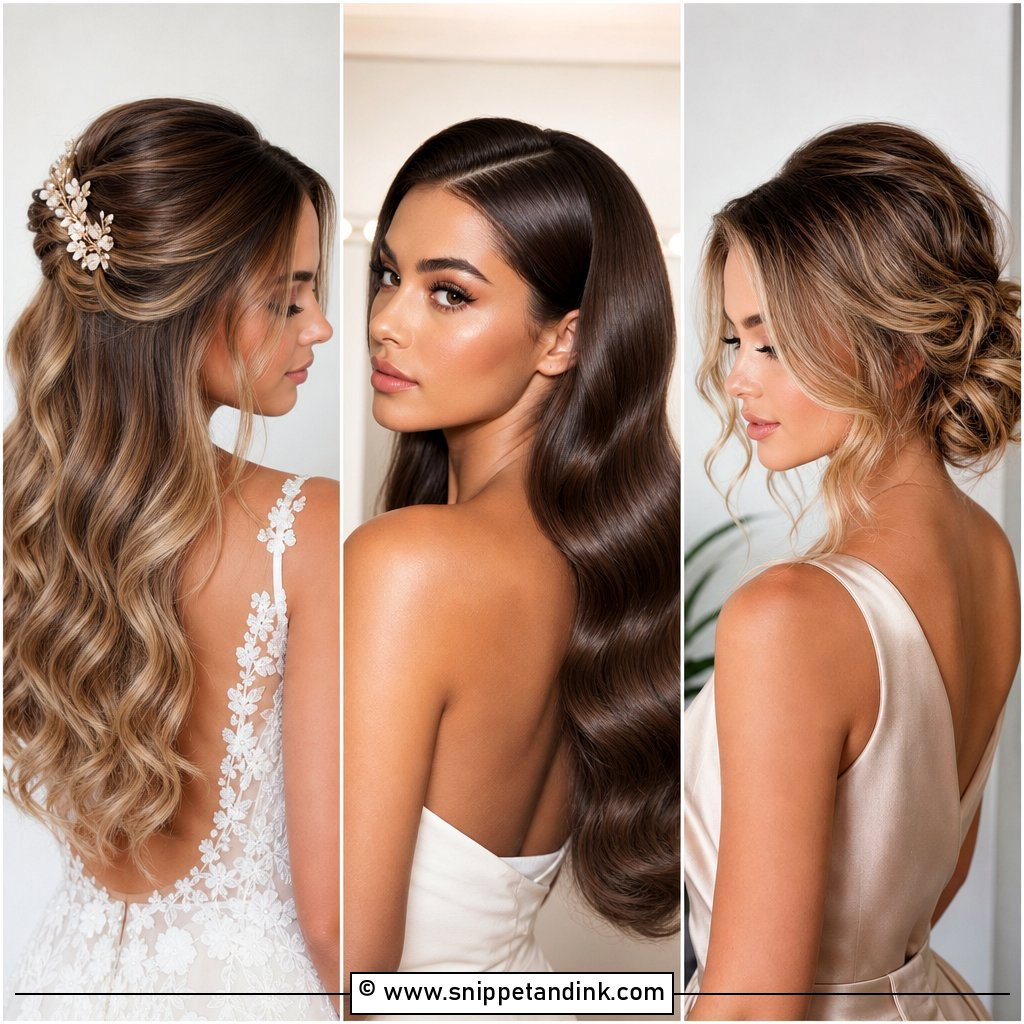
1. Hollywood Waves Wedding Hair
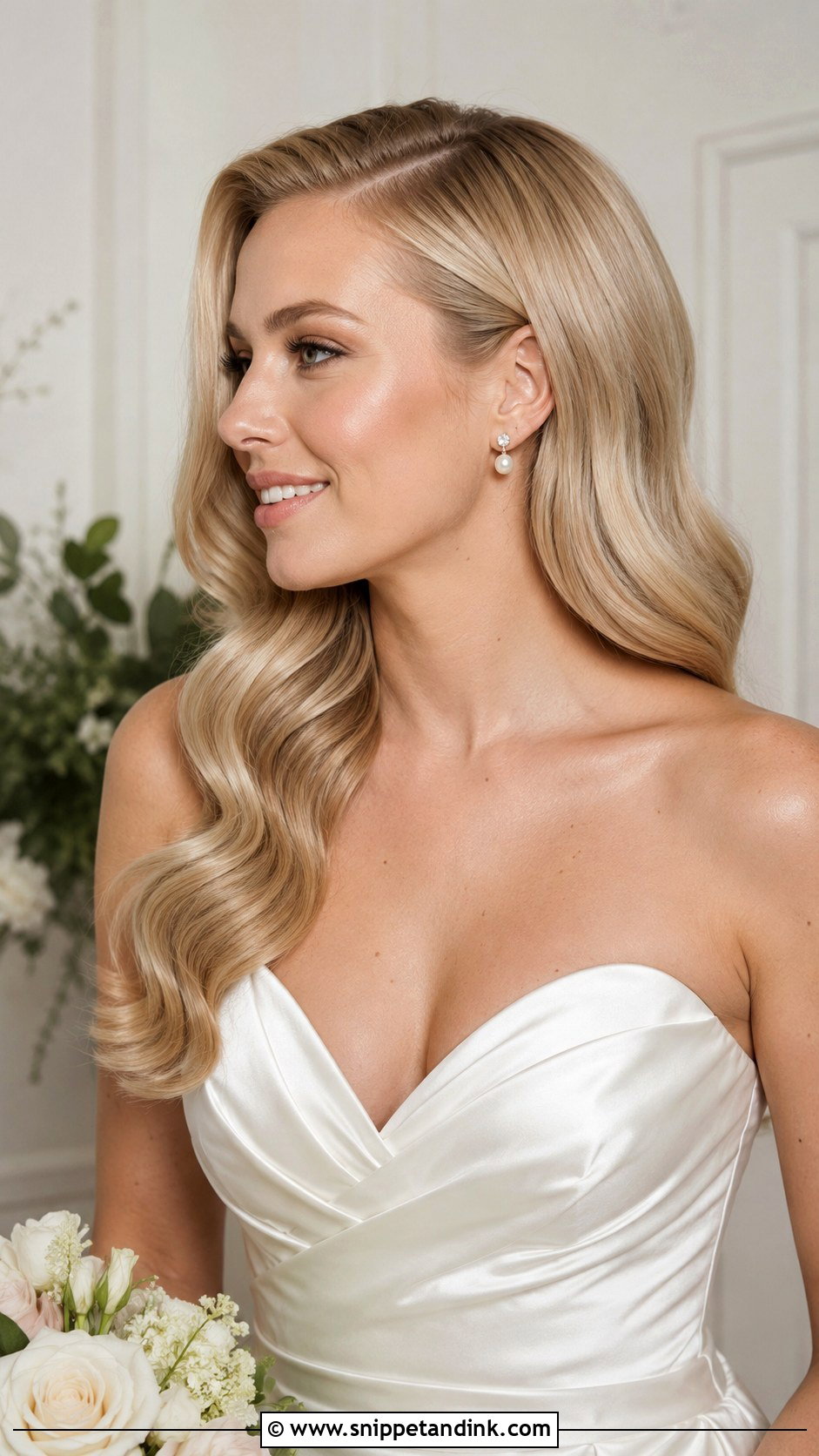
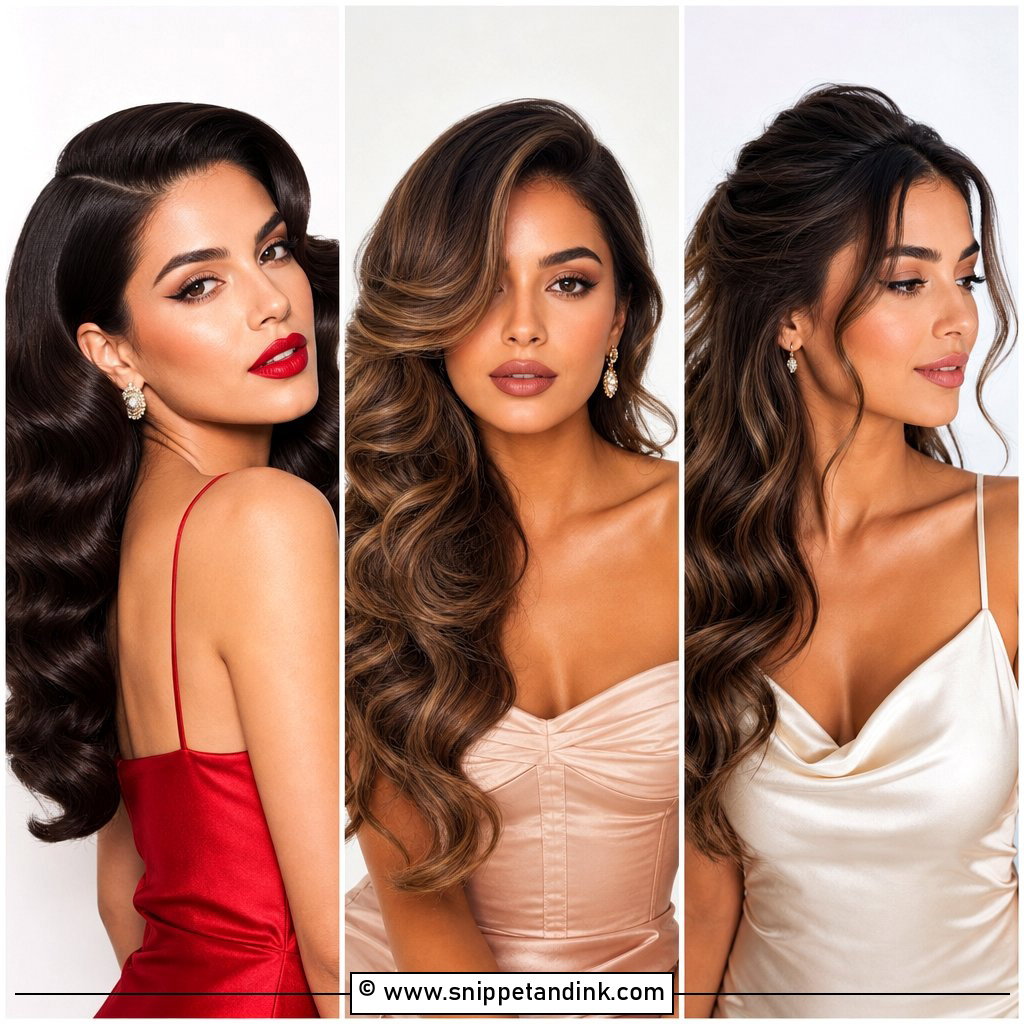
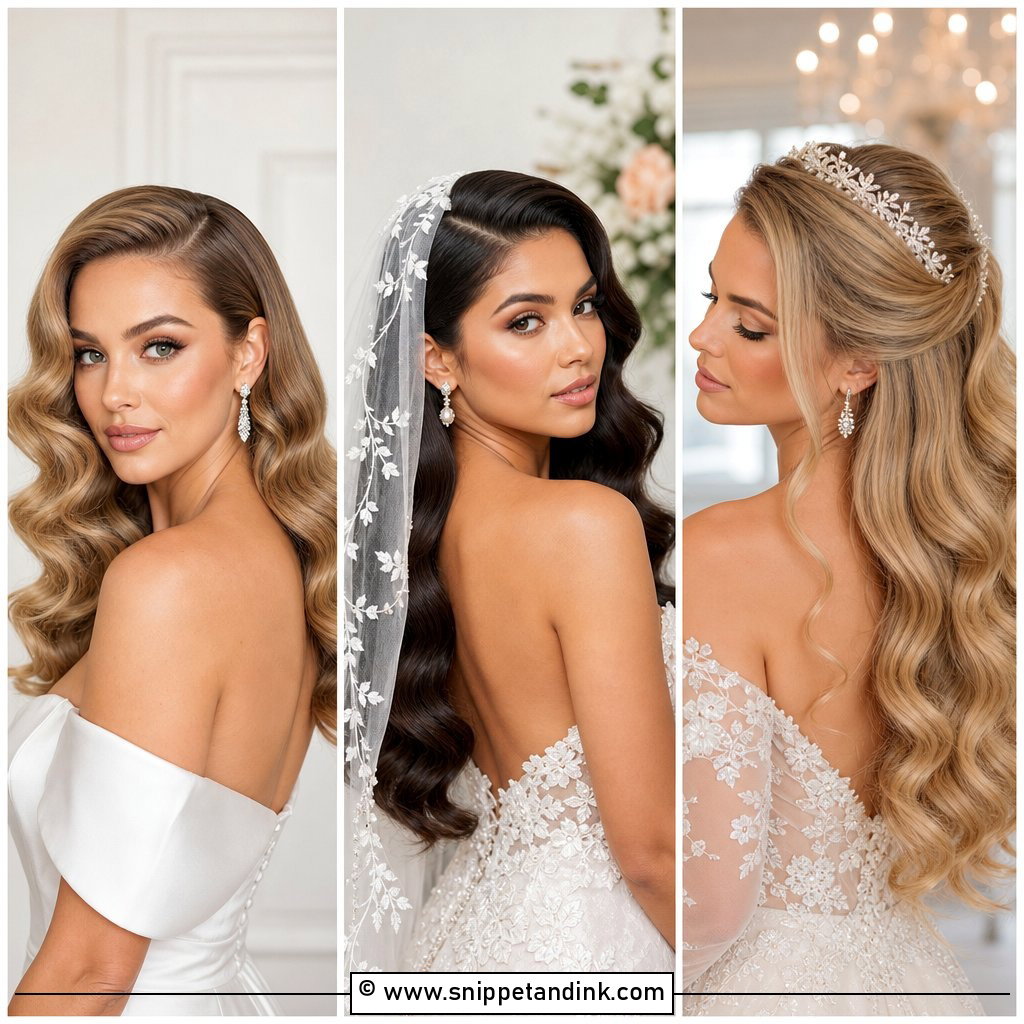
For Hollywood waves, every curl is wound in the same direction, pinned while it cools, then brushed together into one glossy pattern. Usually there’s a deep side part. Strapless gowns, satin and pearl earrings suit the clean shape. On medium to long hair the pattern completes several turns; fine hair may need a few extensions to make the waves look even. I’d rather spend time on prep and cooling than load on spray, because crunchy waves look dated instantly.
2. Half Up Wedding Hair With Waves
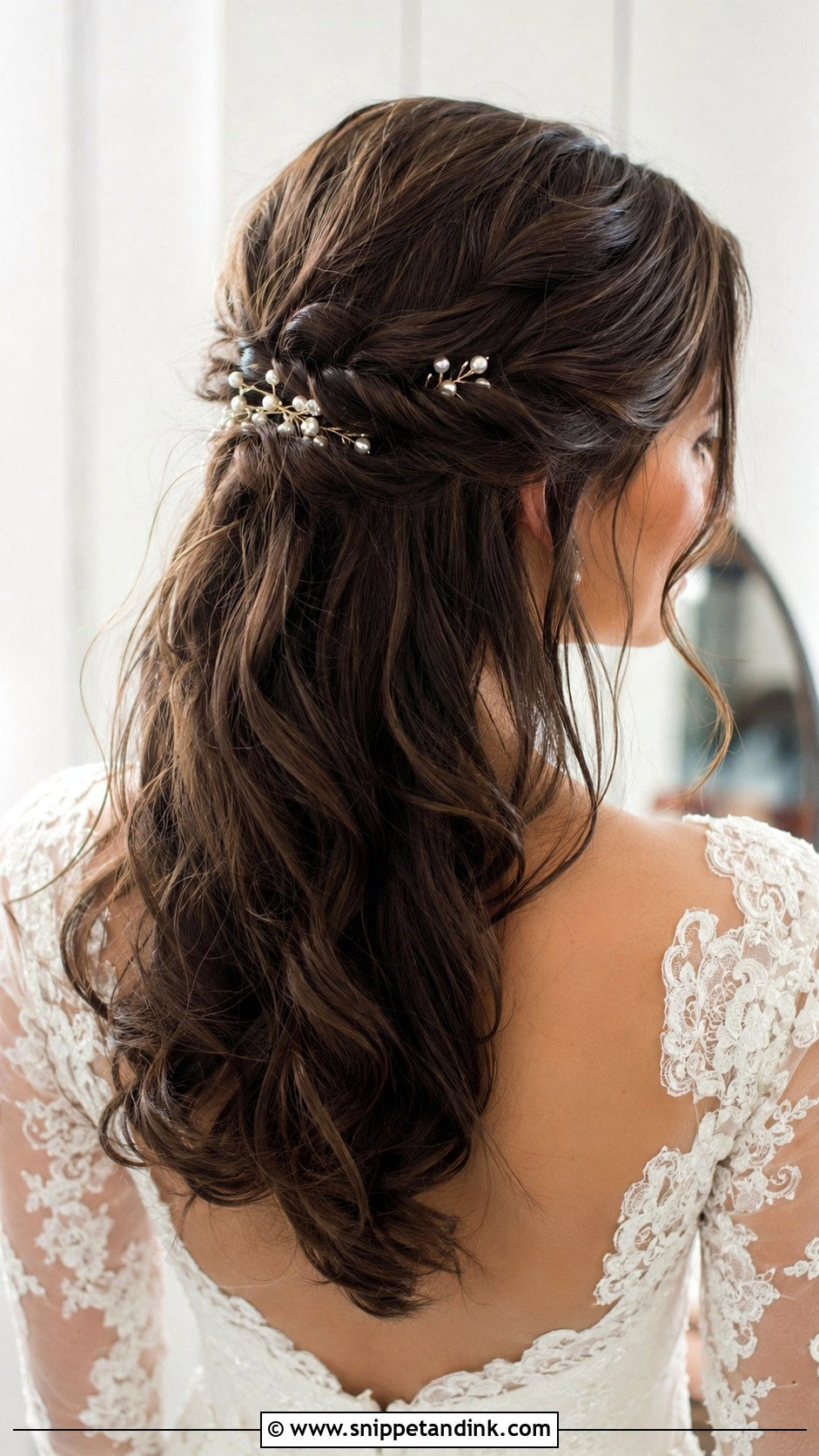
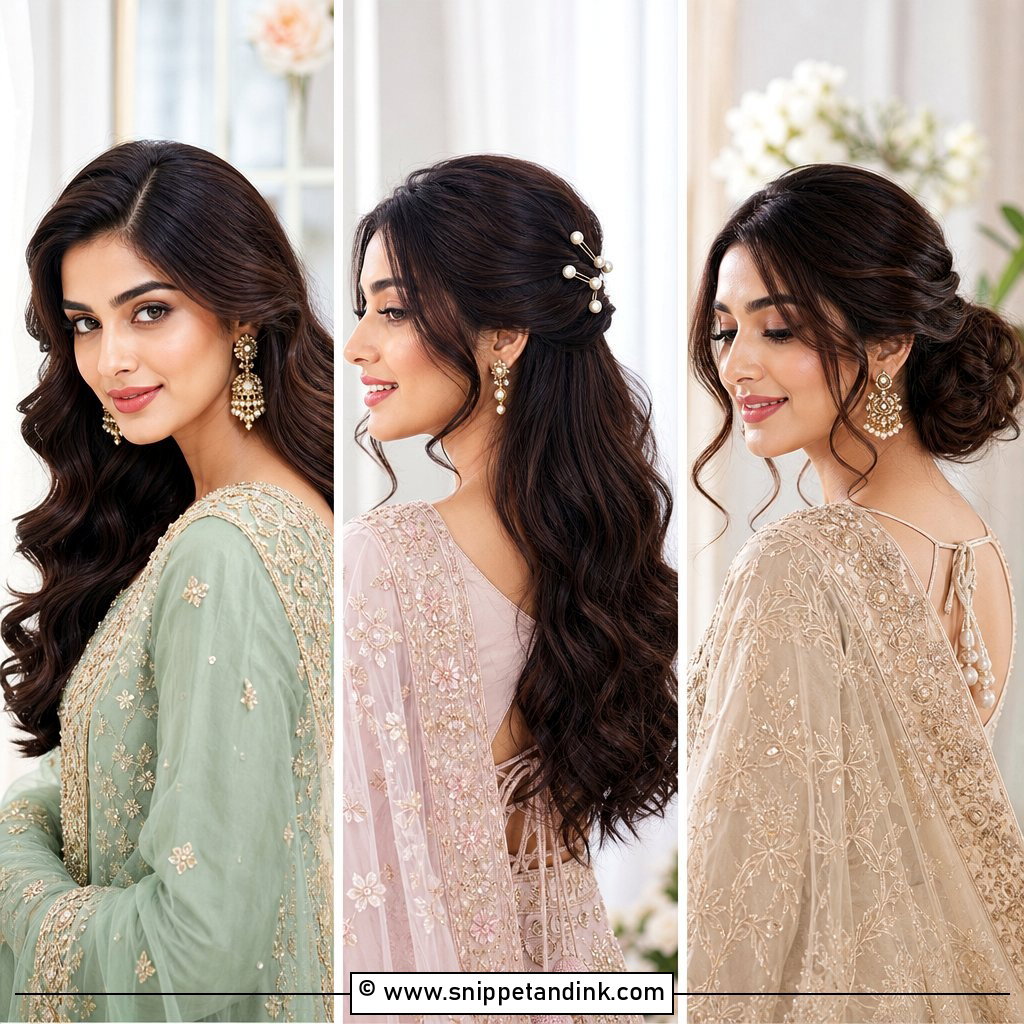
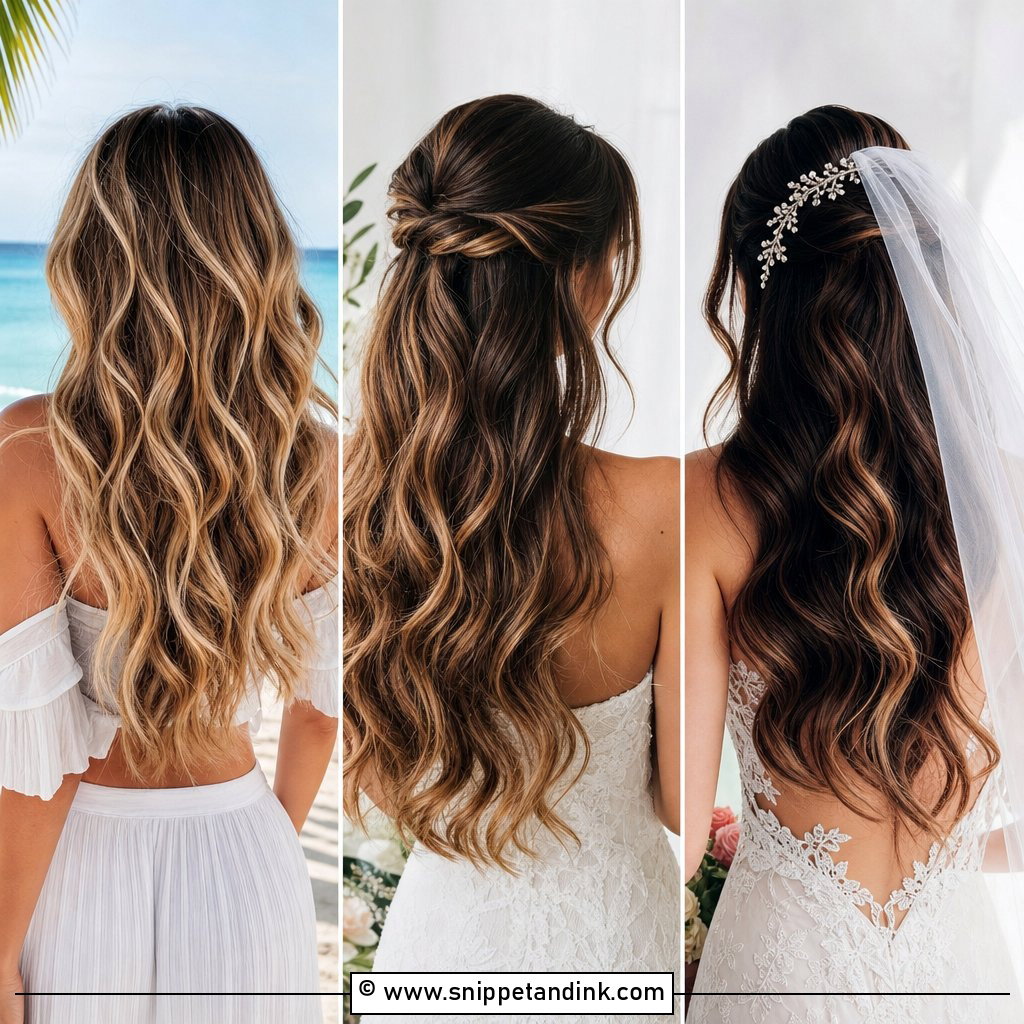
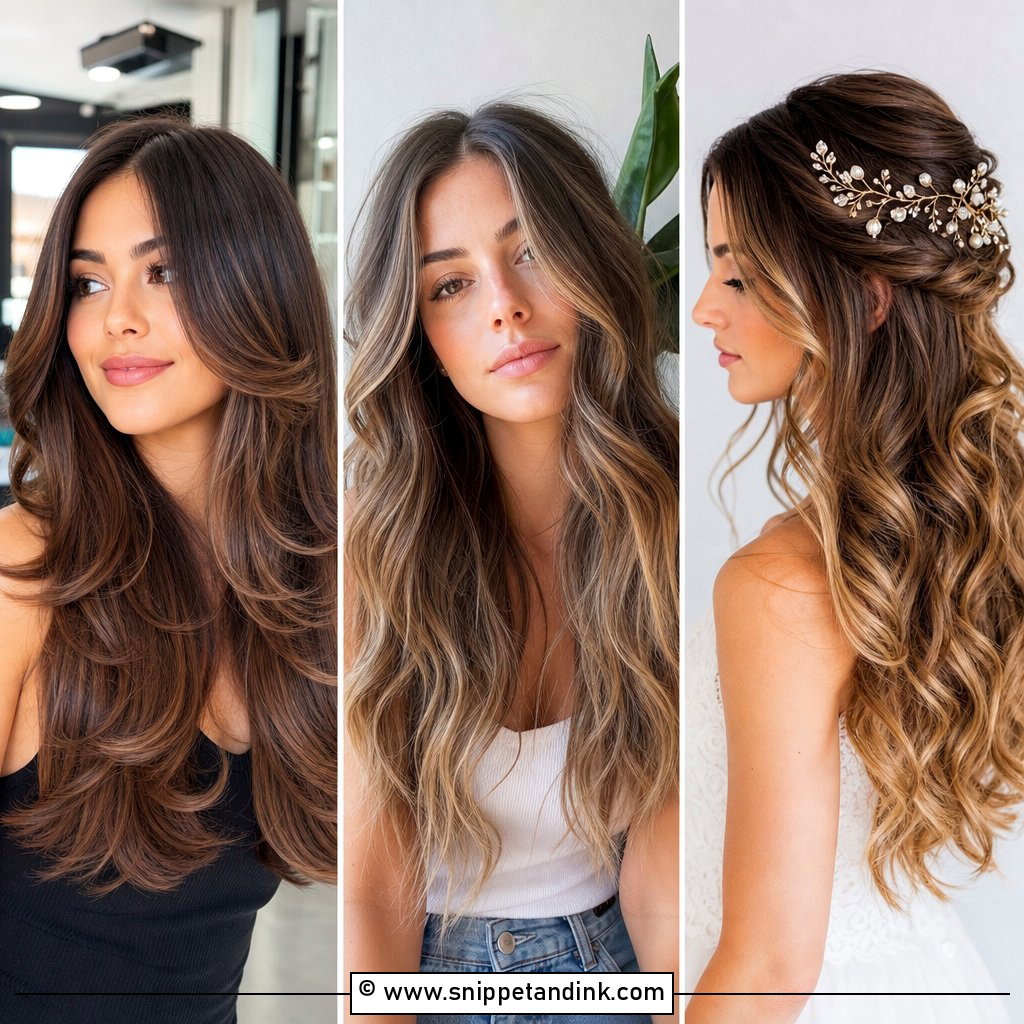
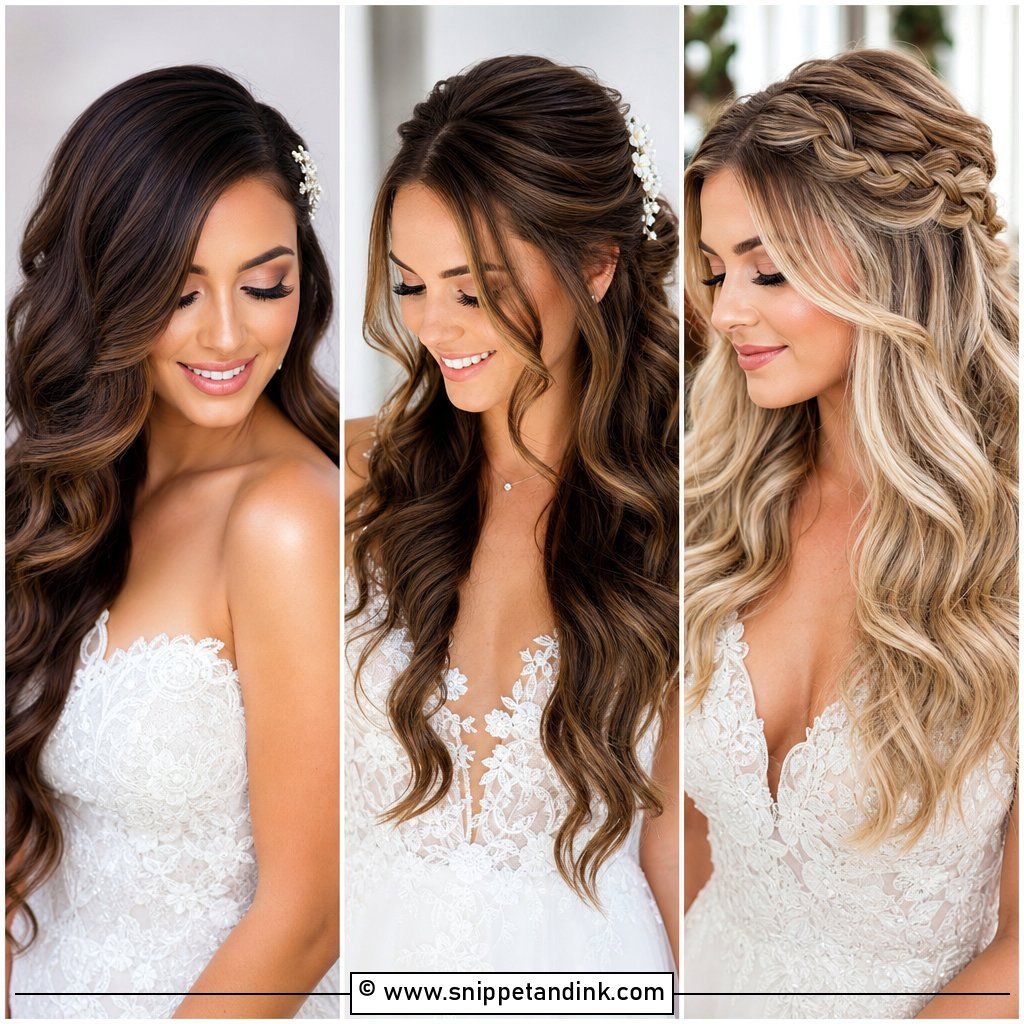
When a bride tells me she loves her hair down but worries it won’t last, half-up waves are my answer. The top section holds the face clear, and that pinned section becomes a firm base for a veil or comb. It can be twisted, braided or simply lifted at the crown. I keep the front soft, because pulling it back too tightly makes the style look like a school photo. Small flowers or pearl pins can sit at the pinned point.
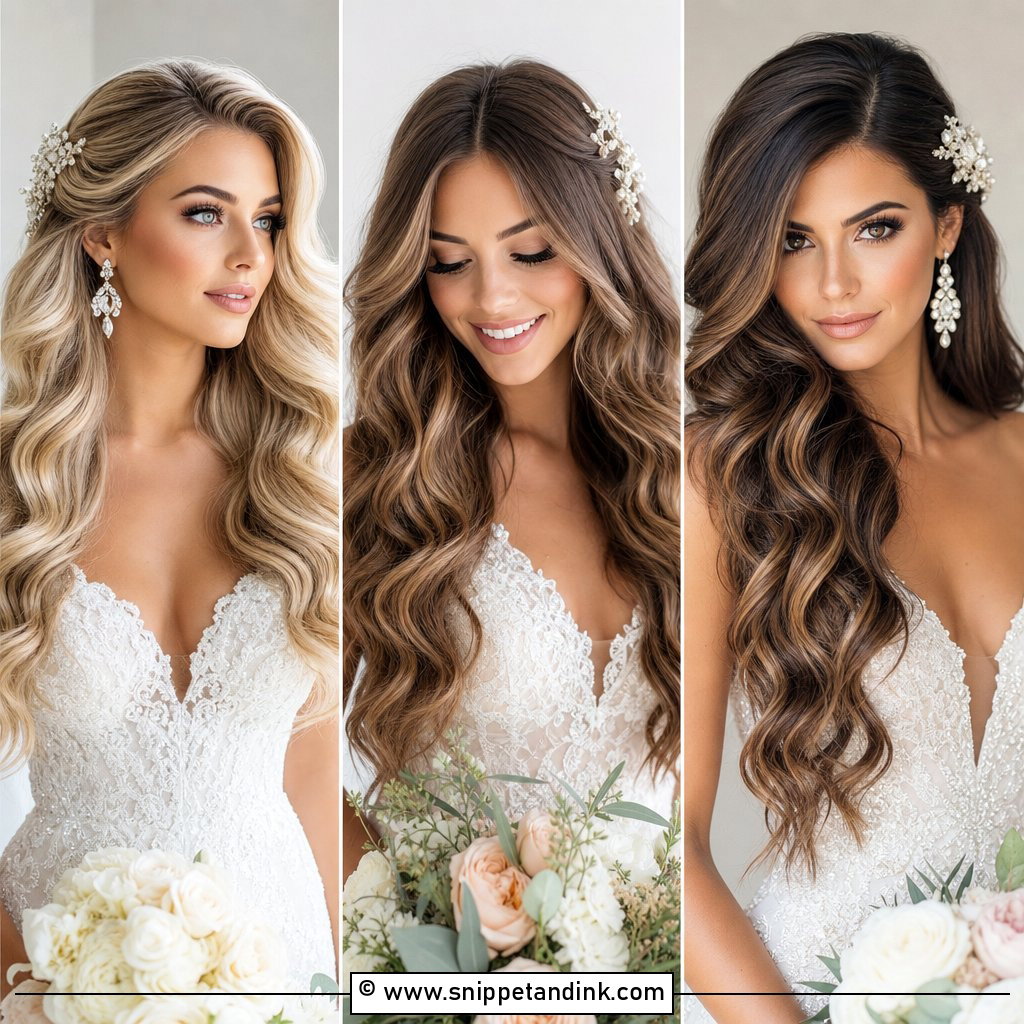
3. Loose Waves Wedding Hair
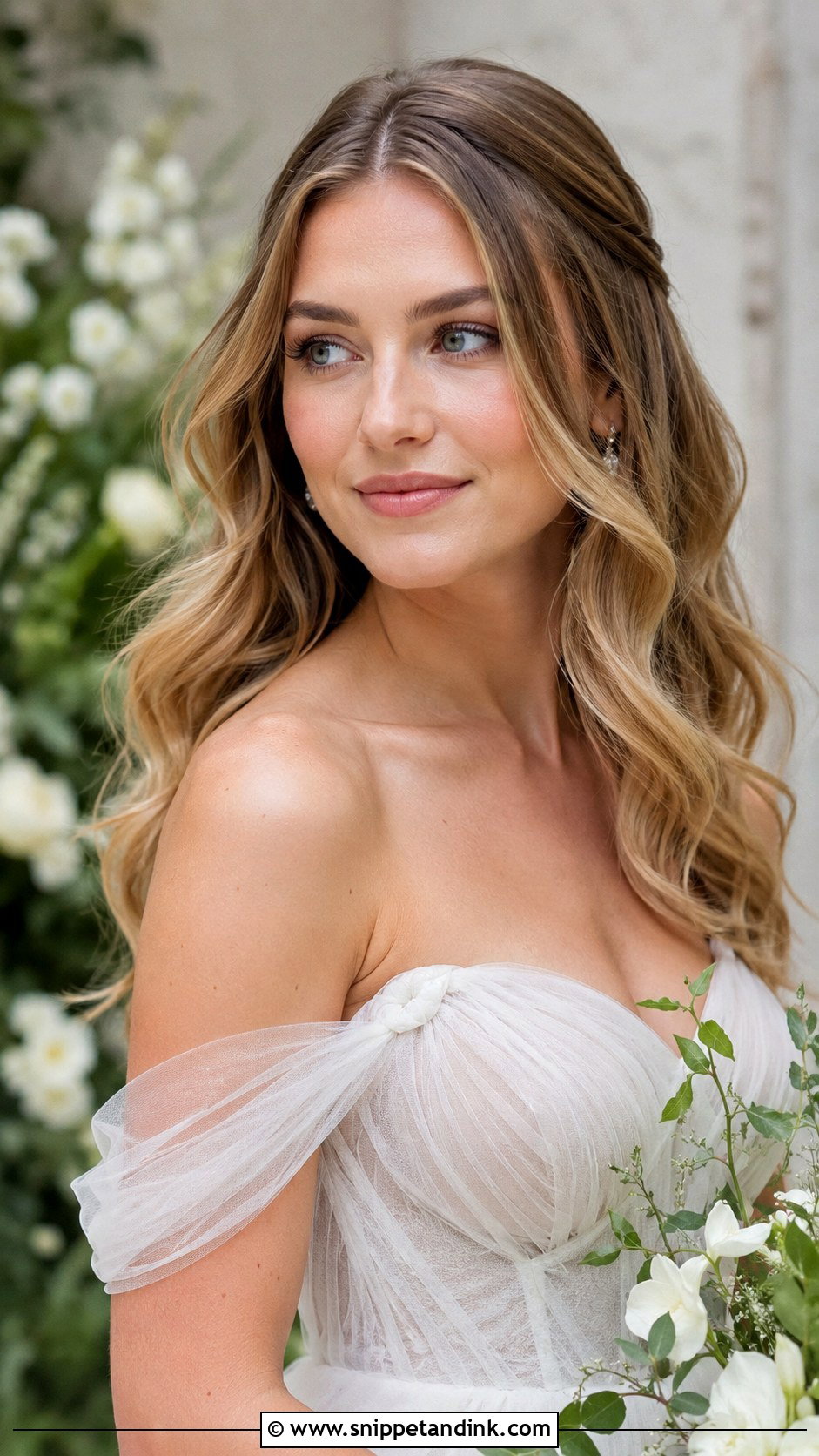
Loose waves sit between polished Hollywood waves and textured beach waves. They suit lace, garden ceremonies and simple makeup. Where the wave starts matters: on a round face I begin the bend below the cheekbone, while on a longer face starting near the cheekbone softens it. Keep the crown smooth and the ends polished, or it starts to look like day-two hair. A light shine spray at the end is plenty.
4. Side Part Waves Wedding Hair
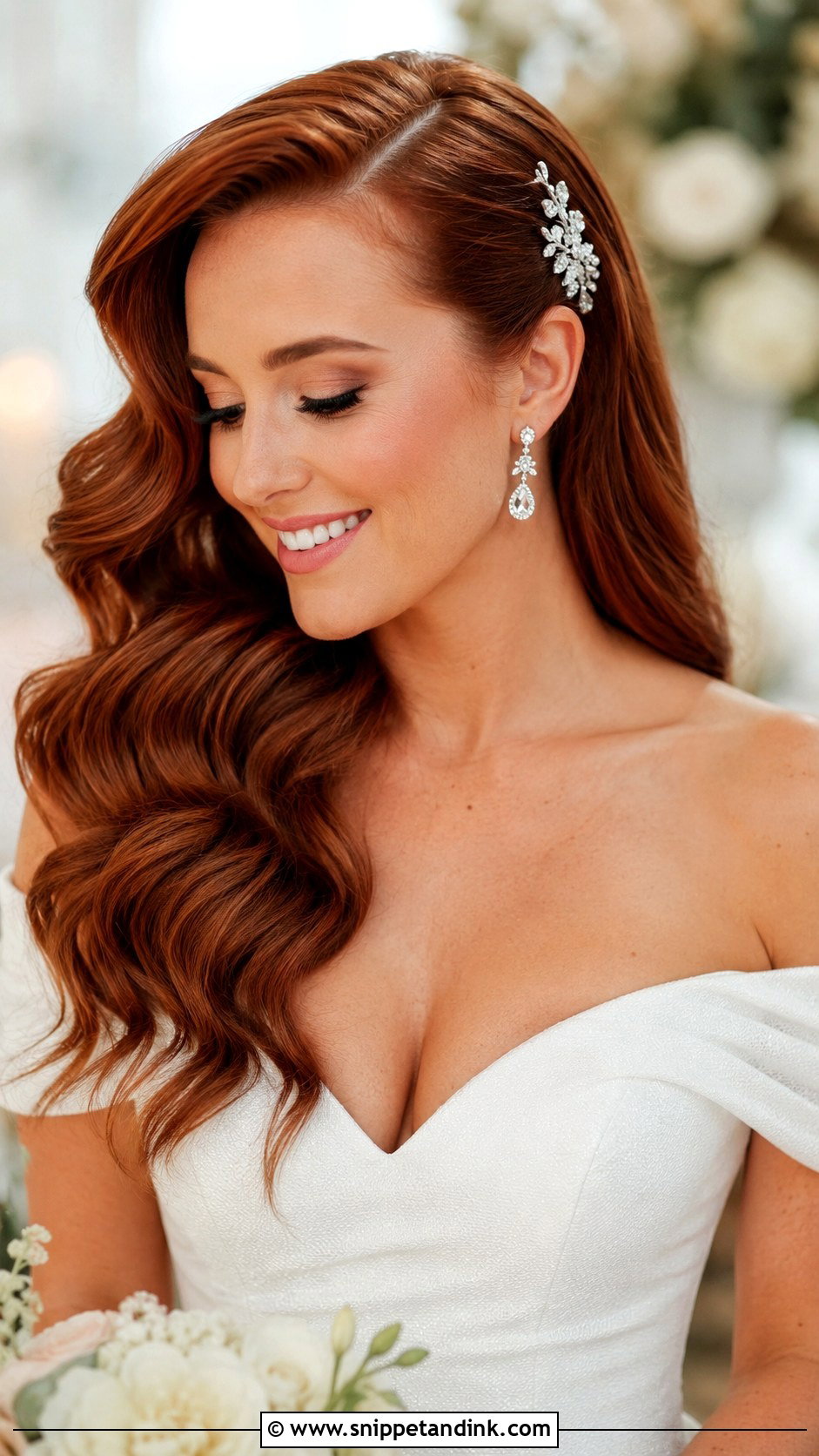
A deep side part frames the face and gives drama without any updo. One side tucks behind the ear with a comb or barrette, the other falls in full waves over the shoulder. One-shoulder and off-the-shoulder gowns suit it, as do statement earrings on the tucked side. The part line has to be clean, so I set it with a fine-tooth comb before curling. If you have a strong cowlick at the front, tell your stylist which side it falls to; fighting it all day rarely works.
5. Long Wedding Hair With Soft Waves
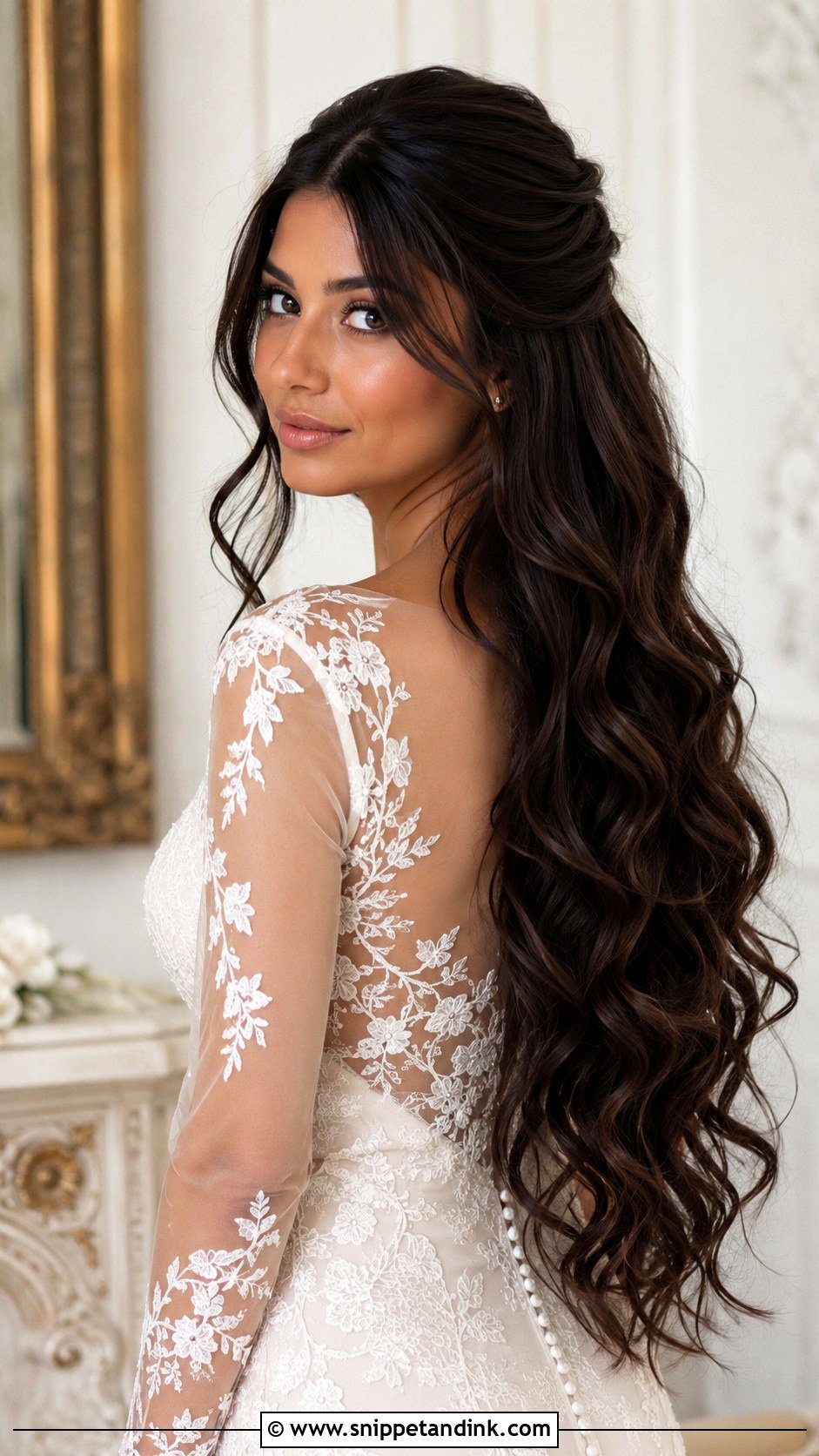
Long hair gives waves room to fall, which shows in walking shots and photos taken from behind. The challenge is weight: very long, heavy hair pulls curls straight within hours. Layers help, and so does curling in smaller sections than you’d use on medium hair. If your hair is long but fine, clip-in extensions add fullness and help hold the curl. Blend the waves so the top and bottom read as one continuous pattern.
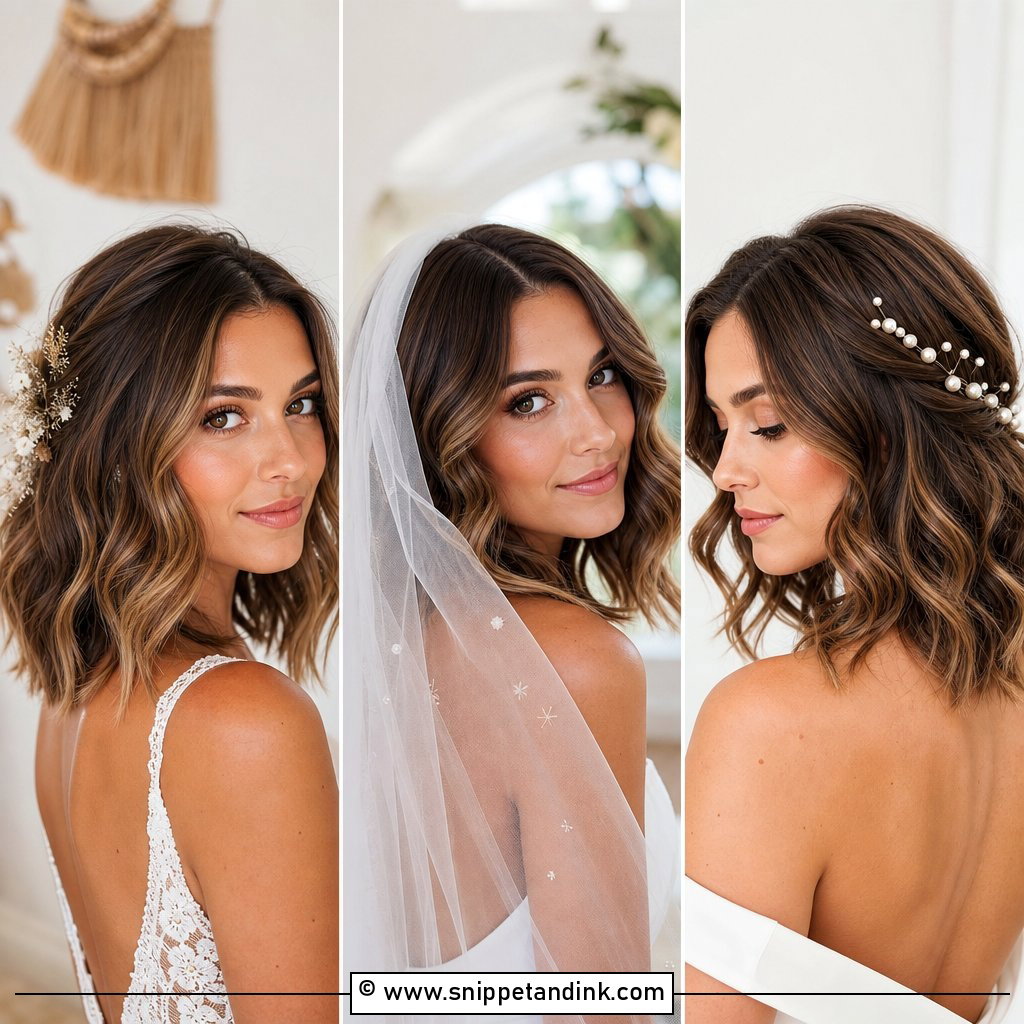
6. Medium Length Wedding Hair With Waves
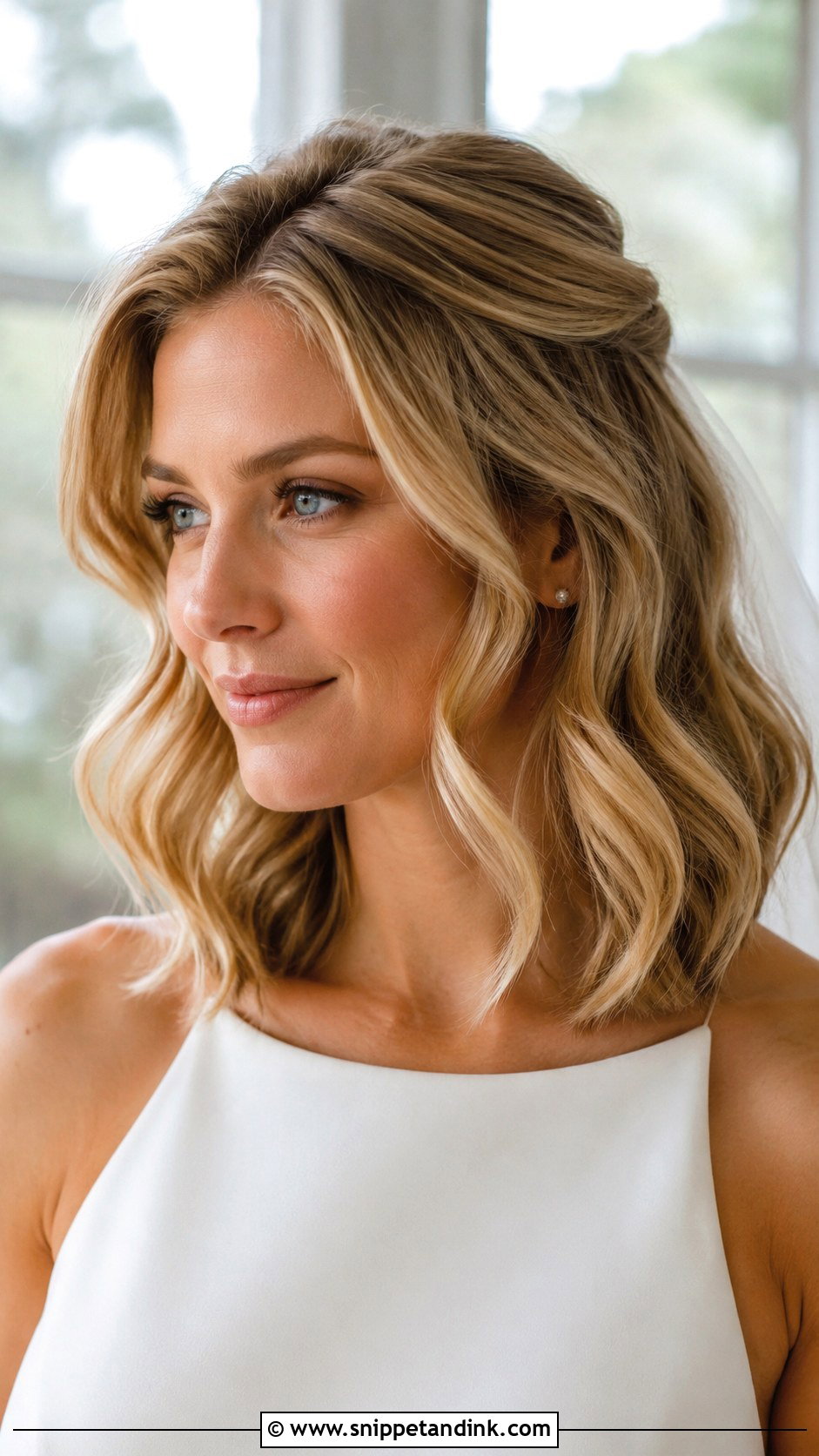
Collarbone to shoulder length is honestly the easiest length to wave for a wedding. There’s less weight pulling the pattern out, so a soft bend through the mid-lengths usually lasts well. It pairs with simple veils, floral combs, pearl clips and face-framing layers. The one thing to watch is the ends flipping out against your shoulders, so I curl the last few inches away from the neck. A little teasing at the crown adds height.
7. Wedding Hair Down With Waves
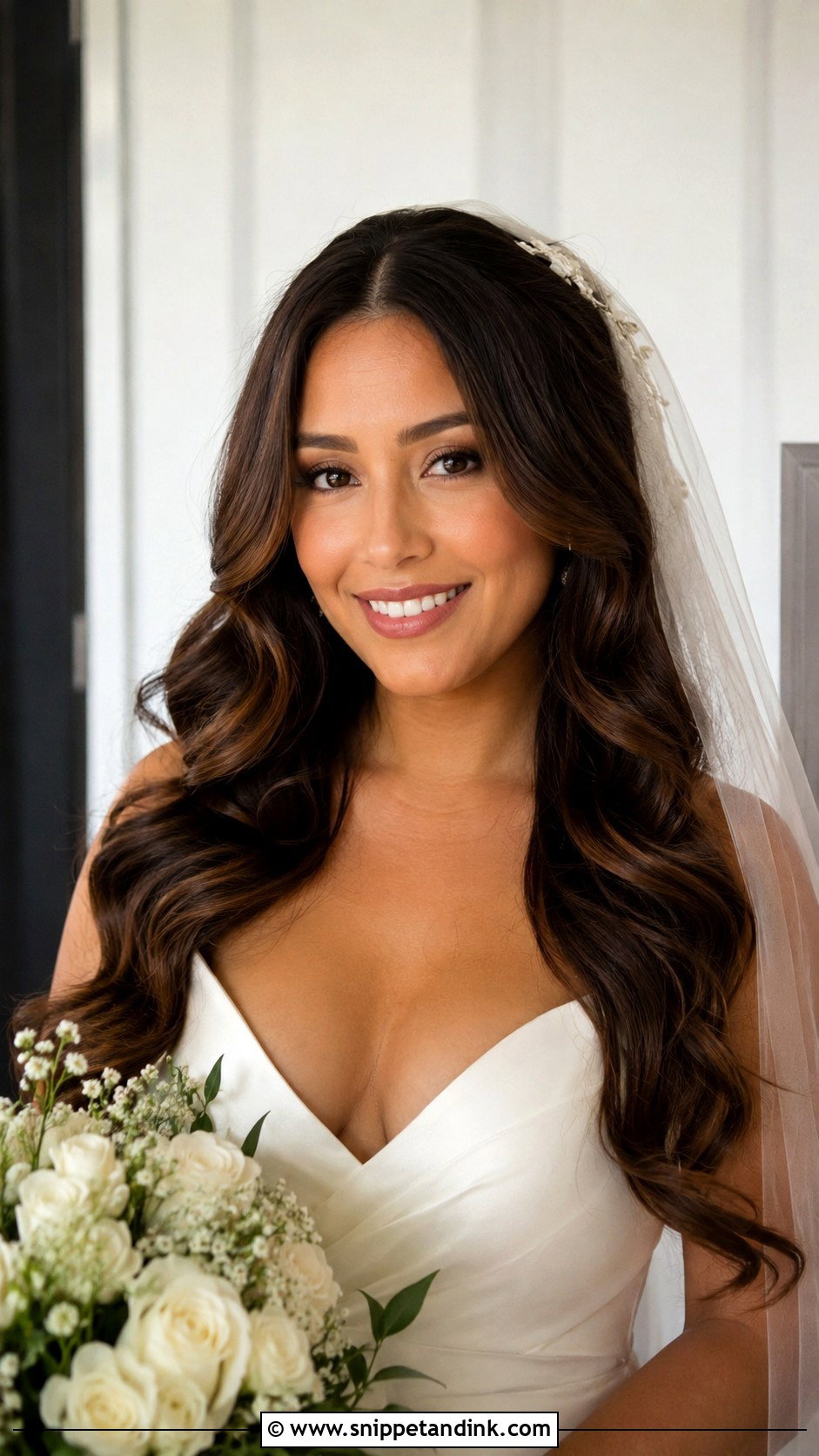
Wearing your hair down feels familiar, and that comfort is worth a lot on a nerve-filled morning. To make it look bridal rather than everyday, I smooth the crown, shape the front and set waves evenly through the length. Veils can go at the crown or lower at the back. Outdoors, a single hidden pin on one side keeps the front from blowing across your face during the vows.
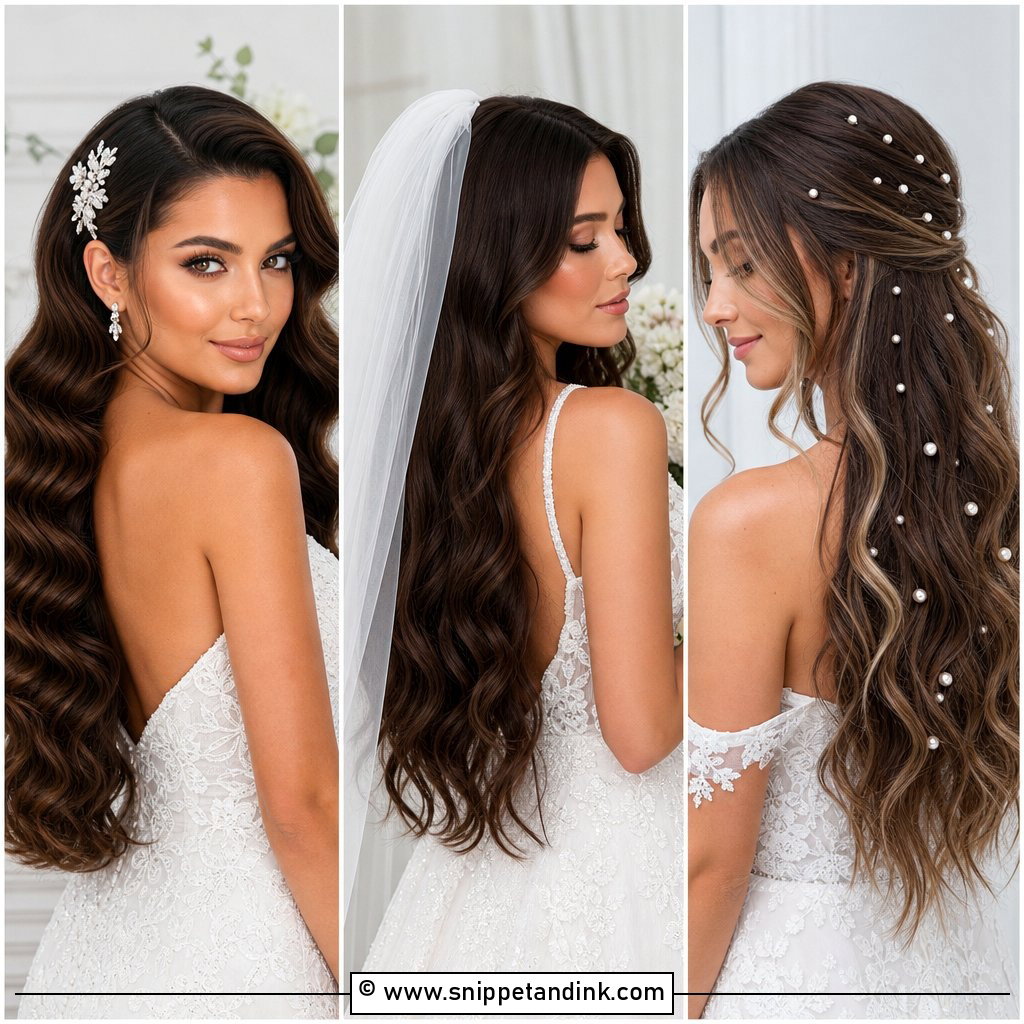
8. Wedding Waves With Veil
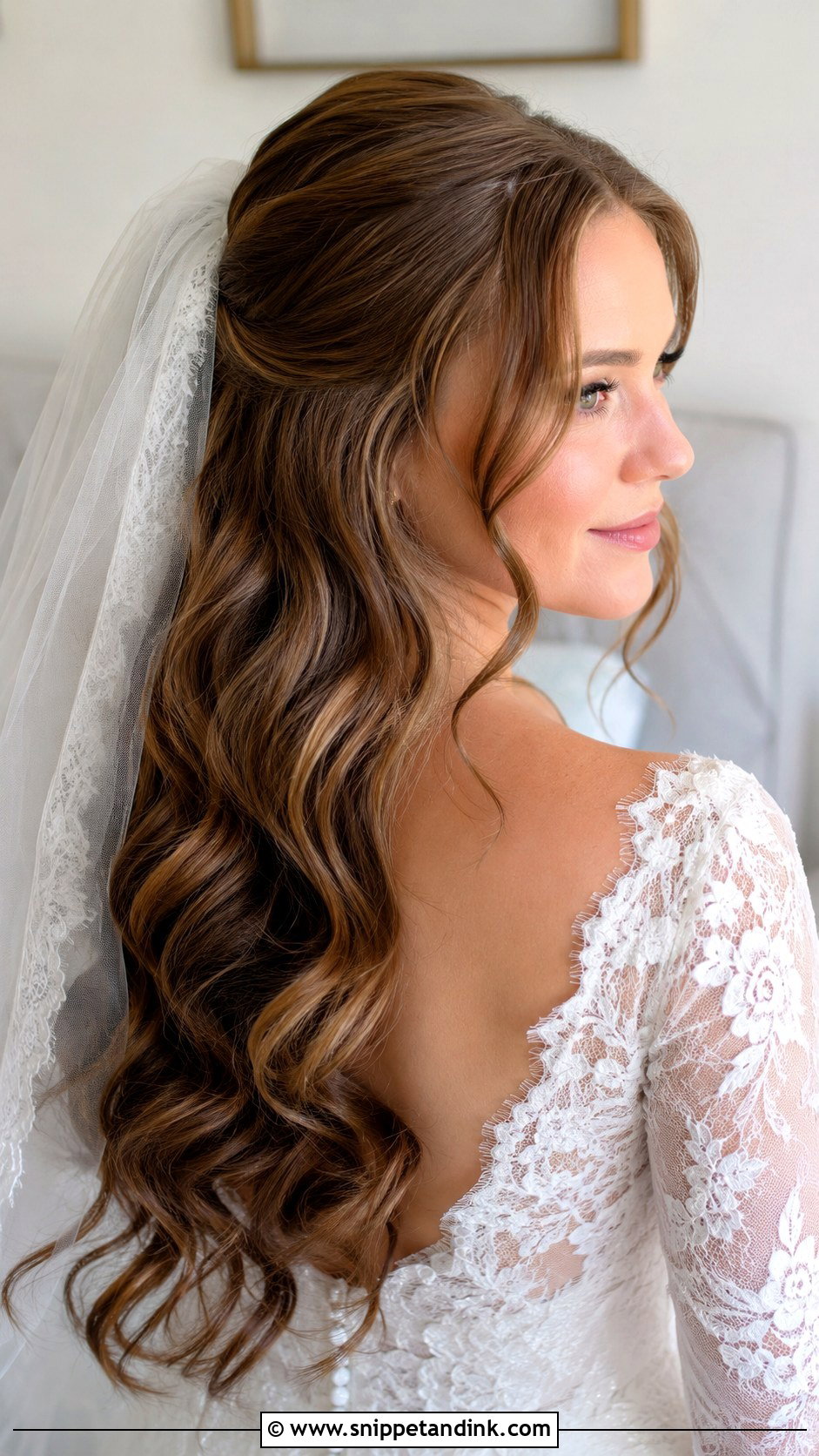
Waves and a veil need balance. The texture of the waves gives movement under the tulle without competing with it. Crown placement feels traditional, while a veil tucked low at the back feels softer. Loose waves have nothing for a comb to grip, so I build a small anchor first: a couple of crossed pins or a tiny teased section hidden under the top layer. If the veil is heavy with lace or pearls, keep other accessories minimal.
9. Wedding Waves With Hair Comb
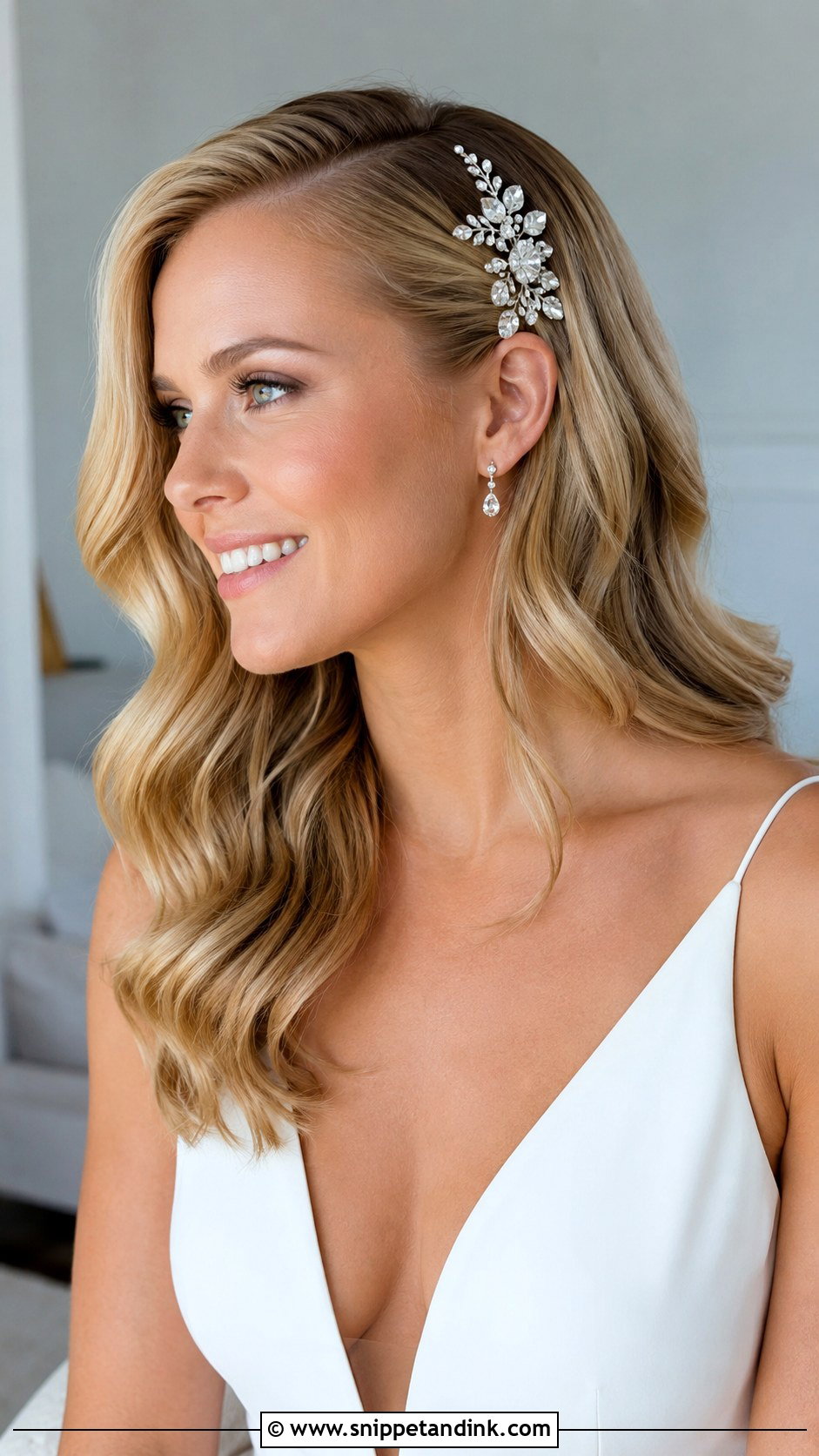
A comb can hold one side back, sit above a half-up twist or tuck near the back of the waves for a small flash of sparkle. Pearl, floral, crystal or gold all work. On thick hair I secure the comb with hidden pins, because the teeth alone will slowly work loose. On fine hair a little teasing underneath gives the comb something to bite. The waves around it should look soft but placed.
10. Bridal Waves With Pearl Pins
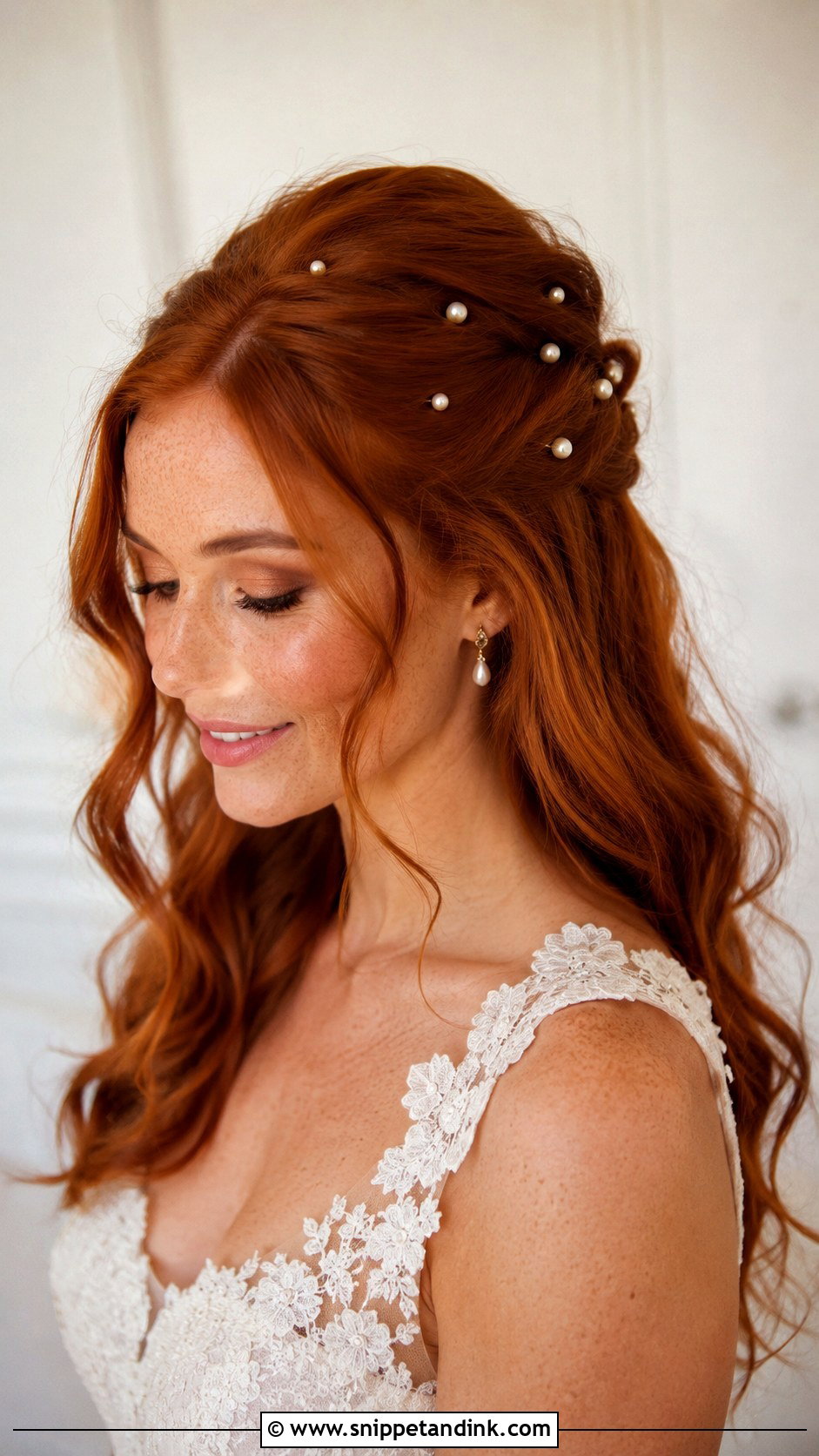
Pearl pins can scatter through a half-up wave style, line one side or pick out curls near the face. They suit a dress with pearl details or a clean neckline that needs a small accent. Mixed sizes look more natural than a matching set. I keep them grouped around the crown or one side rather than spread through the whole length, where they get lost or fall out as the waves move.
11. Boho Waves Wedding Hair
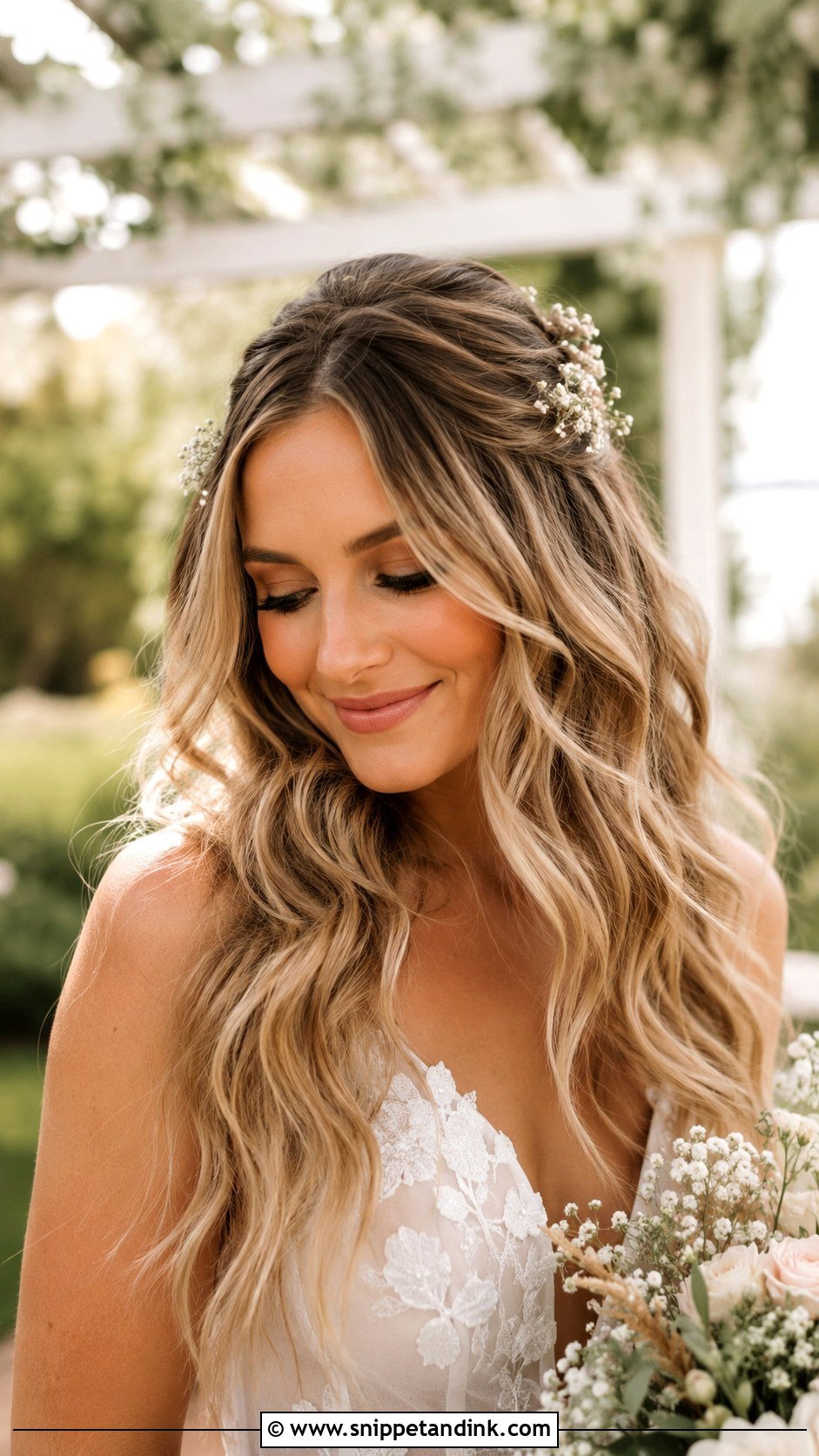
Boho waves are looser, usually with a soft middle part and natural movement through the ends. They suit outdoor, rustic and beach weddings. Thin braids, small flowers or a delicate hair vine add detail. Relaxed still has to read well in close-ups, so I aim for soft separation, not frizz. A light texture spray holds the shape and keeps it touchable.
12. Glam Waves Wedding Hair
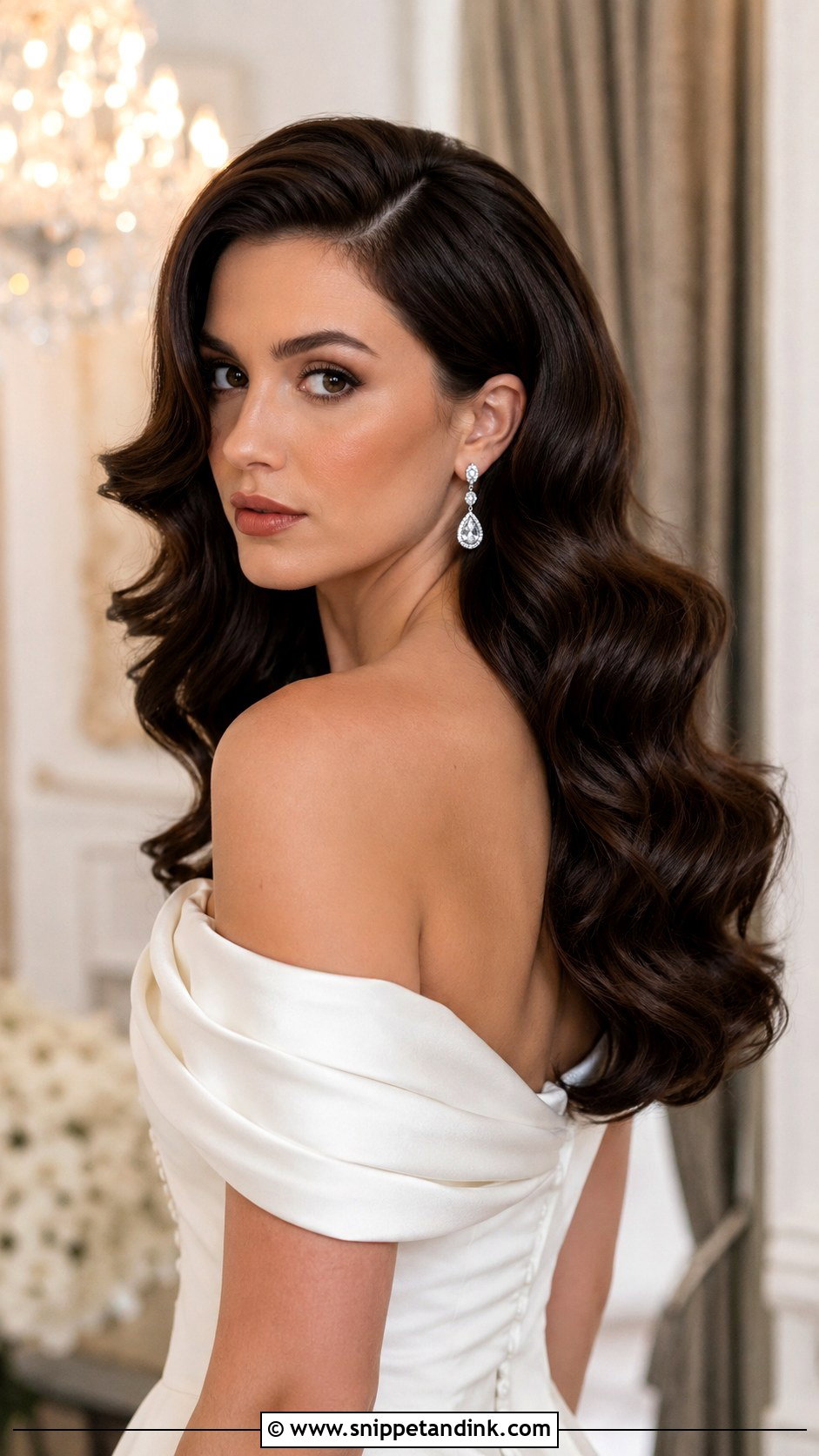
Glam waves are fuller and shinier than soft waves, with a more sculpted outline. They work with fitted gowns, dramatic veils and formal venues, and they hold up well under flash. The process is careful: precise sections, generous cooling time and a thorough brush-out. A humidity-resistant spray at the end keeps the surface smooth. They’re less suited to a casual beach day, where they can look overdone.
13. Wedding Waves With Braids
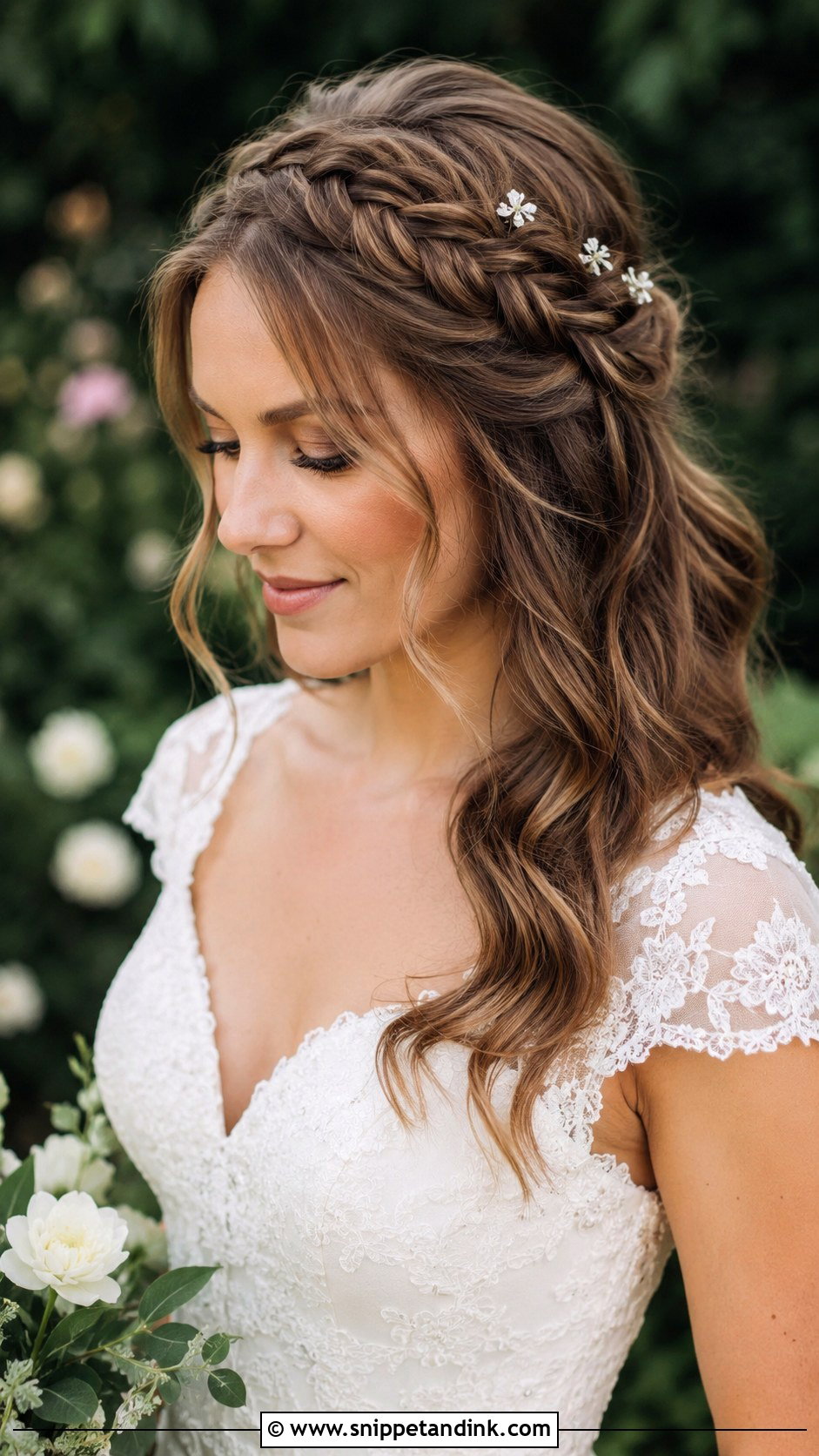
A small braid gives waves a bit of structure. A crown braid, side braid or hidden braid can lead into the loose length, and it also acts as an anchor for pins and flowers. Garden weddings, lace and tulle suit this combination. I pull the braid slightly wider once it’s tied so it blends into the waves rather than sitting on top. Keep the front loose so the face stays soft.
14. Short Wedding Hair With Waves
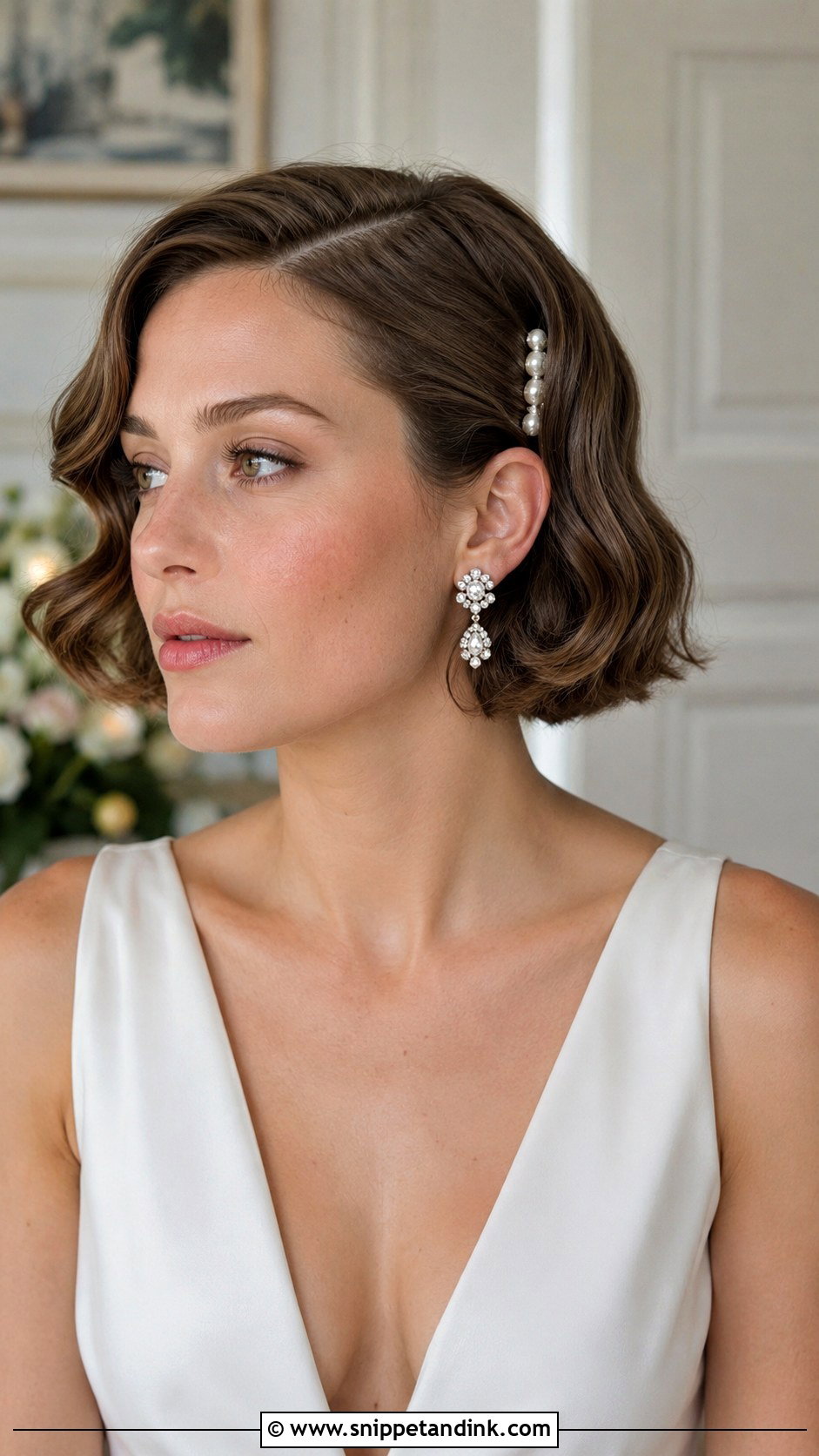
Short hair waves well, but the wave has to suit the cut. A blunt bob looks sharp with smooth S-waves, while a layered lob suits looser brushed curls. Bobs, lobs and shoulder-grazing cuts frame the cheekbones and show off statement earrings and birdcage veils. I use a smaller iron and lighter products on short hair, since heavy hold makes it look stiff. A clean part and a little shine finish it.
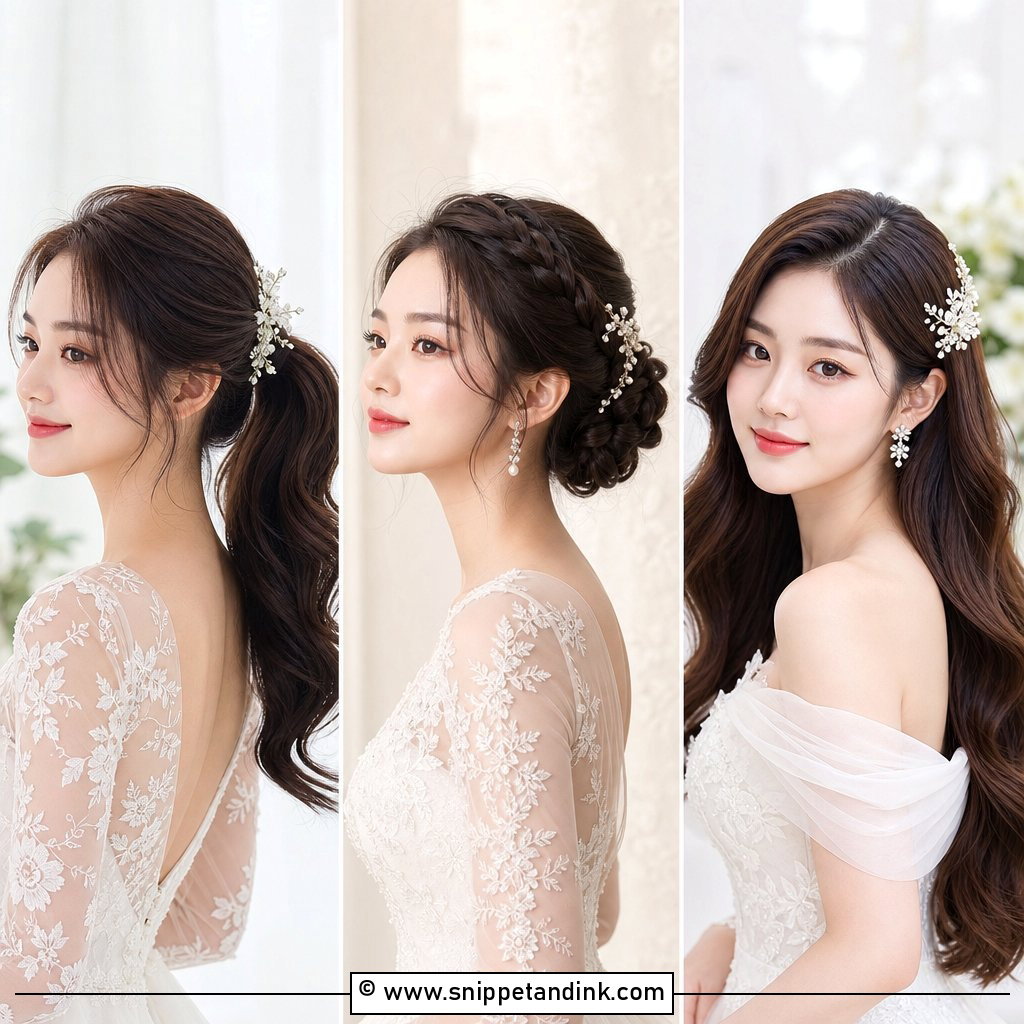
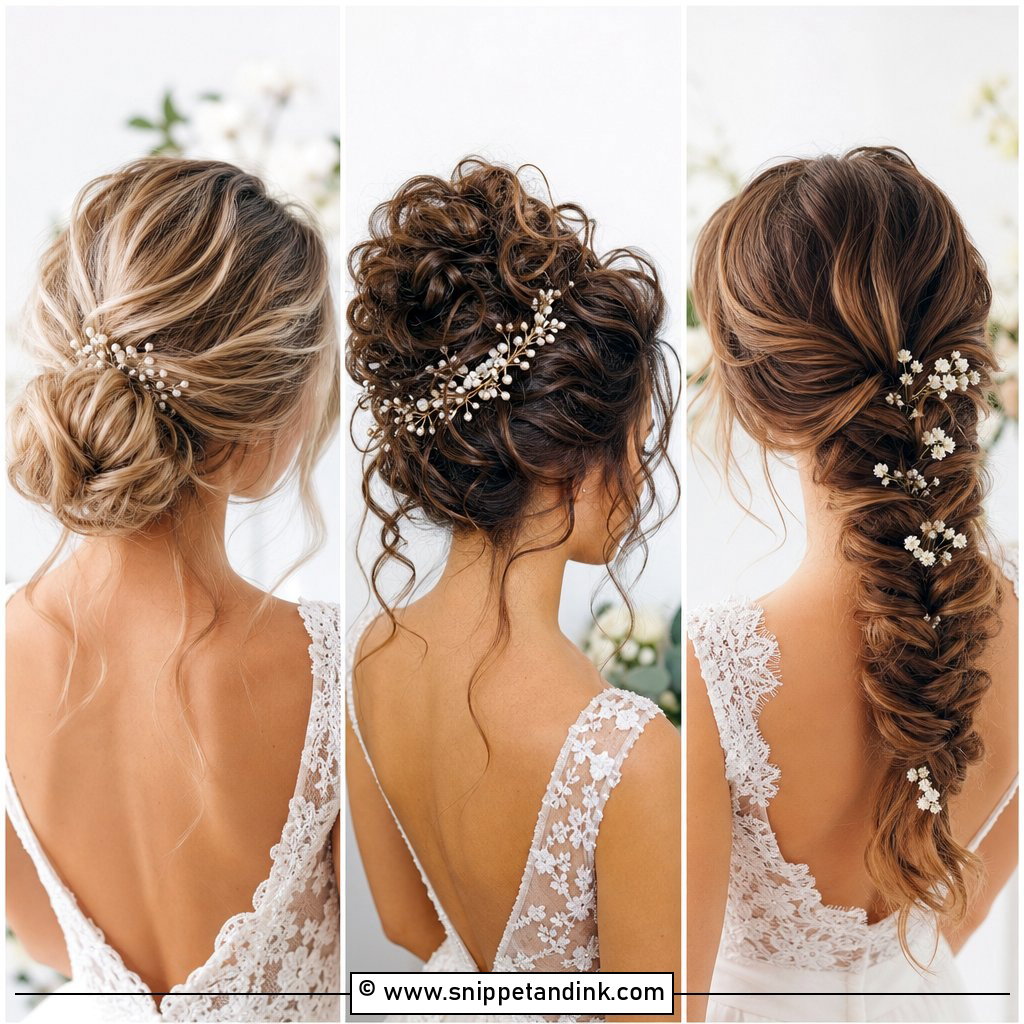
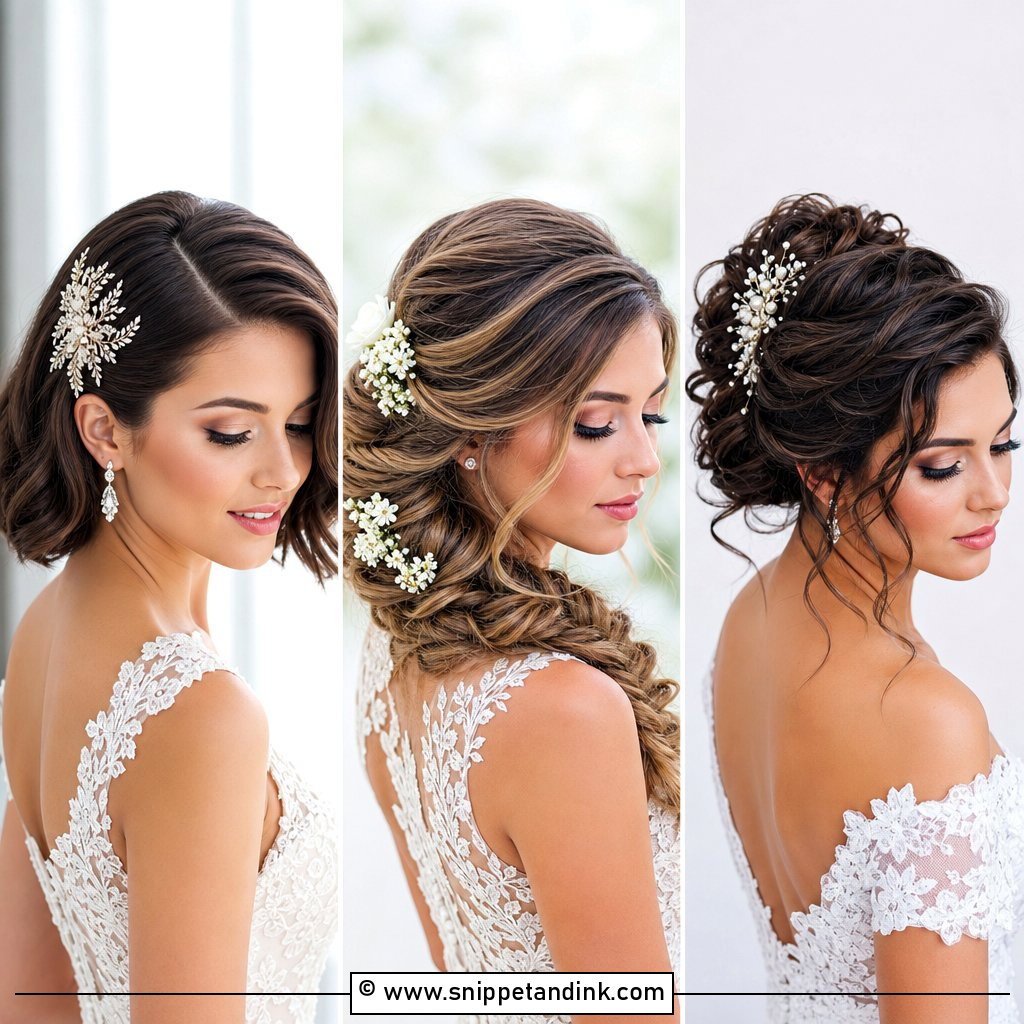
15. Natural Waves Wedding Hair
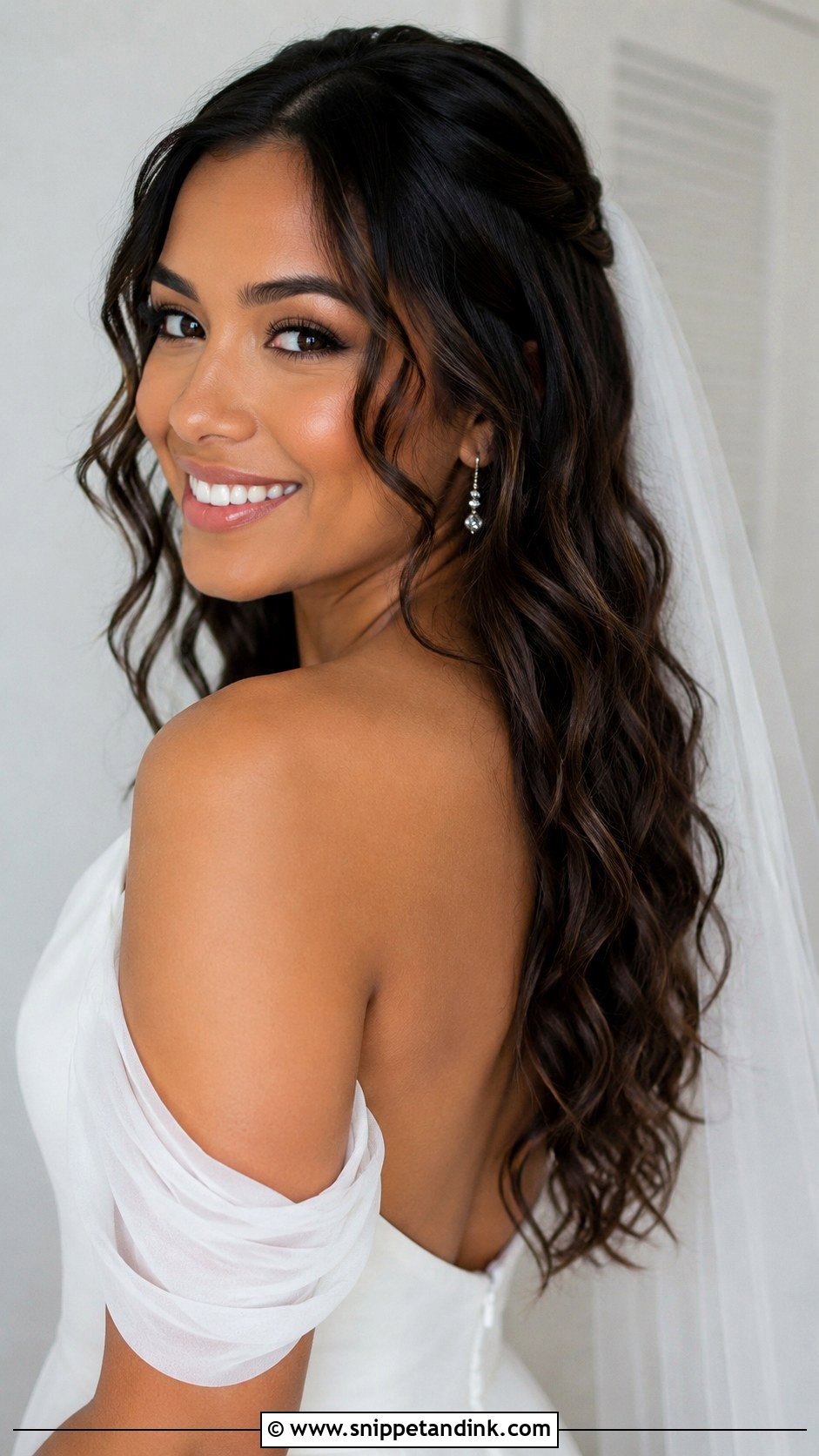
If your hair already waves, I’d usually work with it rather than straighten and re-curl it. I enhance the existing pattern, smooth frizz and add definition only where it’s missing. It can be worn down, half up, swept to one side or under a veil. Moisture prep in the days before matters, especially for hair that puffs when dry. A curl cream, a diffuser and a light finishing spray keep it defined, and the result looks like you on your best day.
What Pulls Waves Straight by the Evening
Loose waves are always a little looser by the reception, and that’s usually fine. Knowing what flattens them helps you protect the parts that matter most.
- Hands: running your fingers through your hair is the quickest way to separate and straighten waves. Once they’re set, try to leave them alone.
- Weight: long, heavy lengths drag the pattern out from the top down. A half-up section or a few hidden pins at the crown take some of that load.
- Friction: a veil, a car headrest or a high chair back rubs the waves at the back flat. Sit slightly forward when you can.
- Moisture: humid air, a warm dance floor and even steam from a shower in the getting-ready room all relax curls.
For a quick refresh before the evening photos, have someone hold a small wand and re-curl only the pieces around your face and the top layer. Leave them to cool for a few minutes, then loosen with fingers. That takes far less time than redoing the whole head and makes the biggest visible difference.
Your Own Wave Pattern Is a Good Starting Point
Waves give you a wide range, from sleek Hollywood glamour to soft half-up styles, boho texture, pearl details and natural movement. Your dress, venue, length, texture, the weather and how you usually wear your hair all narrow it down. If you want the waves to last, book a trial, bring clear photos and ask your stylist honestly what your hair will hold. The best bridal waves are rarely the most complicated ones; they’re the ones that stay put and still feel like yours late into the evening.
You'll Like These Ideas:



Leave a Reply