
A wedding face has to survive things an ordinary night out never asks of it: a 7 a.m. start, a hot ceremony, a few hundred hugs, tears during the vows and flash photography at midnight. So when a bride shows me a reference photo, the first thing I want to know is not the shade of lipstick but how many hours the makeup has to last and what light it will be seen in. The ideas below run from barely there skin to full evening glam, and each one comes with the notes I’d give at a trial: who it flatters, where it tends to fail, and what I do to stop that happening.
Venue Light Decides More Than the Shade Does
Before we talk colour, think about where you’ll be standing. Soft window light and open shade are kind to almost every finish. Direct midday sun shows every line of contour and makes shimmer look metallic. Flash, which most photographers use during the reception, flattens the face and bleaches out blush and lip colour, so a look that seems perfect in the bathroom mirror can come out pale in the dancing photos.
- Outdoor daytime: lighter coverage, more blush than you think, and shimmer kept to the centre of the lid.
- Indoor evening with flash: deeper definition around the eyes, a powder that has no strong white cast, and a lip one shade richer.
- Candlelight and warm bulbs: warm tones disappear into the yellow light, so I add a touch more contrast at the lash line.
I ask every bride for the ceremony time and whether it is indoors. That single answer often moves her from one look on this list to the one next to it.
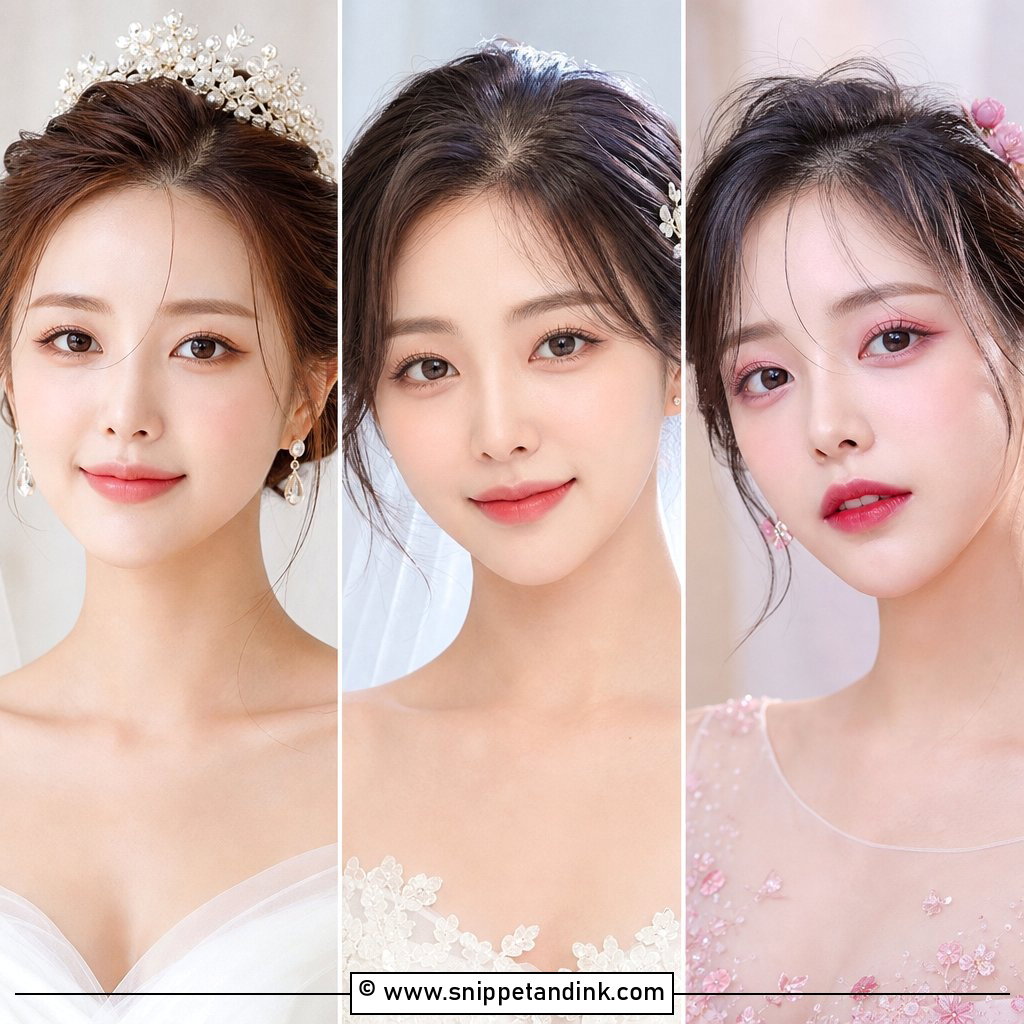
1. Natural Wedding Makeup Look
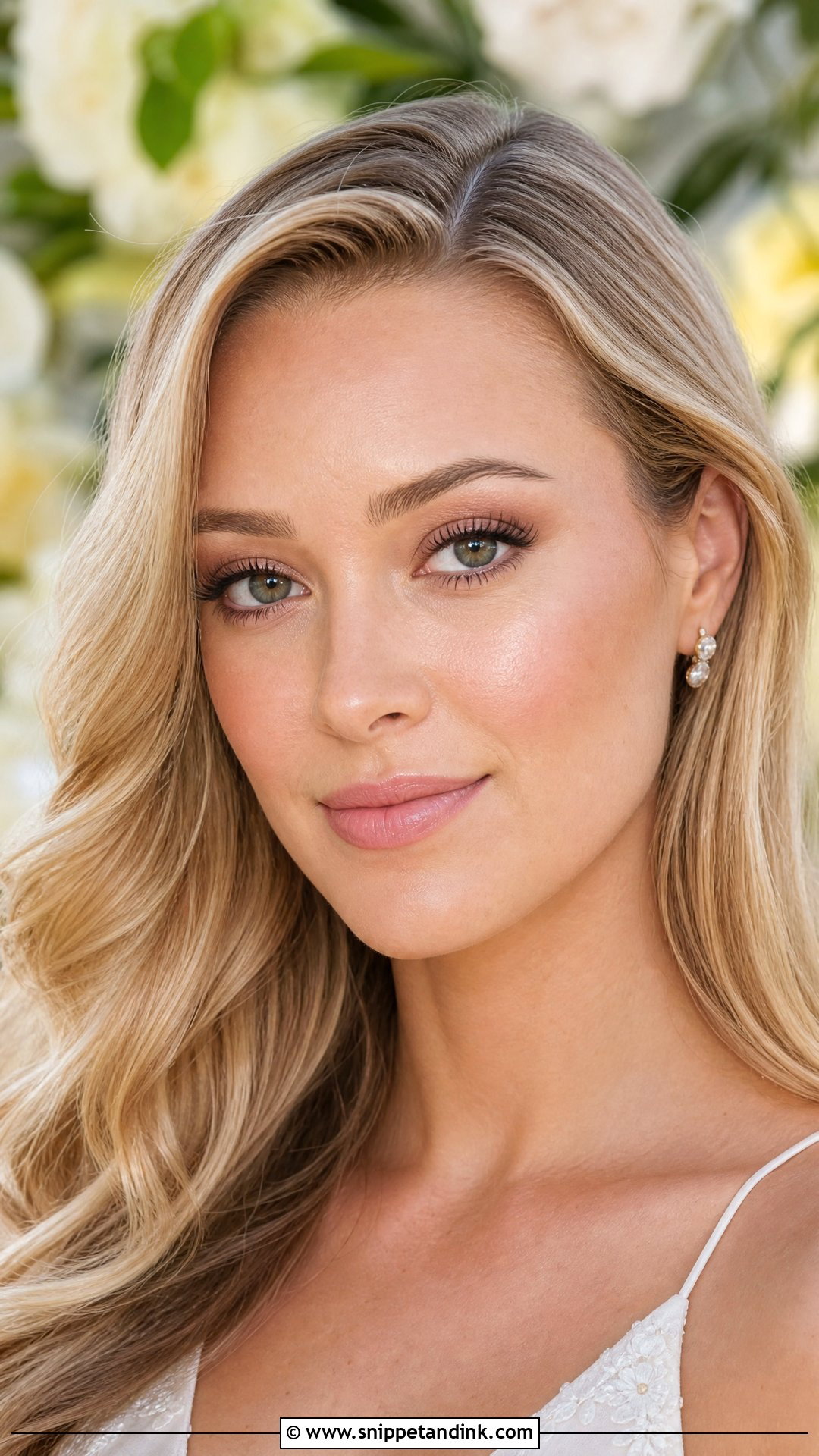
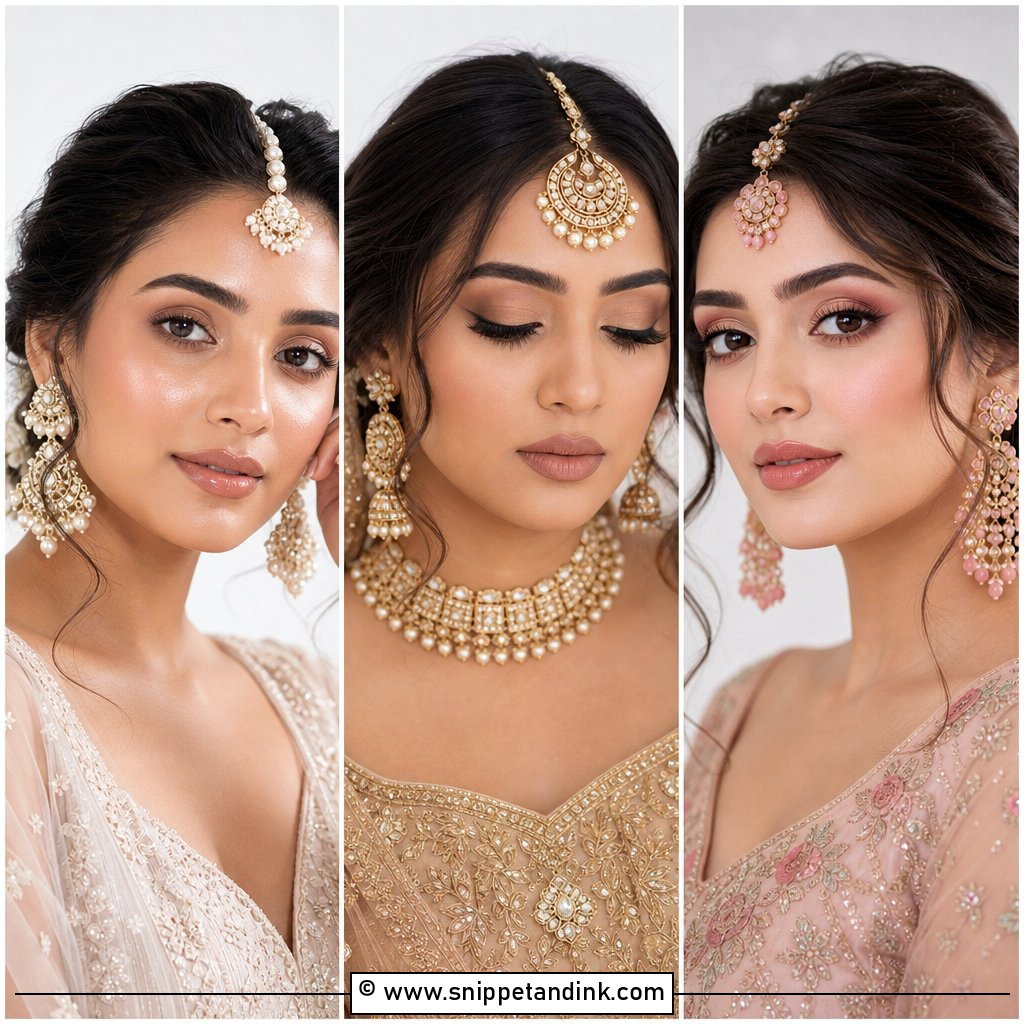
Think of this as your own face on a very good day. I start with skin prep, because a skin tint only looks natural if the skin underneath is smooth and hydrated, then use a thin layer of tint or light foundation and conceal only where there’s redness. Taupe or soft brown on the lid, a tightline at the lash root and a few individual clusters lift the eye without anyone reading it as makeup. Cream blush in rose or peach, chosen by undertone, and a satin nude lip finish it. The catch: natural makeup still needs setting powder through the centre of the face, or it disappears by the speeches.
2. Soft Glam Wedding Makeup Look
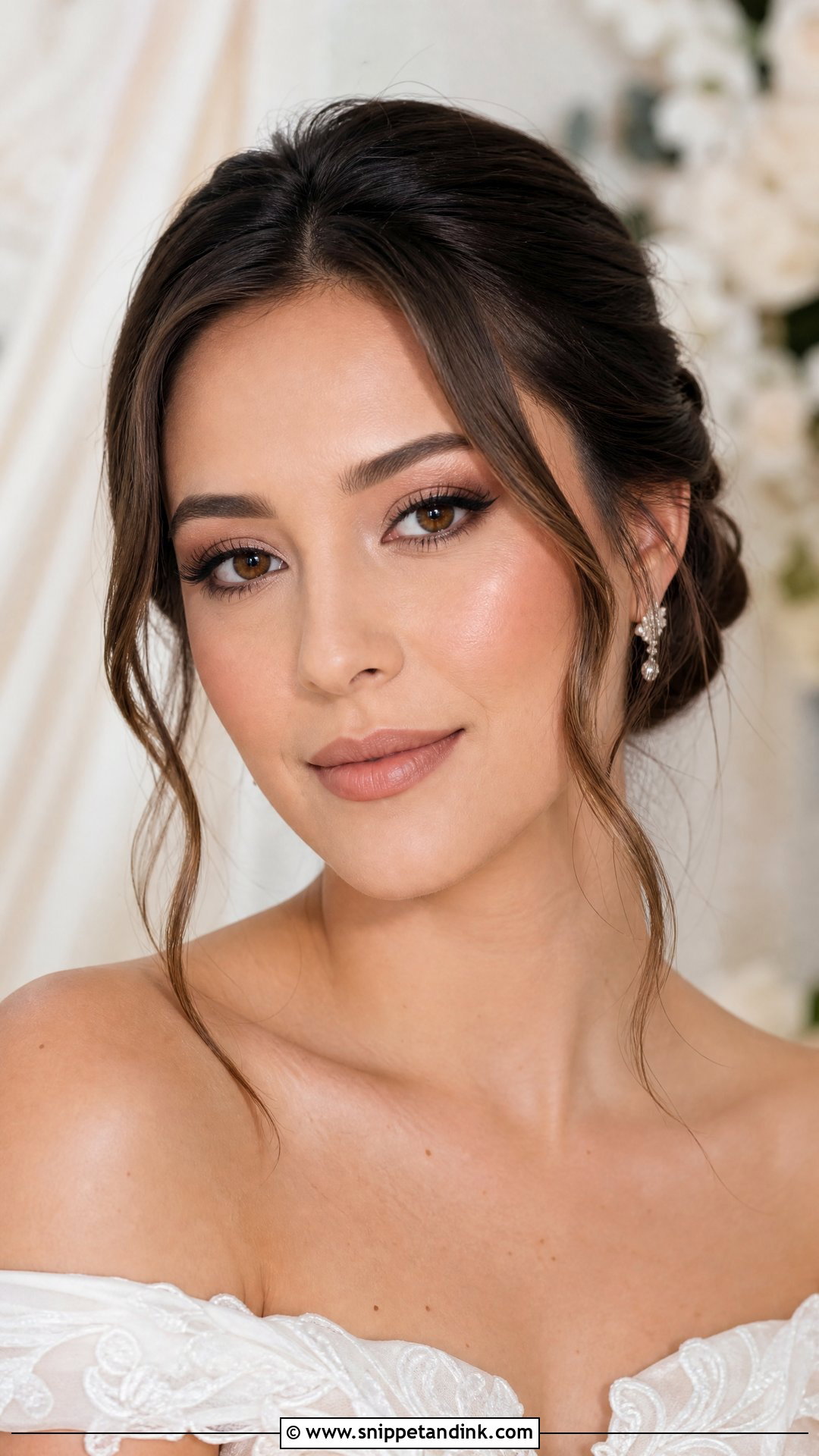
Soft glam is the look I’m asked for more than any other, and for good reason. It gives the eyes real definition in photos but still looks like you when your grandmother hugs you. The base is satin, the cheeks are softly sculpted, and the lid carries warm brown with a little champagne in the centre. A thin wing or smudged liner adds lift if your eyes are hooded. Where it goes wrong is contour: placed too low it drags the face down under overhead light, so I keep it high and barely there.
3. Dewy Wedding Makeup Look
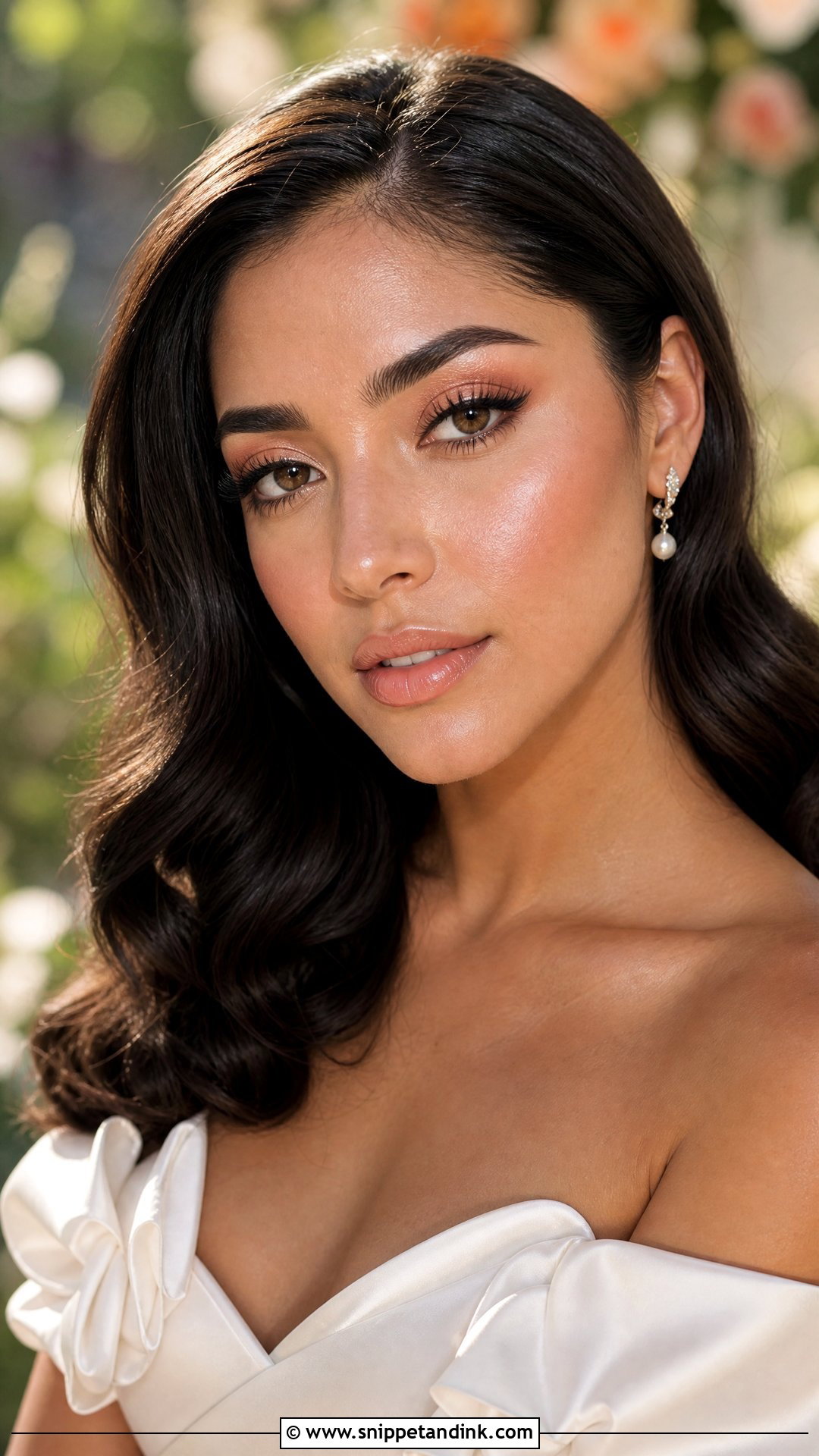
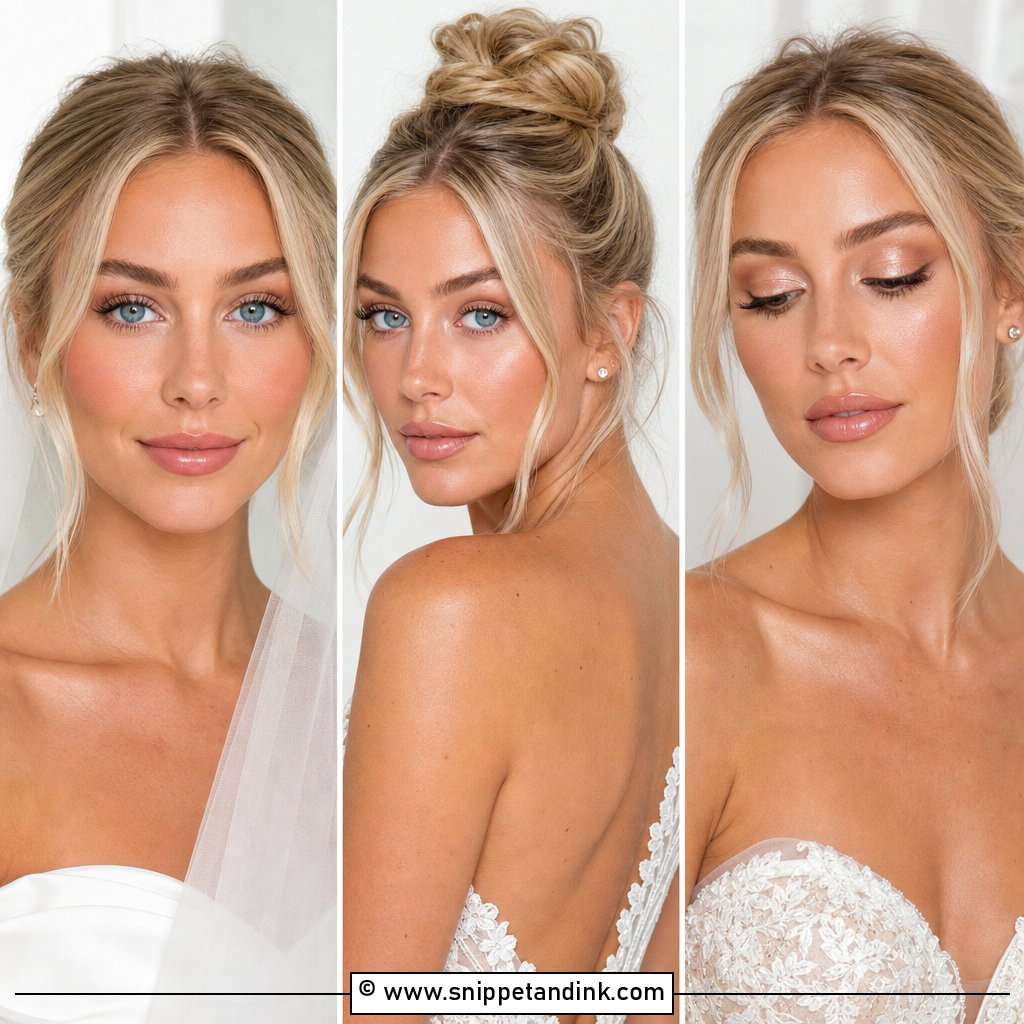
Dewy skin is glow placed on purpose, not shine everywhere. I use a luminous foundation and liquid highlighter on the cheekbones, then press a fine powder only around the nose, chin and under the eyes, because those are the areas that turn oily first. Peach or rose shimmer on the lids and a glossy lip keep it fresh. I’d hesitate with this on very oily skin in July heat; by the second hour the glow can read as grease in pictures, and blotting papers become your best friend.
4. Matte Wedding Makeup Look
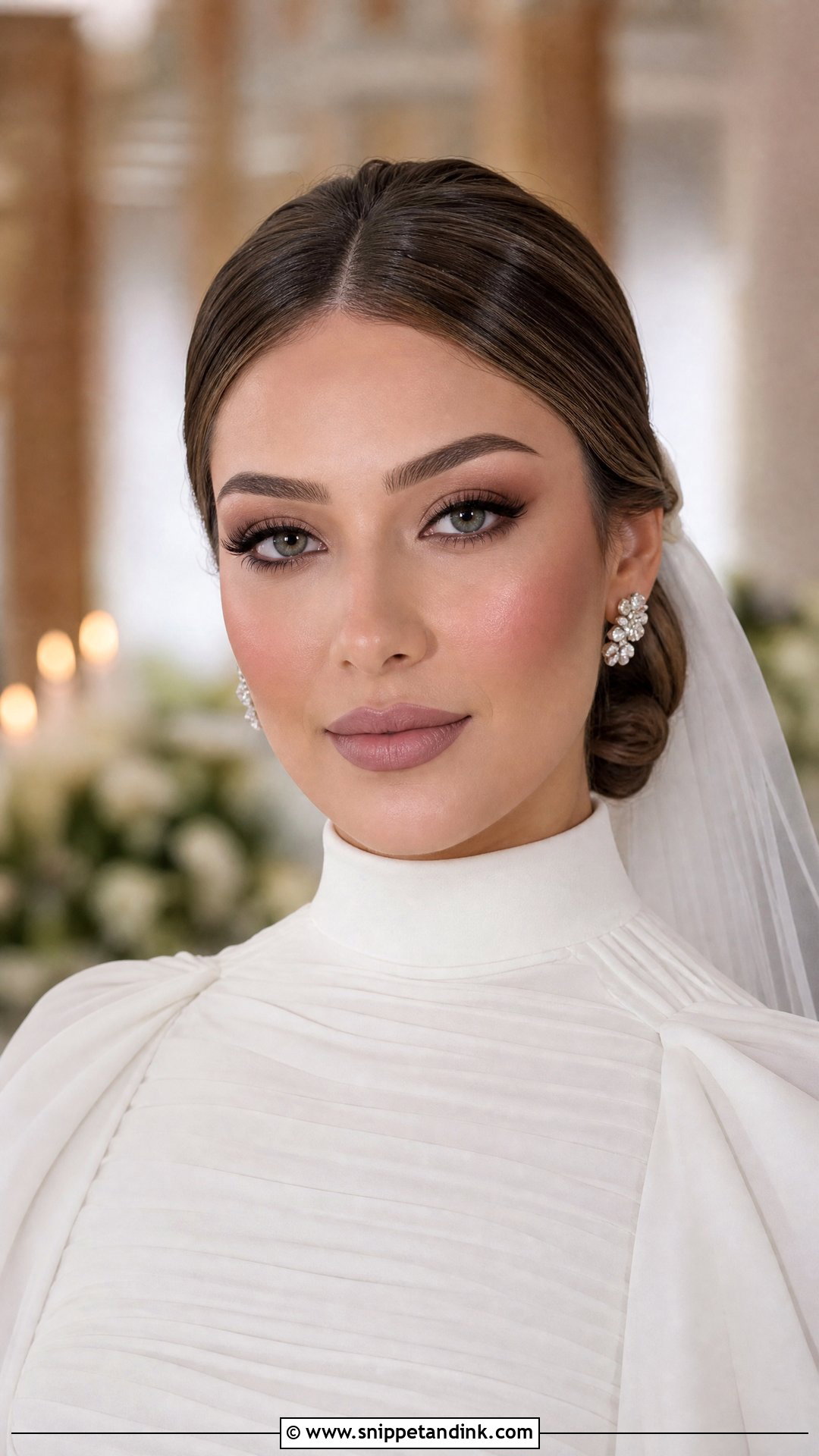
Oily skin, a hot venue or a twelve-hour day usually lead me to matte. The risk is a face that looks flat and powdery, so I build it from a long-wear foundation and finely milled powder pressed in with a puff rather than swept on. Matte bronzer and a muted blush keep the cheeks from looking two-dimensional, with a pin-point of highlight only on the top of the cheekbone. Dry or mature skin is the exception; on that skin a full matte base settles into texture by mid-afternoon, so I’d go soft-matte instead.
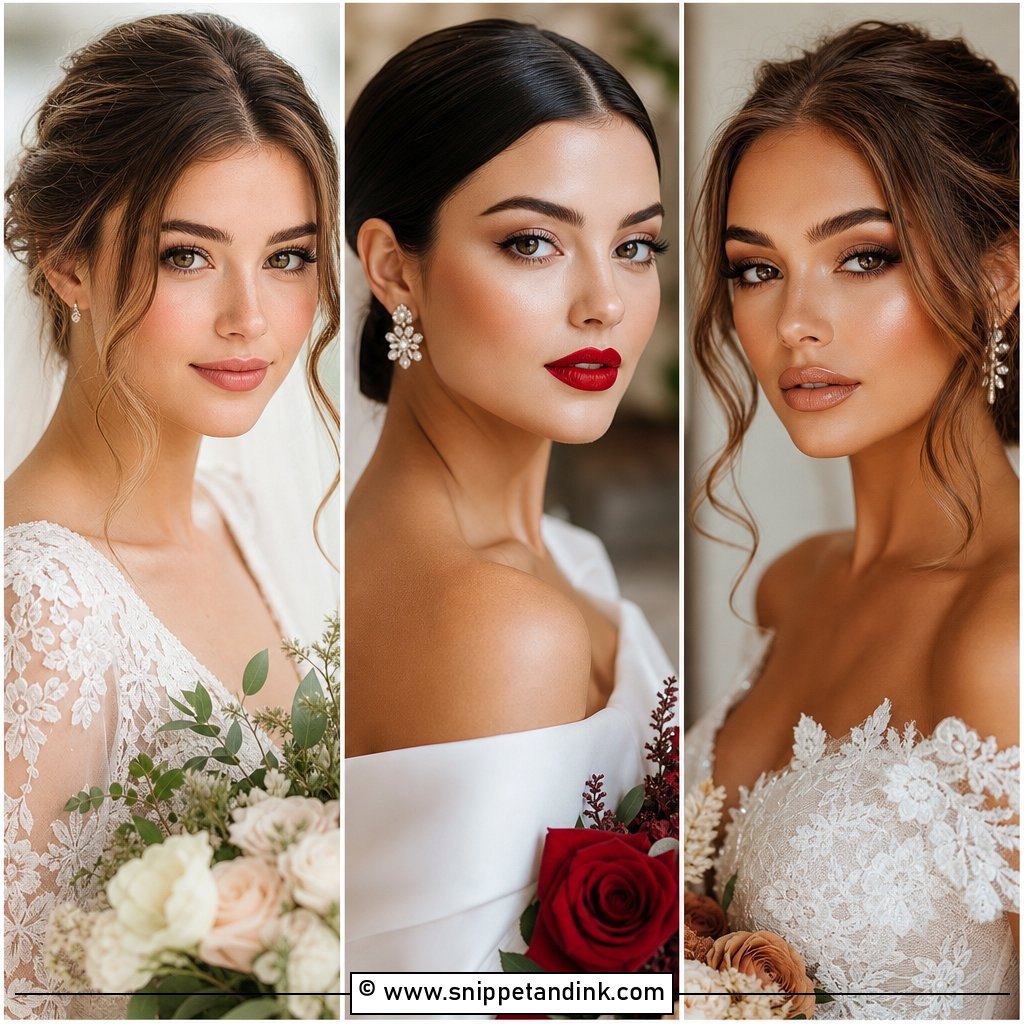
5. Classic Red Lip Wedding Makeup Look
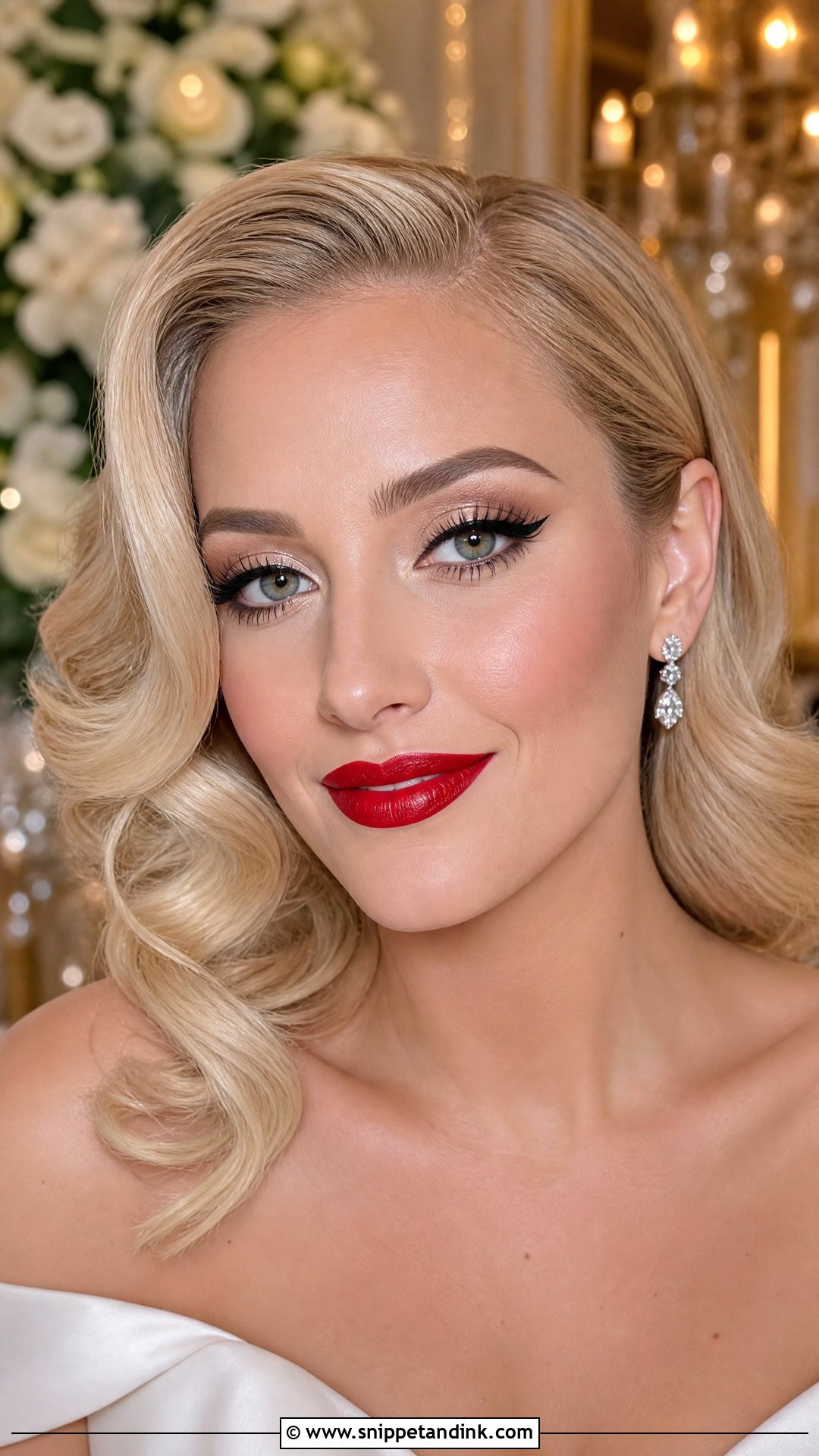
A red lip carries the whole face, so I keep everything else quiet: clean lids in beige or champagne, a fine wing, groomed brows and a neutral blush. The shade matters more than the finish. Blue-reds make teeth look whiter and suit cool undertones, while brick and warm cherry sit better on golden skin. I always line the full lip first and blot between two layers, because a red that bleeds into fine lines is the one detail everyone sees in close-ups. Keep the lipstick and liner with your maid of honour for after dinner.
6. Smokey Eye Wedding Makeup Look
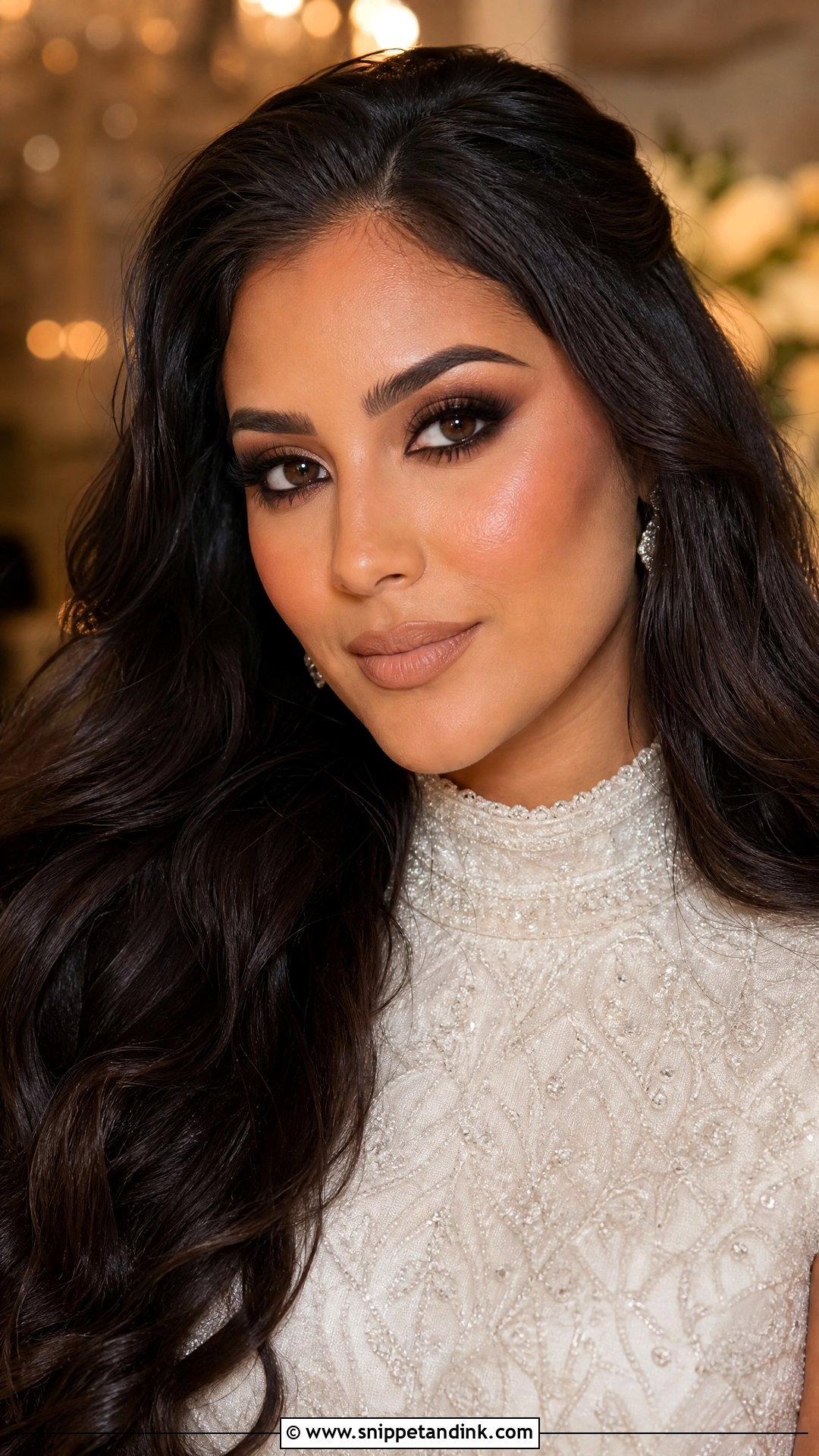
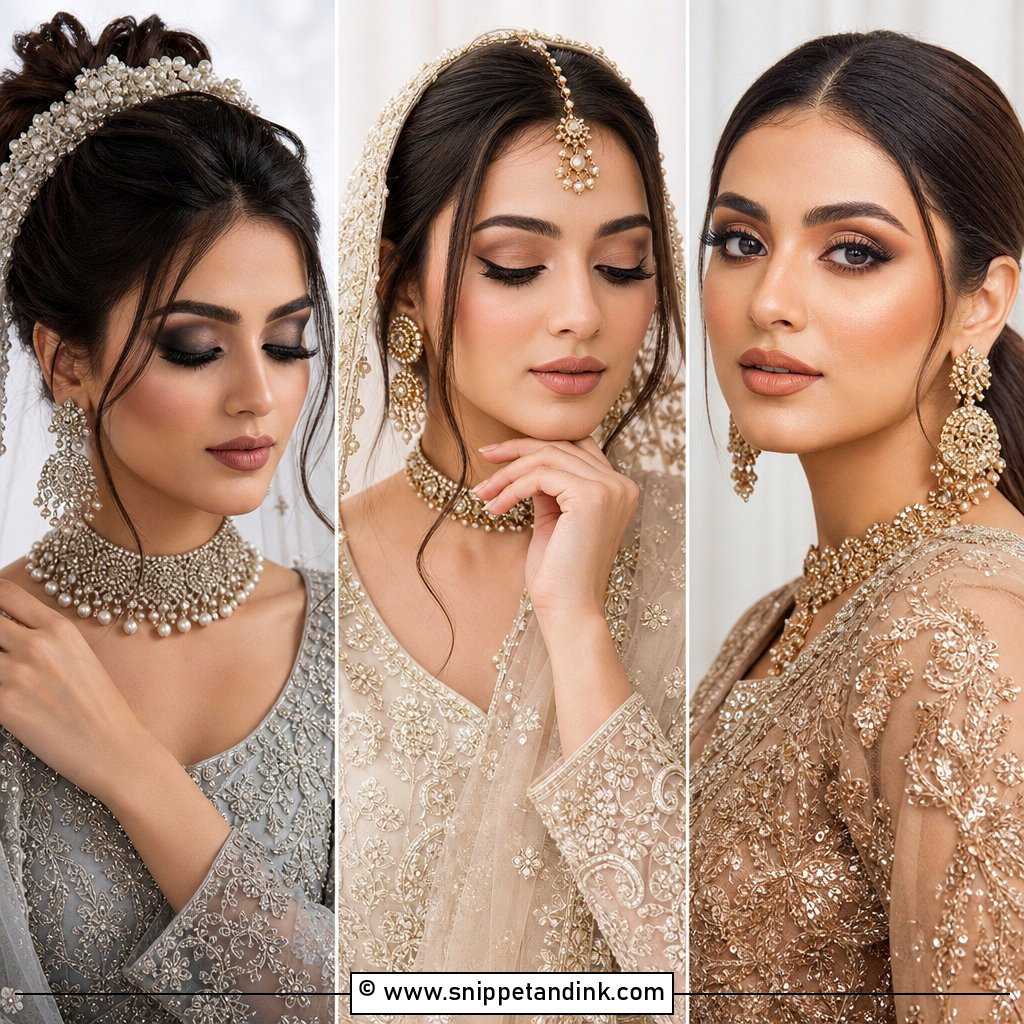
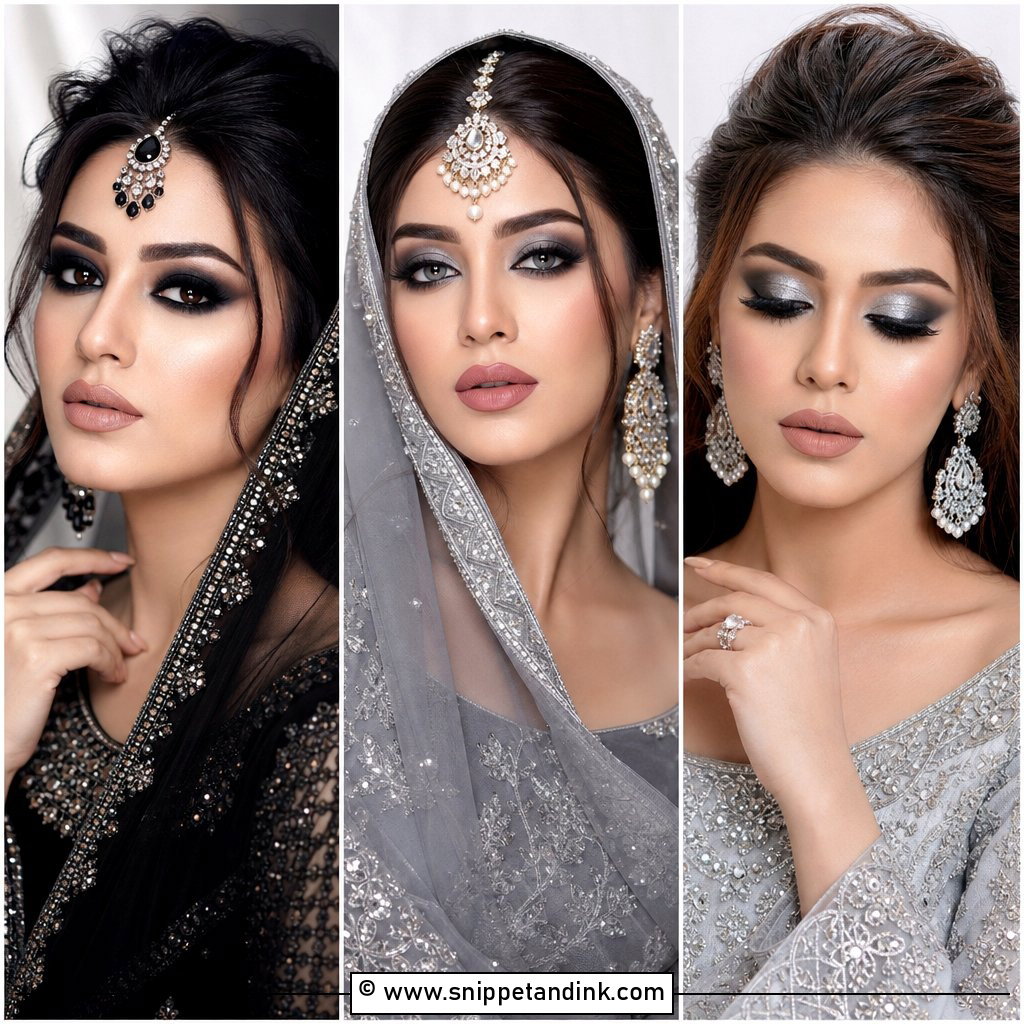
The difference between a bridal smoky eye and a nightclub one is blending. I build depth with brown, bronze or plum, charcoal, or espresso shades packed close to the lash line, then diffuse upward until there’s no visible edge. Black only goes right at the root. Fluffy lashes, softened brows and a nude or muted mauve lip balance it. I do the eyes before the base on this look, so any fallout can be wiped away without ruining foundation, and I’d keep it for evening rather than a midday garden ceremony.
7. Bronze Wedding Makeup Look
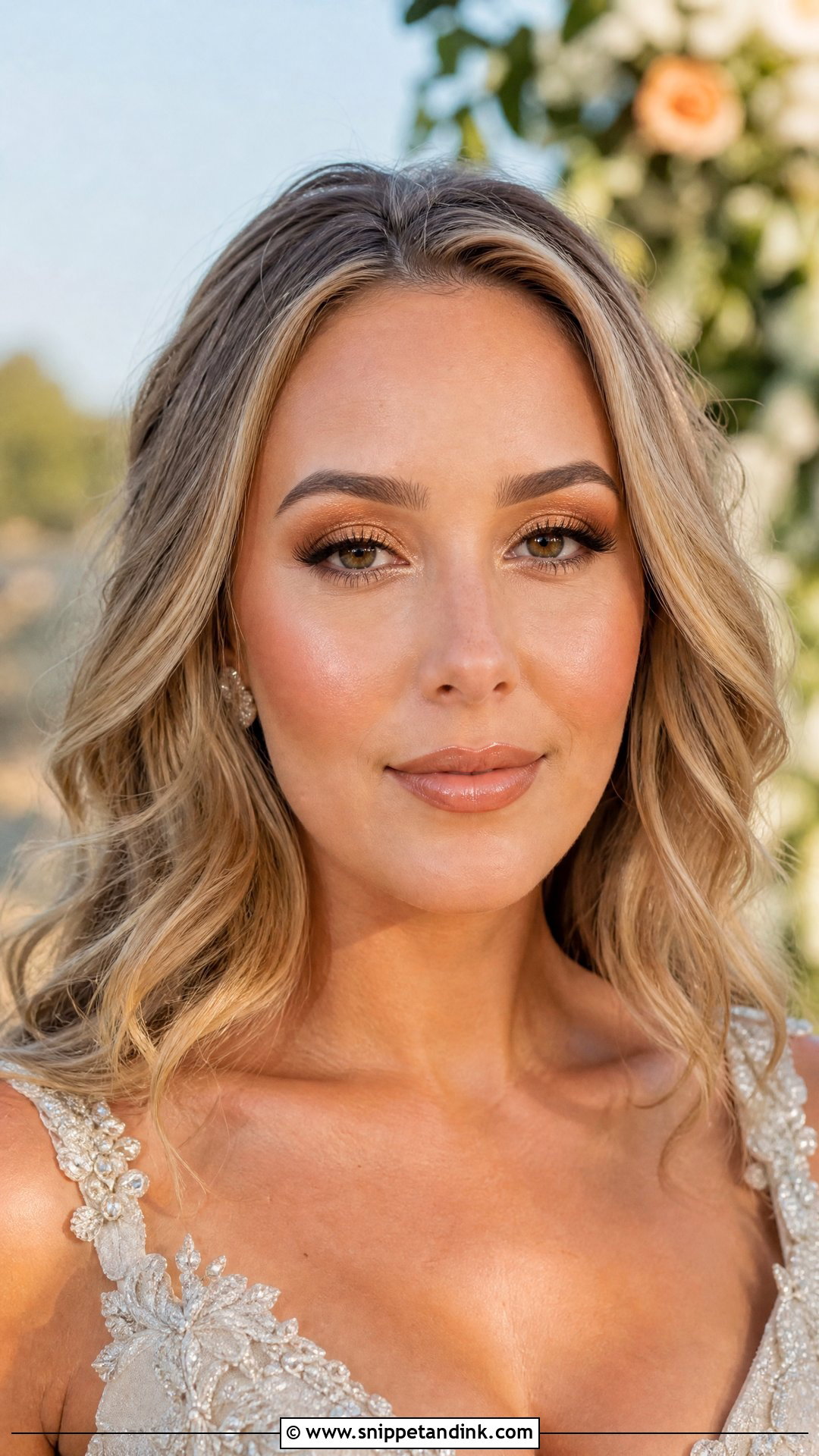
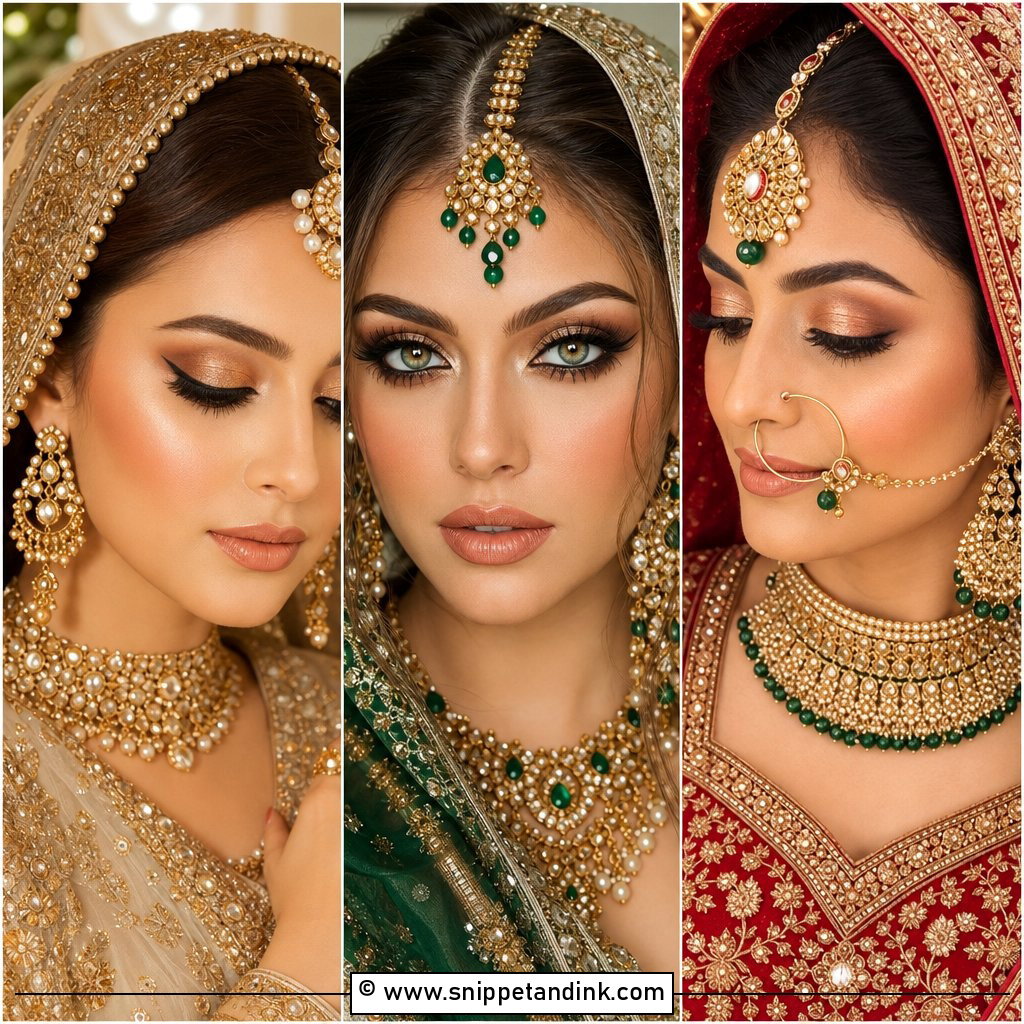
Bronze gives warmth to a face that might otherwise look washed out against an ivory dress. Golden shadow goes on the lid, a deeper brown along the lashes, and bronzer where the sun would actually hit: forehead edges, cheekbones, bridge of the nose. Peach or terracotta blush stops the bronze turning muddy. A nude caramel, peachy beige or brown-pink gloss finishes it. On very fair, cool-toned skin I use a neutral bronzer rather than an orange one, because an orange bronzer looks obvious next to white fabric.
8. Rose Gold Wedding Makeup Look
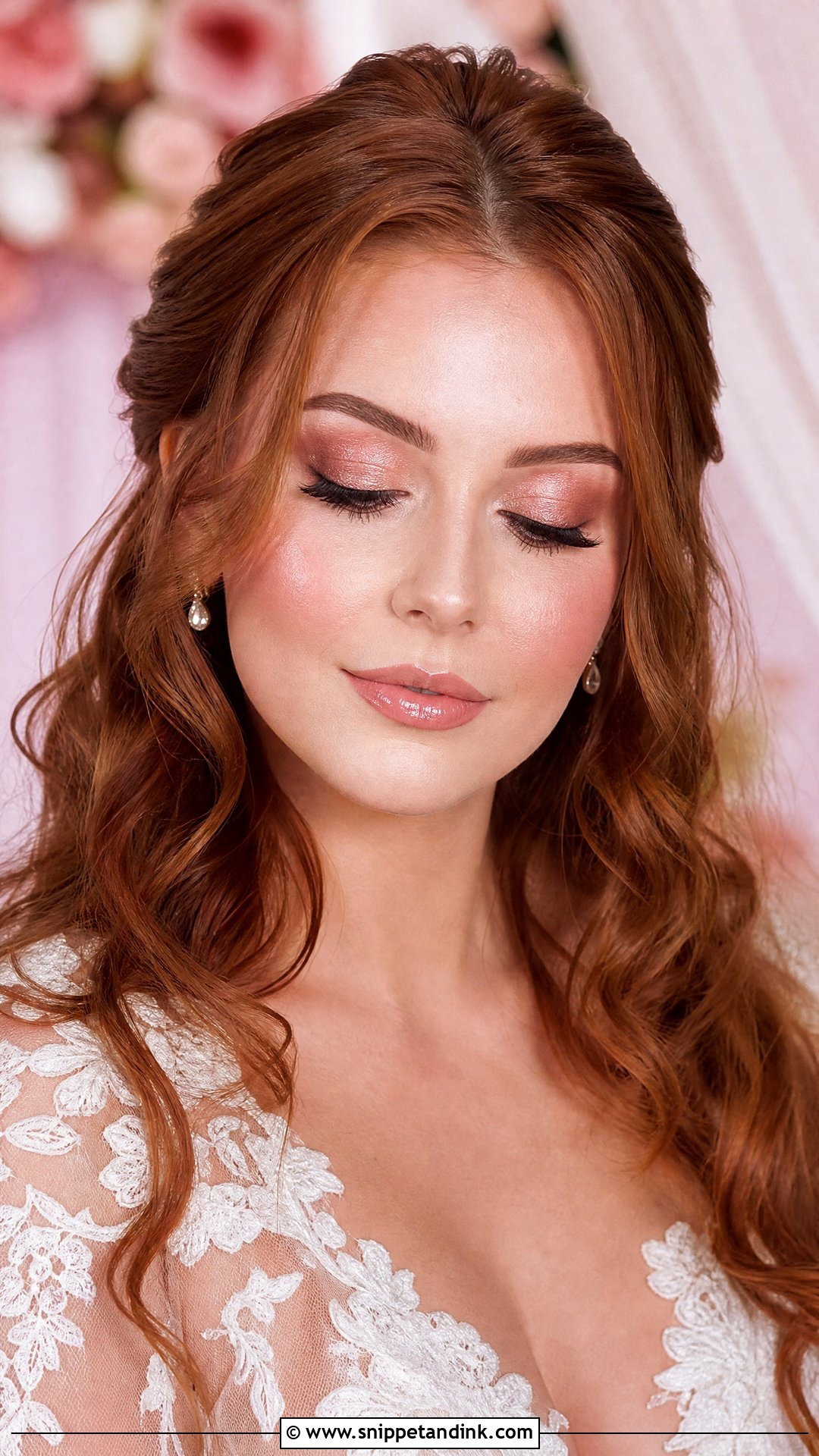
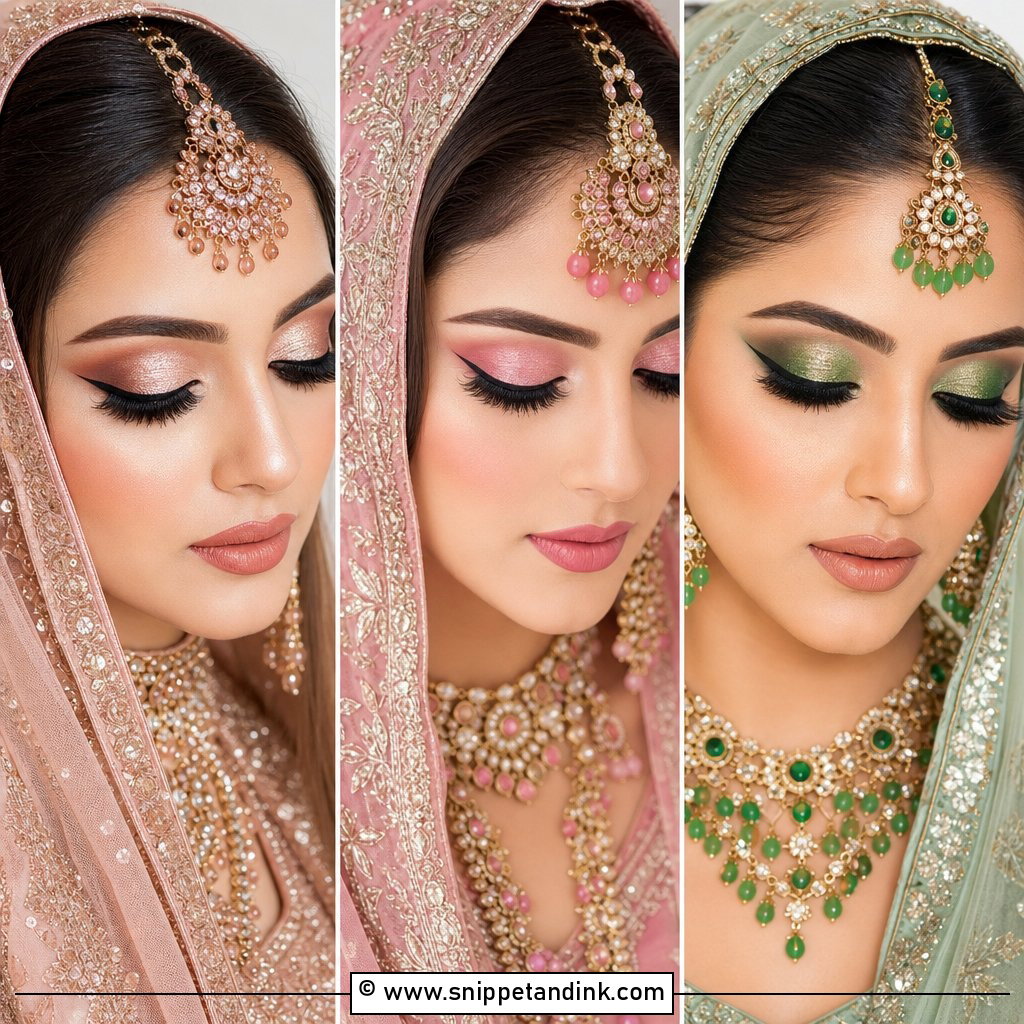
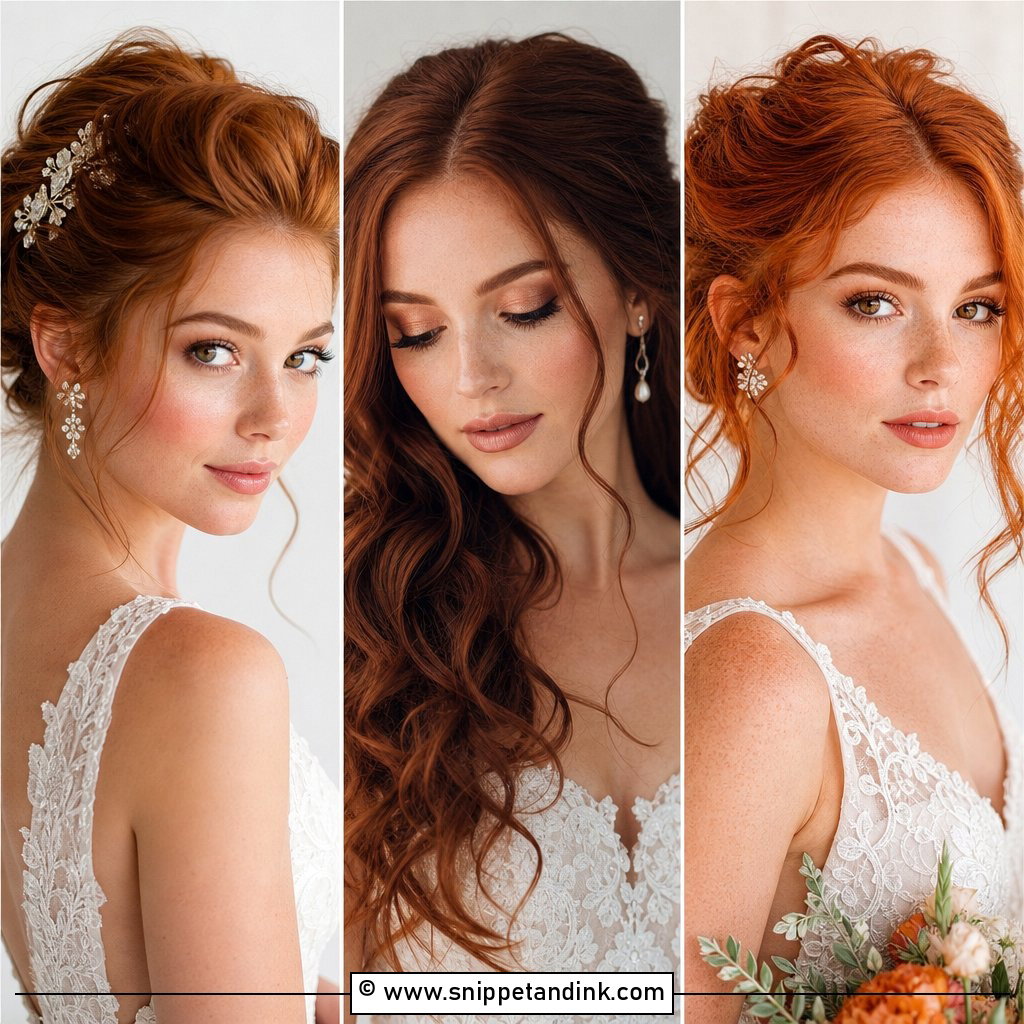
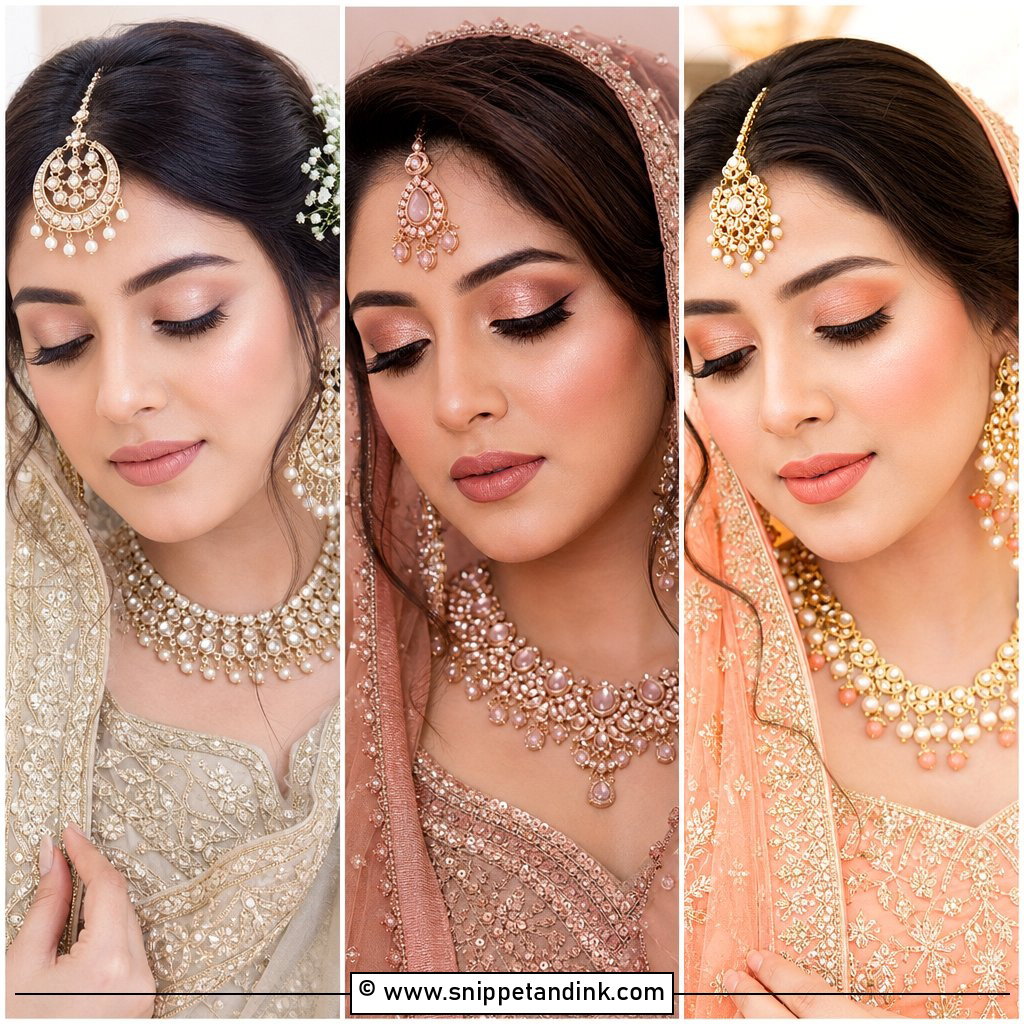
Rose gold is one of the most forgiving metallic shades I use. Pink-gold shimmer on the lid with warm mauve in the crease suits fair skin and deep skin alike, provided I adjust the depth of the crease shade. A thin liner and wispy lashes define the eye without hiding the shimmer. I’d steer away from very chunky glitter versions, which scatter onto the cheeks and catch flash in odd spots. A rose beige satin lip ties it to blush-toned flowers.
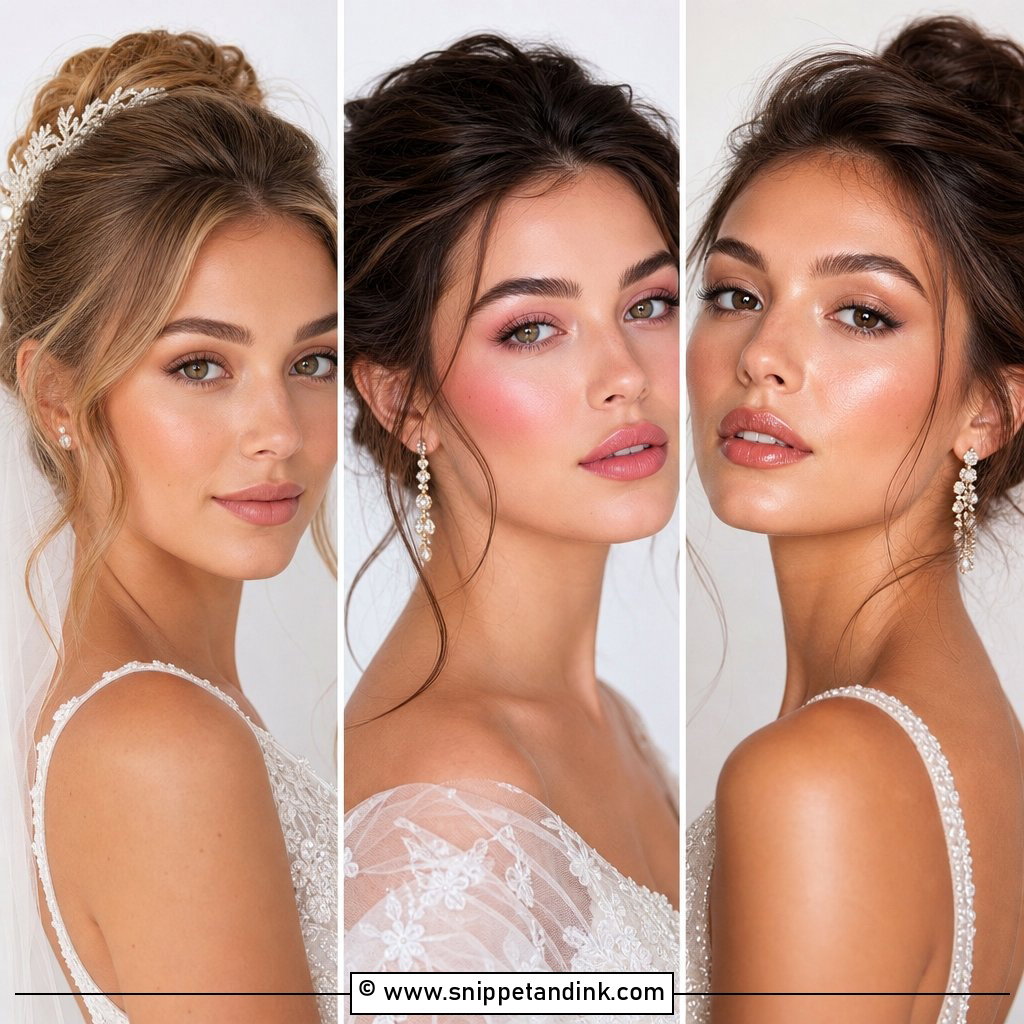
9. Pink Blush Wedding Makeup Look
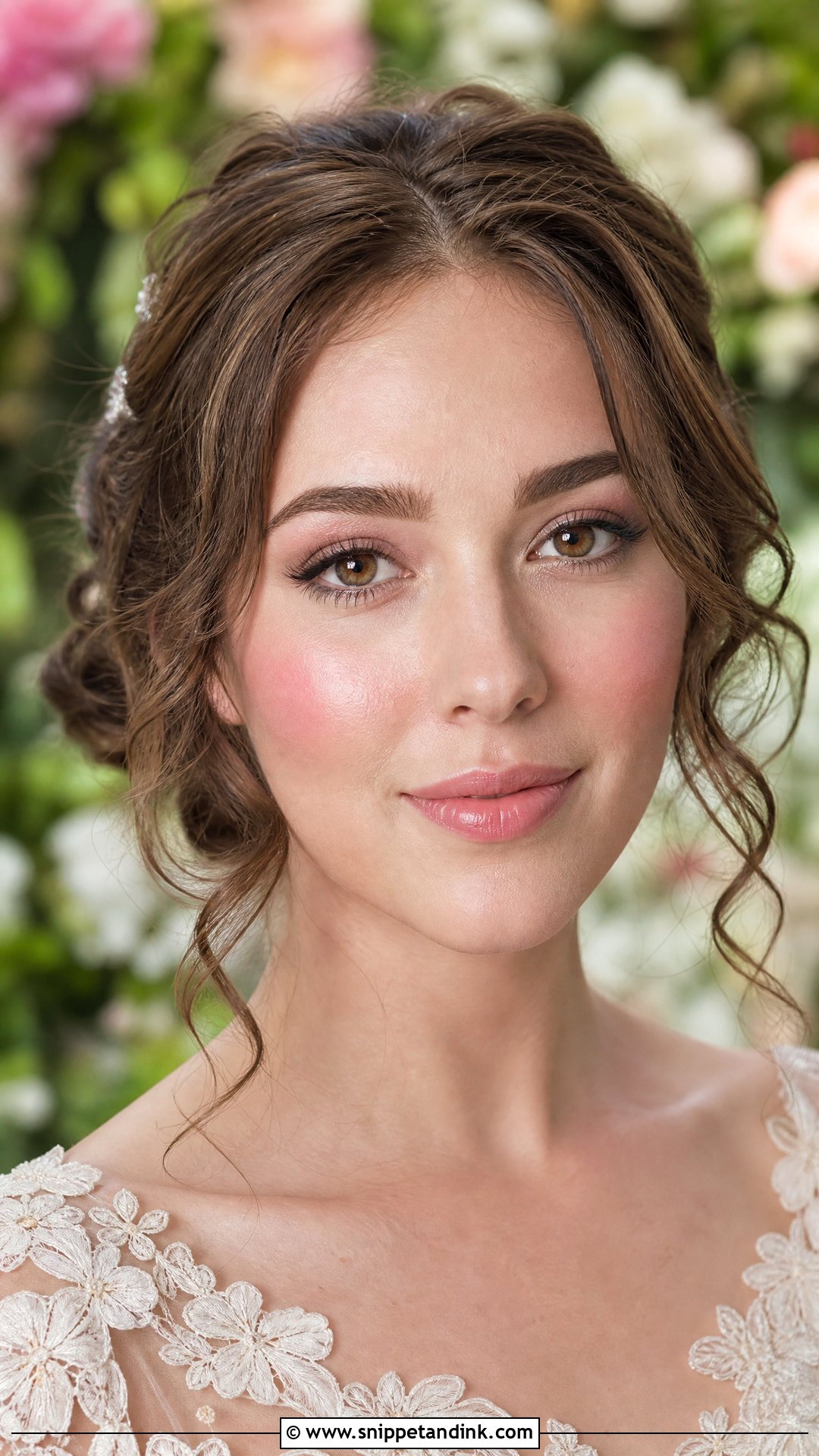
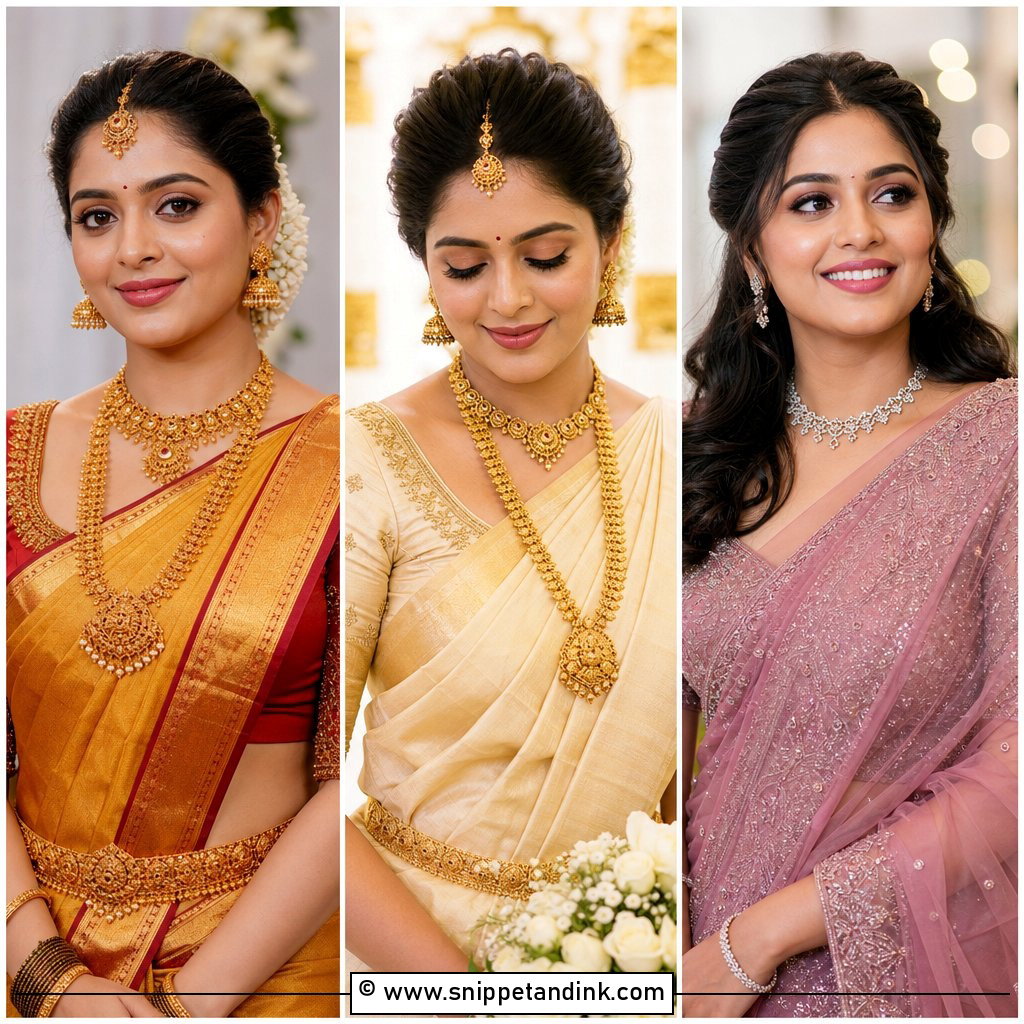
Here the blush is the star, so placement is everything. I put pink or mauve on the upper cheek and blend it back toward the temple, which lifts the face; dabbed on the apple alone it can look childish in profile shots. A pink-beige wash on the lids, brown liner and a lip from the same colour family keep it coherent. If you flush when emotional, go one step lighter than you think, because your own colour will add to it during the vows.
10. Peach Wedding Makeup Look
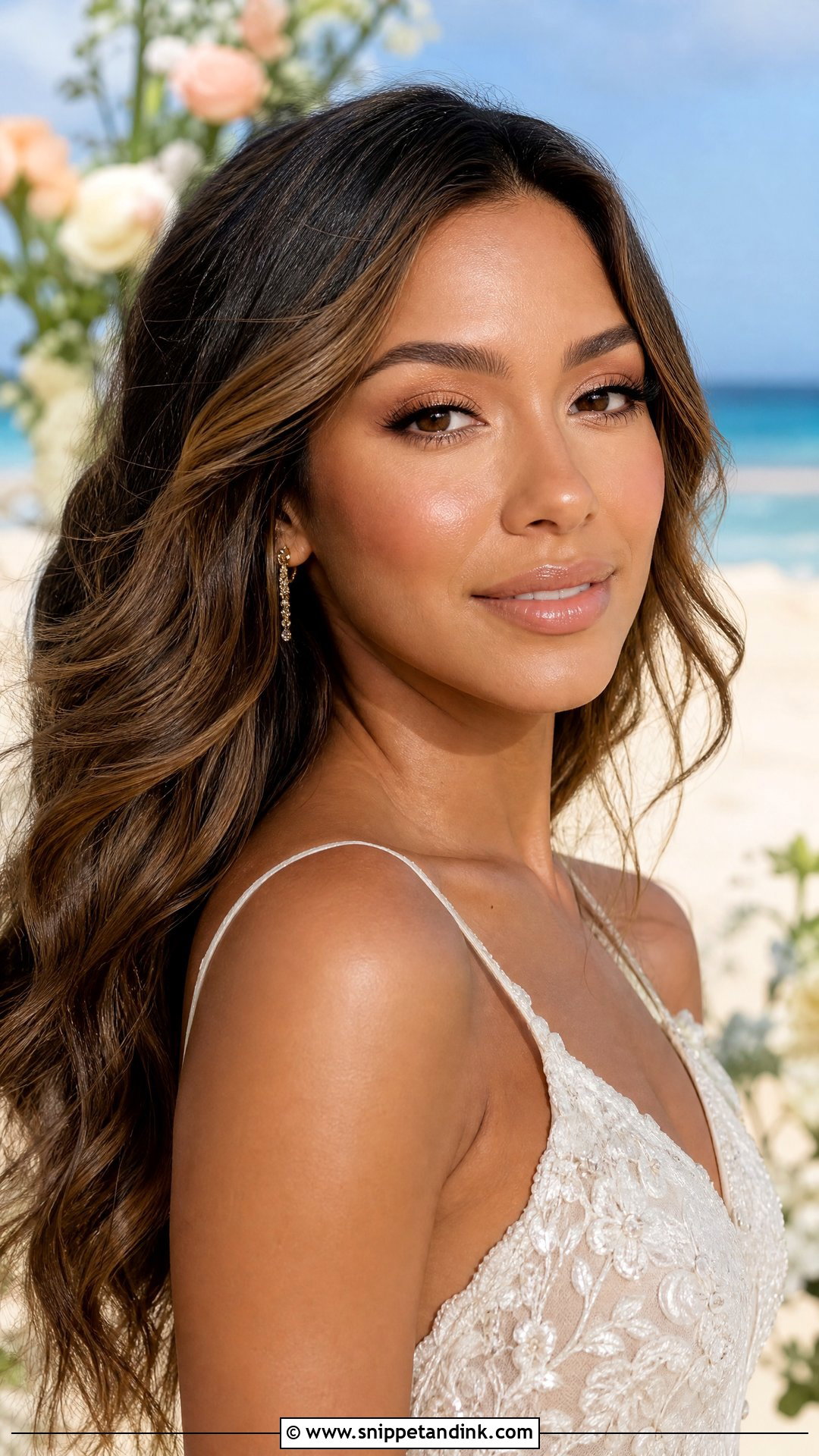
Peach brightens tired skin faster than almost any other shade, which is why I reach for it on early-morning brides. Apricot blush, a champagne lid and soft brown definition give a warm, awake face. Depth matters: fair skin wants a pastel peach, while medium and deep skin need coral, apricot or terracotta-peach, or the colour simply vanishes. A peachy nude lip keeps the palette in one family, and it sits nicely beside cream dresses and warm flowers.
11. Nude Wedding Makeup Look
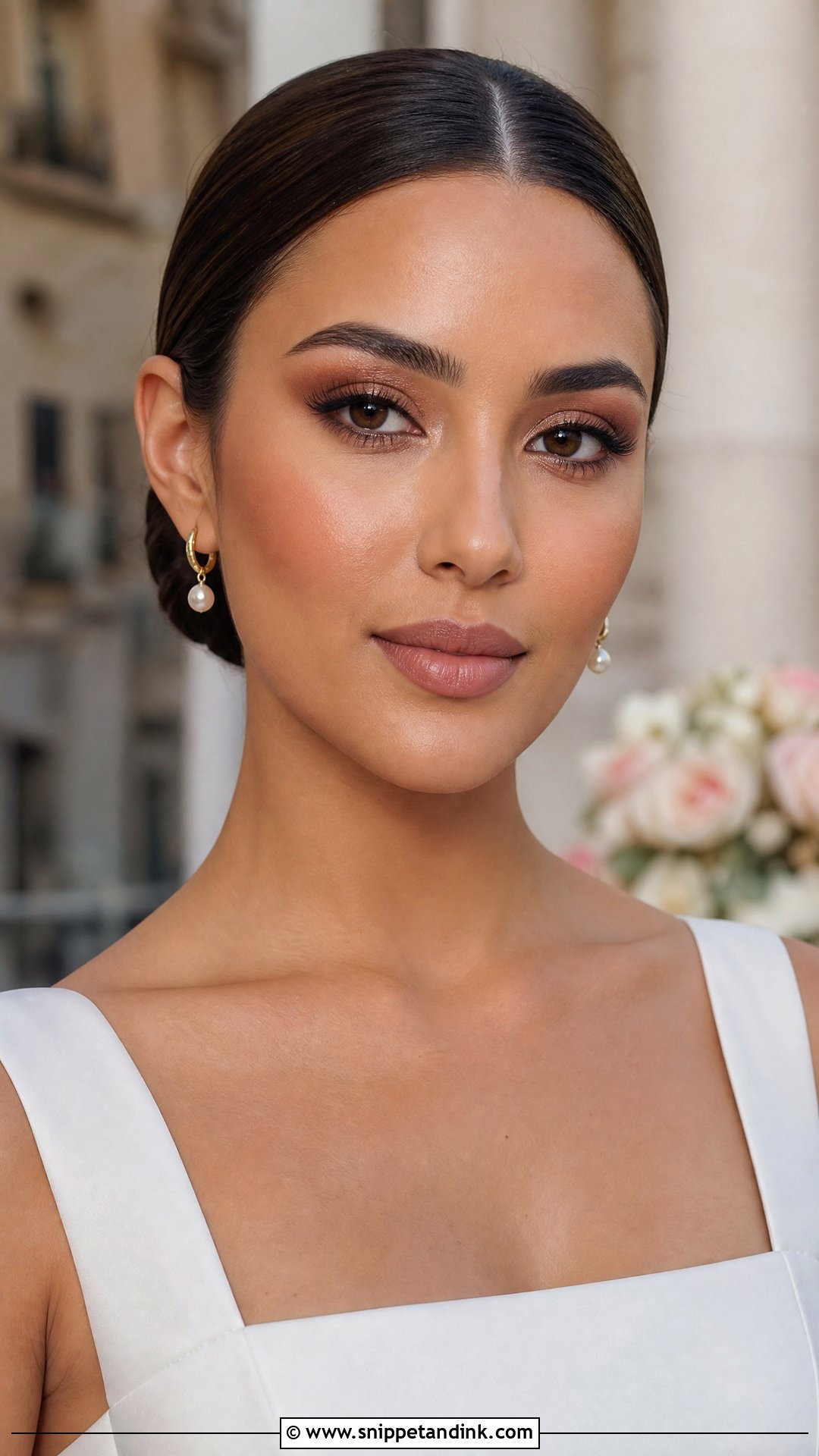
Nude is the look most likely to go wrong, because the wrong nude erases features. My rule is that the shade needs enough contrast with your own skin to show up in a photo taken across a room. Fair skin usually suits pink beige or taupe; medium and tan skin come alive in caramel and warm rose; deep skin glows in cocoa, mocha and cinnamon. I always line the lips slightly deeper than their natural colour, otherwise the mouth disappears in group photos. Done right, it looks clean and quietly polished.
12. Glossy Wedding Makeup Look
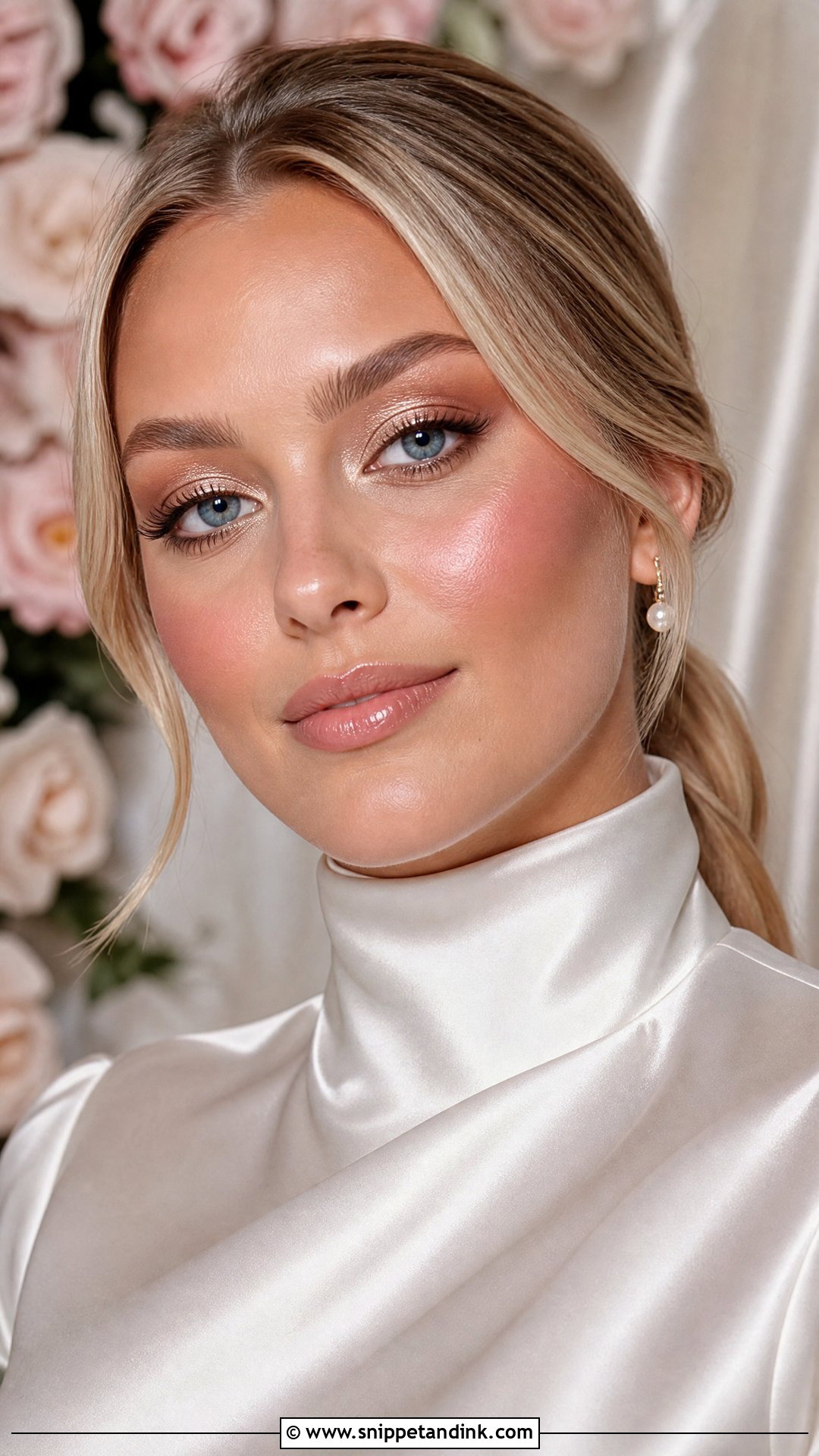
Gloss is the youngest-looking finish on this list, and also the least durable. I keep the shine on the lips and the high points of the cheek and set the T-zone, so the overall face doesn’t slide. Glossy lids are a mistake on a long day; they crease within a couple of hours, so I use satin taupe or champagne shadow instead. Pick a gloss that isn’t sticky, because hair blows into it outdoors, and expect to reapply after every drink.
13. Winged Liner Wedding Makeup Look
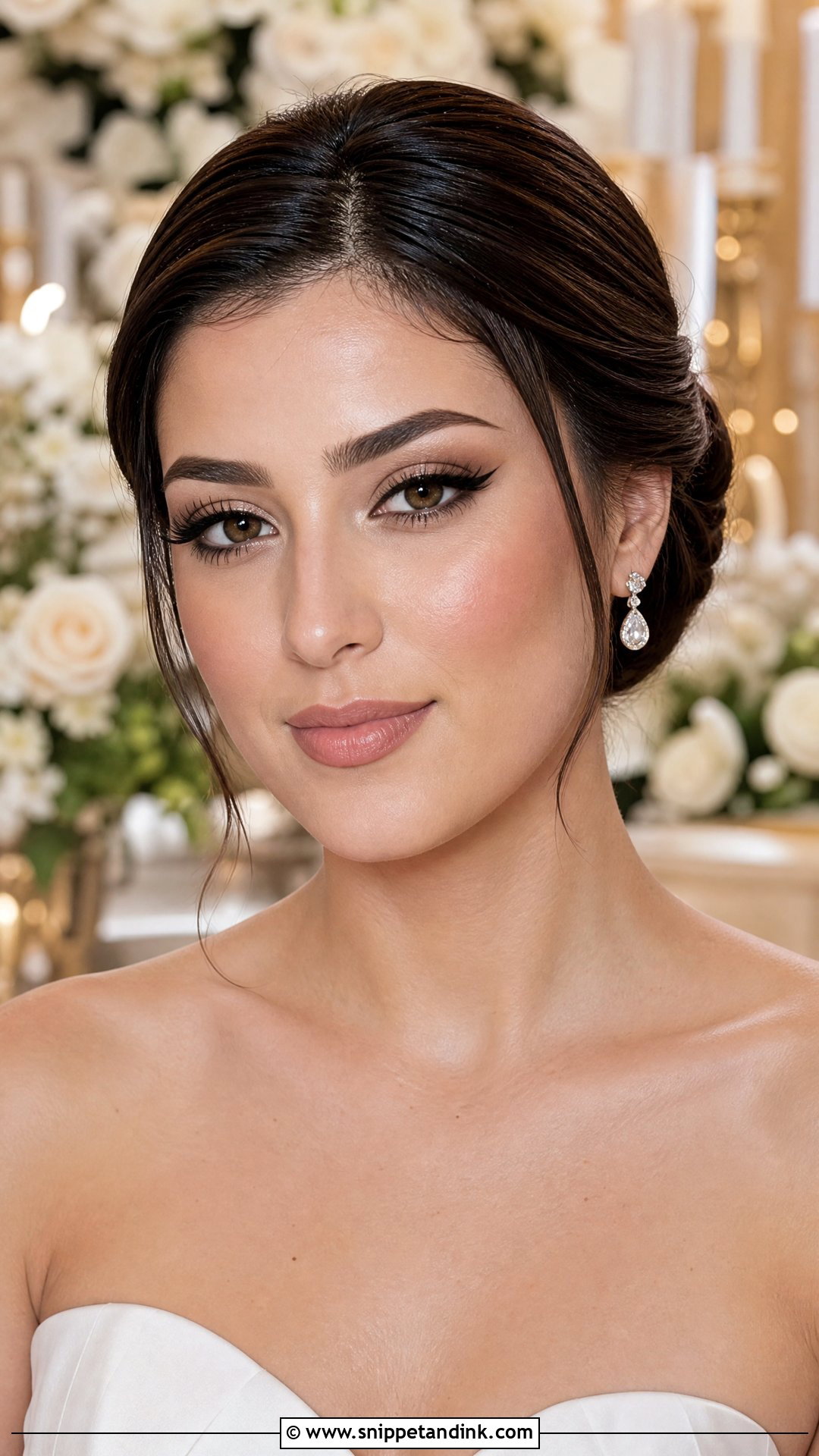
The wing has to suit the eye it sits on. On hooded lids I draw the flick with the eye open, so it doesn’t fold into a broken line, and I keep it thinner than most people expect. Winged liner wedding makeup looks its best with matte neutral shadow, a slightly deeper crease and a half lash on the outer corners for shape. Brown liner softens the effect on light colouring. Pair it with a nude, rose or classic red lip, and keep a cotton bud with micellar water nearby during application, because one shaky stroke is easier to fix than to hide.
14. Brown Smokey Wedding Makeup Look
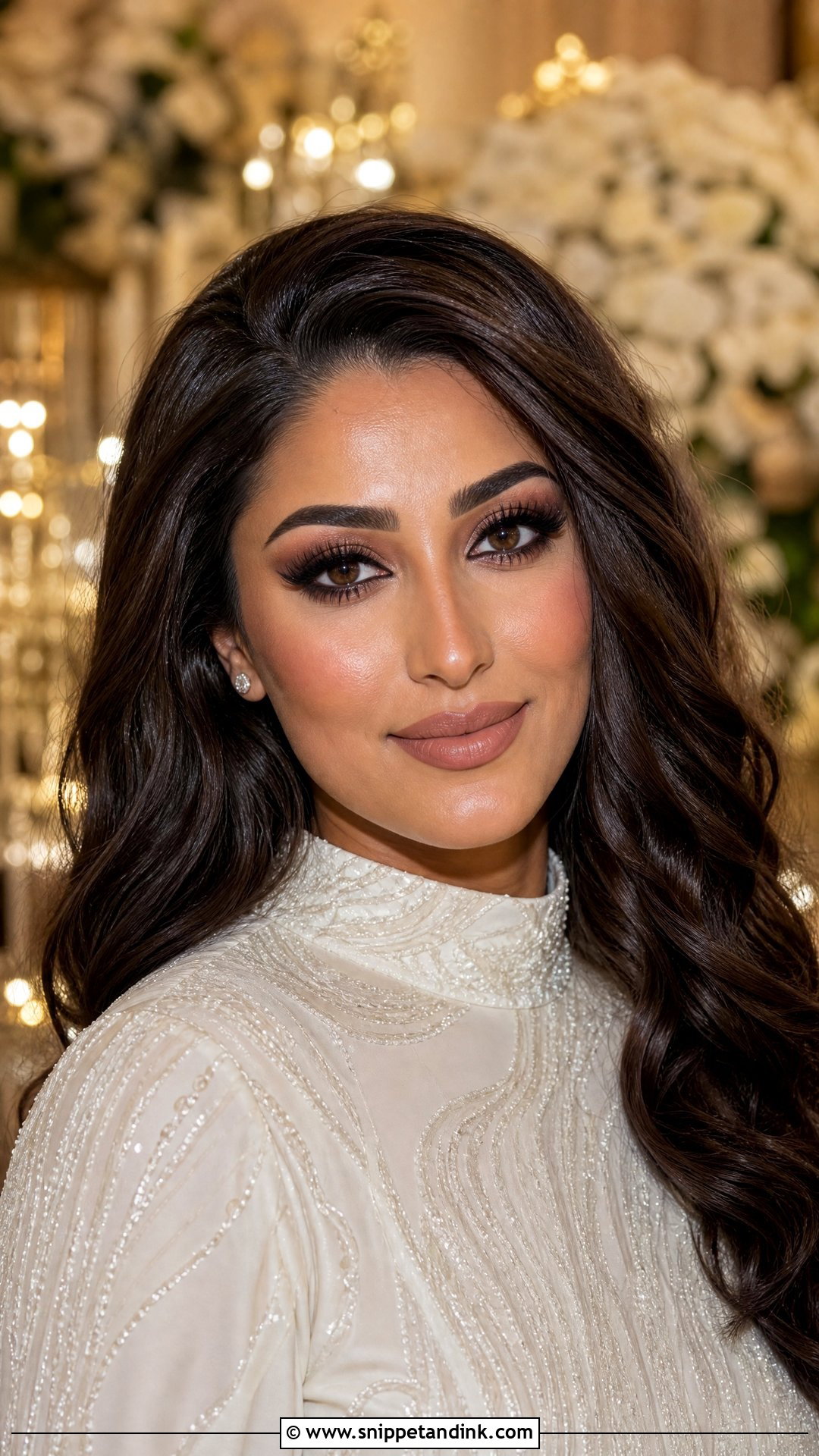
Brown smoke is the version of a smoky eye I’d suggest to most brides who are nervous about drama. Medium brown goes through the crease, espresso at the lash line and a bronze shimmer in the centre of the lid catches light when you look down at your bouquet. I smudge the lower lash line lightly with the same brown so the eyes look finished, not heavy. It flatters blue, green and brown eyes and moves easily from a daytime ceremony into the evening.
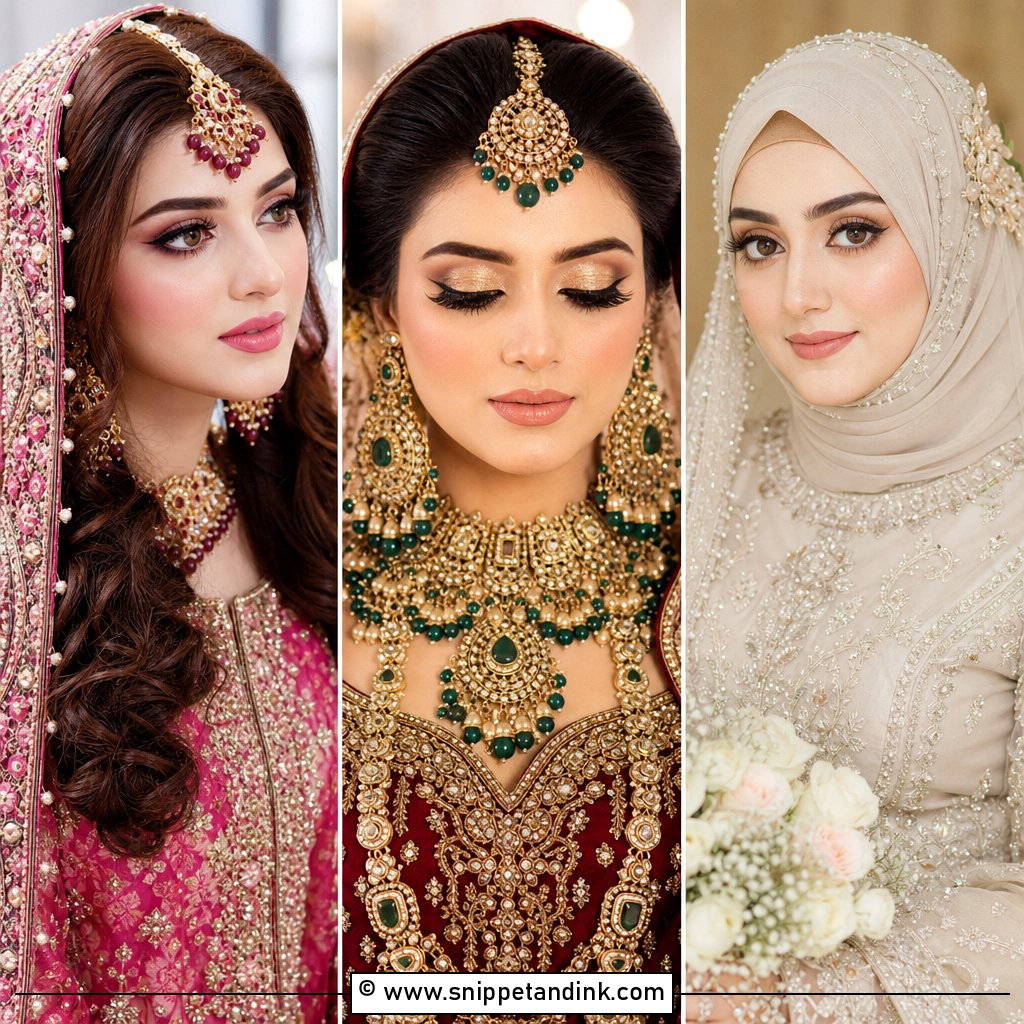
15. Champagne Wedding Makeup Look
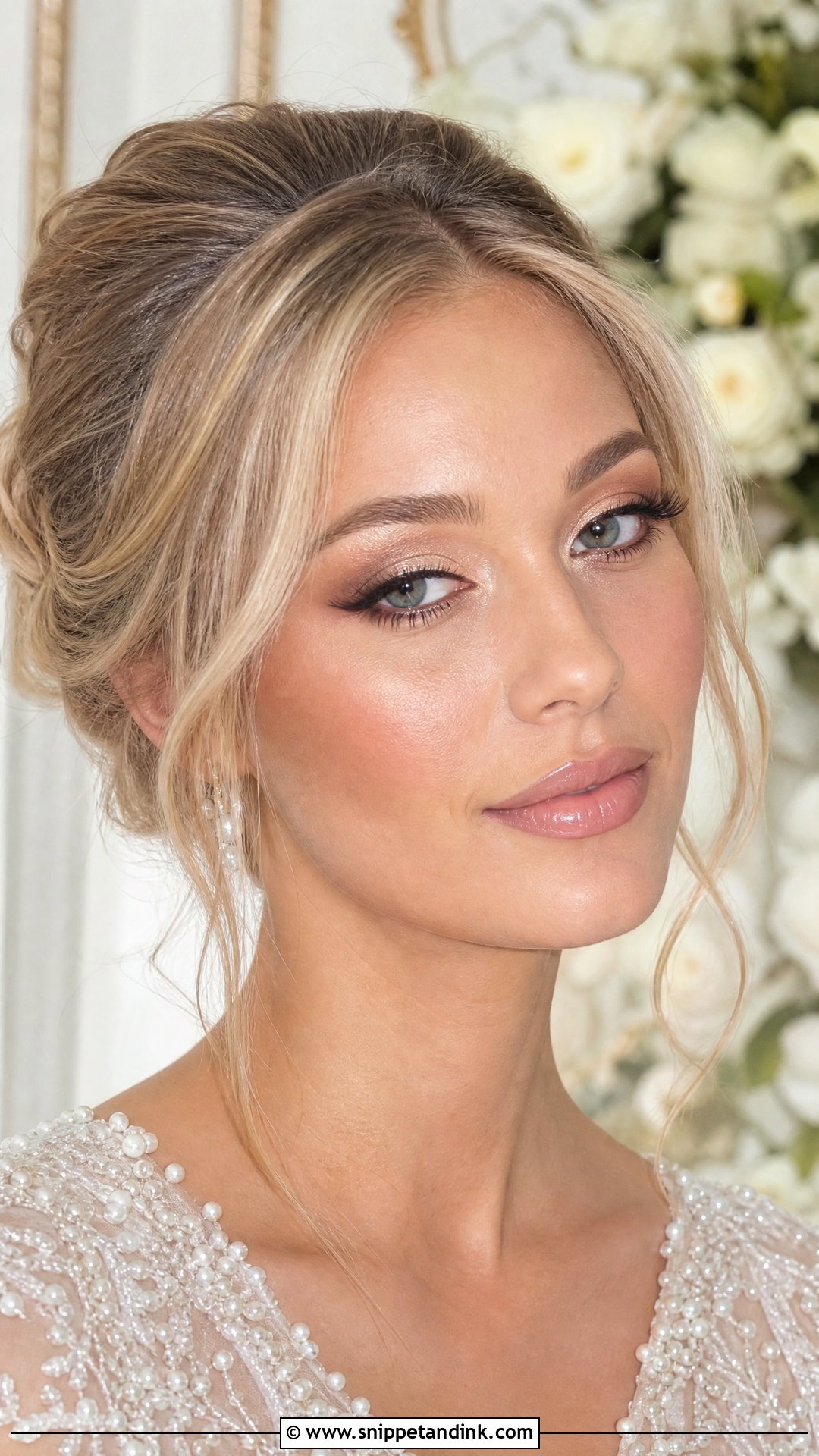
Champagne opens up small or deep-set eyes because it reflects light back from the lid. The trick is choosing a fine shimmer rather than glitter, which can look patchy in flash. I pair it with taupe or beige in the crease and a thin liner along the lashes, then keep the base luminous but controlled with a peach or rose blush. A nude pink gloss stays fresh in daylight. It also suits almost any jewellery, since the shade sits between gold and silver.
16. Full Glam Wedding Makeup Look
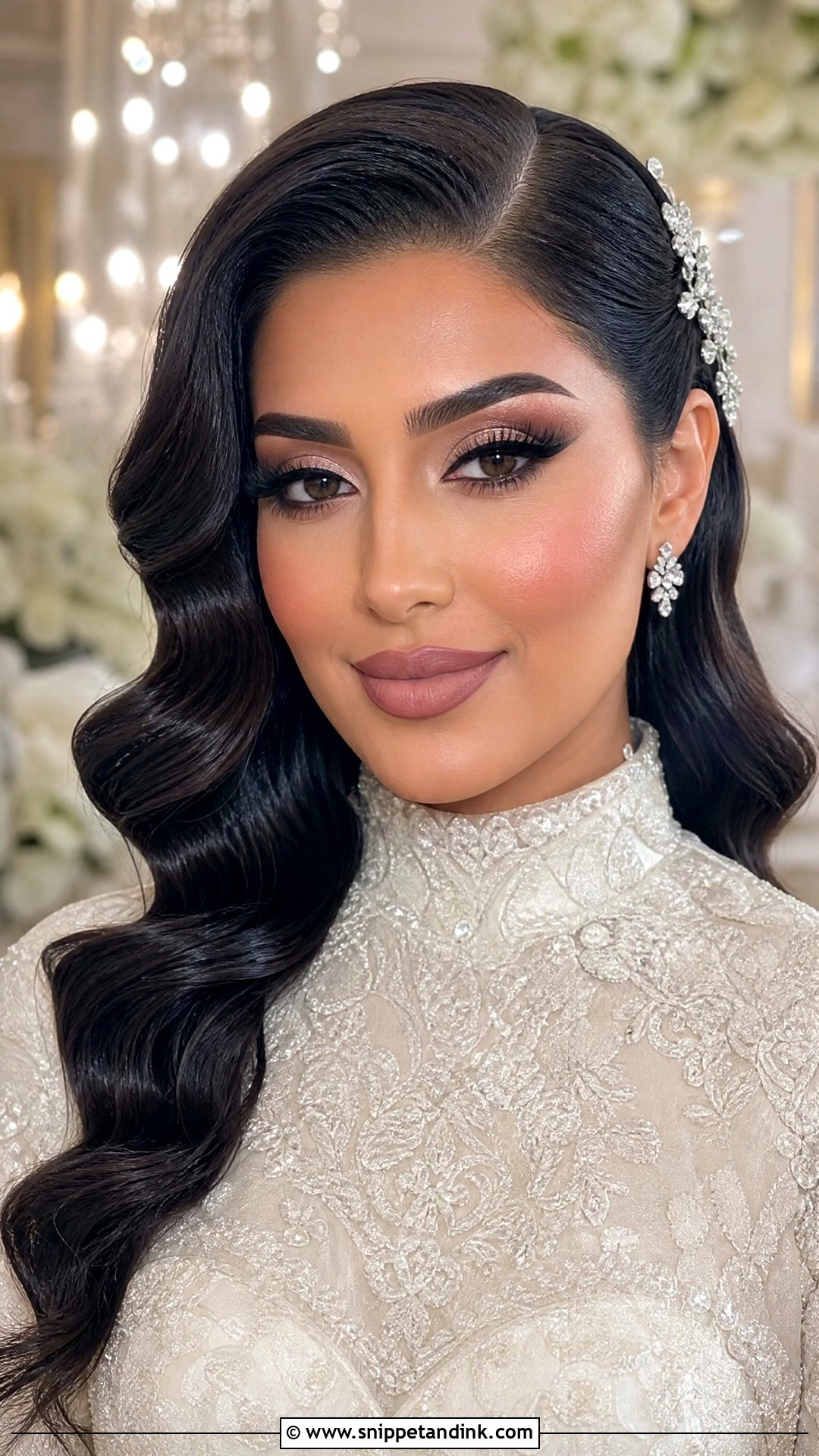
Full glam is for the bride who already wears full glam and would feel underdressed without it. The base is full coverage but buffed in thin layers so it holds up close, the eyes can carry a soft cut crease, shimmer and full lashes, and contour and highlight are visible on purpose. I balance strong eyes with a mid-tone lip such as mauve or rose, or a deep berry if the eyes stay simpler. My honest warning is about weight: heavy layers can feel tiring by hour ten, so I keep each layer as thin as possible and set it with spray, not extra powder.
17. Minimal Wedding Makeup Look
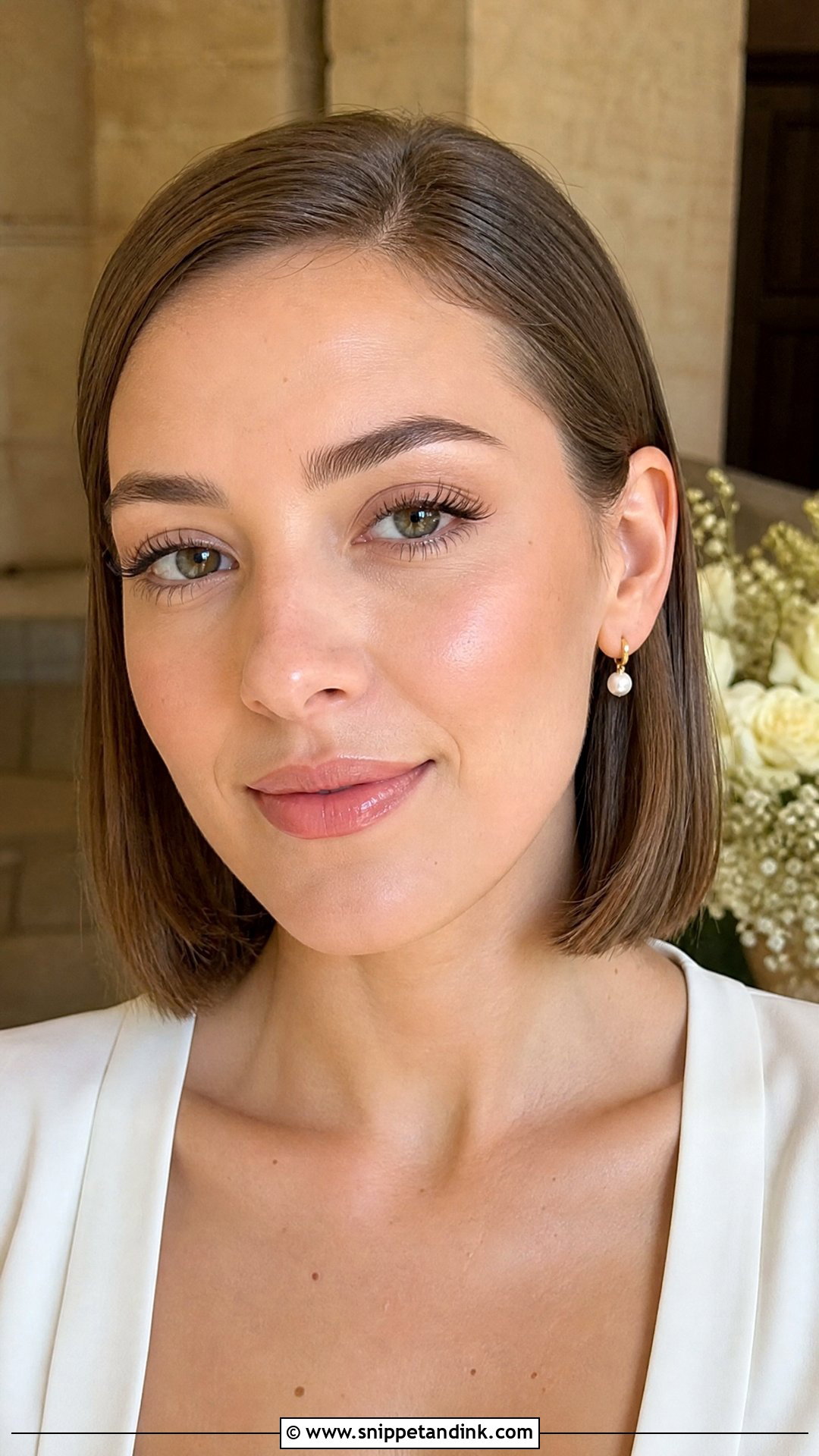
Minimal makeup depends on preparation more than product. I spend more time on skin prep than on application here: hydration, a light primer, then concealer only on redness and under the eyes. Brows brushed into place, curled lashes with lengthening mascara, a cream blush and a tinted balm finish the face. Brides who dislike the feel of foundation tend to love it. The one thing I won’t skip is a little powder on the nose and forehead, because without it the flash will find every bit of shine.
18. Vintage Wedding Makeup Look
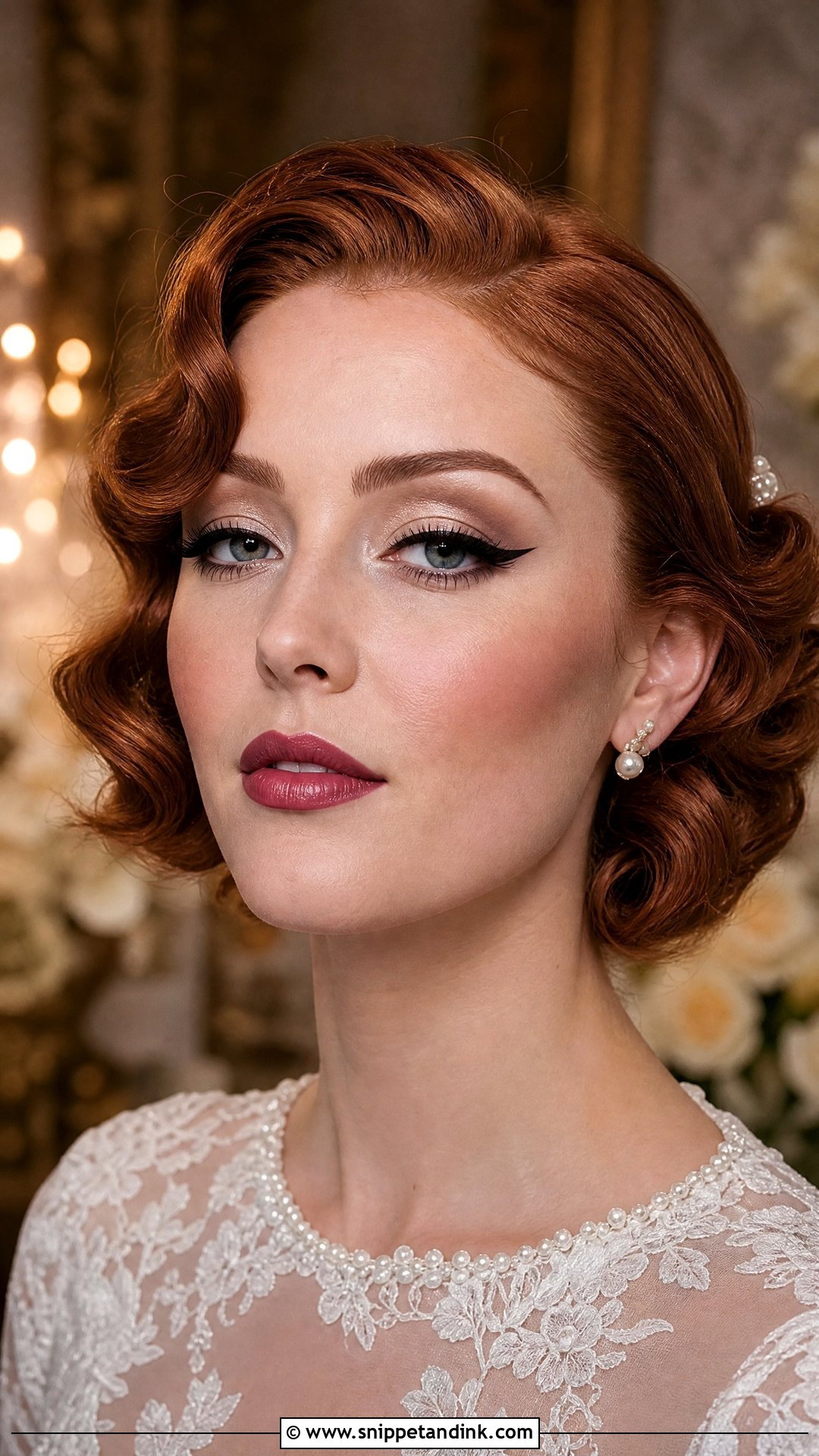
Vintage makeup is about structure: even skin, a clean wing, arched brows and a defined mouth. A red lip gives the old-Hollywood version, while rose or berry softens it. I keep the lids matte in ivory and taupe, place blush slightly higher and further back for a sculpted effect, and use a satin rather than dewy base so the precision shows. It pairs naturally with lace, satin, pearls and a birdcage veil, and the liner style is the part to practise; a wing that tilts down instead of up ages the eye.
19. Boho Wedding Makeup Look
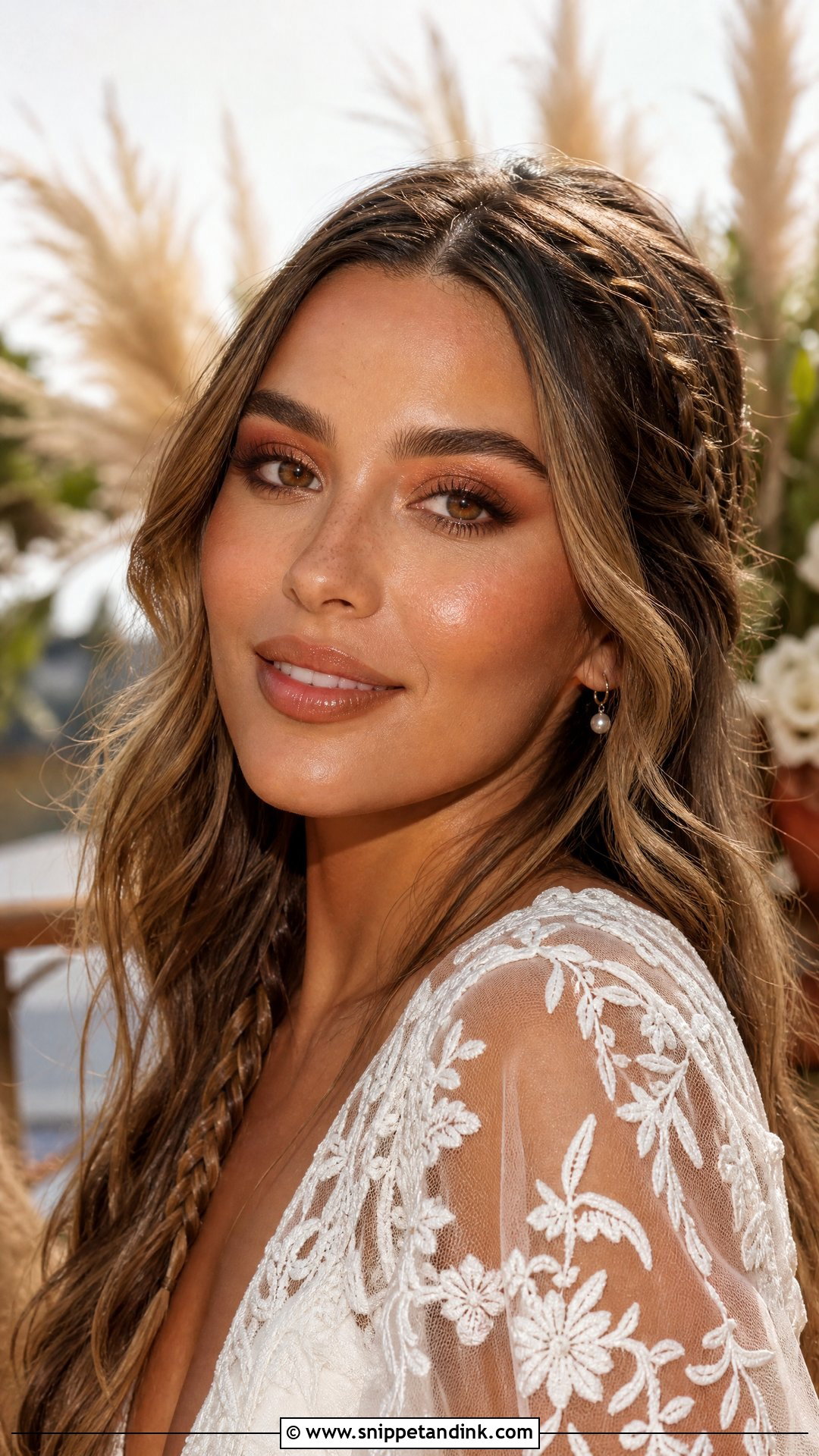
Boho makeup should look as though you’ve been outside in good weather. Warm skin, brushed-up brows and diffused shadow in sand, terracotta or cocoa set the tone, and I avoid any sharp line. Cream bronzer and a warm rose blush give that sunlit feeling. A nude gloss, tinted balm or soft brown-pink lipstick completes it. It suits loose waves and braids, though I still set the T-zone, since desert and field venues are usually hot and the relaxed finish shouldn’t turn into a shiny one.
20. Beach Wedding Makeup Look
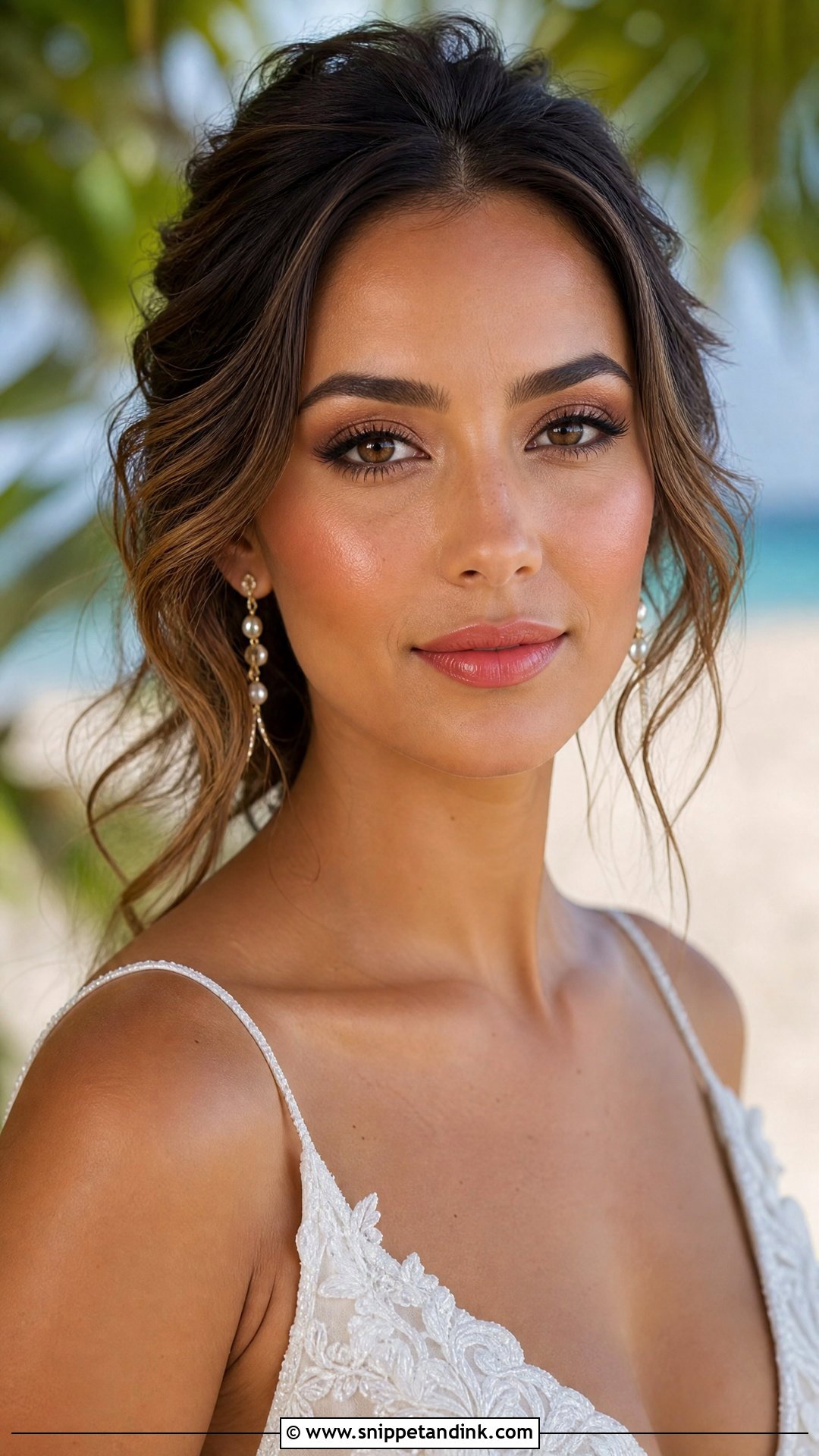
Beaches bring three enemies: humidity, wind and salt spray. I use a long-wear base with a natural finish and set it only where it needs it, because a heavily powdered face looks dry in harsh sun. Waterproof mascara is non-negotiable, and strip lashes are a gamble in wind, so I’d choose individual clusters glued close to the root. Cream blush topped with a little powder blush outlasts either alone. A lip stain in peach or coral beats gloss, which collects sand and loose hair.
21. Winter Wedding Makeup Look
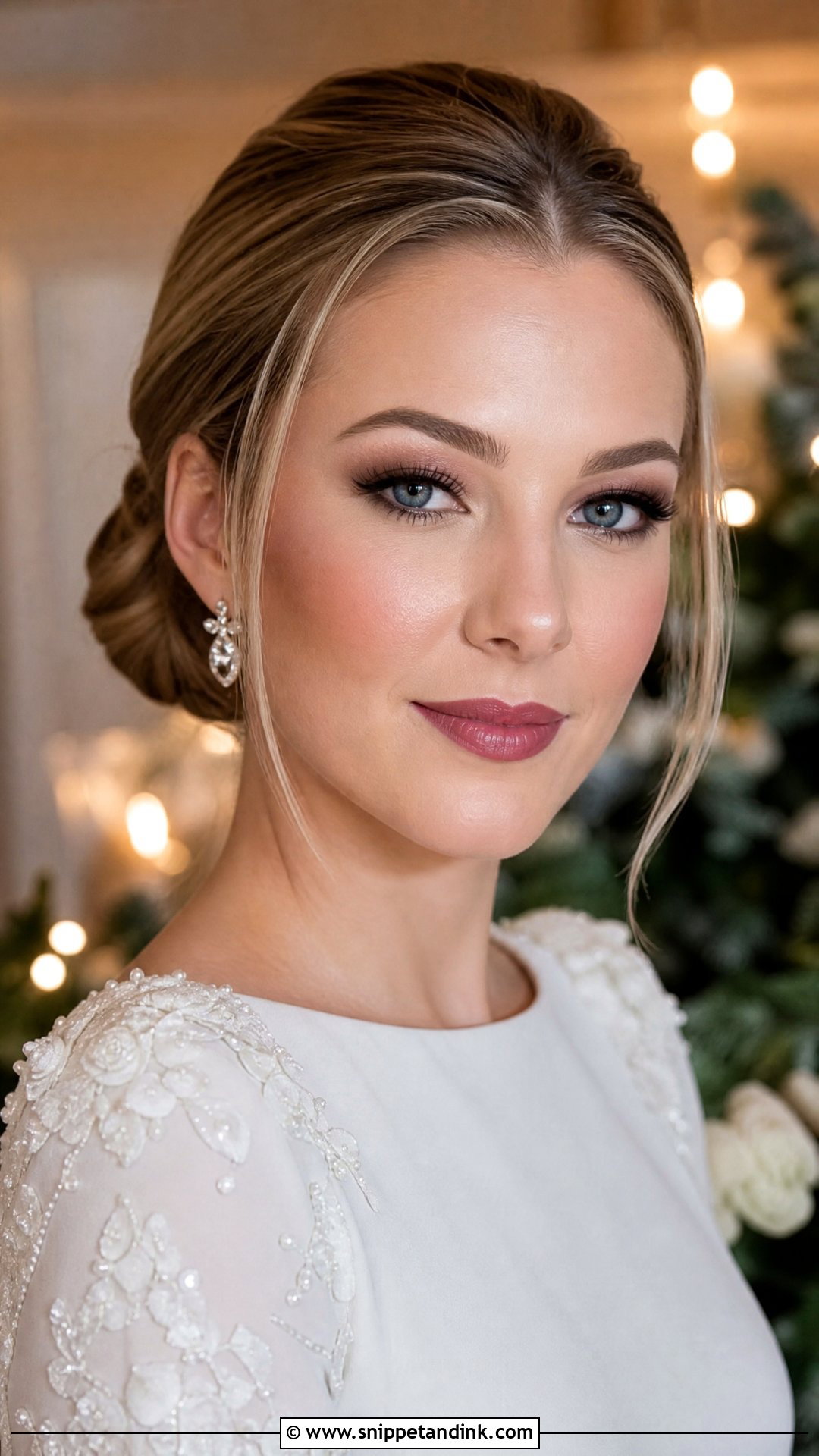
Cold weather makes skin look paler and drier, so I usually prep with a richer moisturiser and choose a satin base. Taupe, cocoa, plum or cool bronze give the eyes depth, and blush matters more than in any other season: rose, mauve or berry brings back the warmth the cold takes out. Lips can go deep, like berry or classic red, against velvet and candlelight. Indoors-to-outdoors temperature changes can make the base look flaky, so I’d bring a hydrating mist for photos outside.
22. Summer Wedding Makeup Look
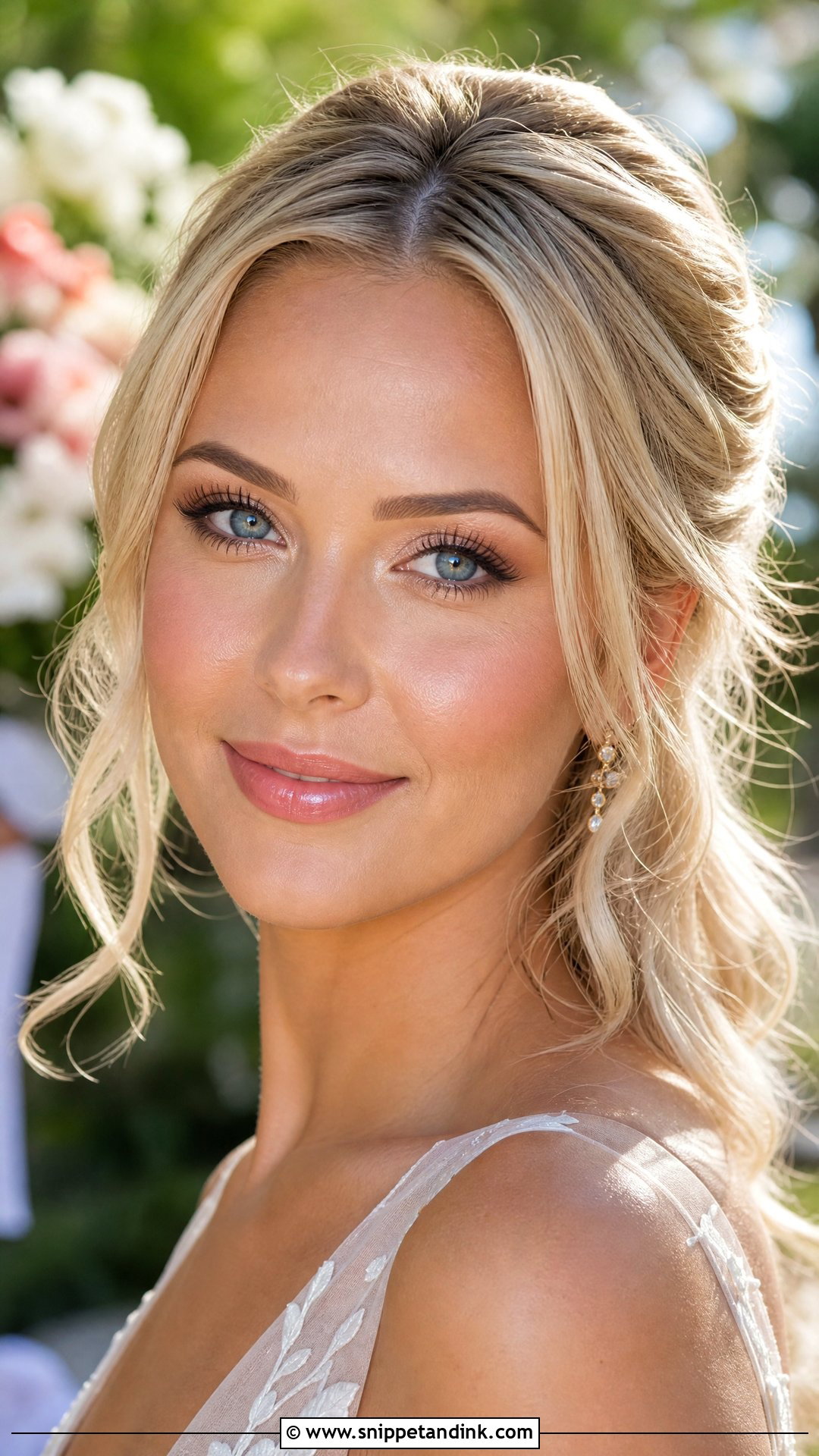
Heat is the real test of any wedding face. I use a gripping primer, a lightweight foundation and a sweat-resistant setting spray, and I keep the eyes in bronze, peach or warm brown so any small slip doesn’t show. Waterproof mascara and smudge-proof liner handle heat and happy tears. Layering cream blush under powder blush makes the colour last much longer. Choose a lip stain or satin lipstick you can touch up without a mirror, and keep blotting papers in someone’s pocket rather than adding more powder through the day.
23. Fall Wedding Makeup Look
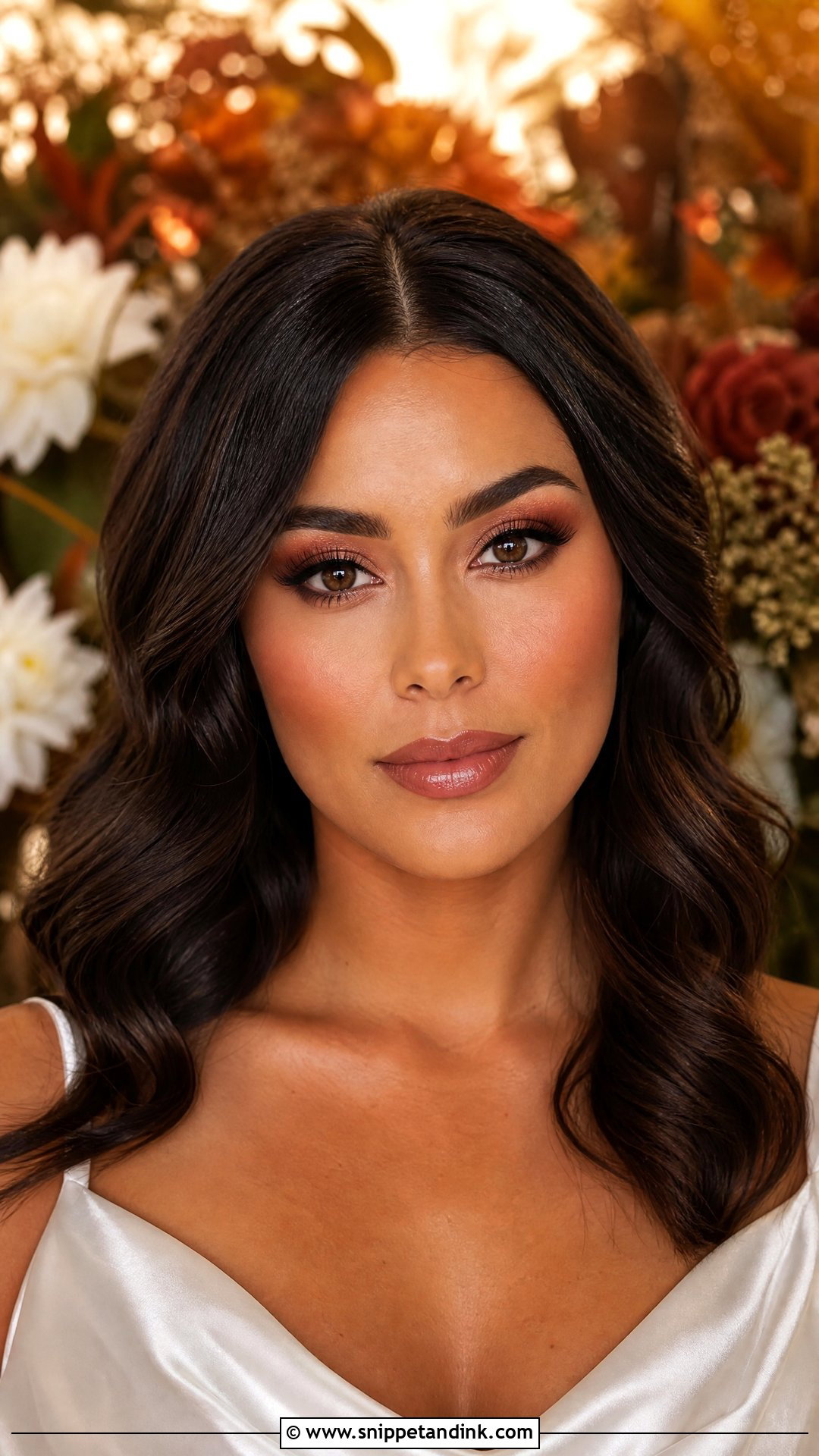
Autumn lets you use richer colour without it looking heavy. I like copper, bronze, cinnamon, chocolate or muted plum around the eyes, with a satin base and terracotta or spiced peach blush. Bronzer adds dimension, but I keep contour blended so warm shades don’t turn muddy. Lips can go nude brown, rosewood or brick. Golden hour comes early in autumn, so if your portraits are scheduled for late afternoon, these warm tones will glow in that low light.
24. Spring Wedding Makeup Look
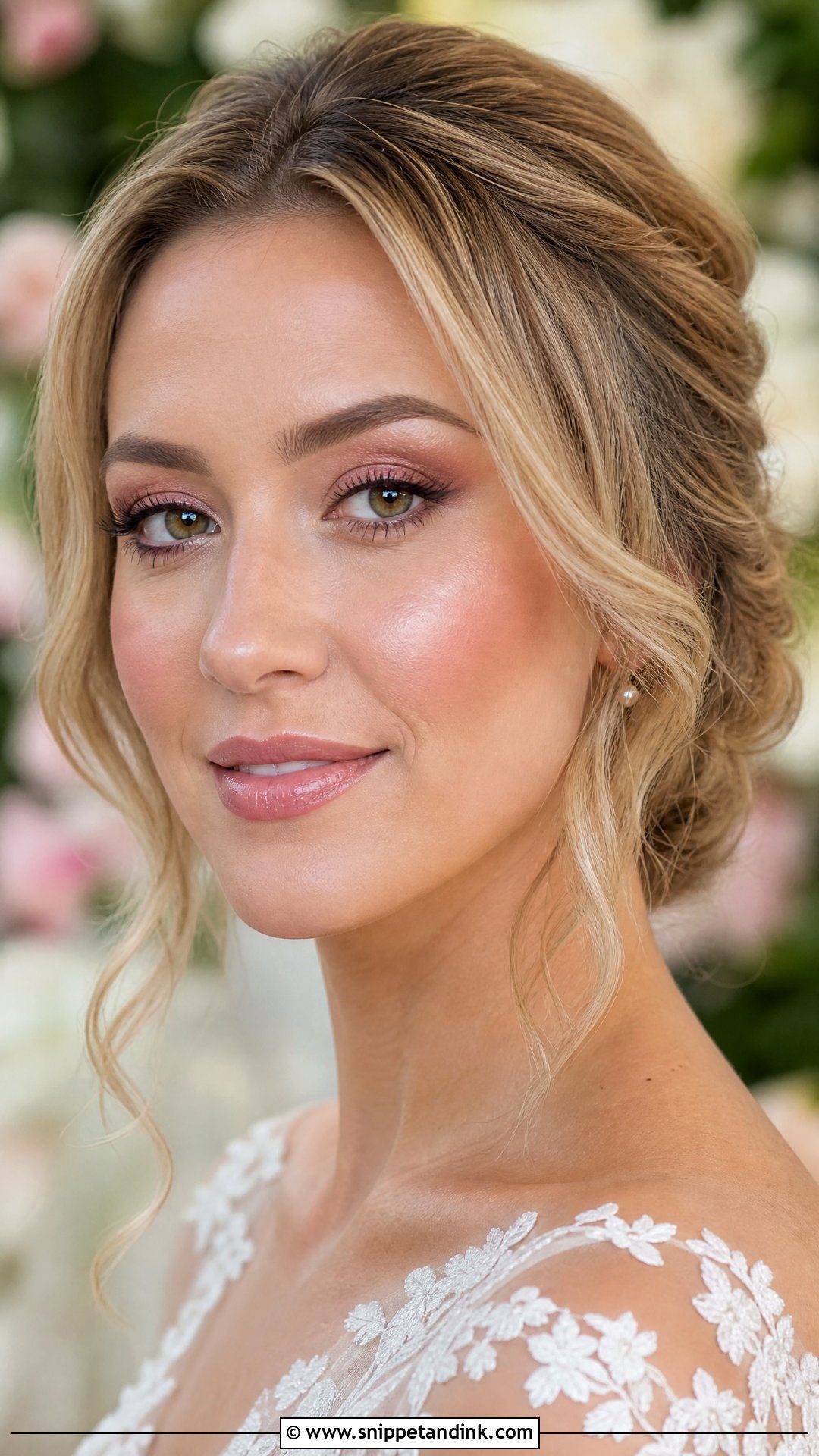
Spring makeup should look like it has light running through it. I use a breathable base with a natural glow, then pink, peach or lilac-toned blush for a fresh flush. The eyes stay airy with champagne, rose or a pastel mauve, and brown liner keeps it gentle while wispy lashes give definition for photos. Pollen season can mean watery eyes, so I’d use waterproof mascara even on this soft look. A pink nude or peach gloss completes the face.
25. Dark Skin Wedding Makeup Look
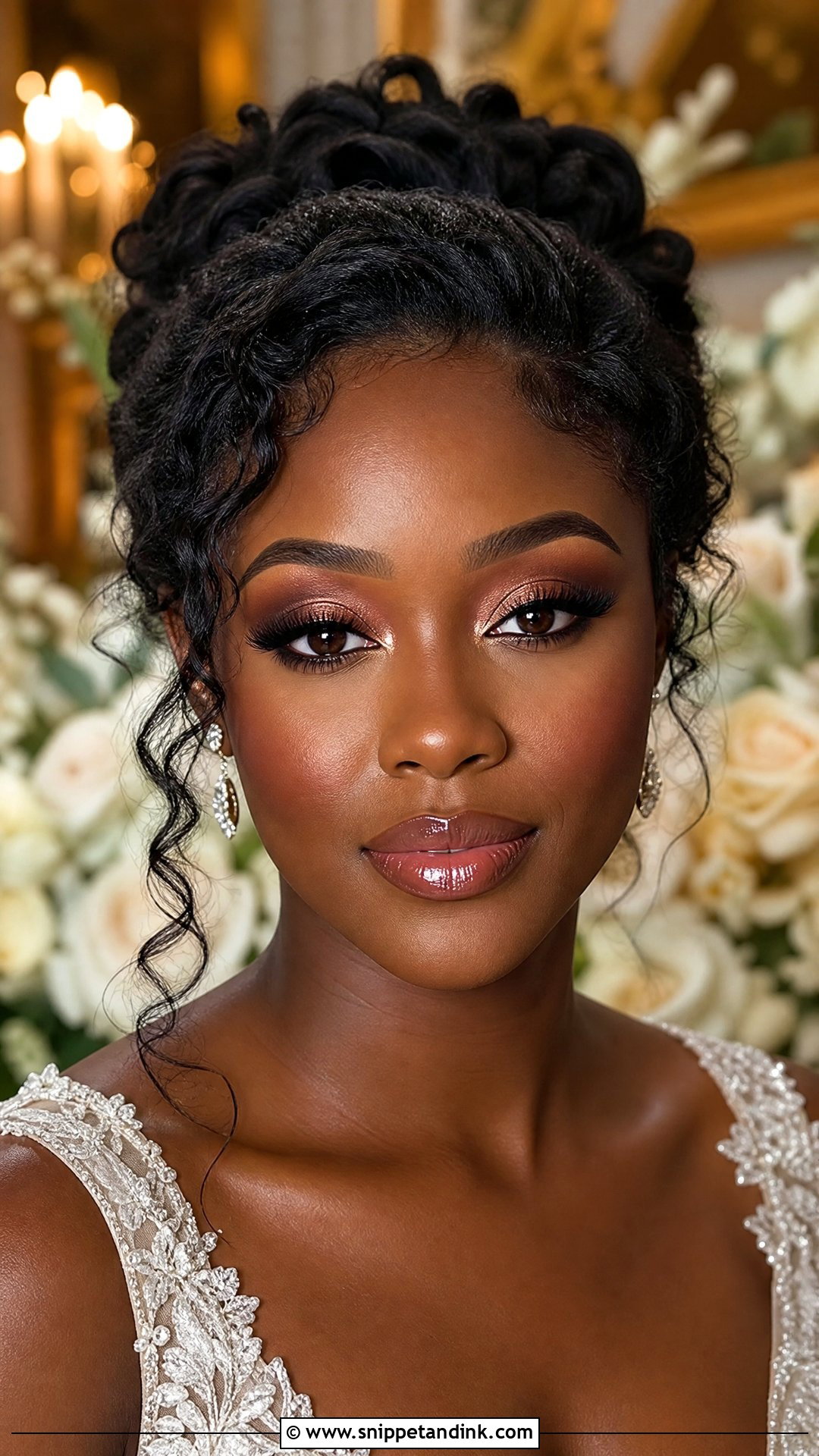
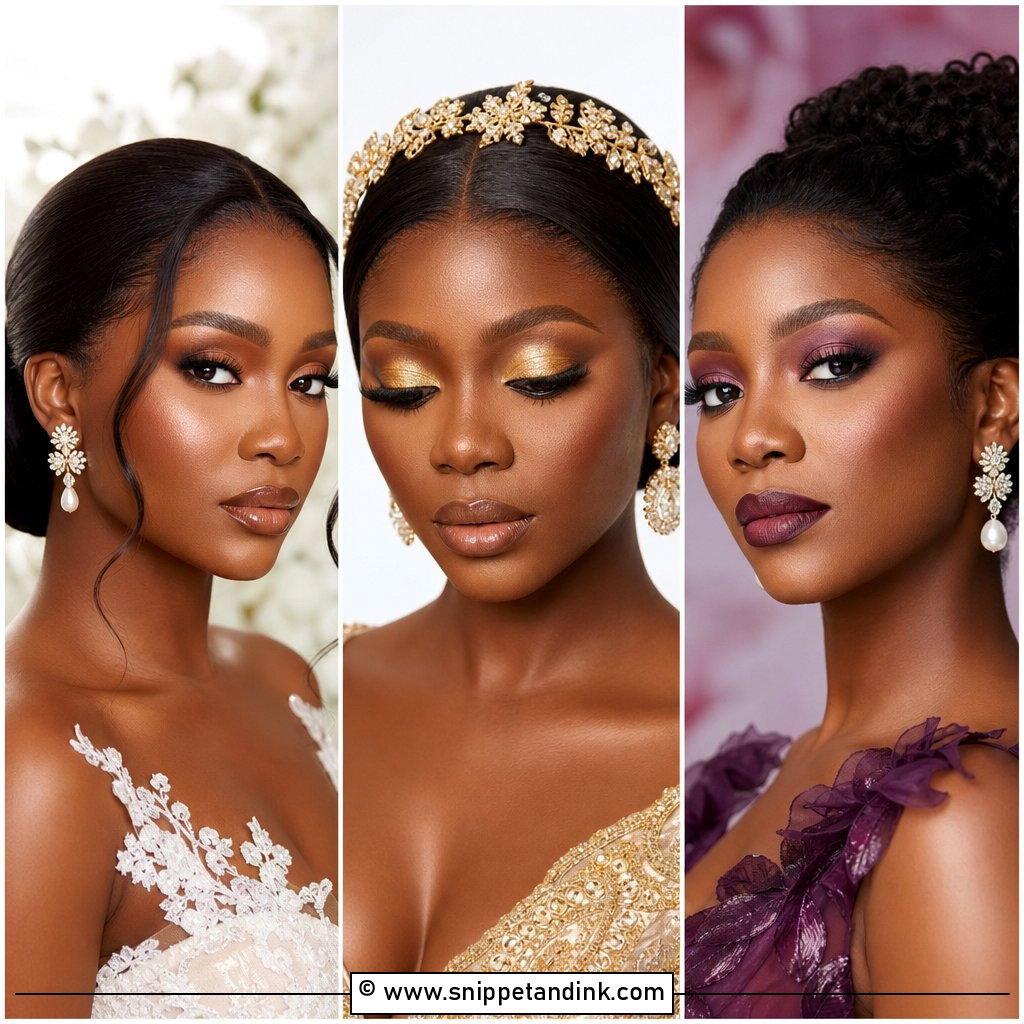
Deep skin deserves colour that shows up clearly instead of shades that sit grey on top. My first job is matching the undertone, whether golden, neutral, red or olive, and I often mix two foundations to get it exact. For the eyes, bronze, copper, plum, espresso, gold and burgundy give rich dimension. Blush has to be bold enough to read: berry, brick, orange-coral or fuchsia. Highlight in gold or bronze, never silver, and a nude brown, cocoa rose or glossy caramel lip. I also check the base under flash, because some powders with heavy SPF or silica cast a white haze on deep skin.
A Makeup Trial That Tells You Something
Book the trial roughly two to three months ahead, once the dress is chosen but with enough time to change direction. Bring photos of the dress neckline and colour, your hair plan and two or three reference faces you like, plus one you don’t. Saying what you dislike tells me just as much.
After the trial, don’t wash it off. Wear it for the rest of the day, check it at lunch and again in the evening, and take photos by a window and with your phone flash. If the base has slipped around the nose by four o’clock or the lashes feel heavy, tell me. That is exactly what a trial is for, and every one of those notes changes what I bring on the morning.
Hour Eight: Tears, Kisses and Dinner
Even the best application needs a small rescue kit, and it should live with someone who isn’t you. Mine usually holds:
- Blotting papers, which remove shine without adding another layer of powder.
- Your exact lipstick or gloss, plus its liner.
- Cotton buds and a small amount of micellar water for smudged mascara.
- A tiny tube of lash glue for a corner that lifts.
- A pressed powder in your shade, used only on the nose and chin.
Touch up just before the evening portraits and once again before the first dance. Most fading happens on the lips and around the nose; the eyes, if set properly, rarely need more than a cotton bud.
The Face You’ll Still Recognise in Twenty Years
The look worth wearing is the one you’d recognise as yourself in photos twenty years from now. Trends can point you somewhere, but your skin type, dress, venue and season decide more. Test the face you choose at a trial, then wear it for several hours, take photos by a window and with flash, and see how it feels by evening. Use long-wear formulas where your skin needs them and leave out anything that feels heavy. Planned that way, your makeup will hold up in person and in every picture.
You'll Like These Ideas:


Leave a Reply