
A ceremony is the part of any event where you’ll sit still, stand for a long time, and be photographed from behind more than you realise. That changes what a good dress looks like. I dress brides, mothers and guests for ceremonies of every kind, from city hall vows to black-tie weddings and graduations, and the outfits that work are the ones planned as a whole: dress, shoes for the actual ground, a layer for the room temperature, and a bag that holds tissues and a phone. Satin, soft florals, draping, butter yellow, sage, powder blue and black are all showing up at ceremonies right now. Below are thirty outfits, with the fitting-room notes I’d give you for each.

What a Ceremony Asks of Your Clothes
Receptions are about movement. Ceremonies are about stillness, and that’s harder on an outfit than people expect. You’ll sit on a hard pew or folding chair, stand for vows, maybe kneel, and spend a lot of time photographed from behind or the side.
Temperature is the other surprise. Old stone churches stay cool even in summer, while marquees and glass venues heat up fast. I always pack a light layer for clients in either case, because you’ll sit for thirty minutes or more without moving much, and that’s when a chill or a flush really shows.
Houses of worship
Many churches, temples, mosques and gurdwaras expect covered shoulders and knees, and some ask for covered heads or removed shoes. If you aren’t sure, ask the couple or check the venue’s guidance. A light wrap, a shawl or a cardigan in a matching fabric makes almost any dress appropriate without buying a second outfit.
The back view
Guests, parents and the couple are mostly seen from behind during the ceremony. Check your dress in a three-way mirror: visible bra straps, a zip that pulls, or a slip showing at the hem stand out in those photos far more than anything at the front.
1. Satin Midi Ceremony Dress
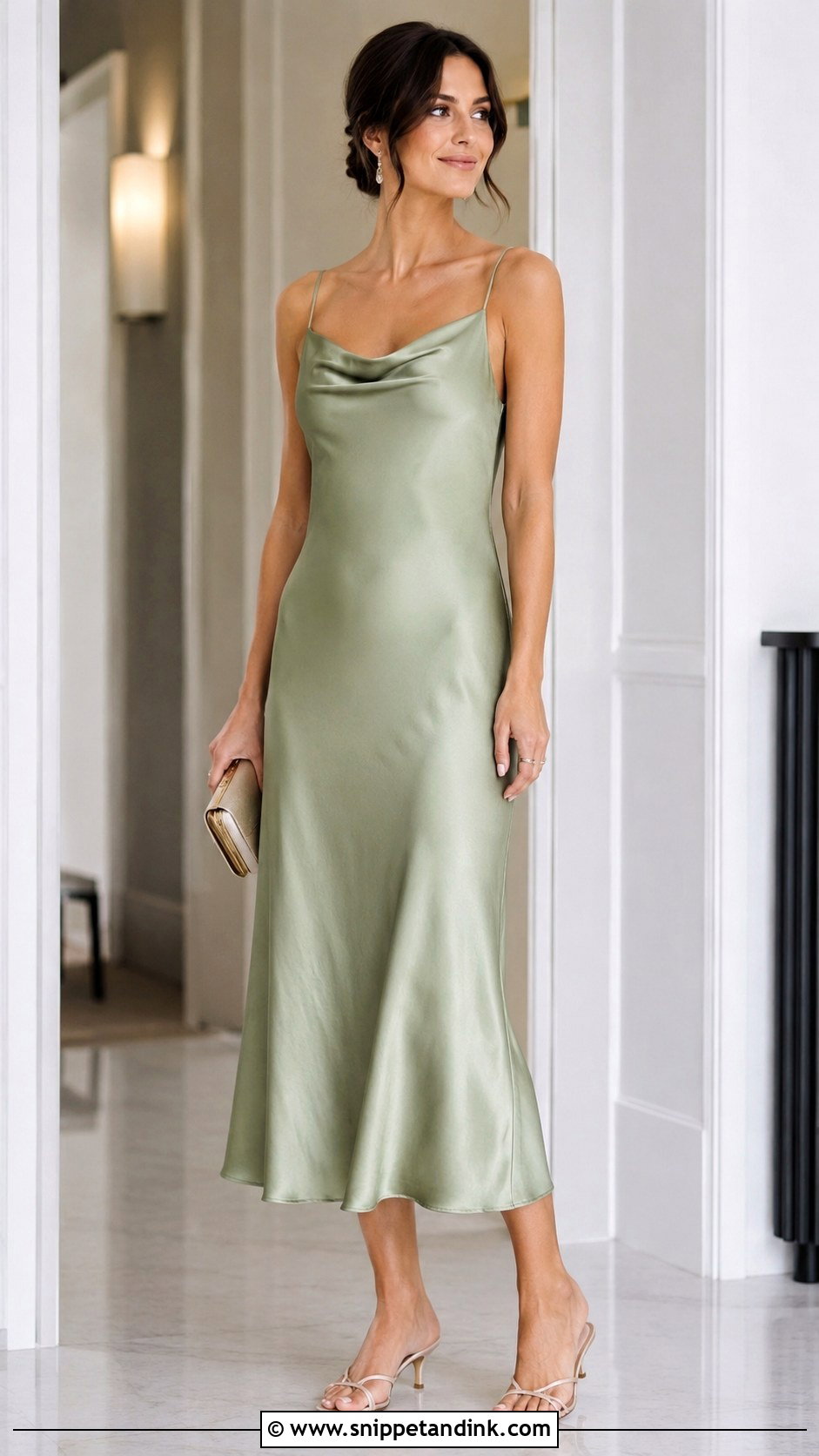
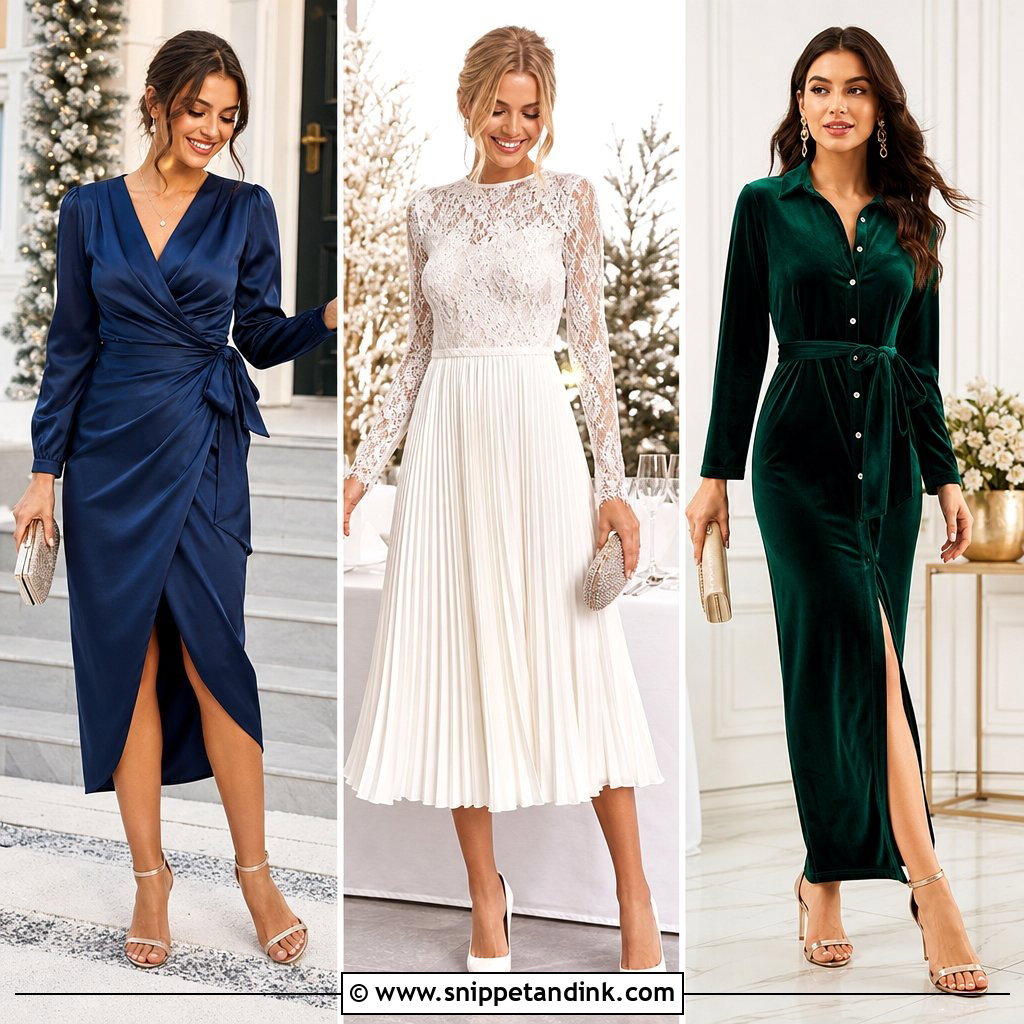
Bias-cut satin is the quickest route to looking dressed without looking overdone. The cut lets the fabric skim the body, which is lovely standing and less forgiving seated, because bias satin shows every crease and line underneath. I always tell clients to try it on with the exact underwear they’ll wear and to sit down in front of a mirror. Sage, champagne, navy and rose all suit it. Kitten heel sandals, a small structured clutch and drop earrings are enough; a cropped blazer covers you in a cold church without hiding the shape.
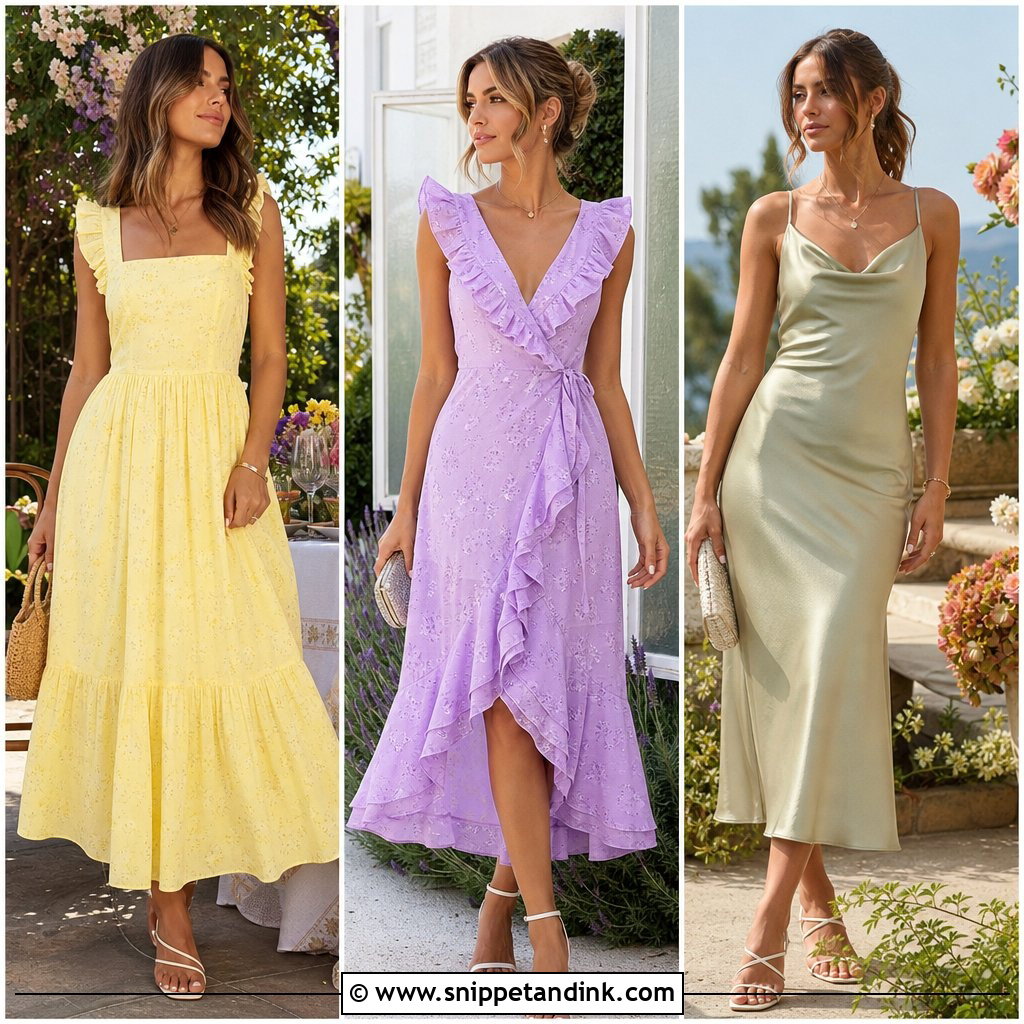
2. Floral Midi Ceremony Dress
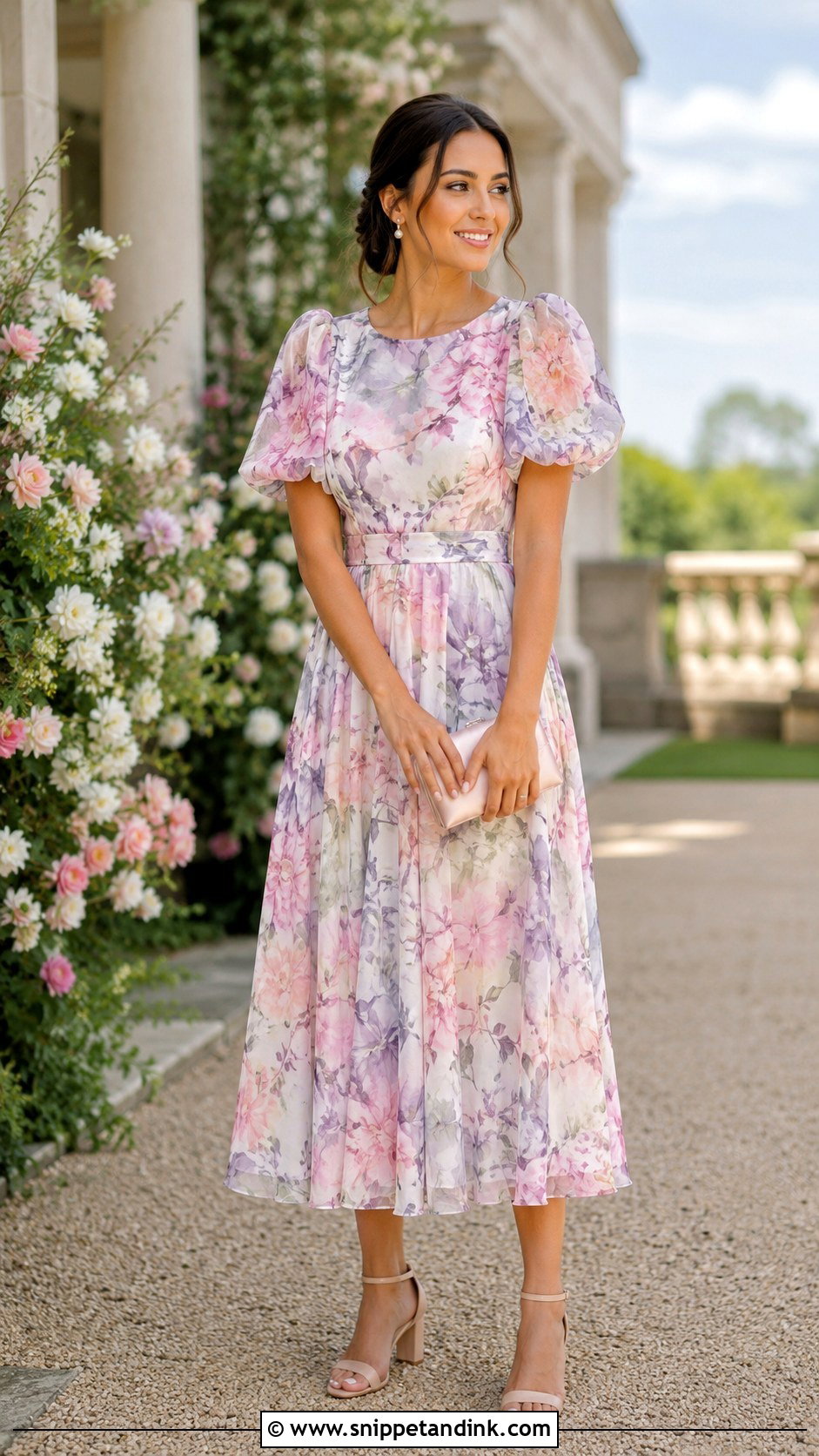
Prints forgive a lot. A floral midi hides the odd crease from sitting and doesn’t show spilled water the way plain satin does, which is why I suggest it for long daytime ceremonies. Small botanical and watercolor prints read well in photos; very large, high-contrast florals can dominate group shots. Look for a defined waist and a skirt that swings. Block heels beat stilettos on any lawn, and a cream jacket finishes it for a polished-but-not-black-tie dress code.
3. Black Tie Ceremony Gown
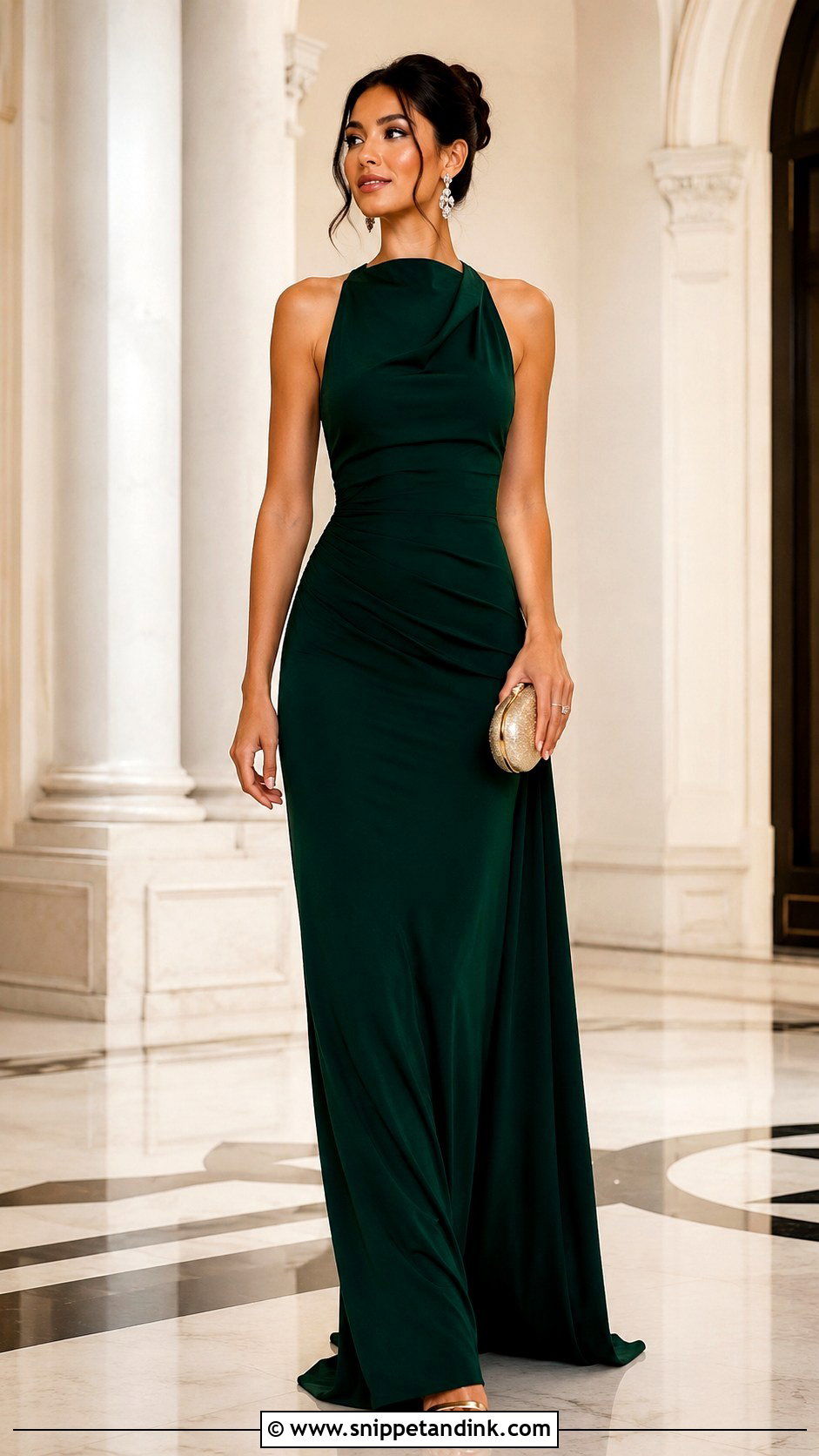
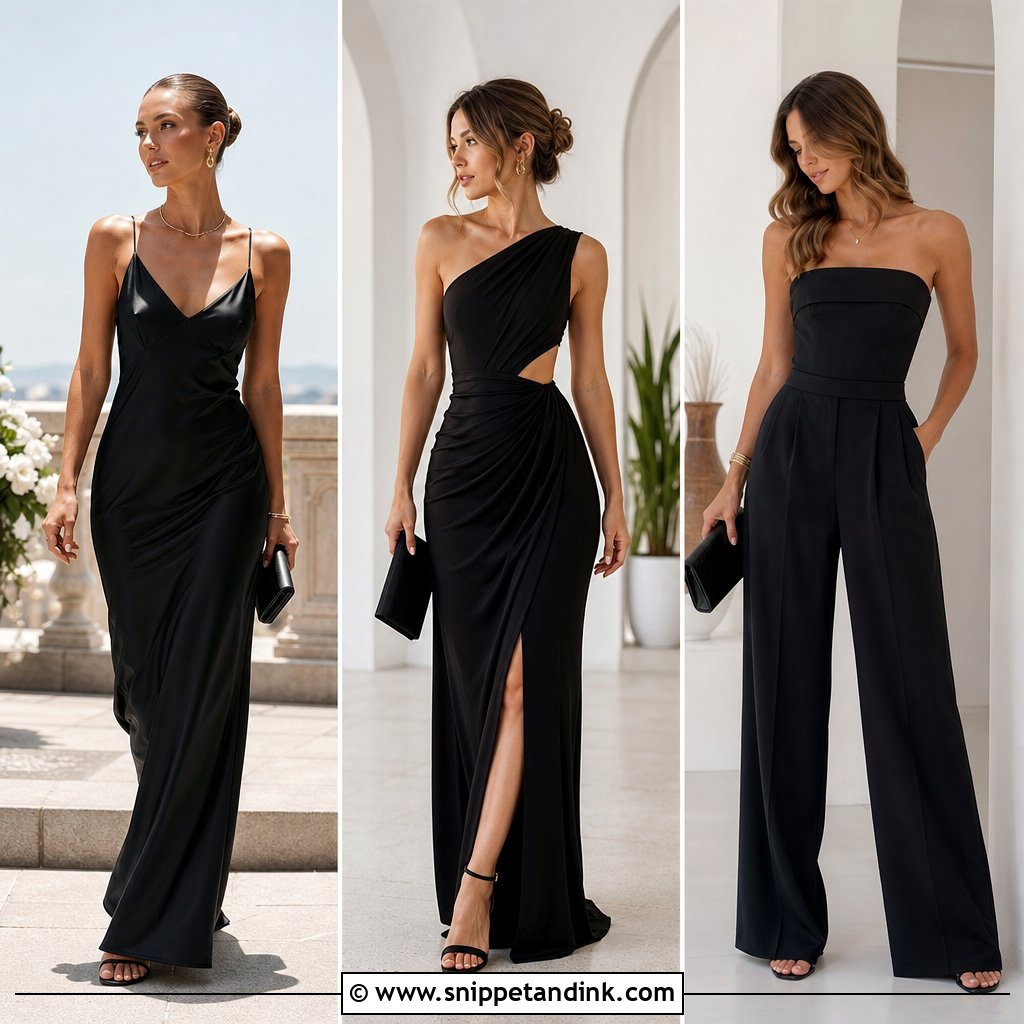
Black tie means floor length; that’s the one rule I’d never bend. Navy, emerald, burgundy, charcoal and black in a column, draped neckline or softly pleated skirt all qualify. What I check is the hem with shoes on, since a floor-length gown hemmed in flats will drag once you add heels, and a gown hemmed too short shows ankle in every walking photo. High neckline means no necklace; let the earrings do the work. For colder months, a tailored evening coat or faux fur wrap keeps the formality through arrival and departure.
4. Garden Ceremony Dress
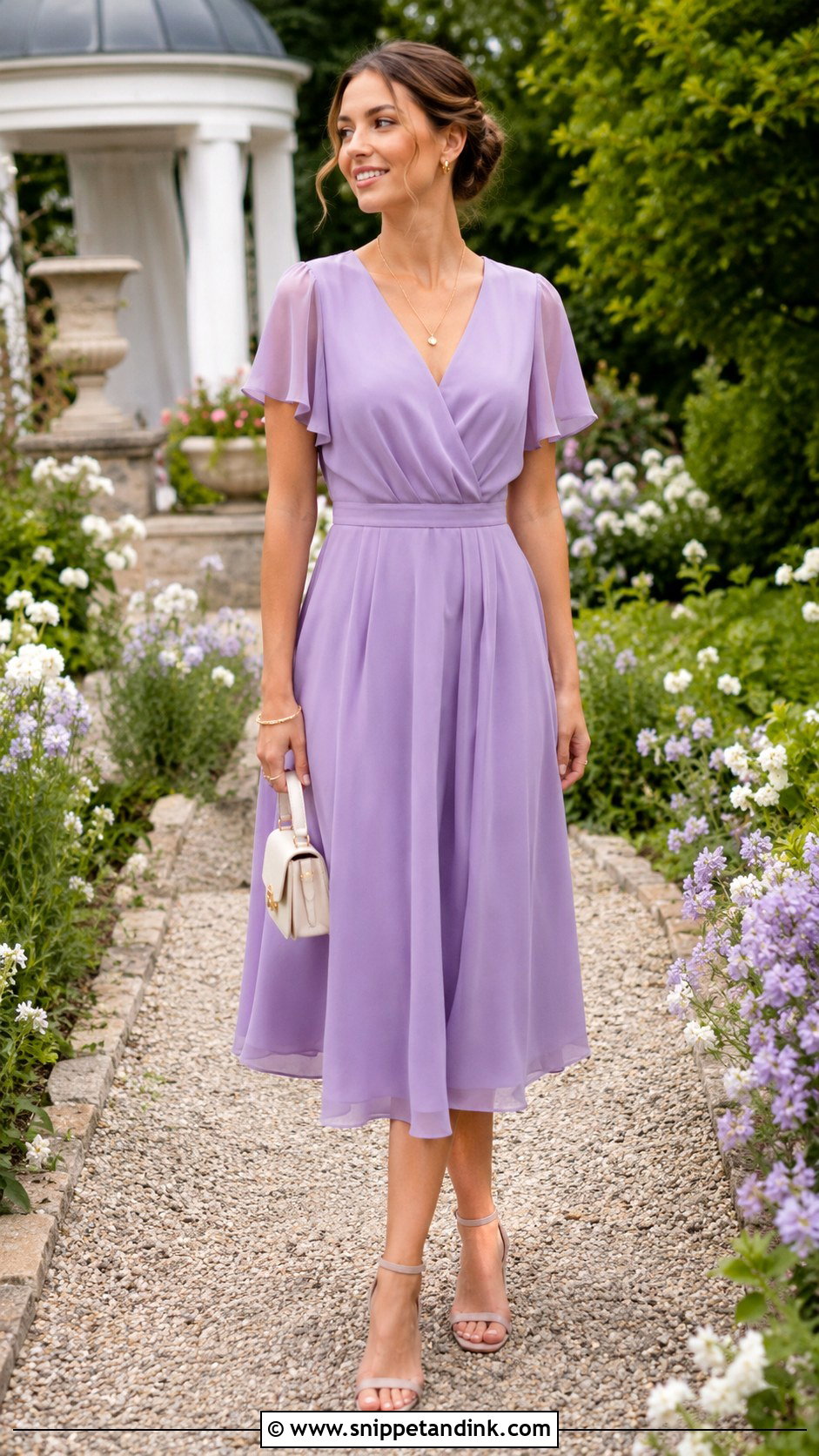
Grass and gravel decide this outfit more than the dress does. Thin heels sink into lawns and wobble on pea gravel, so I build garden looks from the shoes up: block heel sandals first, then a chiffon midi or tea-length wrap that won’t drag on damp ground. Lavender, blue, blush and soft green all sit nicely against greenery without competing with it. Bring a shawl for when the sun drops; garden ceremonies that run into evening cool down quickly.
5. Beach Ceremony Dress
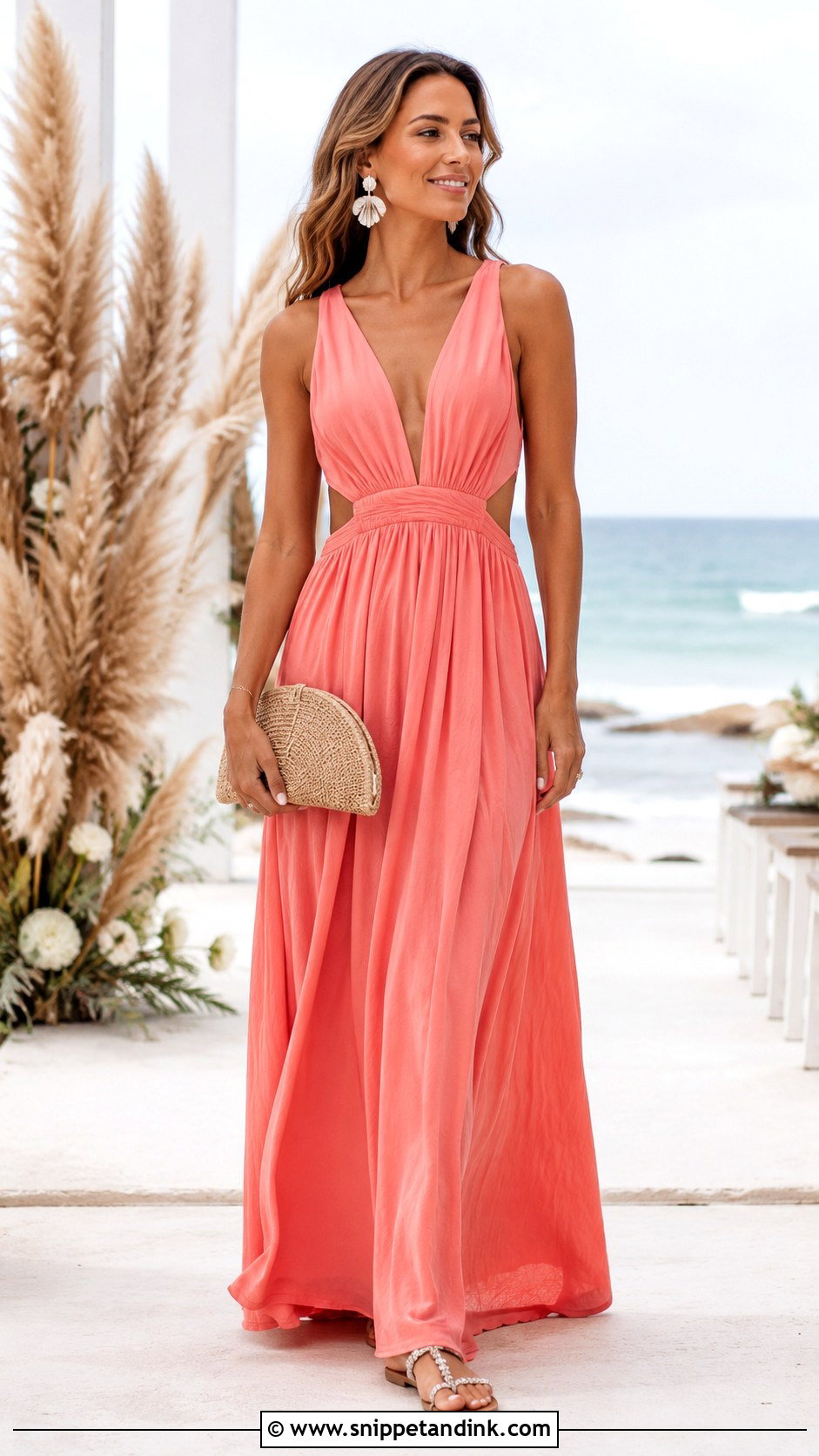
On sand, flat or low shoes are non-negotiable, and fabric weight matters nearly as much. A breezy maxi dress in chiffon, linen blend or soft crepe moves in sea wind; heavy beading pulls the dress down and gets hot in the sun. Linen creases quickly, so I’d only choose it if you’re comfortable with a relaxed look by the end. Flutter sleeves, a halter or an empire waist all suit the setting. Aqua, coral, butter yellow and tropical prints feel right by the water.
6. Courthouse Ceremony Dress
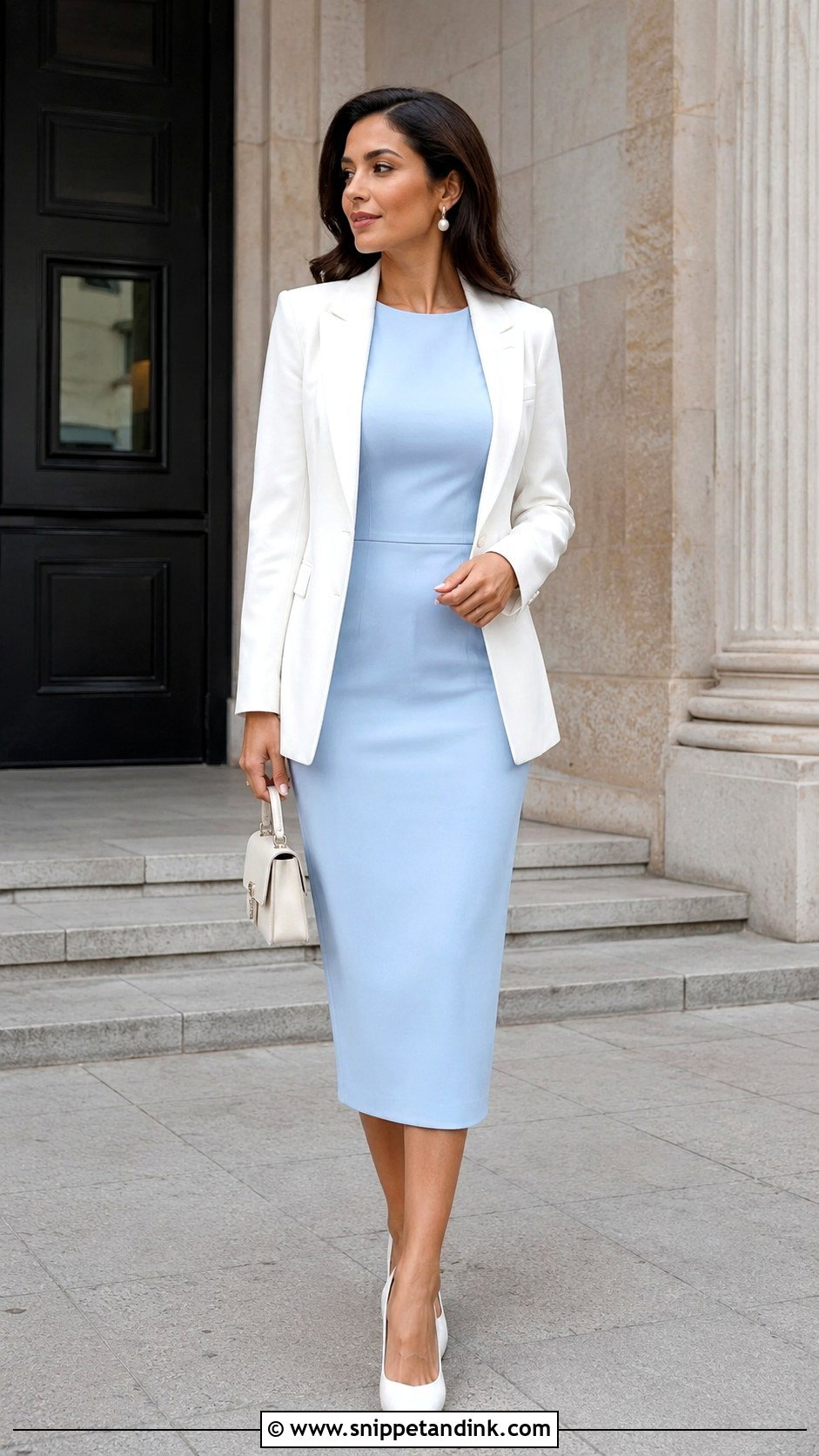
City hall ceremonies are short, often bright, and photographed on steps outside, so tailoring shows more than embellishment. A sheath in white, ivory, pale blue, blush or soft gray looks deliberate without a full gown. Pointed pumps, a structured mini bag and small pearl or gold earrings keep it modern. A blazer helps in cold marble buildings and adds polish in photos. Rooms at many registry offices are small, so a big skirt or long train can feel out of scale there.
7. Graduation Ceremony Dress
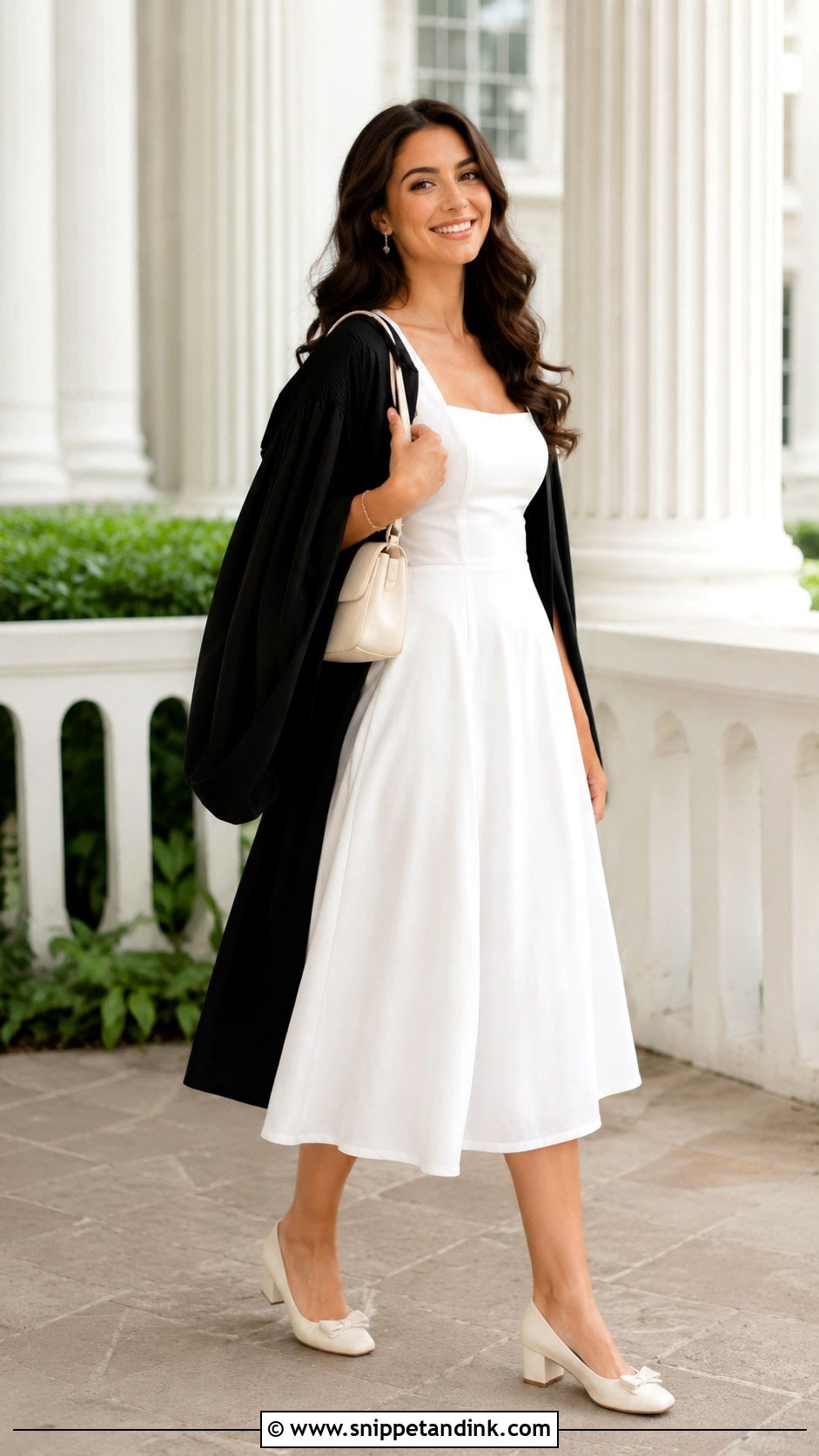
Under an academic gown, bulk is the enemy. Puffed sleeves crush, high collars bunch at the neck, and long hems peek out unevenly below the robe. I’d choose a breathable midi in white, pastel, navy or floral with a simple neckline that sits flat. Robes are warm, so lighter fabric matters more than it seems. Pick shoes you’ve already walked in, because crossing a stage in front of a full hall is not the moment to break in heels.
8. Civil Ceremony Dress
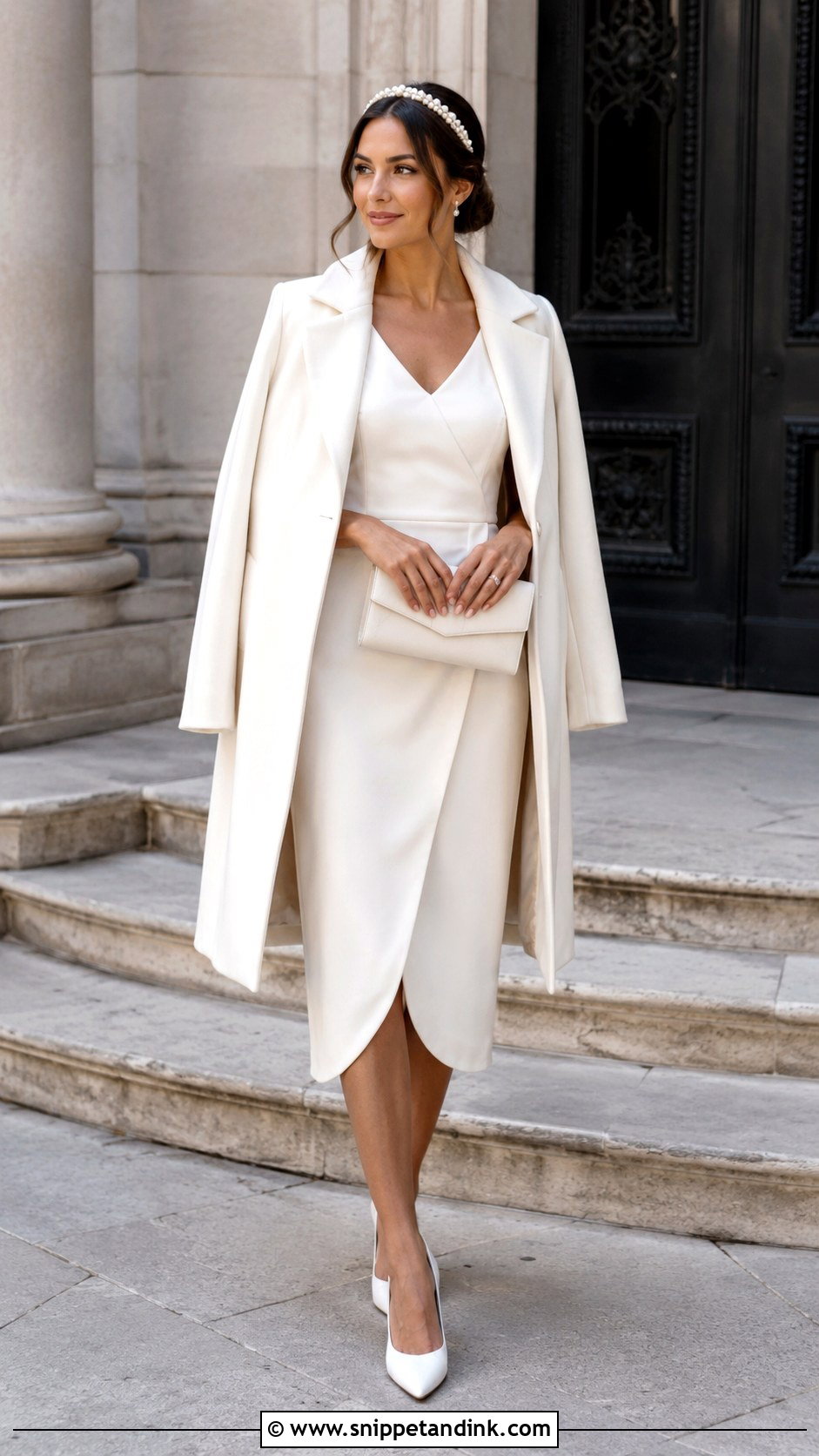
For a civil ceremony, a sleek midi in ivory, blush, powder blue or soft taupe gives the bride a clean base she can personalise with a short veil, hair bow or pearl headband. Guests should keep away from white and anything that looks bridal unless the couple asks otherwise. Slingbacks and a structured clutch suit the city setting. These dresses tend to get worn again, so I’d invest in fit rather than detail.
9. Mother Of The Bride Ceremony Dress
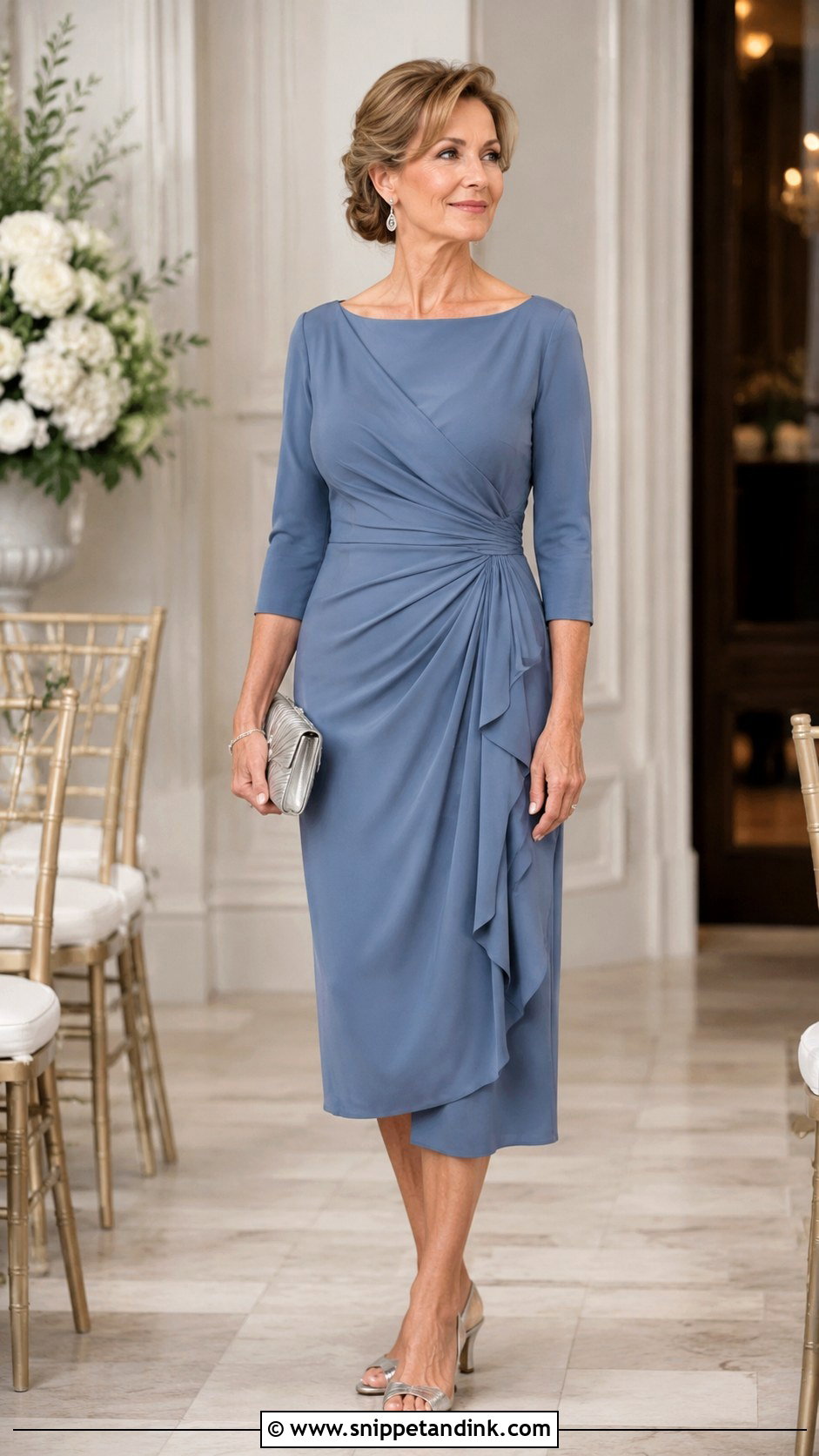
Mothers of the bride are photographed all day, hug everyone, and usually stand for longer than anyone else, so comfort and coverage come first in my fittings. Dusty blue, mauve, navy, champagne and deep green are flattering and photograph well beside most wedding palettes. Soft draping, lace sleeves or an A-line skirt allow movement. I always compare the shade against the bridesmaids’ fabric swatch, since a mother’s dress that matches them too closely gets lost in group photos. Low metallic heels save her feet by the reception.
10. Mother Of The Groom Ceremony Dress
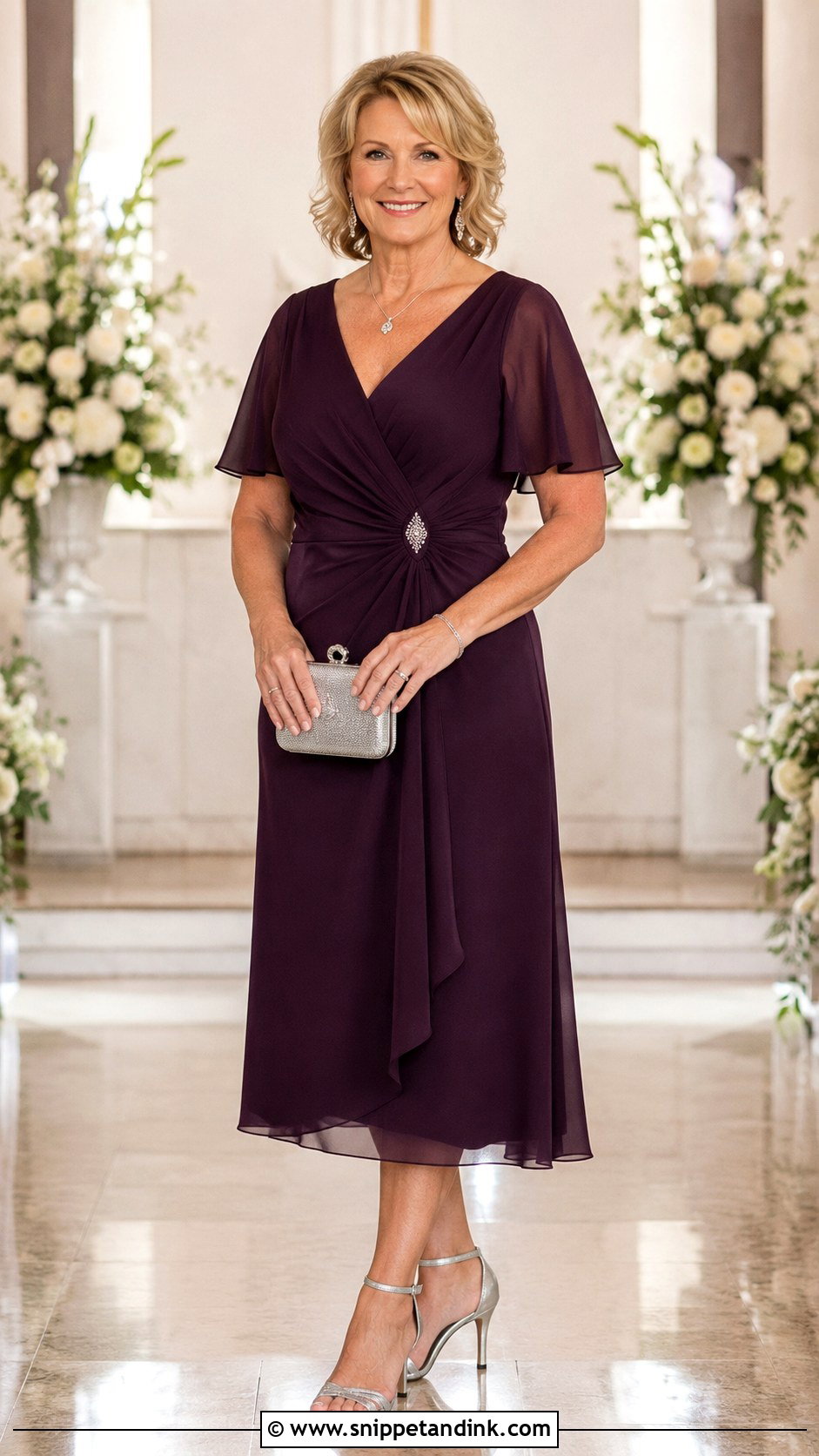
The groom’s mother has the same long day with slightly less guidance, so I encourage her to talk colors with the other mother early. Slate blue, plum, emerald, rose and navy suit formal ceremonies. A sleeved midi, draped gown or soft fit-and-flare flatters without fuss. Bright white and bridal lace are off the table. For outdoor ceremonies, a stable heel and a proper wrap matter more than another piece of jewelry.
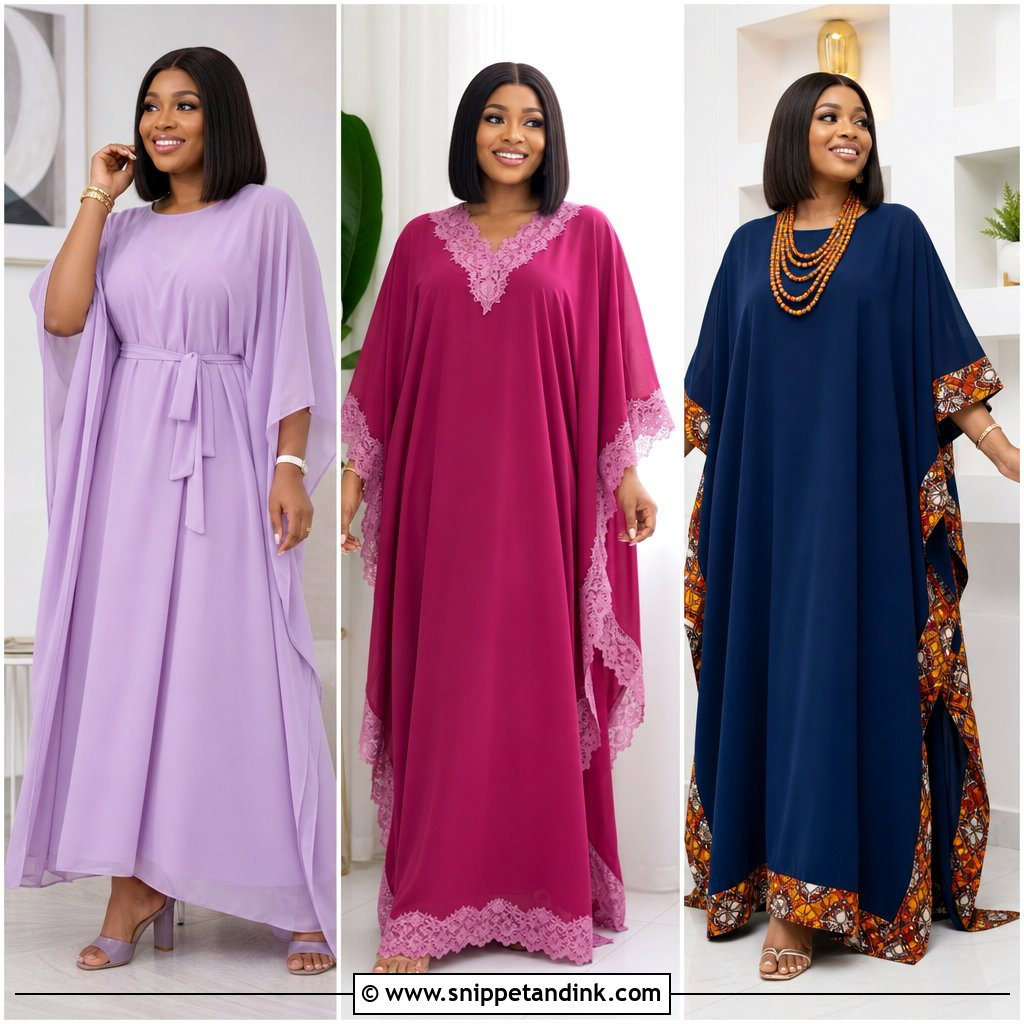
11. Plus Size Ceremony Dress
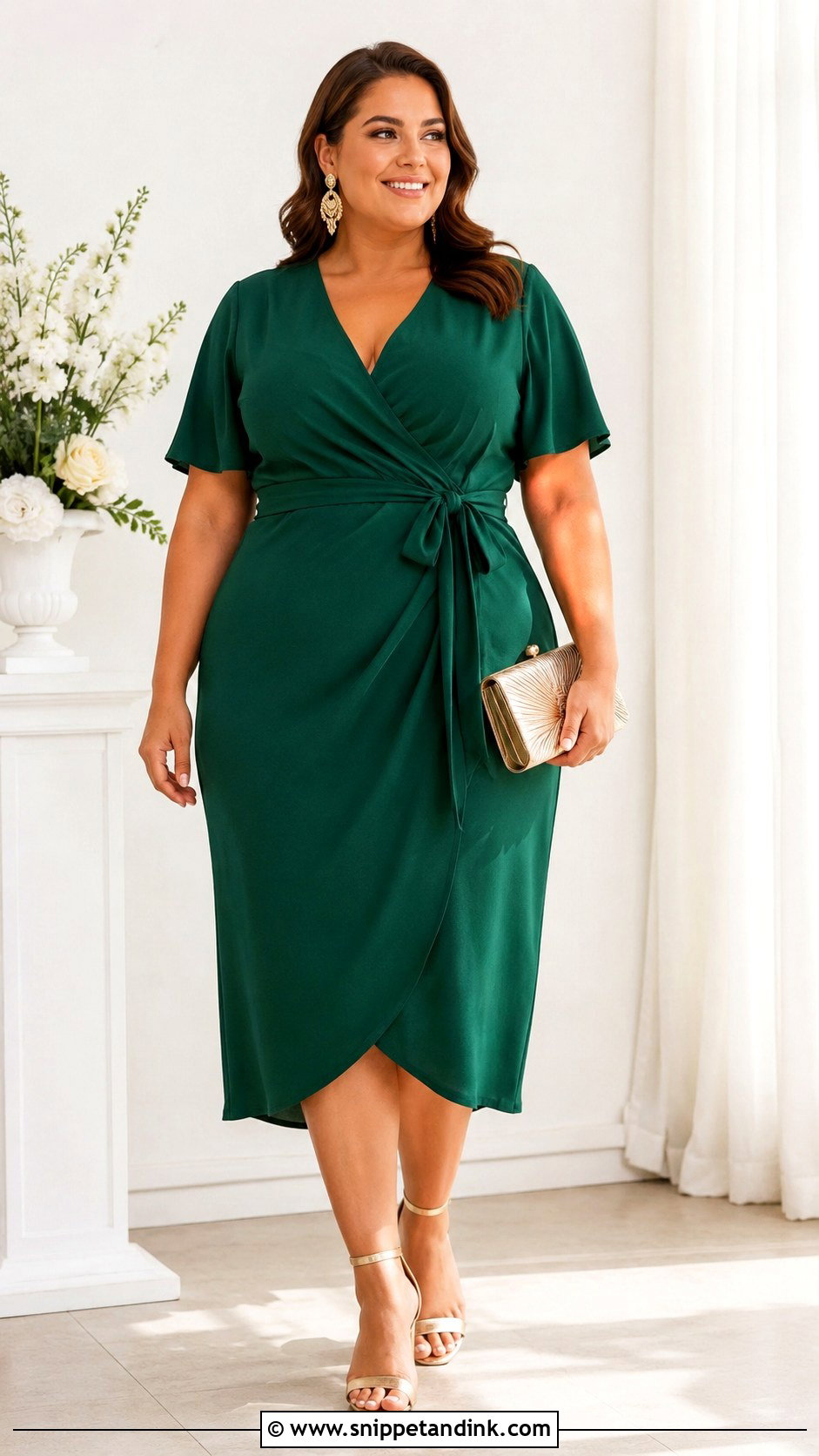
Fabric weight is the first thing I adjust for plus size clients. Thin jersey and lightweight satin cling and show every seam underneath, while heavier crepe, structured chiffon and weighted jersey drape and move. Wrap shapes, empire waists, fit-and-flare midis and soft ruching all work. If you want arm coverage, a sheer or flutter sleeve keeps it light. A jewel-tone midi with block heels and statement earrings is a confident place to start; the goal is proportion, not concealment.
12. Petite Ceremony Dress
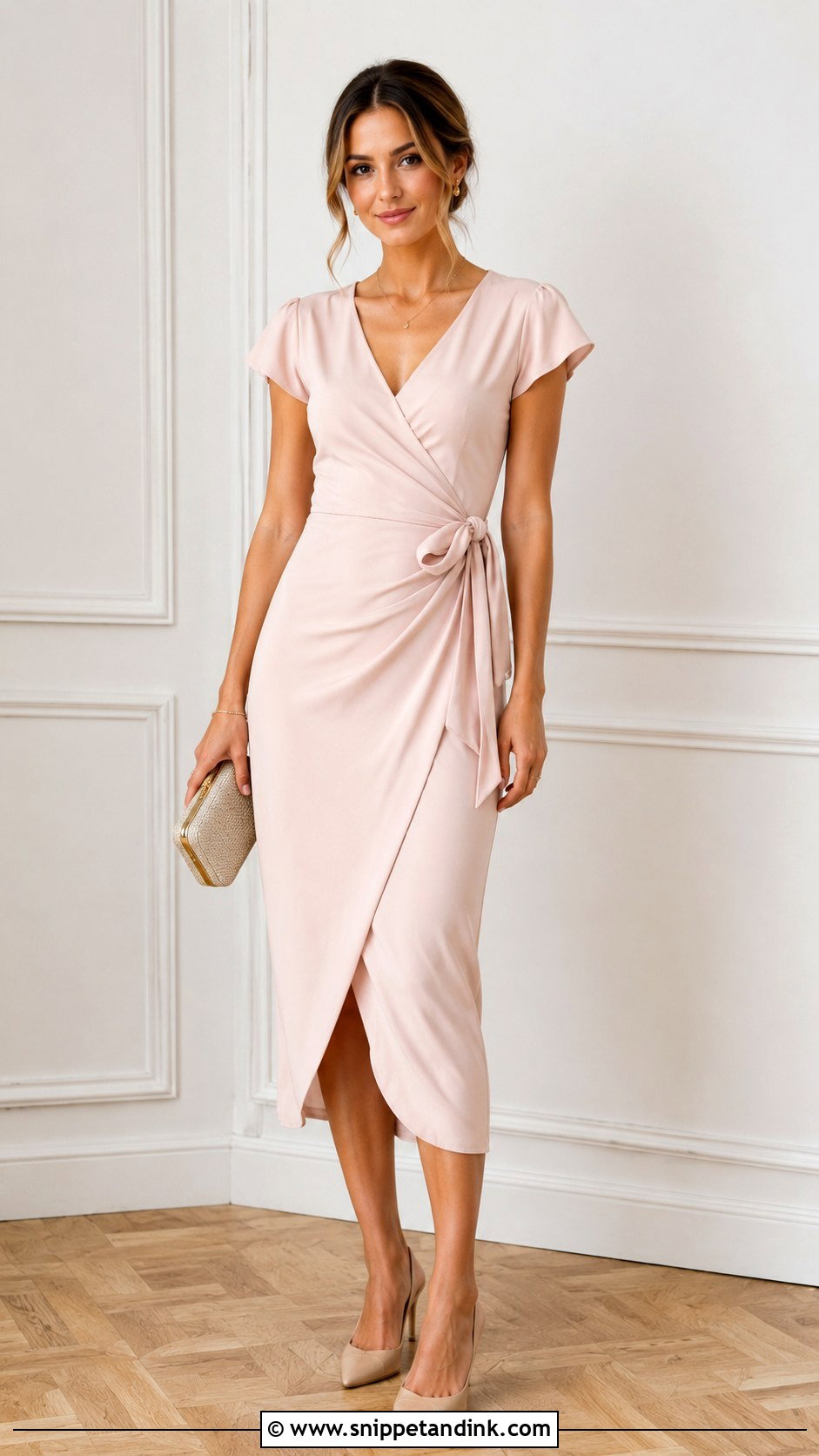
Hem length makes or breaks a petite outfit. A midi that falls just below the knee or at mid-calf lengthens the leg; one that lands at the widest point of the calf cuts it in half. I’d have a midi taken up an inch or two before buying a smaller-scale dress that doesn’t fit at the shoulder. V-necks, slim satin and one-color sheaths help. Nude or pointed shoes extend the line, and small bags keep the scale right.
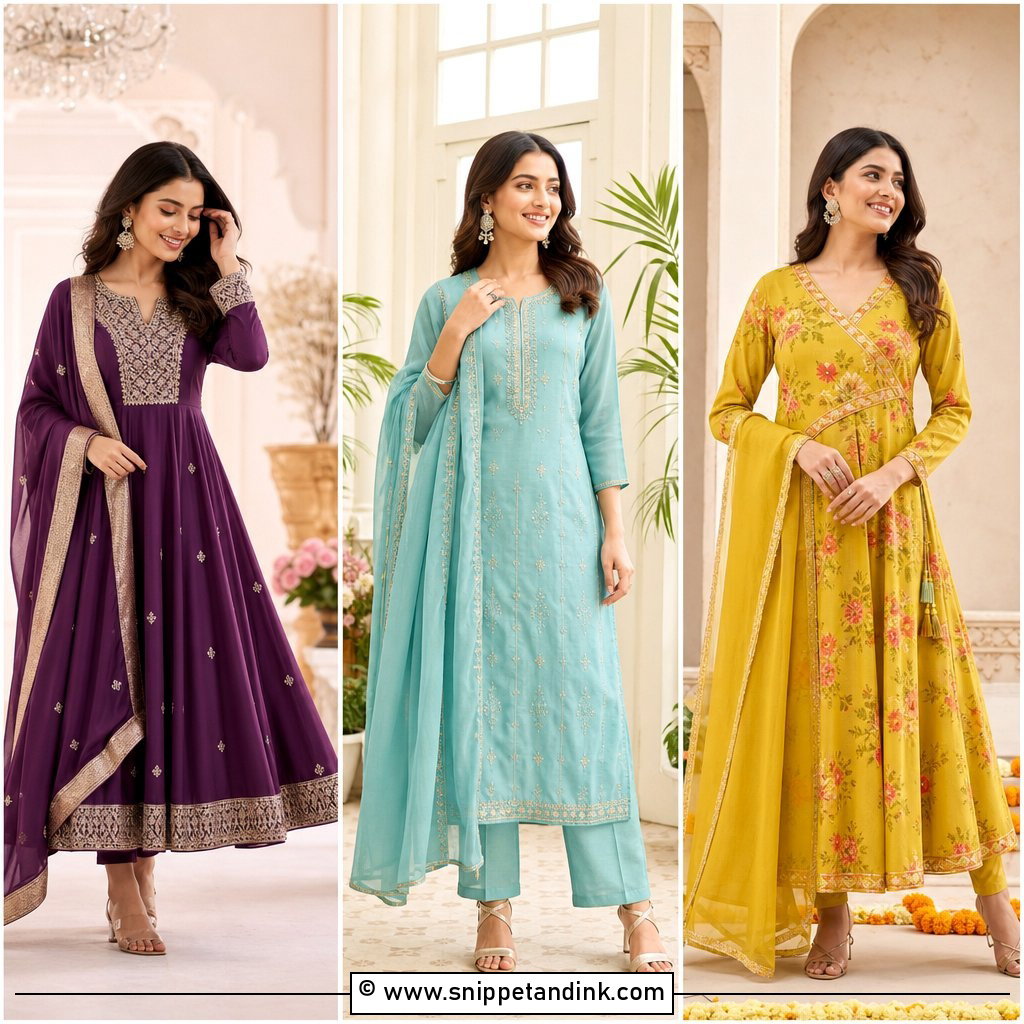
13. Modest Ceremony Dress
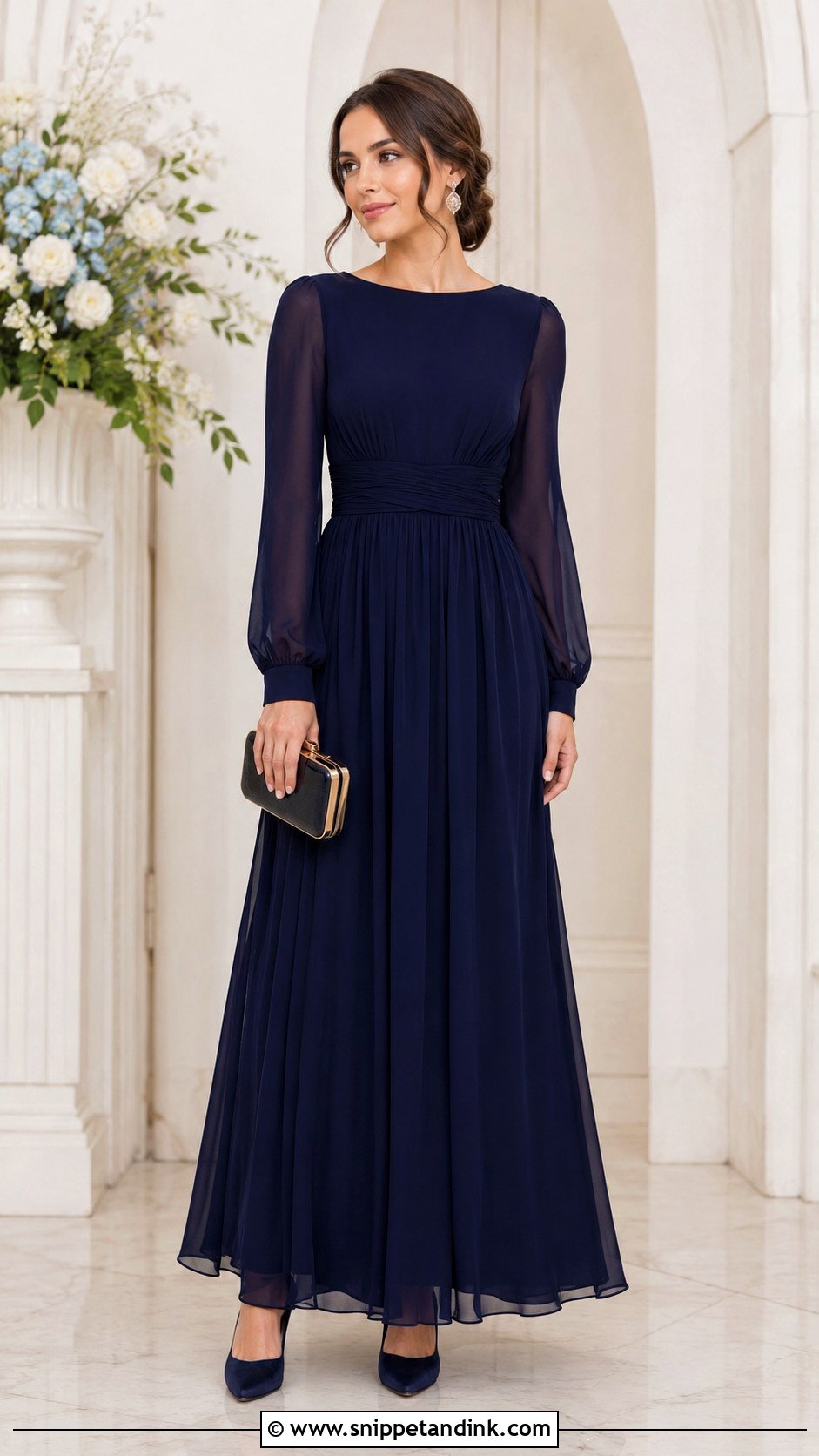
A modest ceremony dress often suits places of worship that ask for covered shoulders and knees, and it doesn’t need to look plain. Long sleeves, high necklines and midi or maxi hems in a chiffon that moves keep it light. Navy, mauve, forest green and dusty rose work across formal and semi-formal events. When the cut is simple, texture carries the interest: pleating, a subtle print or a woven fabric. A longline blazer adds polish.
14. Summer Ceremony Dress
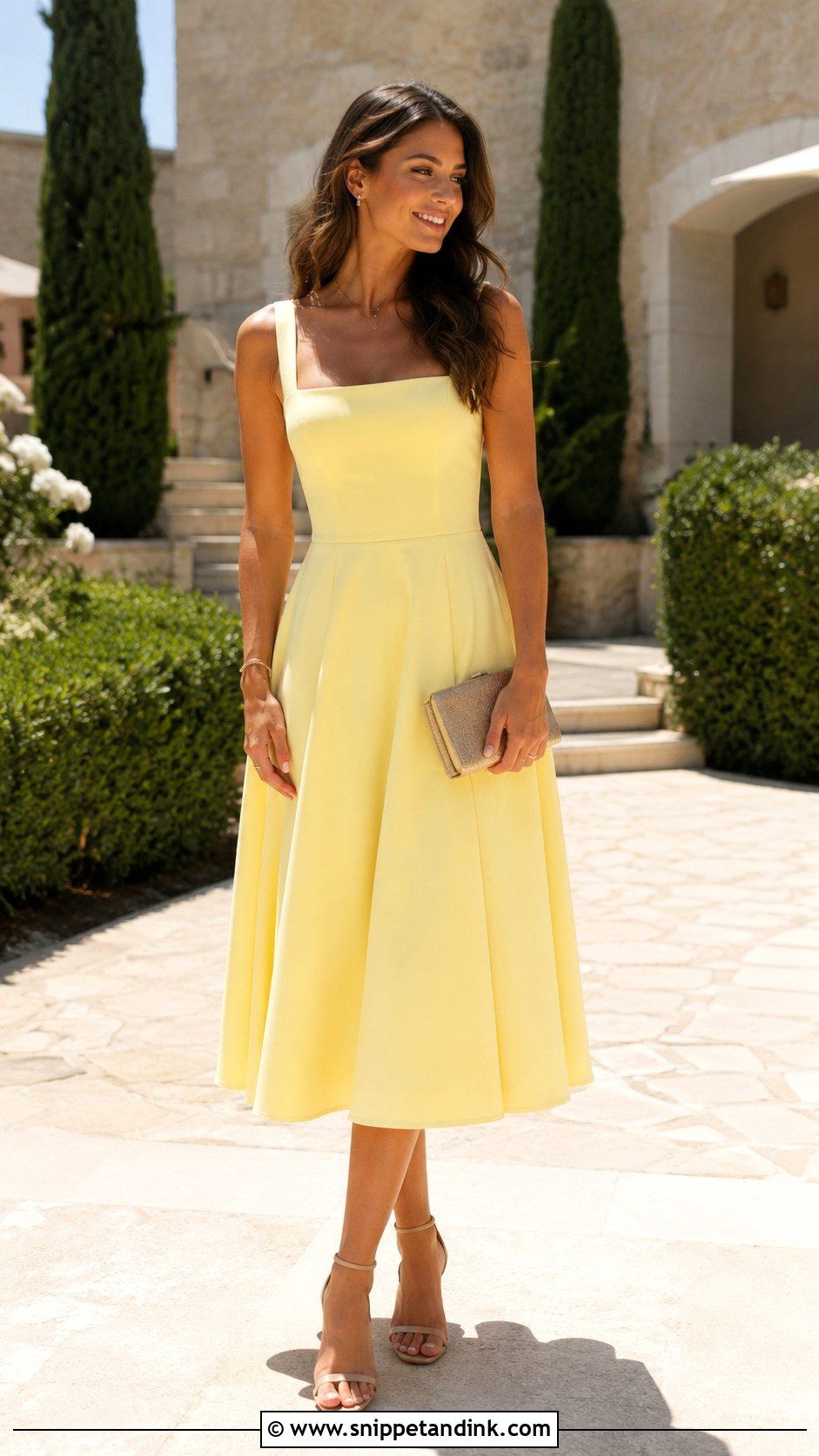
Heat changes everything about a summer outfit. Synthetic satin traps heat and shows sweat marks quickly, while cotton poplin, chiffon and linen blends breathe. Lighter colors like butter yellow, coral and powder blue reflect sun better than dark ones. A sleeveless or short-sleeve midi with strappy block heels is the easiest base. Sunglasses for before and after, off during the ceremony itself.
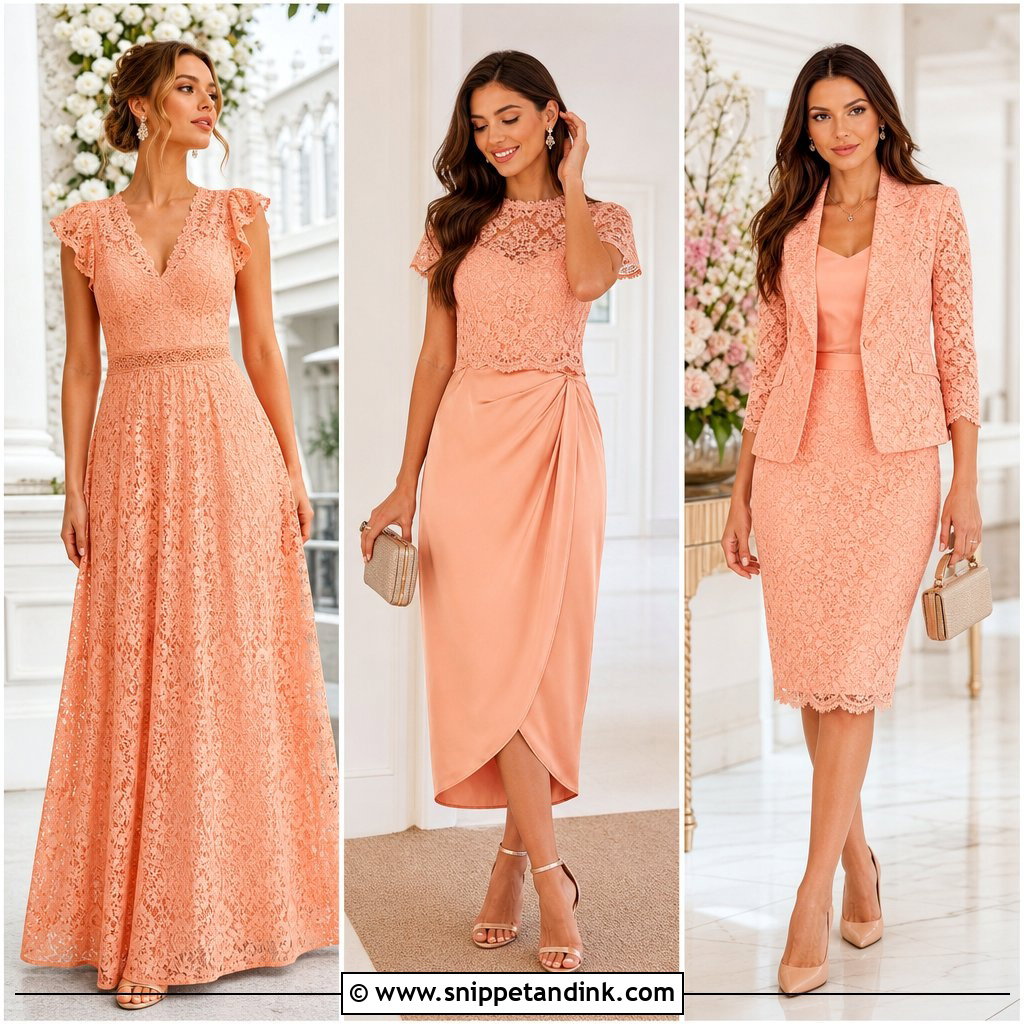
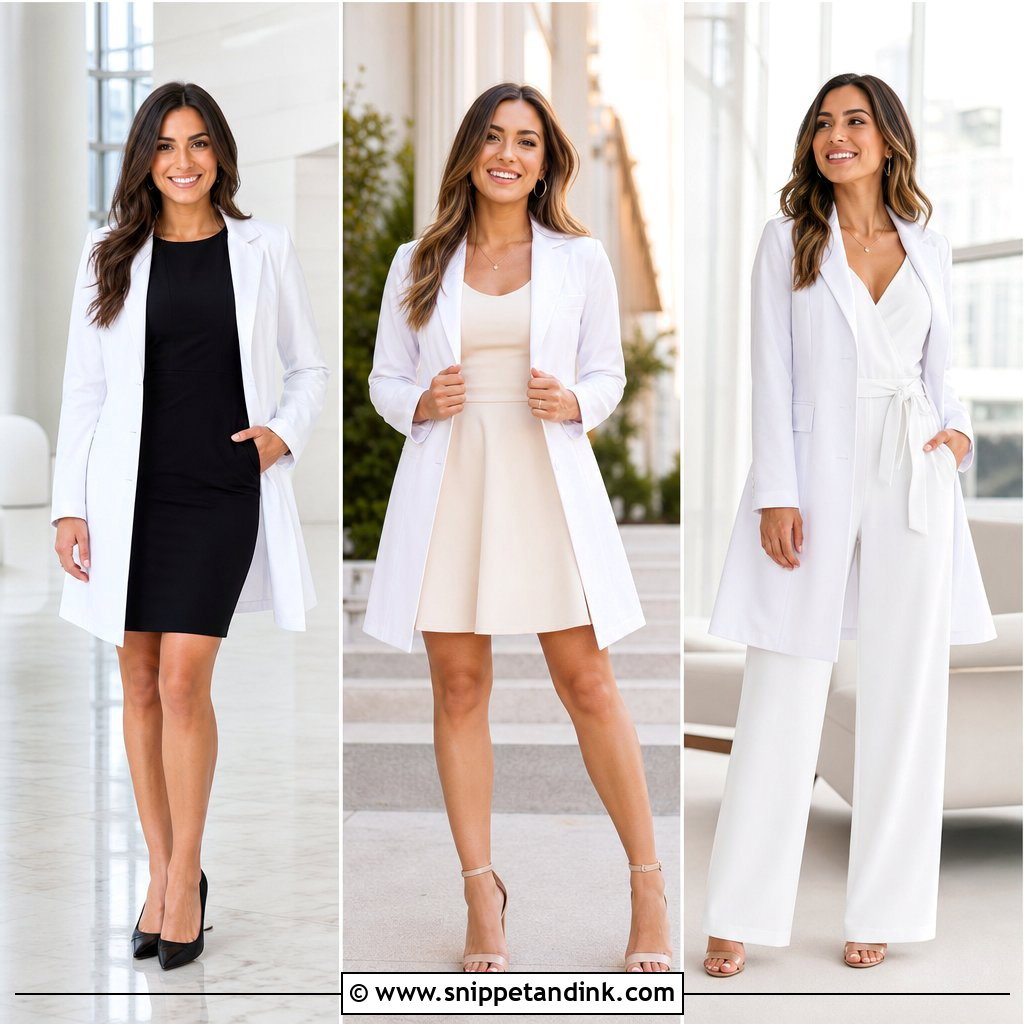
15. Winter Ceremony Dress
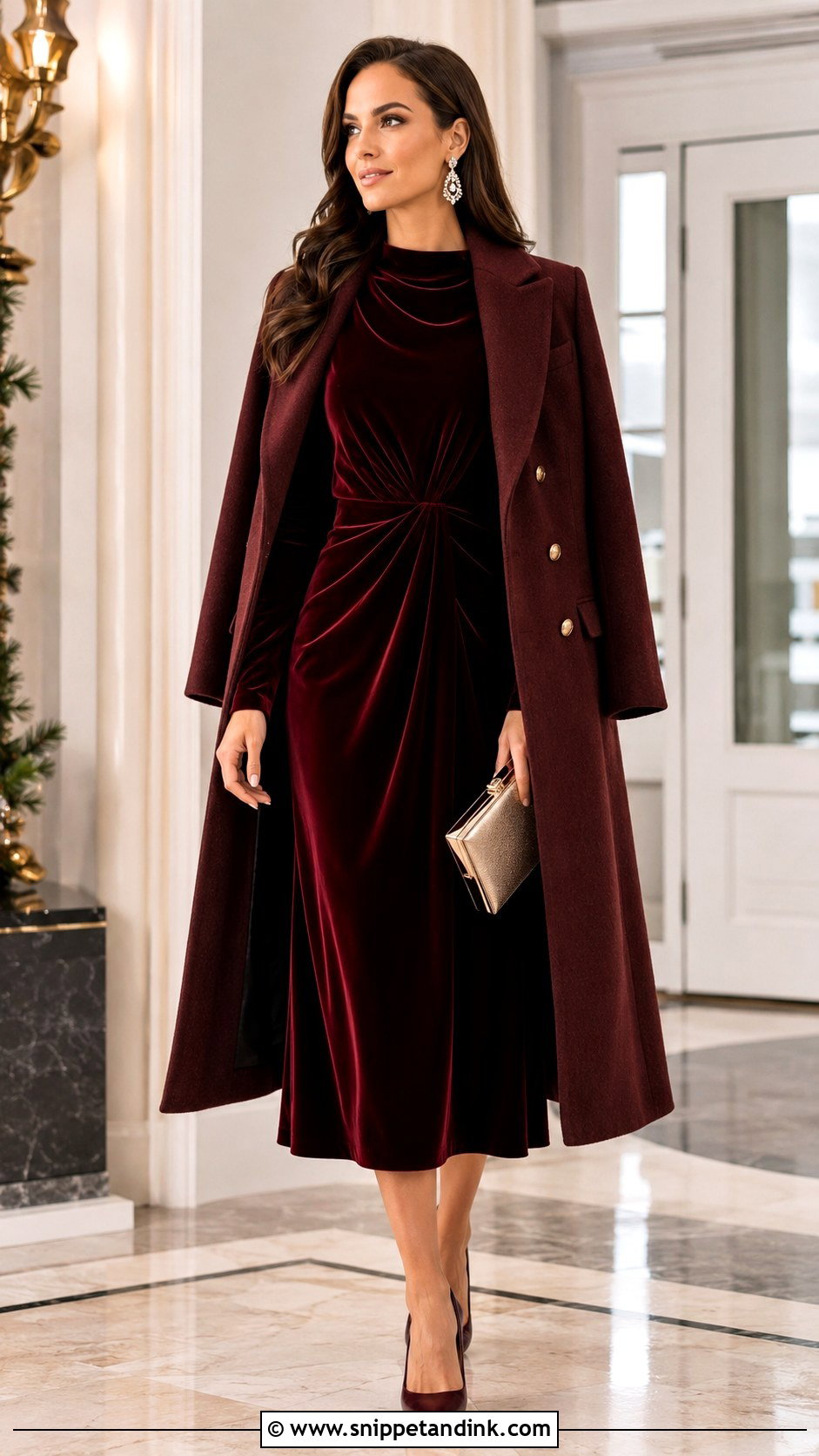
A winter ceremony dress has to look right indoors and get you there through the cold. Velvet, crepe, satin and heavier jersey suit the season, in burgundy, emerald, navy, black or plum. Sheer tights are fine with closed-toe heels. Plan the coat as part of the outfit, since winter arrival photos often show the coat more than the dress. A wool coat, faux fur wrap or cape all work; choose one sparkle point and match your metals.
16. Fall Ceremony Dress
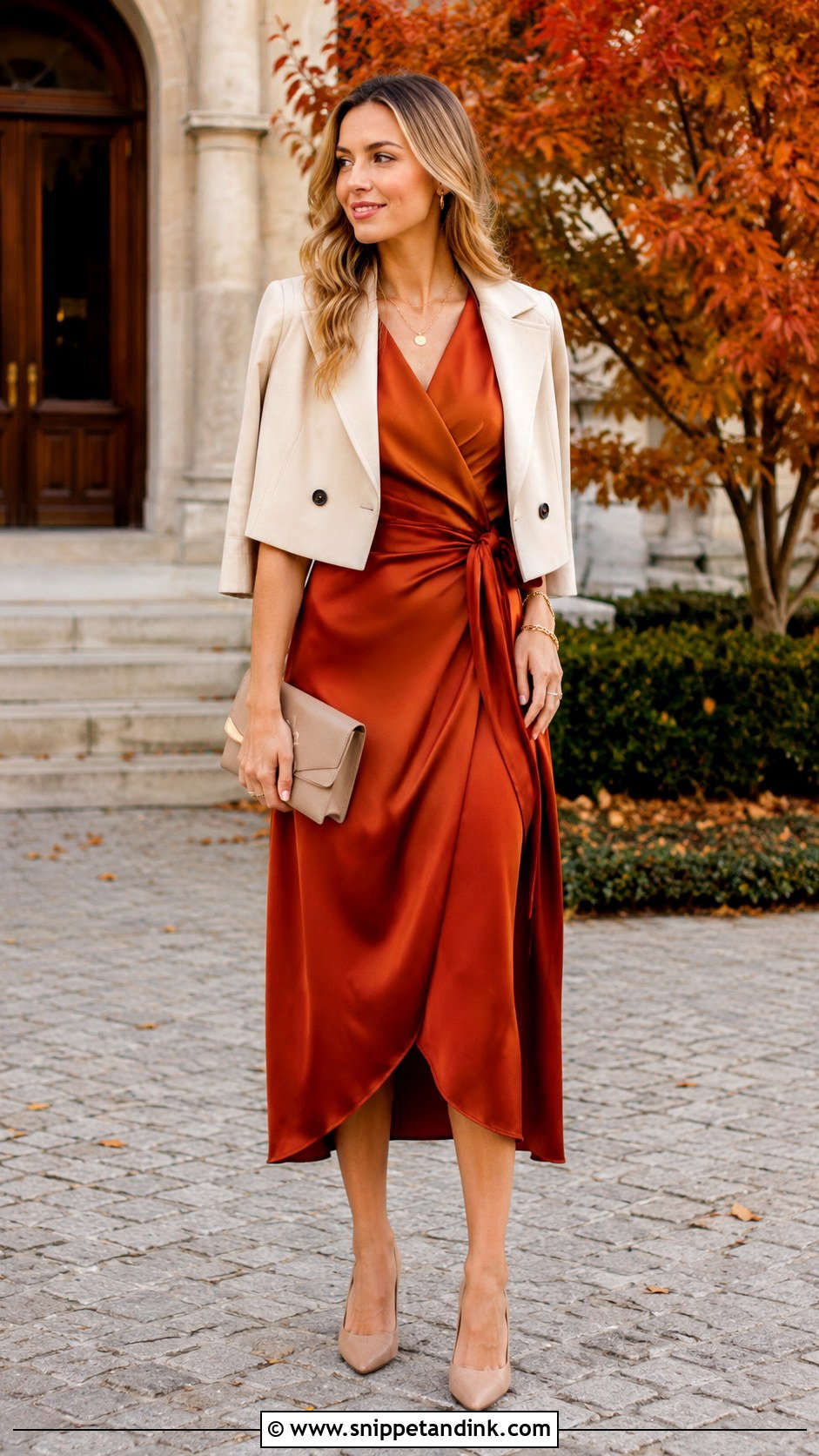
Autumn suits richer textures. Rust, olive, chocolate, burgundy, copper and teal look warmer in low seasonal light, and jewel-toned shades photograph well against turning leaves. A satin wrap midi or pleated long-sleeve dress fits the season. Suede shoes look right but mark on wet grass, so I’d keep them for indoor venues. Gold jewelry and a structured clutch finish it; bring a cropped jacket for outdoor parts.
17. Spring Ceremony Dress
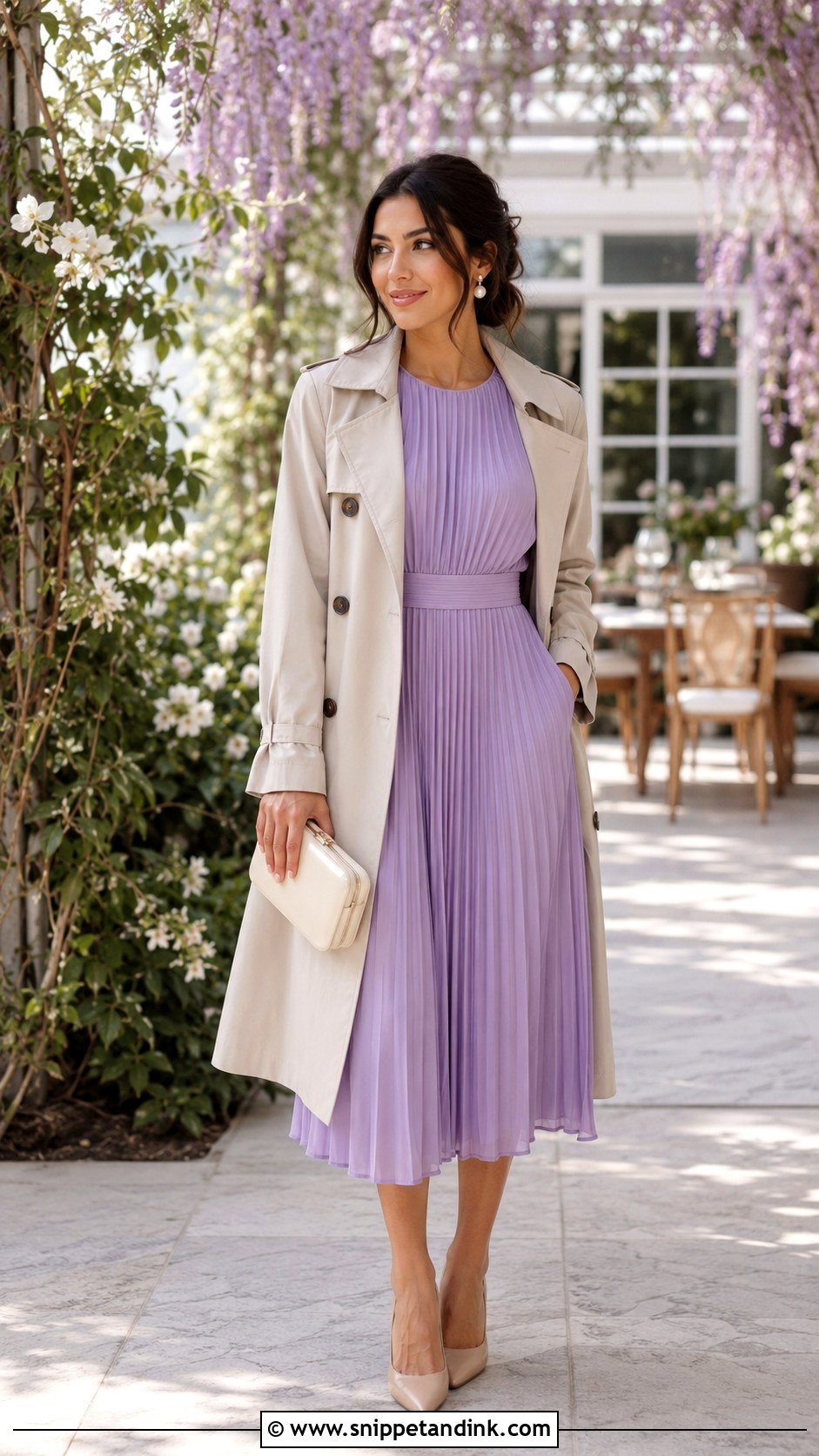
Spring weather swings, and I plan spring outfits around that. A lavender, mint, blush or powder blue midi with nude heels and pearl earrings is the base; a light trench or soft blazer handles a cold morning. Flutter sleeves and wrap waists are easy to wear. To keep pastels from turning sugary, choose modern accessories, such as a metallic clutch instead of a beaded one.
18. Formal Ceremony Dress
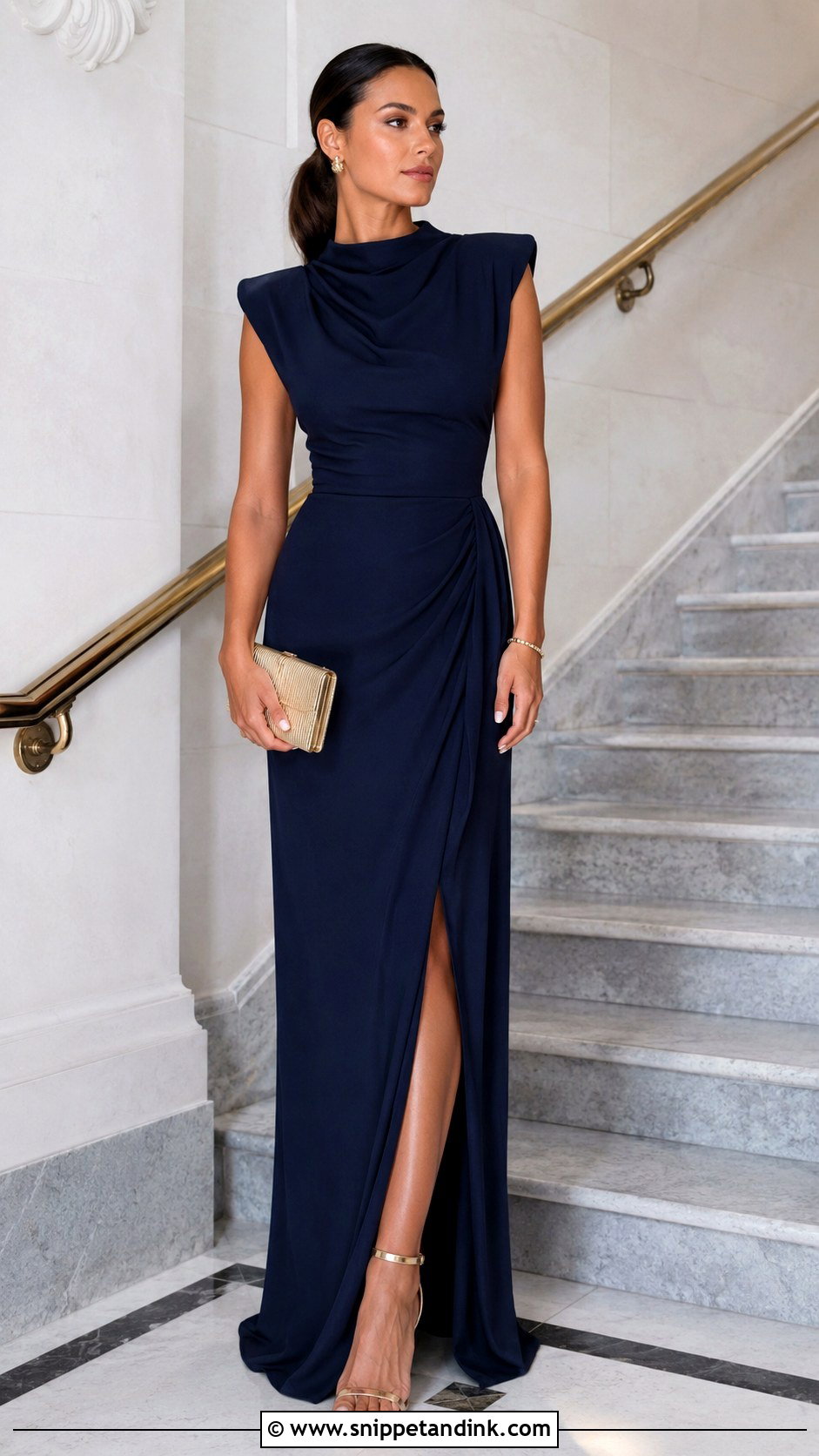
Formal without being black tie leaves room for a long crepe gown, a satin column, or a midi with a structured bodice, depending on how the invitation reads. Navy, black, emerald, wine, silver and deep rose all fit. I’d skip casual jersey and everyday bags; they undercut the effort elsewhere. A sleek updo or smooth waves keep the look finished. Do a sitting test, since formal gowns with fitted skirts can make getting in and out of pews awkward.
19. Semi Formal Ceremony Dress
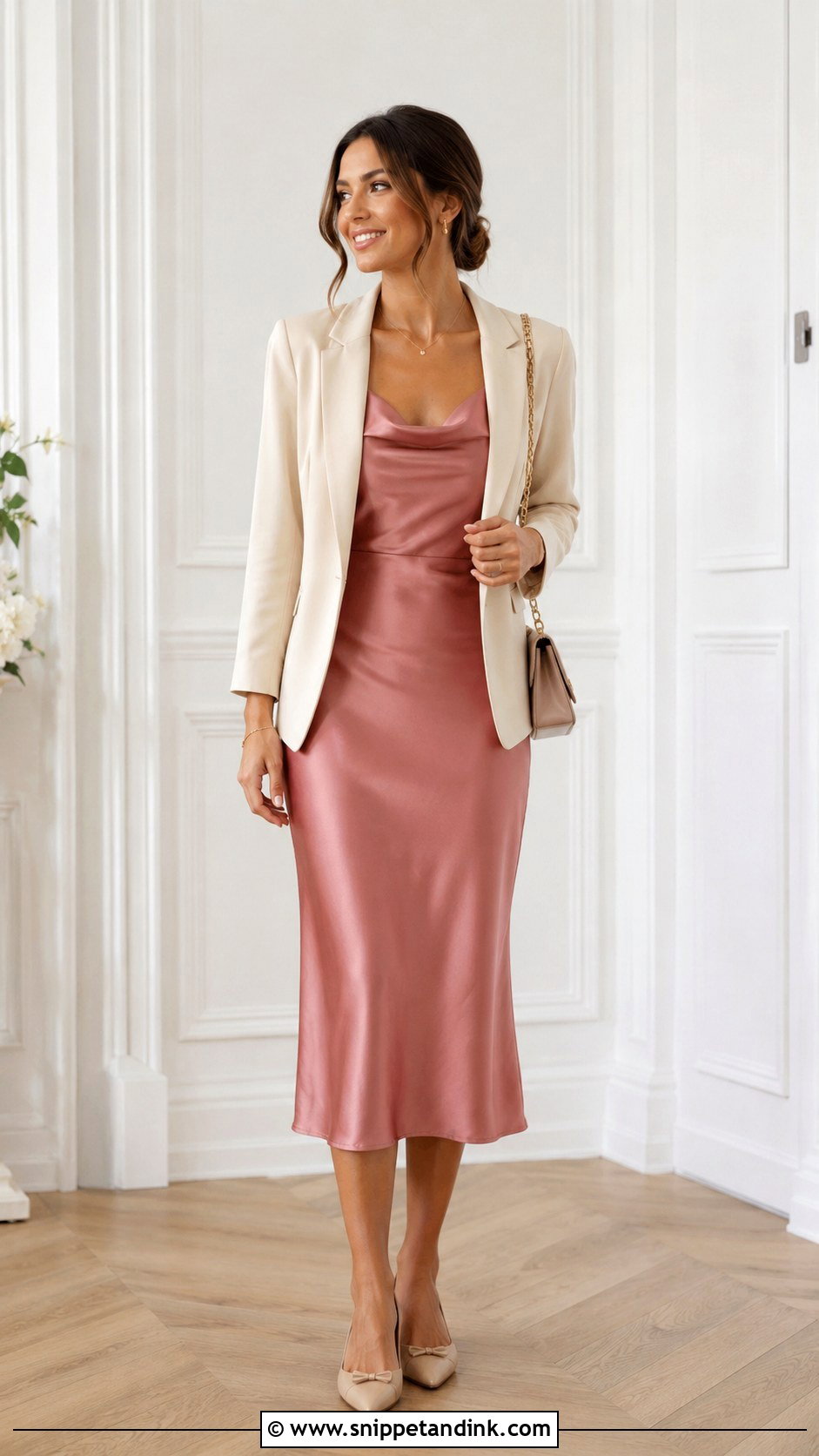
Semi-formal is the dress code people overthink. A midi is almost always right: satin slip, floral wrap, pleated midi or fitted crepe. Low heels or pointed flats suit events with lots of standing. The thing to avoid is anything too short, too casual or covered in sequins for a daytime room. Add a light layer and a small shoulder bag and you’re done.
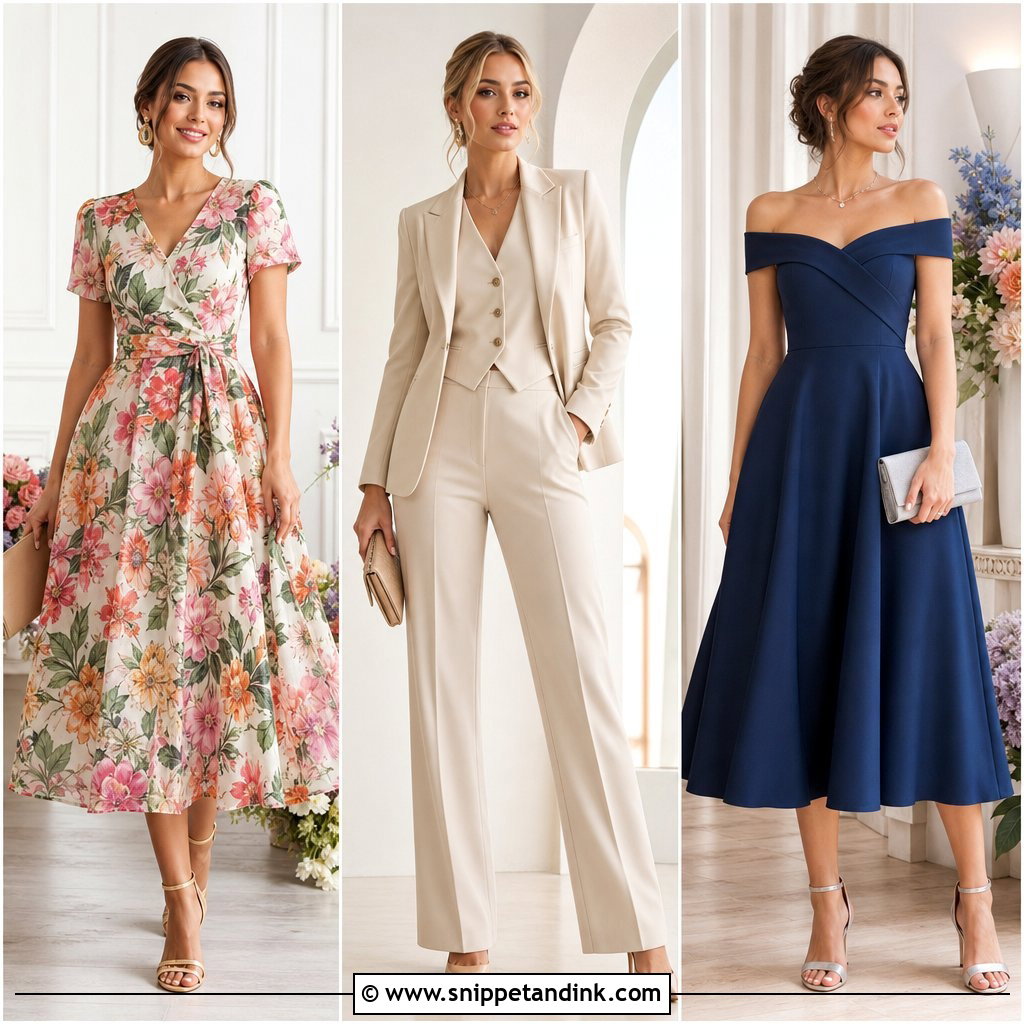
20. Cocktail Ceremony Dress
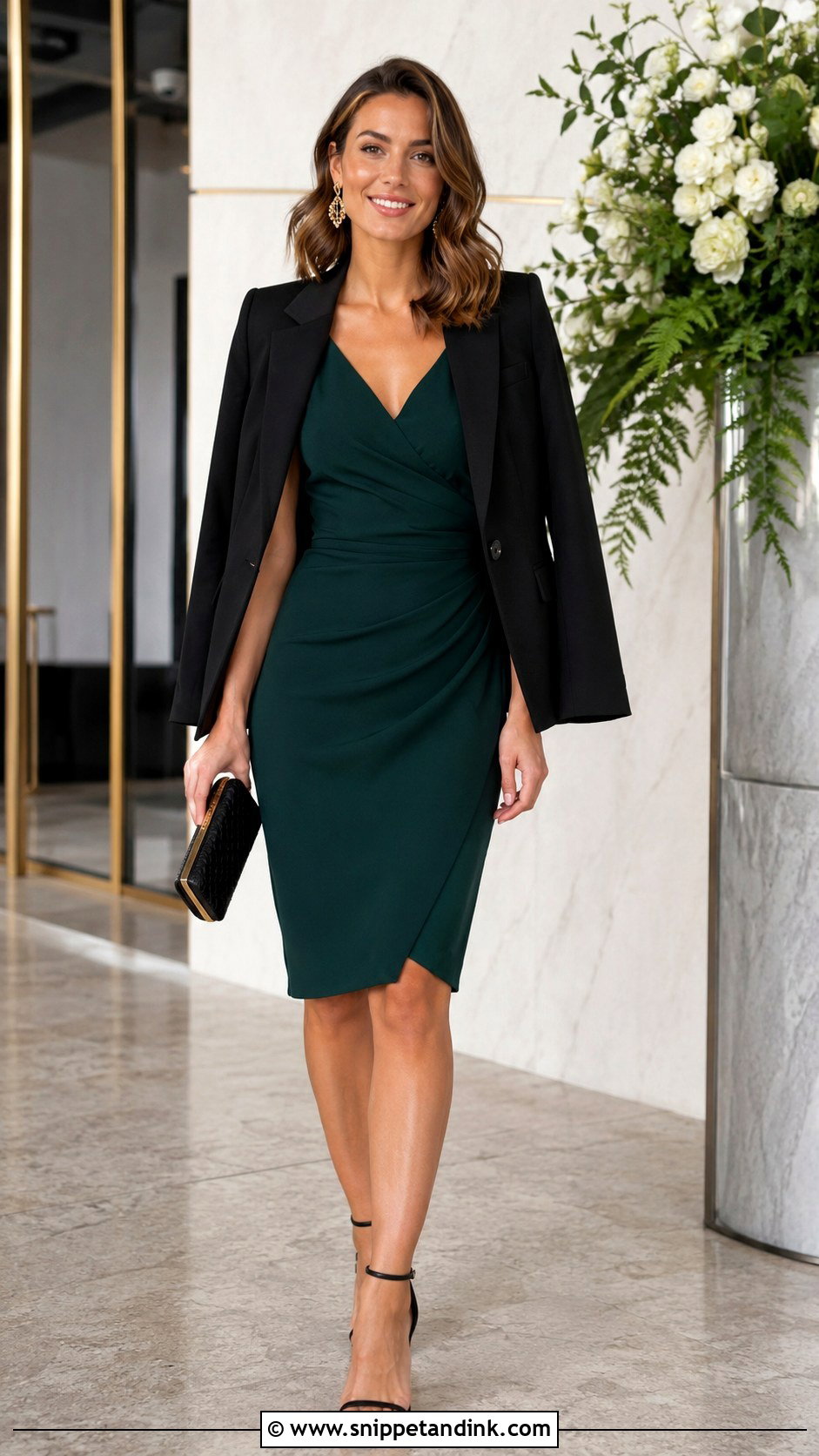
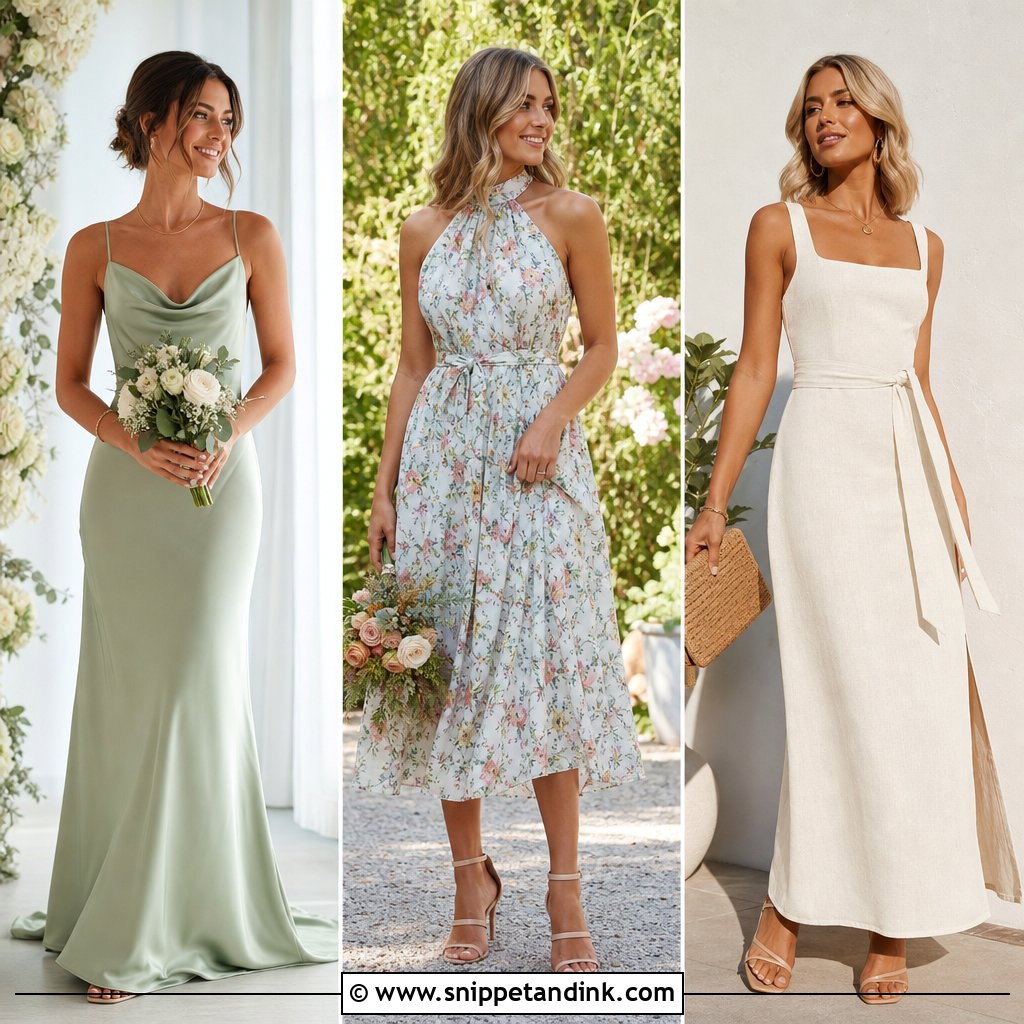
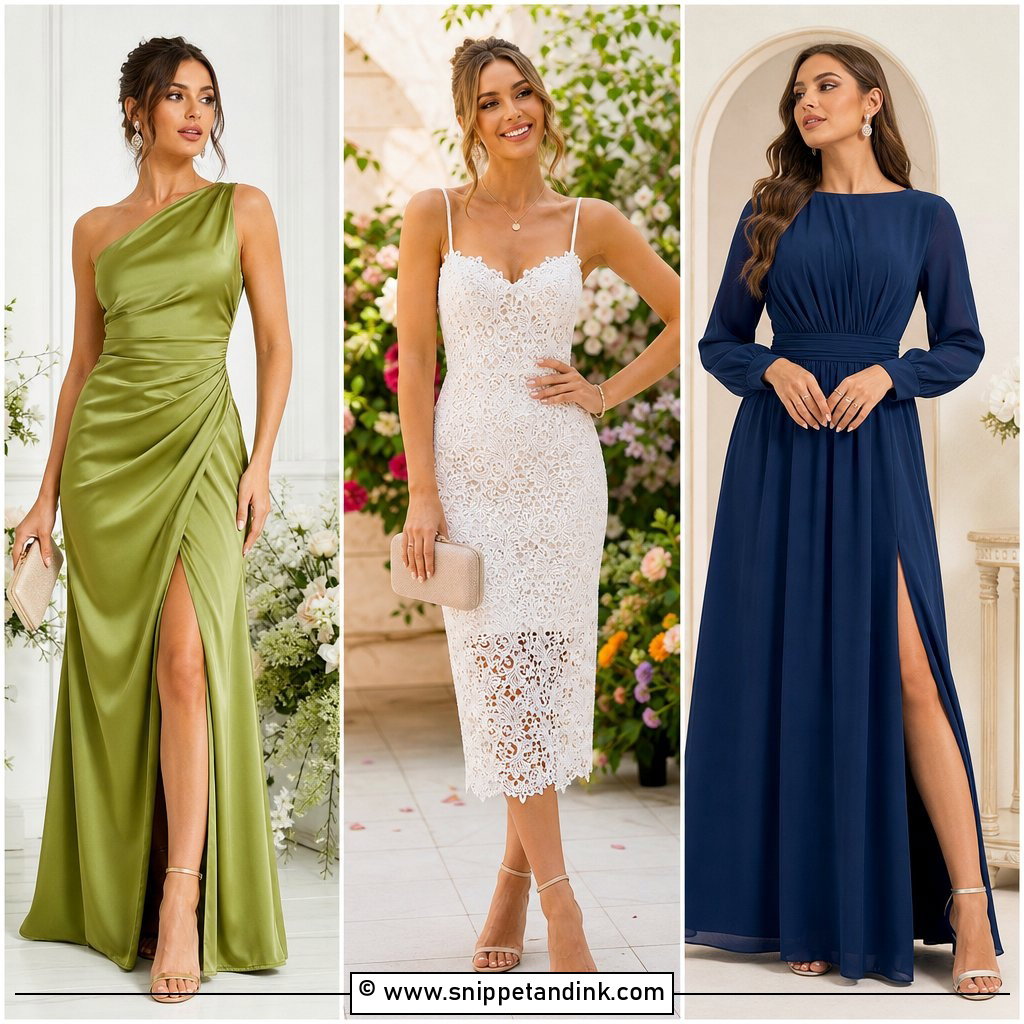
A cocktail ceremony dress sits at knee or midi length in satin, crepe, lace or jacquard. Jewel tones, black, navy, magenta and deep green feel right for evening. My rule is to balance: if the dress has shine or texture, keep the shoes plain; if it’s minimal, let earrings or a clutch add interest. A tailored blazer makes it more formal for the ceremony and comes off for the party.
21. Black Ceremony Dress
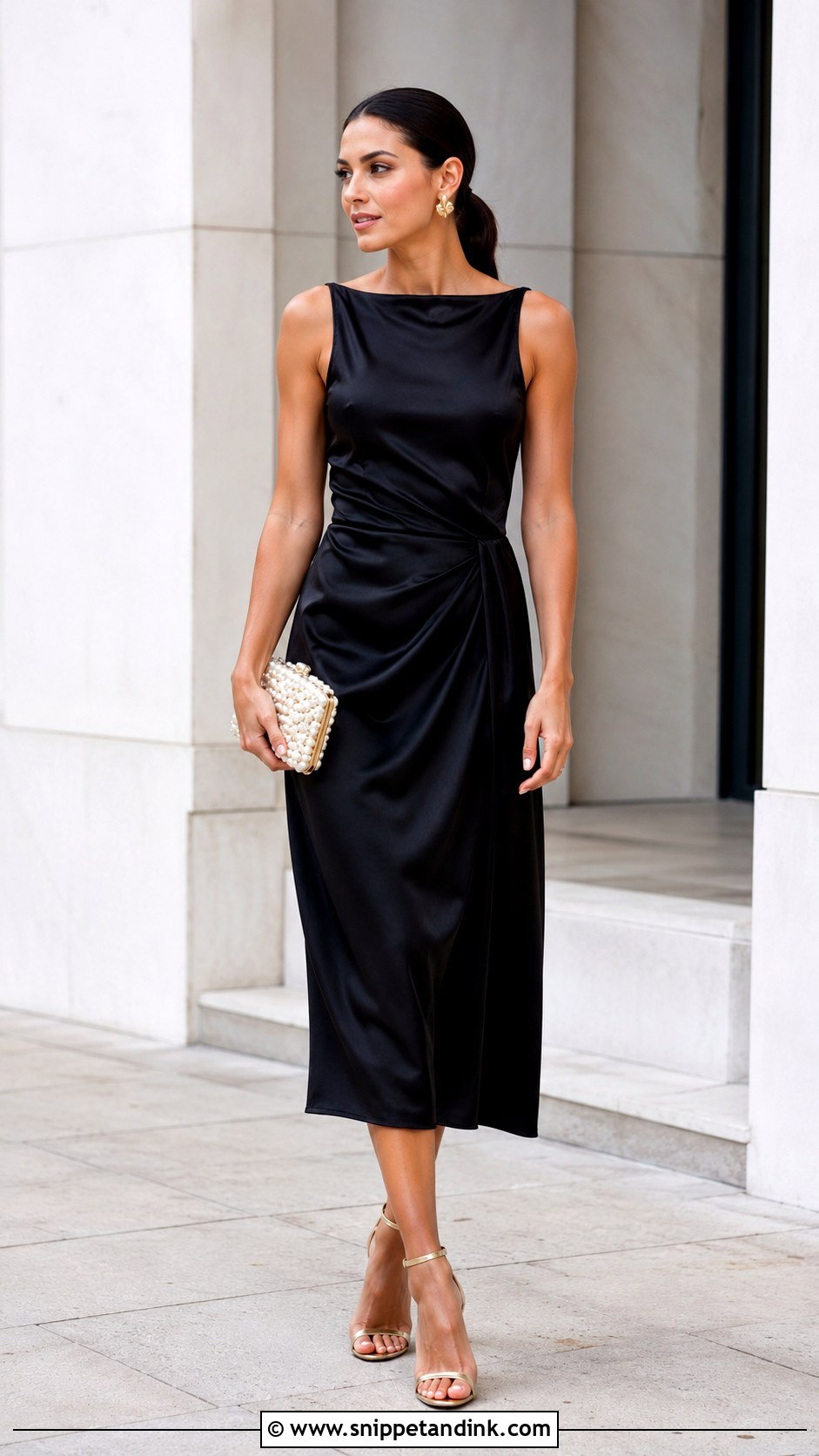
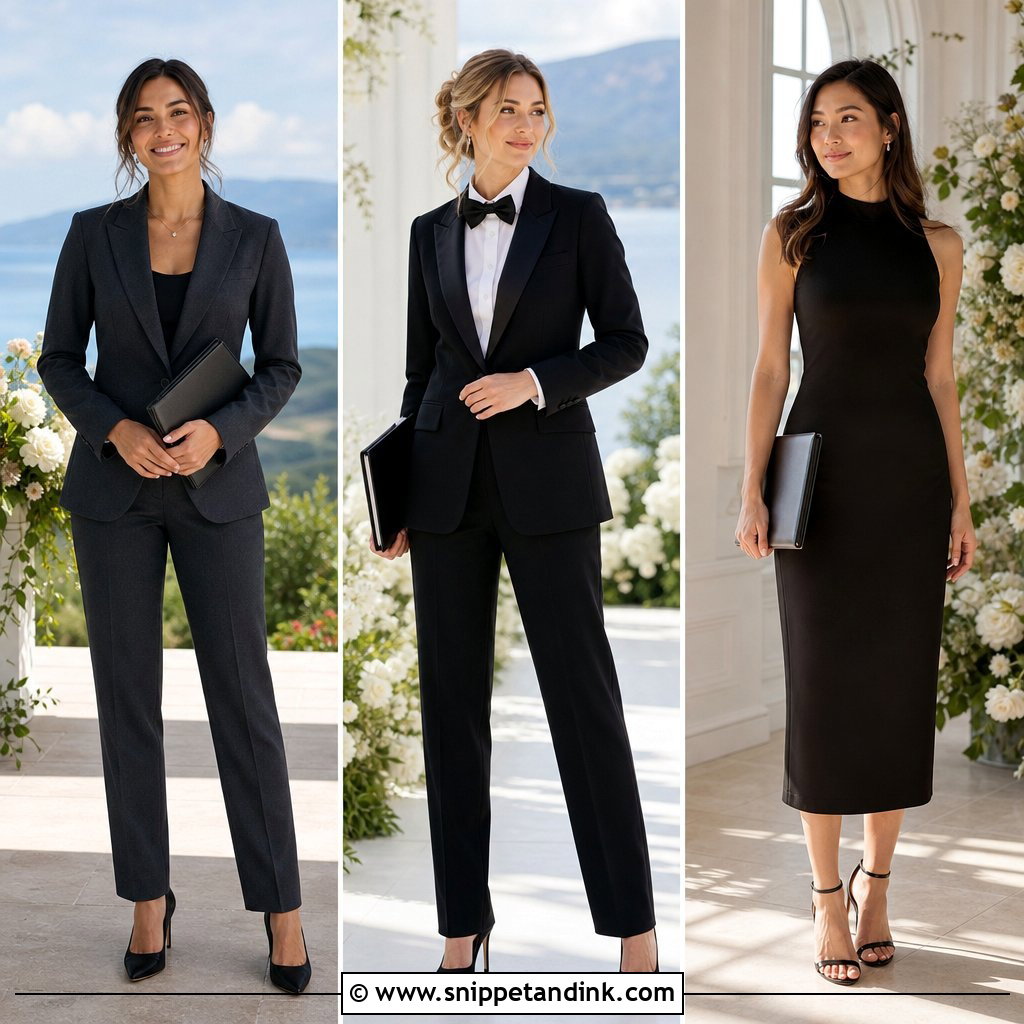
Black at a ceremony is widely accepted for modern weddings, but I still ask clients to check the couple’s dress code and any cultural or family expectations, since in some traditions it reads as mourning. Midi or maxi length keeps it formal. Satin slip, crepe wrap or long-sleeve fitted midi all suit. Metallic heels and a pearl clutch soften the color. Lighter accessories for daytime, sleeker ones at night.
22. White Ceremony Dress
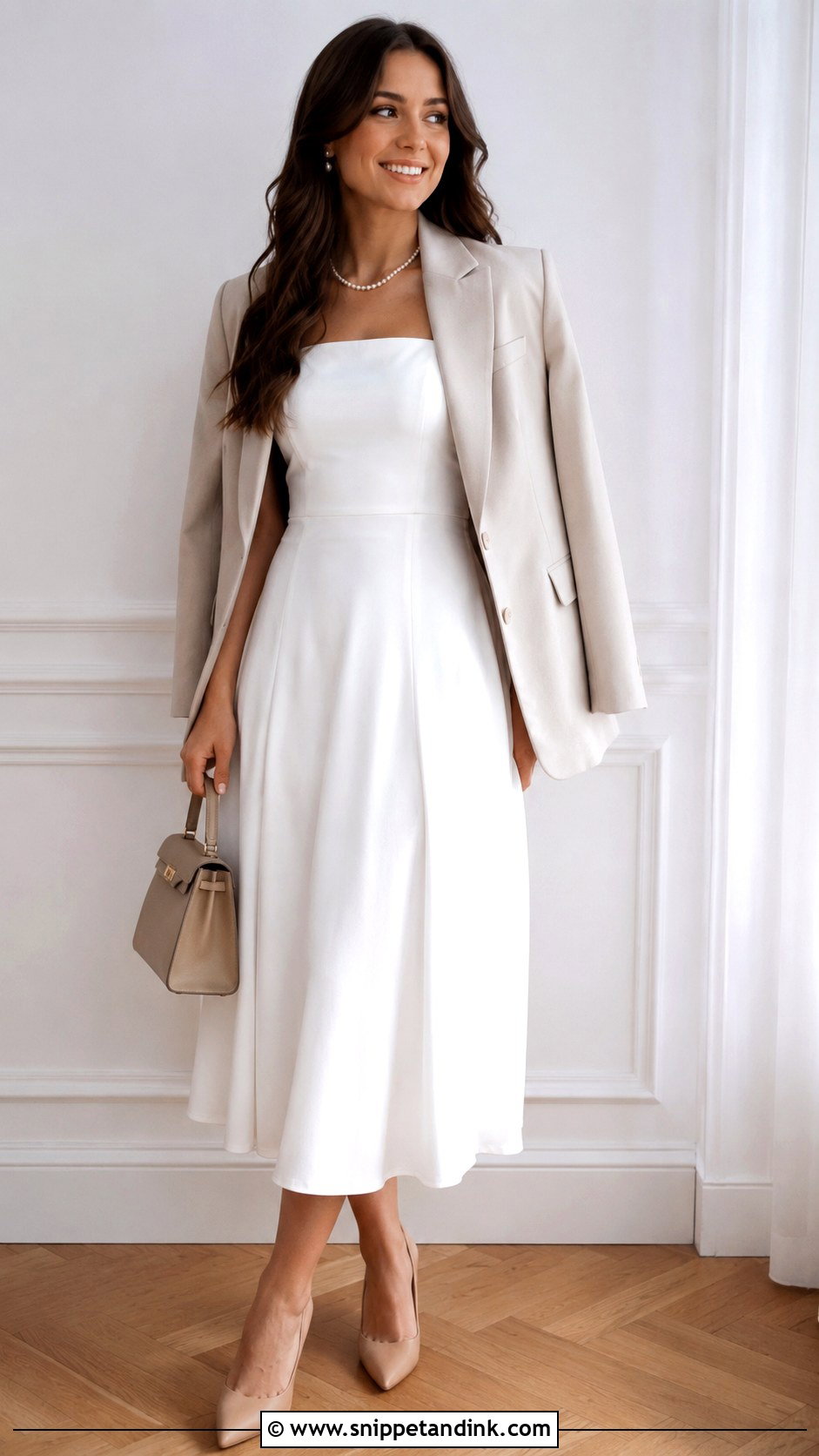
White belongs to graduations, bridal events and your own civil ceremony. As a wedding guest, avoid it unless the couple has asked for it. A crisp midi, eyelet, sheath or soft A-line covers most occasions. White fabrics can be sheer in daylight, so I check every white dress by a window before a client buys it; a slip or lining solves most of it. Pearl jewelry and nude heels keep it clean.
23. Navy Ceremony Dress
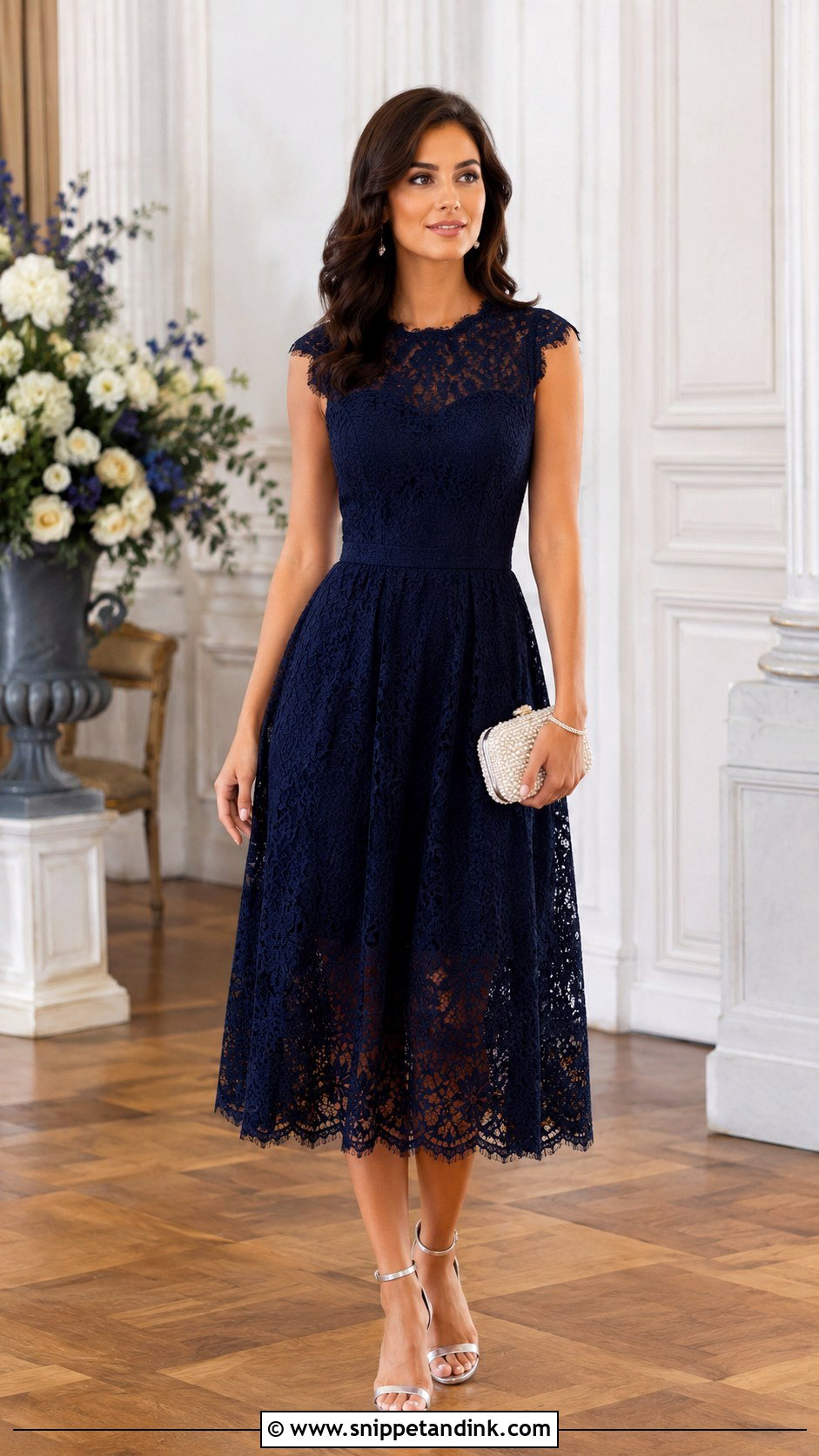
Navy is my most-recommended color for mothers and guests who want something classic that isn’t black. It works morning to night and in every season. A navy lace midi, satin wrap or crepe fit-and-flare suits most ceremonies. Silver, nude or soft gold shoes all go. Navy also layers well with blush, champagne or icy blue, and it’s easy to wear again.
24. Sage Green Ceremony Dress
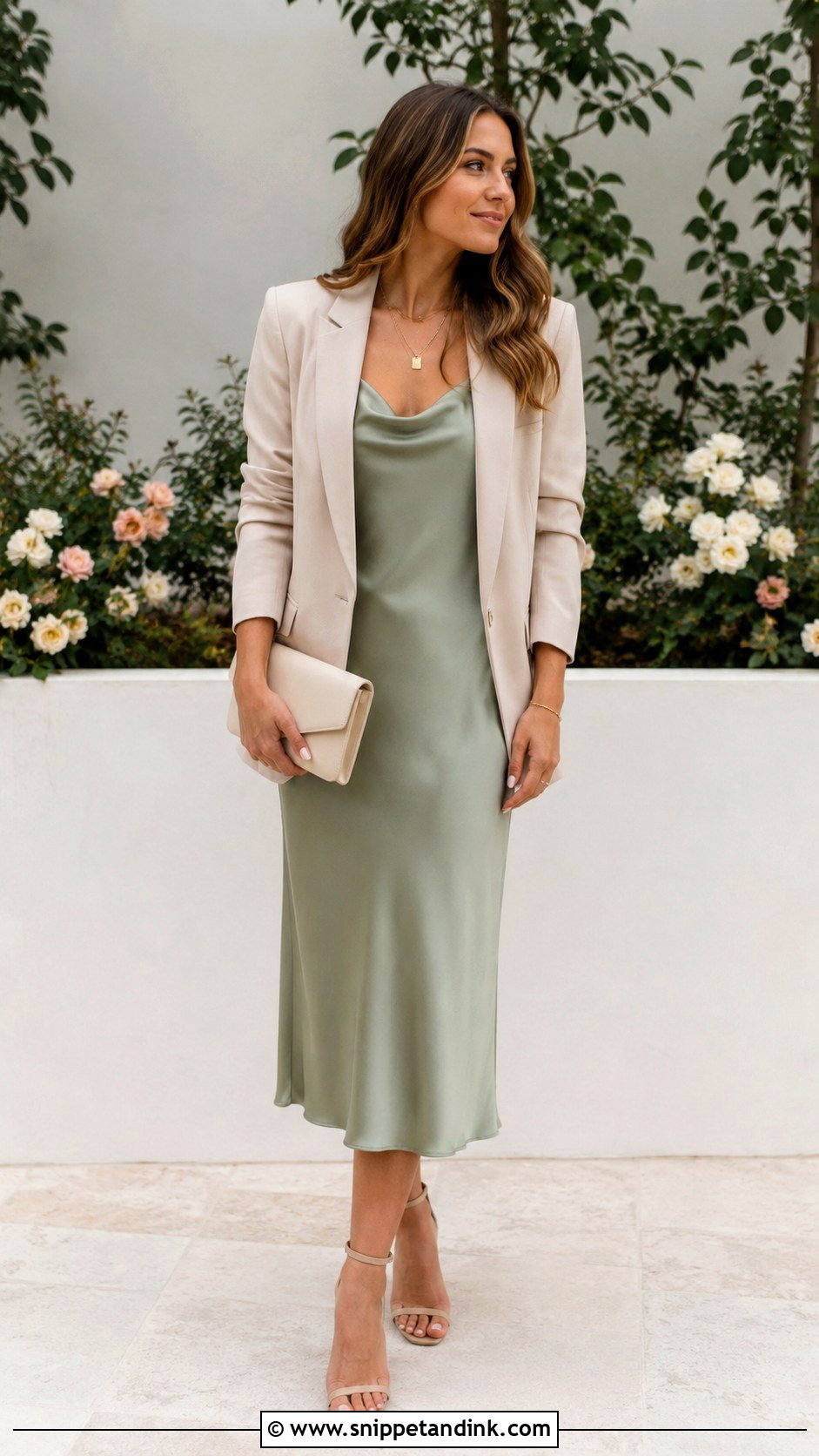
Sage looks like color without shouting, and it suits most skin tones, which is why it keeps coming up at garden ceremonies. A satin slip, chiffon midi or pleated wrap in soft sage pairs with nude block heels, gold jewelry and a cream clutch. Check the green against the wedding palette first; sage is a common bridesmaid shade, and a near-match on a guest can confuse group photos. A beige blazer handles a cool morning.
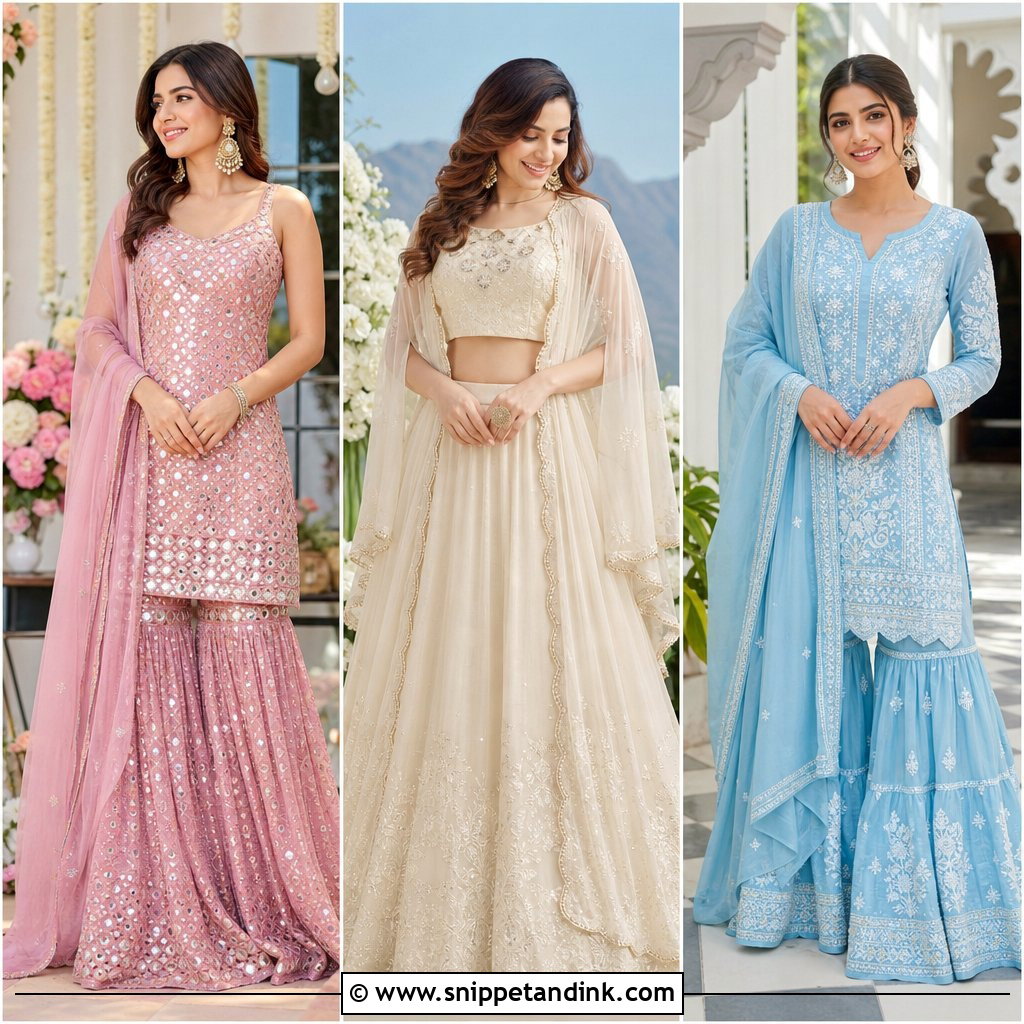
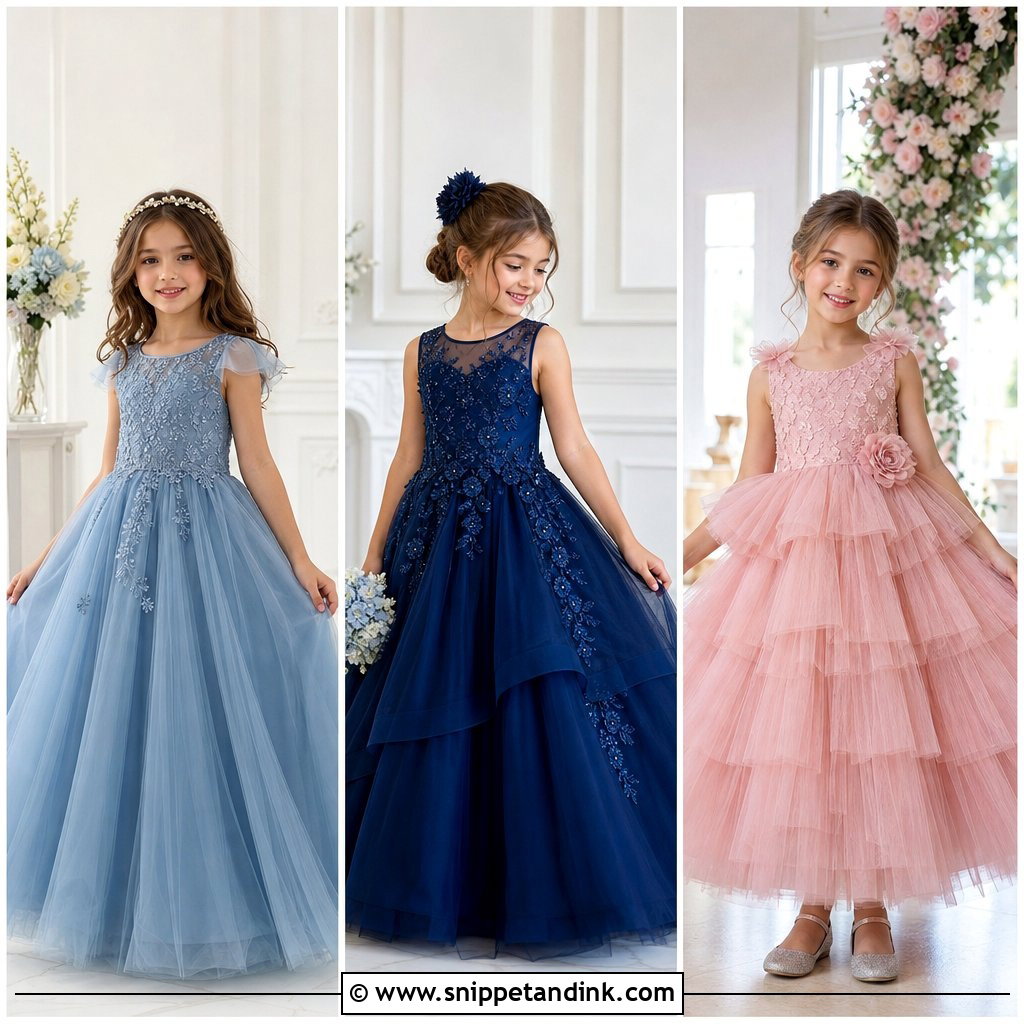
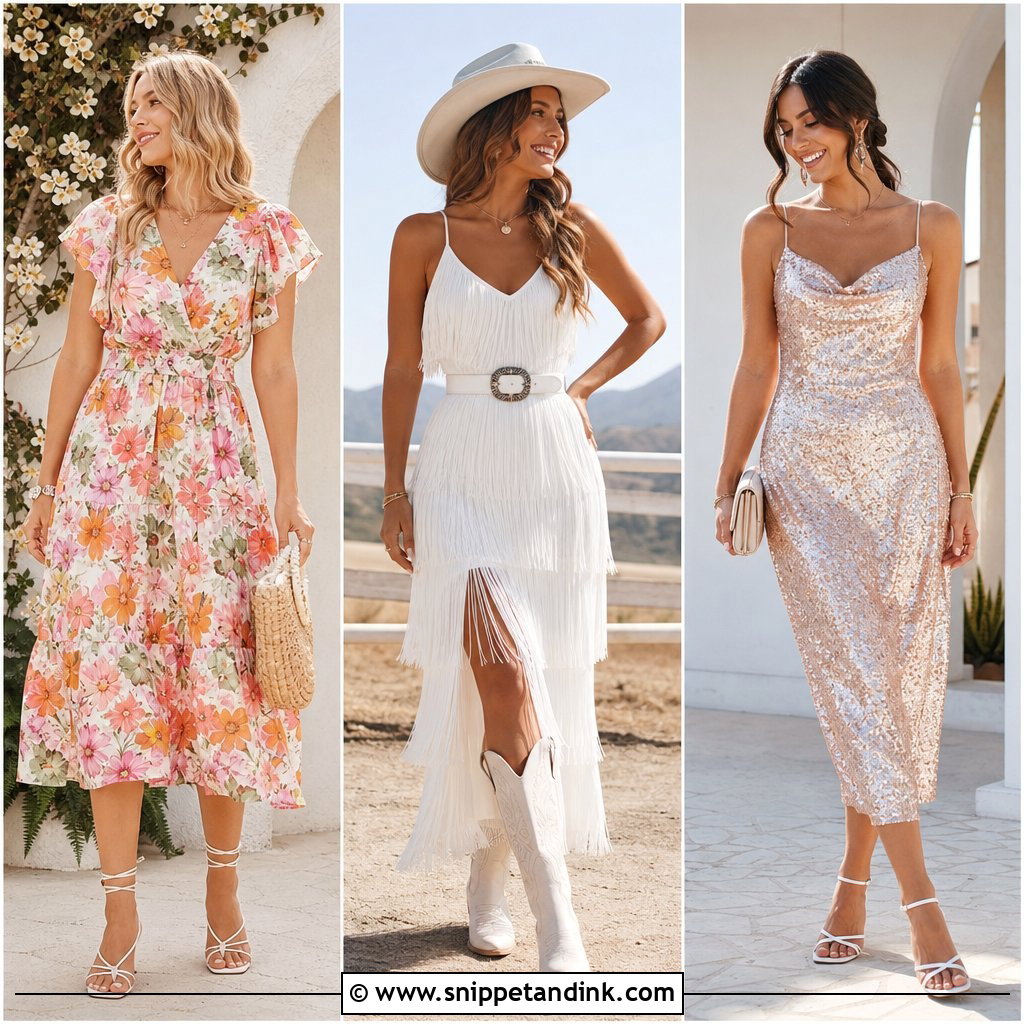
25. Butter Yellow Ceremony Dress
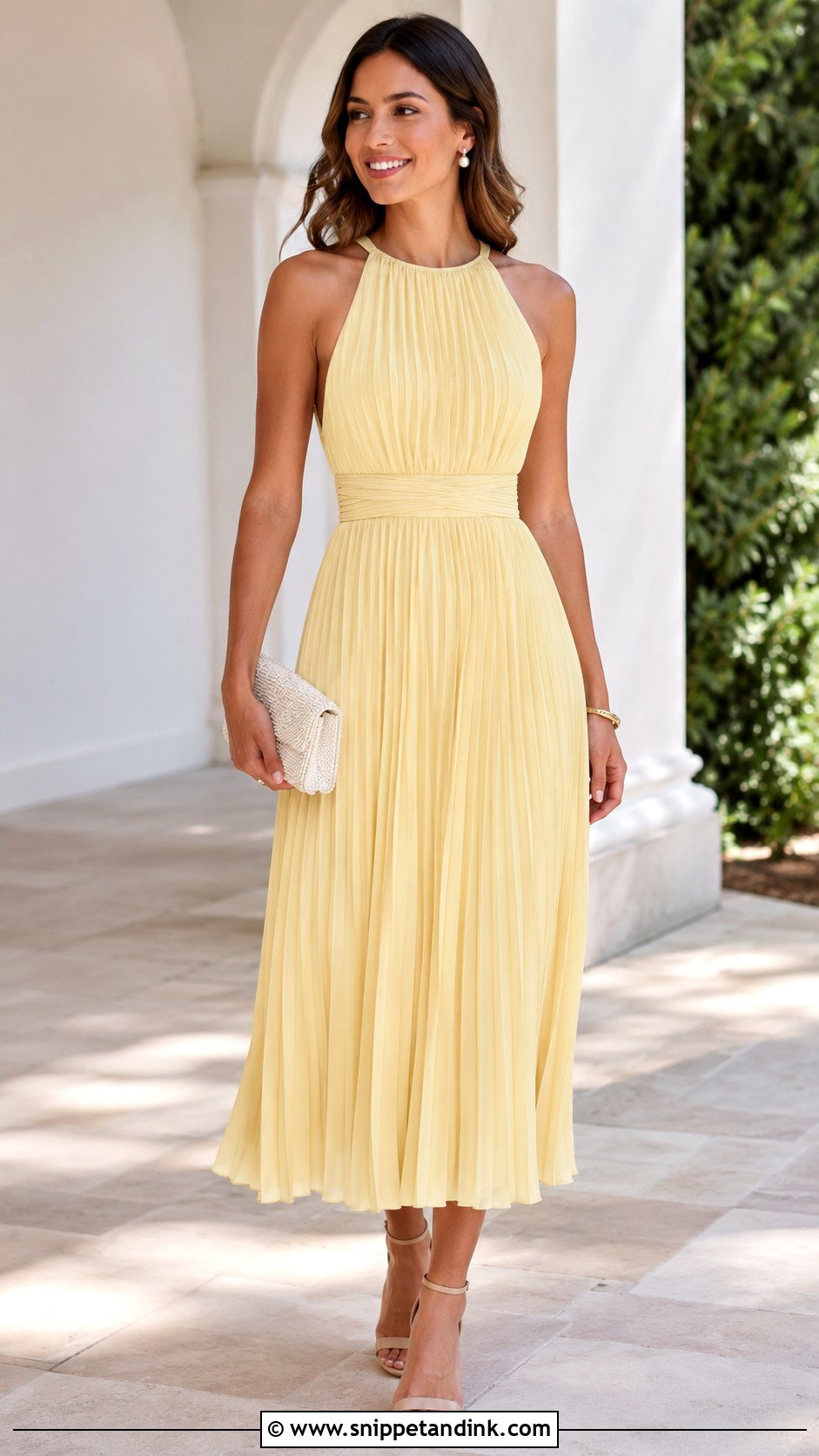
Butter yellow is sunny without being neon, but it’s tricky on some complexions. Pale yellows can wash out very fair or olive skin near the face, so I always hold the fabric under a client’s chin in daylight before ordering. A fitted bodice with an A-line skirt or subtle pleats suits daytime events. Gold jewelry warms it; white accessories brighten it. Choose breathable fabric for outdoor ceremonies.
26. Powder Blue Ceremony Dress
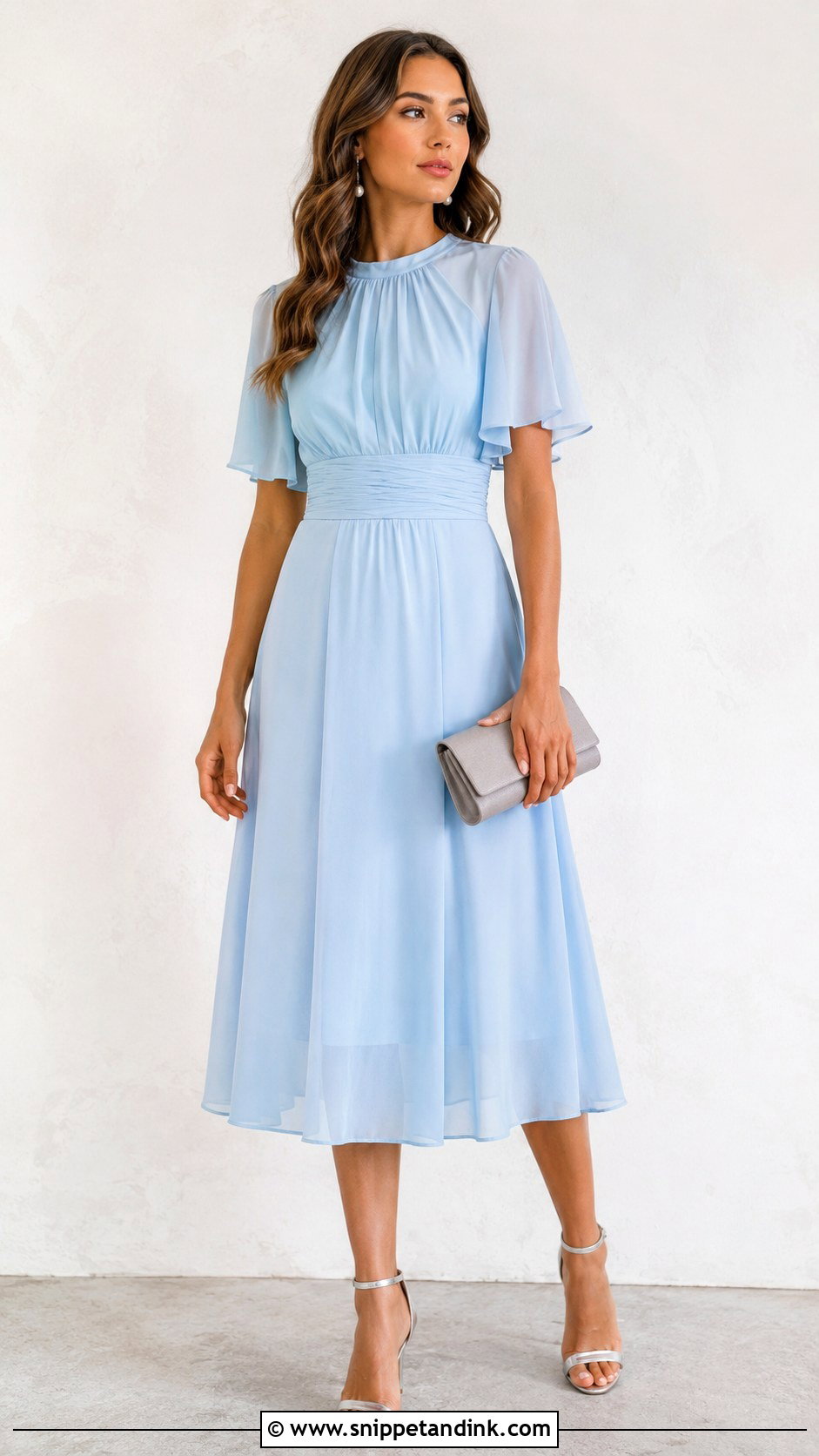
Powder blue is cool, soft and easy to photograph. A chiffon midi, satin column or pleated A-line in a cool blue suits spring ceremonies, coastal venues and graduations. Silver heels and pearl earrings keep the palette cool; clear strap heels make it more modern. Pale blue can lose saturation under warm indoor bulbs, so if the ceremony is inside, take a look in that kind of light. Keep everything else light.
27. Red Ceremony Dress
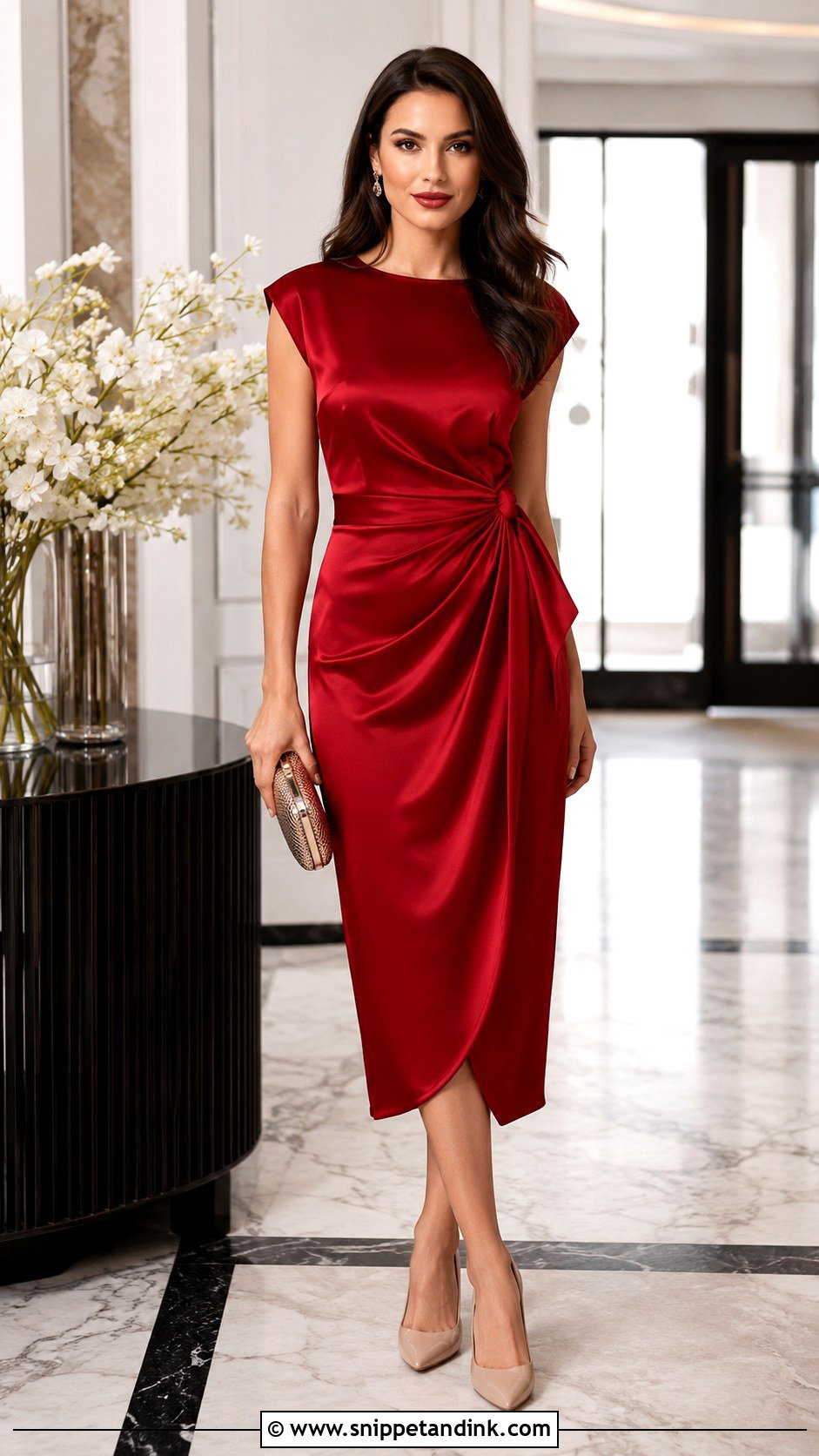
Red is a confident choice, and I’d test the shade before the silhouette. Deep red, ruby and wine read polished; bright cherry is louder. At some weddings red carries specific meaning, as the bride’s color in several South Asian and Chinese traditions, so as a guest, check before wearing it. A wrap dress, satin midi or fitted crepe works for daytime or evening. Neutral heels and understated jewelry let the dress lead.
28. Lace Ceremony Dress
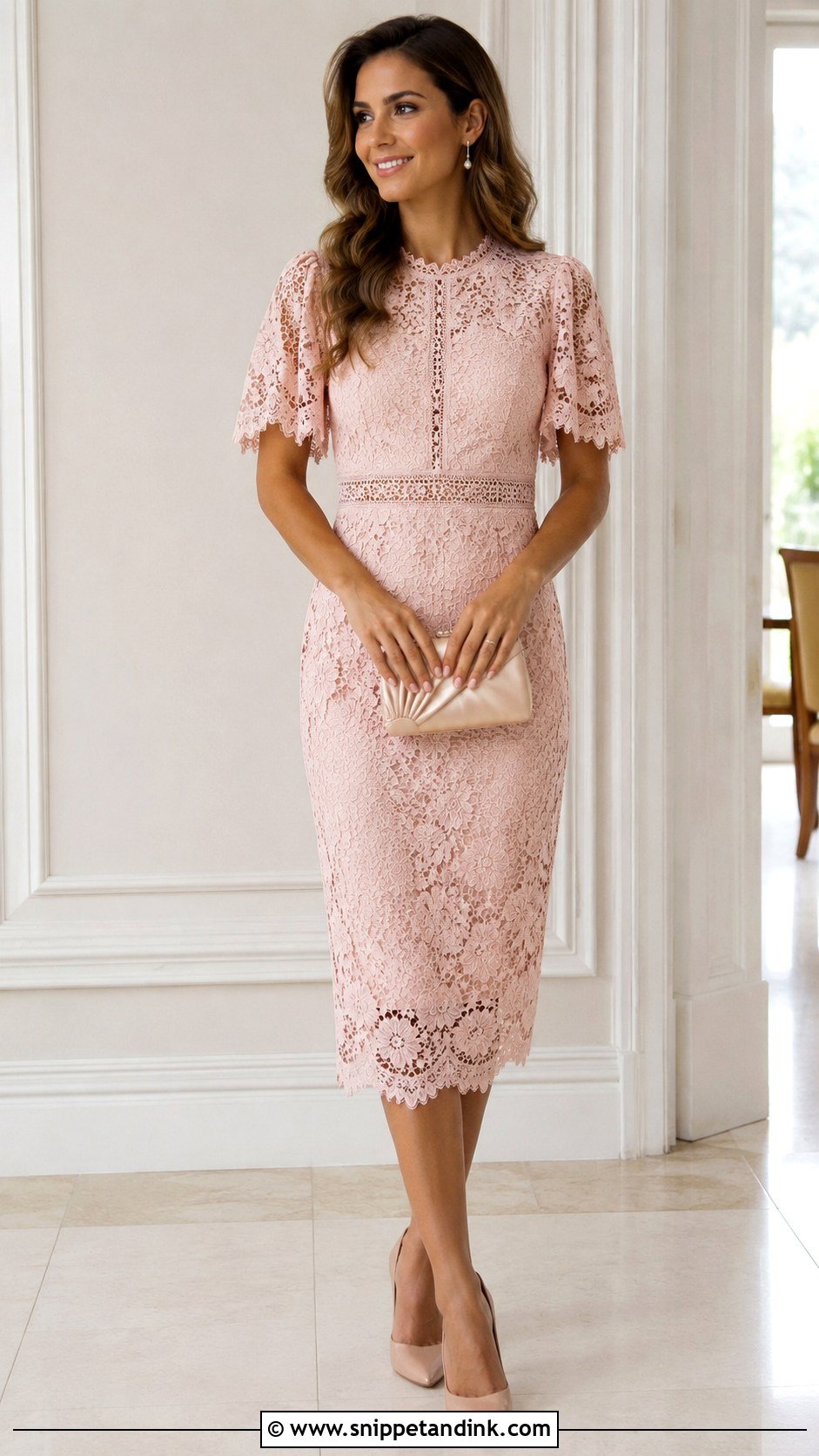
Lace reads as classic, so I keep the cut modern: a clean sheath or simple A-line rather than lots of ruffles. Navy, blush, lavender, emerald or soft gray all suit, and white lace stays with the bride. Detailed lace and a heavy necklace fight each other, so skip the necklace. Pointed pumps and a satin clutch finish it. Lace can snag on jewelry and bag chains, so smooth accessories are worth choosing.
29. Pleated Ceremony Dress
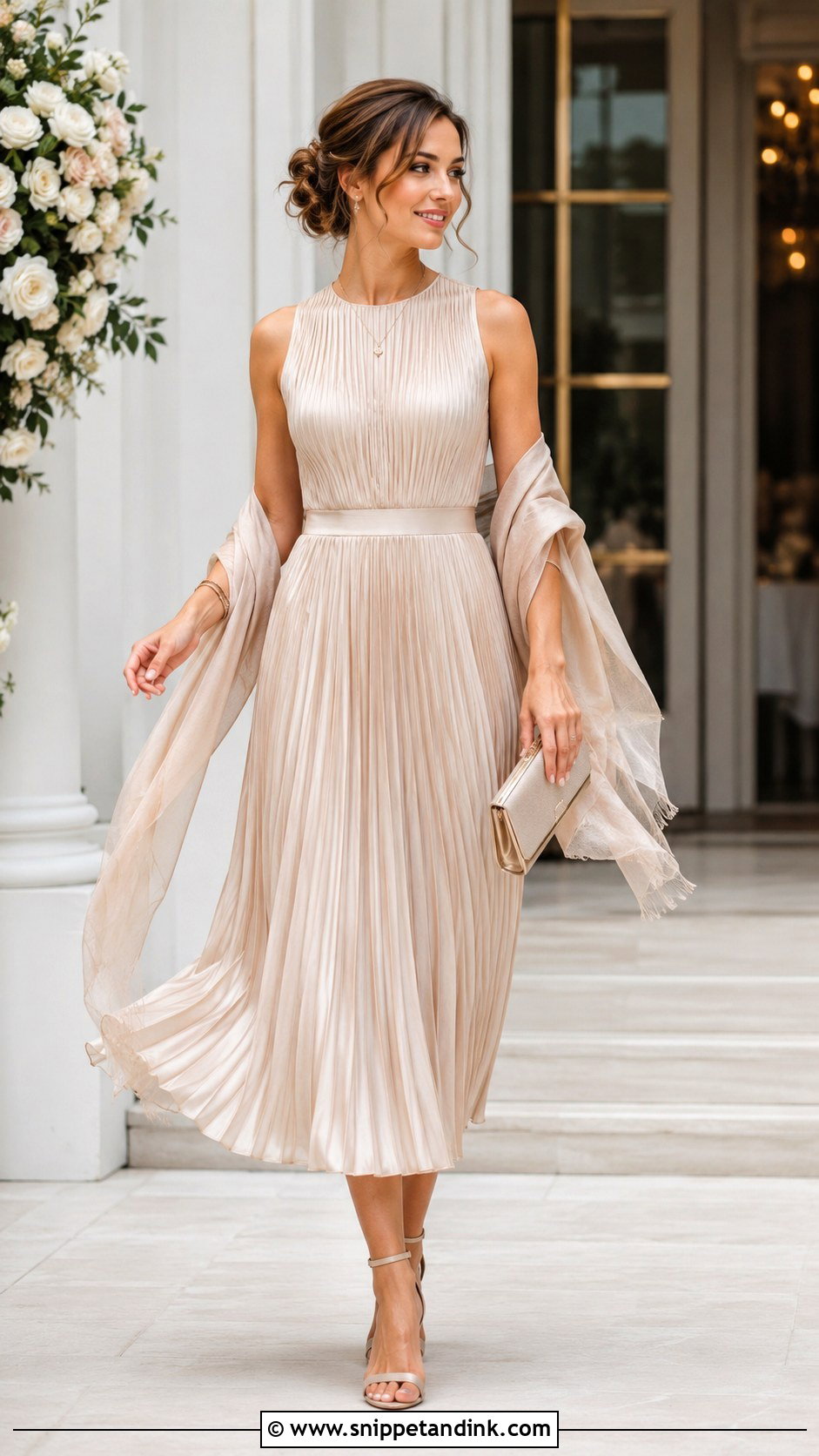
Pleats show off when you walk, which makes them a good choice for processionals and candid photos. Blush, navy, emerald, champagne or a soft floral print in a pleated midi dresses up easily. Fine knife pleats can drop or crease if the dress is packed tightly, so hang it in the car or carry it on a hanger. A defined or belted waist keeps the volume in proportion. Long sleeves mean fewer accessories; sleeveless pairs with a cropped blazer.
30. Jumpsuit Ceremony Outfit
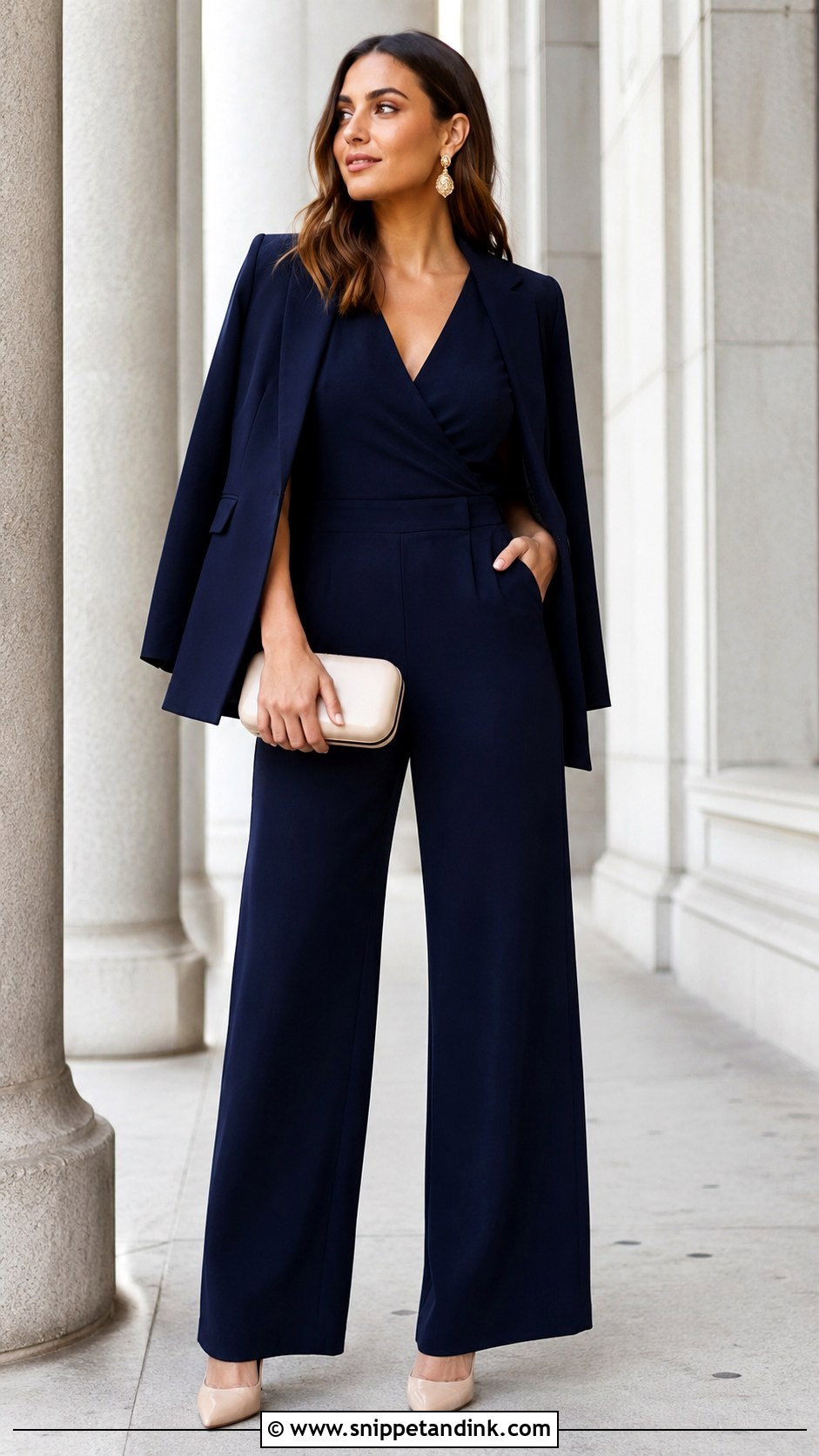
A jumpsuit is a real alternative to a dress, and I’ve seen it work beautifully at city hall and modern weddings. Tailored wide legs in navy, black, emerald, blush or ivory give movement close to a gown. Look for a wrap bodice, draped neckline, belted waist or structured shoulders to make it look ceremonial. Hem the legs with your shoes on so the fabric just skims the floor. The honest drawback is bathroom breaks, so check the fastening is easy to manage on your own.
A Dress Rehearsal at Home, Two Weeks Out
I ask every client to wear the complete outfit at home for an hour about two weeks before the event. It catches problems while there’s still time for a tailor or a different pair of shoes.
- Put on everything: dress, underwear, shoes, jewelry and the layer you’ll actually carry.
- Sit on a hard chair for ten minutes, then stand. Look for creasing across the lap and anything that rides up.
- Walk outside on grass or gravel if your venue has either. Notice whether the heel sinks.
- Raise both arms as if hugging someone taller. Check straps, sleeves and the neckline.
- Pack your bag with phone, tissues, lipstick and keys. If it doesn’t close, change the bag now.
- Take a phone photo with flash, from the back and side, and look at it as a stranger would.
Most issues are small: a strap that needs a stitch, a hem that’s half an inch long, shoes that need a grip pad. They are easy two weeks out and nearly impossible on the morning.
Dress for the Room, the Ground and the Hours
The right ceremony outfit respects the event and still feels like you. Start with the venue, season, dress code, walking surface and how many hours you’ll be in it. Build from the dress outward with shoes you’ve tested, a layer that suits the room, and accessories that agree with the fabric. Satin midis, formal gowns, florals, lace and tailored jumpsuits all have a place when the details are thought through.
You'll Like These Ideas:


Leave a Reply