
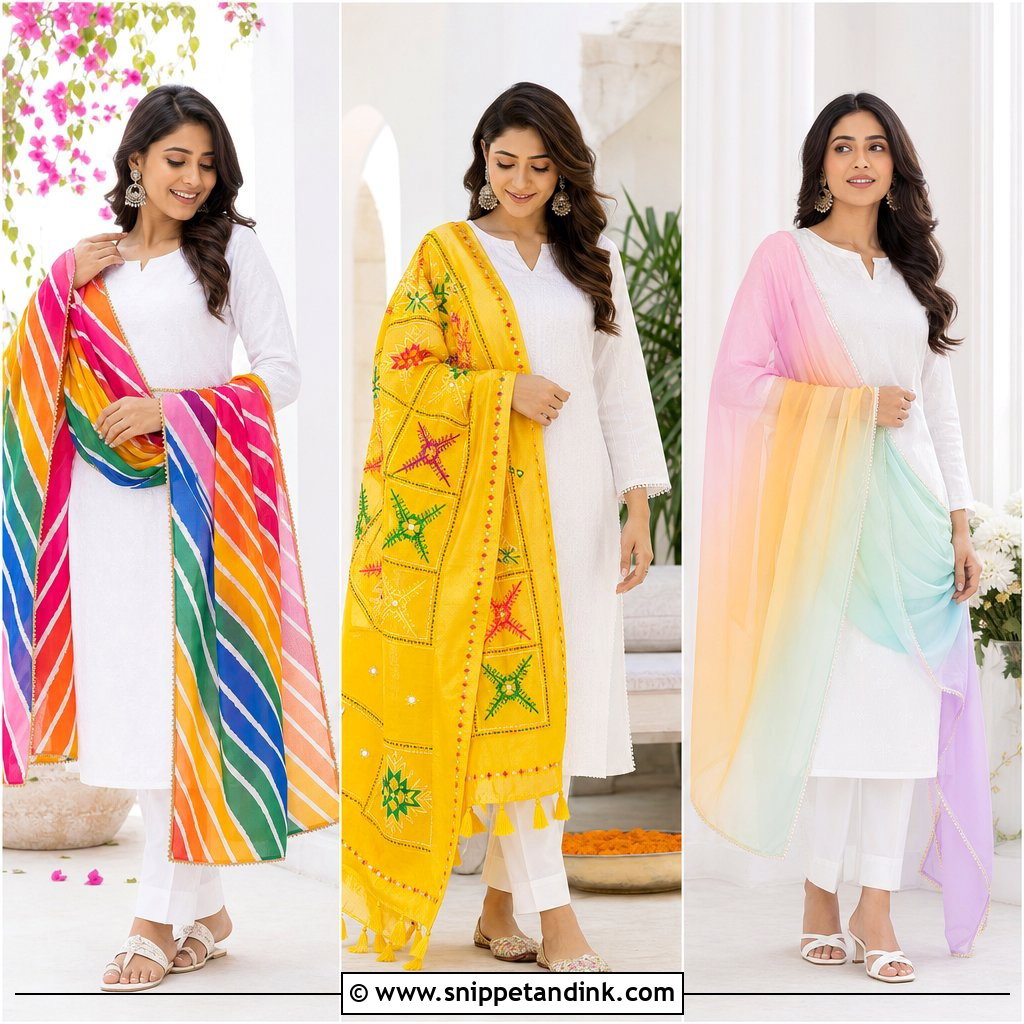
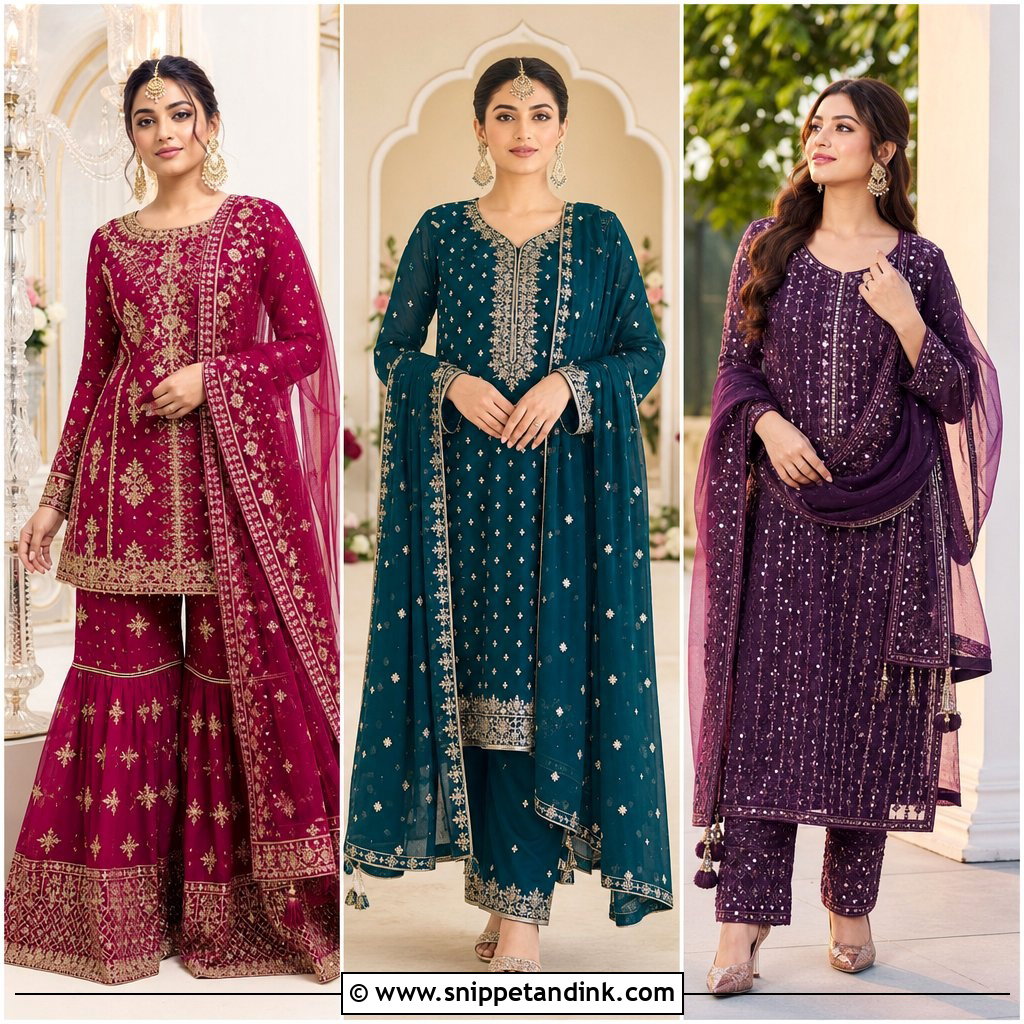
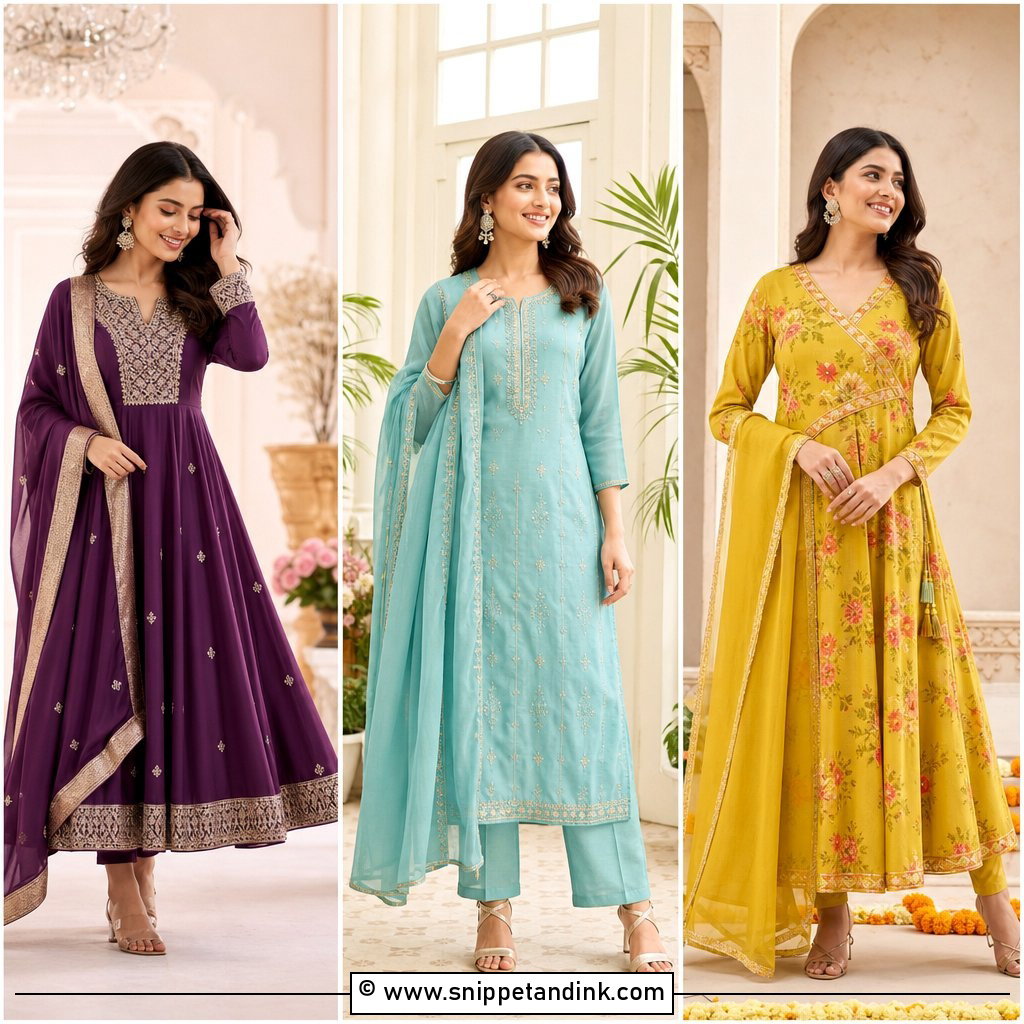
A plain salwar suit goes from errand-ready to wedding-ready the moment a heavy dupatta goes over it. Banarasi weaving, phulkari embroidery, mirror work, sequins, zari and wide borders bring all the richness, so the suit underneath only needs a clean cut and a comfortable fit. Shoes, jewelry and the drape follow the dupatta’s lead. The same approach works for a wedding, a festive gathering or a formal family dinner, in jewel tones, pastels or quiet neutrals. Here are twenty head-to-toe pairings, with the details I’d adjust if I were dressing you in them.
Asking Your Tailor to Build the Kurta Around the Dupatta
A heavy dupatta can weigh more than the kurta under it, and that weight pulls on whatever it’s pinned to. When I have a plain suit stitched to go with one, I talk to the tailor about the dupatta before we discuss the kurta at all.
- Pick a kurta fabric that takes pins. Silk, crepe and cotton-silk hold a safety pin all evening, while fine georgette and chiffon can tear at the pin hole.
- Ask for a reinforced shoulder seam on the side you’ll drape, with a small hidden thread loop or snap so the dupatta hooks on instead of relying on a pin alone.
- Take the dupatta to every fitting. A heavy drape changes how the neckline sits and how the front of the kurta hangs.
- Match the suit to one thread in the dupatta rather than its background. Many dyers will dye plain fabric to a shade you bring them.
Buying the suit ready-made? Adding that shoulder loop is a quick job for most tailors, and it saves you checking your pin every half hour.
1. Black Plain Suit With Red Phulkari Dupatta
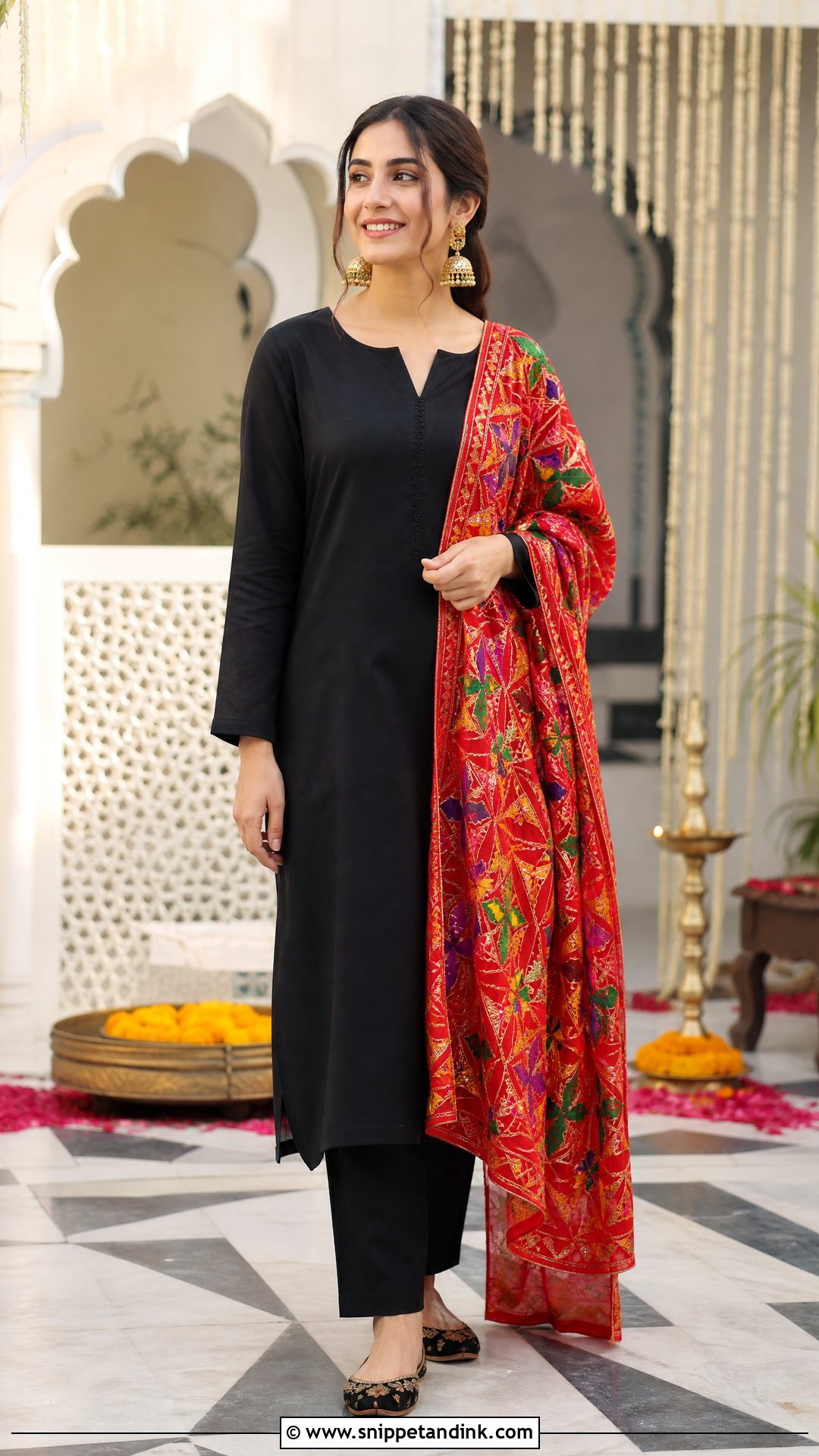
Black is the strongest backdrop a phulkari can have, because every colored thread shows up against it. Keep the kurta knee-length with a round neck, over narrow black pants for length. Phulkari usually has its densest work in the corners and along the border, so find those before you drape, then let them fall across the front from one shoulder. Gold jhumkas, a slim bangle stack and an embroidered potli, with black or gold juttis. Lint shows on black under flash, so keep a lint roller in the car.
2. White Plain Suit With Multicolor Bandhani Dupatta
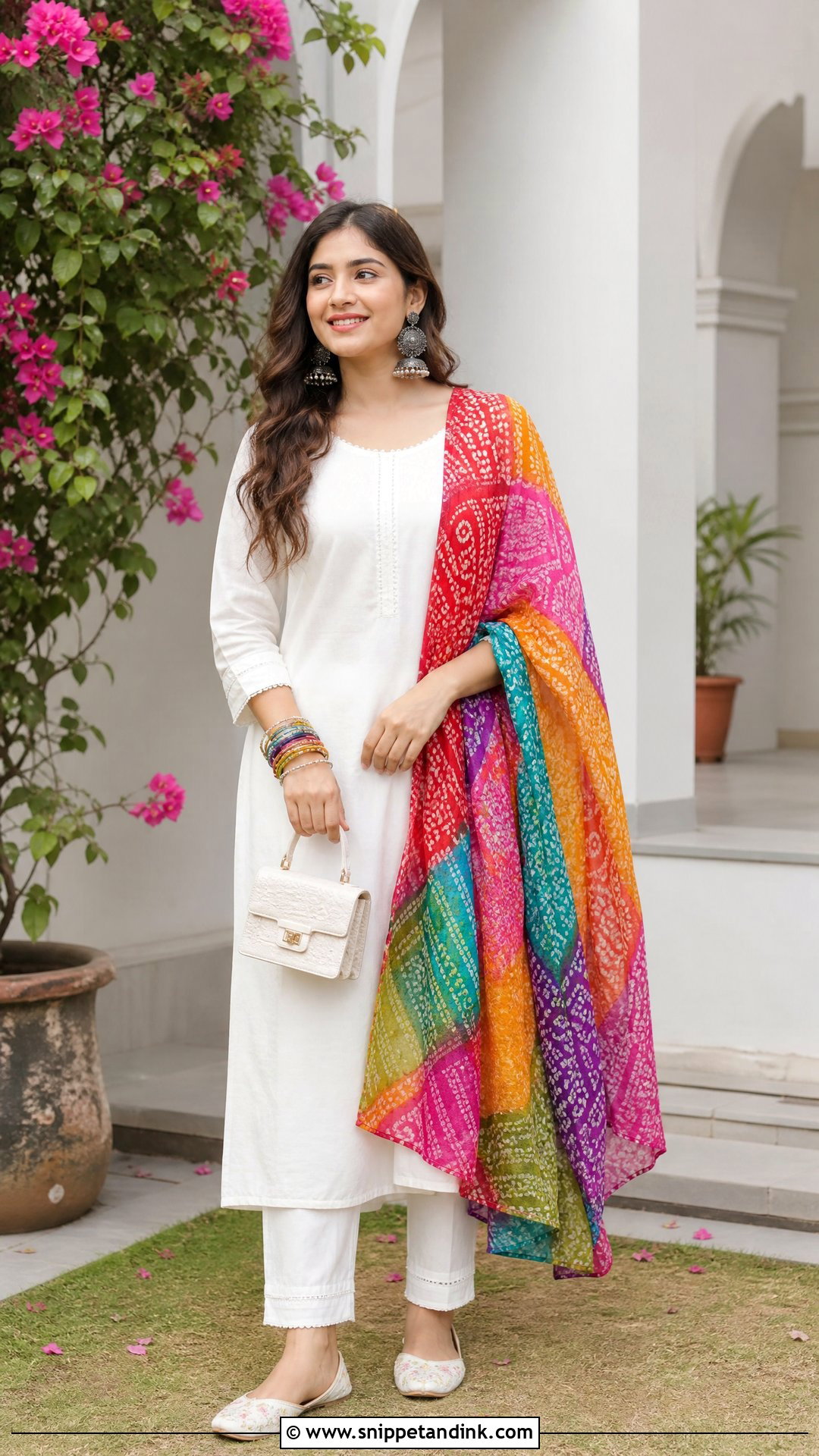
White makes every dot in a multicolor Bandhani dupatta look sharper. I’d choose cotton-silk for the kurta, since it has more body than plain cotton and won’t look limp under the dupatta, with straight pants or a churidar. The red, yellow, green and pink patterns bring all the energy. Put one end over the shoulder and carry the other loosely across the opposite arm. Oxidized silver earrings, colorful bangles, a small white bag and juttis with a few multicolored stitches tie it together. It breathes well at a hot daytime function. Dab the dupatta on a damp white tissue first, as hand-dyed bandhani can bleed onto white.
3. Purple Plain Suit With Banarasi Dupatta
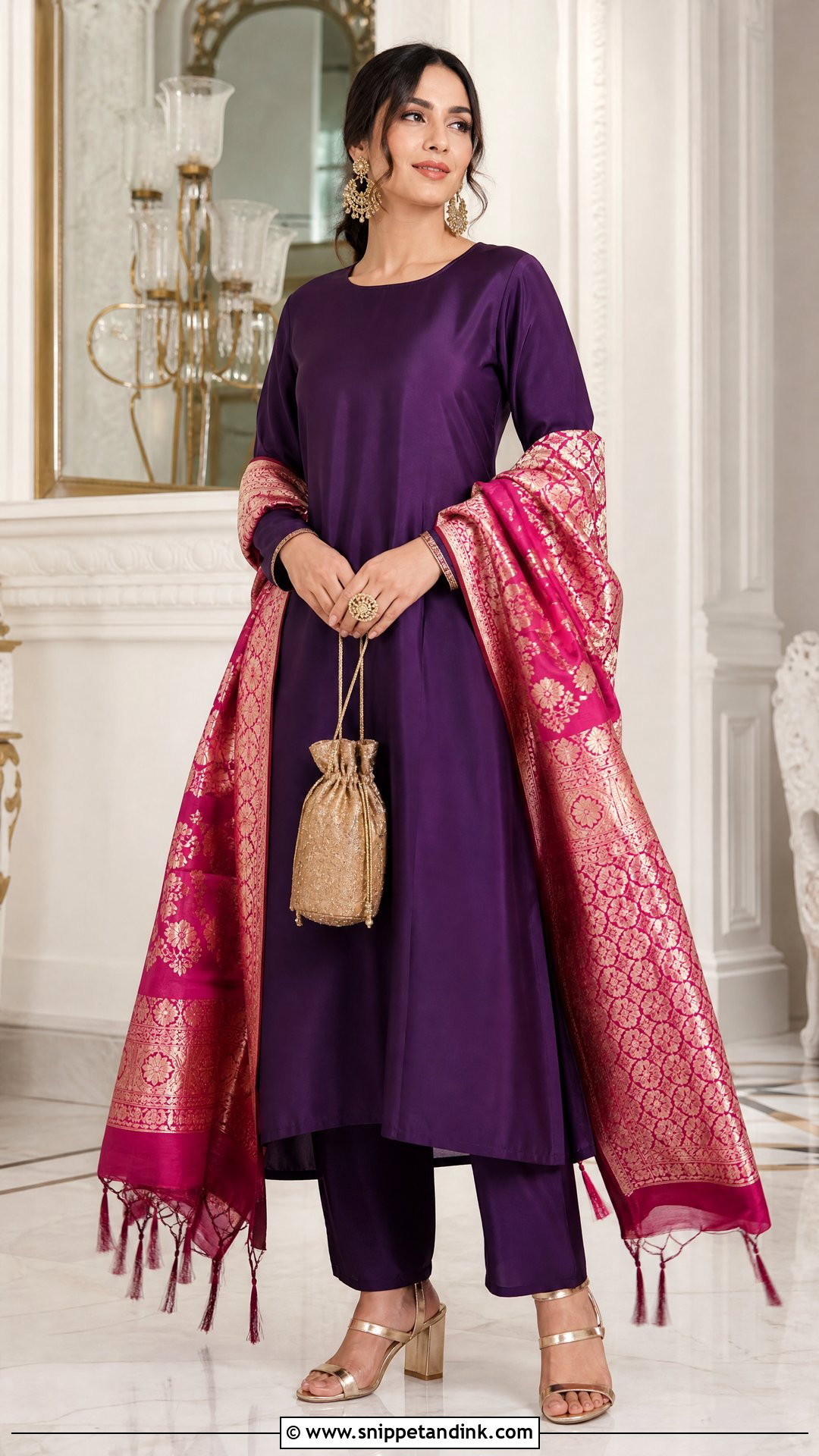
Purple silk under gold Banarasi weaving looks expensive without the suit doing anything. A plain A-line kurta with matching straight pants is all you need. The contrast is up to you: a red, magenta or mustard Banarasi makes a bold pairing, while purple-and-gold is quieter. Open the drape across both arms so the border and the pallu, the heaviest woven end, are on show. Silk Banarasi is weighty and slides on a silk kurta, so a pin underneath at the shoulder is essential. Gold block heels, a structured potli and medium chandbalis, plus one statement ring instead of several pieces.
4. Pink Plain Suit With Mirror Work Dupatta
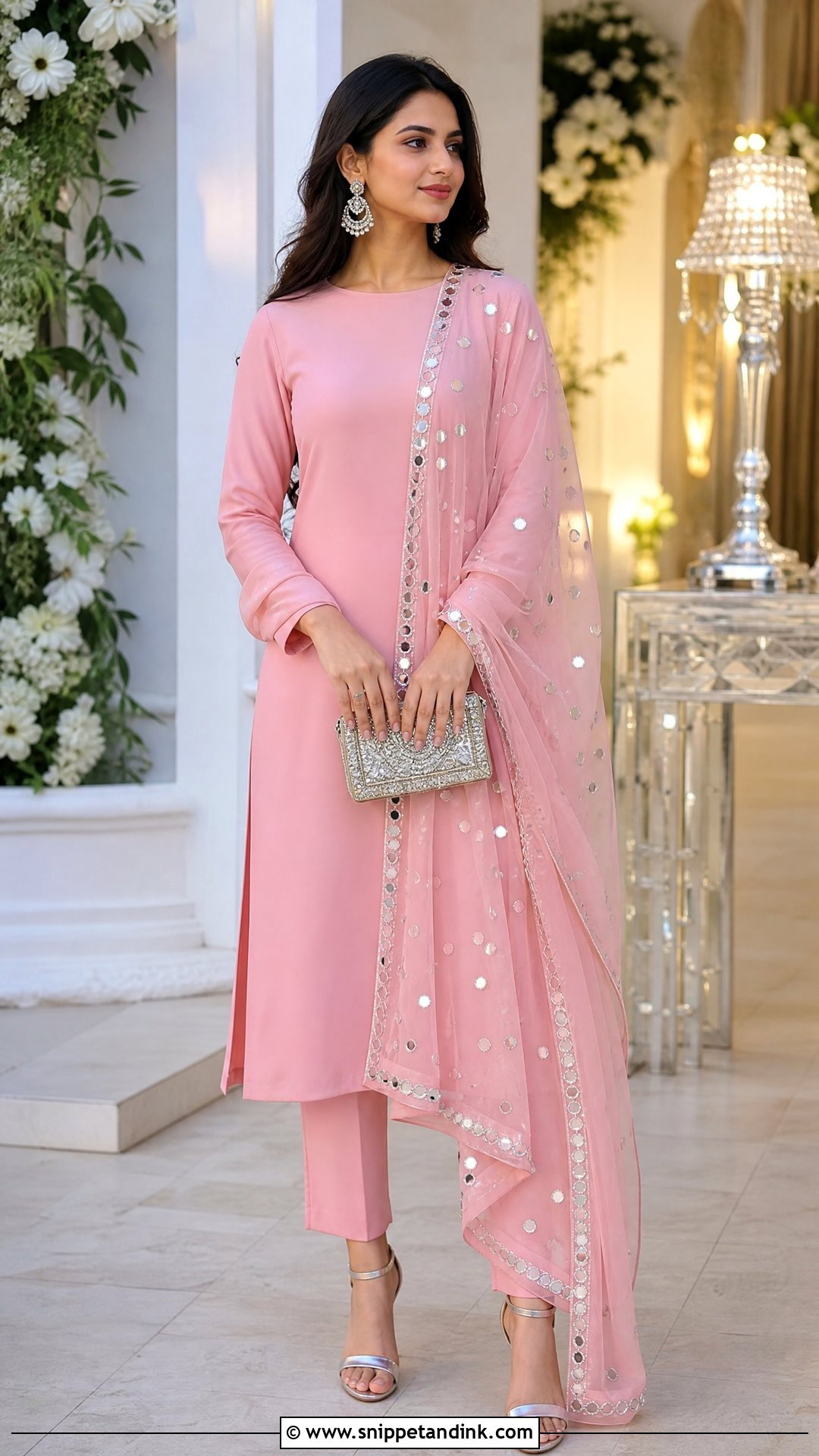
Small, evenly spaced mirrors are what I’d choose here. Large ones look dramatic on the hanger but pull a light dupatta out of shape and catch on hair and earrings. Under it, a pink georgette or crepe kurta below the knee with matching cigarette pants. Pin the dupatta to one shoulder and let the other side fall over the forearm. Silver sandals, pearl-and-mirror earrings and a small embellished clutch suit the shine. If the border is heavily worked near the neckline, skip the necklace. Engagement parties, festive dinners and indoor functions are the right setting, since mirror work needs lamplight more than daylight to sparkle.
5. Navy Blue Plain Suit With Sequin Dupatta
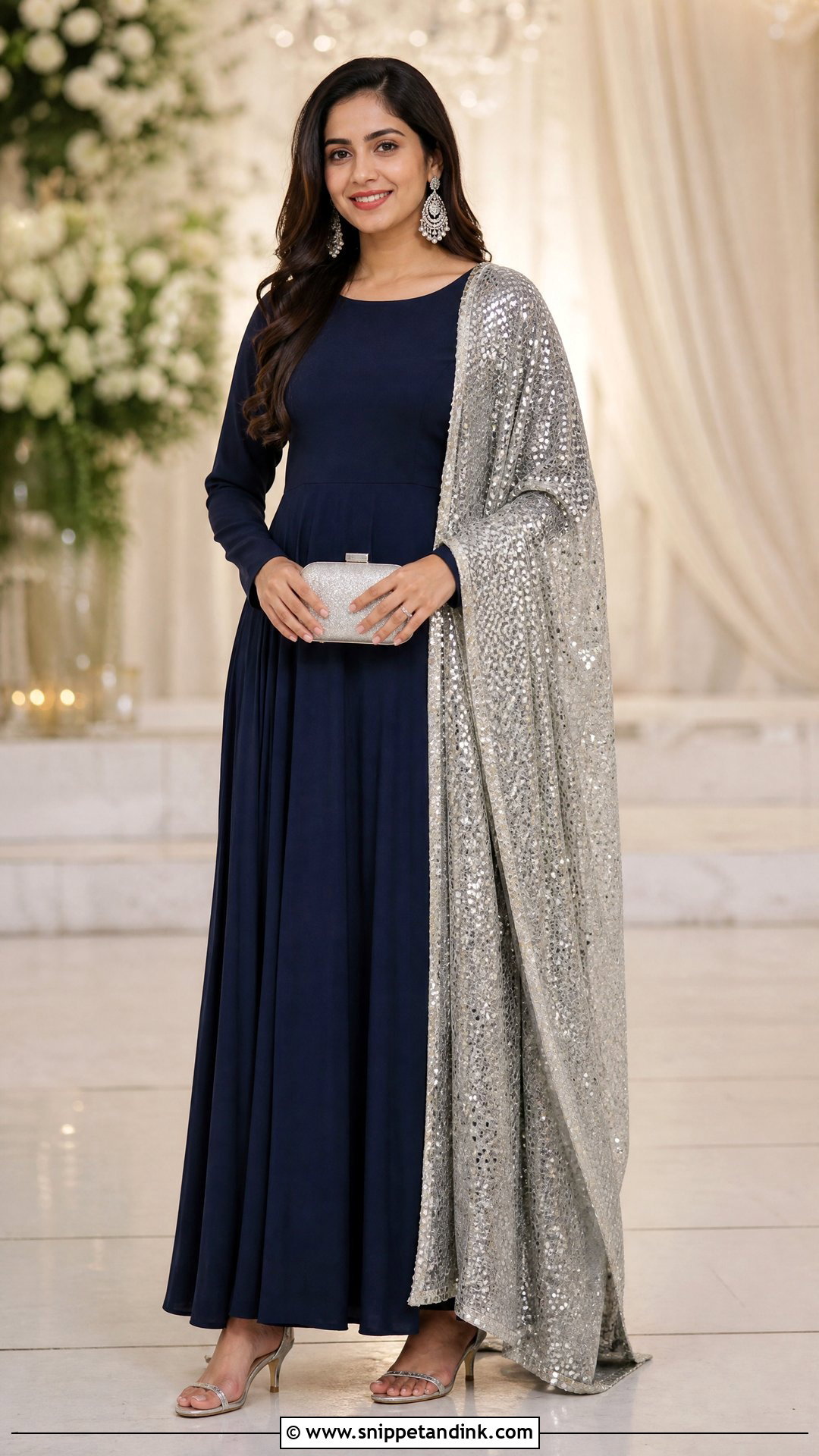
Navy reads deeper and richer at night, and a sequin dupatta catches every light at an evening function. A floor-length Anarkali or a long straight kurta with fitted pants both work. The dupatta can be sheer navy, silver or powder blue with scattered sequins and a defined border. Pin it at one shoulder and keep the front open so the suit’s shape shows. Sequins scratch, though. Over a sleeveless kurta they’ll leave red marks on your inner arm by the end of the night, so I’d pick sleeves. Silver heels, crystal earrings and a metallic clutch, and no oversized necklace.
6. Yellow Plain Suit With Gota Patti Dupatta
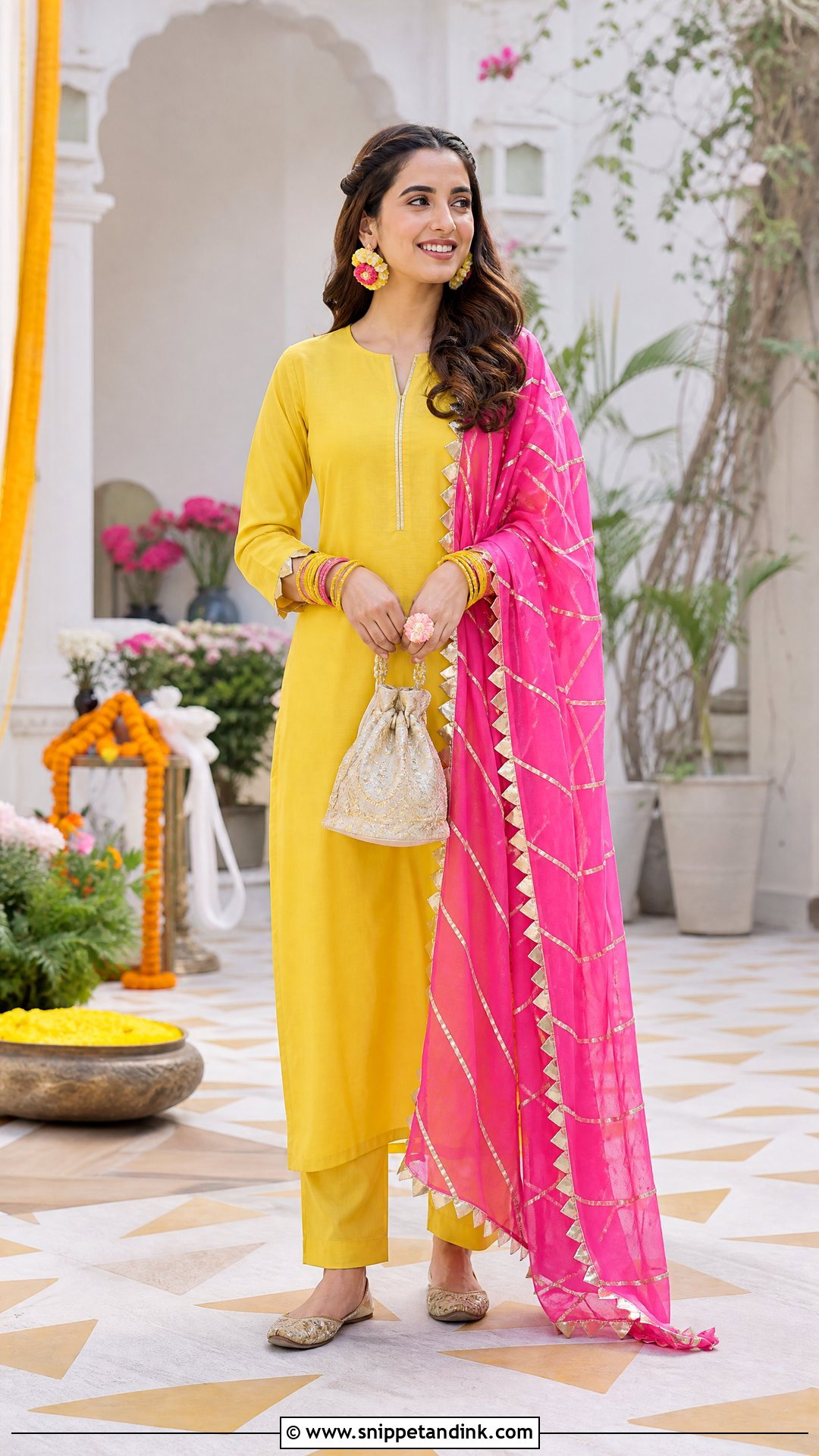
Bright yellow belongs to the haldi and mehndi, and a gota patti dupatta gives it the festive detail. Wear a sleeveless or three-quarter-sleeve kurta with straight pants in the same yellow, and bring in color through a pink, orange or green dupatta with gold gota borders. Drape it diagonally across the body or pin it to one shoulder so you can move freely. Gold juttis, floral earrings, stacked bangles and a small potli. The kurta stays plain, or takes a thin gold trim at the cuffs at most. Gota is light for how much it shines, which makes this the easiest heavy-looking dupatta to wear all afternoon.
7. Green Plain Suit With Embroidered Organza Dupatta
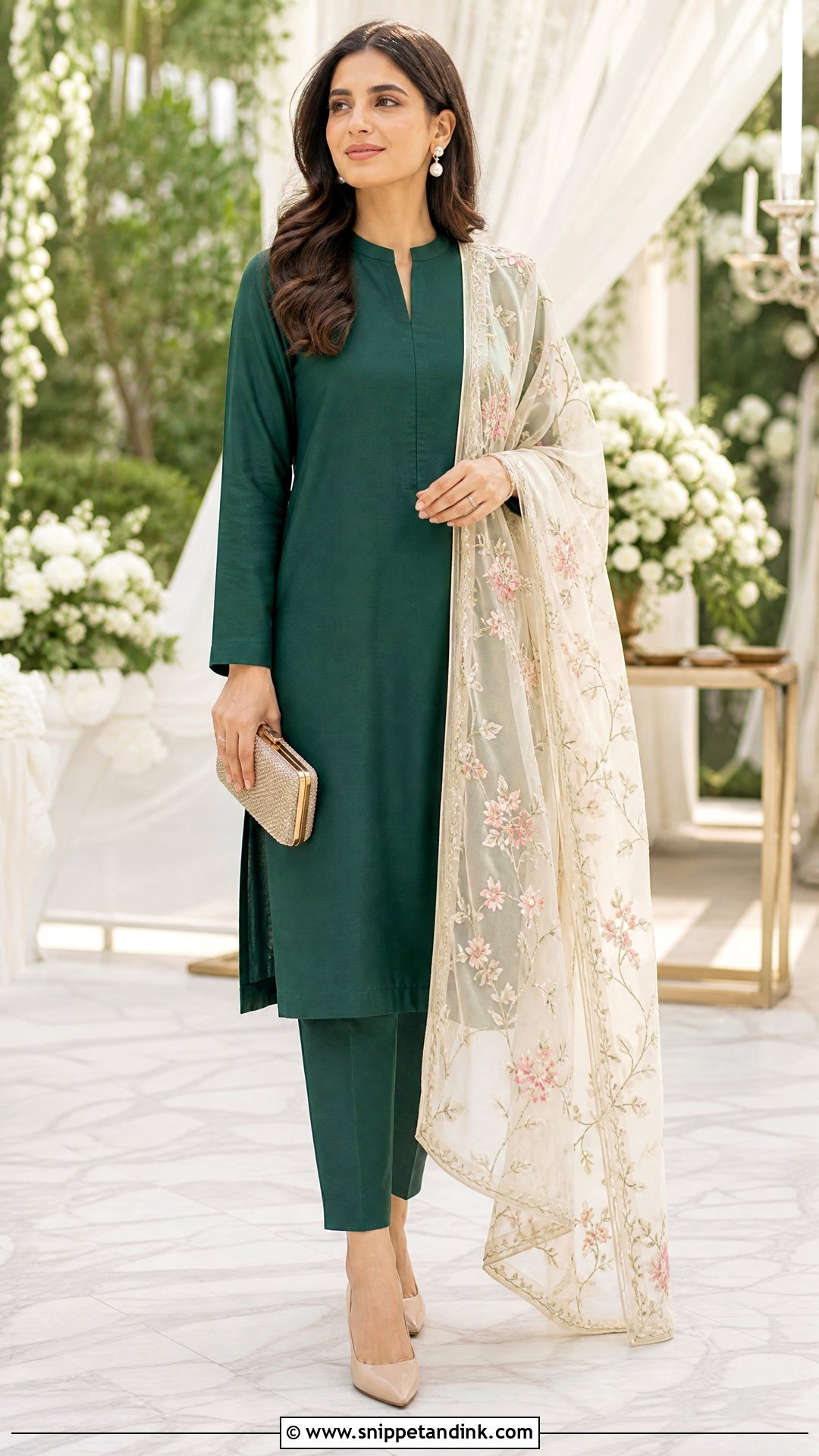
Organza holds its shape, so an embroidered one gives a deep green suit structure around the shoulders. A long straight kurta and tailored pants in silk, crepe or soft satin make the base. Choose an ivory, blush or matching green dupatta with fine floral threadwork and a scalloped edge, and let it fall naturally from one shoulder. Folded into pleats, organza sets into sharp creases that are stubborn to steam out. Nude or gold heels, pearl earrings to soften the green and a clutch that matches the embroidery rather than the suit. Its slight stiffness also means it keeps its outline in photographs.
8. Maroon Plain Suit With Zari Border Dupatta
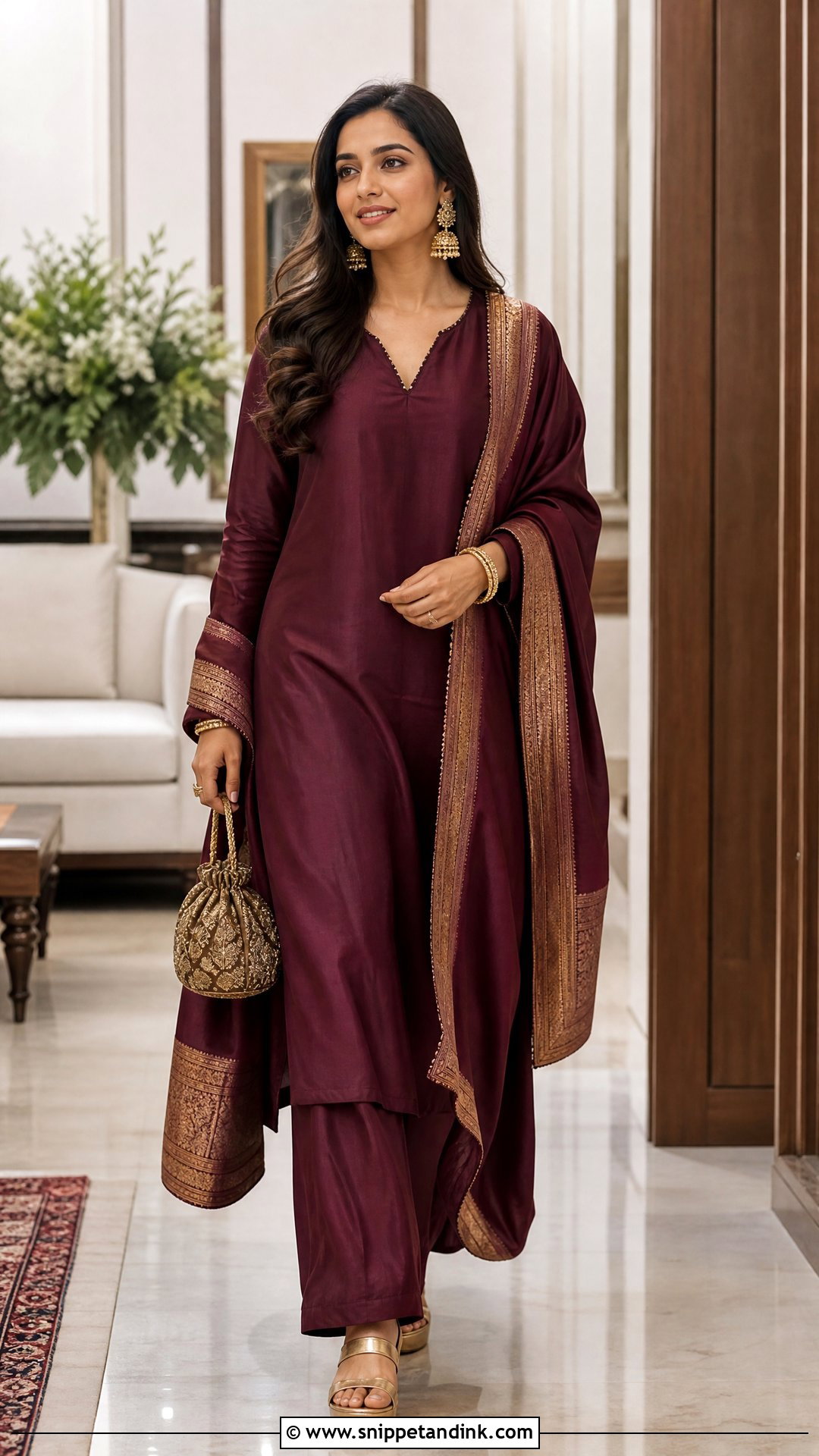
Tone-on-tone maroon with a broad zari border is the most grown-up combination on this list. A silk kurta with a modest V and matching palazzos gives easy movement. The dupatta can have scattered gold butis, but the border should stay its strongest feature. Drape one end over the shoulder and gather the other lightly at the wrist. Antique gold earrings, matching bangles and a potli with metallic threadwork finish it. Gold platform sandals add the height wide palazzos need; without it they drag on the floor. Deep color with zari looks right in daylight and at night, which makes it a safe pick for formal family events.
9. Beige Plain Suit With Kalamkari Dupatta
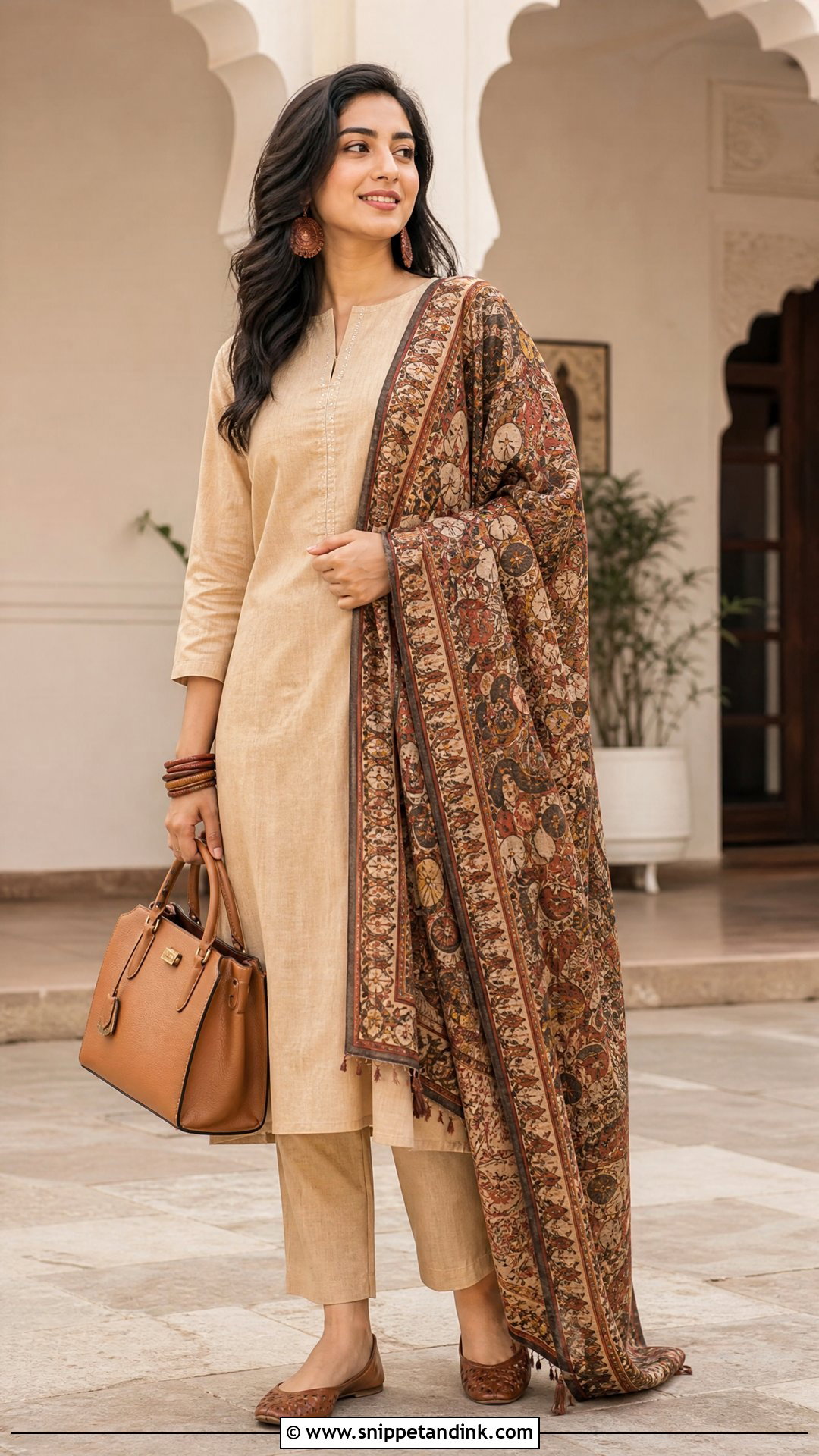
Beige is the quietest base for Kalamkari, leaving the hand-drawn motifs in rust, black, red, mustard or muted green to stand alone. A cotton-silk kurta, ankle-length pants and brown juttis keep it comfortable. Spread the dupatta open over one shoulder, because folded into a strip the print disappears. Terracotta earrings, wooden bangles and a tan bag stay in the same earthy family, and anything shiny would compete. Kalamkari is often printed with natural dyes that shed in early washes, so dry clean it or wash it well away from the beige kurta. Daytime gatherings, cultural events and festive lunches suit it best.
10. Red Plain Suit With Gold Net Dupatta
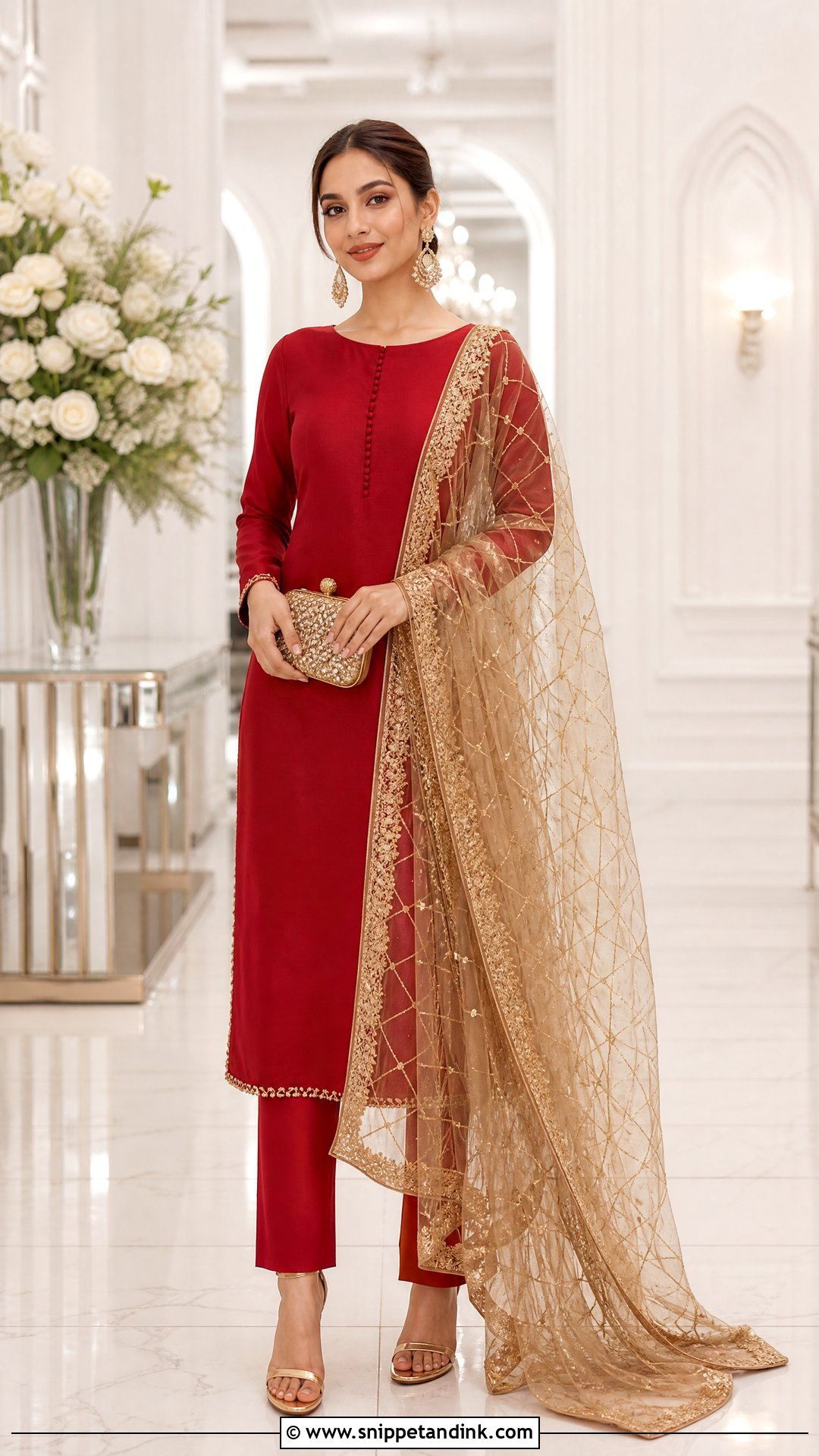
Red with a gold embroidered net dupatta is a formal statement in one move. Wear a fitted red kurta with matching straight pants or a churidar. Net is light but embroidery isn’t, so look for a dupatta whose finished border holds its shape instead of curling. Pin it at one shoulder and arrange the front edge so the embroidery frames the kurta. Gold heels, an embellished clutch and earrings with red stones, with a sleek bun or soft waves to keep the neckline clear. Red and gold already carry a lot, so I’d cut back to a few bangles and no layered necklaces. Net snags easily on prong-set bracelets, another reason to stick to bangles.
11. Powder Blue Plain Suit With Pearl Dupatta
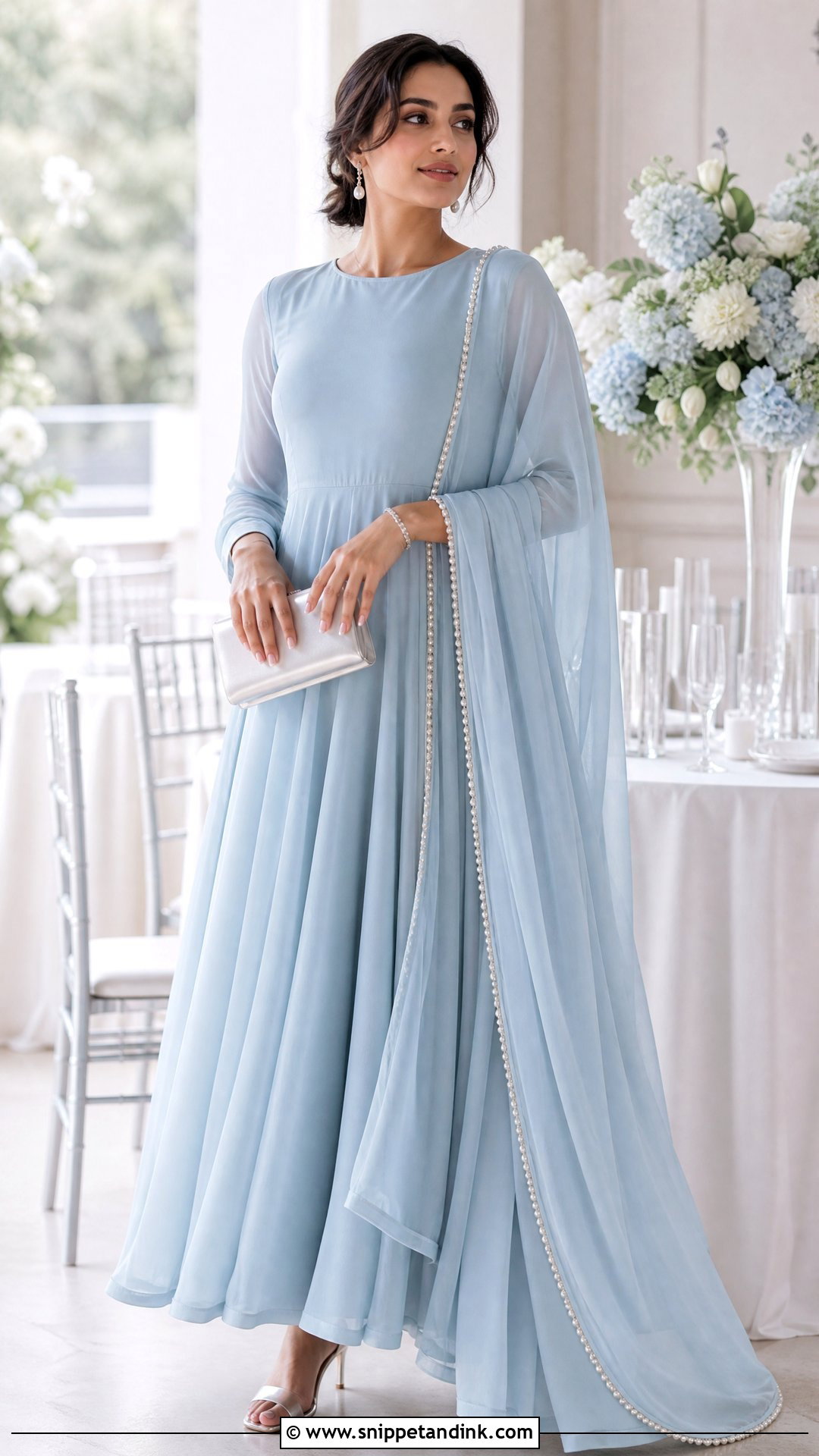
Pearls and fine threadwork suit powder blue because neither one shouts. Choose a chiffon or georgette Anarkali with a flowing hem and fitted sleeves, then a sheer matching dupatta with pearl edging. Secure it at the shoulder and let it fall down the back so the front of the Anarkali stays visible. Pearl drops, silver heels and a small satin clutch, with a narrow crystal bracelet if you want a little shine. One honest warning: pearl edging adds weight to a sheer dupatta, so it tends to slide backward off the shoulder all evening. A pin through the kurta’s shoulder seam fixes that. It’s a good match for daytime receptions.
12. Orange Plain Suit With Ajrakh Dupatta
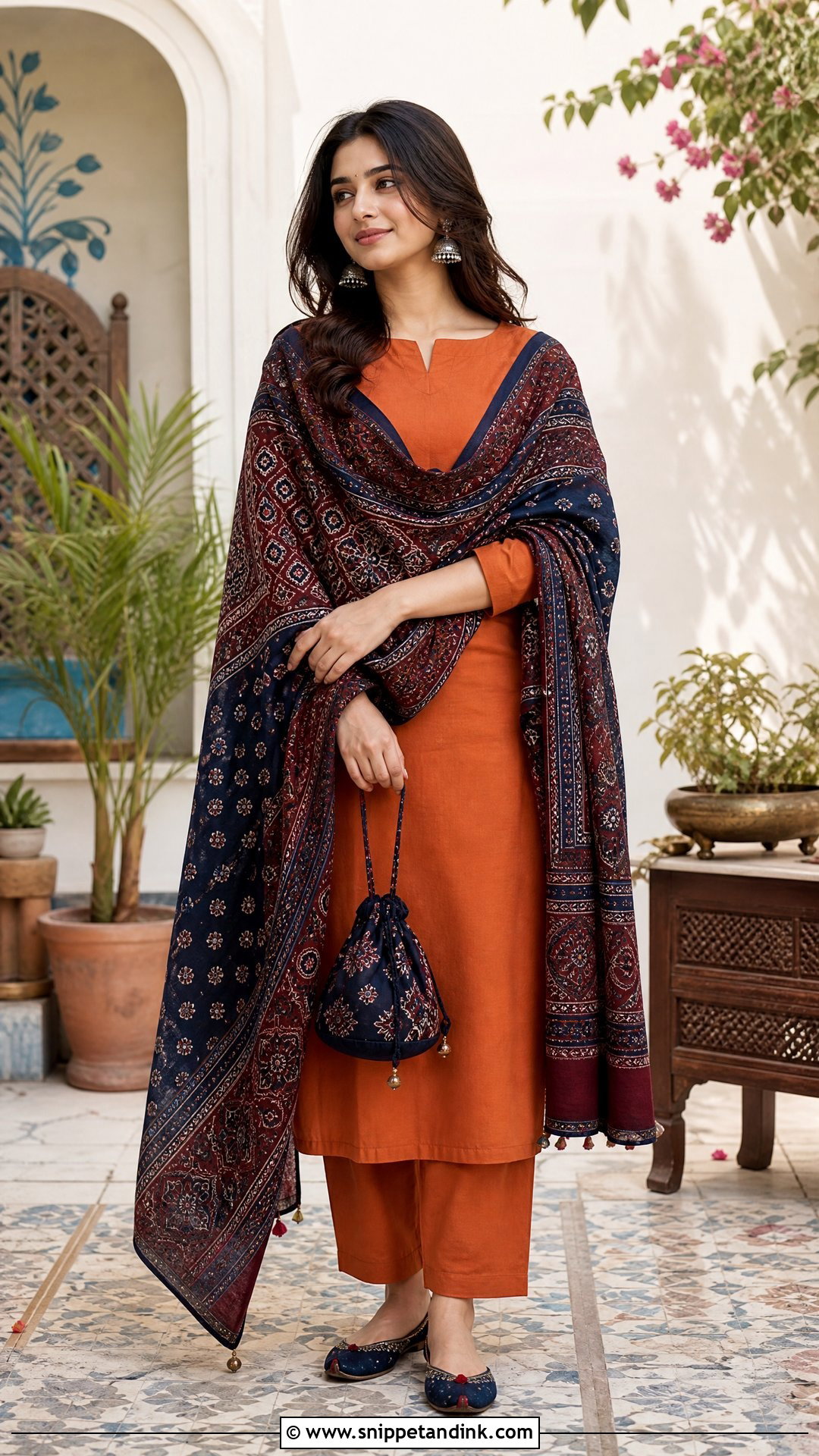
Burnt orange with detailed Ajrakh printing is grounded and graphic. A straight kurta with matching ankle pants lets the print be the only pattern. Pick an Ajrakh in navy, maroon, ivory or black for clear contrast, then wear it over both shoulders like a shawl or across one arm to show the blocks. Oxidized silver jhumkas, navy juttis and a crossbody potli suit it. This dupatta is heavy in look, not in weight. Ajrakh is usually cotton or modal, so it stays comfortable through a long daytime event, and it’s a practical alternative to sequins and metallic work. Keep makeup understated.
13. Ivory Plain Suit With Velvet Embroidered Dupatta
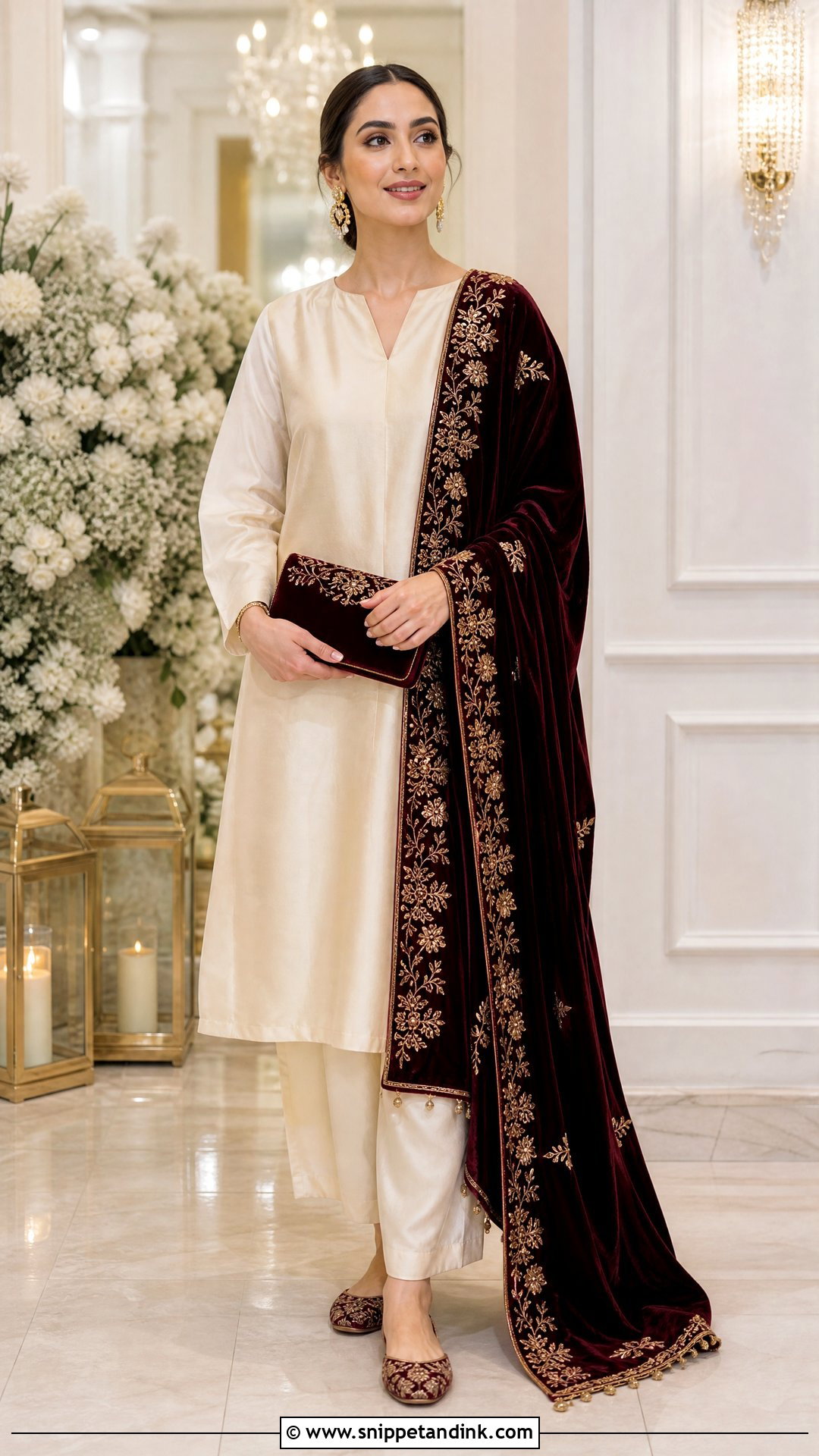
Ivory silk and velvet is a contrast of weights, light minimalism against plush texture. A straight kurta and coordinated pants, then a burgundy, bottle green or navy velvet dupatta with a gold embroidered border. Velvet is heavy and warm. Place it over one shoulder, because wrapped around the body it slides and you’ll overheat. Dark velvet also sheds fibers onto ivory silk, so check the kurta in a mirror before the photographs start. Embroidered closed-toe mules, antique gold earrings, a velvet clutch and a narrow cuff complete it. Save this one for cooler weather.
14. Gray Plain Suit With Silver Thread Dupatta
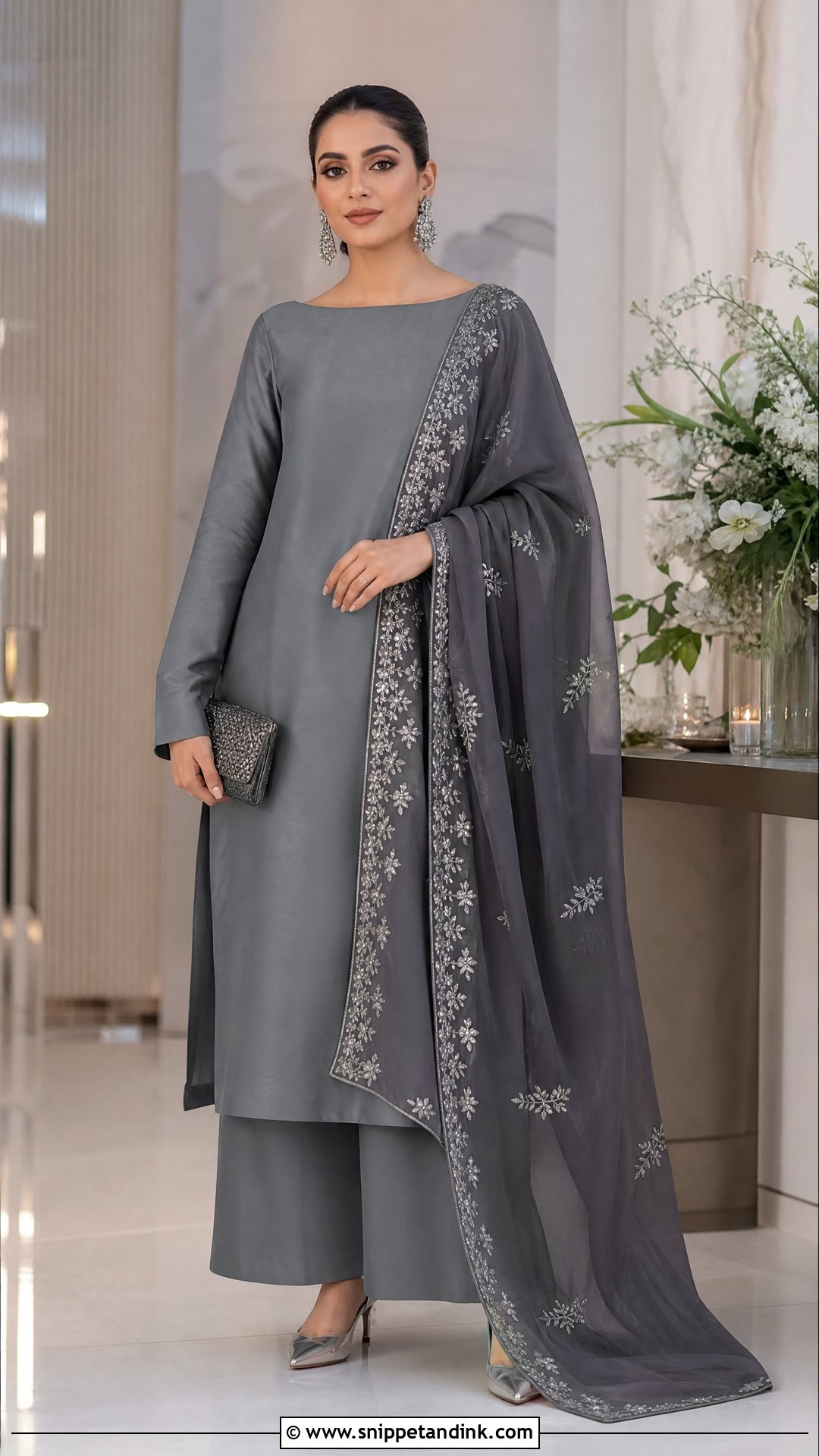
Gray is the modern pick when everyone else is in jewel tones. A plain gray kurta with a boat neck and wide-leg pants carries a sheer charcoal or light-gray dupatta with silver thread embroidery and a fine metallic border. Drape it on one shoulder so the tailoring shows. Pointed silver flats or low block heels, crystal drops and a pewter clutch, and very little else. In a single palette, texture does the work, matte kurta against shimmering thread. Silver thread tarnishes faster than gold zari, so keep it wrapped in cloth between wears.
15. Teal Plain Suit With Kutch Work Dupatta
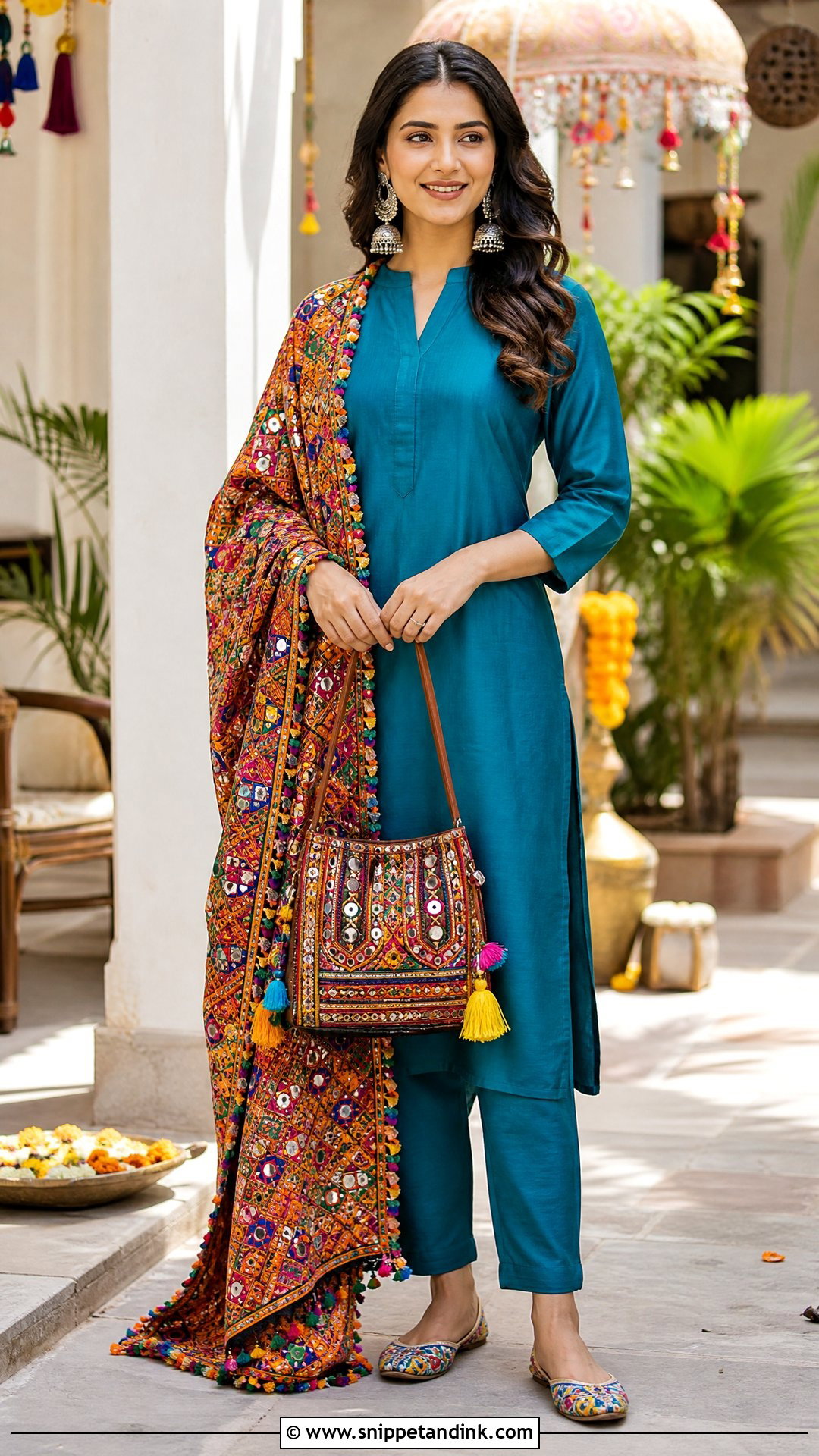
A teal plain suit is the right depth of color for Kutch embroidery, which is dense, geometric and full of orange, pink, yellow and white thread with small mirrors. A knee-length kurta with side slits and matching slim pants is enough. Wear the dupatta across one shoulder with the border falling to the front. Multicolor juttis, silver jhumkas and a small embroidered bag carry the handmade feel, and dense work near the neckline means no necklace. Hand-stitched Kutch work has small irregularities, which I like, because they show a person made it. The teal suit itself is easy to reuse with other dupattas.
16. Peach Plain Suit With Floral Embroidered Dupatta
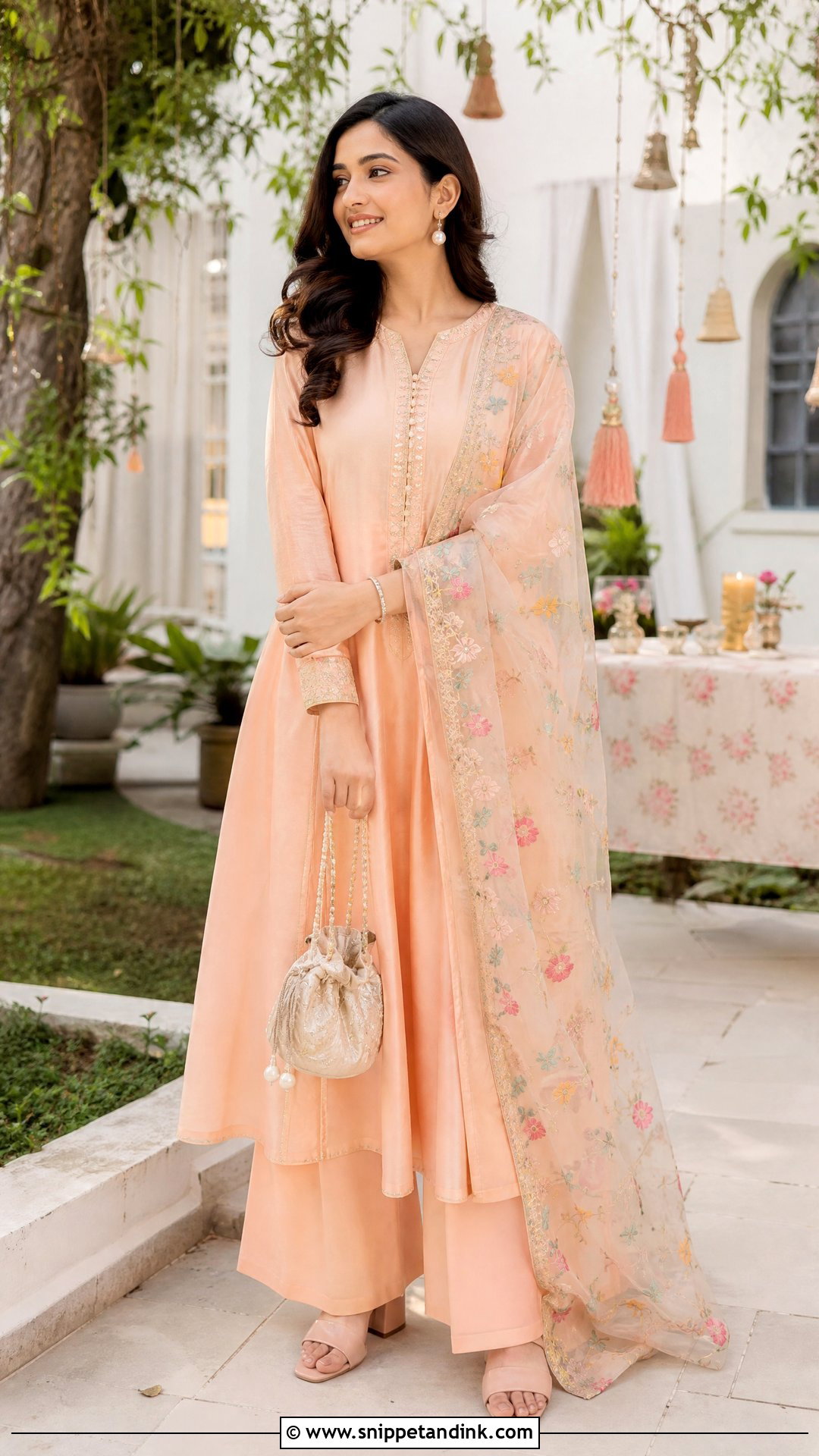
Peach is gentle on a wide range of skin tones and makes a soft base for floral embroidery. An A-line kurta with palazzos gives a flowing shape. A sheer ivory, peach or mint dupatta with pastel threadwork adds color without harsh contrast; let it fall from one shoulder and gather the other end loosely over the arm. Nude block heels, pearl earrings, a pale potli and a few fine bangles. Pastel on pastel can look flat in photographs, so I look for a little contrast in the embroidery, a mint or deeper rose thread that gives the camera an edge to hold. Garden parties and daytime family functions suit it.
17. Mustard Plain Suit With Maroon Brocade Dupatta
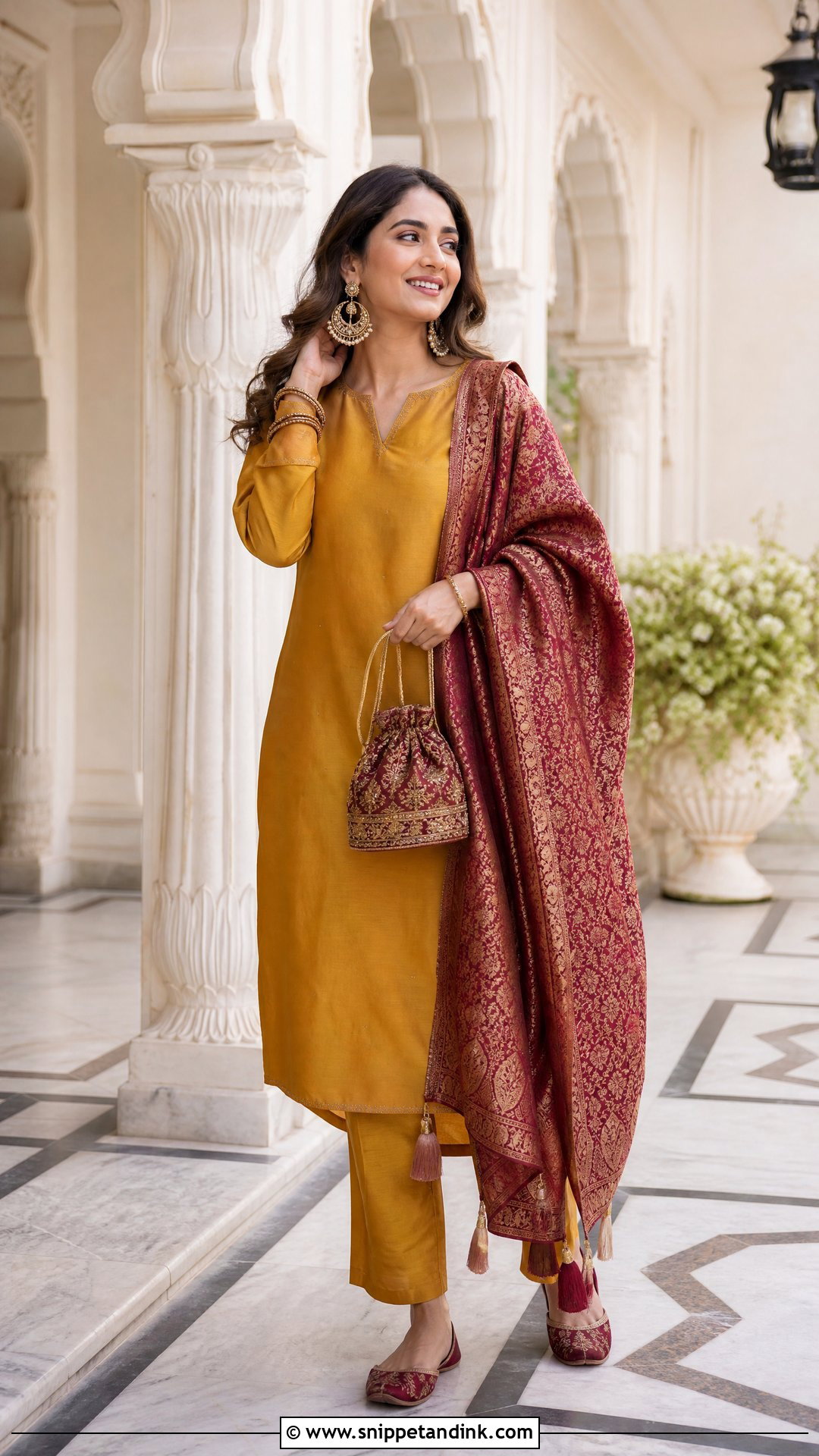
Mustard and maroon is a classic pairing, and it’s easy to accessorize. Wear a plain mustard silk kurta with straight pants or a churidar, then add a maroon brocade dupatta woven with gold motifs and a defined border. Brocade is stiff. Fold it lightly at the shoulder and leave enough width to show the weave, because pleating it tight makes it stand away from the body. Maroon juttis, antique gold chandbalis and a matching potli finish it, and if you want more detail, thin gold bangles beat a statement necklace. The solid mustard keeps the brocade from looking busy at daytime weddings.
18. Magenta Plain Suit With Chikankari Dupatta
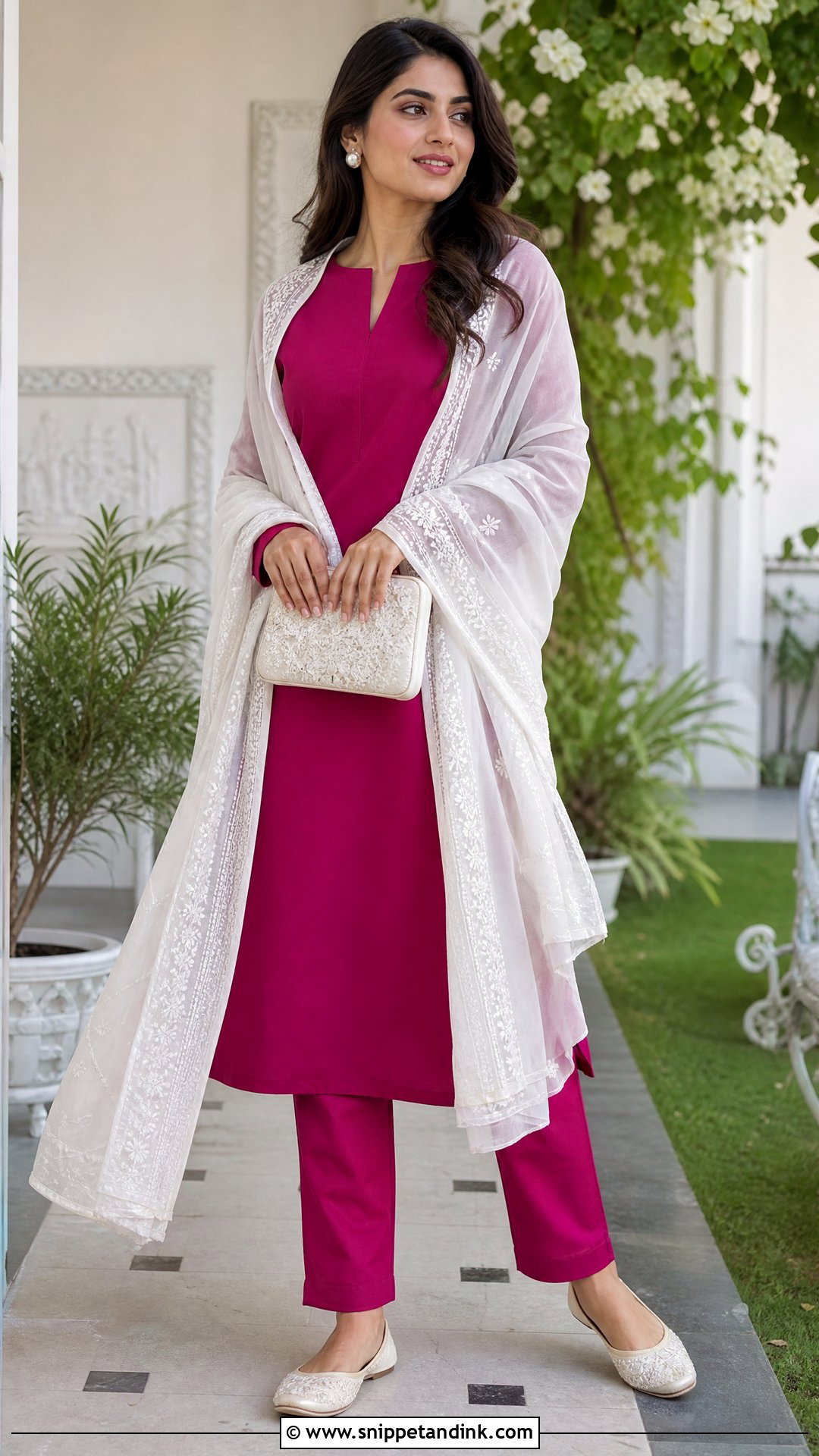
Chikankari is Lucknow’s white-on-white hand embroidery, and against vivid magenta it softens a strong color without dulling it. Choose a crepe or silk kurta with straight pants and look for white threadwork, scalloped edging or small pearl accents. Chikankari is usually worked on light cotton or georgette, which makes it one of the lightest dupattas in this list and easy to wear in the heat. Across both shoulders looks symmetrical; pinned to one side is easier when you’re moving around. Ivory juttis, pearl earrings and a white embroidered clutch suit festive lunches, engagements and wedding events.
19. Brown Plain Suit With Antique Gold Dupatta
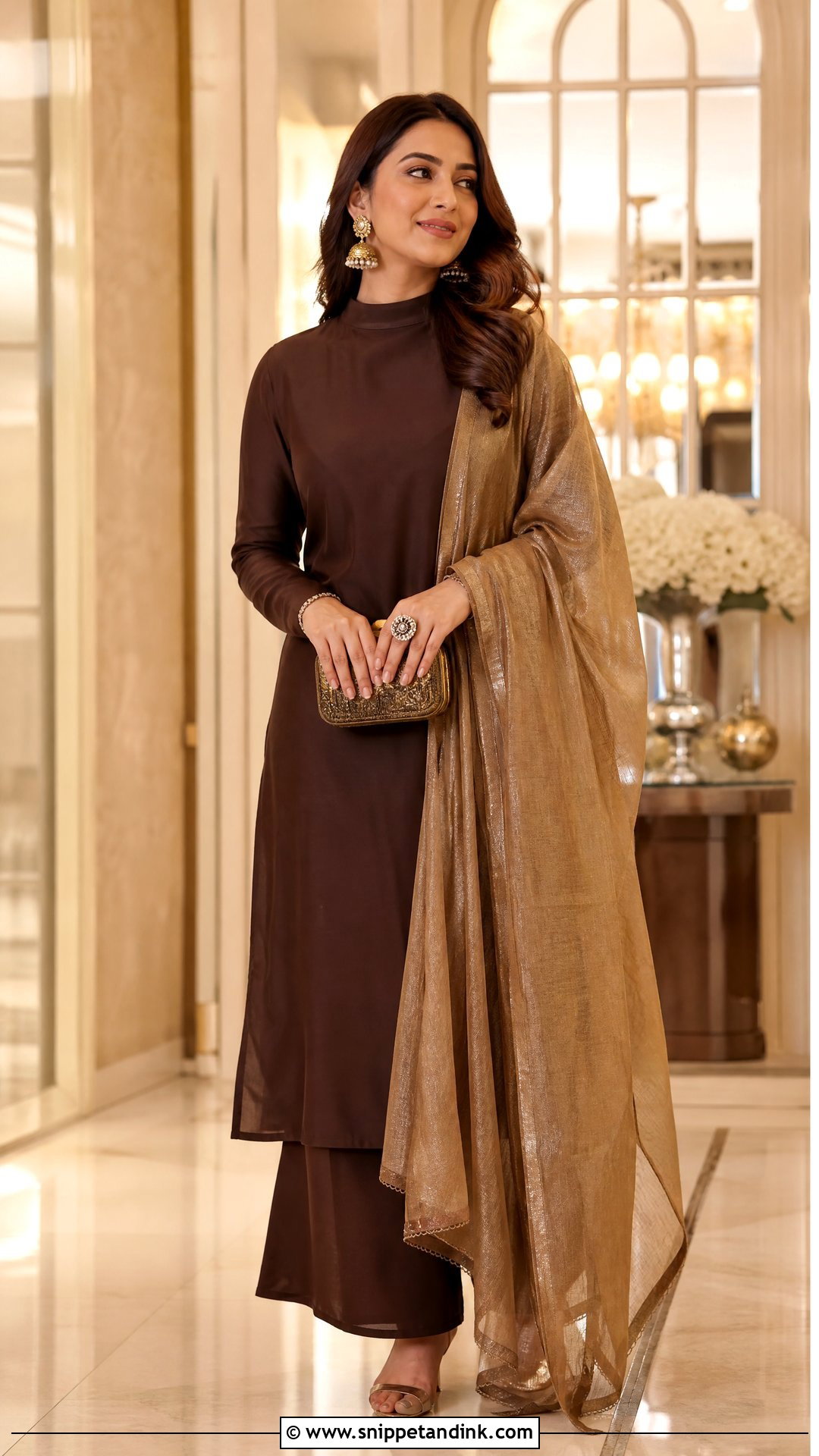
Chocolate brown with muted gold stands apart among brighter festive outfits, and that’s why I like it. A brown kurta with a high neck and flared pants, then tissue, brocade or embroidered organza in antique gold. Avoid bright yellow gold, which can look brassy against brown. Drape it over one shoulder so the metallic border falls in a vertical line. Bronze heels, antique earrings, a brown-and-gold clutch and a single cocktail ring. Tissue creases at every fold and those creases catch the light, so steam it on the day. It’s at home at evening events, in cool seasons and indoors.
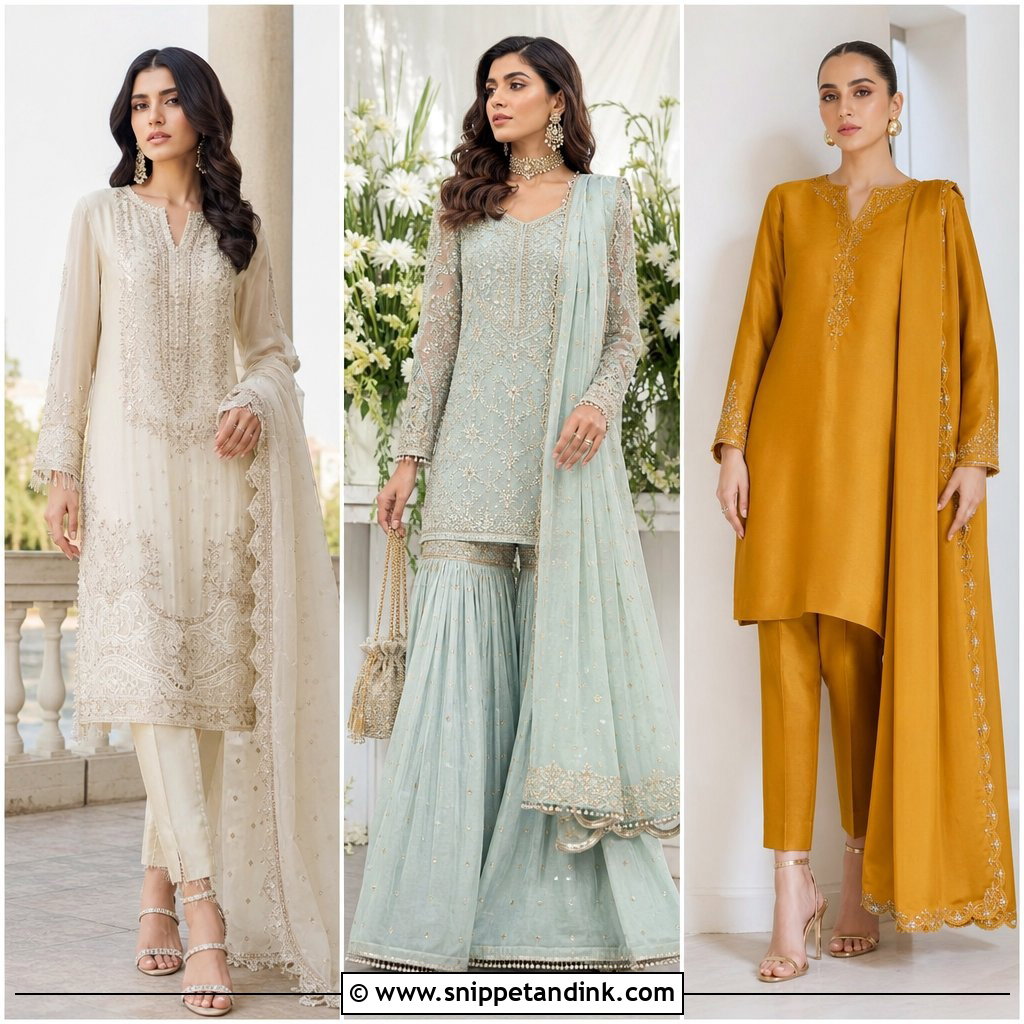
20. Lavender Plain Suit With Heavy Lace Dupatta
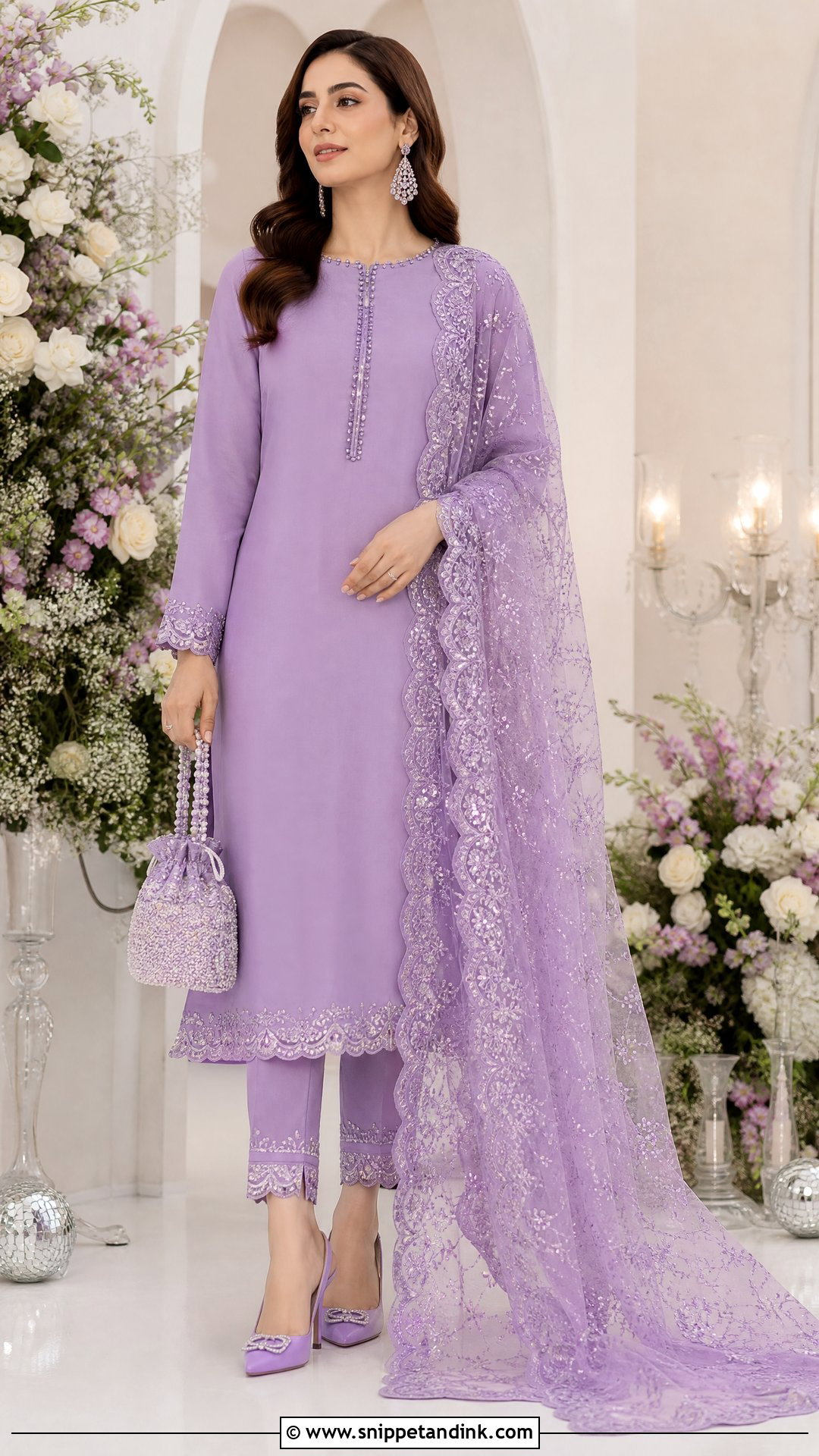
Lavender feels soft and modern, and a lace dupatta gives it definition. A straight kurta with matching ankle pants and minimal finishing keeps the base clean, under a tonal net dupatta with embroidered lace, scattered sequins and a scalloped border. Pin it at one shoulder so the lace shows without covering the whole kurta. Silver or lilac heels, crystal earrings and a small beaded bag, with a sleek ponytail or low bun. Heavy lace on fine net is fragile. Catch it on a chair arm and it tears, so lift it slightly whenever you sit. Choose it for formal events when you want a pastel with controlled sparkle.
Storing Zari, Gota and Velvet So They Last for Years
After the function, air the dupatta on a hanger overnight before putting it away. Sweat and the warmth of a crowded hall leave moisture in the fabric, and folding it damp is how mildew spots and early tarnish start.
The dupatta is usually the most expensive part of these outfits, and it’s the piece most easily ruined in a cupboard.
Metallic work
Zari and gota tarnish with air and moisture. Wrap each piece in soft white muslin or cotton, never plastic, which traps damp. Spray perfume before the dupatta goes on, not after, since alcohol dulls metallic thread.
Fold lines
Metallic borders crack along the same fold over time. Refold them in a different place every few months, or roll them around a cardboard tube.
Velvet, organza and net
Roll velvet with the pile facing out so it doesn’t crush. Organza and net keep their shape better hanging than folded.
Dry clean only, and point out to the cleaner which areas are metallic, mirrored or sequined so they’re treated gently.
Let the Dupatta Carry the Celebration
A simple suit doesn’t have to look unfinished. A woven, embroidered or embellished dupatta can supply almost all the color, texture and festive detail the outfit needs. Start with a kurta that fits well and a bottom you can sit in comfortably, then match the dupatta to the occasion and to the suit’s fabric weight. Heavy brocade drags on fine georgette, and light chiffon looks thin over heavy silk. Tie shoes and jewelry to the dupatta’s colors without making every piece ornate, and secure heavy drapes with discreet pins. Get those proportions right and you’ll rewear the same suit for years.
You'll Like These Ideas:


Leave a Reply