
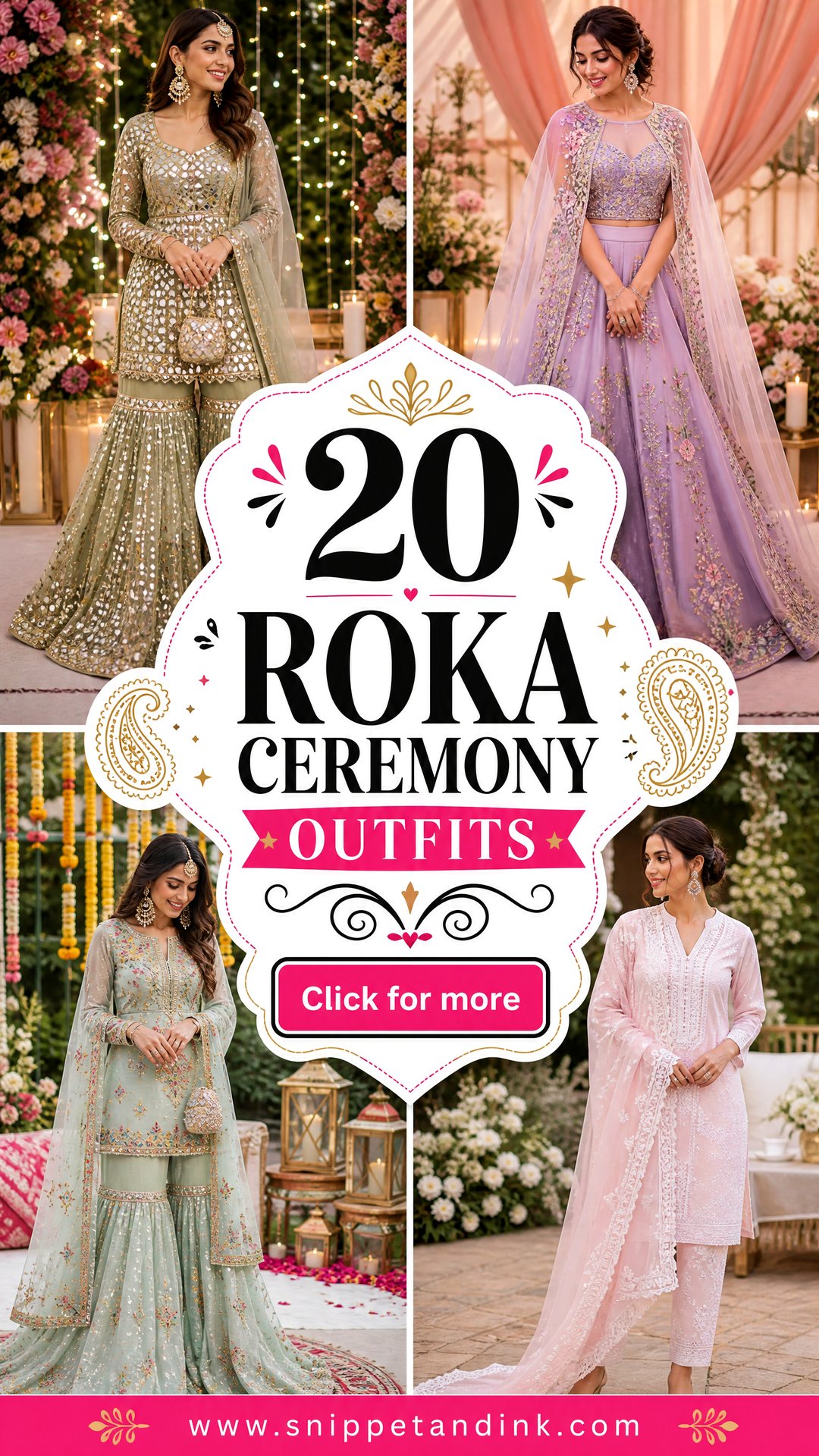
Dressing for your sibling’s engagement celebration is a different brief from dressing as a guest. You’ll be in half the family photos, but you’ll also be carrying the thali, handing out sweets, settling elders into chairs and sitting through the puja, often on the floor. So I style a sister’s Roka look for the job first and the camera second. Light lehengas, sharara sets, pre-draped sarees, Anarkalis and fusion separates all work, provided you can bend and kneel in them. Timing sets the palette: pastels and florals for a morning or afternoon at home, jewel tones and metallic work for an evening function. The one rule I don’t bend is that you shouldn’t match or outshine the bride-to-be.
What the Sister Actually Does at a Roka, and Why It Changes What You Wear
A Roka is usually short and family-centred, but the sister of the bride or groom is rarely just sitting in the front row. Think through the day before you settle on fabric and silhouette.
- The puja often happens on the floor around a small fire or a diya. Net, organza and synthetic chiffon catch and melt quickly near a flame, so keep a loose dupatta pinned well back, and avoid trailing sleeves.
- Covering your head is expected in many families during prayers, and always in a gurdwara. Even if your outfit is designed without a dupatta, carry a light one.
- Touching elders’ feet means bending low many times. Try it in the fitting room: if the blouse rides up or the neckline gapes, it needs adjusting.
- Carrying the thali, gifts and sweets means both hands are busy. A cape, a pinned dupatta or a fusion set beats one that has to be held.
Short Notice? Ready-Stitched Pieces and a Fast Tailor
Rokas are often arranged quickly once two families agree, sometimes within a couple of weeks. That rules out a custom blouse from a busy tailor, who may need three or four weeks during wedding season. If time is short, look for outfits sold with a ready-stitched blouse in your size and plan only small alterations, like taking in the sides or adjusting straps. A pre-draped saree, a co-ord or a sharara set usually needs the least work. Whatever you buy, have one full try-on with your shoes and jewellery a few days before, so there’s time to fix a hook or shorten a hem.
1. Pastel Floral Lehenga Roka Outfit
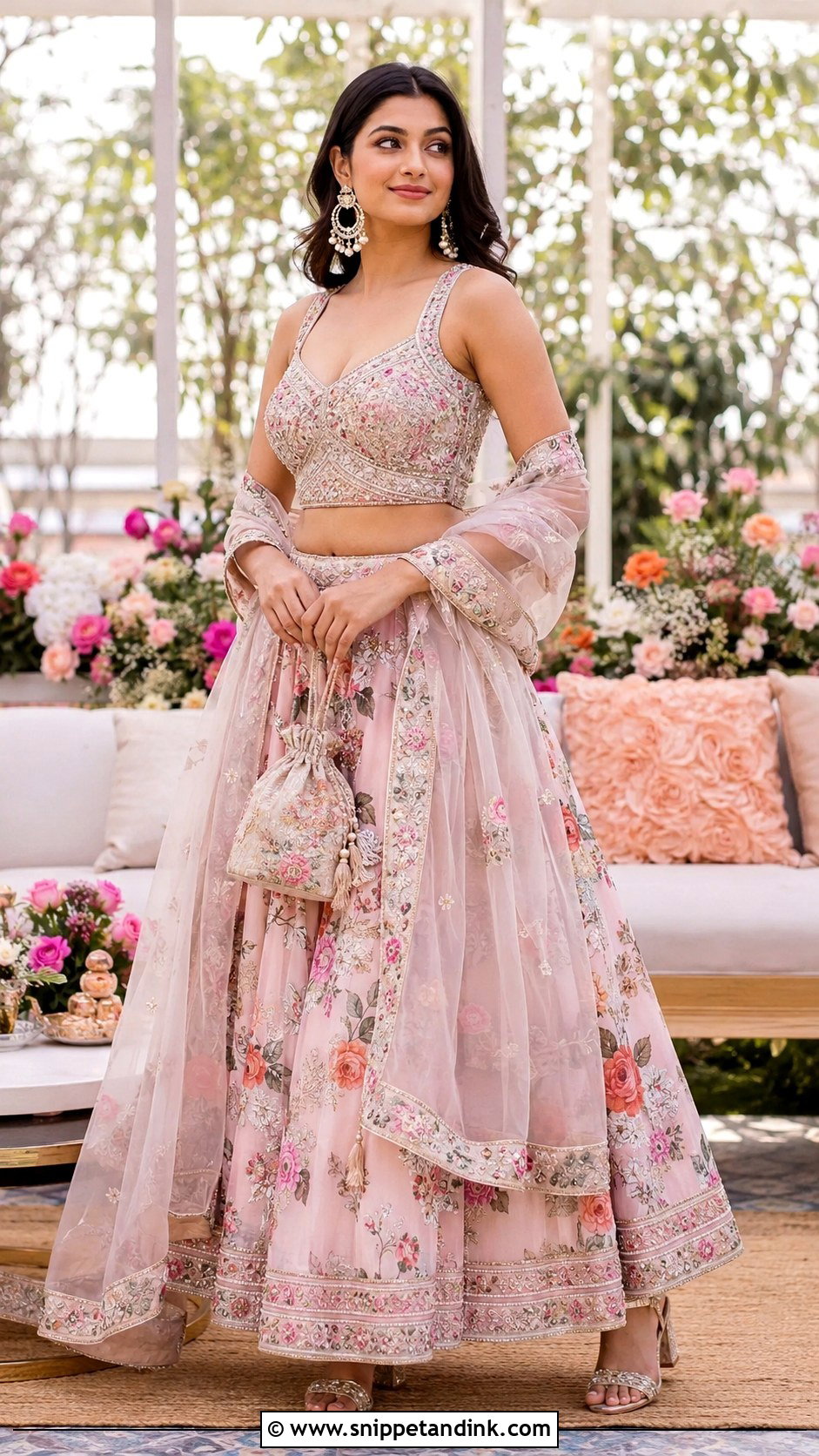
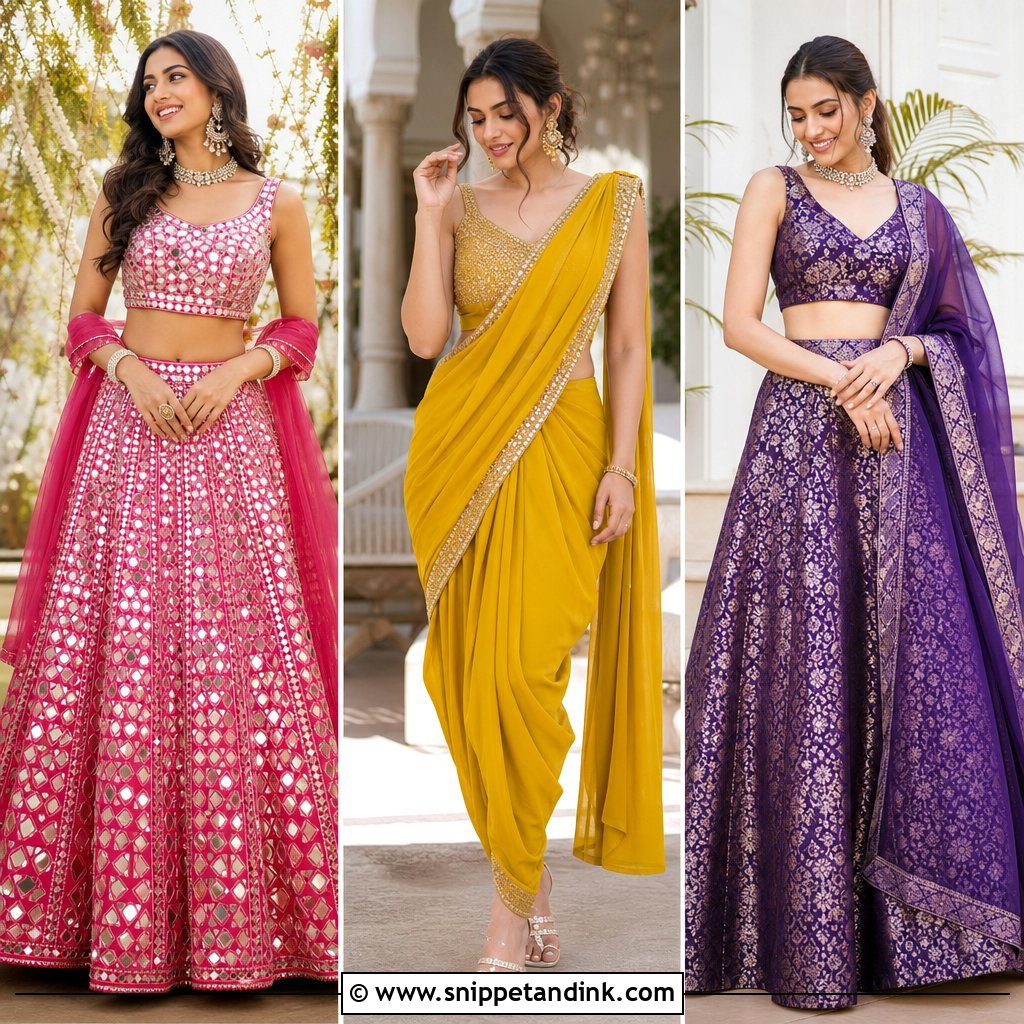
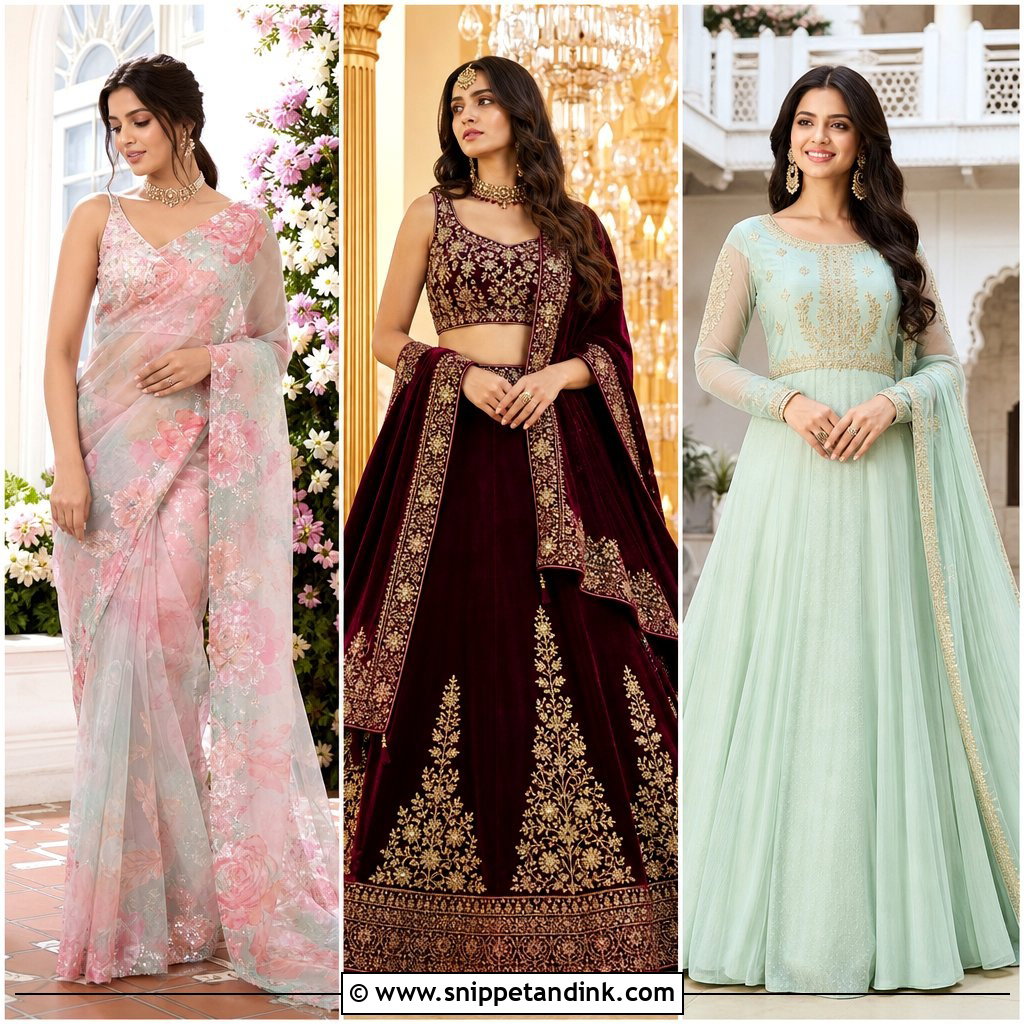
For a daytime Roka at home or in a bright banquet hall, a pastel floral lehenga is the easiest win. Go for delicate threadwork or watercolour-style prints over dense bridal embroidery, which looks too formal before sunset. A fitted blouse with a modest neckline and proper straps or sleeves stays put when you bend to touch elders’ feet. Organza makes a light dupatta, but it is stiff and slips off the shoulder, so pin it in two places. Pearl chandbalis, a small potli and block heels or juttis finish it. Blush, powder blue, lilac and sage all read well in daylight; keep makeup fresh with a rosy lip, and wear loose waves or a low ponytail.
2. Mirror Work Sharara Roka Outfit
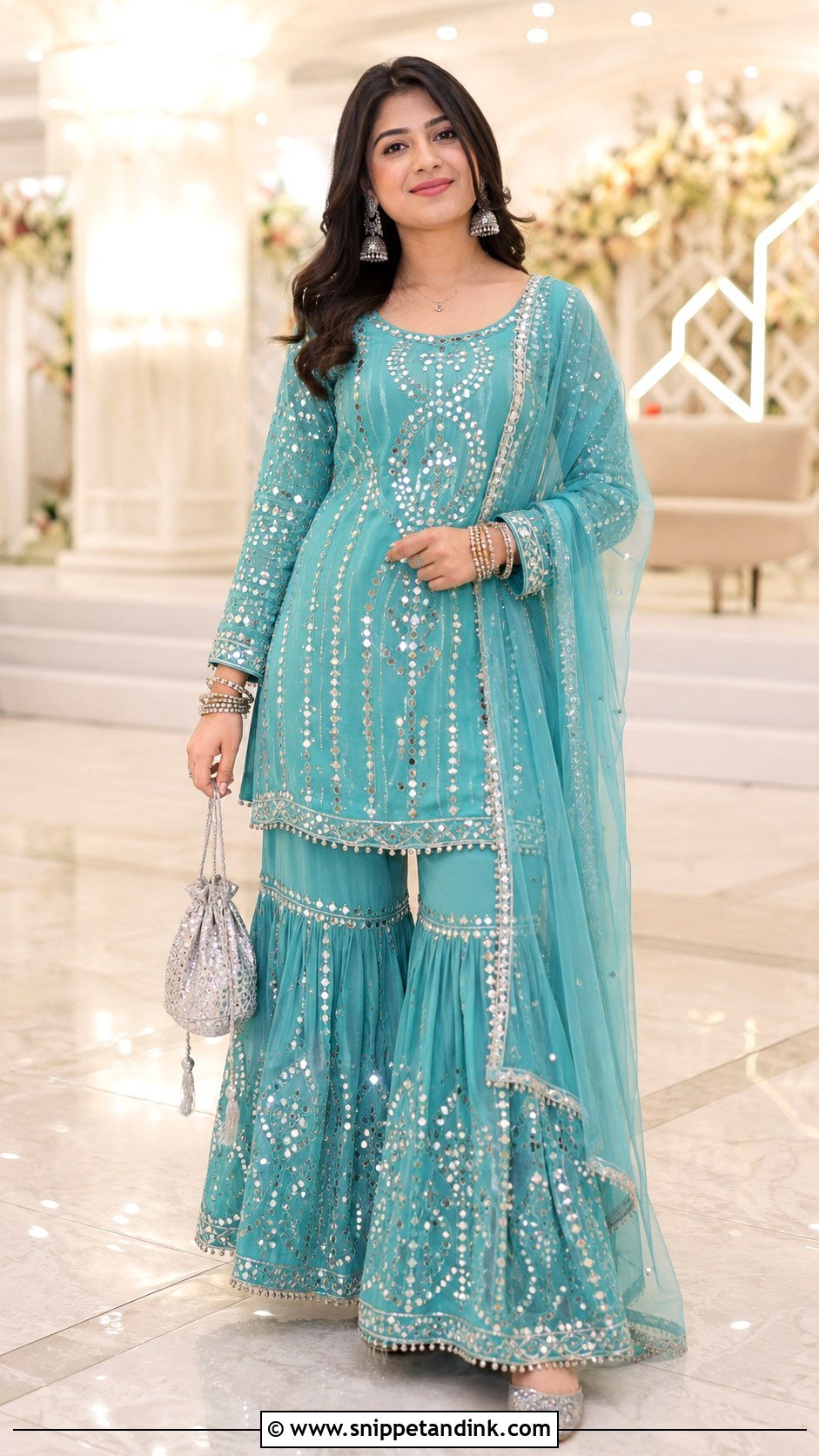
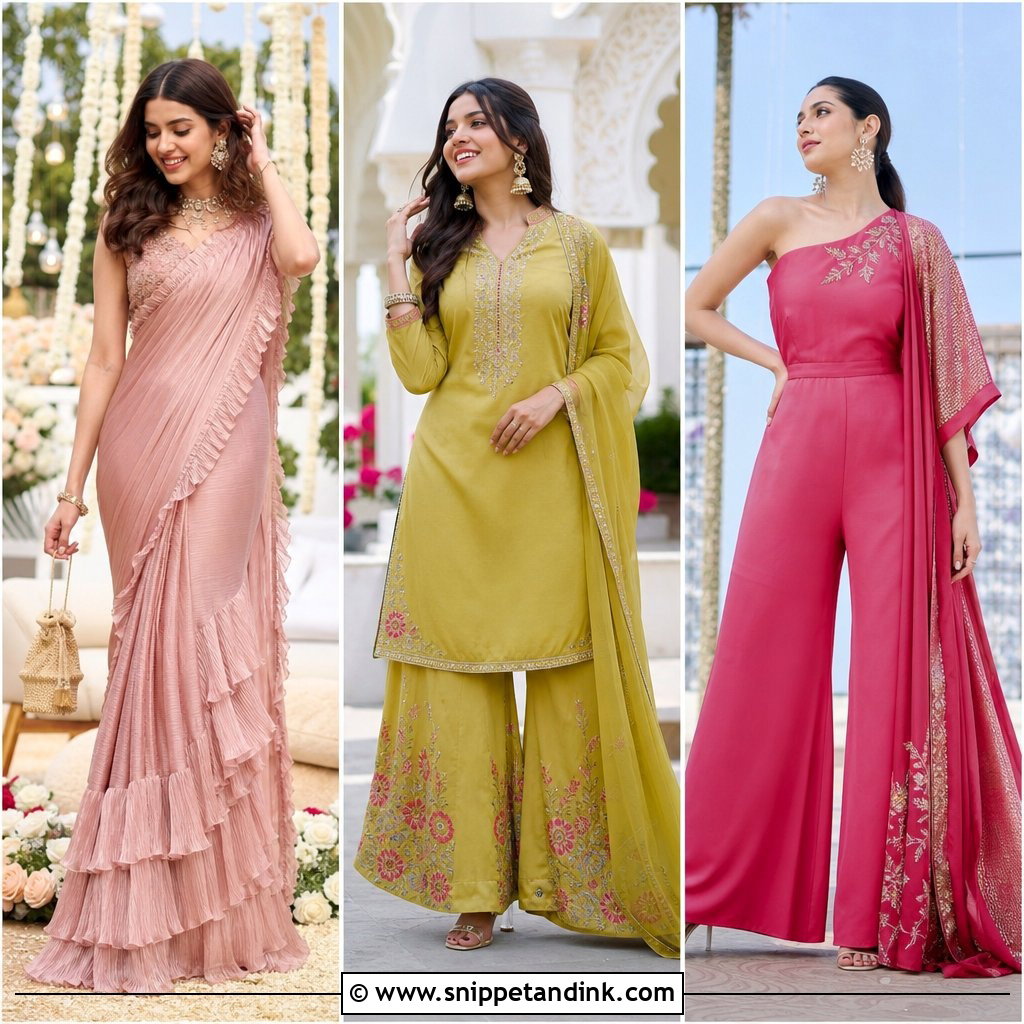
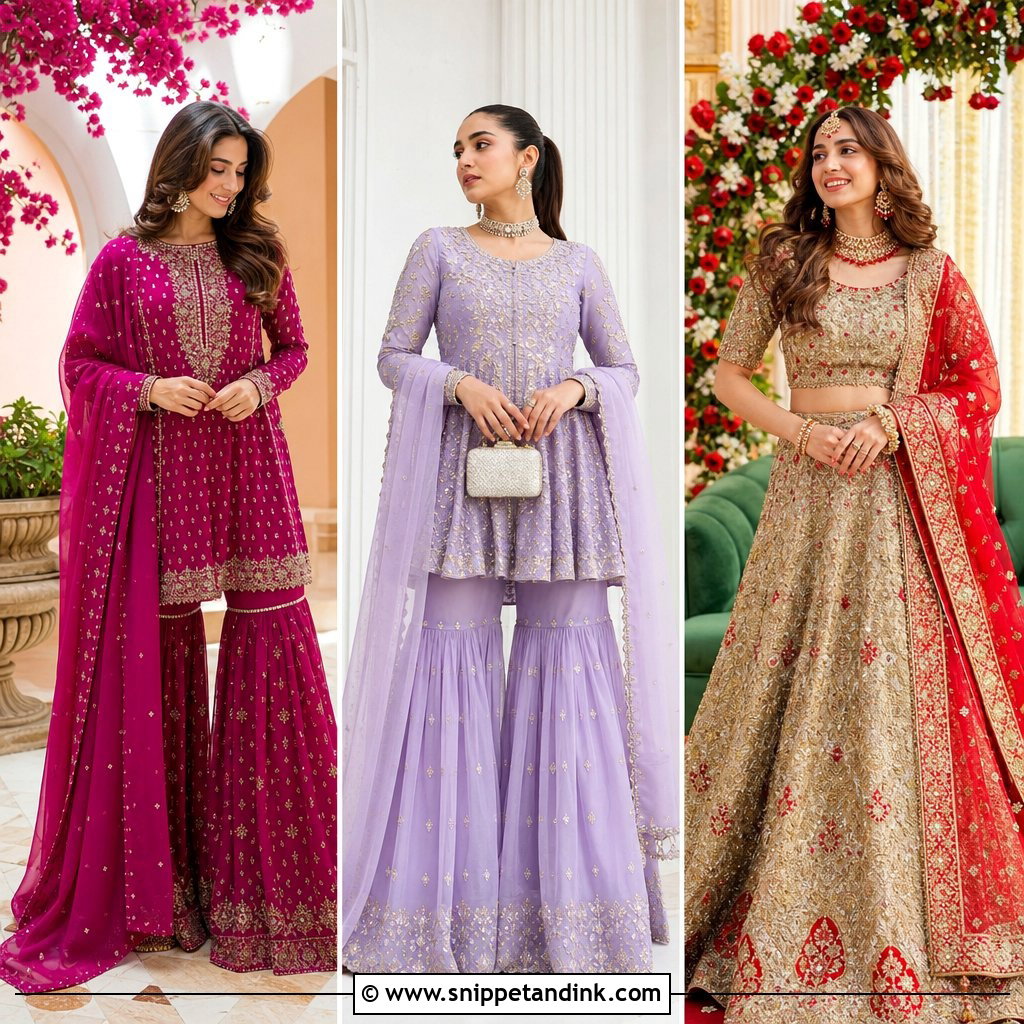
If the evening has a dhol and dancing, a mirror work sharara set moves far better than a heavy lehenga. A short embroidered kurti over flared sharara pants with a soft chiffon dupatta is the classic build, and the fitted top keeps the volume below in proportion on most figures. Real mirror work is heavier than it looks and the glass edges can catch fine fabric, so check the stitching around each mirror is tight. Turquoise, fuchsia, lime or royal blue keep it lively. Silver jhumkas, stacked bangles and metallic juttis suit a night on your feet. Mirrors already do a lot, so a sleek centre-parted ponytail is all the hair needs.
3. Silk Anarkali Roka Outfit
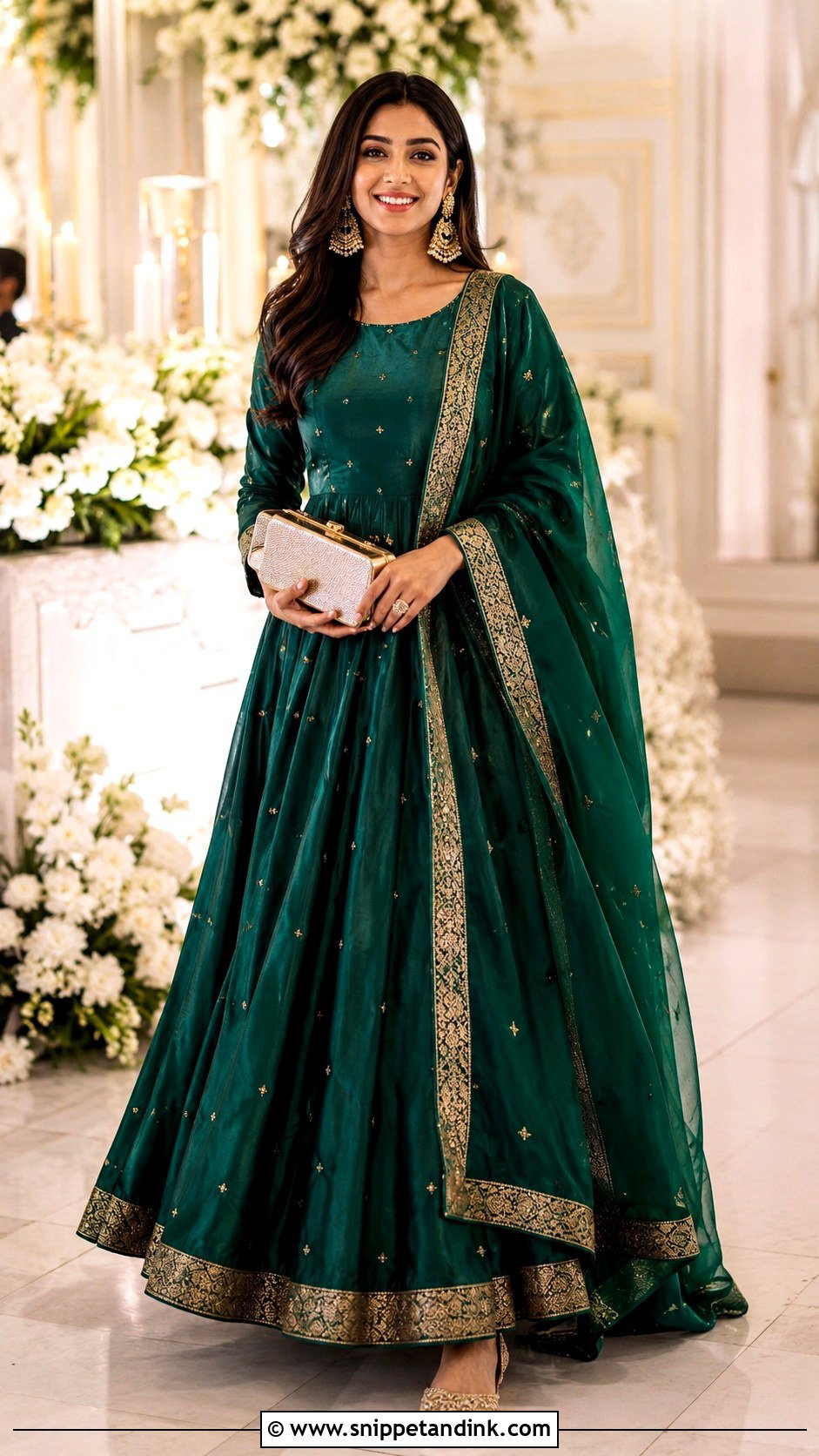
A silk Anarkali has a quiet formality that suits an evening Roka with elders present. I look for a fitted bodice, a defined waist and a full flare, floor or ankle length, with subtle zari borders rather than allover work. Silk Anarkalis are heavy at the hem, so try sitting cross-legged in one before you buy; some have so many panels they bunch awkwardly on the floor. Emerald, wine, mustard, navy or deep rose suit the evening. Pin a light dupatta neatly over one shoulder. Kundan earrings, a small ring and a structured clutch keep the neckline clear, and pointed juttis can hide under the hem. A smooth bun with a few fresh flowers or soft curls both work.
4. Pre-Draped Saree Roka Outfit
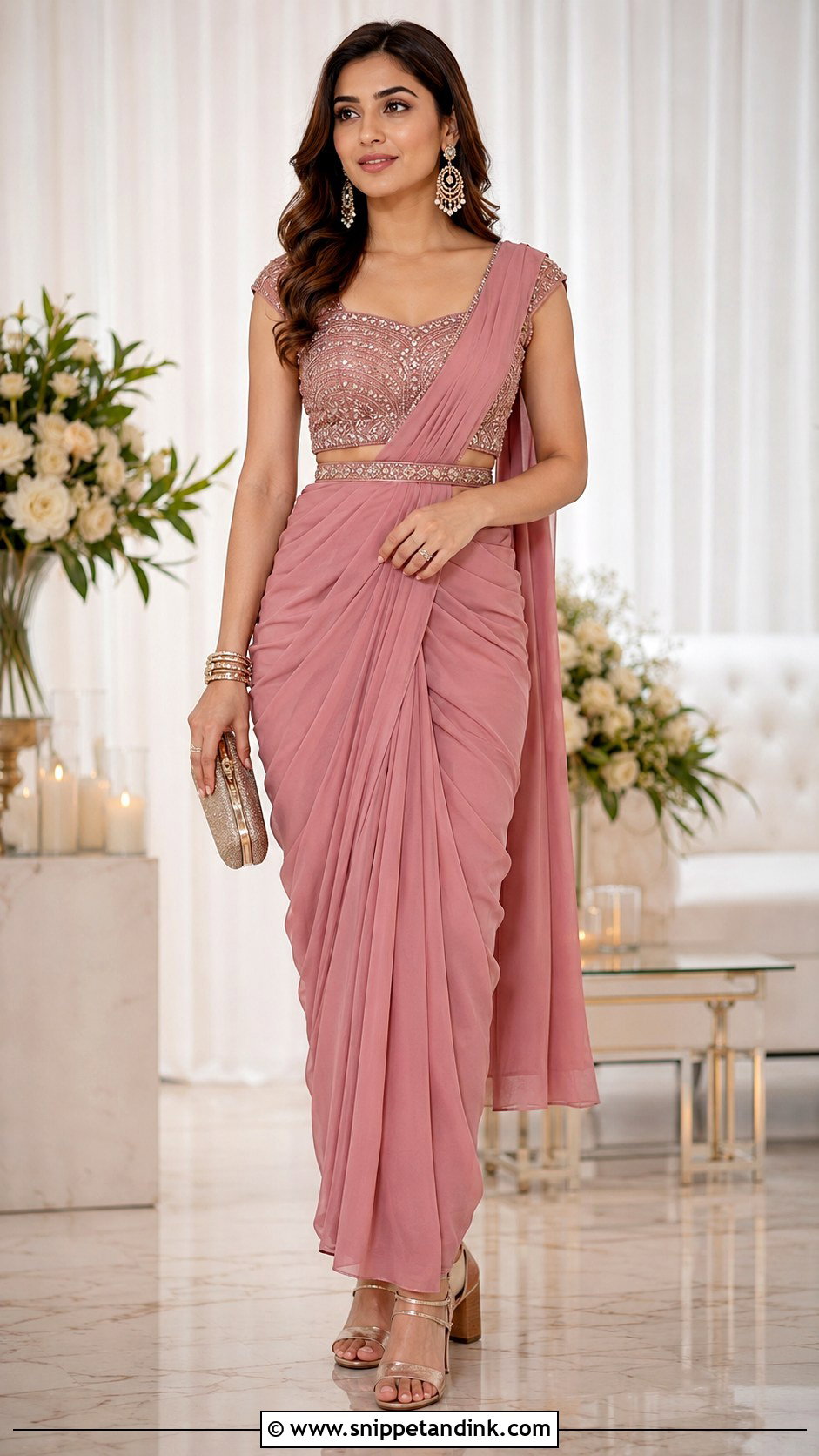
Pre-draped sarees solve the problem I see most at family functions: a saree that slowly unravels while you’re busy serving. The pleats and pallu are stitched in place, so you wrap and fasten it like a skirt. Georgette, crepe or soft satin drape best. Pair it with a structured embroidered blouse that gives real support and enough coverage for the puja. Champagne, teal, dusty rose, plum or steel blue look polished. A slim belt at the waist holds the pallu steady, and statement earrings with a small clutch are enough jewellery. Strappy block heels give height and stability. A sleek bun, polished waves or a side ponytail all suit it.
5. Cape Lehenga Roka Outfit
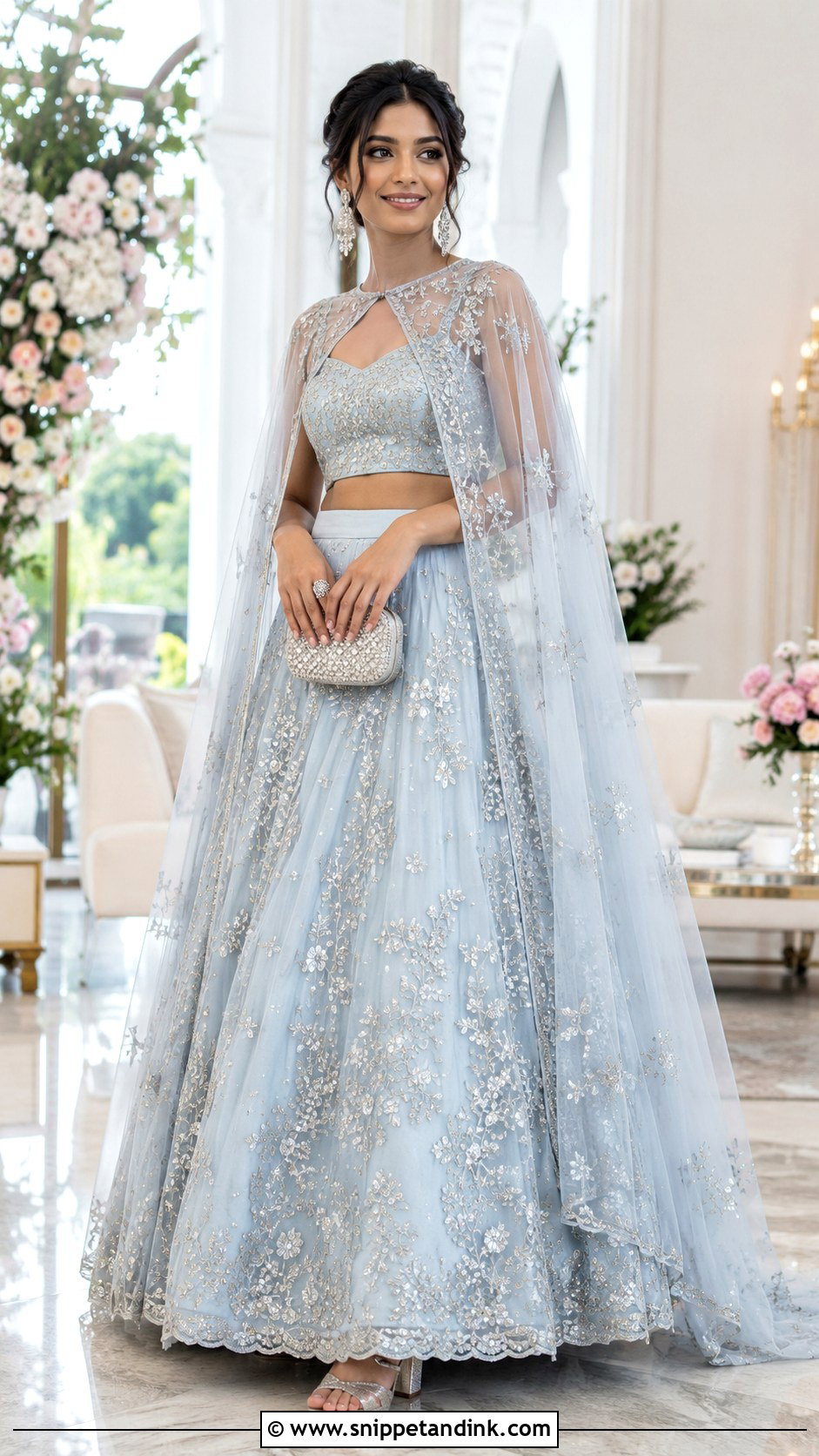
A cape lehenga takes the dupatta out of the equation, which is a real advantage for a sister who will be carrying trays and greeting people at the door. A light embroidered or pleated skirt with a well-fitted blouse goes underneath, and a sheer organza or georgette cape layers on top. Length is the decision: a short cape ending above the widest part of the skirt reads modern; one that falls nearly to the hem looks more traditional and moves more. Coral, icy blue, lavender or mint suit the day; burgundy or midnight blue the evening. Drop earrings, a cocktail ring and block heels finish it, with smooth hair and soft makeup.
6. Peplum Sharara Roka Outfit
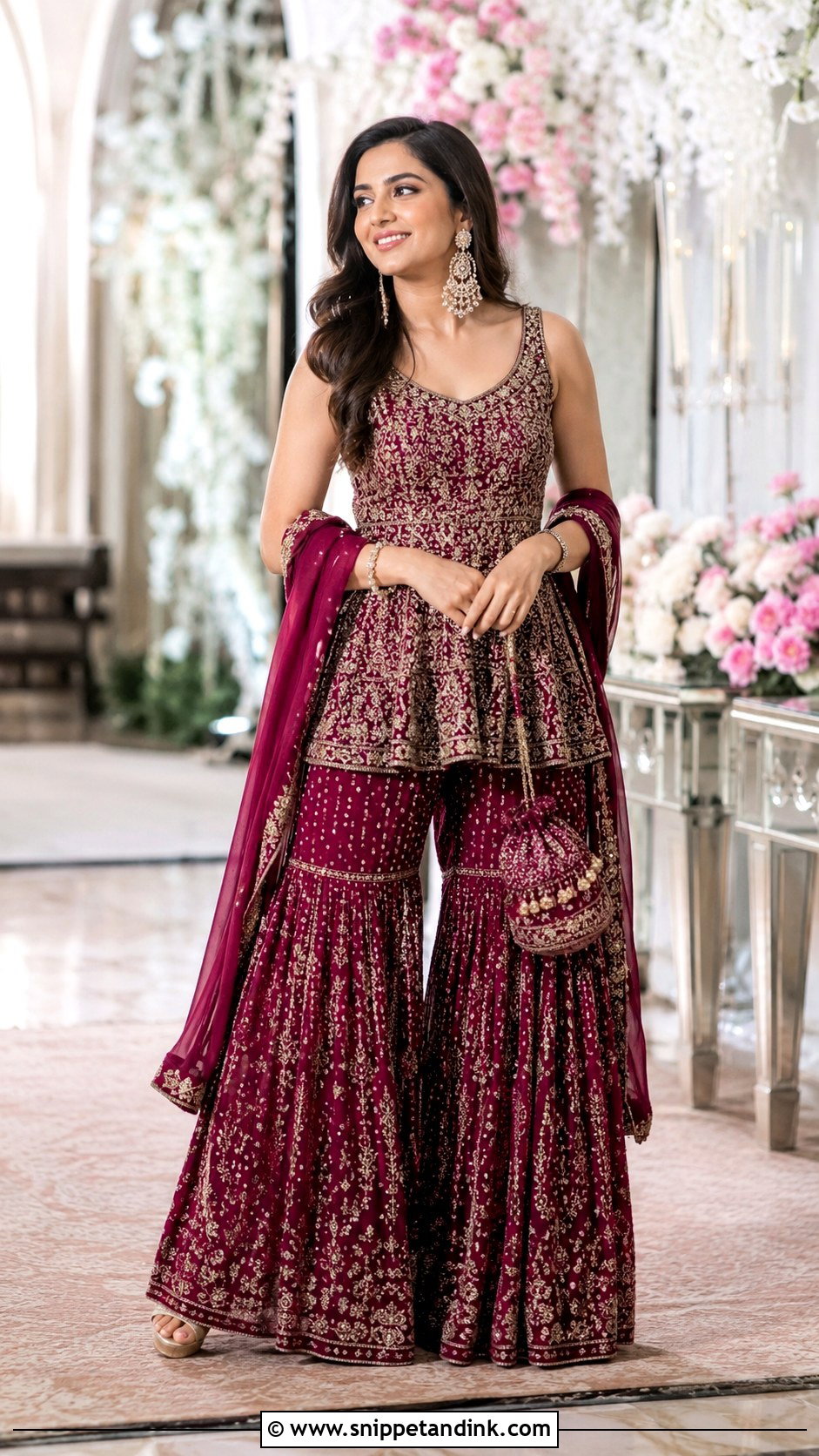
The peplum flare covers the waistband of the sharara, which means you can lift your arms and bend without your midriff showing, a small thing that matters at a family function. Choose a structured peplum ending near the upper hip, with sharara pants in the same fabric. Scalloped hems or small sequin details are festive without weight. Drape a net or chiffon dupatta over one arm or pin it at the shoulder. Ruby, peacock green, aubergine or deep turquoise are strong in the evening. Chandelier earrings, a matching potli and cushioned heels complete it; skip the necklace if the neckline is embroidered. A half-up style with soft curls keeps your face open for greeting guests.
7. Organza Saree Roka Outfit
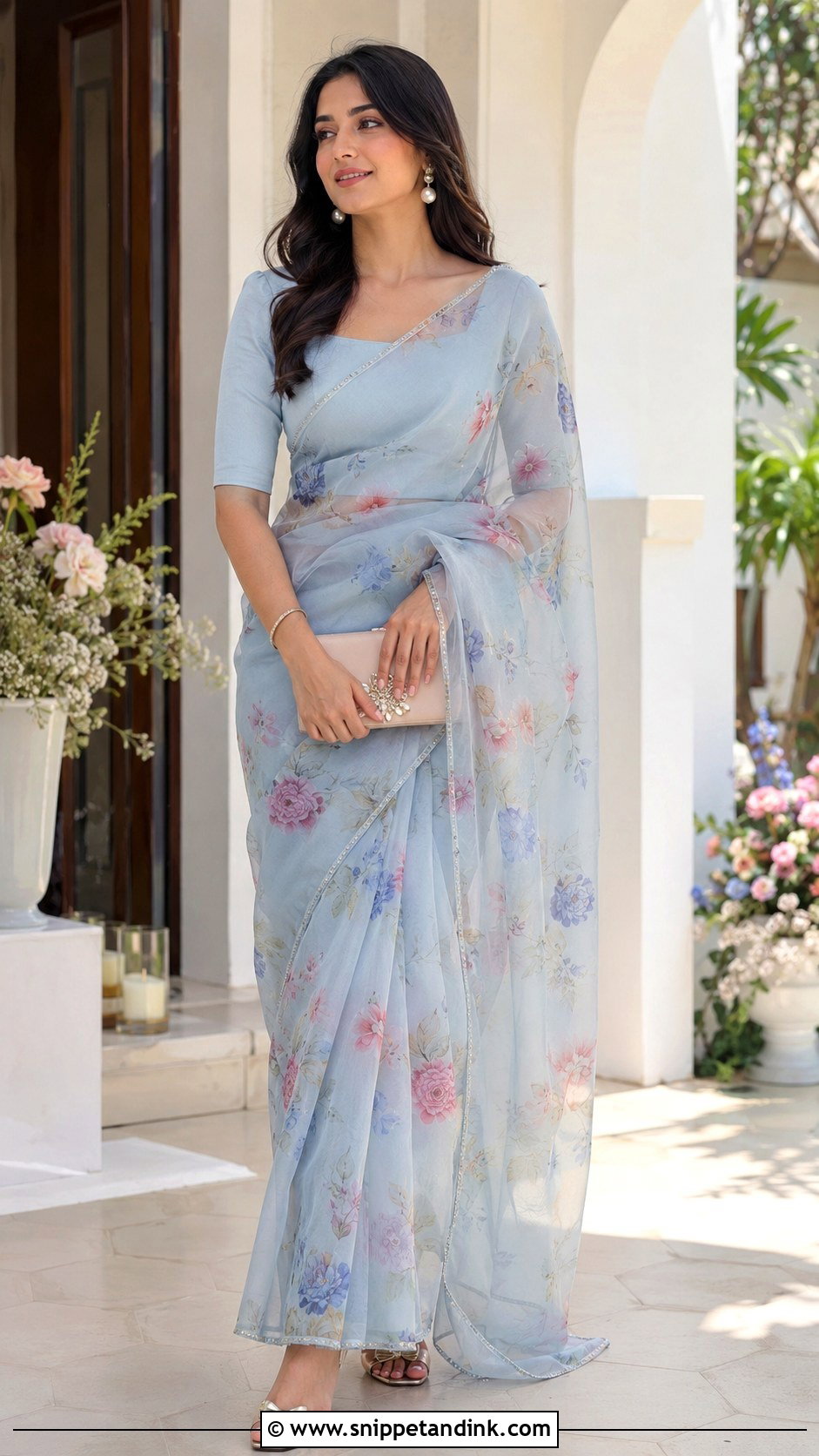
Organza sarees are crisp and translucent, which suits a daytime Roka, but the fabric holds a fold like paper, so it needs a confident draper. Florals, embroidered borders or small woven motifs are enough decoration. A fitted silk or raw silk blouse gives contrast; elbow sleeves look classic, a sleeveless square neck more current. Pearl earrings, a slim bracelet and a small pastel clutch match the lightness. Pin the pleats and pallu discreetly, more pins than you’d use for georgette, because organza springs back. Kitten heels let it fall cleanly. A low bun or polished ponytail stops flyaways tangling in the pallu.
8. Jacket Lehenga Roka Outfit
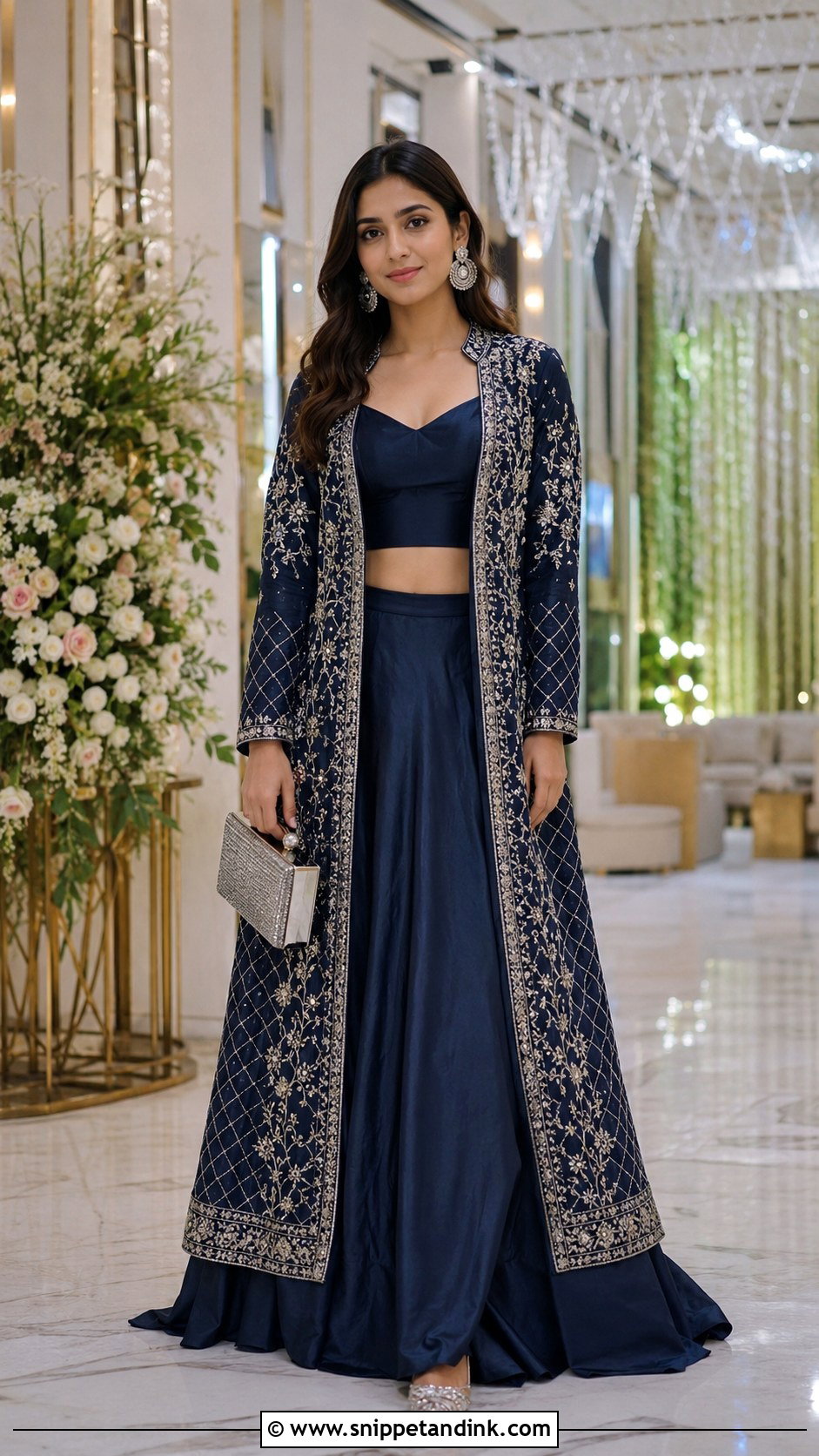
Winter Rokas in North India can be cold, especially in the evening or an open courtyard, and a jacket lehenga gives coverage without a shawl hiding everything. A short brocade jacket looks regal; a sheer embroidered longline is softer. If the jacket is heavily worked, keep the skirt plain so the whole outfit doesn’t fight itself. Ivory with gold, navy with silver or rust with antique embroidery are good pairings. Statement studs, a box clutch and closed-toe heels or juttis suit it. With a jacket, I’d usually drop the dupatta, but carry a light one in your bag in case you need to cover your head for the puja.
9. Embroidered Gharara Roka Outfit
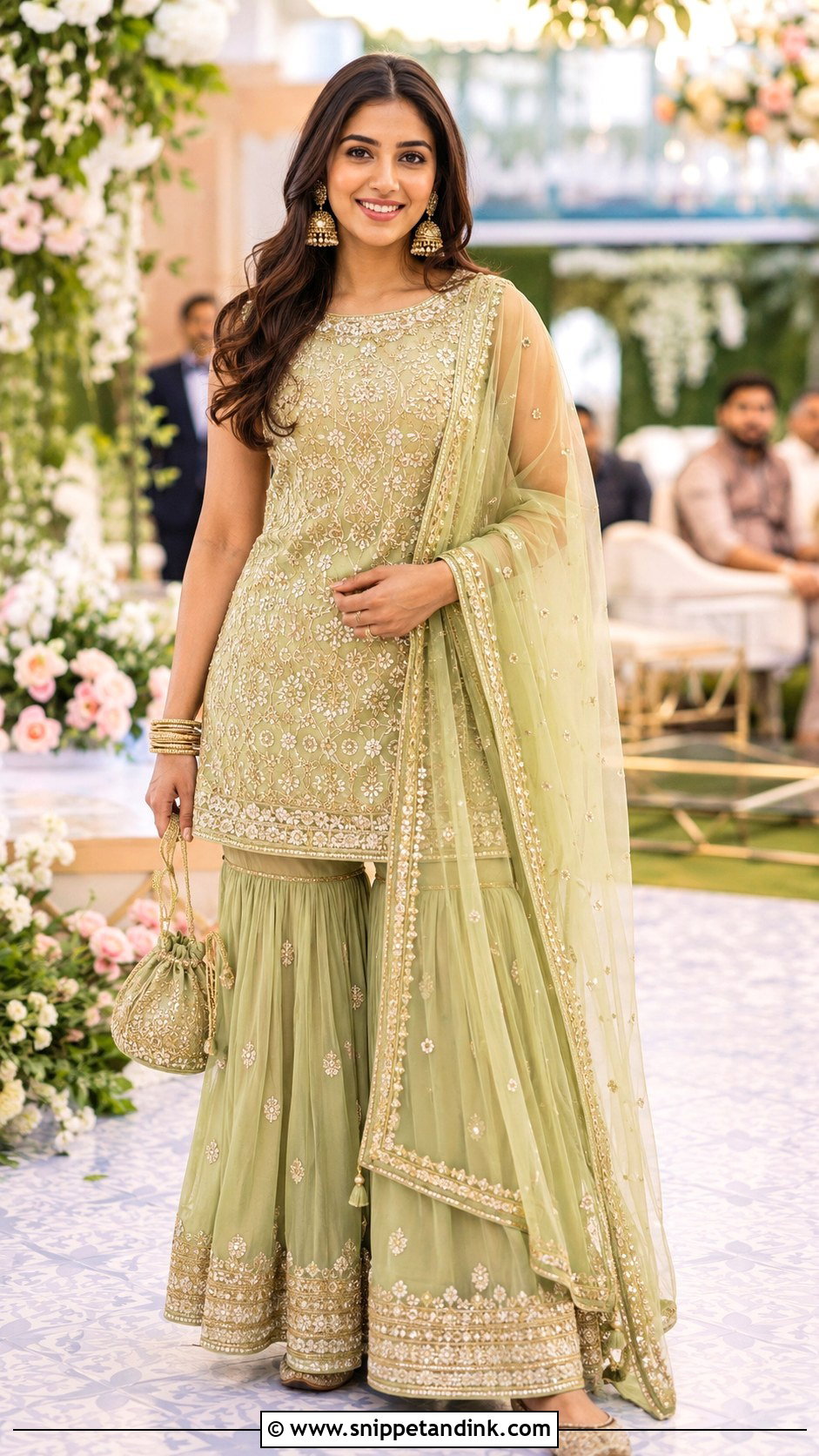
A gharara’s shape, fitted to the knee and flaring sharply below, gives instant traditional character. Pair it with a short kurti so the join at the knee, often trimmed with gota, stays visible. Fine gota, zari borders or light embroidery keep it festive. A light dupatta with matching trim ties it together. Powder pink, pistachio, peach and lemon suit daytime; maroon and bottle green suit evening. The knee join sits where the fabric bends most, so check the trim lies flat when you sit. Traditional jhumkas, a few bangles and embellished juttis finish it; a small bag rather than a large one. Soft waves, a braided ponytail or a centre-parted bun suit it.
10. Palazzo Suit Roka Outfit
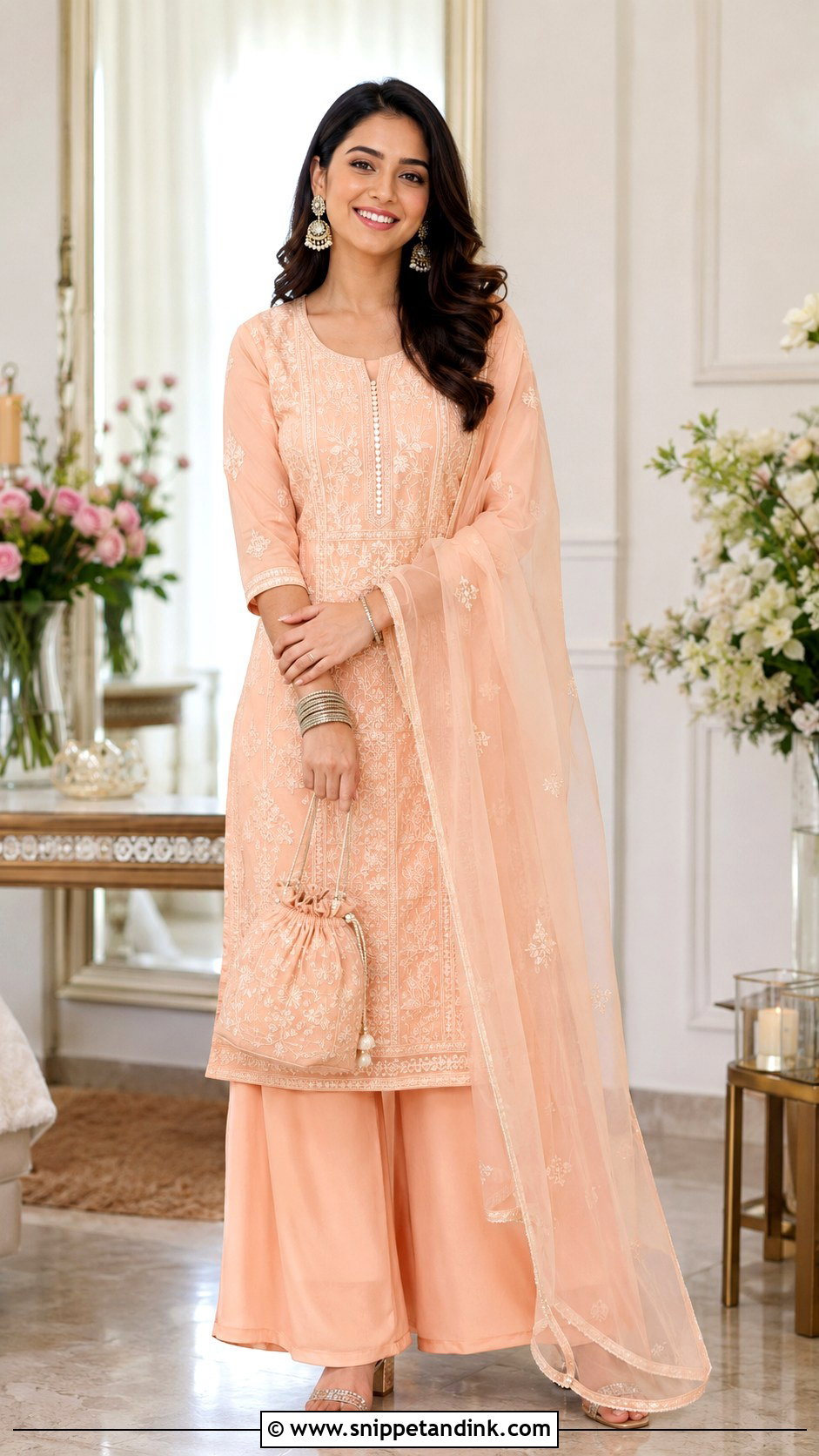
For a small Roka in the family living room, an embroidered palazzo suit is the most practical outfit here. You can sit on the floor, run to the kitchen and climb stairs without holding up a skirt. A straight or slightly flared kurta ending at the knee shows enough of the palazzo to keep the line balanced. Thread embroidery, tonal sequins or a decorated neckline are plenty. A soft organza or chiffon dupatta with a narrow border makes it ceremonial. Jewel tones for evening; ivory, peach, aqua or soft yellow for day. Medium earrings, stacked bangles, a potli and block-heel sandals complete it, with straight hair or a low ponytail.
11. Dhoti Pant Roka Outfit
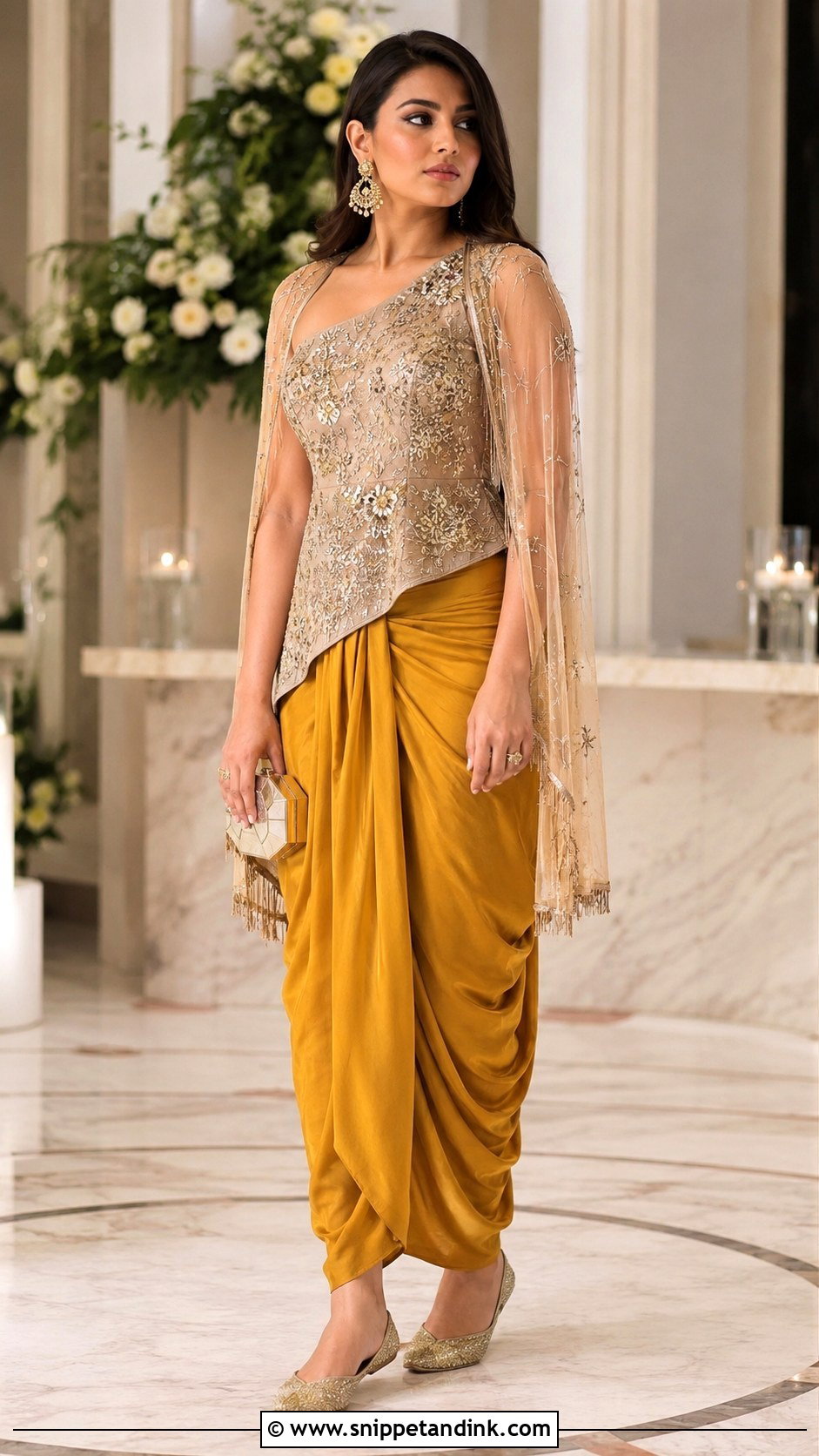
A dhoti pant set brings an Indo-Western edge to a relaxed or modern Roka. Over neatly draped dhoti pants, wear a fitted peplum, an asymmetric kurta or a short embroidered top. The top needs to define your waist, otherwise the draped volume below swallows a petite frame. A light cape or one-shoulder dupatta adds movement. Pick a solid colour with embroidery at the neckline, cuffs or waist; mustard, magenta, teal or ivory all work. I’d check this one with your family first, since some elders find it too casual for a religious ceremony. Sculptural earrings, a compact clutch and heeled juttis suit it, with a high ponytail or smooth bun.
12. Embroidered Co-Ord Roka Outfit
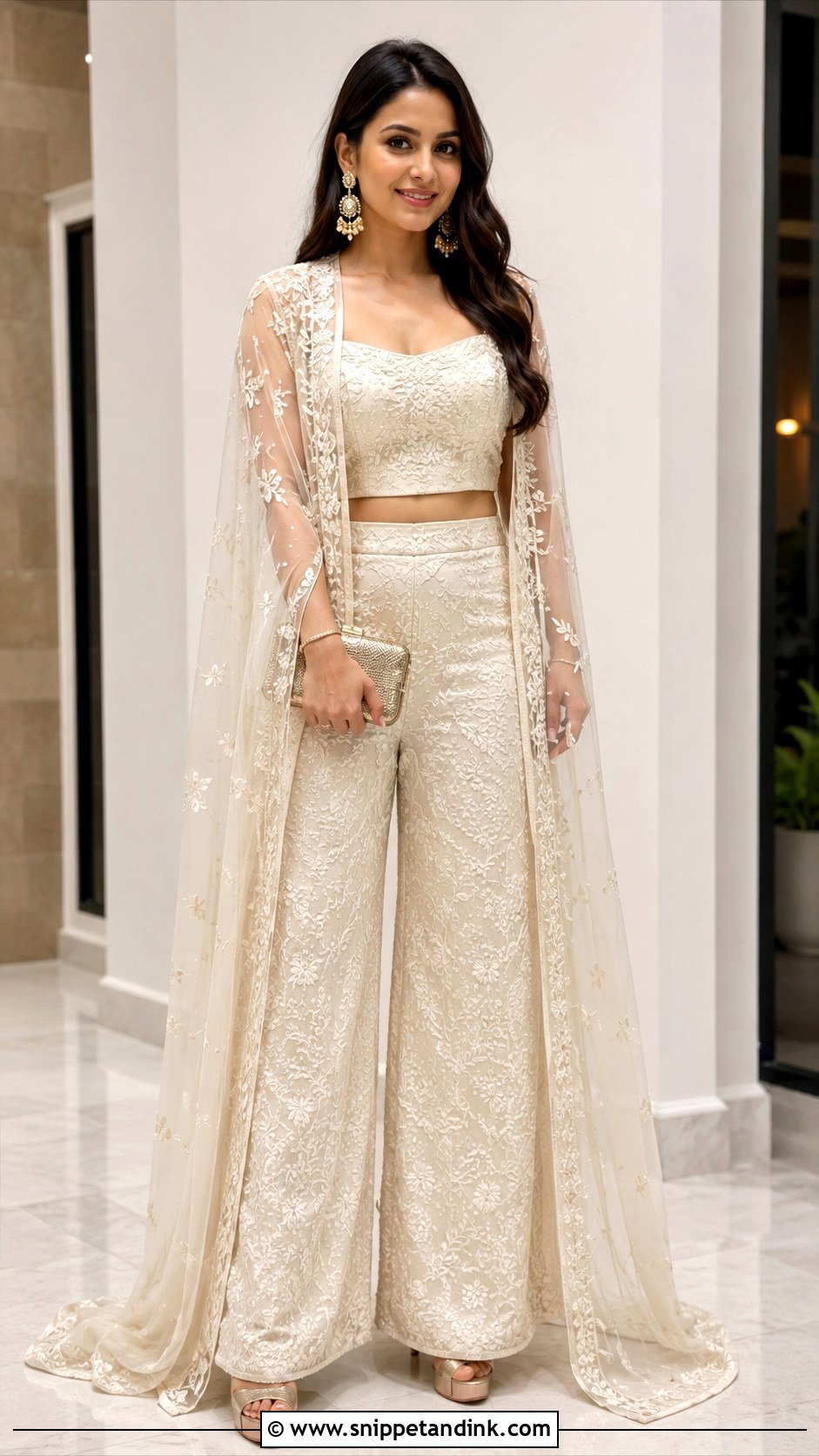
Clean lines and easy styling come together in a matching embroidered co-ord. A cropped or waist-length top with high-waisted wide-leg pants, plus a sheer cape, open jacket or draped stole, gives freedom of movement that a lehenga can’t. Tonal threadwork, small mirrors or a few sequins catch light without dominating photos. Ivory, sage, rose, cobalt or deep plum suit a Roka. Have the trousers hemmed with your shoes on: they should nearly touch the floor without swallowing the heel. Bold earrings, a slim bracelet, a metallic clutch and platform heels finish it, with straight hair or a neat ponytail.
13. Bandhani Lehenga Roka Outfit
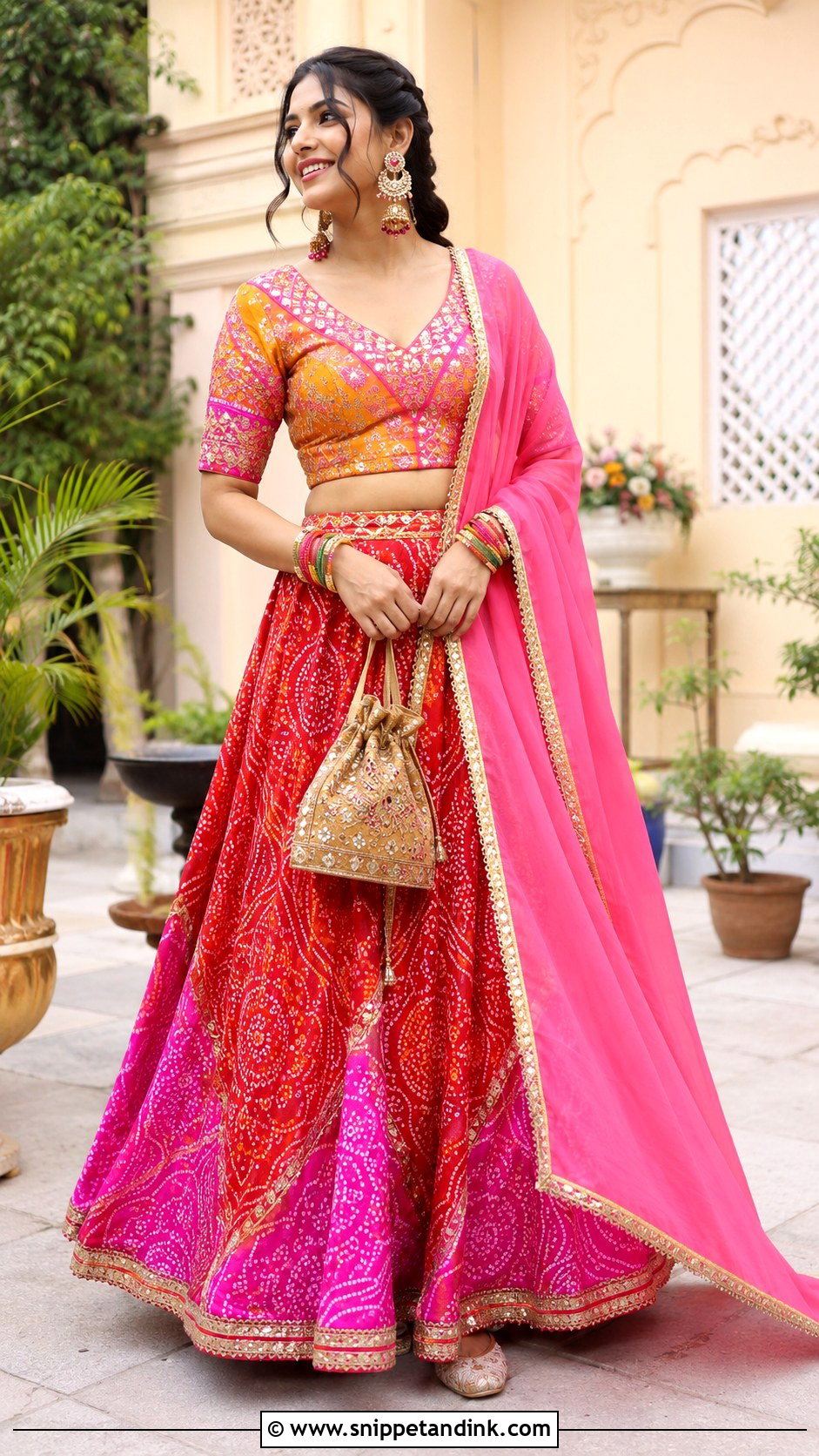
Bandhani’s tie-dye dots are cheerful and strongly traditional, a natural fit for a bright daytime Roka. Choose a light printed skirt with a broad border and a contrasting silk blouse. Keep the blouse fairly plain, since the dots already create a lot of pattern, and let a little mirror or gota work add shine. A plain chiffon dupatta with a matching border pulls it together. Red with pink, green with yellow or royal blue with magenta are classic pairings, though I’d skip pure red if the bride-to-be is wearing it. Antique gold earrings, coloured bangles, a small potli and embroidered juttis suit it. A braid, half-up curls or a low bun complete it.
14. Chikankari Suit Roka Outfit
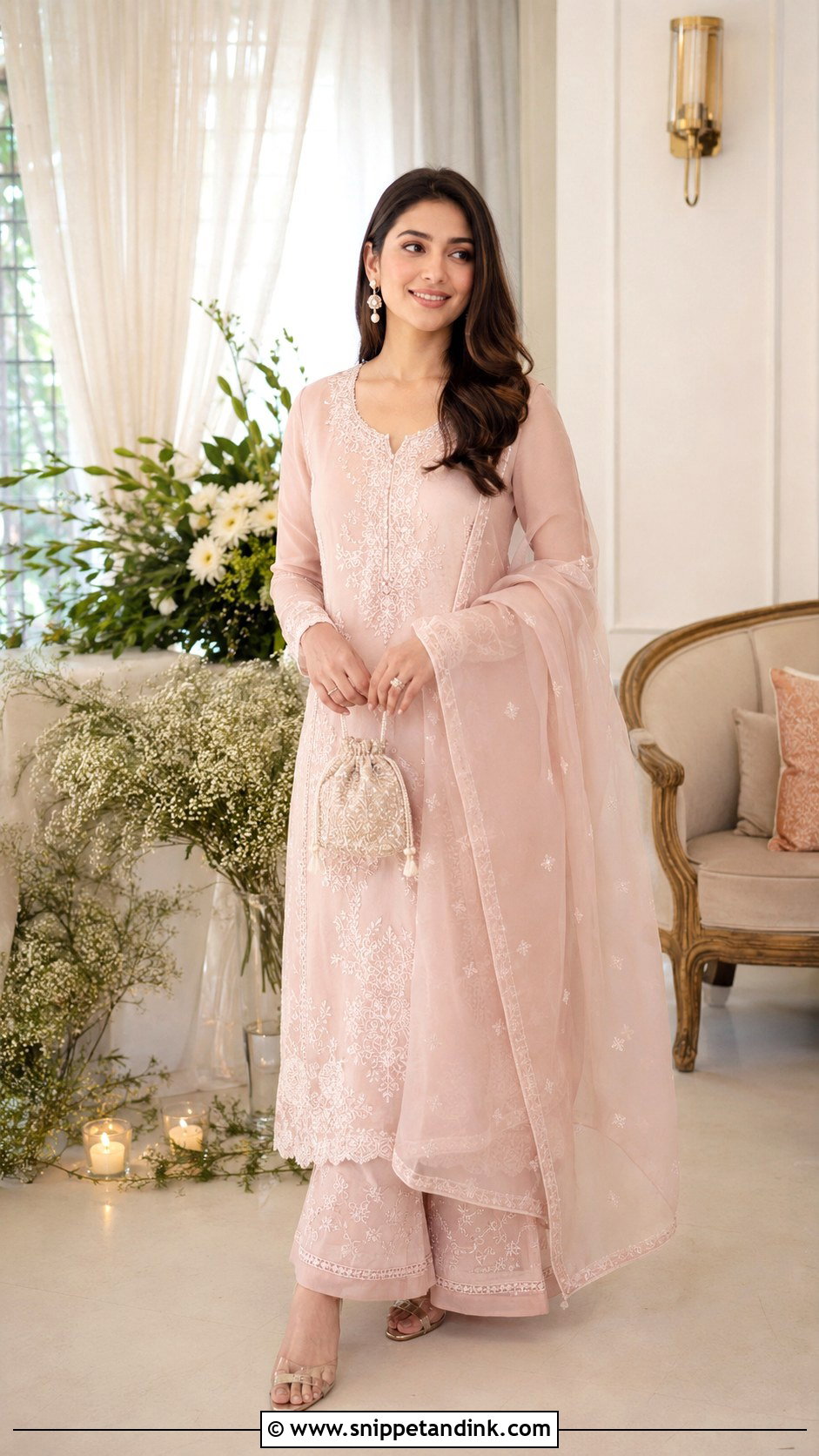
Soft chikankari embroidery is hand stitching on fine fabric, delicate and best kept for a daytime Roka at home or somewhere small. Choose a long kurta in georgette, cotton-silk or viscose with straight pants or a light sharara. A few tonal sequins add a little festive sparkle without hiding the handwork. Ivory, blush, lilac, powder blue and mint are lovely in natural light, but they can drain warm or deep skin tones, so add defined eyes, blush and a rose or berry lip. A sheer organza dupatta with a subtle border makes it more formal. Pearl drops, a small ring, a beaded potli and metallic juttis suit it, with polished waves or a low bun.
15. Banarasi Saree Roka Outfit
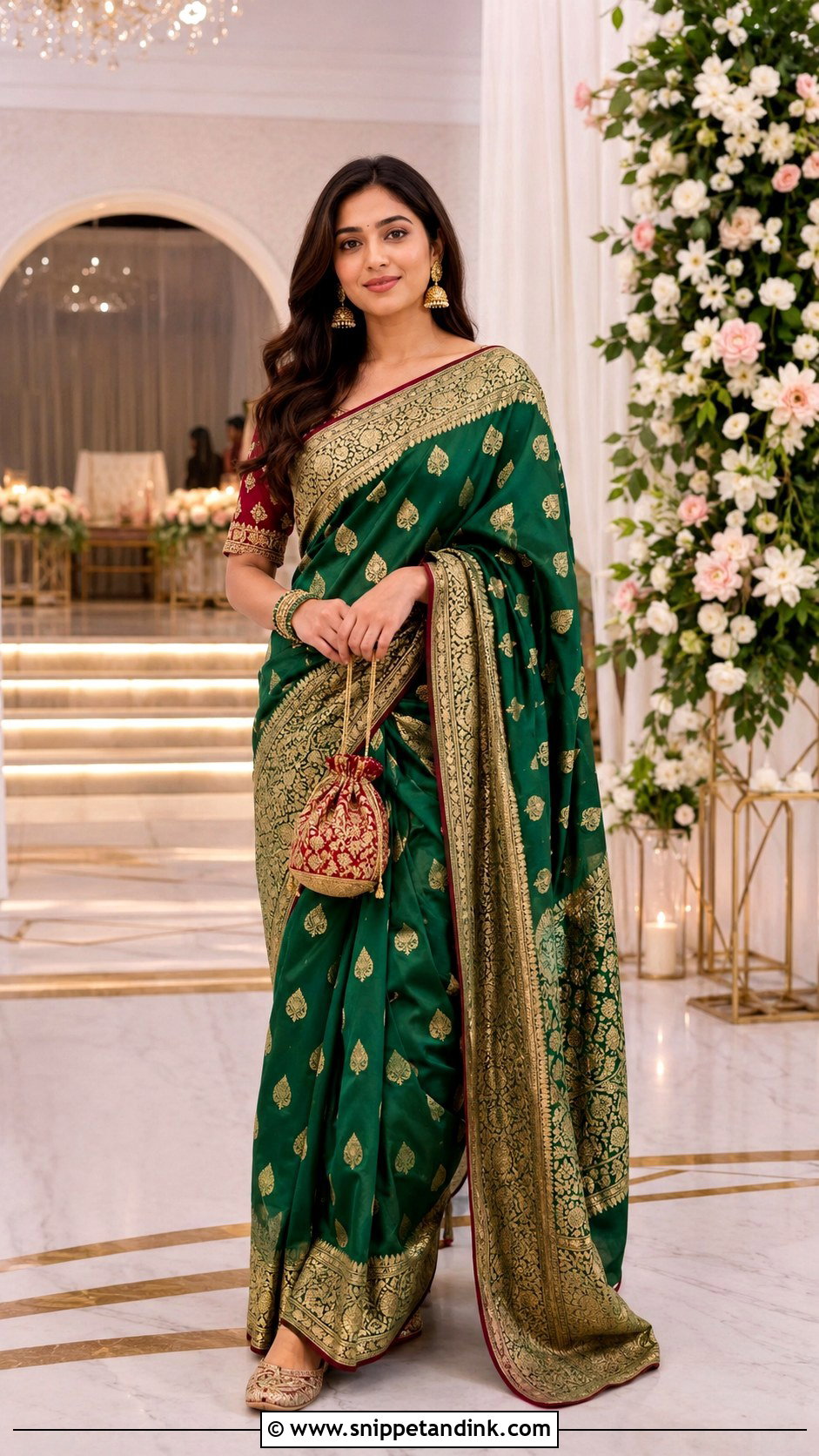
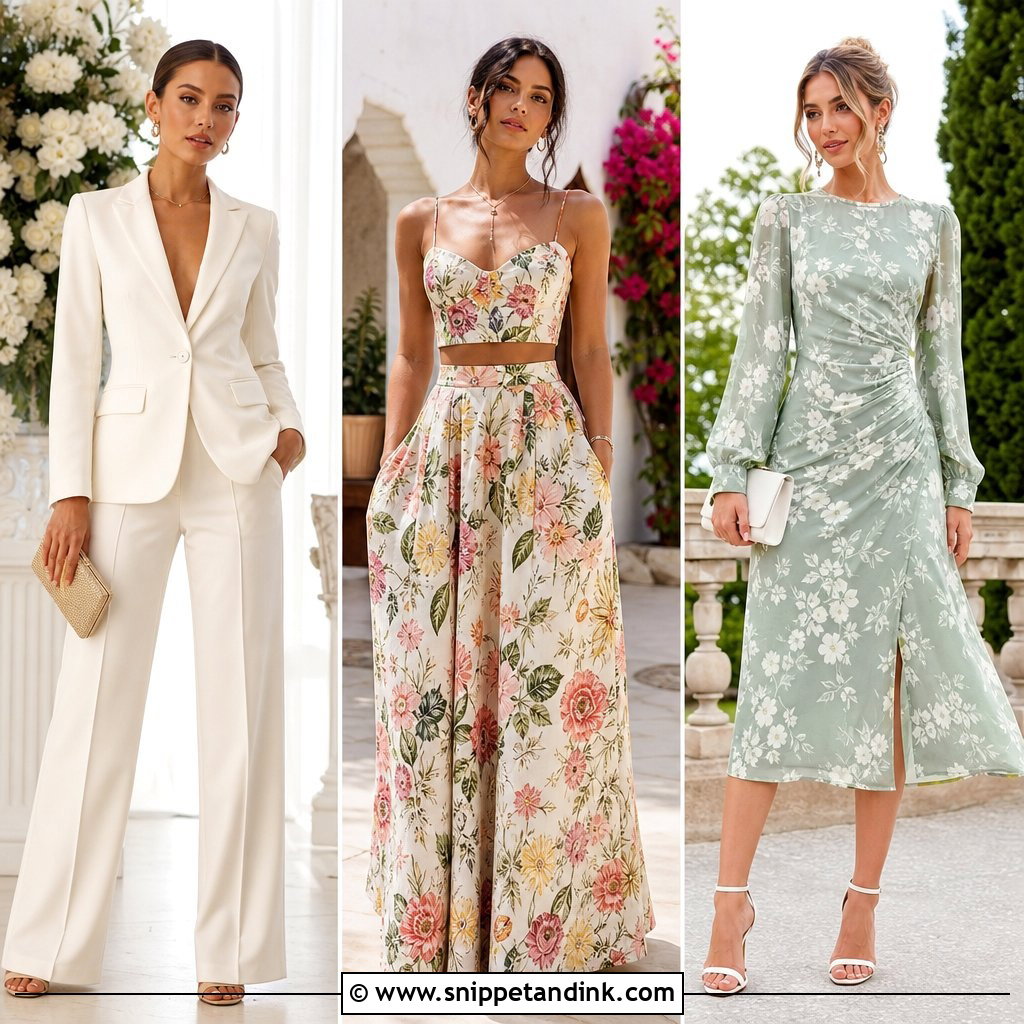
A Banarasi saree carries the weight of tradition, literally as well as in spirit, so for a sister who will be on her feet all evening I’d choose a light silk Banarasi rather than a heavy katan. Emerald, ruby, purple or royal blue look regal; muted gold or tissue silk is softer. Pair it with a contrasting blouse in a square, boat or modest V neck. The weave is already rich, so one pair of statement jhumkas, a few bangles and a small embroidered potli are enough; don’t wear every kind of jewellery at once. Block heels or padded juttis help. A centre-parted bun with a few flowers, or smooth waves, suit it.
16. Draped Skirt And Crop Top Roka Outfit
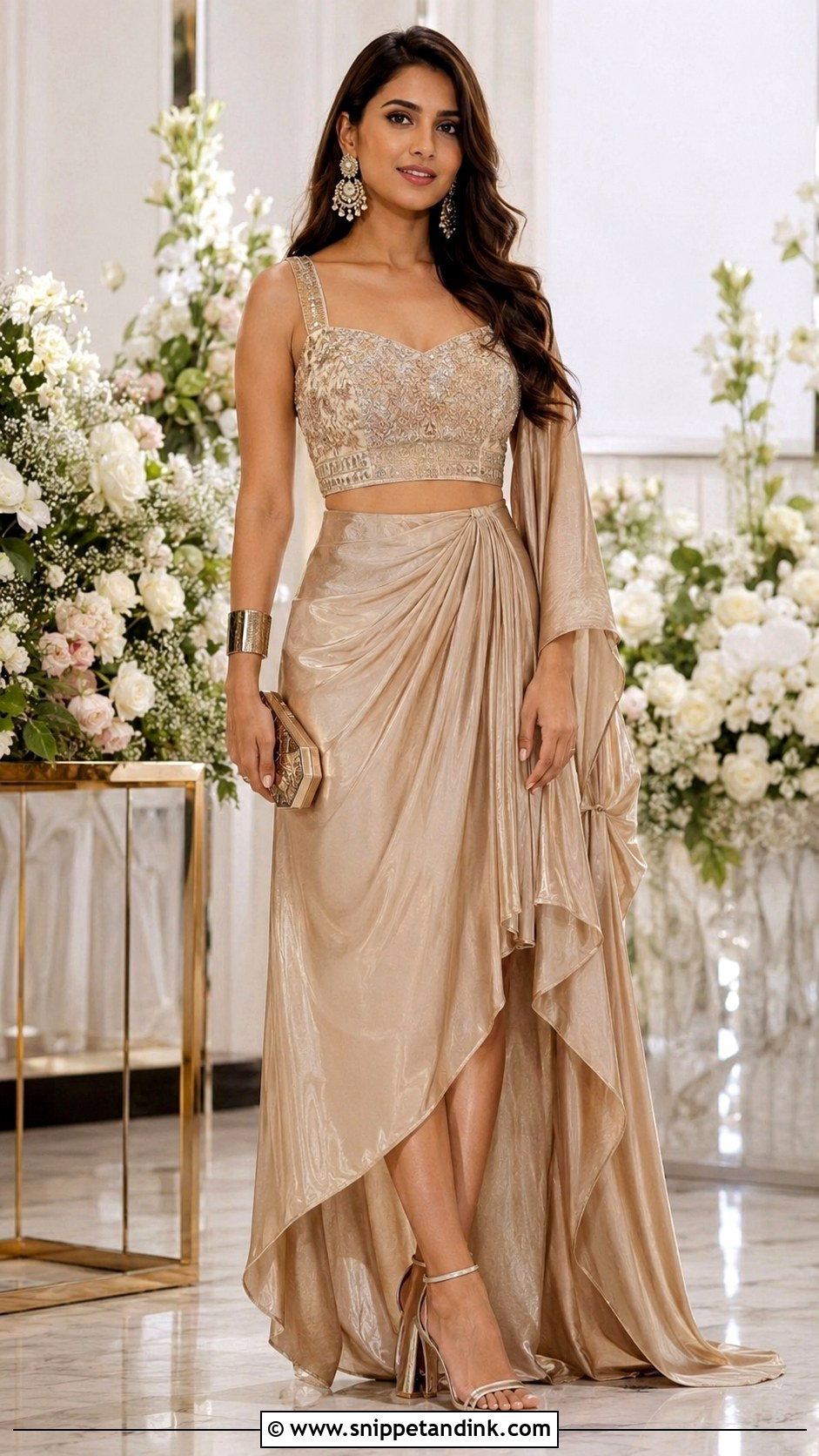
A draped skirt with an embroidered crop top gives a modern shape that still respects a family celebration. Choose neat pleats, an asymmetric overlay or a gentle front drape, and avoid a high slit, which isn’t practical when you’ll be sitting on the floor in front of grandparents. The blouse needs secure coverage and enough support to move. Add a matching cape, shoulder drape or a light dupatta attached at the waist. Dusty mauve, champagne, teal and berry suit the evening. Statement earrings, a cuff, a hard-case clutch and block heels complete it; no heavy necklace over an embroidered neckline. A sleek ponytail or side-parted waves suit the shape.
17. Pant Saree Roka Outfit
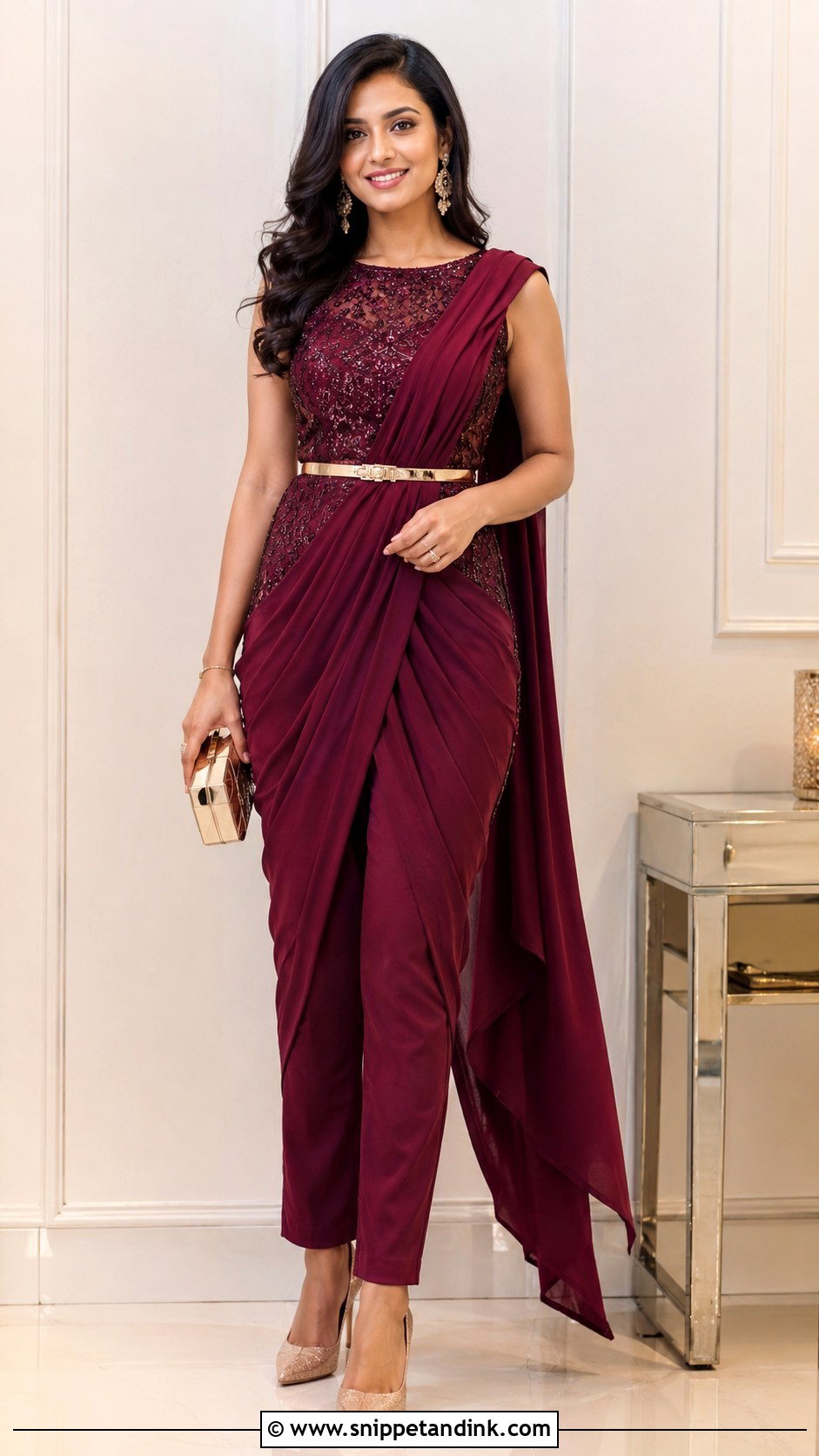
A pant saree combines trousers with a saree pallu, which makes it one of the most practical outfits here for a sister who will be running around. Slim or straight pants, a structured blouse and a pre-attached drape keep everything in place. A monochrome set lengthens the figure. Add a slim belt to hold the drape when you bend. Sapphire, wine, forest green, black with metallic work or soft champagne suit an evening Roka. Keep bangles minimal so it stays modern. Contemporary earrings, a compact clutch and pointed block heels complete it, with a sleek bun, straight ponytail or smooth tucked-back waves.
18. Velvet Kurta And Palazzo Roka Outfit
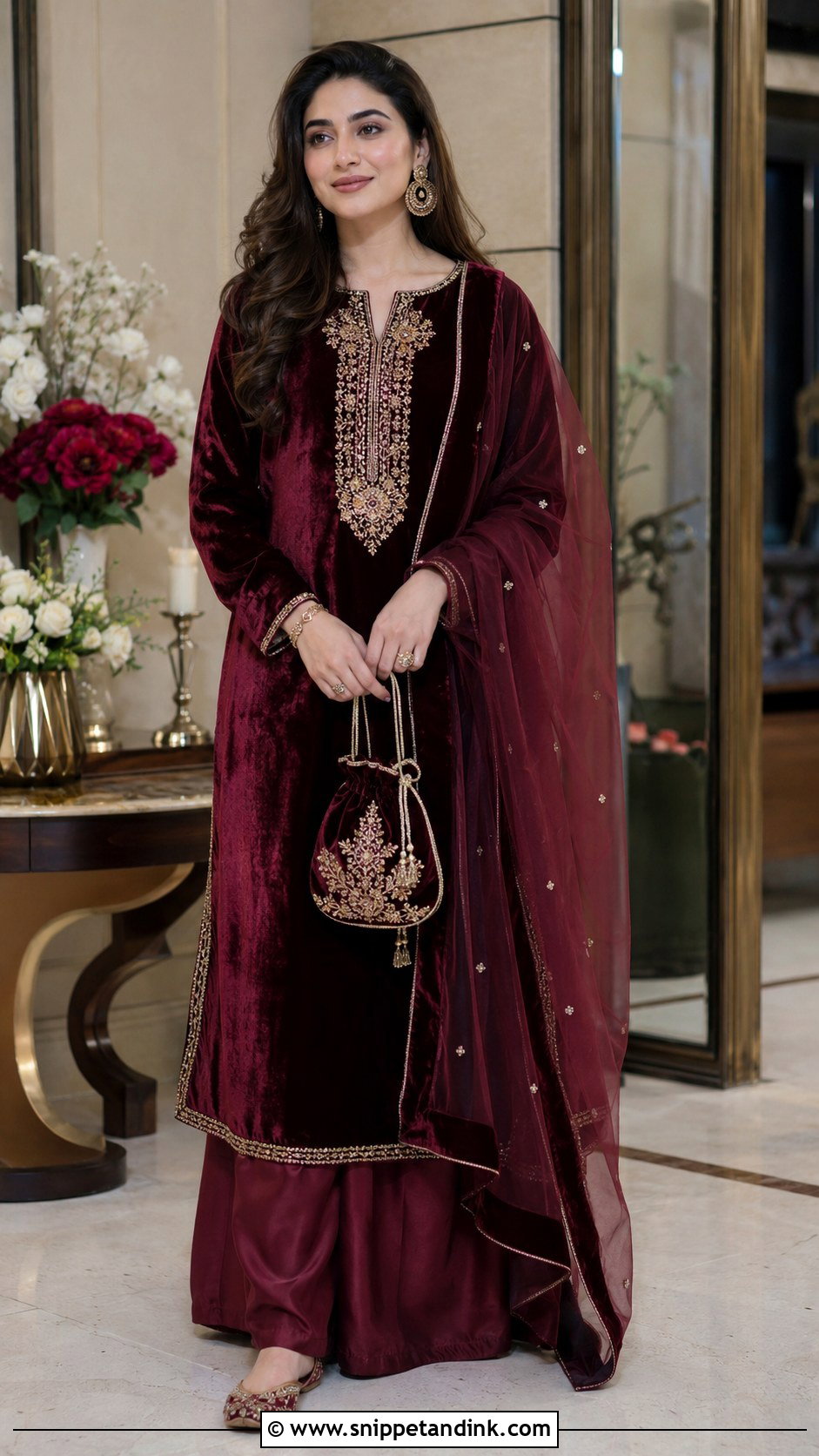
Velvet is warm, rich and heavy, so in cooler weather a velvet kurta over light palazzos is the right balance. Choose a knee or calf-length kurta with restrained zari, dabka or thread work at the neckline and cuffs, and fluid silk or georgette palazzos below. Velvet crushes where you sit and lean, and the marks show under flash, so hang it the night before and avoid sitting on the kurta’s back panel. A sheer dupatta with a velvet border coordinates without bulk. Maroon, midnight blue, emerald and aubergine suit the fabric. Antique gold earrings, a small potli and closed juttis are enough, with a low bun or glossy waves and a satin-finish lip.
19. Printed Skirt And Silk Blouse Roka Outfit
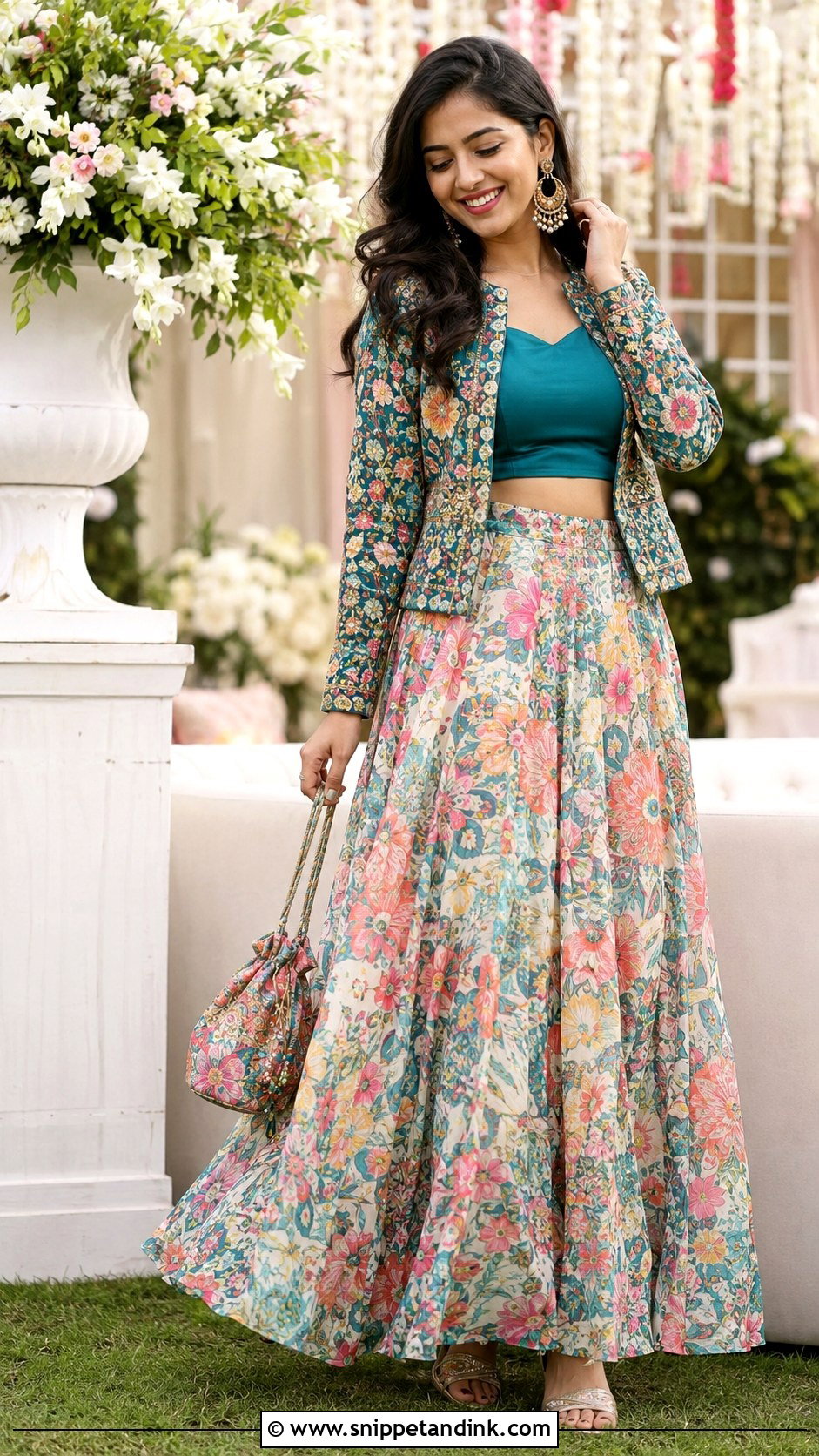
A printed maxi skirt with a silk blouse is cheerful and casual, suited to a relaxed daytime Roka. Choose a full skirt in floral, geometric or traditional motifs, then pick the blouse colour from one of the print’s accent shades. A cropped jacket or light organza dupatta makes it feel ceremonial. The skirt should sit smooth at the waist before it flares. Hoop jhumkas, a colourful potli and low wedges or embellished flats work, with other accessories kept simple. A soft braid, half-up style or loose curls suit it. Its biggest advantage is that each piece can be reworn separately long after the Roka.
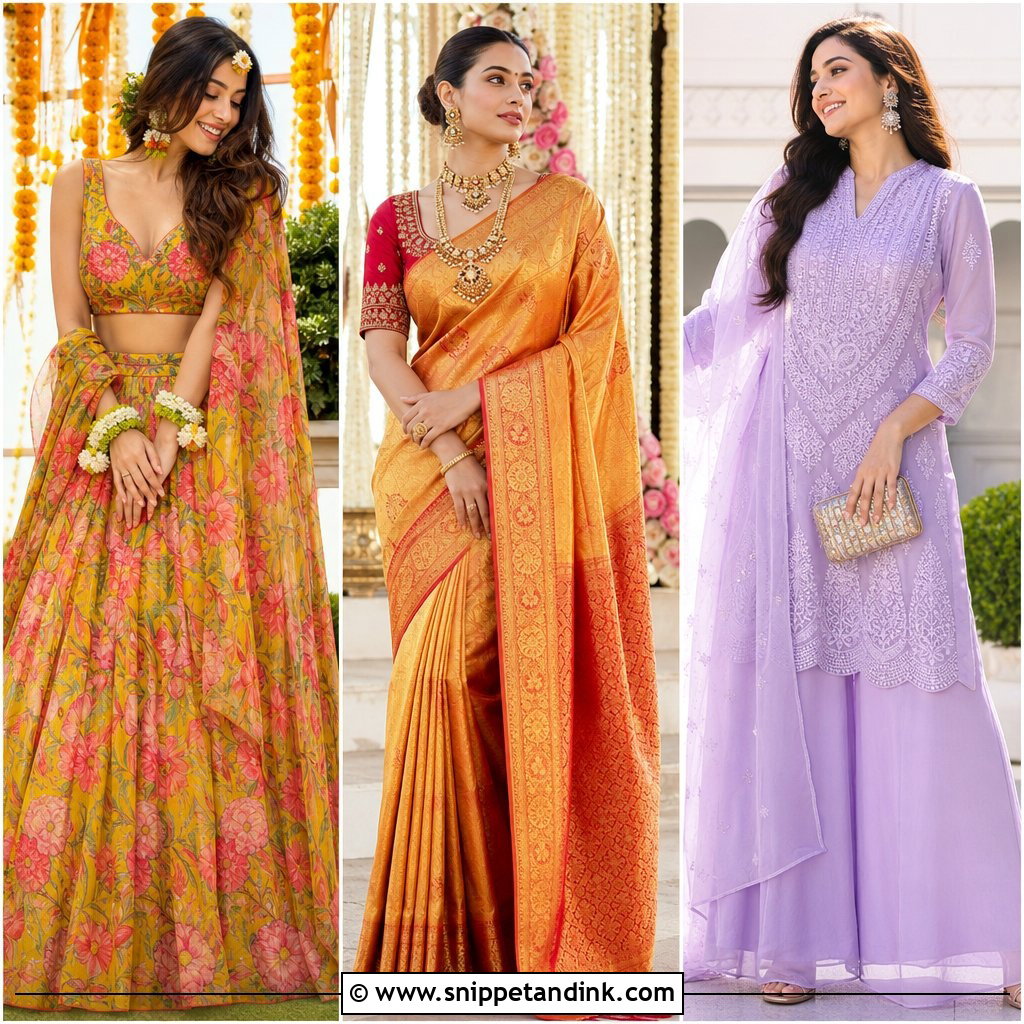
20. Minimal Silk Suit Roka Outfit
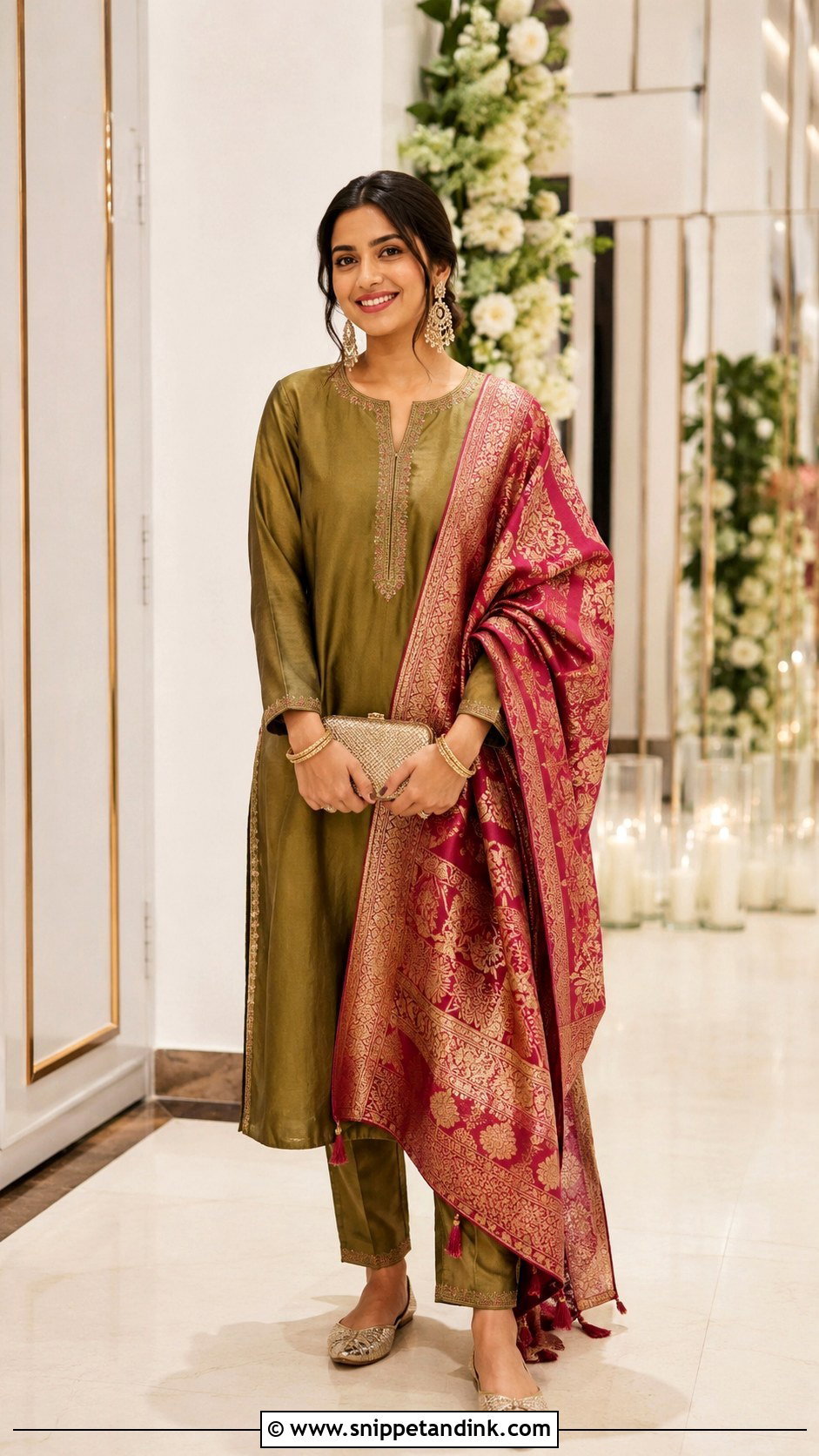
When the bride-to-be is dressing simply, or the Roka is just two families in a living room, a tailored silk suit is my first suggestion. Wear a straight kurta with cigarette pants and let a contrasting organza or Banarasi dupatta carry the decoration with its woven motifs or rich border. Clean seams, a flattering neckline and a little embroidery at the cuffs or hem are all the suit itself needs. Coral, olive, navy, rust or deep pink work from day into early evening. Statement earrings, two or three bangles, a structured clutch and pointed juttis finish it. A side-parted low bun or a polished blowout keeps it sharp, and you’ll wear it again for years.
Coordinating With the Bride-to-Be Without Becoming Her Twin
At a Roka, the bride-to-be often wears red, pink, or a rich festive colour, and many families gift her a chunni during the ceremony. I always ask the sister to find out the bride’s outfit colour first, then step one or two shades away. If she’s in red, a sister in coral, gold or deep pink sits beside her nicely in photos; another red outfit makes the two of you blur together.
Embellishment level matters as much as colour. Keep yours a notch lighter than hers: if she has a heavily embroidered lehenga, choose threadwork or a print. If she’s wearing a simple silk suit, so should you, or something close to it. And if there are several sisters or cousins, agreeing on a shared palette, rather than identical outfits, makes the family photos look planned without anyone feeling uniformed.
Ask the Bride-to-Be’s Colour Before You Shop
The right outfit fits the event and the role you’re playing in it. Check the venue, the time, any family dress code, the weather, and above all what the bride-to-be is wearing. Pastel lehengas, organza sarees and chikankari suits sit well in daylight; silk Anarkalis, Banarasi sarees, velvet and embellished fusion sets suit the evening. Plan for comfort, because the sister spends hours greeting guests, helping the family and being called into photos. A supportive blouse, a dupatta you can manage, secure draping and shoes you can walk in matter more than one extra piece of jewellery. Then let your own personality, and the happy occasion, take over.
You'll Like These Ideas:


Leave a Reply