
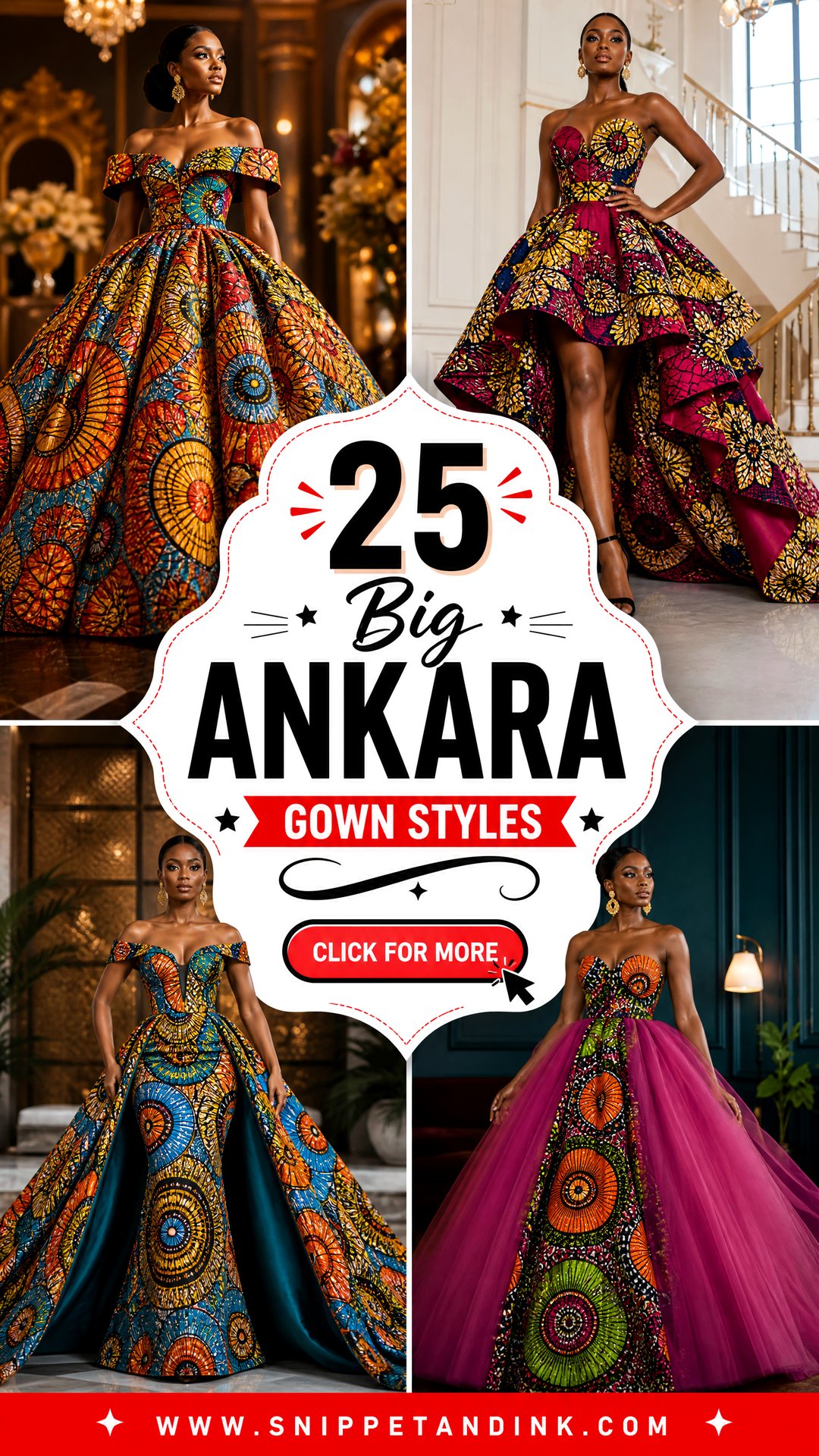
Ankara is a stiff, tightly woven cotton, and that stiffness is exactly what lets it hold a huge skirt or a sculpted sleeve without wire. It also means a big gown in vibrant African wax prints succeeds or fails on construction: where the motifs land, how the bodice is supported, and whether you can sit down in it. Below are 25 large silhouettes I’d happily style for a wedding, a milestone birthday or a cultural celebration, from full ball gowns to a relaxed bubu. For each one I’ve added the fitting detail I’d raise with your tailor and the accessories I’d keep, or leave out, so the print stays in charge.
What Your Tailor Needs Before Cutting a Big Ankara Gown
Big gowns eat fabric and time, and most problems I see start before the first cut. Here’s the order I work through with clients.
- Ask for a yardage estimate before you buy. Wax print is usually sold in six-yard pieces, and a full circle skirt or tiered gown can need more than one piece. Running out halfway and finding a different dye lot is hard to hide.
- Prewash or at least soak the fabric if your tailor recommends it. New wax print can shrink a little and release excess dye, and you want that to happen before it’s cut to your measurements.
- Agree on motif placement with the fabric laid flat. Decide where the largest motif lands on the bodice and whether the border runs along the hem.
- Plan two fittings at minimum: one for the bodice structure and one in your final shoes and underwear for the hem and seated comfort.
- Give yourself several weeks. A boned bodice with a full skirt and lining is a lot of handwork, and rushed gowns show it at the seams.
Bring the shoes, the bra and any petticoat to every fitting. A wide skirt cut over the wrong petticoat will hang differently on the day.
1. Full-Skirt Ankara Ball Gown
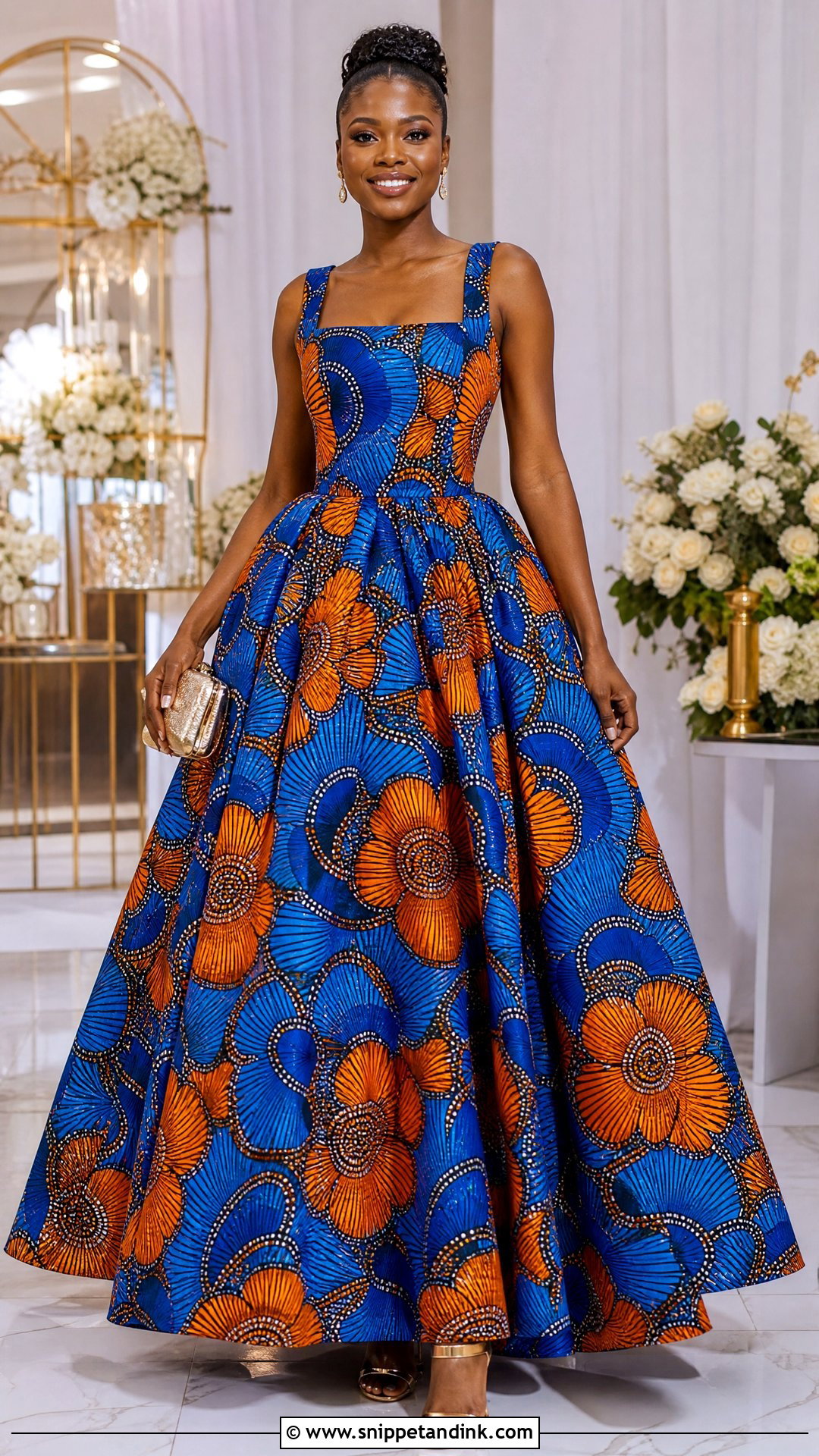
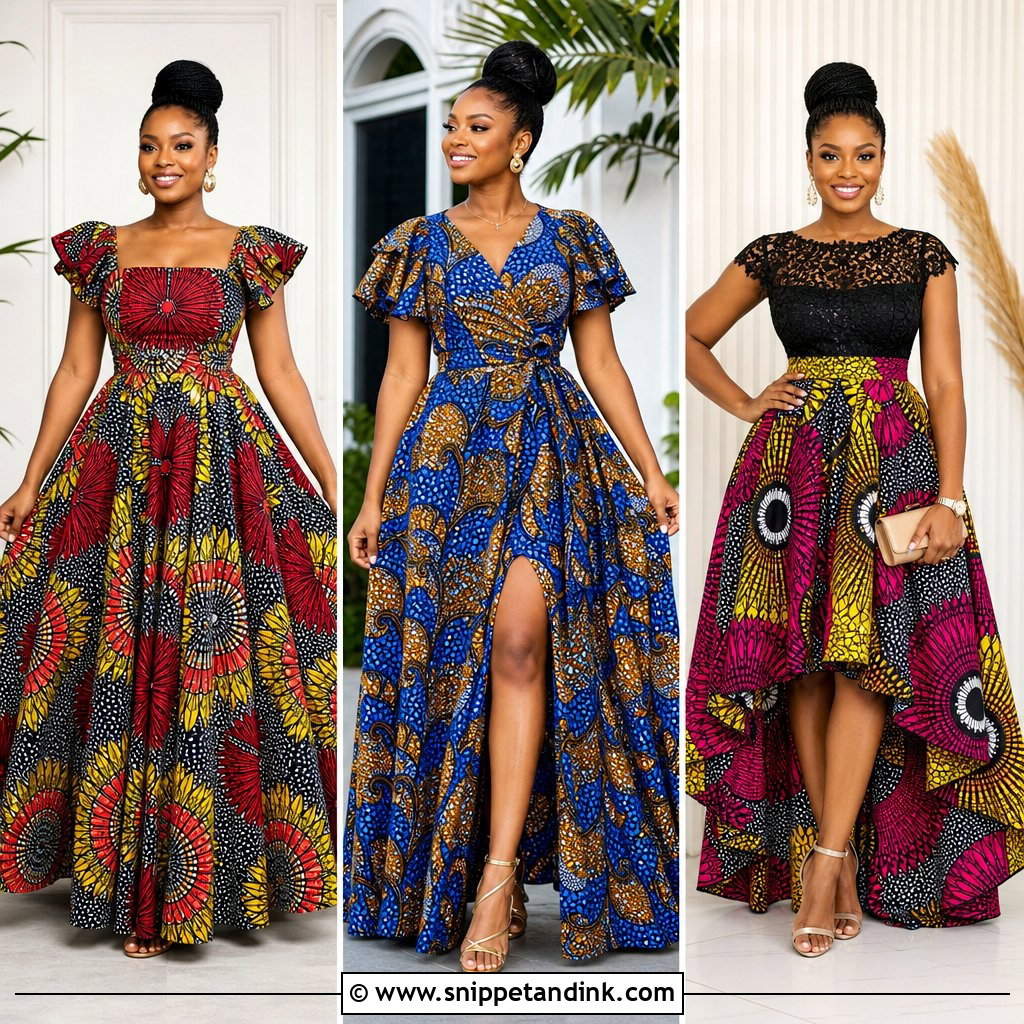
The classic: a fitted bodice that opens into a floor-length circle skirt. I keep the neckline simple (square, scoop or a modest V) because the skirt already carries the drama. A petticoat adds fullness, but ask for a light lining so the whole thing doesn’t become a weight on your waist by evening. Petite women look taller with the waist seam raised slightly; tall women can take a wider skirt and deeper hem. Before cutting, the tailor should lay the fabric out and decide where the biggest motif falls on the bodice, since a print centred badly is the first thing people notice.
2. Off-Shoulder Ankara Ball Gown
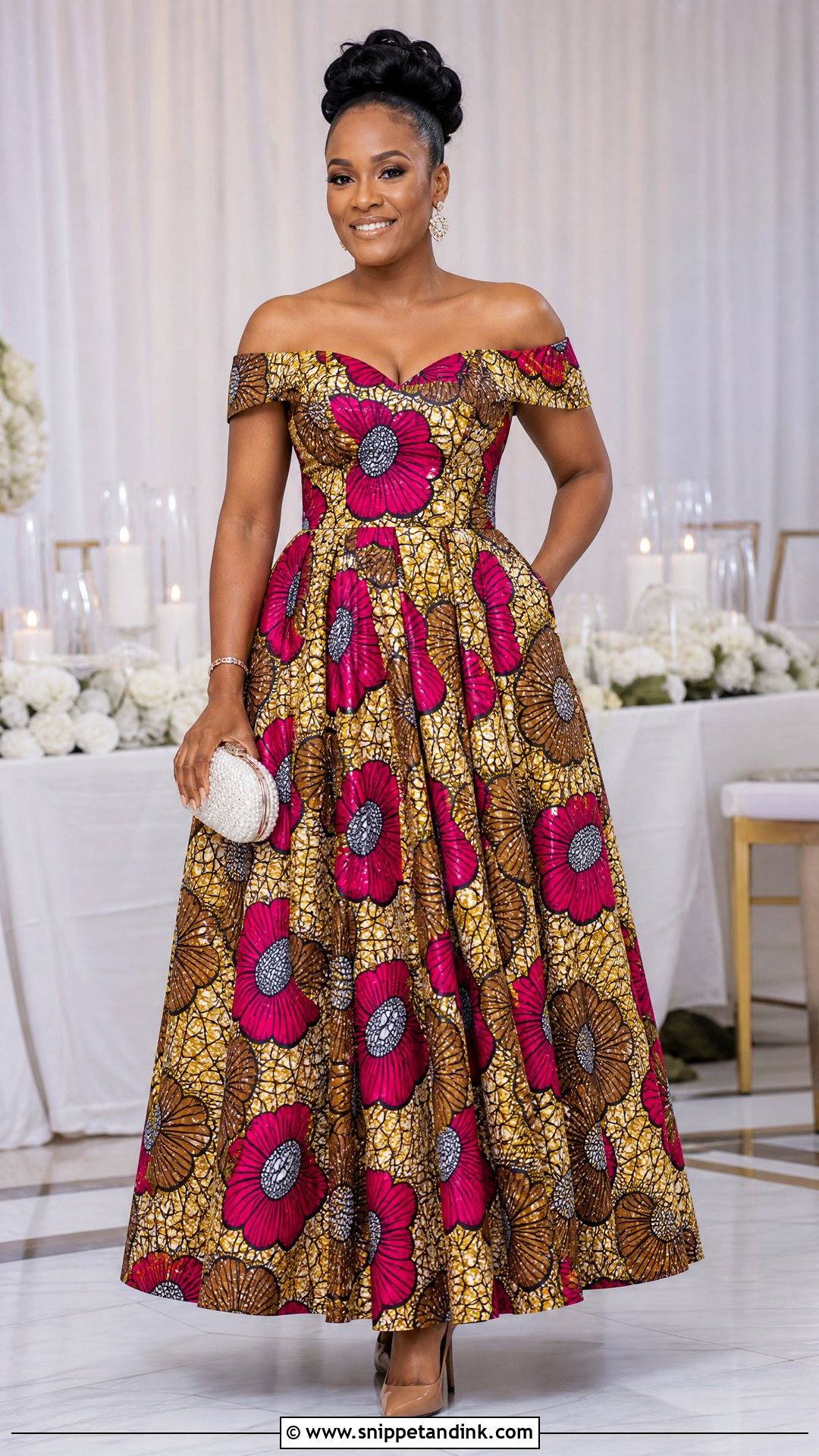
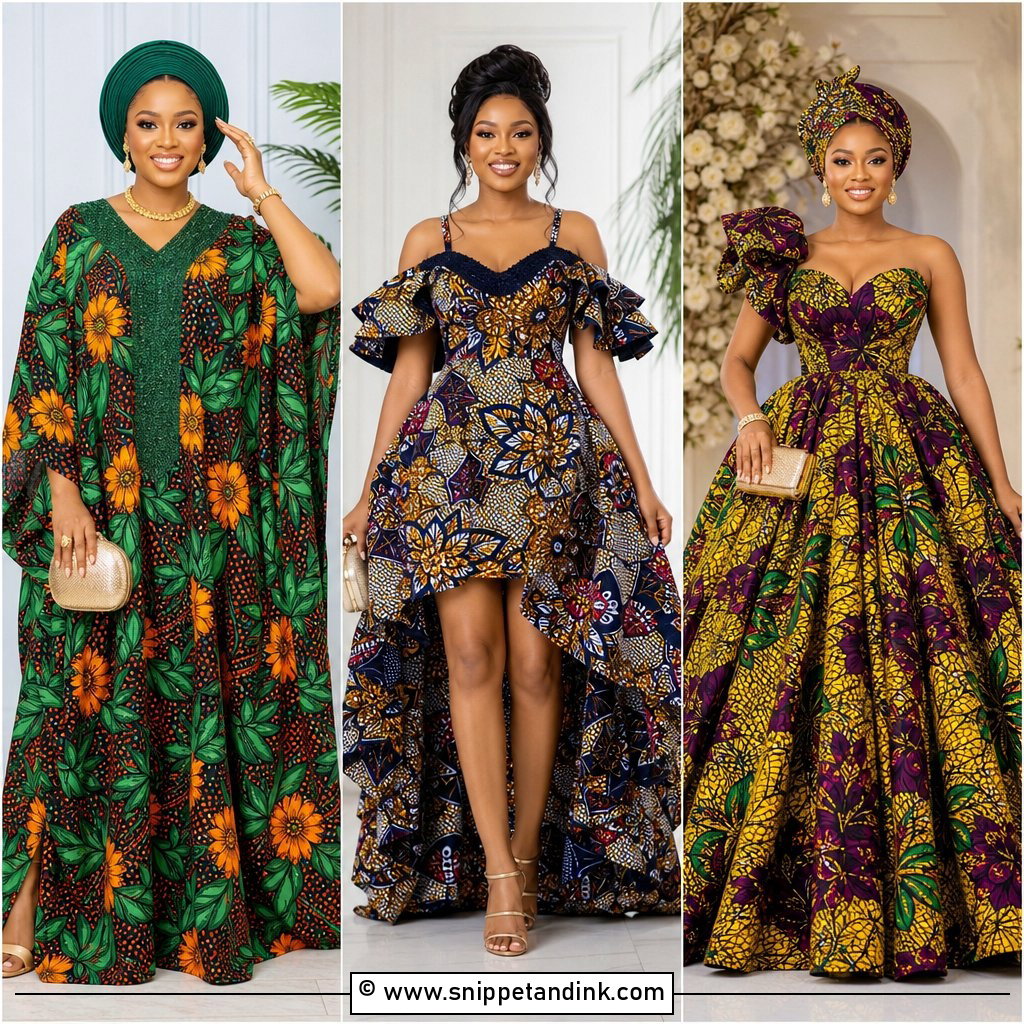
Off-shoulder ball gowns stay up because of what’s inside, not the neckline. I insist on a structured inner bodice so you aren’t tugging at it during photos. Choose a straight-across line or a soft sweetheart depending on the support you need. If the print has a border, have it run along the neckline and the hem; it frames the whole gown. Detachable sleeves are an easy way to add arm coverage for a church ceremony and lose it for the party.
3. Corset Ankara Ball Gown
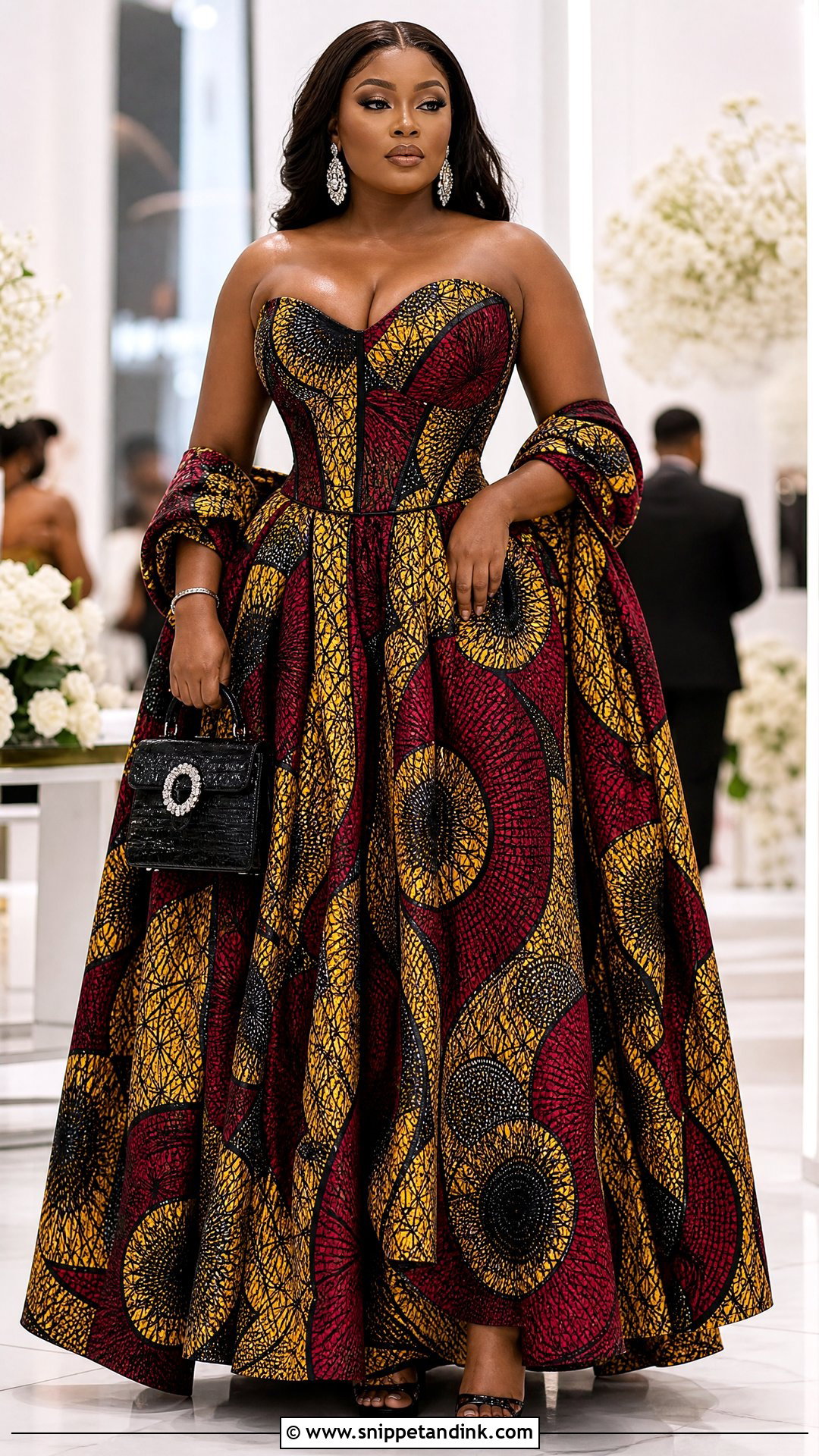
A corset bodice gives the sharpest waist of any style here, but it should be made to your measurements, not laced to the limit. Boning, a firm lining and secure back fastenings do the shaping. Box-pleated skirt panels add fullness without piling bulk at the stomach. My trick for a multi-coloured print is to pull the quietest shade for shoes and bag, which keeps the look calm. Curvy figures usually find a longer corset that ends at the natural waist more comfortable through a long dinner.
4. One-Shoulder Ankara Ball Gown
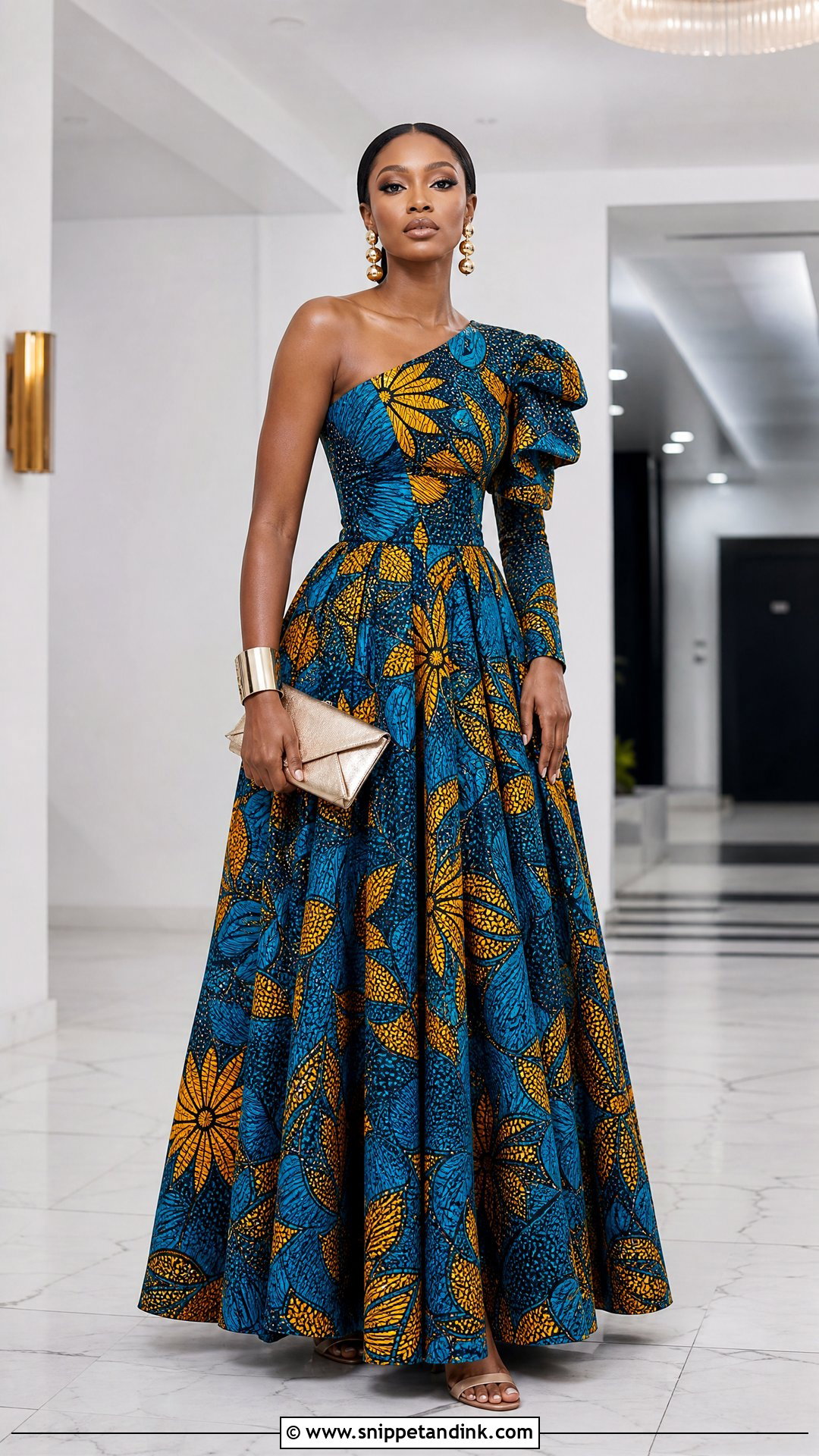
One bare shoulder makes a large skirt feel modern. A wide strap or a single statement sleeve holds better than a thin strap on heavy cotton. Wear one bold cuff on the bare-arm side and coordinating earrings, nothing at the neck. I ask for an internal bust support panel and a side zip on this style, because there’s no second strap to share the load. Sweep the hair back so the shoulder detail is seen.
5. Puff-Sleeve Ankara Gown
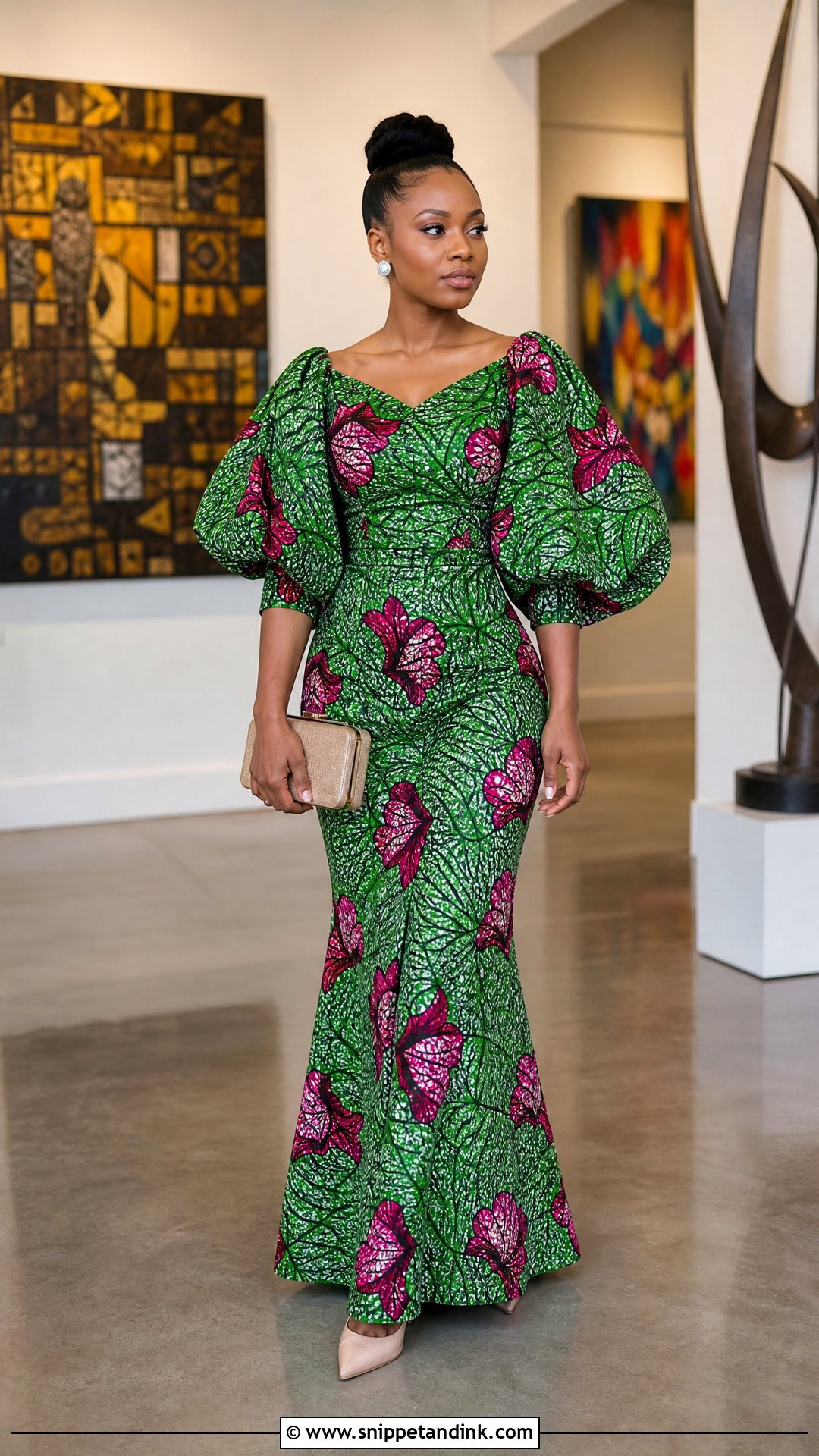
Sleeves can do the work of a wide skirt. With very full puffs, I keep the skirt only gently flared so the proportions don’t fight each other. Above-elbow puffs feel lighter; wrist-length with fitted cuffs is more formal. Broad shoulders suit softer gathered sleeves rather than rigid, interfaced ones. Raise your arms at the fitting. Crisp Ankara sleeves that are set too tight will lift the whole bodice every time you wave.
6. Tiered Ankara Maxi Gown
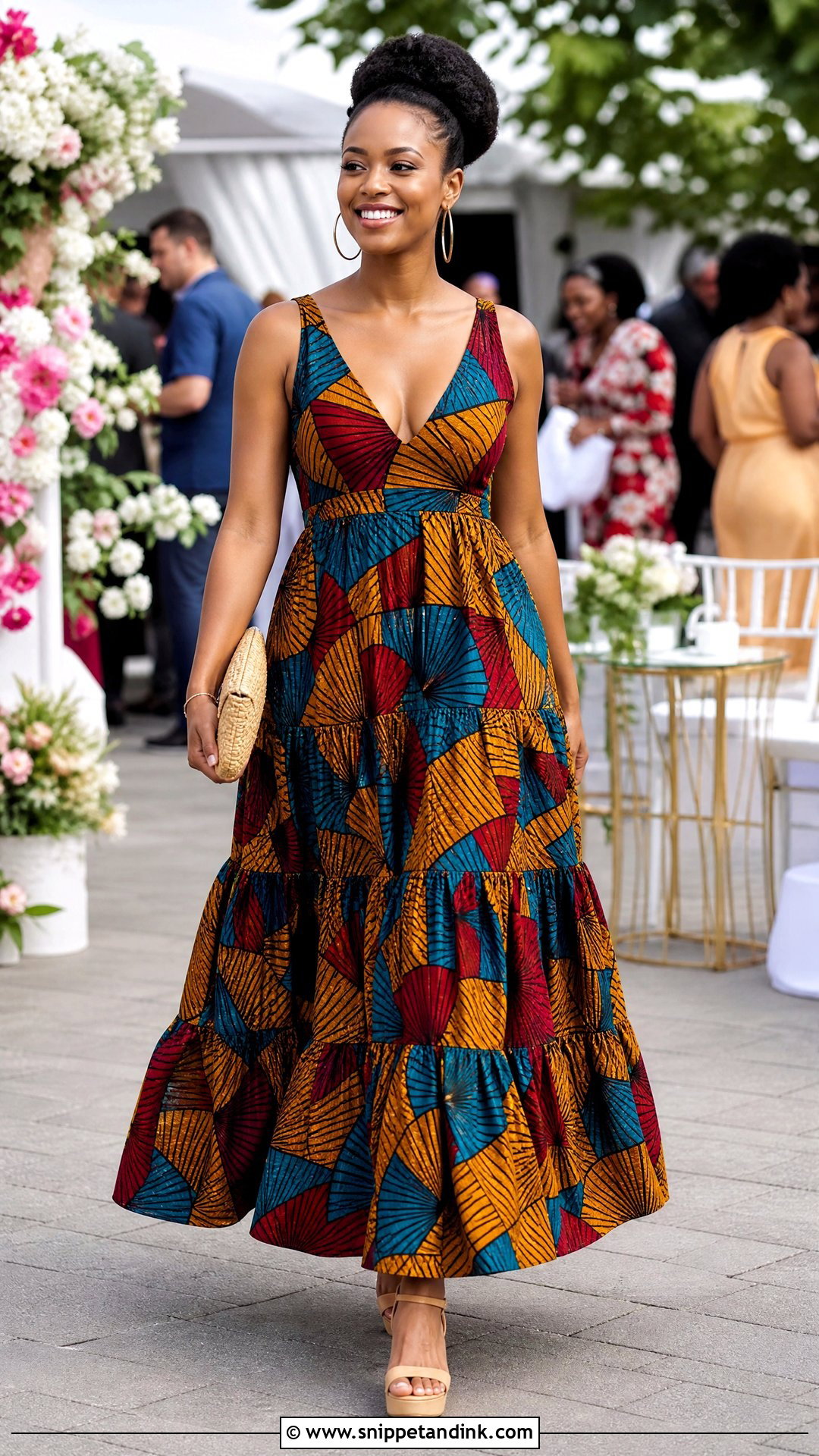
Tiers build volume through gathering instead of structure, which makes this the lightest big gown on the list. A tiered Ankara maxi gown looks balanced when each tier widens gradually; two or three tiers suit petite women, more can swamp them. A V or narrow square neckline offsets the fullness below. I’d ask curvier clients’ tailors for a smooth panel at the waist before the first tier starts. Small, consistent motifs make the gathers look intentional; a huge motif gets chopped up at every seam.
7. High-Low Ankara Gown
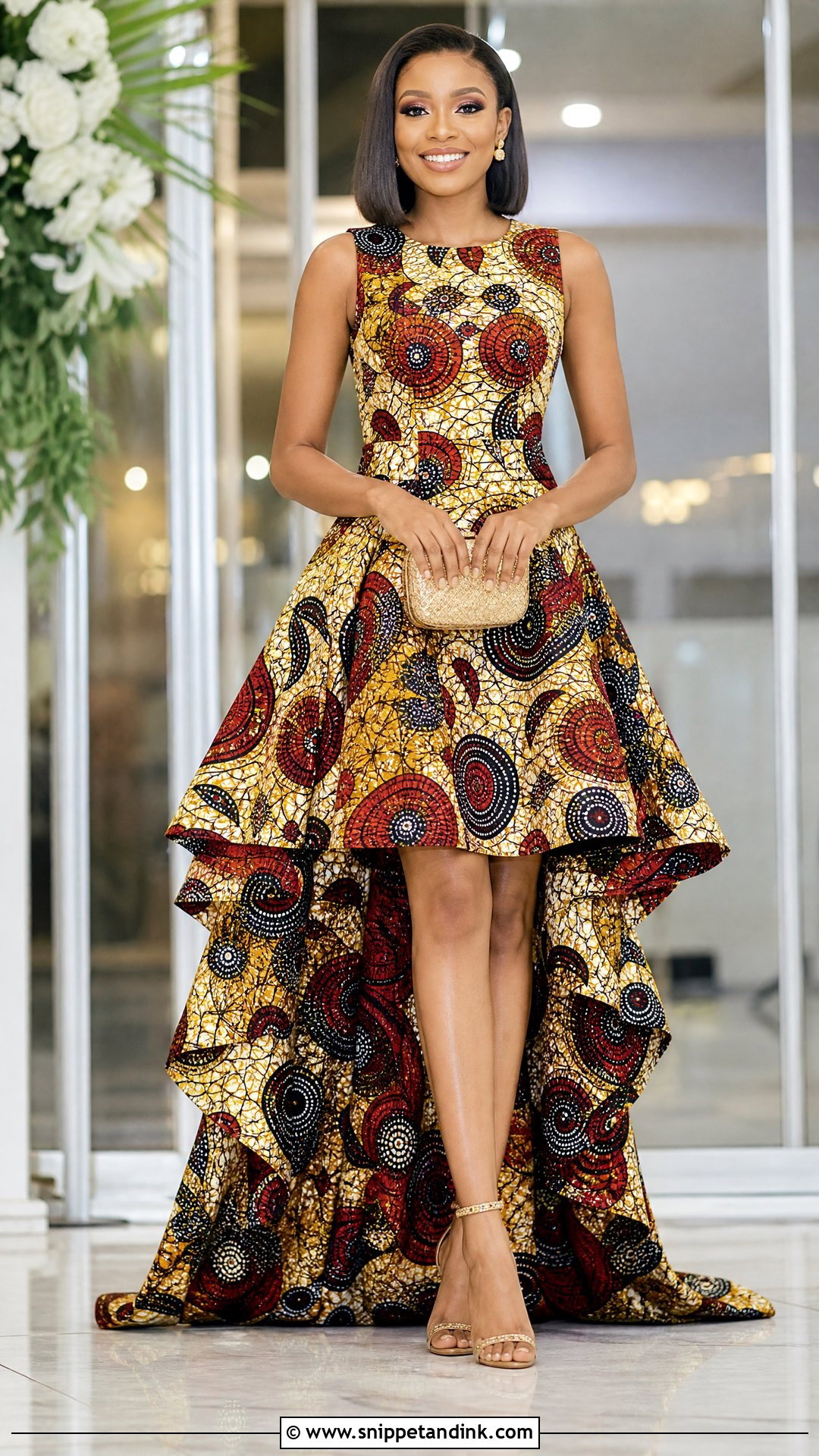
High-low hems put your shoes on show, so plan the footwear before the gown. The front can end around the knee or calf with the back falling to the floor. Ankle-strap heels and embellished pumps earn their place here. Keep the back layers light; heavy cotton in a long back hem pulls the whole skirt backward when you walk. This is the style I suggest to women who like drama but hate fabric around their feet.
8. Peplum Ankara Mermaid Gown
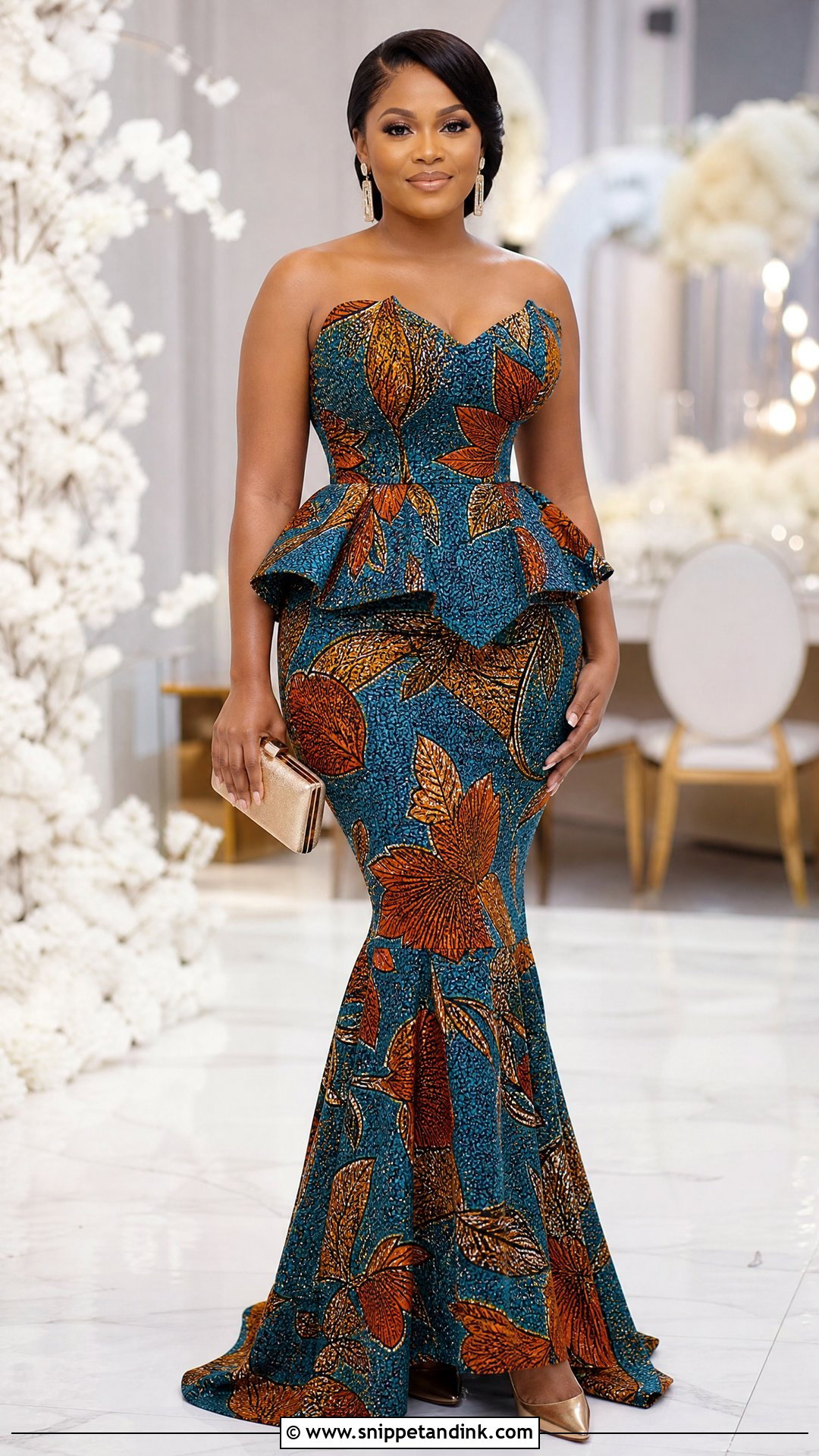
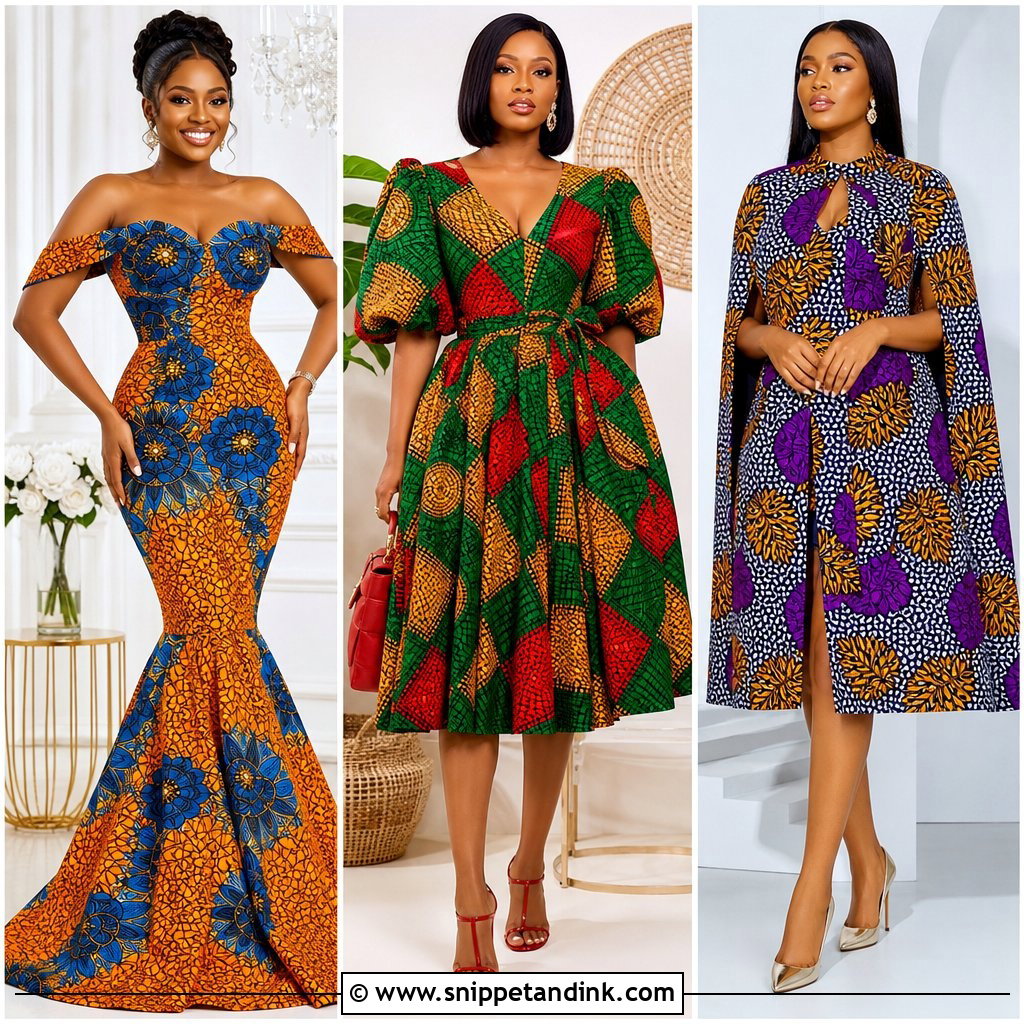
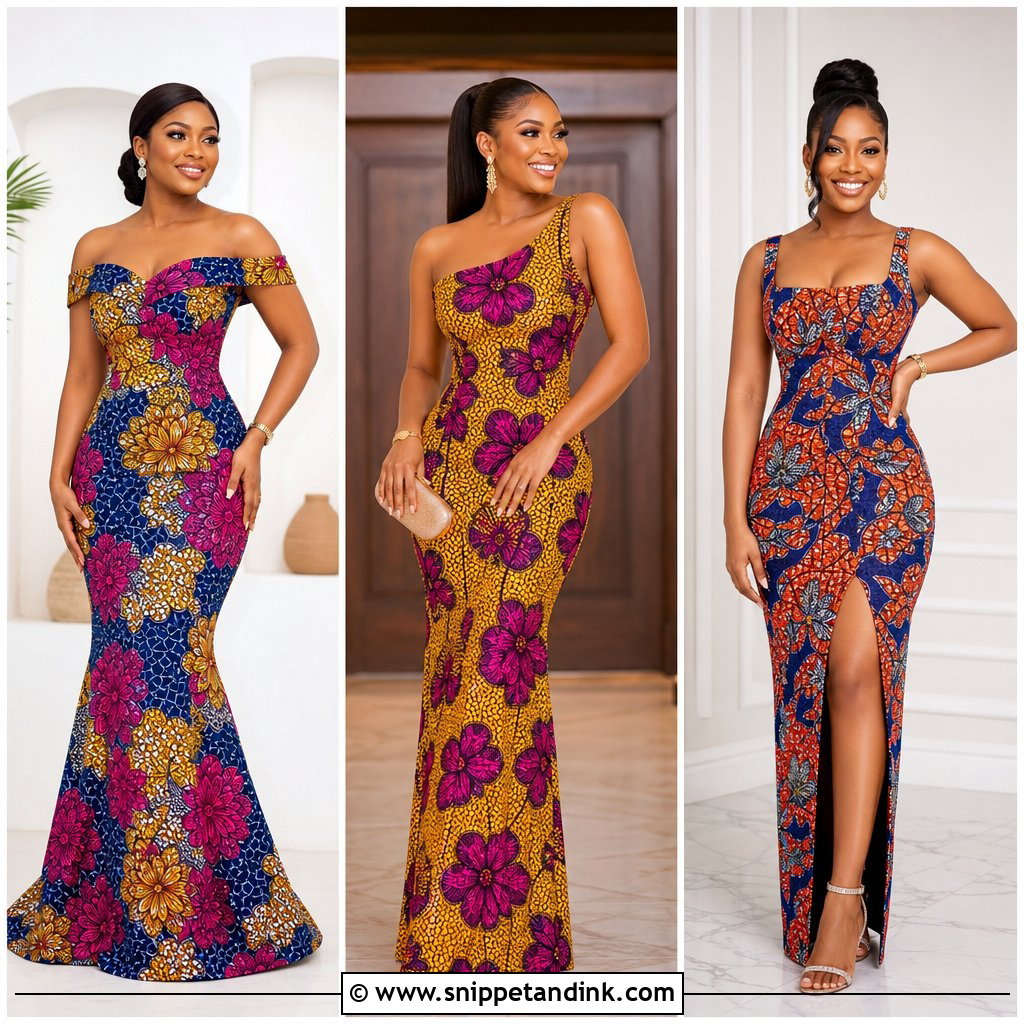
This one blends a fitted shape with controlled volume at two points. A peplum Ankara mermaid gown follows the body, adds a structured peplum at the waist for gentle coverage, and flares again at the knee. Keep the peplum narrow enough to stay close to the body; a wide one adds width at the hip. Because a mermaid skirt restricts the stride, I always ask for a back slit or a flexible lining. Watch large motifs on curved seams, as they distort quickly.
9. Cape-Sleeve Ankara Gown
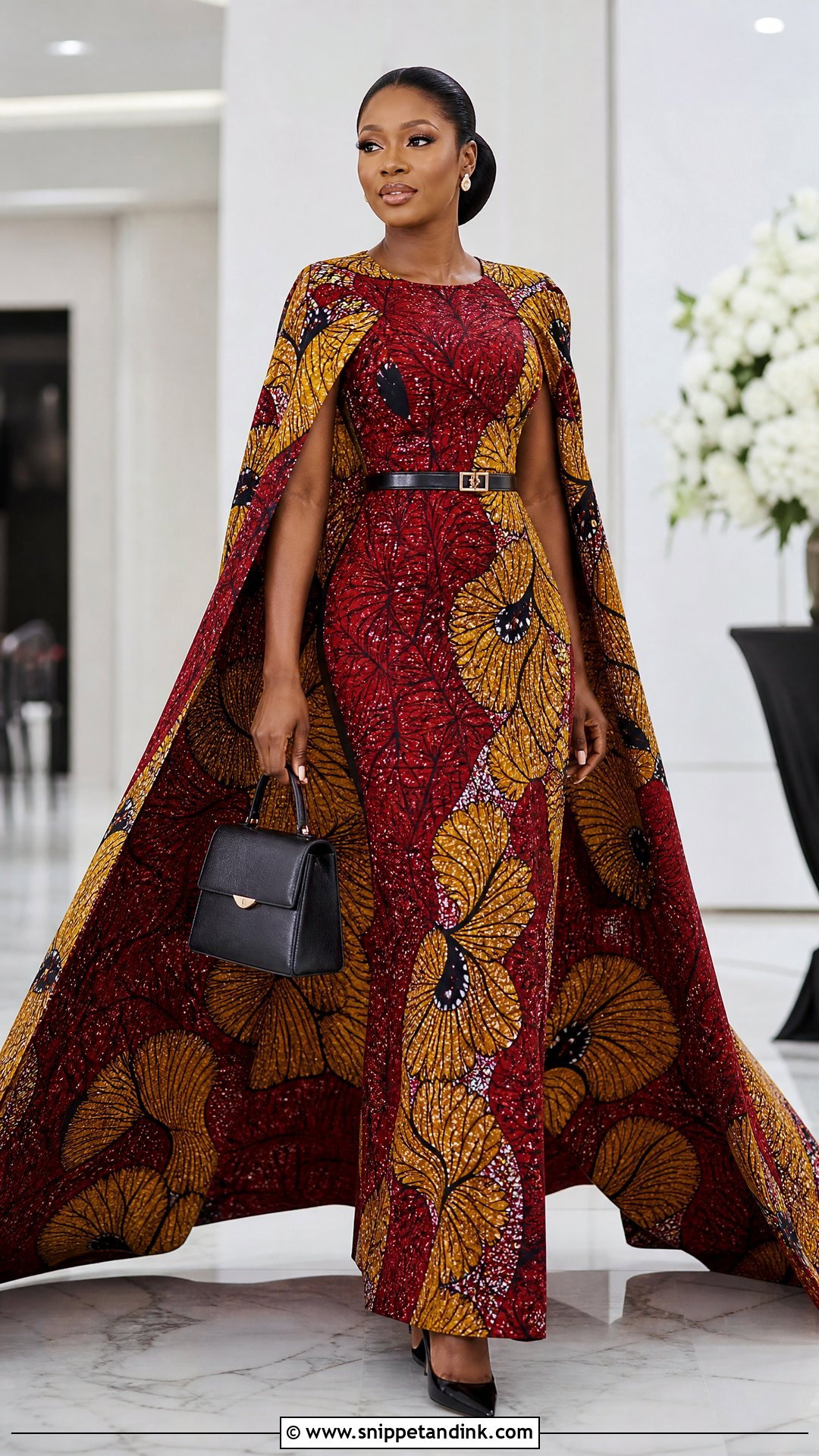
Capes give you an entrance without a wide skirt. Elbow length feels light; floor length is formal. Underneath, a straight or A-line gown gives the cape room to move. Avoid long necklaces, which tangle under the cape, and choose a top-handle bag rather than a shoulder strap that drags it sideways. A cape in chiffon or a solid colour lightens the look; an Ankara cape doubles the print and the weight.
10. Strapless Ankara Ball Gown
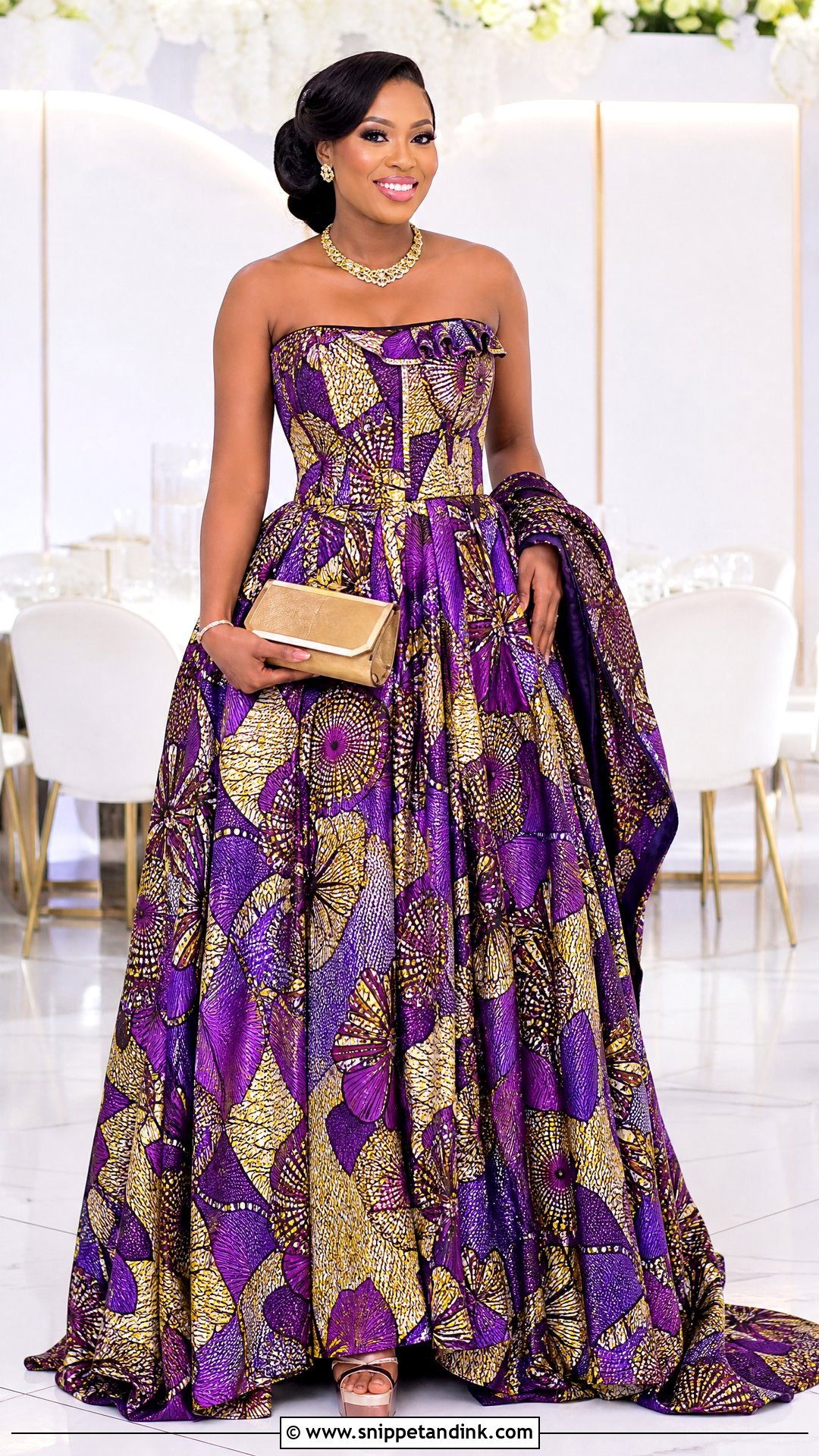
Strapless is only comfortable with serious engineering: firm boning, shaped cups and a grip strip along the top edge. Without those, you’ll spend the night pulling it up. Centre the print at the top of the bodice so the neckline looks deliberate. A bolero or wrap covers you for the ceremony. I always ask for a seated fitting on strapless styles; the bodice that sits perfectly when you stand often gapes when you sit.
11. Sweetheart Neck Ankara Gown
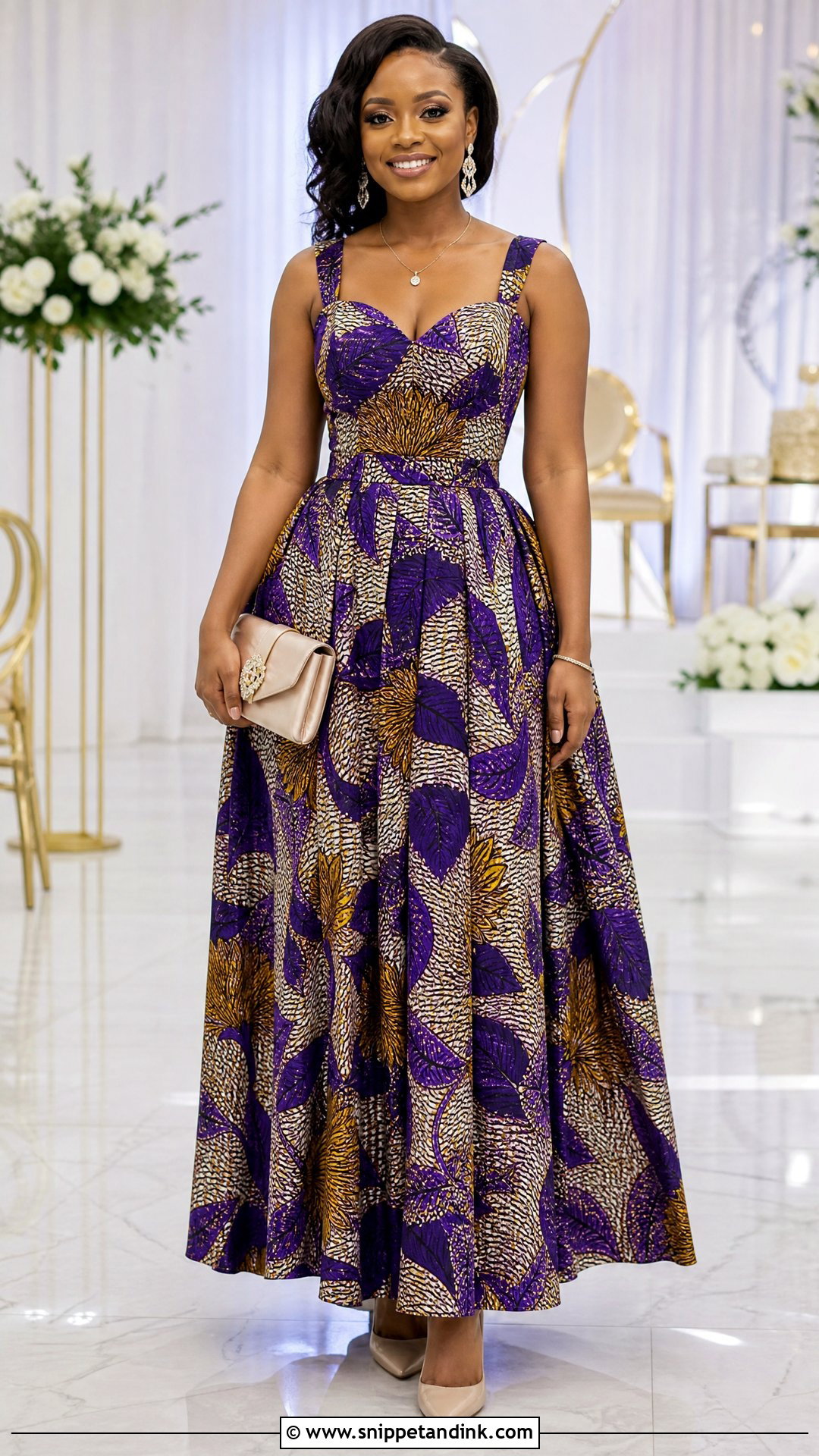
A sweetheart neckline softens the hard edges of a big Ankara gown. Wide straps or sheer sleeves give support; fuller busts usually prefer a higher curve. I’d place small motifs around the bodice and save the large ones for the skirt, because a big motif split by the sweetheart curve looks accidental. Good interfacing keeps the bodice smooth over a long day. A fine pendant and small chandelier earrings are enough jewellery.
12. Ruffled Ankara Gown
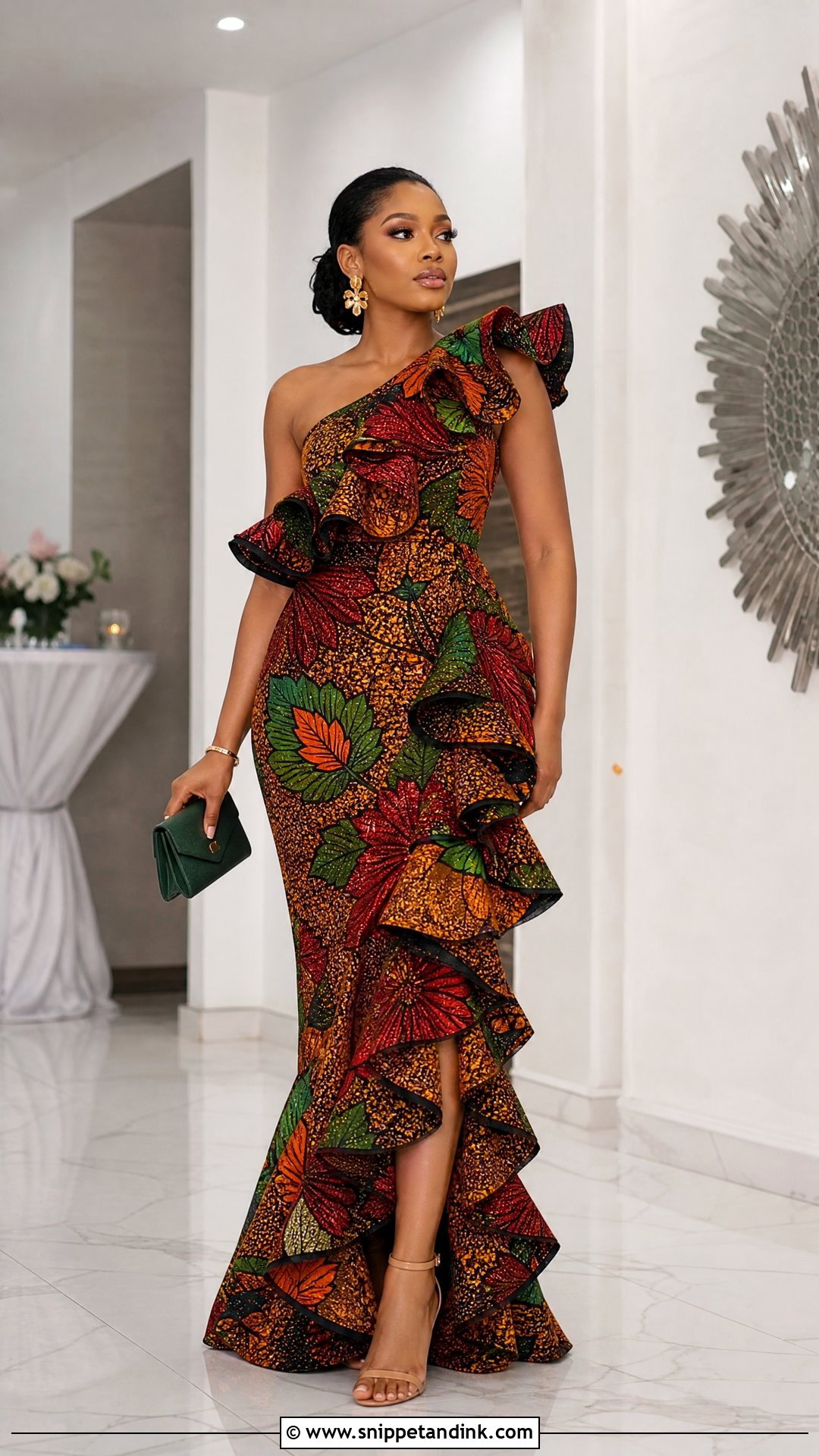
Ruffles on stiff wax print stand out a long way, so placement matters more than quantity. Diagonal ruffles across one shoulder or cascading down the skirt lengthen the body; a ring at the hem adds width low down. If the fabric is very crisp, I either use fewer ruffles or cut them from softer organza. Keep everything else plain: one pair of earrings, a solid clutch.
13. Ankara Gown With Detachable Train
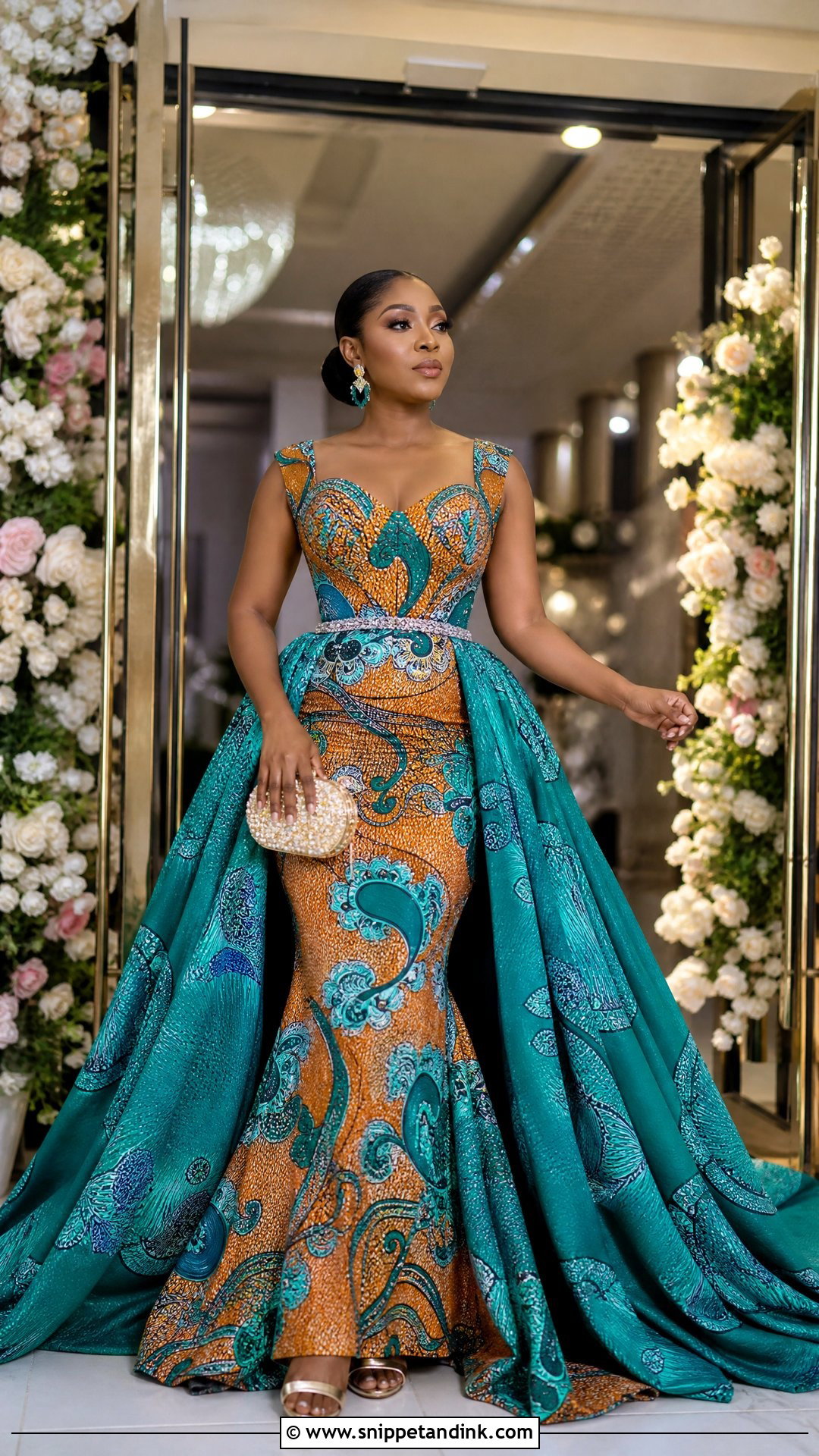
A detachable overskirt gives you two gowns: the big entrance, then a slim column, trumpet or mermaid for dinner and dancing. The gown underneath must look finished on its own, with its own clean waistline. Hidden hooks and reinforced fastenings keep the overskirt from sagging. I’d line the train in something light, because a long Ankara train is heavy enough to drag on your waist. Practise taking it off once before the event.
14. Ankara Gown With Organza Sleeves
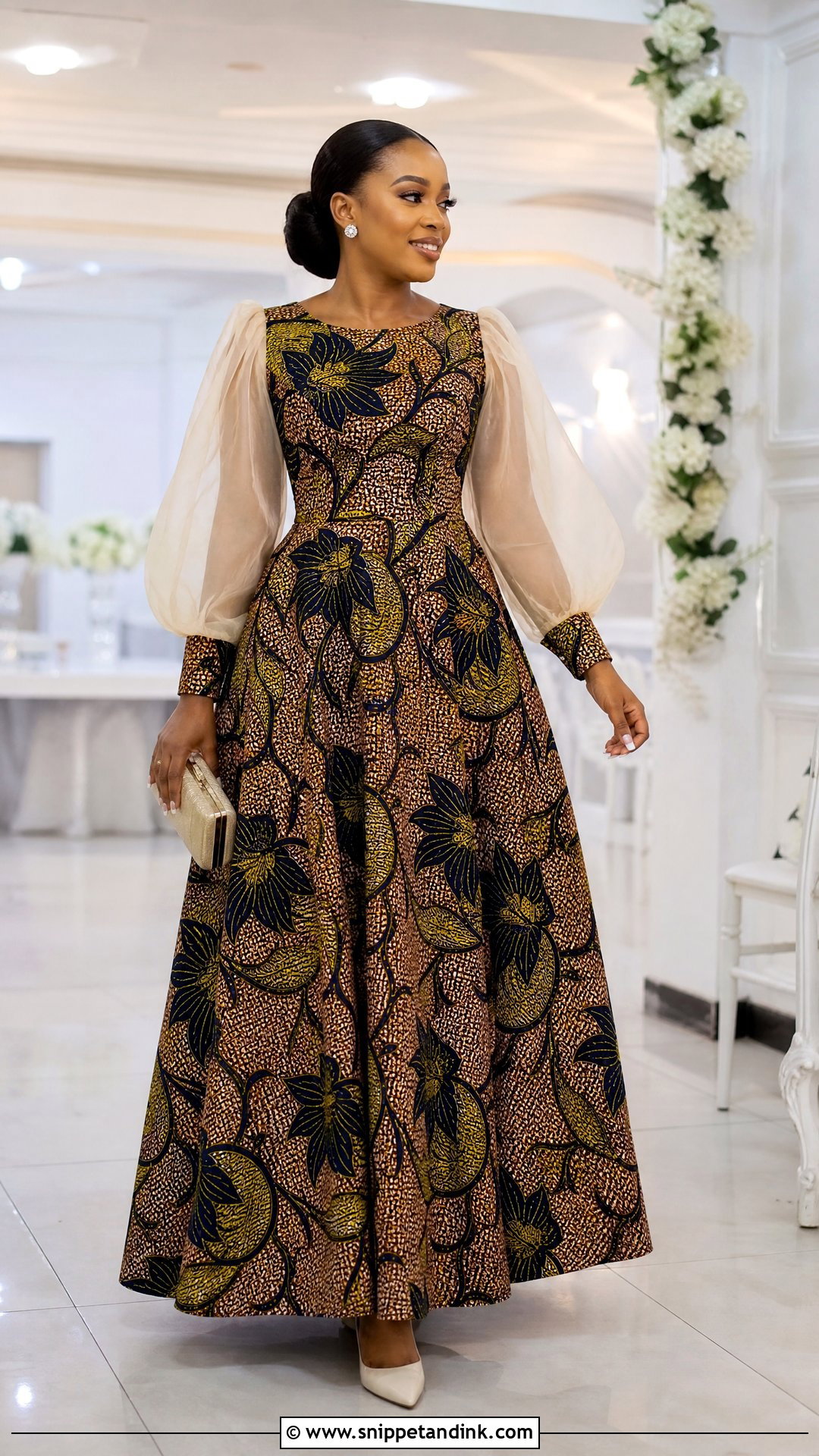
Organza sleeves lighten a heavy print. Balloon, bishop or lantern shapes work, in a colour matched to the background of the fabric, not a random accent shade. Small Ankara cuffs tie the sleeve to the gown. Sheer fabric shows every seam, so ask for French seams or a clean bound finish inside. Skip bangles that will snag or crush the cuff.
15. Ankara Gown With Tulle Skirt
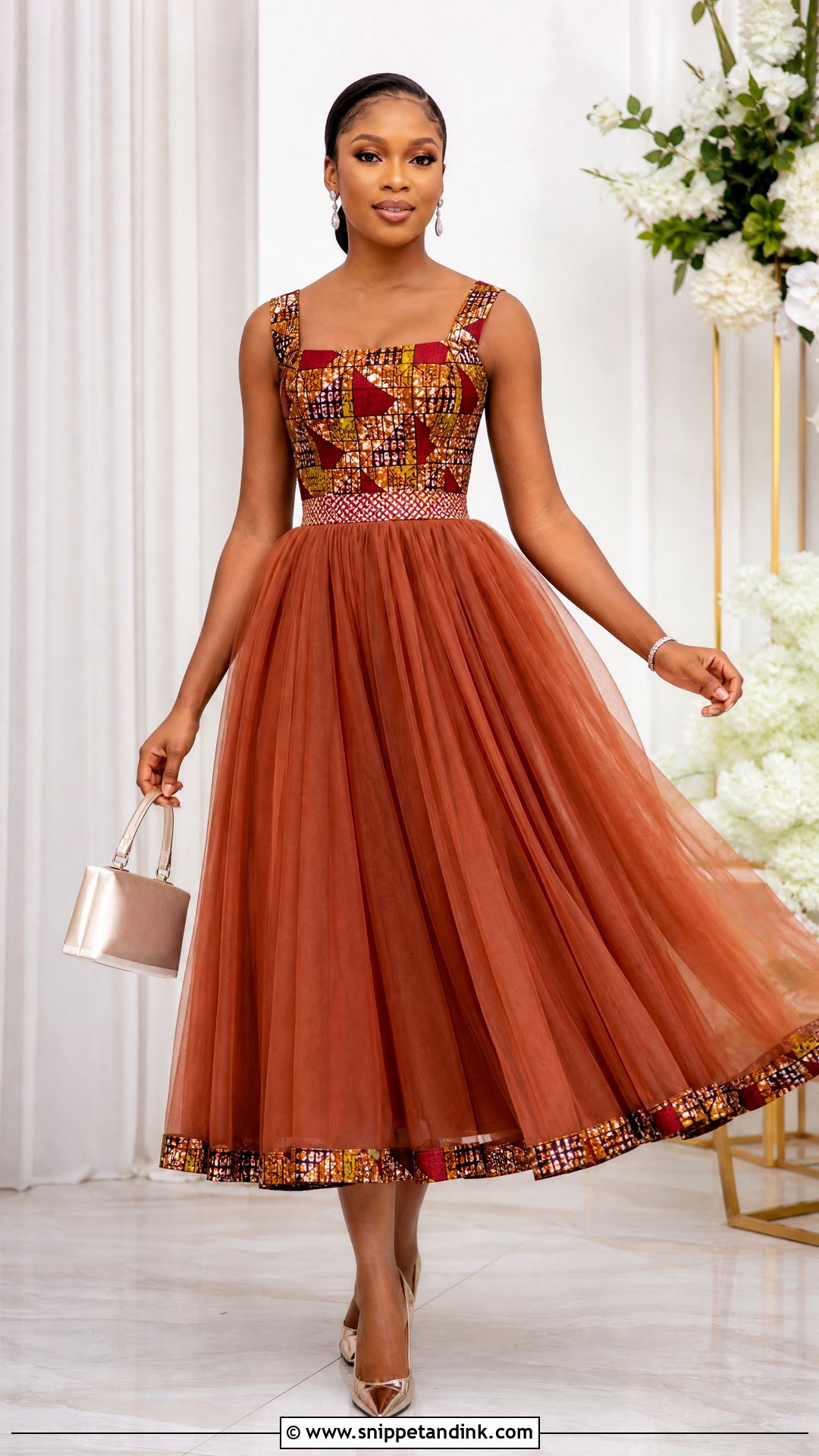
Mixing an Ankara bodice with a full tulle skirt softens the look and makes it much lighter to wear. Pull the tulle colour from the print, and put an opaque lining underneath so the skirt isn’t see-through in daylight. An Ankara waistband connects the two fabrics. Keep the tulle flat at the waist and let it widen lower down, or it’ll add bulk at the stomach. A narrow Ankara border at the hem repeats the print at the bottom so the gown reads as one piece.
16. Ankara Gown With Lace Bodice
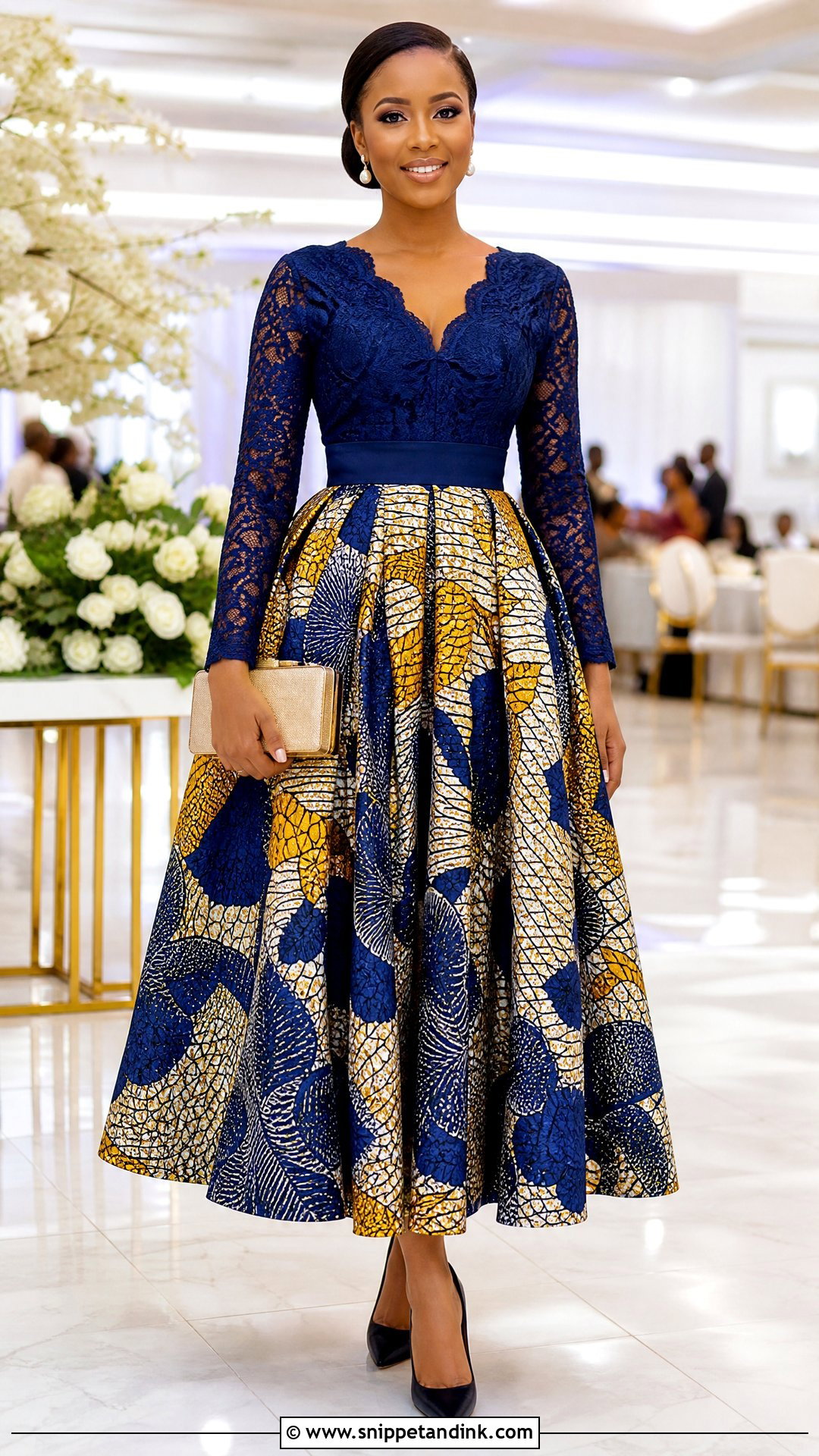
Lace in one of the print’s quieter colours gives a formal bodice without competing with the skirt. A lined lace top with a modest V, round or illusion neckline is the base. My rule: lace, beading and big jewellery all together is too much; one detail leads. The tailor should test the lace and the Ankara together, since lace stretches and cotton doesn’t, and the seam between them can pucker if they’re cut the same way.
17. Ankara Wrap Ball Gown
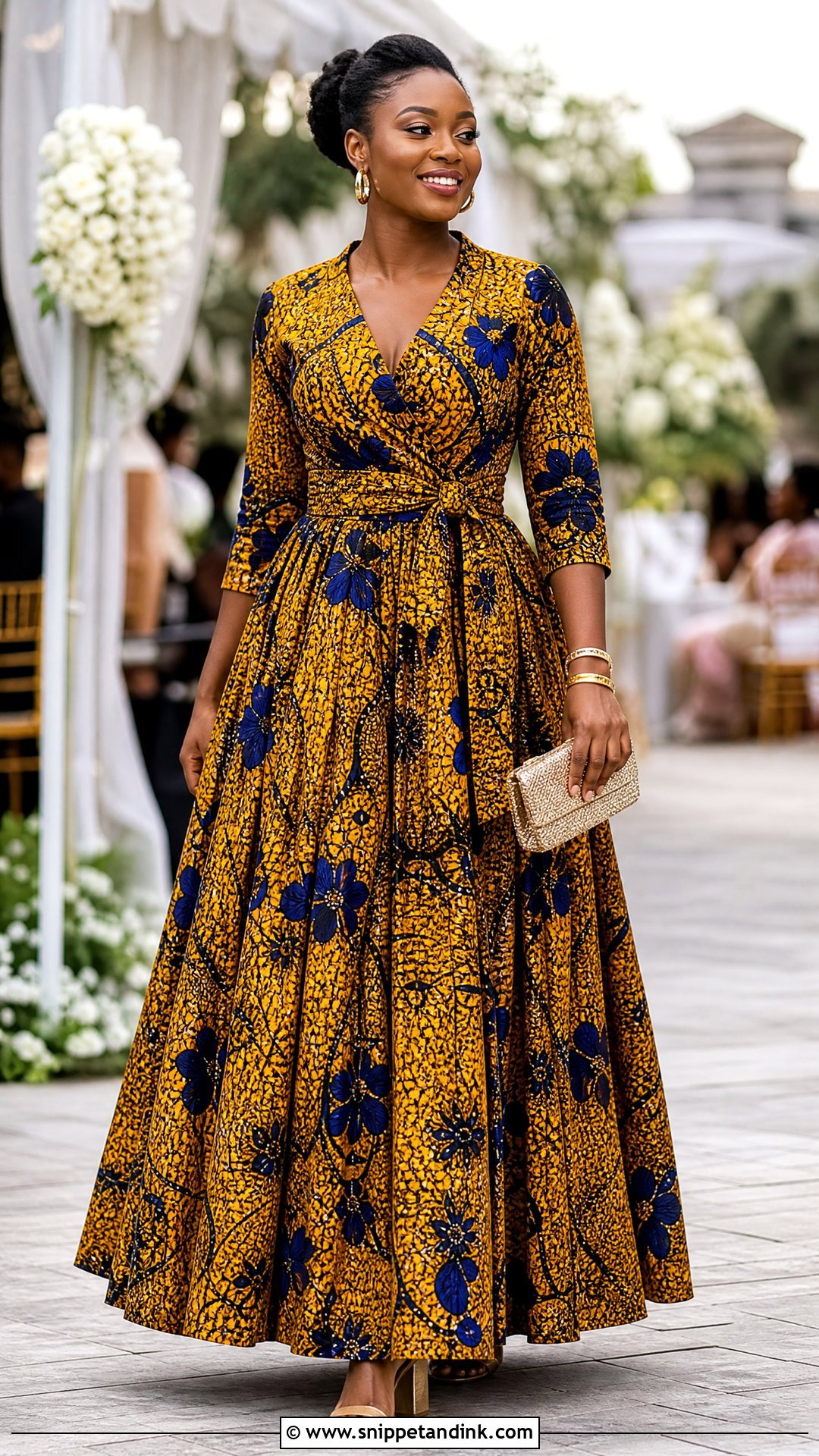
A wrap bodice draws a diagonal line to the waist, which suits most body types. For a gown, I’d always choose a faux wrap with hidden fastenings over a real tie; a loose wrap shifts the neckline every time you move. A wide sash defines the waist before the pleats open. Ask for the front skirt panels to be joined below the wrap point, so the gown doesn’t open when you climb steps.
18. Ankara Empire Waist Gown
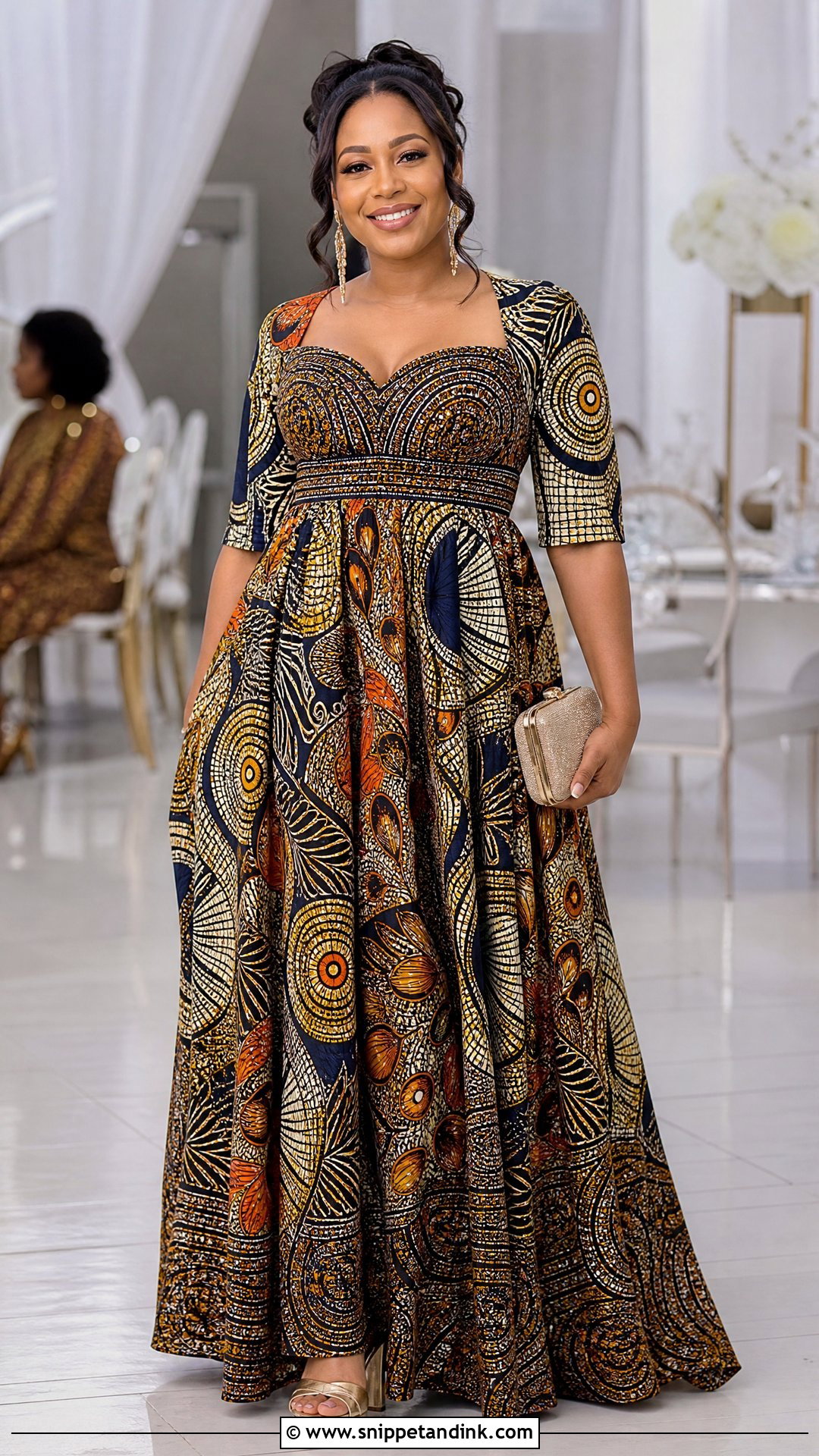
Empire waists sit the seam just below the bust and let the rest flow, so nothing presses on the stomach. Supportive straps or elbow sleeves give the upper bodice structure. Soft pleats under the bust look smoother than heavy gathering, which can make you look pregnant in stiff cotton. Petite women gain length from the high seam. The bodice has little surface area, so choose motif placement there carefully.
19. Ankara A-Line Gown With Statement Sleeves
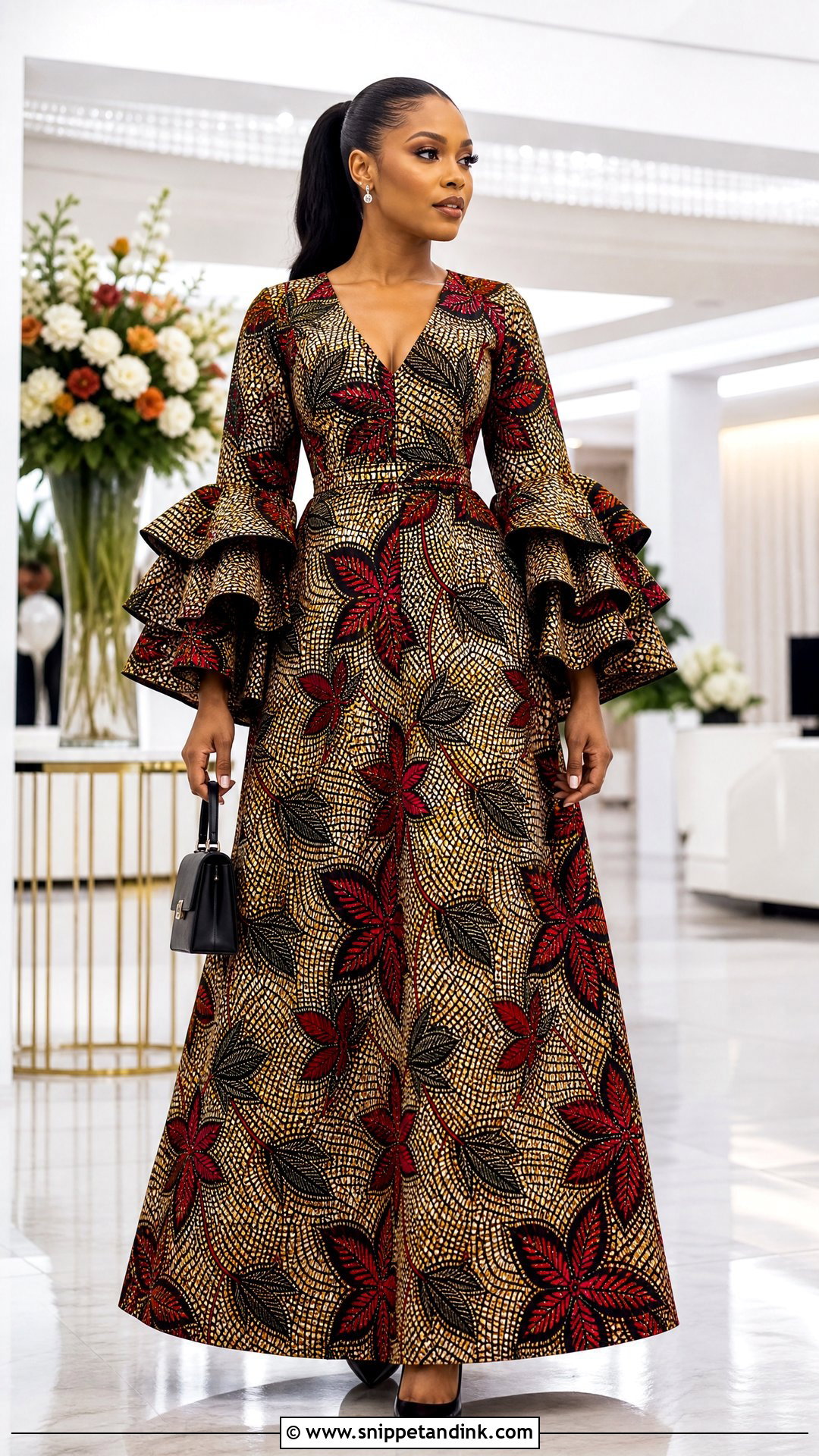
Here the volume moves up to the arms while the A-line skirt stays manageable. Full bishop sleeves, layered bells or structured flounces at the elbow give the big-gown effect. Wide hips are balanced by fuller sleeves; broad shoulders do better with softer volume. Check that the cuffs stop short of your hands so you can hold a plate and a bag. A plain insert at the waist breaks up a very busy print.
20. Ankara Gown With Front Slit
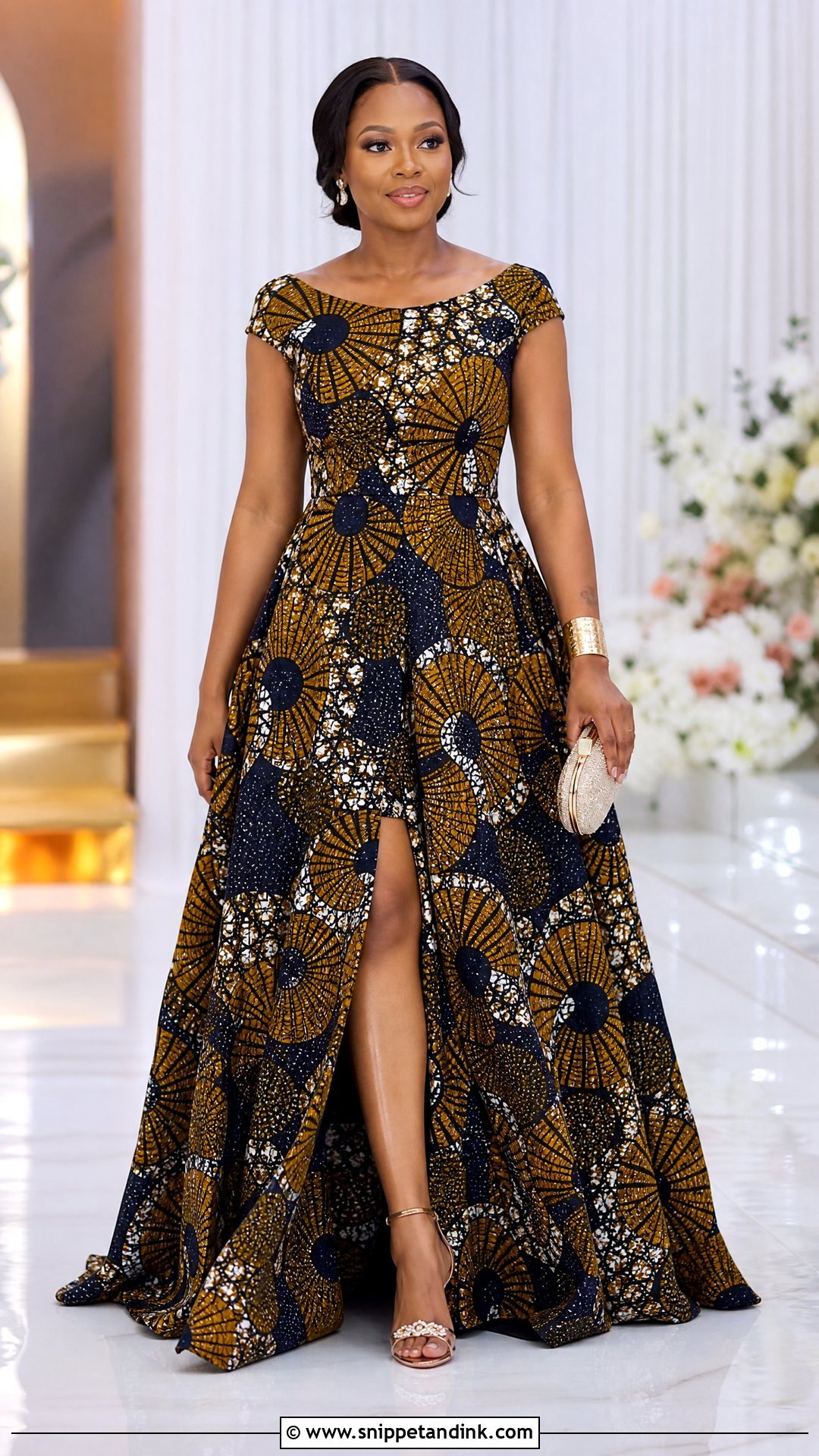
A front slit makes a full skirt easier to walk in and shows off the shoes. Place it slightly off-centre for coverage and set the height while seated, not standing. Ankara doesn’t stretch, so the top of the slit takes all the strain; I ask tailors to reinforce it with a bar tack or a small facing. An inner modesty panel helps on windy days. Keep the sleeves streamlined so the slit stays the feature.
21. Ankara Gown With Layered Side Ruffles
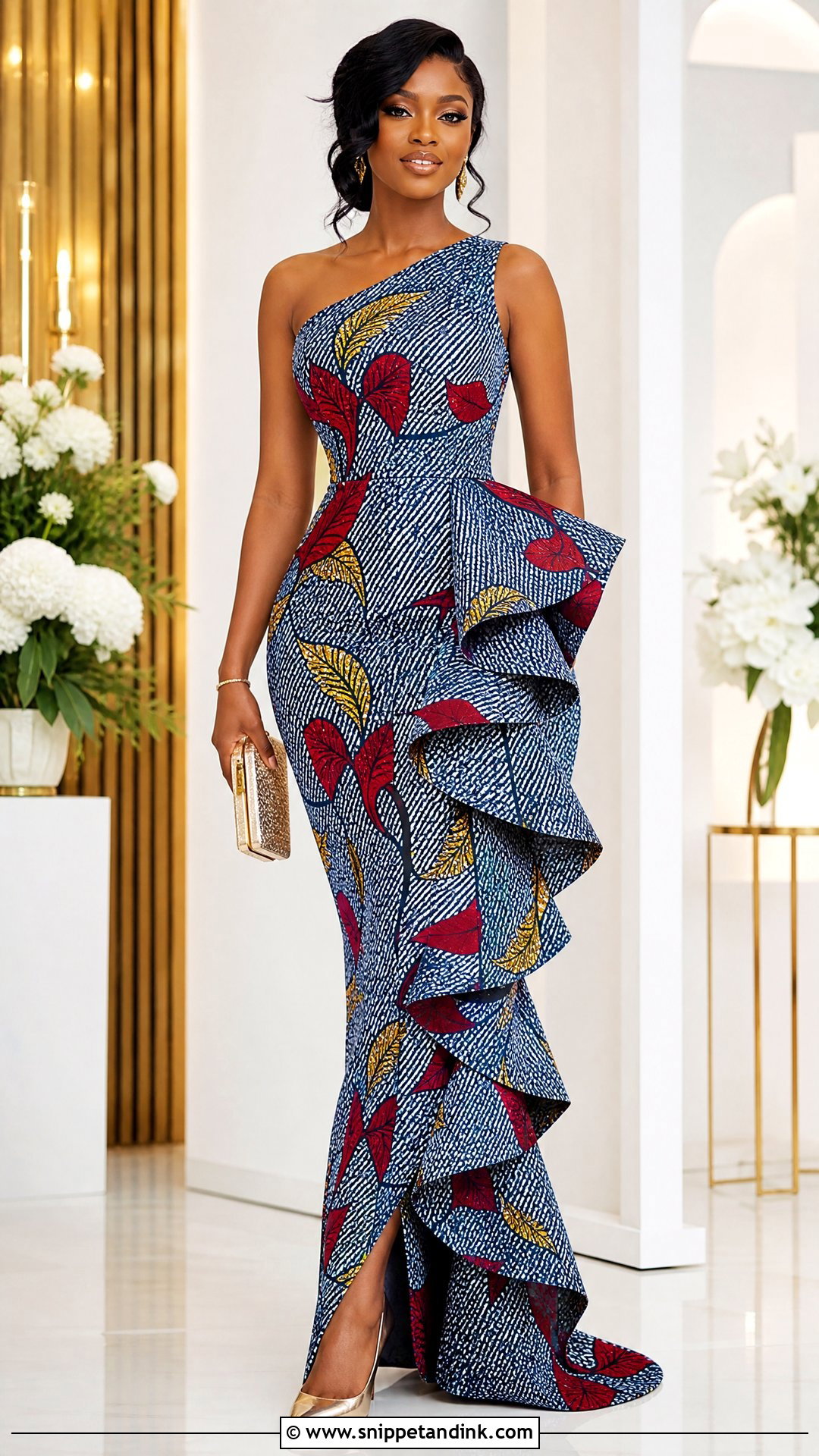
Side ruffles turn a plain fitted gown into a sculpted one, but only if the base is perfectly tailored. Run them along one hip, down the side seam or from waist to hem. Large ruffles need light interfacing, not extra layers of cotton, or they droop by evening. Volume at the waist adds hip definition; a vertical cascade lengthens. Match the print across the ruffle seams.
22. Ankara Gown With Structured Bow
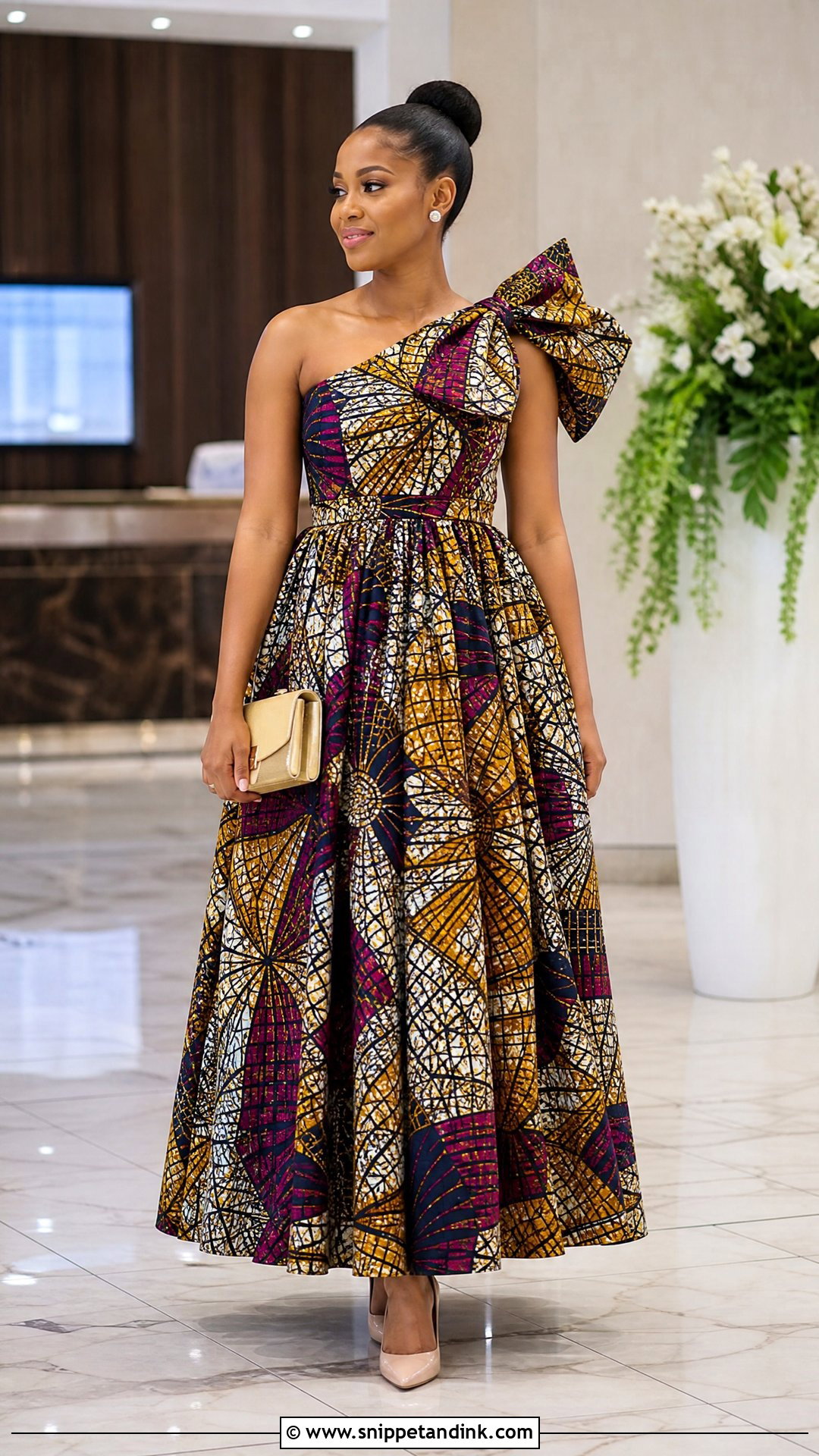
A structured bow can sit at the shoulder, waist or back. Put it where it doesn’t hide your best feature; a bow over the waist on an hourglass figure wastes the shape. With a bow near the face, skip the necklace. I’d make a large bow detachable. They’re uncomfortable against a car seat or a dining chair, and you’ll want to take it off for the drive.
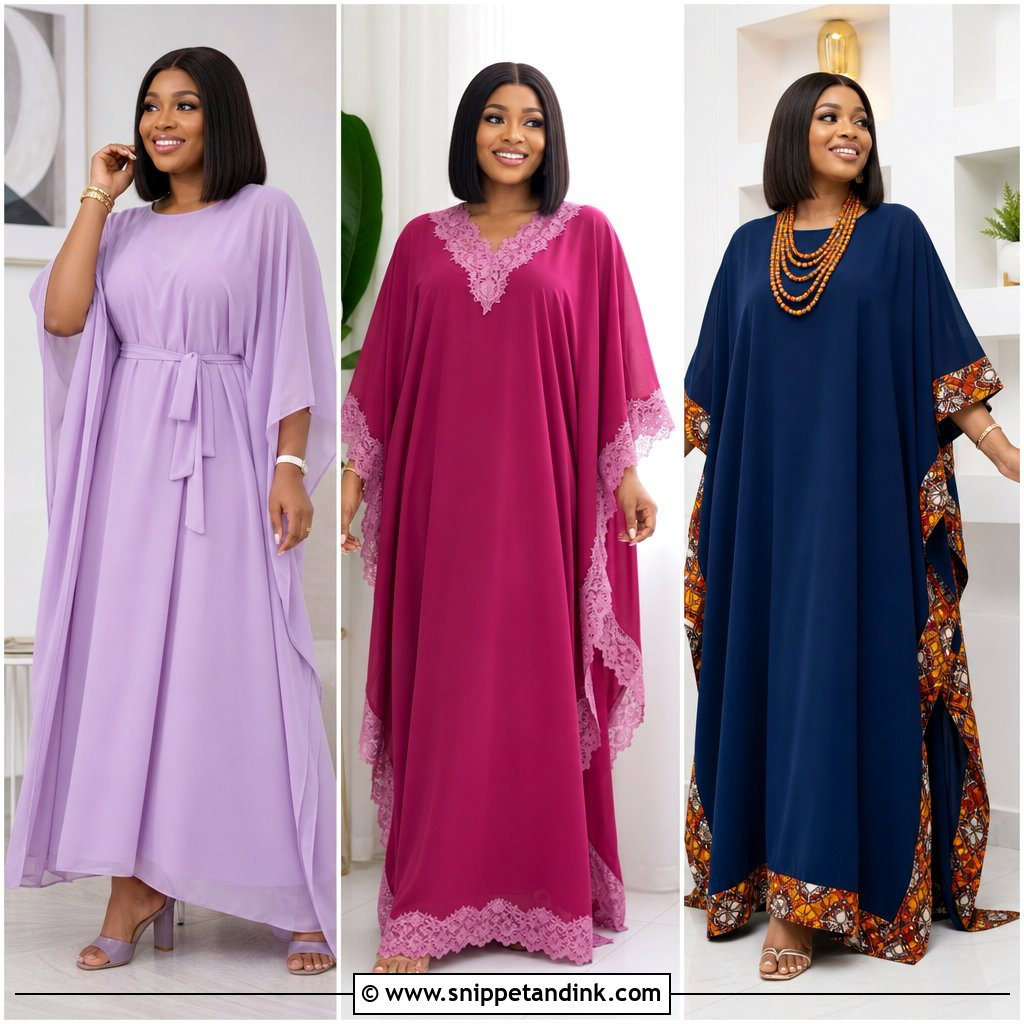
23. Ankara Bubu Gown With Wide Sleeves
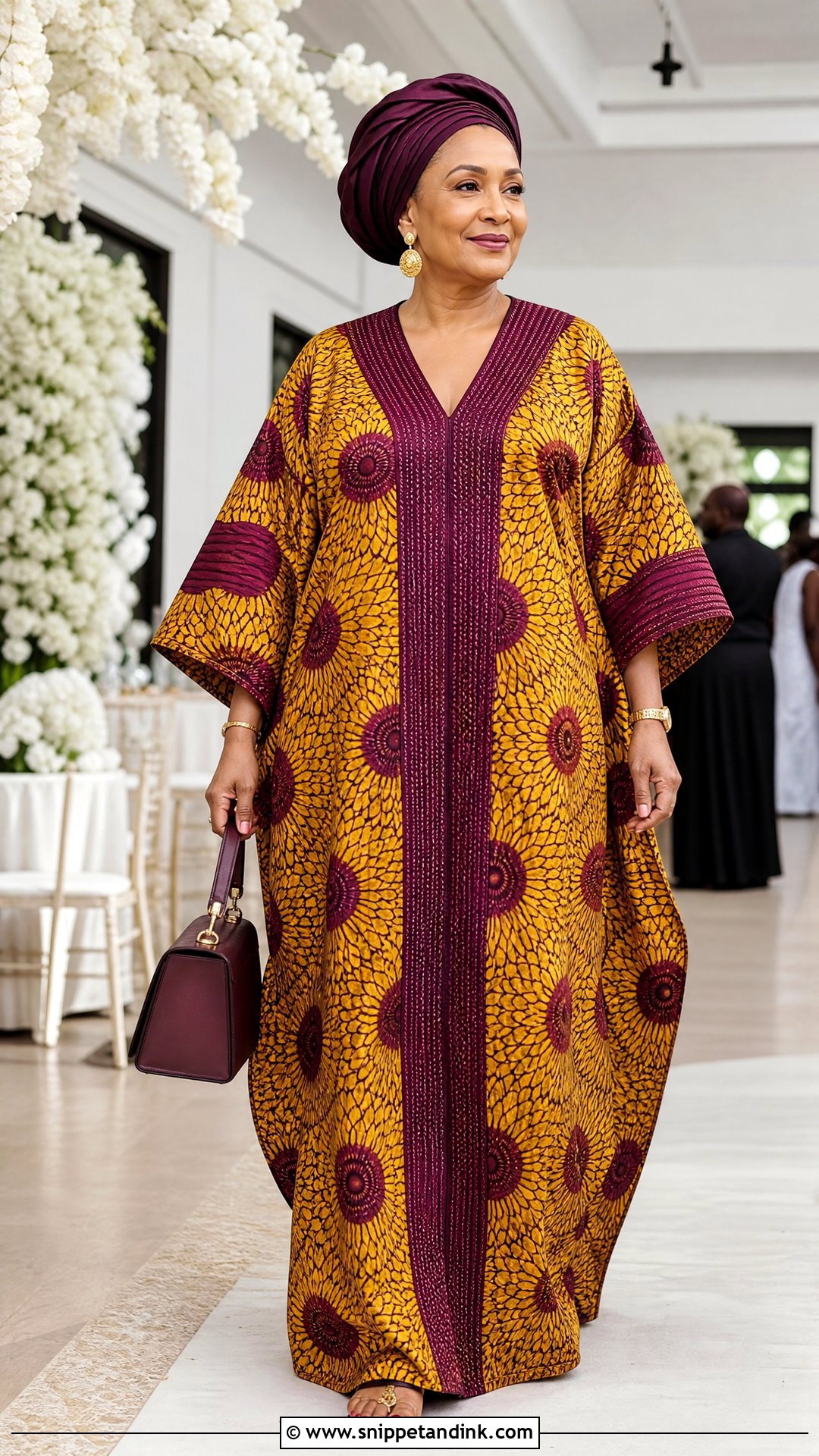
Bubu is the most relaxed shape here: the fabric falls from the shoulders with generous sleeves. An Ankara bubu gown still needs a little shaping, such as side darts, a centre panel or a removable belt, or it can look like a tent in stiff cotton. A V-neck opens it up around the face. Vertical motif placement creates a long line on curvy figures. Measure the hem in your actual shoes so it skims the floor without dragging.
24. Plus-Size Ankara Ball Gown
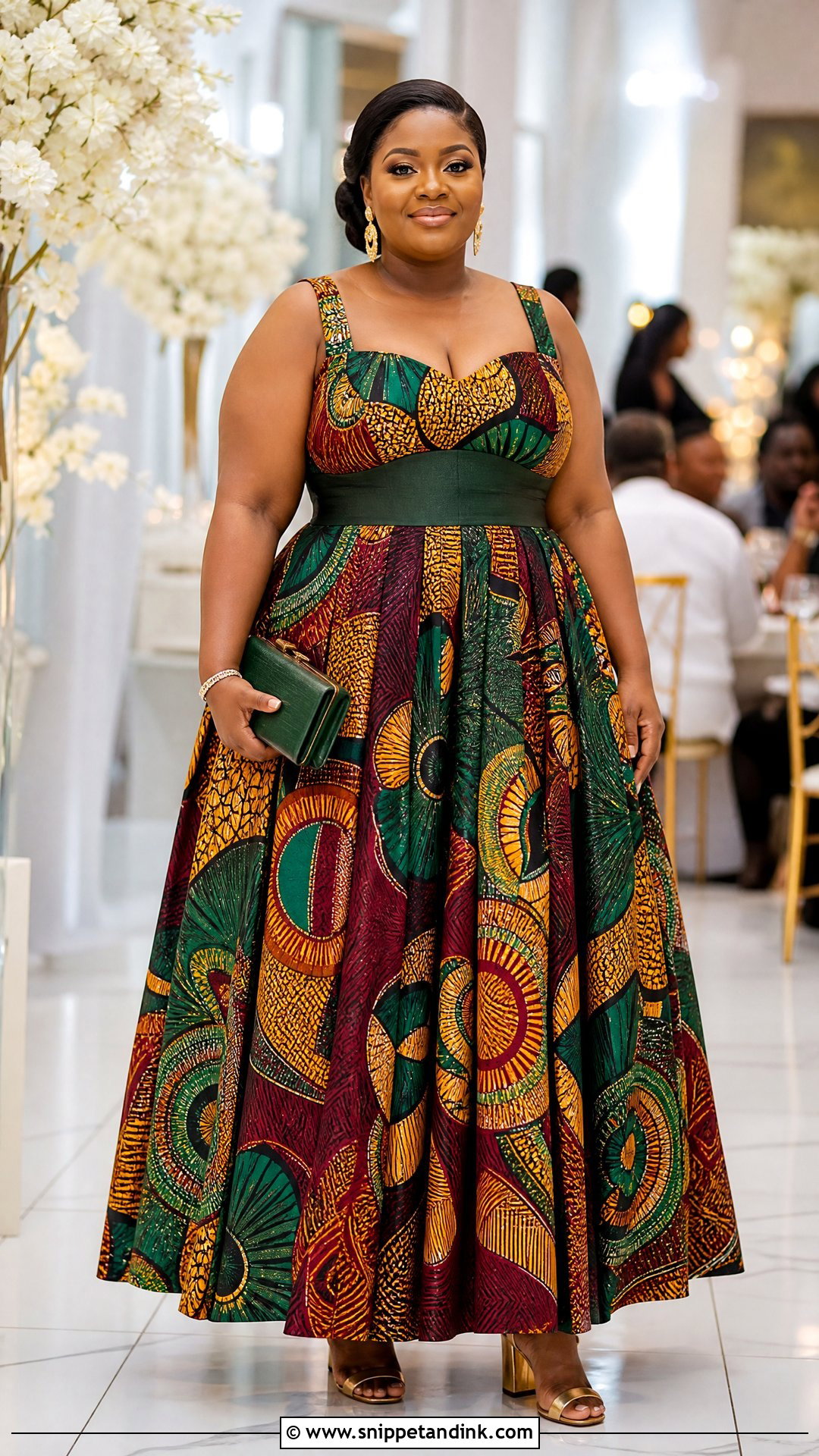
For a plus-size ball gown, support is the first fitting priority and volume comes second. The bodice should follow the bust and waist without digging in; wide straps, internal boning and a supportive underlayer all help. I prefer controlled pleats to heavy gathers for a smoother stomach line, with the fullness starting from the lower waist. Ask for ease through the ribs and arms so you can sit and eat. Centred motifs give a balanced front view.
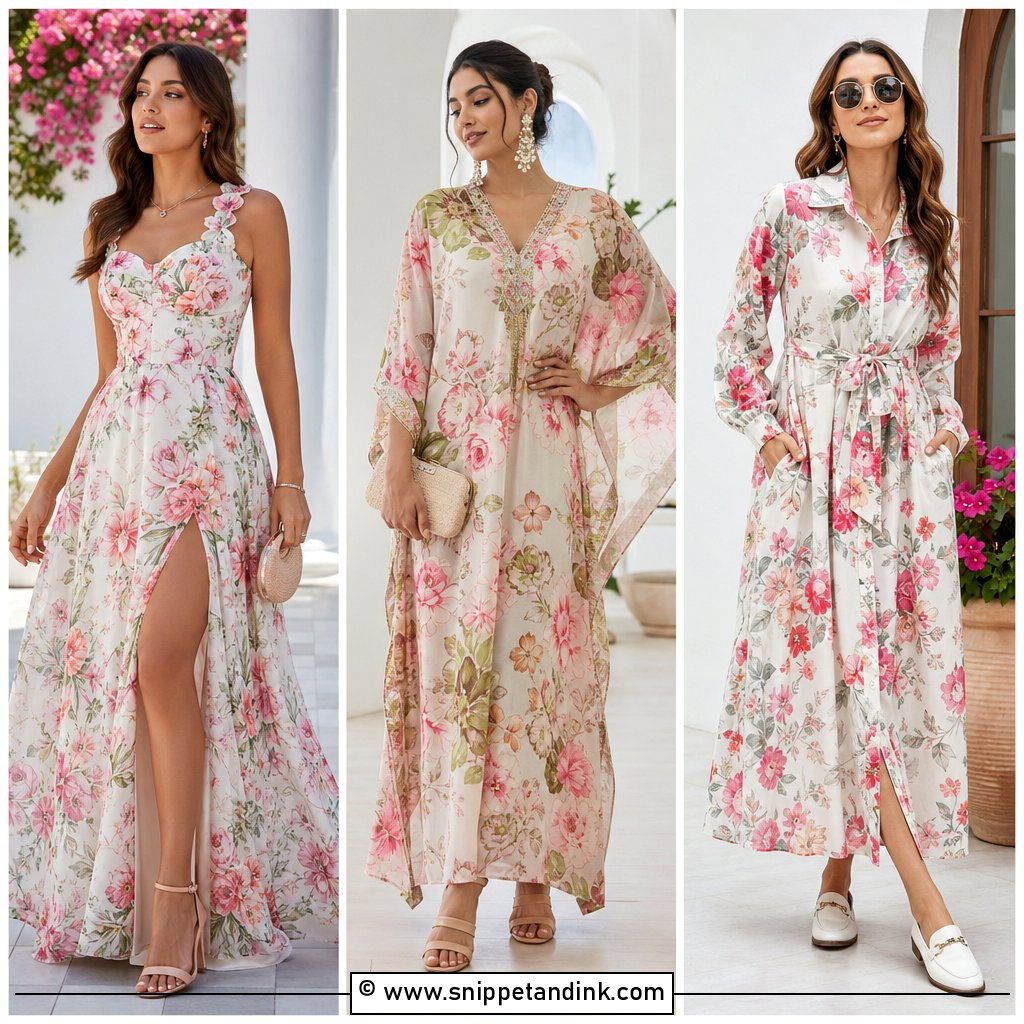
25. Ankara Wedding Guest Ball Gown
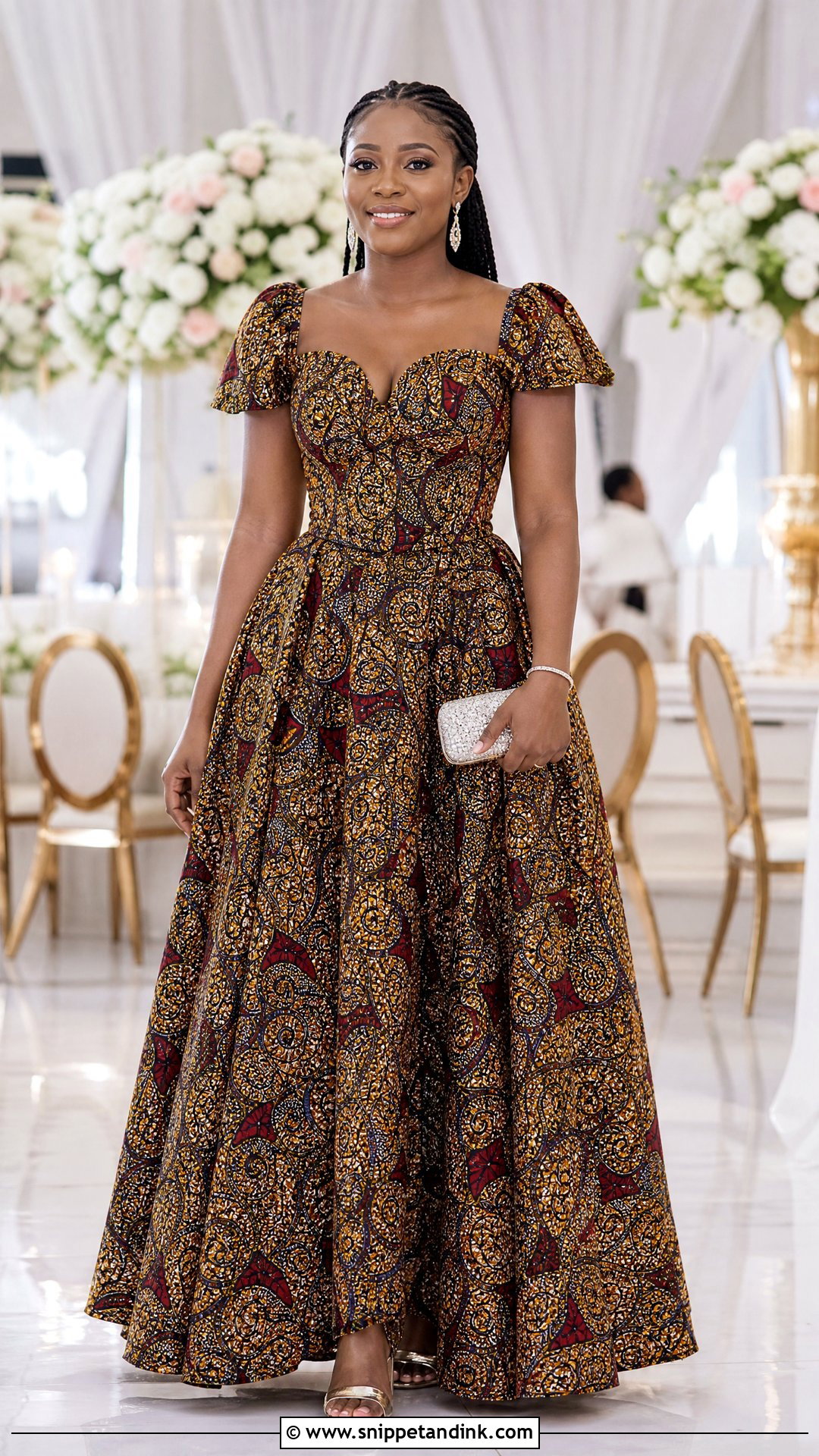
Guests should wear something celebratory that doesn’t become work by the second hour. One memorable feature (puff sleeves, a sculpted neckline or a removable bow) is plenty; stacking all of them makes a guest look like the bride. Check the venue before you set the skirt width. A compact ball-gown shape moves through crowded receptions far more easily than a wide hoop. Pockets are welcome if they don’t distort the line, and the dress code still applies.
Living in a Wide Skirt for a Whole Evening
Nobody photographs the car ride or the queue for the restroom, but a big gown has to survive both. I talk clients through these before the event so nothing catches them out.
Getting there
Sit in the car first, then gather the skirt in after you. A large back car seat or a van is worth arranging for a full ball gown. Avoid sitting on a train or back bow for the whole ride, or it arrives creased flat.
Eating and sitting
Spread the back of the skirt over the chair rather than sitting on it bunched. A large napkin across the lap protects the print from oily stew and sauce, which stains cotton quickly.
The restroom
Bring a friend. Gathering a petticoat and skirt in a narrow stall is a two-person job, and it’s the moment most hems get damaged. A detachable overskirt solves this neatly.
Afterward, hang the gown by the inner loops, not the shoulders, so the skirt’s weight doesn’t stretch the bodice. Spot-clean food marks gently and leave a full wash to someone who knows wax print.
Volume Is the Easy Part; Fit Is the Work
Any of these big silhouettes can be adjusted for coverage, body shape and occasion, and the print will deliver the colour on its own. What separates a gown that looks made-to-order from one that looks homemade is the inside: supportive bodices, smooth linings, secure closures and a hem set at your real heel height. Let accessories echo one colour from the fabric rather than every motif. Take a picture you love to a tailor who has handled wax print before, and plan at least two fittings so it fits as well as it looks.
You'll Like These Ideas:


Leave a Reply