
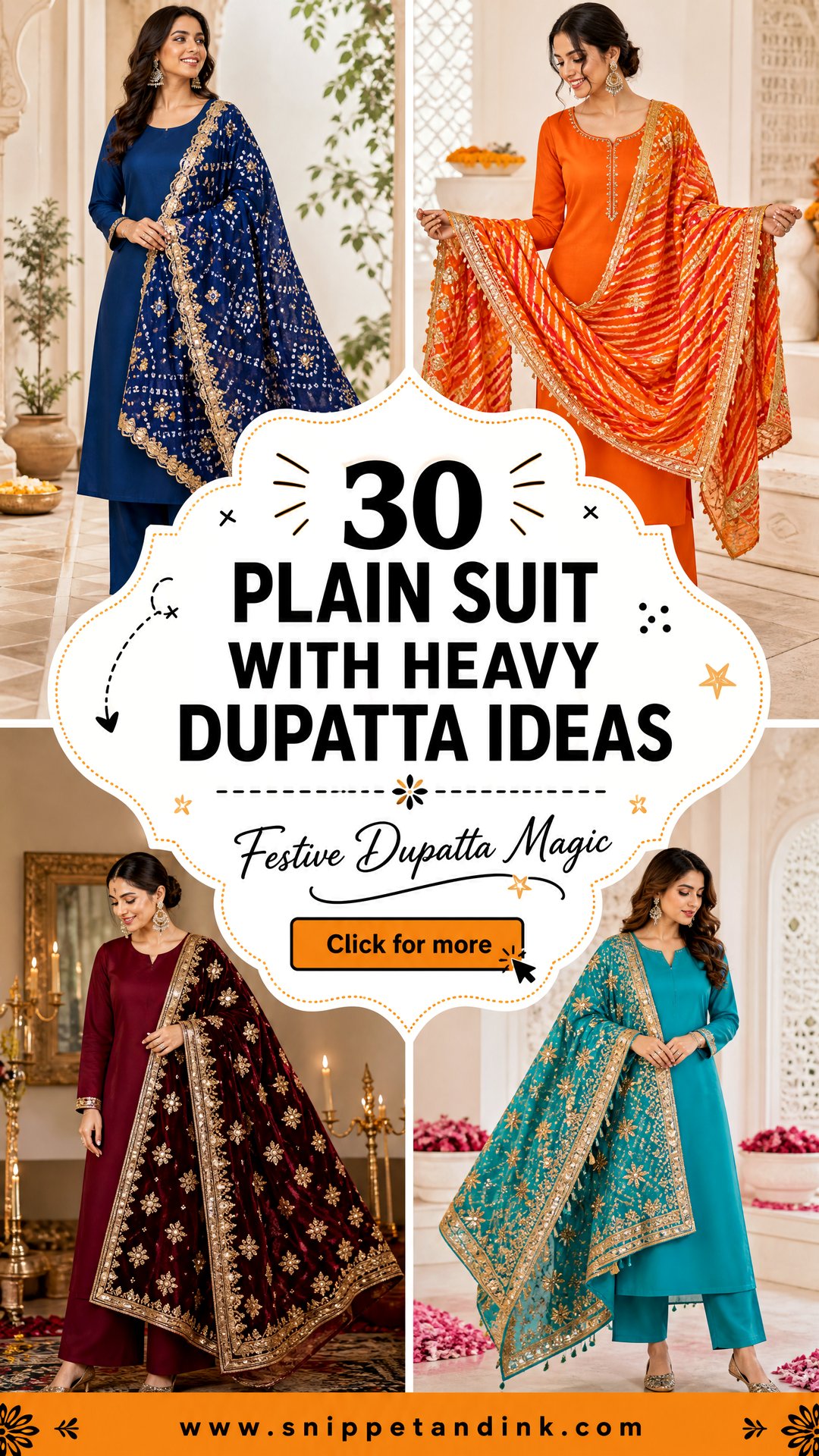
Half the women I dress for a family wedding season don’t want a new heavy outfit for every function. A plain suit with a heavy dupatta is my answer most of the time. The kurta and bottoms stay clean and comfortable, and the dupatta brings the craft: zari, mirror work, bandhani, phulkari, pearls. One good dupatta can then go with three or four plain suits across sangeet, mehndi and puja days. The fabric of the suit matters more than people expect, because a flimsy kurta collapses under a weighty dupatta. Here are thirty pairings I’d put together, with the drape and fabric notes that make each one work.
Matching Kurta Fabric to the Weight of the Dupatta
The most common problem I fix is a lovely heavy dupatta dragging a thin kurta off the shoulder. The suit has to be strong enough to carry it. My rough rule: the heavier the dupatta, the more body the kurta fabric needs.
Light dupattas: bandhani, leheriya, chikankari, organza
These sit happily on cotton, chanderi, georgette and muslin kurtas. They’re easy to wear for long daytime events.
Medium: gota, sequin, net with embroidery, phulkari
Choose cotton silk, crepe or a silk blend. Pin once at the shoulder seam, and add a second pin if you’ll be dancing.
Heavy: velvet, Banarasi, Kanjivaram, brocade, mirror work
Use silk, heavy crepe or a wool blend in winter. Pin at the shoulder and at the back of the waist, and avoid thin georgette entirely, because it will sag and pull at the neckline.
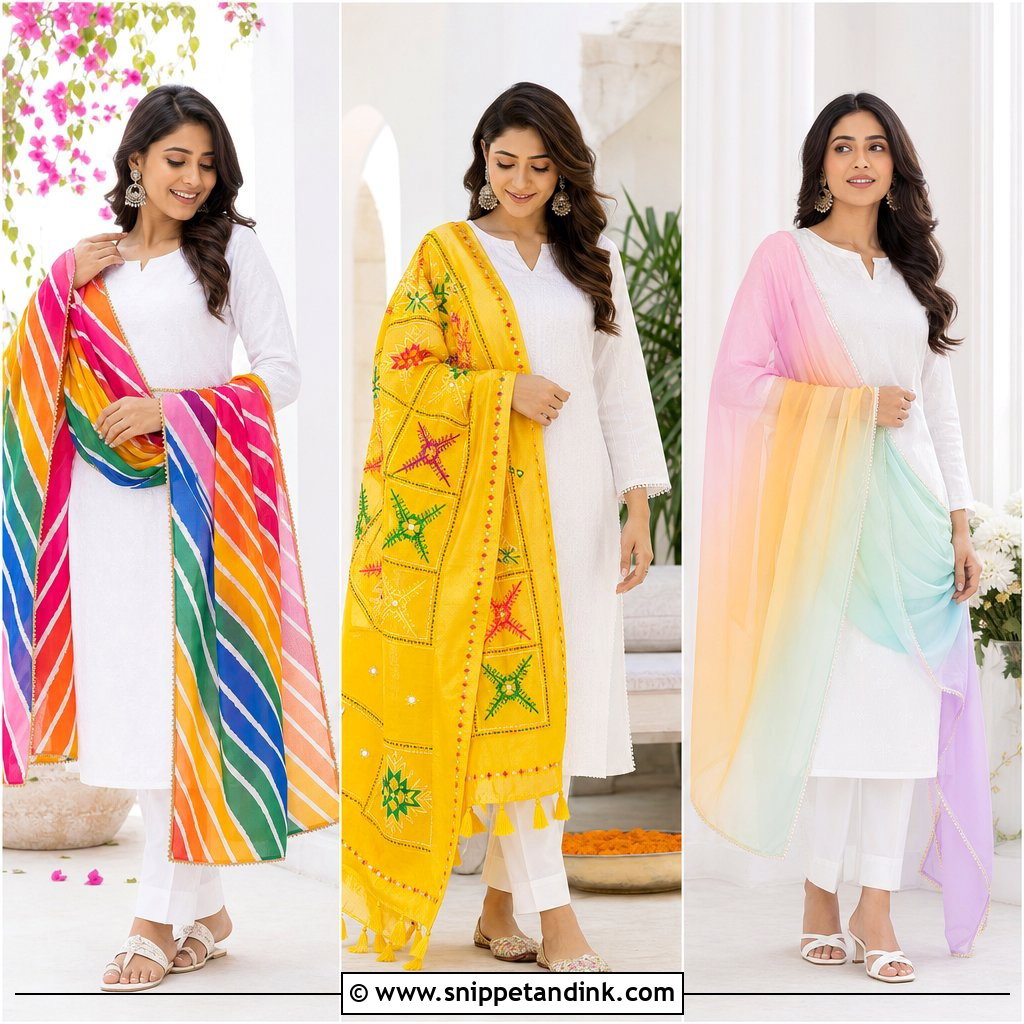
1. White Plain Suit With Heavy Banarasi Dupatta
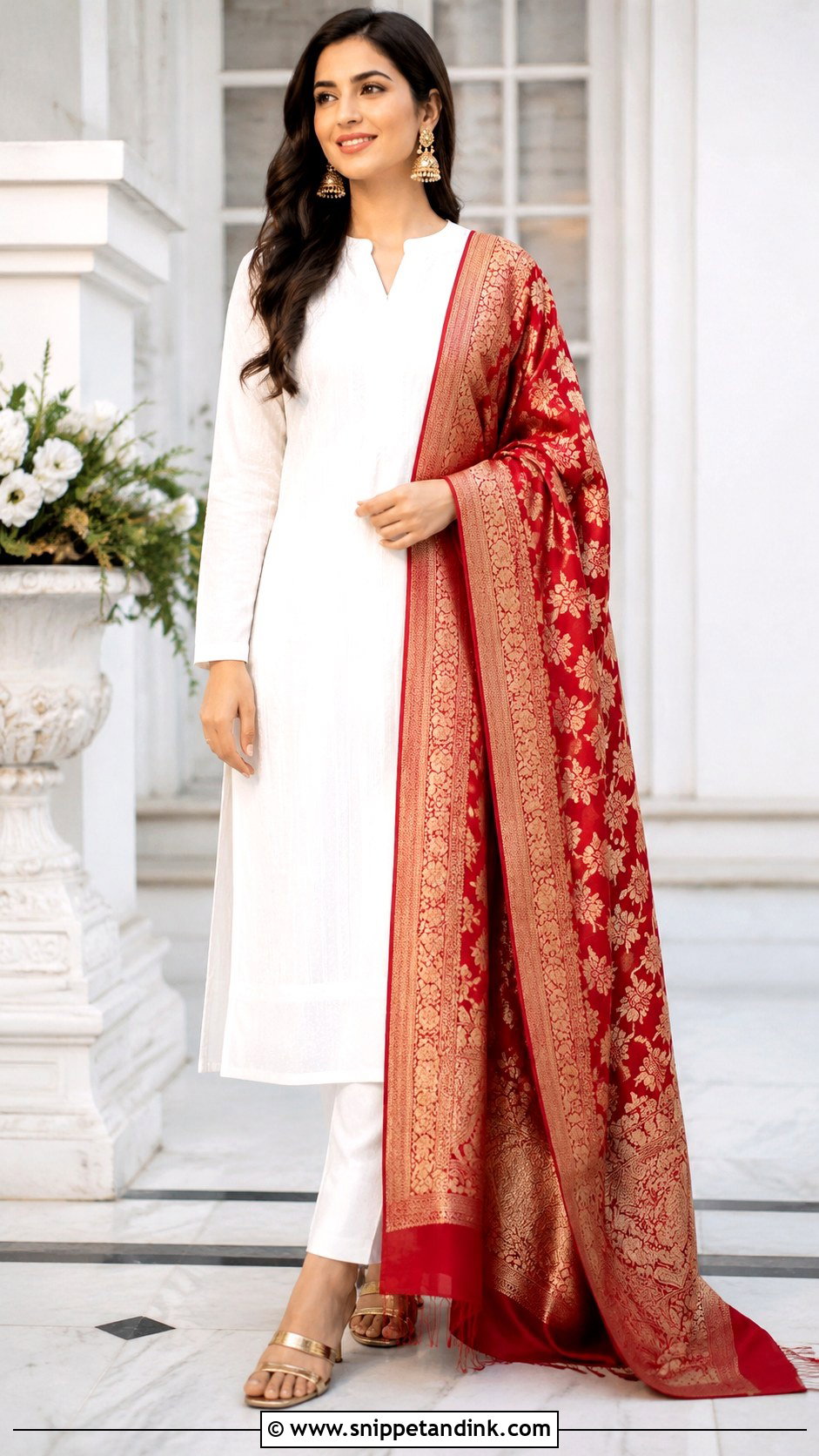
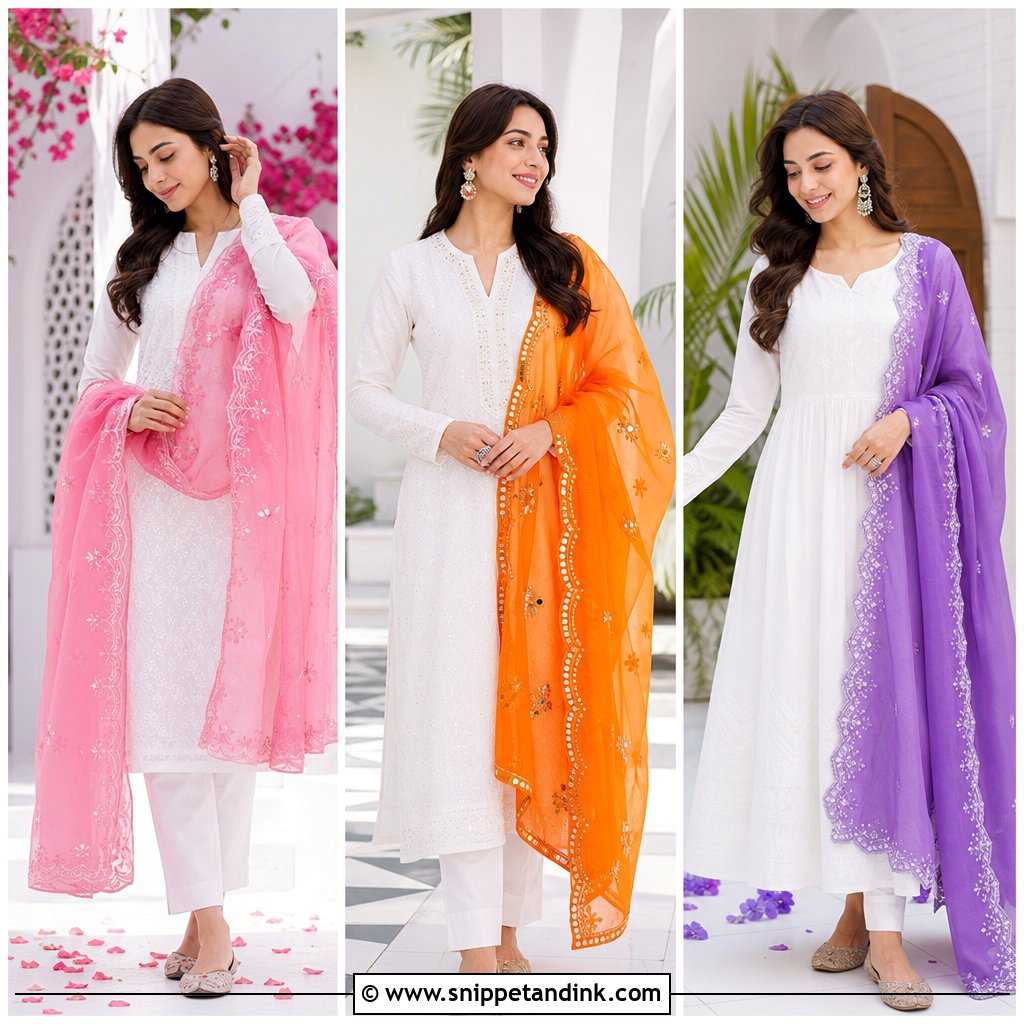
White is the safest canvas for a Banarasi, and I use it often for daytime pujas. The thing I watch is transparency: a thin white cotton kurta under bright sunlight shows everything, so I’d go for cotton silk, chanderi with a lining, or crepe. Pick the Banarasi in red, emerald or royal blue for proper contrast. Gold jhumkas, metallic sandals and a small potli finish it. The silk’s weight pulls toward the back, so I always pin it at the shoulder seam.
2. Black Plain Suit With Heavy Embroidered Dupatta
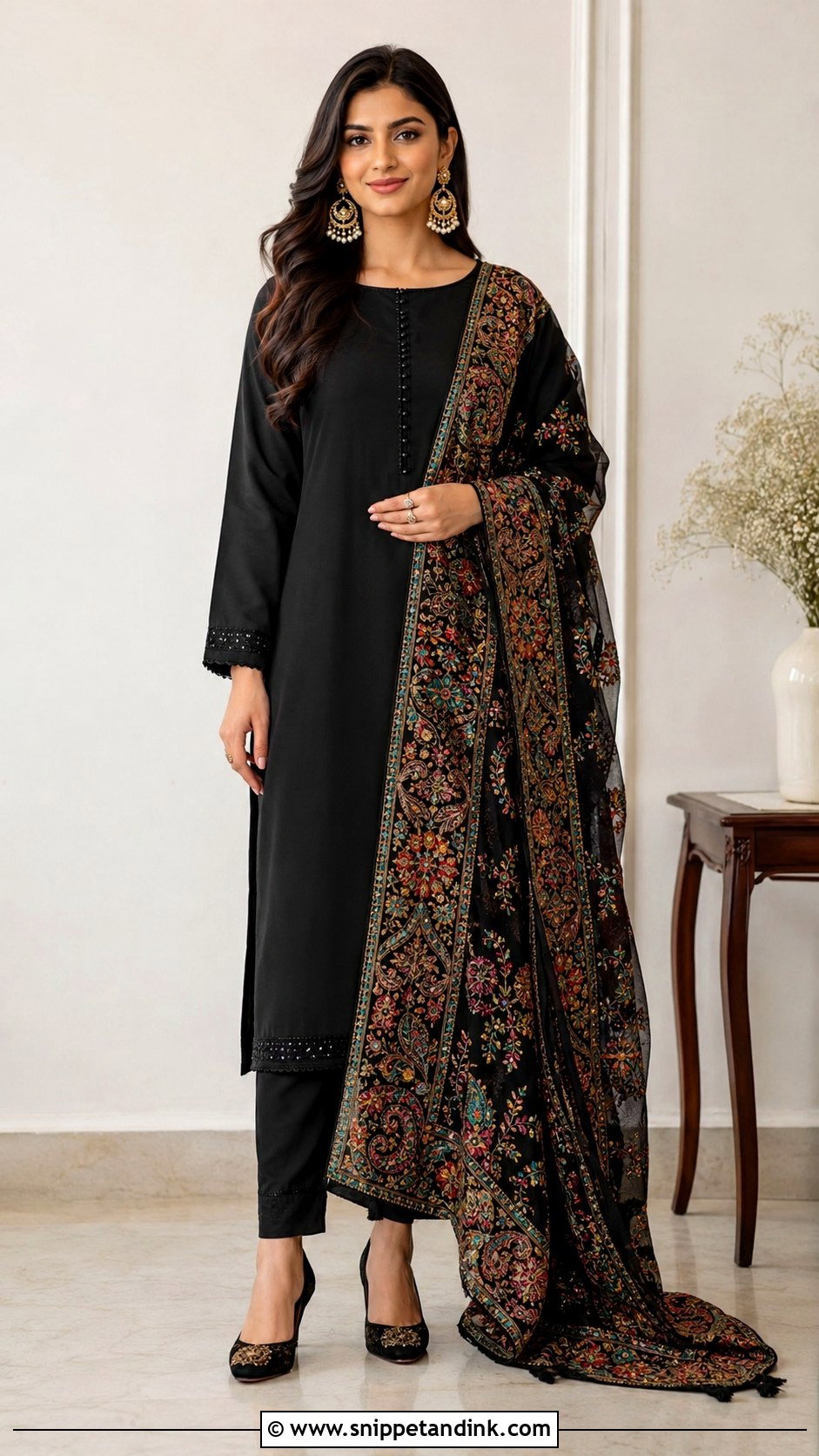
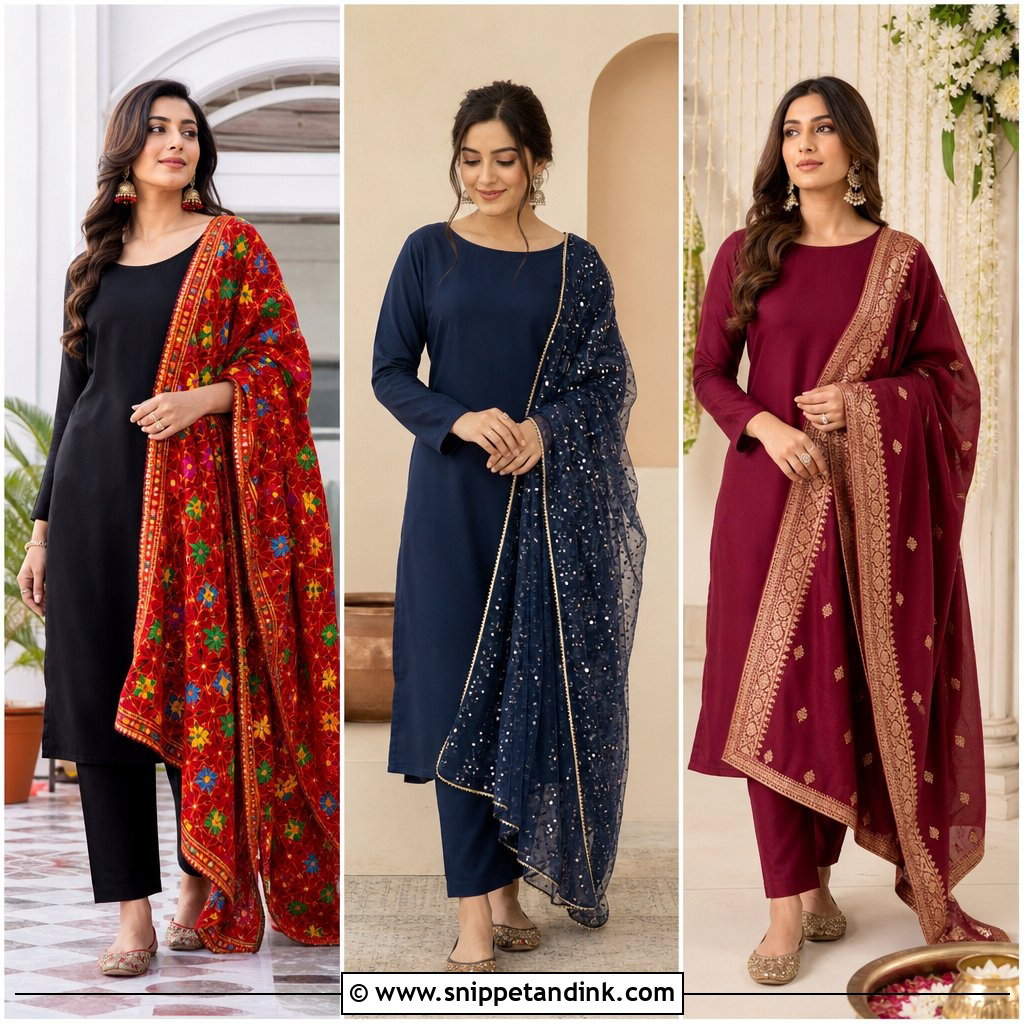
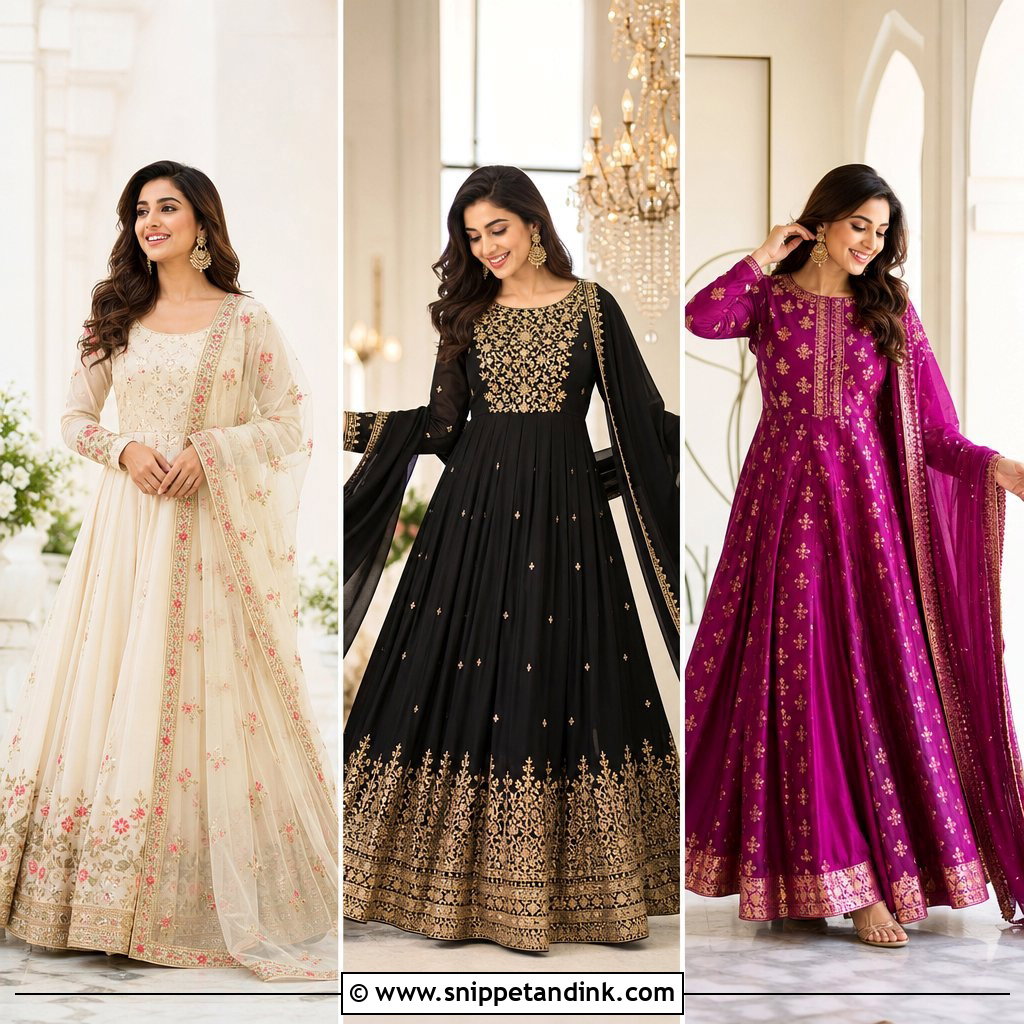
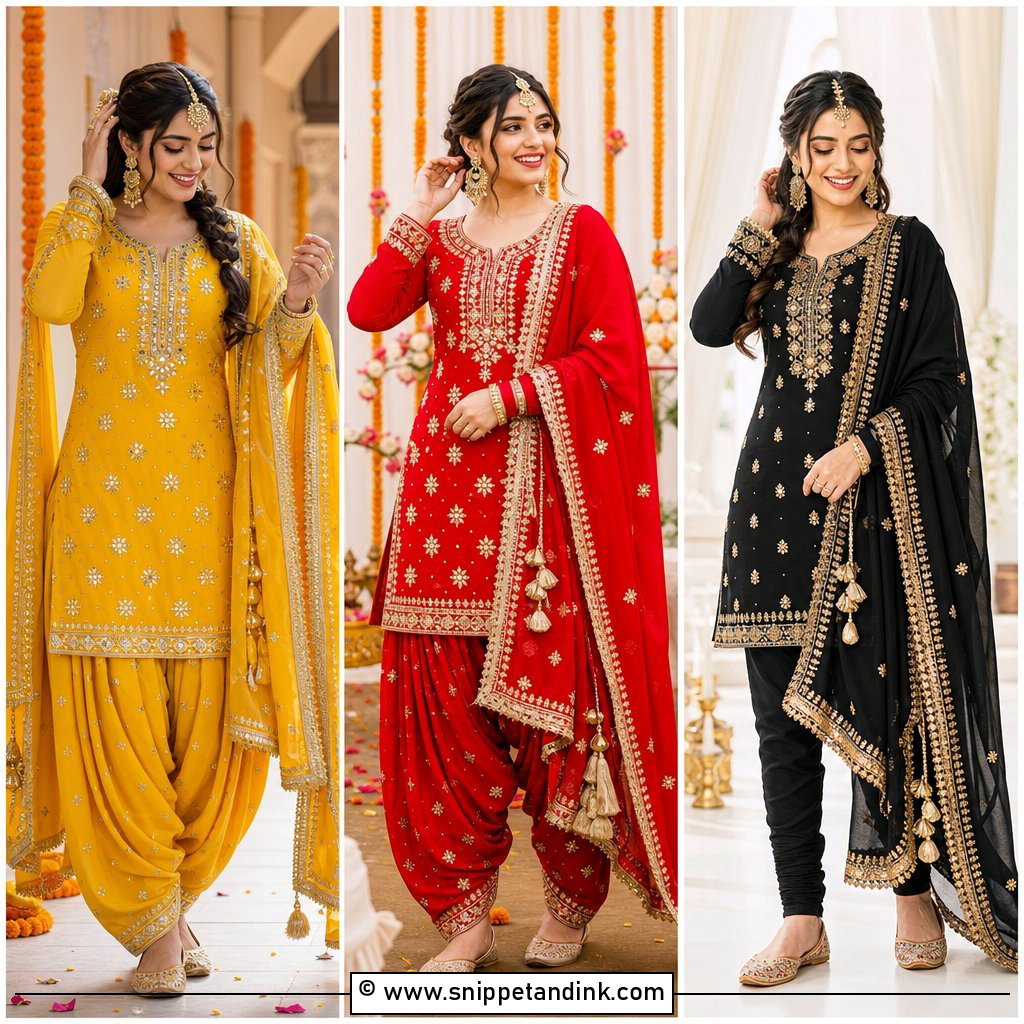
Black takes embroidery better than any other base. Zari, mirror work and threadwork all pop against it, which is why a black kurta with a heavy embroidered dupatta is one of my most-repeated combinations. A multicolour phulkari makes it Punjabi and cheerful; a gold net dupatta makes it an evening outfit. In some families black is avoided at weddings, so I always ask about family custom before we commit. Gold chandbalis and block heels are enough.
3. Red Plain Suit With Heavy Gold Dupatta
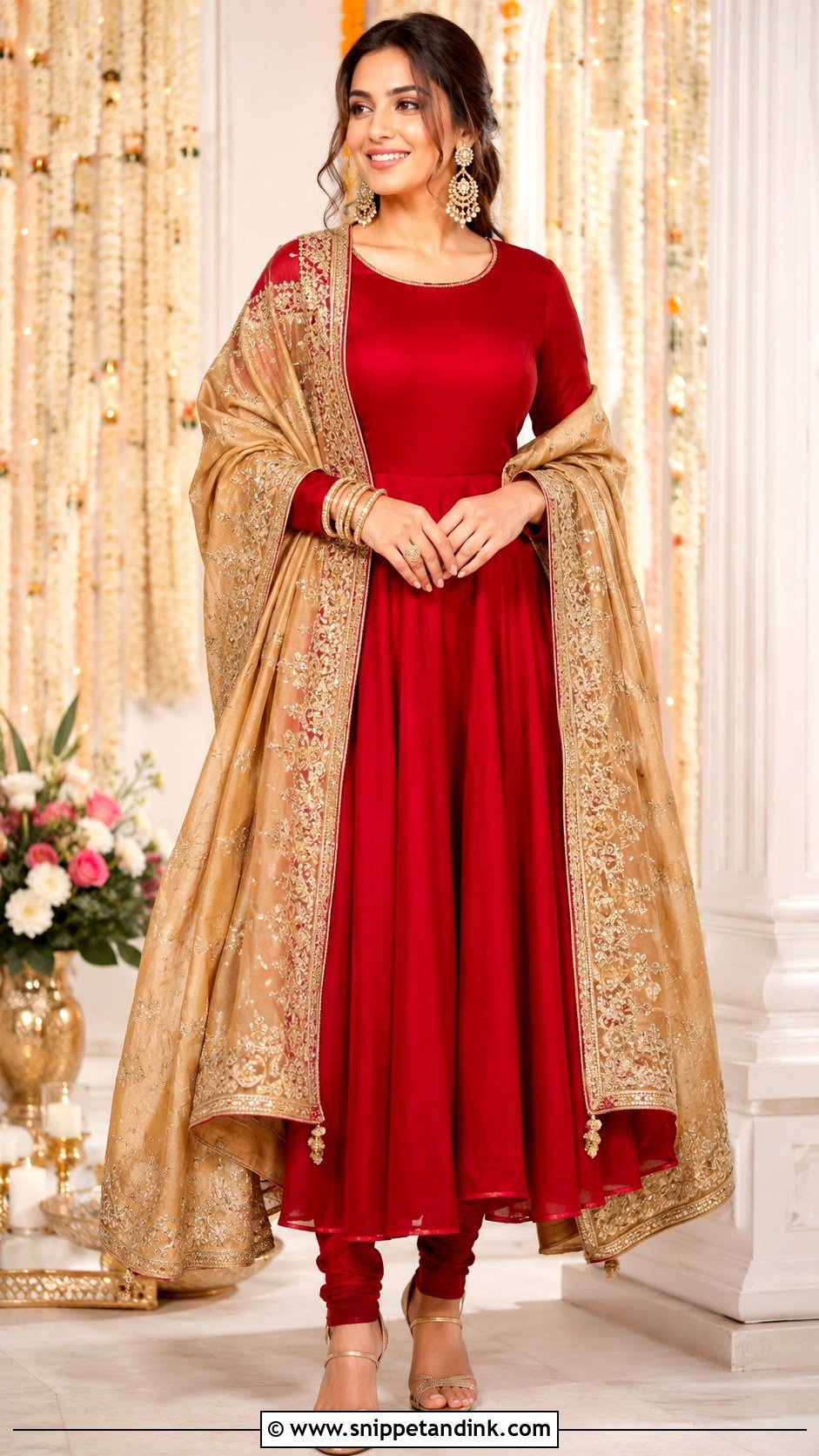
Red on red can look bridal, so with a plain red kurta I make sure the dupatta is mostly gold. A dupatta in Banarasi silk, brocade, organza or zari-bordered net gives that. A straight kurta and cigarette pants look modern; an Anarkali gives a swirl when you walk. Brocade is stiff, so it holds a pleated drape better than it hangs loose. Kundan earrings, gold bangles and embellished juttis keep it festive.
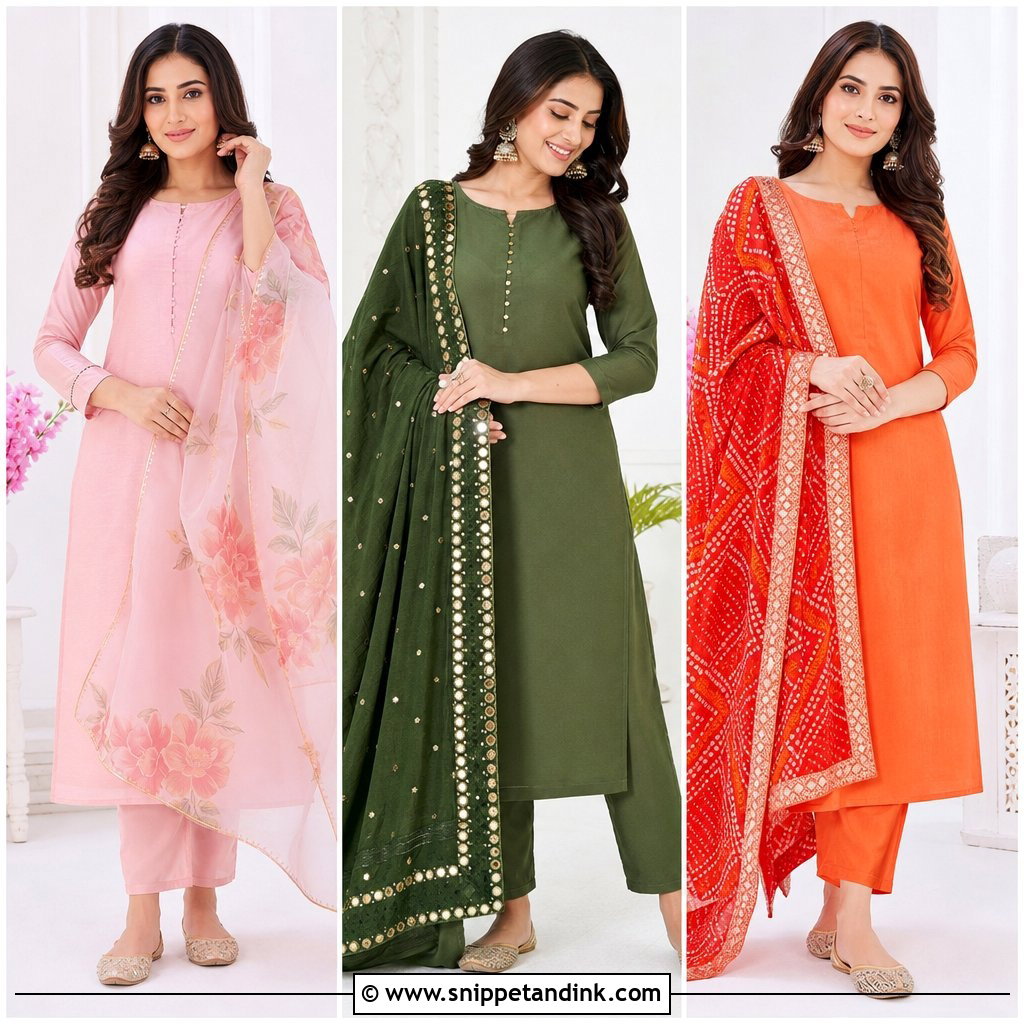
4. Pink Plain Suit With Heavy Phulkari Dupatta
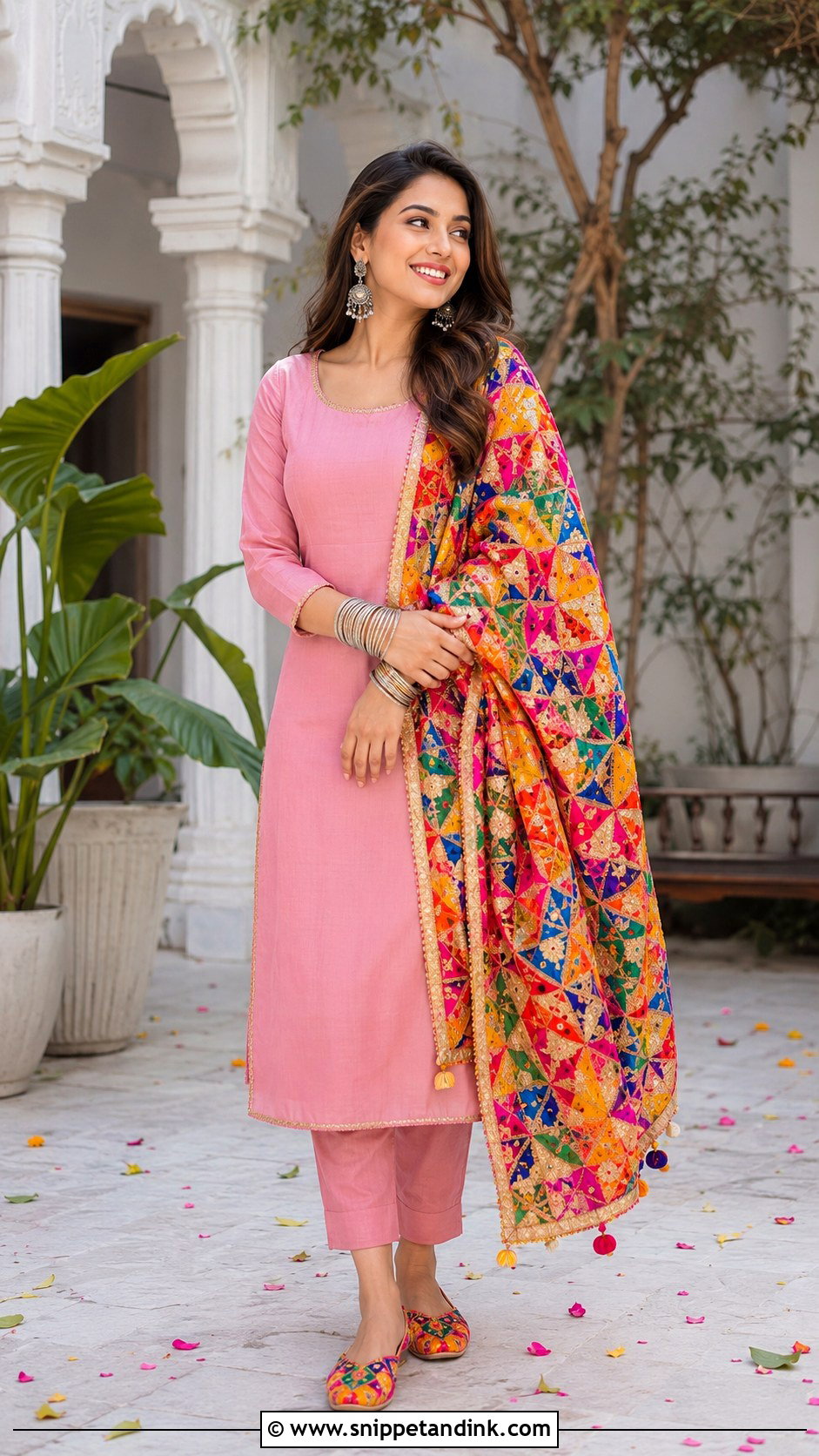
Phulkari dupattas are dense with silk floss and they’re surprisingly heavy. That’s useful at a breezy outdoor mehndi, where a light dupatta would keep flying off. Pair it with any pink from blush to hot pink, and choose the kurta shade from one of the threads in the embroidery. Punjabi juttis and stacked bangles suit it. Keep the bag plain, since the dupatta already has more colour than the rest of the outfit combined.
5. Green Plain Suit With Heavy Mirror Work Dupatta
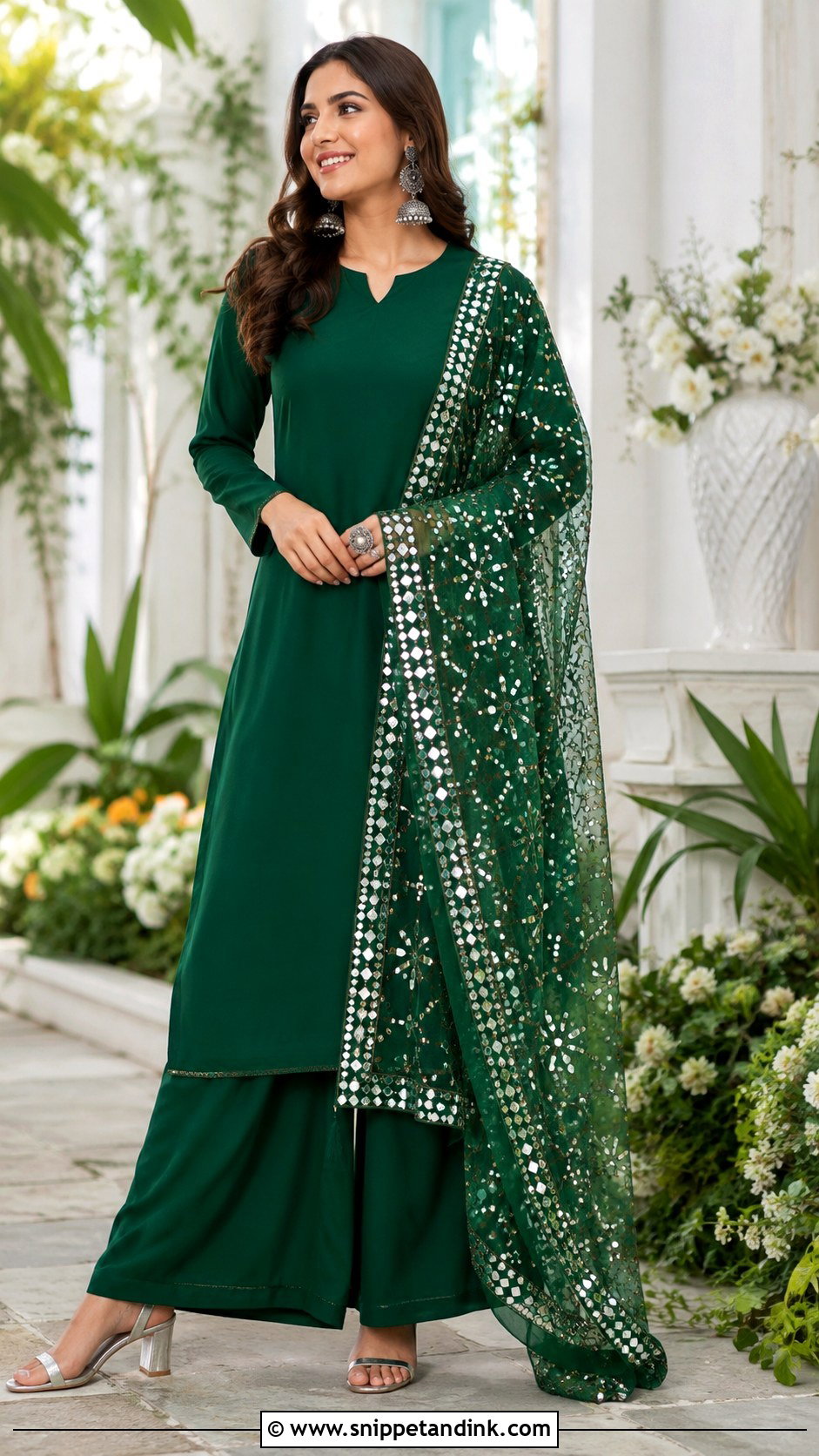
Mirror work is heavy and sharp-edged. I’d pair it with a sturdy kurta fabric, not a delicate georgette that the mirrors will snag. Emerald, bottle green and mehndi green all suit it, and outdoor light makes the mirrors glint in a way indoor light doesn’t. Silver oxidised jewellery feels relaxed; gold makes it formal. Palazzos are the comfortable option for a long mehndi night of sitting on cushions.
6. Blue Plain Suit With Heavy Bandhani Dupatta
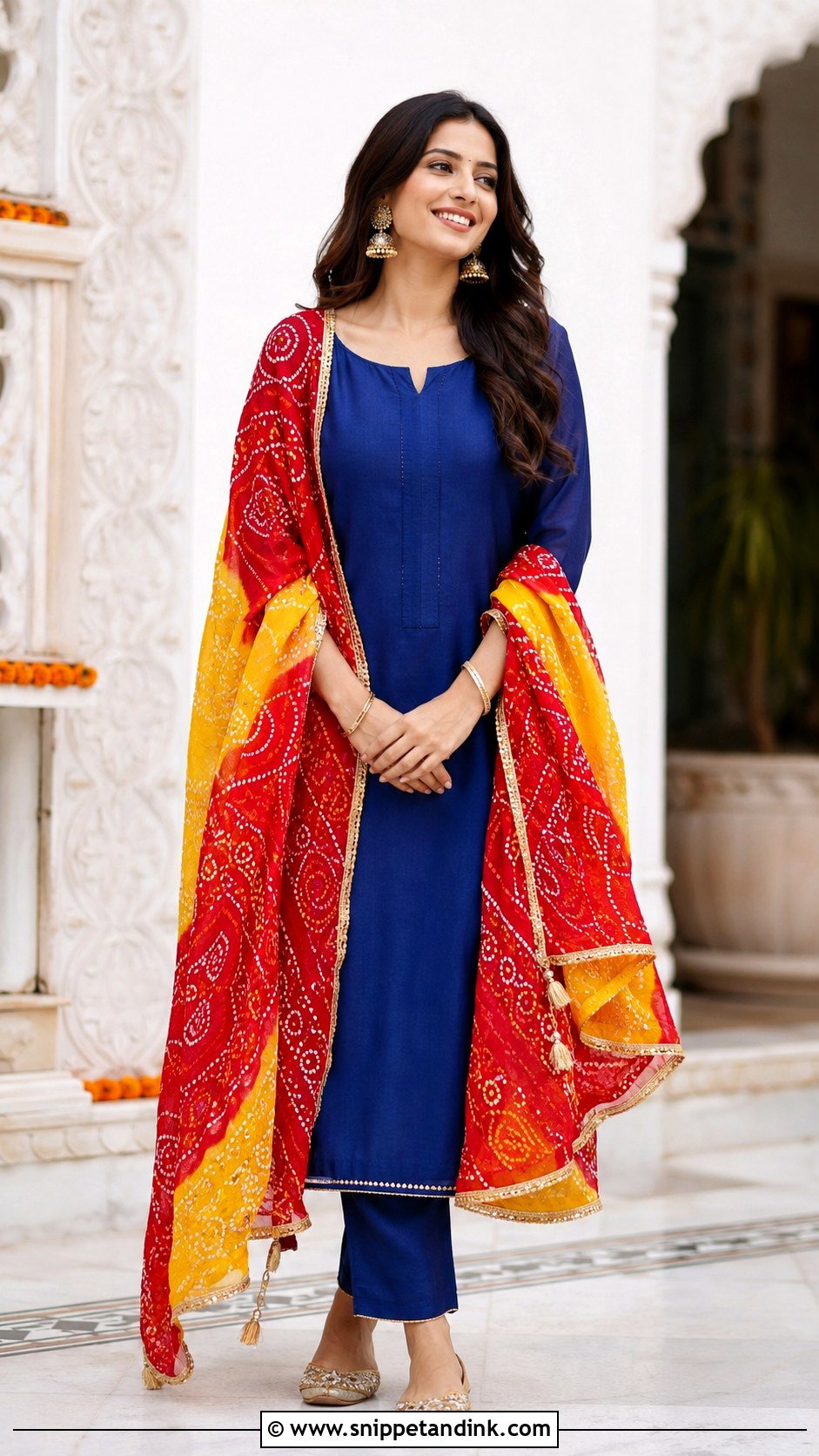
Bandhani is light, which makes it one of the easiest heavy-looking dupattas to wear all day. The tiny resist-dyed dots give movement without weight. Navy, royal blue or teal under a yellow, red or orange bandhani gives strong contrast. Real bandhani can bleed colour the first few times it gets damp, so I keep it away from a white kurta. Silver jhumkas and juttis keep it casual; gold makes it polished.
7. Yellow Plain Suit With Heavy Gota Dupatta
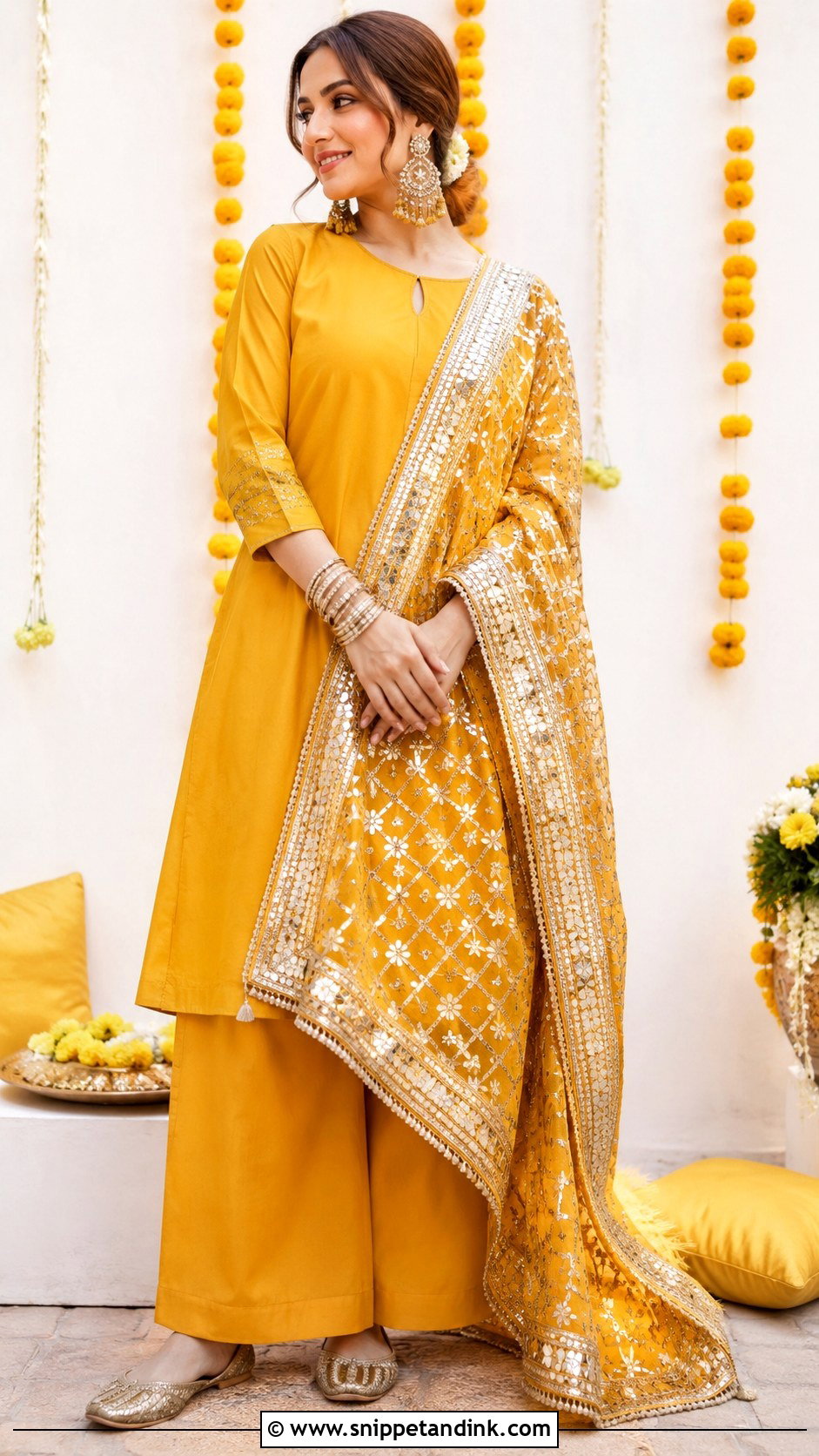
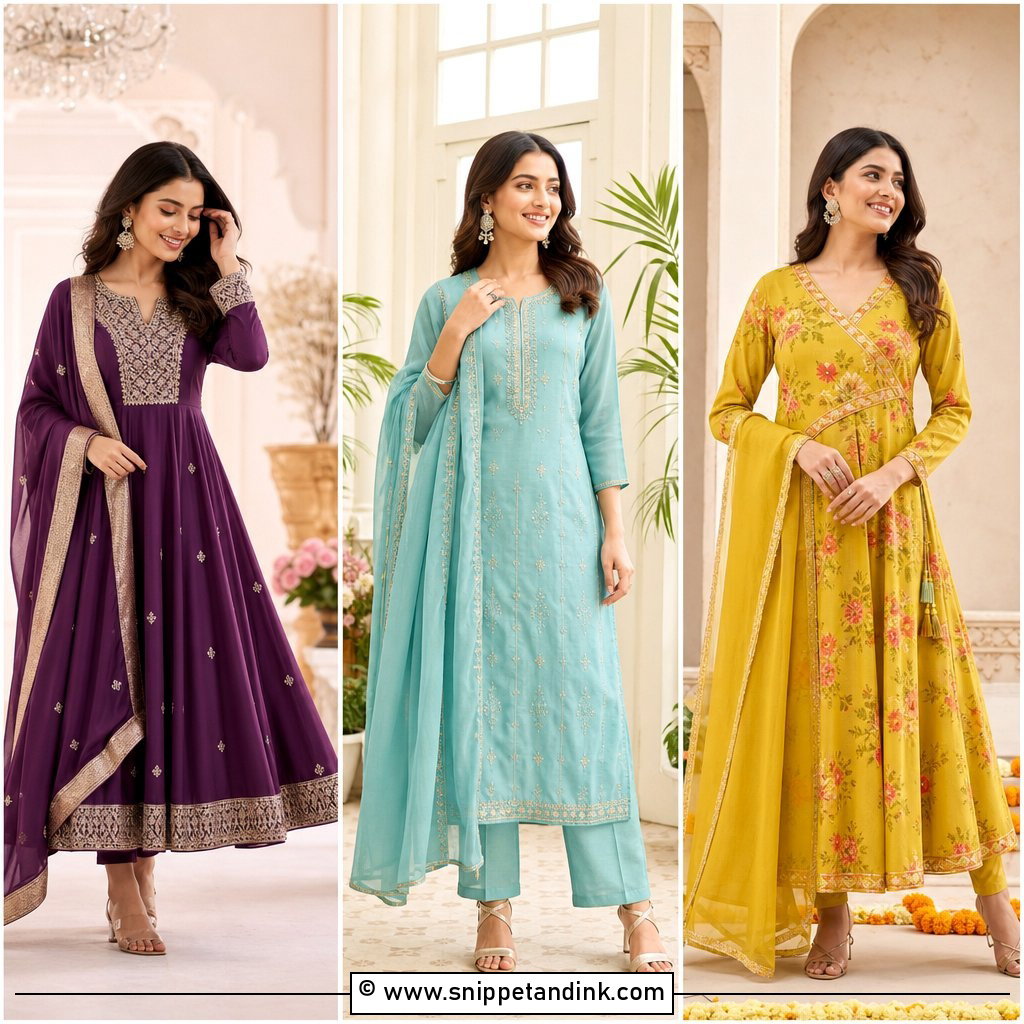
Gota patti is a classic for haldi-inspired celebrations, but there’s a catch: older-style gota made with real metal tarnishes, and turmeric stains are nearly impossible to remove from it. For an actual haldi I’d choose a dupatta you won’t mind marking. Pastel yellow with light gold gota looks soft; mustard with antique gota looks rich. White, gold or green accessories pair naturally with yellow.
8. Purple Plain Suit With Heavy Organza Dupatta
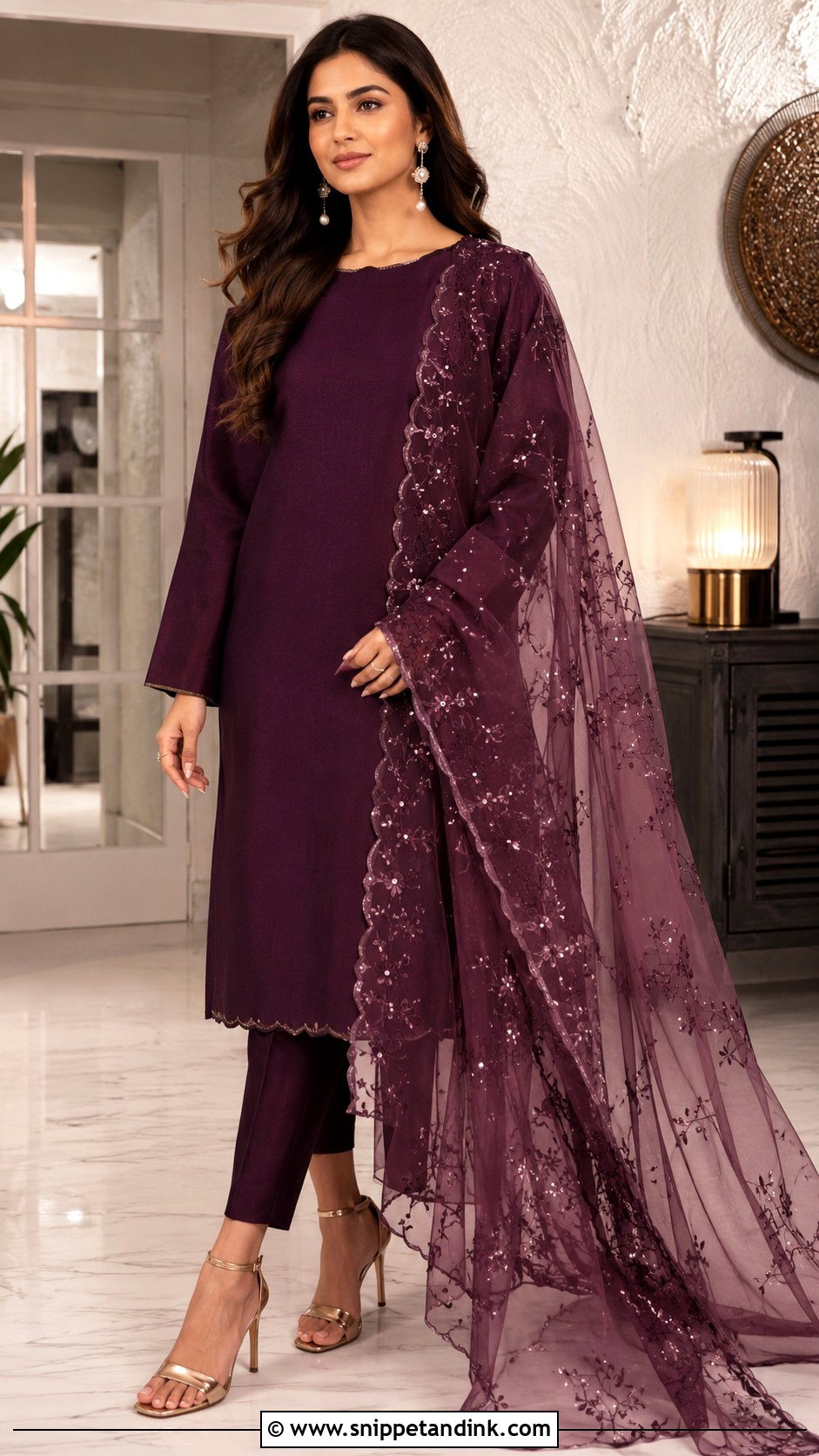
Organza gives volume without weight, and that’s why I like it on petite clients who would be swallowed by velvet or brocade. Its downside is crispness: it doesn’t fall softly, so I pin it on one shoulder and let it stand slightly away from the body. A plain silk or crepe kurta in lavender, plum or deep purple gives it a smooth base. Pearl earrings and metallic heels suit evening events.
9. Beige Plain Suit With Heavy Chikankari Dupatta
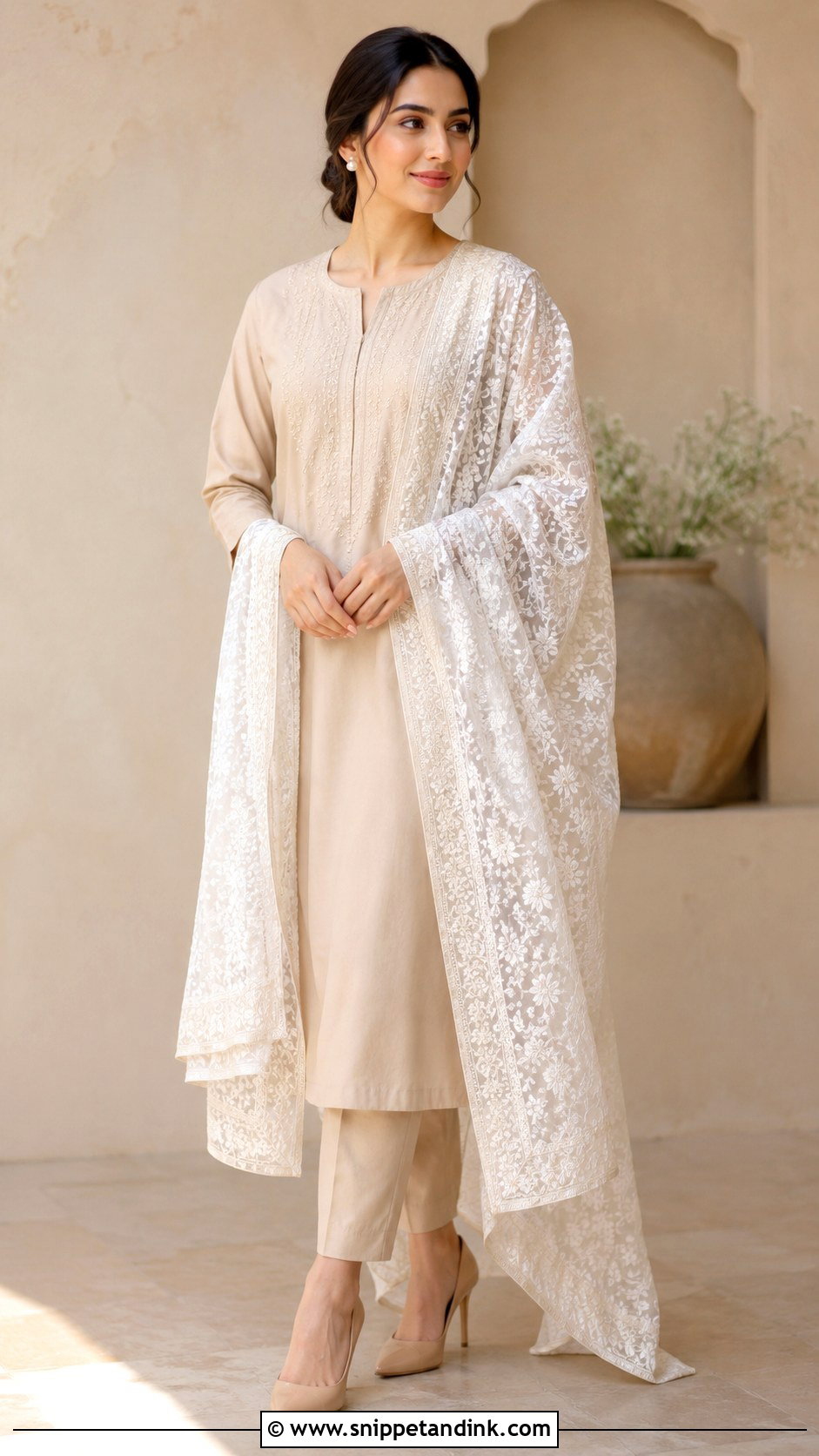
Chikankari is the choice I suggest to clients who find bright colours uncomfortable. On a beige, ivory or sand kurta, white or tonal chikan threadwork looks quiet but clearly special up close. Real hand chikankari is done on fine cotton or georgette, and it needs gentle hand washing or dry cleaning. Pearl studs, nude heels and a neutral potli keep it soft. It suits summer daytime events where breathing fabric matters.
10. Orange Plain Suit With Heavy Leheriya Dupatta
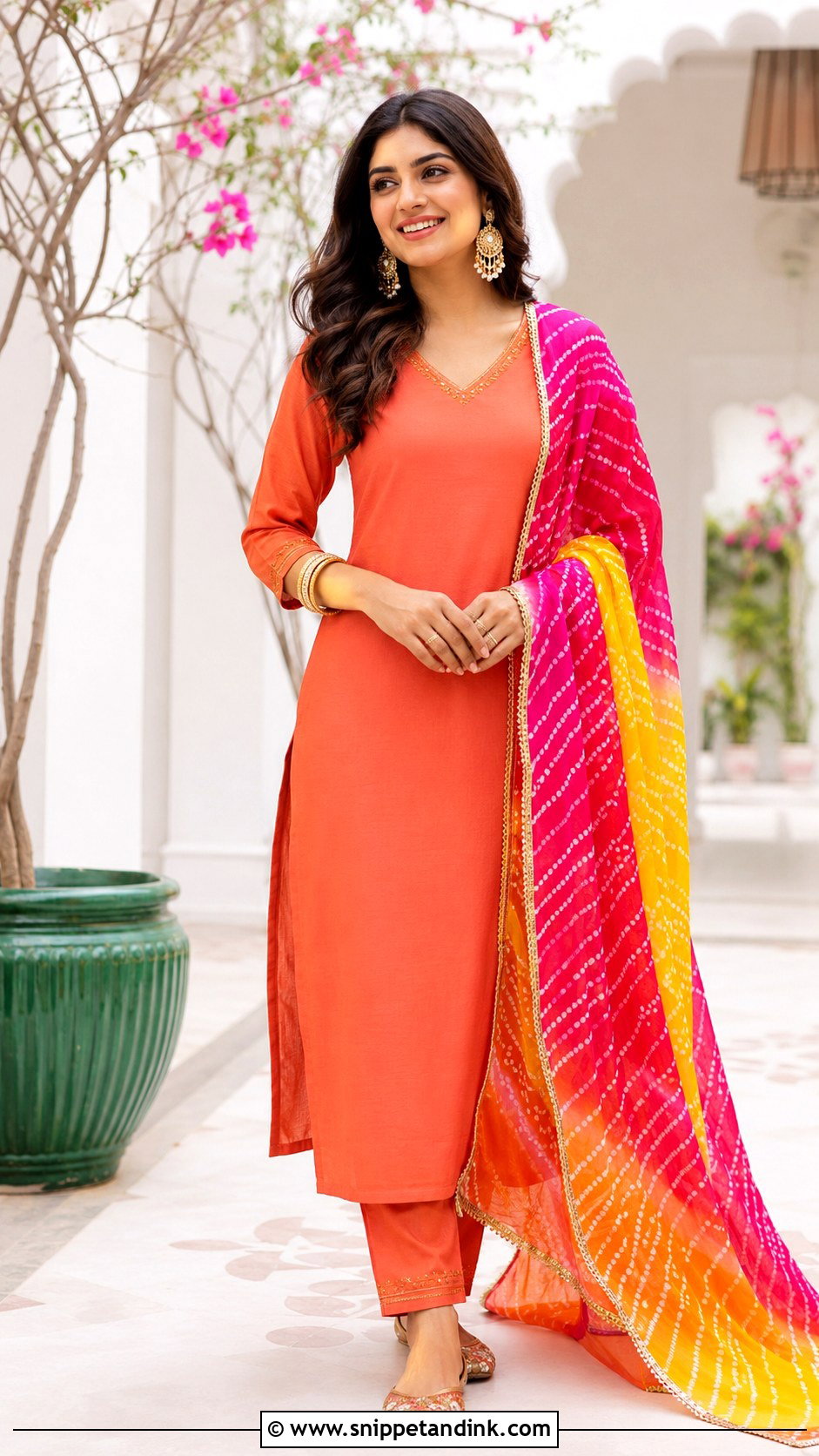
The diagonal waves of leheriya look best when the dupatta is open across the body, so I’d use a side-pinned drape instead of a bunched one. Pair a burnt orange, coral or peach kurta with leheriya in pink, yellow or green. It’s a daytime outfit through and through, and it stays fresh in heat. Gold earrings, bangles and flat juttis keep you comfortable through a long lunch.
11. Grey Plain Suit With Heavy Silver Dupatta
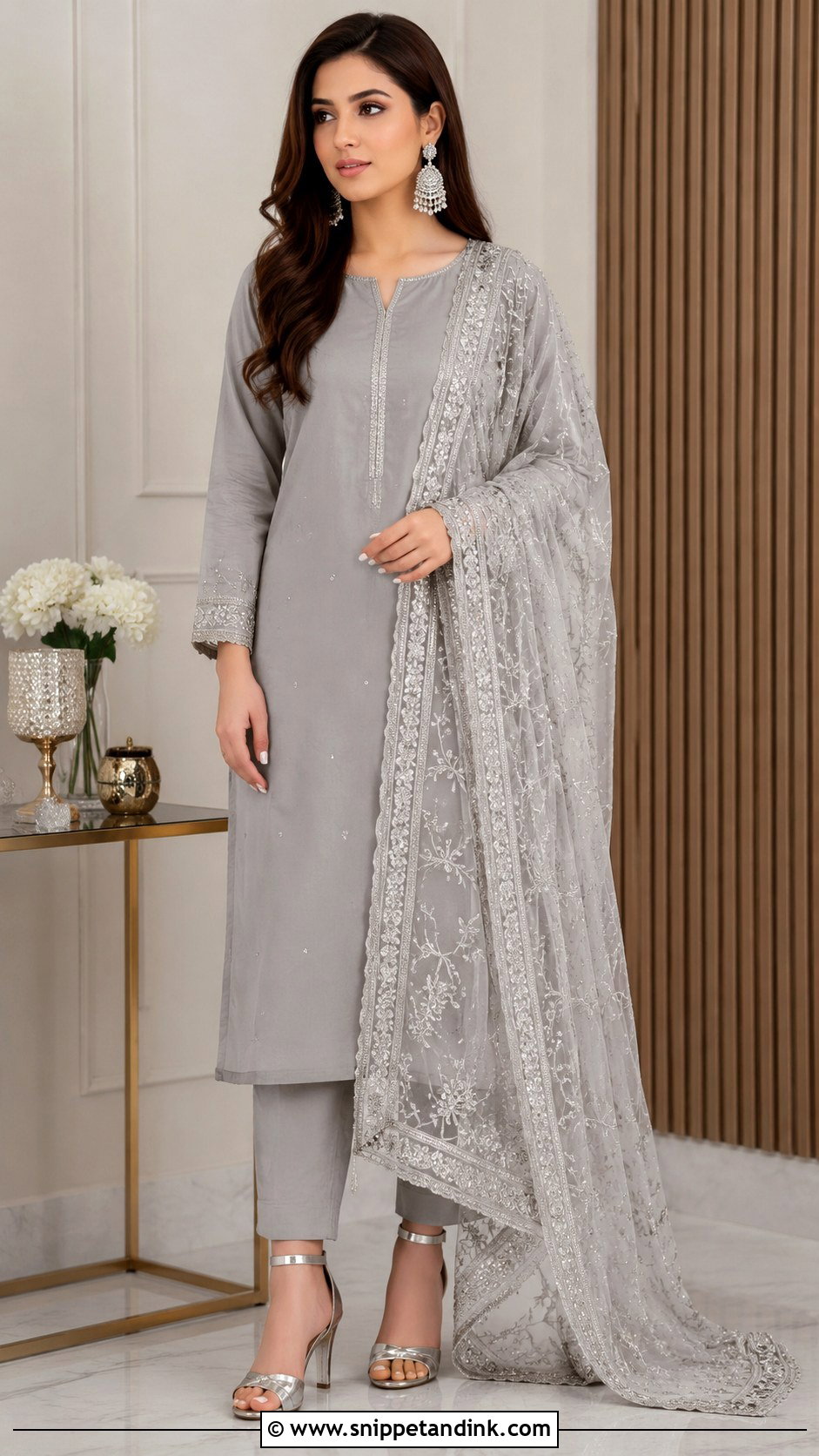
Grey and silver together are calm and cool-toned, and they flatter the women who tell me gold makes them look tired. The dupatta can be net, organza, tissue or georgette with silver embroidery or sequins. A straight kurta with cigarette pants gives a sleek line; a long Anarkali adds flow. Silver zari tarnishes if stored in plastic, so wrap it in muslin after the event.
12. Maroon Plain Suit With Heavy Velvet Dupatta
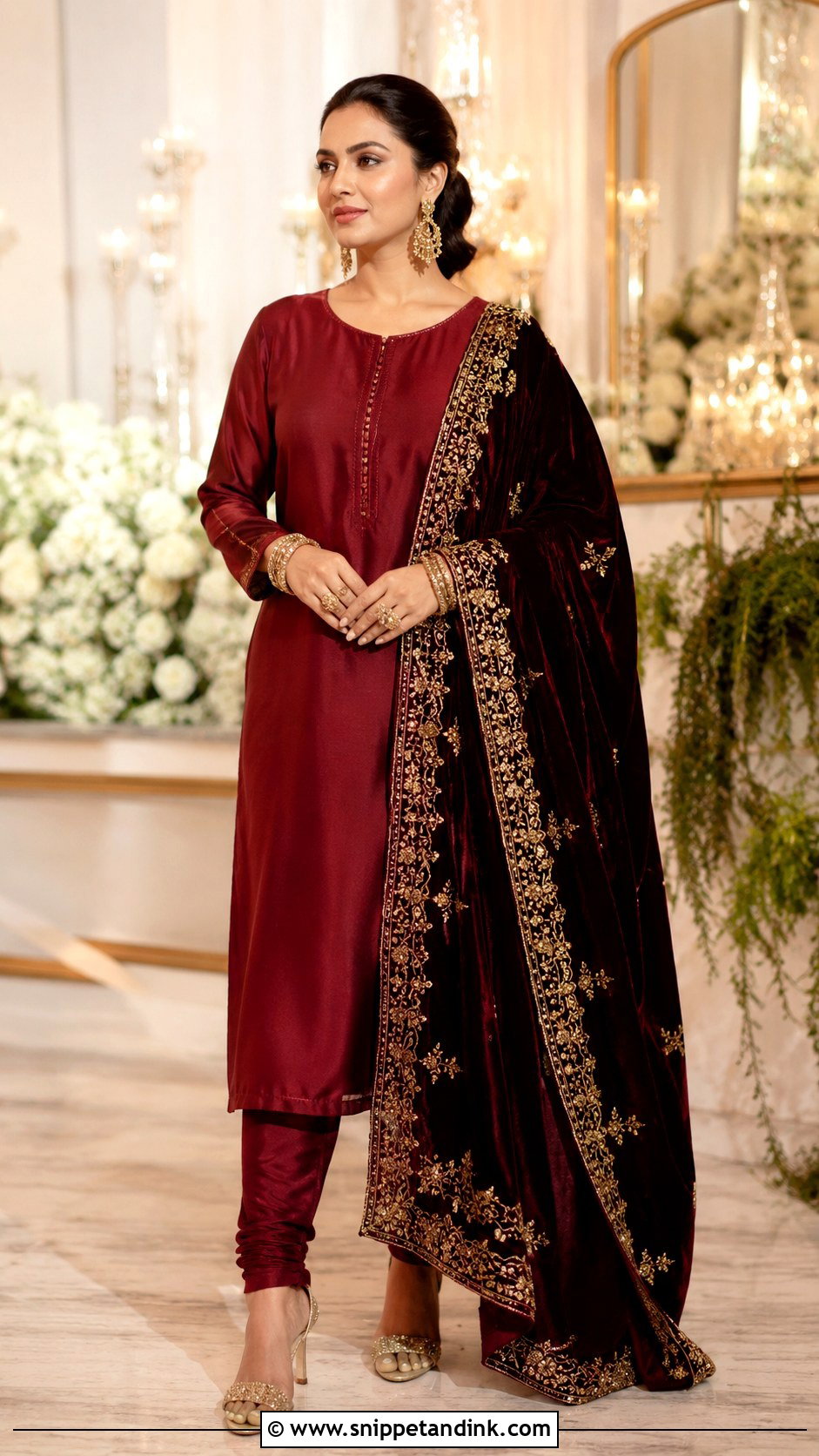
Velvet dupattas are the heaviest on this list, and they need a kurta that can carry them. Silk, crepe or a wool blend works; thin georgette sags under the weight at the shoulder. Maroon velvet with zari or dabka embroidery is ideal for winter weddings. Keep the kurta well fitted and simple. I’d pin velvet at two points rather than one, at the shoulder and at the back of the waist.
13. Ivory Plain Suit With Heavy Net Dupatta
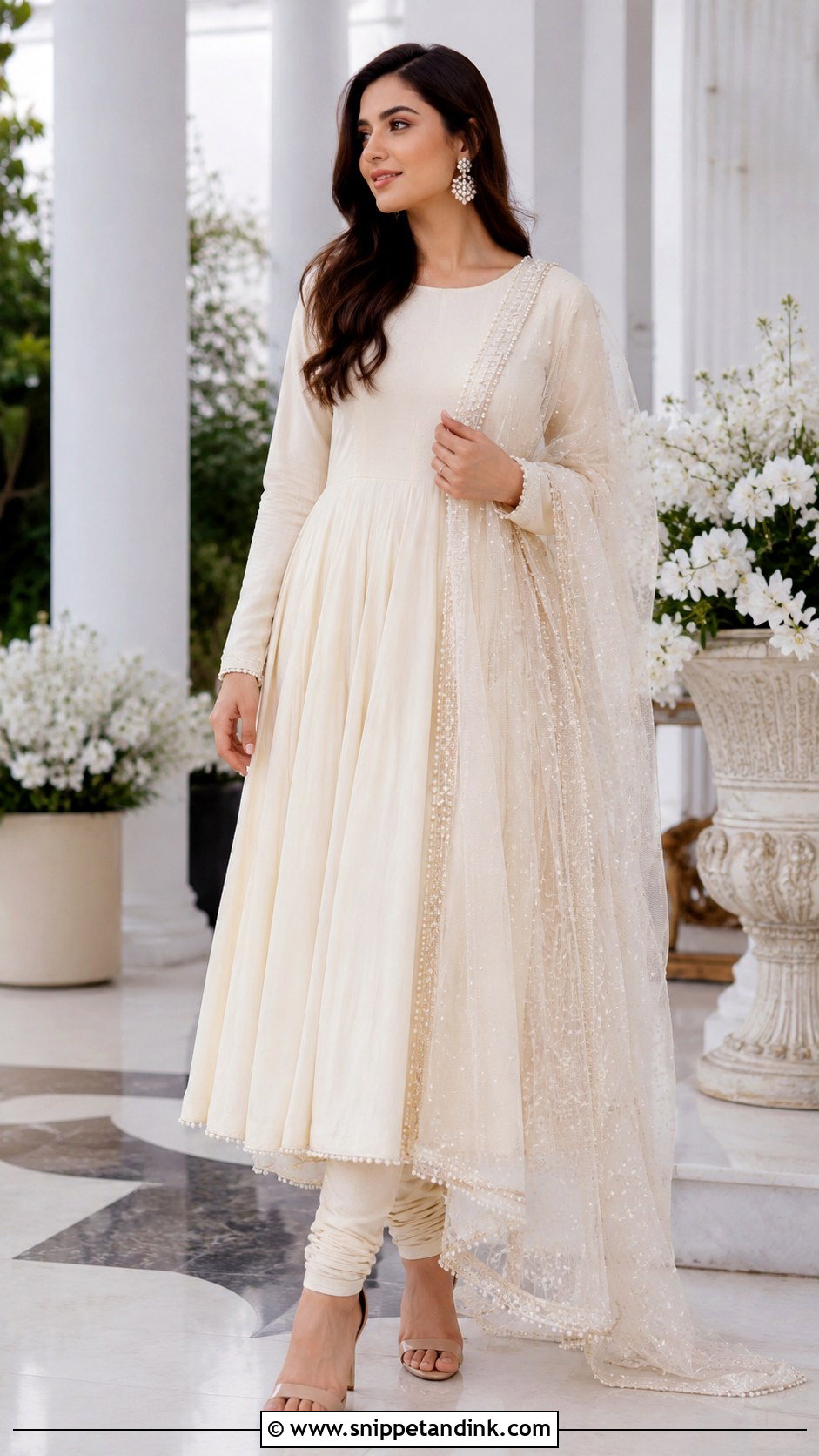
Ivory with a heavy net dupatta can drift into bridal territory, so I watch the details. A scalloped border and pearl work keep it festive; a long trail of net would make it look like a bride’s outfit. Choose straight pants for daytime and an Anarkali for something more formal. Keep makeup fresh and natural. Net catches on bangles and rings, so smooth jewellery is easier.
14. Navy Plain Suit With Heavy Zari Dupatta
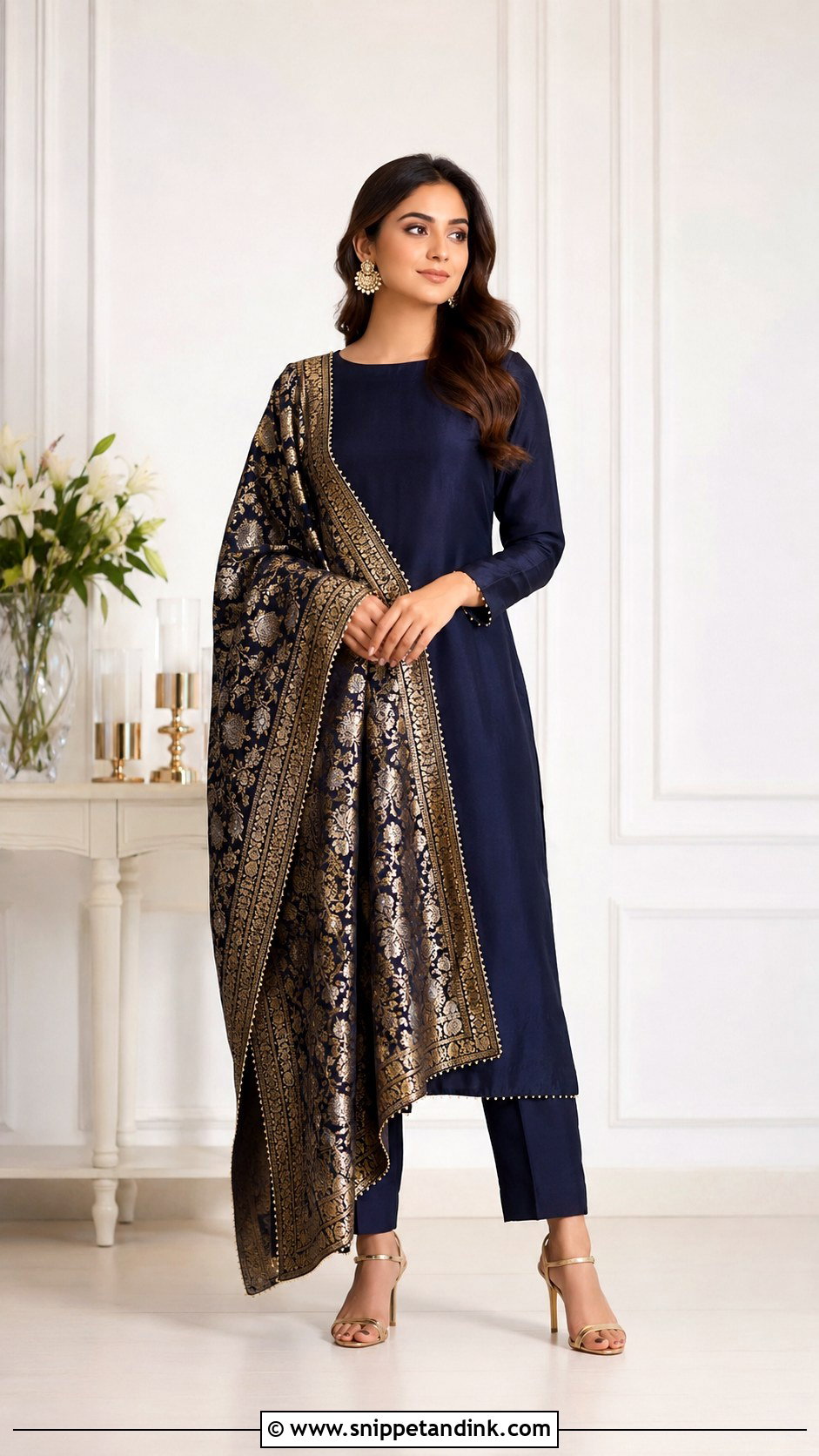
Navy gives the richness of black without the cultural hesitation some families have about black at weddings. A zari dupatta in gold, copper or silver suits it. Tailored pants keep the outfit neat; an A-line kurta is easier to sit in. If the zari border is wide, I skip the necklace altogether and let the border frame the face. Kundan studs and gold heels are enough.
15. Peach Plain Suit With Heavy Floral Dupatta
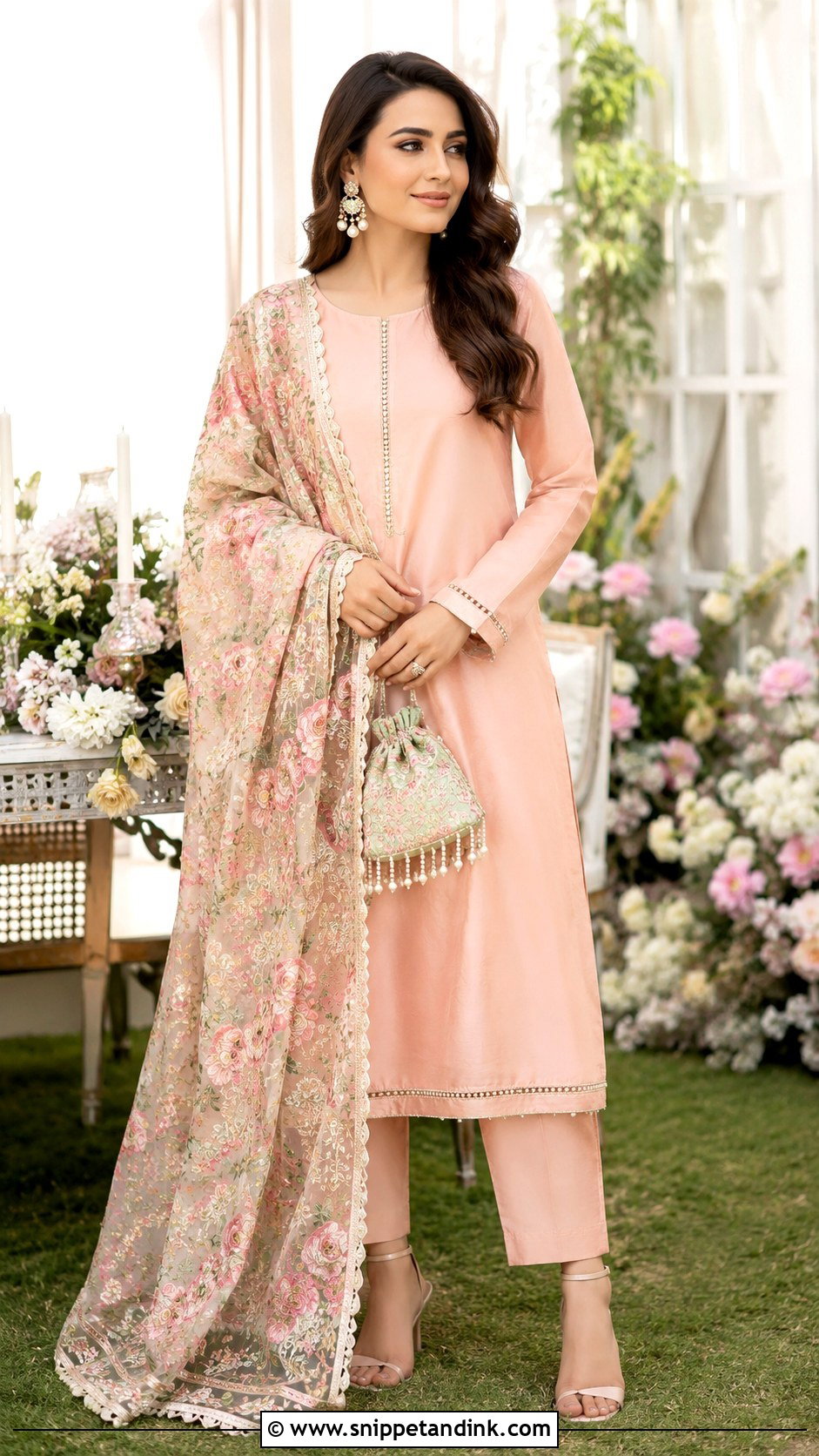
Peach is warm and kind to most skin tones in daylight. With a dupatta of embroidered flowers, threadwork or zari florals, it suits brunch functions and summer ceremonies. Cotton silk and muslin kurtas breathe well in heat. Pearl earrings, nude sandals and a pastel potli keep the palette coordinated. Soft waves or a low bun suit the gentle colour.
16. Mint Plain Suit With Heavy Sequin Dupatta
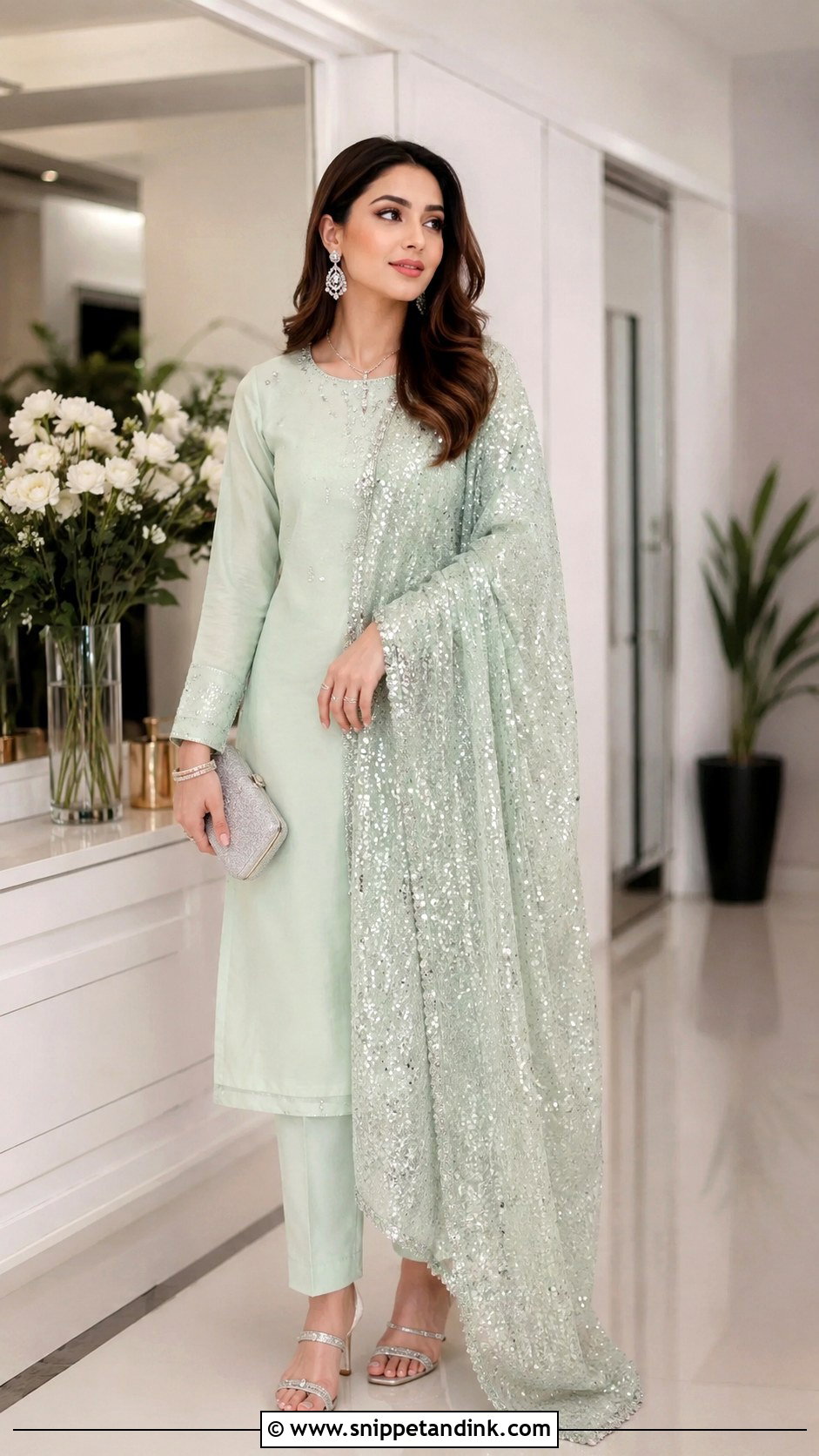
Sequinned dupattas are often lighter than they look, but they slip. Sequins on georgette slide off the shoulder every few minutes unless pinned. I pin twice and suggest draping it over one arm when sitting. Mint is calming against silver or pastel gold sequins. Keep jewellery minimal: small crystal earrings, silver heels and a sleek clutch.
17. Brown Plain Suit With Heavy Ajrakh Dupatta
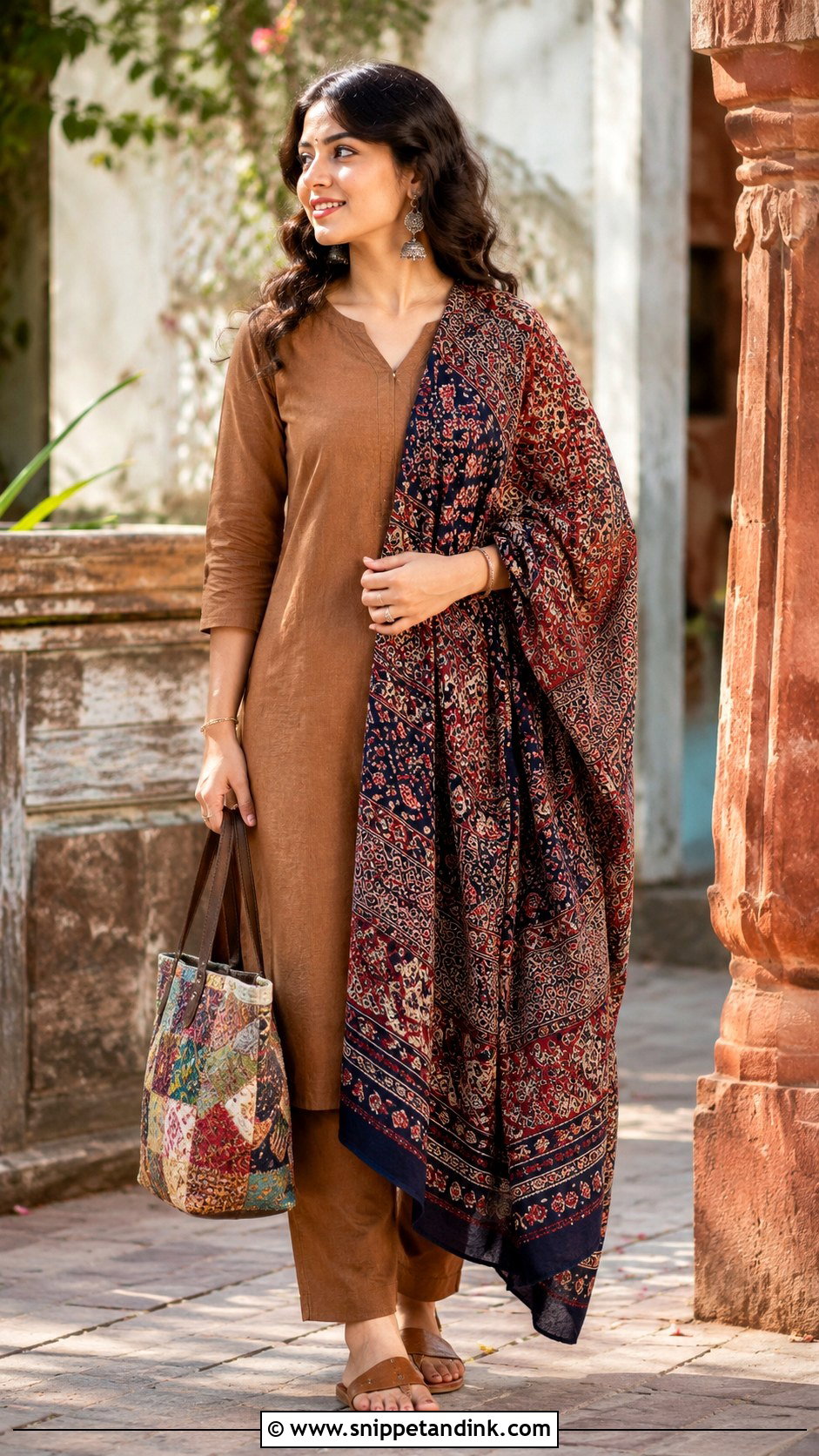
Ajrakh is block-printed with natural dyes, and it has an earthy depth that suits brown, tan, rust and chocolate kurtas. It’s an outfit for cultural events and relaxed festive days rather than a reception. Choose a cotton or linen-blend kurta for comfort. Natural dyes fade if washed harshly, so cold water and shade drying are better. Oxidised jewellery and kolhapuris finish it.
18. Cream Plain Suit With Heavy Brocade Dupatta
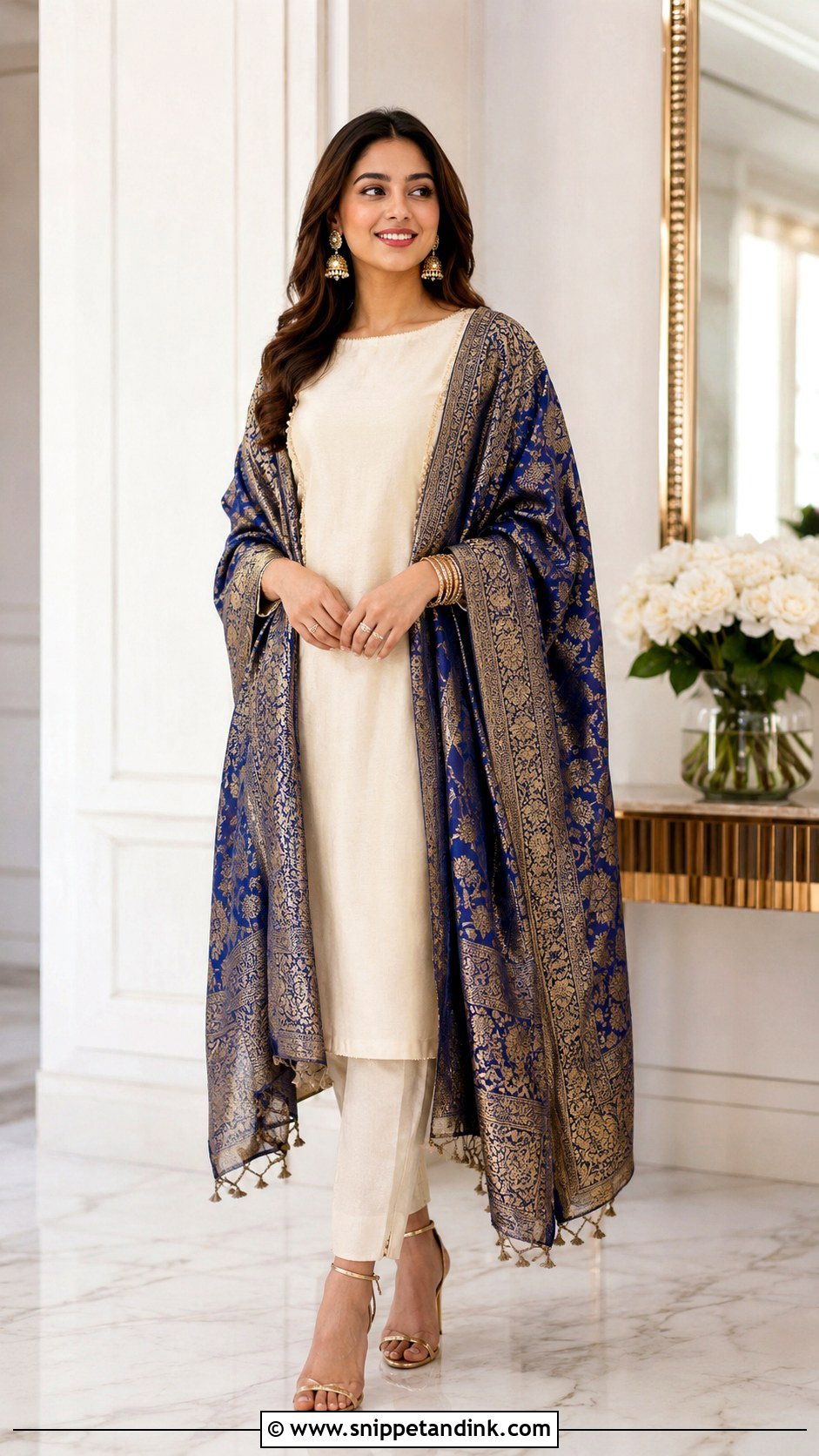
Brocade is woven, not embroidered, which makes it stiff and structured. That’s an advantage: it holds pleats beautifully across the shoulder. A cream kurta lets a gold, green or royal blue brocade carry the colour. A flared kurta looks traditional; straight pants look refined. Brocade creases sharply if folded the same way twice, so refold it differently each time you store it.
19. Teal Plain Suit With Heavy Kanjivaram Dupatta
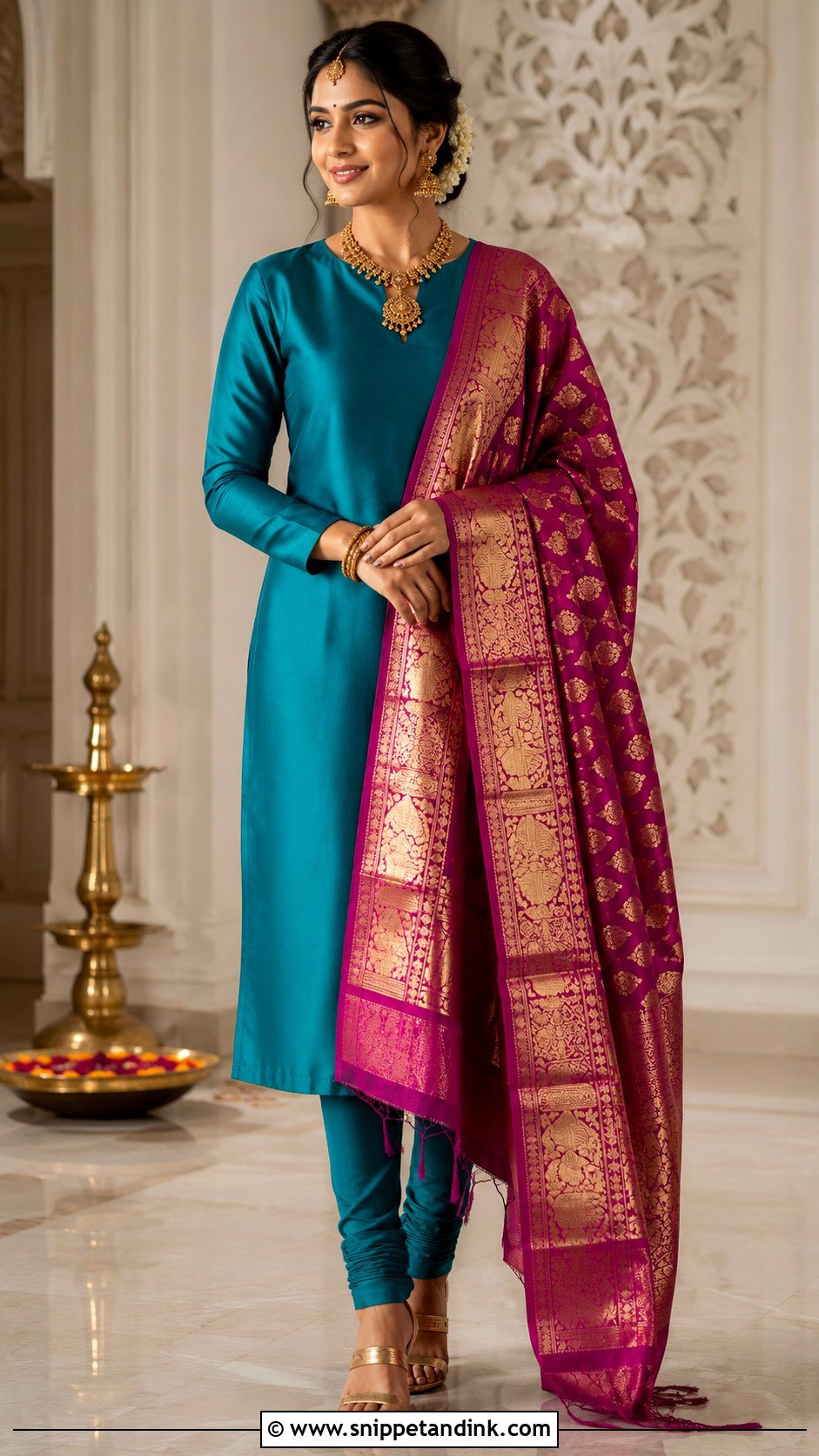
A Kanjivaram dupatta brings temple borders and real silk weight, so the rest of the outfit must stay plain. Teal with a gold, magenta or orange Kanjivaram gives strong contrast. Cigarette pants or churidar are the right bottoms; palazzos plus a heavy silk dupatta looks bulky. Temple jewellery and a sleek bun suit South Indian functions. Pin the pallu-like end at the shoulder so the border shows.



20. Mustard Plain Suit With Heavy Kalamkari Dupatta
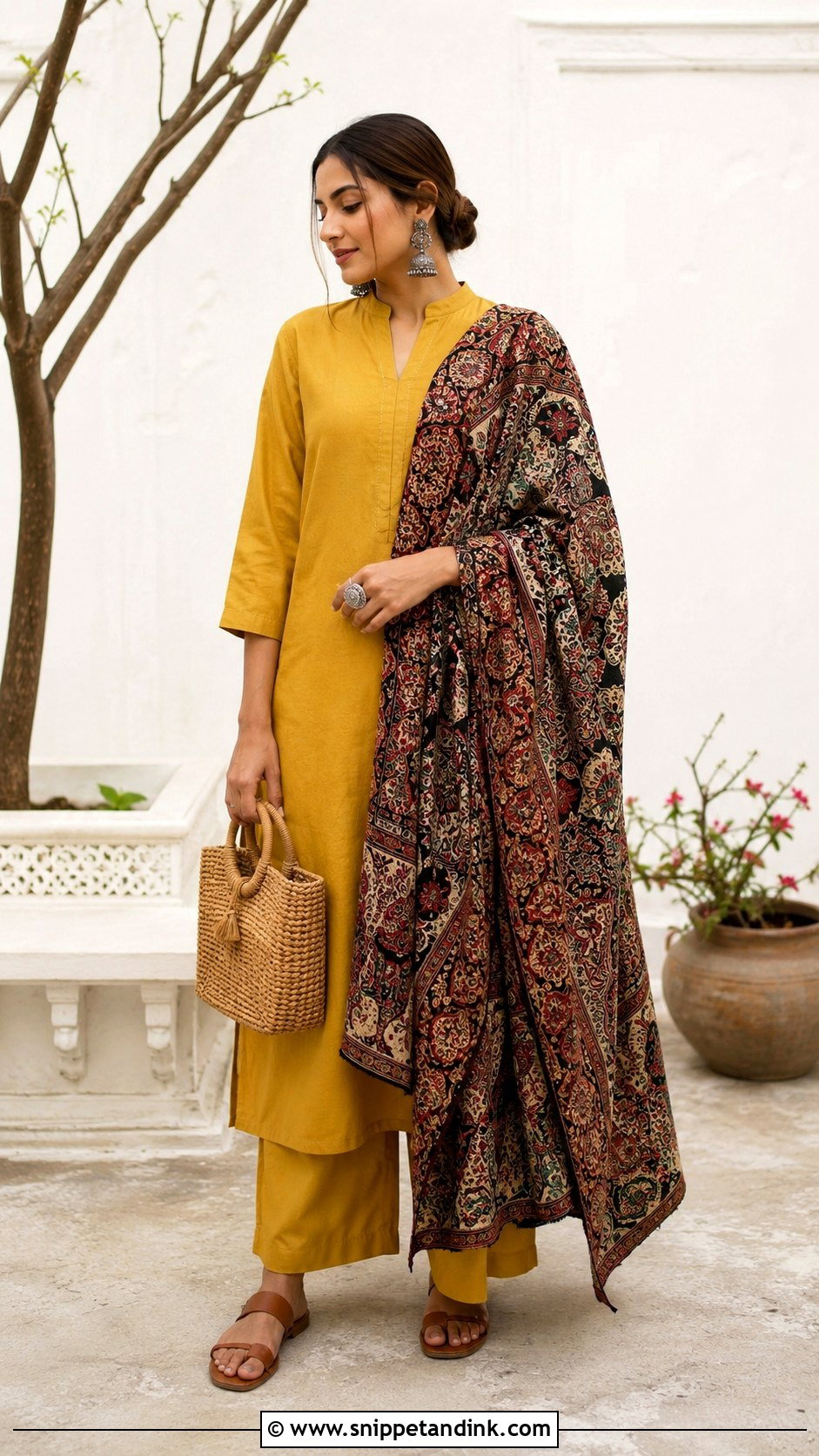
Kalamkari is hand-painted or block-printed storytelling, and it reads best when you can see the motifs. A mustard kurta gives warm contrast. I like to pick one colour from the print, maroon, green or indigo, and repeat it in the bag or earrings. Straight pants or palazzos both work. It’s daytime wear for festive lunches and cultural events rather than an evening reception.
21. Lavender Plain Suit With Heavy Pearl Dupatta
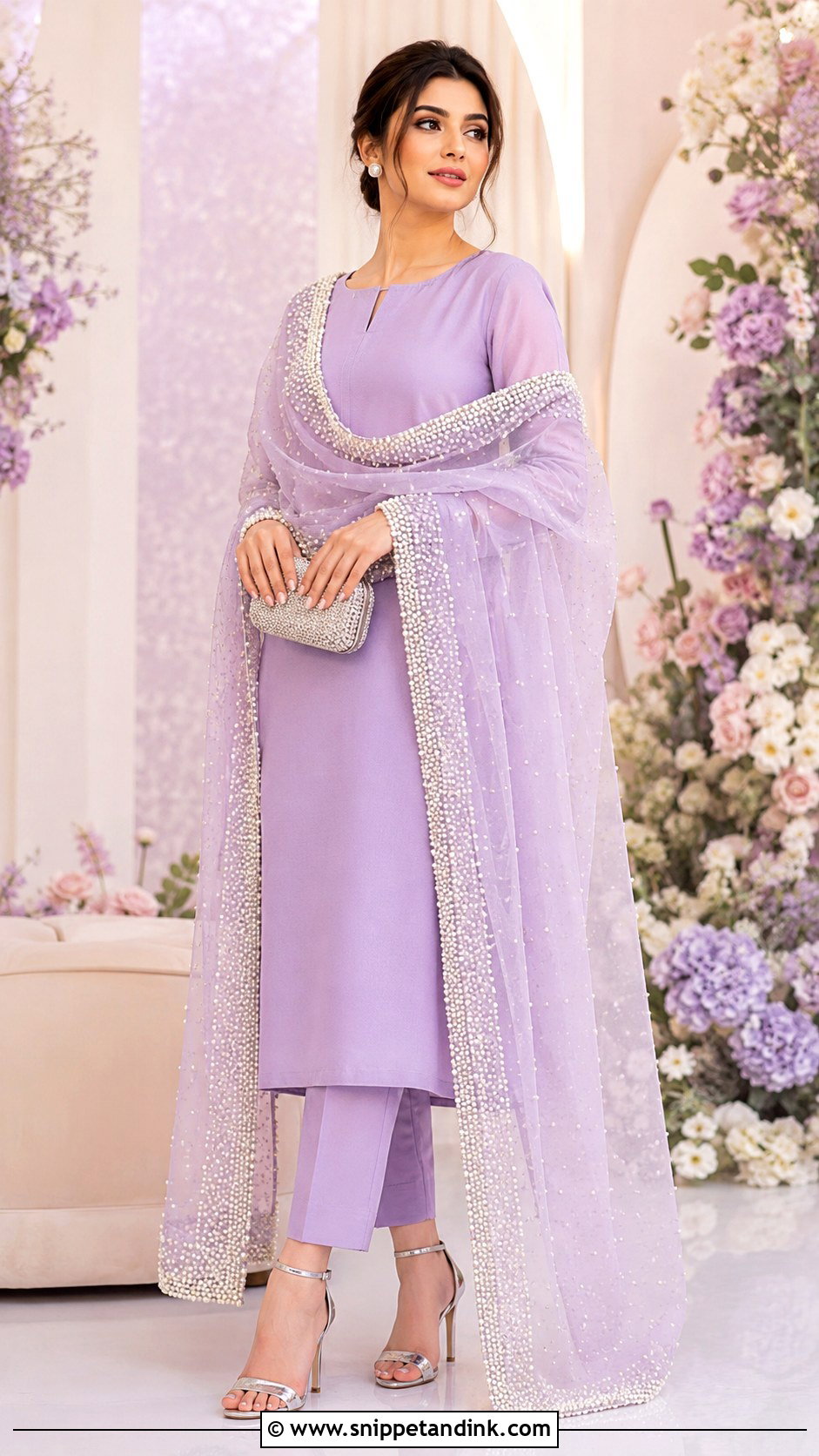
Pearl work adds weight in small hard beads, which press into the shoulder after a few hours. I’d choose a dupatta with pearl borders rather than all-over pearls if you’ll wear it all evening. Lavender with pearls looks fresh and modern. A net or organza base keeps it lighter. Pearl studs, silver heels and soft pink makeup keep the palette quiet.
22. Rust Plain Suit With Heavy Embroidered Dupatta
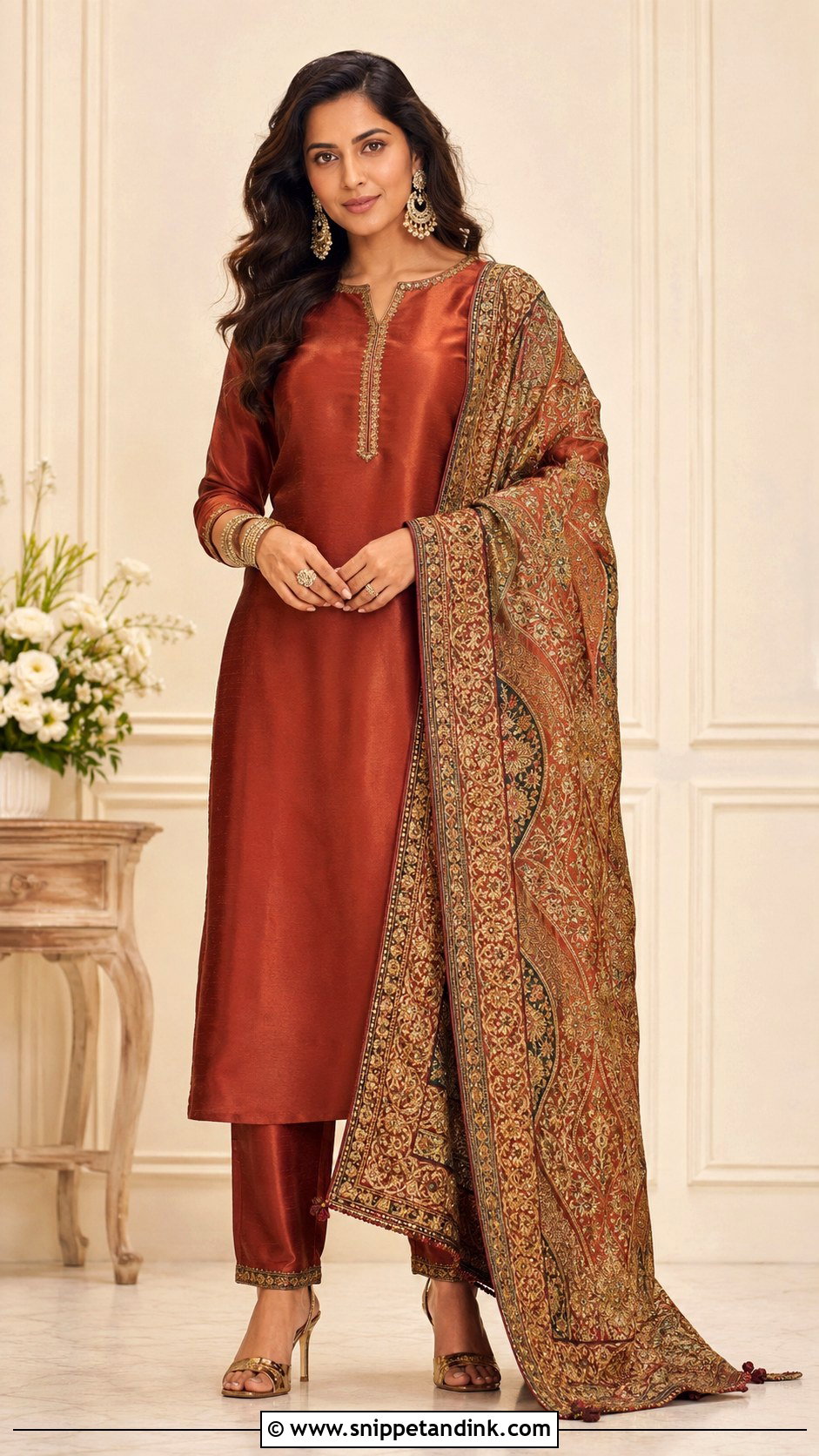
Rust carries embroidery in gold, olive, navy and black equally well, which makes it one of the most flexible plain kurtas you can own. Silk blend or crepe holds a heavy dupatta better than cotton. Straight pants and a side drape look modern; churidar and bangles look traditional. Antique gold jewellery suits it. It’s my go-to for autumn evening functions.
23. Sky Blue Plain Suit With Heavy Chanderi Dupatta
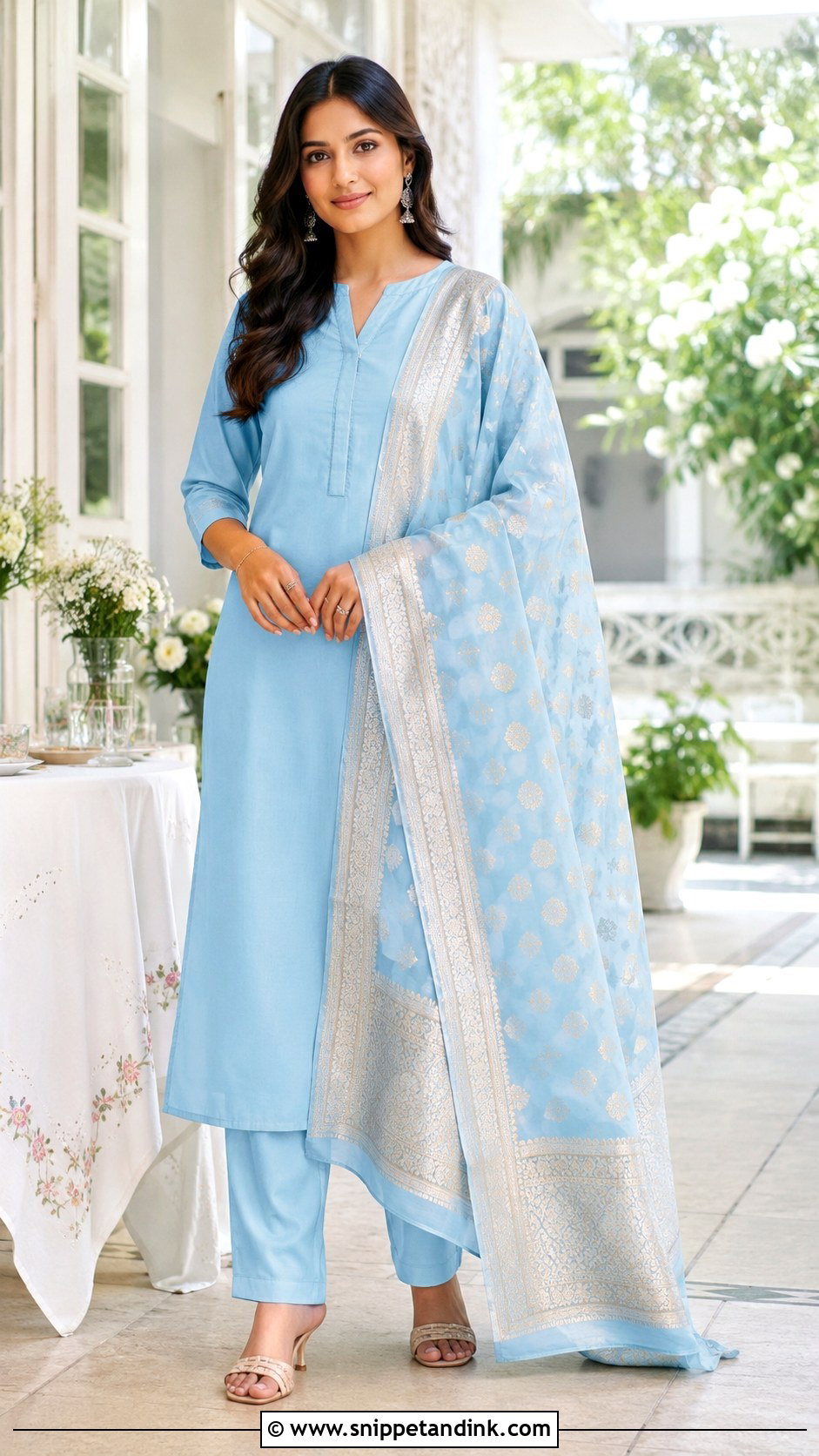
Chanderi is light, with a soft sheen, and it’s one of the coolest fabrics for a summer daytime event. A sky blue kurta with a zari-bordered chanderi dupatta looks airy. Chanderi is semi-sheer, so the kurta usually needs a lining. Silver, pearl or soft gold all suit the shade. A loose braid fits the relaxed mood better than a tight bun.
24. Wine Plain Suit With Heavy Dupatta
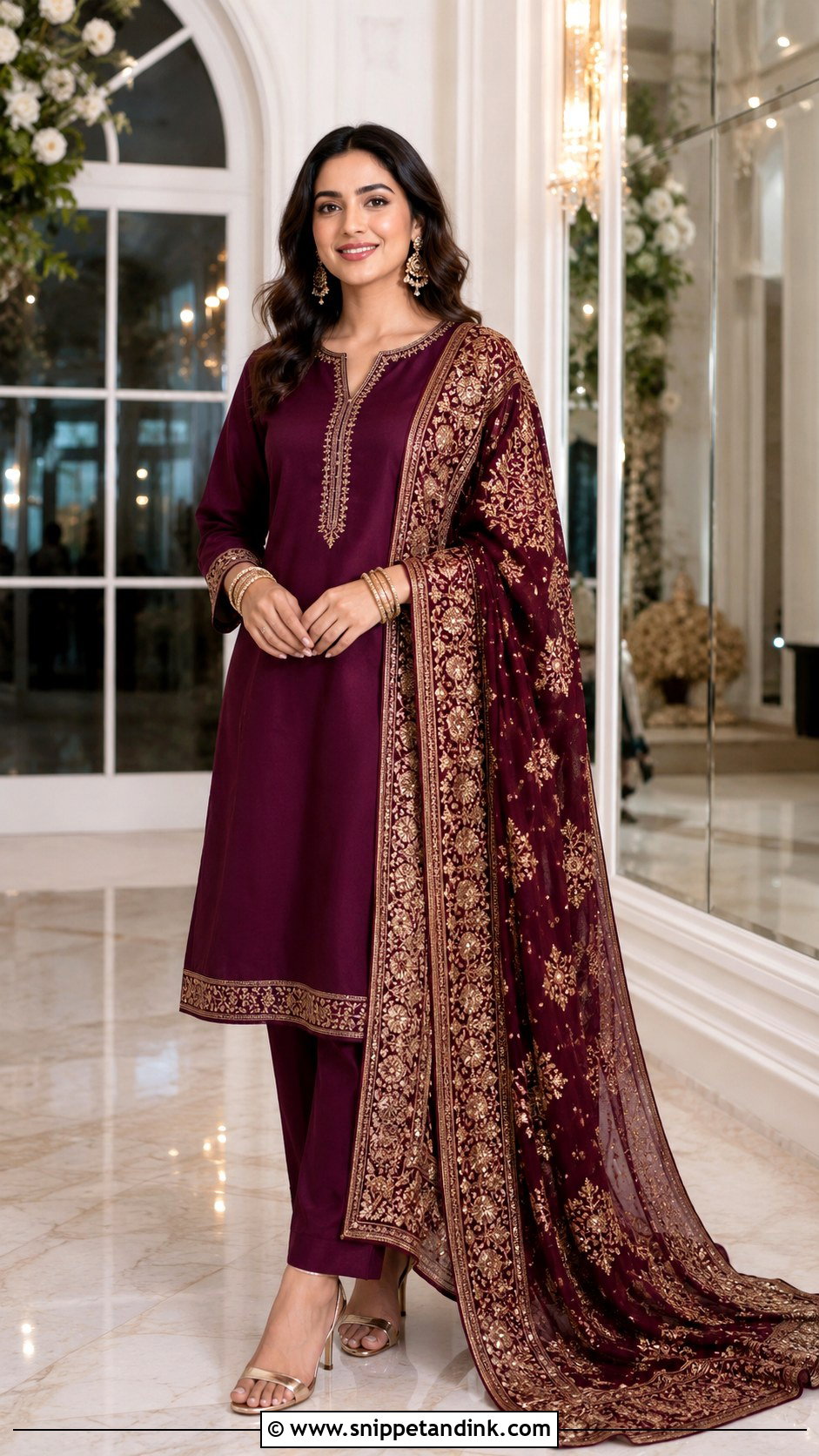
Wine is formal on its own, so it needs fewer accessories than brighter shades. Silk, crepe or georgette kurtas work. Pair with a heavy gold-embroidered, sequinned or velvet-bordered dupatta. I’d keep jewellery to earrings, bangles and a ring. Keep the drape clean, folded neatly at the shoulder, so the heavy border frames the kurta instead of bunching.
25. Turquoise Plain Suit With Heavy Dupatta
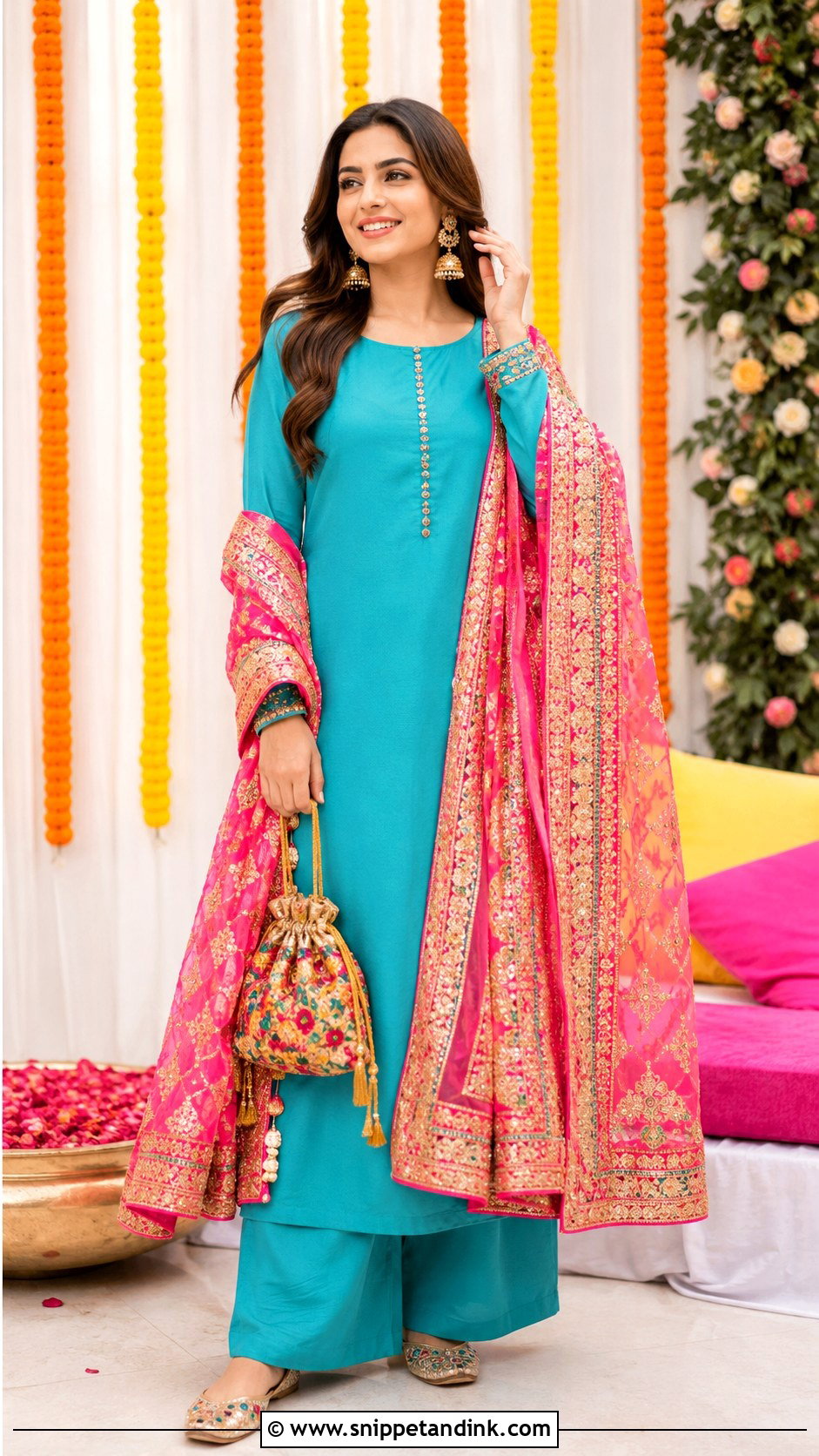
Turquoise is bright and youthful, and it does well at mehndi and daytime events. Pair with silver, gold, pink or multicolour embroidery. Palazzos are comfortable for floor seating. Oxidised jewellery gives it a boho feel; gold makes it traditional. Turquoise shifts toward green under warm indoor light, so check the shade in the lighting you’ll actually be in.
26. Charcoal Plain Suit With Heavy Dupatta
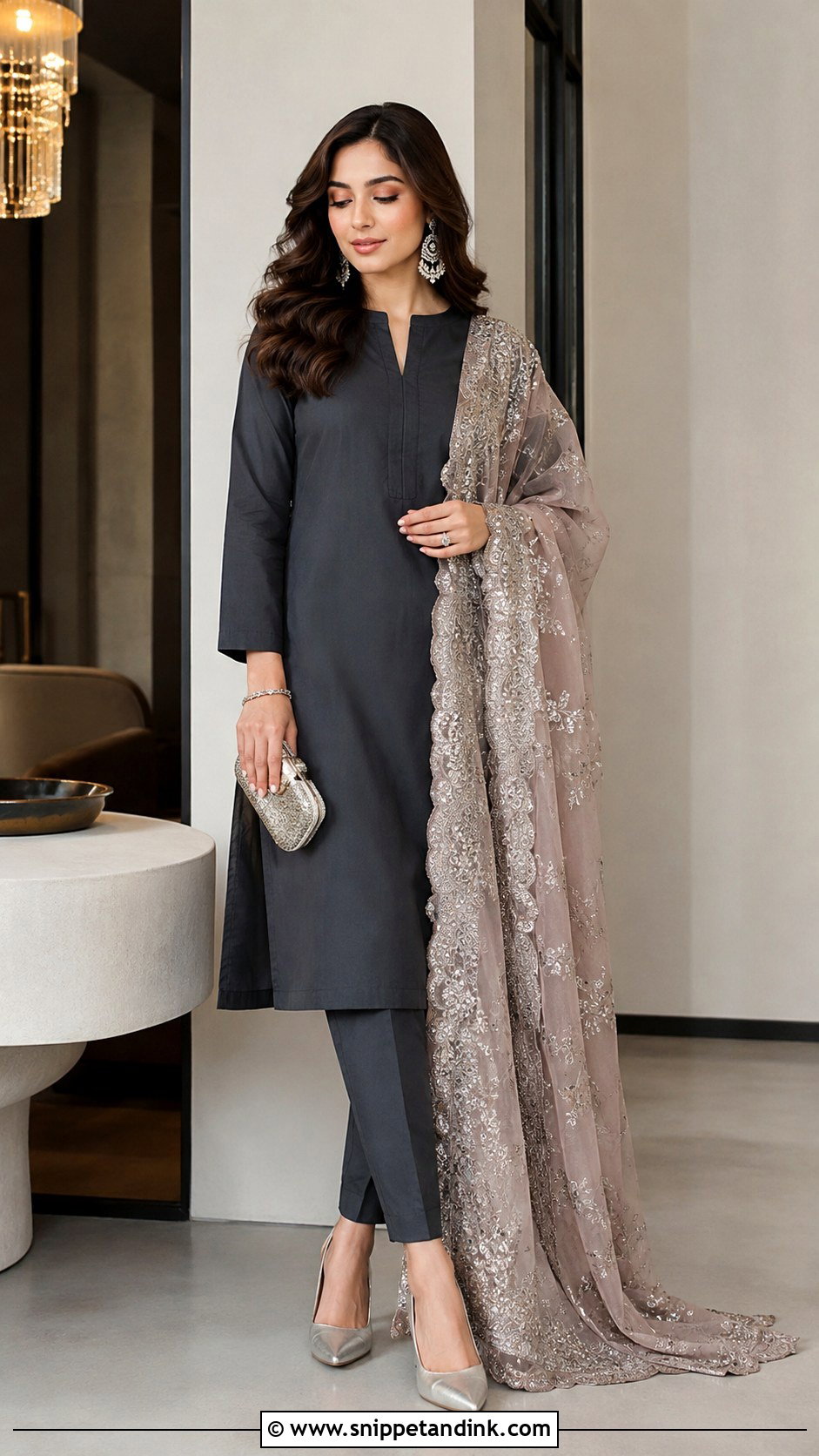
Charcoal is my gentle alternative to black. It suits silver, gold, blush, teal and maroon dupattas equally. A straight kurta with straight pants lengthens the frame. Add embroidery, sequins or velvet edging for occasion detail. Pastel embroidery softens it; antique gold makes it bolder. Metallic heels and a compact clutch keep it polished.
27. Olive Plain Suit With Heavy Dupatta
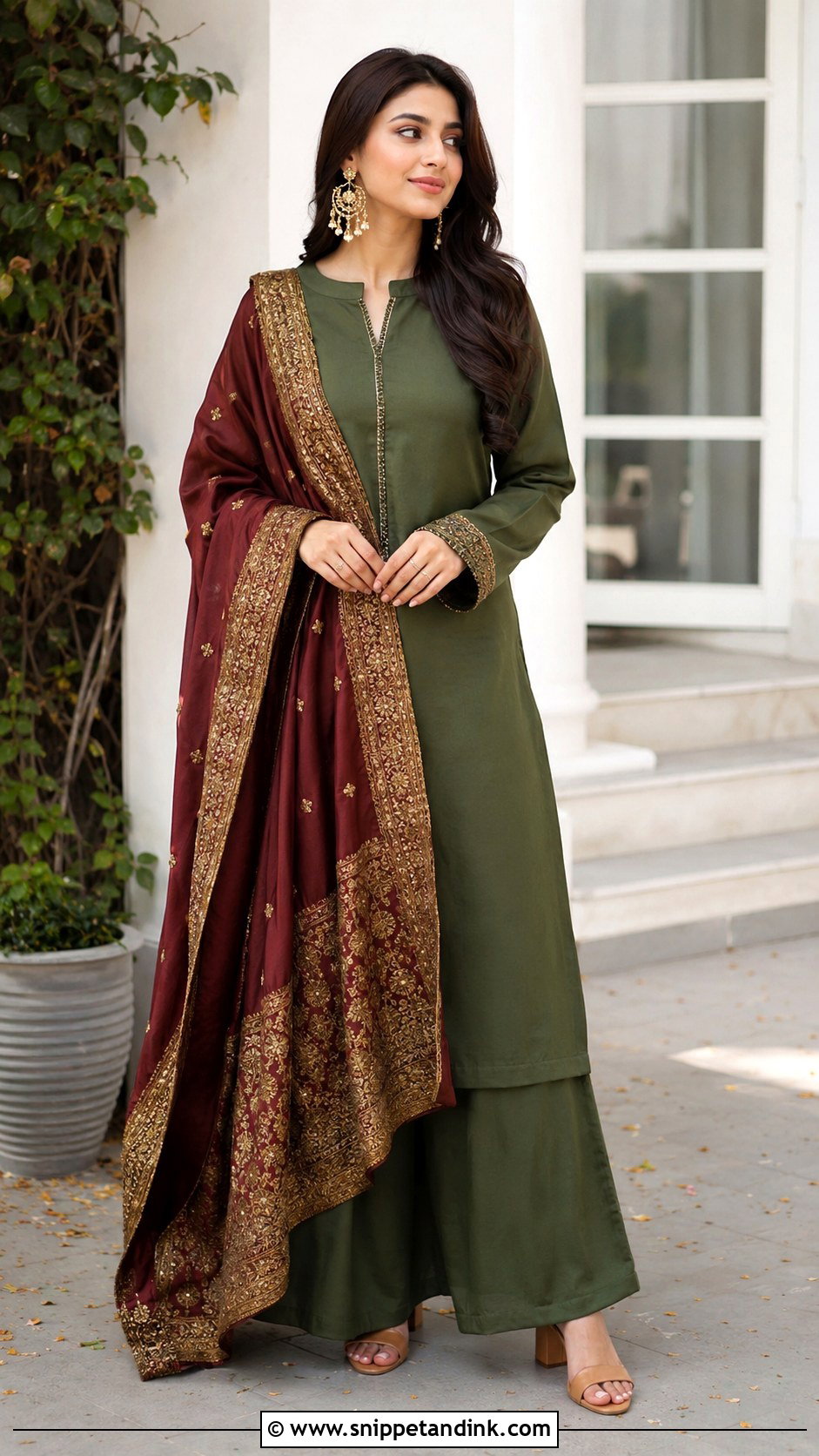
Olive is grounded and slightly unexpected, and it suits warm and olive skin especially well. Gold, rust, mustard and maroon dupattas sit naturally against it. Antique gold jewellery is the simplest match; oxidised pieces feel relaxed. Tan block heels or kolhapuris depend on the setting. It’s a good choice if you’re tired of the usual festive reds and pinks.
28. Magenta Plain Suit With Heavy Dupatta
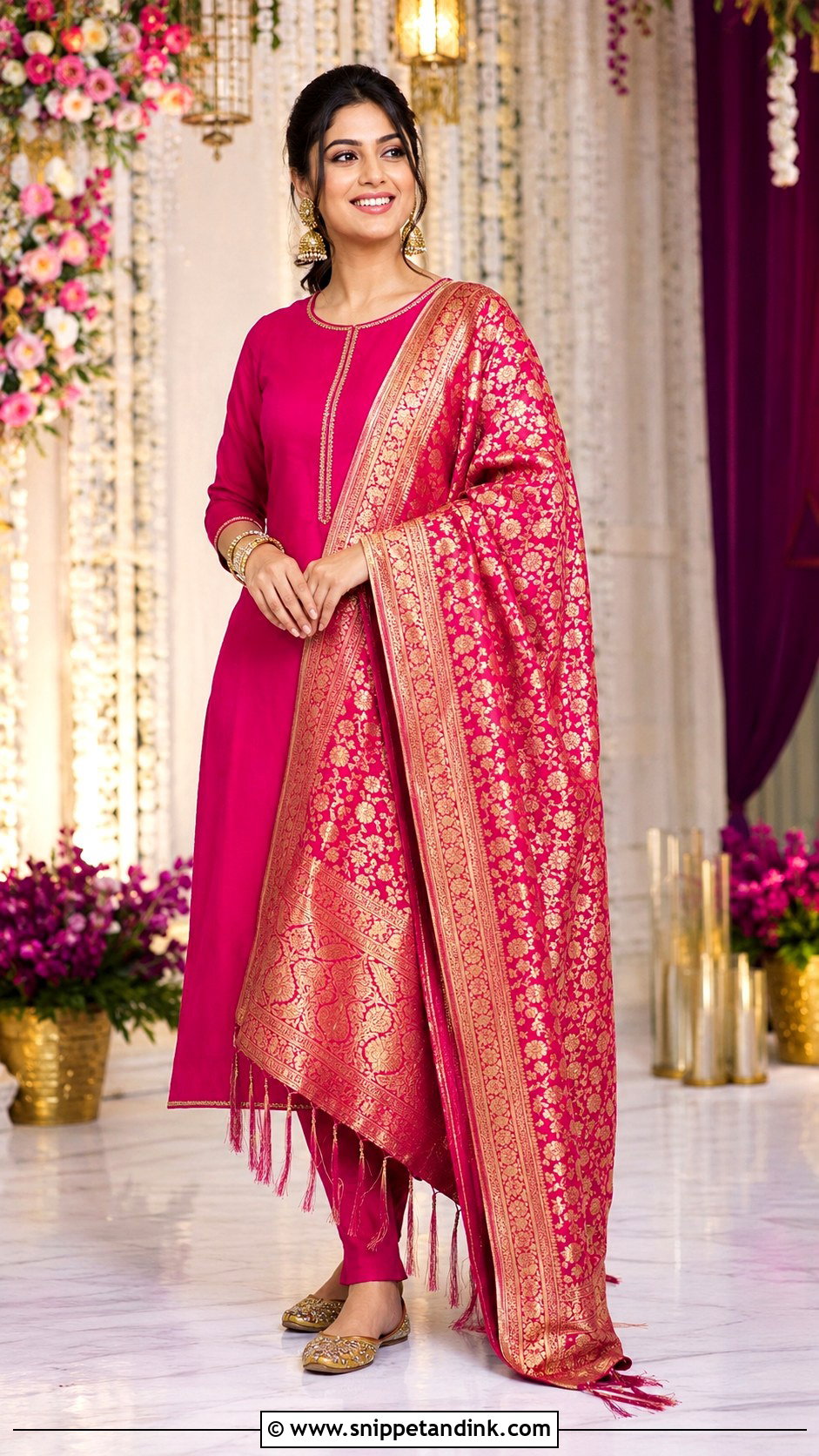
A magenta plain suit is already celebratory, so the dupatta should calm it down rather than add more colour. A gold zari or embroidered net dupatta with neutral accents works better than a multicolour bandhani here. Slim pants or churidar keep the line clean. Gold jhumkas and bangles suit sangeet and mehndi nights.
29. Coral Plain Suit With Heavy Dupatta
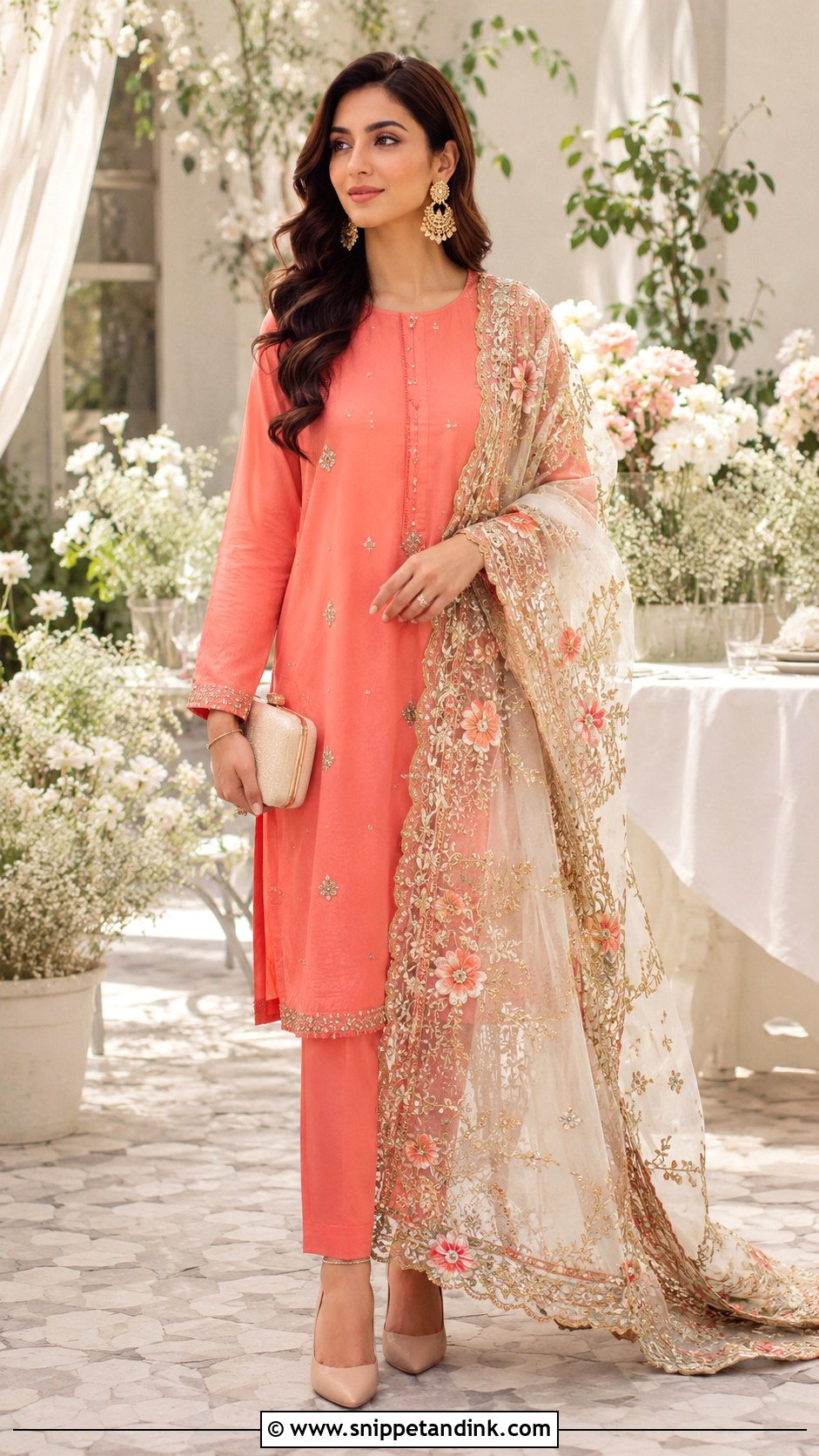
Coral sits between pink and orange and is kind to most skin tones in daylight. Gold, ivory, mint and peach dupattas suit it. An embroidered organza or gota dupatta keeps it festive but light. Warm gold jewellery is the right match. It’s a spring and summer colour; in winter evenings it can look a little thin next to jewel tones.
30. Pastel Plain Suit With Heavy Dupatta
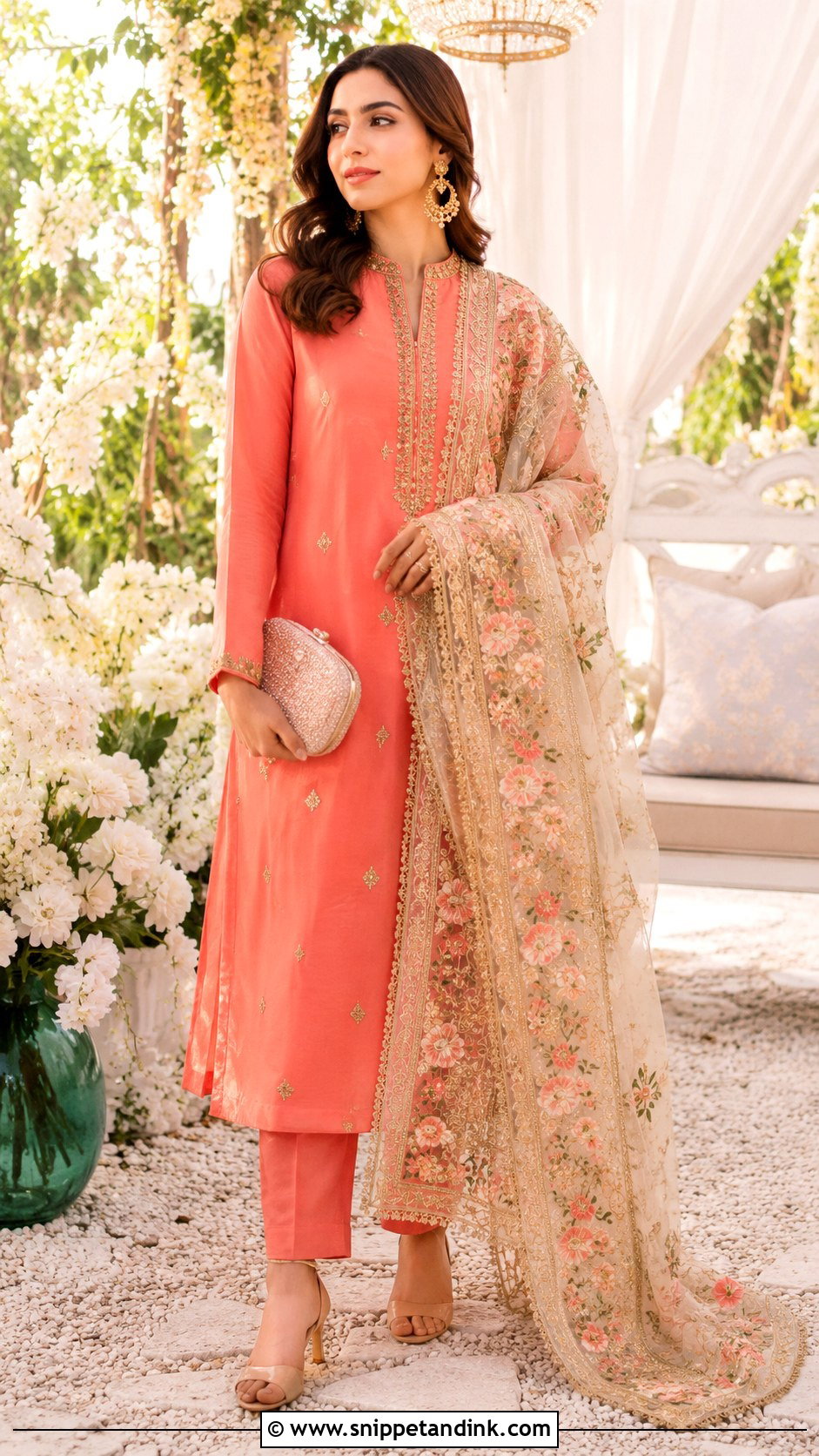
Pastels give you a soft ethnic look that still feels festive when the dupatta is heavy. Powder pink, mint, lilac and ice blue all take pearls, sequins or zari well. Pastels show stains easily, so be careful at food-heavy events. Keep the drape structured and the jewellery delicate.
Storing a Zari or Velvet Dupatta So It Lasts for Years
A heavy dupatta is the piece you’ll keep, so the care afterwards matters as much as the styling. Metal zari darkens when it meets moisture and air, and velvet pile flattens permanently if it’s crushed under weight.
- Air it for a few hours after the function before folding, so sweat and perfume can dry off.
- Wrap it in soft muslin or an old cotton sari, never in plastic, which traps moisture and tarnishes zari.
- Refold along different lines every few months; brocade and Banarasi split along the same fold over time.
- Roll velvet around a cardboard tube instead of folding it.
- Keep perfume away from zari and pearls, and send stains to a dry cleaner who handles silk.
I’d also keep embroidered and mirror-work pieces apart from delicate ones in storage, because the mirrors and beads will snag organza and net if they rub together.
Buy the Dupatta First, Then the Kurta
When I shop with clients, I start with the dupatta, because it’s the expensive, crafted piece that will be worn again. The kurta is chosen afterward from one of its threads or as quiet contrast. Ornate dupattas want simple jewellery; neutral suits want a colourful dupatta. Get the kurta fabric strong enough to carry the weight, pin it properly, and one dupatta will serve you across many functions and many years.
You'll Like These Ideas:


Leave a Reply