
A Sangeet is the one wedding function where the outfit is judged mostly on how it moves. You’ll sit cross-legged for the dholki songs, stand for an hour of photos, and then dance until late. I dress women of every role for this night, the bride, her mother, cousins and guests, and the Sangeet outfits for women I recommend all share one thing: they stay put when you do. Below are thirty silhouettes, each with the fit or fabric detail I’d check before you commit to it.
Stitched, Ready-Made or Rented, and the Lead Time Each Needs
The route you take to the outfit decides how much time you need. I plan backwards from the Sangeet date with every client, because wedding season fills tailors and boutiques quickly.
Custom stitched
Give a designer or tailor plenty of runway, ideally two to three months for embroidered pieces, since hand embroidery can’t be rushed. Book at least two fittings, and leave a couple of weeks after the last one for final adjustments.
Ready-made
Buy at least four weeks out. Almost every ready-made blouse needs some alteration at the shoulders or waist, and tailors are busy close to the date.
Rented
Rentals usually come with limited alteration allowed. Try on early, check the blouse fit carefully, and confirm the return condition terms, especially if you’ll be eating and dancing in it.
1. Sequin Lehenga Sangeet Outfit
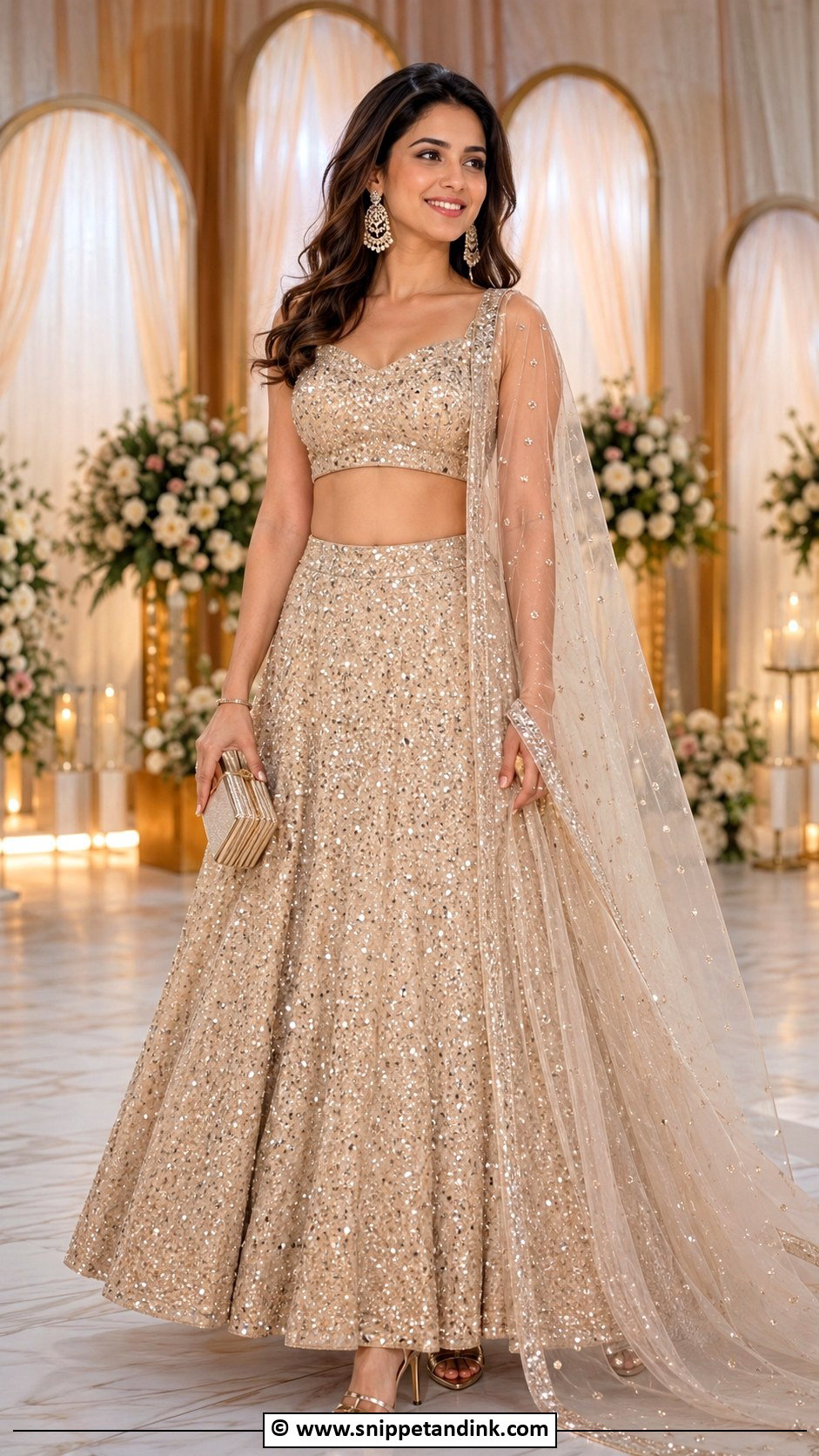
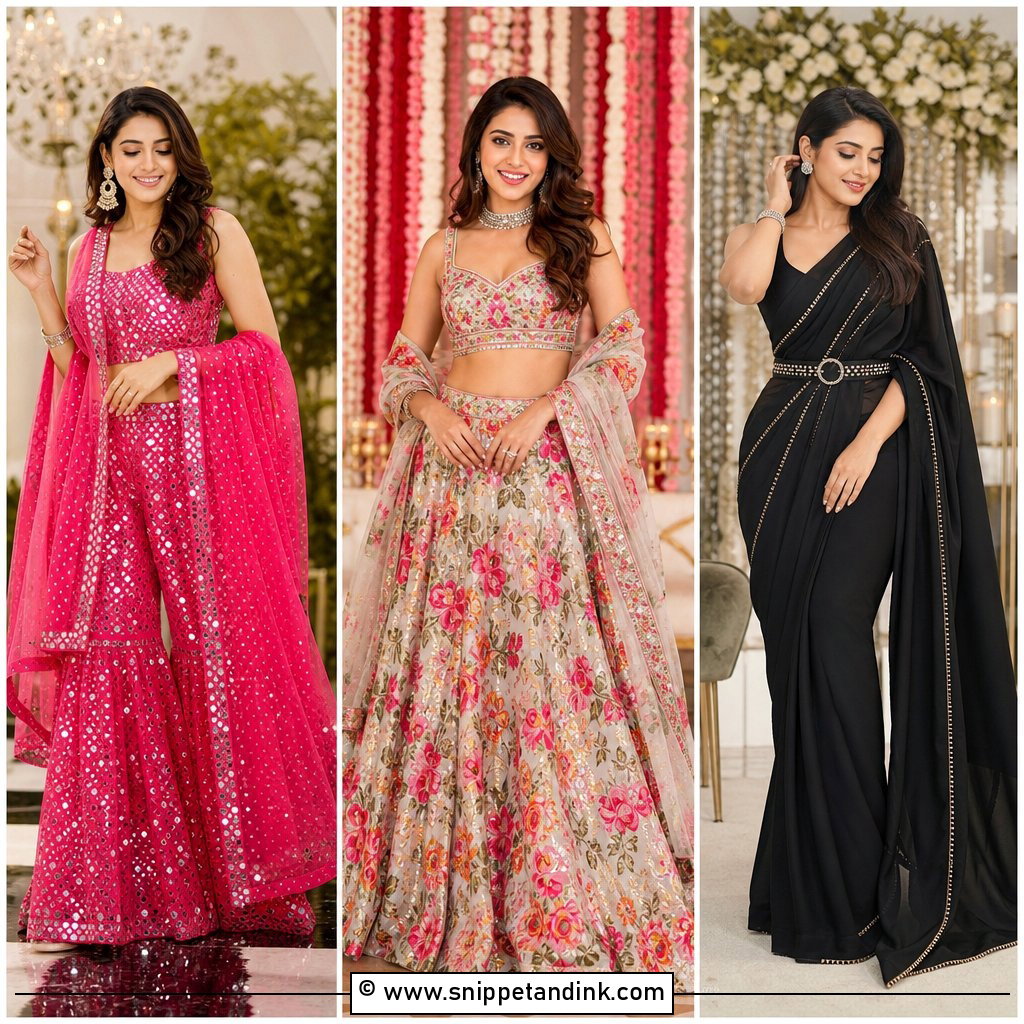
Most of the sparkle in a sequin lehenga comes from the stage lights, so you don’t need the densest work to get the effect. I steer women toward scattered sequins on a georgette base rather than a fully sequinned skirt, which can weigh several kilos and drag at the waist by midnight. Emerald, champagne and navy read rich on camera. Let the earrings be the only big jewellery, and wear block heels or juttis you’ve walked in before.
2. Mirror Work Lehenga Sangeet Outfit
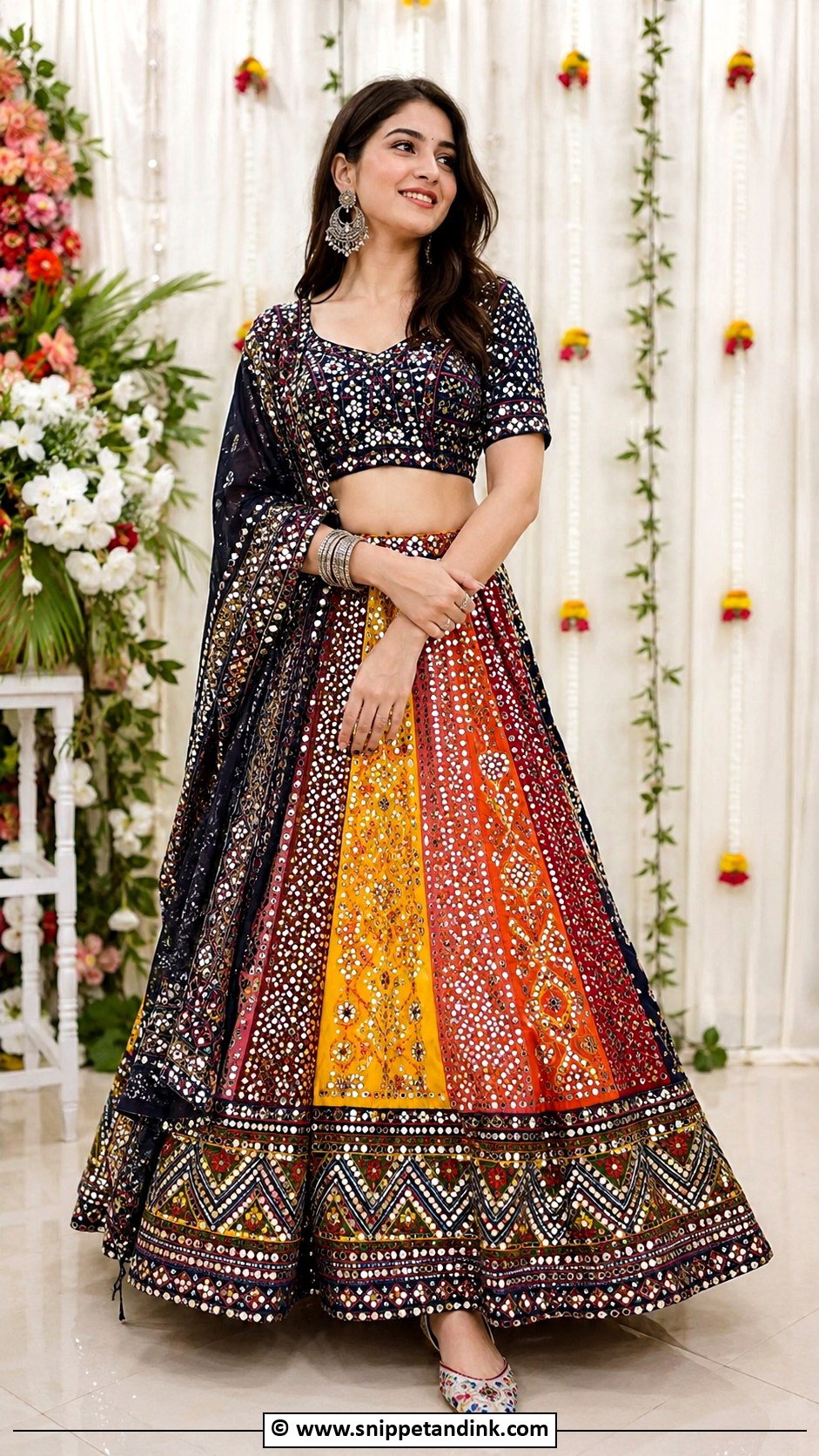
Heavy all-over mirror work looks wonderful on a hanger and feels like armour after two hours. Scattered mirrors give the same reflective sparkle when you dance with a fraction of the weight. The mirrors are stitched around their edges with thread, and on cheaper pieces those edges can rub, so I always run a hand along the inside of the blouse at a trial. Oxidised silver earrings suit mirror work better than polished gold.
3. Cape Lehenga Sangeet Outfit
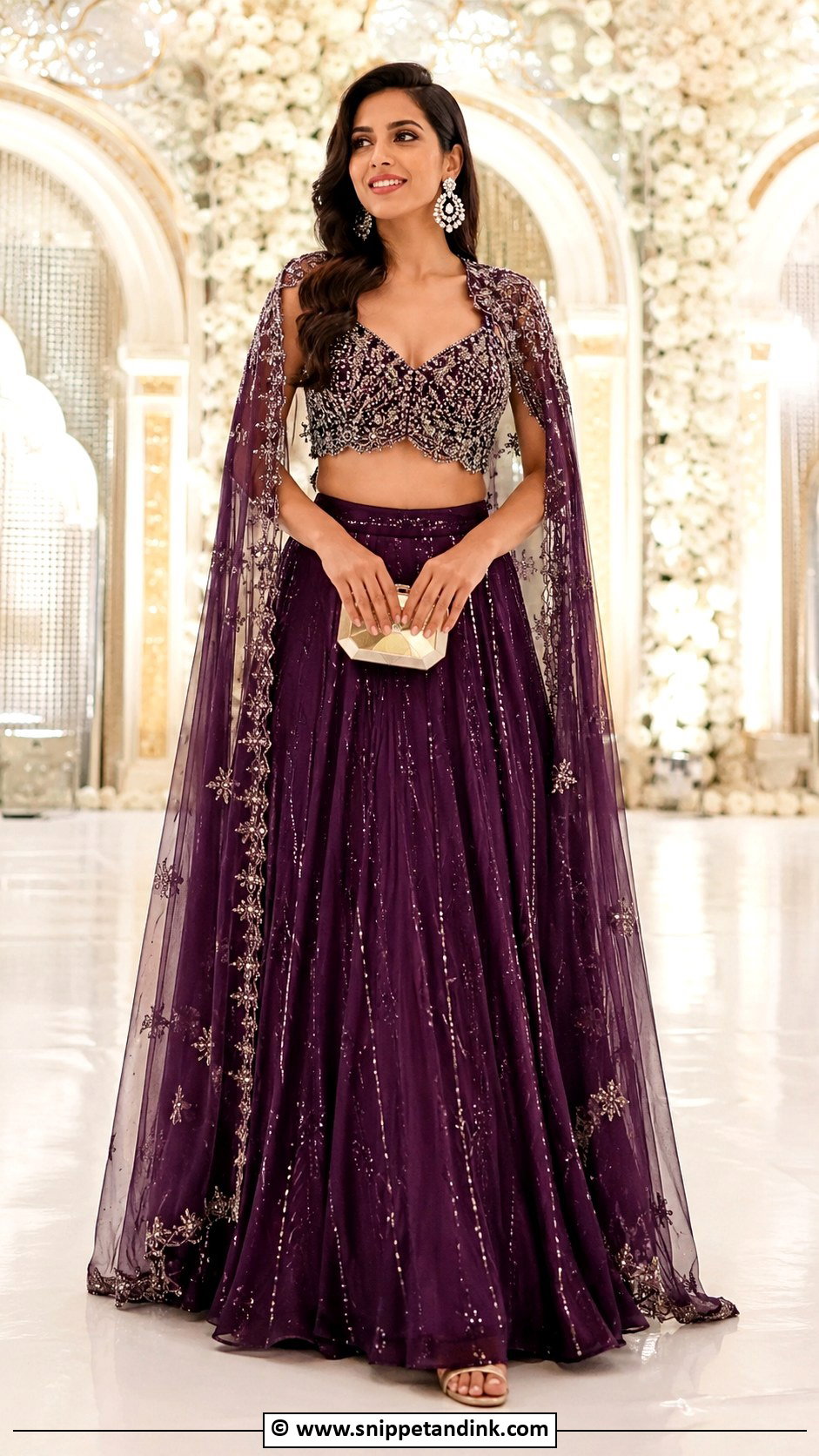
The cape removes the dupatta from the equation, and for a dance-heavy night that’s a relief. Georgette and crepe skirts let the cape float; a stiff net skirt fights it. I ask that the cape be sewn to the blouse at the shoulders, because a cape that’s only pinned slips backward and pulls at the neckline. From the back it reads dramatic in motion, so check it in a mirror while turning. A sleek bun keeps hair from catching in the sheer fabric.
4. Pre Draped Saree Sangeet Outfit
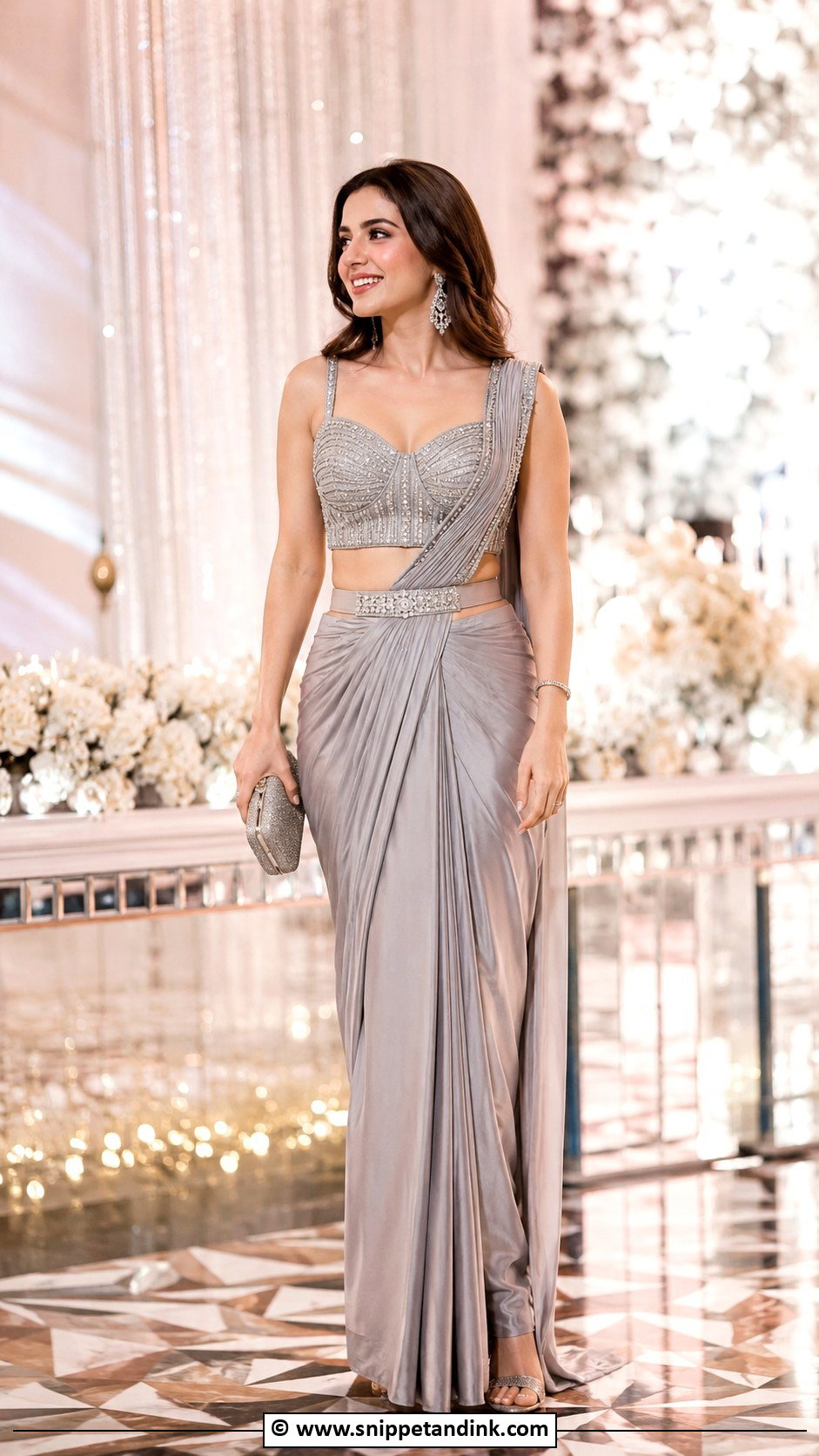
Pleats that are stitched in place don’t fall open during a spin, which is the whole case for a pre-draped saree. The trade-off is that the length is fixed: if you change from flats to four-inch heels after stitching, the hem will sit too high. I take the measurement in the exact shoes. Sequins, ruffles or a metallic finish give it Sangeet energy; a belt keeps the pallu from sliding forward when you bend.
5. Ruffle Saree Sangeet Outfit
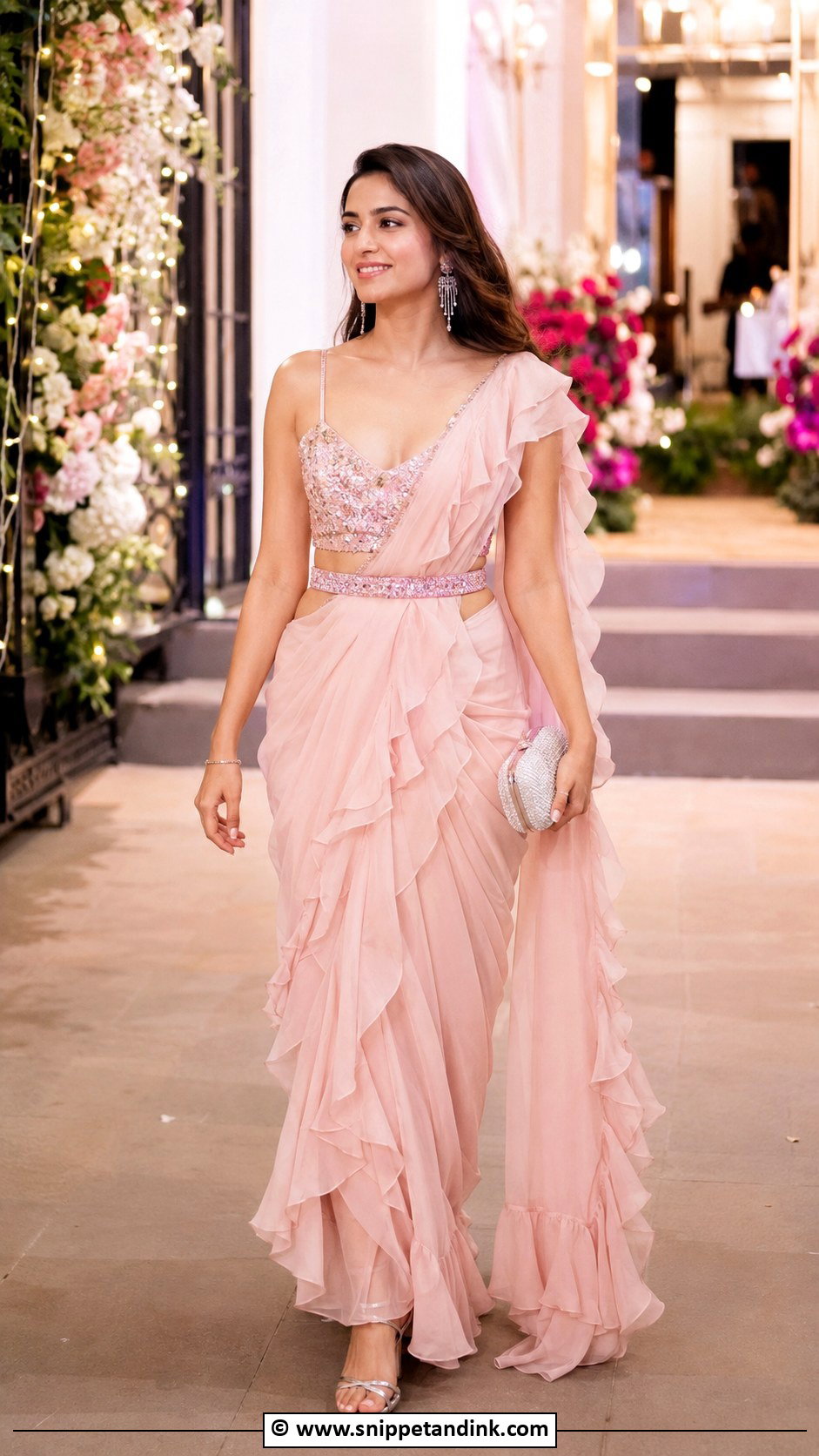
Ruffles are the friendliest saree for someone who rarely wears one. They disguise an imperfect pleat, add movement, and weigh far less than a heavily bordered silk. Plain ruffles with a sequinned blouse is the balance I usually suggest; printed ruffles suit a daytime or playful theme. The fabric matters: chiffon ruffles drop and flutter, organza ruffles hold out and add width at the hem.
6. Sharara Set Sangeet Outfit
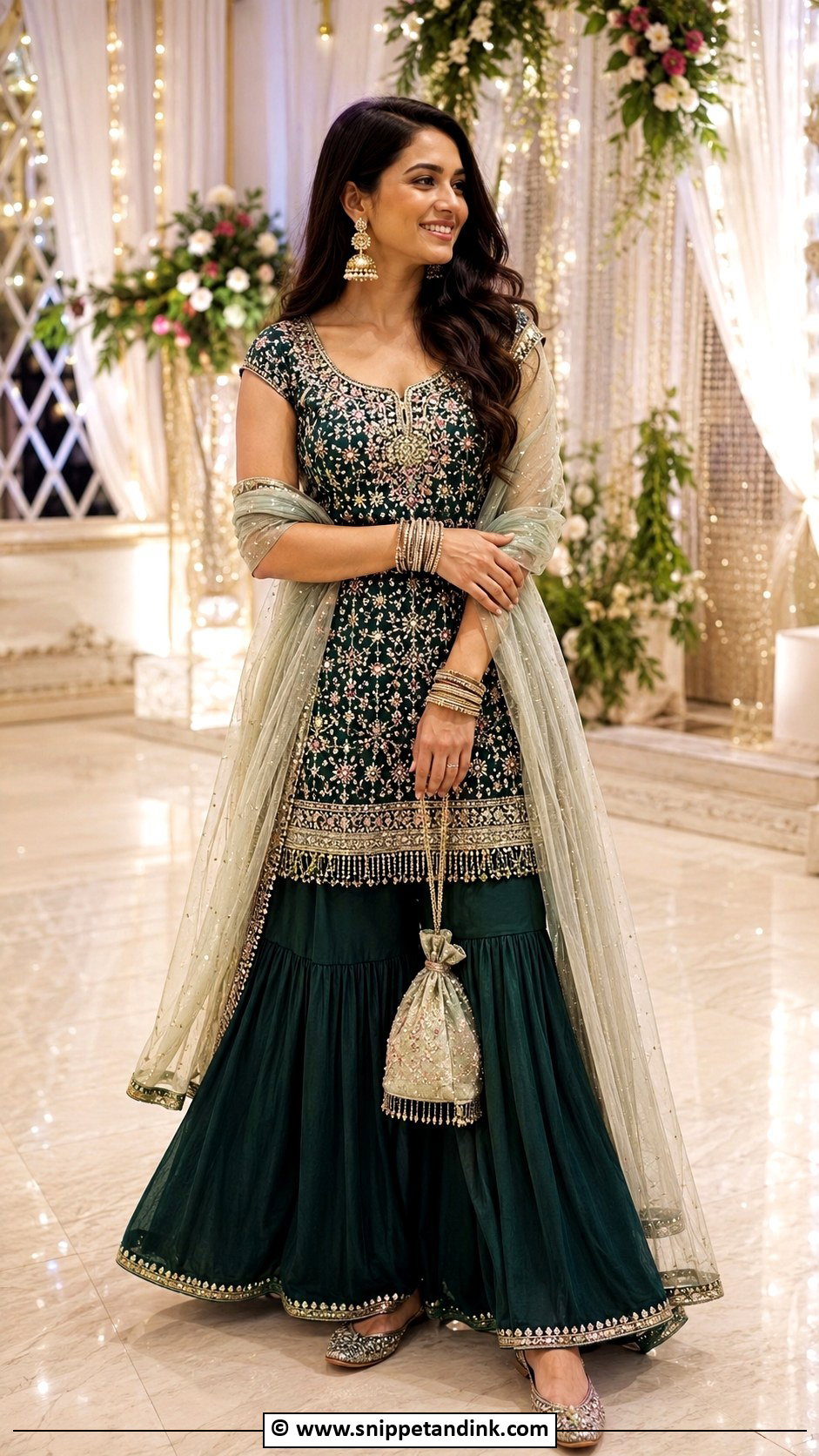
Shararas are the outfit I suggest most often to women who want to dance freely, because the wide legs never catch your feet. The flare should begin from the hip in a soft A-line; if it starts lower, it’s really a gharara. A short kurti or peplum keeps the proportions right. Mirror work and gota patti are classic Sangeet trims, and embellished juttis let you dance for hours without the heel pain that ends most nights early.
7. Gharara Set Sangeet Outfit
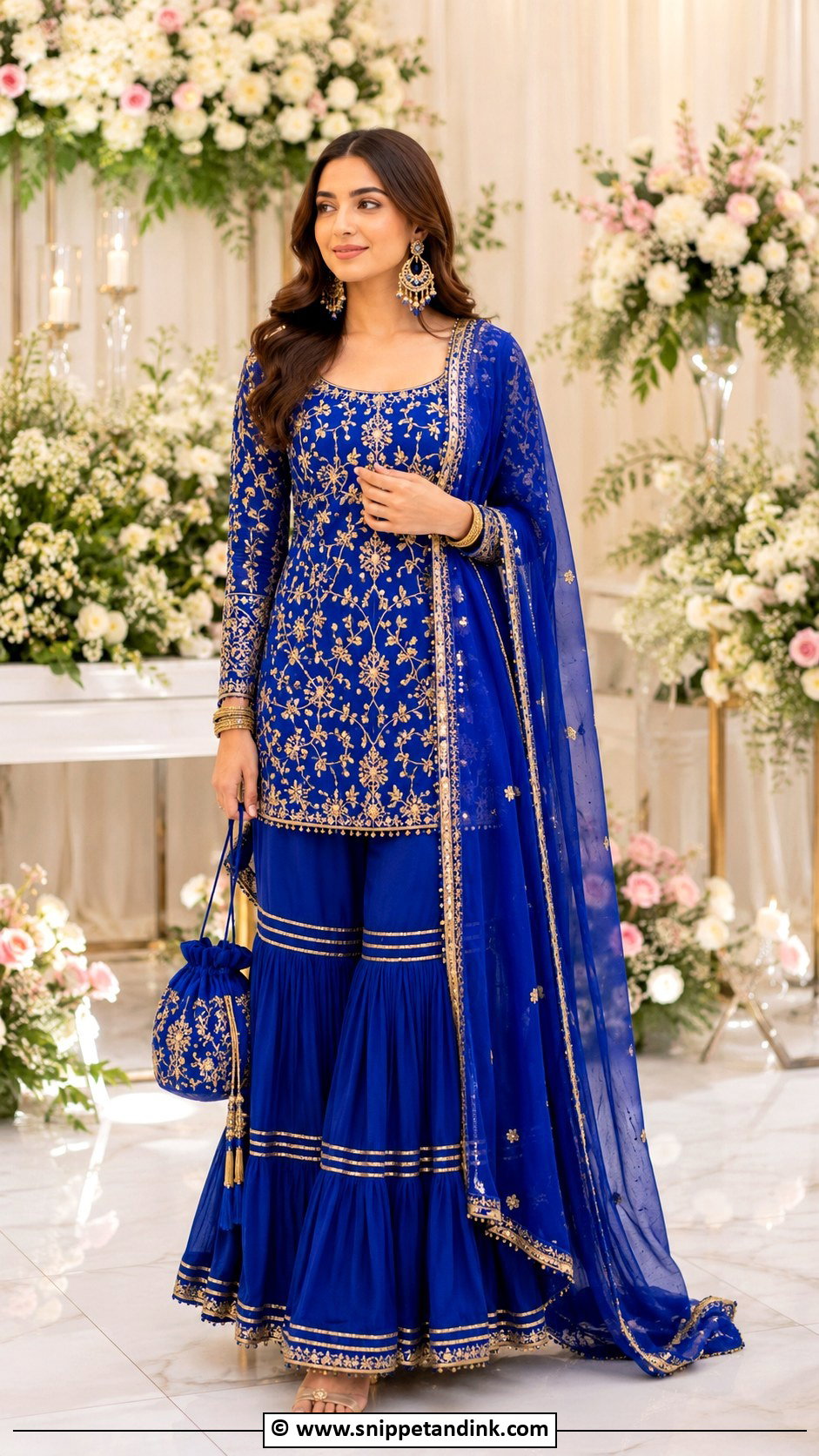
Ghararas flare from just below the knee, where a band of gota or embroidery marks the join. That join is the fit point I watch, since a few centimetres too high or low changes the whole shape. The silhouette is structured, so soft silk, georgette or crepe work better than stiff brocade if you plan to dance. A short kurta keeps it balanced. Low heels or juttis, and a potli bag for your phone, finish a very traditional look.
8. Anarkali Gown Sangeet Outfit
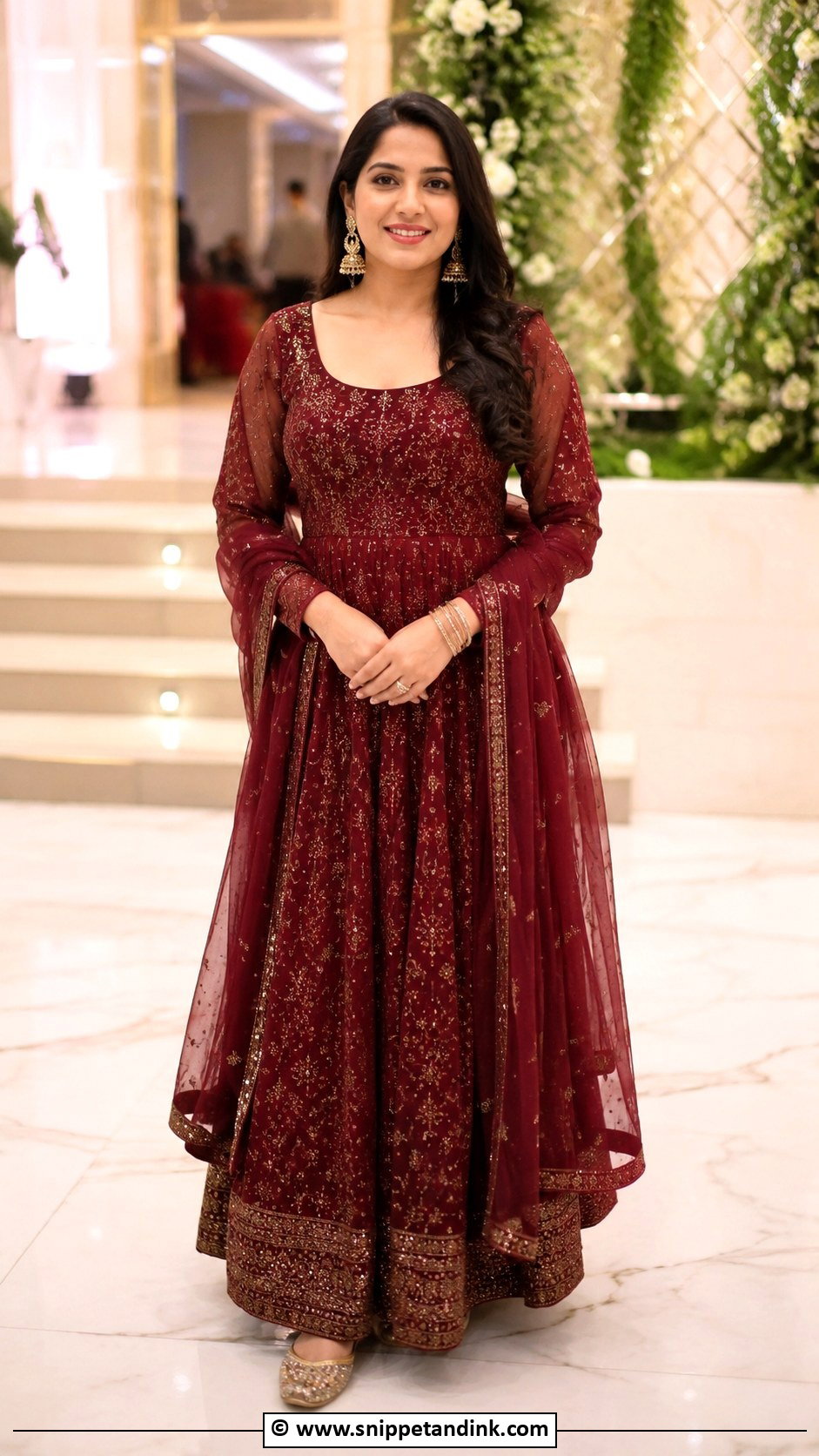
Anarkalis give coverage and a flowing line with no blouse gap to manage, which is why so many mothers, aunts and guests prefer them. The fit at the bodice decides everything: it should sit snug just under the bust so the flare starts in the right place. I keep the necklace minimal if the neckline is heavy and let earrings carry the jewellery. A panelled Anarkali opens wide on a turn and looks wonderful in motion.
9. Jacket Lehenga Sangeet Outfit
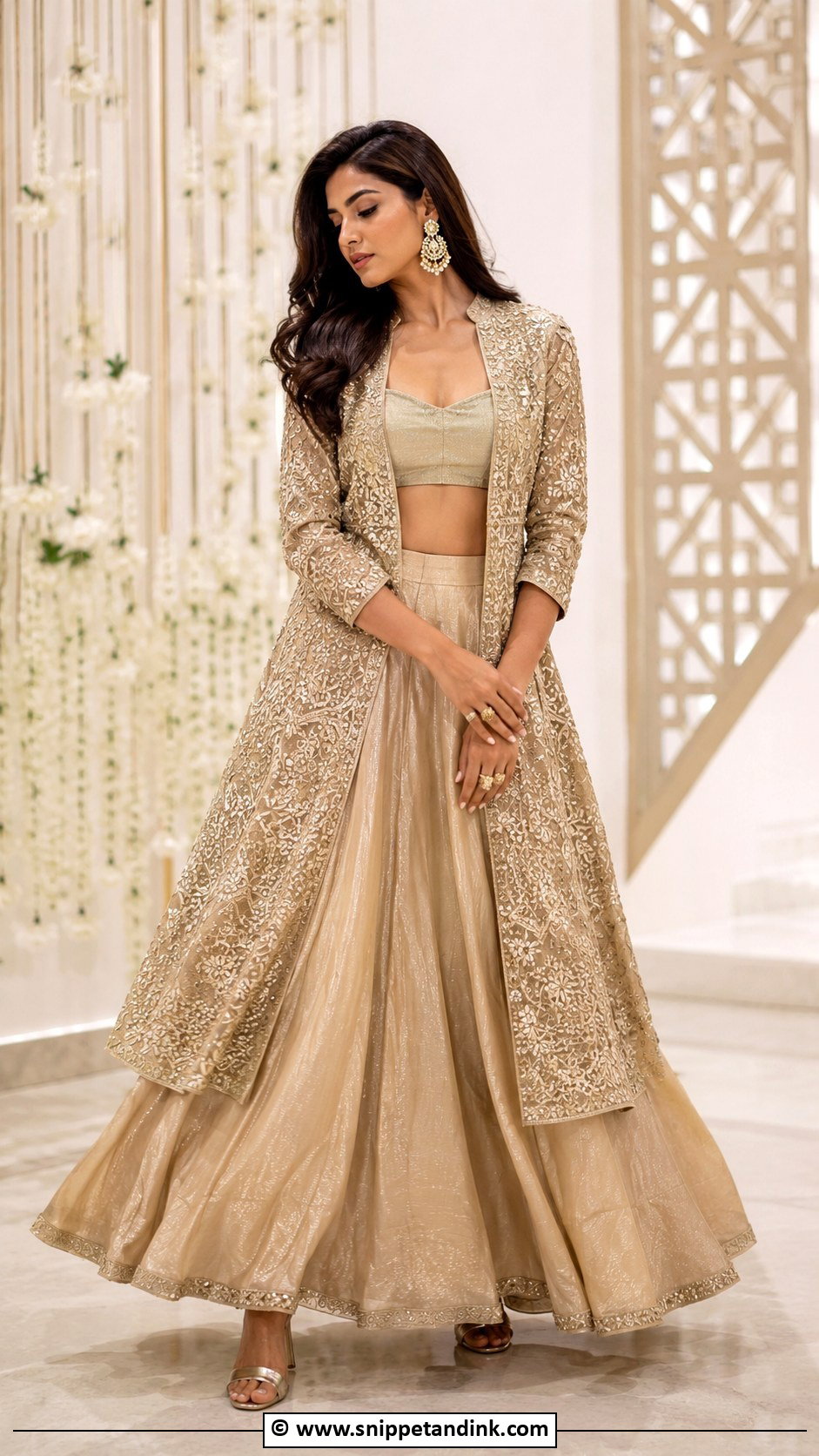
I suggest a jacket lehenga when someone wants structure and coverage without a dupatta. A short embroidered jacket reads young; a long sheer one adds height and a sense of entrance. Pair either with a simple blouse and a flowing skirt, because a heavy blouse under a heavy jacket just looks bulky. Watch the warmth in a packed indoor venue: a lined brocade jacket gets hot fast, and a sheer or half-lined one is easier to keep on.
10. Indo Western Dhoti Set Sangeet Outfit
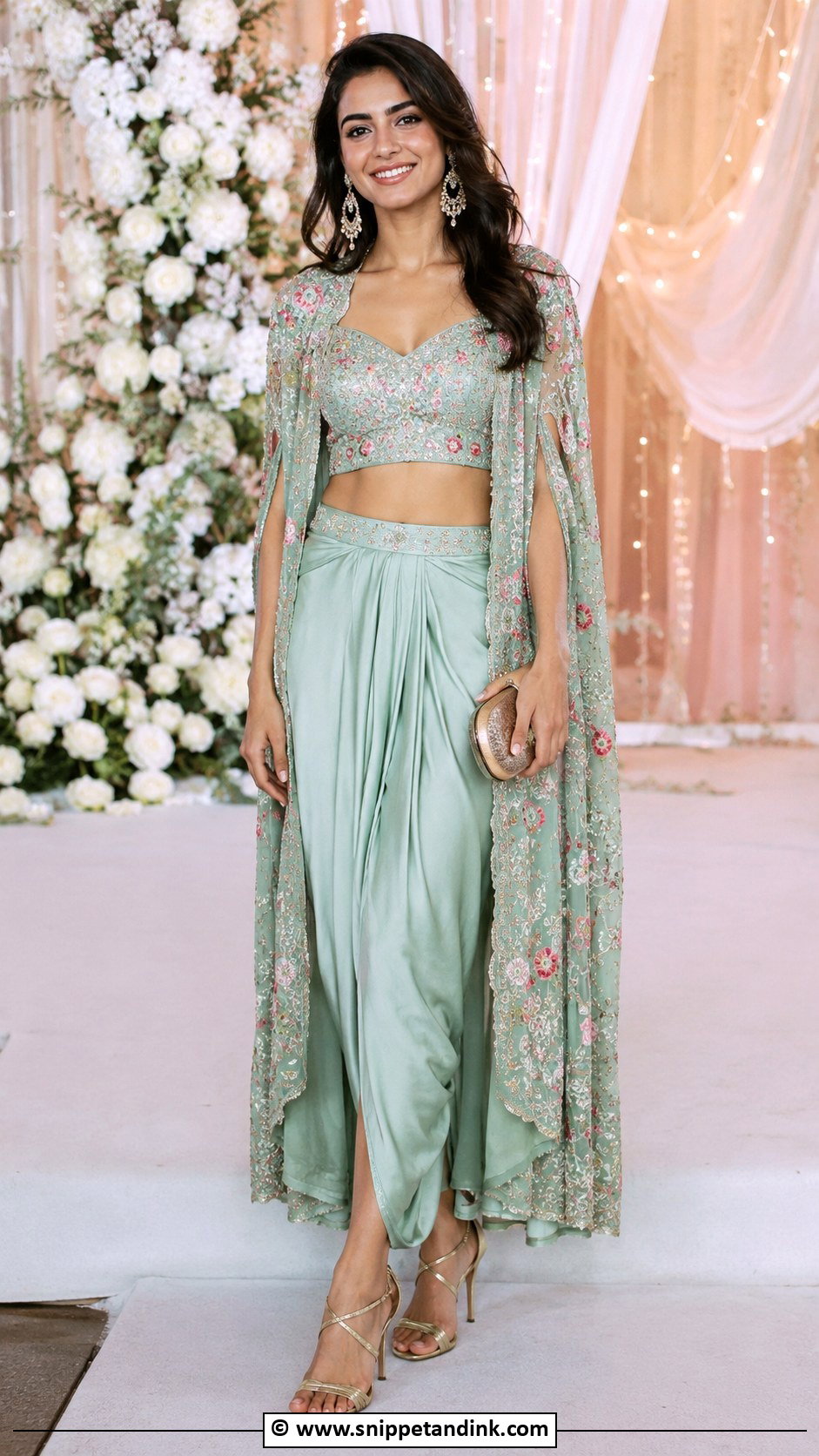
An Indo-western dhoti set is the outfit for women who want to stand apart from the sea of lehengas. The draped pants let you move freely, and an embellished crop top, cape or jacket keeps it festive. Silk, crepe and georgette drape fluidly; cotton or stiff blends puff out at the hip. I keep accessories bold but few, a single pair of statement earrings and metallic sandals. It suits younger guests and bridesmaids in group dances especially.
11. Palazzo Suit Sangeet Outfit
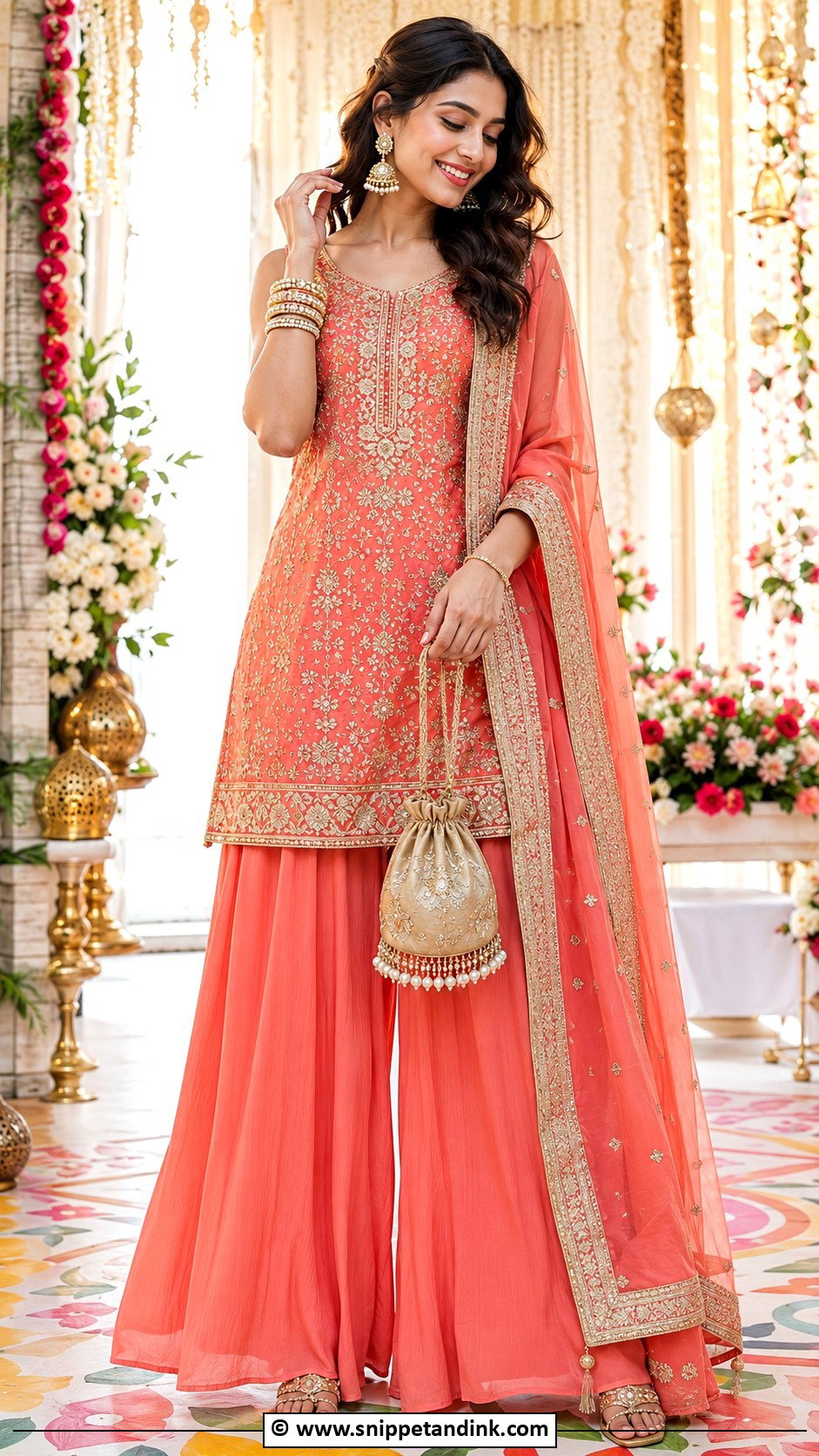
Palazzo suits are underrated for Sangeets. They’re light, easy and appropriate for any age, and they give real coverage. The festive part comes from the kurta: embroidery at the neck and hem, mirror trim or a bright shade like fuchsia, cobalt or mustard. A dupatta with a strong border adds just enough drama. I’d choose this for a long evening where you’re also helping host, since nothing about it needs adjusting.
12. Peplum Top Sharara Sangeet Outfit
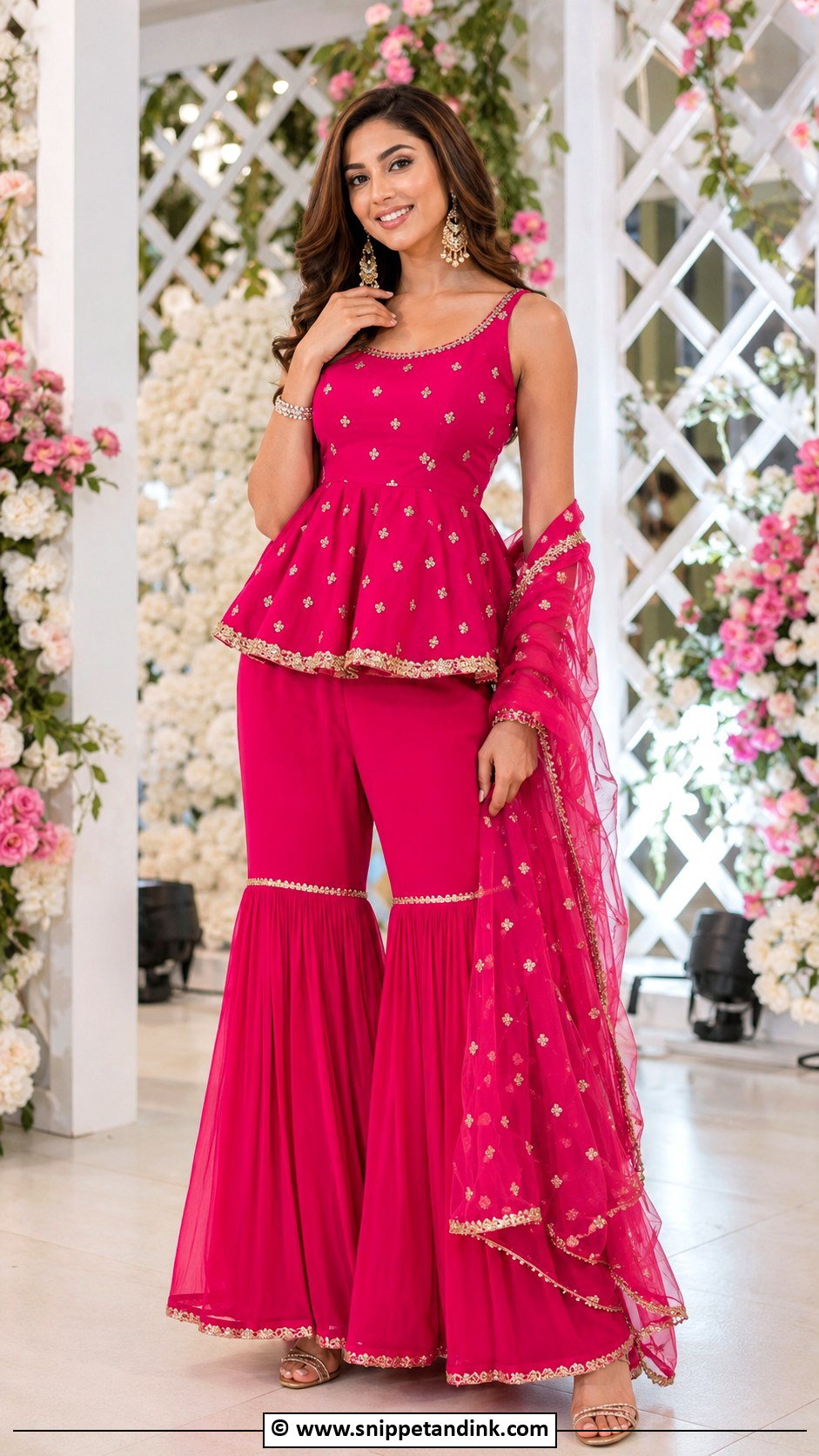
The peplum’s flare sits at the waist, which gives shape without fitting tight around the stomach. That’s why it suits so many body types. Pair it with sharara pants in the same or a tonal fabric so the eye reads one long line. Embroidery at the neckline and hem gives enough detail that the dupatta can stay optional. I tell women to check that the peplum doesn’t flip up when they sit, a stiffer lining usually fixes it.
13. Corset Lehenga Sangeet Outfit
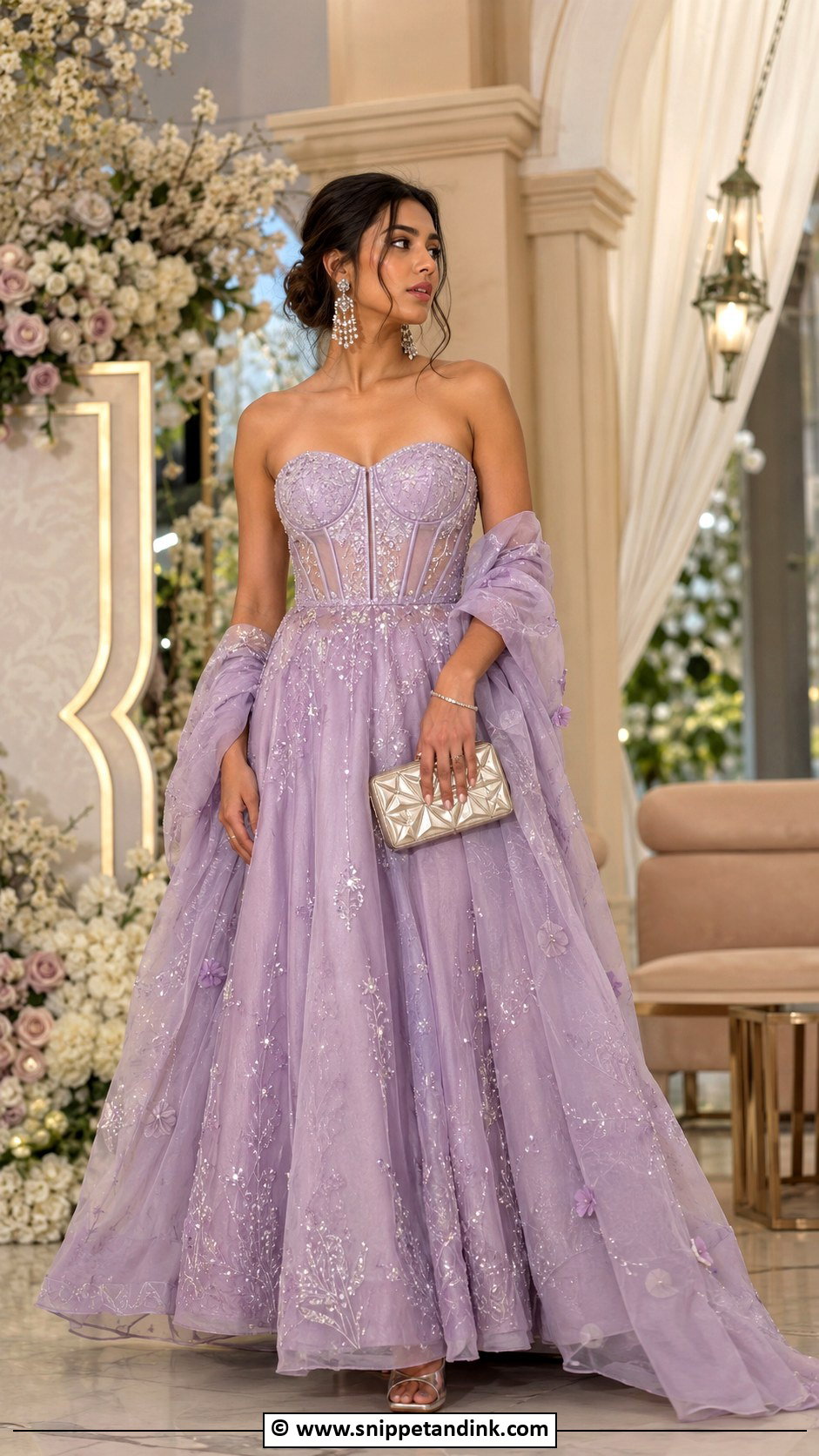
Corset blouses work when they’re built properly: boning in the seams, a firm waist tape and straps that actually support. Fashion corsets without that structure creep up as you dance. I’d suggest this for women who are comfortable in fitted clothing, and I’d ask you to sit, eat and raise your arms in it before the day. Organza or net skirts suit the structured top. A sheer dupatta or jacket is there if you want more coverage later in the evening.
14. Printed Lehenga Sangeet Outfit
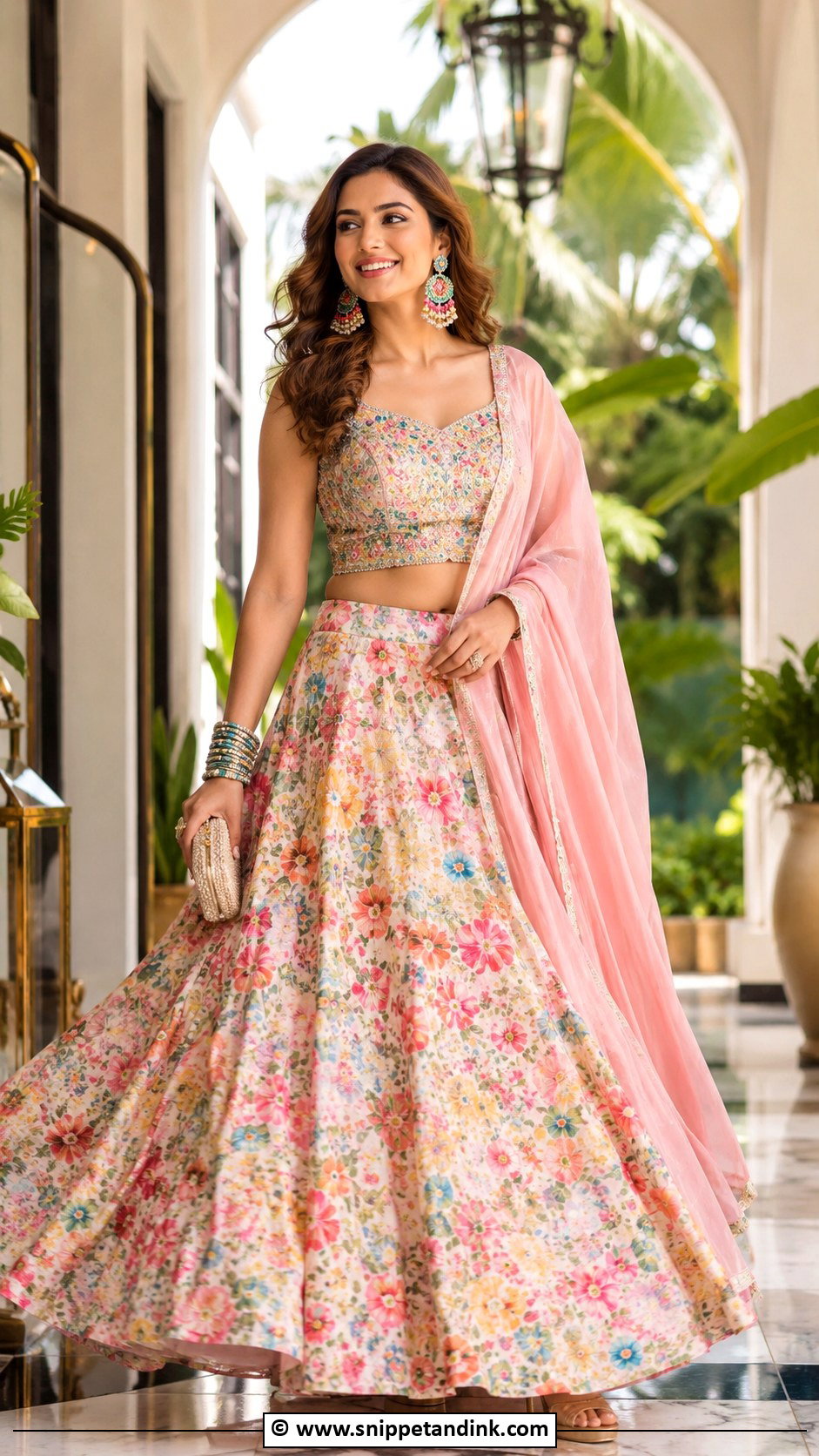
Printed lehengas are lighter, cooler and easier to pack, which makes them my first suggestion for destination and daytime Sangeets. Bandhani and floral prints feel festive without heavy work. The skirt should still have a good flare, and an embroidered blouse adds the dressy note the print alone lacks. Keep the dupatta plain with a border. Comfortable wedges suit lawns, where block heels can still sink.
15. Velvet Lehenga Sangeet Outfit
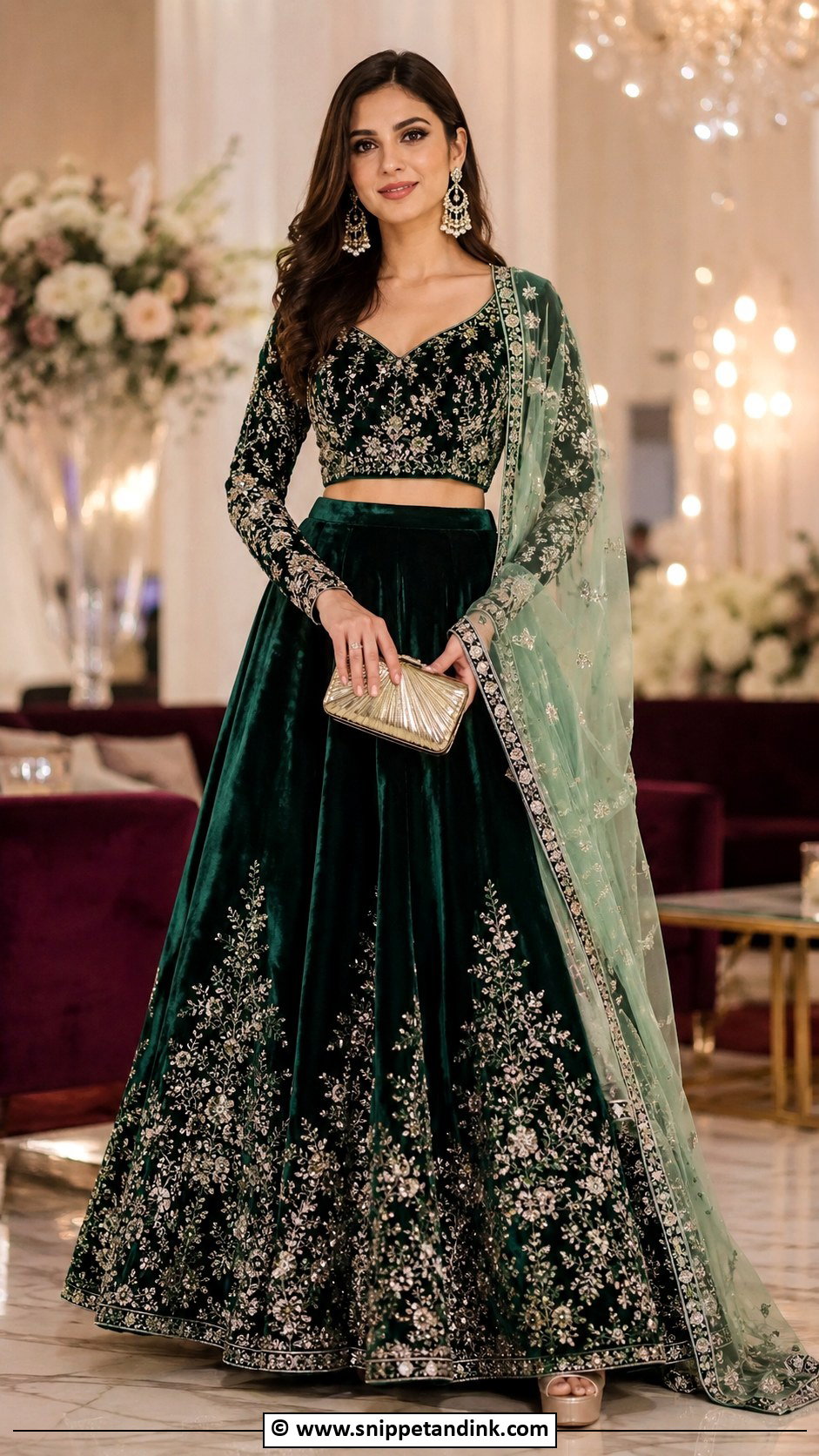
Velvet belongs to winter. It traps heat, so I’d only suggest it for cool-weather or well air-conditioned venues. Deep maroon, emerald and plum look rich with relatively little embroidery, and clean work keeps it from looking like a bridal outfit. Velvet skirts are heavy, so ask for a lighter flare and a firm waistband. Platform sandals help balance the weight of the hem.
16. Organza Saree Sangeet Outfit
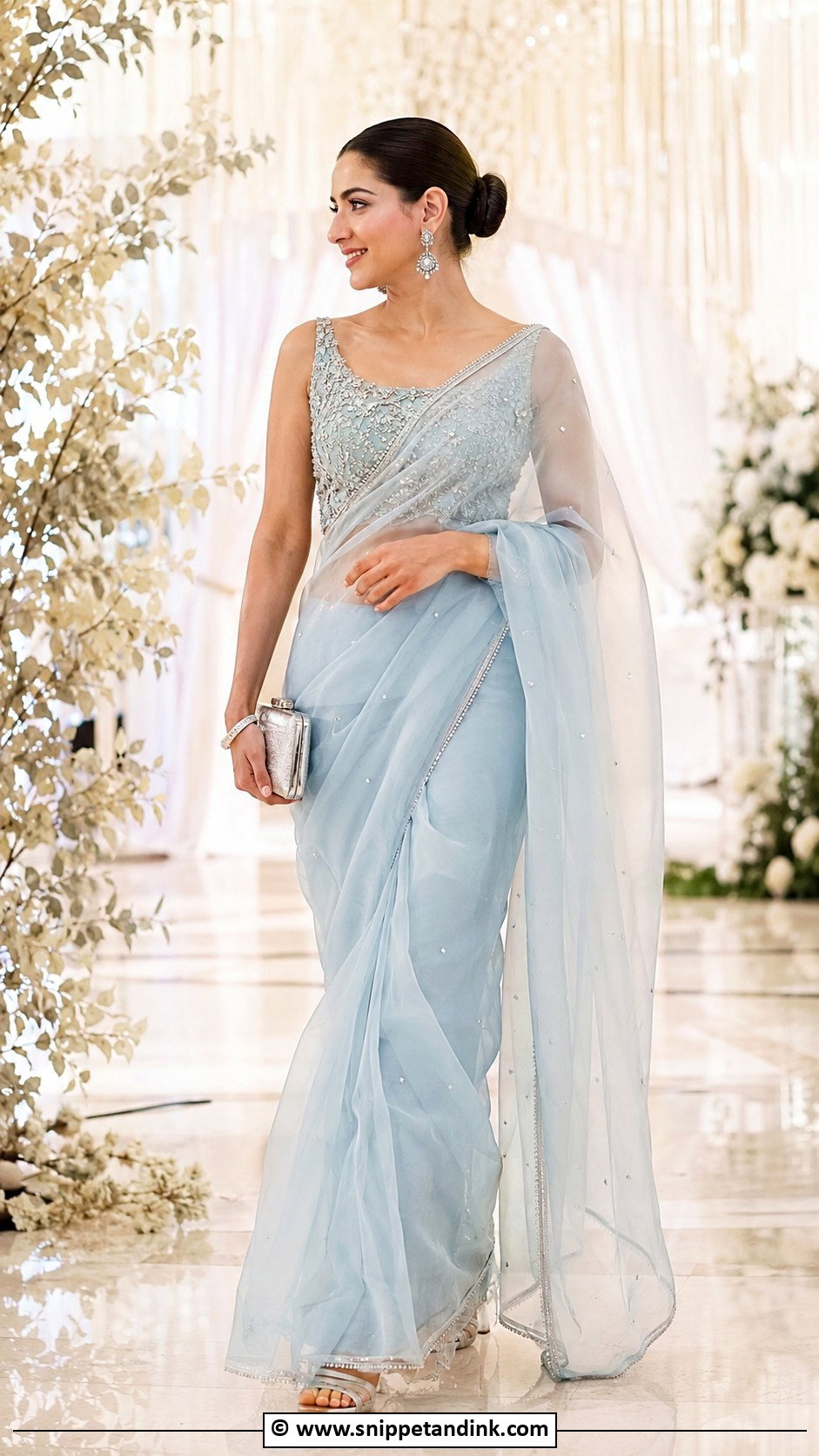
Organza has crisp body, so it holds a shape without clinging, but it also creases sharply when you sit. If you’ll be seated for the first half of the evening, plan a quick steam before photos. Sequin scatter, delicate embroidery or a scalloped border lift it for night. Pin the pleats and pallu with more pins than you think you need, because organza is slippery. Pearl earrings and a low bun suit its quiet glamour.
17. Metallic Saree Sangeet Outfit
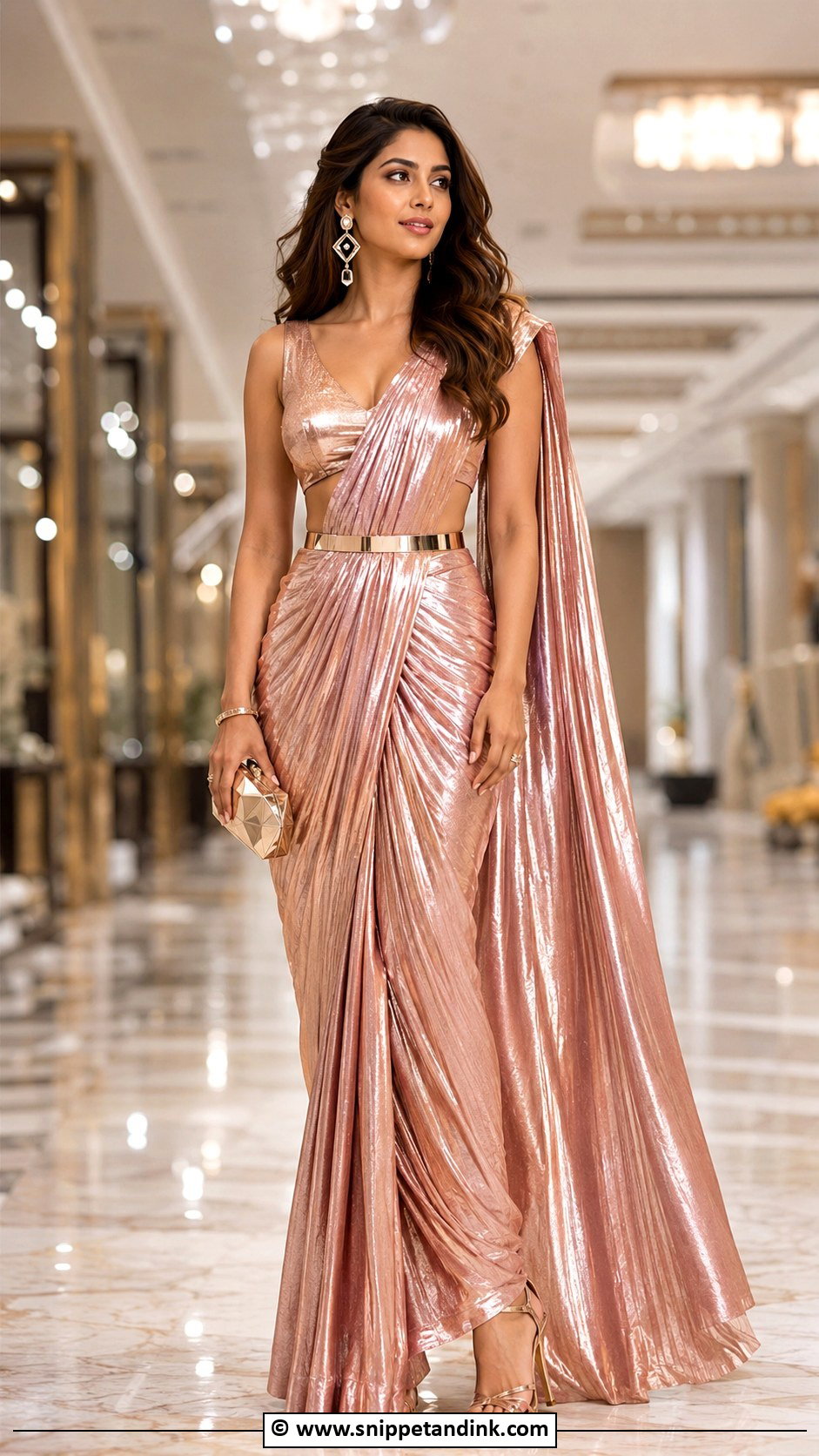
Metallic sarees make the statement on their own, so the styling job is restraint. Keep the blouse sleek and fitted and choose one strong accessory, sculptural earrings or a cuff. Gold and bronze warm most skin tones; silver and pewter suit cooler undertones. A belt defines the waist and helps the drape survive dancing. Metallic tissue shows every fold, so press it carefully before you dress.
18. Lehenga Saree Sangeet Outfit
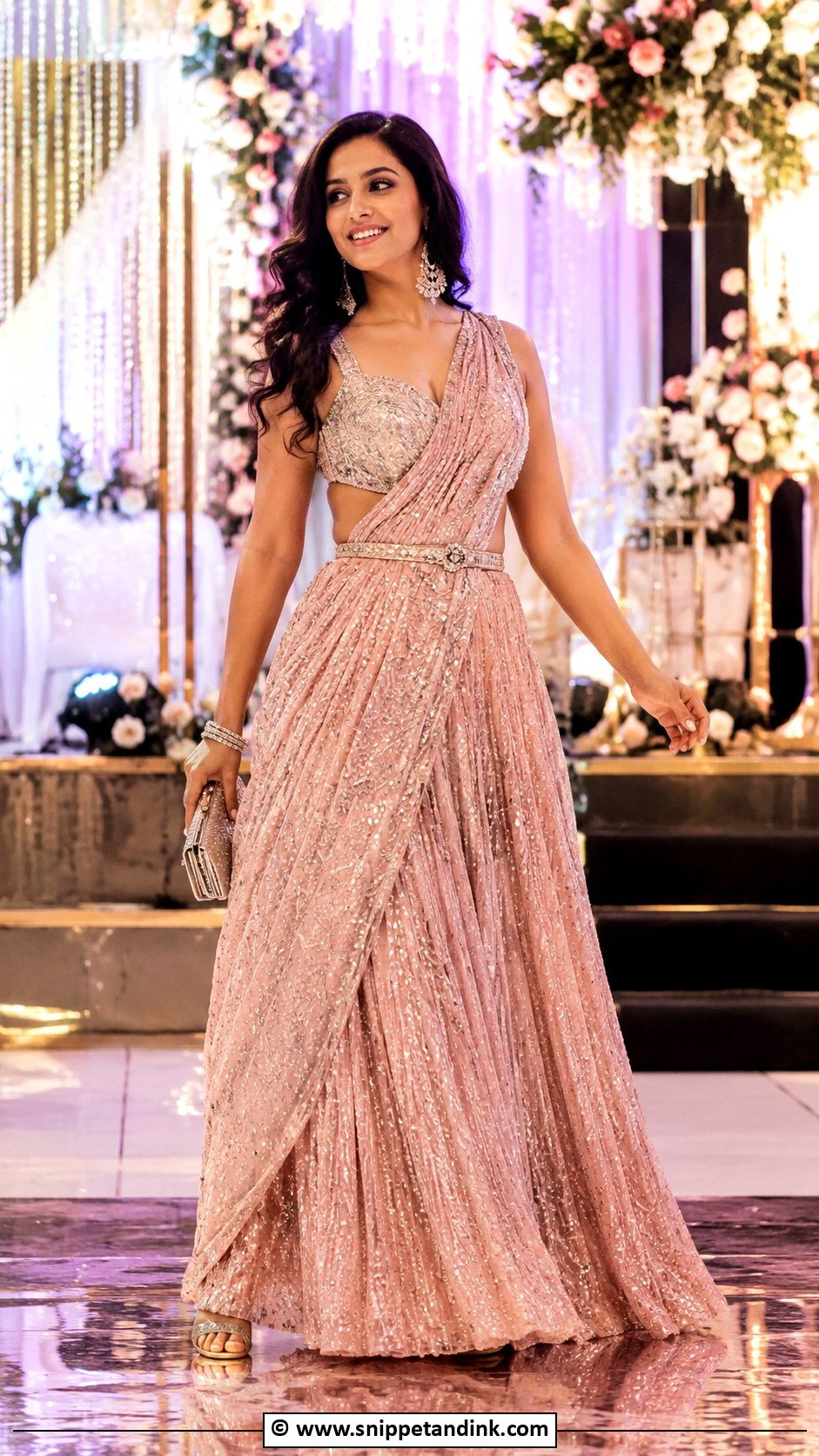
A lehenga saree gives you the pleated front and pallu of a saree with the security of a skirt underneath. The pallu is usually attached or pre-pleated, so there’s very little to adjust. I check how the pallu is fixed at the shoulder: a sewn tab with a hook holds better than a single pin. Sequins, ruffles and metallic borders suit Sangeet night. Add a waist belt for extra hold during dances.
19. Fusion Skirt And Crop Top Sangeet Outfit
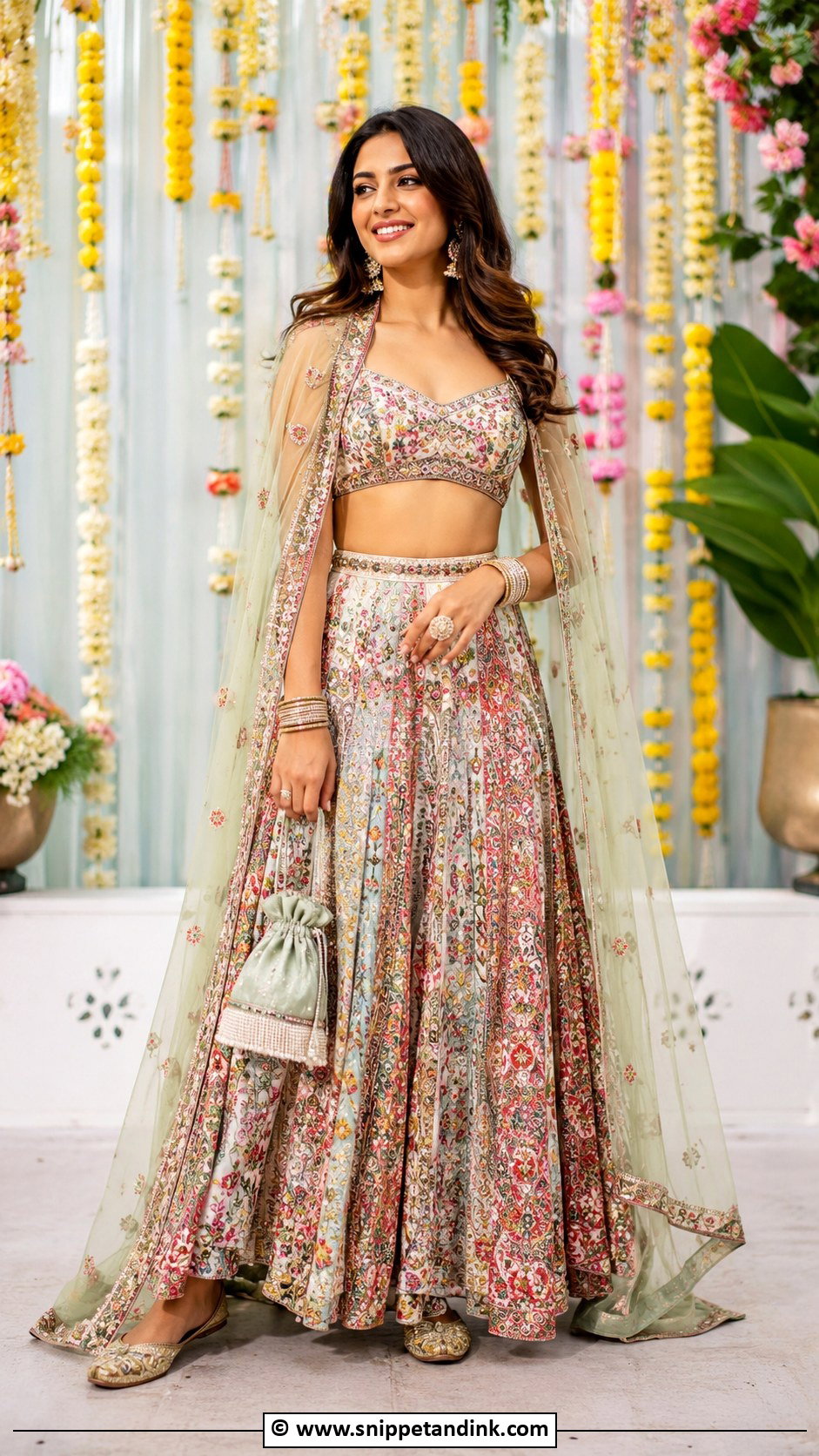
A skirt and crop top is the easiest outfit to make your own, because you can mix pieces you already own with one new item. The skirt should carry the festive detail, mirror work, embroidery or a print, while the top stays structured. A light dupatta, cape or long shrug adds coverage if you want it. I’d suggest checking the gap at the waist with arms raised; what’s modest standing still can be quite different on the dance floor.
20. Long Jacket Sharara Sangeet Outfit
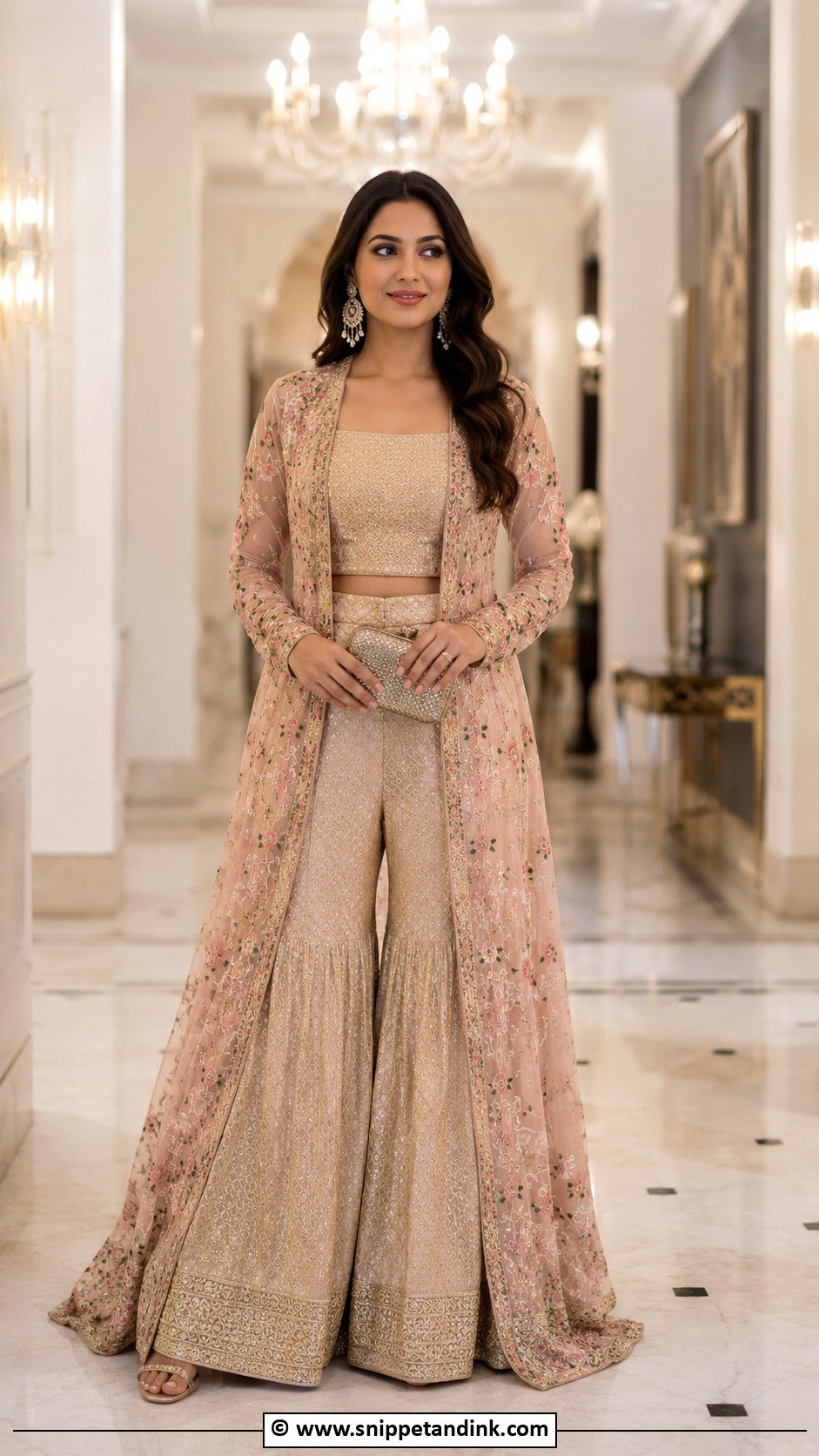
A long jacket over sharara pants creates height and a strong vertical line, which flatters most frames. High-waist shararas keep the silhouette clean under the jacket. Sheer or lightly sequinned jackets work best at night, and they’re cooler than fully lined ones. The dupatta is optional here because the jacket already gives layers. Low heels are the sensible pairing, since the jacket hem moves around your legs as you walk.
21. Bridesmaid Lehenga Sangeet Outfit
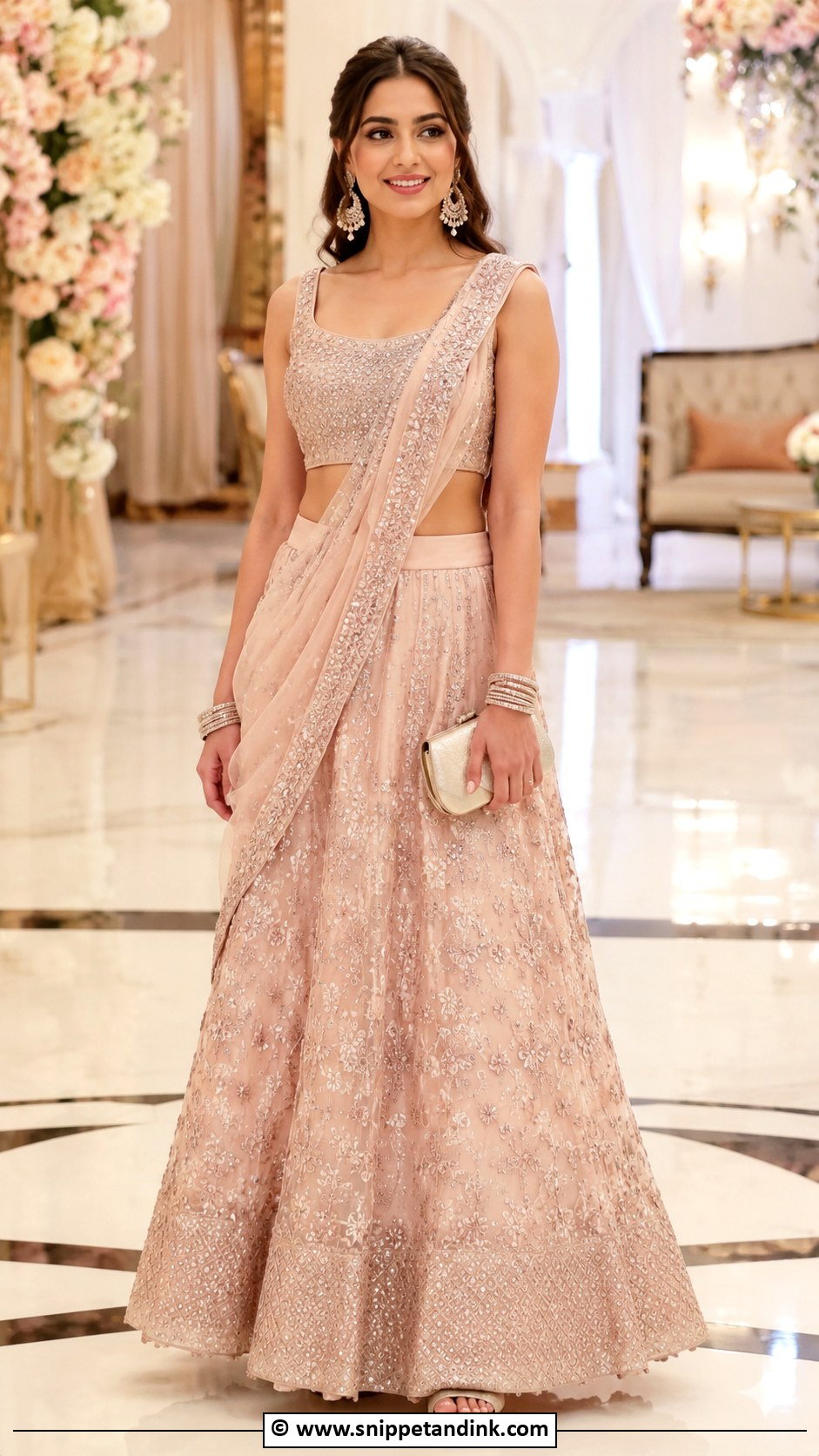
Coordinating bridesmaids works best when you set the colour family and let each woman pick her own silhouette. Forcing one cut on everyone means someone ends up in a style that doesn’t suit her. Lightweight skirts and secure dupattas matter more than matching embroidery, because the group will be dancing together. I’d steer the group away from stiff, heavy borders that make choreography harder. Matching earrings or similar hair add polish in photos without anyone feeling uniformed.
22. Bride Sangeet Lehenga Outfit
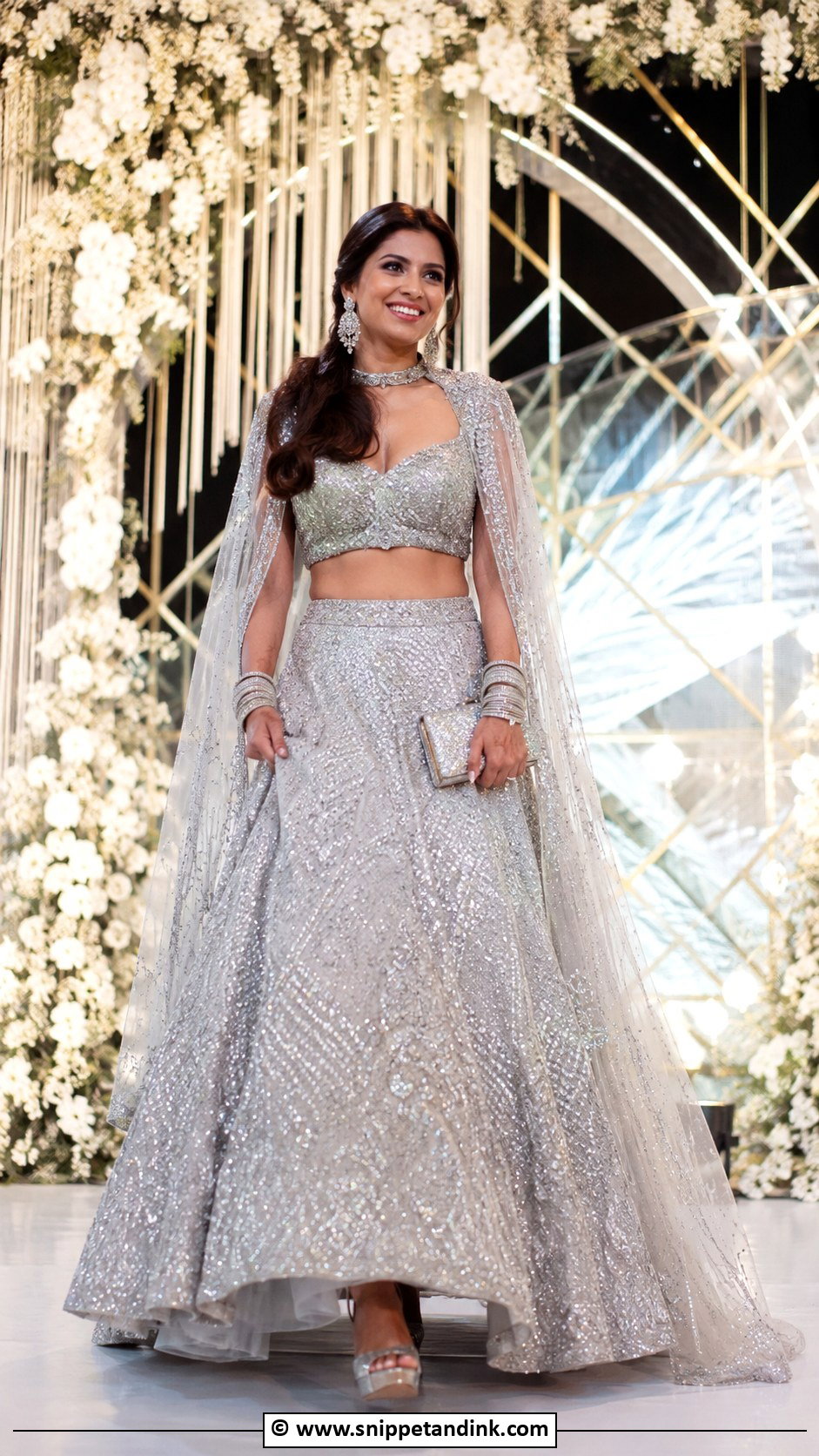
The Sangeet is where many brides wear the outfit they couldn’t justify for the wedding itself: emerald, silver, hot pink, feathers or a dramatic cape. Because you’ll likely perform, the blouse has to be secure and the skirt lighter than your wedding lehenga. I always suggest a full dance rehearsal in the outfit. Jewellery can be bold, but keep heavy necklaces off if your choreography involves fast arm work, since they swing and hit. This is the night to have fun in your clothes.
23. Sister Of The Bride Sangeet Outfit
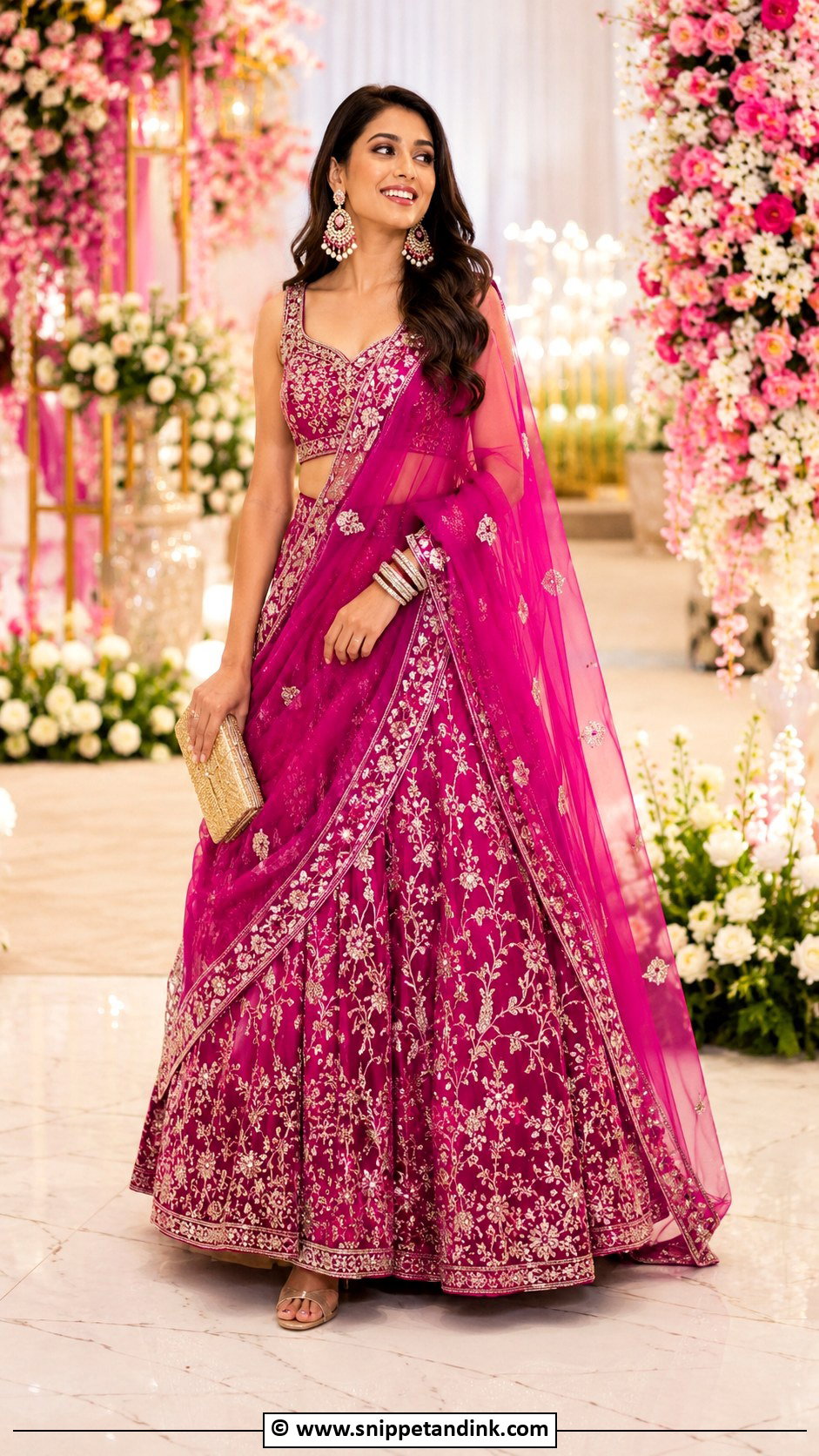
The sister of the bride has two jobs on Sangeet night: hosting and performing. She needs something visible in family photos but practical enough for running around. A statement lehenga, sharara set or cape outfit all work. Magenta, teal and royal blue stand out well in group photos. I’d keep the overall embellishment a step below the bride’s, and the footwear sensible, because she’ll rarely sit down. Polished and festive, never bridal.
24. Mother Of The Bride Sangeet Outfit
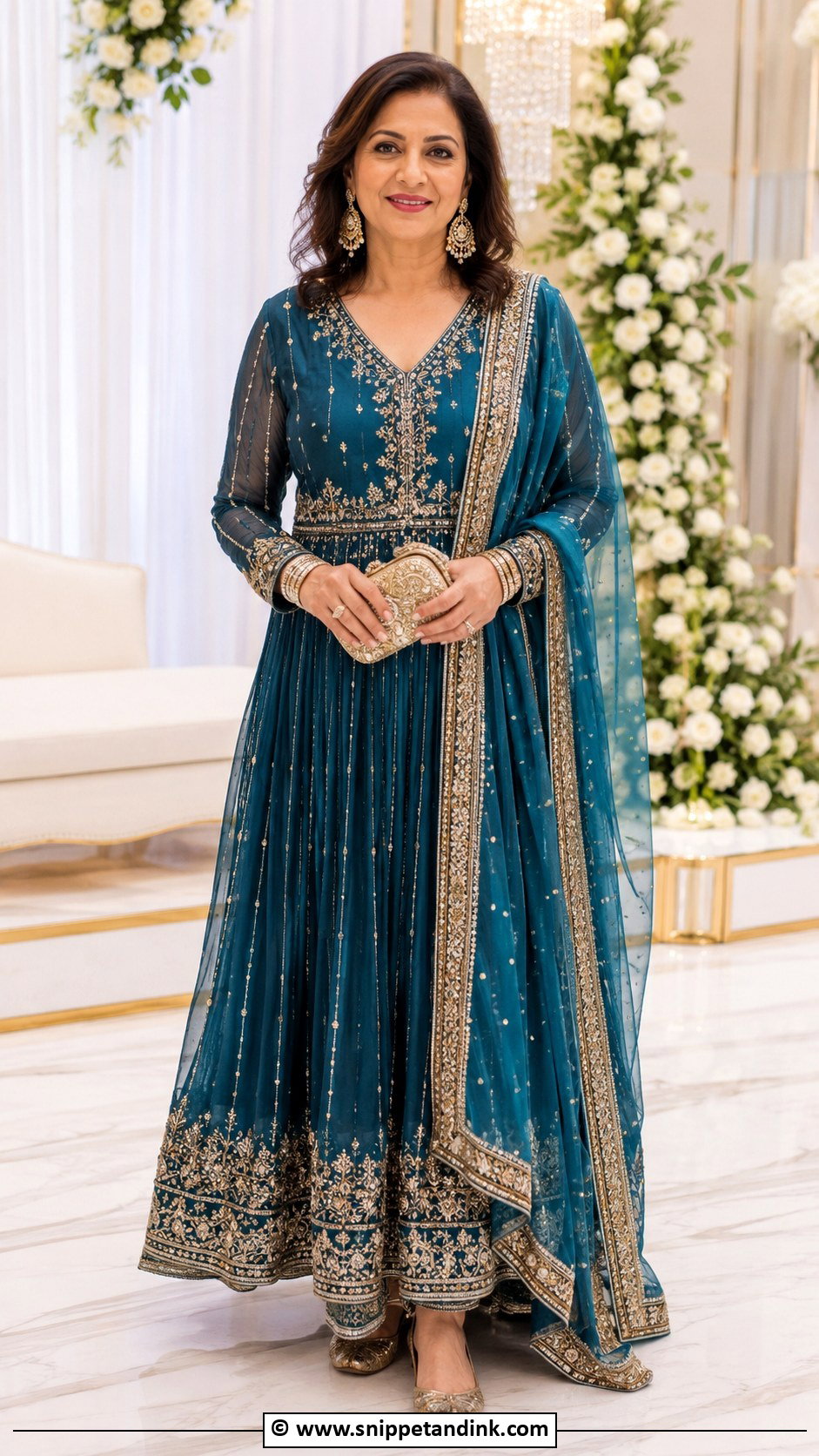
A mother of the bride Sangeet outfit should let her greet guests for hours without discomfort. An embellished Anarkali, an elegant silk or georgette saree, or a long jacket lehenga all suit the role. Sleeves and necklines she won’t have to adjust matter more than trend. Traditional jewellery, kundan earrings and bangles, fits the role well. I always ask mothers to bring their shoes to the fitting, because they’ll be standing more than anyone. The result should feel dignified and easy.
25. Plus Size Sangeet Outfit
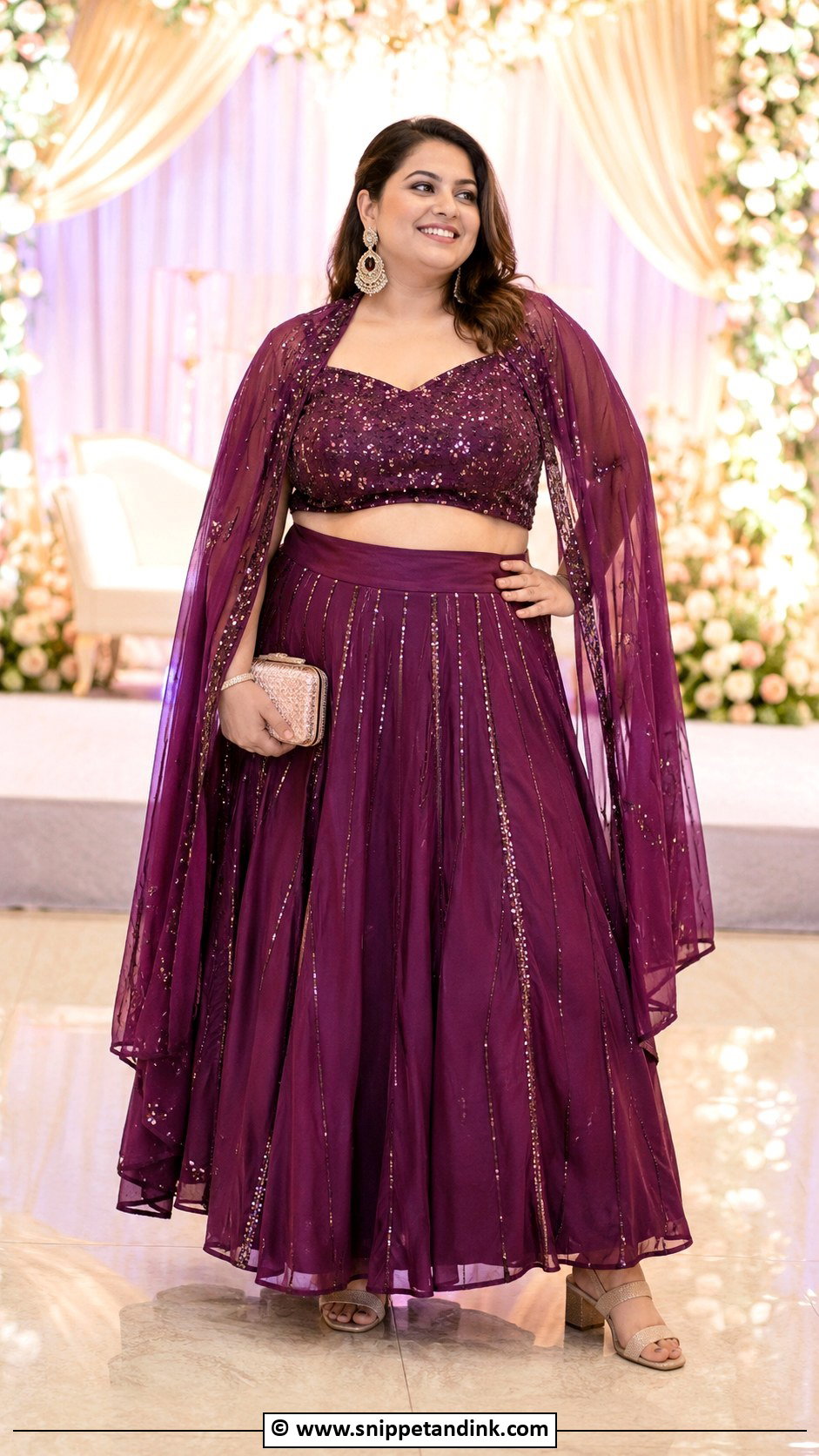
For plus-size women, fit and fabric matter more than any trick of camouflage. Anarkalis, high-waist lehengas, shararas and pre-draped sarees all work when they’re cut well. I look for supportive blouses with proper lining and fabrics that drape rather than cling, like georgette and crepe. Vertical embroidery and V-necklines create length. A dupatta worn as a cape adds coverage and frees your hands. The goal is confident movement, not hiding.
26. Petite Sangeet Outfit
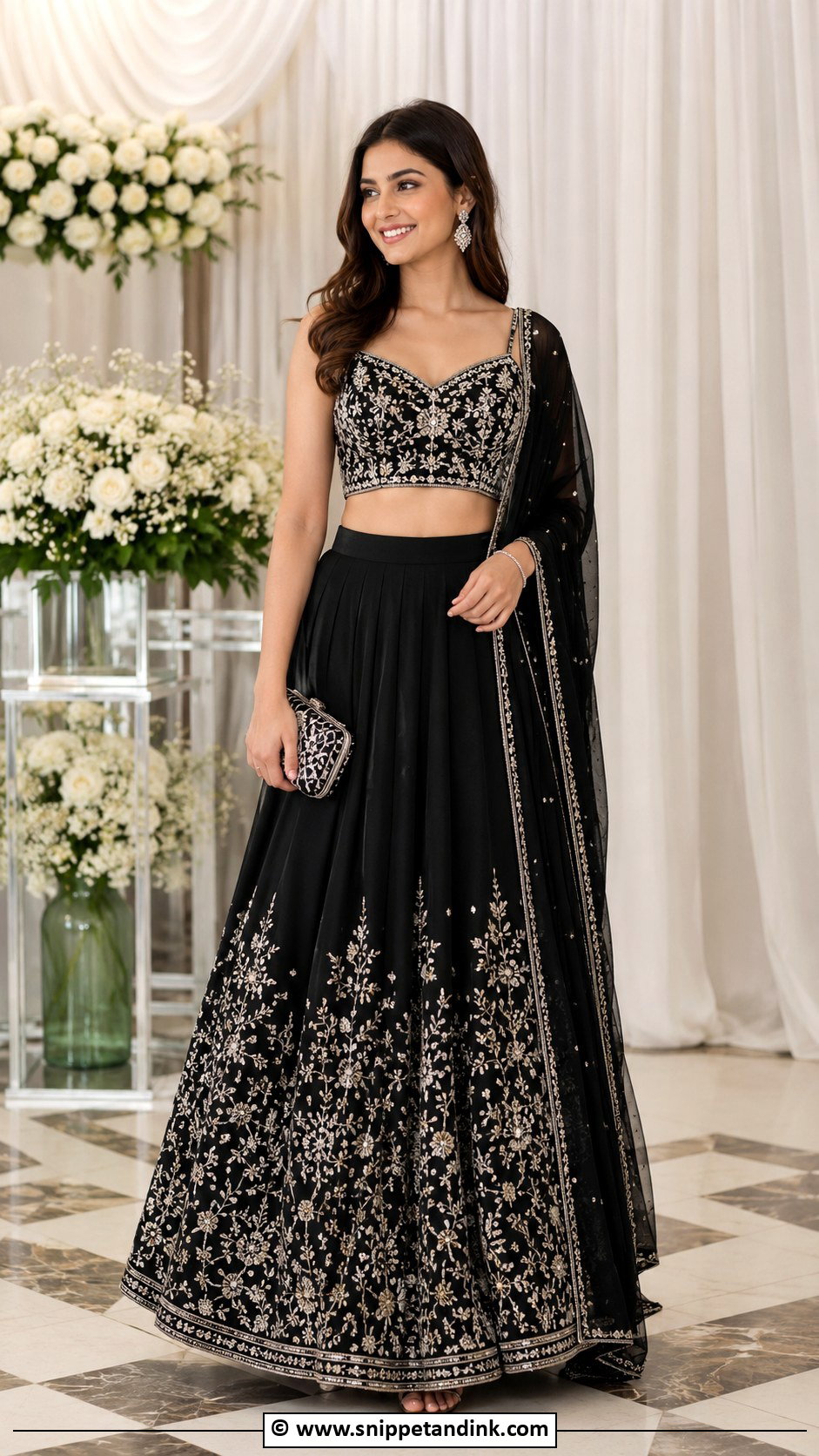
Petite frames get lost in heavy borders and oversized dupattas, which is the most common styling mistake I correct. High-waist lehengas, cropped jackets and pre-draped sarees help create length. Monochrome outfits and vertical embroidery make the body read taller. Shorter blouses expose a little more of the skirt, which adds visual height. Keep jewellery scaled down: medium earrings rather than shoulder-grazing chandeliers.
27. Simple Sangeet Outfit
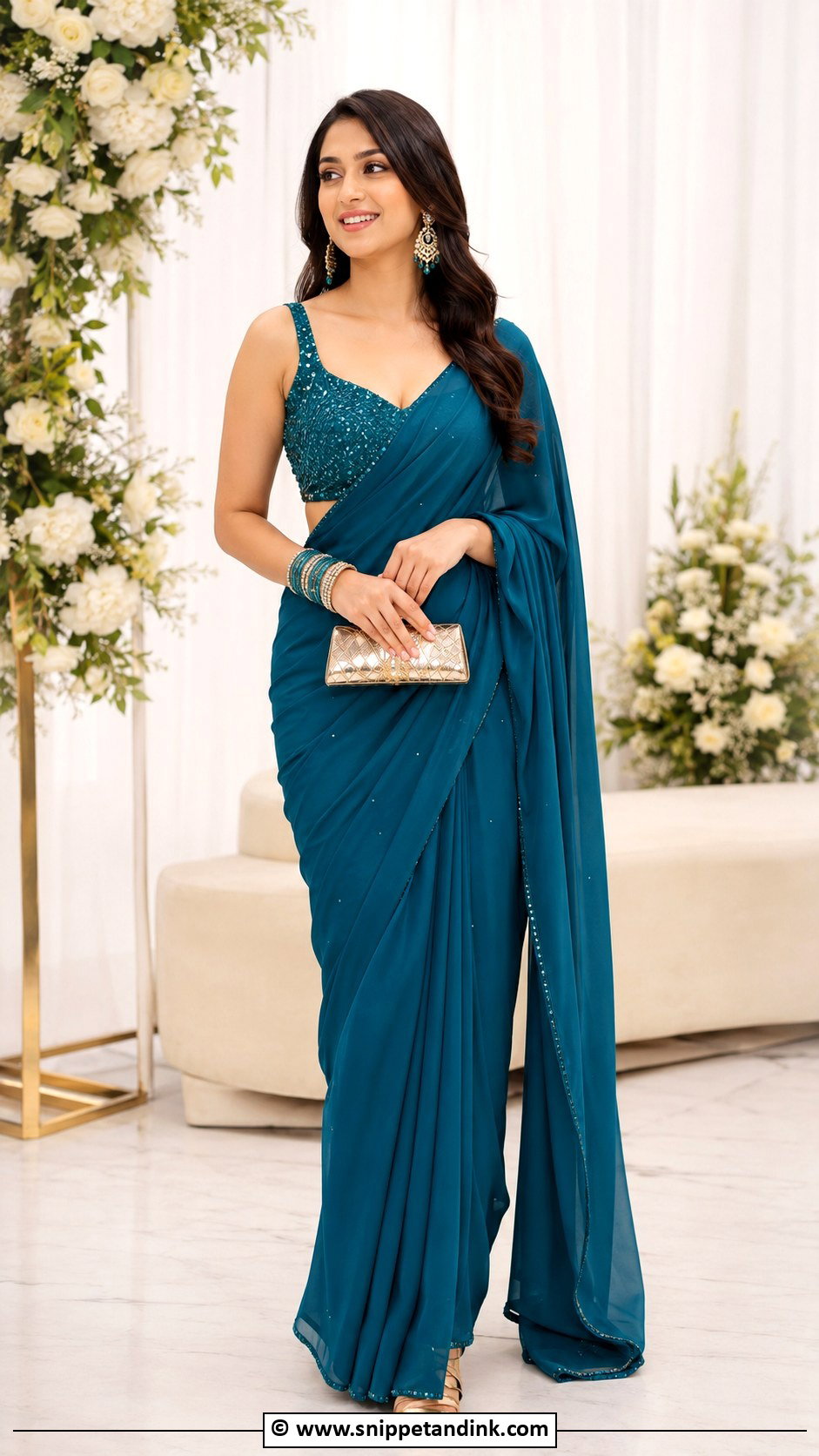
Simple outfits still work at a Sangeet when the fit, colour and styling are deliberate. A plain georgette saree with an embellished blouse, or a solid lehenga with a statement dupatta, can look more polished than an over-worked set. Rich colours like teal, berry and coral carry a lot of the festivity. Add good jewellery and neat hair to lift the look. I recommend this route for small home Sangeets and for women who simply prefer understatement.
28. Pastel Sangeet Outfit
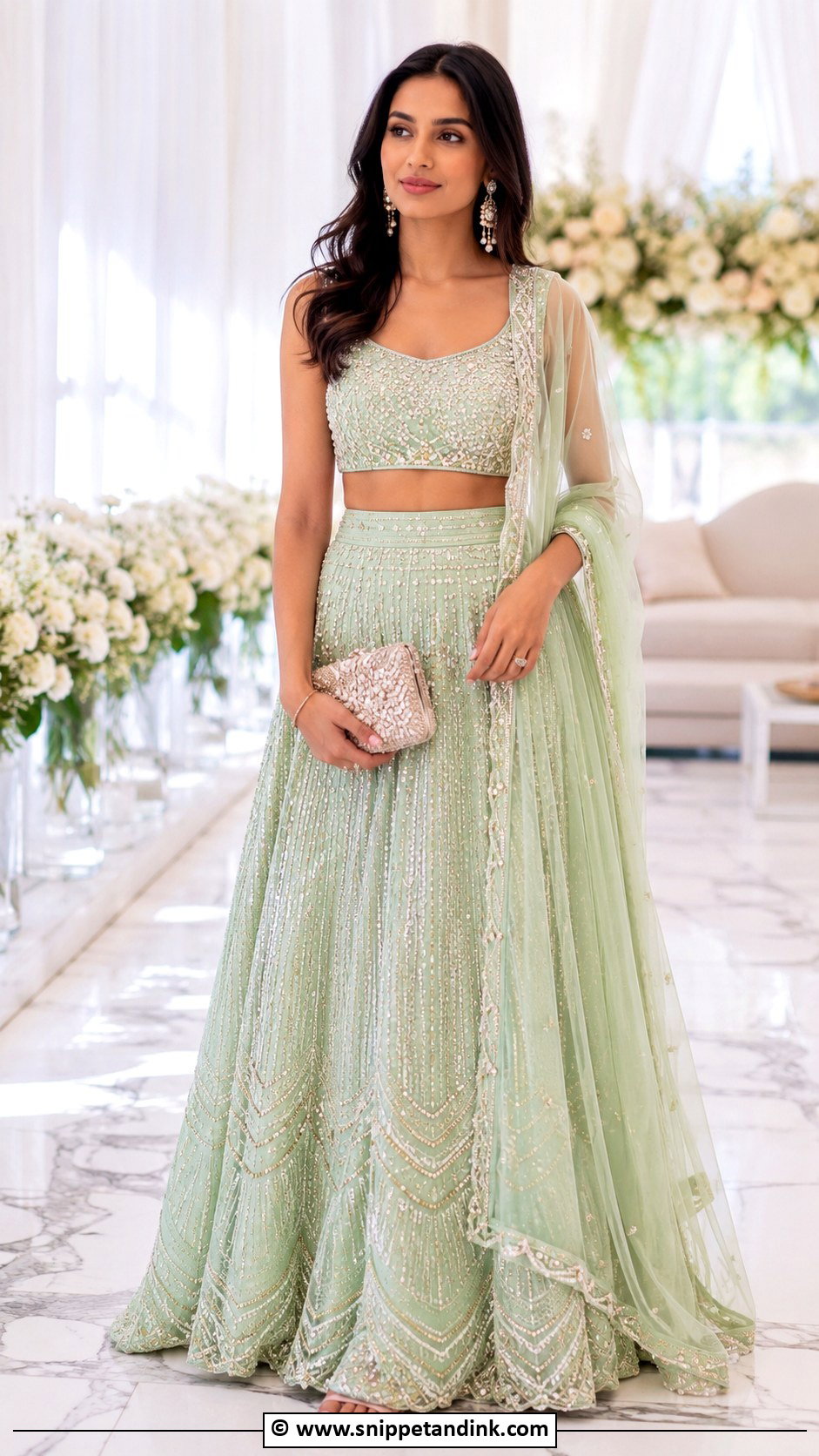
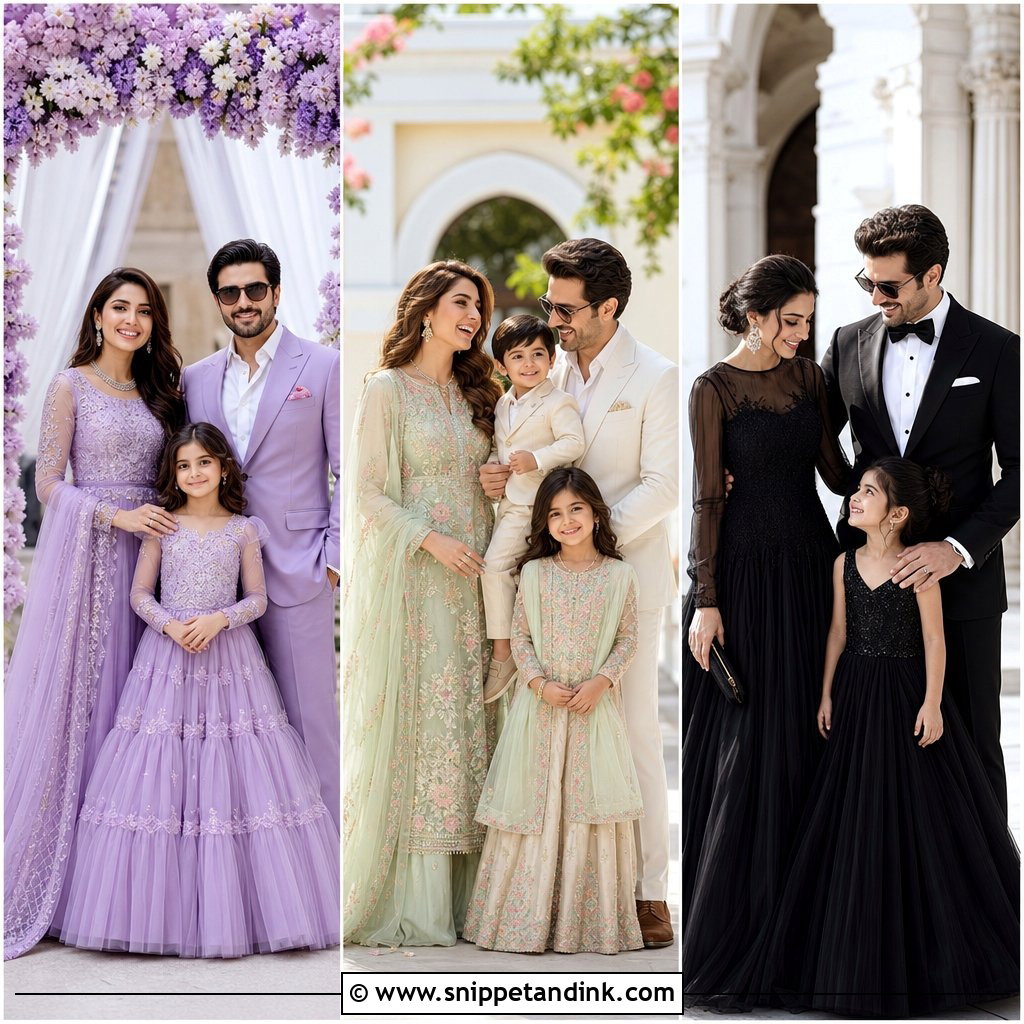
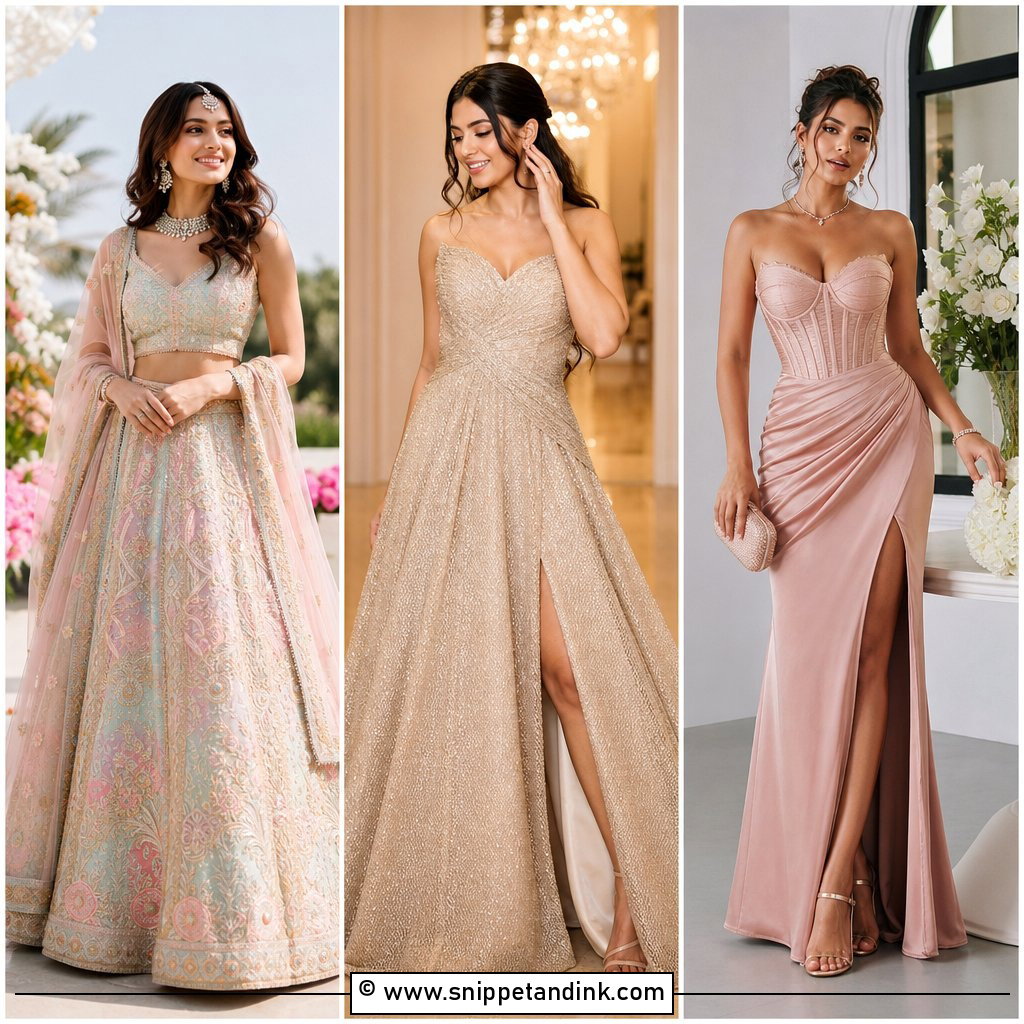
Pastels suit spring, summer and destination weddings, and they’re gentle in daylight. Under evening stage lights, though, plain pastels can wash out, so I always add sequins, pearls or metallic thread. Blush, mint and lavender are easy colours to wear. Keep accessories light with pearl earrings or crystal pieces. Nude or metallic heels continue the soft palette. A pastel lehenga, organza saree or sharara set all translate well.
29. Black Sangeet Outfit
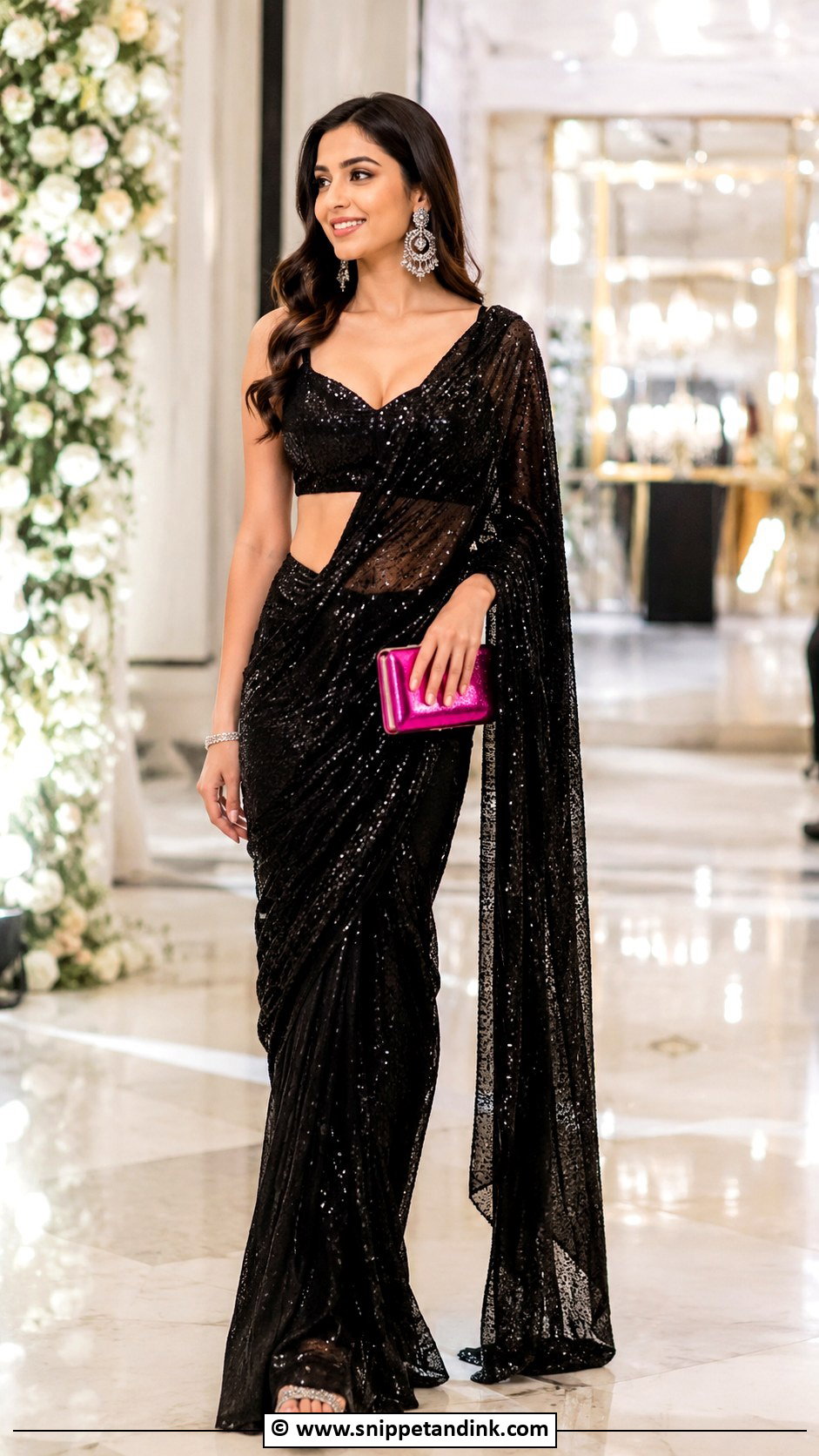
Black can look modern and glamorous at an evening Sangeet, but I’d always check family preferences first; some households still consider it inappropriate for celebrations. Where it’s welcome, gold, silver or mirror accents make it festive. A black sequin saree, embroidered lehenga or velvet Anarkali each suit a night function. Add a bright clutch or embellished heels for contrast. Black also hides sweat marks and seat creases well, which is a practical bonus on a long night.
30. White Sangeet Outfit
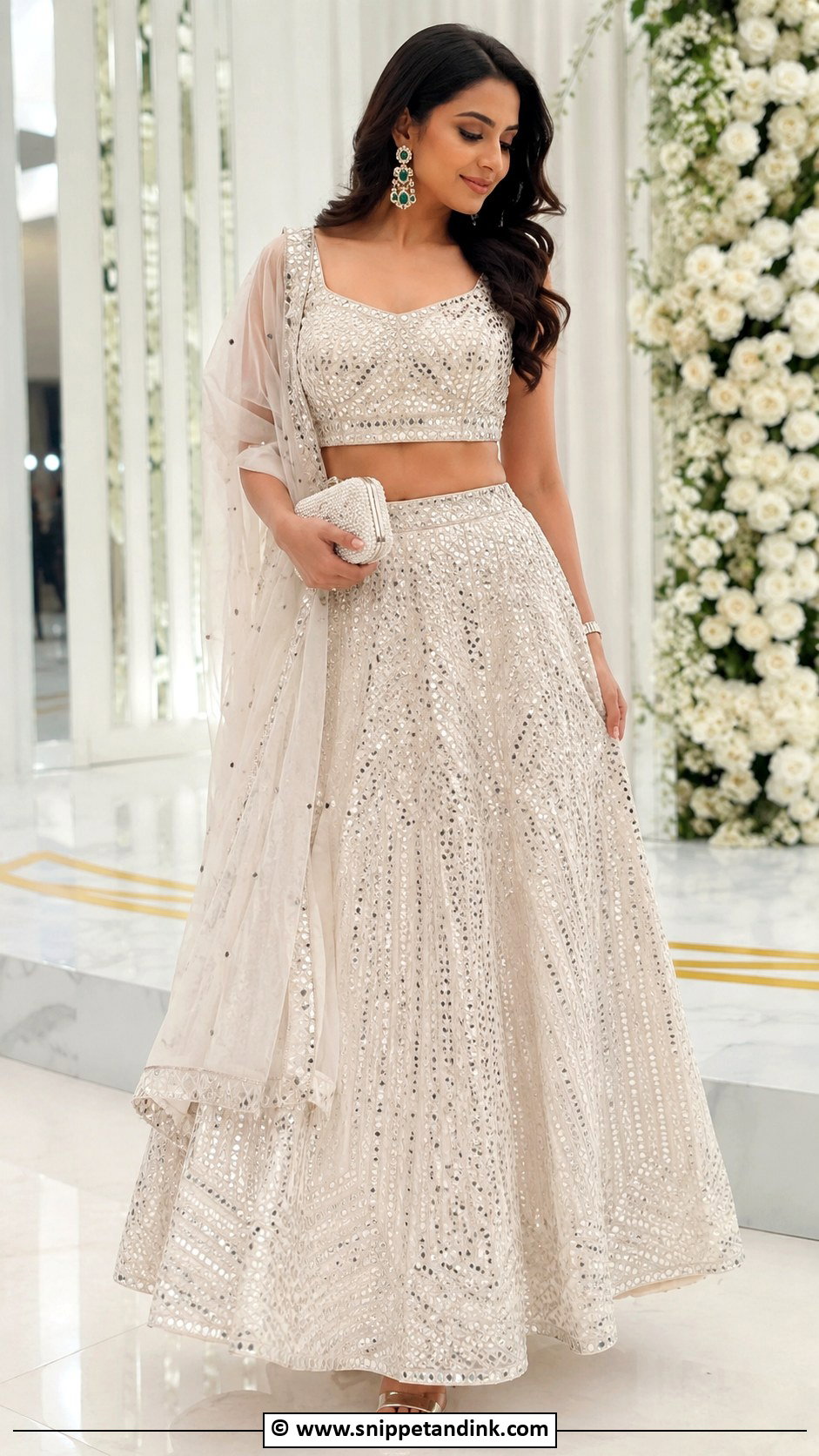
White is softer and more wearable in ivory, pearl or cream than in stark optical white, which can glare under event lighting. Mirror work, chikankari, pearls or silver embroidery give it festive texture. A white lehenga, pre-draped saree or cape gown each translate well. Contrast jewellery in emerald or ruby adds life. I’d check with the bride before choosing white, since some brides wear ivory themselves and some families avoid white at celebrations.
Matching the Fabric to a Lawn, a Ballroom or a Rooftop
Venue changes my fabric advice more than anything else. A winter ballroom with air conditioning can handle velvet and heavy brocade. An outdoor lawn in warm weather can’t; georgette, chiffon, chikankari cotton and printed silks breathe far better. Rooftops add wind, so I’d avoid very sheer dupattas and long capes that turn into sails.
Footing matters too. Grass swallows stiletto heels and catches long hems, so block heels, wedges and slightly shorter lehenga lengths work better outdoors. Polished ballroom floors are slippery; grip pads on new shoes help.
Packing Away Sequins and Mirror Work After the Wedding
A good Sangeet outfit should come out again at the next family wedding, and how you store it decides if it can. Air it out for a day before putting it away, because trapped perspiration discolours silk over time. Fold heavy lehengas inside out with muslin or cotton between the folds rather than hanging them, since hanging stretches the waistband under the weight of the work. Plastic garment bags trap moisture, so cotton covers are the better choice.
Spot-clean small marks quickly and send anything heavily embroidered to a dry cleaner who handles bridal wear. Refold along different lines every few months to stop permanent creases forming in the embroidery.
Comfort Decides the Night, Sparkle Comes Second
Every outfit here can carry you through a Sangeet if the fabric suits the weather, the fit allows movement and the drape is secured before you start dancing. Choose the colours and detail that match your role and your comfort, and test the whole look, shoes included, before the evening. Then you can stop thinking about your clothes and enjoy the music.
You'll Like These Ideas:


Leave a Reply