
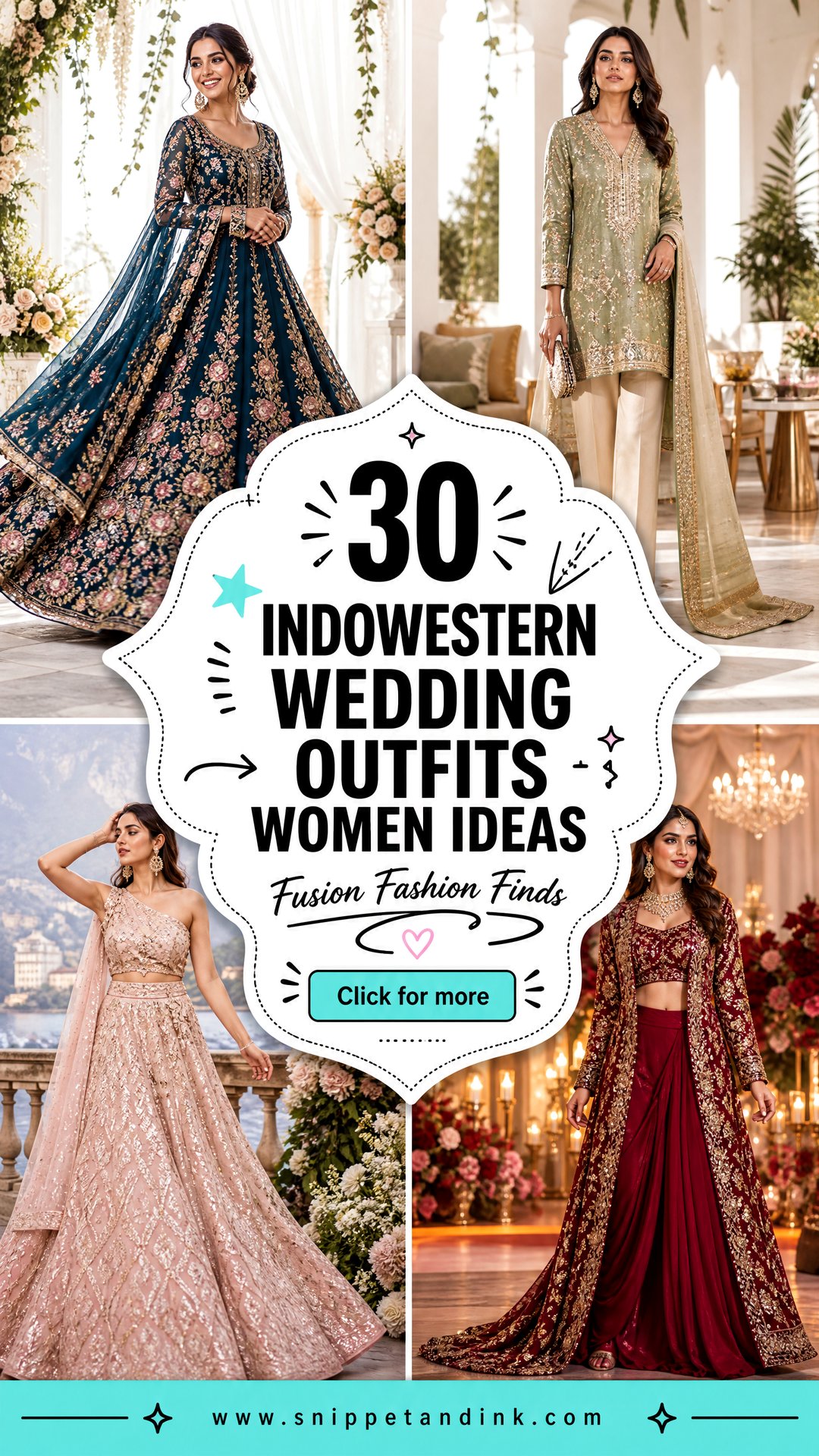
Indo-western dressing takes the fabrics and embroidery of Indian wear and puts them on cuts that are easier to live in: pre-draped sarees, cape lehengas, shararas with jackets, embroidered jumpsuits, dhoti pants, corset blouses and dressy co-ords. I use them most for mehendi, sangeet, cocktail parties, receptions and destination weddings, where people want to move and dance. The rule I work by is one traditional element plus one modern one. Add a third idea and the outfit starts to look confused. Below are the looks, with the fit and styling notes I’d give at a fitting.
Where Fusion Fits, and Where It Doesn’t
Indo-western clothes shine at the parties around a wedding. At the religious ceremony itself, I’m more careful. Many wedding rituals involve sitting on the floor, removing shoes and covering the head, and a jumpsuit or blazer lehenga can feel out of place or simply impractical.
- Gurdwara ceremonies: everyone covers their head and sits on the floor, so bring a dupatta or scarf and choose something you can sit cross-legged in.
- Temple or mandap rituals: covered shoulders are usually expected, and a cape or jacket over a bare-shoulder blouse solves that.
- Nikkah: many families prefer longer hemlines and covered arms. Ask the hosts.
- Cocktail, sangeet and reception: this is where corsets, jumpsuits and blazers belong.
When I’m unsure, I pick a piece with a removable layer. A cape, jacket or dupatta goes on for the ceremony and comes off for the party, so one outfit covers both.
Shoes matter too. If a ceremony asks guests to remove footwear at the door, strappy heels with ankle buckles become a nuisance in the queue. Slip-on juttis or block mules are quicker and look right with most fusion outfits.
1. Cape Lehenga Outfit
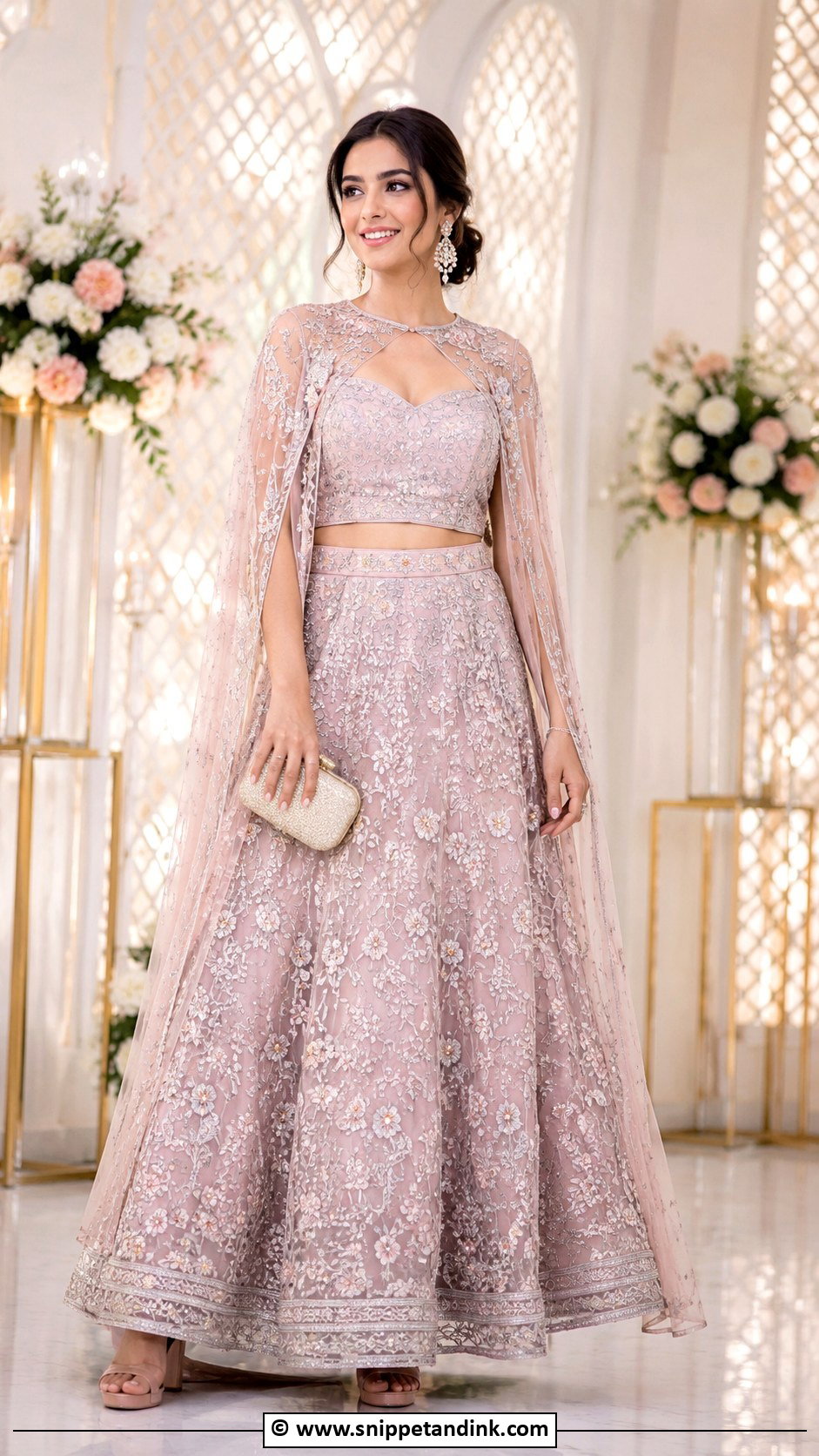
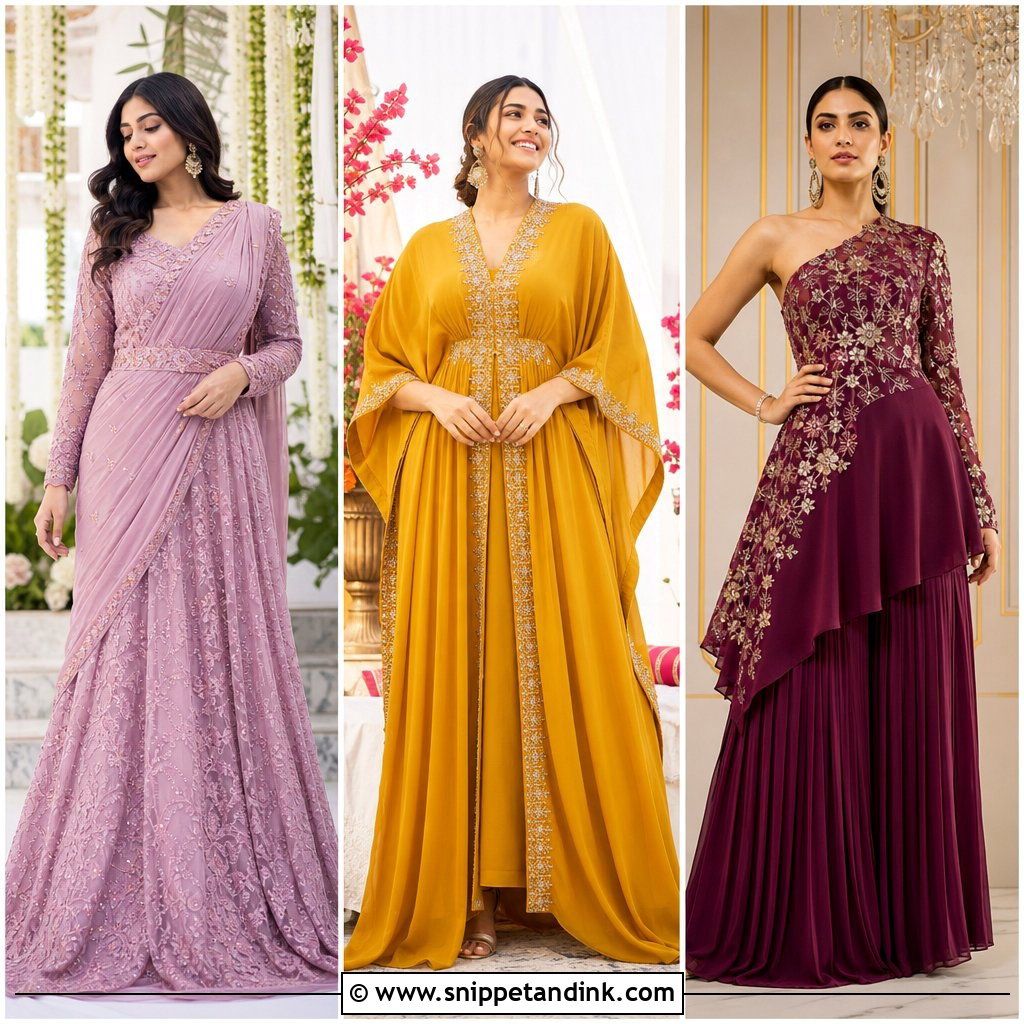
A cape replaces the dupatta, which means nothing slides off your shoulder all evening. Choose a flowy skirt, a fitted blouse and a sheer embroidered cape that falls from the shoulder seams. If the cape has volume, keep the blouse structured, or the top half loses its shape. Pastels, jewel tones and metallic threadwork all suit sangeet and receptions. The cape also covers the upper arms, which many women appreciate. Block heels, chandelier earrings and a small clutch finish it.
2. Saree Gown Outfit
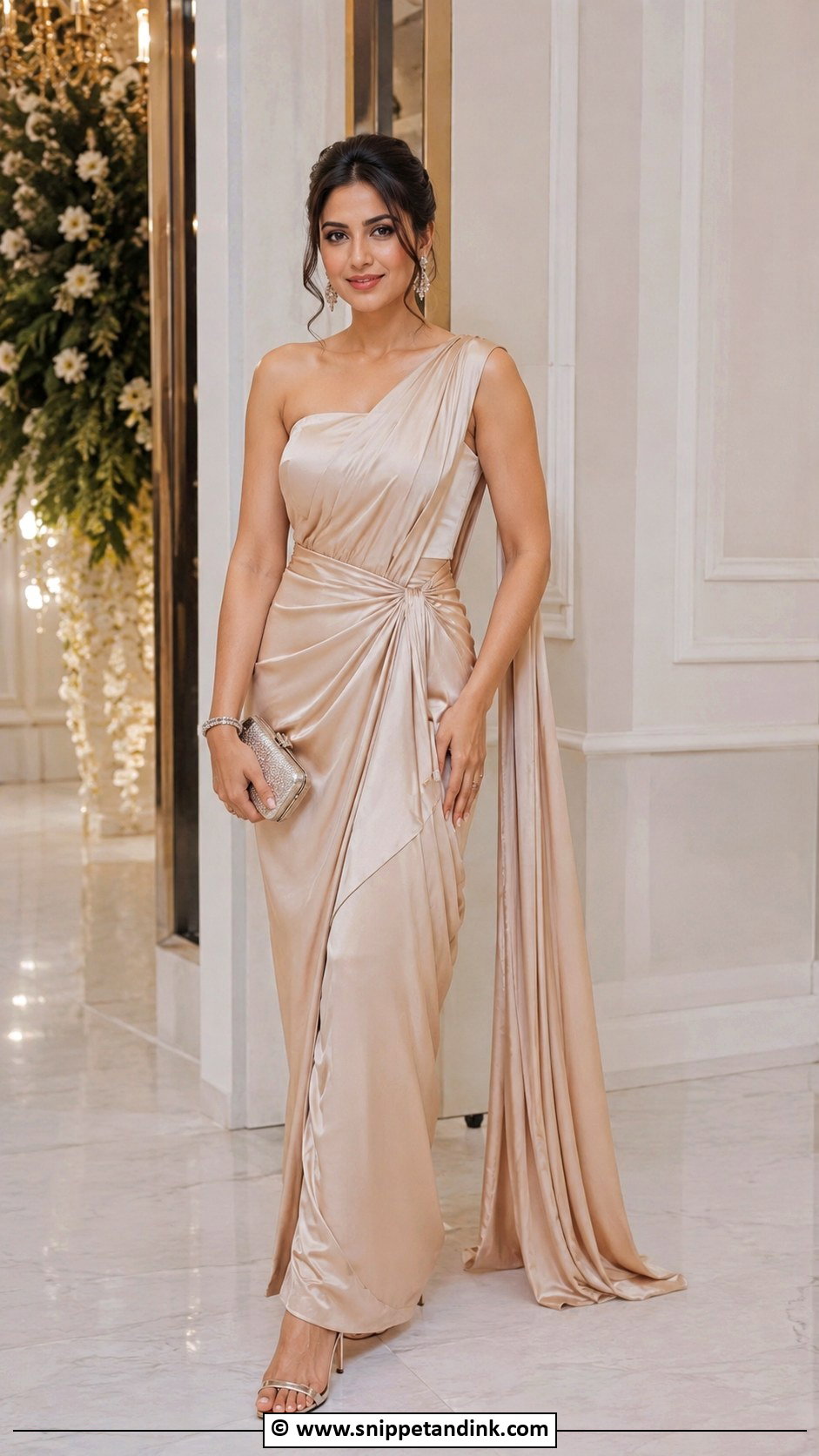
Think of a saree gown as a dress with saree folds sewn in: stitched pleats, a fixed drape and a defined waist. You zip it up and it stays exactly as it was in the mirror. Satin, georgette, crepe and light silk give the smoothest fall. A one-shoulder neckline reads modern; a belt adds shape. I’d suggest it for receptions and formal dinners, especially for anyone who’s never draped a saree. Sleek heels, statement earrings and a clean bun or soft waves complete it.
3. Dhoti Pants With Crop Top Outfit
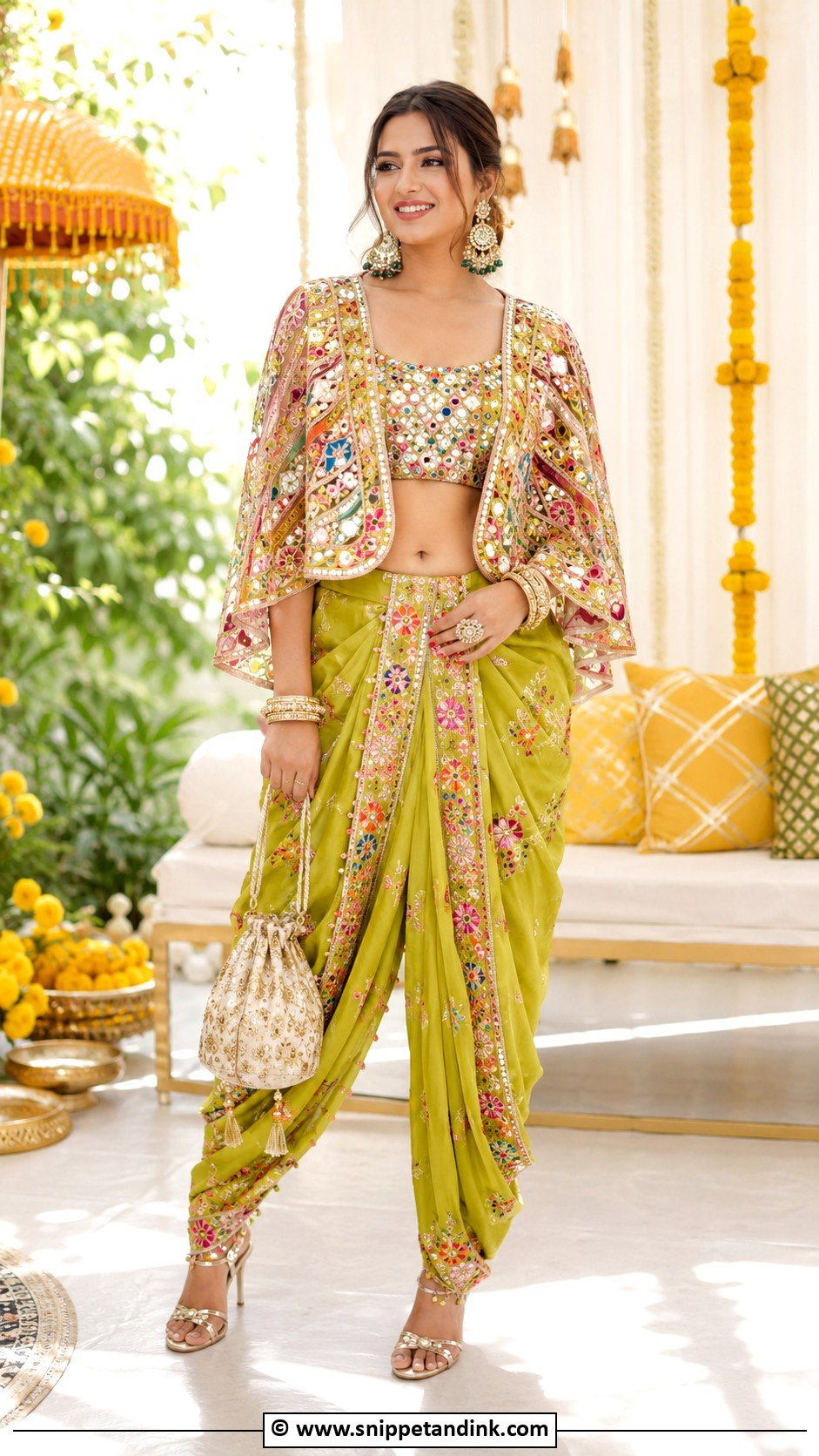
For mehendi and sangeet functions, dhoti pants with a crop top let you sit cross-legged, dance and climb onto a stage without lifting a hem. The draped trousers carry the Indian element; an embroidered, mirror-work or brocade top makes it festive. Add a short jacket, cape or attached drape for more coverage. Lime, fuchsia, teal and orange suit daytime events. Embellished heels, jhumkas, stacked bangles and a potli finish it. Check the drop crotch length when you squat; too low and it restricts you.
4. Sharara With Jacket Outfit
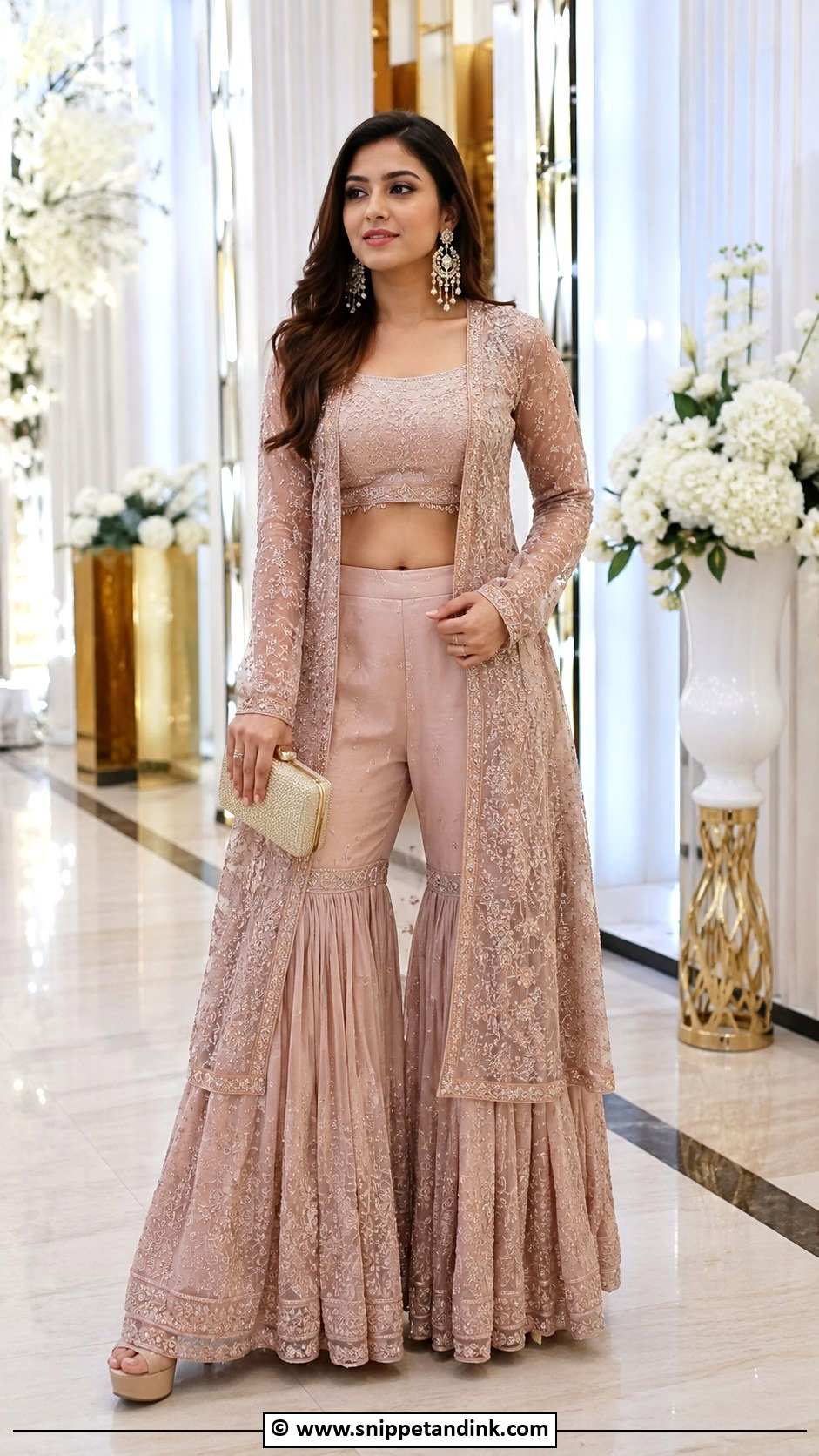
This is how to get lehenga-level volume while wearing trousers. The flared sharara gives drama; the jacket adds a tailored line. Try a short embroidered jacket over a crop top, or a long open-front jacket with light embellishment. Balance the two: a heavy sharara wants a cleaner jacket, and plain pants can take a detailed one. Wear platform heels or wedges, since a wide sharara hem looks dumpy with flats. A sleek clutch and statement earrings are enough.
5. Peplum Top With Lehenga Outfit
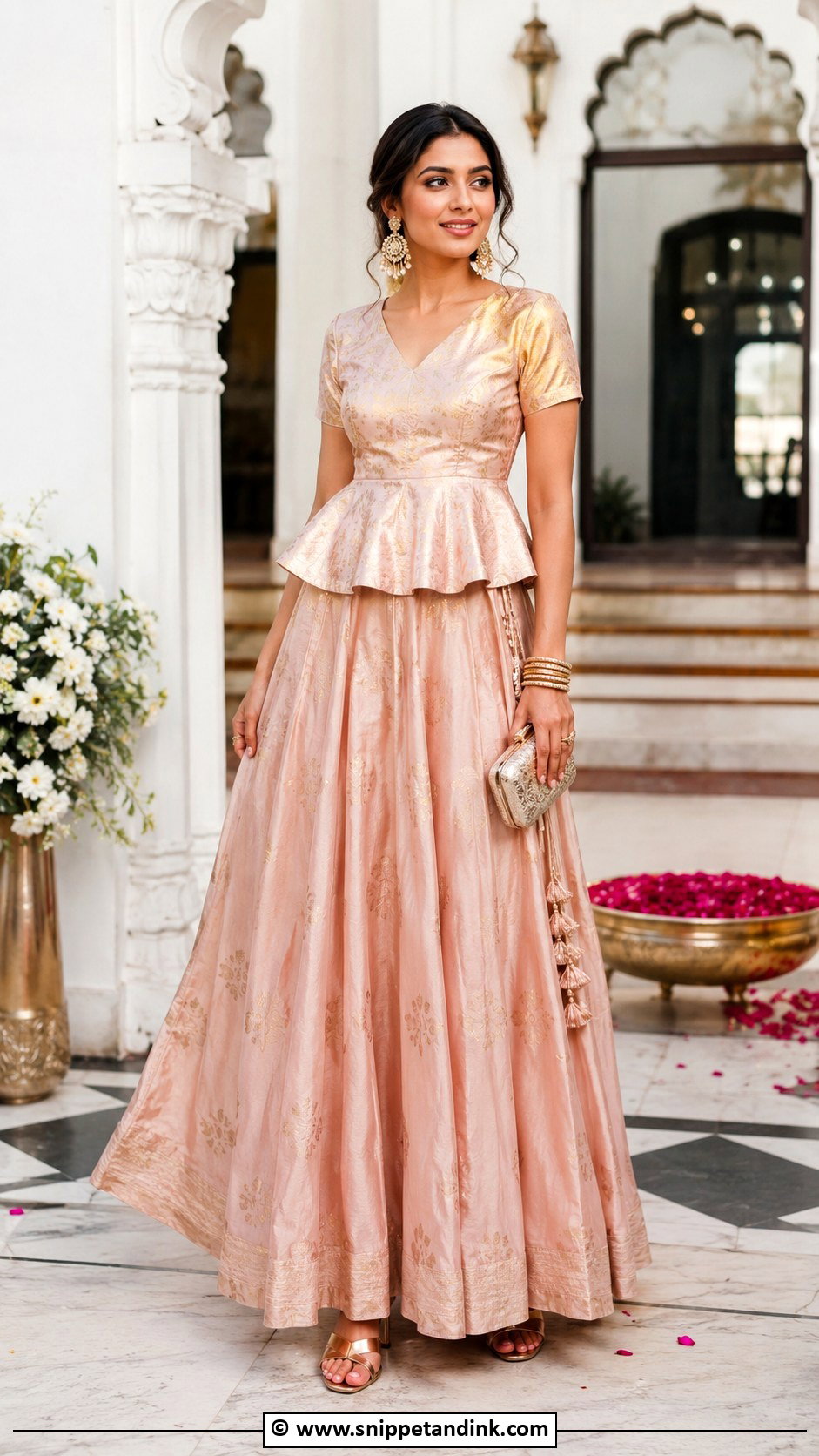
The peplum is my go-to for anyone who doesn’t want to show the midriff in a lehenga. It defines the waist and flares gently over the stomach, so it’s comfortable through a long meal. Pair it with a light skirt for mehendi or a heavier embellished one for the reception. Silk, organza, georgette and brocade all hold a peplum’s shape; limp fabrics make it droop. Drop earrings, bangles and nude or metallic heels suit most colors.
6. Indo Western Jumpsuit Outfit
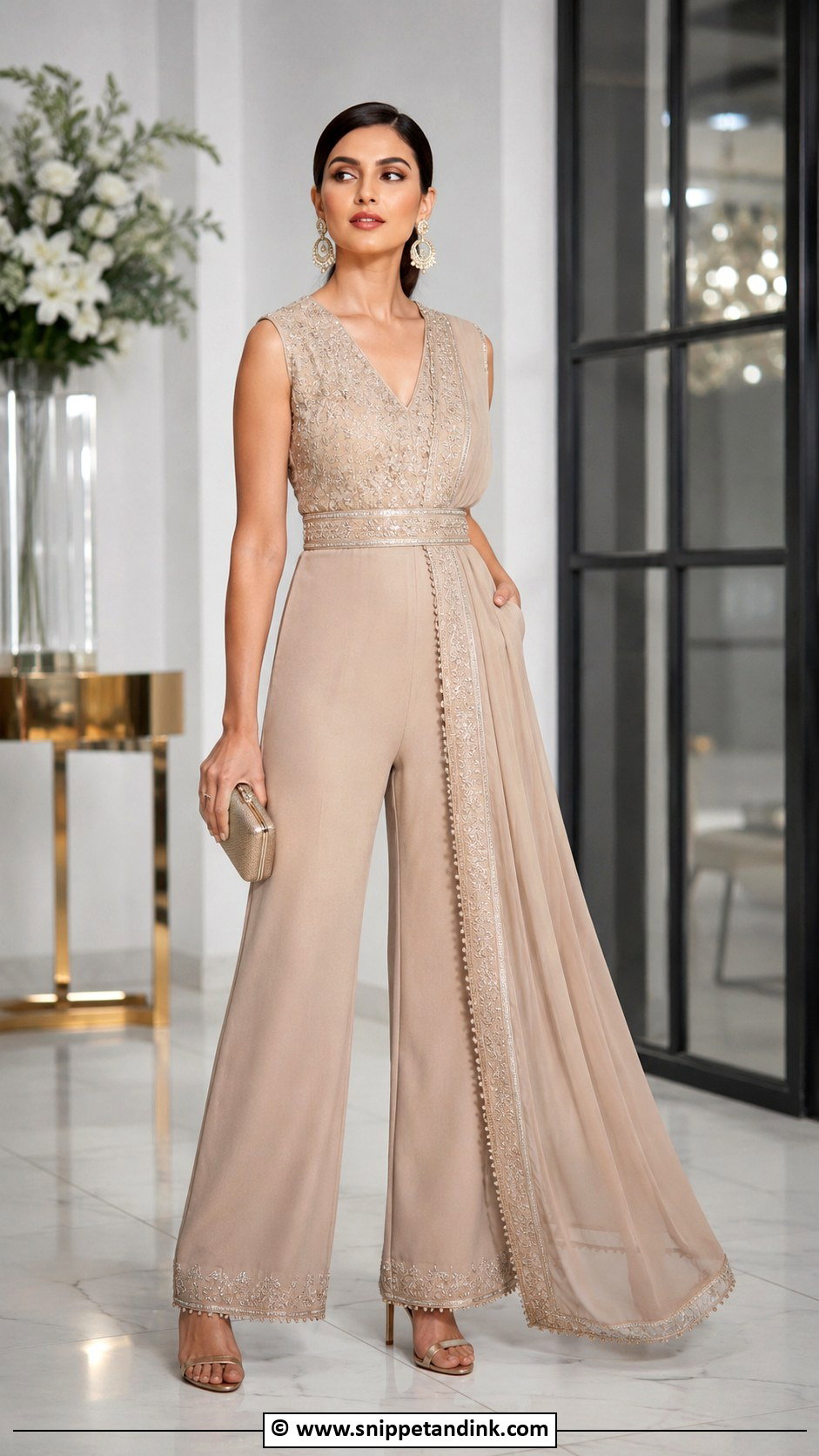
An Indo Western jumpsuit outfit is the sharpest look on this list and the least traditional, so I’d keep it for cocktail nights, receptions and destination events. Look for zari work, mirror embroidery, brocade panels, attached drapes or cape sleeves to bring in the Indian element. Wide legs look dressier than slim ones. Torso length is the fit point that matters: a short rise pulls every time you sit or bend. Belt it, add high heels and bold earrings, and keep everything else simple.
7. Blazer Lehenga Outfit
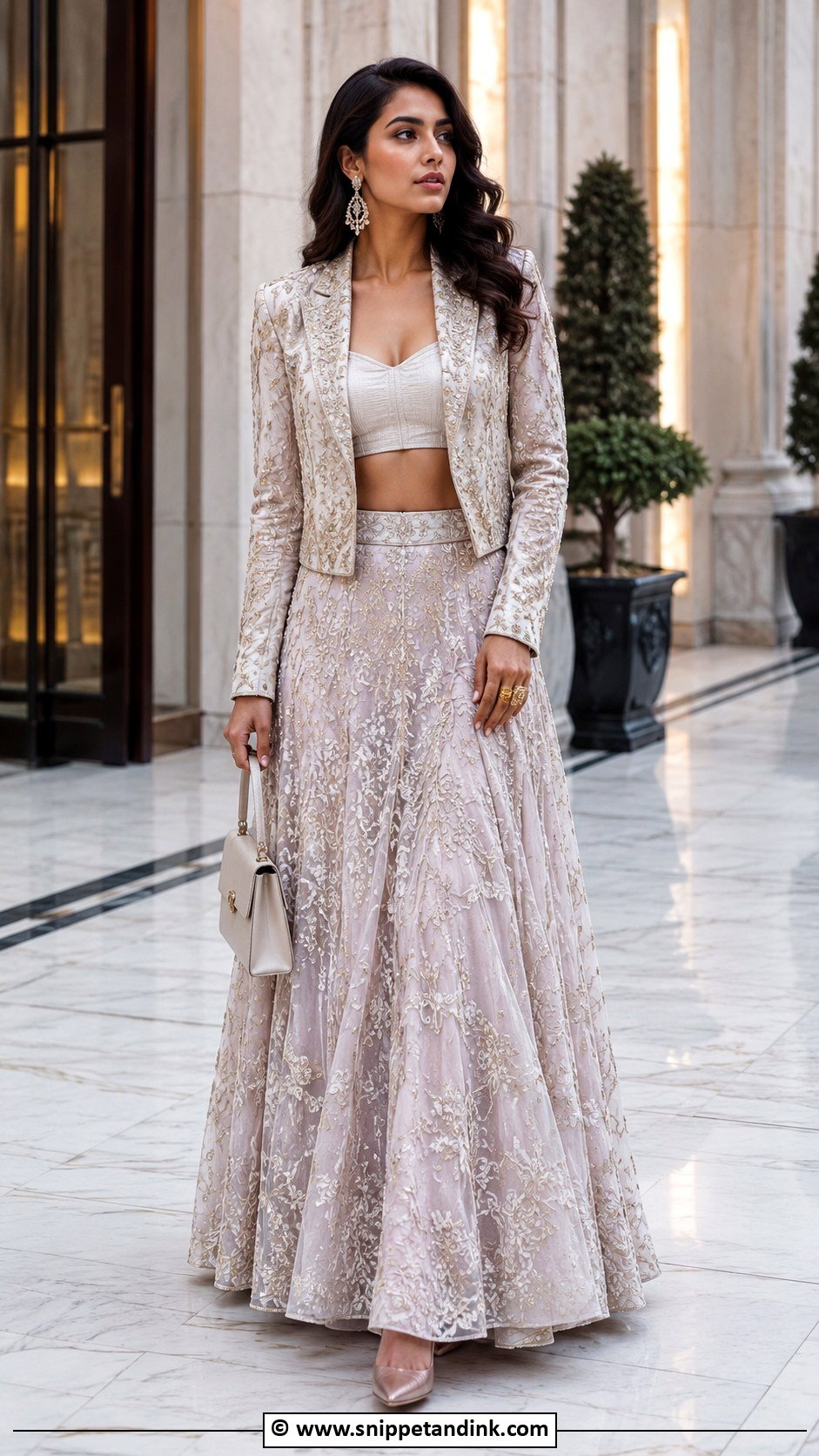
A cropped embroidered blazer over a flowing lehenga skirt reads confident and current. Sequin work or brocade texture keeps the blazer festive rather than office-like. Underneath, a fitted blouse, bralette or camisole works depending on your comfort. Coordinated colors are what make it look planned: ivory and gold, emerald and champagne, navy and silver. Keep the skirt fluid so the blazer doesn’t stiffen the whole look. Have the blazer tailored at the shoulders; a borrowed fit is obvious in photos.
8. Pre Draped Saree Outfit
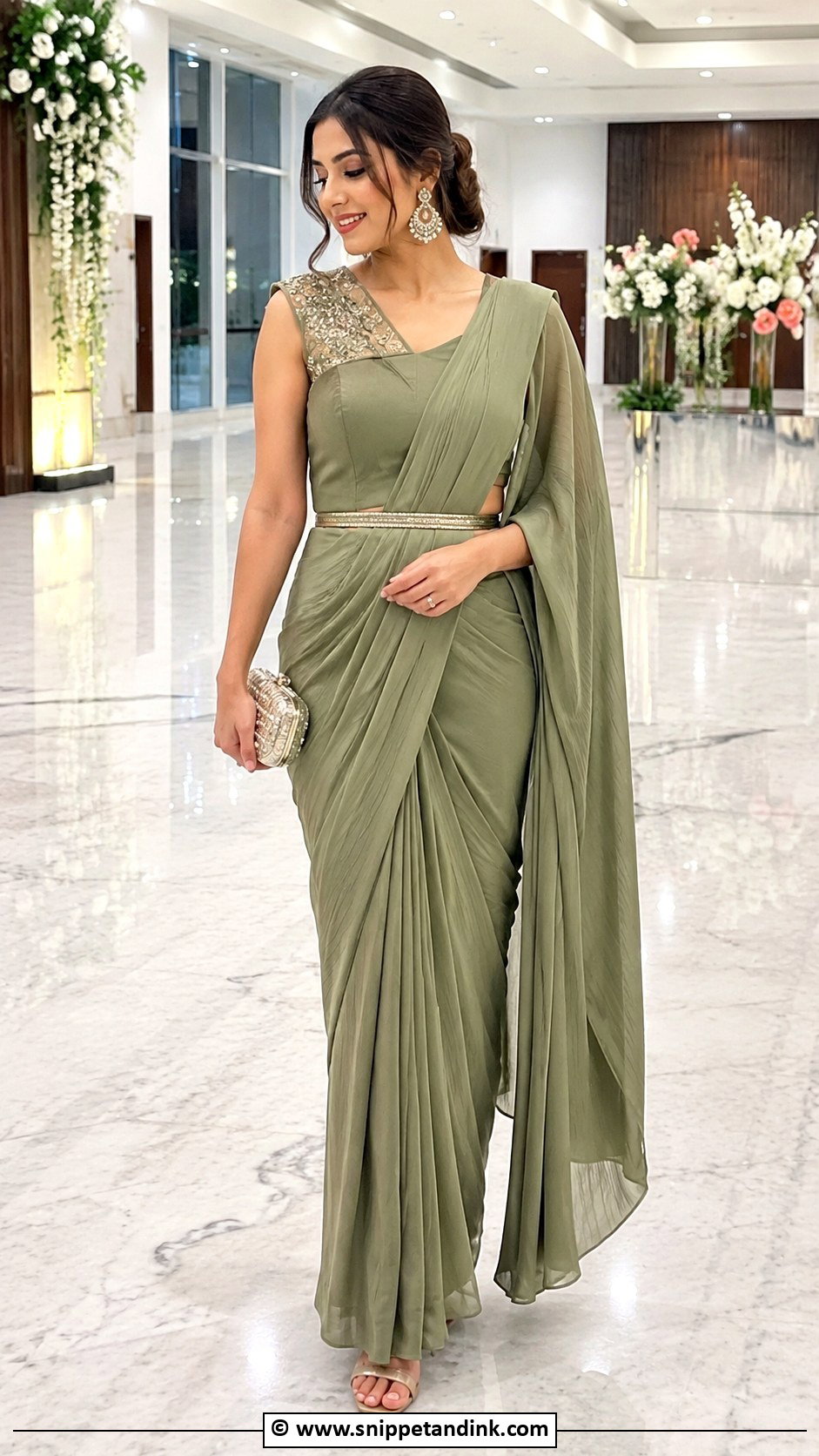
Pre-draped sarees are the most practical fusion piece I know. Stitched pleats, a fixed pallu and a structured or embellished blouse give a finished saree look in minutes. Ruffles feel playful, metallic fabric suits a cocktail event, and silk blends can work at a ceremony. A belt helps secure the drape. Guests, bridesmaids and even brides at smaller functions wear them. Heels, statement earrings and a clutch finish it.
9. Palazzo Suit With Cape Outfit
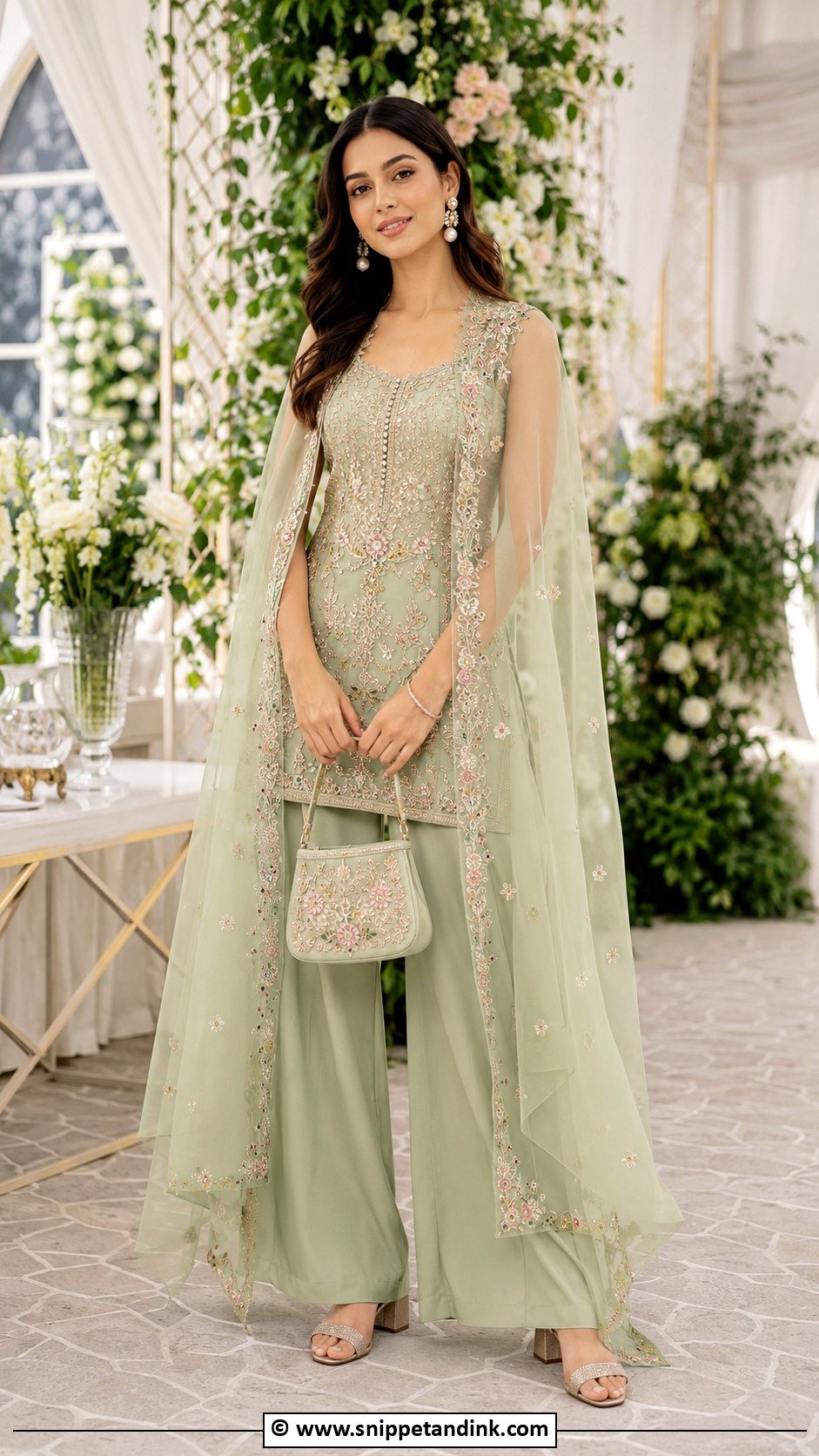
A palazzo suit topped with a cape is the softest silhouette here, cool enough for a daytime wedding and easy to wear for hours. Wide palazzos move freely, a straight kurta keeps the line clean, and the cape takes the place of a dupatta. Chiffon, georgette, organza or silk blends keep it light. A longer cape gives more coverage if you want it. Block heels, pearl earrings and a small embroidered bag complete it for mehendi or a family function.
10. Corset Lehenga Outfit
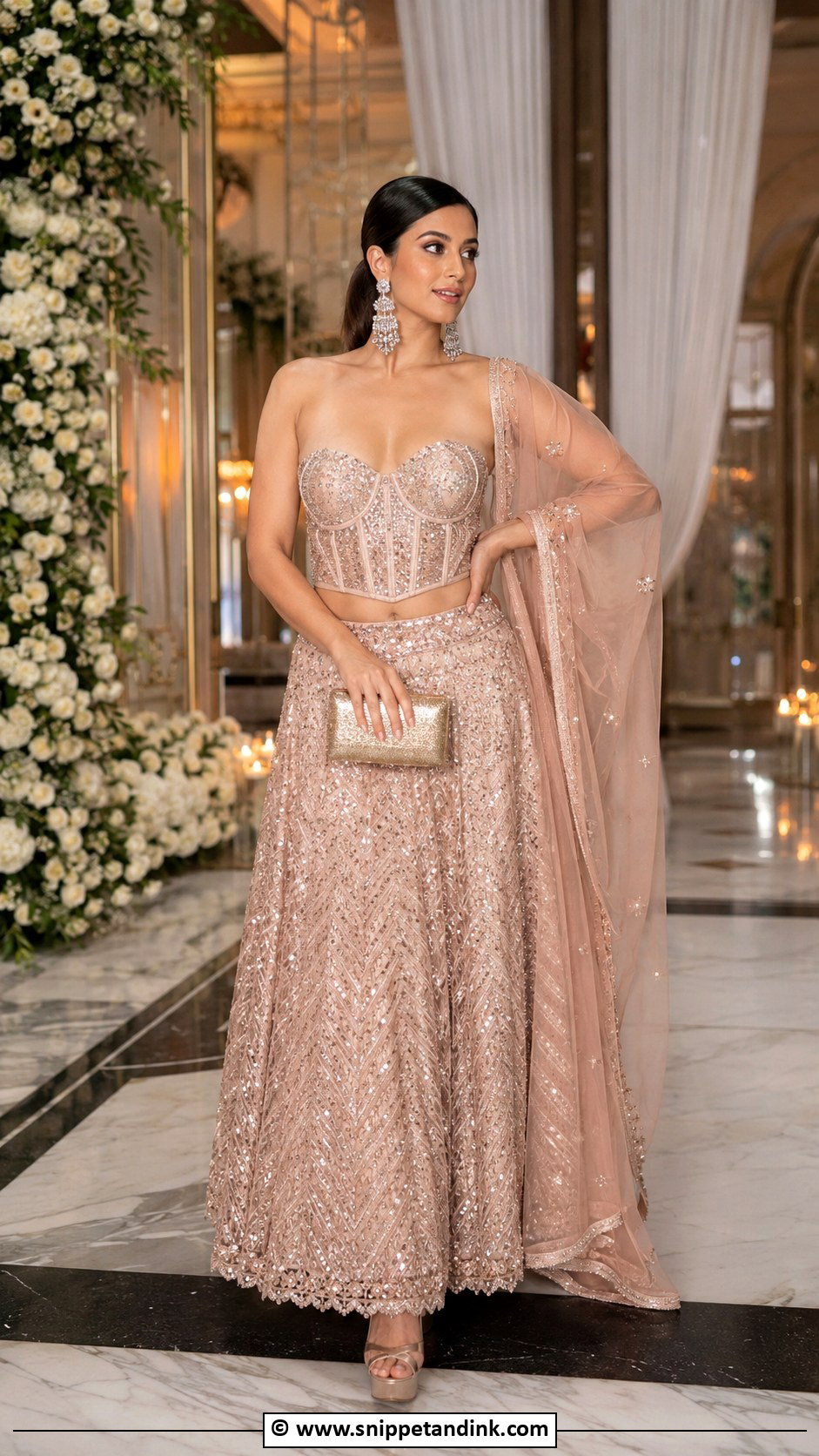
A corset blouse gives real shape and support, and with a lehenga skirt it reads glamorous at a sangeet or reception. The boning matters: a well-made corset blouse has proper boning and is fitted with the bra you’ll actually wear, or with built-in cups. Choose embroidery, sequins, mirror work or metallic thread. Then balance it: a detailed corset wants a cleaner skirt, a dramatic skirt wants a quieter top. A sheer shrug, cape or soft dupatta adds coverage if needed.
11. Anarkali Gown Outfit
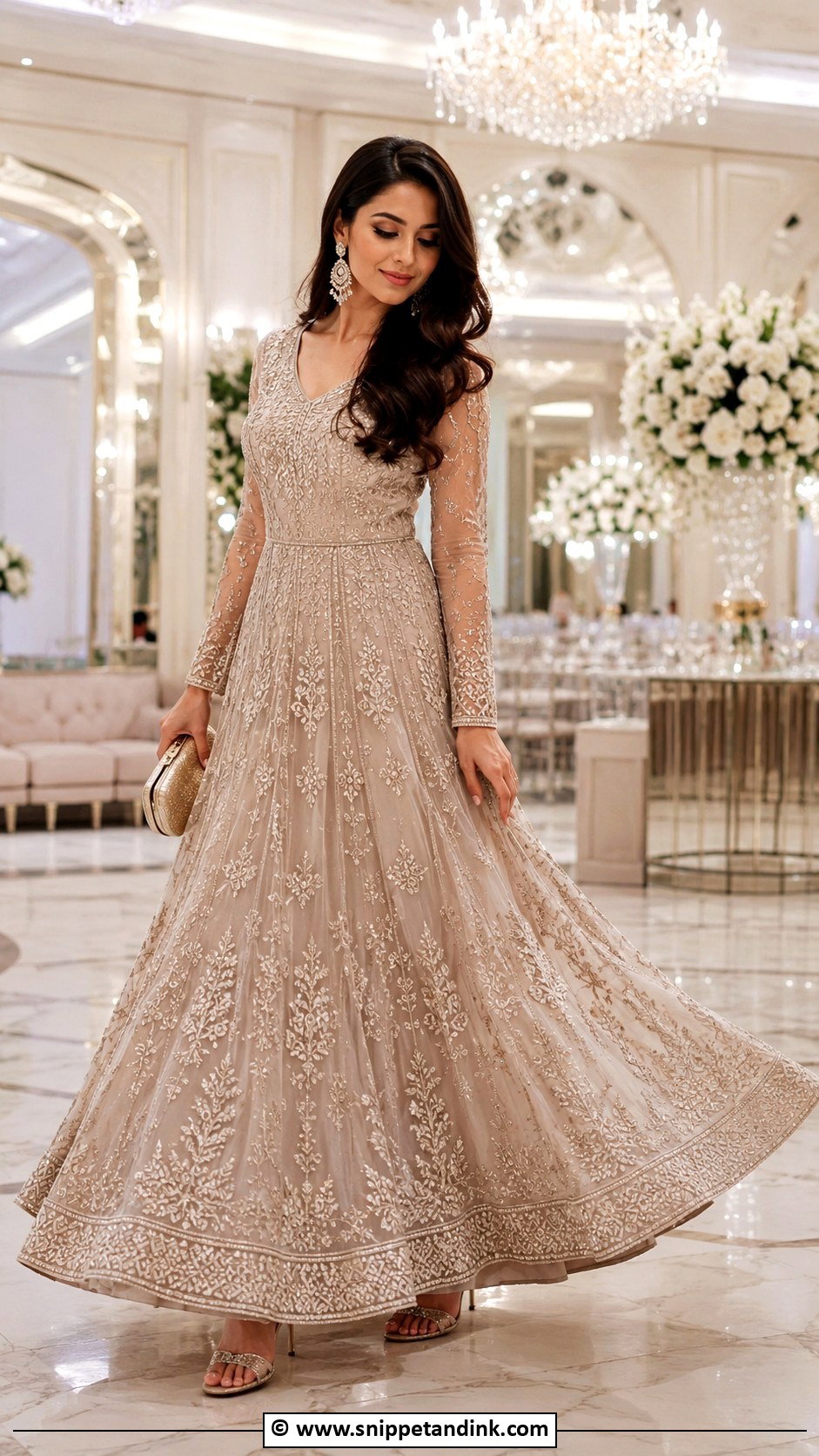
An Anarkali gown takes the flow of an Anarkali and adds the fitted bodice of an evening gown. Floor-length cuts with sheer sleeves or a modern neckline give it the fusion edge. Net, georgette, silk and organza all move well. It needs no adjusting once it’s on, which makes it easy for long receptions and formal dinners. If the flare feels shapeless on you, a waist belt fixes it. Embellished heels, statement earrings and a clutch complete it.
12. Skirt With Shirt Outfit
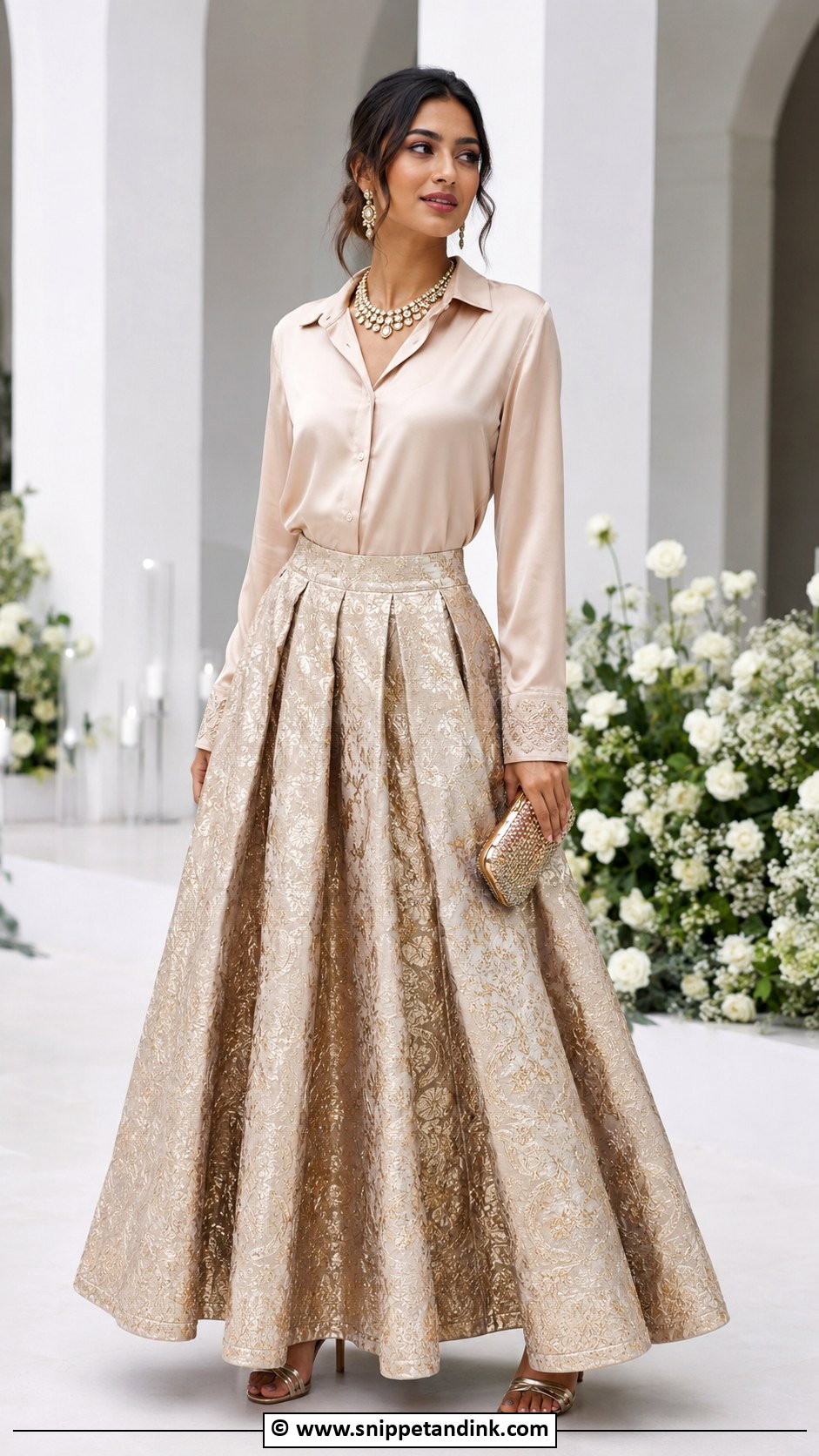
Pairing a lehenga skirt with a shirt is a surprisingly wearable fusion look, as long as the fabrics feel festive. Brocade, silk or embroidered skirts work with a crisp satin, silk or embellished shirt. Tuck it for evening, or knot it at the waist for a relaxed mehendi. The colors need to look chosen: an ivory shirt with a gold skirt, or a jewel-toned shirt with a printed skirt. Both pieces work again separately afterwards, which makes it good value.
13. Kurta With Trousers Outfit
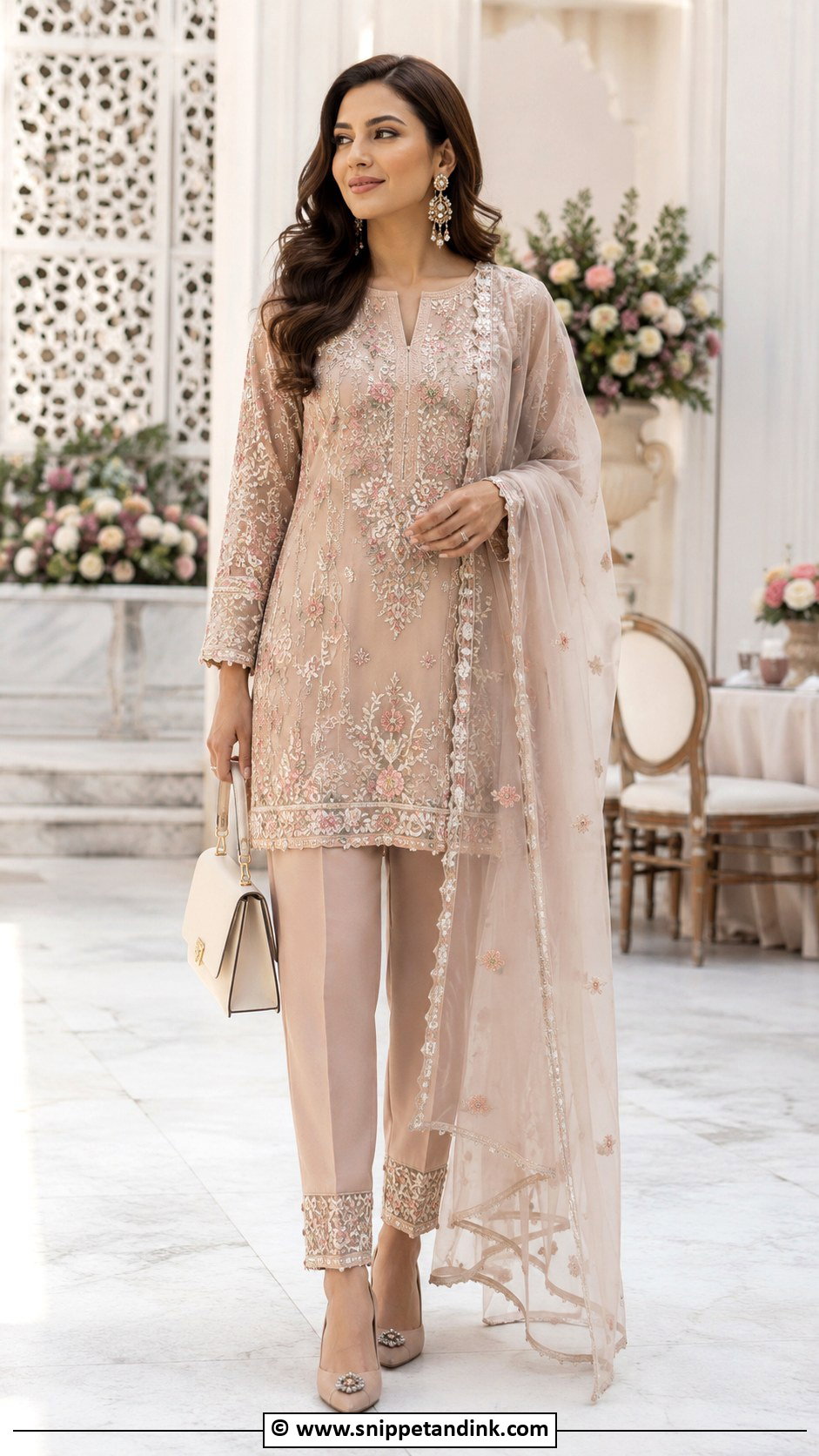
A kurta with trousers outfit is the cleanest, most tailored look here. A short or mid-length embroidered kurta over straight, cigarette or wide-leg pants suits smaller ceremonies and daytime functions. Silk, chanderi, brocade or velvet lift it from everyday wear. A sheer dupatta or light cape softens the structure. I like it for women who dislike volume. Block heels, juttis or pointed flats and a structured bag finish it.
14. Ruffle Saree Outfit
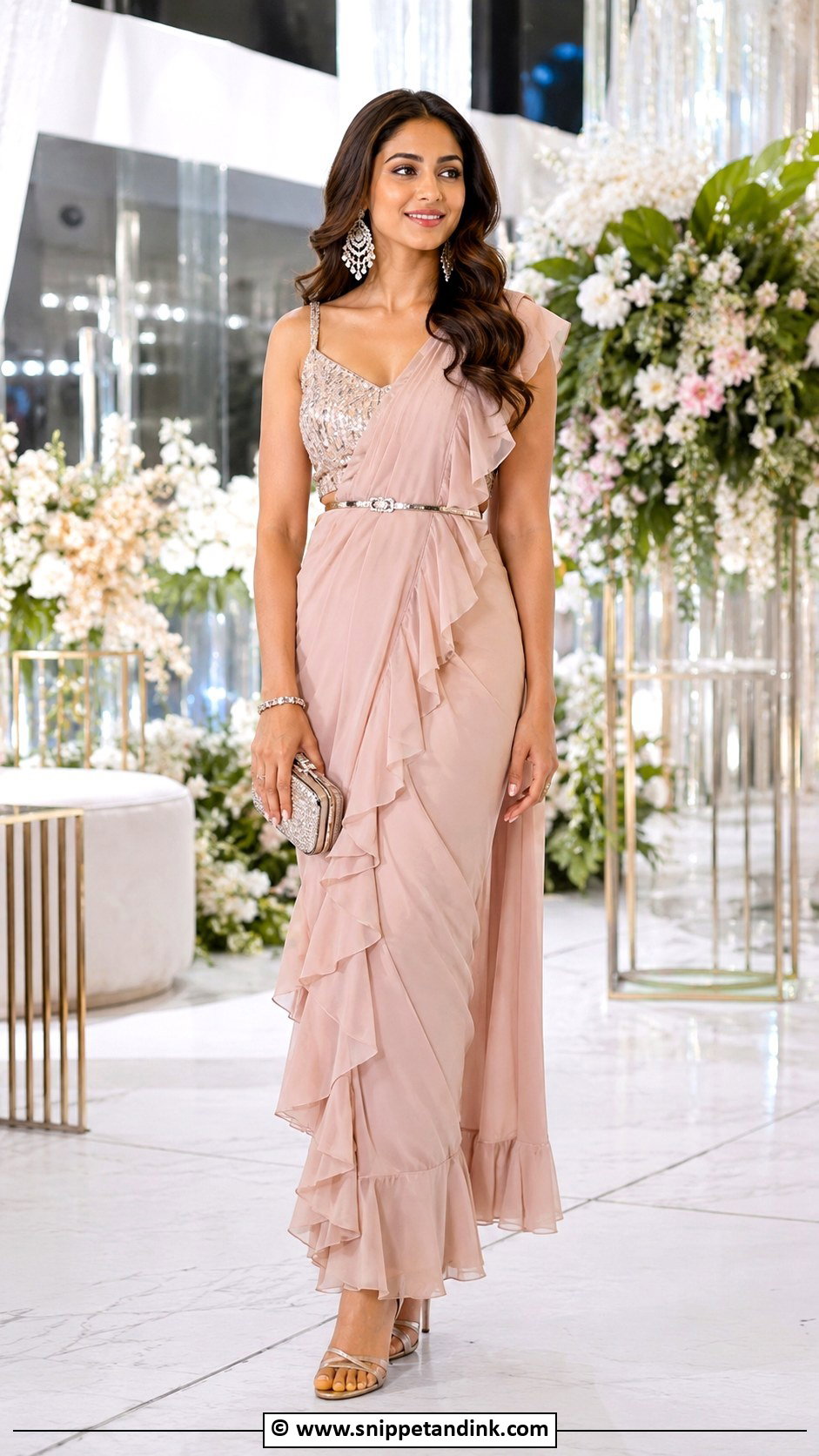
Ruffles add movement without heavy embroidery, so a ruffle saree feels light at a cocktail night or sangeet. Buy pre-stitched if you’ll dance, because ruffled pallus are fiddly to drape by hand. Pair it with a sequined, corset or structured crop blouse. A slim belt defines the waist and holds the drape. Ruffles already add volume, so keep jewelry to statement earrings. Strappy heels and a sleek clutch complete it.
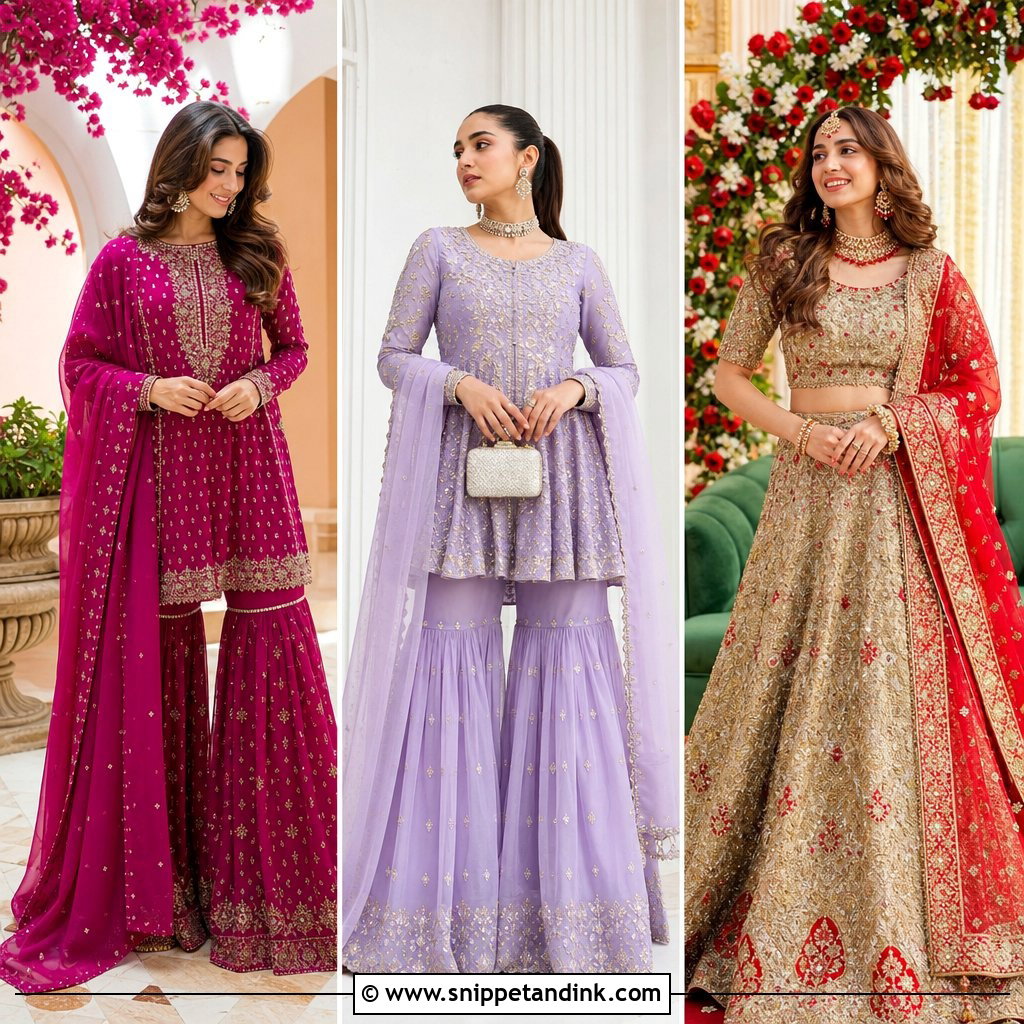
15. Jacket Gown Outfit
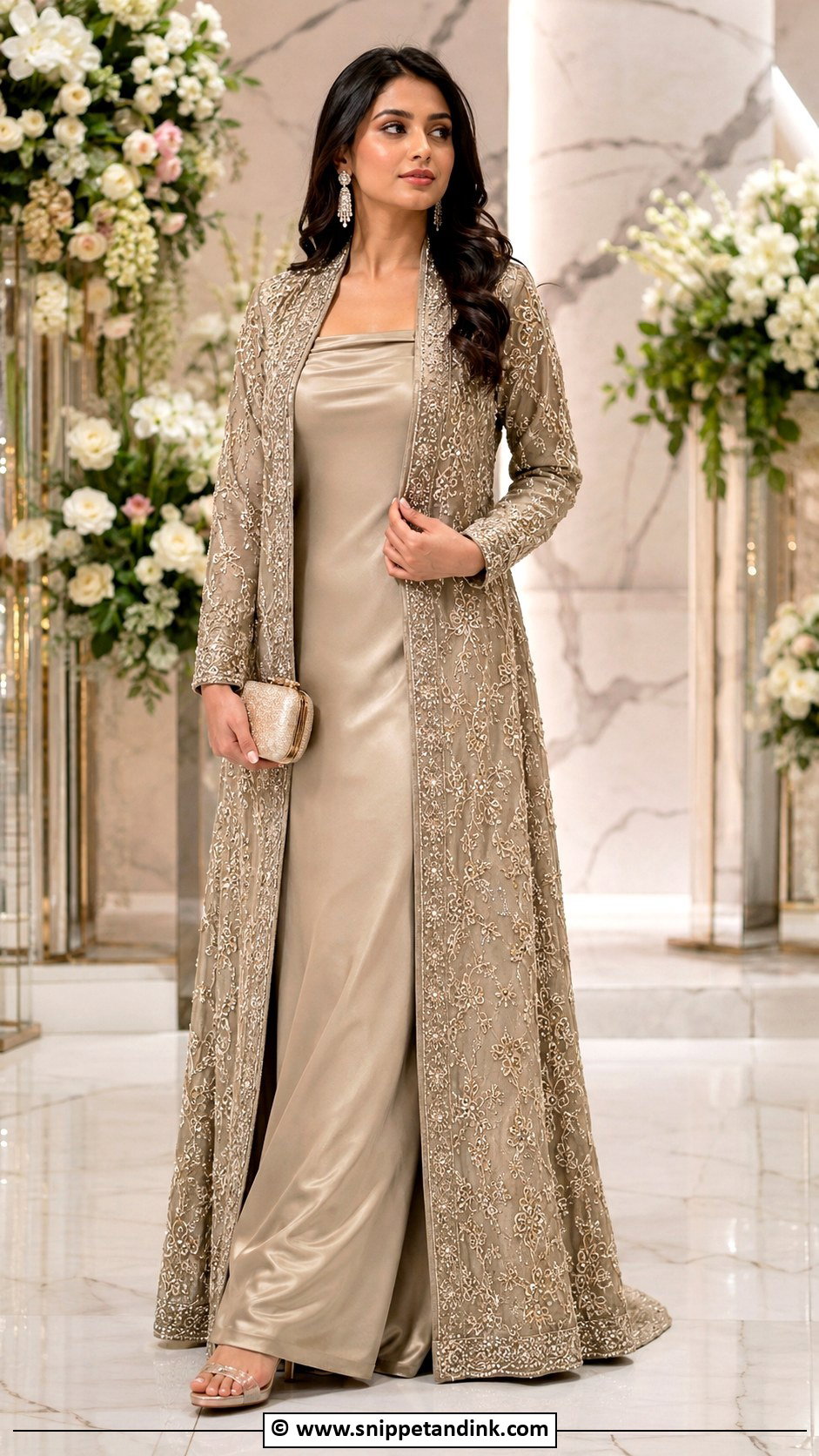
A jacket gown pairs a smooth gown with an Indian jacket in embroidery, zari, mirror work or brocade. A long jacket looks regal; a cropped one feels younger. Satin, crepe, georgette or silk blends make a refined base. Champagne, emerald, navy, deep burgundy and blush all suit receptions and engagement ceremonies. The jacket can come off once the room warms up, leaving a simpler gown underneath. Heels, drop earrings and a clutch finish it.
16. Lehenga With Long Jacket Outfit
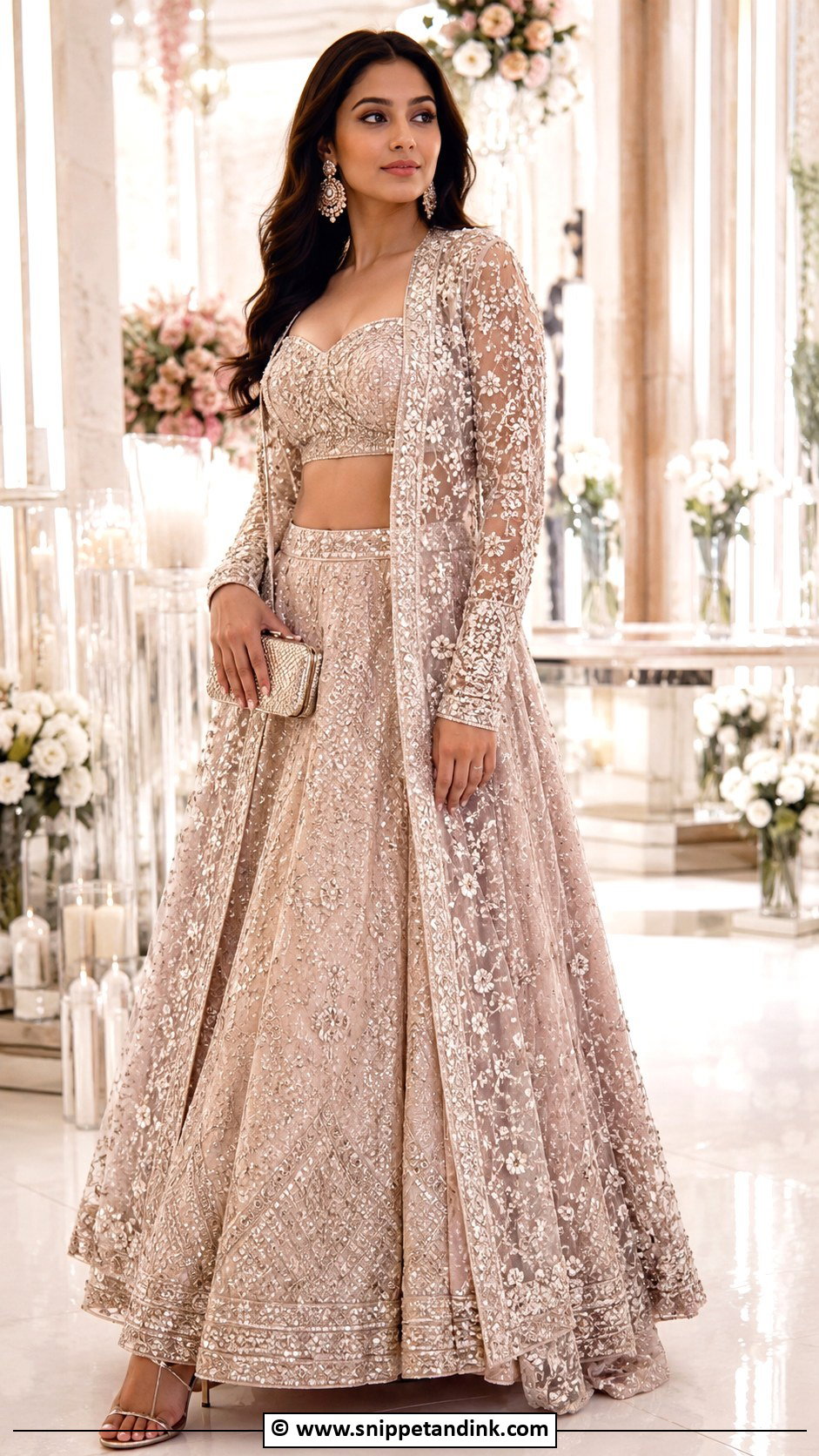
Layering a long jacket over a crop top and lehenga skirt gives coverage, drama and movement together. The jacket can be sheer, embroidered, printed or lightly embellished. It’s warm enough for winter weddings and grand sangeets. Long, heavy jackets suit taller frames. If you’re petite, I’d choose a lighter jacket with a front opening so it doesn’t swallow you. Heels, earrings and a small clutch complete it, with no dupatta to manage.
17. Co Ord Set With Dupatta Outfit
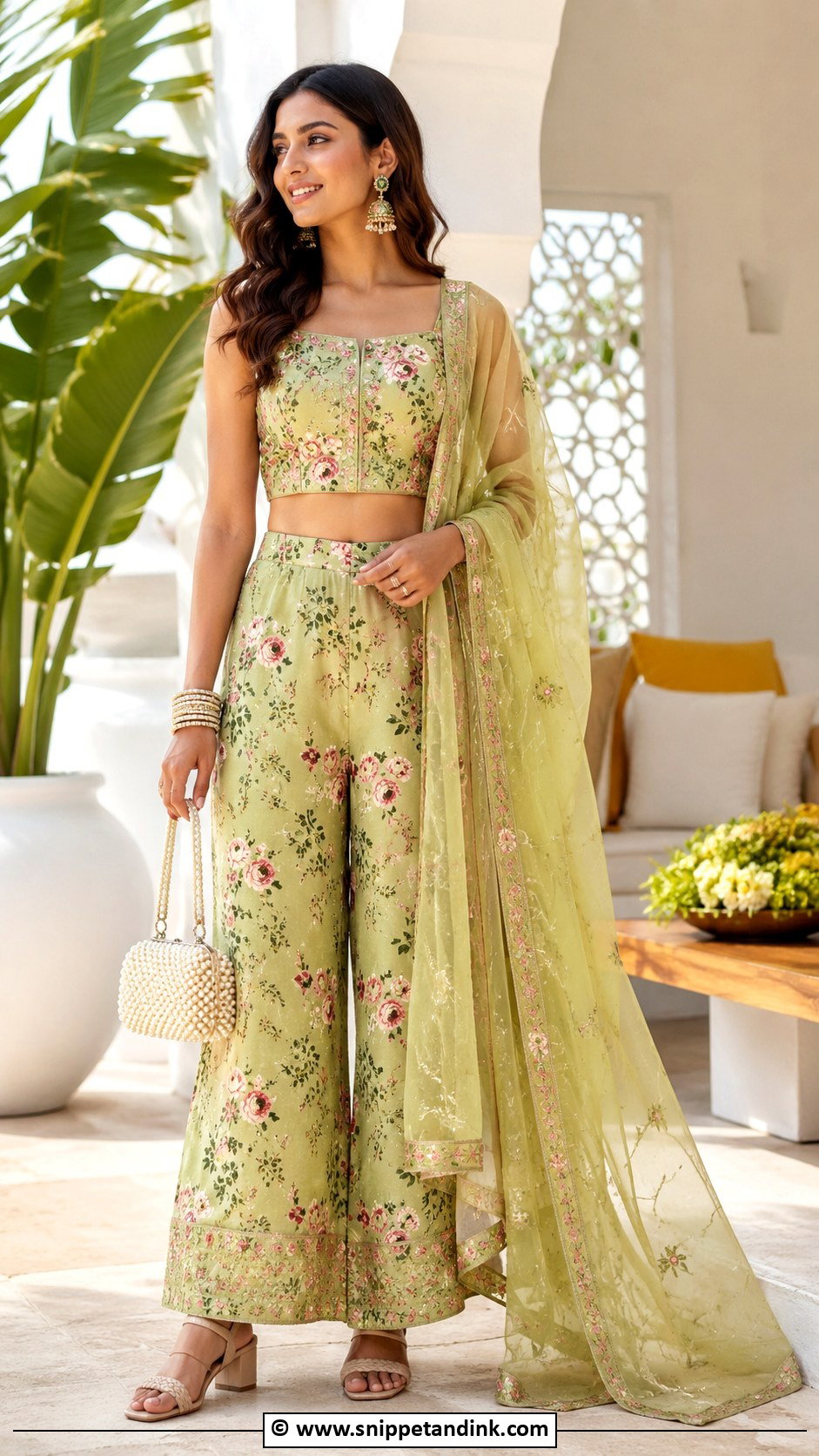
A co-ord with a dupatta is the low-effort guest option: matching top and bottom plus a dupatta for the traditional touch. Crop top with palazzos, short kurta with trousers or tunic with sharara pants all work. Prints and light embroidery suit mehendi or haldi; sequins, silk or metallic accents suit evening. The separates restyle easily afterwards. Block heels, juttis or embellished sandals, earrings and a small bag complete it.
18. Mermaid Lehenga Outfit
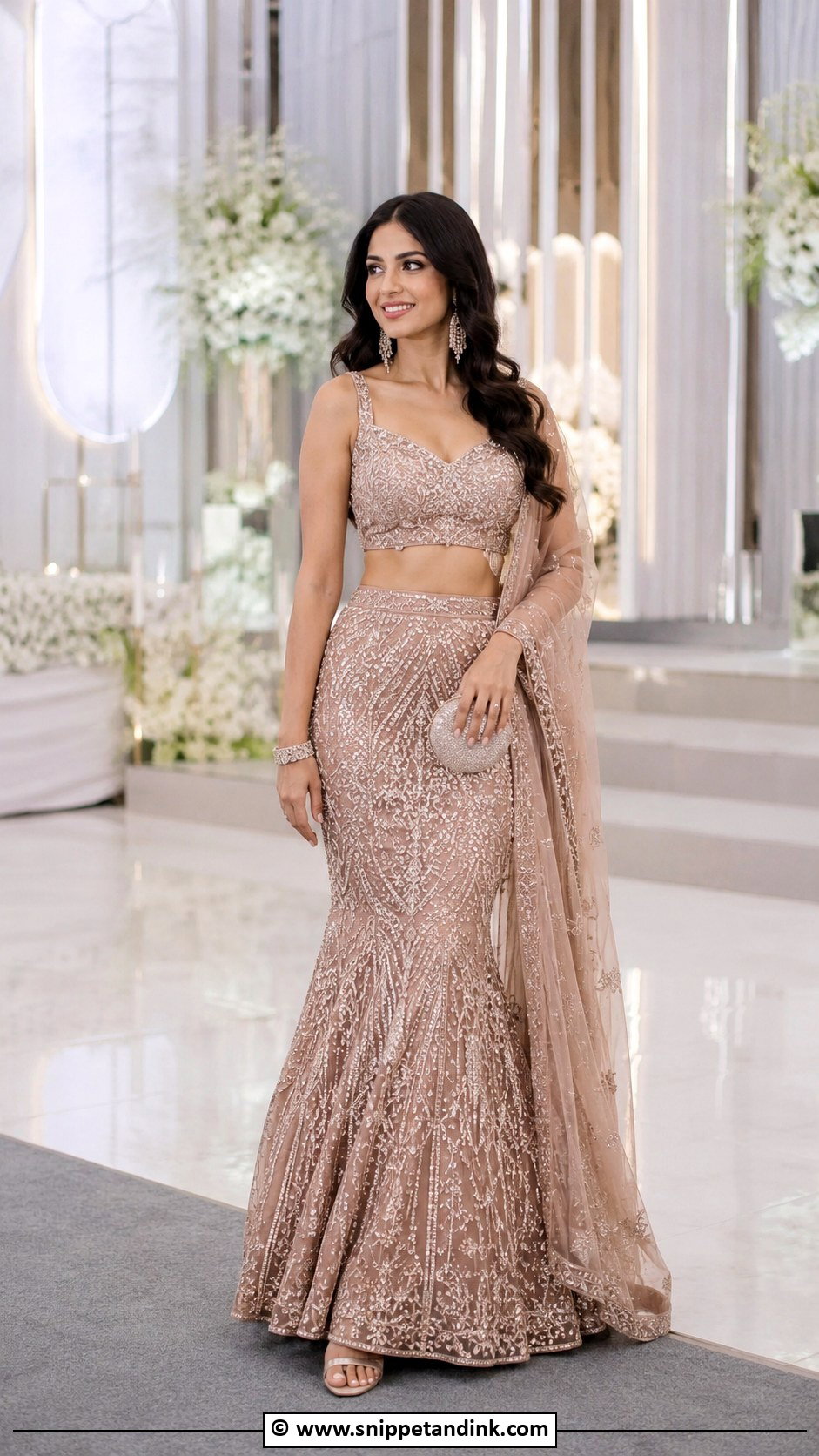
A mermaid lehenga is fitted through the hips and flares near the knee, giving a gown-like shape that still reads Indian. It’s the most demanding fit on this list. Stretch fabrics or paneled construction let you walk and sit; rigid fabric cut tight does not. Pair it with a structured blouse, off-shoulder top or modern choli, and a light dupatta or attached drape. Long earrings, a bracelet and heels finish it. Metallics, jewel tones, ivory and pastels all suit.
19. One Shoulder Lehenga Outfit
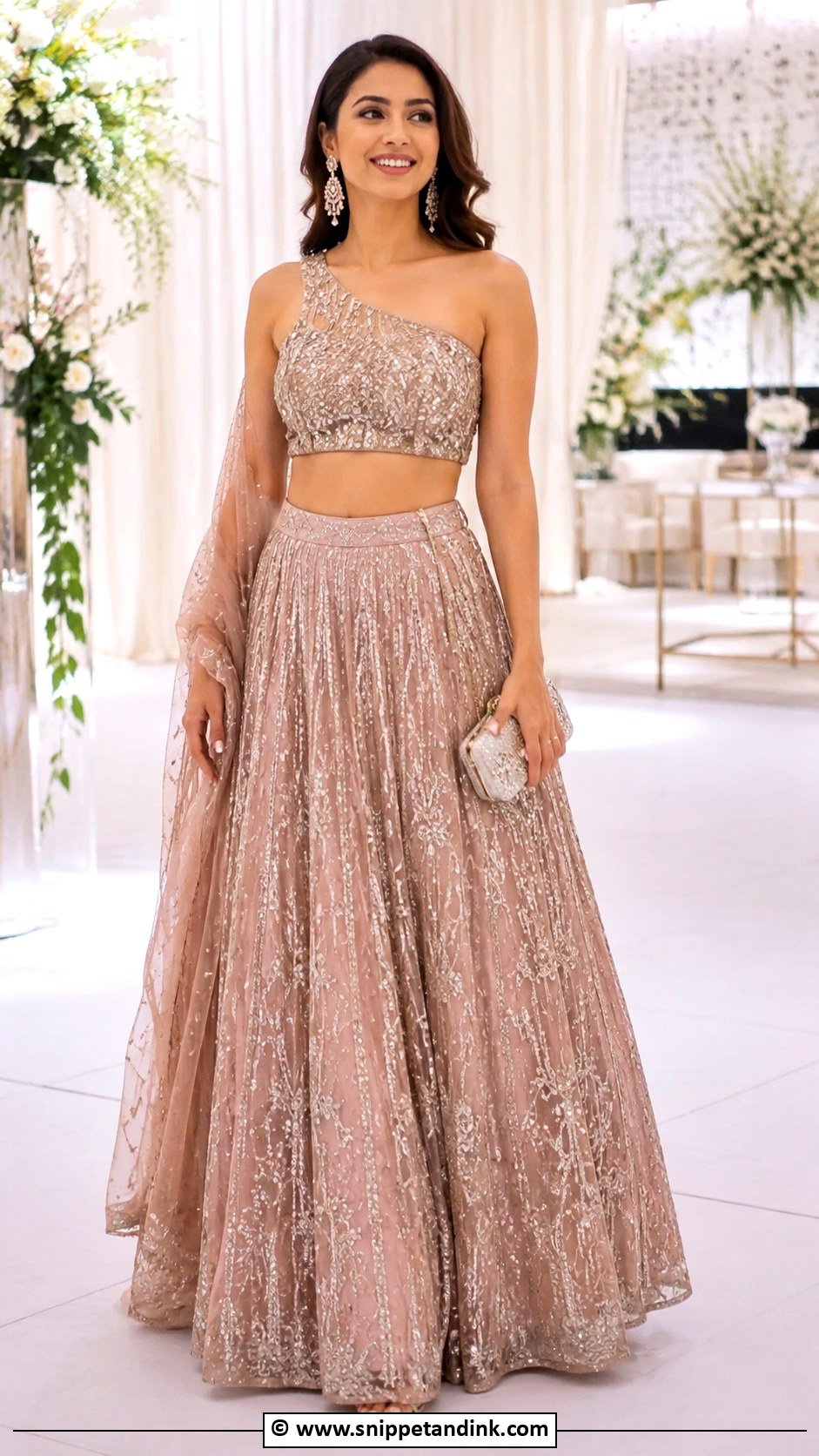
One-shoulder blouses give a lehenga instant modern interest without extra layers. If the skirt is simple, choose a blouse with embroidery, sequins or a dramatic shoulder detail; if the skirt is heavy, keep the top clean. You can skip the dupatta or drape a light one on the covered side. Fit is everything here: an asymmetrical neckline that isn’t cut precisely slips off the shoulder, and you’ll spend the evening tugging it. Earrings shouldn’t compete with the neckline.
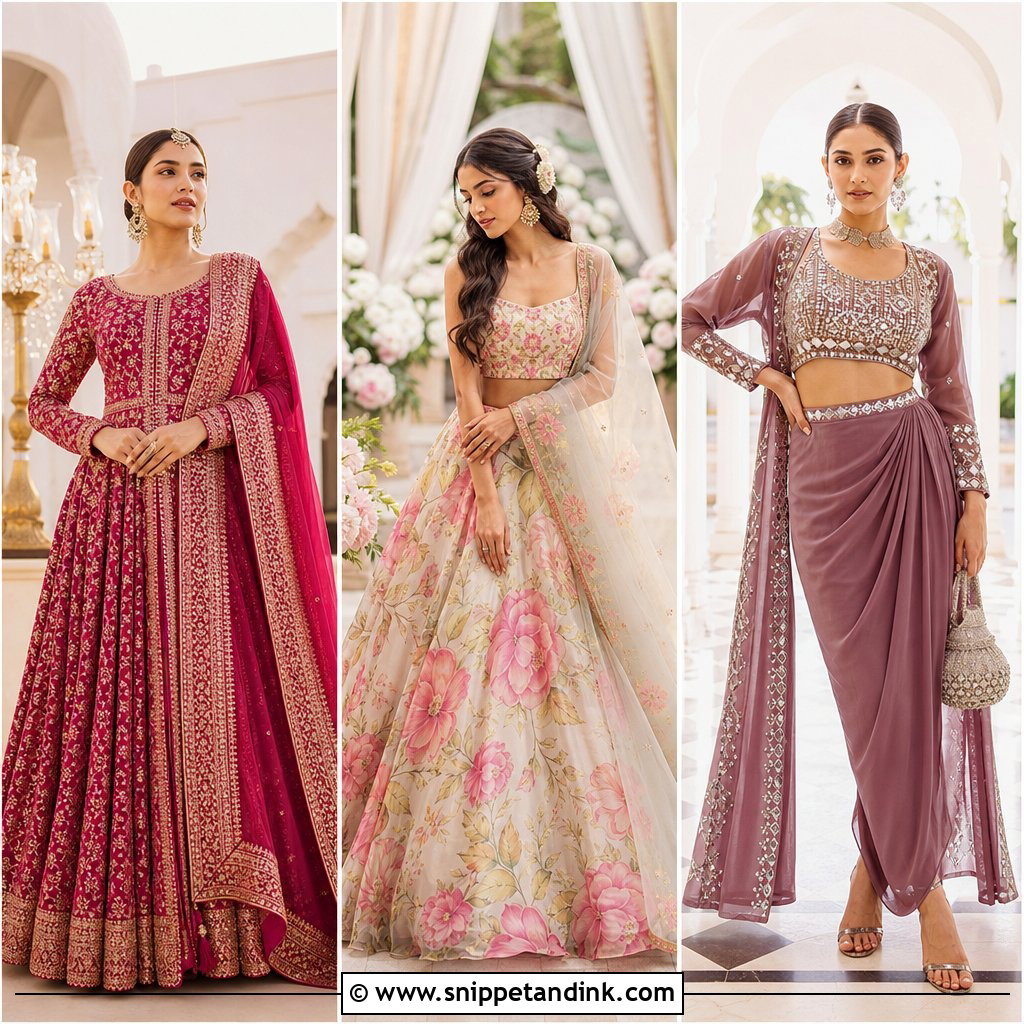
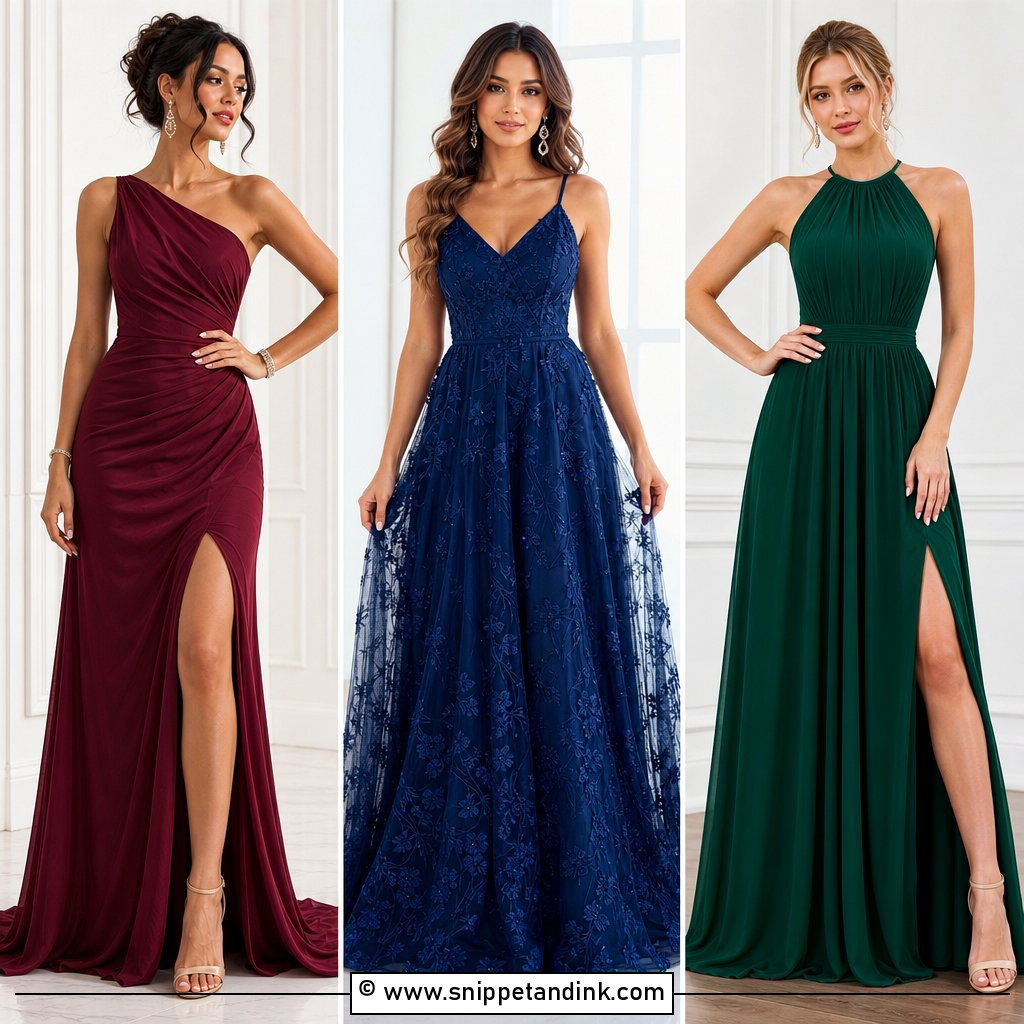
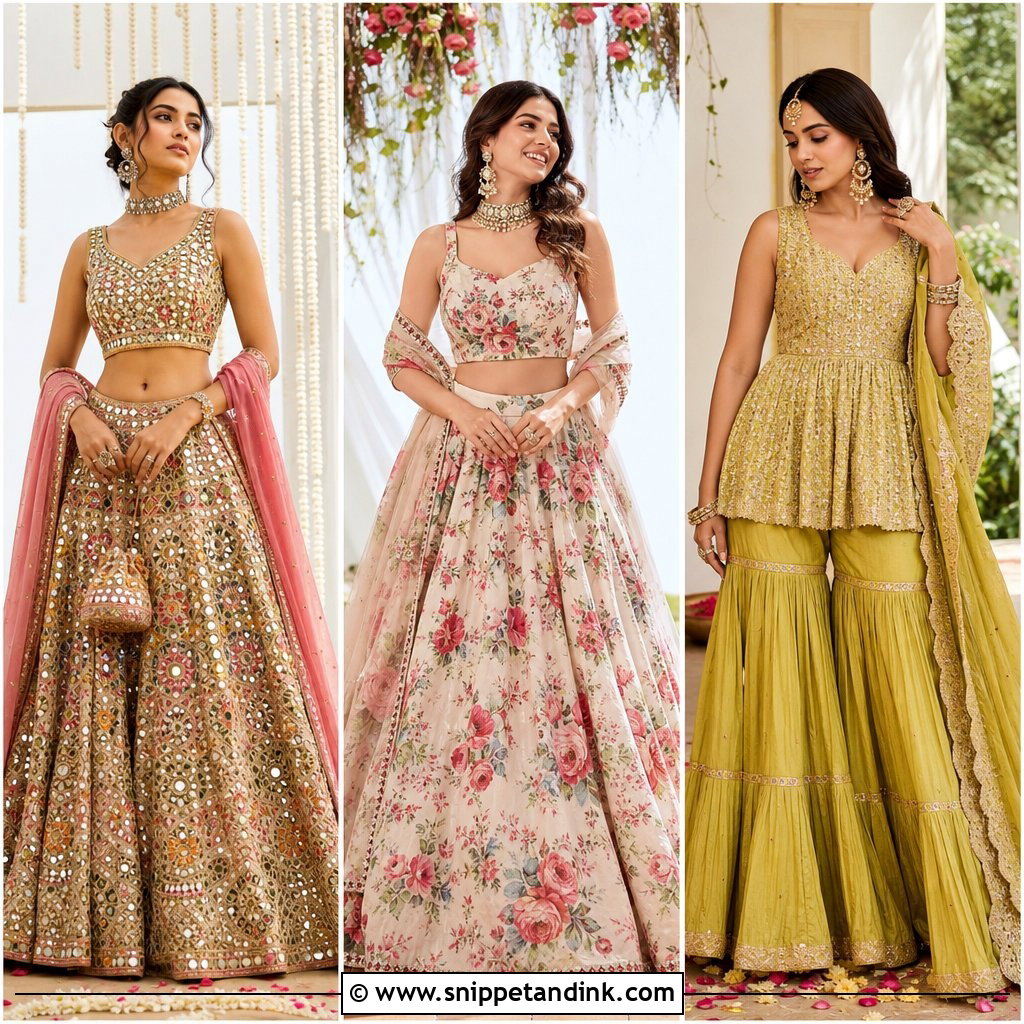
20. Dhoti Saree Outfit
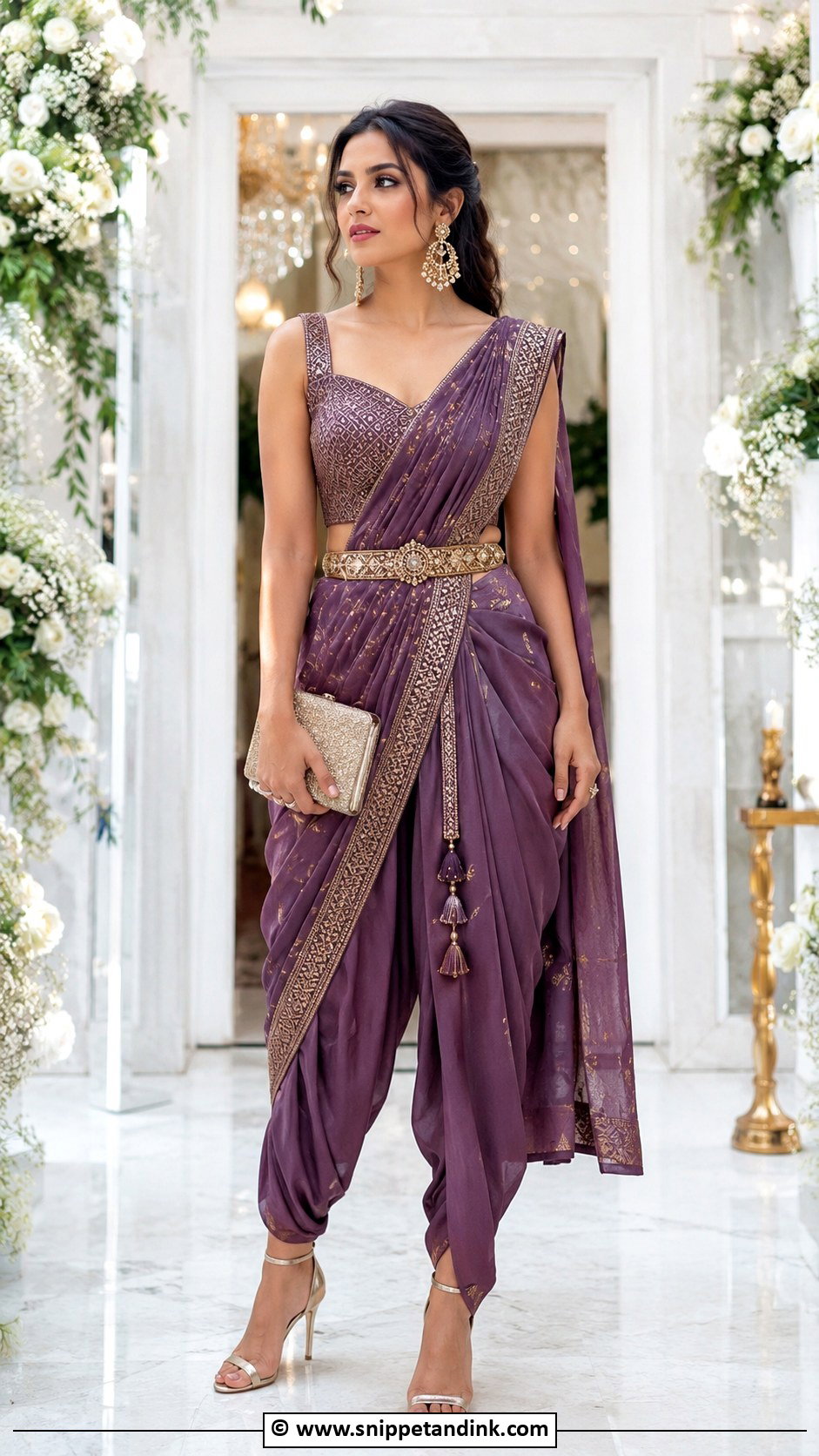
A dhoti saree gives the drape of a saree over dhoti pants, so you get the pallu without a skirt around your legs. That makes it far easier to dance in than a traditional saree. Crepe, georgette, satin or silk blends give a smooth fall. A fitted blouse, crop top or embellished jacket completes it, and a belt defines the waist. Heels, bold earrings and a small clutch suit mehendi, sangeet and cocktail events.
21. Fusion Gharara Outfit
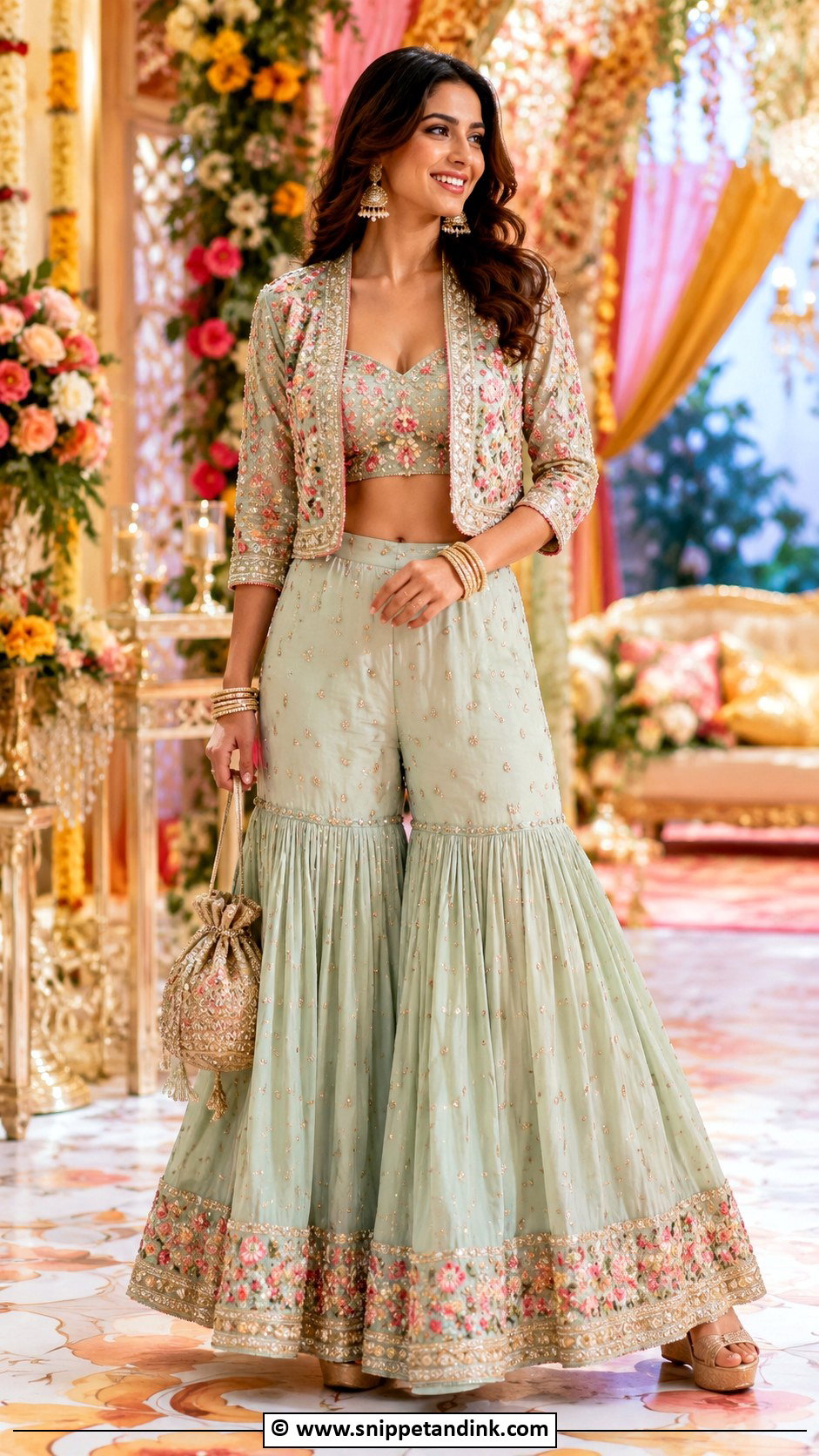
Gharara pants flare from the knee and swing when you walk, which is why I like them for sangeet and family wedding functions. Fusion comes from the top: a crop top, peplum blouse, short jacket or structured kurti, with an interesting neckline or belted dupatta. Embroidered borders at the knee and hem add richness. The knee joint should have a little ease, or sitting pulls it out of line. Heels or wedges help the pants fall properly, with jhumkas and a potli.
22. Belted Saree Outfit
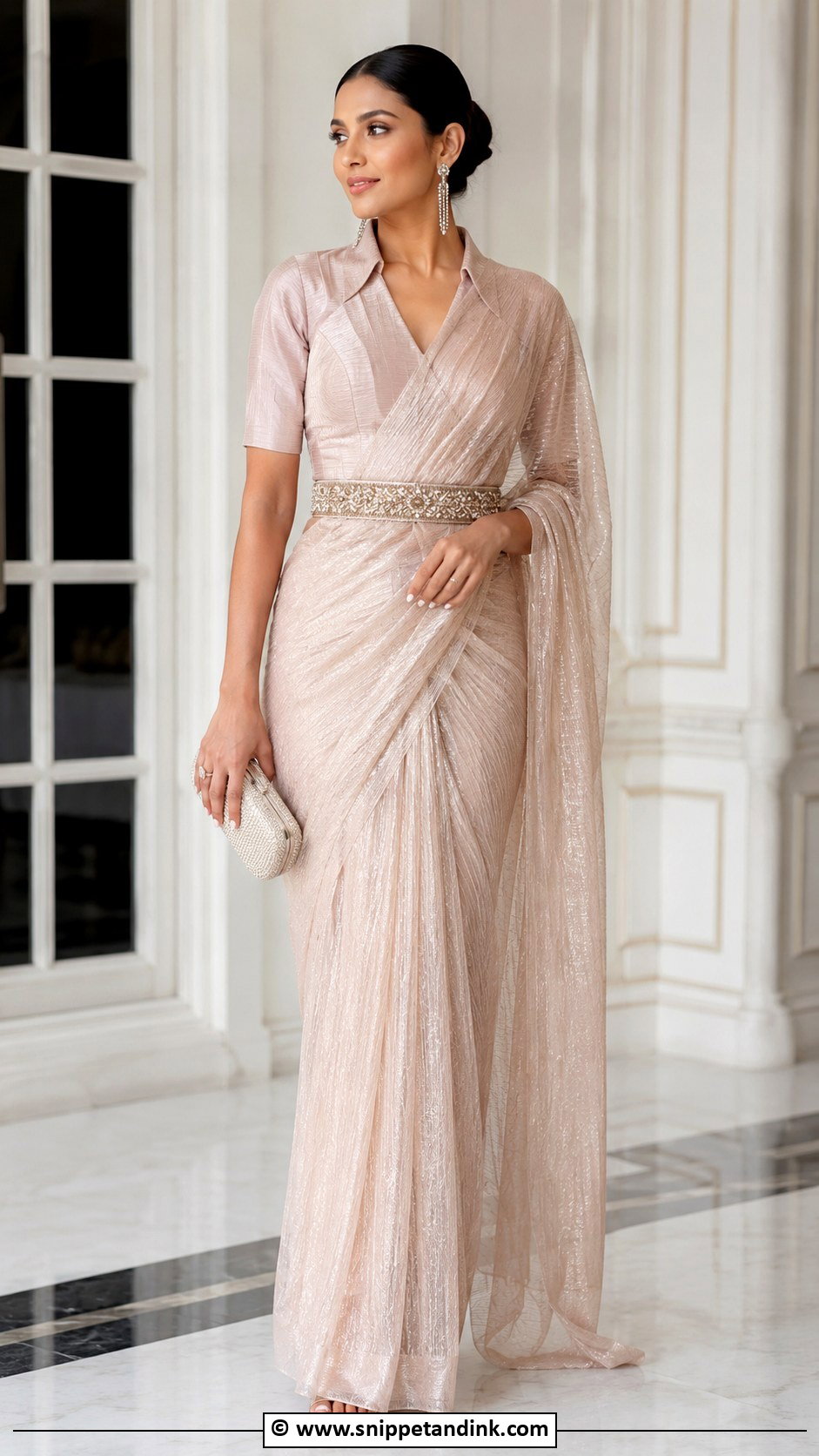
A belt solves the main complaint about sarees: the pallu that keeps slipping. It defines the waist and holds the drape in place. A metal belt suits plain silk; an embroidered fabric belt suits a printed saree; a matching waist cincher looks most modern. Pair a light saree with a structured blouse. Ruffled, pre-draped and pleated sarees all take a belt well. Heels, sleek earrings and a clutch finish it for a reception or engagement party.
23. Asymmetric Kurta With Palazzo Outfit
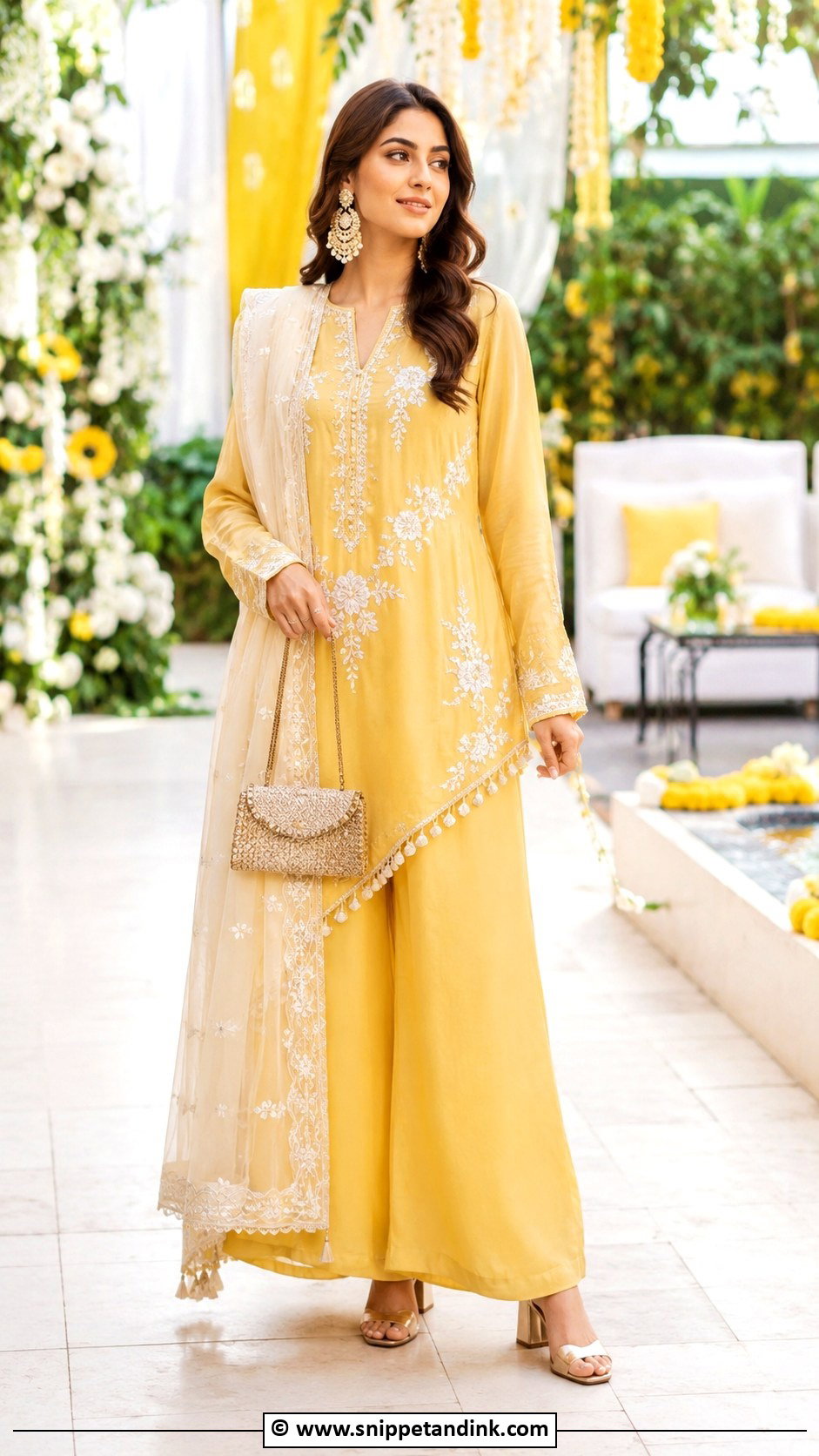
An asymmetric hem gives a plain kurta movement and a modern edge. With palazzos, it’s comfortable and airy for mehendi, haldi and daytime functions. Light embroidery, mirror work, threadwork or printed silk keep it festive. If the kurta cut is dramatic, keep the pants plain; printed pants want a simpler top. Add a dupatta only if the outfit feels unbalanced without one. Wedges, juttis or block heels suit most ages.
24. Embroidered Blazer With Saree Outfit
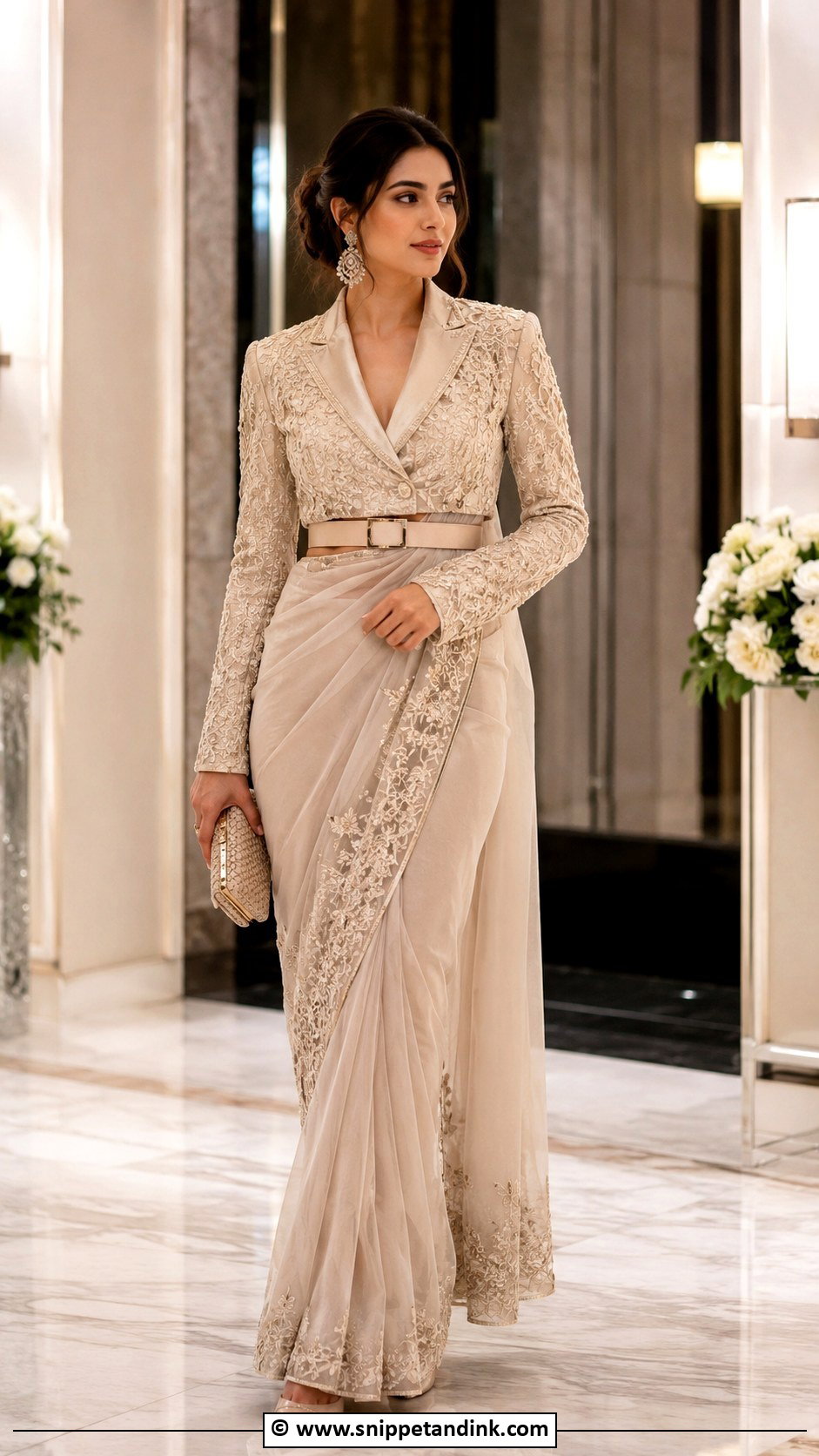
Swapping the blouse for a fitted embroidered blazer is the boldest saree look here. It suits receptions and fashion-forward sangeets. Choose a light saree in satin, crepe, chiffon or organza so the blazer stays the focus. Tailoring is the whole point; a blazer that doesn’t fit at the shoulders makes the outfit look like two random pieces. Coordinate the colors carefully. Pointed heels, earrings and a clutch finish it.
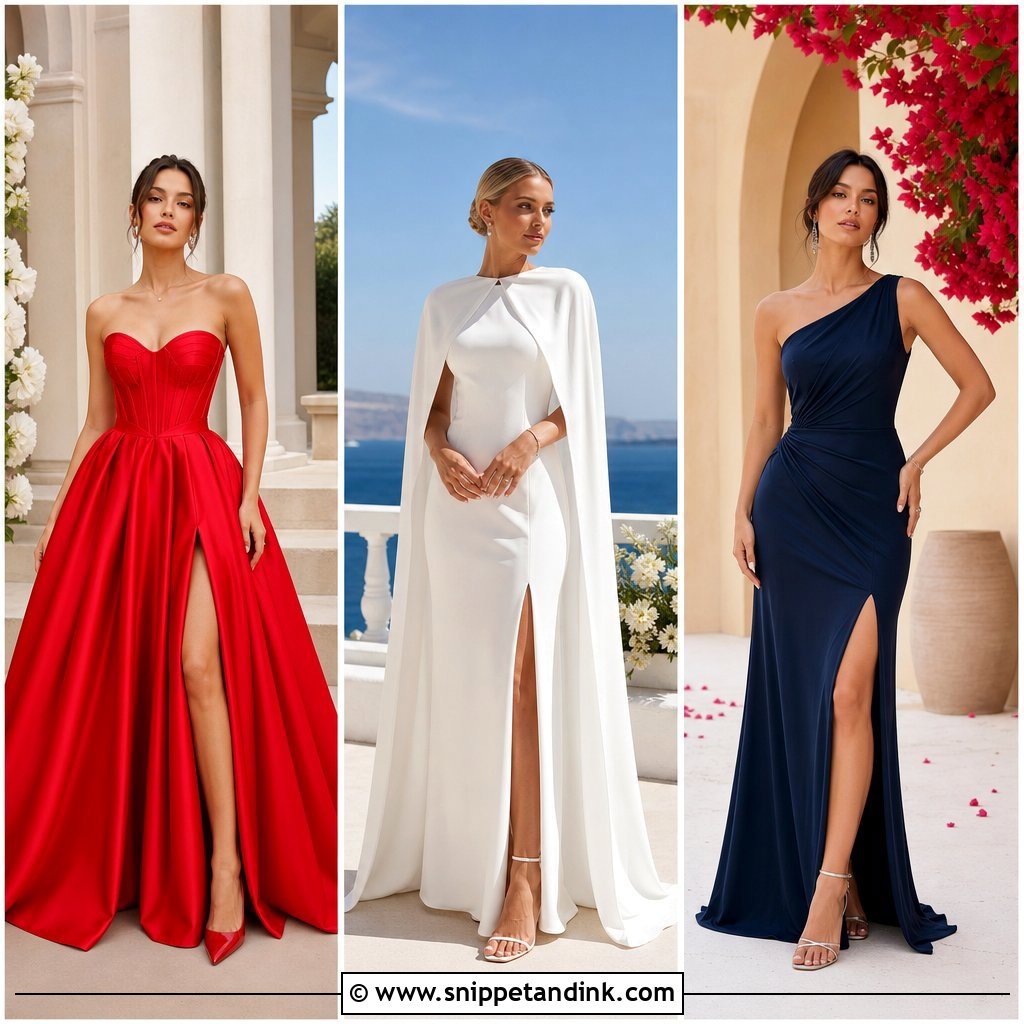
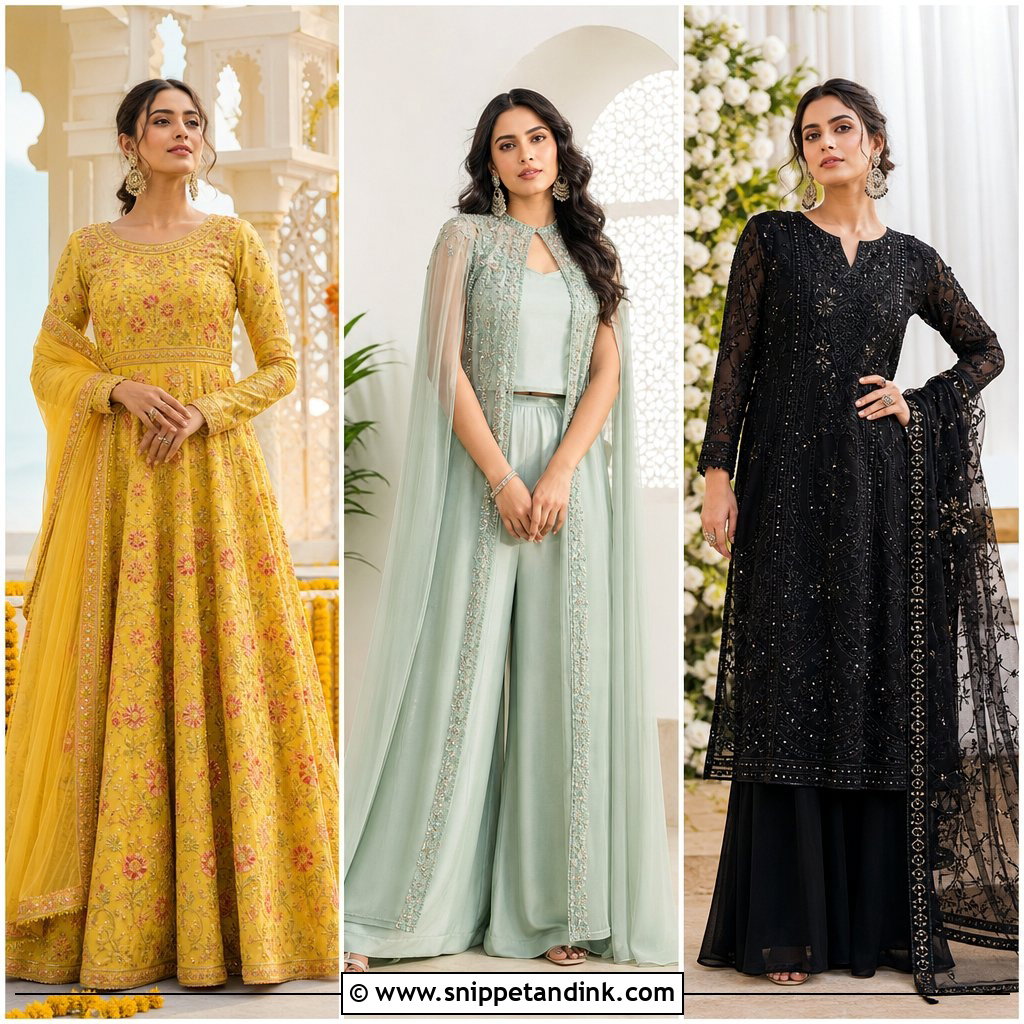
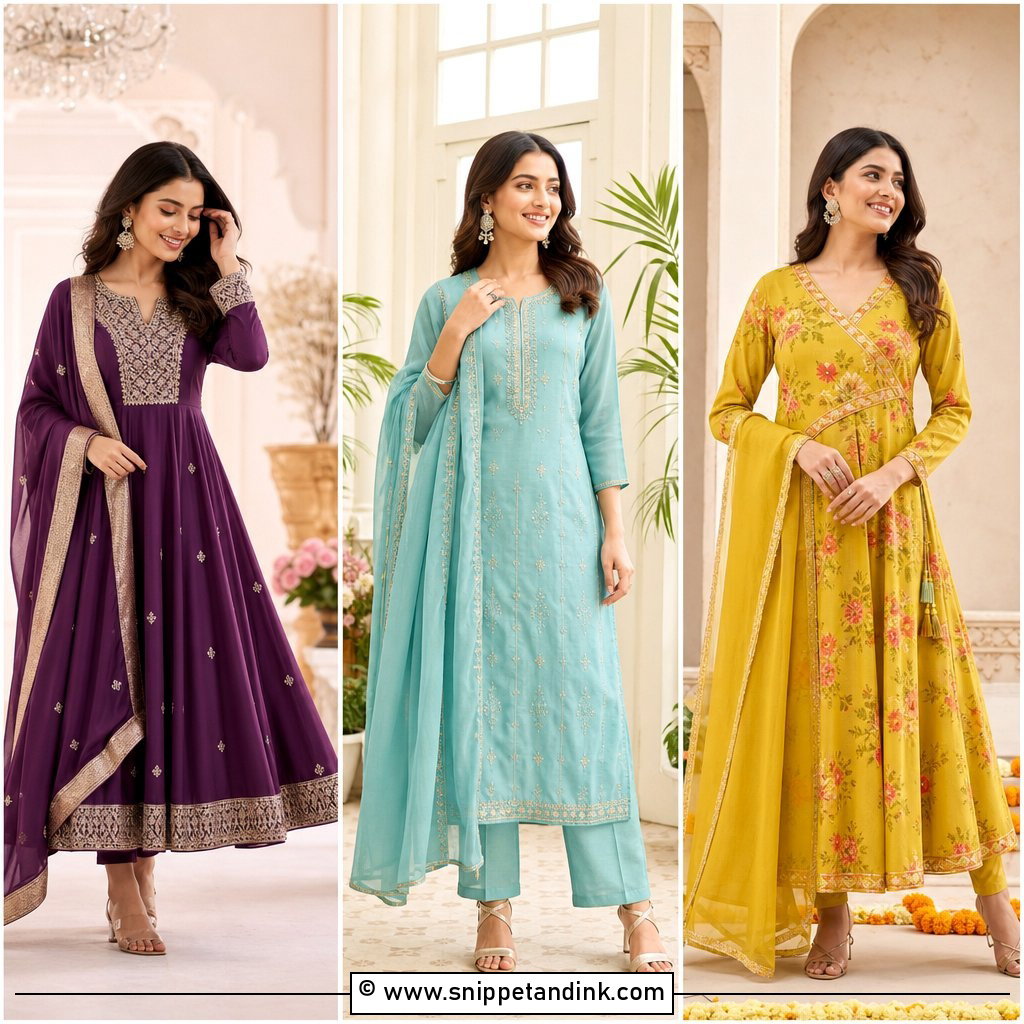
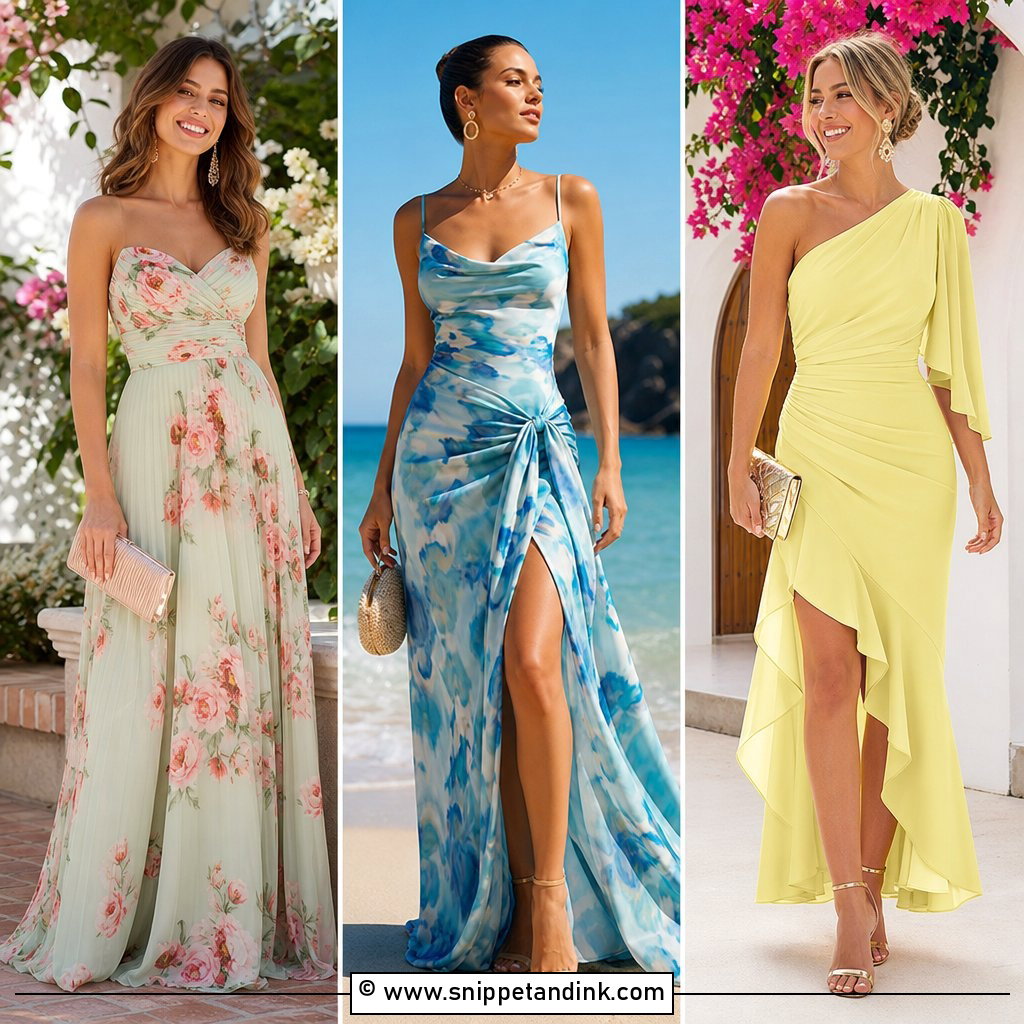
25. Trail Skirt With Crop Top Outfit
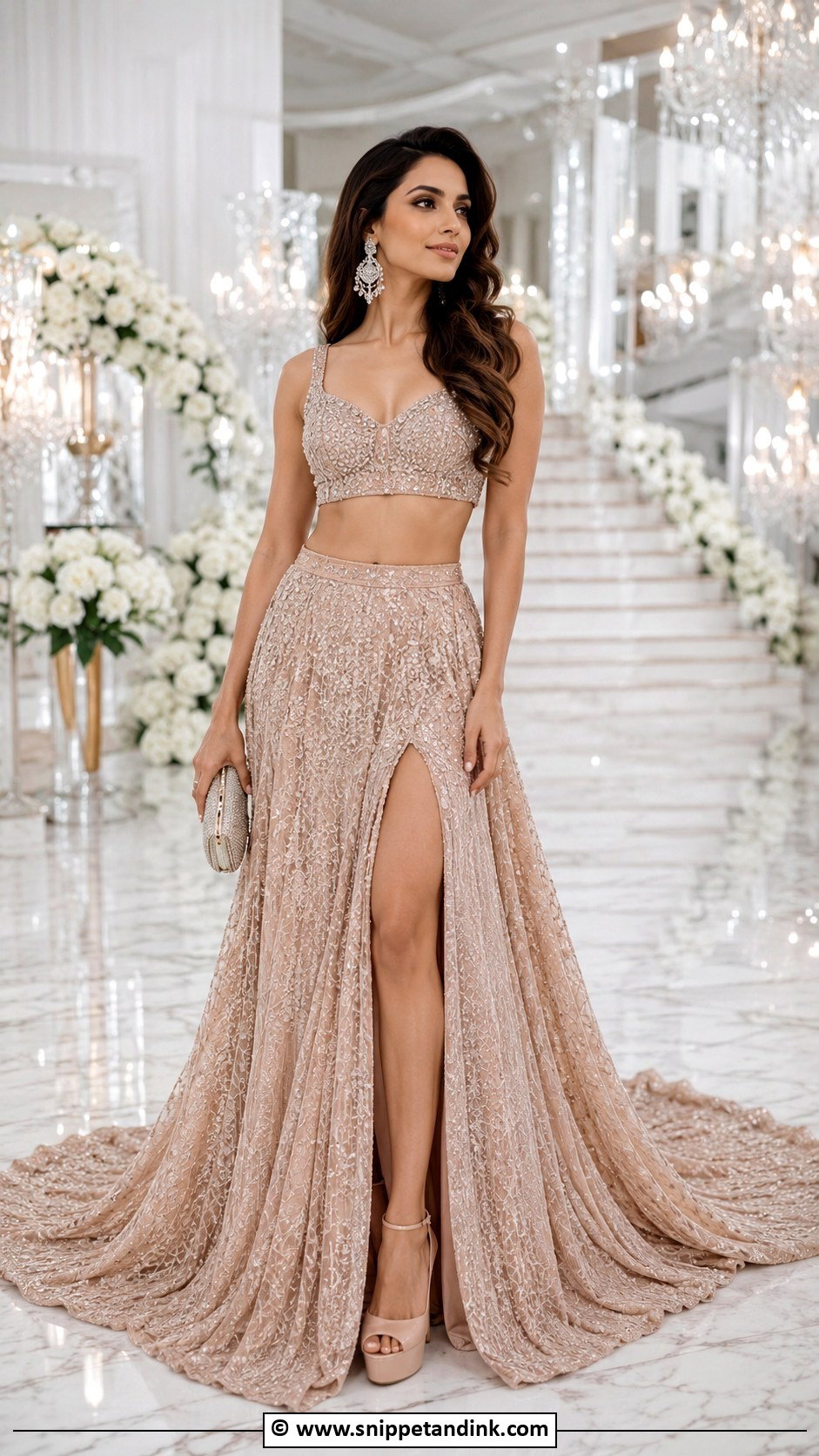
A trail skirt is longer at the back, so it gives a gown-like sweep while keeping the lehenga spirit. Pair it with a fitted crop top, corset blouse or embellished choli; a structured top and fluid skirt look best together. If you plan to dance, I’d keep the trail light and short, because a heavy trail gets stepped on and pulls at the waist. Refined earrings, heels and a small clutch complete it for a reception or engagement.
26. Printed Lehenga With Crop Shirt Outfit
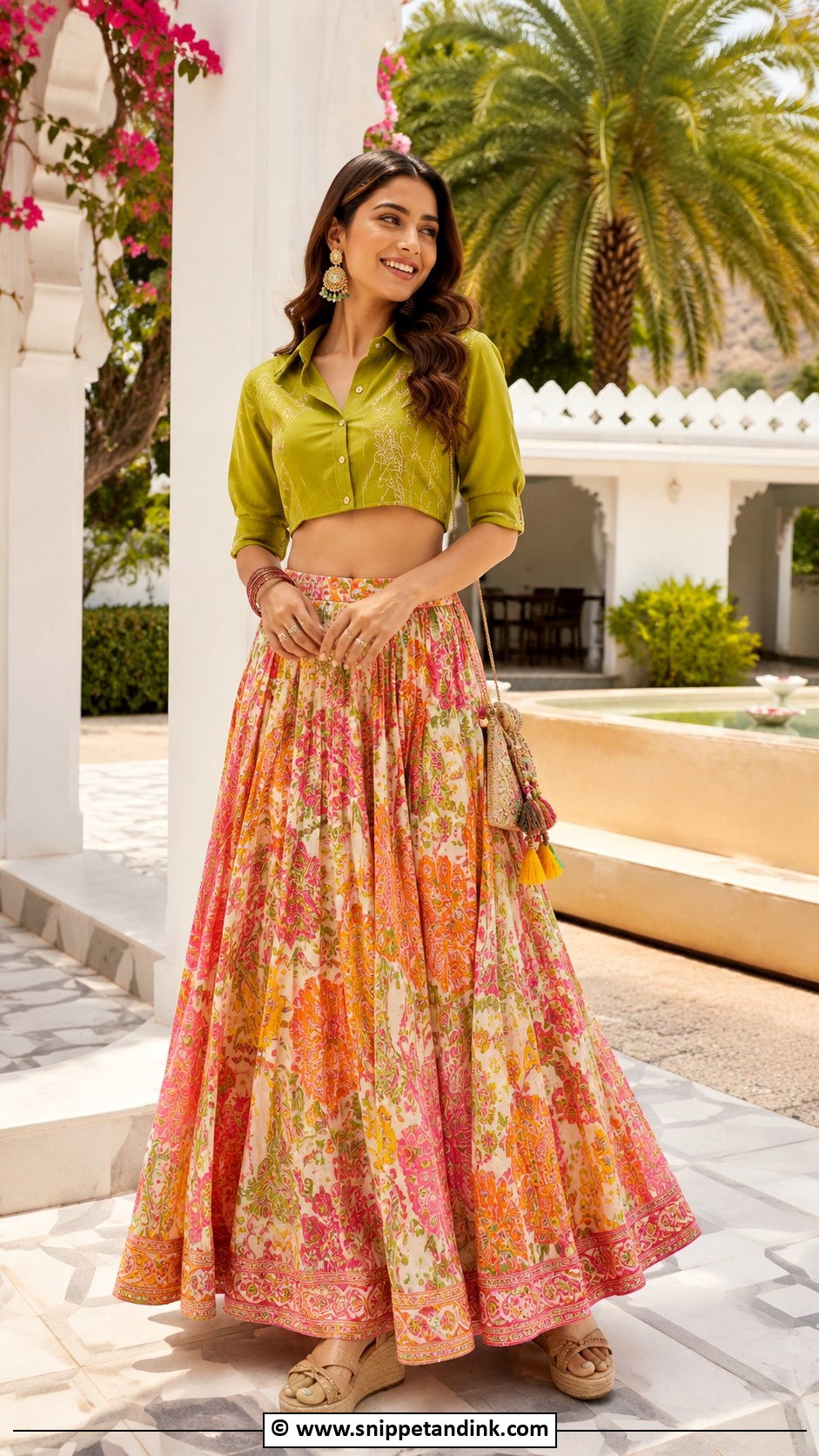
For mehendi or destination weddings in warm weather, a printed lehenga with a cropped shirt is cool, colorful and relaxed. Florals, ikat, block prints and paisley all suit it. A cropped shirt, tie-front blouse or short button-down with light embroidery keeps it easy. Add a dupatta only if the look reads too casual. Earrings, stacked bangles and wedges or embellished flats are enough. Printed fabrics are lighter than embroidered ones, which helps in heat.
27. Velvet Pant Suit Indian Outfit
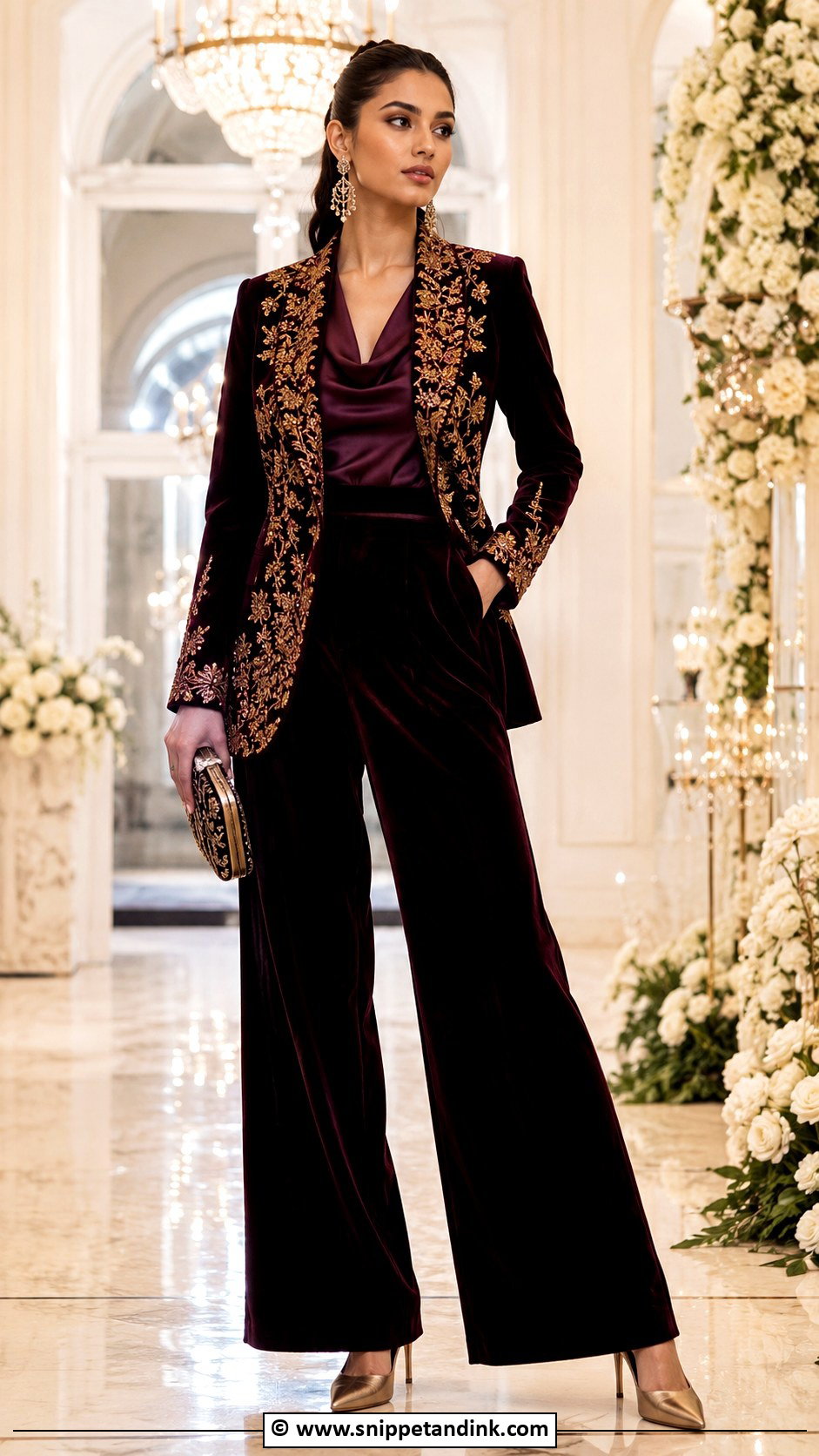
For a cold evening reception, a velvet pant suit with Indian embroidery at the collar, cuffs or hem is warm and polished. Pair the tailored jacket with straight or wide-leg trousers and a silk camisole or embellished top underneath. Emerald, navy, plum and maroon feel festive; ivory or champagne velvet looks softer. Velvet shows pressure marks, so hang it overnight rather than folding it. Refined jewelry, heels and a box clutch complete it.
28. Organza Cape Sharara Outfit
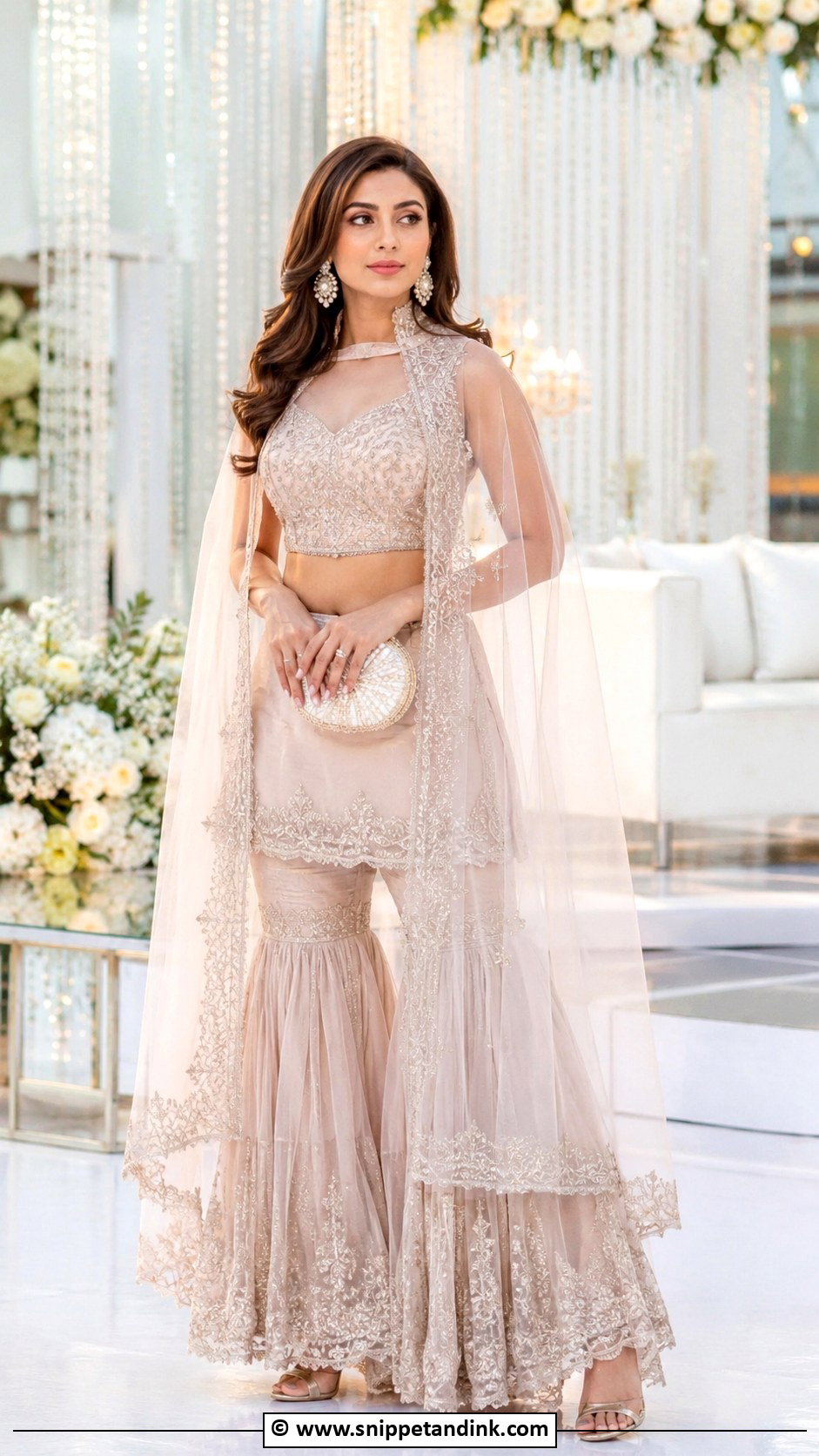
An organza cape floating over a sharara gives a light, airy look for engagement parties, mehendi and daytime receptions. A fitted blouse or short kurti keeps the silhouette tidy under the sheer cape. Organza holds volume, so the cape length should suit your height: on a petite frame, hip or knee length works better than floor length. Pastels look romantic; jewel tones look richer. Heels, pearl earrings and a delicate clutch finish it.
29. Sequin Co Ord Wedding Outfit
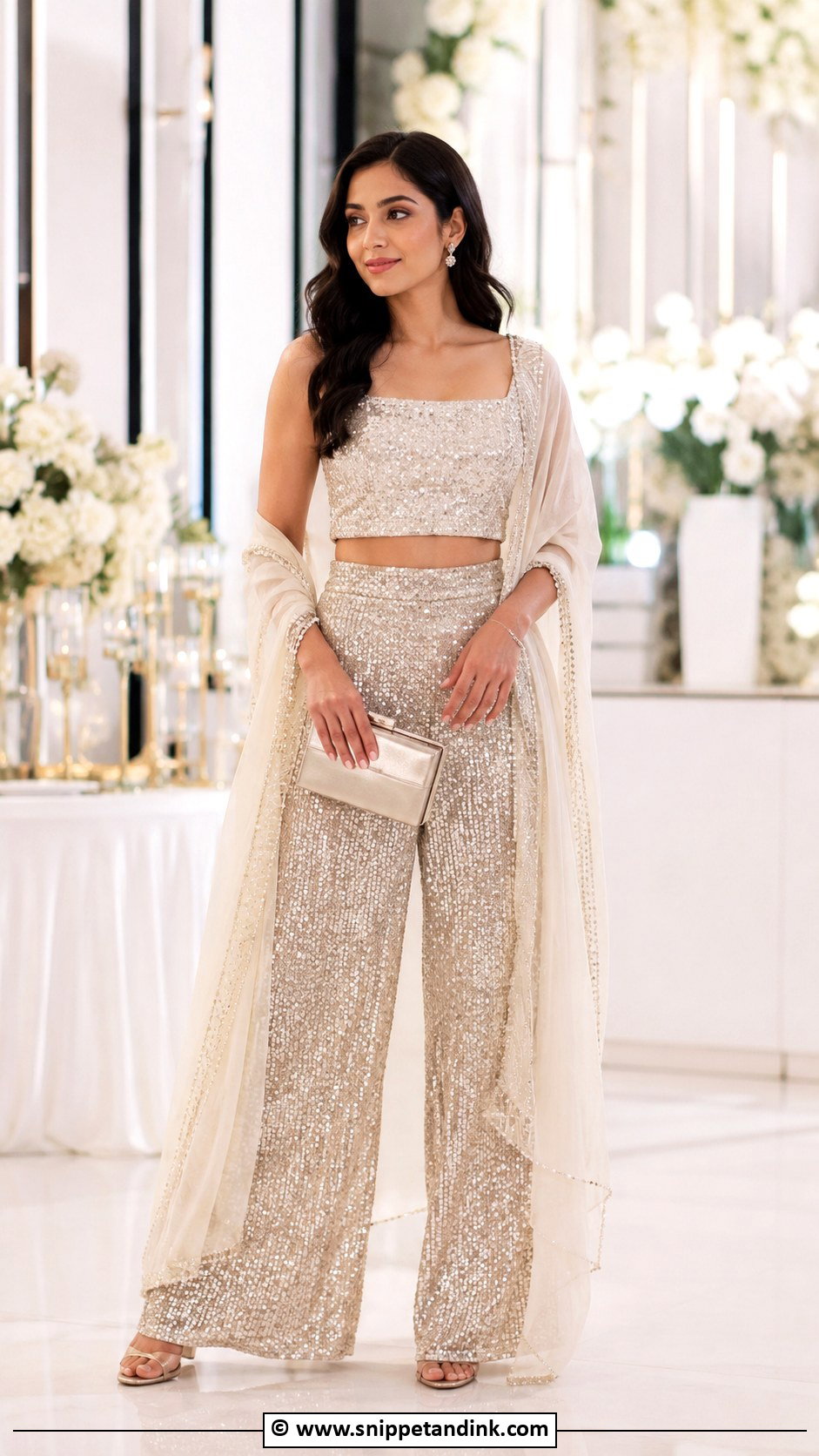
A sequin co-ord gives party shine without a gown. Match a sequin top with a skirt, palazzos or wide-leg pants for a cocktail event, sangeet or reception. Indian-inspired cuts, a modest neckline or a light drape keep it wedding-appropriate. Fit it slightly relaxed, because sequined fabric doesn’t stretch and feels stiff when tight. Champagne, silver, blush, emerald and navy suit it. Simple heels, a clutch and minimal jewelry let the sparkle lead.
30. Indo Western Bridal Reception Outfit
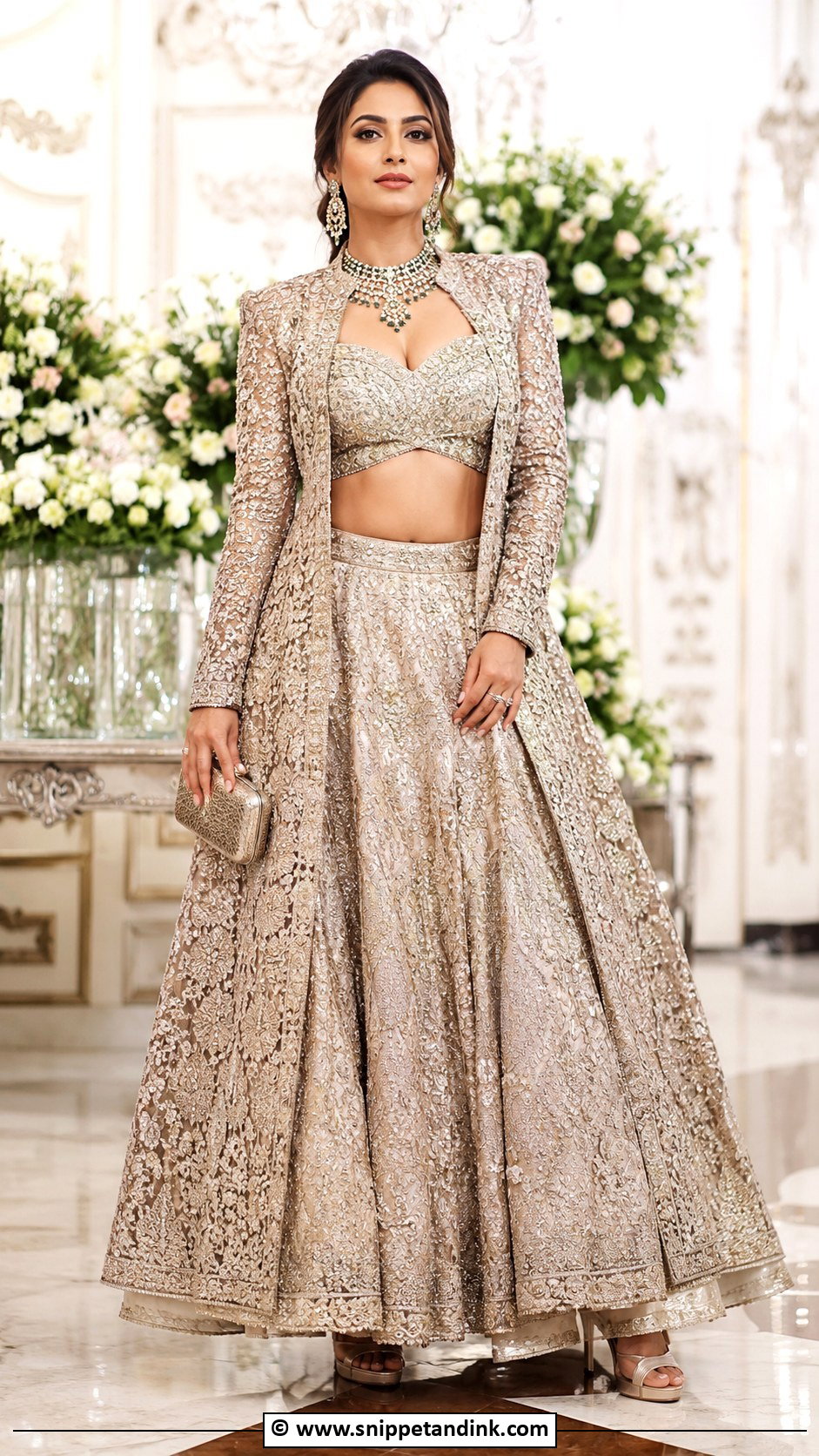
A bride’s Indo-western reception look can be a saree gown, jacket lehenga, embroidered gown, cape lehenga or structured lehenga with a modern blouse. My advice is to choose one standout detail, such as a dramatic cape, metallic embroidery, a sculpted blouse or a long jacket, and build quietly around it. Soft gold, ivory, blush, silver and deep jewel tones all suit. Receptions mean hours of greeting, posing and dancing, so choose supportive heels, secure closures and jewelry you can wear comfortably all night.
Four Tests I Run on Structured Fusion Pieces
Corsets, blazers, mermaid skirts and jumpsuits are less forgiving than a traditional lehenga, because they’re cut close to the body. Before any client leaves the final fitting, she does these four things in the actual outfit, shoes and undergarments:
- Sit on a low chair for two minutes. Corset boning shouldn’t dig into the ribs and a mermaid skirt shouldn’t ride up.
- Raise both arms as if hugging someone taller. Blazer shoulders and one-shoulder blouses show their problems here.
- Walk up and down a step. Trail skirts, wide shararas and mermaid hems reveal whether they’re hemmed for the right shoes.
- Dance for one song. Pre-stitched drapes, waist hooks and belts either hold or come undone.
Fabric choice changes how much a structured piece forgives. A corset or blazer in stretch crepe or a brocade backed with a little elastane moves with you, while rigid raw silk or heavy sequin mesh does not. If you love a stiff fabric, ask the tailor to cut it with a touch more ease than the measurements suggest.
Anything that fails goes back to the tailor. Allow two to three weeks for alterations, more during the busy wedding months, and keep a final check a week before the first function.
Volume Up Top or Below, Never Both
Indo-western wedding outfits work when they’re balanced. A cape lehenga is dramatic, a belted saree is polished, a co-ord is relaxed and a jumpsuit or blazer lehenga is bold. Pair volume with structure, heavy embroidery with clean accessories, and modern cuts with Indian fabrics or details. Then match the outfit to the function, the venue, the weather and how much you’ll move. From mehendi to the reception, there’s a fusion look for each event.
You'll Like These Ideas:



Leave a Reply