
Getting dressed for an Indian wedding means planning a whole wardrobe, from daytime haldi ceremonies to a late, sparkly reception. A breezy sharara suits mehendi; silk or a heavier lehenga suits the main ceremony. Lighter fabrics, pre-draped sarees, pastels, jewel tones and mirror work are everywhere right now, mostly because people want to dance without being weighed down. Below are complete looks for brides, bridesmaids, mothers and guests, each with the shoes, jewelry and bag I’d put with it and the fitting detail that tends to get forgotten.
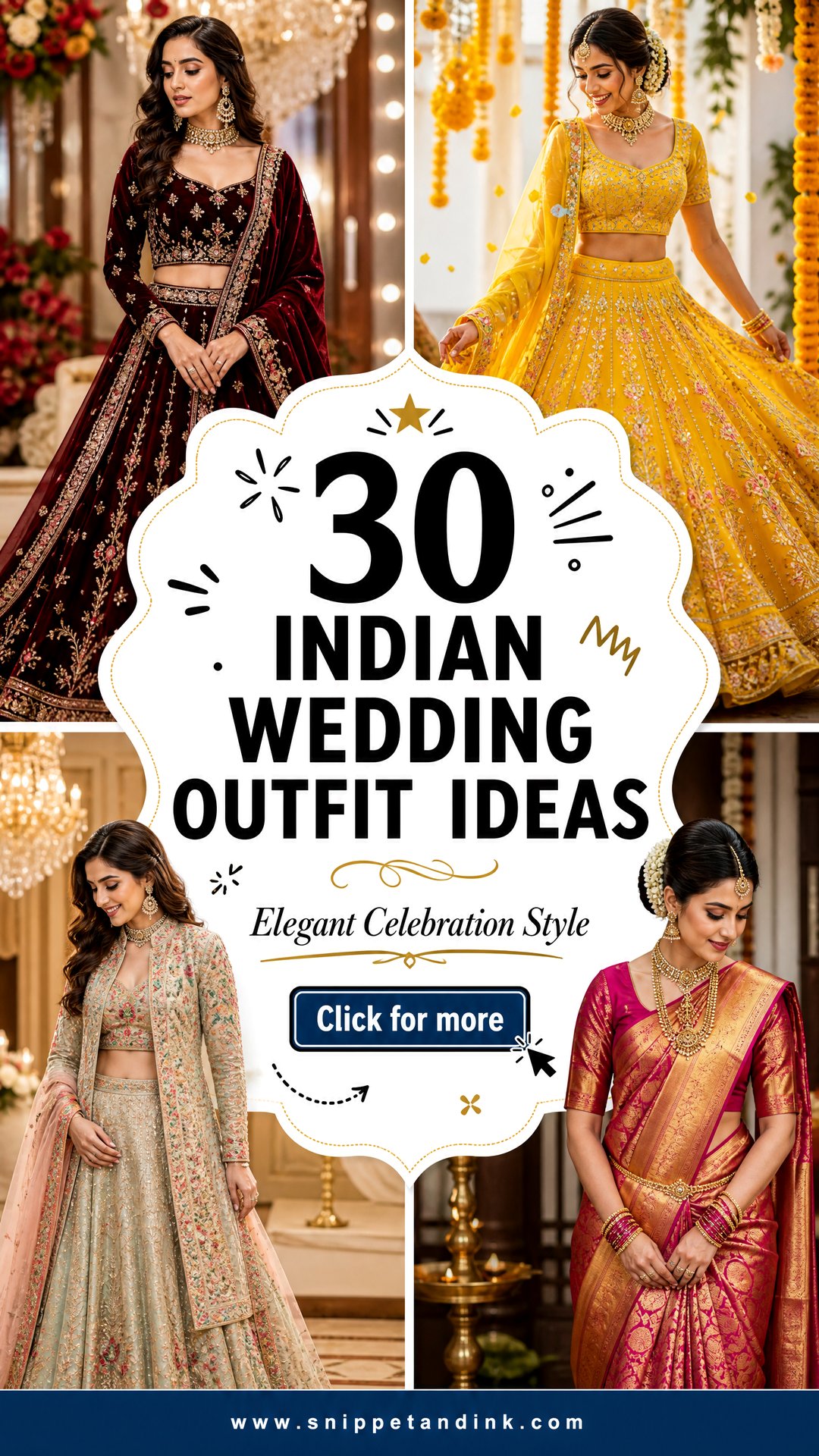
Guest, Bridesmaid or Mother: How Dressed Up Should You Be?
Your relationship to the couple decides your level more than the event does. Immediate family wears the richest fabrics and heaviest embroidery after the bride. Bridesmaids sit just below that, usually coordinated. Guests dress festively but stay a clear step back.
Many families now assign a color or theme to each function, so ask before you shop. And whatever your role, avoid the bride’s main color for the day of her ceremony, especially red and maroon if she’s wearing them.
If you’re unsure, I’d rather see a guest slightly underdressed in a rich fabric than overdressed in heavy bridal embroidery. A good silk saree or a well-cut Anarkali never looks out of place, while a lehenga that rivals the bride’s always gets noticed for the wrong reason.
Give your tailor time
Most sarees and many lehengas arrive with unstitched blouse fabric. During peak wedding season, tailors can be booked weeks out, so get blouses measured as soon as you buy. A new saree also needs its fall stitched along the inner hem and the edges finished with pico, which takes a few days. Leave time for one trial and one alteration before you travel.
1. Pastel Lehenga Outfit
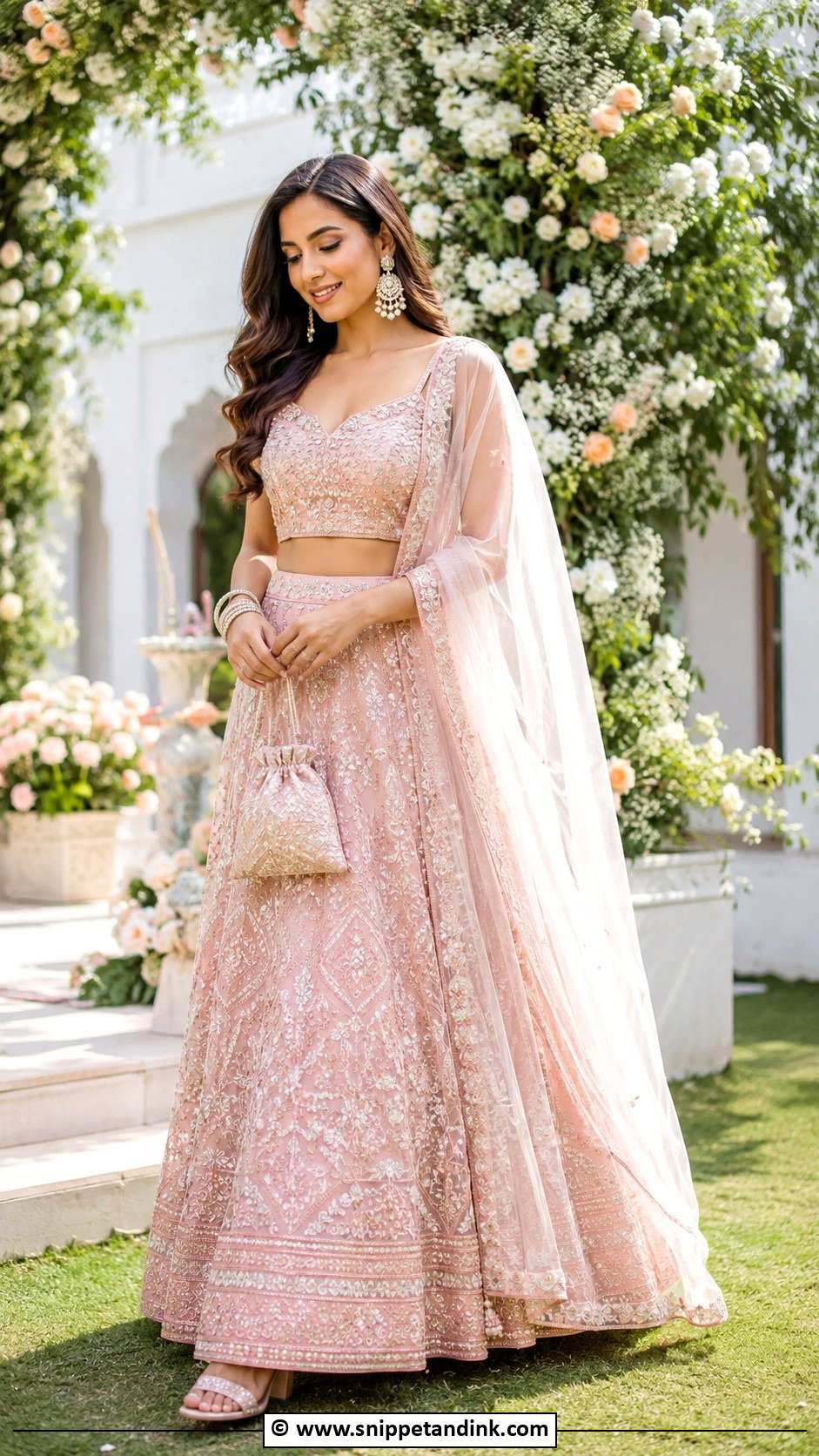
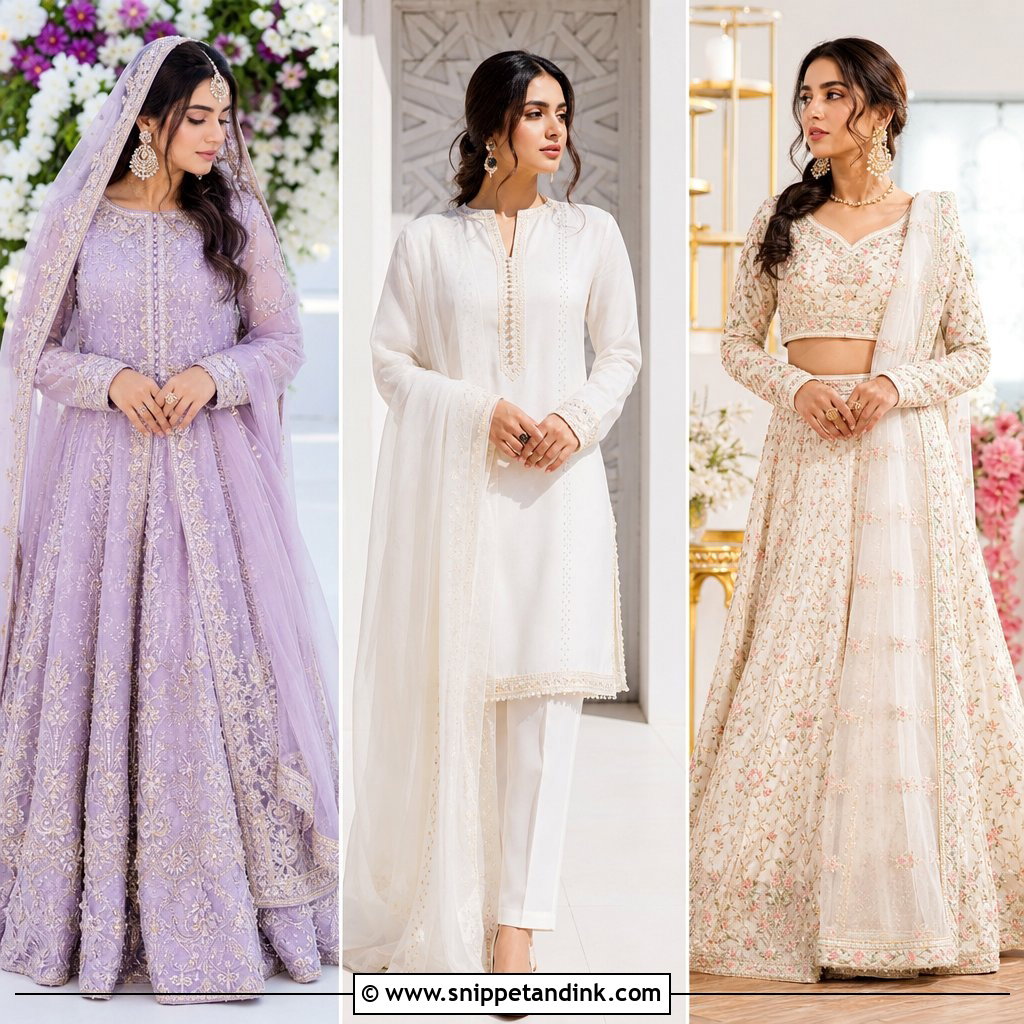
Pastels are for daylight. Blush, mint, powder blue, lavender and peach look fresh at a mehendi, engagement or garden ceremony, and they’re forgiving for bridesmaids because nobody clashes with the bride. A light skirt with threadwork or small mirrors keeps it festive. Drape the sheer dupatta over one shoulder and pin it at the back of the blouse so it doesn’t slide forward. Pearl earrings, stacked bangles, a potli and block heels finish it.
2. Silk Saree Outfit
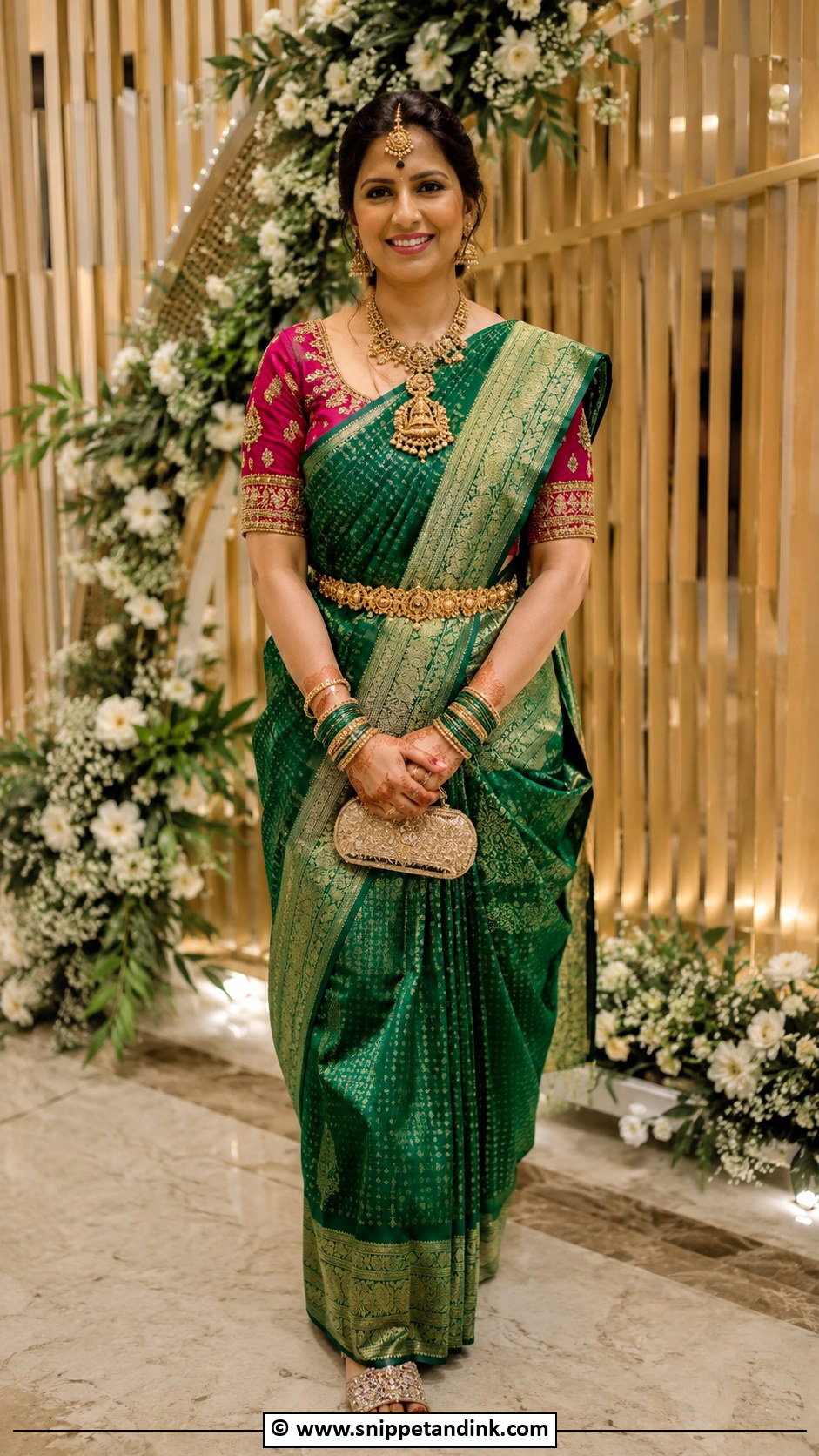
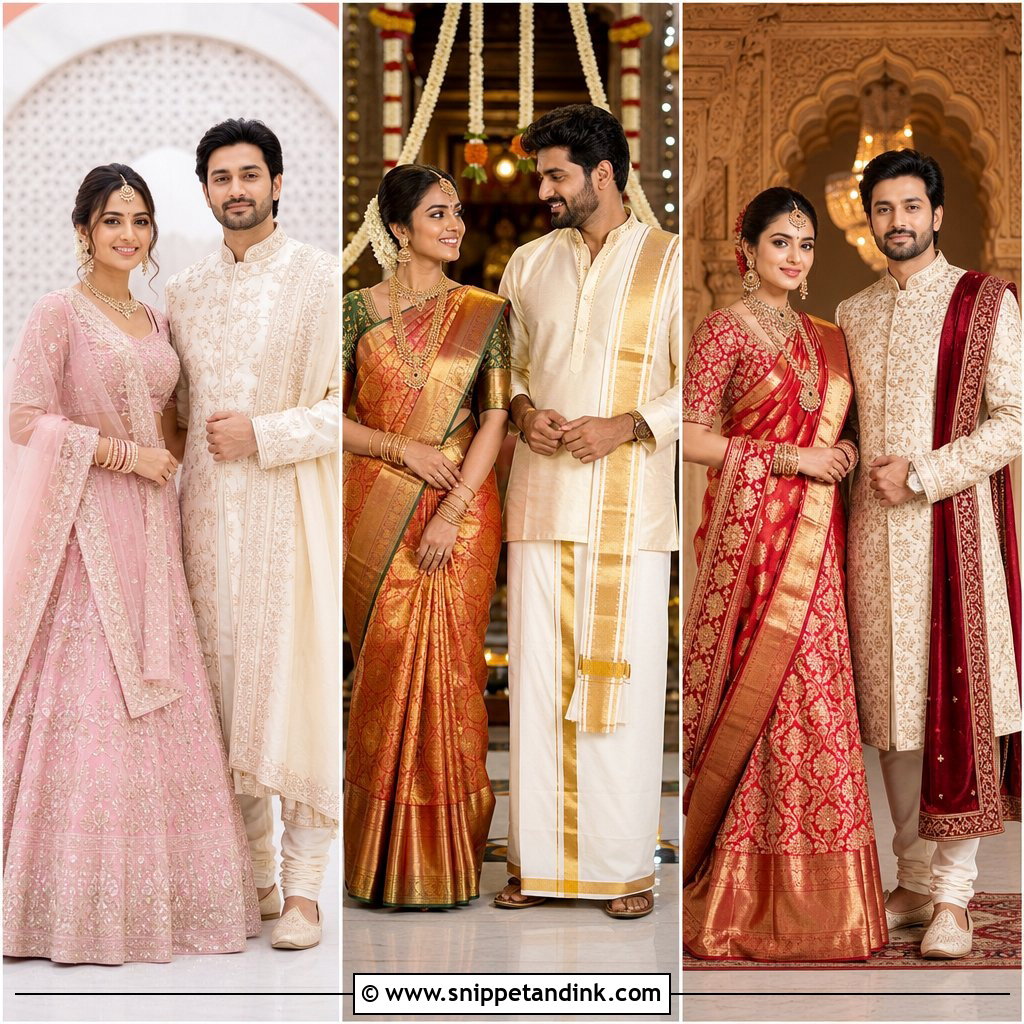
If you only buy one piece for a wedding season, make it a silk saree. Banarasi, Kanjivaram, Chanderi and Paithani each drape differently: Chanderi is light and almost sheer, while Kanjivaram is dense and holds sharp pleats. Emerald, royal blue, deep purple and mustard gold look festive. A well-fitted blouse matters more than the jewelry, so get it stitched early. Temple jewelry, bangles and a bun with flowers suit most silks. With heavy zari, keep everything else quiet.
3. Anarkali Suit Outfit
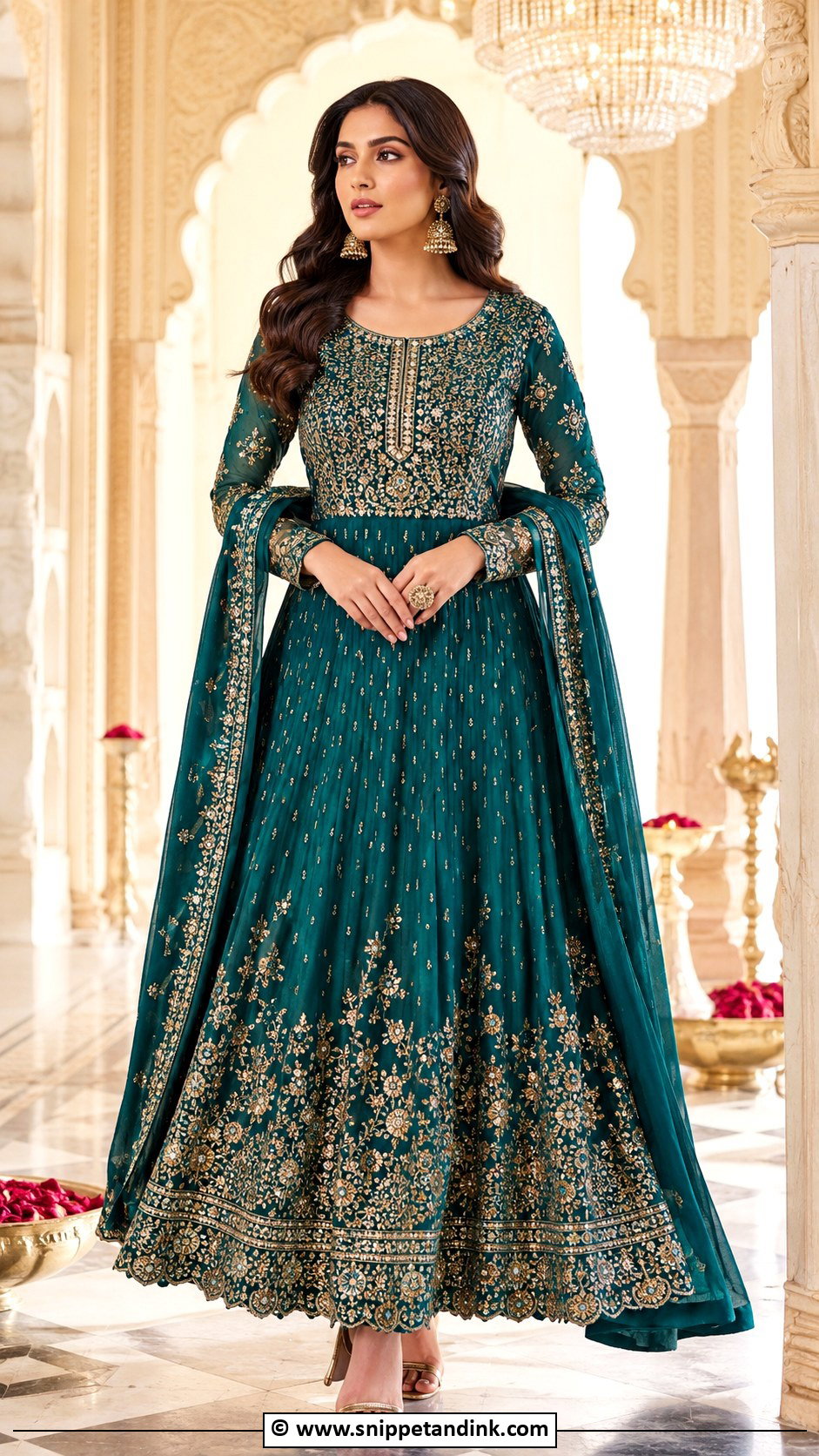
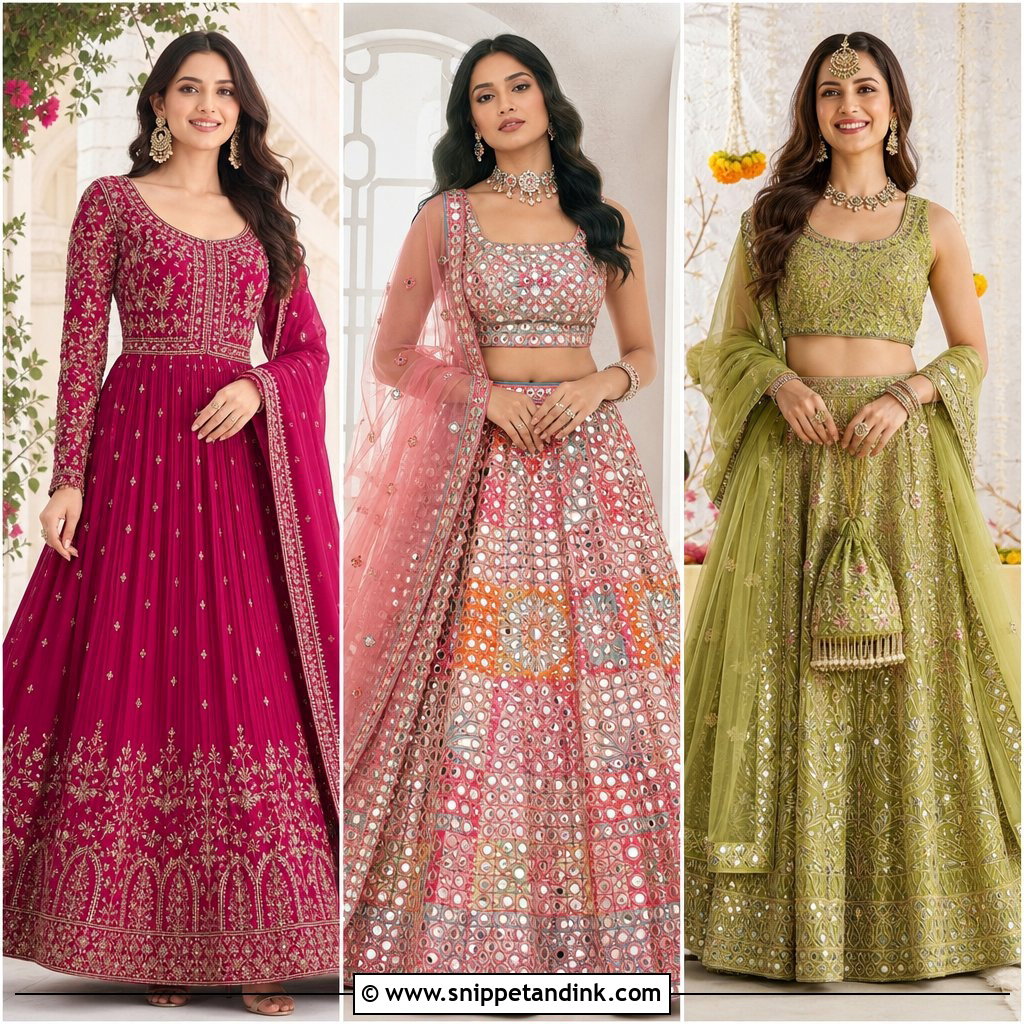
Anarkalis give you coverage and movement without a single drape to manage, which is why I recommend them to guests who’ve never worn a saree. Georgette, silk, chiffon or organza with embroidery at the neck, sleeves and hem all work. Teal, wine, ivory-gold and dusty rose look rich in a floor-length cut with a matching dupatta. Jhumkas, a statement ring and juttis or heels complete it. Mind the hem on stairs; a floor-length kali is easy to step on.
4. Sharara Set Outfit
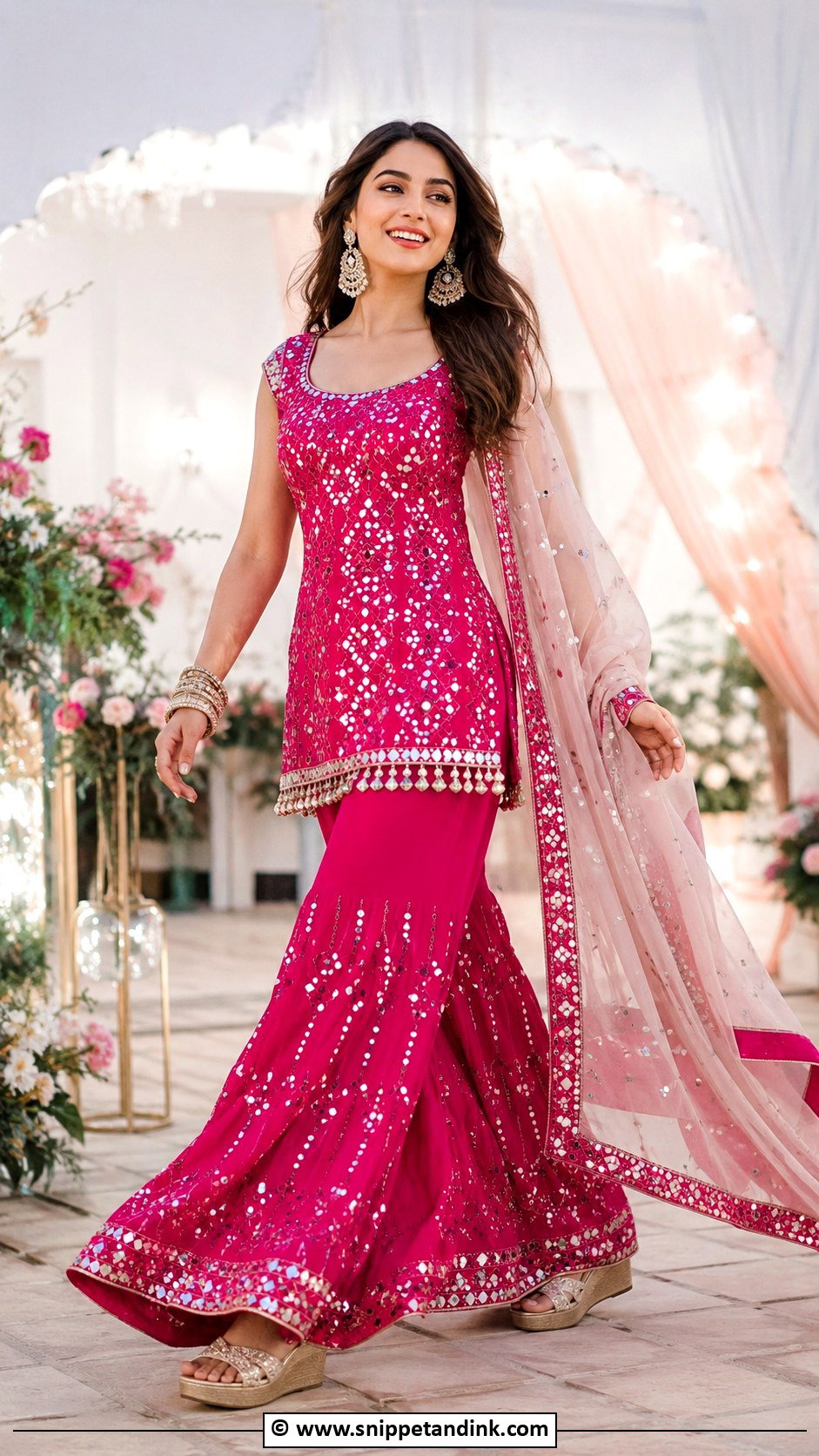
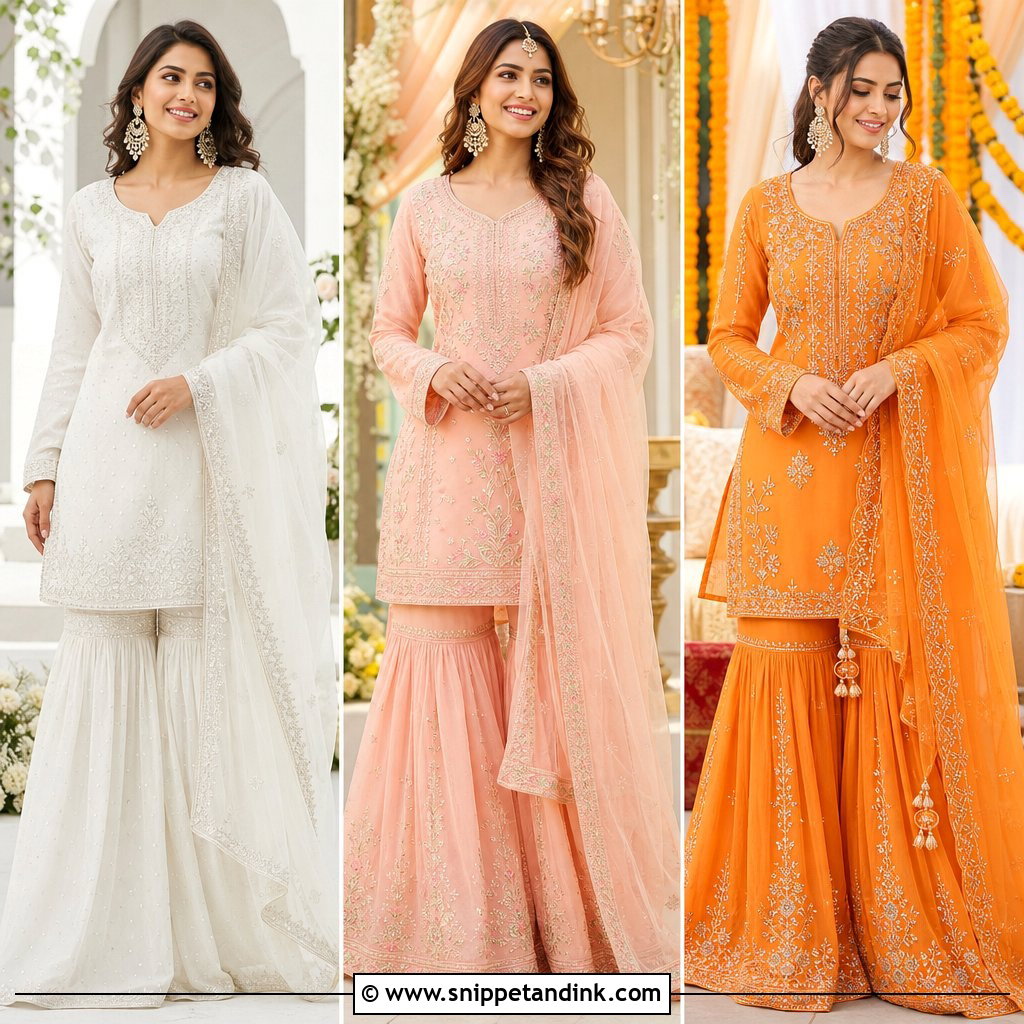
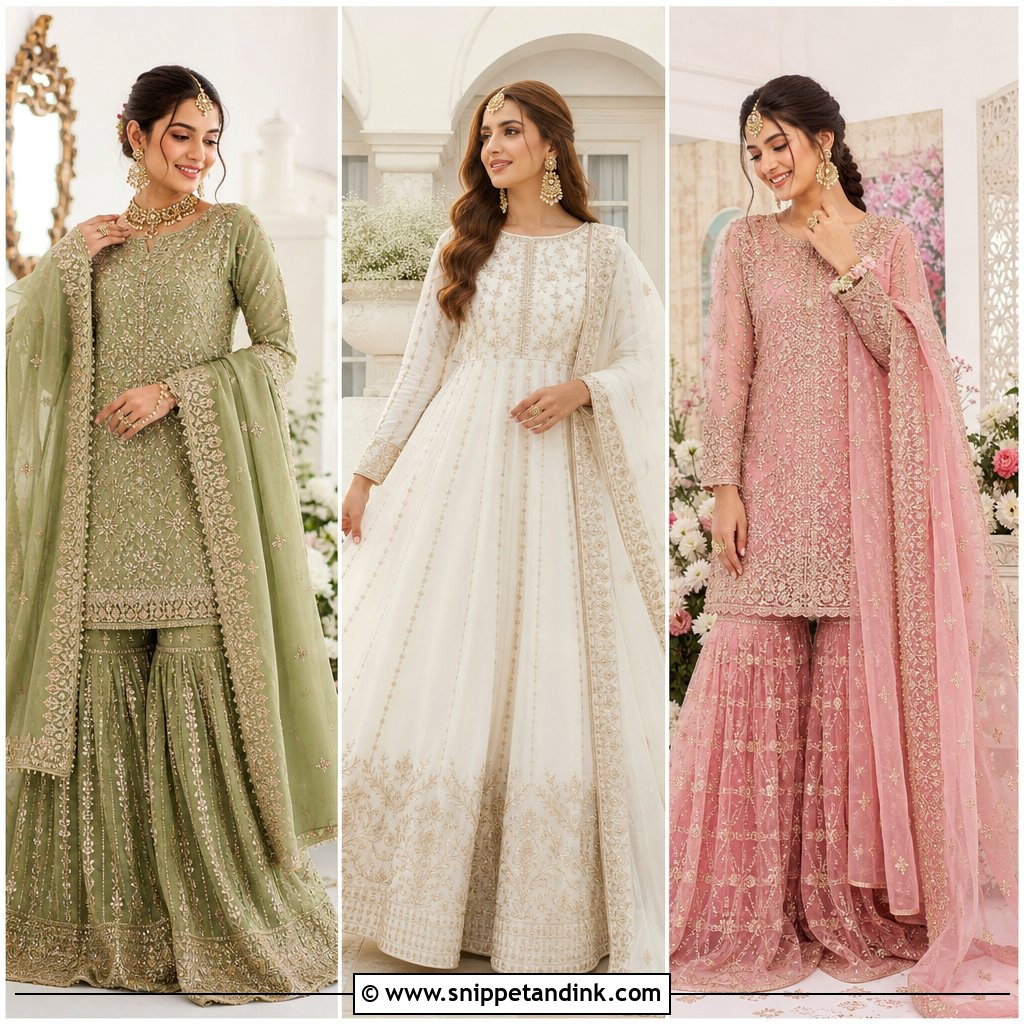
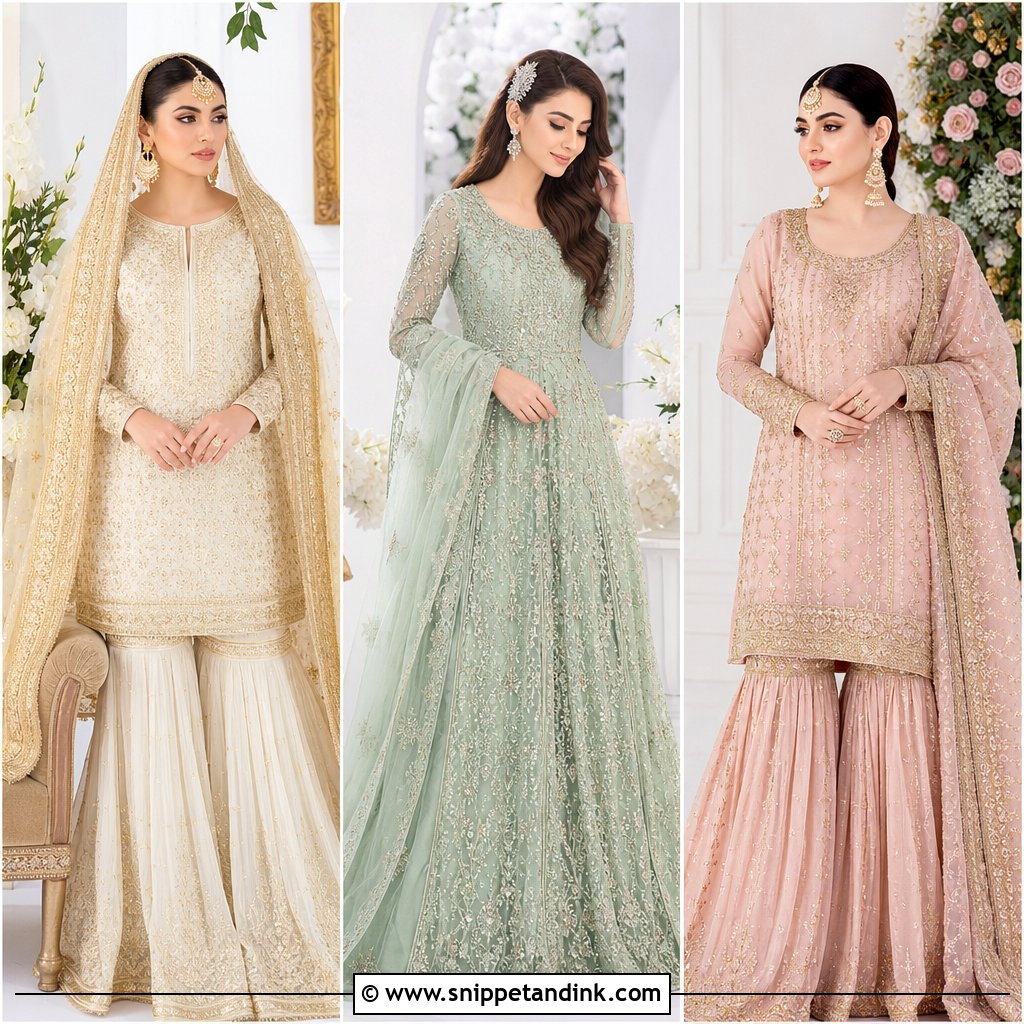
A sharara is the outfit I’d put on anyone who plans to dance at the sangeet or sit for hours at the mehendi celebrations. The wide legs give you full movement. Pair a short kurti or peplum with mirror work, gota patti, sequins or zari. Fuchsia, marigold, emerald, turquoise and coral suit lively functions. Light dupatta, chandbalis, bangles and wedges complete it. Wedges are smarter than stilettos here, because a sharara hem catches thin heels.
5. Gharara Suit Outfit
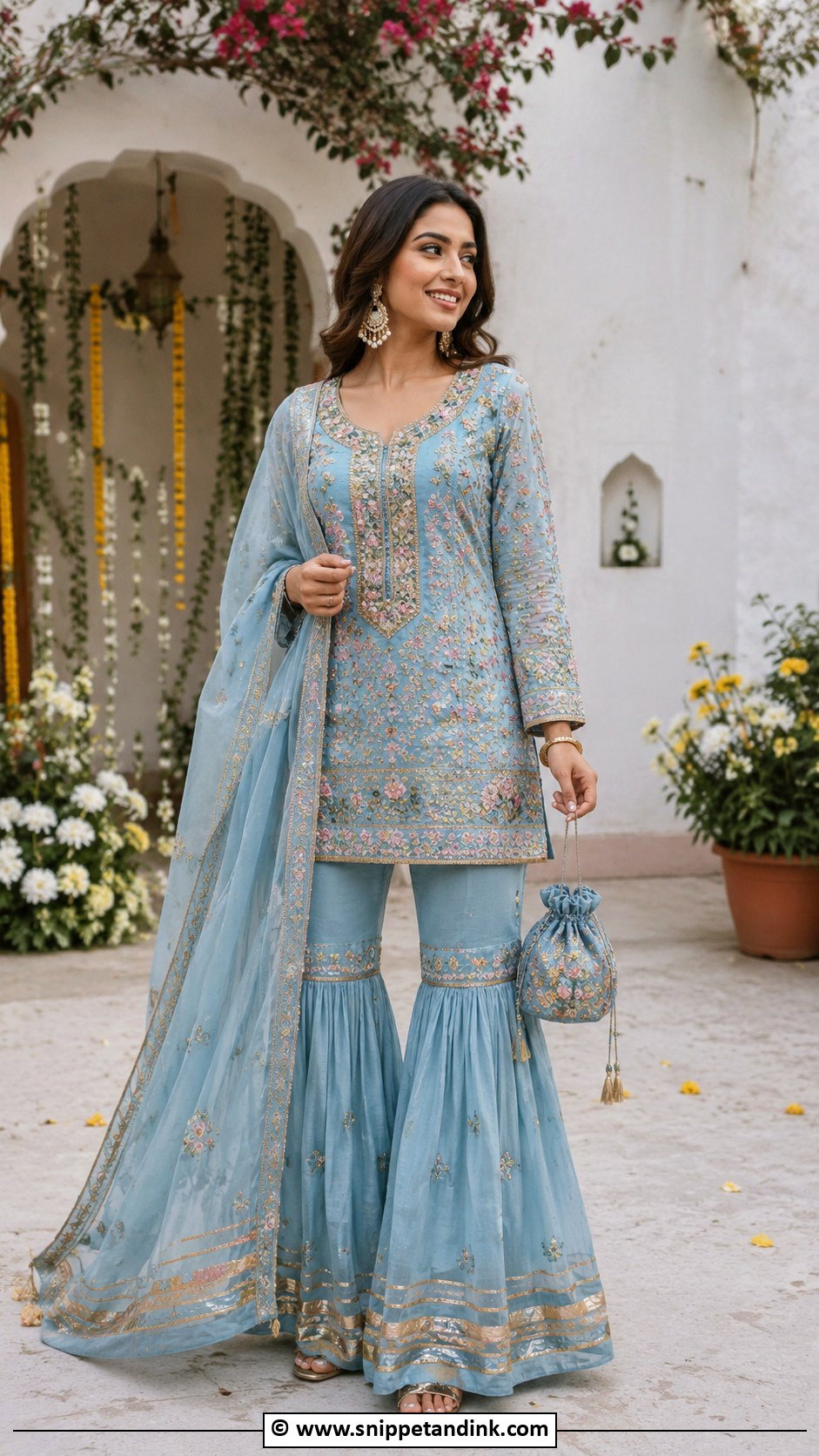
Ghararas come from the Nawabi courts of Lucknow and Hyderabad. The leg is fitted to the knee, then flares out from a joint usually finished with lace, gota or an embroidered band. That structure looks festive even in plain fabric. Pair it with a short kurta and a heavily bordered dupatta. Pastels suit daytime; jewel shades suit evenings. Have the knee joint cut with some ease, since a tight one pulls when you sit.
6. Pre Draped Saree Outfit
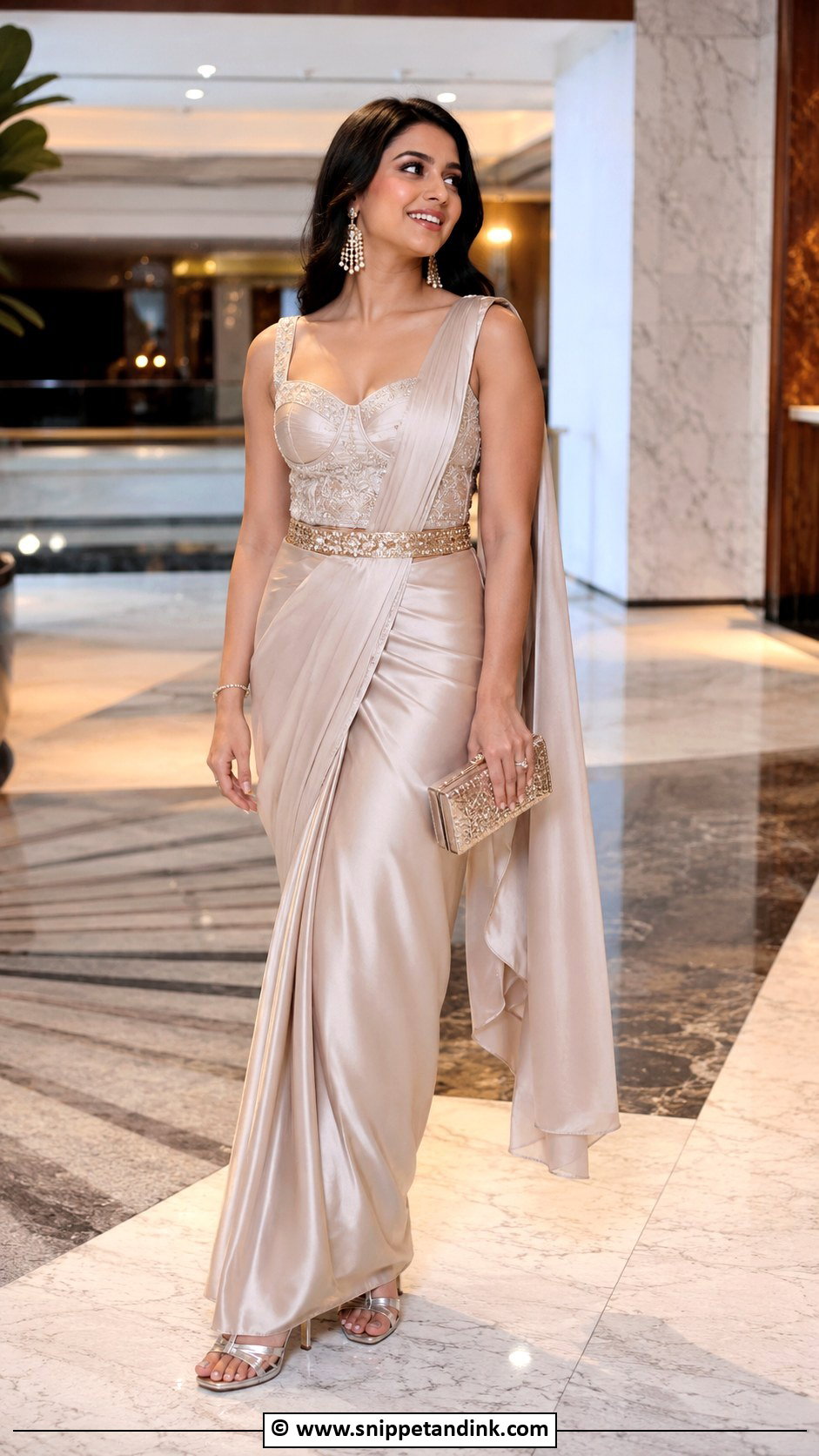
Pleats that stay put are worth a lot at a long event. A pre-draped saree has stitched pleats and pallu, so you can sit, dance and hug without anything sliding. Satin, georgette, chiffon and crepe versions look sleek at receptions. A belt or cape detail modernizes it. Metallic heels, a clutch and statement earrings complete the look. For destination weddings it saves you from needing someone to drape you in a hotel room.
7. Mirror Work Lehenga Outfit
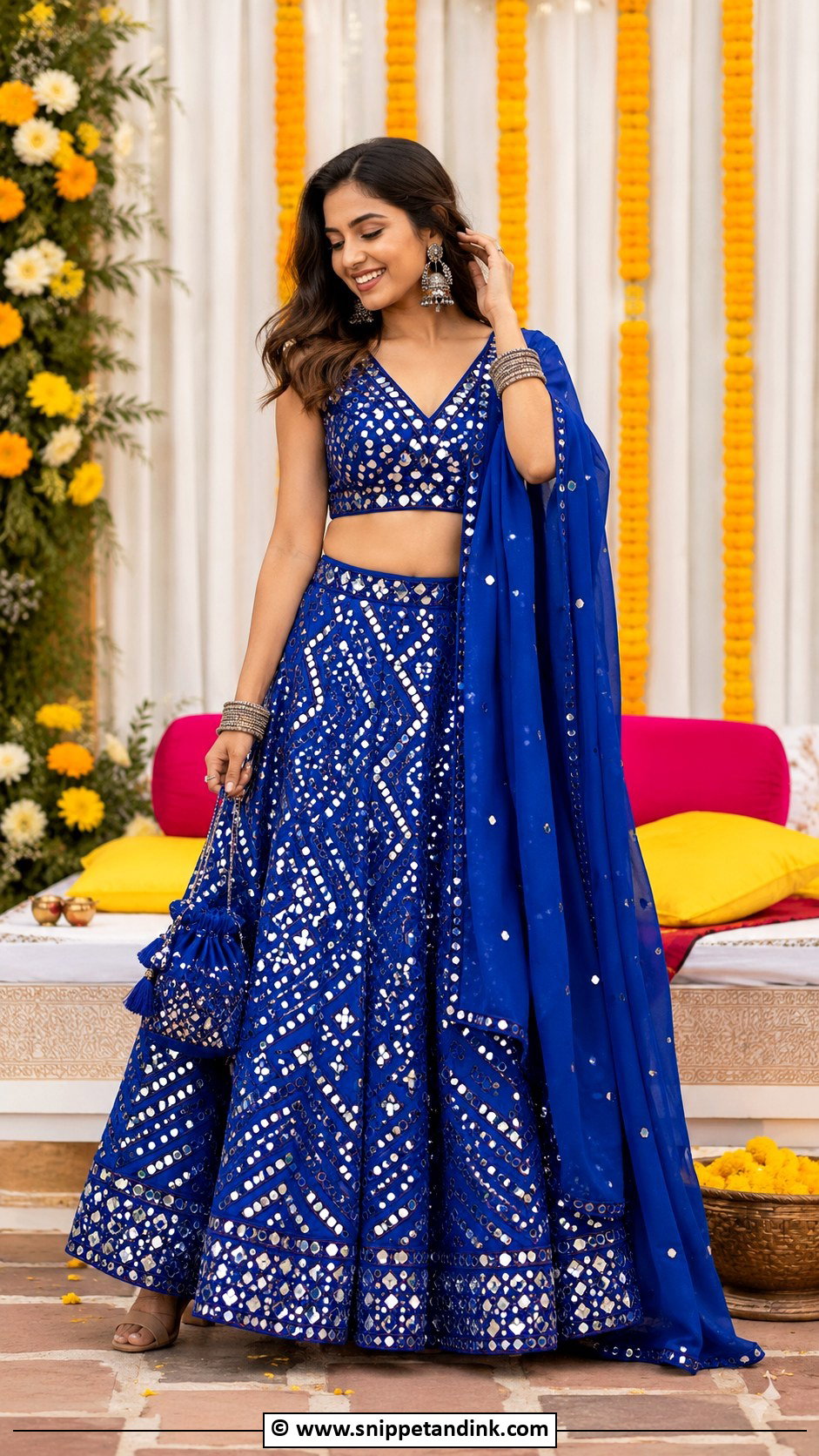
Bright light and fast dancing is where mirror work earns its place. Choose a lightweight skirt with small mirrors scattered across it rather than solid embellishment; hand-stitched mirrors add real weight, and a heavy skirt tires you out by the second hour. A cropped mirror blouse and soft dupatta balance the look. Yellow, orange, pink, green and cobalt suit it. I find oxidized earrings suit mirrors better than polished gold.
8. Floral Organza Saree Outfit
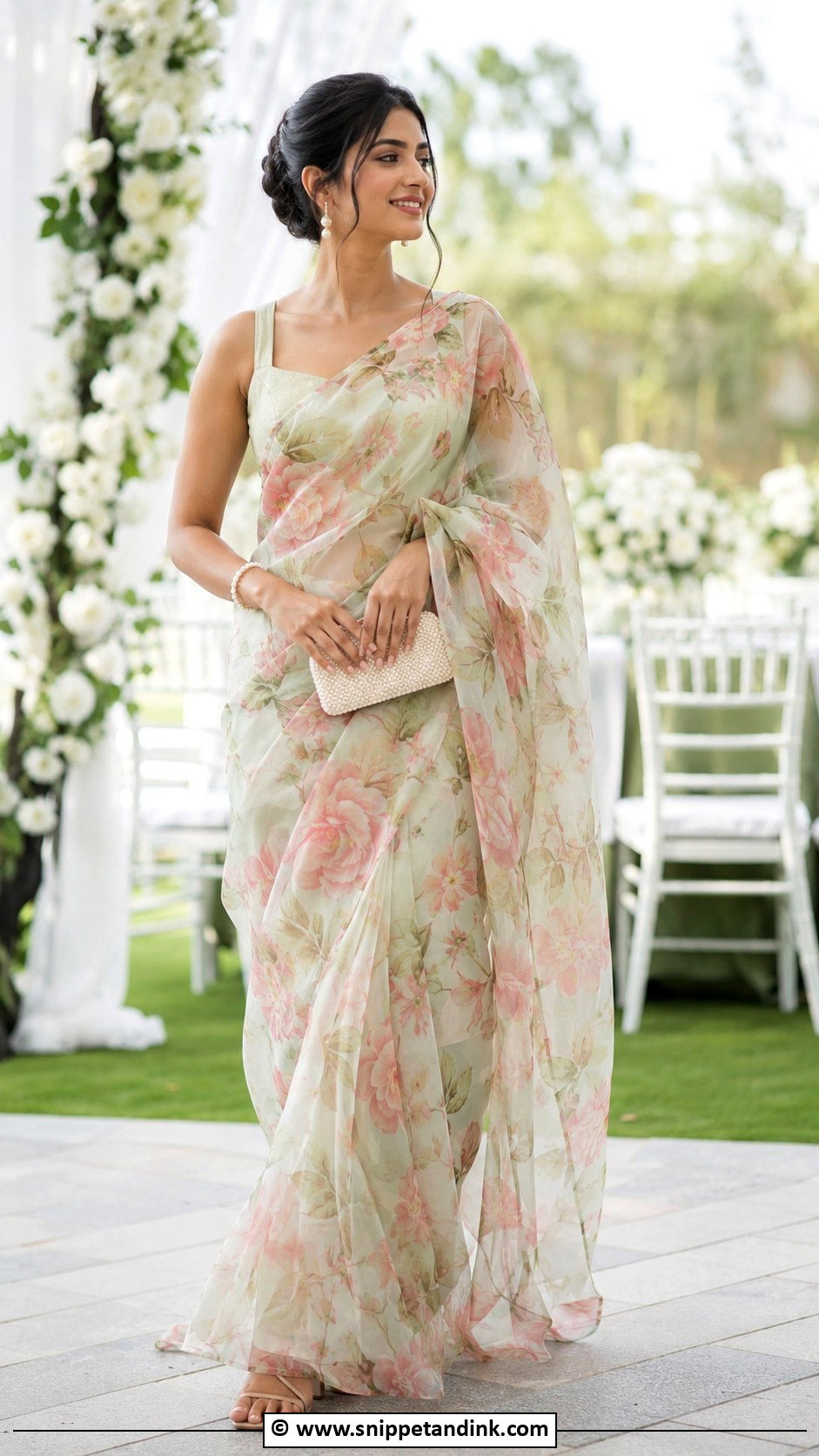
Floral organza is the daytime saree I reach for most. It’s light and airy but slightly crisp, so it holds volume without weight. Choose floral prints, delicate embroidery or light sequins, and pair with a simple blouse in a matching or contrast shade. Because organza is springy, pin the pleats and the pallu at the shoulder or the drape spreads sideways. Pearl earrings, a bracelet and strappy heels finish it for a garden wedding or brunch function.
9. Sequin Saree Outfit
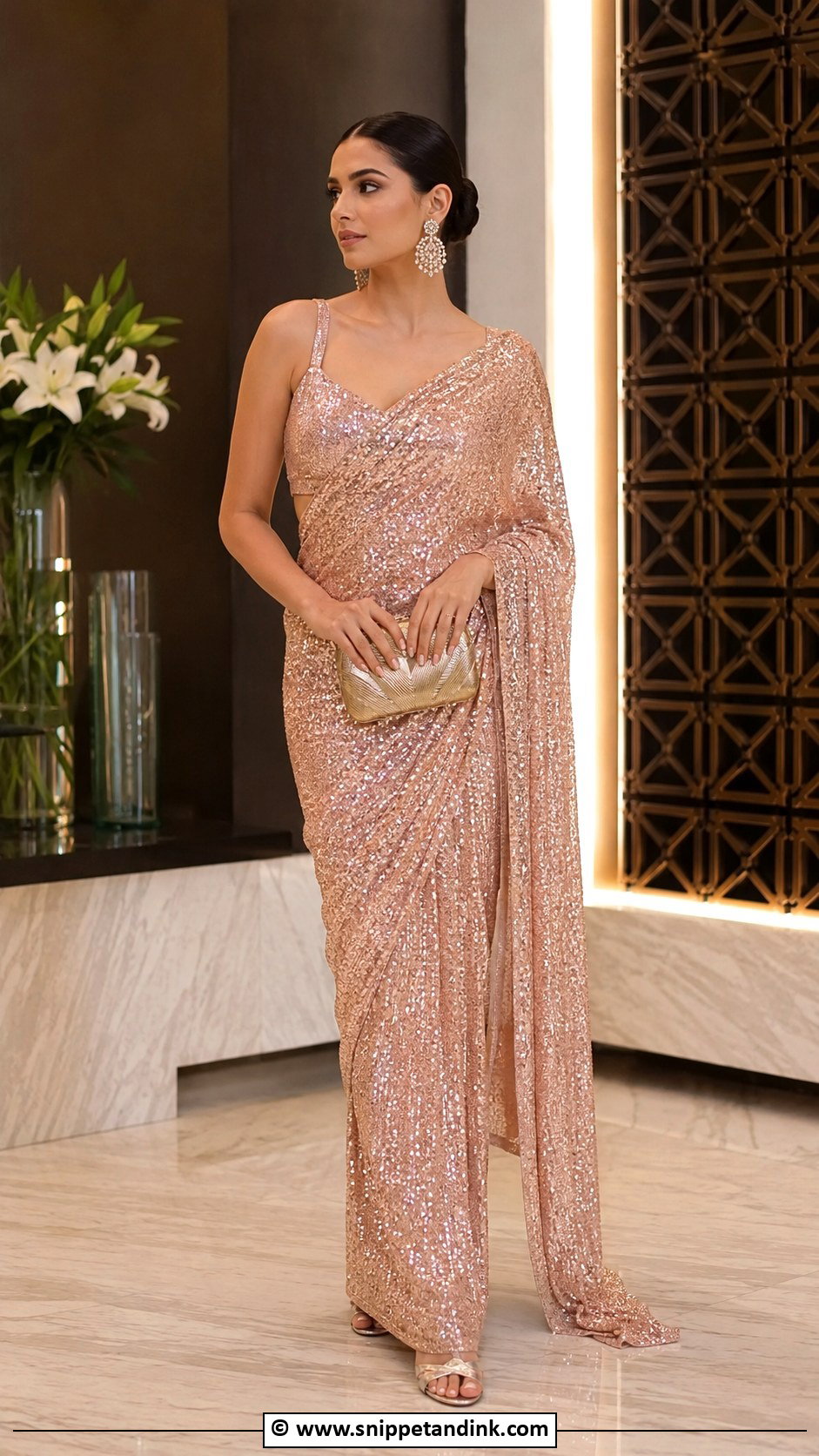
Evening receptions and sangeets suit sequins. Champagne, silver, rose gold, navy, emerald and plum all photograph with sparkle under event lighting. Keep the blouse simple, earrings bold and necklaces off. Sequins can scratch the inner arm on fitted sleeves, so a lined or sleeveless blouse is more comfortable. Sleek hair, soft glam makeup and metallic heels complete the look.
10. Banarasi Lehenga Outfit
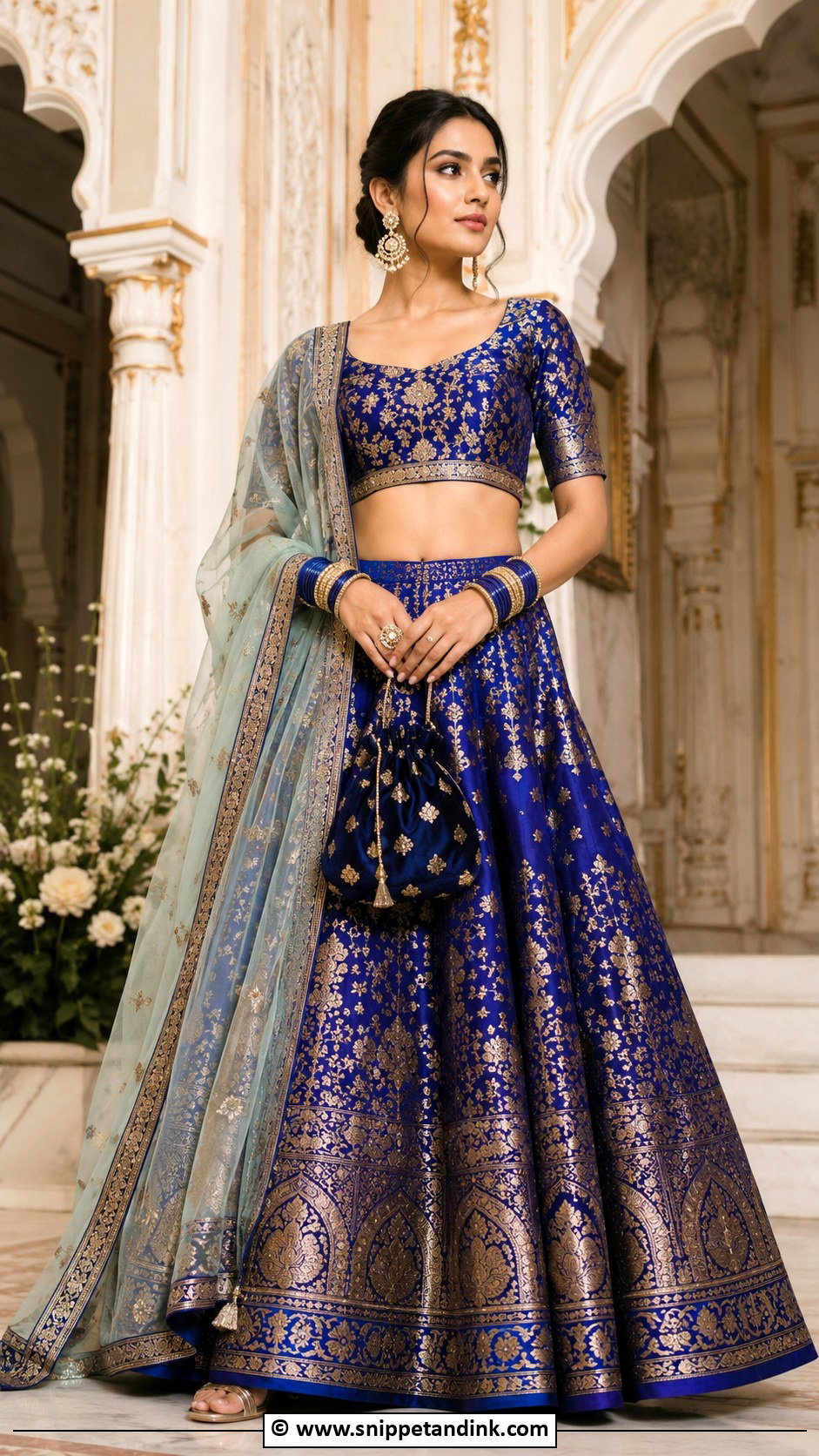
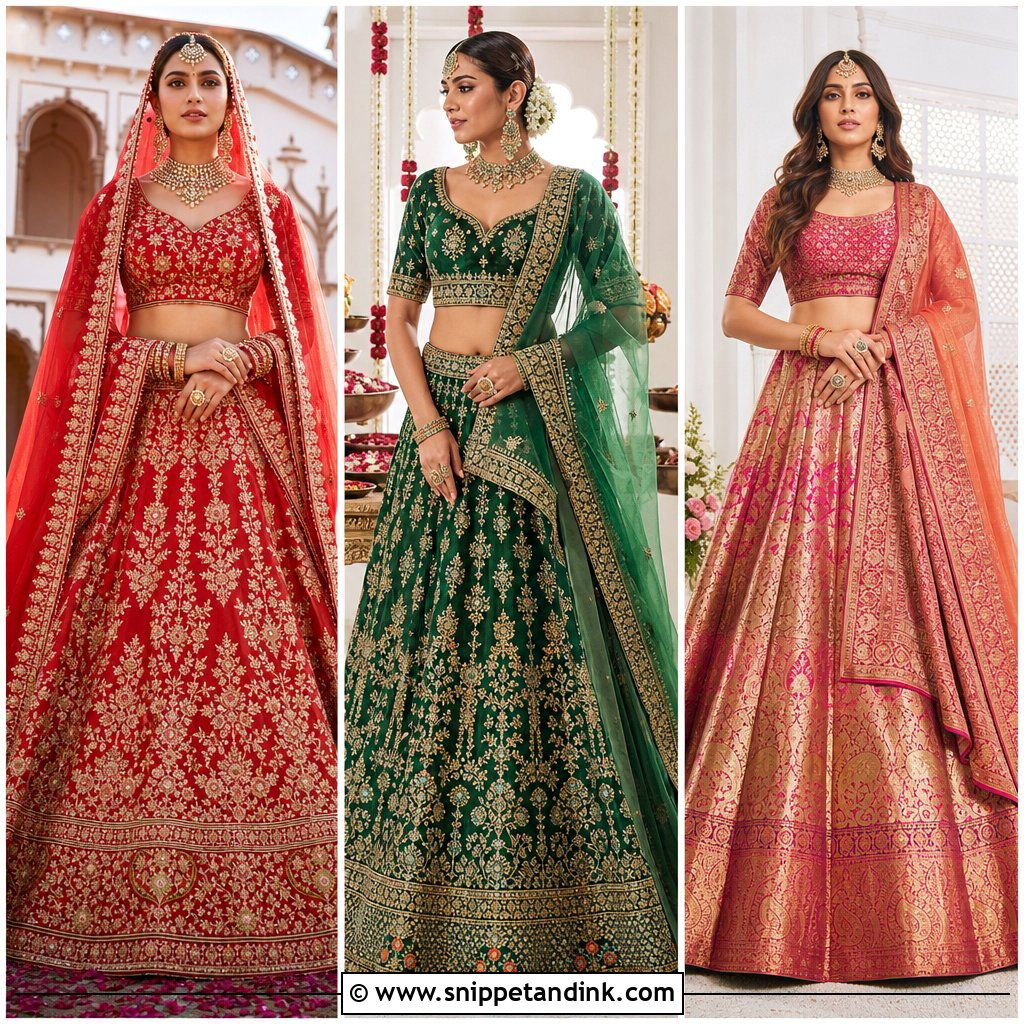
Banarasi brocade on a lehenga skirt gives you the richness of a silk saree with a skirt’s ease. The woven zari carries the outfit, so keep the silhouette clean. Close family can wear rani pink, emerald, royal blue, gold or deep red. Guests should step back from red and the bride’s chosen color, toward softer shades. A brocade blouse, light dupatta, kundan earrings and a structured potli complete it.
11. Chikankari Sharara Outfit
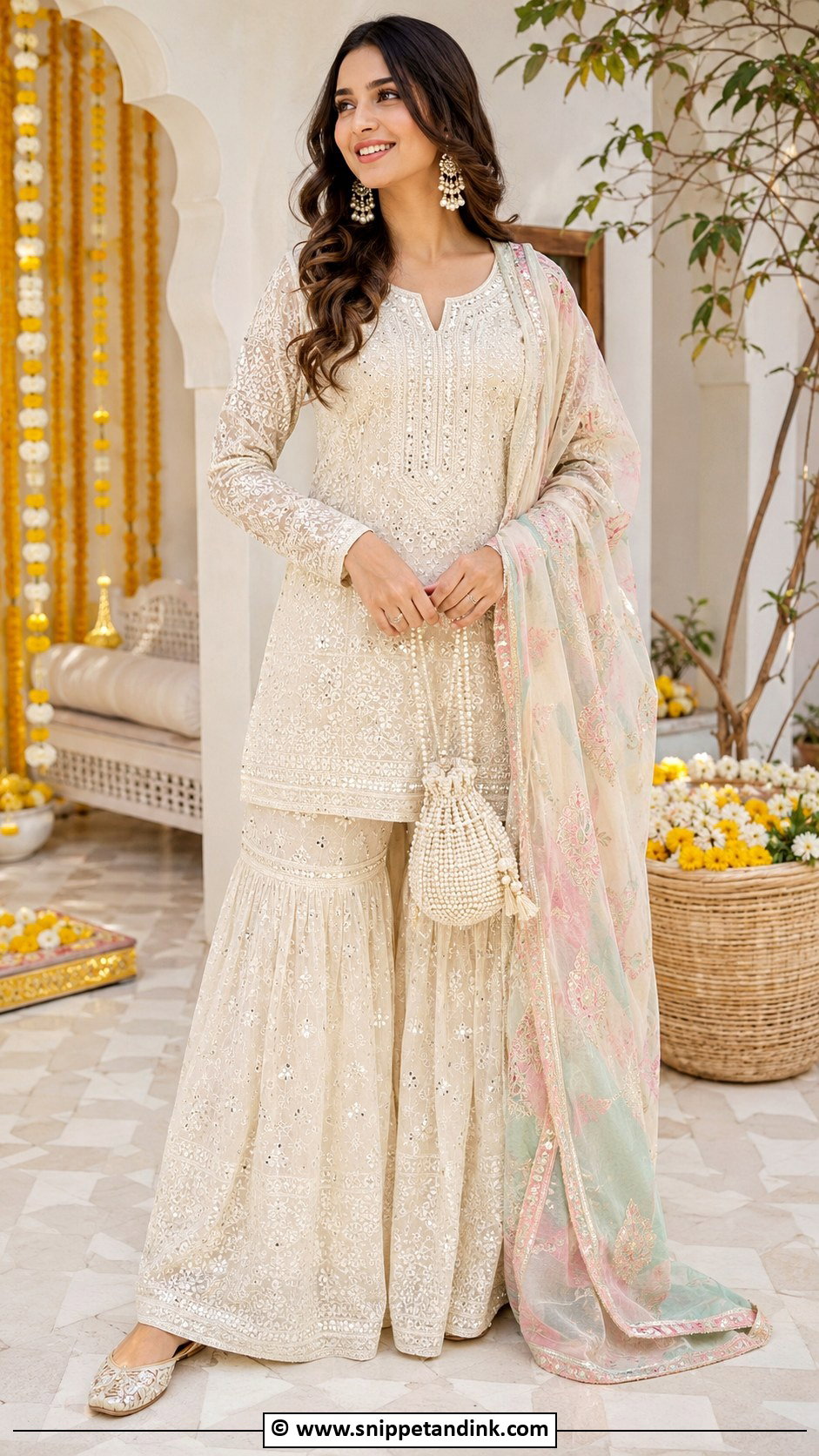
Chikankari is hand embroidery from Lucknow, traditionally done on fine cotton, and that’s what keeps a chikankari sharara cool on a warm afternoon. Ivory with pastel accents, powder pink, mint, sage or pale yellow look fresh. For a wedding, choose a set with mukaish, sequins, pearls or a festive border so it doesn’t read as daywear. Pearl earrings, juttis and a small embroidered bag finish it for mehendi or an intimate ceremony.
12. Velvet Lehenga Outfit
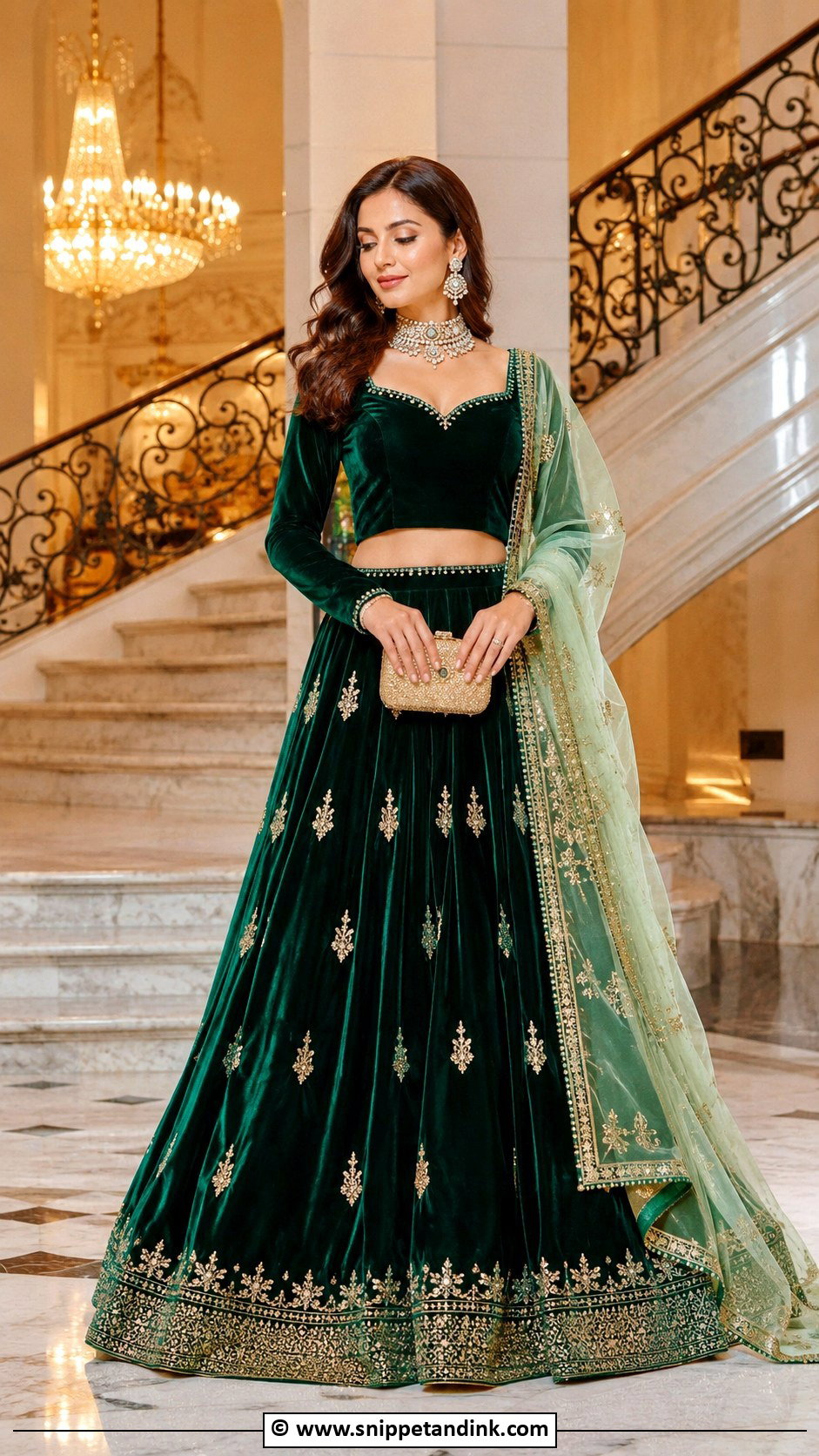
I only put clients in velvet for a winter wedding or an air-conditioned hall. It traps heat and shows sweat in warm rooms. In the right setting, maroon, emerald, navy, plum and bottle green velvet look rich even with simple embroidery. Balance the heavy skirt with a net or organza dupatta, then add kundan jewelry and heels with a stable base. Velvet marks easily if crushed, so hang it or roll it for travel.
13. Haldi Yellow Lehenga Outfit
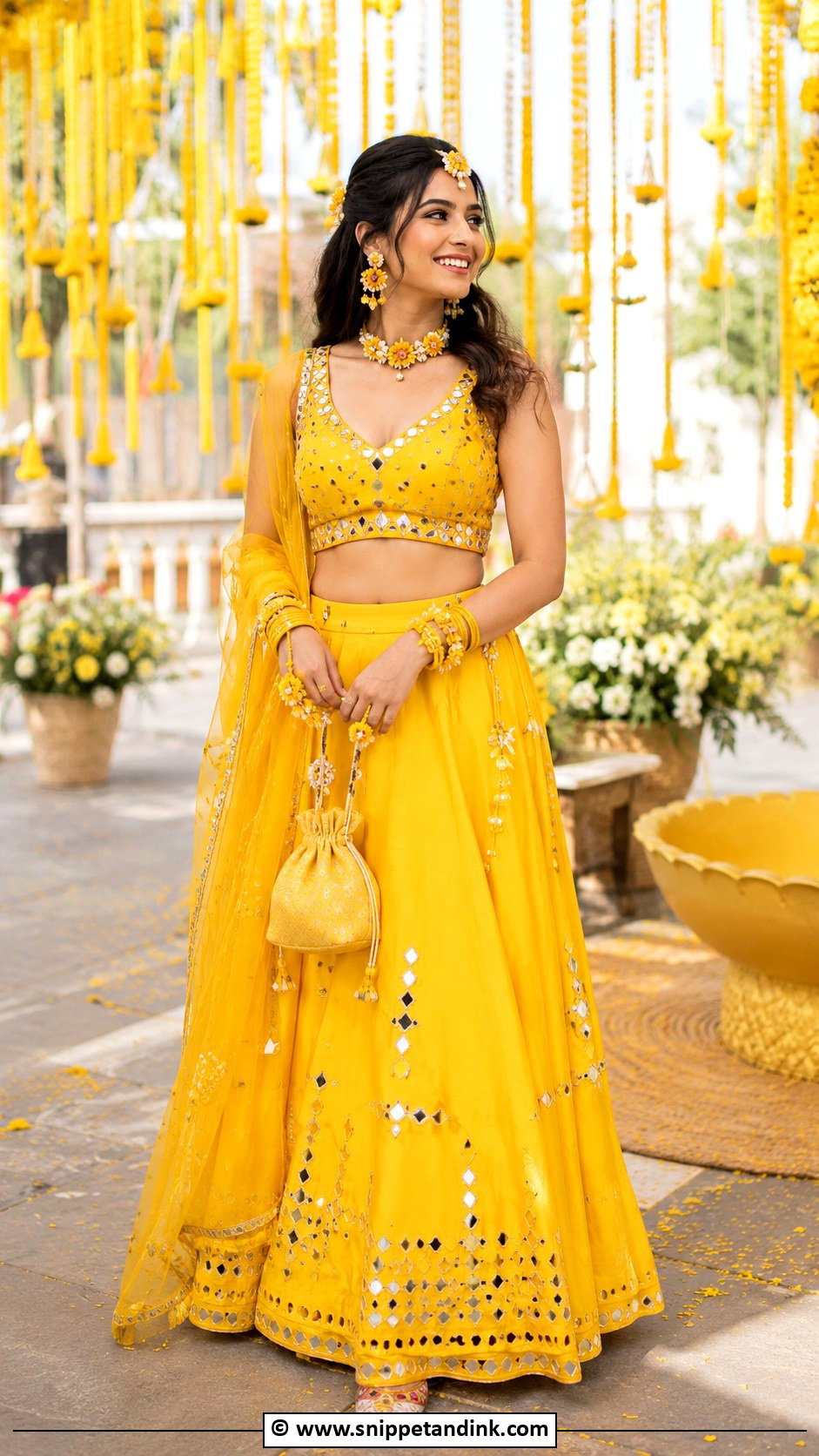
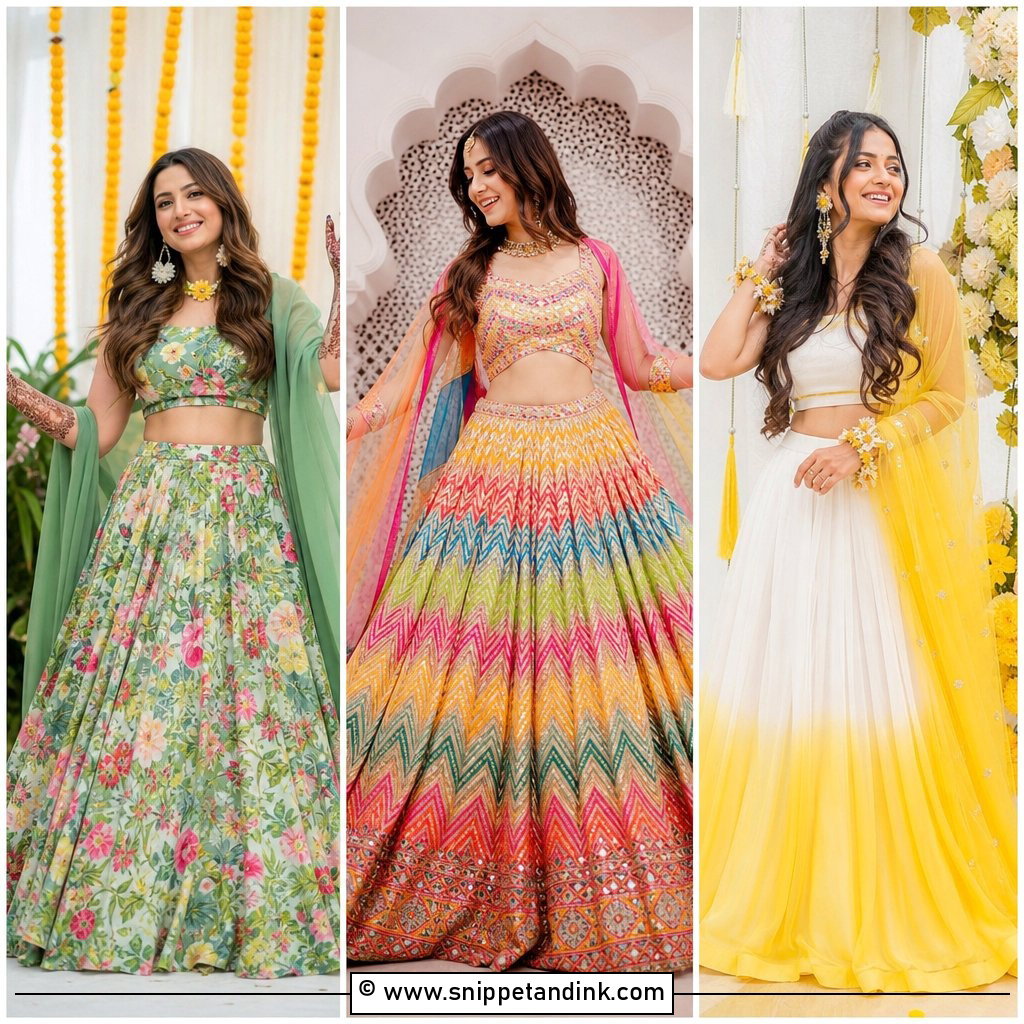
Haldi means turmeric, oil and a floor seat, so a haldi lehenga should be light, washable and not too precious. Yellow, marigold, mustard and lemon suit the mood. Mirror work, floral embroidery, tassels or gota patti keep it festive. A sleeveless or short-sleeved blouse stays out of the paste. Guests should keep embellishment simpler than the bride’s. Floral jewelry, jhumkas and juttis or wedges finish it.
14. Mehendi Green Sharara Outfit
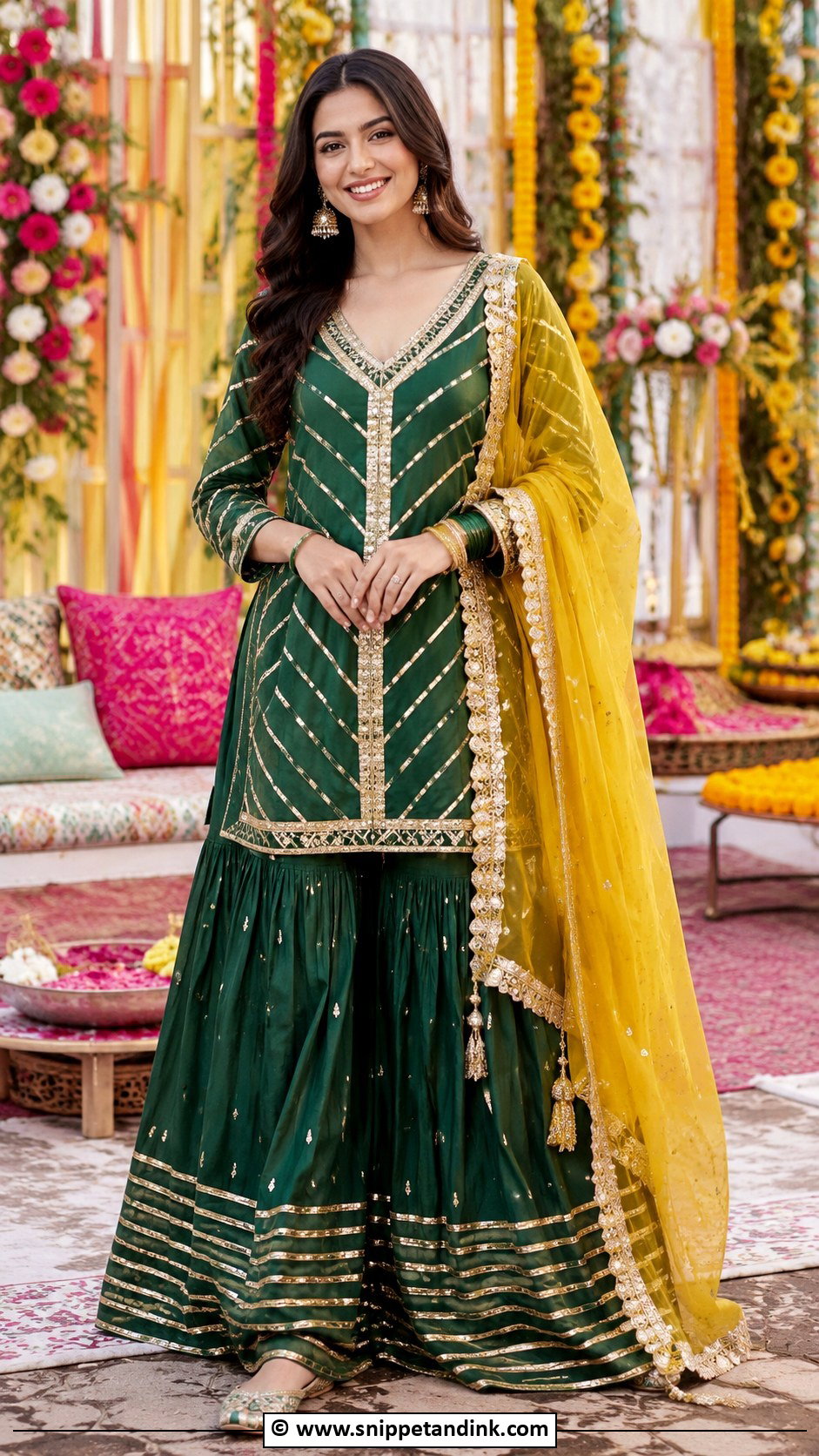
A mehendi green sharara outfit suits a henna ceremony in more than just color. Sage, mint, emerald or parrot green all connect to the event. Choose short or three-quarter sleeves, because the henna artist needs clear access to your hands and forearms, and long sleeves smudge wet paste. A short kurti with gota patti or mirror work and a yellow, pink or gold dupatta keep it lively. Embellished flats are easiest if you’ll sit for henna.
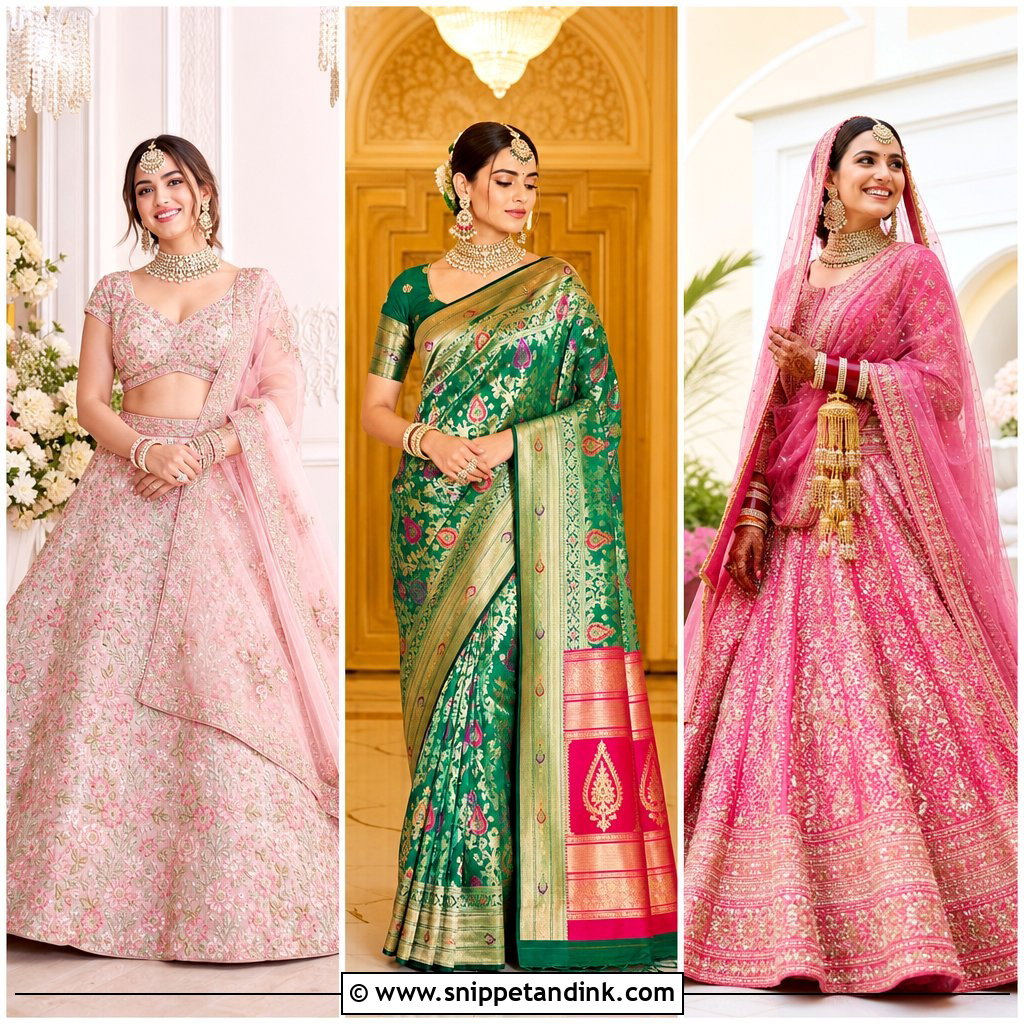

15. Sangeet Lehenga Outfit
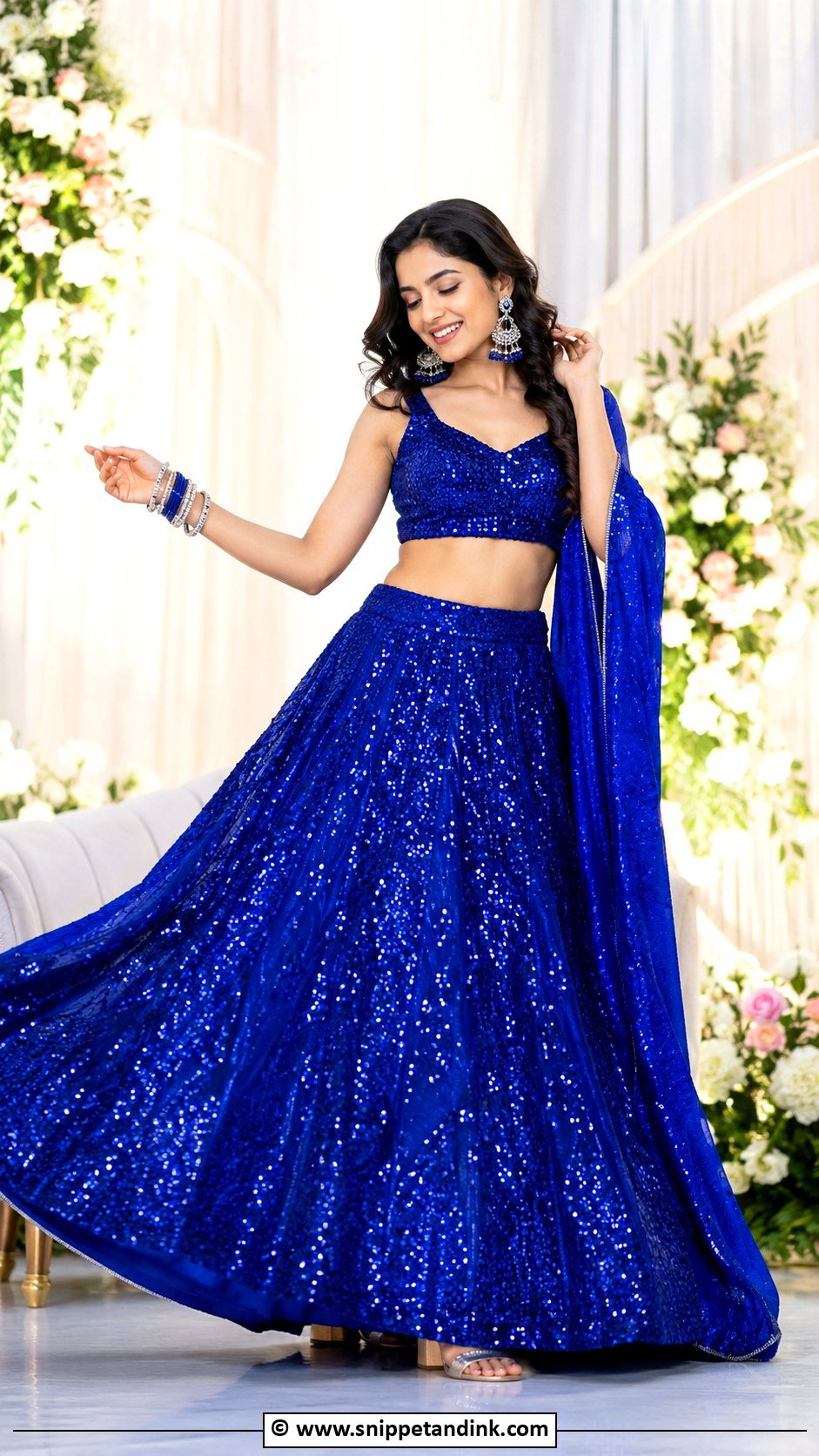
A sangeet lehenga outfit has one real job: let you dance. Georgette, net, organza or crepe with sequins or metallic embroidery move well. If you’re performing, I always ask for a full rehearsal in the actual outfit; a blouse that’s fine standing can ride up during choreography. Hot pink, electric blue, silver and emerald hold up under stage lighting. Pin the dupatta at the shoulder and the waist, and wear block heels or wedges.
16. Reception Gown Outfit
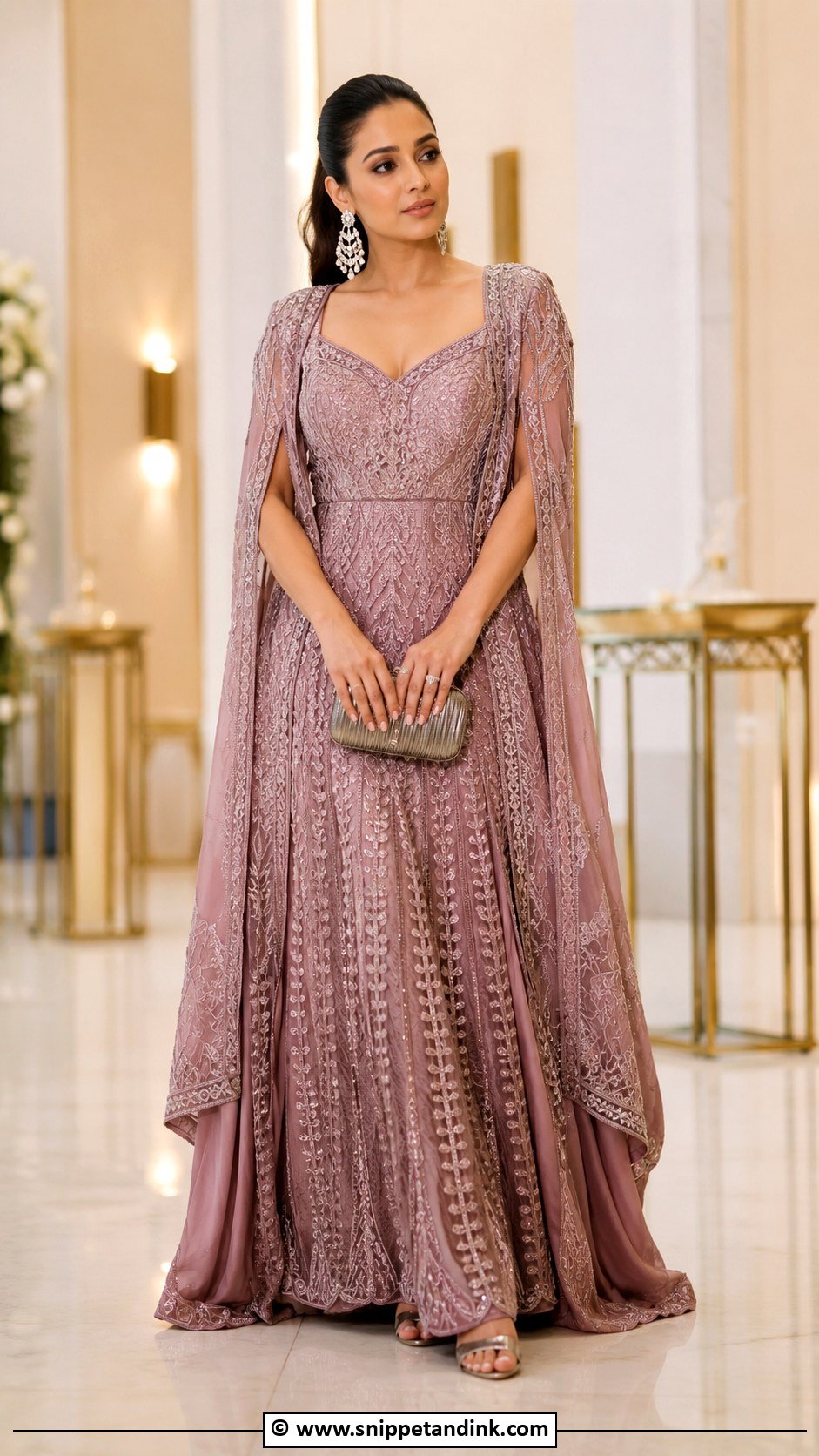
A reception gown is the simplest Indo-western option: one piece, nothing to drape. Look for Indian-inspired embroidery, beadwork, sequins, cape sleeves or a dupatta-style drape. Champagne, navy, silver, mauve, emerald and wine suit evening receptions. Chandelier earrings, metallic heels and a sleek clutch are enough. Have the hem taken up in your exact shoes, since gowns that drag catch on stage steps.
17. Indo Western Dhoti Set Outfit
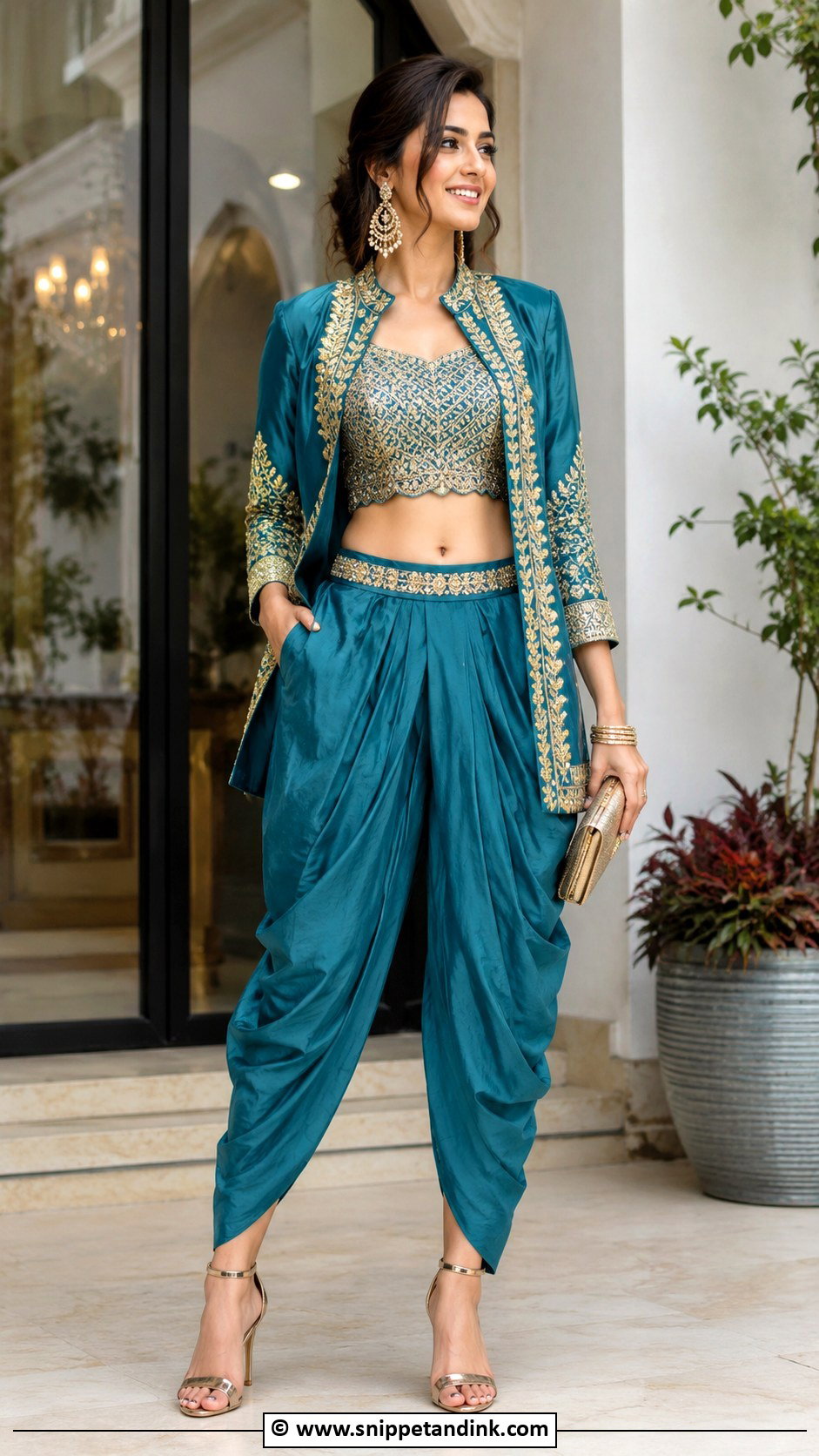
An Indo Western dhoti set outfit pairs draped dhoti trousers with a crop top, peplum kurti or jacket. It’s comfortable and different from the usual saree or lehenga. Embroidery, mirror work or metallic details keep it festive. Ivory-gold, teal, rust, magenta and olive look current. Try sitting cross-legged in it before buying, as dhoti drapes sometimes pull at the waist. Statement earrings, bangles and heeled sandals finish it.
18. Palazzo Suit Outfit
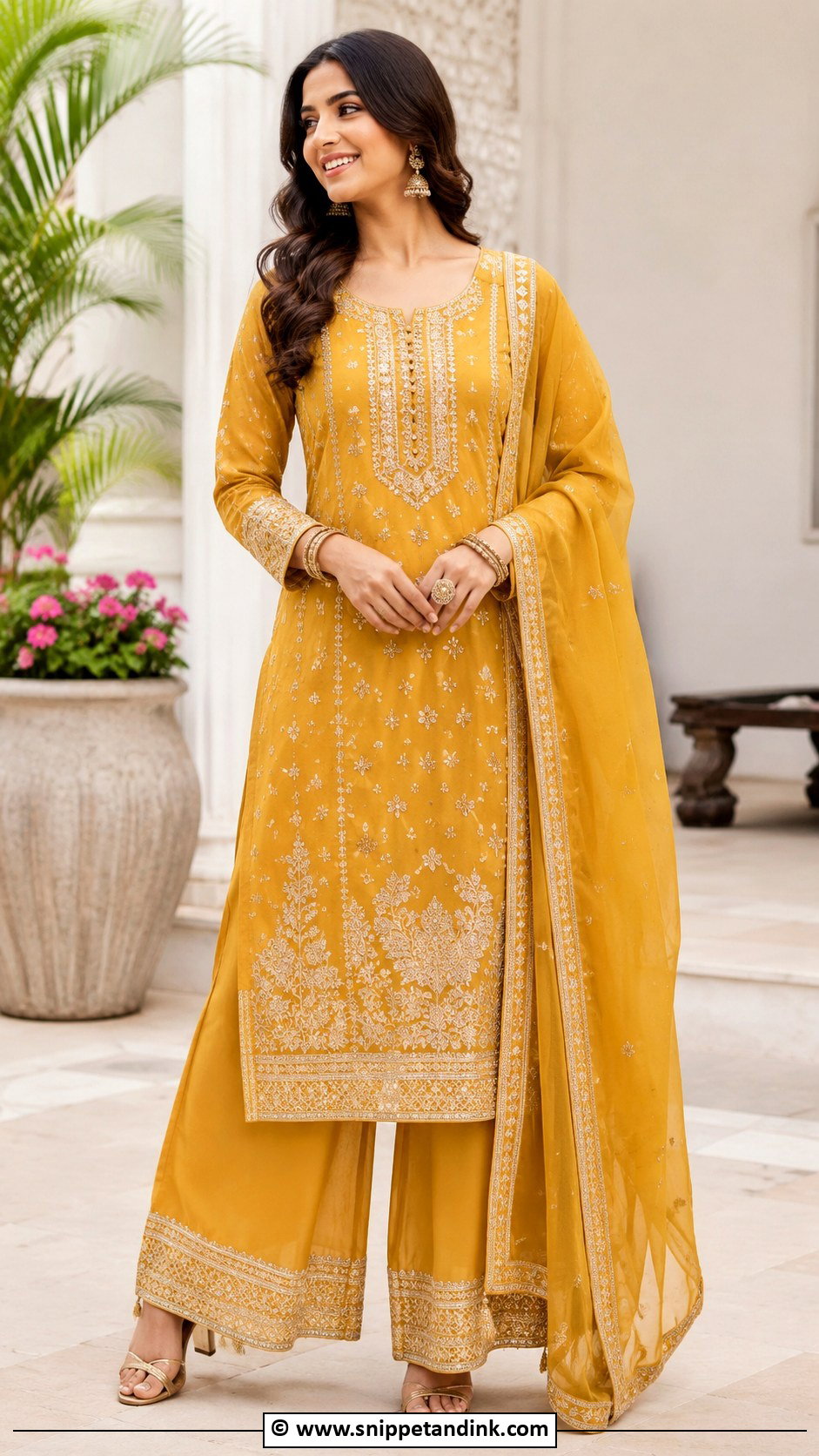
For a family lunch or daytime ceremony, a palazzo suit looks dressed without effort. Wide palazzos keep you cool; a long kurta in silk, georgette, brocade or crepe adds structure. Embroidery, lace borders or subtle sequins and a matching dupatta make it wedding-ready. Jhumkas, bangles and block heels or flats complete it. It packs small and creases less than most lehengas, which helps for travel.
19. Jacket Lehenga Outfit
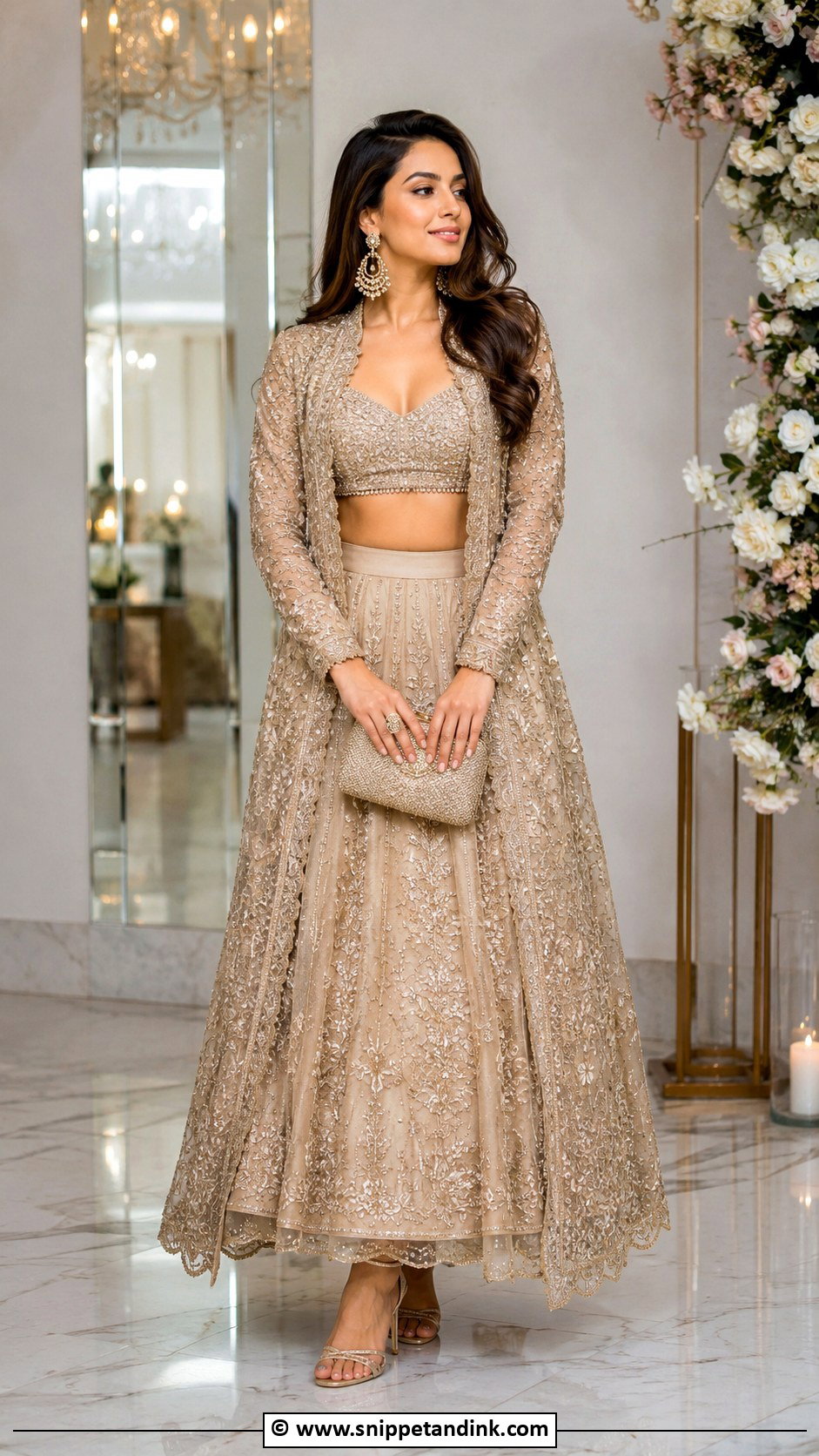
A jacket lehenga replaces the dupatta with a long embroidered jacket, cape jacket or open layer over a blouse and skirt. That gives coverage, drama and warmth on a cool evening. Tonal sets in beige, gold, blush, navy or emerald look most refined. Long jackets suit taller frames; if you’re petite, choose a hip-length jacket. Earrings, a cocktail ring and heels finish it for a reception or engagement party.


20. Cape Saree Outfit
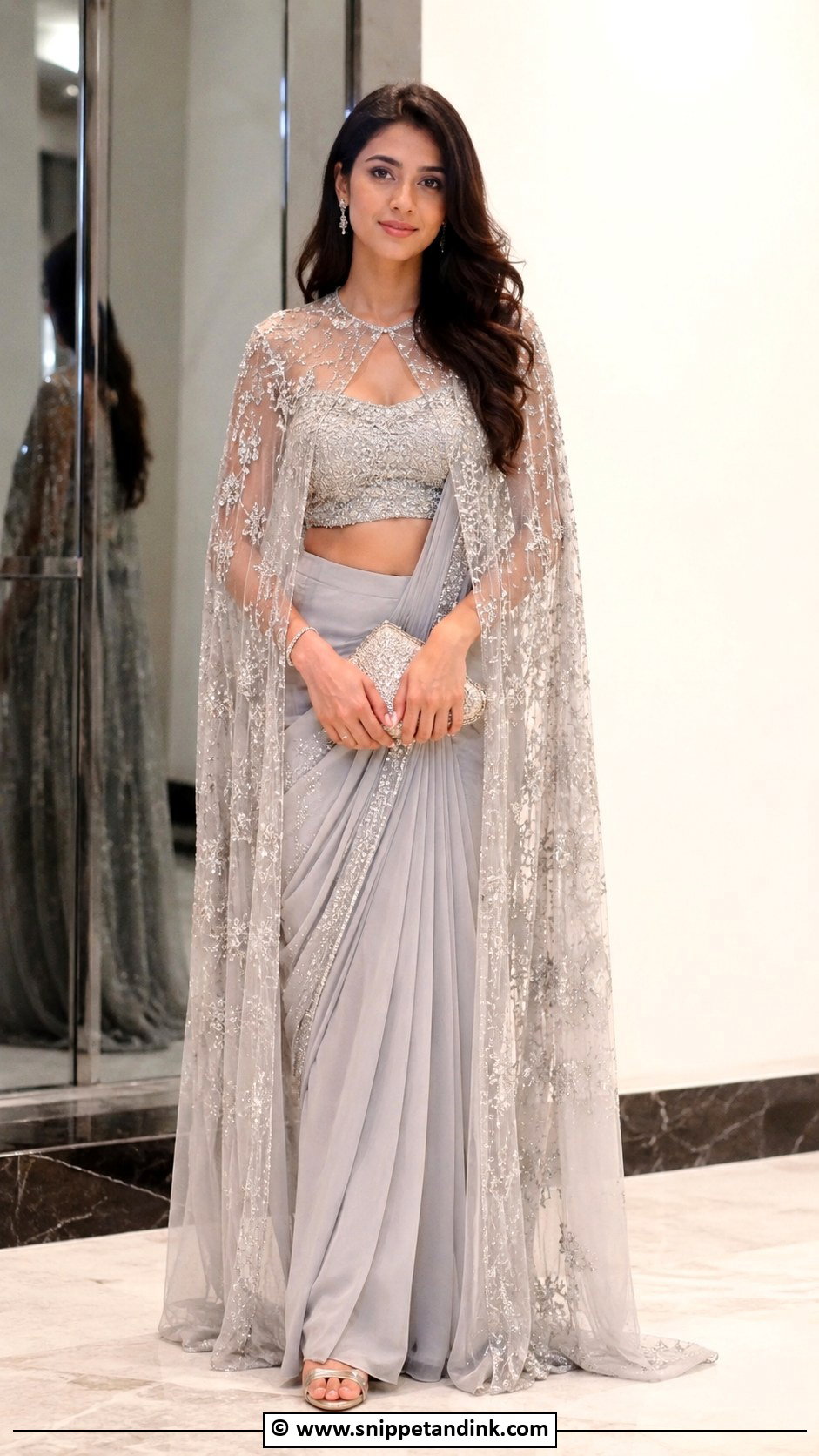
A cape turns a plain saree into a reception outfit and adds coverage over a sleeveless blouse. Chiffon, georgette, satin or crepe sarees work with a sheer embroidered, beaded or structured shoulder cape. Soft metallics, pastels and jewel tones all suit it. Keep the drape clean and simple underneath. The cape covers the shoulders, so skip necklaces and keep earrings modest.
21. Kurta Skirt Outfit
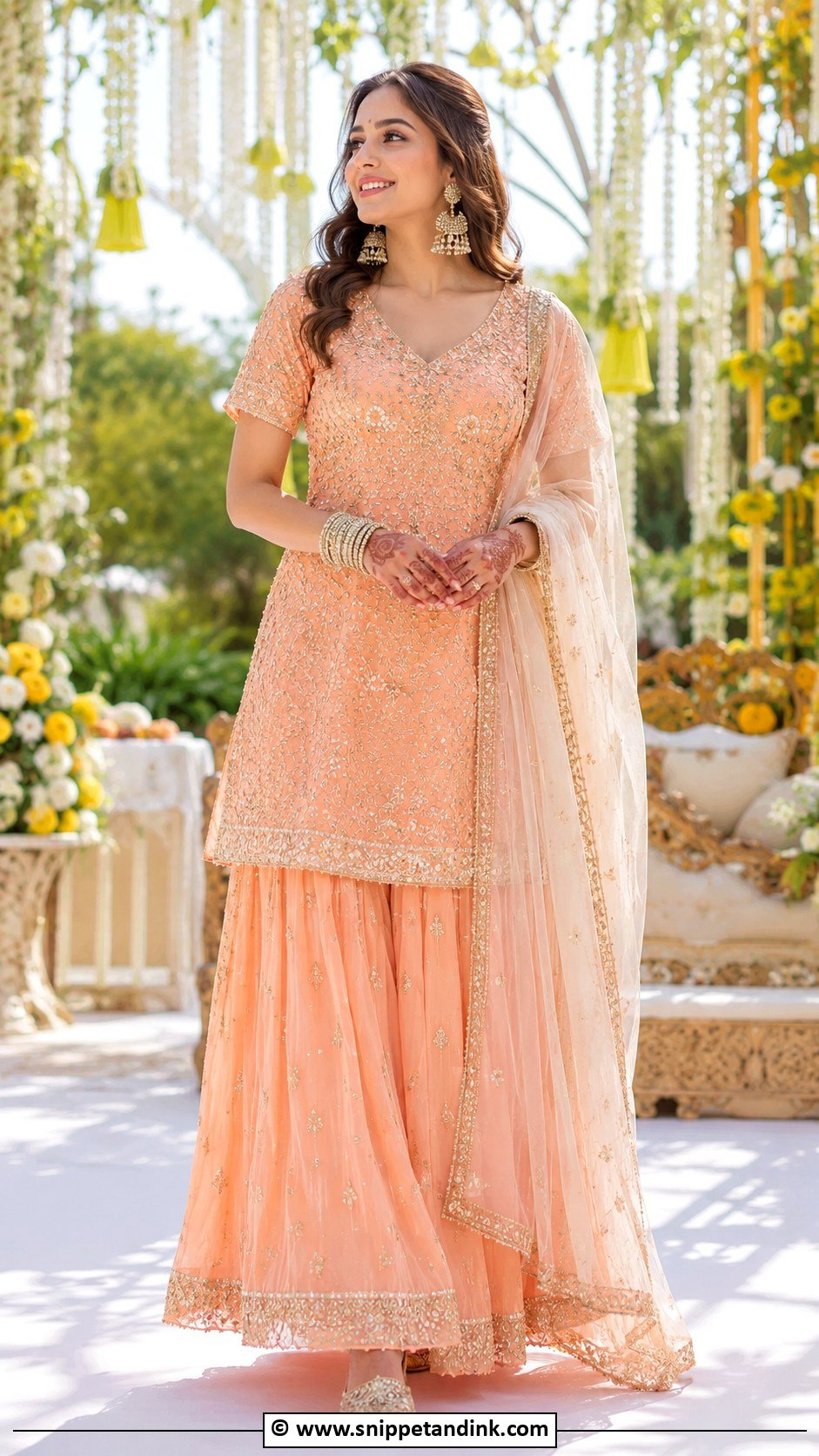
A kurta and flared skirt gives the shape of a lehenga for less weight and less money. Cotton-silk, chanderi, georgette or brocade suit wedding functions; peach, teal, mustard, rose and ivory with gold details look festive. Long kurtas over skirts can look bulky on shorter frames, so a hip-length kurta is often more flattering. Jhumkas, bangles and juttis finish it for mehendi or haldi.
22. Ruffle Saree Outfit
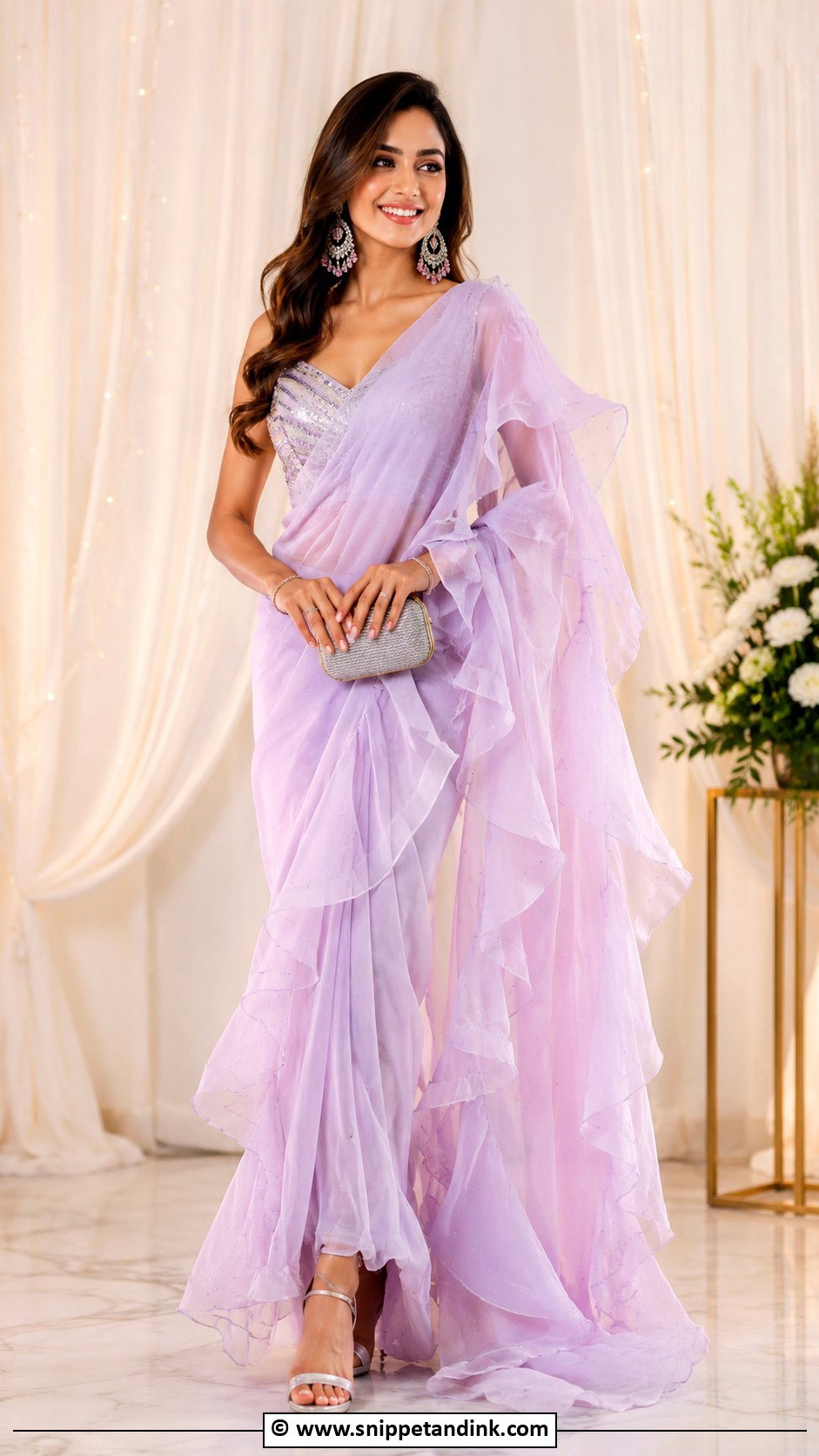
Ruffles add movement without embroidery, so a ruffle saree reads young and festive at a sangeet or reception. Organza, chiffon or georgette keep the drape light; stiff fabrics make the ruffles stick out. A fitted blouse with sequins or a metallic finish balances the softness. Strappy heels help the hem hang well. When the ruffles are bold, keep jewelry to earrings only.
23. Co Ord Set Outfit
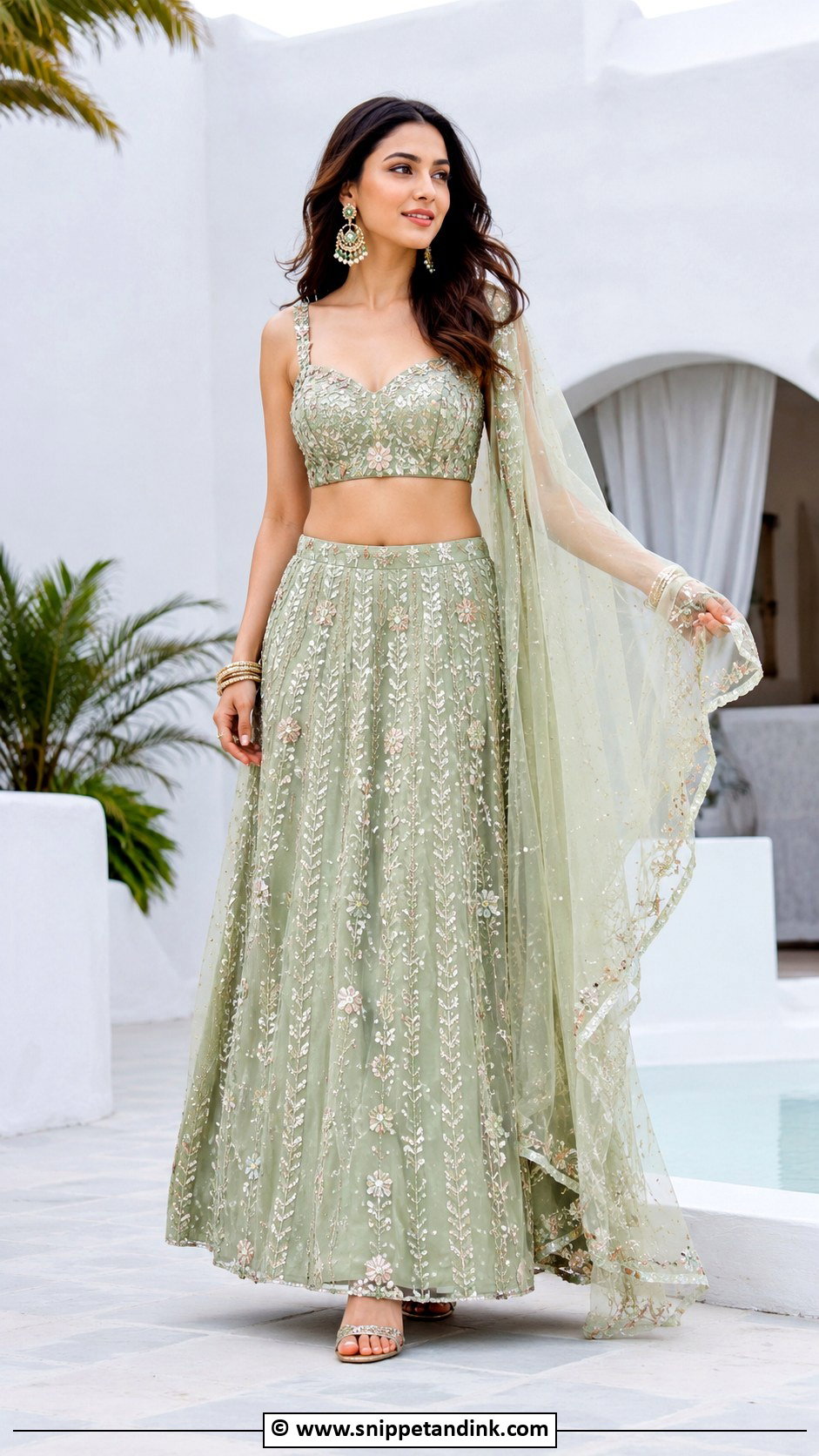
Co-ords work for welcome dinners, destination events and casual pre-wedding gatherings. A crop top and skirt, kurta and pants, or tunic and palazzos with festive embroidery in silk, brocade, crepe or georgette look wedding-ready; casual cotton co-ords look underdressed. Add a dupatta, cape or long jacket if the event is formal. Earrings, bangles and heels or embellished flats complete it.
24. Salwar Kameez Outfit
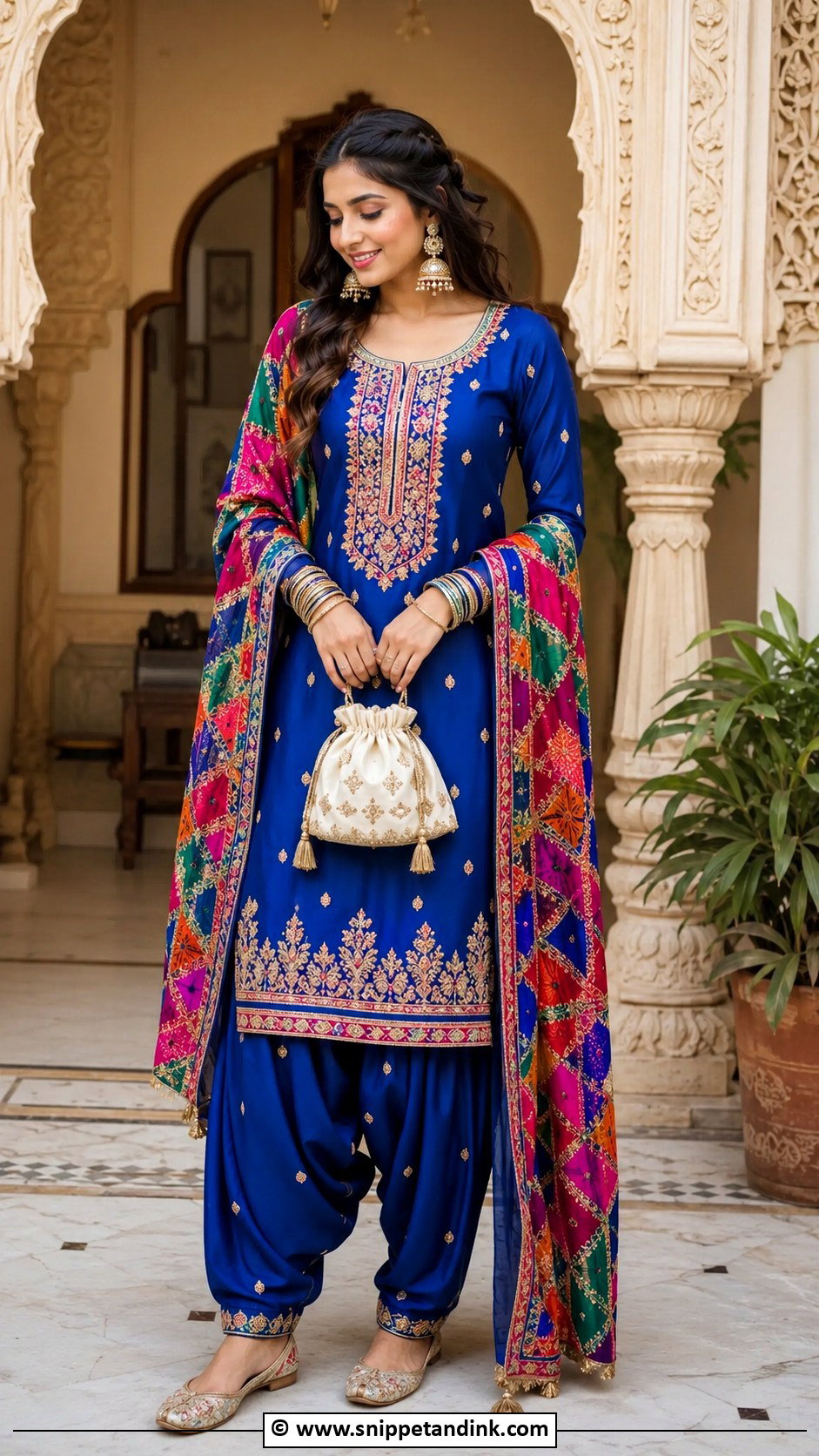
A salwar kameez outfit is the most comfortable traditional option, and the dupatta does most of the dressing up. Gota, lace or phulkari dupattas lift a simple suit to wedding level. Choose a kameez with embroidery, zari or mirror accents over a salwar, churidar or slim pants. Magenta, teal, mustard and royal blue suit weddings. Juttis and jhumkas complete it for a Punjabi function.
25. Kanjivaram Saree Outfit
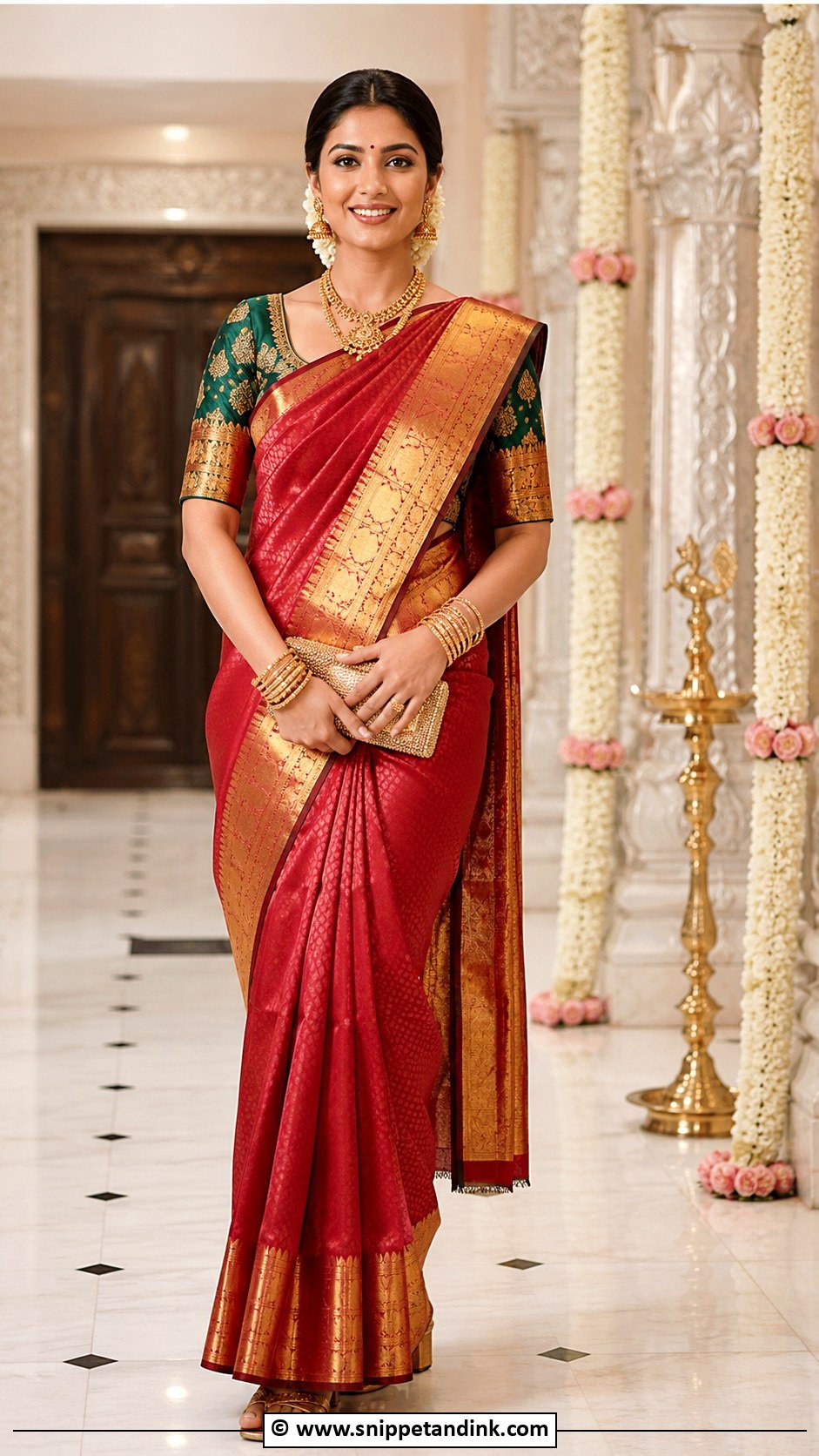
Kanjivaram silk has a contrast border that’s traditionally woven separately and interlocked with the body, which gives the saree its weight and crisp drape. Ruby, emerald, royal blue, purple and gold are classic. A contrast blouse, temple jewelry, bangles and a neat bun suit it. Because the silk is heavy, pin the pallu firmly at the shoulder. Keep the bag and shoes plain, since the saree is already rich.
26. Printed Lehenga Outfit
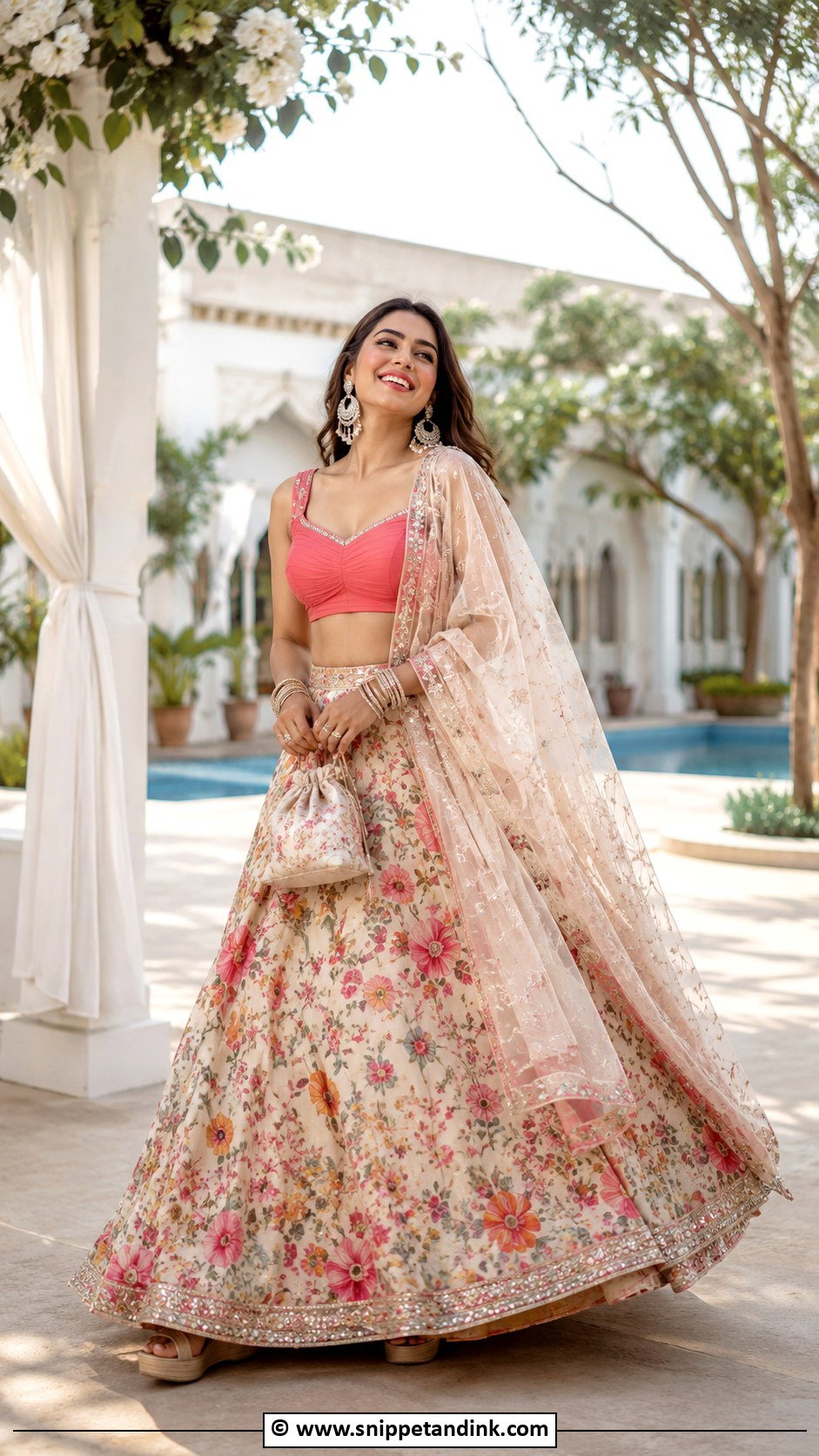
Printed lehengas are lighter than embroidered ones and cheaper, which makes them practical for daytime events and destination weddings. Florals, paisley, block prints and digital prints all work. A printed skirt with a solid blouse and light dupatta looks balanced. Bold print means simple jewelry; a subtle print can take statement earrings. Wedges are kinder than heels on outdoor lawns.
27. Ombre Sharara Outfit
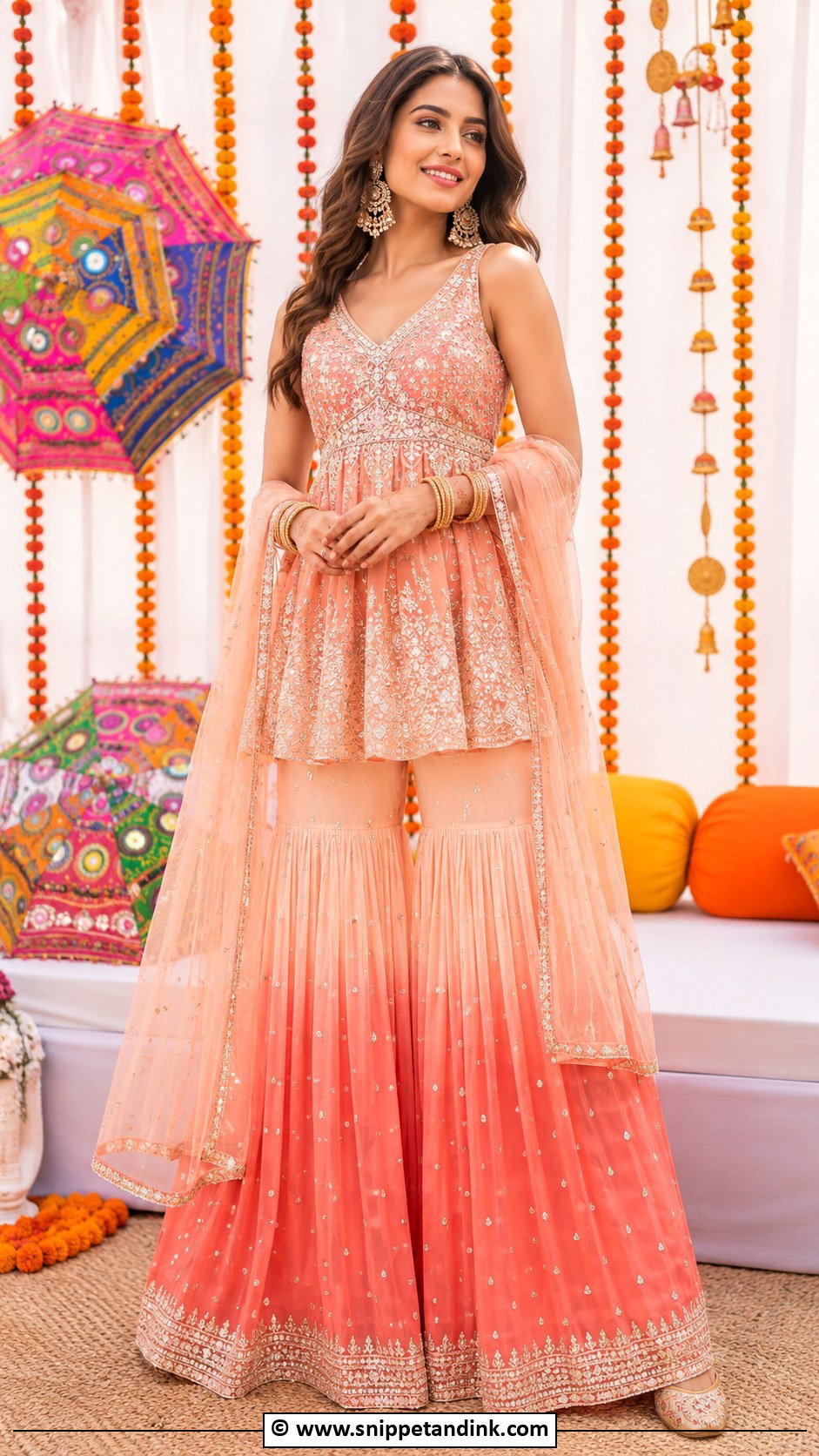
Ombre dyeing blends one shade into another along the fabric, so the color shifts as you move. Peach to coral, mint to teal, pink to purple and yellow to orange all suit sangeet and mehendi. Pair the ombre sharara with a short kurti or peplum with light embellishment. Pick a dupatta in the lighter shade so it doesn’t overpower the fade. Chandbalis, bangles and heels or juttis complete it.
28. White And Gold Saree Outfit
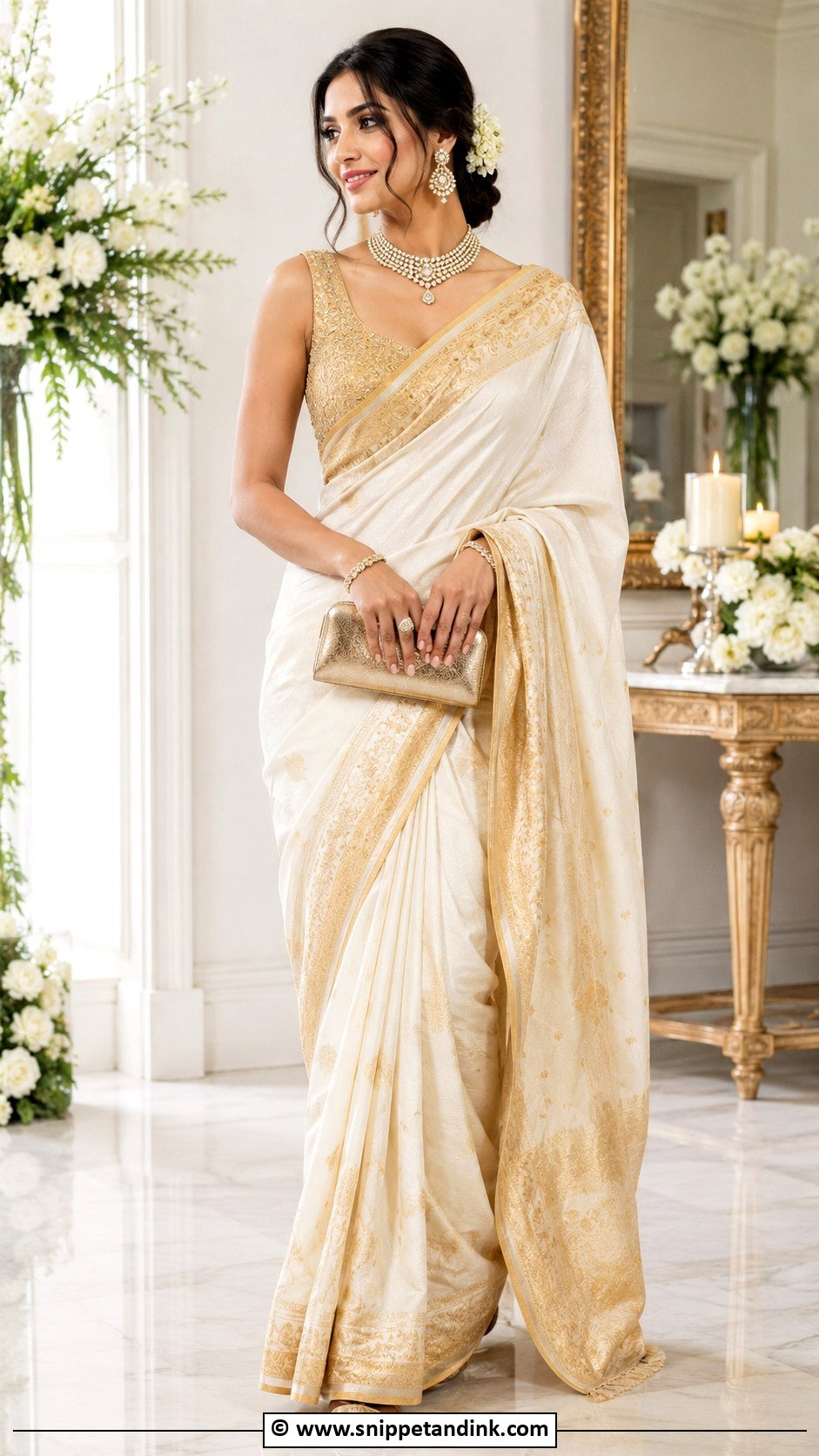
Ivory or cream with gold reads very differently from stark white, and it’s the version I’d suggest to guests. Gold zari, embroidery or a festive border on the saree, a gold blouse, and pearl or kundan jewelry give a clean, rich look. Some communities associate plain white with mourning, so ask about the family’s customs before wearing it. Metallic sandals, a small clutch and soft makeup finish it.
29. Bridesmaid Lehenga Outfit
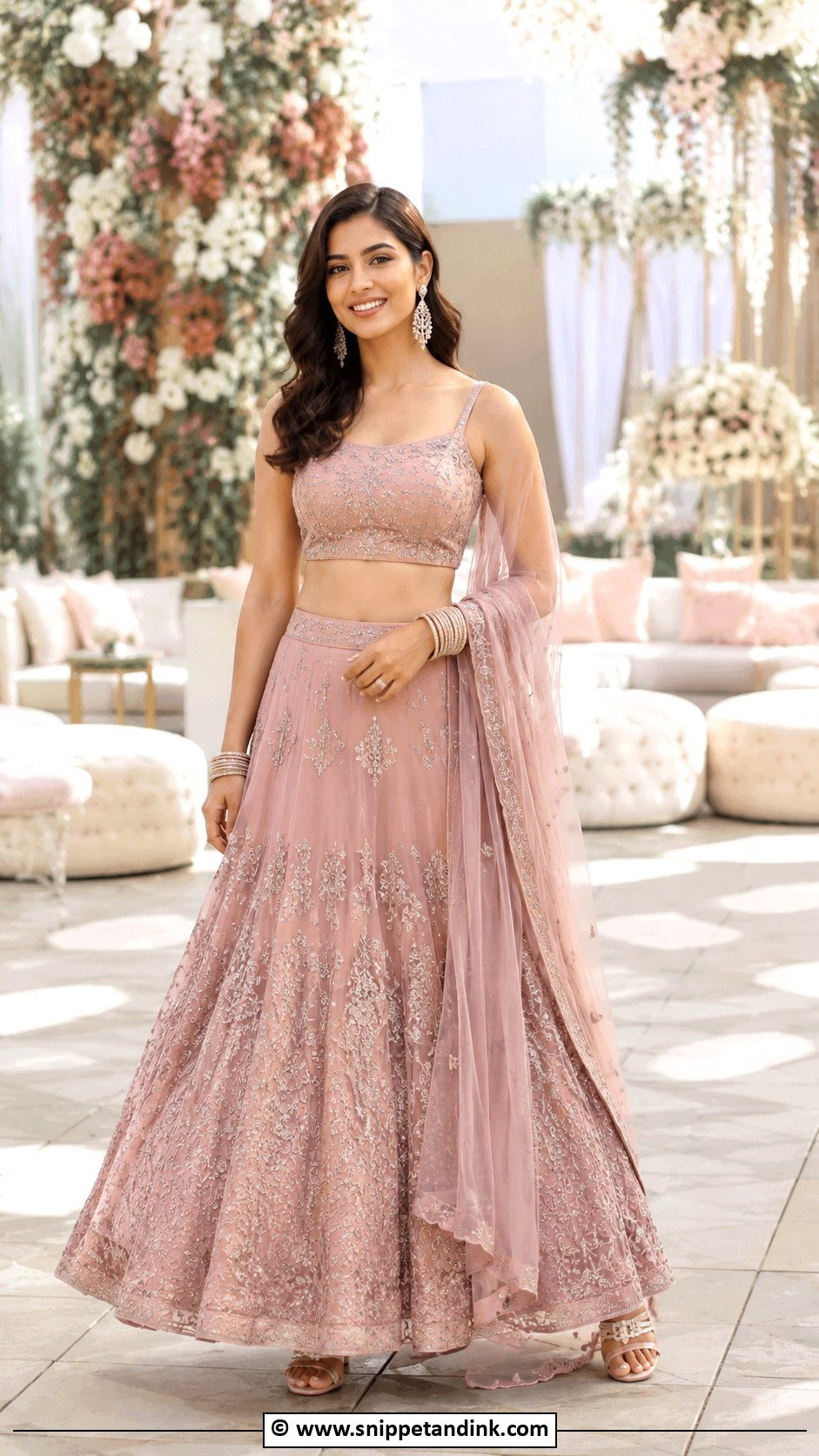
Coordinating bridesmaids works best with a shared color family and fabric, not identical outfits. Let each person choose a blouse neckline and sleeve that suits her body, and the group still looks unified in photos. Pastels, jewel tones or tonal palettes all work. Avoid bridal red and heavy embroidery unless the bride asks for it. My advice is to order early: if every lehenga comes from different shops, dye lots vary and it takes time to match.
30. Mother Of The Bride Saree Outfit
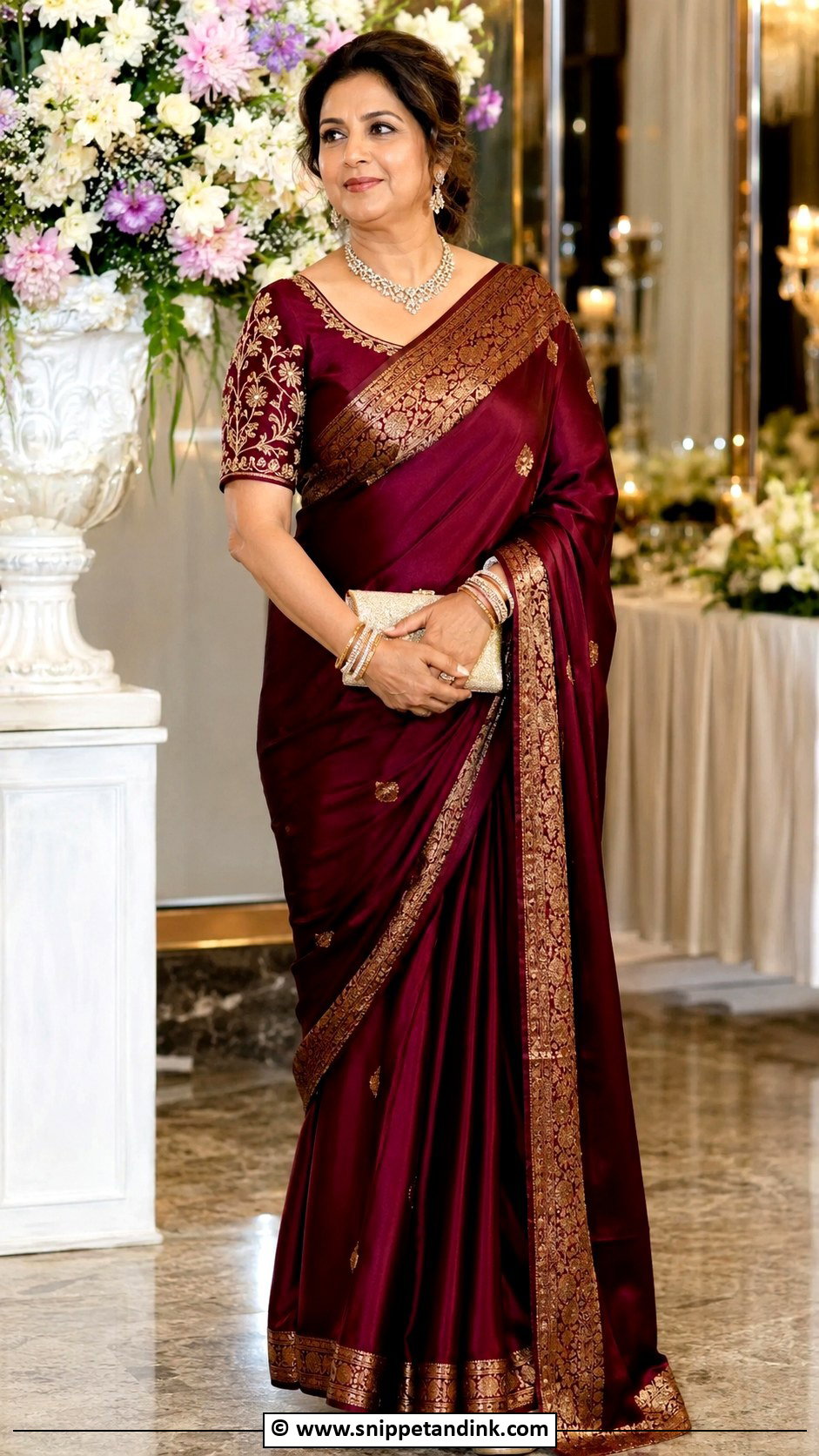
Mothers of the bride spend the whole wedding greeting guests, joining rituals and posing for photos, so comfort matters as much as richness. Silk, tissue, Banarasi, Kanjivaram and embroidered georgette sarees all suit. Deep green, wine, royal blue, gold and mauve look graceful. The first thing I check on a mother’s outfit is the blouse: one with a little stretch and supportive lining makes long hours bearable. Low heels or sandals, classic jewelry and a neat bun or soft waves finish it.
Packing Five Outfits Into One Suitcase
Destination weddings and multi-day functions mean carrying a lot of embroidery. The pieces survive best when each outfit travels as its own kit:
- Put each outfit in its own garment bag, labeled with the function, and keep its blouse and dupatta with it.
- Pack jewelry for each look in a separate pouch so nothing is borrowed from one outfit at the last minute.
- Roll velvet and organza in tissue rather than folding them flat.
- Carry the main ceremony outfit in hand luggage, so a lost bag doesn’t take it with it.
- Bring safety pins, a small sewing kit and a travel steamer. Steam embroidered pieces from the inside, or iron them face down on a towel, never directly on zari or sequins.
Hang everything as soon as you arrive. Most creases in silk and georgette drop out overnight on a hanger, and you’ll find any loose hooks or missing buttons while there’s still time to fix them.
On the morning of each function, lay out the full outfit with its jewelry, shoes, pins and bag before you start hair and makeup. It takes five minutes and saves the panic of a missing earring back when the car is already waiting.
Plan the Whole Weekend, Not One Look
A good Indian wedding wardrobe matches each outfit to the function: a sharara for mehendi, a lehenga for sangeet, silk for the ceremony, something sparkly for the reception. Think about fabric weight, the weather, how much you’ll sit or dance and what the family expects of your role. Then add jewelry, shoes and the bag. Planned this way, every event gets its own look and you stay comfortable from the first haldi to the last dance.
You'll Like These Ideas:








Leave a Reply