
Dressing the bride’s sister is a different brief from dressing a guest. You’ll be fixing her dupatta before the pheras, greeting aunties at the door, standing at her shoulder in half the family portraits and still dancing at the sangeet. So when I put together a sister’s wardrobe, I start with how she’ll move and only then talk about colour. Below are thirty outfits I’d genuinely put on a sister, from pastel lehengas and pre-draped sarees to shararas and reception gowns, with notes on where each one works, where it fights you and how to keep it clear of the bride’s look.
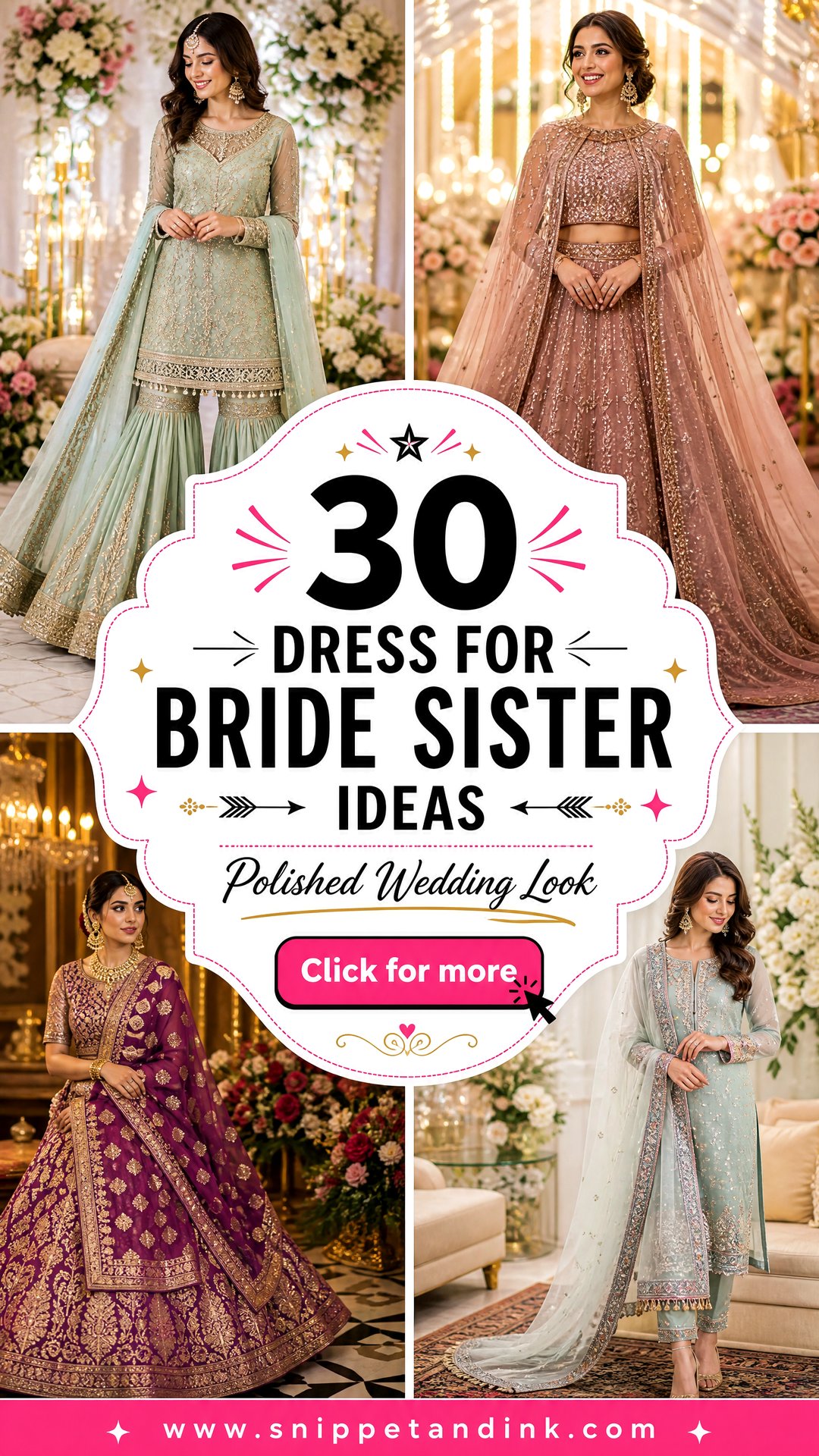
Mapping Your Outfits Against the Bride’s Function by Function
The first thing I ask a sister is not what she likes. It’s what the bride is wearing to each event. Get her colours for the mehndi, sangeet, ceremony and reception in writing, then sit down with a simple grid: one row per function, one column for her outfit and one for yours.
- Avoid her exact shade at every event, and keep a clear step away from red or maroon at the ceremony unless she asks you to match.
- Plan contrast rather than coordination. A pastel next to her deep tone, or a jewel tone beside her ivory, separates you cleanly in group photos.
- Put your most practical outfit on your busiest day. That’s usually the ceremony, when you’ll be carrying things, fetching people and fixing her dupatta.
- Check the venue. A floor-seating puja rules out a narrow gharara, and an outdoor haldi rules out velvet.
Then work backwards on time. Custom lehengas and heavily embroidered pieces commonly take six to ten weeks, and a stitched blouse usually needs two fittings. If you’re buying ready-made, still leave three weeks for alterations, because almost every off-the-rack blouse needs taking in at the side seams.
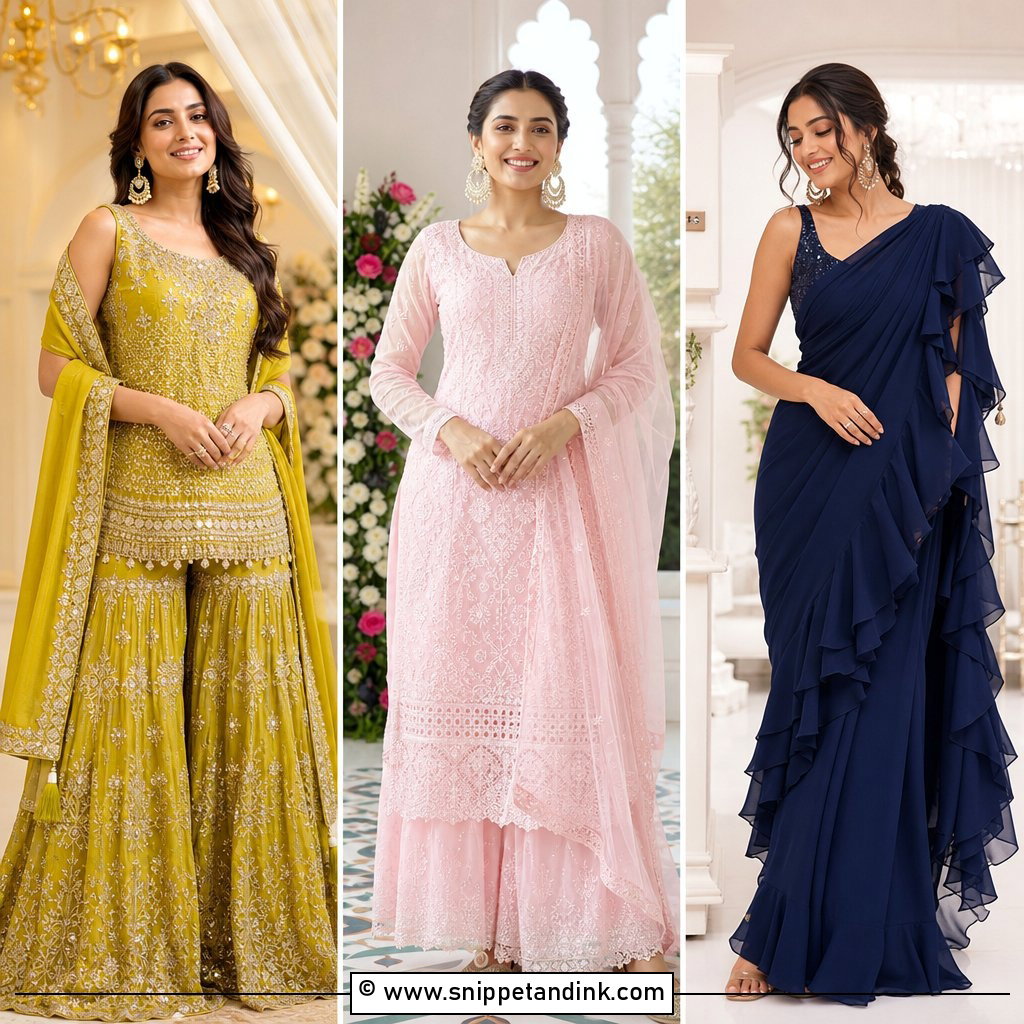
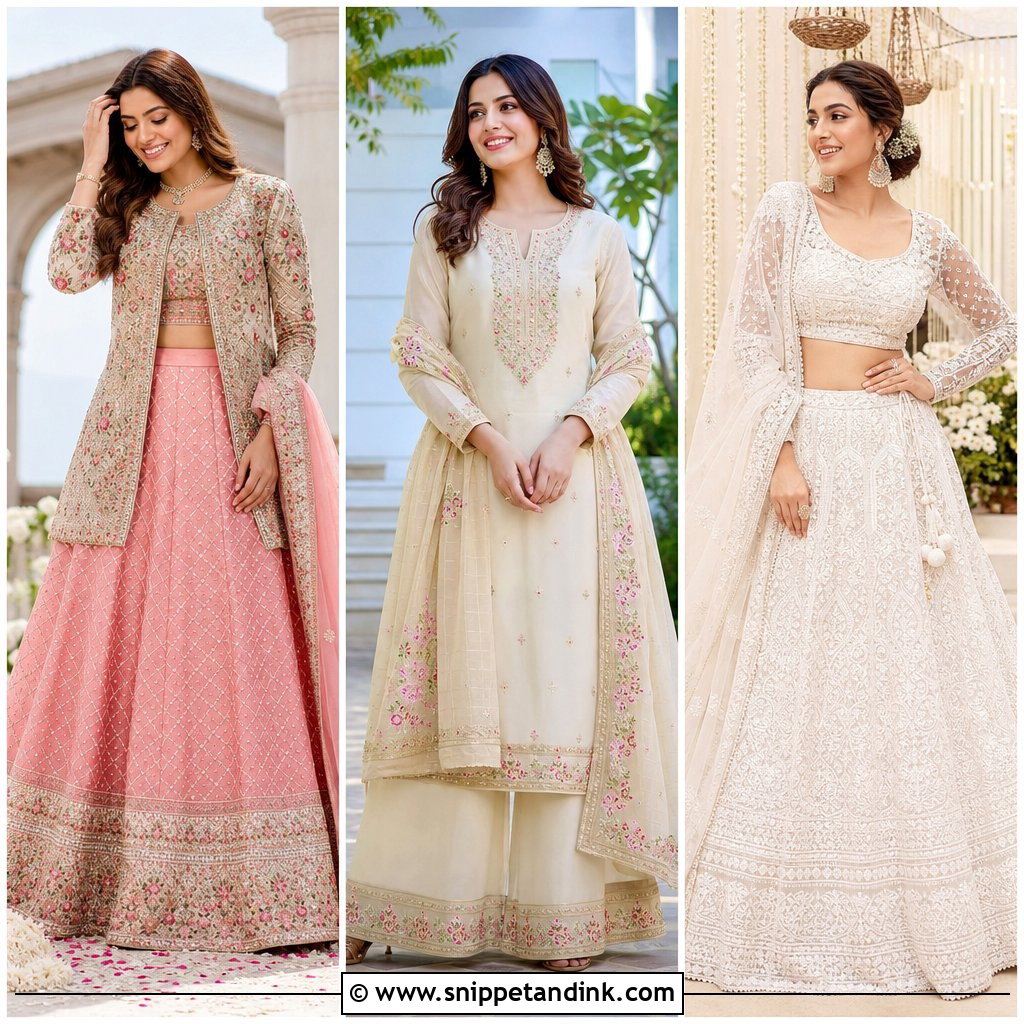
1. Pastel Lehenga For Bride Sister
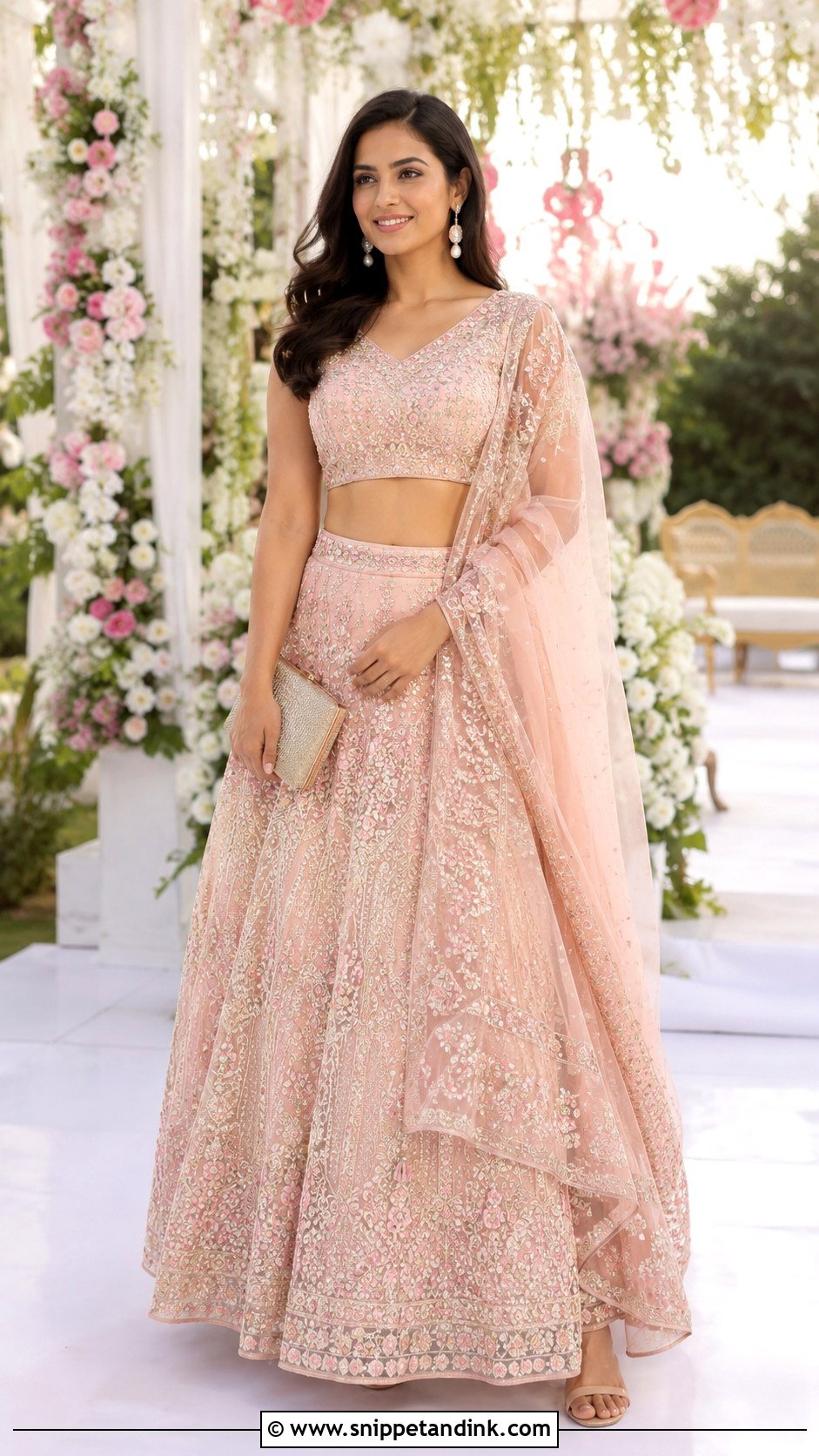
Pastels are where I start most sisters for a daytime ceremony or an outdoor engagement, because blush, powder blue, mint and peach read fresh in daylight without drifting into bridal territory. Go for tone-on-tone threadwork, small mirrors or pearl detailing rather than dense zardozi. One thing I check under real light: very pale mint and powder blue can wash out on cooler skin tones, so I hold the fabric to her face near a window before we commit. A pastel sits especially well beside a bride in deep red or maroon, and a lightweight dupatta keeps it manageable while you run errands for her.
2. Velvet Lehenga For Bride Sister
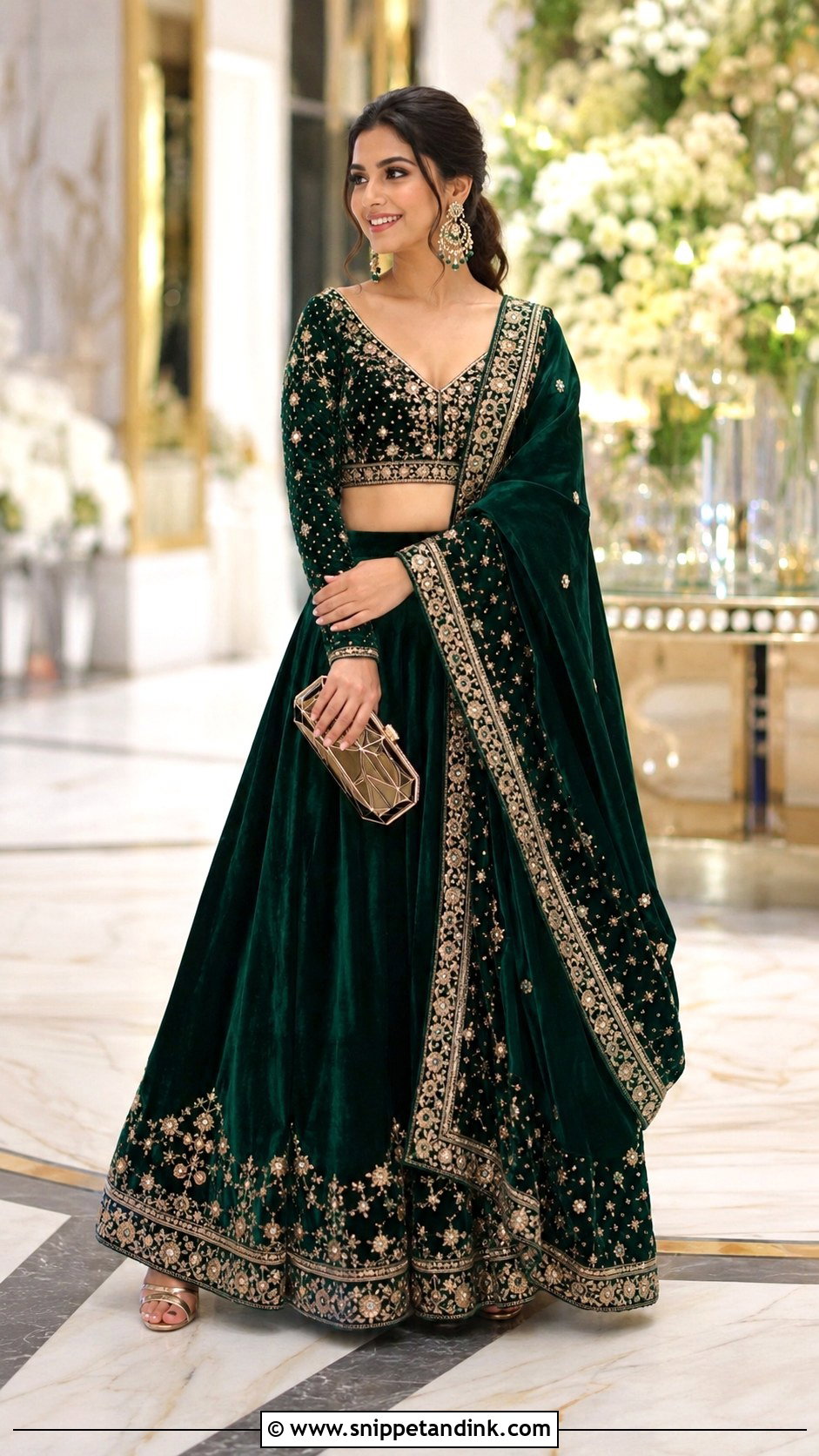
Velvet is my winter answer. It holds dye so deeply that emerald, wine, plum and navy look almost lit from inside at an evening reception or a formal sangeet. The catch is weight and warmth: a full velvet skirt in a heated banquet hall gets heavy by the second hour, so I keep the embroidery moderate and suggest a net or organza dupatta instead of a velvet one. Velvet already carries the drama. Sleek hair, a small clutch and one pair of statement earrings are plenty.
3. Floral Lehenga For Bride Sister
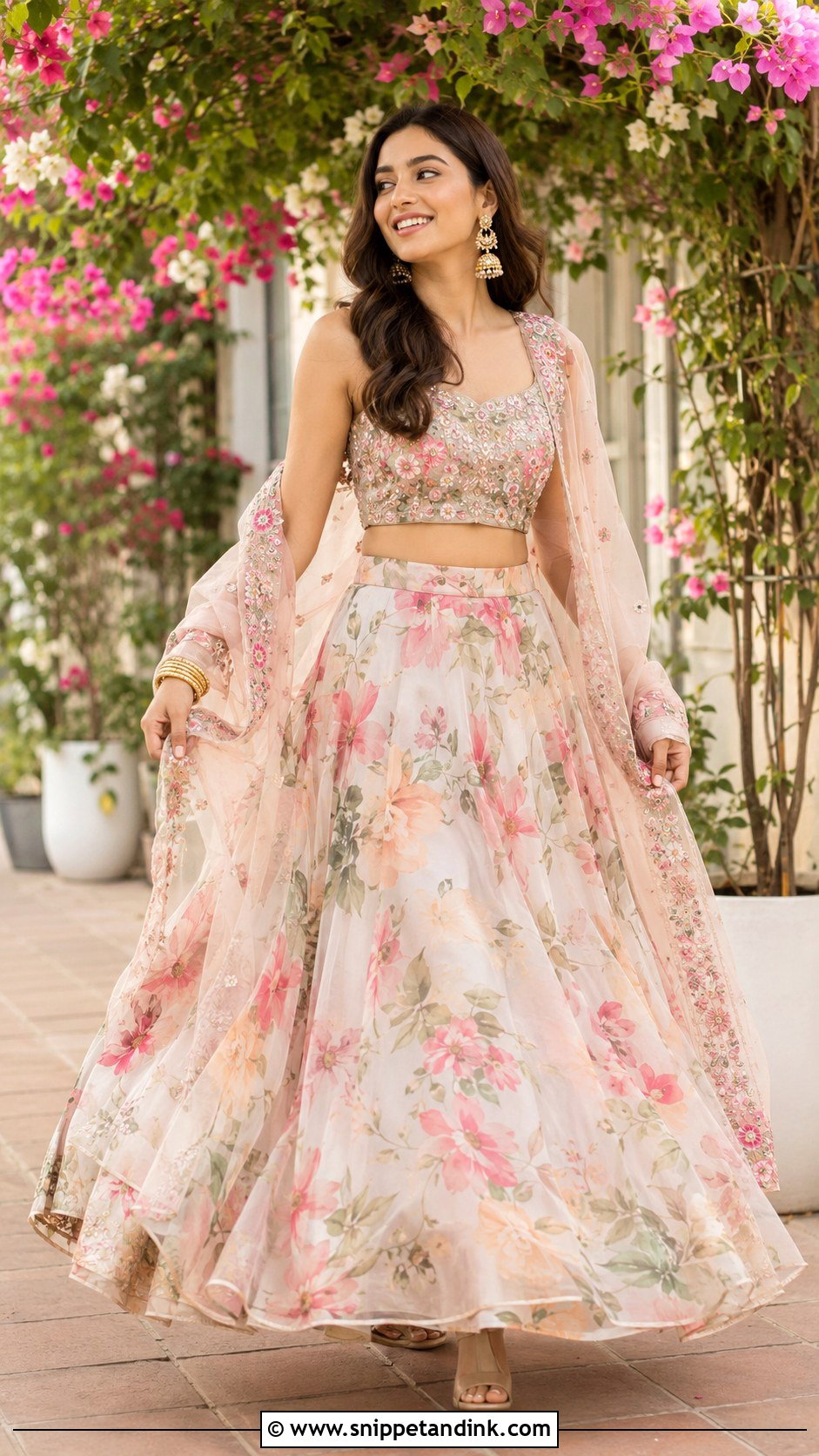
Florals belong at the mehndi, the haldi or a garden lunch, and I’d keep them away from the main ceremony unless the family is relaxed about it. Printed florals on organza or georgette move nicely and stay light; 3D appliqué flowers are prettier up close but snag on bangles and crush when you sit, so I only suggest them for a function where you’ll mostly be standing. Match or contrast the blouse, add a sheer dupatta and keep the jewellery small. Jhumkas and a few bangles are enough against a busy print.
4. Sequin Saree For Bride Sister
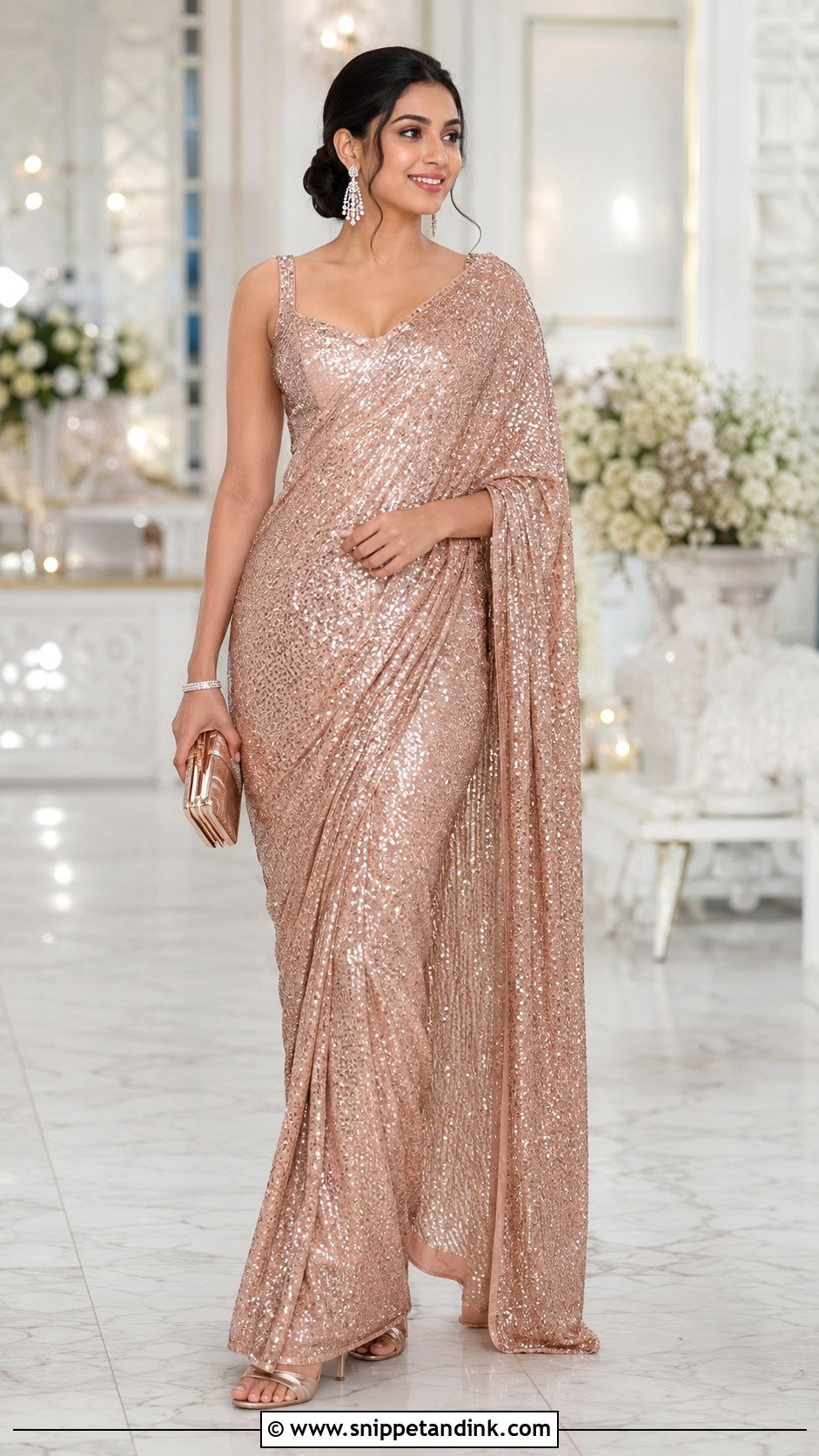
A sequin saree gives you evening glamour at a fraction of a lehenga’s weight, which is why I steer sisters toward one for the cocktail night or reception. Champagne, rose gold, mauve and midnight blue all catch the photographer’s flash without glaring. Two practical notes from fittings: sequins scratch the inner arm, so line the blouse sleeves, and heavily sequinned pallus slip off the shoulder, so pin them at two points, not one. A pre-stitched version saves twenty minutes of draping on a day you won’t have them. Finish with soft waves and metallic heels for a polished bride sister look.
5. Silk Saree For Bride Sister
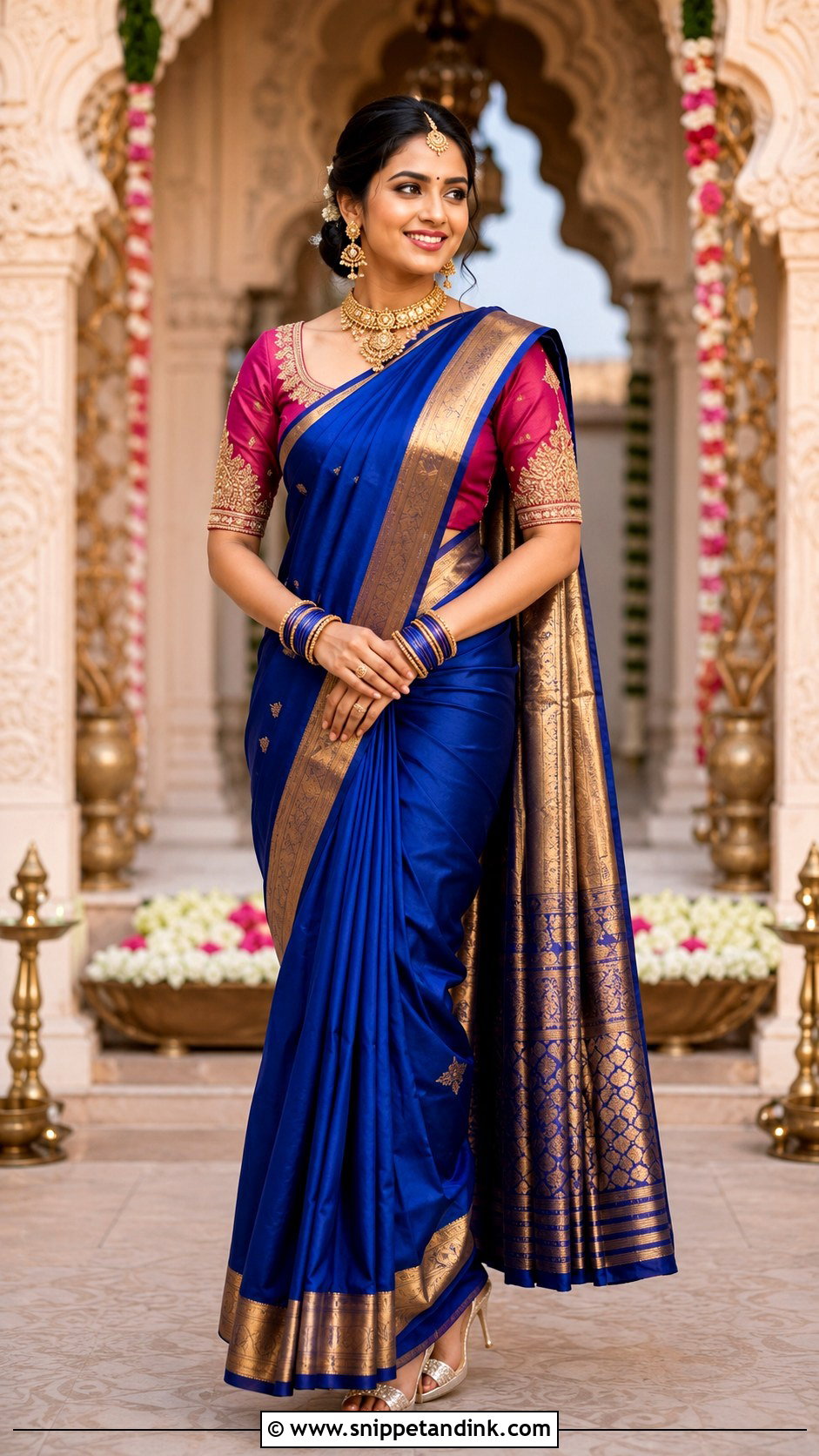
For the main ceremony, nothing earns the aunties’ approval like a good silk. Kanjivaram, Banarasi, Paithani and tissue silk each suit different regional traditions, so I ask which side of the family the ceremony follows before suggesting one. Rich magenta, emerald, royal blue or mustard all work, but ask the bride directly which colour she’s reserved; sisters land too close to the bridal red more often than you’d think. Pure silk is stiff to pleat, so book a draper or practise the night before. A contrast blouse, temple jewellery and a neat bun finish it.
6. Pre Draped Saree For Bride Sister
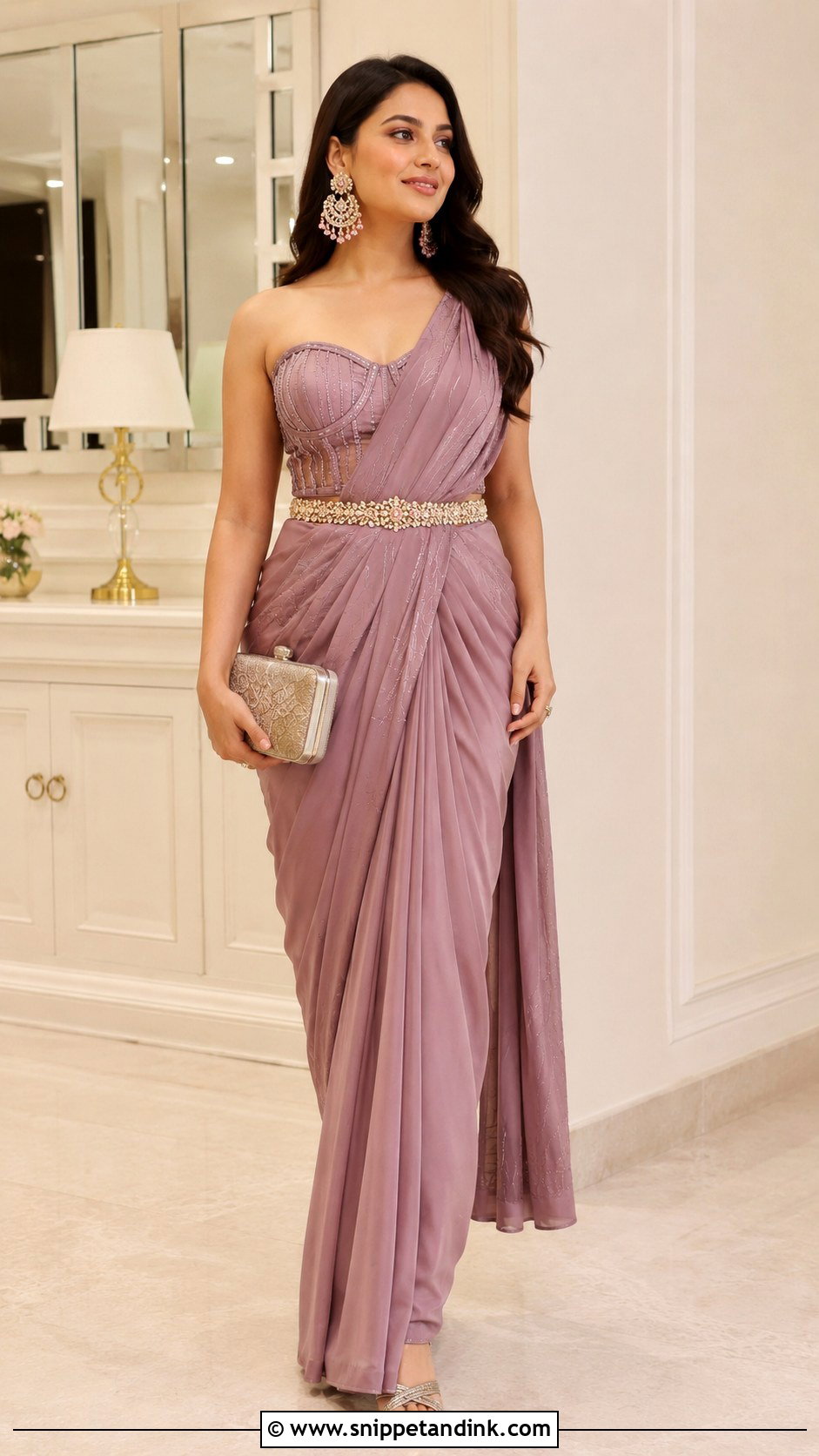
I recommend pre-draped sarees to more sisters than any other piece, because your hands are full all day. Stitched pleats and a fixed pallu mean nothing comes undone while you carry a tray of mithai or hold the bride’s lehenga on the stairs. Crepe, georgette and shimmer jersey move best; stiff satin versions can look boxy at the hip. Cape details, belted waists and ruffled pallus are all common now. Have it hemmed in the heels you’ll actually wear, since a pre-draped saree can’t be adjusted at the waist the way a traditional drape can.
7. Anarkali Suit For Bride Sister
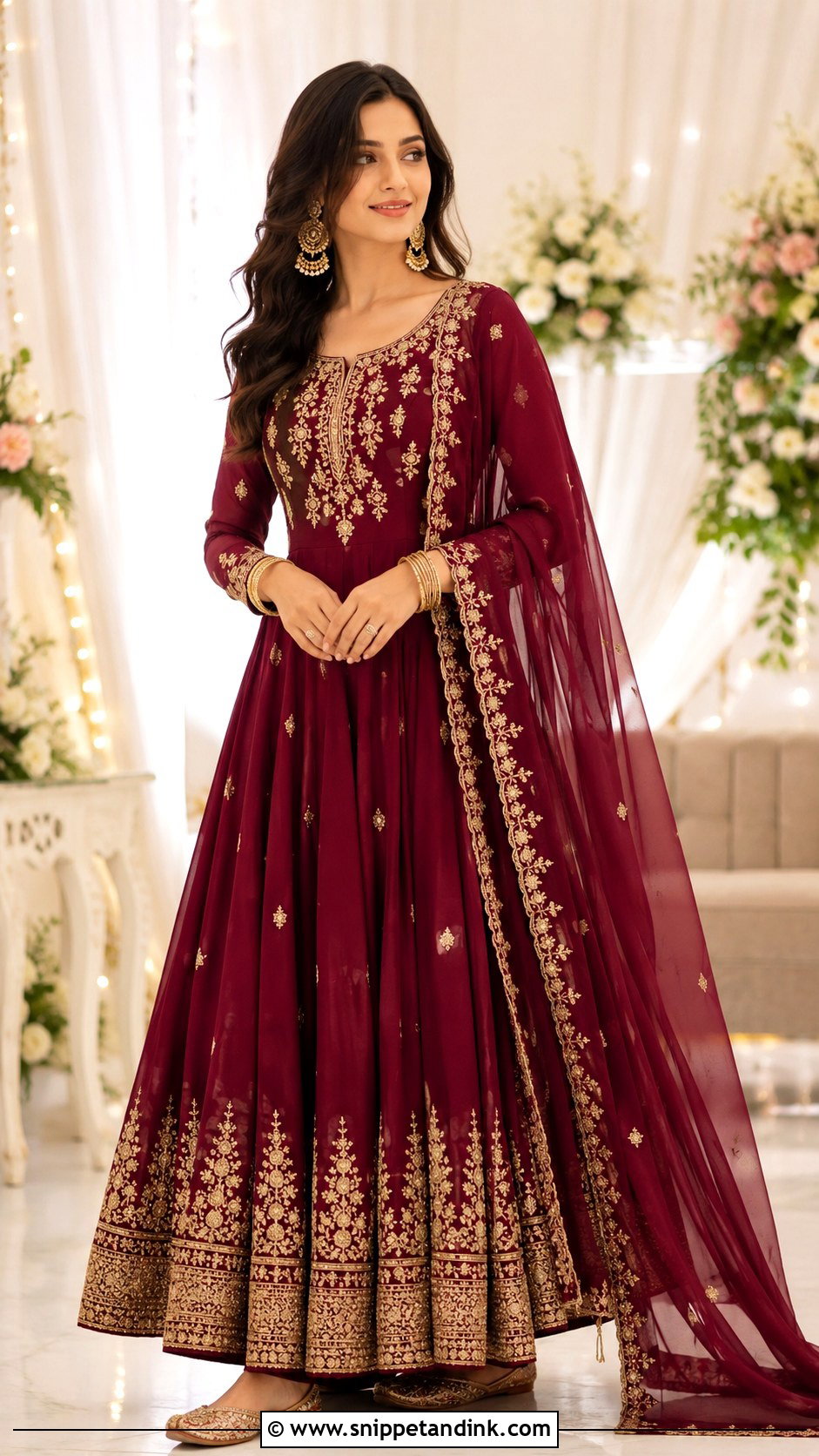
An Anarkali flatters a wide range of body shapes because the flare starts high and skims the hips. I like it for mehndi, a puja or a smaller function where you’ll sit cross-legged on the floor, which is tricky in a fitted lehenga. Floor-length styles with gota, zari borders or mirror work feel festive enough. Watch the panel count: a cheap Anarkali with too few kalis hangs flat, while a good one swings when you turn. Pastels for daytime, jewel tones for evening, a flowing dupatta and embellished juttis.
8. Sharara Set For Bride Sister
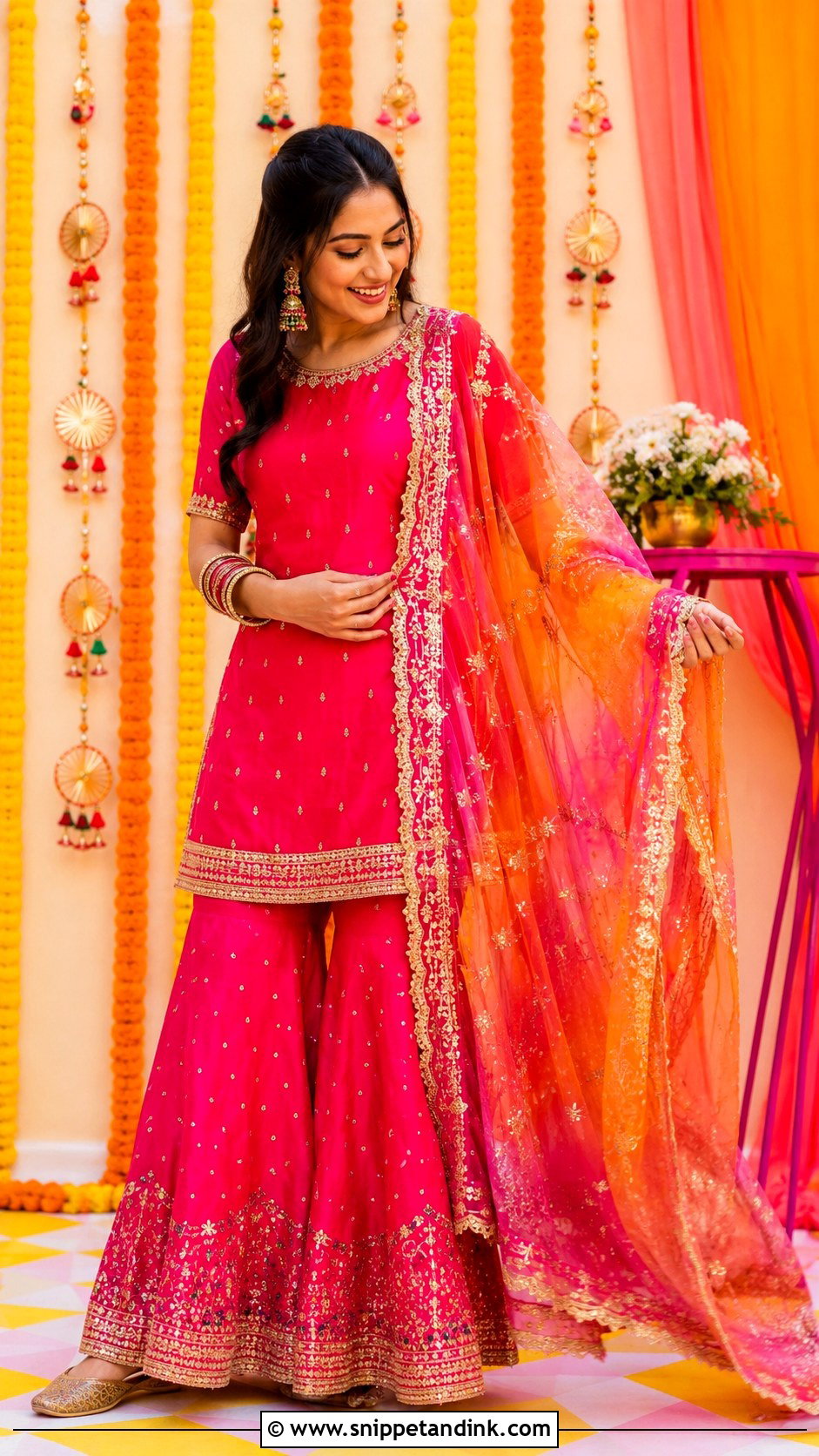
A sharara set is the outfit I’d want if I were dancing all night. The pants flare from the waist, so you get the swing of a lehenga with none of the risk of stepping on a skirt hem. Mehndi, haldi and sangeet are its natural home. Yellow, fuchsia and turquoise in mirror work or gota patti look right in daytime colour-heavy functions. Get the length right: the sharara should just graze the top of your shoe, because too long and the flared hem catches your heel on stairs.
9. Gharara Set For Bride Sister
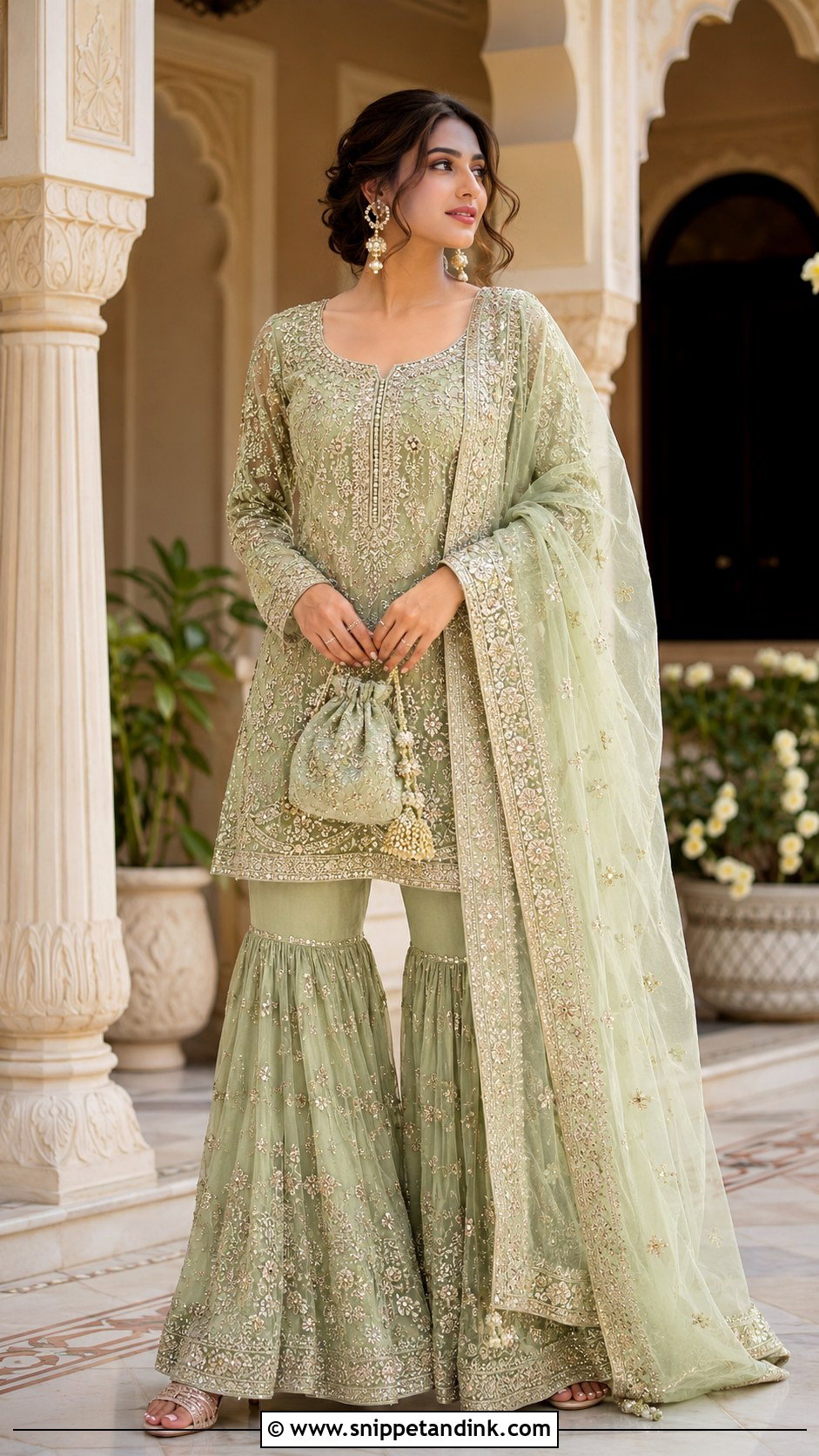
A gharara set differs from a sharara in one important way: it’s fitted to the knee and flares from a joint there, often hidden under a gota band. That shape looks regal at a nikah or formal family dinner, but it does restrict your stride, so I’d skip it for a function where you’re running between rooms. Silk, brocade and organza hold the flare best. A short kurti and sheer dupatta keep the proportions right. Pastels read graceful, while deep shades feel properly old-world.
10. Indo Western Gown For Bride Sister
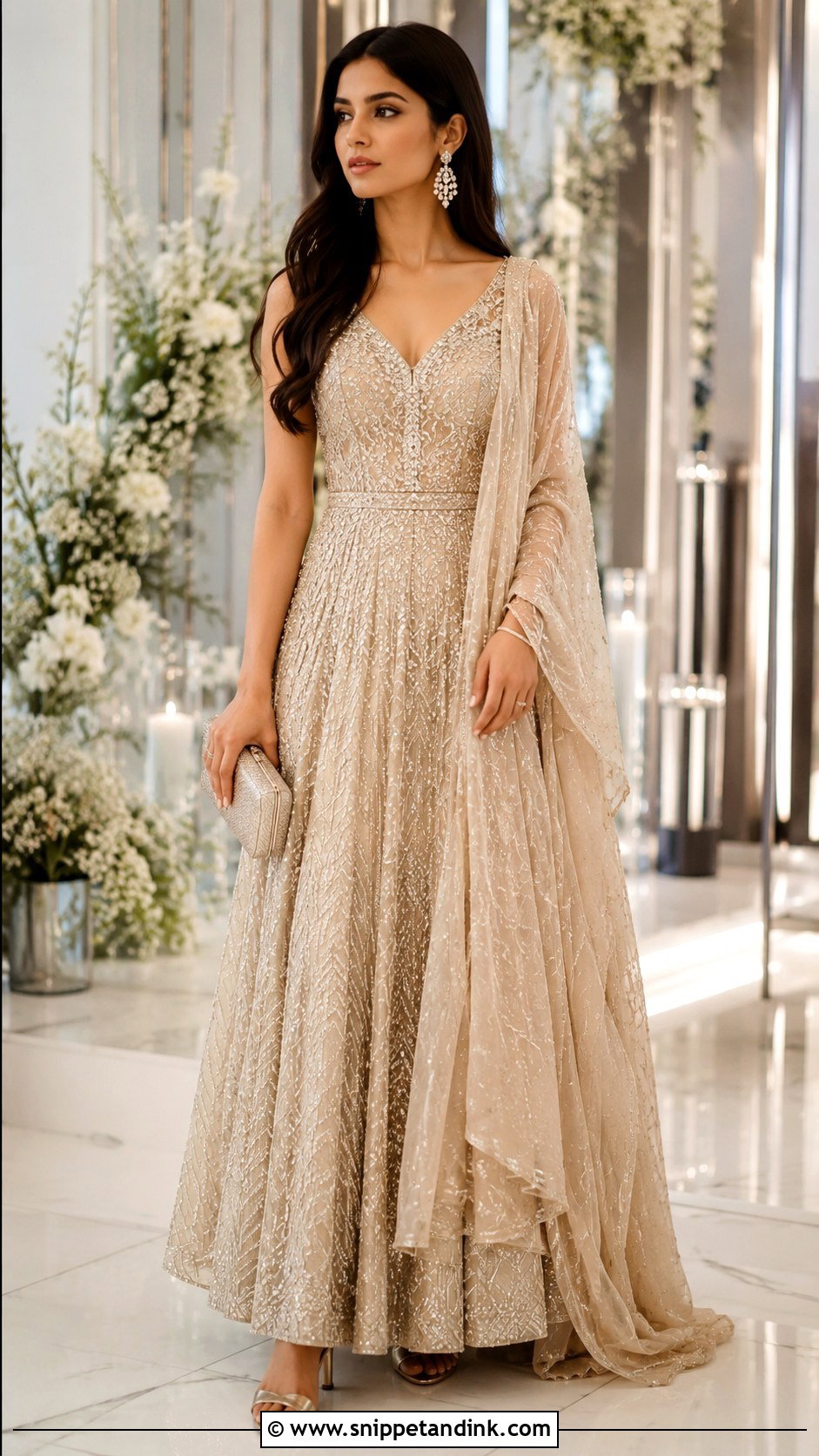
Sisters who don’t feel at home in a lehenga often love an Indo Western gown for the reception. You get the ease of one piece with Indian embroidery, a cape sleeve or an attached dupatta keeping it tied to the occasion. Champagne, mauve and emerald hold up well under warm evening lighting. When I fit these, I check the corset bodice while she’s seated, because boned bodices that feel fine standing can dig in during a long dinner. Keep the accessories modern: crystal studs or drops, a slim bracelet and pointed heels.
11. Cape Lehenga For Bride Sister
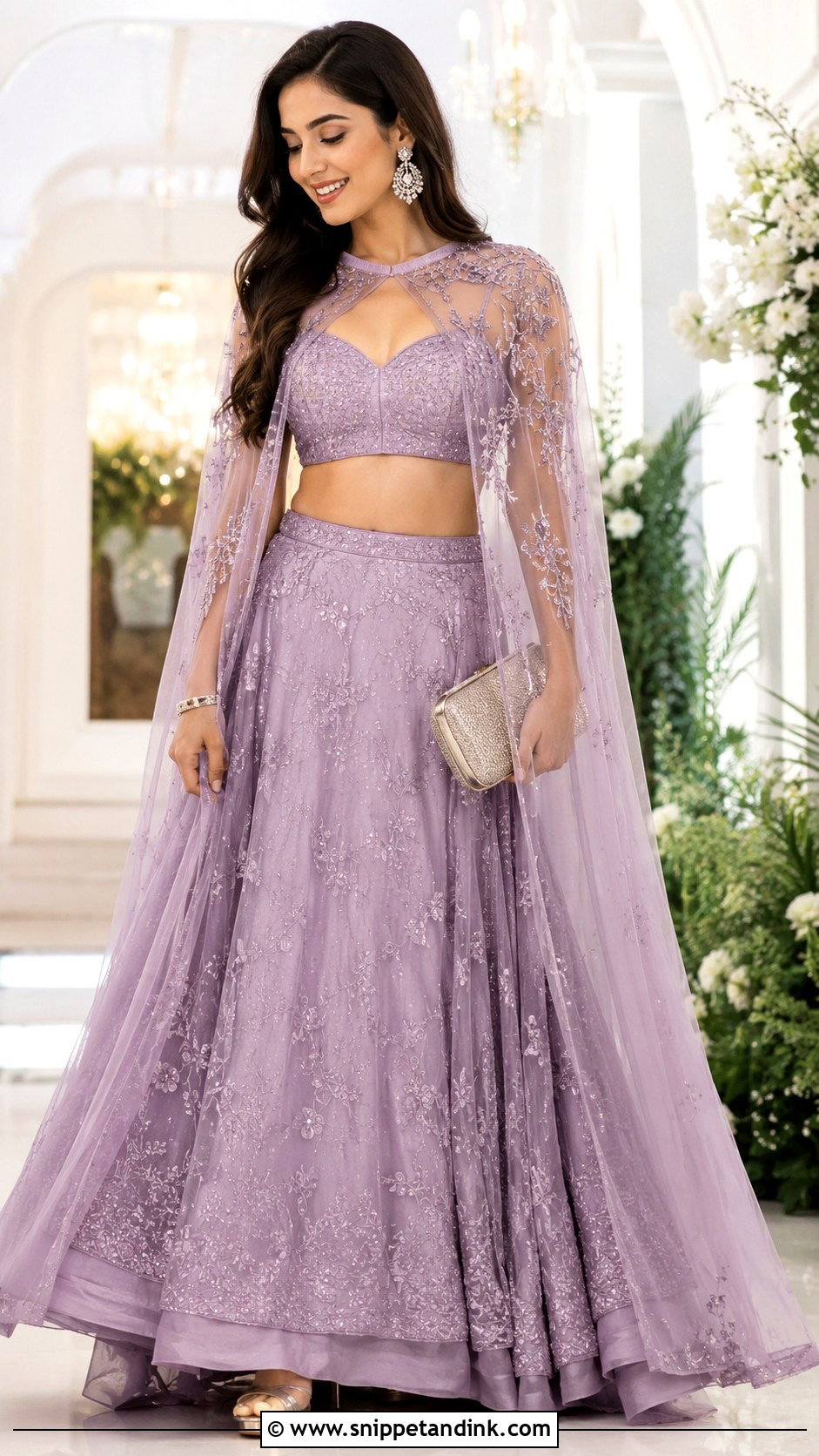
Swapping the dupatta for a cape is the single most practical change you can make if you’ll be hugging relatives all evening. Nothing slips off the shoulder and nothing needs re-pinning. I like a clean skirt with the cape doing the work, sheer or embroidered, attached at the blouse so it doesn’t shift. A cape lehenga sits well at the sangeet or reception and reads current beside the traditional outfits in group photos. Soft waves and one strong pair of earrings complete it.
12. Jacket Lehenga For Bride Sister
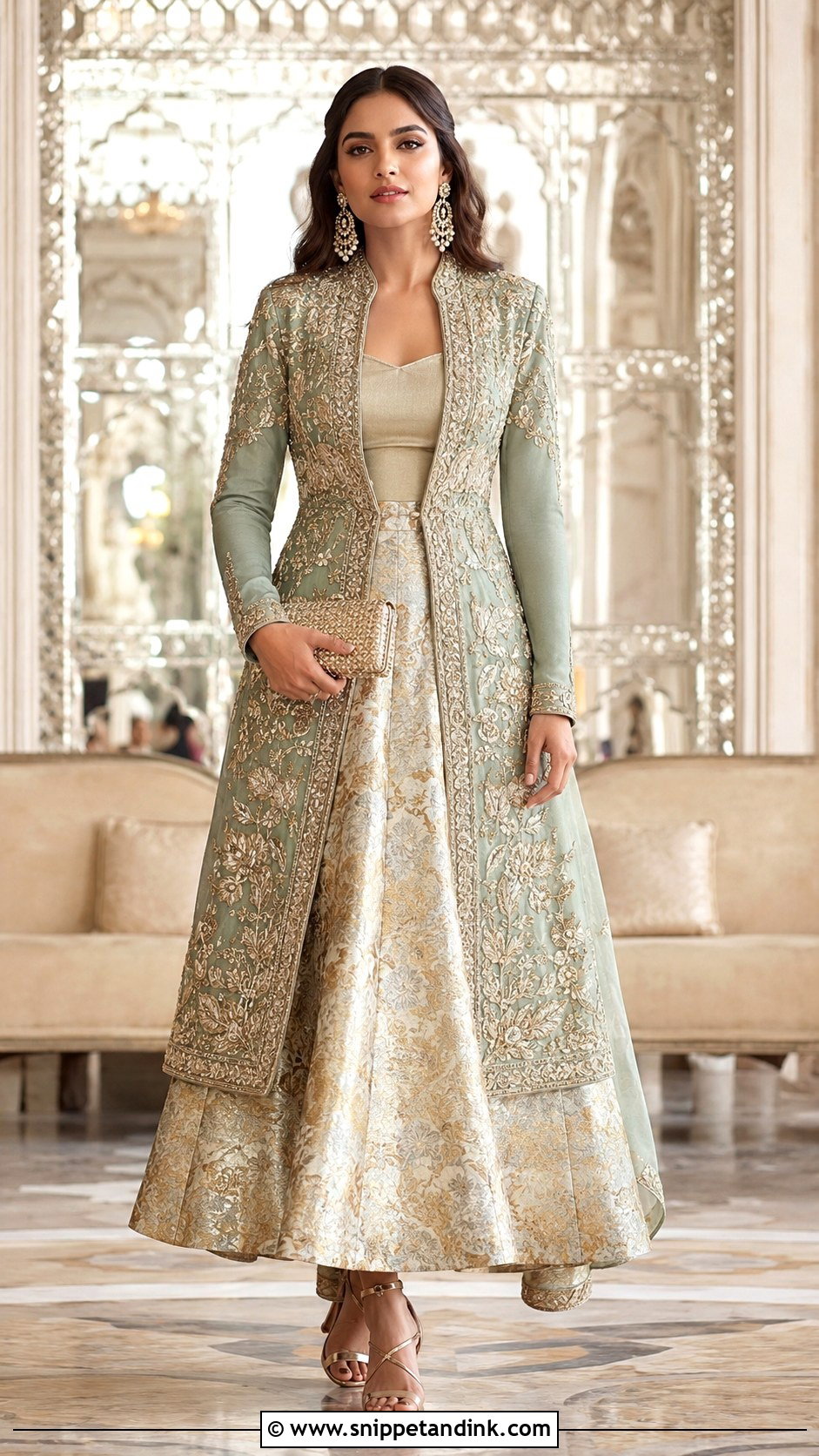
A jacket lehenga adds structure and coverage, which is why I suggest it for winter weddings and long ceremonies in cool halls. Brocade jackets feel traditional; sheer or cropped ones look lighter. Balance is everything here. Pair a heavily worked jacket with a plain skirt, or the reverse, never both heavy. Because the jacket brings detail right up to the neckline, a necklace usually crowds it; I’d go with earrings only, pulled-back hair and a clutch.
13. Organza Saree For Bride Sister
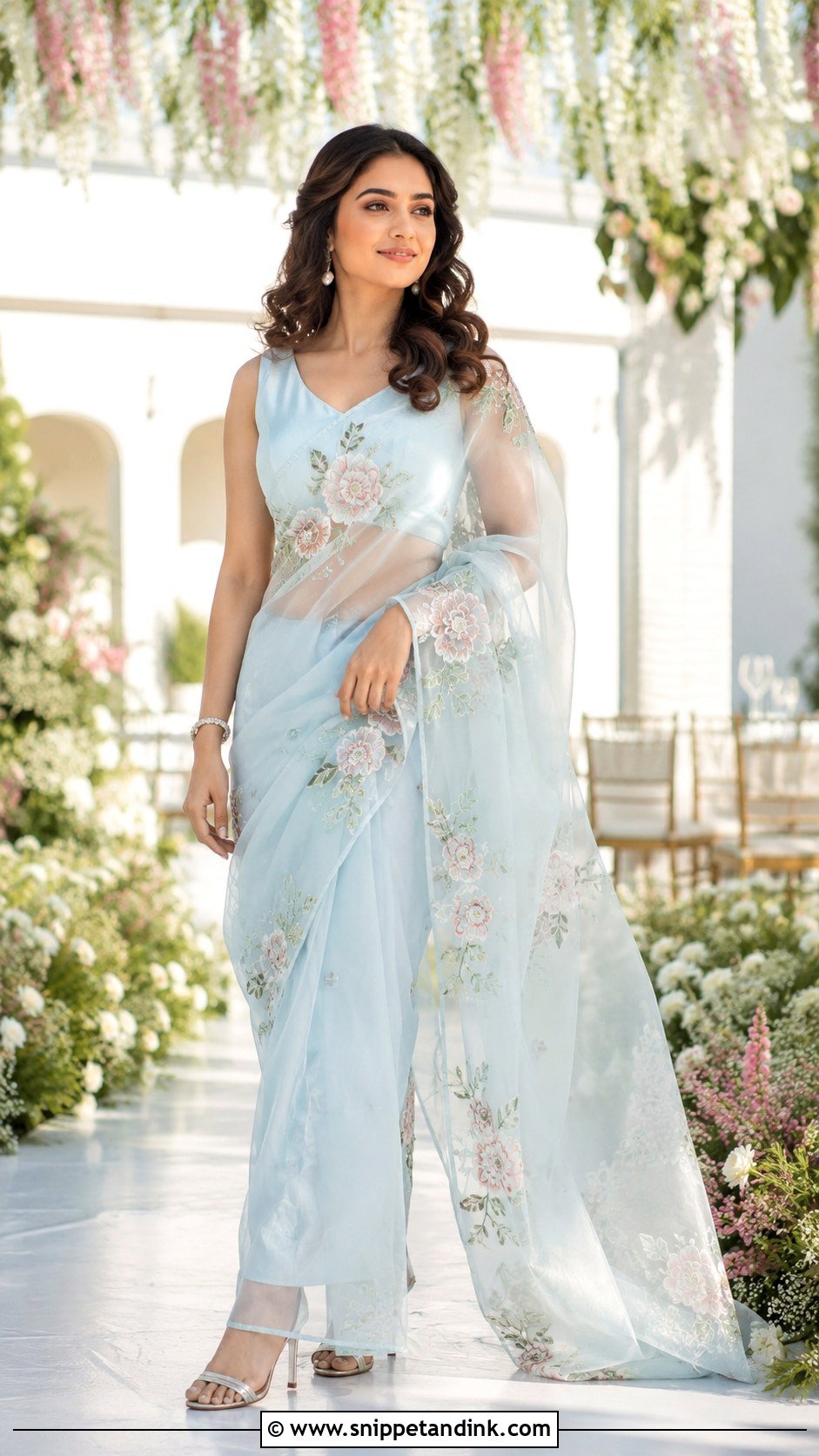
Organza is the daytime fabric I reach for in summer. It’s sheer and crisp, so a pastel organza saree with scalloped borders or pearl work looks fresh at a roka, engagement or garden ceremony. It also creases where you sit and holds the crease, so I tell sisters to stand for photos first and sit later. Organza has volume, which means the blouse needs a sharp fit to keep the outline balanced. Elbow-length or square-neck blouses look modern, and pearl earrings with soft makeup keep the whole thing light.
14. Banarasi Lehenga For Bride Sister
A Banarasi lehenga gives you heritage richness without the full bridal weight. The woven metallic motifs carry the outfit on their own, so a solid blouse beside the Banarasi skirt is usually all you need. Royal blue, deep pink, bottle green and mustard feel classic for the main ceremony. A genuine handwoven Banarasi has a slightly uneven back with floats of thread, and the zari is heavier than a power-loom copy; I check the reverse before any client buys. Choose a light bordered dupatta, gold jewellery and juttis.
15. Ruffle Saree For Bride Sister
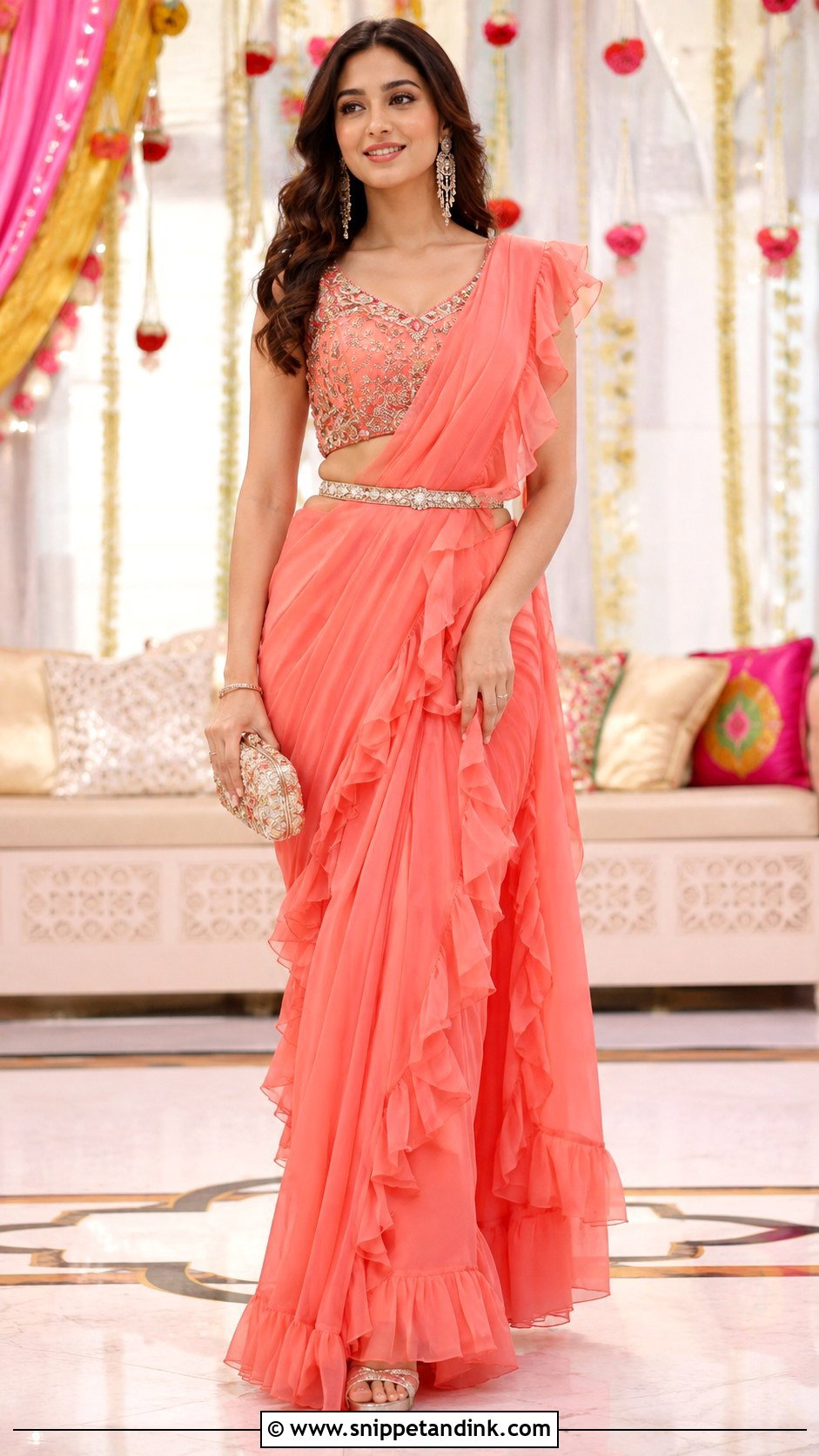
Ruffle sarees are fun, and they forgive a lot: the frills hide uneven pleating and give movement even when you’re standing still. Georgette, chiffon and crepe keep the ruffles soft; anything stiffer starts to look like a lampshade. A belt at the waist tidies the shape and stops the layers riding up when you dance. I like them for the cocktail night or sangeet with a one-shoulder or embroidered crop blouse and long earrings.
16. Mirror Work Lehenga For Bride Sister
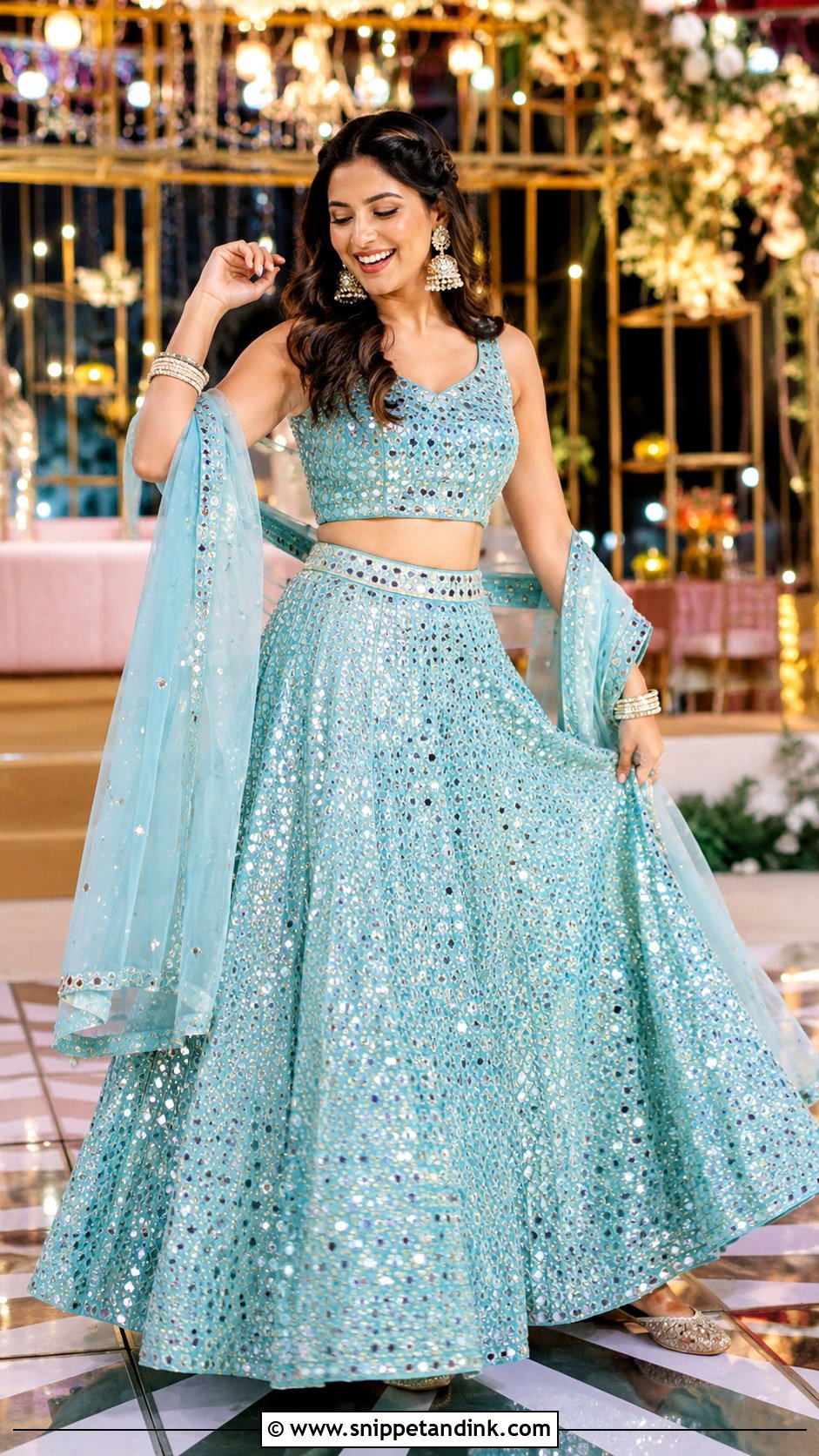
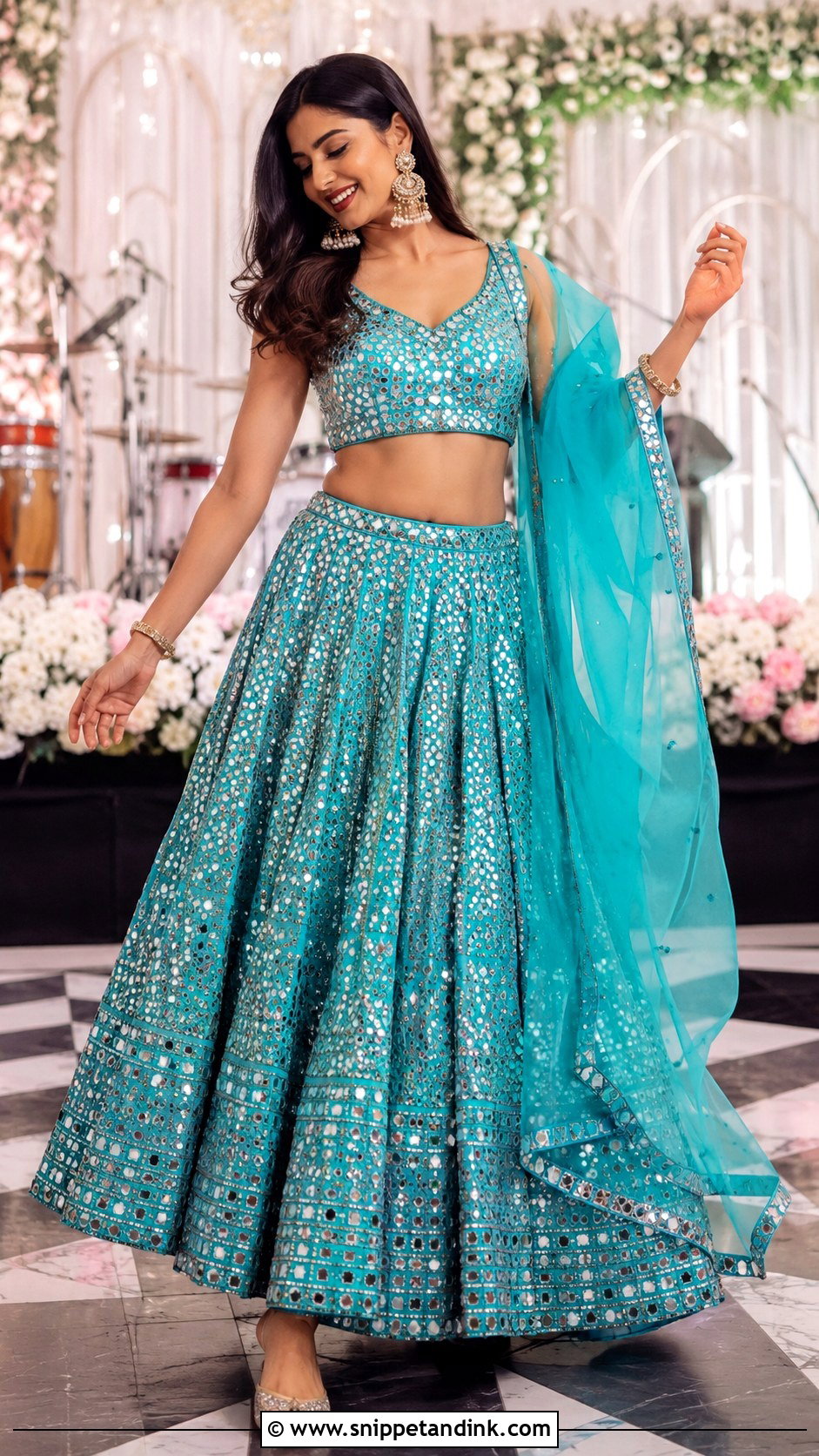
Mirror work throws light back at every camera in the room, so it’s made for mehndi and sangeet nights. A mirror work lehenga in yellow, coral, turquoise or ivory needs very little jewellery. The skirt weight matters: hundreds of glass mirrors add up, and I always lift the skirt at a trial to check she can dance in it for two hours. A sleeveless blouse, a net dupatta, jhumkas and embellished flats keep it light enough for a long night of music.
17. Chikankari Lehenga For Bride Sister
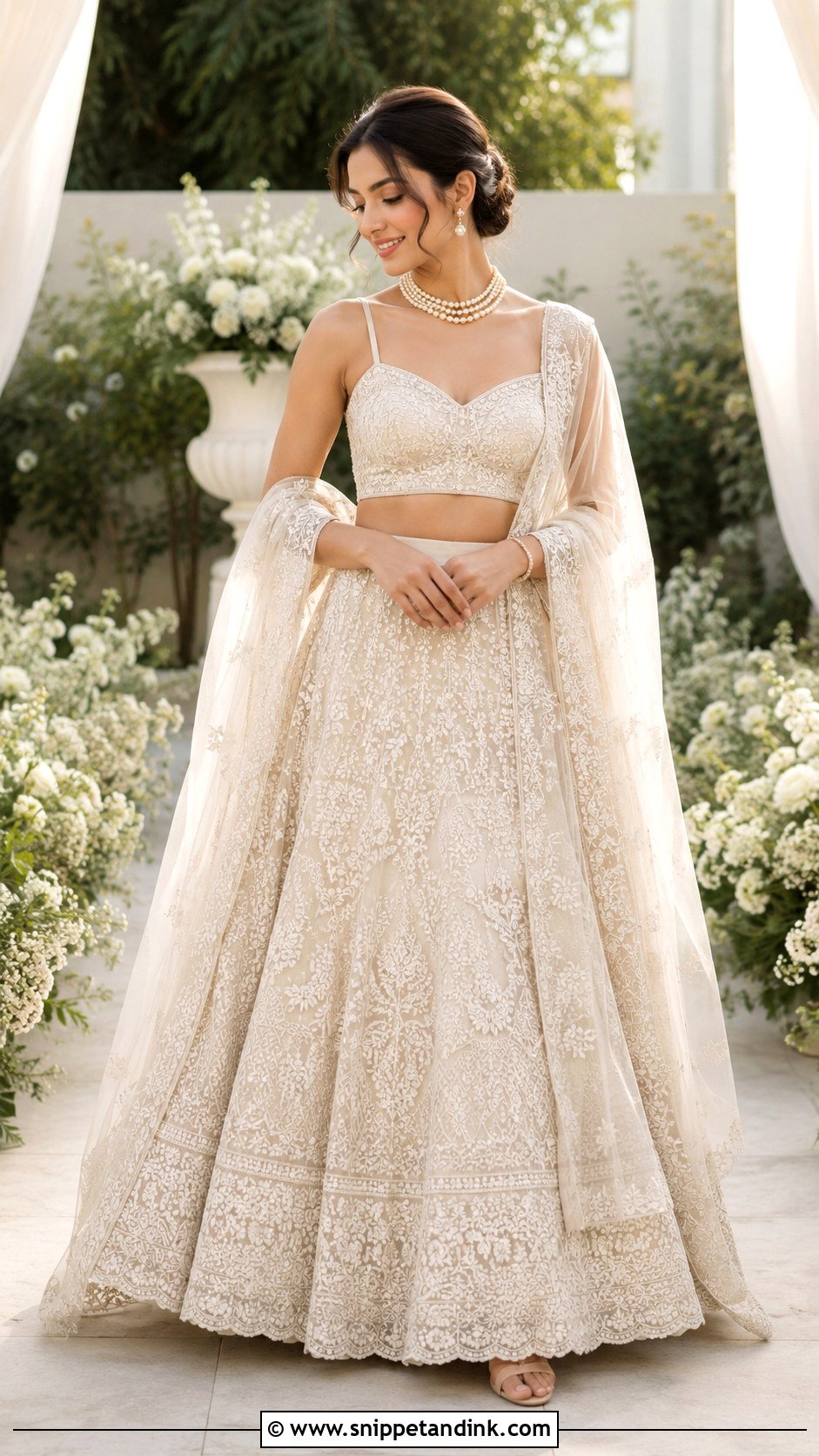
Chikankari is hand-done white-thread embroidery from Lucknow, traditionally on fine cotton or georgette, and it breathes better than almost anything else on this list. That makes it my pick for a summer daytime wedding or an intimate ceremony. Plain chikankari can look too casual for a wedding, so I look for pieces finished with mukaish, sequins or pearls worked into the threadwork. Ivory, mint and powder blue are classic; deeper shades work for evening. Pearl jewellery and soft glam keep it understated.
18. Co Ord Set For Bride Sister
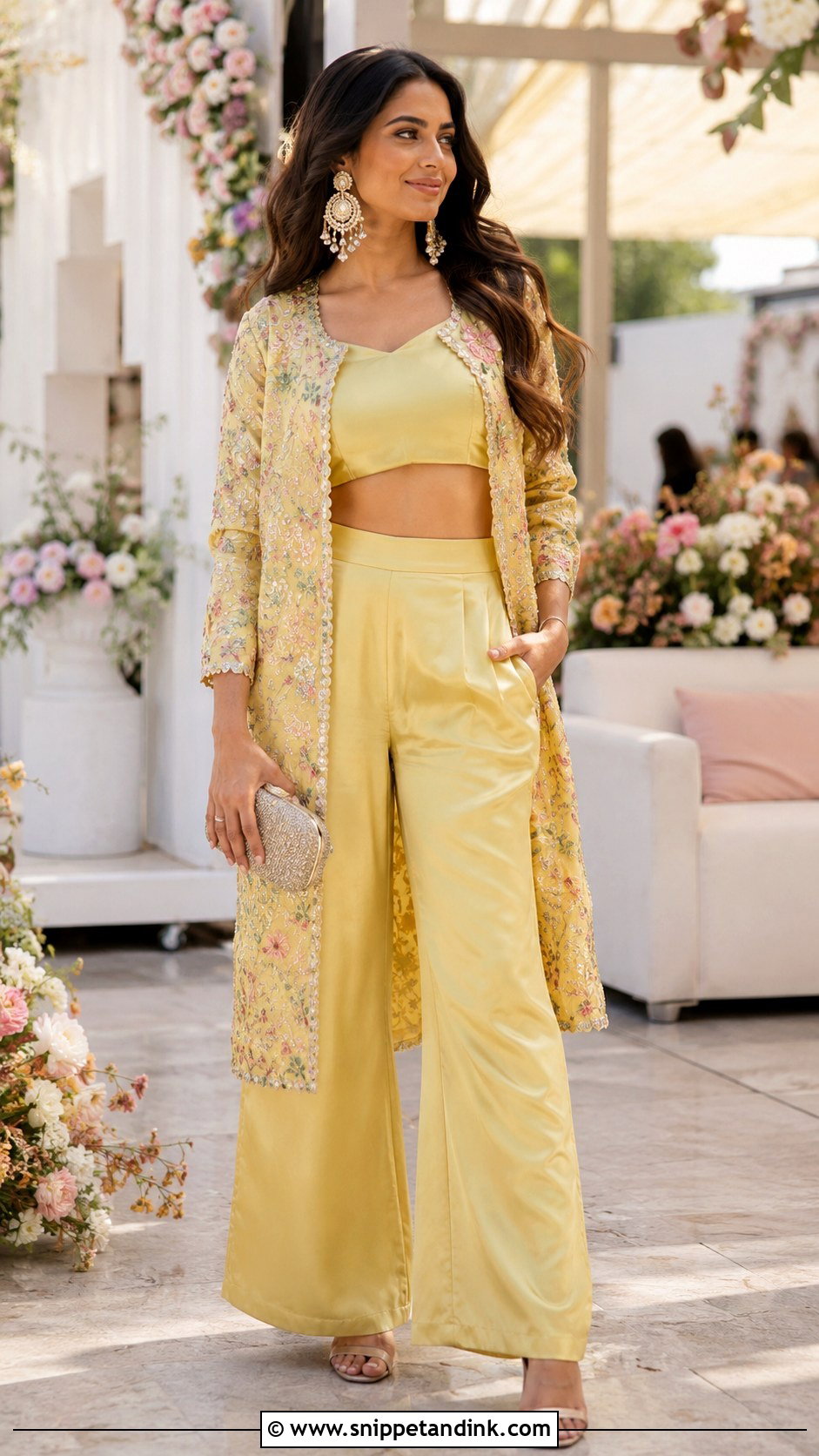
A festive co-ord set suits the smaller functions: a welcome dinner, haldi or the brunch after the wedding. Crop top with palazzos, kurta with wide-leg trousers or an embroidered jacket over matching pants all work if the fabric is wedding-grade. Silk, brocade or organza keep it dressy, while a cotton co-ord can look like you came straight from the office. These are the sets I recommend to sisters running logistics, because pants let you climb onto a stage to adjust décor without thinking twice.
19. Peplum Lehenga For Bride Sister
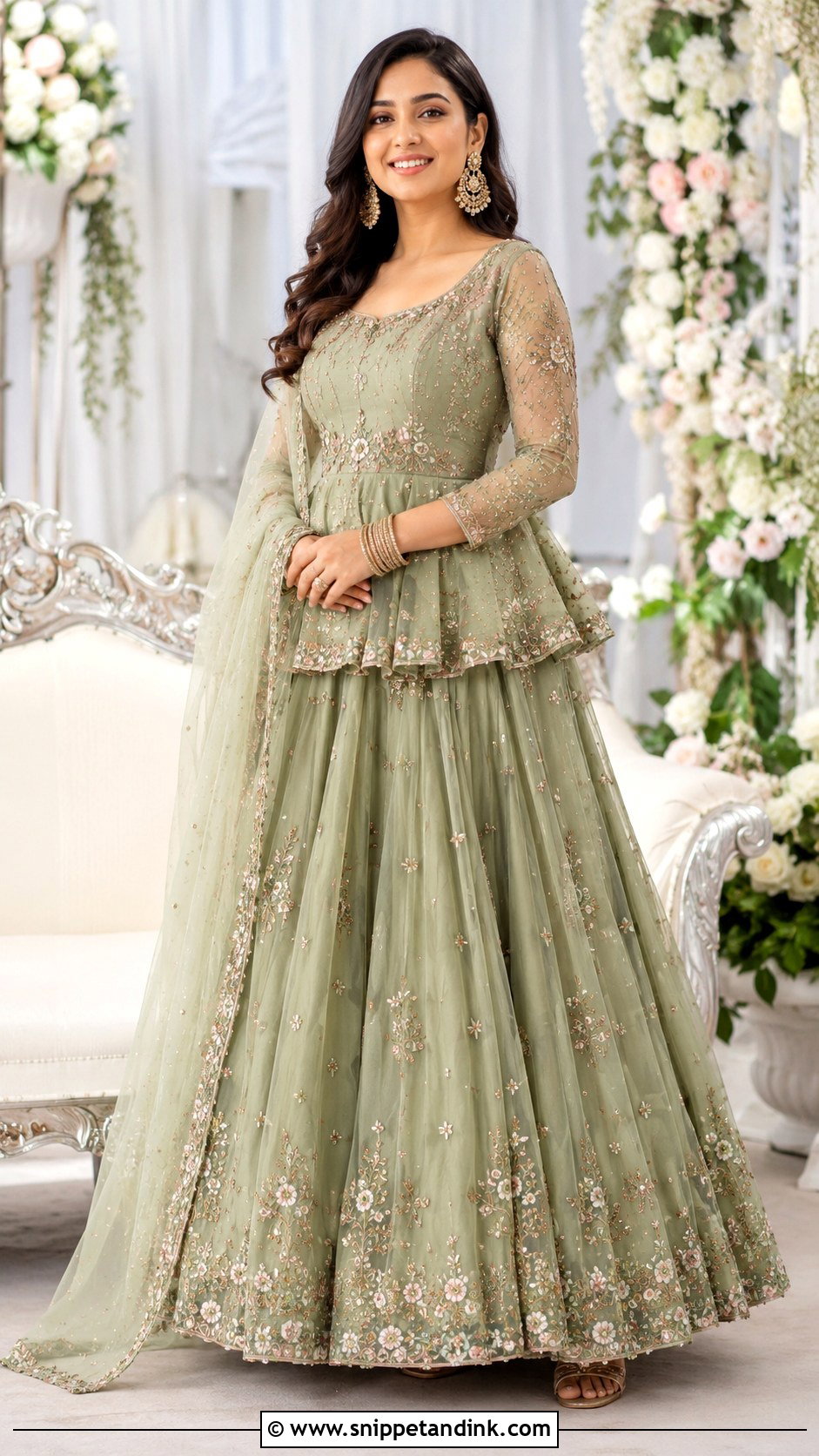
The peplum flares from the waist and covers the midriff, which is why so many sisters who feel self-conscious in a cropped blouse settle on it. Pair it with a flowing skirt and a light dupatta for mehndi, engagement or sangeet. Where I’m careful: the peplum should end at the high hip. Any lower and it fights the skirt’s flare, shortening your legs in photos. Embroidery at the neckline or sleeves is enough detail. Pastels for daytime, jewel tones at night, with chandbalis and block heels.

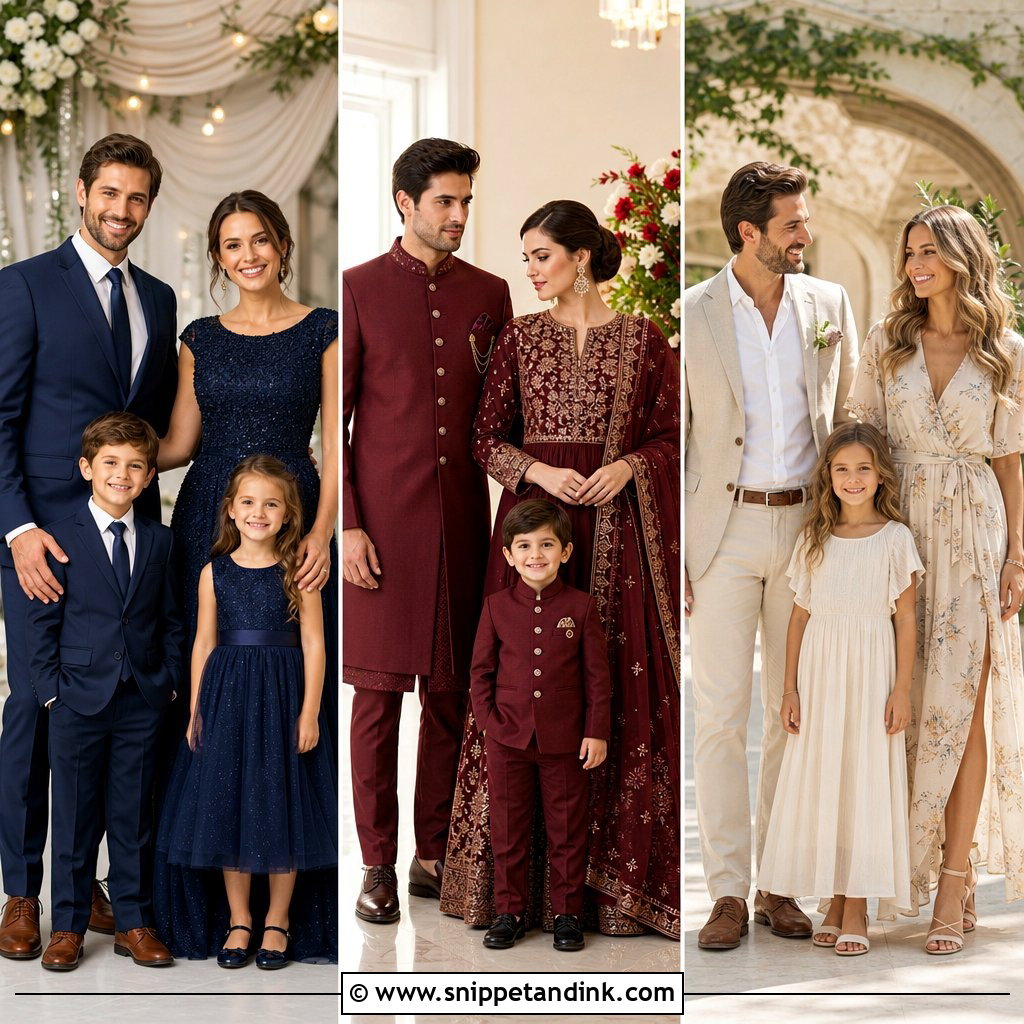
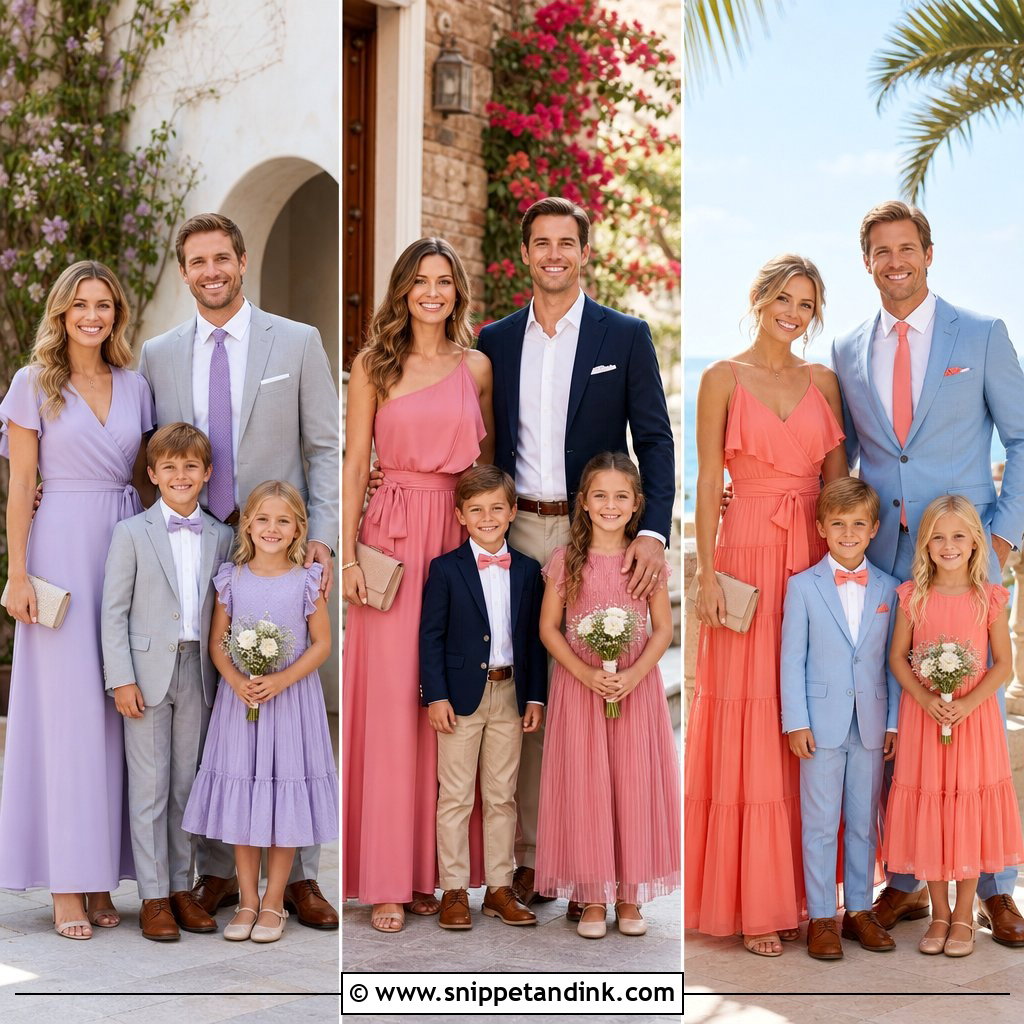
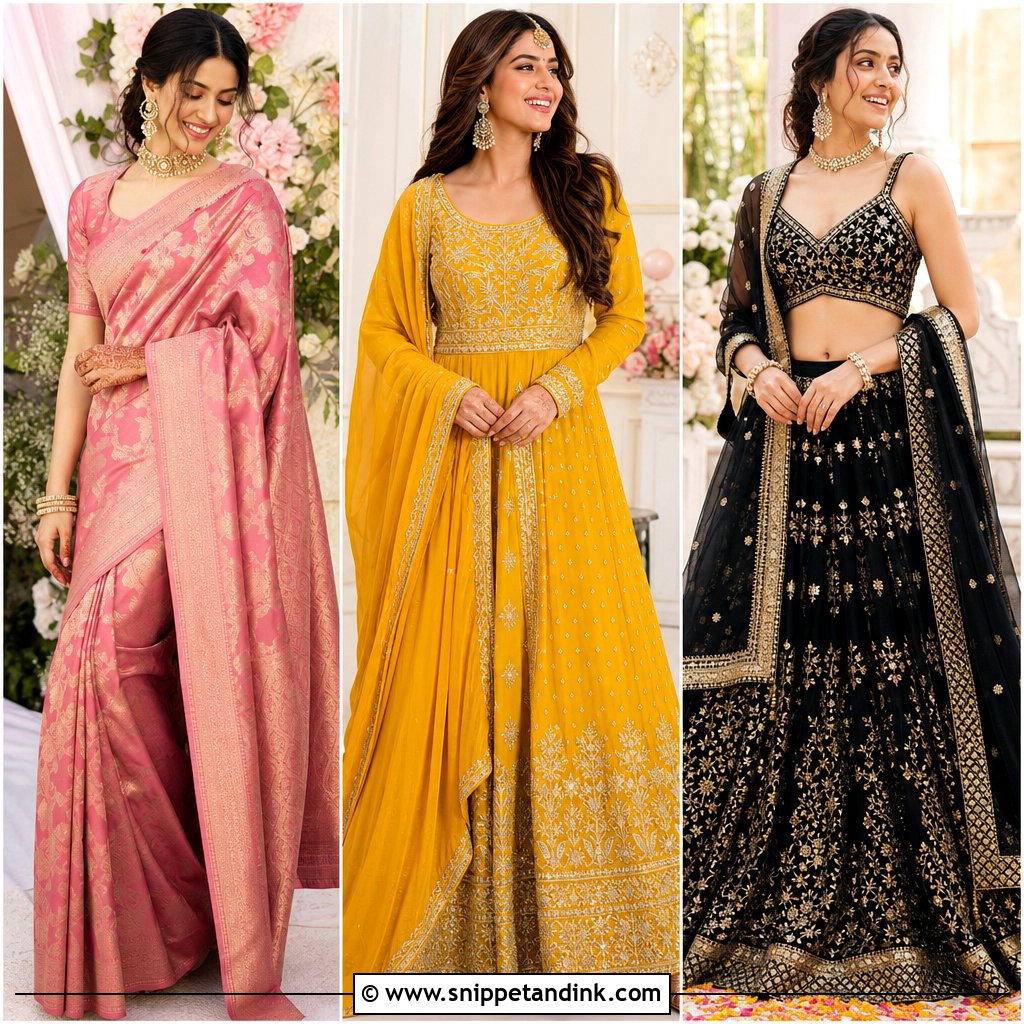
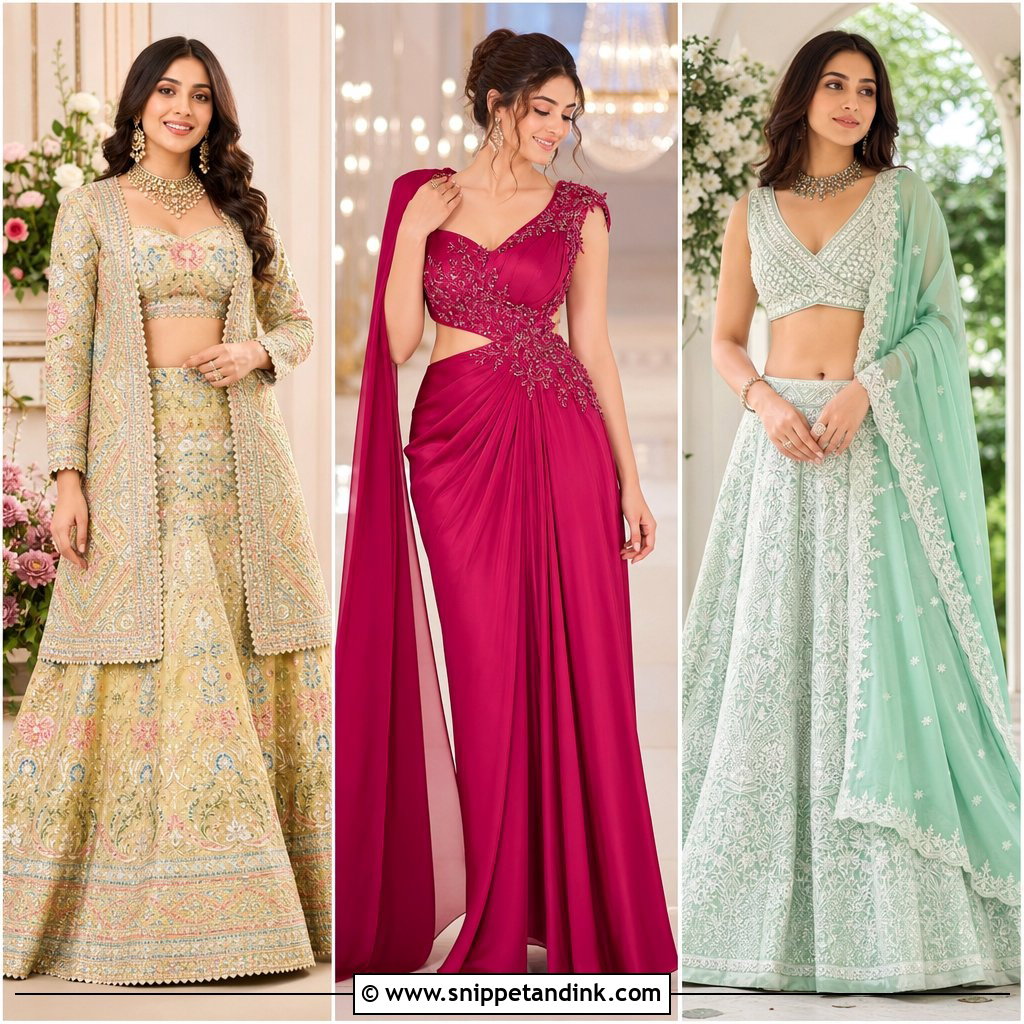
20. Palazzo Suit For Bride Sister
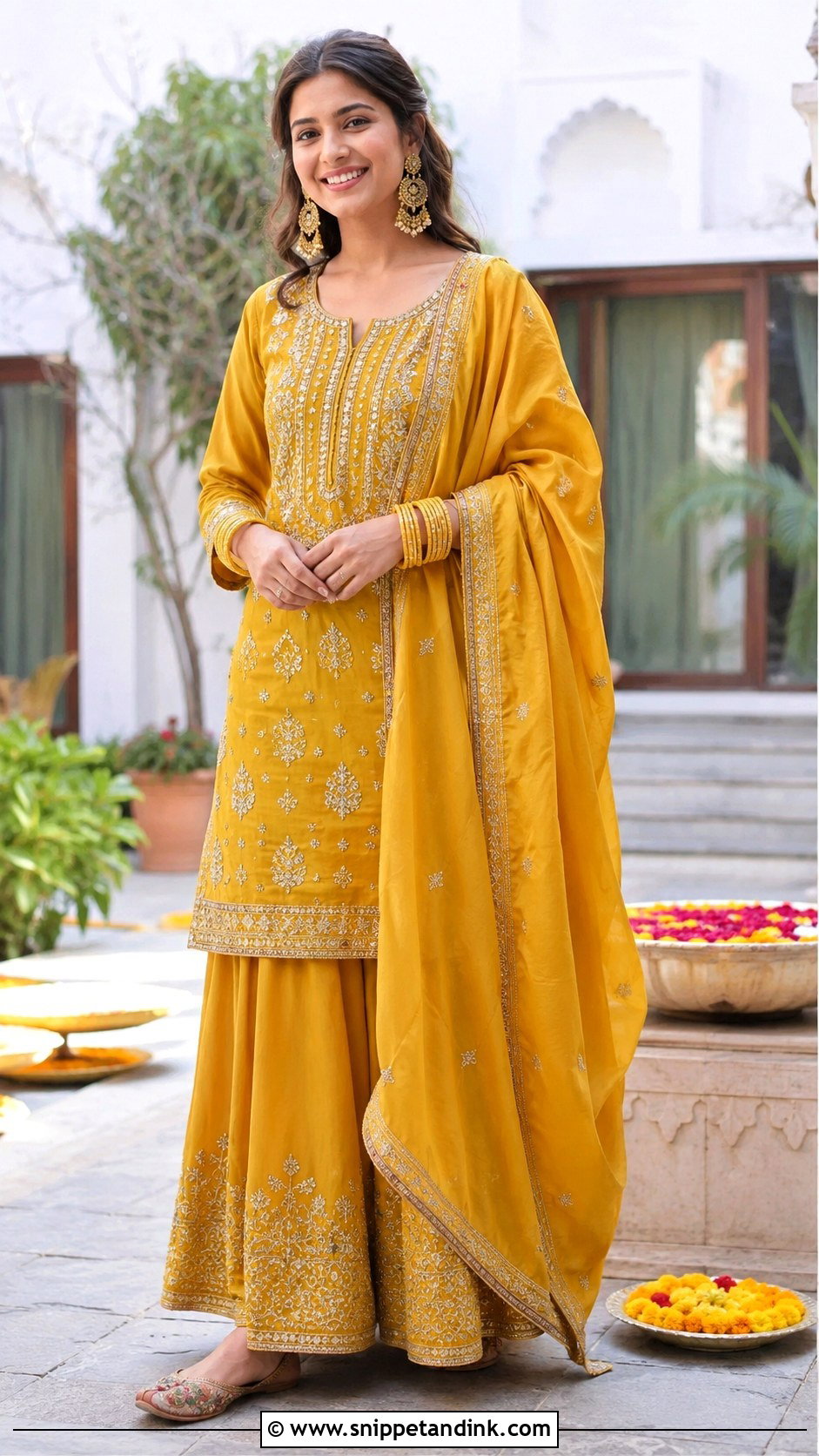
Palazzo suits are what I suggest for family lunches and pre-wedding puja days, when you’ll be sitting, serving and walking for hours. A long straight kurta looks elegant; a short kurti feels younger. Zari borders, mirror work or printed silk make it festive. Wide-leg palazzos need the right hem length with flat juttis, so try them on with the shoes you’ll wear, otherwise the hem drags on stairs and frays by evening. Modest coverage, real comfort and very little maintenance.
21. Kurta Lehenga For Bride Sister
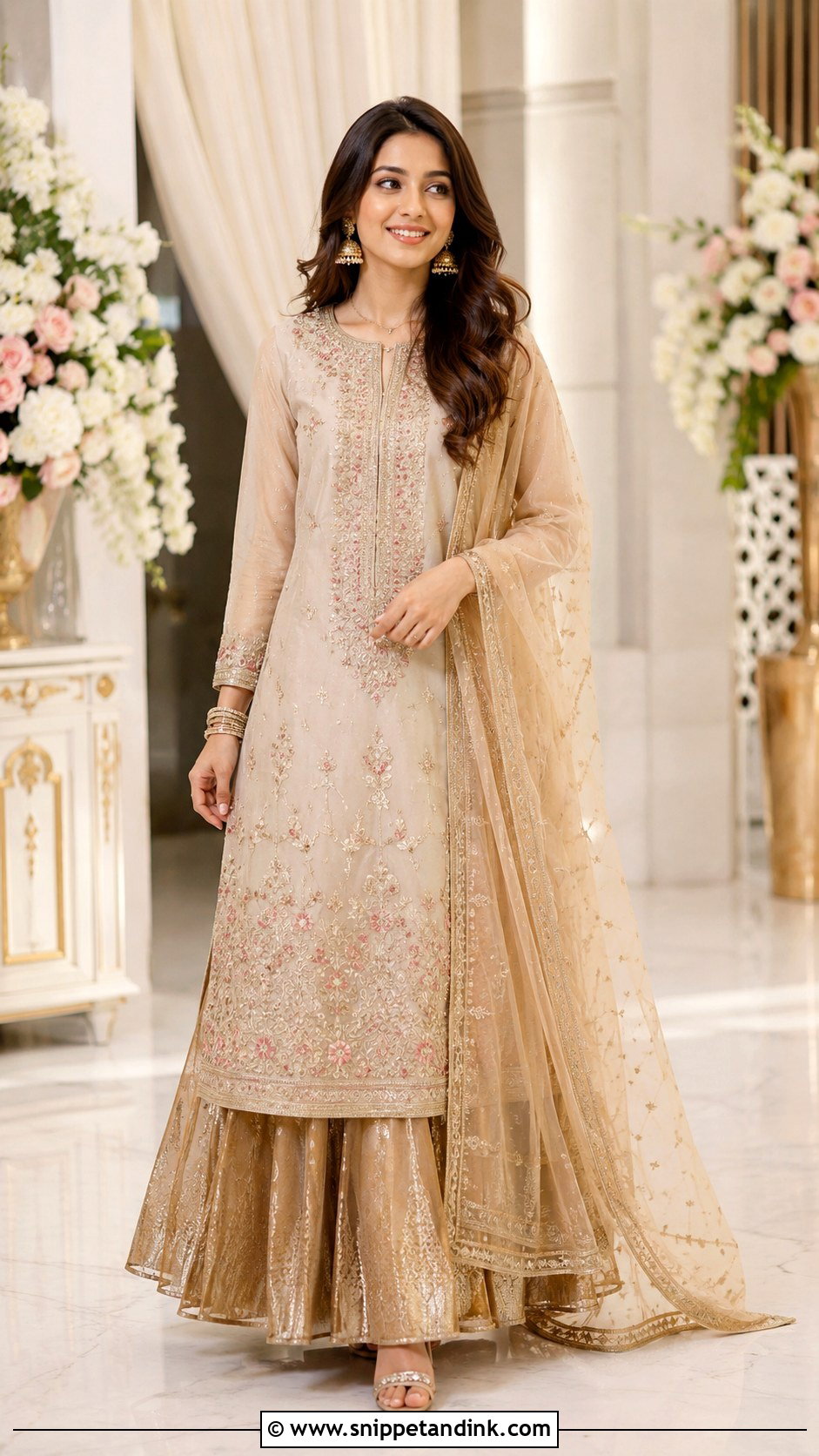
A kurta lehenga swaps the short blouse for a longer kurta over the skirt, so you get full coverage with the swing of a lehenga below. I suggest it for religious ceremonies or for sisters who’d rather not manage a blouse and heavy dupatta. Straight kurtas lengthen; A-line kurtas forgive a fuller hip. The kurta should end around mid-thigh or knee so the skirt still shows enough to read as a lehenga. Add a dupatta, jhumkas, bangles and juttis or comfortable heels.
22. Satin Gown For Bride Sister
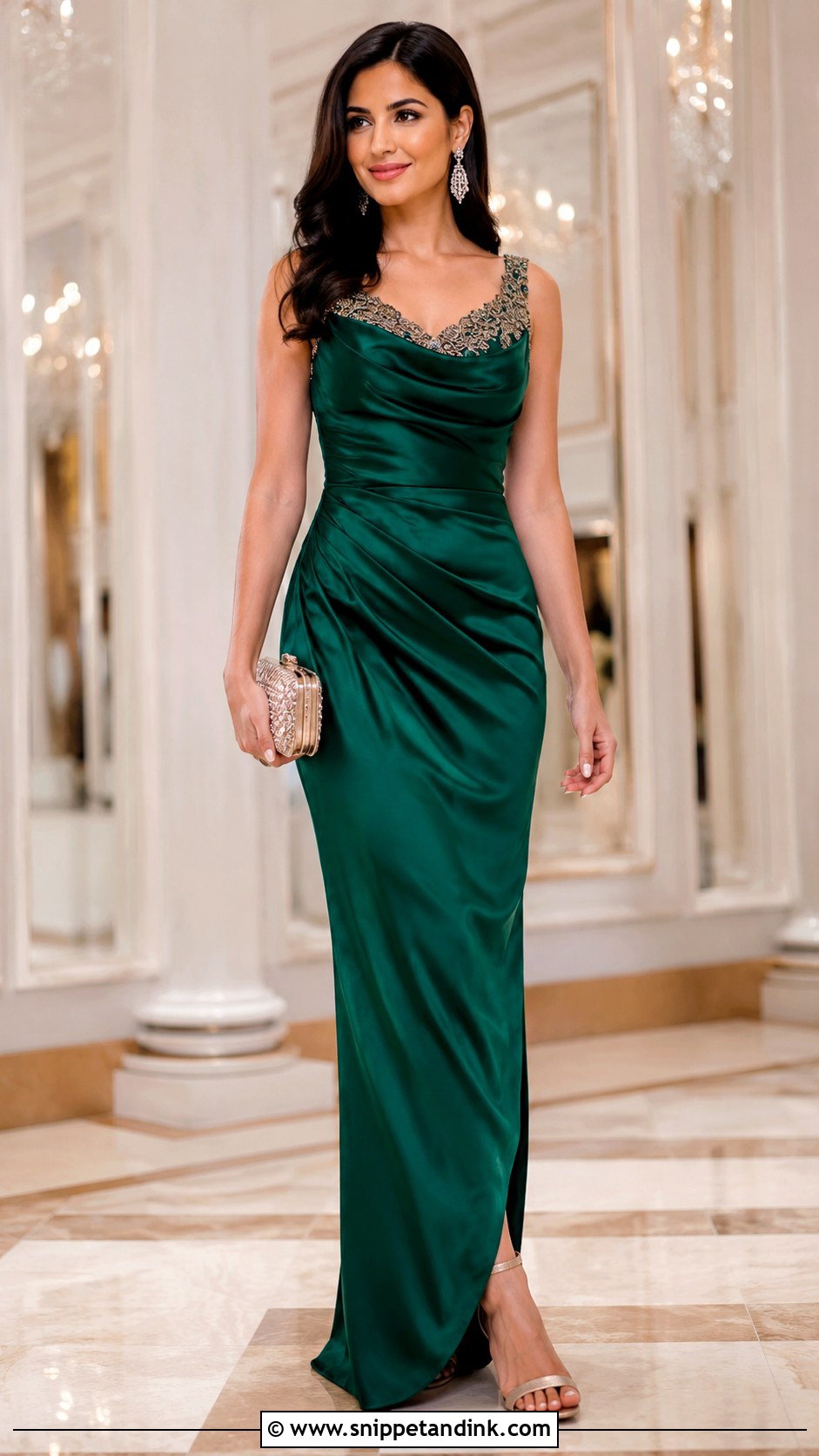
Satin is the cleanest choice for a reception or formal evening. It needs no embroidery because the sheen does the work, and draped, wrap or embellished-waist styles flatter most shapes. Emerald, champagne, navy, mocha and burgundy all hold colour well in low light. Satin shows every crease and every water mark, though, so steam it on the hanger at the venue and keep a napkin on your lap at dinner. If the family wants an Indian touch, a cape or attached dupatta does it. Drop earrings, a clutch and strappy heels give the bride’s sister a modern look that still feels like a wedding.
23. Net Lehenga For Bride Sister
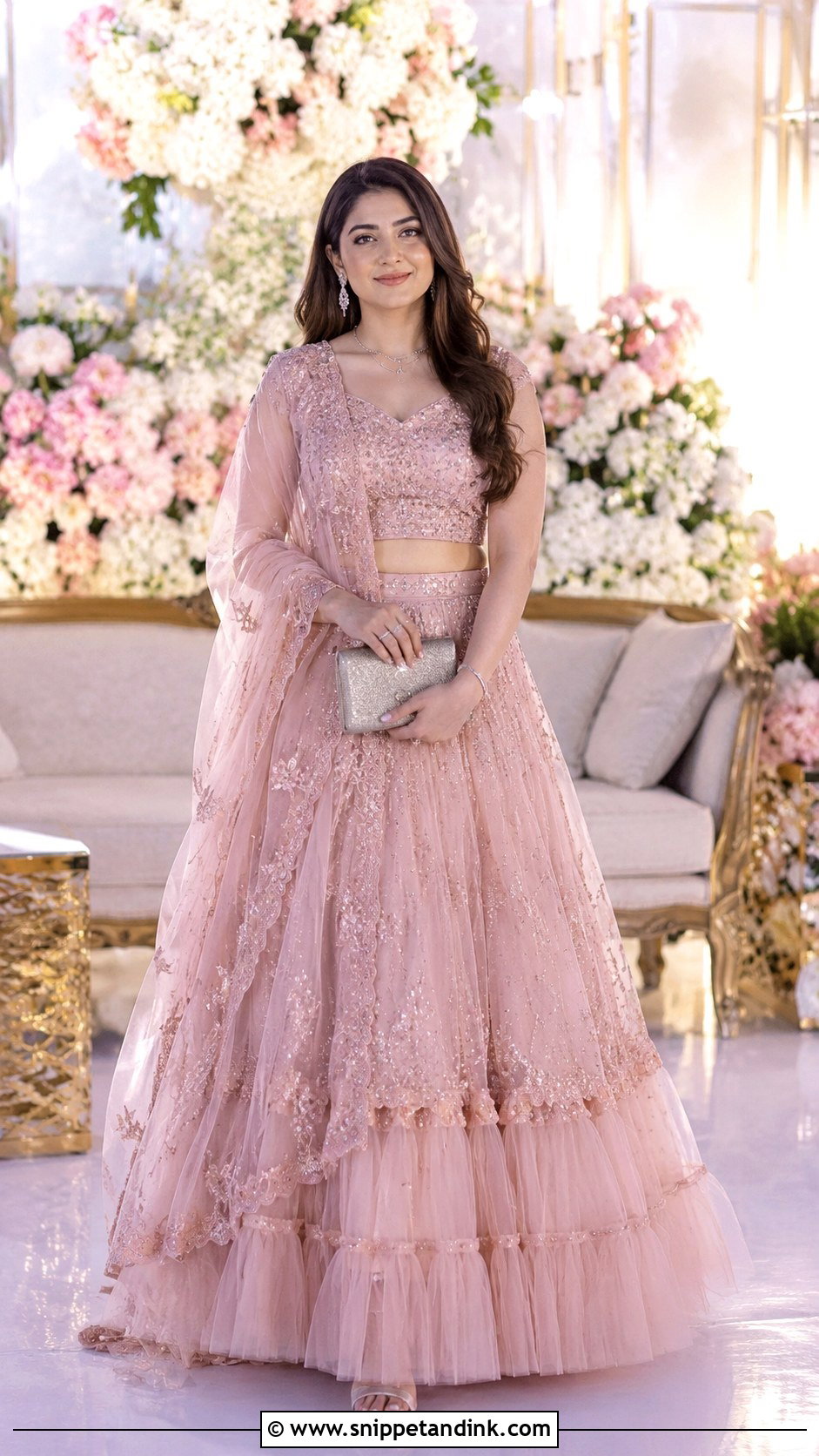
Net gives that soft princess volume at an engagement, sangeet or reception without tipping into bridal. Layered net with light sequins or floral embroidery, plus a scalloped dupatta, looks dreamy in photos. Lavender, dusty pink, ice blue and champagne are the easy colours, though deep shades in net look dramatic. Because net bulks up the skirt, the blouse has to fit precisely or the top half looks lost. Cheaper net also scratches the ankles by evening, so I ask for a soft lining layer at the hem.
24. Belted Saree For Bride Sister
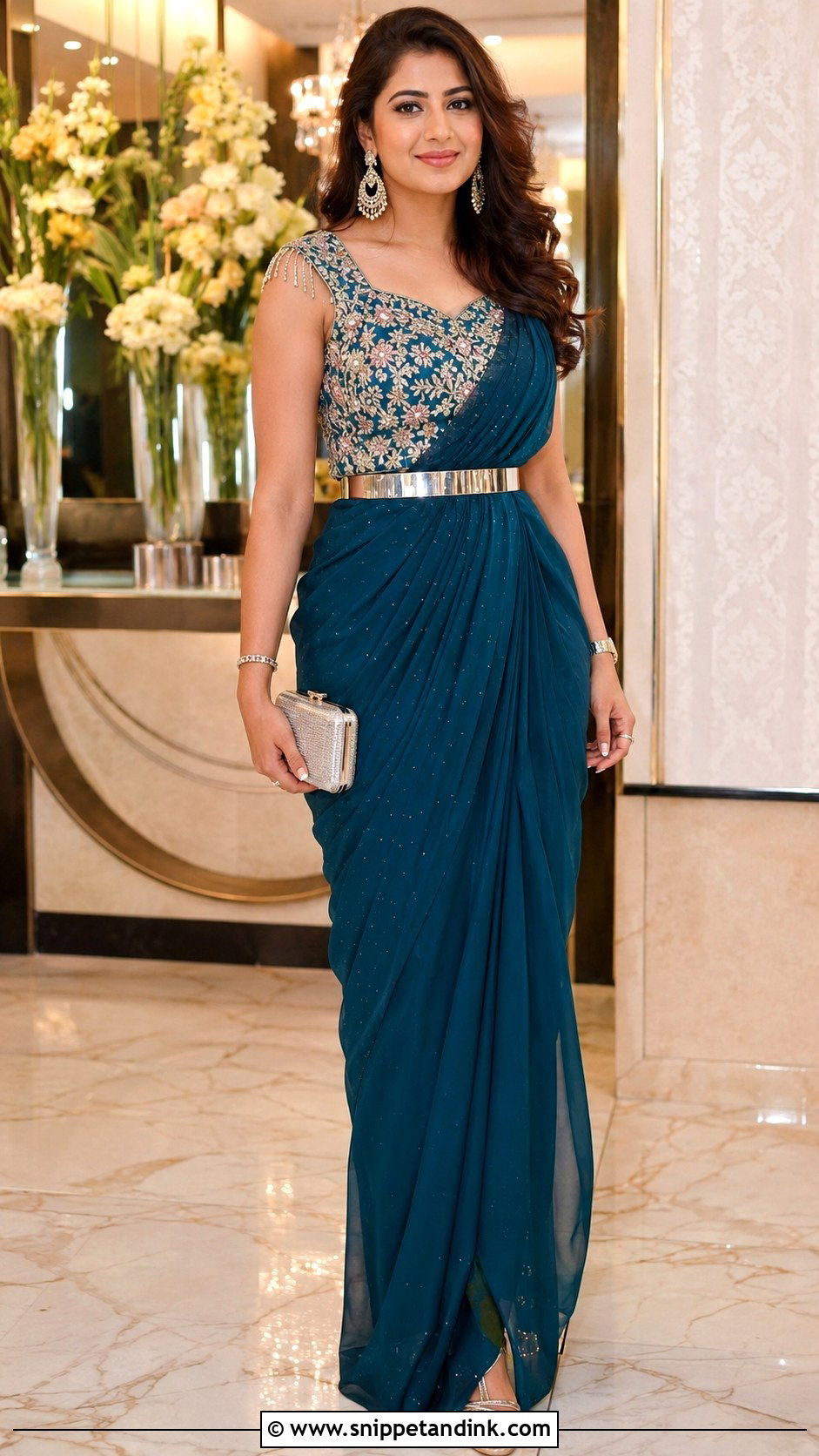
A belted saree is my practical pick for the sister who wants a saree and can’t afford for it to move. The belt locks the pleats and pallu in place and gives a defined waist. Georgette, crepe, organza or silk all work depending on the event, and the belt can be metallic, embroidered, pearl-trimmed or self-fabric. Position matters: I set the belt at the natural waist, just above the navel, because lower belts push the pleats forward and make them flare oddly. Fitted blouse, heels, statement earrings.
25. Printed Lehenga For Bride Sister
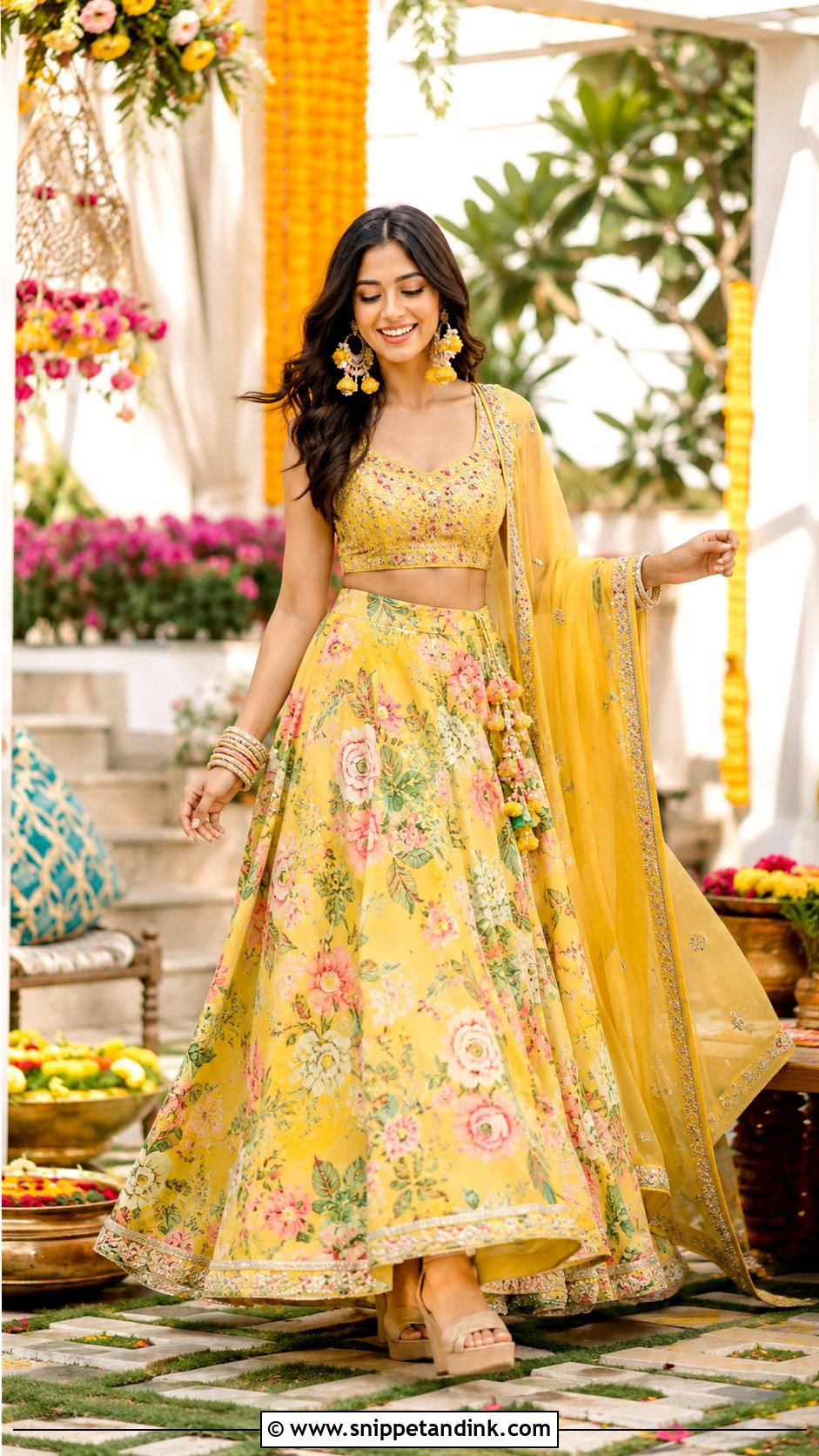
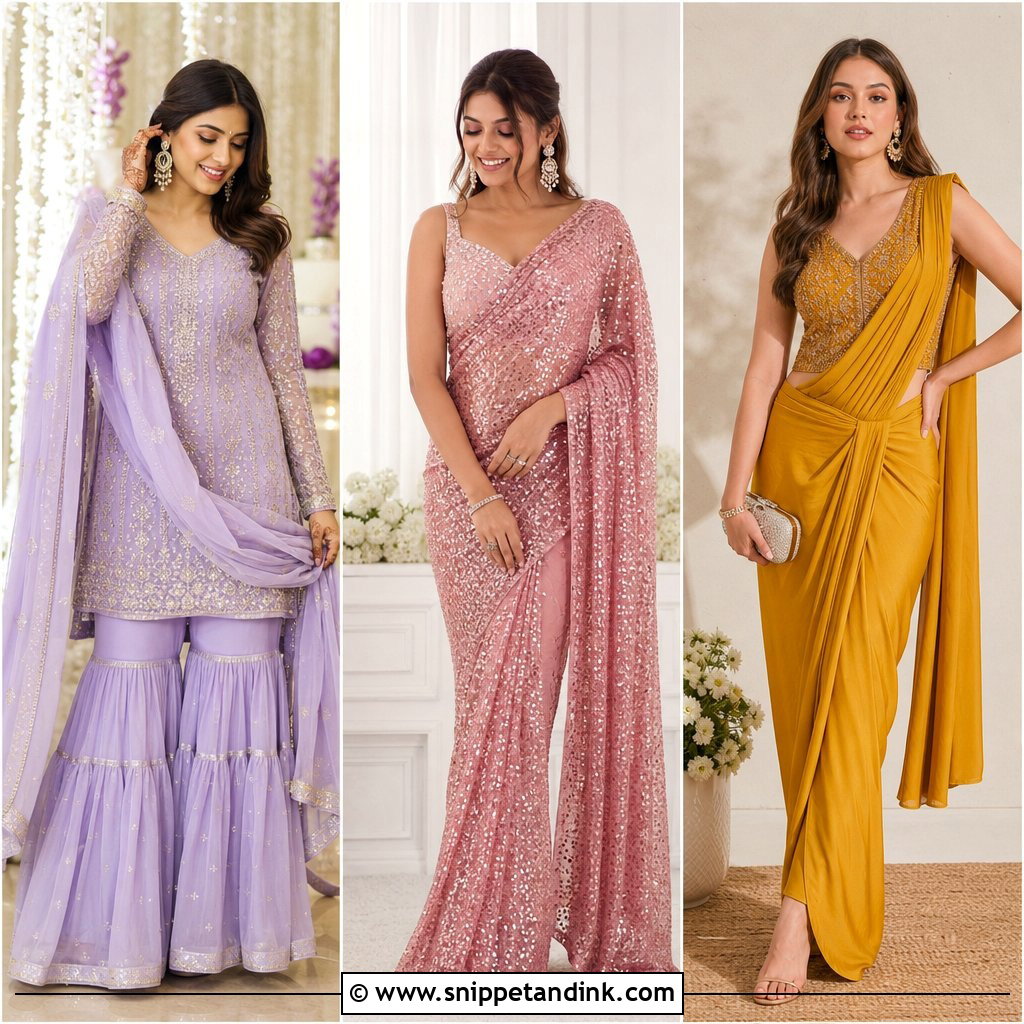
A printed lehenga is the most relaxed option for daytime functions like haldi, mehndi, a brunch or a destination wedding by the sea. Block prints, bandhani, leheriya and digital florals all suit outdoor light. To make a print feel more dressed up, I pair it with an embroidered blouse or a dupatta with a worked border. Wear it to the haldi knowing turmeric stains cotton for good; I’d pick a print you won’t mind marked. Playful earrings, bangles and flats or wedges finish it.
26. Monochrome Lehenga For Bride Sister
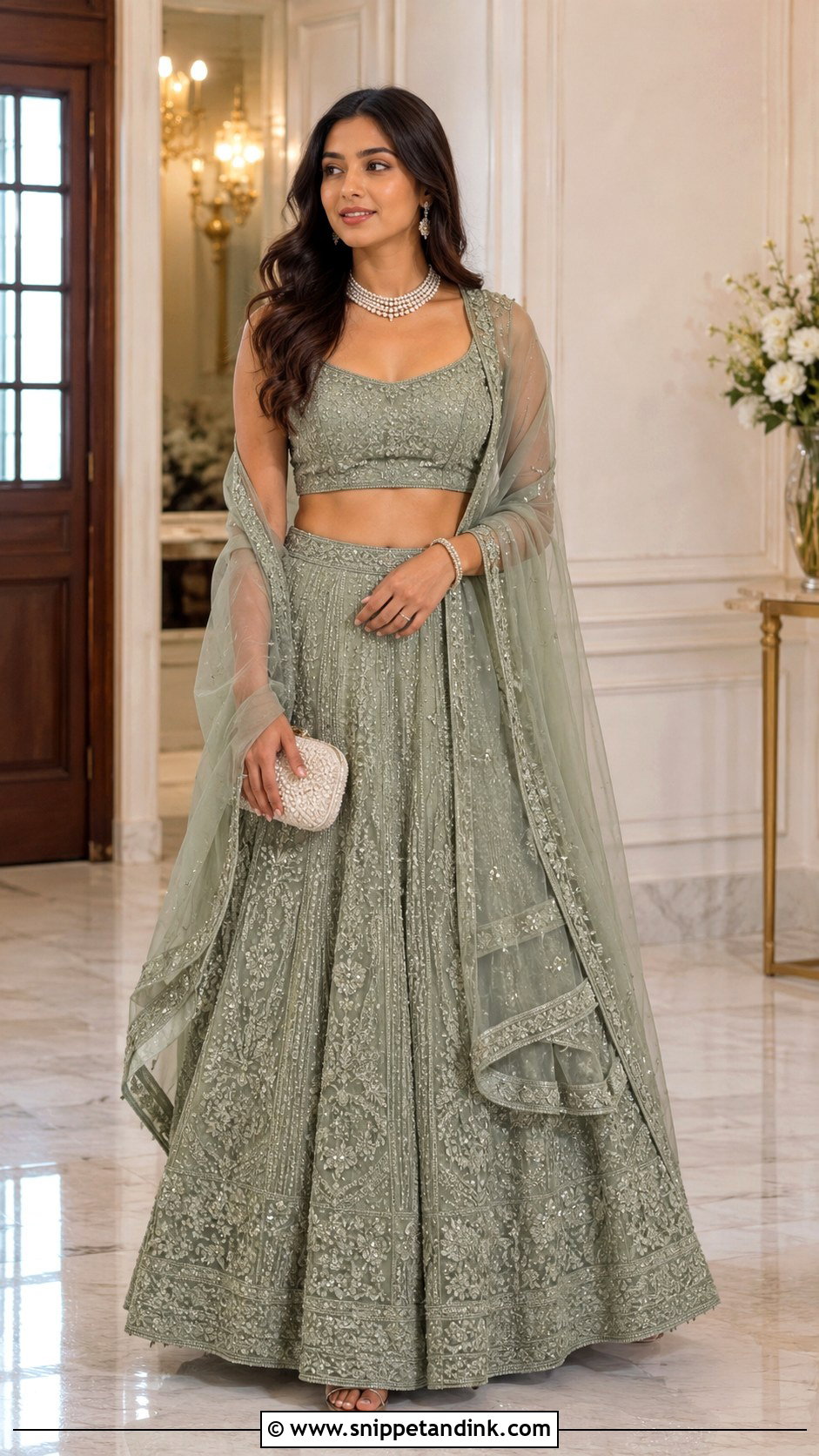
One colour head to toe looks expensive, partly because it lengthens the body and partly because it forces you to think about texture. Sage, dusty rose, lilac, rust and deep emerald all work. The skill is mixing finishes within the shade: matte silk against shimmer, net against organza, embroidery in a slightly darker tone. When a client goes monochrome, I bring fabric swatches to daylight, because two “matching” dyes from different suppliers can sit visibly apart in photos. Pearls, kundan or crystals all sit well on a single colour.
27. High Low Anarkali For Bride Sister
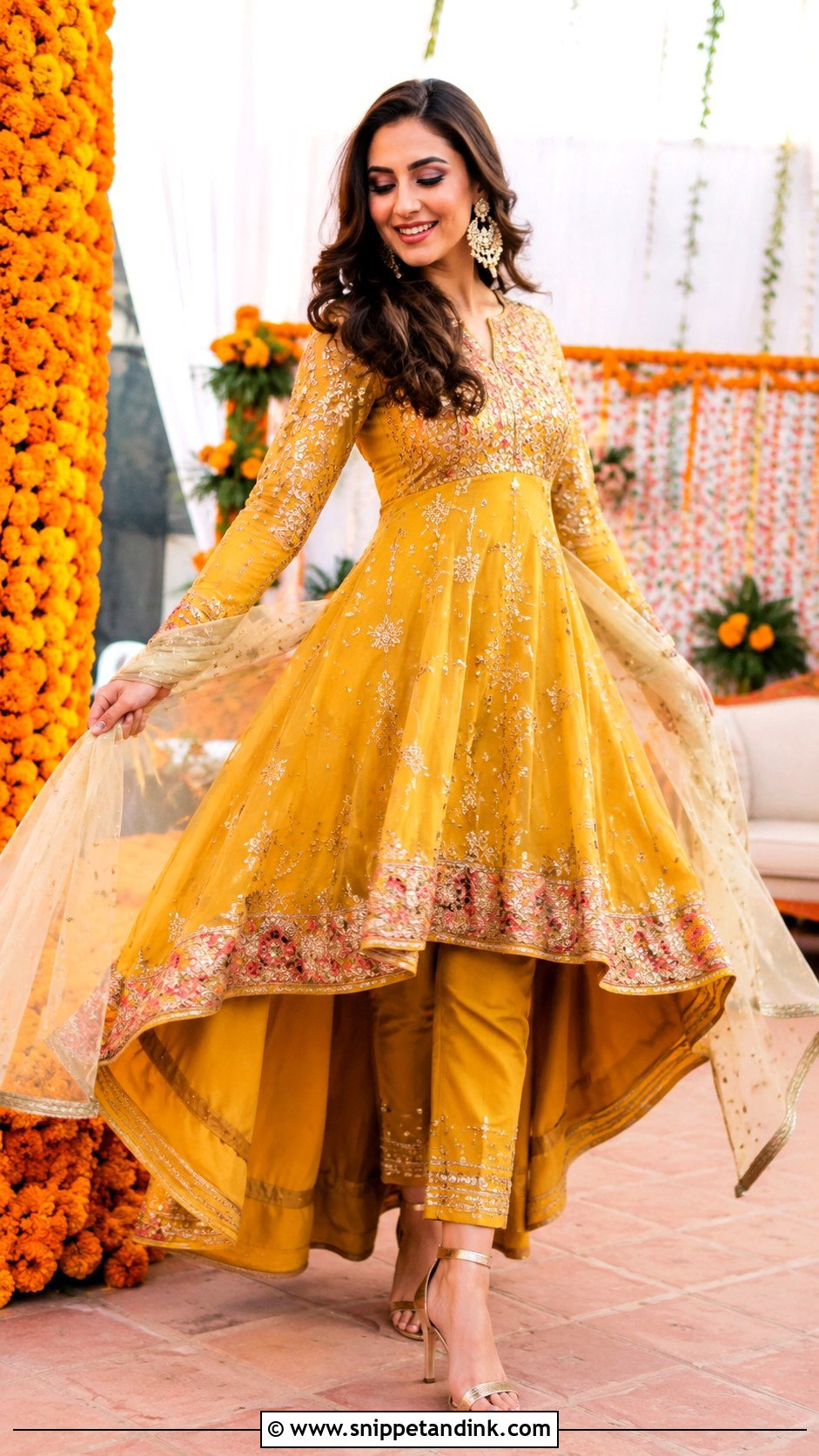
A high-low Anarkali, shorter in front and longer behind, solves the classic problem of tripping over a floor-length hem while dancing. Slim pants, churidar or cigarette trousers balance the volume. It suits sangeet, mehndi and engagement. Check the back length when you sit: a dramatic tail can bunch underneath you on a low chair. Embroidered borders or light mirror work keep it festive, and a soft dupatta is optional.
28. Dhoti Set For Bride Sister
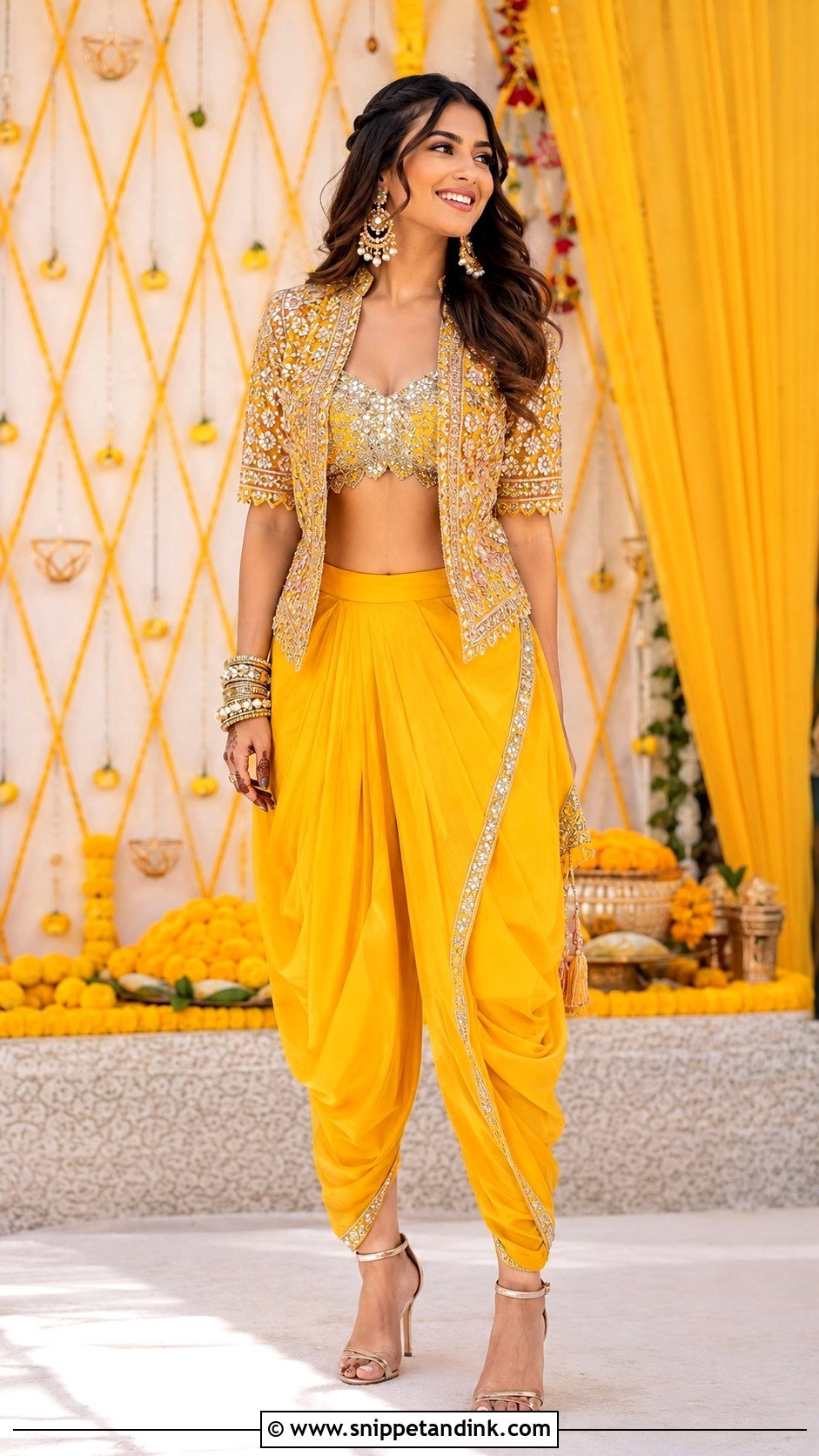
A dhoti set is the one I suggest to the sister who loves fashion and wants something nobody else at the mehndi will be wearing. The draped bottom moves freely and the crop, peplum or jacket top keeps it festive. It works best at haldi, mehndi, sangeet or a welcome event. Dhoti drapes look sloppy if the rise is wrong, so I check fit at the seat before anything else. Bright shades, a short cape, stacked bangles and heels or embellished flats.
29. Pakistani Suit For Bride Sister
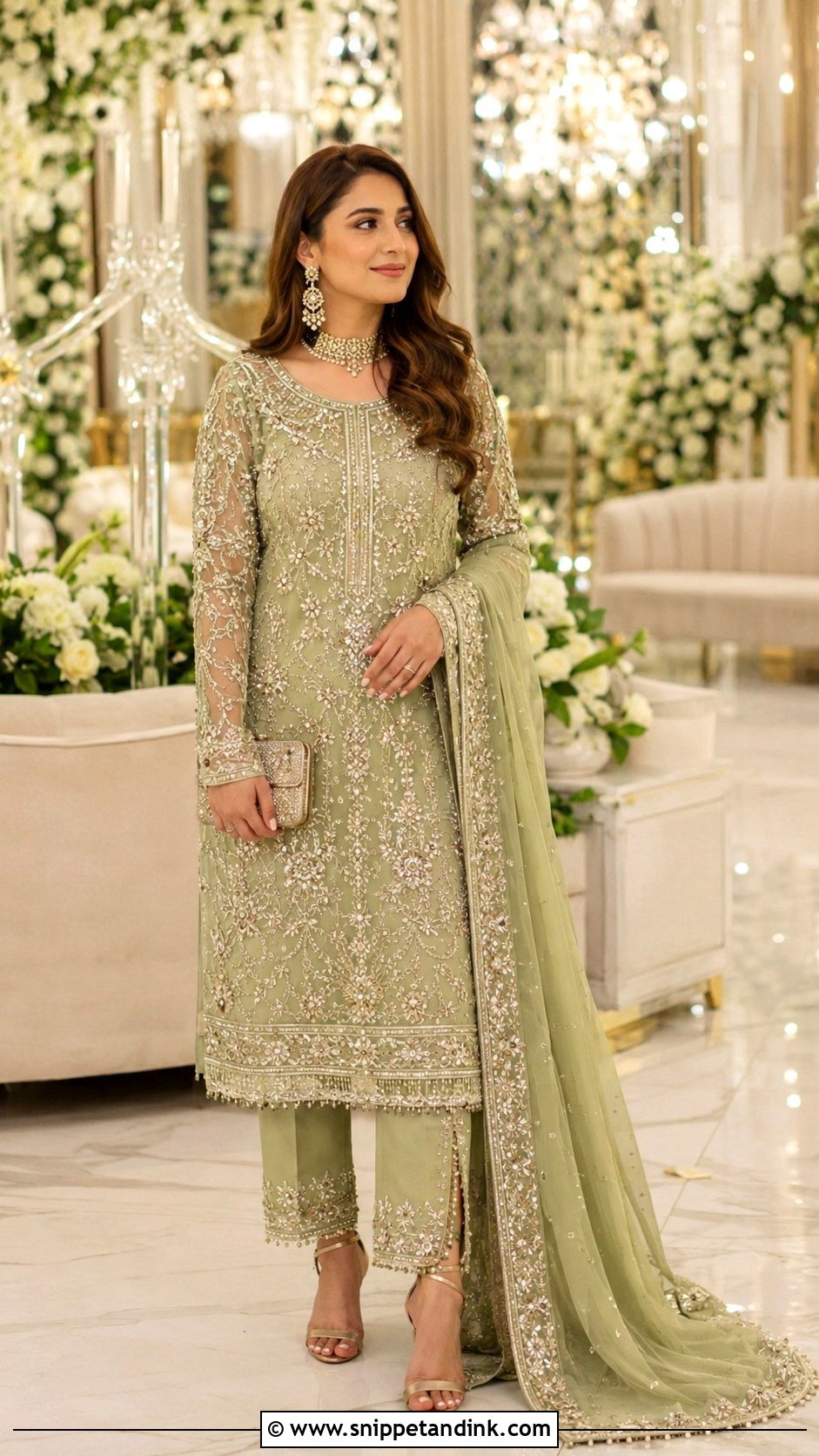
A Pakistani suit is modest and finely detailed, and it suits a wedding ceremony or formal family function well. Long embroidered kameez with straight pants, gharara or palazzos all give a graceful line. Chiffon and organza versions need an inner slip, which I always check at the fitting because thin linings can cling under lights. Soft shades look refined, while jewel tones feel more formal. A bordered dupatta completes it, with delicate jewellery and soft makeup for close family photos.
30. Reception Gown For Bride Sister
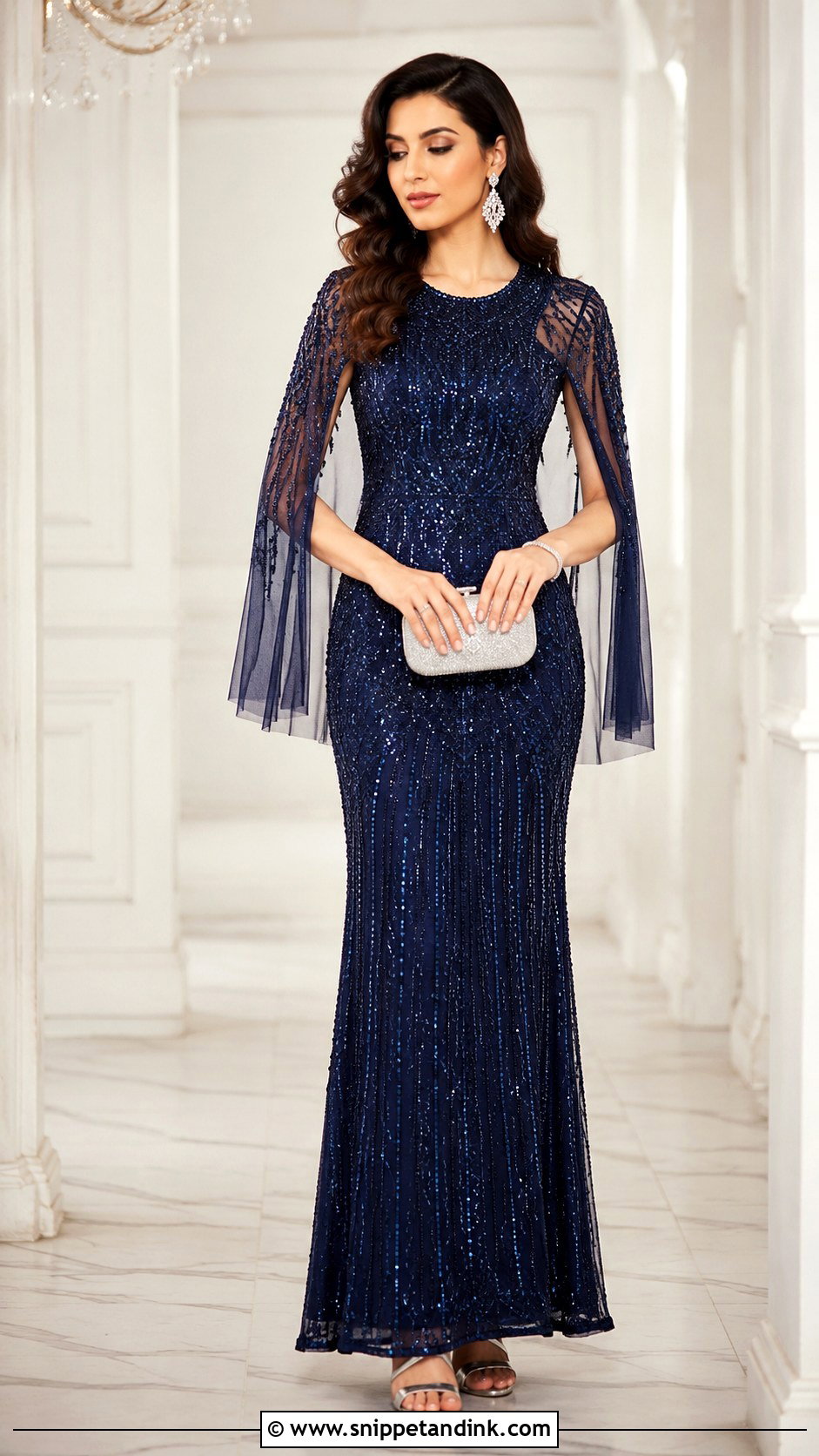
The reception gown is your last big outfit, so I let it have a strong silhouette: a fitted waist and flared skirt, cape sleeves or a dramatic drape. Embellished bodices and metallic threadwork bring glamour; keep embellishment off the skirt if the bride’s reception outfit is heavily worked, so you don’t compete in the couple-and-family shots. Silver, navy, emerald, mauve, wine and champagne all work under evening lighting. A sleek hairstyle or soft waves, a clutch and heels finish the final event.
What Goes Wrong for Sisters on the Day, and the Kit That Fixes It
Sisters get the bride’s emergencies and their own, usually at the same moment. The trouble I see repeatedly is mechanical, not stylistic: a dupatta sliding off a heavy blouse, a saree pallu loosening during the pheras, a hook popping at the reception after dinner.
Keep these in your clutch, not the bride’s bag
- A strip of safety pins in two sizes, plus a few U-pins for the hair
- Double-sided fabric tape for necklines and a gaping blouse back
- A needle pre-threaded in a neutral colour and one in the outfit’s colour
- Blister plasters and a pair of folding flats for after the ceremony
- Stain wipes, because sindoor, haldi and gravy all find the sister first
Pin your dupatta at the shoulder and again at the back of the blouse, never just once. And practise sitting, kneeling and climbing a step in each outfit at home. If anything shifts in your living room, it will shift on the mandap.
Standing Beside Her Without Standing in Her Light
Your sister’s wedding asks a lot from one wardrobe: a front-row seat at every ritual, hours on your feet and a place in nearly every family photo. Plan each function around the bride’s colours first, then around how much you’ll be moving that day. A pre-draped saree for the busiest function, something you can dance in for the sangeet, and one outfit with real presence for the reception covers most sisters well. Get every piece fitted in the shoes you’ll wear, and you’ll spend the wedding with her rather than fixing your own clothes.
You'll Like These Ideas:


Leave a Reply