
Family matching at an Indian wedding works best when nobody is wearing a copy of anyone else. When I plan a family’s looks, I connect people through one or two threads, usually a color and a border, and let each outfit fit the person’s age, their role in the rituals and how long they’ll be on their feet. Mehndi can carry light florals and breezy kurtas. Sangeet is where mirror work and jewel tones earn their place, because stage lights catch every bit of shine. The ceremony usually calls for silk: sarees, lehengas, sherwanis and small ethnic sets for the children. Match the mood of each function rather than every detail, and the portraits look planned instead of uniformed. Here are 25 ways to do it for parents, siblings, kids, grandparents and the wider family.
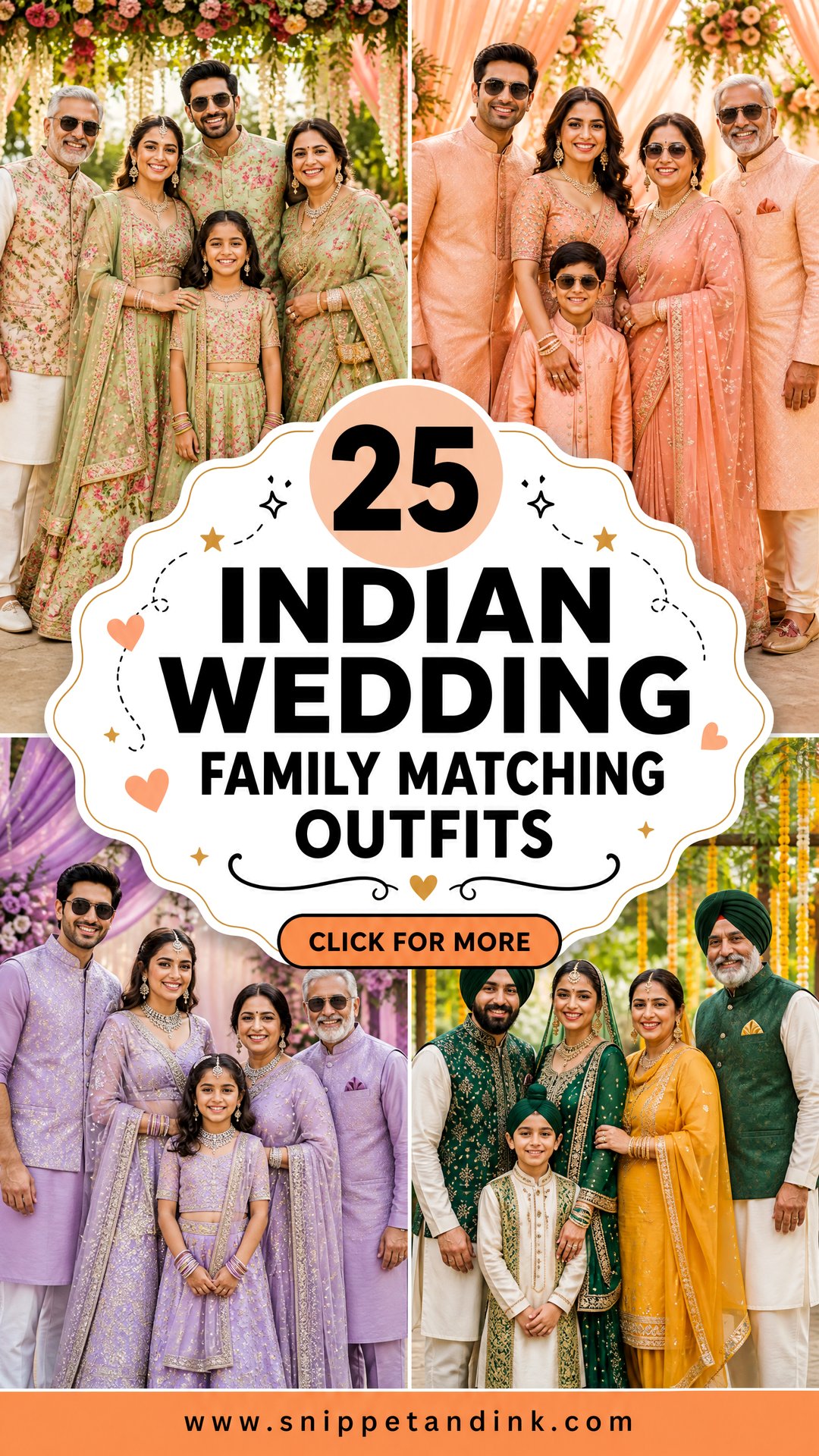
Mapping Four Functions of Family Outfits Onto One Calendar
Most family coordination falls apart on timing, not taste. Someone orders late, a tailor runs behind, and the matching dupattas turn up the morning of the sangeet. When I take on a family, the first thing I do is write out every function with its date and dress mood, then work backwards.
- Fix one palette per function and send it to everyone in a single message with reference photos, so nobody is guessing what peach means.
- Give custom stitching the longest runway. Boutique pieces with hand embroidery commonly need two months or more, and plain stitched sets need several weeks; ask each tailor for their own timeline because it varies a lot in wedding season.
- Order ready-made pieces early enough to leave a week or two for alterations, since almost nothing fits off the rack.
- Measure the children last. Kids can grow noticeably in a few months, so I fit them as close to the wedding as the tailor allows and ask for extra seam allowance.
- Hold a try-on with every outfit, shoe and dupatta about a week out, while there is still time to fix a hem.
I also name one person as the family’s wardrobe contact. Without that, five relatives end up asking the bride, who has enough to think about.
1. Ivory Indian Wedding Family Outfits
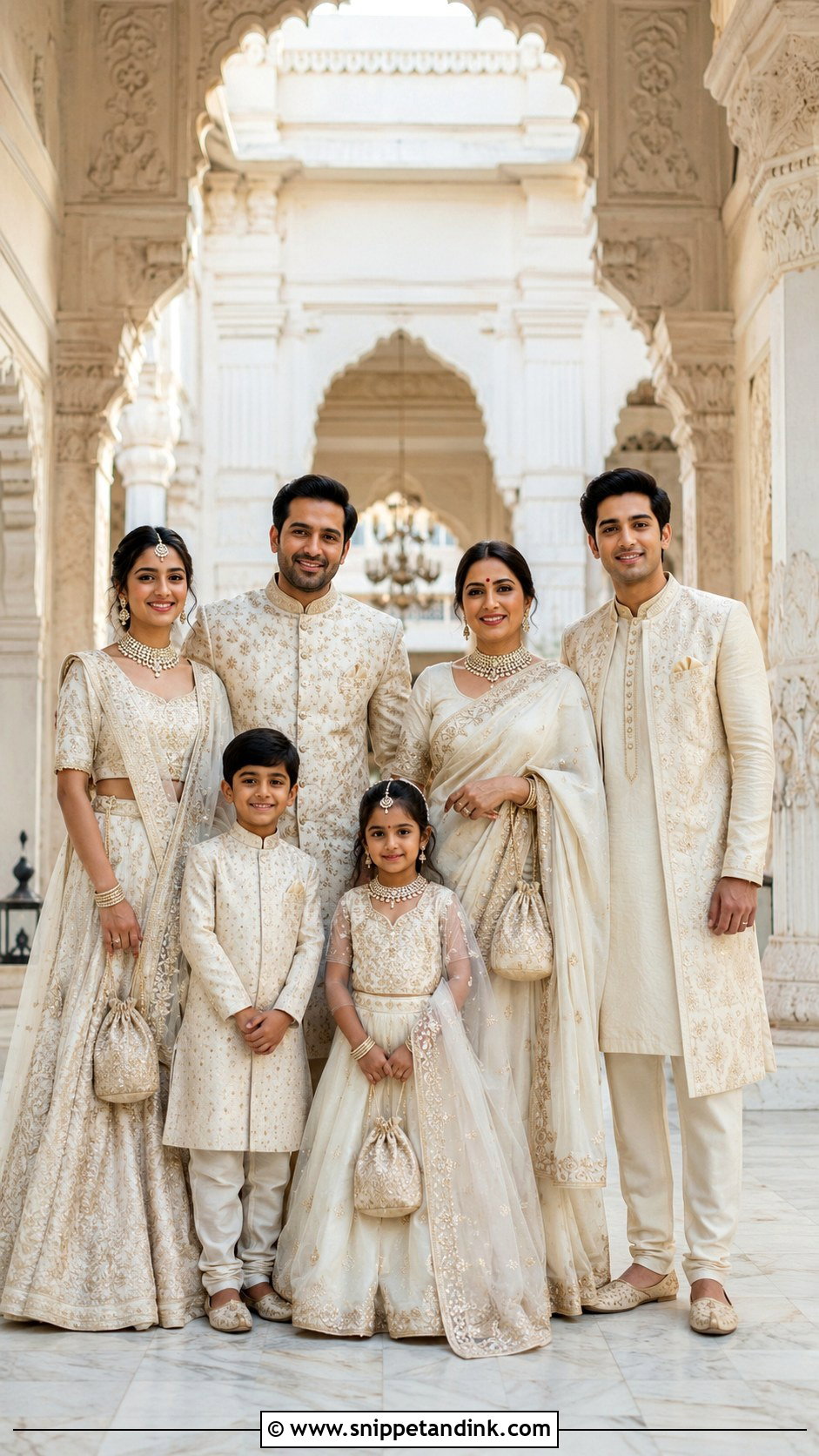
Ivory is the color I reach for first when a family has very different tastes, because almost everyone can find something in the cream range. The catch is that ivories don’t match each other. A chikankari cotton can read nearly white beside a yellow-toned silk, and the camera shows the gap instantly, so I ask everyone to hold their outfits together in daylight before the event and swap anything that looks grey or yellow against the rest. Women can wear ivory lehengas, sarees or anarkalis with gold embroidery, men ivory sherwanis or kurta pajama sets, kids mini lehengas or Nehru jackets. Mixing silk, organza and brocade keeps the group from looking flat, and gold jewelry with embroidered juttis pulls it together. Keep it for daytime ceremonies; ivory tends to go yellow under warm evening lighting.
2. Pastel Indian Wedding Family Outfits
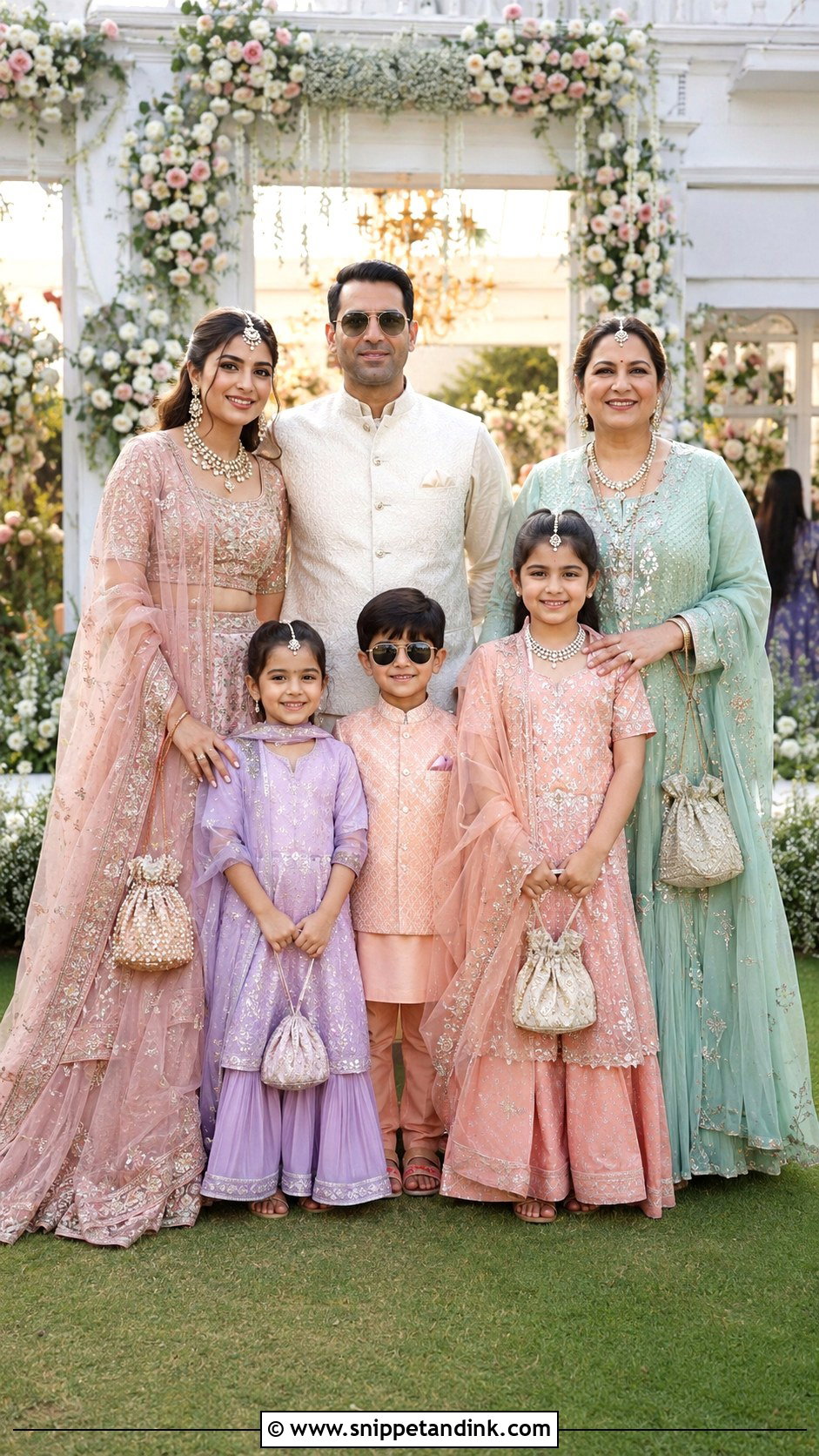
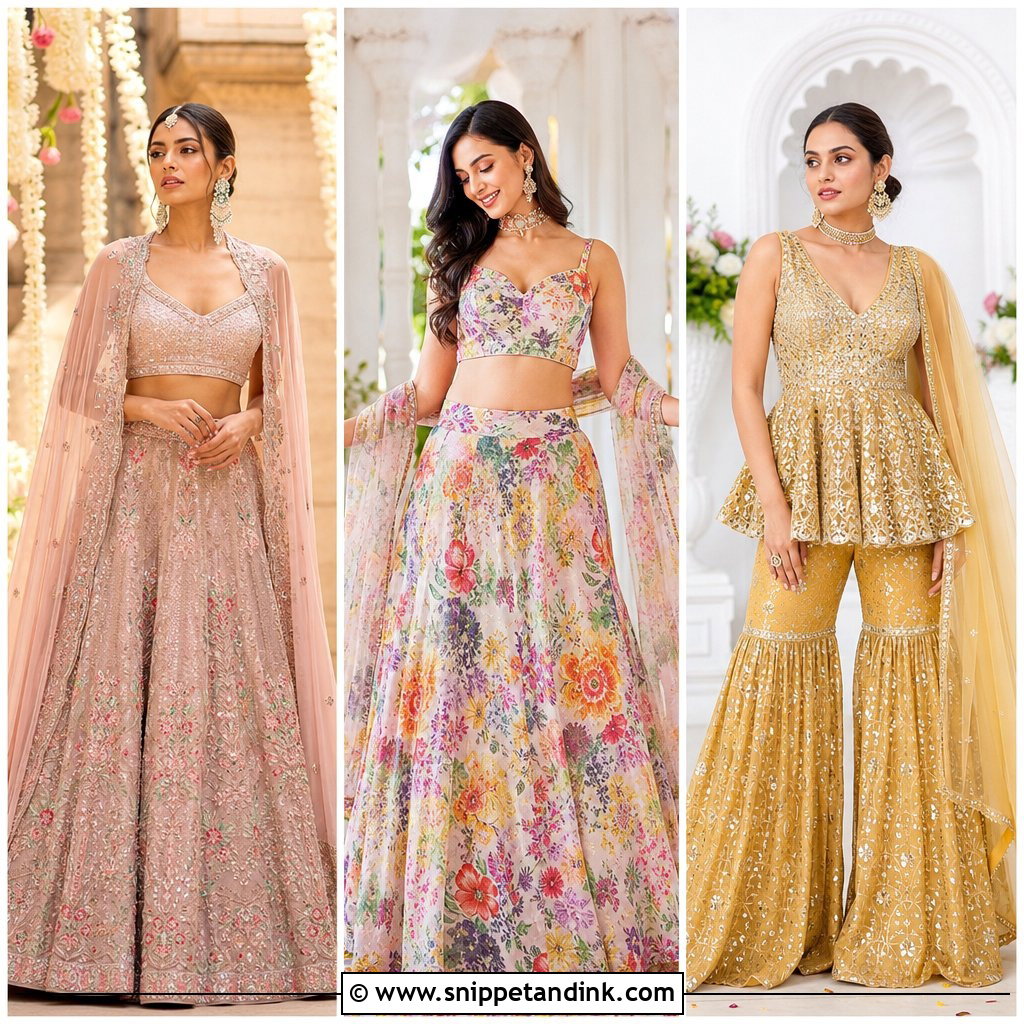
A pastel palette only works for a family if each person takes a slightly different shade. Put six people in the same mint and they merge into one pale block in photos; spread blush, mint, powder blue, lilac and peach across them and it reads as deliberate. I keep pastels for spring, summer and daytime functions. They also show stains fastest, so the youngest children are safer in a printed pastel than a solid one. Women can wear floral lehengas or embroidered sarees, men pastel kurtas with ivory trousers or printed Nehru jackets, and kids can match through a dupatta, waistcoat or border. Pearl jewelry and metallic sandals finish it without adding weight.
3. Red And Gold Indian Wedding Family Outfits
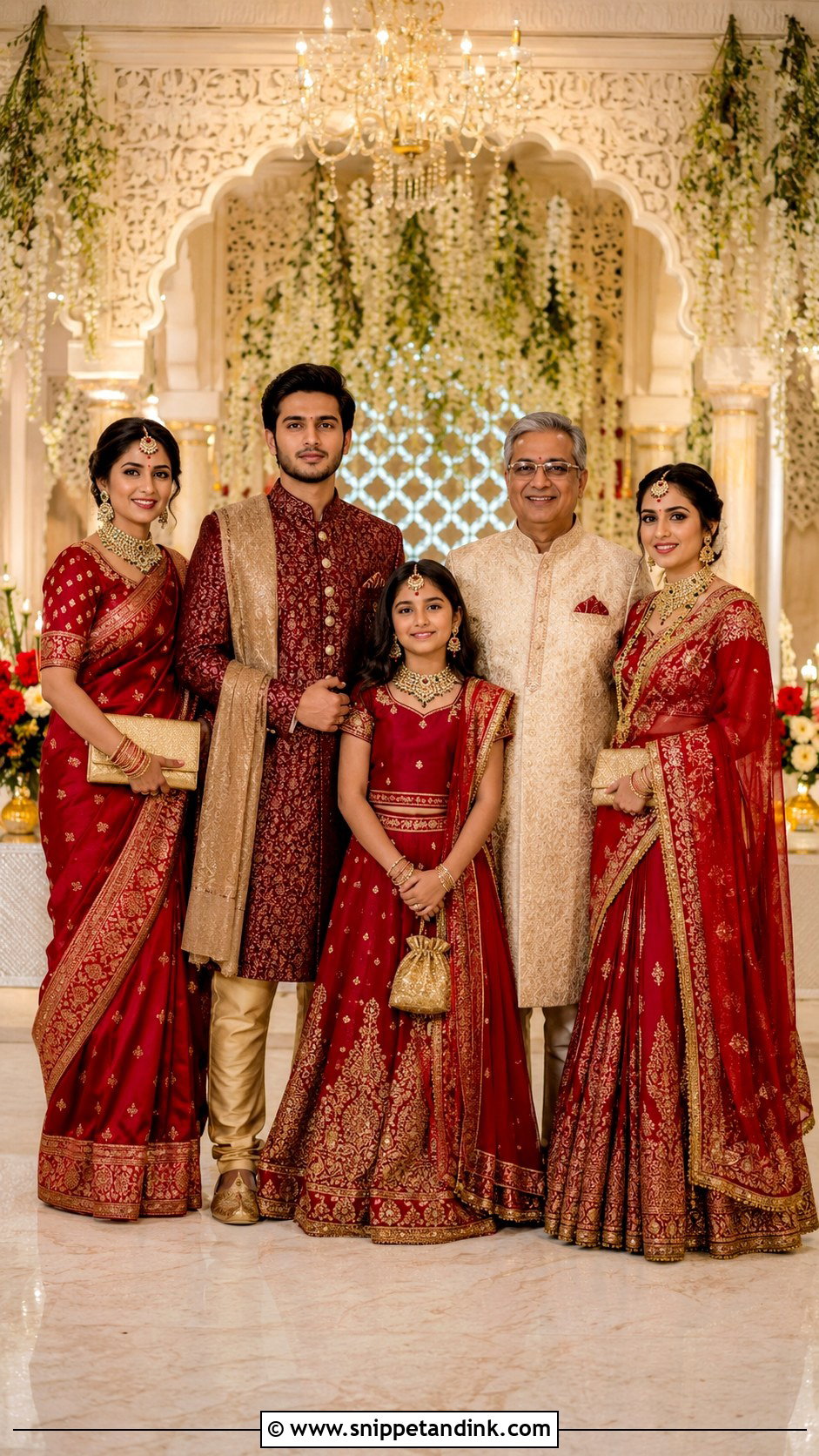
Red and gold is the obvious traditional pairing, and the obvious risk is a relative looking like a second bride. For family members I steer toward rust, brick or a deeper red, with gold borders instead of heavy all-over zardozi, so the bride’s red stays the brightest thing in every frame. Women can wear red silk sarees, lehengas or anarkalis with gold borders. Men usually look better in cream, beige or maroon kurtas under gold Nehru jackets than in head-to-toe red. Little girls suit red lehenga cholis, and boys can pick up the color through a red stole over a kurta pajama. Gold bangles, kundan earrings and embroidered mojris tie the family together for ceremonies and receptions.
4. Emerald Green Indian Wedding Family Outfits
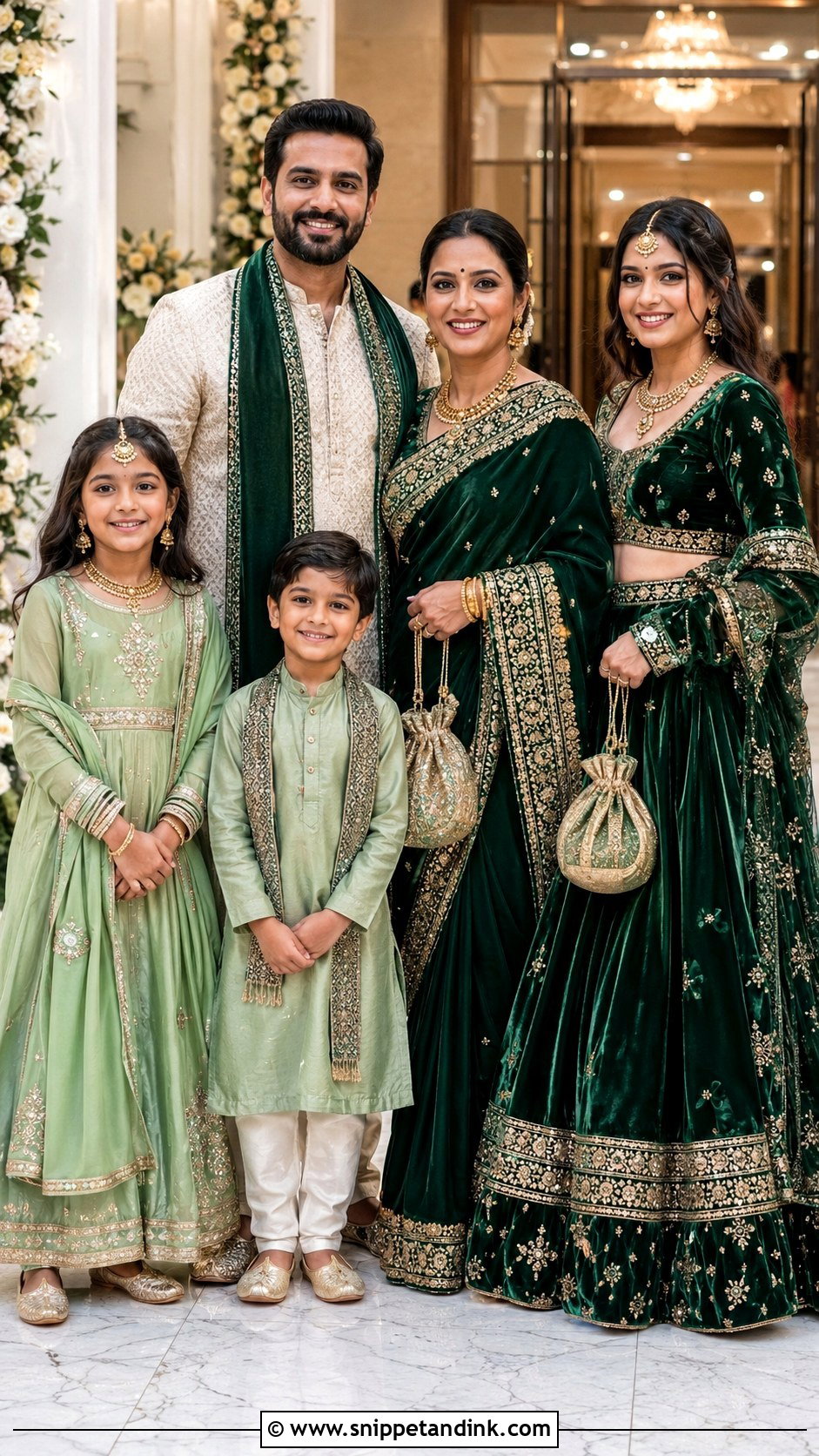
Emerald reads rich in evening light without shouting, which is why I like it for sangeet nights and receptions. Velvet is the tricky fabric here. It photographs deep and gorgeous, but it’s heavy and warm, so I’d only put it on adults at an air-conditioned indoor venue. Women can wear emerald sarees, velvet lehengas or anarkali suits with gold or antique embroidery. Men can match with emerald Nehru jackets, dark green sherwanis or ivory kurtas with green stoles. Dress the children a shade lighter so they stay comfortable. For a large group, mix emerald with ivory, champagne or muted gold rather than putting everyone in the same deep green, which can turn almost black in dim photos.
5. Royal Blue Indian Wedding Family Outfits
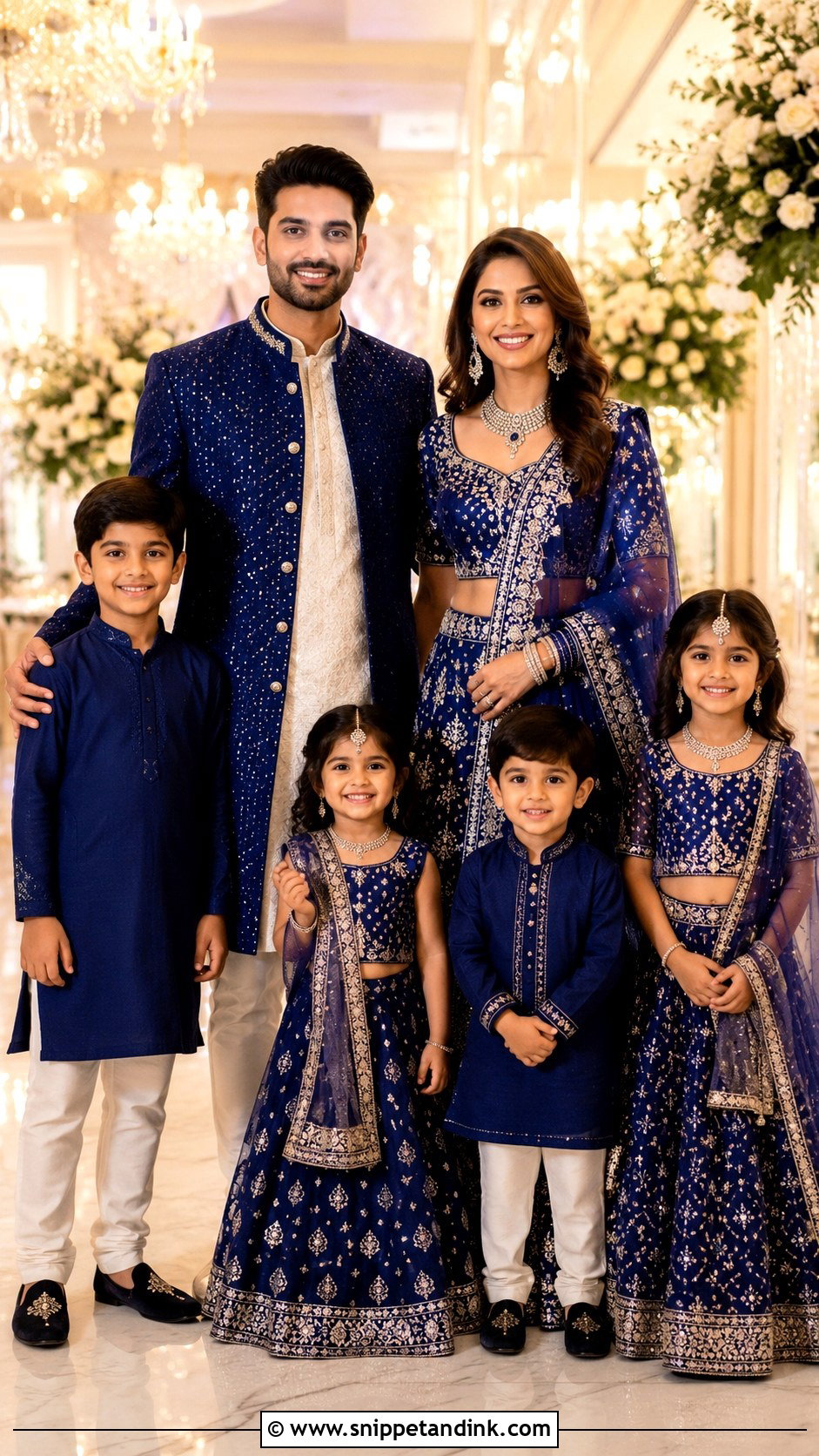
Royal blue is easy to spot across a crowded hall and holds its color in both daylight and bright event lighting, which makes it a safe bet when the photographer won’t control the light. Women can wear royal blue lehengas, sarees or sharara sets with silver, mirror or zari work. Men can wear blue sherwanis, navy kurtas or ivory sets with blue embroidered jackets. One caution I always give: a new, deeply dyed blue can bleed onto light linings and skin when someone dances hard in the heat, so rub a damp white cloth on the inside seam before the event. Silver jewelry and clean hairstyles keep it sharp for a sangeet, engagement or formal dinner.
6. Maroon Indian Wedding Family Outfits
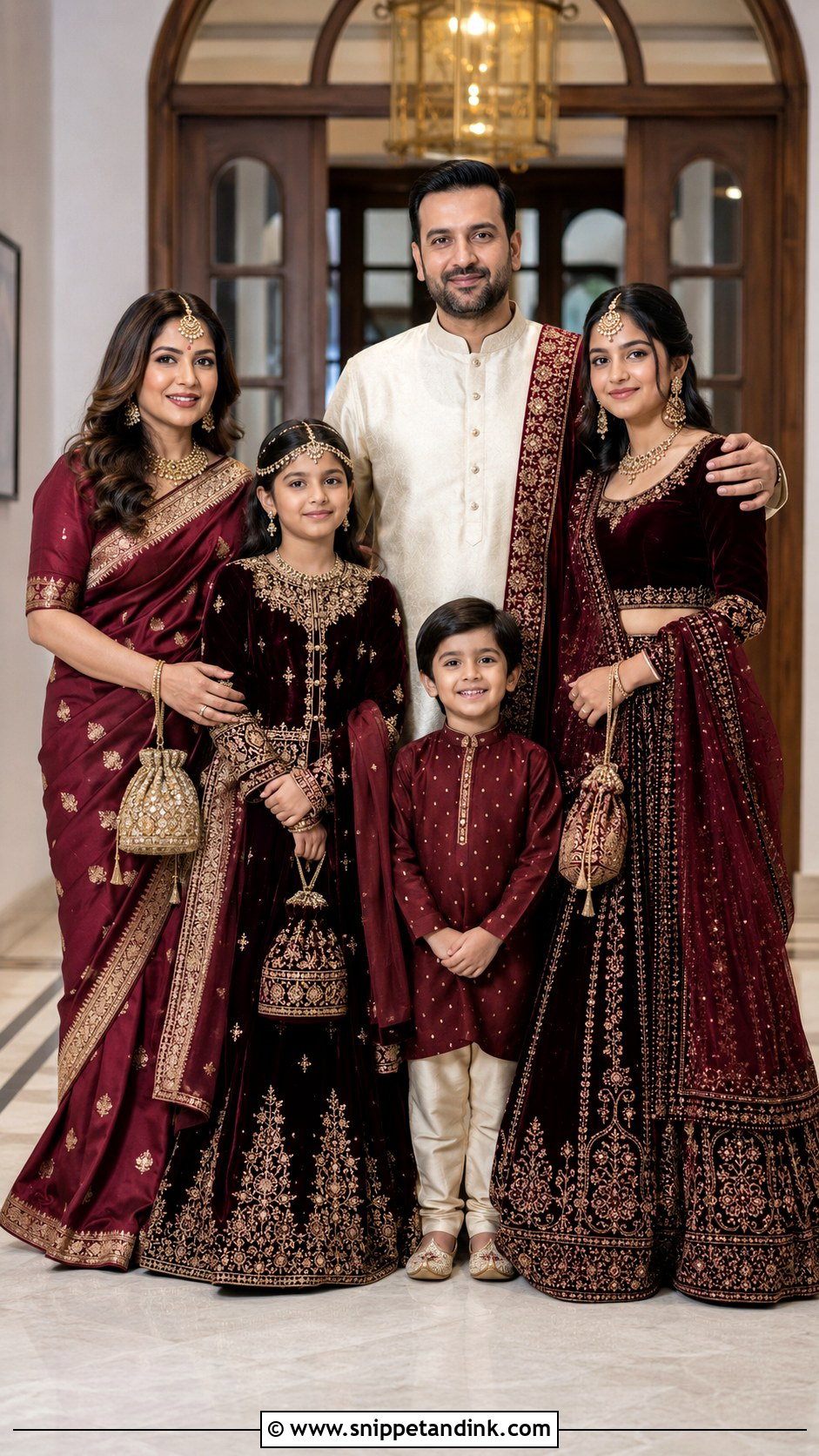
Maroon gives a family the traditional depth of red without competing with the bride. It suits autumn, winter and evening events, and it’s one of the few colors nearly every age group agrees to wear. Women can wear maroon silk sarees, velvet lehengas or embroidered suits with antique gold. Men can go for maroon sherwanis or bandhgalas, or a cream kurta with a maroon shawl, which is the easier option for anyone who runs warm. Keep the kids in simpler maroon with lighter embroidery so they can move. Because maroon sits so well beside beige, champagne and dull gold, it’s my answer when a large family wants to coordinate but some members will only wear neutrals.
7. Yellow Haldi Family Outfits
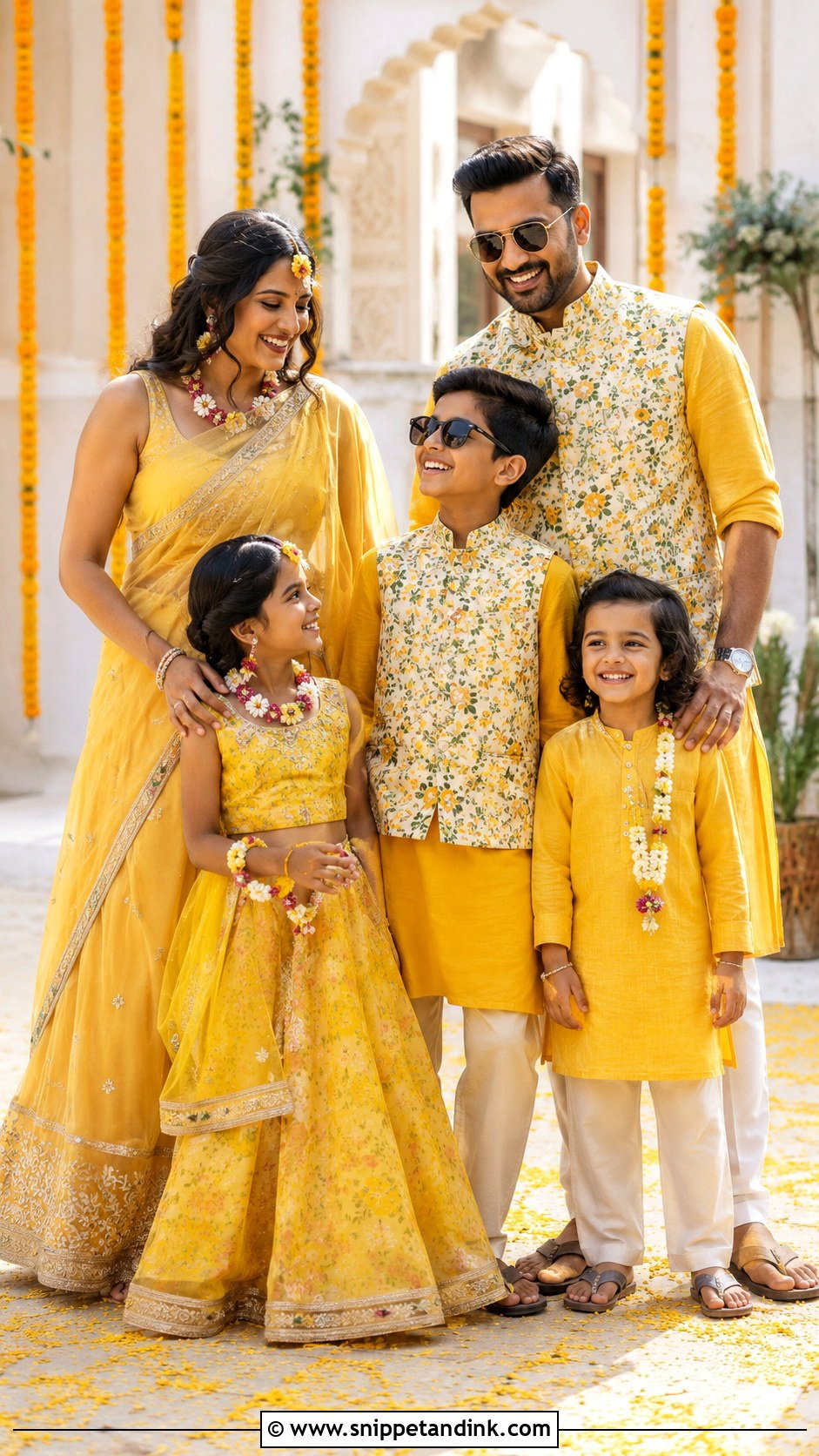
Haldi is messy, and turmeric paste stains, so I never let a family wear anything precious to it. Yellow hides the paste, which is the practical reason it became the haldi color. Women can wear yellow sarees, printed lehengas, cotton anarkalis or easy sharara sets; men yellow kurtas with white pajamas or floral Nehru jackets. Kids can match in simple yellow kurta sets that they’re allowed to get dirty. Breathable cotton, mulmul, georgette or linen blends keep everyone cool outdoors. Flat sandals and floral jewelry finish it. Assume that whatever touches the paste, including white linings and pale juttis, won’t come back fully clean.
8. Floral Mehndi Family Outfits
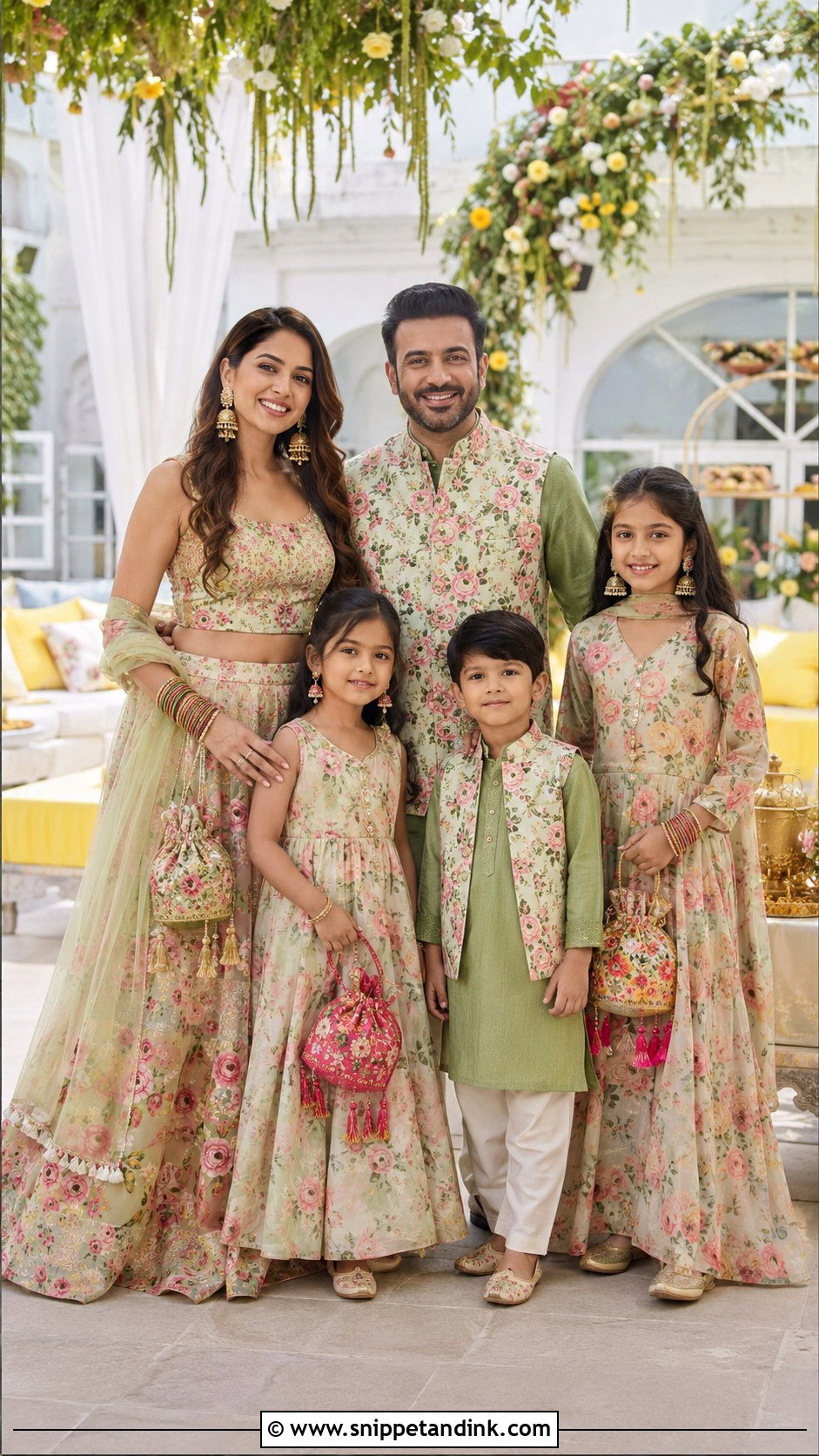
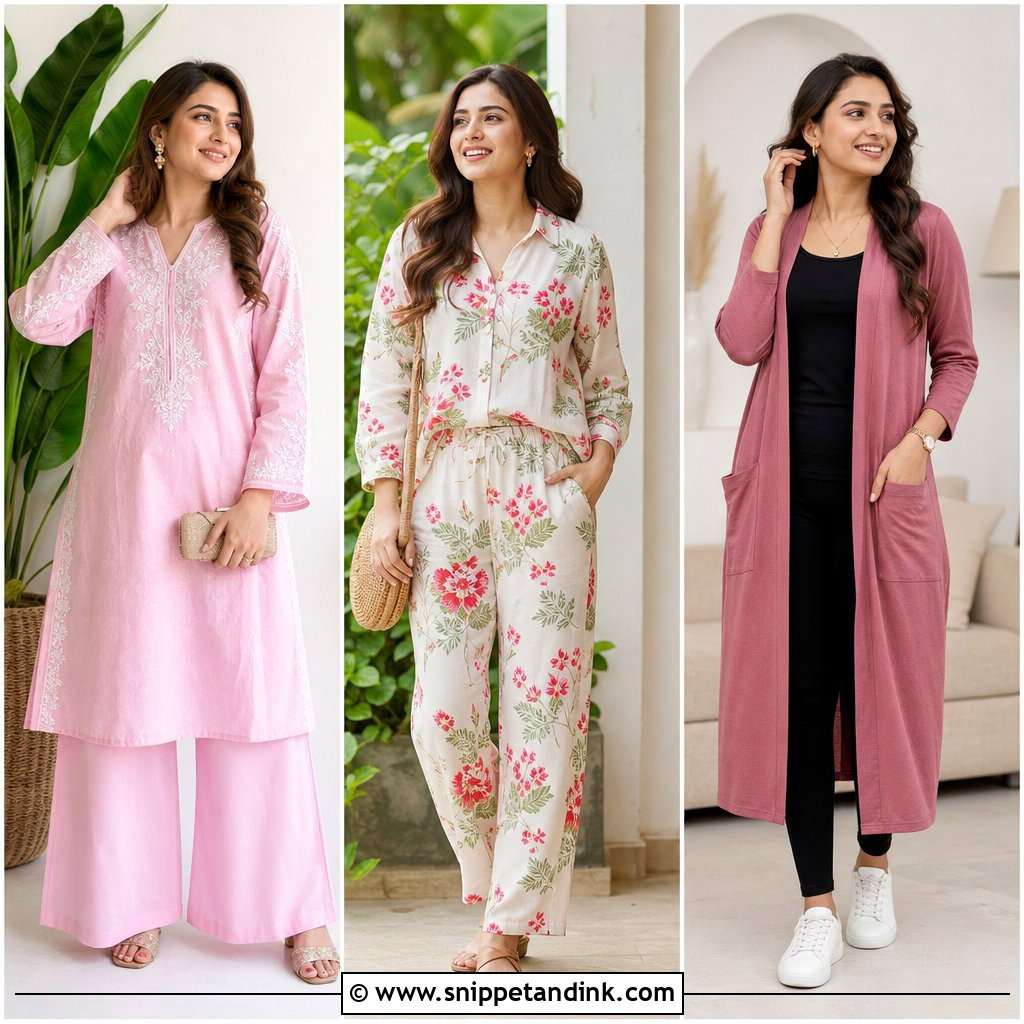
Mehndi is the most relaxed function, so I let florals carry the family theme here. The trick is choosing one print family, such as a garden palette of green, pink and peach, rather than six different florals that fight each other. Women can wear floral lehengas, printed anarkalis or lightly embroidered sarees. Men look better in a solid kurta that pulls one color from the women’s prints than in a busy floral of their own. Kids can wear floral dresses or kurta sets with fun dupattas. Keep sleeves short or easy to push up for anyone getting henna, since a wet design smudged on a full sleeve ruins both the stain and the outfit.
9. Mirror Work Sangeet Family Outfits
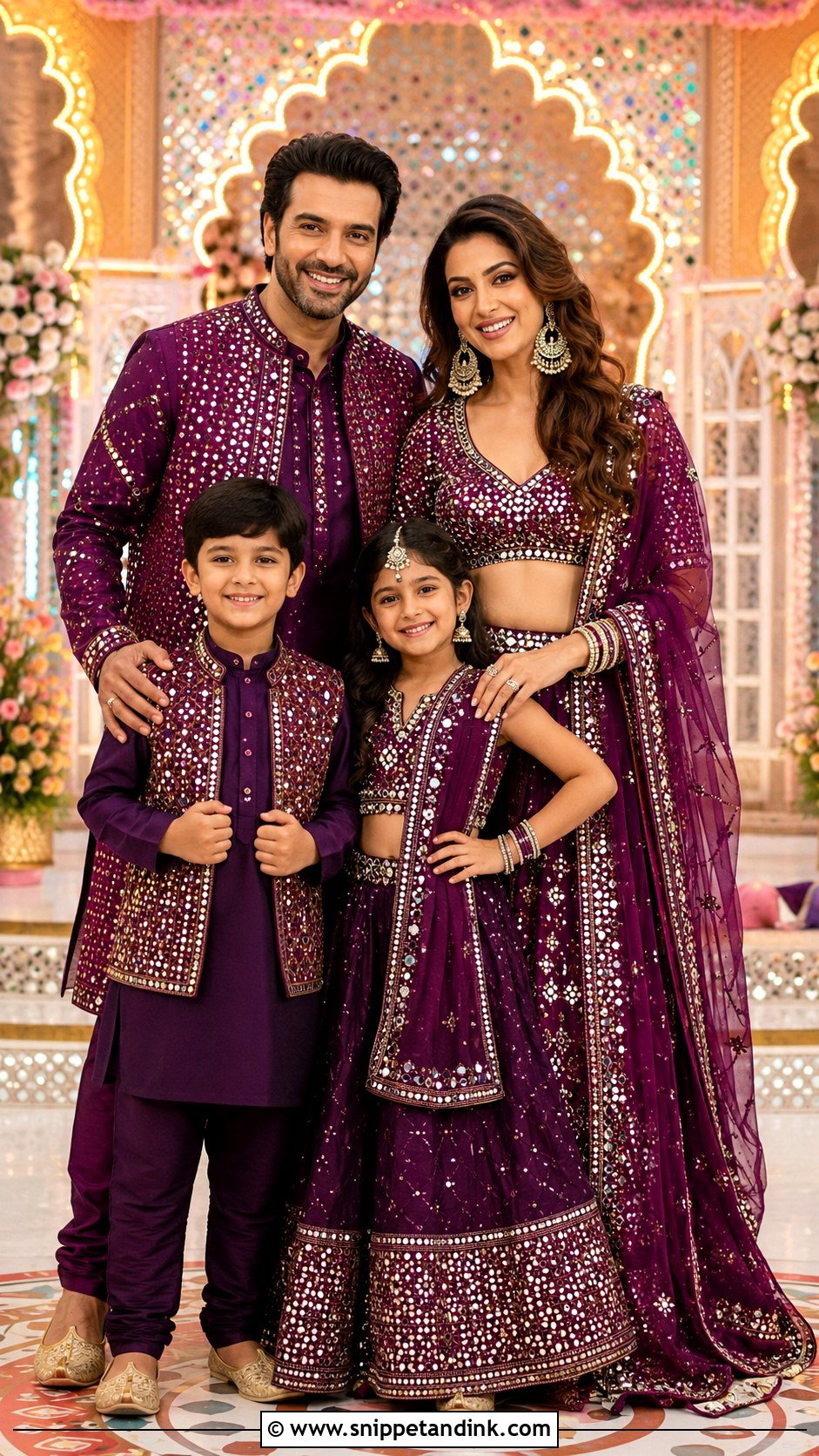
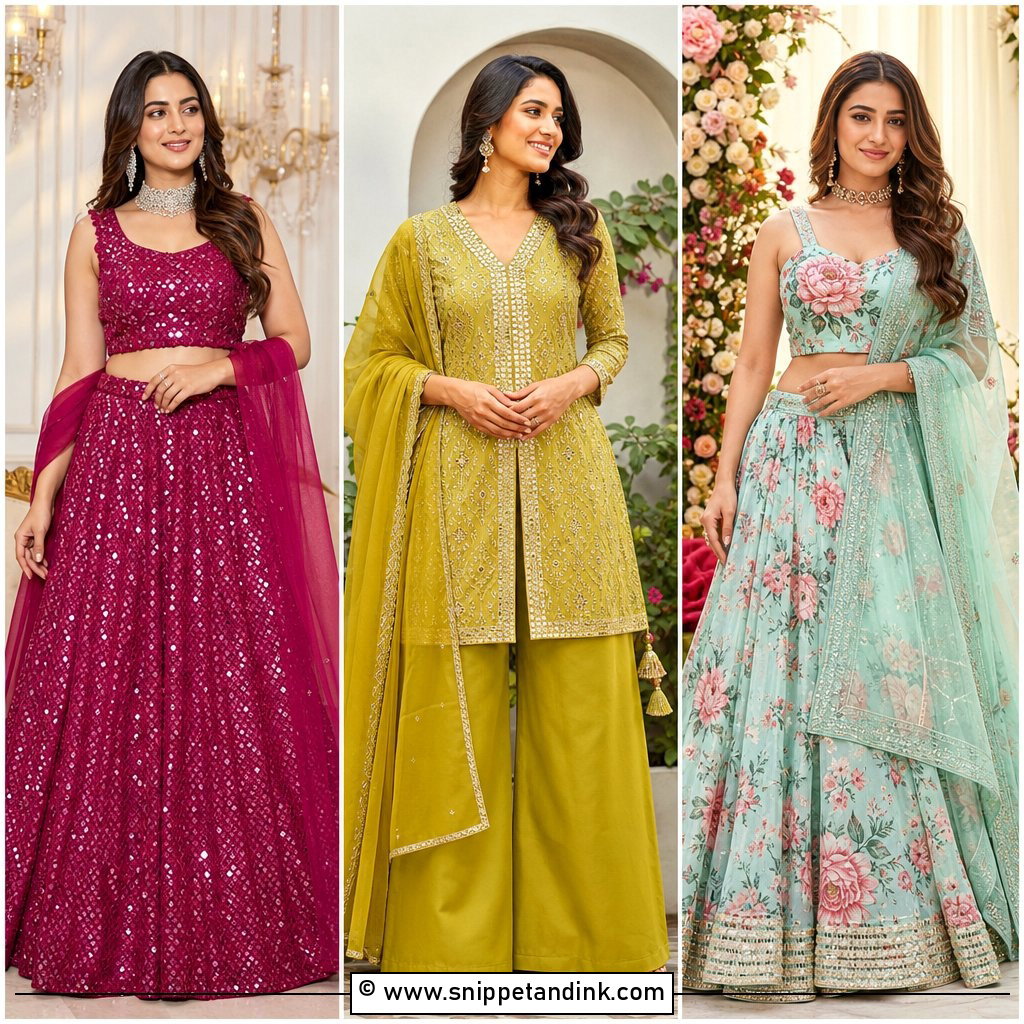
Mirror work belongs at a sangeet because it throws light every time someone moves. It’s also heavy and scratchy on the inside, so I check the lining before anything else, especially on kids’ pieces where hand-stitched mirrors can rub arms raw by the second dance. Women can wear mirror work lehengas, sharara sets or crop top and skirt sets. Men can match with mirror work jackets, or solid kurtas with embellished stoles, which are far easier to dance in than a fully worked kurta. Teal, fuchsia, purple and navy all show the mirrors well. Statement earrings, stacked bangles and sleek hair finish the look for stage entrances.
10. Black And Gold Reception Family Outfits
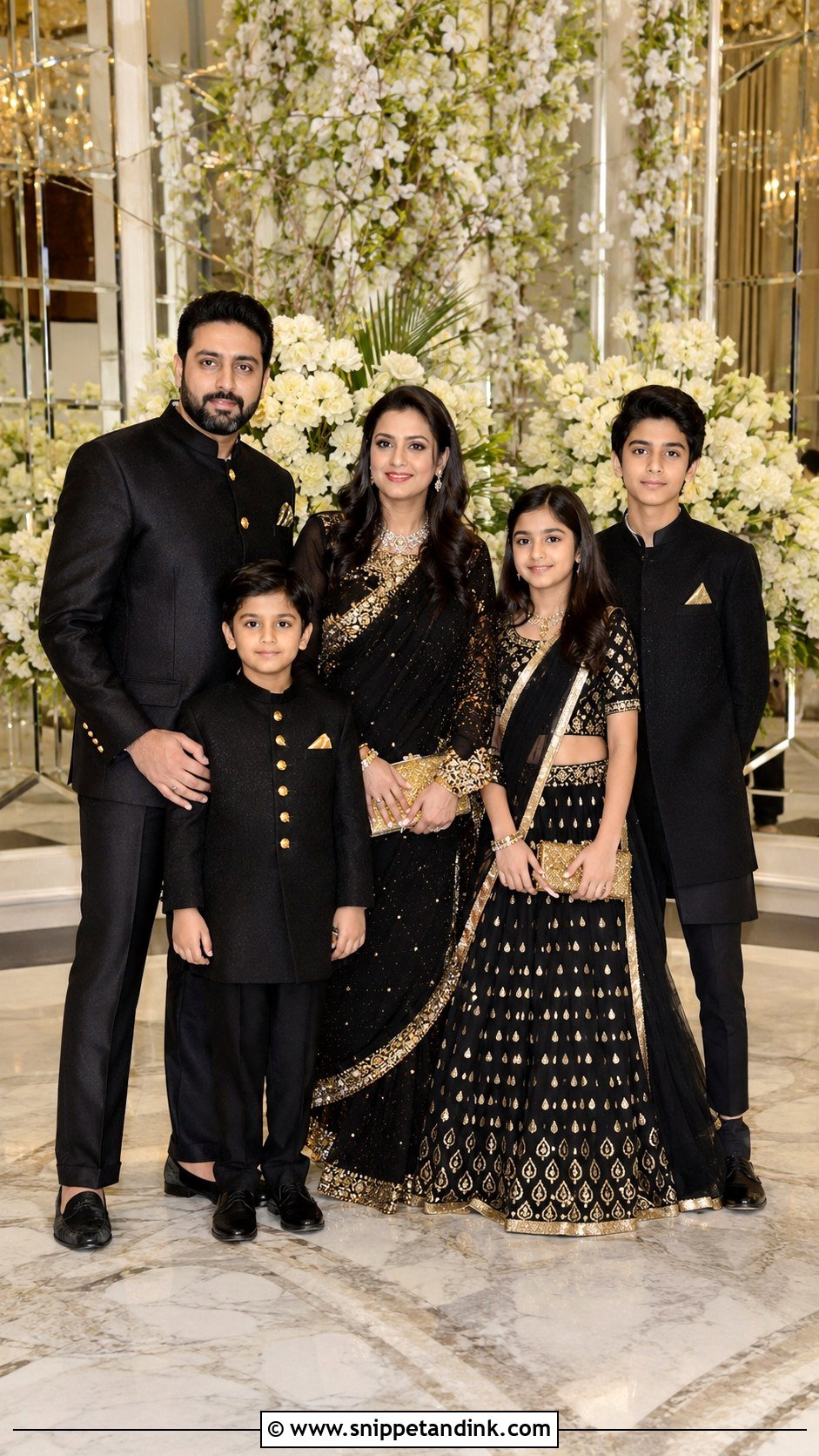
Black and gold suits a modern reception, but I’d check with both families before planning it, since some households still avoid black at weddings. Once that’s cleared, it’s one of the sharpest family looks you can put together. Women can wear black sarees, lehengas, gowns or anarkalis with gold embroidery or sequins; men black bandhgalas or sherwanis with gold buttons. Children are better in black ethnic sets with soft linings and very little embellishment. Velvet and brocade give black the richness it needs, because flat black cotton can look like daywear in photos. Gold cuffs, clutches and embellished footwear tie it together at an evening hotel venue.
11. Peach Indian Wedding Family Outfits
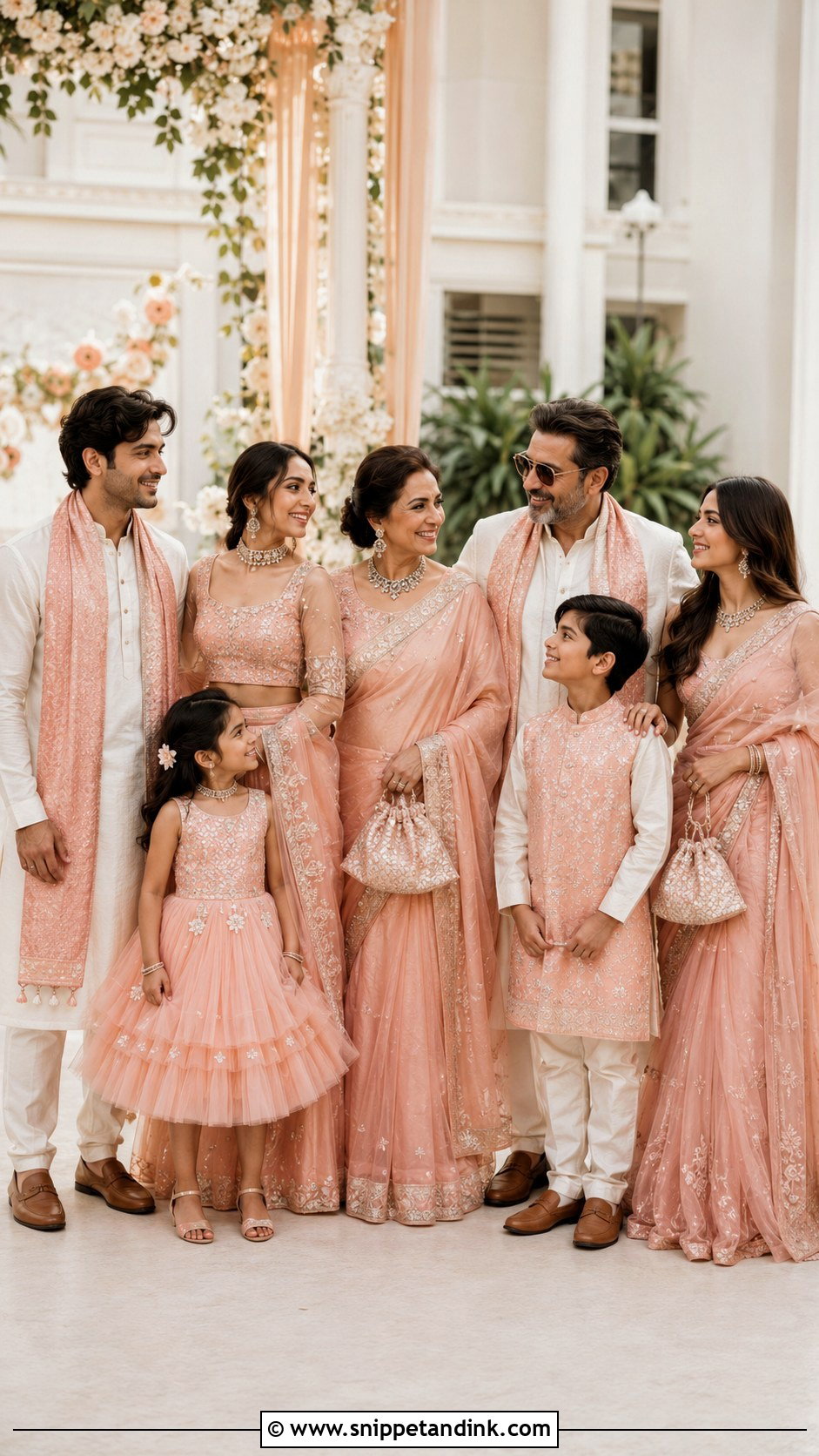
Peach sits between pink and orange, warm without being harsh, so it flatters a wide range of skin tones. I choose it for engagements and daytime portraits when the family spans fair and deeper complexions. Women can wear peach lehengas, organza sarees or anarkali suits with gold or pearl detailing. Men rarely want full peach, so I suggest ivory or beige kurtas with peach stoles, jackets or turbans. Kids can wear peach frocks or kurta sets in lighter fabrics. Pale peach organza can wash out against cream walls, so ask where the photos will be taken. Rose gold jewelry and nude sandals finish it, and mint or sage make good partner colors.
12. Lavender Indian Wedding Family Outfits
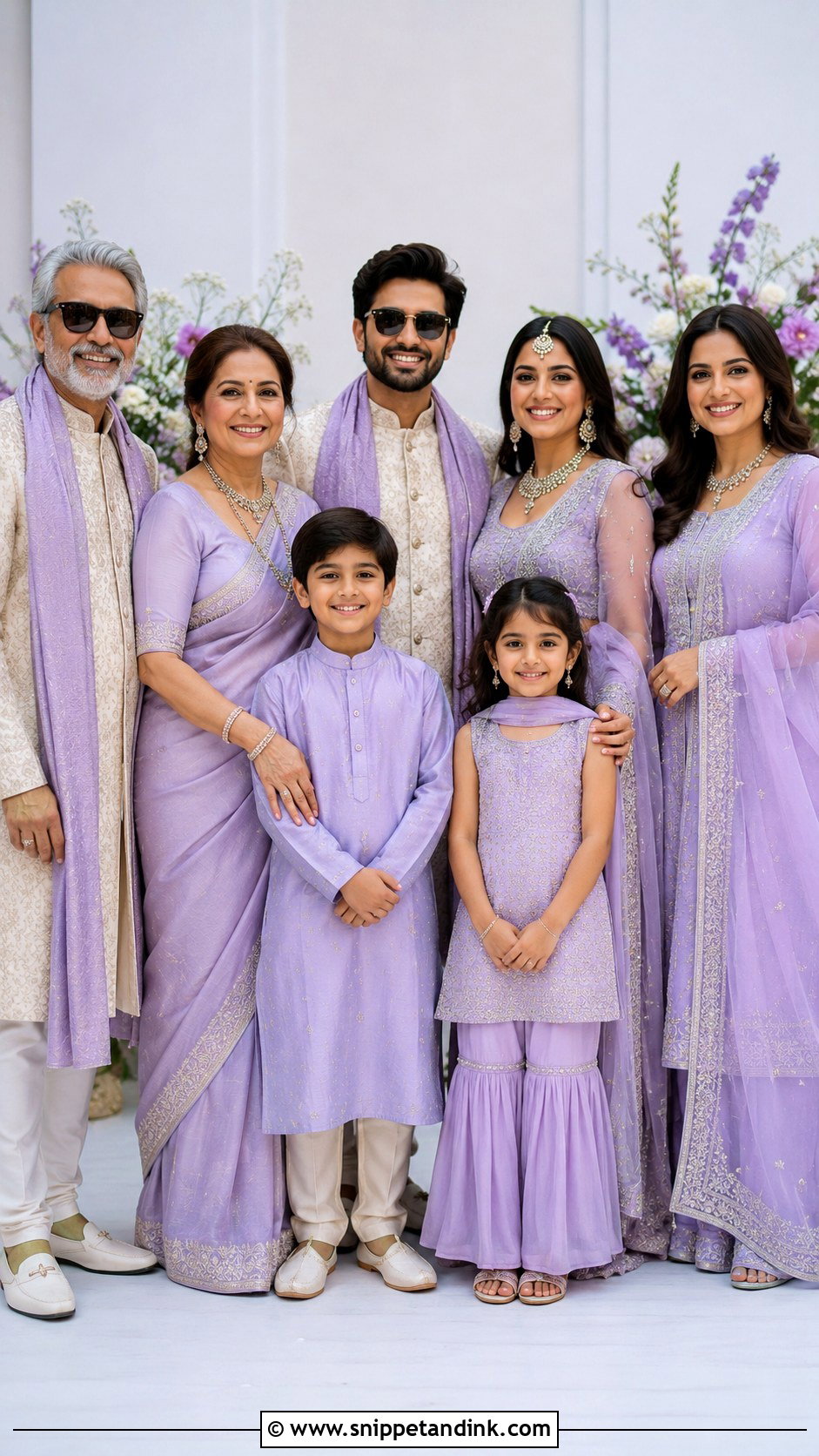
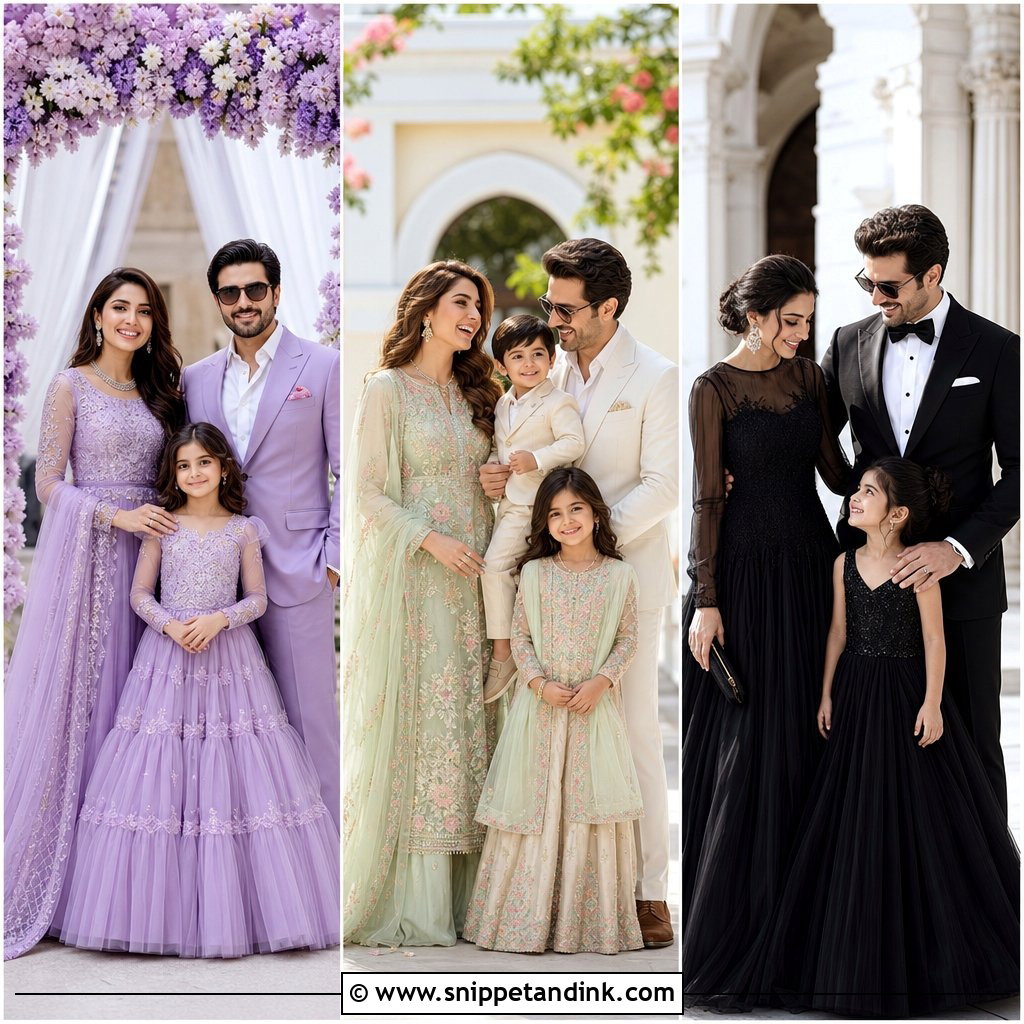
Lavender feels fresh and a little modern, and it’s at its best outdoors in daylight. Under warm yellow event lights it can drift grey or pinkish, so I wouldn’t build an evening reception around it. Women can wear lavender sarees, lehengas or sharara sets with silver, pearl or sequin work. Men can coordinate in lavender kurtas, ivory sherwanis with lavender dupattas, or printed Nehru jackets. Kids can wear soft lavender sets with minimal embroidery. Silver and pearl suit this color better than yellow gold. For a bigger family, spread lilac, mauve, ivory and soft grey across people so the group looks related rather than identical.
13. White And Gold South Indian Family Outfits
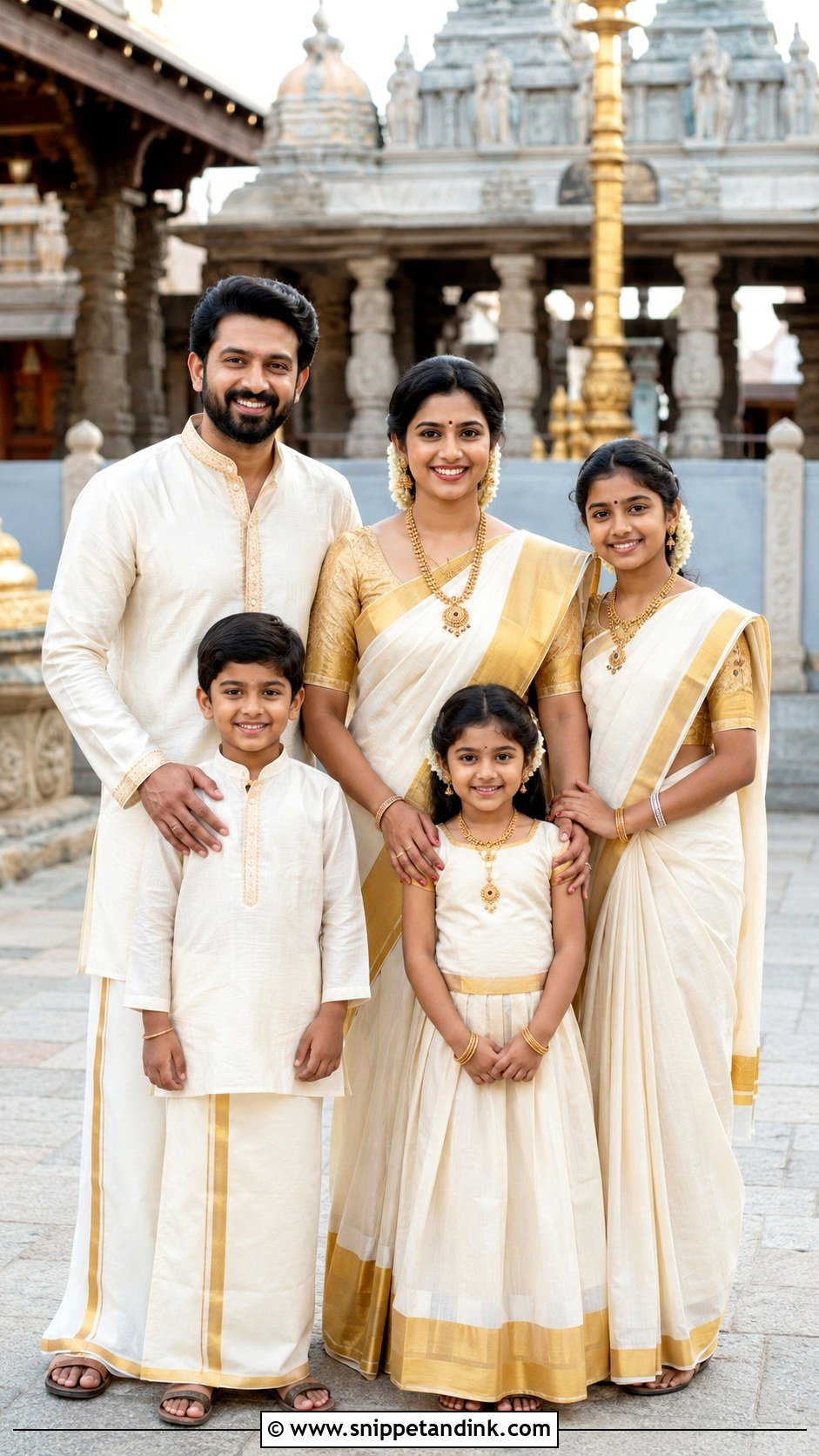
White and gold is the traditional language of many South Indian weddings, and the coordination comes almost for free: a clean white or cream base with a gold border. Women can wear kasavu or silk sarees, or white lehengas with gold borders. Men can wear white veshti sets, kurtas or sherwanis with gold detailing. Girls can wear pavadai sets and boys small veshti or kurta outfits. A practical note from my fittings: give a child’s veshti a hidden elastic or belt underneath, because a little boy’s knot rarely survives a long muhurtham. Temple jewelry, jasmine in the hair and gold bangles complete the look for ceremonies and temple-style events.
14. Punjabi Wedding Family Outfits
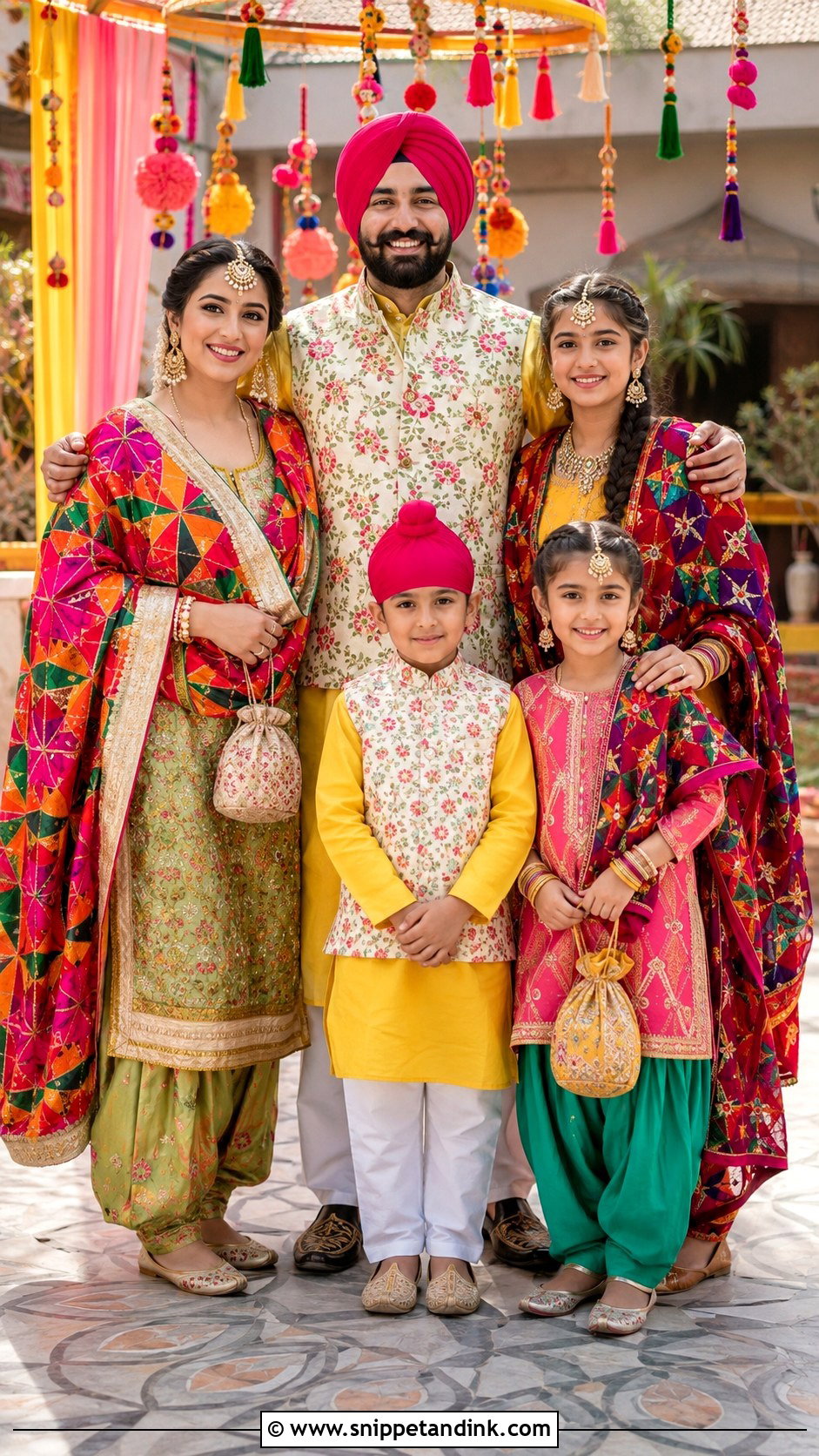
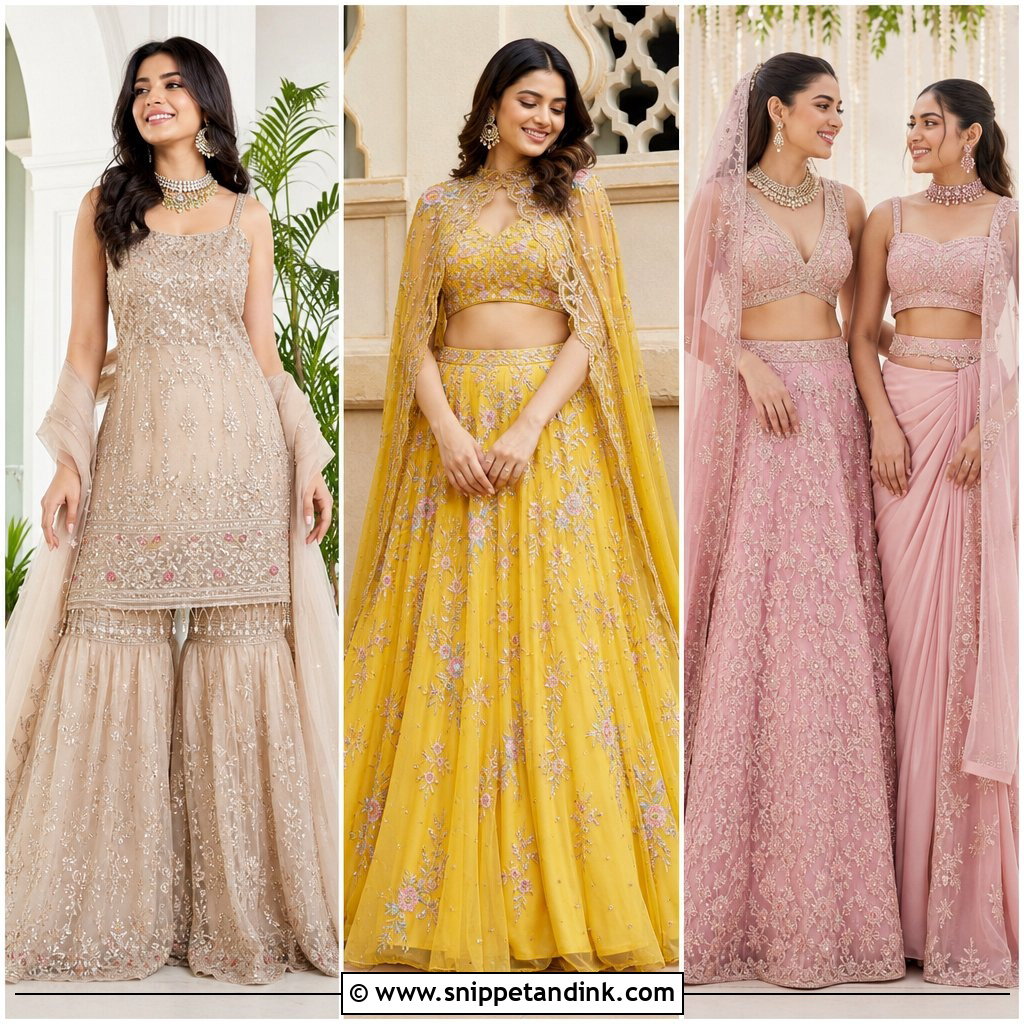
Color is the whole point at a Punjabi wedding, and Punjabi wedding family outfits are loud in the best sense. Phulkari is the easiest connector I know here: a phulkari dupatta for each woman in a different base color, and phulkari-trimmed jackets or bright turbans for the men, and the group reads as one family without anyone matching exactly. Women can wear patiala suits, lehengas or sharara sets in pink, orange, green or royal blue. Kids look great in mini kurta sets or salwar suits with playful prints. Parandis and statement earrings finish it for the mehndi, sangeet and jaggo. Break in the juttis beforehand; bhangra in brand-new leather is miserable.
15. Gujarati Wedding Family Outfits
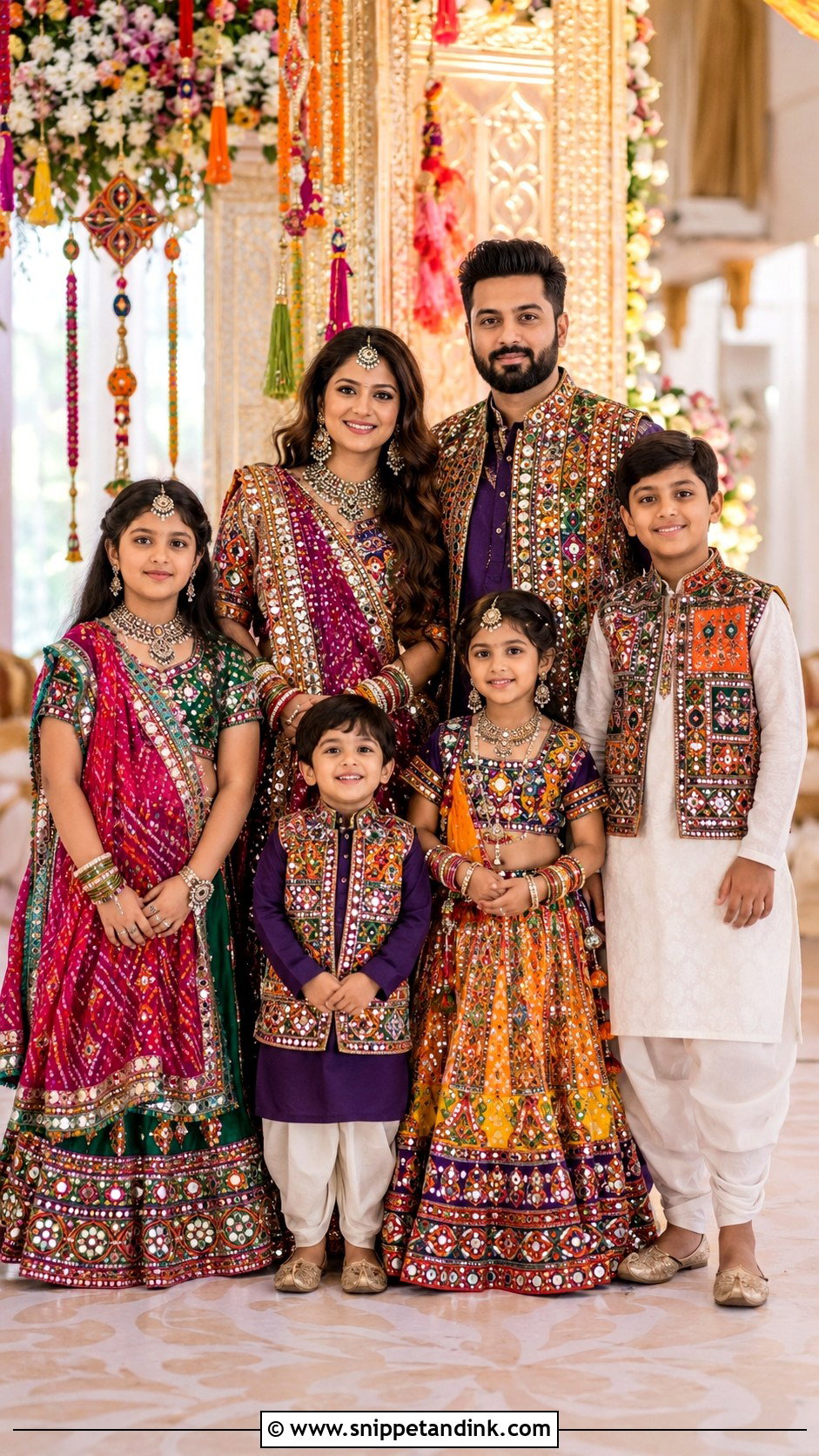
Gujarati weddings give a family plenty to work with, especially if there’s a garba night. Women can wear bandhani sarees, ghagra cholis, patola-inspired lehengas or mirror work chaniya cholis. Men can coordinate in kediyu-style kurtas, embroidered jackets or solid kurtas that pick up a color from the women’s dupattas. Kids can wear colorful lehenga cholis or mirror work vests. I connect the family through bandhani or a matching border rather than one color, since red, green, yellow, orange and pink all belong in this palette. For garba, check the chaniya’s weight: a heavy full-circle skirt looks wonderful spinning but tires the wearer within an hour, so lighter cotton versions are kinder for older relatives.
16. Rajasthani Wedding Family Outfits
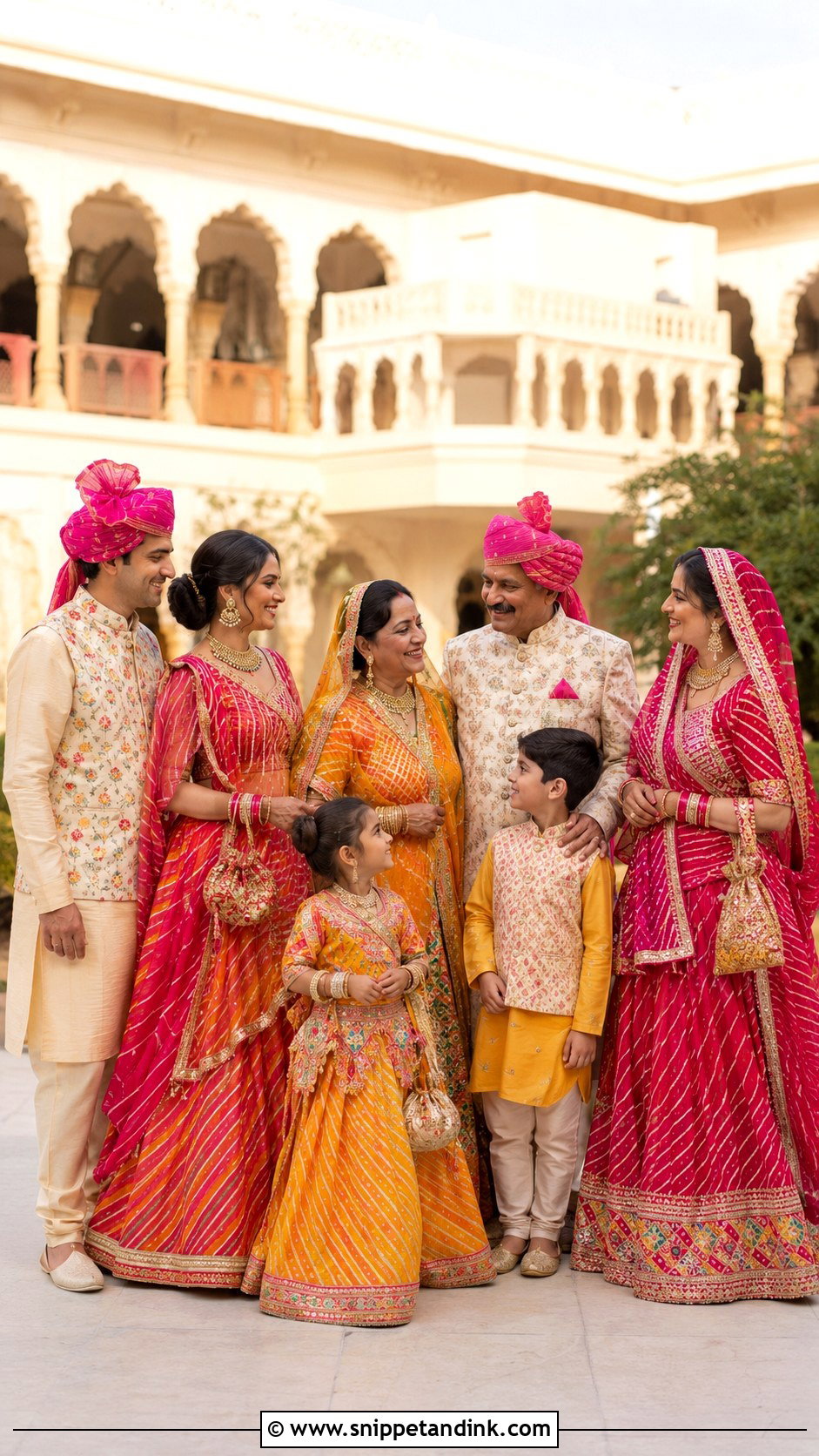
Rajasthani family outfits lean on heritage textile techniques, and the shared craft does most of the matching. Women can wear bandhej sarees, leheriya lehengas, gota patti suits or bright anarkalis. Men can wear kurta sets with printed jackets, safas or bandhgalas in matching colors. Matching safas for every man is the single detail that makes a group photo read as Rajasthani, and they need tying by someone who knows how, so line that person up before the day. Give kids the same colors in softer fabrics. Fuchsia, saffron and turquoise all work. Gota patti is lighter to wear than dense zardozi, which helps on long outdoor days at palace or destination venues.
17. Bengali Wedding Family Outfits
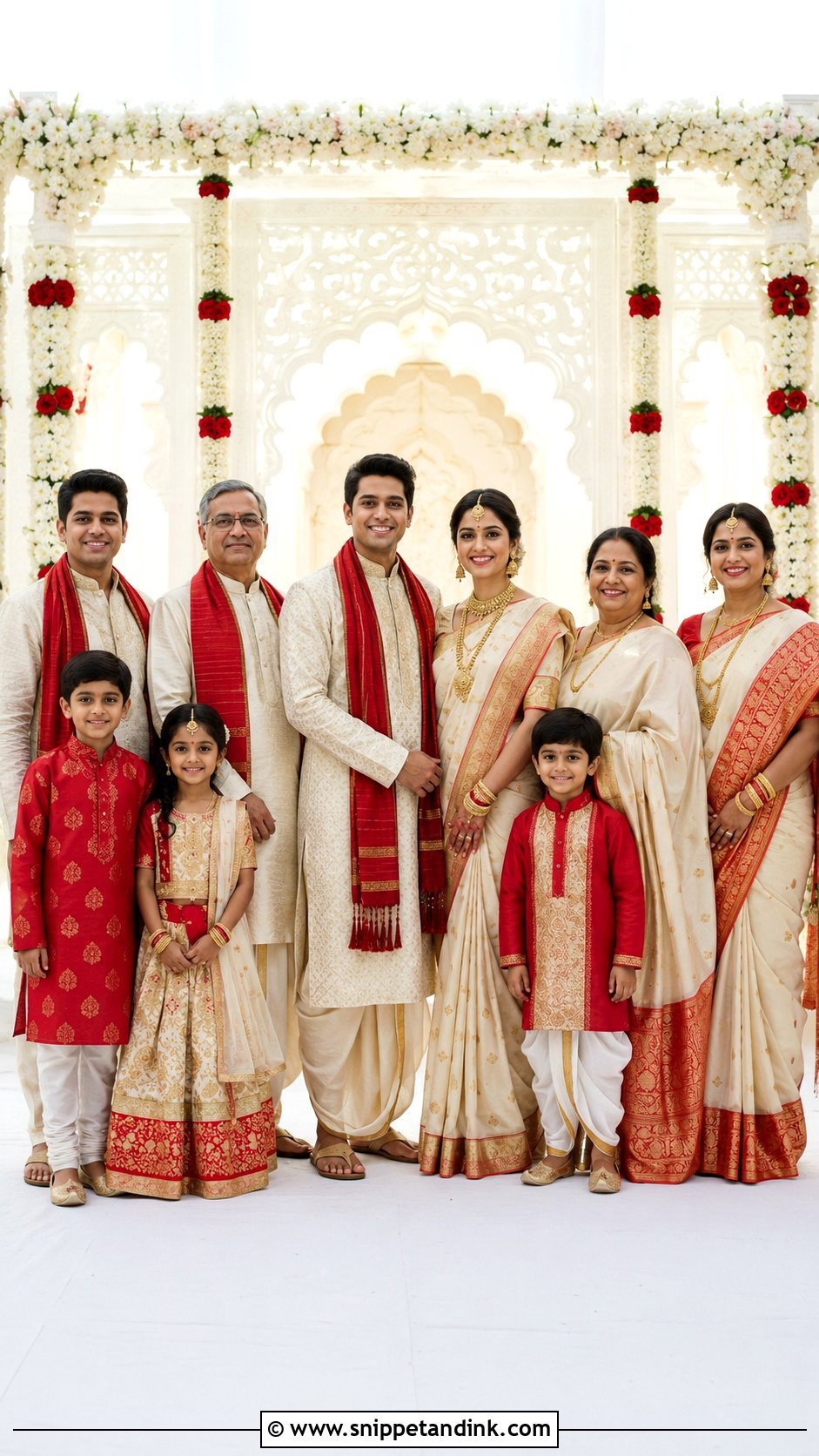
Bengali family looks usually come from red, white, cream and gold, and the classic white saree with a red border gives the women an instant shared thread. Women can wear traditional or silk sarees, or embroidered lehengas with red borders and gold jewelry. Men can coordinate in cream or white kurta pajama sets, dhotis or sherwanis with red stoles. Girls can wear red and white lehengas or saree-inspired outfits, and boys kurta sets with matching waistcoats. For men who don’t wear dhotis often, I suggest a pre-stitched one; a hand-tied dhoti working loose mid-ceremony is entirely avoidable. Red bangles and embroidered footwear finish it for blessings and portraits.
18. Muslim Wedding Family Outfits
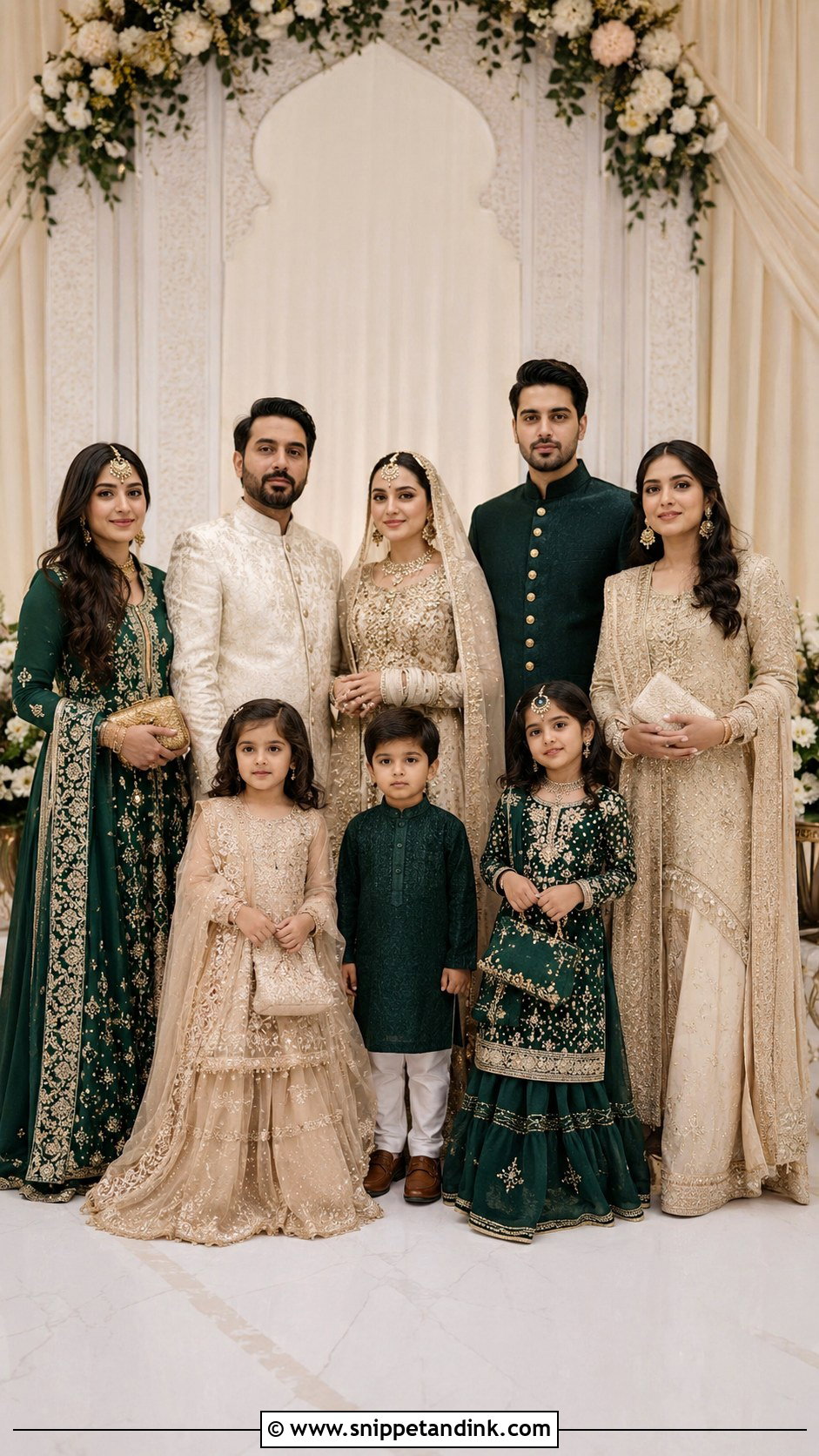
For a nikah or walima, families often want coordination that stays modest, which steers me toward full-length shararas, ghararas and anarkalis with properly sized dupattas. Sarees and lehengas work too. Men can wear sherwanis, kurta pajama sets, bandhgalas or waistcoats in matching tones, and kids mini shararas, frocks or kurta sets. Champagne, emerald, ivory, blush and maroon all suit these events. If any women in the family wear hijab, I build the scarf fabric into the palette from the start rather than treating it as an afterthought, because a hijab in an unrelated color is the first thing you notice in a group photo. Jhumkas, passa-inspired pieces and comfortable juttis finish it.
19. Mother Daughter Indian Wedding Outfits
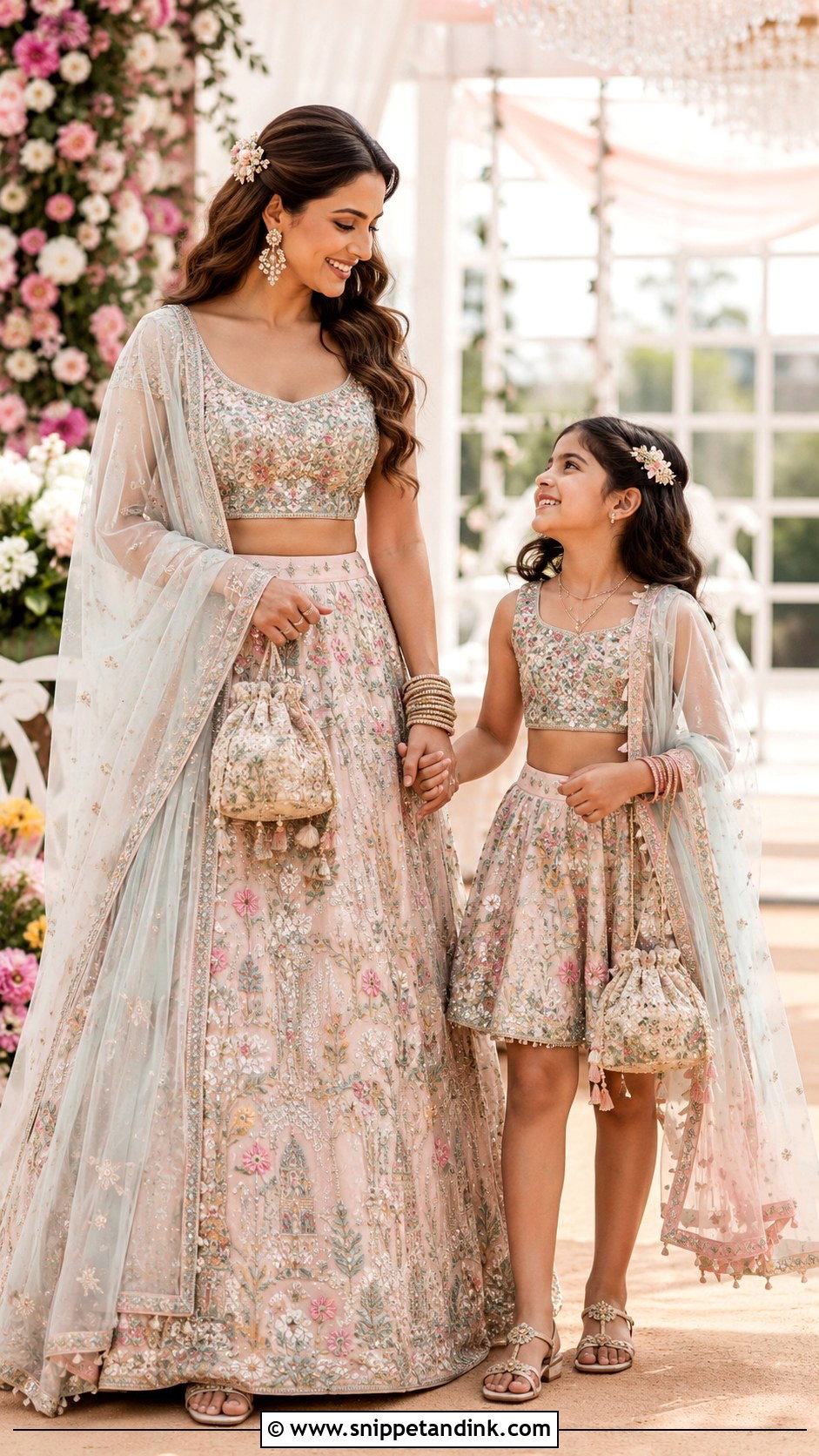
Mother and daughter outfits read best when the daughter’s version comes from the same fabric family but is built for a child’s body. I ask tailors for a softer lining, fewer hooks and no heavy embellishment at the neckline or underarms, where it scratches. The mother can wear a saree, lehenga or anarkali while her daughter wears a mini lehenga, frock or salwar suit. Full matching and loose coordination through print both work. Small echoes, like the same bangles or hair clips, do more in photos than you’d expect. This pairing suits mehndi, haldi, engagements and family portrait sessions.
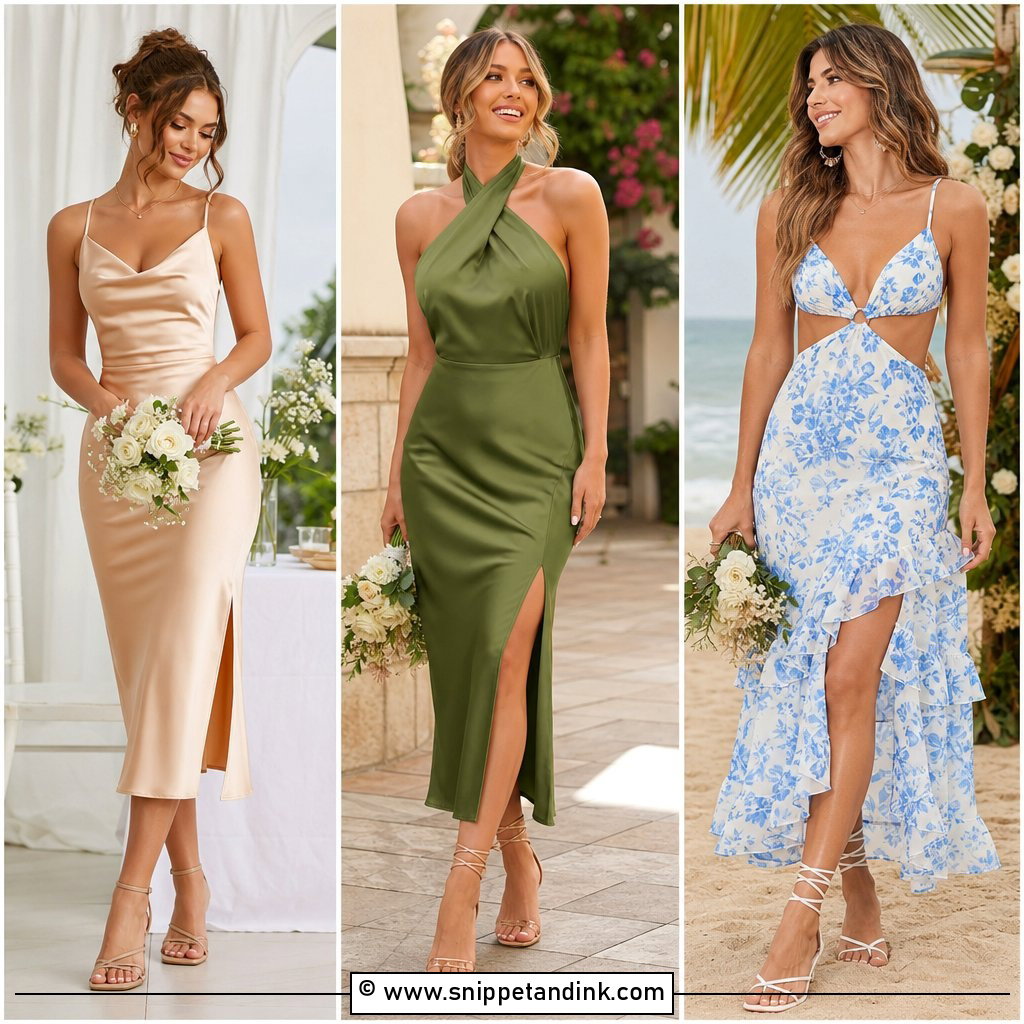
20. Father Son Indian Wedding Outfits
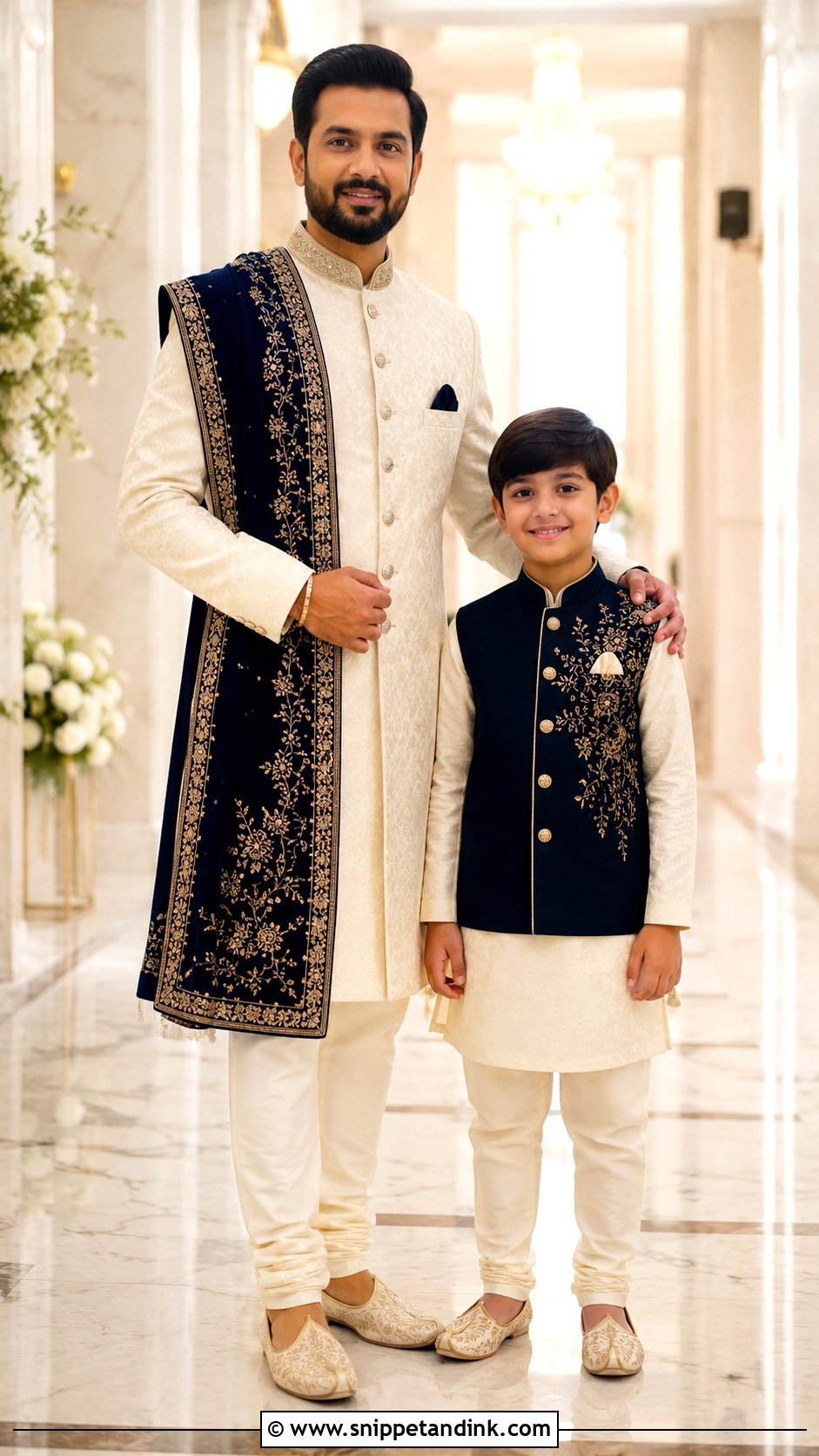
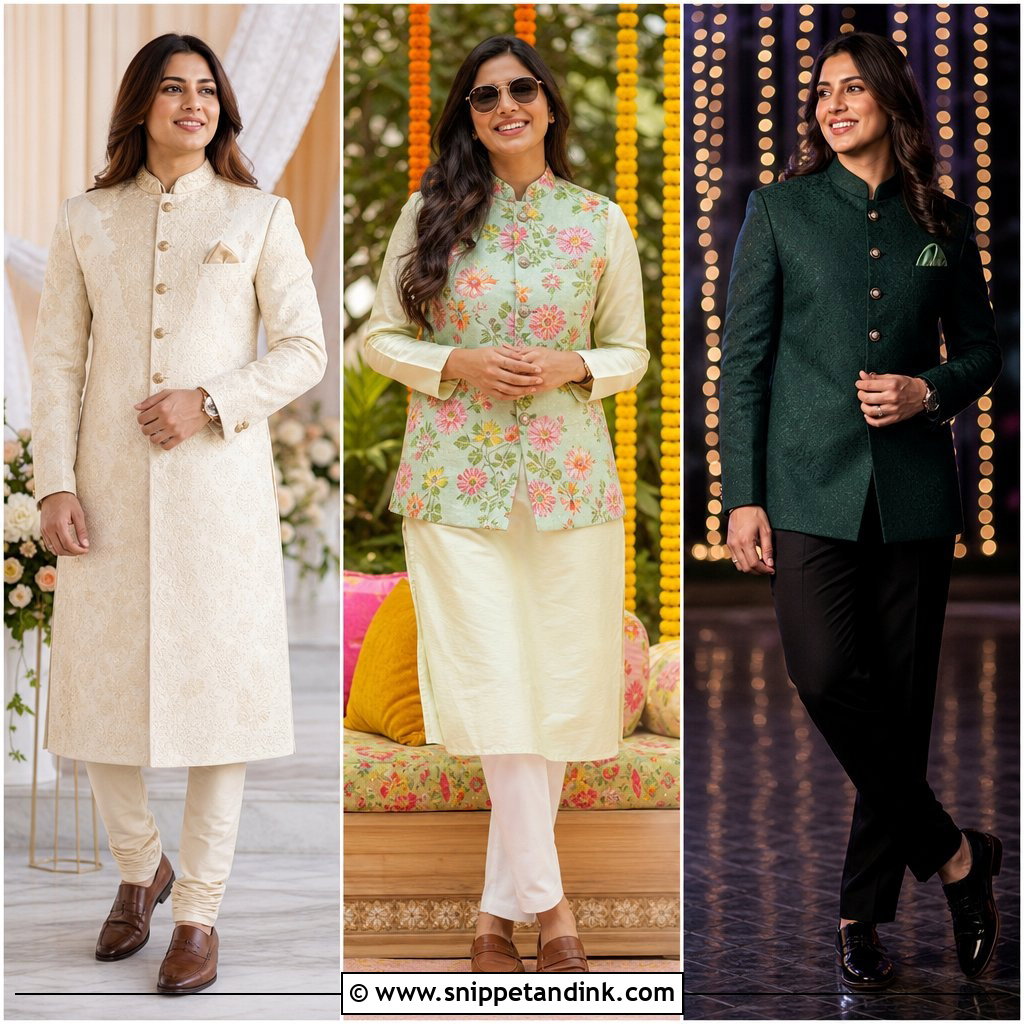
Of every combination here, the dad-and-son look is the simplest to get right. Father and son matching outfits usually start with a kurta pajama and Nehru jacket, which most boys tolerate better than a full sherwani. For formal events the father can wear a sherwani while his son wears a mini version or a kurta set. Ivory, navy, emerald and mustard suit every age. Match through jacket print, buttons or a stole rather than identical cuts, since stiff brocade is hard for a small child to sit in. Choose soft juttis or dress sandals; new mojris can rub a child’s heels raw before the baraat even starts.
21. Sibling Indian Wedding Outfits
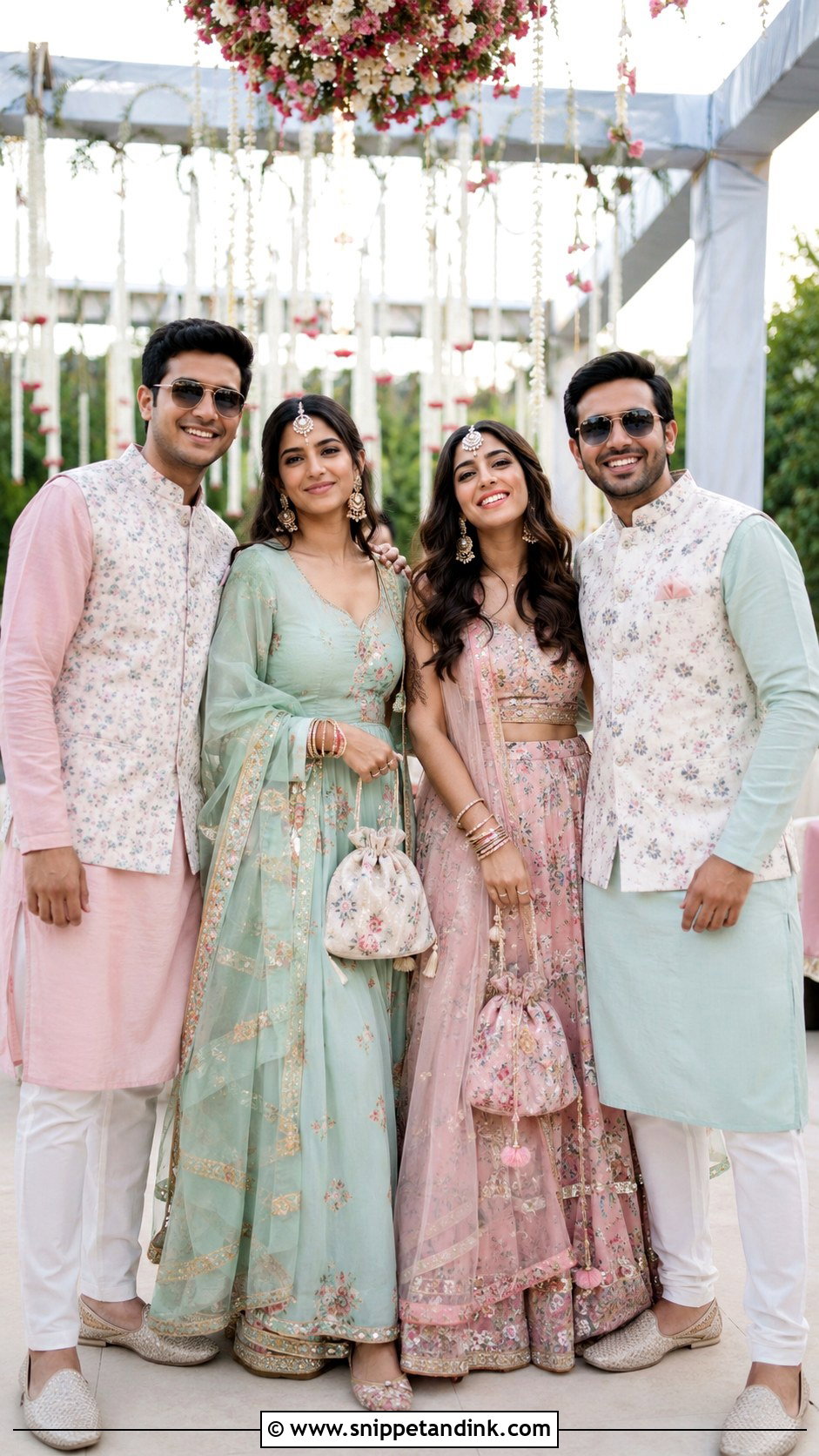
Sibling outfits go wrong when they look forced, usually because a teenager has been put in something they’d never choose. I let siblings agree on a palette and then pick their own silhouettes. Sisters can coordinate in lehengas, sharara sets or anarkalis; brothers through kurta sets, jackets or stoles. For a brother and sister, one shared detail is enough: her floral lehenga and his kurta under a jacket in the same floral. Brights suit mehndi and sangeet, and ivory or pastels the ceremony. Keep accessories light so younger ones can play without losing pieces.
22. Grandparents Indian Wedding Family Outfits
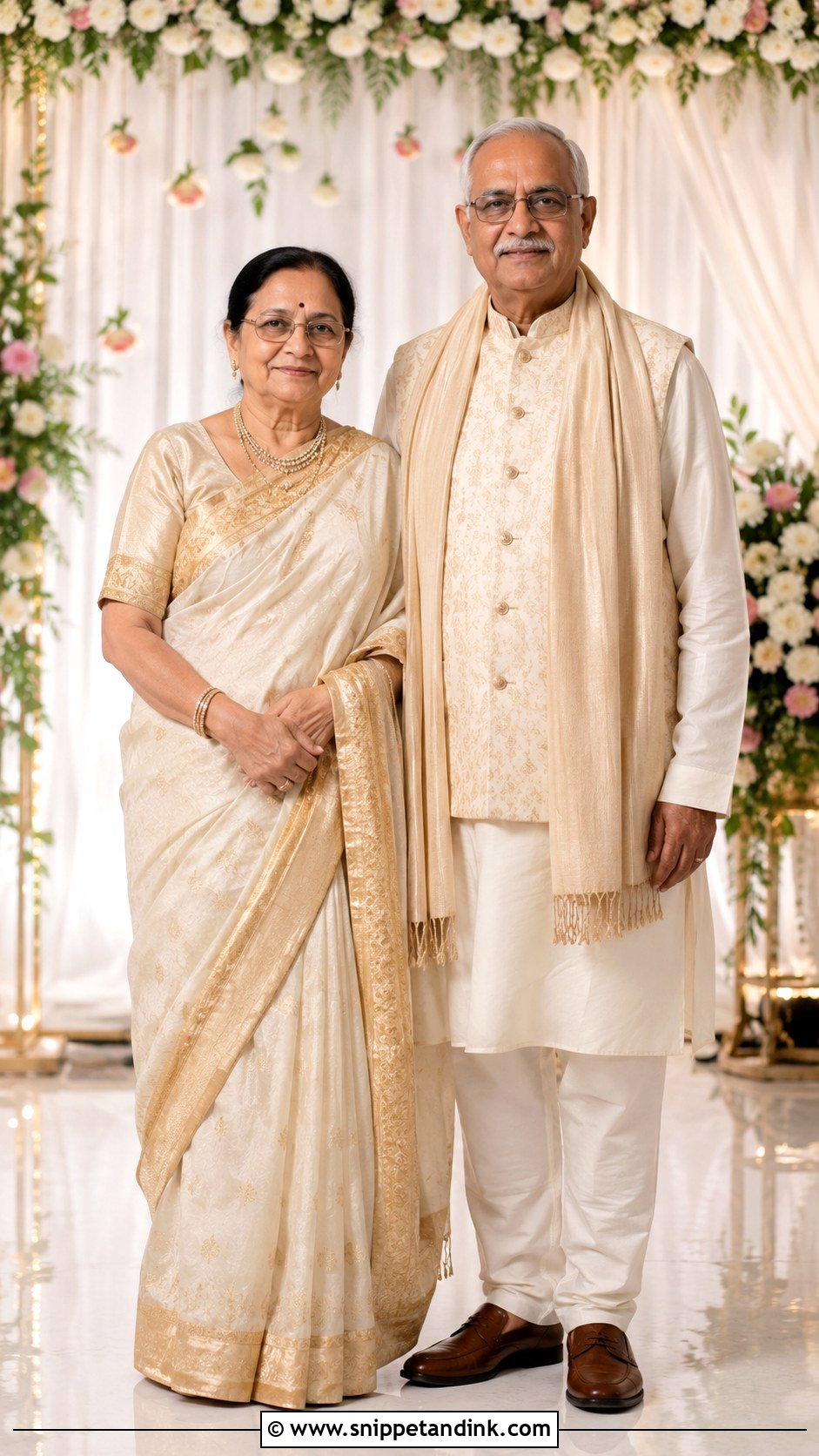
Grandparents set the limits for the whole family look. I plan their outfits first, because comfort decides what they’ll actually keep on for six hours, and then fit everyone else around them. Grandmothers usually prefer silk or lightweight embroidered sarees, or graceful salwar suits; grandfathers kurta pajama sets, Nehru jackets or simple sherwanis. Coordinate them by color, not embellishment, since heavy zari on older shoulders gets uncomfortable fast. Check that saree pleats are pinned securely and that footwear grips on marble floors and temple steps. Cream, sage, maroon and navy look refined on them, and a shawl handles over-cooled halls.
23. Extended Family Indian Wedding Outfits
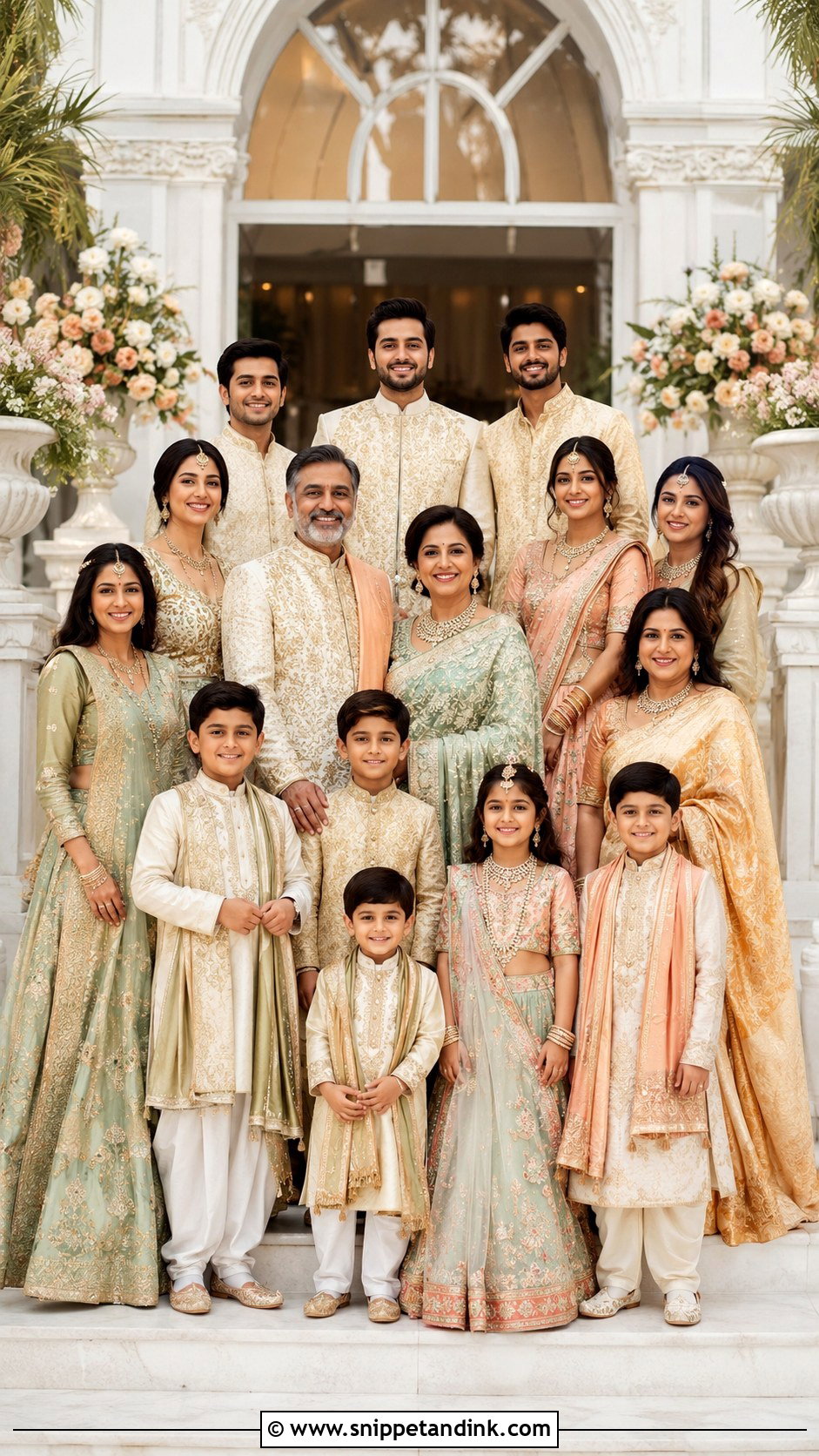
With extended family, a fixed outfit is a recipe for complaints about budget and fit. I send a palette instead, with a few reference photos for each color, so cousins and aunts can shop at their own price point. Women can choose sarees, lehengas, suits or shararas in those colors, men kurtas, sherwanis or jackets, and kids comfortable sets with matching accents. Ivory with gold, jewel tones, or green with peach are palettes almost anyone can find in stores. Shared dupattas, stoles or turbans, bought together and handed out on arrival, are the cheapest way I know to make a big group look connected in an entrance or group photo.
24. Indo Western Family Wedding Outfits
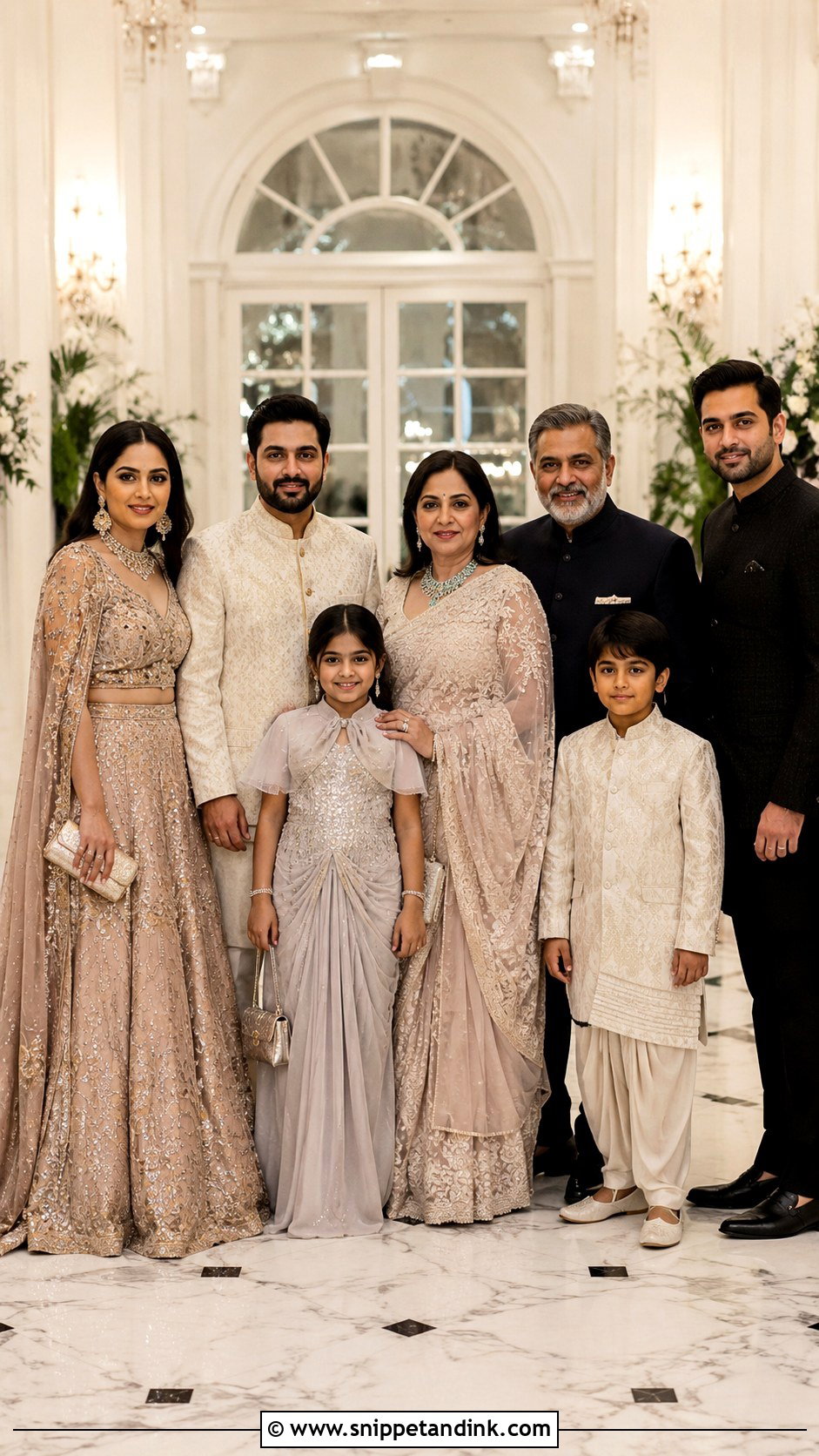
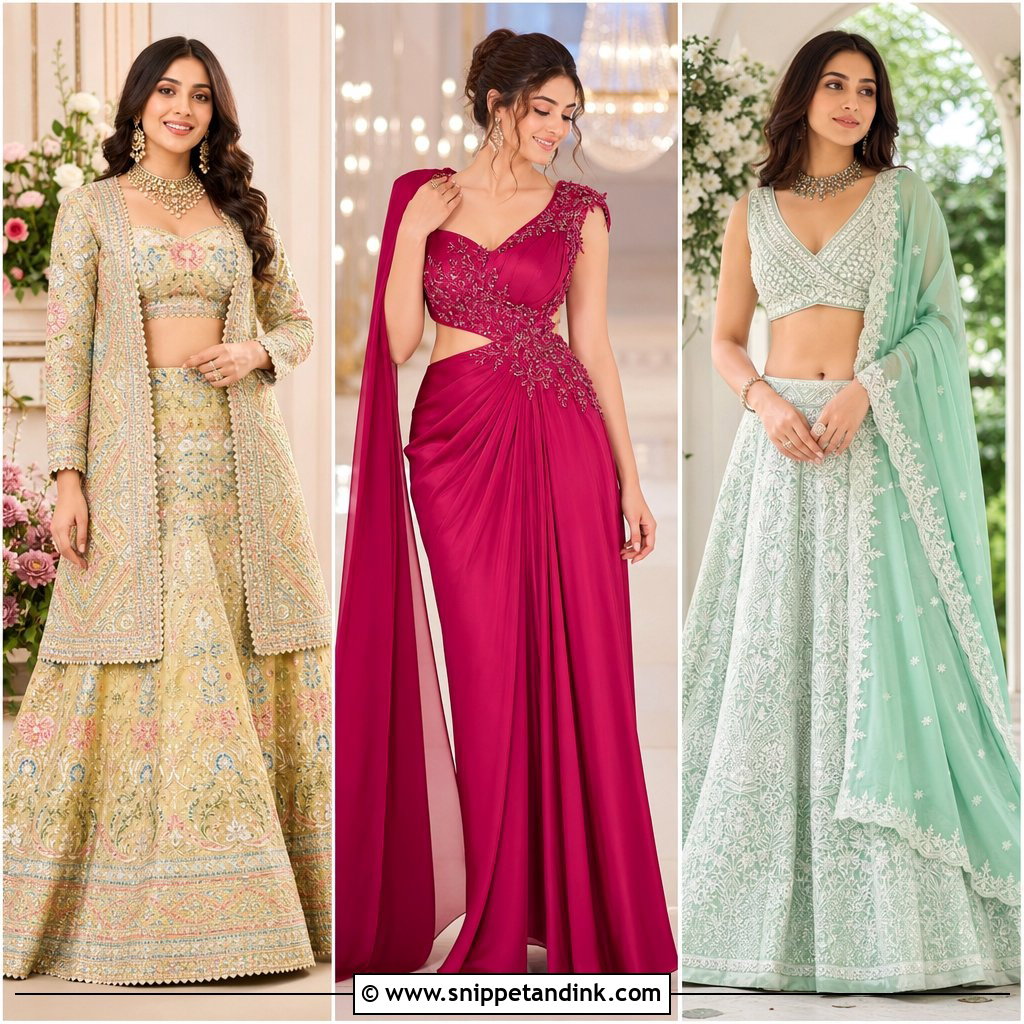
Indo western suits receptions and cocktail-style evenings, and it’s the theme where I see the most mismatched formality: one relative in a full lehenga, another in a plain gown. Agree on how dressy everyone will be before agreeing on color. Women can wear cape lehengas, draped sarees, jacket sets, gowns with Indian embroidery or crop top and skirt sets. Men can wear bandhgalas, structured kurtas or asymmetric jackets with tailored trousers. Kids suit dhoti pants, fusion dresses or co-ord sets. Black with gold, ivory with champagne, or navy with silver keeps the group matched, and clean jewelry with structured bags finishes it.
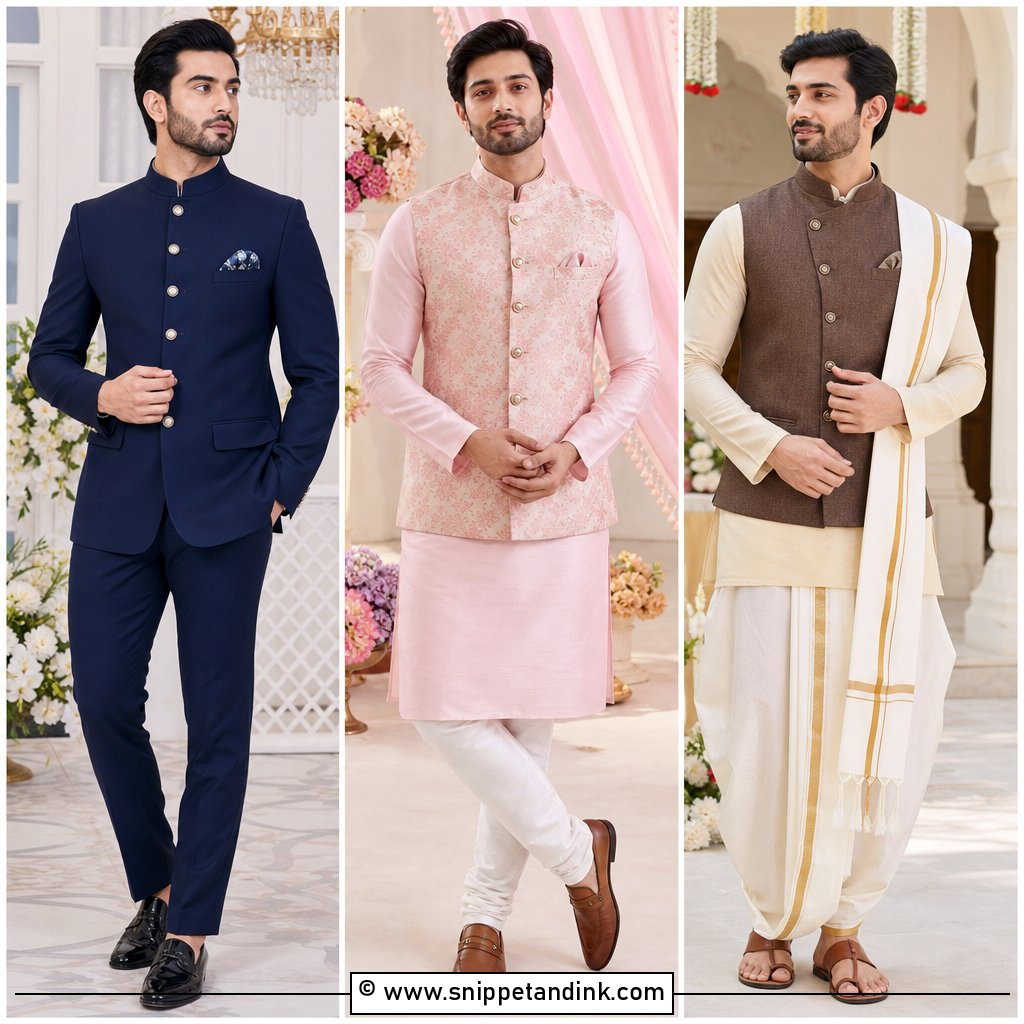
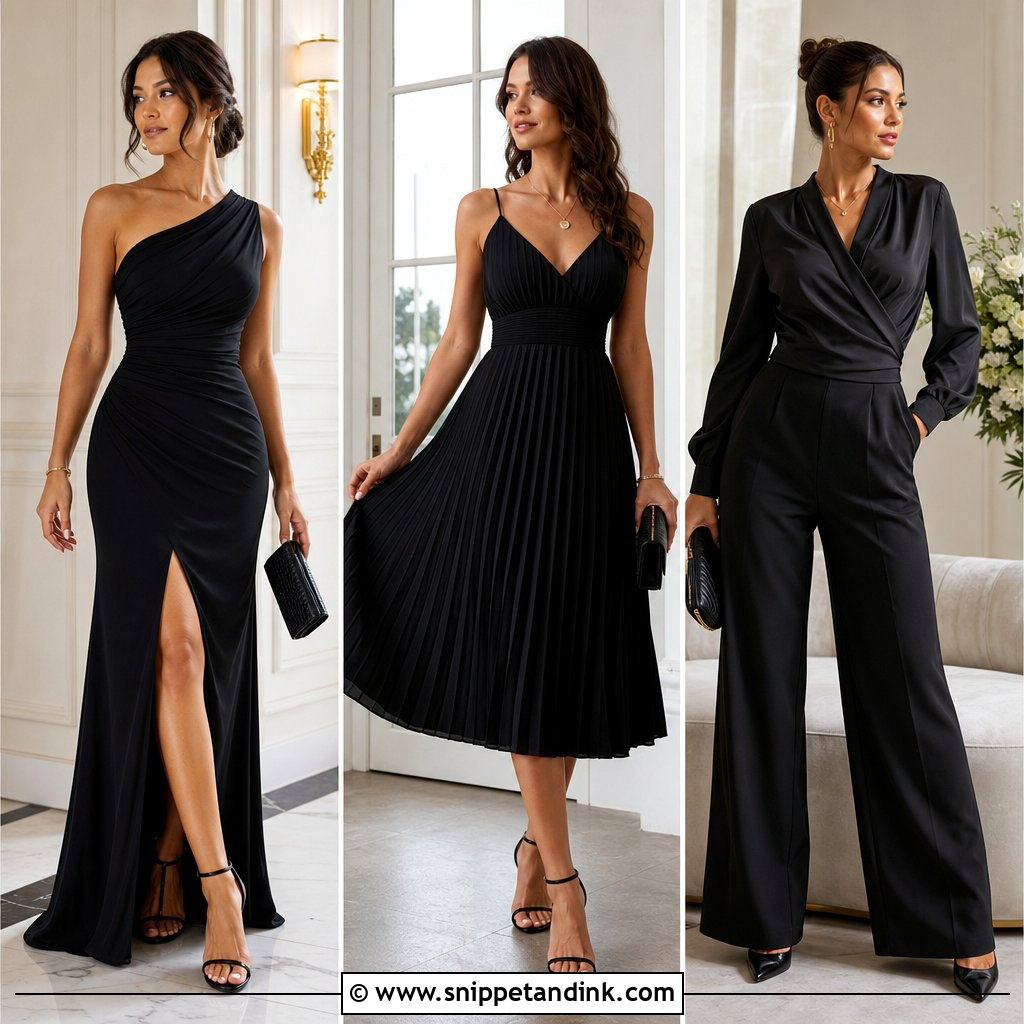
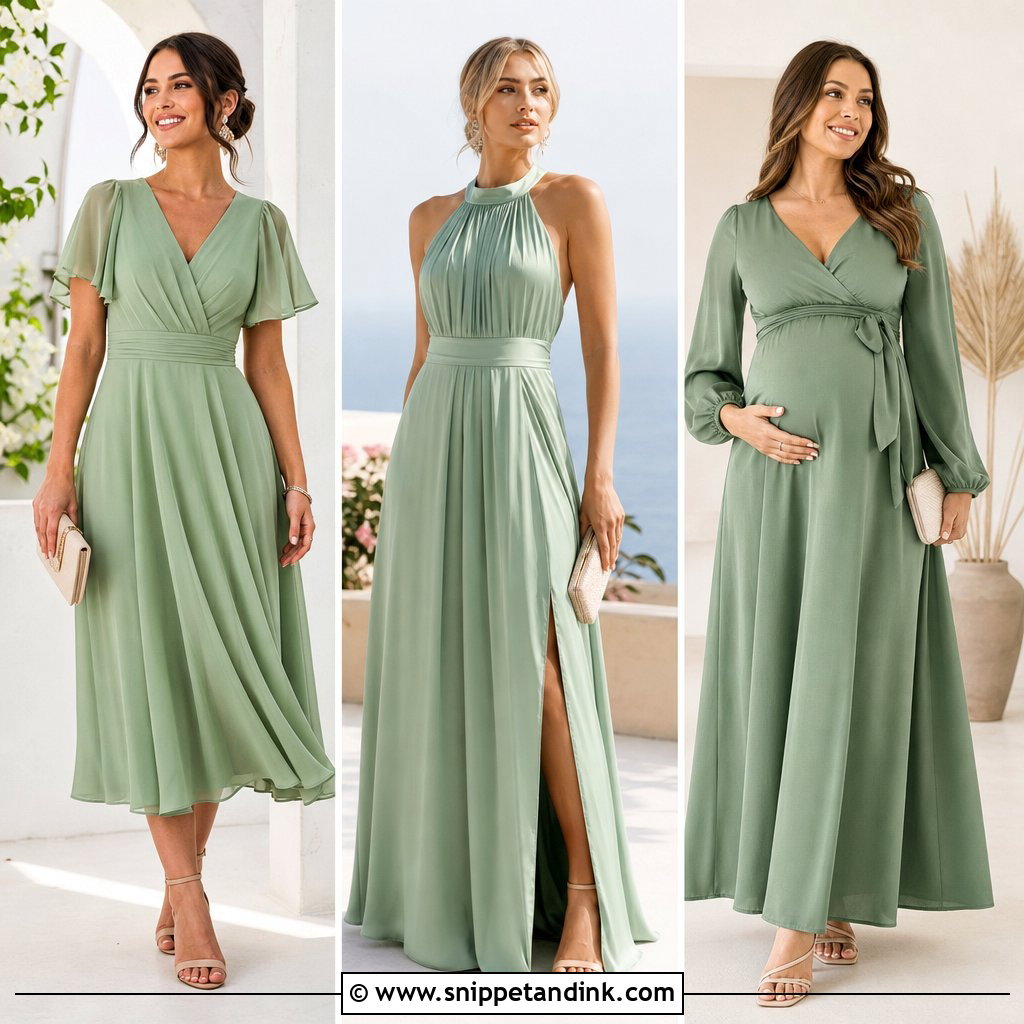
25. Family Matching Wedding Photo Outfits
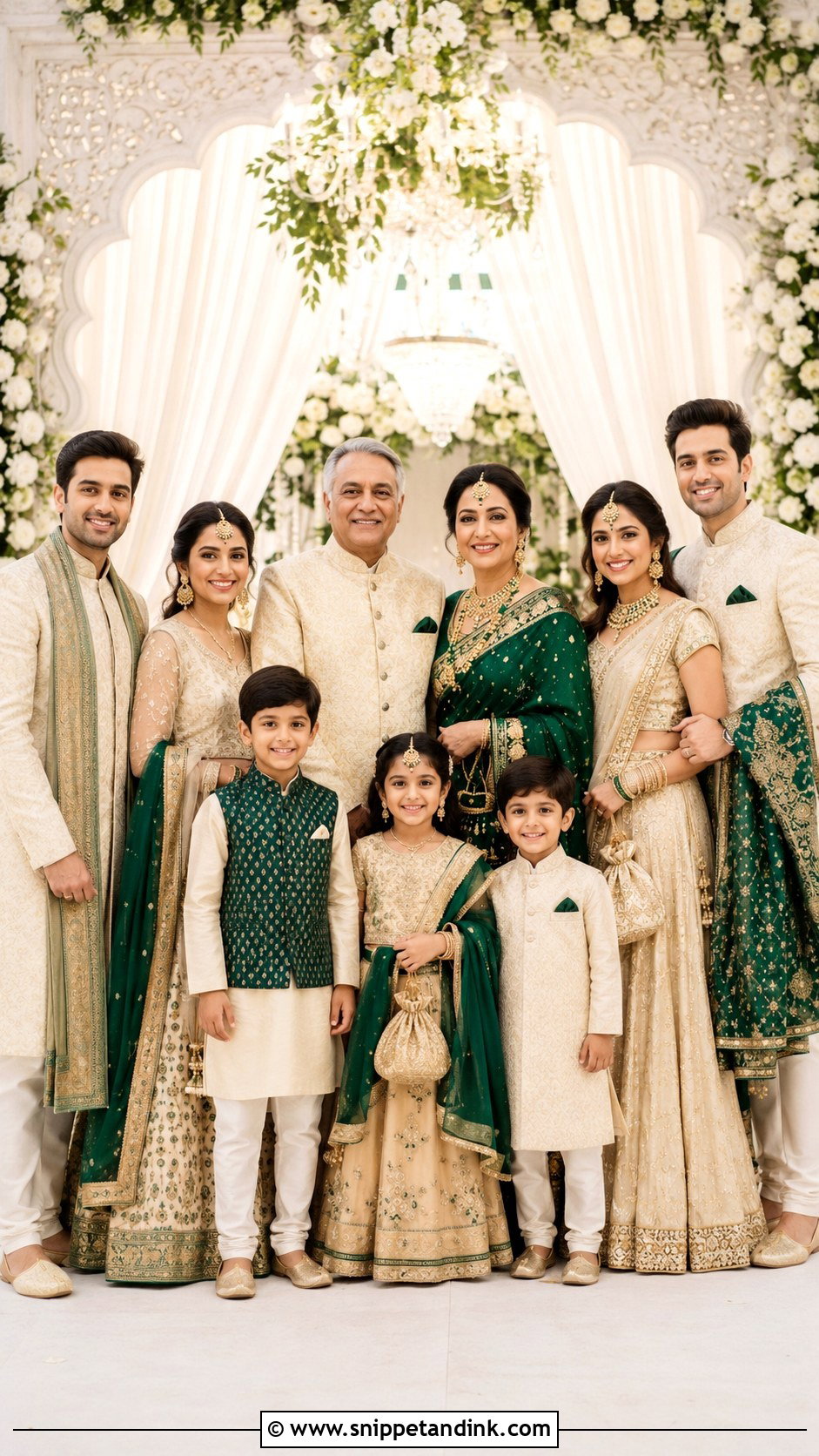
Group portraits are where a family’s coordination gets tested, because the camera sees everyone at once. I start with one main palette and let each person wear a silhouette that suits them. Too many competing prints is the usual problem, so I allow roughly one printed outfit for every three or four plain ones. Balance heavy embroidery with simpler pieces, and put the heaviest outfits near the center where the couple stands. Before the photographer arrives, line everyone up and take a quick phone photo; clashes show far more clearly in a picture than in a room.
Kids and Elders Across a Long Wedding Weekend
The people who struggle most in coordinated outfits are the youngest and the oldest, and the fixes are simple if you plan them in. For children, I check three spots on every outfit: the inside of the neckline, the underarm seams and the waistband. Embroidery backing and sequin threads sit right there and rub. A thin cotton slip or vest underneath solves most of it.
Grandparents need the opposite of what photos reward. Heavy dupattas, stiff brocade and long trains look rich but pull on shoulders and trip on stairs. I’d rather give an elder a lighter version of the family color and let a shawl or stole carry the embroidery, because a stole can come off when the hall gets warm.
A Small Repair Bag for a Large Family
With a dozen or more coordinated outfits, something will snap. I pack one bag that travels with the family between functions and give it to a reliable cousin, not the bride’s mother.
- Safety pins in several sizes, plus saree pins and bobby pins
- Needle and thread in the main colors of each palette
- Double-sided fabric tape for slipping necklines and dupattas
- Spare hooks and a few loose buttons from the tailor
- Stain wipes and a small towel for haldi and food spills
- Plasters for new juttis and a pair of spare flat sandals
Label a garment bag per person per function too. On a weekend with four changes, the easiest thing to lose is a child’s sangeet kurta left at home.
Matching the Mood of Each Function, Not Every Thread
Plan family outfits function by function. Haldi can be light and breathable, sangeet can sparkle, ceremony looks lean traditional, and receptions can go sleek. Decide color, fabric and embroidery level for each event after that, not before. Nobody needs to match perfectly. A shared palette, the same border or a matching dupatta is often enough, and it lets every relative wear something they feel good in rather than something they were handed.
You'll Like These Ideas:


Leave a Reply