
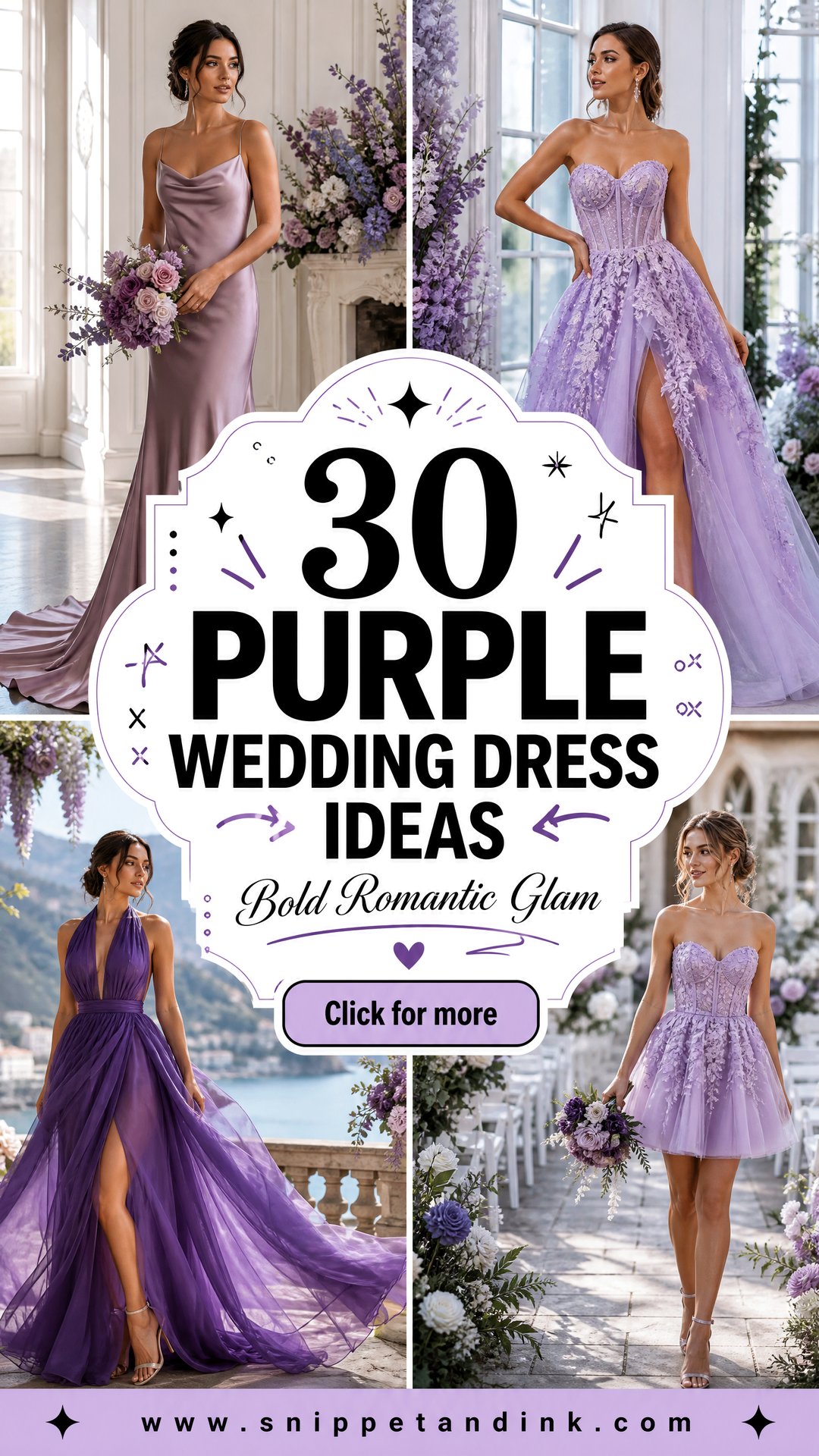
Purple is the one bridal colour I see brides fall for in a photo and then hesitate over in the fitting room, usually because the shade looked different on the hanger. That hesitation is worth listening to. Lavender, lilac and mauve read soft and daytime; plum, violet and eggplant carry an evening weight that changes how the whole outfit has to be built. Below are thirty gowns across that range, from a barely tinted lilac to a saturated royal purple, each with the veil, shoes, flowers and jewellery I’d put with it and the practical catch I’d want you to know before you order.
Purple Shifts Under Every Light, So Swatch It First
Purple is made of red and blue, and different light pulls it toward one or the other. Warm indoor bulbs push lavender toward pink and make plum look brown; cool daylight turns lilac almost grey-blue. That is why the gown that looked right in a bright boutique can look like a different colour at a candlelit reception. Before I let anyone commit, I ask for a fabric swatch and look at it in three places: by a window, under ordinary warm lamps, and outside in shade.
Then hold the swatch against bare skin at the jaw, not the wrist. Cool undertones usually suit lilac, wisteria and violet, which have more blue in them. Warm undertones tend to look better in mauve, dusty purple and plum, where there is more red. If a shade makes the skin under your eyes look shadowed, it will do the same in every close-up.
Checks I make at the first appointment
- Ask whether the colour is dyed into the fabric or comes from a coloured lining under ivory lace, because a lining can be swapped later and a dye cannot.
- Photograph the sample on your phone with the flash off and on; camera sensors often exaggerate blue, so a lilac can turn periwinkle.
- Hold the veil fabric against the gown. Bright white next to pale lavender makes the dress look dingy, so ivory or a matching tint is usually safer.
- Ask your florist for a petal or ribbon sample to hold against the swatch, since flowers in a similar purple rarely match exactly.
1. Lavender Tulle Ball Gown Wedding Dress
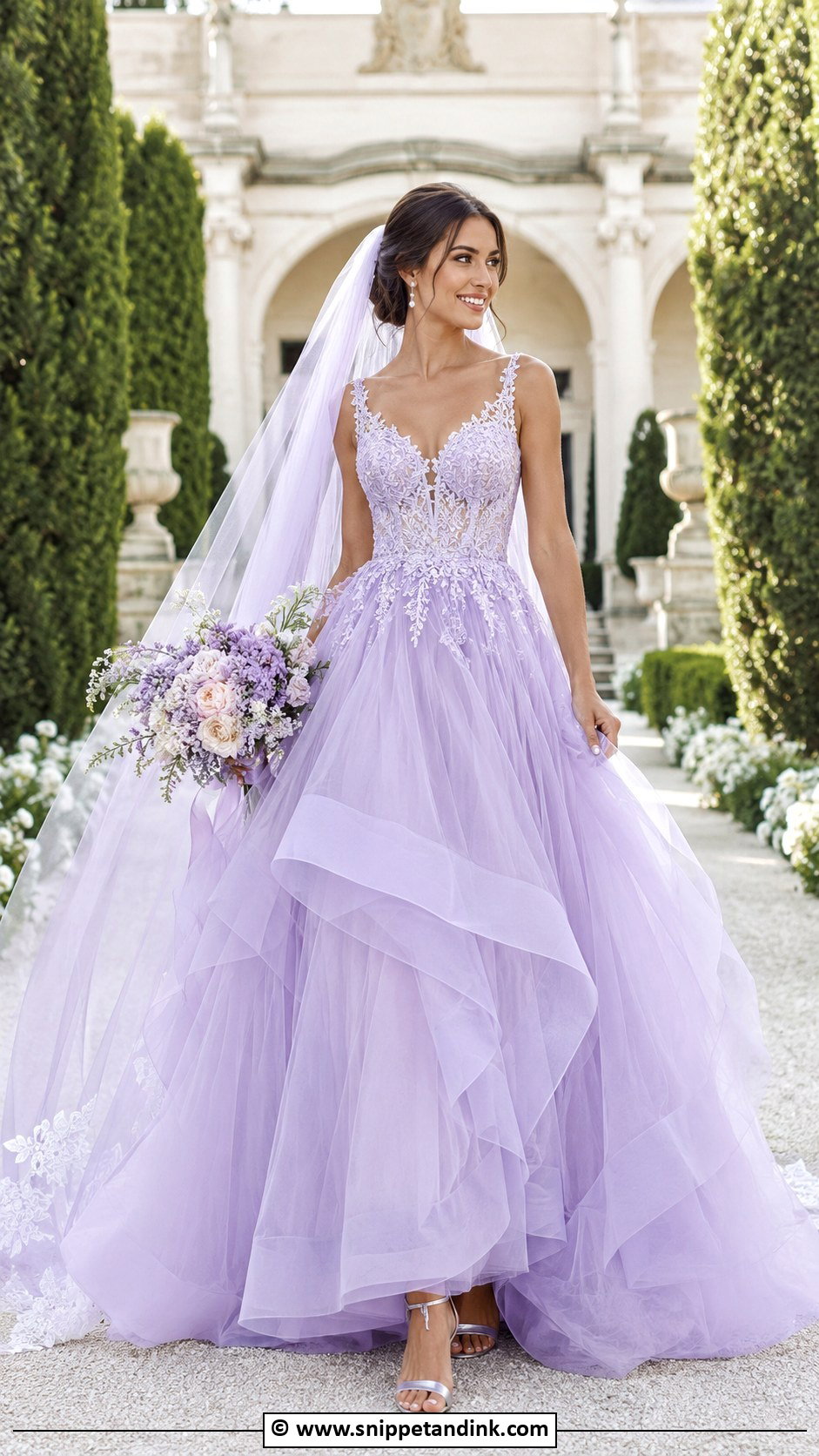
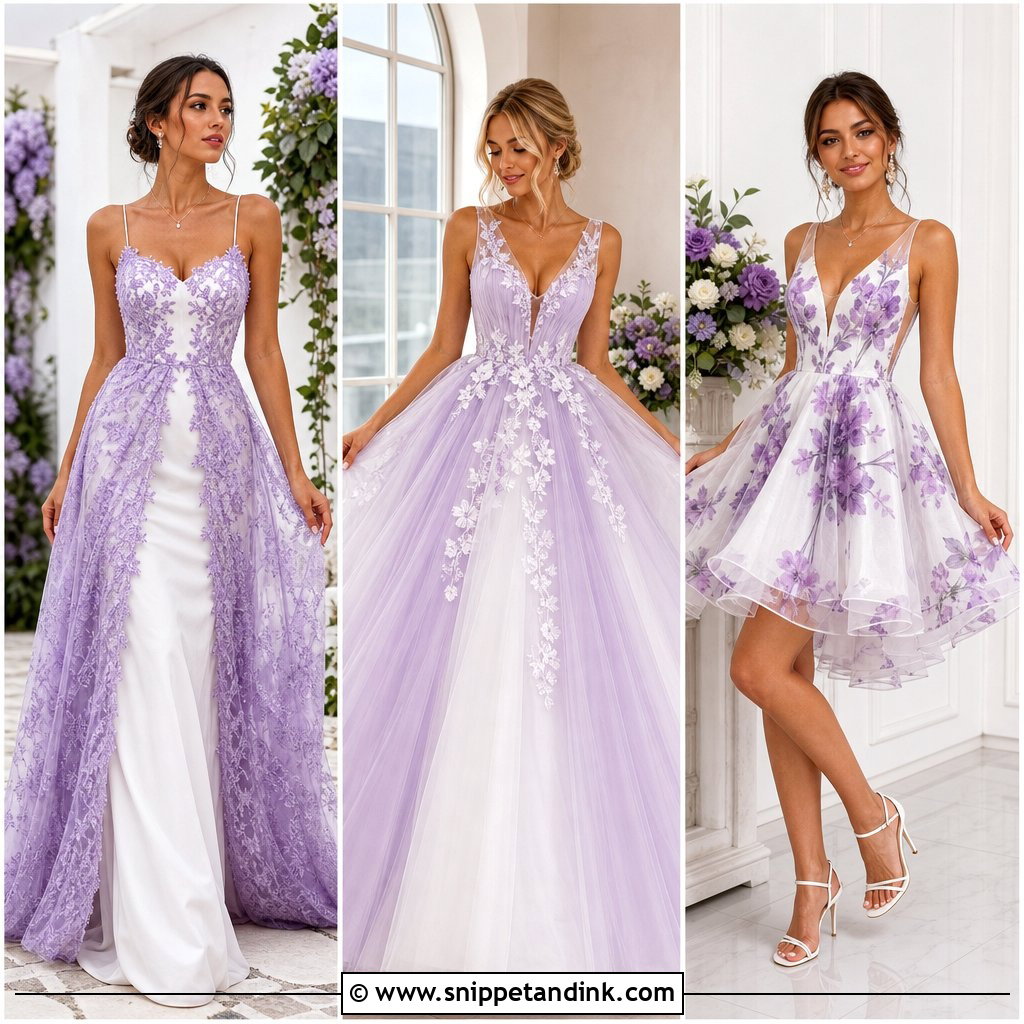
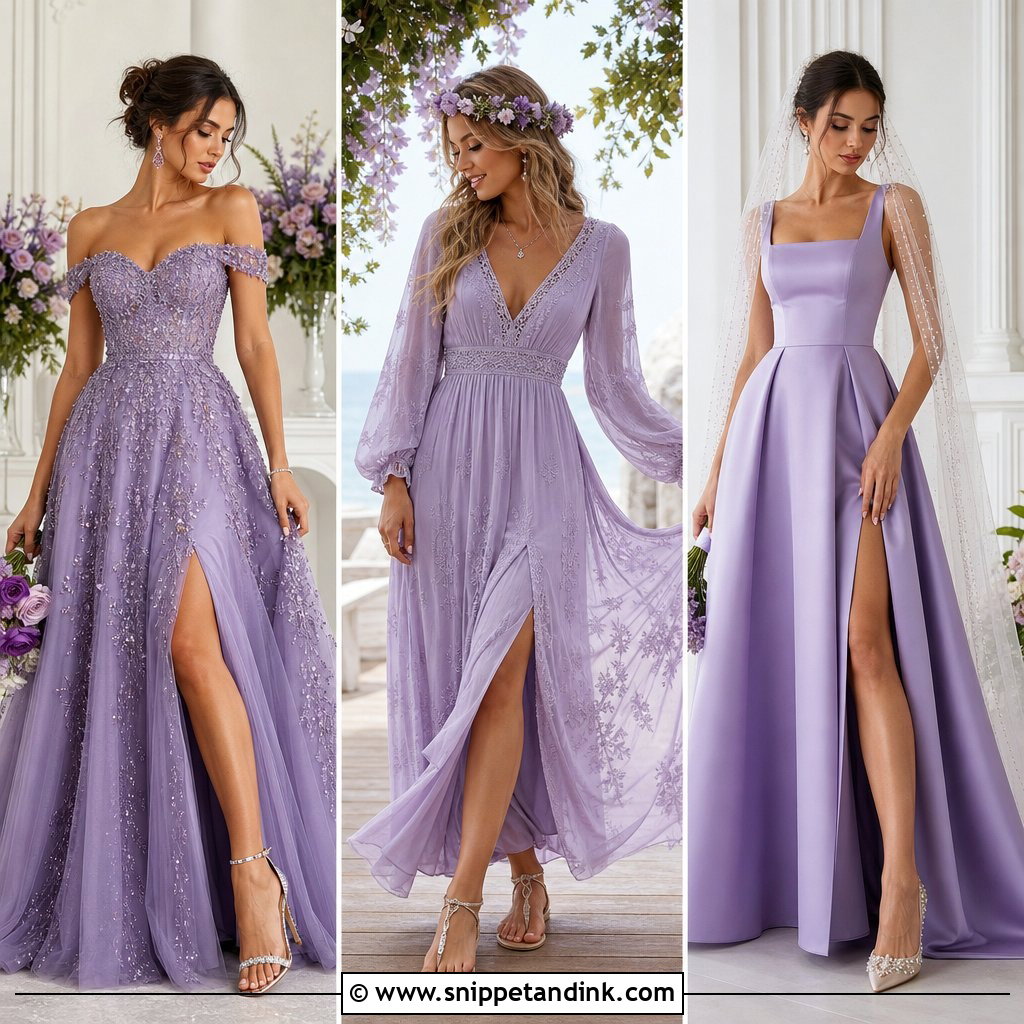
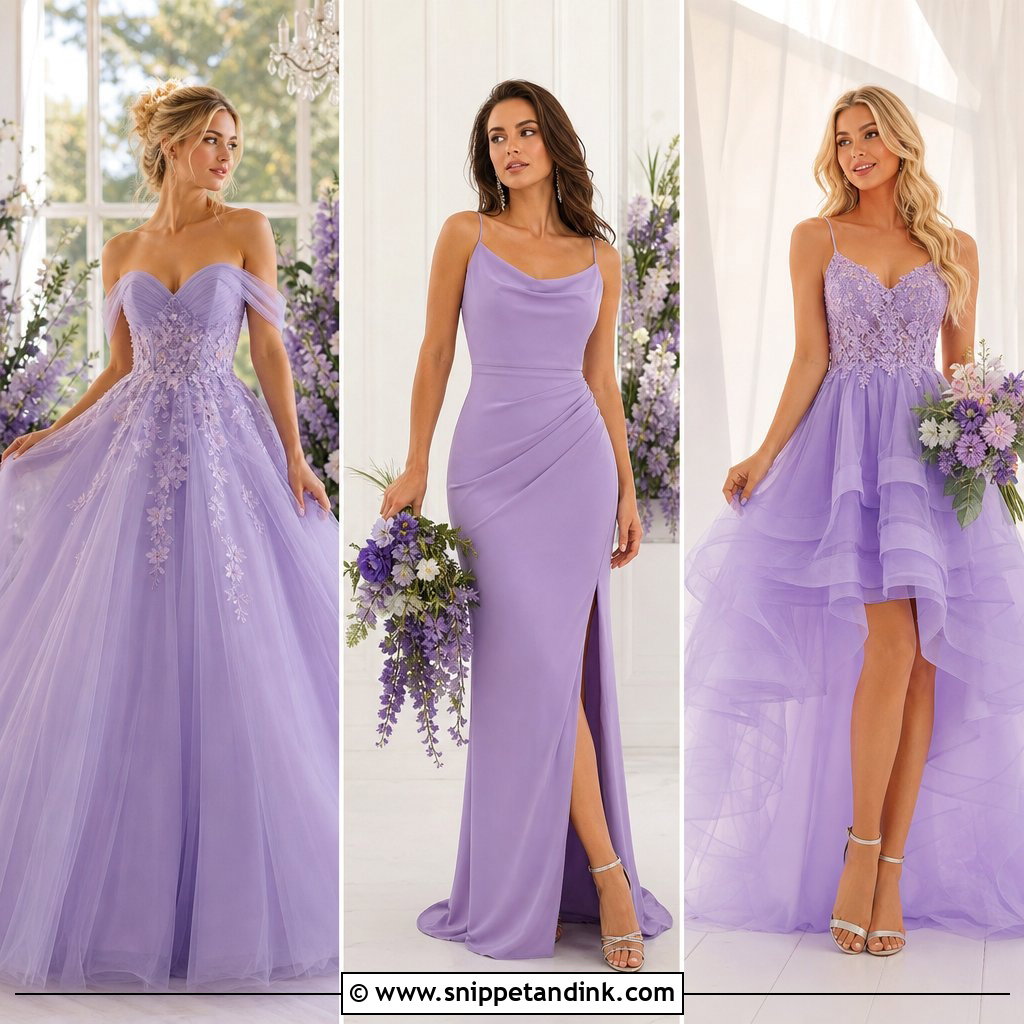
Tulle is the most forgiving way to wear lavender, because the colour is diffused through several layers instead of sitting flat on one. That’s why a lavender ball gown reads dreamy rather than loud. I balance all that skirt with a fitted bodice and lace appliqué or light beading, so the volume has somewhere to start. An ivory or pale lavender cathedral veil adds ceremony length without hiding the colour, and pearl drops, silver heels and a loose bouquet of lavender, blush and cream finish it. Garden and estate venues in spring suit it best; the one thing I warn about is that tulle snags on gravel and rose bushes, so plan your route down the aisle.
2. Lilac Lace A-Line Wedding Dress
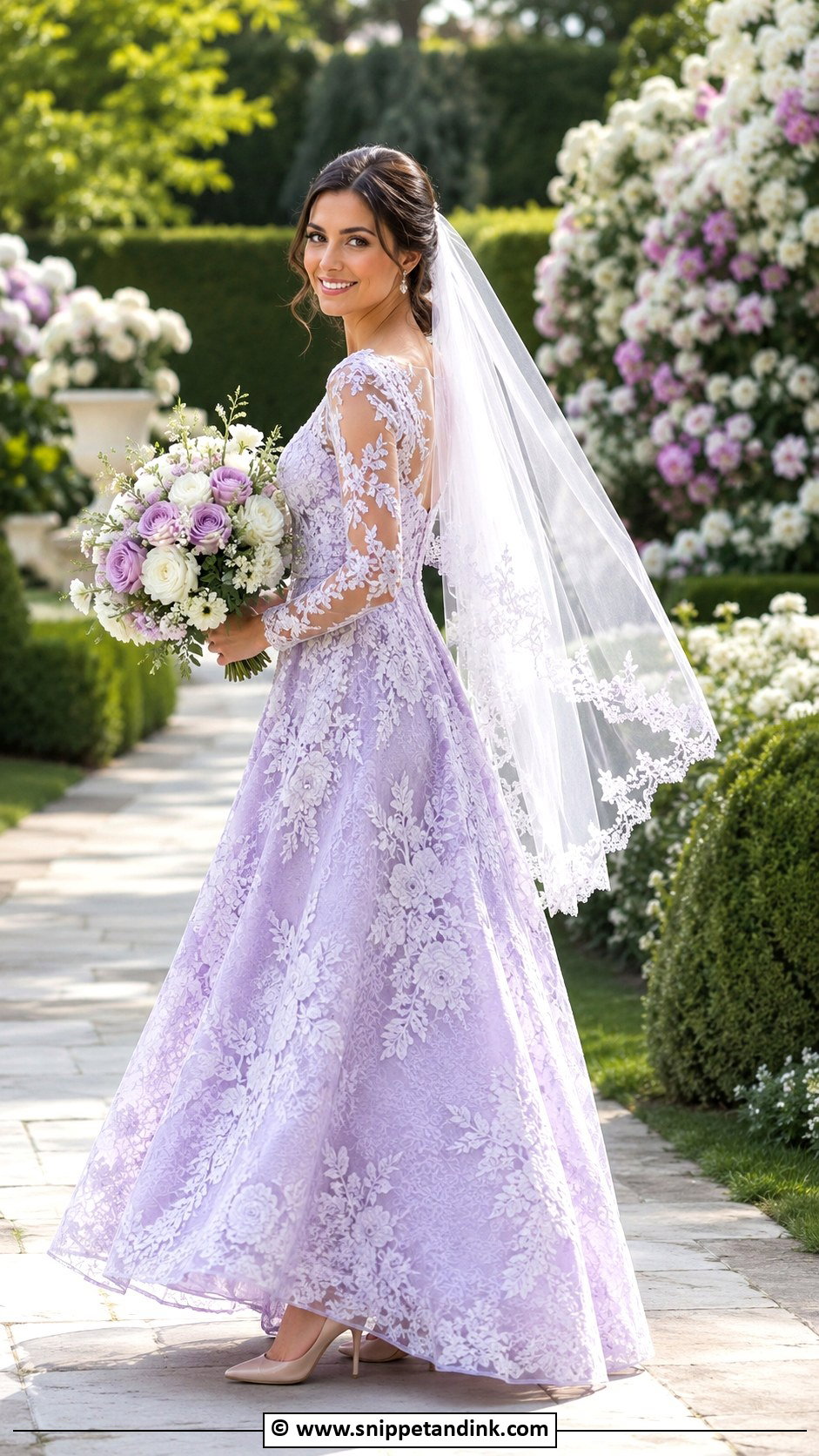
Lilac lace over a lilac lining is easier to wear than solid colour because the lace pattern breaks the shade up. The A-line cut defines the waist and skims the hips, which is why it fits so many bodies with only minor alterations. Illusion sleeves push it classic; a sweetheart neckline keeps it lighter. When I fit this kind of dress I always check the lining under daylight, since a lining a shade too pink can make the lace look muddy. Nude or pale lavender heels, a fingertip veil, simple pearls and a bouquet of white roses, lilac and greenery keep a daytime wedding fresh.
3. Dusty Purple Satin Slip Wedding Dress
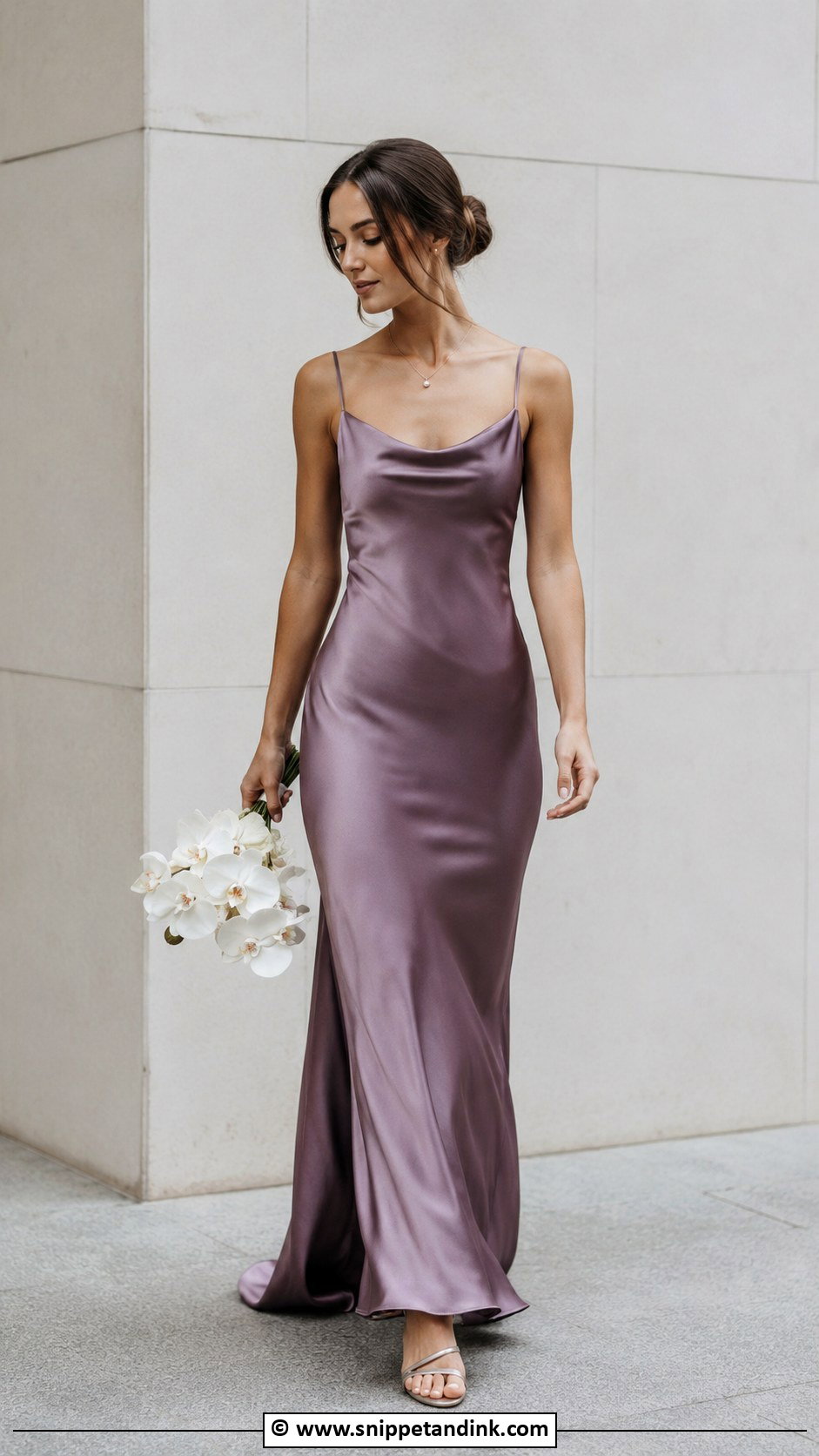
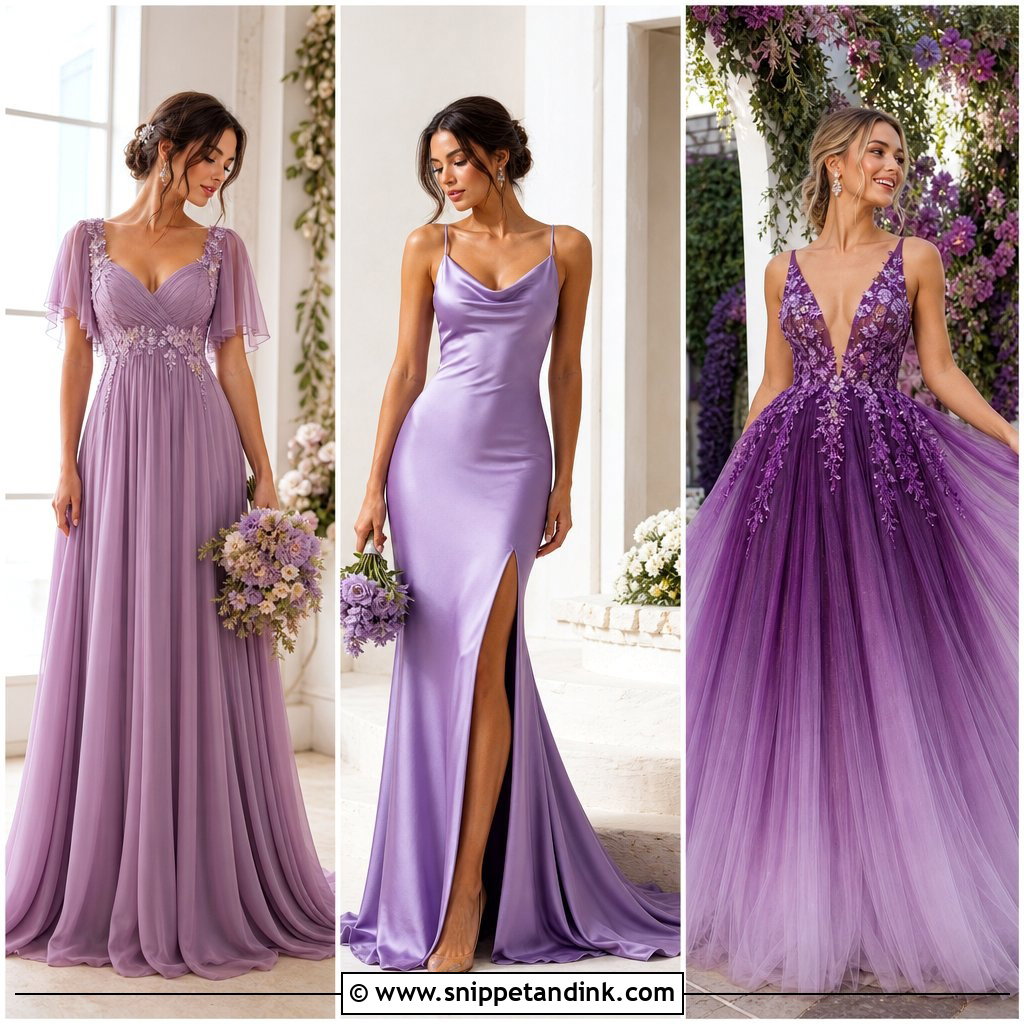
Satin shows every shift in colour as it moves, so dusty purple gets real depth here with no embellishment at all. A bias cut skims rather than clings and moves easily, and thin straps, a cowl or a low back keep the lines clean. The honest catch: bias-cut satin shows everything underneath, so I’d fit it over the exact underwear you’ll wear on the day, and it creases where you sit. Sleek silver sandals, a single pendant, a smooth low bun and white orchids or pale roses suit city ceremonies and small, minimalist weddings.
4. Plum Off Shoulder Mermaid Wedding Dress
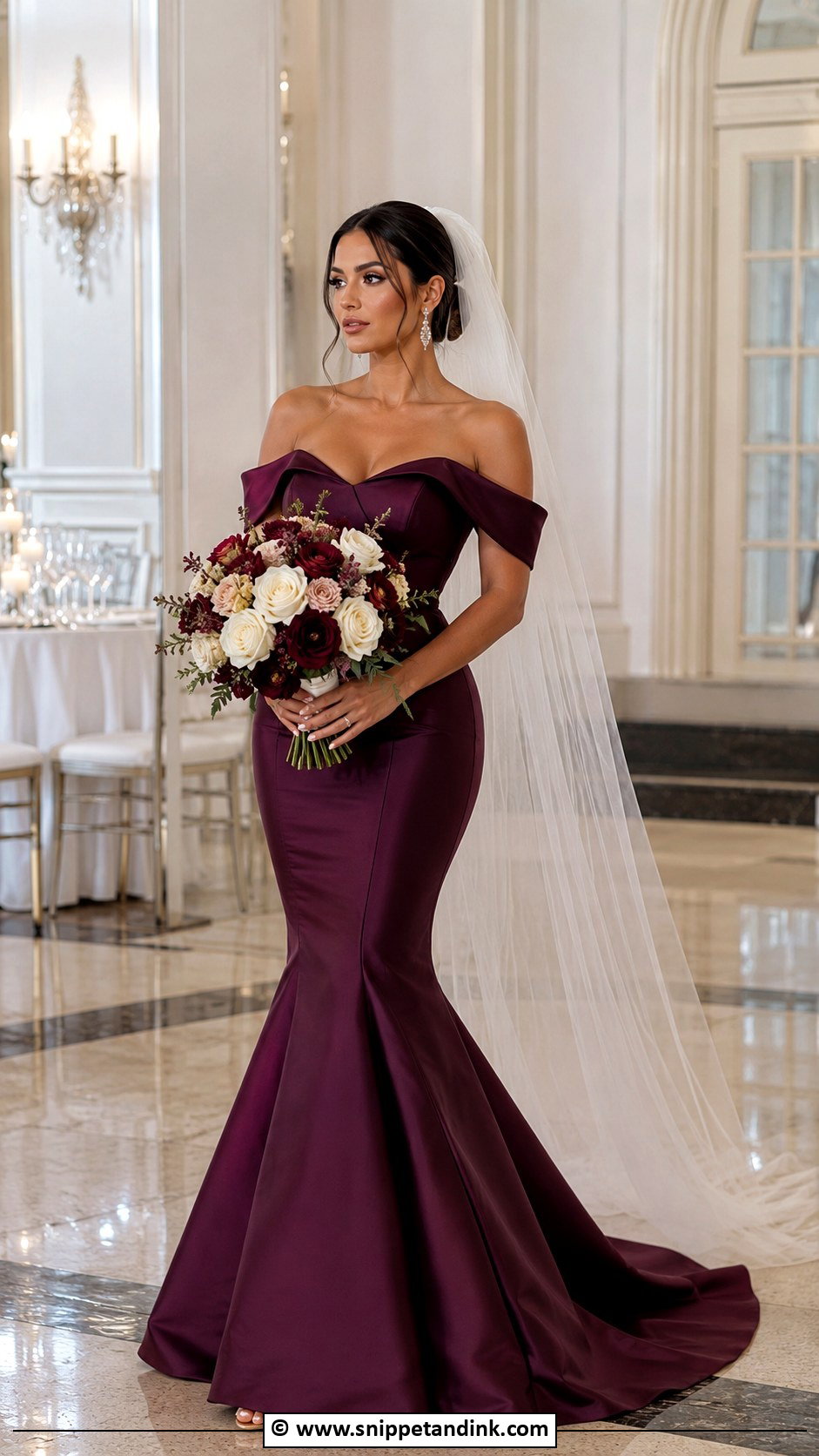
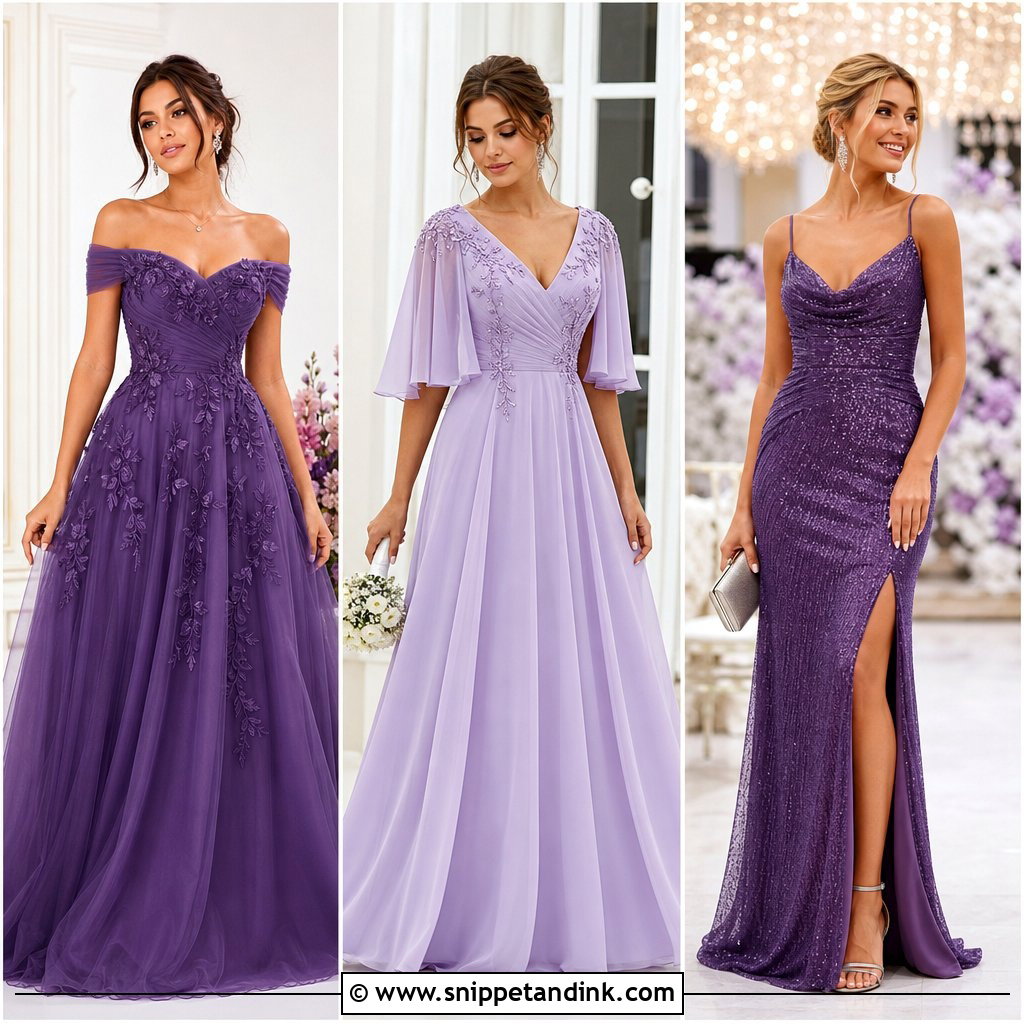
Plum in a mermaid cut is evening dressing, full stop. The off-shoulder neckline frames the collarbone, and the fitted shape builds a strong silhouette, but only if the fabric can hold it. I’d choose structured satin, crepe or mikado over anything soft, because a limp plum mermaid wrinkles at the knee where it flares. The off-shoulder band also needs to be fitted snugly enough that you can lift your arms without it riding up. Crystal earrings, metallic heels, a sleek veil set low at the back, and ivory, burgundy and deep purple flowers suit ballrooms, galleries and black-tie halls.
5. Lavender Floral Embroidered Wedding Dress
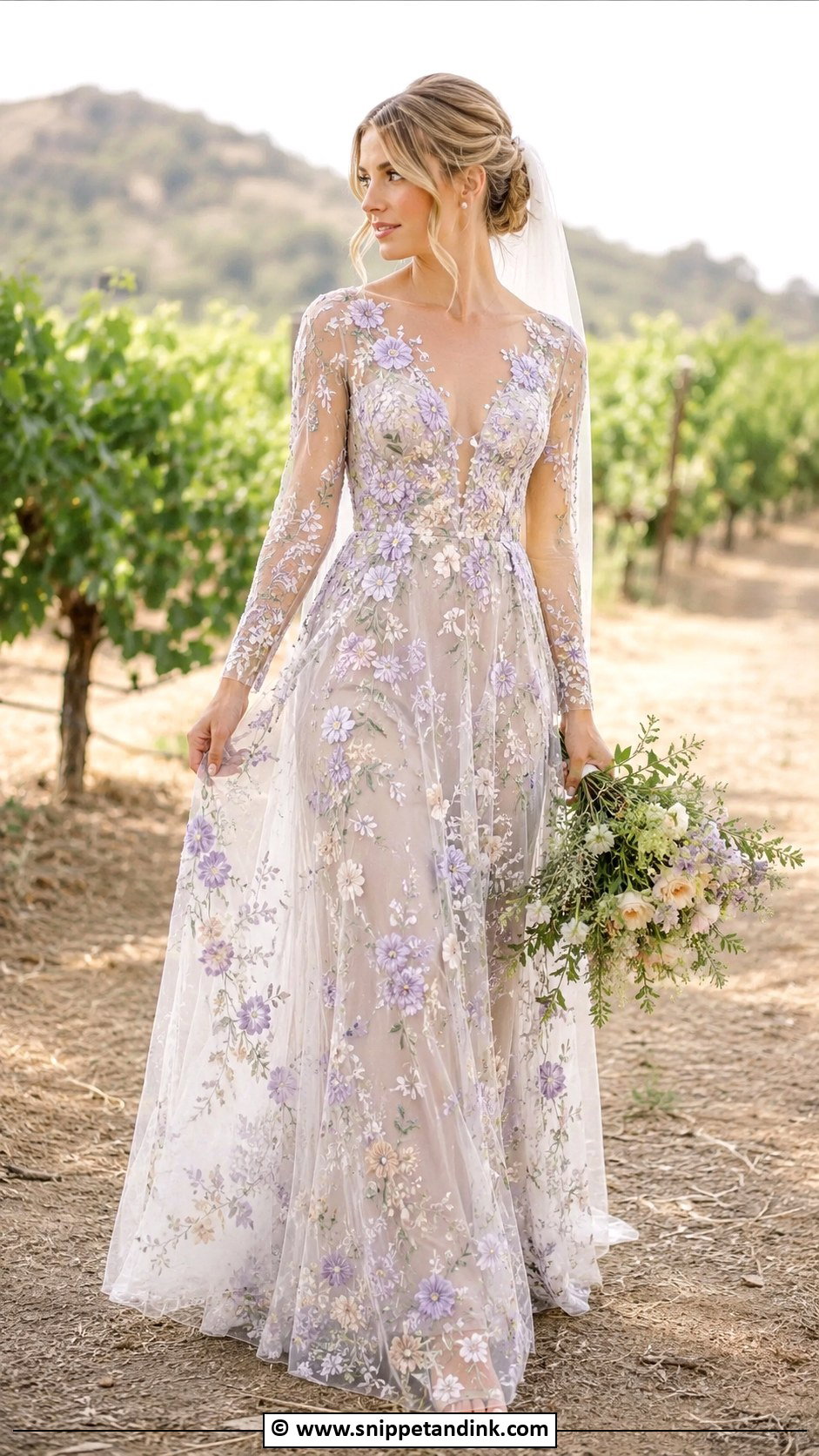
Embroidery gives colour a texture you can see from across a room, which is why a lavender floral embroidered wedding dress feels soft without looking plain. The thread can be lilac, ivory, blush or silver for a layered botanical effect, and a sheer embroidered overlay on a pale purple lining is my favourite version. Keep the jewellery to pearl studs and a fine bracelet so the stitching stays the focus. A fitted bodice with a flowing skirt and a loose seasonal bouquet suit vineyards and outdoor summer ceremonies; ask whether the embroidery is machine or hand finished, because hand work takes longer to alter.
6. Purple Ombre Wedding Dress
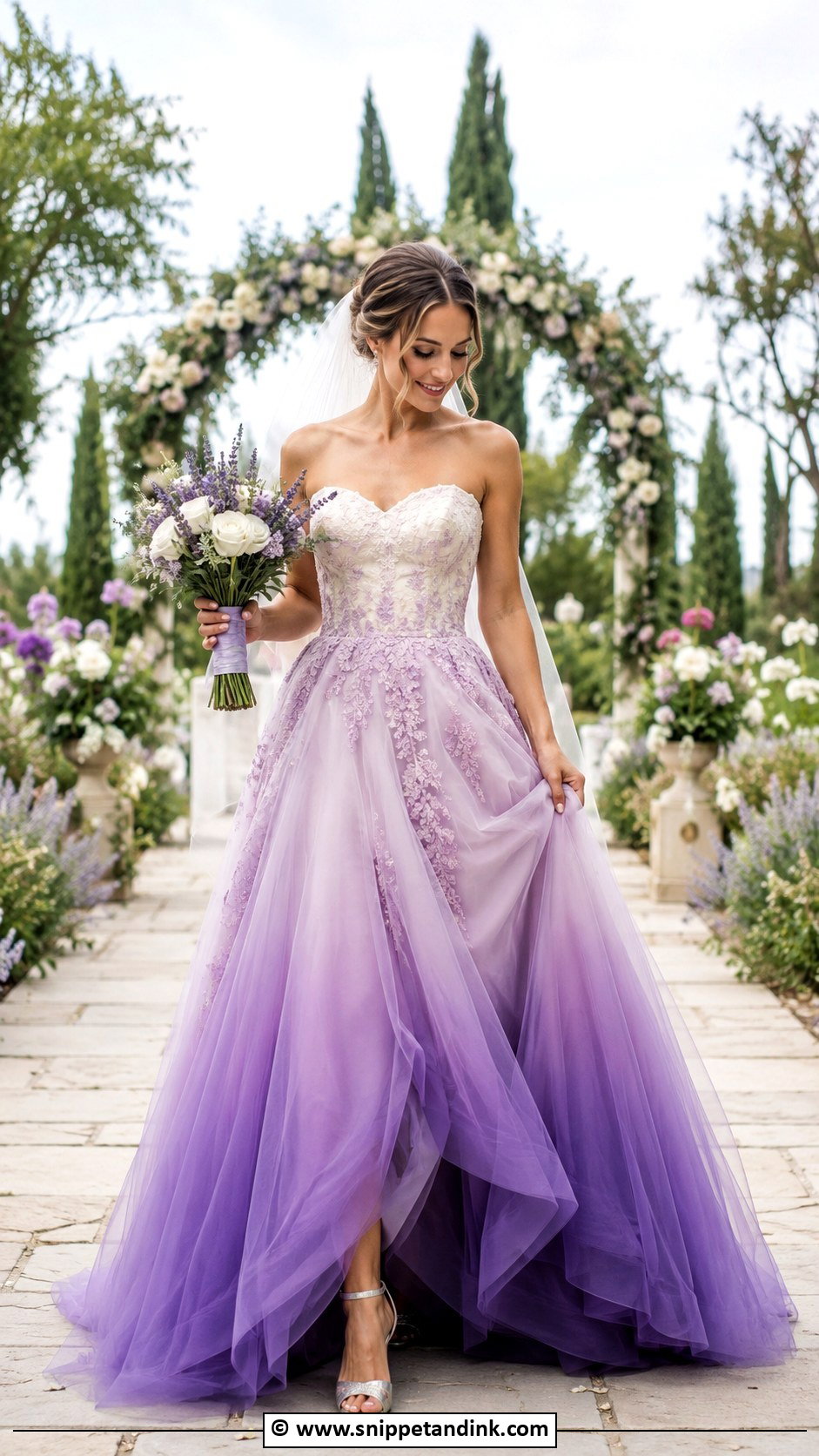
An ombre gown starts at ivory or pale lavender through the bodice and deepens toward violet or plum at the hem. Tulle, organza and chiffon handle that gradient best, since the dye blends softly through sheer layers. Because the colour change is the whole point, I keep the shape simple: strapless A-line or a soft ball gown. Hemming is the risk. Take up the skirt by more than an inch or two and you cut off the darkest band, so get the length right with your shoes on before any alteration starts. Silver heels, small earrings, a plain sheer veil and white and lavender flowers leave the gradient alone.
7. Wisteria Chiffon Wedding Dress
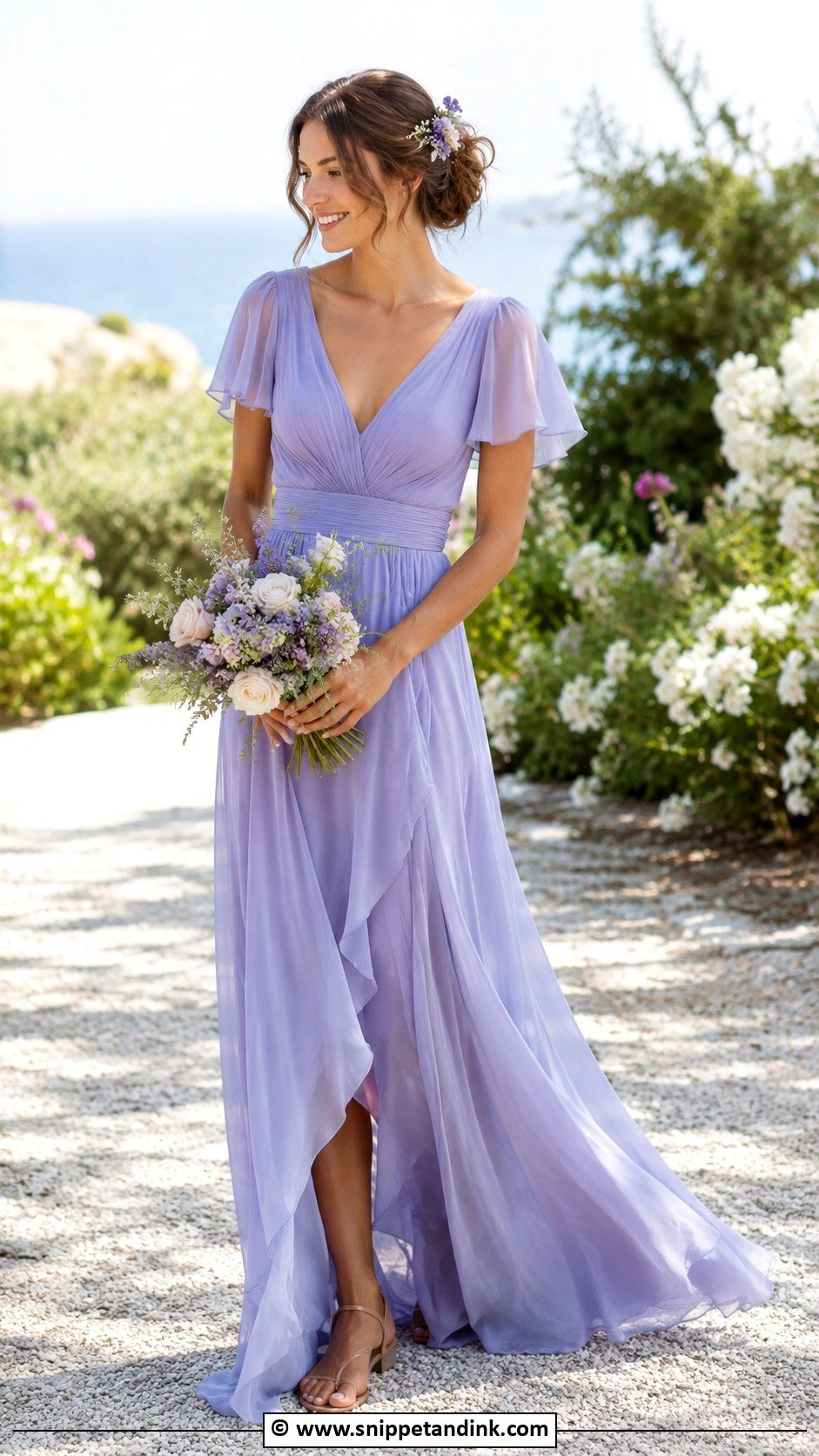
Wisteria sits between blue and purple, and in natural light chiffon makes it look almost weightless. A gathered bodice, flutter sleeves or a wrap waist keep it relaxed but finished. Chiffon is light enough for heat, which is why I steer beach and destination brides toward it, though it frays easily, so check the hem has been rolled properly. Barely-there sandals, a floral comb and a lightweight veil go with it, and a bouquet of cream flowers, pale lavender and soft greenery stays in the same airy register for gardens and relaxed outdoor receptions.
8. Deep Violet Long Sleeve Wedding Dress
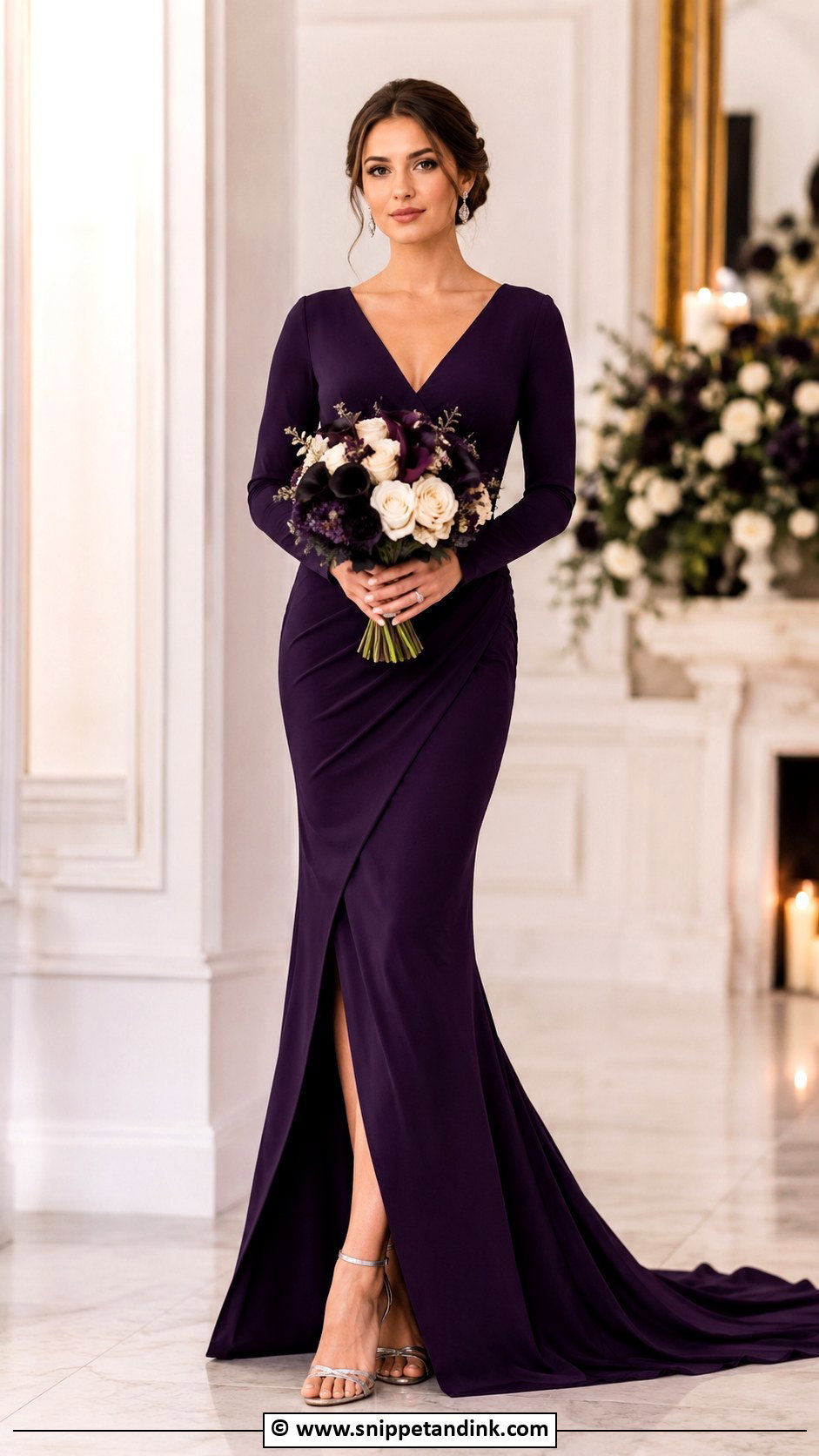
Deep violet needs a fabric with some weight to look rich instead of flat, so velvet, satin or heavy crepe are the ones I’d shortlist. Long sleeves add coverage and warmth for autumn and winter, and a fitted waist keeps the shape defined. A high neckline is the dramatic choice; a V-neck softens it. Check the sleeve fit with your arms raised, because a fitted sleeve in heavy fabric can stop you hugging anyone. Silver or white gold, closed-toe heels, a clean updo and ivory roses with dark purple accents make the colour look deliberate.
9. Lavender Corset Wedding Dress
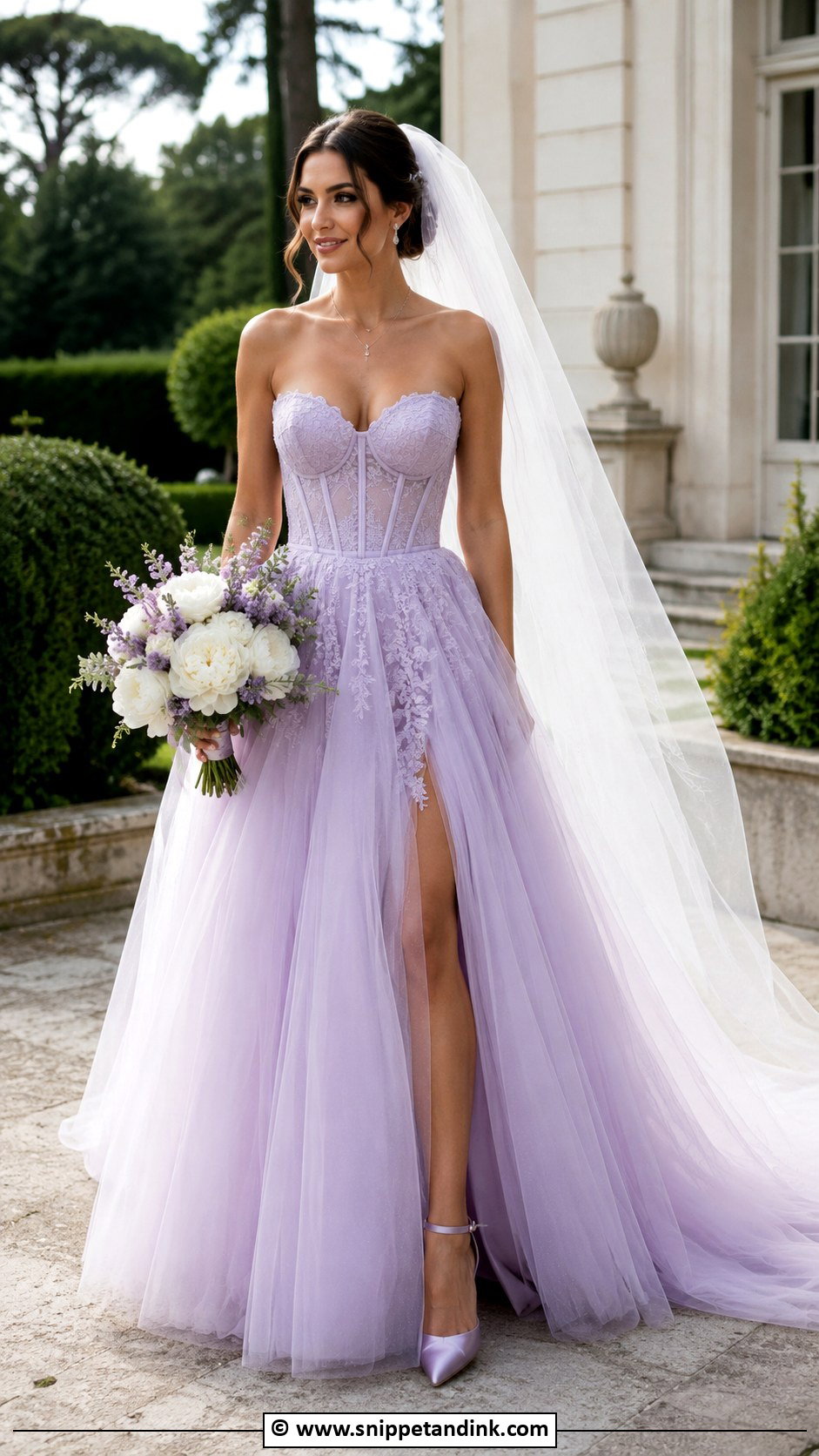
A lavender corset wedding dress is about structure first and colour second. The boned bodice defines the waist and gives real support, so pair it with a full tulle skirt, a soft A-line or flowing organza. Exposed boning reads modern; lace-covered boning is the traditional version. The fitting matters more than the style here. A corset that is laced too tight at the first fitting will feel very different after a long dinner, so I always fit with a little room and a modesty panel. A sheer veil, a fine necklace, satin heels and white peonies with lavender stems soften all that structure.
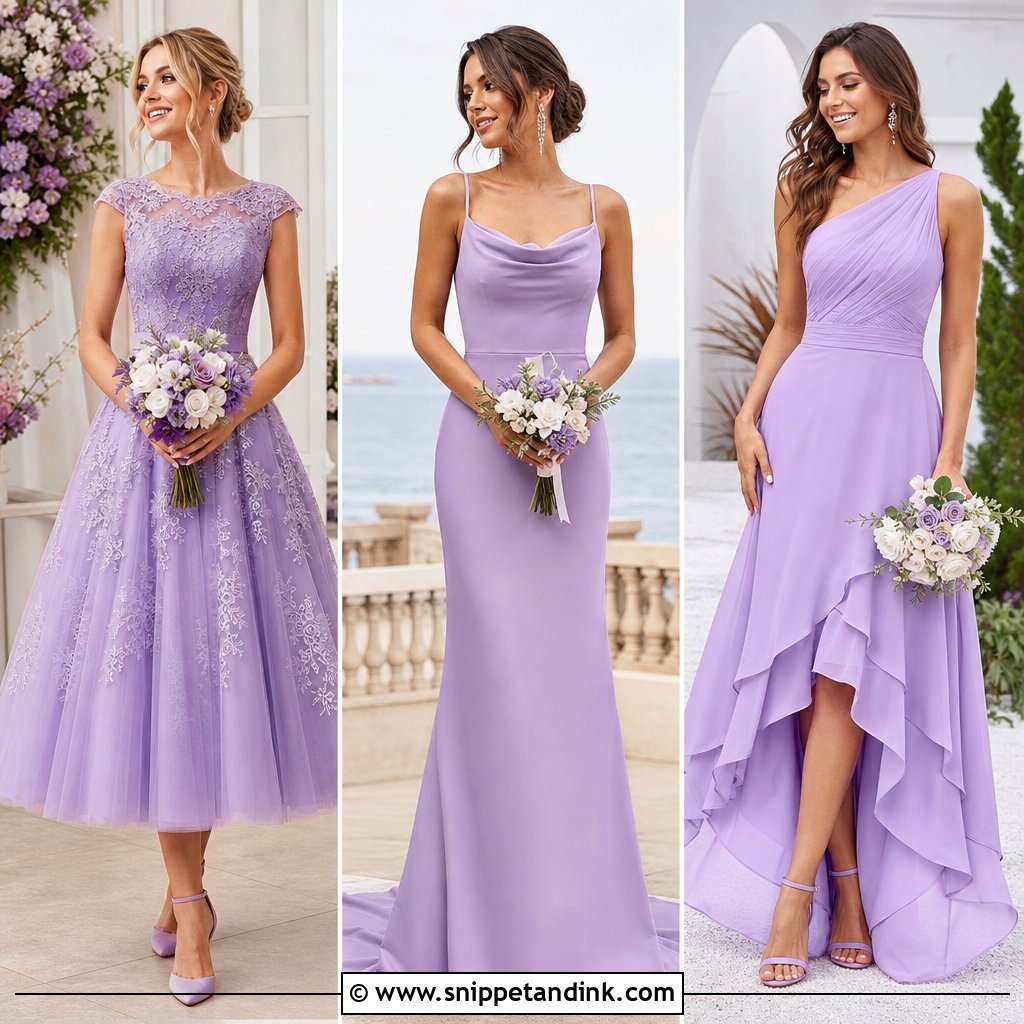
10. Lilac Tea Length Wedding Dress
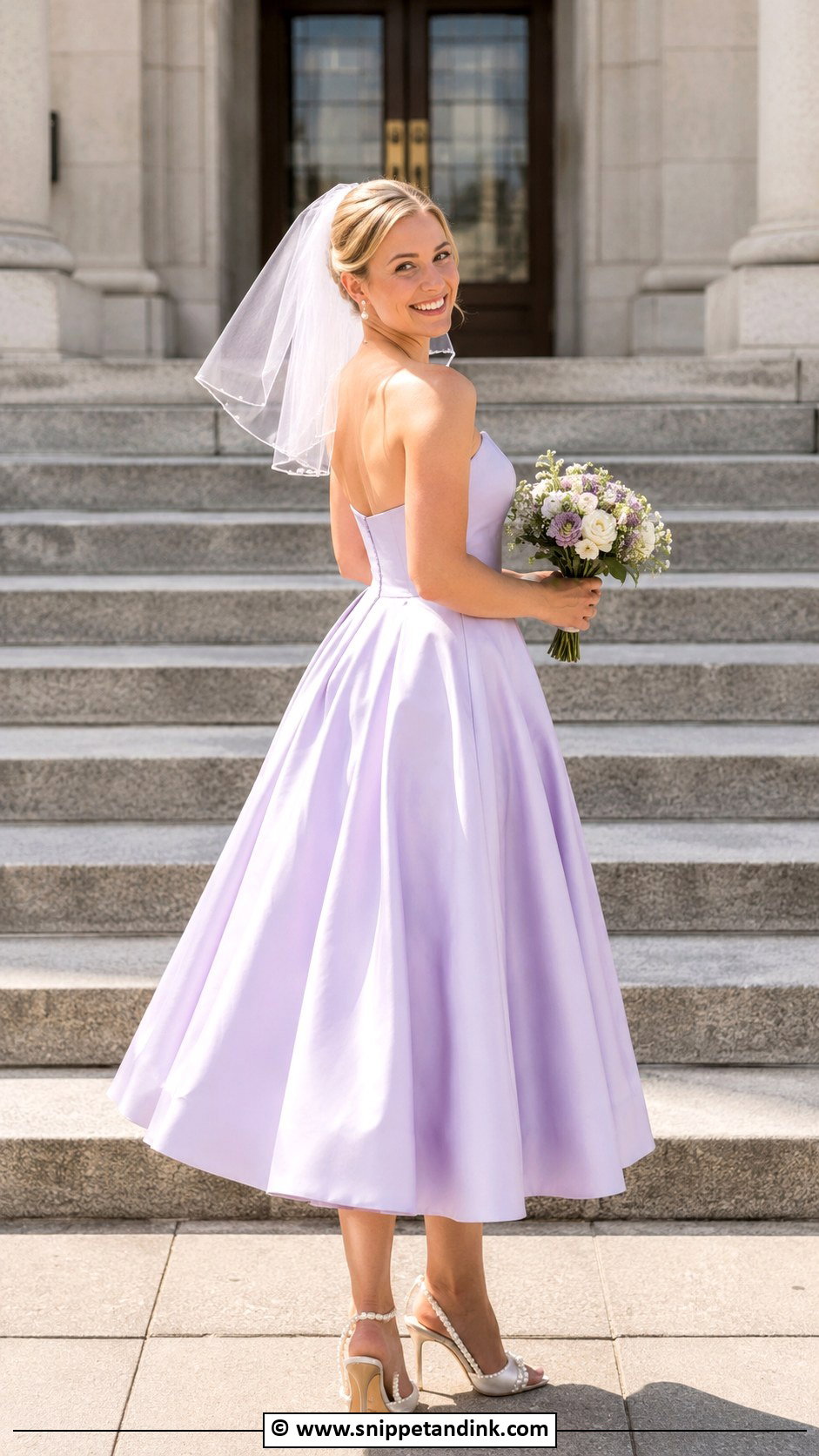
Tea length puts your shoes on show, so they have to earn it: pearl heels, silver pumps or lavender ankle straps. A fitted bodice and full skirt gives the 1950s shape, while a plain satin tea dress looks more current. The proportion I watch most is the hem in relation to your calf. Mid-calf can cut the leg at its widest point, so I pin the hem a little higher or lower until it flatters. Add a short veil, pearl earrings and a small structured bouquet. It suits courthouse weddings, garden parties and brunch receptions.
11. Mauve Wedding Dress With Cape Veil
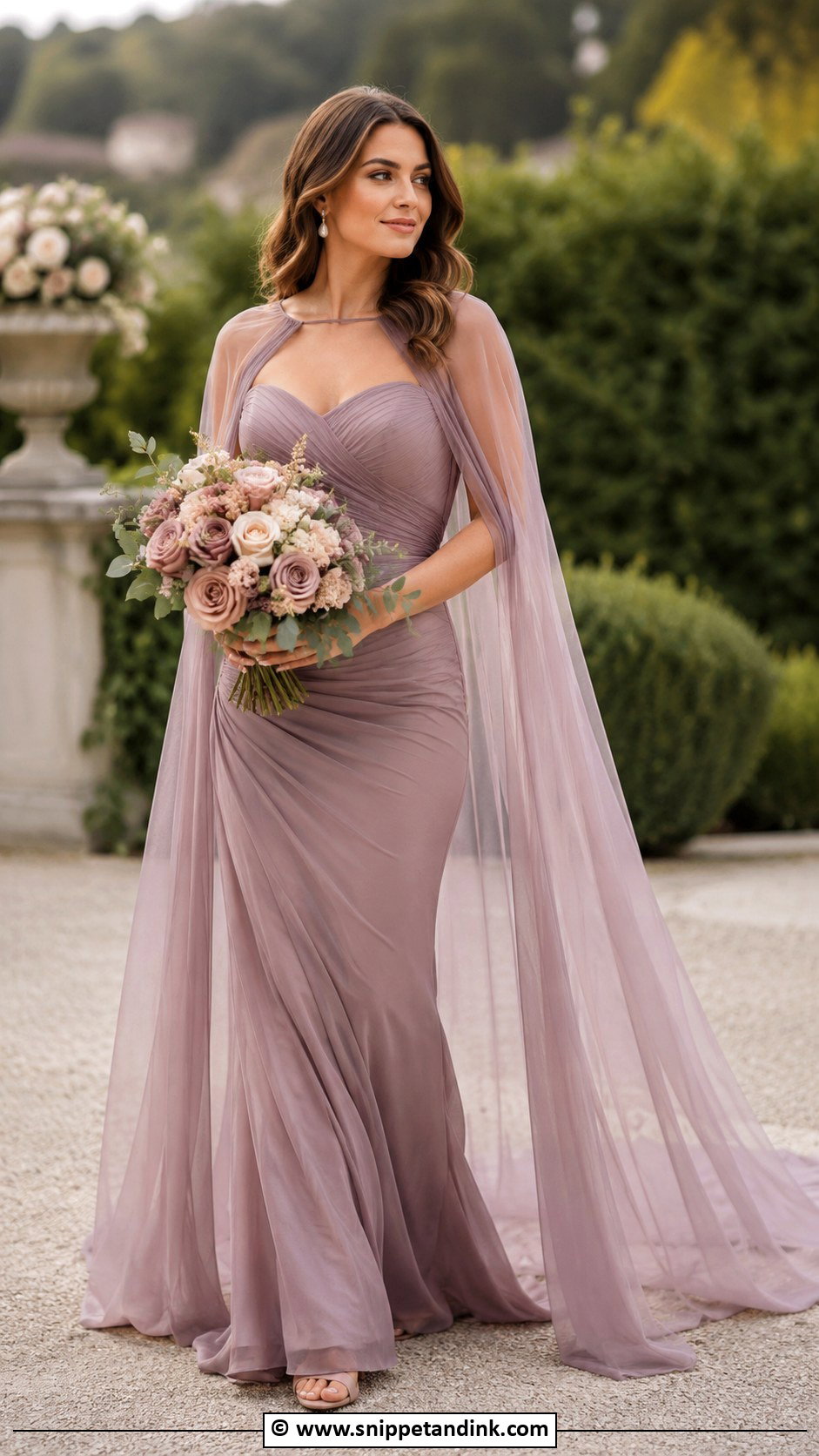
Mauve is a muted purple, which makes it the shade I suggest first to brides who want colour but worry about it being bright. A simple fitted gown or A-line becomes something more once a sheer cape veil is attached at the shoulders, and the cape moves as you walk. The practical point is the attachment: cape veils need secure snaps or loops sewn into the shoulder seams, otherwise they slide every time you hug someone. Soft waves, pearl earrings, neutral heels and dusty rose, cream and lavender flowers keep the muted palette intact indoors or outside.
12. Purple Floral Print Wedding Dress
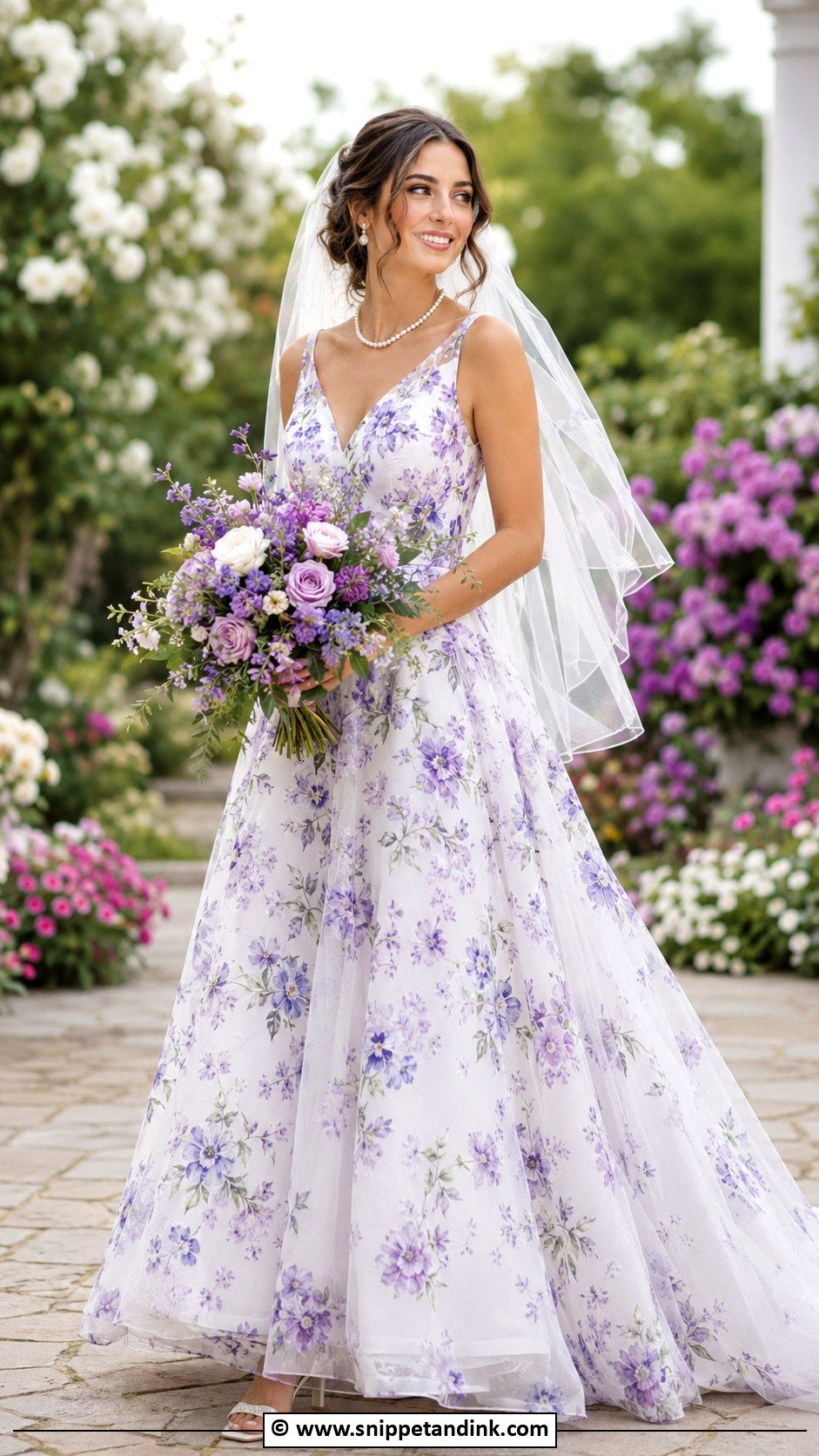
A printed gown is the gentlest way to carry purple, since lavender, lilac or violet flowers on an ivory ground still reads bridal at a distance. Wrap, A-line and corset bodices suit prints well. Scale is the thing I check: very large florals can swamp a petite frame, while tiny ones blur into a vague tint in photos from the back of the room. Simple heels, pearls and an untrimmed sheer veil let the print lead, and a bouquet in the same flower tones ties everything together for spring garden celebrations.
13. Amethyst Sequin Wedding Dress
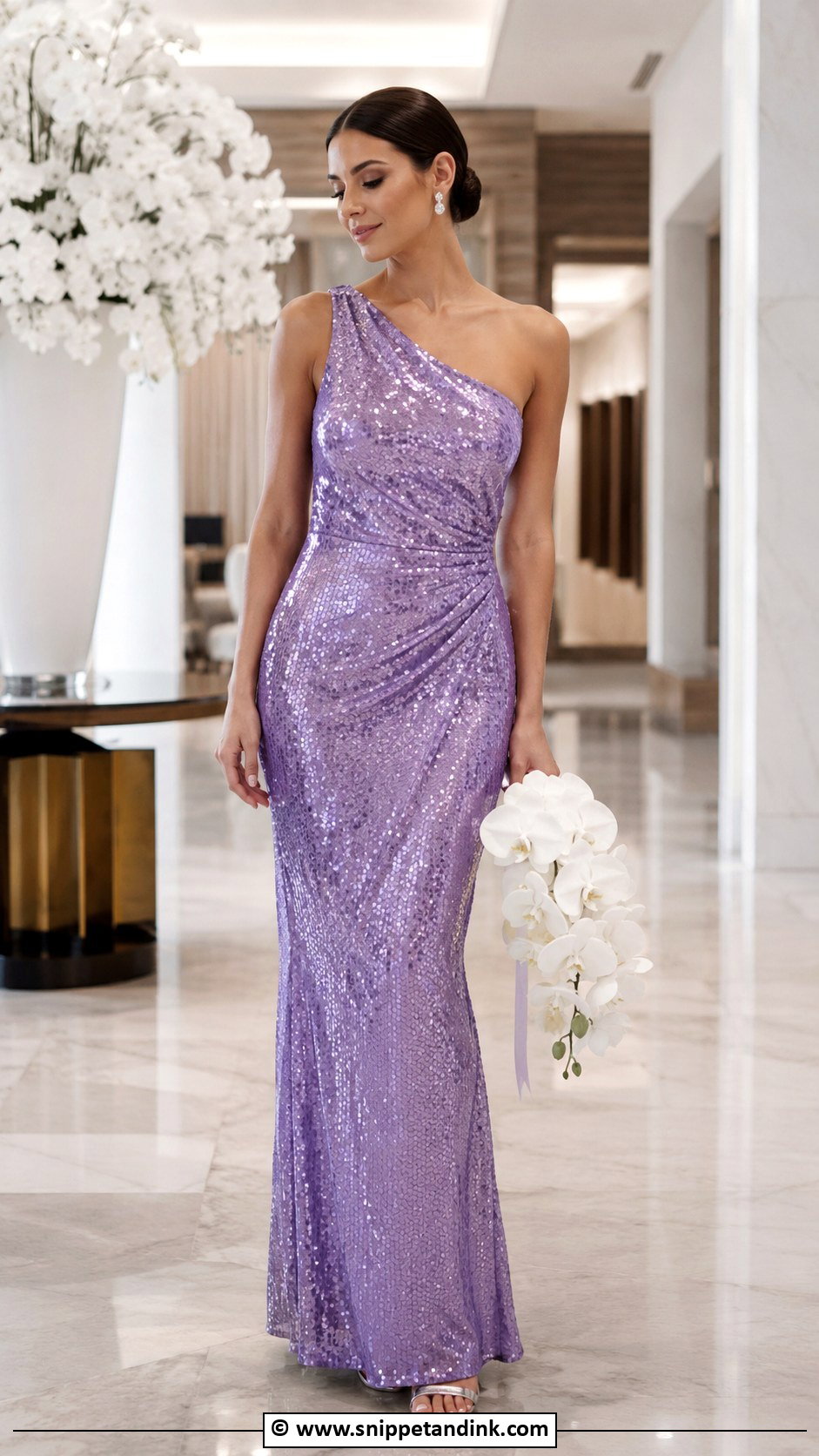
Sequins and volume rarely get along, so amethyst sequins look best in a column, sheath or soft mermaid where the shine stays sleek. The jewel tone catches every light change from ceremony to reception. Two warnings from fittings: sequins scratch the inside of your arms over a long night, so look for a lined bodice, and they can’t be pressed, so hang the gown well before the day. Simple metallic heels, small crystal earrings, a smooth hairstyle and white orchids or roses balance the shine at evening, hotel and rooftop weddings.
14. Lavender Organza Wedding Dress
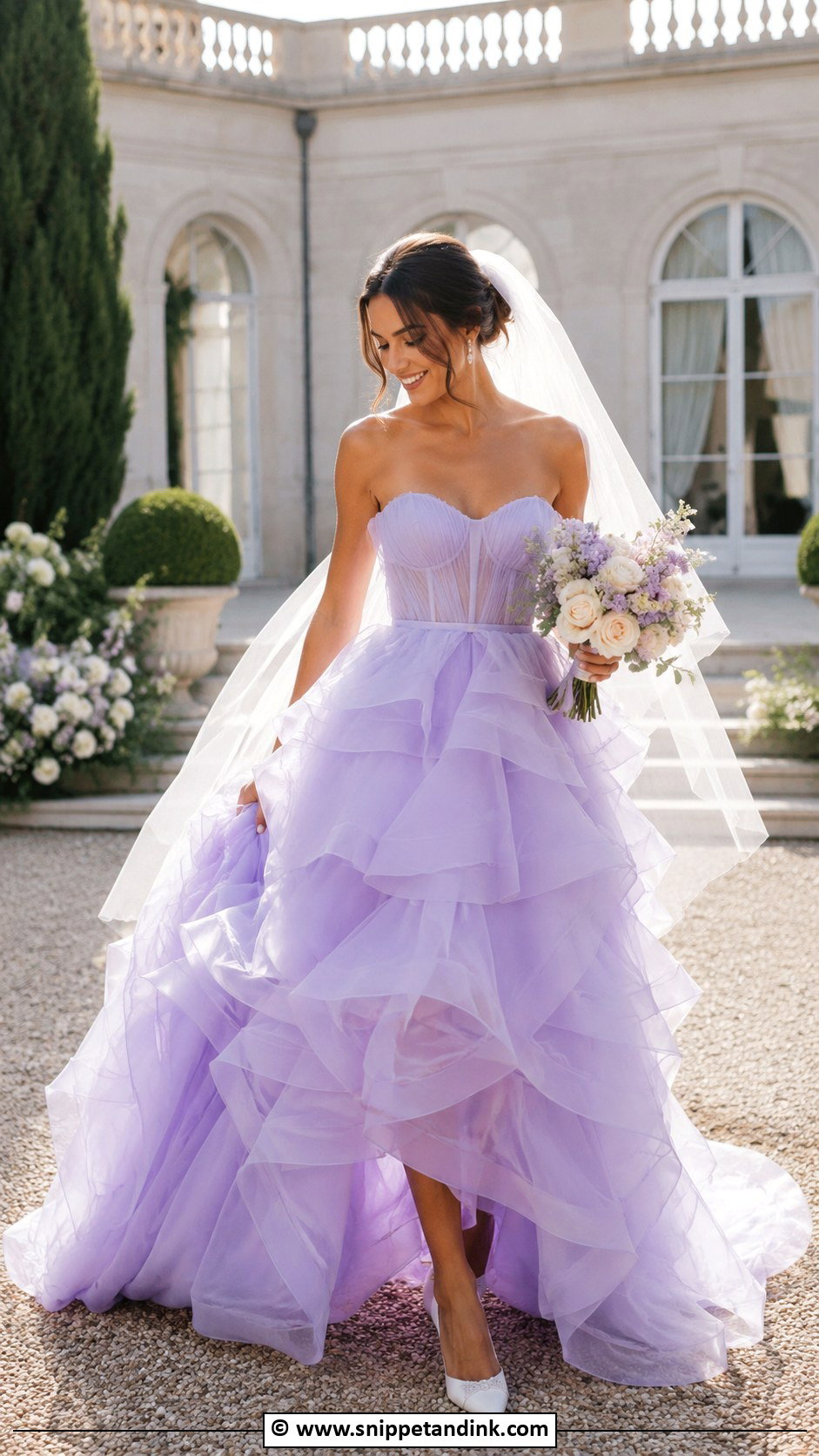
Organza sits between chiffon and taffeta: it has enough body to hold volume but still looks soft, and in pale purple the layers almost glow. A layered skirt with a strapless, square or off-shoulder bodice gives a modern shape without the weight of a full satin ball gown. Organza does crush, so I always ask brides how they’ll travel to the venue and plan for a steamer on site. White or silver heels, a sheer veil, small earrings and cream roses with lavender complete it for estates and outdoor venues.
15. Eggplant Velvet Wedding Dress
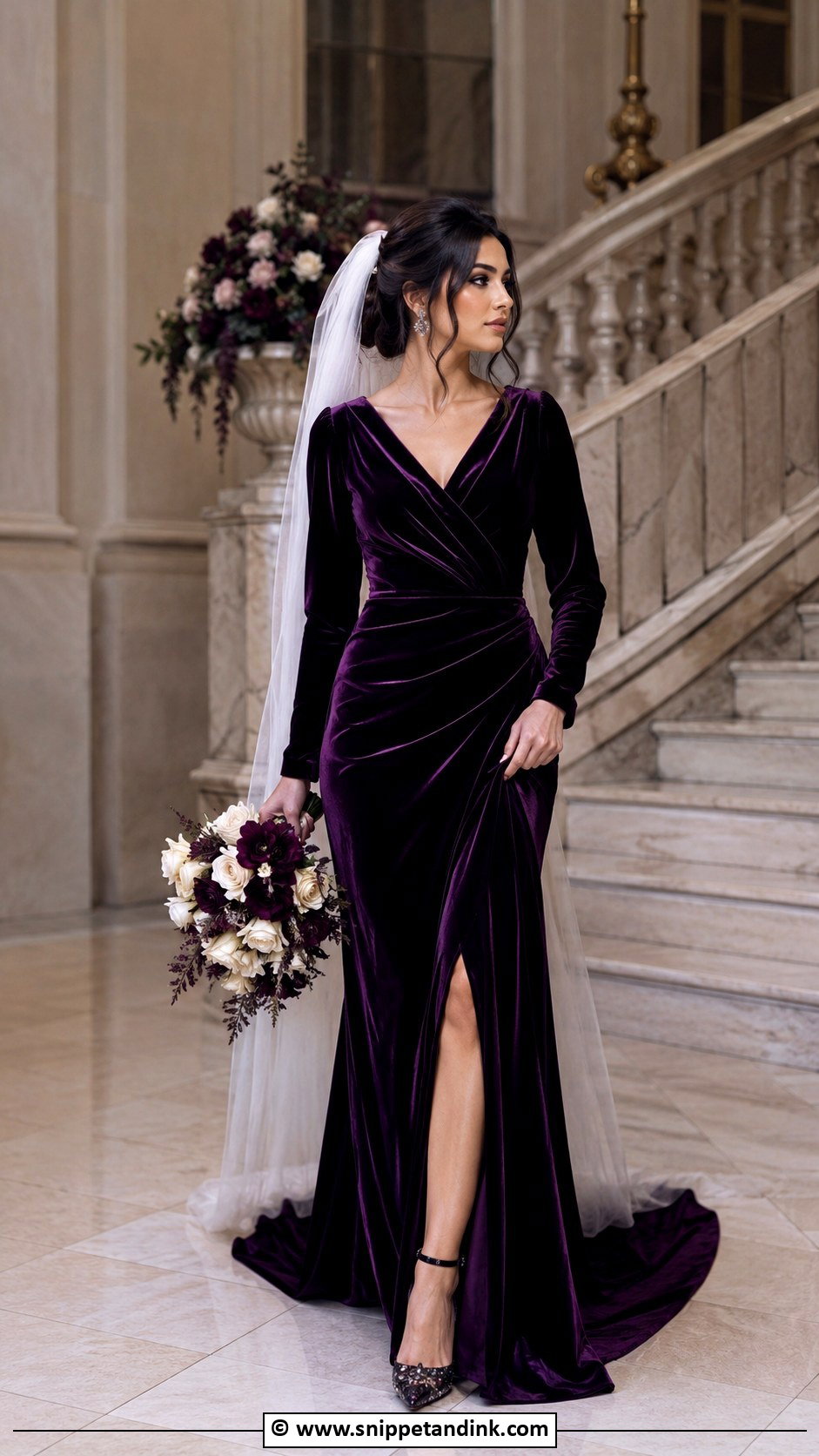
Velvet does what no other fabric can for a deep purple: it absorbs light in the folds and catches it on the ridges, so an eggplant velvet wedding dress looks luxurious with almost no embellishment. A long-sleeve column, a wrap or a fitted A-line all suit it. Velvet is warm and heavy, so I’d only recommend it for cool-weather ceremonies, and it marks if it is crushed, so it needs to travel on a padded hanger. Crystal studs, a smooth veil, dark metallic heels and ivory flowers with deep greenery and plum suit autumn and winter evenings.
16. Lilac High Low Wedding Dress
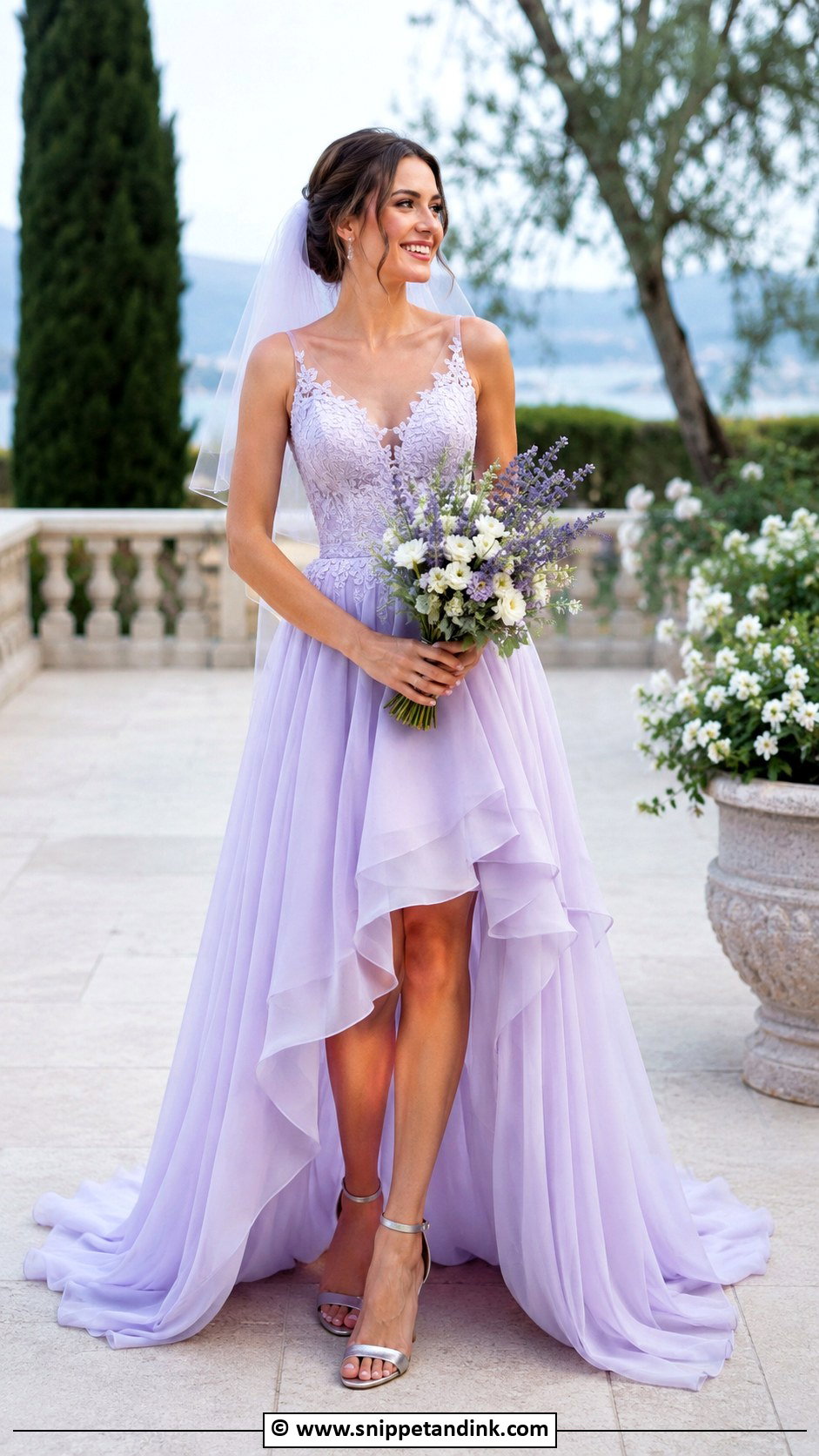
The high-low hem shows your shoes at the front while the longer back keeps a bridal line, and it is one of the easiest shapes to dance in. Tulle makes it playful; satin makes it polished. I’d check the front length while walking, not standing, because the hem rises more than you expect on each step. Silver sandals, a short veil, delicate earrings and white and lavender flowers keep it light for destination weddings, garden parties and courthouse ceremonies.
17. Purple Ruffle Wedding Dress
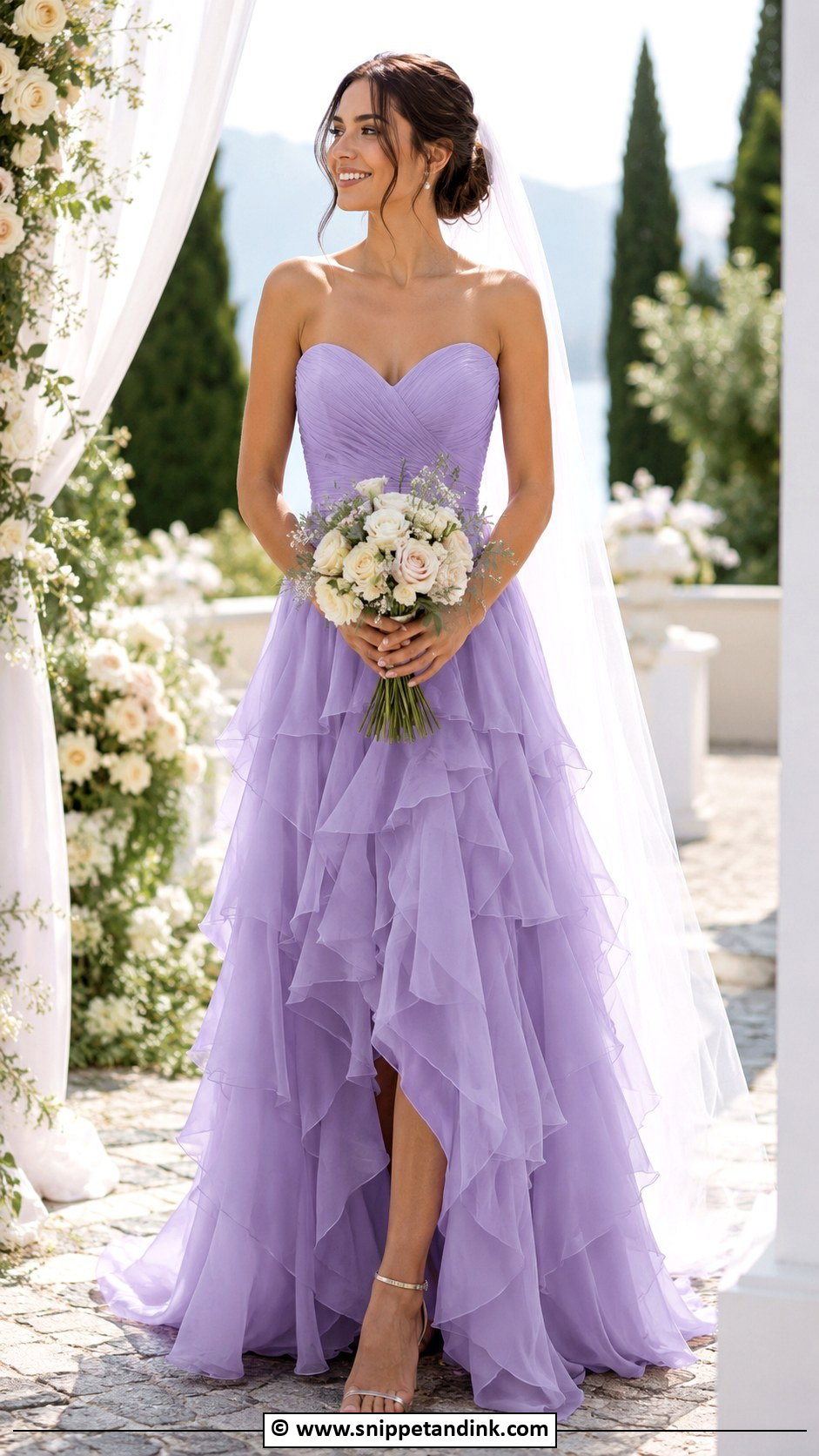
Ruffles need a plan or they take over. A purple ruffle wedding dress in lavender chiffon feels soft; the same ruffles in deep violet organza get dramatic. Balance is the job: a fitted bodice above a tiered skirt gives shape, and a single ruffled shoulder adds interest without the whole gown moving at once. With that much going on, I keep accessories down to simple heels, small earrings, a clean veil and a neutral bouquet.
18. Lavender Beaded Wedding Dress
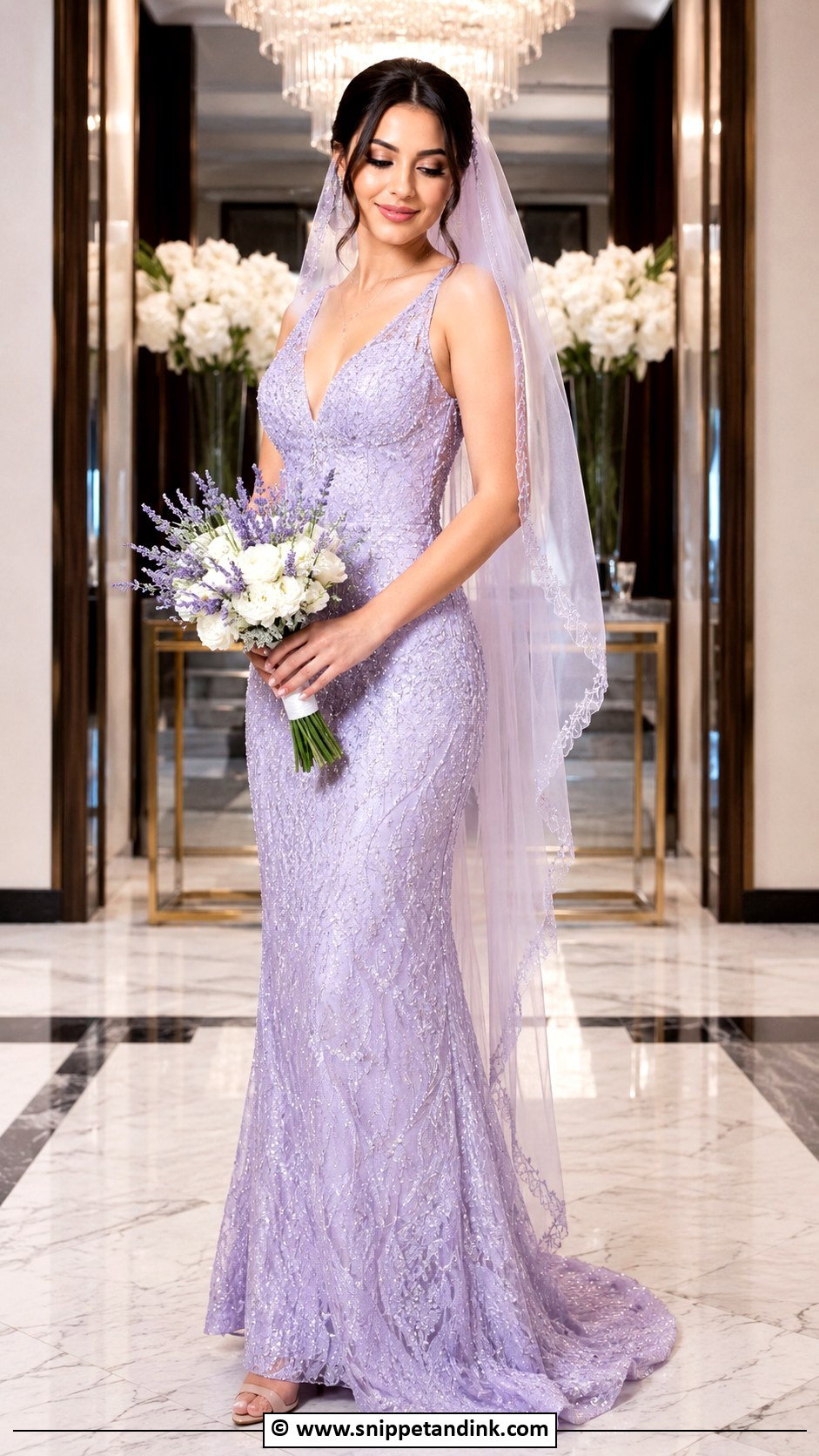
Beading on a pale purple base gives sparkle that stays gentle. Silver, pearl or clear beads keep it refined; coloured beads tend to fight the lavender. A fitted sheath, A-line or soft mermaid can all work depending on how much movement you want. Beaded gowns are heavy at the hem and slow to alter, so I’d allow extra weeks for any change to the length. Simple heels, a delicate veil, minimal jewellery and white flowers with small lavender accents suit evening ceremonies and hotel receptions.
19. Plum Satin Ball Gown Wedding Dress
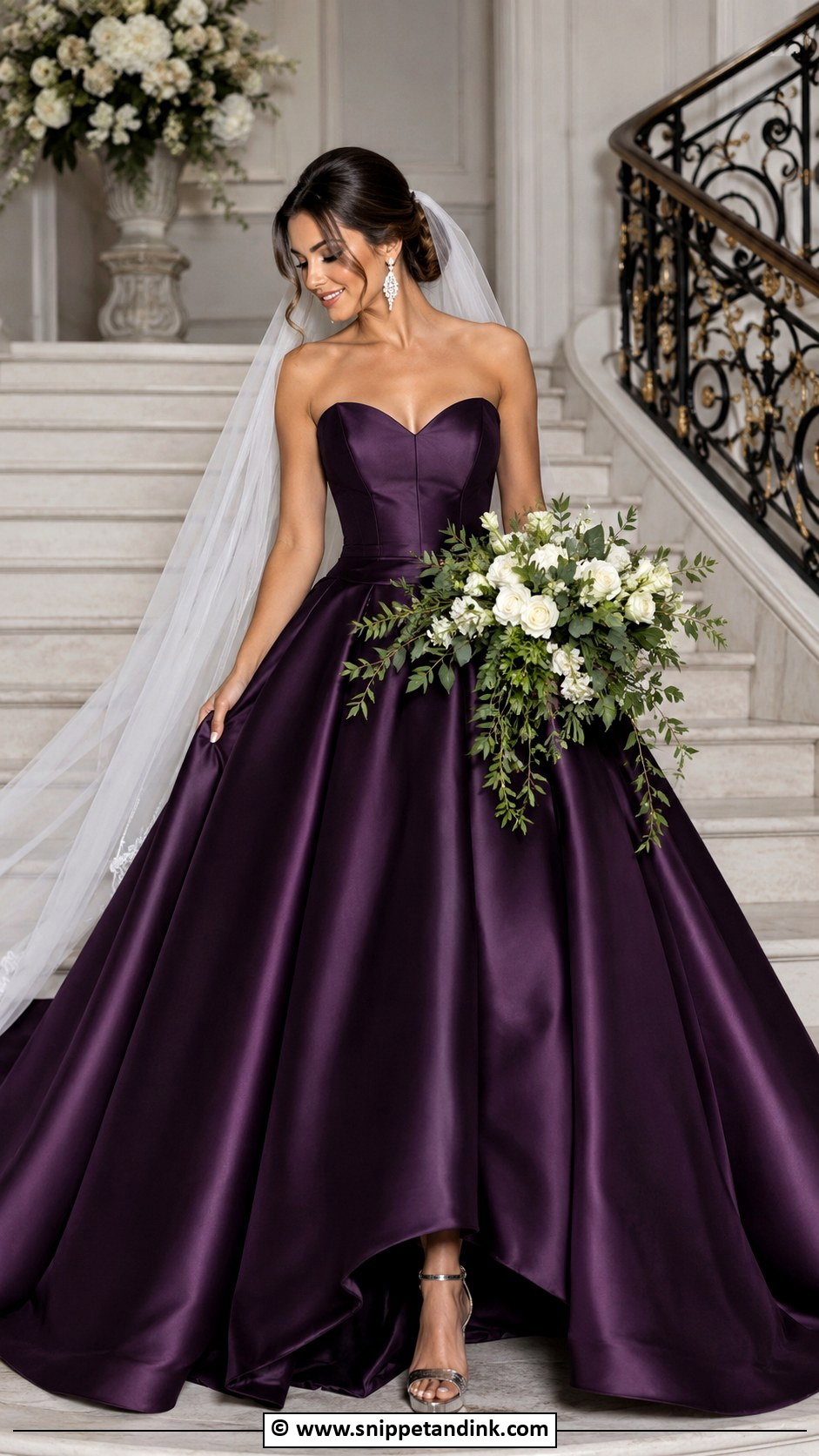
Plum satin in a full ball gown makes a strong entrance while staying classic in shape. The structured bodice and wide skirt are traditional; the colour is what changes the mood. Strapless, square or off-shoulder necklines all work, so let your shoulders decide. Satin this saturated shows water marks, so keep drinks and rain away from the skirt. Crystal earrings, metallic heels, a long veil and ivory flowers with deep greenery give contrast at grand, formal venues.
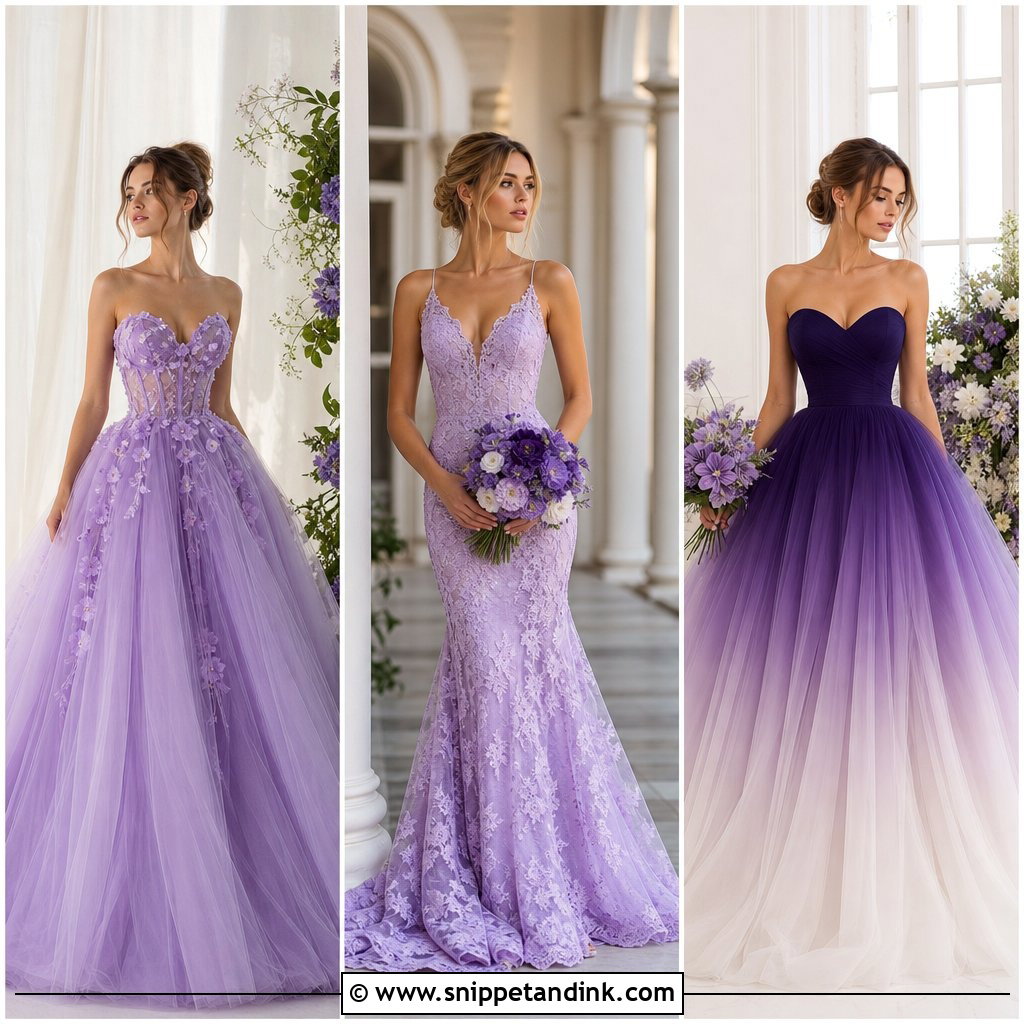
20. Lavender Wedding Dress With Detachable Skirt
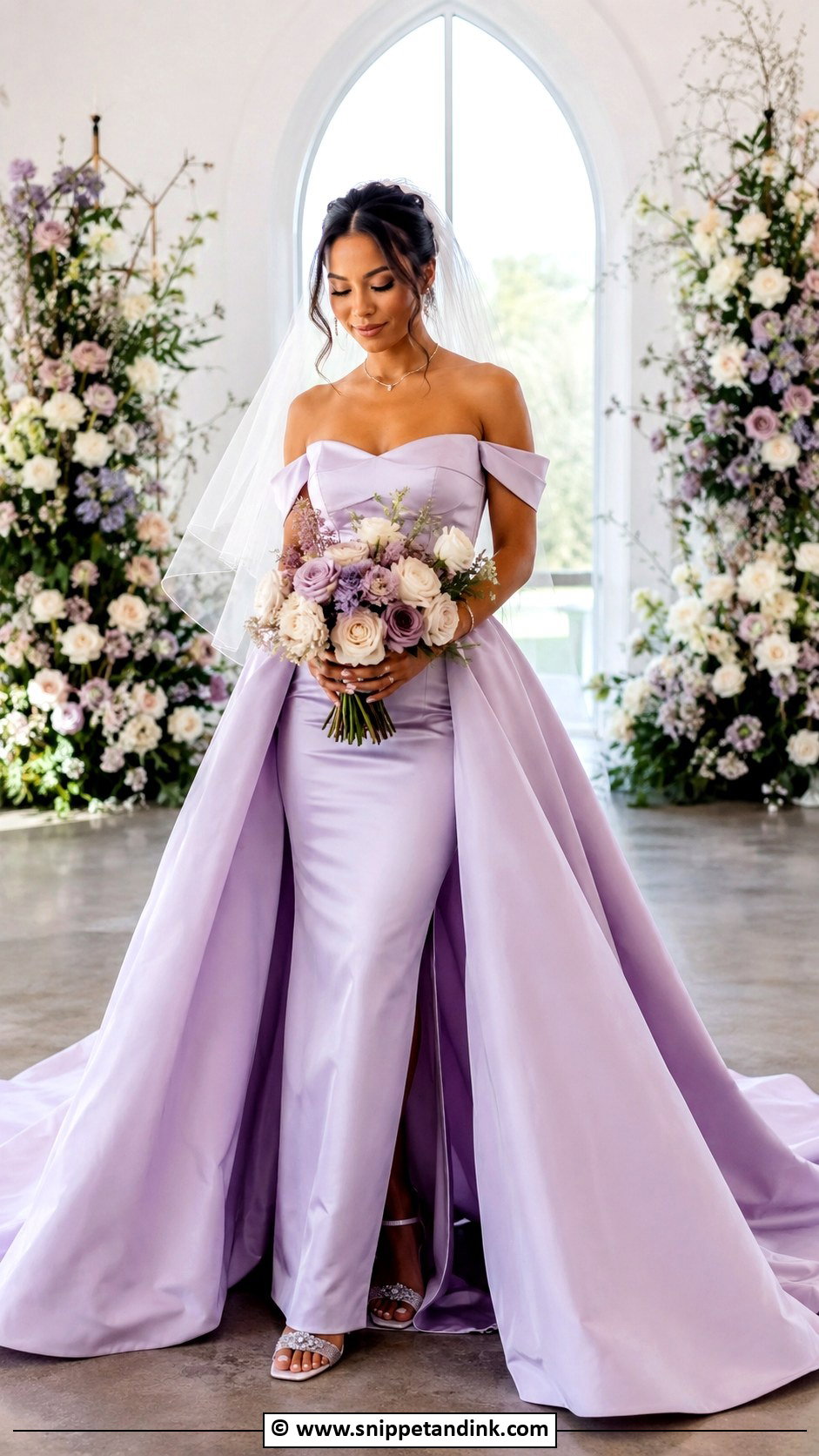
This is the two-outfit solution without two dresses. A lavender wedding dress with a detachable skirt gives volume for the ceremony, then comes off to leave a lighter fitted dress for the reception. A satin column, lace sheath or corset gown underneath all suit it. What I test at every fitting is the fastening: practise removing the overskirt yourself, because the reception changeover is usually rushed and someone else may not know the hooks. Elegant heels, a medium veil, soft jewellery and cream, blush and purple flowers finish it.
21. Lilac Boho Wedding Dress
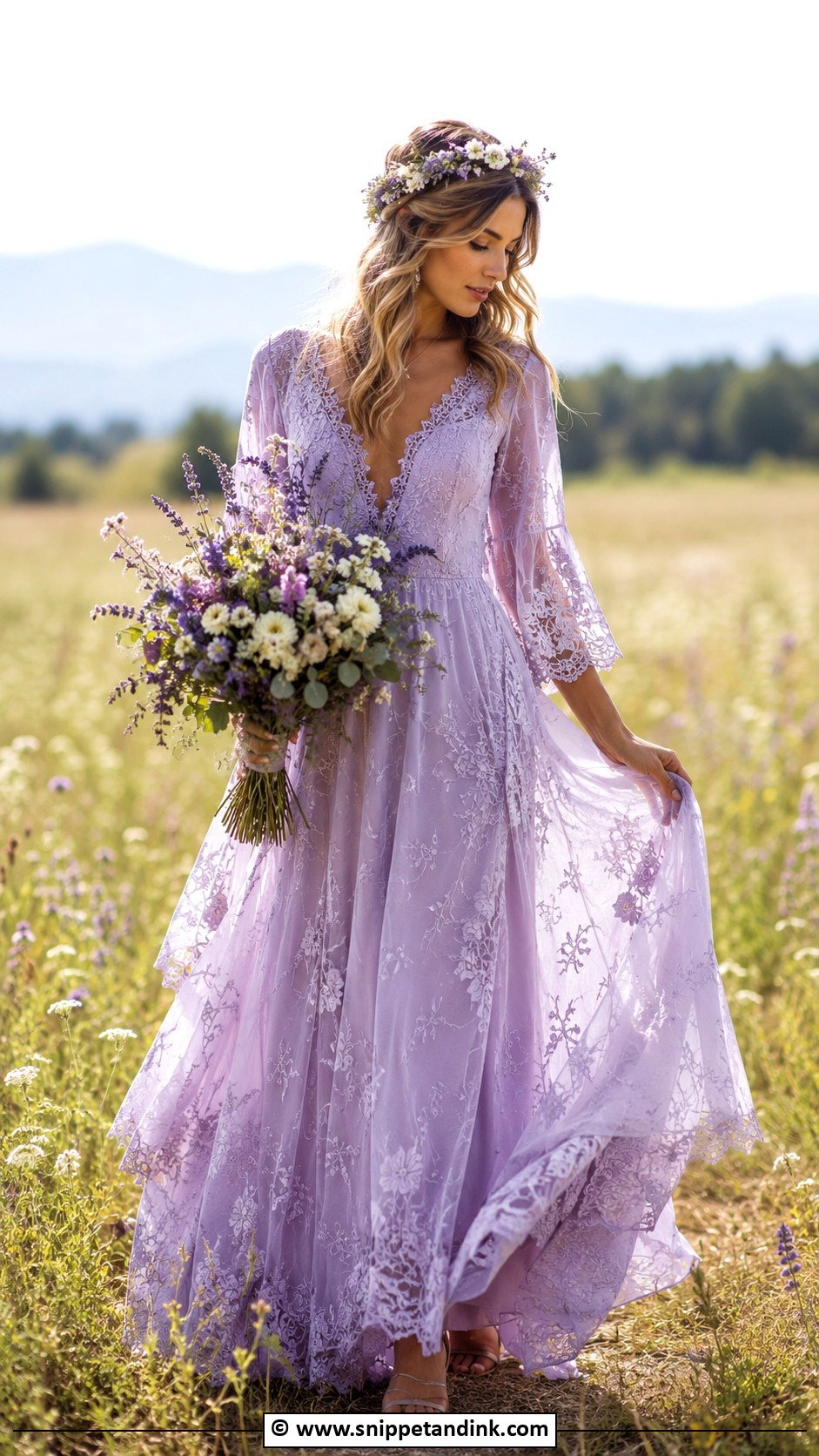
Boho lilac comes down to soft lace, flowing sleeves, an easy waist and a skirt that moves on its own. Loose waves, a floral hairpiece and sandals or low block heels keep it relaxed, and a bouquet of wildflowers, lavender, cream blooms and greenery fits meadow and desert settings. You can wear a sheer veil for the ceremony or skip it. Bell sleeves are the thing to test: they can drag through food at the reception, so I sometimes add a discreet hook at the wrist.
22. Purple Two Piece Wedding Dress
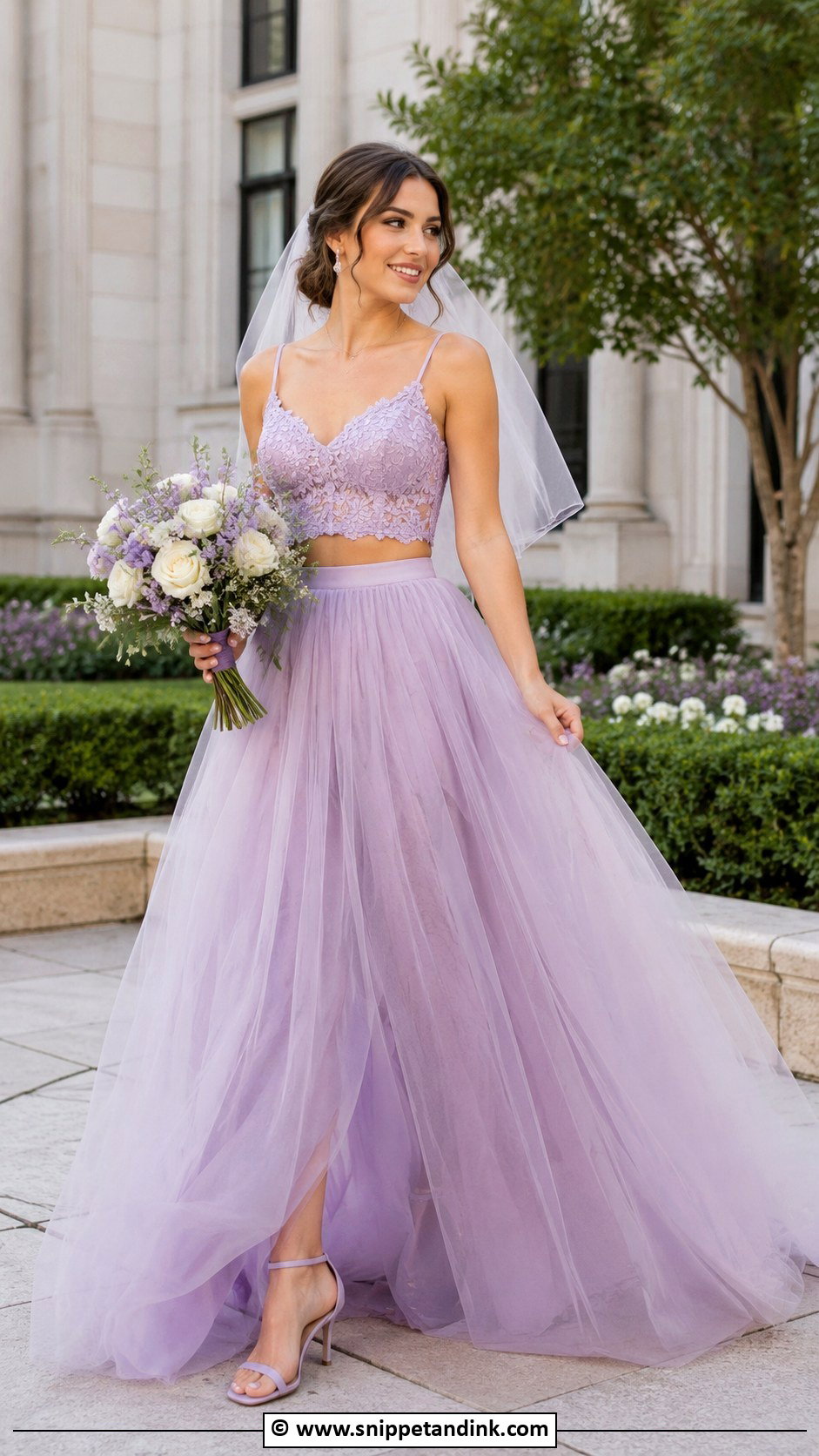
Two pieces let you mix textures you couldn’t put in one gown: a beaded bodice with a soft tulle skirt, a lace crop top with flowing lavender, or matching satin for a sleek set. I keep the skirt waistline high so the gap stays a slim line rather than a midriff. Make sure the top and skirt come from the same dye batch, because two purples a fraction apart look obvious side by side. Delicate heels, a short veil, simple jewellery and ivory and lavender flowers suit elopements and courthouse weddings.
23. Lavender Square Neck Wedding Dress
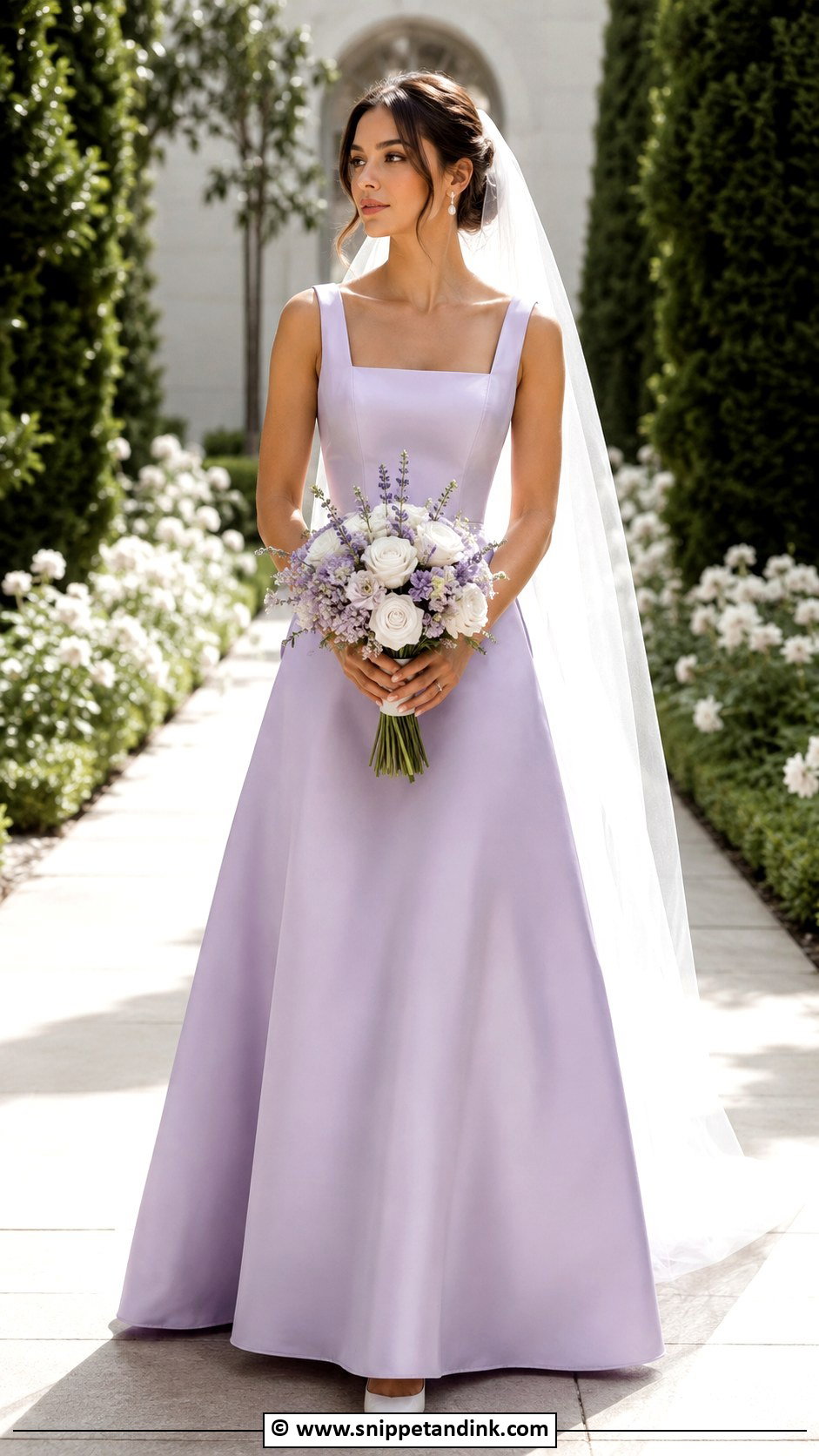
The square neckline frames shoulders and collarbone cleanly, and it holds its shape in satin, crepe, lace or tulle. A fitted bodice into an A-line skirt is the balanced version; a slim column is the minimal one. Square necks need precise fitting at the corners, because if the neckline gapes even slightly, it shows in every photo taken from above. Pearl earrings, a smooth veil, pointed heels and white roses with lavender stems keep the purple soft and deliberate.
24. Violet Halter Wedding Dress
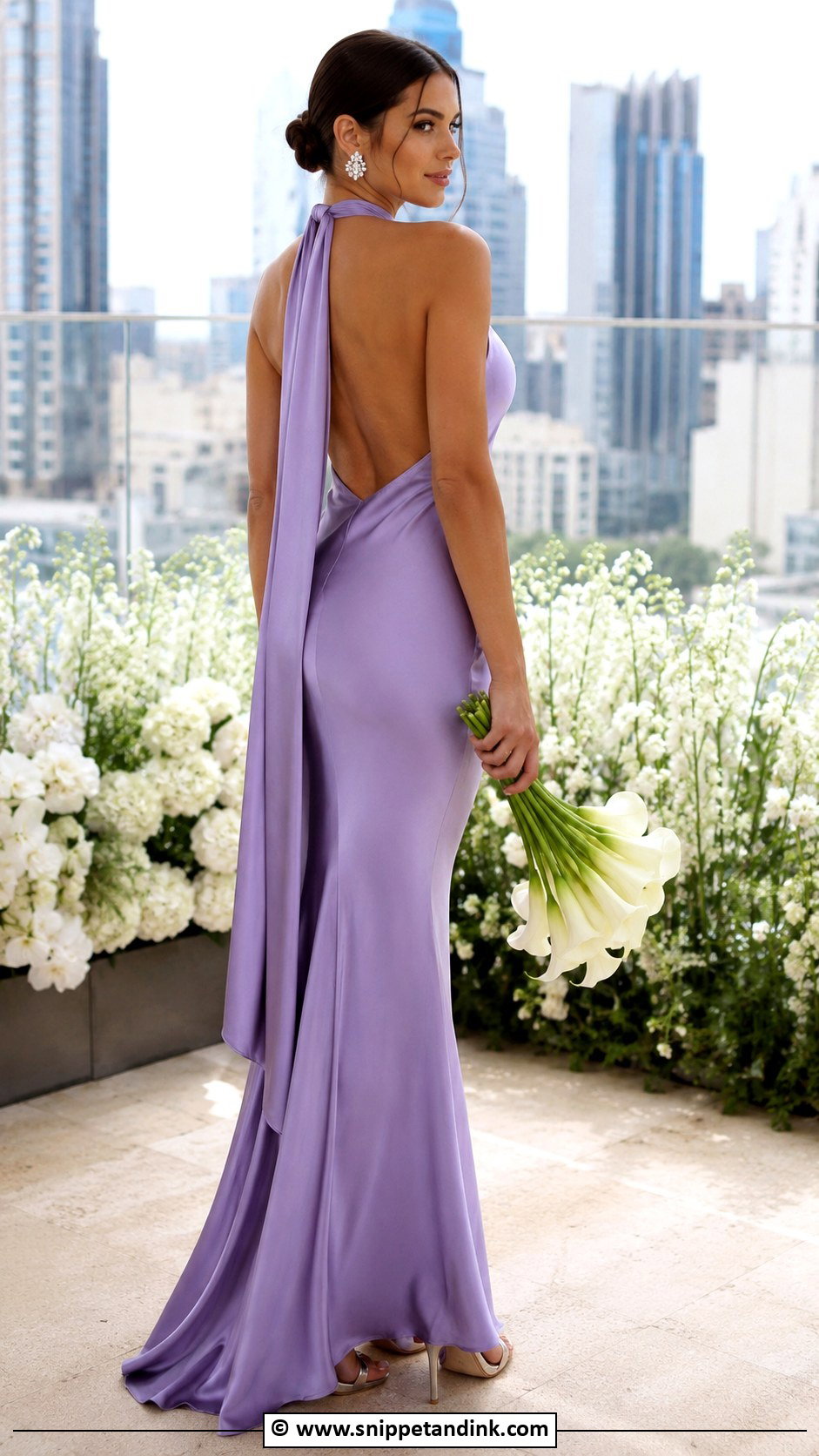
Halter necks draw the eye up to the shoulders and pair naturally with an open back. In rich violet the gown needs no decoration, so choose satin, crepe or a stretch fabric that keeps a smooth line. The strap carries weight at the back of your neck, so I always ask brides with neck or shoulder tension to wear the halter for an hour at a fitting before deciding. A low bun, statement earrings, metallic heels and slim white callas or orchids suit rooftop and modern city venues.


25. Mauve Tulle Wedding Dress
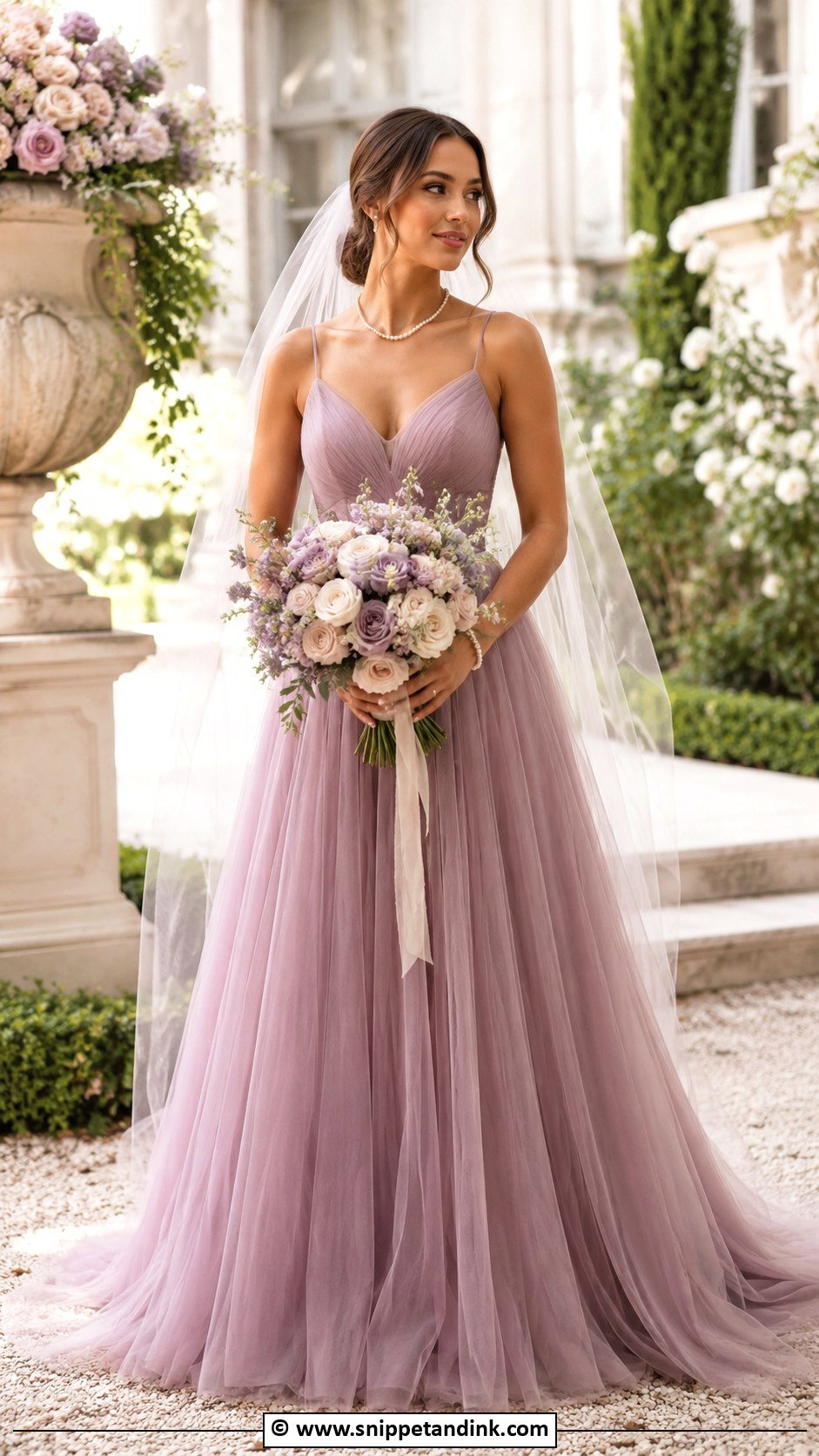
Mauve is more muted than lavender and quieter than plum, which makes it an easy middle ground in tulle. A tulle A-line with a fitted bodice is graceful and flattering, and it carries across seasons better than most colours here. Add a sheer veil, pearls and neutral heels to keep it delicate, and dusty pink, cream and lavender flowers that blend with the gown. Rustic barns and estates suit it, though I’d keep the hem off a dusty floor with a bustle for the reception.
26. Purple Wedding Dress With Sleeves
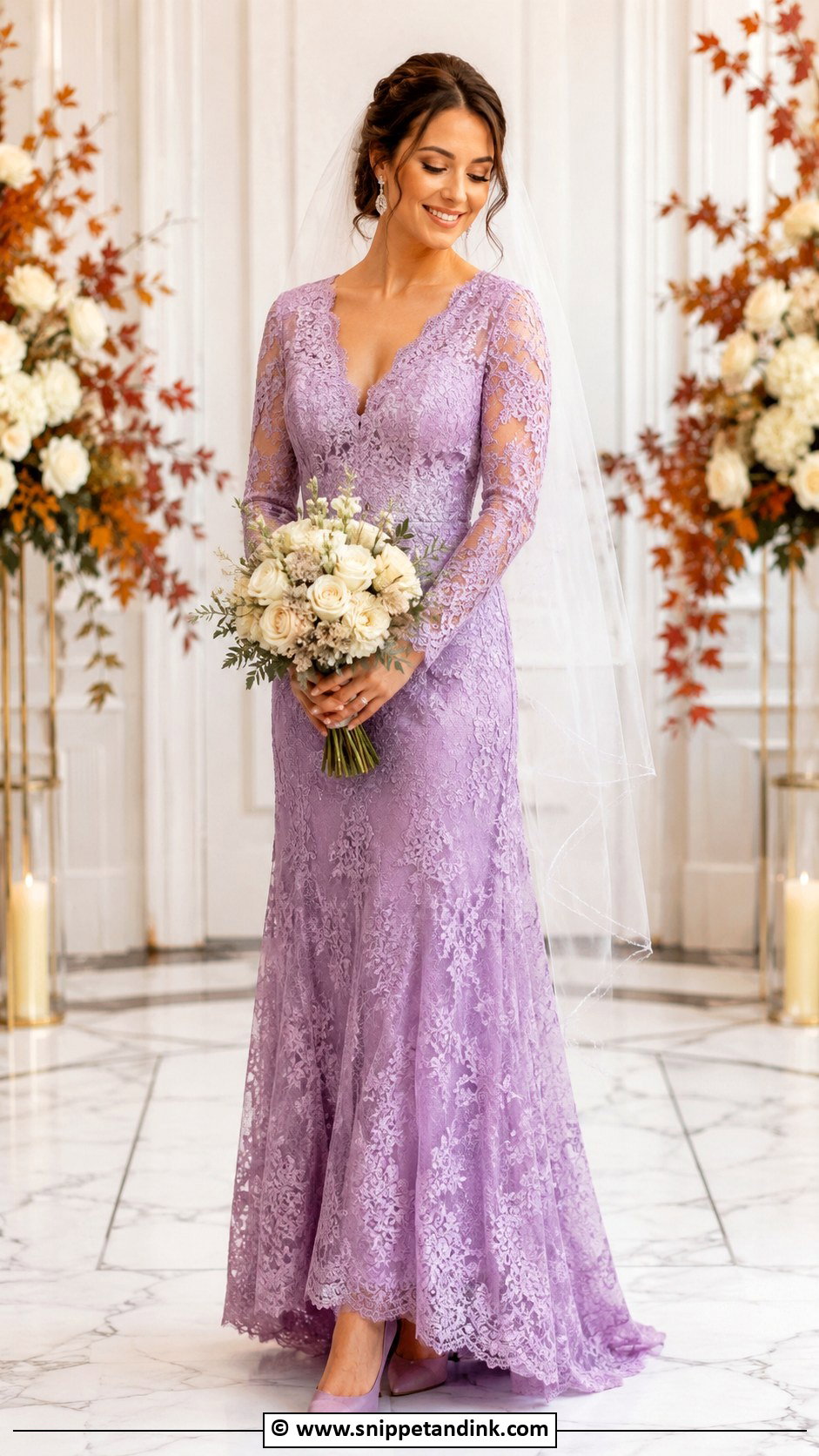
Sleeves change the mood as much as the shade does. Long lace sleeves are classic, sheer bishop sleeves are romantic and fitted satin sleeves are modern; lavender softens all three, plum makes them formal. Balance the sleeve with the neckline, usually a V, square or illusion neck. A simple veil, delicate earrings, heels in the dress tone and ivory flowers to lift the colour suit autumn and winter weddings or anyone who wants more coverage.
27. Lavender Mini Wedding Dress
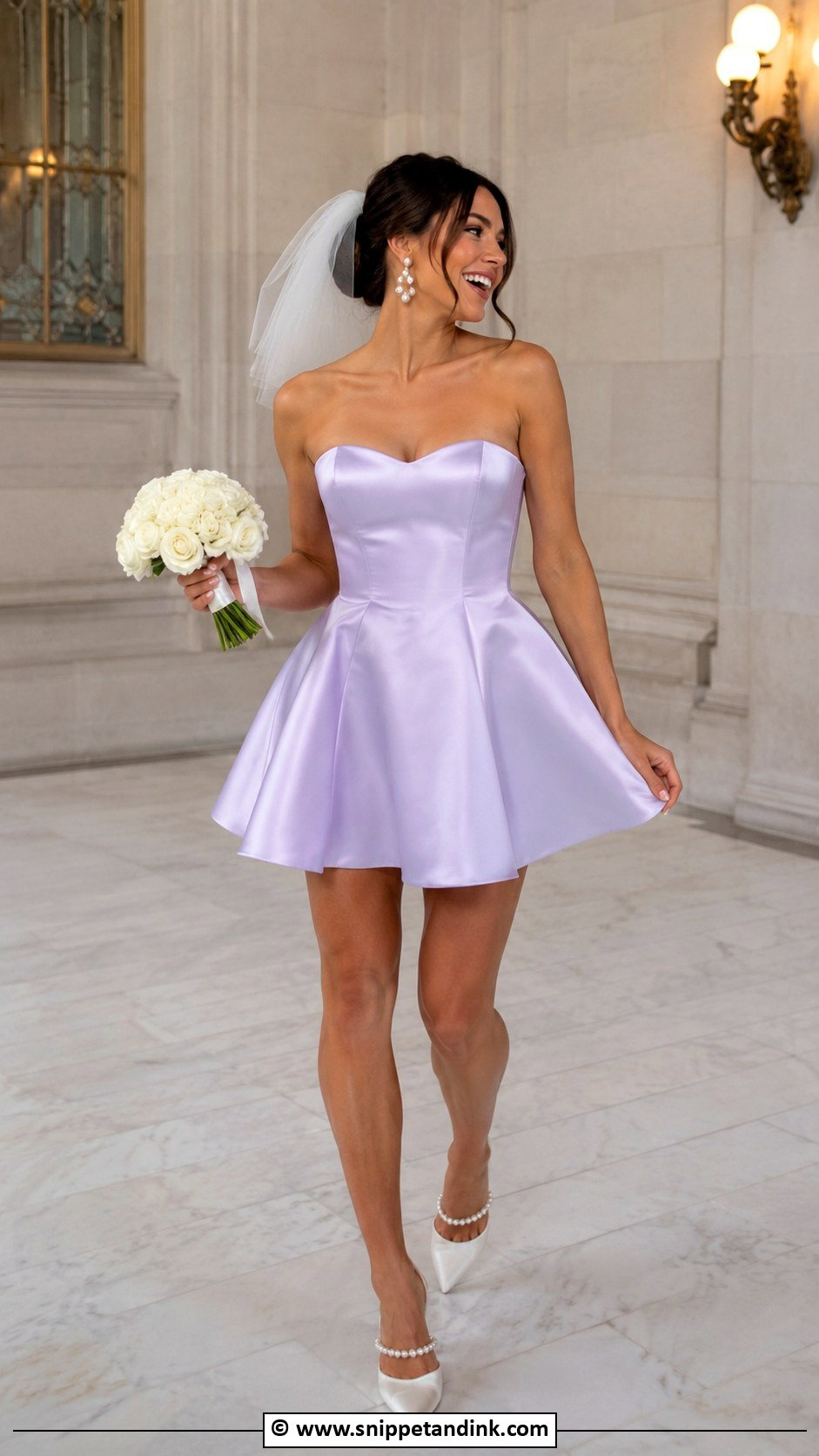
A lavender mini suits a courthouse ceremony, a reception change or a casual celebration where a long gown would feel overdressed. Structured satin gives a clean, modern shape; tulle feels more like a party. Pearl heels, a small veil, statement earrings and a mini bouquet of white roses or lavender stems keep it bridal. I’d always do a sitting test in a mini, since structured satin can ride up more than you’d expect, and it doubles as a second outfit after the ceremony.
28. Royal Purple Wedding Dress With Train
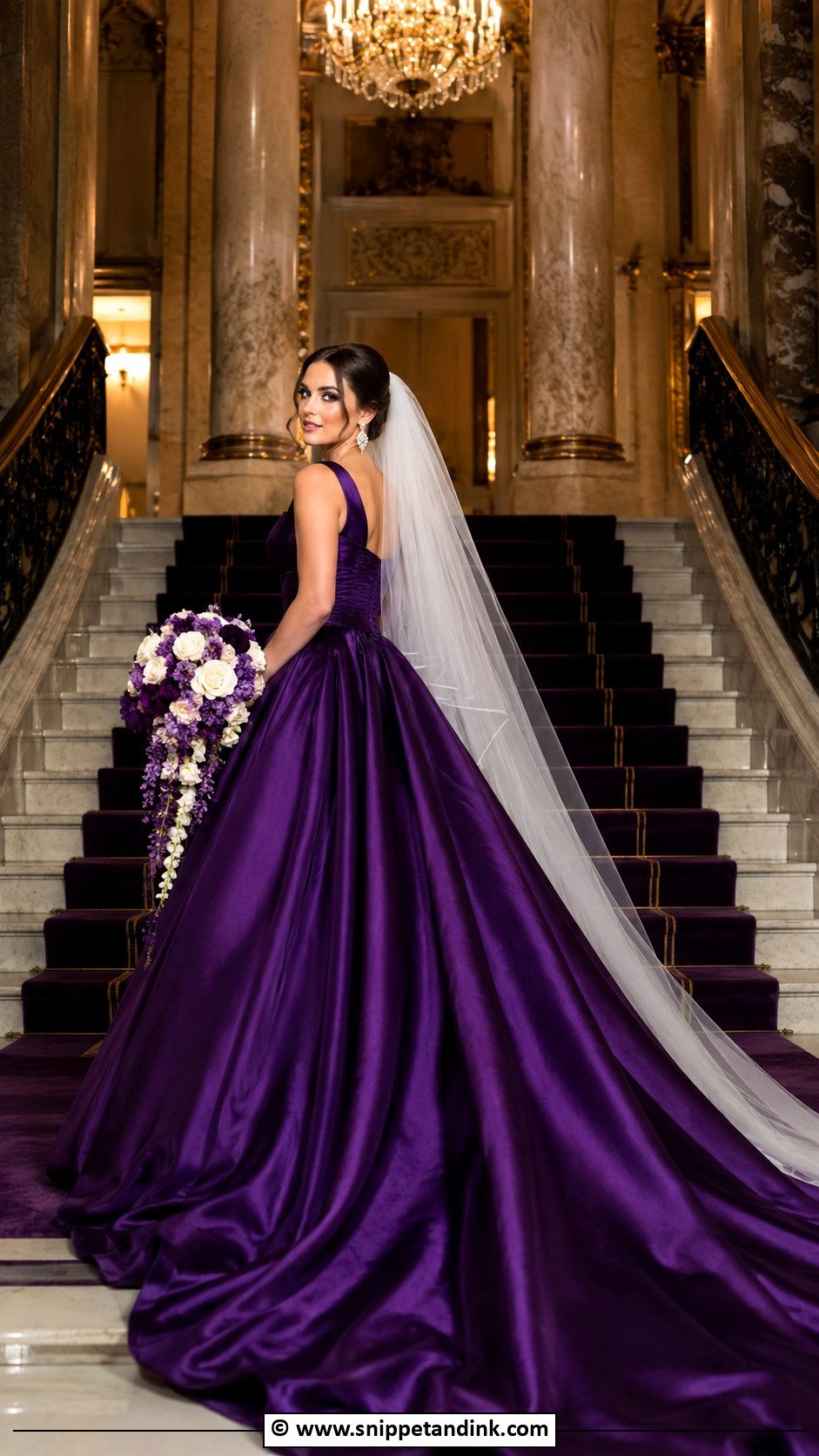
Royal purple with a train is the most dramatic entrance on this list. The saturated colour feels luxurious and the train adds traditional bridal impact, whether on a full-skirted bodice or a sleek mermaid. Trains in a strong colour show dirt quickly at the edge, so I build in a bustle and recommend staying indoors after the ceremony. Crystal earrings, metallic heels, a clean veil and ivory and deep purple flowers suit grand staircases and formal evening receptions.
29. Lavender Sheer Overlay Wedding Dress
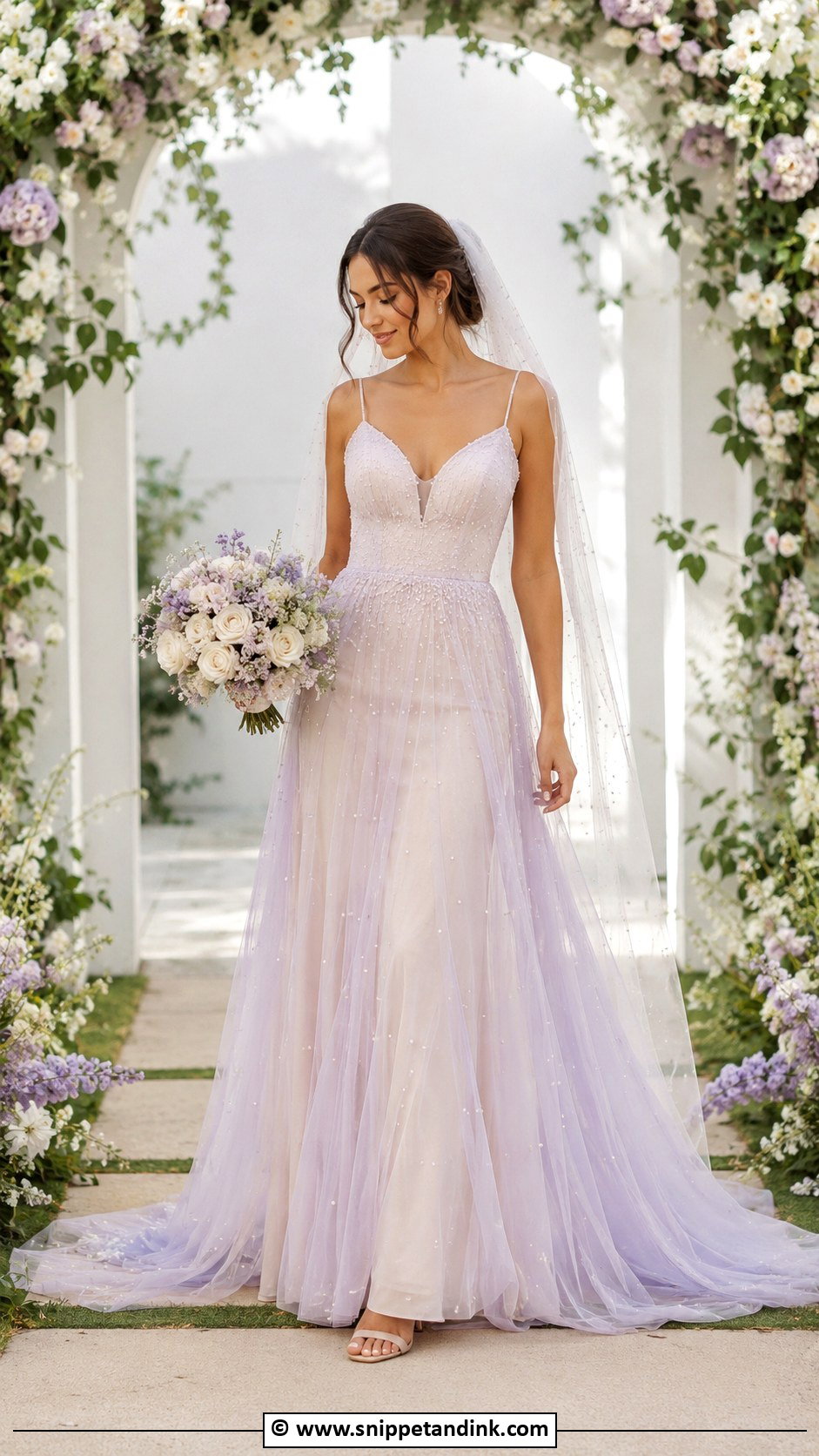
A sheer purple layer over an ivory, blush or pale lavender base gives colour without committing to a solid shade. The tulle or organza overlay creates a gentle glow, and floral appliqué, tiny pearls or light embroidery add detail. I always look at the overlay against the base in daylight before ordering, since the combination can shift warmer or cooler than either fabric alone. Neutral heels, a sheer veil, soft jewellery and cream and lilac flowers echo the layered colour.
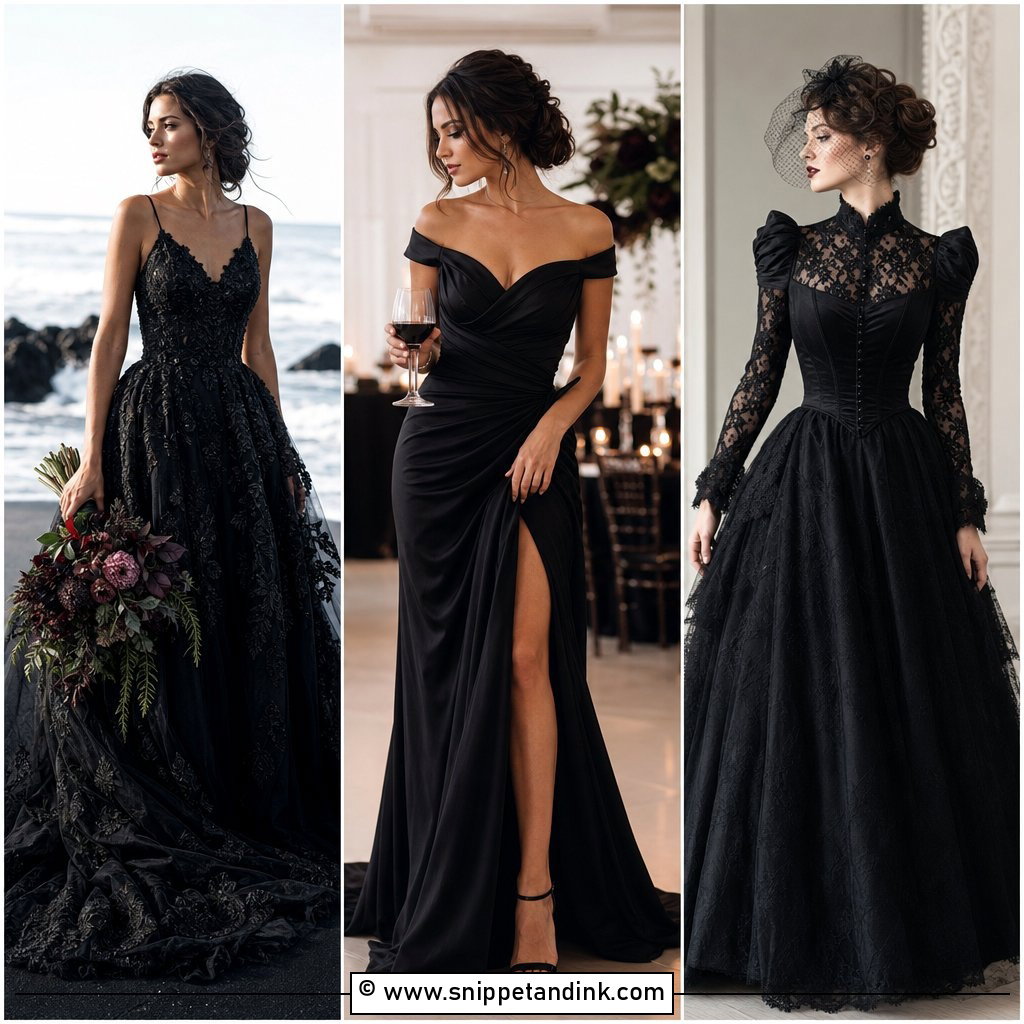
30. Dark Purple Gothic Wedding Dress
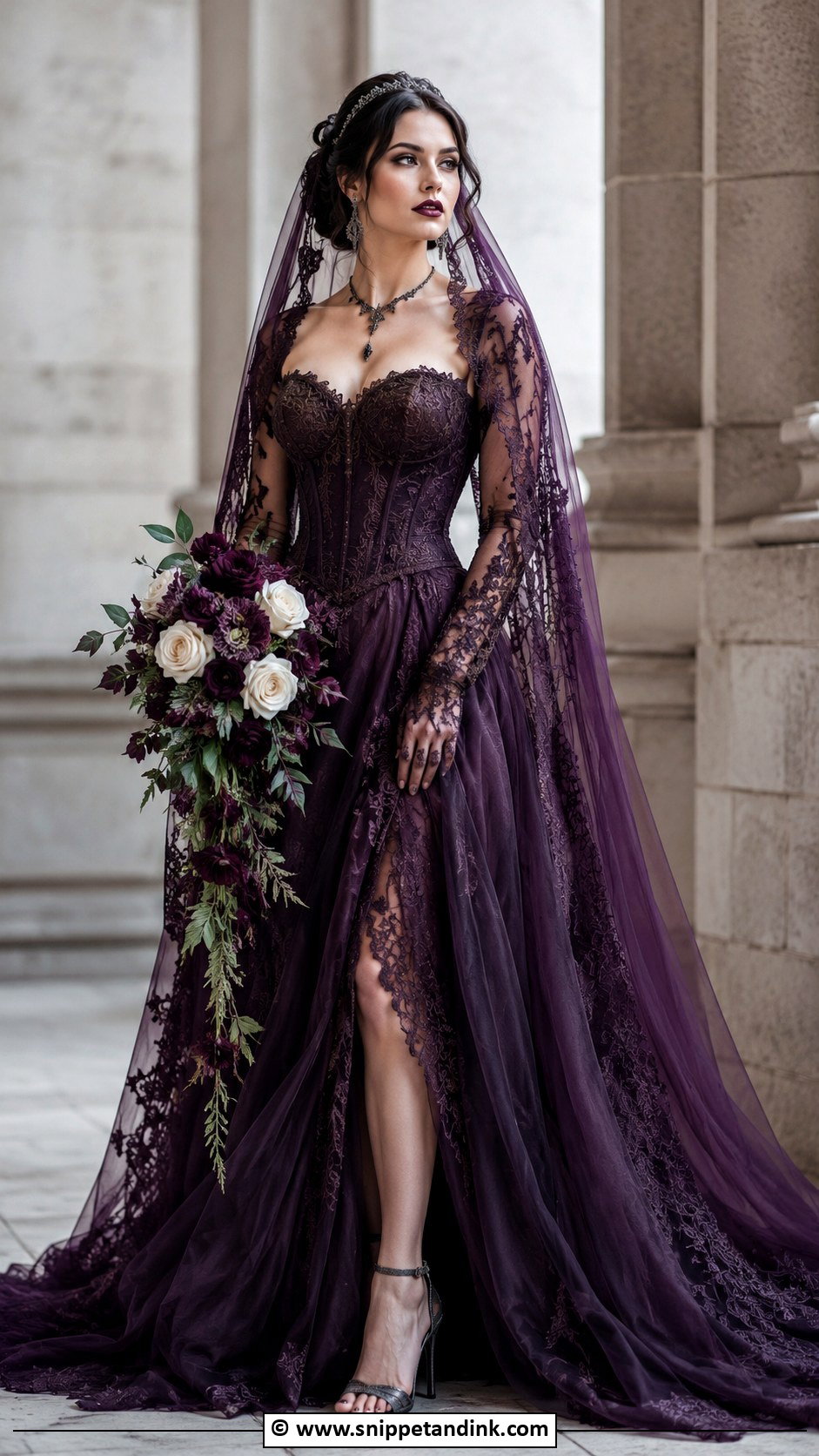
Gothic purple works when one element stays clearly bridal. A dark purple gothic wedding dress in deep plum, aubergine or blackened violet can be lace, satin, velvet or layered tulle, with a corset bodice, long sleeves or a high neck for structure. I anchor it with a soft veil, polished hair and refined jewellery rather than heavy accessories, and let the venue decide between black, silver or deep purple heels. Ivory roses, dark greenery and plum flowers give the contrast that historic venues and evening weddings need.
Ordering, Altering and Storing a Gown That Isn’t White
Coloured gowns are often made to order, and many bridal makers quote somewhere around four to eight months before the alteration stage even starts, though this varies a lot by designer. Custom-dyed tulle or silk adds time, so ask for the dye lead time separately. I also ask for a little spare fabric from the same batch: if a hem needs piecing or a bodice needs letting out later, a second dye batch almost never matches.
Make sure your seamstress uses thread matched to the actual shade, not the nearest purple on the rack. White or grey basting stitches show clearly through lavender chiffon, and a mismatched hem thread on plum satin catches the light in close photos.
Keeping the colour from fading
Purple dyes are among the quicker colours to fade in sunlight, so don’t leave the gown hanging by a bright window in the weeks before the wedding. After the day, get it professionally cleaned before storing, because sugar and body oils can yellow and stain over time. Store it folded in acid-free tissue inside a breathable box, away from light and damp. Plastic garment bags trap moisture and can leave a cloudy mark on satin.
Lavender by Day, Plum After Dark
Purple lets your outfit feel personal without giving up on a bridal shape. The paler shades, lavender, lilac, wisteria and mauve, sit naturally in daylight, while plum, violet, eggplant and royal purple belong to formal evenings. Your venue, the season and how much colour you can live with for a whole day will narrow the list faster than any trend. Let the gown set the colour, then keep the flowers, shoes and veil in support of it, and you’ll end up with a purple dress that still looks like a wedding dress.
You'll Like These Ideas:


Leave a Reply