
The Phantom of the Opera has given brides a lot to borrow: Victorian bodices, corsetry, sweeping skirts, old lace and veils long enough to trail down a staircase. Christine’s forced bridal gown is the one everyone remembers, but her masquerade costume, her opera dresses and her plain daywear are just as useful as starting points. When a bride brings me this theme, the first thing I ask is how literal she wants to be. Some want a faithful period gown; others want a single detail, like a row of covered buttons, that only fellow fans will catch. Both can work, and the twenty looks below run from full gothic drama to something you could wear without anyone guessing the source.
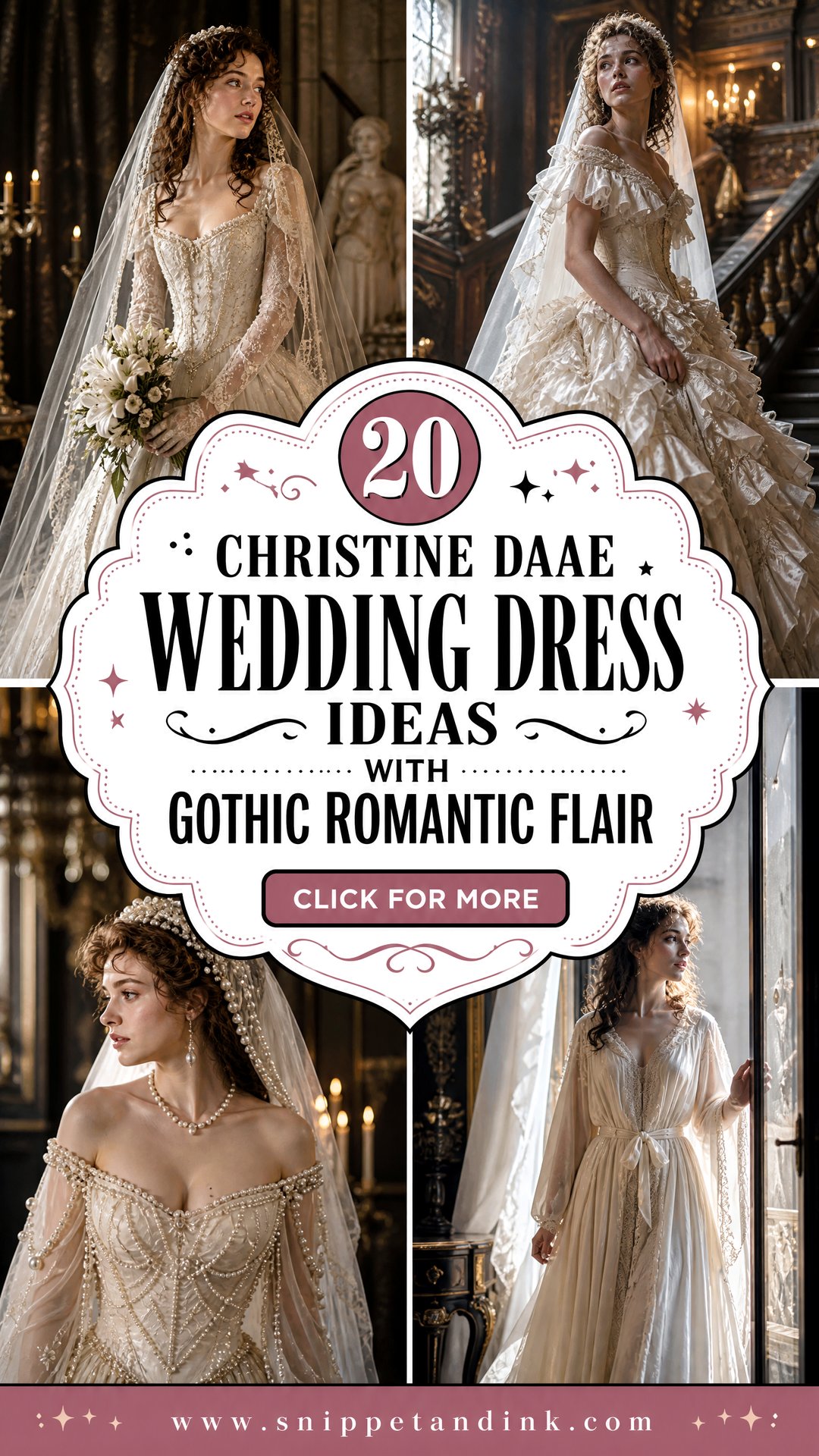
Costume or Wedding Gown? Deciding How Literal to Go
Christine’s costumes were built for a stage: seen from the stalls, under strong lights, for a few hours. A wedding gown is seen from two feet away, in daylight, for twelve hours or more. When I help a bride with this theme, I keep the shape and the mood of the costume and swap anything that only works from a distance.
- Keep the silhouette: a defined waist, a full skirt and a period sleeve are what make people think of Christine.
- Replace stage materials: theatrical satin and heavy beading look cheap close up, so choose bridal duchess satin or real lace instead.
- Hide the fastenings: lacing and buttons stay as decoration, with a zip or hooks doing the real work.
- Plan for sitting: costume corsets are designed for standing performers, so a bridal bodice needs a little more ease at the waist and hips.
Timing matters more than usual here. A custom gown or a heavily altered one, with added sleeves, a bustle or extra lace, needs the longest lead time in bridal. I’d start shopping about nine to twelve months out and expect three fittings, the last one roughly two weeks before the wedding.
1. Christine Daae Victorian Wedding Dress
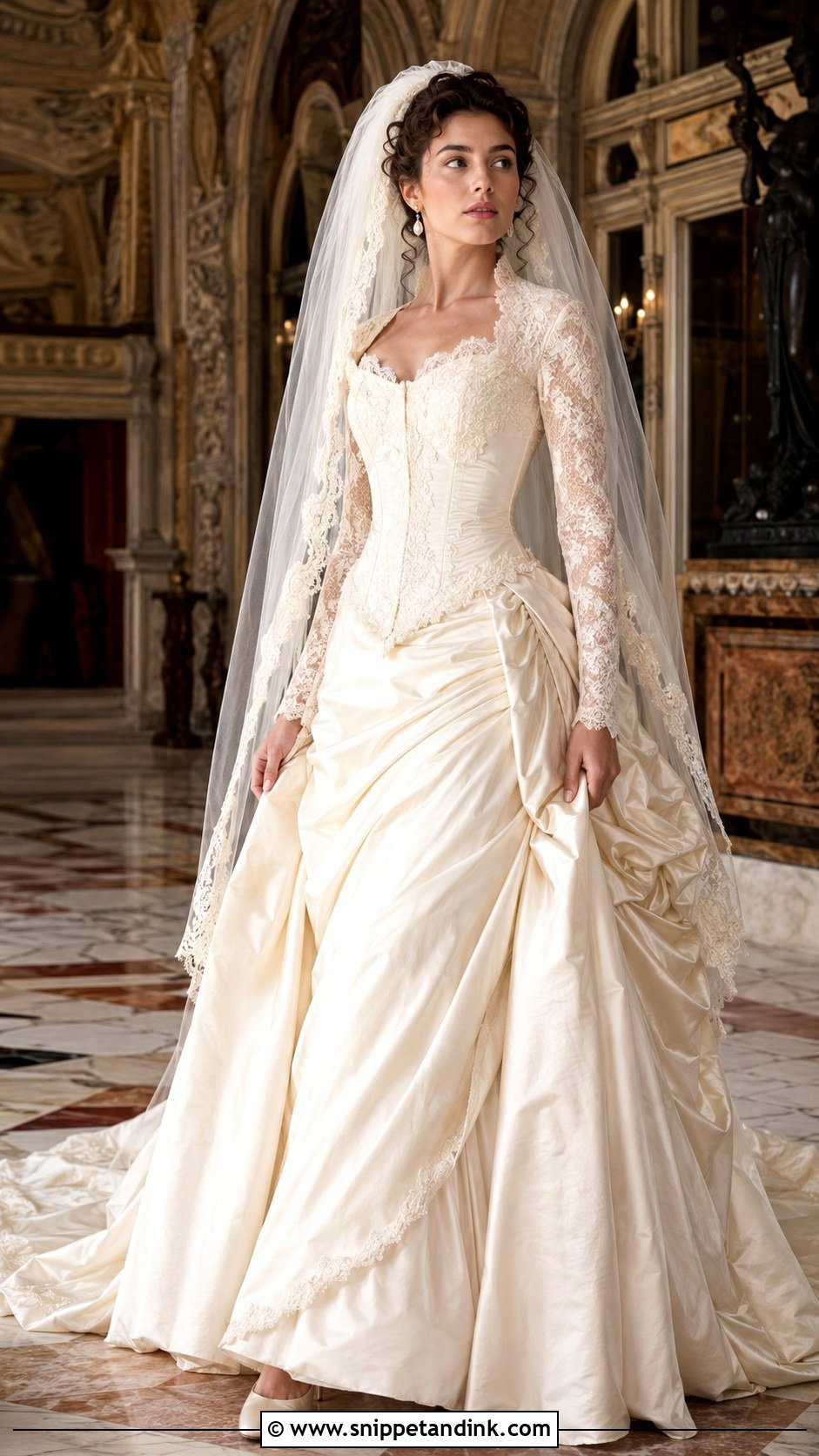
A Victorian wedding dress is the most direct route into Christine’s world. Look for a fitted bodice with a defined waist and structured seams, a full satin or silk skirt, long lace sleeves and a slightly raised neckline, finished with a chapel-length veil, pearl earrings and ivory satin pumps. Here’s the practical catch: forty covered buttons down the back look wonderful and take a long time to fasten. I always ask the seamstress to put a hidden zip under them, so the buttons become decoration and you’re dressed in minutes. A soft bustle pad or layered petticoat adds period shape, and a low bun with loose curls suits it. Historic hotels, restored theatres and candlelit houses are its natural setting.
2. Christine Daae Phantom Wedding Dress
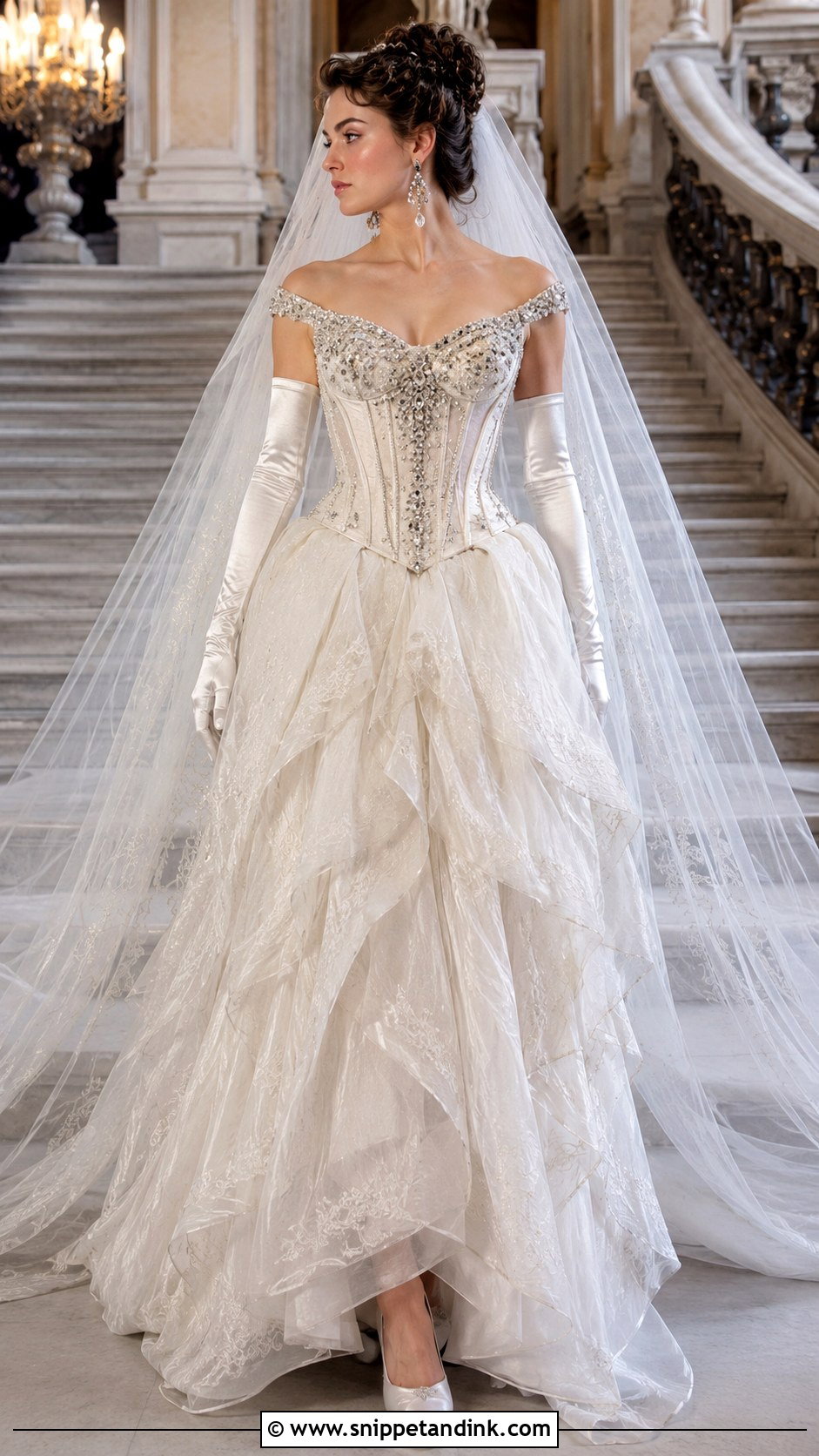
This is the closest you’ll get to the gown from the film’s famous bridal scene: an ivory ball gown with a corset-shaped bodice and an enormous skirt built from satin, tulle and lace. Keep sparkle to crystal appliqués or fine silver embroidery, then add long gloves, a cathedral veil, crystal drops and a single white rose. All that volume is heavy. When I fit one of these, I check that the waist seam is carrying the skirt’s weight rather than the shoulders, and that a hoop or stiff petticoat is holding the skirt out so you aren’t wading through tulle. Ask how the dress travels, too; a skirt this wide fills the back seat of a normal car. Save it for a ballroom or opera house where it has room.
3. Christine Daae Lace Wedding Dress
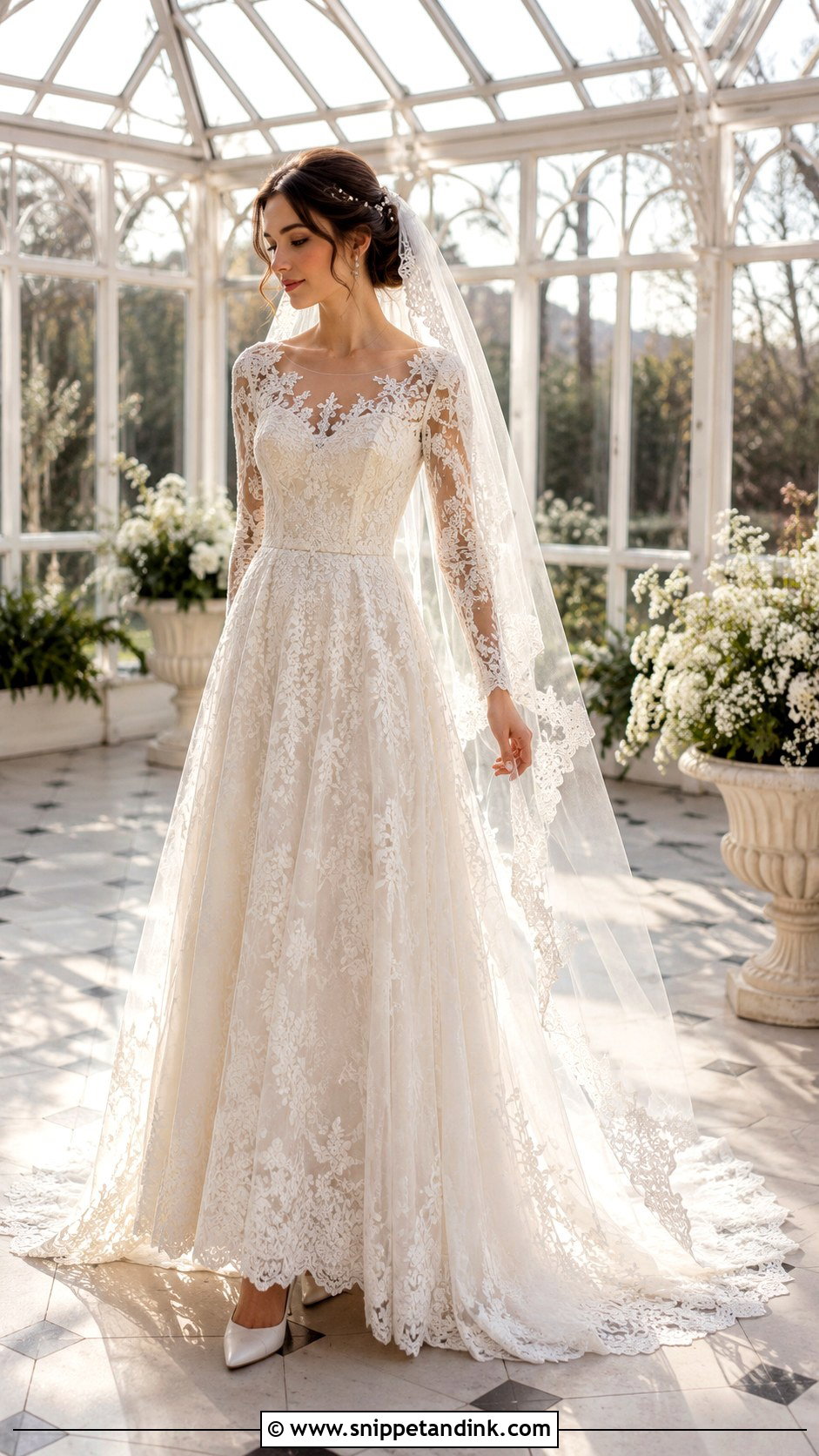
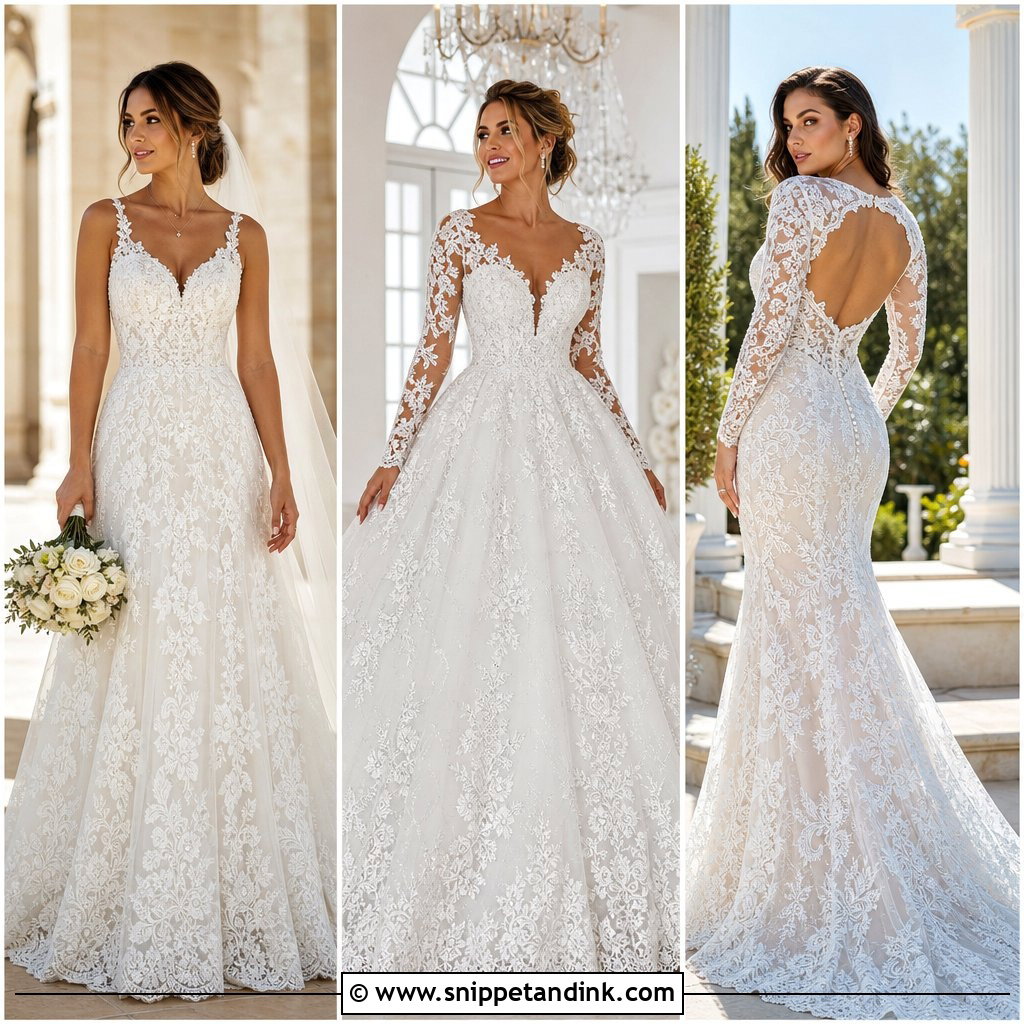
Lace is the gentle way into Christine, and it rarely tips into costume. An ivory A-line with floral lace over the bodice, sleeves and upper skirt, a sweetheart lining under an illusion neckline, and a light train. Pearl hairpins, teardrop earrings and a fingertip veil keep the accessories quiet. The detail I look at closest is the illusion mesh. It needs to match your skin closely, or the ‘bare’ neckline reads as a beige panel in photos, so bring the bride outside to check it in daylight. Lace edges that have been hand cut around the motifs, rather than finished with a straight hem, look far more like old lace. It’s comfortable, it moves easily, and it suits gardens, conservatories and old estates.
4. Christine Daae Corset Wedding Dress
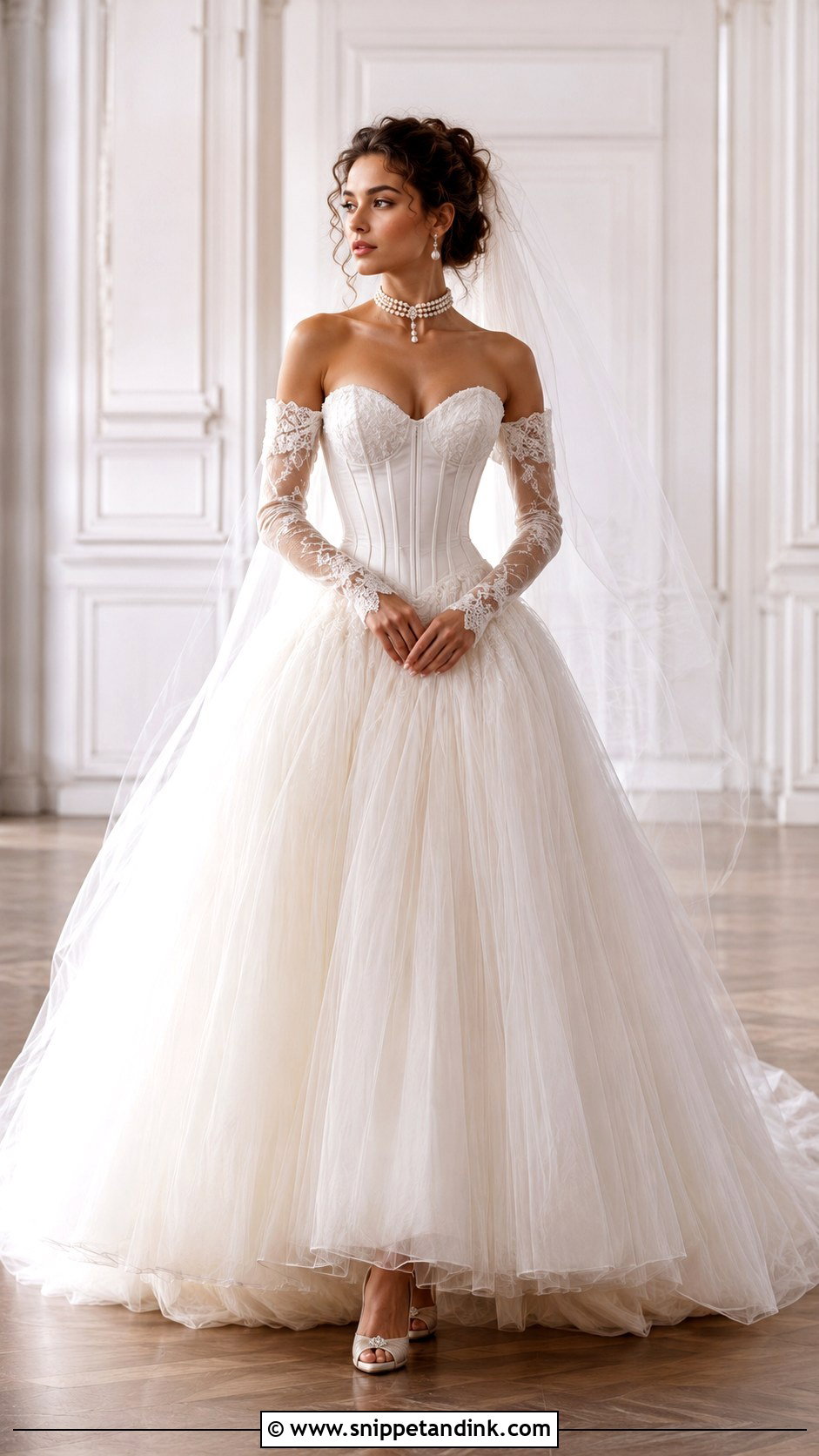
Christine’s period wardrobe was built on corsetry, and a corset bodice gives you that shape with modern support. Look for visible boning, a curved neckline and a lace-up back, balanced by a full satin or tulle skirt; detachable lace sleeves give you a second look for the reception. Don’t confuse ‘corset look’ with ‘tight’. At a fitting I have the bride sit, lean forward and lift a fork, because a bodice that only fits standing will fight you all through dinner. Steel or spiral boning holds its line through a long day better than flat plastic, which can warp and poke. A lace-up back also forgives small changes in weight between the last fitting and the wedding. Pearl choker, drop earrings and a low curled updo finish it.
5. Christine Daae Satin Ball Gown Wedding Dress
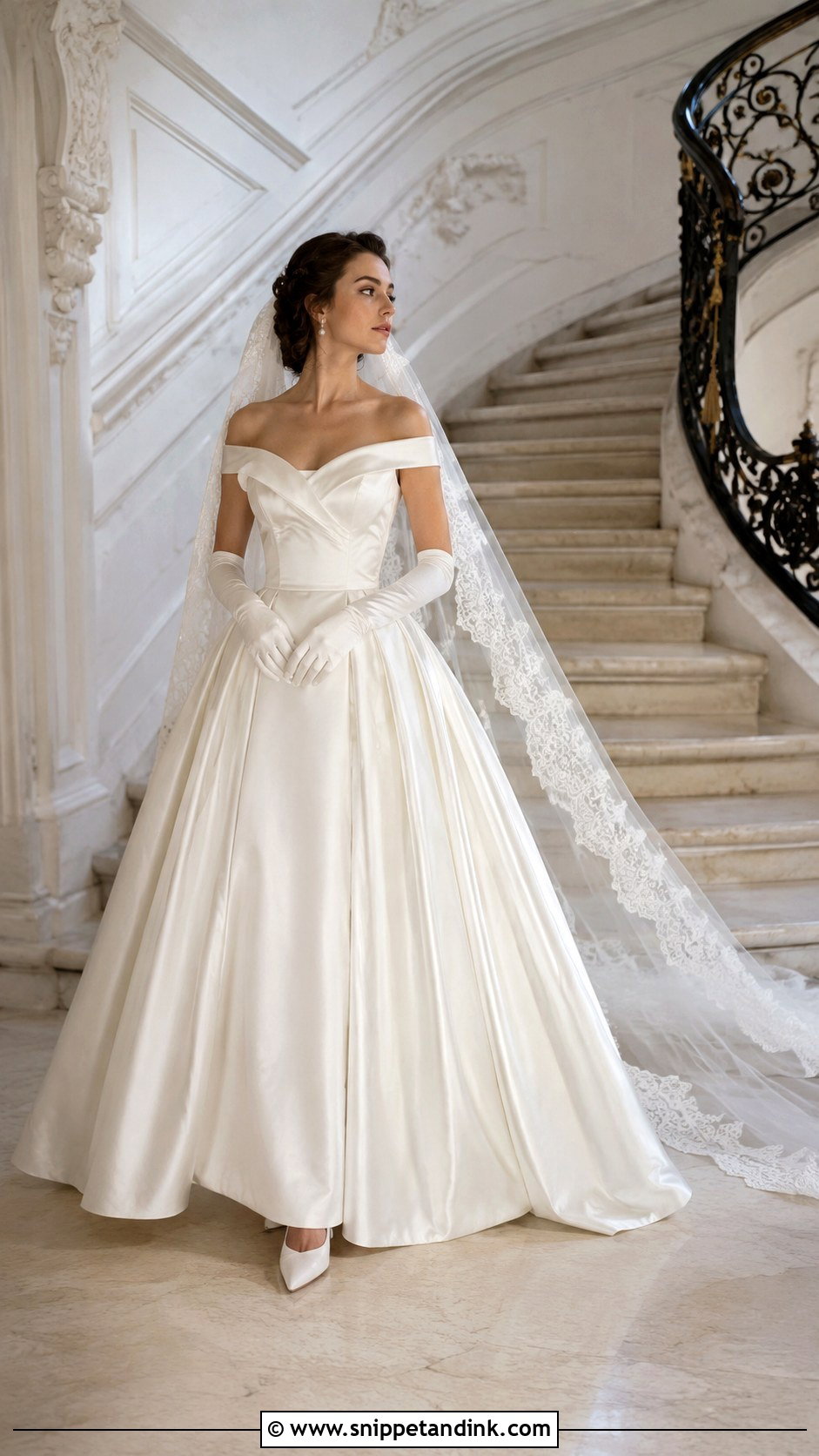
Satin is the fabric that looks most like a stage gown. Choose a ball gown with a sculpted bodice, a defined waist and a wide skirt, with a square or gently off-the-shoulder neckline for period character. Keep any embellishment at the neckline or waist so the cloth stays the feature, and add elbow gloves, pearl and crystal earrings and a cathedral veil edged in narrow lace. My honest warning about satin is that it shows everything: every seam, every fitting flaw, and every crease from sitting in the car. A heavy duchess satin holds its shape and creases far less than a thin, shiny one. Have someone steam the skirt on the morning, and stand rather than sit right before the ceremony if you can. Evening weddings with grand staircases suit it.
6. Christine Daae Long Sleeve Wedding Dress
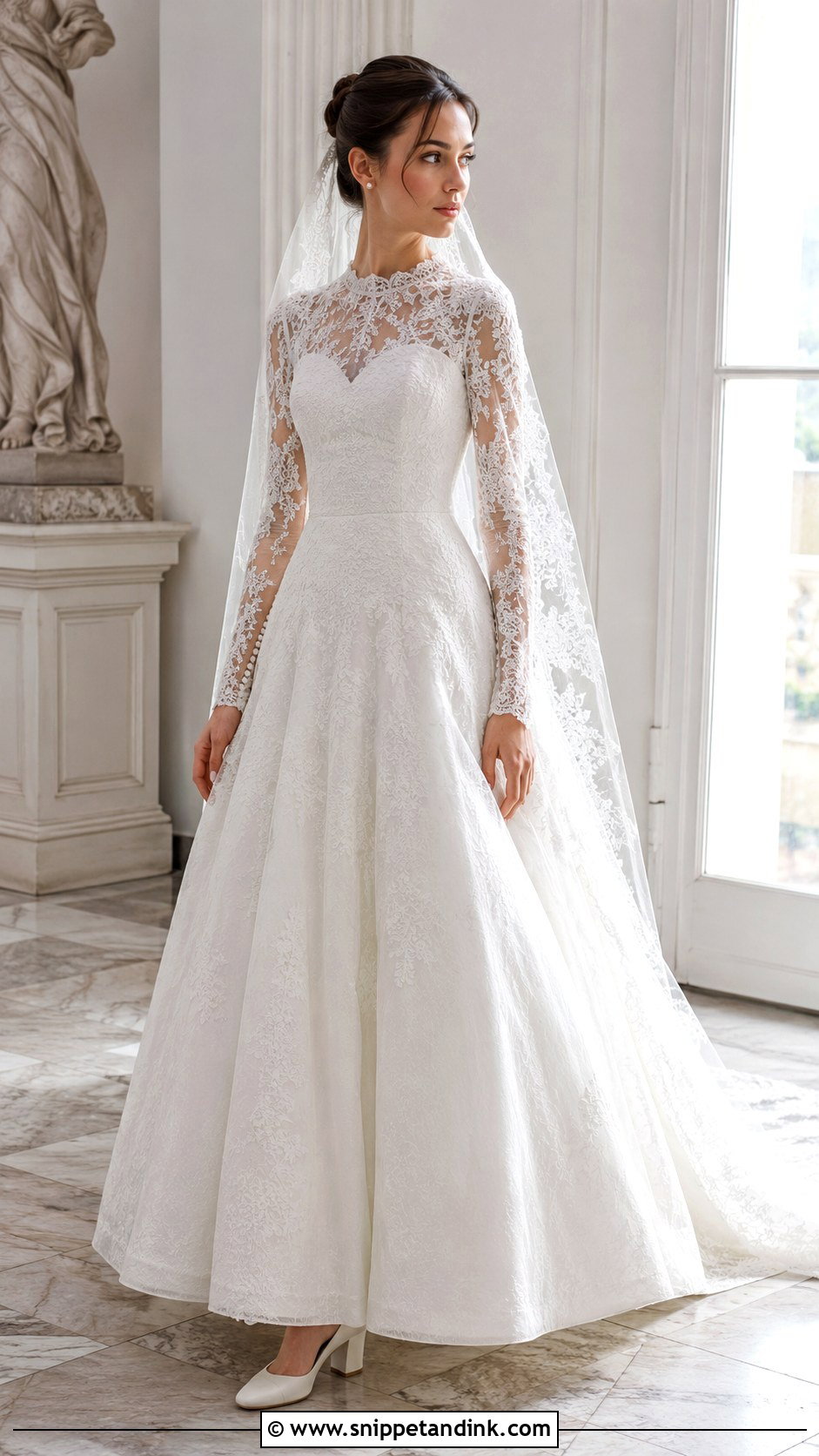
Long lace sleeves are the quickest way to say nineteenth century. Fitted to the wrist, with covered buttons or a softly pointed cuff, over a structured bodice and full A-line skirt, finished with a lace-edged veil, pearl studs and ivory block heels. The thing I test at every fitting is the hug: arms straight up and around someone’s shoulders. Close-fitting sleeves set into a fitted bodice can lift the whole dress when you raise your arms, and a stretch lace or a small underarm gusset fixes that. Lightweight lace keeps it bearable in spring or early autumn; in a warm room, heavy sleeves get hot quickly. The detail shows from every side, which matters for portraits in old buildings.
7. Christine Daae Off Shoulder Wedding Dress
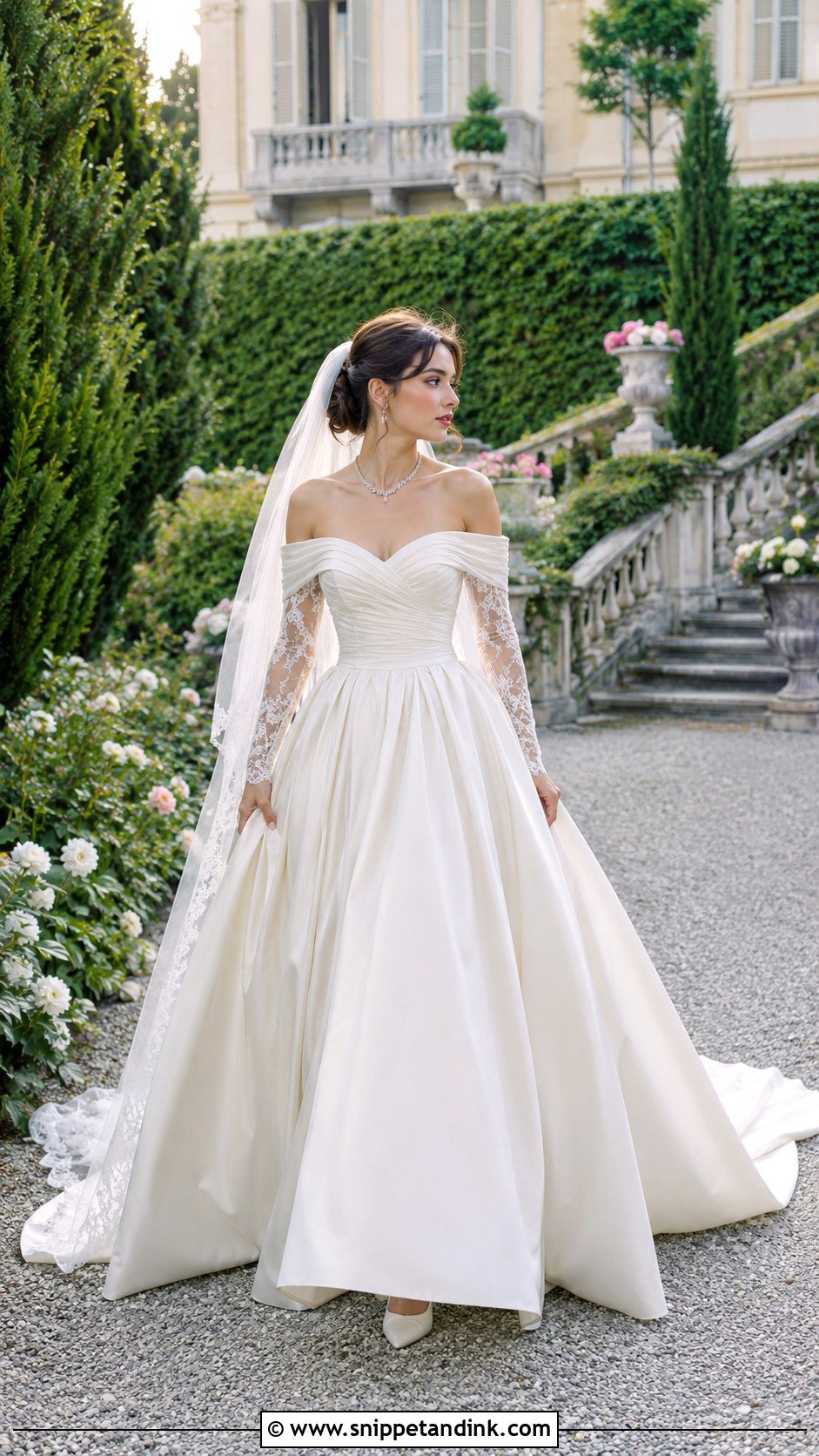
Dropping the shoulders softens Christine into something more romantic. A fitted ivory bodice with draped satin or lace at the neckline, a gathered full skirt and a chapel train, then a fine crystal necklace, pearl earrings and a sheer veil anchored under a curled updo. An off-the-shoulder neckline is held up by the bodice, not the sleeves, so the boning has to be well built. The trade-off is arm movement: true off-the-shoulder bands stop you lifting your arms much above the chest. If you plan to dance with your arms around someone’s neck, detachable sleeves or a band with some stretch are worth asking for. Summer weddings and grand indoor receptions suit it, especially if strict period accuracy isn’t the aim.
8. Christine Daae High Neck Wedding Dress
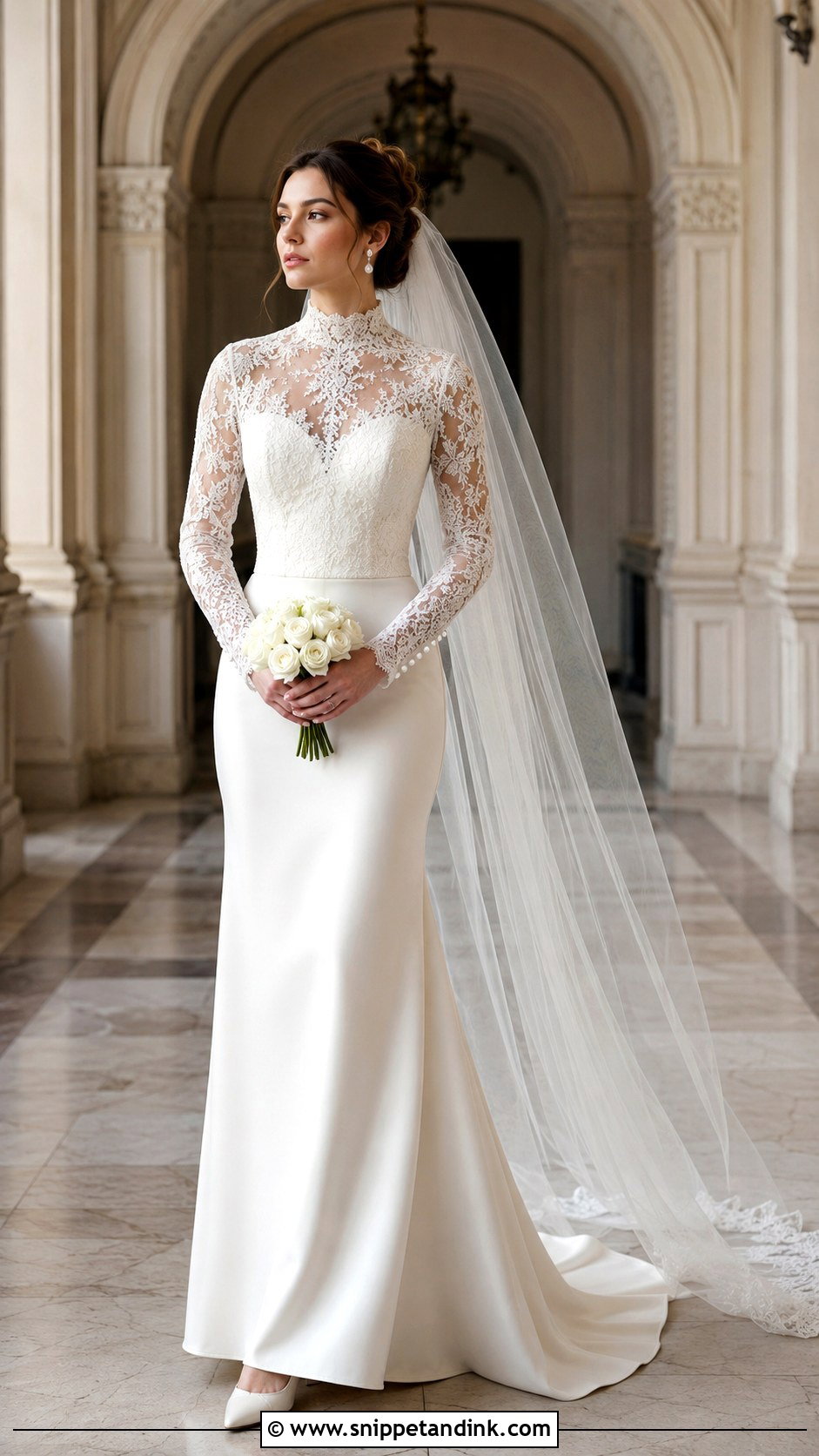
A high neck gives you Victorian reserve with full coverage. I usually pair an illusion lace neckline with a sweetheart or bateau lining underneath, plus tiny covered buttons, narrow cuffs and a natural waist. A smooth satin skirt keeps the busy top from crowding the whole gown. Skip the necklace entirely; the neckline is already the jewellery. A high collar shortens the neck visually, so hair needs to go up, ideally into a low bun that leaves the collar clear, and the veil should attach above it. If you have a shorter neck, a slightly lower illusion edge or an open keyhole at the back lightens the effect. Autumn and winter ceremonies indoors suit it well.
9. Christine Daae Puff Sleeve Wedding Dress
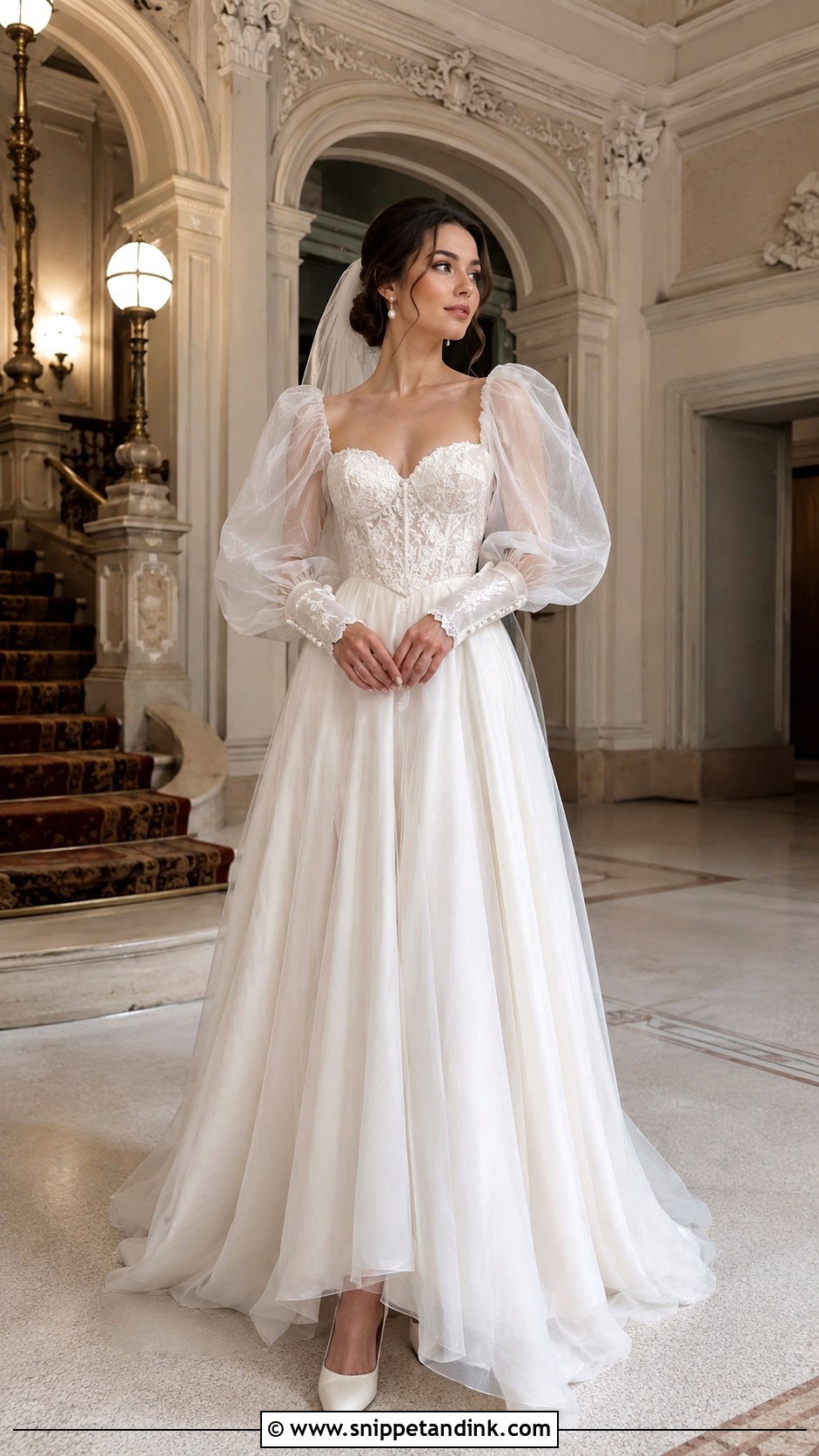
Puff sleeves borrow from Victorian fashion while giving the gown a whimsical, contemporary finish. Sheer organza sleeves with volume at the shoulder and fitted cuffs, a corset-style bodice and a flowing A-line skirt keep the proportions balanced, and floral embroidery on the sleeves links them to the rest of the dress. Organza holds a puff on its own, but it can still crush in a garment bag. I ask for a layer of stiff tulle sewn inside each sleeve head so the shape survives travel, and I pack the sleeves with tissue. Wear the hair half up in polished curls and keep accessories restrained, because the sleeves already have plenty of personality.
10. Christine Daae Bustle Wedding Dress
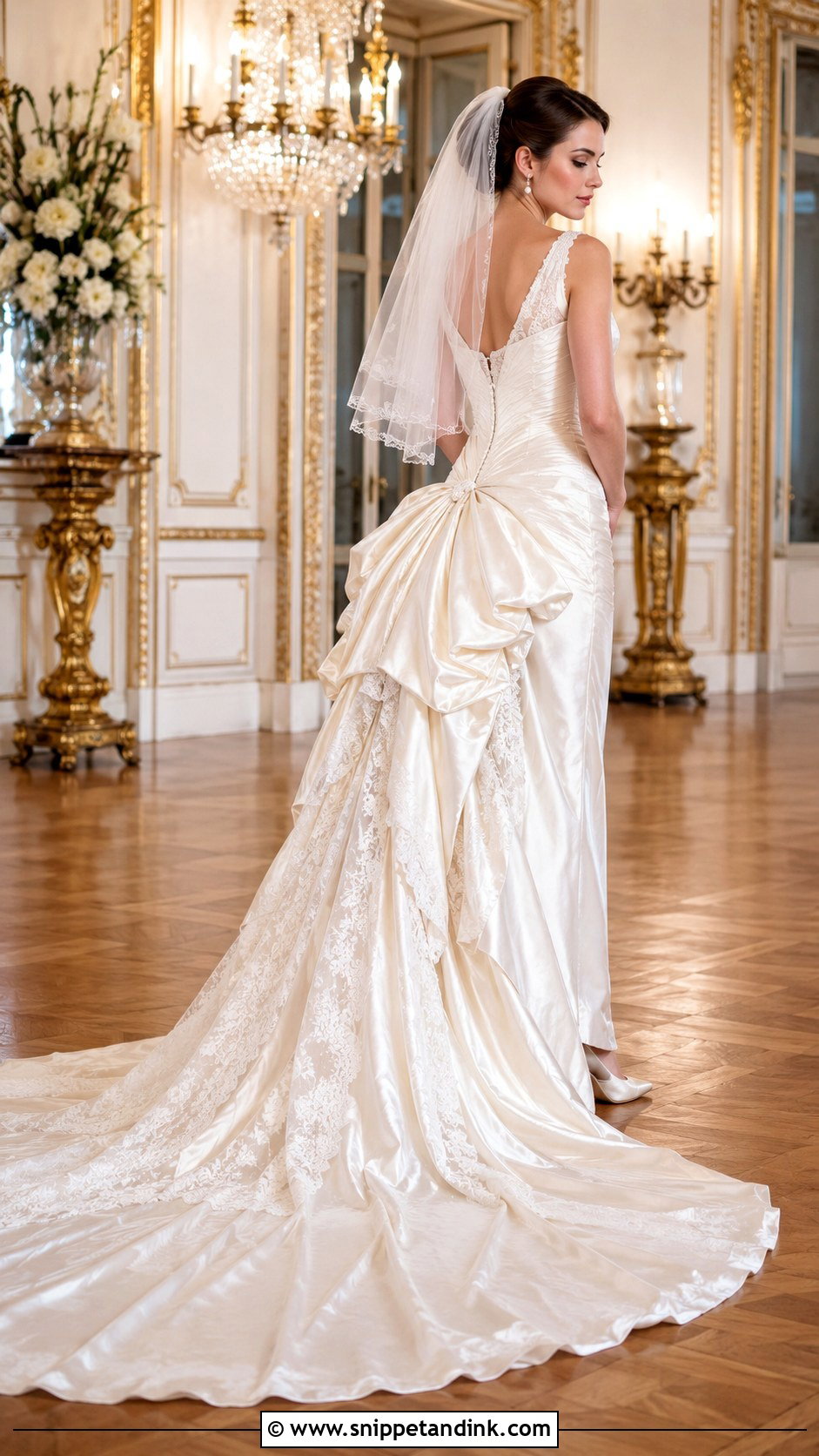
Few details tie a gown to Christine’s era as clearly as a bustle. An ivory gown with a fitted bodice, a smooth front skirt and gathered fabric falling over the back, defined with soft pleats, lace panels or small bows, then flowing into a train. Pair it with a medium-length veil so the back stays visible. Don’t confuse a period bustle with modern ‘bustling’, which is how a train is hooked up after the ceremony. A dress like this often needs both. Ask your seamstress to show your maid of honour how the bustle points work at the final fitting, with the dress on, because buttons and ribbon loops under a skirt are confusing in a dim reception hallway. It looks best in spacious venues and formal portraits.
11. Christine Daae Ruffled Wedding Dress
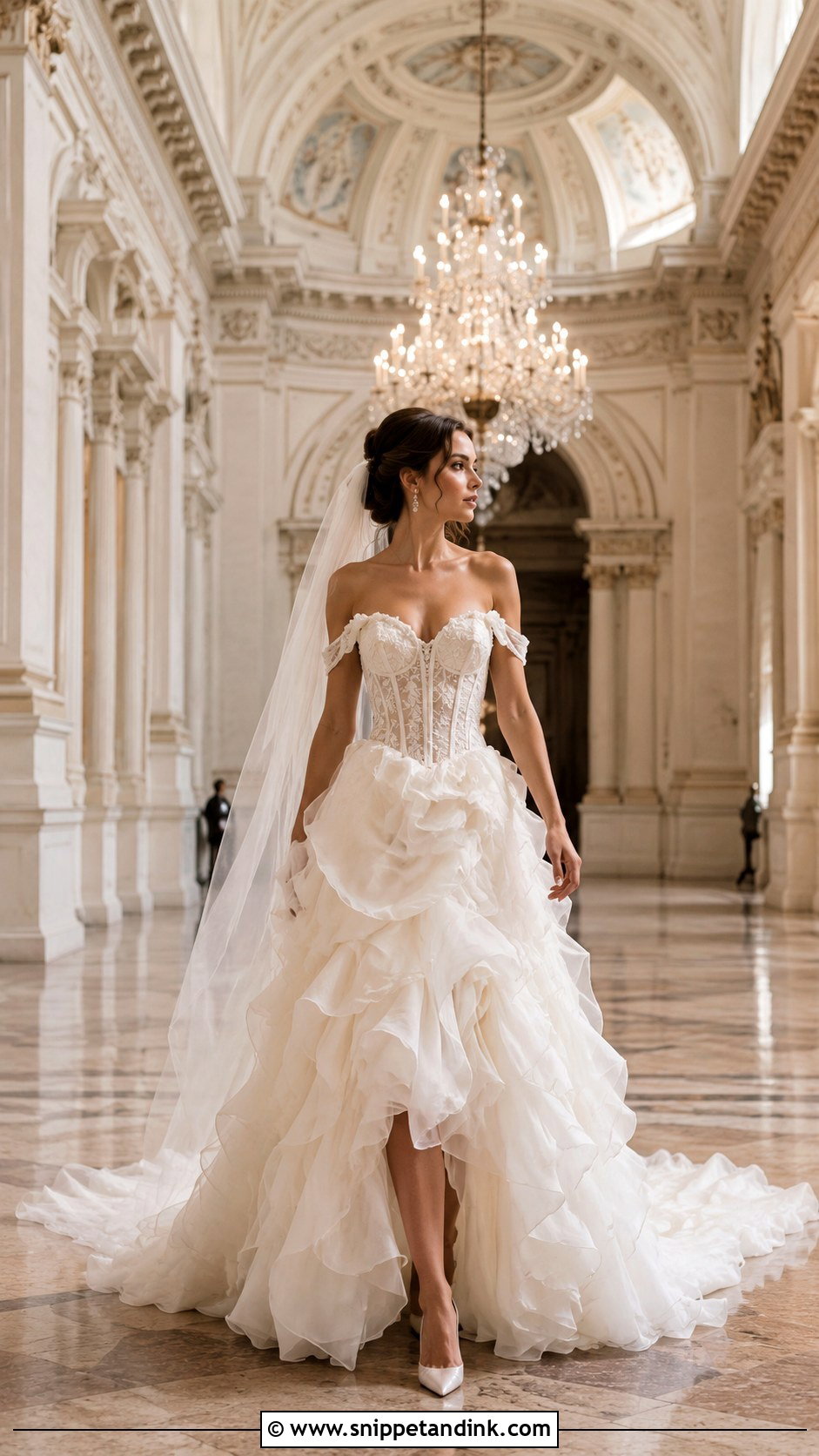
Cascading ruffles give the skirt movement and a touch of opera. Choose a structured corset bodice over organza or tulle ruffles that fall loosely, not stiffly, with a lightly embellished waist, understated crystal earrings, a plain cathedral veil and a sleek low bun so the gown doesn’t look busy. Ruffles crush when you sit, and organza holds a crease. A horsehair braid stitched into the ruffle edges helps them spring back, and a quick pass with a steamer between the ceremony and the portraits revives them. Give this skirt room: a big ballroom or a theatre-style venue, where the layers can swing during the first dance.
12. Christine Daae Pearl Wedding Dress
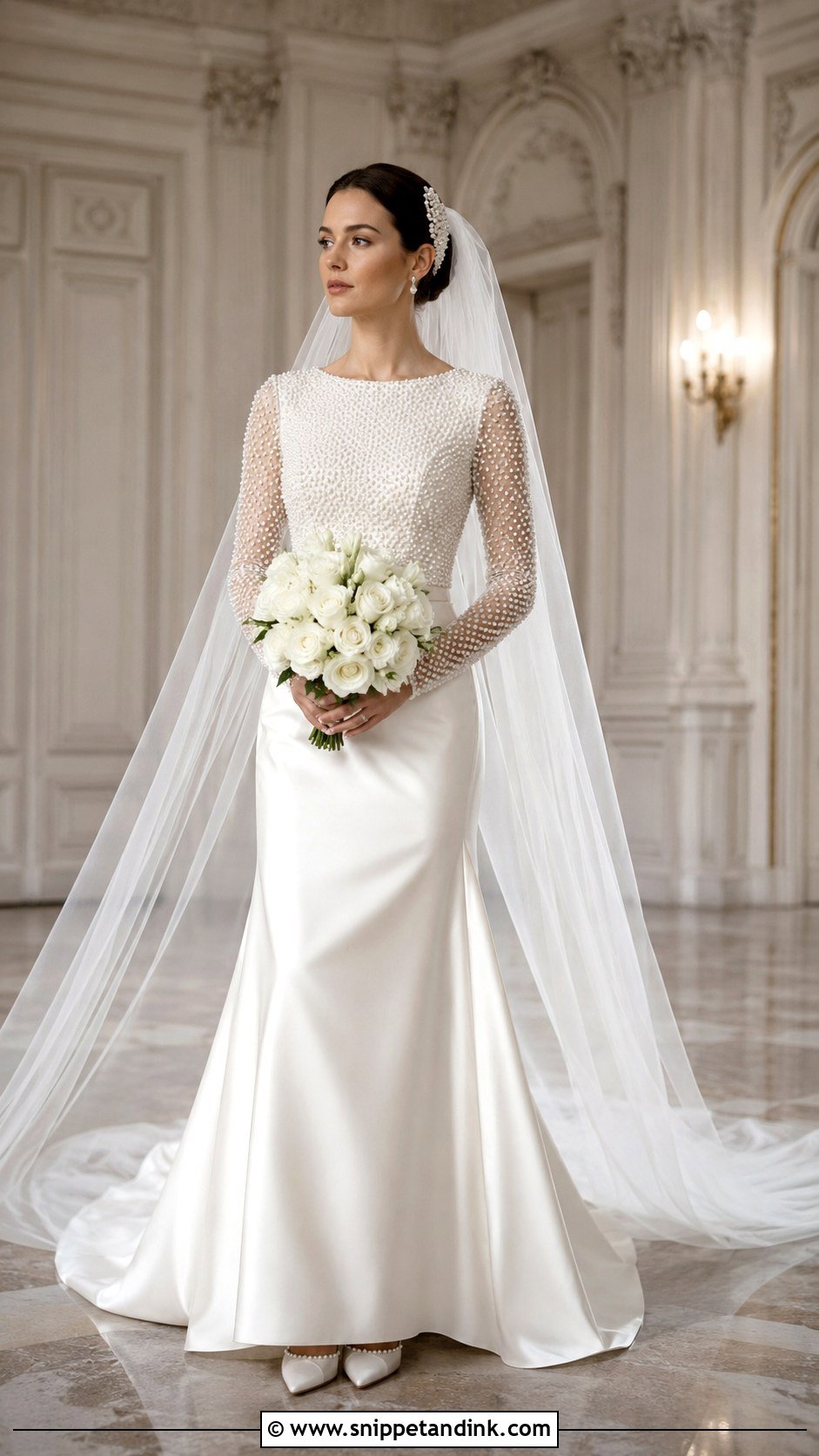
Pearls can turn a plain ivory gown into something Christine might have worn. A fitted bodice scattered with pearls over a smooth satin or soft tulle skirt, with long sheer sleeves and pearl-trimmed cuffs, plus a pearl hair comb and a clean chapel veil. Keep it scattered rather than covering every surface. I check how the pearls are attached before anything else. Hand-sewn pearls stay put; glued ones pop off when the bodice flexes, and you’ll be finding them on the dance floor. Ask the shop for a few spare pearls and keep them in the emergency kit with a needle and ivory thread. Skip layered pearl necklaces, since the gown already has the detail.
13. Christine Daae Gothic Wedding Dress
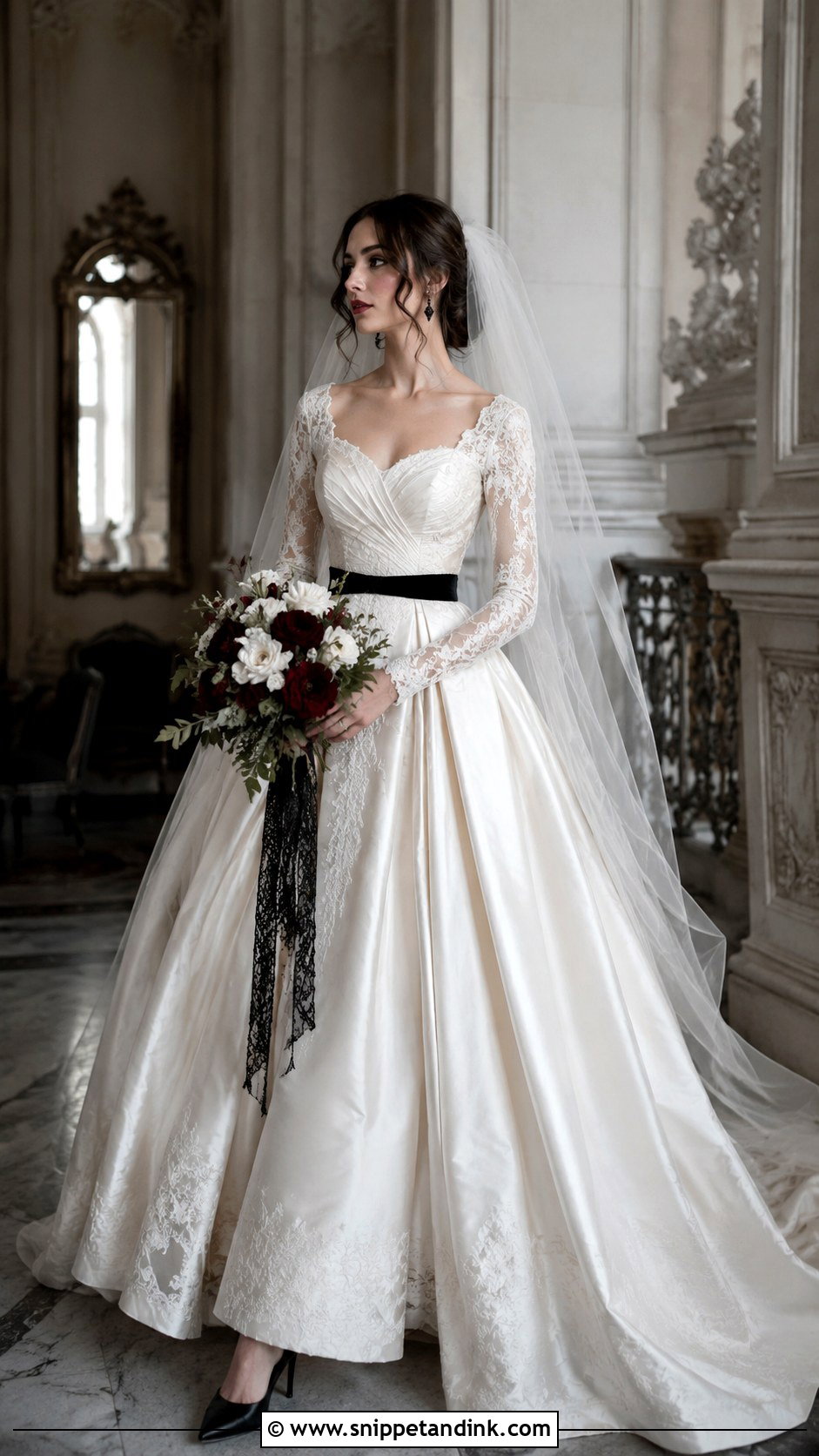
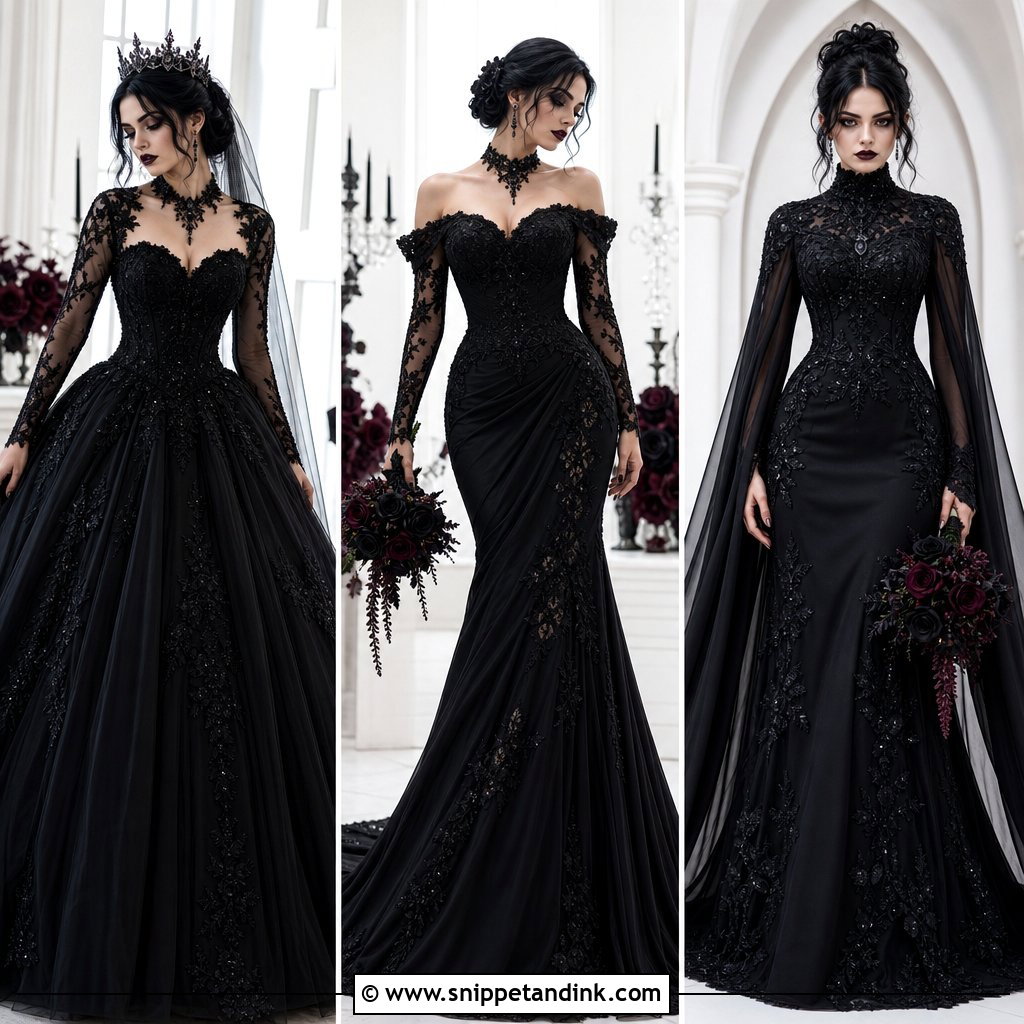
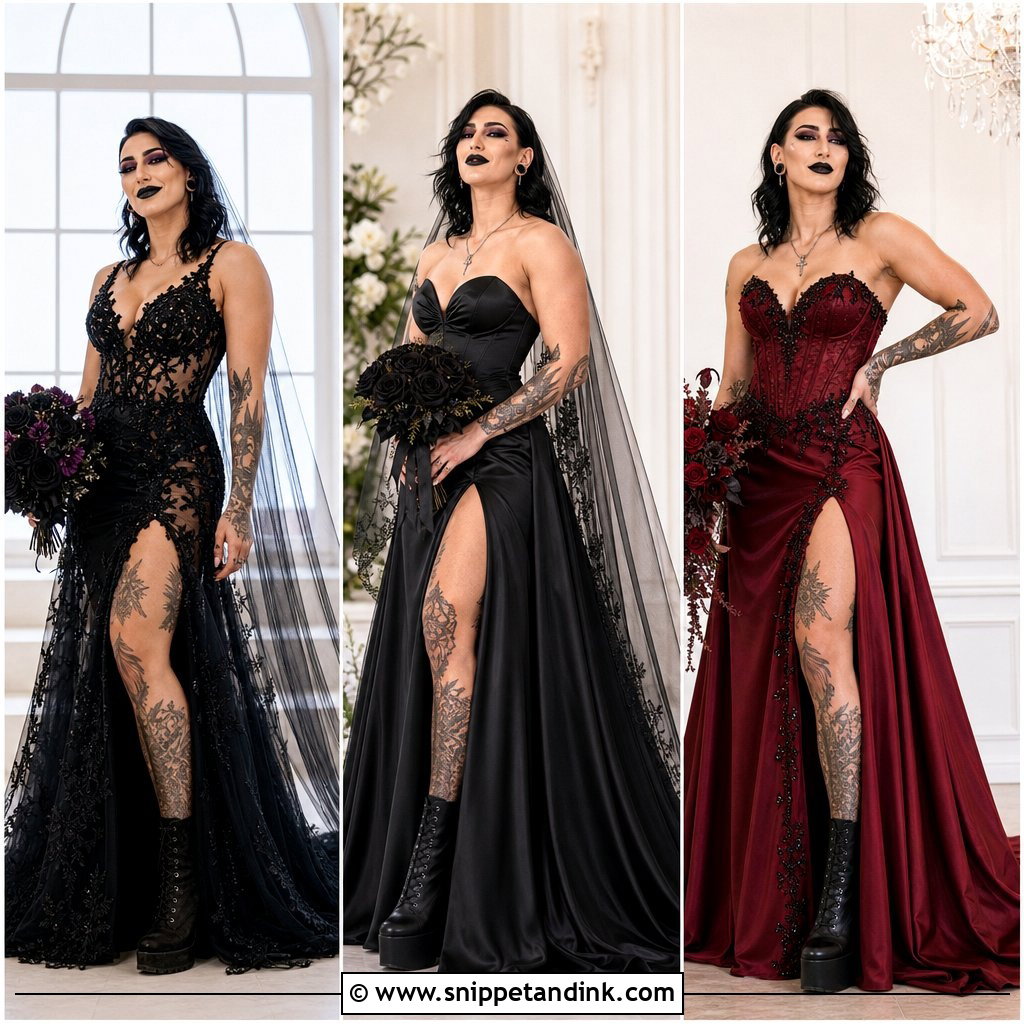
A gothic Christine wedding dress can be mysterious and still clearly bridal. Start with an ivory or pale silver gown with a structured bodice, long lace sleeves and a full skirt, then add controlled contrast: black velvet ribbon at the waist, black crystal earrings, dark floral embroidery or black pointed pumps. Carry white roses with deep burgundy flowers. One thing I always test before it goes on the dress is the black ribbon itself. Some dark dyes bleed on ivory when they get damp from rain, a spilled drink or a hot day, so I dab a sample with a wet cloth on white fabric first. Limit the dark accents to two or three places and it stays romantic. Old houses and evening ceremonies suit it.
14. Christine Daae Masquerade Wedding Dress
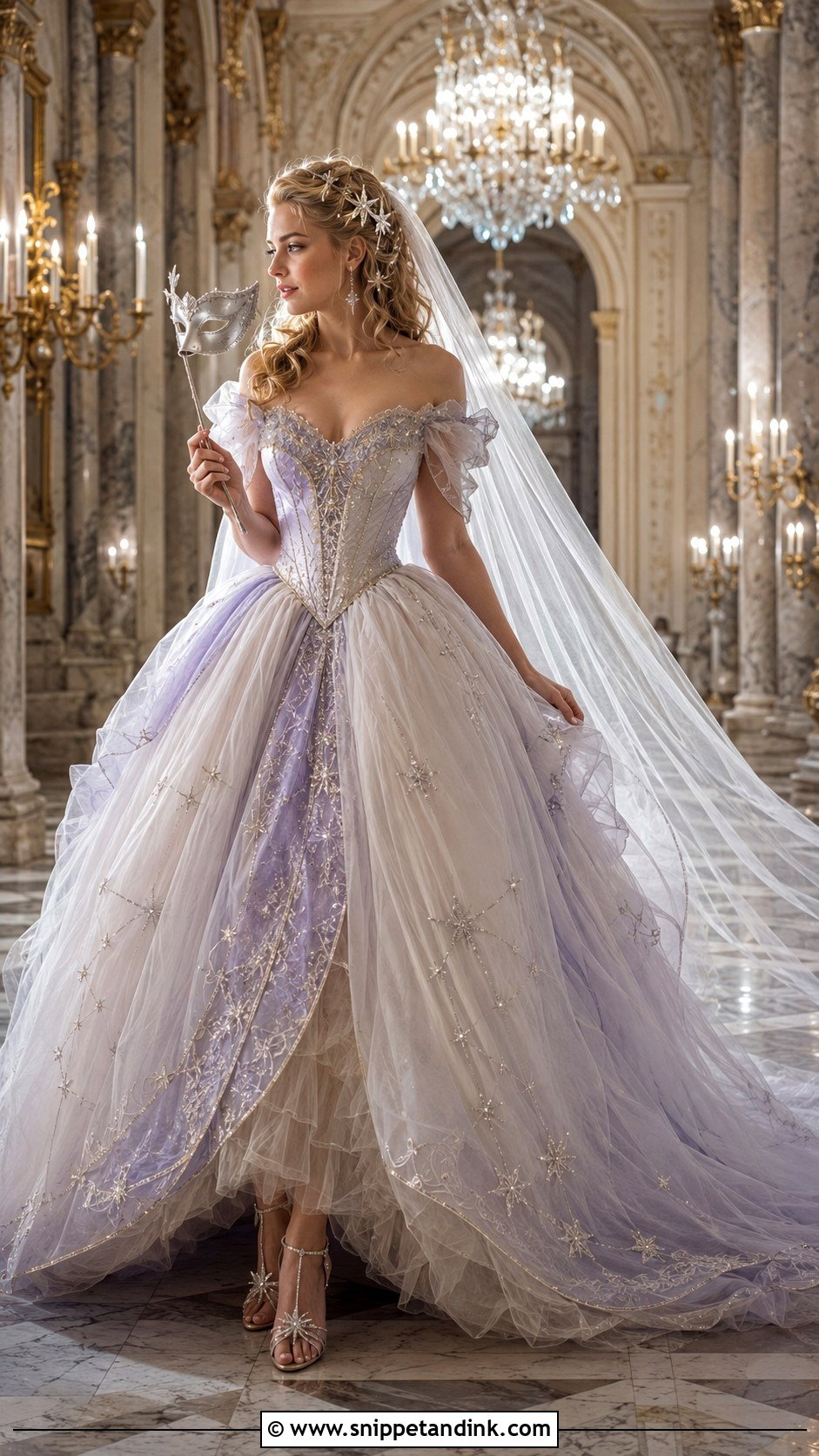
Christine’s masquerade costume is the playful side of her story: pastel, shimmering and covered in star-like beading. That translates into a pale pink, lavender, silver or ivory ball gown with layered tulle, a fitted bodice and delicate cap sleeves. The soft colour shift across the skirt is usually built by layering tinted tulle under ivory, not by dyeing, which means you can ask for it to be more or less obvious. Add crystal heels, star hairpins, a sheer veil and a hand-held mask for portraits only. Put the mask down for the ceremony so you still read as the bride, and don’t press it against your face for long, as the edge will lift foundation. Ballroom receptions with masquerade details suit it.
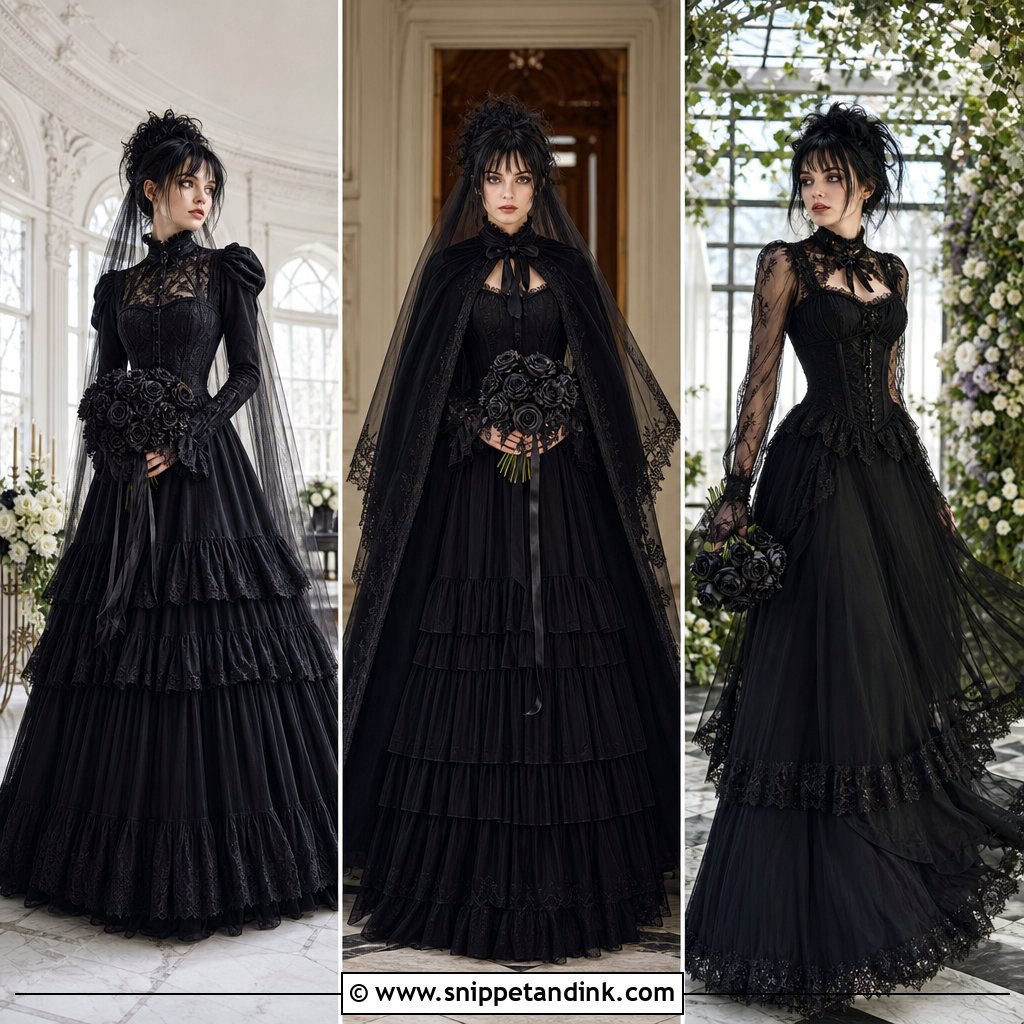
15. Christine Daae Blue Wedding Dress
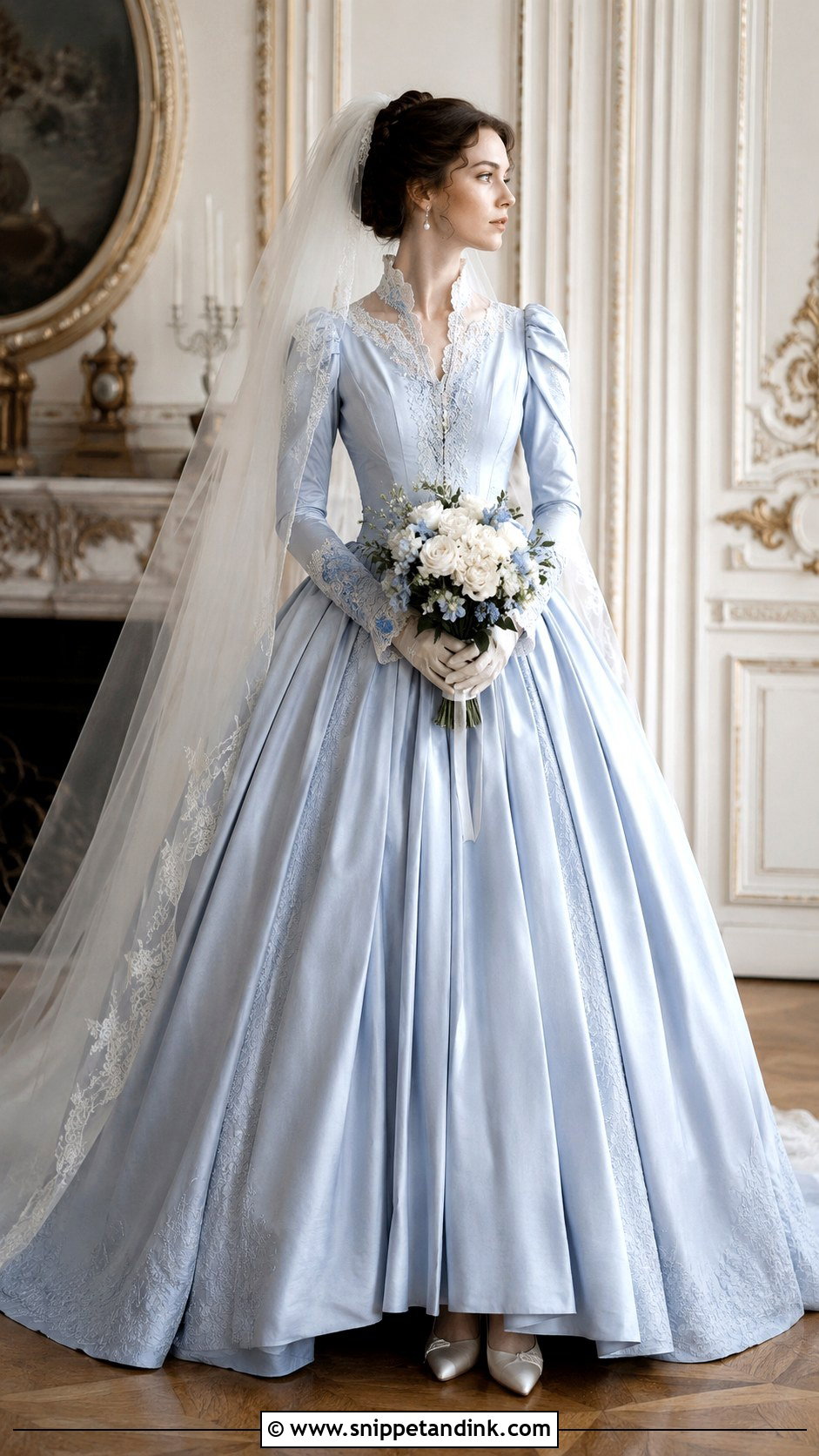
A pale blue gown echoes Christine’s daywear and gives you an alternative to ivory. Dusty blue or misty grey-blue, with a fitted bodice, long sleeves, a full skirt, lace trim and covered buttons; ivory pumps, pearl earrings, gloves and a soft cathedral veil keep it bridal. Blue is the colour I’d never choose from a screen. It turns noticeably greyer under warm indoor bulbs and candlelight, and can look almost silver in photos taken at night, so I ask for a fabric swatch and look at it in the venue’s own lighting. A curled low bun with a small pearl comb finishes it. Winter weddings and historic estates suit it, and it sits well beside dark suits.
16. Christine Daae Dressing Gown Wedding Dress
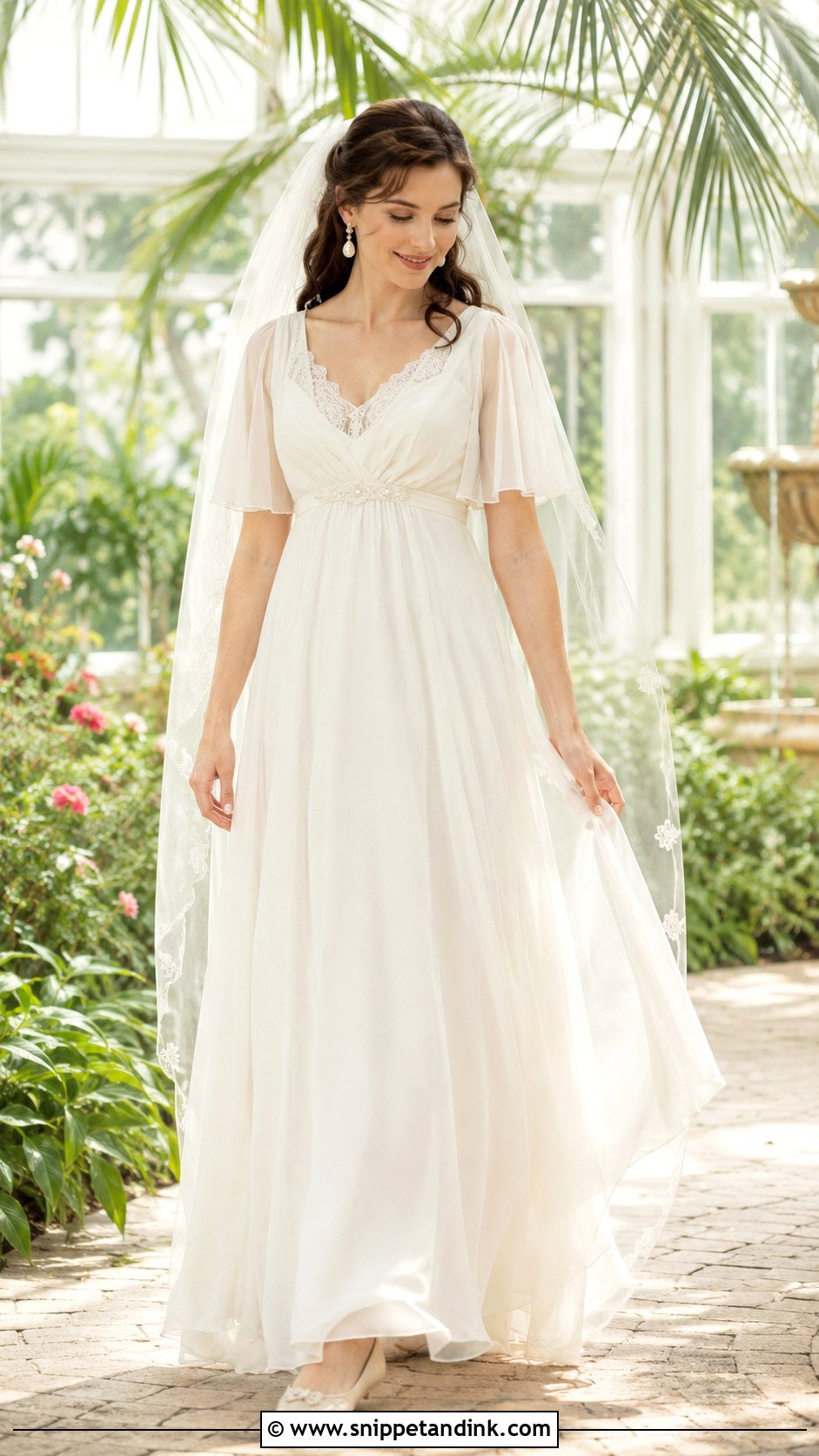
Christine’s white dressing gown leads to the lightest look here. Choose an empire-waist gown in chiffon, silk or soft crepe, with a lace-trimmed neckline, sheer flutter sleeves and a narrow satin ribbon under the bust. Pair it with flats or low heels, pearl earrings, an airy chapel veil and loose waves. Soft fabrics cut close to the body show every line underneath. I send brides to the fitting wearing the exact underwear they’ll wear on the day, because the hem and the ribbon height both depend on it. Hem it for the shoes you’ll actually wear; chiffon dragged across grass picks up stains fast. Intimate gardens, conservatories and morning ceremonies suit it, and it’s the easiest dress in this list to wear for hours.
17. Christine Daae Opera Wedding Dress
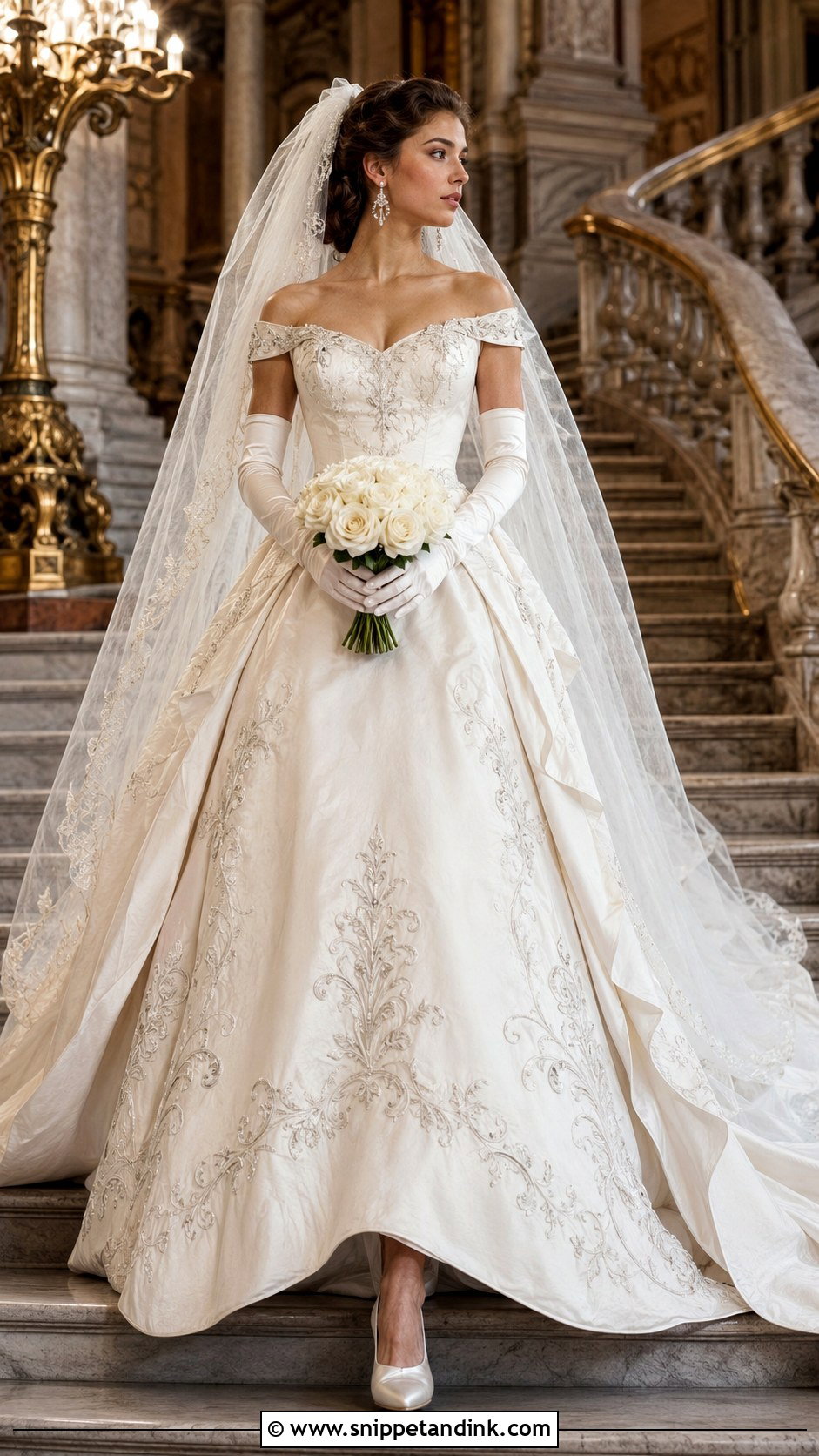
An opera gown should look ready for a grand entrance. An ivory dress with a sculpted neckline, a fitted bodice and a sweeping skirt with embroidered panels; gold or silver threadwork recalls stage costumes, and opera gloves, crystal drops and a cathedral veil with a decorative comb finish it. Metallic thread is scratchy, and it catches tulle. I check whether the veil edge snags on the embroidery when the bride turns her head, and if it does, a plain-edged veil is the answer. Plan for the ring too: opera gloves have to come off, or have a seam opened at the ring finger, before the exchange. Ballrooms, theatres and grand hotels suit it. Rich fabric and strong proportions with fewer accessories keep the bride the focus.
18. Christine Daae Floral Wedding Dress
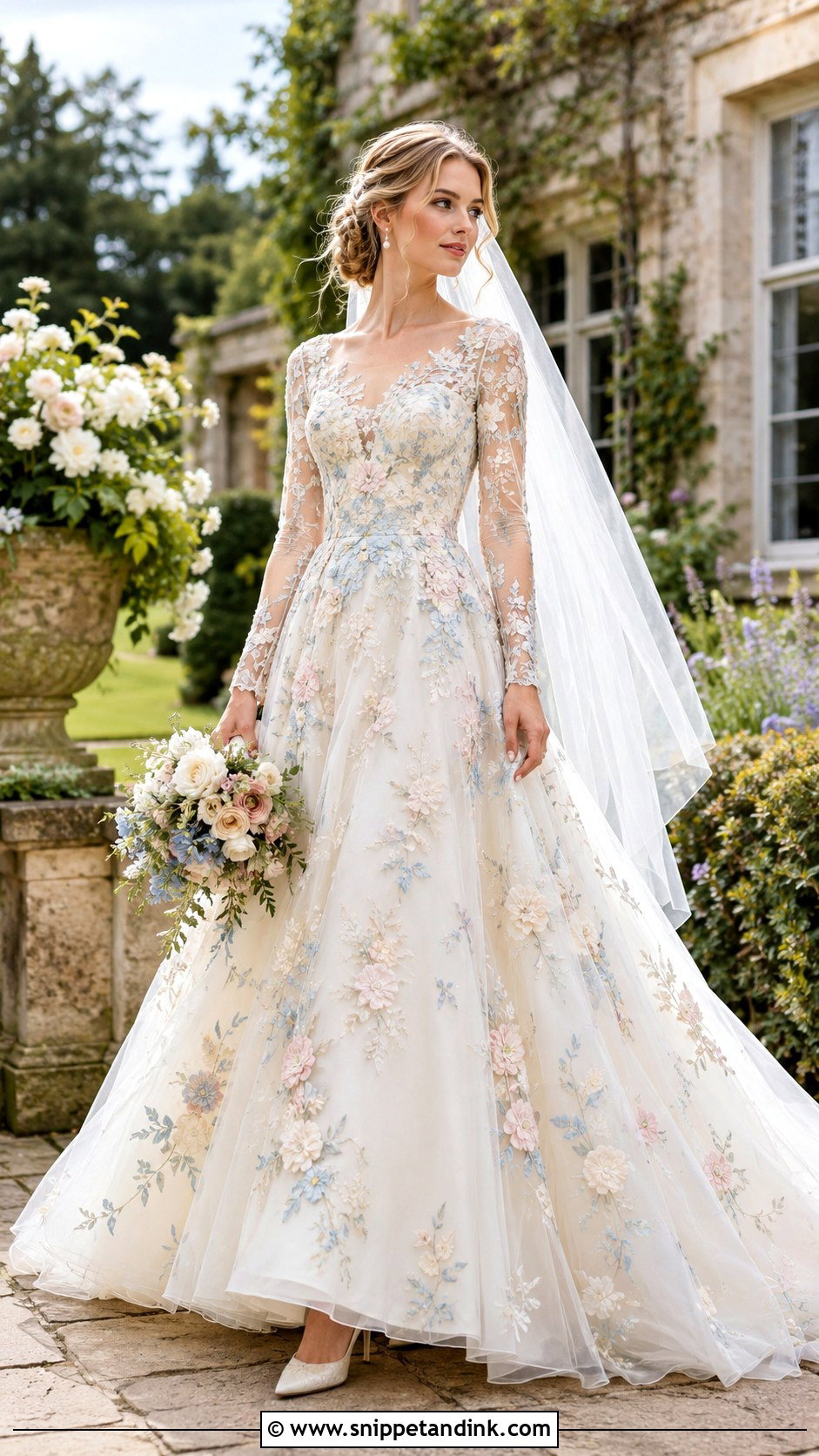
Floral embroidery connects Christine’s feminine costumes with modern bridal fashion. An ivory A-line covered with white, blush or pale blue appliqués, with a fitted bodice, sheer long sleeves and a flowing skirt, plus a tulle veil, pearl earrings and a loose bouquet echoing the embroidery. Small floral pins in a low braided bun tie it together. Raised 3D flowers are lovely in person, but they grab a fine tulle veil, especially at the shoulders. I let the bride walk with the veil on at the fitting to see where it catches, and a heavier tulle or a shorter veil usually solves it. Leave out bold necklaces and decorated gloves. Spring weddings and garden estates suit it.
19. Christine Daae Minimalist Wedding Dress
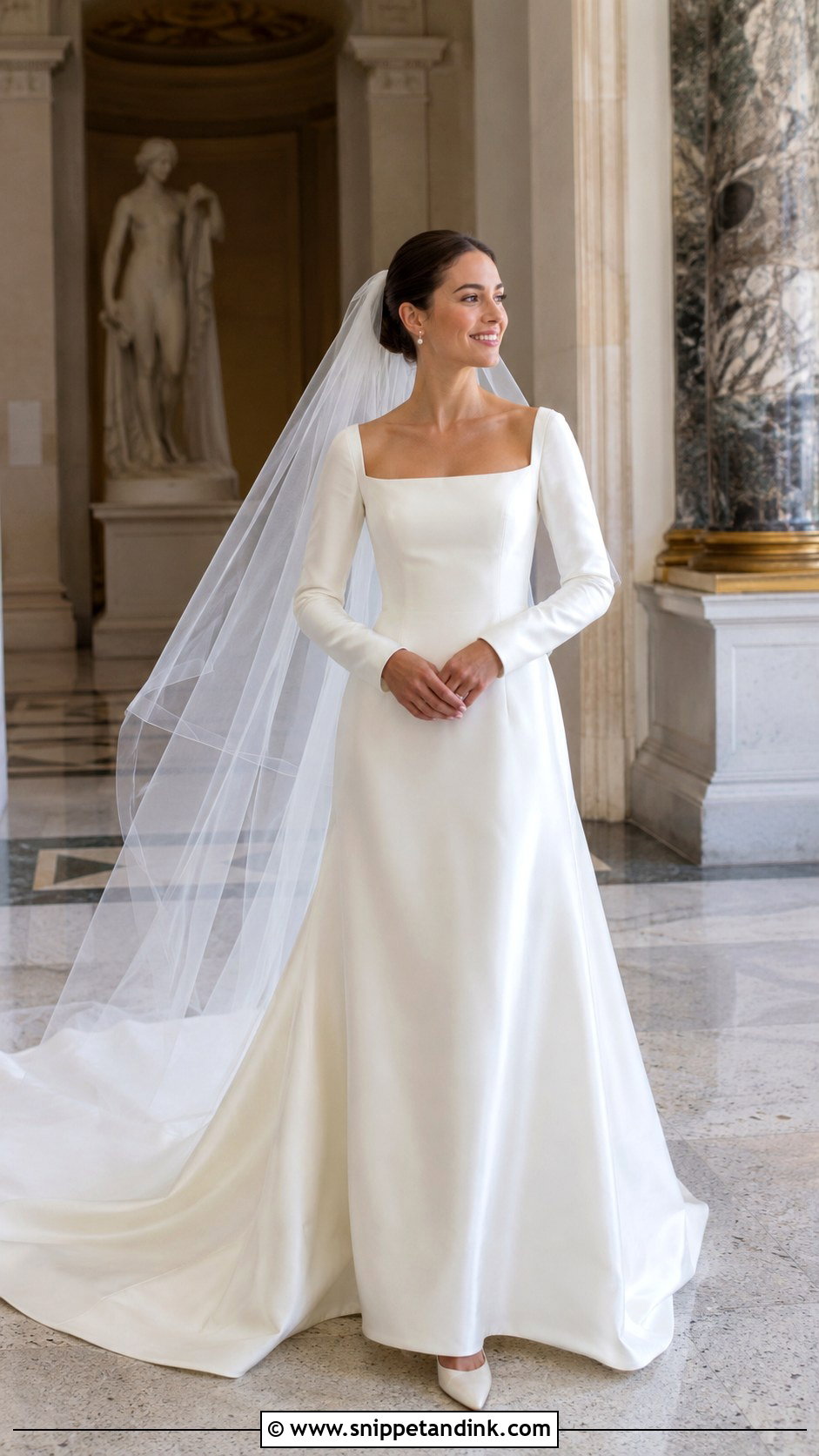
A minimalist gown captures Christine through shape rather than decoration. Clean ivory satin, a fitted bodice, a square neckline, long sleeves and a softly flared skirt, with covered buttons down the back as the only Victorian nod. Add a plain cathedral veil, pearl studs and satin pumps, and keep the hair smooth and the makeup natural to suit the refined aesthetic. With no lace or beading to distract, the fit has to be exact. I spend the most fitting time on dresses like this one, because a slight pull at the bust or a wrinkle at the waist shows immediately. It stands out against an ornate venue, and suits fans who don’t want an obviously themed dress.
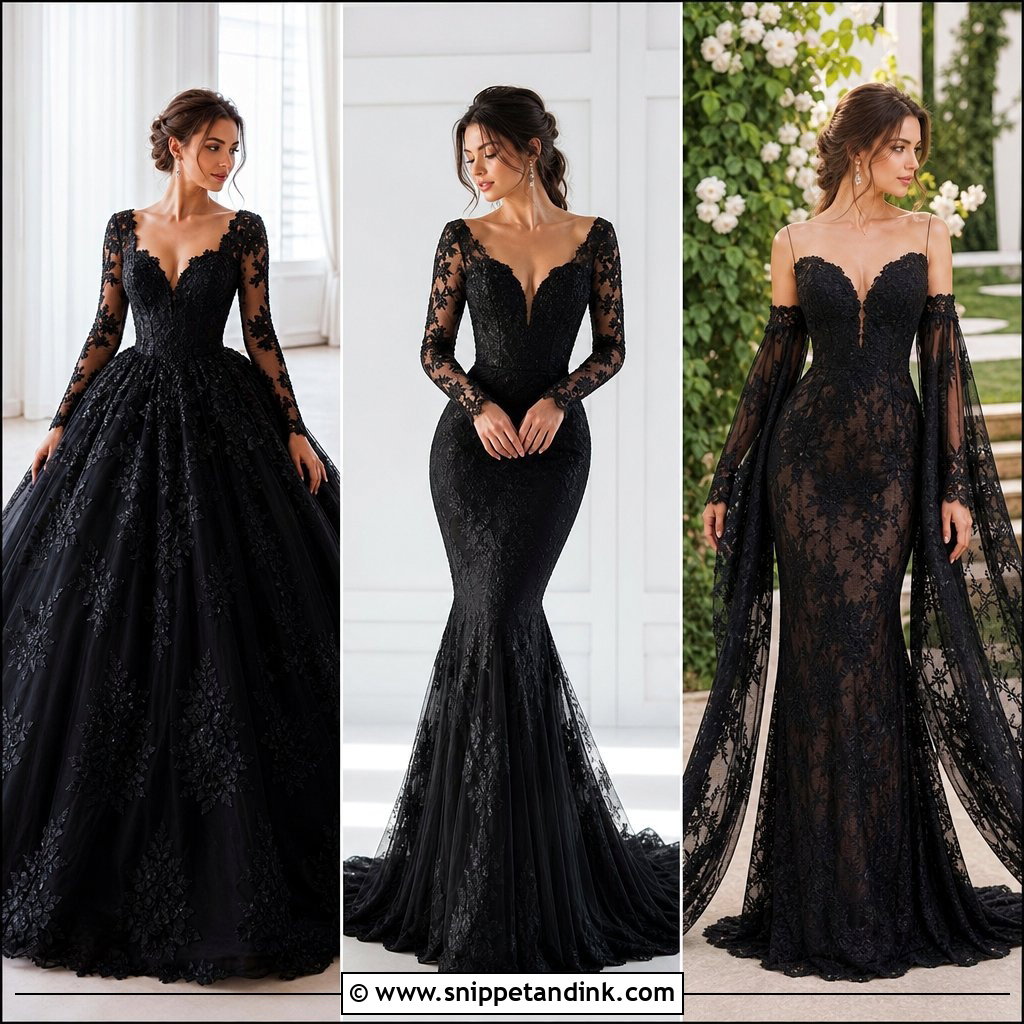
20. Christine Daae Modern Wedding Dress
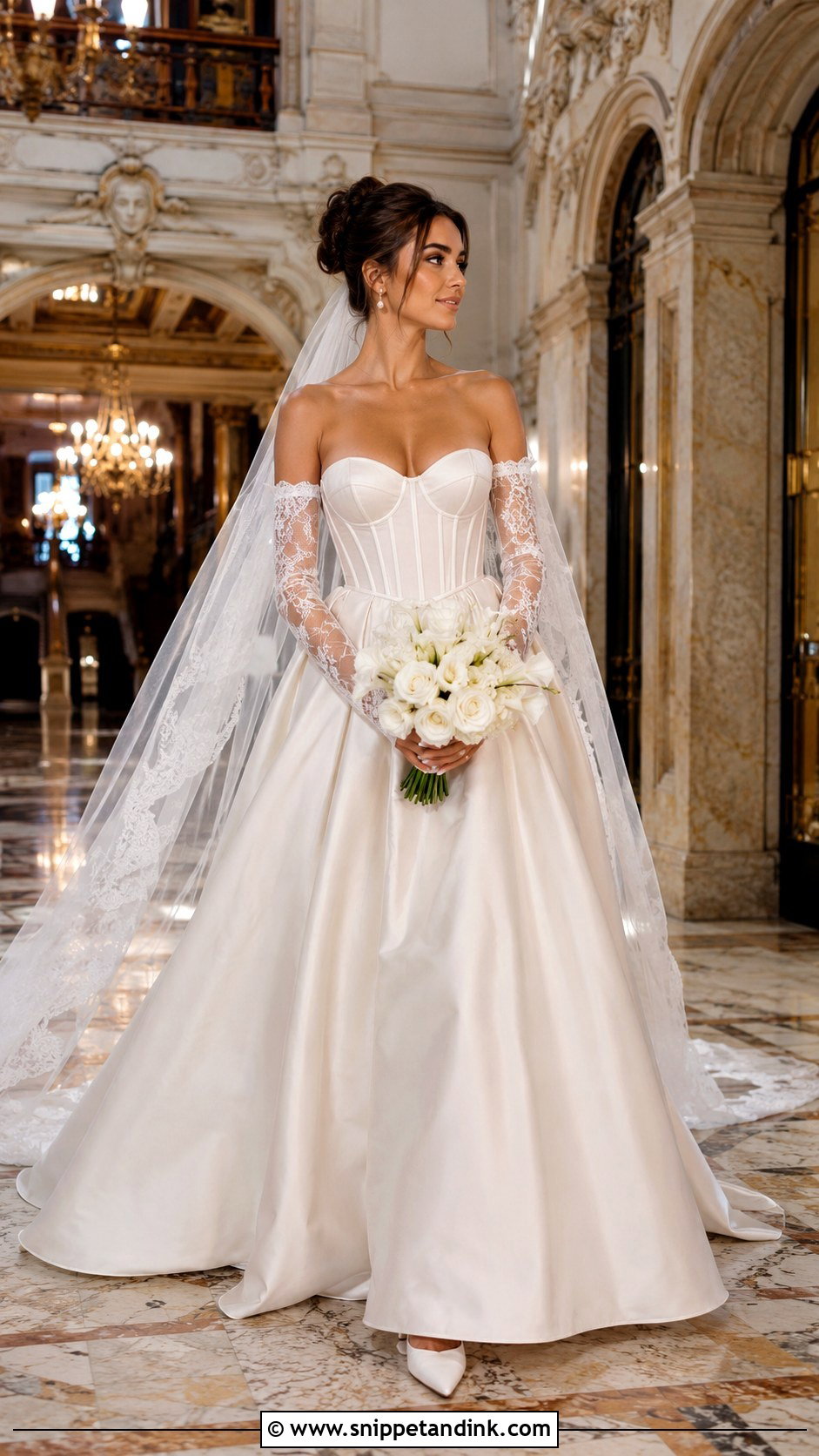
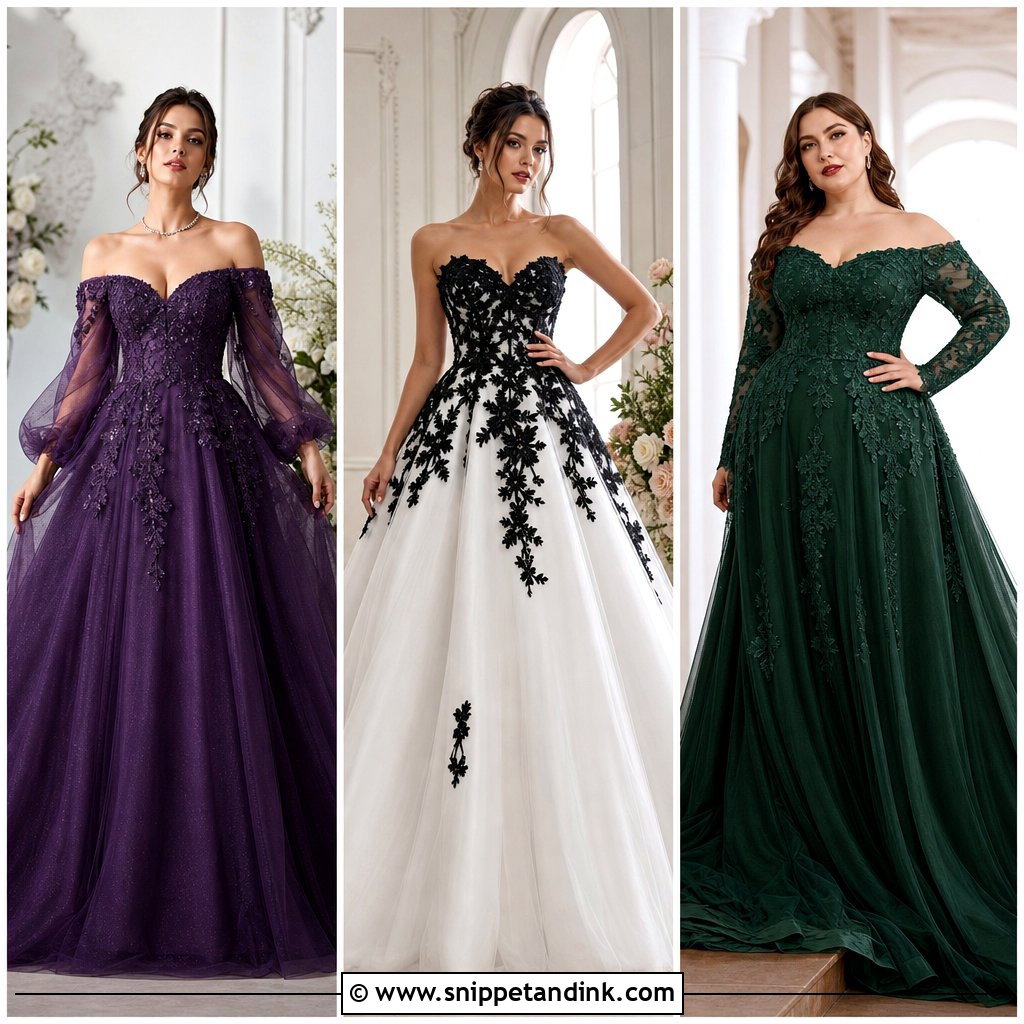
A modern take keeps the period romance and uses current construction to make it practical. A corset-inspired bodice with supportive boning, detachable long sleeves and a clean A-line or ball-gown skirt, with lace only along the neckline or back. Ceremony: cathedral veil, pearl earrings, pointed satin heels. Reception: sleeves and veil off for a streamlined look. Detachable sleeves are only useful if they actually come off quickly. I ask how they attach, whether by snaps, hooks or tiny buttons, and have the bride practise removing them herself at the last fitting. Formal hotels, modern ballrooms, museums and restored theatres all suit it.
Living With a Full Skirt and Train All Day
A dramatic period gown changes how you move through the day, and most of the problems I see come from not planning for it.
Doorways, cars and stairs
Measure the widest point of a hooped or heavily petticoated skirt and compare it with the car you’re using. Going down stairs, lift the front of the skirt with one hand and keep the other on the rail; long trains are safer walked down with someone holding the end.
The restroom question
With a big skirt, this is a two-person job. The easiest method is to sit facing the cistern so the skirt gathers in front of you, with a bridesmaid holding the train. A detachable petticoat makes it much simpler.
After the wedding
Satin and lace both yellow if they’re stored in plastic or folded with sharp creases. I ask brides to have the gown cleaned within a few weeks, so food and drink stains don’t oxidise, and then stored flat in acid-free tissue in a breathable box, away from light. A cathedral veil should be rolled, not folded.
Let the Opera Serve the Bride
A Christine dress works best when the theatre serves you, not the other way round. You don’t need to copy one costume exactly: a pale blue gown, a bustle, masquerade sparkle or a single row of covered buttons can carry the reference. Before you commit, see the gown from the back and side, then sit, walk and dance in it, because a gown that only looks right standing still will wear you out by evening. Pick one strong detail and let the accessories support it, and the result will feel personal rather than borrowed from the stage.
You'll Like These Ideas:



Leave a Reply