
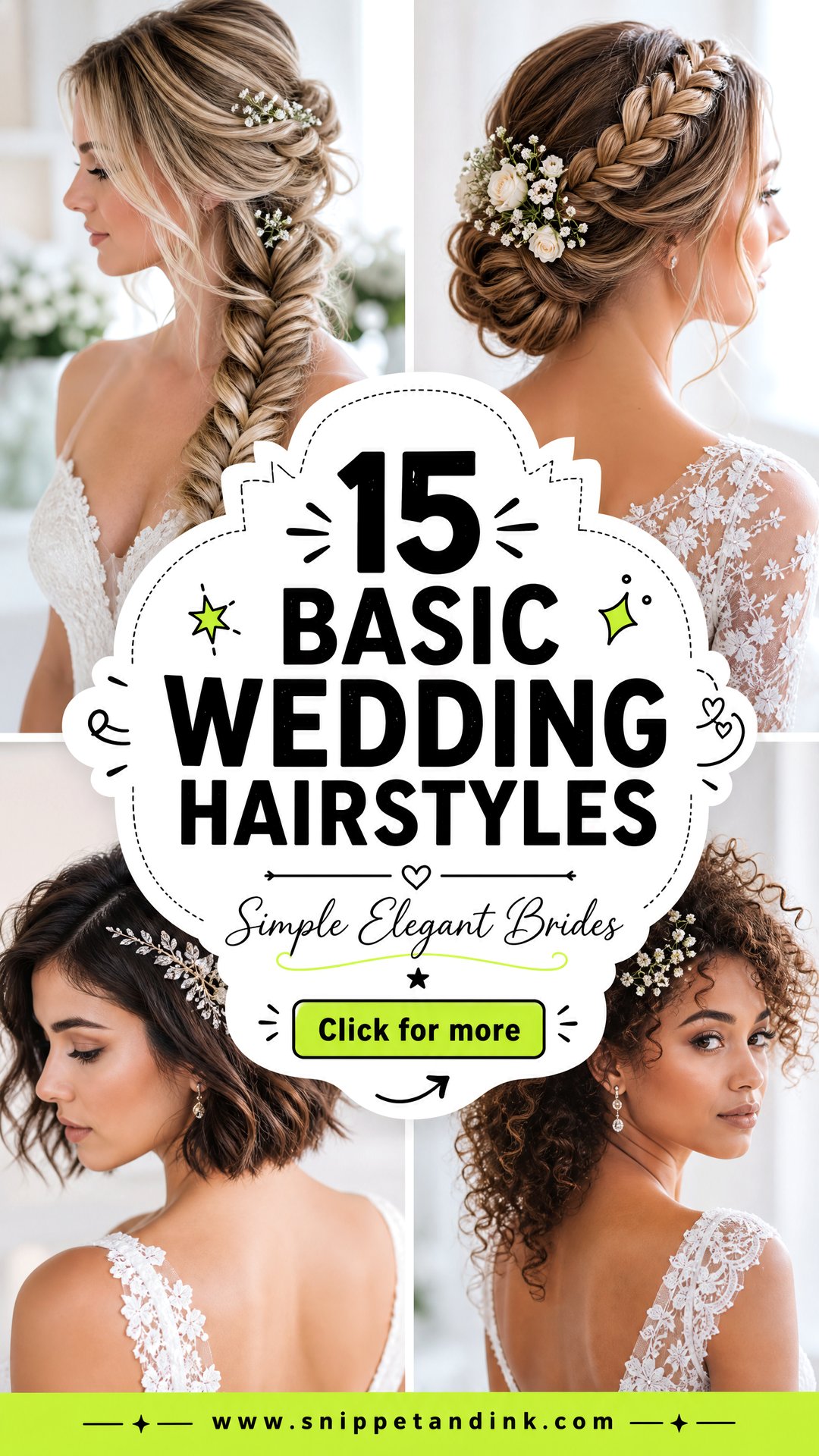
The brides who ask me for something simple usually want the same thing underneath: hair that looks finished in photos but still feels like theirs at midnight. That works for a bridesmaid or a wedding guest too. Simple styles are also the easiest to adjust once you see them with the dress, which is more than I can say for an elaborate set that has to be taken down and rebuilt. Below are the fifteen shapes I build most often, from soft buns and half-up waves to sleek ponytails, braids and natural curls, with notes on what each one needs to hold and who it suits.
Your Neckline Narrows This List Fast
When a bride shows me a folder of forty hairstyles, the first thing I ask for is a photo of the dress. The neckline rules out more styles than anything else, and it saves a lot of trial time.
- High neck or lace collar: hair up and away from the fabric. A low bun or chignon keeps the neck clear; long waves just bunch against the collar.
- Strapless or sweetheart: almost anything works, but bare shoulders look balanced with some hair down, so half up or a side braid is my usual suggestion.
- Open or low back: the back detail is the whole point of the dress, so I’d keep hair off it with a ponytail or an updo.
- Off the shoulder: a side braid or a low twisted updo frames the collarbone without covering it.
- One shoulder: sweep the hair to the bare side, never over the strap.
Bring a photo taken from behind as well as from the front. A style can look right in the mirror and still cover the buttons or lace you chose the dress for.
1. Low Bun Wedding Hairstyle
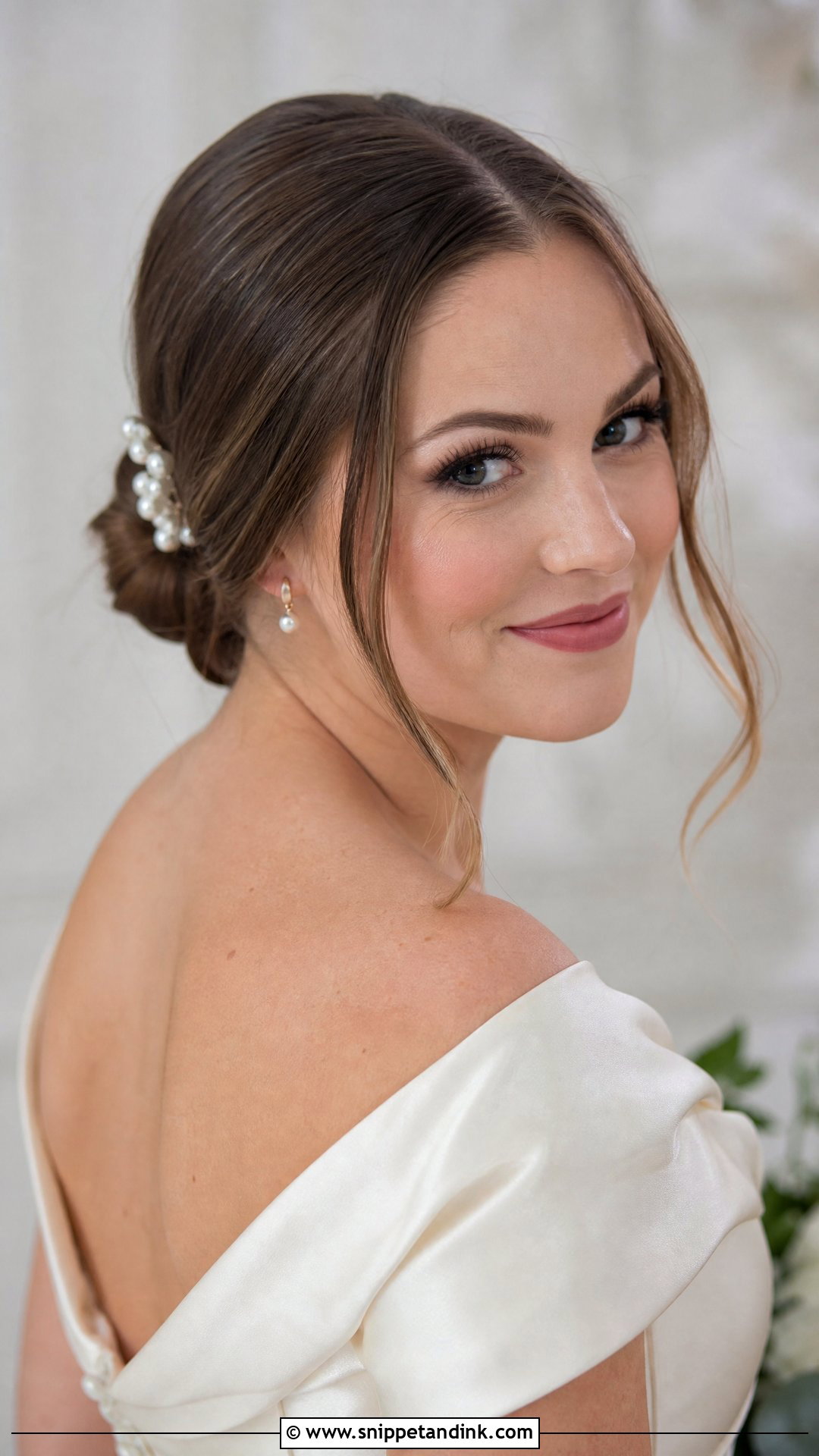
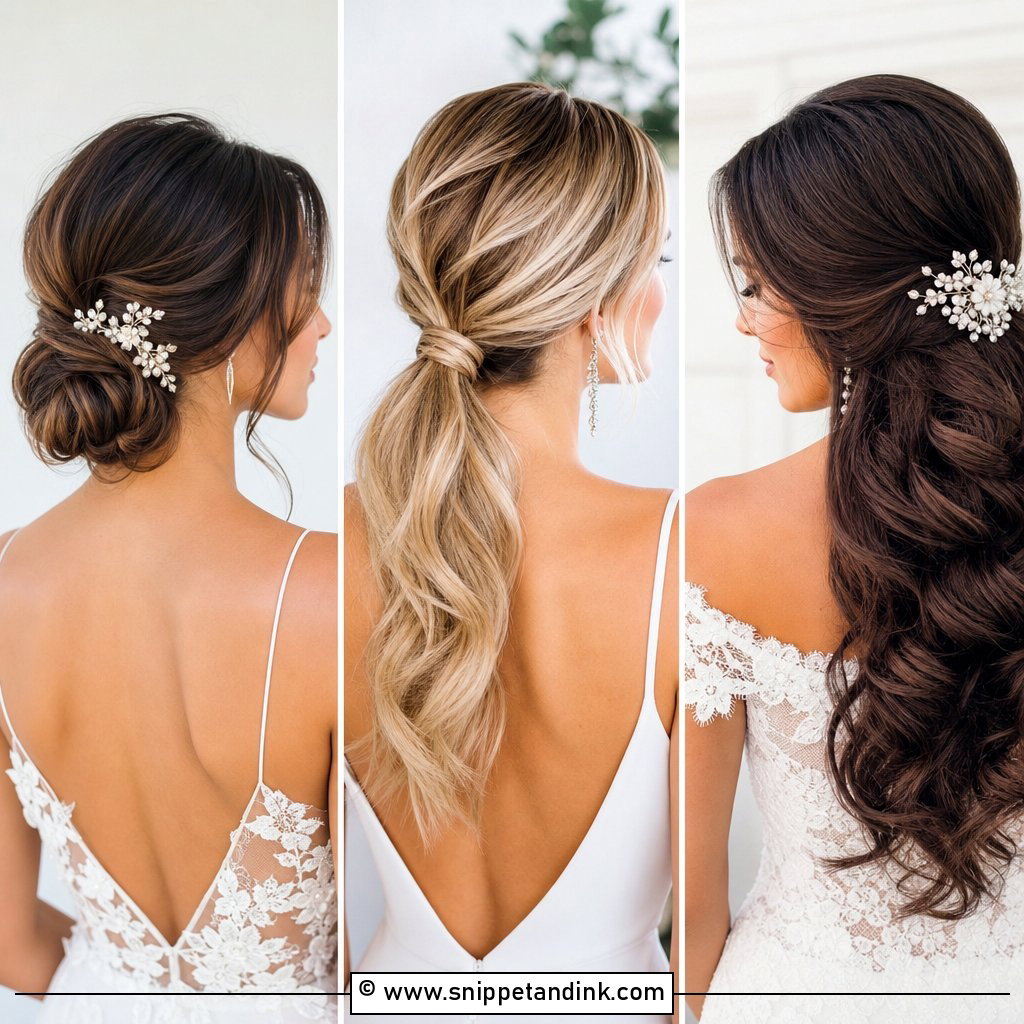
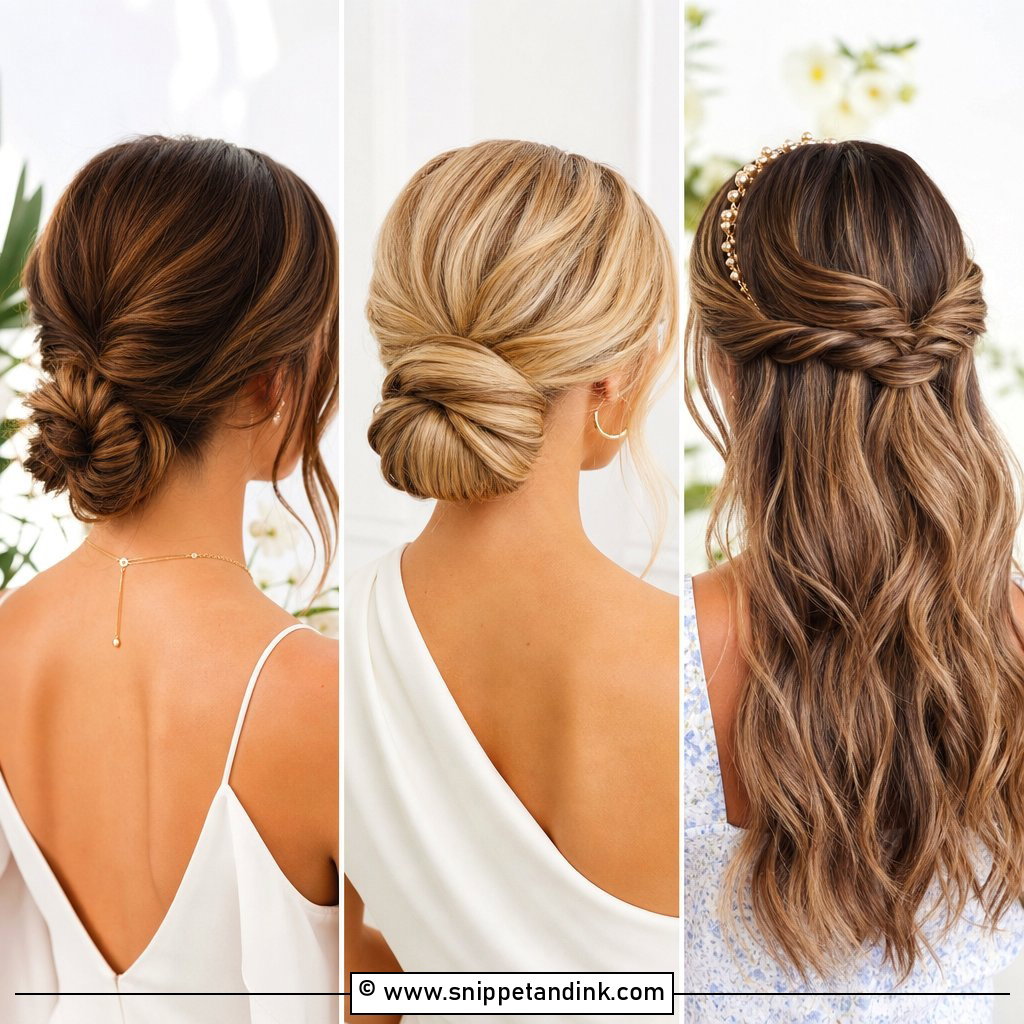
If I had to pick one style to recommend blind, it would be the low bun. Sitting near the nape, it stays out of the way of veils, statement earrings, open backs and high necklines alike. A center part and a sleek finish read modern; a few face-framing pieces soften it. It needs medium to long hair, and the secret to all-day hold is pinning the bun into a small anchor ponytail rather than into loose hair. One pearl pin or a small comb is enough decoration, since anything bigger starts fighting with the dress.
2. Messy Bun Wedding Hairstyle
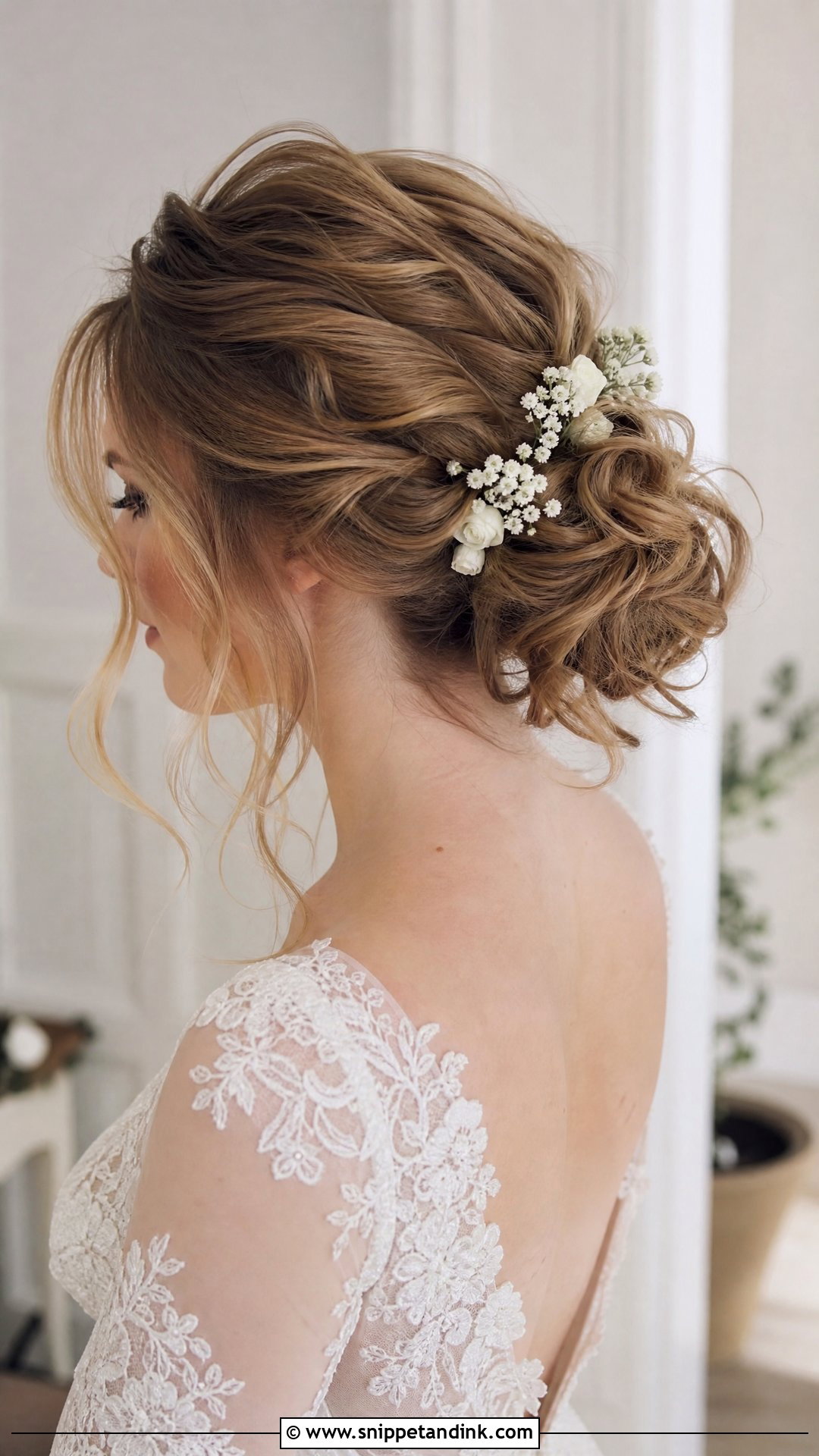
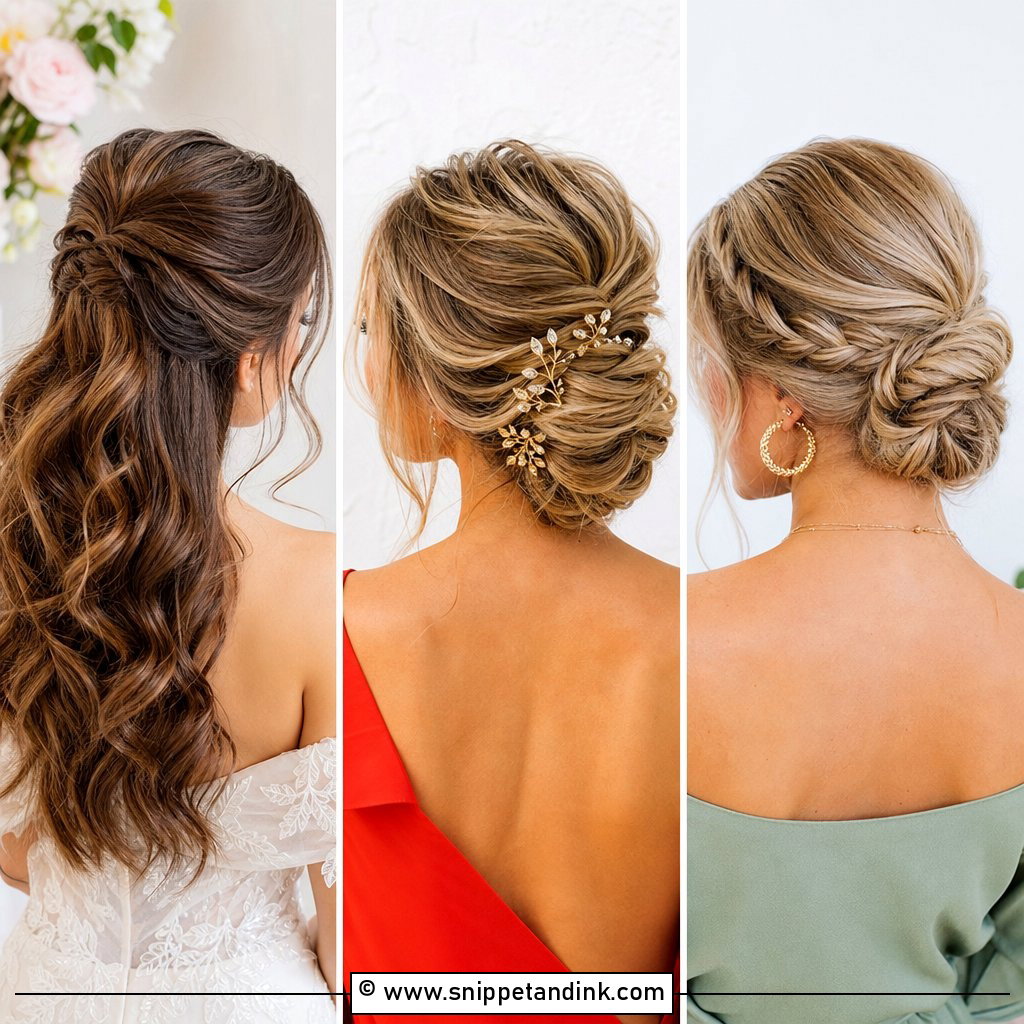
Messy is the wrong word, really. What makes this bun work is controlled softness: volume built at the crown, sections twisted into a loose shape and a few chosen strands left around the face. I spray texture through the hair before I pin anything, otherwise freshly washed hair just slides out. Garden, beach and rustic weddings suit it, and it keeps hair off the neck on a hot day. Small flowers or a couple of pearl pins move it from relaxed to bridal.
3. Half Up Half Down Wedding Hairstyle
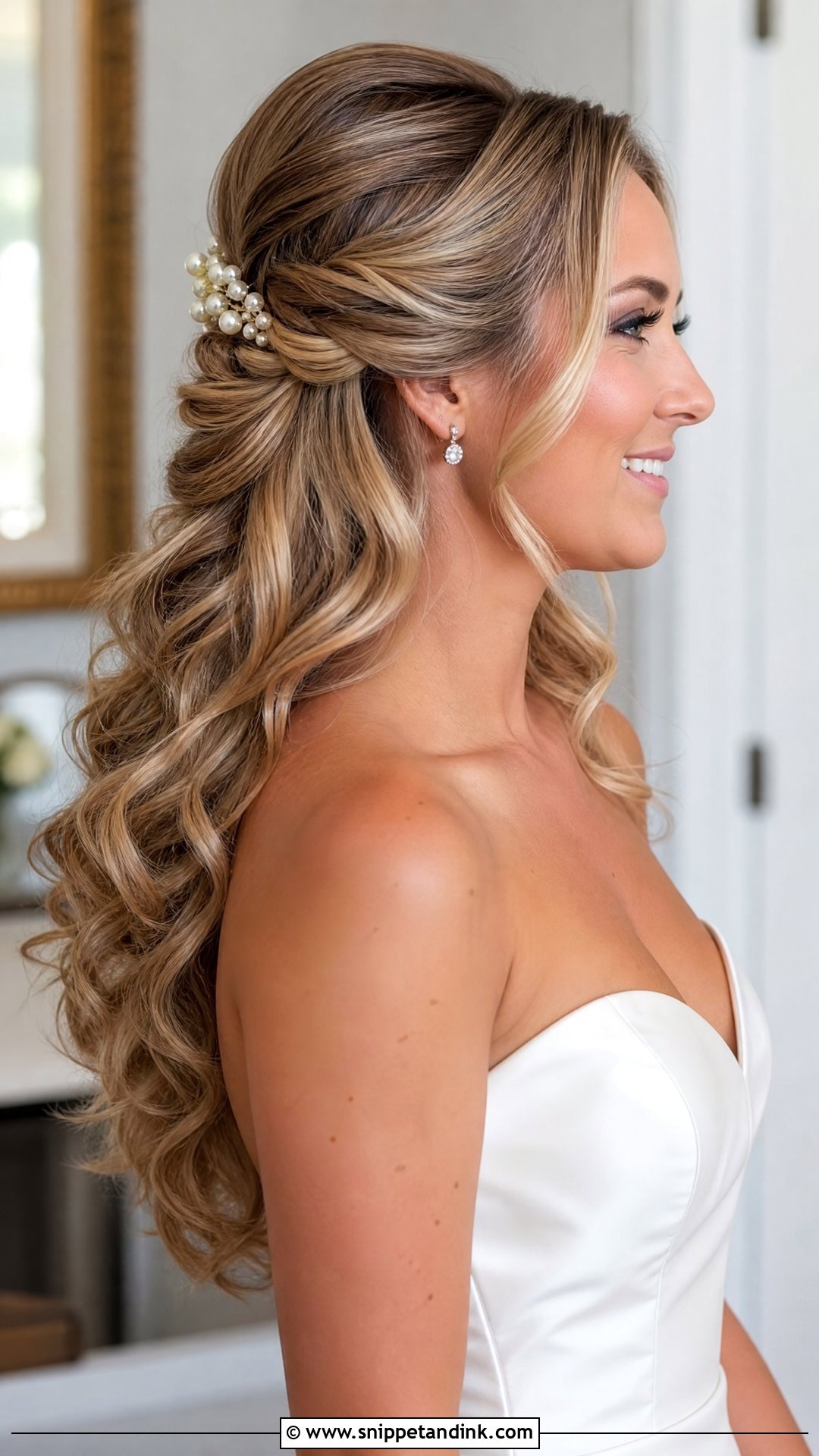
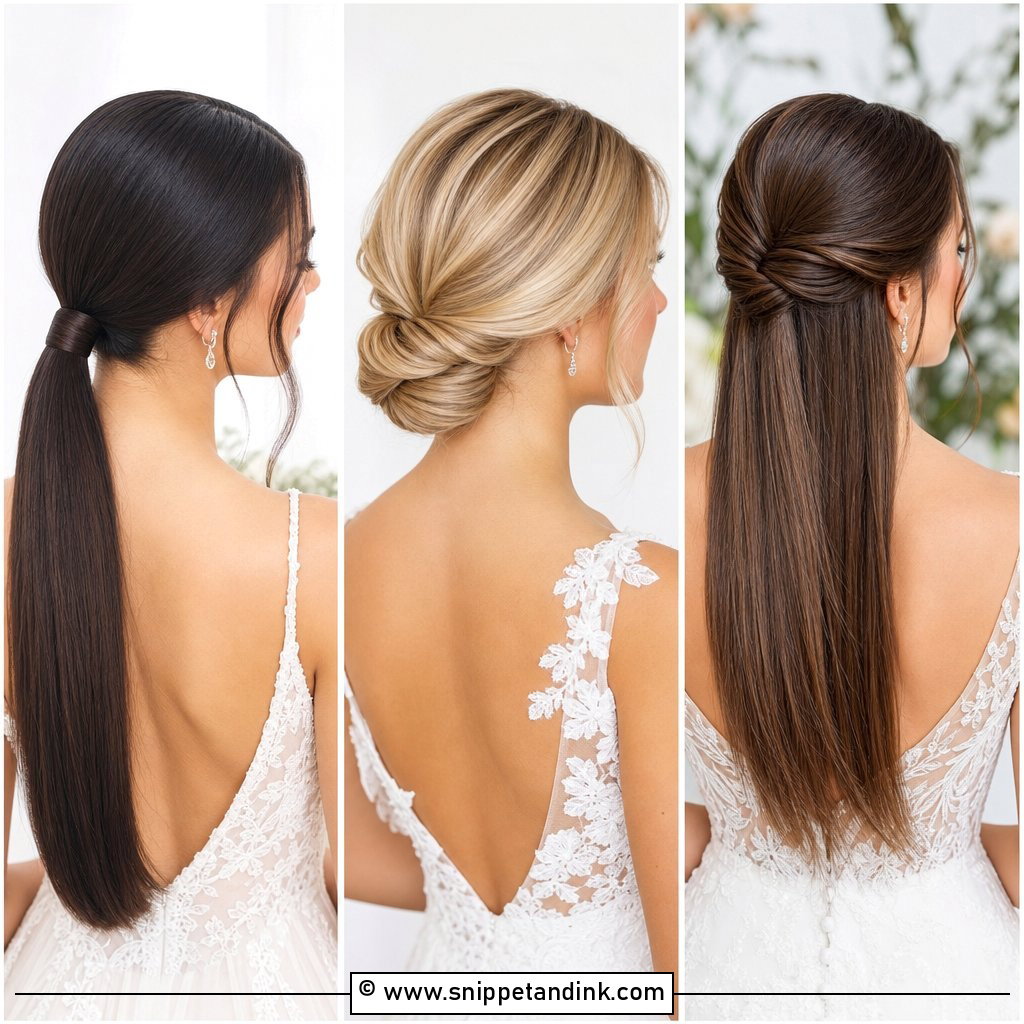
Hair that keeps falling forward during the day is the classic reason to choose half up, half down. The top section gets pulled back, twisted, braided or softly pinned, and the rest falls in curls or waves, so you keep length without fiddling with it during the vows. It works with nearly every dress. Smooth reads classic, textured reads relaxed. The gathered point at the back is also the natural place for a veil comb, bow, floral pin or pearl comb, so plan your accessory and the pin placement together.
4. Soft Waves Wedding Hairstyle
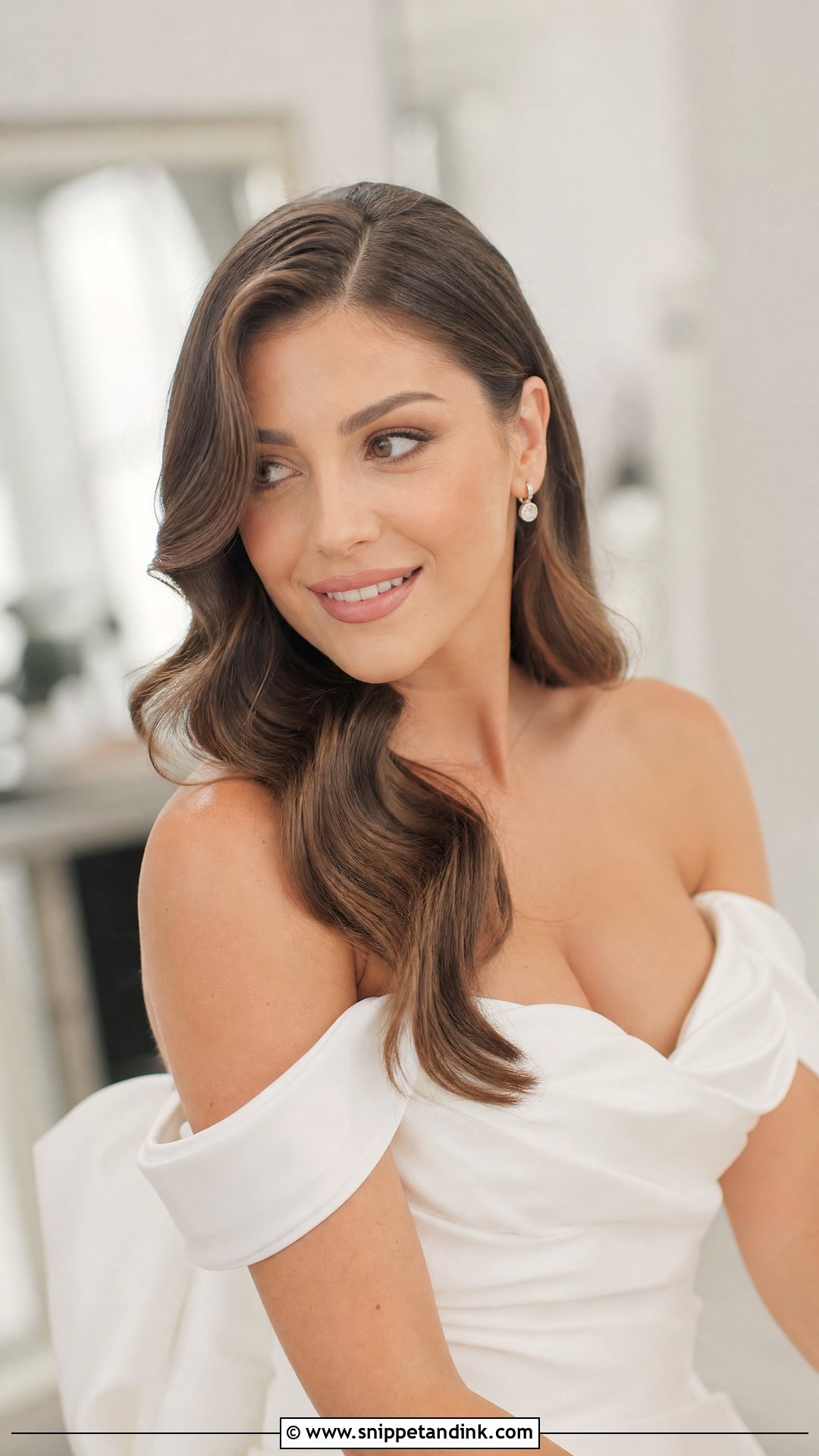
Waves only look soft in photos when they’re smooth, and that comes from the prep, not the iron. I want a little shine and movement at the ends, nothing that looks set or crispy. Long, medium, layered and even shoulder-length hair can all carry them. A side part brings a touch of glamour; a center part keeps it simple. I finish with a flexible hairspray and a light shine mist, and I’d warn anyone with very fine hair that waves will relax by the evening no matter what we use.
5. Sleek Low Ponytail Wedding Hairstyle
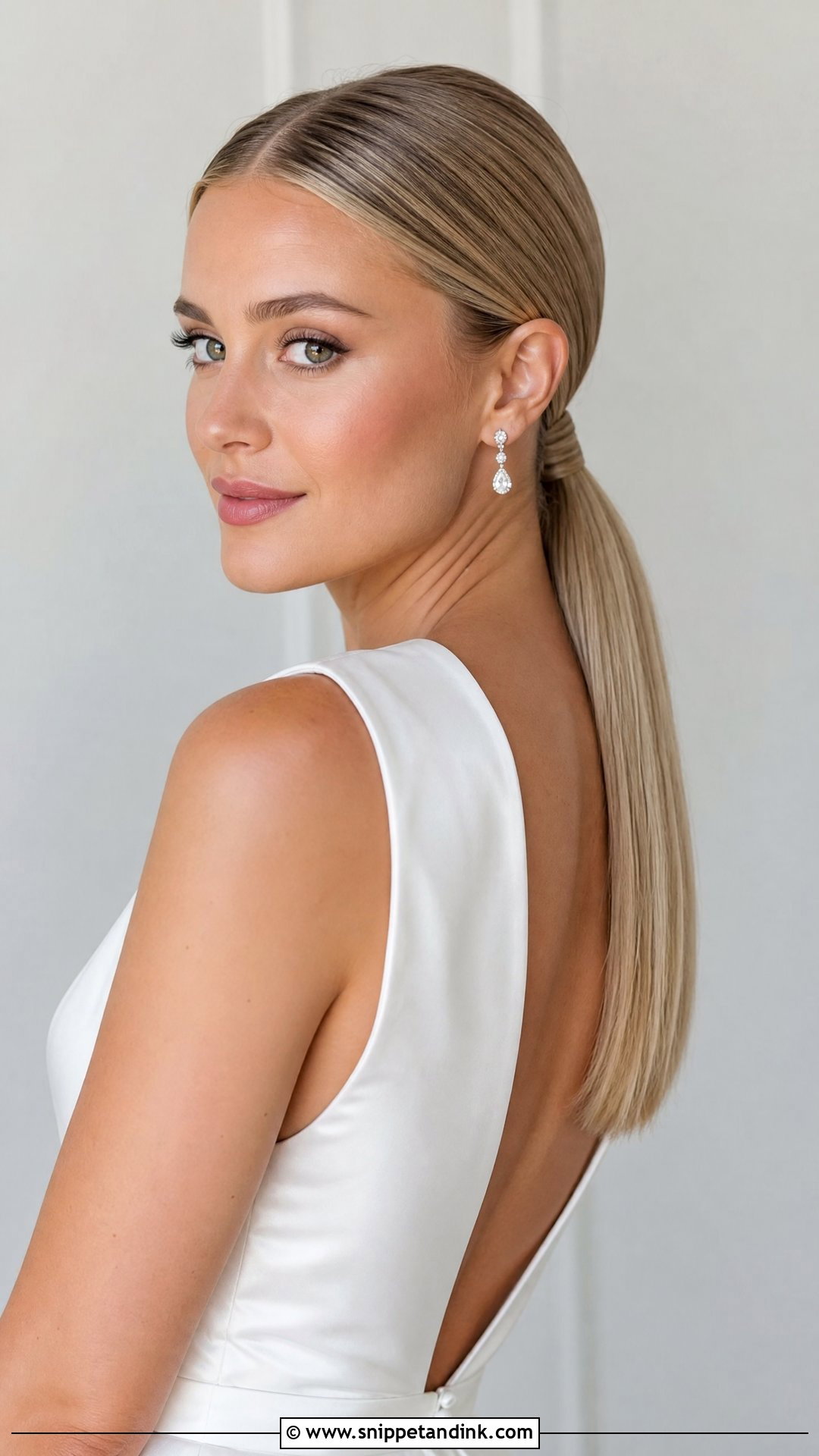
Clean lines and very little fuss: a sleek low ponytail is one of the most underrated looks on any bridal list. I smooth everything back or part it neatly, tie it at the nape, then wrap a small section around the elastic and pin it from underneath. It looks sharpest with minimal gowns, square necklines, satin and bold earrings. The lengths can be straight, softly curled or waved. Outdoors, humidity and wind are its weakness, so I use a smoothing cream along the hairline and set it with a firmer spray than I would indoors.
6. High Ponytail Wedding Hairstyle
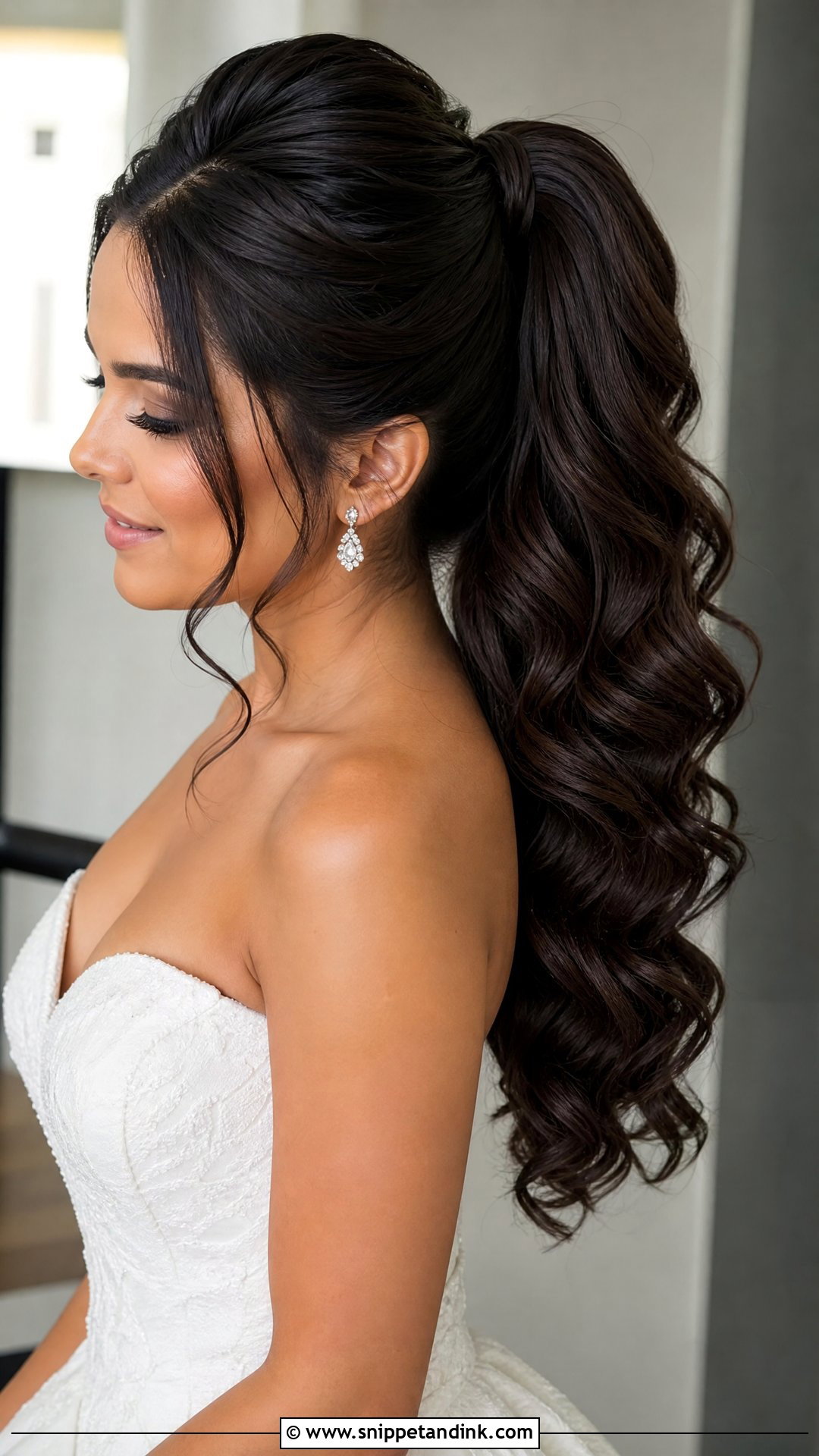
A high ponytail gives the face a subtle lift and keeps the shoulders bare, which is why I suggest it for strapless gowns, one-shoulder dresses and reception changes. The lengths can be curled, waved or kept smooth. Volume at the crown stops it reading casual. My rule for the base is secure but never painful; if you feel tension at the hairline after ten minutes, it will be a headache by dinner. A wrapped base, a pearl clip or a soft ribbon covers the elastic.
7. Chignon Wedding Hairstyle
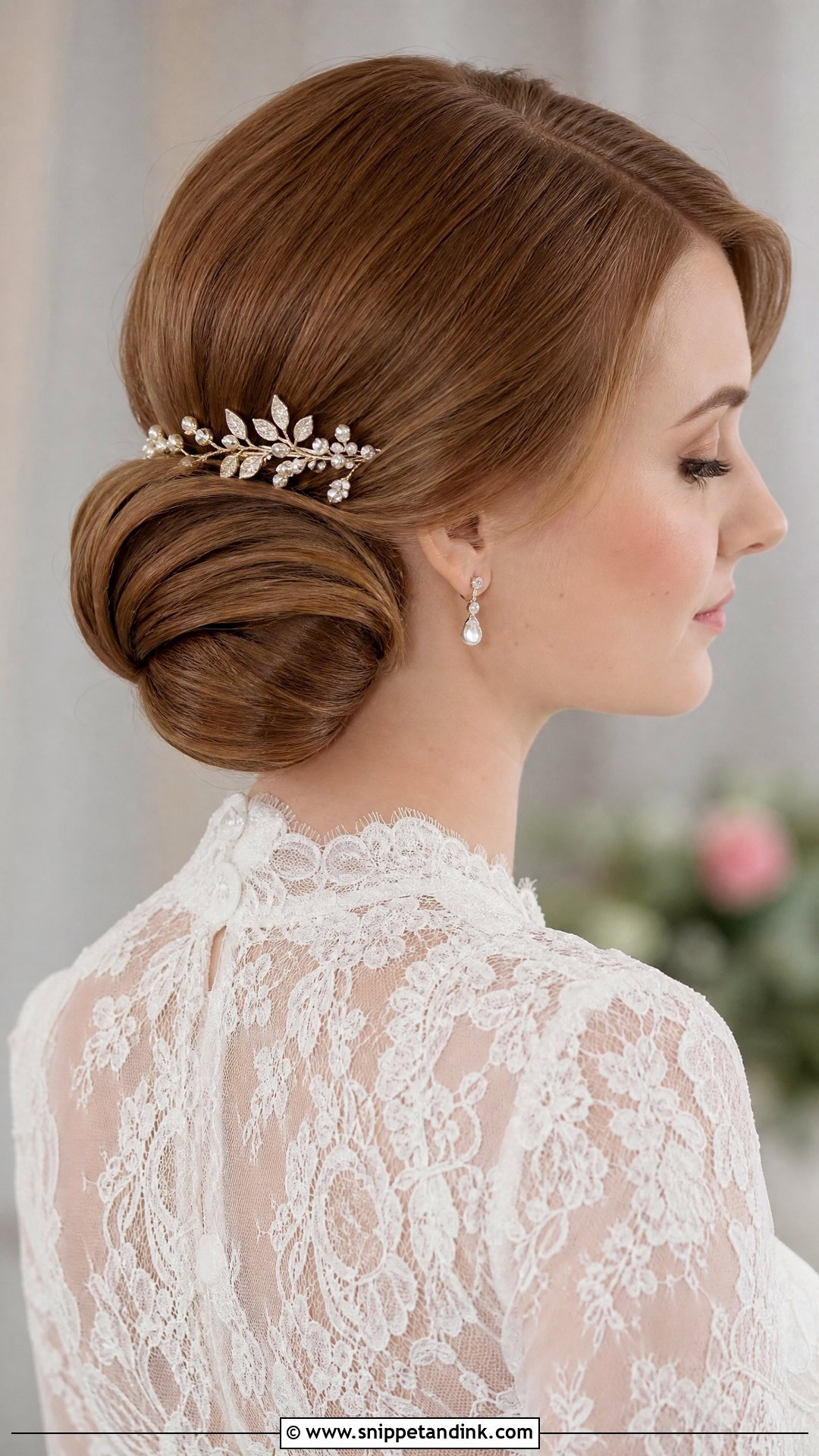
A chignon is tucked, rolled or twisted close to the nape, and the shape is so compact that it reads refined from every angle. Formal weddings, classic gowns, lace dresses and cathedral veils all suit it. Sleek is the more formal version; a bit of texture softens it. Practically, it keeps the neckline open and the hair in place through hours of hugging. I’d keep decoration to one side, a delicate comb or a few small pins around the tuck, so the clean outline still shows.
8. Braided Bun Wedding Hairstyle
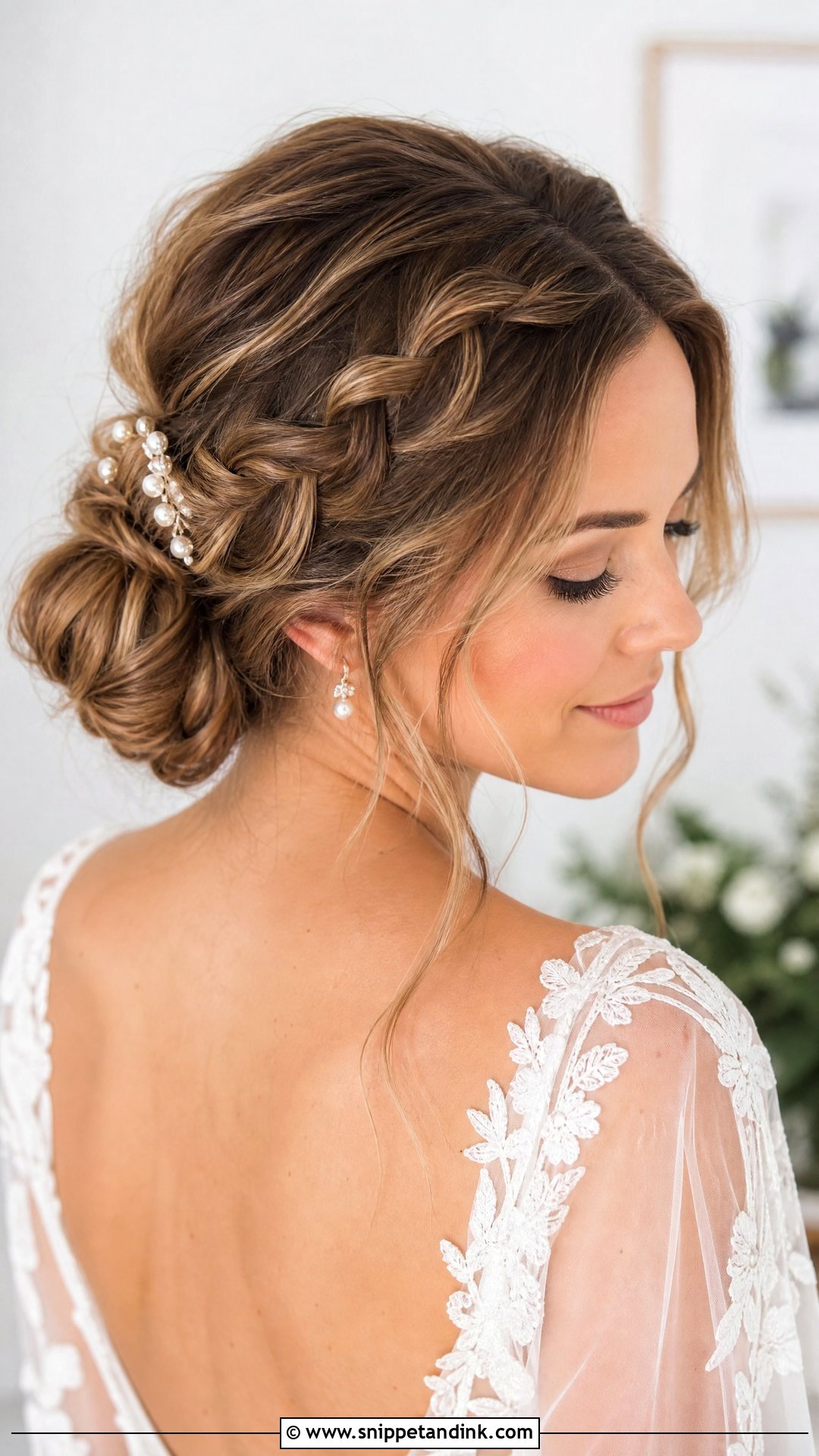
Hair that slips out of ordinary buns is my main reason to braid first. The braid is wrapped into the bun instead of hanging, and its texture gives every pin something to hold, so it stays put far better on silky or fine hair. It also adds detail from every angle. A loose, pancaked braid looks romantic; a tighter one looks polished. Tiny flowers, pearls or a slim hair vine suit it, as long as you leave some of the braid visible.
9. Side Braid Wedding Hairstyle
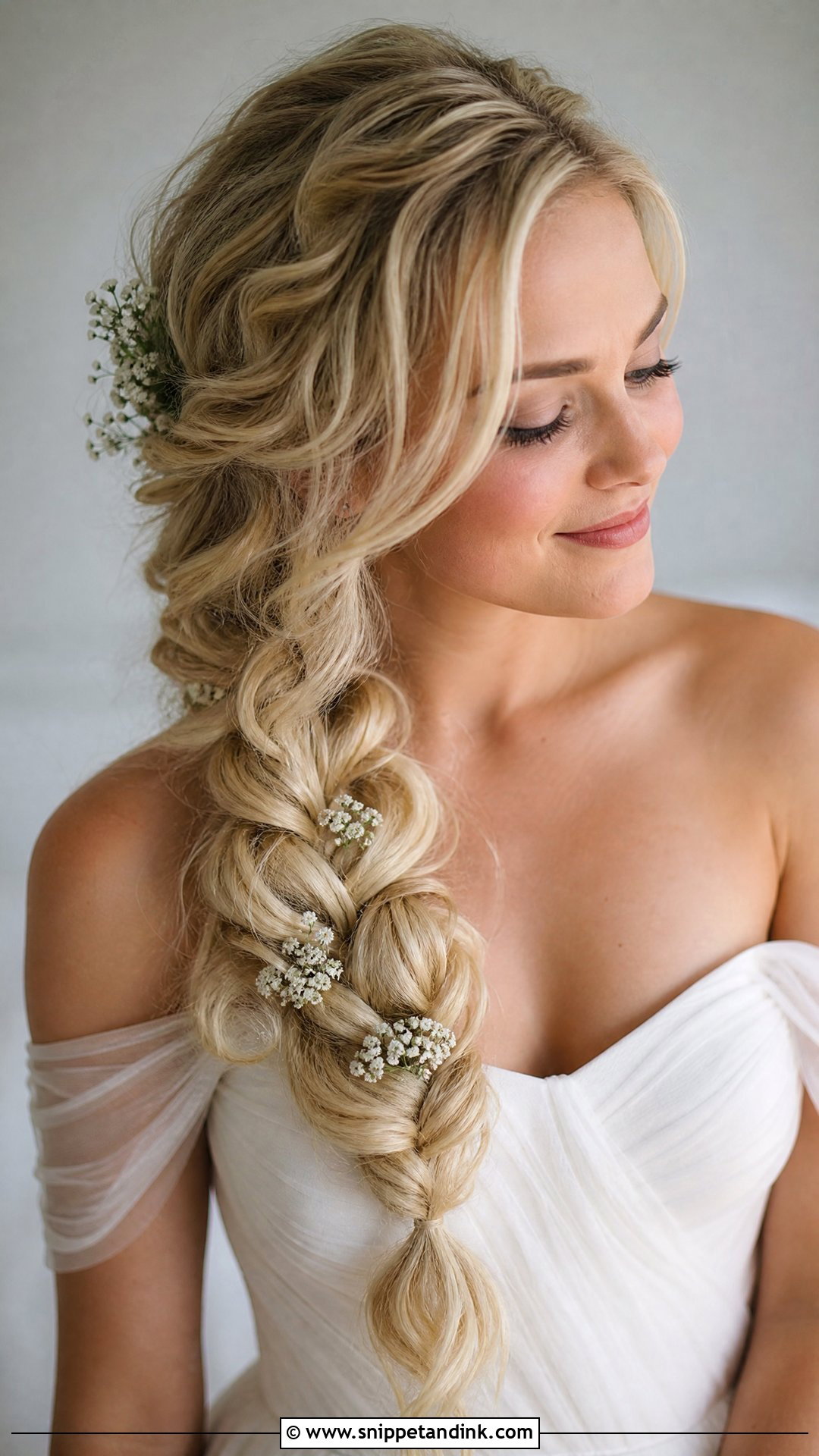
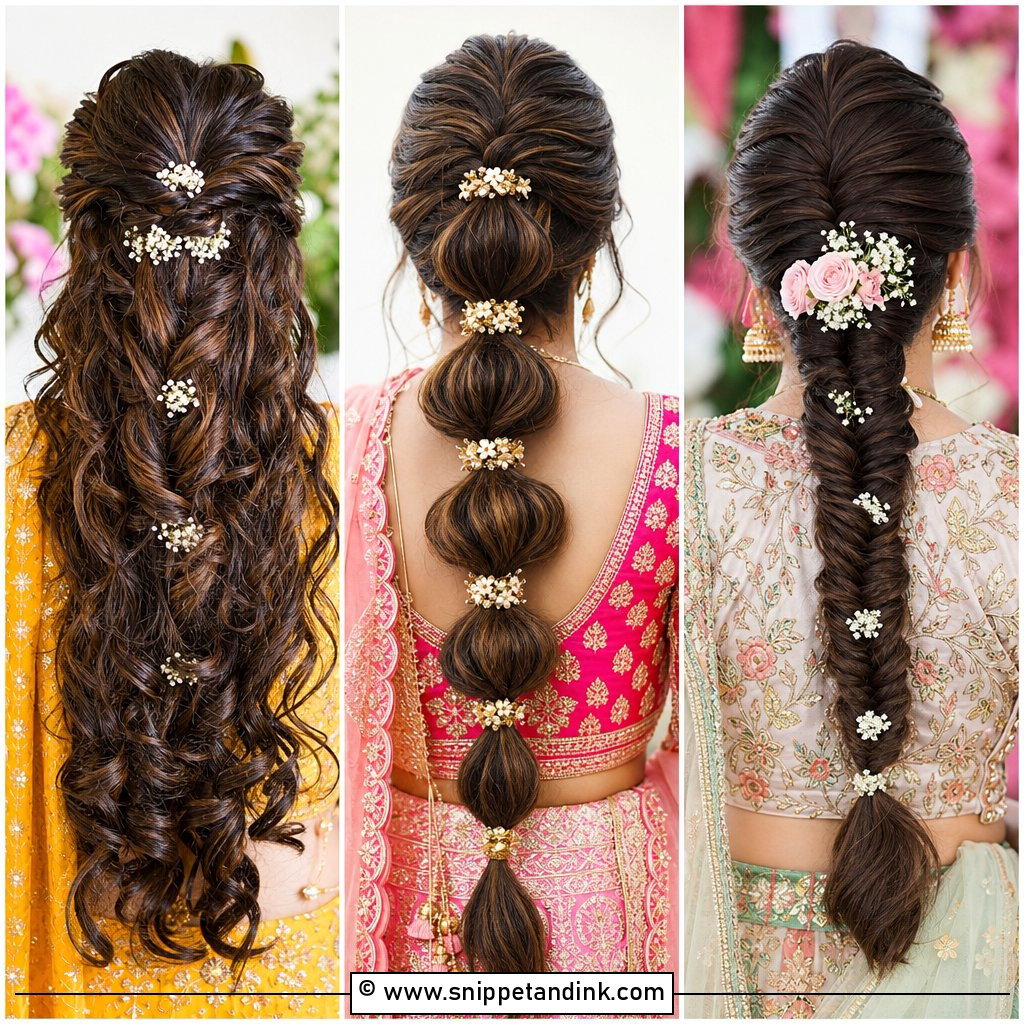
The side braid rests over one shoulder, so it shows clearly in photos and works especially well with off-the-shoulder dresses. It can be a classic three-strand braid, a fishtail or a loose Dutch braid, depending on the texture you want. I pull it apart gently for fullness, and clip-in extensions are a good idea if your hair ends above the chest, because a short side braid looks thin. Keep the crown smooth or add a little root volume. A ribbon, small floral pins or pearl accents finish it.
10. Crown Braid Wedding Hairstyle
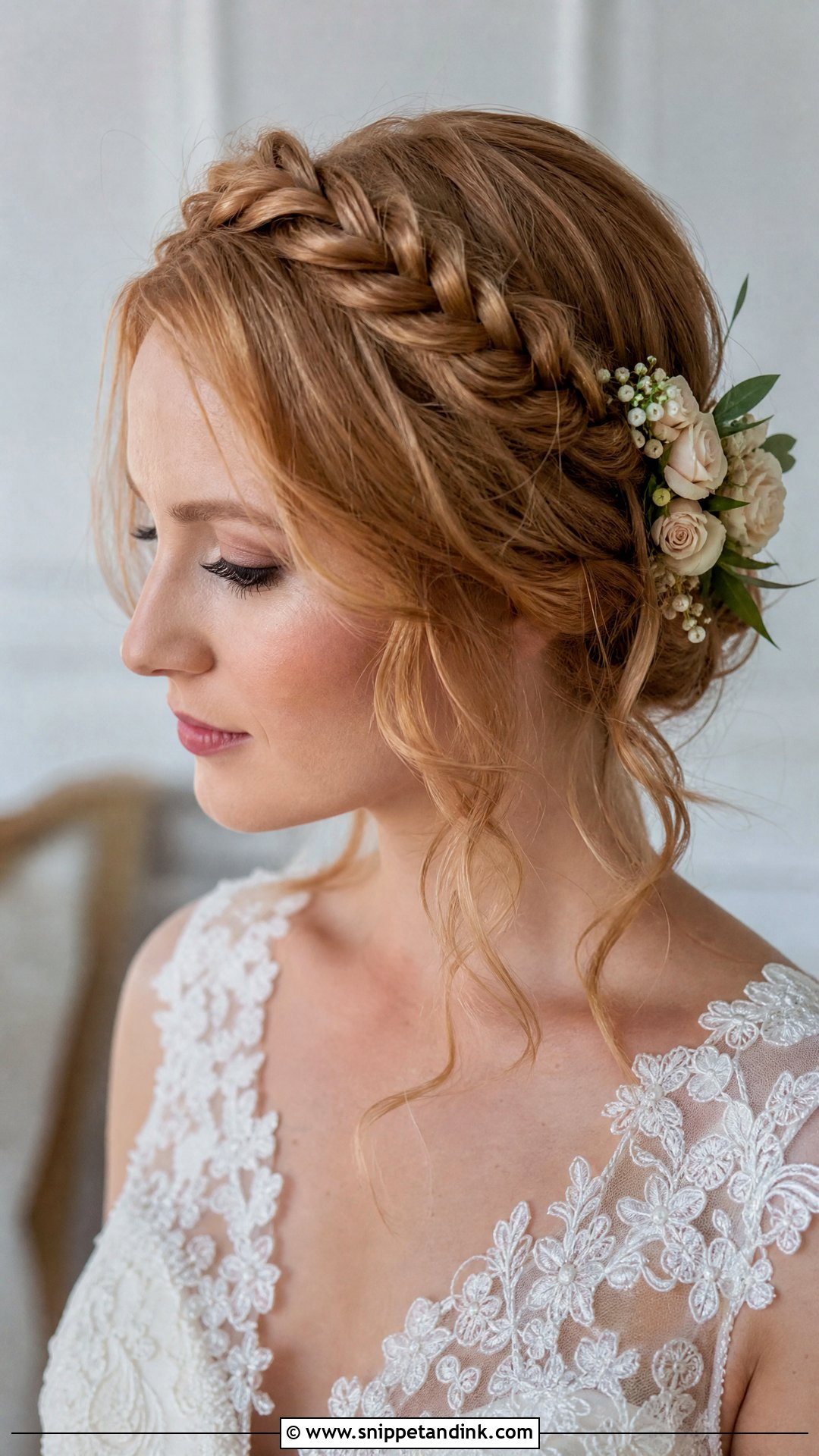
Wrapped around the head or laid across the front, a crown braid behaves like a hair accessory you can’t lose. It keeps hair secure in warm weather and through long celebrations, which is why outdoor and boho weddings love it. The rest of the hair can be tucked into an updo or left in waves at the back. My biggest correction at trials is tension: a tight crown braid looks dated and pulls at the scalp, while a loosened one with soft face pieces looks modern. Lace, florals and a simple veil all pair with it.
11. Twisted Updo Wedding Hairstyle
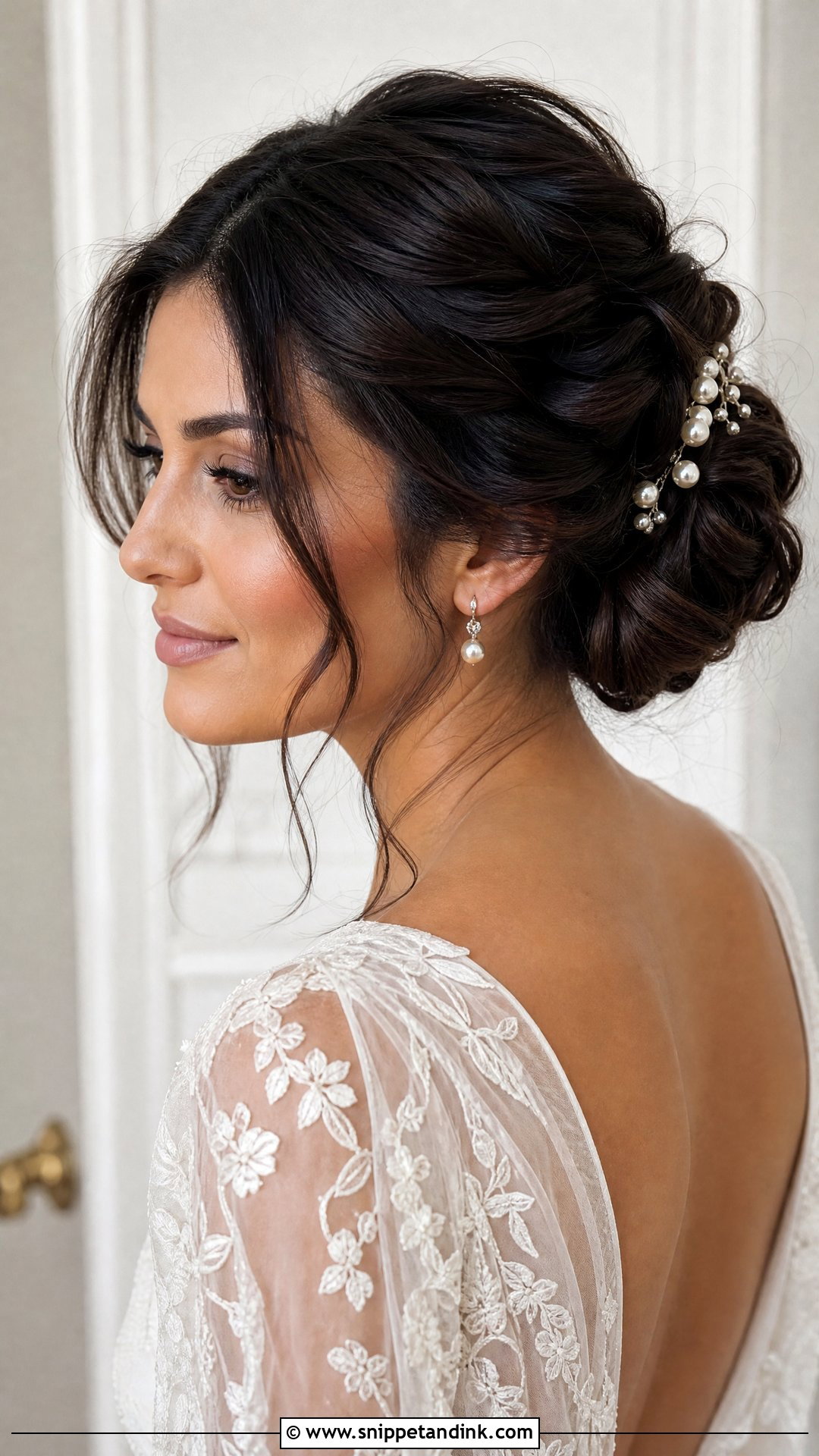
Twisting is faster than braiding and kinder to hair that doesn’t braid neatly. Sections are twisted and pinned into a low or mid-height shape, giving movement without looking busy. It suits straight, wavy, and lightly curled hair, and it’s a good choice when a bride wants something romantic that she can sit, dance and hug in comfortably. Pearl pins, floral combs and fine veils all attach easily between the twists. Ask for a few loose pieces at the front if you want it to feel less formal.
12. Loose Curls Wedding Hairstyle
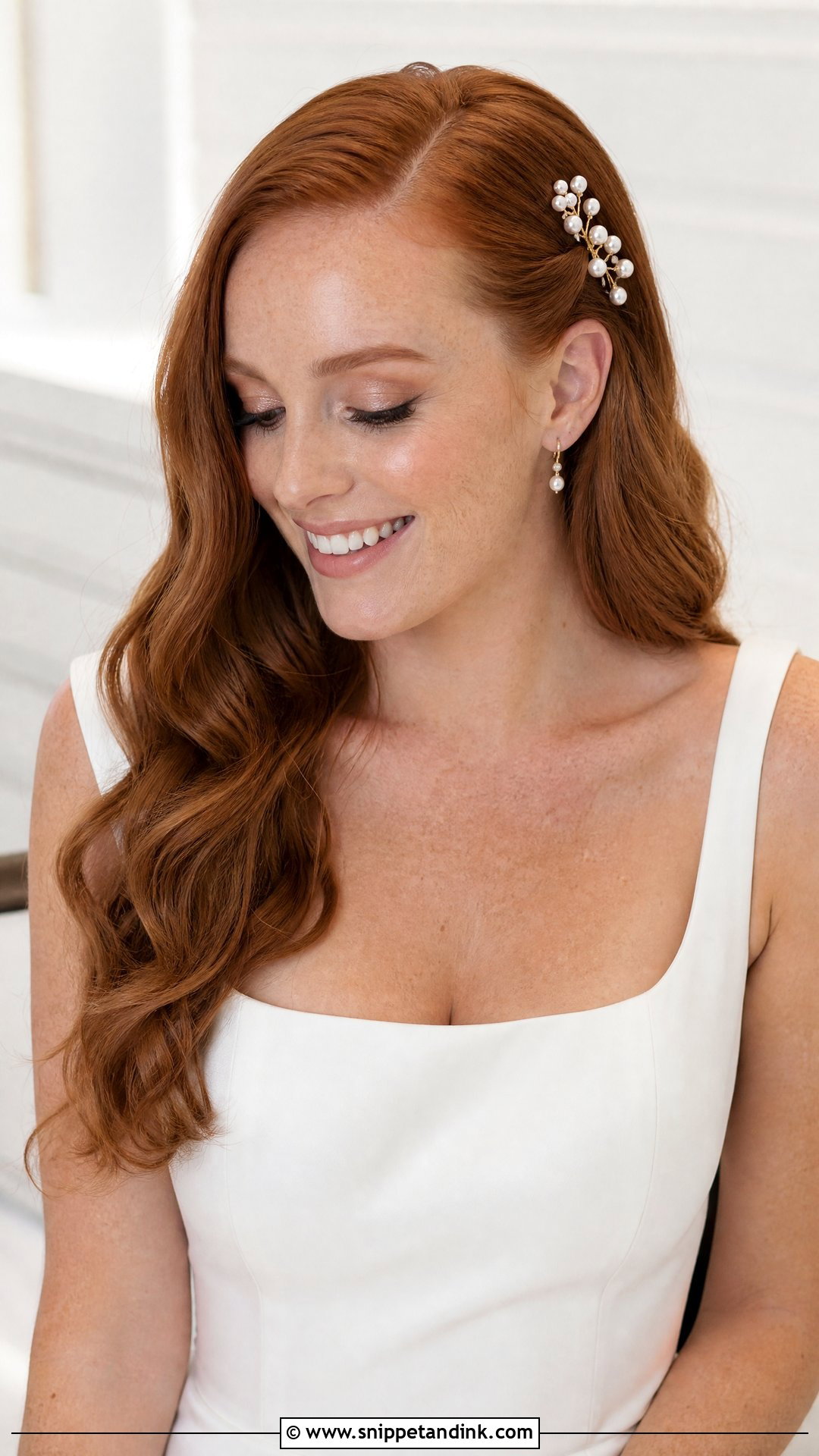
Loose curls give bounce and shape without pinning anything up. I curl in sections, let each curl cool completely, then comb through with my fingers before setting it with flexible spray; skip the cooling and the curls drop within the hour. Long, layered and medium-length hair all suit them. A side clip, a pearl barrette, a veil or a small floral accent dresses them up. They are not the right pick for a humid outdoor day unless you’re happy for them to loosen into waves.
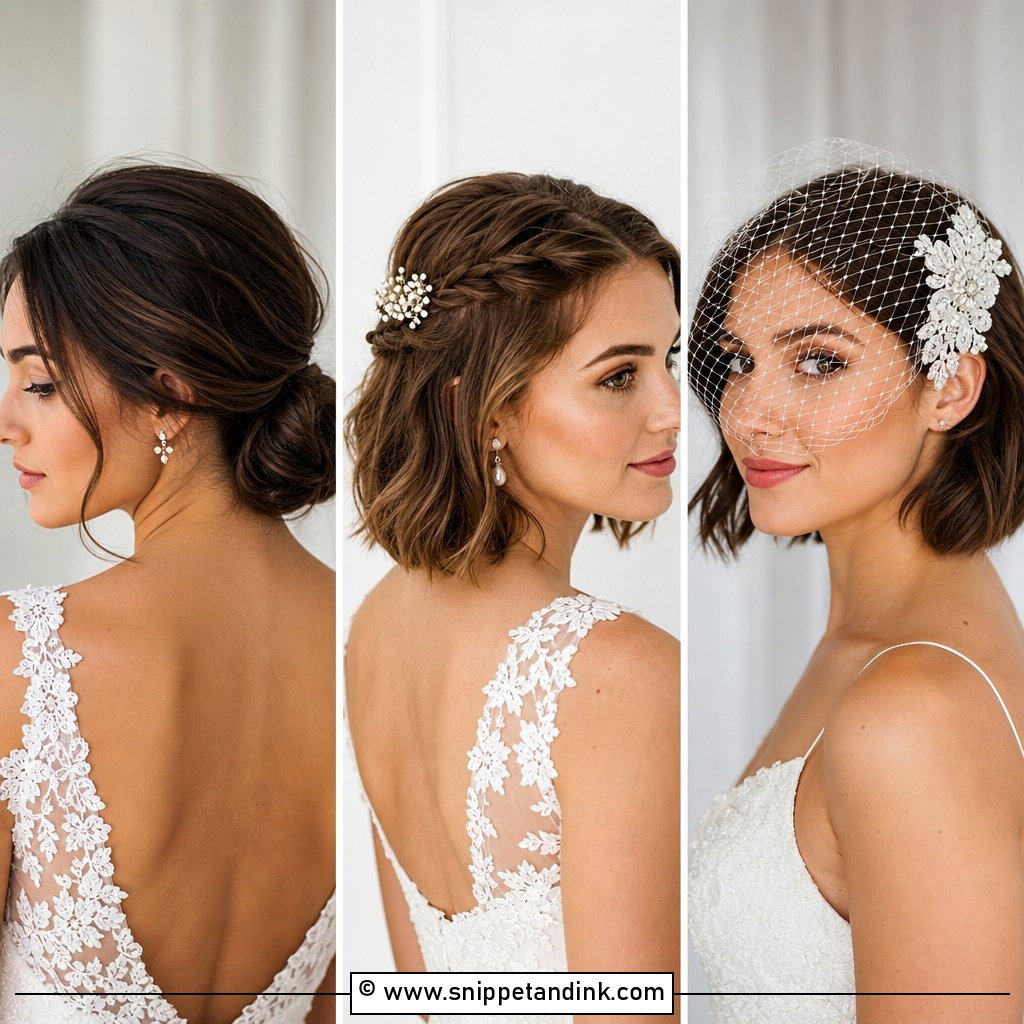
13. Short Hair Wedding Hairstyle
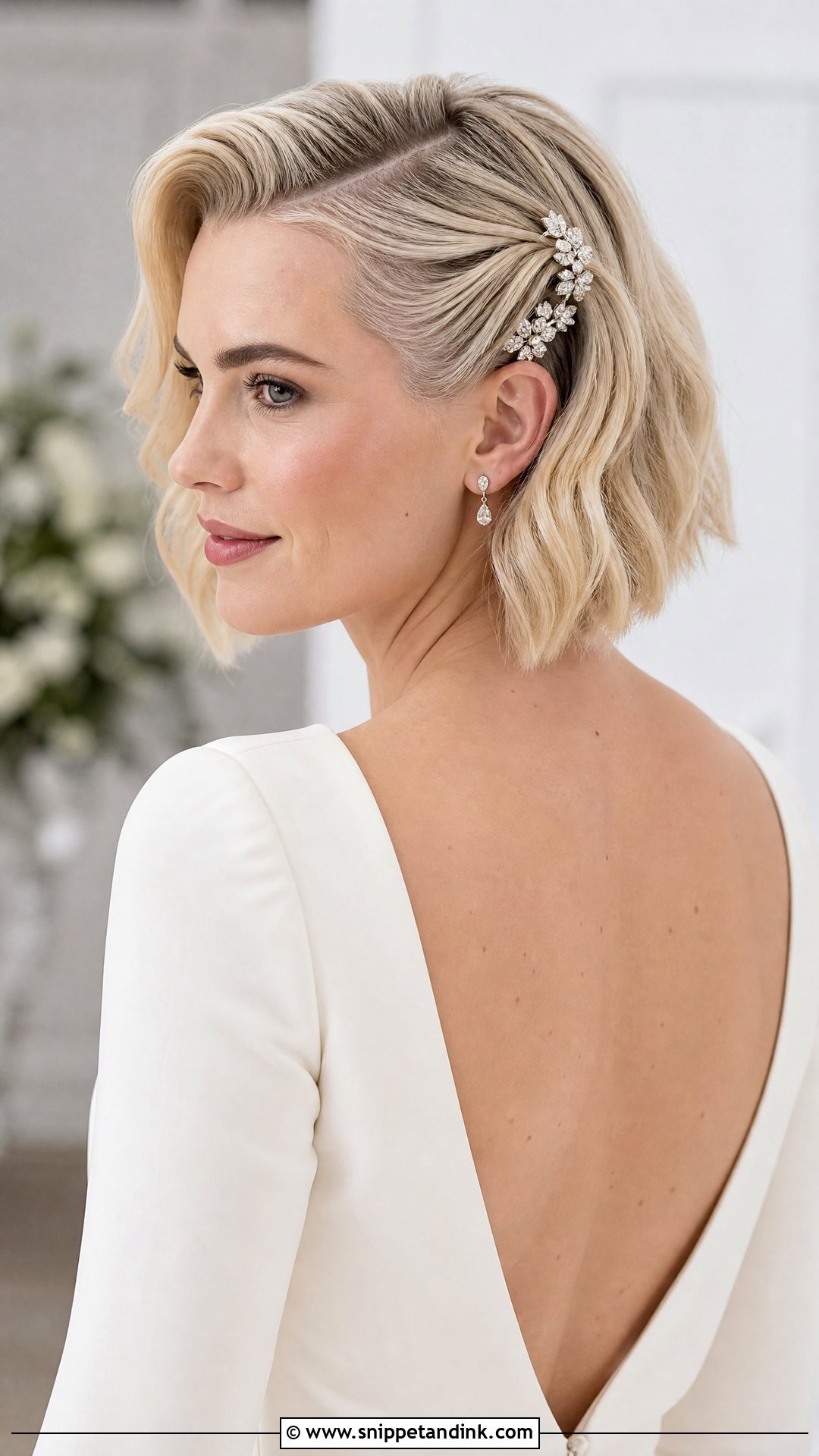
Short hair looks every bit as bridal as long hair once the shape is polished. A bob, lob, pixie or shoulder-length cut can take soft waves, tucked sides, smooth volume or one accessory, and the aim is to enhance the haircut rather than disguise it. On a bob I use soft bends and a side part. On a pixie, light texture and a jeweled clip. Veils, headbands and pearl pins actually show up better on short hair. I’d schedule the last trim about a week ahead so the edges look natural, not freshly cut.
14. Natural Curls Wedding Hairstyle
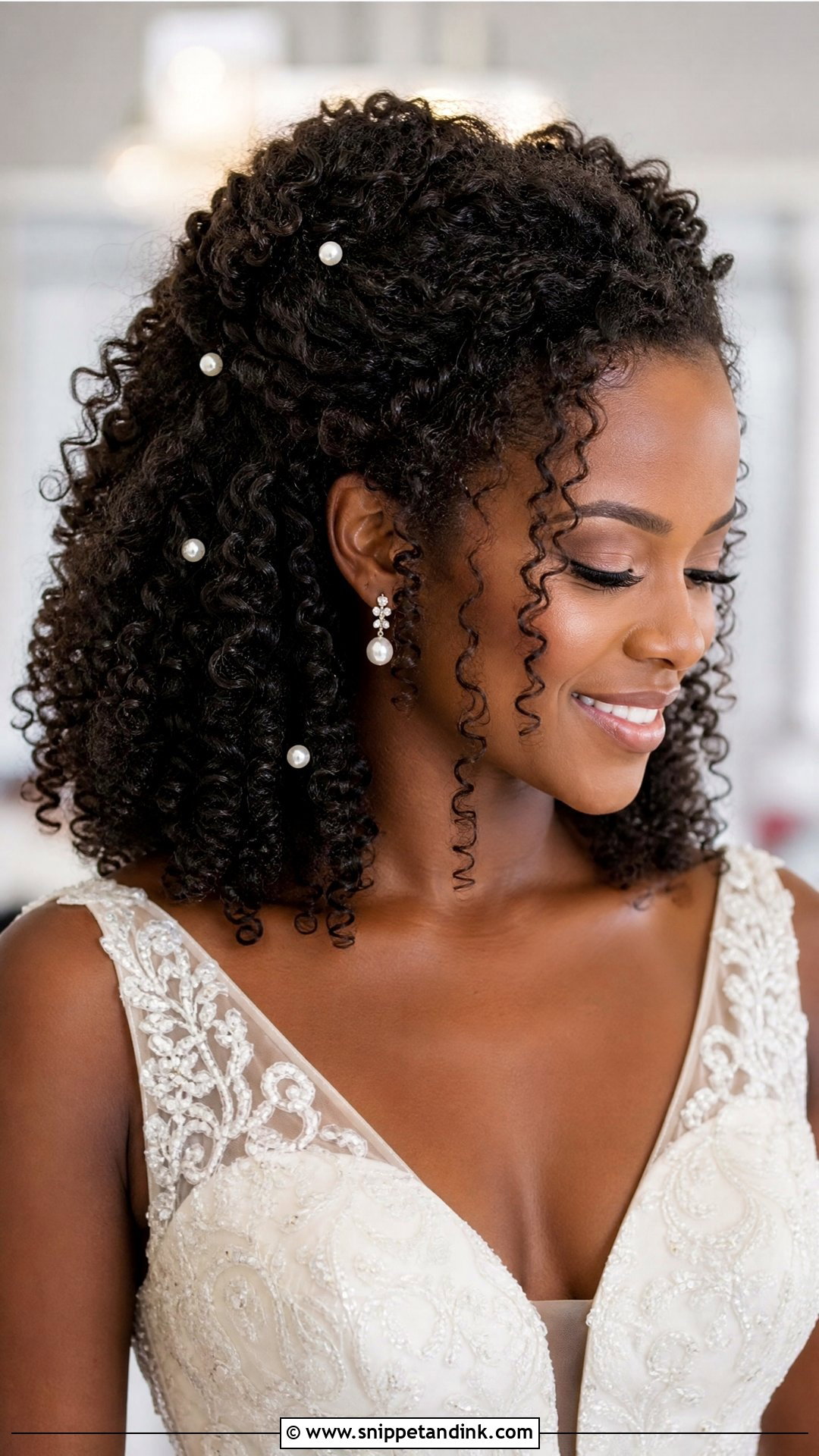
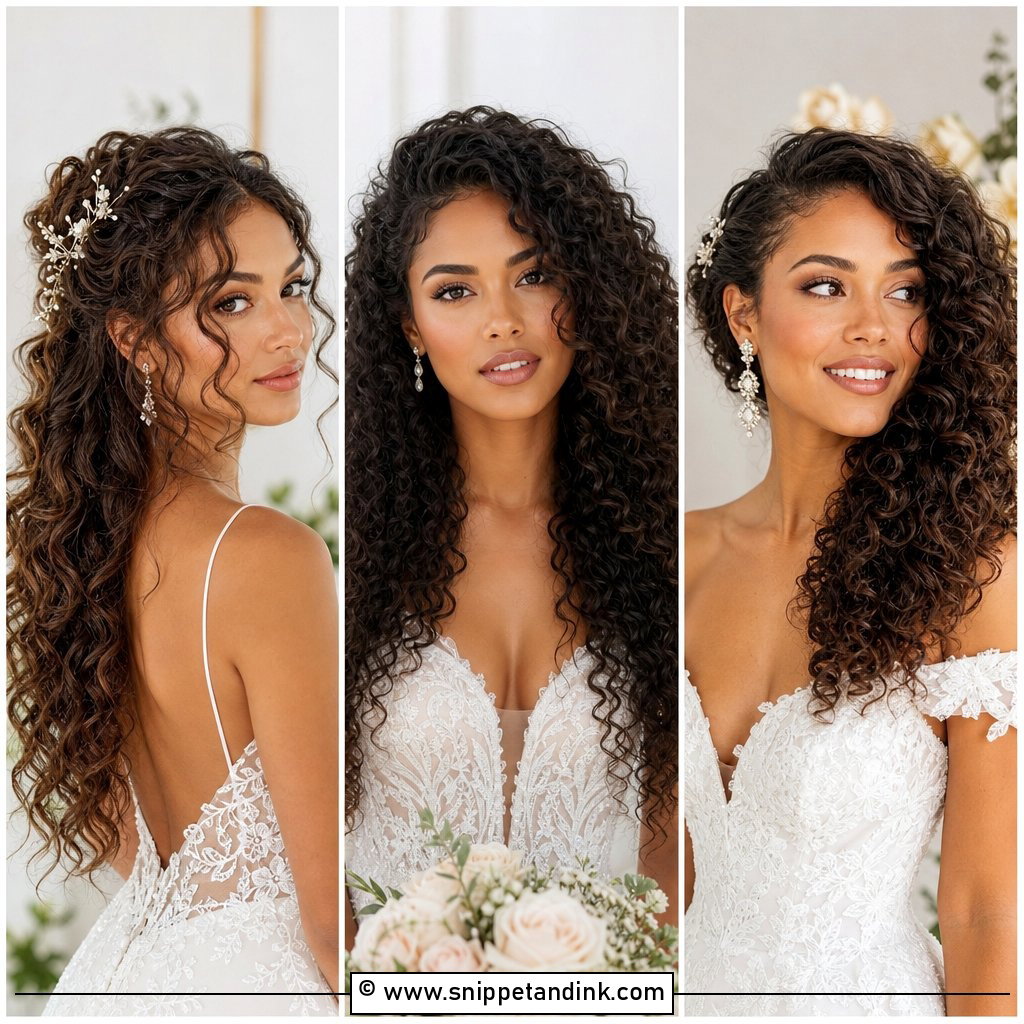
Natural curls only need a clear shape to look bridal. They can be worn down, half up, pinned to one side or gathered into a soft updo. Definition comes first: I work curl cream and a gel through damp hair and diffuse before any pinning, so the curls stay hydrated and hold their pattern without going crunchy. It’s the style I’d point any curly bride toward if she wants to look like herself, only more finished. Face-framing curls soften it, and pearl pins or florals sit well inside the texture.
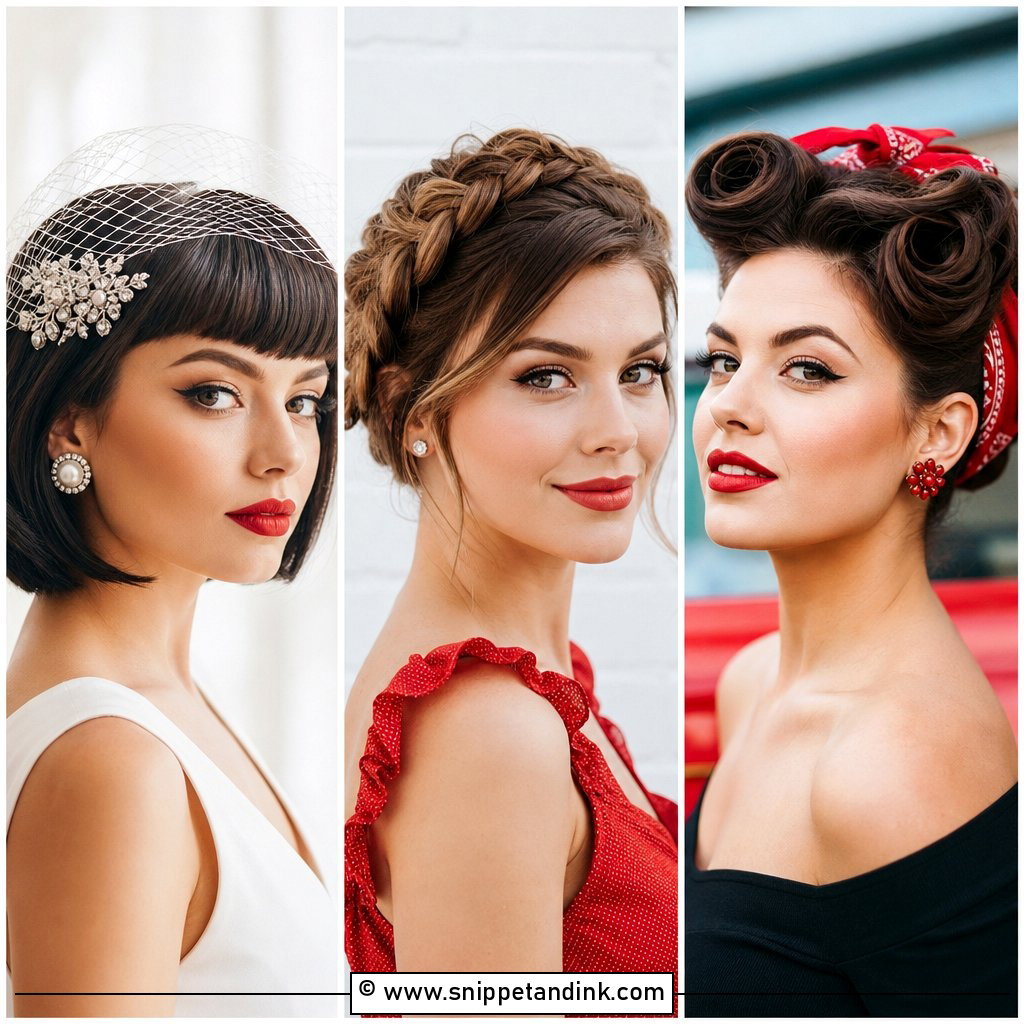
15. Simple Veil Wedding Hairstyle
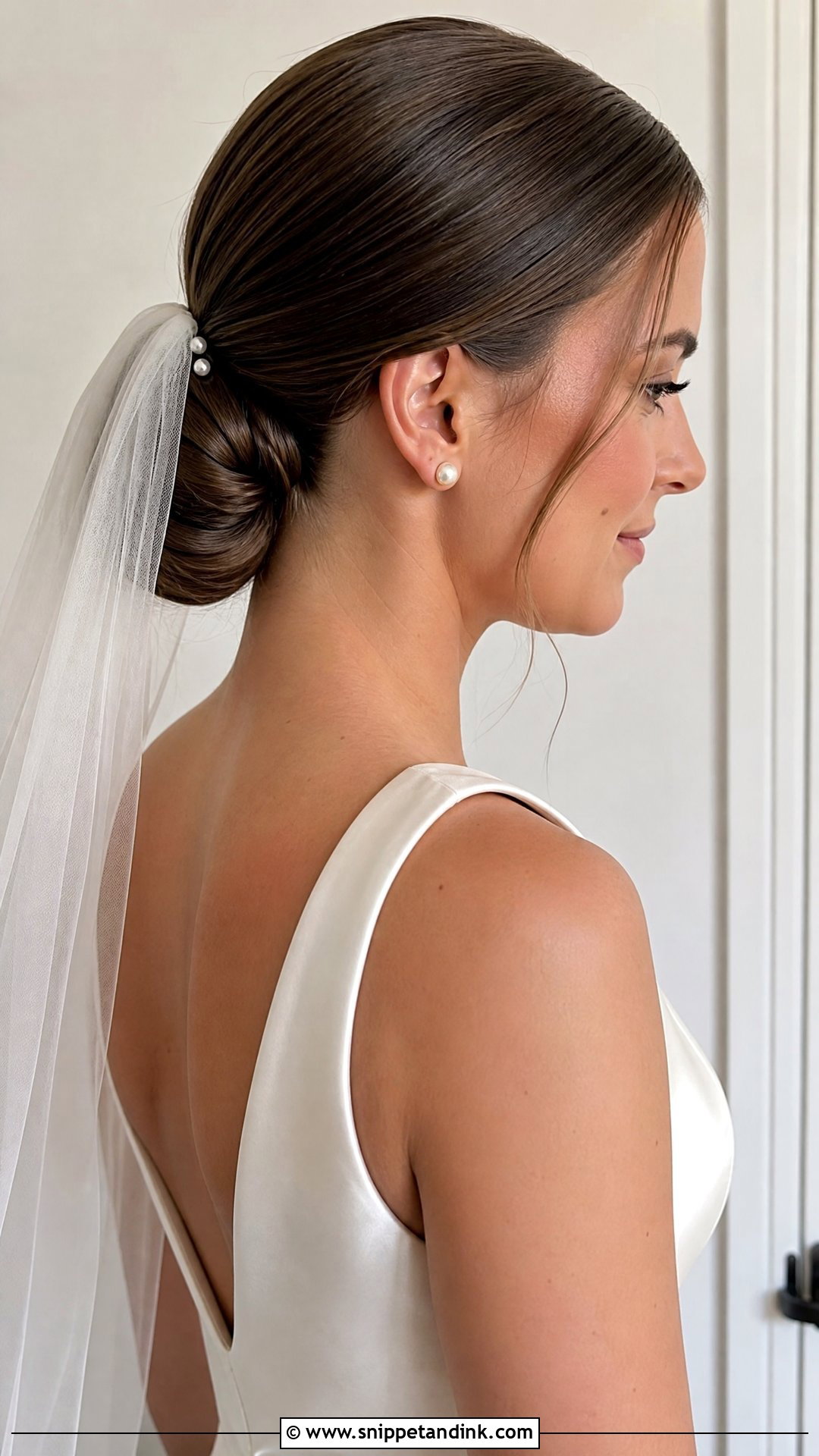
The hairstyle under a veil has one job, which is to support it without competing. Low buns, chignons, soft waves, half-up hair and sleek ponytails all give the comb a secure place to sit. Match the style to where the veil attaches: a low veil wants a bun or chignon, a higher veil wants a half-up shape or volume at the crown. Keep the front smooth and balanced. If the veil already has lace, pearls or sparkle, I’d cut back on hair accessories so the two don’t fight.
Everything I Test at a Trial Besides the Look
A trial isn’t only about whether the hair looks right. I’m checking whether it will still be right in eight hours, and whether it suits the rest of the plan. Bring the veil or hairpiece, your earrings, a top in a similar neckline and photos of the venue.
Movement
I’ll ask you to shake your head, hug someone and sit back against a chair. If pins dig in or the shape shifts, we fix the foundation now rather than on the morning.
The camera
Take photos with the flash on and off, from the side and from behind. Flyaways, a flat crown and a lopsided bun show up on a phone far more than in a mirror.
Wear time
Keep the style in for the rest of the day and check it again in the evening. Note what dropped and what itched, then send me a photo. That one evening tells me more about your hair than the whole appointment.
The morning schedule
Most of these simple styles take roughly 45 minutes to an hour for a bride and about half that for each bridesmaid, though thick or very long hair takes longer. Your trial gives us the real number, which is what I use to build the getting-ready timeline so nobody is rushed into the car.
Simple Wedding Hair, Done With Care
Simple hair suits more brides than not, because it adapts to the dress, the venue, your hair type and your taste without much fuss. A low bun, soft waves, a sleek ponytail and a half-up style each have their own mood, and any of them can carry you from the first photo to the final dance. Look at your neckline, your accessories, the forecast and how your hair normally behaves before you decide. With a careful finish, even the most basic wedding hairstyle holds its own next to anything more elaborate.
You'll Like These Ideas:


Leave a Reply