
At a trial, the first thing I look at isn’t the inspiration photo. It’s the haircut the bride walked in with. Long layers that start at the chin will poke out of a sleek bun, a blunt bob won’t make a chignon, and a fresh pixie holds jeweled pins better than one that’s growing out. So the ideas below come with notes on what each one asks of your hair: length, layering, weight and texture. I’ve also said where each style struggles, so you can pick something your hair will actually hold from the vows to the last song.
Timing the Last Haircut Before the Wedding
The most common problem I see at trials is a cut that happened too close to the date. Fresh layers sit stiffly, and a cut that went shorter than planned can rule out half the styles below. This is the rough timeline I give brides:
- Three to four months out: decide if you’re growing your hair out for an updo. Hair grows only around a centimeter a month, so this is your last real chance to gain length.
- Six to eight weeks out: the main shaping cut, including any change to layers or bangs.
- One to two weeks out: color or gloss, so the tone settles over a couple of washes and doesn’t look flat or brassy in photos.
- About a week out: a light dusting of the ends only, mainly for bobs, pixies and blunt cuts.
Have your trial after the main cut, not before it. A trial done on hair that’s about to lose two inches is really a trial of a different haircut.
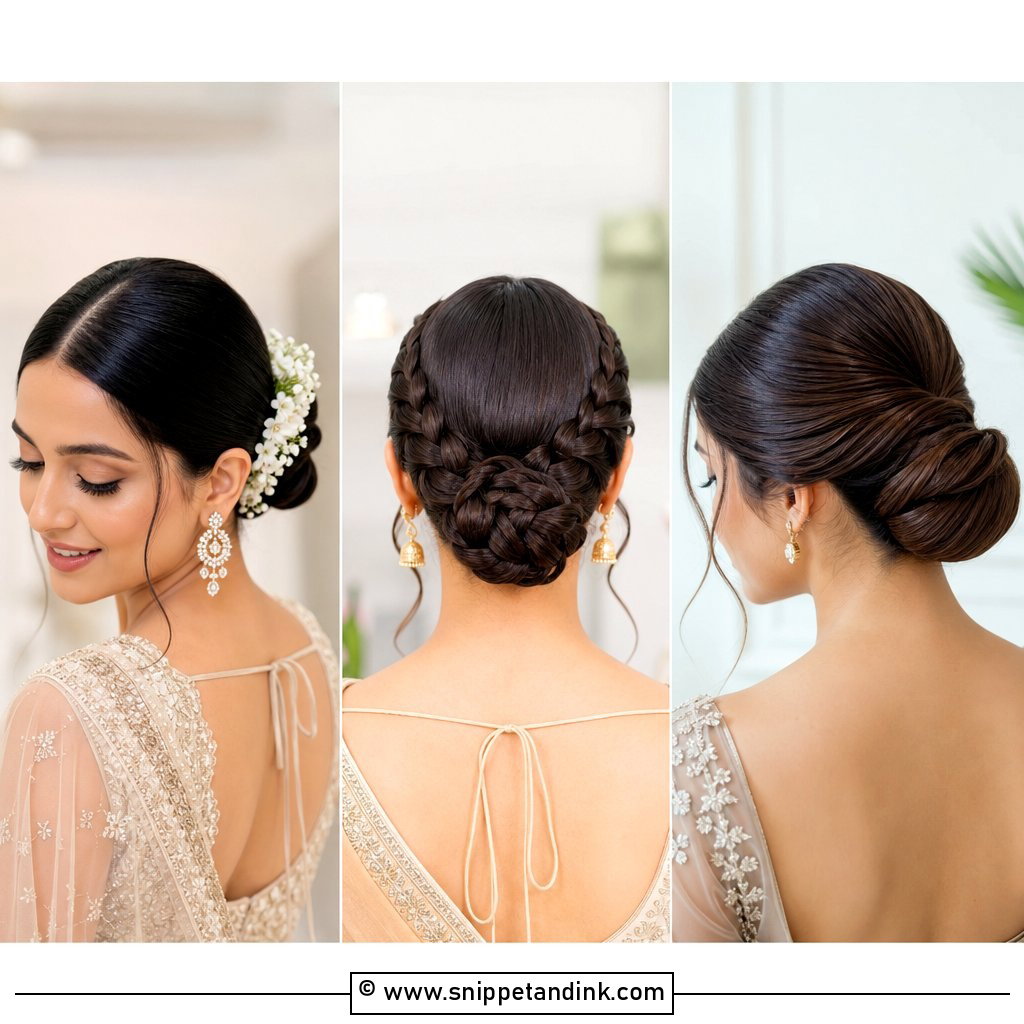
1. Sleek Low Bun
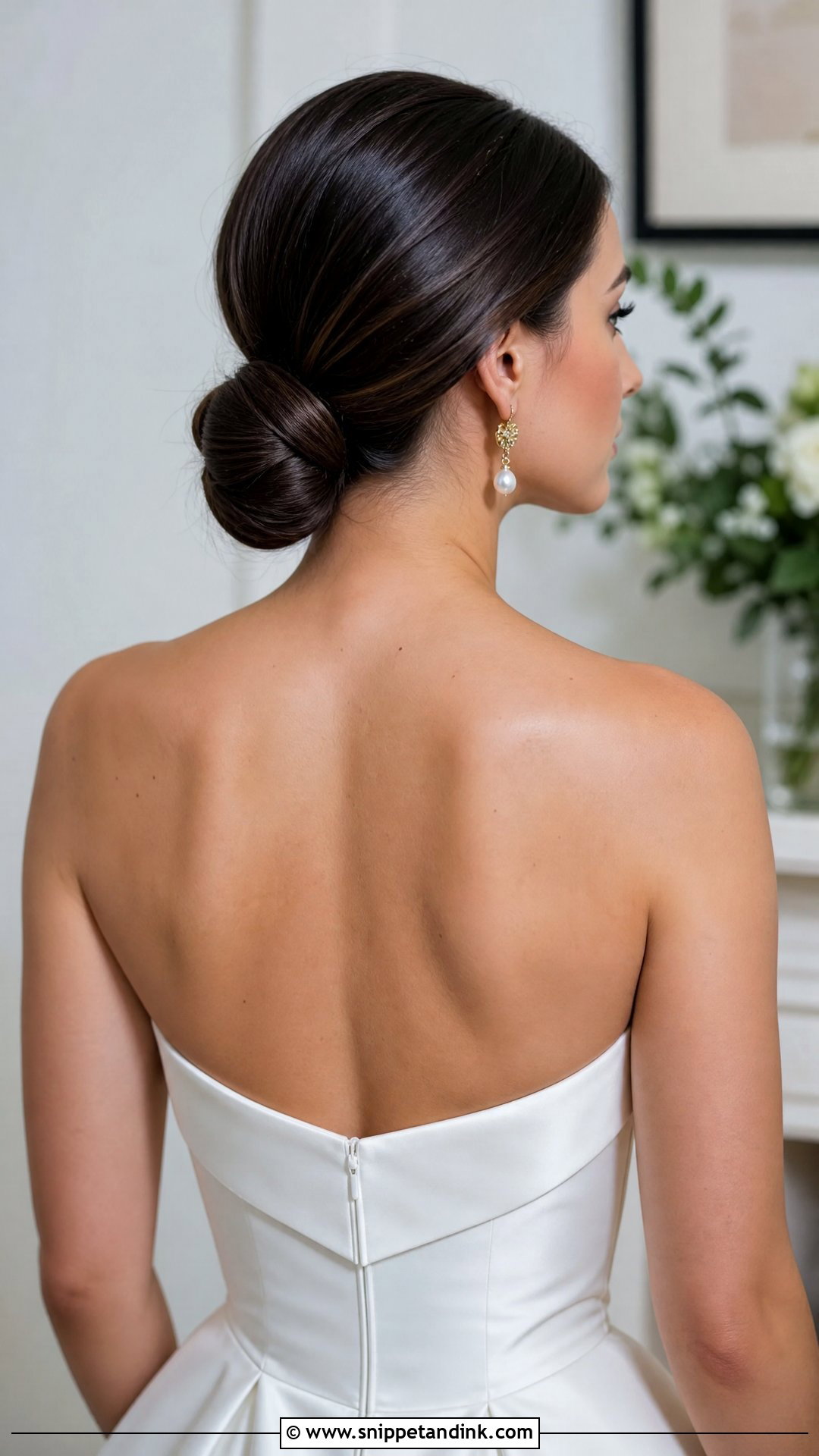
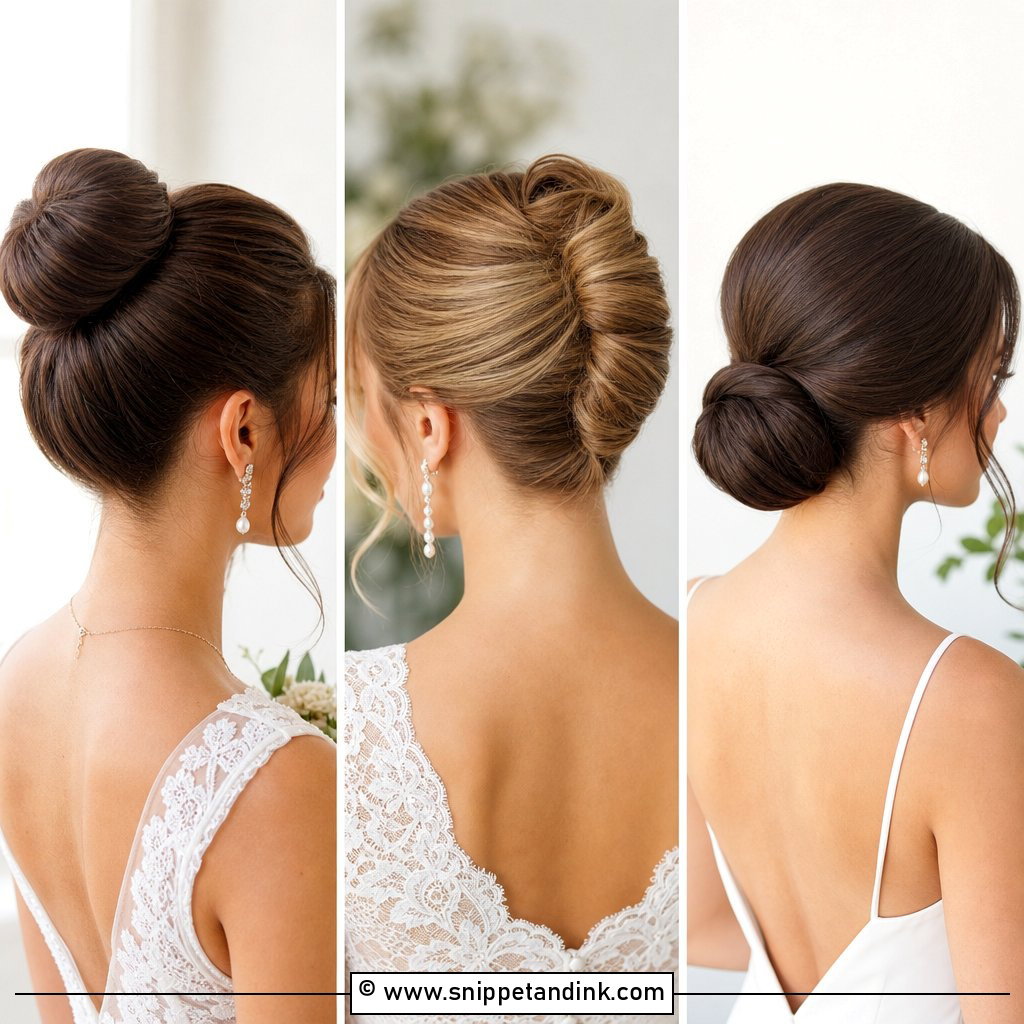
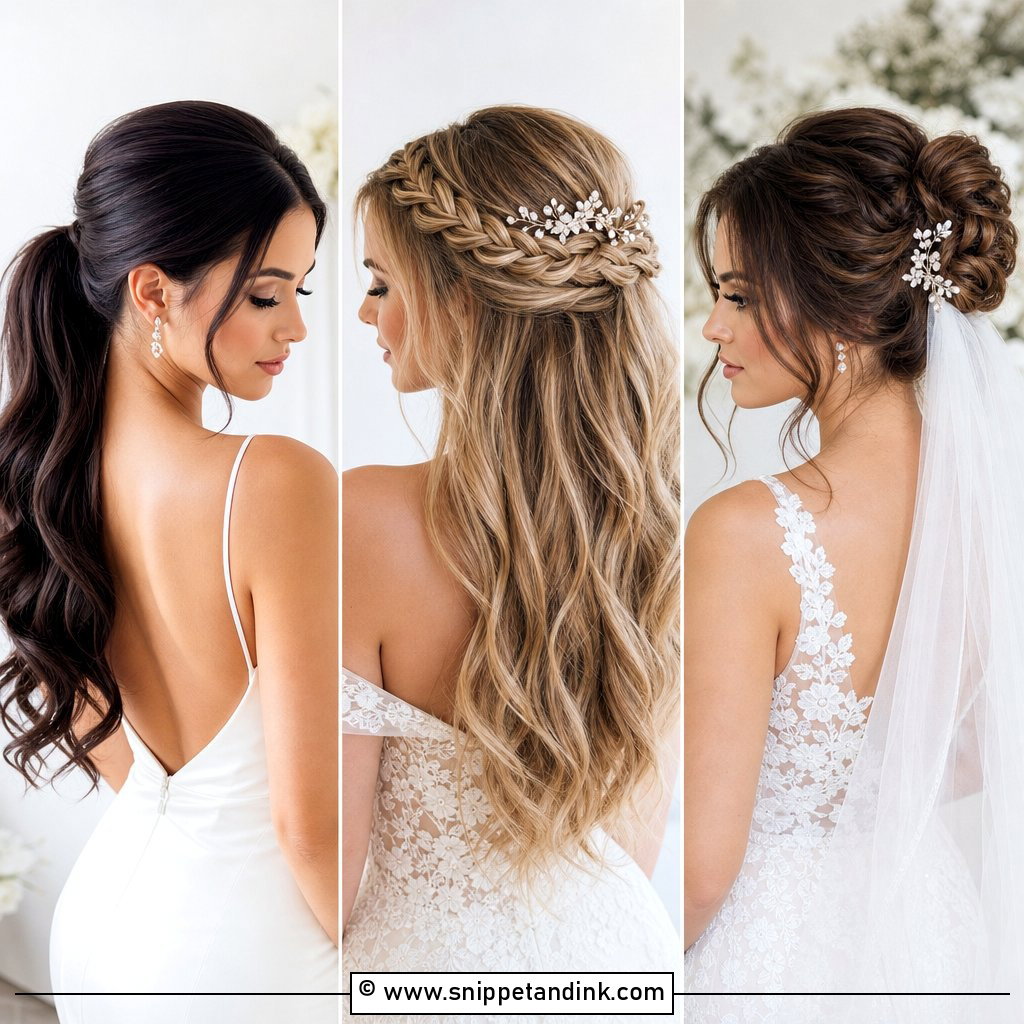
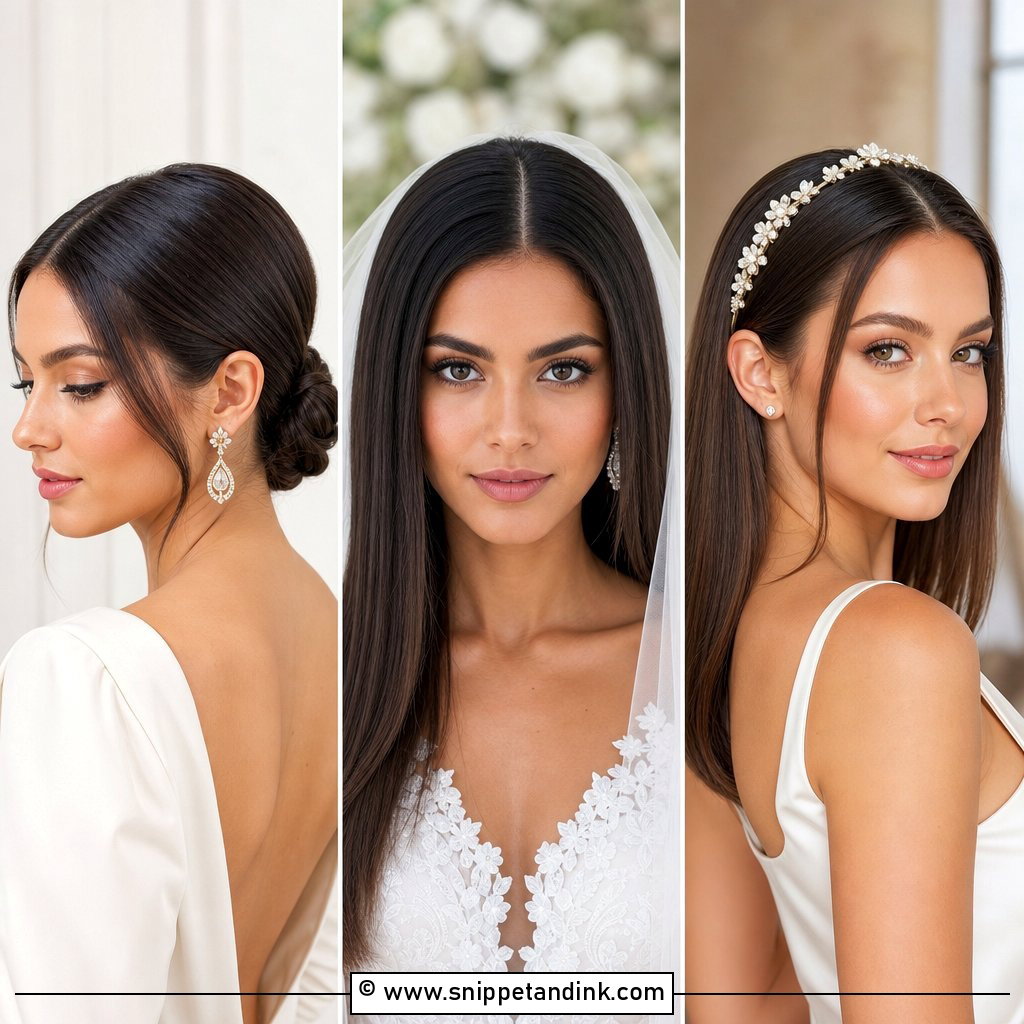
A sleek low bun needs weight more than length. Shoulder-length hair with few layers makes a neat knot, while heavily layered hair leaves short ends sticking out at the nape. I smooth it with a little cream and a boar-bristle brush, then anchor the base with a hidden elastic before any pins go in, because the elastic takes the strain that would otherwise loosen the pins by dinner. A veil comb slides in right above it, and the bare neck leaves room for big earrings. On very fine, slippery hair I tuck a small padding donut inside so the bun doesn’t look flat in profile.
2. Half-Up Half-Down With Waves
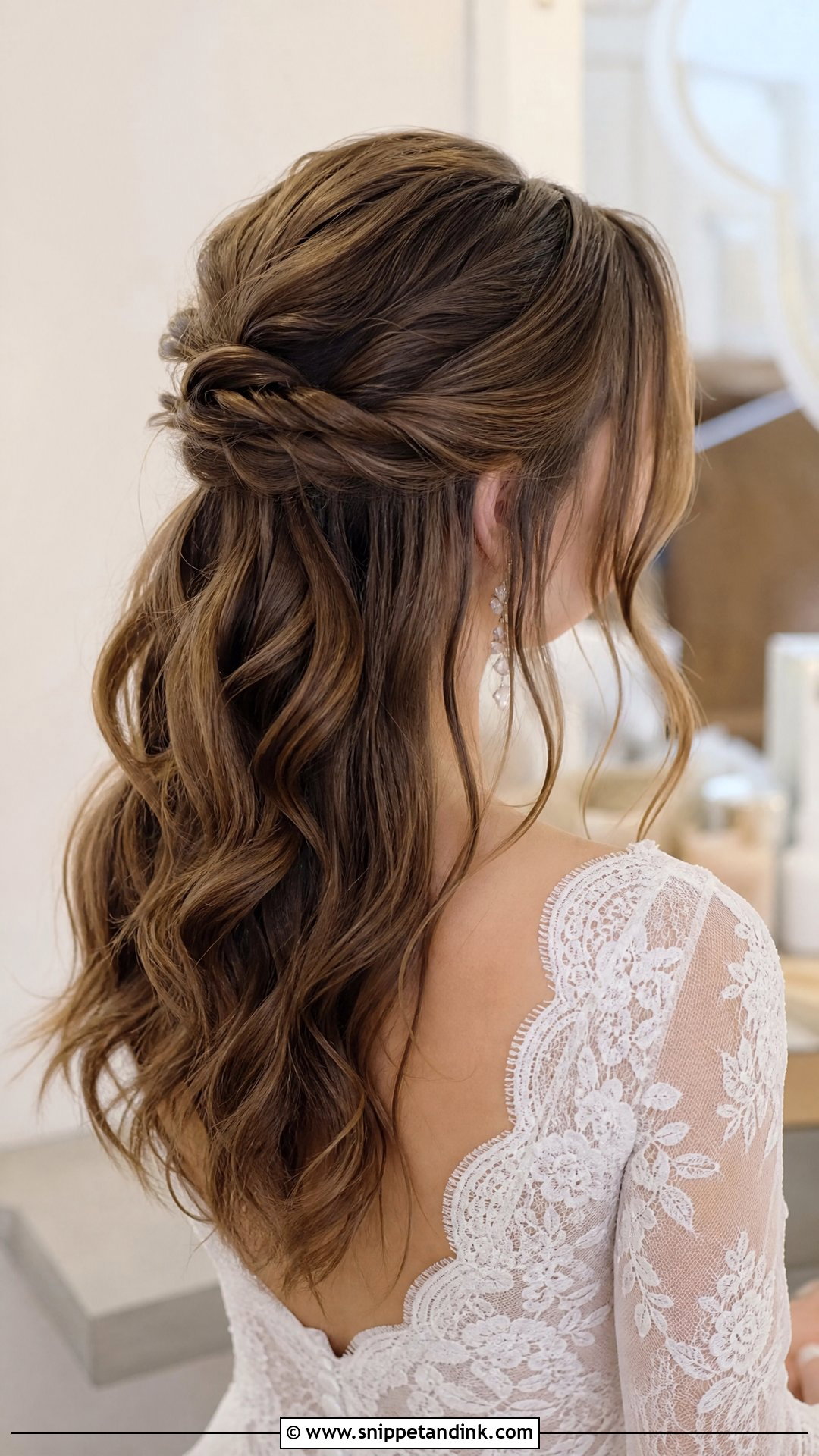
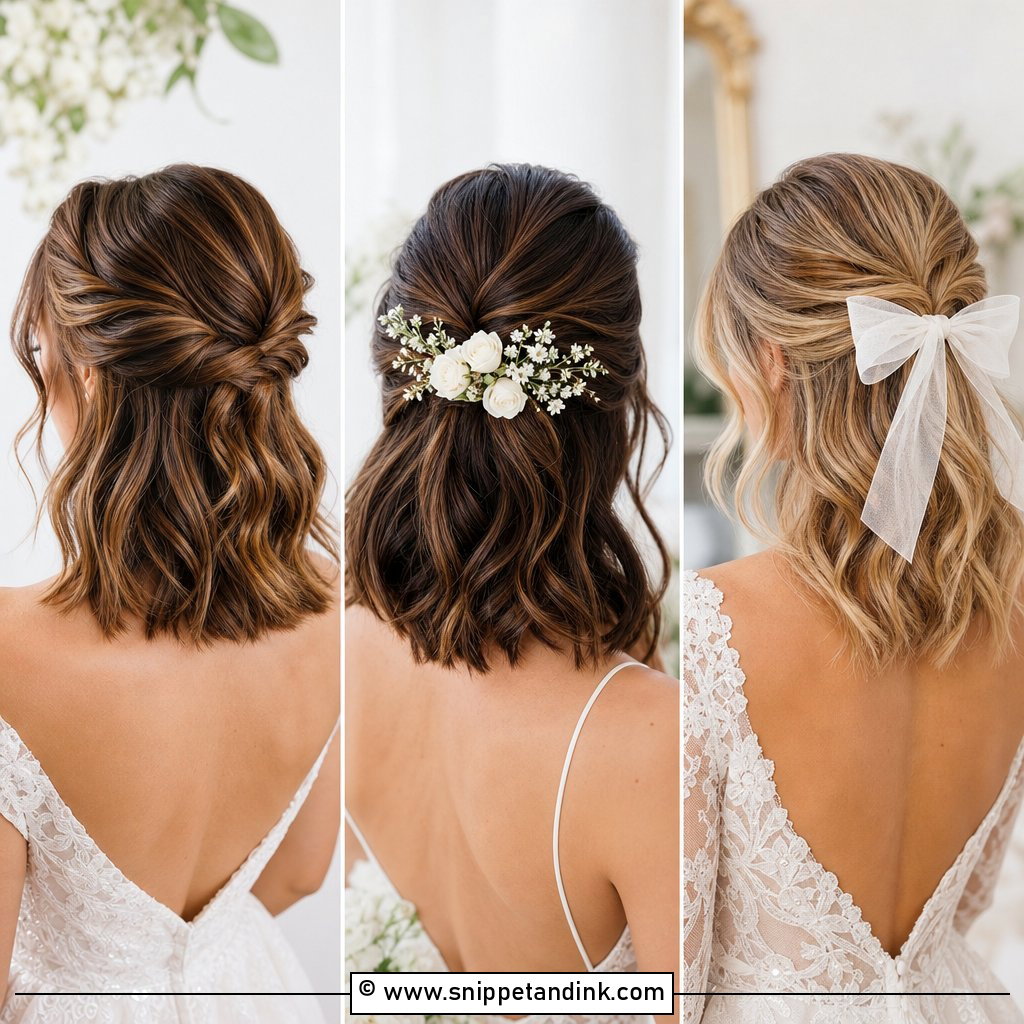
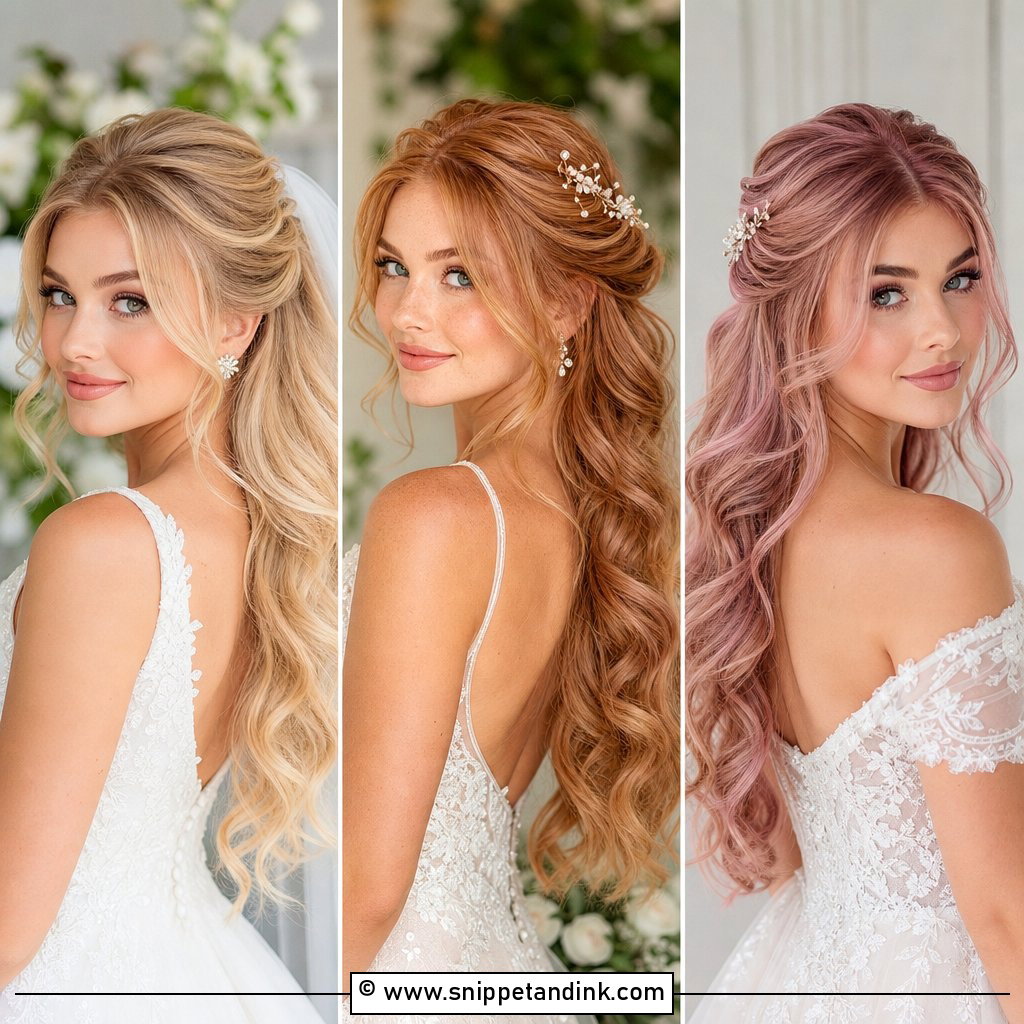
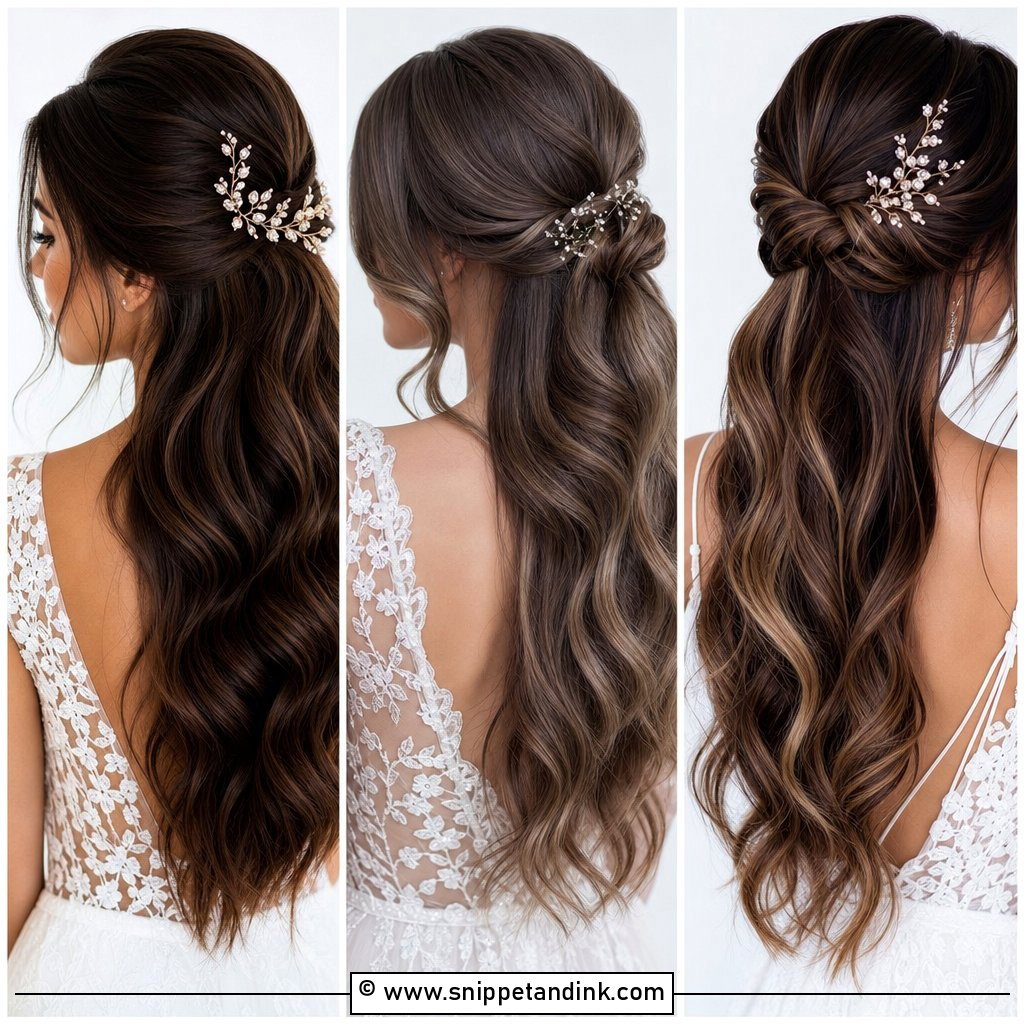
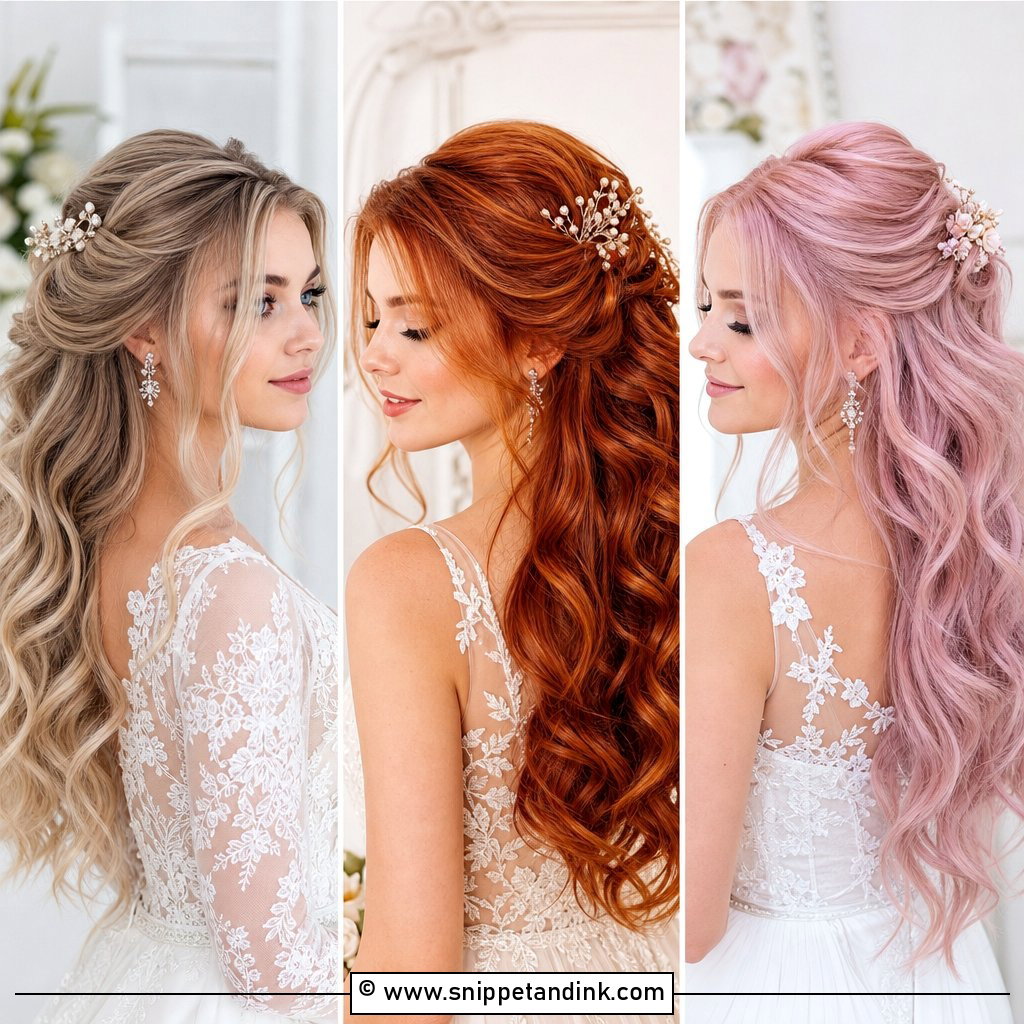
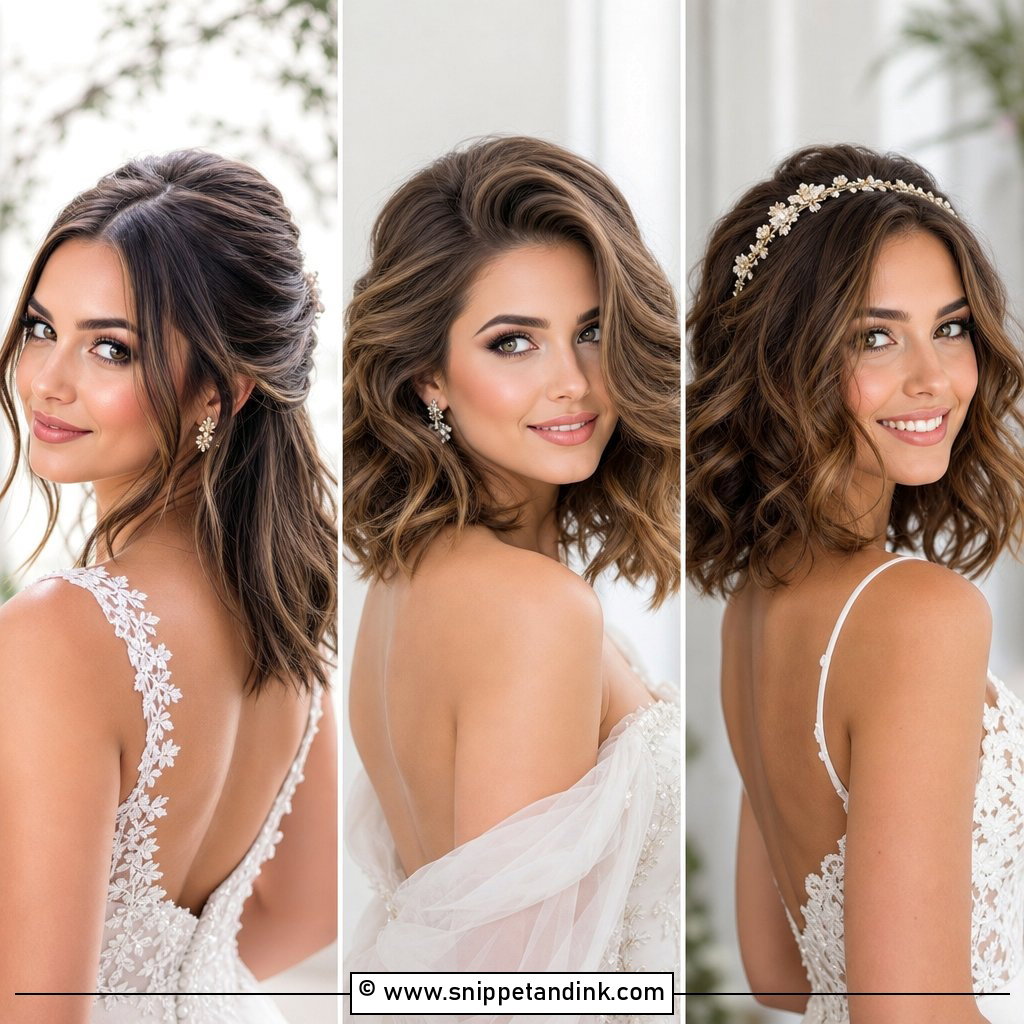
Most undecided brides land on half-up, half-down, and it’s a sensible compromise. The pinned crown keeps hair off your face for the vows while the lengths still move. The catch is the waves. On straight, fine hair they can fall out within a few hours, so I curl in smaller sections than you’d expect, let each curl cool in a pin, and brush them out only at the very end. A small twist or a jeweled clip at the back hides where the sections meet. Collarbone length is the minimum for it to look deliberate.
3. Hollywood Glamour Waves
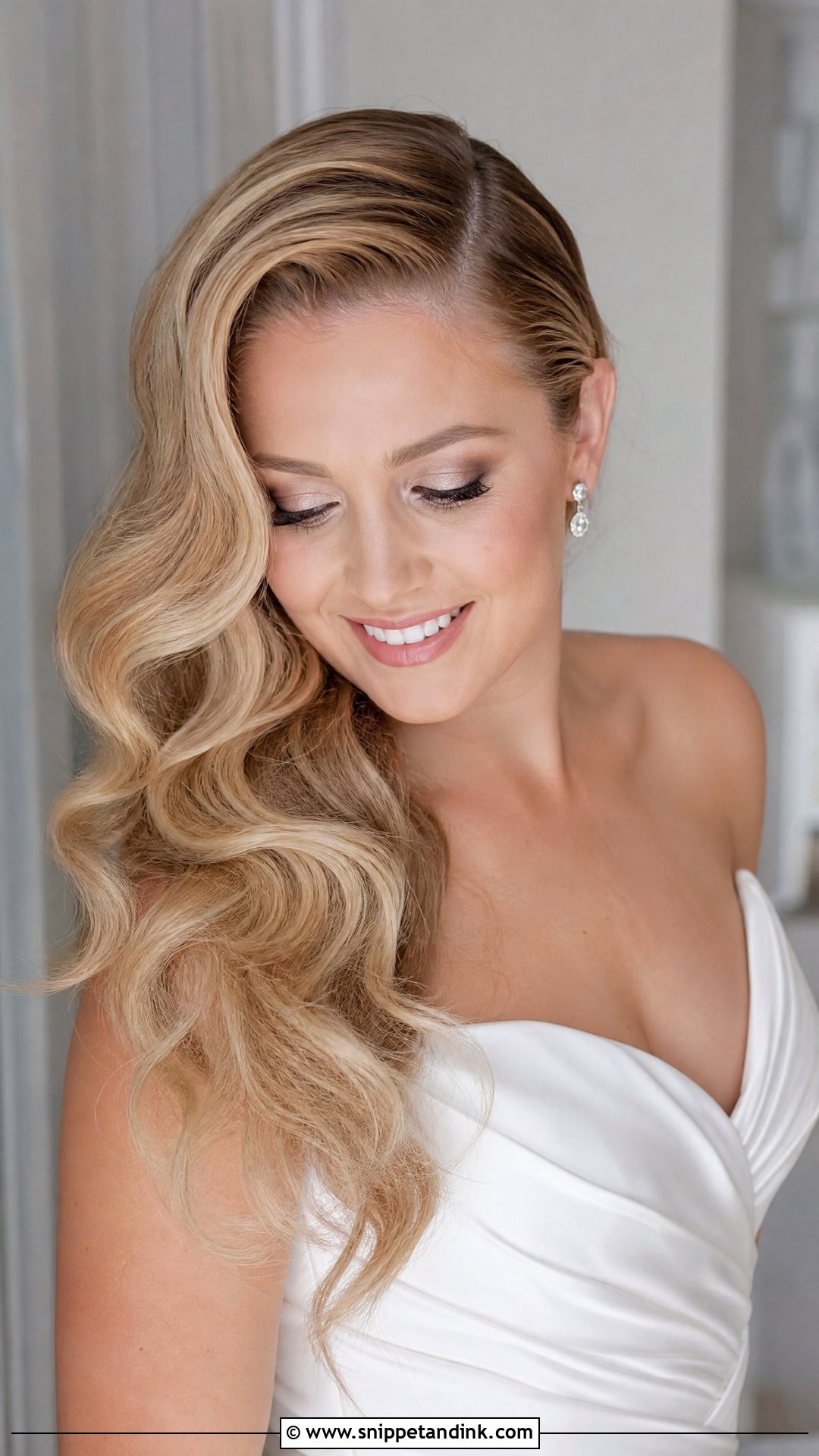
Old-Hollywood waves live or die on the brush-out. I set the hair in even curls, all wound the same direction, let them cool completely, then brush them into one continuous ripple of voluminous, glossy curls that sweeps over one shoulder. A deep side part gives the wave somewhere to start. You need medium to long hair and, ideally, a dry day: humidity softens the ridges first, so for a summer garden wedding I add more setting product at the root and leave a little shine spray with the maid of honor for the reception.
4. Messy High Bun
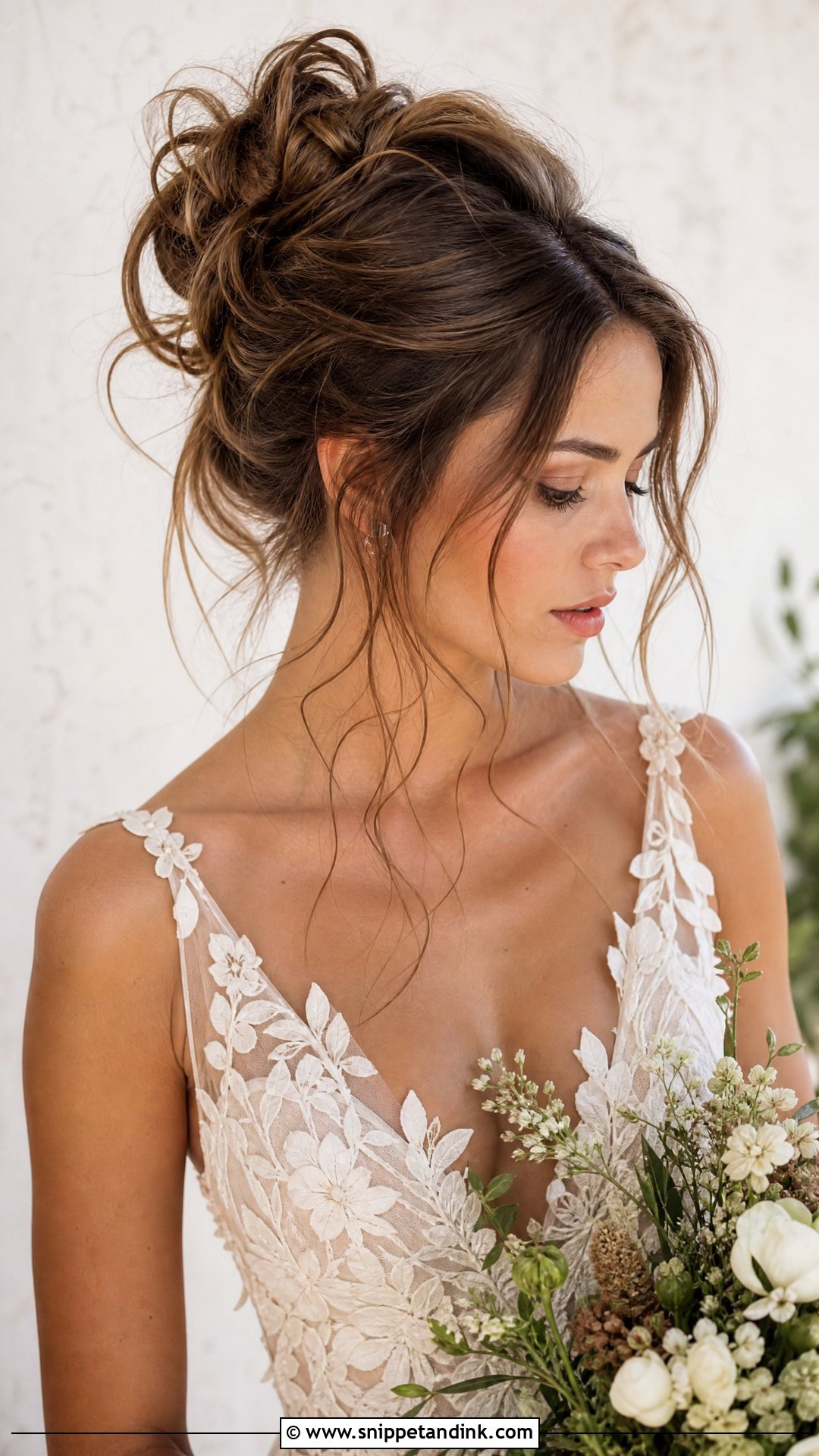
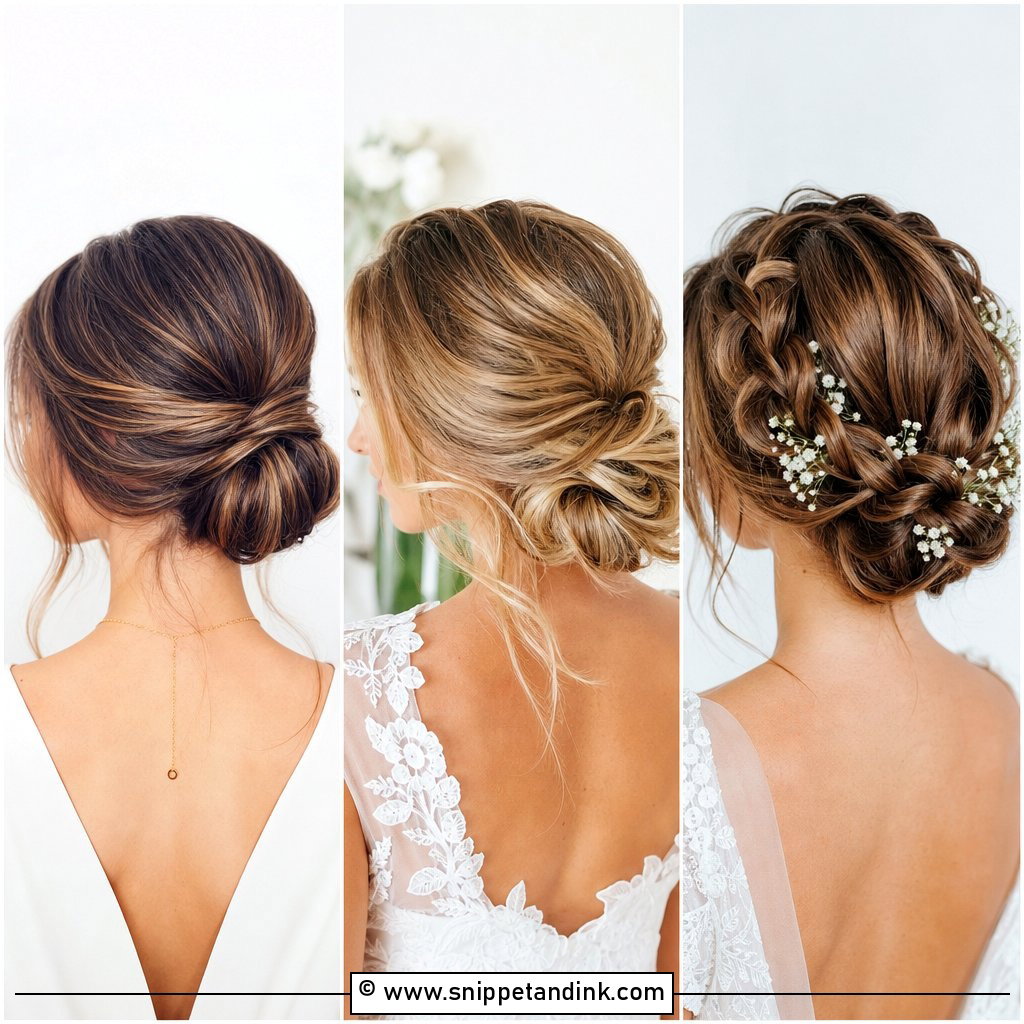
It looks careless, but a messy high bun is one of the fussier styles to get right. I prep with texture spray so the hair has grip, build the bun from several loose loops rather than one twist, and pull out the face-framing tendrils last, once I’ve checked the shape from every side. Sitting high keeps your neck cool at a beach or rustic wedding, and a flower crown rests easily in front of it. I’d steer you away from it if you’re wearing a long veil, though. A high bun pushes the comb onto the top of your head, where the weight of the tulle pulls all day.
5. Classic French Twist
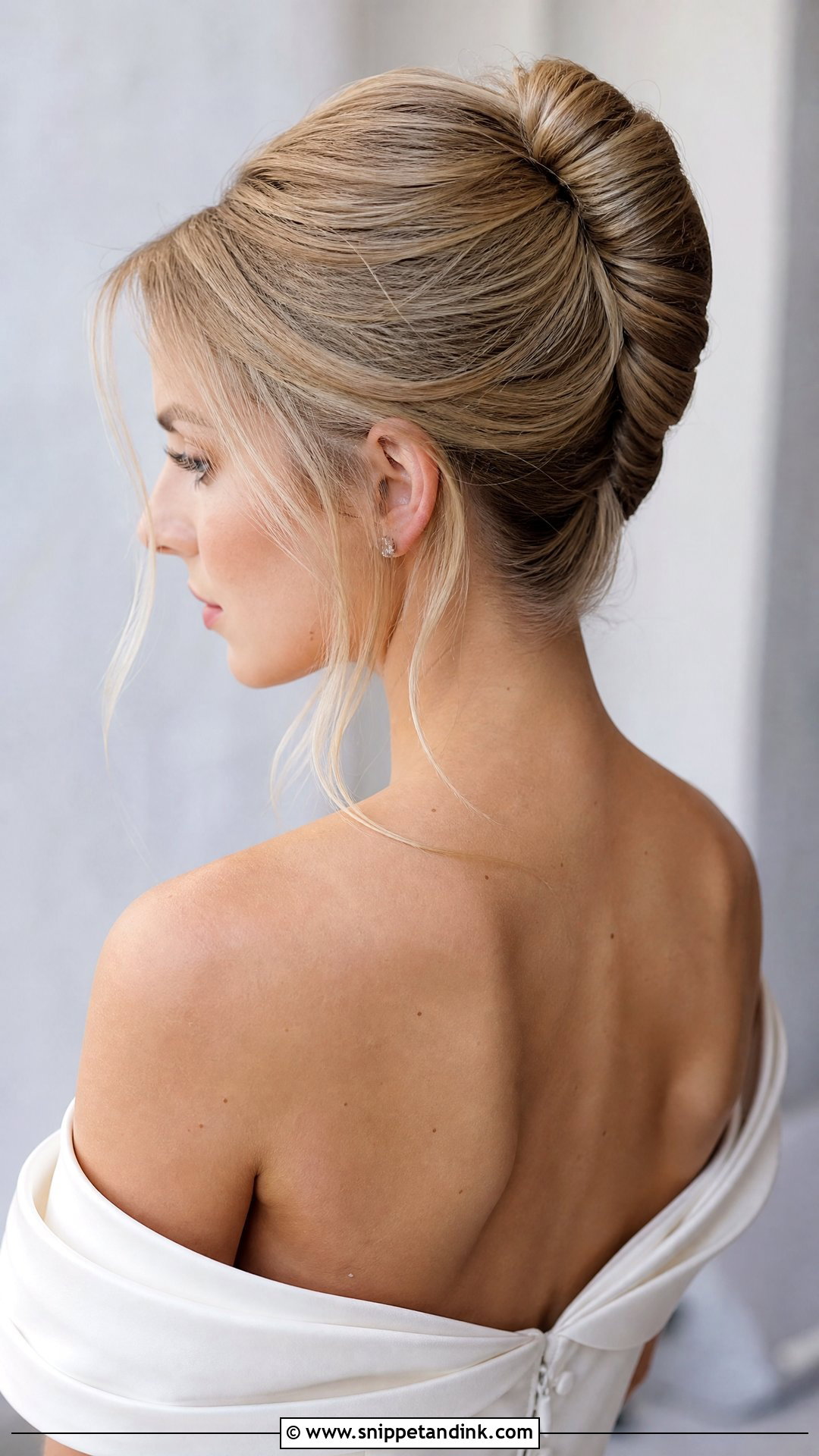
The French twist rolls the hair upward into a vertical seam at the back and leaves the neckline completely clear, which is why it suits a necklace or an off-shoulder gown so well. It depends on hair that’s one length or close to it. Layers shorter than the jaw escape the roll and I end up chasing them with extra pins, so if this is your plan, let your layers grow out before your final cut. Secured with crossed pins along the seam, it barely moves over a long day. Two soft wisps at the temples stop it from looking severe.
6. Romantic Curly Updo
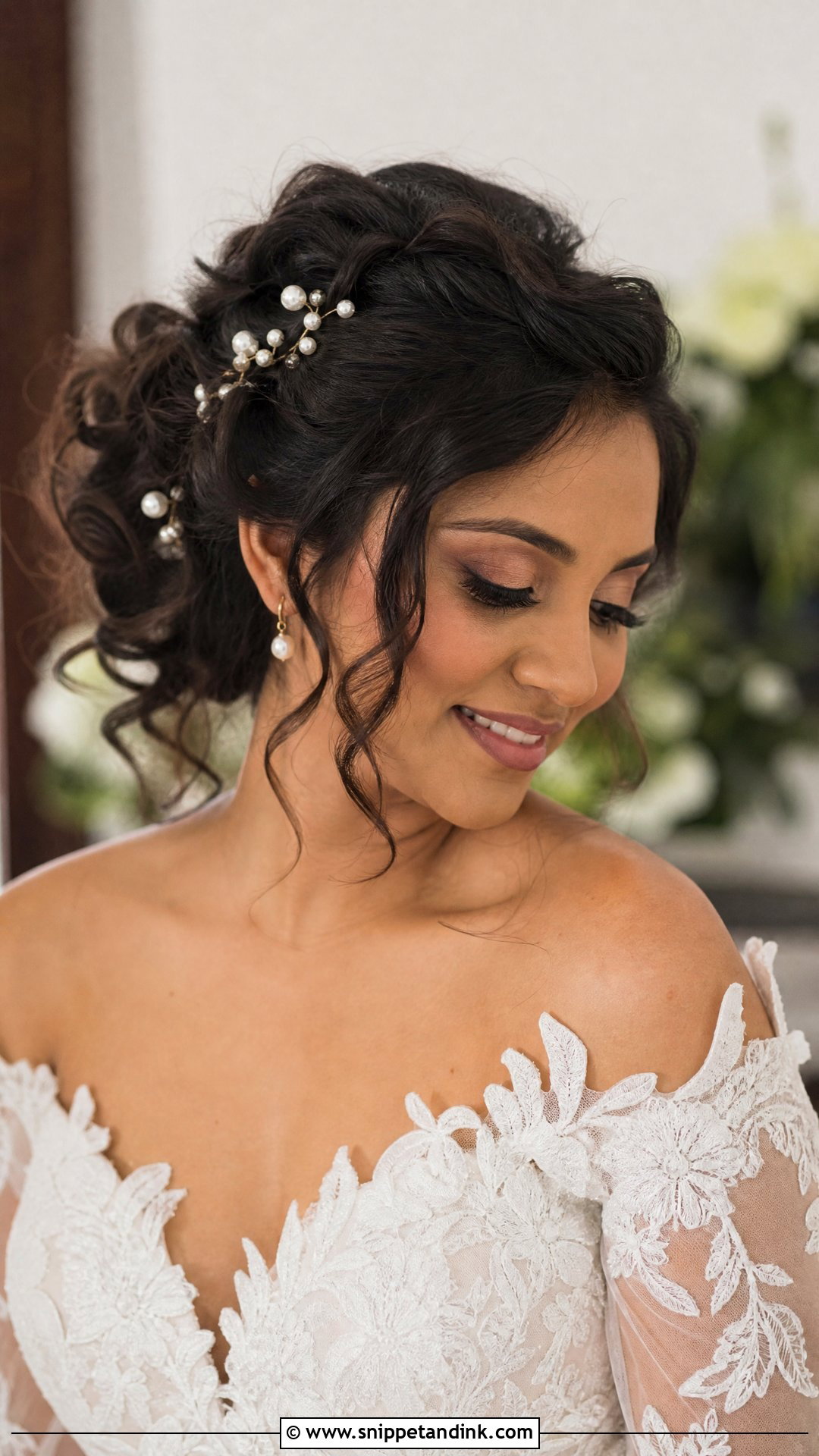
Hair with a bit of natural wave makes the easiest curly updo, because the curls keep their shape once they’re pinned instead of relaxing straight. I curl the whole head, pin each curl while it cools, then gather them into a loose shape and leave a few pieces out around the face. Straight hair can do it too, with a smaller iron and a firmer setting spray. Small flowers or pearl pins tuck between the curls without disturbing them, and the softer outline sits well at a spring or garden wedding.
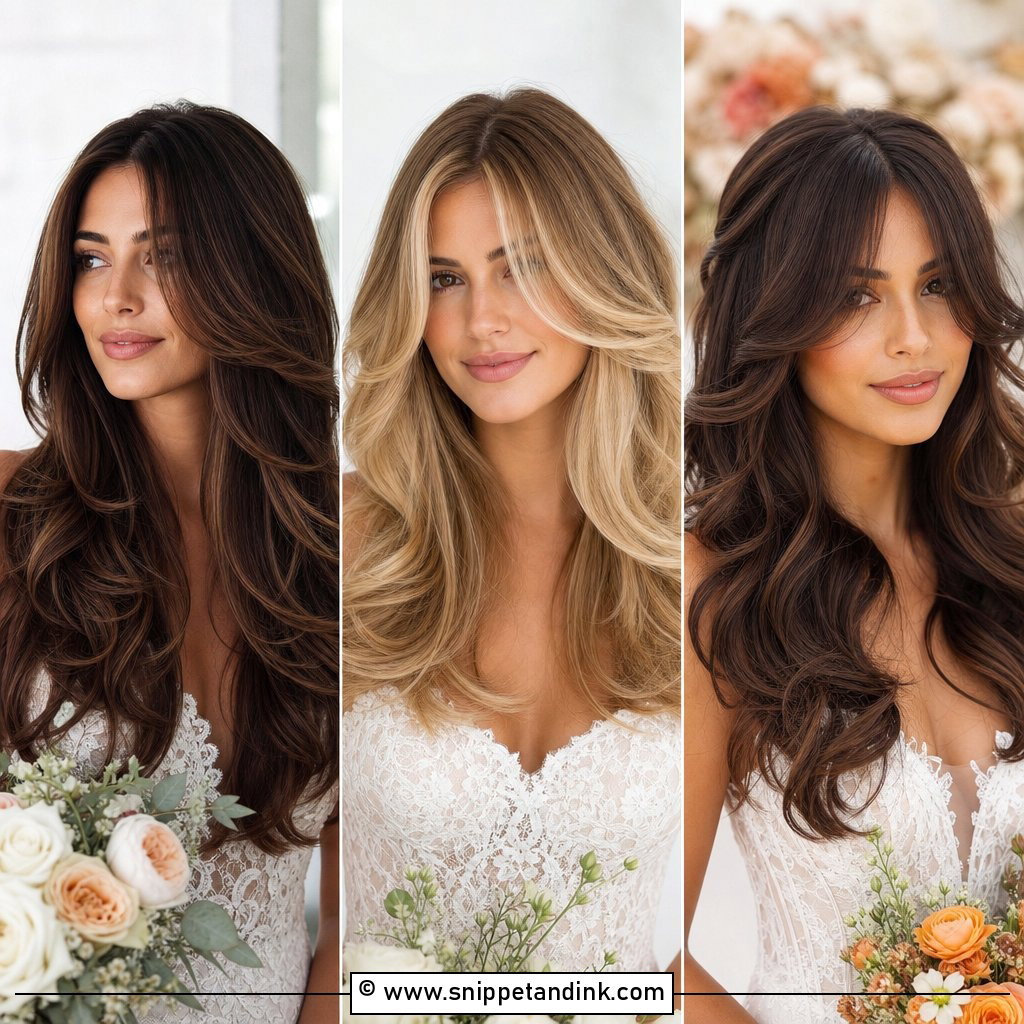
7. Long Flowing Beach Waves
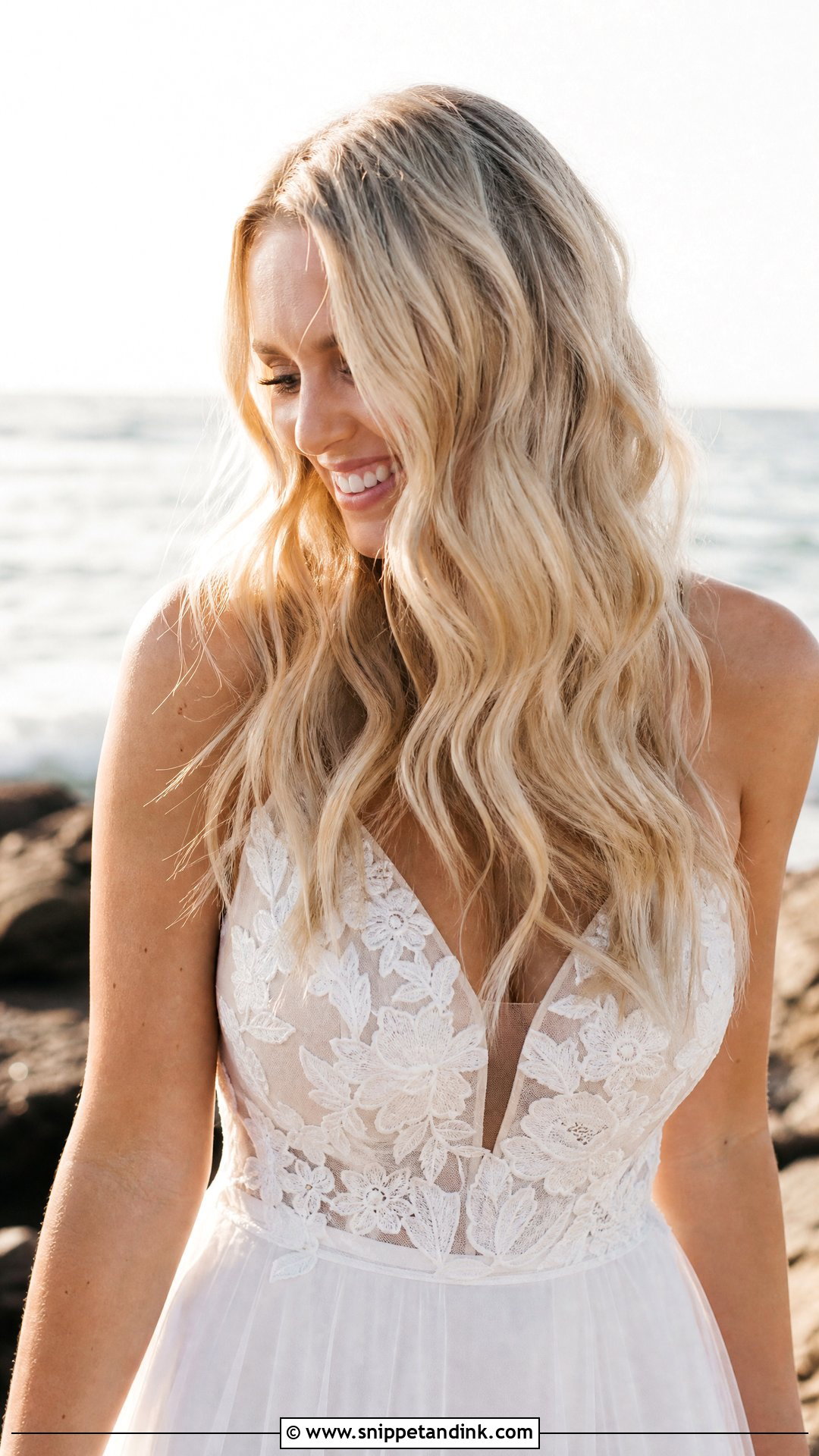
Hair worn down is the hardest bridal style to keep looking fresh, which surprises a lot of people. Long beach waves rely on loose, irregular bends rather than ringlets, and loose bends are the first thing sea air flattens. For a seaside or boho wedding I make the bend with a flat iron, leave the last couple of inches straight, and finish with a texture spray that doesn’t turn crunchy. A center or side part both suit it, with or without a single hairpin. Late afternoon light picks up the movement nicely, so if your portraits are at golden hour, keep a travel wand in the bridal kit for a ten-minute refresh.
8. Sleek Bridal Chignon
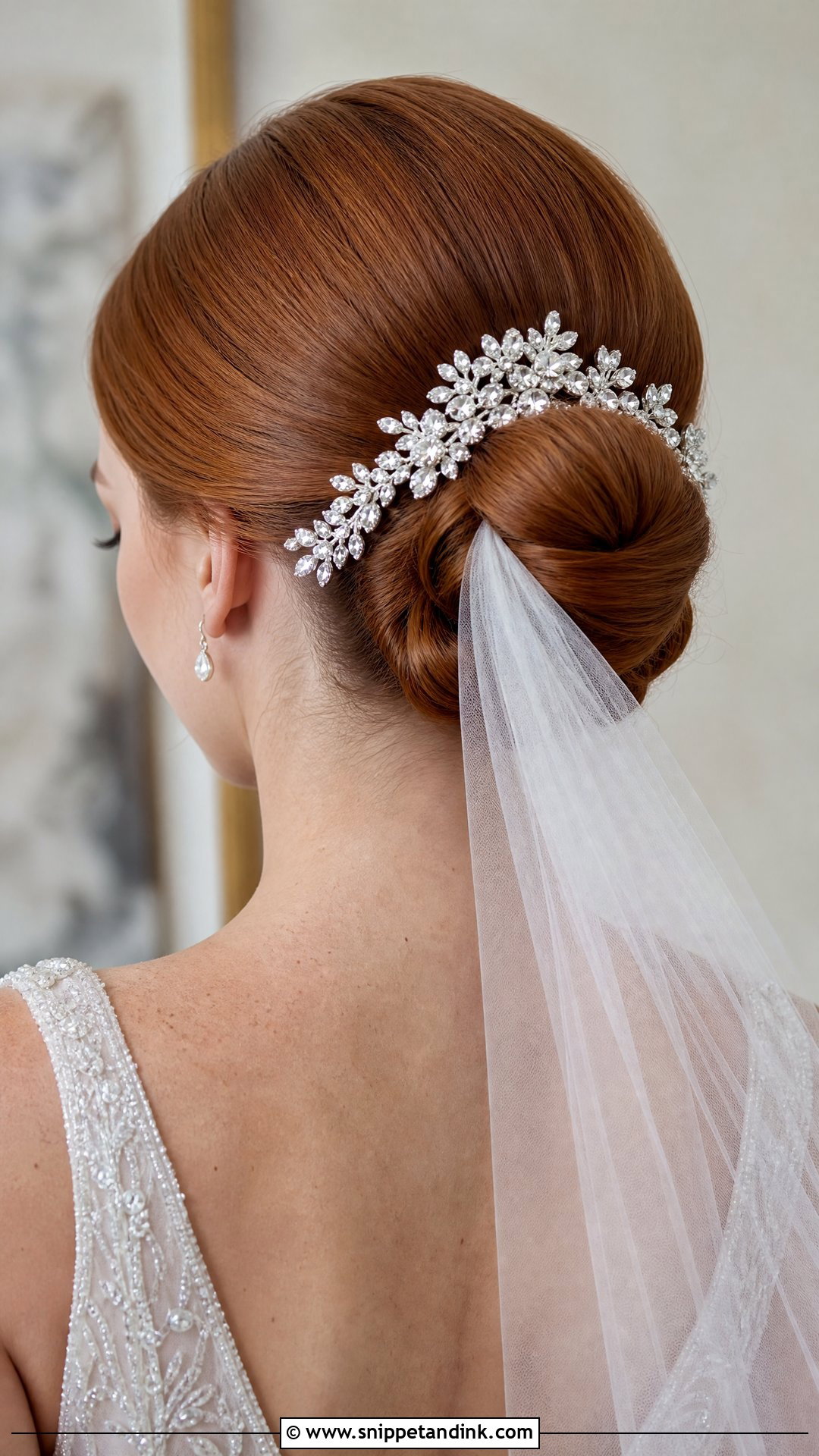
A chignon is a low, coiled knot, smoother and more structured than a bun. It’s my usual answer for a bride wearing a veil, since the comb slides in directly above the coil and the tulle falls cleanly over it. The polish comes from prep: I blow-dry the hair smooth first instead of working over natural texture, which saves fighting frizz with product later. Add a comb or leave it bare. Very heavy hair is the one thing to mention at your trial, because I’ll split it into two smaller coils so the weight doesn’t drag the pins loose while you dance.
9. Braided Crown Updo
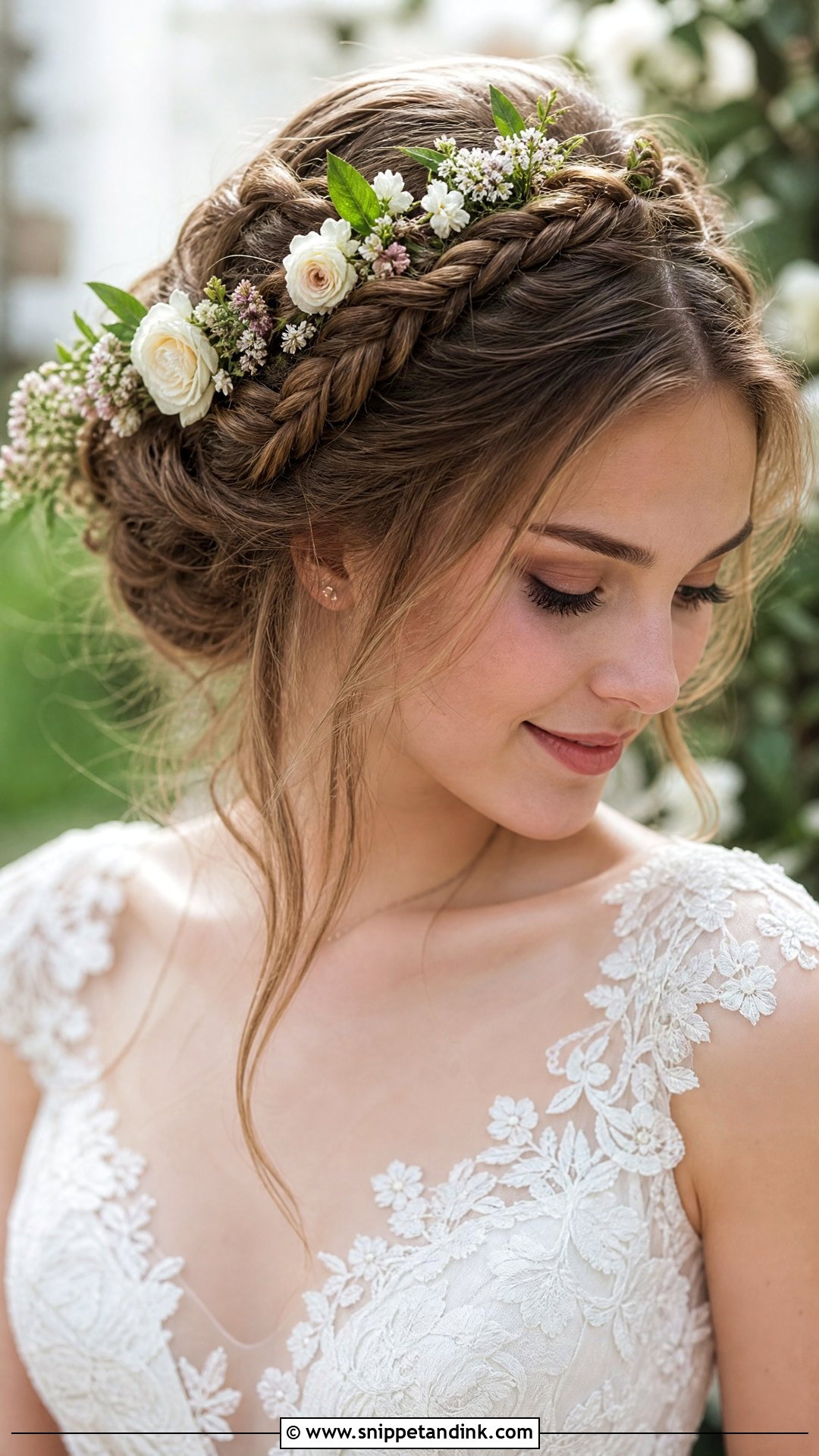
Guests spend the whole ceremony looking at the back of your head, and a braided crown looks finished from the back, the sides and the front at once. The braids wrap around the head like a halo, so they need medium to long hair; if yours can’t reach all the way round, I’ll add a clip-in piece matched to your color. Fresh flowers woven in should be hardy varieties, since delicate blooms wilt against warm skin within a couple of hours. On fine hair I gently pull the edges of each braid wider so the crown doesn’t look thin.
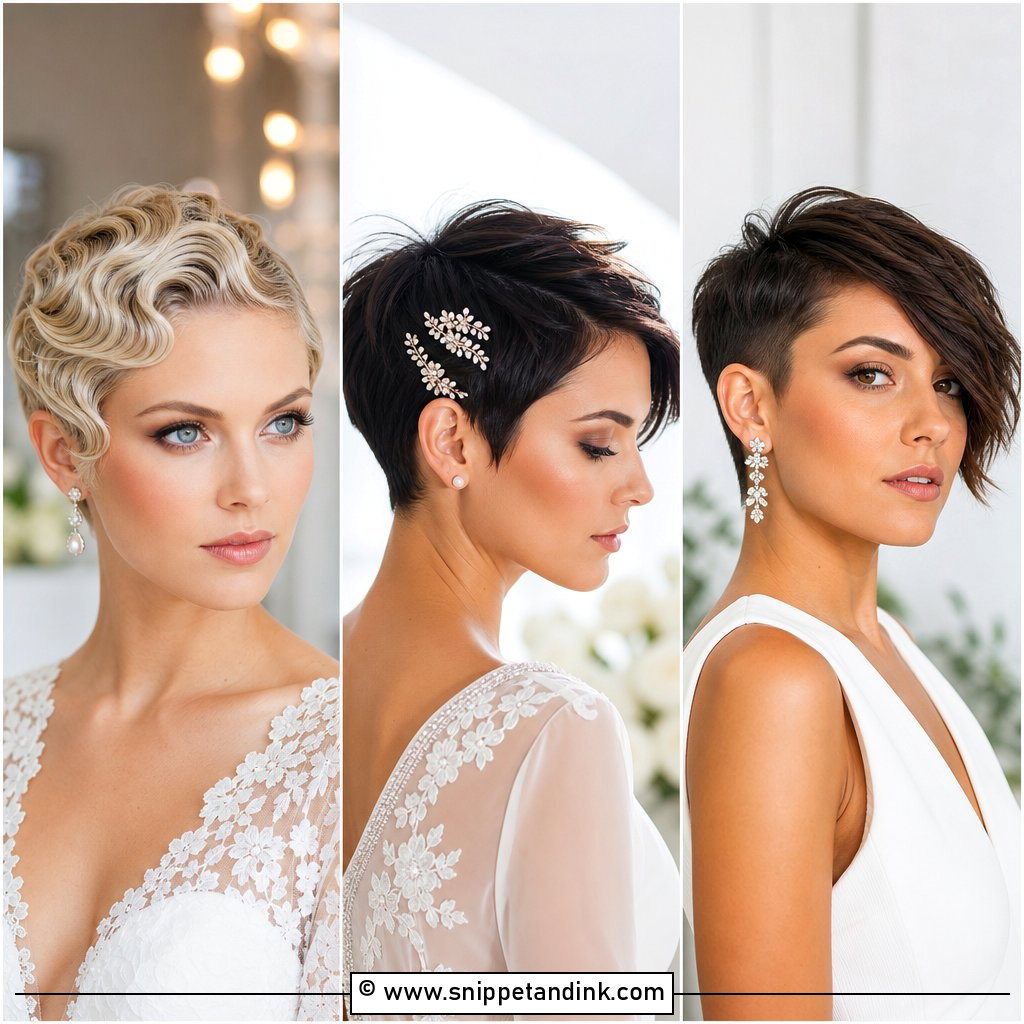
10. Pixie Cut With Accessories
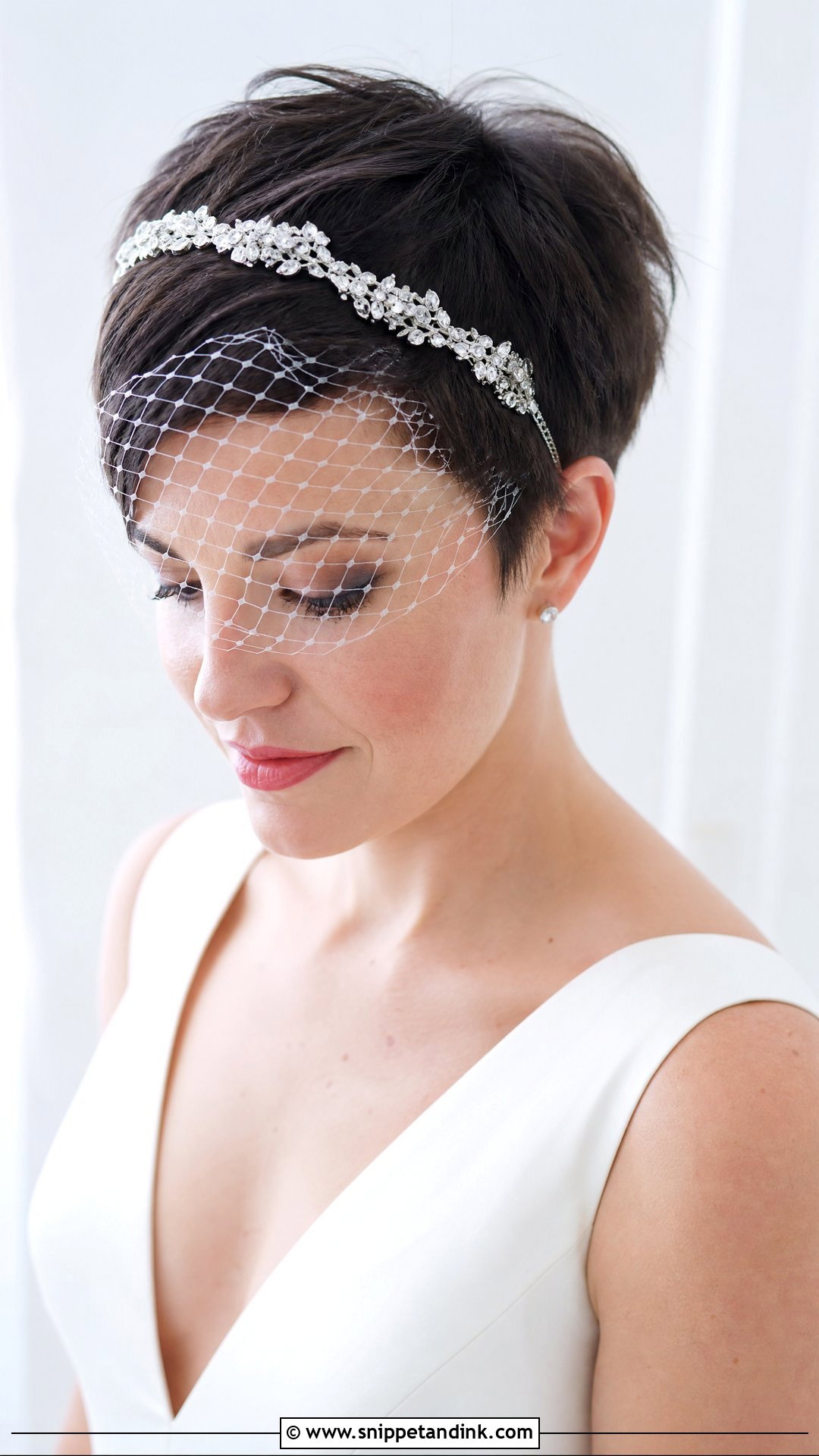
Short hair doesn’t mean fewer options. With a chic pixie cut, the decisions are mostly about texture and accessories. I’d book the last trim about a week before the wedding rather than the day before, so the edges have softened by the time anyone takes a close-up. A little paste lifts the crown, and a jeweled headband, a few sparkling pins or a small birdcage veil adds the bridal detail. Pins need something to grip on very short sections, so I criss-cross two bobby pins underneath each accessory. Your face is fully on show, which is worth remembering when you plan makeup.
11. Low Side-Swept Updo
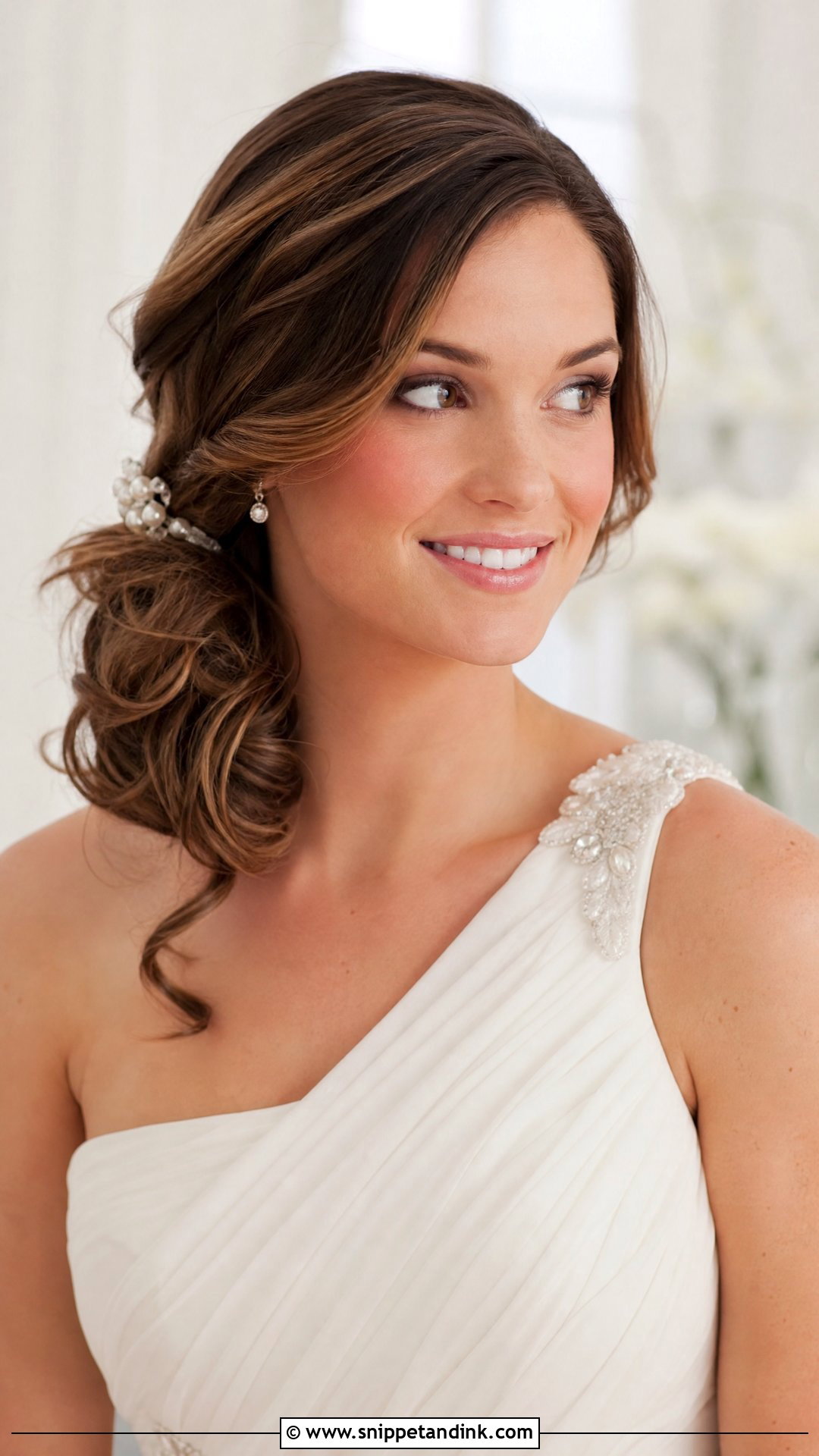
Gathering the hair low to one side shows off the jawline and one earring, and it pairs naturally with a one-shoulder gown: put the hair on the bare side. My only caution is the ceremony layout. Work out which side of you faces the guests and the photographer during the vows, and sweep the hair toward that side so it isn’t hidden in every aisle picture. Pearls or small blooms tucked into the knot add detail. Medium to long hair gives enough length to reach the side without strain.
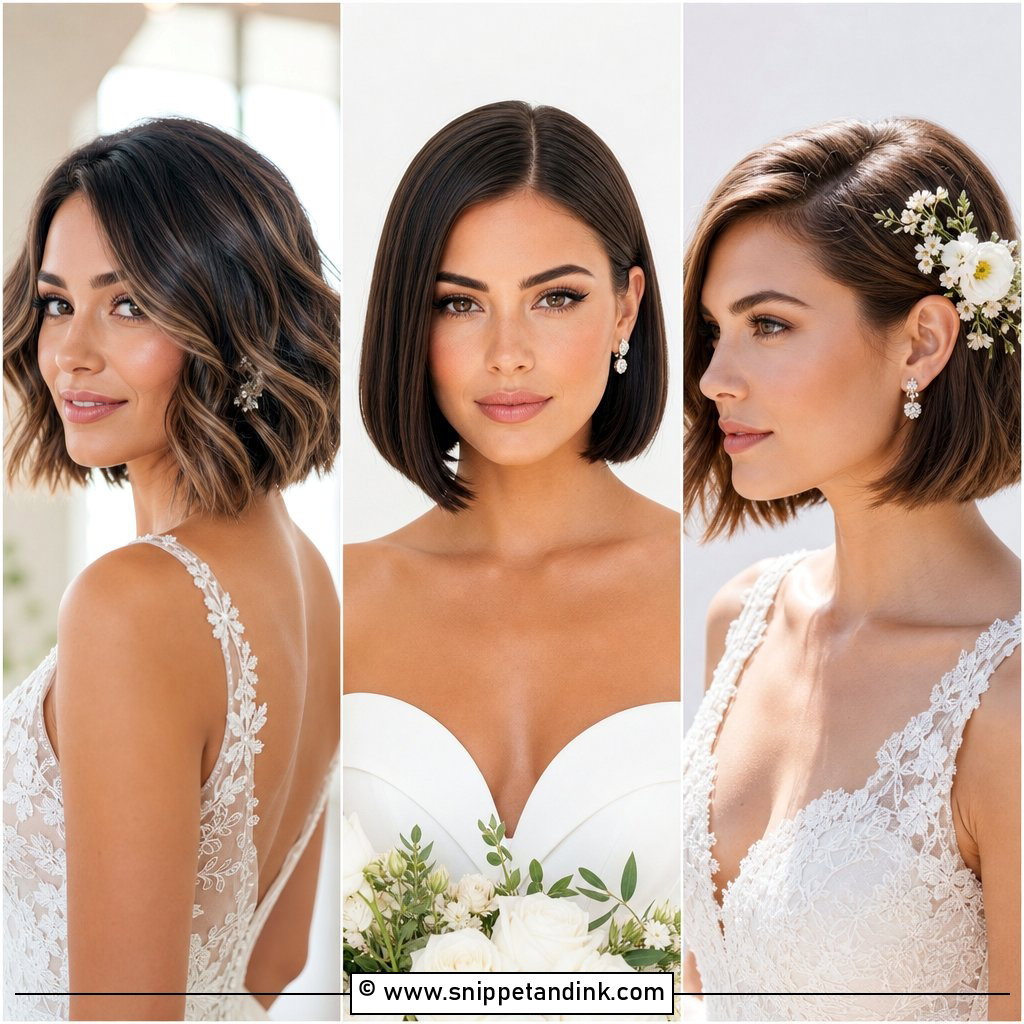
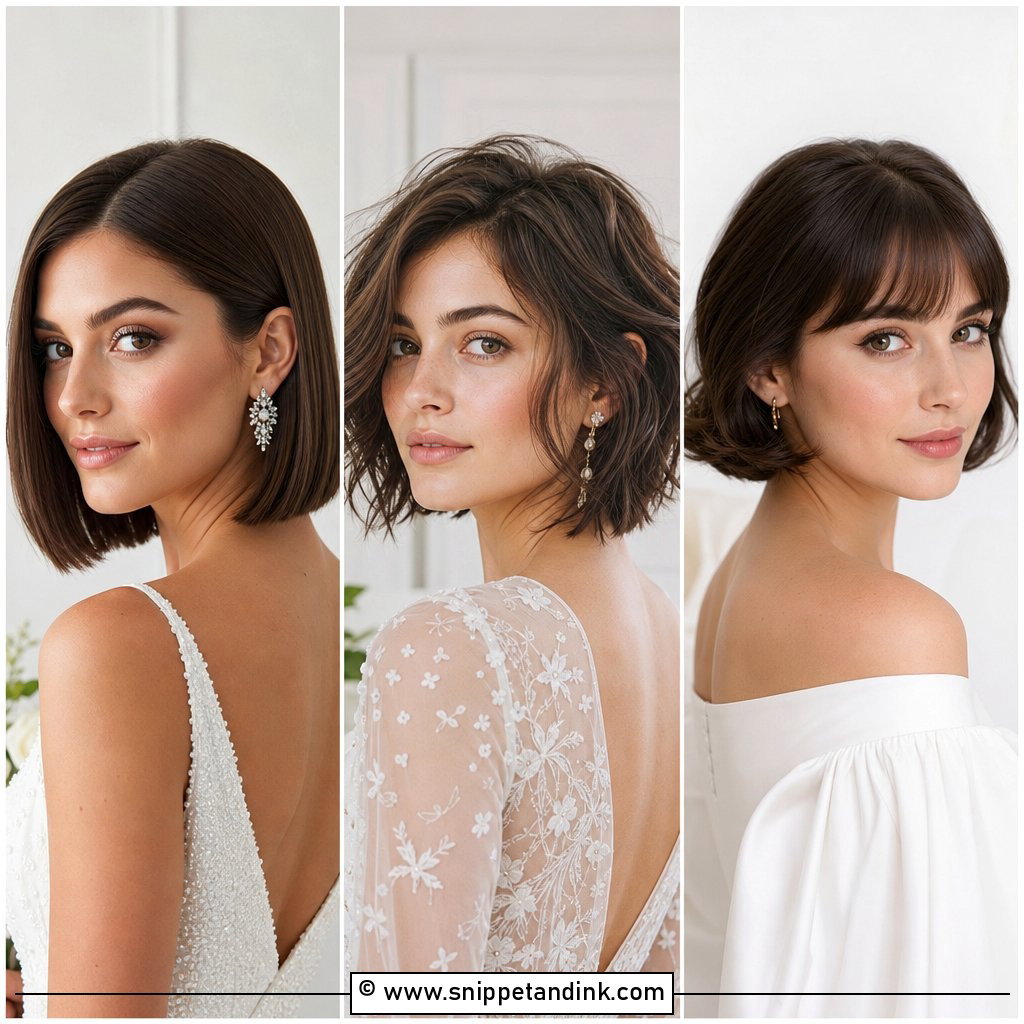
12. Bob Haircut With Soft Waves
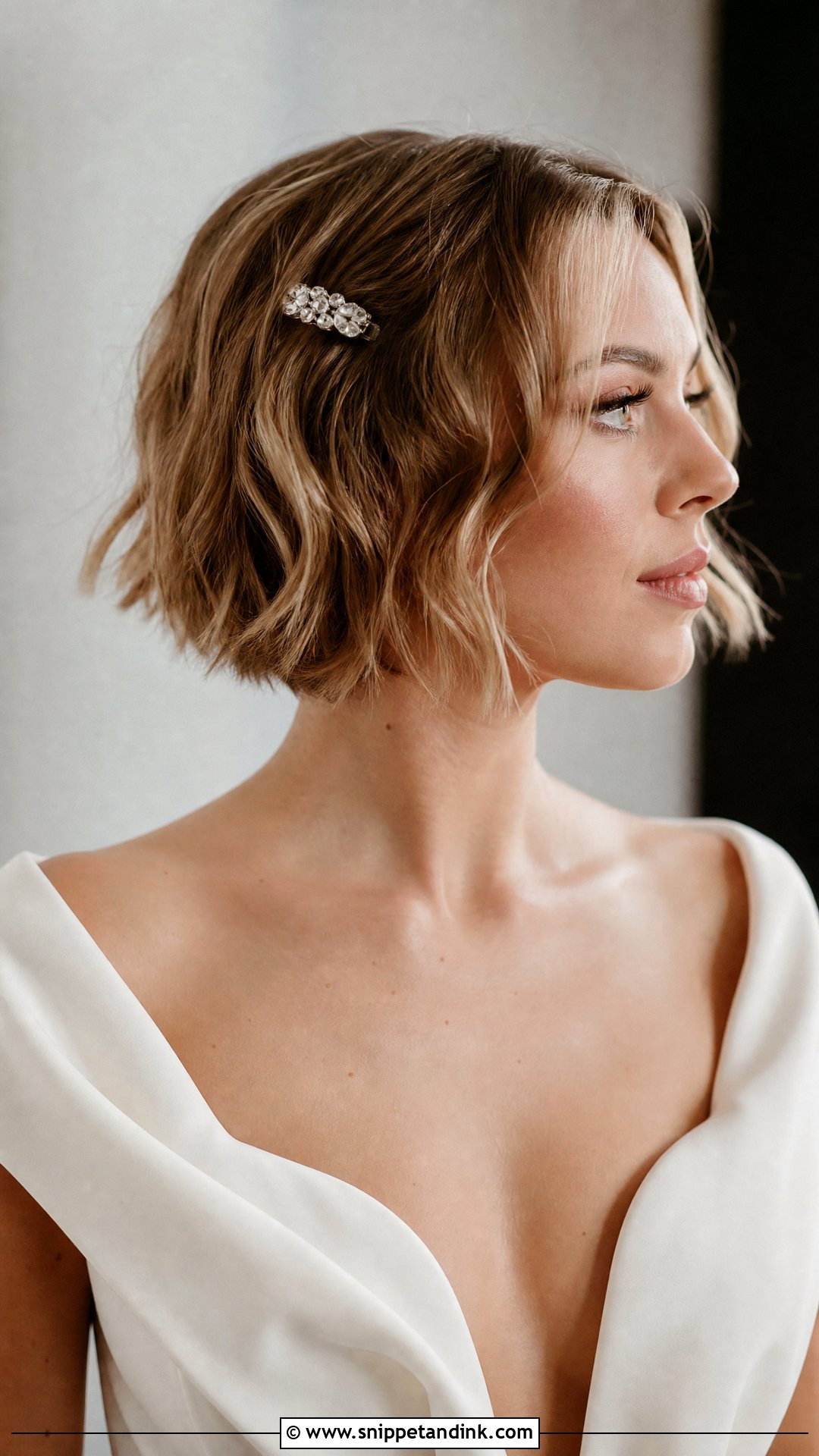
A bob sits at the chin or jaw, so the waves have to be short and controlled. There’s no length for them to drop into. I use a smaller wand and wave away from the face so the shape doesn’t collapse inward, then tuck one side behind the ear with a clip to show a statement earring. Get the main cut four to six weeks out and a tidy-up a week or two before, since blunt ends show growth quickly. A wavy bob also holds its shape far better than long hair worn down, which makes it one of the more reliable down styles.
13. Fishtail Braid Updo
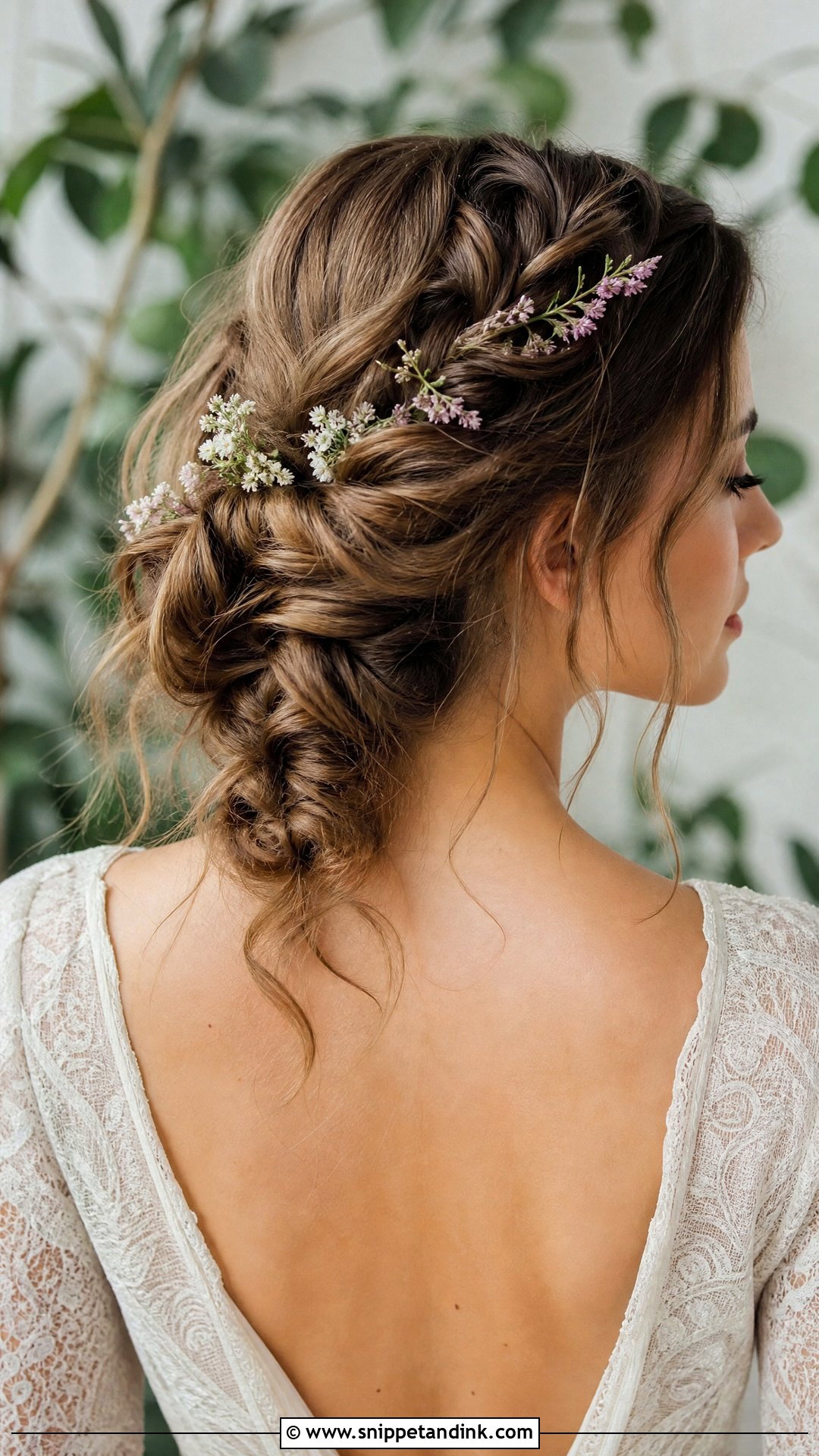
A fishtail crosses tiny pieces from one side to the other, so it takes longer than a regular three-strand braid but gives a finer, more detailed pattern. Gathered into a loose updo, that texture is the whole point. I prep with dry texture spray, because clean, silky hair slides and blurs the pattern. Tiny flowers or pearls sit neatly in the gaps, and the detail reads well in close-up shots at a rustic or bohemian wedding. Layers shorter than the shoulder will fall out of the weave, so it’s really a medium-to-long hair style.
14. Curtain Bangs With Updo
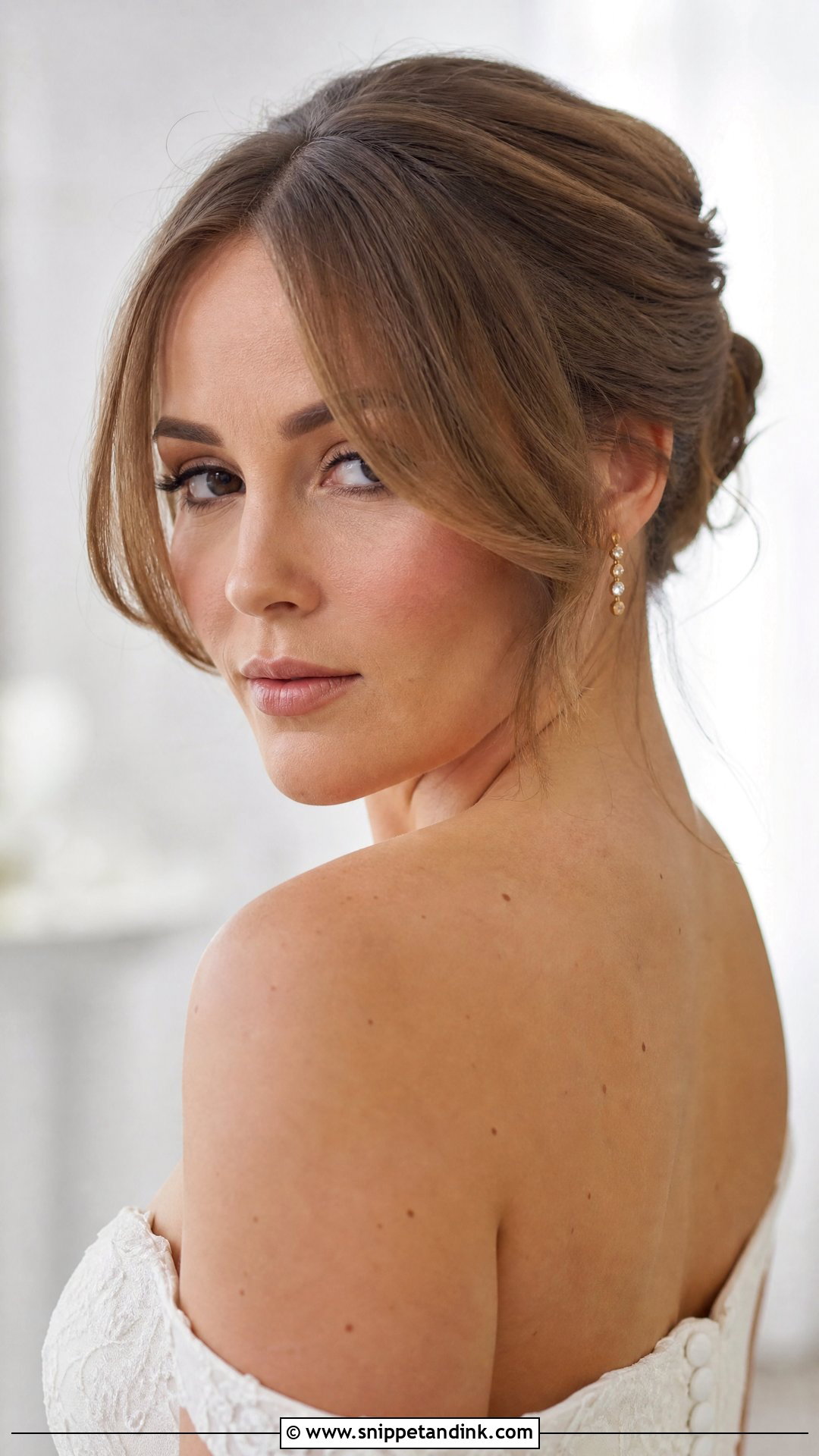
Curtain bangs parted in the middle and swept outward soften a sleek bun or chignon around the face. Timing matters more than styling here. Bangs cut in the final week are often too short and too blunt, so I’d have them shaped two to three weeks before and let your stylist trim only the very ends at the trial. On the day I blow-dry them away from the face with a round brush and set them with a light spray, not a stiff one, so they still move. If your forehead gets shiny, they’ll separate as the day goes on, so keep blotting papers in your bag.
15. Voluminous Blowout
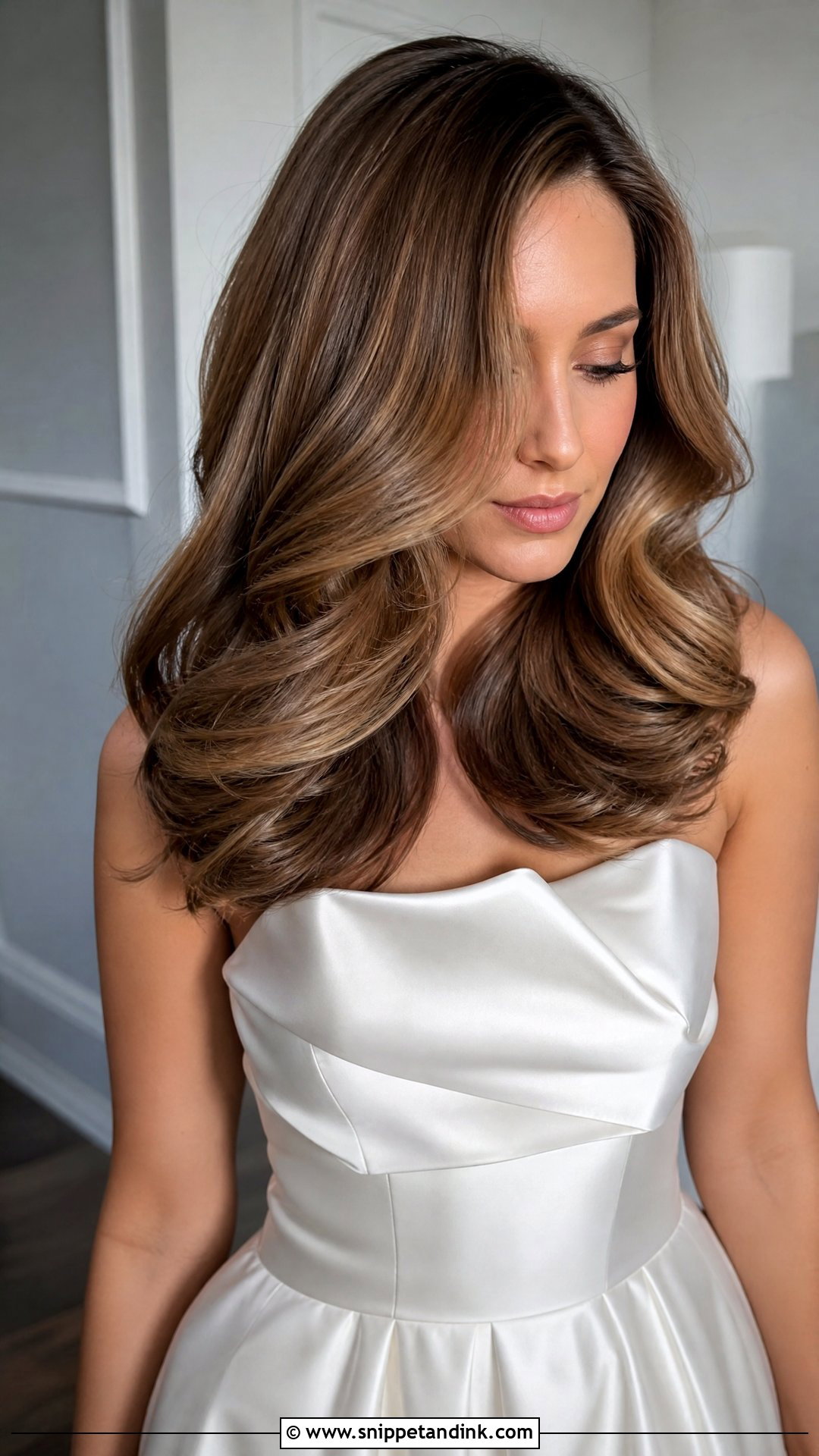
A glamorous blowout sounds simple, but volume made with heat alone relaxes within hours. I build it with mousse on damp roots and a round brush, then set big velcro rollers while the hair is still warm and let it cool before brushing out. That cooling step is what keeps the bounce through dinner. The lengths end in soft curves with plenty of shine. Wear it all down or pin one side back. In a humid venue I’d suggest the half-pinned version, so the root lift has some support.
16. Twisted Low Ponytail
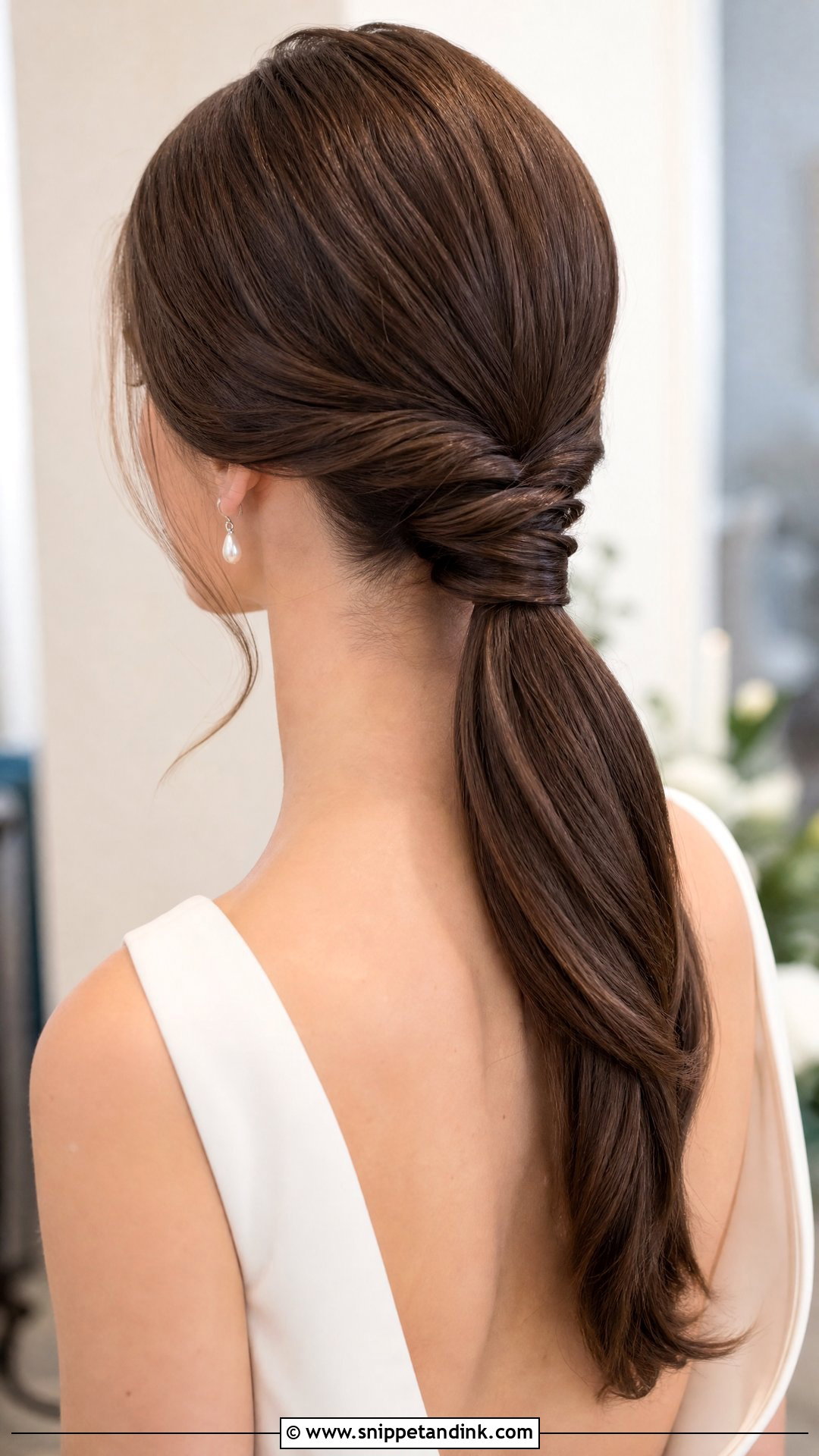
The twisted low ponytail is quicker in the chair than most updos, and it looks modern without trying hard. I twist two sections from the temples back to the nape, secure the ponytail with an elastic, and wrap a strand of hair around the base to hide it. A few small pins along the twists finish the design. It needs medium to long hair and sits well with a sleek column gown and statement earrings. The weak point is the elastic: on heavy hair I use two, one just above the other, so the pony doesn’t slide down during the dancing.
17. Natural Curls Worn Down
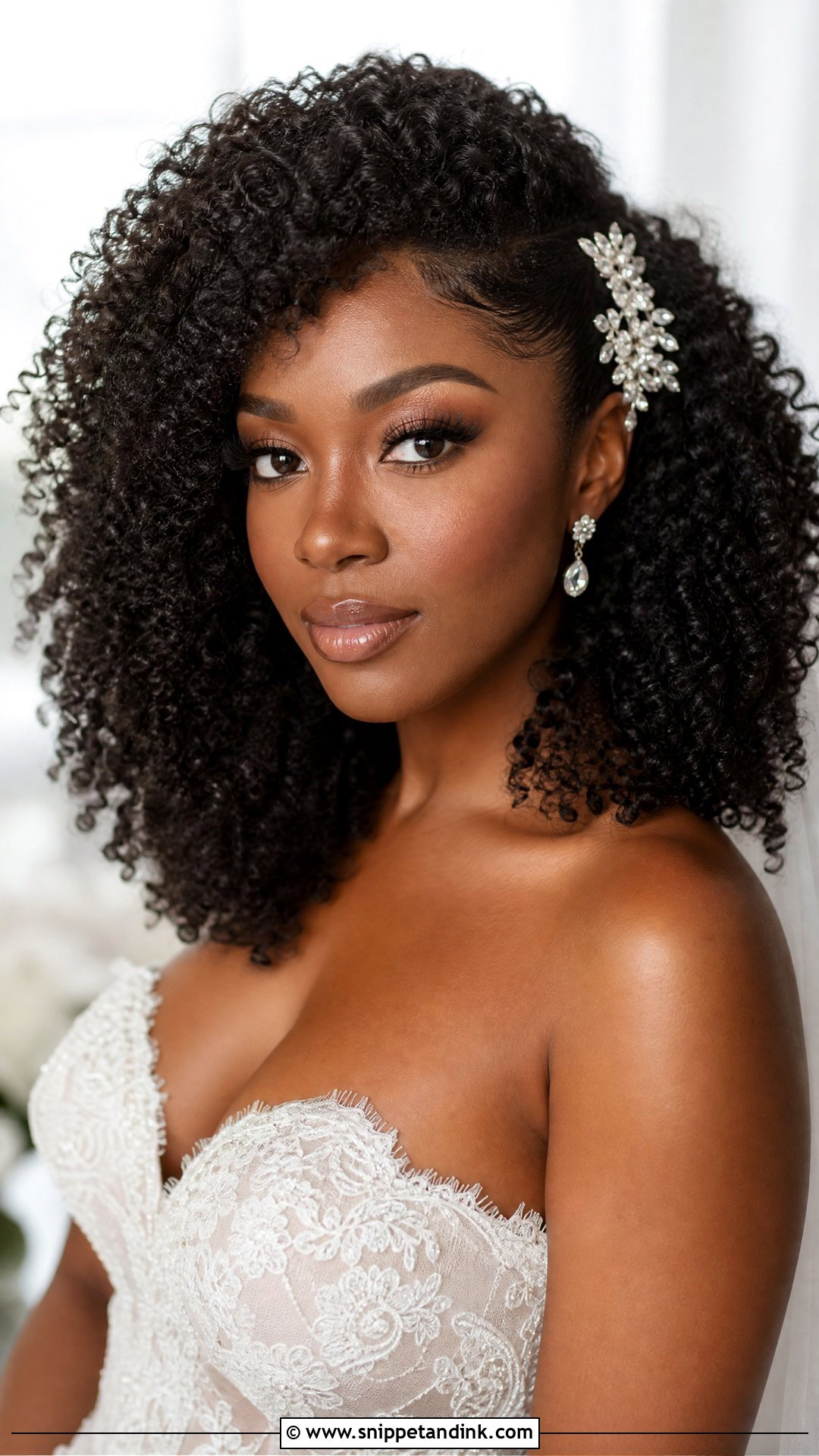
Natural curls are only as good as the wash day behind them. I’d plan your normal routine, with the products you already trust, for the evening before or the morning of the wedding, and avoid trying a new curl cream that week. Defined, springy curls bring their own volume, and I work with your curl pattern rather than reshaping it with heat. A jeweled clip pinning one side adds sparkle. Every curl type and length can wear this. Do ask any stylist you book how she handles your texture, though, because some only work with hot tools.
18. Vintage Finger Waves
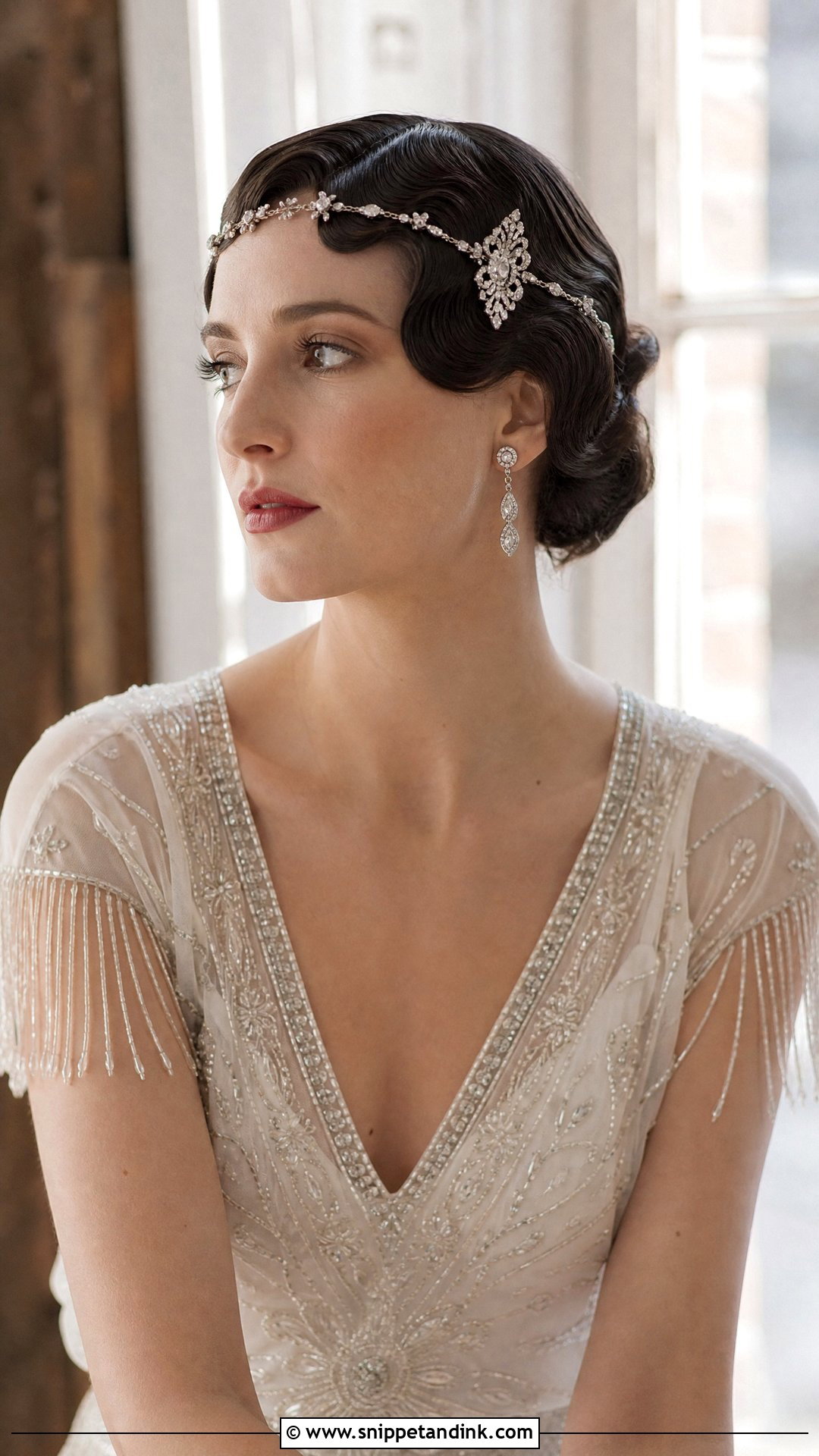
Finger waves bring back the glamour of the 1920s: S-shaped ridges set close to the head, traditionally formed on wet hair with setting lotion, fingers and a comb. A flat-iron version is faster on longer hair, though less crisp. Short to medium hair suits them best, and they look sharp in black and white, which makes them a natural fit for an art deco wedding. A jeweled headpiece or birdcage veil finishes the period look. Insist on a trial, because the technique takes practice and not every stylist does it regularly.
19. Loose Low Braid
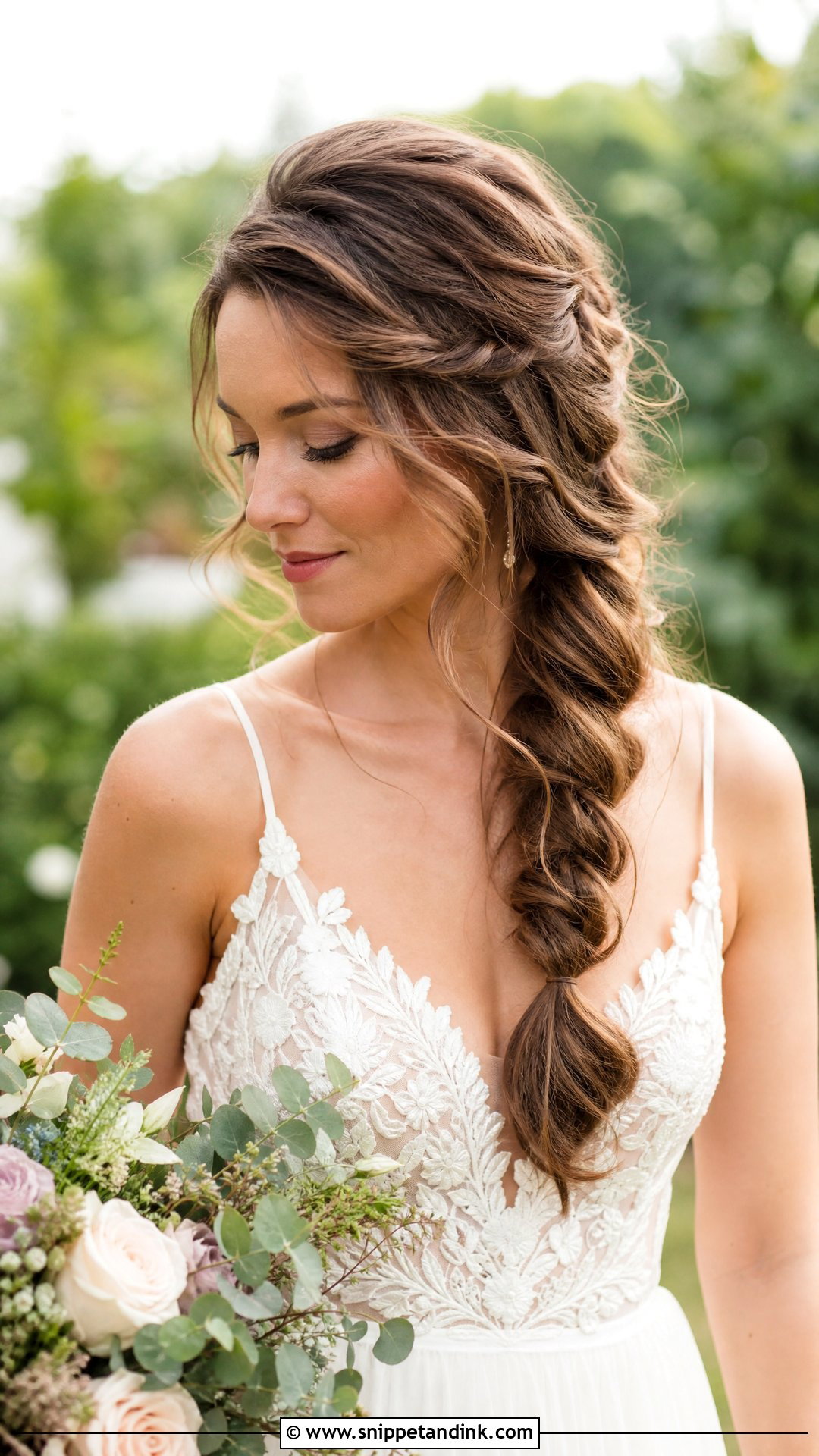
This is the most relaxed option on the list. I braid fairly firmly first, then tease the loops loose; a braid that starts out loose simply falls apart. Draped over one shoulder, it needs long hair, and small flowers tucked into the loops suit a garden or outdoor ceremony. It takes about twenty minutes, so it’s often what I suggest when a bride wants the least time in the chair and a style she can sleep in after the party.
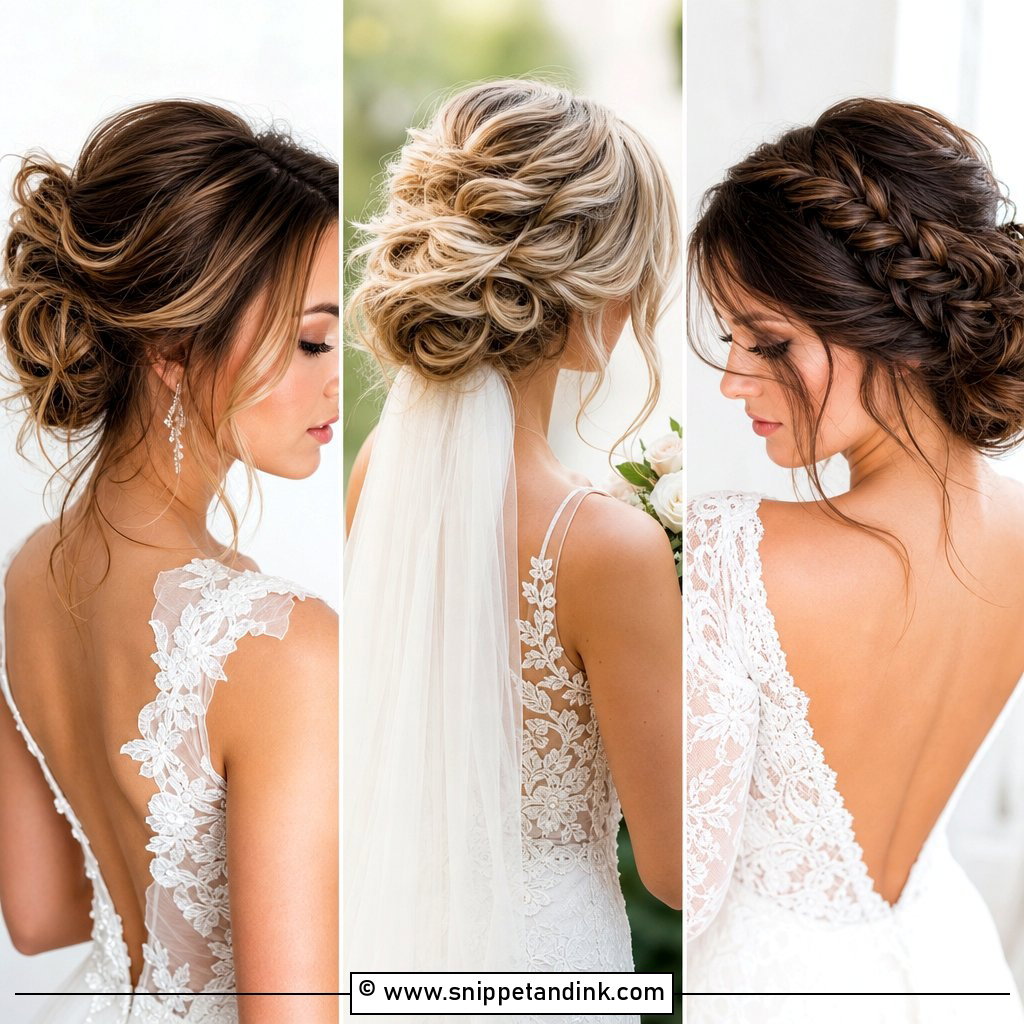
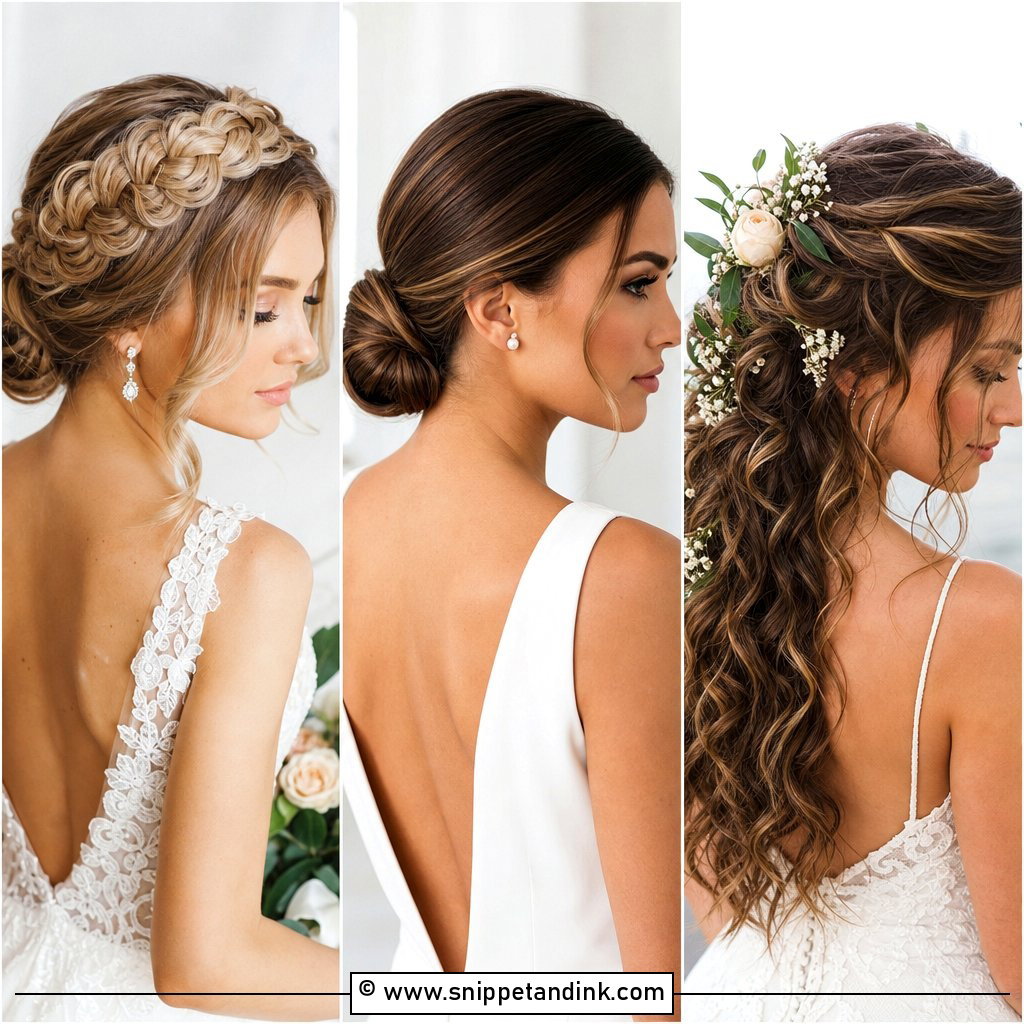

20. Slicked-Back Wet Look
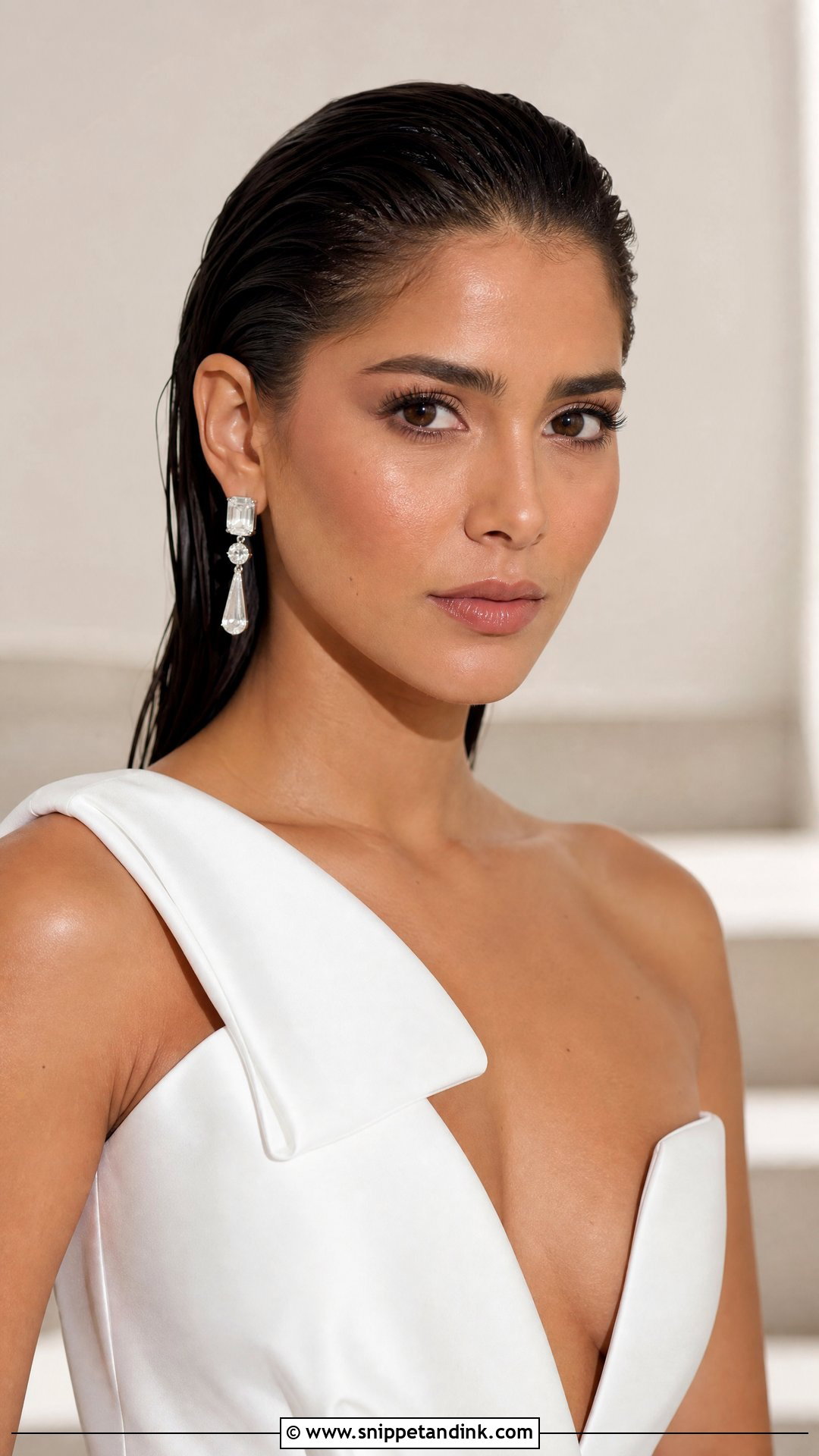
The slicked-back wet look brushes the hair straight back with gel or a glossy cream, and it’s a strong choice for a contemporary city wedding. The product has to go on evenly, or it looks greasy in patches rather than glossy. I’d only recommend it if you’re comfortable with your face completely exposed, because nothing softens the hairline or forehead. Statement earrings and a structured gown complete it. Short hair wears it as is; longer lengths go into a low knot or ponytail behind.
How Much Length These Styles Actually Ask For
Pictures rarely show the length behind a style, and that’s where most disappointment at trials comes from. Here’s how I’d sort the twenty:
- Very short: the pixie, finger waves and the slicked-back look. Accessories and product do the work.
- Chin to shoulder: the wavy bob, finger waves, and a small low bun if there are few layers.
- Shoulder to collarbone: the sleek low bun, chignon, French twist and half-up waves.
- Below the shoulders: the braided crown, fishtail, loose low braid, beach waves, blowout and Hollywood waves.
If you sit between two groups, clip-in extensions are an honest fix. A few wefts add weight to a bun or length to a braid, and I color-match them at the trial so they disappear once the style is in.
Clean Hair or Second-Day Hair? It Depends on the Style
Sleek styles like the chignon, low bun and slicked-back look want hair washed the night before or that morning, then blow-dried smooth. Textured styles such as the messy bun, braids and fishtail hold better on hair washed the day before, because a little natural oil gives the strands grip. Curly hair follows its own routine. I tell each bride which camp she’s in at the trial, and it’s worth writing down.
Skip heavy conditioning masks on the morning itself, since they leave hair too slippery for pins. And don’t switch shampoo in the wedding week. If your scalp reacts, there’s no time for it to settle.
Bring Your Neckline and Your Haircut to the Trial
Start with the haircut and texture you actually have, then think about your neckline and the venue. Wear the dress neckline, or a top cut the same way, to your trial along with two or three photos, and be honest about how much fuss you can tolerate on the day. I’d much rather adjust a style at the trial than discover on the morning that your new layers won’t make the bun you saved. Once you see a style next to the neckline, the choice usually makes itself.
You'll Like These Ideas:


Leave a Reply