
A simple updo is the style I get asked for most, and it’s also the one people underestimate. It looks like a few twists and a handful of pins, but the reason it stays put from the first look to the last song is the groundwork underneath: the right texture, a secure base and pins placed where the weight actually sits. Soft chignons, sleek buns and loosely twisted shapes are all over bridal boards right now, and every one of them can be adapted to long hair or a shorter cut. Below are twenty I’d happily put on a bride, with notes on how each one behaves and who it suits.
Why a Simple Updo Needs Second-Day Hair
The most common thing I fix on a wedding morning is hair that’s too clean. Freshly washed, conditioned hair is slippery, so pins slide out and buns slowly drop toward the collar. For any style on this list, I ask brides to wash the day before, skip heavy conditioner on the lengths and arrive with dry, product-free hair.
Even simple shapes need a foundation. Most of my low buns sit on a small ponytail or a pinned anchor, and the visible hair is wrapped around it. That hidden base is what lets the outside look loose and soft without coming apart.
- Bring the hair accessory, veil comb or flowers you plan to wear, so I can test the weight.
- Wear a button-front top so nothing has to go over your finished hair.
- Take photos from the back and side, not just the front; that is how guests will see it.
- Wear the style for a few hours afterward and note anything that pulls or slips.
1. Classic Low Chignon
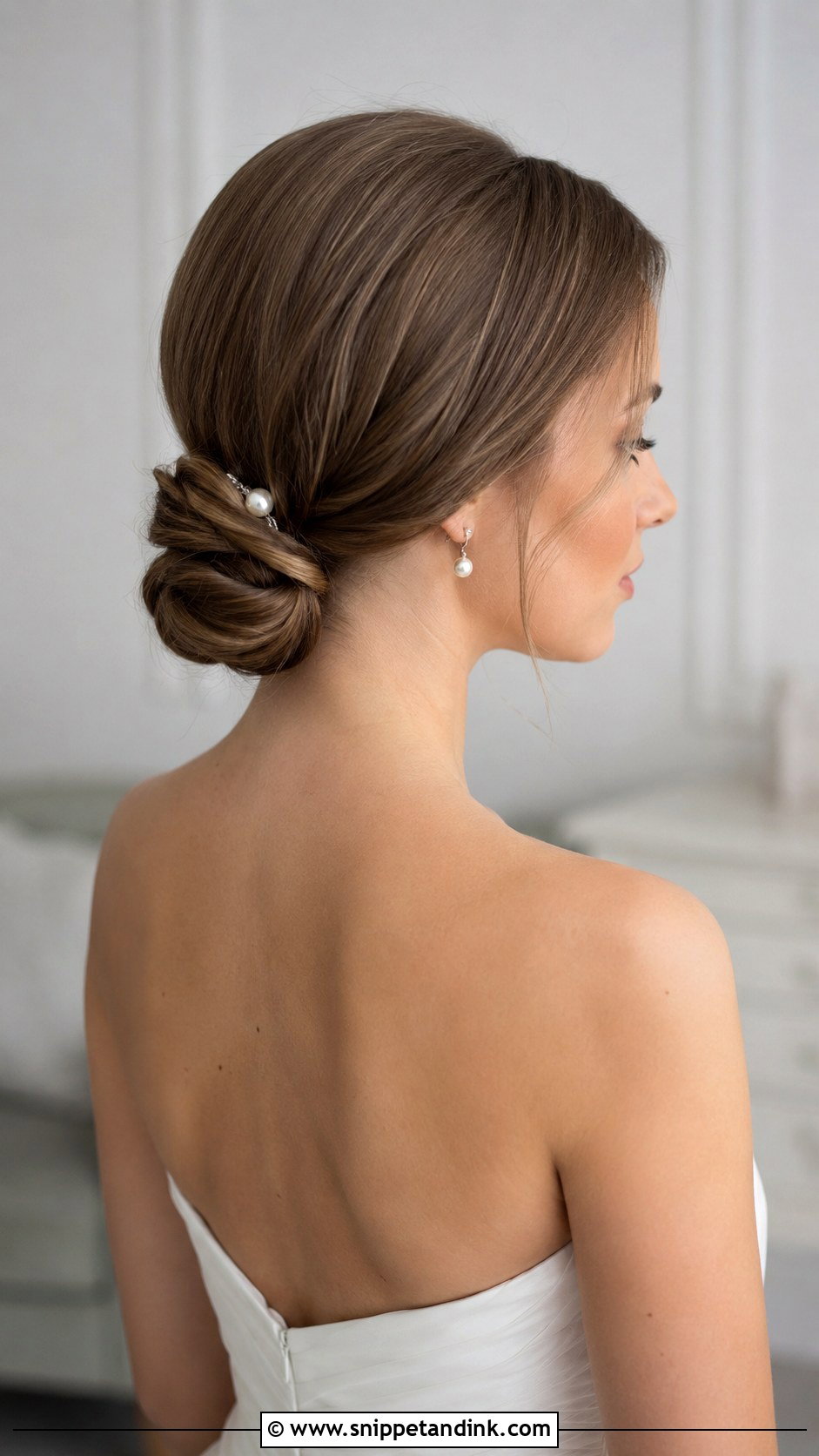
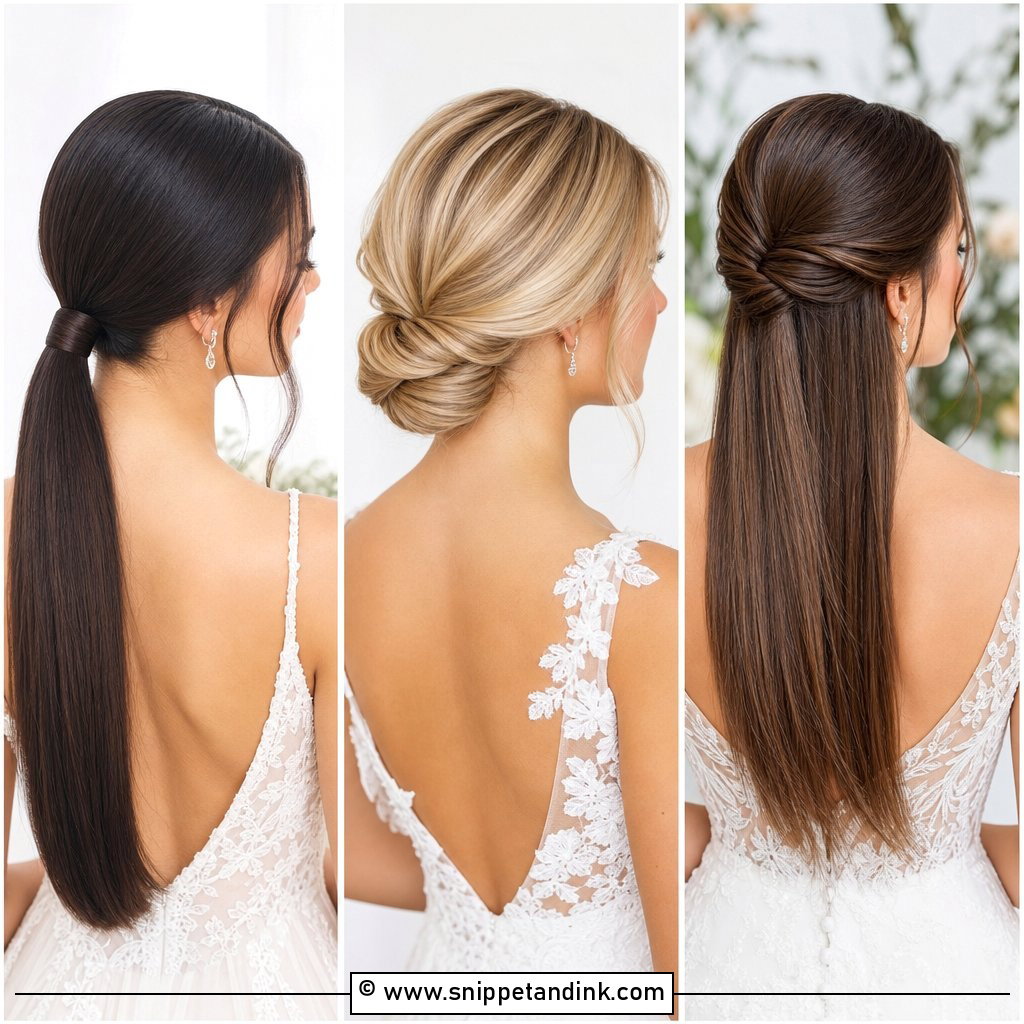
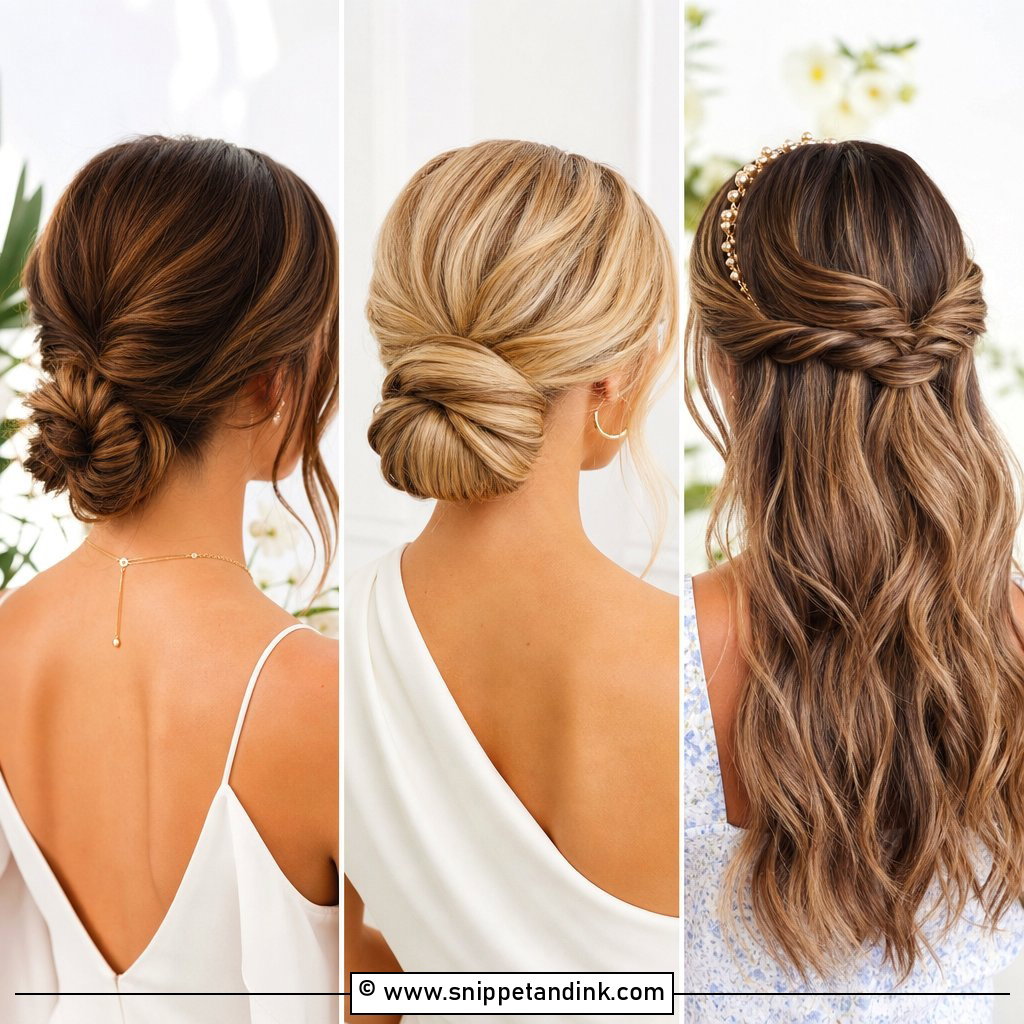
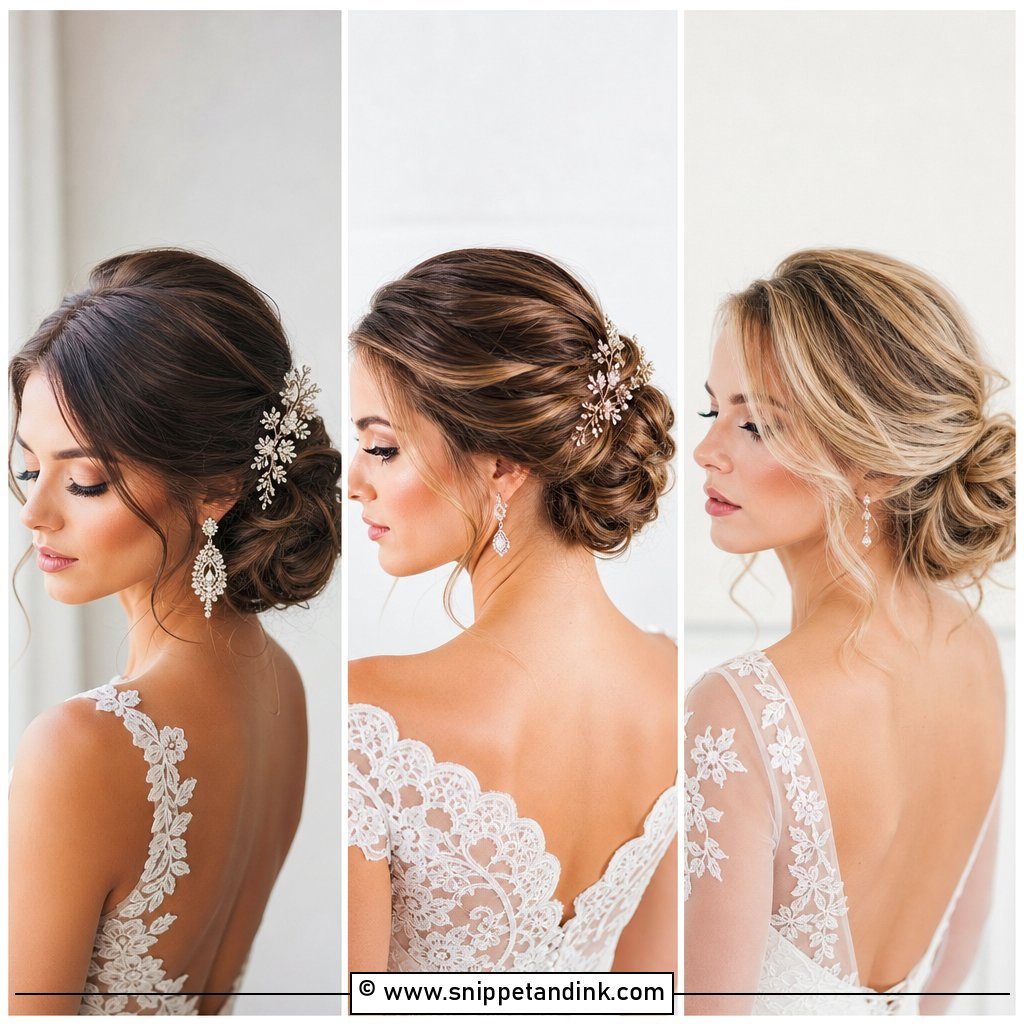
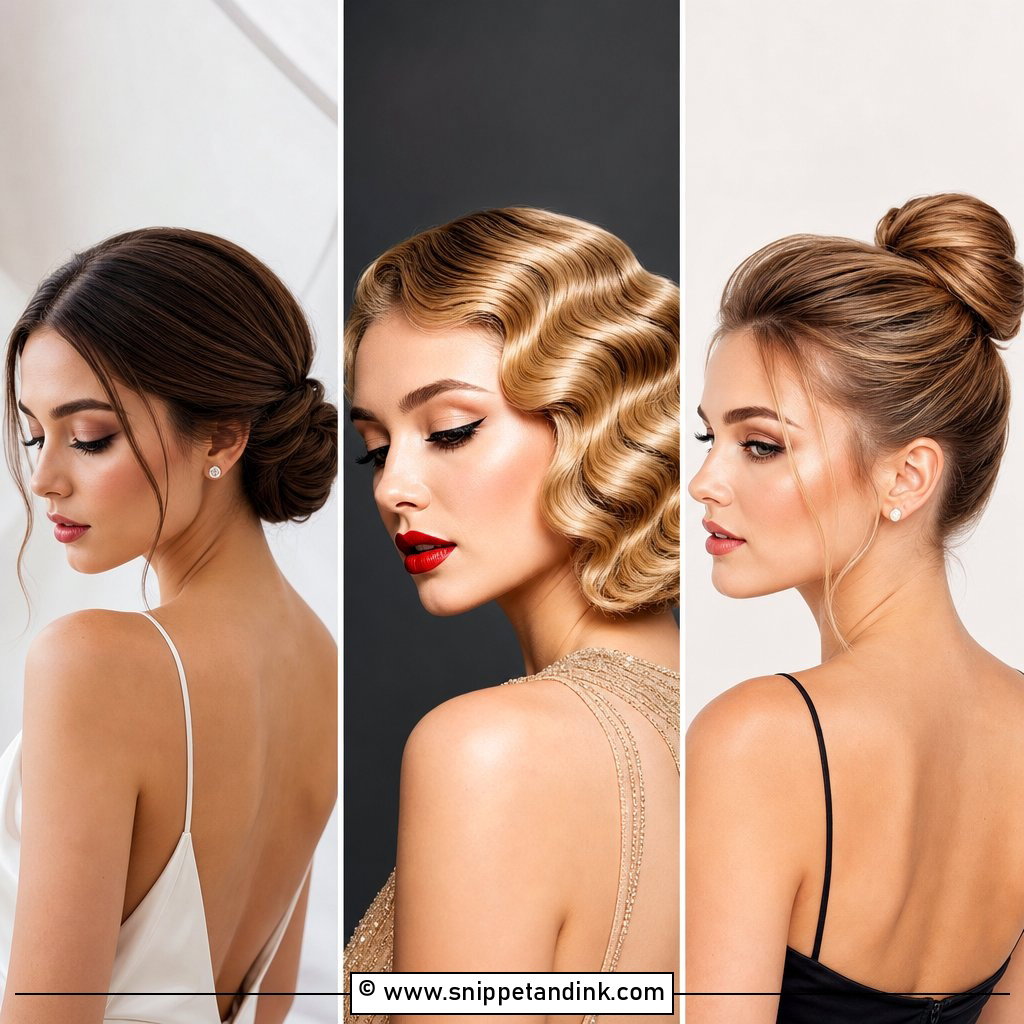
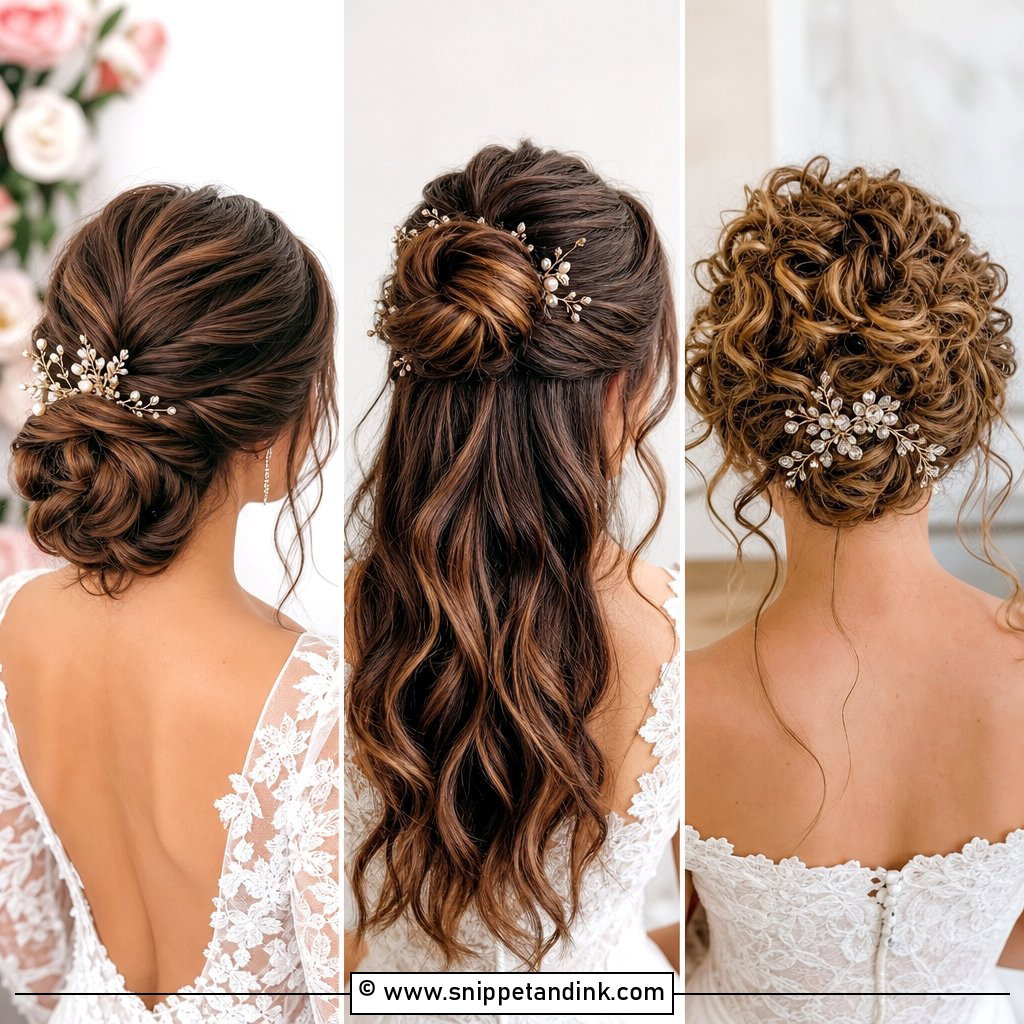
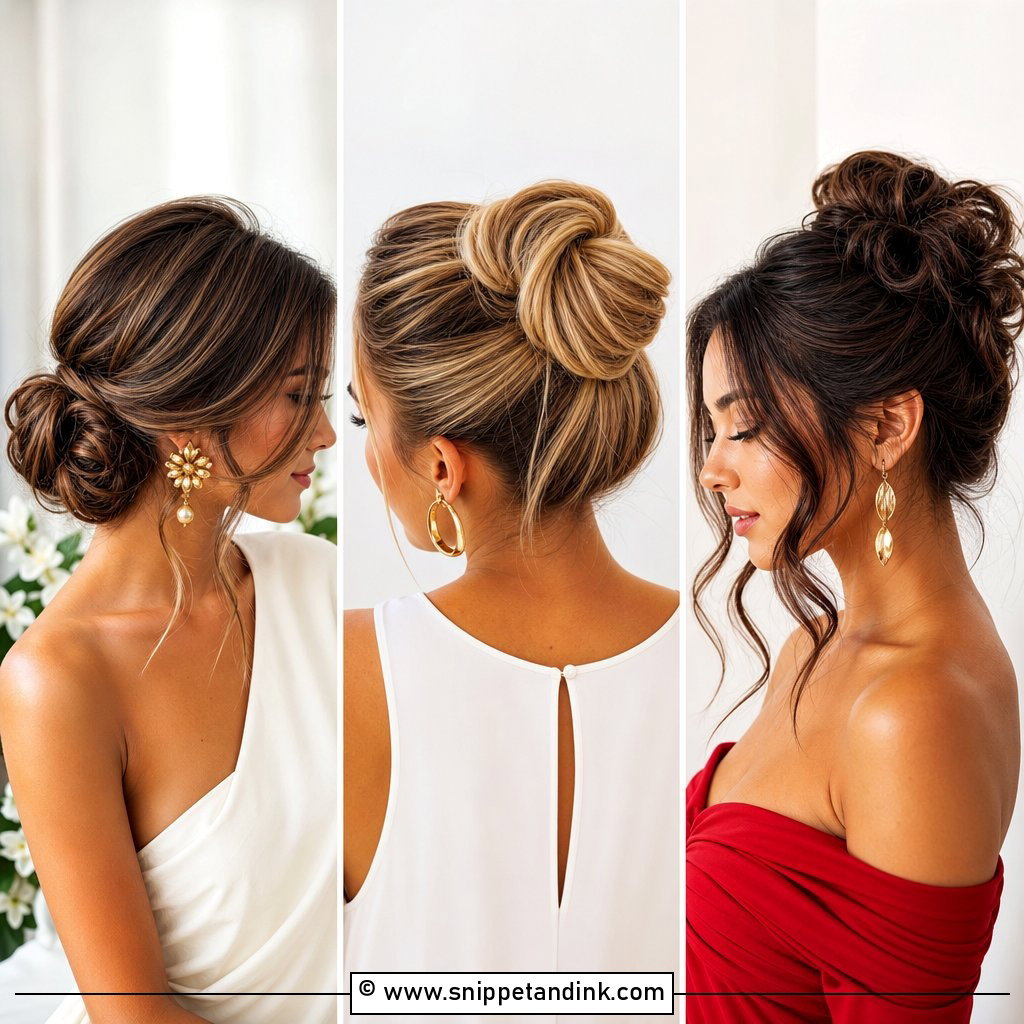
The low chignon is the shape I reach for when a bride can’t decide, because it sits close to the nape and leaves the crown free for a veil comb. I build it on a small, firm base so the knot has something to anchor into, then roll the length around it. That base is why it survives hugging and dancing. Keep it sleek for a ballroom or loosen a strand or two for a garden; on very thick hair I thin the knot out a little so it doesn’t sit like a cushion against the neck.
2. Sleek Ballerina Bun
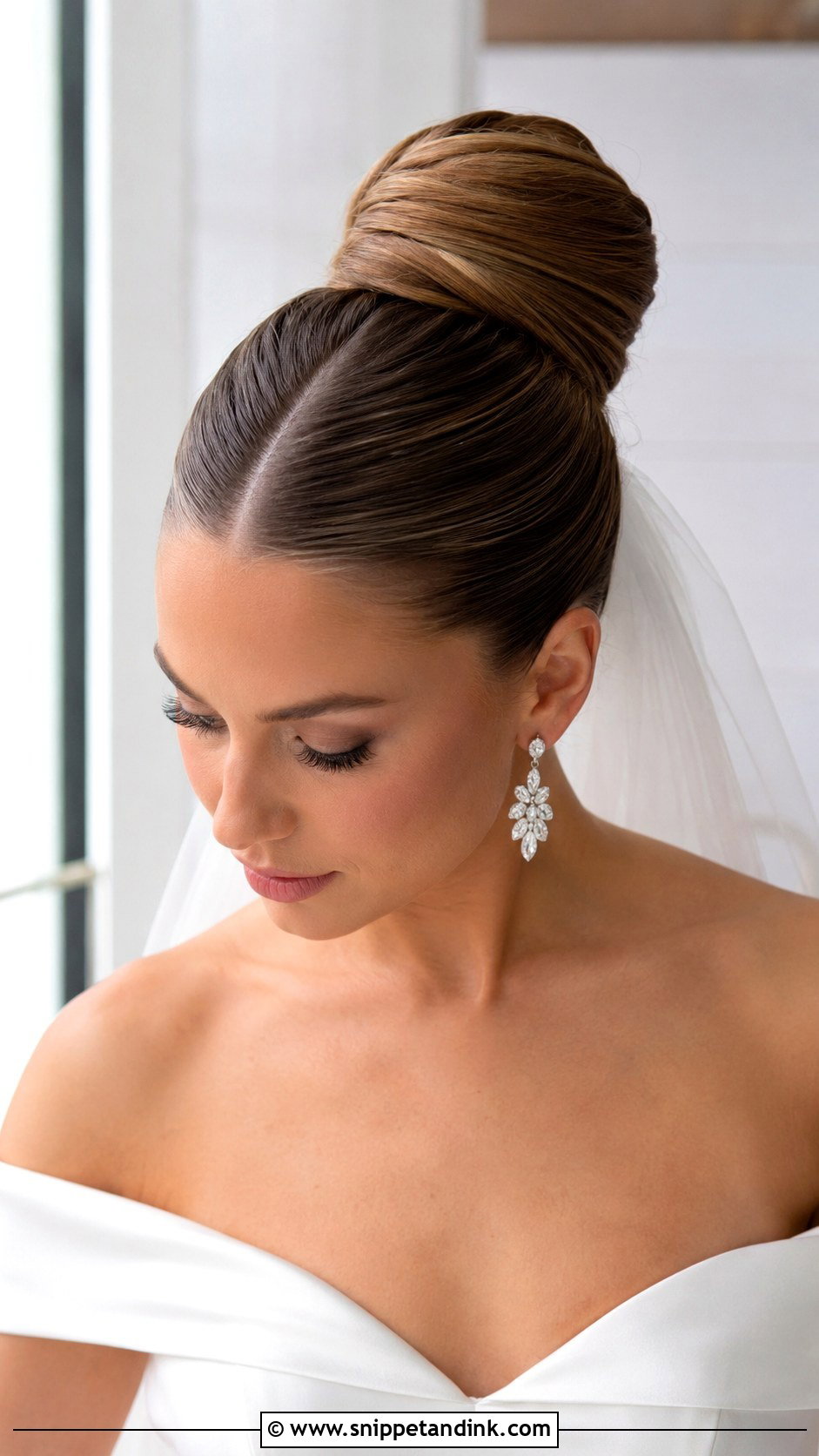
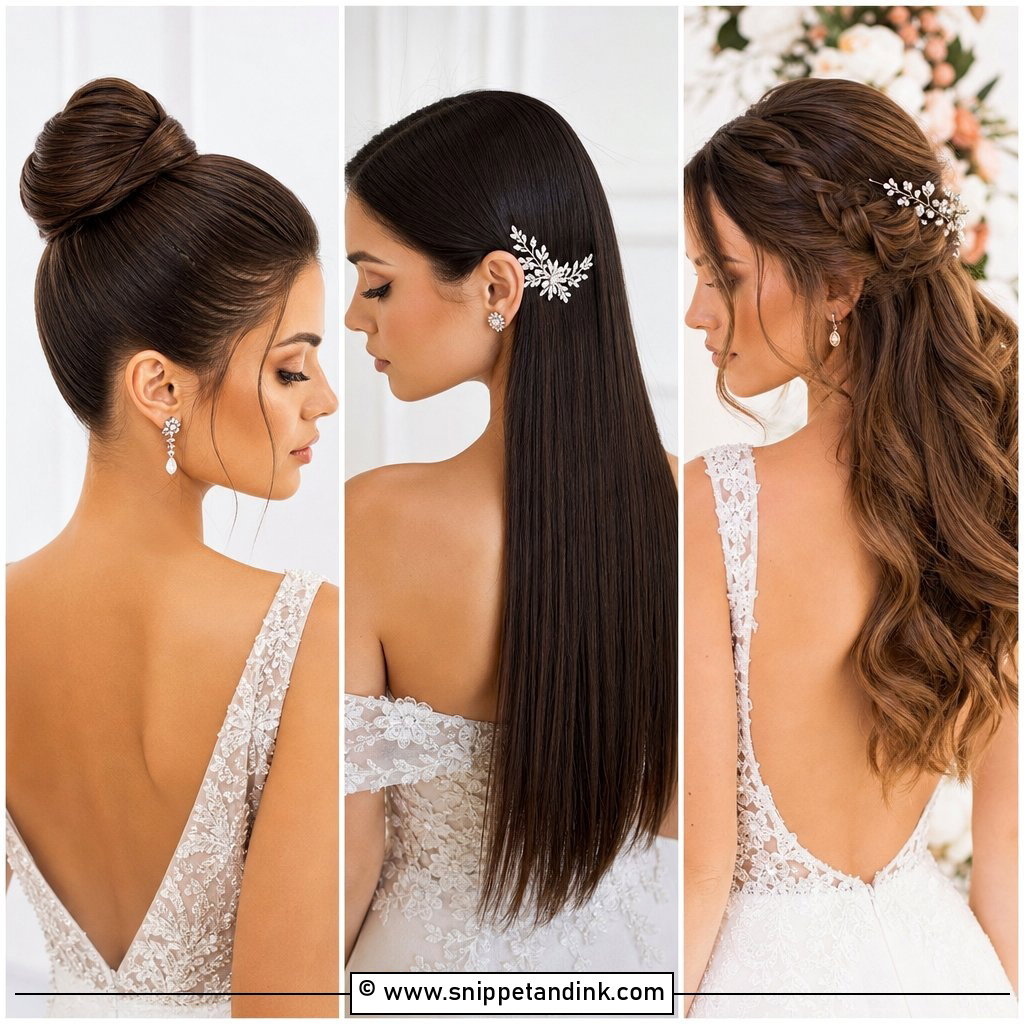
A ballerina bun is all about the surface. Every strand is pulled back over a clean center part into a smooth, high or mid-placed bun, and any bump at the crown shows instantly in photos, so I brush it in sections with a boar bristle brush before the elastic goes in. It puts the focus on earrings, neckline and bone structure. A drop of shine serum handles flyaways. I’d steer you away from it if you get tension headaches, because a tight high bun can start to ache by the reception.
3. Messy Low Bun
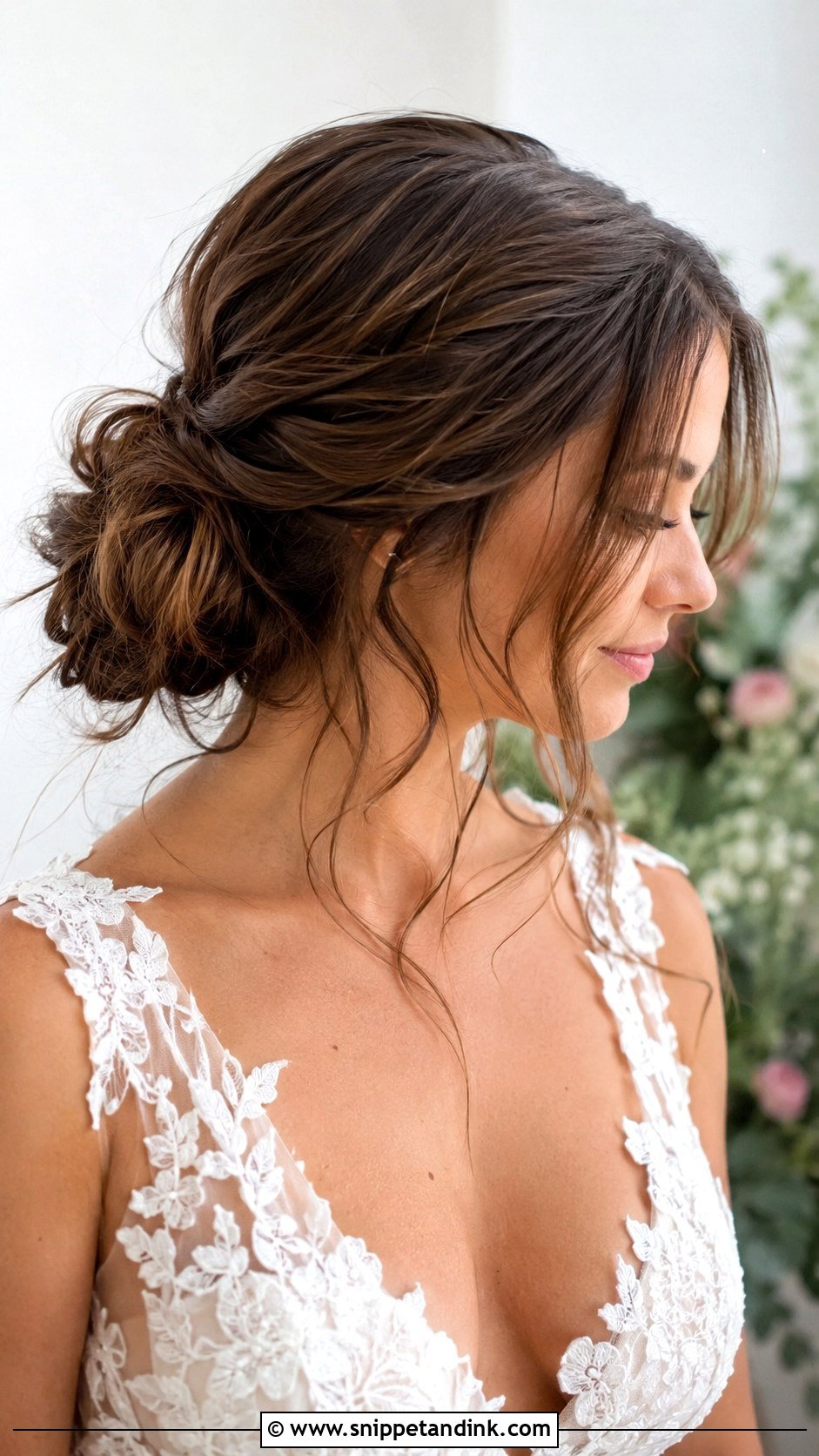
Not every bride wants a slicked finish, and a messy low bun is where texture does the work. I curl the hair first, let it cool fully, then gather it loosely at the nape and pull pieces out around the face and crown. Face-framing tendrils soften the outline. The catch is that messy has to be planned: if the curls are put in on freshly washed, silky hair, they drop within an hour and the bun just looks unfinished. It suits outdoor and boho weddings best.
4. Modern French Twist
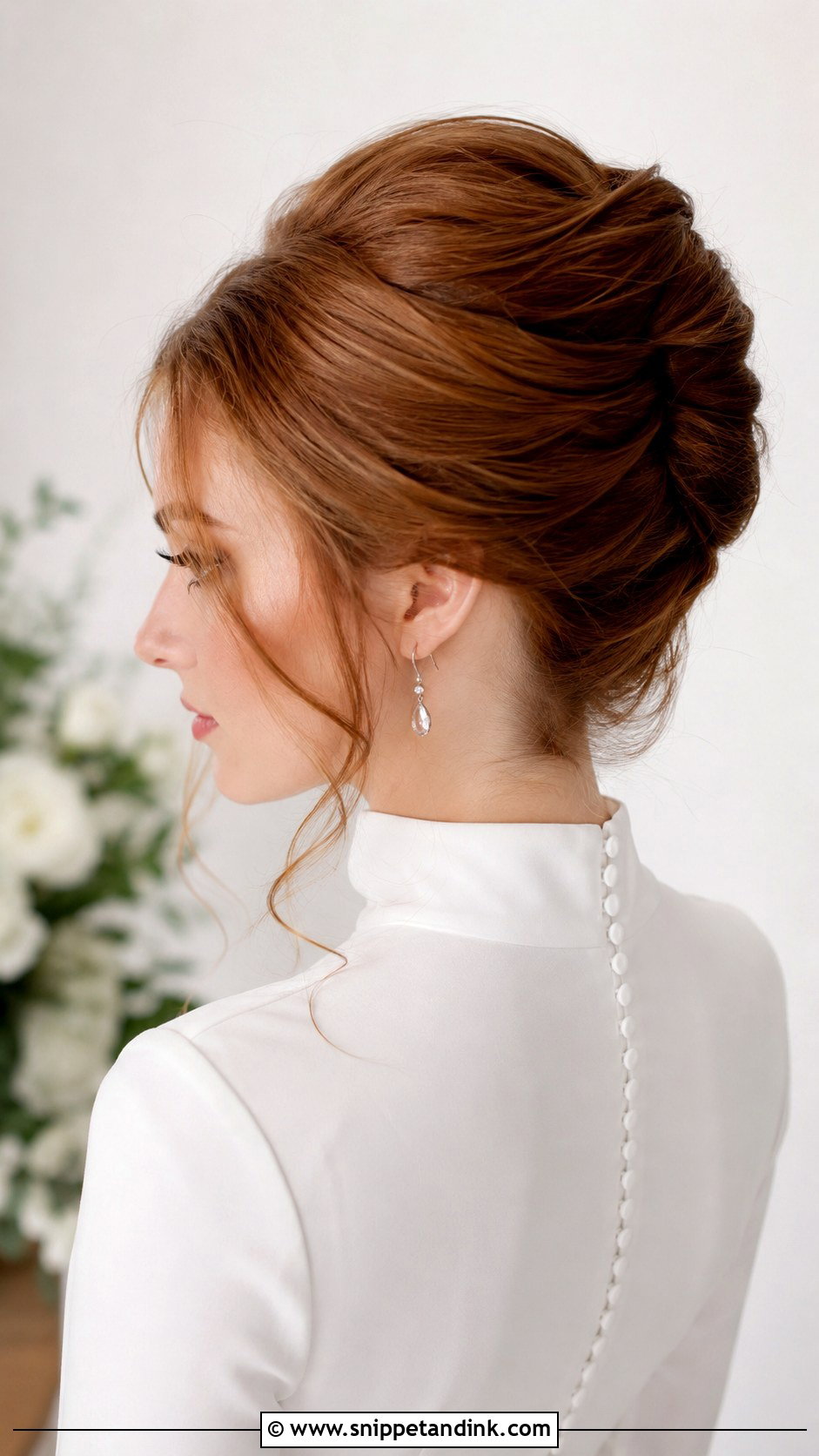
A modern French twist is softer than the lacquered version your mother might remember. Hair is swept to one side, rolled vertically up the back of the head and held with pins that cross inside the roll. I like to lay a row of crisscrossed bobby pins up the center first, so the twist has a rail to lock onto. It keeps everything off the shoulders, which helps on a hot day, and a few wispy strands at the temples stop it looking severe. Statement earrings and a clean neckline make the most of it.
5. Braided Updo
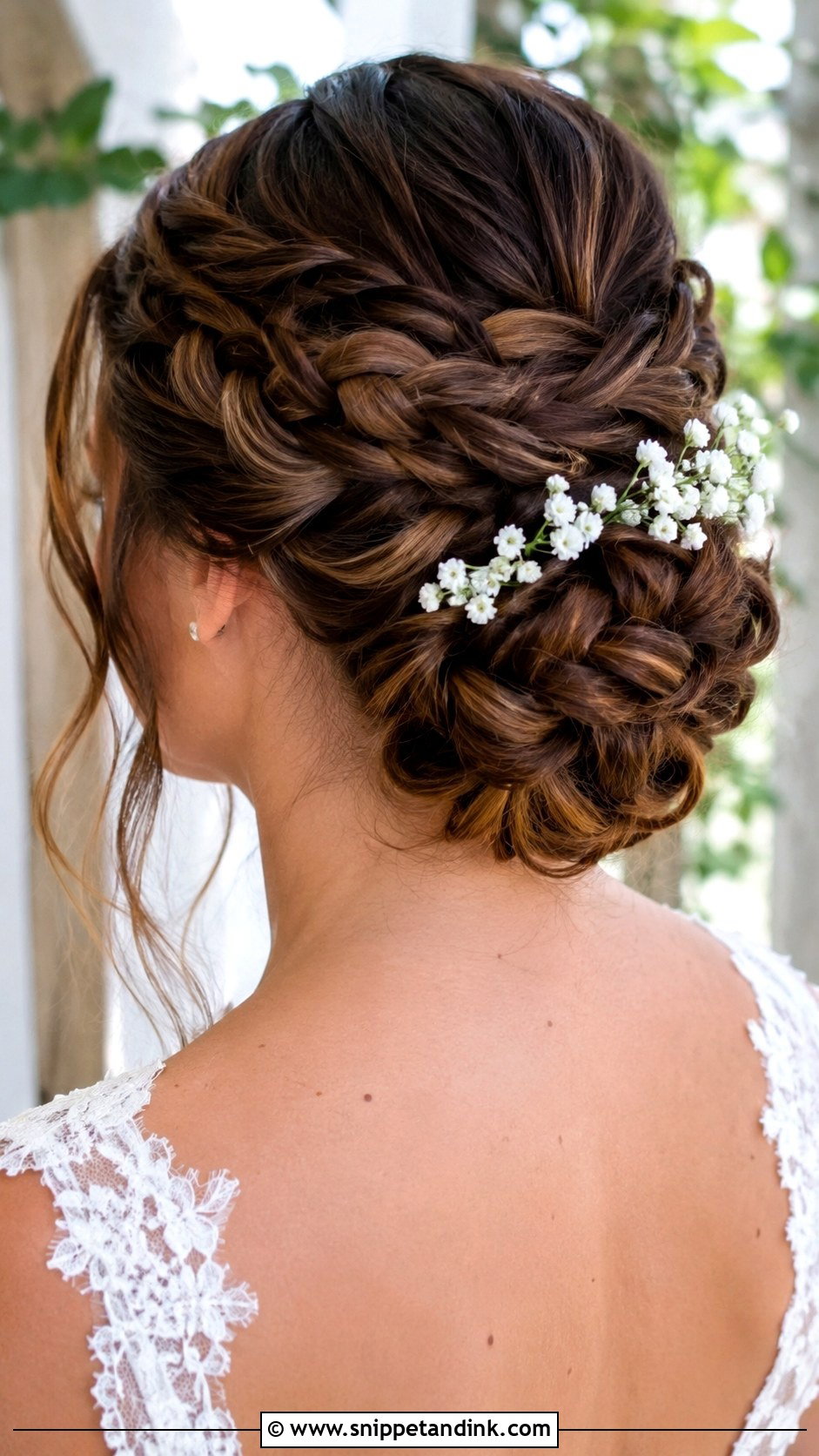
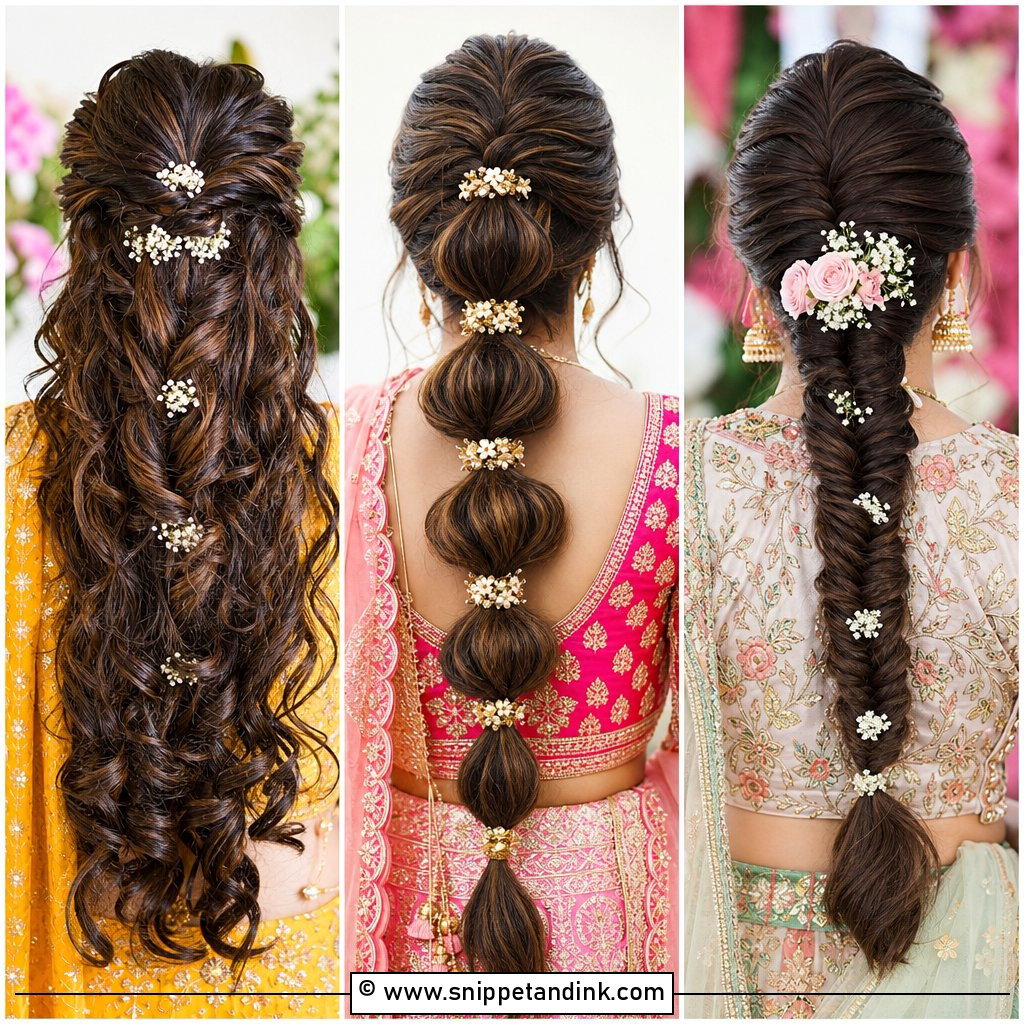
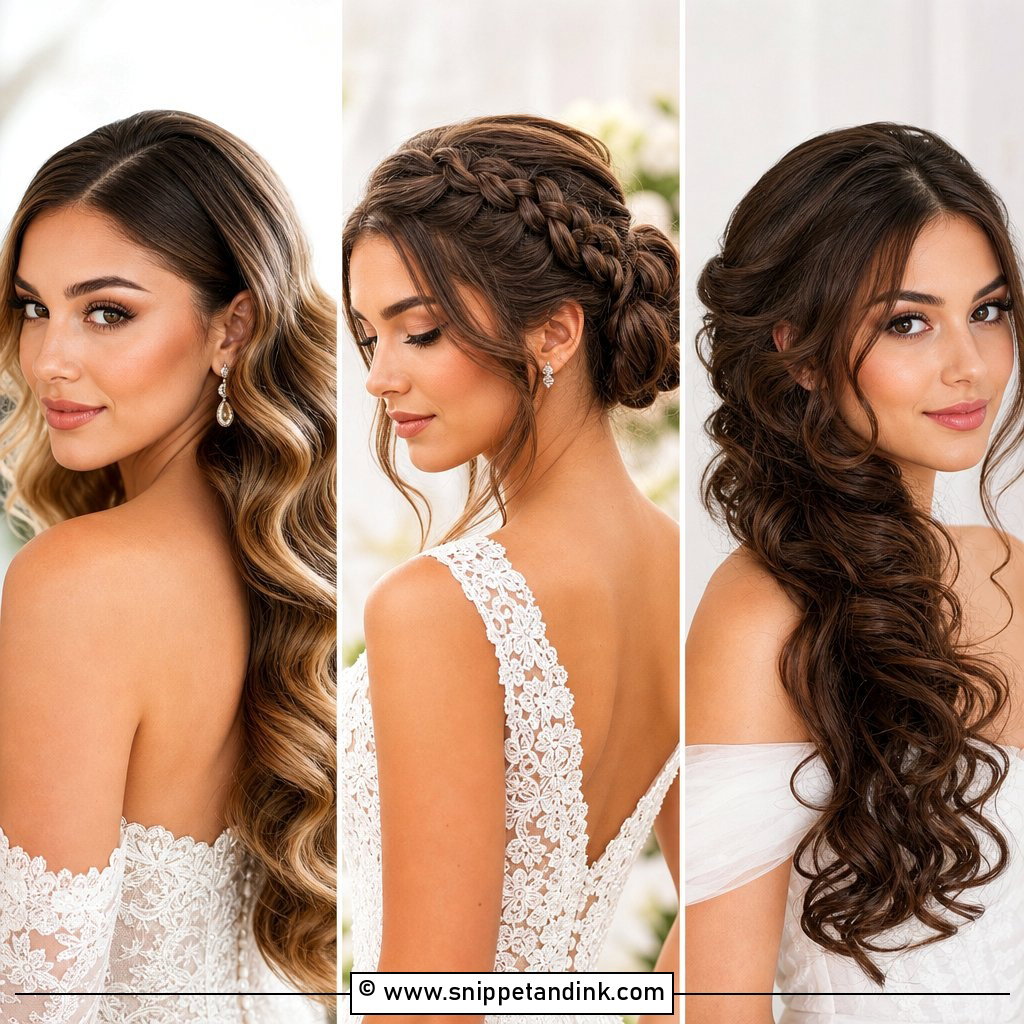
Braids give a simple updo grip as much as detail. I’ll weave them into a low bun, wrap them around the crown or run them through the back, and the plaited sections hold pins far better than loose hair does. That makes braided updos my quiet favorite for layered cuts and for long, dancing-heavy receptions. Keep the plaits tight for a neat finish or pancake them out for softness. Small flowers or pearl pins slide into braids more securely than into smooth hair, too.
6. Twisted Low Bun
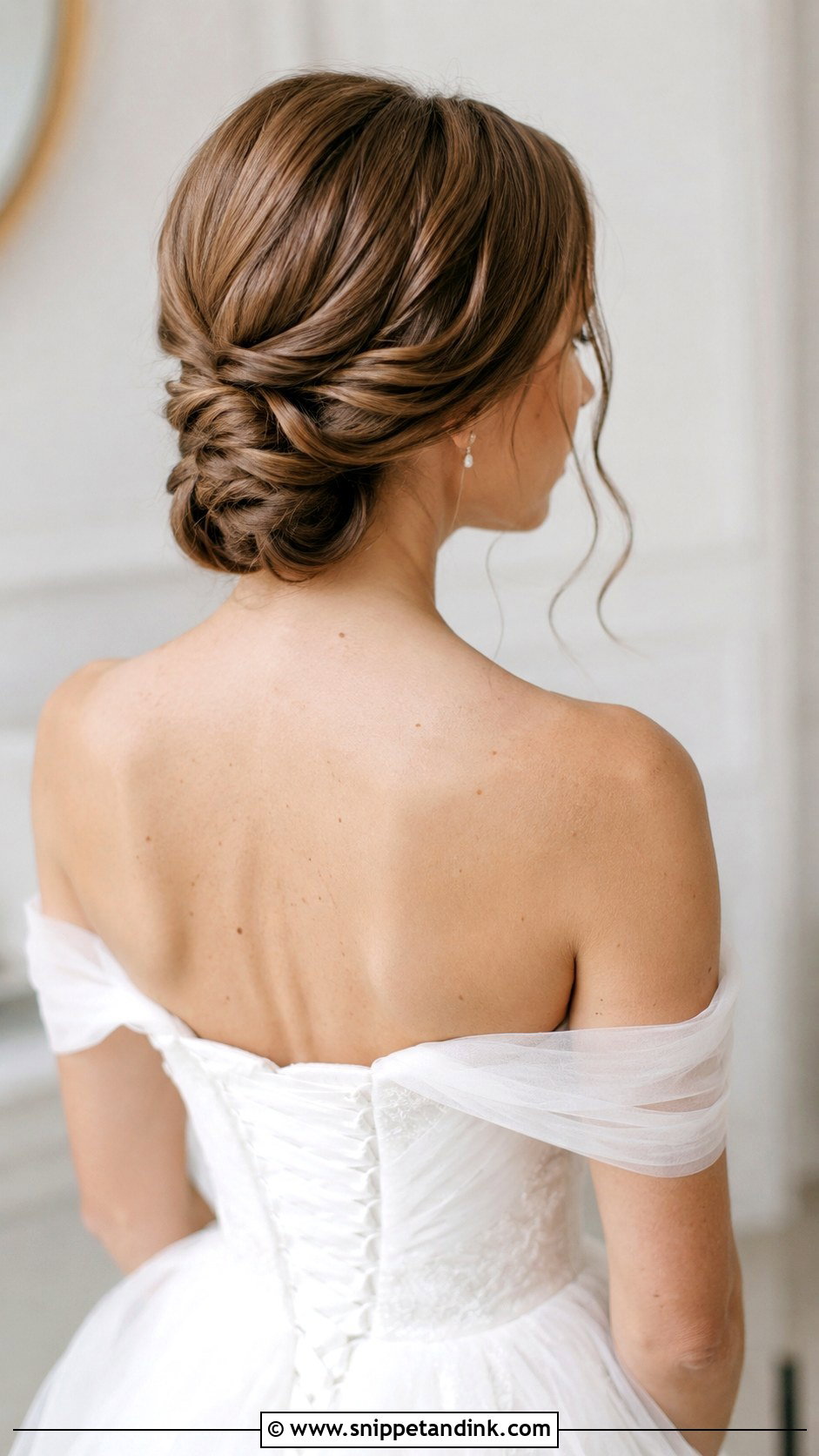
Twisting sections before gathering them into a low bun gives you texture without any braiding skill, which is why I suggest it to brides doing a friend’s hair or their own. The twists also tame shorter layers that would otherwise poke out of a plain bun. Pull one or two twists loose near the face. From a photographer’s angle, it reads as detailed from the side and back, which is where most ceremony photos are taken.
7. Half-Up Half-Down Updo
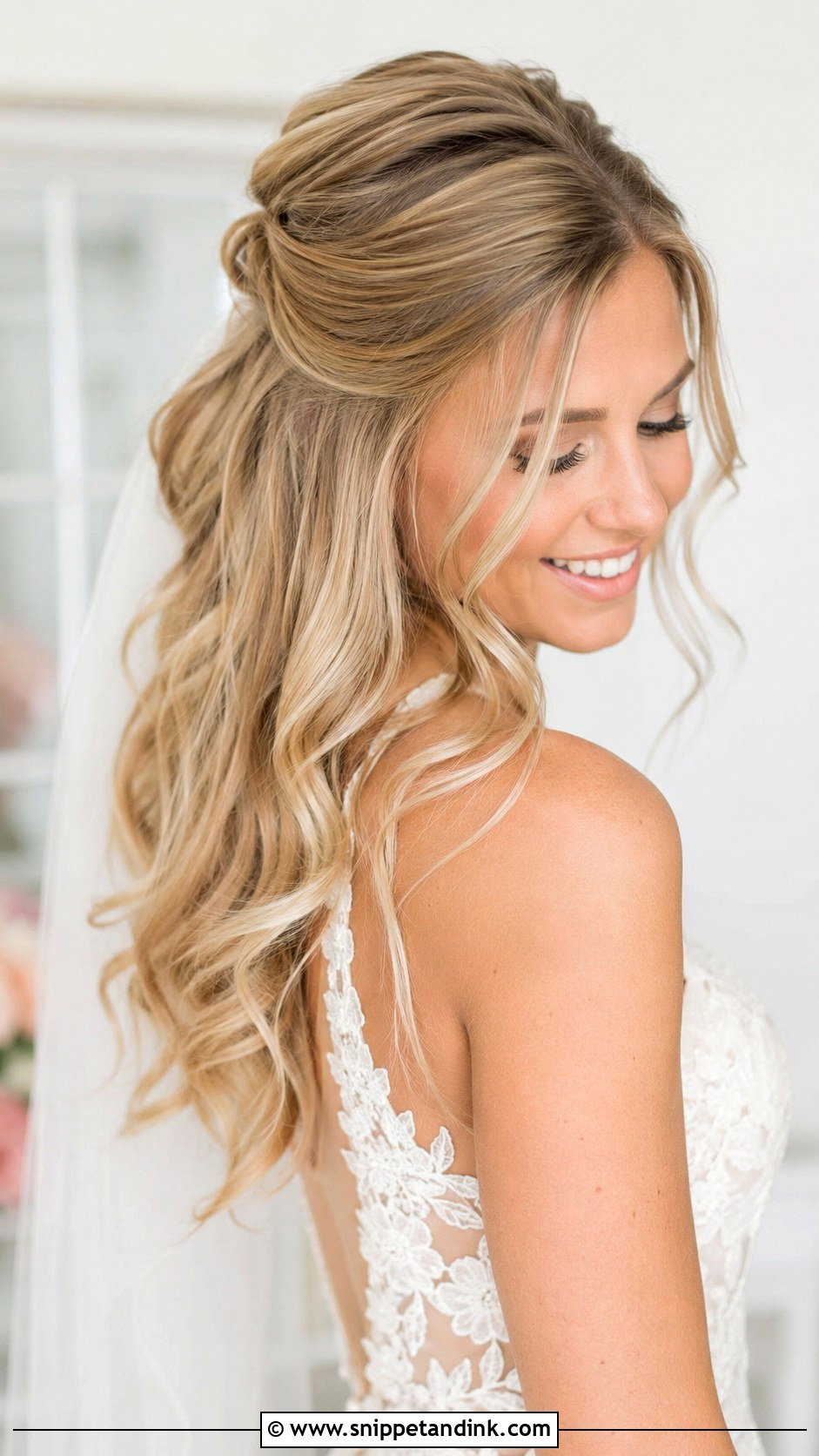
Half up, half down sits on this list because so many brides want the security of pinned-back hair with their length still on show. The top section is pinned back while the rest cascades in loose waves. The honest drawback is that the loose half is the part that suffers in humidity, so on a sticky summer day I set the curls with more hold and accept a little less movement. Face-framing tendrils finish it.
8. Low Bun With Side Part
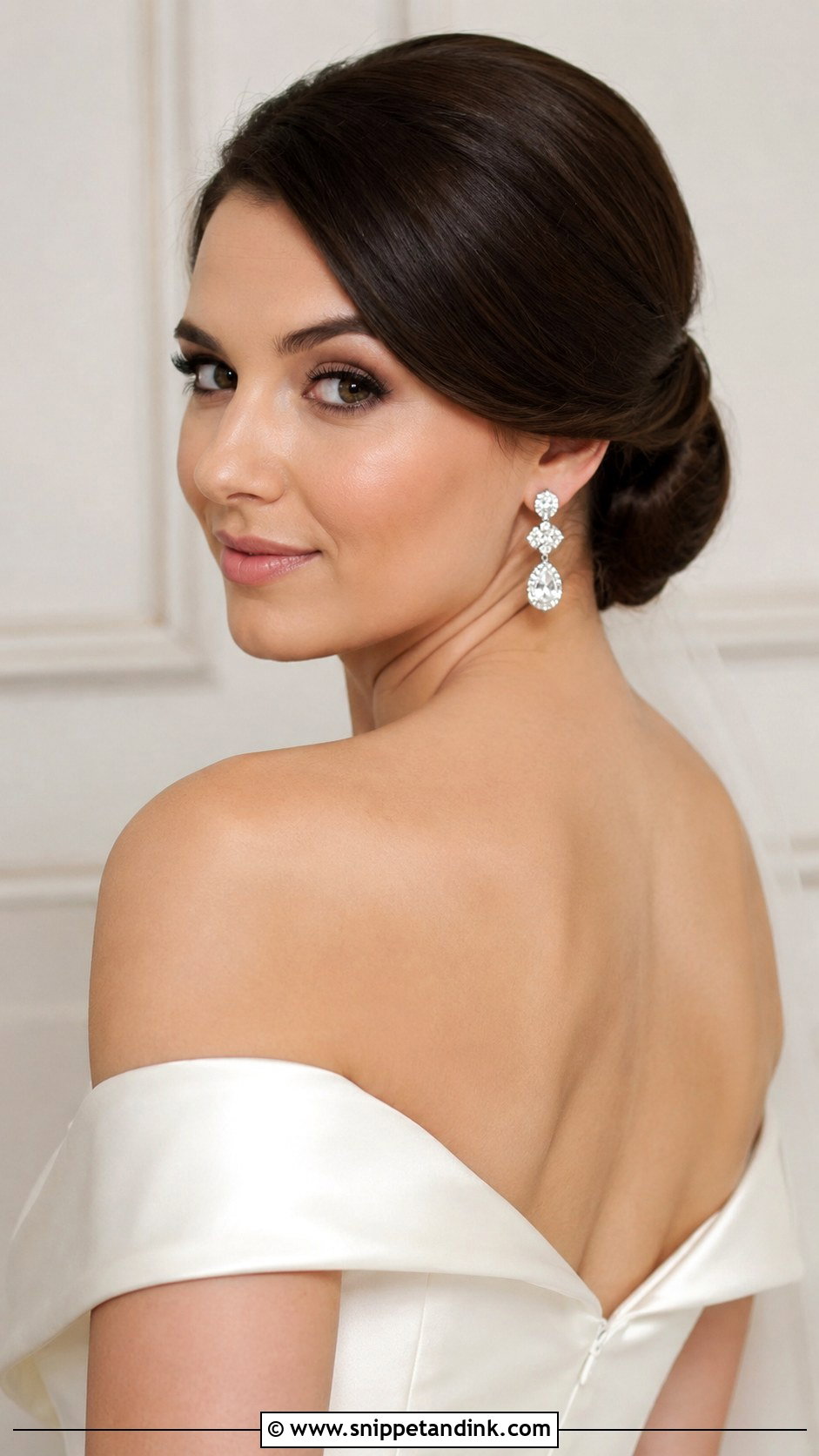
A deep side part turns a plain low bun into something with a bit of old Hollywood. The hair sweeps across to one side and gathers at the back, and the asymmetry flatters cheekbones and a strong jaw. What I check first is where your natural part falls: forcing a deep part against a cowlick means it springs back by mid-afternoon, so I set it with a little heat and a clip while the makeup goes on. Keep it sleek for a formal gown or add soft waves through the front.
9. Textured Updo With Curls
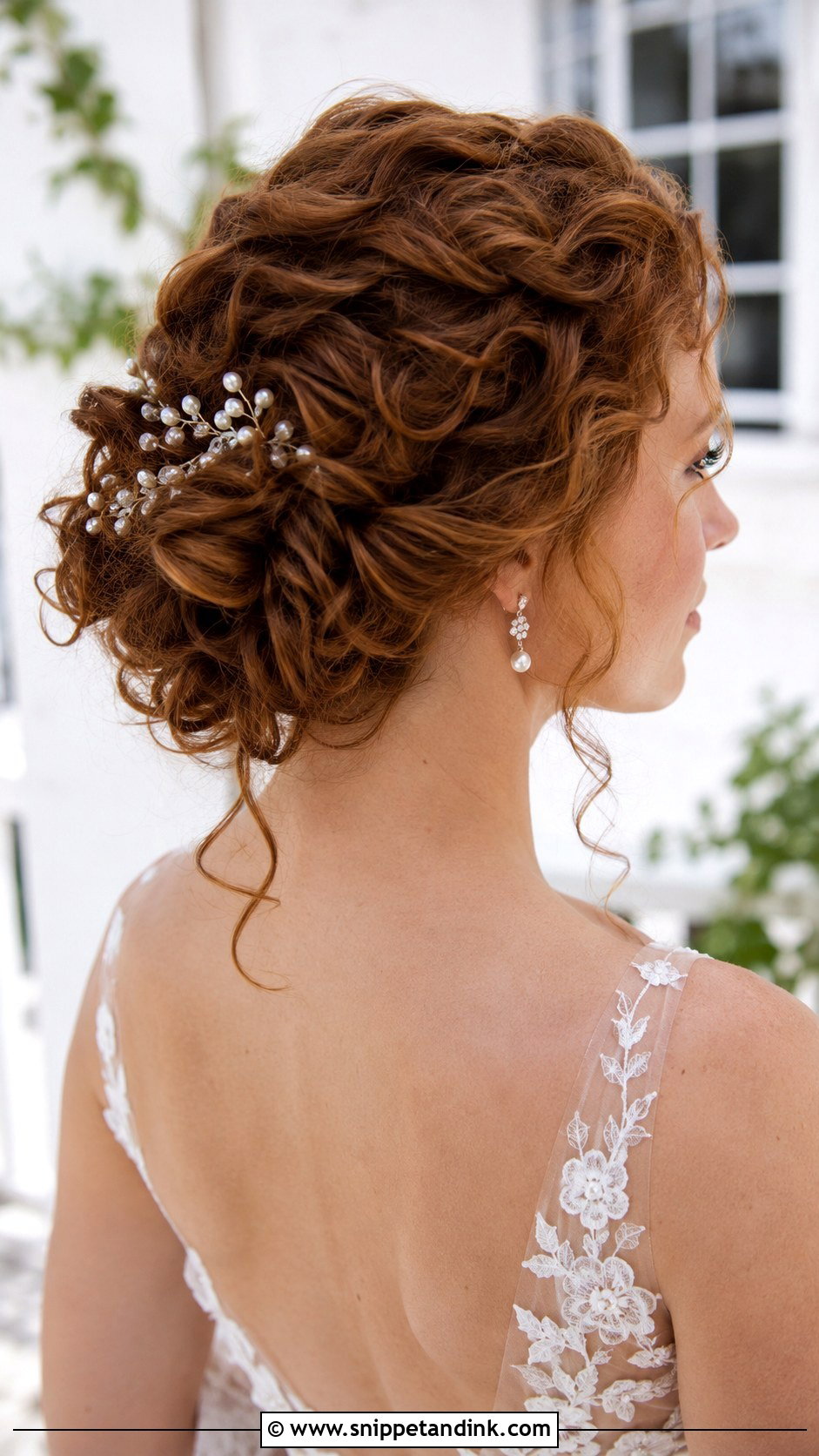
Curls pinned loosely at the back give an updo volume and movement without it reading as slicked. I curl in the direction I’ll be pinning, so each piece falls naturally into place instead of fighting the shape. Leave a few curls around the face. This one suits gardens, vineyards and outdoor venues, though I’d add a light hold spray before going outside, since curls on fine hair can relax within a couple of hours in damp air.
10. Crown Braid Updo
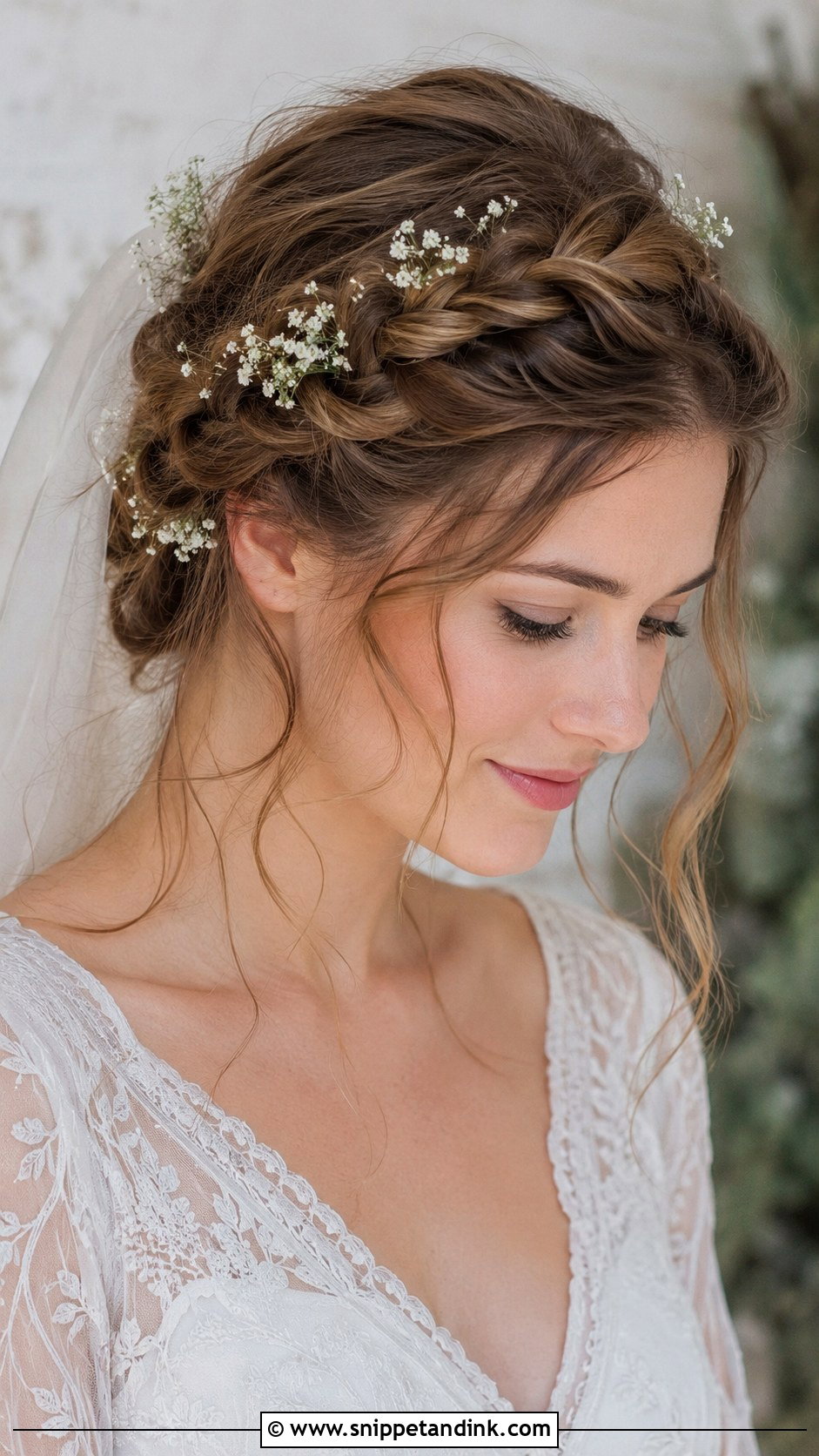
A crown braid wraps around the head like a halo, then the ends tuck neatly out of sight. It keeps hair entirely off the face, which matters if you’re getting married somewhere windy. Baby’s breath or small blooms slot into the braid easily. It sits naturally with flowy, romantic gowns. You need enough length to reach around the head, roughly past the shoulder blades, and on shorter hair I’d do two side braids meeting at the back instead.
11. Sleek High Bun
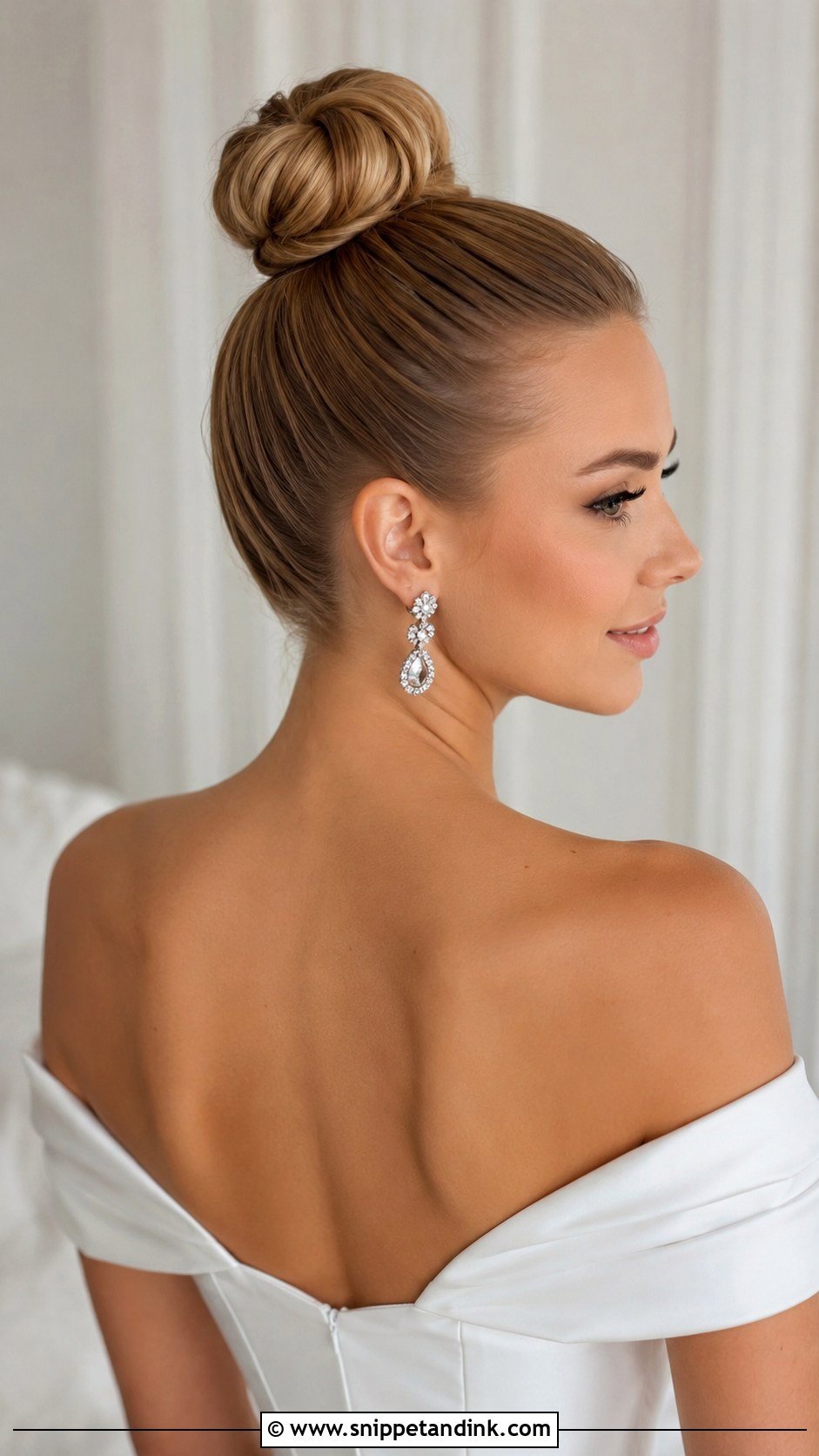
A sleek high bun at the crown lengthens the neck and puts every bit of attention on earrings and an open or high neckline. I smooth it with a little gel or serum, then wrap a thin section of hair over the elastic so no band shows. It stays cool on warm days. The trade-off is veil placement: with the bun sitting high, the comb has to go underneath it, so the veil hangs from lower than you might expect. Try that at your trial.
12. Loose Romantic Updo
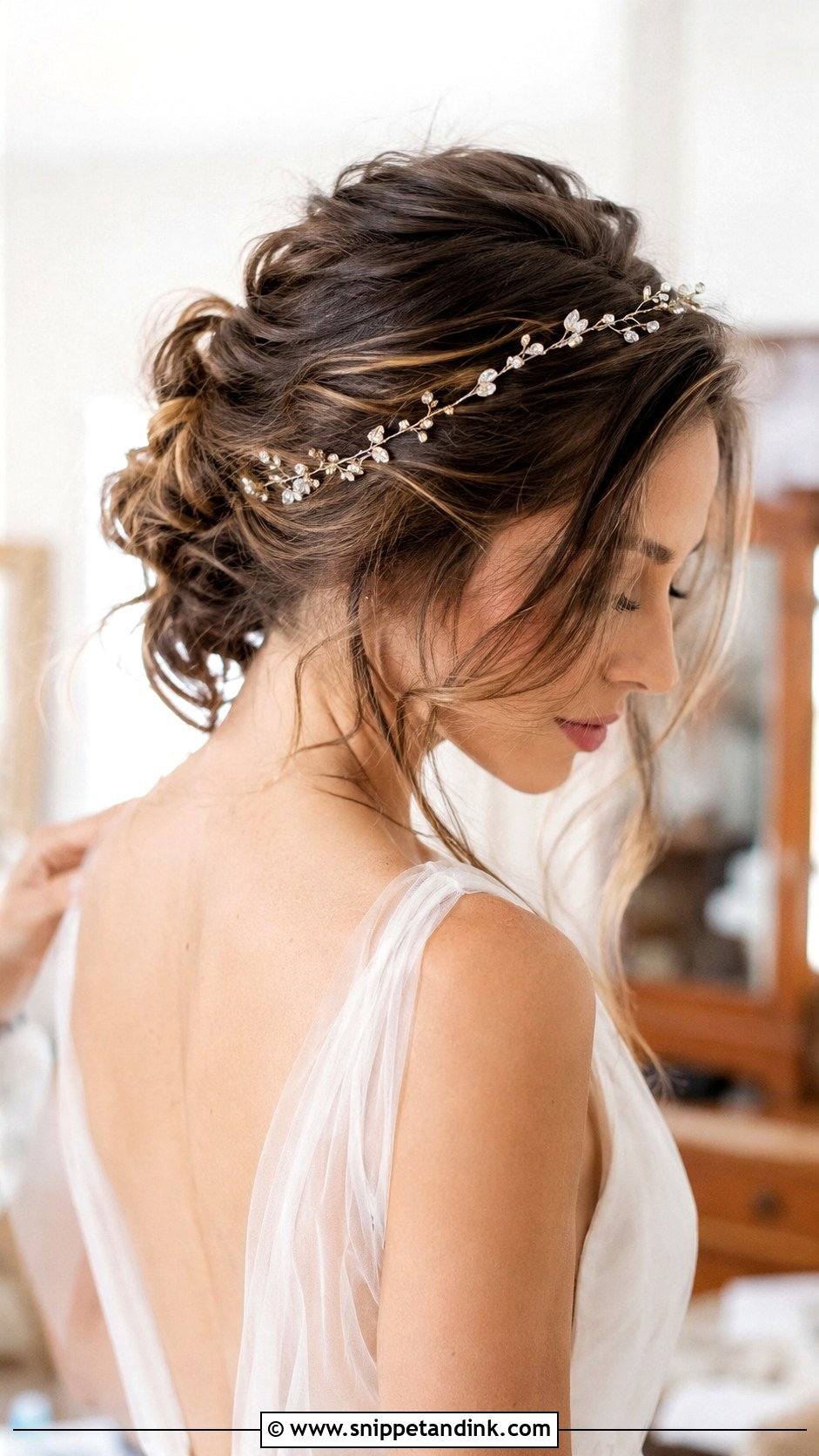
Soft and loosely gathered, this updo keeps plenty of volume and texture, with wispy pieces falling around the face. It’s the most comfortable style here because nothing is pulled tight. The risk is that loose can turn into collapsed by the evening, so I hide a few pins at the core even when the outside looks barely held. A delicate hair vine or scattered pins add sparkle without hiding the shape. It belongs with flowing gowns and outdoor settings.
13. Twisted Updo With Accessories
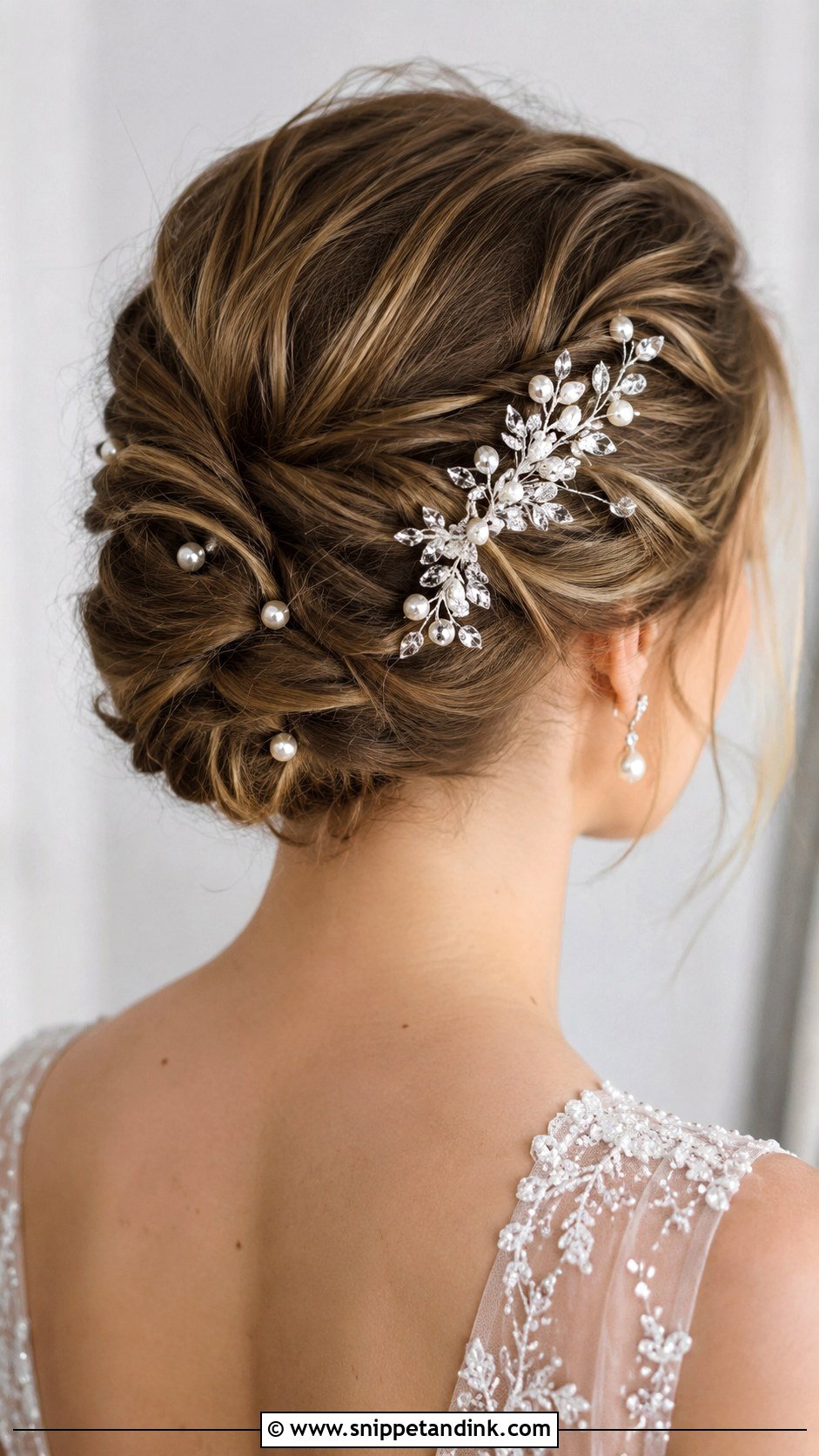
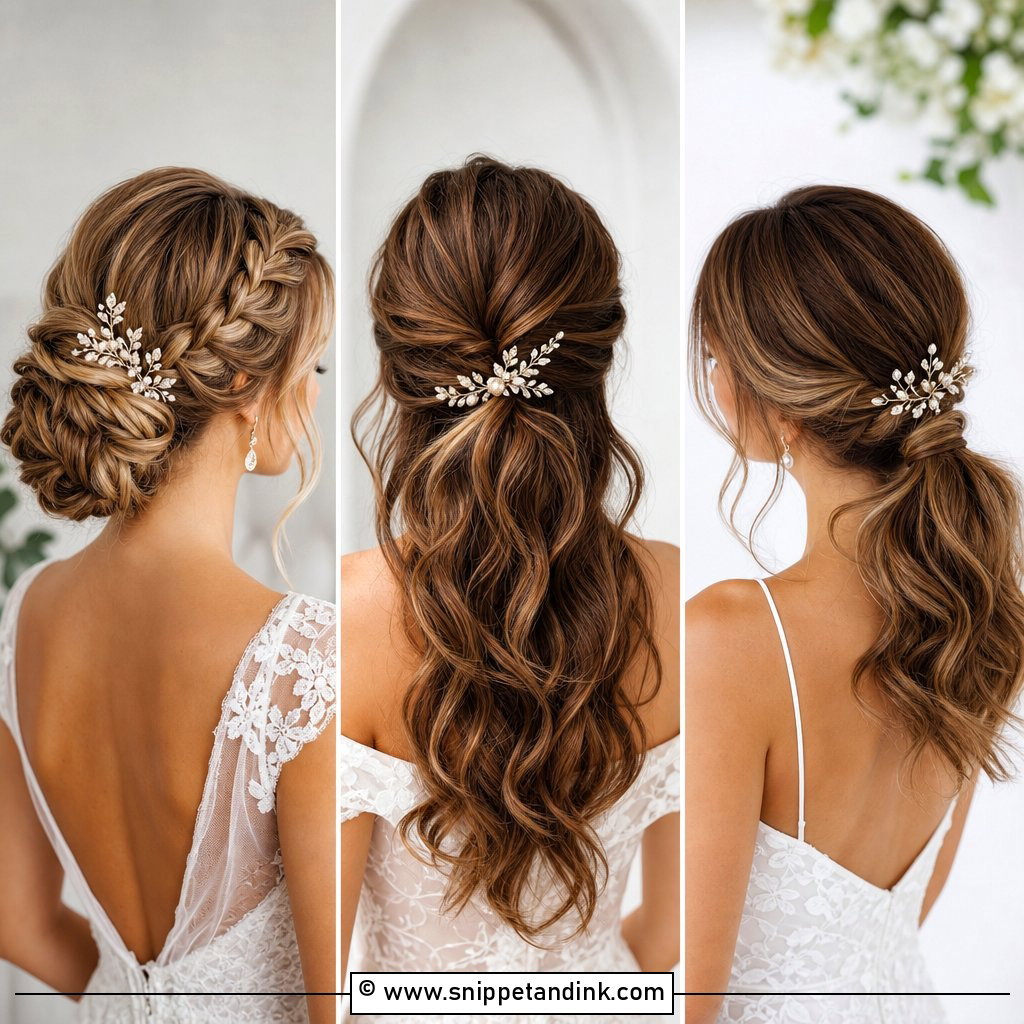
Sometimes the accessory is the design. Here, soft twists gather at the back and then carry pearl pins, a jeweled comb or a hair vine. I always ask brides to bring the accessory to the trial, because a heavy comb needs a braid or a pinned anchor to sit on, or it slides by the first dance. Match the metal to your jewelry or veil edge. The twists keep things simple so the piece can carry the look.
14. Low Bun With Braided Detail
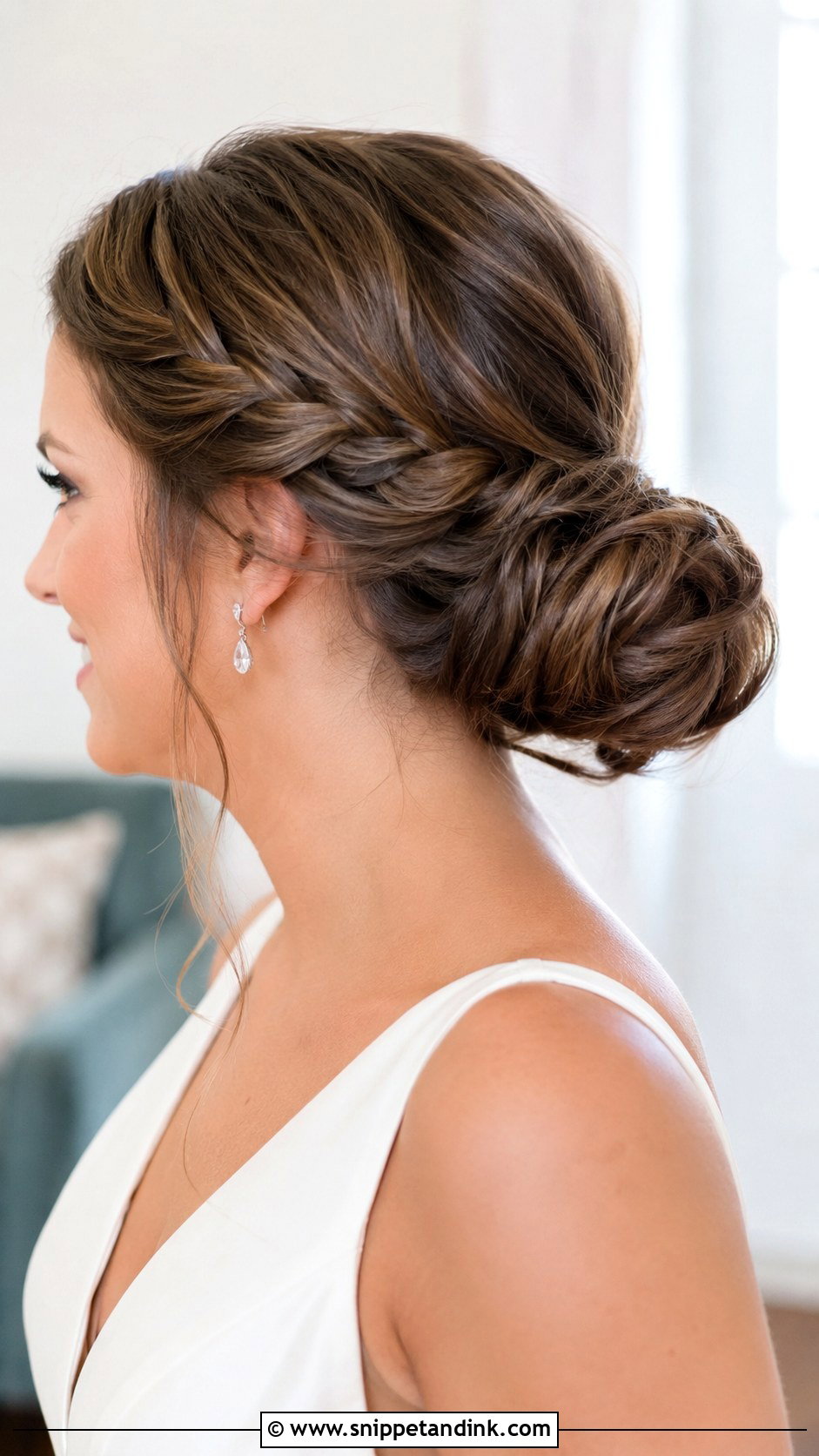
A small braid running along the side or wrapping the bun is the simplest way I know to lift a basic updo without crowding it. It adds dimension and holds well. I usually take the braid from behind the ear so it hides any short layers near the nape. Keep it all sleek, or loosen the braid slightly for softness. It works with most dress styles.
15. Side Swept Updo
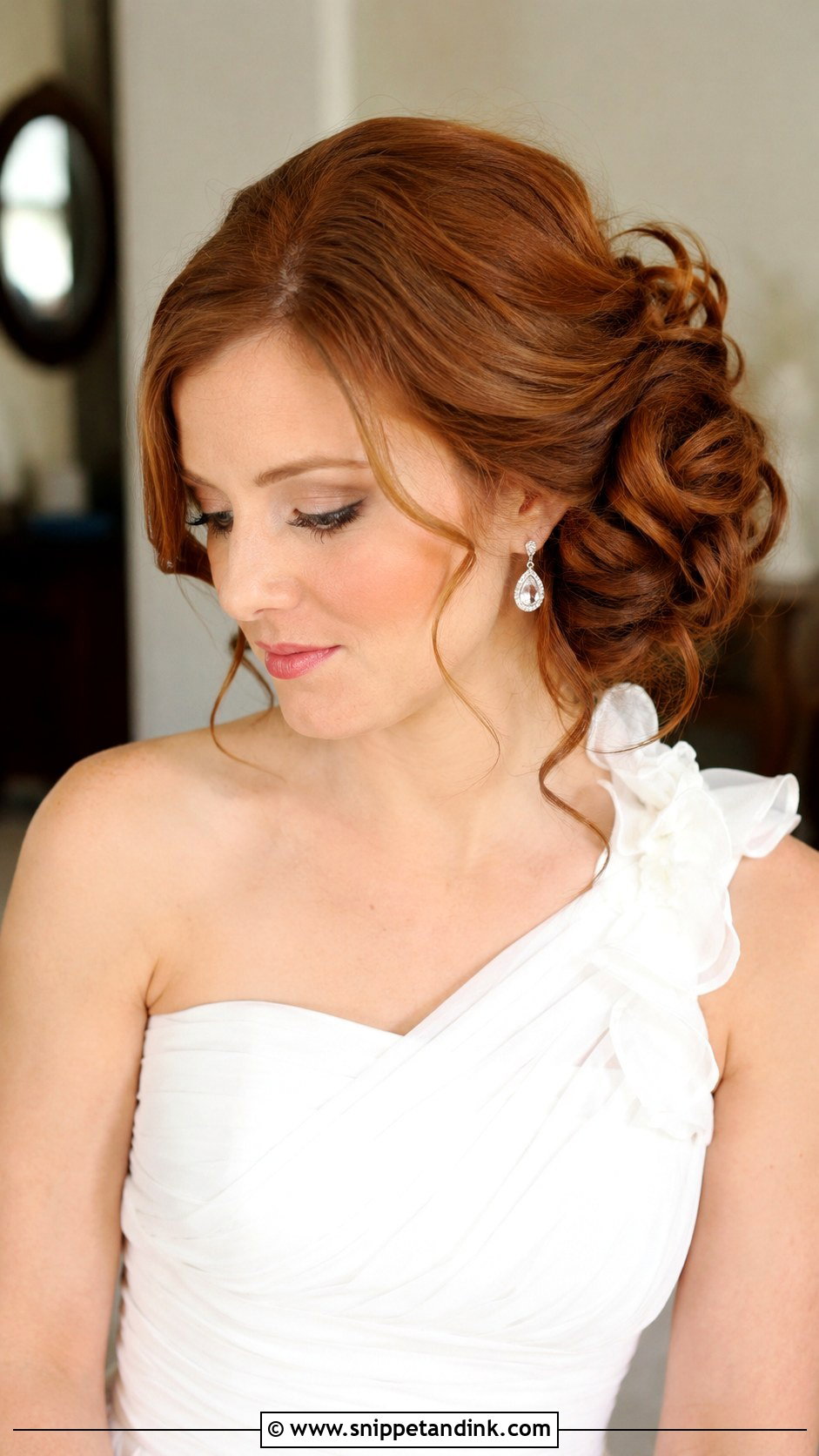
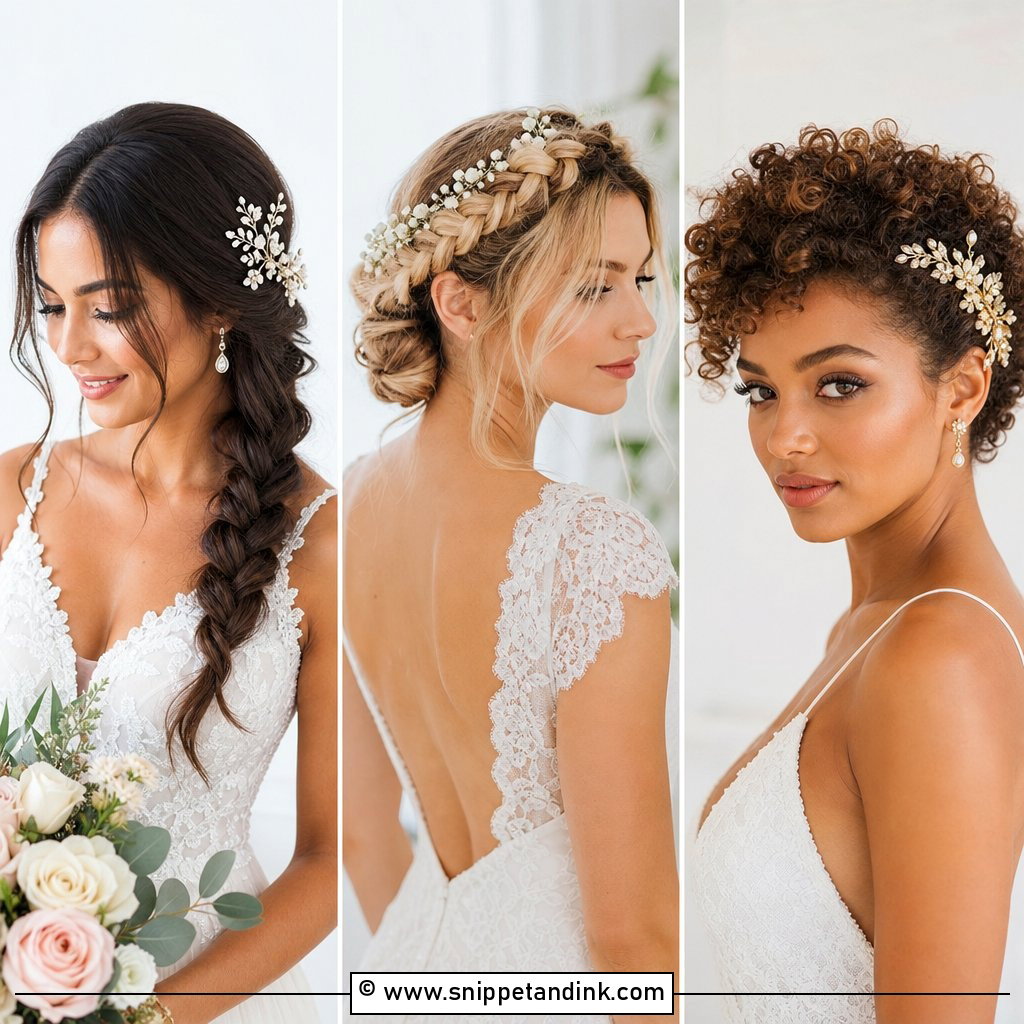
A side-swept updo gathers hair to one side, which draws the eye straight to the neckline and shoulder. That’s why I suggest it for one-shoulder and sweetheart gowns. Curls can be pinned loosely to one side or twisted into a soft bun. Before I commit to a side, I look at the bride’s better profile and the side the groom will stand on at the ceremony, because the guests should see the detail, not the back of a plain sweep.
16. Pinned Back Waves
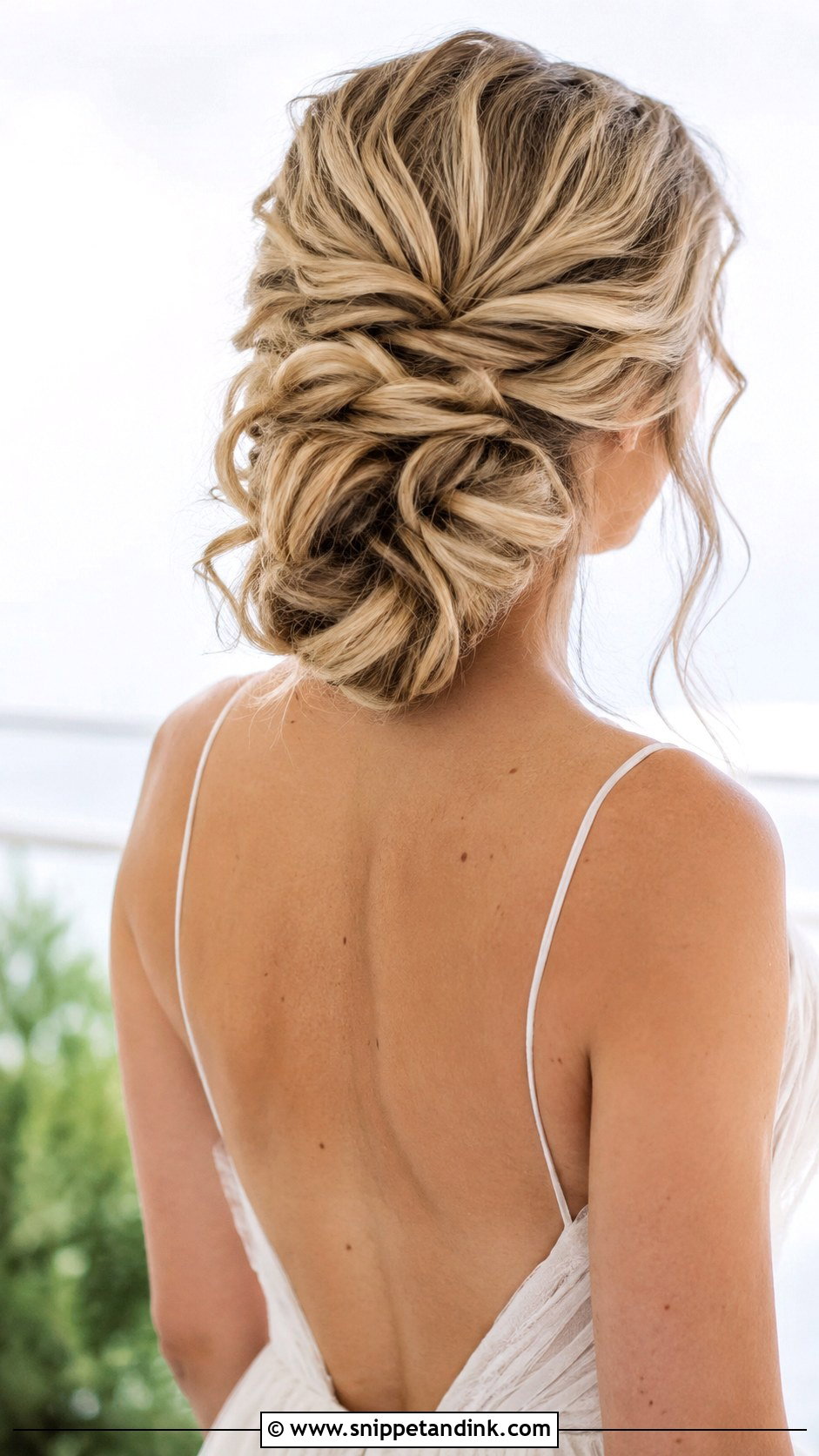
Pinned-back waves are the answer when hair is too short for a true bun. I curl the hair into soft waves, then pin sections back from the face to create an updo-like shape while the length stays down at the back. It keeps hair off your face without any tight structure. Shoulder-length bobs do this well. Tuck in small pins or flowers. On very straight, silky hair the waves need a strong set and a fully cooled curl, or they relax by the evening.
17. Knotted Updo
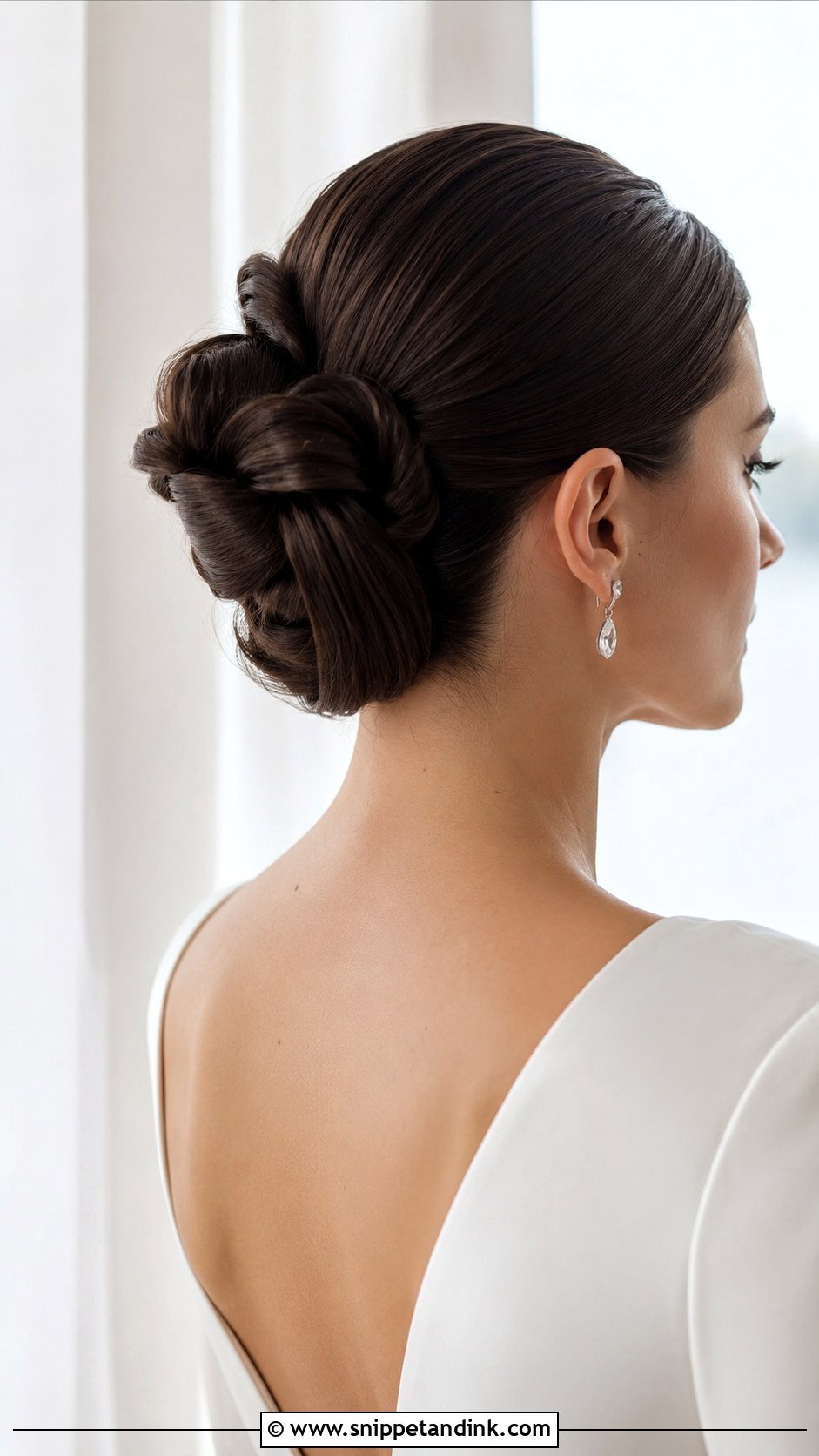
The knotted updo turns simple tied or twisted sections into something sculptural, pinned into a soft shape at the back. It looks intricate without any braiding. Knots grip each other, so this style holds well on medium to thick hair. On very fine hair the knots can look sparse, so I add texture powder at the roots first. Keep it sleek, or pull a few pieces loose. A good pick for contemporary weddings.
18. Voluminous Updo With Crown Lift
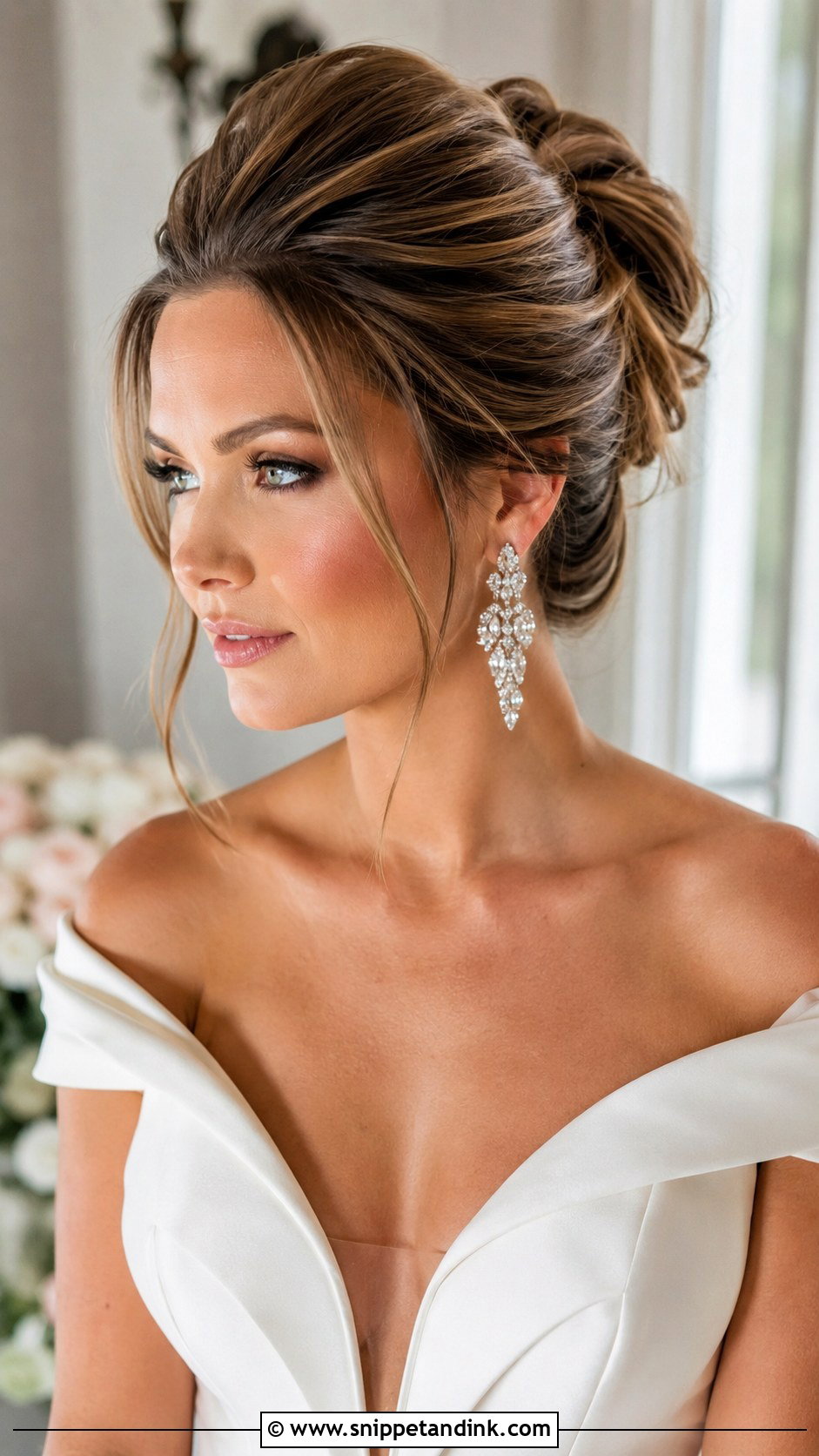
A little volume at the crown changes the proportions of a simple bun completely. I tease the top section at the root only, then smooth the surface over it so the backcombing never shows. The height lengthens the face and balances a strong jaw. Too much lift on a round face can look dated, though, so I build it gradually and check from the side in a mirror before setting. Statement earrings sit well with it, especially at formal weddings with structured gowns.
19. Floral Adorned Updo
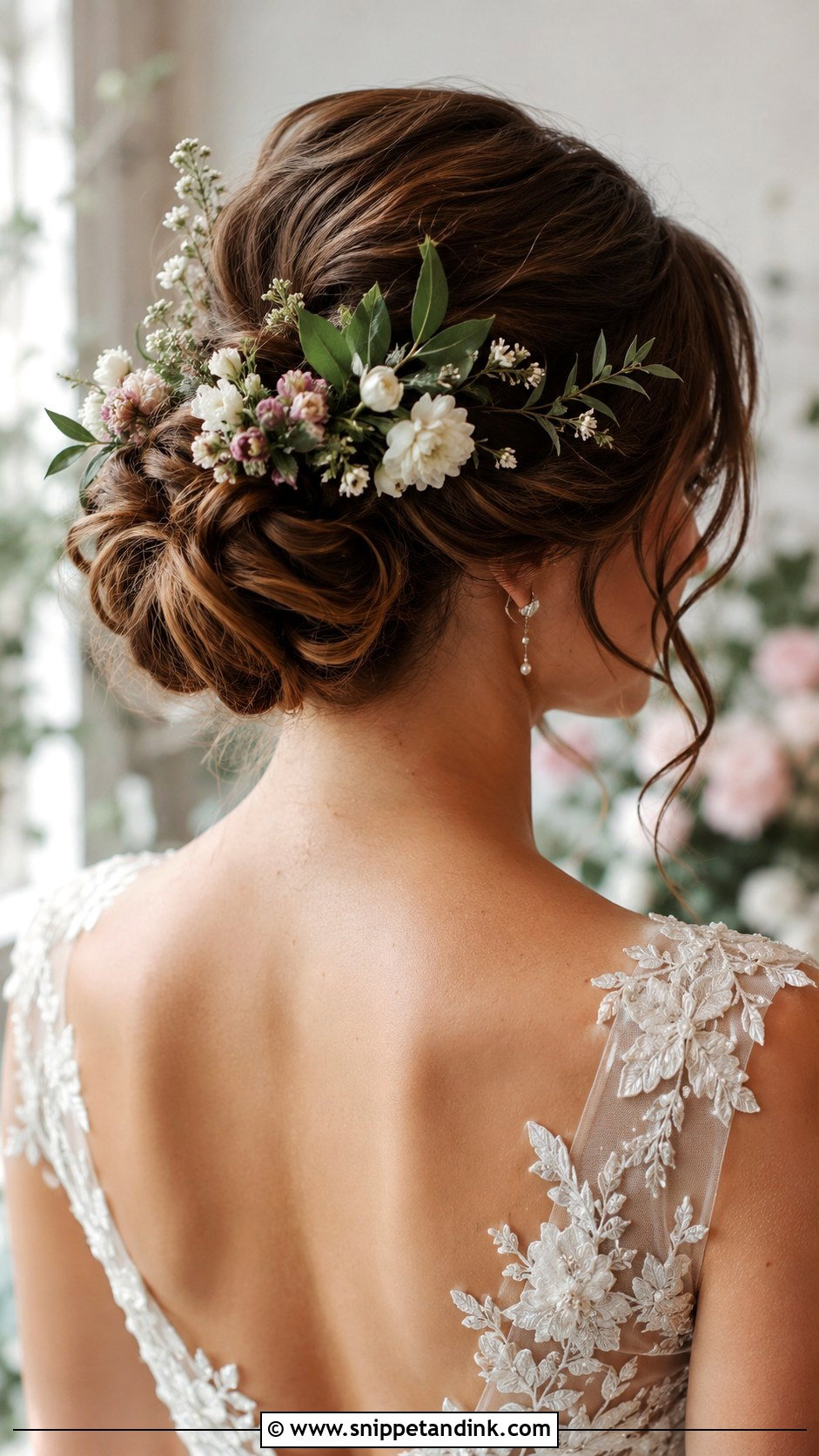
Fresh or faux flowers tucked into a bun or twisted updo give a garden feel. If you match them to your bouquet, talk to your florist early: fresh blooms out of water wilt fast in the heat, so I ask for sturdy varieties wired and taped, delivered in the morning, and I place them last. Baby’s breath and spray roses cope better than soft-petaled blooms. The updo underneath can be sleek or loose.
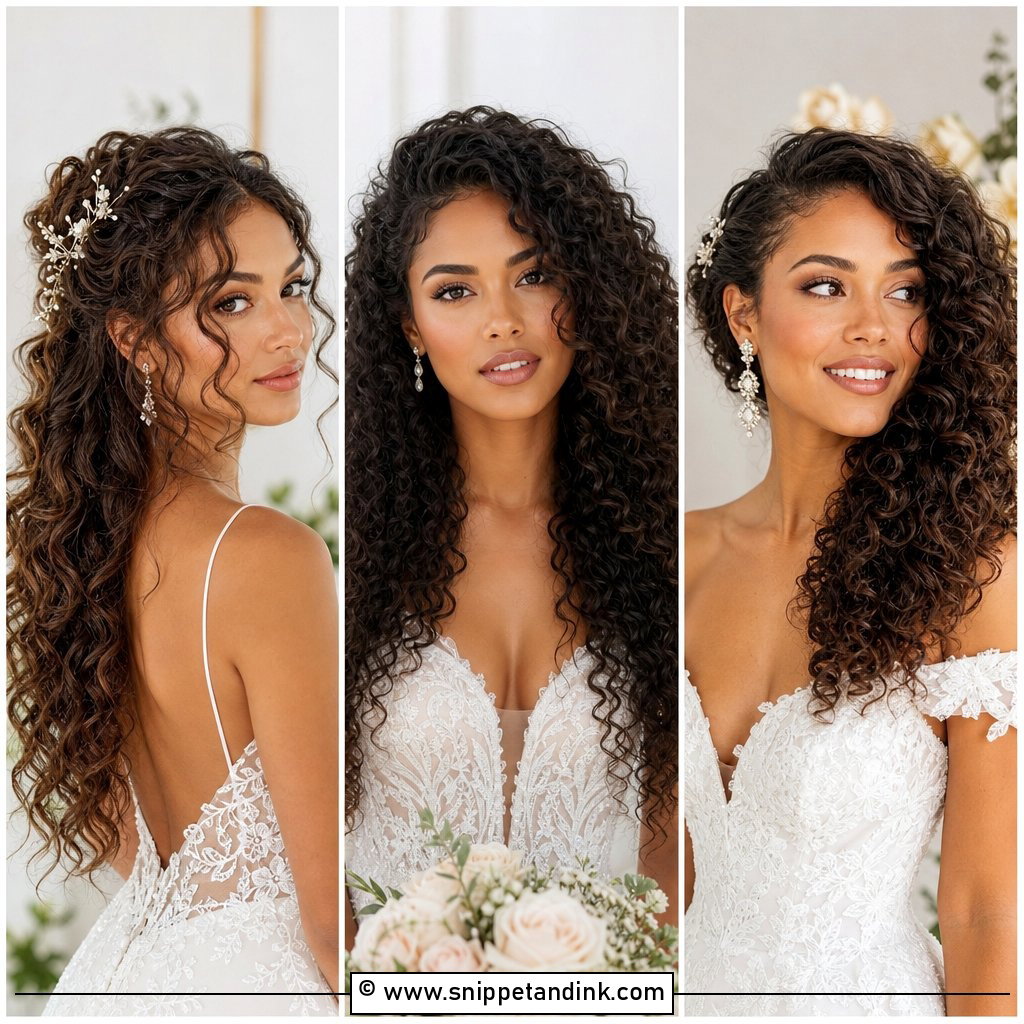
20. Vintage Inspired Updo
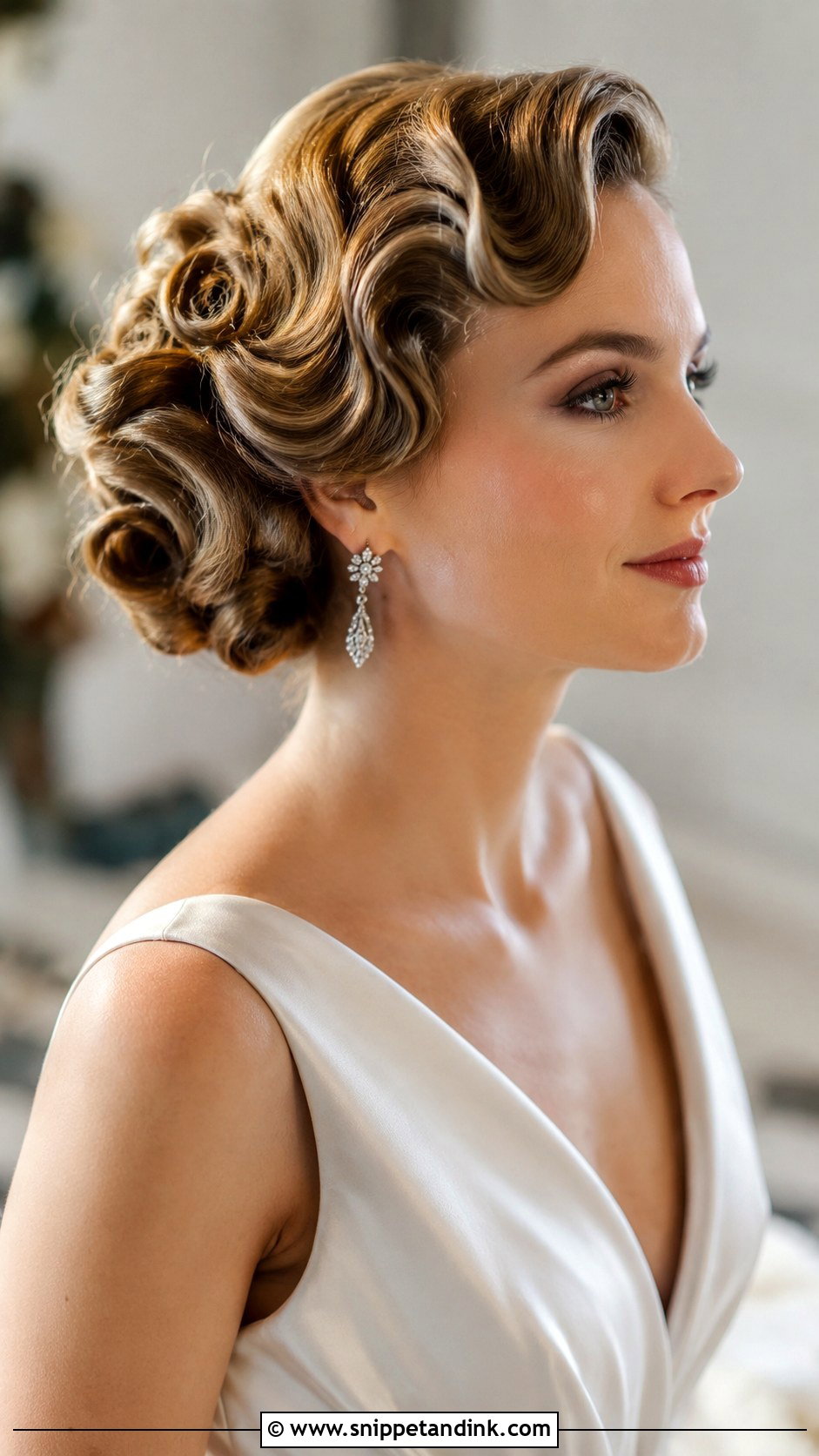
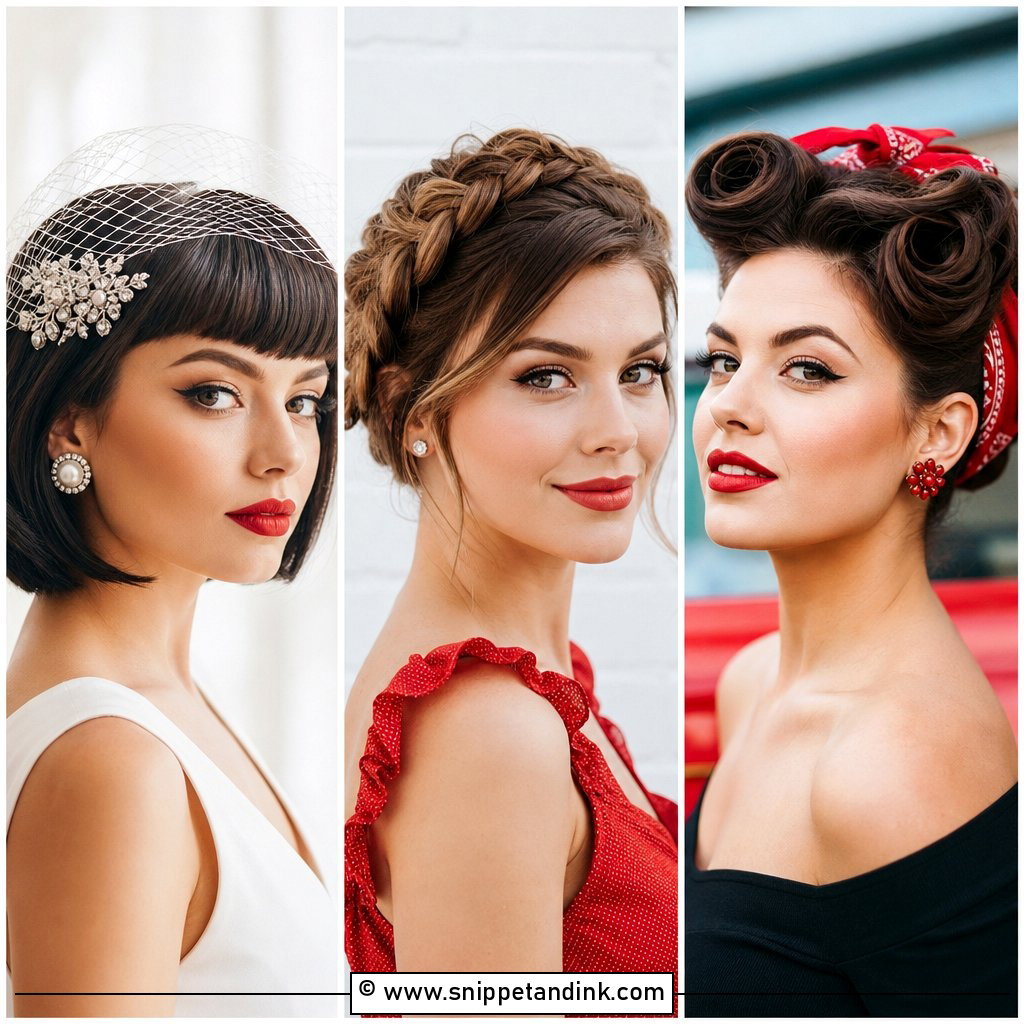
A vintage-inspired updo leans on finger waves, sculpted curls or a structured roll from earlier decades. It takes more setting time than anything else on this list, since the curls need to cool fully before brushing out, so plan for a longer chair slot. It sits naturally with retro gowns and bold accessories. Keep it polished, or soften the waves for a modern version. I’d skip it for a beach ceremony, because sculpted waves don’t forgive wind or salt air.
Fine, Thick or Layered: Adjusting These Shapes
Fine hair
Fine hair holds a shape well once it has grip. I use texture spray or dry shampoo before styling, curl it even for a sleek bun, and choose looser buns and twists over tight ones, which show the scalp. A small padding piece in the color of your hair can bulk out a chignon without anyone noticing.
Thick or very long hair
Weight is the problem here. A big bun pulls on the pins and gives you a headache by evening. I split the hair into two or three anchors instead of one, and I’m happy to leave the length less tightly wound so it sits closer to the head.
Layered cuts and grown-out bobs
Short layers escape from smooth buns. Twisted, braided and knotted updos hide them best, because each short end gets caught in a twist. If your cut is very layered, mention it when you book so I plan for extra pins and a little extra time.
How an Updo Behaves With a Veil and a Long Reception
A veil changes where the bun can sit. A comb needs something solid to slide into, ideally just above or below the bun, and a long cathedral veil pulls back on it with every step. I put a crisscross of pins under the comb as an anchor. If you plan to remove the veil after the ceremony, ask your maid of honor to watch how it goes in, so she can lift it out without pulling half the updo with it.
For the hours afterward, a small kit is enough: a few bobby pins in your shade, a travel hairspray and a tail comb. Most slips can be fixed in a minute by repinning the piece that moved, not by redoing the style.
One Trial, Then Trust the Pins
None of these updos needs hours in the chair; they need a good base, the right texture and an honest trial. Pick two or three you love, whether that’s a sleek ballerina bun, a loose curled shape or a twist with flowers, and bring photos of them alongside your dress and veil. I’d rather adjust a style at the trial than on the morning. Your hair should feel like you, and it should still be in place when the last song plays.
You'll Like These Ideas:



Leave a Reply