
The hairstyles that last through an Indian wedding are rarely the most complicated ones. They’re the ones built to carry weight: a dupatta pinned on top, a maang tikka at the parting, a gajra around the bun, and hours of rituals, dancing and hugging relatives. A low bun with jasmine, a long braid, loose waves under a tikka or a sleek ponytail for the sangeet can all look festive and still feel comfortable. I’ve written each of these for the bride, but most work just as well for bridesmaids, the sister of the bride or a guest, with notes on how I’d secure them and who they suit.
A Heavy Dupatta Needs a Solid Base Under It
Most Indian brides wear at least one outfit with a dupatta pinned over the head, and that changes how I build the hair. A bridal dupatta with heavy borders can weigh more than you’d guess, and if the style underneath has nothing firm for pins to grip, the dupatta slides back and drags the hair with it.
- I choose a bun or a firm braid at the back or crown for any event where the dupatta goes on the head. Open waves don’t hold dupatta pins.
- Dupatta pins go into the bun or into a small anchor of pinned hair, never into a loose section near the face.
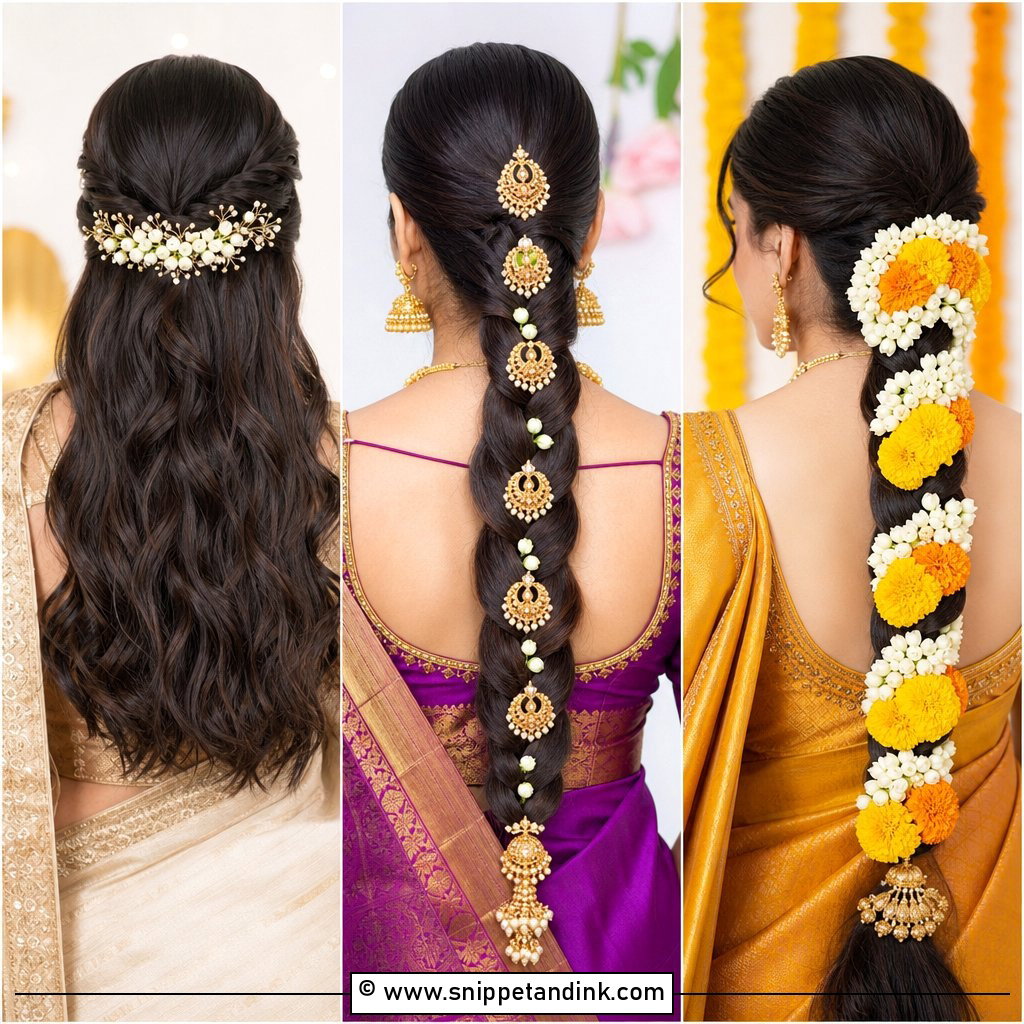
- I place the maang tikka first, then the dupatta, so the fabric frames the tikka rather than pushing it out of line.
- Bring the actual dupatta to your trial. A light net and a heavy velvet need different pinning, and I can’t judge that from a photo.
What to do with your hair the day before
Wash your hair the day before, not that morning, and skip any hair oil overnight. Freshly washed hair is too slippery for pins to grip, while oiled hair won’t hold curls or texture spray. Clean hair from the day before is easiest to style and holds best.
1. Indian Wedding Low Bun With Gajra
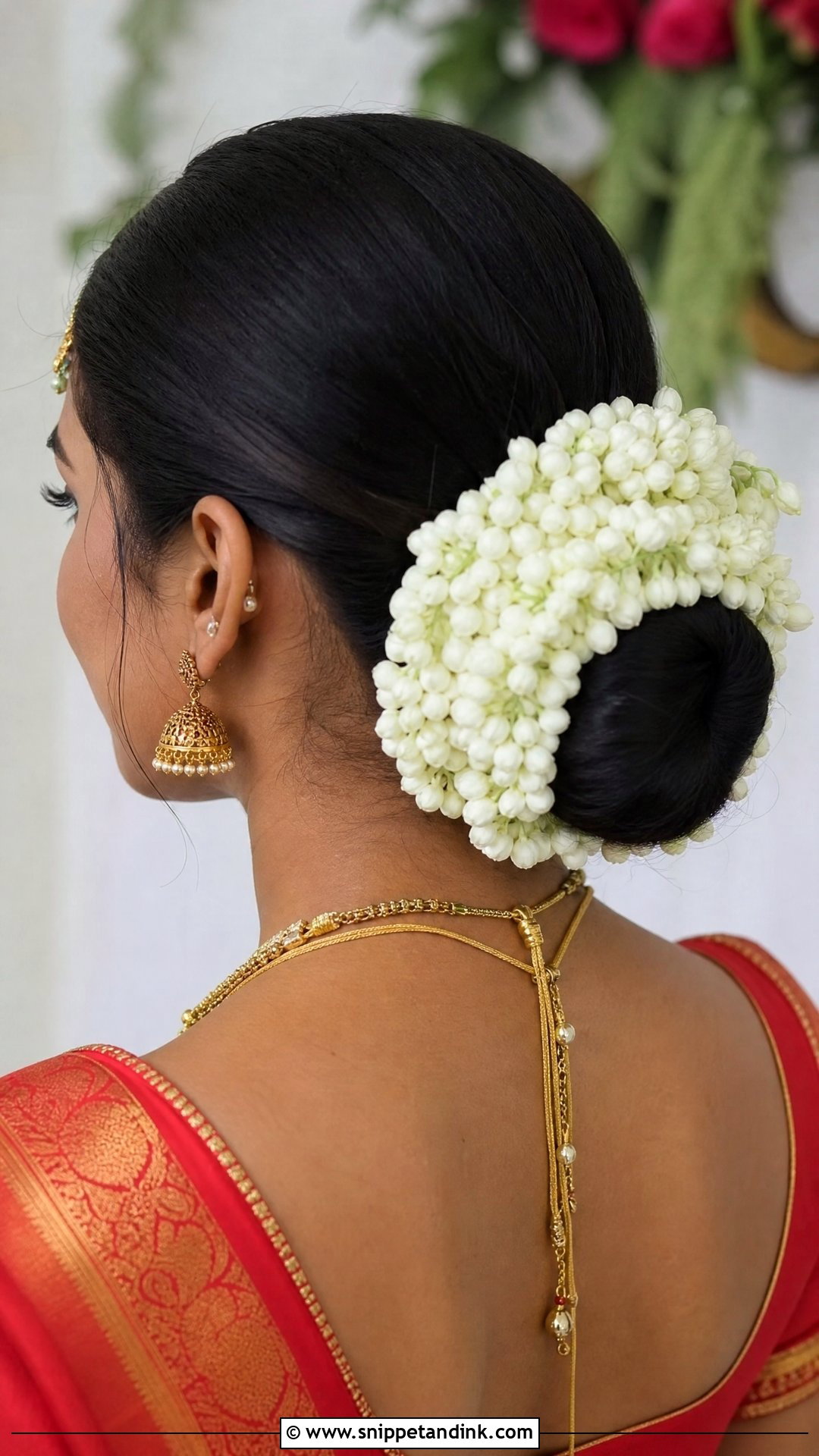
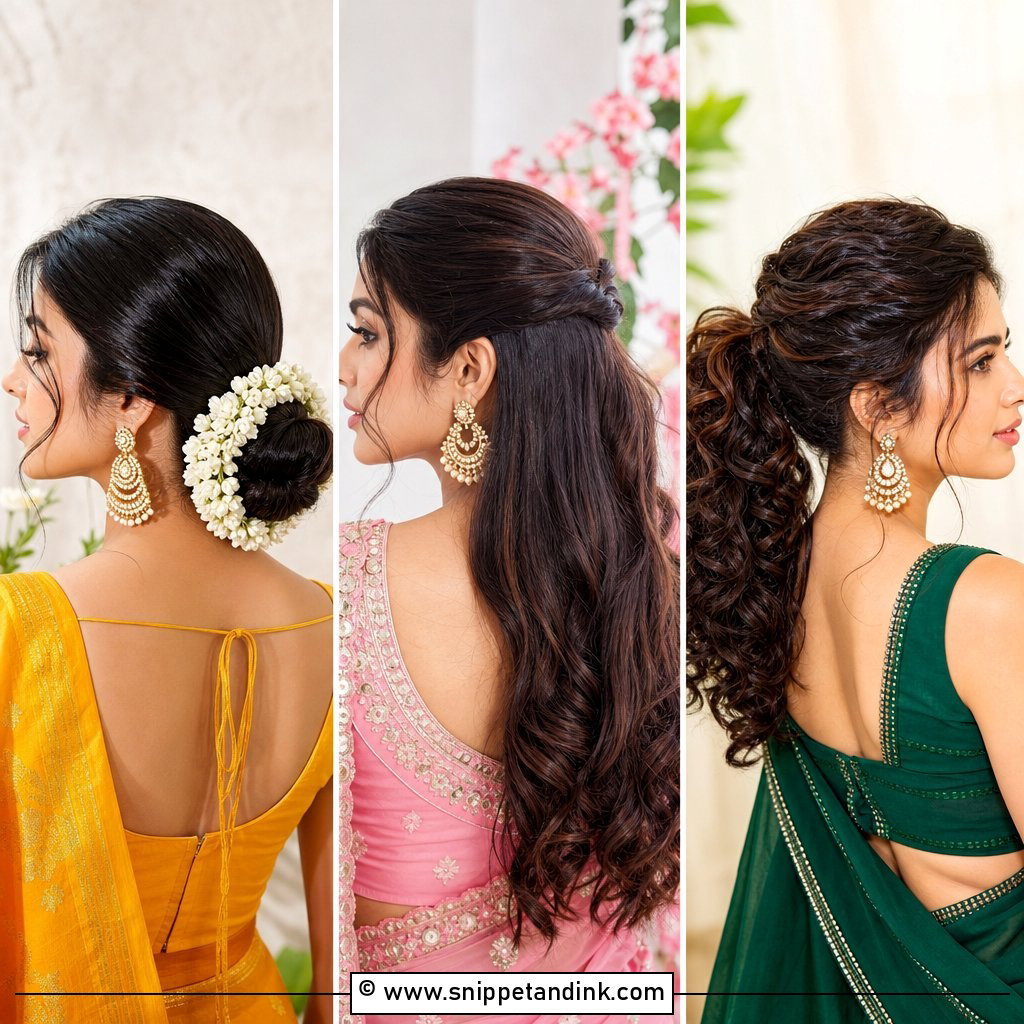
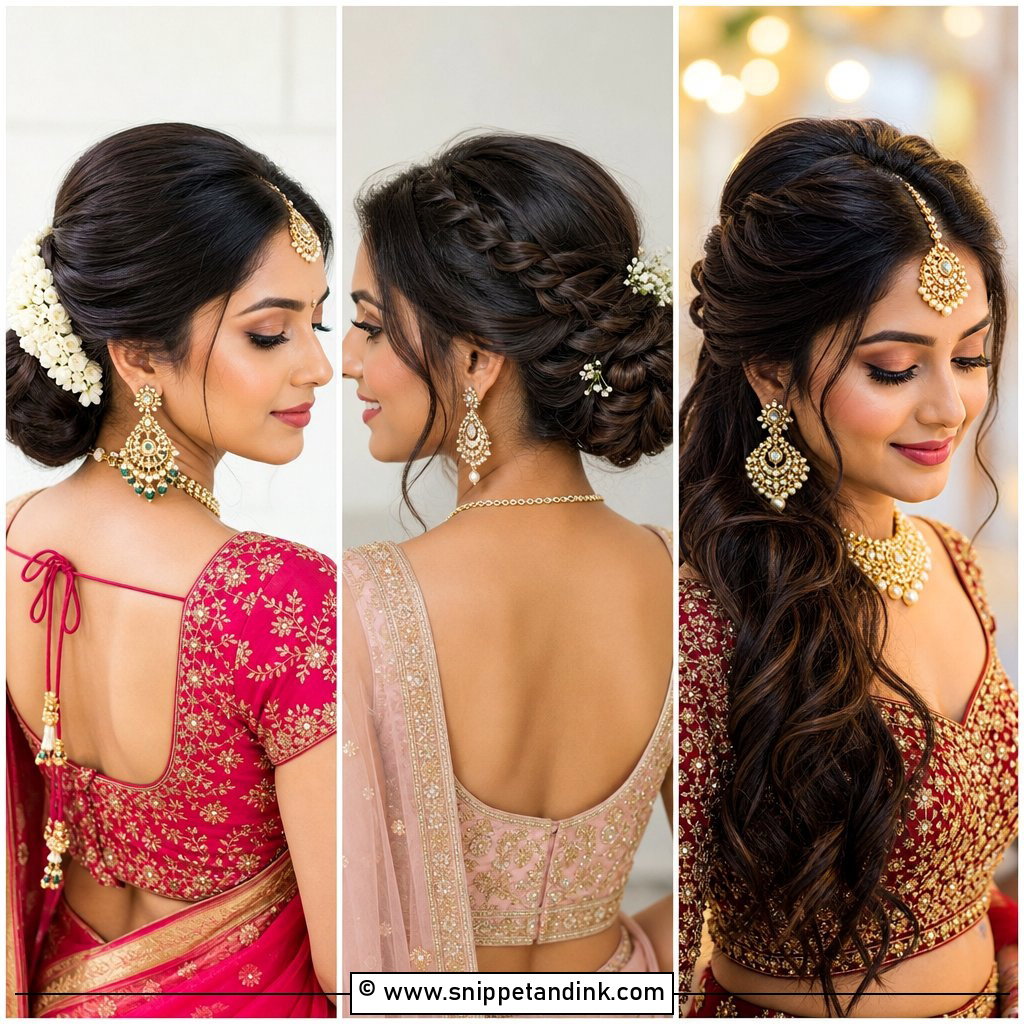
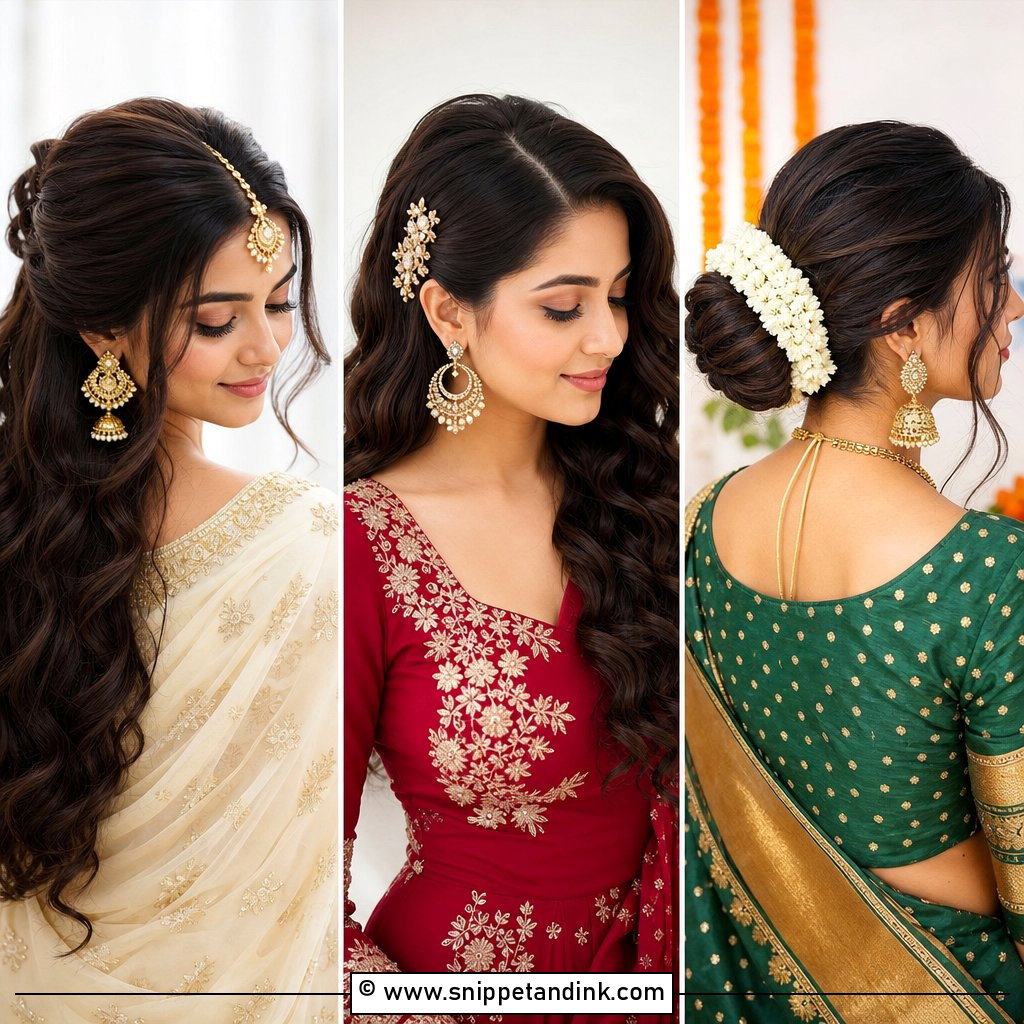
If a bride can’t decide, I usually start her here. A low bun sits close to the nape, which leaves room for heavy earrings and gives a dupatta something solid to rest against. I adjust the crown to the face: a little lift for a round face, smoother for a long one. Jasmine gajra wrapped around the bun is traditional and adds scent as well as colour, but fresh flowers are heavier than they look, so I pin the gajra into the bun’s base with U-pins rather than letting it hang off the surface. Hair stays out of your face through the longest ceremony, and a maang tikka finishes it.
2. Indian Wedding Side Braid With Flowers
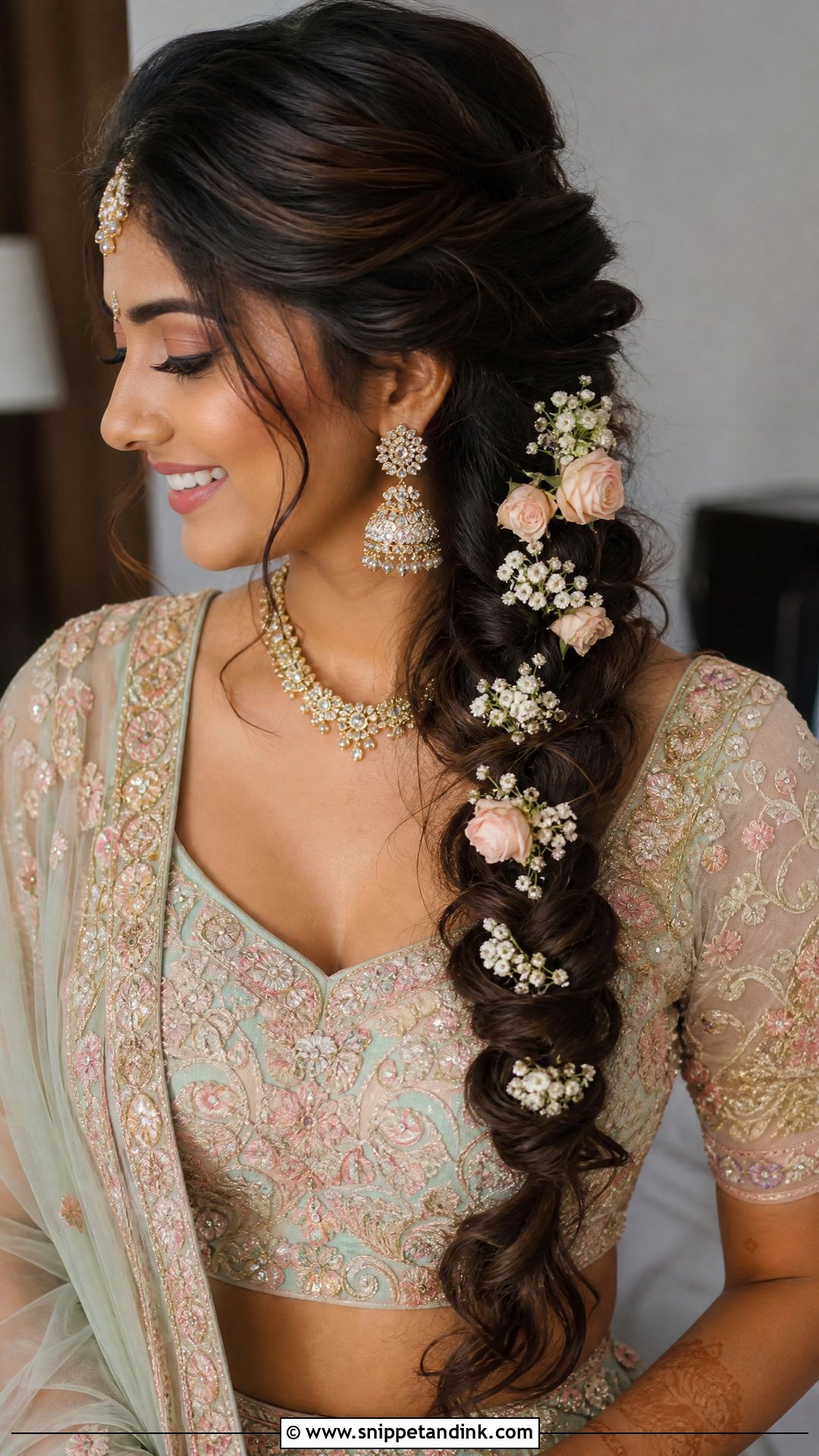
Side braids are my go-to for daytime functions like mehendi and haldi. They keep the hair controlled, show off length and don’t get crushed when you sit back in a chair for hours of henna. A plain three-strand, a loose fishtail or a soft rope braid all work. I pin small roses, baby’s breath or mogra buds along the braid with short pins pushed in at an angle, so they hold without poking through. A side braid pulls weight to one side, so if you have a heavy earring on that side, check it isn’t tugging on the ear by the end of the day.
3. Indian Wedding Half Up Half Down Hair
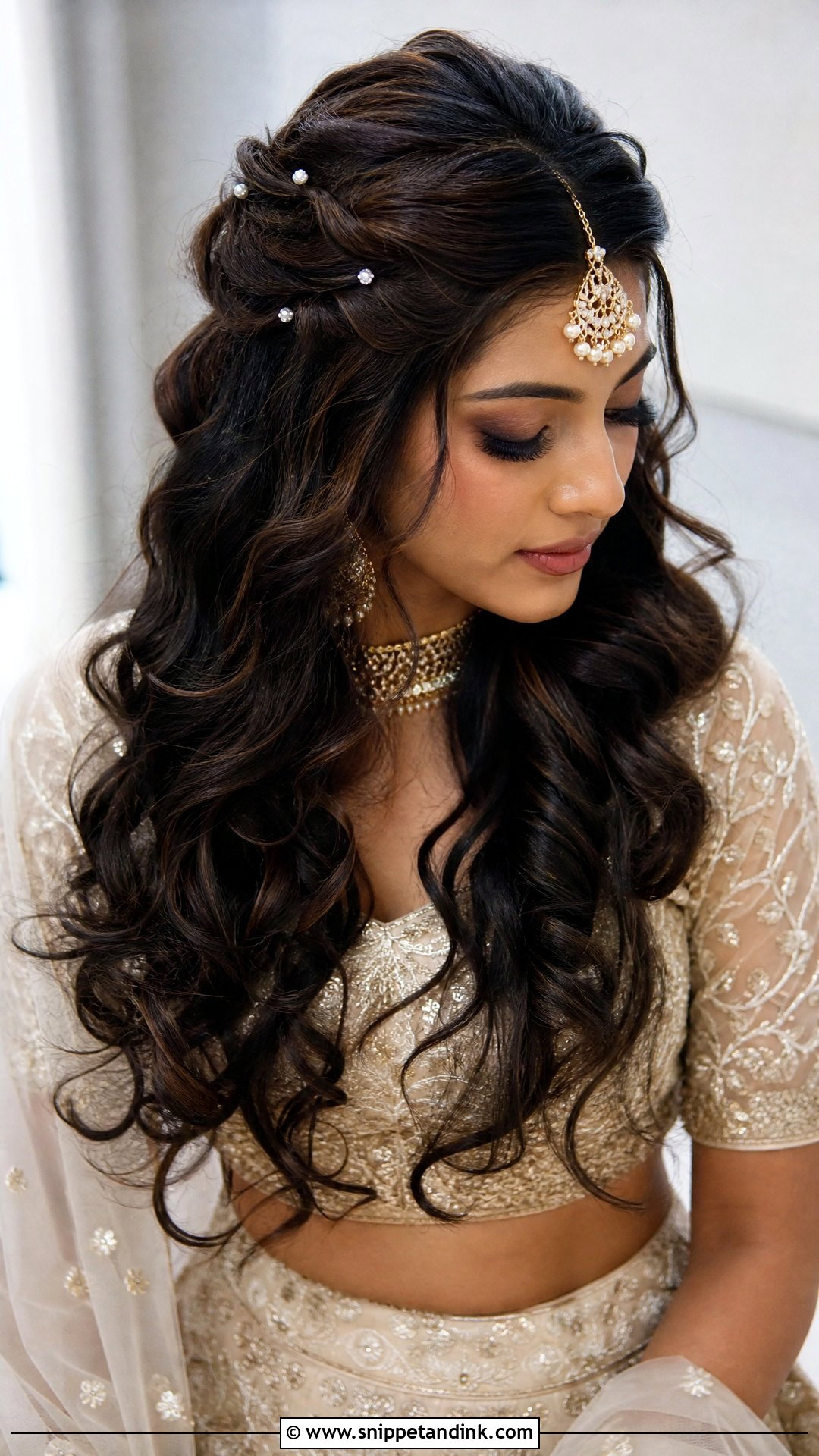
Half up, half down gives you open hair without hair in your face. I twist, braid or softly puff the top section and curl the lengths. On fine hair, I tease the root at the back of the crown before pinning the top so the style doesn’t sit flat, and I curl through the ends to make the lengths look fuller. A tikka or matha patti sits easily on the clean parting. The weakness of this style is humidity: loose curls drop faster than pinned hair, so in a warm month I’d set the curls with clips while they cool and use a firmer spray.
4. Indian Wedding Sleek Low Bun
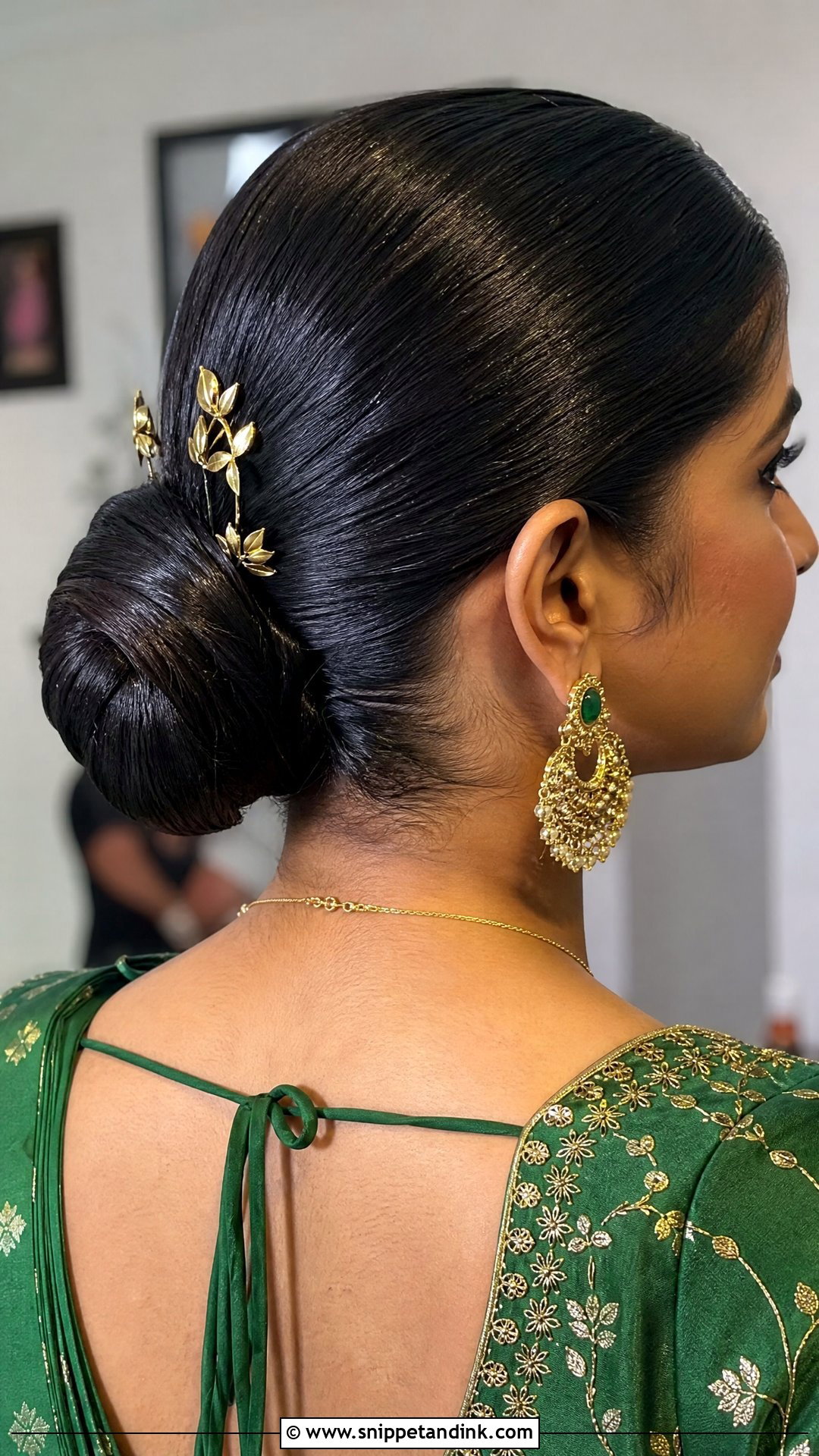
A sleek bun keeps the focus on the face, jewellery and blouse, which is why I suggest it with heavily worked outfits. A middle part reads classic, a side part softer. The smoothness depends on prep: I blow-dry the hair straight first with a paddle brush, then apply a pea-sized amount of serum, because adding product to frizzy, air-dried hair just makes it greasy. The bun is secured firmly at the nape with pins crossing each other. Pearls, gold pins or a single flower can dress it up. It suits most face shapes, but it’s unforgiving on very short or layered hair, where ends poke out of the bun.
5. Indian Wedding Loose Curls With Maang Tikka
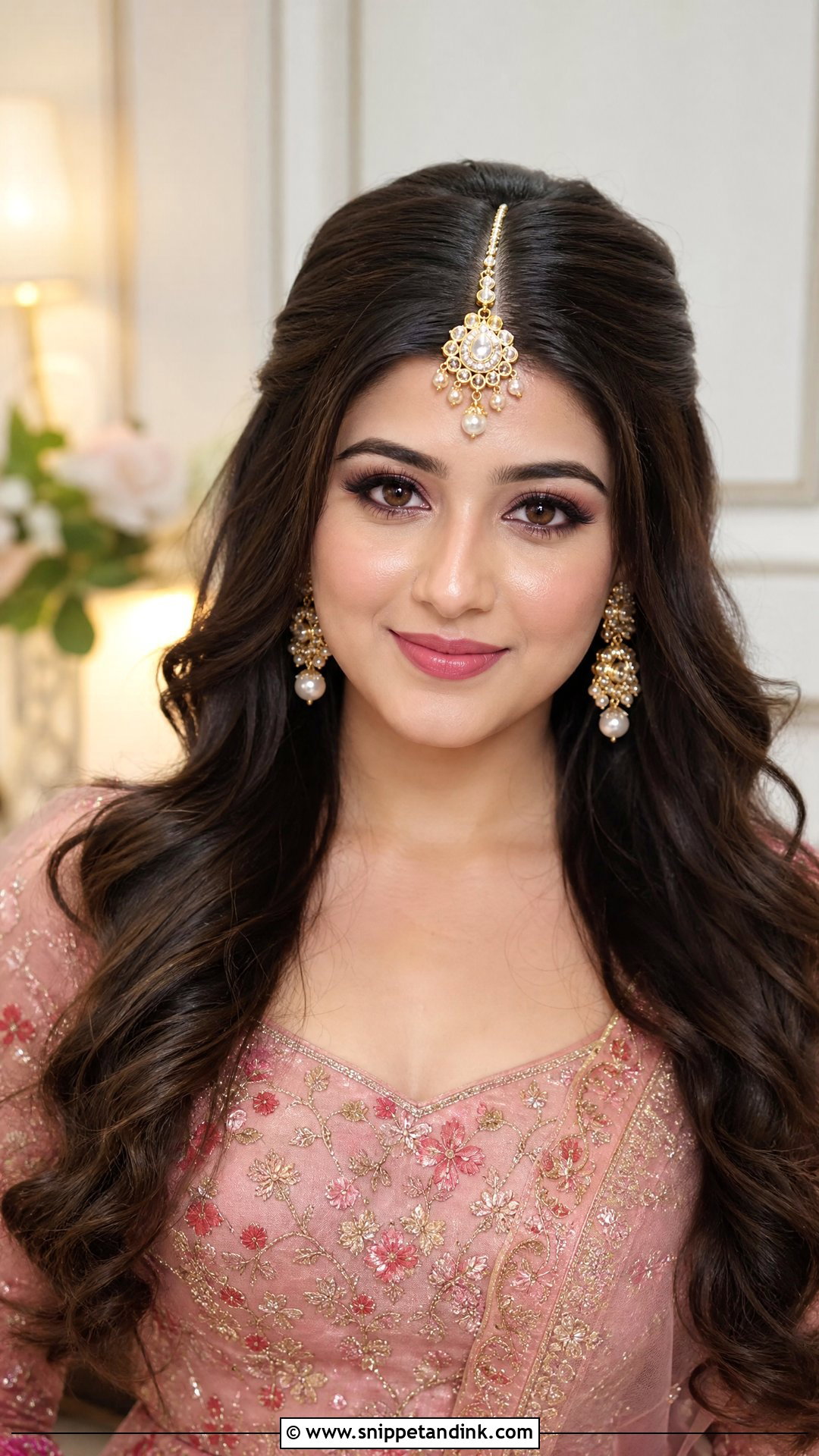
Loose curls with a maang tikka give you open hair that still feels bridal. The tikka needs a clean, precise parting and a little lift at the crown so it lies flat on the forehead instead of tilting. I secure the tikka’s chain with a small pin hidden under the hair a few centimetres back from the parting, because the weight of the pendant pulls it sideways during the day. Soft, larger curls look more current than tight ringlets and drop more gracefully. Medium to long hair suits this best.
6. Indian Wedding Braided Bun
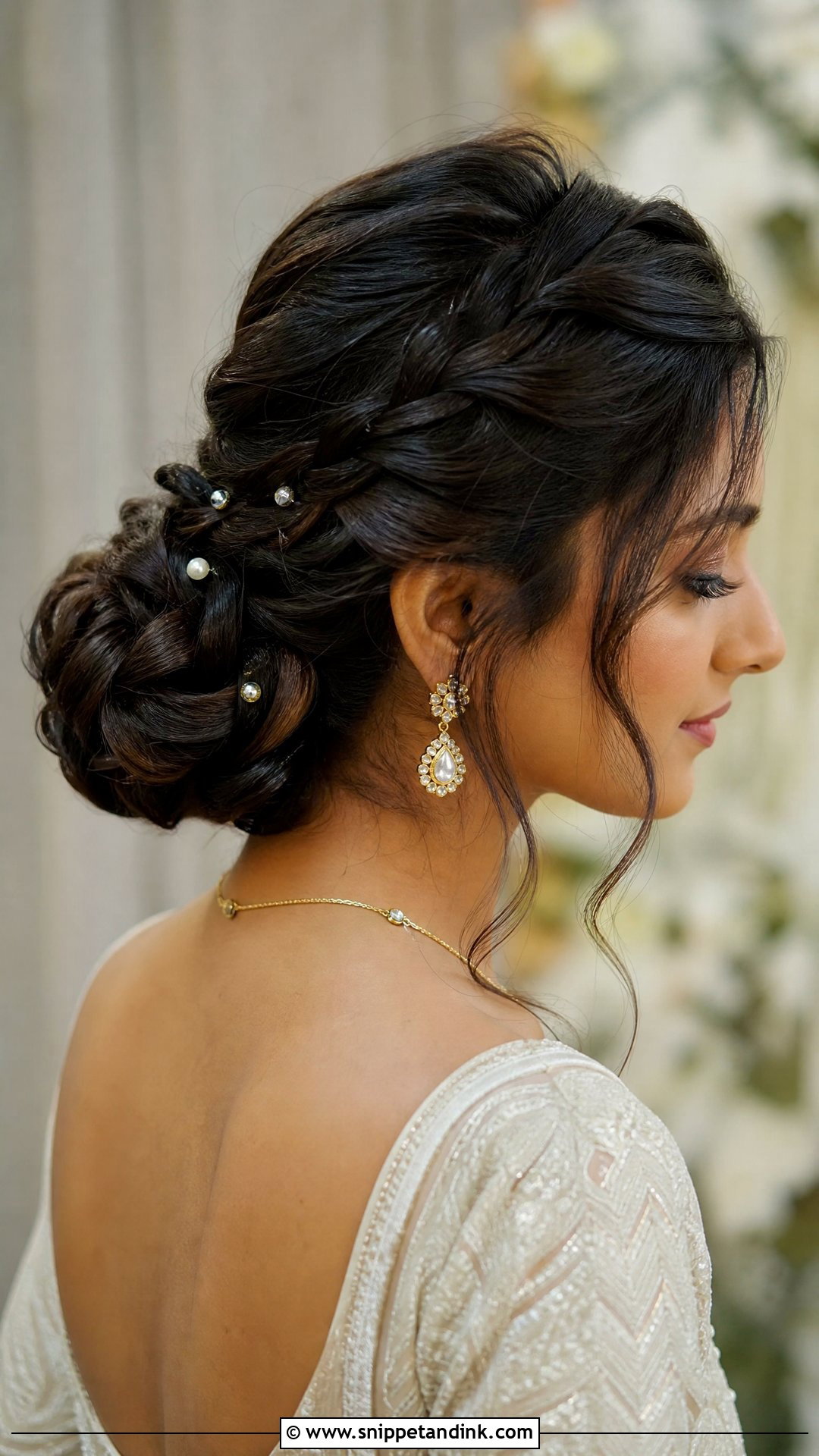
A braid wrapped around a bun adds texture and helps it hold. On thick hair the volume does the work; on thinner hair I gently pull the braid apart before pinning so it looks fuller, a technique often called pancaking. The braid can start from one side, wrap the bun or form its base. A braided bun stays secure under a dupatta and has a pleasing shape from behind, which matters because many ceremony photos are taken from the back while you sit at the mandap. Fresh flowers, pearl pins or a bun chain add detail.
7. Indian Wedding Open Hair With Soft Waves
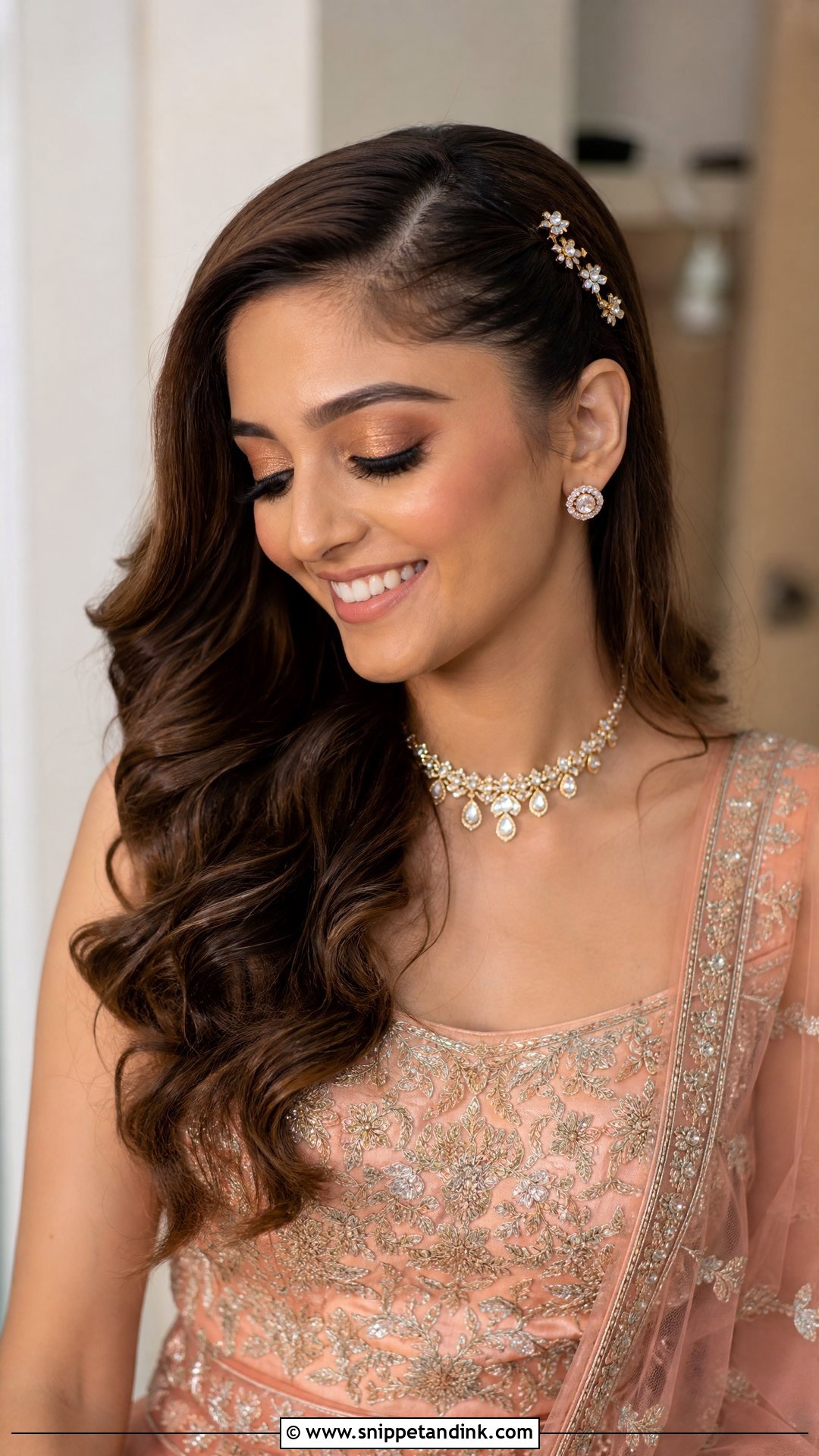
Open waves suit engagements, cocktail nights and receptions, where you’re moving and the dupatta is light or off the head. Frizz is the enemy, so I curl smaller sections with a heat protectant and brush them out once cooled into smooth waves. A centre part leans traditional; a side part looks more glamorous. Tuck one side behind the ear to show a statement earring. I don’t recommend open hair under a heavy dupatta pinned over the head: the dupatta flattens and tangles the waves within an hour.
8. Indian Wedding Bubble Braid
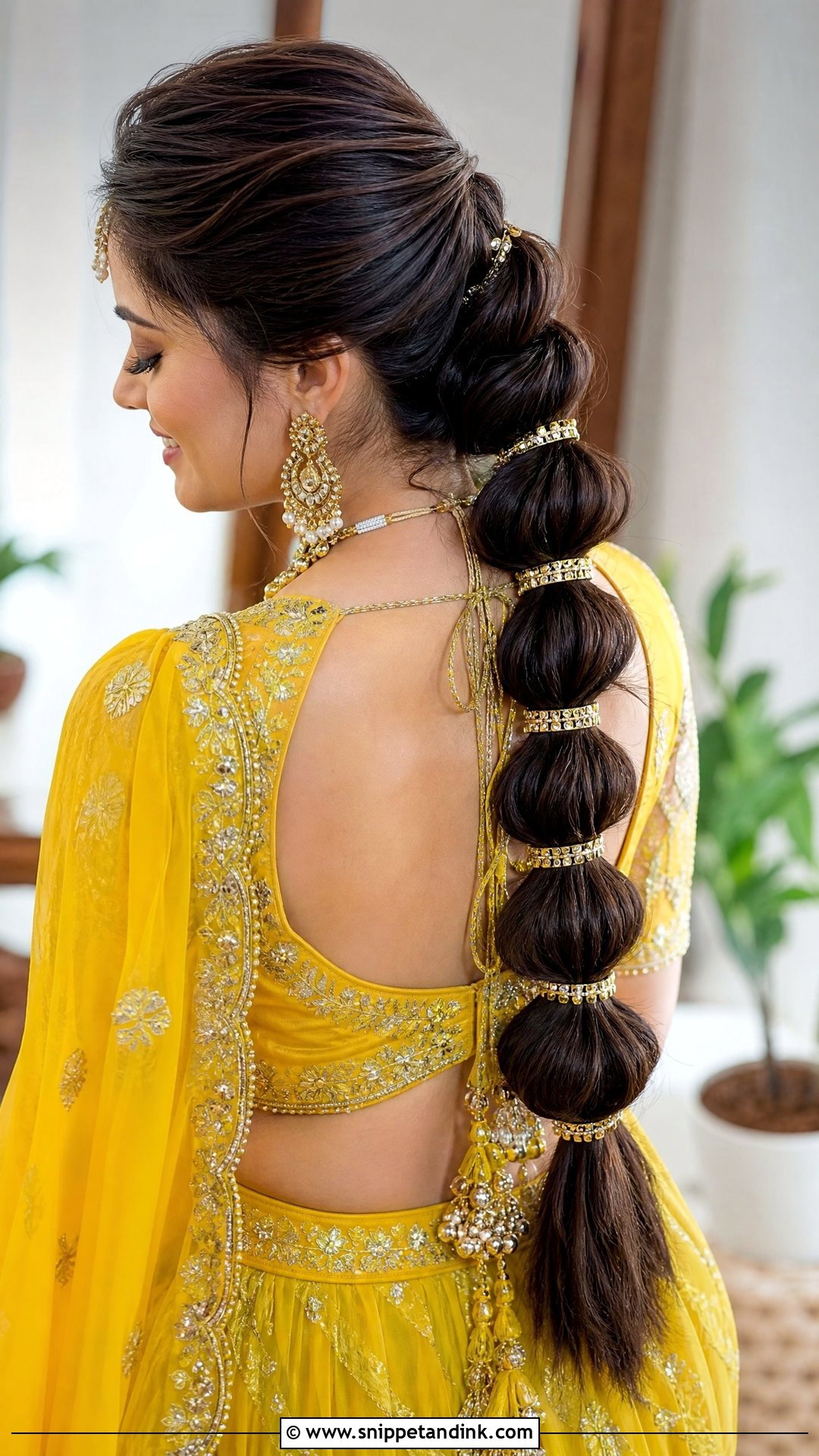
A bubble braid looks styled but needs no braiding skill. I tie the hair at intervals with clear elastics and gently pull each section out into a rounded bubble. Wrapping a thin piece of hair over each elastic hides it, or you can cover them with gold cuffs, pearls or floral clips. It keeps hair off the face for dancing and survives a haldi splash better than curls. I find it suits mehendi and haldi best, especially with mirror-work outfits and bright dupattas, and it’s quick to do for a whole group of bridesmaids.
9. Indian Wedding Messy Bun With Face Framing
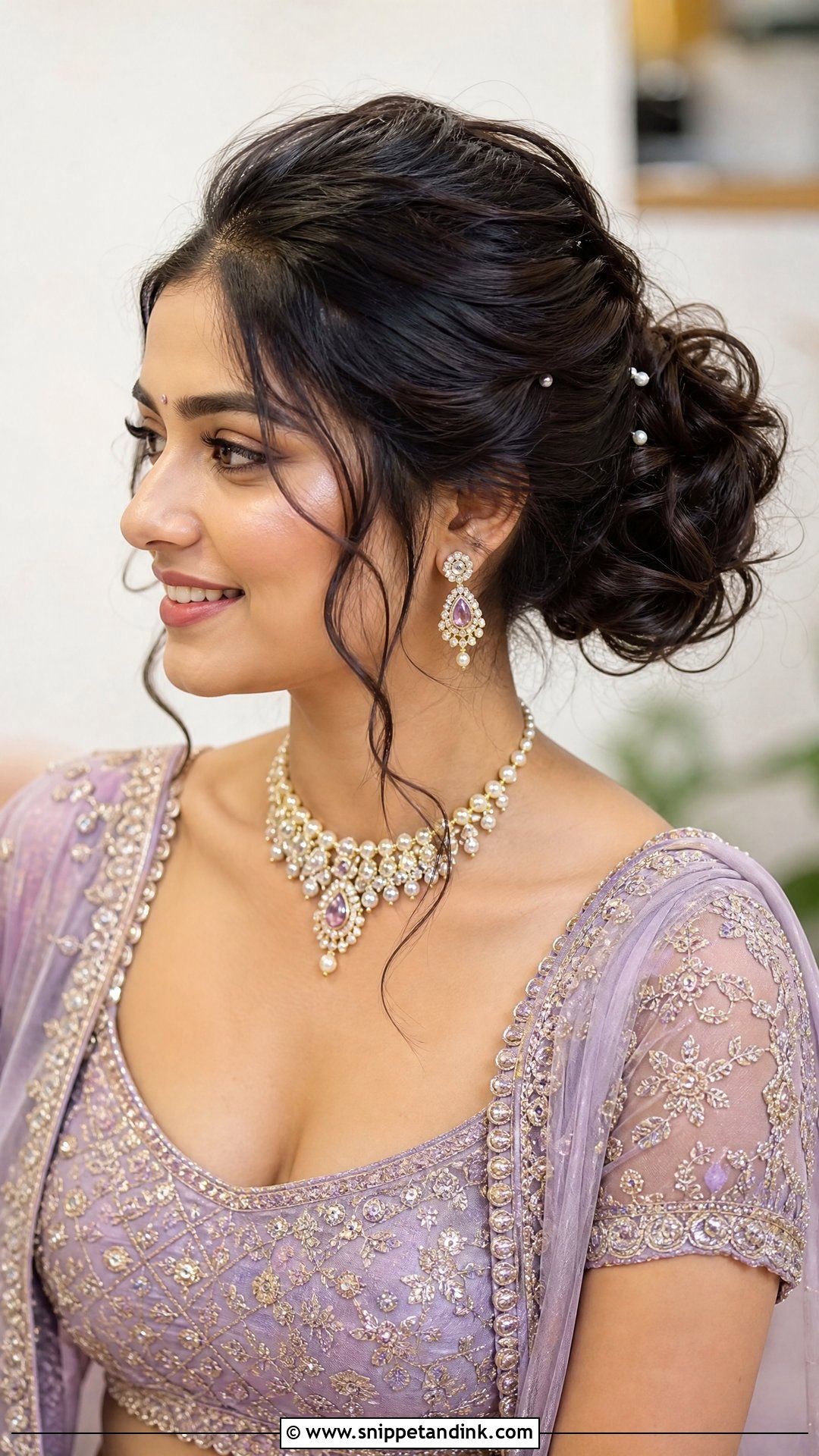
Messy buns at weddings should only look messy. I build volume at the crown, place the bun low or mid-height and pull out a few face-framing strands, then pin the bun firmly underneath so the loose look doesn’t actually come loose. Strands around the cheeks soften round and oval faces. Small flowers, pearl pins or a decorative comb make it festive. It’s a relaxed reception choice for brides and an easy one for guests. On very straight, silky hair, I’d add texture spray first or the strands just slide out.
10. Indian Wedding Fishtail Braid
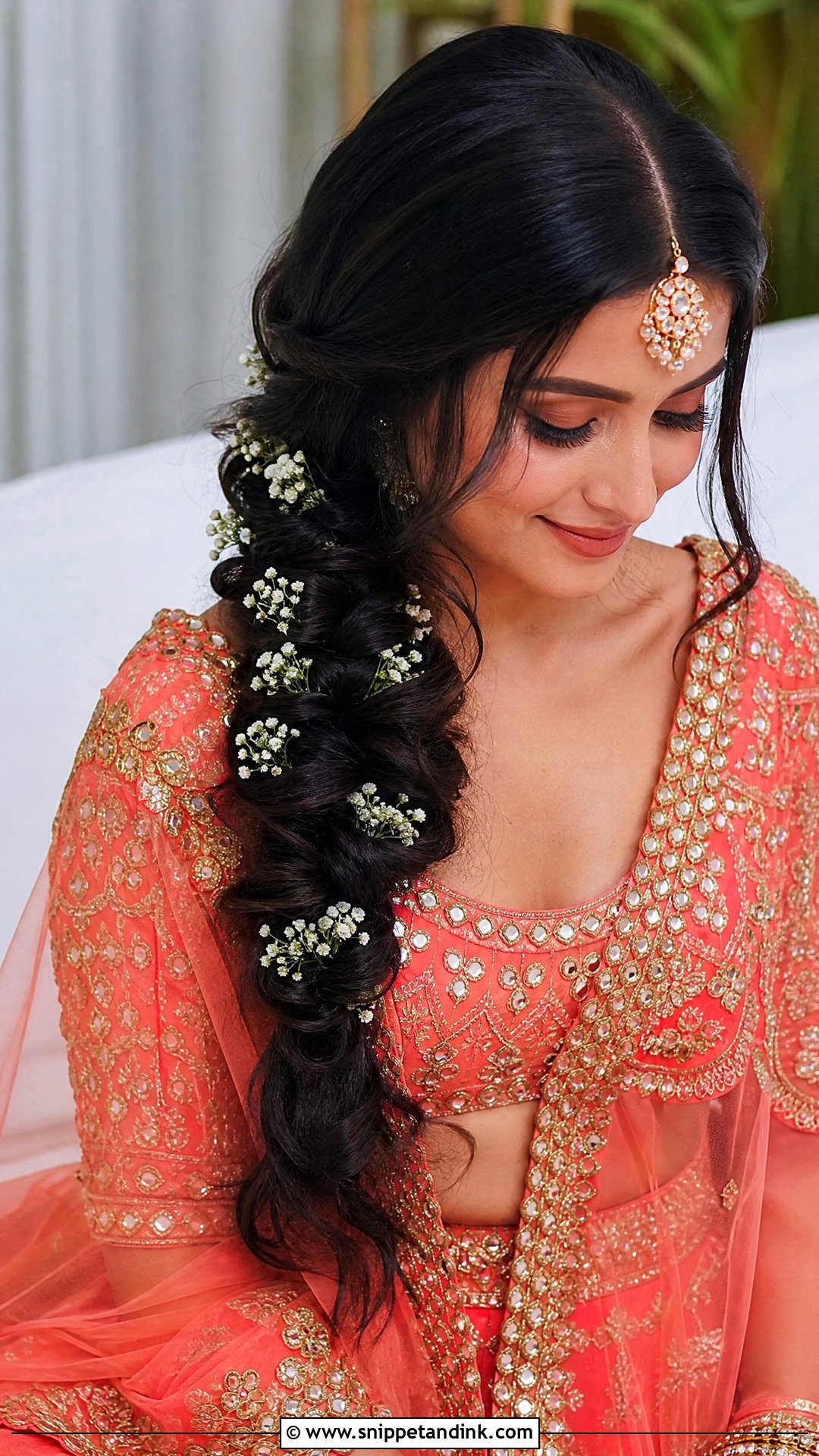
A fishtail braid looks intricate but is quick in practised hands. Worn centred or to the side, it shows length down your back without fully open hair. I gently loosen the edges after braiding to make it look thicker. A paranda, tiny flowers or pearl pins add an Indian touch. Long or naturally thick hair carries it best; with fine hair, clip-in extensions woven into the braid give it the length and fullness that make a fishtail read clearly. I like it for mehendi, haldi and smaller ceremonies.
11. Indian Wedding High Bun With Dupatta
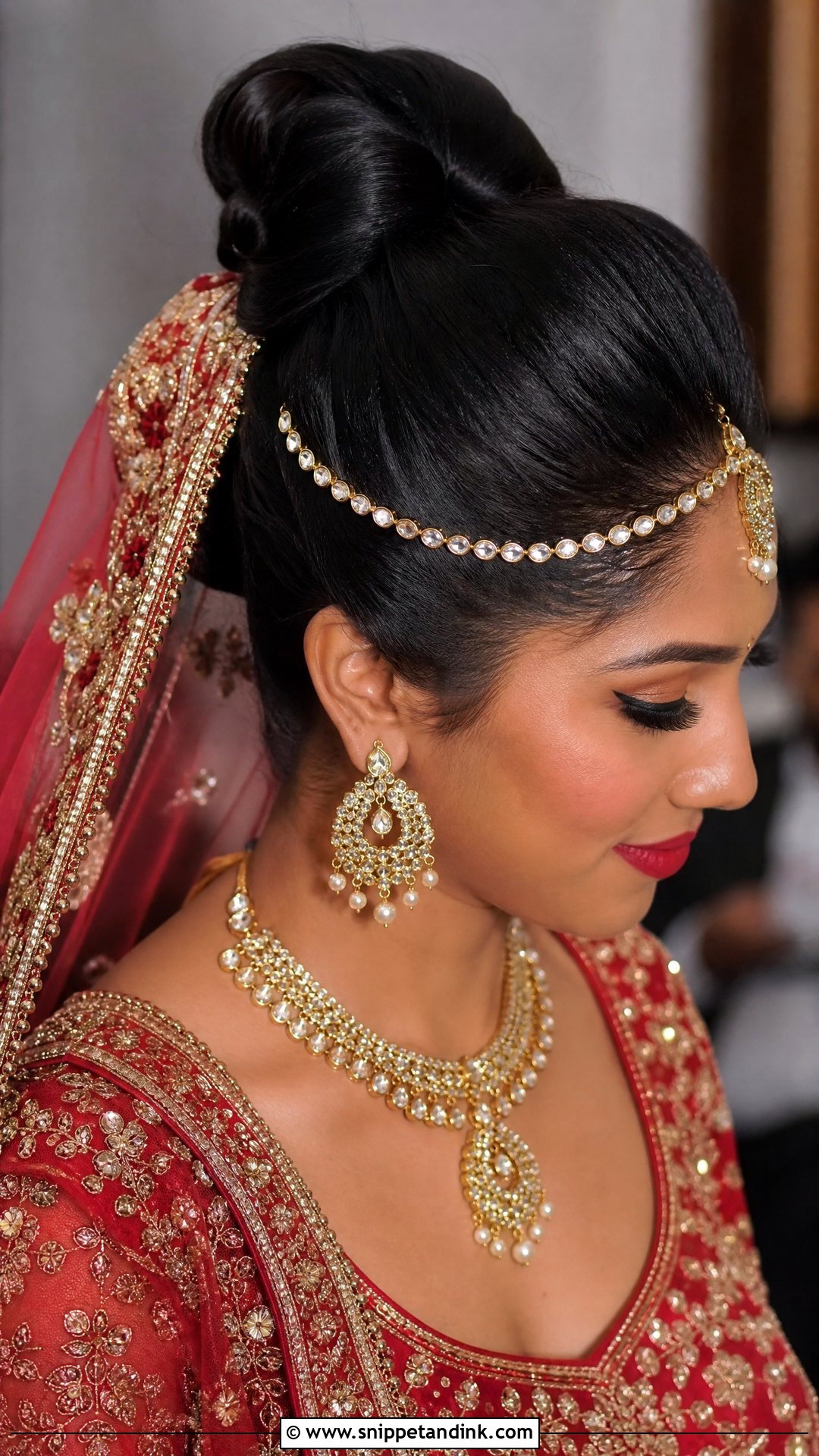
When a bride is wearing a heavy dupatta or veil for the main ceremony, a high bun is often the safest base. It sits at or just below the crown and gives the dupatta something to anchor to, so the fabric doesn’t slide back. I position it after seeing the head jewellery; a matha patti or passa needs the bun placed so the chains don’t pull. A smooth finish feels formal, a lightly textured one softer. Add gajra or bun pins for a traditional look. It also adds a little height, which suits petite brides in voluminous lehengas.
12. Indian Wedding Ponytail With Curls
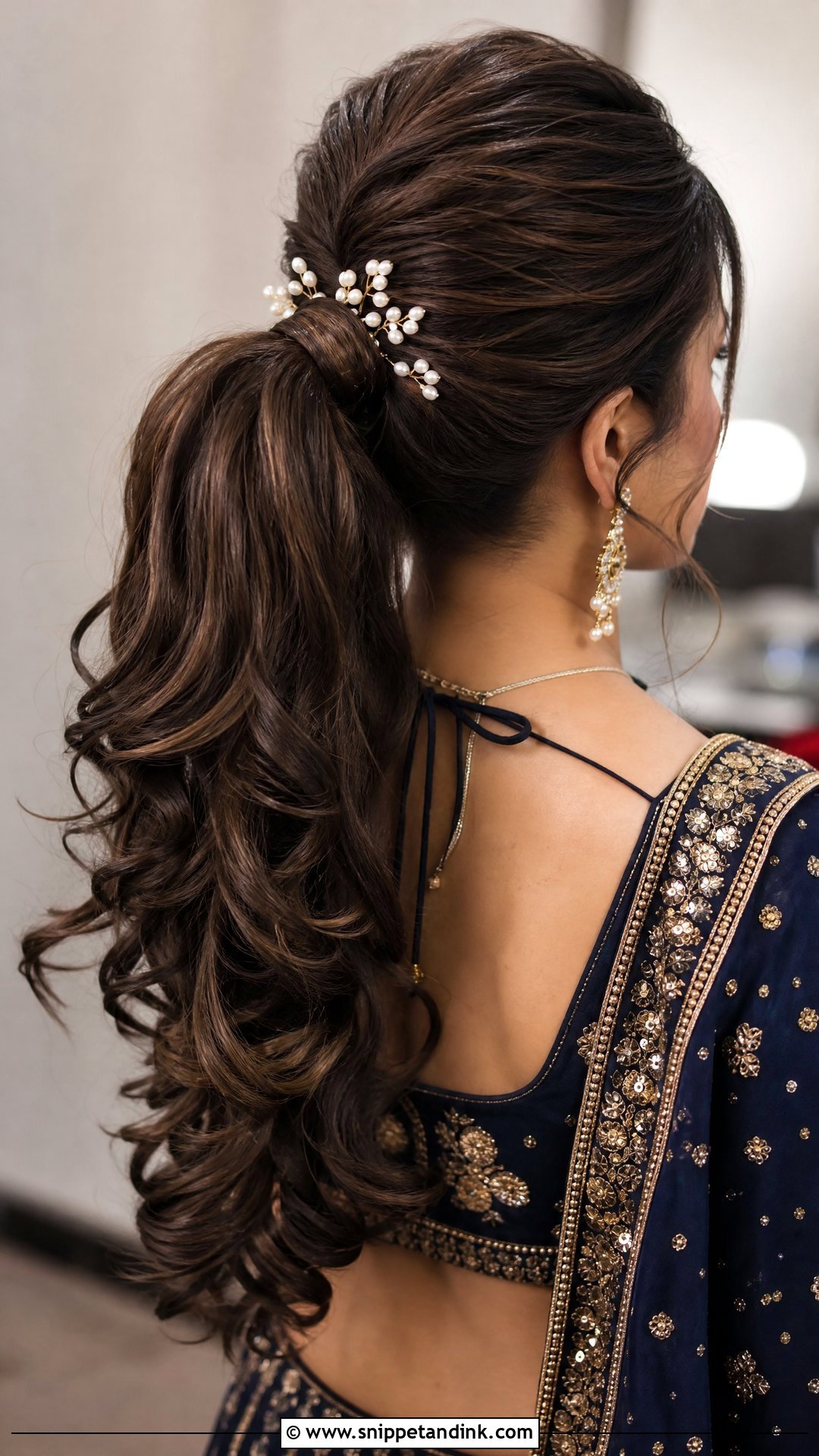
A curled ponytail is my pick for sangeet nights, when you’ll dance and want your hair to move without getting in the way. I tie it high for glamour or low for something softer, wrap a section of hair around the elastic and add a touch of lift at the crown so the head shape stays balanced. Two elastics, one slightly above the other, keep a high ponytail from drooping by midnight. Pearl pins, a jewelled clip or a small floral piece finish it. It suits lehengas, gowns and Indo-western outfits.
13. Indian Wedding French Braid Bun
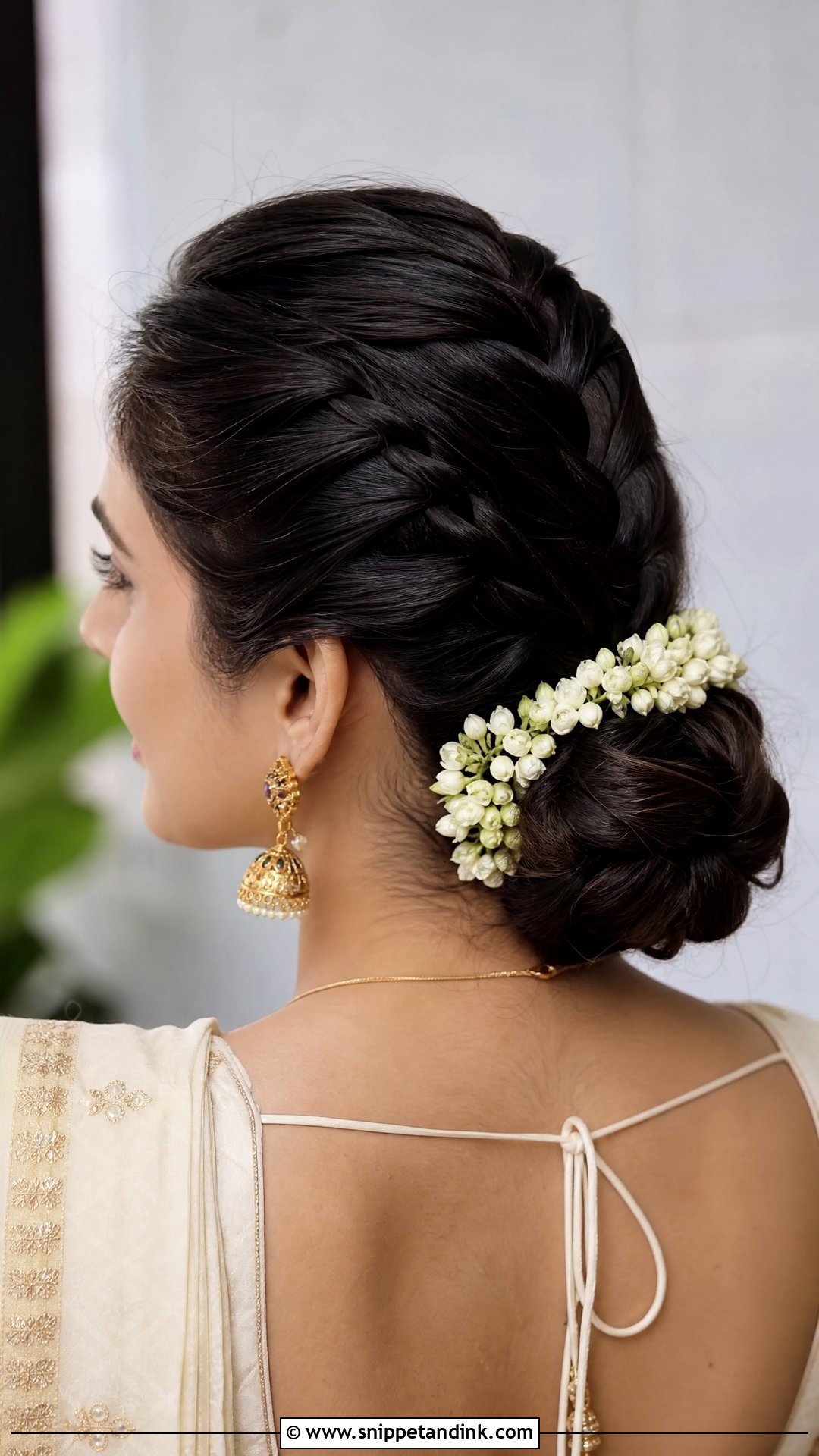
A French braid flowing from the crown into a low bun gives structure without needing many accessories. It works especially well on thick, straight or wavy hair, where the braid has enough grip to shape the bun. The front stays clean, so it looks right with a bindi, maang tikka or statement earrings. For a guest, leave it plain; for a bride, add jasmine, roses or gold pins. On very fine or slippery hair, I prep with a light texture spray so the braid doesn’t loosen through the day.
14. Indian Wedding Crown Braid
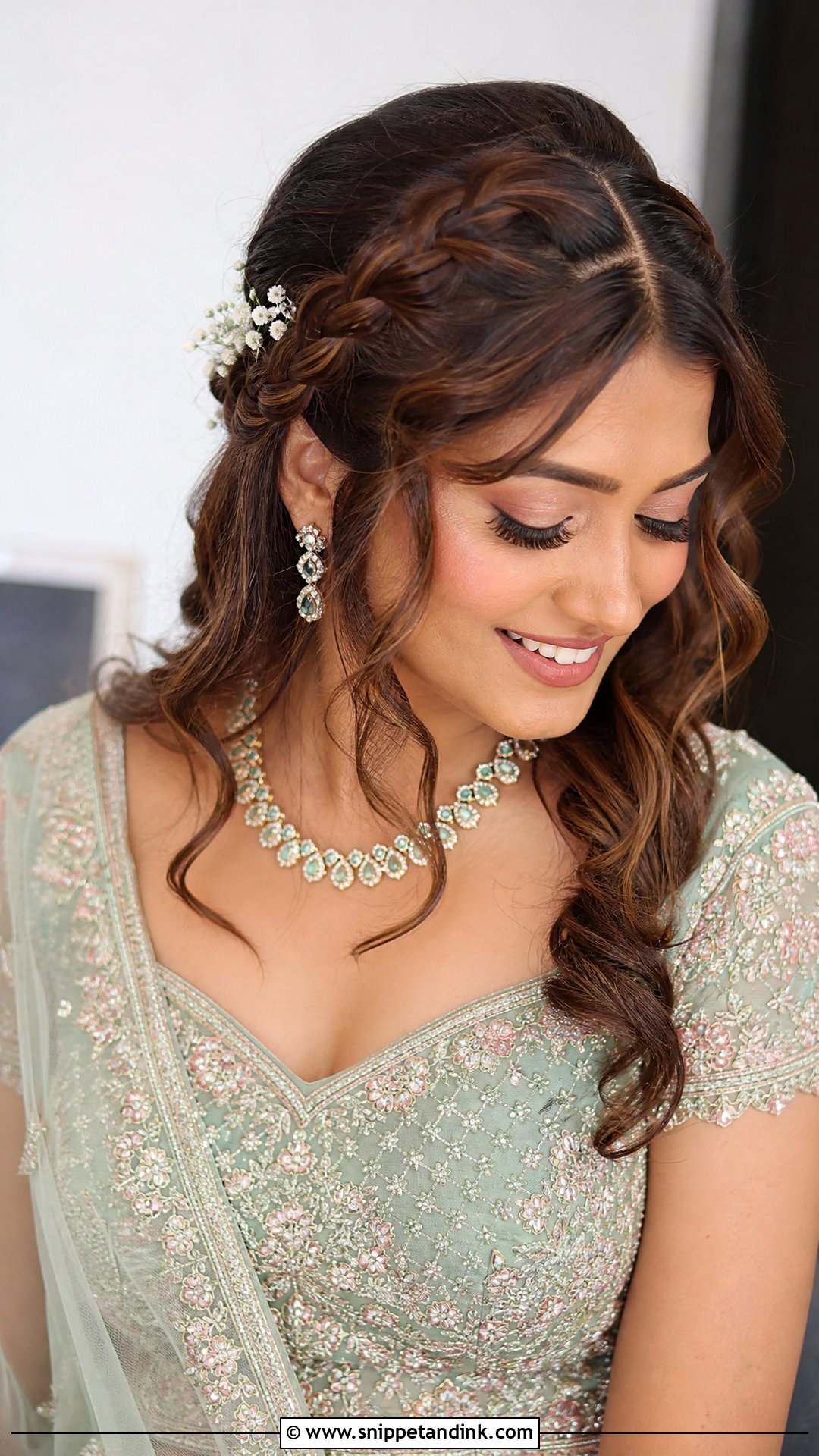
A crown braid frames the face and keeps everything controlled. I can wrap it fully around the head or braid just the front and let it blend into a bun or open curls. I keep it slightly loose at the hairline, because a tight braid pulls the edges and gives a headache by evening. It suits bridesmaids, sisters and brides at smaller functions, and looks right with floral jewellery and pastel outfits. The braid also gives pins something to grip, which keeps hair accessories in place through long events.
15. Indian Wedding Straight Hair With Center Part
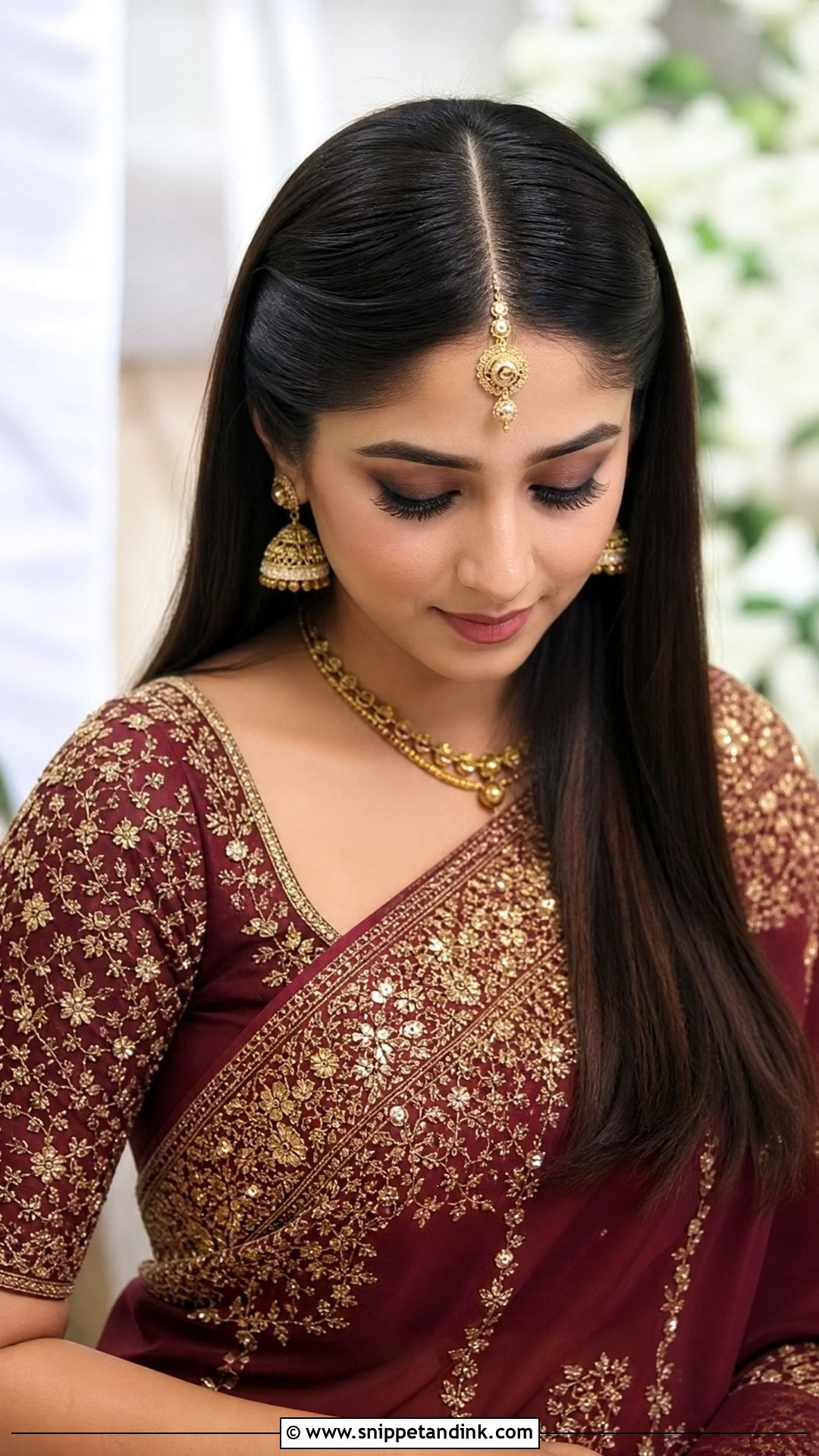
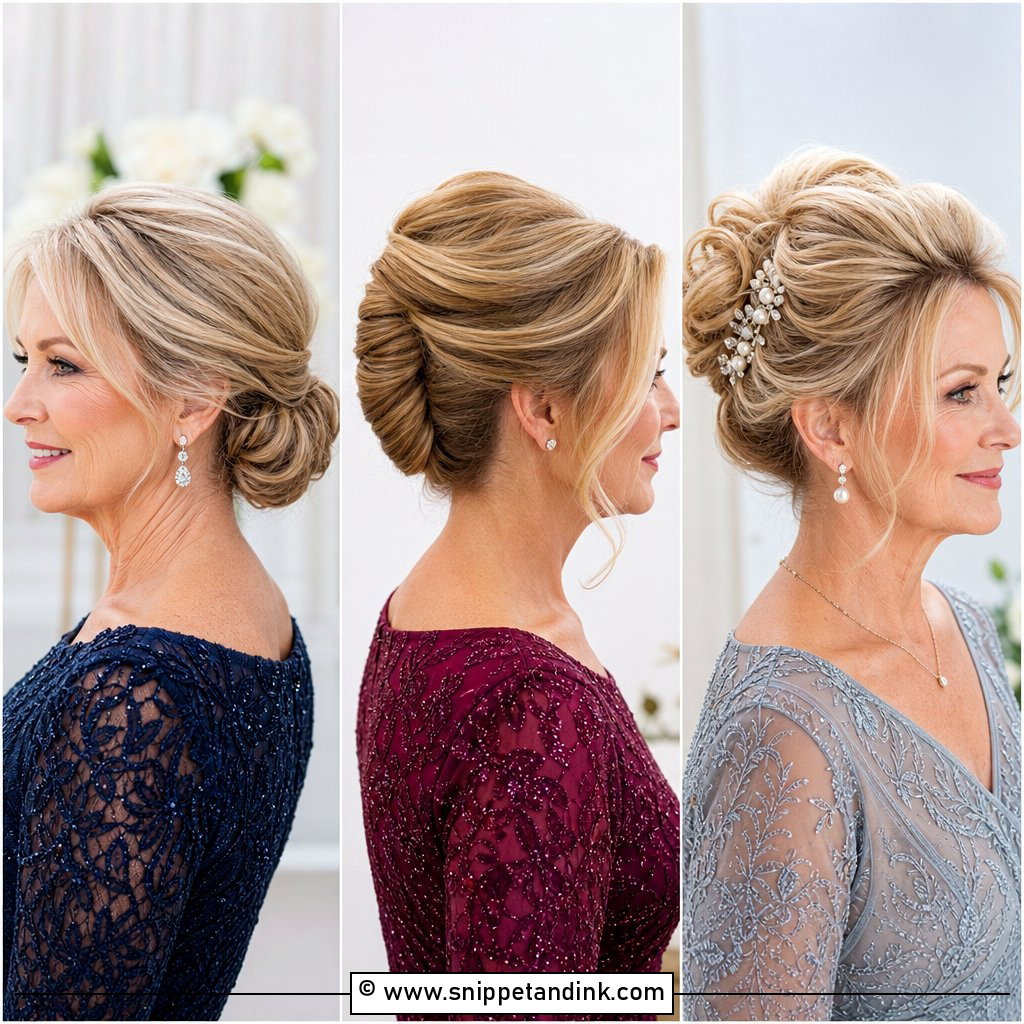
Straight hair with a centre part is the simplest look here and one of the hardest to do well, because nothing hides an uneven parting or frizz. I use a heat protectant, straighten in small sections and finish with a smoothing product so the hair reflects light evenly in photos. The clean parting is ideal for a maang tikka, matha patti or passa. Ends can be blunt, slightly turned in or tucked behind the ears. It suits receptions, engagements and minimal bridal looks, and humidity is its weak point, so keep a small serum in your bag.
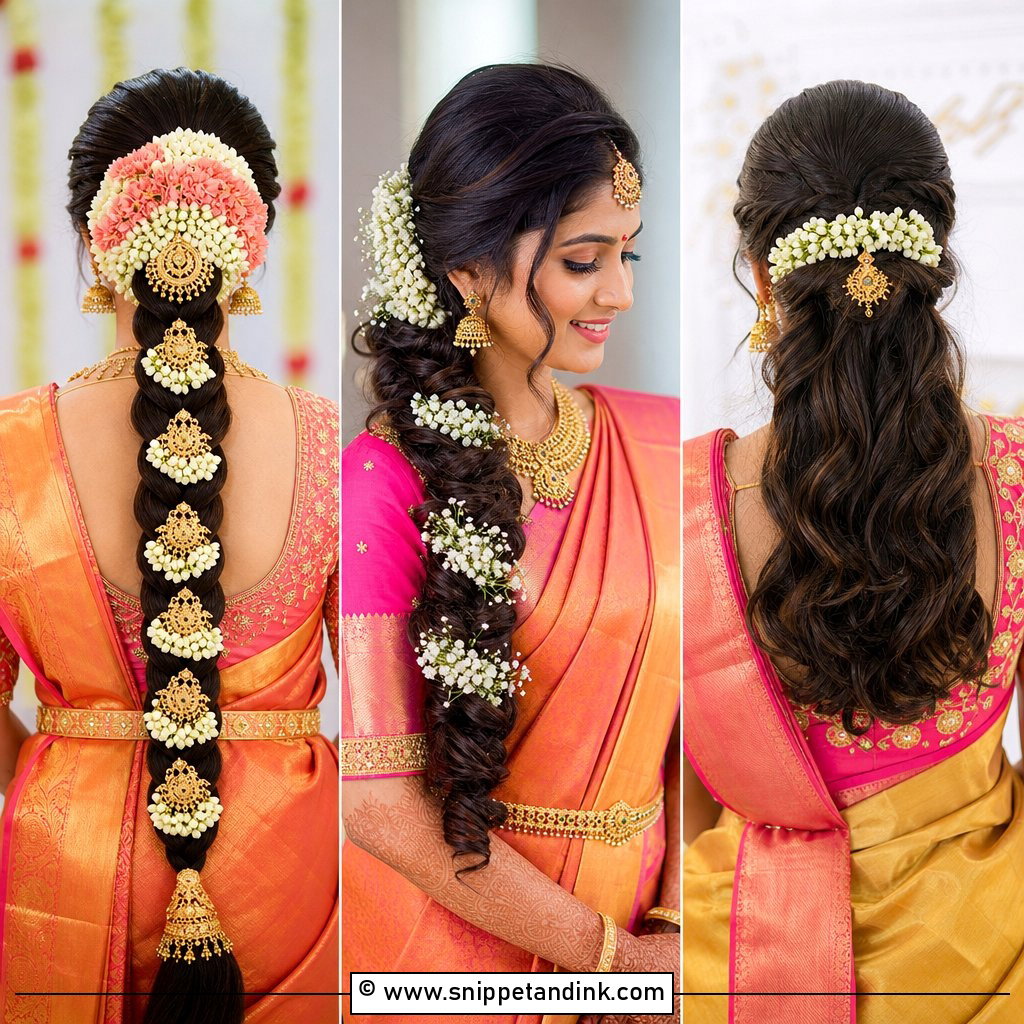
16. Indian Wedding South Indian Braid
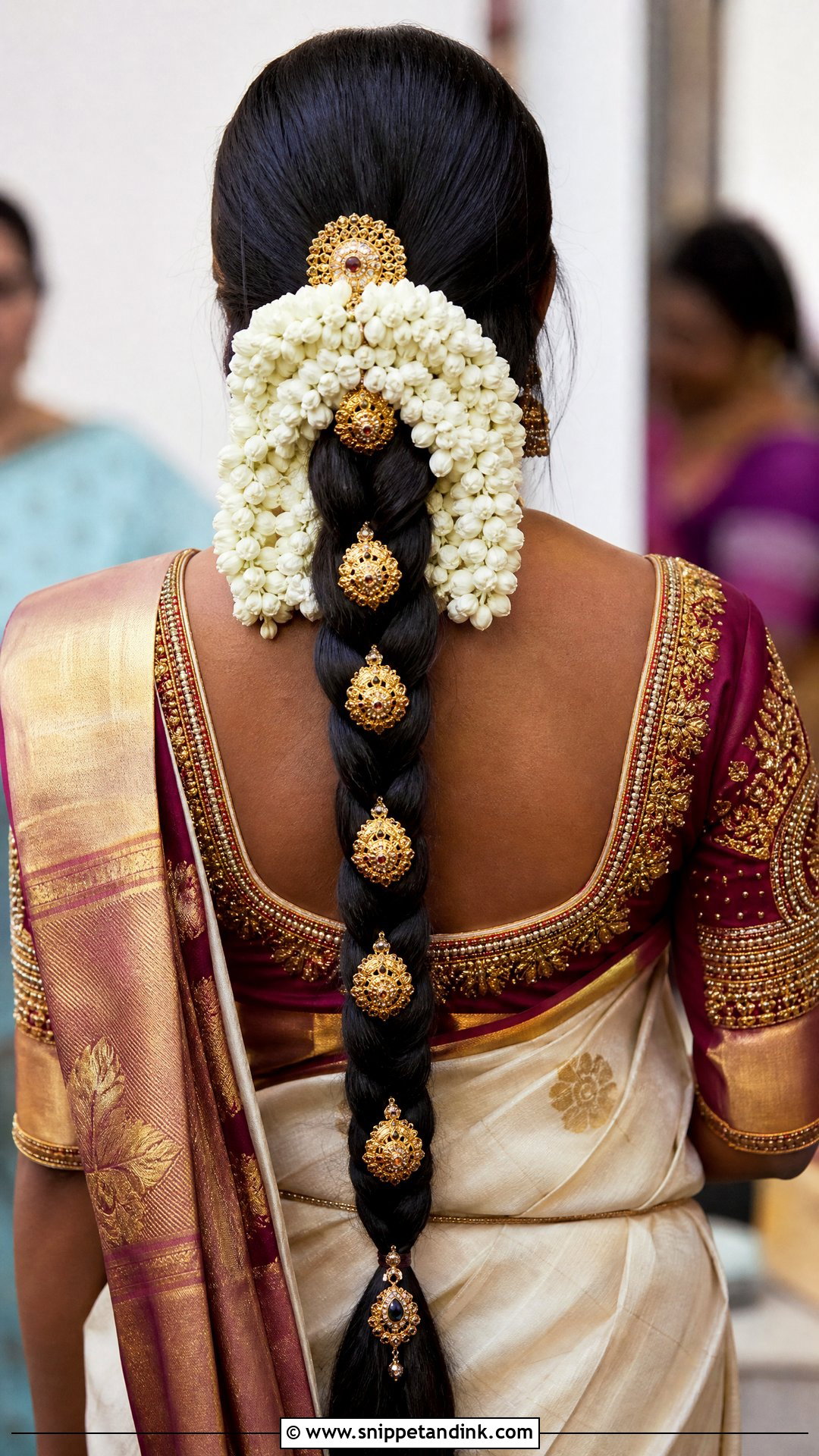
The South Indian braid is long, smooth and decorated, often with jasmine and gold jadai pieces. For a simpler version I keep the braid clean and add jasmine only along the top or around the base. Traditional jadai jewellery is heavy, so I secure the top of the braid with extra pins at the crown to carry it. Silk sarees and temple jewellery are its natural partners. If your hair is shorter, extensions give the length the braid needs. It holds through long rituals and greetings without fuss.
17. Indian Wedding Short Hair With Floral Pins
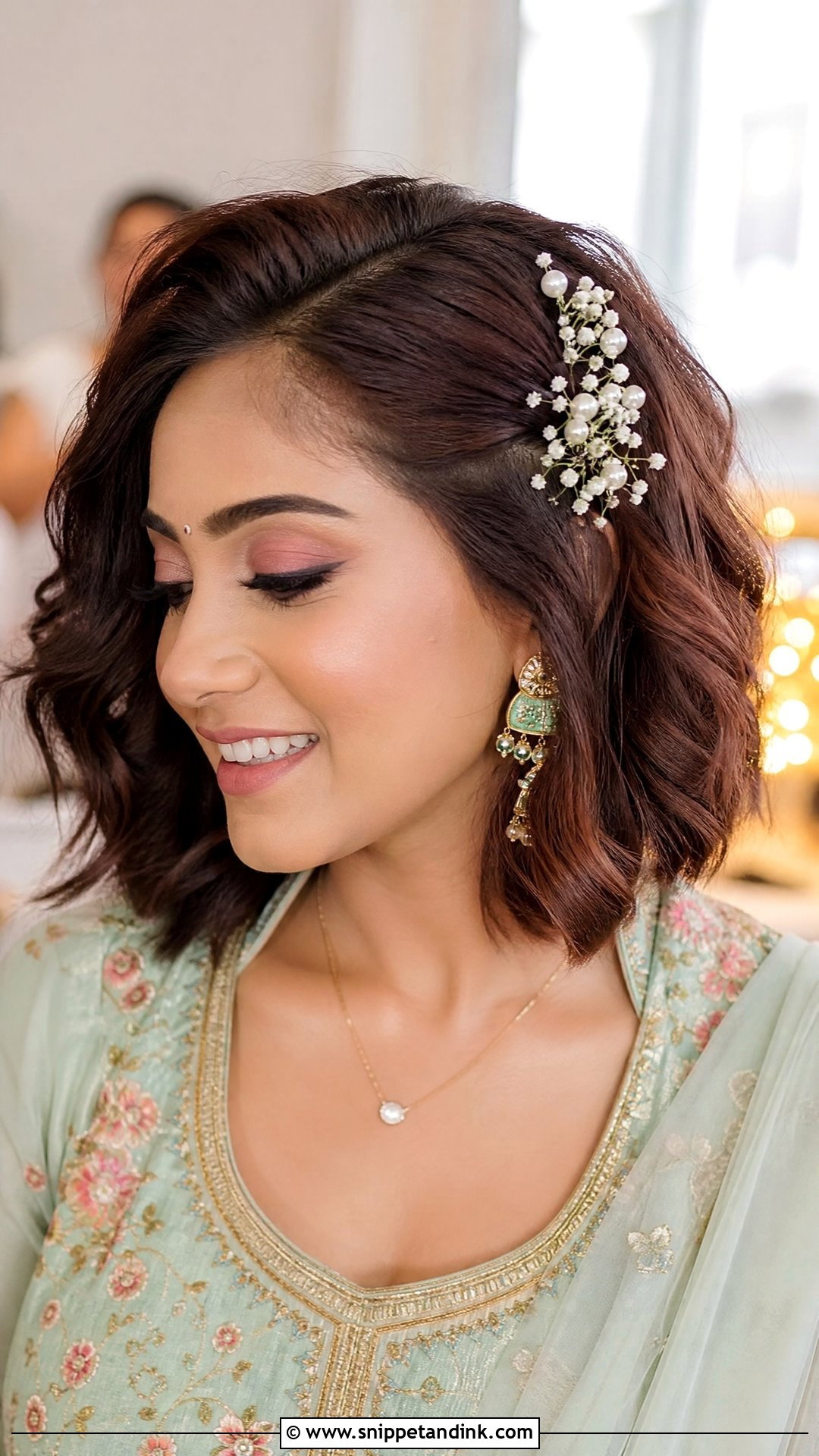
Short hair can look bridal without extensions. A softly curled bob, a tucked-back lob or a side-parted short hairstyle becomes festive with floral pins, pearl clips or a small jewelled comb. I add volume at the crown, shape the ends with a round brush and keep the front polished. A maang tikka still works on short hair; I anchor it with a pin at the parting, a little further back than usual, since there’s less hair to hold it. Receptions, engagements and intimate ceremonies suit it.
18. Indian Wedding Twisted Low Bun
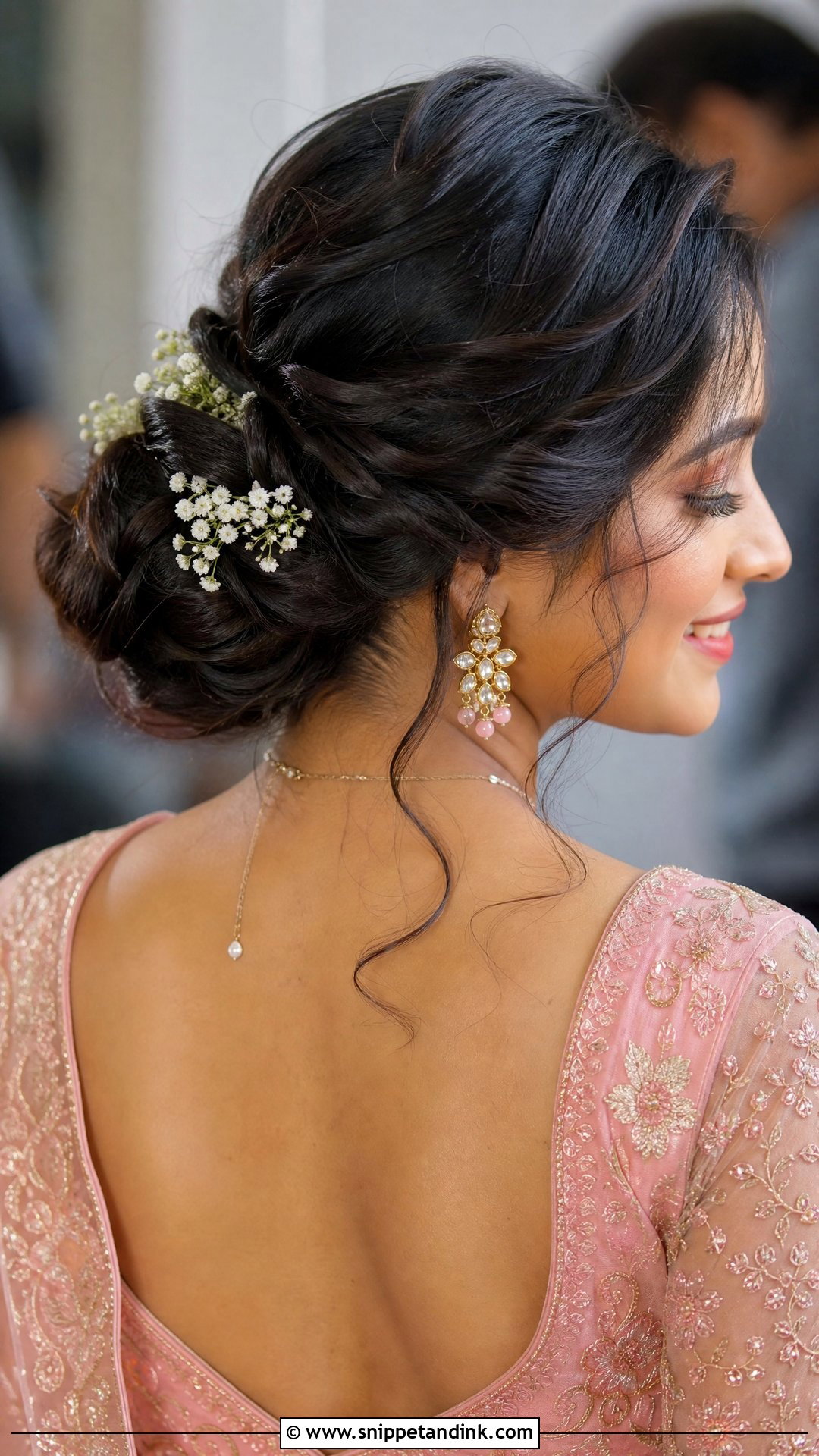
A twisted low bun has gentle texture without looking busy. I twist sections back towards the nape and pin each one into a rounded shape, which spreads the weight and keeps the bun firm. It suits most face shapes and looks finished from every angle with sarees, lehengas and anarkalis. Baby’s breath, jasmine or small pearl pins make a delicate detail. Leave a few soft strands at the front if you like. On layered hair, twisting hides shorter pieces better than a plain bun does.
19. Indian Wedding Paranda Braid
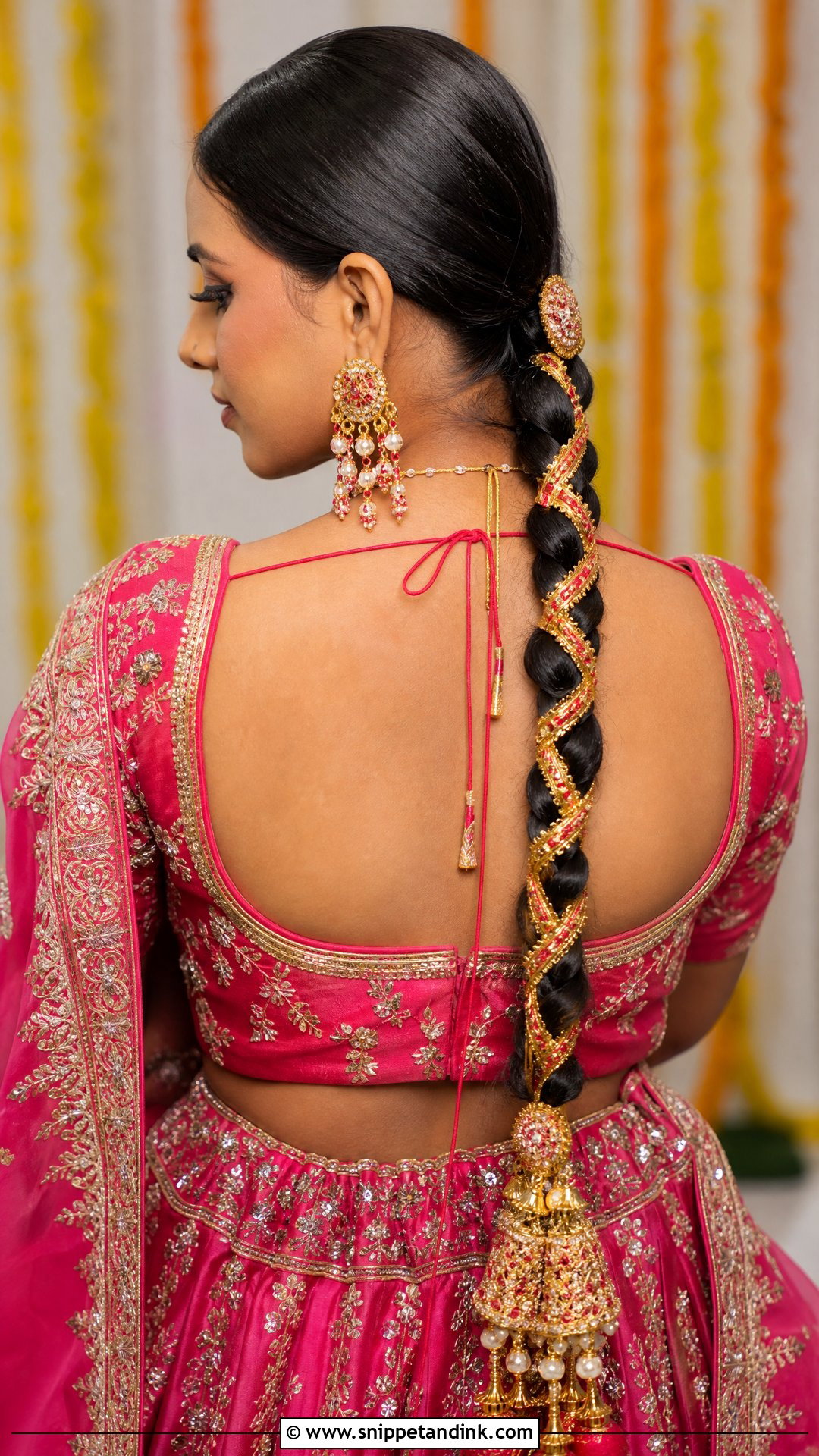
A paranda is woven into the braid with tassels at the end, adding length, thickness, colour and movement. It belongs at Punjabi weddings, mehendi and haldi. Gold, mirror-work, pearl or bright thread parandas can be matched to the outfit. I start the paranda a few twists down rather than at the nape, so the tassel lands where it looks balanced against your height. It suits lehengas, patiala suits, shararas and vibrant dupattas, and stays put with very little fixing. Keep the front sleek or softly parted to balance the bold braid.
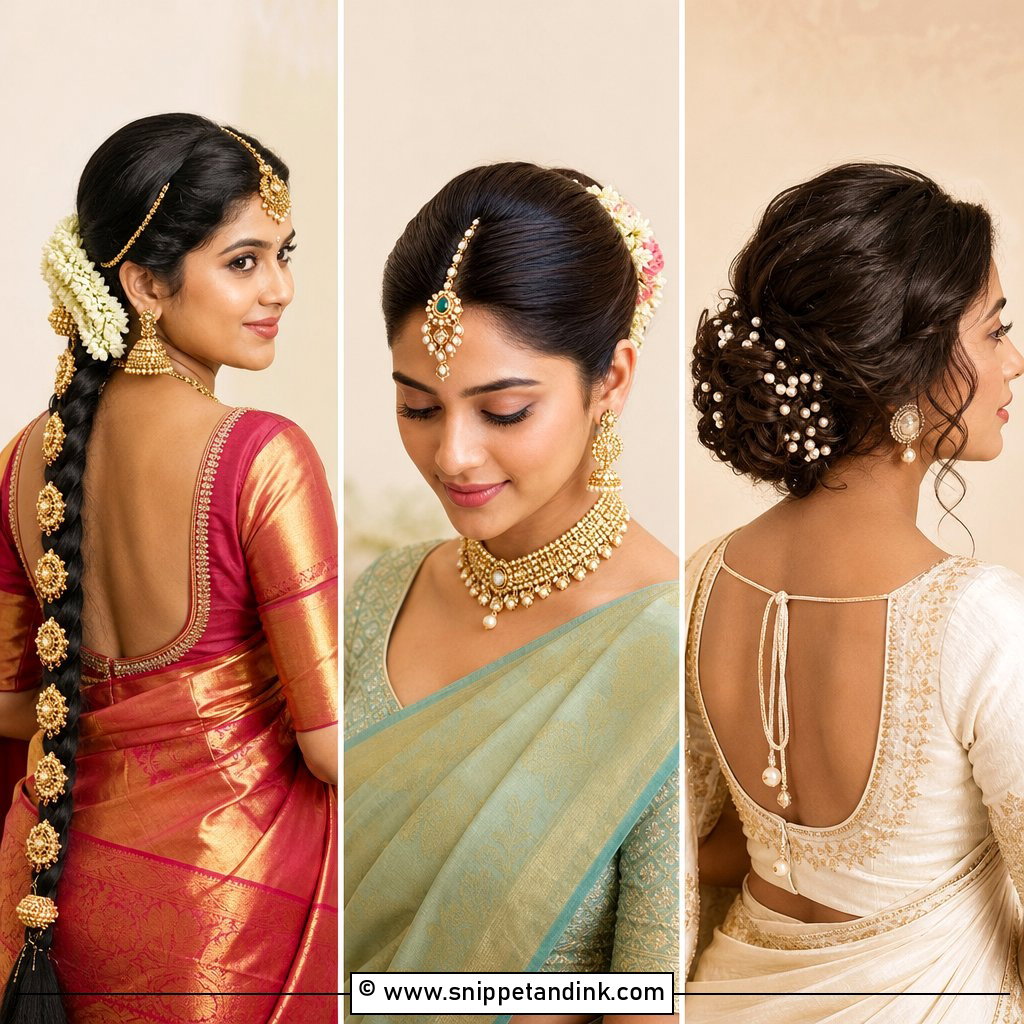
20. Indian Wedding Low Ponytail With Maang Tikka
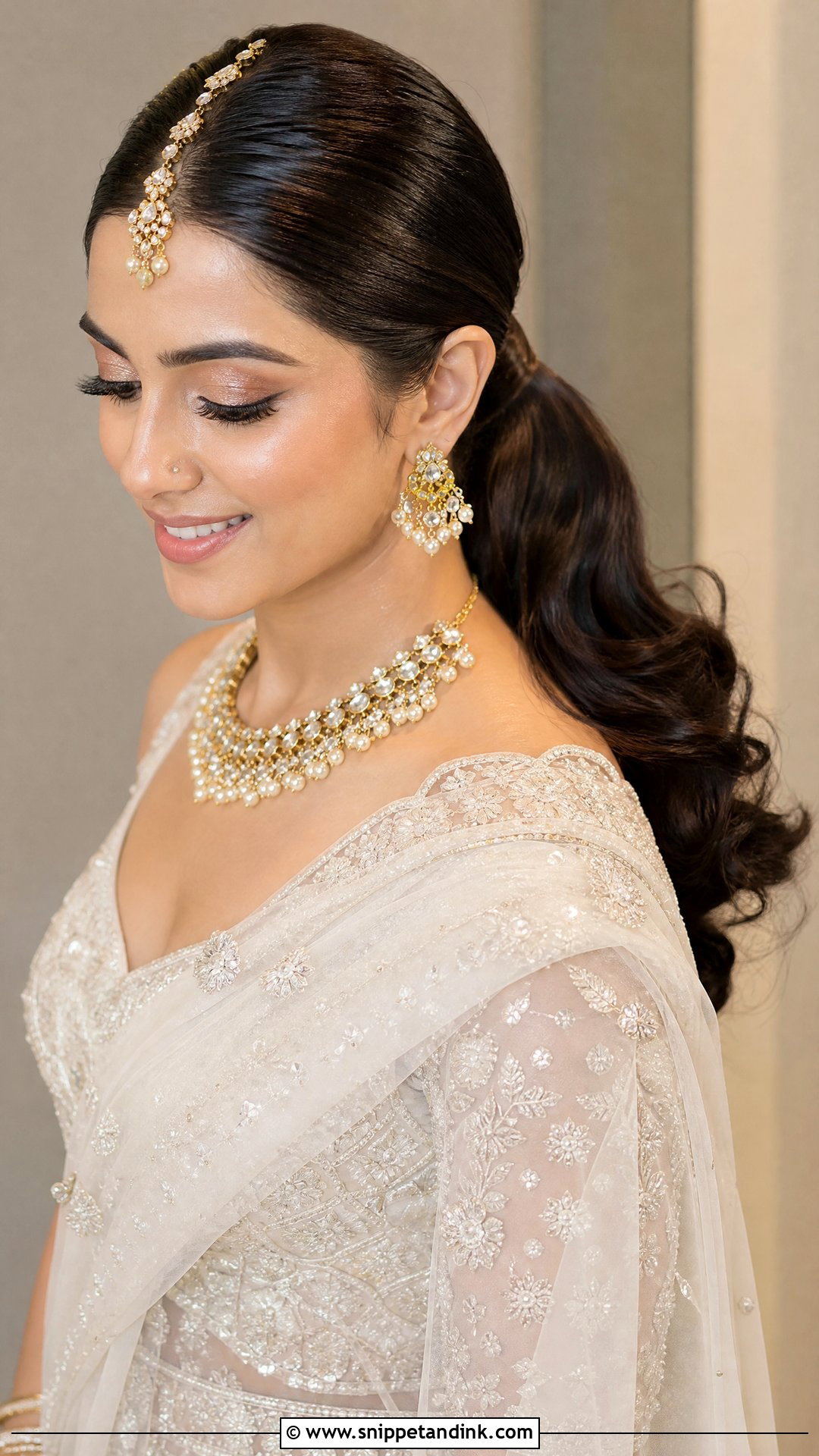
A low ponytail with a maang tikka has the neatness of tied hair and still shows length through soft curls. The middle part holds the tikka in place, and the ponytail sits comfortably against a chair back for long ceremonies. I wrap hair around the base to hide the elastic and pin it underneath. It suits receptions, engagements, sangeet or a minimalist bridal look. Add pearl pins or a small jewelled clip for a little more detail. Curling only the last third of the ponytail keeps the shape smooth near the head.
Jasmine Wilts Faster Than You’d Expect
Fresh flowers appear in half these styles, and they’re the part brides plan least. Jasmine and mogra start to brown within a few hours in warm weather, and roses bruise where pins pierce them.
- Buy gajra on the day, ideally with buds still closed if the event is in the evening. Mogra buds open as the day warms, so they look freshest a few hours after you buy them.
- Wrap the gajra loosely in a damp muslin or cotton cloth and keep it in the fridge until it goes on, then add it last, after hairspray. Spray burns petals brown.
- Fresh gajra is heavy. Pin it at several points with U-pins pushed into the bun, not just at the ends.
- If you’re sensitive to strong scent or pollen, or the ceremony runs all day, a mix of fresh flowers at the front and good silk ones at the back keeps it looking full until evening.
For long events, I ask a bridesmaid to carry a few spare buds and pins. Replacing a browned section of the gajra halfway through takes a minute and makes a real difference in the late photos.
Which Event Each Style Suits Best
The right hairstyle fits the outfit, the jewellery, the event and how long you’ll wear it. A gajra bun belongs at the ceremony, while waves or a curled ponytail suit the reception or sangeet. Braids bring tradition and movement, and sleek buns sit securely under dupattas. Whatever you choose, it should stay secure, look good in photos and let you enjoy the celebration without constantly checking a mirror. Book a trial with your dupatta and jewellery, and wear the style for a few hours before deciding.
You'll Like These Ideas:


Leave a Reply