
An Indian bride’s hair carries more than most: a matha patti or maang tikka, a heavy dupatta pinned over the head, sometimes fresh flowers, and hours of sitting, standing and bending through rituals. That’s why I nearly always build simple shapes for the main ceremony. A complicated style doesn’t survive the weight. The real work is balancing your jewelry, your dupatta placement and your natural texture, then making sure the hair looks finished from the side and back, which is how most ceremony photos are taken. These simple Indian bridal hairstyles cover the wedding itself, mehendi, haldi, sangeet, temple ceremonies and receptions, with my notes on what each one needs.
Why I Ask Brides to Skip the Night-Before Oil
Regular hair oiling is a family habit for many brides, and in the weeks before the wedding it does no harm. The night before, though, it works against your stylist. Oil coats every strand, and pins slide through slippery hair, curls drop within hours, and the roots look flat and shiny in flash photos.
My preference is to oil earlier in the week if you like, then wash thoroughly the day before the wedding with a gentle shampoo, and use conditioner on the lengths only. Hair washed the day before holds pins and curls better than hair washed that morning. If your haldi is on the same day or the day before, cover your hair or tie it up so turmeric paste doesn’t tint lighter or highlighted hair.
1. Simple Indian Bridal Bun With Gajra
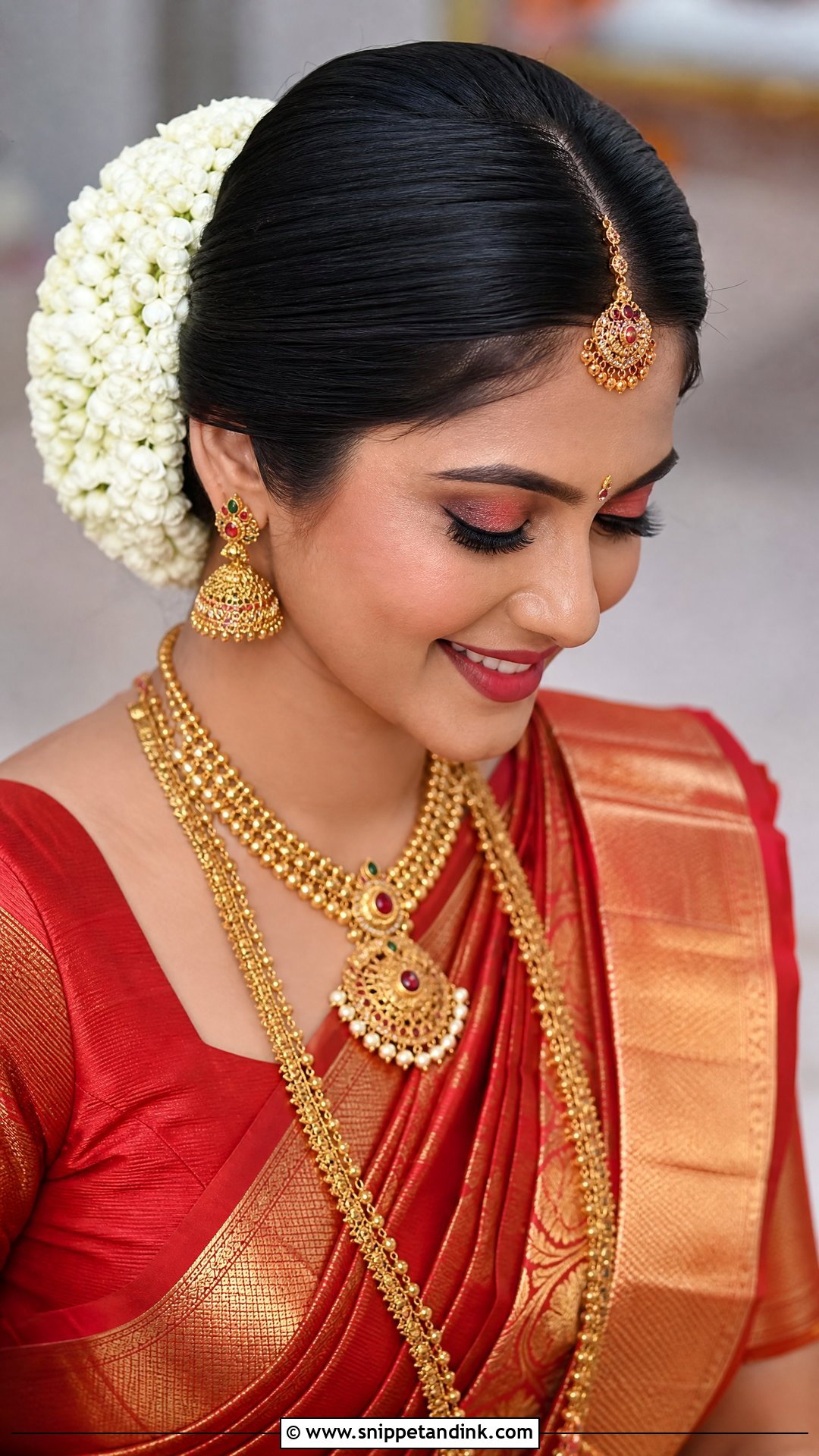
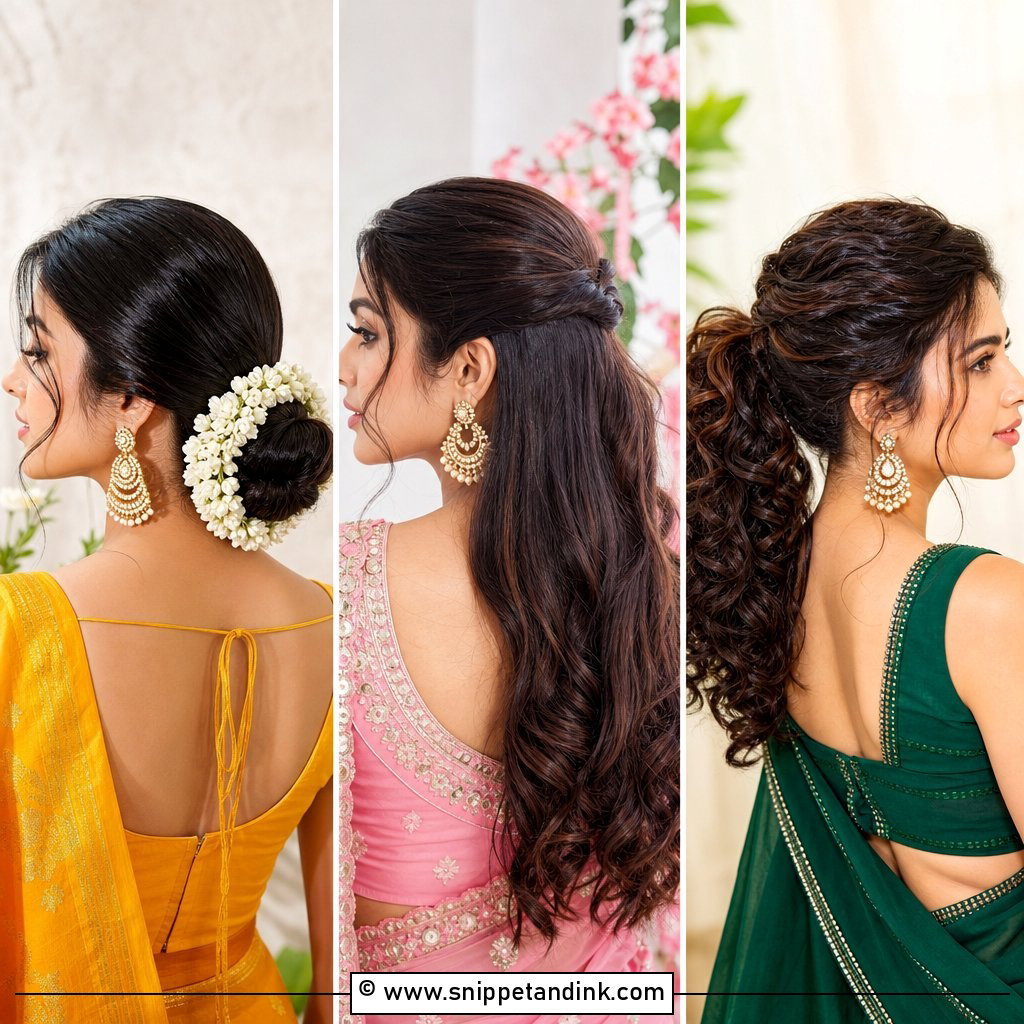
The gajra bun is the style I’m asked for most for temple and South Indian ceremonies, and it’s trusted for good reason. Center part or a soft sweep back, the hair pinned into a low or mid bun, then fresh jasmine wrapped around it. It sits comfortably with silk sarees and temple jewelry. I make the bun a touch smaller than the bride expects, because the gajra adds bulk and a big bun plus flowers can look heavy from the side. Keep a little lift at the crown so the face doesn’t look pulled flat.
2. Simple Indian Bridal Low Bun
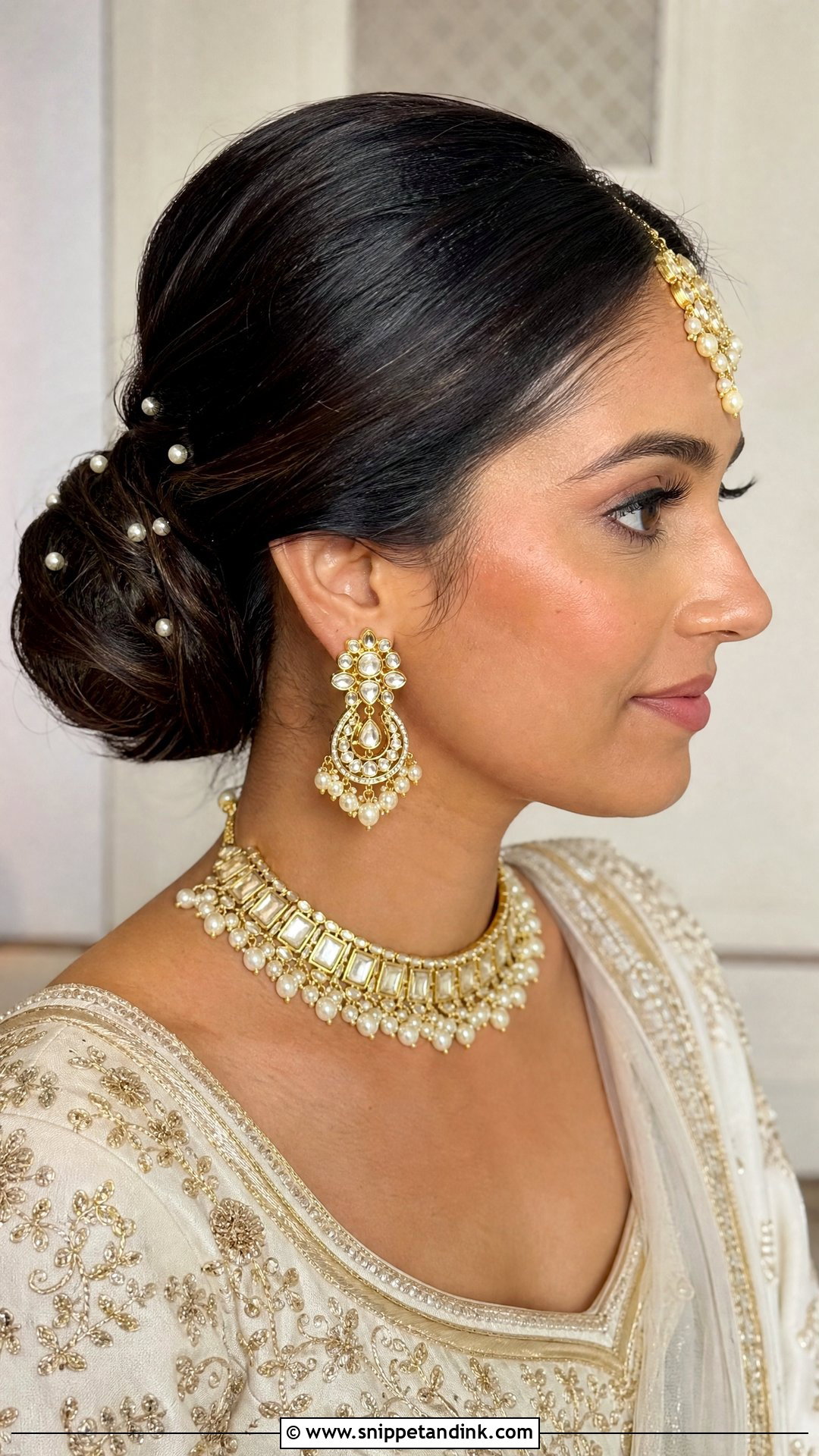
If you’re wearing a heavy dupatta, a matha patti or long earrings, the low bun is where I’d start. It sits at the nape, leaving the crown free for the dupatta and the sides free for jewelry. Sleek reads regal; a little texture reads softer. From behind, a few small flowers, pearl pins or gold accessories give the photographer something to frame. It’s the most stable shape for a long ceremony because the weight sits low and close to the neck.
3. Simple Indian Bridal Sleek Bun
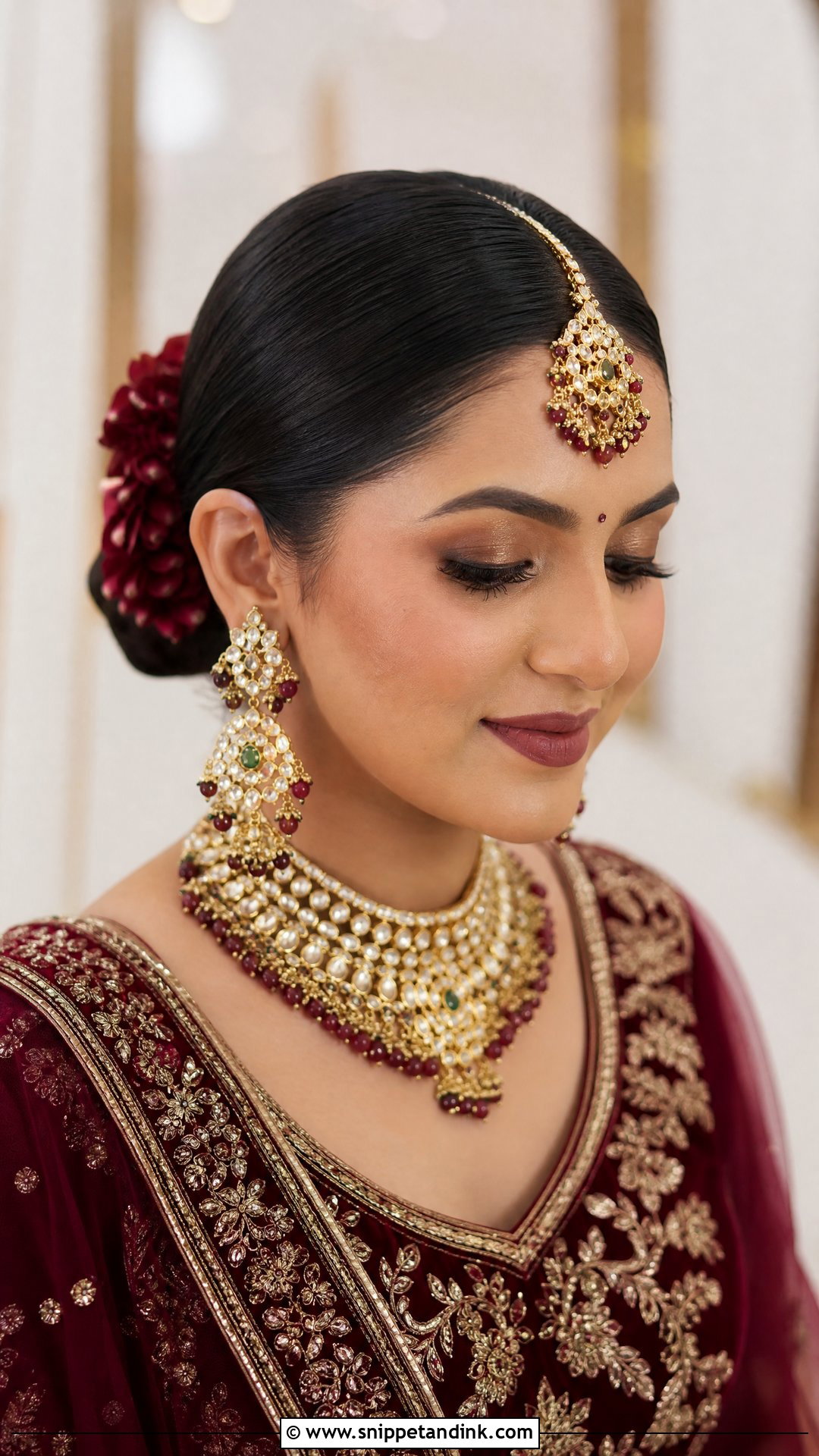
A sleek bun only looks polished if the part is precise and the surface is glossy all the way back. It suits minimal makeup, structured outfits and brides who want their maang tikka, passa, choker and earrings clearly in view. I avoid making it tiny; a slightly fuller bun stops the head looking flat in profile. For edges, a small amount of gel on a toothbrush works better than spraying the whole head, and strong pins crossed into the base keep it steady through every ritual.
4. Simple Indian Bridal Bun With Roses
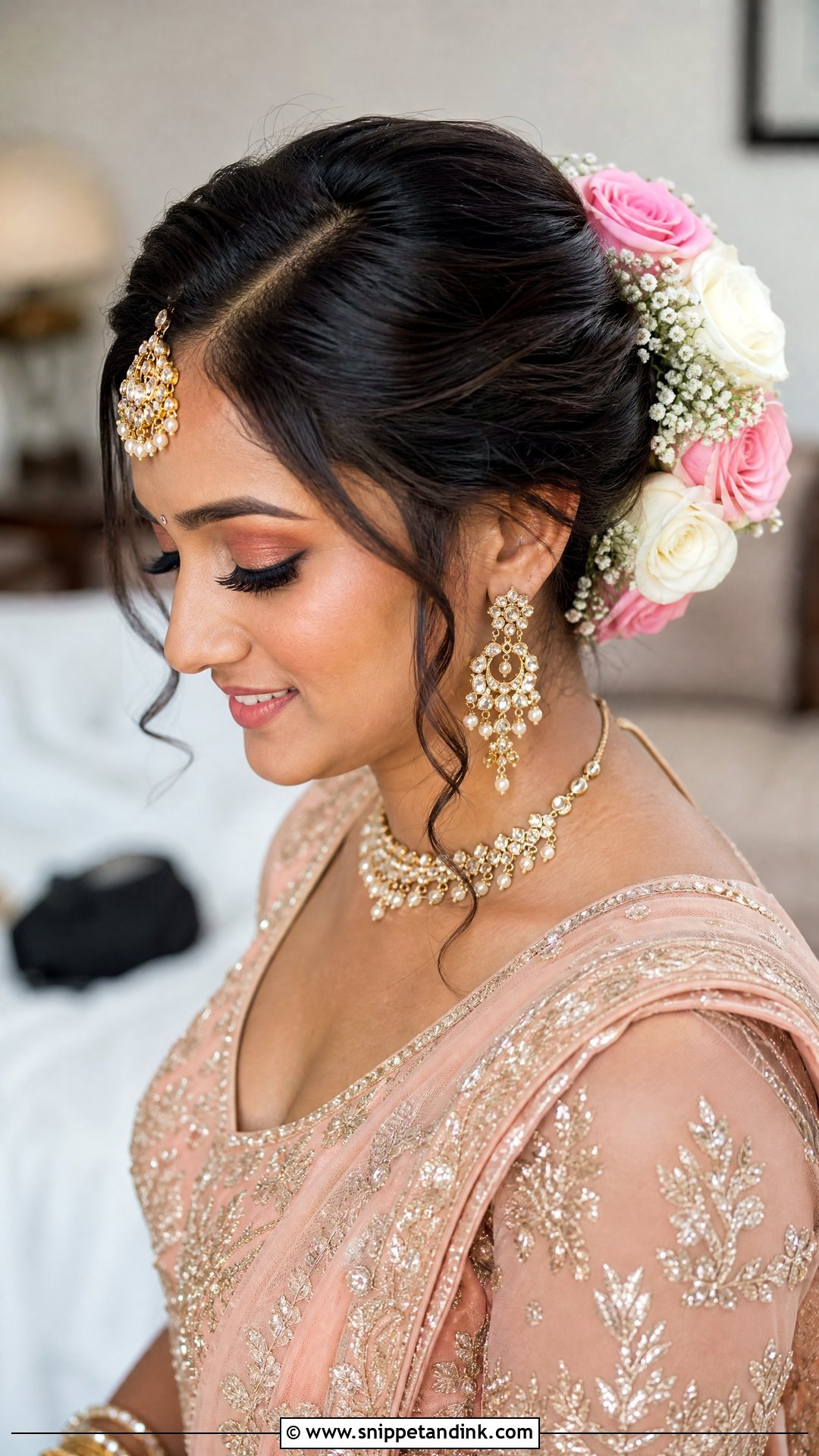
Roses are my alternative when a bride loves flowers but not the scent or bulk of a full jasmine gajra. The bun can be low and round, with roses on one side or spaced across the back. Red, pink, peach and white all suit Indian bridal colors. Roses are heavier than jasmine, so each one needs its own pin, ideally a U-pin through the base of the bloom into the bun. Small spray roses are easier to secure than full-size heads, which tend to droop forward by evening.
5. Simple Indian Bridal Braided Bun
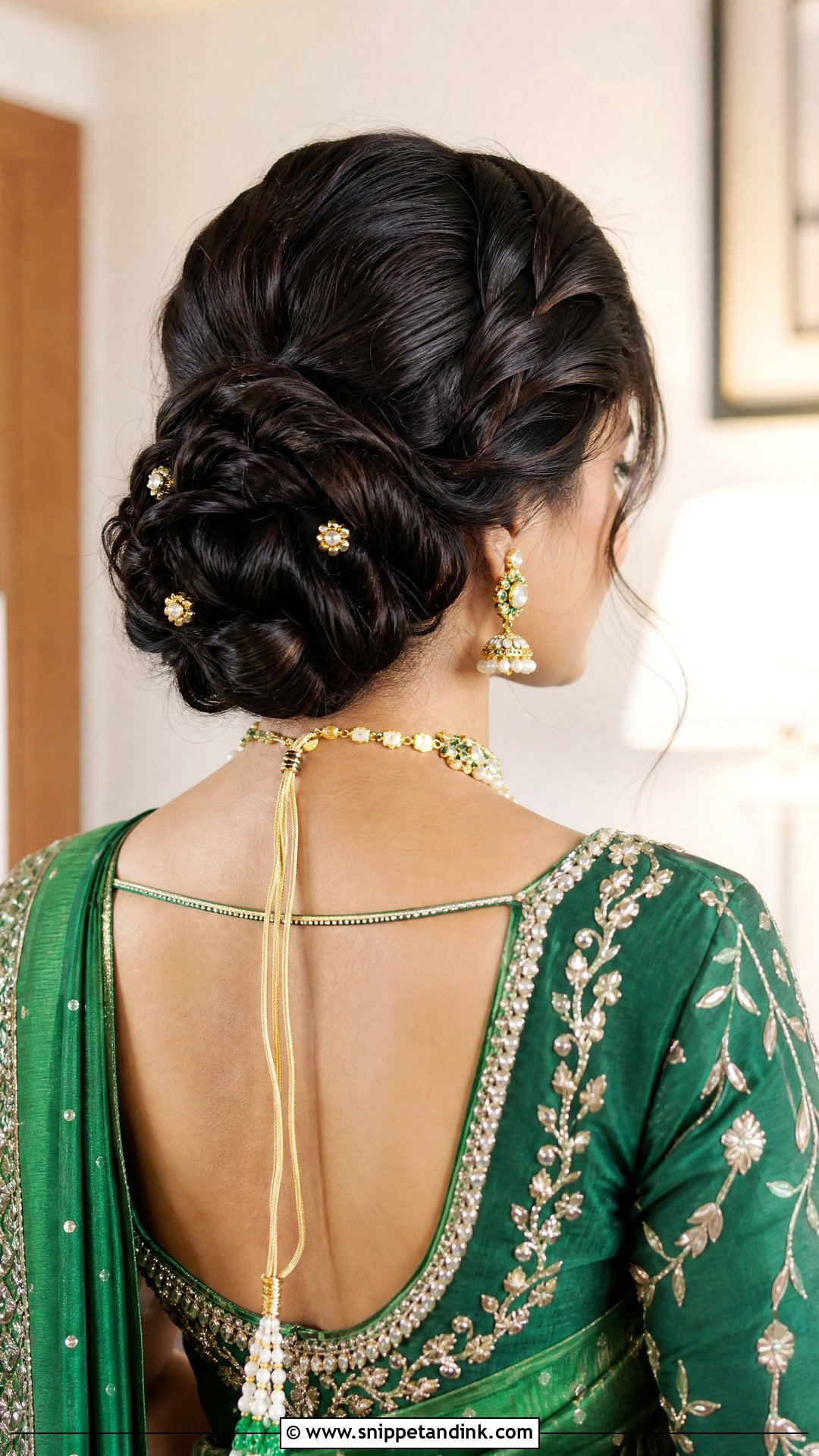
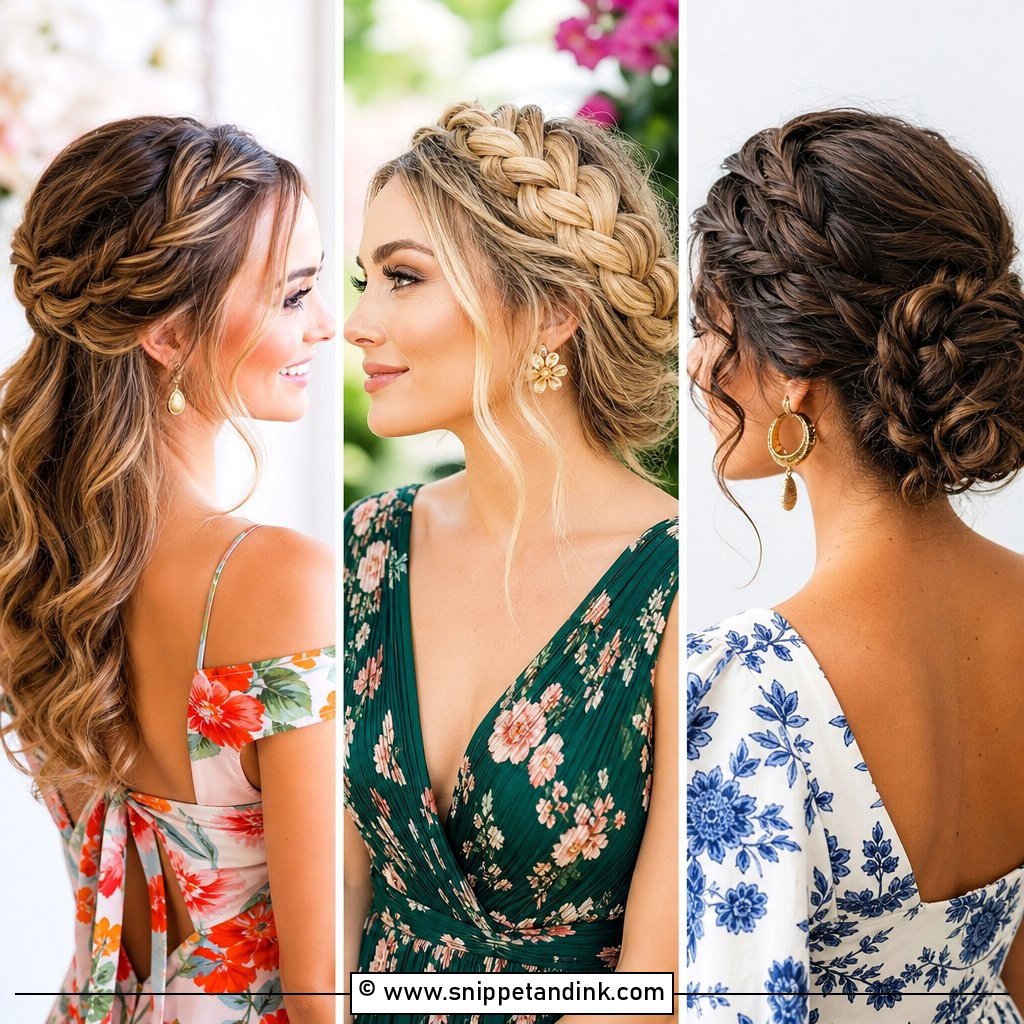
For long or very thick hair, I often braid first. The braid compresses the volume so the bun doesn’t balloon, and it gives the pins something to grip. It can be one braid along the crown leading into a bun, or the whole length braided and coiled. Pearl or gold pins along the braid highlight the pattern without needing big accessories. This is one of the longest-lasting bridal shapes I know.
6. Simple Indian Bridal Side Bun
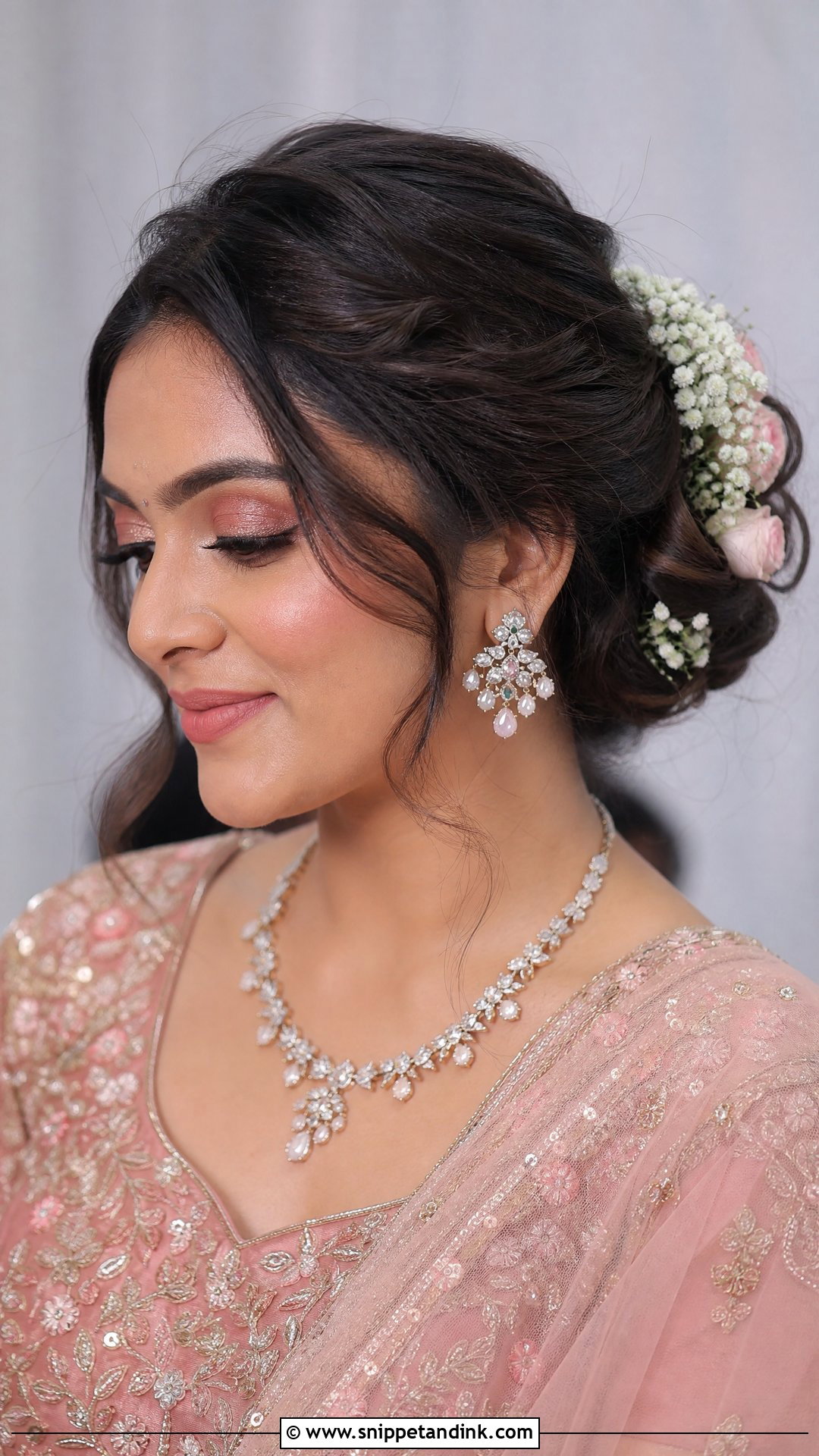
A side bun sits low near one ear and shows up clearly in front-facing photos. It suits one-sided dupatta drapes and a statement earring on the opposite side. Curls, twists or small flowers can shape around it. The thing I check is how the dupatta falls: if it’s pinned on the same side as the bun, the two compete for space, so I place the bun opposite the drape. Keep the front smooth or lightly waved depending on the outfit.
7. Simple Indian Bridal Messy Bun
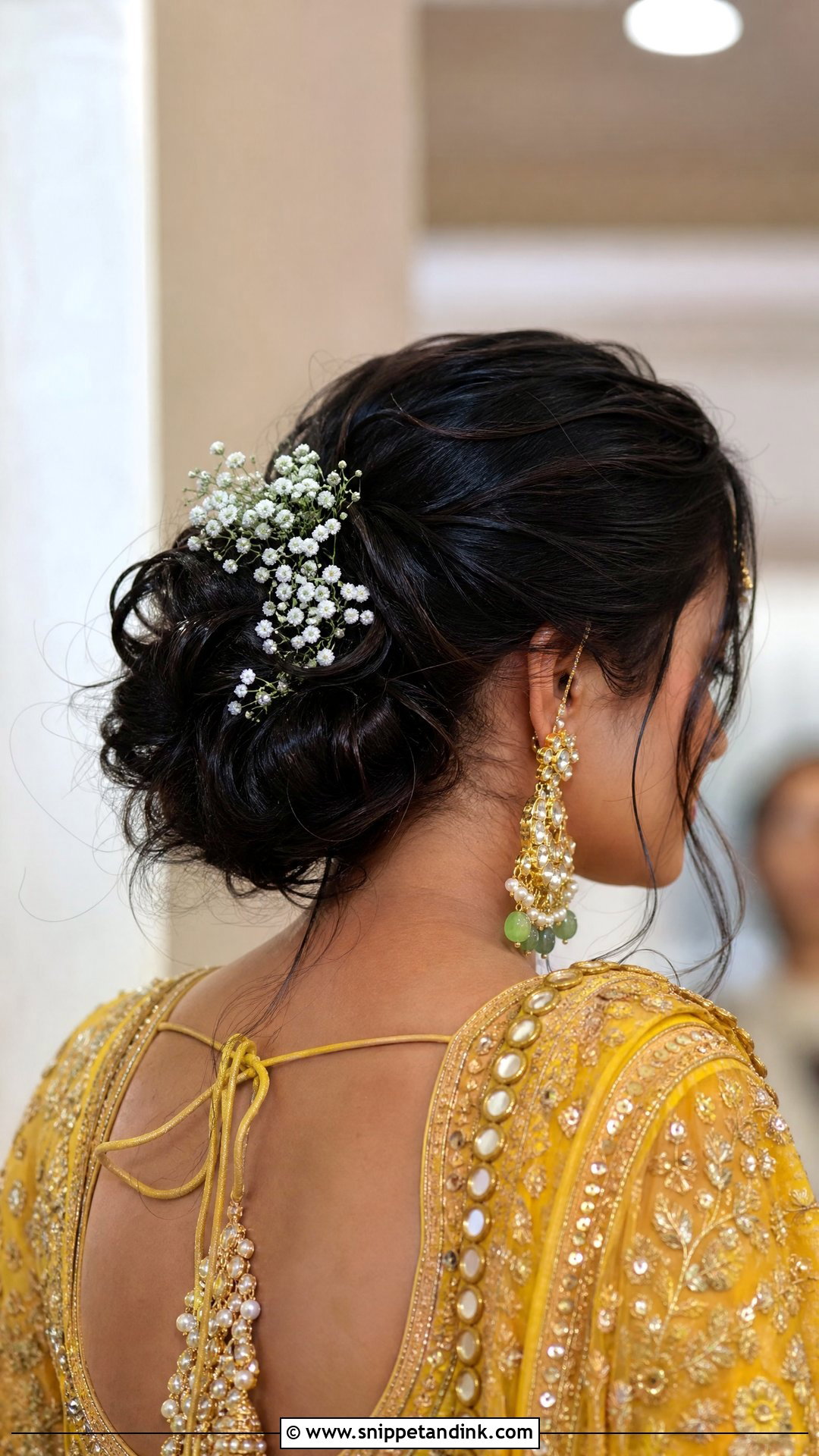
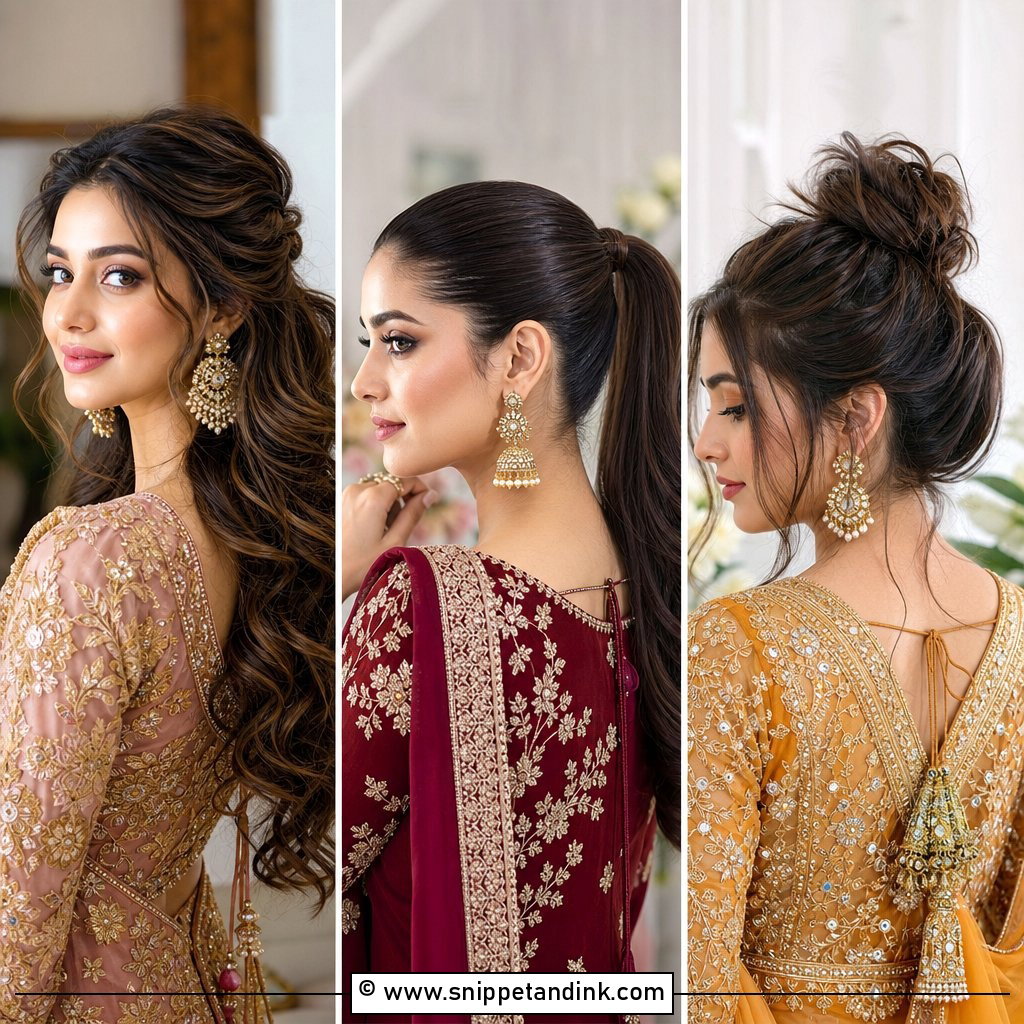
A messy bun for a bride isn’t messy at all. It’s soft texture, airy volume and pieces pinned with intention, which takes longer than a sleek bun. I’d keep it for mehendi, sangeet, the engagement or a lighter ceremony, where a softer finish suits the mood. Loose strands at the forehead and jaw soften the face, and floral pins or baby’s breath freshen it. Set it low or mid-height depending on the dupatta. On very silky hair, I add texture spray first, or the loose pieces slide flat within the hour.
8. Simple Indian Bridal High Bun
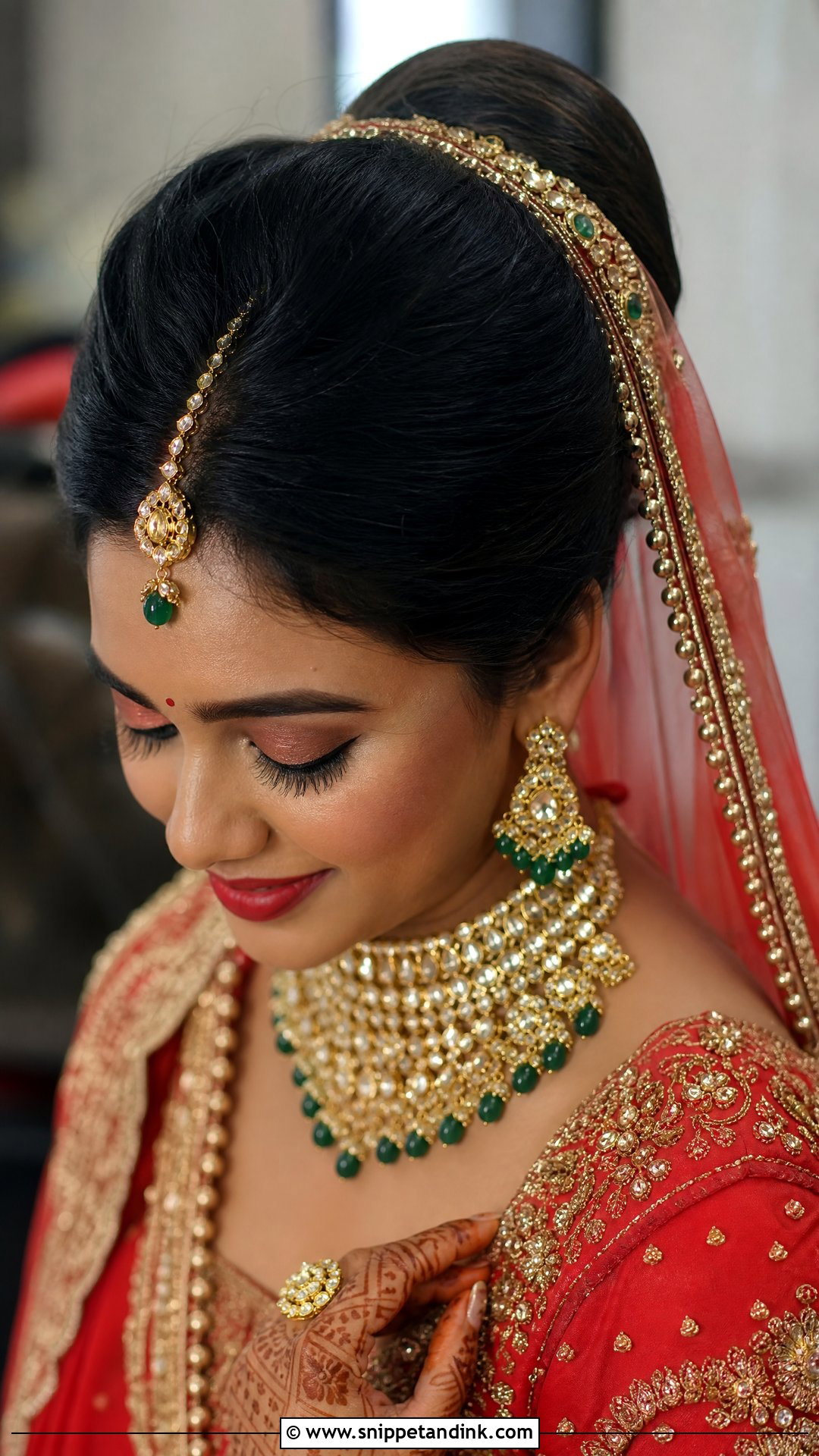
A high bun gives height and a regal finish, and it’s especially useful when the dupatta goes over the head, because the bun lifts the fabric and gives it a shape to sit on. It also lengthens the neck, which suits chokers, rani haars and deep-neck blouses. The bun can be smooth, braided or textured. Keep the front clean so the overall look doesn’t get heavy. Flowers around the base soften it. One caution: if the dupatta is heavy, a high bun takes all that weight on the crown, so I add extra pins underneath.
9. Simple Indian Bridal Open Curls
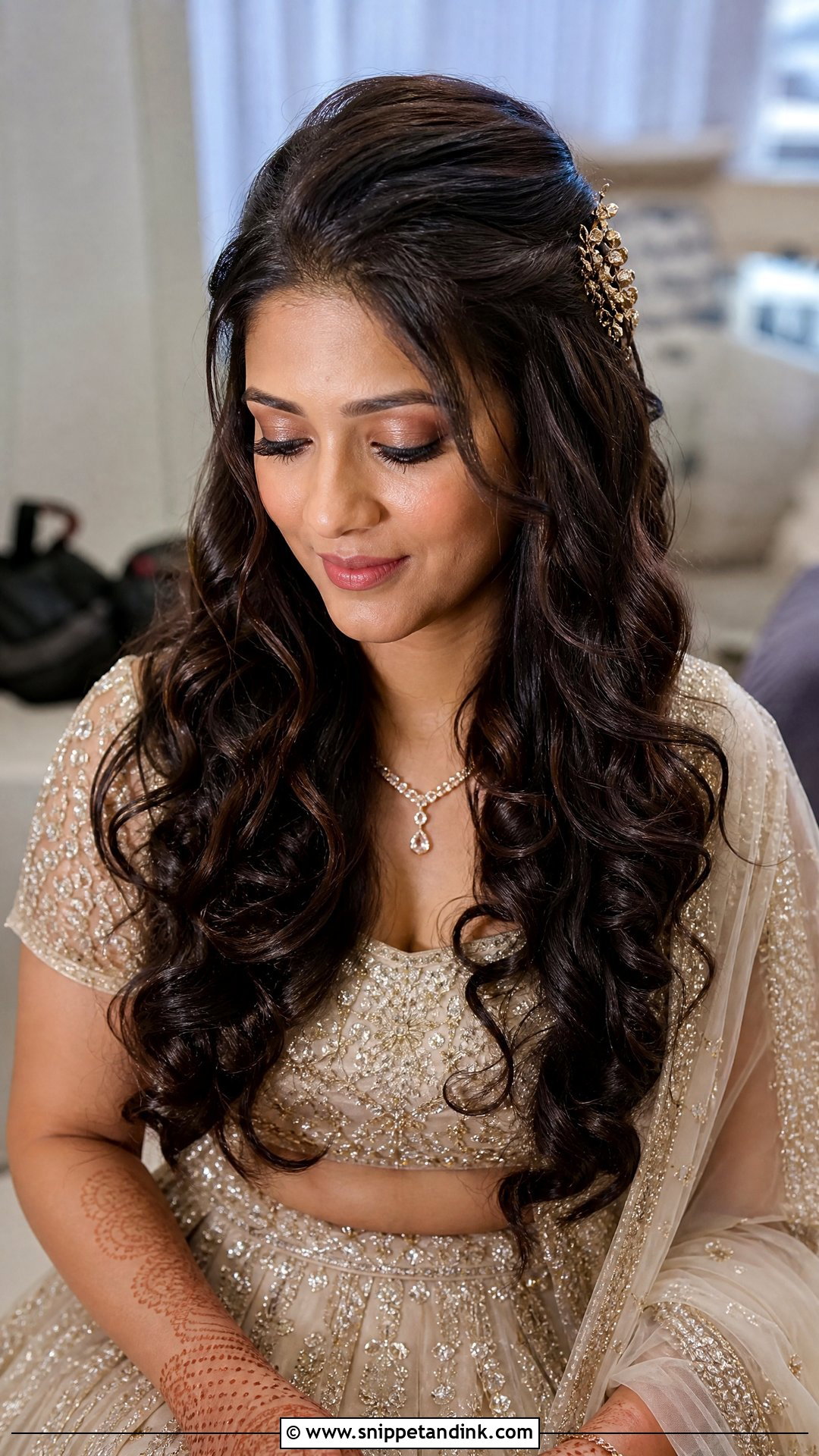
Open curls suit brides who don’t want a bun at all, and they’re most at home at a reception, engagement, sangeet or a lighter function. The lengths are curled, the crown lifted, and the front pinned back neatly. They work with lehengas, gowns and lighter dupattas. A maang tikka, side accessory or flowers on one side keeps it bridal. I brush the curls softly so they look smooth rather than tight, and I warn brides that open hair under a heavy dupatta gets flattened and tangled at the back, so this is best for events where the dupatta stays on the shoulders.
10. Simple Indian Bridal Half Up Hairstyle
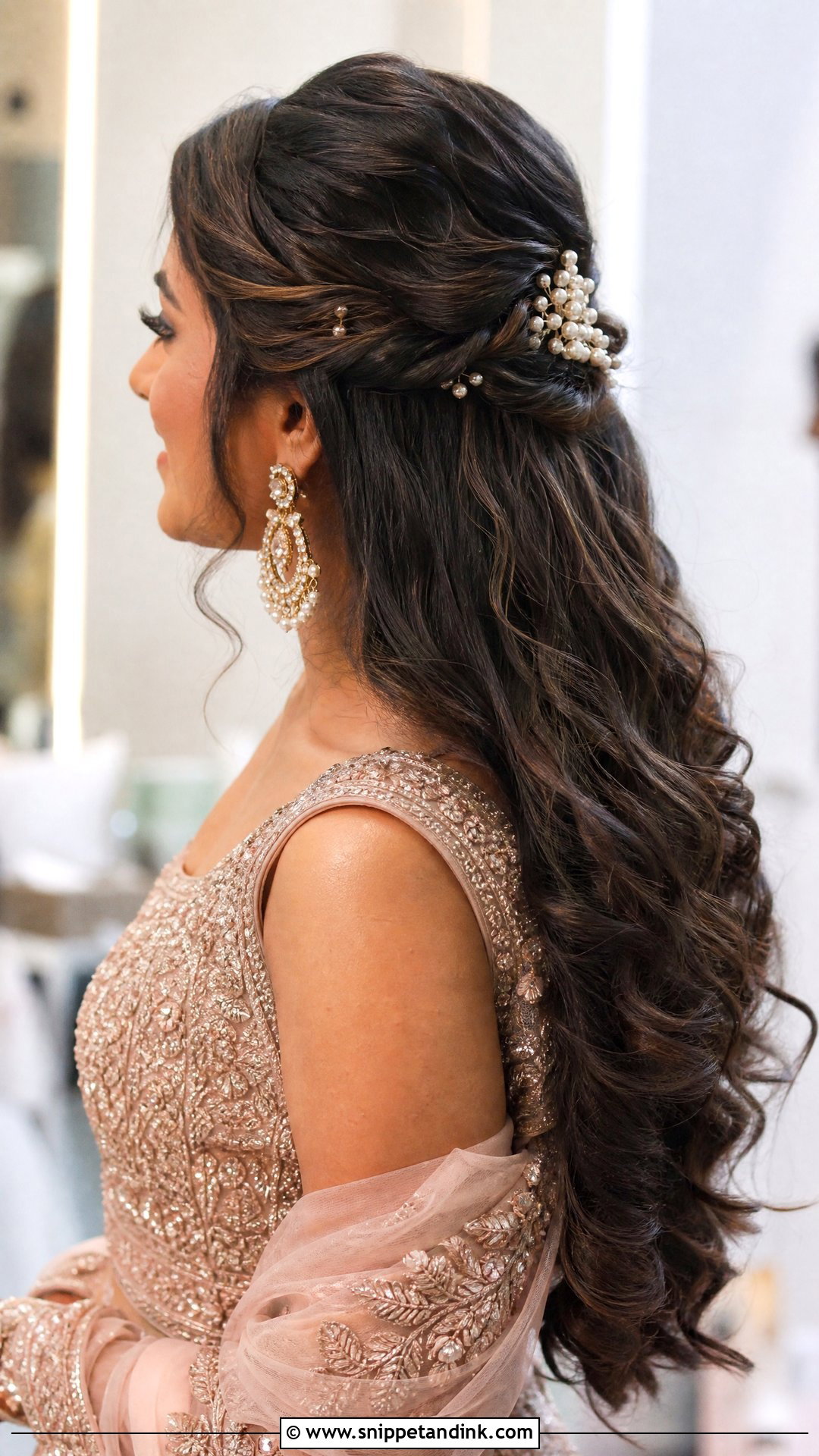
Half up gives you open lengths with the comfort of having the front secured. The top is lifted, twisted or braided and pinned at the back, while the rest falls in waves or curls. It suits lighter jewelry and soft dupatta drapes. A floral clip, pearl pins or a fine hair chain adds a bridal note. I most often suggest it for pre-wedding functions and receptions, when brides want something lighter than the ceremony bun.
11. Simple Indian Bridal Braid With Gajra
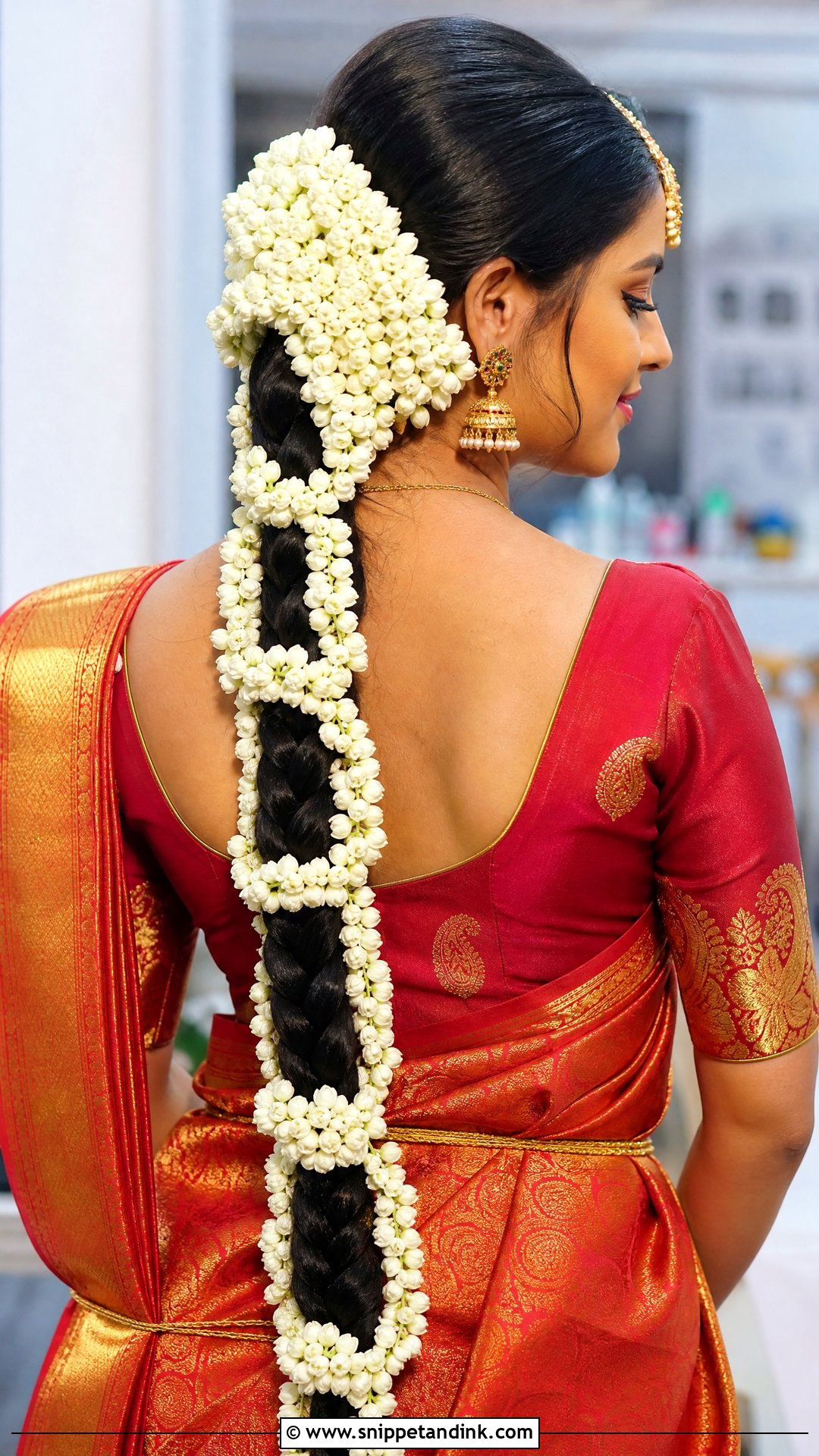
A bridal braid with gajra is especially traditional for South Indian brides, but it suits many outfits. The braid runs down the back and the jasmine wraps around it or sits at the base. It keeps long hair controlled and shows off length. A paranda or gold accessories add more. The front can be center-parted with a maang tikka. I braid slightly firmer at the top, where the weight of flowers pulls hardest, and looser toward the end.
12. Simple Indian Bridal Fishtail Braid
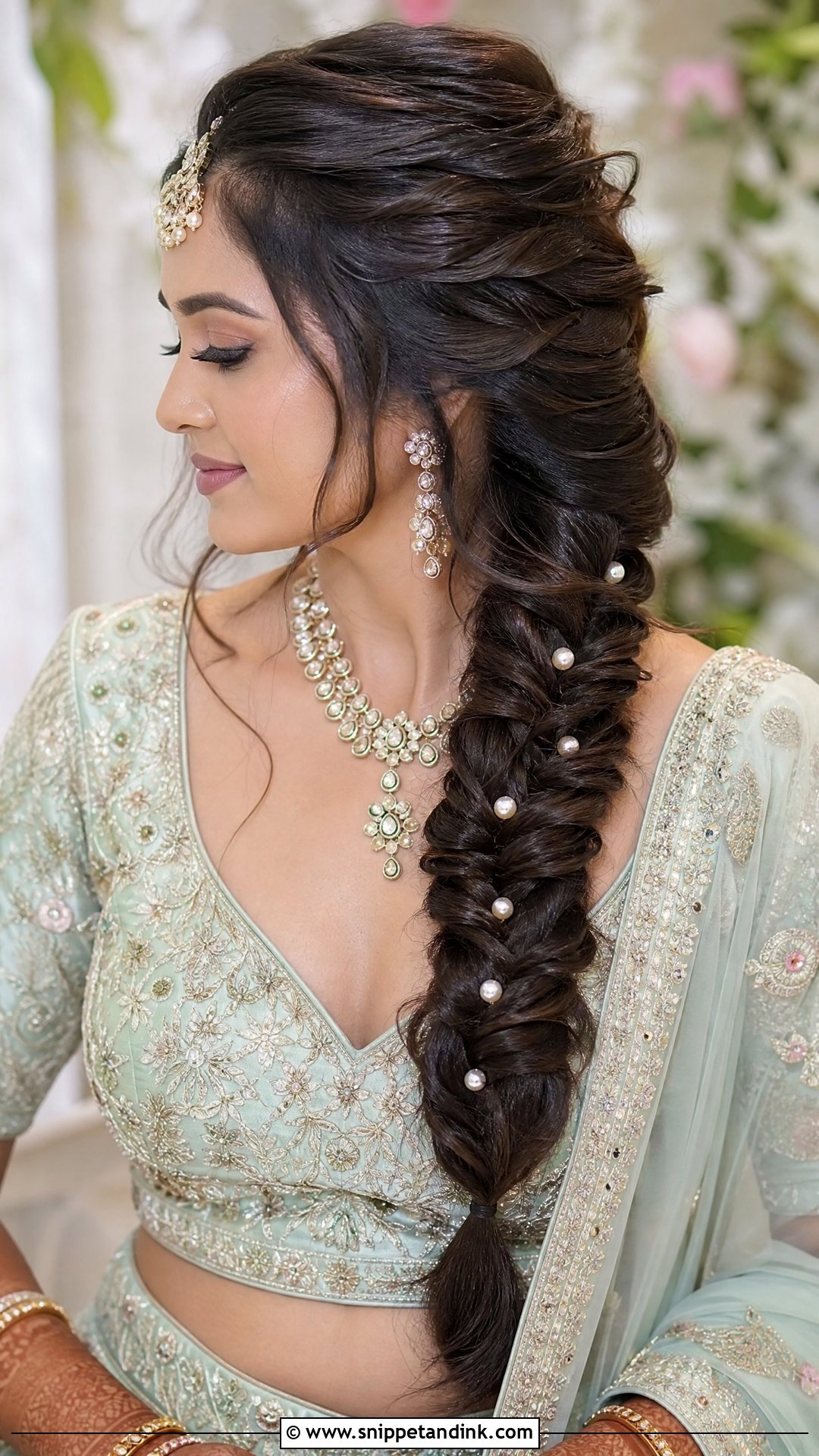
A fishtail braid gives detail without the weight of an updo. Its woven pattern looks intricate but is soft and comfortable to wear for a long event. Down the back or pulled slightly to one side both work; the side version shows better in photos. It suits mehendi, haldi, sangeet and intimate ceremonies. Tiny flowers, pearl pins or gold clips along the braid make it bridal. Loosen the edges gently after tying, so thinner hair looks fuller.
13. Simple Indian Bridal Side Braid
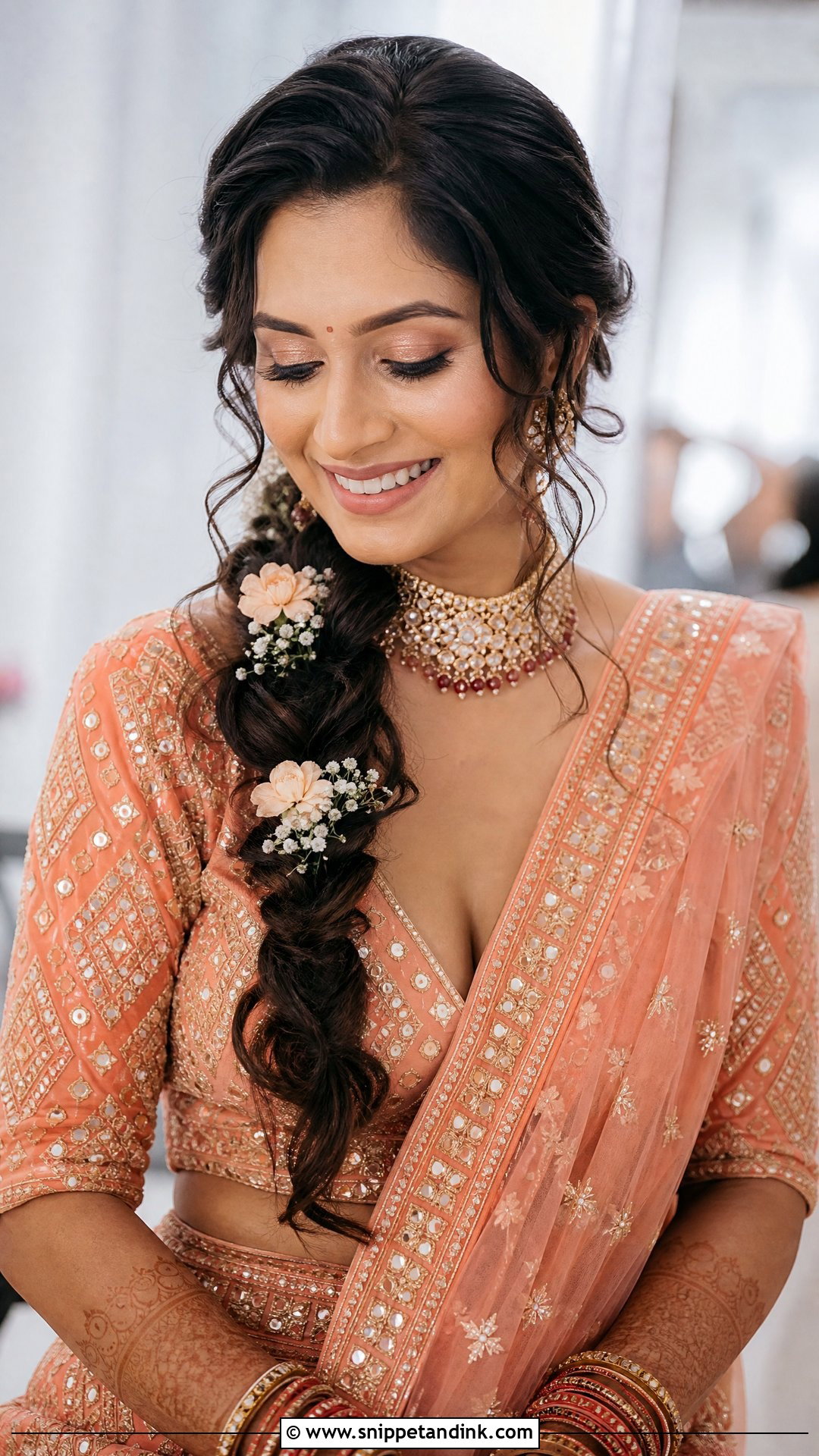
Bringing the braid over one shoulder puts it in every front-facing photo, which suits brides who want their hair seen without turning around. It can be loose and soft or neat and polished. It works with lehengas, sarees and lighter dupattas, and flowers or a fine hair chain add detail without weight. Leave a few pieces around the cheeks if the face needs softening. The honest downside: during rituals where you lean forward, a braid on the shoulder swings into the way, so it suits receptions more than ceremonies.
14. Simple South Indian Bridal Braid
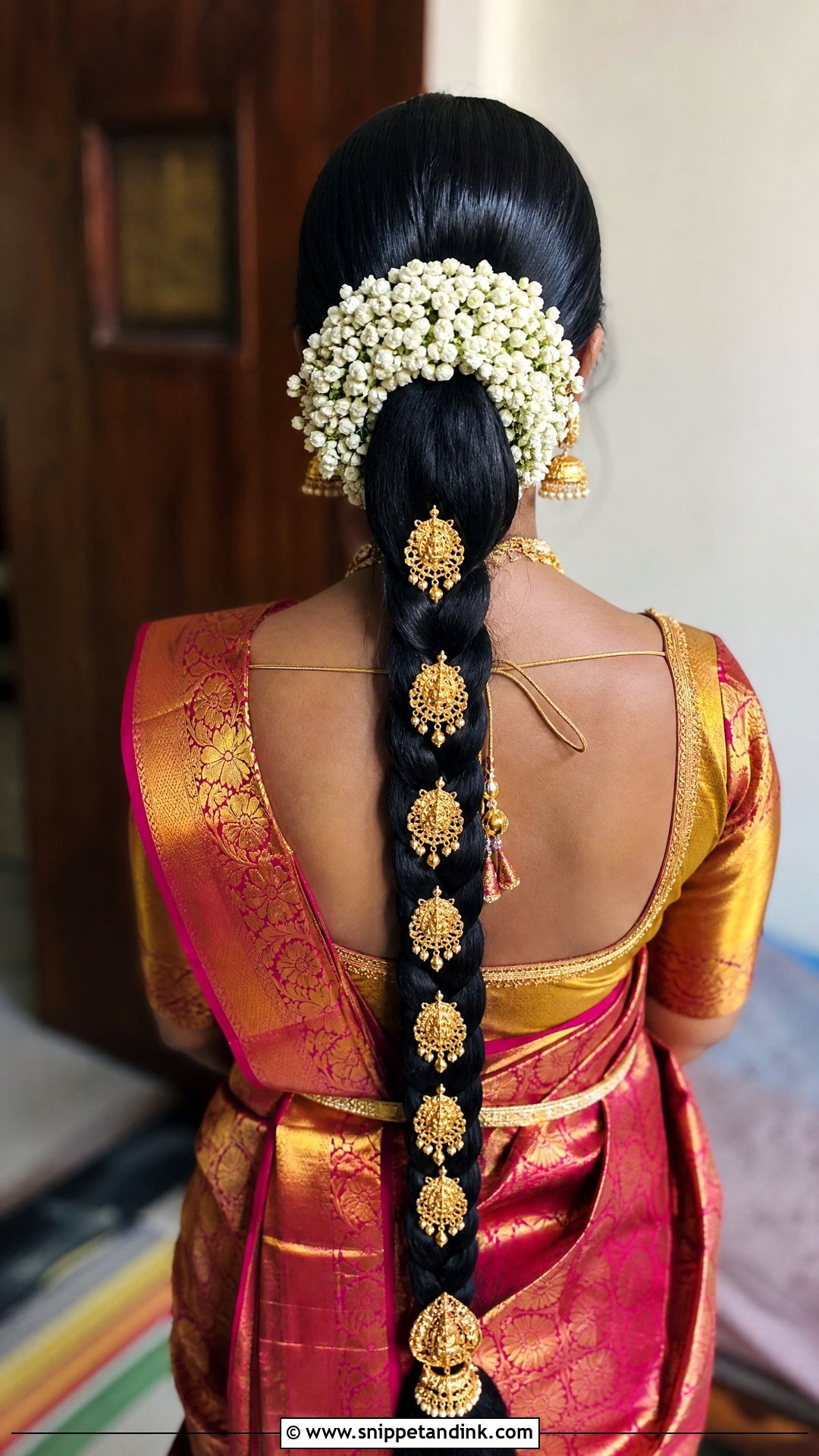
The South Indian bridal braid is long, centred and deeply traditional. Hair is center-parted, smoothed at the crown and braided straight down the back. Fresh flowers, gold jada pieces or a clean floral line run along it, and it pairs with silk sarees and temple jewelry. It stays controlled through long ceremonies. For shorter or thinner hair, braiding in extensions or a jada attachment is common and makes a real difference to the shape. Keep the finish neat so the braid looks rich rather than heavy.
15. Simple Indian Bridal Poola Jada
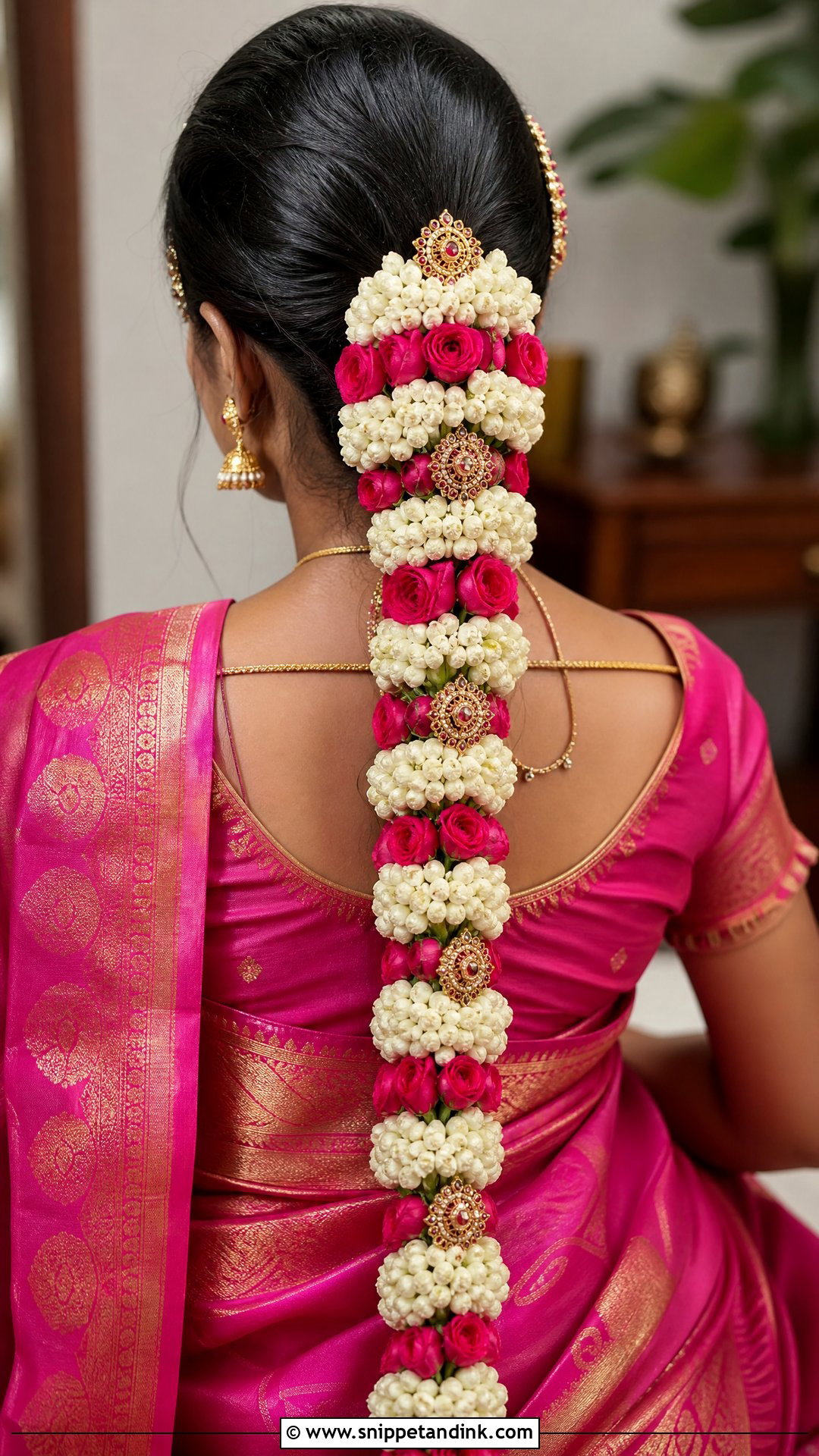
A bridal poola jada covers the braid with flowers from top to bottom, and it’s a much-loved part of many South Indian weddings. For a simpler version, the arrangement can be lighter and less layered: a single line of jasmine or roses down the braid rather than a dense covering. Full poola jada is heavy, often surprisingly so, and it’s usually made separately and attached to the braid, so it’s worth trying on the weight beforehand. It looks its best from the back, which is why it’s so often the focus of entry and ceremony portraits.
16. Simple Indian Bridal Ponytail
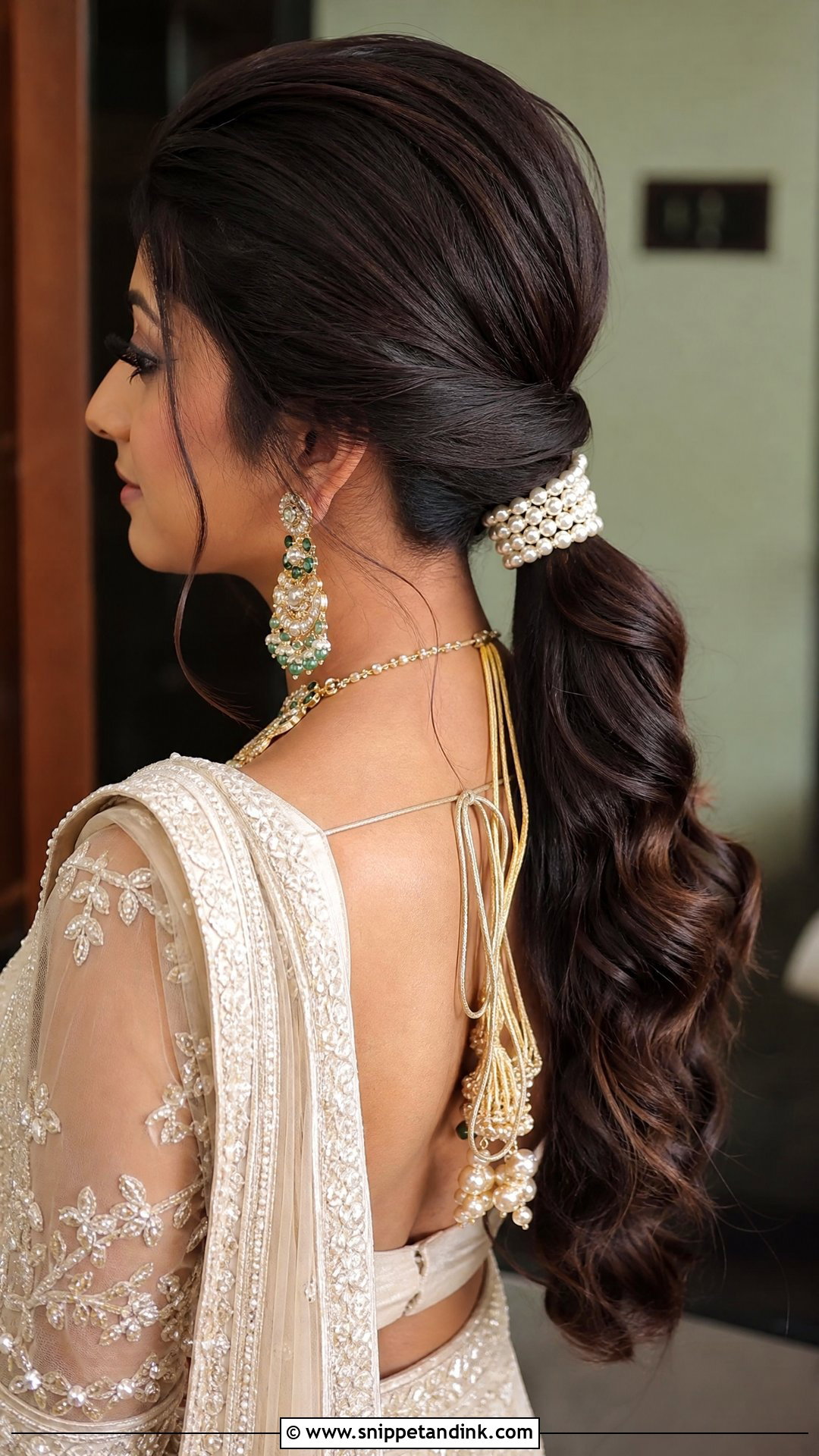
A ponytail feels fresh for a contemporary bride. It can be low and smooth with curled ends, or have crown volume for a more glamorous effect. It suits the reception, sangeet or a modern bridal look, and it keeps hair off the face while still showing length. Pearl pins, a gold wrap around the base or a small floral piece make it wedding-ready. Pair it with statement earrings and a clean neckline. I wouldn’t choose it for the main ceremony if a dupatta will be pinned over the head; there’s no bun to anchor the fabric.
17. Simple Indian Bridal Crown Braid Bun
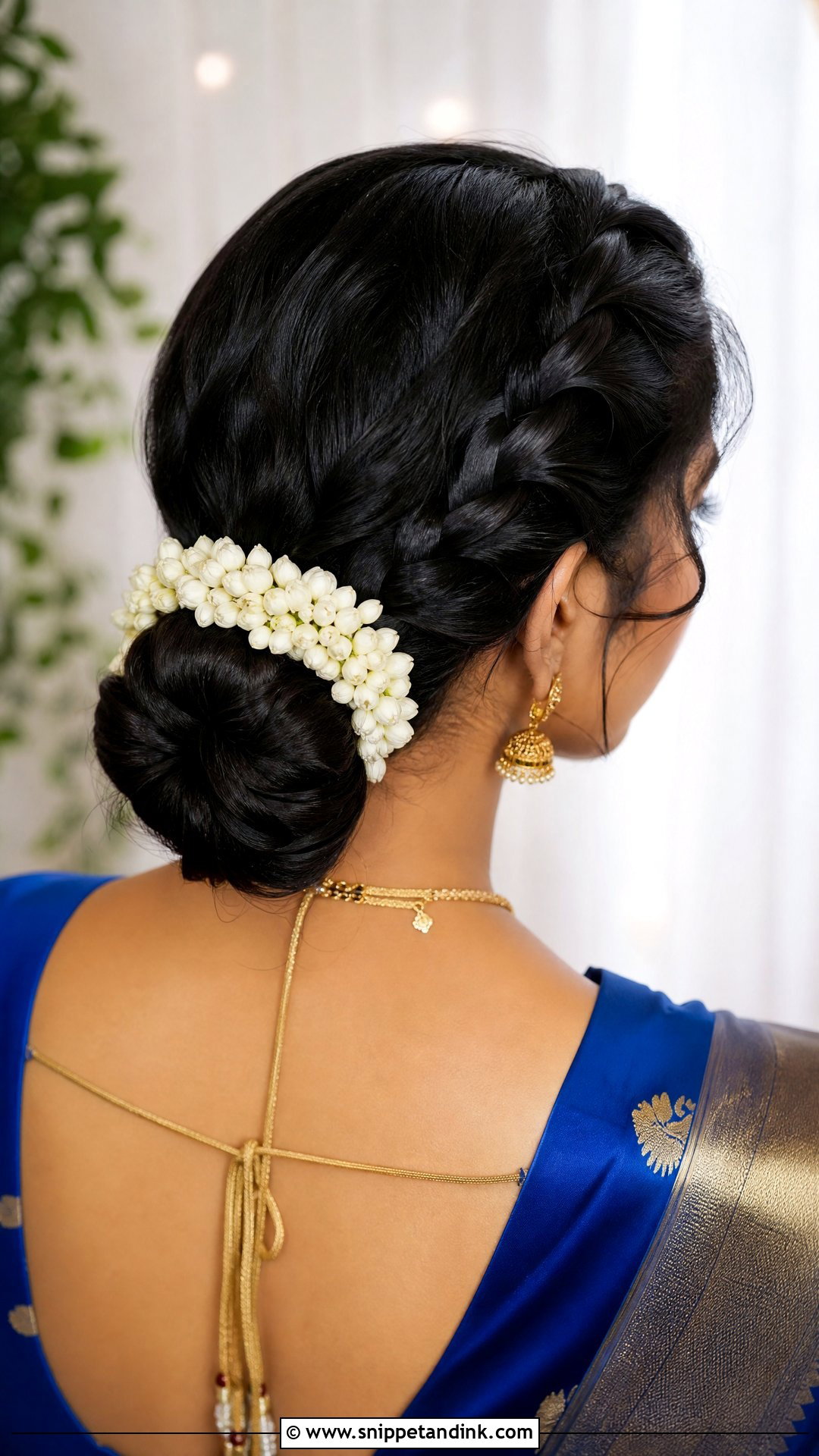
A crown braid that leads into a low bun gives detail around the face and a secure updo at the back. It looks finished from every angle without many accessories, and it gives a little structure around the face. Small flowers or pearl pins tuck neatly into the braid. Before committing, I check the length: the braid needs enough hair to reach across, so for shoulder-length hair I’d use a smaller braid at the front only. It suits sarees, lehengas and gowns.
18. Simple Indian Bridal Loose Waves
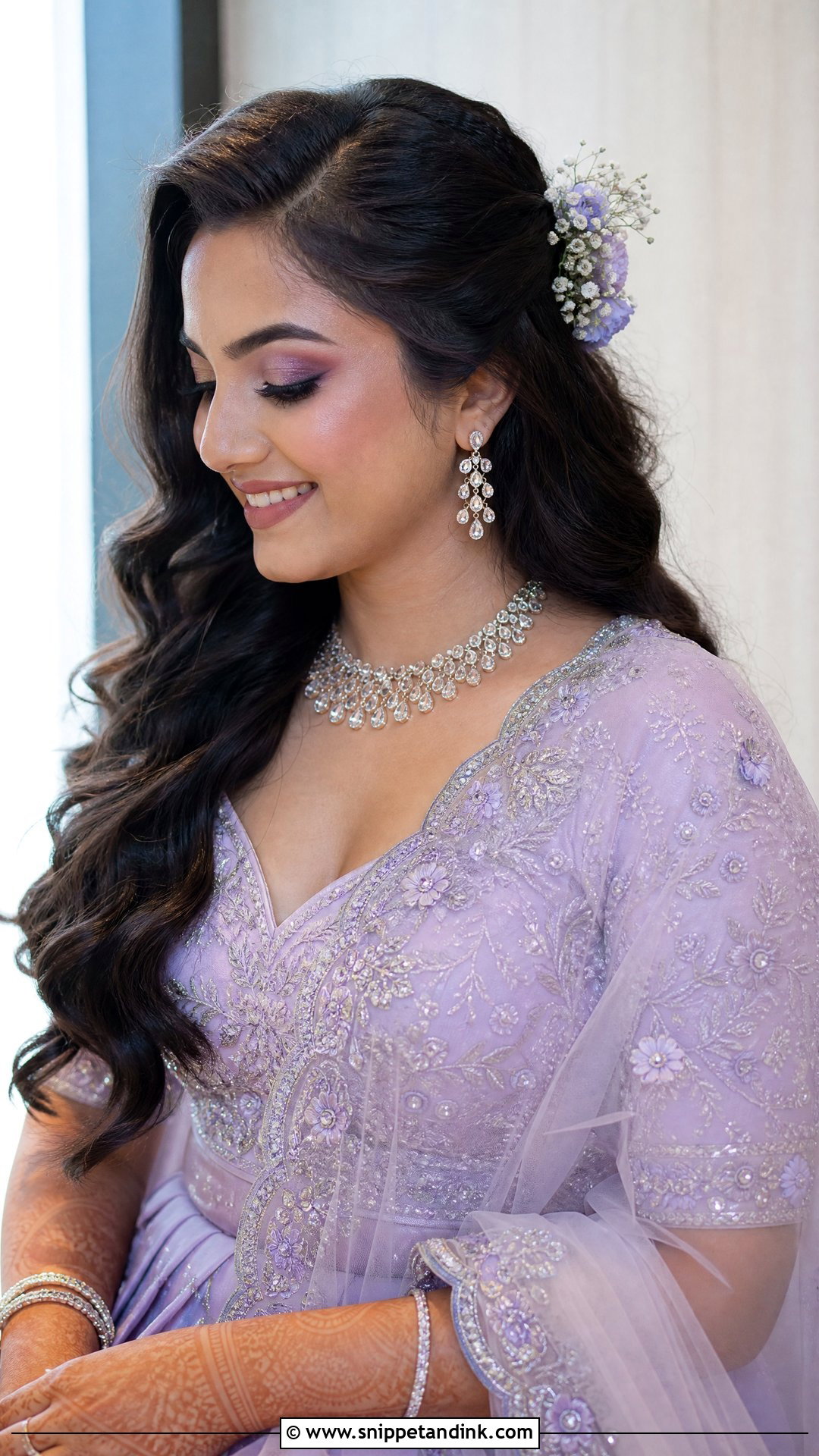
Loose waves need enough volume at the crown to hold accessories, otherwise a maang tikka or side pin sits on flat hair and slips. The waves themselves should be glossy and controlled. They suit receptions, engagements and daytime events, and they pair with a maang tikka, side pins, floral clips or a hair chain. Part the hair to suit your face shape. To make them last, I set the curls fully, let them cool, then brush them into waves. Humidity is the risk, especially in a hot summer wedding season, so expect them to soften by the end of the night.
19. Simple Indian Bridal Bun With Maang Tikka
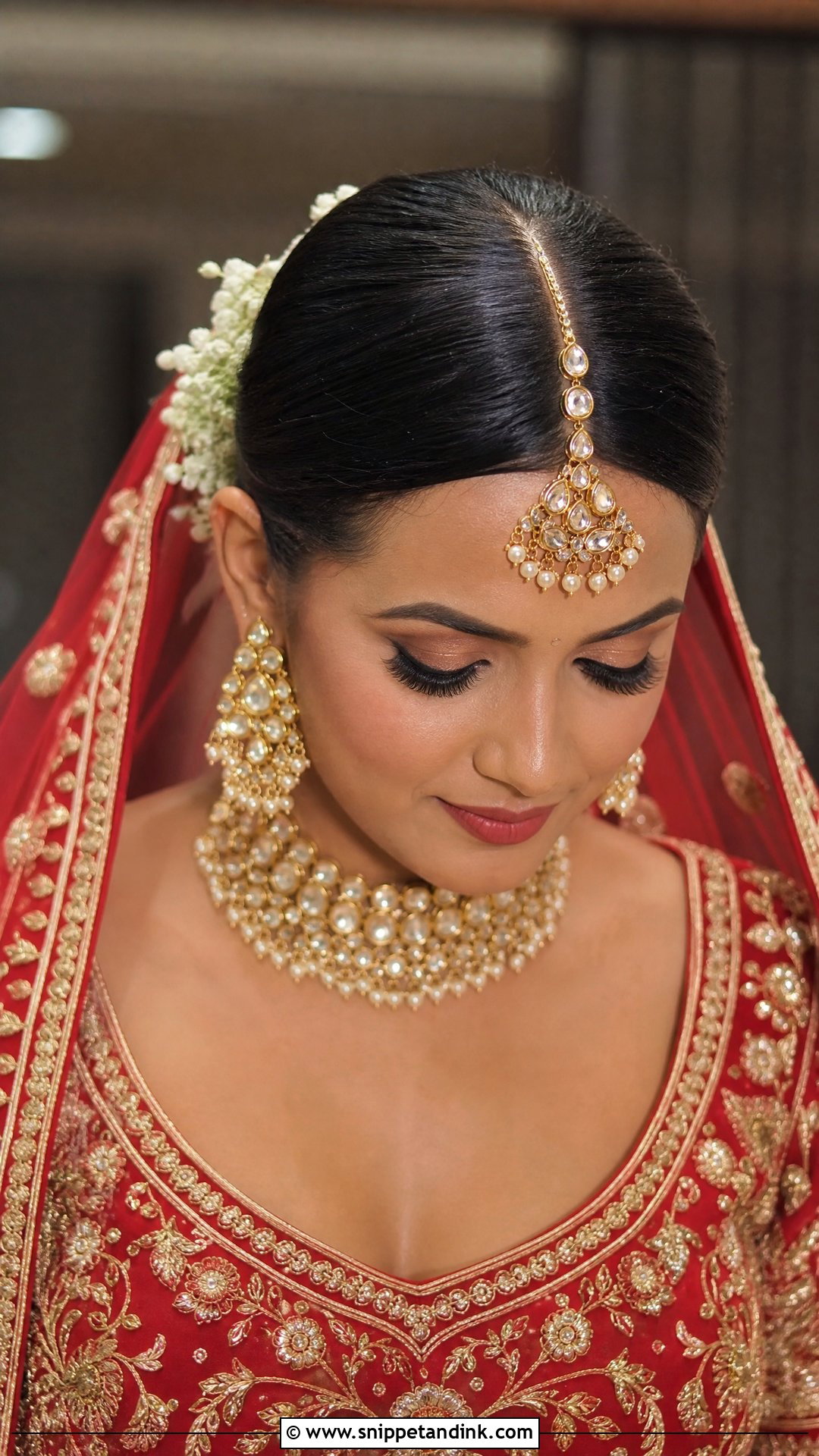
A bun with a maang tikka puts the focus firmly on the face. The hair is center-parted, smoothed on top and tied into a bun at the back, with the tikka following the part. Low and mid buns both work, depending on the dupatta and jewelry. The part has to be perfectly straight, because the tikka exaggerates any wobble. Keep the front clean and add flowers or small pins only at the back, so nothing competes with the jewelry.

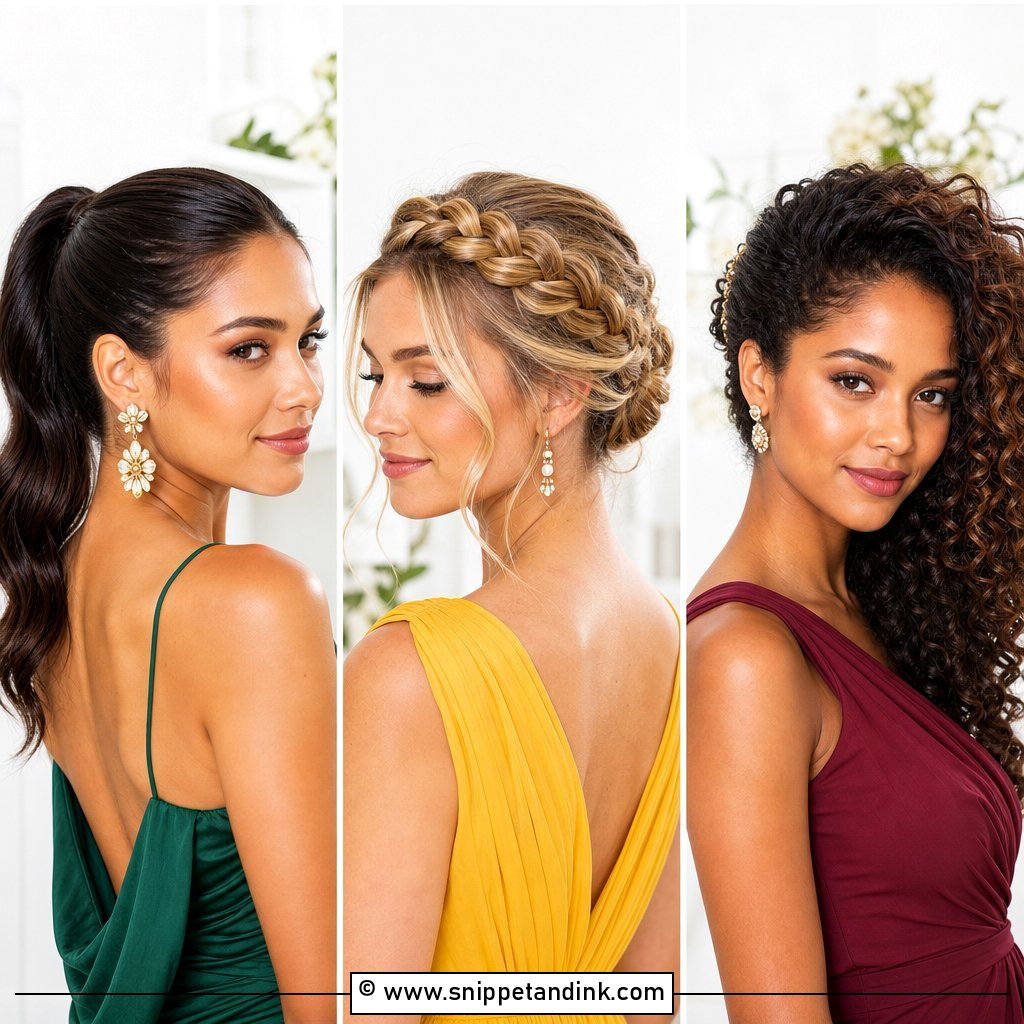
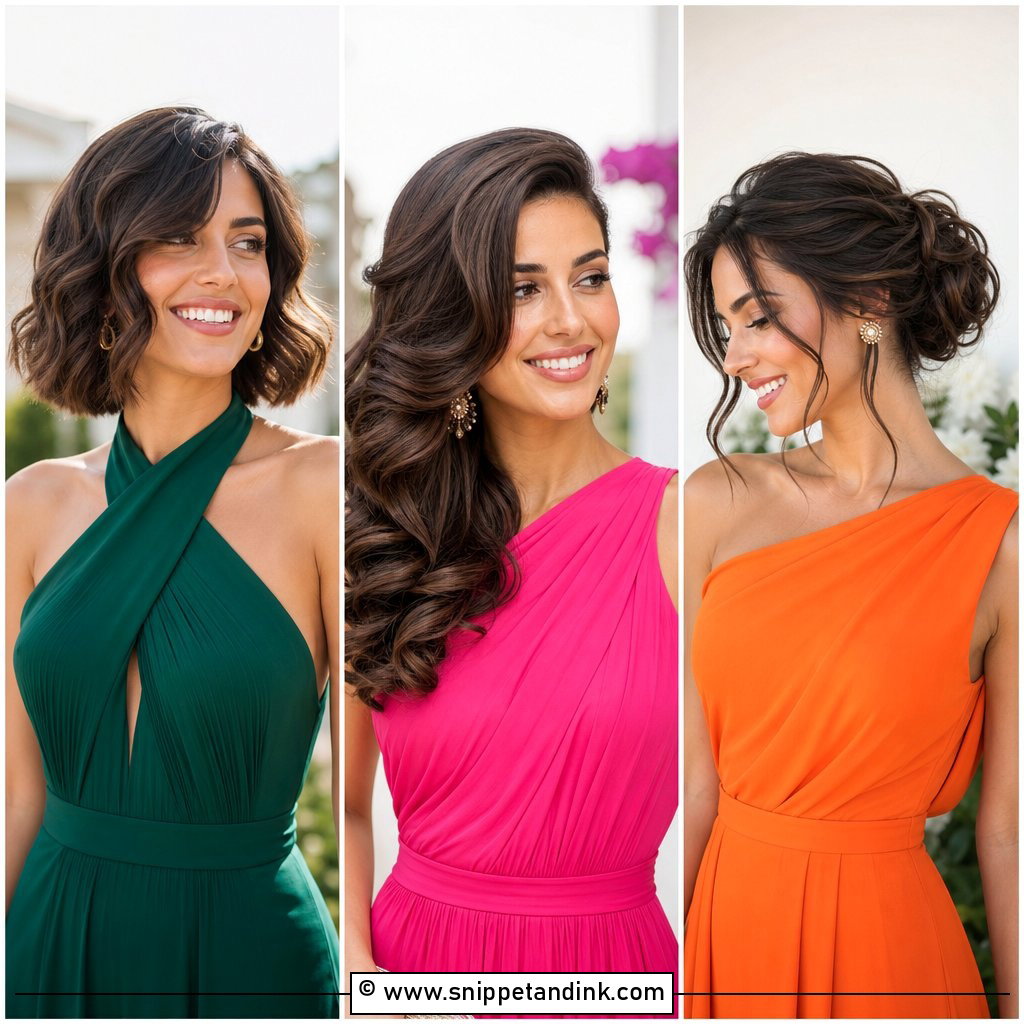
20. Simple Indian Bridal Short Hair Bun
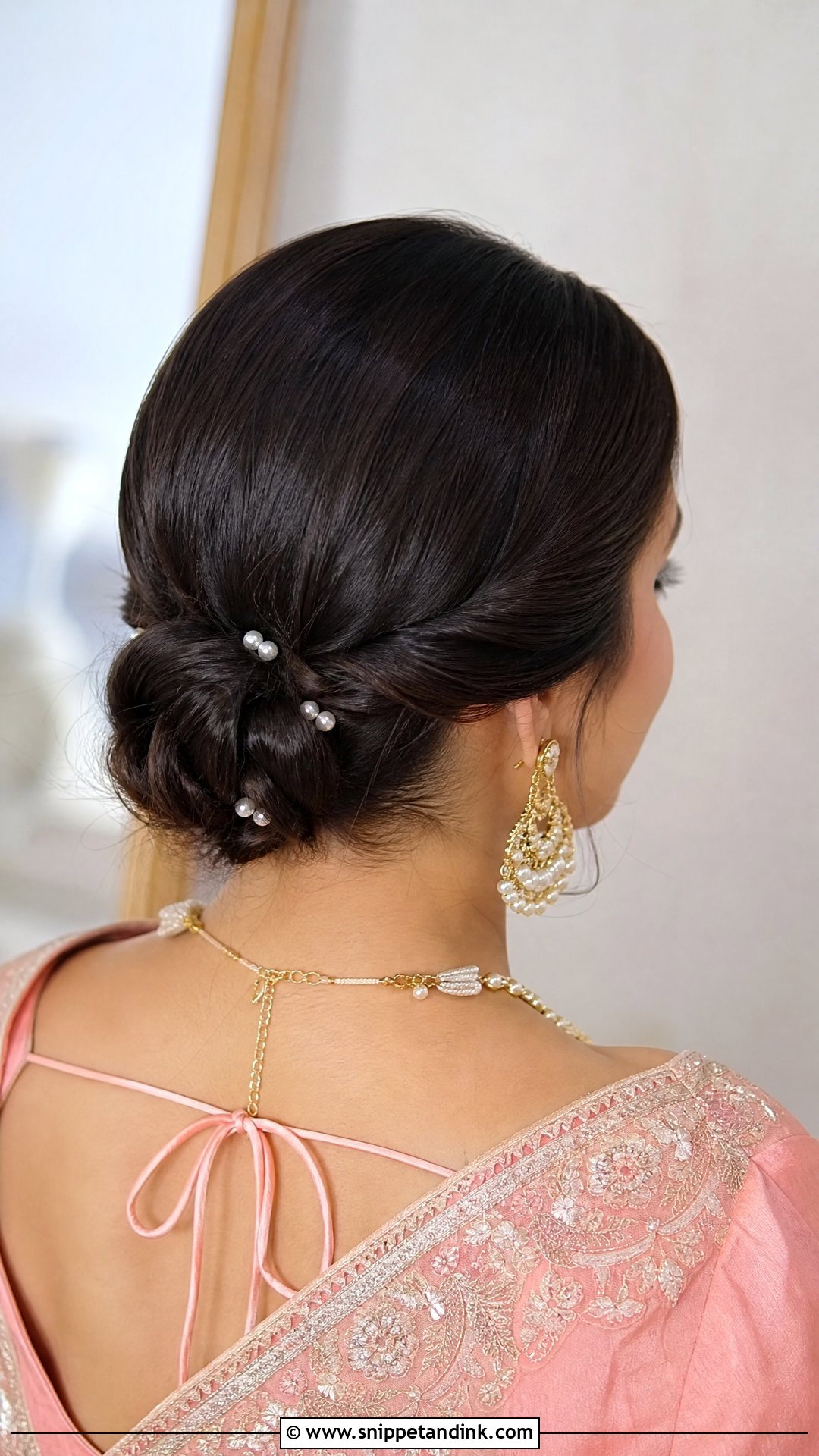
Short hair can absolutely wear a bridal bun. For a bob, lob or shoulder-length cut, I build a small low bun with pins and often a little padding or clip-in hair matched to your color. Twisting the side sections back first makes the bun look fuller and anchors the short pieces that would otherwise escape. Fresh flowers, pearl pins or a small gajra make it bridal. It sits comfortably with sarees, lehengas and simpler dupatta drapes.
Padding, Extensions and What Sits Inside a Bridal Bun
The full, round buns you see on Indian brides are very often built over a little padding: a bun donut, a mesh roll or a few clip-in wefts. Few people have enough hair to create that shape alone, and it isn’t cheating. It also takes pressure off your scalp, because the padding holds the shape so fewer tight pins are needed.
- Match the padding or extensions to your hair color in daylight; a black donut shows through brown hair.
- Choose the lightest padding that gives you the shape you want. Heavier fillings add to the weight of flowers and dupatta.
- For long braids and jada styles, braided-in hair or a jada attachment adds length that your own hair may not have.
- Bring extensions to the trial, so your stylist can blend and test them with your jewelry.
Turning Ceremony Hair Into Reception Hair the Same Day
Many brides change outfits between the ceremony and the reception and want a different hairstyle without starting from scratch. It’s possible, but it has to be planned at the trial.
If the ceremony look is a bun, take the hair down carefully, pin by pin, and you’ll usually find a soft bend where it was coiled. A curling iron over that bend gives you reception waves in much less time than styling from straight. If you’d rather not take it down at all, change the accessories instead: swap the gajra for a jeweled pin or a hair chain, and loosen a few pieces around the face. Either way, tell your stylist which option you want before the wedding, so pins and padding are placed where they can come out easily.
Your Dupatta Is Part of the Hairstyle
When I plan Indian bridal hair, the dupatta and the jewelry come first, then the shape. A neat bun, soft braid, open curls, half-up style or floral jada can all look bridal when they support the drape and leave room for the jewelry. Think about your length, texture and face shape, and which function each look is for. Bring the actual dupatta and your heaviest piece of jewelry to your trial, pin them in, and wear the whole thing for an hour. That hour tells you more than any photo.
You'll Like These Ideas:



Leave a Reply