
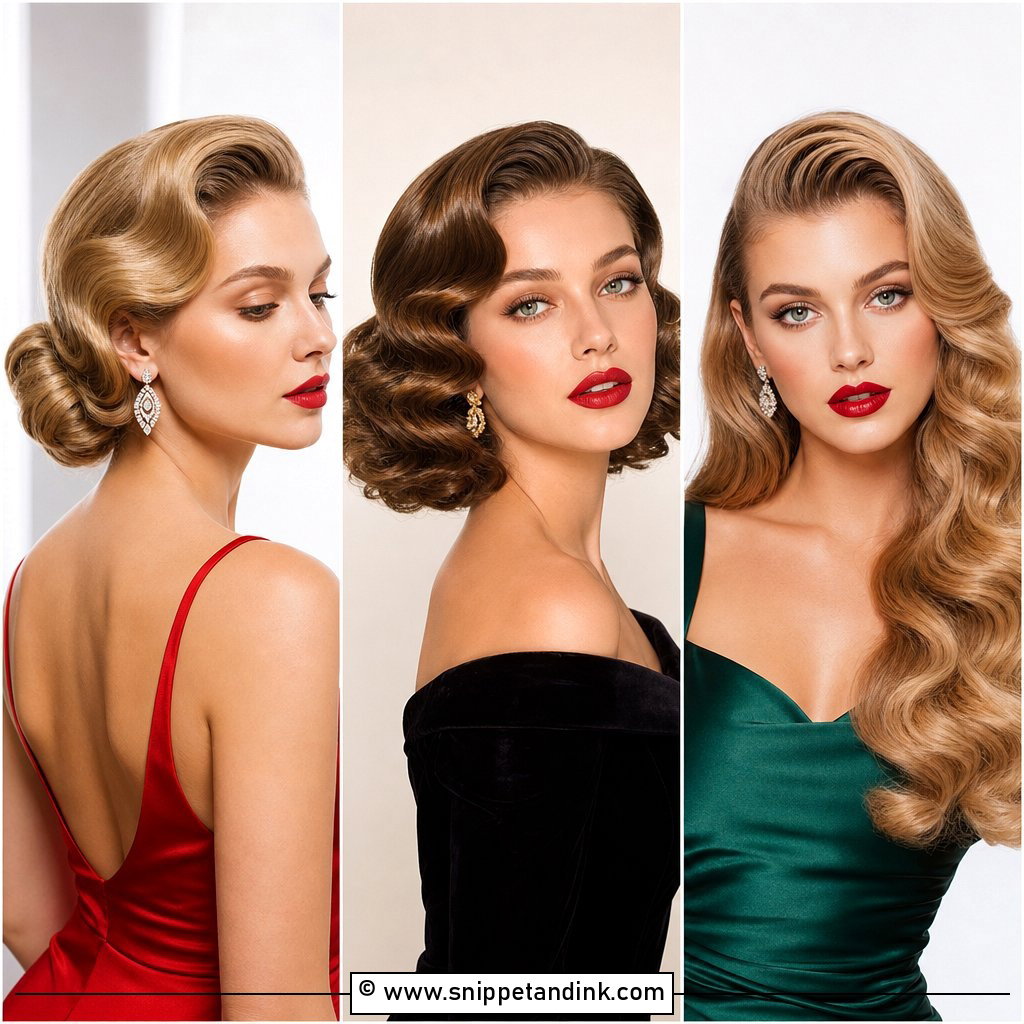
Hollywood waves are the one bridal style where the technique shows in every photo. A good set gives you a single glossy S-ripple that runs from the part to the ends, and a rushed one gives you a head of separate curls that never quite join. The look goes back to 1940s film sets and screen sirens like Veronica Lake and Rita Hayworth, and it still suits clean necklines, satin, and cathedral veils better than almost anything else I do. Below are 20 versions I’d happily build, with notes on which hair, dresses, and venues each one actually works with.
What Actually Makes a Wave Read as Hollywood
Most brides bring me photos of these waves and ask for curls. They’re not quite the same thing. A true Hollywood wave is a set: every section is curled in the same direction, left to cool, then brushed together so the separate curls merge into one continuous ripple. The ridges you see in old film stills are pressed in after the brush-out, usually with long clips that hold each bend while a light spray dries.
Direction is the part people skip at home. If one section curls toward the face and the next away, the brush-out gives you frizz and gaps, not an S-shape. I map the head before touching an iron, deciding which side carries the weight and where the part falls, because both change how every curl is rolled.
Which hair holds it, and which needs help
- Medium-thick hair with some grip is the easiest canvas. It holds a set for most of a day with ordinary spray.
- Very fine hair drops fast. I add a root lift product, set smaller curls than the finished size, and pin each one to cool.
- Very heavy or straight hair needs setting lotion on damp hair before it’s dried, or the waves relax under their own weight.
- Layered cuts can break up the line. Long layers are fine; short choppy ones poke out of the ridge and need pinning.
1. Classic Side Part Hollywood Waves
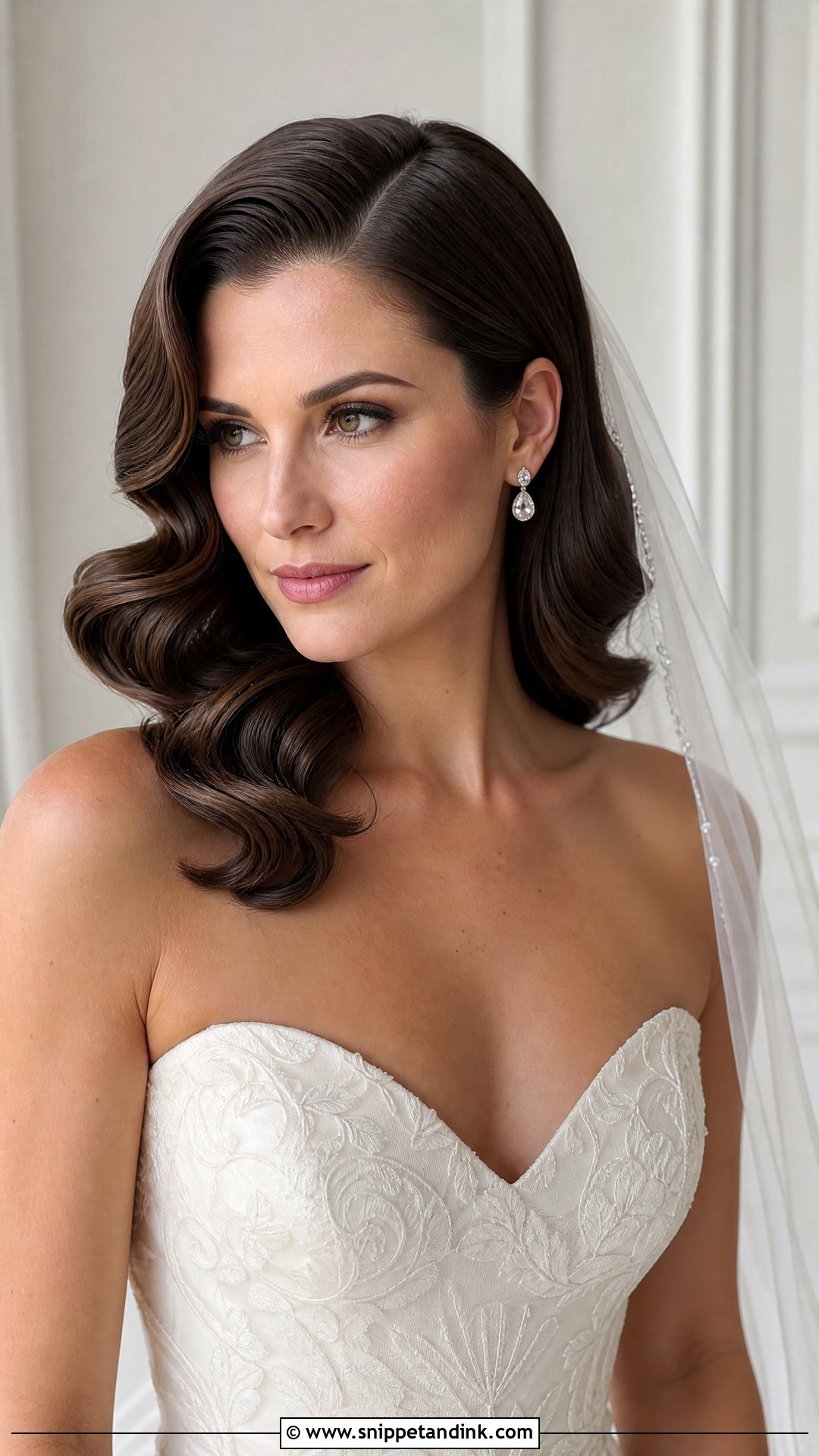
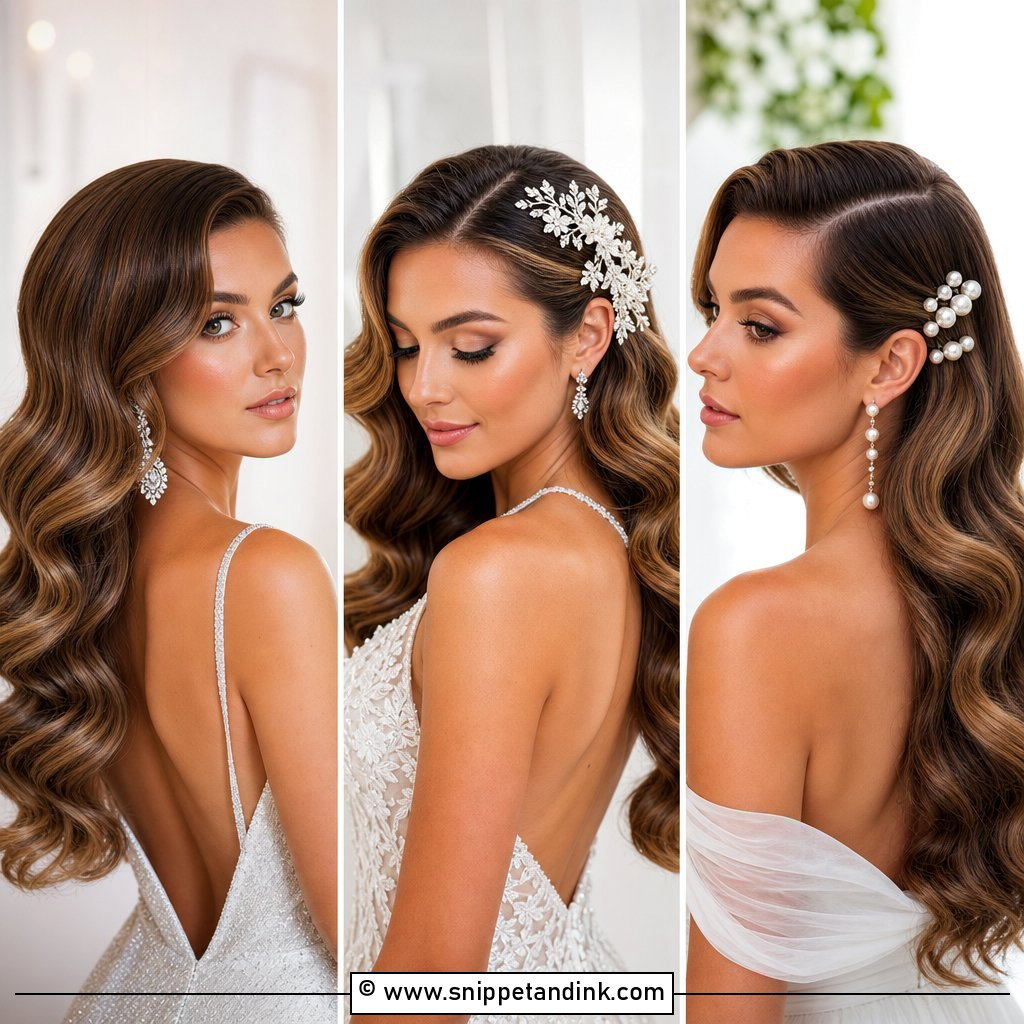
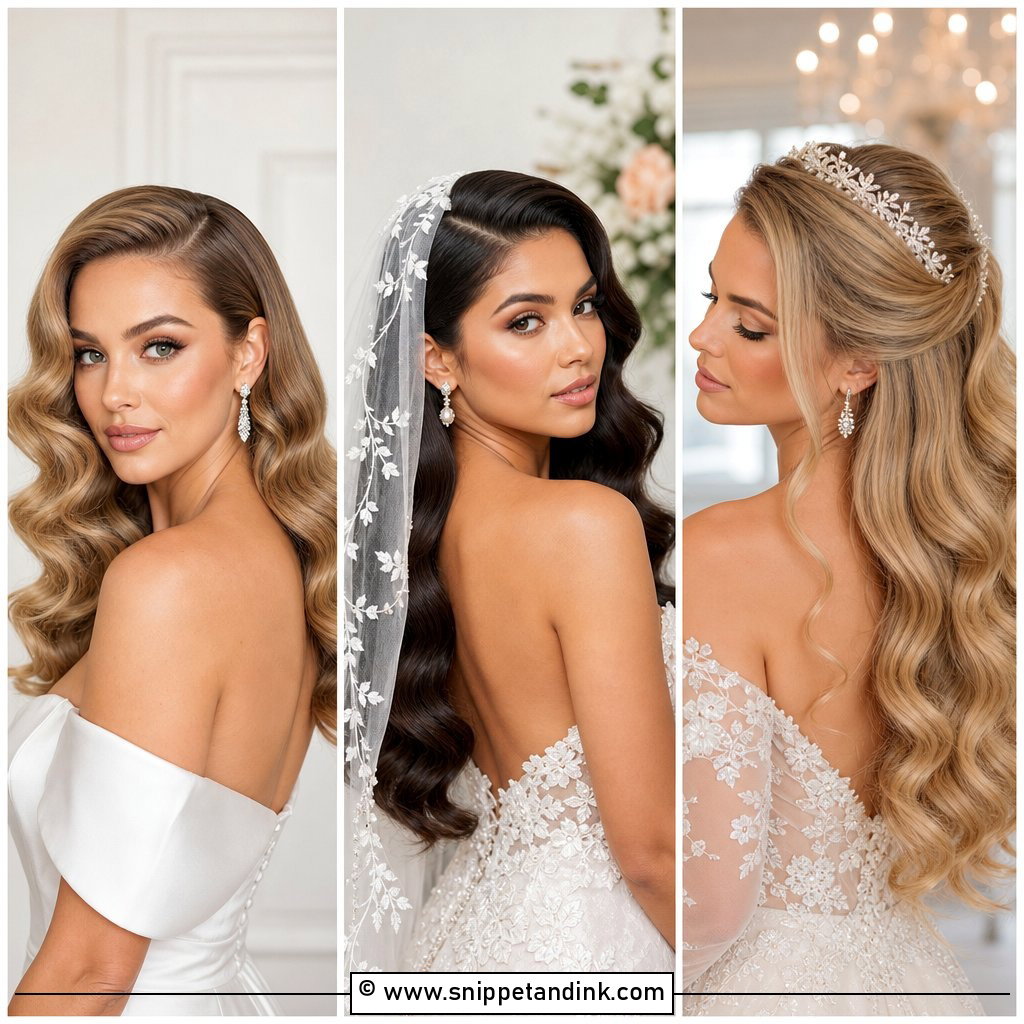
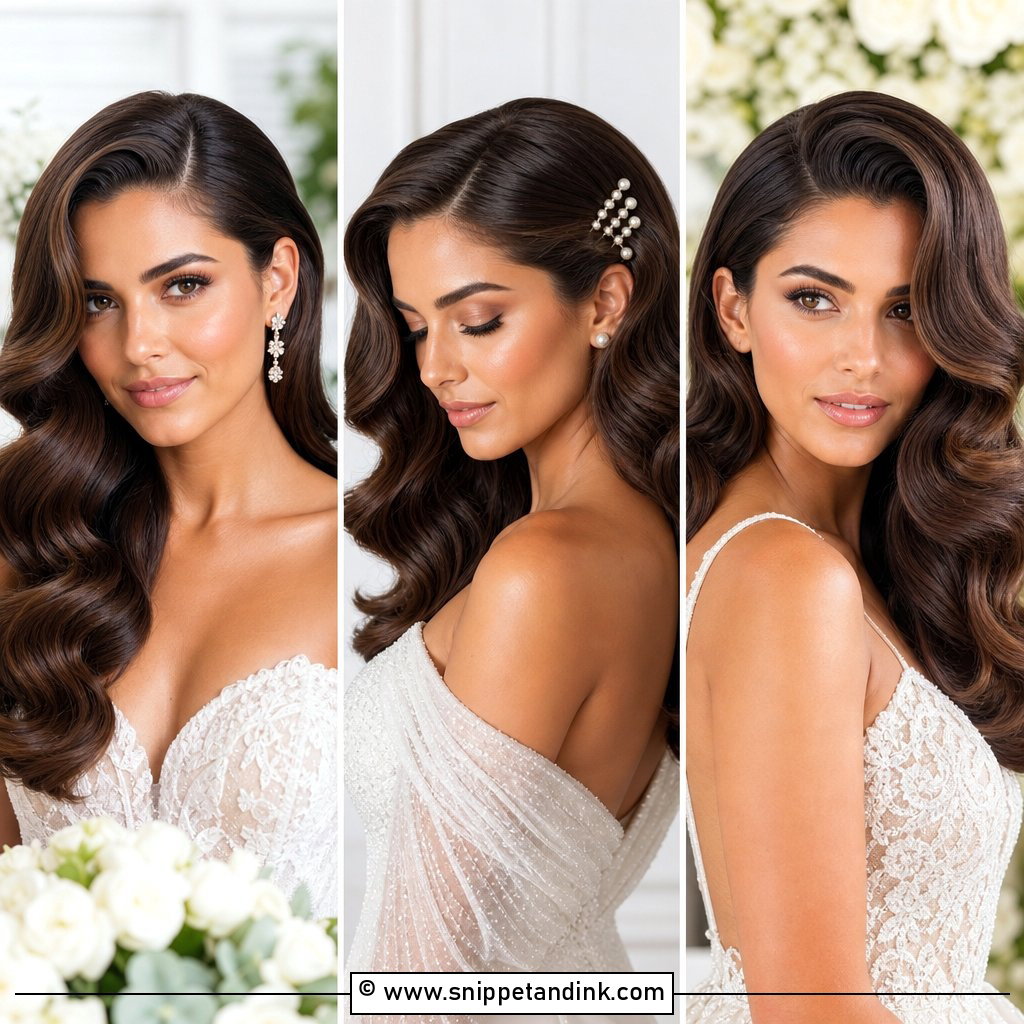
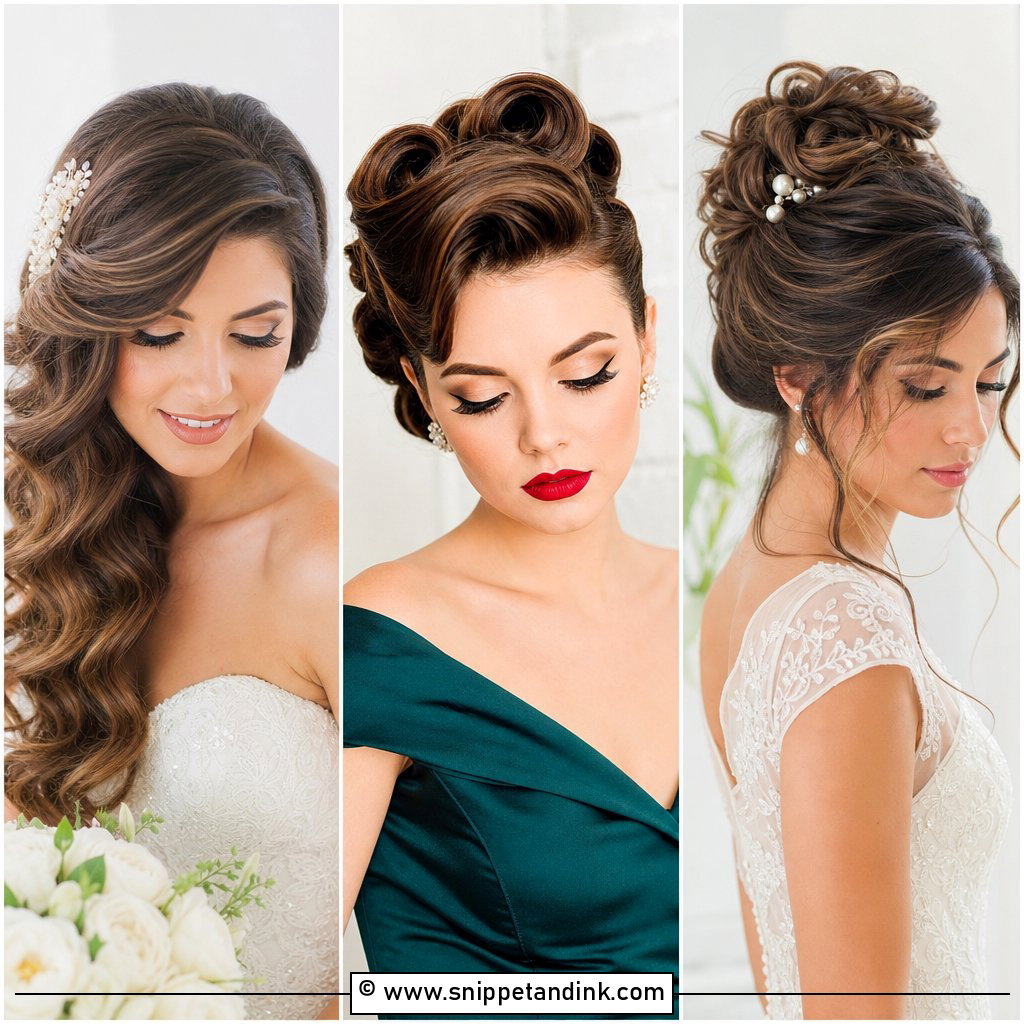
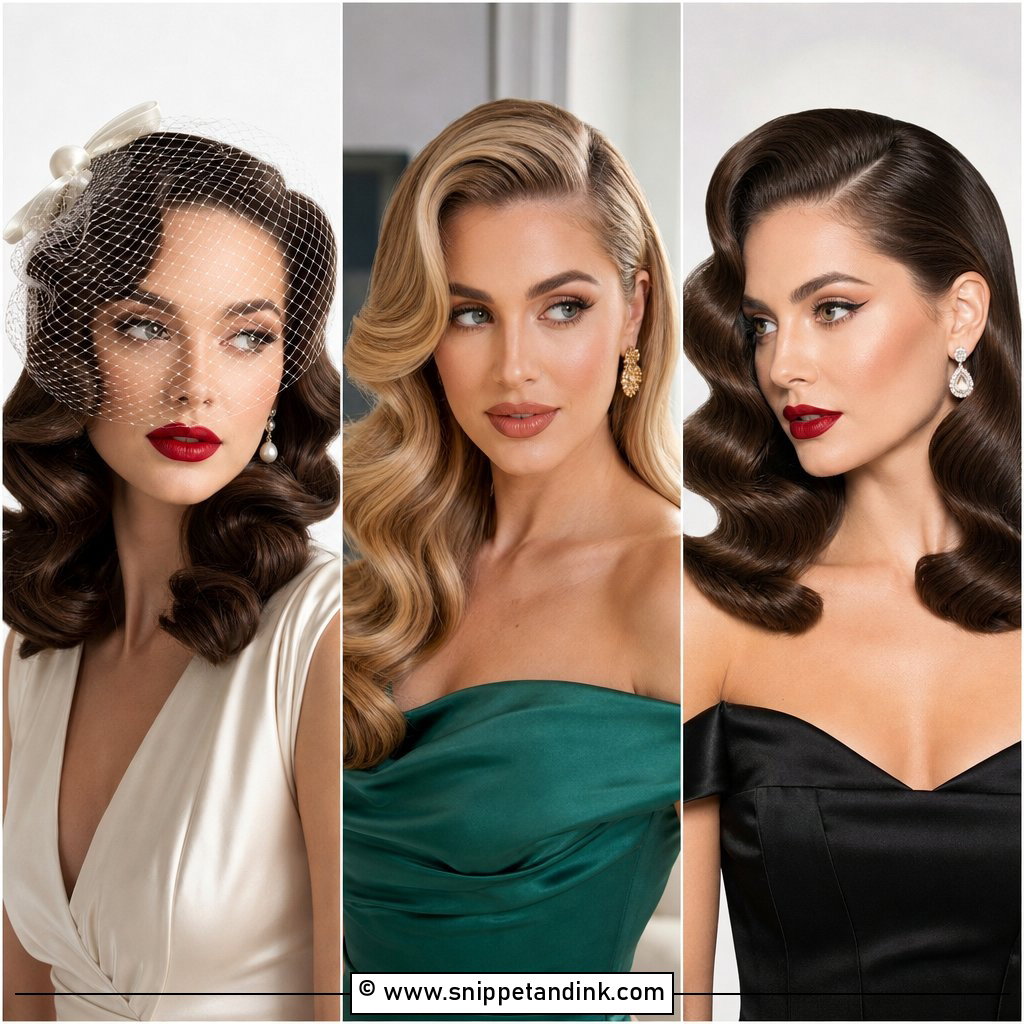
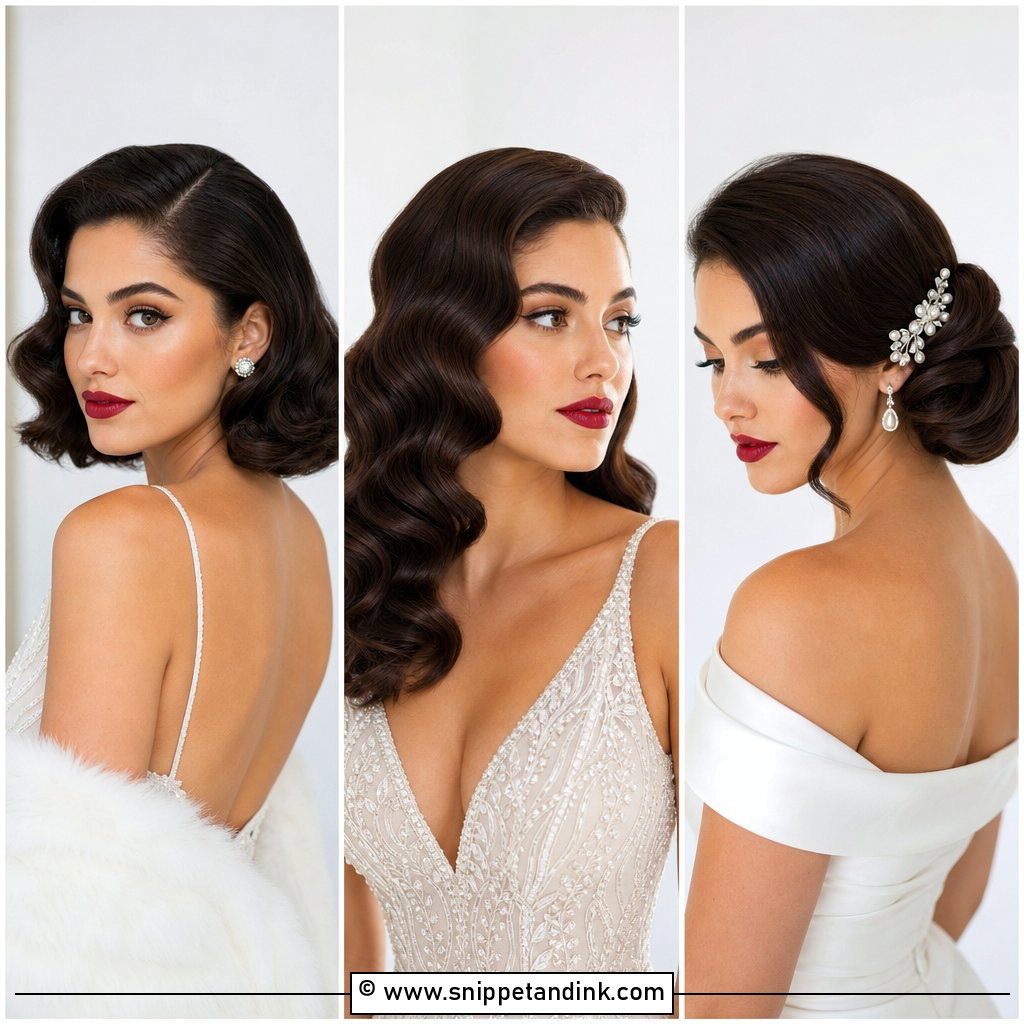
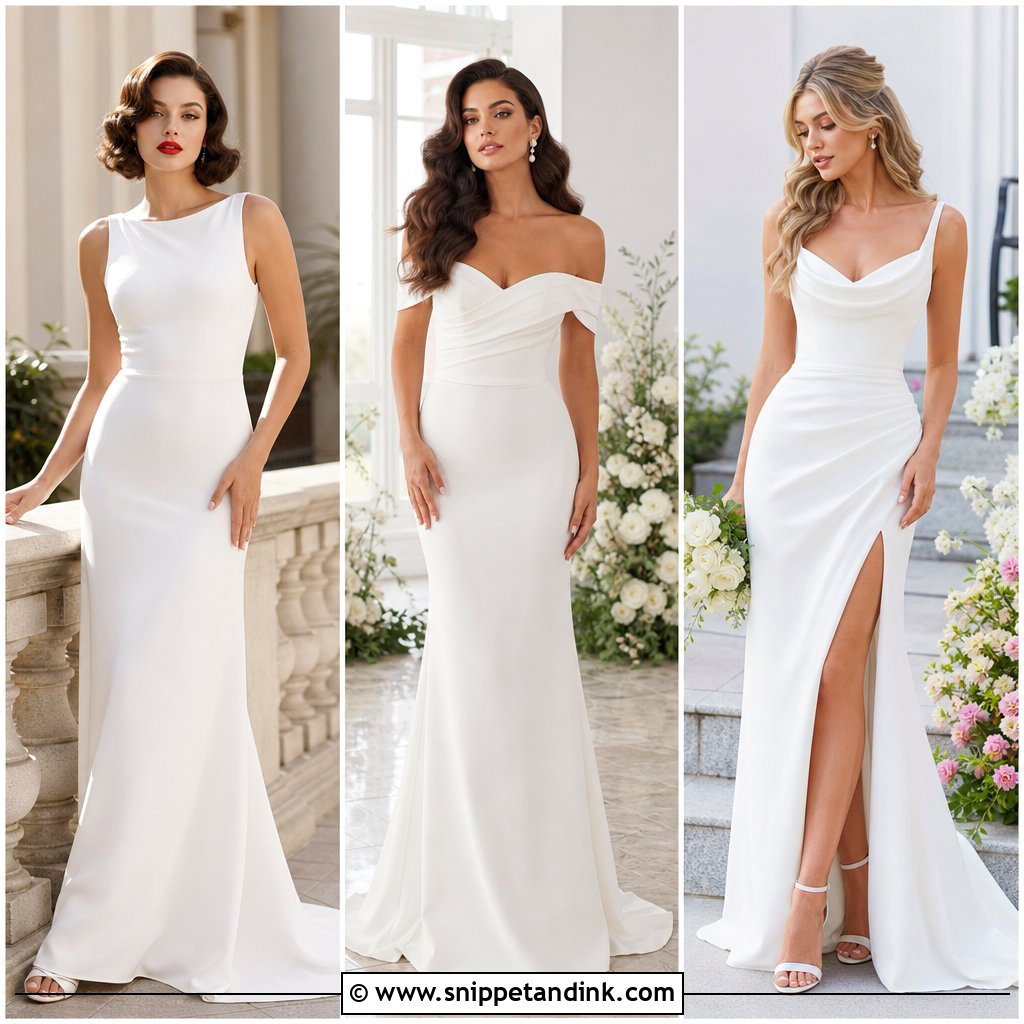
This is the shape most people picture: a deep part, one heavy arc over the brow, and the waves stacking down one side in a single line. The secret is direction. I curl every section on the heavy side away from the face and let the set cool completely, because brushing it out warm loses the ridge. Once it’s brushed, I press each ridge with long clips and mist them before releasing. Wear it with a strapless or sweetheart neckline; a high collar fights with the volume on one side.
2. Middle Part Hollywood Waves
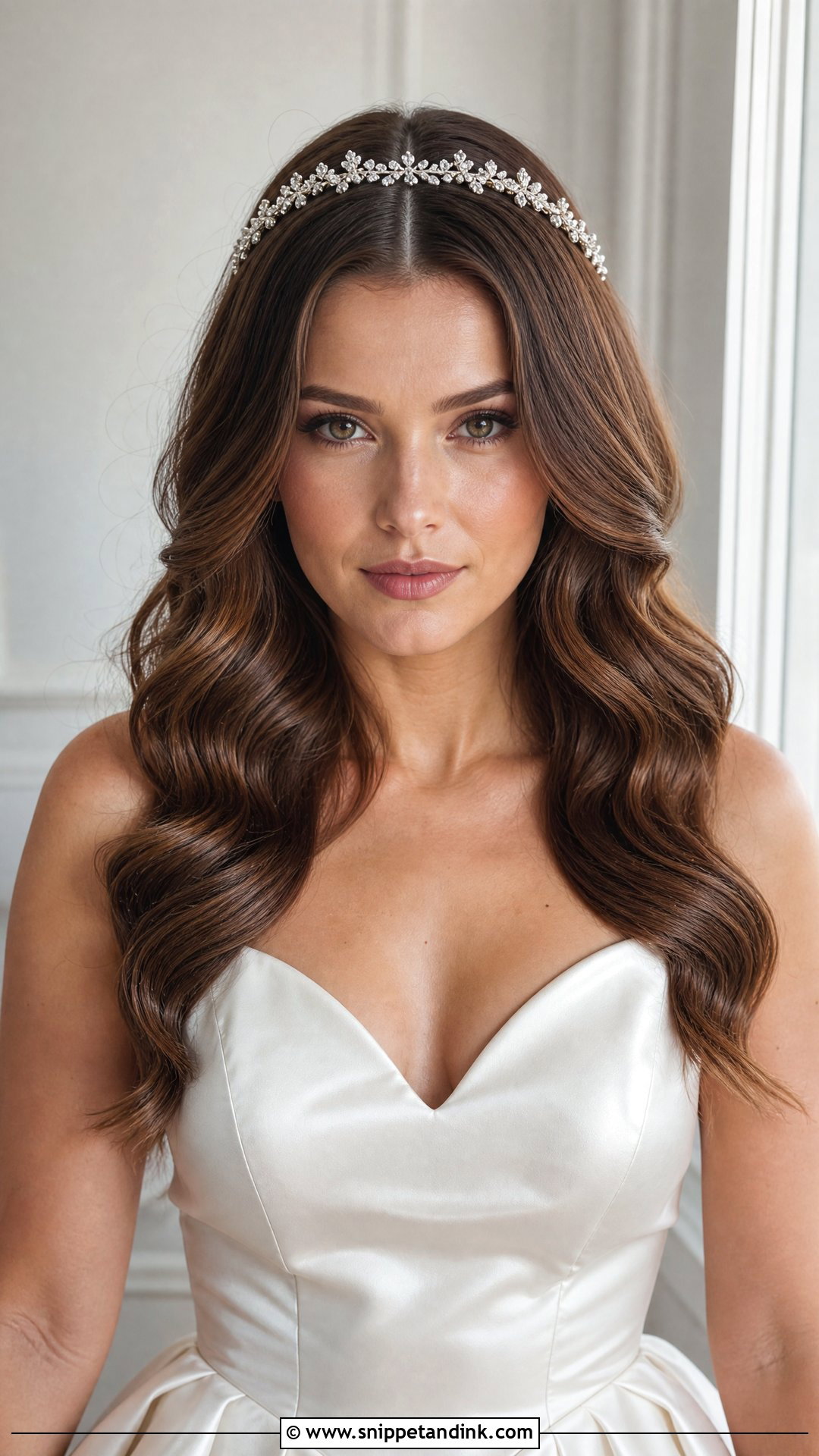
A center part is the friendlier version for brides who feel exposed with all the weight on one side. The catch is symmetry. Both sides have to be curled in mirror directions, and if one side is naturally flatter (most people have a cowlick somewhere), I give it an extra round of root lift before setting. It sits well under crystal tiaras, slim headbands, and hair vines that rest right on the part, and it’s the easier style to wear with a mantilla because nothing is being pushed sideways.
3. Long Hollywood Waves With Volume
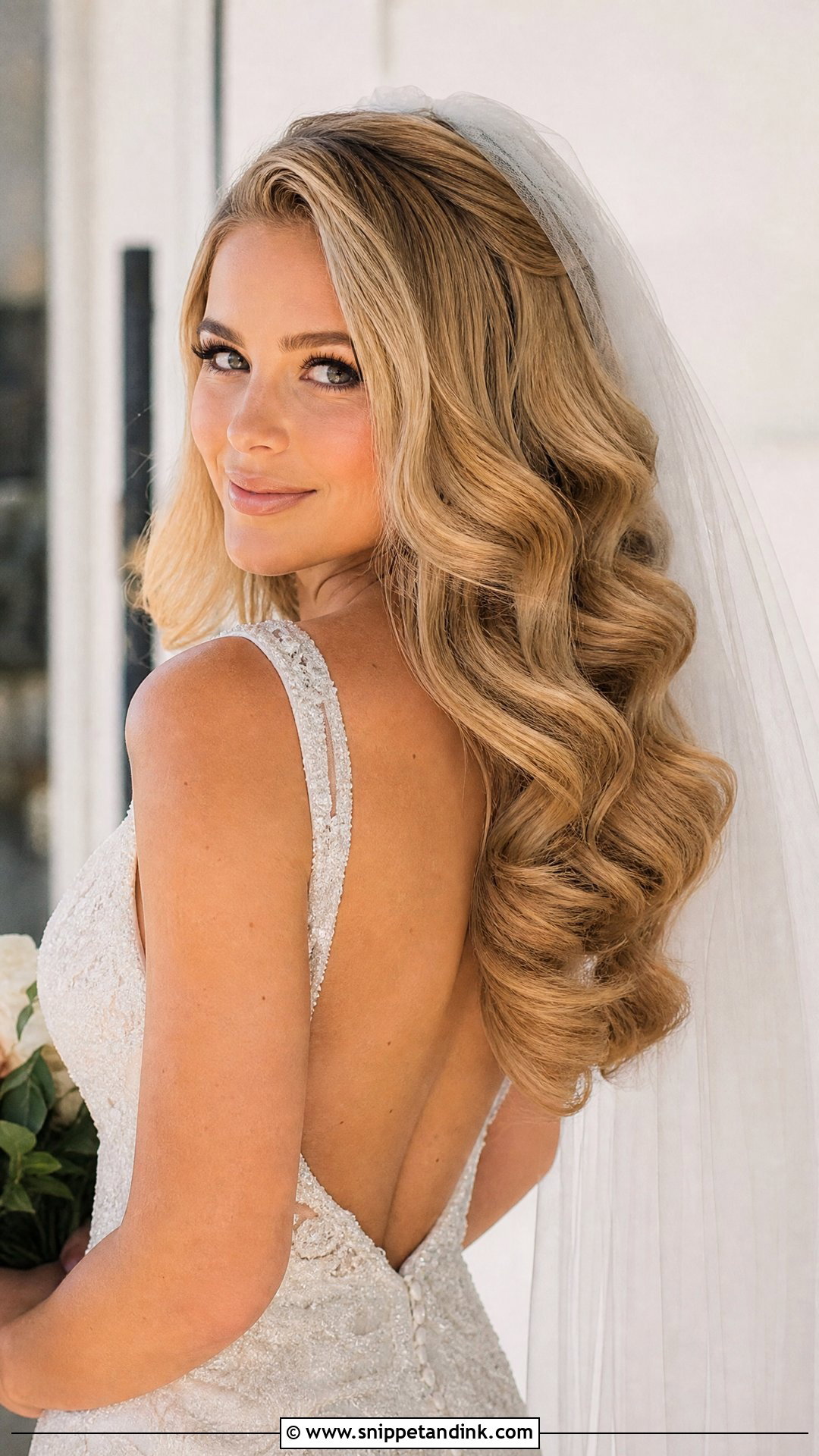
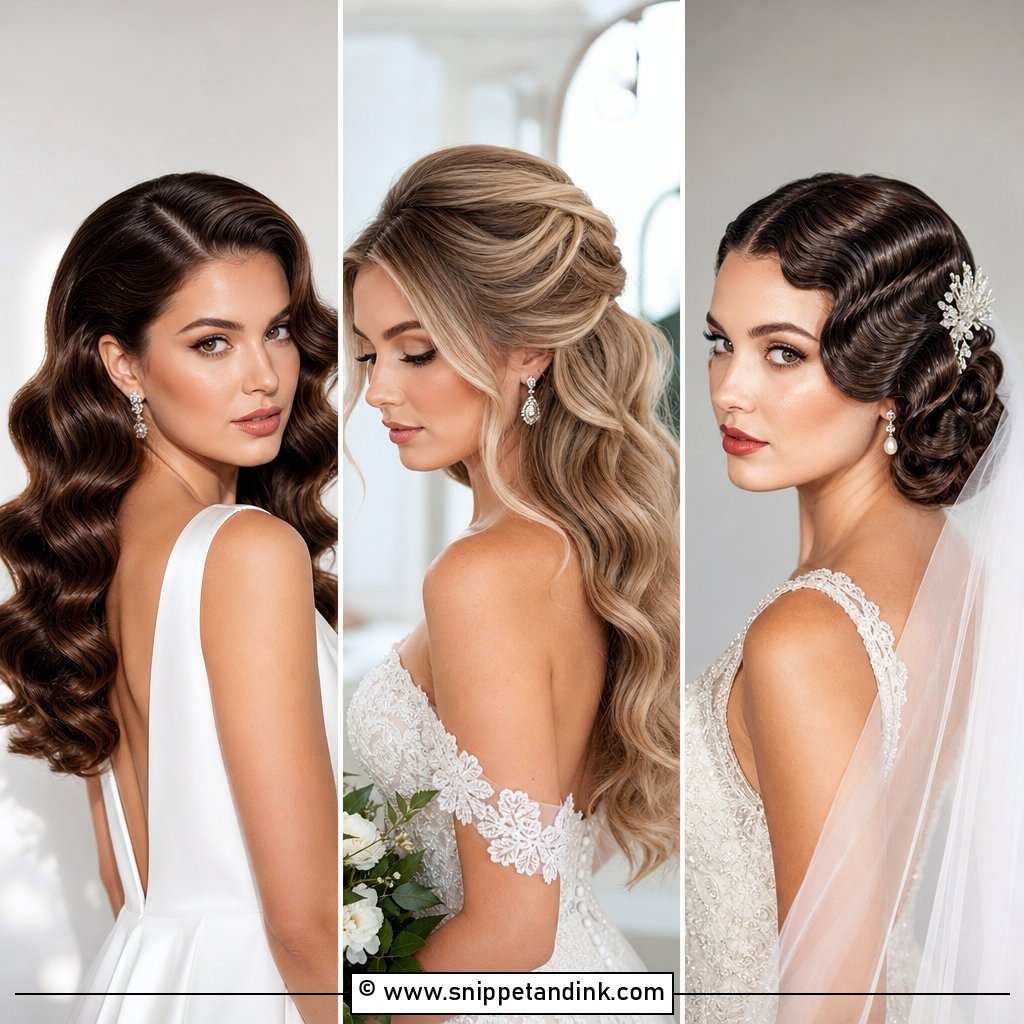
Length is a gift for this look and also its biggest risk. Hair past the shoulder blades is heavy, and the weight pulls the bottom waves straight within a few hours unless they were set properly. I tease the crown lightly for lift, set large barrel curls, and pin each one in a flat coil to cool before the brush-out. Extensions help here, and they hold a set better than many natural heads do. Backless dresses are the natural partner, since the waves end where the fabric stops.
4. Hollywood Waves With a Side Crystal Comb
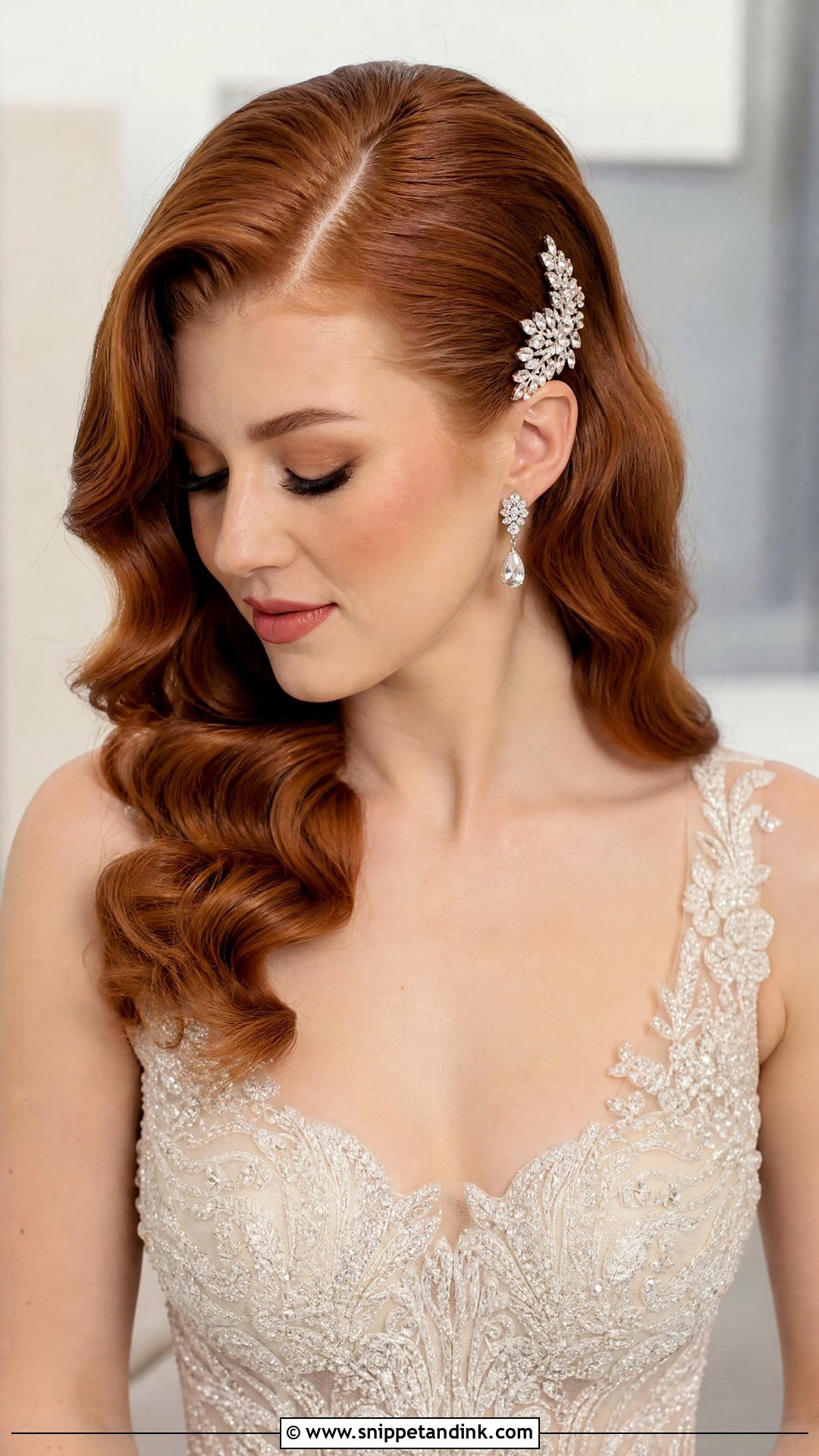
One crystal comb at the temple does more than a full headpiece on this style. I slide it in where the swept section folds back, teeth pointing toward the crown and anchored over a hidden pair of crossed pins, so it carries the weight of that front wave instead of just decorating it. Keep the earrings small. A comb and chandelier drops on the same side compete, and the photo ends up busy right at your jawline.
5. Soft Romantic Hollywood Waves
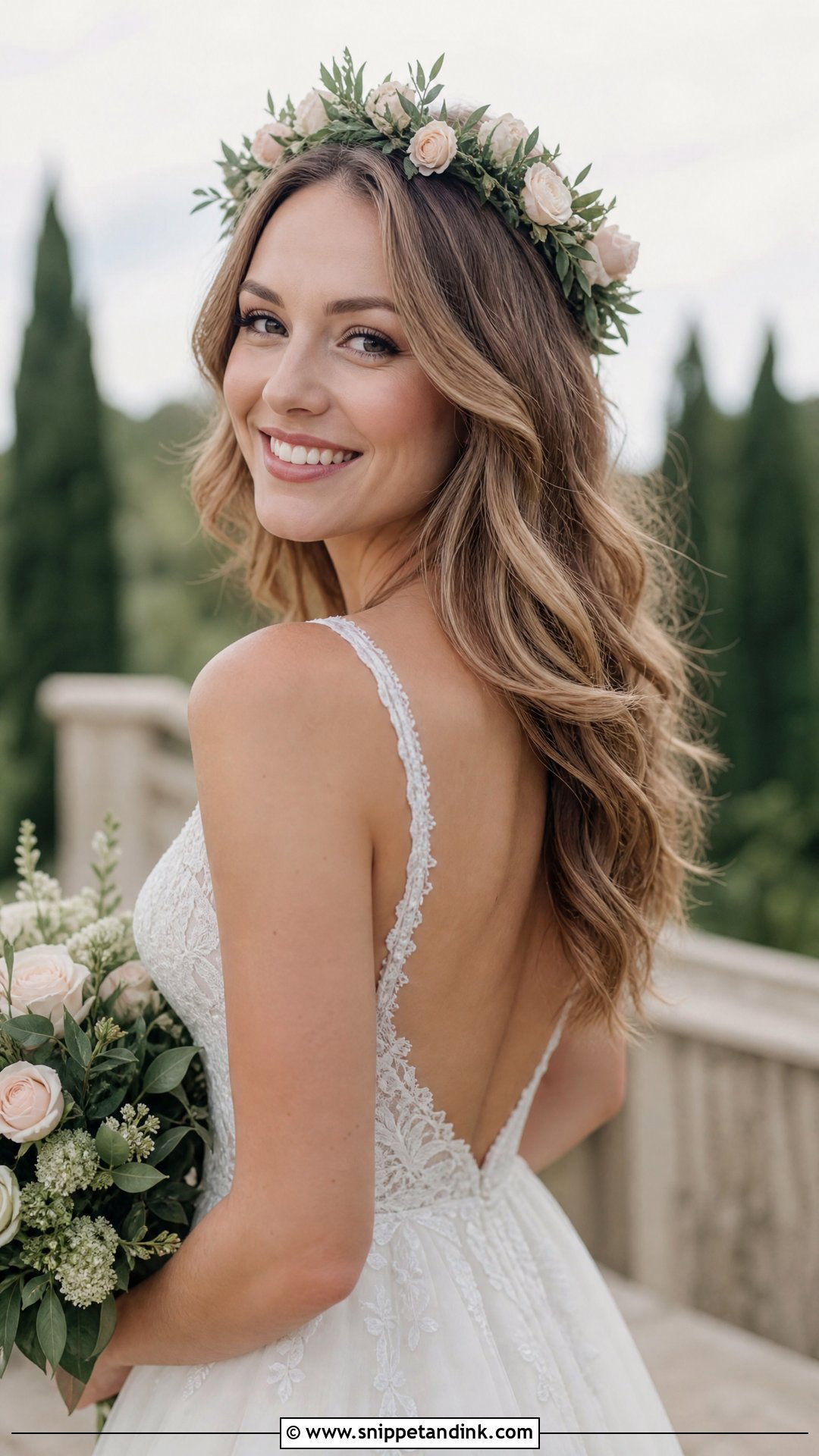
Some brides want the shape without the shine of a red-carpet set, and this is that version. I use a bigger barrel, skip the ridge pressing, and brush through more times so the waves soften into loose ripples. It suits gardens and outdoor ceremonies because a little breeze movement looks right on it. The honest trade-off: softer waves have less structure, so on fine hair they can flatten by the reception. A flower crown or a simple veil sits easily on top.
6. Hollywood Waves With a Veil
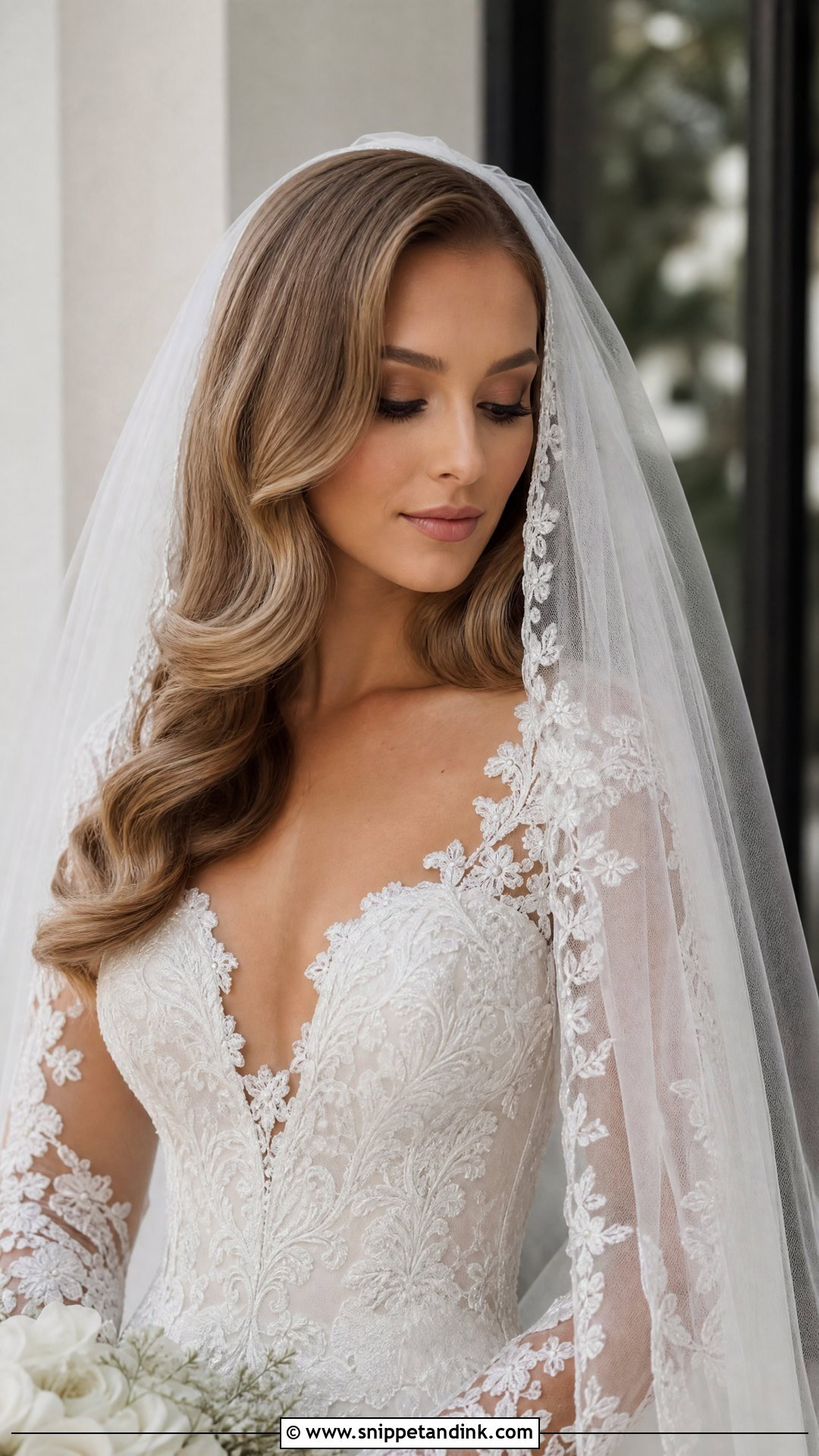
A veil can either frame a wave set or crush it, and the difference is where the comb goes. I anchor it at the crown or just below the back curve of the waves, never on top of the swept front section, so the fabric falls behind the shape rather than pressing it flat. Cathedral and birdcage lengths both work. Ask your stylist to place the veil at the trial, because the waves are set around that comb, not the other way around.
7. Hollywood Waves With Hair Vine
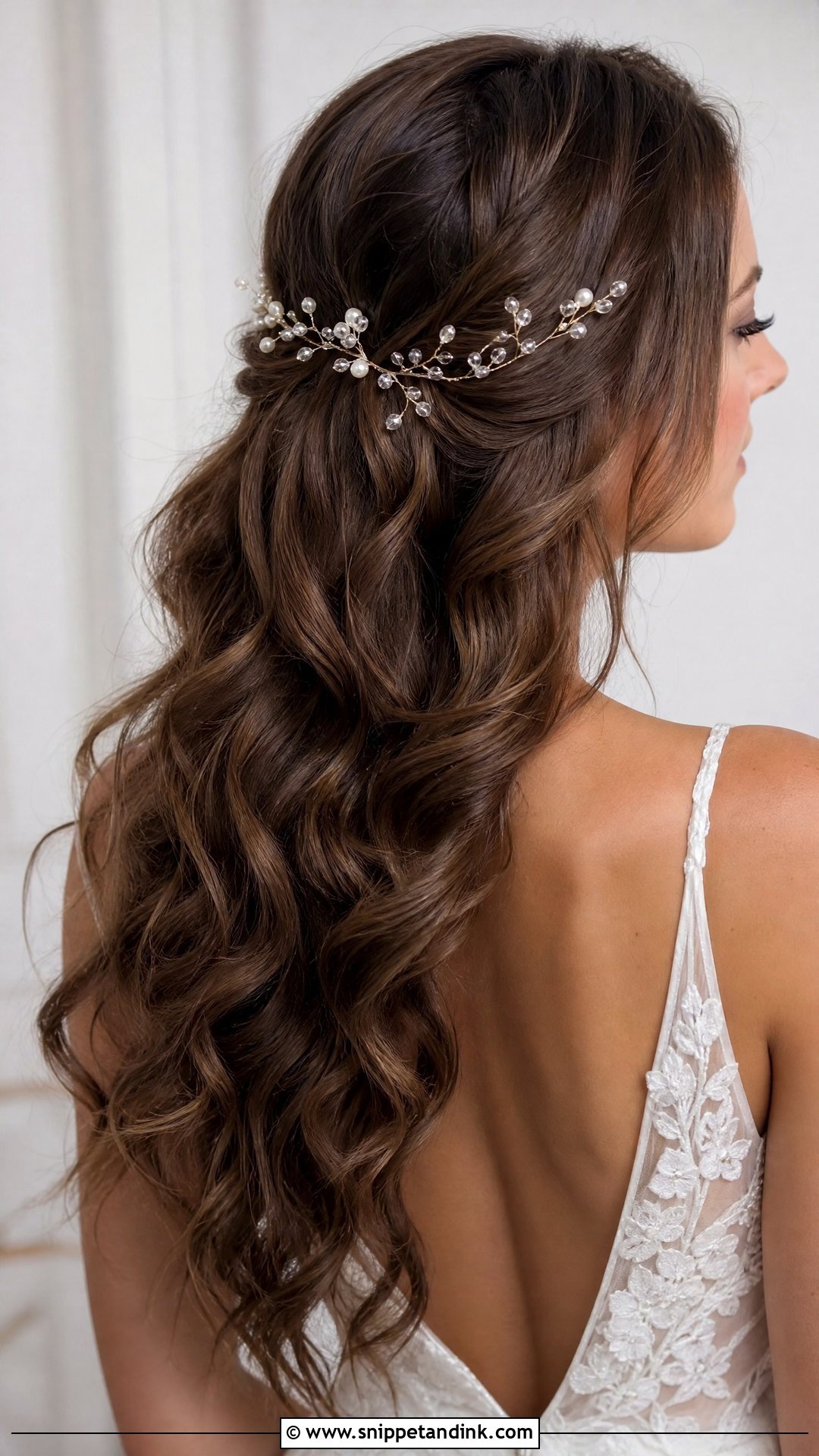
A long hair vine threaded through the waves gives you scattered sparkle without a single focal piece. I weave it after the brush-out, catching the wire under the ridges with small pins every few inches so it follows the S-pattern instead of sitting on top of it. It works with either part. Keep the dress plain if you choose this, because the vine already carries a lot of detail on its own.
8. Short Hollywood Waves for Bob Length
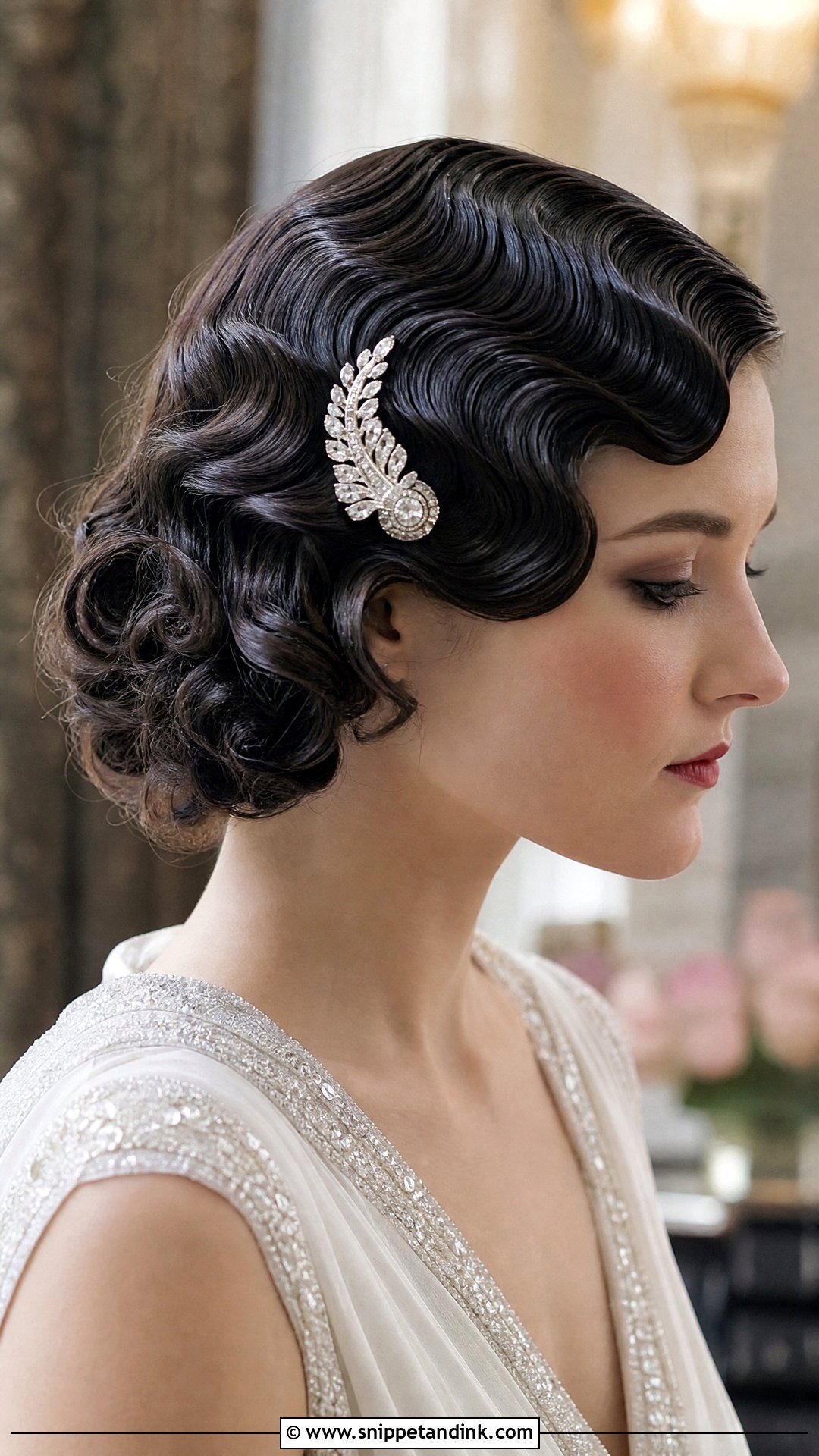
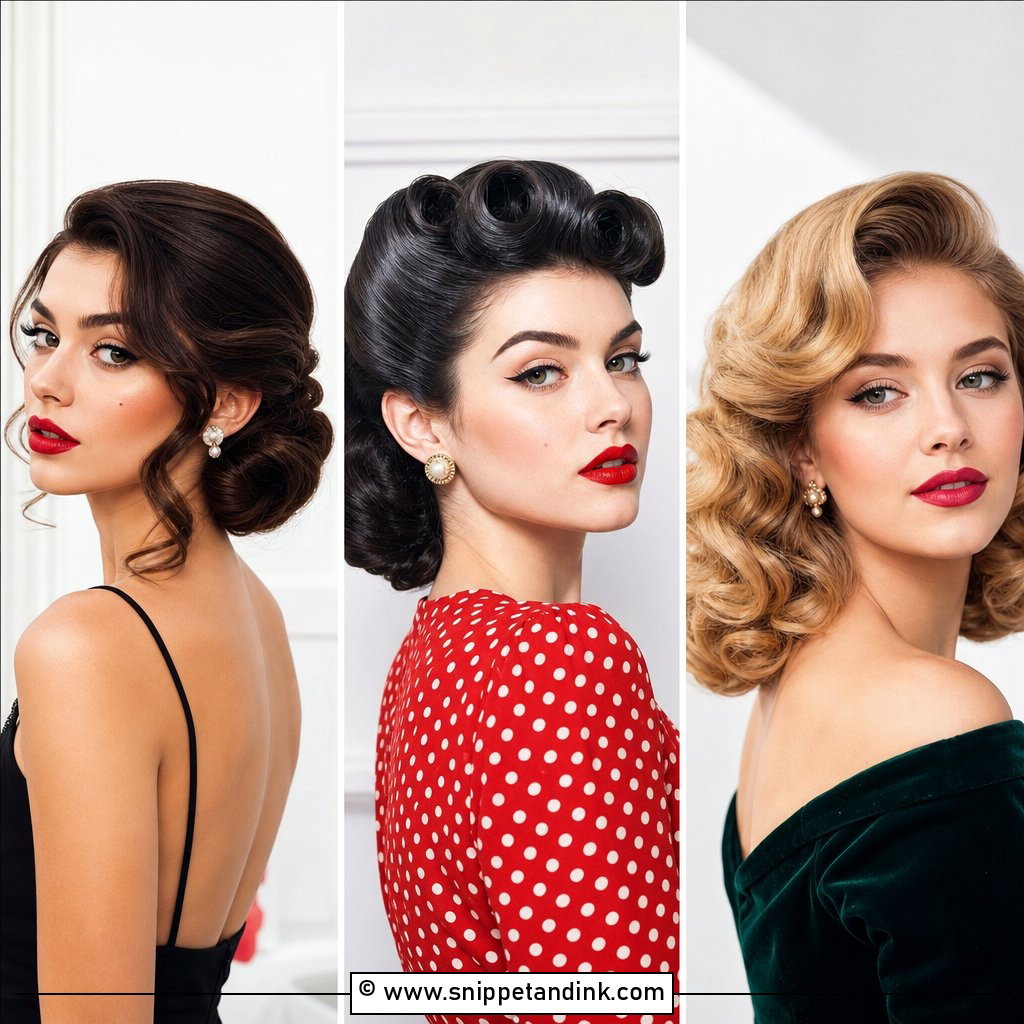
Bob-length hair is well suited to the tighter, sculpted relatives of this style, finger waves and Marcel waves. On short hair I set the ridges close to the scalp, usually with gel and clips or a small iron, because there isn’t enough length for weight to help shape the wave. The result hugs the head and lasts well. If your hair is a blunt cut with no layers, expect the ends to flip; a light trim two or three weeks before the wedding fixes that.
9. Hollywood Waves With Deep Side Sweep
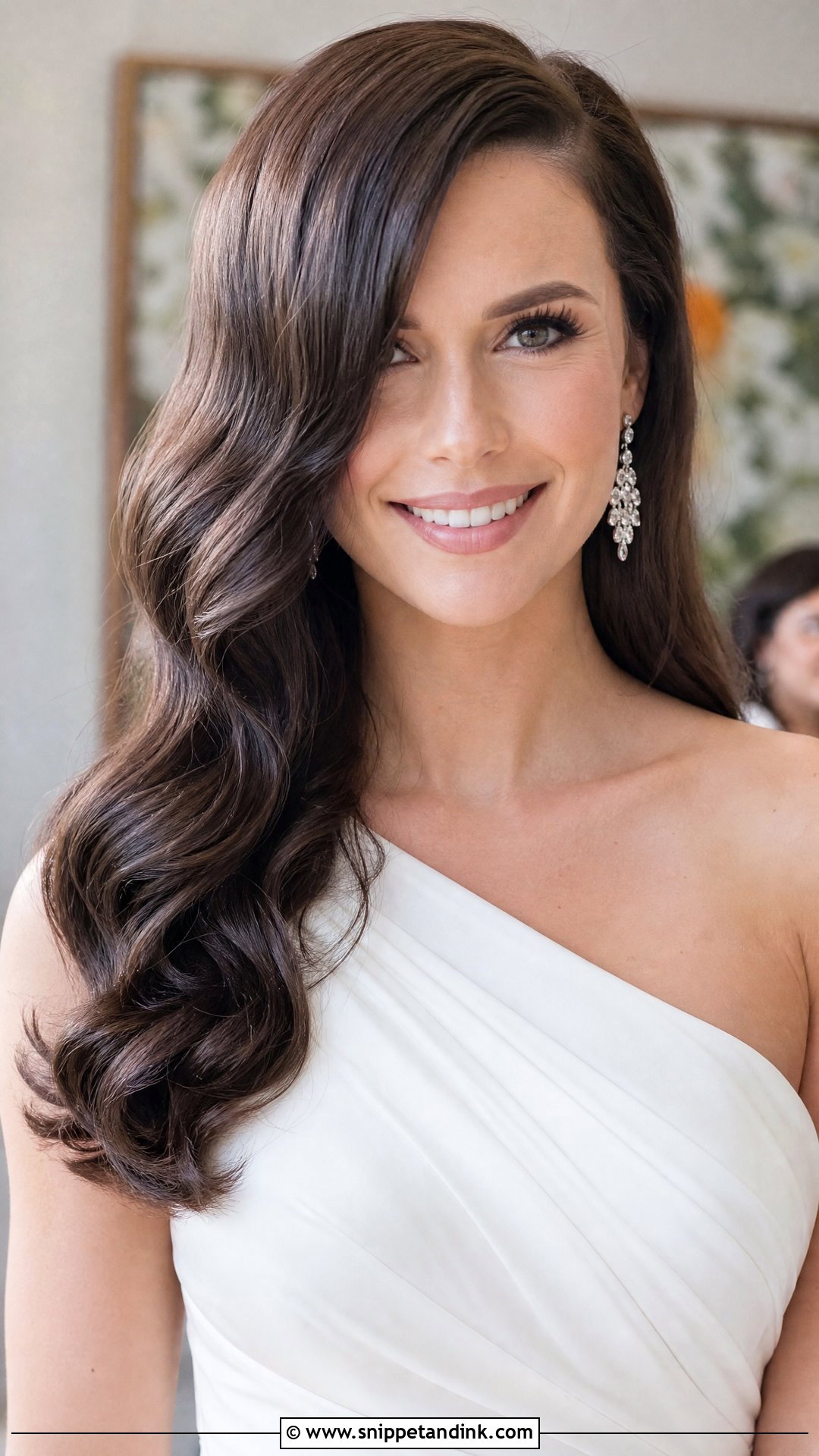
The deep side sweep is the boldest shape on this list. A large section crosses the forehead and either tucks behind one ear or drops over one shoulder, leaving the other side almost bare. I build volume at the crown first, then set the waves heavier on the falling side so they don’t slide back toward the center by mid-afternoon. It shows off one big earring and a one-shoulder or strapless neckline. If you’re nervous about hair touching your face all day, choose the tucked version instead.
10. Glossy Hollywood Waves
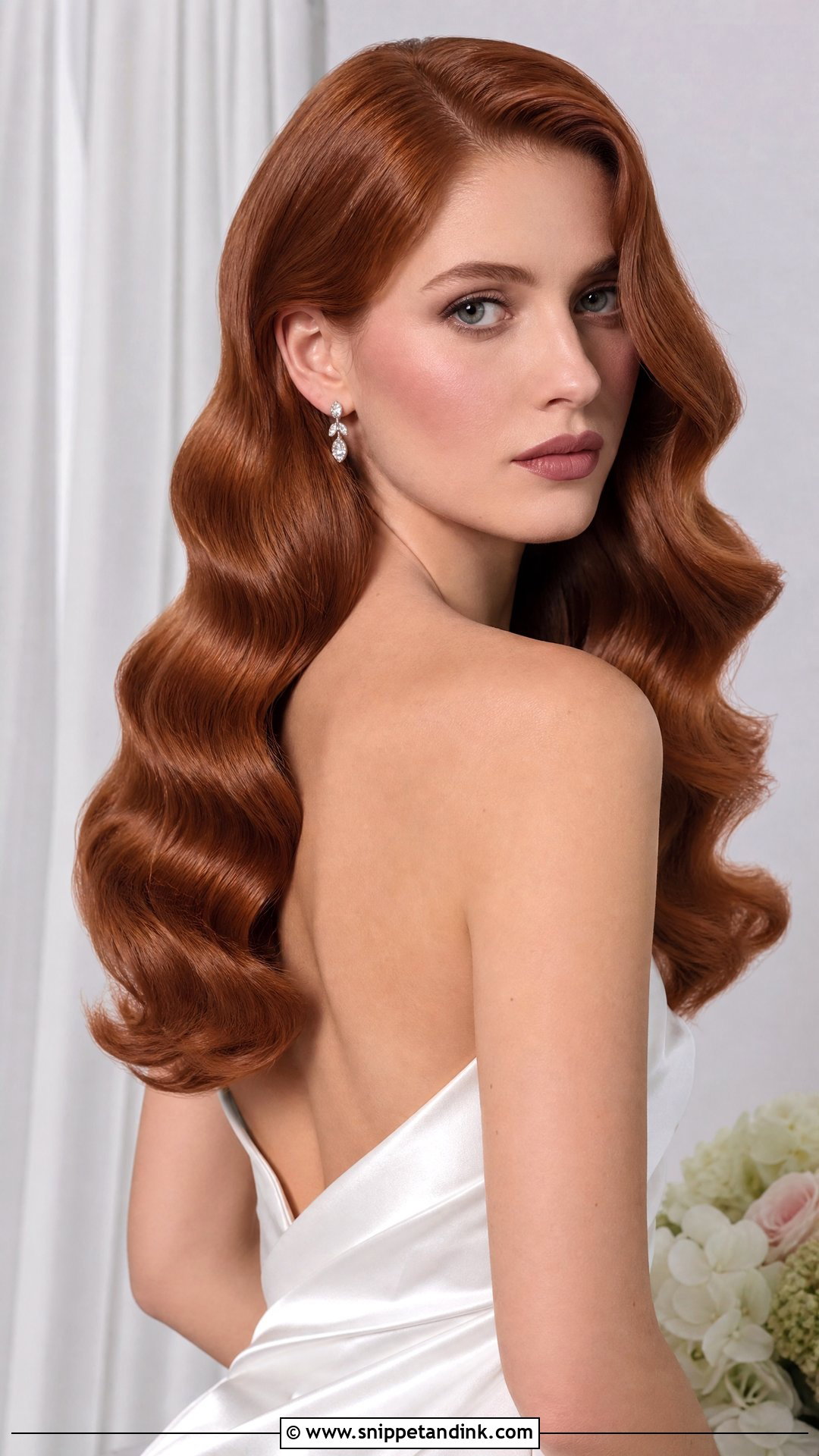
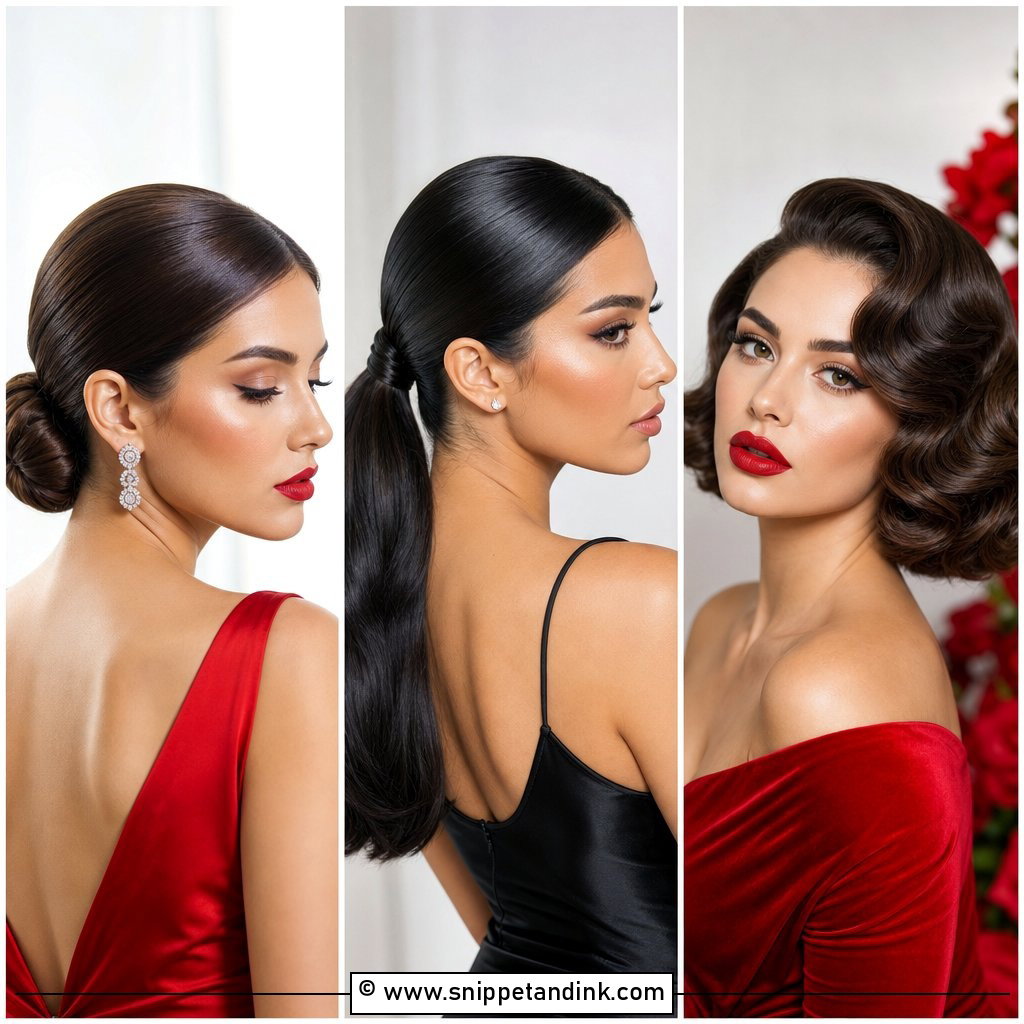
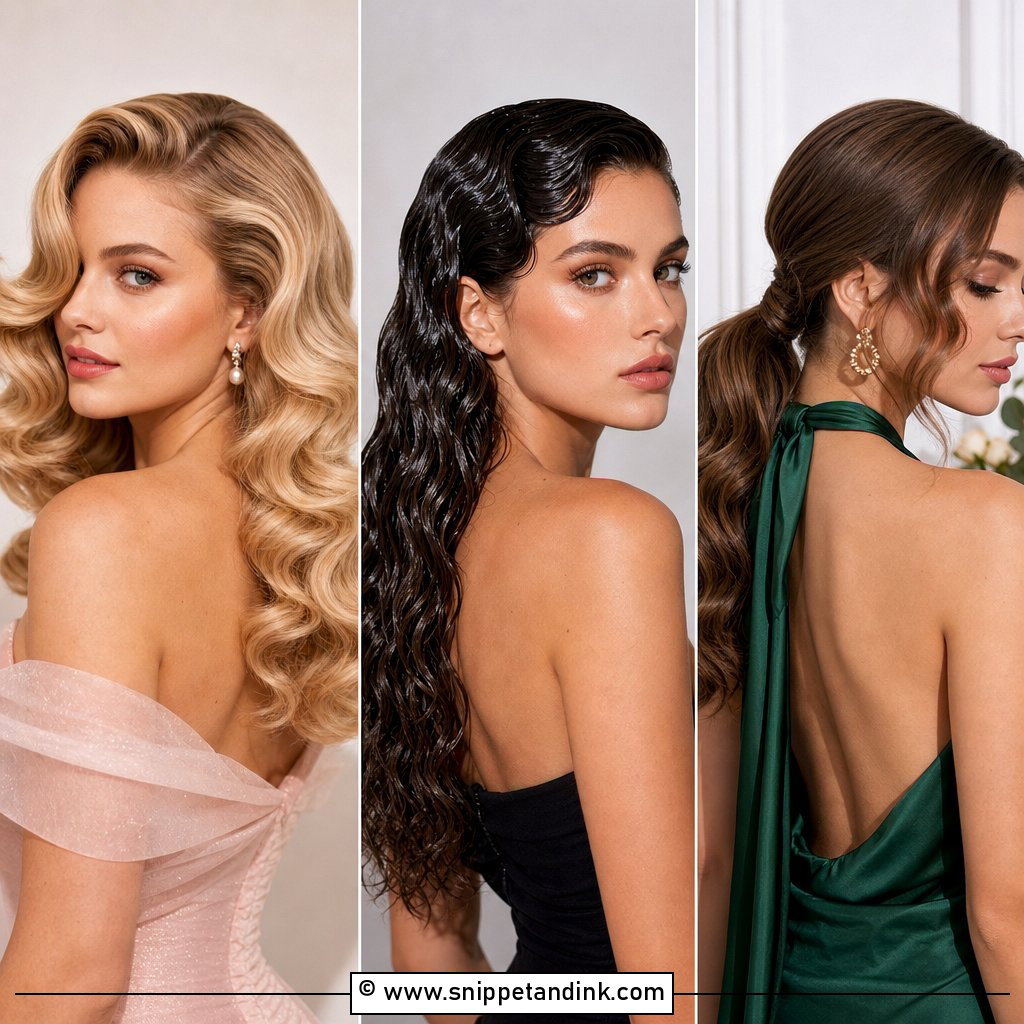
Mirror shine is half of what makes this look read as Hollywood rather than just curled. I get it from a smoothing cream before the set and a light shine mist after the brush-out, never heavy oil, which separates the waves and darkens blonde. Brunette and auburn reflect the most light, so the effect is strongest there. Satin dresses pick up the same sheen, which is why this pairing works so well for evening receptions.
11. Hollywood Waves With a Low Bun
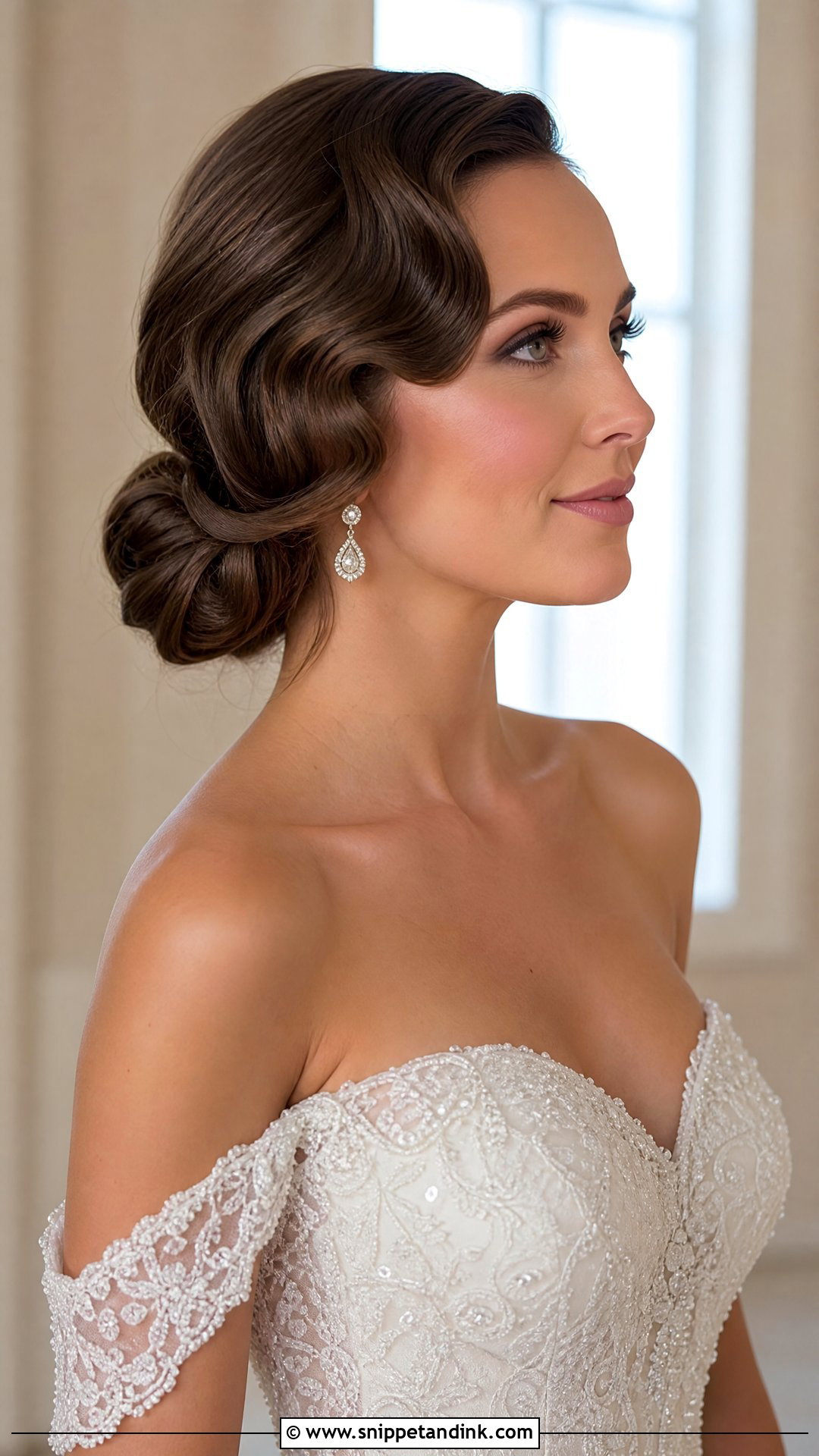
Here the front and crown carry the waves, then everything sweeps back into a soft low bun at the nape. It’s the version I suggest to brides who love the look but worry about hair on their neck during a long dance floor night. The waves only have to last on the shorter front sections, so they hold far better than a full down set. Leave room above the bun for a veil comb, and pick earrings with some length since the ears are fully on show.
12. Hollywood Waves With Bangs
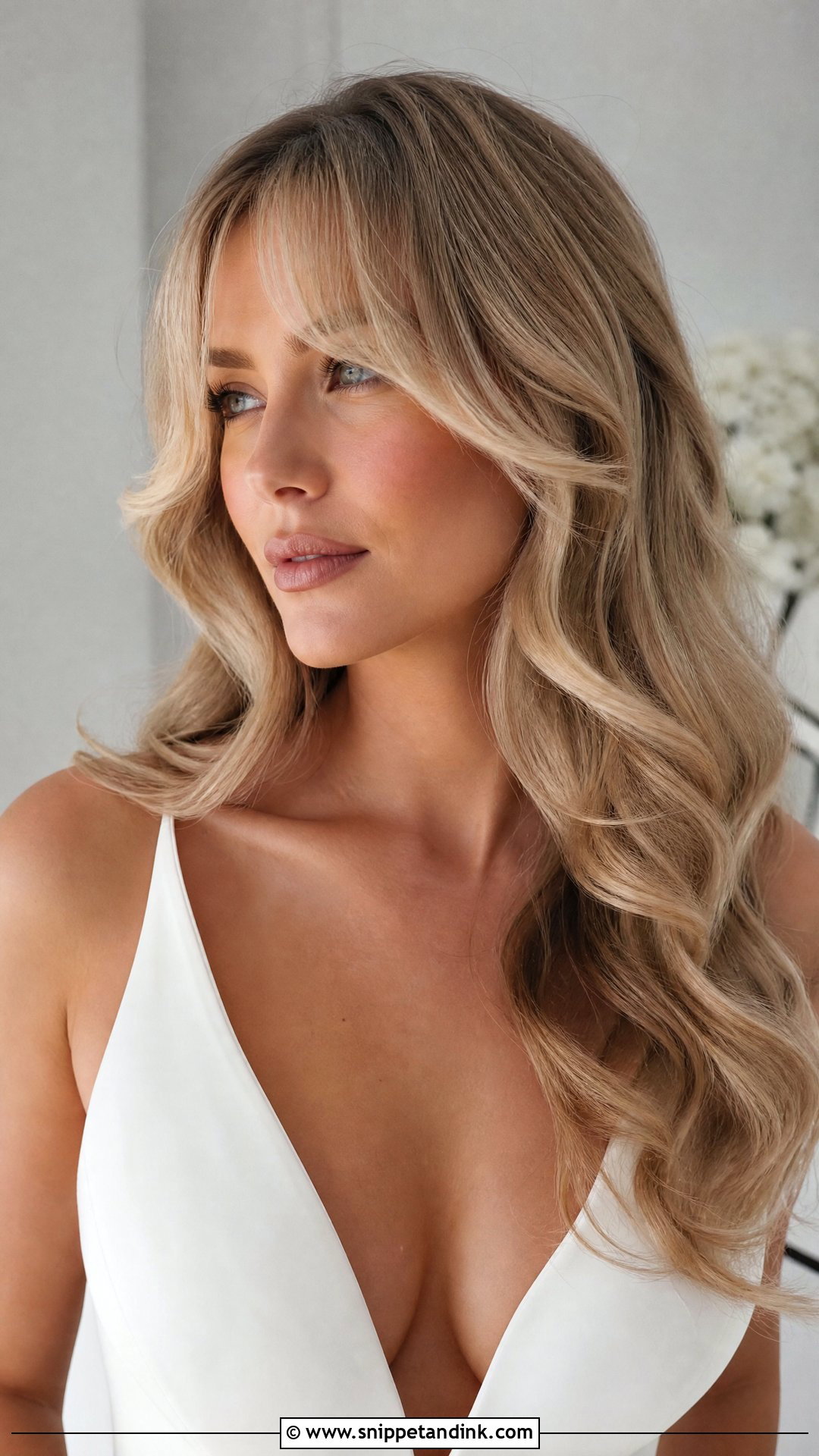
Curtain bangs or a wispy fringe soften the strong shape of a wave set and keep it from feeling costume-like. I style the fringe first, round-brushed and set to blend into the first wave, so the two read as one movement. This is for brides who already wear bangs. Cutting a new fringe in the last month is a risk I’d talk anyone out of, because it rarely settles in time.
13. Half-Up Hollywood Waves
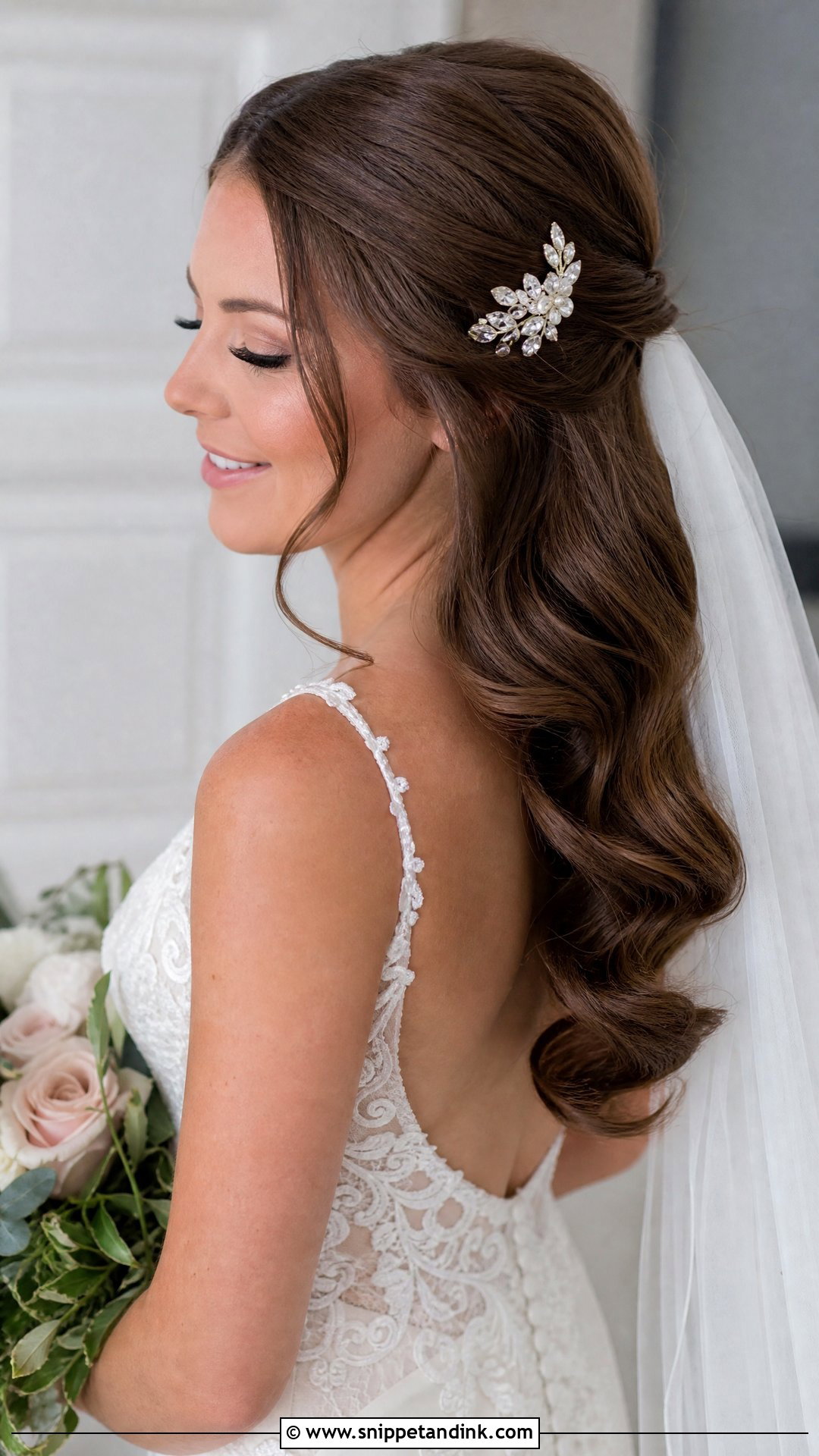
A half-up version pins or twists the top section back and lets the bottom fall in smooth waves. Because the top is secured, I can set the lower waves slightly firmer without the overall look turning stiff. It keeps hair off your face through the ceremony and still shows length. A decorative clip covers the pins at the join, and a veil anchored right above that clip stays very secure.
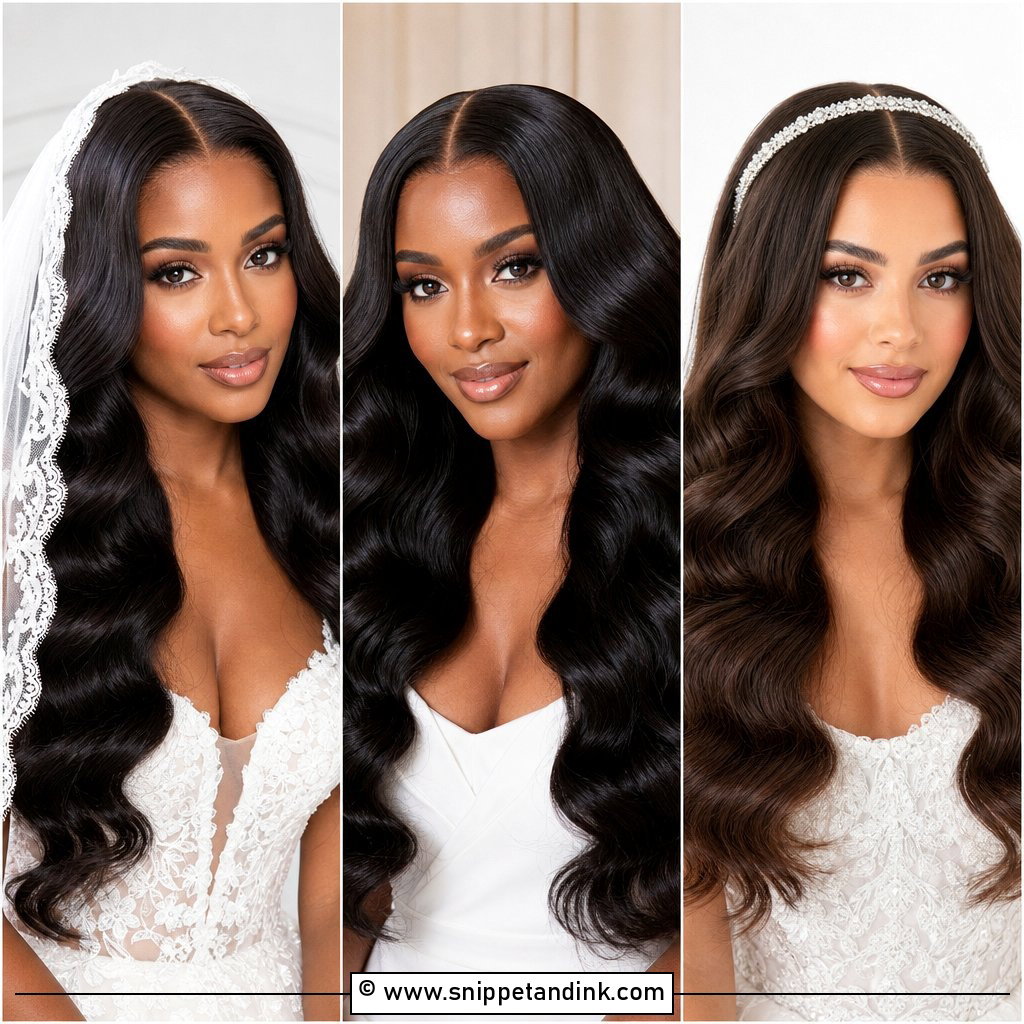
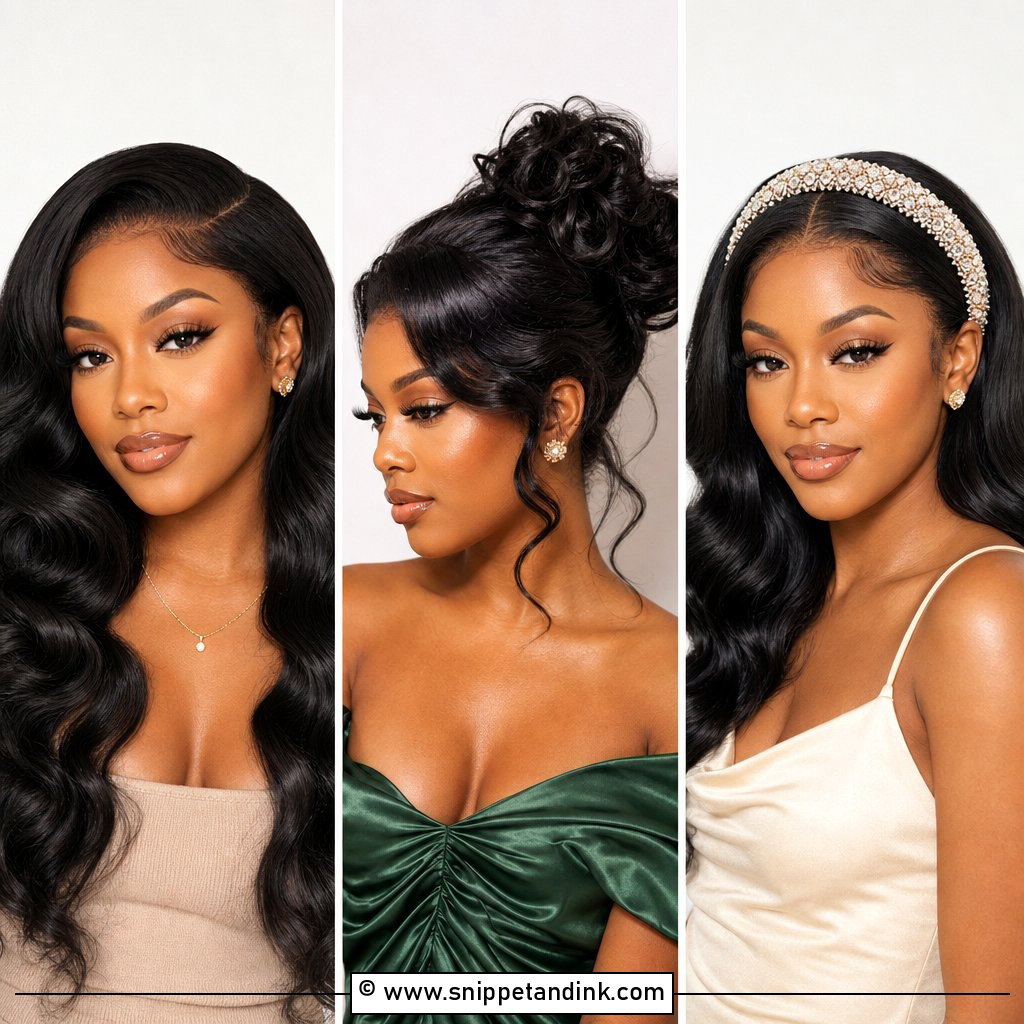
14. Hollywood Waves for Black Hair
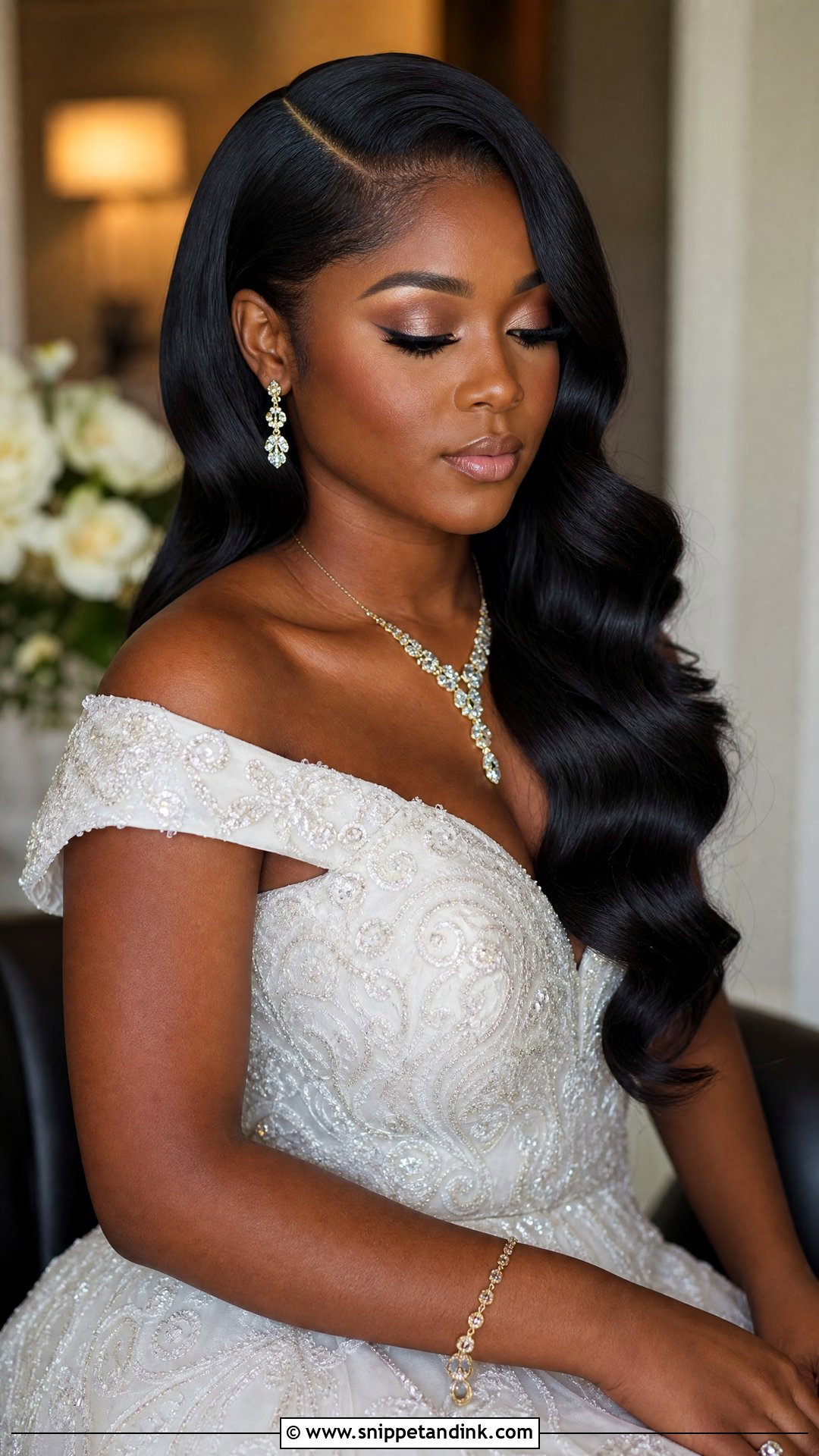
On Black hair, these waves are usually built on a silk press or relaxed hair, and the shine on deep tones makes the pattern show clearly. The thing I watch most is heat. I press once, at a sensible temperature, and set with rollers rather than going back over sections with a hot iron, because repeated passes can cause lasting texture damage. Humidity is the other enemy, so I seal the finished set with an anti-humidity spray. Bold gold jewelry and a strong gown suit it well.
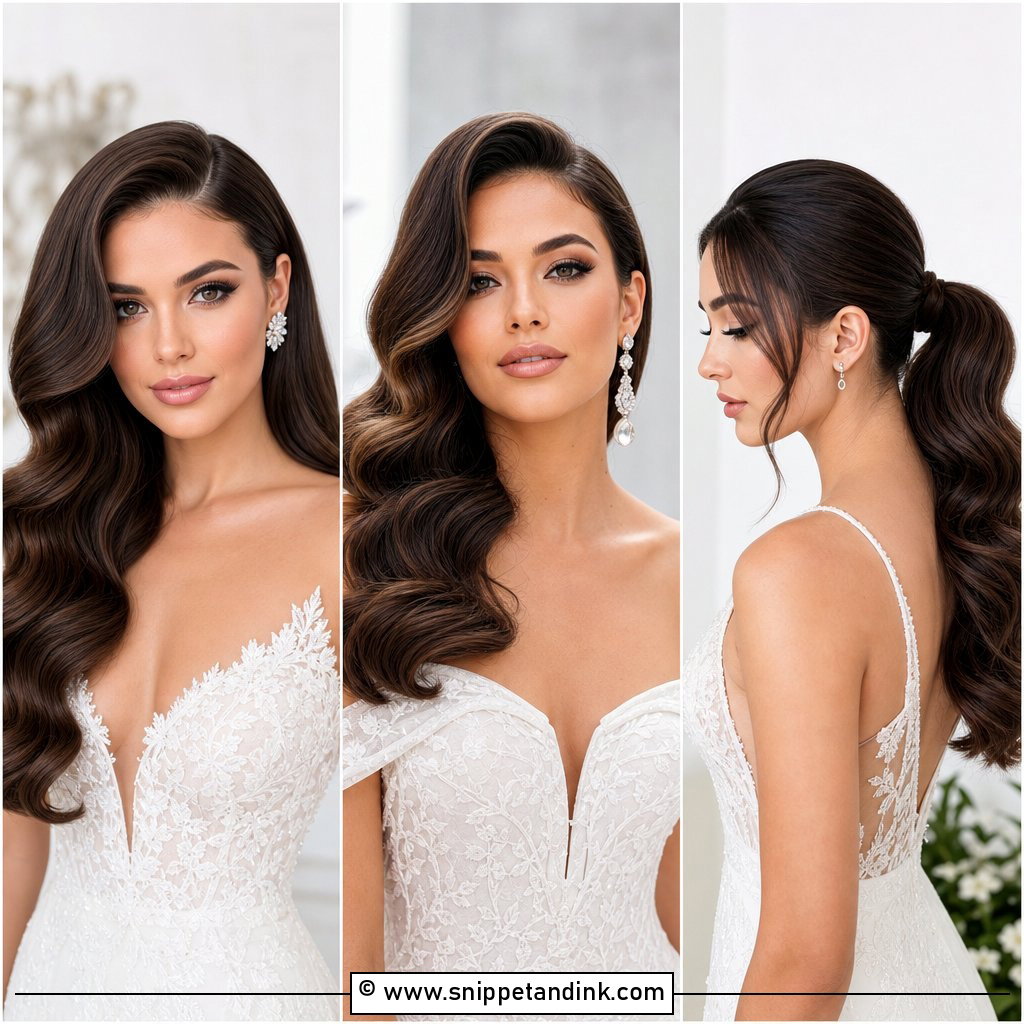
15. Hollywood Waves With Blonde Hair
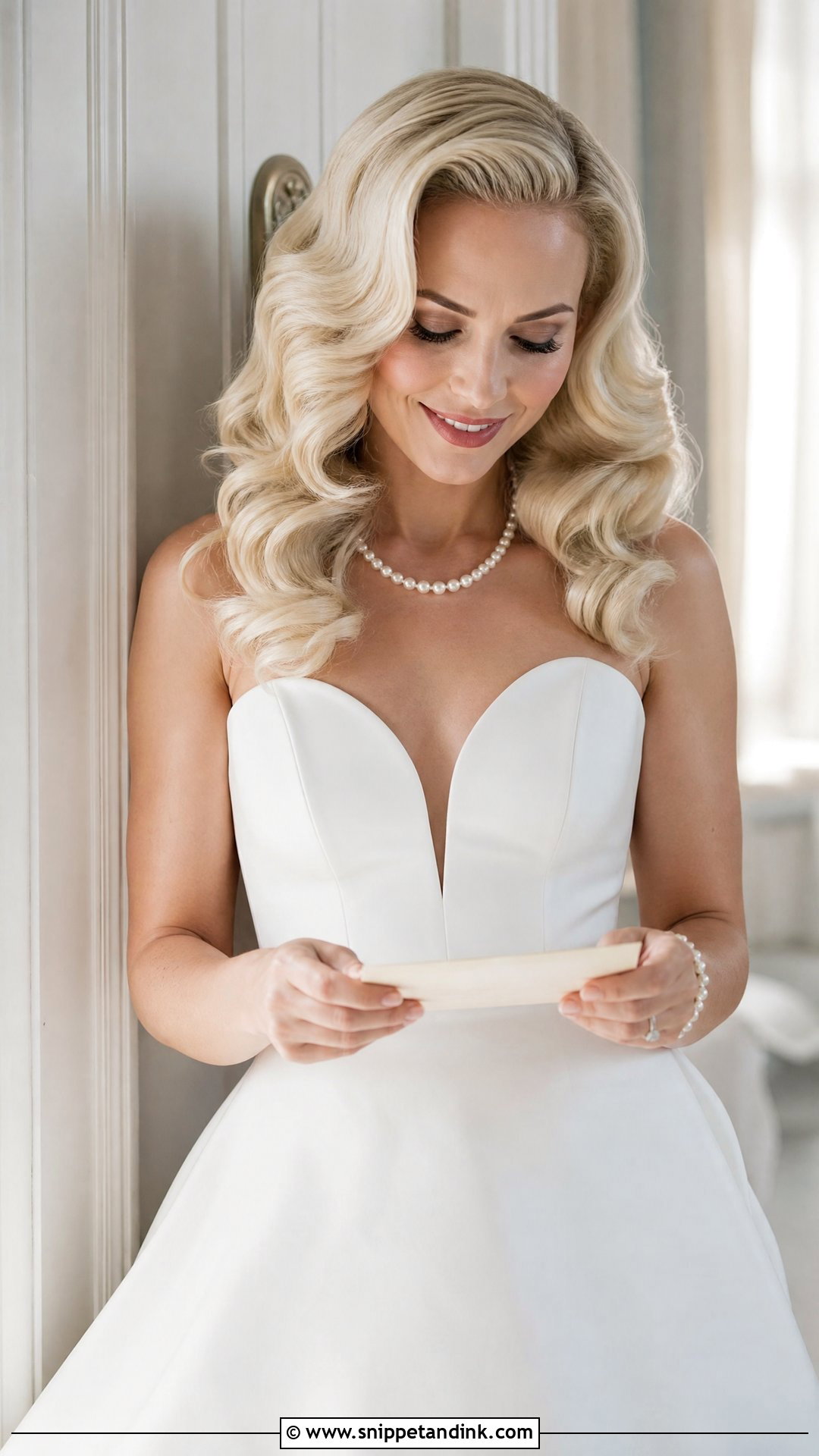
Blonde Hollywood waves carry the Marilyn Monroe and Grace Kelly reference, and pale tones show every highlight along the curve of the wave. They also show every flaw, so I’m careful with product. Too much shine spray goes greasy on light hair under flash. Golden, platinum, and honey shades all suit it, and daylight weddings flatter blonde waves more than dim evening rooms do. Pearls and a crystal comb sit nicely against the soft contrast.
16. Hollywood Waves With Tiara
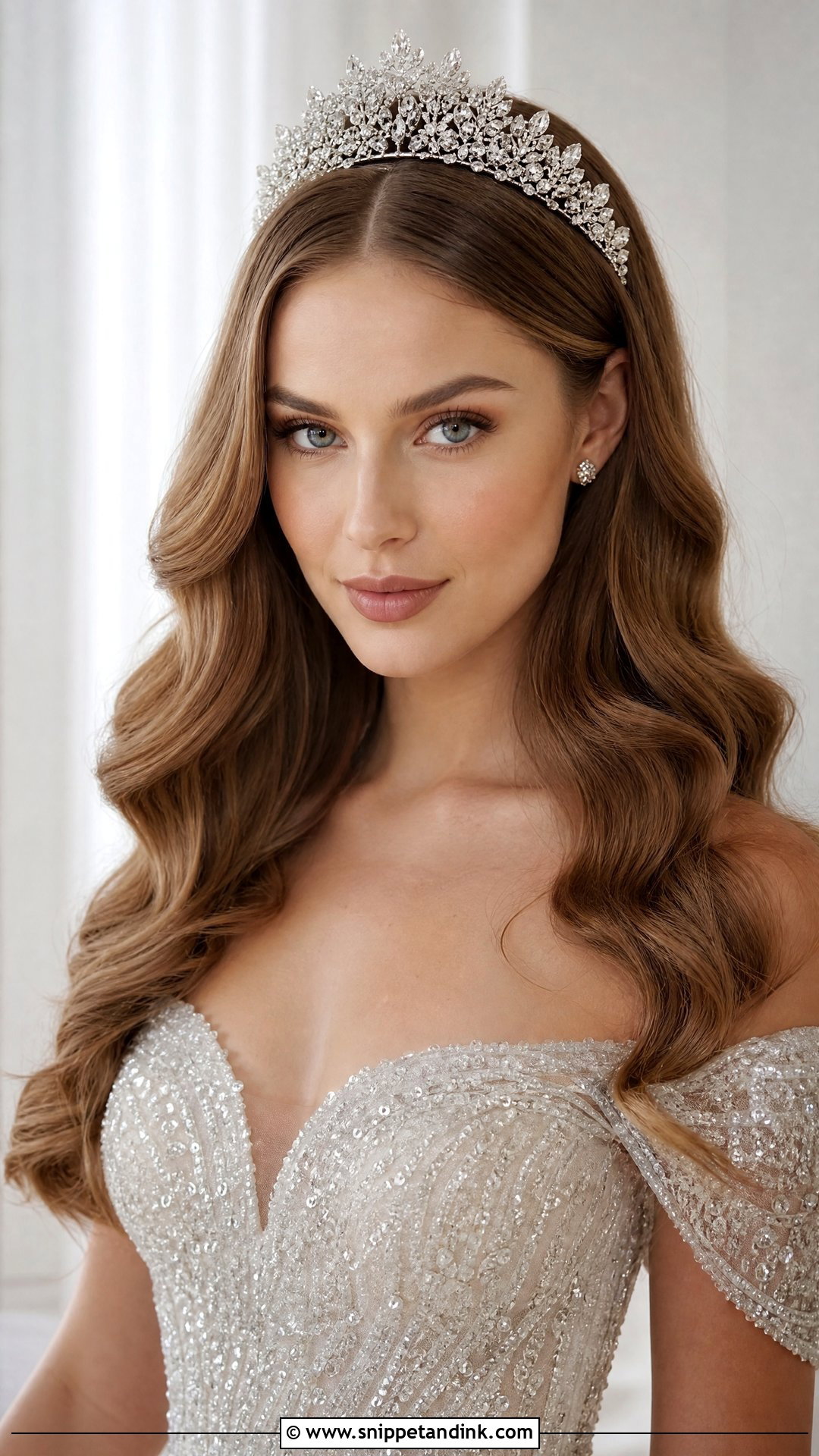
A tiara on top of smooth waves turns this into a full ceremonial look. A center part gives the tiara a level base, and I secure it with pins threaded through its side loops into small anchor sections underneath, so it doesn’t rock forward when you look down. The waves fall from under the band, which is why the set has to be finished before the tiara goes on. Match the tiara’s crystal or pearl to your earrings so the head doesn’t read as two separate stories.
17. Hollywood Waves With Red Hair
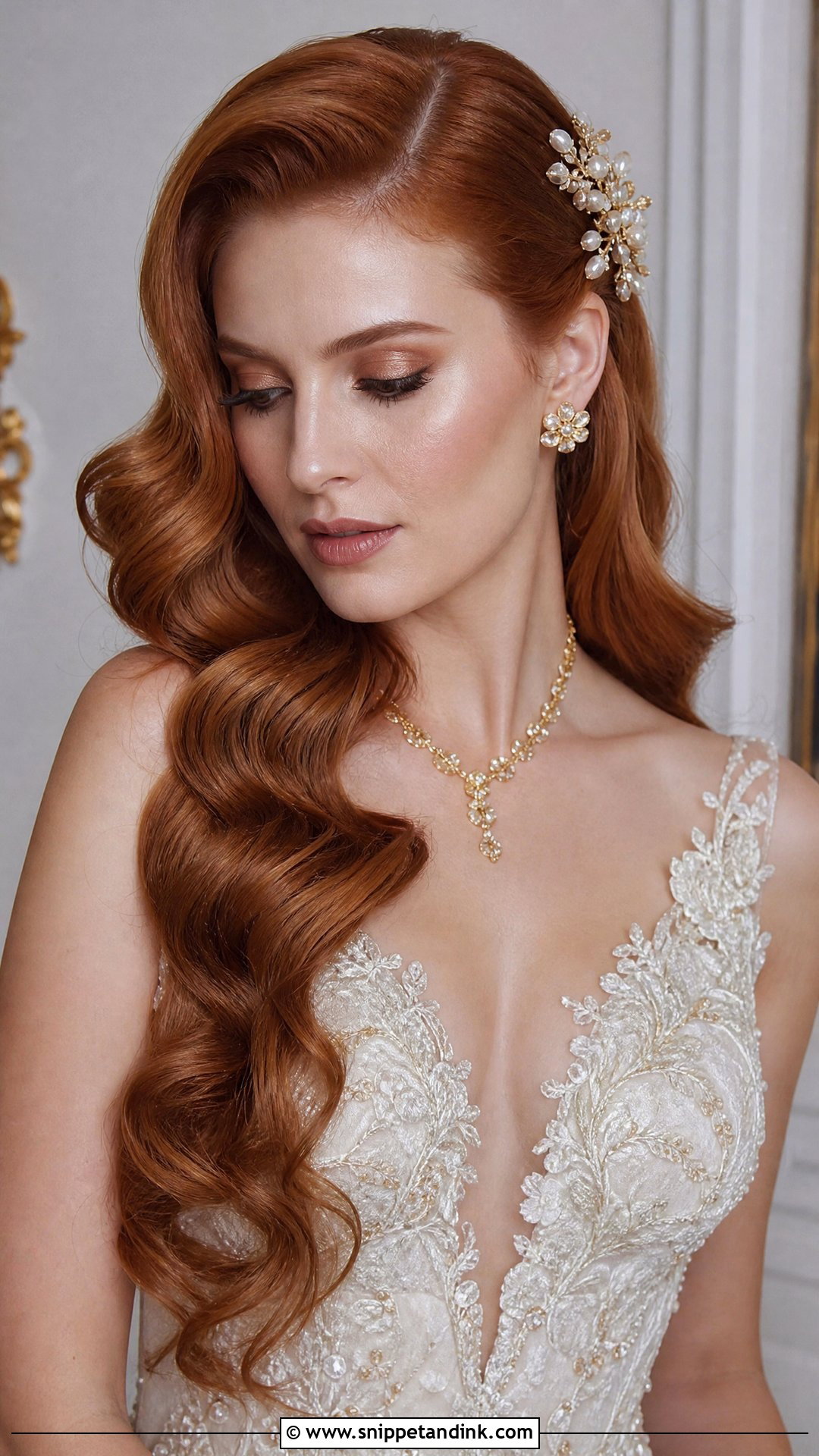
Red hair and this style give you a fiery, unforgettable bridal look, very much in the Rita Hayworth tradition. Copper and auburn shades catch light along each ridge, so a little shine spray goes a long way. I’d steer red-haired brides toward ivory or champagne fabric, because stark white can make warm tones look orange in photos. Gold and emerald accents sit well with the color.
18. Hollywood Waves With Side Tuck
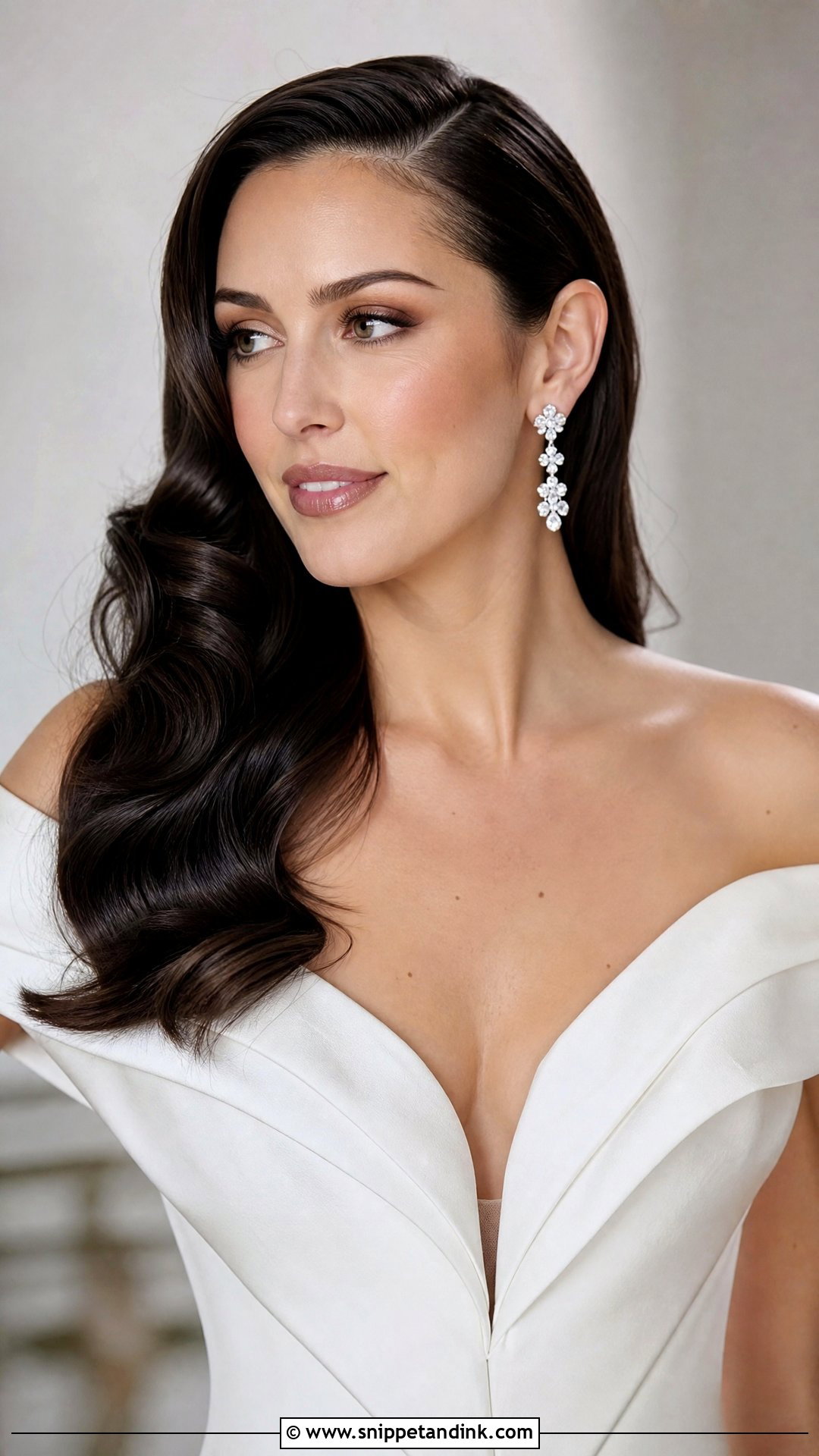
Tucking one side behind the ear gives a clean line on one side and full waves on the other. I secure the tucked section with a pair of crossed pins under the hair, or a small comb if you want it seen, because a single pin works loose as soon as you start hugging people. It lengthens the neck and frames one earring. Structured gowns suit it, since the hair already has a crisp, editorial shape.
19. Hollywood Waves for Asian Hair
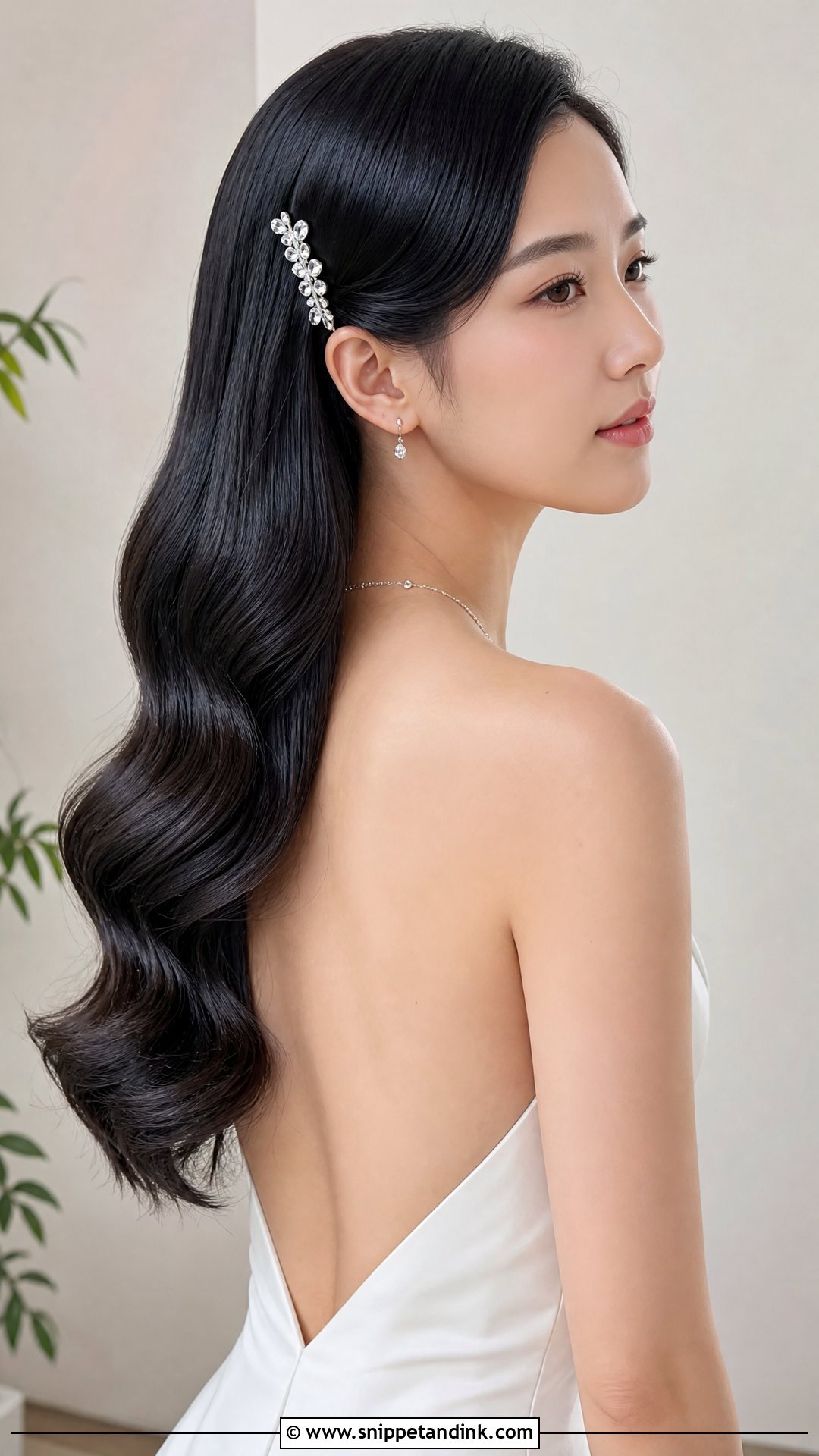
Straight Asian hair takes on mirror shine easily but often resists holding a curl. I prep with a setting lotion on damp hair, curl small sections, and pin every curl to cool completely, since that cooling stage is what locks the shape on smooth, heavy strands. Skip it and the waves relax by the first dance. Deep black and dark brown tones show the pattern clearly. Minimalist gowns and a single crystal pin suit the finish.
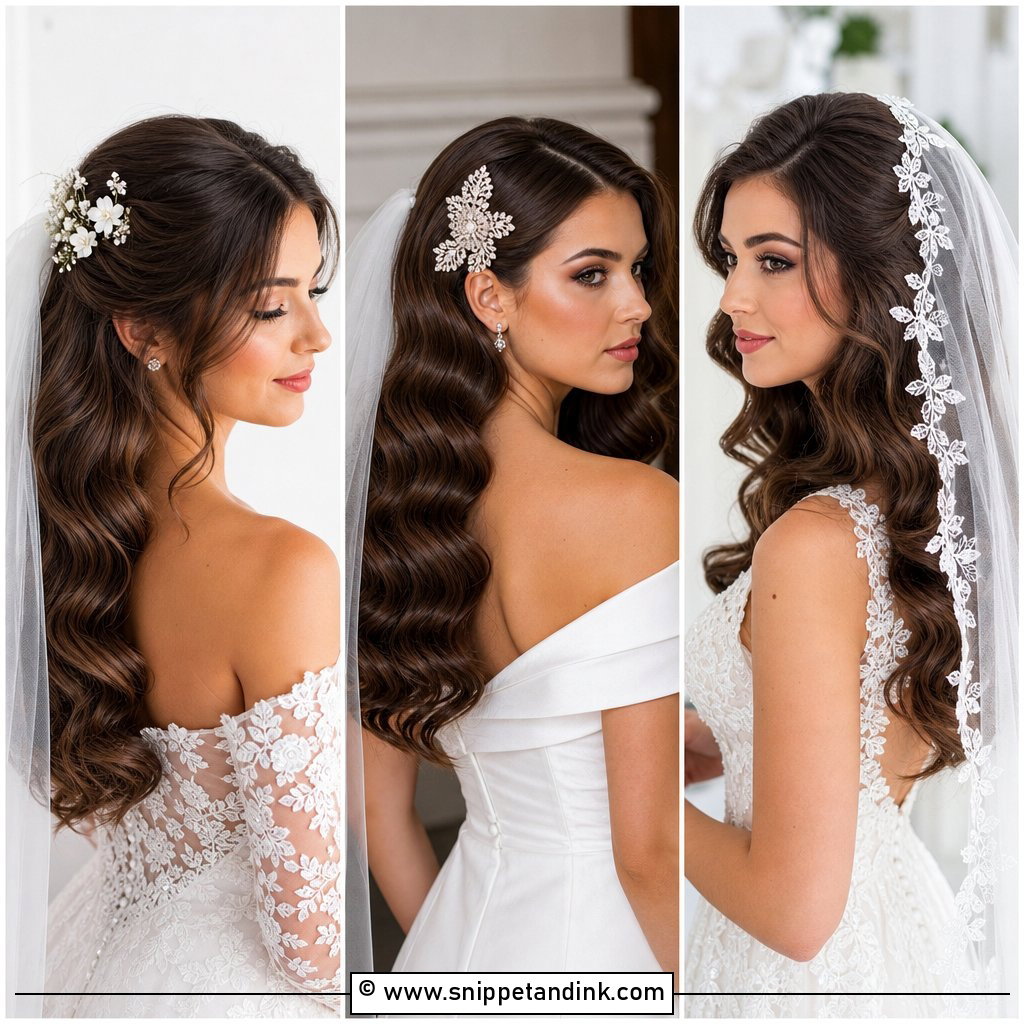

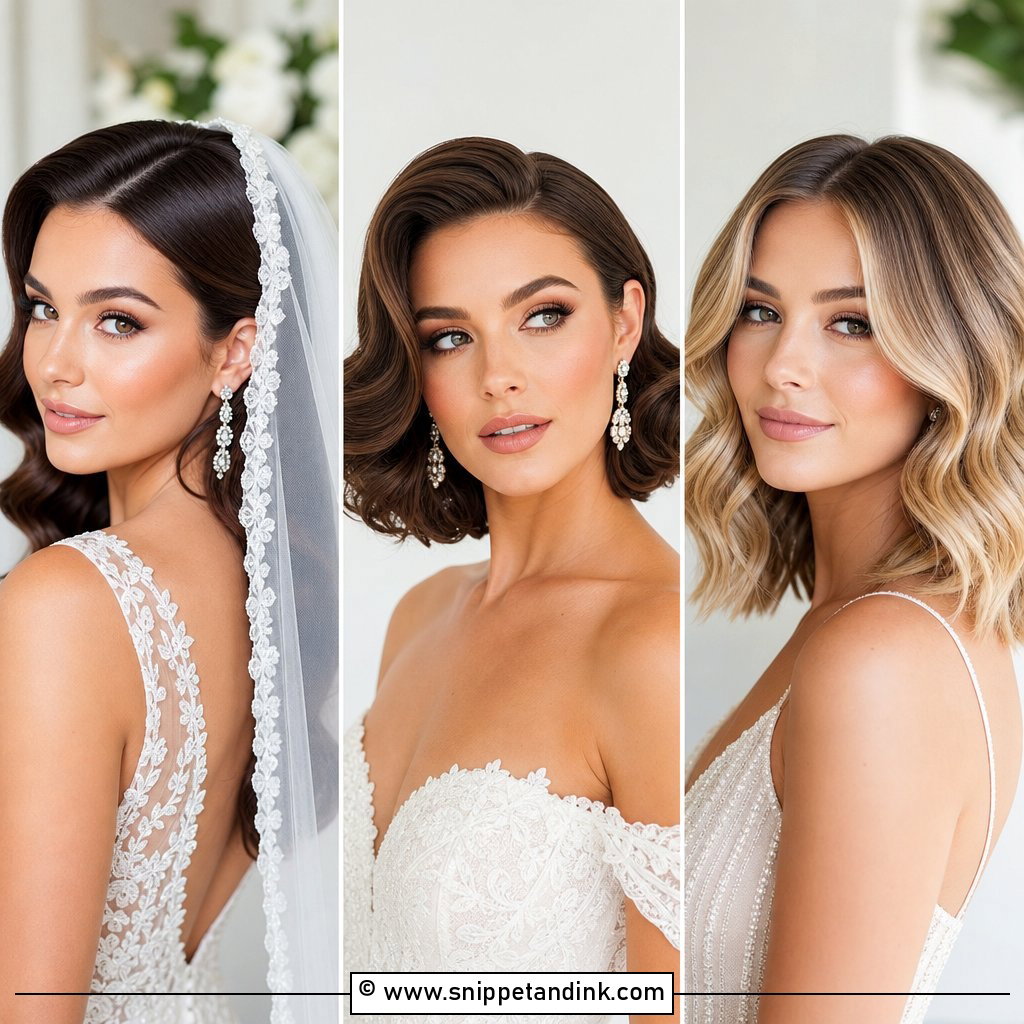
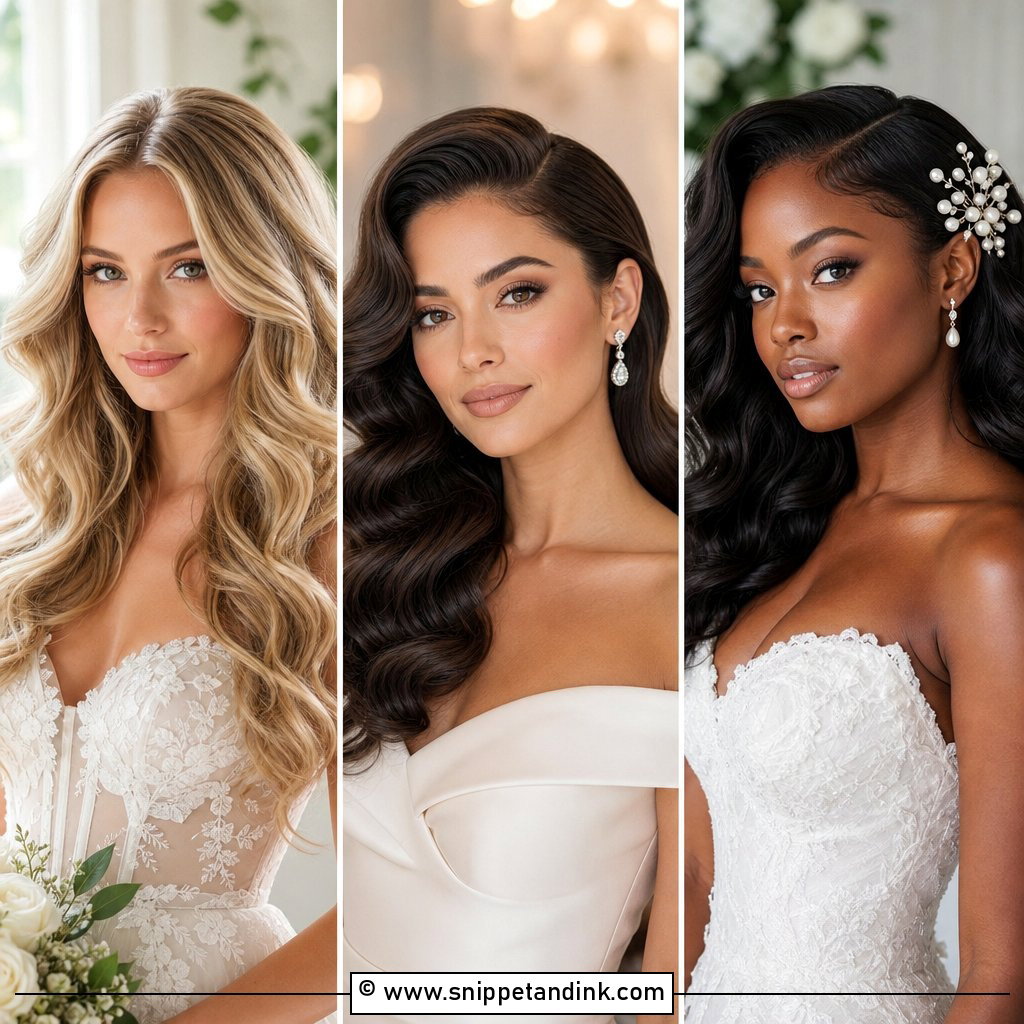
20. Hollywood Waves With Statement Earrings
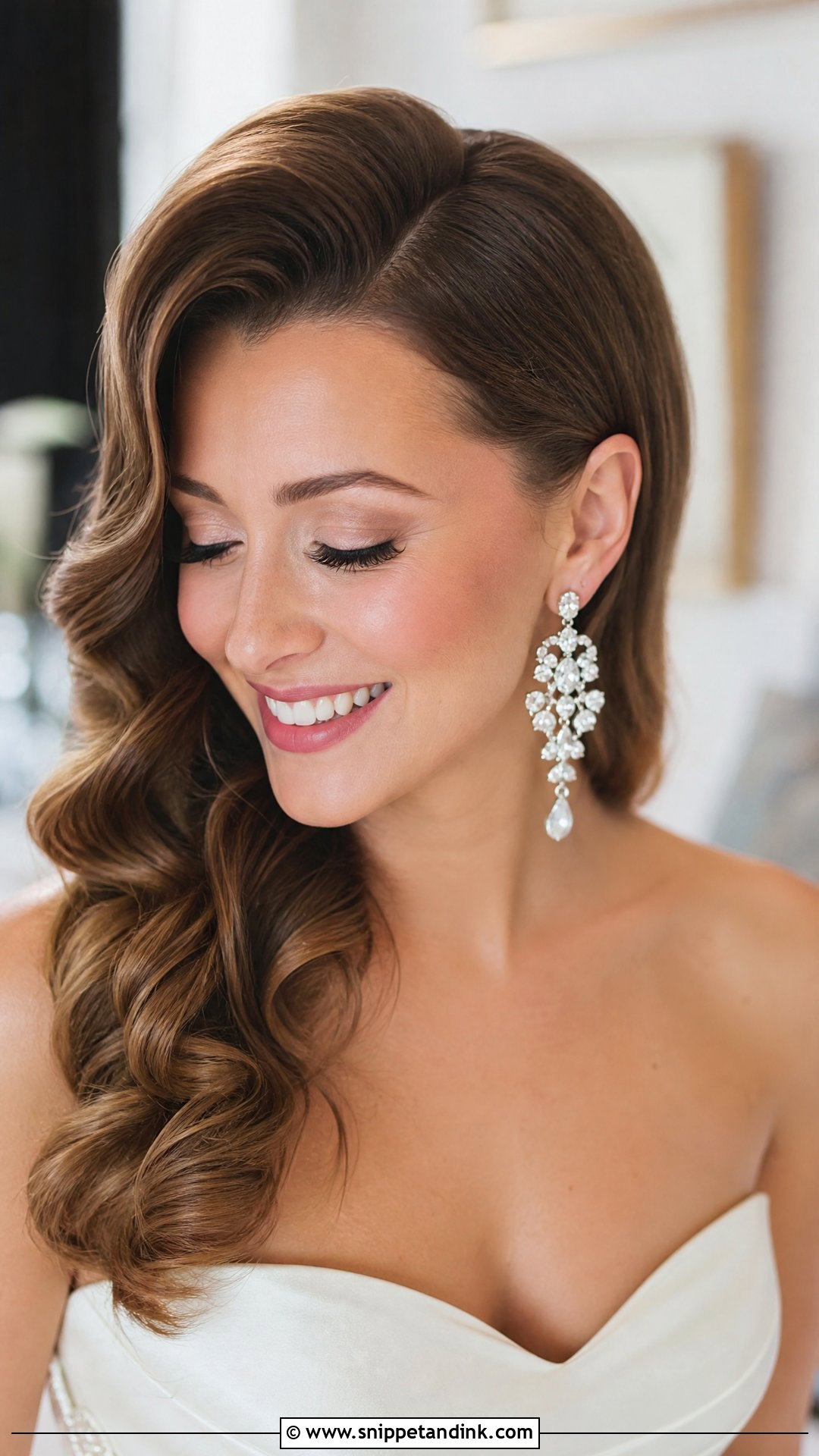
Sometimes the earrings are the point and the hair is there to frame them. I sweep the waves over one shoulder so one ear and the neck are fully clear, which suits chandeliers, long drops, or a big pair of studs. The effect is very red carpet ready. Keep the neckline quiet. A lace collar or beaded strap on the same side as the earring fights for attention.
Will the Waves Last Until the Last Dance?
A wave set is at its sharpest in the first hour and loosens steadily after that. That’s normal, and on most hair a slightly relaxed wave by the reception still looks right. What ruins it is humidity, heat, and hands. Damp air makes hair swell and the ridges blur into frizz. A hot dance floor does the same, and constantly touching or tucking the waves pulls them apart.
On humid or outdoor days I set firmer than usual, seal with an anti-humidity spray, and keep the front section slightly more defined, because that’s the part every camera sees. If your venue is sticky in summer, consider the low bun or tucked versions, which carry less loose hair.
A small kit for your maid of honor
- Two or three long flat clips for pressing a ridge back in for a few minutes
- A travel spray of the same hairspray your stylist used
- A handful of bobby pins matched to your hair color
- A small boar bristle brush for smoothing the surface, not for brushing through
Making Your Trial Count
Book a trial for this style rather than trusting it to the morning. The set itself takes time, and it’s the only way to find out how your hair behaves after four or five hours. Arrive with clean, completely dry hair unless your stylist asks otherwise, and wear a top with a neckline similar to your dress so the volume can be judged against it.
Bring the veil, comb, or tiara you plan to wear. Then leave the trial on for the rest of the day and take photos in daylight and indoors, with flash on at least once. If the waves have fallen flat by evening, tell your stylist exactly when it happened. That’s the information they need to change the product or set size before your wedding.
One Set, Twenty Ways to Wear It
Every version here starts from the same set: curls rolled in one direction, cooled, brushed out, and pressed into ridges. The variations are part, length, accessory, and how firmly the wave is held. Save the two or three that match your dress and hair type, bring them to your trial, and ask your stylist to wear-test the set for a few hours before you commit. That way your screen-siren moment still looks the same at the last dance.
You'll Like These Ideas:


Leave a Reply