
Layers change how bridal hair behaves. They give a style lift at the crown and movement at the ends, which is why curls tend to look fuller on a layered cut than on one blunt length. They also leave short pieces that can slip out of a bun by mid-afternoon. When a bride with layers sits in my chair, the first thing I do is find her shortest layer and see where it lands, because that tells me which styles will hold and which will need extra work. The 20 ideas below run from half-up looks to updos and braids, and for each one I’ve noted how the layers help, where they cause trouble, and what I do about it.
Where the Shortest Layer Decides What Will Hold
Before I suggest any style, I gather the hair into a loose ponytail at the nape and watch which pieces fall out. That simple test tells me more than a mood board. If only the face-framing layers escape, almost every style in this list is open to you. If pieces fall from the sides and the back of the head too, updos will need a different plan.
Layers ending at the jaw or longer
Most updos and half-up looks work without fuss. I’ll curl or twist the short pieces into the style, and anything that does escape reads as soft texture.
Layers ending above the jaw
These pieces won’t reach a low bun. Braids hold them better than smooth rolls, so a braided bun or crown braid is a safer bet than a sleek chignon. Half-up styles and hair down suit you best of all, because the short layers can stay loose on purpose.
Heavy, choppy or recently cut layers
This is where I suggest clip-in extensions in your color. Even a few wefts at the back fill in the gaps between lengths so an updo can hold, and they add weight that helps curls last. Bring them to the trial so we can blend and cut them in if needed.
Prep matters too. Clean, silky hair lets layers slide out, so I ask brides to wash the night before rather than the morning of, and I start with a texture spray or dry shampoo at the roots. Hair with a little grit gives pins something to grip.
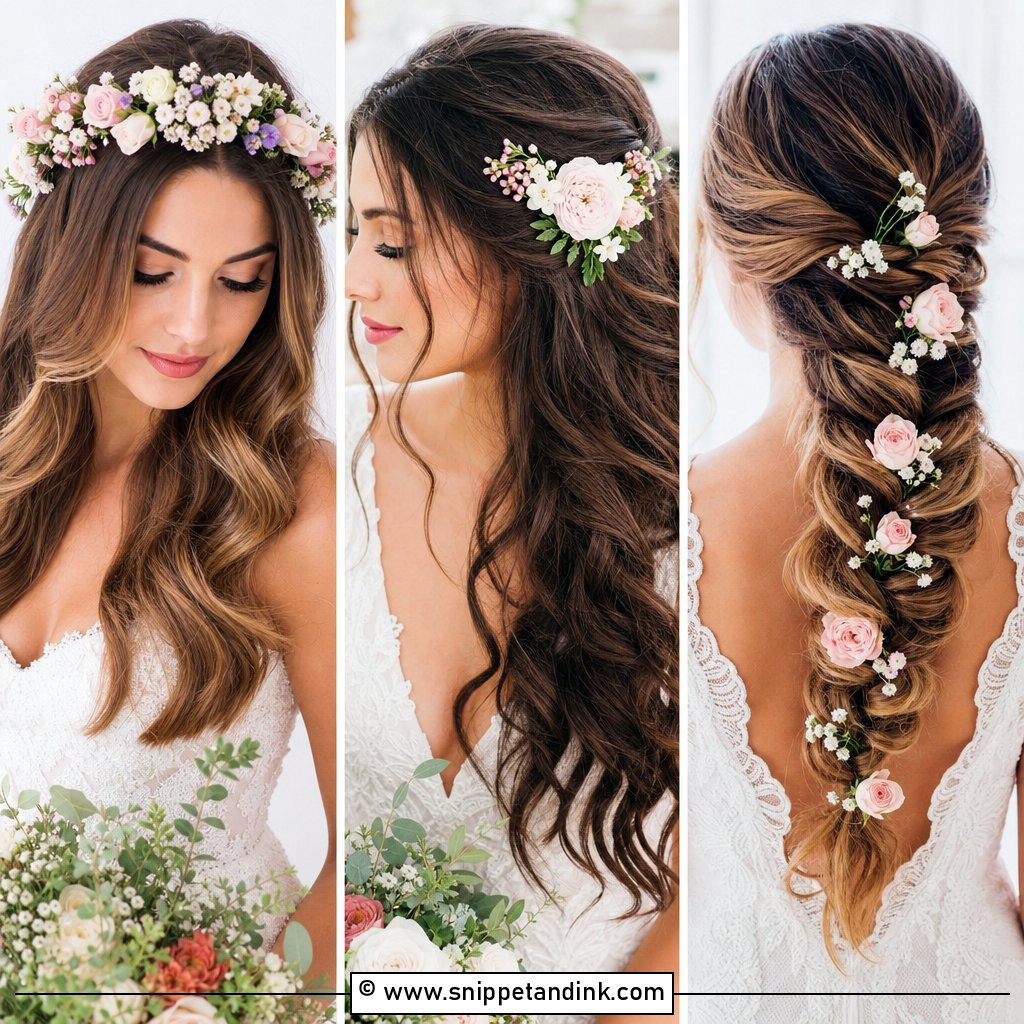
1. Half-Up Half-Down With Loose Curls
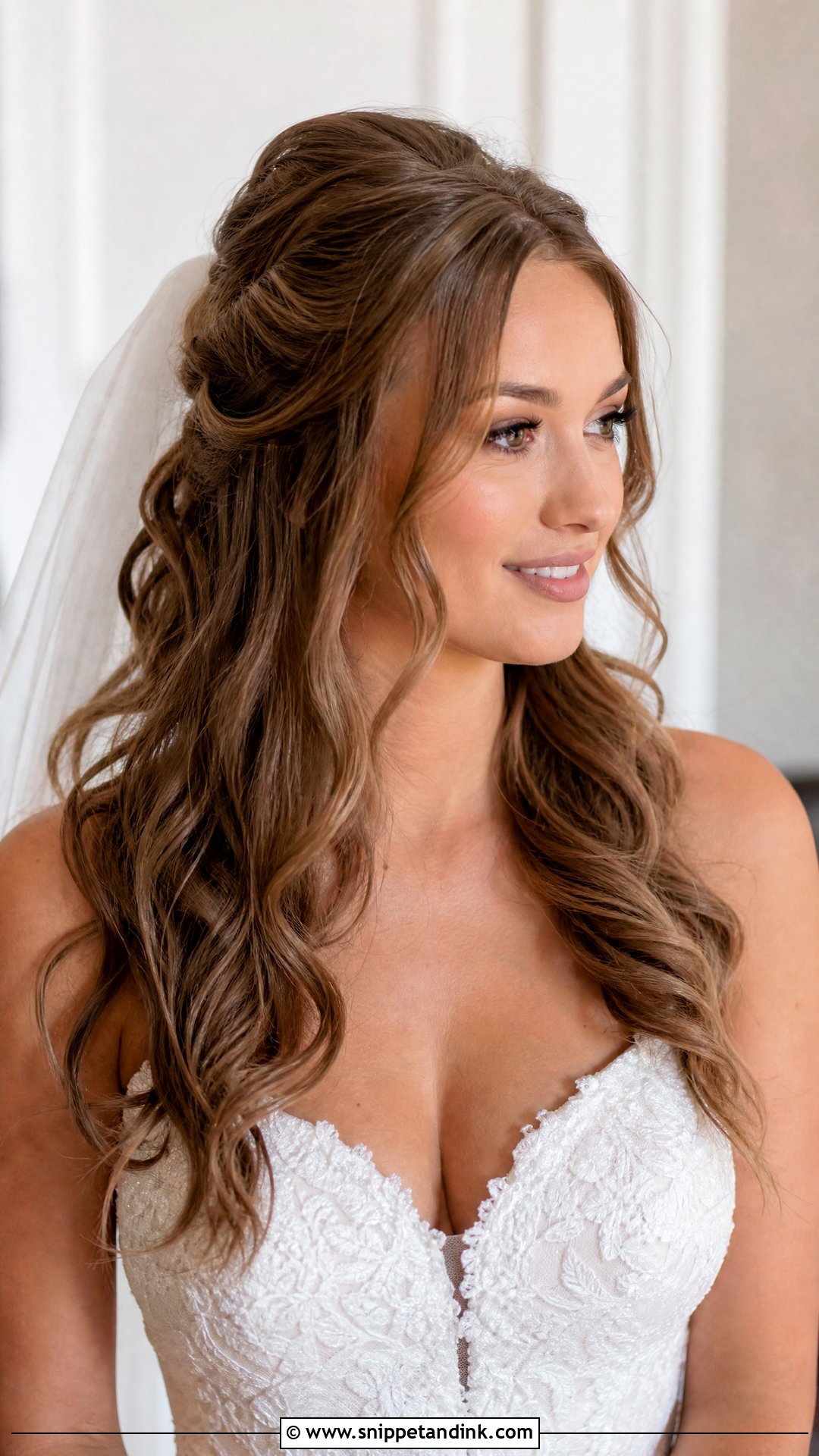
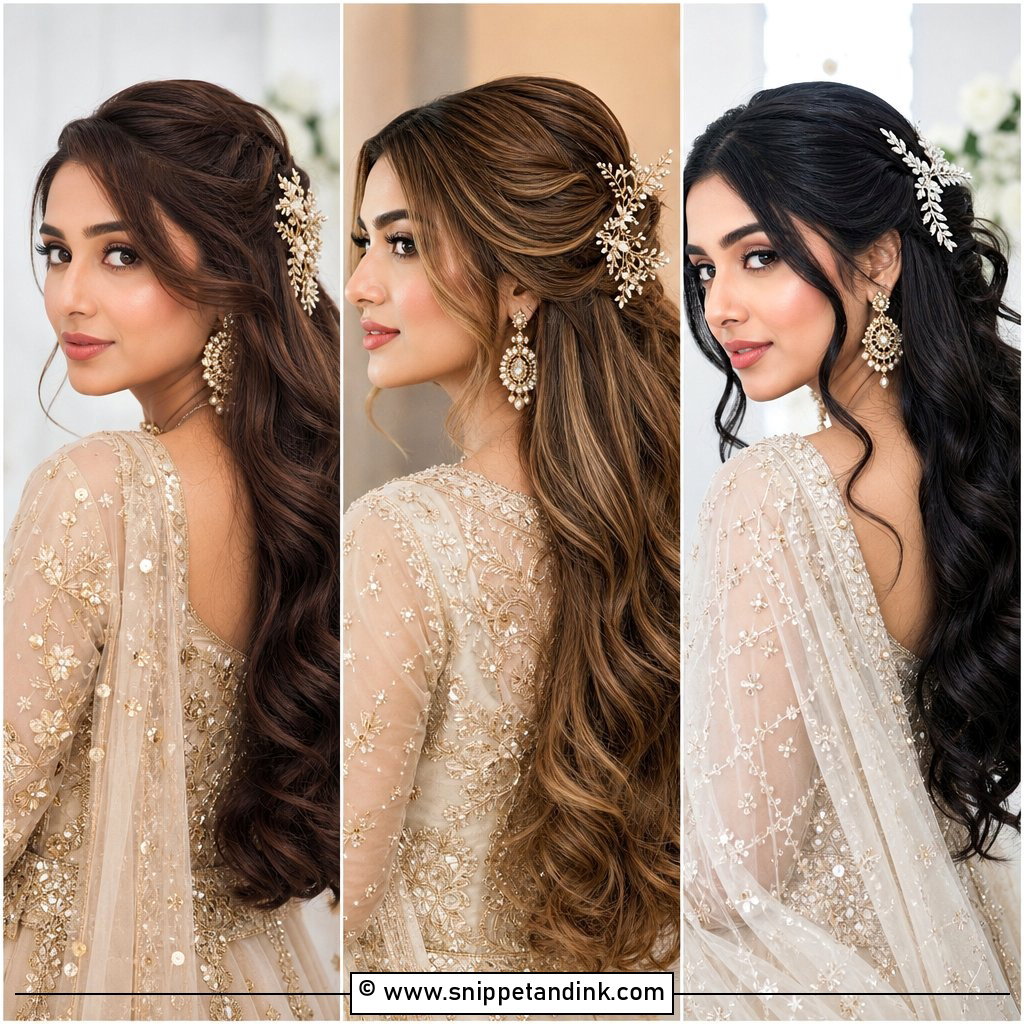
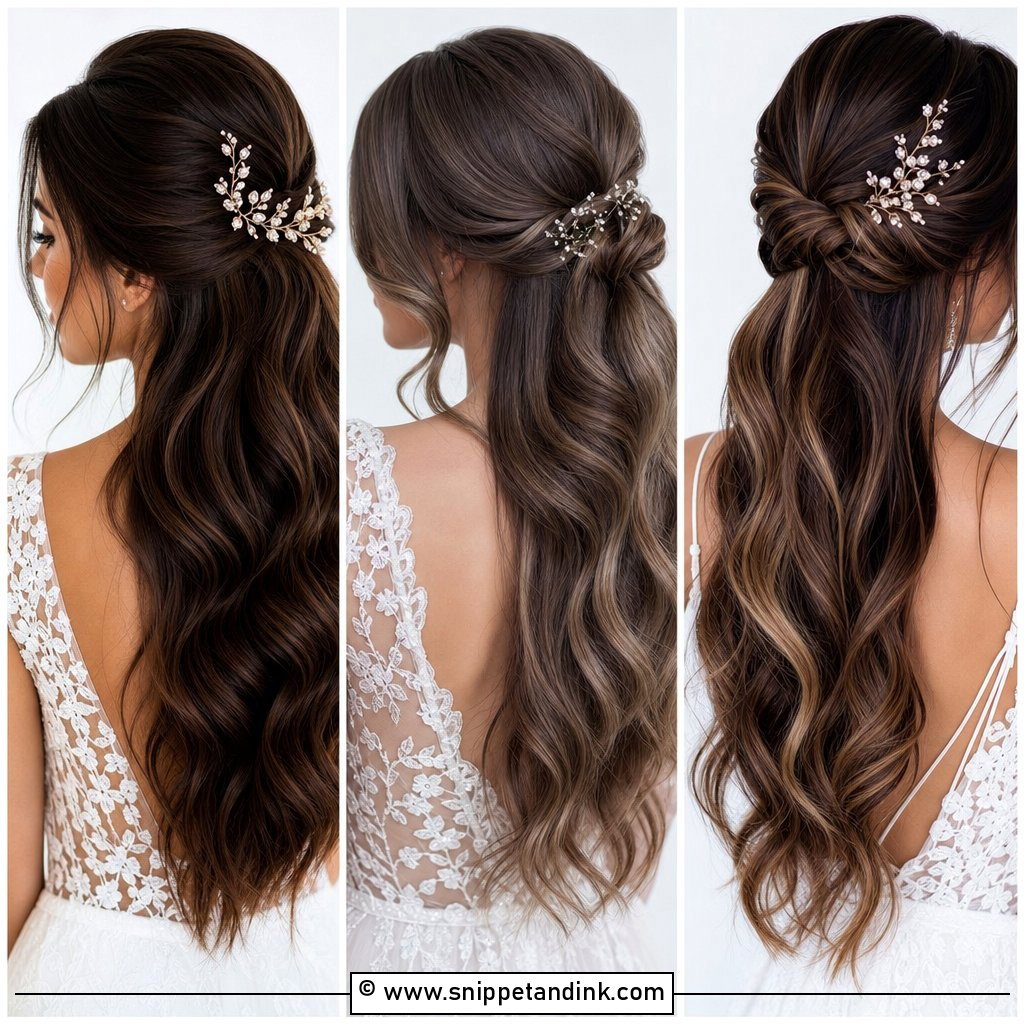
This is the style I reach for most often with layered hair, because it needs nothing from the shortest pieces. I take a horseshoe section from the temples back, secure it at the crown, and leave the rest loose so the layers fall in tiers. The shorter front layers sit around the face on their own. One warning: curls on layered hair drop faster than on a blunt cut since the ends are lighter, so I curl in smaller sections than you’d expect and pin each curl to cool before brushing it out. A veil comb slides in neatly just under the secured section.
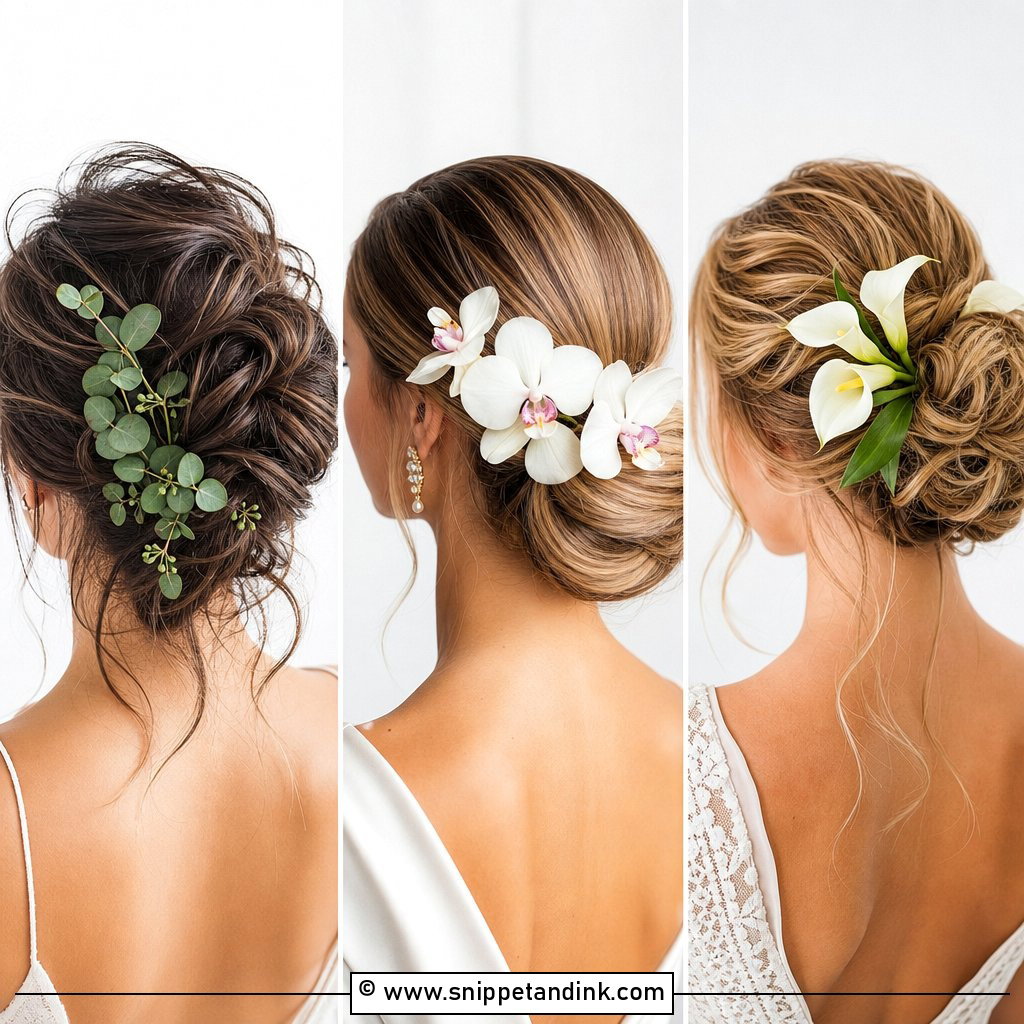
2. Romantic Low Bun With Face-Framing Layers
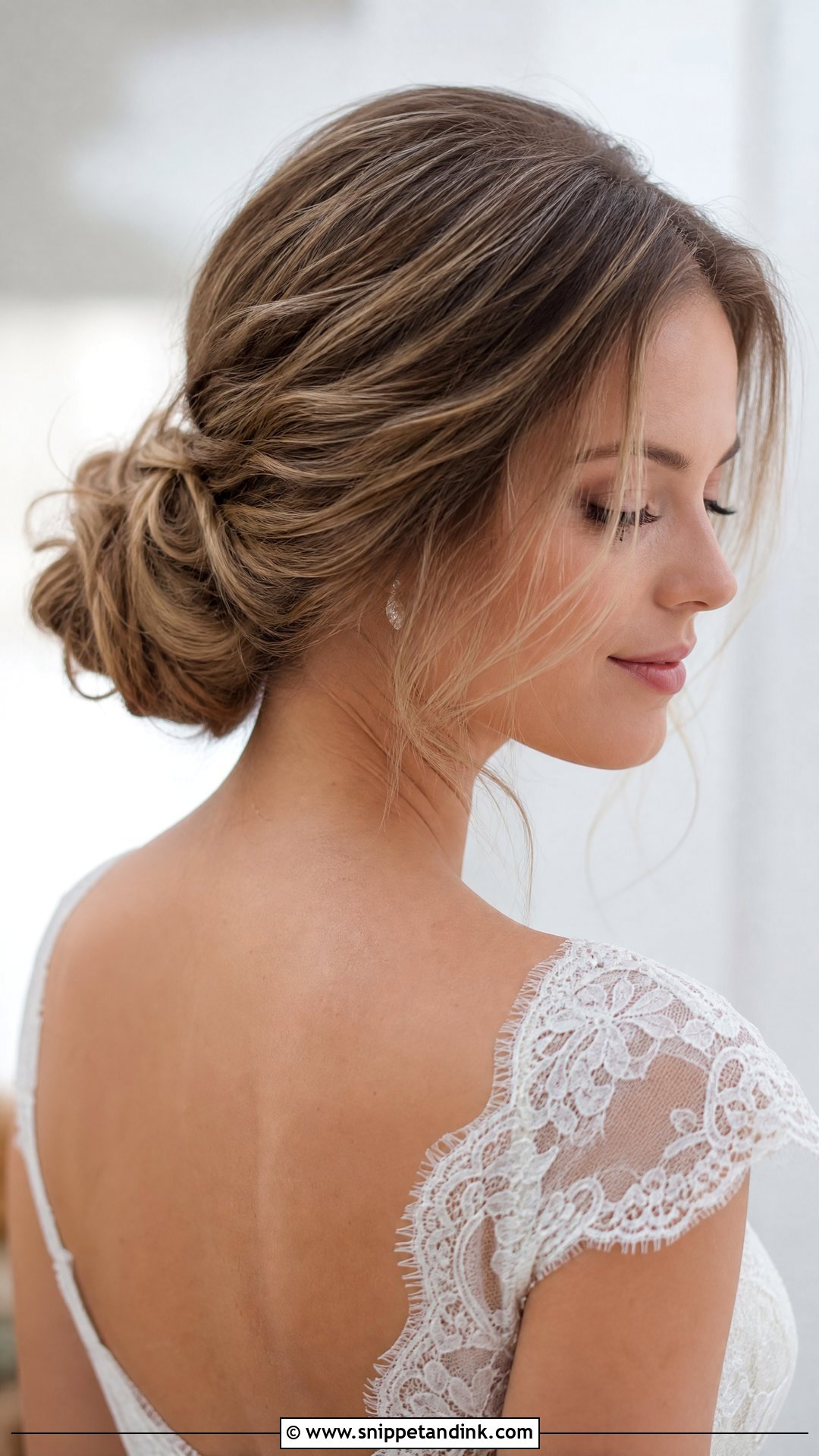
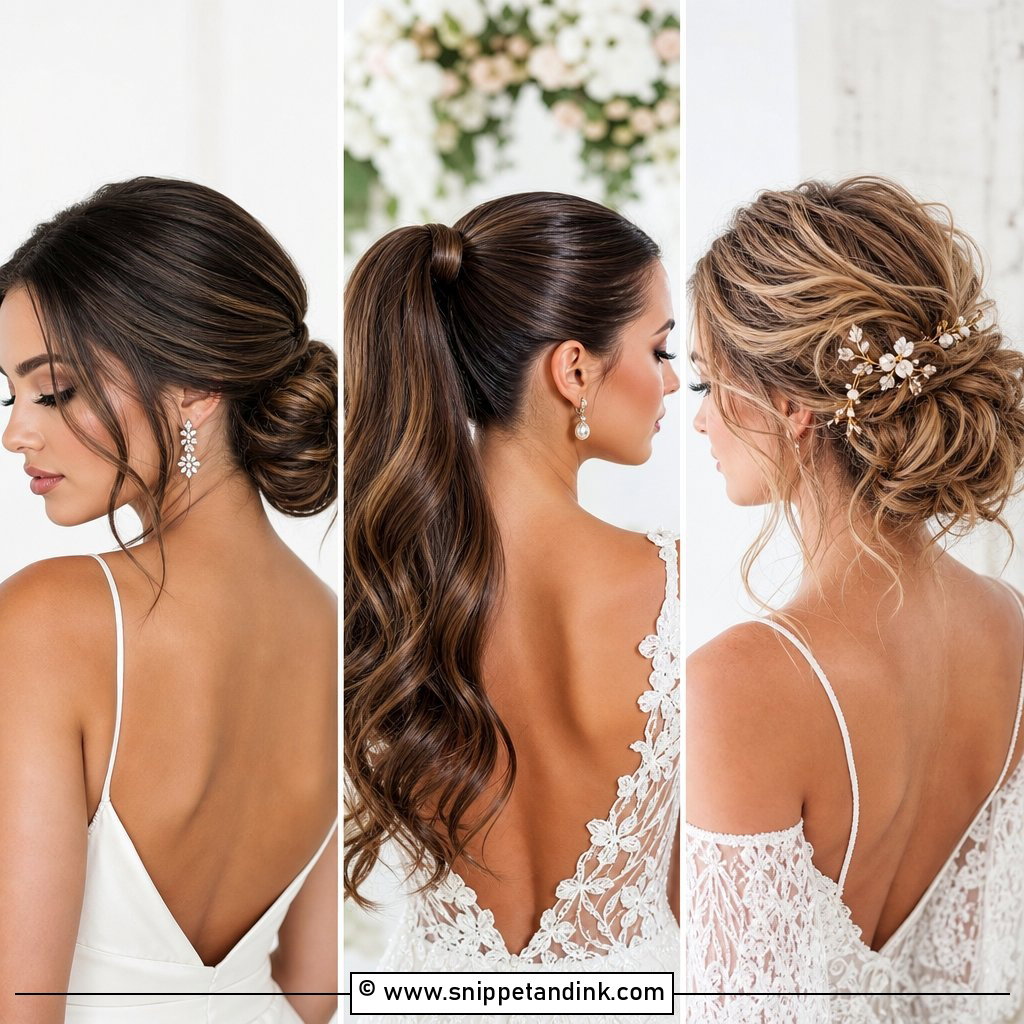
A loose bun at the nape suits layered hair better than a tight one. Trying to polish every short layer into a sleek knot fights the cut, and the stray ends usually work free by the reception anyway. So I set the bun low and soft, then pull out the face-framing layers on purpose so they look intended rather than escaped. Those wispy pieces need a light curl of their own, or they hang limp beside a textured bun. A low bun also leaves the crown free for a veil, which matters more than most brides think during planning.
3. Boho Braided Crown for Layered Hair
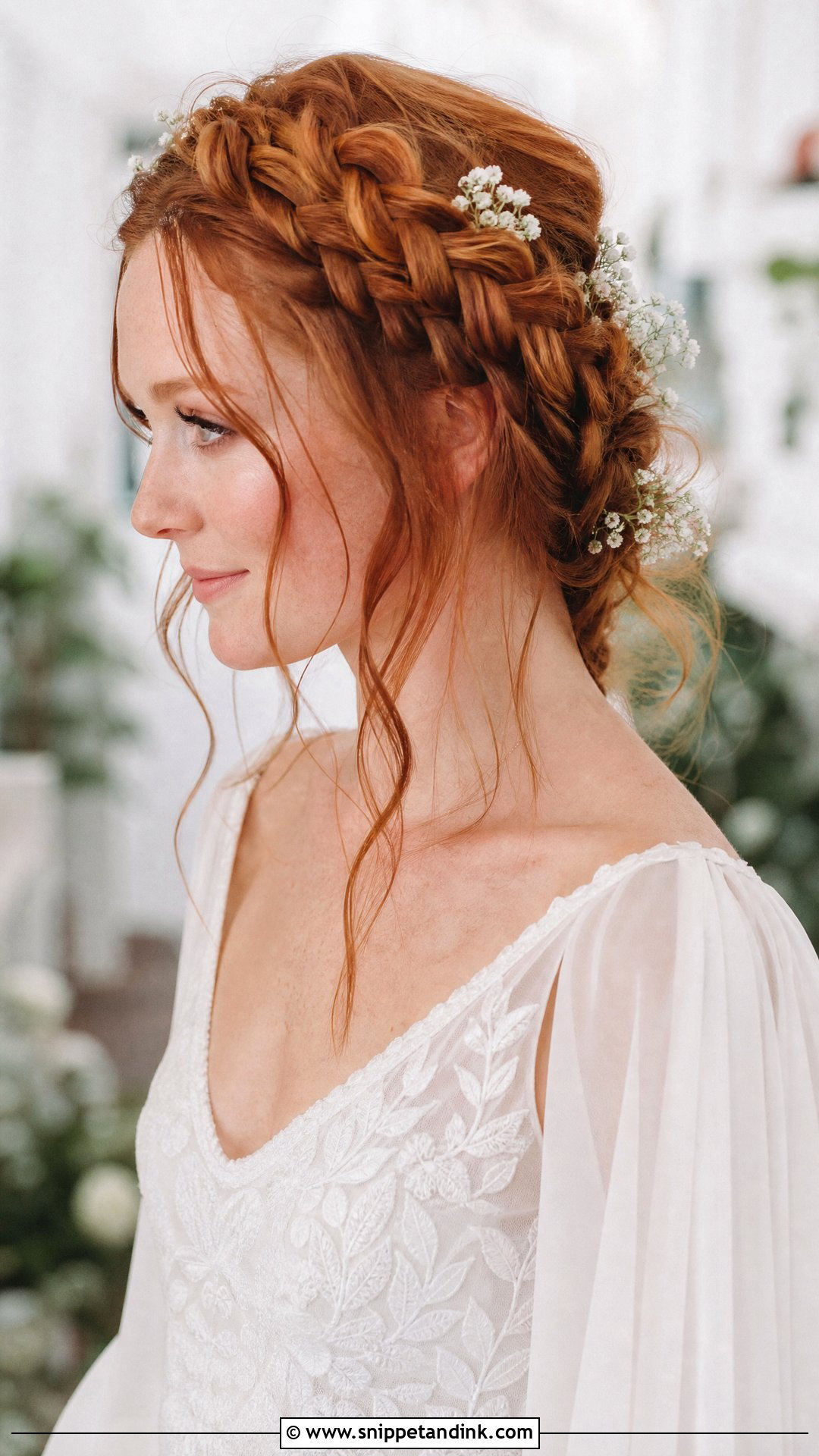
Braids are kind to layers because the weave catches short ends that would fall out of a twist. A boho braided crown works best when the shortest layer reaches at least the jaw; anything shorter pokes out along the hairline as the braid travels around the head. I prep with a dry texture spray so the hair grips, braid tighter than the final look, then pancake the loops wider afterward. Small flowers like baby’s breath tuck straight into the braid without wire. It’s a good choice for a hot outdoor day because nothing touches the neck.
4. Textured Low Ponytail With Soft Waves
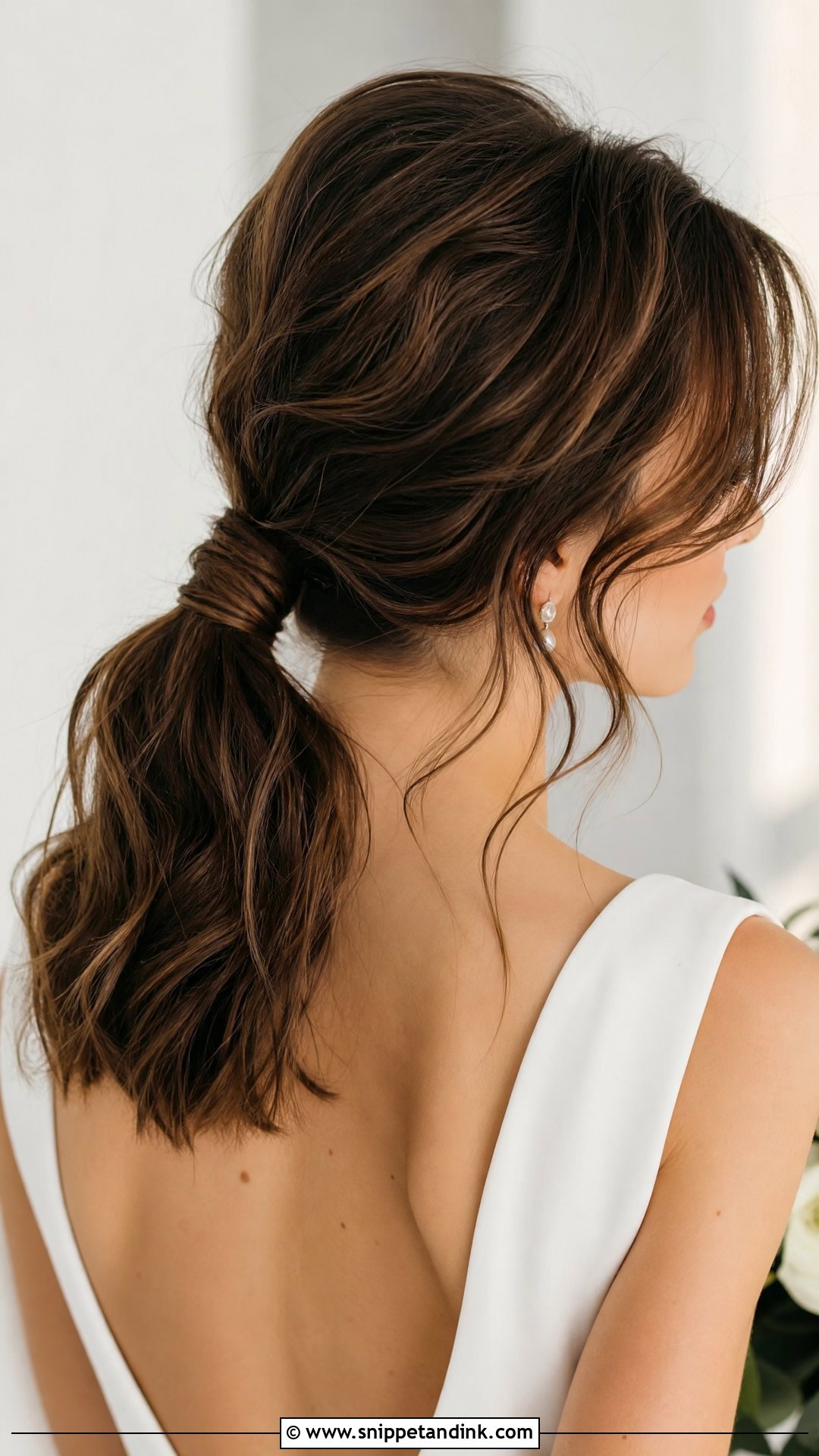
On a low ponytail, layers do the volume work that backcombing would otherwise do. The trouble spot is the base: shorter layers from the nape won’t reach the elastic and hang loose under it. I gather the hair slightly higher than the true nape so those pieces get caught, then wrap a strand around the elastic and pin it underneath. Soft waves through the length hide the stepped ends. It’s one of the more comfortable styles for a long day, since there’s no weight pulling on pins.
5. Half-Up Twisted Crown With Curls
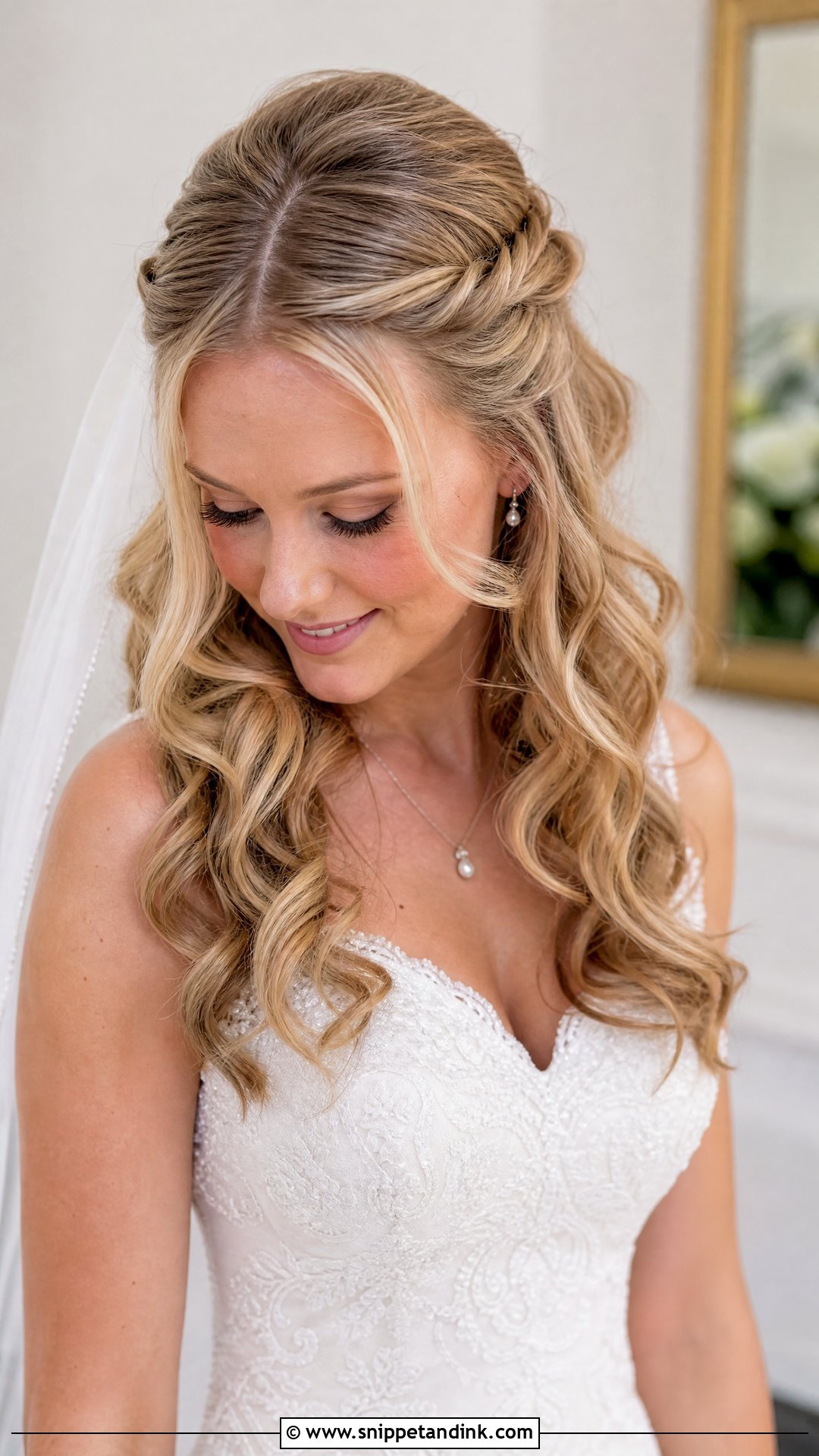
Two sections twisted back from each temple and pinned at the back of the head make a soft crown that still shows your length. Layers help here because the twists pick up texture as they roll and look fuller than they would on fine one-length hair. I cross the pins in an X where the twists meet; a single bobby pin there tends to slide out once you start hugging people. The rest falls in curls, and a veil or a small floral piece sits right over the join.
6. Messy Updo With Wispy Layers
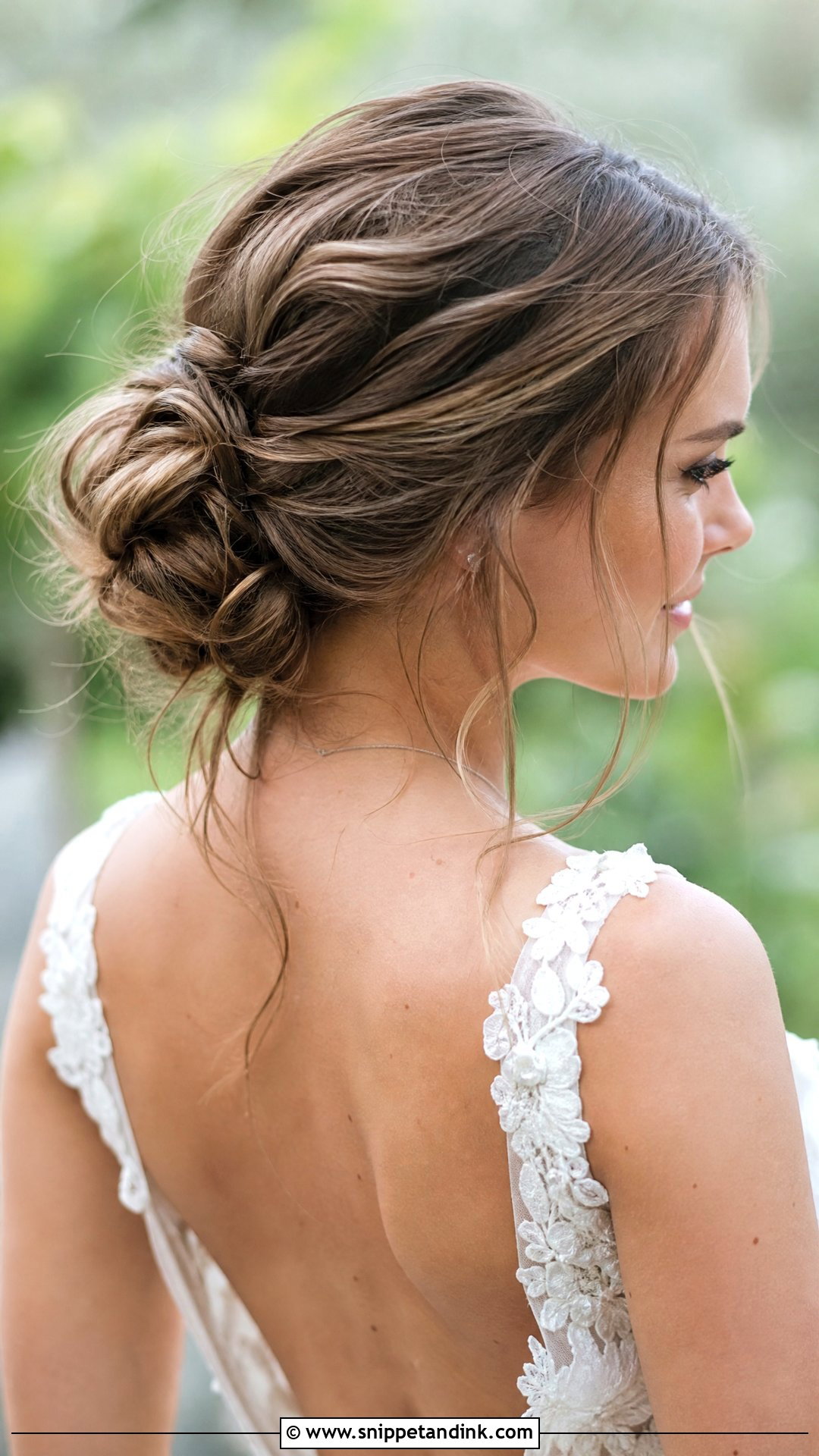
A messy updo is where layers are a real advantage. The varying lengths already give the uneven texture I’d otherwise have to fake, so I pin loosely, pull pieces out around the face and neck, and let some short ends stay visible. The catch is that loose still has to be secure underneath. I build a firm anchor first, usually a small hidden ponytail or a tight pin base, then make the top look relaxed. Without that base, a soft updo can slide by the first dance. Pins or a few flowers finish it for a garden or small wedding.
7. Side-Swept Curls Over One Shoulder
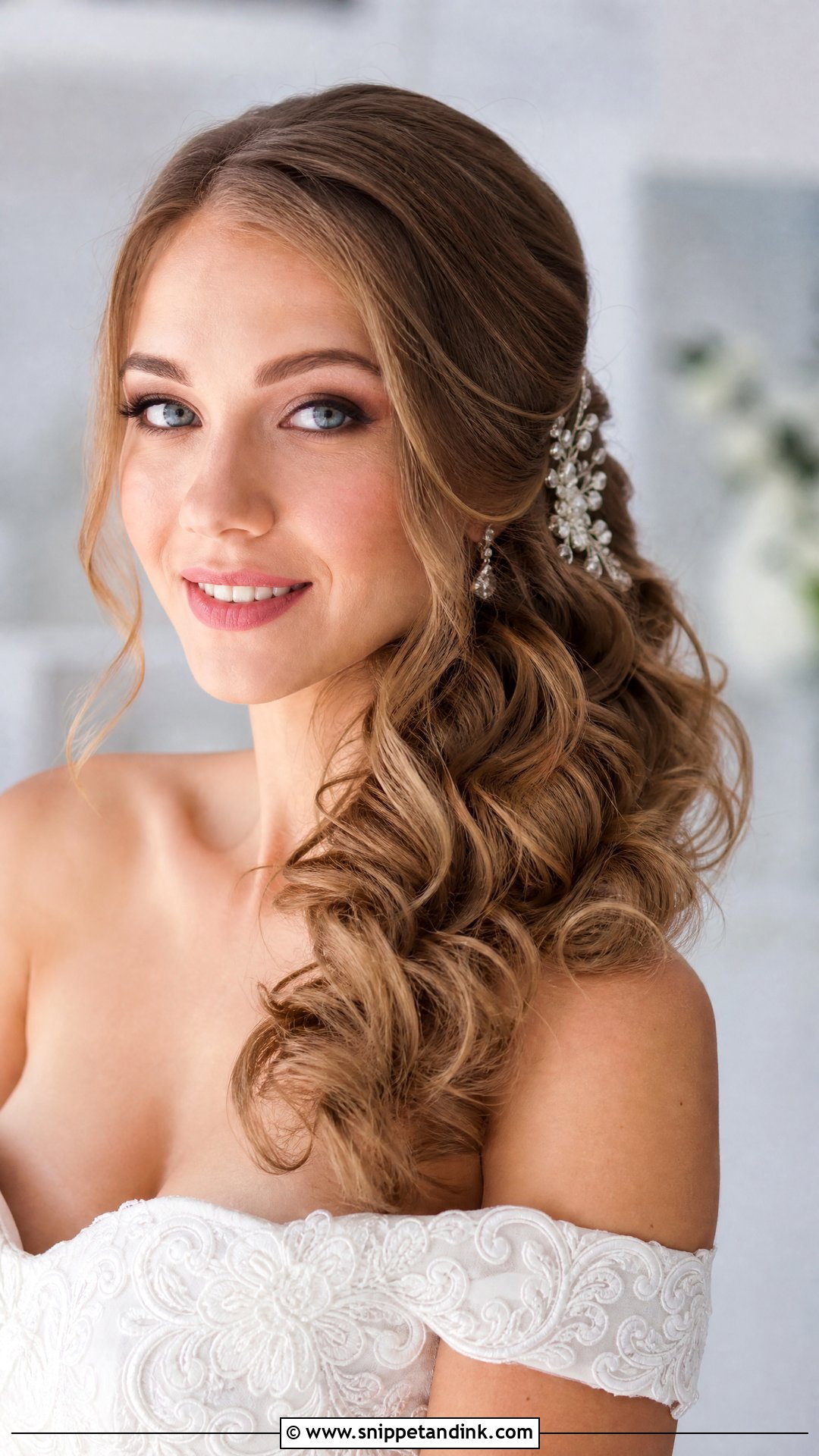
Side-swept curls bring a bit of old Hollywood without the full sculpted finish. All the hair moves to one shoulder, and the layers give the curls a stacked, bouncy look. The side you sweep away from is the hard part: short layers there want to drop back. I pin that side flat behind the ear with crossed pins and cover them with a decorative comb. I usually suggest this for gowns with a detail on one shoulder or an open back, since the swept side shows it off, along with earrings.
8. Loose Fishtail Braid With Layers
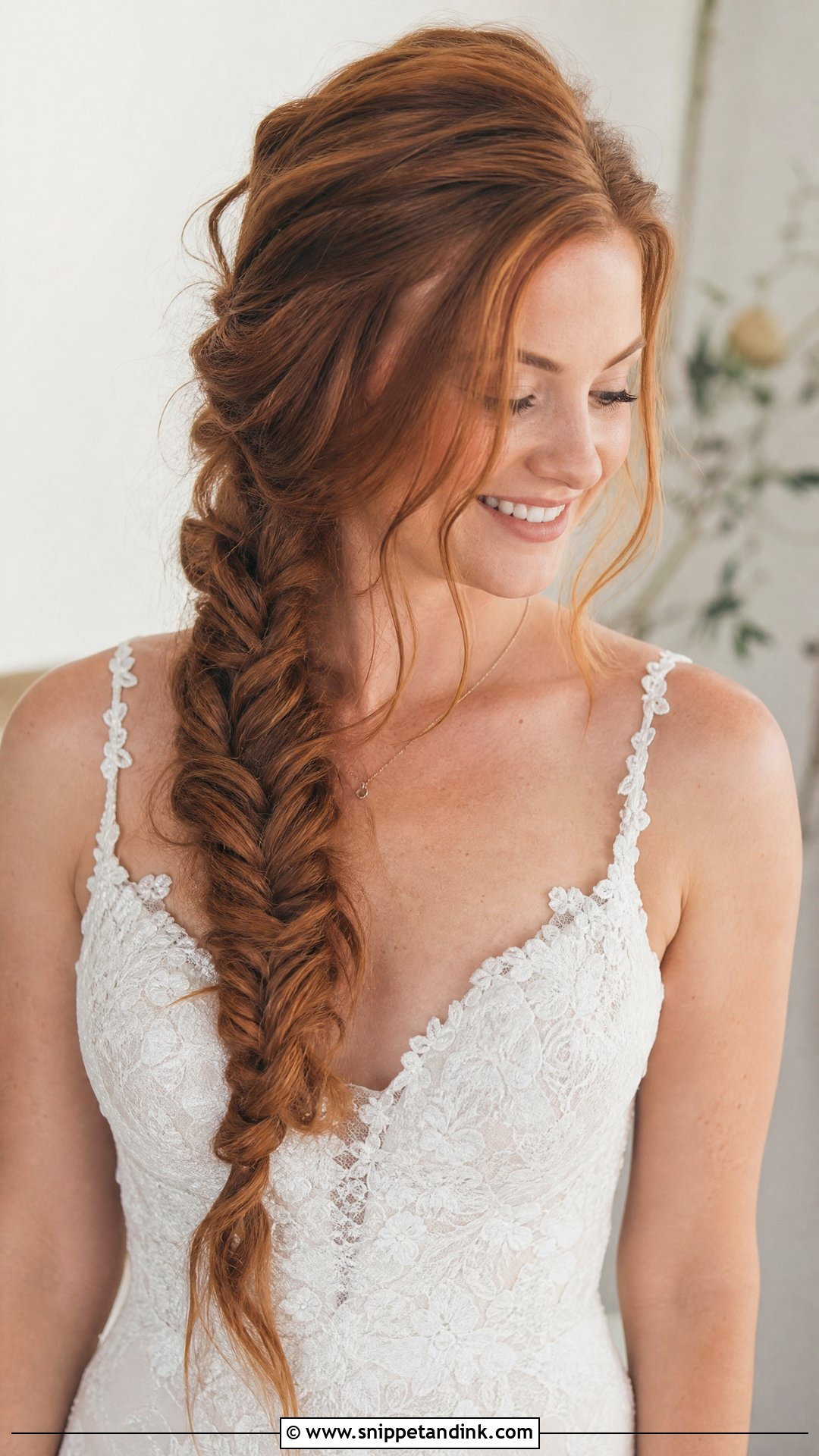
A fishtail braid on layered hair can look thicker than the hair really is, because short ends feather out along the plait. I braid it fairly firm, secure it, then pull the edges apart gently from the bottom up. Drape it over one shoulder and leave a few front pieces out. Shorter layers will poke from the sides of a fishtail no matter what, so this is a style for brides who like a slightly undone finish. Small sprigs or flowers slot into the gaps between sections without pins.
9. Sleek Low Chignon With Layers
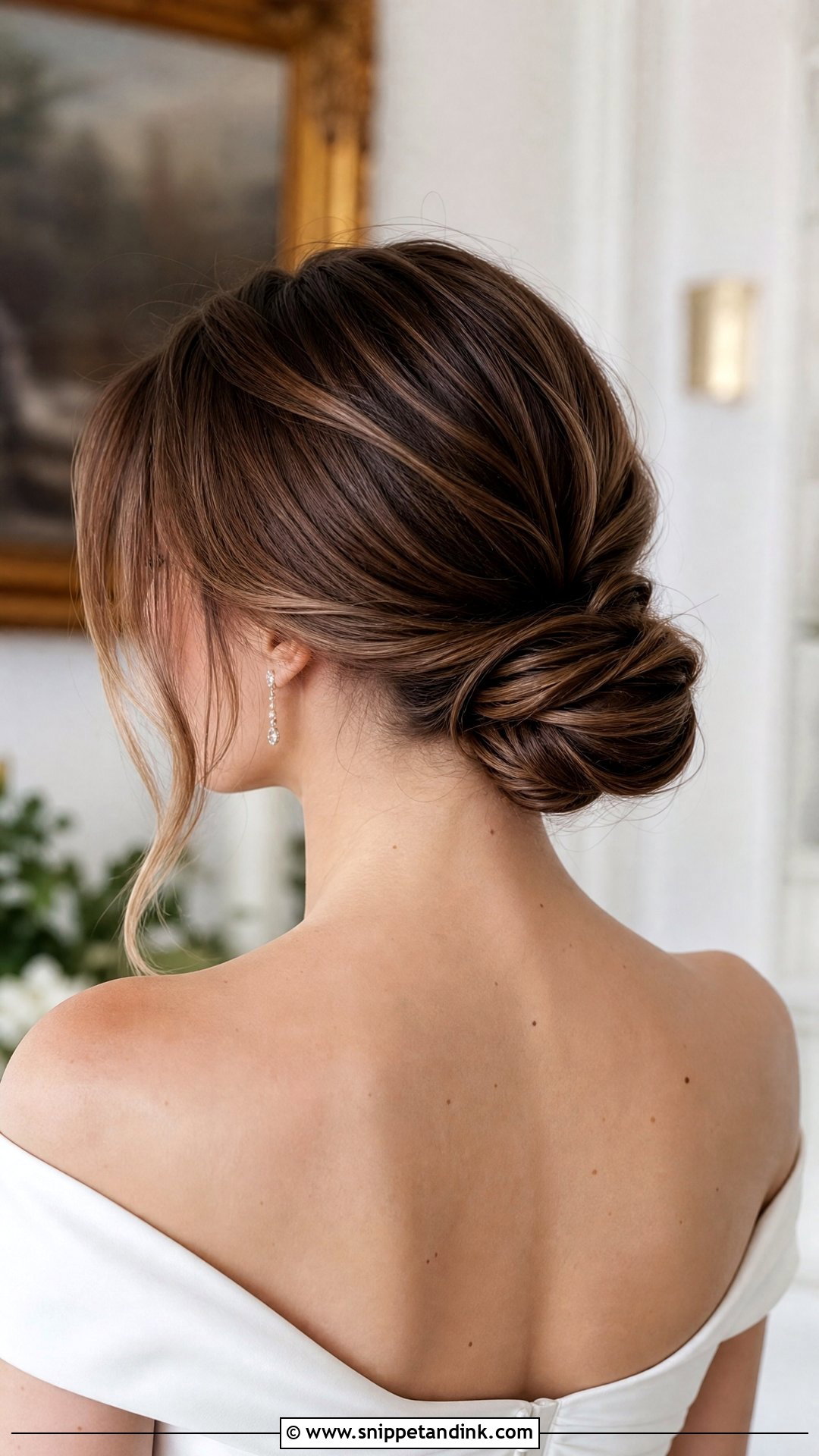
A chignon is the most polished option here, and also the one layers resist most. Short layers at the nape won’t roll into a smooth, rolled knot on their own, so I smooth them with a little cream and pin them flat first, then build the roll over them. Done that way, it holds through the day. I’d suggest it for formal and classic weddings, with statement earrings and a cathedral veil under the knot. Leave a couple of front pieces out if a completely sleek face feels too severe for you.
10. Half-Up Bubble Ponytail With Texture
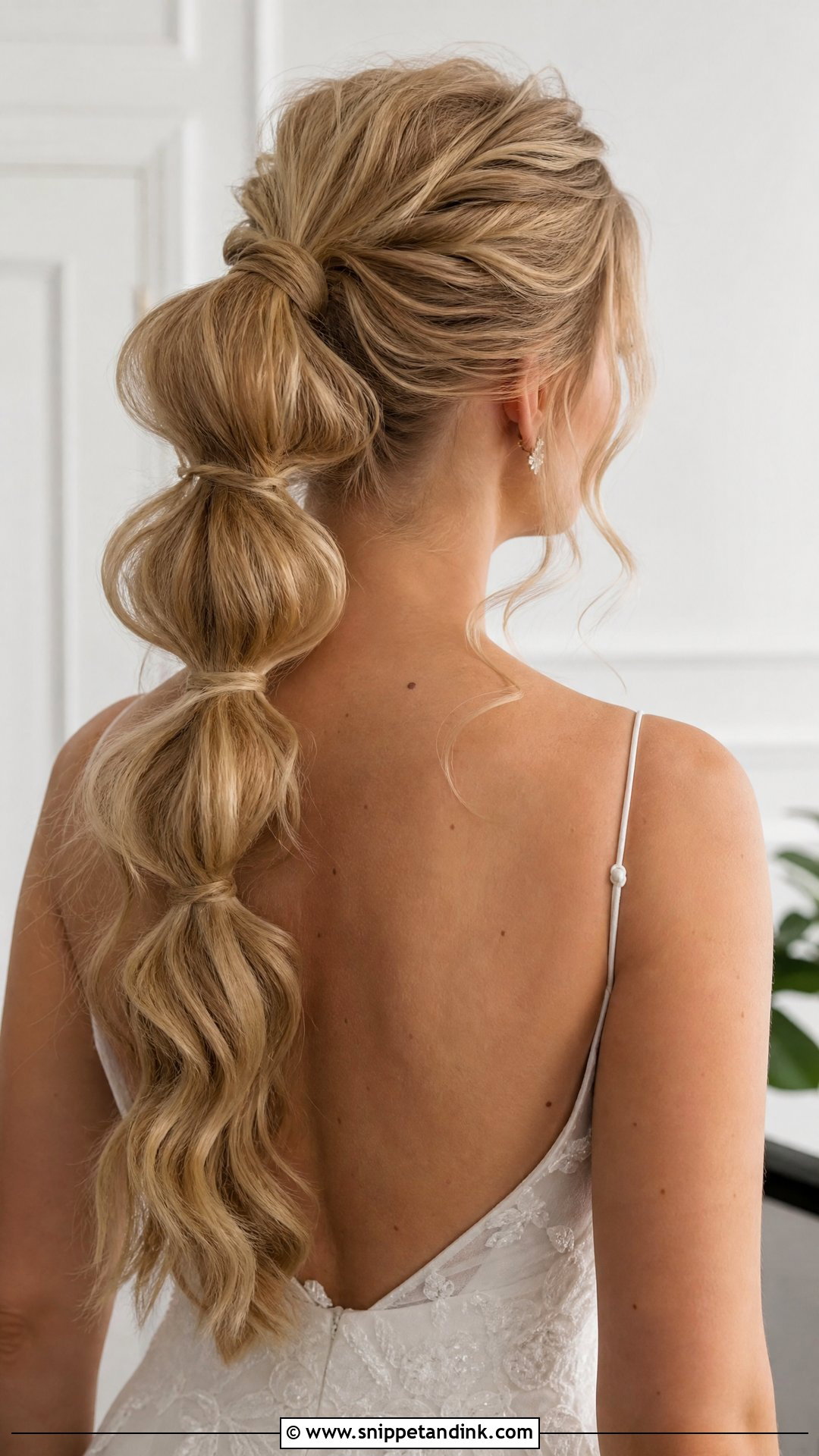
A half-up bubble ponytail is the playful one in this list. I gather the top section, then add clear elastics every few inches and gently widen each segment. Layers help each bubble look round because the shorter hair inside fluffs out. The risk is shorter layers escaping between elastics, so I give the section a little texture spray before I start. It’s a better fit for a modern or relaxed celebration than a formal one, and it doesn’t sit well under a long veil.
11. Voluminous Curly Updo
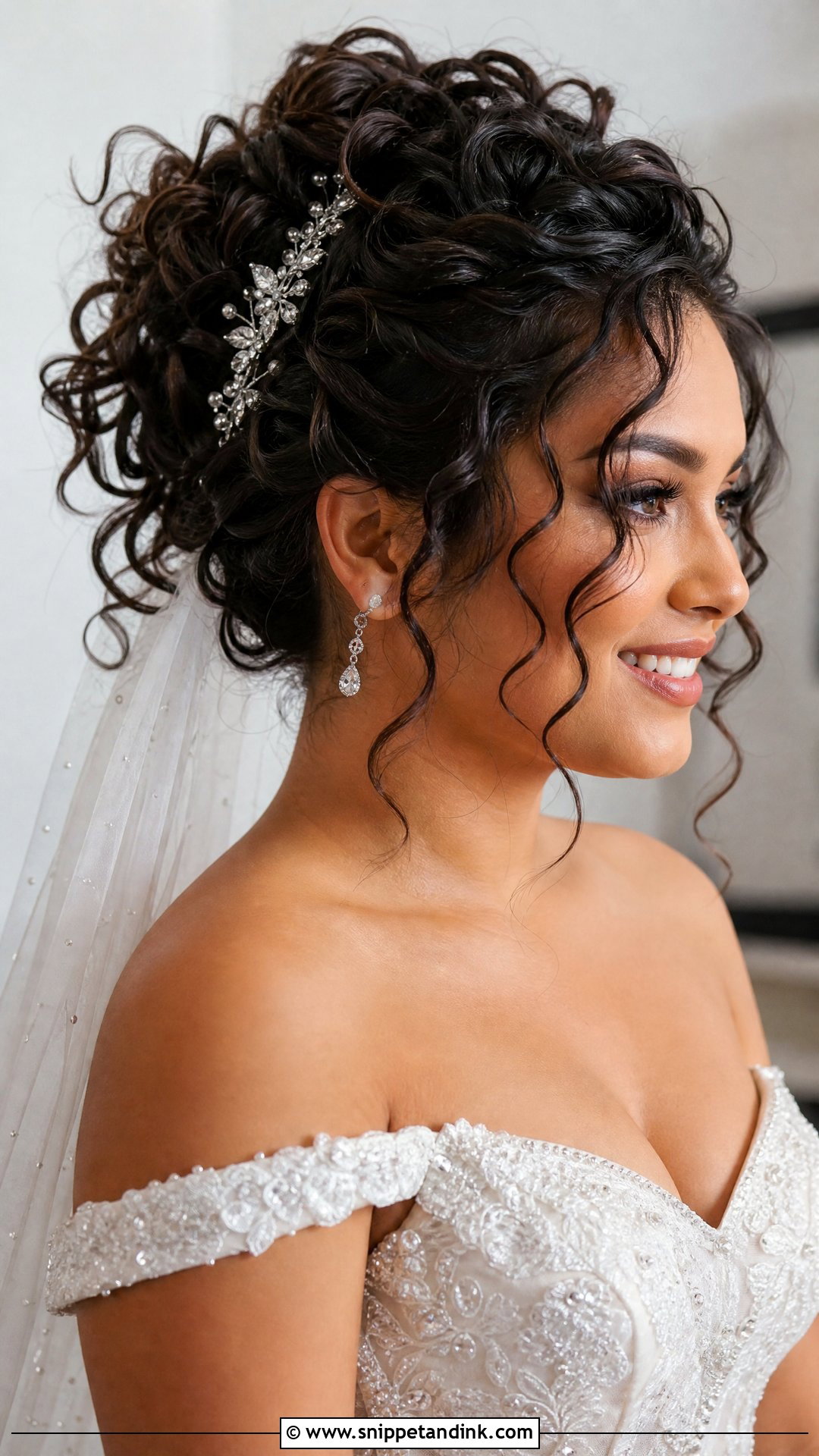
Curly layered hair is ideal for a high, full updo, and I’d much rather work with natural curl than straighten it into something sleek. I pin curls up in clusters rather than smoothing them, which keeps the shape and avoids frizz. Leave a few curls loose at the face. Curly hair needs moisture rather than heavy hairspray to stay defined, and I always ask curly brides to arrive with hair washed and styled the way they normally do. Jeweled pins or fresh blooms sit well within the curls. This one has height and drama, so it can carry a simple gown.
12. Soft Waterfall Braid With Waves
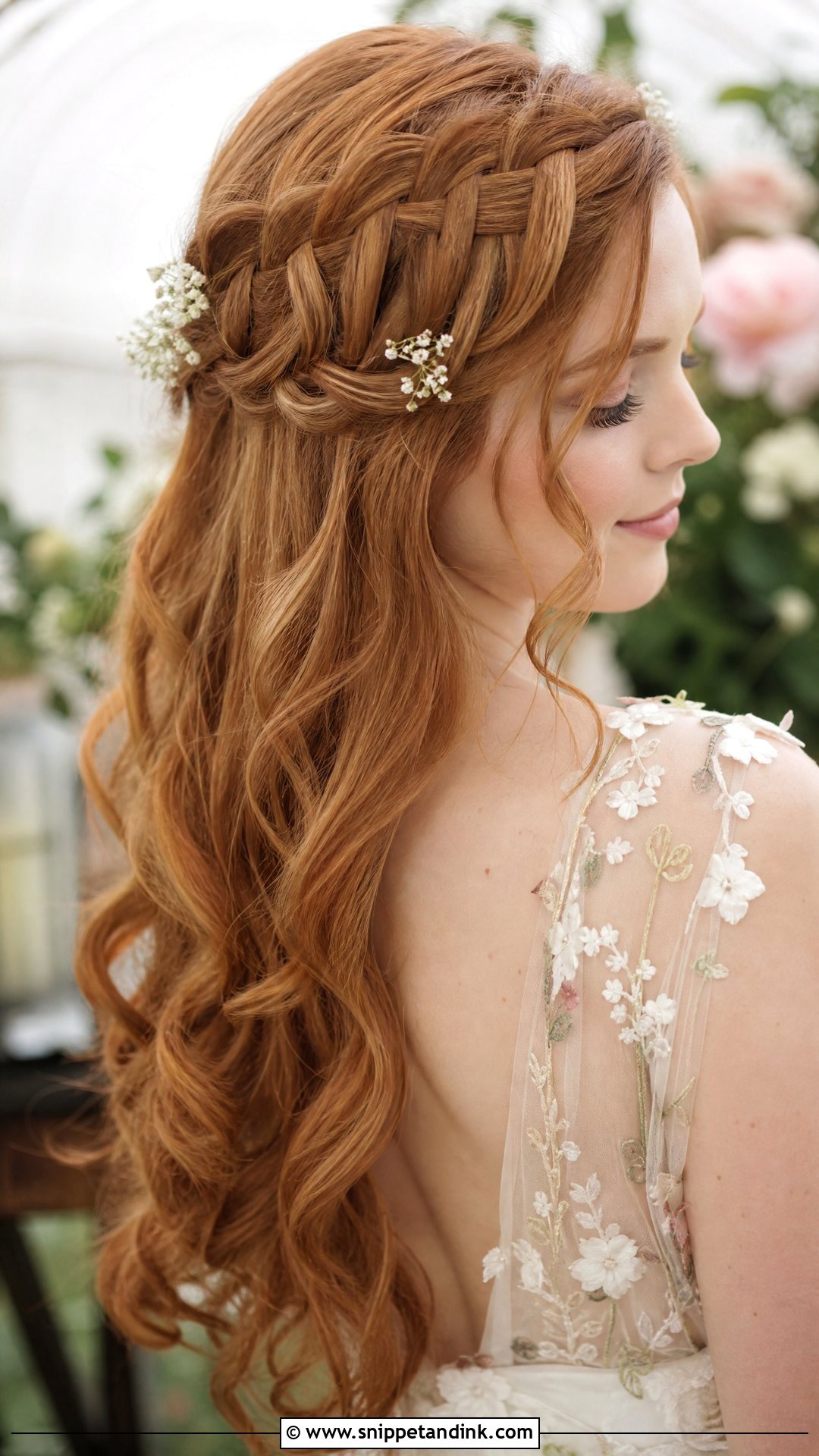
A waterfall braid travels across the back of the head, dropping a strand at each stitch so hair falls through like water. Layers are useful here because the dropped strands show off the different lengths and waves underneath. The weak spot is the end of the braid behind the ear, where the shortest layers can unravel it; I tie it off with a tiny elastic and hide it under a curl. I like it for spring and garden weddings, with the rest of the hair down in loose curls.
13. Twisted Low Bun With Loose Tendrils
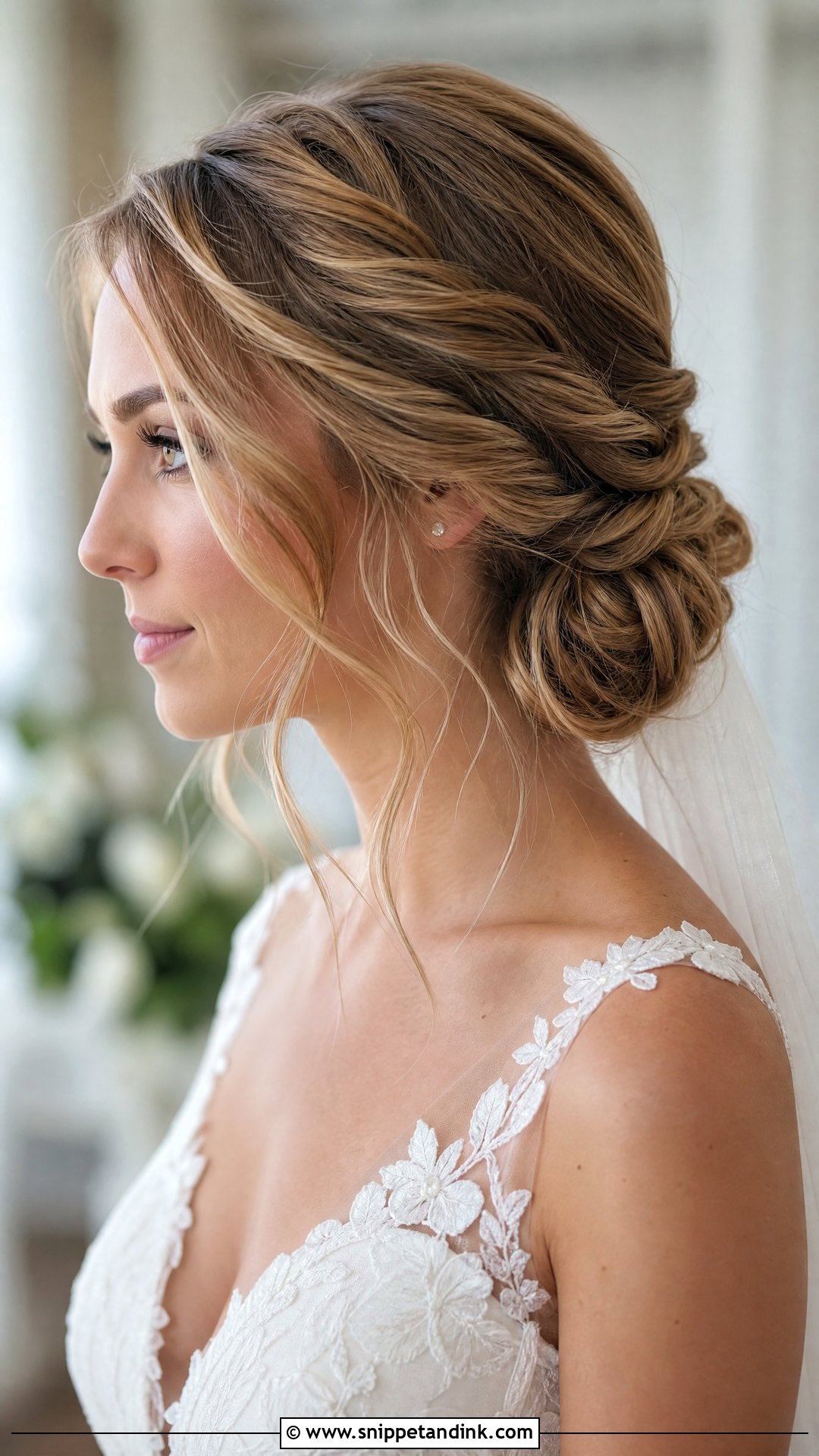
Instead of rolling the hair smooth, I twist two or three sections and wrap them into a bun at the nape. Twisting suits layered hair because it grips the shorter pieces better than a smooth roll. The texture makes the bun look bigger, which helps if your hair is on the finer side. Leave tendrils out at the face and curl them separately. It holds well under a veil and stays comfortable, and it works for a classic or boho wedding.
14. Half-Up Knotted Style With Curls
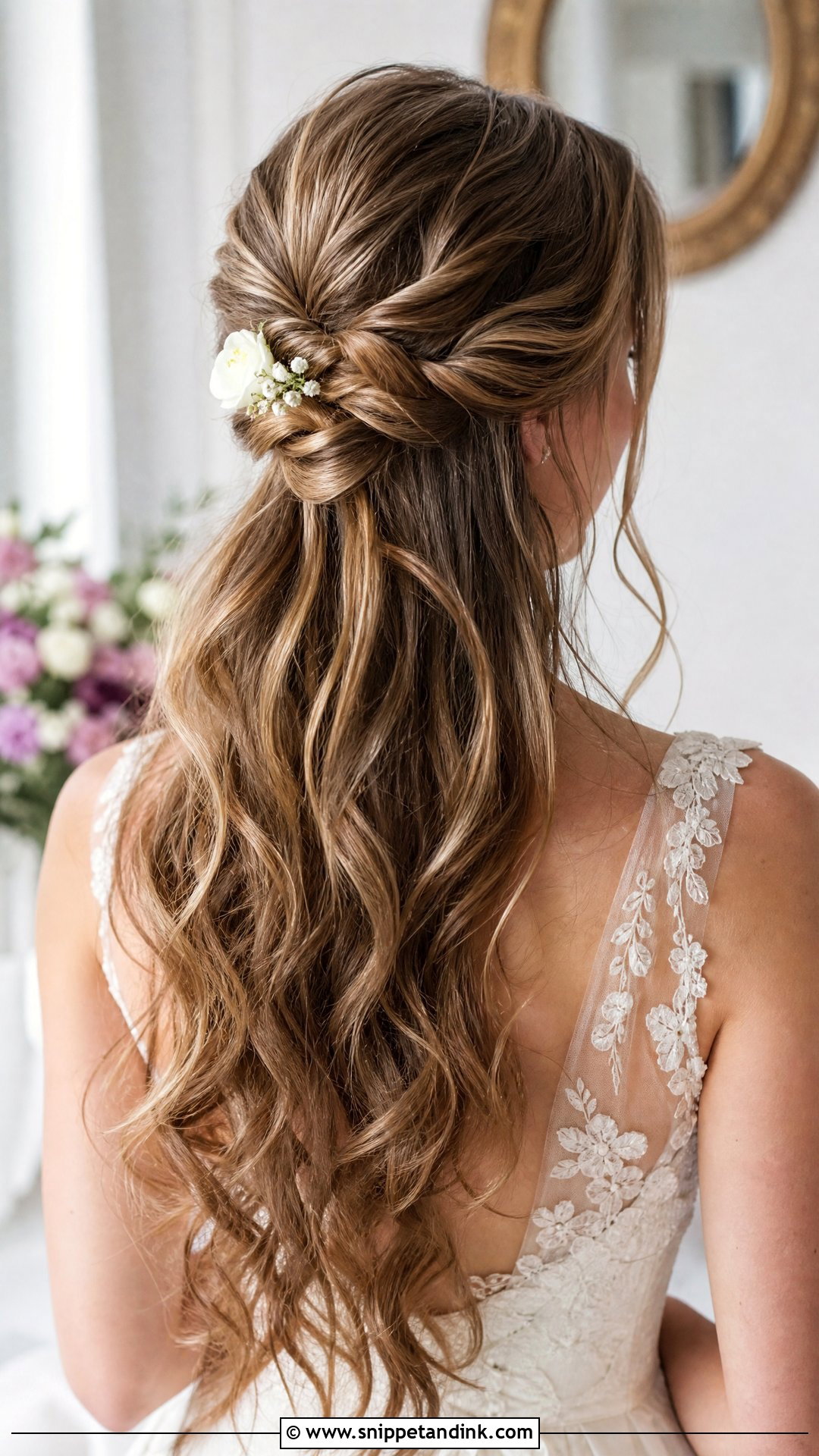
A half-up knot takes two sections from the sides and ties them in a soft knot at the back. It looks simple and takes little time, which helps on a busy morning. Layers give the knot volume. The knot itself can loosen as it settles, so I pin underneath it at both ends and add a tiny bit of spray. Curls underneath show off your length, and a small clip or flower covers any visible pins. It suits most themes, from a beach wedding to a ballroom, and it’s one of the few styles I’d say is easy to wear all day.
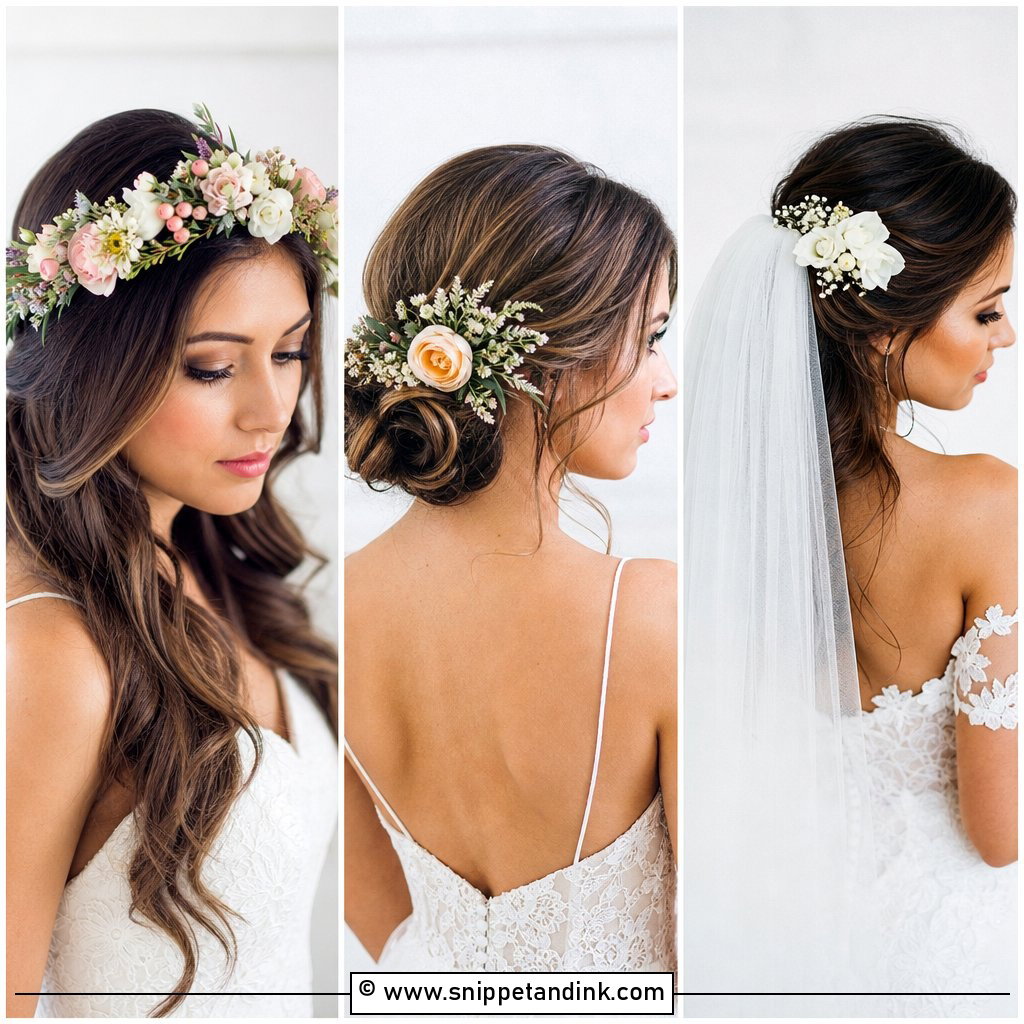

15. Boho Waves With a Halo Braid
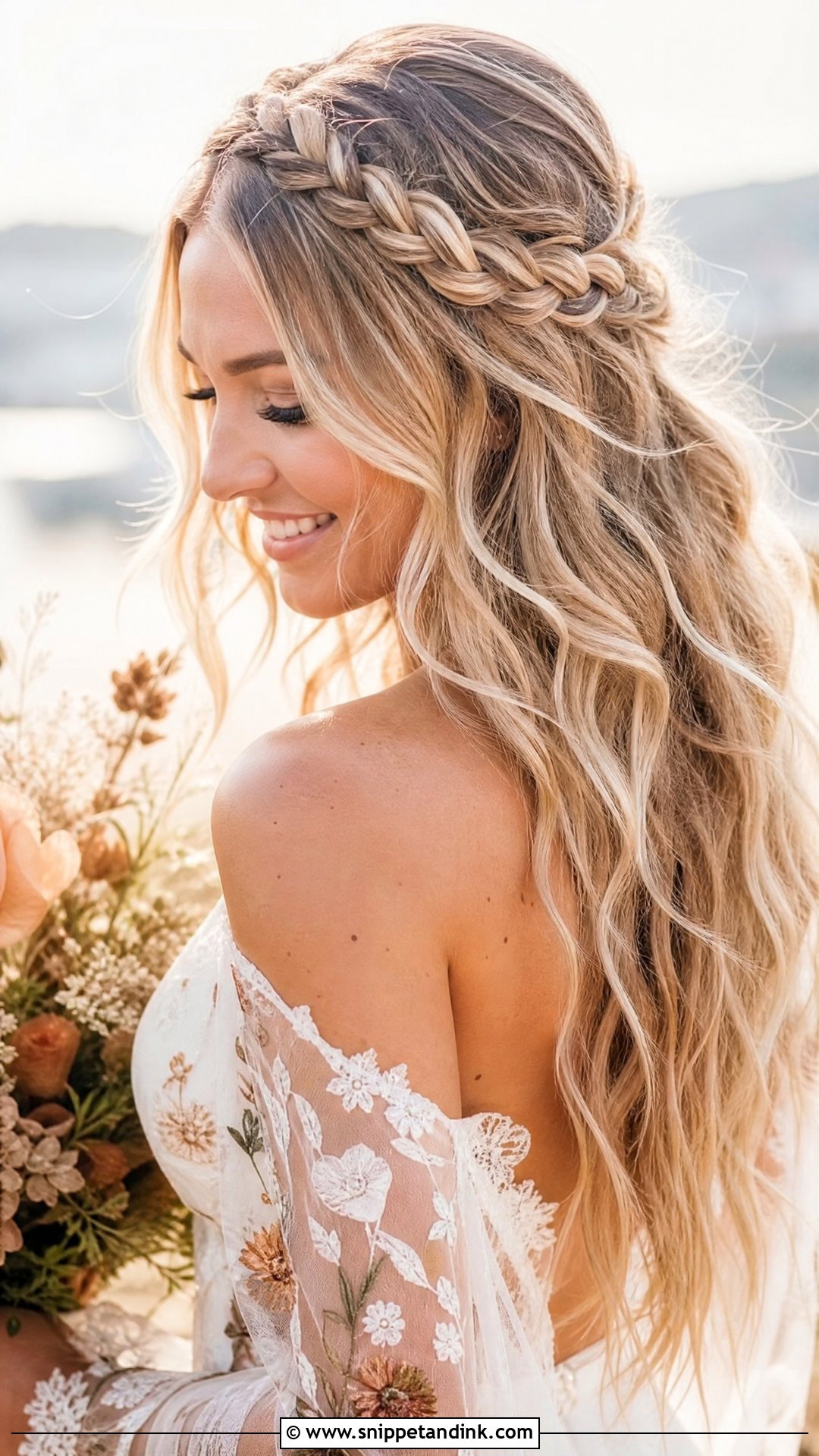
Picture soft, tousled waves with a thin braid around the top of the head like a headband. Layered hair makes the waves look full and beachy without much curling. I start the halo braid from behind one ear and finish behind the other, pinning the ends underneath the hair so they disappear. Humidity is the enemy of this style, since loose waves are the first thing to drop outdoors. I use a flexible hold spray and set the waves in small pinned sections. I save it for relaxed outdoor or rustic weddings.
16. Elegant French Twist With Layers
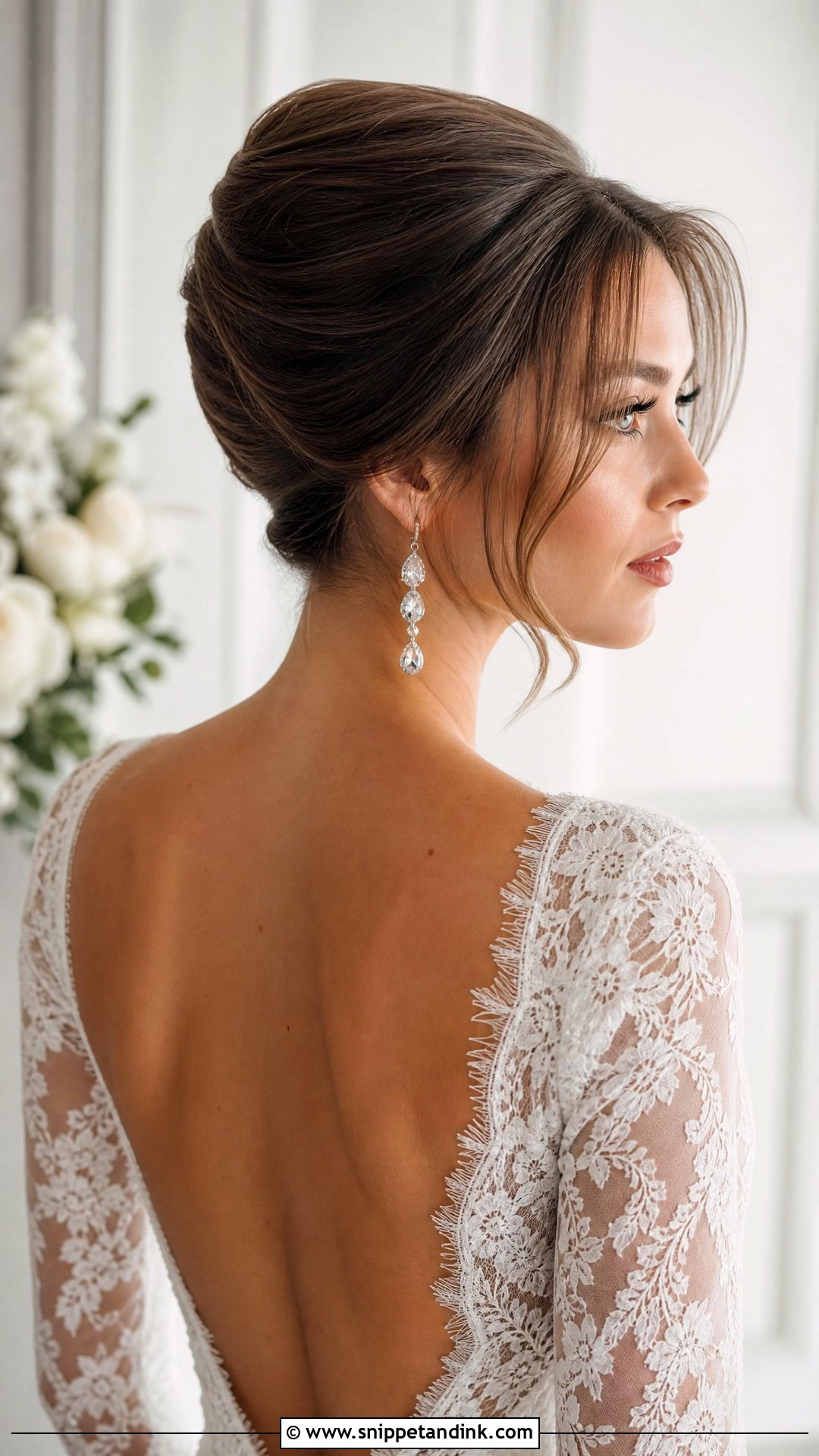
The French twist is a classic: hair swept to one side, rolled vertically, and tucked. Layers give it a softer finish than the sculpted versions you see in old photos. The problem is that the shortest layers at the nape often won’t reach the roll, so I pin them up first, then twist over them. I’d suggest this for formal weddings, with a tiara or a veil tucked under the roll. It holds well into the evening once it’s properly pinned, and a few front wisps keep it from looking severe.
17. Half-Up Braided Bun With Waves
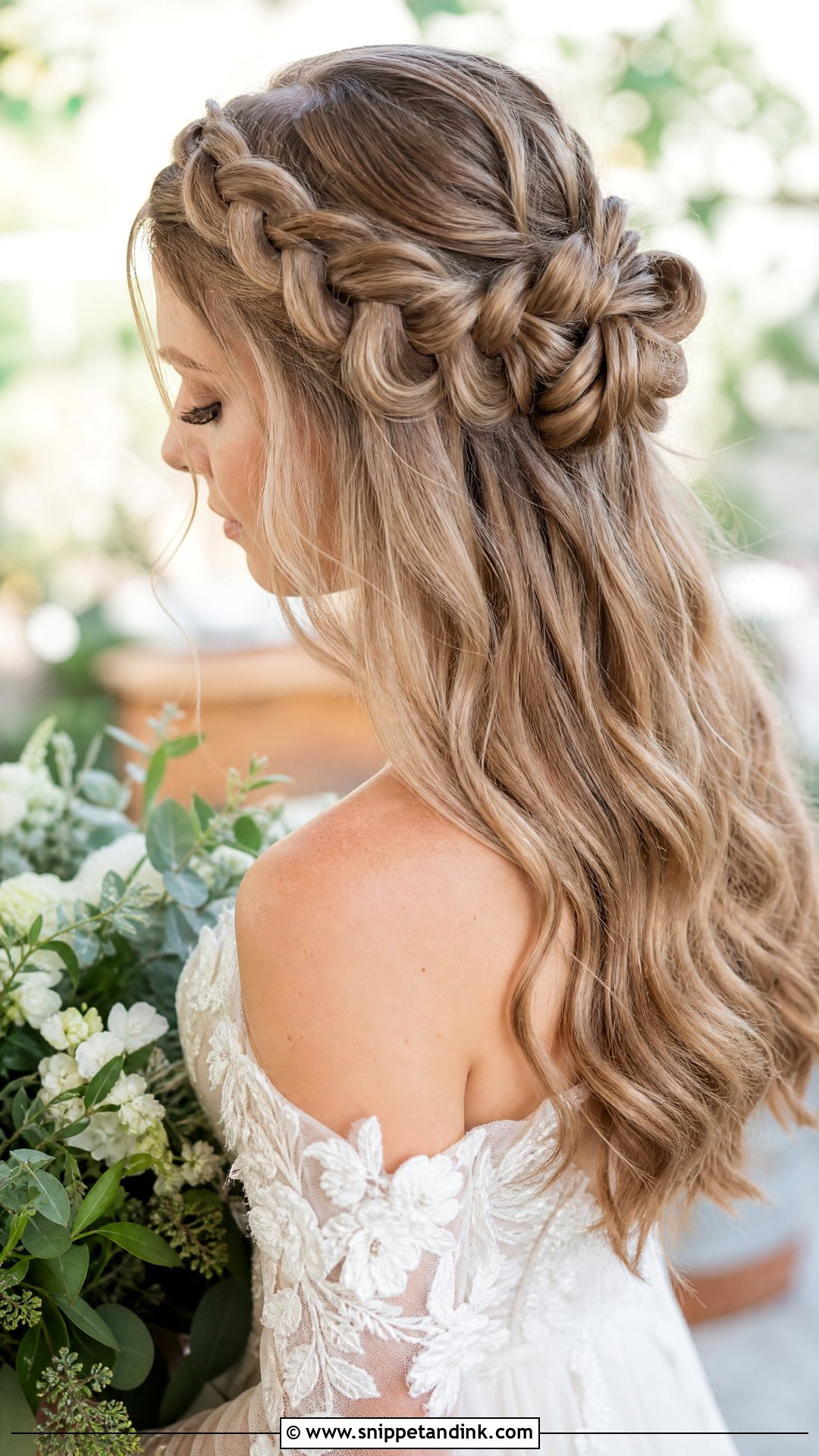
This one combines two styles. I braid the top section and wrap it into a small bun at the crown, leaving the waves loose below. The braid catches short layers that would otherwise fall out of the bun. It keeps hair off the face during the ceremony while still showing length in the back. One caution: a bun at the crown sits exactly where a veil comb usually goes, so we plan the veil placement under the bun. Flowers or small pins suit a garden or boho setting.
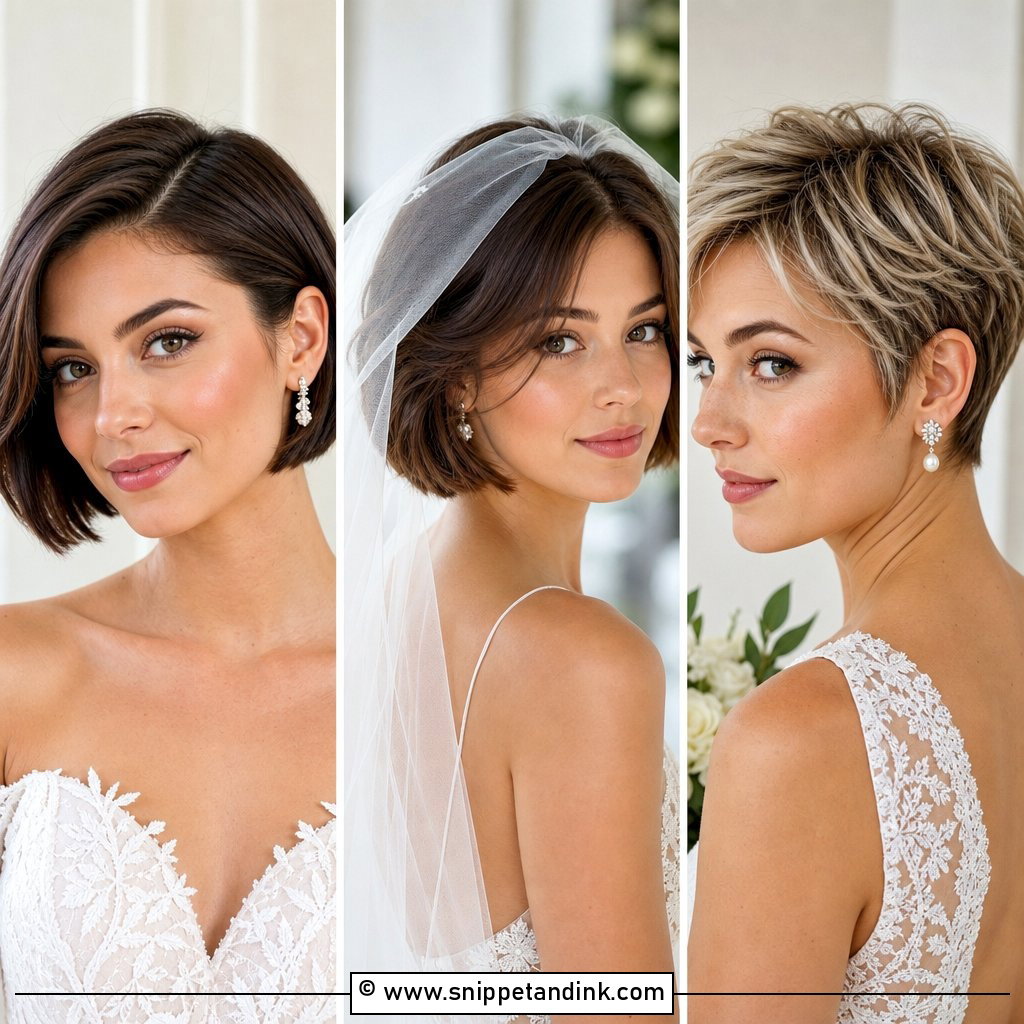
18. Tousled Shoulder-Length Bob Waves
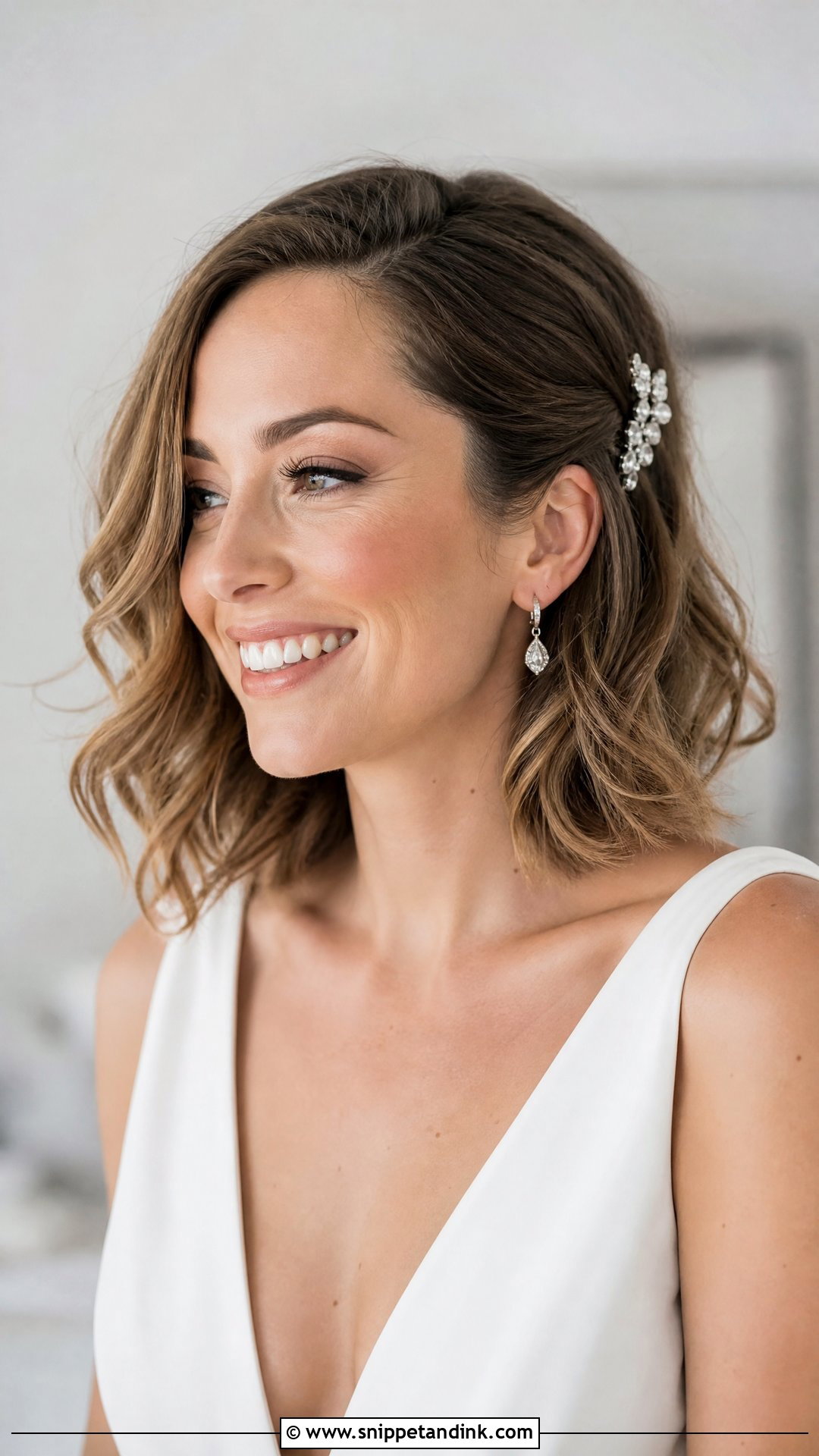
Short layered hair has fewer options than long, but a tousled bob with soft waves is one of the best. Layers give the bob bounce and body. I use a flat iron to bend the waves rather than a curling iron, because tight curls on short hair can look dated. Tuck one side behind your ear and add a jeweled pin or a small flower. This suits a bride who likes her short cut and doesn’t want extensions. It looks modern at an intimate wedding and needs very little touching up.
19. Crown Braid Updo With Soft Layers
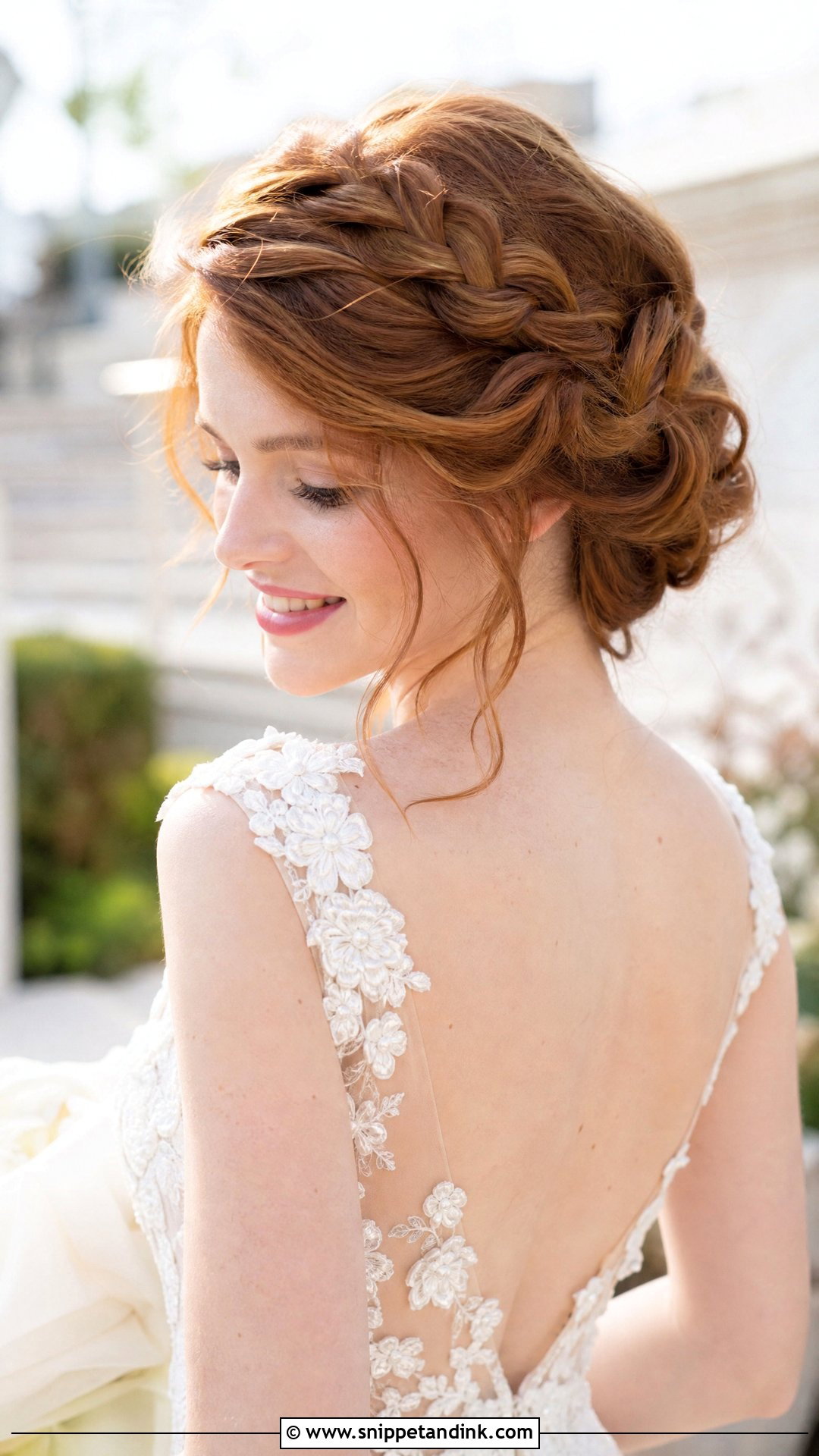
A crown braid updo wraps braids around the head and finishes in a soft knot, giving a structured shape. Layers add texture to the braids, but very short layers can poke out along the hairline, so I check where they fall before committing. Leave a few tendrils out at the face. It keeps hair off the neck on warm days and holds well outdoors. Flowers and fine pins slot into the braid. It has more detail than most updos, so I keep earrings simple.
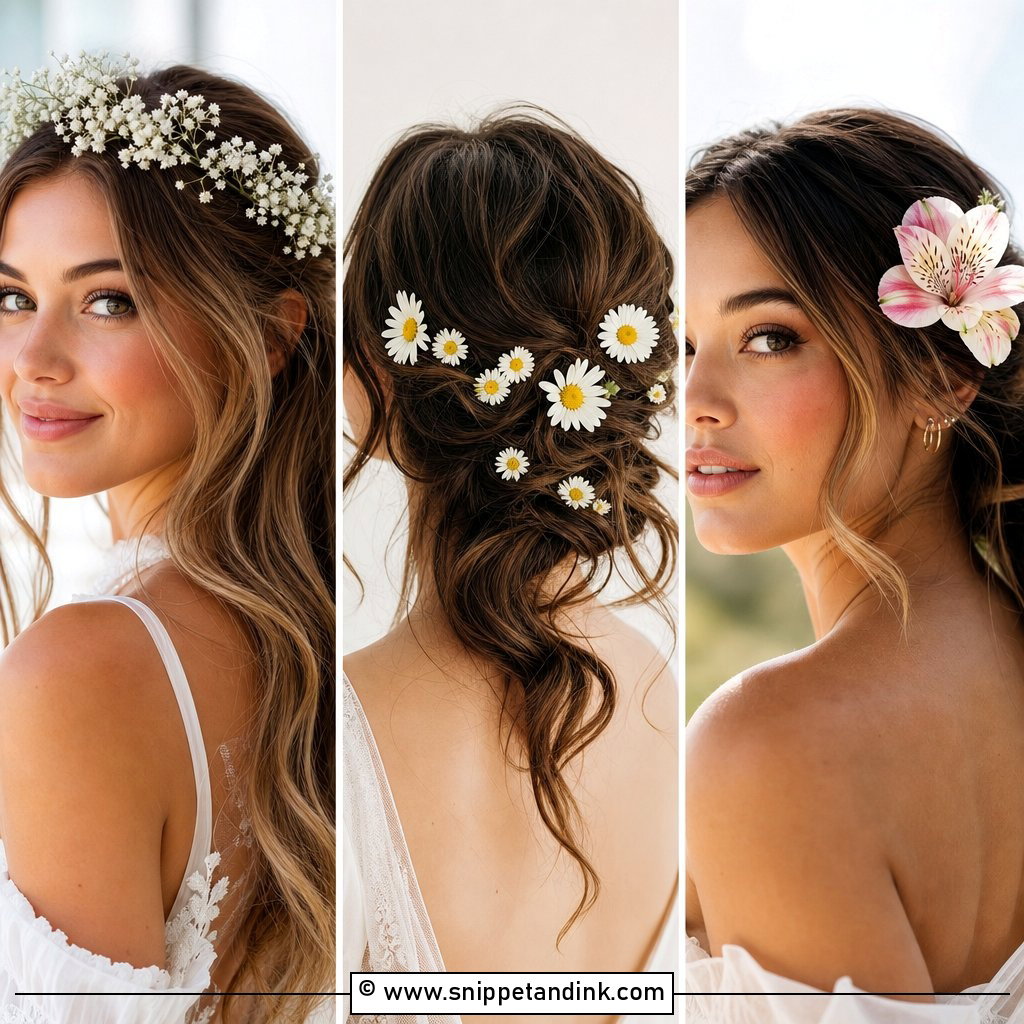
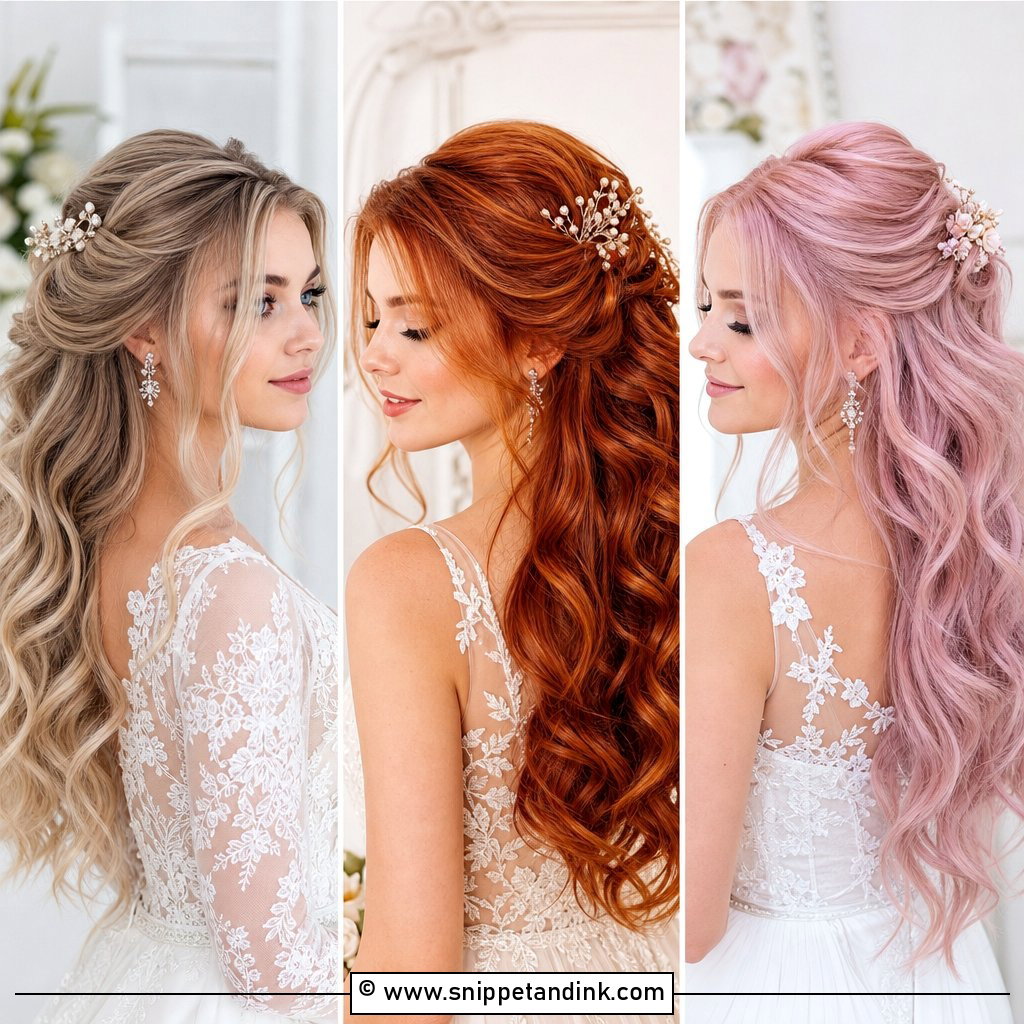
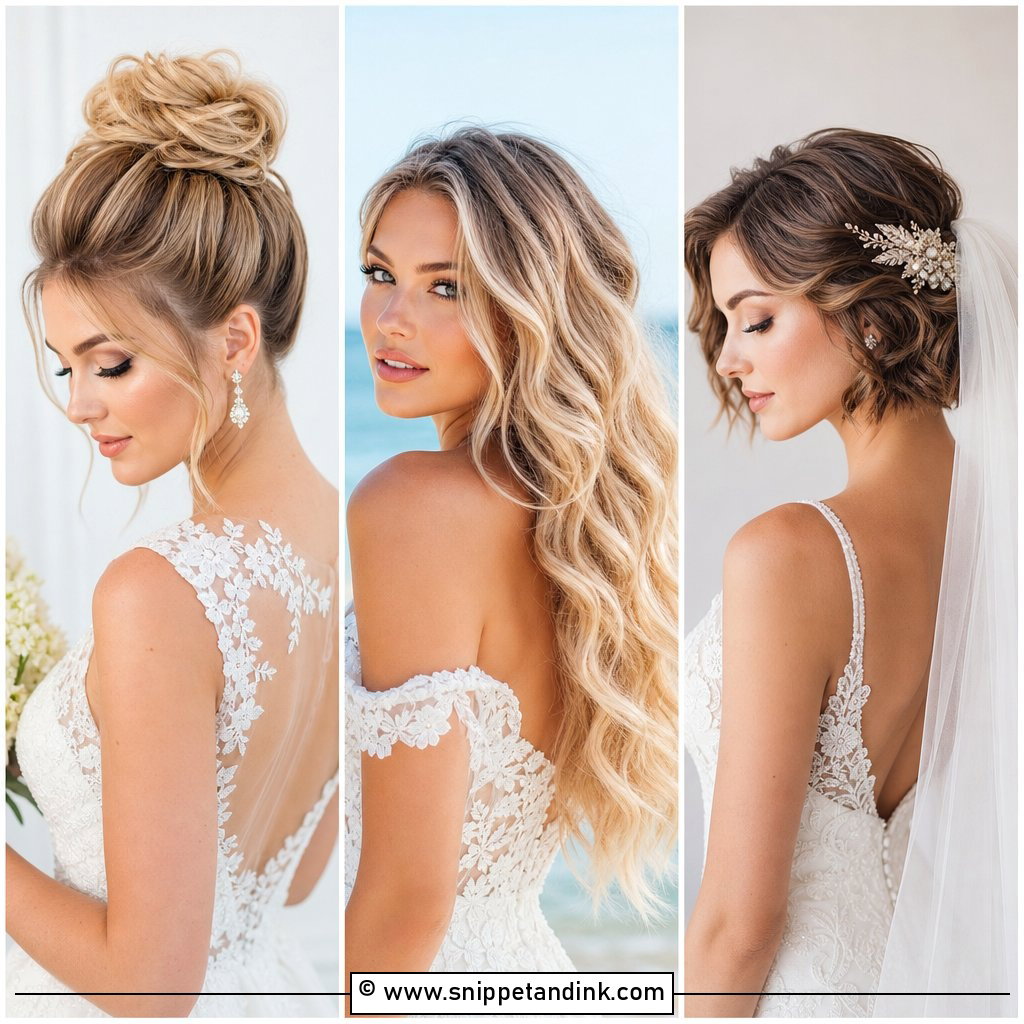
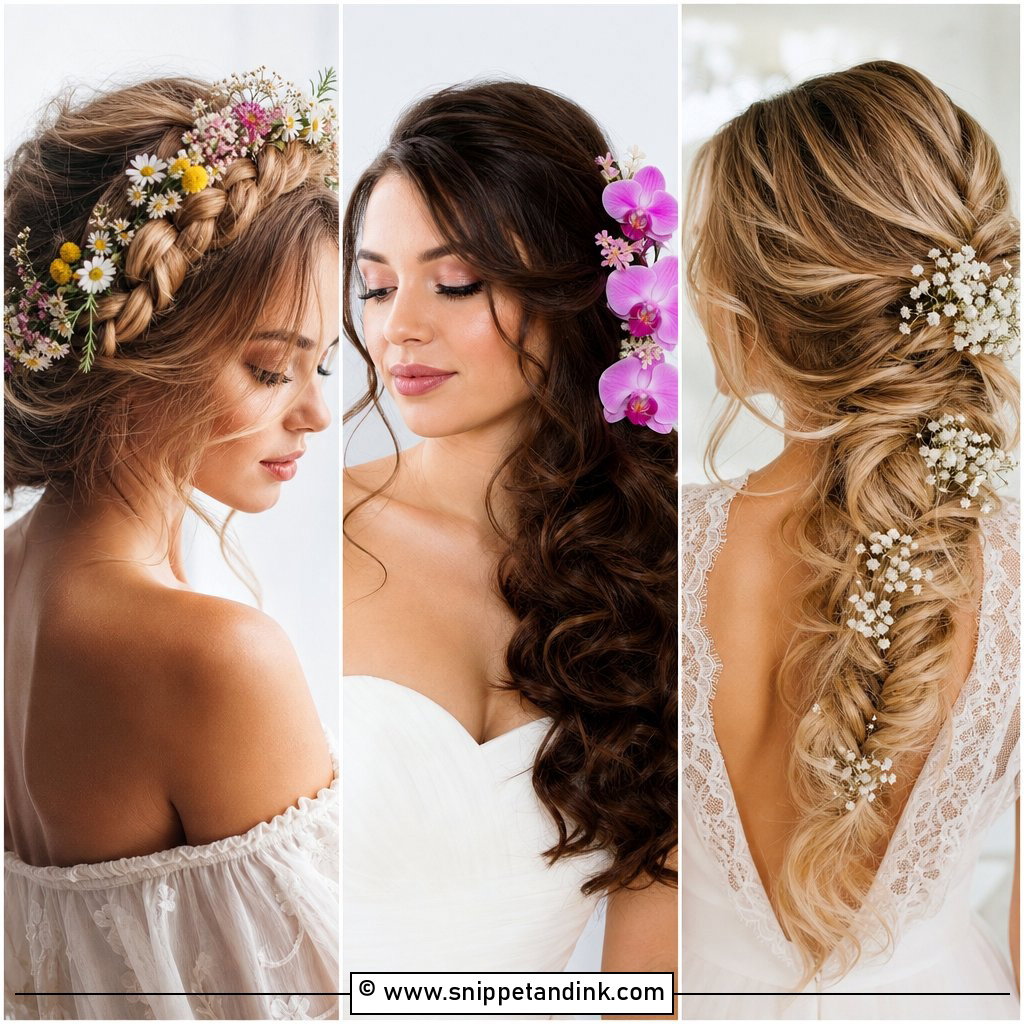
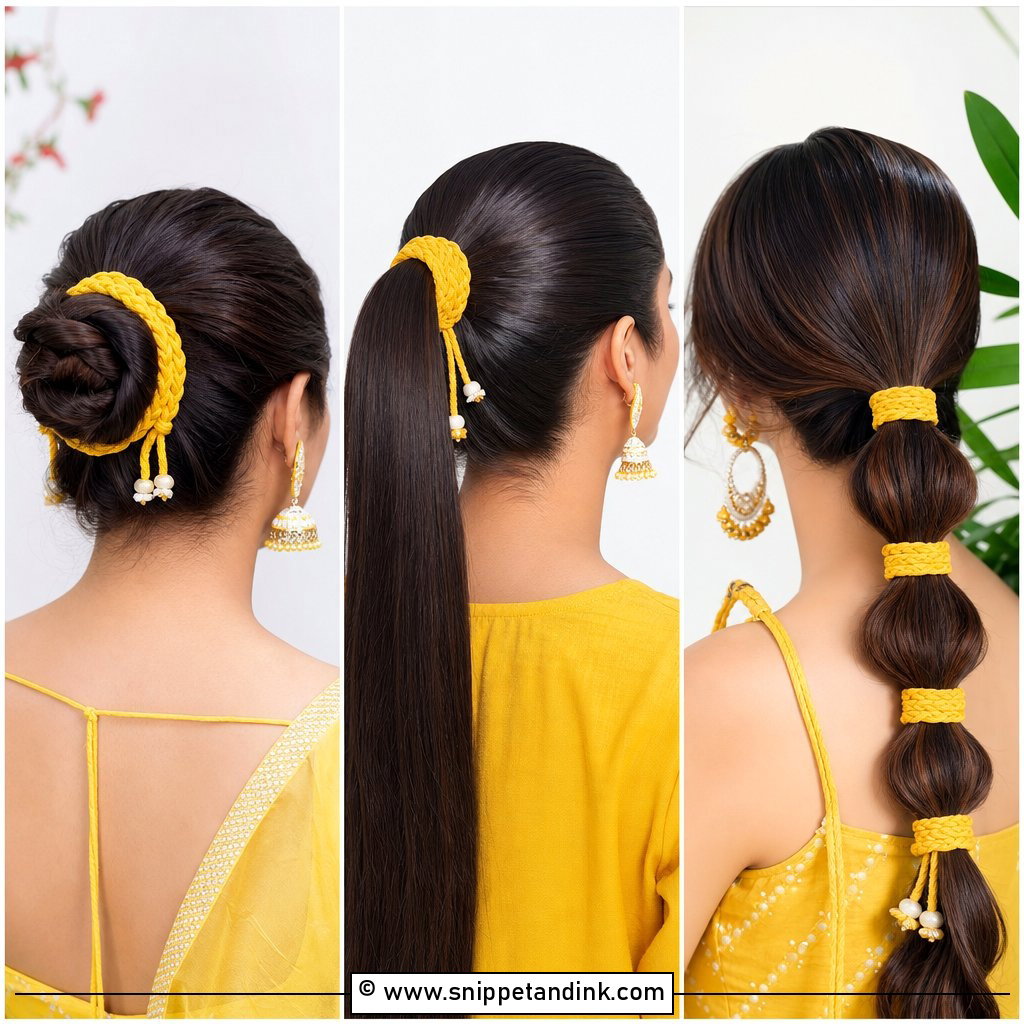
20. Cascading Curls With a Deep Side Part
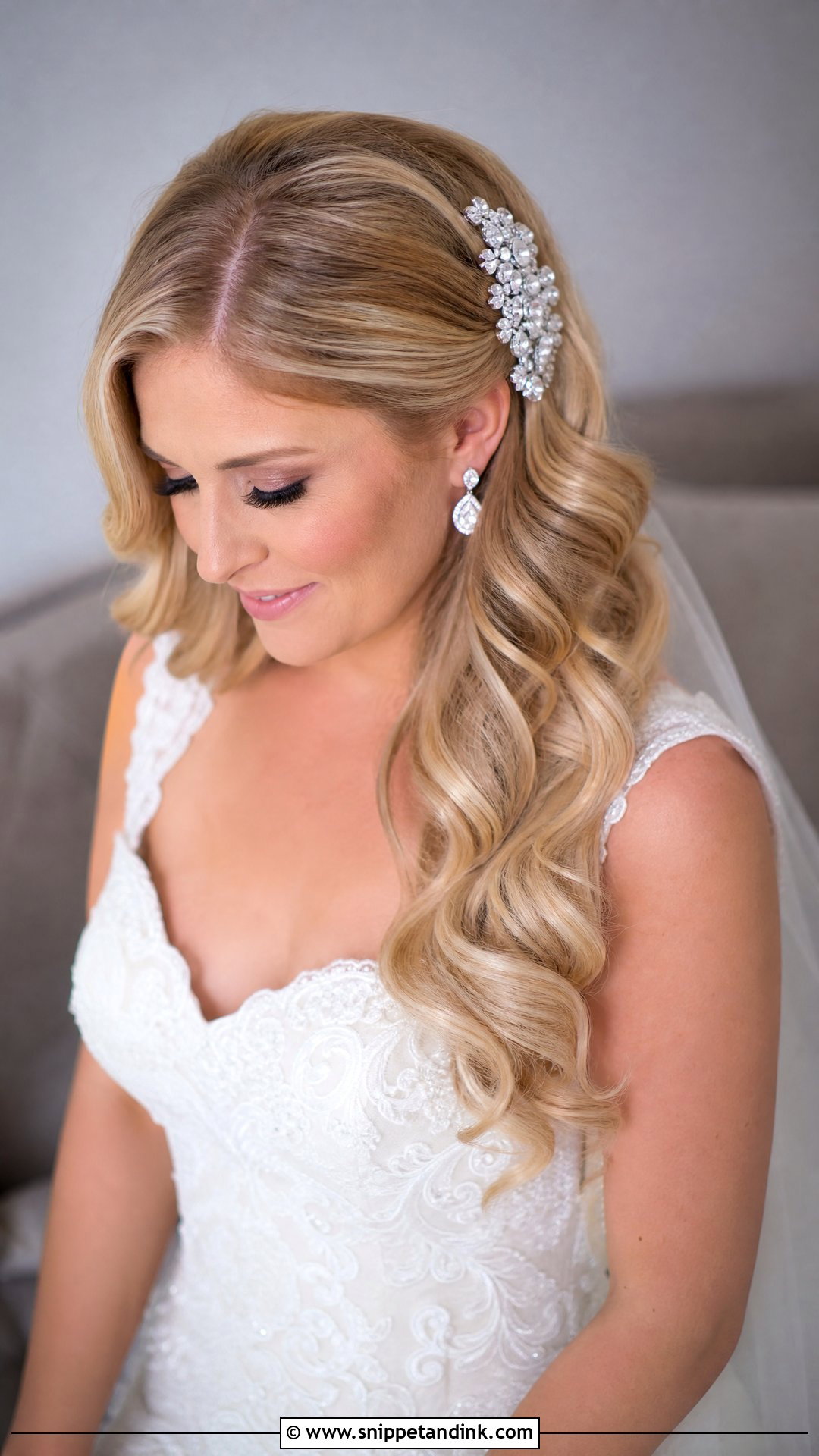
cascading curls with a deep side part close the list. All the hair falls down in big curls, and the deep part adds a bit of drama on one side. Layers make the curls look full and help them separate. The heavier side tends to fall forward into your face during the day, so I tuck it behind the ear with a pin or a jeweled clip. Hair fully down will lose curl faster than any updo here, especially in humid weather, so this is the style where a trial and a good setting spray matter most.
A Haircut Calendar for the Months Before the Wedding
The biggest mistake I see with layered brides is a fresh cut a few days before the wedding. New layers are at their bulkiest and least predictable right after a cut, and they often mean the style from the trial no longer works. Here’s roughly how I’d plan it.
- Four to six months out: decide whether you want to keep your layers or grow them out. If you want an updo and your layers are very short, start growing now and ask for trims that only clean up the ends.
- Two to three months out: book your trial with your hair close to its wedding length. Bring your veil, accessories, and a photo of your neckline.
- Three to four weeks out: get your last trim, a light dusting only. This gives the layers time to settle and fixes any split ends.
- The week of the wedding: no new cut, no new color, and no new products. If you want a gloss for shine, have it done about a week before.
If you’re coloring, do it two to three weeks before so the tone has a chance to settle. Fresh color can be a little brassy or too dark for a few washes, and it can make hair slippery for pins.
What to bring to the trial
Photos of styles you love and ones you don’t, your veil or hairpiece, earrings, and a top with a similar neckline to your gown. Wear the style for the rest of the day afterward, take photos in daylight and with flash, and notice which pieces have fallen by evening. That tells me where to add pins or change the plan before the real thing.
What Your Layers Are Already Telling You
Layers bring volume and texture that suit many bridal styles, from half-up curls to soft updos and braids. The question is how short your shortest layer is and where it lands, since that decides which styles will hold without a fight. Look at your gown, your venue and the weather, book a trial, and bring your veil to it. Then pick the style you can forget about once it’s done, so you can enjoy the day.
You'll Like These Ideas:


Leave a Reply