
Flowers can rescue a plain updo or give loose waves a reason to exist, but only if the hairstyle underneath was built to carry them. The most common trouble I’m called to fix on a wedding morning is a handful of blooms dropped into a finished style with nowhere to grip. So I plan the hair and the flowers together: dress neckline, veil, bouquet, season and how long the stems must last. Small, sturdy heads such as waxflower, spray roses, orchids and baby’s breath, plus floral pins and a little greenery, give me the most to work with. The fifteen styles below run from garden and beach looks to rustic barns and formal indoor ceremonies.
Fresh, Dried or Silk for Your Wedding Hair?
Brides usually picture fresh flowers, and for a short, cool ceremony they’re lovely. For a long or hot day, I talk through all three options, because each behaves differently once it’s pinned in.
- Fresh: the most natural look and they match your bouquet exactly. They wilt in heat and direct sun, so they need conditioning and wiring by a florist and should go in last.
- Dried or preserved: won’t wilt and weigh very little. They’re brittle, so they can snap if crushed by a hug or veil, and the colors are slightly muted.
- Silk or fabric: the most durable and reusable, and the only option I’d use for a full-day outdoor summer wedding with a crown. Cheaper ones look shiny on camera, so check them in daylight.
Mixing works well too. I often put silk or preserved flowers in the structural spots, like the crown base or a comb, and add a few fresh sprigs just before the ceremony.
1. Bride Flower Crown Wedding Hair
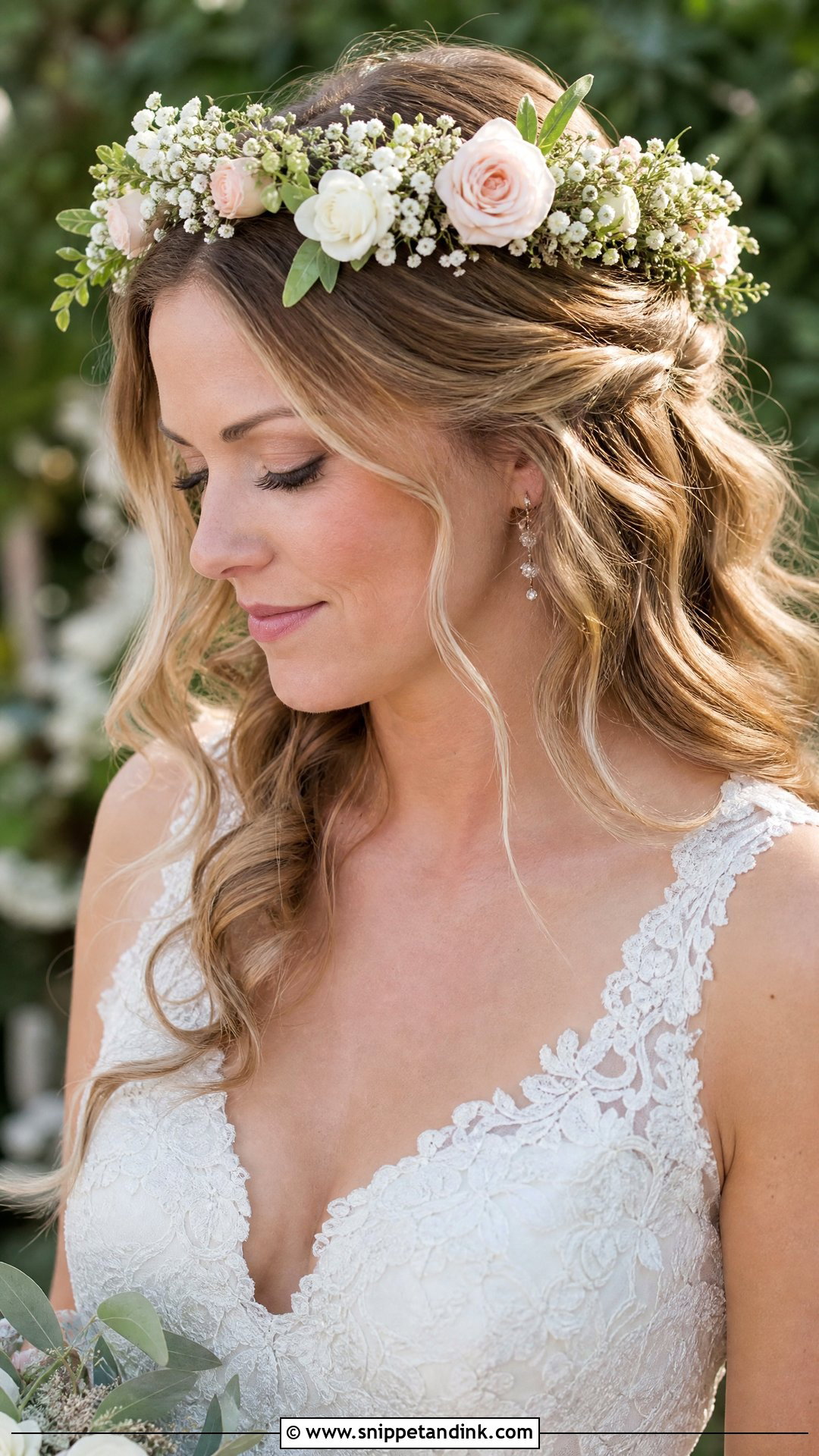
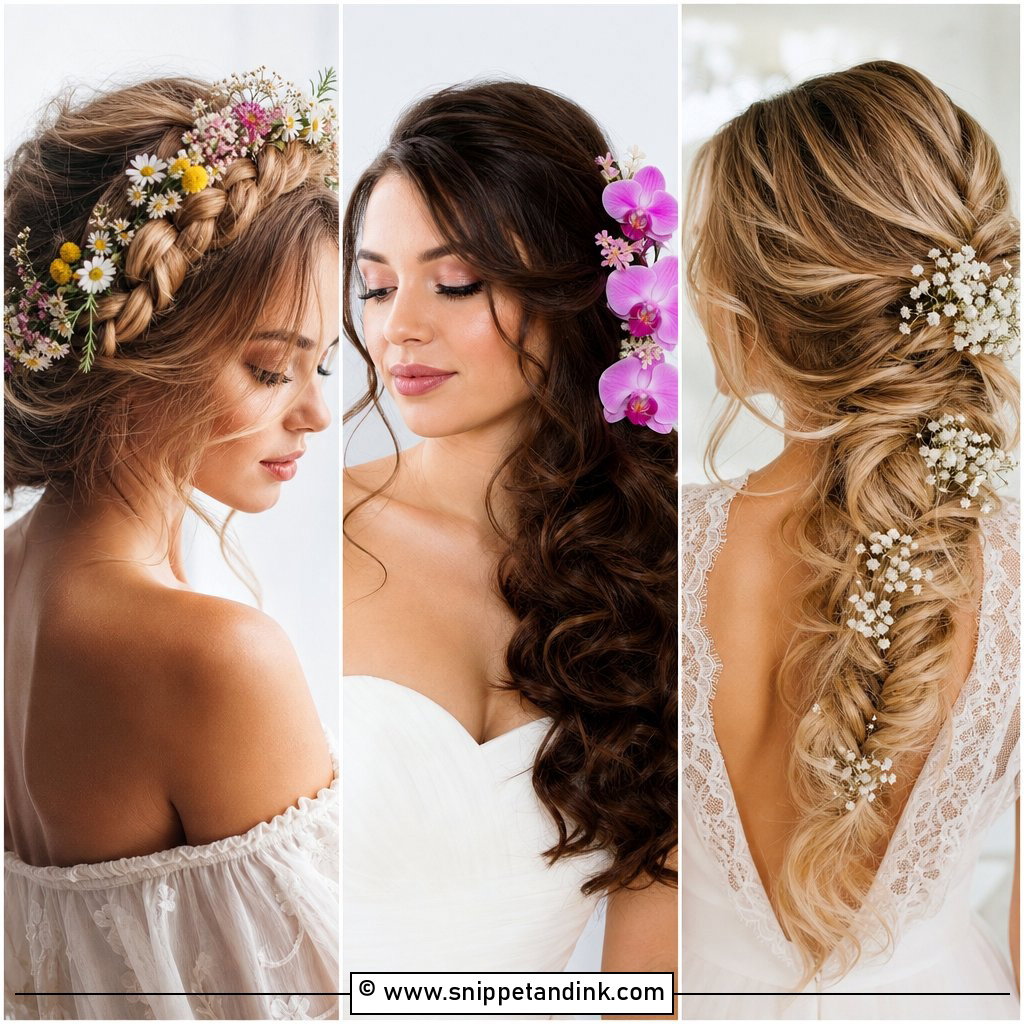
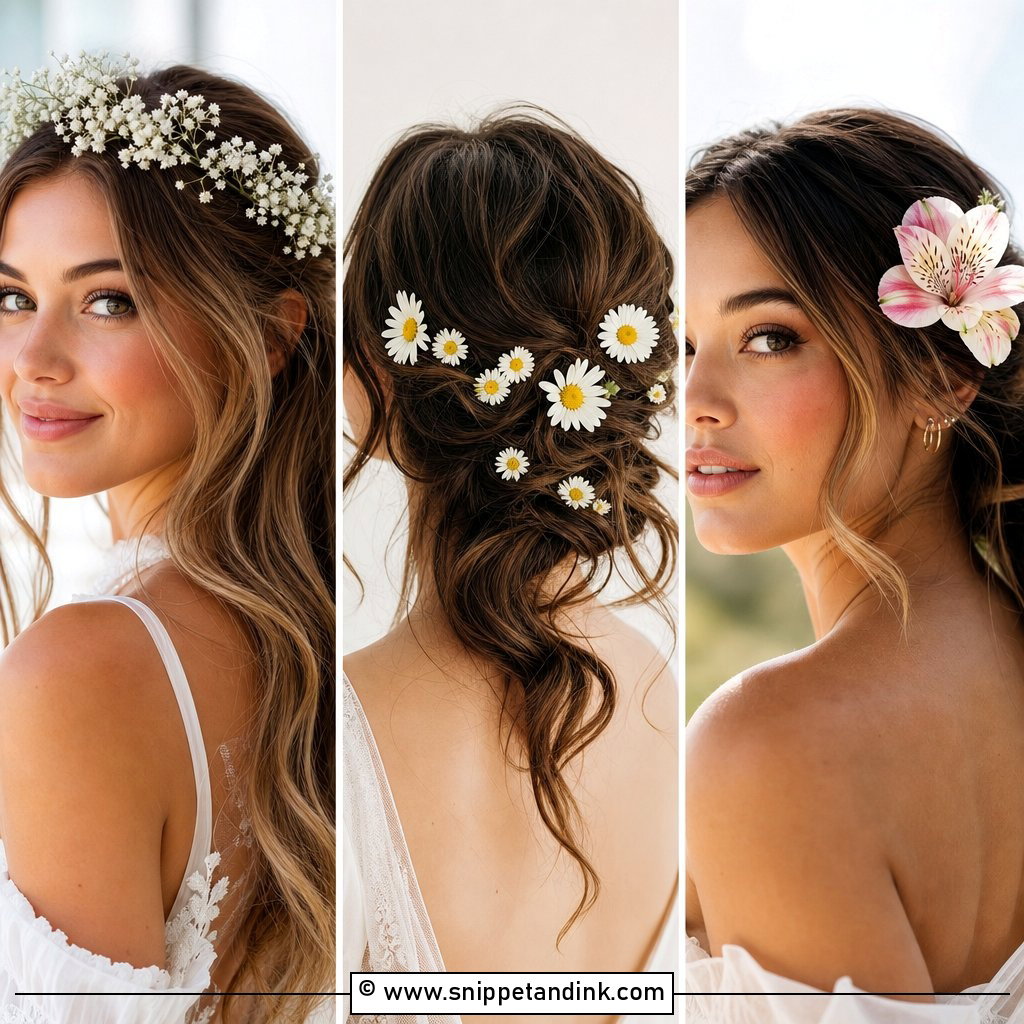
Few things frame a face like a crown, and few accessories punish bad prep more. It sits best on loose waves, soft curls or hair with gentle texture; very sleek, freshly washed hair lets it slide. I’d choose smaller blooms such as baby’s breath, waxflower, spray roses or tiny daisies over oversized heads, which tip forward and hide the forehead in photos. A full ring feels dreamy outdoors; a half crown that stops behind the ears looks more current. I lightly tease a band of hair where the crown will rest, then pin through the base at the temples and the back so it can’t rotate.
2. Bride Half Up Hair With Flowers
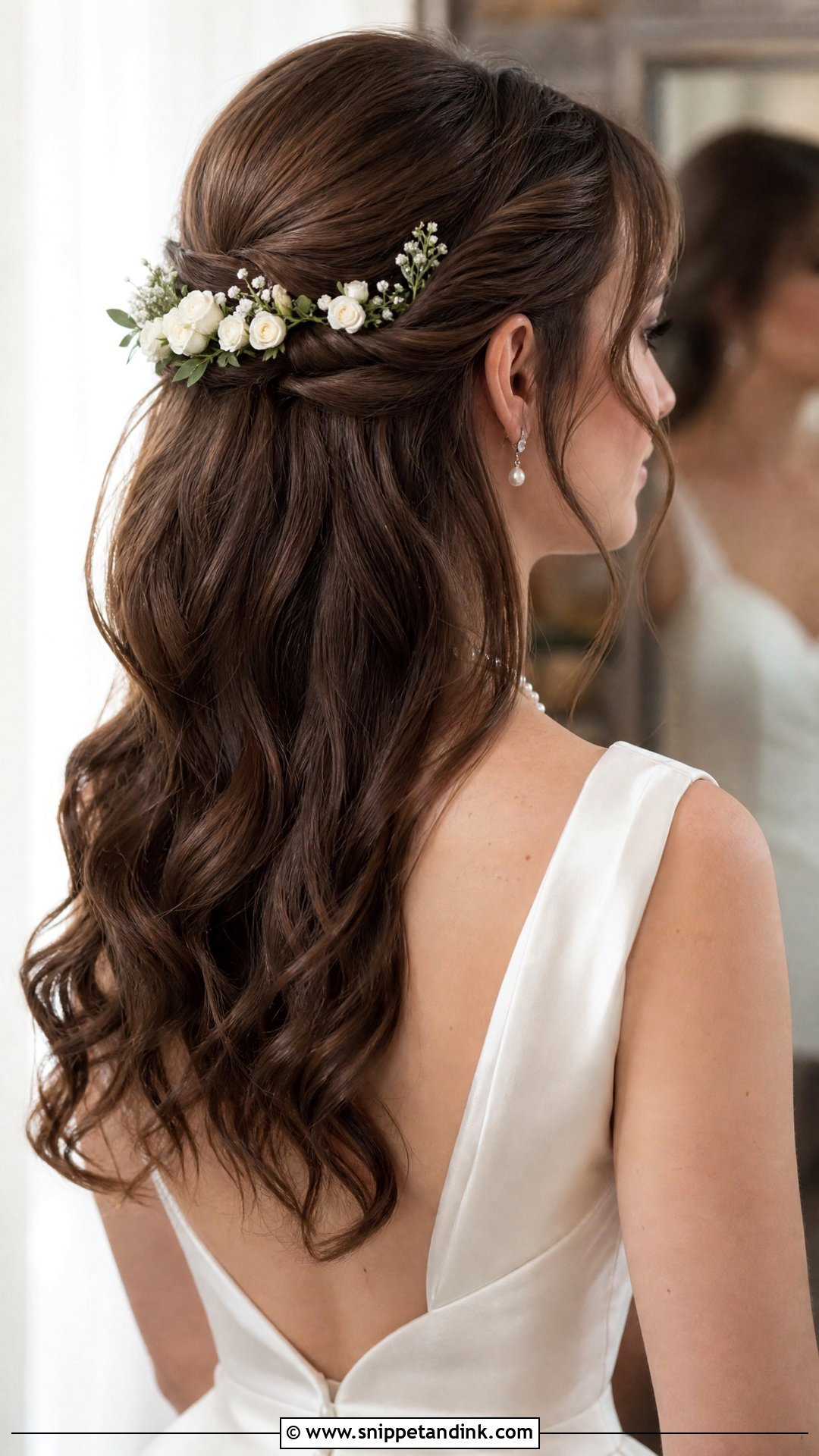
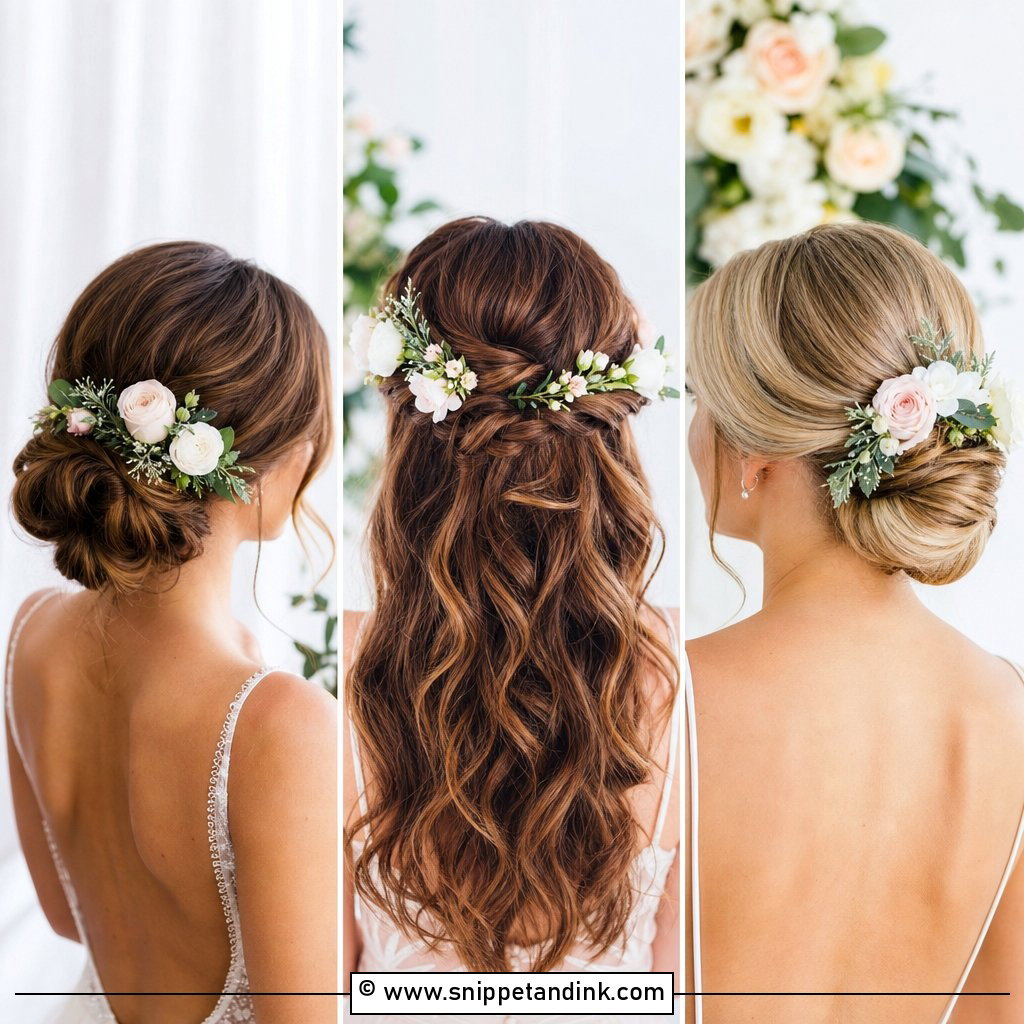
With a half up style you keep the feel of hair down plus a secure pinned section to work with. I twist, braid or gather the top layer, then set small floral clusters at the back where the sections meet. That anchor point also holds a veil comb, so I plan the flowers just above or just below where the comb will go. Mini roses, orchids or a little greenery that echo your bouquet tie the two together. My warning: the loose curls below the flowers will relax over the day, so I curl them a touch tighter than you’d like at the start.
3. Bride Low Bun With Flowers
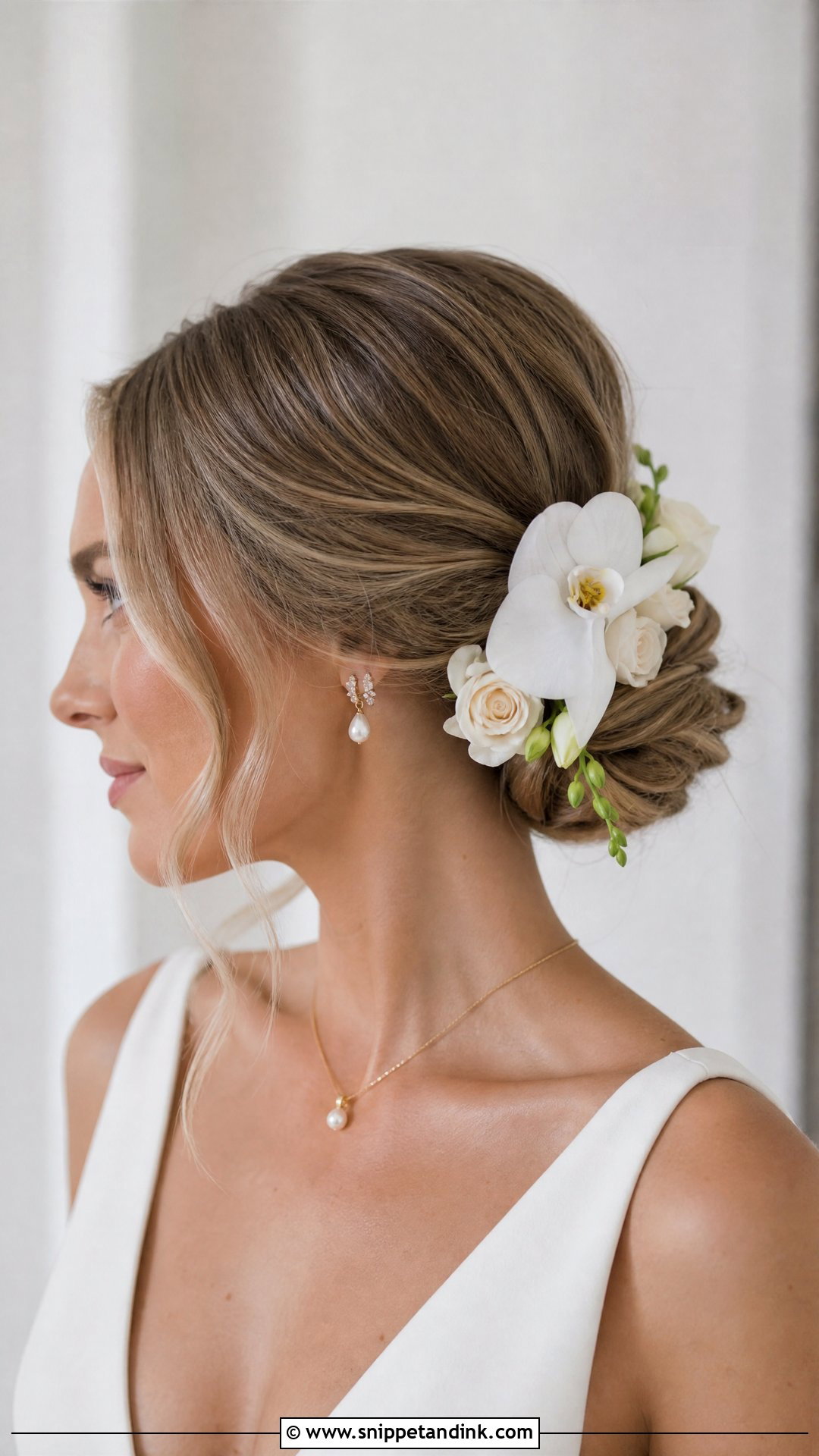
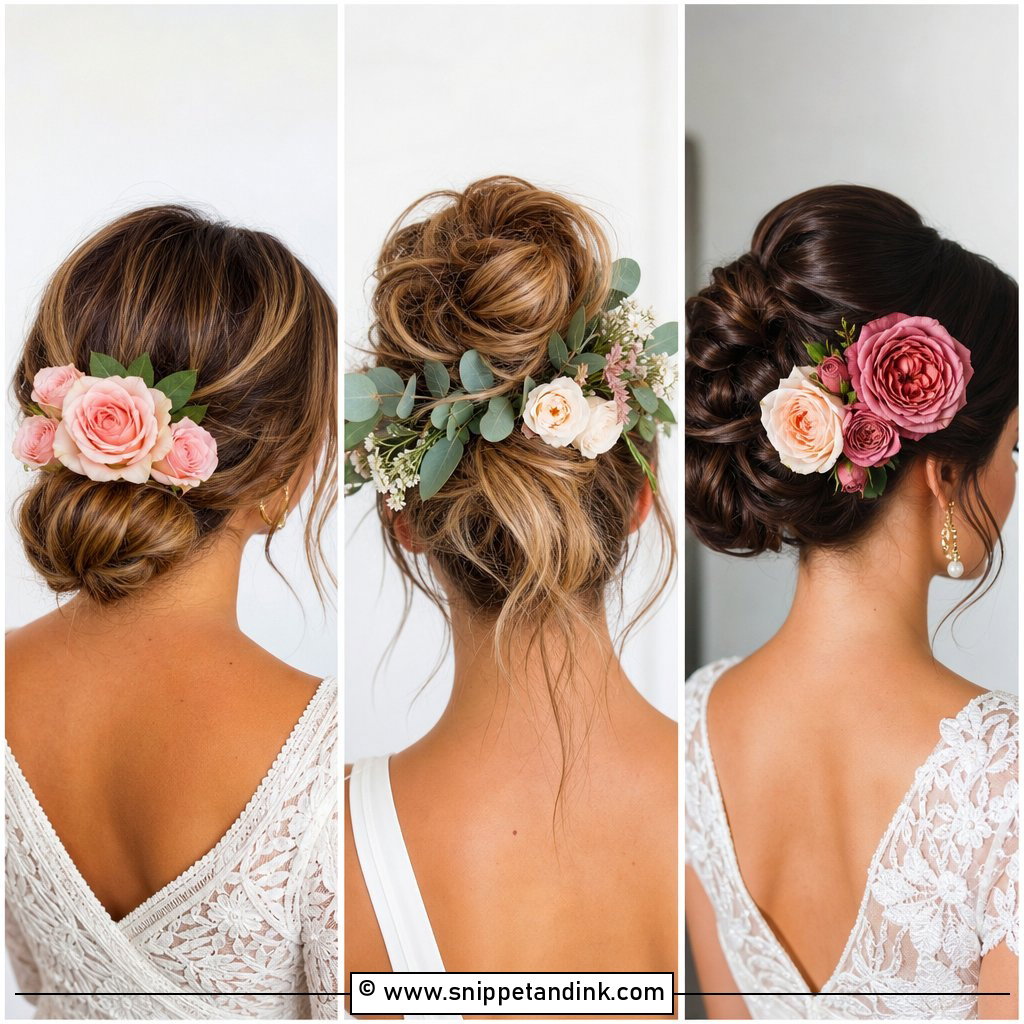
On a hot day, the low bun is what I’d recommend first. Hair stays off the neck, and the bun offers a dense, solid base for stems. It can be sleek, textured, braided or a bit undone. I like flowers tucked along one side, or following the upper curve of the bun like a small halo. Orchids, roses, lisianthus and preserved flowers hold for many hours; ranunculus and sweet pea look pretty in the morning and tired by dinner. Leave a couple of soft face-framing pieces if the bun alone looks too formal on you.
4. Bride Loose Waves With Flowers
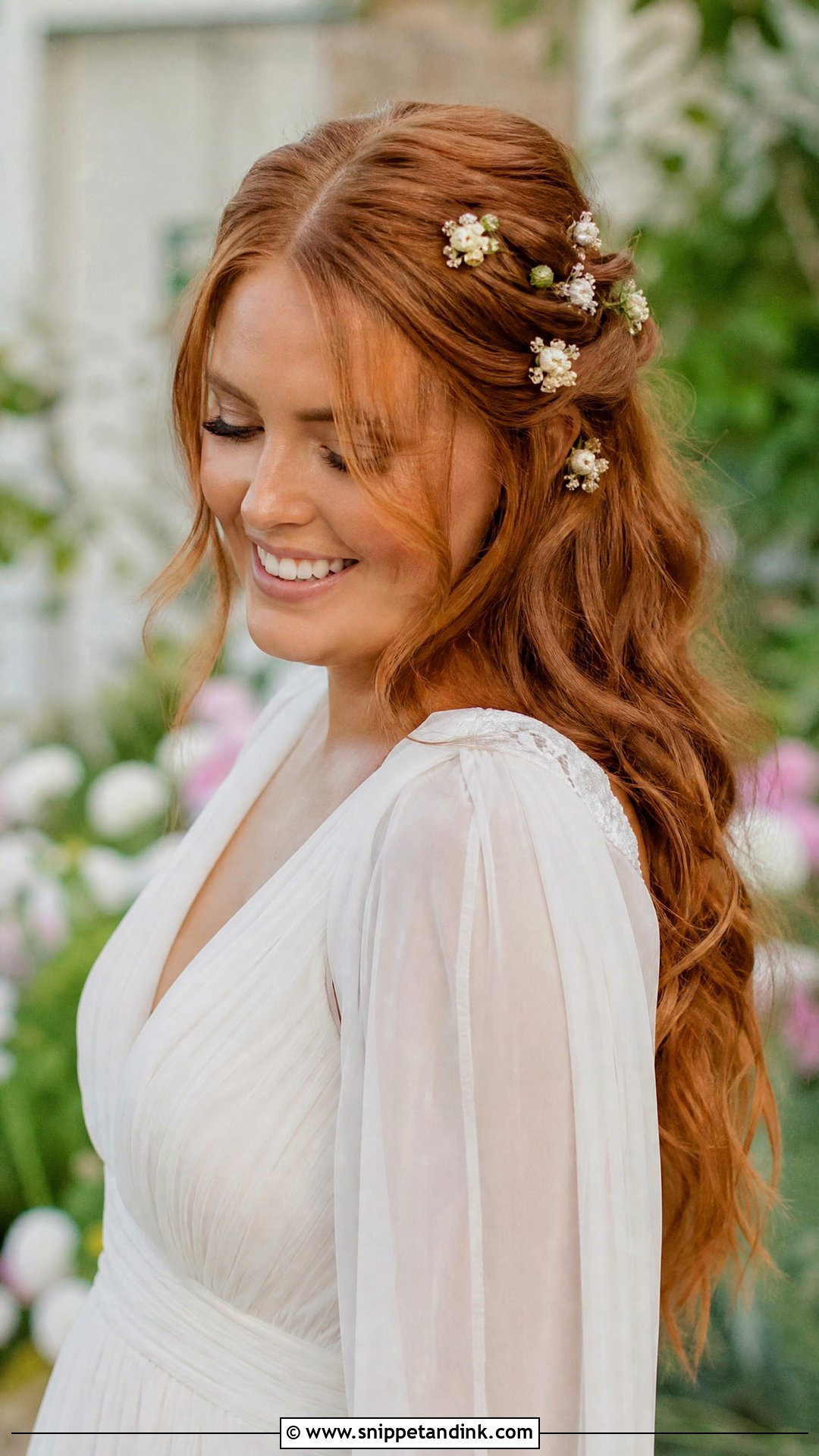
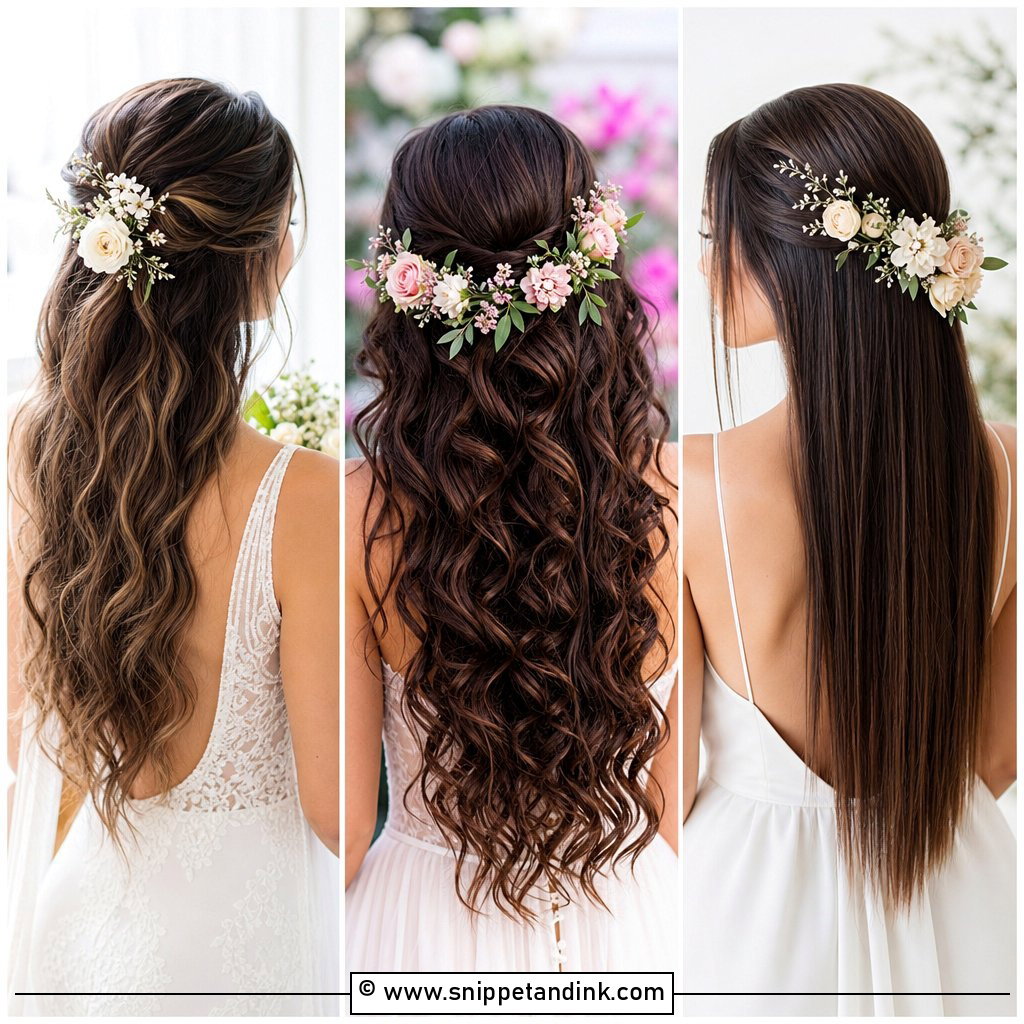
Waves with flowers look easy and are the opposite to build. Medium or long hair suits them, and the blooms can sit on one side, be scattered at the back, or rest near a soft side part. With strapless gowns, lace and outdoor ceremonies they look right at home. The challenge is grip: loose hair gives a flower nothing solid to hold. I create a hidden anchor first, a small row of crossed bobby pins under the top layer, then slide each wired bloom into that row. Flexible spray keeps the waves moving, and the florist’s prep keeps the flowers from wilting before your portraits.
5. Bride Braid With Flowers
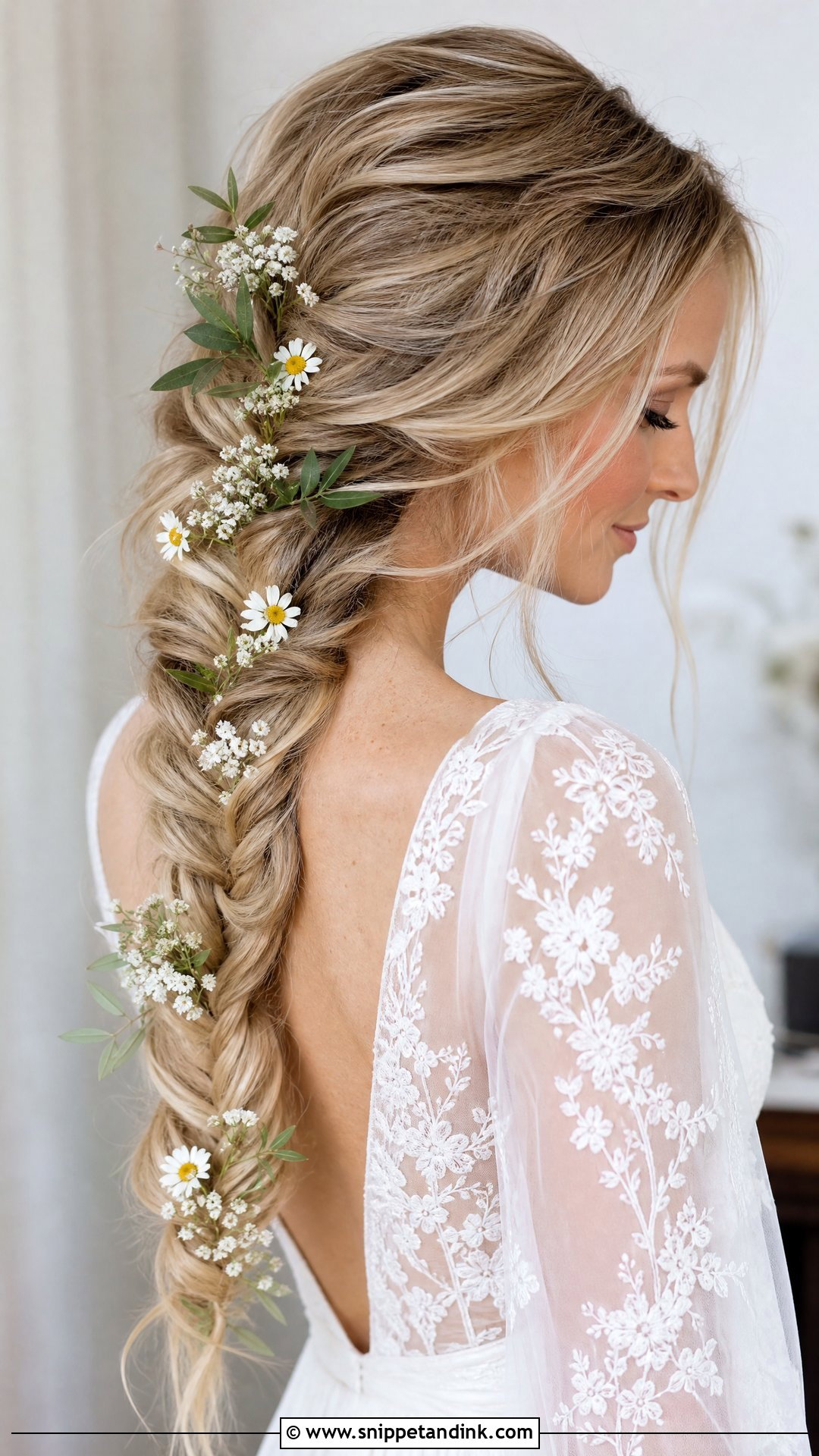
Boho, rustic, beach and garden weddings all suit a floral braid, and it’s the most secure place in any hairstyle to put a flower. Fishtail, Dutch braid, a loose side plait or a full crown braid all work. I weave tiny blooms into the gaps between braid sections or pin them along the outer edge, so the flowers look like part of the plait. Long hair benefits most, since the braid controls length but still shows texture. Larger heads tend to sit on top of the braid rather than in it, so I keep most of them small and save any bigger bloom for the end of the braid.
6. Bride Side Swept Hair With Flowers
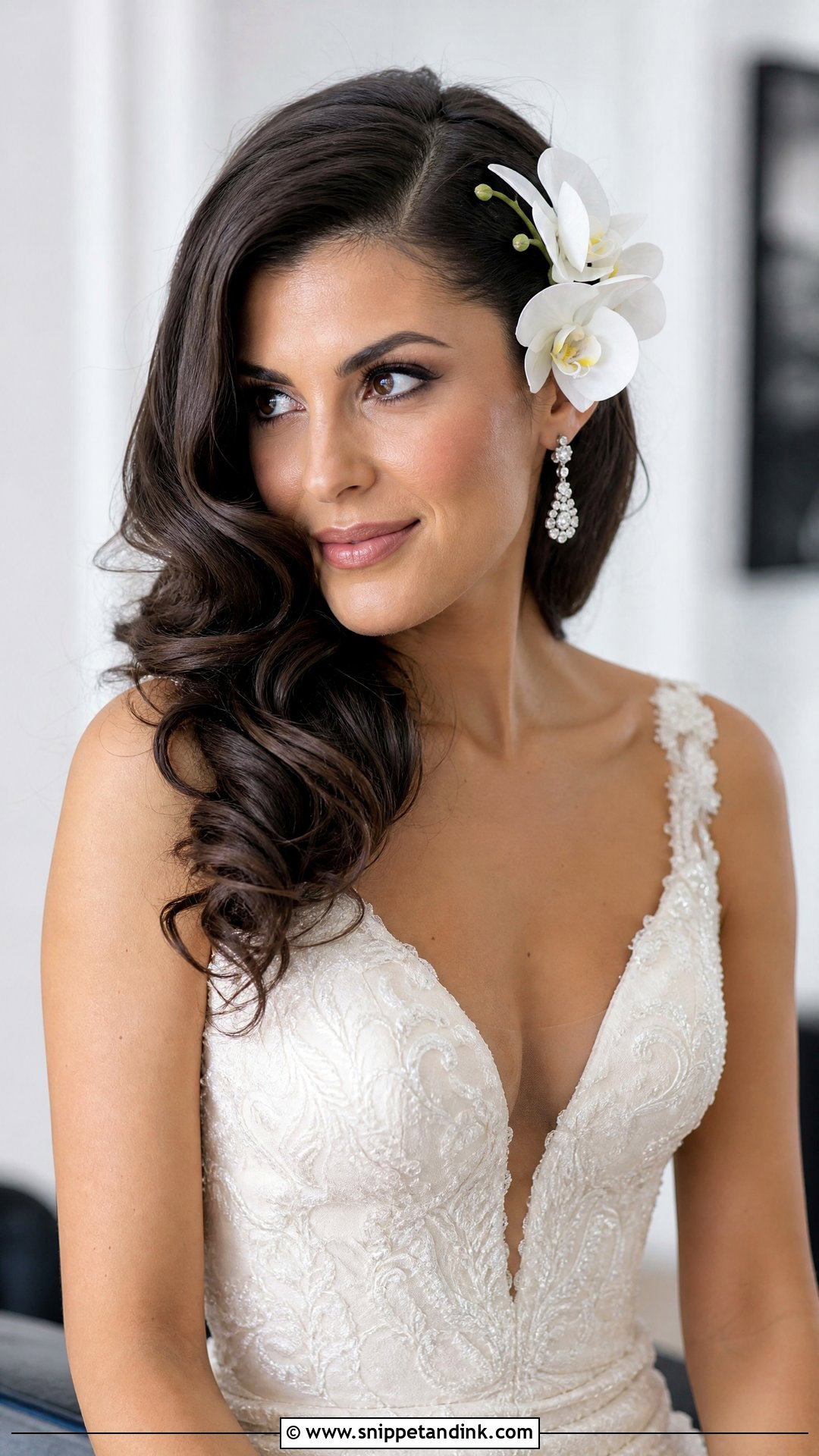
Sweeping everything over one shoulder gives a soft, glamorous shape that you can see from the front. Waves, curls or a smooth brushed finish all work, with flowers placed near the pinned side. One-shoulder gowns, sweetheart necklines and big earrings pair well. Side styles carry their weight unevenly, and that’s where they fail: the curls slowly pull the pinned side loose. I build a firm anchor behind the ear with crossed pins, set small orchids, roses or pearl-centered floral pins into it, and lay the top layer over the stems so nothing shows.
7. Bride Updo With Baby’s Breath
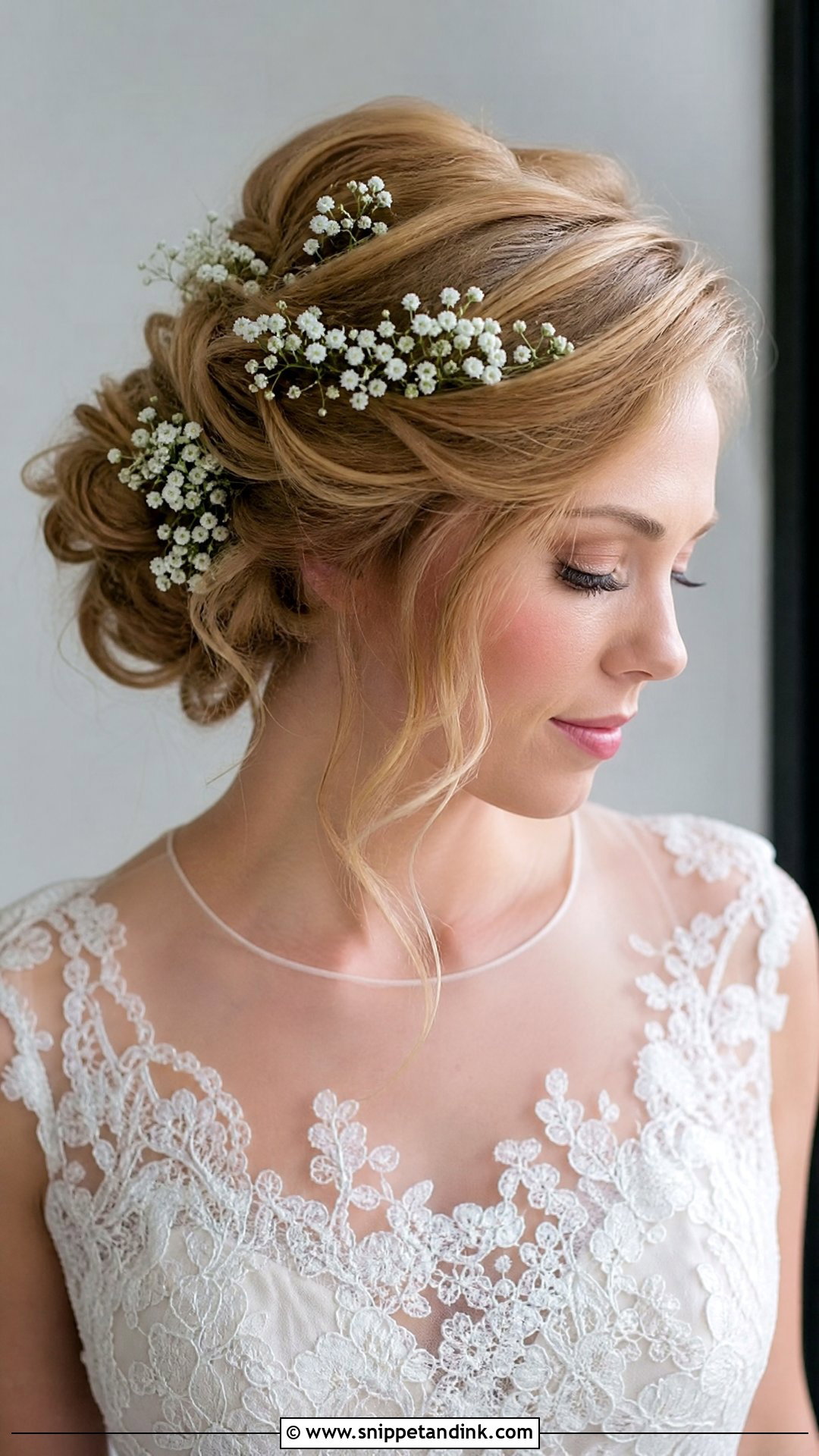
Baby’s breath is the flower I see in more hair trials than any other, and it earns that. A bride updo with baby’s breath stays light and airy because the sprigs weigh almost nothing. I scatter them through a textured bun, run them around a braided updo, or shape them into a soft crescent along one side. They sit happily with veils, lace and plain gowns. Placement is where it can go wrong: dotted randomly, it looks like confetti landed in your hair. I group the sprigs into three or four deliberate clusters instead.
8. Bride Short Hair With Flowers
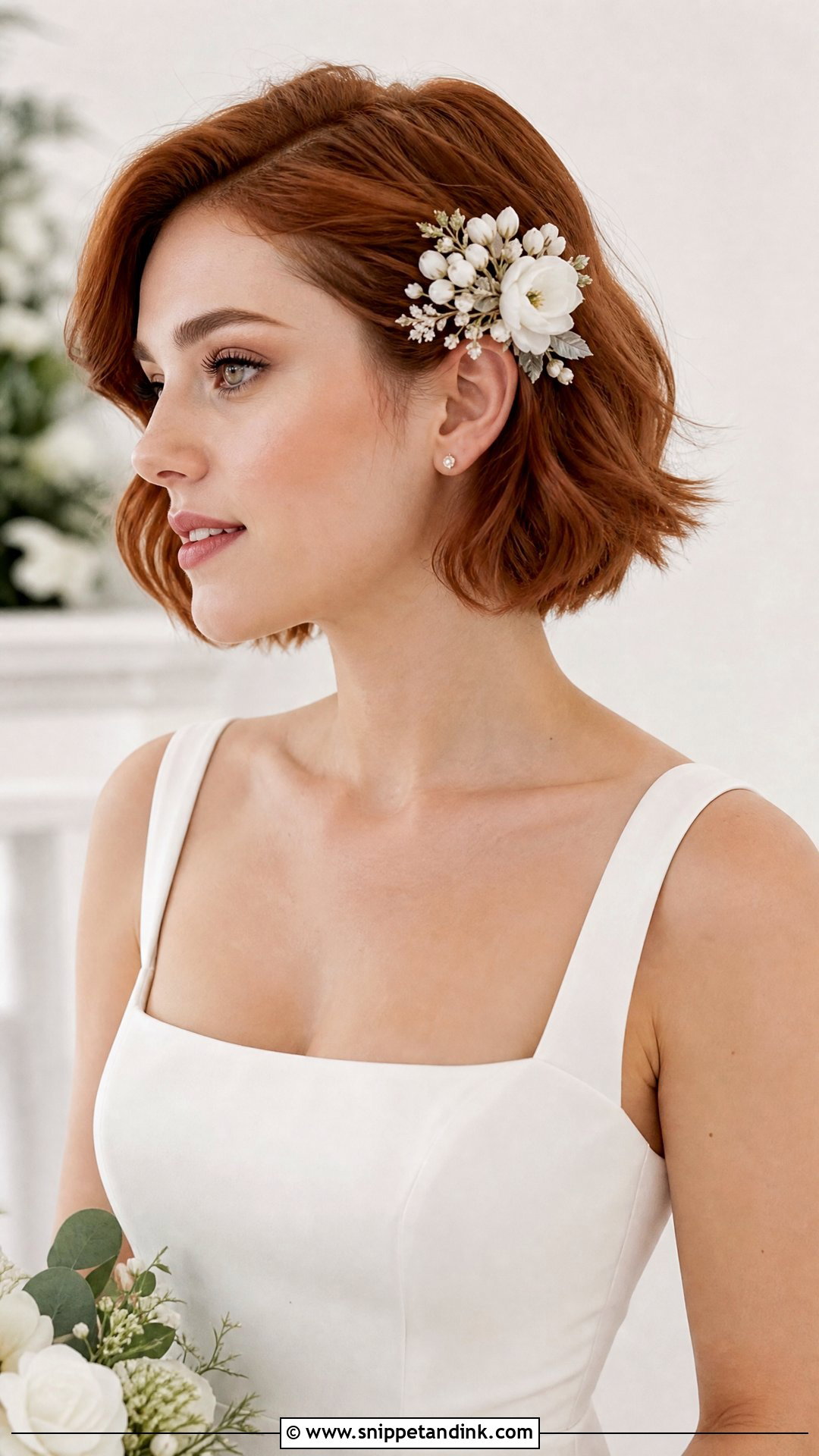
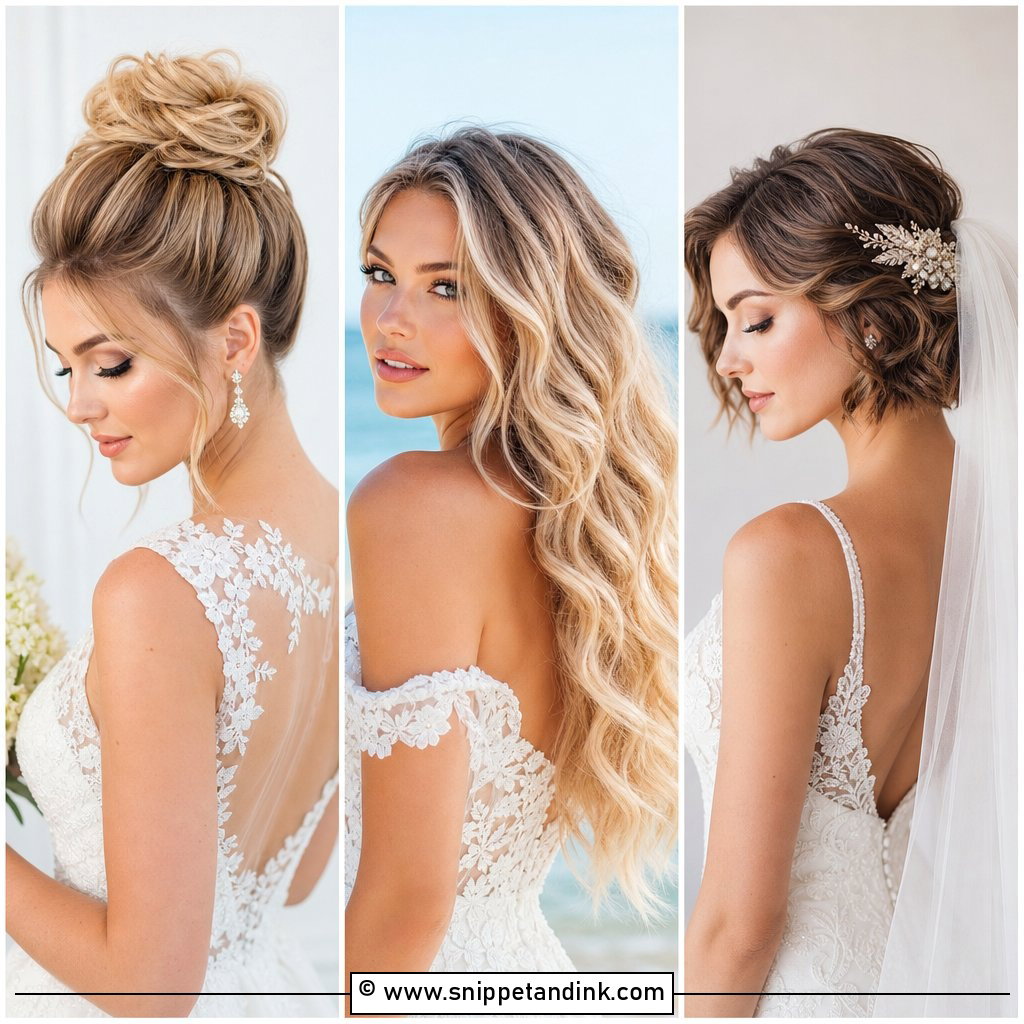
Short hair can wear flowers every bit as well as long hair; the placement just has to be precise. With pixie cuts, bobs and short waves, I use floral combs, small clips or blooms on one side, usually above the ear, by a deep side part, or along the wave line. Small flowers keep the proportion right. Fine short hair often can’t hold a comb, so I tape lightweight faux or preserved flowers onto bobby pins and cross them flat. A polished bob with one floral accent photographs crisply because nothing is hidden.
9. Bride Curly Hair With Flowers
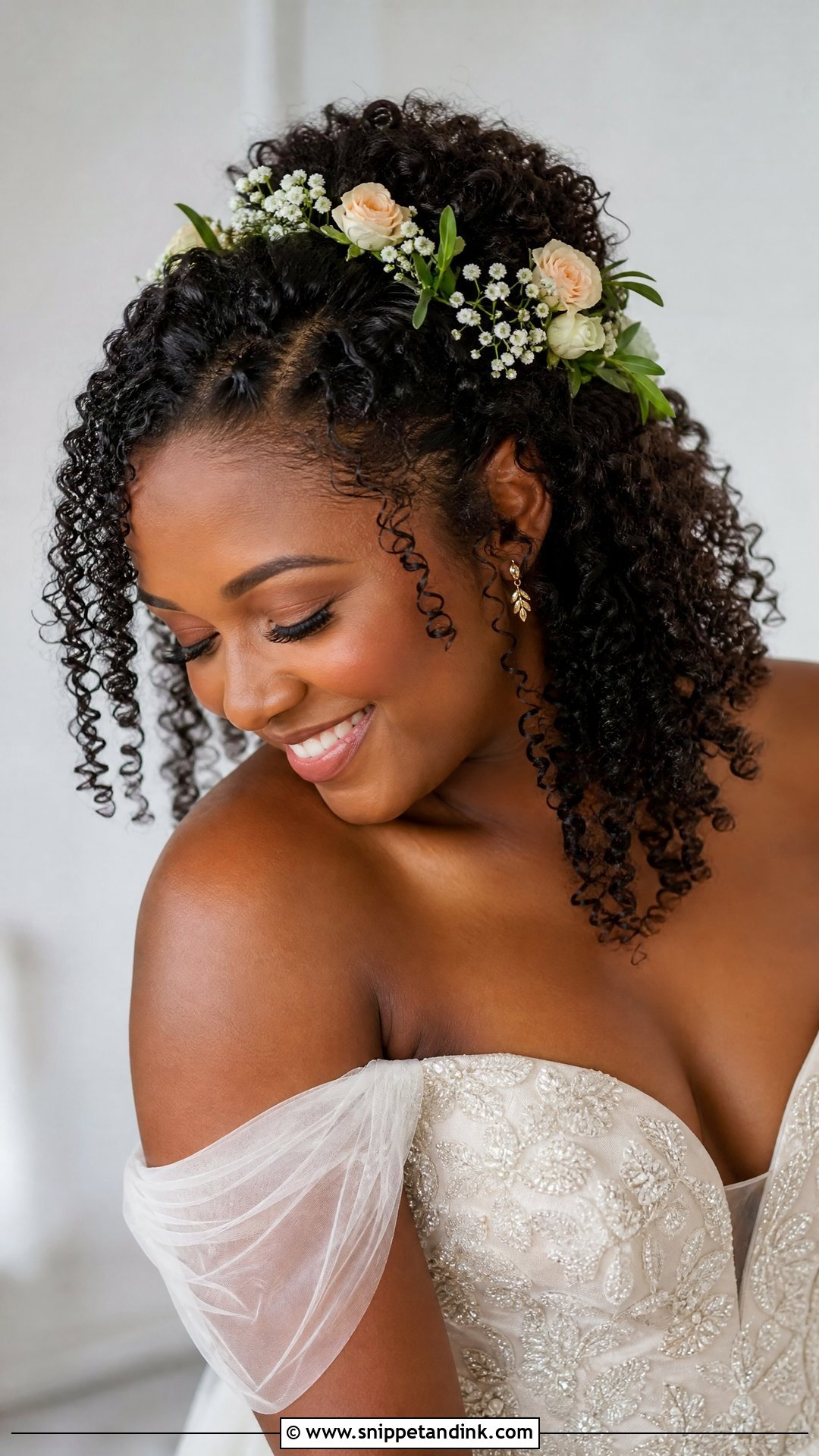
I’d rather show off a curl pattern than iron it away. Flowers go into a curly updo, around a half up shape, or among defined curls, and they read as part of the texture. Baby’s breath, orchids, tiny roses and greenery all work if they’re pinned firmly. The prep starts days before, with a moisture routine so the curls are defined and hydrated on the morning. I place flowers only after the curls are set, slipping each stem in from below so I don’t break up the curl clumps. Too many flowers make curly hair look weighed down, so I usually stop sooner than the bride expects.
10. Bride Ponytail With Flowers
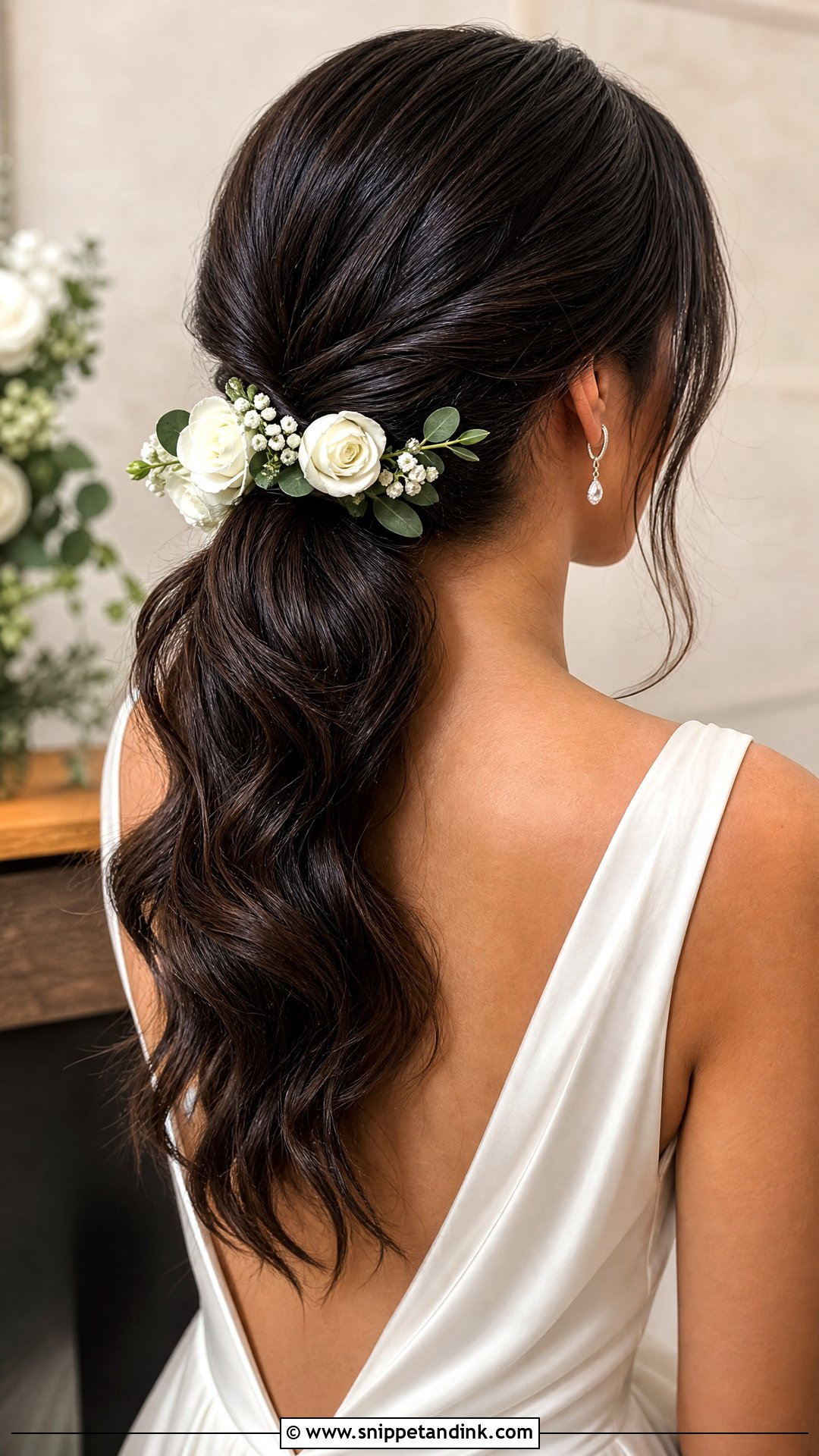
Ponytails surprise people: they can be romantic as well as clean. The tail can be low and soft, high and polished, or full of waves. I put flowers where the hair is anchored, wrapped around the base, tucked into a twist, or along a small braid feeding into the tail. It’s comfortable for dancing and lighter than wearing everything down. Hardy flowers matter here, because a low pony rubs against your neck and shoulders and crushes delicate petals. A few soft tendrils in front make it read bridal rather than gym-ready.
11. Bride Chignon With Flowers
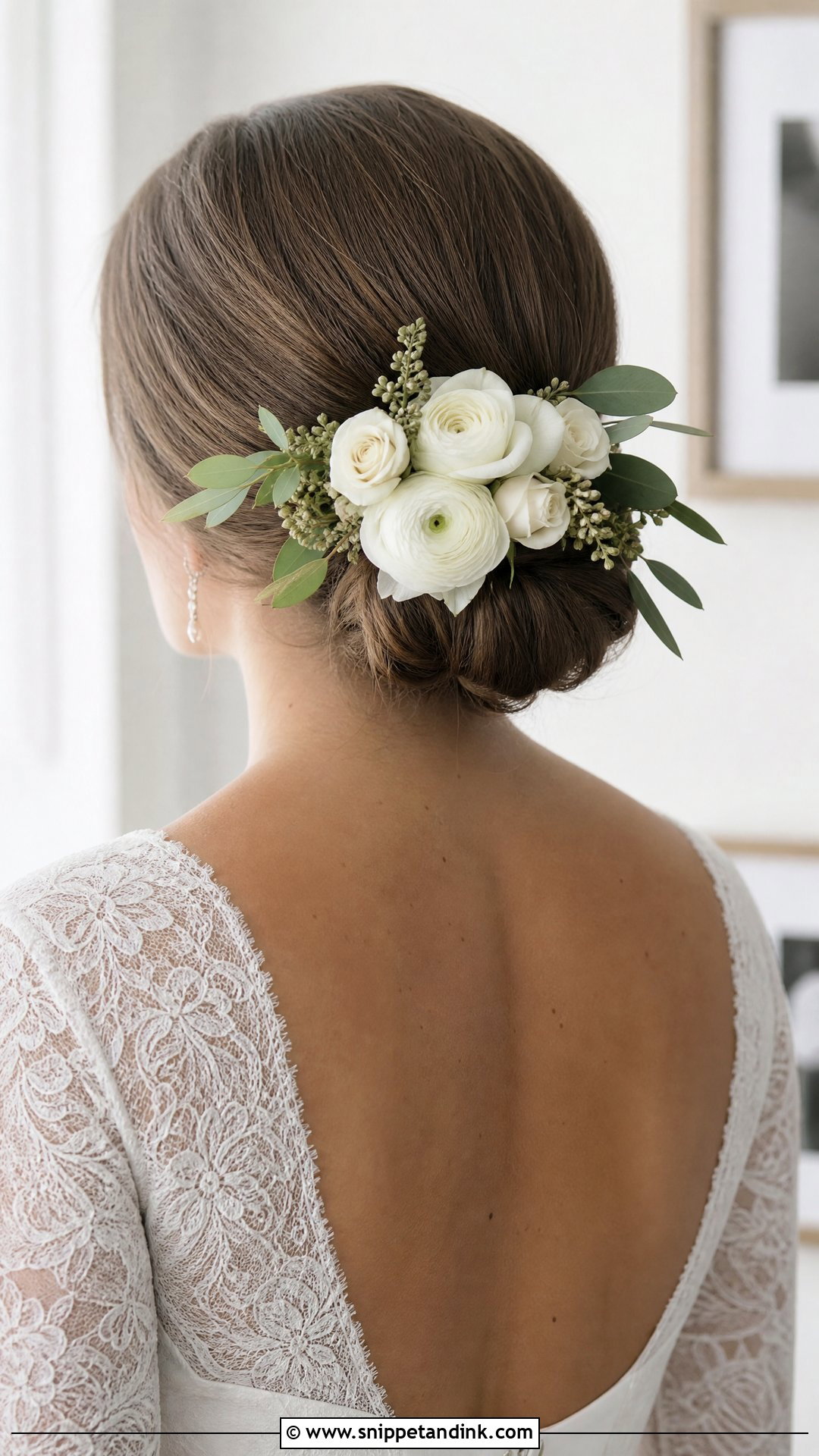
A chignon at the nape, smooth or softly textured, is the classic home for flowers at a formal wedding. Blooms can run along one side, tuck underneath, or frame the bun closely. It takes a veil comb well, since the chignon gives pins a strong base. White roses, orchids, ranunculus and greenery look refined against it. I keep the flowers tight to the bun; if they stick out too far, the outline turns bulky and the chignon loses its neat shape from the side.
12. Bride Boho Hair With Flowers
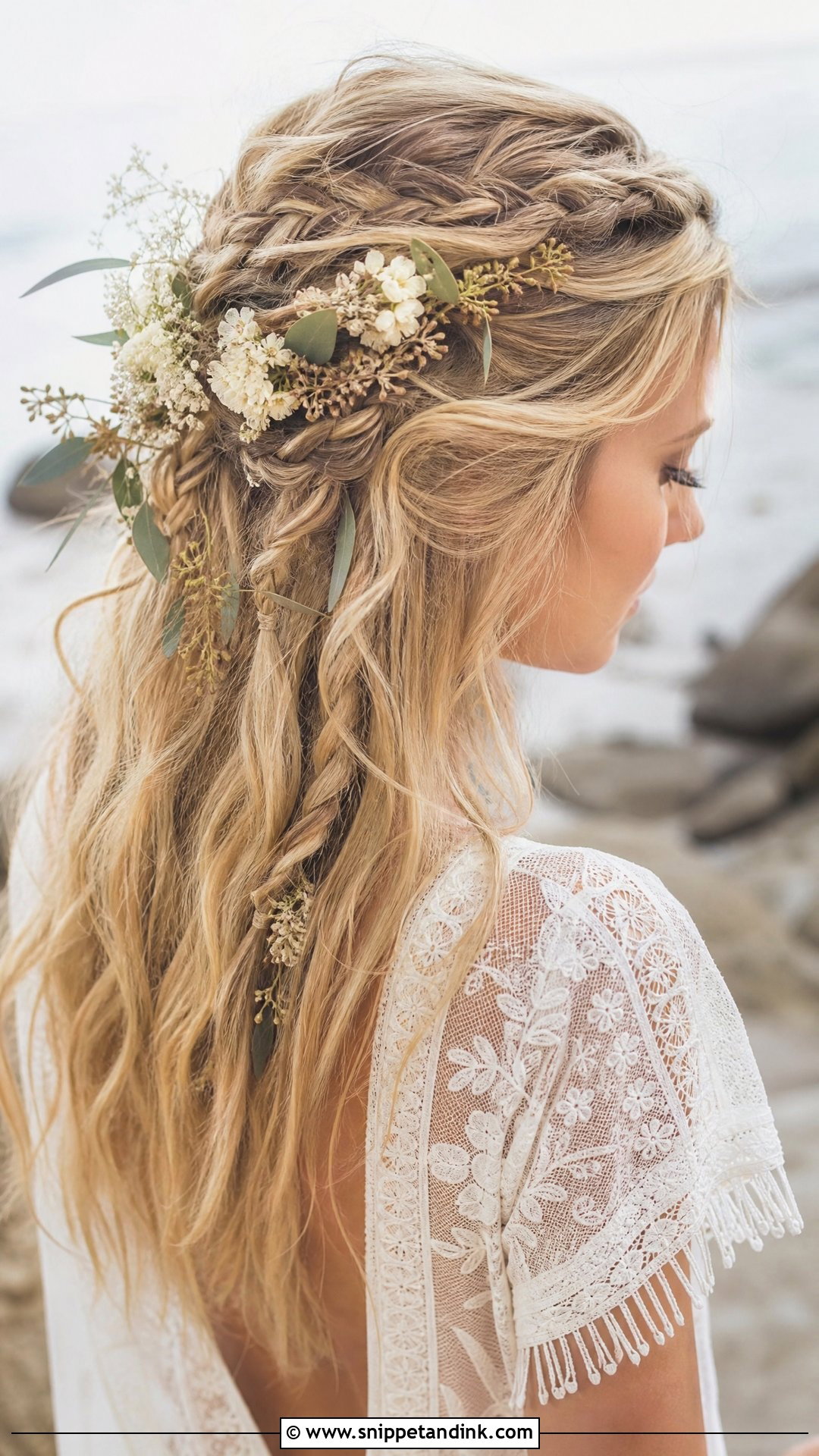
Boho hair is relaxed on the surface and quite structured underneath. Expect loose waves, small braids, face-framing pieces and flowers that look picked rather than arranged. Outdoor, desert, woodland and beach weddings suit it. Dried flowers, wildflowers, small roses and greenery feel organic. My job is to make sure it’s relaxed but not messy, which means hidden braids and crossed pins under the soft shape. That’s what lets you have the carefree look you want while the flowers survive wind, hugs and dancing.
13. Bride Veil With Flowers In Hair
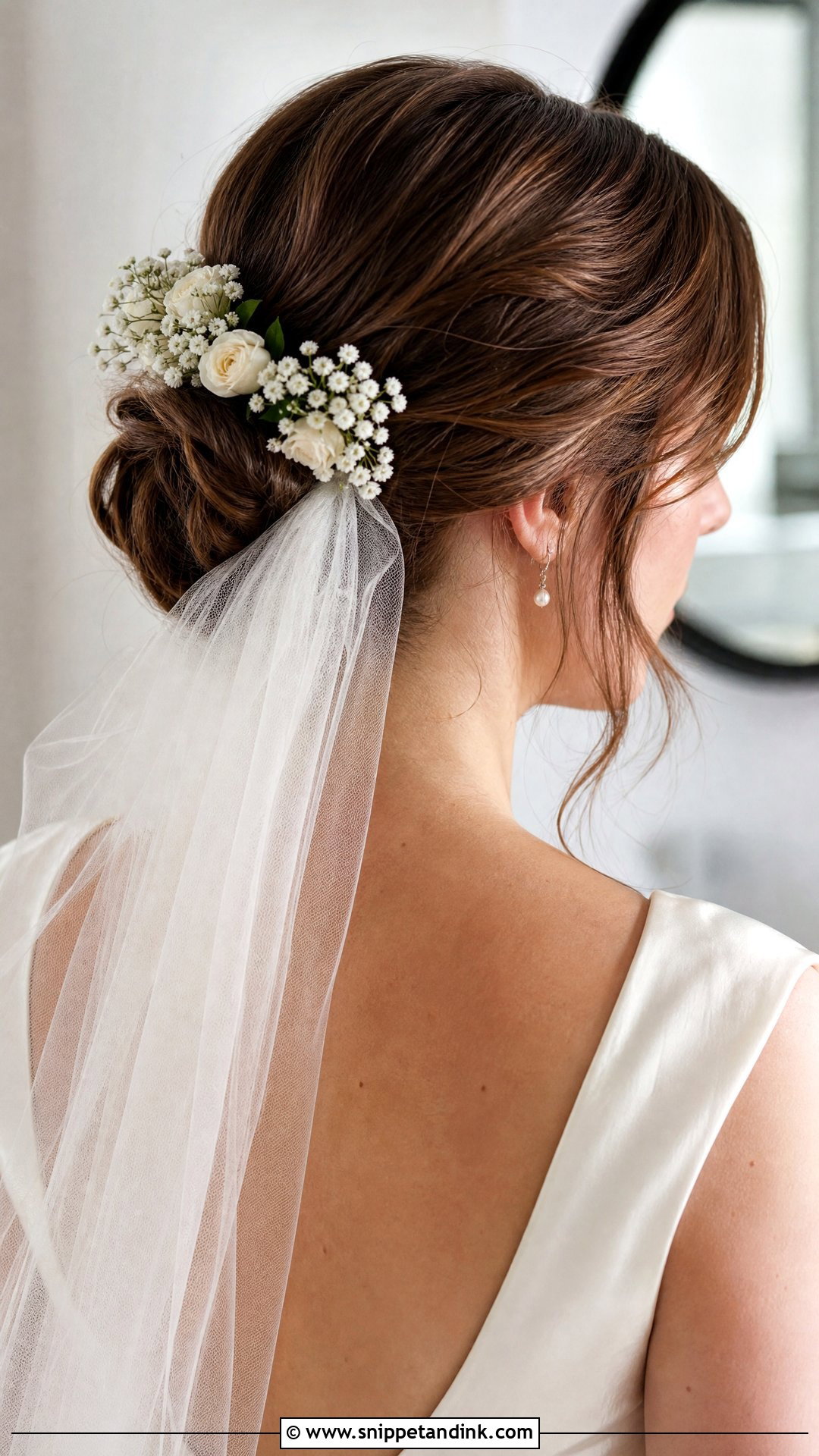
Pairing a veil with flowers means two accessories competing for the same few inches of hair. Flowers can sit above the veil comb, around a low bun, or beneath a half up twist, and the layering looks romantic when it’s balanced. Heavily embroidered veil, small flowers; plain tulle, a stronger floral accent. Please bring your veil to the trial so I can test placement and comfort together. The detail I check most is snagging: a cut stem or a wire end catches tulle instantly, so every stem is taped smooth before it goes near the veil.
14. Bride Floral Hair Comb
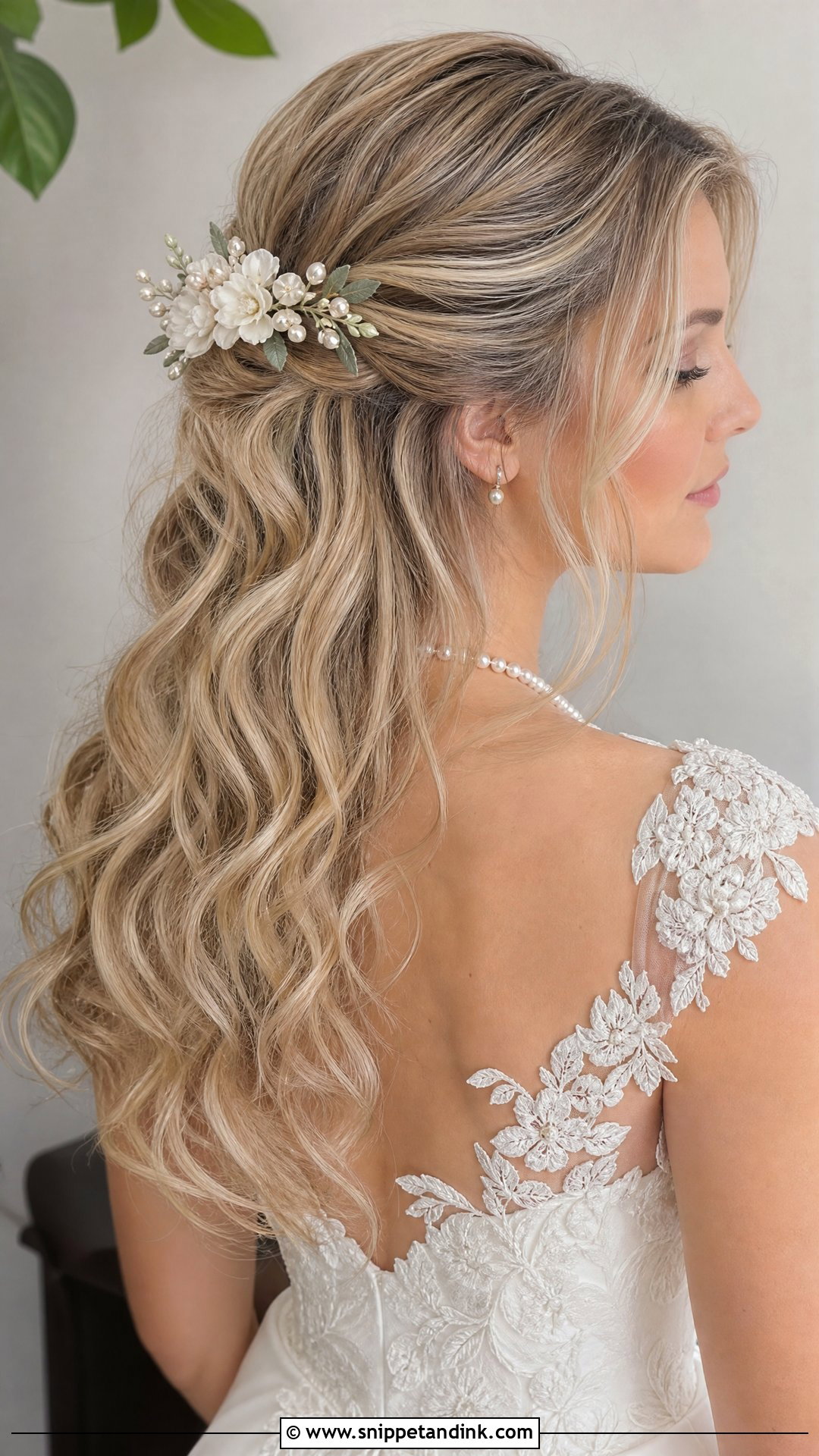
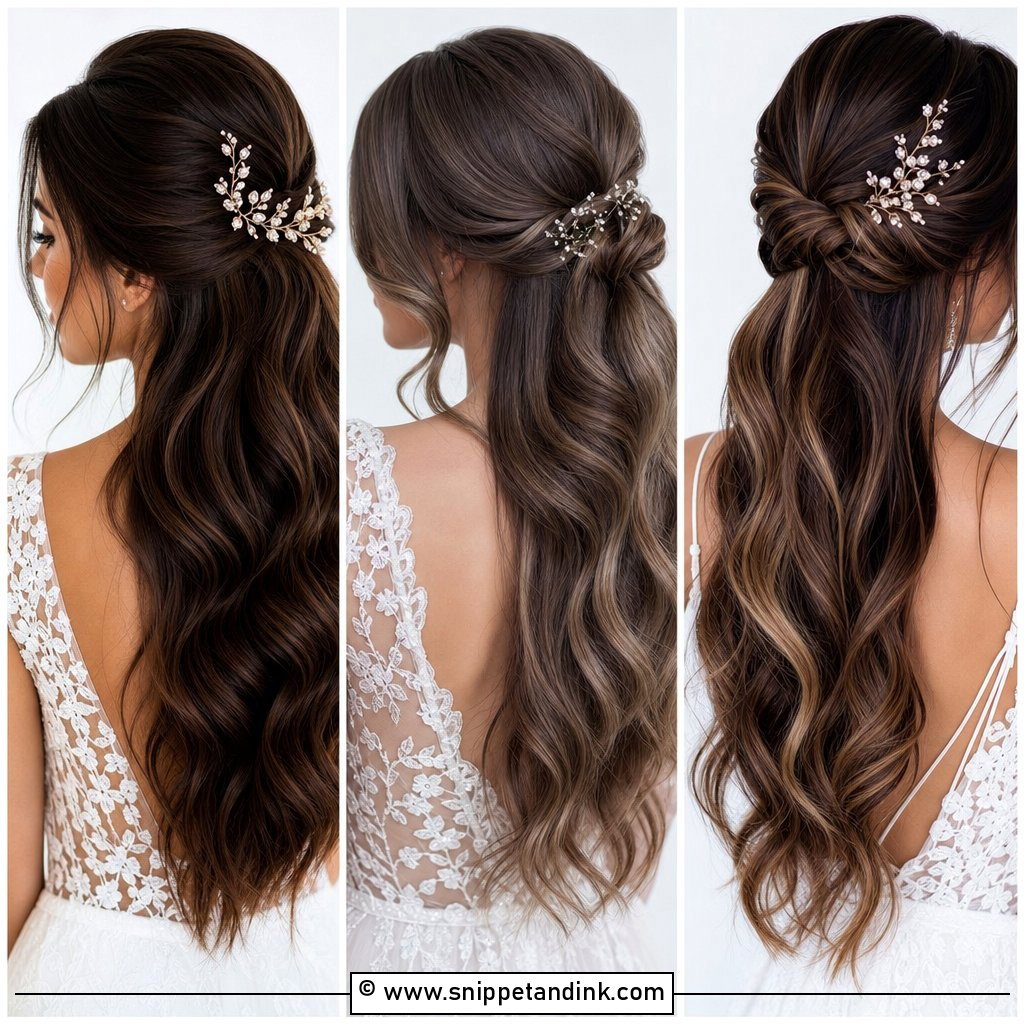
If a full crown feels like too much, a comb is the practical middle ground. It can carry fresh, dried or silk flowers, pearls or greenery, and it sits with low buns, half up hair, short cuts, ponytails and waves. It’s also easy to take out if you’d like to change your look for the reception. I always place the comb where the style already has structure, beside a bun or just above a twist, and push it in against the direction of the hair so the teeth lock. It should feel secure without pressing.
15. Bride Orchid Hair Flowers
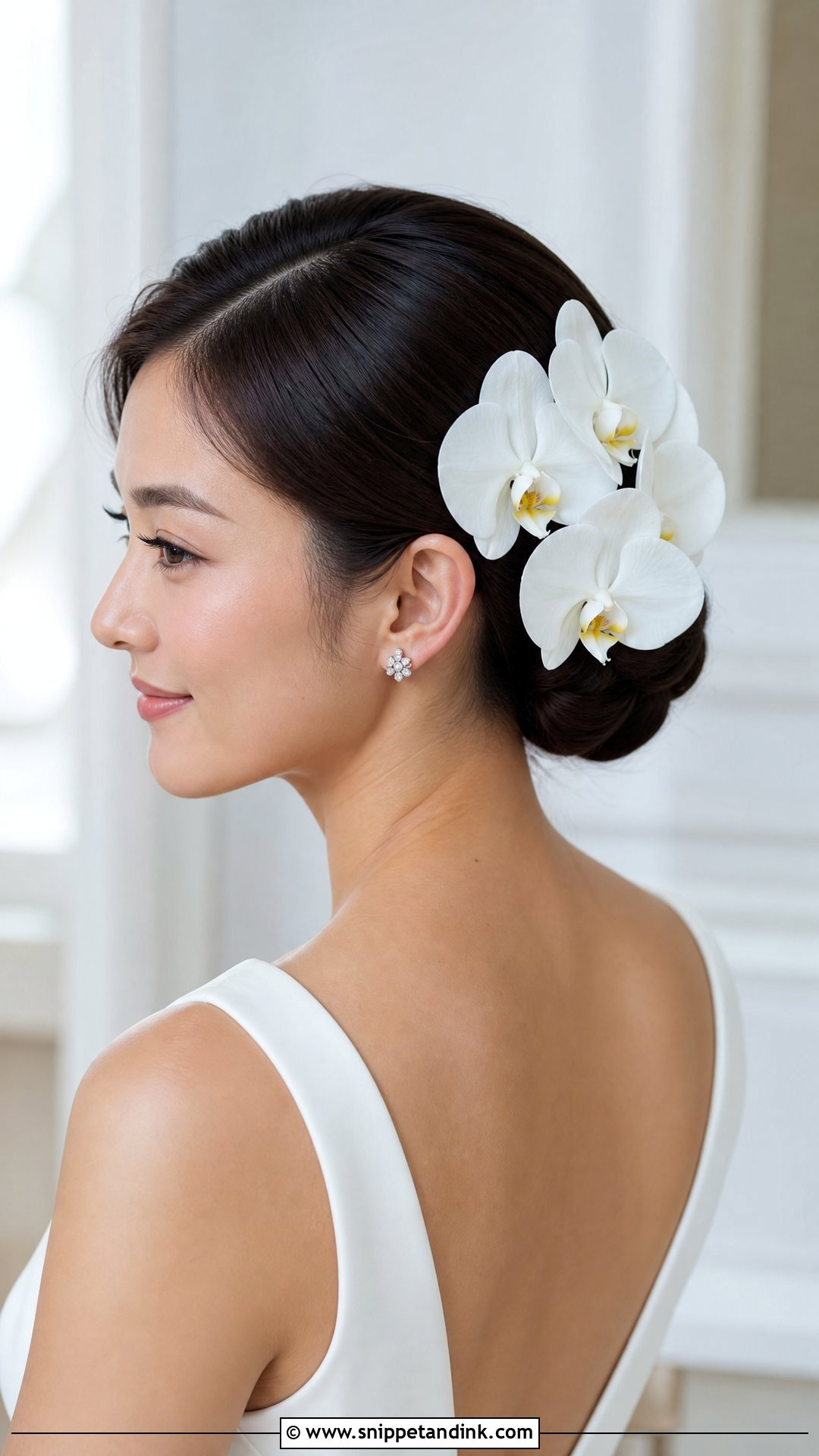
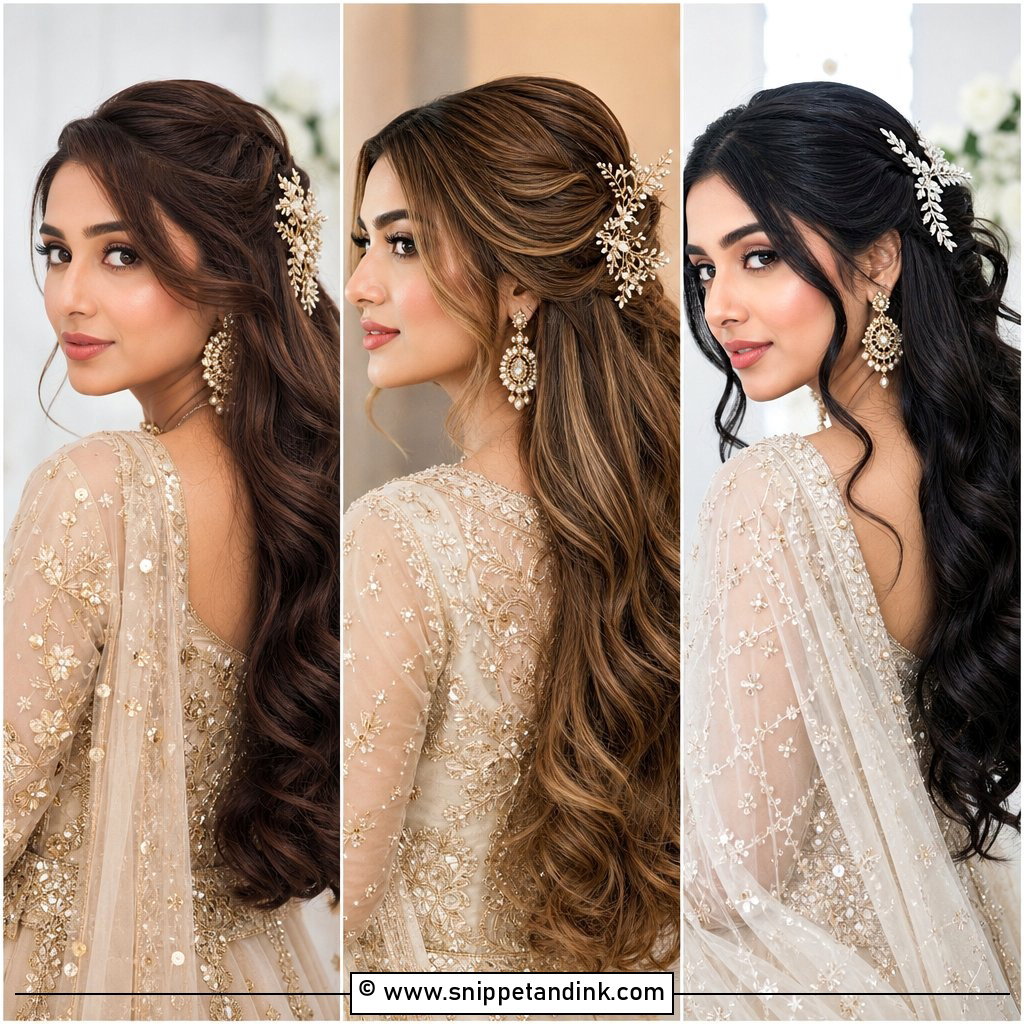
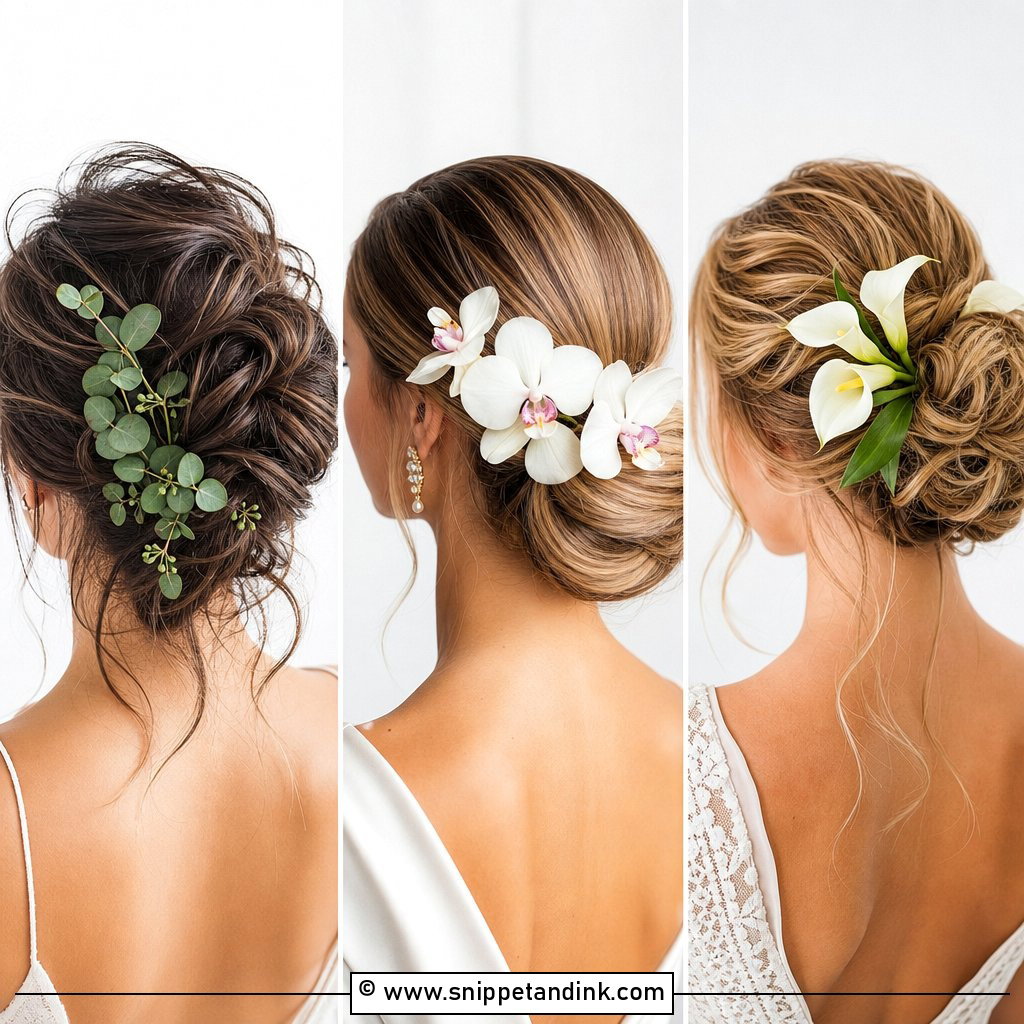
Orchids give a clean, refined, slightly tropical line that even a simple hairstyle can carry. They work with sleek buns, side swept waves, low ponytails and beach hair. White orchids feel classic; pale pink or soft purple orchids add a hint of color. They’re far more noticeable than filler flowers, so one to three blooms is usually plenty. I set them to follow the direction of the hairstyle, along the curve of a bun or the sweep of a wave, rather than perched on top. Destination weddings and modern gowns suit them particularly.
How I Pin a Flower So It Stays Until the Last Dance
A flower pushed straight into finished hair will be gone within an hour. These are the steps I follow for every fresh stem.
- Prep the hair with texture spray or a light tease where the flowers will sit. Slippery hair is the main reason flowers fall.
- Build an anchor: two bobby pins crossed in an X, hidden under the top layer.
- Ask your florist to cut each stem short, wire it and wrap it in floral tape, or do it yourself with green tape.
- Push a bobby pin through the tape or slide the wire under the X, so the flower is attached to the anchor, not floating in loose hair.
- Spray hairspray before the flowers go in, not after; lacquer can spot delicate petals.
Taking them out for the reception
Some brides like to remove the flowers or veil before dinner. Ask your stylist to show a bridesmaid which pins hold the flowers, so they come out without pulling the style apart. Remove them gently from underneath, one anchor at a time.
Flowers Need a Hairstyle Built to Hold Them
Flowers in hair can go soft, bold, classic, boho or modern, and the hairstyle underneath decides which. The ones that work are planned from every angle and tied to the dress, bouquet, face shape and setting. Think about weight, freshness, placement and comfort early. A trial is worth booking for this alone: you’ll test flower size, pinning, veil placement and how the style photographs. Whether you love a full crown, a single comb or tiny blooms tucked into curls, the flowers should look like they grew out of the hairstyle, not like they were added at the door.
You'll Like These Ideas:



Leave a Reply