
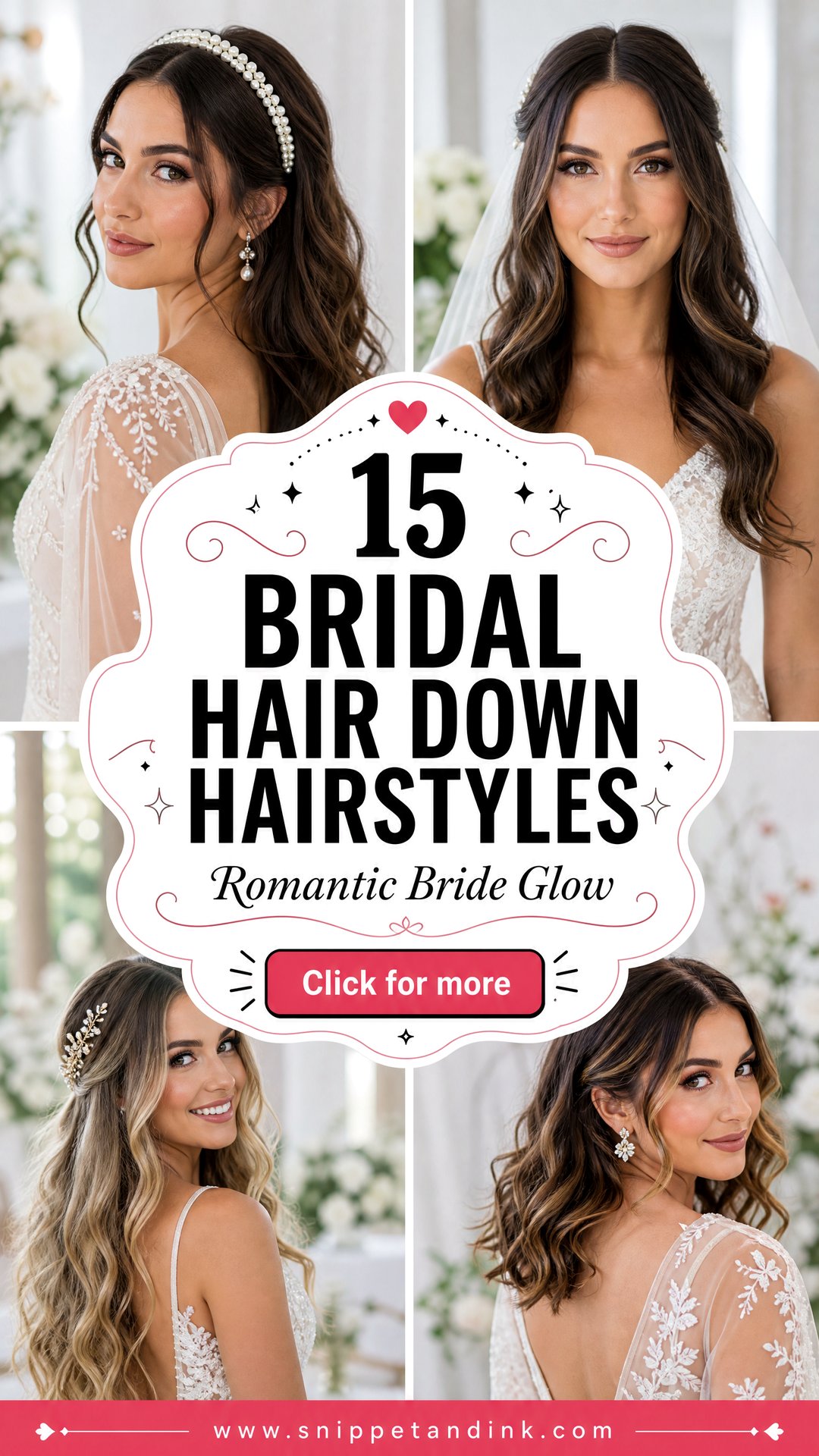
Hair worn down is the closest a bride gets to looking like herself on a very dressed-up day. It softens the face, shows off length and color, and moves when you walk, which is what makes candid photos feel alive. The catch, and the reason I spend more trial time on down styles than on updos, is that loose hair has nothing holding it except prep and product. So the look has to suit your dress, veil, neckline, weather and the texture you actually have. What brides ask me for now is soft and touchable rather than sprayed solid: glossy waves, smooth bends, a little half-up detail, accessories that sit lightly. Here are fifteen versions built for aisle moments, portraits and a long night of being hugged.
Why Loose Hair Drops Faster Than an Updo
An updo is pinned flat against your head, so gravity has very little to work on. Hair worn down is the opposite. Every curl hangs from its own weight, rubs against your shoulders and dress, and is warmed by your neck for ten hours. That’s why a wave that looks right at eleven in the morning can be a gentle bend by the first dance. Most of that drop can be planned for, and this is what I do at every down-hair booking.
What actually makes a curl last
- Clean, but not freshly squeaky. Very silky, just-washed hair lets curls slide out, so I usually ask for hair washed the evening before. Fine or oily hair may still need a morning wash, which is a question for the trial, not a guess.
- Letting each curl cool before it’s touched. I pin curls up in loops while they set; a wave brushed out warm loses its memory within the hour.
- Smaller sections than you’d use at home, so the heat goes all the way through the hair instead of only shaping the outside.
- Product before heat. A light mousse or setting spray on damp hair gives the curl something to grip. Hairspray at the end mostly adds stiffness.
I expect a style to relax by about a third over the day, so I make it a little tighter than your inspiration photo. By the ceremony it lands where you wanted it.
1. Bridal Hollywood Waves
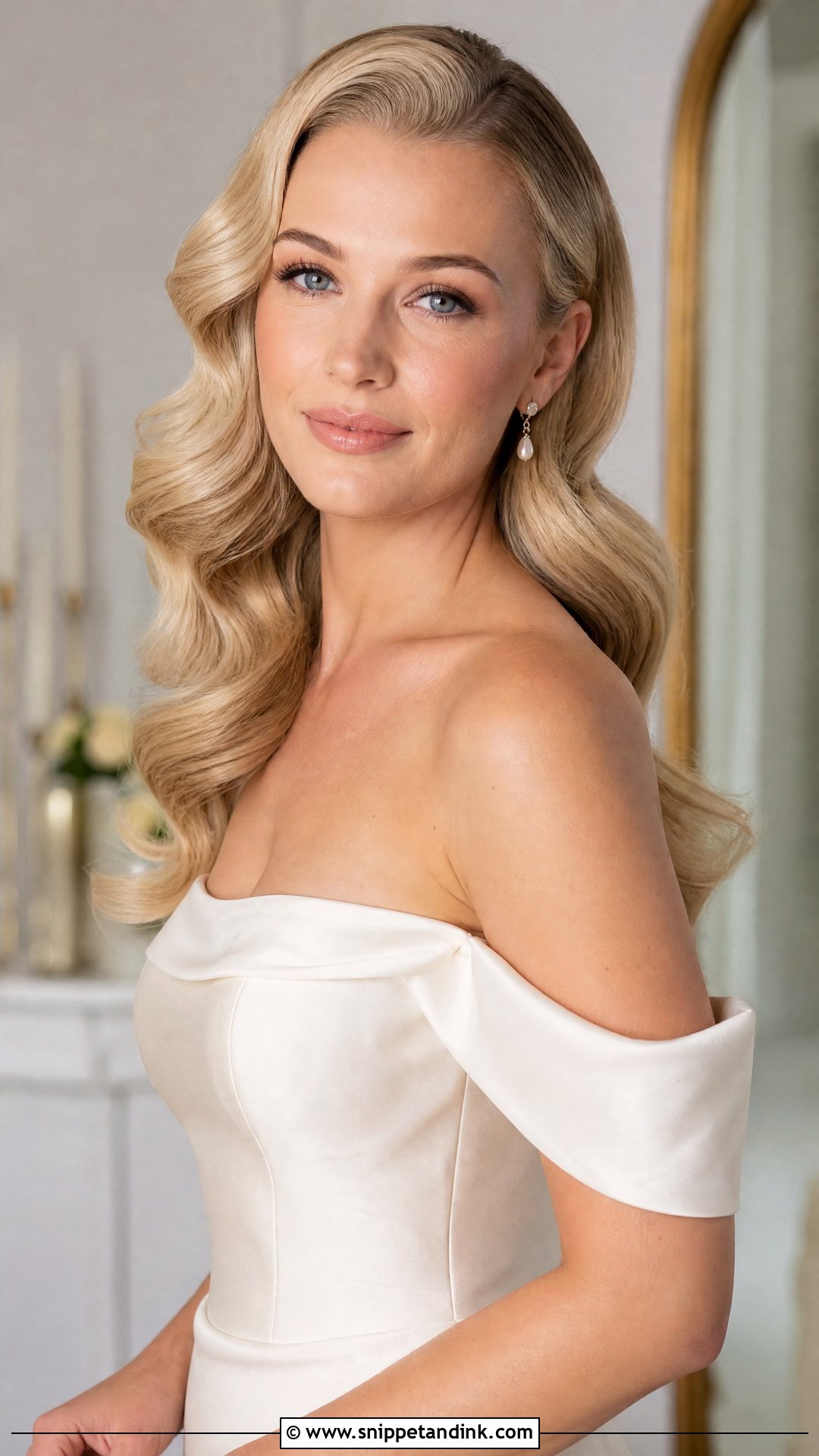
This is the most formal way to wear hair down, and also the most technical. Every curl has to be set in the same direction, pinned to cool, then brushed out with a boar bristle brush until the ridges join into one sculpted wave. Skip the brushing and you get ringlets; overdo it and the shape collapses. I love it with strapless and off-the-shoulder satin, where nothing on the dress competes with the hair. A deep side part pushes it toward old-Hollywood glamour, while a center part reads more current. Fine, slippery hair needs a setting lotion before heat or the pattern loosens within a couple of hours.
2. Bridal Soft Waves
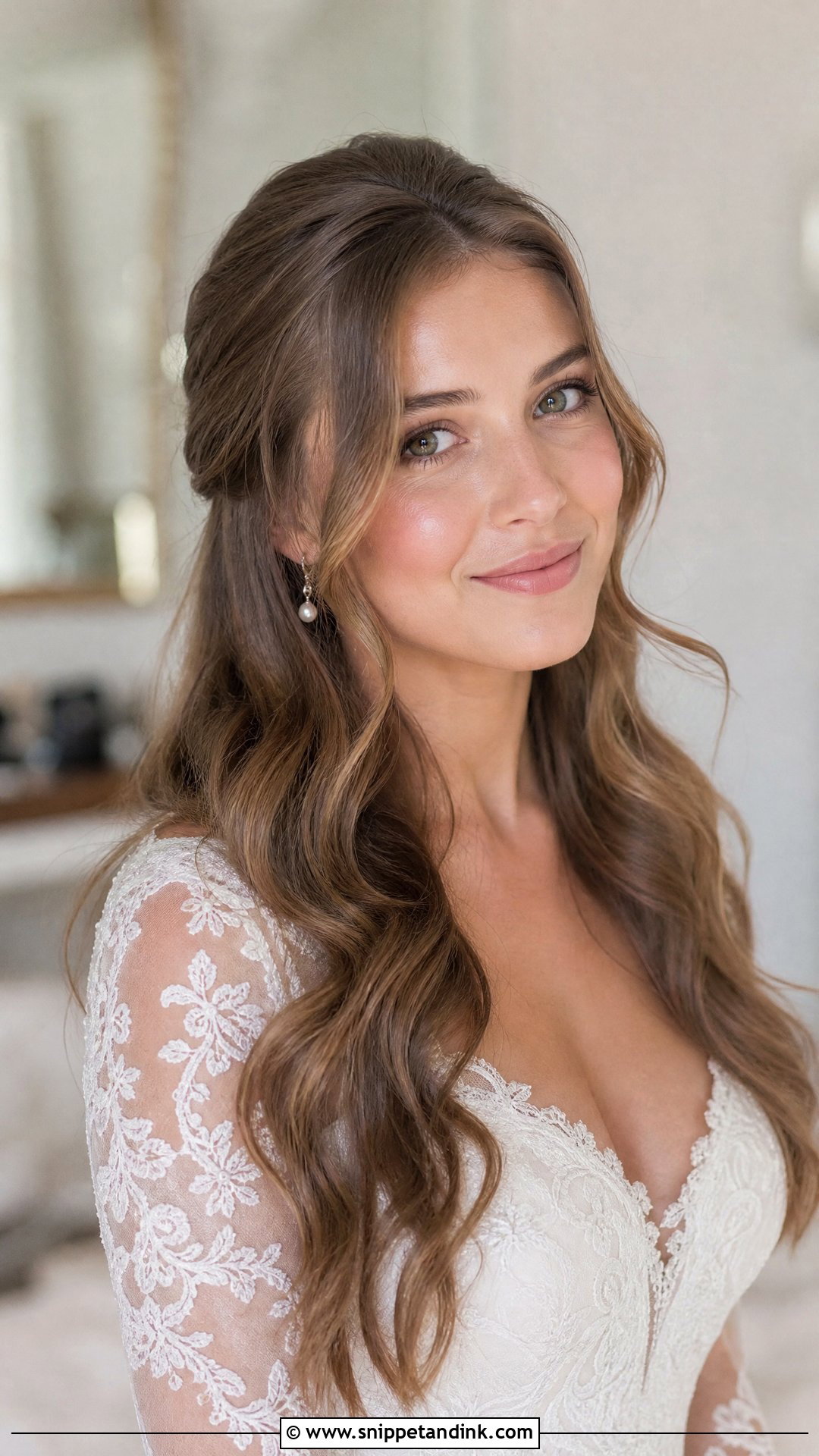
Soft waves are the look I’m asked for most, and the one people underestimate. The crown should stay smooth, the lengths loose and the ends just slightly open, so it never tips into curls. I wrap the iron with the ends left out, which keeps them from flicking. It suits long, medium and layered hair, and it’s the kindest choice for highlights because the bends catch every tone. Keep the two front sections lightly shaped and pushed back from the eyes; heavy pieces over the cheeks hide your makeup and get stuck in lip color by the first toast.
3. Bridal Loose Curls
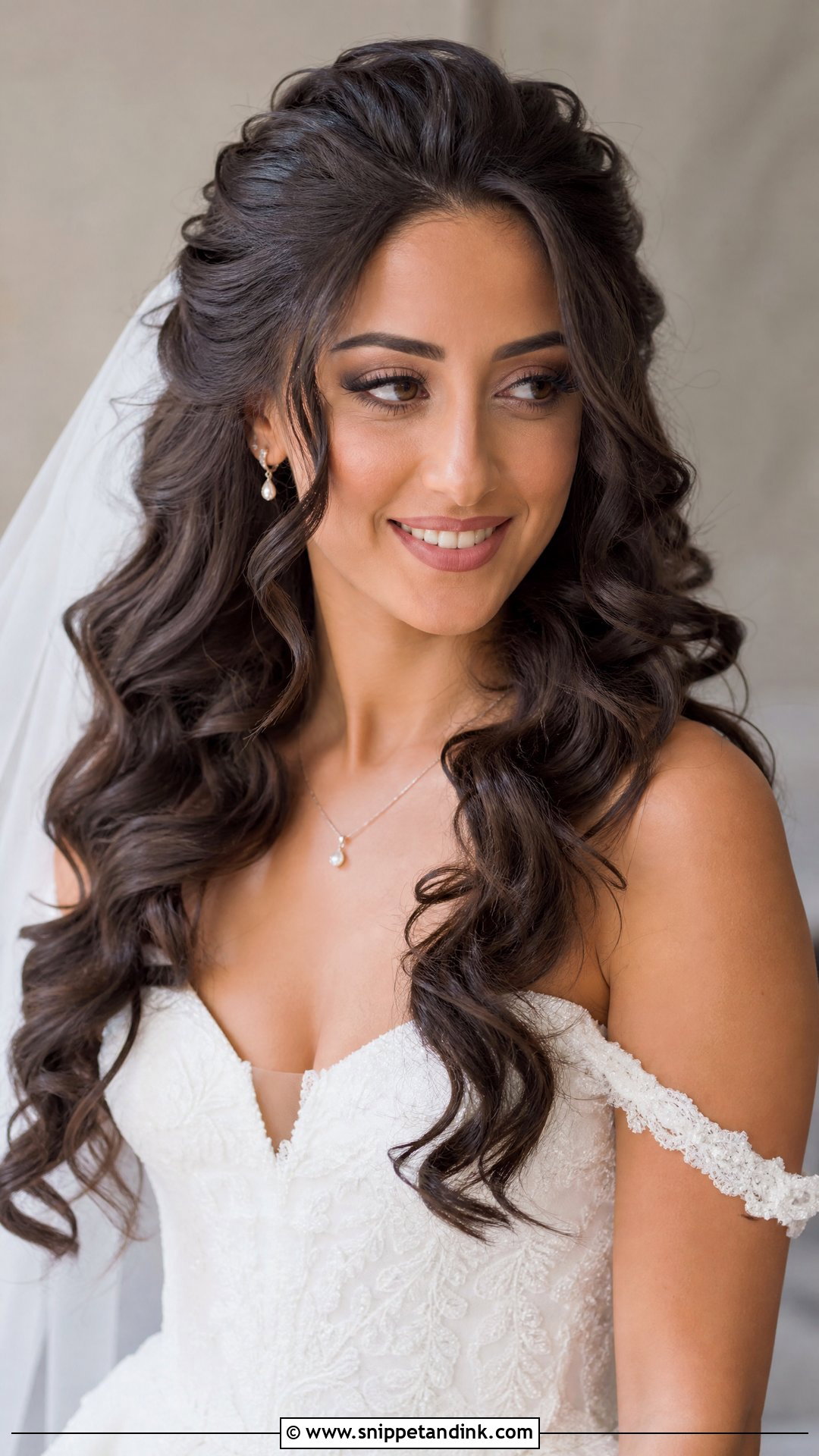
Loose curls give more body than waves without turning formal. I start them below the cheekbones so the face stays open, then let them widen through the lengths. They suit long hair best; on shoulder-length hair the same curl tends to sit too round and can look dated. Lace gowns and garden settings are a natural match. The structure comes from underneath: a little backcombing at the crown and a flexible spray through the mid-lengths, so it stays touchable. If your hair is very heavy, expect the curl to drop by mid-afternoon and ask for it tighter at the start.
4. Bridal Half Up Half Down Hair
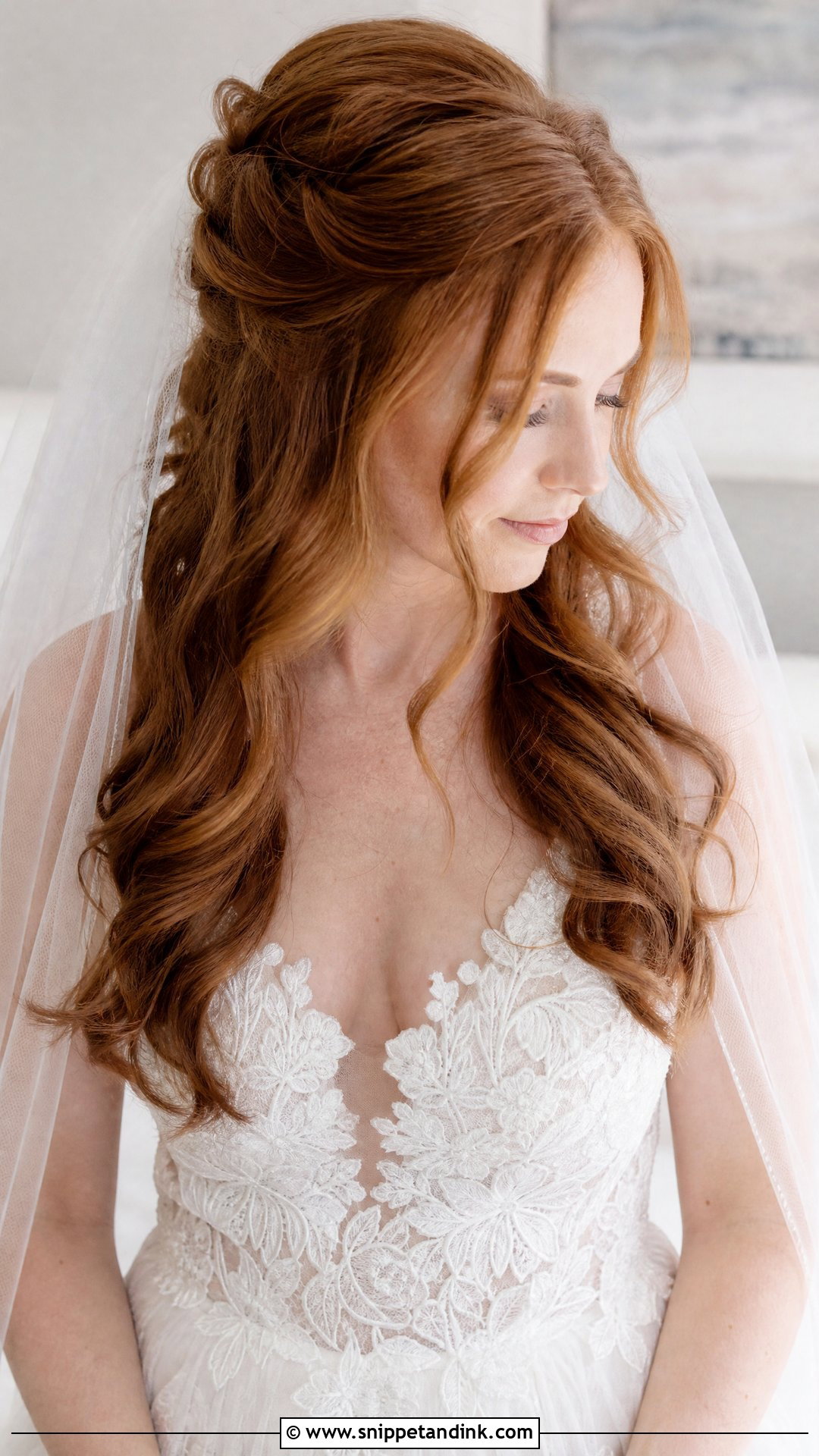
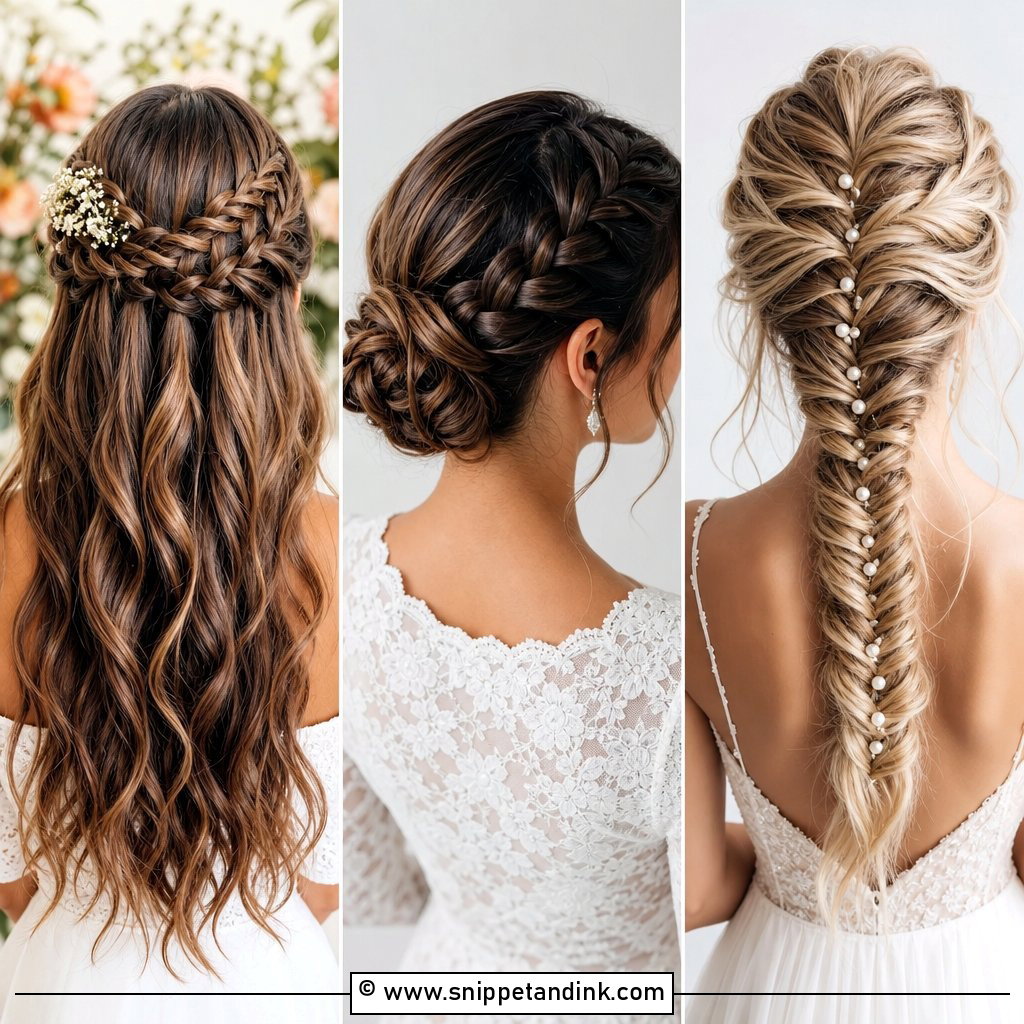
If you want hair down but worry about it ending up in your face during vows, this is the compromise I suggest most. The top section gets twisted or lightly lifted at the crown and pinned with crossed bobby pins, and everything else falls in waves. That pinned base is also the best anchor a veil comb can have, which matters more than people think. The modern version keeps the front soft. Pulled tight across the temples, it starts to look like a school photo and gives some brides a headache by the reception.
5. Bridal Down Hair With Veil
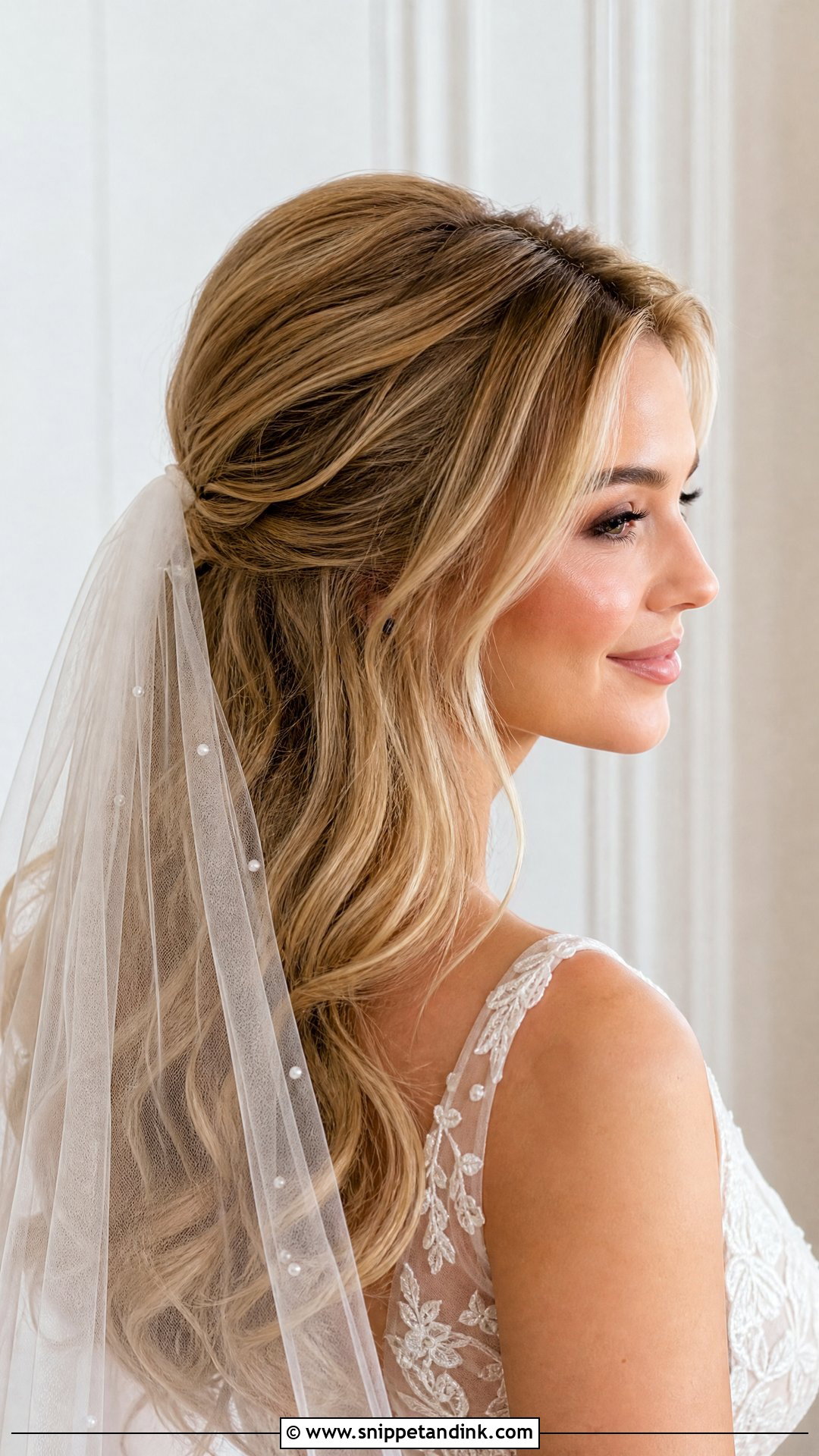
A veil changes how down hair has to be built, so I plan the two together from the first minute of the trial. A high placement needs real volume at the crown, otherwise the comb flattens it and the waves look stuck on. A low placement lets the waves fall over the shoulders more freely, but the comb needs a pinned base hidden underneath to grip. Bring the actual veil, not a borrowed one, because weight changes everything. Cathedral lengths in particular drag backward, and on loose hair that pull shows up as a dent at the crown in the ceremony photos.
6. Bridal Down Hair With Hair Pins
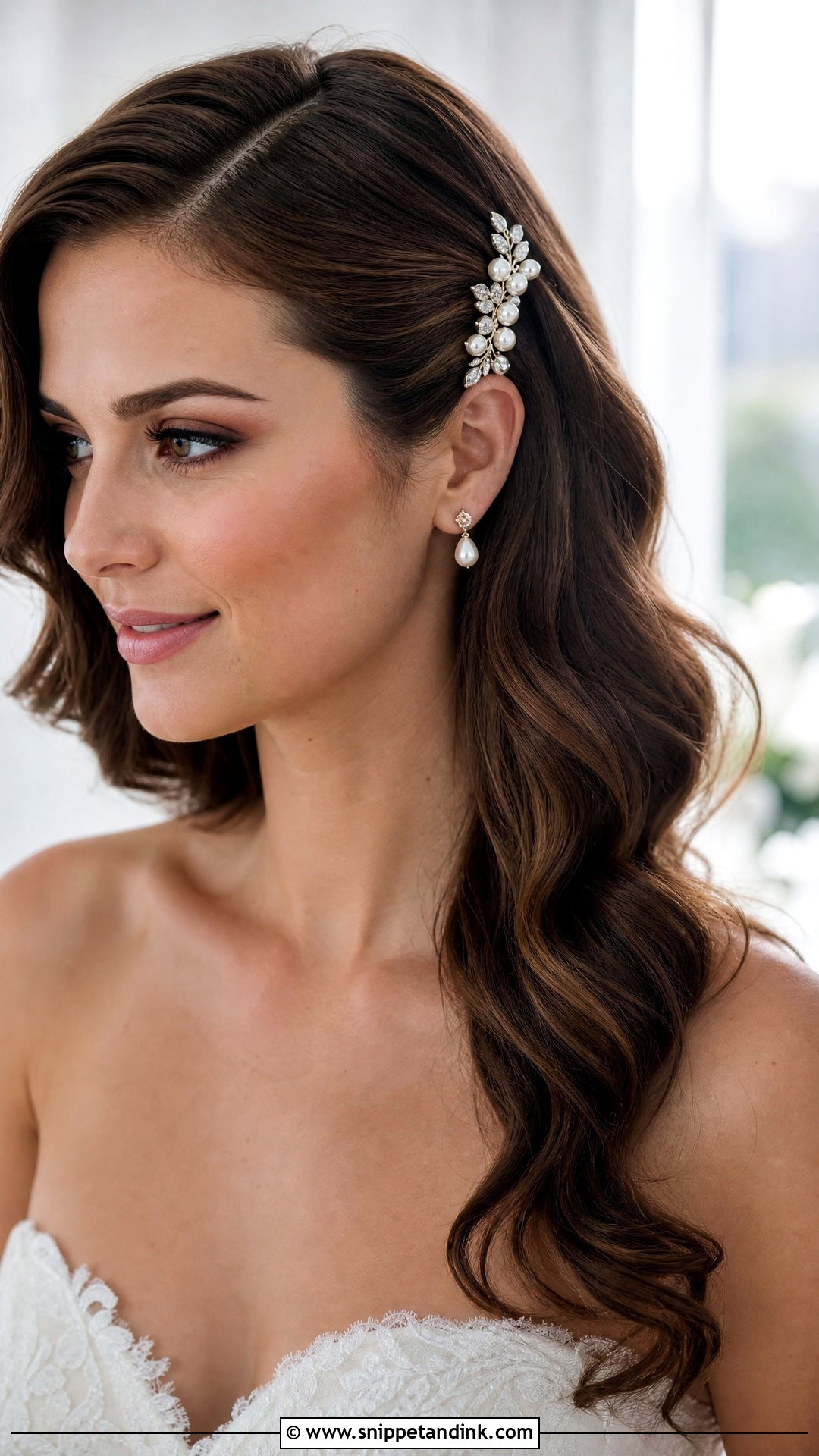
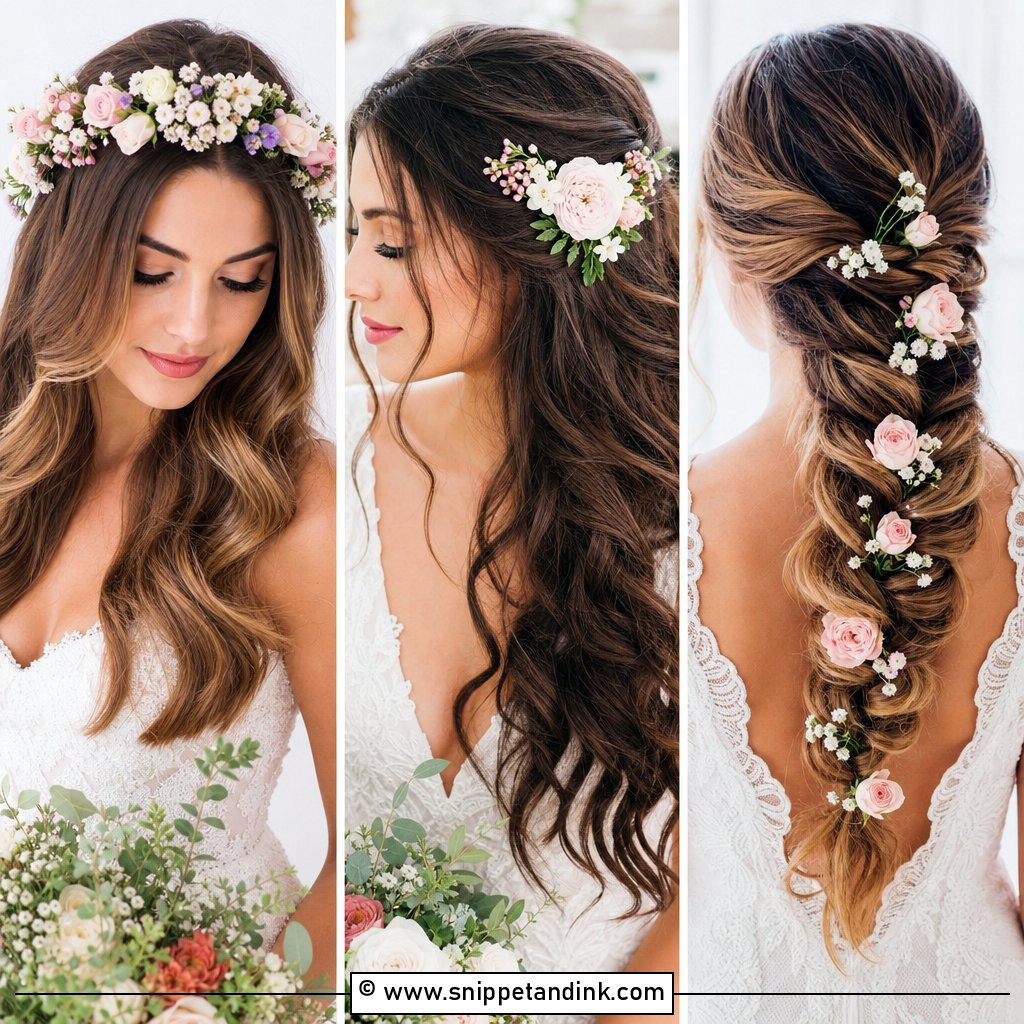
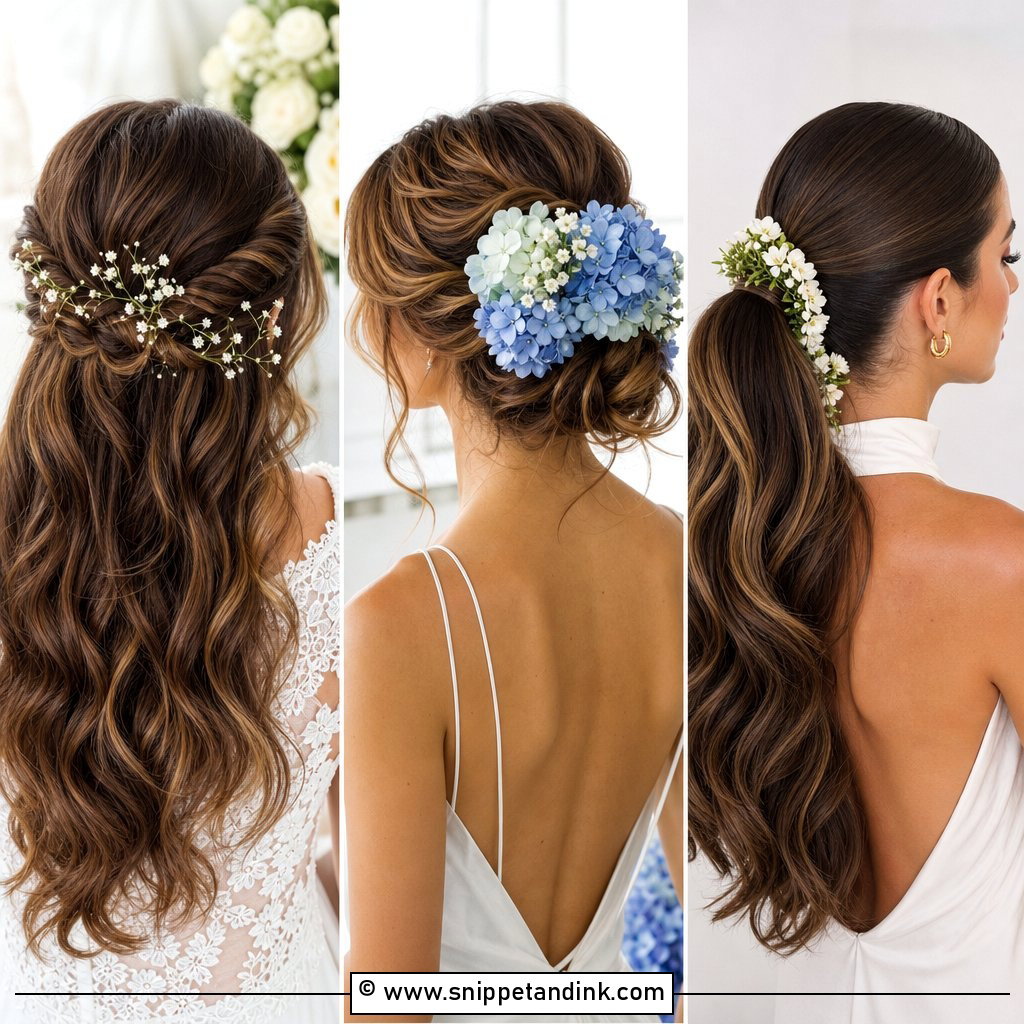
Pins are the simplest way to make loose hair feel bridal without committing to an updo. I place them where the hair is already pinned underneath, above a side wave or along a small twist, because a decorative pin sitting on loose hair alone tends to slide. Pearl, crystal, small flowers or gold accents all work; the rule I follow is to match the weight of the dress. A heavily beaded bodice wants something delicate. A plain crepe gown can carry a brighter piece. Medium-length hair with a side part shows them off best.
7. Bridal Down Hair With Pearl Headband
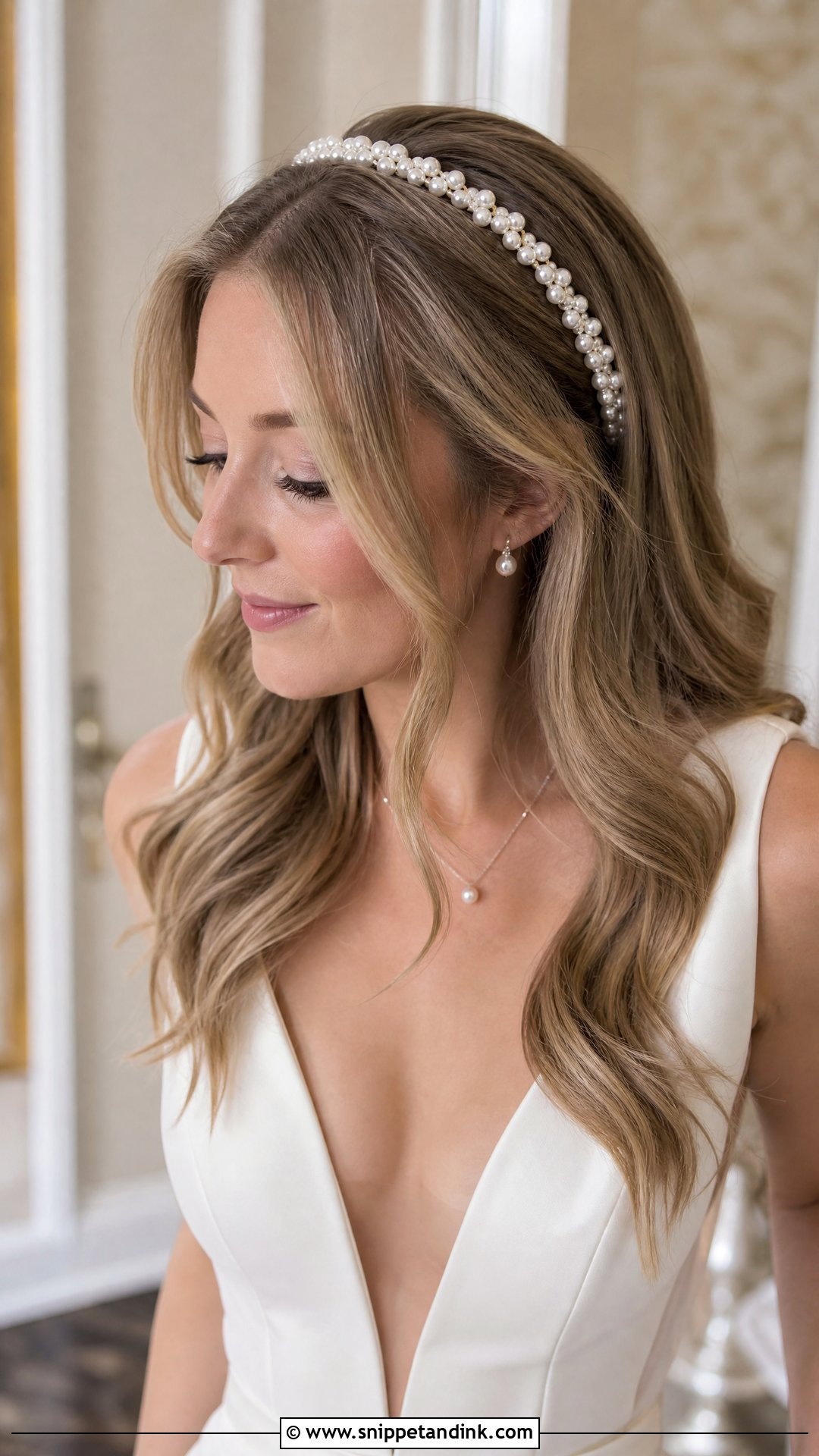
A pearl headband gives structure at the crown in a second, and it’s a good choice if you’ll take the veil off after the ceremony and still want something bridal for the evening. The mistake I see is hair left flat behind the band. I tease a little volume just behind where it sits so the line curves instead of pressing the head. Try it on for at least an hour at the trial. Stiff bands sit right on the bone behind the ears, and some brides find they can’t bear it by dinner.
8. Bridal Down Hair With Side Part
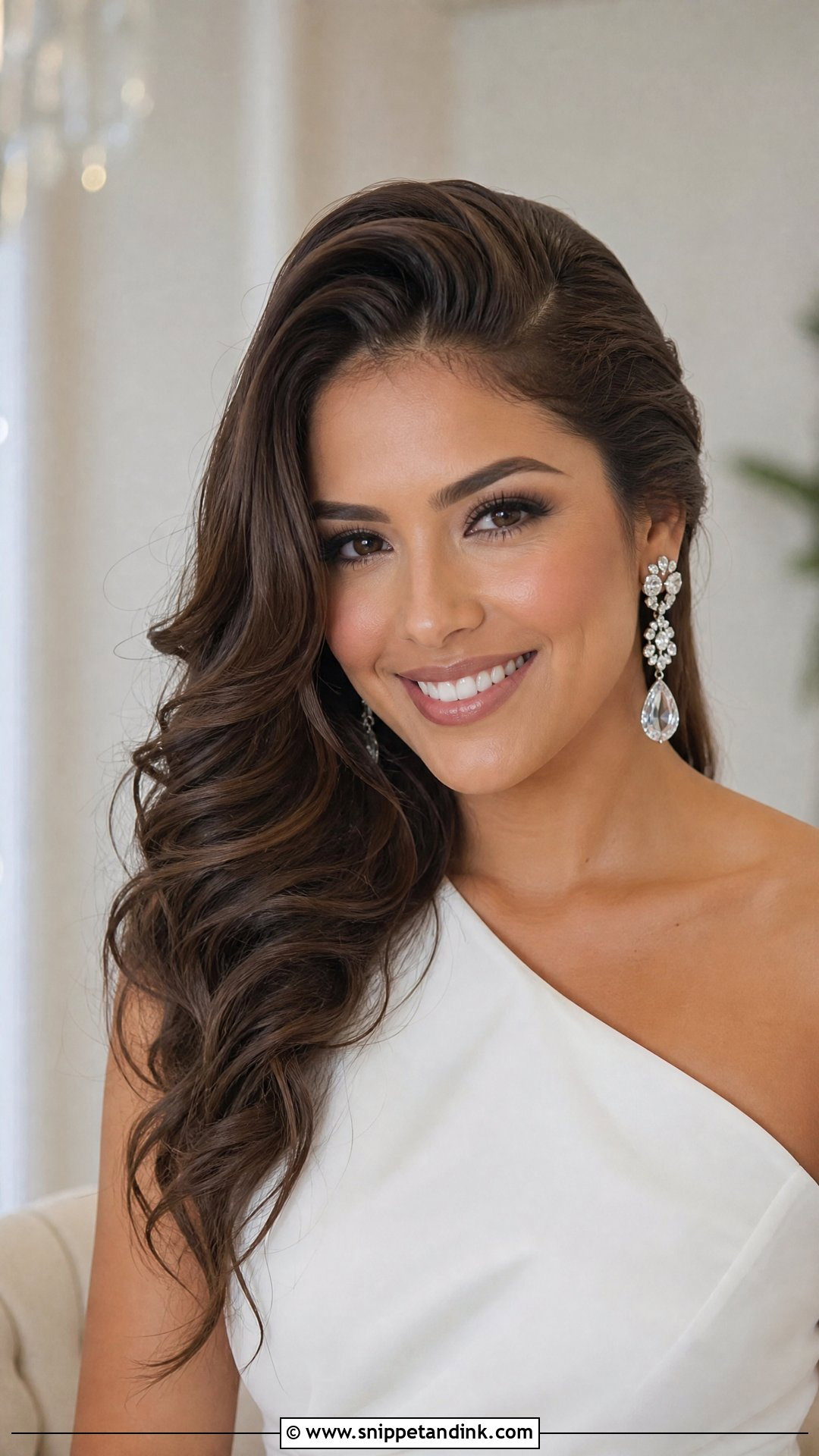
A side part adds asymmetry, which flatters most face shapes because it draws the eye across the cheekbones. It sits well with Hollywood waves, curls or brushed waves, and pairs naturally with one-shoulder gowns and statement earrings on the open side. The practical problem is the heavy side falling over the eye, so I add root lift there and secure that front section with a hidden pin behind the ear. A side part also needs a natural tendency to fall that way; forcing a part against your growth pattern usually splits back by the reception.
9. Bridal Down Hair With Center Part
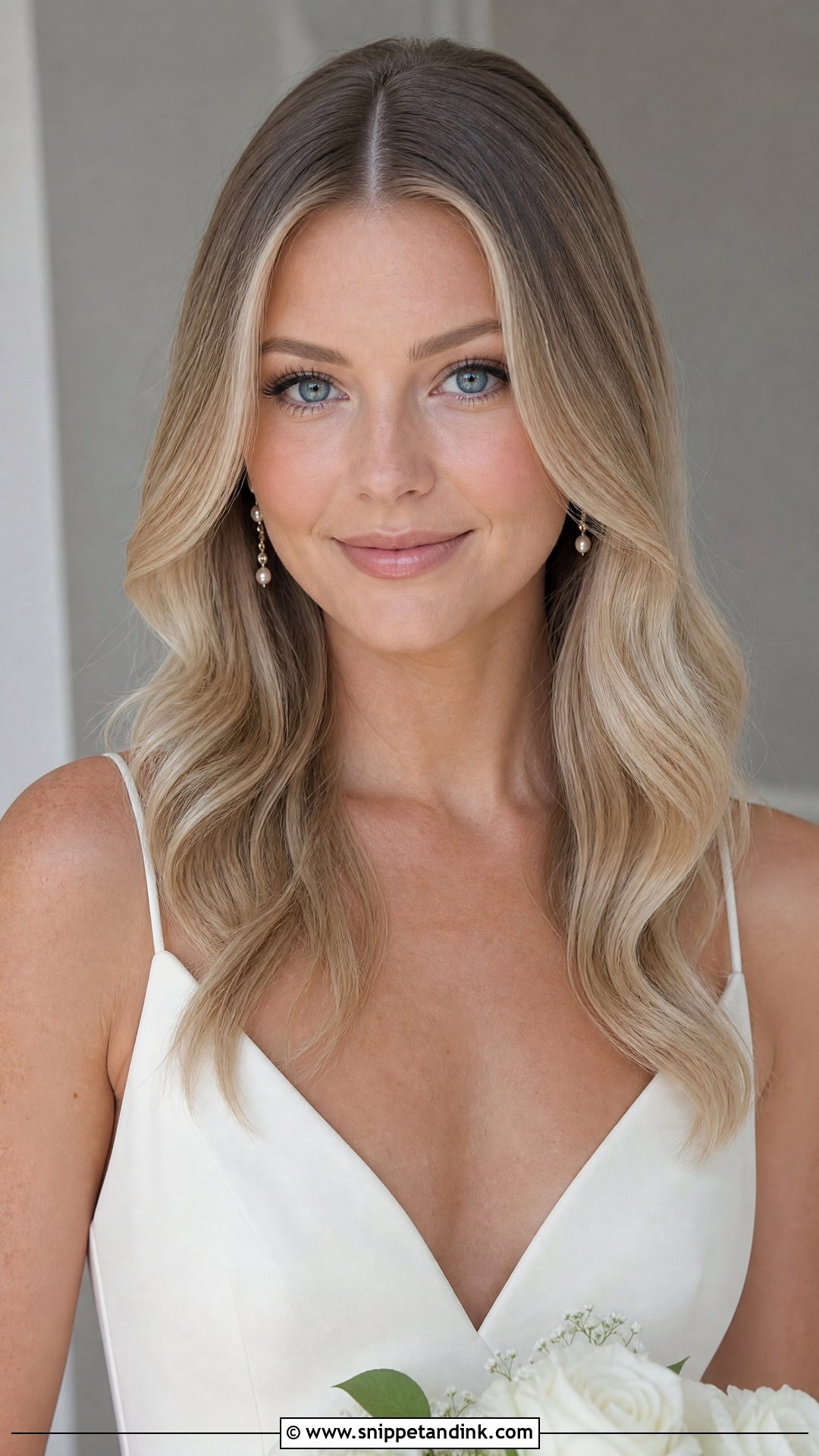
The center part is the clean, modern option, and it’s honest about symmetry, so I check the face and hairline at the trial before agreeing to it. It suits smooth bends and glossy long hair, minimalist gowns and simple jewelry. Keep it polished rather than undone, otherwise it reads as everyday hair. Soft root volume either side of the part stops it looking flat in overhead light. The bonus is that nothing covers your earrings, neckline or makeup, so the whole face shows in portraits.
10. Bridal Down Hair With Curtain Bangs
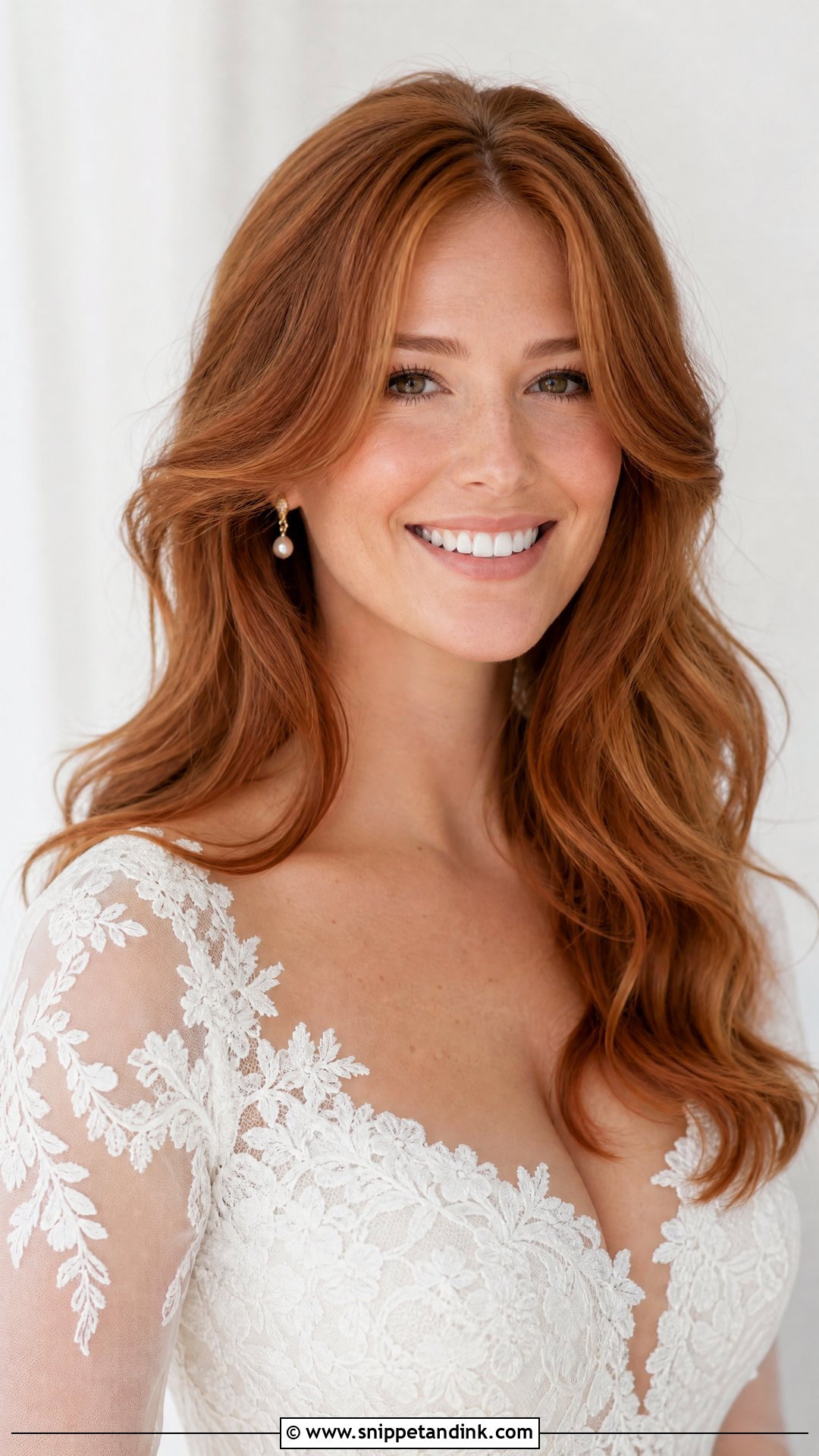
Curtain bangs you already wear every day should stay. This is your everyday hair on its best day, which is why it photographs like you. The bangs have to blend into the waves rather than sit as a separate shape on top, so I curl them back and away using the same direction as the side sections. A middle part frames the face; a part slightly off-center softens it. Ask for light hold at the front only. Bangs sprayed stiff split apart the first time you touch your face, and you will touch your face.
11. Bridal Down Hair For Long Hair
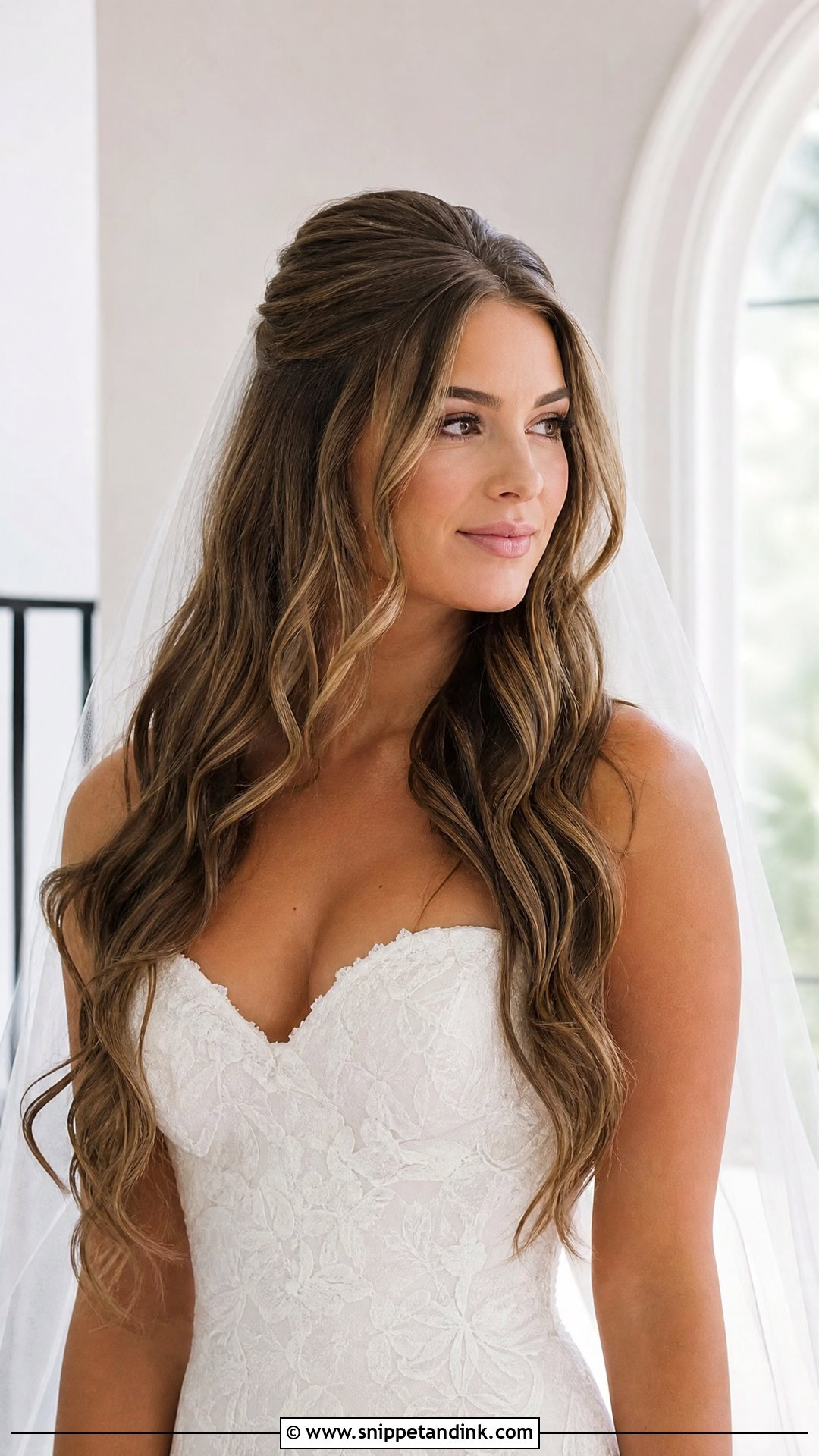
Very long hair can carry the whole look, or it can hang heavy and plain if there’s no shape in it. Waves or loose curls give dimension, and face-framing layers keep the front from going flat. On thick, waist-length hair I set curls tighter than the photo you bring, because the weight pulls them down through the day. A few hidden pins behind the ears stop the sides swinging forward. Fine long hair is different: it often thins at the ends, and clip-in extensions or a small padding piece give fullness without changing the finish.
12. Bridal Down Hair For Medium Hair
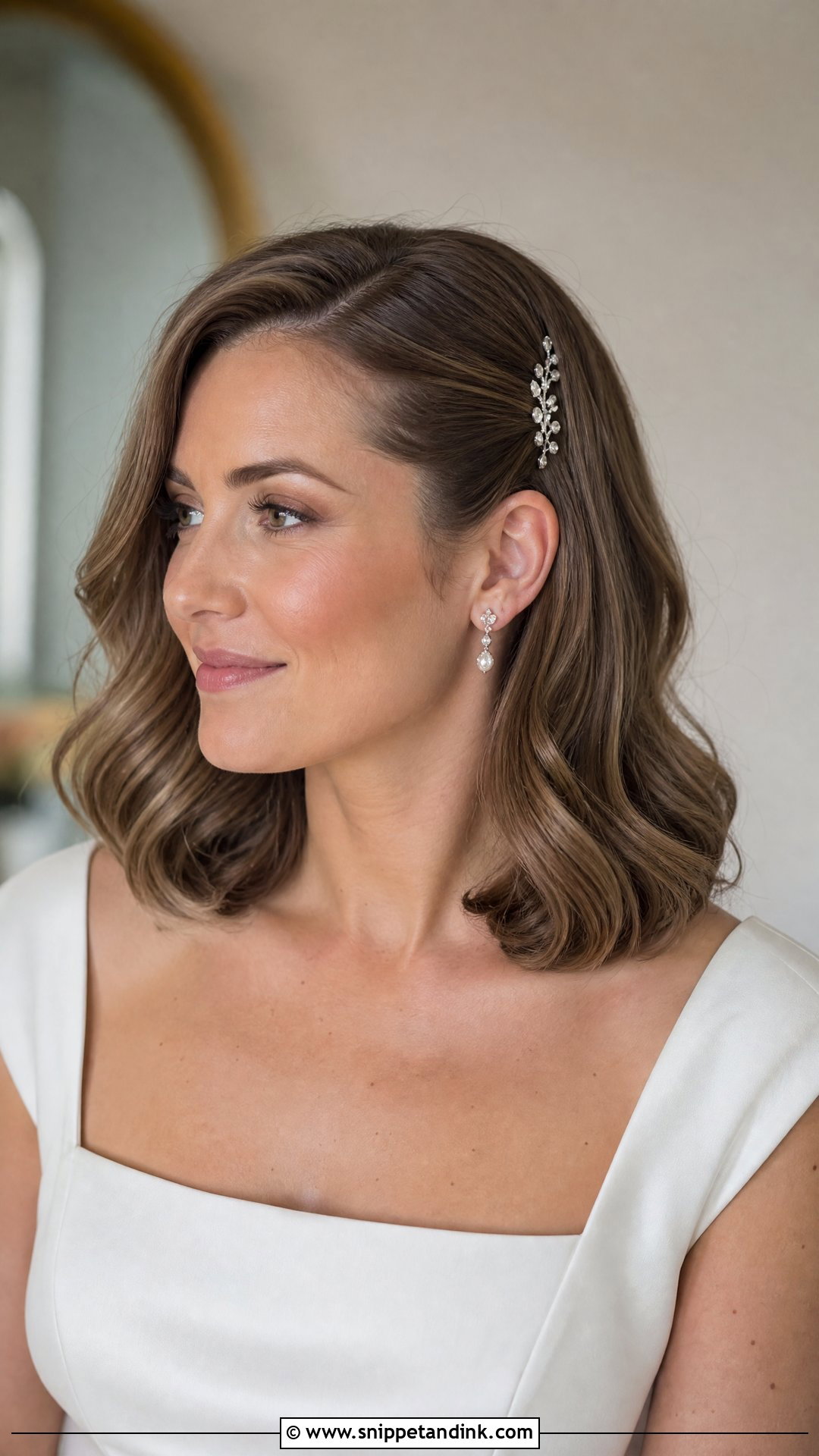
Medium hair is the easiest length to keep looking fresh, because it’s light enough to hold a curl all day and long enough to move. Lobs, shoulder-length cuts and layers all wear brushed waves well. The one thing to watch is the ends hitting your shoulders, where they flip outward as you move; I curl them away from the face and finish with a little cream so they settle. Add a veil, pearl pins or a comb tucked to one side. Volume at the crown plus neat ends is what keeps it looking intentional.
13. Bridal Down Hair For Short Hair
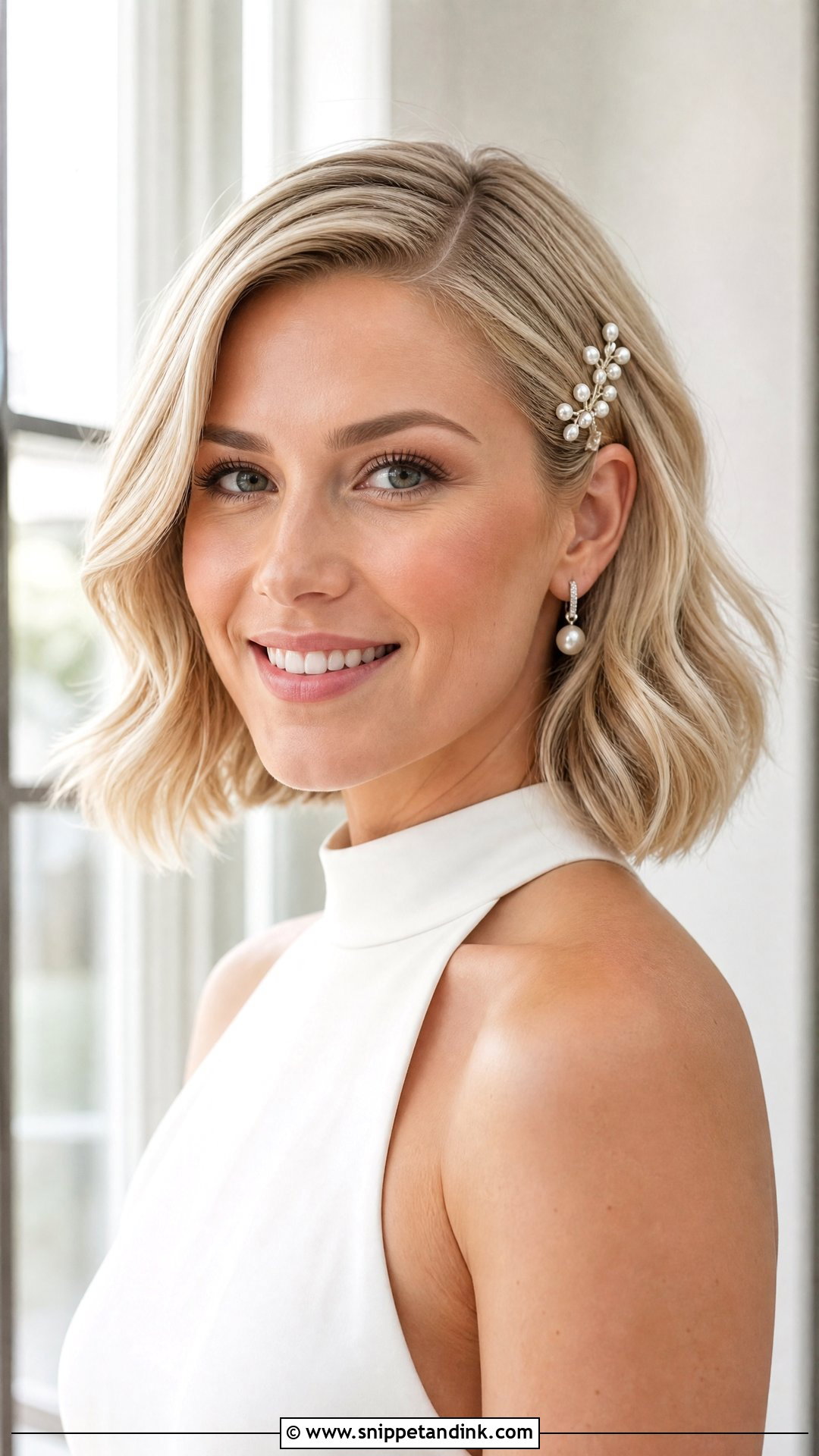
Short hair doesn’t need to be forced into an updo to look ready for the aisle. A bob, lob, or cropped length worn down with polish looks confident, and I’d rather work with your cut than fight it. The finish is everything: shine, controlled texture and a clean shape at the nape. I use a flat iron for bends rather than a curling iron, since round curls on short hair can look like a set. Statement earrings, high necklines and plain modern gowns suit it best. Book your last trim about two weeks out, not the week of the wedding.
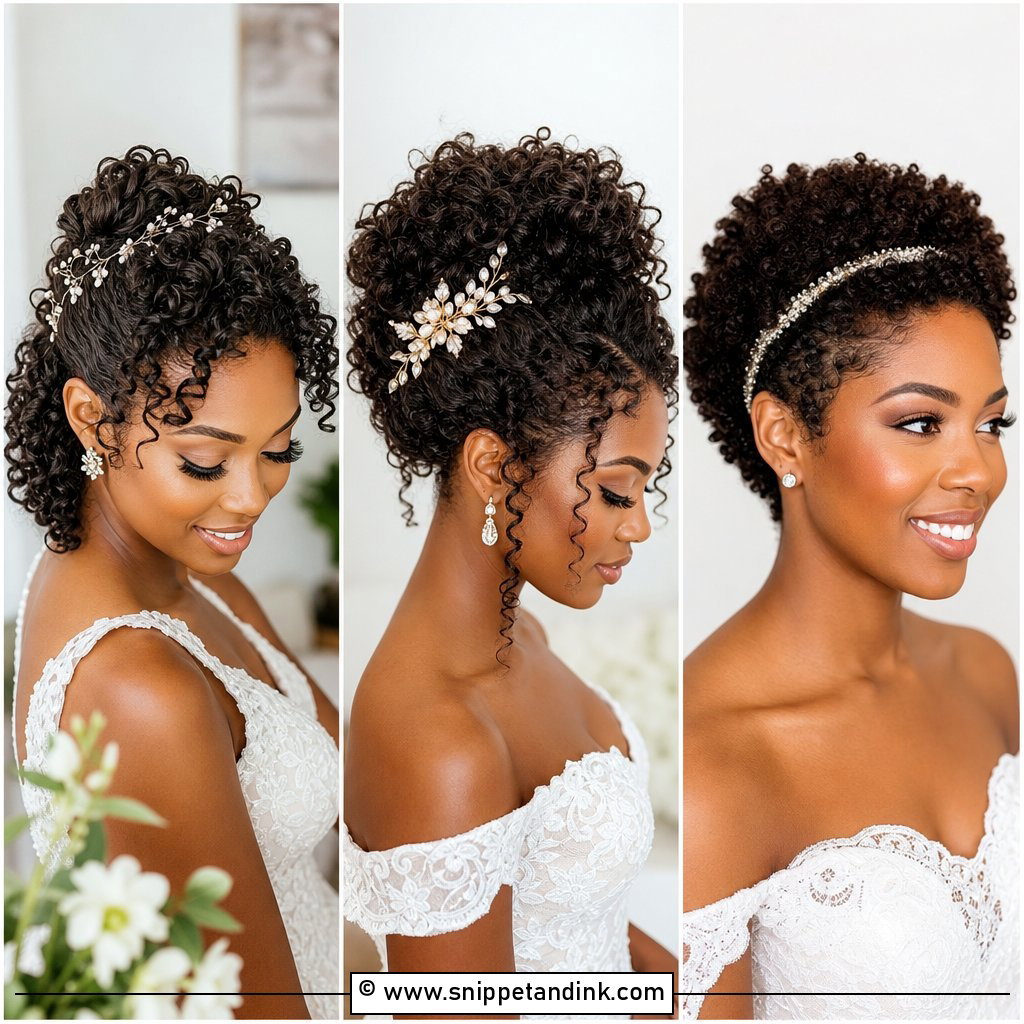
14. Bridal Down Hair For Curly Hair
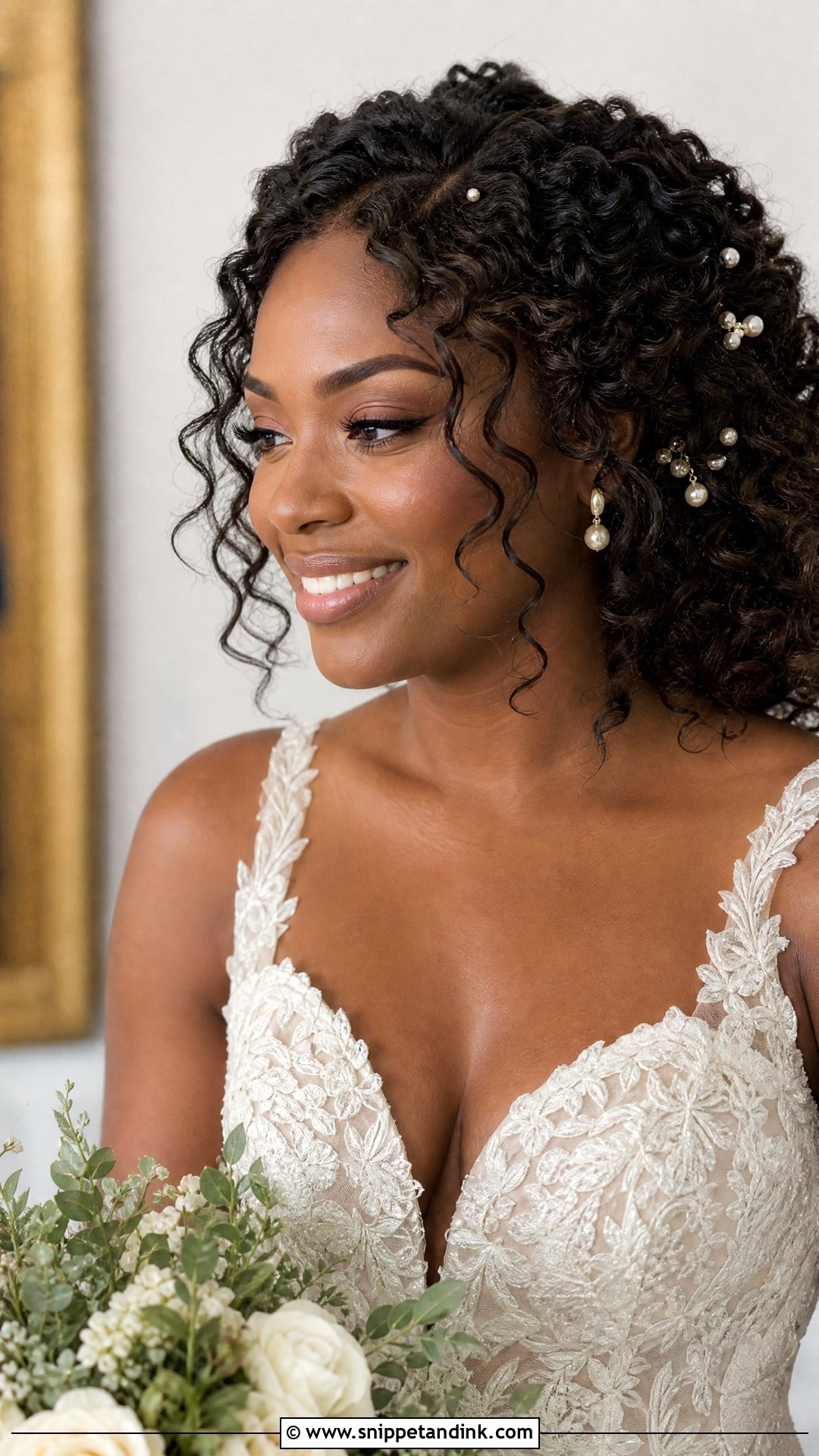
Curly hair worn down should look like your curls, not like they’ve been stretched into somebody else’s texture. Ask your stylist to work with your volume, bounce, and softness by refreshing and defining each curl, usually on damp hair with a leave-in and gel, then diffusing on low. Brushing dry curls is the one thing that ruins this look. A few pinned-back sections keep the face open, and floral clips or a veil placed above the crown sit securely in curls. I always ask curly brides to arrive with hair washed and styled the way they normally wear it, so I can see how it really behaves.
15. Bridal Down Hair For Beach Wedding
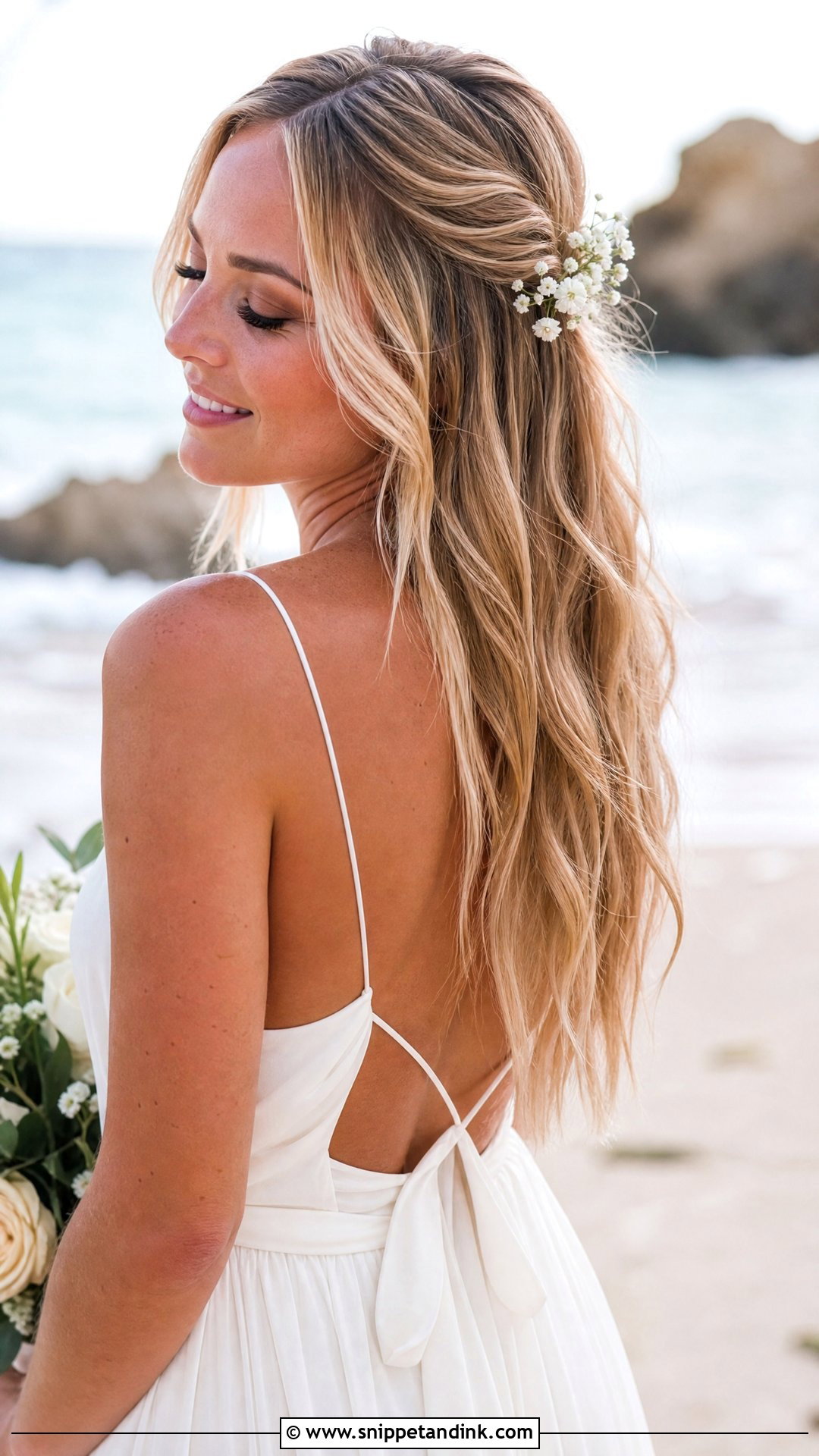
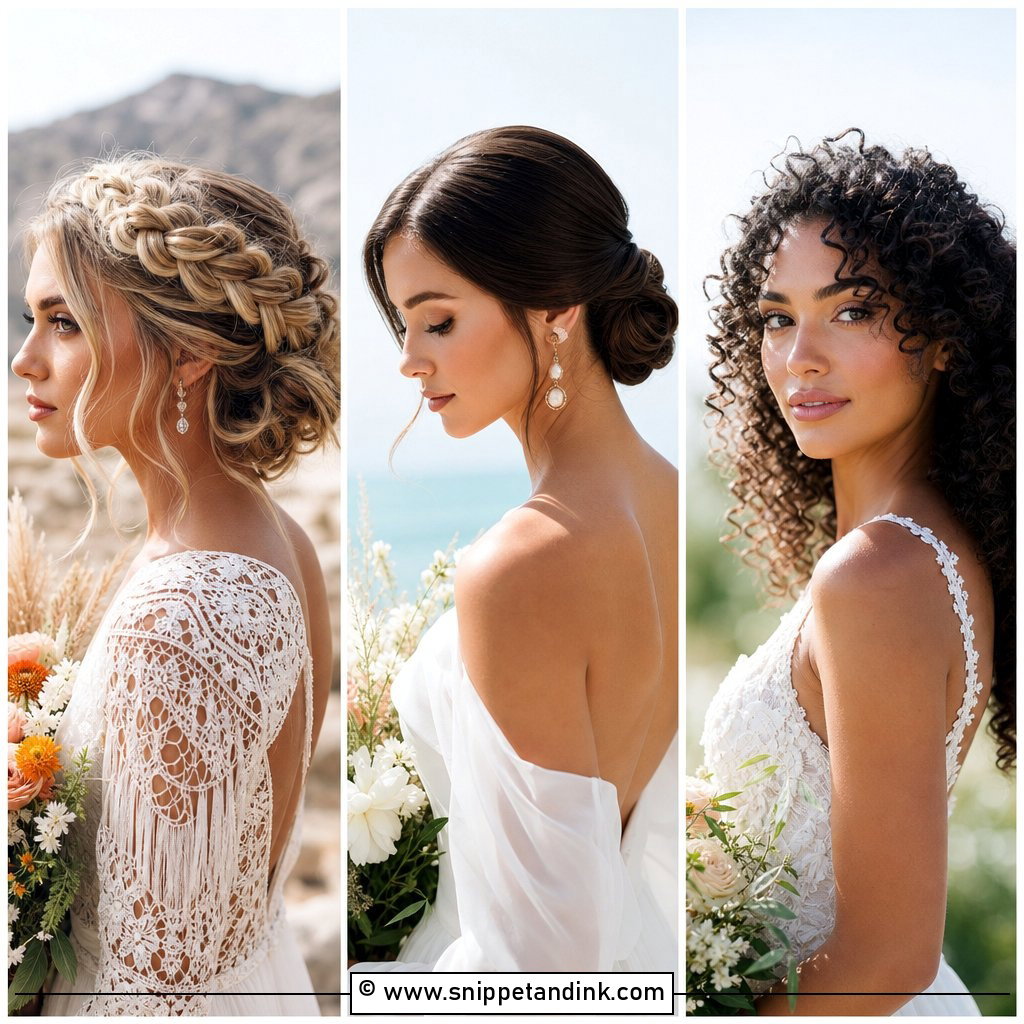
On the beach, I plan for the hair to move, because wind and salty humidity will win any fight with tight curls. Loose waves with natural texture hold up far better and still look right when they lift. I pin the front pieces back lightly, so gusts don’t whip them across your face during vows. A side clip, small flower or low veil placement keeps it bridal without adding weight. Ask for humidity-friendly prep and a flexible hold, and keep a hair tie on your wrist for the moment you decide to sweep it aside for photos by the water.
Hugs, Beaded Backs and the Dance Floor
A trial lasts an hour. Your wedding lasts most of a day, and loose hair meets problems then that never show up in the salon chair. Here’s where they come from, and what I tell brides to plan for.
Friction you won’t notice until the photos
Every hug presses one side flat. Lace, beading and covered buttons on the back of a gown are worse, because the ends catch and tangle as you turn, and by the reception there can be a matted patch between your shoulder blades. If your dress has a detailed back, I’d sweep more of the length over one shoulder or go half-up so the ends stay lifted off the fabric.
Heat on the dance floor
An hour of dancing makes the hair at your nape damp. Fine hair goes limp; curly and coarse hair swells. Neither is a disaster when you know which way yours goes, and your trial is the place to find out: walk outside, sit in a warm car, see what happens.
What goes in the bag your maid of honour holds
- Six to eight bobby pins in your hair color, plus two that match your accessory
- A travel-size flexible spray or a smoothing balm for flyaways
- A wide-tooth comb for untangling the back without pulling the waves out
- A hair tie, in case you want it up for dancing
- Blotting papers, since a shiny forehead draws the eye straight to frizz
If your photographer stays into the evening, take two minutes before the speeches to re-pin the front and comb out the back. That reset is usually the difference between late photos you frame and ones you scroll past.
Down Hair Needs a Plan, Not Just a Curling Iron
Loose hair suits brides who want movement and softness and still want to recognise themselves in the photos. Hollywood waves, curls, a half-up twist or a plain center part can all be right; the deciding factors are your dress, your face, your texture and how much fuss you’ll tolerate on the day. I treat the trial as a rehearsal. Bring photos, wear a top with a similar neckline, put the veil or accessory in, then leave the salon and live in the style for a few hours. If it still feels secure and still looks like you by dinner, that’s your style.
You'll Like These Ideas:


Leave a Reply