
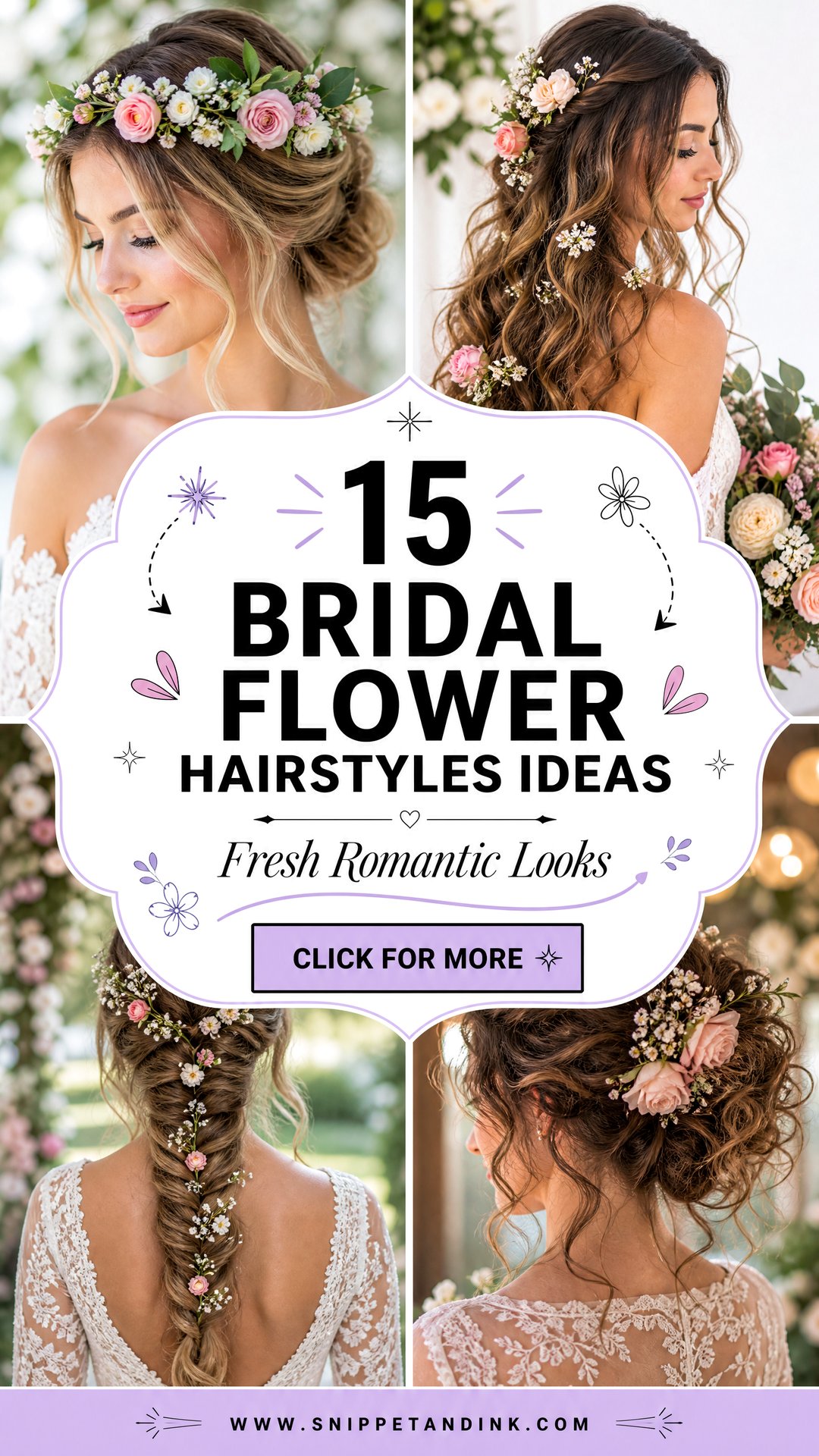
Fresh flowers are the hair accessory I enjoy most and plan most carefully, because they’re alive. A bloom that looks perfect at nine in the morning has to sit against a warm scalp, survive hugs and a veil comb, and still look fresh at the last dance. The floral styles brides bring me now are looser than the sprayed, rigid looks of a decade ago: low buns with some give, lived-in braids, open waves, and a few flowers placed on purpose rather than packed in. Tiny spray roses, orchids, baby’s breath, jasmine, ranunculus and preserved stems all hold up well on camera. Below are fifteen ways I’d wear them, from garden and beach ceremonies to courthouse vows and formal receptions, with notes on what each one asks of your hair.
Which Flowers Last a Full Day Pinned Against a Warm Scalp
A flower in your hair has no vase, sits against body heat and gets hugged, breathed on and flashed at all day. Some varieties shrug that off. Others start to sulk before the ceremony is over, so I always ask a bride to check her favourites against this list before falling for a photo.
The ones I trust
- Orchids, especially dendrobium and cymbidium, are waxy and tough and keep their shape in heat.
- Spray roses and waxflower are small, firm and forgiving if they get knocked.
- Baby’s breath, statice and lavender barely change as they dry, so they look much the same at midnight as at noon.
- Ranunculus holds up reasonably well when it’s been properly conditioned, though very open heads can drop petals.
The ones I’d think twice about
Gardenias and white camellias bruise brown wherever fingers touch them, which shows cruelly in close-ups. Hydrangea wilts quickly once it’s out of water, and peonies are heavy enough to drag a pinned section down. Jasmine smells wonderful but is delicate, so ask for short wired sprigs instead of long trails. If your heart is set on a fragile flower, use it in one small spot near the face and let a sturdier bloom do the structural work.
For a hot outdoor wedding, a very long day, or a bride who wants to keep the piece afterwards, preserved or good silk flowers are the honest answer. I often mix a few preserved stems in with fresh ones, and in photos almost nobody can tell.
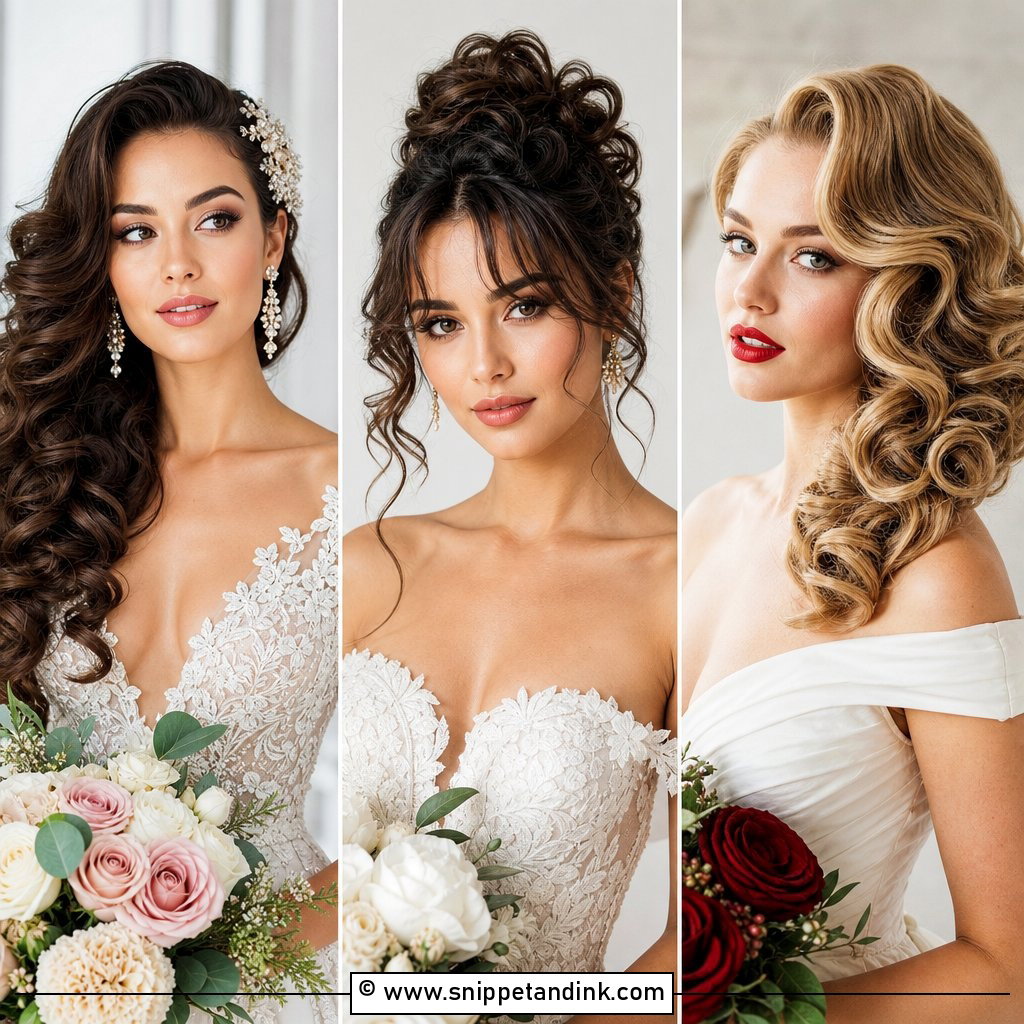
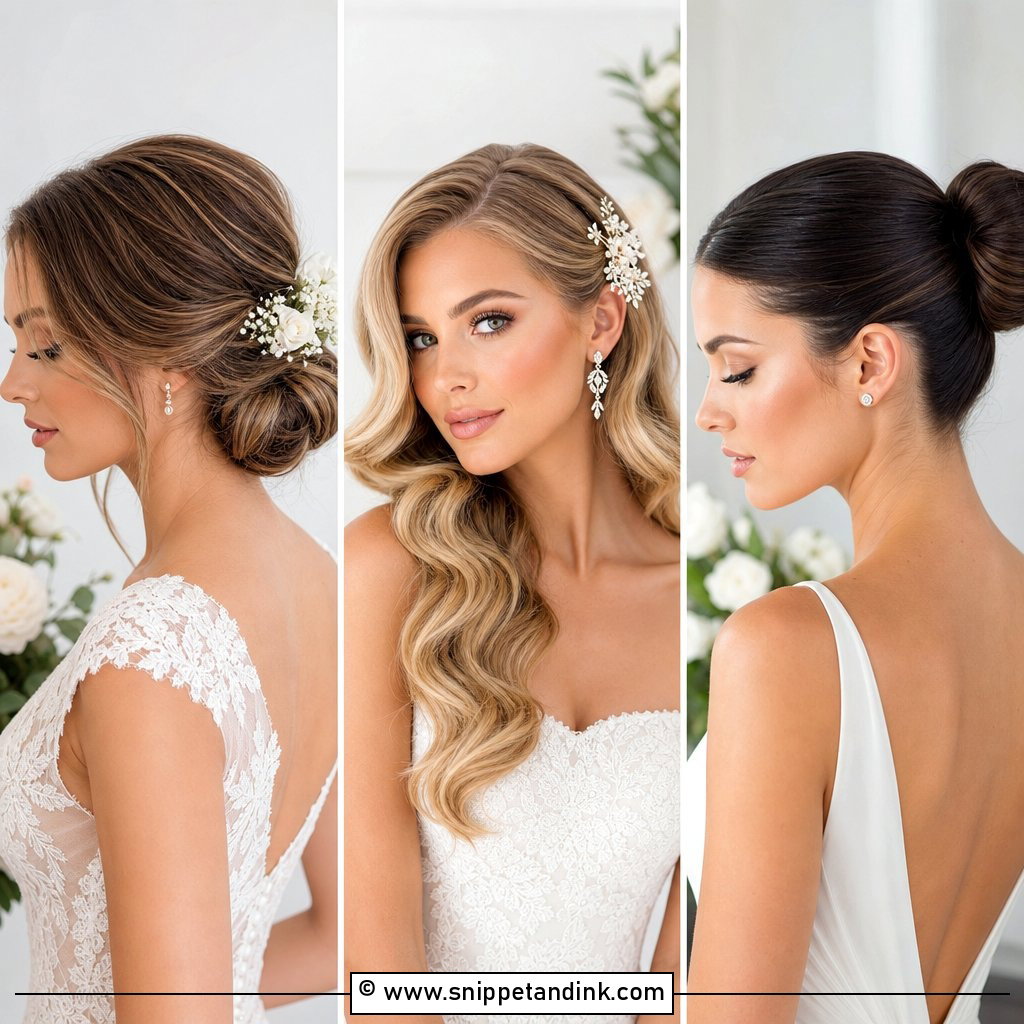
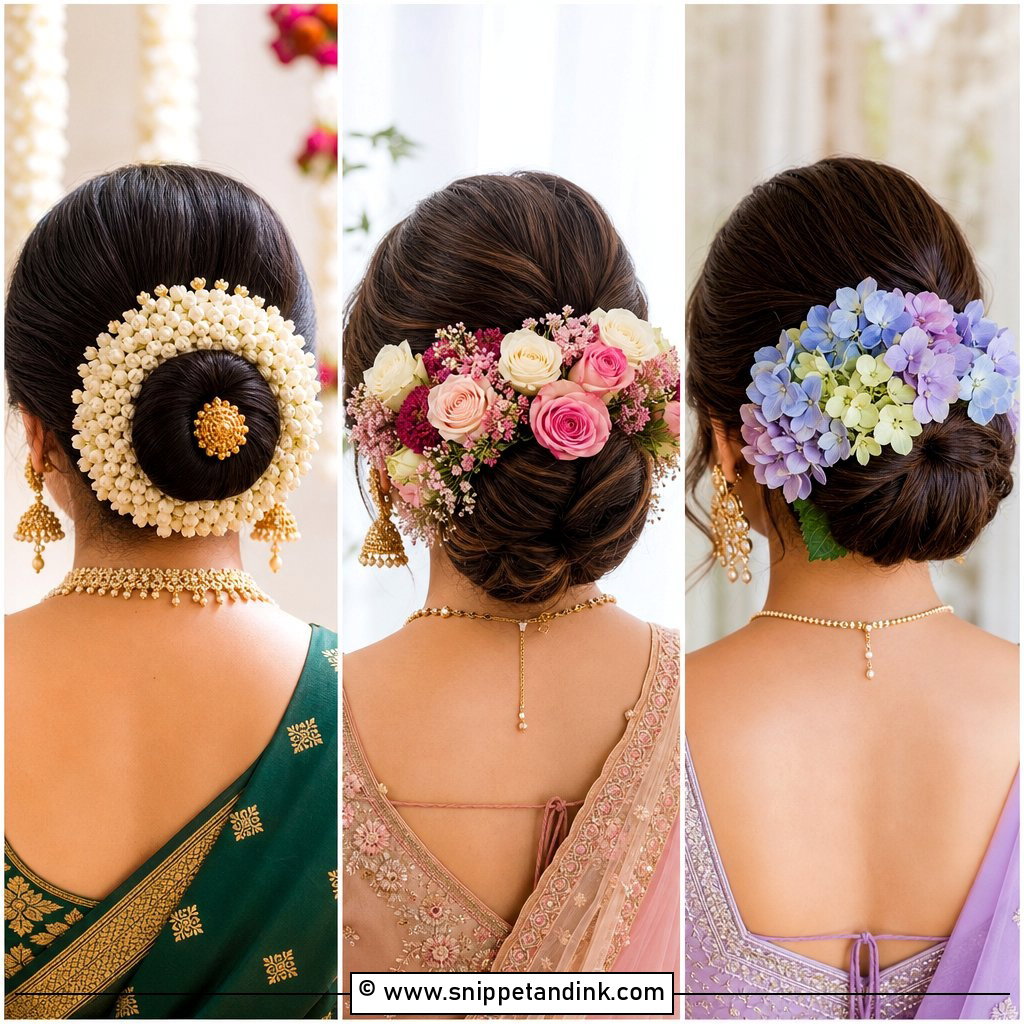
1. Bridal Flower Low Bun
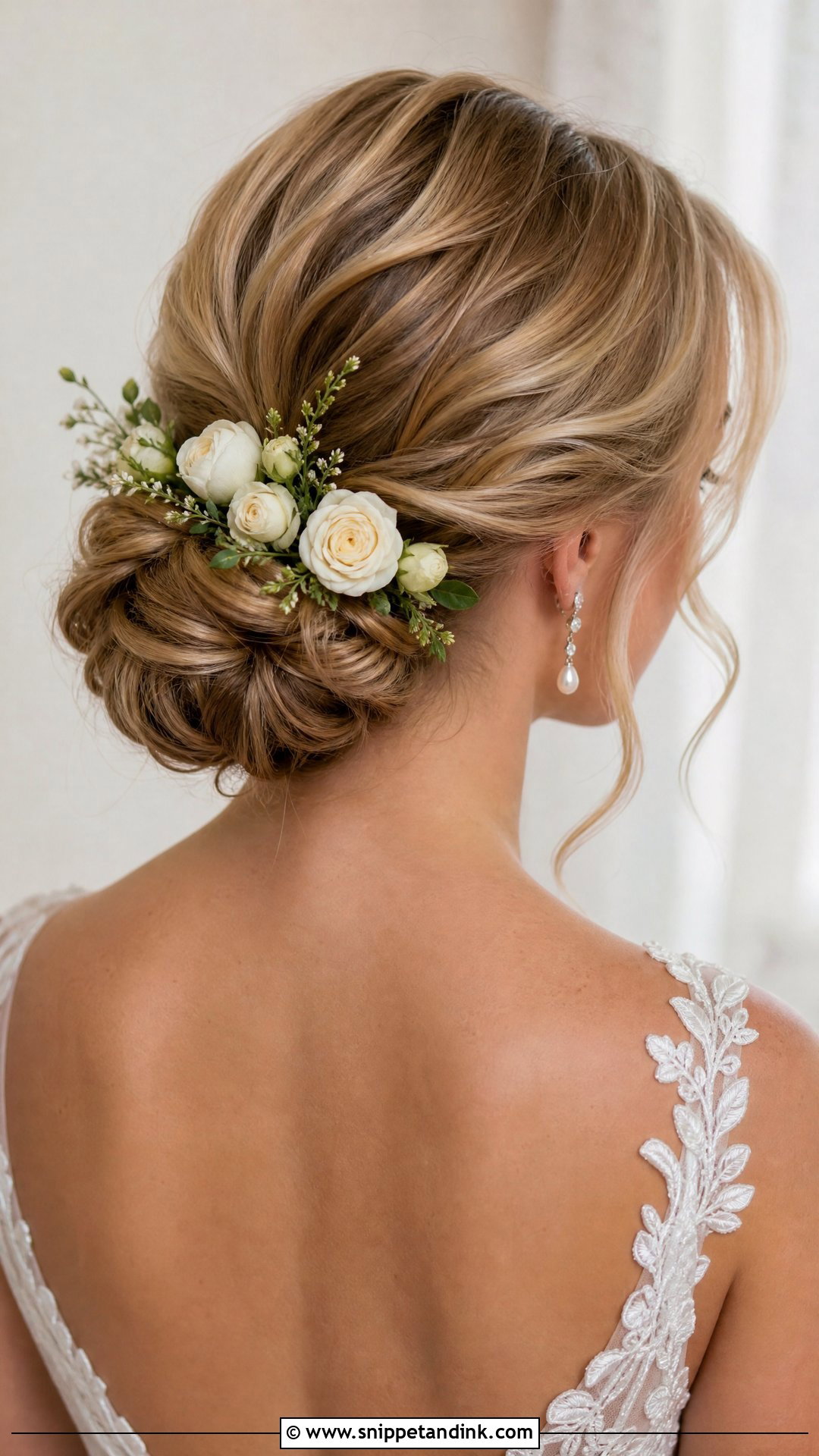
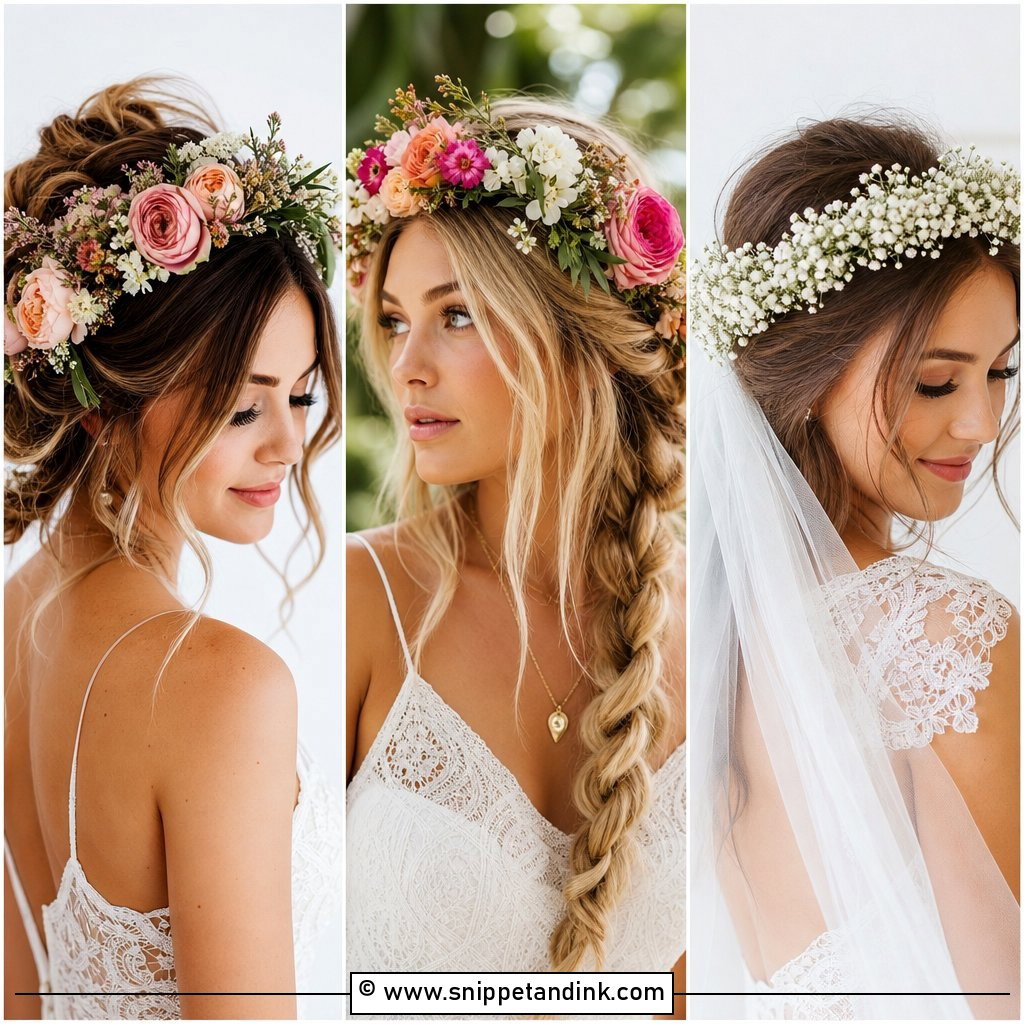
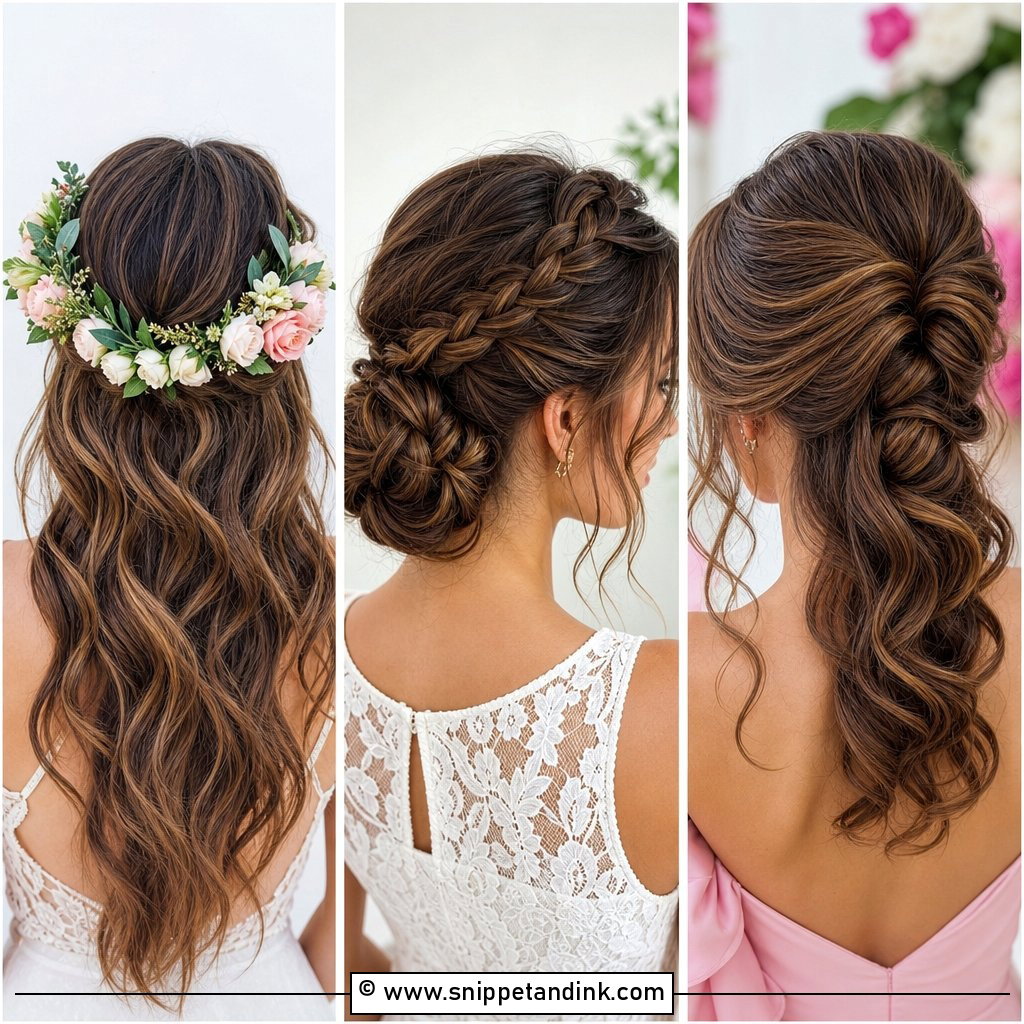
When a bride can’t decide, this is the floral style I suggest first, because it carries flowers with very little risk. The bun sits at the nape, so the weight of the blooms rests on a solid base rather than on loose lengths. I build the bun, then pin flowers along one side or in a small crescent above it, wiring each stem into the bun’s own pins so nothing hangs off a single strand. It stays tidy through hugs, wind and dancing, and leaves room for a veil comb directly above. If a sleek nape feels too strict, I’ll leave two soft pieces at the temples to take the edge off.
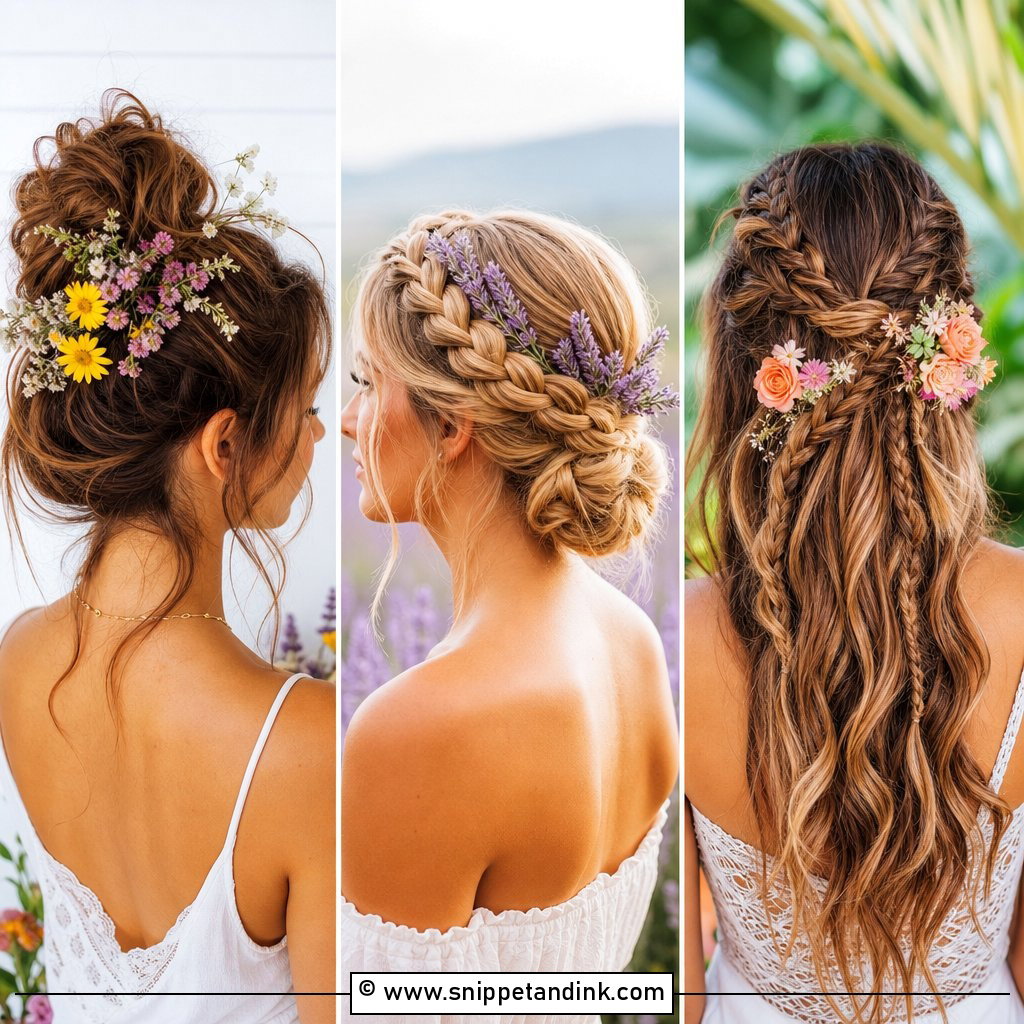
2. Bridal Flower Half Up Half Down
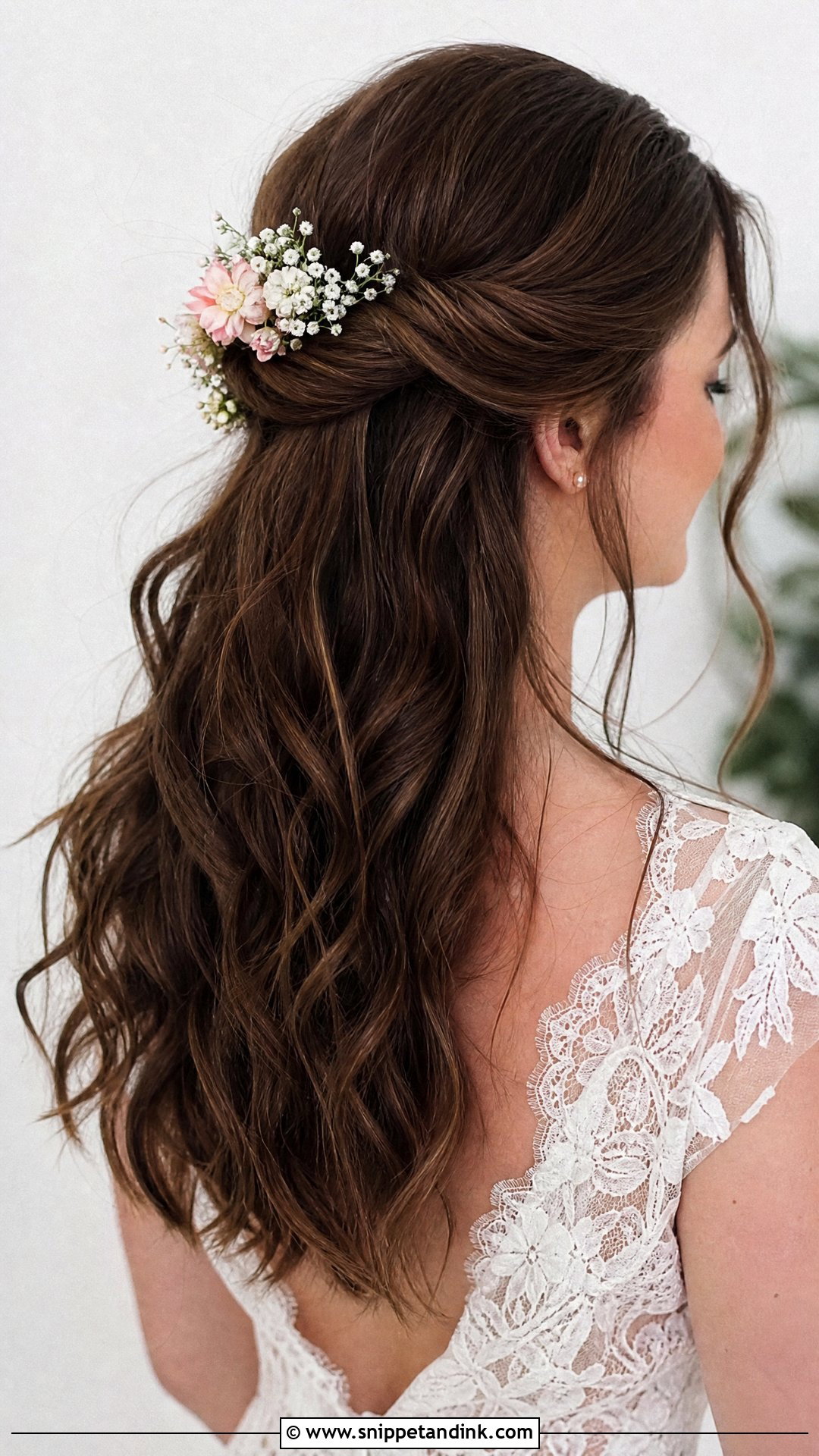
Half up keeps your length on show while the front stays out of your face. The lifted crown section is where I anchor the flowers, because it’s the only part of this style with real grip; anything pinned into the loose lengths will slide by dinner. I twist or braid that section, cross two pins underneath, and add small blooms that echo the bouquet. Be honest about humidity here. Waves on fine hair drop in damp air, so for a summer outdoor wedding I set the curl with more hold and accept that it will relax into something softer by evening. A veil slips in neatly under the pinned section, which keeps the flowers visible once it comes off after the ceremony.
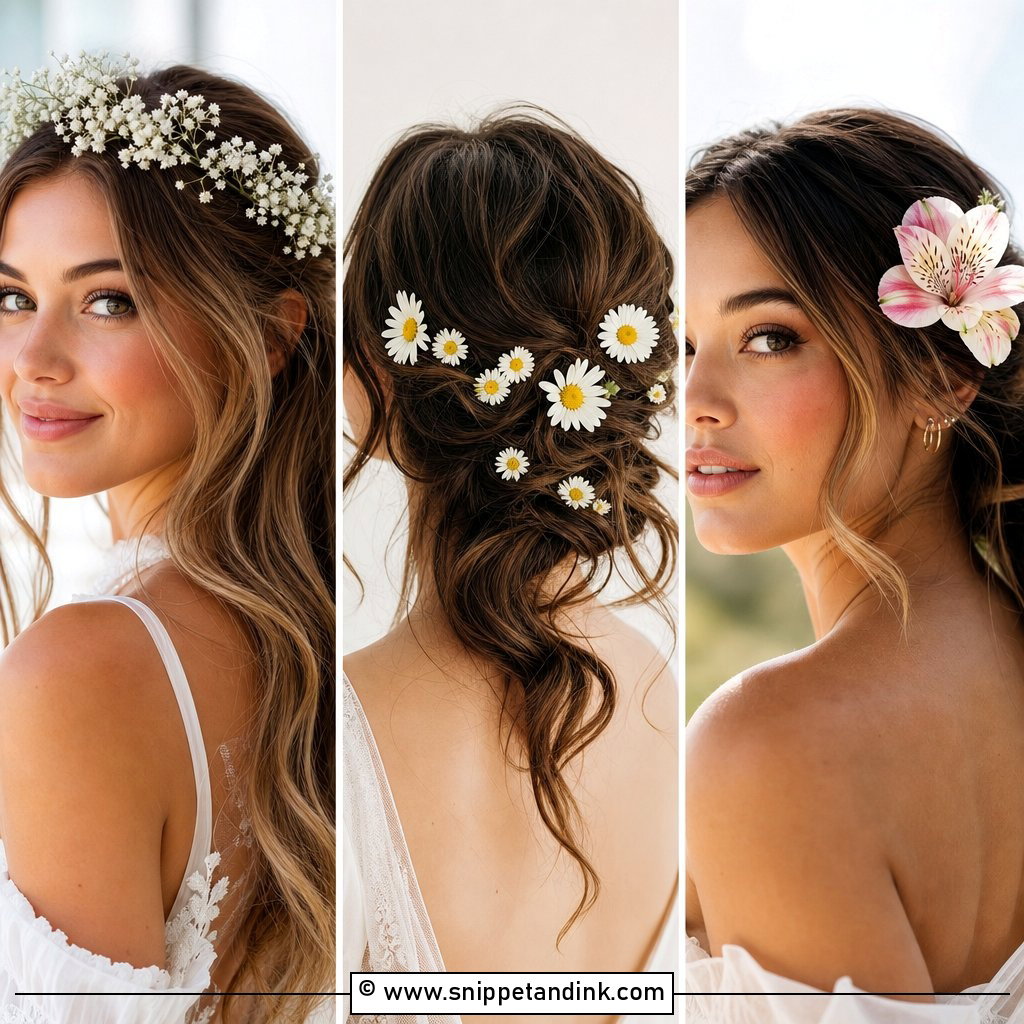
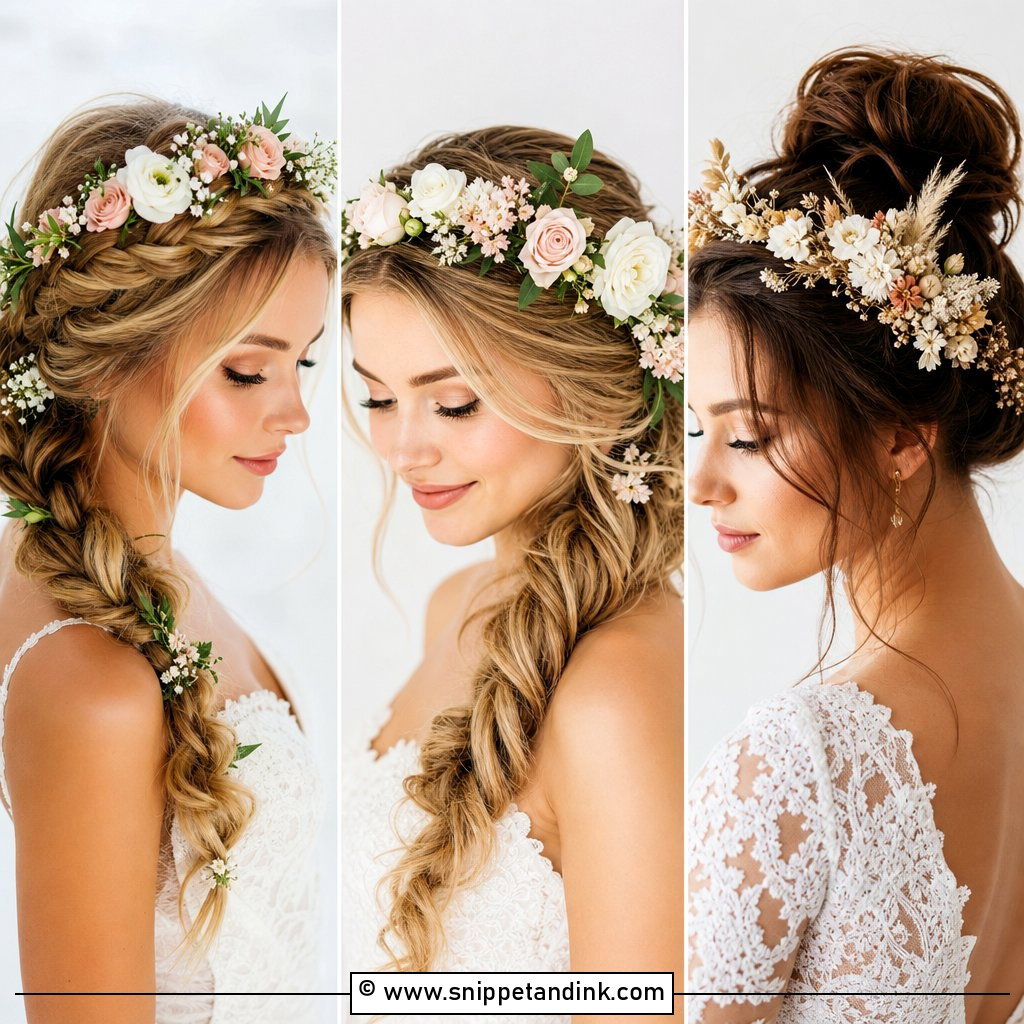
3. Bridal Flower Crown
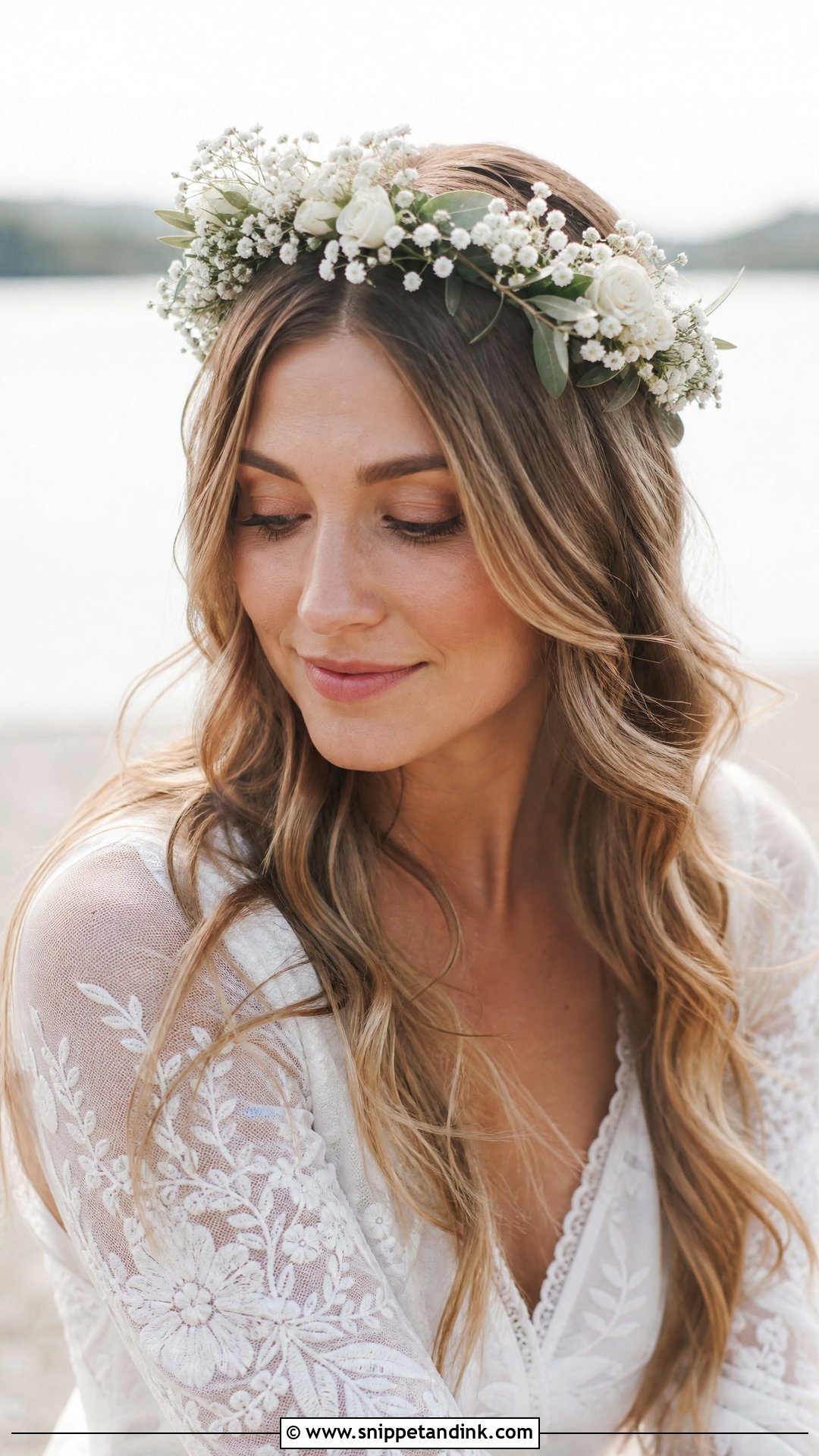
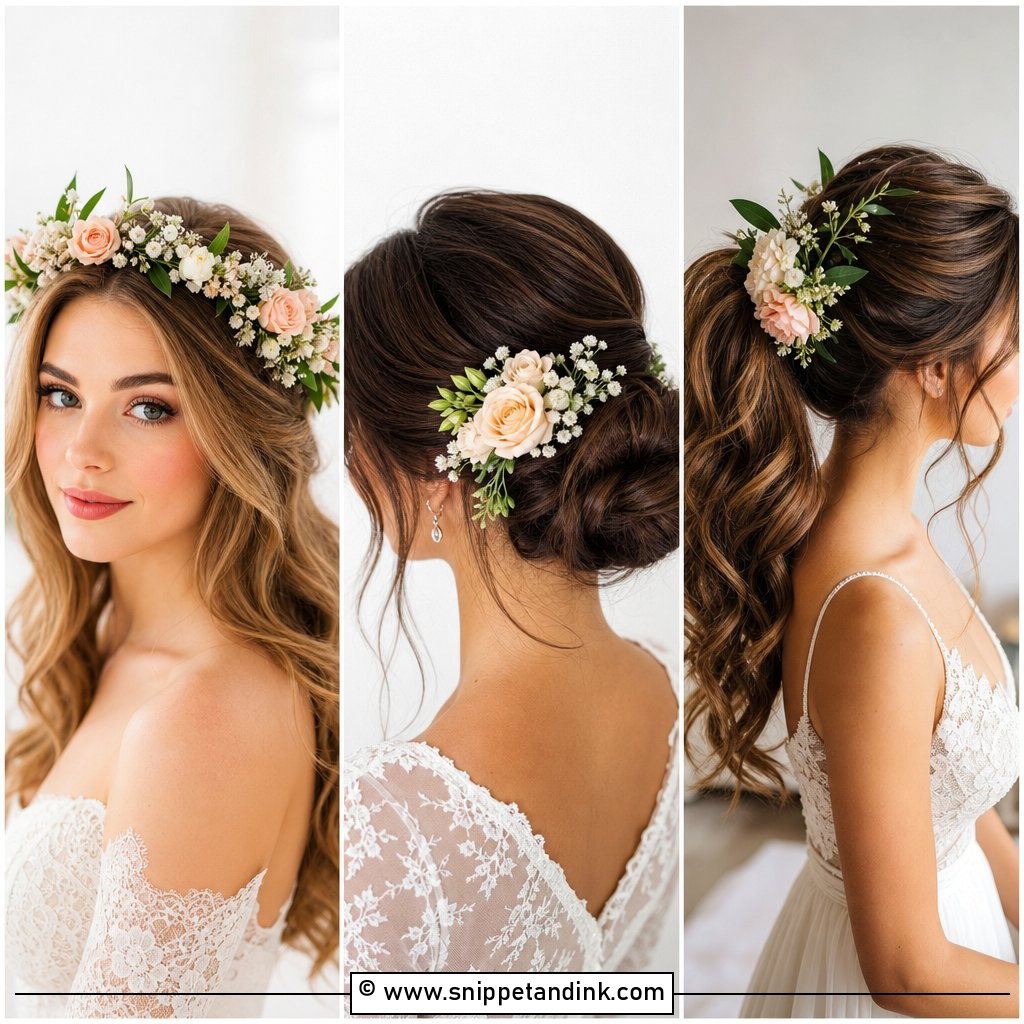
A full crown is the most dramatic floral option, and the one I see go wrong most often, usually on scale. Small blooms on a petite face read delicate; big garden roses on the same face can tip into costume. I ask the florist to build the crown on a thin wire base and keep it airy, with gaps where hair shows through, then I pin it at four points rather than two so it can’t rock forward. Loose waves, a textured updo or natural curls all sit well underneath. Go easy on trailing greenery. A little adds movement, too much starts hiding your hair.
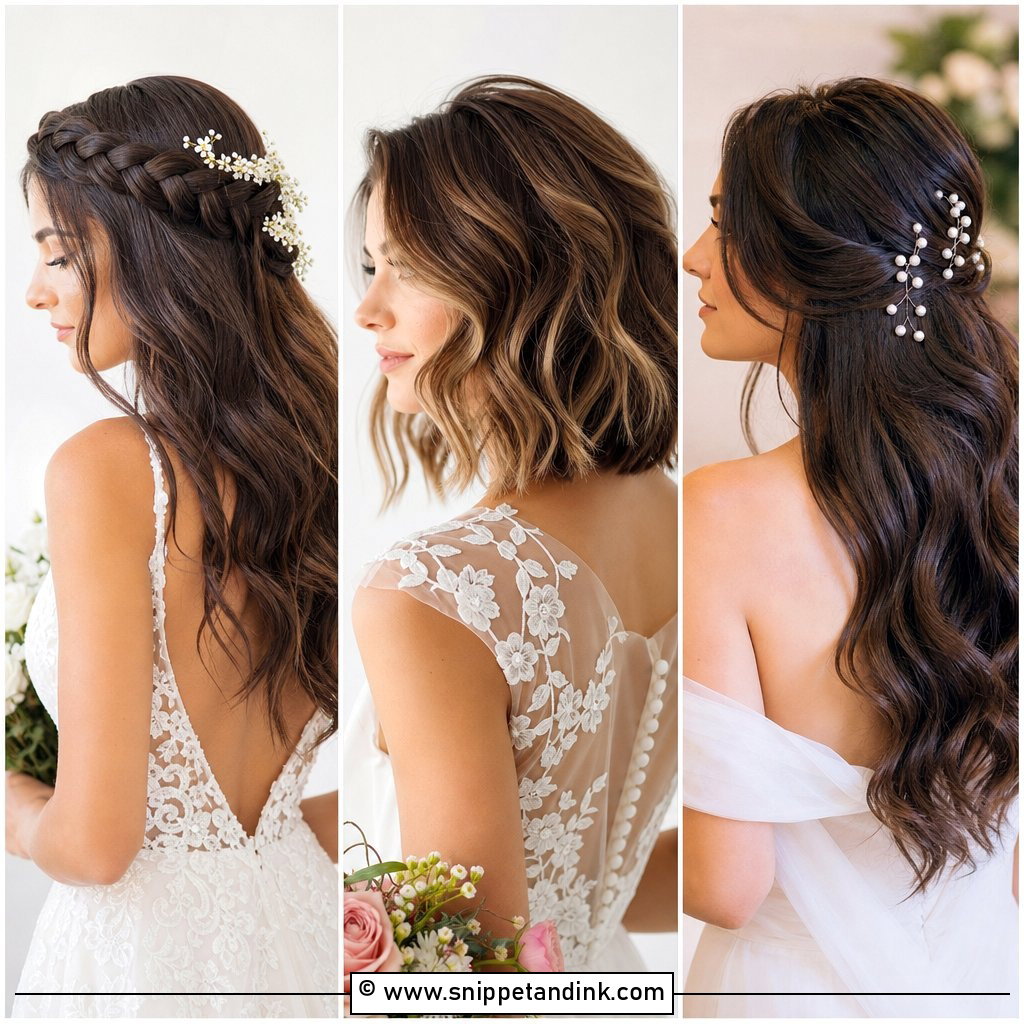
4. Bridal Flower Braid
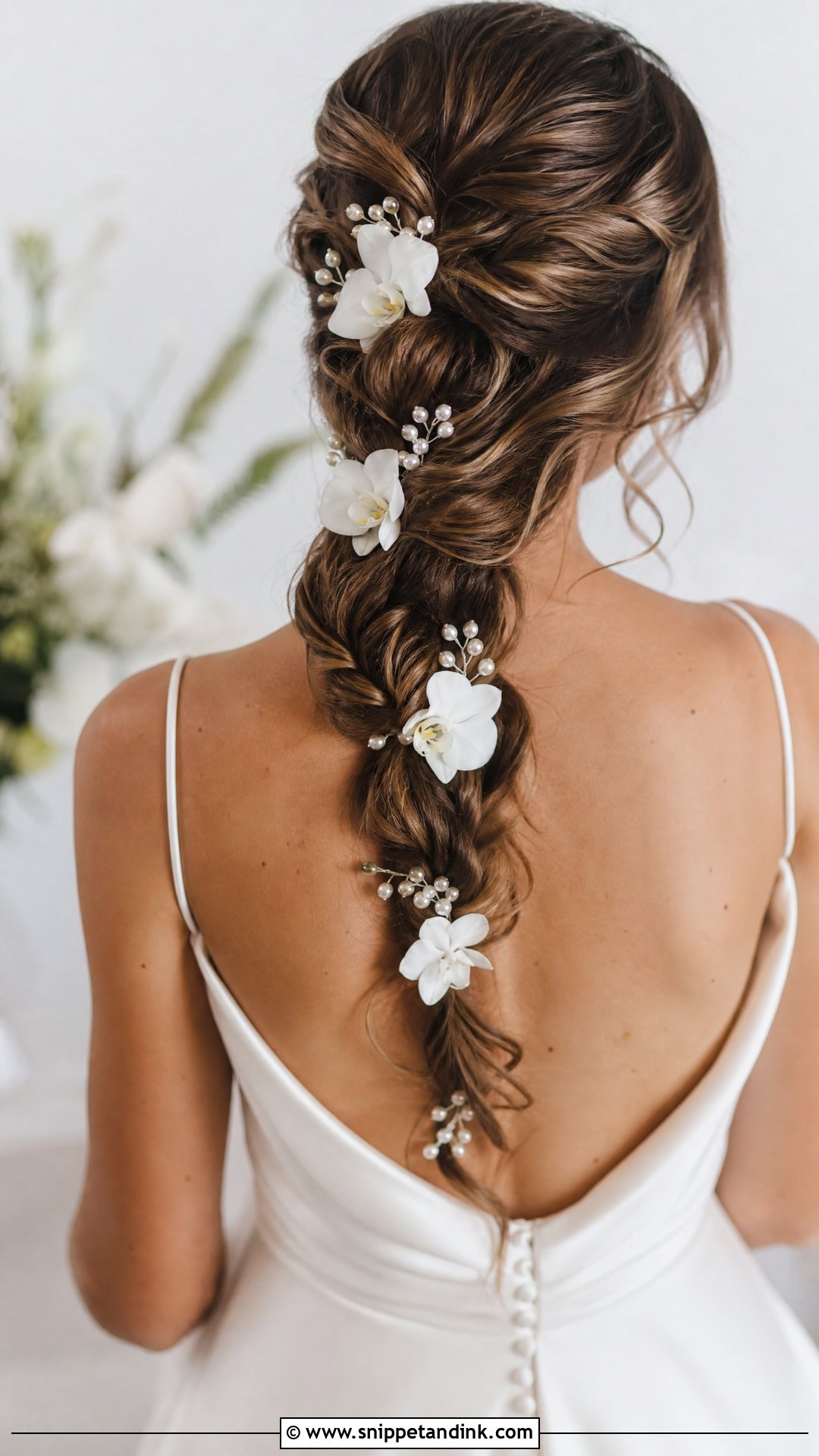
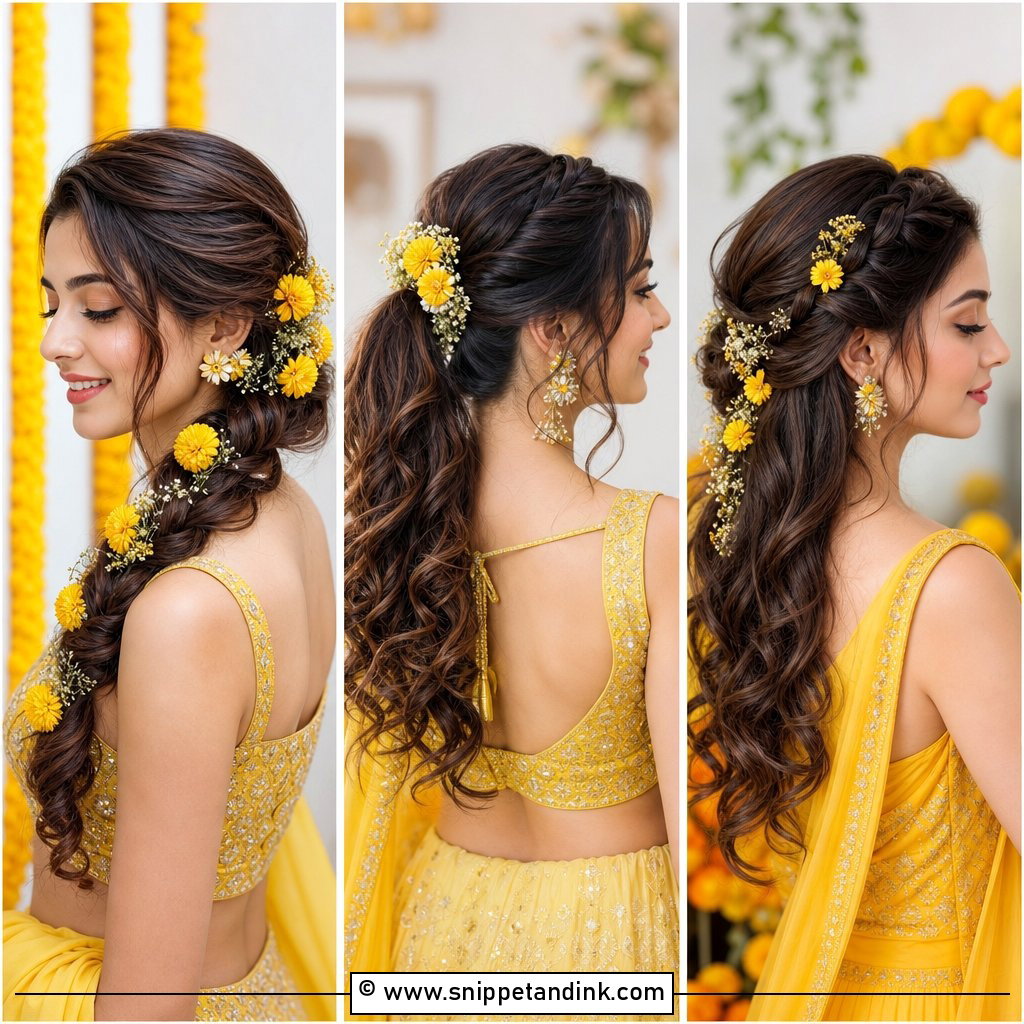
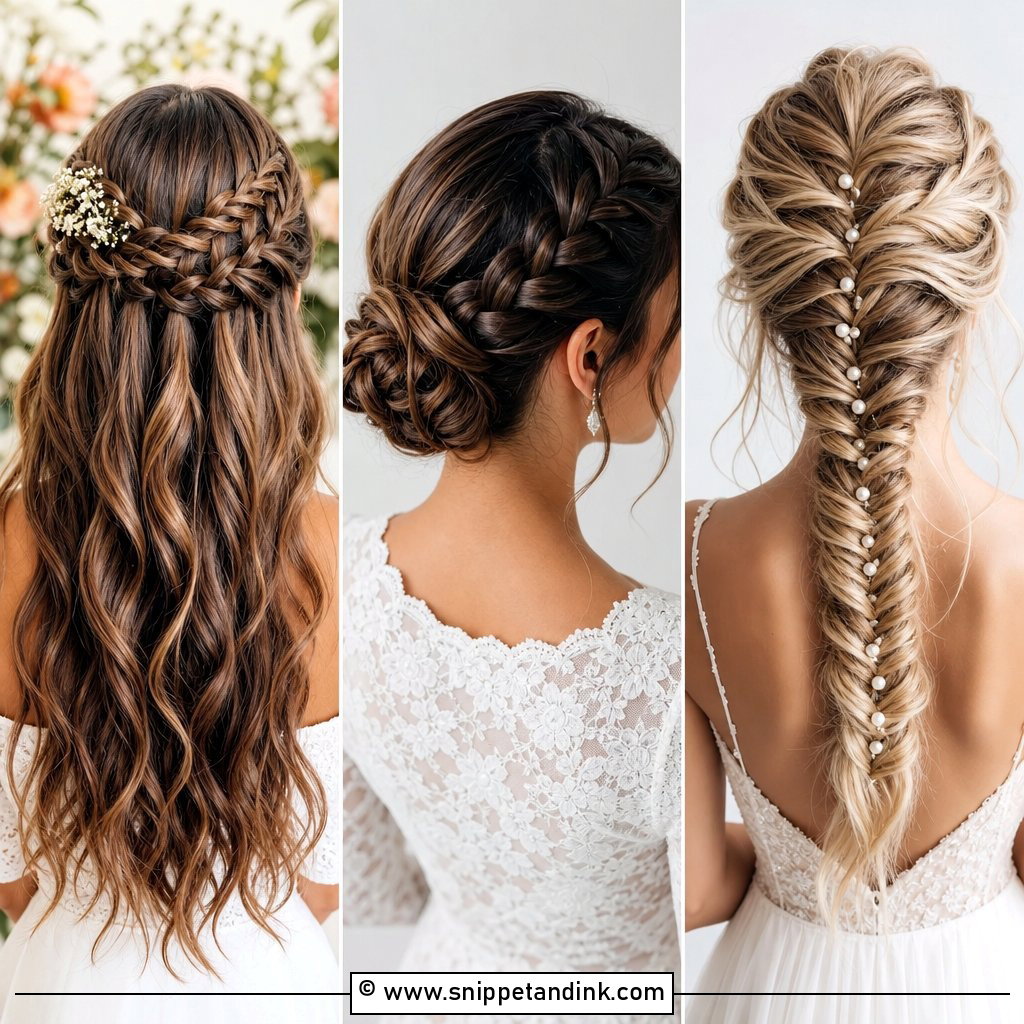
Braids are my quiet favourite for flowers, because every crossover is a ready-made pocket that grips a stem. Down the back, over one shoulder or as a loose fishtail, the braid does the holding and I barely need extra pins. On long hair I space small flowers down its length like a soft trail, which reads well from behind during the ceremony. Clip-in extensions help if your hair is thin, and they give the stems more to grab. I prep with texture spray so the strands have some grit, and I only pull the braid wider after the flowers are in; loosening it first leaves them nothing to hold.
5. Bridal Flower Updo
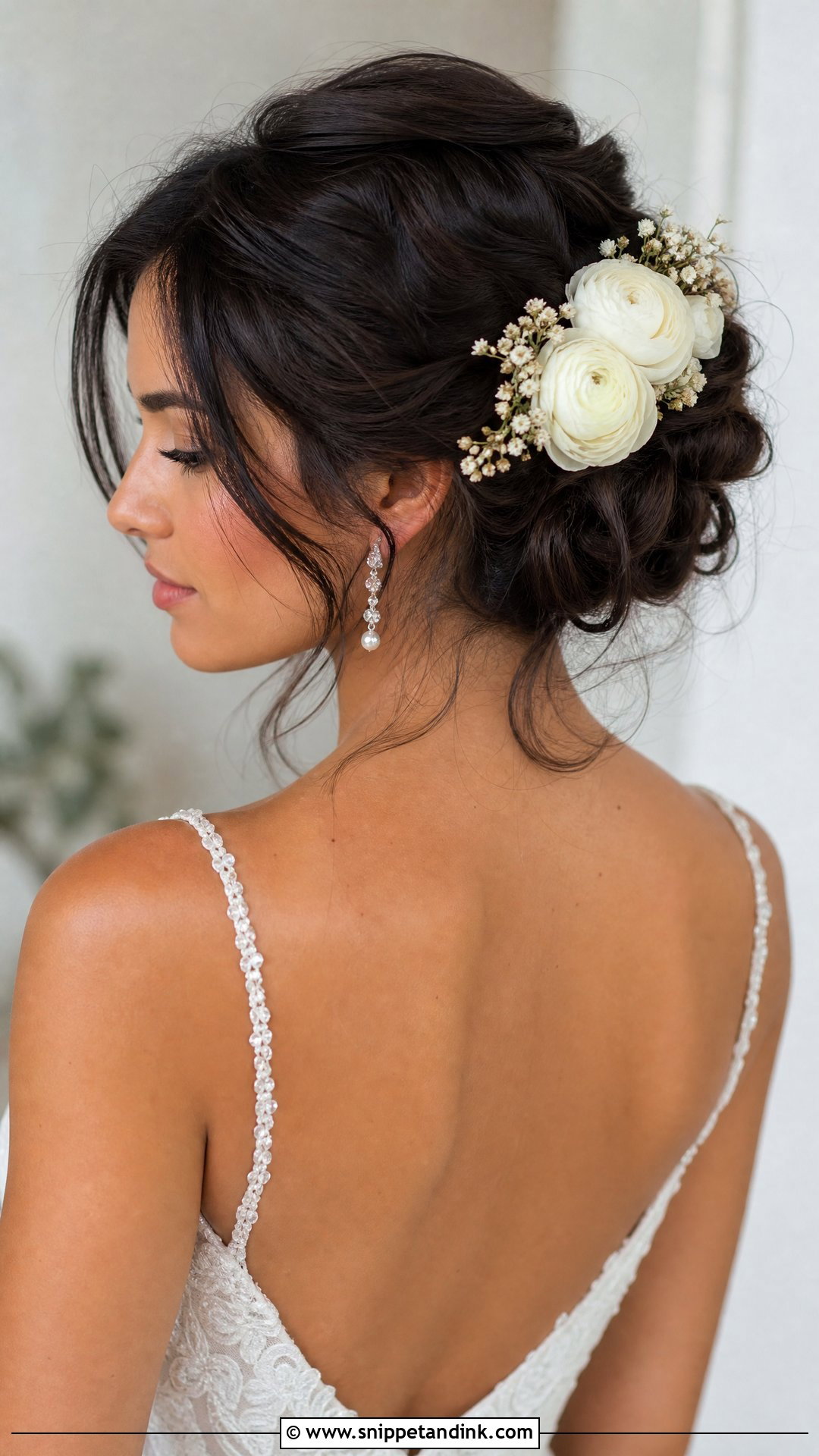
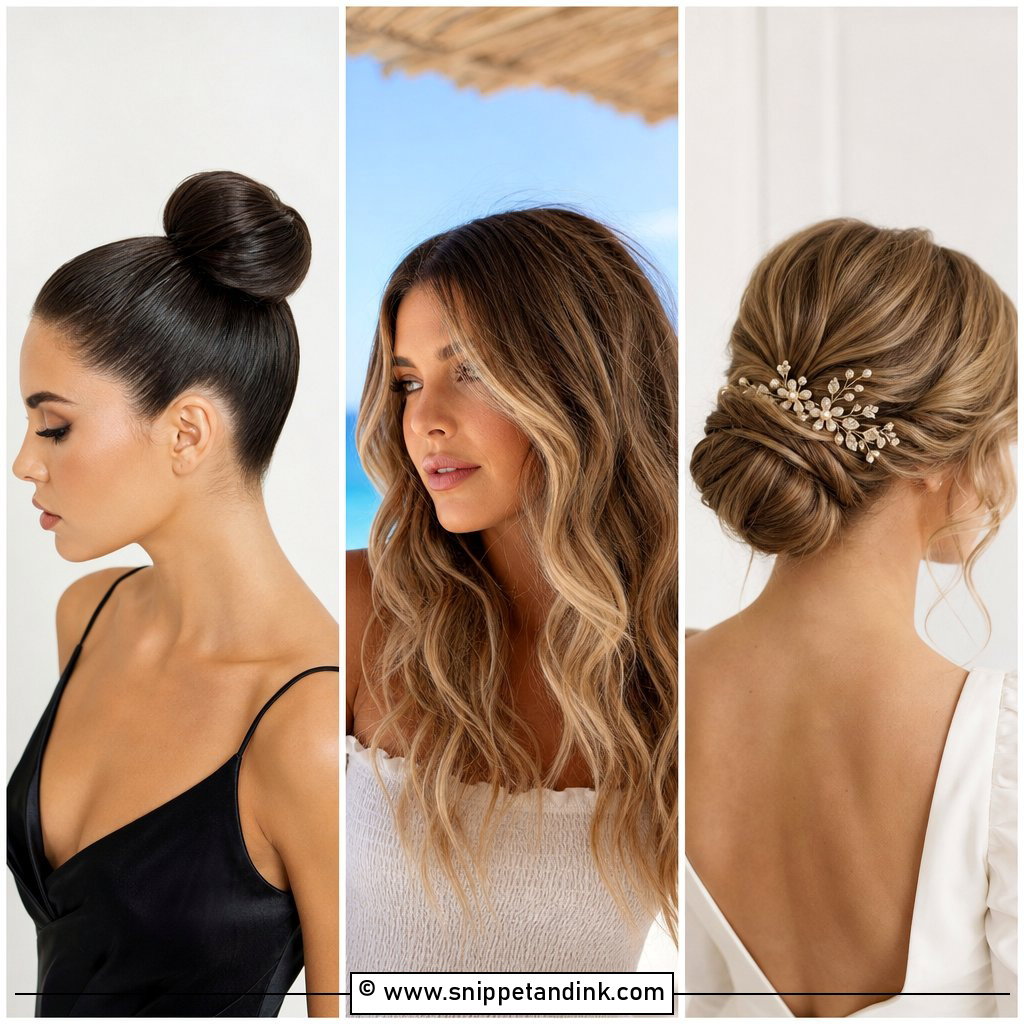
On a hot day I lean toward lifting the hair, since nothing sits on your neck and the blooms never get crushed against your shoulders. I’ll shape it sleek or textured to suit the gown, then set flowers along the back seam, above the bun or tucked into the pinned sections. Proportion matters more here than anywhere else. Three or four well-placed flowers look considered; a dozen large ones start to resemble a hat. With the hair up, your earrings and neckline get more attention too, so I usually keep the florals off the side where a statement earring sits.
6. Bridal Flower Loose Waves
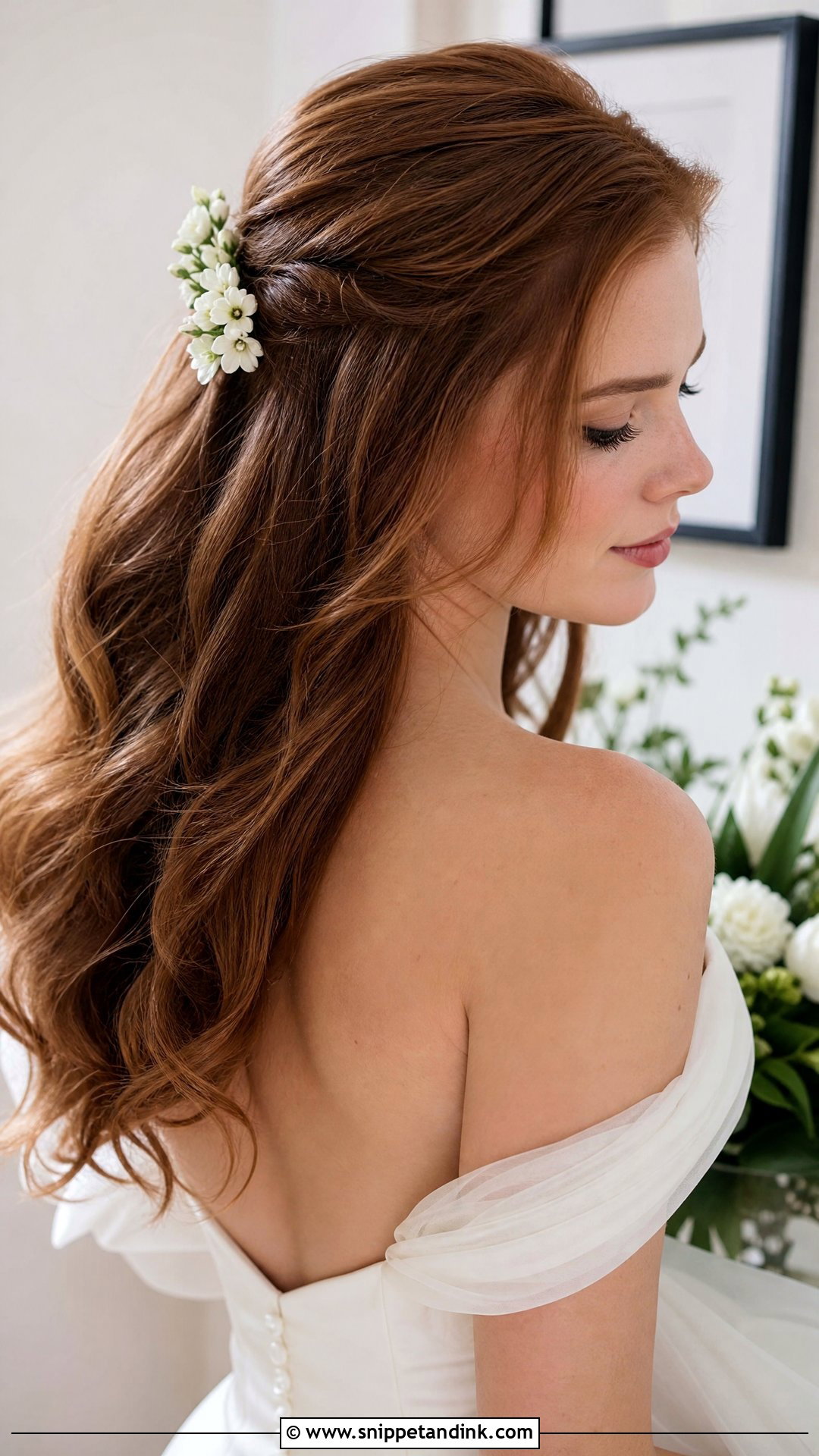
This is the style I’m most candid about, because loose hair gives a bloom almost nothing to hold. The fix is a small hidden base: I pin back a thin section behind one ear, cross two bobby pins under it, and wire the flowers onto that rather than onto free-moving hair. Lightweight blooms only. A heavy rose will slowly drag the section down over the afternoon. Brushed-out glossy waves suit a formal room, while a rougher texture belongs on a beach or in a backyard. If your hair is fine or the forecast is humid, book your trial on a similar day so you can see how fast the curl drops.
7. Bridal Flower Chignon
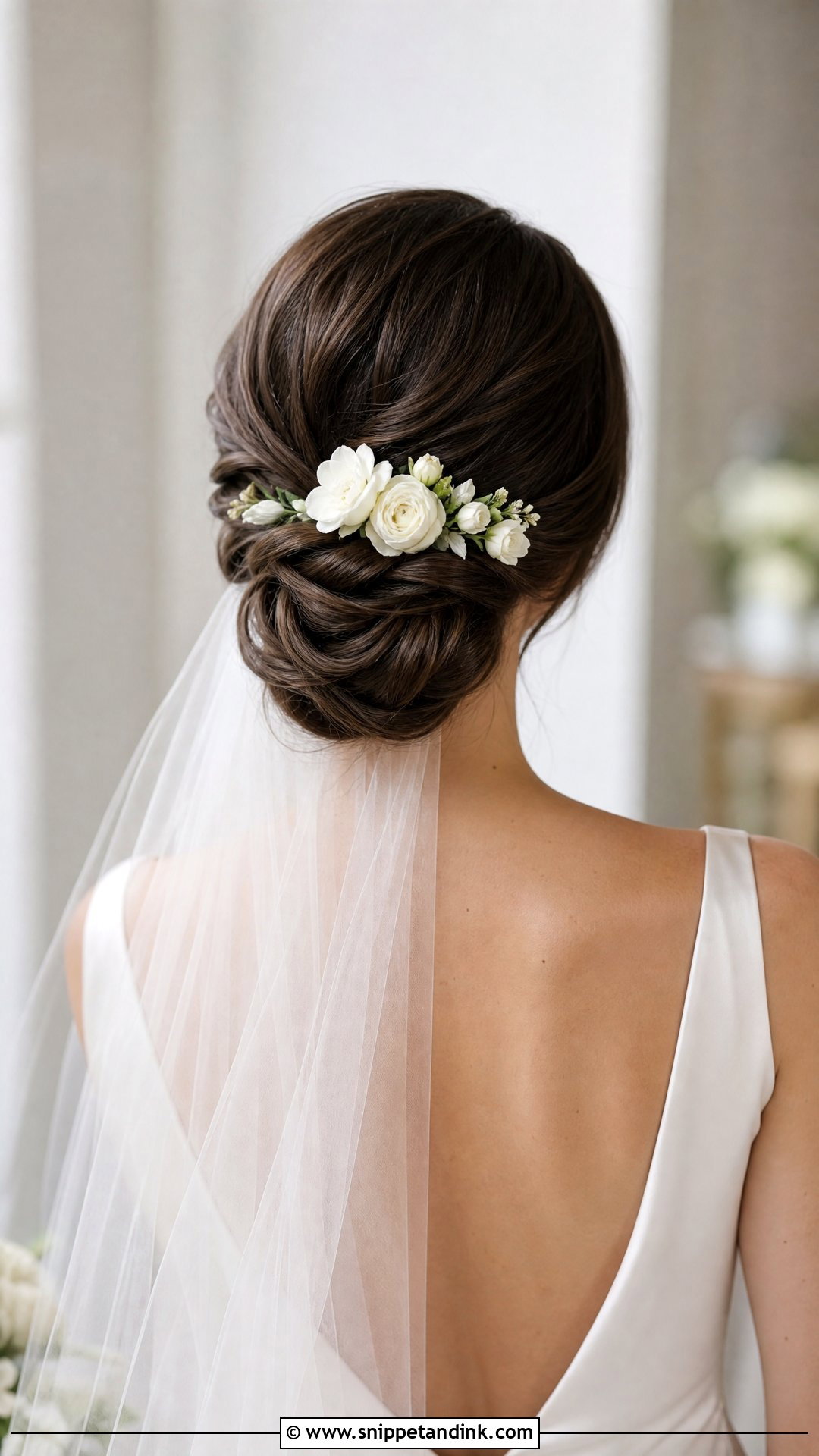
A chignon is more tailored than a bun: the hair is rolled or twisted into a tidy shape at the nape instead of wrapped. That smooth surface is the challenge, because a stem pushed straight into a polished roll can leave a dent or a split. I tuck blooms just above the roll or along one side, where the twist already has an opening. It sits well under a cathedral veil, pairs nicely with satin or lace sleeves, and holds its shape in wind and humidity far better than any down style. For a softer modern version, I leave the hair near the ears slightly loose and keep the back clean.
8. Bridal Flower Ponytail
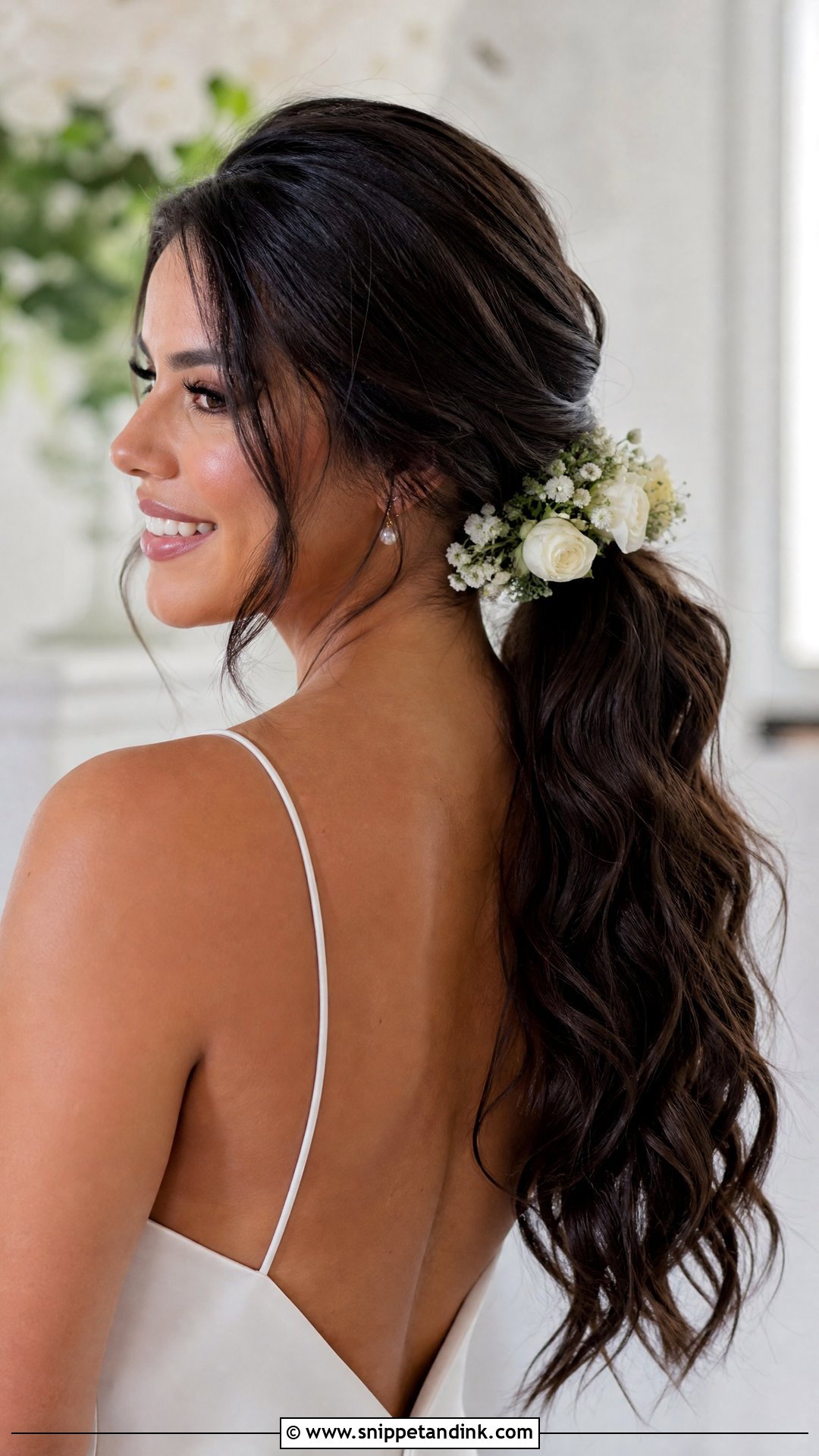
Brides rarely expect a ponytail to feel bridal, but with some curl and careful placement it does, and it’s one of the most comfortable things to dance in. Height depends on your face and neckline: high for drama, low for something quieter. I always hide the elastic, and flowers wrapped around the base are the neatest way to do it because they cover the pins too. What I watch for is droop. A heavy ponytail pulls on its base all day, so I use two elastics and a pair of crossed pins underneath, and keep any flowers along the length tiny. Extensions add length and fullness, and also weight, which is worth knowing before you settle on a high position.
9. Bridal Flower Side Braid
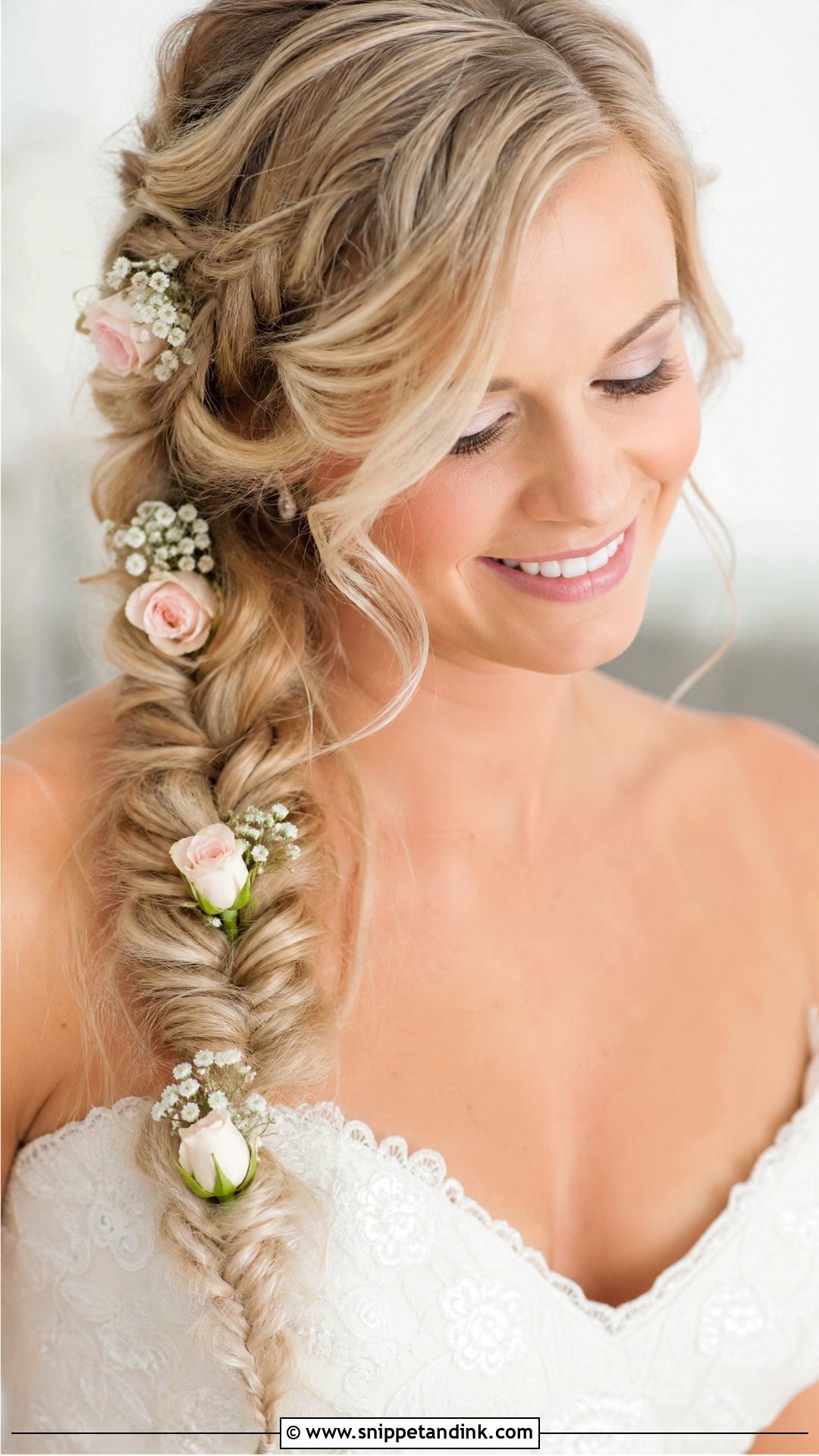
Resting over your shoulder, this braid puts the flowers right where the camera is, so they show in ceremony shots and close portraits. That front-facing placement is the whole point. It suits strapless, one-shoulder and plain gowns, where the braid gives the neckline something to frame. The weakness is balance. All the hair is pulled to one side, so I set the anchor slightly behind the ear and spread the pins out; otherwise you’ll feel a tug on one side of your scalp by the speeches. Kept tight it reads polished, pulled loose it leans bohemian.
10. Bridal Flower Messy Bun
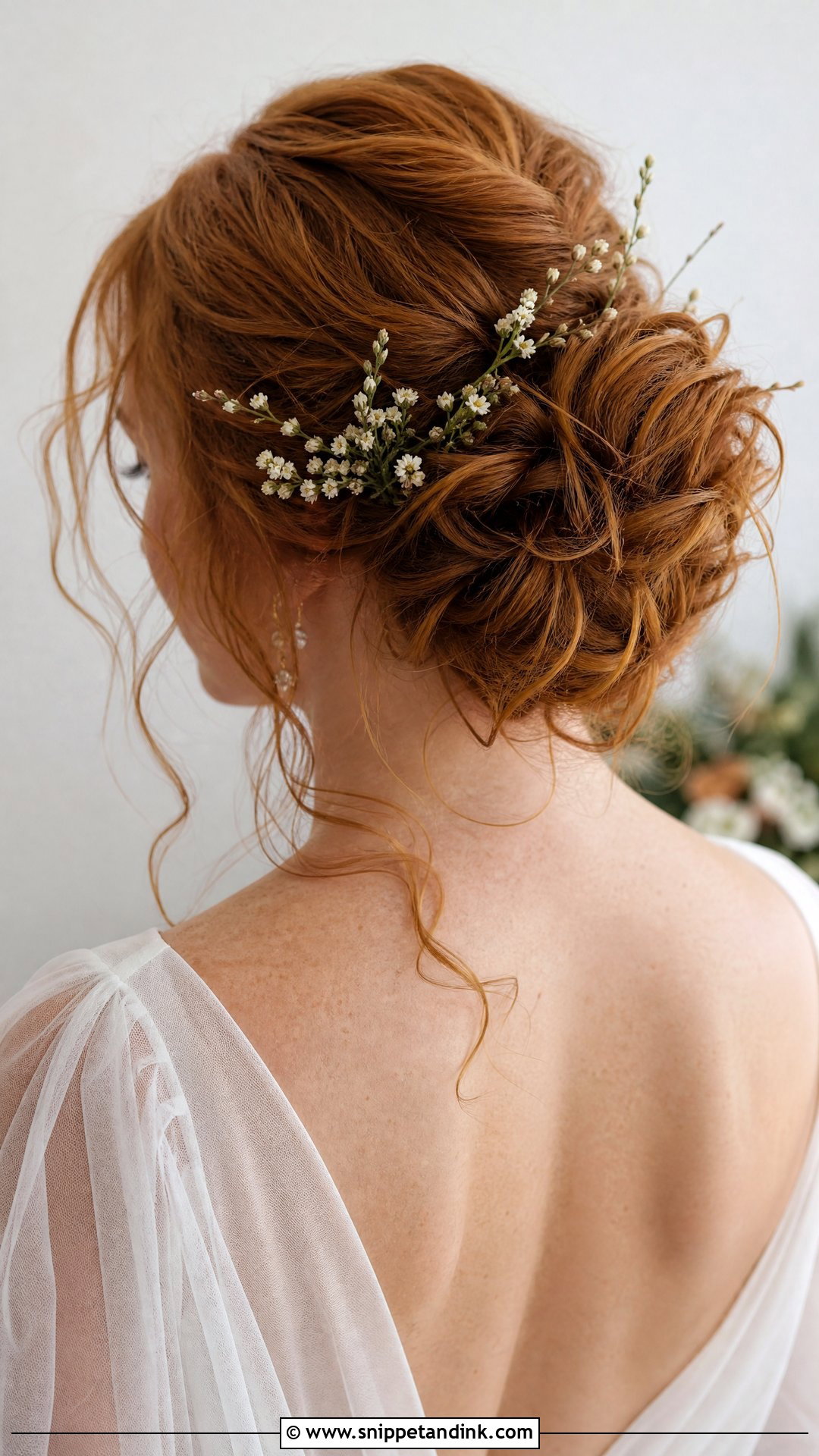
What looks messy in a wedding bun is never actually loose. I build a firm, well-pinned base first and then pull out the outer layer, so the airy part sits over something solid. Small sturdy flowers suit it best: baby’s breath, mini roses, jasmine, and small orchids all tuck neatly into the gaps. I’d hesitate on very silky, freshly washed hair unless you’re happy with plenty of texture product, because the softness slides apart without grip. Worn low, mid-height or off to the side, it’s at home in a garden, a barn or a warm-weather celebration.
11. Bridal Flower Fishtail Braid
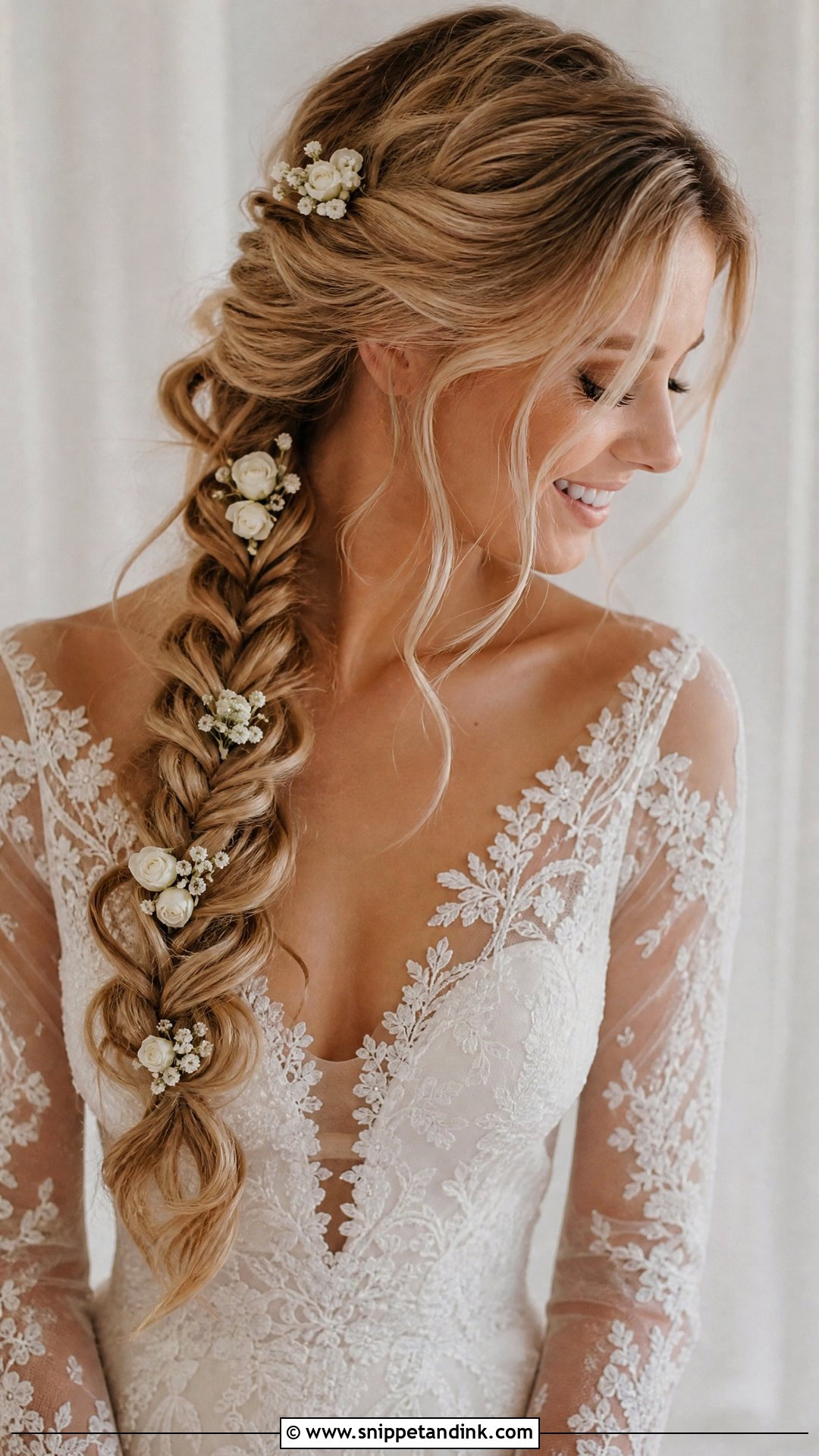
A fishtail is woven from many thin sections instead of three thick ones, so the pattern is tighter and more detailed. That detail is the reason to choose it, which is why I keep the flowers small enough not to cover it. Highlighted or dimensional colour looks especially good here, because each narrow strand catches a different tone. Fishtails take longer to braid and pin, so I build extra time into the morning schedule. Down the back it’s classic; pulled to the side, the flowers are easier to see. I loosen it a little at the end, but never so much that the tail starts to unravel by evening.
12. Bridal Flower Curly Updo
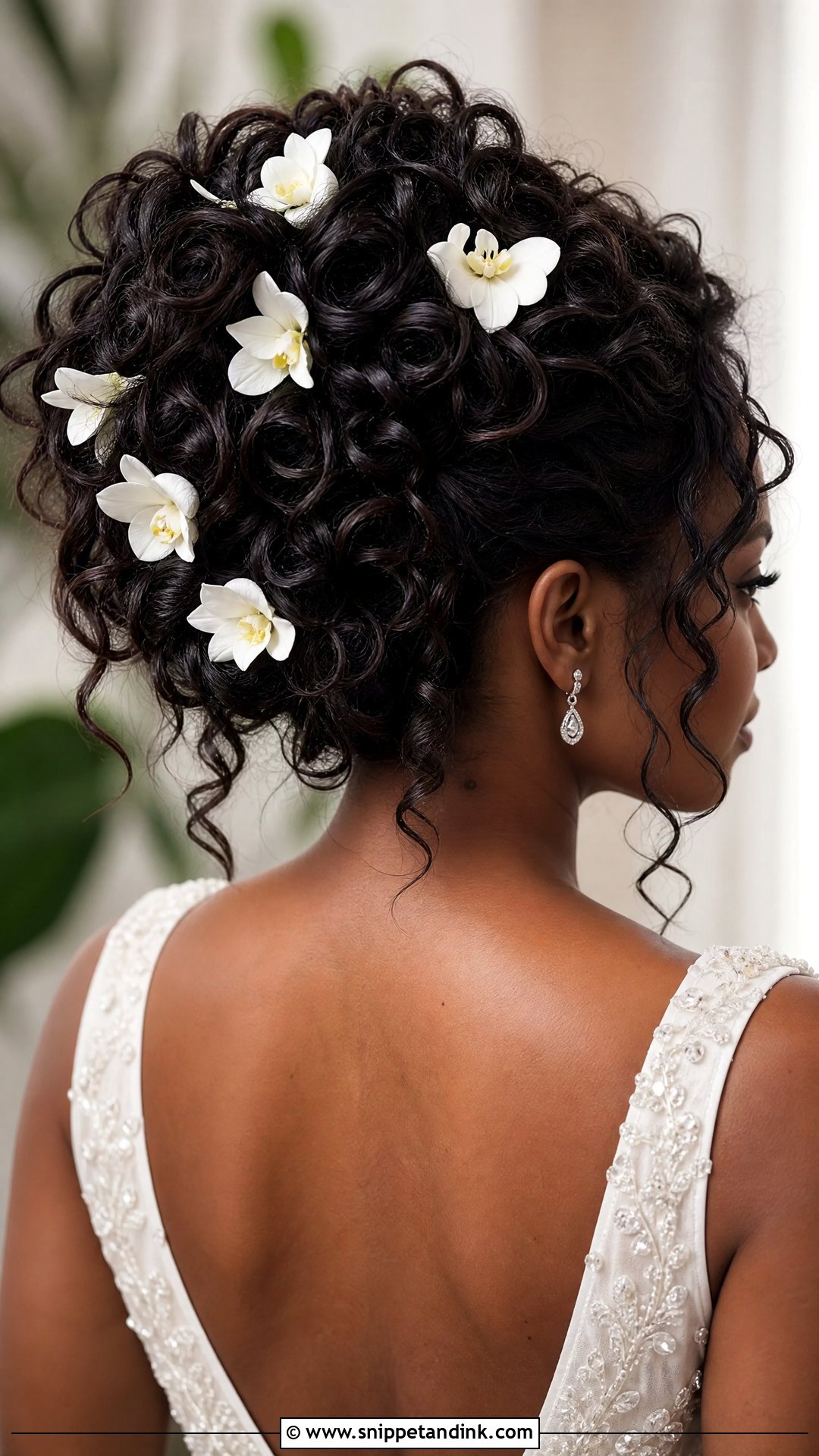
With curly hair I work with the curl pattern, not against it. I define the curls first, then gather and pin them in loose clusters so the volume stays intact. Flowers go into the natural gaps between curls, and small firm blooms are ideal there because they sit snugly without flattening anything around them. Large flowers tend to shove curls out of shape. The other mistake I avoid is heavy spray, which dulls definition fast. Gentle pinning and a light hold keep the shape full for photos and the hair off your face all night.
13. Bridal Flower Short Hair
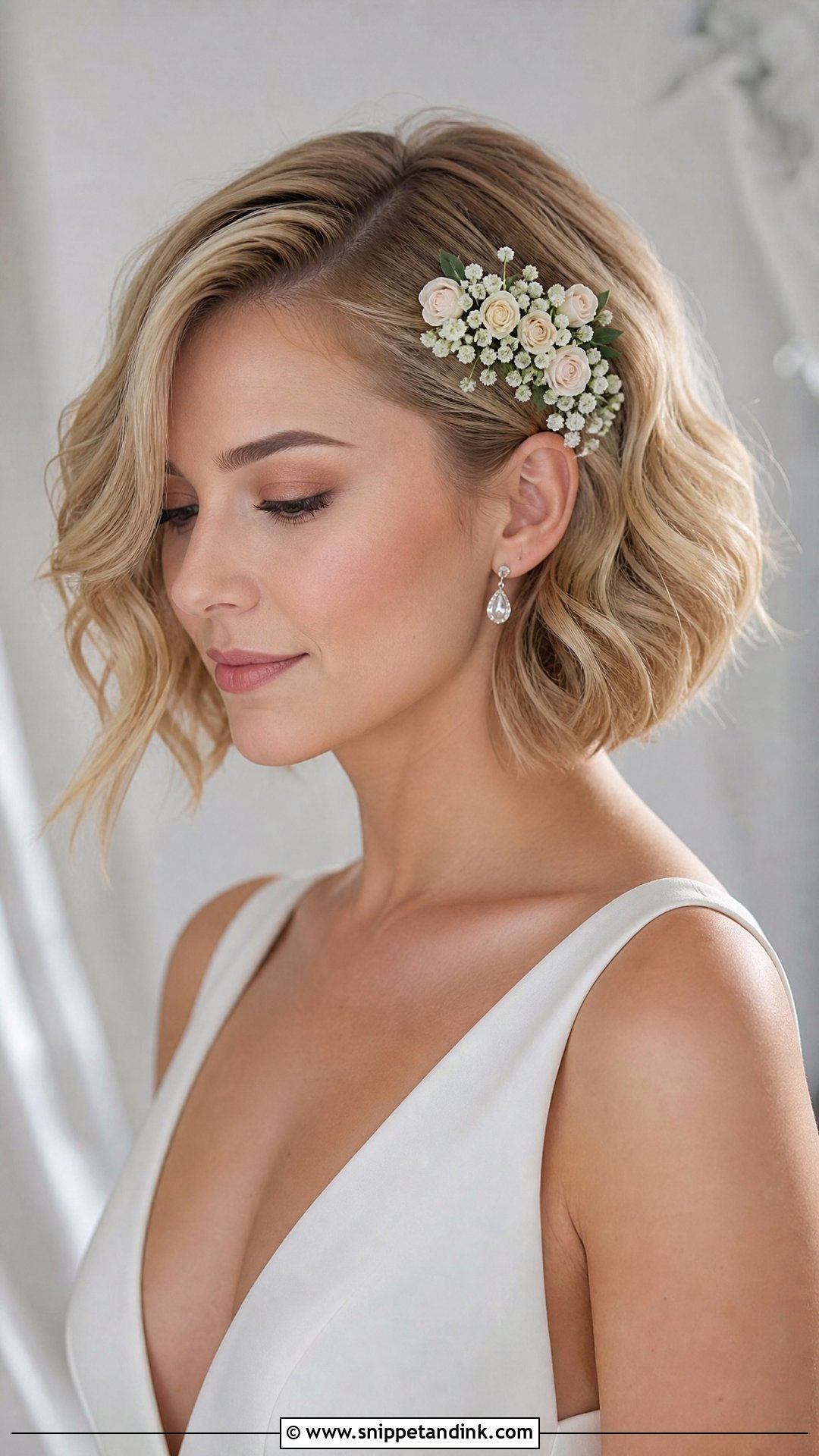
Short hair carries flowers well, but placement is everything when there’s so little length to grip. On a pixie, bob, or short wavy cut I usually reach for a floral comb, a small side cluster or a mini crown. A cluster at the temple frames the face and is the easiest spot to secure. On a bob or lob, a soft wave adds grip before anything goes in. For a pixie, I have tiny or preserved flowers fixed to a slim comb or a pair of bobby pins rather than pushed into the hair, where they’d simply fall out. Keep it simple and the flowers become your only accessory.
14. Bridal Flower Veil Hairstyle
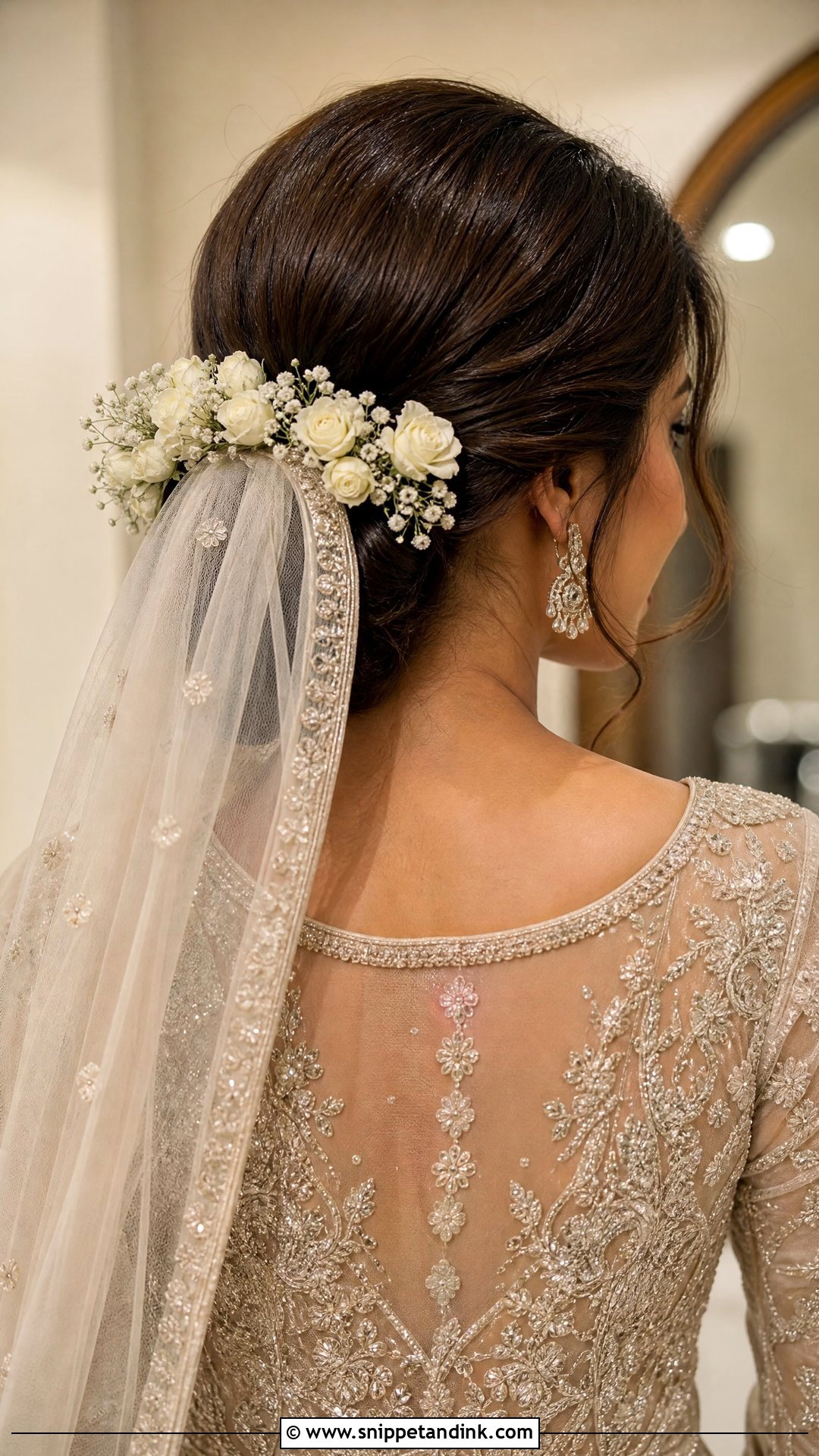
The veil and the flowers fight over the same small patch at the back of the head, and sorting that out is the main job of the trial. With a low bun, I usually slide the comb under the bun and place flowers above it, so the veil falls cleanly and the blooms stay visible. With a half-up style, flowers circle the pinning point and the comb sits just below. Heavily detailed lace or pearl edges call for simpler flowers; plain tulle can handle fuller blooms. Bring the actual veil to your trial, or one of the same weight. A cathedral length pulls much harder on its comb than a fingertip one, and I need to anchor for that.
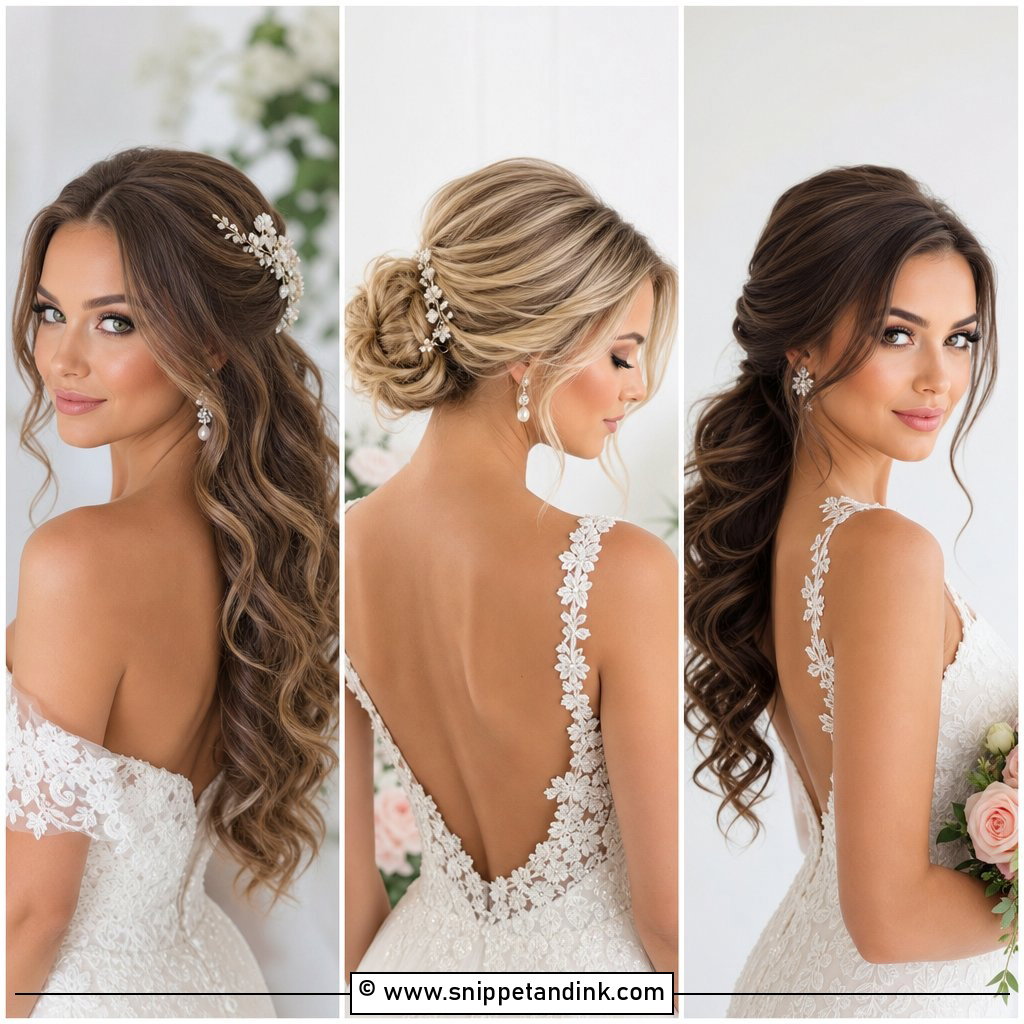
15. Bridal Flower Natural Hair
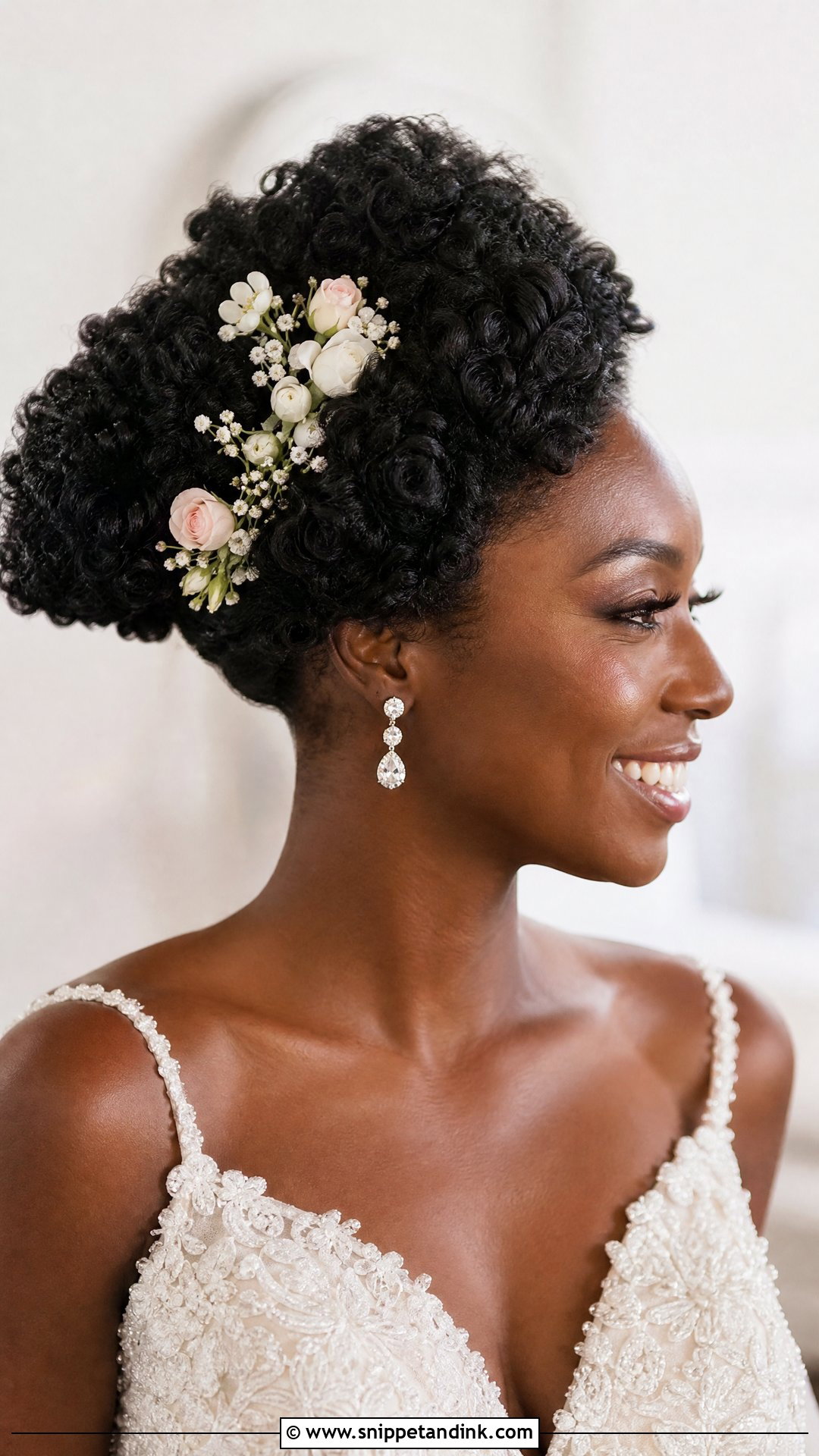
Textured natural hair is one of the easiest bases I work on, because it holds a stem far better than slick straight hair does. Flowers can go into a curly fro, twist-out, braided crown, puff, a loc updo or a sculpted shape, and the placement follows the silhouette: a side cluster to frame the face, or tiny blooms scattered across the top for a garden feel. I match the pins to your hair colour so nothing glints in flash photos. Fresh or faux both work, as long as they’re light, and I set them after the style is fully defined so I’m not disturbing the curl or twist pattern.
Who Wires the Flowers, and When They Reach the Bridal Suite
The most common hiccup with floral hair isn’t the style, it’s the handoff. The stylist assumes the florist will bring something ready to pin; the florist assumes loose stems are fine. I settle it a few weeks out with one short message to both sides.
- Ask the florist to wire and tape each bloom onto a short stem or a bobby pin, or build a small piece on a comb. Loose flowers with long stems are very hard to anchor.
- Have the hair flowers arrive with the bouquet, boxed with damp tissue and kept cool, never left in a sunny car.
- Plan for the flowers to go in last, after the style is finished and sprayed, since hairspray can spot petals.
- Order two or three spare blooms. They cost very little and they’re your fix if one gets crushed while you dress.
For your trial, bring a few artificial flowers in roughly the right size, or a sample stem from the florist. It’s the only way I can judge where the weight sits and whether the veil comb clashes with the placement.
When a Flower Droops Halfway Through the Reception
It happens, usually after a hot ceremony or a long stretch of dancing. I hand a bridesmaid the spare blooms and a few matching pins at the start of the day. A tired flower can be pulled and swapped in under a minute, and a light mist of cool water perks up the sturdier varieties before evening portraits. If something is beyond saving, take it out entirely. A slightly bare spot looks far better in pictures than a brown, flattened petal beside your face.
A Few Blooms, Placed Well, Beat a Whole Garden
Every style here works; the real question is whether it suits your texture, your dress, the venue and how much fussing you want on the day. A low bun is the safest base, a crown is the most romantic, a braid shows texture best, and loose waves need the most planning to keep flowers where you put them. Short and natural hair carry blooms well once the placement is right. Get your stylist and florist talking early, pick flowers that can last a full day out of water, and keep them light. The aim is for the flowers to look as if they grew out of the style rather than arrived at the last minute.
You'll Like These Ideas:


Leave a Reply