
A bob or a pixie can carry full Indian bridal jewelry. It just needs a different plan from a waist-length braid. Short-haired brides often come to a trial worried that a maang tikka or passa will have nothing to hold on to, but the hold comes from how the hair is prepped and pinned, not from its length. These Indian short hair bridal hairstyles run from traditional buns built on padding to sleek modern cuts, and with each one I’ve noted which function it handles best and where it tends to struggle.
Giving a Maang Tikka Something to Grip on Short Hair
Length is rarely the real problem with short bridal hair. Anchoring is. Indian bridal jewelry and a pinned dupatta add genuine weight, and on a bob there’s less hair to spread that weight across. Before any style below goes on, this is what I set up.
- A pin base along the part. Two bobby pins crossed in an X under the top layer, or a tiny flat braid, gives the maang tikka hook something firm to catch. Without it the tikka drifts off center within the first hour.
- A comb for the dupatta. A small comb pinned in at the crown takes the dupatta’s weight off your own hair. Pins alone drag at fine roots and start to ache by the second ritual.
- Grip at the roots. Freshly washed short hair is slippery, so I work dry shampoo or a texture spray in before pinning anything.
- Your real jewelry at the trial. Matha pattis and passas vary a lot in weight, and I can only plan anchors around the piece you will actually wear.
Where clip-in extensions help, and where they don’t
Wefts make sense when you want a bun bigger than your hair allows. Your own hair should reach at least the jaw to cover the clips, and the shade needs matching in daylight rather than under salon lights. A pixie can’t hide wefts at all, so for a pixie I’d put that budget into jewelry instead.
1. Indian Short Hair Bridal Low Bun
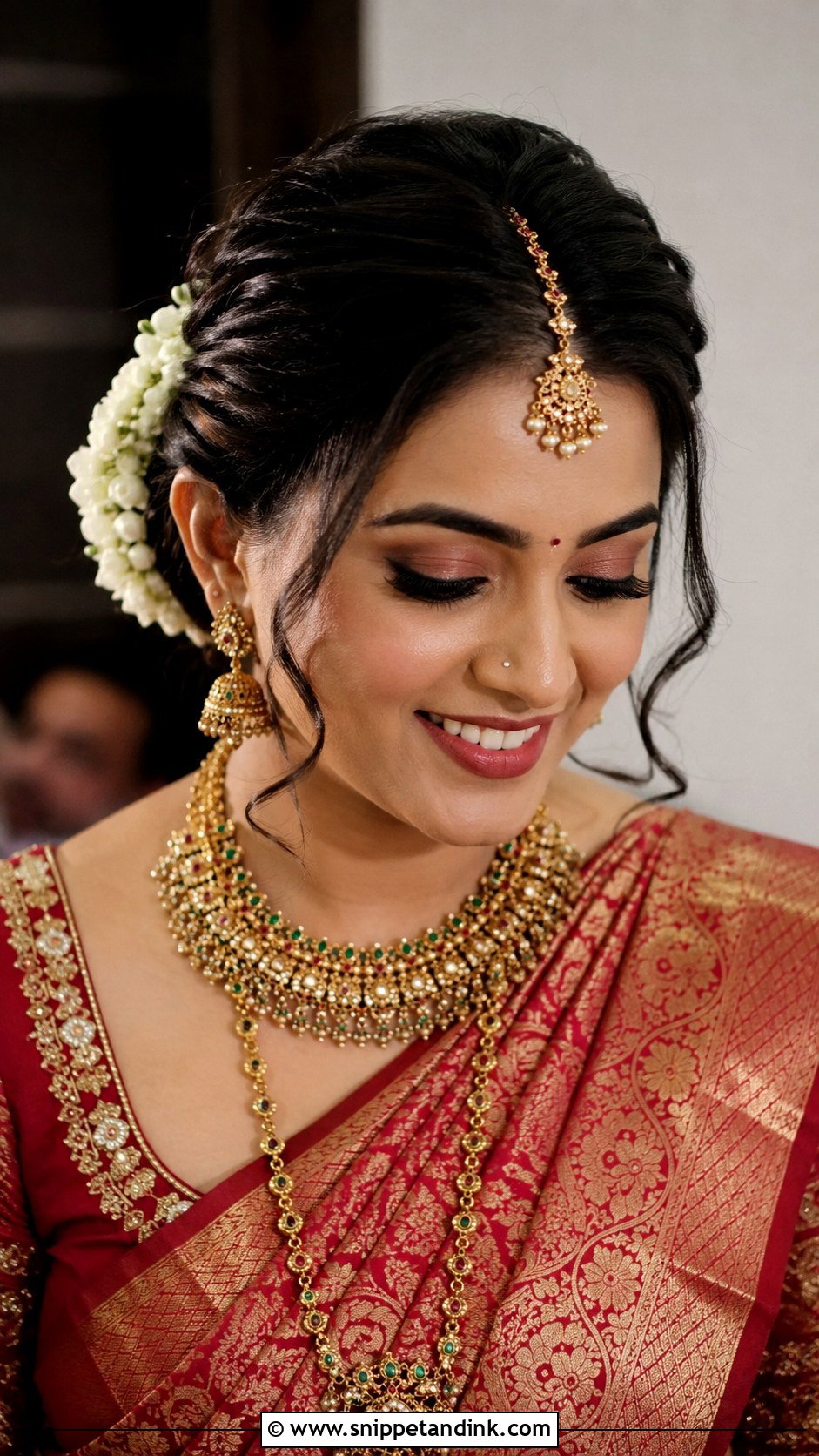
An Indian short hair bridal low bun is where I start most short-haired brides, because it carries a dupatta better than anything else here. The hair is drawn back to the nape and wrapped around a small padding, or a couple of clip-in wefts when the length stops at the jaw. The pieces that won’t reach usually sit behind the ears, so I set those with gel and pin them flat before building the bun. A center part with a maang tikka keeps it traditional. Leave a little lift at the crown; a scraped-flat front makes the face look wider in photos.
2. Indian Short Hair Bridal Bob With Maang Tikka
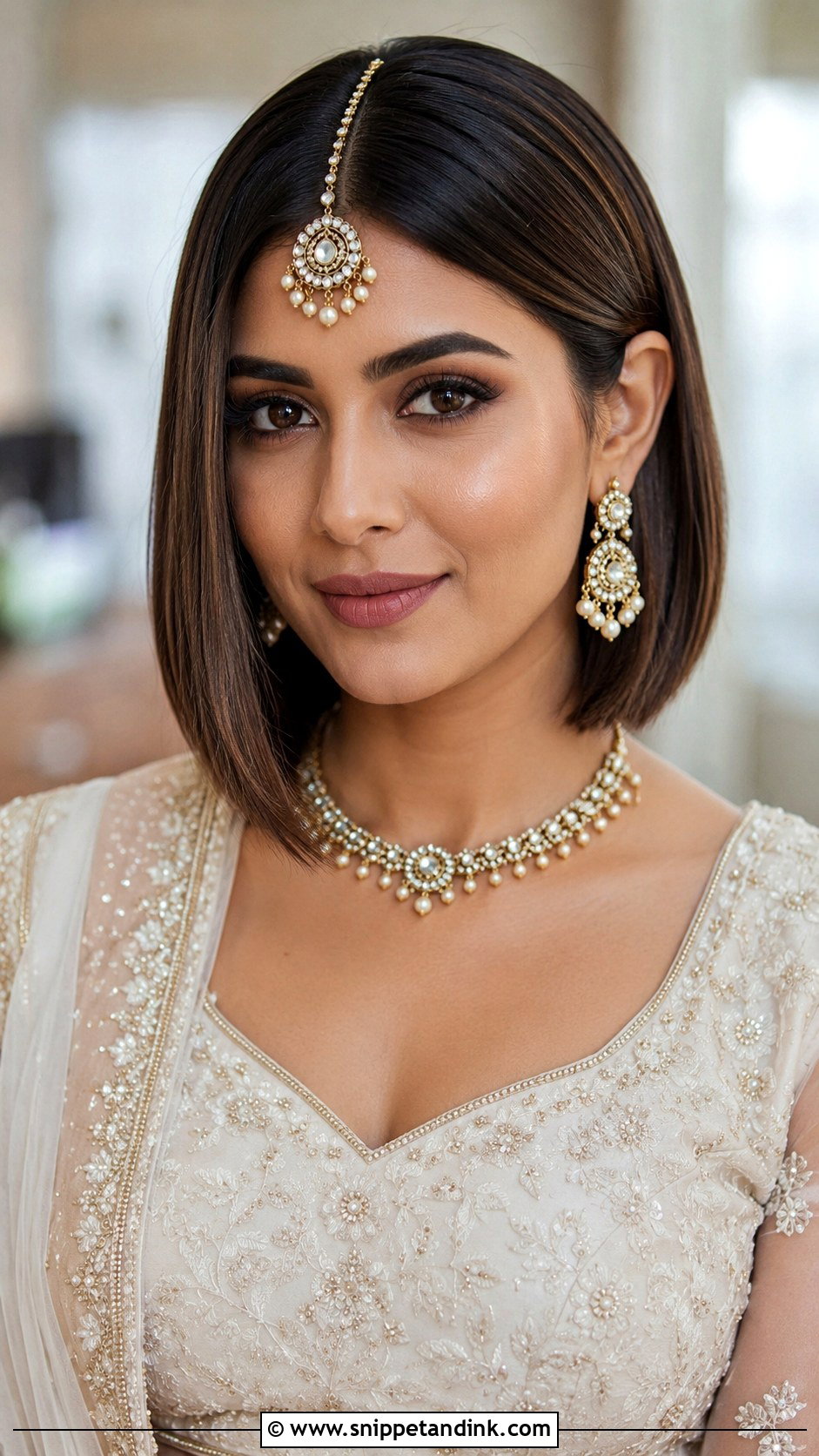
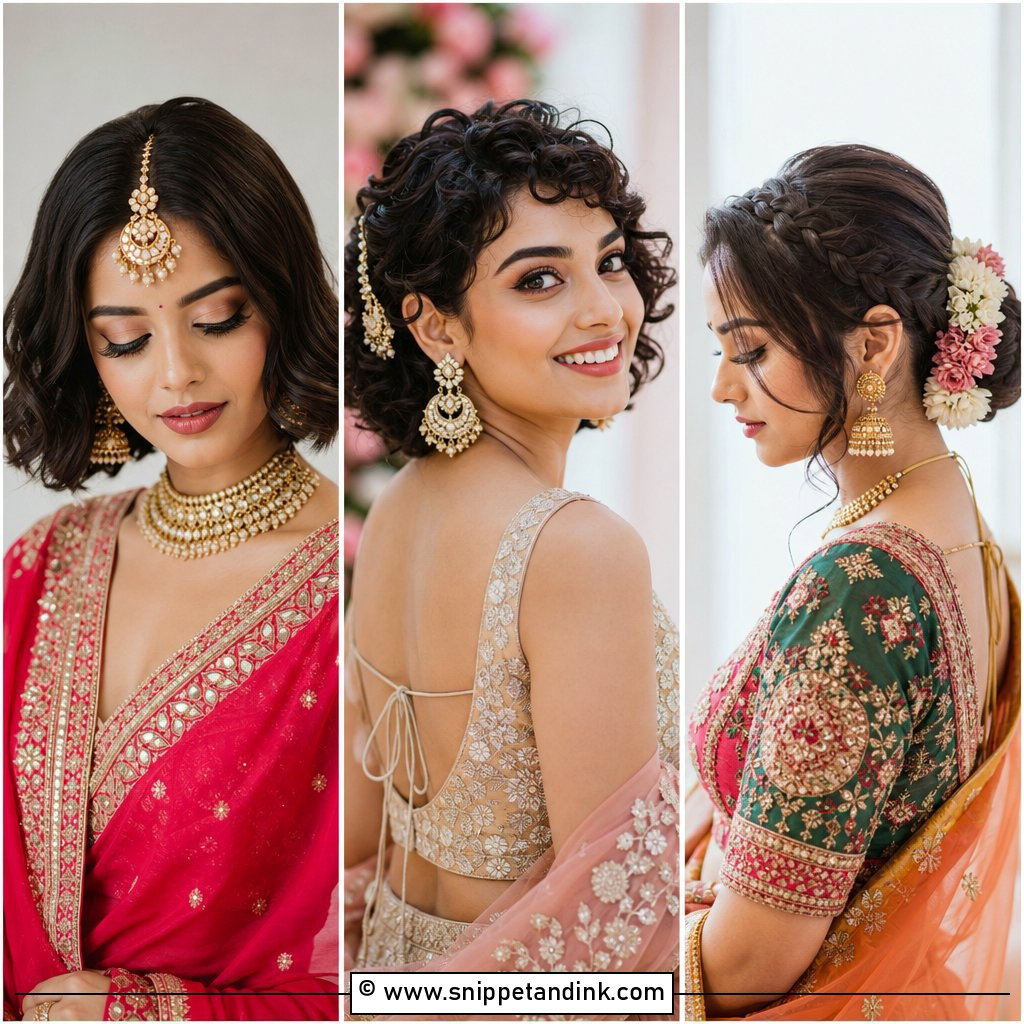
A bob with a maang tikka needs no extensions and very little chair time, which suits a bride who wants to look like herself. The weak point is the tikka chain. On a loose bob it slides with every turn of the head, so I hide a tiny braid or a pair of crossed bobby pins along the parting and hook the chain into that. Tuck one side behind the ear if your earrings deserve to be seen, and add some root lift at the crown so the shape doesn’t flatten next to heavy lehenga embroidery.
3. Indian Short Hair Bridal Waves With Passa
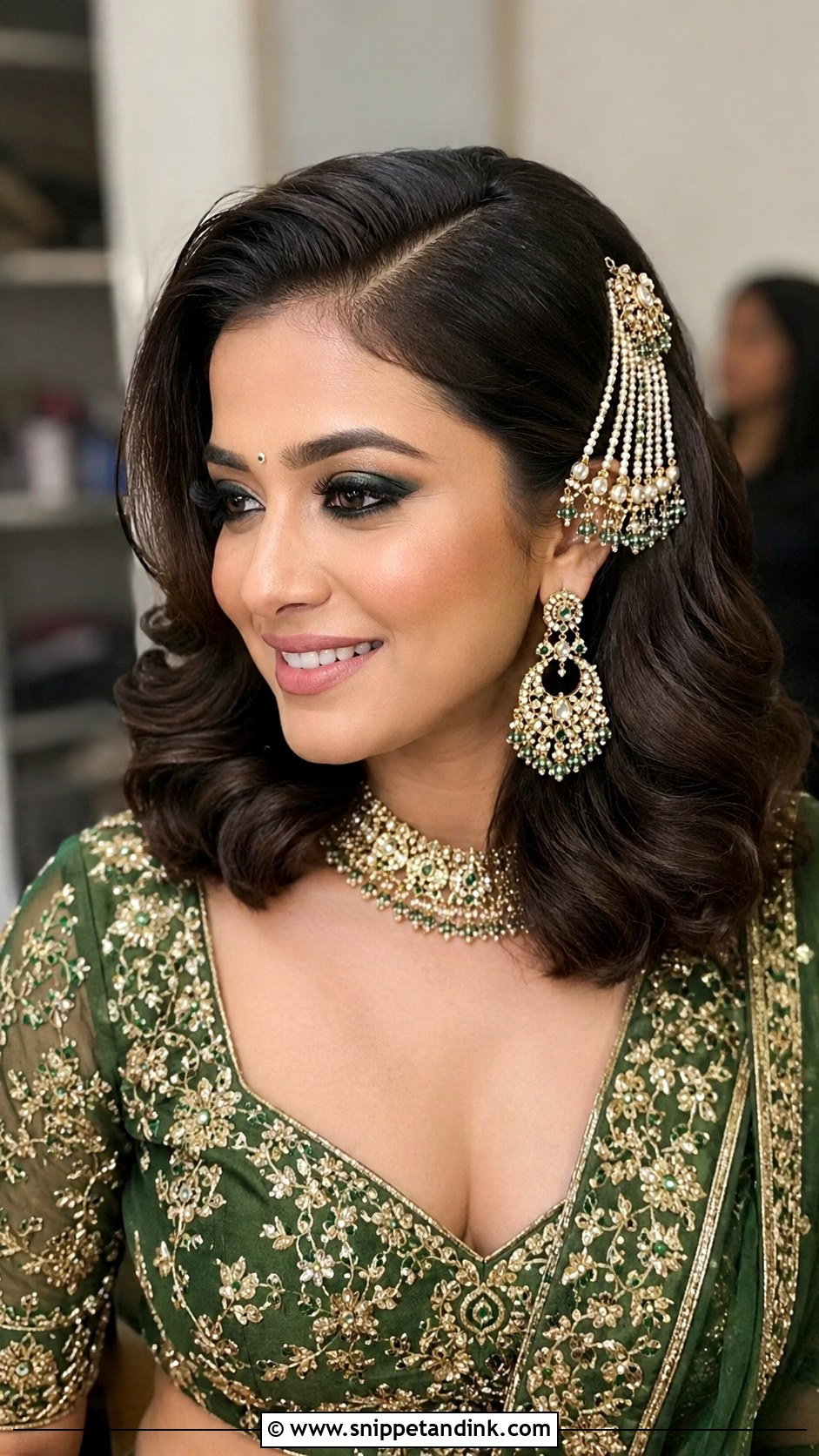
A passa is heavy for its size and pulls toward whichever side it sits on, so the waves underneath have to be set firmly. I wave from mid-length down, brush everything to one side, then anchor the passa into a hidden pin base above the ear rather than into the curls themselves. A deep side part reads more dramatic; a softer one is kinder to a round face. If a dupatta goes on the crown, pin it lightly so it doesn’t drag the passa down. Use a flexible spray only, because hard-hold spray makes short waves crack apart the moment you move.
4. Indian Short Hair Bridal Half Up Curls
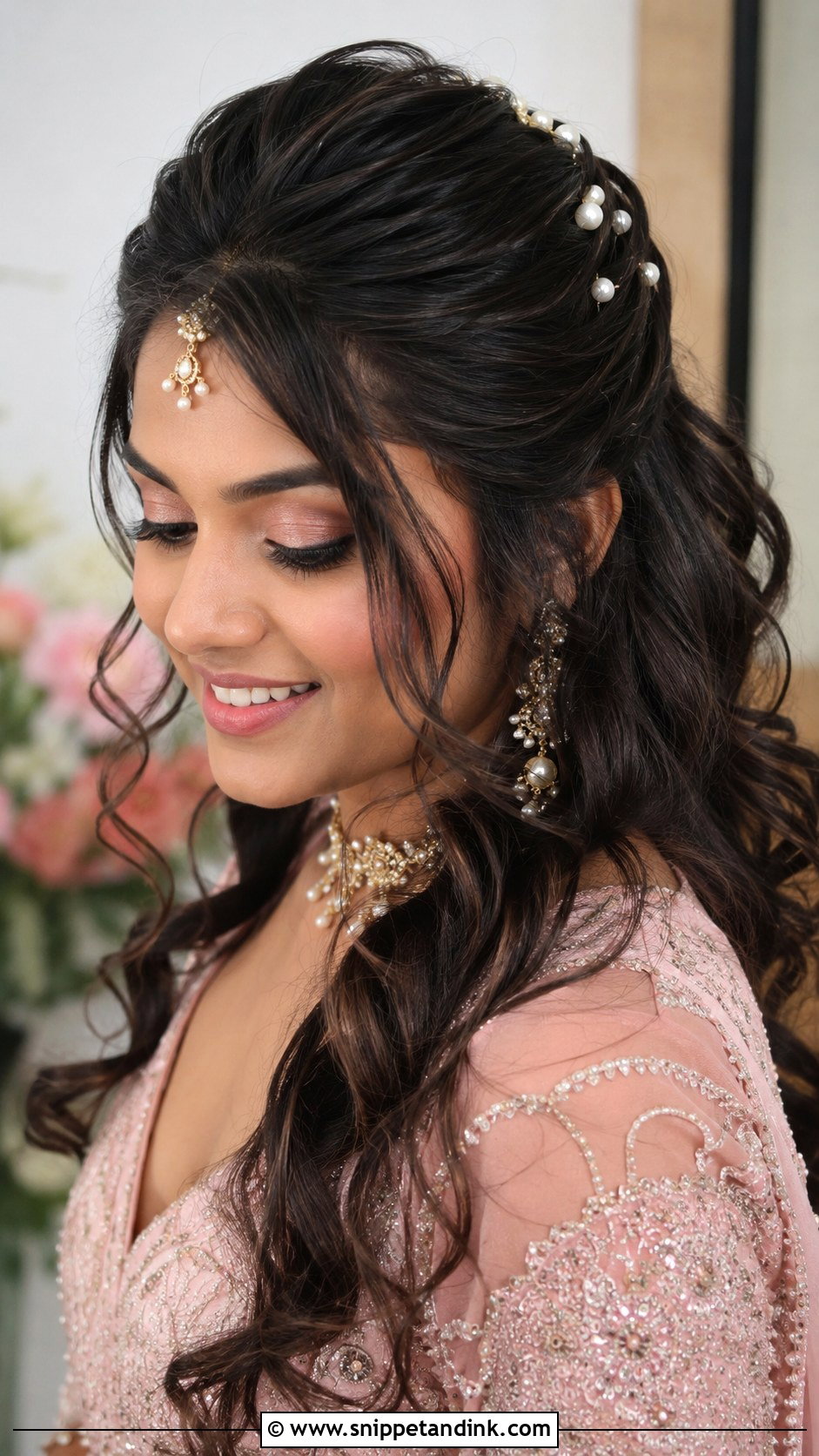
Lifting the top section is the quickest way to make a bob look fuller, and it’s what I suggest for mehendi or an engagement. The top is twisted and pinned at the crown, and the lengths below are curled in alternating directions so they don’t clump into one roll. Short layers love to escape a pinned section by evening, so I set those pins in an X before adding a maang tikka or small flowers. Ask for brushed-out curls rather than tight ringlets. They read as hair in photos, not as product.
5. Indian Short Hair Bridal Pixie With Hair Jewelry
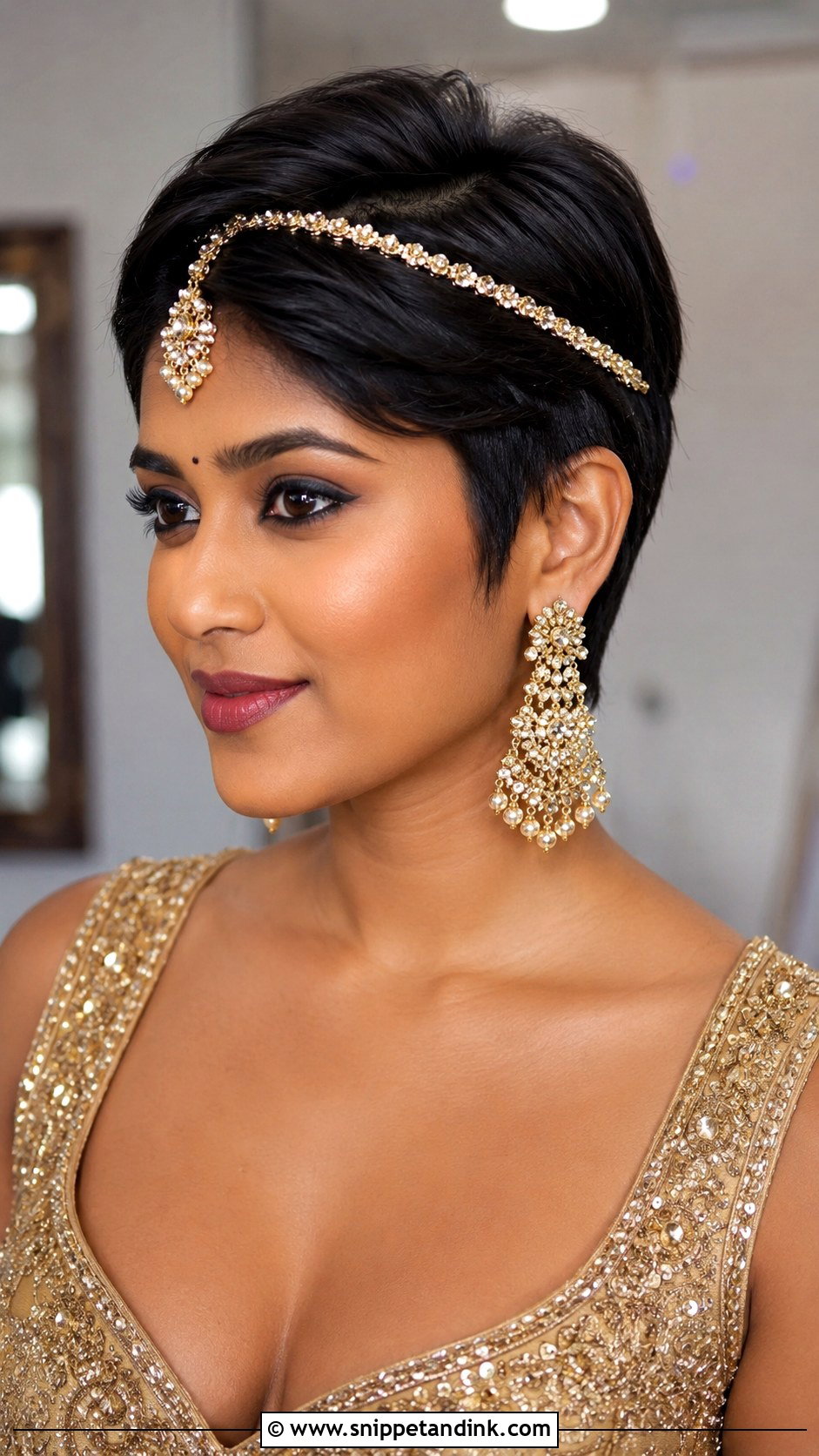
A bridal pixie cut leaves nowhere to hide pins, so the jewelry has to be chosen around the cut rather than the other way round. A matha patti with a flexible chain or a jeweled headband sits well on a pixie. A heavy passa usually doesn’t, because there’s no hair above the ear to anchor it. I style the top with lift and keep the sides close to the head. For a veil or dupatta, I fix a small comb behind the crown first and attach the fabric to that, since pins slide straight out of very short hair.
6. Indian Short Hair Bridal Side Swept Curls
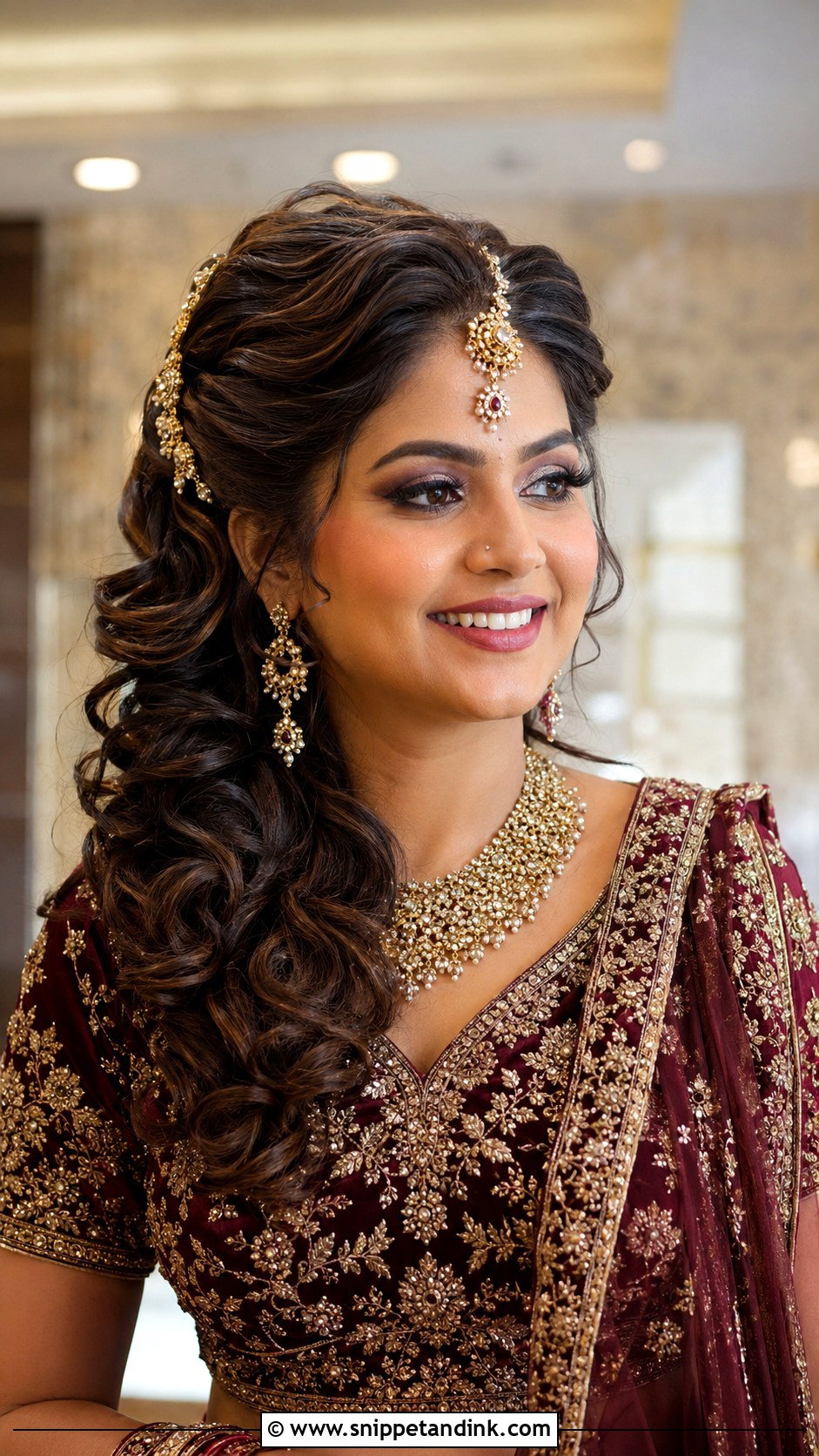
Sweeping every curl to one side doubles the volume there, which is how a chin-length cut suddenly looks full enough for a reception. I curl everything away from the face in one direction, brush it through and pin it behind one ear, with the pins hidden under the top layer. The open side leaves room for a statement earring or a bold necklace. Use a light mousse at the roots instead of a heavy cream; short curls weighed down with product drop fast once the dancing starts.
7. Indian Short Hair Bridal Faux Bun
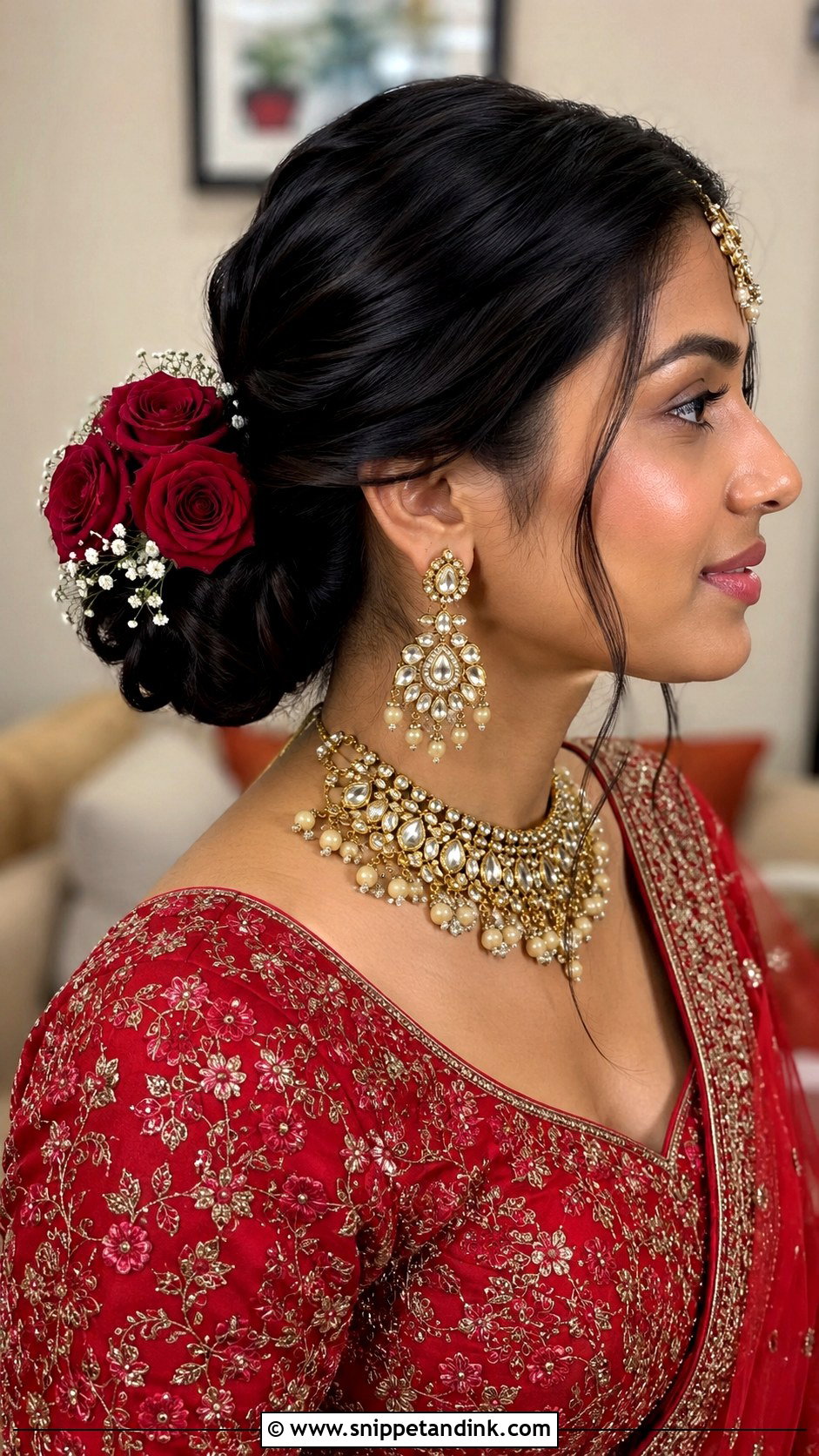
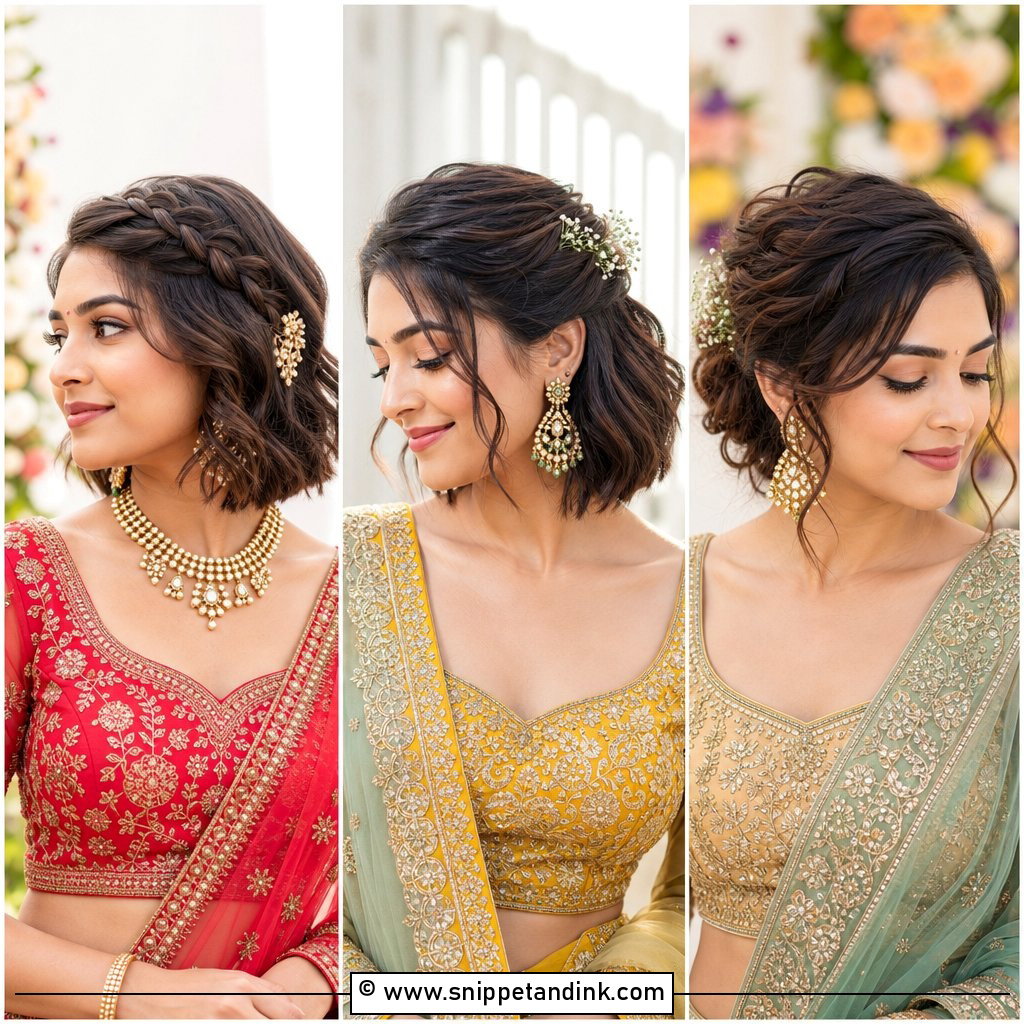
A faux bun gives you the full bridal silhouette when your hair simply won’t reach a real one. Your own hair is smoothed back and pinned around a small padding or a clip-in bun piece, and I always color-match that piece in daylight, because jet black and soft black look different under flash. Once flowers or a bun accessory go on, the join disappears. For the pheras this is the steadiest base I know, since the dupatta can be pinned into the hairpiece instead of your own fine ends. Decide the parting at the trial: center for classic, side for softer, a small puff if you want height.
8. Indian Short Hair Bridal Crown Braid
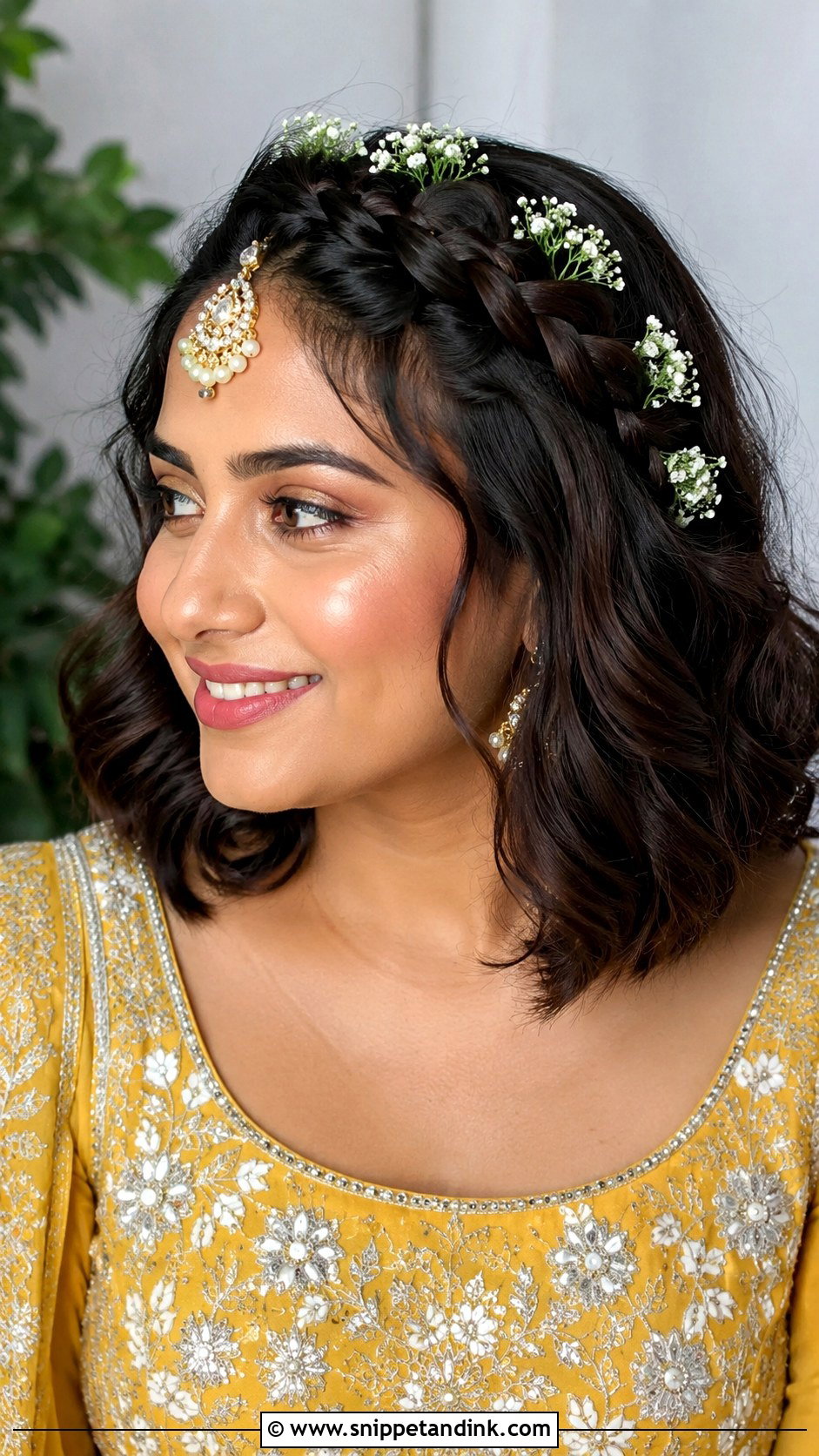
Braiding along the hairline gives short hair a festive detail without needing any length down the back. I start near the parting, carry the braid across the crown and pin the tail into the rest of the hair, then curl or tuck what’s left. A bob shorter than the jaw needs a few layers long enough to cross over, or the braid unravels at the back. It keeps hair out of your face through haldi games and dancing, and pearl pins or tiny flowers slot neatly into the braid’s loops.
9. Indian Short Hair Bridal Sleek Bob
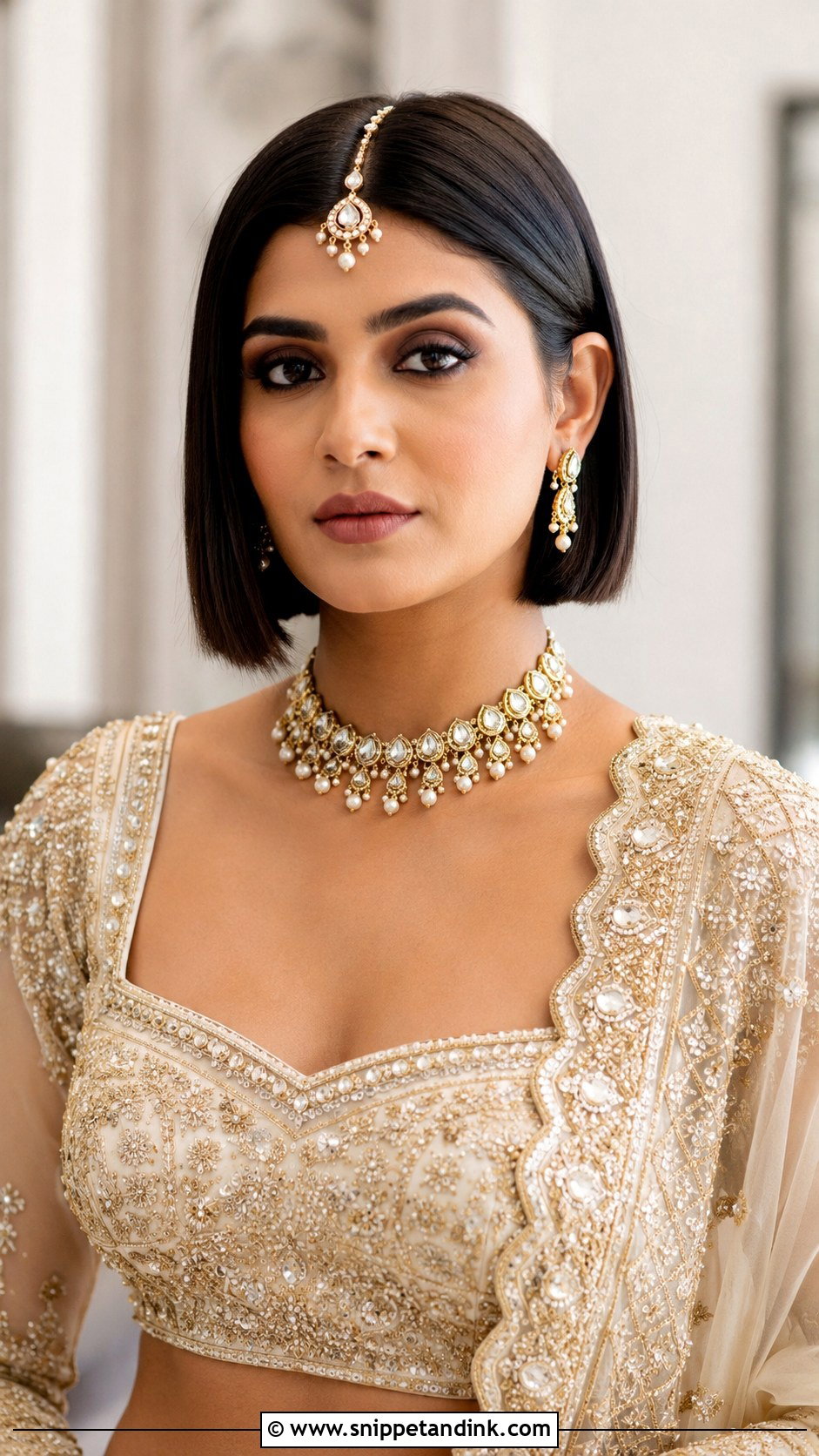
A sleek bob shows every flyaway, so the real work happens before the flat iron comes out. I blow-dry it straight with a paddle brush and smoothing cream, press the ends under at the jaw or shoulder, and set a sharp middle or side part. One maang tikka or jeweled clip makes it bridal; more than that and the clean line is lost. In humid weather this is the first style to frizz, so carry blotting papers and a small anti-frizz balm in your touch-up pouch.
10. Indian Short Hair Bridal Messy Low Bun
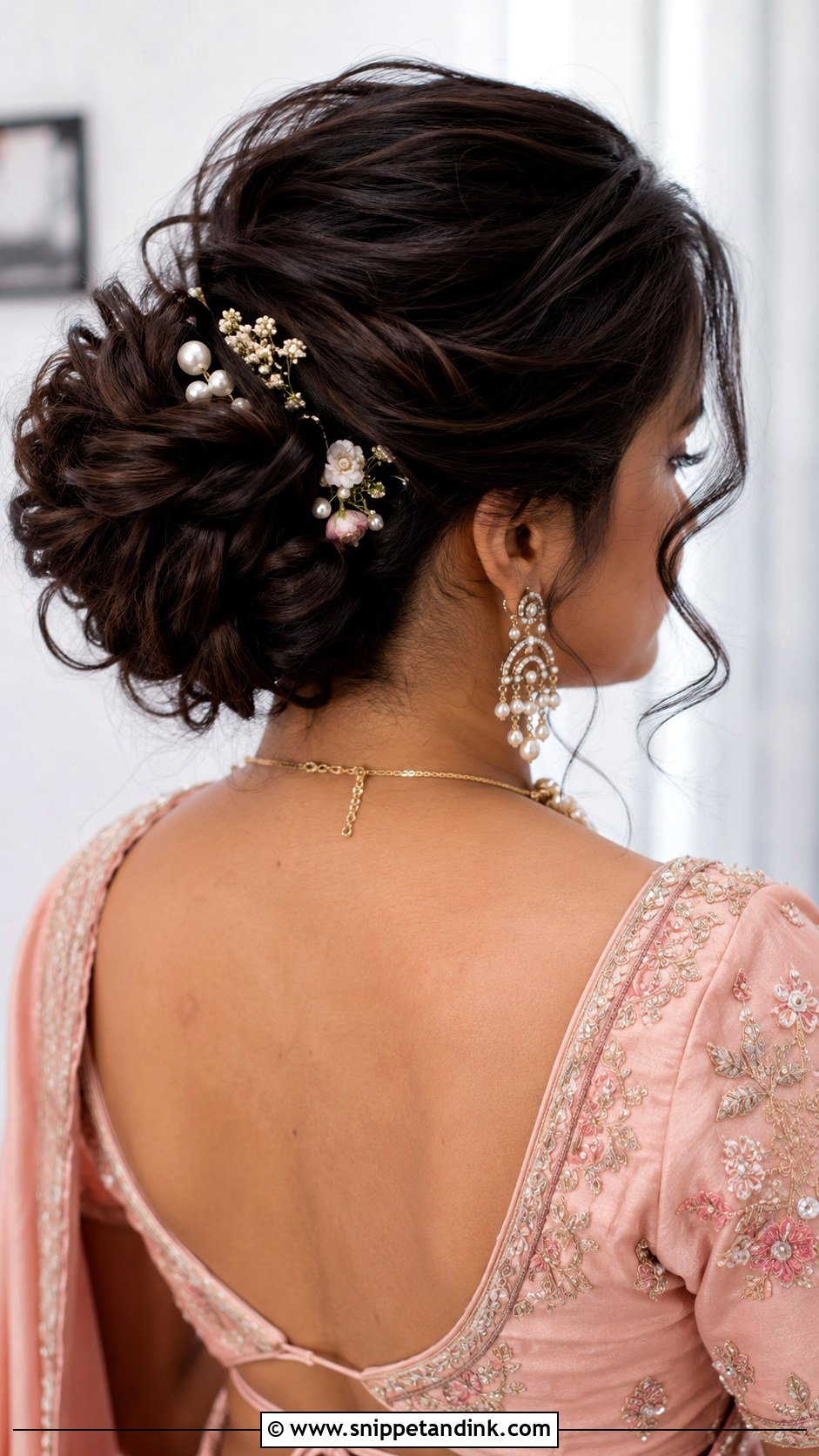
A messy low bun only looks relaxed. The pinning underneath is just as firm as on a polished one. I curl the hair first, gather it loosely at the nape and pin the curled pieces into a small textured knot, leaving a few strands loose at the cheeks. Layered short hair is easiest here, because the shorter layers blend into the texture instead of poking out. Baby’s breath or gold pins make it festive. Those face-framing strands go limp in heat by evening, so I set them with light spray and suggest a mini curling wand in your kit.
11. Indian Short Hair Bridal Open Curls
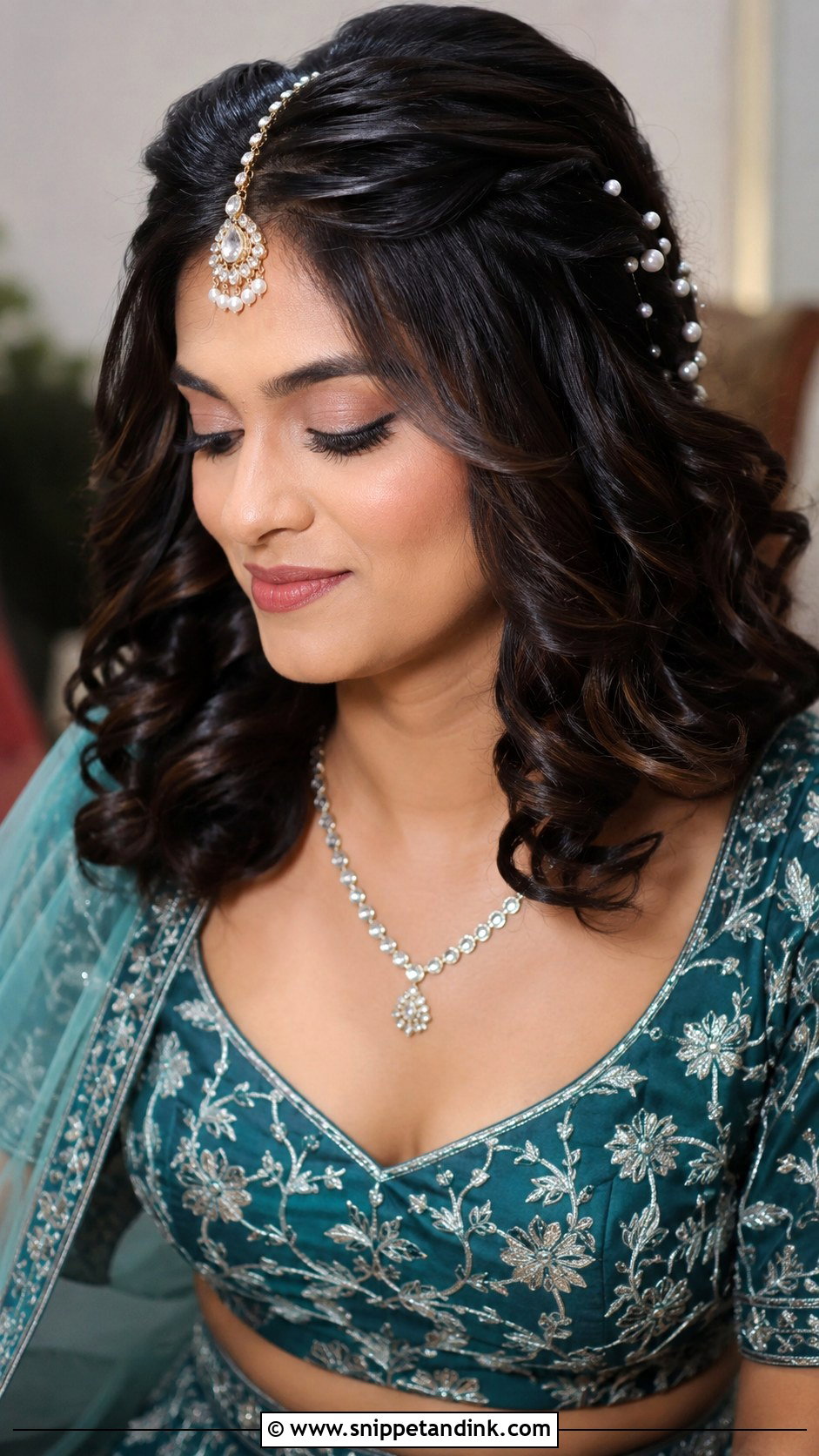
Open curls are the simplest route for Indian brides with short hair who don’t want an updo at all, and shoulder-length cuts, layered bobs and naturally curly hair all take them well. I lift at the roots and polish the ends so the curls look intentional, then add a maang tikka or floral pins. The catch is a pinned dupatta. On fully open hair it slides backward unless I build a small pin base at the crown first. Expect curls to relax noticeably over a long evening, so start them a little tighter than you want them.
12. Indian Short Hair Bridal Puff Bun
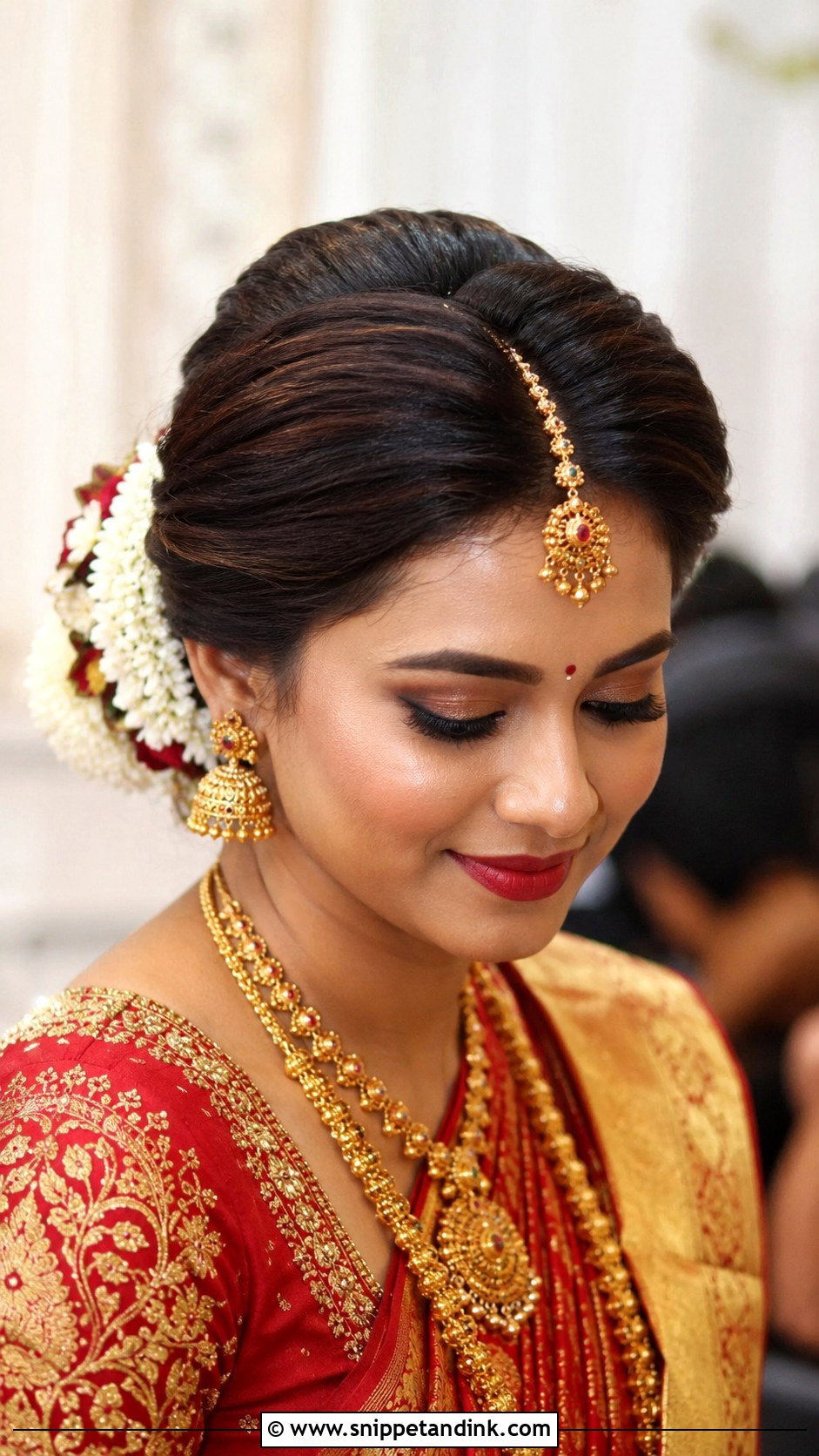
A puff is what gives a short-haired bride real height, and height balances heavy bridal jewelry. I backcomb the crown in small sections, smooth the top layer over it and pin the rest into a low bun or faux bun. That structure holds a matha patti, maang tikka and a full necklace set without the look tipping into top-heavy. It also lengthens a round face on camera. Keep the puff soft; a rigid dome dates the look instantly.
13. Indian Short Hair Bridal Finger Waves
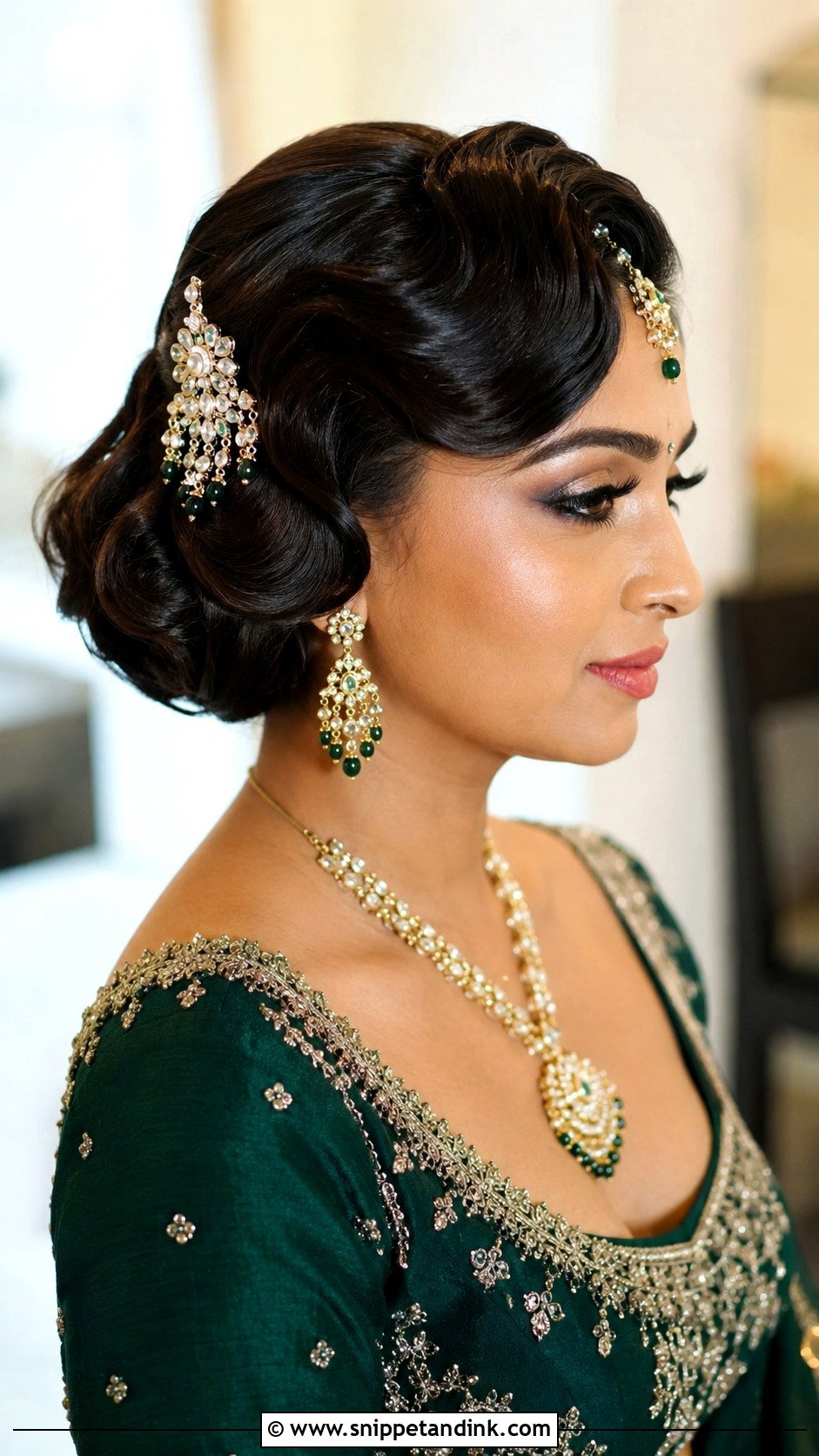
Finger waves need hair that sits close to the head, so I only recommend them on pixies, cropped bobs and chin-length cuts. I set the S-shapes with a strong gel and a fine comb while the hair is damp, and then the hair has to dry completely before any shine goes on. Rushing that drying time is the usual reason finger waves collapse. A passa or jeweled clip ties the vintage shape back to Indian bridal styling, and the sculpted line wants bold earrings to balance it. I’d skip this one for an outdoor function in heavy humidity.
14. Indian Short Hair Bridal Floral Bun
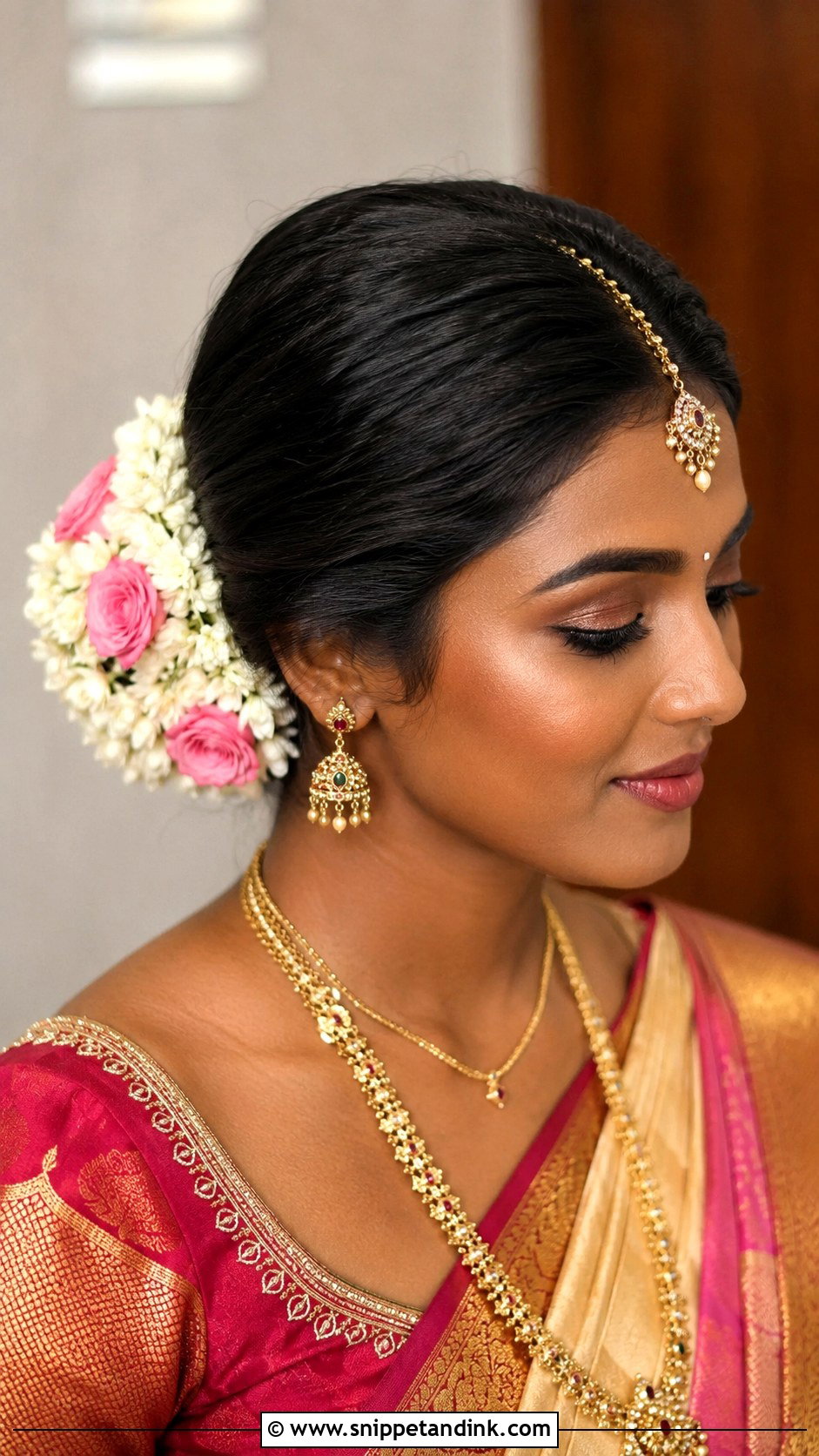
Flowers are the honest secret of a small bun: a ring of jasmine makes a short-hair bun read twice its size. I build the bun or faux bun first, then wrap the gajra and pin it at several points, because fresh flowers get heavier and slip as the day goes on. Jasmine gives a classic South Indian feel, while roses or mogra can be matched to the outfit. Keep the flowers in the fridge wrapped in damp paper until about an hour before styling, or they’ll brown at the edges before the ceremony even starts.
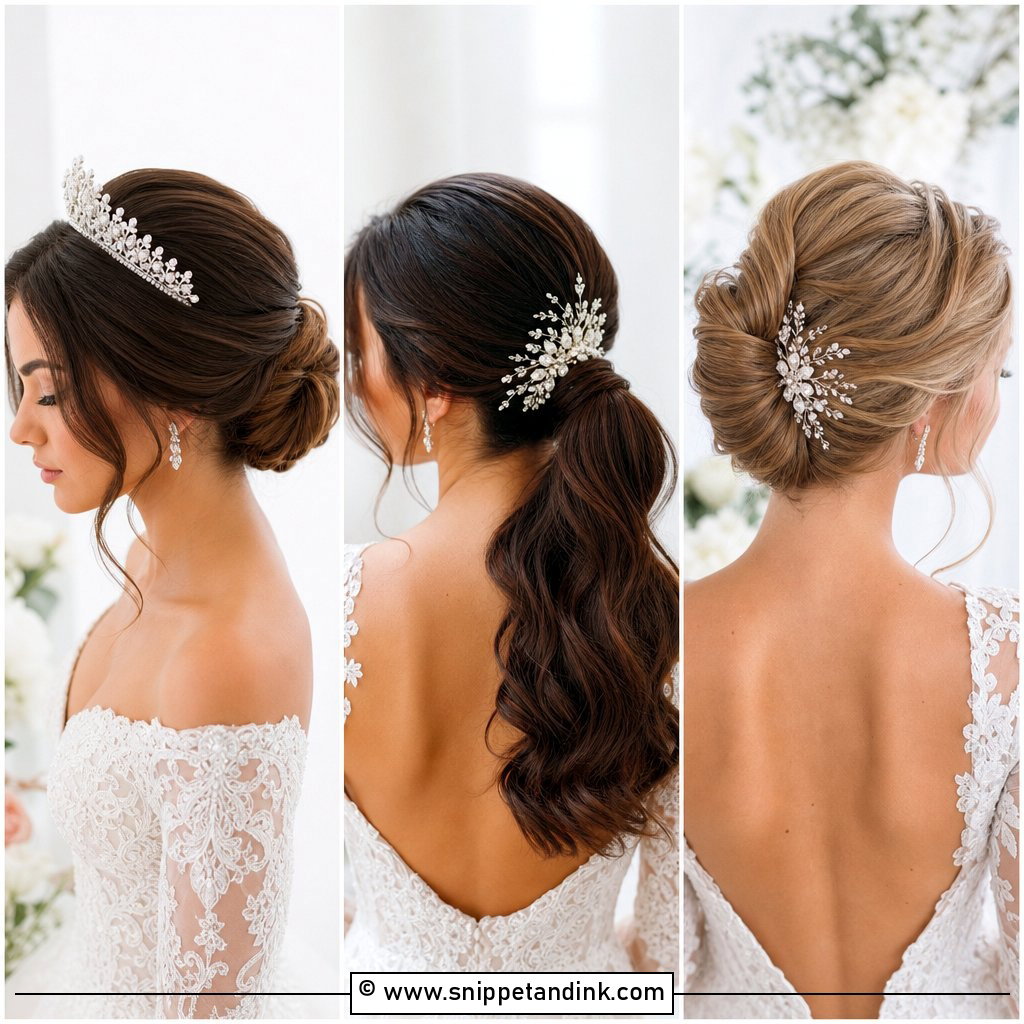
15. Indian Short Hair Bridal Twisted Updo
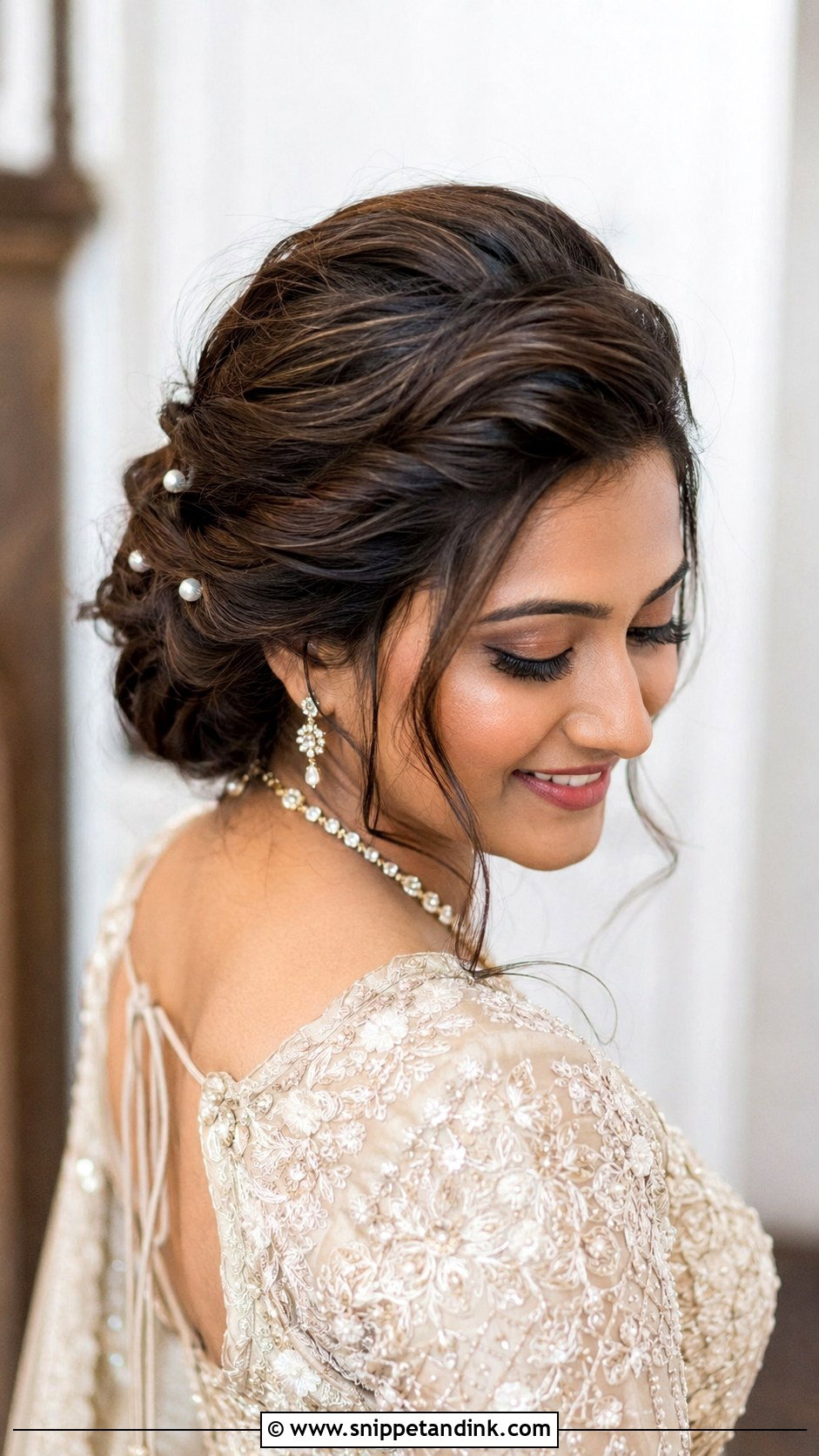
Twists hold short hair better than braids, because each small section only needs a few inches to lock in. I twist pieces from the sides and crown toward the nape and pin them into a low compact shape, which gives the look of more length and volume. Layered bobs tuck in easily. Very blunt bobs are harder, since every piece ends at the same point and the ends show. Pearl pins or gold clips between the twists add detail, and the style holds from an engagement right through the pheras, which helps if you’re getting ready once for several functions in a day.
16. Indian Short Hair Bridal Lob With Soft Waves
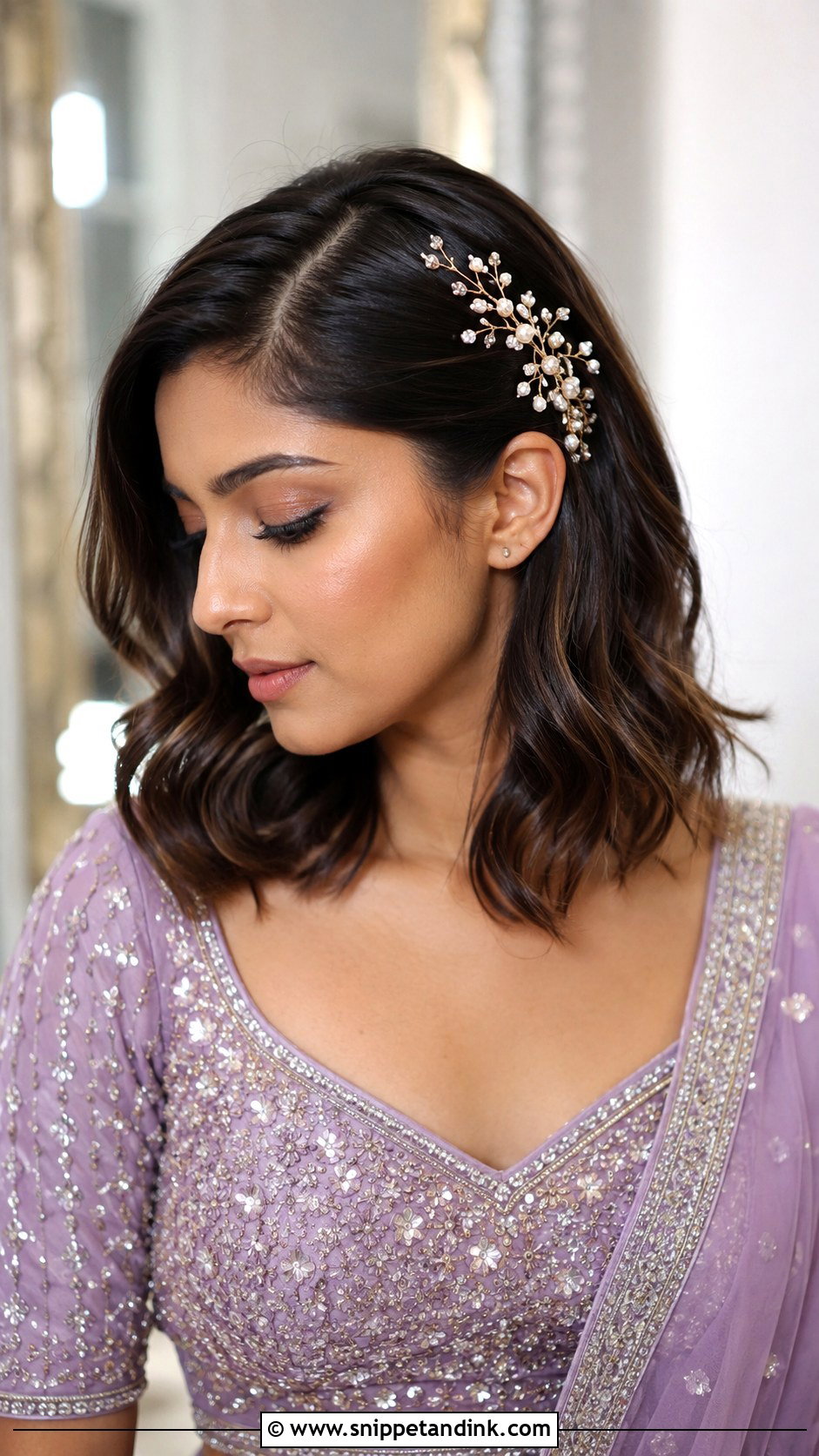
A lob, sitting between chin and collarbone, gives me enough length for movement and accessories without any extensions. I wave it loosely and leave the last inch straighter so it looks current, then add a maang tikka or a pearl vine on one side. It’s a good match for a reception, sangeet, or engagement ceremonies. With a heavily embroidered outfit, keep the waves loose; full curls plus heavy embroidery fight for attention. Waves on a lob drop faster than on a bob because of the extra weight, so I pin-set them while they cool.
17. Indian Short Hair Bridal Curly Bob
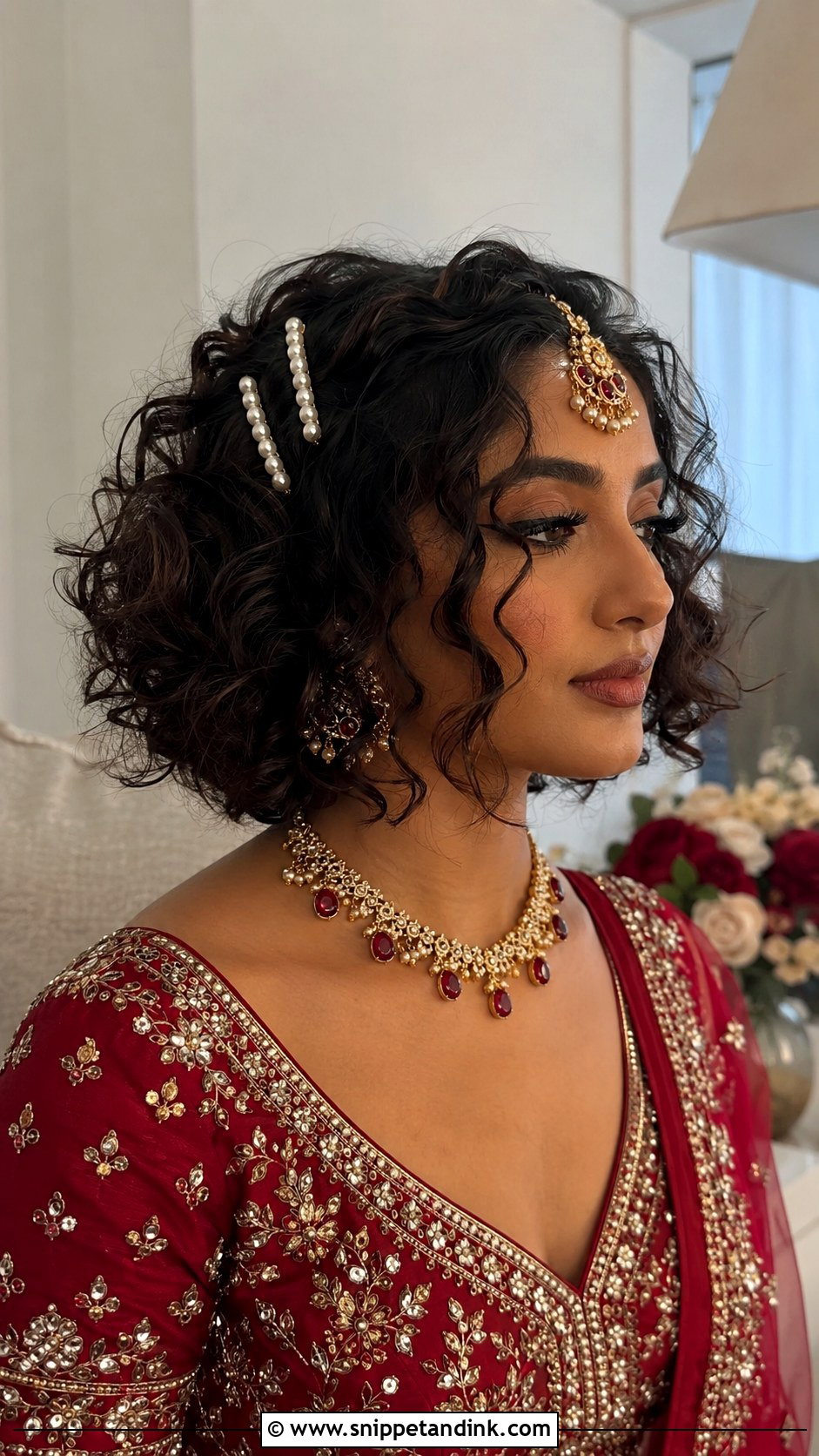
Natural curls are an asset on a short bride, and I would much rather define them than straighten them. I work curl cream and a light gel through damp hair, diffuse it, and pin one side slightly back so the shape stays controlled through a long event. Humidity protection matters most with this cut, because a curly bob can grow wider by the hour without it. A maang tikka or small flowers finish it. Never brush the curls once they’re dry; that creates frizz nobody can fix in the middle of the wedding.
18. Indian Short Hair Bridal Braided Bob
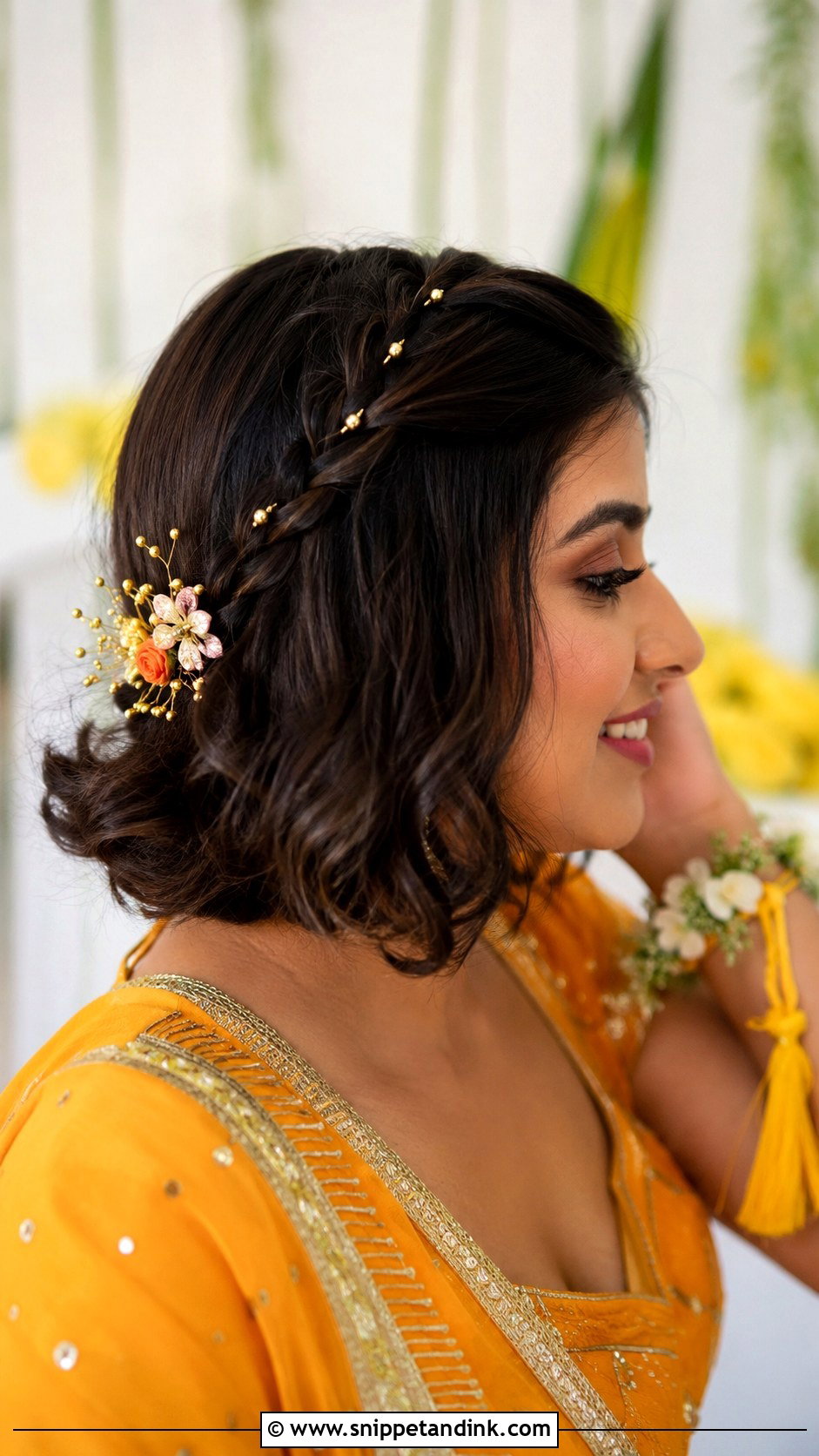
A braid running along one side or across the crown is the most practical fix for a bob that’s growing out. It catches the shorter face pieces that would otherwise fall forward during rituals. The rest can stay curled or smooth depending on the function, and it’s playful enough for mehendi and haldi. Small flowers or gold beads hold better woven into a braid than pinned into loose hair, because the braid grips them.
19. Indian Short Hair Bridal Side Bun
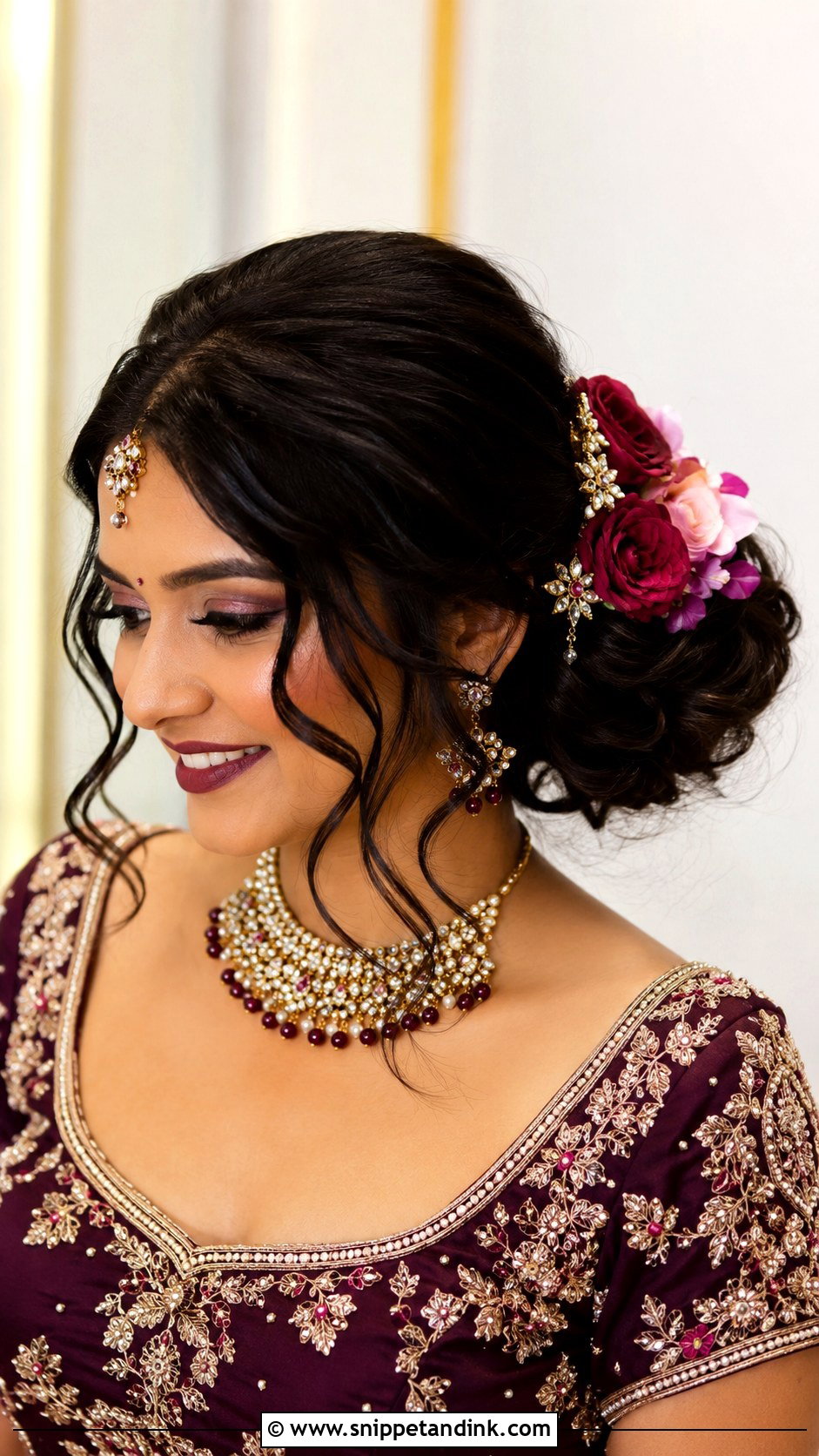
A side bun sits where the camera can see it, which makes it far more visible in front-facing photos than a bun hidden at the nape. I gather the hair low near one side, pin it into a compact bun or faux bun, then wave the front to frame the face. It pairs well with a side-draped dupatta. Check the balance at your trial: with the bun on one side, I put the passa or the heavier earring on the other so the whole look doesn’t tip. A side part softens it, and a middle part keeps it classic.
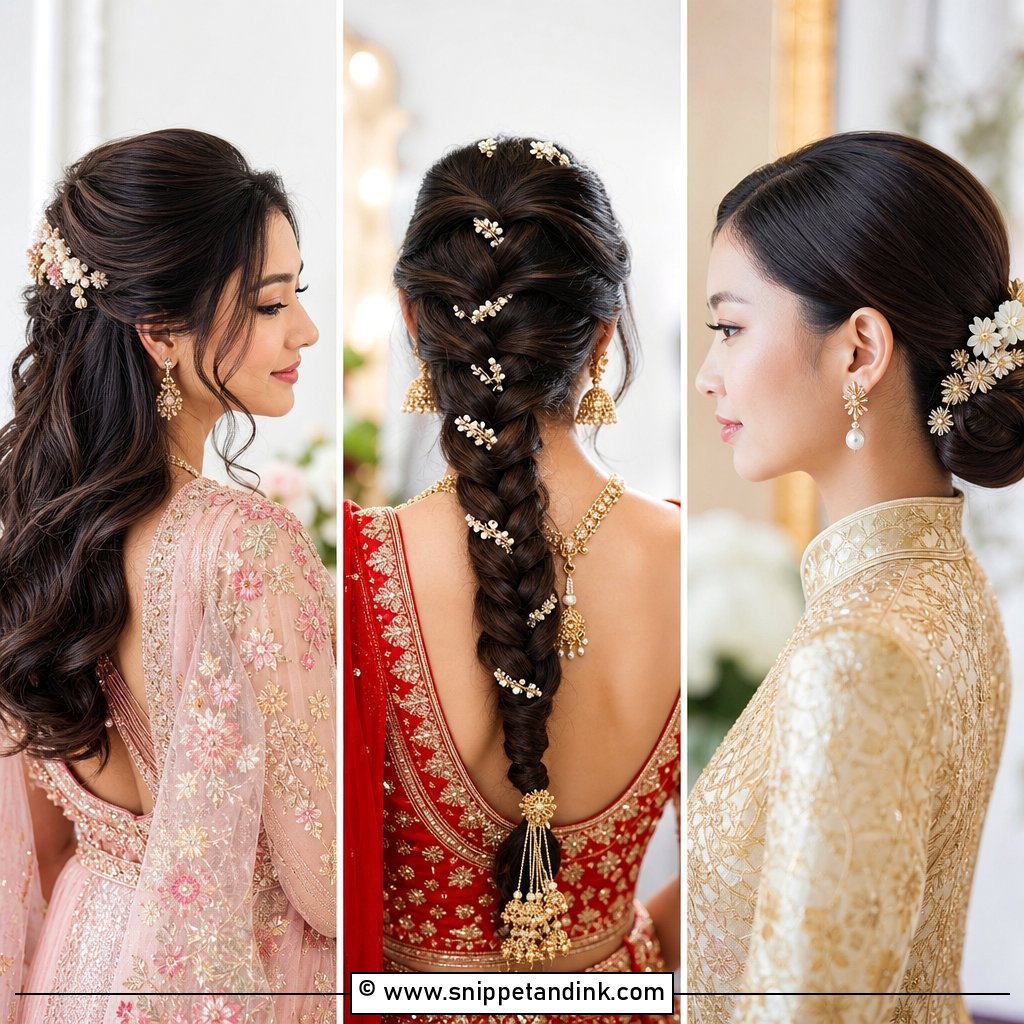
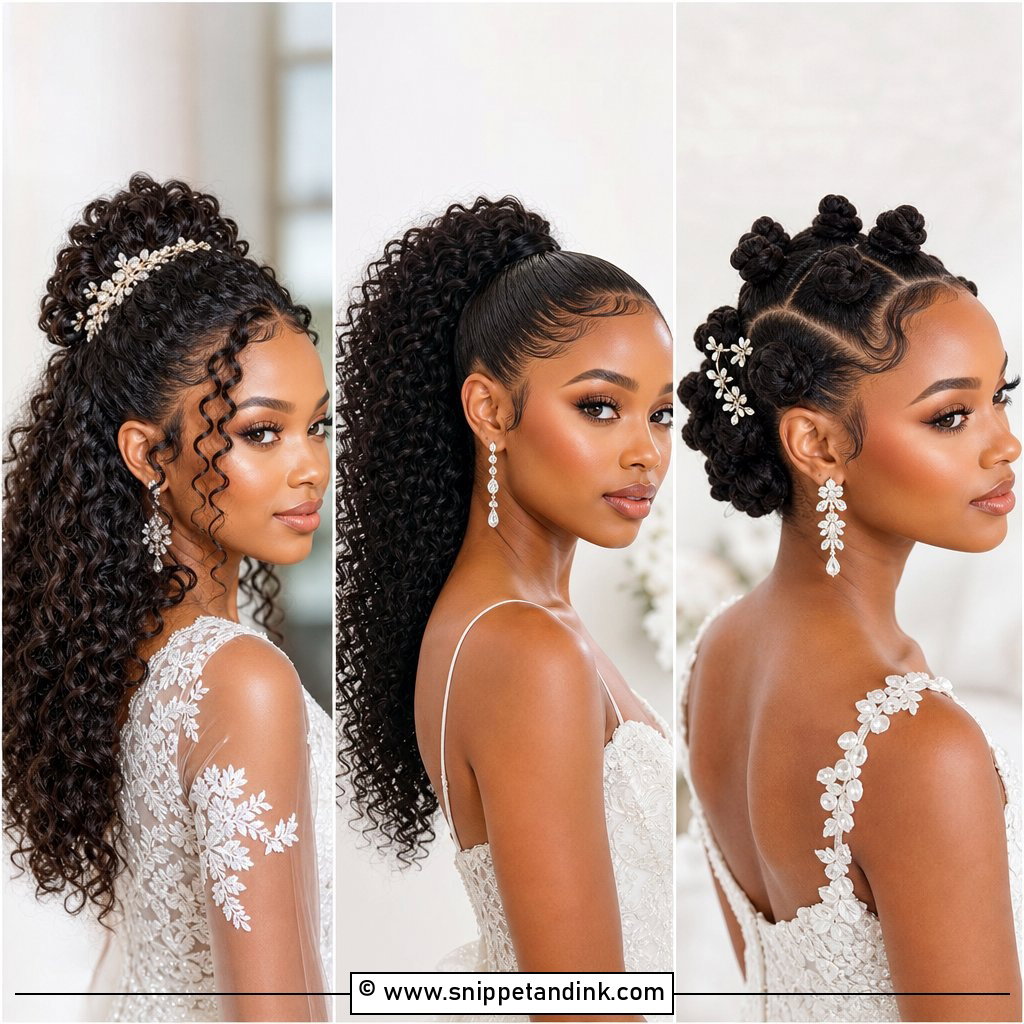
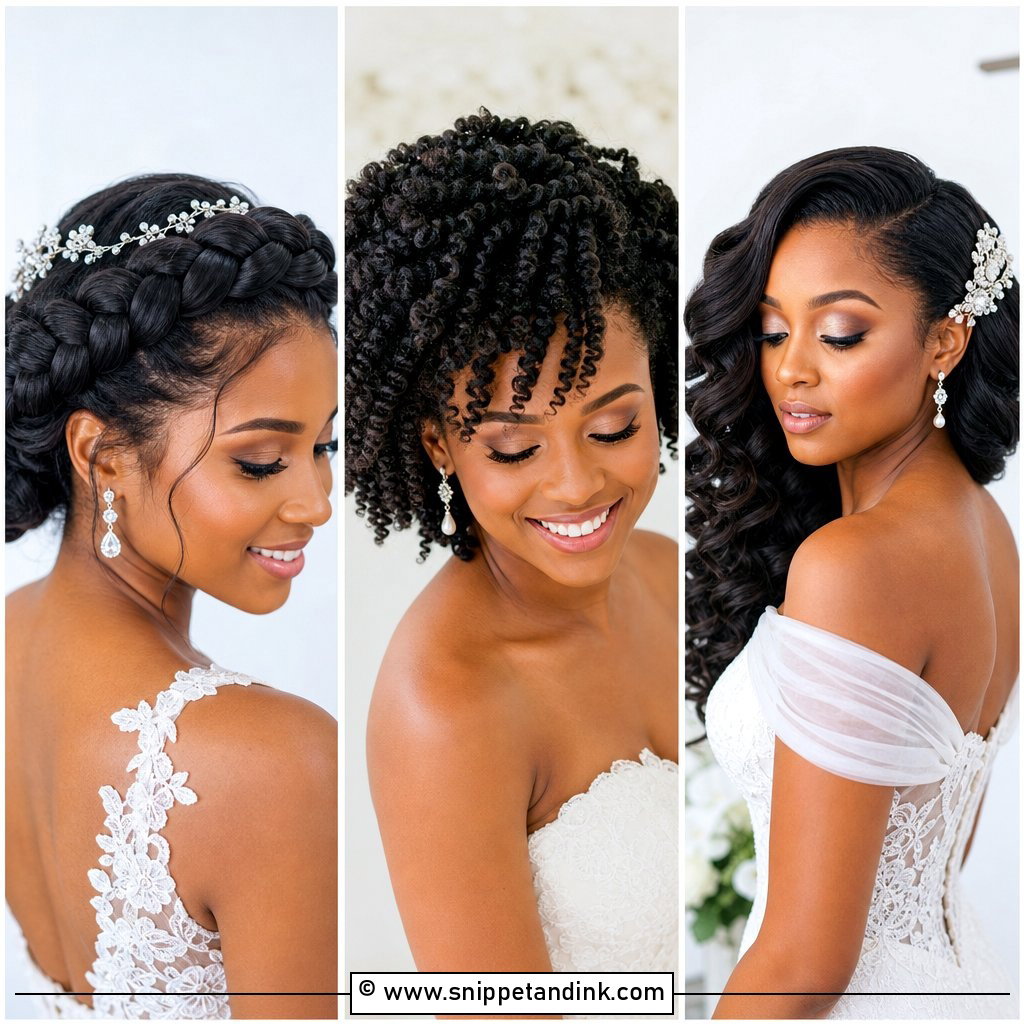
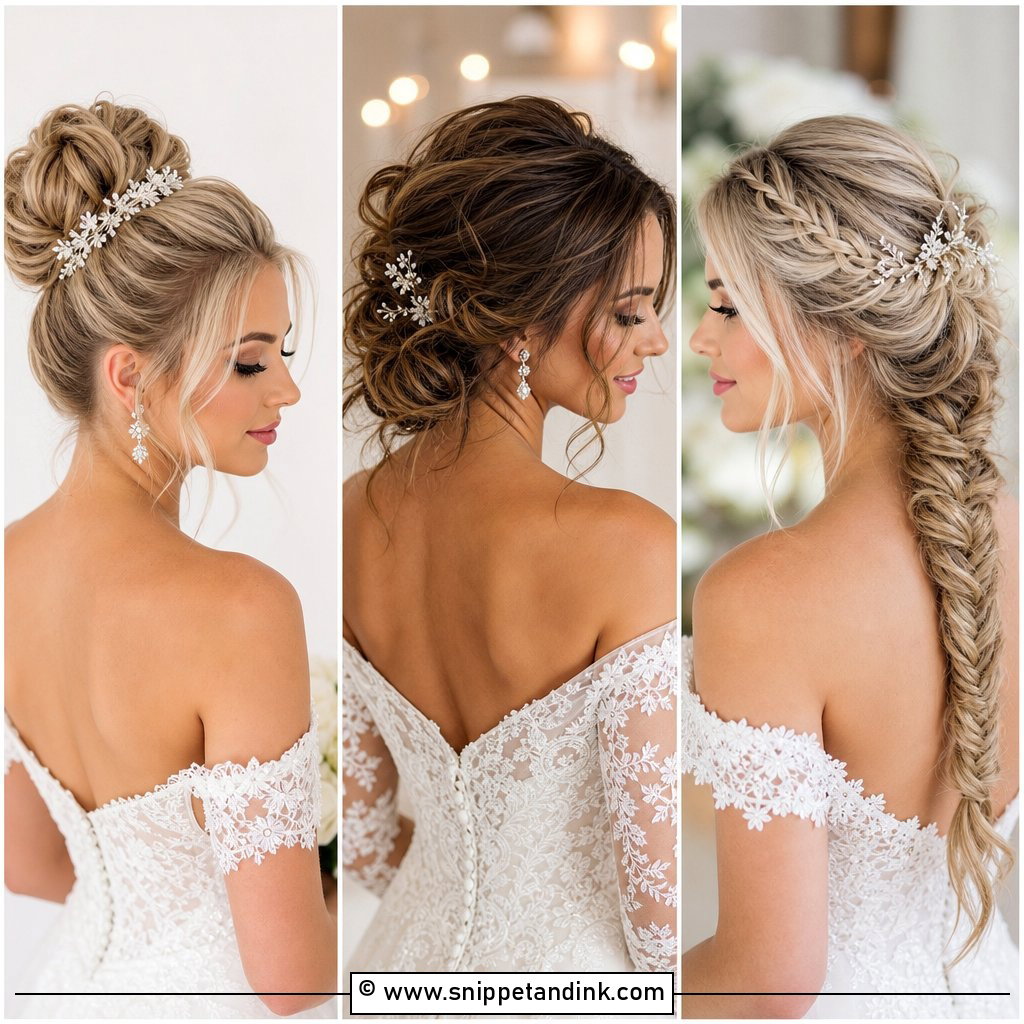
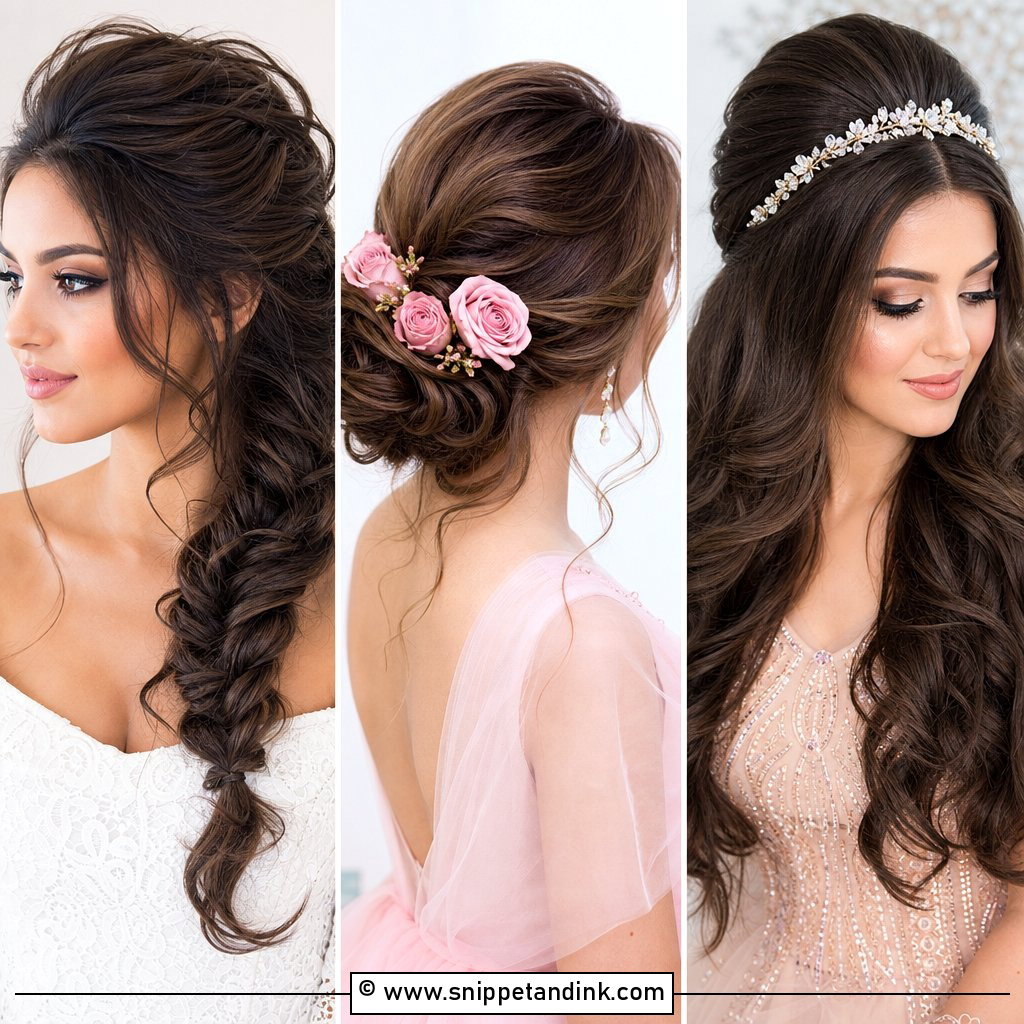
20. Indian Short Hair Bridal Headband Hairstyle
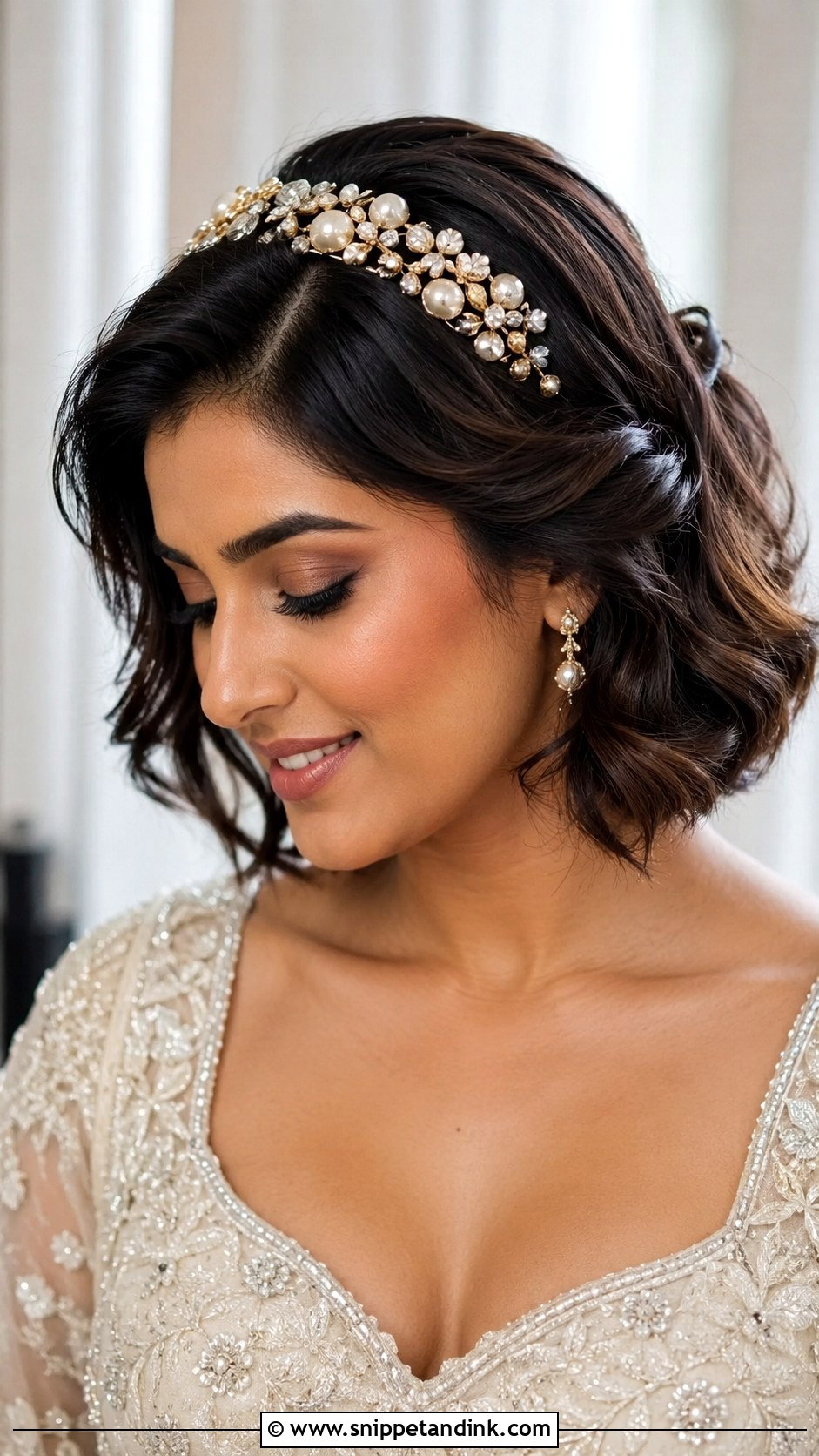
A headband gives a short cut structure with very little technique, which makes it my fallback for a bride who wants minimal chair time. Style the hair in waves, a sleek bob or a mini updo, then add a jeweled or floral band. Pixies, bobs and lobs all take it. The thing to test is pressure. A rigid metal band can give you a headache behind the ears after a few hours, so wear yours at home for an hour before the wedding and match its metal to your jewelry tone.
Trims, Wash Days and Heat Across a Week of Functions
A blunt bob shows grow-out quickly, so I’d book the last trim about two to three weeks before the wedding. That gives the ends time to soften and gives you time to fix a cut you don’t love. A trim the day before leaves harsh lines that hold curls badly.
Indian weddings stack several events back to back, and short hair can’t hide heat damage under length. Decide in advance which days get the heavy curling or straightening. Hair washed the night before usually holds pins better than hair washed that morning, so for many brides I’d plan the wash for the evening before the main ceremony and keep mehendi day for an easy braid or headband.
Undoing it all after the pheras
Remove the pins one at a time from the outside in, then work from the ends upward with a wide-tooth comb. Backcombing from a puff knots fast on short hair, so smooth conditioner through it before you wash. Keep an empty pouch for the pins; there will be more of them than you expect.
Your Bob Can Carry Every Function, Pheras Included
For the pheras, I’d lean toward a low bun, faux bun, floral bun or puff, since those give a dupatta something solid to hold. Receptions and sangeet nights allow more freedom, and a sleek bob, a wavy lob or a pixie with jewelry all suit an evening when you’re moving around. Curls, twists and braided bobs sit in between and work well for mehendi. Whatever you pick, bring the actual jewelry to your trial. Short hair leaves plenty of room for flowers and jewels; it just needs its anchors planned in advance.
You'll Like These Ideas:




Leave a Reply