
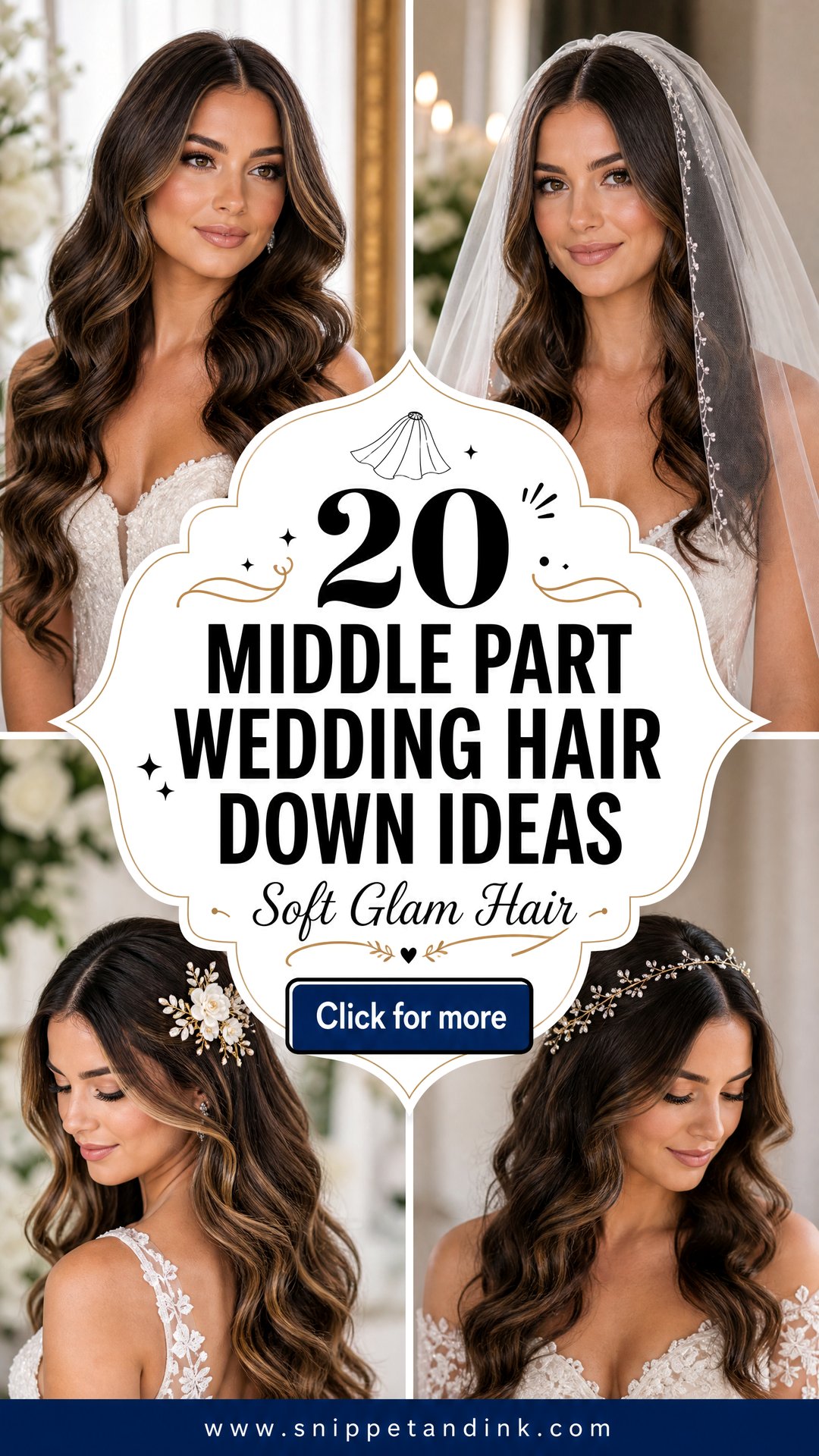
A middle part is the most honest parting there is. It shows the face exactly as it is, it splits the weight of the hair evenly, and it gives a veil or a pair of statement earrings a calm frame to sit in. Worn down, it also asks more of the prep than most brides expect, because loose hair has nothing pinning it in place for ten or twelve hours. The ideas below are the down styles I get asked for most with a center part, from glossy Hollywood bends to natural curls, with notes on what each one needs to last and who each one suits.
Is Your Natural Part Really in the Middle?
Before I curl anything, I find where the part wants to sit. Most people have a slightly crooked hairline, a cowlick at the front or a crown whorl that pushes hair to one side, and a part drawn with a ruler-straight comb fights all of it. I follow the bridge of the nose up with the tail comb, then check it in the mirror against the arch of each brow, not against the hairline.
If your hair has lived on a side part for years, it will try to flip back. Start wearing it center parted a few weeks before your trial so the roots learn the new direction. On the day, I blow-dry the roots across the part in both directions first, then lay them down where they belong. That small step stops the front from splitting or lifting into a little tent by the afternoon.
- A strong cowlick at the hairline usually means the part sits a few millimetres off true center. That’s fine; nobody notices, and it lies flat.
- Very fine hair can show scalp along a sharp part. A zigzag drawn very slightly, or a tinted root powder, softens it.
- A round face often looks better with a part that is clean but not glossy-flat at the roots.
1. Middle Part Wedding Hair Down With Soft Waves
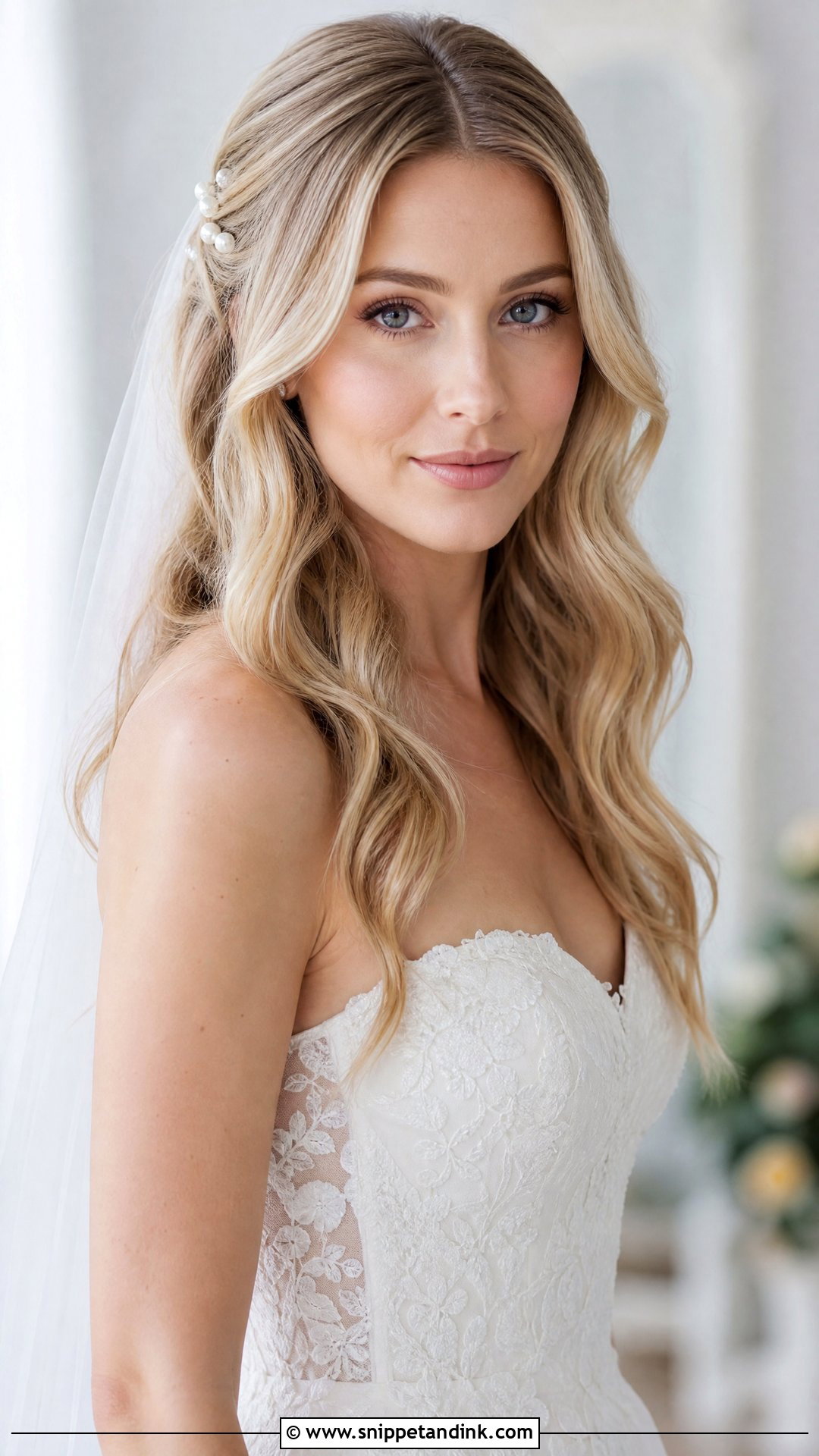
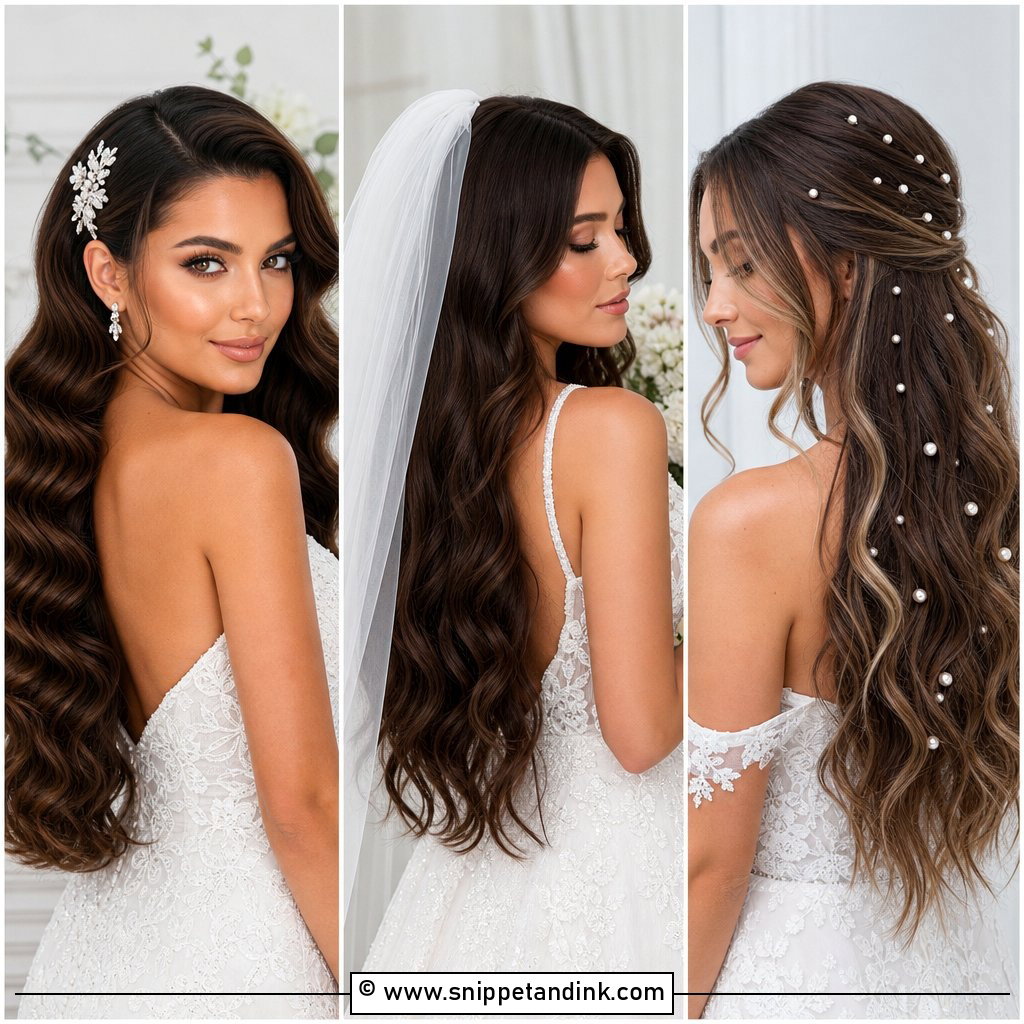
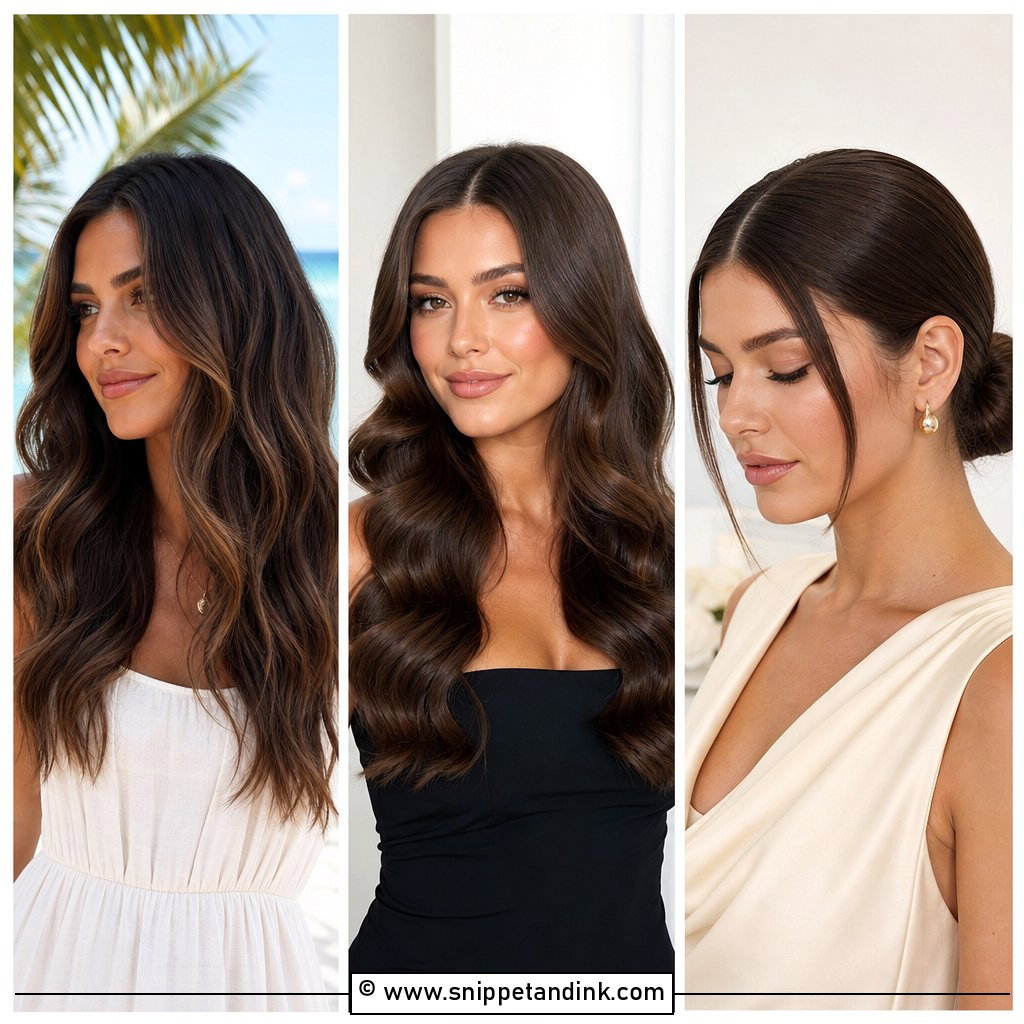
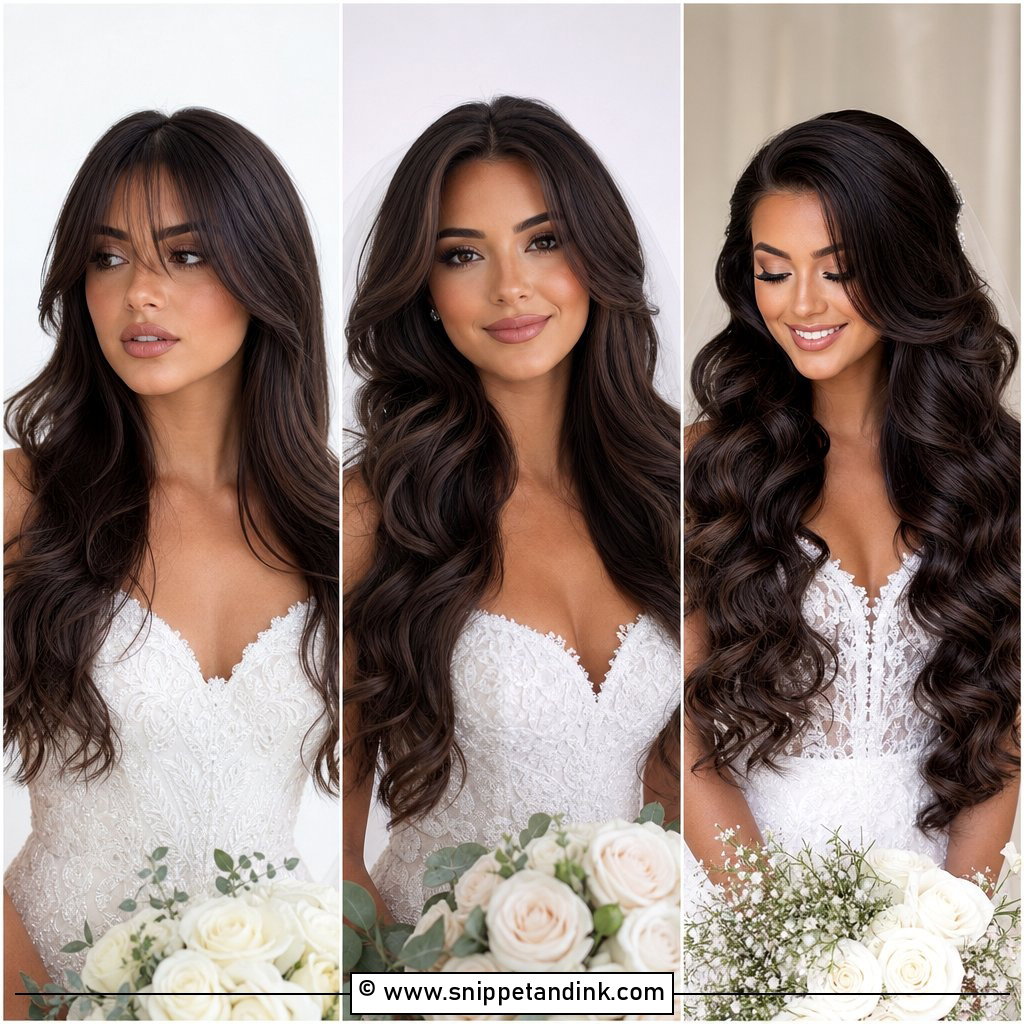
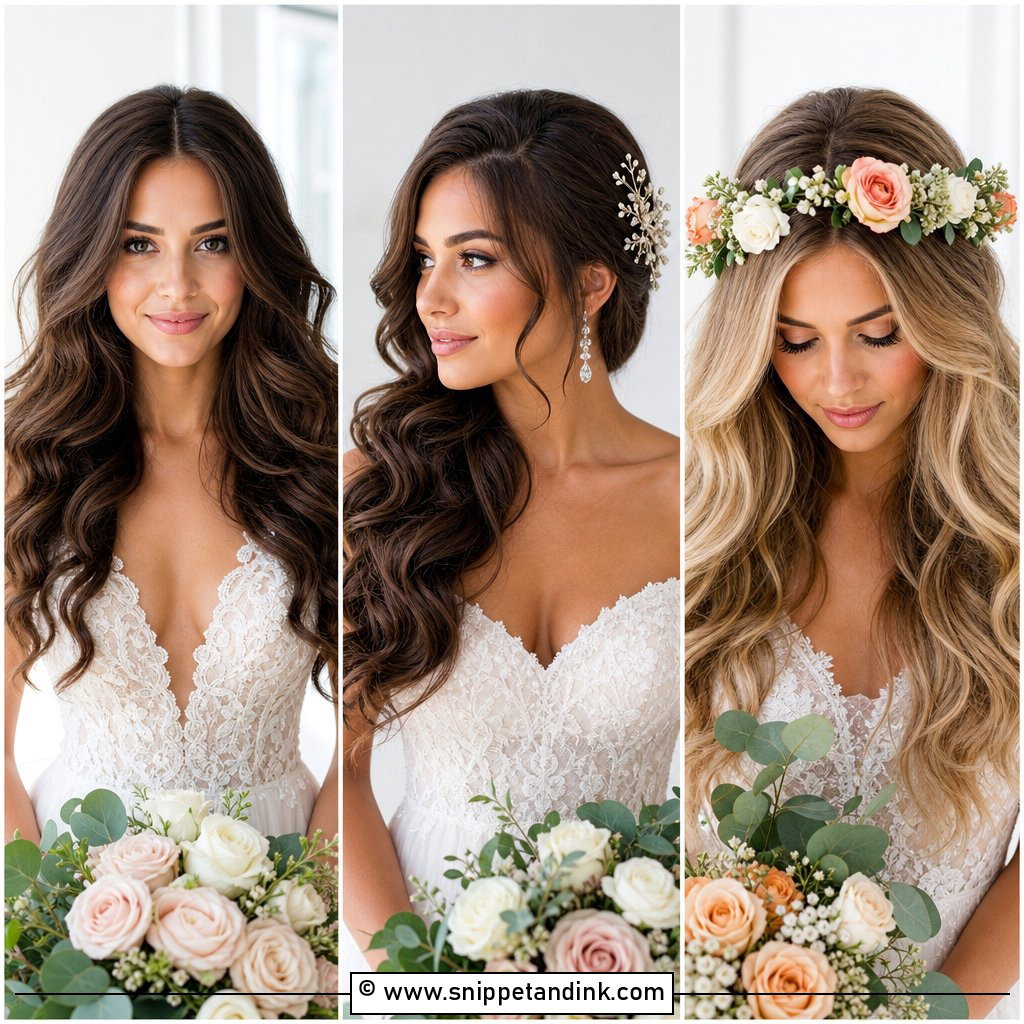
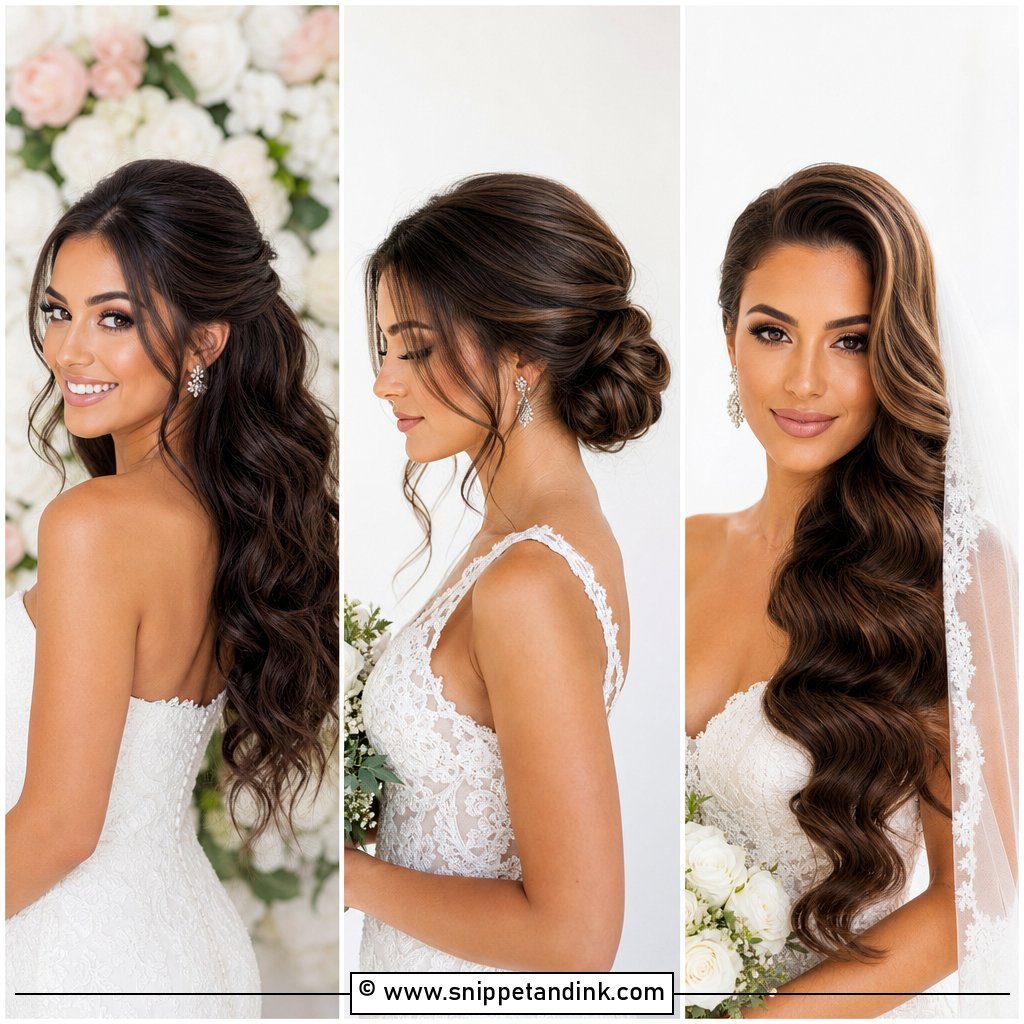
Soft waves are where most of my down-style brides land, and for good reason: they forgive a little humidity and still look intentional. I start the bend just below the cheekbone so the crown and part stay smooth, then brush the waves out once they have fully cooled. Fine hair gets a volumizing mousse at the roots before the blow-dry, otherwise the waves sit flat against the head by the first dance. A veil at the crown or a couple of small pearl pins tucked above one ear is all the decoration this needs.
2. Middle Part Wedding Hair Down With Hollywood Waves
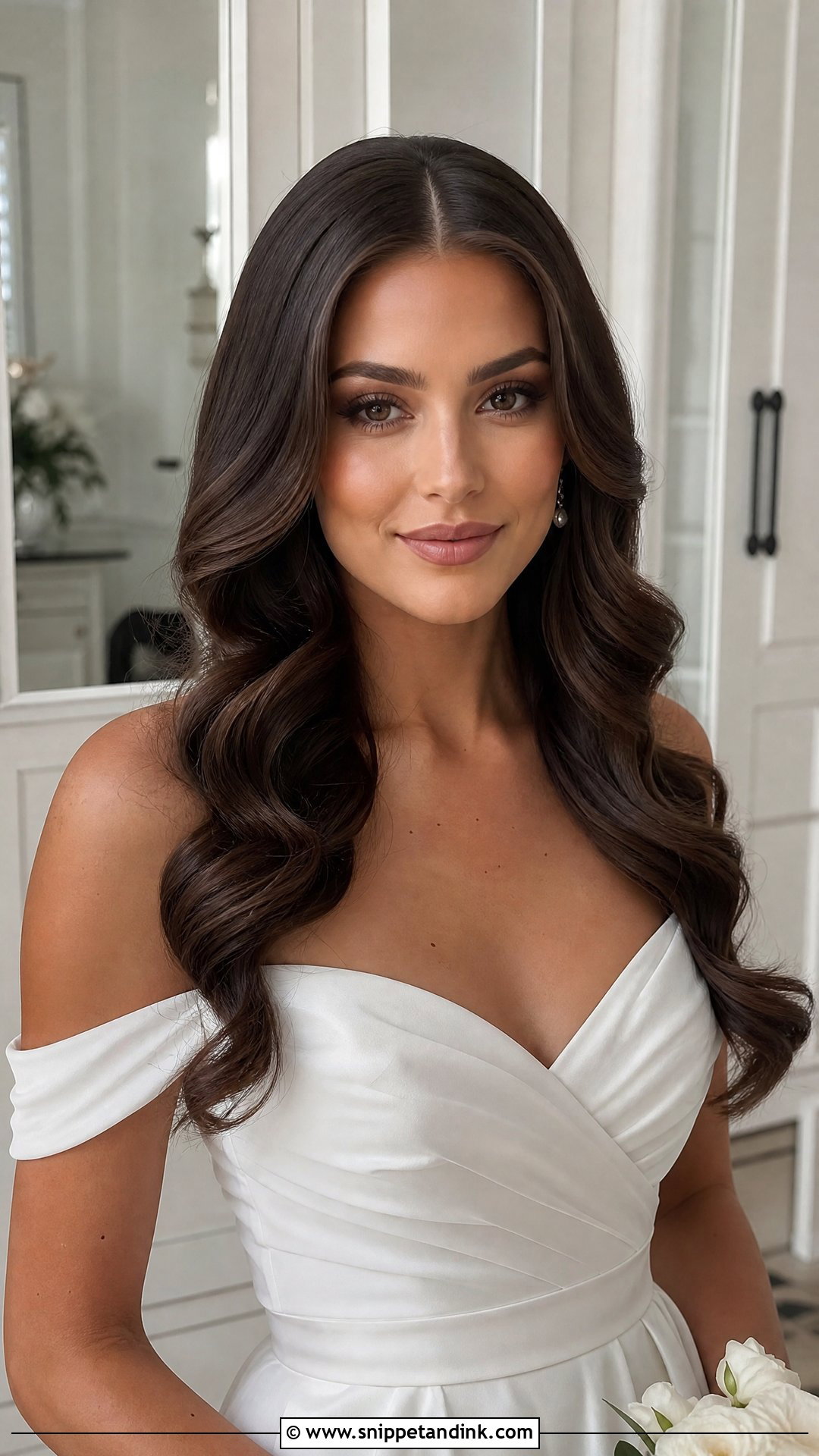
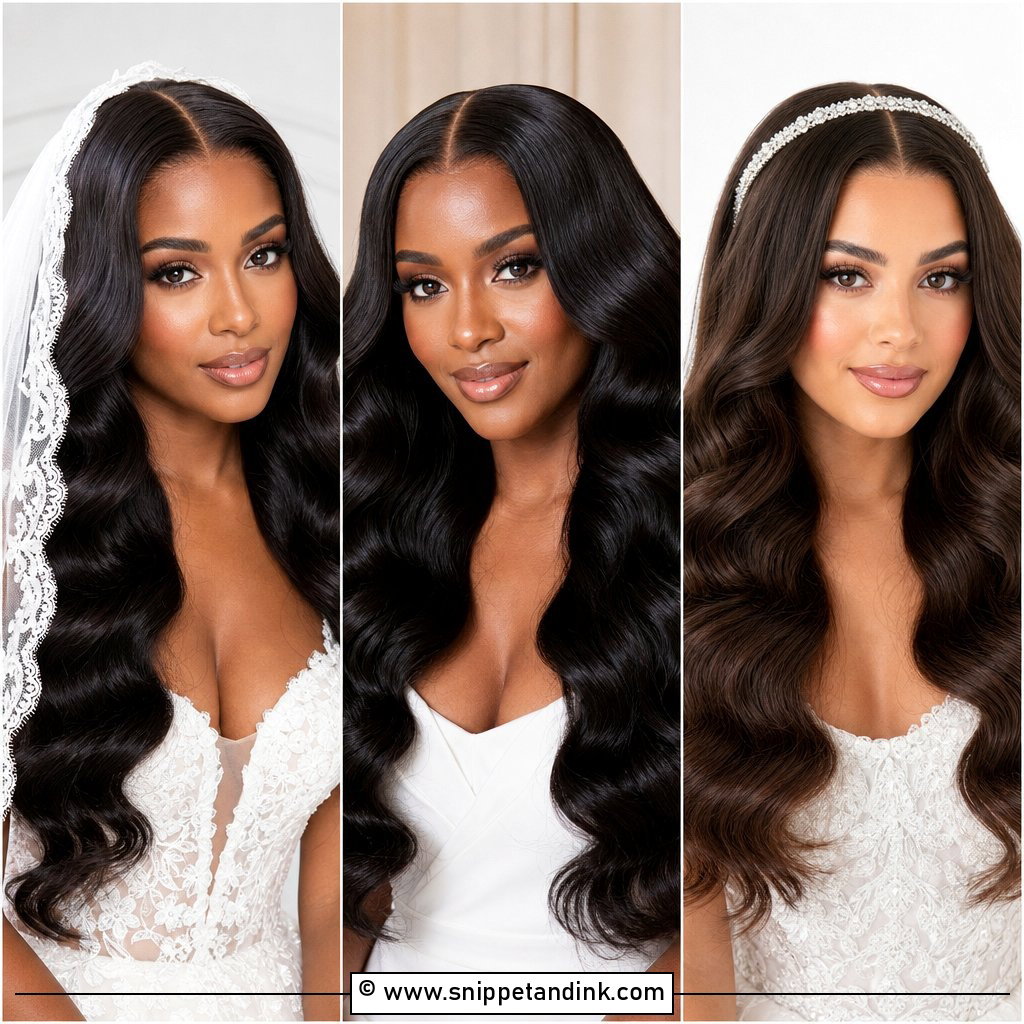
Hollywood waves are a set, not a curl. Every section is wrapped the same direction, pinned flat while it cools, then brushed together until the bends merge into one ribbon. On a middle part I wave each side away from the face so the shape mirrors itself, which looks sharp on satin and off-the-shoulder gowns. The catch is that this style shows every frizzy strand, so it needs a smoothing cream and a cool shot of air before setting. Skip big accessories; the shine is the detail.
3. Middle Part Wedding Hair Down With Loose Curls
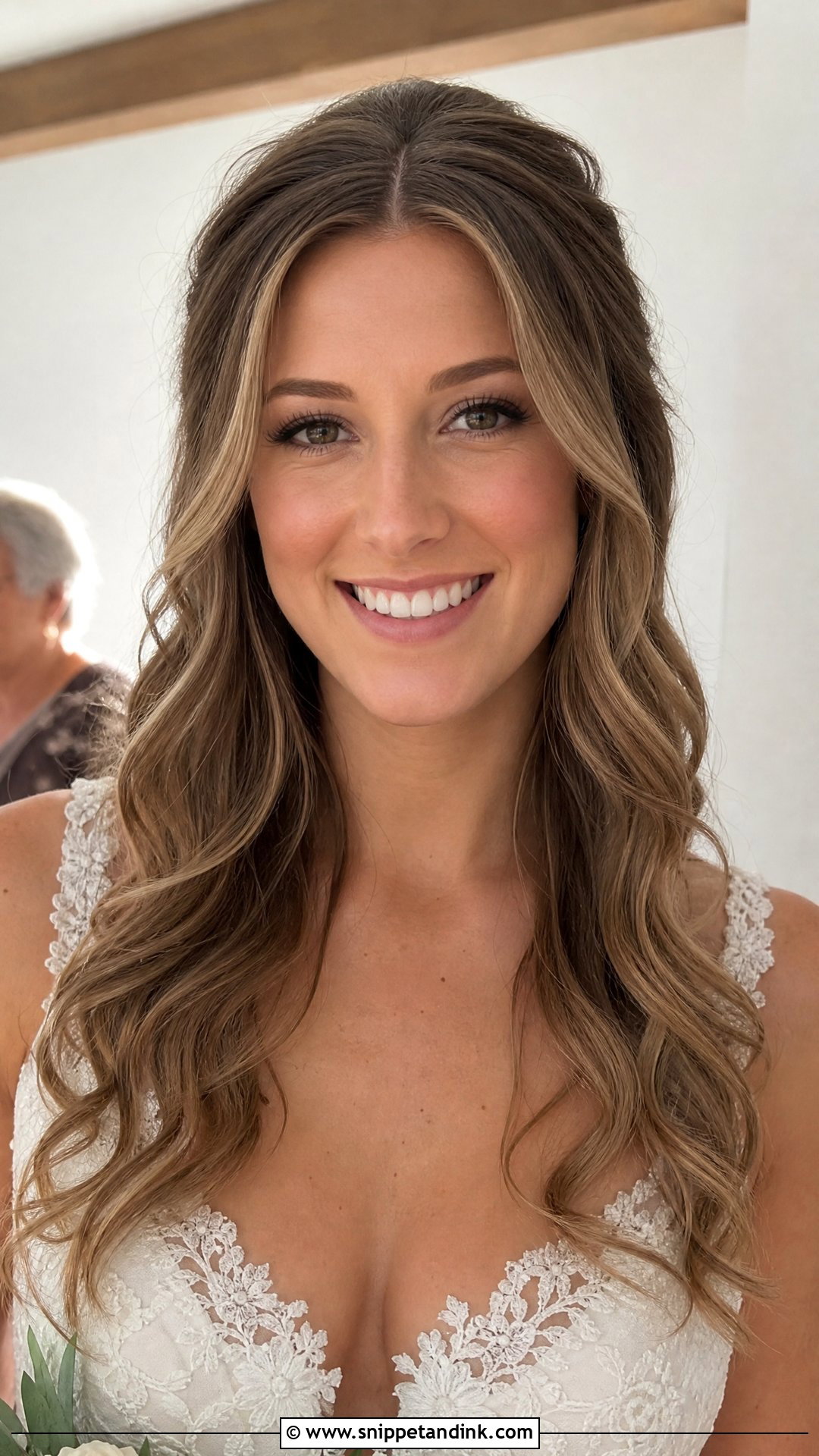
Loose curls give more bounce than waves, and the risk is that they tip into prom territory if they stay tight. I curl with a 1.25 inch barrel, pin each curl to cool, then rake through with my fingers rather than a brush so they open without frizzing. Layered cuts take this best because the shorter pieces land around the collarbone and give the curls a shape. A flexible hairspray, never a crunchy one, keeps them moving in photos. One small comb at the side is plenty.
4. Middle Part Wedding Hair Down With Straight Hair
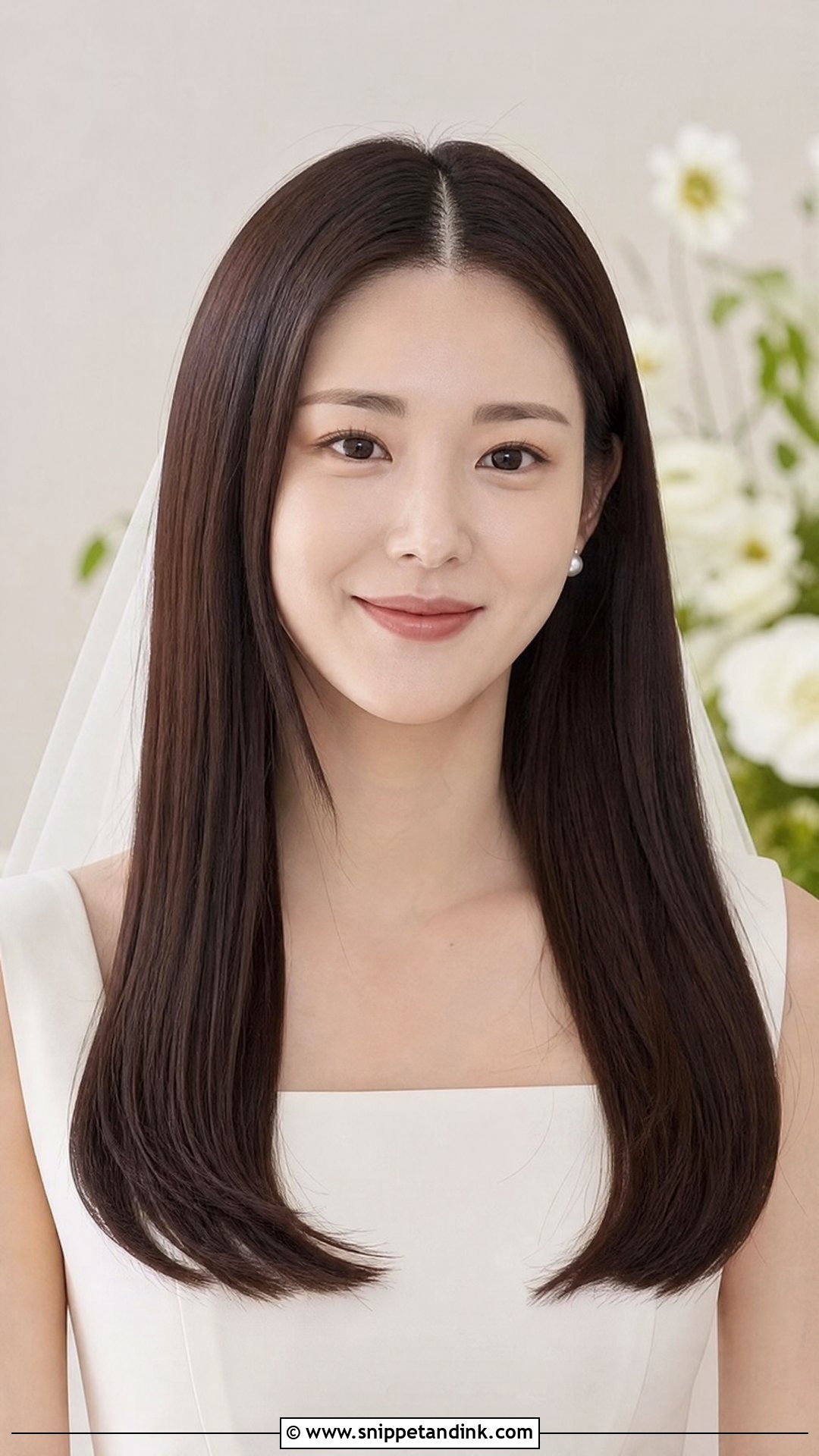
Sleek straight hair with a center part looks simple and is the hardest style here to get right. Any flatness at the roots or a dry, split end shows instantly, especially next to a minimalist or structured gown. I do a round-brush blowout first for lift, then one slow pass with a flat iron to seal the cuticle, then bevel the ends under slightly. Book a trim and a gloss about two weeks out. If your hair is coarse and puffs in damp air, I’d only recommend this for an indoor wedding.
5. Middle Part Wedding Hair Down With Face Framing Layers
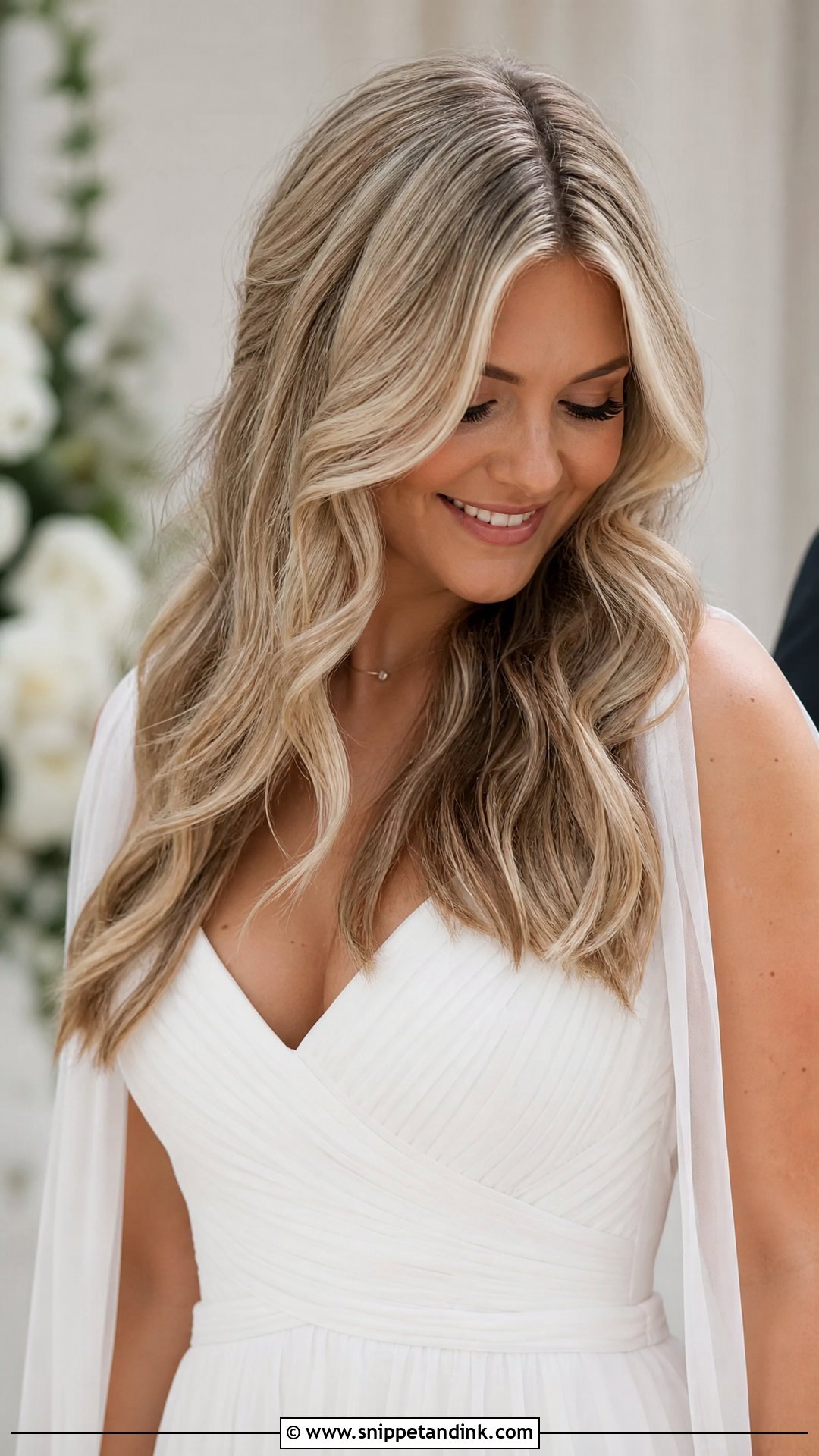
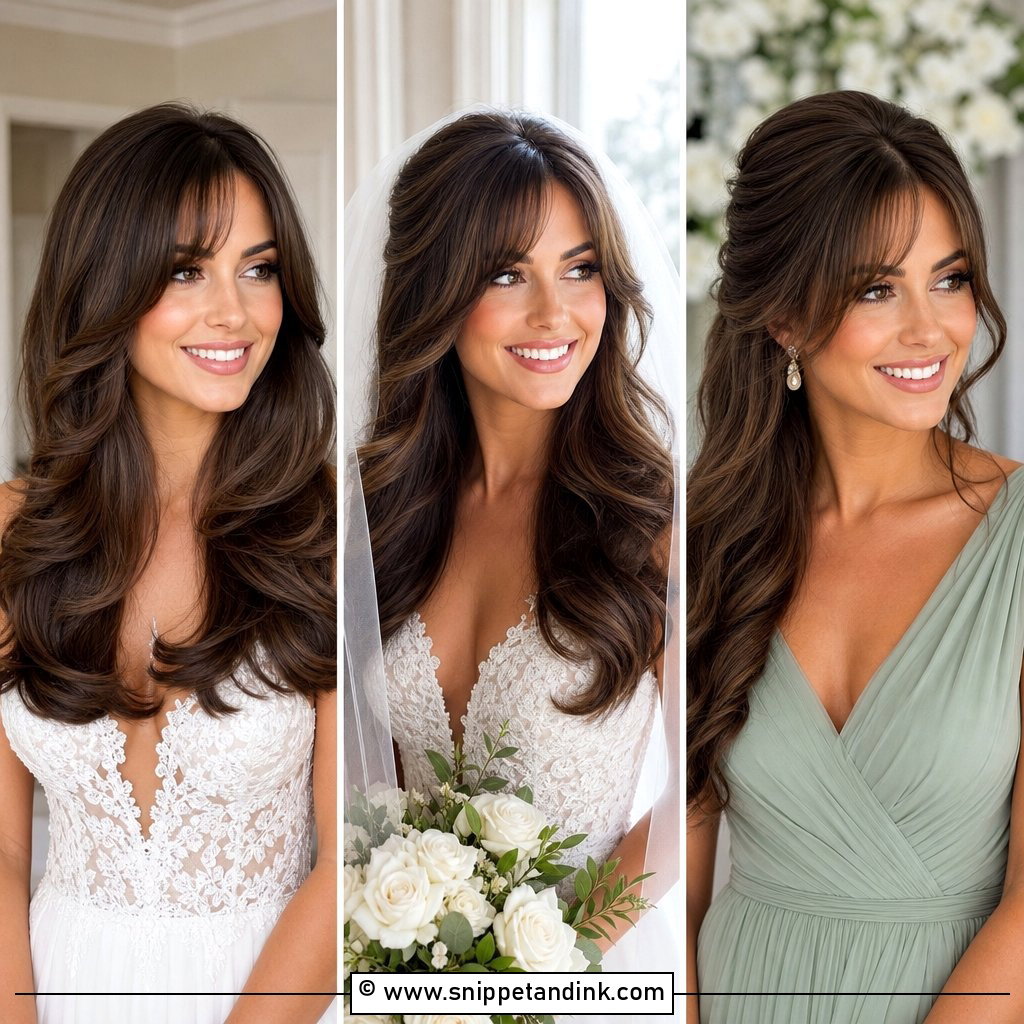
Face-framing layers stop long down hair from looking like a heavy sheet. Shorter pieces around the cheek and jaw catch the light and give the face shape in close-up portraits, while the length behind stays loose. With a middle part they fall into a curtain on both sides, so I curl them away from the face and keep the front bends flatter than the rest. Get the layers cut at least four weeks ahead; freshly chopped layers can look choppy until they settle.
6. Middle Part Wedding Hair Down With Curtain Bangs
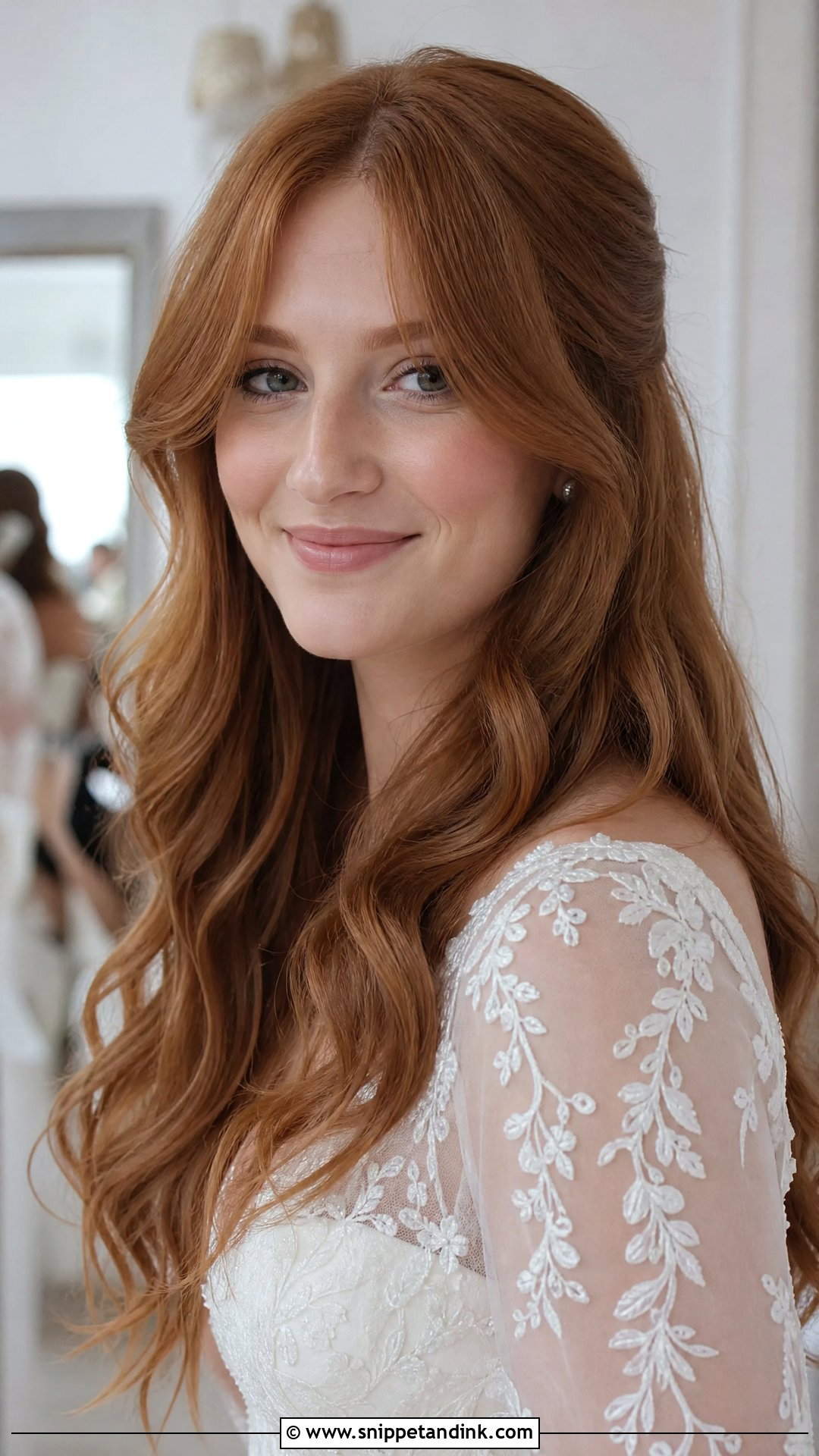
Curtain bangs add detail right where the camera looks first. The fringe splits at the part and sweeps out past the eyes, and it reads softer than a full bang. The mistake I see most is curling them with an iron, which makes them flip into two hard commas. I shape them with a medium round brush and a blow-dryer, bending them back toward the temples, then set with a light mist. If your bangs are growing out and sit at the nose, have them trimmed to cheekbone length before the trial.
7. Middle Part Wedding Hair Down With Pearl Pins
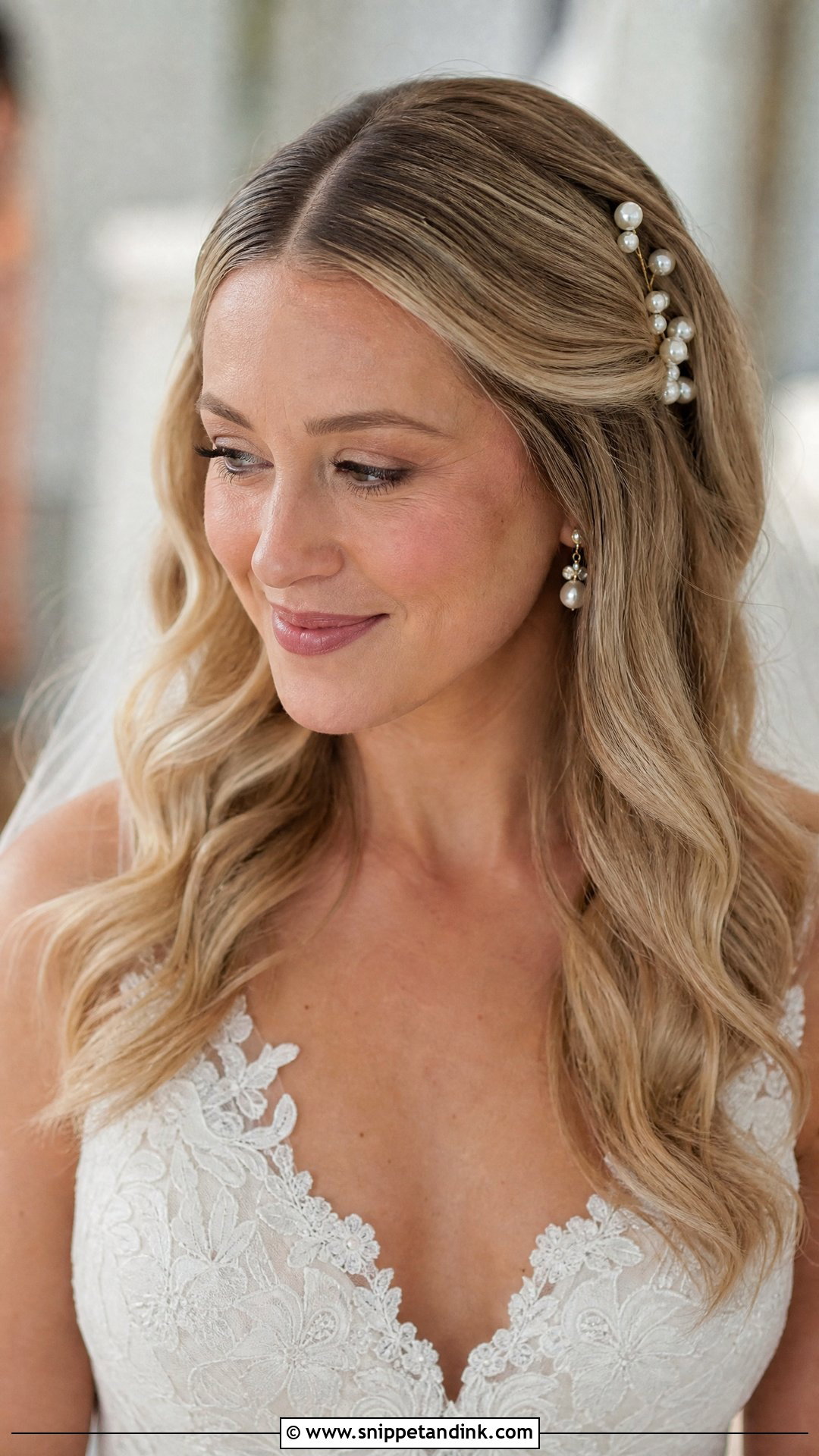
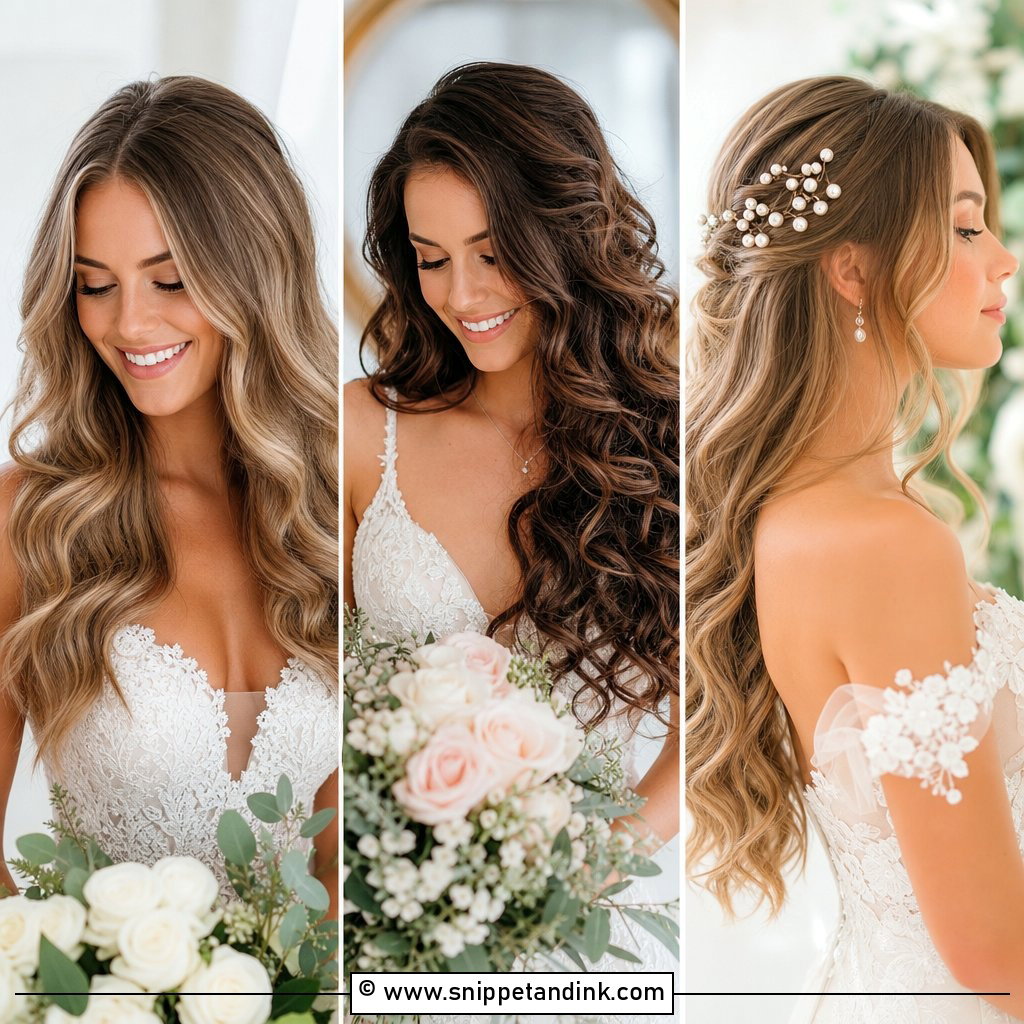
Pearl pins turn plain down hair bridal with almost no effort, which is why they’re my most requested accessory. Grouped three or four together above one ear they look deliberate; scattered evenly they can look like they slipped. I slide each pin into a small hidden anchor of crossed bobby pins, because pearls are heavier than they look and will creep down silky hair within an hour. Match the pearl tone to your dress, since ivory pearls against a stark white gown read yellow.
8. Middle Part Wedding Hair Down With Veil
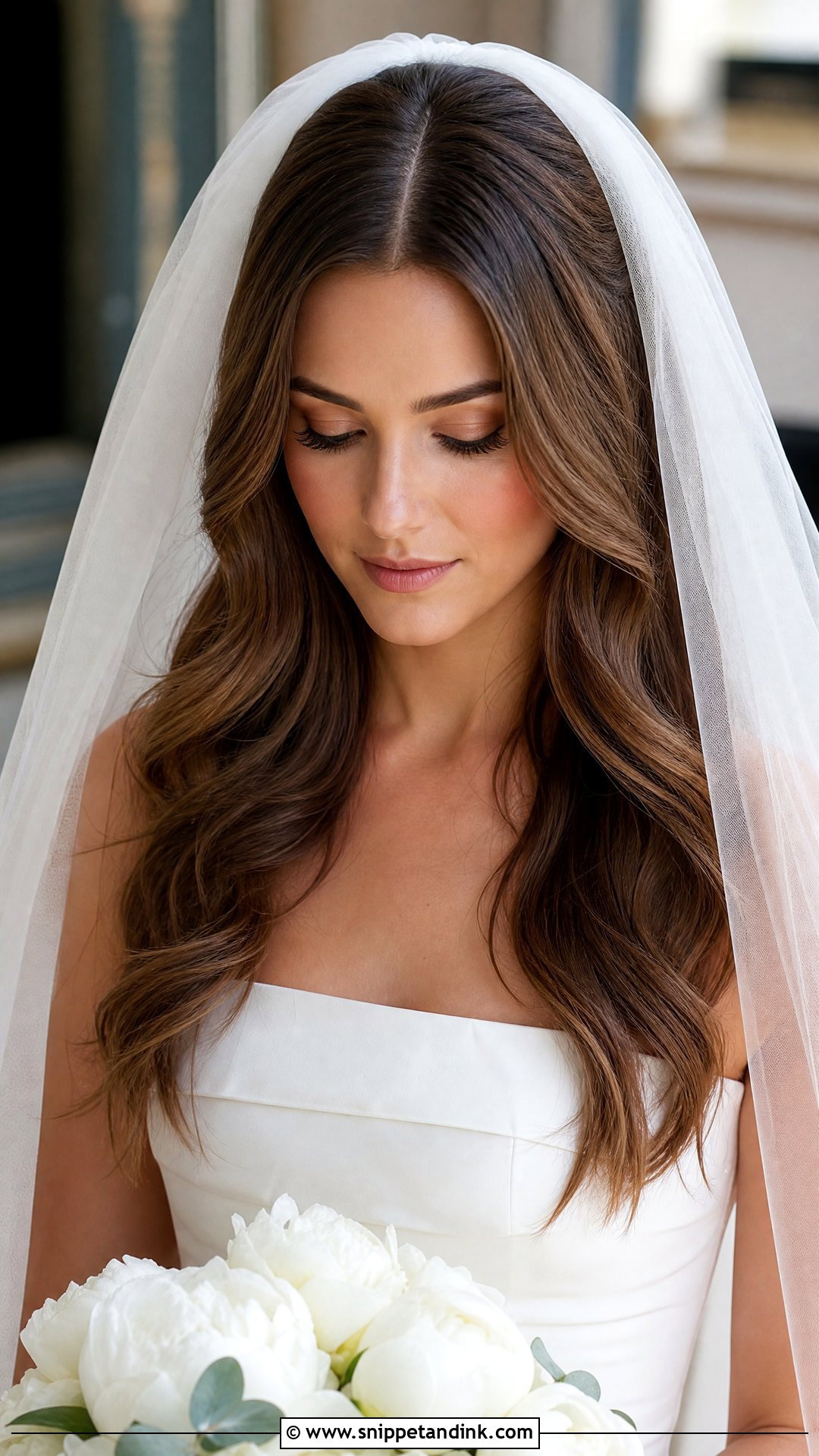
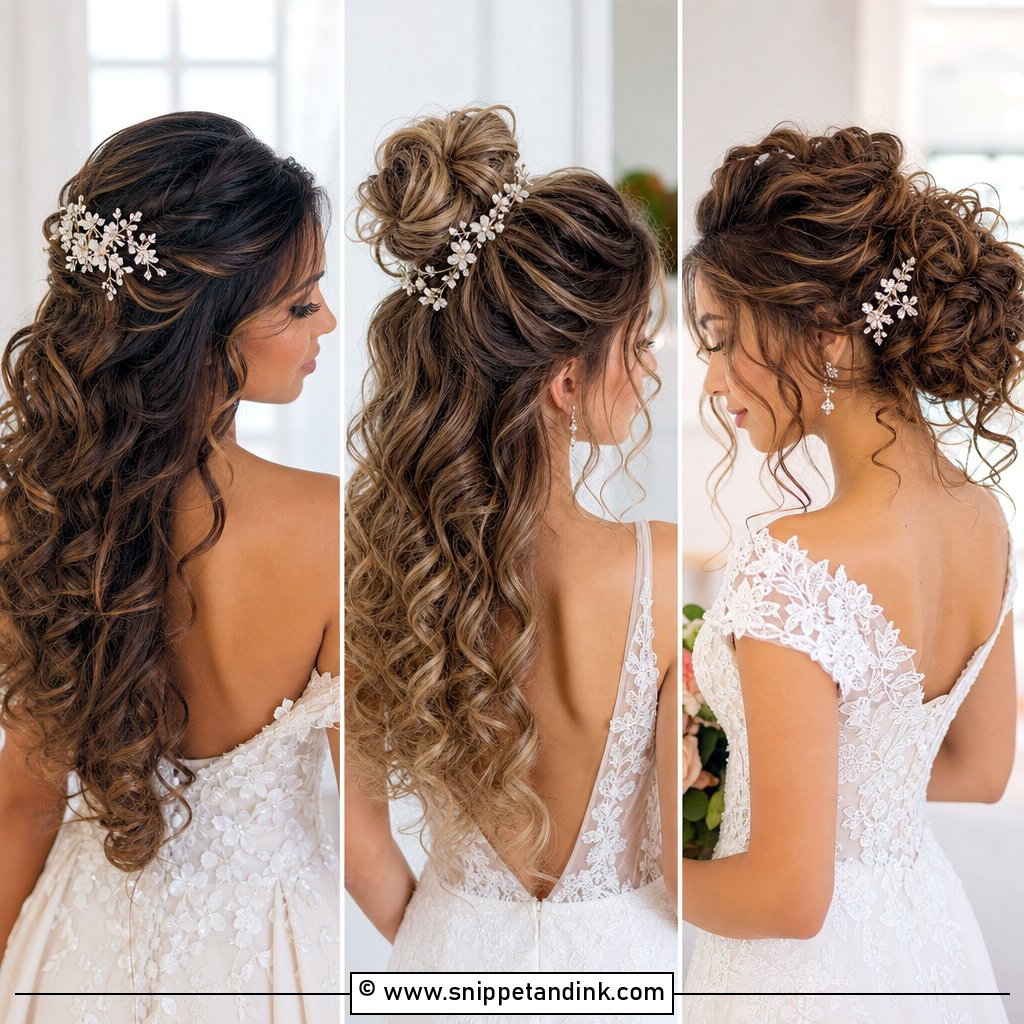
A veil on loose hair needs somewhere to grip. The comb can sit at the crown for a traditional line or lower at the back for a softer drape, but either way I build a small anchor first: a tiny braid or a pinned cross of bobby pins hidden under the top layer. Waves help because the texture holds the teeth. On very fine, silky hair I add light backcombing under the anchor too. When the veil comes off after the ceremony, the middle part is still neat and nothing needs restyling.
9. Middle Part Wedding Hair Down With Floral Hair Comb
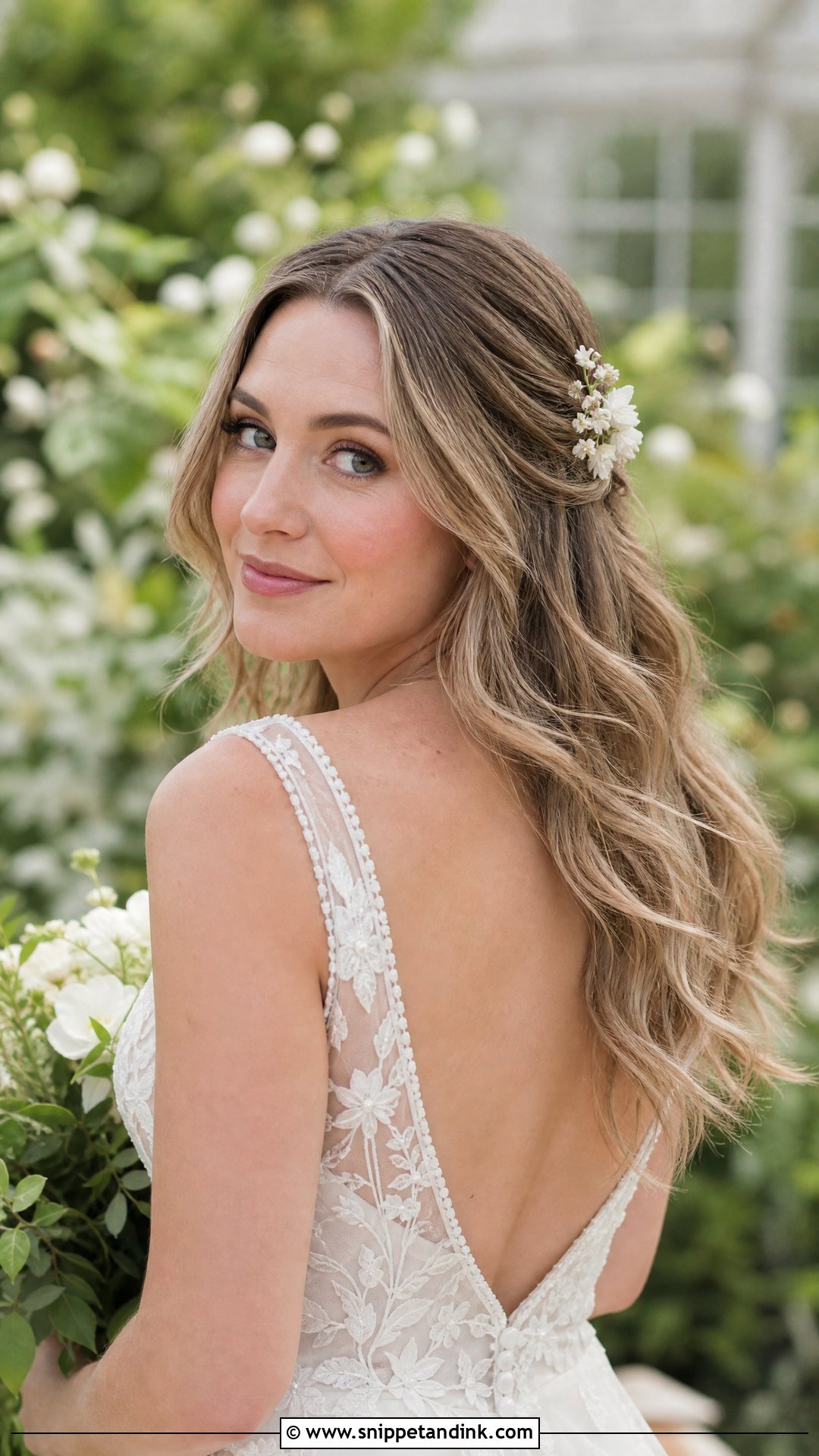
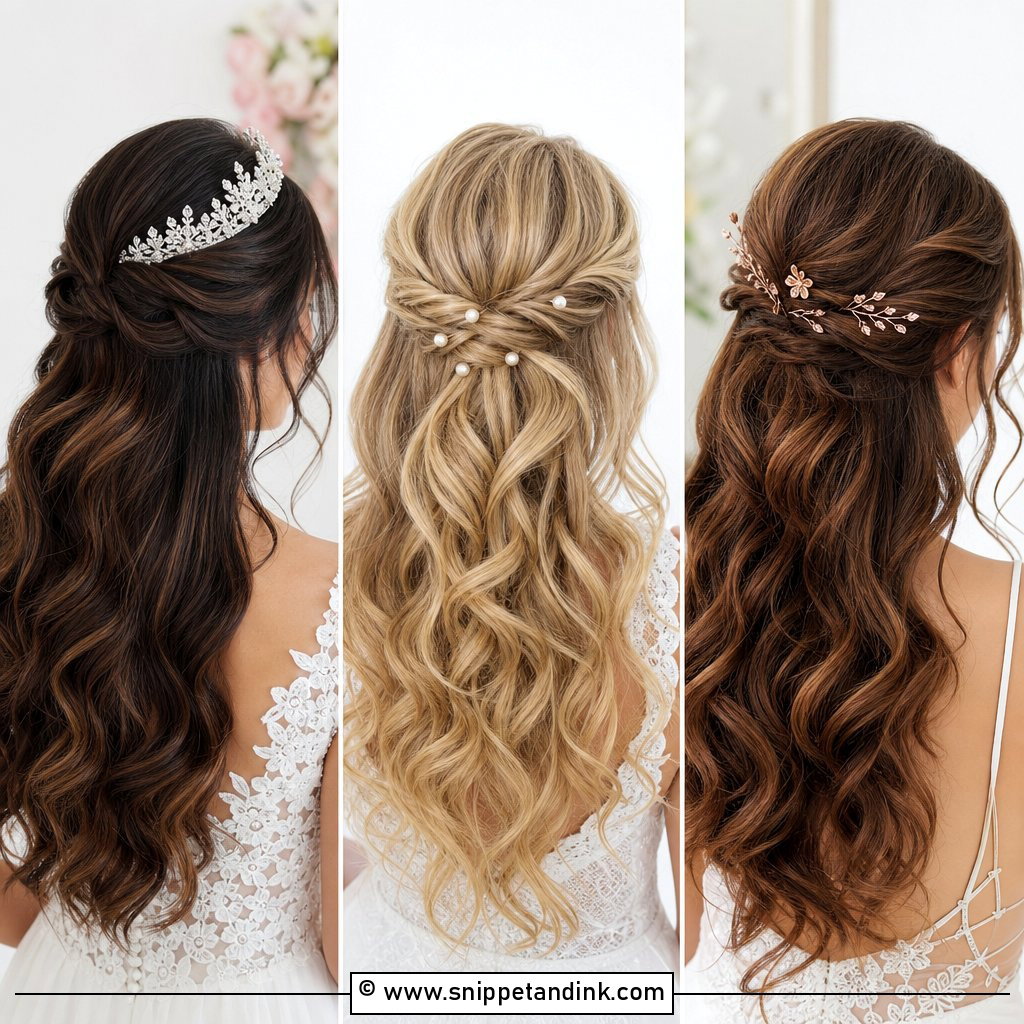
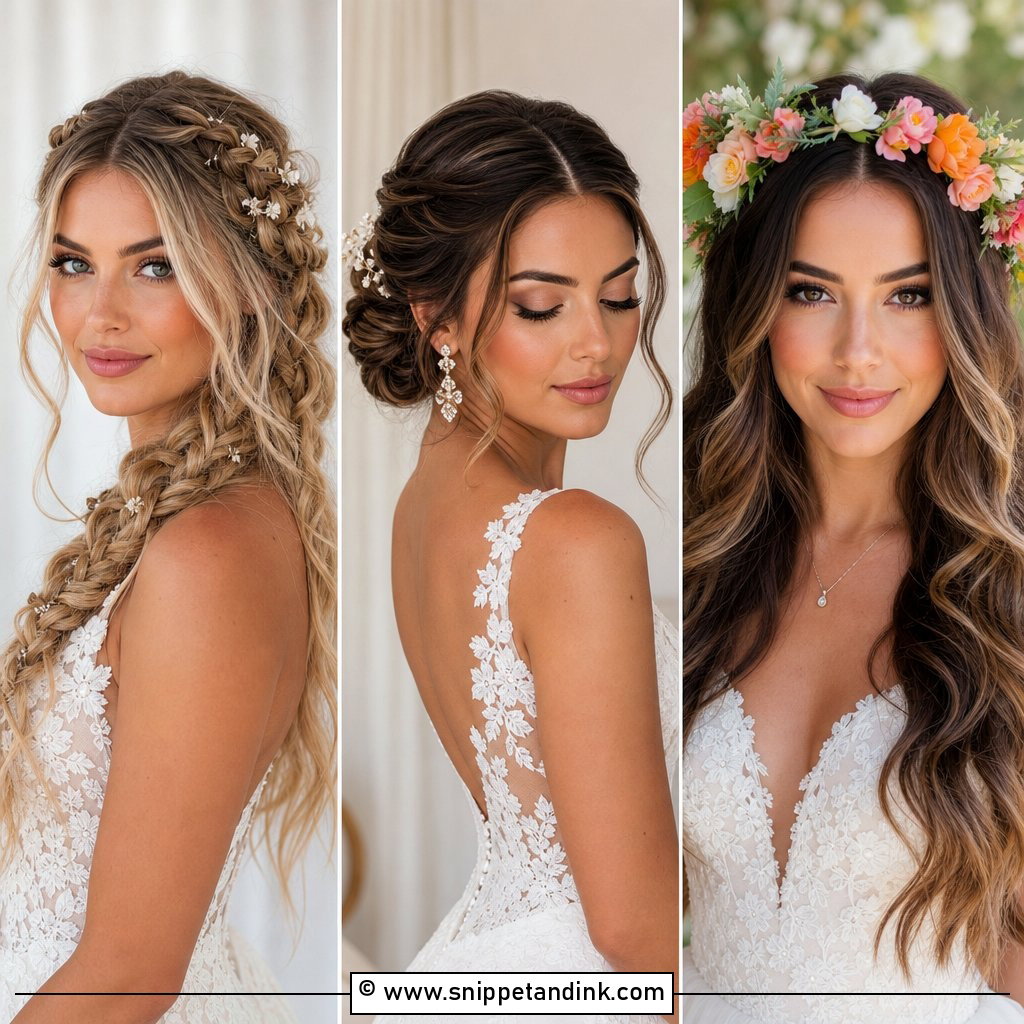
A floral hair comb brings the bouquet up into the hair, which suits a garden or vineyard ceremony. I keep the comb near the back or behind one ear and scale it to the length of the hair; a big cluster on shoulder-length hair overwhelms it. Fresh flowers need planning, because they wilt against a warm scalp. Ask your florist for hardy stems such as spray roses or waxflower, wired and kept cool until I place them, and choose the same blooms as your bouquet so the two match in photos.
10. Middle Part Wedding Hair Down With Hair Vine
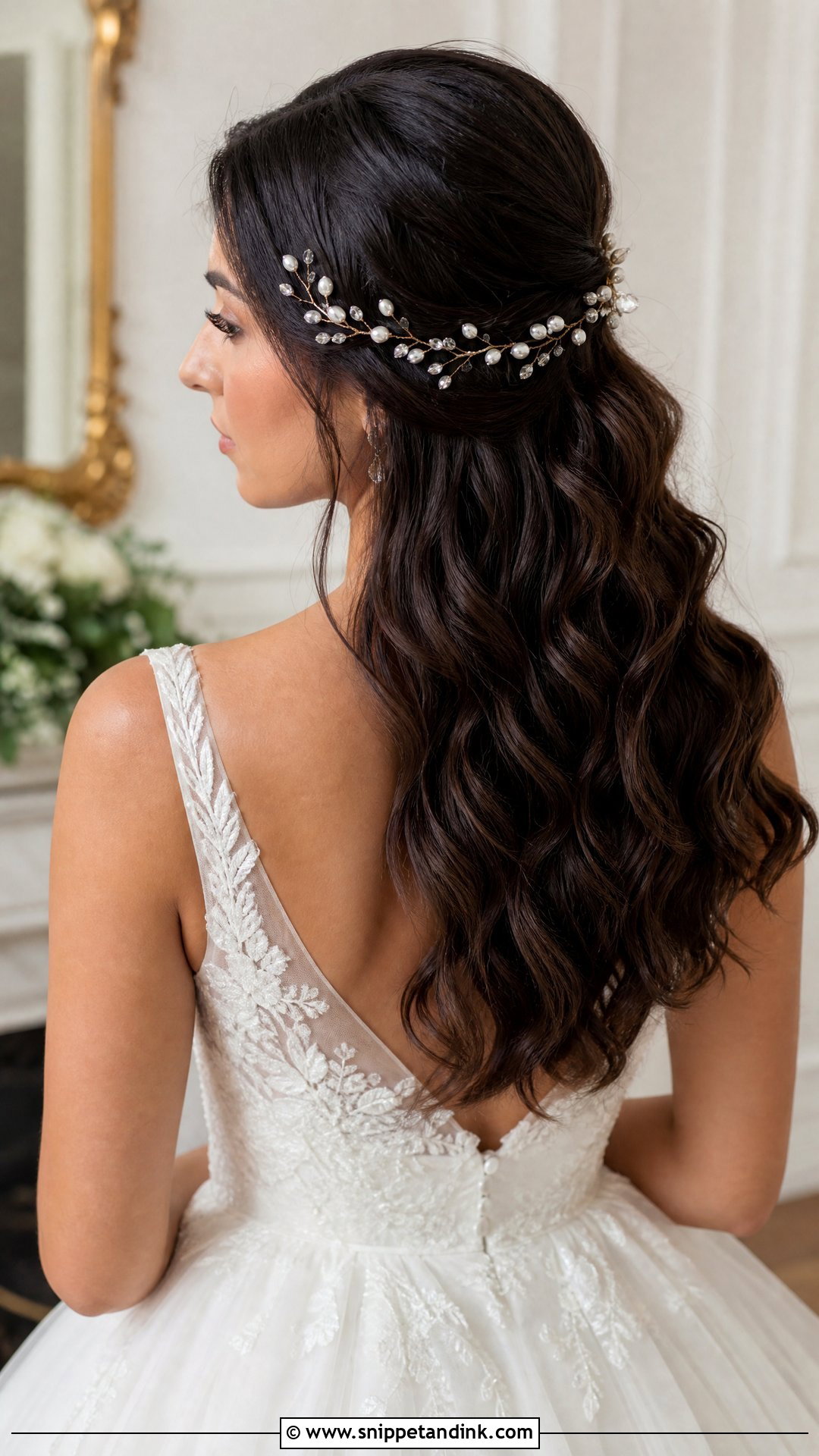
A hair vine is the piece I suggest when a bride wants detail from behind during the ceremony but still wants her hair loose. It can wrap across the back like a halo, sit as a headband, or trail along one side. Thin wire vines bend to the head shape, so I pin them every few inches through the texture rather than just at the ends, where they tend to spring loose. Vines with leaves suit an outdoor setting; crystals suit evening light better than daylight.
11. Middle Part Wedding Hair Down With Crown
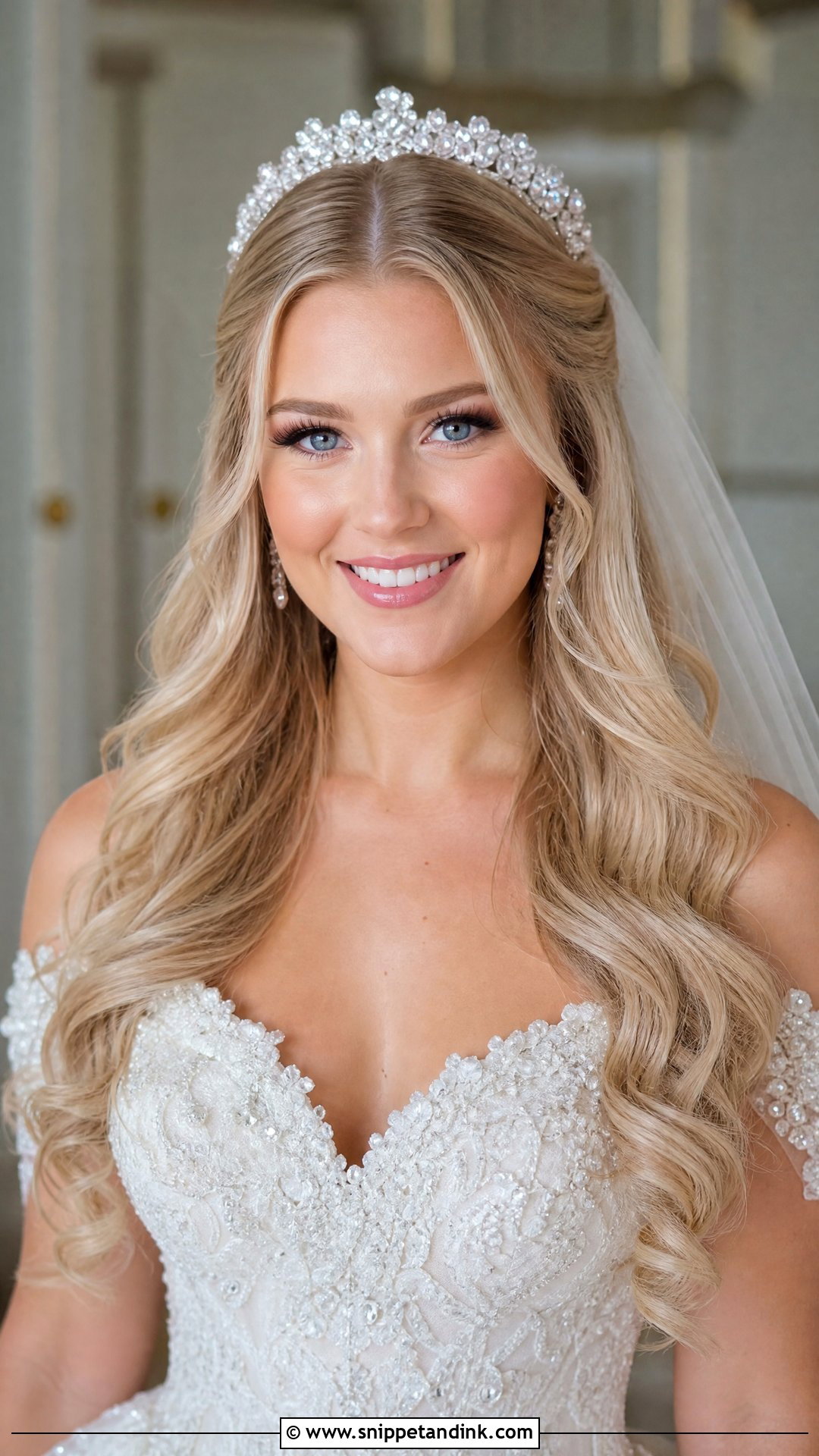
A crown or tiara with a center part gives the most formal frame of anything here. Placement matters more than the piece: set it about an inch behind the hairline so the part stays visible, and give the roots smooth lift underneath or the band sits flat and looks borrowed. Tiaras are heavy, so I secure the combs into a teased base and cross pins through the side loops. Fine crystal suits ball gowns and cathedral veils; a floral crown reads more relaxed.
12. Middle Part Wedding Hair Down With Long Hair
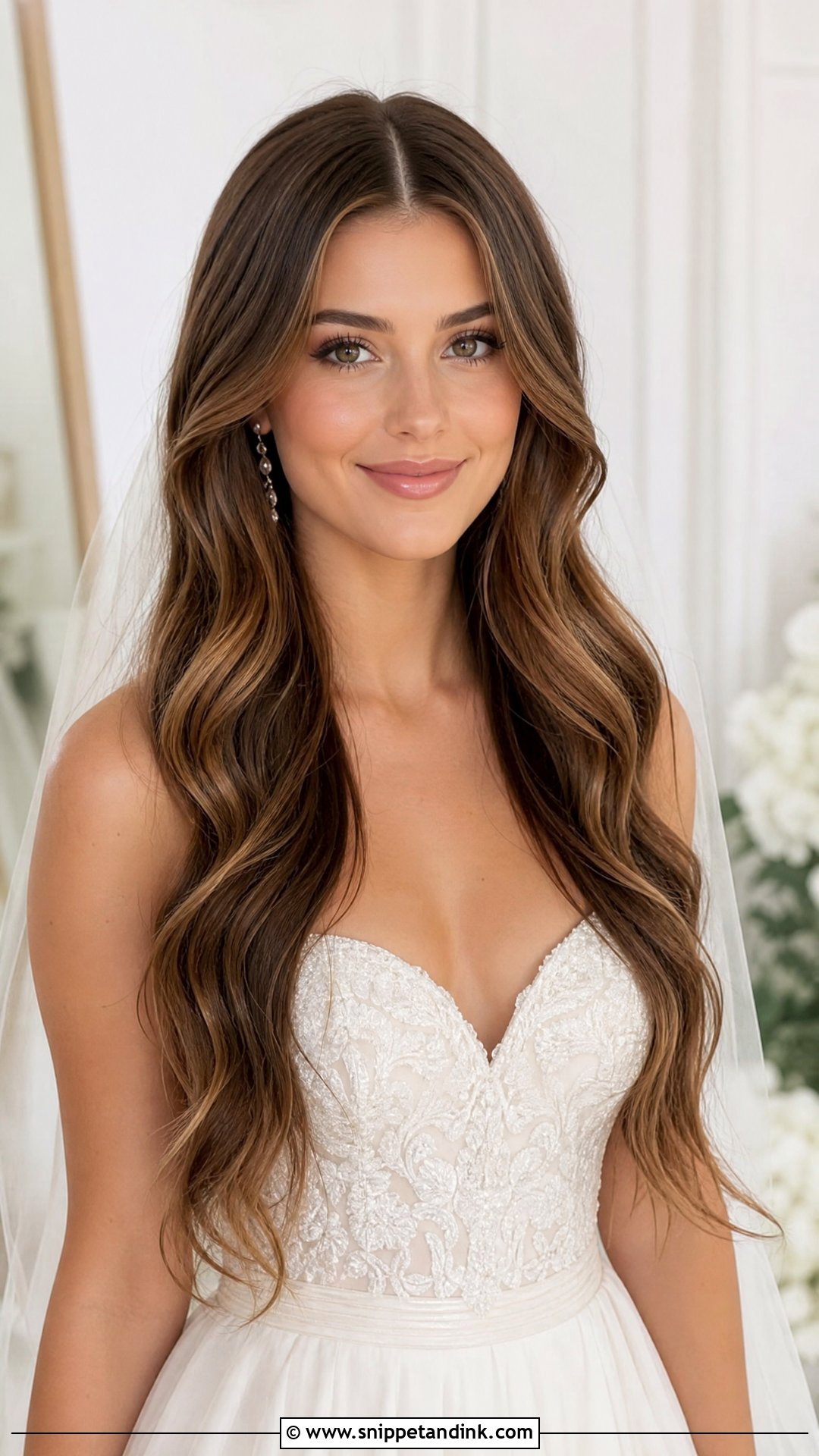
Very long hair creates its own drama, but it also drops fastest, because the weight pulls the curl out from the root. The trick is styling the whole length, not just curling the bottom few inches. I set long hair in pin curls and leave them in until the last possible moment, often while makeup is finishing. If your hair refuses to hold a curl, talk about clip-in extensions at the trial; the extra wefts add grip as well as volume. Long hair under a veil gives some of the best ceremony shots there are.
13. Middle Part Wedding Hair Down With Medium Hair
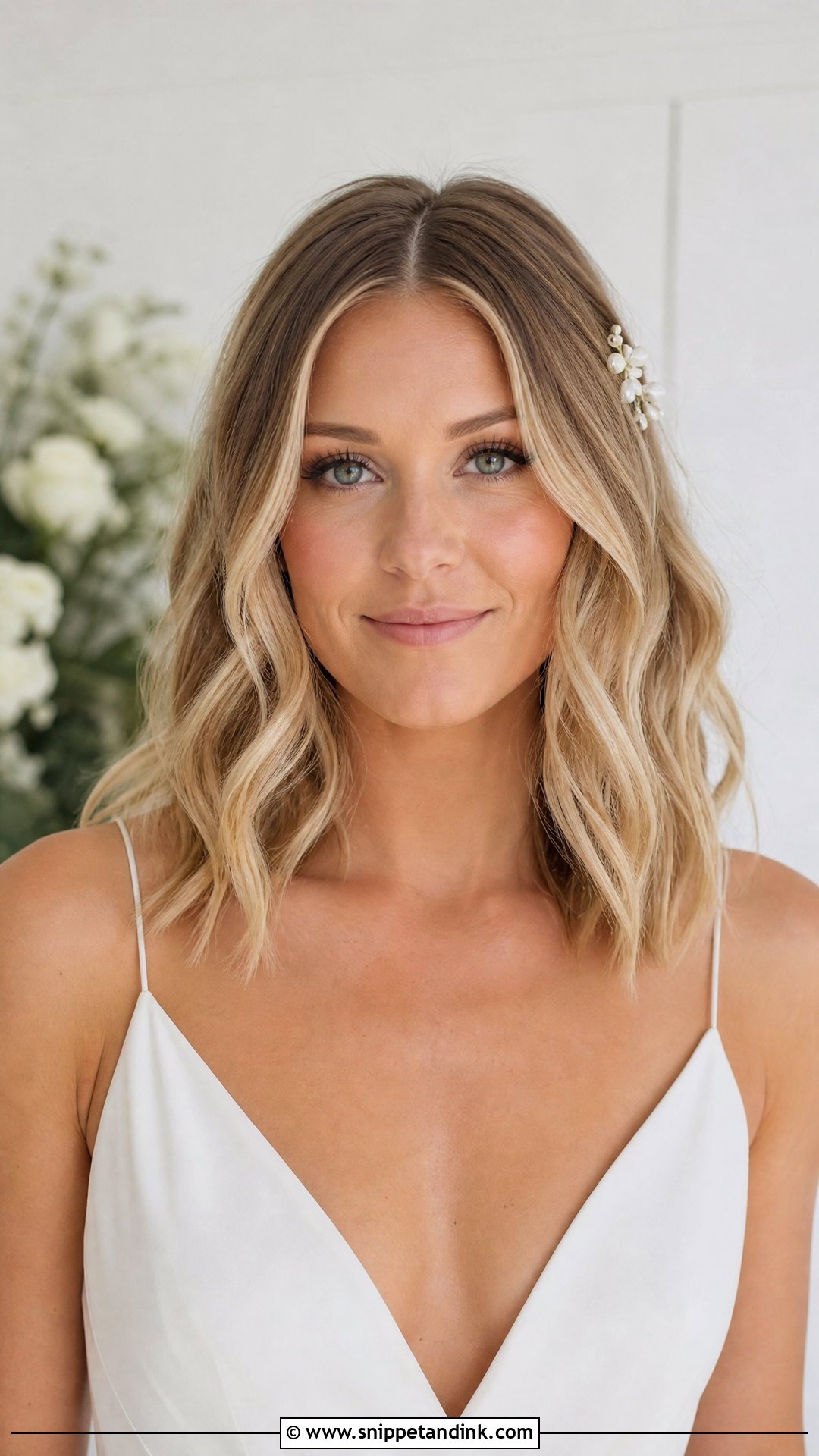
Medium, collarbone-length hair is quietly the easiest length to wear down. It doesn’t tangle into the dress, it keeps a curl better than waist-length hair, and it stays out of the way while you eat and dance. Lobs suit brushed-out bends that stop short of the ends, so the blunt line of the cut still shows. A single accessory at one side finishes it. The one thing to check is that the ends are freshly trimmed, because at this length the camera sees them.
14. Middle Part Wedding Hair Down With Short Hair
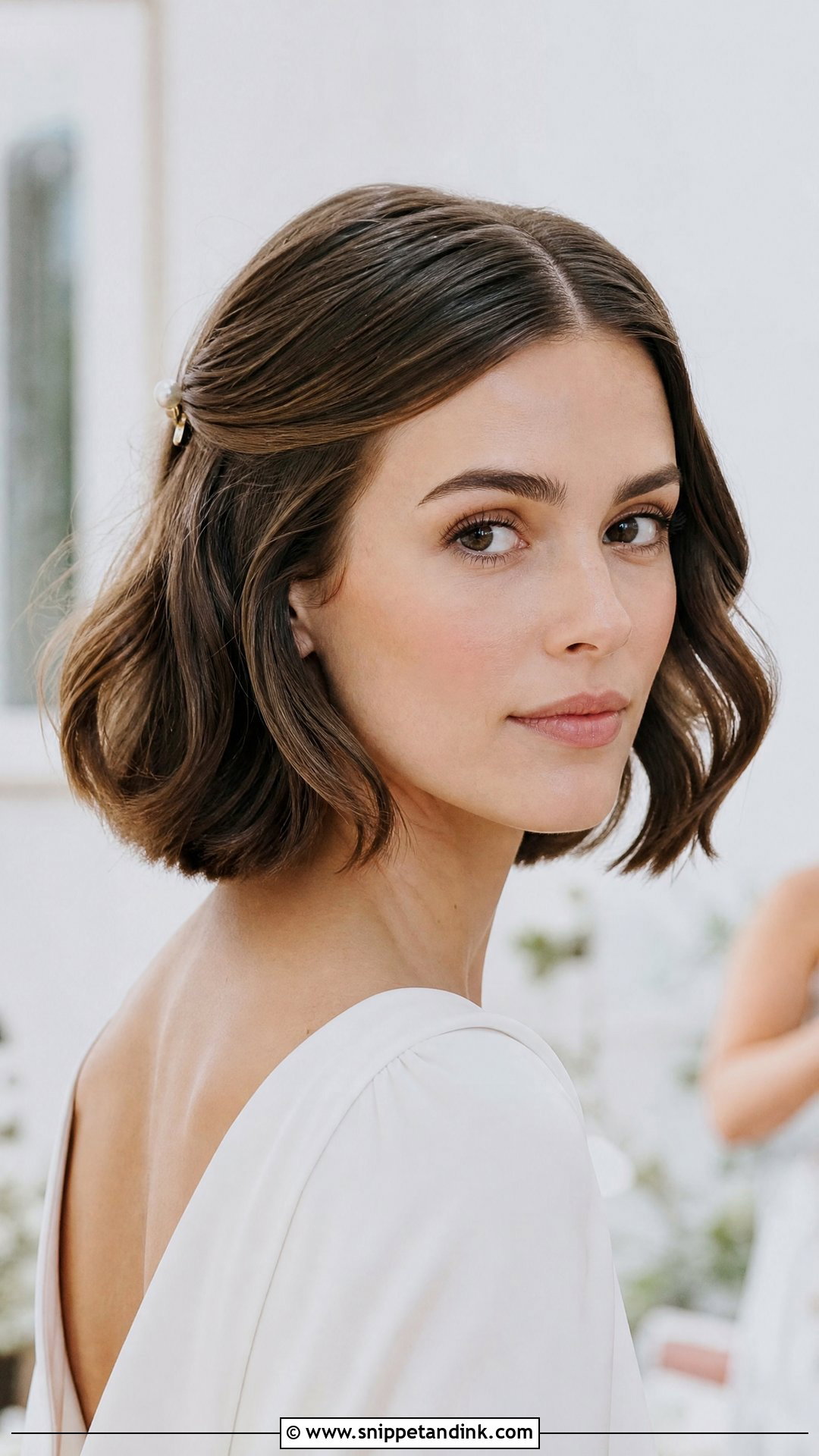
Bobs, bixies and chin-length cuts all work worn down with a center part, and on short hair the part does a lot of the styling. I focus on shine and a deliberate shape rather than trying to fake volume short hair can’t hold. Polished bends or tucked sides look intentional; a full curl set tends to puff out. Pearl clips, a slim headband or a short veil give it the bridal note. Get your trim about a week before so the line is crisp but not freshly blunt.

15. Middle Part Wedding Hair Down With Balayage
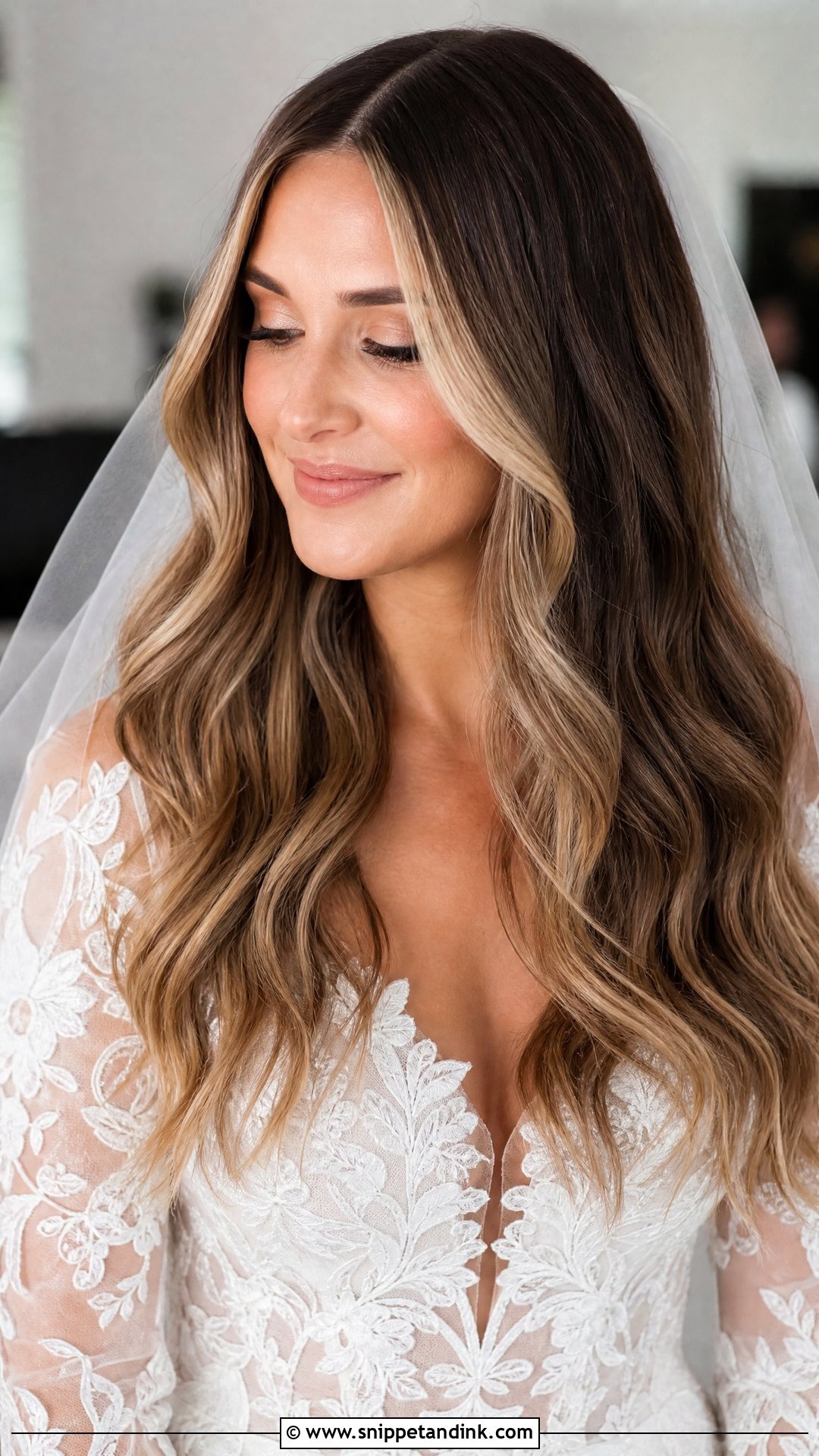
Balayage gives down hair a head start, because the lighter ribbons show movement even before I curl it. A middle part shows the blend evenly on both sides, so ask your colorist to keep the brightness balanced around the face; a lopsided money piece is obvious with this parting. Waves suit it best because they turn the color over and reveal the lighter strands. A gloss about a week before the wedding makes the balayage look freshly done under reception lighting.
16. Middle Part Wedding Hair Down With Blonde Waves
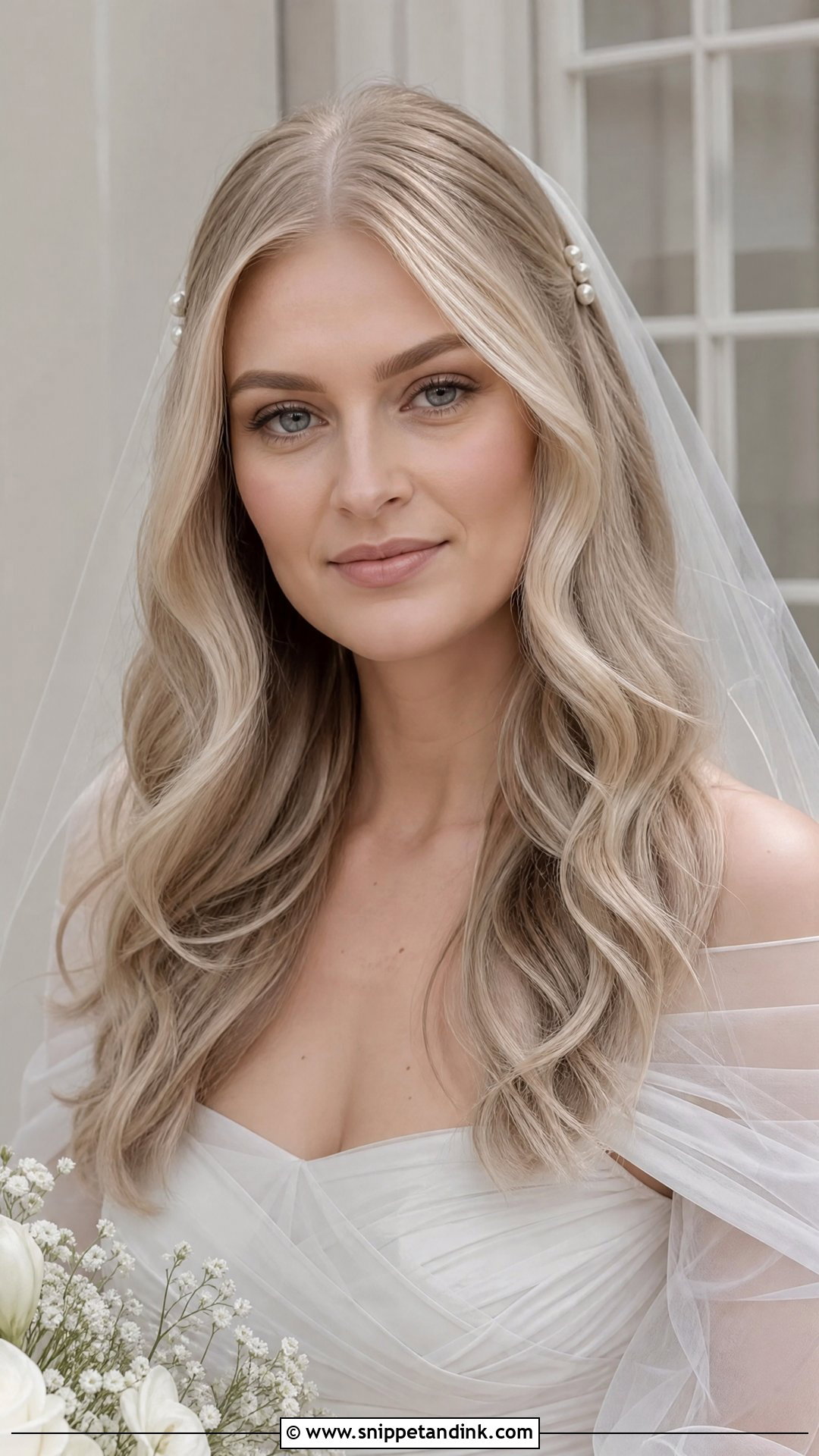
Blonde waves reflect so much light that they can look airy outdoors and slightly washed out under a camera flash if the hair is dry. Lightened hair is more porous, so I prep it with a hydrating treatment the night before and use a shine product before the iron, not after, so it doesn’t look greasy. Brush the waves out smooth for a clean outline. Platinum suits cool white gowns; honey and beige blondes sit better with ivory.
17. Middle Part Wedding Hair Down With Brunette Waves
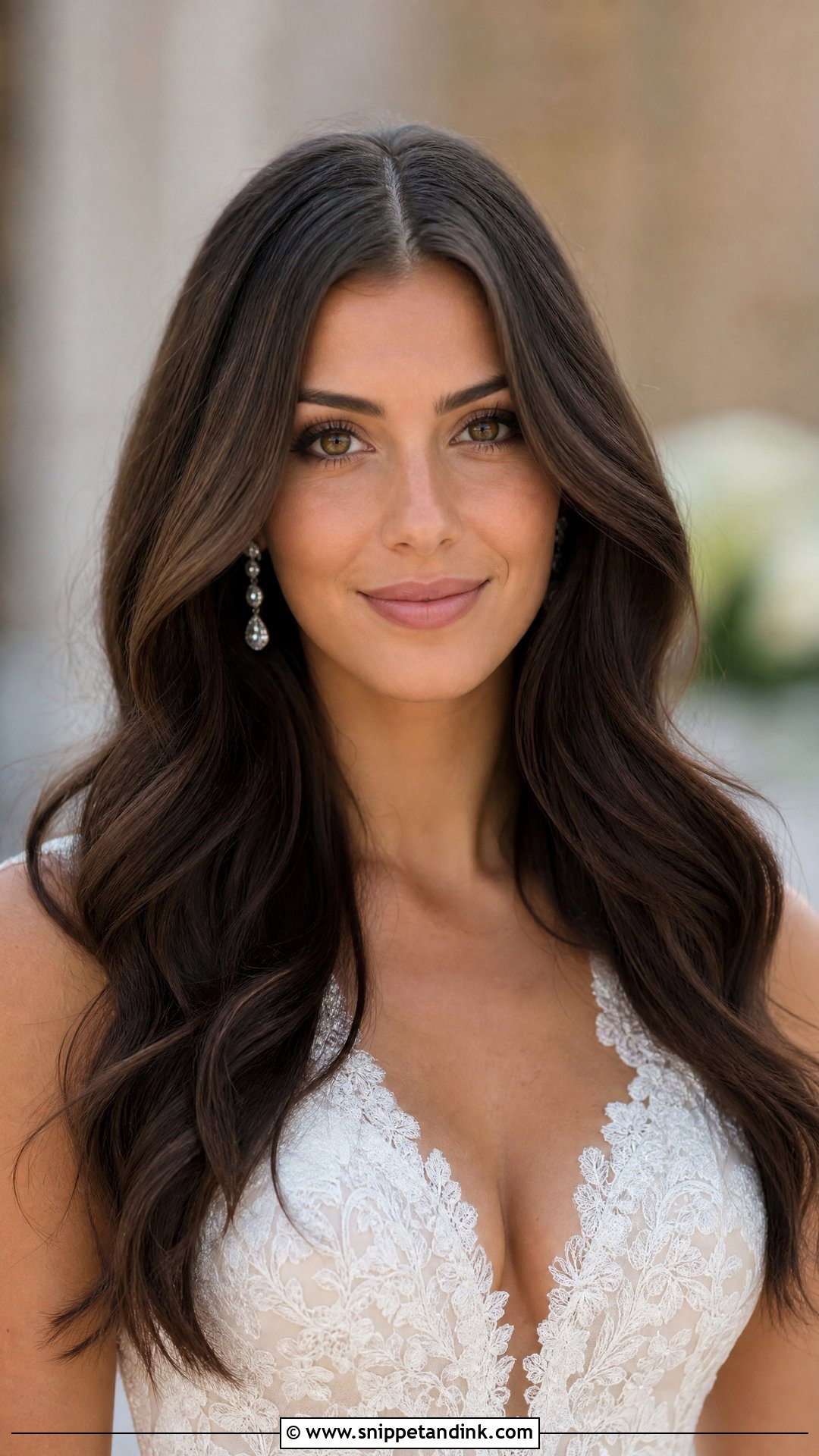
Brunette waves show definition better than any other color, because the shadow inside each bend is deep. The flip side is that dull dark hair looks flat in photos, so I ask brunettes to book a clear or tinted gloss before the wedding. Smooth, brushed bends suit lace and classic gowns. If you want dimension, a few caramel or chocolate ribbons near the face catch the light without a full color change. Keep accessories small; the shine already carries the look.
18. Middle Part Wedding Hair Down With Natural Curls
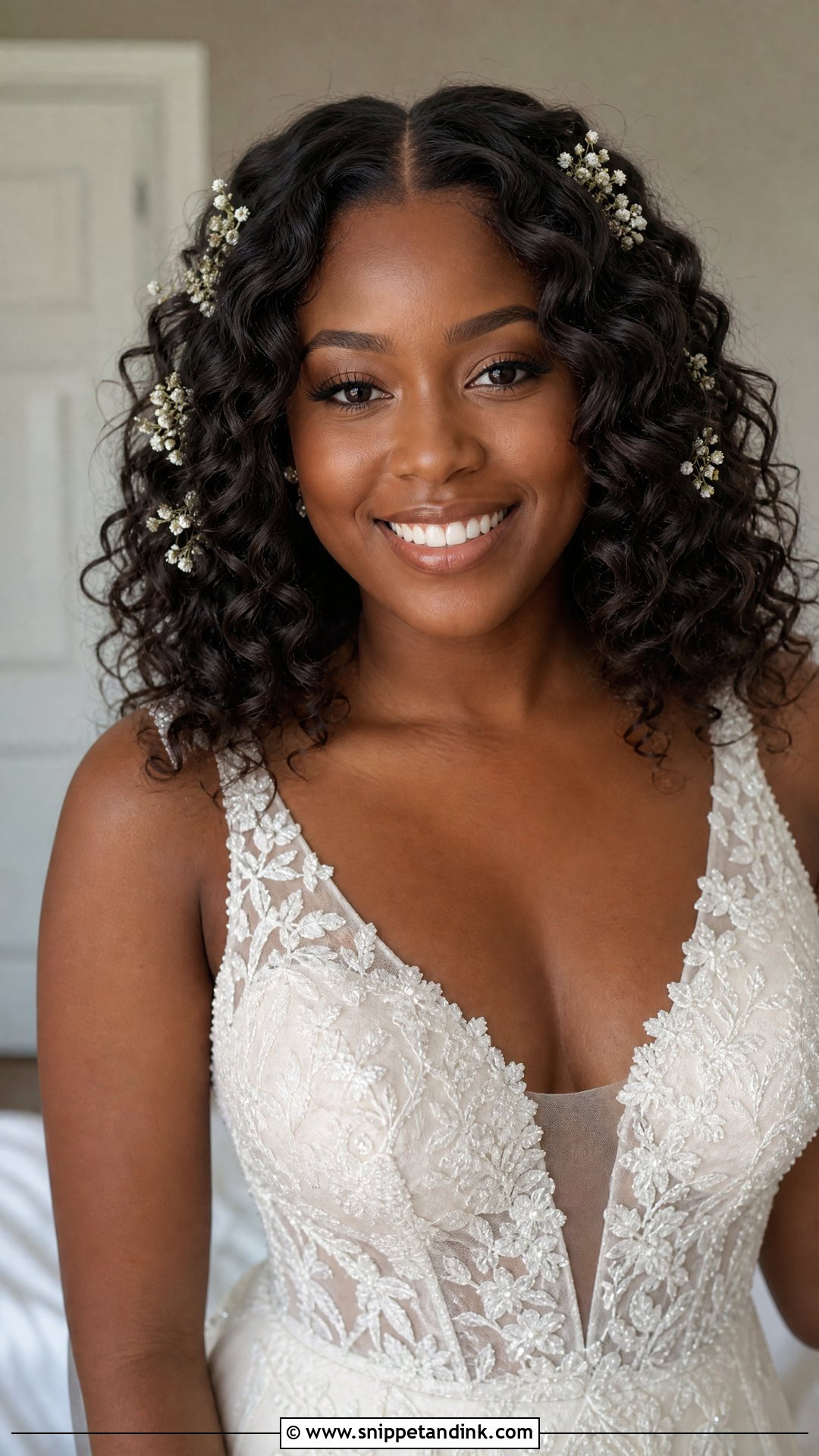
Natural curls with a center part look their best when the curl pattern is defined rather than disturbed. I work styling cream or gel through soaking-wet hair, diffuse on low heat, and leave the cast alone until it is completely dry before scrunching it out. Don’t let anyone brush the curls on the day unless you want a deliberate cloud shape. Securing a veil means building a small flat twist at the crown first for the comb to slide into. Small pearls or flowers can sit right on the curls.
19. Middle Part Wedding Hair Down With Beach Waves
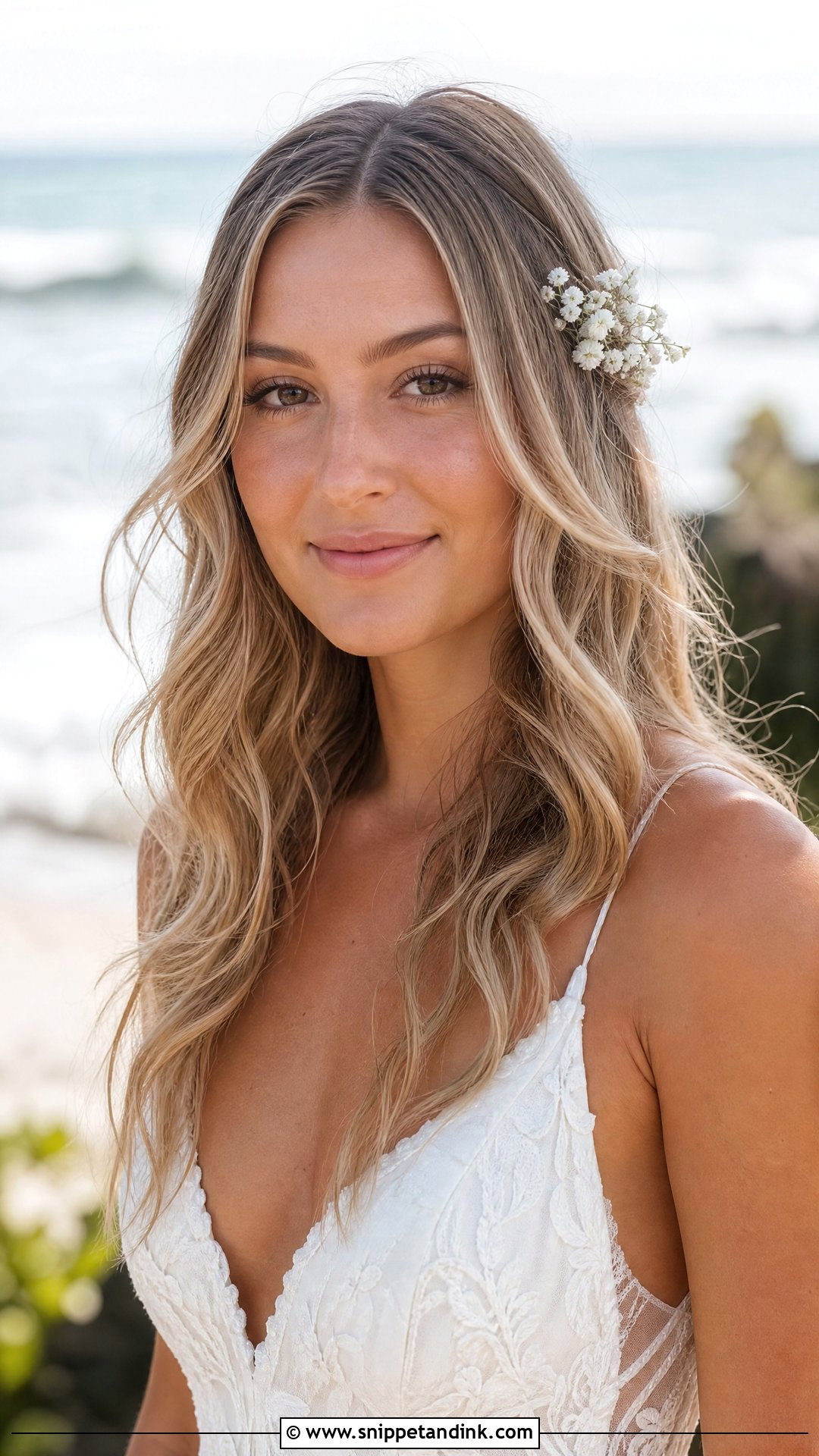
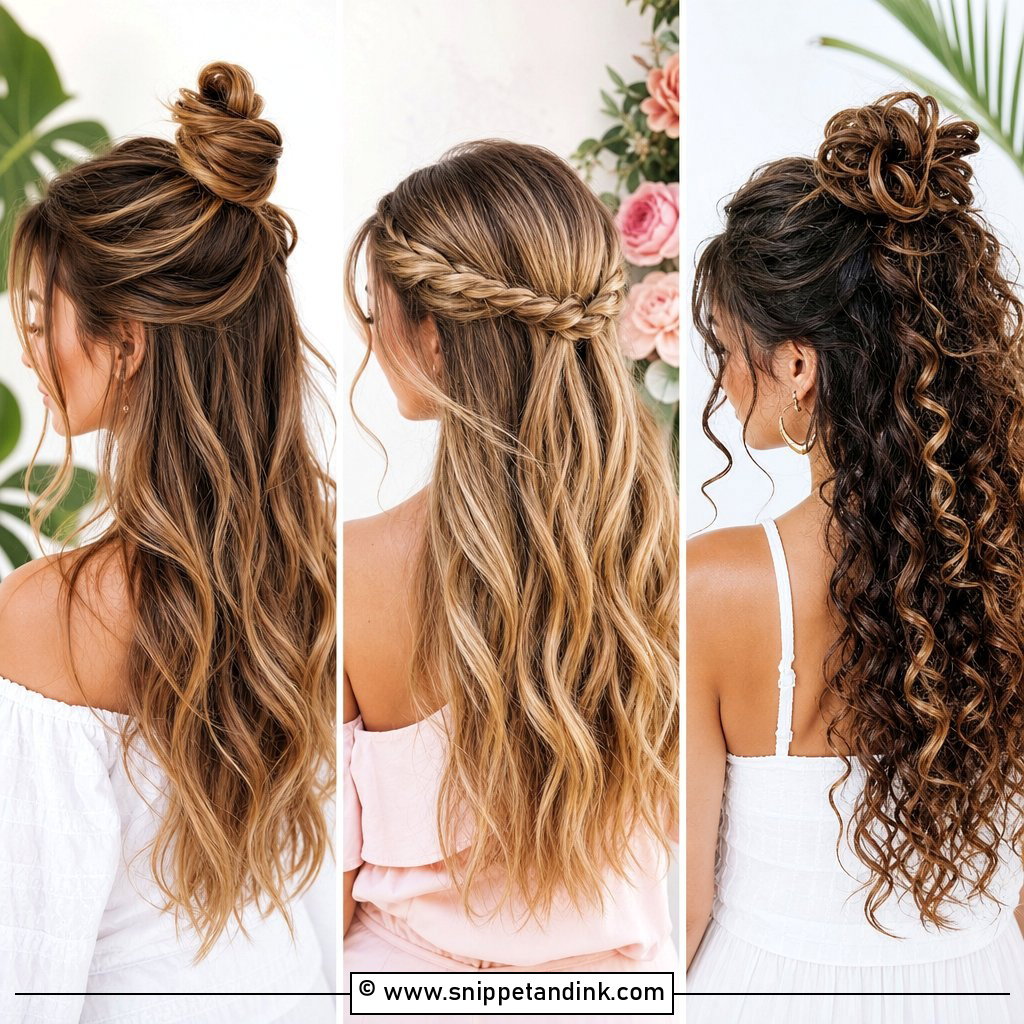
Beach waves are the most relaxed option here, and they fit coastal ceremonies and simple dresses. Undone shouldn’t mean dry, though. I wave with a flat iron or a wand, leaving the last inch straight, then brush through and add texture spray only to the mid-lengths and ends, keeping it away from the part so the top stays clean. Layered or sun-lightened hair shows the movement best. A light veil or a few tiny flowers is enough.
20. Middle Part Wedding Hair Down With Tucked Sides
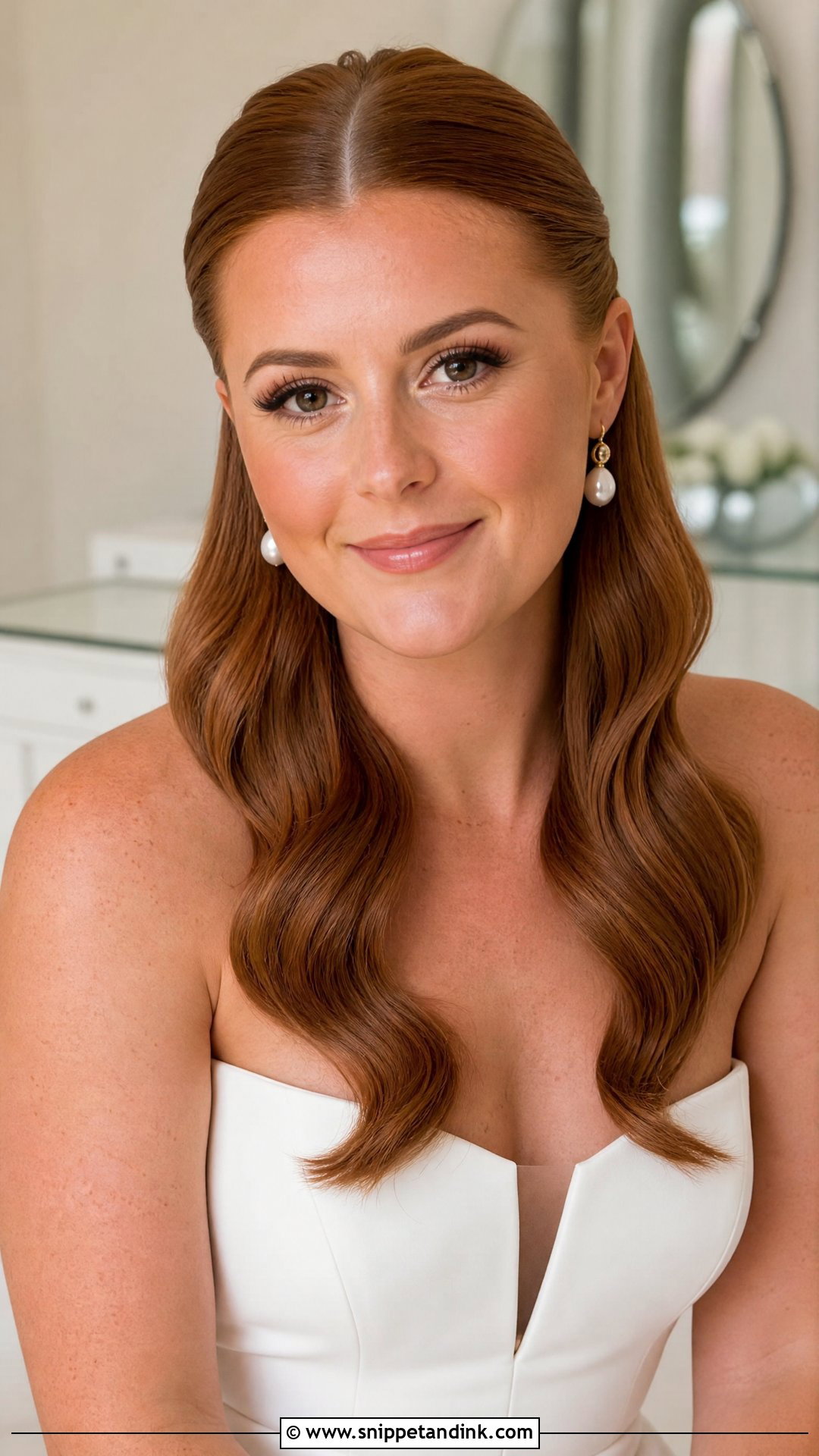
Tucked sides open the face and show off earrings and neckline detail while the length stays down. I part cleanly, smooth the hair at the temples with a little cream, then tuck behind the ears and slide a hidden pin under each tuck so it doesn’t pop forward when you laugh. The rest can be straight or waved. Outdoors, this is the version I trust in wind, because the front pieces can’t blow across your lip gloss. Add a slim headband or a low veil if you want more.
Why Down Styles Drop by the Reception, and How I Stop It
Loose hair is under more strain than an updo all day. It is sat on, hugged, brushed by veil tulle and breathed on by the sun. When a bride tells me her curls never last, the cause is nearly always one of a few things, and each one has a fix.
Hair washed too recently, or not recently enough
Silky, just-washed hair lets curl slide out, and oily third-day hair weighs it down. I ask most brides to wash the evening before, dry it completely and skip conditioner on the roots. Very fine or oily hair is the exception and is best washed the morning of, then given a texture spray before heat.
Curls released while still warm
A curl sets as it cools. If it is dropped hot, gravity starts pulling it straight right away. Pinning each section until it’s cold to the touch is the single biggest difference between a style that lasts and one that’s gone by dinner.
Humidity and the dress itself
Damp air swells the hair shaft and frizzes waves, so for outdoor summer weddings I use an anti-humidity spray and choose looser bends that look fine as they relax. Beaded or lace shoulders also catch long hair and pull it into knots, so on those gowns I sweep the length to the back or to one side for the processional and portraits.
Keep a small kit for the evening: a few bobby pins, a travel spray and a wide-tooth comb. A quick finger-rake and two sprays near the face before the reception entrance is usually all a well-set down style needs.
One Part, Twenty Ways to Wear It Loose
A center part can be sleek or soft, vintage or completely natural, and the right version depends on your hair type, your neckline and how long your day runs. Do your trial with the dress neckline on or a similar top, take photos from the front and back, and pin your veil or accessory in for at least an hour to see how it settles. With proper prep and a solid anchor under any accessory, a down style can last from the ceremony through the last song and still feel like your own hair.
You'll Like These Ideas:



Leave a Reply